



Why including Malema in the GNU would be a hard sell
Share current article via EmailShare current article via FacebookShare current article via TwitterShare current article via LinkedInHajra OmarjeePolitical Editor
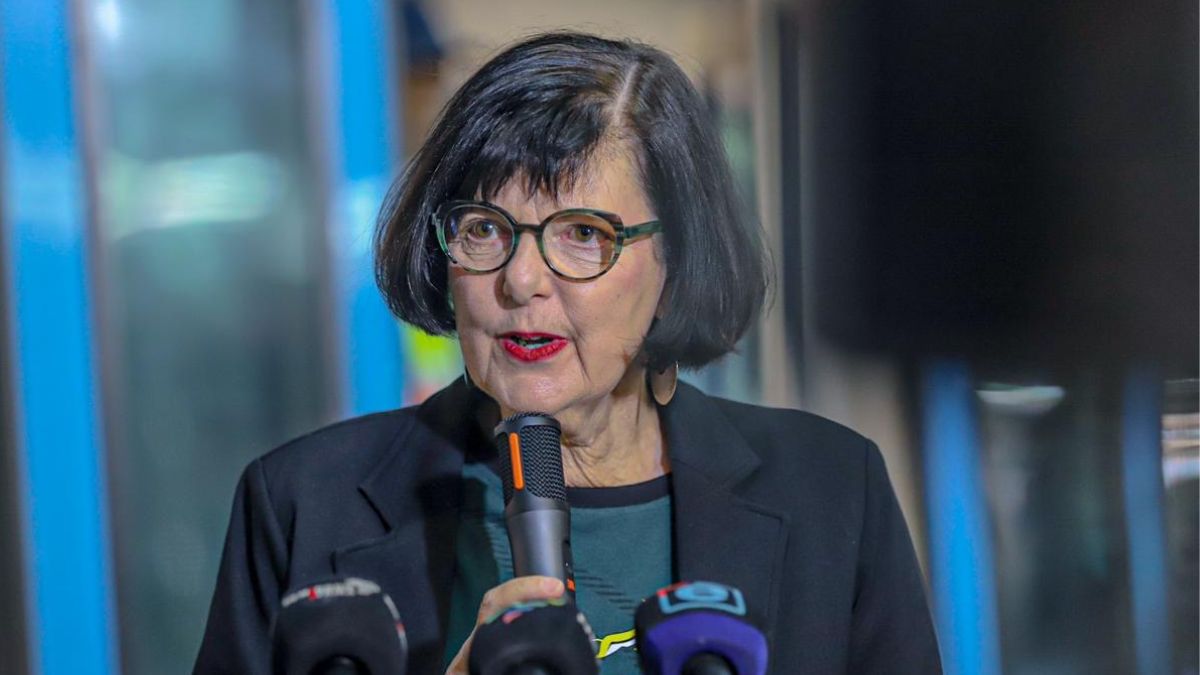
Opens in new windowOpens in new windowEnter fullscreen mode displaying this image.ExpandANC deputy secretary-general Nomvula Mokonyane and party leaders Geordin Hill-Lewis (DA), Herman Mashaba (ActionSA) and Julius Malema (EFF) at Wits University’s Solomon Mahlangu House in Johannesburg after a debate ahead of the November local government elections. Picture: Freddy Mavunda/ Business Day South Africa’s political moment offers President Cyril Ramaphosa and the government of national unity (GNU) a chance to build something that lasts a generation.
The DA and much of the commentariat treat EFF leader Julius Malema as a lightning rod for disruption. But political realism suggests his party may hold the tools to assist in the nation-building project — and aid in its protection against forces that seek to destroy it.
For his part, and for the benefit of the country, Malema should reconsider his 2024 decision to reject the GNU in favour of remaining on the opposition bench. (And, of course, in any discussion, it will always be in the back of our minds that he is currently appealing an effective five-year prison sentence.)
Including Malema would be a hard sell, but it is nothing like the decision Nelson Mandela faced in 1994. He chose to share power with Mangosuthu Buthelezi’s IFP, a party widely held as a key antagonist in violence between 1985 and 1994, when the country was close to state collapse.
Mandela handed his fierce adversary the home affairs portfolio. The gamble worked: it brought the IFP into the constitutional fold, ended open warfare in the hostels and townships, and denied rogue apartheid-era security operatives a proxy.
Today’s stakes are far lower, but the logic is similar. Jacob Zuma’s MK weaponises KwaZulu-Natal grievances, traditional identity and cost-of-living anger. The centrist GNU struggles to answer it, because any attack from the DA or Ramaphosa is painted as “white monopoly capital” or elite betrayal. Meanwhile, the SACP threatens to leave the tripartite alliance and contest elections alone.
For all his own controversies, Malema rejects ethnic nationalism and regional chauvinism. He offers disillusioned voters a radical alternative that stays inside the constitutional order. GNU parties also face the danger of leaving him out. Shut out of power, Malema and Zuma could set aside their differences and unite under a single anti-establishment banner.
Critics will say giving Malema power rewards recklessness. The reverse is more likely because executive office constrains. As a minister, he would face:
The DA’s own path is instructive. By joining the GNU in 2024, it went from watchdog to co-steward. That reassured investors and rating agencies, and it moved fights over National Health Insurance and state-owned enterprise bailouts into the cabinet room, where compromise is forced before bills reach parliament.
Previous DA leaders Tony Leon and Helen Zille saw Malema as an affront. Geordin Hill-Lewis has the chance to change tack. While his rhetoric will always polarise, Malema insists he does not hate white people: “When I say I love my wife, it doesn’t mean I hate other women,” he said in a debate with Hill-Lewis.
The DA’s hard line also sits awkwardly with Hill-Lewis’s own call for “genuine actors” to renegotiate how multi-party governance should work.
Wits researcher Tasneem Essop is cautious. A DA-EFF coalition would need “a significant amount of ongoing management” and could hollow out parliamentary opposition. The goal, she argues, “shouldn’t be how to get rid of antagonism and criticism but how to navigate differences beyond political expediency.”
If Hill-Lewis and Malema keep talking past each other, MK benefits most. Despite a presidency intervention and an IFP-led provincial government that has visibly improved service delivery in eThekwini, polls suggest MK could win an outright majority in the 2026 local government elections there.
The alternative is stark. The University of Johannesburg’s Patrick Bond sees two paths: “The ANC-DA centre-right alliance holds and may draw in Patrice Motsepe as president from 2029, or it fractures after November’s municipal vote, producing an ANC-MKP-EFF-SACP arrangement behind a Mashatile presidency. It’s hard to imagine anything in-between,” he says.
Mandela said: “It always seems impossible until it’s done.” He understood that you do not disarm a threat by pretending it away. You give it a stake in the state. Ramaphosa should weigh a tactical arrangement with Malema. Framed as an engine of growth that creates assets for workers, not a clash between capitalism and socialism, it could make the GNU durable for a generation.
Would you like to comment on this article?Sign up (it's quick and free) or sign in now.
Please read our Comment Policy before commenting.
Reported by businessday.co.za.
Read Original Report at businessday.co.za ↗ WhatsApp
Comments (0)
No comments yet. Be the first to share your opinion!