




Tinubu Reports Xenophobic Attacks In South Africa To AU
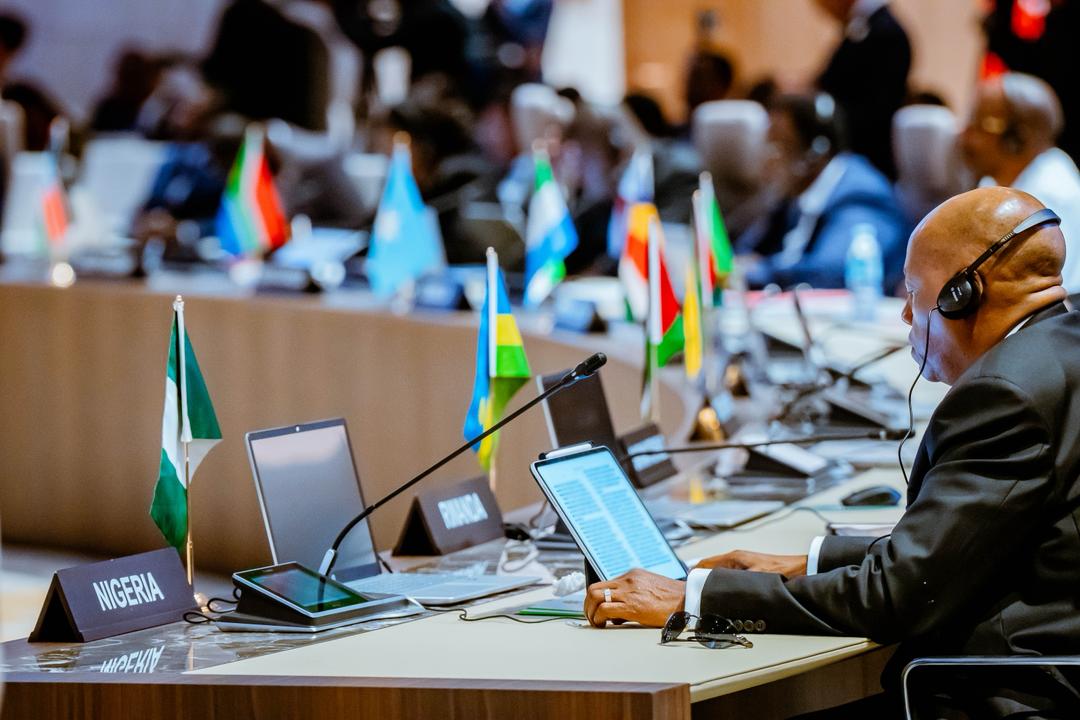
President Bola Ahmed Tinubu has formally raised the recurring xenophobic and Afrophobic attacks against Africans and other nationals in South Africa before the African Union, calling on the continental body to place the matter on the agenda of its next full assembly and warning that such incidents threaten Africa’s unity and solidarity.

The Nigerian leader’s message was delivered by Vice President Kashim Shettima at the 21st Extraordinary Session of the Assembly of the African Union in Luanda, Angola.
Tinubu asked the AU to schedule the issue for consideration at the 40th Ordinary Session of the Assembly in January 2027, while urging African leaders to reaffirm their commitment to the safety and dignity of all African nationals.
– Advertisement –
“Nigeria wishes to express its concern over the recurring xenophobic and Afrophobic attacks against Africans and other nationals in South Africa,” the message read.
While acknowledging South Africa’s sovereign right to enforce its immigration laws and its broader contributions to the continent, Nigeria argued that the attacks “undermine African solidarity, unity and peaceful coexistence, and require urgent collective attention.”
Tinubu, in a statement by the Senior Special Assistant to the Vice President on Media and Communications, called for stronger continental efforts to combat xenophobia and Afrophobia, stressing that dialogue, preventive diplomacy, and collective action remained essential to preserving African unity.
On broader security matters, Nigeria backed the adoption of the Luanda Action Plan as a roadmap for strengthening conflict prevention, with Tinubu arguing that preventing conflicts is cheaper and more sustainable than managing them after they erupt.
He warned that fragmented peace initiatives and growing reliance on foreign military forces, mercenaries, and private defence contractors risk weakening the AU’s conflict prevention mechanisms and the principle of African ownership.
He also called on arms-producing and exporting nations to work more closely with African states to prevent weapons from being diverted to terrorists and other armed groups, and said that while the AU has strong mechanisms for resolving conflicts, limited trust and inconsistent implementation continue to blunt their effectiveness.
Nigeria further backed sustainable financing for AU peace operations and full implementation of UN Security Council Resolution 2719, which is meant to strengthen the continental body’s capacity to respond to crises.
Tinubu closed by urging African leaders to recommit to home-grown solutions and shared responsibility in tackling the continent’s security challenges, saying: “Let us therefore renew our collective commitment to solidarity, cooperation, and shared responsibility as we build the Africa we want.”

Share:
 WhatsApp
WhatsApp
Comments (0)
No comments yet. Be the first to share your opinion!