



World Bank funds 1,270km fiber corridor in Northern Kenya
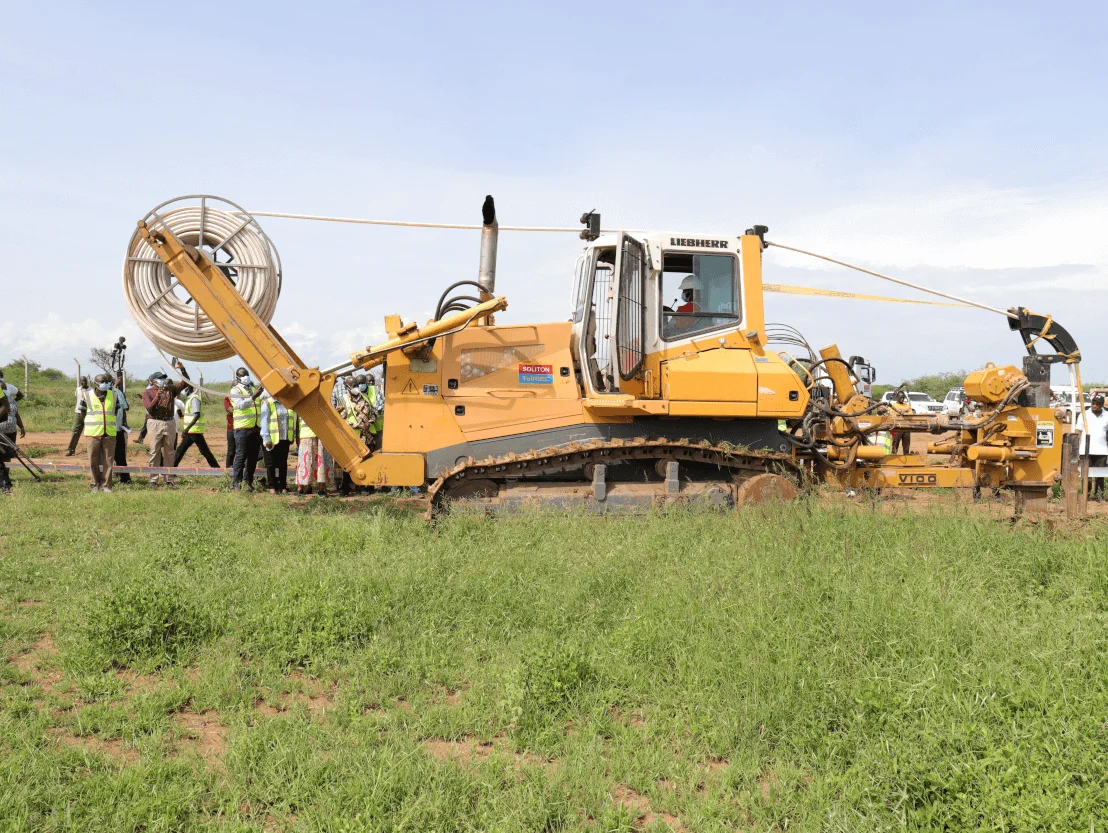
Late last month, the World Bank Board of Directors approved new financing to boost the ongoing road and fiber project set to advance the connectivity of Northern Kenya. This latest tranche of cash totals Ksh 58.3 billion (USD 550 million).
For Kenya, the benefit of this project is the improvement of road connectivity in the northern corridor as well as digital connectivity.
“The combined International Development Association (IDA) financing will upgrade 508 km of the 740 km Isiolo–Mandera Corridor and deliver approximately 1,270 km of new, high-capacity fiber optic connectivity,” the World Bank indicates in a statement.
Fiber optic cable installation will be completed along the entire road length between Isiolo and Mandera.
The bank is projected to contribute Ksh 97.05 billion ($750 million) toward the total estimated project cost of Ksh 115.9 billion, facilitated through an International Development Association (IDA) credit.
.
Cash disbursement, which started in 2021, is being done in phases.
Implementing Bodies and Mandates
This project involves several government institutions, with the Ministry of Roads and Transport providing overall coordination and monitoring.
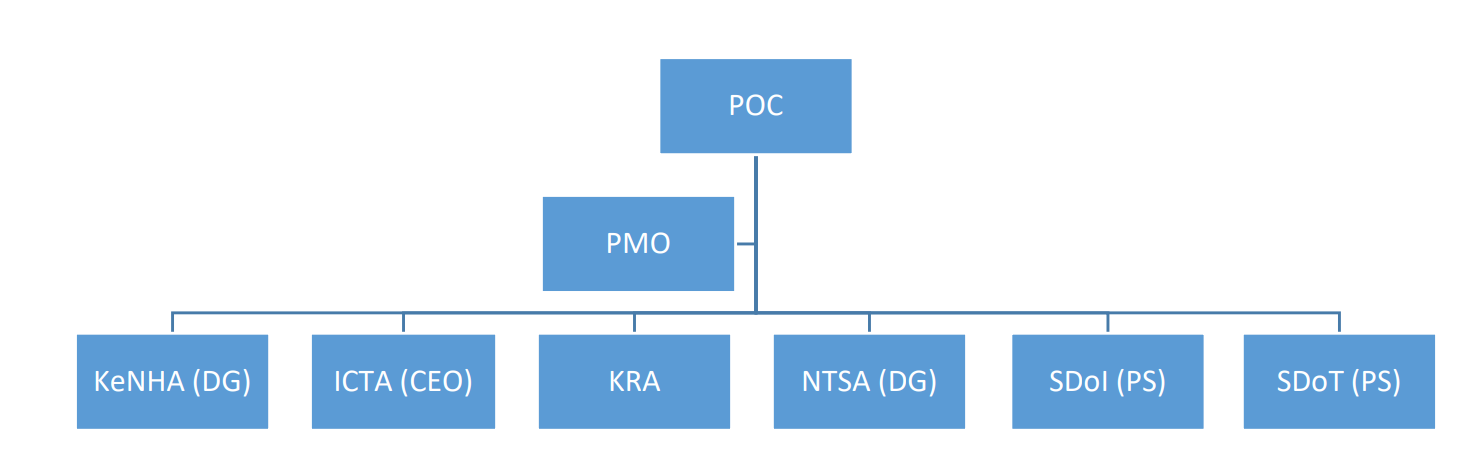
As a sub-component, the fibre project involves two primary implementing bodies with distinct responsibilities and cost allocations.
The Kenya National Highways Authority (KeNHA) will lead civil works necessary for fiber optic cable installation. This includes trenching, ducting, laying polymerised vinyl chloride (PVC) pipes, and constructing associated manholes.
Meanwhile, the Information and Communications Technology Authority (ICTA) will manage digital connectivity infrastructure and regional integration efforts. ICTA’s core work for the fibre project is expected to cost an estimated KShs 3.1 billion (USD 24.1 million).
The agency’s mandate is to conduct feasibility and detailed engineering design studies and then supervise the supply and installation of new fibre-optic cables along the corridor.
ICTA is also charged with building fiber spurs and rings to connect selected schools, hospitals, pastoralist roadside markets, rest stops, and community service centres to the network.
| No. | Description | Cost (KES Millions) |
| 1 | Feasibility studies and detailed design and supervision of a Fiber Optic Cable network, including backbone along the Isiolo-Mandera (740km) corridor and advisory services in the management of these facilities and services. | 390.00 |
| 2 | Procure and install new fibre optic cable along Isiolo-Mandera road (740km), including installation of fiber spurs and rings to various institutions, and civil works for the non-KeNHA spurs and rings | 1,950.00 |
| 3 | Connecting fiber optic cable to information community centres and advisory services in the management of these facilities and services | 260.00 |
| 4 | Consultancy services for Environmental and Social Impact Assessment of activities related to the installation of the FOC | 65.00 |
| 5 | Support for the development and implementation of the MoU between Kenya, Ethiopia and Somalia on cross-border FOC traffic, negotiations on the regional back-up capacity of submarine cables DARE and PEACE | 39.00 |
| 6 | Consultancy services for carrying out a baseline survey for the Isiolo – Mandera road and review of the Business Case model | 39.00 |
| 7 | Institutional strengthening of ICTA | 130.00 |
| 8 | Institutional strengthening of the State Department of ICT and Innovation | 78.00 |
| 9 | Training | 52.00 |
| 10 | Operating cost | 130.00 |
| — | Total (ICTA) | 3,133.00 |
Beneficiaries of the Fiber Project
Currently, terrestrial fibre-optic links between Kenya and Ethiopia are limited, and none exist with Somalia.
Read: Liquid Intelligent Technologies Announces Kenya to Ethiopia 1000KM Fibre Link
Mobile internet is still the leading access option in Northern Kenya, while a few residents rely on expensive satellite and microwave systems for backhaul networks.
Cost savings in laying the fiber due to the integrated project model are projected to reduce the cost of service delivery by 40 per cent, in turn leading to a similar reduction in cost for the end user.
The main beneficiaries of the project include the vulnerable and marginalised communities in northeastern Kenya, a population of 3.2 million residents.
Qimiao Fan, World Bank Division Director for Kenya, Rwanda, Somalia and Uganda, said, “Multisectoral interventions that enhance connectivity, support livelihoods, create jobs, and strengthen resilience are essential to fostering inclusion, a shared sense of benefits, and, ultimately, fostering greater peace, security and economic growth.”
The project’s expected implementation period extends to June 30, 2028, reflecting the complex environment and the need for careful stakeholder engagement in this fragile but strategically important region.
 WhatsApp
Comments (0)
No comments yet. Be the first to share your opinion!