
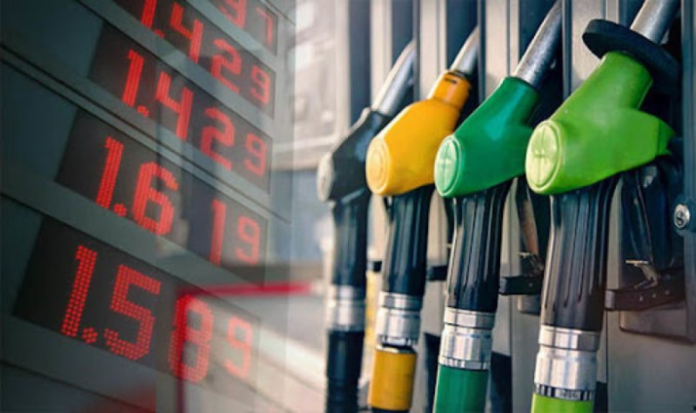
As global oil prices remain elevated following the US-Israeli strikes on Iran, a central and unanswered policy question has emerged in Ghana: will the government absorb the rising import costs or pass them directly to consumers at the pump?
Private legal practitioner and policy analyst Kofi Bentil put the question bluntly on Saturday. Whether fuel prices rise or not, he said, ultimately depends on a deliberate government decision — the economic pressure from higher crude prices is real, but the political choice of who bears it lies with the administration. He noted the government has the option to cushion consumers by drawing on available fiscal instruments, or to allow global price movements to flow through to pump prices as they normally would under the country’s deregulated pricing framework.
The National Petroleum Authority (NPA) CEO, Godwin Edudzi Tameklo, sought to project confidence on Friday, saying the government is leaving nothing to chance. Energy Minister Dr John Abdulai Jinapor has convened a high-level emergency meeting bringing together the NPA, BOST Energies, the Ghana National Petroleum Corporation (GNPC), Oil Marketing Companies (OMCs), and Bulk Import, Distribution and Export Companies (BIDECs) to assess supply chain risks and possible implications for domestic pricing and consumer welfare.
The Minister directed all sector agencies to maintain adequate strategic fuel stocks, intensify monitoring of international developments, and ensure stable nationwide distribution of petroleum products. The government, through the Ministry of Energy and Green Transition, said it is exploring all necessary measures to ensure sustained fuel availability and minimise undue hardship on consumers.
The immediate supply picture offers some reassurance. The NPA has confirmed Ghana holds approximately five weeks of fuel stock, providing a short-term buffer against supply disruptions even if the Middle East conflict escalates further. The Chamber of Petroleum Consumers (COPEC), however, has warned that fuel prices at the pump are likely to rise at the next pricing window if crude prices remain at current levels, given the structure of Ghana’s import-dependent downstream sector.
For the current pricing window covering 1 to 15 March, the NPA set the floor price for petrol at GH¢10.46 per litre and diesel at GH¢11.42 per litre, a marginal increase from the previous window’s GH¢10.24 per litre for petrol.
The broader economic stakes are significant. President John Dramani Mahama warned during bilateral talks in Arusha on 3 March that any sustained oil price increase would feed directly into fuel costs, transport fares, food prices, and the general cost of doing business a chain of effects that would bear down hardest on low-income households still recovering from the 2022 to 2024 inflation shock.
Analysts at Energy and Associates Ghana have noted that Ghana faces a double-edged exposure to the crisis: higher crude prices boost revenue from its own oil exports into the Petroleum Holding Fund, but simultaneously inflate the cost of the refined petroleum products on which the domestic economy depends. They recommend the government consider temporarily recycling petroleum windfall revenues through the Petroleum Stabilisation Fund (PSF) to offset any pass-through to consumers, while carefully guarding against creating a price gap large enough to trigger cross-border fuel smuggling to neighbouring countries.
The next NPA pricing window opens on 16 March. If global crude prices hold or climb further between now and then, that announcement will provide the clearest signal yet of which direction the government has chosen.

