
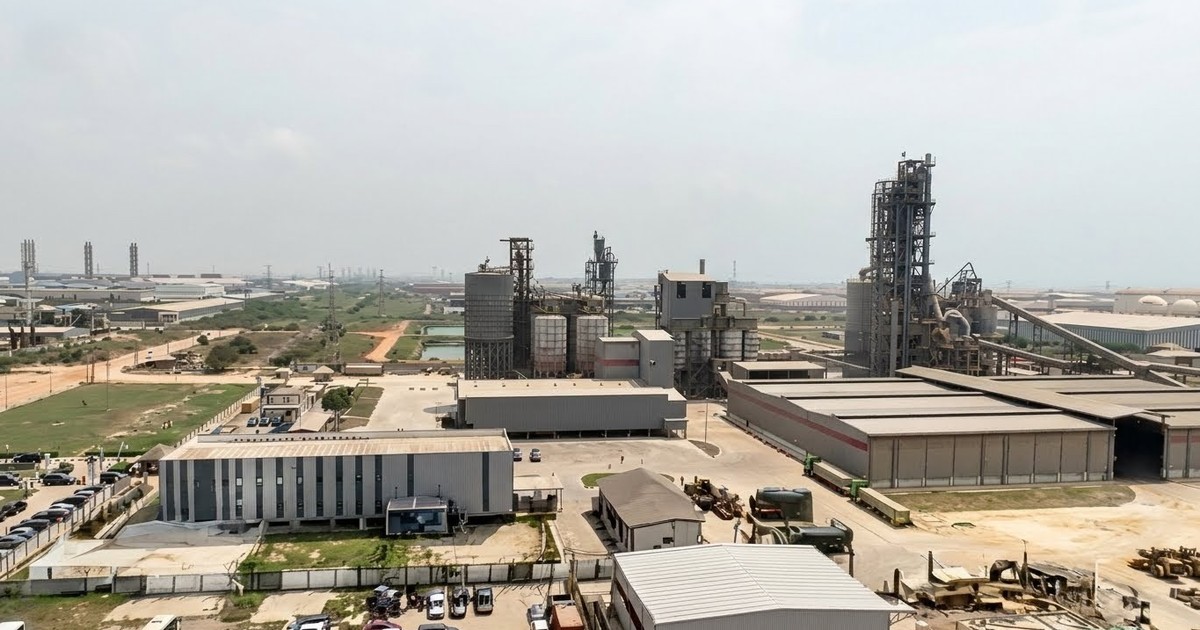
President John Dramani Mahama inaugurated the $110 million calcined clay cement facility at the Tema Industrial Enclave, a facility operated by CBI Ghana Limited, producers of Supacem Cement.
Government officials say the project strengthens Ghana’s manufacturing base while reducing dependence on imported clinker, a key component in traditional cement production that consumes large amounts of energy and foreign exchange.
Why calcined clay cement matters
Calcined clay cement is gaining global attention as a lower-carbon alternative to conventional cement.
Traditional cement production is responsible for roughly 7–8% of global carbon dioxide emissions, largely due to the energy-intensive process of producing clinker.
By replacing a portion of clinker with locally sourced calcined clay, manufacturers can significantly cut emissions while maintaining construction-grade strength. The technology also allows countries with suitable clay deposits to reduce imports of clinker and retain more value within domestic supply chains.
Speaking at the commissioning ceremony, President Mahama said the project reflects Ghana’s commitment to sustainable industrial growth.
“This facility positions Ghana as a leader in environmentally responsible cement production and demonstrates how innovation can support our industrial transformation,” he said.
Beyond environmental benefits, the plant is expected to support economic activity across multiple sectors. The project has already created 109 direct jobs for engineers, technicians and skilled professionals, while more than 1,000 additional roles have emerged across logistics, mining, and construction supply chains.
Industry analysts say expanding local cement production could also support Ghana’s infrastructure drive and housing development while improving export potential under the African Continental Free Trade Area (AfCFTA).
With demand for cement rising across West Africa, the new plant could strengthen Ghana’s position as a regional supplier while helping the country reduce import costs and improve foreign exchange stability.

