
As a South African who lived under apartheid, I recognize the same architecture of systemic oppression in the Taliban’s rule over women in Afghanistan.
This piece was originally published by PassBlue, a women-led nonprofit newsroom that covers the U.N. and global women’s rights.
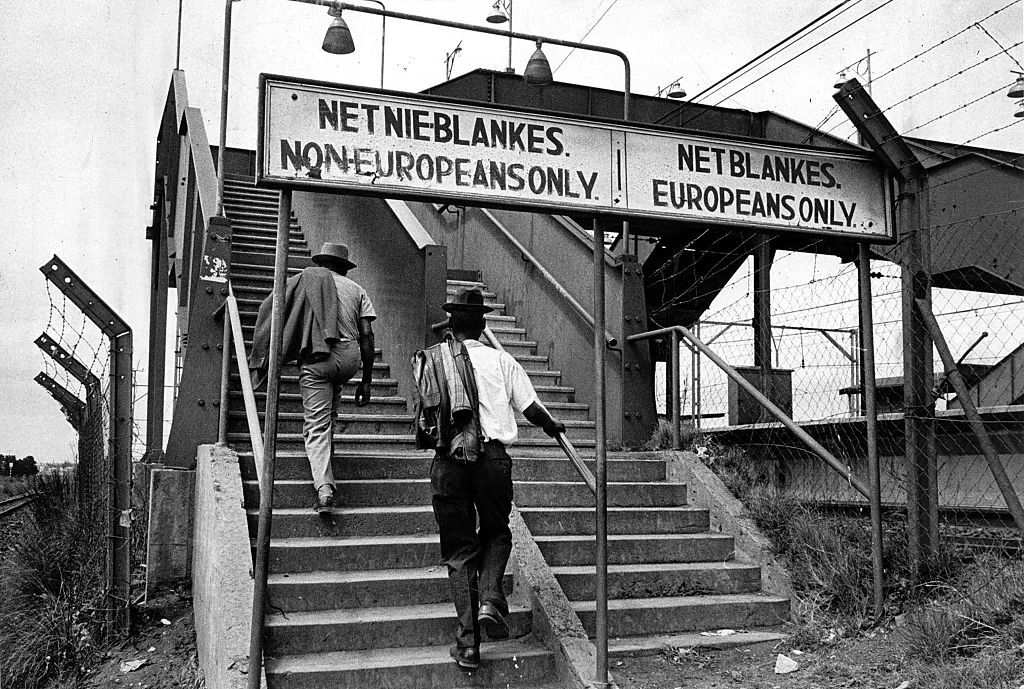
Apartheid is the one Afrikaans word that the whole world knows. It is arguably South Africa’s greatest contribution to the development of international criminal law so far.
South Africa cannot claim to have invented racism, but as we know, apartheid went far beyond racism. It was institutionalized and systemic, a form of governance based on race-based hate and the perpetuation of race-based discrimination.
Faced with a crime as broad as a country, the world responded by recognizing apartheid as a crime against humanity in the International Convention on the Suppression and Punishment of the Crime of Apartheid and later in the Rome Statute. That was our contribution to international law, and it was important. It means that there is a name for the atrocity, as well as a definition and a global sense of shock associated with it. It means that, wherever in the world apartheid rears its ugly head, states will be compelled to act against it.
It also means that South Africa should have a particular interest in developing a treaty to combat crimes against humanity. The treaty has been long in coming, but on Nov. 22, 2024, the United Nations legal committee named dates for the pact’s negotiation. The main sessions are still a few years away, scheduled for 2028 and 2029. Importantly, however, a working group began studying the treaty in January and will be required to submit finalized proposals to the U.N. Secretariat by April 30, 2026.
It is, therefore, crunch time. The moment for South Africa’s involvement is now.
But what should that involvement look like? There is much we South Africans could say, of course, but we cannot shy away from the fact that we brought the world apartheid, and we know that crime against humanity best. We ought to weigh in on what it means and how to address it.
… The world responded by recognizing apartheid as a crime against humanity … It means that, wherever in the world apartheid rears its ugly head, states will be compelled to act against it.
We ought to also consider whether the concept of the crime of apartheid, as it stands now, does all the work it needs to do. The Rome Statute characterizes apartheid as “inhumane acts … committed in the context of an institutionalized regime of systemic oppression and domination by one racial group over another racial group or groups and committed with the intention of maintaining that regime.”
The definition covers what happened in South Africa, but does it go far enough? What if the “regime of systemic oppression and domination” is based on something other than race? What if it is based on another of the personal attributes that are given special protection through the equality clause of South Africa’s Constitution?
What if, say, one is a woman in Afghanistan?
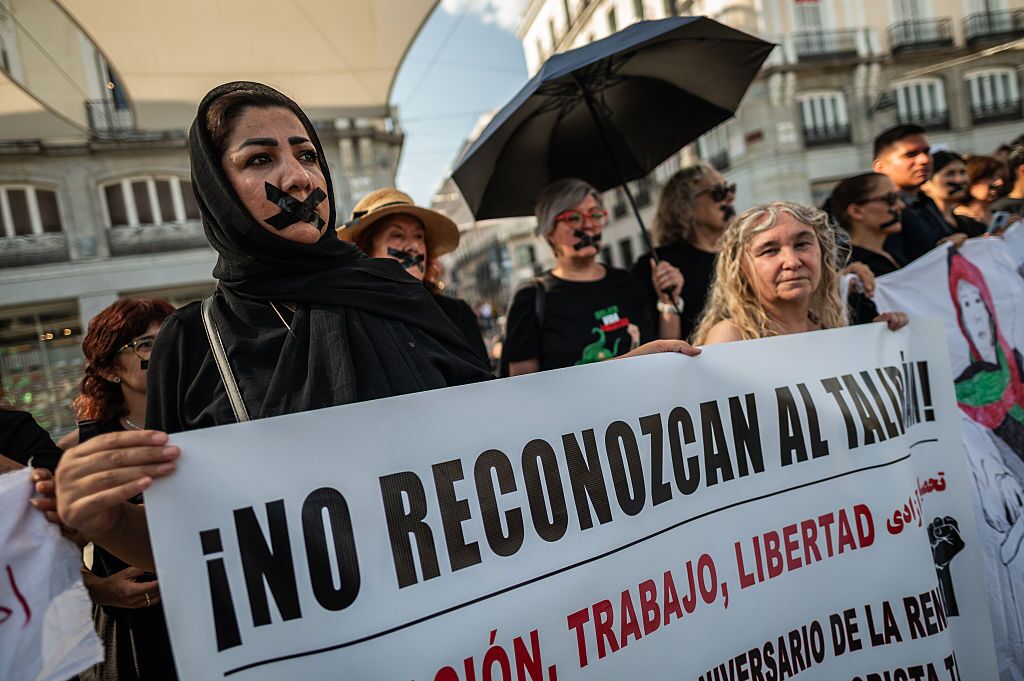
The Taliban seized control of Afghanistan in 2021, and have issued more than a hundred edicts and decrees since then, chipping away at the rights and freedoms of women and girls. They have established a deeply oppressive system of governance that removes women almost entirely from public spaces and discourse. The situation is appalling and has led the International Criminal Court to issue arrest warrants for Afghan leaders, charging them with the crime against humanity of gender persecution.
Beyond this, however, there is a growing call across the world for Afghanistan’s system of governance to be recognized as “gender apartheid” and for gender apartheid to be included in the list of crimes against humanity.
The call comes first and foremost from Afghan women themselves, but it also comes from the U.N.’s working group on discrimination against women and girls and their special rapporteur on human rights in Afghanistan, Richard Bennett. Groups such as Human Rights Watch and Amnesty International have added their voices, and several countries have expressed support for the development. South Africa’s silence is notable.
Many parallels exist between the situation in Afghanistan and what we experienced in South Africa under apartheid. As a Black woman growing up under the system, I know only too well what it is to live in a structure where gender and race discrimination is legislated and enforced brutally. The Taliban have taken a page out of apartheid South Africa’s book by imposing a legislated system of targeted discrimination against women—as the apartheid government did to Black South Africans. It is more than gender persecution, just as apartheid was more than race persecution.
Before the Taliban regained power in 2021, Afghanistan was a place where women occupied positions in the media, judiciary, the healthcare system and government. Now women are barred from almost all jobs.
One of the Taliban’s first moves after seizing power was to ban secondary education for girls. The ban now prevents girls from accessing any education beyond grade six, including university and other professional training. Recently, there have been suggestions that the ban may extend even to religious education at madrasas.
Afghanistan’s ban on education for women and girls is not too dissimilar to the idea that underpinned Bantu education, the foundation of the separate, inferior school system. The Taliban’s ban is a methodical denial of the tools that women need to access work, money, opportunities and independence. It is an institutionalized, state-sanctioned form of hobbling.
The main difference between Afghanistan’s variant of Bantu education and South Africa’s is that the Taliban’s hate is focused on gender, not race.
… I know too well what it is to live in a structure where gender and race discrimination is legislated and enforced brutally.
Another clear parallel between South Africa’s apartheid and Afghanistan’s gender apartheid is freedom of movement. Women in Afghanistan have been almost entirely removed from public spaces. Their voices have literally been silenced as women are banned from public speaking—their right to exist being limited to the four walls of a house sealed from the outside world. Women who were once judges, teachers, doctors and academics may no longer work. They cannot contribute to public discourse or to public life.
Women in Afghanistan may not even visit public baths, parks and gyms. The implications for their mental and physical health are staggering.
In the same way that Black people were excluded from spaces and services—“whites only” beaches and benches, for example, and entire suburbs—women in Afghanistan are excluded from public life. They are not permitted to travel outside their homes without a mahram, a close male relative. Authorities have instructed businesses and health clinics to refuse services to all women who are not accompanied by a mahram.
This is reminiscent of the apartheid dompas, a system that excluded Black Africans from being in urban areas unless they had a permit to do so and carried a passbook, colloquially called a dompas.
It is strange then—and worrying—that the South African government has not added its voice to the call for the recognition of gender apartheid.
There are other parallels, such as restricted access to social services. However, it is the overall picture of an elaborate state architecture of gender-based oppression that is the true reason the Taliban regime carries out gender apartheid. It is the fact that women and girls are denied any recognition of their humanity, much as Black people in South Africa were once denied. The crime of apartheid is defined by its institutionalized, systemic nature and the intention to maintain the regime. So far, it has been restricted to systems of race-based oppression, but that is the only reason that the Taliban’s regime cannot currently be identified as apartheid.
It is strange then—and worrying—that the South African government has not added its voice to the call for the recognition of gender apartheid. It is the perfect moment to do so, with the development of the crimes against humanity treaty underway. What is happening in Afghanistan is indeed a crime against humanity, and we cannot stand by and do nothing. All states are obligated to act to prevent this crime, but South Africa’s obligation is undoubtedly the greatest.
Member states are looking to South Africa for guidance on whether to support the codification of gender apartheid as a crime against humanity. As South Africa showed with our brave stand against the genocide being committed in Gaza, we are a small country with a big voice. We gave the world apartheid. We must now call it out wherever it occurs.
