
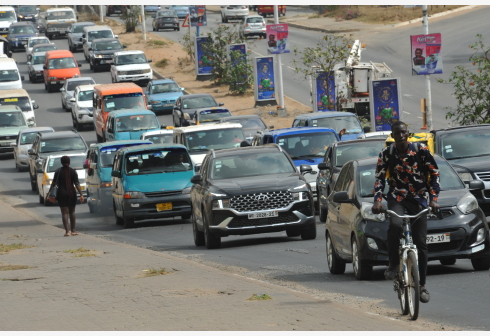
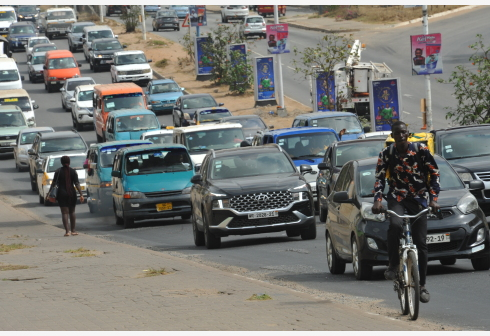
Ghana’s worsening urban traffic congestion is costing the economy at least GHS 4.5 billion every year in lost productivity, and addressing it is no longer a quality-of-life issue but an economic emergency, Stanbic Bank Ghana said at a high-level breakfast dialogue held in Accra this week.
The warning came from Mawuko Afadzinu, Executive Head of Brands and Marketing at Stanbic Bank Ghana, who opened the Graphic Business and Stanbic Bank Breakfast Meeting on the theme “Resetting Ghana’s Urban Transport System: An Economic Necessity.” The event brought together policymakers, regulators, transport operators, financial institutions, urban planners, and development partners.
Isaac Simpson, Head of Financial Advisory and Equity Capital Markets at Stanbic Bank Ghana, said the GHS 4.5 billion annual loss figure continues to grow, and that when opportunity costs and health-related effects are factored in, the true economic toll could be closer to GHS 10 billion. He said long hours spent in traffic directly reduce productivity and weaken private sector competitiveness, affecting output, business efficiency, and ultimately gross domestic product growth.
Afadzinu framed the urban transport crisis as a symptom of deeper structural failures that have accumulated over decades. Drawing on his own experience growing up in North Kaneshie, he recalled a time when Accra had a functioning bus network with published timetables that allowed commuters to plan their days with confidence, including free travel for schoolchildren to destinations such as Opera Square. He said Ghana has drifted far from that reality and that it is time the country honestly confronted how the decline happened.
“Traffic congestion in major cities has reached alarming levels even in situations where the number of commercial vehicles on the road has reduced,” he said. “It is not normal for traffic to remain this severe under such conditions. It points to deeply embedded, systemic challenges within our transport ecosystem.”
Afadzinu also disclosed that Stanbic Bank had in 2007 committed USD 50 million to a revolving transport financing scheme, with the first tranche funding 200 new buses for public transport at a time when about 80 percent of the sector was controlled by private operators. The scheme ultimately collapsed due to a trust deficit and partnership challenges within the sector. He said had the programme been sustained, Ghana’s current congestion crisis could have been significantly mitigated.
Simpson proposed innovative funding models including infrastructure bonds, blended finance, pension fund investments, and climate-focused capital to support transport development without increasing public debt, noting that Ghana holds significant pension assets that can be channelled into infrastructure.
The breakfast meeting is a quarterly dialogue series jointly organised by the Graphic Communications Group and Stanbic Bank Ghana, designed to generate policy recommendations on critical economic issues.

