
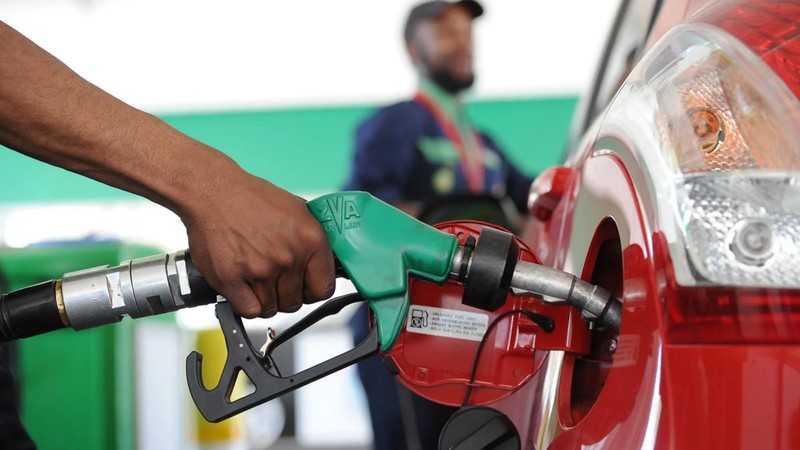
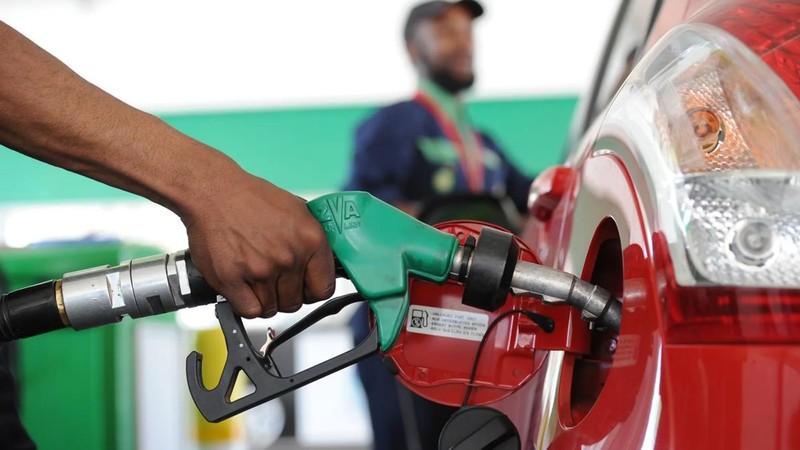
South Africa’s transport and logistics industry has warned of higher operating costs, rising consumer prices and pressure on holiday travel budgets after the government announced steep fuel price increases for December.
This comes as both grades of petrol rose by 29 cents per litre on Wednesday, while diesel saw even sharper increases of 65.48 cents per litre for 0.05% sulphur diesel and 82.48 cents per litre for 0.005% sulphur diesel.
The timing, coinciding with the height of the festive season, has raised concerns across the logistics, agricultural and labour sectors.
Gavin Kelly, CEO of the Road Freight Association (RFA), said that the increase in petrol and diesel at the beginning of December is not a good omen and will have an immediate impact on transporters who purchase fuel daily.
“The RFA notes that diesel prices are going up by almost 90 cents per litre, which is going to impact on the everyday running cost of vehicles. As always, the concern is how this will affect transport over the short and medium term,” Kelly said.
“There will be those transporters who buy fuel on a daily basis and drive and move loads on a daily basis, and they will charge the brand new rates immediately.”
Kelly warned that the increases will filter through to the consumer inflation, raising costs across the logistics chain in the short and medium term.
“Goods will increase in price. There is always that question when there are decreases, we don’t immediately see price decreases. And the same is with increases. It would take some time to filter through,” he said.
“It’s definitely not a good sign, and it will also affect the Consumer Price Index, and in the long term, there will be an increase in transport and logistics.”
Independent economist Ulrich Joubert also said the fuel hikes will push up operational costs across industries at a time when businesses are already under strain.
“The cost of goods will increase. Hopefully, most of the products that we’re buying will already be on the shelves for Christmas or for the festive season. It’s still going to increase the cost of doing business. It’s going to increase the expenses in South Africa,” he said.
Joubert added that at the same time, it also has a negative impact on the farming community, where the tractors and whatever they use and the lorries that they use all use diesel.
“So the cost of production is going to increase. Hopefully, we can say that the cost of electricity production at Eskom doesn’t need extra diesel to provide us with some electricity,” he said.
“So that’s perhaps a positive factor. Overall, our cost increases for doing business, for producing products. So it will have a negative impact on the inflation rate as well.”
North-West University economist Professor Waldo Krugell agreed that transport costs will rise, particularly in agriculture, where fuel-intensive planting activities are underway.
He noted, however, that the impact on overall inflation may be limited given muted price pressures elsewhere in the economy.
“In agriculture, for example, there is a lot of fuel cost associated with the planting season, and this will be higher. In all, it won’t move the inflation rate much. There is just very little other pressure on prices,” Krugell said.
Labour groups warned that the increases pose a serious challenge for workers who had planned their festive season budgets based on November’s fuel price decreases.
Abigail Moyo, spokesperson of the trade union UASA, said that the increase throws a spanner in the works for workers who, after the November fuel savings, had already budgeted for their December and January expenses, including travel to spend time with family and loved ones.
“UASA urges its members and South Africans in general to tighten their belts to accommodate the higher prices, while keeping in mind the upcoming costs of school fees and uniforms in early January.”
Matthew Parks, parliamentary coordinator for Cosatu, said the fuel increase will mean less money spent on goods the economy produces and thus stifle badly needed economic growth.
“It will have a negative effect on inflation and thus threaten further repo rate to an already weak economy. It will make transport and other essential goods more expensive for millions of workers already battling to take care of their families,” Parks said.
BUSINESS REPORT

