
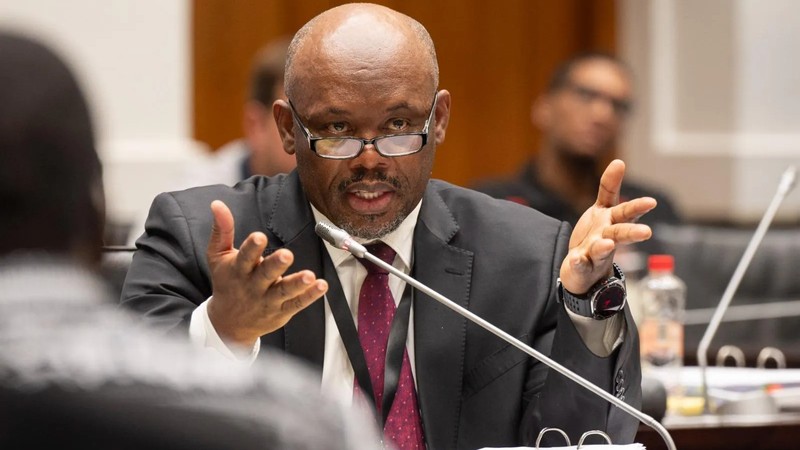
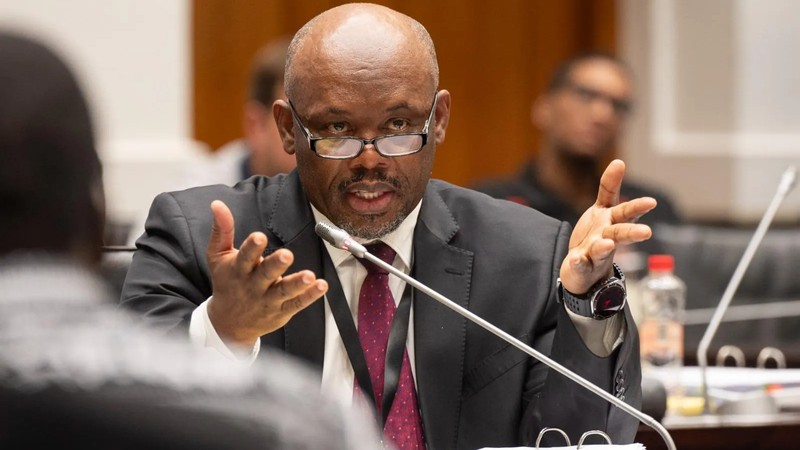
Suspended deputy national commissioner Lt-General Shadrack Sibiya has refused to confirm whether Crime Intelligence can access WhatsApp messages and deleted content, saying it would be “irresponsible” to reveal the operational capacity of the police.
Sibiya was appearing before Parliament’s ad hoc committee investigating allegations of abuse of power within the SAPS. He was questioned by Patriotic Alliance MP Ashley Sauls, who referred to earlier testimony by KwaZulu-Natal police commissioner Lt-General Nhlanhla Mkhwanazi.
Mkhwanazi had told the committee that members of Crime Intelligence had advanced surveillance technology capable of retrieving deleted WhatsApp messages.
Pressed on whether such capabilities existed, Sibiya declined to confirm or deny it.
“Chair, it would be irresponsible of me to respond to that type of a question, in the sense that I would be displaying out there the capacity of Crime Intelligence and the expertise the police have,” he said. “If I say yes or no, the criminals out there will benefit from this response.”
When asked whether the committee should accept Mkhwanazi’s version as fact, particularly since national police commissioner Gen Fannie Masemola had deferred the question to his divisional commissioners, Sibiya again refused to be drawn in.
“At this point in time, on the issue of this type of equipment, whether they exist or not, it remains the secret of Crime Intelligence and how they fight crime. So it’s not something I can really venture into,” he said.
When further asked whether it was at least possible that such equipment existed, Sibiya said he still could not respond. “It’s just a question that is not easy when you are a law enforcer.”
Sauls went on to raise an allegation that such surveillance tools were outsourced to a private company linked to a former minister’s relative.
Sibiya said he had no knowledge of such a connection but acknowledged that some private security companies had access to powerful surveillance technology, which they could legally procure from overseas.
“Some of them may be licensed, some of them may not be licensed, but they invest in technology,” he said.
Turning to the issue of security clearance, Sibiya confirmed he currently held clearance, and while it was not a strict requirement for conducting investigations, it was necessary for any senior police official expected to handle classified documents.
He said all provincial commissioners were expected to have top-secret clearance.
“It is expected that all the provincial commissioners must have top-secret security clearance,” he said.
Mkhwanazi had previously said he did not hold such clearance. Sibiya indicated that despite this, Mkhwanazi might still have access to classified material, as the head of Crime Intelligence, Lt-General Khumalo, reported to him in certain matters, specifically the controversial PKTT investigation.
“Some of the things that he (Mkhwanazi) mentions may tell me that he does have access as well,” Sibiya told the committee.
This prompted questions from ANC MP Xola Nqola, who raised concerns about reporting structures within SAPS, noting that it was unclear why the head of Crime Intelligence would report to a provincial commissioner.
Sibiya responded that, in the case of the PKTT, the reporting lines had been structured in that way. “It was done so officially, this is how it was designed, that he [Khumalo] will report to General Mkhwanazi,” he said.
Sibiya also revealed that the Western Cape provincial commissioner, Lt-General Thembisile Patekile, similarly did not have top-secret clearance.
“These ones I know because I’ve been involved with them, or they’ve been involved in my matters,” he said.
Politics

