6.5 C
London
Saturday, December 27, 2025
Home Blog Page 944

OFFICIAL: Asante Kotoko complete signing of Seth Kwadwo until 2029

0

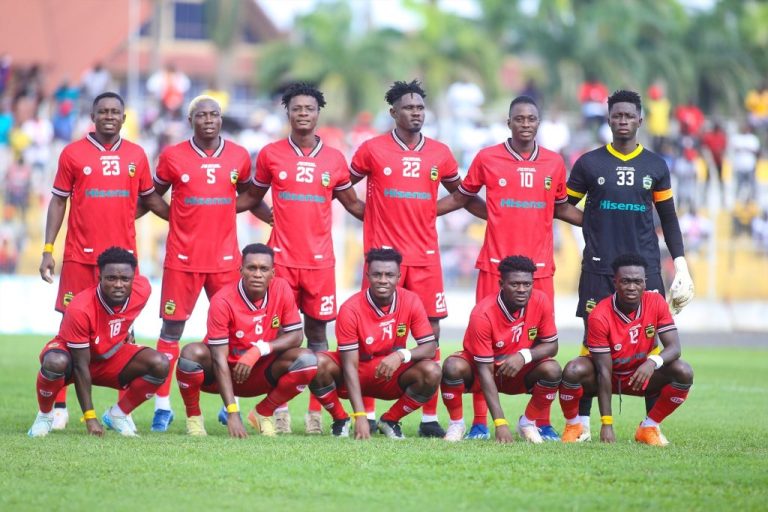
Asante Kotoko has completed the signing of midfielder Seth Kwadwo on a four- year deal, following the successful completion of his medical.

The 23-year-old joins from Bechem United after making 72 league appearances in recent seasons. He came through the ranks at Asokwa Deportivo, where he began to build his reputation as a tough, reliable presence in midfield.

Kwadwo is a combative and disciplined midfielder who adds bite and balance to the middle of the park. His signing is a timely one, following the injury to Andrews Ntim Manu, and provides added depth to the squad ahead of the new season where there’s the CAF confederation cup on the table.

“This is a big step in my career and I’m grateful for the opportunity,” Kwadwo said when speaking with Kotoko Media. “I spoke with Aziz and Francis before making the move, and they had nothing but good things to say about the club. That gave me a lot of confidence. I’m excited to get started and ready to give everything to help the team win.”

Via Asante Kotoko SC

There must be a sense of who we are everywhere

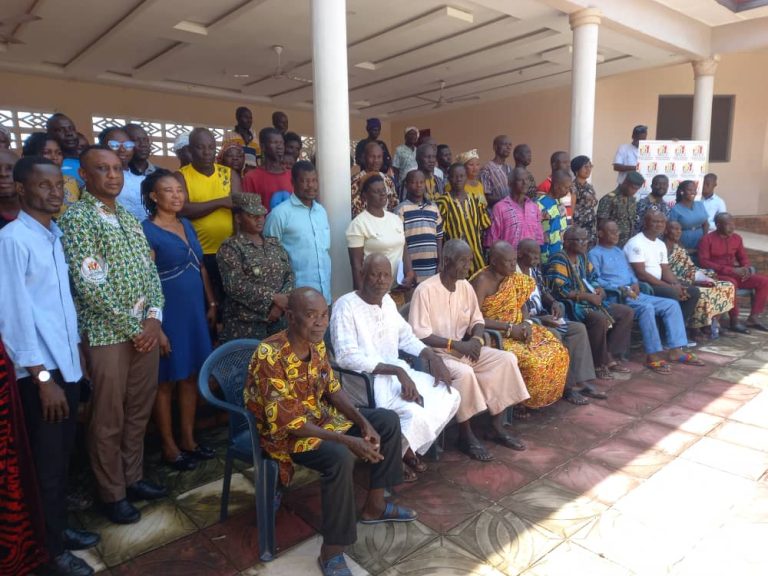
The event drew leading figures from the hospitality, tourism, and education sectors The event drew leading figures from the hospitality, tourism, and education sectors

Ghana’s Minister for Tourism, Culture and Creative Arts, Abla Dzifa Gomashie, has made a compelling call for the country’s private sector to embed culture and service excellence at the heart of every hospitality experience.

“In every hotel room, every tour vehicle, every restaurant, there must be a sense of who we are,” the minister said at the official launch of the Eagles Hospitality School in Accra.

“Every guest we serve is an ambassador, and every moment is a chance to shape a global perception of Ghana; hence, there is a need to train for excellence, not just for jobs,” she said.

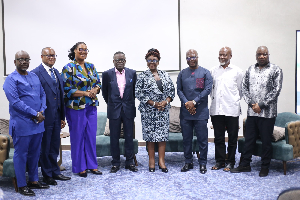
The event, which drew leading figures from the hospitality, tourism, and education sectors, marked what the minister described as “not just the opening of an institution but the beginning of a movement for service excellence in Ghana”.

Drawing on her personal upbringing in Burma Camp, Gomashie emphasized the foundational values of discipline, respect, and cultural pride, values she said must guide every interaction within the tourism and hospitality industry.

She expressed concern over the fading use of culturally respectful phrases such as “Yes, please,” and simple gestures like standing to greet.

“The true value in tourism is not measured by the size of our attractions alone,” she said. “It is found in the warm smile of a receptionist, the cultural depth of a tour guide, and the memorable encounters that make visitors storytellers when they return home.”

With major cultural events like PANAFEST, Emancipation Day, and the Black Star Experience on the horizon, Gomashie stressed the urgency of elevating service delivery and deepening cultural identity within every touchpoint of the visitor experience.

“This school must not stand alone,” she stated. “Let it be the heartbeat of a wider movement that celebrates our culture, trains our people, and elevates our place on the world tourism map.”

Founder and Group CEO of the Eagles Hospitality School, Stephen Asante, explained that the institution was born out of a long-held vision to raise the standard of service delivery in Ghana’s hospitality ecosystem.

“We believe that top-class service shouldn’t be a luxury or imported from abroad,” he said. “Our hotels are being converted into classrooms, where students don’t just learn theory but gain hands-on experience from day one.”

Stakeholders from institutions such as Labadi Beach Hotel, ASA Bank, and the Ghana Tourism Authority endorsed the initiative, affirming the growing need for practical training and professional discipline across the hospitality value chain.

A Transformational holistic health experience in Ghana

0

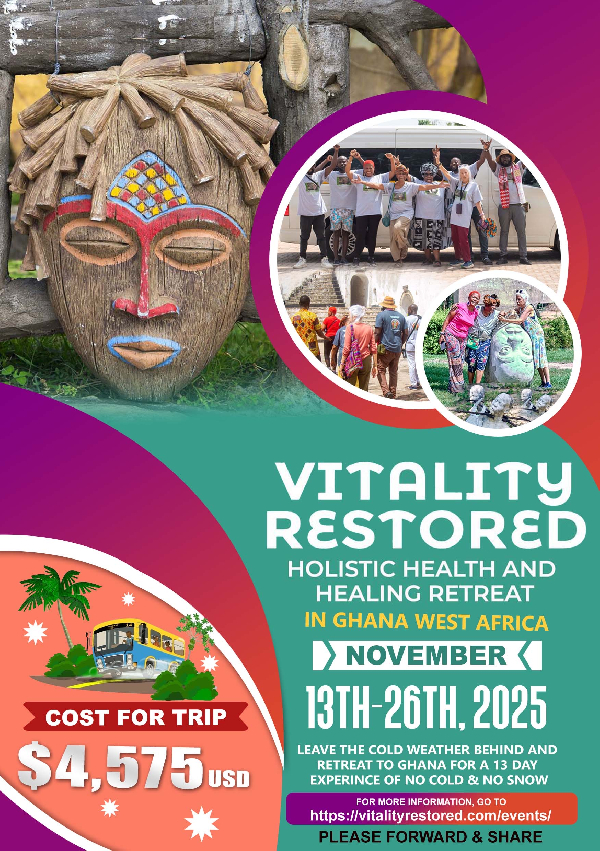
Ghana to Host Dual Retreat Packages for Locals and International Travelers Seeking Healing, Wellness & Cultural Connection

In a world marked by mounting stress, fatigue, and disconnection, the Vitality Restored Holistic Health and Healing Retreat offers a sacred opportunity to reconnect with self, spirit, and community.

Set in the heart of Ghana this November 2025, this life-changing retreat offers two distinct experiences—one for Ghanaian citizens/residents and one for international travelers—all united by a common purpose: deep healing, empowerment, and cultural immersion.

Two Powerful Retreat Packages, One Healing Mission

🌿 1. Special Ghanaian Citizens & Residents Package

🗓 Dates: 22nd – 26th November 2025

📍 Location: Prampram, Greater Accra Region

💰 Cost: GHC 24,775

📅 Payment Deadline: 30th September 2025

This 5-day immersive retreat is specially designed for Ghanaians residing in the country.

It takes place in Prampram, where local participants will join the international guests for a shared experience of transformation, learning, and healing.

✨ Highlights Include:

Become a Reiki Practitioner-Receive Reiki Training and Certification, With Reiki Master- Maama Gha, Ms Yocheved Bat-Imedt

FAFAA- First Aid for Asthma Attacks – Learn How you can Help save a life while waiting for Medical Attention when someone is having an Asthma Attack

Massage Therapy Session

Energetic Sound Bath & Breathwork

Reiki Session

Organic Vegan Meals and Food Preparation Workshop

Sacred Ceremonies – Performed by Experienced Spiritual Guides

Workshops with Holistic Healing Arts Practitioners

Guest Speakers

Consultations Included:

Adinkrahene, Nana Bambara

And

Naturopath, Dr. Immanuel Biney

Integration with International Participants – A dynamic, diverse healing circle

📞 Registration/Information (Ghana Only) — Contact the Retreat Coordinator:

Andrew “Eric” Okyere: + 233 24 457 4541 On What’s App

🌍 2. International Holistic Retreat Experience

🗓 Dates: 13th – 26th November 2025

📍 Locations: Five regions across Ghana, including Prampram

💰 Cost: $4,575 USD (All-Inclusive)

This 13-day transformative journey is curated for international participants seeking not only rest and rejuvenation but also deep cultural connection and personal growth.

Travel across five regions of Ghana, spend a night in each, and experience the beauty, traditions, and healing power of West Africa.

✨ Retreat Includes:

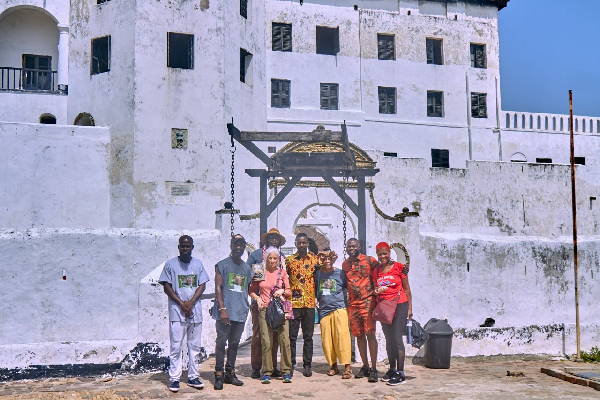
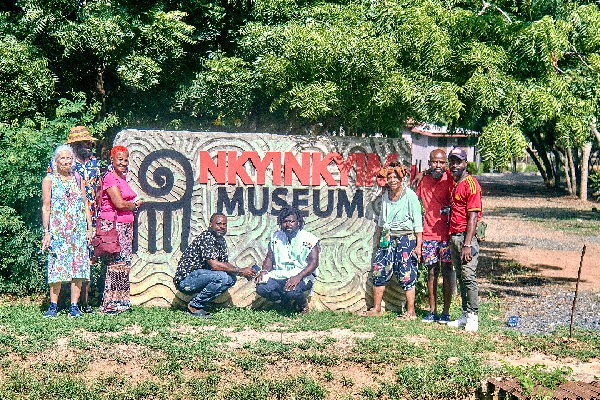
Cultural Tours and Historic Site Visits

Overnight Stays in 5 Distinct Regions – A truly immersive Ghanaian experience

Sacred Ceremonies – Performed by Experience Spiritual Guides

Additional Training & Workshops not mentioned

Become a Reiki Practitioner-Receive Reiki Training and Certification, With Reiki Master- Maama Gha, Ms Yocheved Bat-Imedt

FAFAA- First Aid for Asthma Attacks – Learn How you can Help save a life while waiting for Medical Attention when someone is having an Asthma Attack

Massage Therapy Session

Energetic Sound Bath and Breathwork Experiences with Nana Akongua Hemaa

Reiki Session

Organic Vegan Meals and Nutrition Workshop

Guest Speakers

Consultations Included:

Adinkrahene, Nana Bambara

And

Naturopath, Dr. Immanuel Biney

Workshops with Holistic Healing Arts Practitioners

Final 5 Days in Prampram – Integrated healing experience with Ghanaian participants

🔗 Register & Learn More:

👉 https://vitalityrestored.com/events/

🌟 A Retreat Like No Other

Vitality Restored is not a typical wellness getaway—it is a soulful revolution of health, heritage, and holistic wisdom.

Guided by Spiritual Guides and Holistic Health & Healing Arts Practitioners, participants will be immersed in sacred spaces of learning, transformation, and renewal.

Whether you are a Ghanaian seeking a homegrown healing experience, or an international guest ready to embrace West Africa’s warmth, wisdom, and wellness, this retreat invites you to reclaim your vitality and reconnect to your life purpose.

❤‍🩹 Join the Movement

November 2025 is your chance to step into an empowering, supportive community dedicated to healing, learning, and celebration.

Spaces are limited. Early registration is strongly encouraged.

Please share this opportunity with those who may benefit. Let’s heal—together.

GoldBod, National Security arrest 10 foreign nationals for illegal gold trading, seize guns

0

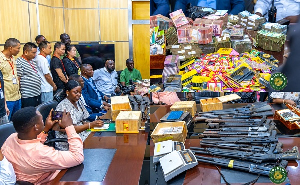
Guns, money and others were retrieved from 10 foreign nationals engaged in illegal gold trading play videoGuns, money and others were retrieved from 10 foreign nationals engaged in illegal gold trading

The Ghana Gold Board (GoldBod), in collaboration with National Security, has apprehended a group of 10 foreign nationals involved in illegal gold trading in the Western Region.

The coordinated operation also led to the seizure of 12 pump-action shotguns, ammunition, calibration equipment, large sums of cash, and quantities of gold.

This development comes just days after GoldBod warned against trading in gold without a valid license issued under its new regulatory framework.

The Chief Executive Officer of GoldBod, Sammy Gyamfi, announced the official commencement of the new gold licensing regime, which revokes all gold trading licenses previously issued under the former Precious Minerals Marketing Company (PMMC).

Speaking at a press conference on June 30, 2025, Sammy Gyamfi emphasised that all old licenses became invalid after the non-extendable deadline of June 21, 2025.

He warned that any gold trading activities conducted without the new GoldBod license are now considered illegal.

“If you are not licensed by the Ghana Gold Board, you are committing a crime if you buy gold or engage in any form of gold trading. We will no longer continue to respect the licenses issued under the old regime,” he firmly stated.

He further stressed that the era of illegal gold trading has come to an end, adding that PMMC licenses or those previously issued by the Ministry of Lands and Natural Resources are no longer recognized under the current legal framework.

SSD/MA

GhanaWeb Special: The gold market that fuels galamsey

How social engineering hacks your mind and your bank account

Algeria’s Youcef Belaïli arrested at Paris Airport after in-flight dispute

0

Youcef Belaïli was detained by Police at the Paris Airport Youcef Belaïli was detained by Police at the Paris Airport

Algerian international Youcef Belaïli was briefly detained at Charles de Gaulle Airport in Paris after an on-board incident involving his young son’s seatbelt reportedly led to a confrontation with airline staff.

Local reports say Belaïli and his wife refused to fasten the seatbelt of their two-year-old child during the flight, despite instructions from the cabin crew.

A heated exchange is said to have ensued, prompting the flight captain to alert airport authorities.

Upon landing, French police boarded the aircraft and detained the Algerian star, along with his brother Amir, who was also travelling with him.

While Belaïli has since been released following the intervention of the Algerian Football Federation and the Algerian Embassy in France, his brother Amir is understood to still be in custody for further questioning.

Neither French authorities nor Belaïli’s representatives have issued an official statement yet, but the incident has already stirred strong reactions in Algeria and among the player’s fans.

Youcef Belaïli, known for his flair and decisive performances with the Algerian national team, has not commented publicly on the incident so far.

FKA/MA

GhanaWeb Special: The gold market that fuels galamsey

Ugandan military helicopter crashes at Somalia airport, official says

0

Civil authorities say they are investigating the cause of the crash Civil authorities say they are investigating the cause of the crash

A Ugandan military helicopter with eight people on board has crashed at the main international airport in Somalia’s capital, Mogadishu, an aviation official has told the BBC.

The state-run news agency reported that a fire broke out after the helicopter crashed at the Aden Adde International Airport, but it had been quickly contained by the emergency services. Video footage showed plumes of smoke rising from the airport.

“We heard the blast and saw smoke and flames over a helicopter. The smoke entirely covered the helicopter,” Farah Abdulle, one of the airport staff, told Reuters news agency.

The cause of the crash and the casualty figures are unclear.

The head of the Somali Civil Aviation Authority, Ahmed Maalim, told the BBC that the helicopter had come down in the airport’s military section after flying in from the Balidogle airbase in the Lower Shabelle region, about 90km (56 miles) north-west of Mogadishu.

He said that an investigation was underway to establish the cause of the crash.

Ugandan troops are part of an 11,000-strong African Union (AU) force helping the government fight the al-Qaeda-linked al-Shabab group, which has been waging a brutal insurgency in Somalia for more than two decades.

The crash delayed the departure of a Turkish Airlines passenger plane, but domestic flights continued to operate normally.

Sean ‘Diddy’ Combs convicted on prostitution counts, but cleared of more serious charges

0

Sean “Diddy” Combs was found guilty on Wednesday of prostitution-related offenses, but cleared of more serious charges after a criminal trial in which two of the music mogul’s former girlfriends testified that he physically and sexually abused them.

Combs was convicted of transportation to engage in prostitution but acquitted of racketeering conspiracy and two counts of sex trafficking, a partial win for the former billionaire known for elevating hip-hop in American culture.

After the jury read its verdict, defence lawyer Marc Agnifilo asked Subramanian to release Combs on bail.

“This is his first conviction, and it’s a prostitution offence, and so he should be released on appropriate conditions,” Agnifilo said.

Combs faces a maximum 10-year prison sentence on each of the two prostitution counts. U.S. District Judge Arun Subramanian will determine Combs’ sentence at a later date.

The acquittals on the sex trafficking counts mean he will avoid a 15-year mandatory minimum sentence. He could have faced life in prison if he were convicted of sex trafficking or racketeering conspiracy.

Prosecutors say Combs for two decades used his business empire to force two of his romantic partners to take part in drug-fueled, days-long sexual performances sometimes known as “Freak Offs” with male sex workers in hotel rooms while Combs watched, masturbated and occasionally filmed.

During raids of Combs’ homes, authorities found drugs and 1,000 bottles of baby oil and lubricant that he would use in the performances, prosecutors said.

Combs, 55, had pleaded not guilty to all five counts. His lawyers acknowledged that the Bad Boy Records founder, once famed for hosting lavish parties for the cultural elite in luxurious locales like the Hamptons and Saint-Tropez, was at times violent in his domestic relationships. But they said the sexual activity described by prosecutors was consensual.

The seven-week trial in Manhattan federal court exposed the inner workings of Combs’ business empire and gave the 12-member jury an intimate look into his volatile romantic relationships with the rhythm and blues singer Casandra “Cassie” Ventura and a woman known in court by the pseudonym Jane.

Ventura sued Combs in November 2023 for sex trafficking, the first of dozens of civil lawsuits accusing him of abuse. Combs, also known throughout his career as Puff Daddy and P. Diddy and once feted for turning artists like Notorious B.I.G. and Usher into stars, settled with Ventura for $20 million. He has denied all wrongdoing.

At the trial, jurors saw surveillance footage from 2016 showing Combs kicking and dragging Ventura in the hallway of an InterContinental hotel in Los Angeles, where she said she was trying to leave a “Freak Off.”

Jane later testified that Combs, in June 2024 attacked her and directed her to perform oral sex on a male entertainer, even though she told him she did not want to. That alleged attack took place a month after Combs apologised on social media for his 2016 attack on Ventura, footage of which had been broadcast on CNN.

According to prosecutors, physical violence was just one way Combs compelled Ventura and Jane to take part in the performances – an act of coercion they say amounts to sex trafficking because the male escorts were paid.

Both women testified that he threatened to withhold financial support and to leak sexually explicit images of them if they refused to comply.

“The defendant used power, violence and fear to get what he wanted,” prosecutor Christy Slavik said in her closing argument on June 26. “He doesn’t take no for an answer.”

Combs’ defense lawyers argued that while Combs may have committed domestic violence in the context of volatile romantic partnerships, his conduct did not amount to sex trafficking.

They argued that Ventura and Jane were strong, independent women who voluntarily took part in the sexual performances because they wanted to please Combs.

Both women testified they spent time with Combs and took part in sexual performances after he beat them. Defense lawyers argued that Ventura and Jane were retrospectively accusing Combs of forcing their participation in the performances because they were jealous he was seeing other women.

“If he was charged with domestic violence, we wouldn’t all be here,” Combs’ defense lawyer Marc Agnifilo said in his closing argument on June 27. “He did not do the things he’s charged with.”

RACKETEERING CONSPIRACY
Besides Ventura and Jane, jurors also heard testimony from Combs’ former personal assistants who said their jobs included setting up hotel rooms for “Freak Offs” and buying their boss drugs.

An InterContinental security guard testified that Combs, in the presence of his chief of staff, paid him $100,000 to hand over what he thought was the only copy of the surveillance tape of his attack on Ventura.

And Scott Mescudi, the rapper known as Kid Cudi, told jurors that Combs was likely involved in an arson on his car after Combs found out he was romantically involved with Ventura.

According to prosecutors, those were all acts Combs and his associates undertook in furtherance of a racketeering conspiracy whose aim was, in part, to facilitate his abuse and keep evidence of his wrongdoing under wraps.

The defence argued Combs was a successful entrepreneur who used drugs recreationally, but kept his professional and personal lives separate.

Combs has been held in federal lockup in Brooklyn since his September 2024 arrest.


…..

Explore the world of impactful news with CitiNewsroom on WhatsApp!

Click on the link to join the Citi Newsroom channel for curated, meaningful stories tailored just for YOU:
https://whatsapp.com/channel/0029VaCYzPRAYlUPudDDe53x

No spam, just the stories that truly matter! #StayInformed #CitiNewsroom #CNRDigital

Coding Is No Longer Enough: Why Africa Needs AI Literacy In Every School (3)

0


But it’s not just about employment. AI literacy is also about citizenship in a digital age. Algorithms now determine access to credit, social services, public safety alerts, and even political messaging. Understanding how these systems work — and how to hold them accountable — is a civic right. If young Africans don’t learn how to critically evaluate AI tools, they are vulnerable to misinformation, manipulation, and marginalisation. In a world where power increasingly lies in code, literacy must mean more than reading text — it must include reading systems.

There is also a clear equity dimension. Without AI literacy, Africa’s youth will remain consumers of foreign technology, not creators of homegrown solutions. This deepens dependency on external tech platforms and reinforces global digital hierarchies. Conversely, if young Africans master AI early, they can build tools for their own communities — apps for local languages, systems to improve village health services, platforms to boost local commerce — solutions grounded in African realities.

The gender equity implications are particularly striking. Studies show that when AI and digital skills are taught in inclusive settings, girls excel just as much as boys, and often outperform them. In Nigeria, for instance, a recent pilot study on generative AI use in schools showed that girls gained substantial confidence and critical thinking skills when exposed to AI-assisted learning platforms (ICTworks, 2023). Embedding AI literacy early helps close achievement gaps before they harden.

Inclusion, employment, citizenship, and gender equity — all hinge on how fast Africa integrates AI education into its schools. This is not a technological upgrade. It’s a generational imperative.

And while coding remains a vital entry point, it is no longer sufficient. AI is changing not just how we work, but how we live, learn, and relate to one another. If African youth are not taught to understand it — ethically, practically, and creatively — they risk being ruled by tools they had no hand in shaping.

  1. What Needs to Happen – A Strategic Roadmap

If Africa is serious about building an inclusive, future-ready economy, then AI literacy must become a core pillar of its education systems, starting now. The roadmap ahead is not abstract. It is practical, achievable, and already in motion in parts of the continent. The challenge is not invention — it is implementation at scale.

First, governments must reform national curricula to embed AI education from the upper primary level onward. This doesn’t mean replacing core subjects — it means enriching them with AI thinking. Students should learn what algorithms are, how they affect decisions, and how data can be used to solve community challenges. AI ethics, fairness, and bias must also be taught, ensuring that the next generation doesn’t just learn how to use AI but how to question it critically.

Second, teacher training must be a top priority. No AI strategy will succeed without educators who understand what they are teaching. Ministries of Education should make AI literacy a mandatory component of teacher training colleges and continuing professional development programs. Teachers must be equipped not just with technical tools but with pedagogical strategies that make AI relatable, inquiry-based, and community-relevant.

Third, infrastructure investments must reach the last mile. Students cannot learn AI from chalkboards alone. Schools must be equipped with basic digital devices, reliable electricity, and internet connectivity — especially in rural and underserved areas. These are not luxuries; they are prerequisites for participation in today’s world.

Fourth, public-private partnerships and diaspora collaborations must be mobilised. Africa’s education transformation cannot be driven by governments alone. Tech companies, civil society, and local startups should be engaged to contribute content, platforms, mentorship, and innovation challenges. And most importantly, the African diaspora — a vast reservoir of global expertise and capital — must be activated in service of continental education goals.

This is precisely where the AiAfrica Project offers an unprecedented opportunity.

Sponsored by the African Diaspora Central Bank (ADCB) with a $2 billion commitment, and led by Knowledge Web Center, the AiAfrica Project is not a pilot. It is a continent-wide, ready-to-deploy solution designed to train 11 million Africans — including youth, teachers, SMEs, and government officials — in AI technologies by 2028. With over 250,000 Africans already trained in Ghana, Nigeria, Liberia, Vanuatu, and Eswatini, and major programs soon launching in Rwanda (3 million trainees) and Imo State, Nigeria (2 million trainees in collaboration with the University of Agriculture and Environmental Sciences, Umuagwo), the project is proving that scale is possible.

Even more compelling: AiAfrica provides free or subsidised AI curriculum materials, teacher certification programs, and localised AI tools tailored to agriculture, education, healthcare, and finance. It is specifically designed to be implemented across different infrastructure levels — from urban schools with broadband to rural classrooms using mobile learning kits.

For any African government looking to rapidly integrate AI education into their school systems without starting from scratch, AiAfrica is the bridge. It offers technical expertise, financial support, and continental alignment. Countries like Kenya, Ethiopia, The Gambia, and Zambia are already preparing to onboard. Others must act now to join this wave — or risk being left behind.

Time is short. The Fourth Industrial Revolution is not waiting. The tools are available. The funding is secured. The question is no longer what needs to be done — it is whether we have the will to act decisively.

  1. Voices for Change – What African Experts Say

Across the continent, a growing chorus of educators, innovators, and youth leaders are echoing one clear message: Africa must move beyond coding to build AI-literate societies — and it must do so now. These are not voices from distant think tanks. They are the passionate advocates teaching in classrooms, designing AI tools, and mentoring students who see the potential — and the peril — of inaction.

“If we don’t teach our kids about AI,” says Dr. Sarah Mensah, an education technologist from Ghana, “we risk raising a generation of app users, not app makers. We’ll have brilliant young people using TikTok and WhatsApp, but unable to question the algorithms that decide what they see, what they’re offered, or whether they get a loan.”

This fear is shared by many across the education sector. Kofi Abudu, a digital innovation advisor in Nigeria, notes, “Coding was step one. AI is the next leap. We taught our kids how to build simple programs. Now we have to teach them how machines think. If we don’t, we’ll be locked out of industries we haven’t even imagined yet.”

Students themselves are increasingly aware of this gap. Aisha, a 17-year-old secondary school student in Kisumu, Kenya, who recently attended a weekend AI bootcamp, shared her revelation: “I used to think AI was just science fiction. But then I saw how it’s used to decide who gets a job or a scholarship. That made me want to understand it more — and maybe even build my own AI someday.”

Many teachers, too, are ready to lead the change — if only given the tools. “My students are curious,” says Mr. Mpho Mlangeni, a STEM teacher in South Africa. “They ask about how Netflix recommends shows, or how Siri answers questions. I want to explain, but I wasn’t trained in AI myself. We need support, training, and a curriculum that’s grounded in African realities.”

That support is beginning to arrive — and it’s African-led. Dr. David King Boison, Lead Consultant at Knowledge Web Center and the strategic architect of the AiAfrica Project, is unequivocal: “This is our moment. We can either empower our youth with AI literacy or continue outsourcing the future to others. The AiAfrica Project was designed for scale, inclusion, and urgency — to help every country, from Rwanda to Imo State, move from pilot to policy, and from awareness to action.”

Experts from across the African Union and international organisations are also urging reform. A recent statement from the African Development Bank’s digital skills taskforce warned, “Unless Africa embeds AI literacy now, we will miss the demographic dividend we talk so much about. Youth potential is not automatic — it must be equipped.” These voices are not calling for perfection — they’re calling for progress. They understand that Africa doesn’t need to copy the global model wholesale. It needs to build its own pathways, grounded in African languages, local data, and community priorities — but informed by global trends. What unites these voices is a shared belief: Africa’s youth are ready for AI. Now, education systems must be ready for them.

  1. A Defining Moment for Africa

Africa stands at a crossroads. One path leads to continued digital dependency, where our youth consume technology built by others, operate systems they don’t fully understand, and compete for jobs already rigged by invisible algorithms. The other path leads to digital sovereignty, where young Africans become the architects of their future, designing intelligent systems that reflect their languages, values, and aspirations.

The choice is ours. But the window is closing.

The Fourth Industrial Revolution will not pause while Africa catches up. The tools of transformation — artificial intelligence, machine learning, and data science — are already shaping global economies, governance, and even the boundaries of citizenship. For Africa to lead, we must urgently rethink what it means to educate our children in this era.

Coding was the starting point. But AI is the language of the future. Every African student, from rural Tamale to urban Johannesburg, deserves the right to understand the systems shaping their lives — not just to interact with them, but to create, question, and improve them.

This is not a matter of luxury. It is a matter of justice, opportunity, and long-term survival.

We know what must be done. Curricula must be reformed to embed AI literacy from the ground up. Teachers must be trained and supported. Schools must be connected, equipped, and empowered. Policy makers must act, not with timid pilots, but with bold national frameworks backed by funding and resolve.

And we are not starting from zero. The AiAfrica Project, sponsored by the African Diaspora Central Bank (ADCB) and led by Knowledge Web Center, offers a ready-made, African-led solution. With a $2 billion sponsorship, a growing footprint across multiple countries, and a target to train 11 million Africans by 2028, AiAfrica is more than a program — it is a movement.

Countries that act now can leapfrog years of experimentation. They can integrate world-class AI training into national systems, empower teachers, and prepare their citizens to thrive in the global AI economy. Rwanda, Imo State, and others are already moving. The rest must follow — not tomorrow, not next year, but now.

This is a defining moment for African education. One that will be remembered not for what was discussed, but for what was done.

Let us rise to it. Let us ensure that the next generation of Africans does not just inherit the future — they build it.

**********

Abollabora

Dr Ahmed Antwi-Boampong is a Lead Researcher & Senior Fellow, AI in Education, AiAfrica Initiative and Head Industrial Liaison Department at GCTU. He can be contacted via email at [email protected]

Source: Dr, David King Boison and Dr. Ahmed Antwi-Boampong 

Hip-hop mogul found guilty on 2 of 5 counts in sex trafficking trial

0

Jurors in the federal criminal trial of Sean “Diddy” Combs on Wednesday morning found the hip-hop mogul guilty of two of the five counts filed against him, acquitting him of the other three.

The 12-member panel acquitted Combs of racketeering and sex trafficking, but found him guilty of prostitution-related offenses.

After the verdict was read, Judge Arun Subramanian adjourned court while he weighs whether to grant Combs bail before sentencing. The 55-year-old, who could have been sentenced to life in prison had he been convicted of racketeering or sex trafficking, now faces a maximum of 10 years in prison.

The jury spent more than 12 hours across three days deliberating the case. On Tuesday afternoon, the panel said that it had come to an agreement on counts two, three, four and five — sex trafficking by force, fraud or coercion, and transportation to engage in prostitution — but was unable to reach a verdict on count one: racketeering conspiracy.

An hour into its deliberations Wednesday, the jury sent a note telling the judge that it had reached a verdict on all five counts.

Follow the live blog below for the latest updates culled from various reporters and news organizations in the courtroom, including ABC News, the Associated Press, CNN, NBC News, the New York Times and USA Today.

Live49 updates

Ghanaian Singer Cina Soul Reports Actor Over Violent Threats

Cina SoulCina Soul
Cina Soul

Ghanaian musician Cina Soul (Christie Quincyna Quarcoopome) has filed a formal complaint against Kumawood actor Big Akwes following threatening remarks made during a July 1 television interview on Bryt TV.

The actor described how he would “kill” the singer using supernatural and violent methods while playing a “Kiss-Marry-Kill” game segment.

In a widely circulated clip, Big Akwes stated he would use a “magic mirror” to spiritually summon Cina Soul, repeatedly stab her, and drink her blood. The singer responded on social media, tagging the Ghana Police Service and Ministry of Communications: “I feel genuinely threatened… We must not normalize hate.” She described being “deeply unsettled” by the comments, which prompted public condemnation of both the actor and broadcaster.

This incident follows Big Akwes’ April 2025 criticism of Cina Soul’s attire during an album promotion, where he body-shamed her on Accra-based Max TV. The station later apologized and removed the segment. Cina Soul had previously lamented the focus on her clothing rather than her music.

Bryt TV has not commented on whether the recent segment violated broadcasting standards. The Ghana Police Service confirms receiving the report and is investigating the threats.

I’m no longer your team member effective today

0

Kennedy Agyapong is a former Assin Central MP and NPP presidential aspirant Kennedy Agyapong is a former Assin Central MP and NPP presidential aspirant

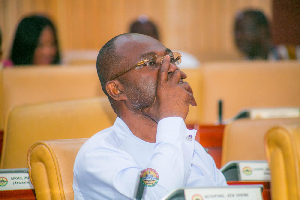
A member of the camp of Kennedy Agyapong, George Opoku Amponsah has withdrawn from the team to pursue who he believes is the right candidate to lead the New Patriotic Party.

George Opoku Amponsah played an instrumental role in the New Patriotic Party’s presidential elections in 2024, acquiring votes for the former Assin Central lawmaker, Kennedy Agyapong, in some constituencies like Juaben and Ejisu.

Although Kennedy Agyapong was beaten mercilessly by his competitor, Dr Mahamudu Bawumia, the former Vice President of Ghana, George’s role in Ken’s communications team cannot be underrated as he was a powerhouse running the campaign.

Ken’s loyalist no longer owes allegiance to him and though his reasons for leaving are not explicitly delineated, grapevine information indicates Ken’s seeming shenanigans and purported disrespect for people may have fueled George’s exit from the team.

“I regret to inform you of my decision to withdraw as a member of Team Ken Communications, effective immediately”, he said in an official statement.

He stressed he is now focusing on the right candidate for the party who, to many people, is Dr Mahamudu Bawumia.

Read George Opoku Amponsah’s statement below:

George Opoku Amponsah

Plot 4, Block 13, Juaben Estate.

30th June, 2025

Ashanti Regional Campaign Office, Team Ken 2028,

Through Lawyer William Kusi, Kumasi.

WITHDRAWAL FROM TEAM KEN CAMPAIGN AND COMMUNICATIONS

I regret to inform you of my decision to withdraw as a member of Team Ken Communications, effective immediately.

This decision bears no malice against Team Ken, but ultimately intended to firmly establish my unalloyed allegiance and loyalty to a NEW ASPIRANT in the impending presidential primaries of the New Patriotic Party.

I wish you well in your campaign.

…….Signed…..

George Opoku Amponsah

(Former Juaben Constituency Coordinator, Team Ken)
AME

‘8-hour workdays won’t make Ghana competitive in the 21st century’ – Osei Akoto

0

Henry Osei Akoto is a leading member of the NDC Henry Osei Akoto is a leading member of the NDC

A leading member of the ruling National Democratic Congress, Henry Osei Akoto, has said the launch of the 24-Hour Economy by the John Dramani Mahama-government will open up Ghana’s economy for growth.

He explained that the initiative, which he described as bipartisan, is the surest way for Ghana to compete on the global scale when it comes to economic growth and expansion.

Speaking in an interview with GhanaWeb following the launch of the policy, which is also known as 24H+ Agenda, on July 2, 2025, Osei Akoto said Ghana loses more money from the number of hours it sleeps, as compared to the hours the nation stays productive.

“The 24-Hour Economy has been the mantra and policy we have been marketing over the years and every Ghanaian knows it. So, people who say it is an after-thought are mistaken. What we are telling Ghanaians is that the only way to expand the economy, to open up the economy, to create opportunities in the country as we speak now is to work beyond the 8-hour practice we have now. We should be working for 24-hours.

“The country shouldn’t sleep. The hours we use to sleep are monies gone and so if we want to be part of the current dispensation of the 21st century world economy, then we have to open up the country by making sure we are working 24-hours,” he explained.

Calling on all to support the policy of the NDC, Henry Osei Akoto said that the launch by President Mahama is fulfilment of the promise he made to the country.

He added that the 24-Hour Economy will create opportunities for all, especially the youth, and help expand the economy.

He also stressed that with this policy afloat, it places Ghana among many countries of the world who are benefiting from working around the clock, boosting their economies.

“The launch of the 24-Hour Economy by the president today is a laudable idea. We all remember that before the election, he was going around the country telling people that he was going to expand the economy, create opportunities for the youth, and that there was going to be more money in the economy, and he is going to propel that through the 24-Hour Economy policy. Looking at what he’s done today, it really affirms what he said some few months back and Ghanaians should support him.

“It is a good initiative. It is happening everywhere in the world… you don’t go to Europe and after 10PM, the whole country is asleep. No. Not only in Europe, but even in some African countries. Got to North Africa; go to Egypt, go to Morocco and other places and see what is happening there. So, we all have to embrace this thing because it is a good thing that I believe will create opportunities for Ghanaians and will open up the economy for more money and prosperity to come into it,” he added.

The 24-Hour Economy and Accelerated Export Development Programme, also referred to as “24H+,” is a flagship initiative of the Mahama-led administration.

It seeks to re-engineer Ghana’s productivity framework by extending economic activity beyond traditional working hours and integrating key sectors into a seamless, efficient value chain.

The transformative programme comes with a projected cost of $4 billion.

The government is committing between $300 million and $400 million as seed capital to cover viability gaps and attract private sector investments.

MA

Kotoko hit with BIG BLOW after CAF rejection

0

The Confederation of African Football (CAF) has officially informed Kumasi Asante Kotoko that the Baba Yara Sports Stadium does not meet the requirements to host matches in the upcoming CAF Confederation Cup competition.

In a communication to the club, CAF stated that after reviewing venue compliance and infrastructure standards, only the Accra Sports Stadium currently meets the necessary hosting requirements for CAF competitions.

This decision means Asante Kotoko will be forced to shift their home games to Accra for the duration of their Confederation Cup campaign, unless urgent improvements are made to the Baba Yara facility and a subsequent inspection passes CAF’s criteria.

The news comes as a blow to club who are now expected to liaise with authorities and stakeholders to explore possible solutions or accept the temporary relocation.

AGI urges government to account for environmental levies

0

AGI urges government to account for environmental levies AGI urges government to account for environmental levies

The Association of Ghana Industries (AGI) has called on the government to provide greater transparency and accountability in the use of environmental levies collected from businesses across the country.

According to John Defor, Director of Policy and Research at AGI, although businesses continue to comply with payments under the Environmental Excise Tax (EET) and Sanitation Levy, there is little evidence of how these funds are being used to tackle the growing plastic waste and sanitation challenges facing Ghana.

“We are fulfilling our tax obligations, but we don’t see the government putting those taxes to the intended use,” Defor said.

The Environmental Excise Tax, introduced in 2013, requires companies importing plastic raw materials to pay 10 percent of the CIF (Cost, Insurance, and Freight) value. Half of the revenue from this tax is meant to support plastic waste management infrastructure. In addition, the Sanitation Levy – popularly known as the ‘bola tax’ places a 10-pesewa charge on every litre of fuel purchased.

Defor noted that these levies generate significant revenue and should be channelled into waste management, environmental education, and recycling infrastructure.

He recommended the establishment of a dedicated fund to ensure these levies are not absorbed into the Consolidated Fund without proper use.

“With Ghana’s National Plastic Management Policy already in place, we expect stronger government commitment and visible results,” he added.

On the proposed bannig of some plastics, Defor expressed concern about its impact on businesses – highlighting that many companies already practice sustainable plastic use through recycling and second-life solutions.

Private sector efforts to fight plastic waste

Despite these concerns, private sector initiatives like the Ghana Recycling Initiative by Private Enterprises (GRIPE) under the AGI continue to play a leading role in addressing plastic waste.

As part of its ongoing efforts, GRIPE has donated 100 eco-friendly desks and chairs made from recycled plastics to five basic schools in the Ga West Municipal Assembly. Beneficiary schools include Odumase M/A Basic School 1, Medie M/A Basic School, Otsirikomfo M/A Basic School, Kwashiekuma Methodist Basic School, and Afuaman M/A Basic School.

GRIPE president Eric Boamah said the donation aimed at educating and inspiring schoolchildren to embrace recycling and responsible waste management. “We’re solving two problems – educating the youth and promoting sustainability,” he said.

Victor Nene Tawiah, Ga West Director of Education, welcomed the gesture – stressing the importance of building environmental awareness among schoolchildren. He called for more support from other organisations to improve infrastructure in public schools.

Both AGI and GRIPE maintain that while private efforts are ongoing, stronger government action and clear use of environmental levies are essential to effectively combat plastic waste and promote sustainable development in Ghana.

How social engineering hacks your mind and your bank account

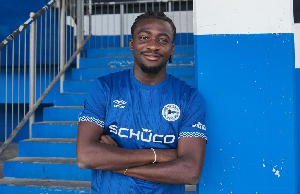
Benjamin Boakye poised to take career to the next level at DSC Arminia Bielefeld

0

Germany-born attacker of Ghanaian descent, Benjamin Boakye Germany-born attacker of Ghanaian descent, Benjamin Boakye

Germany-born attacker of Ghanaian descent, Benjamin Boakye, has disclosed that he wants to take his career to the next level at his new club, DSC Arminia Bielefeld.

The forward signed for the German outfit from VfL Stuttgart on Tuesday, July 1,2025.

“DSC Arminia has signed Benjamin Boakye from VfB Stuttgart. The 20-year-old attacker will begin team training on Wednesday. Both clubs have agreed not to disclose the terms of the transfer,” the German outfit said in an official statement.

Speaking in an interview after his unveiling, Benjamin Boakye shared his excitement and indicated that he is looking forward to this new chapter of his career.

He added that he wants to take advantage of the opportunities at DSC Arminia Bielefeld to take his career to the next level.

“I am really looking forward to this new challenge in a completely new environment for me. I want to take the next step in my career at Arminia.

“The management has made a lot of effort for me and shown me the development prospects. I can hardly wait to be on the pitch with the team and soon play in front of our fans,” Benjamin Boakye said as quoted on the club’s website.

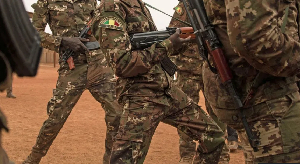
Jihadist fighters stage series of attacks on Mali military posts

0

Military bases have been attacked several times in the last month Military bases have been attacked several times in the last month

Jihadist fighters have launched a series of simultaneous attacks on military posts across numerous towns in Mali, the third major assault on the army over the last month.

Mali’s army said it repelled Tuesday morning’s attacks, allegedly “neutralising” more than 80 militants, without saying if there were any other casualties.

However, Jama’at Nusrat al-Islam wal Muslimin (JNIM), an al-Qaeda-linked group that said it was behind the attacks, said it had taken control of three army barracks.

For more than a decade, Mali has been wracked by a deadly Islamist insurgency, as well as attacks from separatist movements.

In a statement broadcast on national TV, army spokesperson Souleymane Dembele said: “The enemy suffered significant losses in every location where they engaged with the security and defence forces.”

Col Dembele added that the army recovered weapons, vehicles and motorcycles from the assailants.

Earlier, the armed forces said that the attacks had occurred across seven towns and cities, including Binoli, Kayes and Sandere, near the border with Senegal. There were also attacks further north, near Mali’s frontier with Mauritania.

A resident of Kayes told the BBC that gunshots could be heard “everywhere” during the attack.

“The police station was damaged, as well as the governor’s house,” he said, adding that casualty figures were still unclear.

JNIM called its attack “coordinated and high quality” in a statement posted on social media. They did not detail any casualties.

The group has also said it carried out two other significant recent attacks.

On 2 June, militants targeted both an army camp and an airport in the ancient, northern city of Timbuktu.

Just a day before, a raid killed at least 30 soldiers in the centre of the country.

The attacks, the latest sign of rising insecurity in Mali and the wider Sahel region, came after the United States Africa Command warned about growing efforts by various different Islamist militant groups which operate in the Sahel to gain access to West Africa’s coastline.

During a press conference in May, the commander of United States Africa Command (Africom), Gen Michael Langley, described recent attacks in Nigeria, the wider Sahel, and the Lake Chad Basin as deeply troubling.

He warned that the groups’ access to the coast would significantly boost their capacity for smuggling and arms trafficking.

Lil Win Unites With His Ex-wife Patricia Afriyie In Public, Endorses Her New Song

Lil Win made a rare public appearance with his ex-wife, Patricia Afriyie, during a recent interview session

The Kumawood actor gave his opinion on his ex-wife’s debut single and threw shades at some top Ghanaian female singers

Lil Win’s public appearance with Patricia Afriyie garnered mixed reactions from fans on social media

According to yen.com.gh Award-winning Kumawood actor Kwadwo Nkansah Lil Win made a rare public appearance together with his ex-wife, Patricia Afriyie.

The former married couple recently held an interview session with Kumasi-based blogger Papa Jay of Poleeno Multimedia.

During the interview, Lil Win spoke about Patricia Afriyie’s venture into the Ghanaian music industry following the recent release of her debut song, You Go Take Your Lover.

The Kumawood actor shared his endorsement for the new song, which he claimed was a masterpiece from his ex-wife. According to him, the song also contained lyrics that carried a deep message.

Lil Win threw shade at Wendy Shay, Sista Afia, Efya, and other top female Ghanaian singers by claiming that Patricia Afriyie’s song was lyrically better than theirs.

The comic actor also urged fans to anticipate his ex-wife’s upcoming second single, which he claimed was better than her debut song.

When asked why he had yet to sign Patricia to his Wezzy Empire music label, Lil Win noted that he was not a music producer and that he would have signed her if she ventured into the movie industry.

Lil Win and Patricia Afriyie’s public sighting comes amid rumours that they were not on good terms following their split several years ago.

NDC’s reset is to persecute, not thank God – Haruna Mohammed

0


The Deputy General Secretary of the New Patriotic Party (NPP), Haruna Mohammed, has criticised the National Democratic Congress’ (NDC) declaration of July 1 as a National Day of Prayer and Thanksgiving, describing it as a façade for political persecution rather than a sincere expression of gratitude to God.

Speaking on on Tuesday, July 1, Mr Mohammed accused the NDC of hypocrisy, arguing that their recent rhetoric does not match their actions in government.

“Let us be factual and let the people know that your reset is to persecute, and that’s what they are doing. It has nothing to do with thanking God,” he said in response to earlier comments from NDC Deputy General Secretary Mustapha Gbande, who claimed that while Ghanaians were renewing their minds in Christ, the NPP remained fixated on politics and numbers.

Mr Mohammed clarified that the concept of a national day of prayer is not new and was already introduced under President Akufo-Addo during the COVID-19 pandemic.

“On the 25th of March, 2020, His Excellency Akufo-Addo declared a National Day of Prayer, and this was done across the length and breadth of Ghana. We thanked God, and we prayed to God over a befallen pandemic. So this is not the first time,” he stated.

He added that while the NPP participated in the recent prayer service organised by President John Mahama, the NDC failed to reciprocate during similar events under the previous government.

“They [NDC] didn’t come to thank God when we did ours,” he noted.
“Now they talk about a peaceful election—he should have been clapping for us. If we [NPP] had behaved the way they did during the elections, Ghana would be in a different state.”

Mr Mohammed also raised concerns about worsening insecurity in parts of the country, questioning the NDC’s claims of peace under its administration.

“In his own region, Oti, people cannot sleep. They are killing them day in and day out. Bawku has escalated—peace does not exist in that place,” he said.

Touching on the economy, he dismissed Mr Gbande’s optimism about improvements in the cedi’s performance, citing the high cost of living.

“You talk about the cedi to dollar—but rent has not changed, food prices have not changed, cement prices have not changed,” Mr Mohammed pointed out.
“Ghana’s democracy is deteriorating, and we should be worried.”

He further argued that beyond symbolic gestures, the NDC’s current approach—particularly in its treatment of dissenting voices and the imposition of bail conditions—suggests a government more interested in control than reconciliation.

Myjoyonline.com

Elegant Outfit Ideas for a Stylish Sunday Service

0

Sunday service is more than a spiritual gathering—it’s a moment to reflect, reconnect with faith, and present your best self. As much as reverence is important, style and sophistication also matter. Dressing up for church isn’t just about tradition—it’s about celebrating the day in modest yet modern fashion.

Whether you’re heading to a traditional cathedral or a contemporary worship center, your outfit should reflect grace, decency, and confidence. Here are timeless yet trendy outfit ideas that strike the perfect balance between chic and respectful.

1. Classic Dresses that Speak Elegance

A midi or knee-length dress never goes out of style. Choose refined cuts like A-line, wrap, or sheath styles that flatter your shape while keeping things modest. Soft florals, pastel tones, or even solid hues like lavender, navy, or rose gold make the look vibrant yet serene. Add a structured blazer or a soft cardigan if the weather is cooler indoors.

2. Skirt and Blouse Combo – A Match Made in Heaven

Pair a high-waisted pencil or A-line skirt with a polished blouse. Think silk, satin, or chiffon tops in subtle shades or elegant prints. This combo is perfect for adding variety to your Sunday wardrobe. Elevate the ensemble with pearl earrings, a wristwatch, and a small leather handbag.

3. The Effortless Power of a Jumpsuit

Jumpsuits are a fashion-forward alternative. A midi-length or full-length jumpsuit in neutral tones or gentle prints brings sophistication and comfort. Go for belted or tailored options to maintain structure. Pair with low heels or flats and a cropped jacket for a complete look.

4. Pantsuits for the Bold and Beautiful

For women who love pants, a pantsuit is the ultimate expression of modern elegance. Neutral colors like grey, beige, or navy keep the outfit polished. Add a silk blouse underneath and finish with gold studs and a structured tote for a refined finish.

5. Accessories: Less is Graceful

Subtle accessories can uplift your entire outfit. A simple clutch, delicate chain, or a thin scarf around your neck adds sophistication without distraction.

Conclusion

Sunday dressing isn’t about extravagance—it’s about grace, modesty, and feeling your best. Whether it’s a dress, a skirt combo, a jumpsuit, or a pantsuit, let your outfit speak volumes of your respect for the occasion while keeping you stylish and confident. Remember, looking your best can be a beautiful form of worship too.

Zlatan Hot Over Mohbad & Sam Larry Alleged Incident

0


Fresh controversy has emerged surrounding the tragic case of late Nigerian singer Mohbad, as a newly surfaced audio recording has alleged that rapper Zlatan Ibile was aware of the incident involving Mohbad and music promoter Sam Larry but chose to remain silent.

The voice recording, shared online by social media commentator Very Dark Man, claims that Zlatan had full knowledge of what transpired between Mohbad and Sam Larry during a now-infamous altercation, which many believe contributed to the emotional toll that plagued Mohbad in the months leading up to his death.

In the audio, the speaker suggests that Zlatan intentionally refrained from speaking publicly about the incident out of fear of social media backlash.

The revelation has reignited public interest in Mohbad’s case, especially as calls for justice continue following his mysterious death in September 2023. Fans and advocates have often questioned the silence of prominent figures close to the late artist during his turbulent final months.

Zlatan, who had been publicly seen with Mohbad and paid tribute to him after his passing, has not responded to the circulating audio or the allegations as of the time of this report.

Mohbad, born Ilerioluwa Oladimeji Aloba, passed away under controversial circumstances, sparking protests, investigations, and nationwide outrage. The case remains under official investigation.

UCC hosts maiden Sociology and Anthropology Lecture, urges unity for Pan-Africanism Success

0


The Department of Sociology and Anthropology at the University of Cape Coast (UCC) has held its maiden public lecture, calling on Africans to prioritise internal unity as a foundation for the success of the Pan-African agenda.

Dr Joseph Ocran, Head of the Department of Social Sciences at Central University, who delivered the keynote address, stressed that efforts to reconnect with the African diaspora would be futile without strong internal cohesion among Africans on the continent.

“If we cannot mend our ties within our African space, we have no business looking at connecting with those on the outside. Pan-Africanism must start from home,” he declared.

Dr Ocran questioned the lack of strong academic and institutional connections among African countries: “We are happy to be affiliated with universities in the West, but what are the connections between us here in Ghana and those in Nigeria, Cameroon, Congo, Angola, Senegal, and beyond?”

Lecture Series to Influence Policy

The annual lecture series, initiated by the Department, seeks to create a platform for sociologists and anthropologists to address Ghana’s socio-economic challenges and contribute to national policy dialogue. It also aims to raise awareness of the importance of sociology and anthropology across sectors.

The maiden edition was organised in partnership with the Du Bois Museum Foundation in Accra and celebrated the legacy of W.E.B. Du Bois. Themed “Reclaiming the Narrative: W.E.B. Du Bois – Race, Slavery, Pan-Africanism and Our Heritage,” the lecture also saw the launch of the Du Bois Club of Pan-Africanism.

Expanding the Pan-African Vision

Dr Ocran emphasised that Pan-Africanism must extend beyond the US and the Caribbean to all parts of the world where people of African descent live, including India, Pakistan, and Sri Lanka, where many Africans face hardship and marginalisation.

“We often focus on the US and the Caribbean when we speak of the diaspora, but it’s much broader than that,” he noted. “If we are to reclaim the narrative, we must define our diaspora expansively.”

He also urged Africans to overcome linguistic barriers that limit unity and collaboration. “We must look beyond our linguistic comfort zones to reach those places we have traditionally ignored,” he said.

Relevance of Sociology and Anthropology

Professor Georgina Yaa Oduro, Head of the Department of Sociology and Anthropology, explained the purpose of the lecture series, underscoring the relevance of sociology and anthropology to modern society.

She noted that the disciplines were often misunderstood or underappreciated but are deeply connected to all facets of life, including agriculture, health, the environment, gender, politics, education, media, culture, and even the study of witchcraft.

Prof Oduro said the focus on Du Bois was deliberate, to honour his enduring legacy in shaping African identity. “Du Bois’ intellectual contributions offer a framework for current conversations on slavery, Pan-Africanism, and our collective heritage,” she stated.

Du Bois’ Intellectual Activism

Prof Valera N.Y.M. Botchway of UCC’s Department of History and Diplomacy praised Du Bois for using intellectual activism to fight racial injustice in America, despite not having personally experienced slavery.

He highlighted Du Bois’ efforts to educate people of African descent and influence global discourse on their conditions, urging the youth to follow his example.

Dr Edgar Takyi Akonor of UCC’s Department of Sociology and Anthropology condemned attempts to downplay the atrocities of slavery. He stressed the importance of preserving this historical memory to guide future development.

“We live in an age where we are not dreaming. We speak of Nkrumah and other great leaders, but who are the new torchbearers?” he asked. “It is our responsibility as a Department to help shape the next generation of African visionaries.”

Du Bois Museum Vision

Madam Ophelia Morgan Mensah, a representative of the Du Bois Museum Foundation, reiterated the organisation’s commitment to preserving Du Bois’ legacy.

“Our vision is to transform the Du Bois Centre into a world-class museum complex—a space for research, inspiration, and innovation,” she said. “We want it to be a place where history meets the future, where Du Bois’ fire is carried across borders and generations.”

GNA

DISCLAIMER: The Views, Comments, Opinions, Contributions and Statements made by Readers and Contributors on this platform do not necessarily represent the views or policy of Multimedia Group Limited.

DISCLAIMER: The Views, Comments, Opinions, Contributions and Statements made by Readers and Contributors on this platform do not necessarily represent the views or policy of Multimedia Group Limited.

Nanung celebrates as Hajia Katumi wins Best Regional Director

0

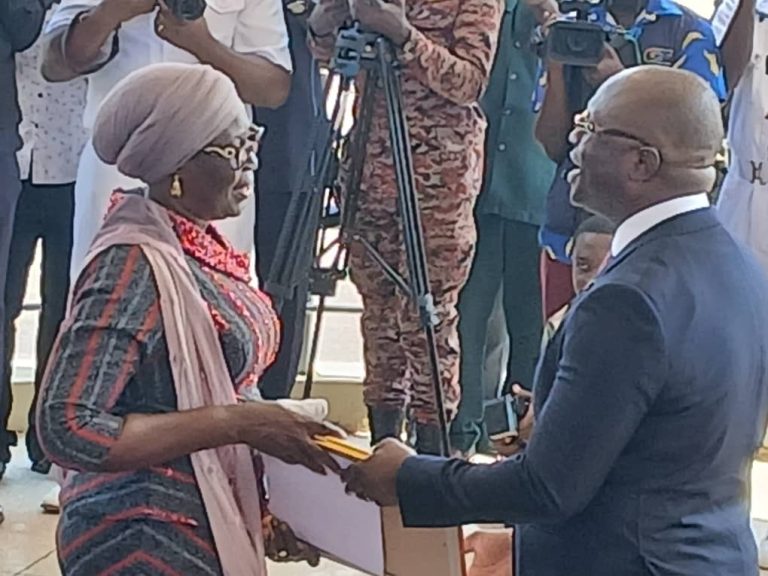
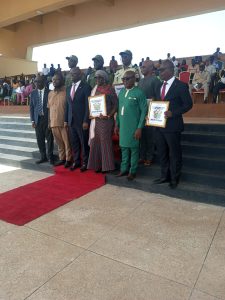
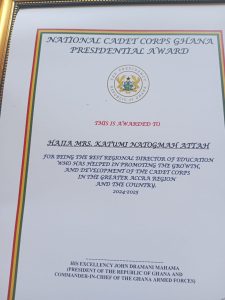
The Greater Accra Regional Director of the Ghana Education Service (GES), Hajia Katumi Atta Natogmah, has been named the Best Regional Director for the 2024–2025 academic year. The honour was conferred by President John Dramani Mahama in recognition of her outstanding contribution to the growth and development of education in the country.

This marks the second time Hajia Katumi has received a presidential accolade for her service. She was previously awarded under former President Nana Addo Dankwa Akufo-Addo for her exemplary leadership within the GES.

Hajia Katumi, a native of Nanung in the Northern Region, has served in multiple capacities across the education sector — from the Savannah Region to the Northern Region, and now Greater Accra — earning widespread respect for her commitment and professionalism.

Her latest recognition has been met with joy in her hometown of Nanung, where residents praised her continued efforts to elevate the region’s name on the national stage.

“Congratulations, Hajia Katumi. We, the good people of Nanung, are proud of the award. We pray for you to make Nanung proud,” a statement from community members read.

Her career continues to be seen as a symbol of pride and inspiration, especially for women in leadership and education across Ghana.


COVID-19: 107 out of 316 suspected cases confirmed, no deaths – Akandoh

Nollywood actor Tom Njeamanze solicits financial help amid battles with cancer

0

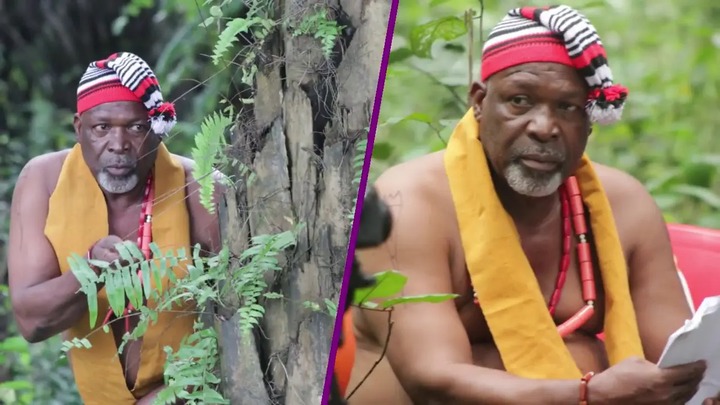
Veteran Nigerian actor, Tom Njemanze, has appealed to the general public for financial assistance in his battle with cancer.

The actor, who is currently receiving treatment in hospital, made the plea on Tuesday in a viral video circulating on the internet.

Sharing the video on his Instagram page, filmmaker Stanley Ontop revealed that Njemanze has been diagnosed with prostate cancer and urgently requires funds for surgery.

Yennutoona Foundation-Ghana Supports Widows, PWDs, Orphans

0

Konlan Namleeb presenting the items to beneficiaries in Nakpanduri


Yennutoona Foundation-Ghana, a non-profit organisation, has extended its support to vulnerable individuals in the Bunkpurugu-Nakpanduri district of the North East Region.

The beneficiaries include people with physical disabilities, the visually impaired, widows, elderly women, orphans, and others in need within the district.

The beneficiaries received bags of maize, clothing, and various food items.

Additionally, over 60 women’s groups were provided with cash grants to help expand their businesses.

In an interview with DAILY GUIDE during a brief ceremony, the Chief Executive Officer of Yennutoona Foundation-Ghana, Konlan Namleeb, indicated that during the lean  season, many rural communities in the district face food shortages, prompting him to support those in need.

According to him, the foundation has also provided cashew and shea nut seedlings to 60 women’s groups, enabling them to engage in farming and support their families.

“These seedlings will economically empower the women, allowing them to pay their children’s school fees and fulfil other family responsibilities,” he stated.

Mr. Namleeb revealed that Yennutoona Foundation-Ghana plans to train artisans in the district, equipping them with vocational skills to create sustainable livelihoods for themselves and their families.

He urged the government and other institutions to develop policies that positively impact vulnerable individuals in rural communities across the country.

FROM Eric Kombat, Nakpanduri

‘You have no moral right to ask Akufo-Addo, Bawumia to apologise to Ghanaians’

0

Former President John Agyekum Kufuor [R] Akufo-Addo and Dr Mahamudu Bawumia Former President John Agyekum Kufuor [R] Akufo-Addo and Dr Mahamudu Bawumia

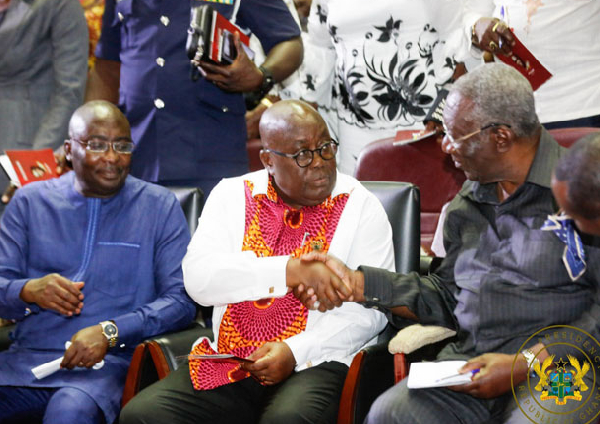
A member of the National Democratic Congress (NDC) Communications Team, Richard Nii Aryee, has launched a scathing critique of former President John Agyekum Kufuor, questioning his moral authority to ask former President Nana Addo Dankwa Akufo-Addo and former Vice President Dr. Mahamudu Bawumia to apologise to Ghanaians for the economic challenges and governance failures witnessed during their administration.

A leading member of the New Patriotic Party (NPP), Dr. Kobina Arthur Kennedy, recently disclosed that former President Kufuor had advised ex-President Akufo-Addo to apologise to Ghanaians for the economic hardship and governance failures that characterised his tenure.

Speaking in an interview on TV3 on Saturday, June 28, 2025, Dr. Arthur Kennedy stated that he picked up this information “from the grapevine” and strongly endorsed the call for an apology from the former president.

“I have heard from the grapevine that President Kufuor has suggested to President Akufo-Addo to apologise to Ghanaians. This is advice I agree with. He must apologise,” Dr. Arthur Kennedy said.

However, reacting to the reported advice by the former president, Nii Aryee speaking during a panel discussion on Kasapa FM, described Kufuor’s comments as hypocritical, accusing him of remaining silent throughout Akufo-Addo’s presidency despite widespread public discontent over several controversial decisions and policies.

“Kufuor looked on while Akufo-Addo inflicted hardship on Ghanaians,” Aryee said. “He was completely silent on the many wrongs of that administration. When $58 million was spent just to dig a hole for the National Cathedral—after Ghanaians were told no state funds would be used—did we hear a word from Kufuor? Not even once.”

He also cited the controversial Domestic Debt Exchange Programme (DDEP), which affected many individual bondholders and retirees, as another instance where Kufuor failed to speak up.

“There were a lot of harsh policies and actions that hurt Ghanaians, but Kufuor never condemned them. He didn’t even pass a comment. He simply failed to call out the rot in the Akufo-Addo government,” Nii Aryee said.

He stressed that it is now inappropriate for Kufuor to position himself as a voice of accountability, suggesting that his past silence undermines his current call for an apology from the former president and his deputy.

“Ex-President Kufuor has no moral right to now tell Ghanaians that Akufo-Addo and Bawumia should apologise. He had every opportunity to speak, but he chose silence,” he concluded.

KA

GhanaWeb Special: The gold market that fuels galamsey

How social engineering hacks your mind and your bank account

Interest: Ghana’s silent economic killer

0

Walk into any factory floor or trading stall today, and you will hear the same lament: “I borrowed to grow, but the interest is eating the profits faster than I can earn them.”

That theme now echoes in the data. The Bank of Ghana’s latest Domestic Money Banks Report shows that lenders had to wipe off GH¢654.2 million from their books between January and April 2025, money that borrowers simply could not repay. Even after last 7year’s financial clean-up, the stock of non-performing loans has climbed to GH¢21.7 billion and still accounts for nearly a quarter of total lending.

This growing pile of bad loans is not just an inconvenience, it is a recurring symptom of a deeper structural issue in Ghana’s financial ecosystem.

High write-offs are only the most visible scar. Because banks must price for that risk, the average 91-day treasury bill still yields around 14.93%, creating a benchmark that drags commercial lending rates into the mid-20s.

Businesses that borrow at those levels are, in effect, betting they can earn returns higher than many venture-capital portfolios, an almost impossible expectation in a business environment still battling inflation, which remains above 18.4%.

For many firms, that bet fails. Arrears build up, collateral is seized, employees are laid off, and once again banks are forced to write off loans, depleting their capital and confidence in the credit market.

Ghana’s sovereign finances are caught in a similar spiral. Parliament recently approved a US$2.8 billion restructuring agreement, pushing debt repayments as far as 2043 simply because the interest burden had become unsustainable.

Interest payments alone now consume more national revenue than education and health combined. This is not just a matter of accounting, it is a direct tax on development.

Every cedi spent servicing debt is a cedi lost to schools, roads, hospitals, or industrial transformation. Add to this the depreciation of the cedi, which increases the cost of imports, fuels inflation, and forces the Bank of Ghana to maintain high interest rates to stabilise the currency. The result is a high-interest, low-growth trap that locks the entire economy into stagnation.

The central issue lies in the design of our financial model. Conventional banking is structured around fixed interest. Once a loan is issued, the borrower is bound to repay not just the principal but the interest, regardless of whether the business succeeds or fails.

If revenues drop or costs rise, the bank continues to charge interest on the outstanding balance. The pressure builds, arrears grow, and borrowers eventually collapse under the weight. The system rewards lending volume, not long-term sustainability, and banks are incentivised to roll out short-term credit at high rates, hoping to recover quickly even if the business model is unsound.

There is an alternative, and it is not theoretical. Islamic banking operates on a fundamentally different principle: profit and risk are shared. Under this system, banks finance projects through partnership models where both parties invest capital and share the resulting profits or losses.

In a mushārakah (equity partnership), the bank becomes a co-owner of the business and earns returns based on actual performance. In a murābaḥah (cost-plus financing), goods are purchased and resold with a known profit margin, while ijarah (leasing) agreements allow clients to use assets while paying a rental fee. These are not mere religious arrangements, they are economically sound models tested across the globe.

Evidence from Asia, the Middle East, Europe and parts of Africa shows that Islamic banks tend to have lower non-performing loan ratios and greater resilience during periods of economic stress. This is because the financing is asset-backed, repayment terms are more flexible, and the bank’s income is directly tied to the success of the client’s venture.

The system discourages speculative lending and promotes long-term investment discipline. Risk is not pushed entirely onto the borrower, which means fewer defaults and more sustainable business outcomes.

In Ghana, non-interest banking is permitted, but its potential remains largely untapped. public understanding of Islamic finance remains limited. What Ghana needs is a deliberate shift. A dedicated Islamic Banking regulatory framework would provide legal clarity and investor confidence.

A central Financial Regulation Advisory Council of Experts (FRACE) in Islamic finance under the Bank of Ghana would ensure that products meet ethical and financial standards. Tax policies must be adjusted to treat Islamic finance on equal footing with conventional instruments. Government could pioneer a sovereign sukuk, an Islamic bond, backed by toll revenues, energy projects, or agricultural infrastructure. This would diversify the national borrowing base, reduce reliance on interest-laden loans, and create an example for the private sector to follow.

Public education is also key. Islamic finance should not be seen as a niche offering for a specific religious group, but as a practical, ethical, and economically sound solution to the challenges facing Ghana’s financial system. Entrepreneurs, investors, and policymakers must understand that the model can deliver not just compliance with faith-based principles, but real financial discipline, inclusivity, and resilience.

The Bank of Ghana’s data offers both a warning and a call to action. Writing off hundreds of millions of cedis every few months has become normalised. This cycle will not end until the country rebalances the risk in its financial system and embraces a model that ties credit to real economic activity.

Islamic finance offers a time-tested, globally accepted, and practically viable way to do just that. In a country battling high debt, persistent inflation, exchange rate volatility, and constrained fiscal space, Ghana must look beyond conventional tools. Islamic banking is not a replacement but a complement, one that offers hope for a more stable, inclusive, and sustainable financial future.

By Shaibu Ali (MBA,MSc,CIFE,CIBFP,CSCGP,CIFP,Ph.D), Director General, Islamic Finance Research Institute, Ghana.  President, Islamic Finance Professional Institute

Asante Kotoko TOP midfielder rules out of the 2025/26 football season

0

Asante Kotoko SC has confirm that their midfielder Andrews Ntim Manu has sustained an anterior cruciate ligament (ACL) injury and is set to undergo surgery in the coming days.

“The injury was sustained during our recent FA Cup victory over Golden Kick, where the midfielder was hauled off, five minutes into the second half and following a thorough medical assessment and imaging, our medical team and expert Doctors advise that surgical intervention is required”, the club stated it.

Recovery and rehabilitation are expected to rule him out of action for approximately nine months, possibly the midfielder won’t be able to kick a ball during the 2025/26 football season.

This is undoubtedly a significant setback for both the player and the club as we begin preparations for the CAF Confederation Cup as well as the new league season.

Andrews was the lynchpin of our midfield last season, demonstrating his exceptional commitment, and quality on the pitch.

Everyone at Asante Kotoko SC stands firmly behind Andrews during this difficult period.

Via/ Kotoko SC

Afrodancehall Origin Debate: ‘I Inspired Shatta Wale and Stonebwoy’

Ghanaian dancehall musician, Samini Ghanaian dancehall musician, Samini

Ghanaian dancehall veteran Samini has taken to social media to share his thoughts amidst ongoing debates about the origin of the Afro-dancehall genre.

His comments follow a recent online stir triggered by Stonebwoy, who declared himself the pioneer of Afro-dancehall after Billboard described Moliy’s song “Shake It To The Max” as an Afro-dancehall track.

On June 30, 2025, Stonebwoy posted on X in response to Billboard’s post, asserting his role as the originator of the genre, a fusion of African rhythms and traditional dancehall.

However, Samini, who has found himself drawn into the conversation, responded with a series of tweets on July 2, 2025, clarifying his position.

He said the emergence of Afro-dancehall is a natural progression from what he had already established with ‘African dancehall’.

According to him, although he played a crucial role in shaping what is now known as Afro-dancehall, he does not seek to claim ownership of the genre.

Samini stated that he even inspired Stonebwoy, who was under his tutelage at the time to fuse his local language (Ewe) into dancehall music.

“I’d be lame to claim #Afrodancehall. I saw and inspired it with my #Africandancehall… JMJ was my witness when I told my boy to tone down the patois and fuse ayigbe since he’s more comfortable with that over twi.

“African dancehall birthed #Afrodancehall #Gboi birthed #bhim #SummerKing go open keys. Man vex madd @stonebwoy. I Dey watch how you go educate these new people. You know me better. Akyesaaaaaaaaaa,” he said.

Samini also revealed that his influence extended beyond Stonebwoy, claiming he inspired Shatta Wale as well.

“I’ve always represented African dancehall, my guy. I inspired @shattawalegh to start looking this way lol. Cus I directed and put out @stonebwoy first album and it was a hit lol. I’ve never been mute when it comes to stone. Sometimes I come out to defend when I don’t have to. Don’t push me,” he added.

Watch the post below:

JHM/EB

GhanaWeb Special: The gold market that fuels galamsey:

GACRA takes on ‘Physician Assistants and Certified Registered Anaesthetists’ for impersonation

0

James Nwisangra is the President of the Ghana Association of Certified Registered Anaesthetists James Nwisangra is the President of the Ghana Association of Certified Registered Anaesthetists

The Ghana Association of Certified Registered Anaesthetists (GACRA) has issued a warning to a group calling itself the “Physician Assistants and Certified Registered Anaesthetists Group” over what it describes as impersonation by the latter.

According to GACRA, the Physician Assistants and Certified Registered Anaesthetists Group has been illegitimately presenting itself as the body representing the interests of Certified Registered Anaesthetists in Ghana, thereby misleading the public.

The Ghana Association of Certified Registered Anaesthetists has therefore issued a legal notice to the Physician Assistants and Certified Registered Anaesthetists Group to “cease and desist” from holding itself out as a representative group for Certified Registered Anaesthetists.

In a press statement and a legal notice addressed to the group, GACRA reaffirmed its legal and exclusive mandate to represent Certified Registered Anaesthetists in Ghana. The association cited its registration under the Companies Act, 2019 (Act 992) and its recognition as a union with both a Trade Union Registration Certificate and a Collective Bargaining Certificate under the Labour Act, 2003 (Act 651).

“Our attention has been drawn to a group actively impersonating GACRA and misleading the public by purporting to represent Certified Registered Anaesthetists in Ghana,” said the statement signed by James Nwinsagra, the President, and Joshua Annovi Kunfah, Vice Secretary of GACRA.

“This conduct is not only unlawful and deceptive but also threatens the integrity of professional standards and public sector negotiations,” it added.

GACRA indicates that its checks revealed the Physician Assistants and Certified Registered Anaesthetists Group has no legal registration, is not recognised as a trade union, and does not possess a collective bargaining certificate, yet has been posing to represent the interests of GACRA by aligning with the Ghana Registered Nurses and Midwives Association.

The association distanced itself entirely from the group’s activities, warning health professionals and stakeholders that any engagement with the unrecognised body is done entirely at their own risk.

In the association’s legal notice, served through its counsel and copied to the Ministry of Health, Ghana Health Service, National Labour Commission, and the Chief Labour Officer, GACRA directed the group to “cease and desist from all conduct or representation” that implies it has any authority to act on behalf of Certified Registered Anaesthetists.

Consequently, GACRA has given the group a 10-working-day ultimatum to comply or face legal action, including possible criminal prosecution for impersonation and fraudulent misrepresentation.

“This letter is not a waiver of any legal rights. Should this conduct persist, our client will pursue the fullest legal remedies available,” the letter warned.

GhanaWeb Special: The gold market that fuels galamsey

How social engineering hacks your mind and your bank account

‘Unpredictable’ Bryan Mbeumo gets huge green light as Man Utd signing No 3 given big blessing

0

A Bryan Mbeumo and Matheus Cunha partnership is exactly what Manchester United need to elevate themselves back up the Premier League table – but it should not spell the end of their attacking additions with a big-name striker needed next, former star Louis Saha has told TEAMtalk.

The Red Devils are determined to bounce back from a dismal 2024/25 campaign that resulted in their lowest ever Premier League finish of 15th. And with Ruben Amorim given the financial backing to sign the players capable of bringing his 3-4-2-1 formation to life, Manchester United have emphasised strengthening their attack first and foremost.

While a deal for Cunha was very quickly agreed, it’s not been such a simple process getting a deal over the line for Mbeumo. And having had two offers turned down already, Brentford continue to play hardball – even revealing the player could stay at the Gtech Stadium – to try and squeeze more money out of United.

Despite the difficulties in securing a deal, former Red Devils striker Saha insists Mbeumo is exactly the sort of talent United need.

Speaking exclusively to TEAMtalk, in association with Coin Poker, Saha stated: “Of course, United have some players who can already offer an attacking threat, but the problem is that there aren’t enough of them, and not enough of them who score regularly.

“Mbeumo is someone that has a proven record in the Premier League, so I think that he will have a huge impact in terms of consistency, in terms of power, what we need, especially at the top. I like his unpredictability as an attacker, he is definitely the type of player that Manchester United need right now.

“On his own, he can create a lot of goals and assists regardless of the tactical system, and without any help from any other players.

“He will get the goals, he will get the assists, and United need both of those things.”

Saha added: “I definitely think that he and Matheus Cunha will enjoy life together, and so will the other players up front. Everything will be more balanced with these new signings. United will have threats through the middle, and on the left and on the right. That’s not been the case for the last few years.”

Man Utd transfers: Viktor Gyokeres should follow for Amorim

With Amorim married to his 3-4-2-1, United are being strongly backed to reunite the Portuguese tactician with his former Sporting CP striker Viktor Gyokeres – and Saha can certainly see why, saying he’d be the perfect addition for the Red Devils.

“Viktor Gyokeres is definitely one of the best No.9s in Europe, and there aren’t many players with scoring records like him. He got about 40 goals last season, and he’s got the ability to be extremely dangerous in the Premier League.

“He’s physically strong, he can hold on to the ball, he can create his own chances. He’s a striker who’s worked out how to be dangerous all the time, and that’s exactly what United need.

“He can operate in the box, run in behind, he can play on the shoulder of defenders. He’s one of the best in the world and you can see it in his numbers. He has the ability to propel Manchester United to another level.

“Gyokeres’ arrival wouldn’t guarantee United the title, but he will always be a threat the opposing team needs to worry about, and that will create more opportunities for players like Cunha, Mbuemo and Bruno [Fernandes].”

Man Utd transfer latest: New move for Rashford; Amorim rejects £70m striker

Meanwhile, Marcus Rashford’s brother and agent is working hard on securing the forward a move overseas after David Ornstein confirmed it was game over as far as his Manchester United career is concerned, and with a new Bundesliga suitor strongly considering an offer to rival the player’s ‘dream’ transfer.

Elsewhere, Fabrizio Romano has confirmed United have rejected the chance to sign a clinical striker who previously lit up the Premier League despite being offered a deal, while another club have quickly swept in and secured an agreement.

The transfer guru has also deemed another striker in United’s sights as ‘near impossible’ given the asking price involved.

Any United transfer moves, though, could at least now be aided by an imminent Real Madrid transfer, which will ultimately help put some much-needed additional funds into the Old Trafford kitty.

Mbeumo v Salah v Saka: Man Utd target compares favourably

Bryan Mbeumo, Salah, Saka stats comparison last three seasons

Ghana, India to sign landmark vaccine manufacturing agreement during PM State visit

0

Ghana is poised to take a significant leap in healthcare innovation as it prepares to sign a landmark agreement with India to establish a vaccine manufacturing hub in the country.

The announcement was made during a media briefing by the Minister for Foreign Affairs and Regional Integration, Samuel Okudzeto Ablakwa, ahead of the historic two-day state visit of Indian Prime Minister Narendra Modi, scheduled from July 2 to July 3, 2025.

Elephant in the room: Why Ghana missed the June deadline for 5G

0

On November 1, 2024, there was a grand event at the La Palm Royal Beach Hotel, which marked the ceremonial launch of a Ghana’s first shared 4G/5G network under an exclusive 10-year license granted to Next Generation Infrastructure Company (NGIC).

But it was not yet an operational launch, which would have meant the network was actually live for public consumption from that date. As we speak today, it has been six months since the “launch” but there is still no live public 5G network in Ghana yet.

Speaking of live 5G network, the then Minister of Communications and Digitalization, Ursula Owusu-Ekuful, under whose tenure the ceremonial launch was done, gave a December 2024 deadline for all three telcos in Ghana – MTN, Telecel and AT Ghana, to rollout live 5G networks for public consumption. In fact, she said the network was ready and so if by December 2024, any telco was not offering 5G, then customers should question that telco. In spite of that bold statement, six months have passed and we still don’t have a live 5G network anywhere in Ghana yet.

Initially, the deadline for the live rollout was extended to January 2025, then to May 2025. Recently, new sector Minister, Sam George made a public announcement that the sole wholesaler for the 4G/5G network in Ghana, NGIC has assured him that 5G will go live in Ghana in June 2025, which is this month. He then stated that he is going to hold them to that deadline, and if they fail there will be consequences, which may include a possible review of the 10-year exclusive licensing terms. The Minister did state that he is not a fan of terminating contracts and licenses, particularly because such actions have financial consequences for the state. But he will not hesitate to review the terms of the license if it becomes necessary.

NGIC itself has not made any public statement as to when the network will go live, but even if we took the Minister’s word for it, the month of June is gone, and we still don’t have live public 5G network anywhere in Ghana. So, what are the operational and regulatory hurdles which have been in the way of 5G going live in Ghana?

Operational issues

Tower rollout

According to Honourable Sam George, NGIC assured him that by June they would have rolled out at least 350 cell sites, comprising of 200-250 sites in Accra and 100-150 sites in Kumasi, out of which at least 50 will be 5G sites, adding that he is looking forward to nothing less than what they promised. But at the last count NGIC had rolled out only up to 22 cell sites mainly in Accra and Kumasi, which is far cry from the promise, and woefully inadequate to ensure a meaningful impact across the country.

But we are reliably informed that all the equipment needed to rollout the 350 cell sites are in country and have been warehoused here, waiting for a number of regulatory approvals to make their rollout worth the while of the stakeholders. Rolling out such equipment and managing them cost a lot of money in the form of monthly fees and utility bills. A typical example of such bad business decision was when Glo first came to Ghana – they rolled out cell sites to cover 90% of the country even though there was no real guarantee of customer presence across the country. In the end they had to decommission a lot of the sites even before the company finally collapsed. So, if regulatory approvals for industry players to connect to the shared platform and use the sites are still pending, it would not make commercial sense to roll them out immediately. What is important is that the equipment are here and ready to be rolled out.

Hesitation from Towercos

Again, NGIC and tower companies (towercos) – mainly ATC and Helios Towers – are yet to finalize on agreements to ensure that the towercos will make their towers available for the rollout of 4G and 5G networks across the country.

Towercos, who are critical to site deployment, remain hesitant to fully commit to NGIC’s rollout, largely due to the historic financial losses in the Ghanaian telecom market. Specifically, significant unpaid obligations from legacy telcos such as AT Ghana and Telecel Ghana—who continue to struggle under the SMP-dominated market structure—have made towercos risk-averse and reluctant to expose themselves to further credit exposure without robust guarantees and reform. It would be recalled that the Minister recently announced that ATC alone presented a bill of GHS1.5 billion, which is the debt owed by AT Ghana alone, not to talk of how much Telecel owes ATC. So, the towercos are apprehensive about entering into another relationship with NGIC, which may lead to more unpaid bills and fees.

However, all of this underscores the importance of NGIC’s neutral-host model as a pathway to reduce financial fragmentation and ensure centralized accountability. The shared model promises to reduce the financial burden on operators and therefore mitigate the incident of operators piling up debt to towercos. It also highlights the need for intentional regulatory support to rebuild investor confidence in Ghana’s telecoms market.

The regulator and the government are not oblivious to these challenges and what policy decisions they can bring to bear on this matter in the common interest of the industry and of Ghana. Instead, it appears that the licensed wholesaler has been left on its own to negotiate that difficult curve and meet deadlines, which cannot also happen without certain specific regulatory interventions.

Delays in NOC inspect Report and Network Certification

For instance, NCA completed technical inspection of the Network Operation Centre (NOC) and backup facilities at NGIC several weeks before they issued an official report and certification to NGIC. This very important report is a prerequisite for full operational clearance. But from our understanding, it took at least eight weeks before that report was delivered to the operator, and that has also impacted the operator’s ability to meet deadlines.

Pending Regulatory Issues

There are very critical aspects of the operational issues that require major regulatory approvals, guidelines and directives for them to happen; and these are known to the regulator and the Minister.

Delays in SIMs and PLMN approval for testing

For example, the National Communications Authority (NCA) has so far granted limited approval for testing purposes—specifically, authorizing 50 SIM cards for the wholesaler to begin network testing. These SIM cards are currently in the provisioning phase. Additionally, the NCA has approved the use of a Public Land Mobile Network (PLMN), but strictly for testing. The PLMN is a critical component, as it enables the final configuration of the network, system integration, and interoperability testing with partner entities.

It is important to note that these are not the substantive approvals required for full commercial deployment. In fact, there was a significant delay in securing even these initial testing approvals, and that delay has already had a tangible impact on the overall rollout timeline. The core authorizations necessary for full-scale operations are still pending.

Spectrum Interference 

There is persistent interference with the allocated spectrum, which continues to affect network stability and quality. Without a clean and interference-free spectrum, there is no guarantee of reliable service to customers even if the network is launched today. Specifically speaking, there was an interference in the 3.5GHz spectrum from Ghana Civil Aviation Authority (GCAA) satellite receiver because the operator’s tower is located behind airport shell filling station in Accra. We are aware that just recently, the NCA managed to get GCAA to shift its frequency to 3.9GHz, which is a bit farther away from the NGIC spectrum band. So, now testing is ongoing before NGIC can get the greenlight to move forward with that.

The other challenge is with the 2.1GHz spectrum allocated to the operator. Simply put, there is a “raised noise floor” in that spectrum, which will interfere with any communication signal.

Here is how an expert explained “raised noise floor” in lay man’s language:

Imagine you’re in a very quiet room trying to hear someone whisper from across the room. Even when no one is talking, there’s still some background sound — maybe a humming fridge, outside wind, or distant traffic, which makes it difficult for you to hear the whisper. That constant background sound is the noise floor in a system.

In electronics or communication systems (like radios, microphones, or cell phones), there’s always a tiny amount of unwanted random signal — like static or electronic hiss — even when no real signal is being sent. This is called system noise. If the system noise is higher than the voice signal during a call, it will be hard for you to hear each other’s voices. It’s like trying to hear a whisper during a loud concert.

We are aware that after several months of collaborative testing and diagnosis, the NCA has now localized the issue. The exact source of the noise has still not been identified yet, but further investigations are underway. However, this far the current state of the spectrum allows NGIC to operate within the band without significant interference.

Is it possible that some saboteurs are deliberately causing this interference? Yes! But that cannot be proved yet.

Approval and Guidelines for Telcos and ISPs to Connect

At the recent meeting with CEOs of the telcos, sector Minister Sam George made the following statement:

“The regulator [NCA] has brought to my attention a request for connecting entity licenses so that the likes of AT and Telecel that are pretty constrained spectrum-wise could immediately take advantage of some resources on the NGIC platform. MTN is also welcome if they are interested to take part of those resources.”

That was a clear confirmation that that critical regulatory intervention such as connecting entity approvals for telcos and policy guidelines for internet service providers (ISPs) have not yet been granted.

To date:

  • No approvals have been granted to the two telcos (AT and Telecel) who have applied to participate in NGIC’s wholesale network.
  • No regulatory framework or policy has been issued to guide ISP participation in delivering retail 4G/5G services over NGIC’s infrastructure.

These omissions mean that NGIC is legally and operationally constrained from commencing the necessary technical configuration and integration processes with participating retail service providers (telcos and ISPs).

We are aware that the regulator is working on it. But the fact as of today is that, that is pending.

Configuration Timeline and Market Readiness

Once the required regulatory approvals and policy frameworks are in place, our understanding is that NGIC will require a minimum of 6–8 weeks to conduct technical configuration, integration and Mobility/FWA testing. Only then can commercial wholesale services be launched to participating telcos and ISPs. Until we get to that point, the infrastructure—despite being warehoused and ready—is effectively idle, which delays Ghana’s ability to benefit from the advantages of shared 4G/5G infrastructure.

Deadline vs KPIs

So, it brings us back to the Ministers June deadline statement and subtle threat to review the license if the deadline is not met. Moreover, per the key performance indicators for NGIC, they have at least a 3-year initial period to meet specific targets before their work can be subjected to regulatory scrutiny. It is very important that the three-year period is honoured, particularly in the face of all the hurdles and deliberate attempts by some industry players to make the whole arrangement fail.

So, in our humble opinion, what the sector minister should be doing in the interest of Ghanaians is to ensure that the regulator is playing its role timeously to clear the regulatory hurdles and make way for Ghanaians to start experiencing 5G soon. Setting deadlines are important to ensure that operators are held accountable to their commitments. But the deadlines should first be set on the regulator to fulfil its part of the deal, then we can confidently hold the operator to deadlines. Anything short of that would not do much if the regulatory hurdles still persist. We are fully confident in the Minister and the regulator that they will deal with these issues in the interest of the public. In fact, we are aware that work is being done to address these challenges.

Looking Ahead to Strategic Benefits of the Shared Platform Model

For the Regulator and Government

  • Reduces the burden of infrastructure redundancy and enables policy-driven digital inclusion.
  • Helps address the market dominance of the significant market power (SMP) through open-access mechanisms.
  • Creates a transparent licensing and compliance regime across Telcos and ISPs.

For Telcos and ISPs

  • Access to a national network without the cost of individual infrastructure deployment.
  • Improved service quality and coverage while enabling cost-efficient market entry and growth.
  • Offers a fairer, level playing field to compete with the SMP incumbent.

For Towercos and Investors

  • A consolidated and accountable wholesale operator (NGIC) reduces credit risk.
  • Provides clarity, scale, and stability to support long-term investment.
  • Rebuilds trust in the telecom value chain by breaking the legacy of non-payment and instability, particularly for the towercos.

For Consumers

  • Accelerates access to high-speed 4G and next-generation 5G services at lower costs.
  • Improves service coverage, reliability, and performance—especially in underserved areas.
  • Expands consumer choice by supporting a more competitive service provider ecosystem.

Conclusion and Call to Action

To fully unlock the transformational potential of the NGIC model, regulatory and policy action must now match the ambition of the infrastructure investment already made. Ghana stands at a strategic crossroads; by enabling NGIC’s open-access model, it can dismantle monopolistic bottlenecks, revitalize investor and towerco confidence, and position itself as a digital infrastructure leader in West Africa.

Delays, if prolonged, risk not just NGIC’s rollout, but Ghana’s broader goals of digital transformation, economic competitiveness, and inclusive growth.


The author, Samuel Dowuona is a multiple awarding-winning journalist and telecoms industry analyst. He can be contacted via personal email address – [email protected]

AGI, GUTA warn tariff hike could undermine 24-Hour economy rollout

0

The Association of Ghana Industries (AGI) has raised alarm over the recent 2.45% increase in electricity tariffs, warning that the adjustment could derail the successful implementation of the government’s 24-hour economy policy.

The Public Utilities Regulatory Commission (PURC) announced the increment earlier this week, citing exchange rate fluctuations, inflationary pressures, rising fuel prices, and higher operational costs as key factors behind the decision.

However, speaking to Citi News, Greater Accra Regional Chairman of AGI, Tsonam Akpeloo, said the timing and magnitude of the hike are concerning, especially for businesses expected to run extended hours under the new policy.

“If you’re talking about a 24-hour economy, you’re asking industry to work beyond the usual eight hours and continue through the night. That means higher electricity consumption. The cost of power will increase—possibly doubling what we’ve previously paid,” he noted.

“A 2.5% increase under normal production is one thing, but with extended hours, the actual cost impact will be far greater,” Akpeloo added.

The Ghana Union of Traders Association (GUTA) echoed similar sentiments, cautioning that the tariff hike would inevitably translate into higher consumer prices.

GUTA President Dr. Joseph Obeng warned that businesses have little choice but to pass on the additional costs.

“This time, we won’t just keep talking. For instance, plastic manufacturers have had their taxes raised to 7% and they’ve already announced price increases. That’s what we’re going to see more of,” he said.

“This is a cost issue—if operational costs go up, product prices will also go up. It’s that simple.”

Both AGI and GUTA are calling on the government to re-evaluate the economic impact of rising utility costs, particularly as it prepares to roll out policies aimed at boosting productivity and lowering the cost of living.

The 24-Hour Economy policy, a flagship initiative of the National Democratic Congress (NDC), is set to be launched today, Wednesday, July 2.

It seeks to promote round-the-clock operations in sectors such as manufacturing, health, transportation, and retail, with the aim of reducing unemployment and stimulating national growth.

President Mahama Shócks Ghanaians As He Discredits Parliament From Holding The Peace Of The Nation

0

President John Dramani Mahama has attributed Ghana’s continued stability and peace not to political strategies, but to the spiritual devotion and prayers of its citizens. Addressing thousands at the National Day of Prayer held at Independence Square, Mahama emphasized the critical role of faith in preserving the nation’s unity amid global and regional unrest.

Delivering a heartfelt speech, the former president stated, “If Ghana still stands strong despite economic challenges and political tensions, it is not because of the brilliance of our political system — it is the strength of prayer that holds us up.”

He commended the contributions of religious leaders across all faiths, highlighting their often unseen efforts in praying for the country’s well-being. “While politicians debate, our spiritual leaders kneel. While we speak, they pray. That is what sustains Ghana,” he said to resounding applause from the interfaith gathering.

Mahama also touched on the divisive nature of contemporary politics, warning that leadership without humility and governance devoid of spirituality can endanger a nation’s future. Though he refrained from naming individuals or parties, his message served as a cautionary note on the growing polarization in the country’s political discourse.

The event, which drew faith leaders, government officials, students, and members of civil society, was marked by a unifying spirit and spontaneous expressions of faith. The former president urged political leaders, particularly the younger generation, to embrace a life of humility, service, and prayer. “Pray more. Speak less. Serve always,” he said, a phrase that was echoed throughout the evening.

In light of rising political instability and conflict in parts of West Africa, Mahama reminded Ghanaians not to take their democracy and peace for granted. “Peace is not inherited. It must be nurtured, protected, and renewed — through dialogue, unity, and prayer,” he asserted.

As a way forward, he proposed the institution of a national week of fasting and prayer each year — not as a reaction to crisis, but as a gesture of national gratitude and spiritual commitment.

As the sun set over Independence Square and the sounds of prayer filled the air, the gathering reinforced a powerful message: Ghana’s resilience lies not just in its institutions, but in the enduring faith of its people.

Source

GRA to implement GHC1 Fuel levy July 16

0

The government has announced that the implementation of the Energy Sector Levies (Amendment) Act, 2025 (Act 1141), will officially commence on Wednesday, July 16, 2025.

This follows a prior postponement by the Ghana Revenue Authority (GRA) aimed at monitoring global market conditions and preserving recent gains in domestic fuel prices.

The decision was made in consultation with the Ministry of Finance and the Ministry of Energy, following a comprehensive review of current market indicators.

Authorities said that the timing aligns with the government’s broader efforts to maintain economic stability while addressing the financial needs of the energy sector.

The amended law, first detailed in Tax Information Circular (TIO) No. 2025/004, introduces revised rates for the Energy Sector Shortfall and Debt Repayment Levy (ESSDRL) across several petroleum products.

These changes are expected to help close funding gaps and support the repayment of legacy debts in the energy sector.

Revised ESSDRL Rates under Act 1141:

HS Code Product Description Common Name Old Rate (GHS/Litre) New Rate (GHS/Litre)
2710124000 Motor spirit, super Petrol (PMI) 0.95 1.95
2710192100 Gas oil Diesel (AGO) 0.93 1.93
2710192100 Gas oil Marine Gas Oil (Local) 0.03 0.23
2710192100 Gas oil Marine Gas Oil (Foreign) 0.93 1.93
2710192400 Heavy fuel oil Residual Fuel Oil (RFO) 0.04 Unchanged

The Ghana Revenue Authority (GRA) in its statement,  encouraged stakeholders in the petroleum downstream sector to take note of the new rates and make the necessary adjustments to their pricing structures ahead of the effective date.

The Energy Sector Levies were originally introduced to address persistent financial shortfalls in the energy sector. This latest amendment is expected to generate additional revenue to help settle outstanding debts and support critical energy infrastructure.

Officials say they will continue to monitor the impact of the revised levies and maintain engagement with industry players to ensure smooth implementation.

Postponed energy Levy must trigger comprehensive revenue review – Oppong Nkrumah urges gov’t

Circuit court holds 15 Chinese and Ghanaian in custody over illegal mining

0


Circuit court holds 15 Chinese and Ghanaian in custody over illegal mining – Ghana Business News


‘I feel threatened’ – Cina Soul cries out over ‘death threats’ from Big Akwes

Ghanaian singer-songwriter Cina Soul Ghanaian singer-songwriter Cina Soul

Ghanaian singer-songwriter Cina Soul (Christie Quincyna Quarcoopome) has expressed her fears following a chilling remark made by Kumawood actor Big Akwes.

In a video shared on her X handle, Big Akwes was seen during an interview on Bryt TV playing a Kiss‑Marry‑Kill game.

When asked to choose between colleague actress Vivian Jill and Cina Soul, he stated that he would marry Vivian Jill.

In a disturbing turn, Akwes graphically stated that he would “kill Cina Soul,” describing how he would spiritually summon her via a magic mirror, stab her repeatedly with a knife, and drink her blood.

Shaken and “deeply unsettled,” Cina Soul took to social media, tagging the Ghana Police Service and the Ministry of Communications—to express her fear and urge swift action, stating that she now feels genuinely threatened.

“I’m deeply unsettled by this. I initially chose not to respond to earlier comments because I do not wish to be associated with this individual, but at this point, I feel genuinely threatened.

I may not know the proper channels to report this, but it’s critical we take a firm stance against this kind of dangerous rhetoric being broadcast on our TV and radio platforms. We must not normalize hate,” she posted.

Her cry for help has been met with an outpouring of support, while both Big Akwes and Bryt TV have been widely condemned for airing the clip.

A History of Verbal Attacks

Big Akwes first came under fire in April 2025 after he criticized Cina Soul for the outfits she wore in a dance promo for her album Did I Lie?

He labelled her appearance “attention-seeking” and body-shamed her, prompting widespread backlash.

In response, Max TV issued a public apology to Cina Soul, acknowledging that the remarks were inappropriate.

Meanwhile, Akwes doubled down, refusing to apologise and urging viewers to “re‑analyse” the clip.

ID/KA

GhanaWeb Special: The gold market that fuels galamsey

GH¢60k was too much, so I said they should kill him – Sister regrets after ‘kidnappers’ murder brother

0

Maabena (M), a sister to the late Asuom-based driver Francis Owusu Maabena (M), a sister to the late Asuom-based driver Francis Owusu

Maabena, a sister to the late Asuom-based driver Francis Owusu, popularly known as Yaw Owusu, has expressed regret over a comment she made during a ransom call, which she believes may have led to her brother’s death.

Francis Owusu was allegedly murdered by kidnappers in the Kwaebibirem Municipal District of the Eastern Region after his family was unable to meet a ransom demand.

Speaking in an interview on Asuom News, which was shared on social media, Maabena recounted the chilling events that unfolded.

“My name is Maabena. Yaw Owusu is my junior brother. On Saturday morning, a woman called me, asking if I was the mother of Francis Owusu. I told her that I was the one, “she said.

“She then told me that she lived with Yaw Owusu, and he had told her he was going to work, but he hadn’t returned home and couldn’t be reached.”

Maabena said she immediately informed other family members, and they all began trying to contact Yaw Owusu.

“We kept calling his phone. After several attempts, someone finally picked up. I told the person we were looking for our brother, and he responded that my brother had been brought to them to be killed. They were demanding GH¢60,000 within two hours or they would murder him,” she recounted.

She continued, “I thought it was one of those scam calls, so I said, even if we sell our family house, we can’t raise that kind of money, so you can kill him. He then said, if that is what I have said, they have heard then he ended the call.”

Maabena revealed that the next day, her sister asked for a photo of Yaw Owusu.

“I sent the picture to her, and she started crying. When I asked what was wrong, she said they had found Yaw Owusu’s lifeless body.”

The family is now pleading with the authorities to investigate the matter.

“We are asking the government to investigate this matter for us.”

@asuomnews.com Sad: Sister of Late Francis Owusu(Yaw Owusu) Tearfully Reveals: “The Alleged Kidnappers Demanded GHS 60,000 From Us”. #fypageシ #fypシ゚viralシfypシ゚ ♬ original sound – Asuom News.com

AM/KA

GhanaWeb Special: The gold market that fuels galamsey

Ova Wise Denies Paternity Rumors Linking Him to Hajia Bintu’s Newborn

Ghanaian musician and music executive Jesse Kumordzie, popularly known as Ova Wise, has firmly denied rumors linking him to social media influencer Hajia Bintu as the father of her alleged newborn son.

The speculation, which gained traction on platforms like Gossip24.com and Snapchat, was fueled by a post from blogger @wickedbloggergh on June 19, 2025, claiming that Bintu, whose real name is Naomi Asiamah, gave birth three weeks ago and was struggling to identify the child’s father. Ova Wise responded with a cryptic Instagram post on June 30, 2025, stating, “Never spoken to, never moved to, never had each other’s contact, that is a place I have never been to,” effectively dismissing any connection.

The rumors also implicated Nigerian music mogul Don Jazzy and others, all of whom have distanced themselves from the paternity claims. Bintu, a 27-year-old Koforidua Technical University alumna known for her curvy figure and viral TikTok videos, has remained silent, neither confirming nor denying the reports.

Meanwhile, a separate controversy involving media personality Deloris Frimpong-Manso, known as Delay, surfaced when rapper Amerado expressed disappointment over the removal of his interviews from her YouTube channel. During a June 2025 interview, Amerado, who thanked Delay for her support at the 2023 Ghana Music Awards, questioned the shift in their relationship, noting the last public acknowledgment was a 2022 birthday message. This sparked speculation about tensions, though no clear link to the Bintu saga was established.

The paternity drama has reignited debates about social media’s role in amplifying personal controversies. Bintu, with over a million followers across Instagram and TikTok, has faced similar rumors before, including a 2021 claim by @Abathegreat that she was pregnant by her manager, which she refuted with new photos.

Source

Meet the Father of Mahama Ayariga and What He is Known For

0

Meet the Father of Mahama Ayariga and What He is Known For

News Hub Creator21h

Frank Asumah Abdulai Ayariga, the father of Mahama Ayariga, was a respected Ghanaian politician and a key figure in the political history of the Upper East Region. He served as the Member of Parliament for Bawku during Ghana’s Third Republic from 1979 to 1981. A member of the People’s National Party (PNP), Frank Ayariga played a significant role in the government of President Hilla Limann until the military coup led by Jerry John Rawlings in December 1981 abruptly ended his parliamentary career.

Born in Tinsungo, Bawku, Frank Ayariga was a member of the Kusasi Royal Family and was widely respected for his leadership and community engagement. He married Anatu Ayariga and had eleven children, two of whom—Mahama Ayariga and Hassan Ayariga—have become notable political figures in Ghana.

Following the 1981 coup, Frank Ayariga went into exile in Nigeria. He spent six years there and returned to Ghana in 1987 after being cleared of corruption allegations. His resilience and quiet strength left a lasting legacy in Bawku and beyond.

According to a report by Adom Online, Frank Ayariga passed away in February 2021—a loss deeply felt by his family and the political fraternity in Ghana. His contributions to Ghana’s political evolution, particularly in the north, continue to inspire future generations, especially through the public service of his children.

Two-Piece Outfit Ideas for Every Lady

0

Two-piece outfits have taken over the fashion scene, offering women stylish options that are both versatile and easy to wear. Whether you’re heading to brunch, the office, a party, or just enjoying a casual day out, there’s a two-piece set for every occasion. The beauty of two-piece outfits is that they can be worn together or mixed with other wardrobe pieces, giving you endless styling possibilities.

Casual Sets: For a laid-back and trendy look, try a crop top with matching shorts, joggers, or wide-leg pants. These sets are perfect for weekend outings, running errands, or hanging out with friends. Pair them with sneakers, sliders, or flat sandals and simple accessories to complete the relaxed vibe.

Formal and Work Styles: Blazer and trouser sets are ideal for office wear or formal events. Go for tailored cuts in solid colors like black, beige, or navy, or try softer tones like mint or dusty pink for a more modern touch. Pair with heels and a structured bag for a polished, professional look.

Evening and Party Looks: Glamorous two-piece sets with sequins, lace, or satin fabric are perfect for evening occasions. A crop top and high-slit skirt combo or a bralette with palazzo pants can make a bold fashion statement. Accessorize with statement jewelry and elegant heels to elevate the outfit.

Ankara or African-Inspired Sets: Two-piece Ankara outfits are vibrant and culturally rich. You can go for a peplum top and skirt, or a crop top and high-waist pants. These styles are great for weddings, festivals, or cultural events.

From comfort to elegance, two-piece outfits allow you to stay fashionable with minimal effort. Mix, match, and step out in style.

24-Hour Economy policy to be launched today

0

Ghana’s long-anticipated 24-Hour Economy policy will be officially launched today, Wednesday, July 2, in a bold effort to drive economic transformation, enhance productivity, and tackle unemployment through round-the-clock operations in key sectors.

The initiative—flagship among the National Democratic Congress (NDC)’s manifesto promises—is designed to encourage continuous, shift-based work in industries such as manufacturing, agro-processing, healthcare, transportation, and retail.

Described by the government as a “game changer,” the policy is expected to create thousands of new jobs, increase national output, and unlock value across supply chains. Companies that enroll in the programme will benefit from tax incentives, access to stable electricity, and enhanced nighttime security.

Goosie Tanoh, Presidential Advisor on the 24-Hour Economy, outlined the framework of the policy at the launch event, noting that it is built on three core pillars: transforming production, improving supply chains and market systems, and strengthening human capital.

“These foundational anchors are supported by eight strategic sub-programmes,” he said.

Among the sub-programmes are:

  • Grow24 – focused on agricultural modernisation

  • Make24 – supporting industrial and manufacturing growth

  • Connect24 – improving logistics and supply chain systems

  • Aspire24 – promoting a national culture of productivity

A significant component of the policy is the integration of digital skills into the Technical and Vocational Education and Training (TVET) system to prepare youth for emerging job opportunities. The “Show Ghana” initiative was also announced to leverage the country’s cultural heritage for tourism and foreign revenue generation.

Speaker of Parliament Alban Bagbin, who responded to the presentation, expressed support for the programme but urged the government to seek legislative backing to ensure its sustainability.

He called on the 24-Hour Economy Secretariat to work with Parliament to draft and pass a bill that would institutionalise the policy and protect it from being discontinued under future administrations.

The July 2 launch signals what the government describes as the beginning of a “new economic era” aimed at transforming Ghana’s labour dynamics and unlocking long-term inclusive growth.

24-Hour Economy policy will curb discretion in exemptions – Secretariat

NPP That Made Noise Over Wontumi Is Silent on Hanan’s Arrest Because He’s from the North — K. Taylor

0

Media personality Kevin Taylor has criticized the New Patriotic Party (NPP) for what he describes as a “tribalistic” response to recent events.

In a bold Facebook post, Taylor noted that the “noise” made by the NPP when Ashanti Regional Chairman Bernard Antwi Boasiako, known as Chairman Wontumi, was arrested contrasts sharply with their silence regarding the arrest of Alhaji Wahab.

These comments follow a recent operation by the Economic and Organised Crime Office (EOCO) on June 25, which led to the detention of Alhaji Wahab and his wife for alleged tax evasion, money laundering, and causing financial loss to the state.

“Accountability is non-negotiable, and I have absolutely no sympathy for any NPP past appointees under investigation or facing prosecution under this new NDC administration. If you have done wrong, you must face the consequences, simple as that,” Taylor stated.

He pointed out that when Chairman Wontumi was arrested for various criminal offenses, including fraud and money laundering, the NPP organized press conferences and protests, demonstrating what he called “swift” outrage.

“That said, I find it rather interesting if not outright hypocritical particularly of how the NPP was up in arms and making all sorts of noise when Chairman Wontumi was arrested but are now dead silent over the arrest of yet another party person. The outrage was swift, loud, and coordinated,” he remarked.

“Yet now, with the arrest of Hanan Abdul-Wahab, the former CEO of the National Buffer Stock Company, the silence from the same quarters is deafening,” he added.

Taylor alleged that Hanan’s situation has been overlooked due to his northern background and accused the NPP of being tribalistic.

“Is it because Hanan is from the North and does not merit any of such blind solidarity as expressed in the case of Wontumi? Where are the protests and the press conferences? You see, moments like these is what reveal the undercurrents in our political culture especially within the NPP,” he remarked.

“When we speak about how tribal the NPP is, it’s not just for the fun of it. Without malice, I sincerely hope that northerners within the NPP are paying close attention and drawing the necessary lessons. If you go down, you go down alone. Start thinking about yourselves!” he added.

UBA Ghana staff embrace wellness and fun at ‘Jogging to Bond’ event

0

Over the weekend, UBA Ghana swapped suits for sneakers as staff came together for the second quarter edition of its Jogging to Bond event, and it was nothing short of energetic.

Held under the inspiring theme Push the Limits,” the event blended fitness, fun, and friendly competition into an unforgettable experience.

The morning kicked off with a spirited health walk from Aviation to the Airport, setting the tone for the day. What followed was a mix of high-energy aerobics, laughter-filled games, and plenty of moments that reminded everyone why wellness and team bonding go hand in hand.

True to UBA’s values, the event wasn’t just a workout; it was a showcase of teamwork. Four teams, representing the bank’s core values, Team Excellence, Enterprise, Execution, and Empowerment, went head-to-head in a series of challenges that had everyone on their feet.

From push-ups to maze games, each activity was a chance to connect and cheer each other on.

Managing Director of UBA Ghana, Uzoechina Molokwu, in his address, thanked everyone for showing up and reaffirmed the bank’s commitment to promoting a healthy, supportive work culture.

And it wasn’t just Accra in action; UBA branches across the country joined in simultaneously, proving once again that connection doesn’t need to be confined to one location. Whether in Tamale or Takoradi, the UBA family showed up and bonded.

For UBA Ghana, Jogging to Bond is more than just a quarterly activity; it’s a lifestyle. It’s a reminder that work can be fulfilling and fun, that wellness matters, and that sometimes, pushing your limits is exactly what you need to discover your strength.

DISCLAIMER: The Views, Comments, Opinions, Contributions and Statements made by Readers and Contributors on this platform do not necessarily represent the views or policy of Multimedia Group Limited.

DISCLAIMER: The Views, Comments, Opinions, Contributions and Statements made by Readers and Contributors on this platform do not necessarily represent the views or policy of Multimedia Group Limited.

Akwaboah lashes out at critics, explains controversial wedding anniversary photo

Music star Akwaboah and wife Music star Akwaboah and wife

Music star Akwaboah has clarified the context behind a controversial photo that sparked speculation about his health and marital happiness.

Speaking to Nana Romeo on Okay FM, the Ensesa hitmaker explained that he was simply exhausted at the time the picture was taken, following a hectic performance schedule that left him with little rest.

He recounted a trip to Kwahu in the Eastern Region for a performance:

“I left Accra around 8:30 AM and arrived in Kwahu at about 12:30 PM. I performed for an hour from 3:00 PM and set off back to Accra at 5 PM. We got back around 7 PM. I hadn’t slept the entire night – it was back-to-back shows. I rested for just an hour and woke up to go to church. You know I don’t joke with church attendance.”

He continued, “My wife asked that we take a picture. I told her I was tired, but you know women love these things, so we went ahead and took it.”

Akwaboah posted the picture on their wedding anniversary, fully aware it might spark reactions online.

“I anticipated Ghanaians would have all sorts of things to say, so I made sure madam was okay with it before posting – I wasn’t even thinking about myself. Then I saw someone had zoomed into my tired face and people were saying foolish things like, ‘Why, is he not happy? Is madam sucking his blood?’ and so on.”

Though visibly displeased by the criticism, Akwaboah shared that what kept him grounded during that period was the knowledge of his economic privilege — playing a well-paid show while others sat behind screens to mock him.

He revealed he had already prepared his wife, even before their marriage, for the inevitable criticism that comes with being in the public eye.

“She teased me about it, and we laughed together and went out to eat. Now she knows how it works.”

Reflecting on the persistent attacks he has faced since getting married, the singer remarked:

“People throw stones at things that shine.”

He questioned whether this kind of negativity was unique to Ghana, calling it a “crab mentality.”

Addressing cyberbullying more broadly, he said:

“What hurts the most is when someone insults you, and then you go and check out their [social media] profile, their followers, and their picture — you can even tell the kind of phone they used to take the photo. Yet, they have the effrontery to insult you.”

“The truth hurts, but as I always say: humans will always be humans. So sometimes, you let them do what they have to do, and you also focus on what you have to do.”

He added, “Remember that stars need darkness to shine. It hurts, though — you work so hard, you’re in a joyful moment, you share a post, and someone finds a way to criticise it. It’s painful. But if you’re mentally strong like I am, there’s nothing anyone can say that will shake you.”

“When I wake up in the morning, I don’t ask my critics for food. I’m self-reliant and I take care of my entire family. So yes, you have the right to say whatever you want — but as long as your words don’t take food off my table, you don’t matter.”

While Akwaboah expressed displeasure about the trolling in general, he admitted that the comments about his appearance in that particular picture were especially upsetting.

“It reminded me of the proverb: ‘The one who wears the ornate hat is resented.”

‘I love women if you don’t understand, go to hell’

0

Former Managing Director of GIHOC Distilleries, Maxwell Kofi Jumah Former Managing Director of GIHOC Distilleries, Maxwell Kofi Jumah

An old video of embattled former Managing Director of GIHOC Distilleries, Maxwell Kofi Jumah, has resurfaced on social media amidst his ongoing legal troubles.

In the widely circulated footage, Jumah is seen speaking at a GIHOC event, boldly declaring,” I, Maxwell Kofi Jumah, love women. If you don’t understand, go to hell. I am not a hypocrite, and I am telling you that you will never hear that I, Maxwell Kofi Jumah, have taken a bribe anywhere.”

The video has sparked fresh public interest as Jumah faces legal proceedings over allegations of theft involving state-owned vehicles.

On Monday, July 1, 2025, the Director-General of the Criminal Investigations Department (CID) of the Ghana Police Service, Deputy Commissioner of Police (DCOP) Lydia Yaako Donkor, confirmed his arrest at a press briefing in Accra.

According to DCOP Donkor, the arrest followed a formal complaint by GIHOC Distilleries Company Limited, accusing Jumah of unlawfully taking possession of company vehicles after his departure from the role.

“A warrant was secured, and Mr. Jumah is currently in custody at the CID headquarters in Accra,” she stated.

“As of this afternoon, we have retrieved three vehicles connected to the case. Mr. Jumah is assisting us with ongoing investigations, and appropriate legal steps will be taken.”

The police have not disclosed the total number of vehicles involved or their estimated value. The case remains under active investigation.

Jumah, who served as Mayor of Kumasi from 2001 to 2004 and as Member of Parliament for Asokwa from 2005 to 2012, was appointed Managing Director of GIHOC Distilleries in 2017. His tenure ended in 2025.

He has since been granted bail.

AM/KA

GhanaWeb Special: The gold market that fuels galamsey

Blended finance to power US$4bn 24-hour economy plan

0

Dr Ishmael Nii Amanor Dodoo, head of innovation Dr Ishmael Nii Amanor Dodoo, head of innovation

Government plans to mobilise US$4billion for its 24-hour economy initiative by leveraging blended finance, pension funds and diaspora capital.

With a seed capital of US$300million, government expects to initiate its programme under the FUND24 framework. The remaining 90 percent is expected to come from private sources through a mix of equity, concessional lending and innovative instruments such as diaspora bonds.

The flagship programme aims to promote inclusive growth and job creation by extending economic activity beyond conventional working hours.

Dr Ishmael Nii Amanor Dodoo, head of innovation, partnerships and markets at the 24-Hour Economy Secretariat, following a media engagement, told Business & Financial Times that the plan is anchored on two financing tracks: enterprise financing for SMEs and infrastructure financing through special purpose vehicles (SPVs).

Development Bank Ghana (DBG) will lead the enterprise finance track, managing a revolving fund worth between US$1billion and US$1.5billion. This facility will be extended to small and medium enterprises with concessional terms – interest rates below 10 percent and loan tenors of three to five years.

A grant component of 20 to 30 percent will be used to de-risk investments and support SME capacity-building to make projects bankable.

“This is patient capital,” said Dr. Dodoo. “We are not just lending; we’re building pipelines, strengthening governance and aligning SMEs along viable value chains.”

SMEs will also benefit from technical assistance and financial advisory services, with additional safeguards including insurance products and cooperative-based credit guarantees to further reduce the risk of default.

On the infrastructure side, Ghana Infrastructure Investment Fund (GIIF) is establishing three major SPVs to develop agroecological industrial parks in Agbledu and Wumbei, as well as inland water transport systems. These SPVs will serve as vehicles to attract private capital from sources such as Africa50, Afreximbank, African Development Bank and the World Bank.

According to Dr Dodoo: “SPVs provide a structure that allows private sector actors to invest directly into infrastructure assets. These are not just projects, we are building ecosystems around cold chains, irrigation, energy and logistics”.

The plan also includes establishing a Value Chain Financing Facility (VCFF) to disburse US$1billion in SME loans through banks, non-bank financial institutions and cooperatives. This facility is intended to address what government officials have described as a “systemic barrier” in Ghana’s financial architecture – the lack of long-term, affordable credit for enterprises.

To further diversify funding sources, government is engaging domestic and international pension funds, impact investors and development finance institutions. Ghana’s pension industry, currently managing around US$25billion in alternative investment allocations, will play a pivotal role in co-financing SPVs and enterprise development vehicles.

Dr Dodoo noted that both public and private pension funds have signed up to the scheme. “There is appetite among asset owners for investments that are impact-aligned but commercially viable. We are creating those channels.”

Other funding instruments under consideration include climate finance, pooled trust funds, equity funds and diaspora-targetted products such as diaspora bonds.

He said the Secretariat is exploring how to channel remittances into productive investments through peer-to-peer platforms.

While the initiative has attracted early interest from institutions such as the Islamic Development Bank, UNDP, IFAD and Mastercard Foundation, Dr. Dodoo emphasised that execution depends on building credible pipelines for projects and ensuring disciplined use of proceeds.

“There is a lot of private capital looking for real economy assets in Africa. Our job is to organise the investment-ready enterprises and infrastructure around Ghana’s strategic value chains,” he said.

The 24-hour economy policy forms part of government’s broader effort to industrialise agriculture, strengthen supply chains and support sectors such as textiles, creative arts, machinery fabrication and logistics.

The initiative includes a mentorship scheme that links experienced agribusiness operators with younger entrepreneurs to scale production and standardise quality.

Antoine Semenyo vows to work hard for Bournemouth in upcoming season

0

Ghana forward Antoine Semenyo Ghana forward Antoine Semenyo

Ghana forward Antoine Semenyo has expressed his excitement about committing long-term to Bournemouth and has vowed to work hard in the upcoming season.

The 25-year-old has officially extended his contract with the English Premier League side, committing to the club until 2030.

“I have grown so much at the club, both on and off the pitch, and I’m really happy to have signed ahead of returning for pre-season,” Semenyo said. “From the fans to the staff and my teammates, I can’t speak highly enough of the people around the club. It’s a great place to be, and I’m excited to get back to Bournemouth and continue the hard work with the new season just around the corner.”

Semenyo had an impressive debut season in the Premier League, scoring 13 goals and providing seven assists in 42 games across all competitions. He looks forward to building on that success and helping Bournemouth reach even greater heights in the upcoming season.

The contract extension marks a new chapter for Semenyo, who was previously linked with moves to top clubs like Manchester United and Tottenham Hotspur before deciding to remain at Bournemouth.

With his commitment and talent, Semenyo is poised to play a key role in the Cherries’ future success.

I don’t want Mahama to succeed – Boakye Antwi

0

Former Member of Parliament for Subin, Eugene Boakye Antwi, has openly declared that he does not wish for President John Dramani Mahama to succeed in office, stating his desire for the New Patriotic Party (NPP) to reclaim power in the 2028 general elections.

In an interview on Channel One TV’s Face to Face with Umaru Sanda Amadu on Tuesday, July 1, Boakye Antwi made it clear that while he does not wish failure upon Ghana as a country, he remains unconvinced that the National Democratic Congress (NDC) has the competence to deliver on its promises.

“I want him [Mahama] to fail, I want my party to win the 2028 elections. I don’t want him to fail, as in fail. But I know that NDC cannot do much in terms of what they promised,” he stated.

Drawing from his time in government, the former MP pointed to internal political challenges as a major obstacle to performance and suggested that the NDC would face similar problems.

“I have been in government, and sometimes, as a President, your appointees will make sure that you fail. The kind of things I saw when we were in government are the same Ghanaians in the NDC, so it will be transferred across there,” he explained.

Boakye Antwi reiterated that his lack of confidence in the NDC’s economic management capabilities fuels his wish for their underperformance.

“I don’t want Mahama to succeed as in succeeding, because I want my party [NPP] to win… In terms of the actual management of the economy, I don’t think the NDC has what it takes,” he added.

Majority of Ghanaians believe Ghana is headed in the right direction – Global InfoAnalytics

…..

Explore the world of impactful news with CitiNewsroom on WhatsApp!

Click on the link to join the Citi Newsroom channel for curated, meaningful stories tailored just for YOU:
https://whatsapp.com/channel/0029VaCYzPRAYlUPudDDe53x

No spam, just the stories that truly matter! #StayInformed #CitiNewsroom #CNRDigital

33 excavators I handed to Police have gone missing

0

Administrator of the Minerals Development Fund , Dr Hannah Bissiw-Kotei Administrator of the Minerals Development Fund , Dr Hannah Bissiw-Kotei

Dr Hannah Louisa Bissiw-Kotei, Administrator of the Minerals Development Fund (MDF), has expressed grave concern following the disappearance of 33 excavators that were in police custody after an anti-galamsey operation.

According to her, 40 excavators were handed over to the police for safekeeping because there were no lowbed vehicles available to transport the equipment from the galamsey sites.

However, speaking in an interview on Adom FM, Dr Bissiw-Kotei — who also serves as the National Women’s Organiser of the governing National Democratic Congress (NDC) — disclosed that only seven excavators remained when her team returned the following morning.

“We handed over 40 excavators to the police, but when we returned the next morning, only seven were left. I spoke with the Police Commander about the incident because I was unhappy with it. Right now, the seven we managed to recover are being held,” she said.

She added that the experience informed a change in strategy during her next operation at Atetem.

“So, during my next operation at Atetem, I went with engineers, as well as uniformed and plainclothes police and military officers. I also wore body armor because the last time we were ambushed and even came under fire. The engineers I brought along ensured that the excavators, which had trackers installed to prevent us from moving them, were successfully removed from the galamsey site.”

Since assuming her role, Dr Bissiw-Kotei has taken a firm stance in defense of mining communities.

The Minerals Development Fund has grown increasingly concerned about illegal mining activities, prompting threats from those benefiting from the galamsey operations.

KA

GhanaWeb Special: The gold market that fuels galamsey

How social engineering hacks your mind and your bank account