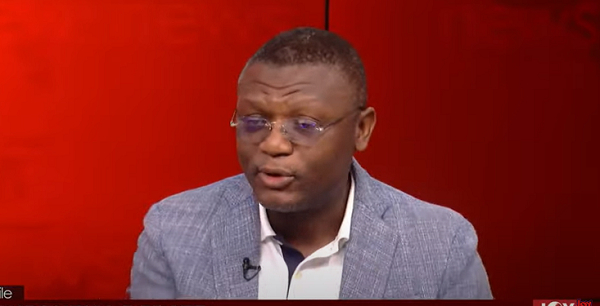
General Secretary of the New Patriotic Party (NPP), Justin Frimpong Kodua, has declared that the Electoral Commission (EC) is fully aware of the party’s decision not to participate in the rerun of the Ablekuma North parliamentary election.
Mr. Kodua made the disclosure in an interview on Asempa FM’s , just three days before the election scheduled for Friday, July 11, 2025.
According to him, although there has been no official communication, the Commission is aware that it is acting in bad faith—and the NPP will not tolerate it.
He emphasized that the NPP will not participate in any process leading to the rerun.
“We have taken a firm decision not to partake in the election. We won’t submit any picture for the printing of the ballot papers, nor will our agents be there to supervise. The NPP will not go,” he stated.
The NPP’s disapproval stems from what they describe as procedural irregularities and legal inconsistencies surrounding the EC’s decision.
Mr. Kodua argued that the EC’s approach lacks transparency and appears to disregard the outcome of previous deliberations.
“We won the election in Ablekuma North with the pink sheets from the polling stations. We know there are only three outstanding polling stations. Any decision to go for a rerun will be an insult and indictment of the NPP. We expect the EC to be truthful and follow due process,” he added.
With an injunction application to quash the EC’s decision pending at the Accra High Court, Mr. Kodua expressed optimism that the outcome will favour the NPP.
In a decisive show of confidence and continuity, Mrs Juliana Storey has been re-elected as President of the Rugby League Federation Ghana (RLFG) following the Federation’s board elections held on Saturday, July 6, 2025.
An accomplished education consultant, Madam Storey has been instrumental in the rapid rise of rugby league across Ghana.
Under her stewardship over the past two years, the Federation has witnessed significant milestones — from expanding grassroots participation and organising nationwide tournaments, to delivering coaching and officiating courses and deepening strategic partnerships with local and international stakeholders.
Speaking after her re-election, Madam Storey conveyed deep appreciation for the mandate given her to lead once again.
“This is a moment of renewed purpose. Rugby league in Ghana has come a long way, but there is much more ahead. Together with the newly elected board, I am committed to growing the game, developing our youth, and taking Ghana to the world stage,” she stated.
A New Era of Leadership and Opportunity
The new RLFG Board, elected to serve from July 2025 to July 2027, features a dynamic blend of professionals with expertise spanning education, finance, corporate leadership, and sports management. The board members are:
Juliana Storey – Educational Consultant (President), Daniel Oko Djanie – Events, Brands and Marketing professional (Vice President), Rob Oram – CEO, Hapag-Lloyd (Treasurer), George Morgan – CEO, Shamore Herbal (Ghana), David Akomeah Asokwah – District Director of Education, Afigya Kwabre South, Ekua Ofori – Legal and Governance, Hubert Leo-Mensah – Sports Management Consultant.
The Federation’s renewed leadership is expected to advance key priorities, including youth development, regional expansion, enhanced women’s participation, and international competitiveness.
The re-election of Madam Storey signals stability, vision, and an unrelenting drive to position Ghana as a formidable force in global rugby league.
As the RLFG charts its path forward, all eyes are on the Federation to lead with integrity, ambition, and unity — embodying the values of the sport and the aspirations of a new generation of Ghanaian athletes- Remond Safi (Regional Manager, Middle East and Africa Rugby League)
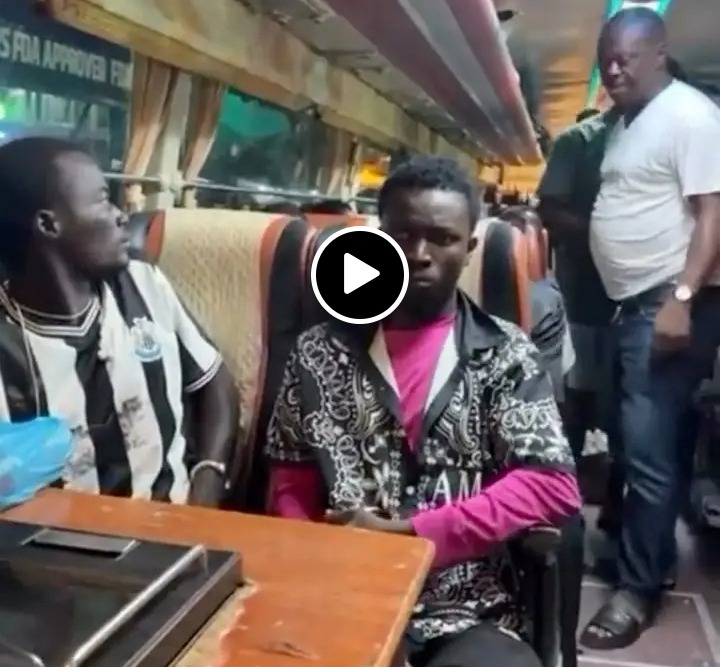
play videoJustin Frimpong Kodua is the NPP General Secretary
The General Secretary of the New Patriotic Party (NPP), Justin Frimpong Kodua, has reaffirmed the party’s rejection of the Electoral Commission’s decision to conduct a parliamentary election rerun in the Ablekuma North Constituency.
According to him, the party’s parliamentary candidate, Nana Akua Owusu Afriyie, won the election fair and square with a margin of 414 votes over her opponent, Ewurabena Aubynn of the National Democratic Congress (NDC).
Addressing the press on Tuesday, July 8, 2025, at the party’s office in Ablekuma North, Kodua stated that they have the facts and figures to back their candidate’s victory, adding that the party remains resolute in its decision to reject the EC’s claims.
“But for us in the New Patriotic Party, we remain resolute and we know that our candidate Nana Akua Afriyie won their elections with a margin of 414 votes. This is based on facts and figures. We have not just channeled numbers to the public. And today, I will demonstrate to you why we say that she won the elections with 414 votes,” he said.
Kodua questioned the Electoral Commission’s decision to backtrack on its earlier stance of not conducting a rerun, especially after it had informed the party that only three polling stations remained to be collated.
He also referenced the appearance of the EC’s Deputy Commissioner, Dr Bossman Asare, before Parliament where, under oath, he confirmed that only three polling station results were outstanding.
Kodua described as a “shame” what he believes is the Electoral Commission’s “u-turn” on conducting a rerun.
“Even with respect to a letter that I wrote to the Electoral Commission on the 3rd of June asking about the update of Ablekuma North, whereby the Electoral Commission confirmed to the New Patriotic Party that indeed it is left with only three polling stations.
“Again, the Electoral Commission led by Deputy Commissioner Dr Bossman, under oath went to Parliament and also confirmed that so far as they are aware and so far as they know, it has only left three polling stations at Ablekuma North,” he said.
He added, “And therefore, it comes as very shocking that the Electoral Commission, based on its own conduct and also based on facts, based on their correspondence with the NPP, their pronouncement in parliament and even engagement with political parties on June 12, where they maintained their position that it is left with three polling stations will sadly make a U-turn. Indeed, it is a shame for this country. The inconsistency from the Electoral Commission is a shame.”
Meanwhile, the party has filed a suit seeking an injunction to prevent the Electoral Commission from conducting the planned parliamentary election rerun in the Ablekuma North Constituency.
Watch the video below:
MAG/MA
Meanwhile, watch as Electoral Commission’s decision divides opinions among voters in Ablekuma North
The workplace of today looks nothing like it did five years ago. Agile work models are no longer a buzzword; they are a necessity, especially in a fast-evolving economy like Ghana. As remote work, flexible schedules, and tech-enabled collaboration become the norm, the question is no longer if businesses should adapt, but how quickly they can.
To deliver on the promise of agility, Ghanaian businesses must go beyond policy. They need to embrace the right technologies that power collaboration, automation, and innovation.
Here are five key technology trends reshaping the agile work landscape in Ghana and how local businesses can take full advantage.
1. Collaboration technology – Driving connection across regions Collaboration platforms like Microsoft Teams, Zoom, and Slack have become the digital meeting rooms of today. With Ghana’s increasing remote and hybrid work culture, these tools are more vital than ever. Microsoft Teams, for example, is continuously upgrading its features. In 2025, new updates include real-time captioning, multi-language support, and AI-driven noise suppression – all designed to make virtual meetings feel just as natural as face-to-face ones. Whether your team is spread across Accra, Tamale, or even working from home in Cape Coast, these tools allow seamless interaction, document sharing, and productivity tracking. For Ghanaian firms with regional staff or diaspora consultants, it is a game changer.
2. Workflow automation – Streamlining efficiency for growth. Agile working is about speed and precision. Workflow automation allows businesses to preempt delays, reduce human error, and optimise time. Picture this: customer service queries are automatically triaged and routed to the right agent; invoices are processed without human intervention; reminders are scheduled and sent without anyone lifting a finger. This is already happening in Ghana’s banking, telecom, and e-commerce sectors. Although the initial investment in automation may seem steep, it saves money long-term by reducing the need for extra staff and enabling your team to focus on strategic work that adds real value. More Ghanaian SMEs are exploring automation tools to handle inventory, CRM, payroll, and logistics.
3. Artificial Intelligence (AI): Empowering smart workplaces. AI isn’t about robots taking over. In the Ghanaian workplace, it’s more about making employees more effective and freeing them from repetitive tasks. Take Intelligent Virtual Agents (IVAs), which can handle basic enquiries such as “What are your working hours? “How can I reset my password? These bots never get tired, never forget a script, and offer round-the-clock support. That frees up your human staff to focus on complex customer interactions or business growth initiatives. From fintech to online learning platforms in Ghana, AI is helping create more responsive, scalable customer service experiences.
4. Workforce optimisation – Enabling productivity anywhere, Ghanaian professionals, especially younger talent, are demanding flexibility. Agile work is about trusting your team to deliver results, not clock hours. Workforce optimisation tools help managers measure productivity, allocate resources efficiently, and spot performance gaps – all without micromanaging. With real-time dashboards, timesheet automation, and performance tracking, these platforms are helping businesses operate smarter. More importantly, they help reduce burnout, boost employee engagement, and improve retention, critical in Ghana’s competitive labour market.
5. Ditching legacy tech – It’s time to let go Holding on to outdated systems is one of the biggest roadblocks to agility. Yet, many organisations in Ghana still rely on legacy tech – whether it’s paper records, old software, or obsolete hardware. The cost? Increased security risks, reduced speed, and an inability to integrate with modern platforms. Clinging to legacy tech makes it harder to attract younger employees, who expect digital-first environments. Now is the time to upgrade your infrastructure, migrate to cloud services, and equip your team with tools that support modern workflows. The global phase-out of legacy systems is accelerating, and Ghanaian businesses must not be left behind.
Conclusion – The future of work is agile and powered by tech For Ghanaian businesses, agility is not just about flexibility – it’s about resilience, responsiveness, and relevance. Whether you are a startup in Osu or a mid-sized company in Kumasi, adopting the right technologies ensures you stay competitive in a digital-first economy. By investing in collaboration tools, embracing automation and AI, optimising workflows, and letting go of legacy systems, businesses in Ghana can create environments where talent thrives and customers stay loyal.
Work smart. Work agile. Work with the future in mind.
>>> The writer, Allen OLAYIWOLA, is a seasoned cloud architect and systems administrator with expertise in leading technical teams to create innovative platforms. As CTO of eSolutions Consulting, he has spearheaded major projects like the Office 365 rollout for Ghana’s government and infrastructure deployment for the Ghana Revenue Authority.
Recognized for his strategic use of emerging technologies, Allen has led his team to multiple Microsoft Partner of the Year awards, solidifying his role as a key leader in tech-driven business transformation. If you’d like to explore how these strategies can help your organization thrive, reach out to discuss tailored solutions for your business growth journey. He can be reached via [email protected] and or 0540123034
Ghanaian rapper, Joseph Gamor popularly known as Lyrical Joe has expressed his frustration with what he describes as a “cult-like” fanbase in the Ghana music industry.
In an interview on Hitz FM on July 8, 2025, Lyrical Joe noted that music lovers who are blindly enthused over a particular musician tend to breed corruption and unhealthy competition in the creative industry.
According to him, fanbases should stop the “cult-like” culture in Ghana’s music scene.
“This is not loyalty. This is blind loyalty you are beyond loyalty. Loyalty doesn’t mean you can’t speak the truth. The fact that I am loyal to my boss doesn’t mean if he says someone stole something, it means it is true. That is corruption,” he said.
When asked if he has been able to resolve his difference with Amerado, Lyrical Joe noted that even though Andy Dosty settled their rap feud, he is not on talking terms with Amerado like he used to.
“It’s been a while since we spoke. Godfather Andy Dosty pulled a call through and we spoke concerning the beef and we left it there. But I wouldn’t say we are tight like we used to be,” he added.
JHM/EB
GhanaWeb Special: The gold market that fuels galamsey:
Justice Gertrude Torkornoo has been suspended from her role as Chief Justice of Ghana.
Suspended Chief Justice Gertrude Torkornoo has sued the government of Ghana over the ongoing processes on three petitions for her removal at the ECOWAS Community Court of Justice.
According to the Deputy Attorney General and Minister of Justice, Justice Srem Sai, who disclosed the suit, the embattled Chief Justice is seeking similar reliefs to those in her case that was unanimously dismissed by the Supreme Court, but this time at the ECOWAS Court.
He indicated that Justice Torkornoo is seeking a declaration by the ECOWAS Court that her suspension is unconstitutional.
“I can confirm that the Chief Justice – Her Ladyship, Justice Gertrude Torkornoo – has filed another court case, this time at the ECOWAS Community Court in Abuja, Nigeria, against the Republic.
“In the case, which was filed on July 4, Her Ladyship repeated the same allegations of human‑rights violations which are currently pending determination before our Supreme Court and also before our High Court in respect of the ongoing removal processes,” he wrote.
He added, “Essentially, Her Ladyship argues that by her suspension, she ‘has effectively been removed from her official capacity without a final determination, impairing her right to function and serve in a position she was constitutionally appointed to’.”
Meanwhile, the suspended Chief Justice has filed for a judicial review challenging the unanimous dismissal of her application to halt her suspension and the ongoing impeachment proceedings against her.
A five‑member panel of the court, presided over by the Acting Chief Justice, Paul Baffoe‑Bonnie, on Wednesday, May 28, 2025, ruled that Justice Torkornoo’s application had no merit and dismissed it.
Court documents shared by The Law Platform indicate that the suspended Chief Justice filed the judicial‑review application as far back as June 2025.
In her review application, Justice Torkornoo is seeking virtually the same reliefs as those requested in her earlier, dismissed application.
She is asking the court to declare all proceedings of the five‑member committee hearing the three petitions for her removal, chaired by Justice Gabriel Scott Pwamang, null and void, arguing that the process violates her human rights.
She also contends that she has not been served copies of the three petitions on which she is being tried, a failure she says renders the ongoing hearings “arbitrary, capricious, and unreasonable.”
I can confirm that the Chief Justice – Her Ladyship, Justice Gertrude Torkornoo – has filed another court case – this time, at the ECOWAS Community Court in Abuja, Nigeria, against the Republic.
In the case, which was filed on July 4, Her Ladyship repeated the same allegations…
Engineers & Planners (E&P), a wholly owned Ghanaian company, has issued a strong rebuttal to what it describes as a series of false allegations circulating in the media regarding its acquisition of Azumah Resources and the financing arrangements surrounding the transaction of the Black Volta Gold Project .
In a statement released on Tuesday, July 8, 2025, and sighted by GhanaWeb Business, E&P outlined the facts surrounding the acquisition to counter what it claims is a coordinated attempt to derail a landmark deal in Ghana’s mining industry.
The statement noted that in May 2023, shareholders of Azumah approached E&P with an offer to sell the project to E&P for $100 million.
E&P stated that it accepted the offer and the associated risk, despite the project being valued at less than $80 million.
“The Project Acquisition and Development Agreement was signed by the shareholders of Azumah and E&P on 9th October 2023 at the Roman Ridge, Accra offices of E&P. Per the agreement, the $100 million was to be paid in two equal instalments of US$50 million by June 2024 and June 2026. By an email exchange between the parties, the first instalment of June 2024 was amended to December 31, 2024,” the statement read.
“Per the agreement, E&P immediately took control of the project and funded the operations of the mine at an average of US$500,000.00 monthly from November 2023 to date; the last expenses were June 30, 2025. Per the agreement, E&P appointed 2 representatives to the Board of Directors of Azumah Ghana in January 2024. Per the agreement, E&P was responsible for raising the finance to develop the project,” it added.
E&P further alleged that there is a deliberate effort to sabotage its financing efforts.
“There is a deliberate effort to create conditions that would have made it difficult for E&P to raise the required acquisition capital. There is a vested interest in E&P’s failure to raise the funding, to open the avenue for some of the directors of Azumah to unduly take advantage of the significantly higher gold prices.”
Board members of the GWF at the launch of the tournament
The Ghana Weightlifting Federation (GWF) have officially launched preparations for the upcoming 2025 African Youth and Junior Weightlifting Championship with a media event held today, July 8, 2025, at the Ghana Olympic Committee (GOC) Boardroom in Accra.
The championship, which will take place at the Ga Mashie Hall of the Trust Sports Emporium in Accra, is expected to attract over 300 athletes and officials from more than 20 African countries.
It is set to be one of the continent’s top youth sporting events, providing young lifters with a stage to showcase their strength and dedication.
Speaking at the launch, GWF President and Weija-Gbawe MP, Jerry Ahmed, expressed his pride at Ghana’s selection to host the prestigious competition and reaffirmed the Federation’s commitment to delivering a world-class event.
He acknowledged that preparations were initially slowed due to national activities and an election-related impasse but assured the gathering that work has continued steadily behind the scenes.
Ahmed revealed that the Federation has already secured key partnerships. He also highlighted support from the Weightlifting Federation of Africa, which has contributed $15,000 towards the organisation of the event.
However, he stressed that at least GH¢700,000 in additional funding will be required and appealed to both public and private institutions for sponsorship to ensure the championship’s success.
The launch was attended by sports authorities, federation officials, athletes, and members of the media, who were briefed on the objectives, schedule, and broader vision of the event.
The GWF hopes to use the championship to deepen local interest in weightlifting, promote youth sports development, and showcase Ghana’s capacity to host major international competitions successfully.
With confirmed participation from weightlifting powerhouses like Algeria, Egypt, Nigeria, Kenya, South Africa, and the host nation Ghana, the 2025 African Youth and Junior Weightlifting Championship promises to be a landmark moment for African youth sports.
FKA/MA
GhanaWeb Special: The gold market that fuels galamsey
The African Union has been asserting itself in credit rating and assessment matters in recent times.
Through its Africa Peer Review Mechanism agency, an organization initially set up as a mutual governance watchdog among African states, it has launched a campaign to provide an alternative to the work of the Big 3 (Fitch, Moody’s and S&P) global credit rating agencies in Africa and to justify the urgent need for an Africa-based credit rating agency known as AfCRA.
The recent decision by Fitch, a New York-based rating agency, to downgrade Africa’s second-largest multilateral development bank (MDB), Afreximbank, to BBB – one notch above junk status – has infused fresh energy into the African Union’s campaign.
The African Union’s position is fortified by a number of plausible propositions: credit ratings affect the cost of credit to Africa, which worsens the debt service crisis, thereby depriving the continent of resources to fund its development.
Furthermore, some analysts say that they can discern a systemic bias against Africa by the Big 3 rating agencies, all of which are of American origin.
With such a background, how can anyone object to a dedicated African rating agency?
A closer look at the African Union’s position, however, reveals cracks in its policy proposals and advocacy stance.
The Afreximbank situation
So far, the African Union has argued the following:
a) The Fitch rating action against Afreximbank is technically flawed because the latter’s claims that Ghana, Zambia and South Sudan are in default is incorrect. In the view of the African Union, these countries are merely ‘inviting’ Afreximbank to negotiate restructuring.
b) The treaty establishing Afreximbank grants it ‘preferred creditor status’ and, therefore, the countries would, at any rate, have no legal basis to default.
Both arguments are hard to sustain in the face of clear facts to the contrary.
Ghana had itself said that it has been in default for two years, an action that has attracted subtle rebukes from some African Union executives. Zambia hasn’t paid its dues to Afreximbank since 2021. And Afreximbank has had to take South Sudan to court in an attempt to get its money back.
Per Fitch’s rules, the debt only needs to be overdue for six months to be classified as non-performing. The total debt outstanding from these countries is also enough to tip Afreximbank over the 6% non-performing threshold that Fitch considers an elevated credit risk.
Regarding the ‘preferred creditor status’ point, the Abidjan charter that created Afreximbank is silent on it. The chapters on immunities and privileges do not mention the issue of debt treatment and how the seniority of the Cairo-based Bank’s loans should be ranked in any way. This is in complete contrast to treaties establishing organizations for whom preferred creditor status is essential, such as the European Financial Stabilization Mechanism.
It is, in fact, not very congruous that the Heads of State, when establishing Afreximbank would have wanted it to have preferred creditor status, since its mandate was supposed to be trade finance for the African private sector. It is settled practice that loans to the private sector do not benefit from preferred creditor status. So, for example, rating agencies do not apply preferred creditor status to the International Finance Corporation’s private sector lending. When Afreximbank was founded in 1993, the Heads of State could not have anticipated the sovereign exposures it now has.
In fact, despite those sovereign exposures, 92% of Afreximbank’s exposures are still to the private sector. About 40% of its shareholders are risk-taking private entities. All this is in stark contrast to entities like the AfDB and the World Bank, which do enjoy preferred creditor status and are fully owned by governments.
Africa now has quite a diverse group of multilateral financial institutions. Some have very specialized roles. Should each and every one enjoy preferred creditor status? If so, who would be left to bear the brunt if an African country needs to restructure its debt?
AfCRA
The African Union’s push for a new rating agency that suffers none of the imperfections of the Big 3 has to be founded on a stronger critique than its attack on the Fitch rating action on Afreximbank.
Whilst the argument that an alternative voice with a deeper exposure to Africa is a reasonable starting point for advocating for AfCRA, there are still important issues that have not been fully addressed. The evidence for systemic credit bias against Africa is contentious, making it a weak base to mount a new policy organisation.
a) To build a truly world-class credit rating agency to match the reputation of the Big 3, whilst also deepening coverage across African sovereigns and corporates and assessing domestic and international issuances, would cost a ton of money. Aborted efforts to create such an entity for Europe in the aftermath of the global financial crisis, when anger against the Big 3 was most intense, were budgeted to cost roughly $400 million. So far, there is no clear business model disclosed for AfCRA to show that it can raise serious funding.
b) In partial response to the concern about financial sustainability, the African Union has said that AfCRA will be fully private. That means it will not be an African Union agency. It will merely be African Union-endorsed. The only private technical partner it has disclosed is India-originated CareEdge. The question that arises is this: there are at least half a dozen regional rating agencies already based in Africa, why would the African Union endorse a startup?
c) The same question could be broadened. There are roughly 150 rating agencies in the world. African governments can go to any of them if there is a feeling that the Big 3 are biased. The real reason they go to the Big 3 is because they control 95% of the market in key international capital centres. That is why, even though Afreximbank has a triple-A rating from a Chinese agency, CCXI, and an A2 rating from a South African one, GCR, it is the Fitch one everyone is talking about. Why would investors give a startup rating agency more attention than the Big 3?
d) Unsurprisingly, other regions, such as the Caribbean, that have created an alternative rating voice and kept it active for more than two decades have not reported any decline in Big 3 influence.
The African Union lacks the supranational status of the likes of the European Union; it’s confined to policymaking. That policy role has been sorely missed in the design of a continental financial architecture that can address burning questions, such as how to ration preferred creditor status among Africa’s fast-growing ranks of development finance institutions, and set up a financial stabilization mechanism (on par with the European Union’s) with unqueried preferred creditor status.
Perhaps, it should refocus on such core mandates and reduce dysfunction, rather than getting directly involved in execution-heavy matters, like credit ratings, where it has limited street cred and capacity.
The Bhim Nation’s president’s post came after Shatta Wale was booked to perform at the just ended president’s cup.
Following his performance, Shatta Wale has become a topic of online discussion as many have praised him for his electrifying performance and not taking a pesewa from the organizers.
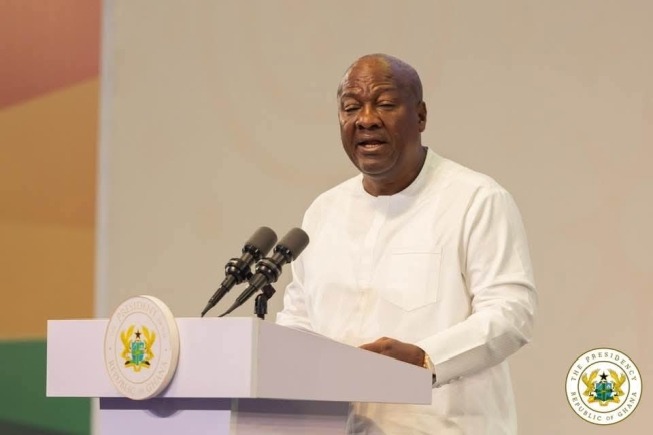
President John Dramani Mahama has spoken publicly for the first time about the petitions seeking the removal of suspended Chief Justice Gertrude Torkornoo as reported by Ghana Web.
Speaking during a meeting with the Council of State on Monday, July 7, 2025, the president acknowledged the sensitive nature of the matter, describing it as one of the more challenging governance issues faced in the early part of his administration.
Justice Torkornoo was suspended following a determination by the Council of State that a prima facie case had been established.
Subsequently, a five-member committee chaired by Supreme Court judge, Justice Gabriel Scott Pwamang, was tasked with investigating the petitions.
President Mahama commended the role played by the Council of State and affirmed that his administration has allowed the process to unfold without interference.
“We have done our part. The rest is left with the committee that was set up to come out with whatever its findings are,” he stated.
He further indicated that the next steps concerning the suspended Chief Justice will depend entirely on the committee’s findings.
“Based on that (the findings), whatever the consequential issues are will be dealt with,” Mahama adde
The petitions have generated intense public debate, with legal and political observers closely watching the outcome.
While Mahama refrained from commenting directly on the substance of the petitions, his remarks shows a commitment to due process and institutional independence.
The committee’s findings are expected to determine whether Chief Justice Torkornoo will be reinstated or permanently removed from office.
In a heartwarming turn of events, the Chief Executive Officer (CEO) of the National Youth Authority ( NYA), Malik Basintale’s wife has graduated with a Master’s degree from the Kwame Nkrumah University of Science and Technology (KNUST) in Kumasi.
The pretty Ghanaian lady and style influencer earned a degree in Strategic Management and Leadership.
For the momentous graduation ceremony, Tenny Salih Young turned heads in a custom-made two-piece ensemble expertly crafted by the talented designer Lauren Couture.
Tenny radiated elegance, accentuated by her flawless makeup that showcased her natural beauty, complete with long, fluttering eyelashes.
Her side-parted hairstyle, voluminous and cascading elegantly over her shoulders, added a touch of glamour to her overall look. She adorned herself with exquisite gold earrings and a matching necklace that sparkled delicately, drawing the eye, as she confidently flaunted her cherished wedding ring.
To elevate her ensemble, she finished off with chic black high heels, solidifying her status as a true style icon.
Many Ghanaians have taken to social media platforms to congratulate her for her achievement.
Malik Basintale is a leading member of the National Democratic Congress government.
He recently opened up about his relationship status, revealing that he is taken.
In an exclusive interview on TV3’s Ghana Decides programme, Basintale, affectionately known as “The Basintale Boy,” responded to a viewer’s comment inquiring about his marital status. He confirmed that he is in a relationship.
“I go on TikTok and you see somebody has said, the Basintale lady, Mrs. Basintale, please I am taken, leave me in peace,” he said.
A flagship industrial project under the erstwhile New Patriotic Party (NPP) government’s One District, One Factory (1D1F) programme is fast decaying in the bush at Tanoso in the Tano North Municipality of the Ahafo Region, sparking widespread disappointment among residents and traditional leaders.
Initiated in 2017–2018 under a public-private partnership, the bricks, tiles, and ceramics factory – envisioned to create jobs and promote local manufacturing – now lies abandoned, overtaken by weeds and exposed to the mercy of the weather. What was once a beacon of hope has become a symbol of failed implementation and unfulfilled promises.
A visit by DAILY GUIDE to the site painted a grim picture. The factory’s administration block, which is about 80% complete, is rapidly deteriorating. Rusting roofing sheets lie on the ground, cracked walls line the structure, and electrical wires, water closets, and light fixtures are wasting away, unused. The main gate to the factory floor has fallen apart, glass windows are shattered, and broken polytanks have been swallowed by overgrown grass.
“The project brought a lot of excitement. During construction, many of our youth were employed and the town became vibrant,” said Abubakari, a resident living near the site. “But today, it’s like a ghost town; nothing is happening. We’re disappointed,” he lamented.
Nana Kwabeng Peni, Adontehene of Tanoso, also expressed concern over the abandoned factory. “The chiefs and people of Tanoso had high hopes that this factory would bring development, jobs, and dignity to the youth. Now all we see is decay. It is painful,” he told DAILY GUIDE.
The factory was expected to supply bricks and ceramic tiles for both the domestic and export markets, boosting local industry and employment. However, due to what sources say is a lack of capital injection from the private partner, the project has stalled indefinitely.
“Our expectations have been dashed,” lamented Yaa Augustina, another resident. “This is a heavy investment going to waste while our youth are idle, turning to social vices, and young girls face rising teenage pregnancies. This project could change lives.”
Despite the factory’s abandonment, residents have not looted the facility. Locals say their restraint is a sign of hope that government will return to revive the project. “Nothing has been stolen. Everything is as it was. We are just charitable and hopeful,” Abubakari said.
The site’s factory floor, which was partly erected with iron and steel, is now rusting away. Metal frames for sheds are lying idle, submerged in weeds. Dustbins, canopies, and office pipes hang loosely as the building suffers from the elements.
The Adontehene is calling on the current government and development partners to intervene. “This is not just about Tanoso. This factory has the potential to serve people from Sosoanso, Adrogbaa, Techire, Abesim, Sunyani, Duayaw Nkwanta and other areas in the Ahafo and Bono regions. It could also contribute to the success of the 24-hour economy policy,” he said.
He appealed to the government, NGOs, financial institutions, and investors to come to the aid of the project. “Let us not allow this investment to go to waste. Let’s revive it and give meaning to the dream of industrialisation and youth employment,” he stated.
Justice Srem-Sai, the Deputy Attorney General, has revealed that the suspended Chief Justice of Ghana, Gertrude Araba Esaaba Torkornoo, has filed another case at the ECOWAS Community Court of Justice in Abuja, Nigeria.
The Suspended Chief Justice Gertrude Torkonoo’s new case filed at the ECOWAS Community Court alleges human rights violations in the ongoing removal process.
Gblorkope (V/R), July 08, GNA – The homicide unit of the Ghana Police Service has undertaken an operation, uncovered and exhumed multiple human remains buried in a shrine at Gblorkope in Central Tongu District.
This followed a suspected ritual murder and disappearance of 28-year-old Nelson Anyana.
The homicide investigation is a breakthrough in the alleged murder of Nelson resulting in the discovery of multiple human bones, some buried under idols in the shrine.
Six individuals have been arrested and arraigned in connection with the alleged murder of Nelson, after being declared missing.
The breakthrough came after Police Detectives from the Homicide Unit in Ho, in the company of three key suspects, conducted a search of a property believed to be used for ritual purposes.
The body of Nelson Anyana, who had been missing since December 2024, was exhumed from a Gblorkope shrine satisfying Police suspicion of ritual murder.
The Police, in their search discovered three additional skeletal remains buried beneath different idols at the same location as assorted human body parts believed to belong to other victims were found buried in nearby bushes, intensifying suspicions that the site may have been used for serial ritual killings.
The suspects, all residents of Mafi Adidome are Augustina Fiawoyife, unemployed, Wisdom Hedidor, herbalist, Courage Bedzo, a kente weaver.
Others are Gblor Noah also known as Ekpedzi, a fetish priest, 37; Gblor John, security guard, 38; and Gblor Johannes, lotto writer, 27, (all siblings) and operators of the Gblorkope shrine.
According to Police investigations, the case began when Comfort Hatse, a trader from Donkorkrom and mother of the deceased, reported missing her on December 17, 2024.
She stated that the deceased had left home on December 4 to meet the first suspect, Augustina Fiawoyife, and never returned.
It was later discovered that Augustina was in a relationship with the second suspect, Wisdom Hedidor, who had grown jealous over her ongoing relationship with the deceased and hatched the scheme to kill him, which was executed according to plan.
Around that time, the fourth suspect, Gblor Noah, reportedly earlier solicited a human body for ritual purposes in exchange for a substantial payment. The third suspect, Courage Bedzo, relayed this request to Hedidor, who then agreed to carry out the murder.
On December 12, 2024, Augustina lured deceased to a secluded area near DC Bungalow, a suburb of Adidome, while the victim engaged her in conversation, Hedidor and Bedzo ambushed and strangled him to death, with Augustina allegedly witnessing the act without intervening.
The third suspect subsequently contacted the fetish priest, who arrived at the scene with the sixth suspect, Gblor Yohannes and bought deceased’s body for GHC7,000, which was transported to the shrine in Gblorkope, where it was used in ritual ceremonies before being buried under the idols.
Following the recovery of Nelson Anyana’s remains and those of other unidentified individuals, all six suspects have earlier appeared before a District Court in Ho, charged for abetment of crime to wit murder and conspiracy to commit crime to wit murder.
Police investigators say further forensic analysis was underway based on the new discoveries to determine the identities of the additional victims and appropriate charges for the suspects.
The discovery has sparked outrage and fear among residents of the Central Tongu District, with many calling for swift justice and a broader investigation into possible ritualistic networks in the region.
The Ghana Police Service has reaffirmed its commitment to pursuing the case thoroughly and ensuring all perpetrators face the full rigours of the law.
Some residents of Kumasi are appealing to government to address high cost of living
A cross-section of residents in the Kumasi Metropolis of the Ashanti Region are calling on the government to take immediate action to address the rising cost of living, which is becoming increasingly unbearable, especially for low-income earners.
This plea comes as the residents reflect on the impact of the President, John Dramani Mahama administration, six months into his presidency.
According to a report by Otec News on Tuesday, July 8, 2025, while some residents have acknowledged positive developments, many believe the president can do more to address the high cost of living.
“Things are expensive and they rise up every day, even basic food items are now beyond the reach of many families,” one shared.
The residents highlighted that the lack of employment opportunities for the youth is a significant issue, pushing many young people into negative lifestyles such as smoking and excessive betting as they struggle to find jobs.
They further emphasised that the absence of job opportunities for the youth is driving them to such behaviours.
The people of Kumasi are urging the government to not only work towards stabilizing prices but also to create meaningful job opportunities for the youth across the country.
Meanwhile, watch as Parliamentary leadership visits wife of late Ernest Yaw Kumi
President John Dramani Mahama has highlighted the positive impact of the Ghana Gold Board (GoldBod) on the country’s economy, noting that recent gold export gains have helped strengthen Ghana’s foreign reserves and stabilise the cedi.
Speaking at the inauguration of the GoldBod Task Force on Tuesday, July 8, 2025, at Jubilee House, Accra, the President described the Board as a strategic arm of Ghana’s national economic transformation project.
He stated that since its interim formation in January 2025, the Ghana Gold Board has implemented aggressive reforms, particularly in the artisanal and small-scale mining (ASM) sector. By May 2025, GoldBod had exported 11 tonnes of gold valued at USD 1.1 billion. In total, exports from the small-scale sector reached 51.5 tonnes, valued at approximately USD 5 billion.
“These inflows have strengthened our foreign reserves, improved our balance of payments, and helped stabilise the Cedi,” President Mahama said.
He reaffirmed the government’s belief in the potential of artisanal miners when supported and formalised, saying:
“More importantly, they reaffirm our belief that artisanal miners, when supported and formalized, can be powerful allies of development.”
The President explained that the Ghana Gold Board, established under Act 1140, now has “exclusive rights to purchase and export all gold produced in Ghana, except that from large-scale mining firms, where GoldBod still holds preemptive rights.”
He said gold, like cocoa, will now be consolidated, traded, and exported through a centralised, transparent system, as part of broader reforms to reclaim value from the country’s mineral resources.
“This Task Force is not just a security initiative; it is a strategic arm of a national economic transformation project, purposefully designed to restore integrity, accountability, and value to Ghana’s gold sector,” he said.
GhanaWeb Special: The gold market that fuels galamsey
Asante Kotoko have reached an agreement with FC Samartex to sign defensive midfielder Lord Hilary Adabo, sources have confirmed to ghanasportspage.
The club-to-club negotiations have been finalized, with the transfer fee agreed at GH₵200,000.
Adabo is now set to complete personal terms with the Porcupine Warriors, with discussions expected to be wrapped up by Thursday.
Once terms are agreed, the midfielder will put pen to paper on a long-term contract, becoming one of the latest additions to Kotoko’s squad ahead of their 2025/26 CAF Confederation Cup campaign and domestic season rebuild.
An official announcement is expected from both clubs in the coming days.
Adabo, who impressed with his ball-winning ability, composure, and tactical intelligence at Samartex, is viewed as a key addition to bolster Kotoko’s midfield depth and defensive solidity.
President John Dramani Mahama at the inauguration of the GoldBod Task Force on Tuesday
President John Dramani Mahama on Tuesday, July 8, 2025, inaugurated the GoldBod Task Force.
The task force is mandated to dismantle smuggling networks in Ghana and also secure the country’s gold value chain, ensuring that the precious mineral directly benefits the state and its citizens.
The task force’s operations are part of a broader strategy for the establishment of the Ghana Gold Board (GoldBod), which is to tighten oversight over Ghana’s mining and export systems in line with the government’s commitment to maximising domestic revenue through resource protection.
Even though it might be a coincidence, the inauguration of the task force by President Mahama comes after GhanaWeb’s “The Gold Market That Fuels Galamsey” documentary, which revealed a thriving black market operating outside official oversight.
Following the broadcast of the exposé, which highlighted the proliferation of unlicensed gold shops in Wassa Akropong in the Western Region, the government has cracked down on illegal gold traders in the area.
The Ghana Gold Board (GoldBod), which oversees Ghana’s gold trade in a coordinated operation with National Security, recently arrested 10 foreign nationals suspected of participating in illegal gold trading in Asankragua in the Western Region, also directly following GhanaWeb’s exclusive documentary.
Speaking at the inauguration, President Mahama bemoaned the discrepancy between Ghana’s official gold export records and those of its trading partners.
He said that studies show that there was a 229-metric-tonne shortfall recorded over five years in Ghana’s gold exports, which is estimated at more than $11.4 billion.
The president said that the task force, which forms an integral part of the mandate of the GoldBod, will help prevent the smuggling of gold in the country.
He said that the members of the task force, who had been carefully selected and trained, were taken through polygraph tests, anti-corruption briefings, and team exercises before deployment, to ensure they performed their mandate efficiently.
He also stated that every field operation of the task force must be authorised in writing by the Chief Executive Officer of the GoldBod, Sammy Gyamfi, and must be monitored in real time.
“Every officer will wear a body camera. Every vehicle will be GPS-tracked. There will be no room for abuse,” President Mahama added.The Gold Market that Fuels Galamsey: Mahama inaugurates GoldBod Task Force
President John Dramani Mahama on Tuesday, July 8, 2025, inaugurated the GoldBod Task Force.
The task force is mandated to dismantle smuggling networks in Ghana and also secure the country’s gold value chain, ensuring that the precious mineral directly benefits the state and its citizens.
The task force’s operations are part of a broader strategy for the establishment of the Ghana Gold Board (GoldBod), which is to tighten oversight over Ghana’s mining and export systems in line with the government’s commitment to maximising domestic revenue through resource protection.
Even though it might be a coincidence, the inauguration of the task force by President Mahama comes after GhanaWeb’s “The Gold Market That Fuels Galamsey” documentary, which revealed a thriving black market operating outside official oversight.
Following the broadcast of the exposé, which highlighted the proliferation of unlicensed gold shops in Wassa Akropong in the Western Region, the government has cracked down on illegal gold traders in the area.
The Ghana Gold Board (GoldBod), which oversees Ghana’s gold trade in a coordinated operation with National Security, recently arrested 10 foreign nationals suspected of participating in illegal gold trading in Asankragua in the Western Region, also directly following GhanaWeb’s exclusive documentary.
Speaking at the inauguration, President Mahama bemoaned the discrepancy between Ghana’s official gold export records and those of its trading partners.
He said that studies show that there was a 229-metric-tonne shortfall recorded over five years in Ghana’s gold exports, which is estimated at more than $11.4 billion.
The president said that the task force, which forms an integral part of the mandate of the GoldBod, will help prevent the smuggling of gold in the country.
He said that the members of the task force, who had been carefully selected and trained, were taken through polygraph tests, anti-corruption briefings, and team exercises before deployment, to ensure they performed their mandate efficiently.
He also stated that every field operation of the task force must be authorised in writing by the Chief Executive Officer of the GoldBod, Sammy Gyamfi, and must be monitored in real time.
“Every officer will wear a body camera. Every vehicle will be GPS-tracked. There will be no room for abuse,” President Mahama added.
GhanaWeb Special: The gold market that fuels galamsey
President John Dramani Mahama has announced plans to establish a gold village in Ghana.
He explained that the gold village will serve as a manufacturing hub for gold jewellery and ornament production, positioning Ghana as a continental leader in value addition.
Speaking at the inauguration of the GoldBod Task Force in Accra on July 8, 2025, President Mahama stated that traders will no longer need to travel to Dubai to purchase gold jewellery, as these products will soon be available locally.
He said; “I have tasked the gold board to establish what we call a gold village. This will be a manufacturing hub for gold jewellery and ornament production in Ghana, positioning our country as a continental leader in value addition.”
“And so when we establish the gold village, our women no longer need to go to Dubai to go and buy jewellery. You buy the jewellery here and you can rather export it to wherever you want to export it,” President Mahama added.
Parliament passed the Ghana Gold Board Bill, 2025, into law on Friday, March 28, 2025.
Under the new law, the Ghana Gold Board is responsible for overseeing, monitoring, and managing the buying, selling, and export of gold and other precious minerals.
The law designates GoldBod as the sole exporter of gold from Ghana’s small-scale mining sector, effectively prohibiting licensed traders and bullion dealers from exporting gold directly.
As part of efforts to revitalise the local economy, President John Dramani Mahama initiated the establishment of the Ghana Gold Board, which operates under the Ministry of Finance.
Clause 68(1) of the Goldbod Bill stipulates that no person shall without lawful authority, hoard gold without a license or authorisation issued by the Gold Board.
This clause is intended to prevent situations where licensed agents, funded to purchase gold for Goldbod, hoard the commodity, leading to scarcity, unfair competition, or price manipulation, among other issues.
Direct buying and selling of gold on the market is prohibited under the Ghana Goldbod Act. However, foreigners may apply to Goldbod to purchase gold from Ghana through the organisation.
Foreigners are also permitted to act as off-takers.
Foreigners should buy gold through GoldBod, which will then export the gold to their country or a location of their choice.
SA/MA
Cheque Fraud EXPOSED: How it works and how to stay safe
GhanaWeb Special: The gold market that fuels galamsey
Kofi Adasm congratulates Kotoko for winning President’s Cup with cash donation
Minister of Sports and Recreation, Kofi Adams, has awarded Asante Kotoko a GH¢10,000 cash prize following their thrilling 2-1 comeback victory over arch-rivals Accra Hearts of Oak in the 2025 President’s Cup.
The dramatic clash, held on Sunday, July 6, at a packed Accra Sports Stadium, saw the Porcupine Warriors claim their ninth President’s Cup title, igniting celebrations among their faithful and earning high praise from the nation’s sports chief.
The minister’s visit to the Kotoko squad at their hotel post-match was a moment of joy and inspiration.
Presenting the cash reward to team captain Gilbani Samba, Adams said, “For your drive back, I’m giving you GH¢10,000. When you get there, you can buy some water. Congratulations, our target is the continental level, we will be there to support.”
His words, met with cheers from the players, signaled a broader vision for Kotoko’s upcoming campaign in the 2025/26 CAF Confederation Cup, following their MTN FA Cup success earlier this season.
Adams’ GH¢10,000 gift, though modest, carries symbolic weight. “This is not just about the money, it’s about recognising the spirit and determination of this team,” Adams told reporters after the presentation.
“Kotoko’s performance showed the fighting spirit we need to take Ghanaian football to the continental stage”.
The match itself was a spectacle befitting Ghana’s fiercest football rivalry.
Hearts of Oak struck first through Hamza Issah in the 23rd minute, capitalising on a defensive error by Kotoko’s goalkeeper Mohammed Camara.
The Phobians dominated the first half, with Mawuli Wayo tormenting Kotoko’s backline.
However, early in the second half, Kotoko roared back. Peter Amidu Acquah equalised with a stunning solo effort in the 53rd minute, followed swiftly by Kwame Opoku’s close-range finish, assisted by Albert Amoah, to put Kotoko ahead.
The turning point came late when Camara redeemed his earlier mistake, diving to save a penalty from Hearts’ Abdul Aziz, preserving the lead and sealing a historic victory.
President John Dramani Mahama, joined by dignitaries including Adams, Ashanti Regional Minister Dr Frank Amoakohene, and Greater Accra Regional Minister Linda Ocloo, presented the trophy to Samba amid rapturous applause.
See the video below
“For your drive back, I’m giving you GH¢10,000…Congratulations, our target is the continental level. We will be there to support”
Minister for Sports and Recreation, Kofi Adams after Kotoko’s victory over Hearts in the President’s Cup
Relatives and friends of the late Ngurusi Reuben attend a vigil at their home
Two people have been killed and several others injured following violent clashes between supporters of Isingiro South MP Alex Byarugaba Bakunda and his rival Maari Assensio Mujuni.
The clashes erupted last Friday as rival groups headed to a campaign rally at Kyempisi Village, resulting in the burning of a vehicle and two motorcycles. On Saturday, Mr Reuben Ngurusi, 34, a resident of Kihande Village in Ruyanga Sub-county and a supporter of Mr Bakunda, was killed in what appears to have been a revenge attack. “They came looking for him on Friday night but did not find him.
The following morning, they encountered him on his way home and stoned him to death,” said Ms Mackline Kyomuhendo, the widow of Mr Ngurusi. “My husband died because of political violence for supporting Mr Bakunda. I am now left alone with three children and no support,” she added tearfully. Mr Eric Byamukama, a cousin of the deceased, alleged that Mr Ngurusi had been involved in an earlier ambush against Mr Mujuni’s supporters, which may have provoked the retaliation.
“He was returning home when a mob attacked him, leaving his body on the road. He had severe bruises all over,” Mr Byamukama said. “We later moved his body from Rwekubo Health Centre IV to Mbarara Hospital mortuary for a post-mortem,” he added. Mr Richard Twinomujuni, the vice chairperson of the village, said tensions in the area began in June when an unidentified person tied up and stabbed a resident known as Black. Another resident, Mr Monday Amon, was cut on the arm but is recovering. “Supporters of Maari do not want to see those of Bakunda and vice versa.
People are abandoning their homes due to political unrest. Previously, elections were peaceful here, but this time it’s different,” he said. Mr Twinomujuni appealed to residents to avoid “politics of hate and violence”, saying: “After elections, candidates will return to Kampala, but we will remain living together.” Ms Glorious Tukahirwa, a resident, urged authorities to suspend campaigns in Isingiro South. “They should halt these campaigns so we can have peace. Let us only participate on voting day rather than continue losing lives,” she said.
The NRM Electoral Commission yesterday said campaign activities in Isingiro South had been suspended following incidents of violence. Ruyanga Sub-county chairperson Mugisha Hakim also called for increased security. “People are fighting, burning houses, vehicles and motorcycles. This violence must not be tolerated,” he said. Mr Alex Byarugaba Bakunda condemned the attacks, blaming Mr John Baptist Maari, the father of his opponent, for allegedly bringing in “goons from Kampala to train local youths to cause havoc”.
“This is not the NRM philosophy. We should treat each other as brothers and sisters. For the past four terms in Parliament, we have never had such violence. Why is it happening now, and only in Ruyanga Parish, where Mr Maari comes from? The other 27 parishes remain peaceful,” he said.
Mr Bakunda claimed arrests had been made, but the “chief instigator” remained at large, warning of possible further unrest. Rwizi region police spokesperson Samson Kasasira confirmed Mr Ngurusi’s death.
“He was beaten, taken to hospital, and later died. So far, we have arrested 10 suspects. He was meant to be the 11th but unfortunately succumbed to his injuries,” he said. While police acknowledge only Mr Ngurusi’s death, residents allege a second victim, Mr Collins Arimpa of Kyehuna II Village, also died from injuries sustained during Friday’s clashes.
Entertainment host Mr. Savage has disclosed that actress and socialite Akuapem Poloo threatened legal action against his show following what she described as a misleading interview experience.
According to Mr. Savage, Poloo accused the production team of failing to properly brief her about the nature of the interview — a claim he strongly refutes.
“I sent her links three weeks ahead of the shoot to give her a clear idea of the show’s format and explained everything,” he said.
Speaking in an interview on , Mr. Savage explained that his show is entirely unscripted, with all the heated moments captured on set being real.
He insisted that Akuapem Poloo was adequately informed but became visibly upset over some of the questions posed during the recording.
He revealed that not only did Poloo verbally attack him, but she also assaulted him in a manner no guest had dared before.
Mr. Savage added that Poloo became even more irate after the interview was posted online, expressing strong displeasure and accusing the team of betrayal.
“She took it very seriously and even threatened to take legal action against us. But at no point did she instruct us not to publish the interview,” he clarified.
Despite the backlash, the episode has stirred significant attention online, with many viewers questioning the limits of unscripted interviews and guest preparedness.
His Excellency President John Dramani Mahama has announced government’s decision to provide an incentive to members of the general public who serve as whistleblowers to aid clamping down on illicit gold-smuggling activities in the country.
At the launch of a special Ghana Gold Board task force on July 8, the president noted that informants are eligible to receive 10 percent of the seized gold in cash value.
The Accra Regional Police Command has arrested a key suspect believed to be behind a series of motorbike thefts reported within the Accra Region over the past month.
On June 24, 2025, a resident of Madina reported that his red Royal motorbike, registration number M-25-CW 367, had been stolen from his house.
Acting on intelligence, a team from the Accra Region arrested Emmanuel Akanpatiba, who was found in possession of the stolen motorbike. During interrogation, the suspect admitted to the offense and identified his accomplice as Israel Fredrick Lomotey, who is currently at large.
According to police, investigations have revealed that the suspect and his accomplices are responsible for at least 12 motorbike thefts in various parts of the city, including Madina, Adenta, Lapaz, and Teshie.
The suspect also named Nurudeen, Ali, and Inusah, all based at the Agbogbloshie Onion Market, as the receivers of the stolen motorbikes. During interrogation, the suspect revealed that he typically breaks the steering lock of the stolen motorbikes, transports them to Agbogbloshie, and sells them to receivers for amounts ranging between GHS 2,000 and GHS 3,000, depending on the year of registration of the motorbike.
The police have indicated that efforts are underway to arrest the remaining accomplices and recover additional stolen motorbikes. The Accra Regional Police Command advises the public to secure their motorbikes and other valuables properly and report any suspicious activity to the nearest police station.
Reggae, a musical genre synonymous with Jamaica, emerged in the late 1960s as a vibrant evolution from earlier Caribbean styles such as mento, ska, and rocksteady. Characterised by its distinctive “offbeat” rhythm and a driving four-beat pulse, reggae quickly transcended its island origins to become a global phenomenon.
Investigations into the shooting incident that claimed the life of Queenmother Pearl Naa Dodoowa Whitaker on June 19 during a naming ceremony at Gbawe Zero had led to the arrest of a suspect, Gilbert Awuni also known as Starboy.
Queenmother Pearl Naa Dodoowa Whitaker was killed after some armed individuals with locally manufactured weapons began firing indiscriminately at the ceremony organised by Ibrahim Nii Aryee Quarshie Solomon, which was attended by traditional rulers and Asafo groups.
Ibrahim Nii Aryee
Recruits of the Ghana Police Service have been reminded that the badge of honour bestowed upon them after rigorous tactical training is meant to help maintain law and order—not to intimidate innocent citizens.
The Minister for the Interior, Muntaka Mohammed-Mubarak, issued this reminder during the passing-out parade of the 7th batch of 2025 police recruits at the Tesano Police Training School in Accra last Friday.
The Minister, who also served as the Reviewing Officer, emphasised that wearing a badge or uniform is not a license to oppress others, but rather a symbol of service, duty, and accountability. He lamented the growing trend of officers abusing their authority to intimidate citizens.
He noted that over the years, the Ghana Police Service has played a critical role in promoting peace, security, and social cohesion—pillars essential to national development. However, unchecked acts of intimidation could erode public trust and damage the police-citizen relationship.
“As it is said, for every crime committed, there is at least one eye—one public eye—that sees it. Our soon-to-be constables, as you take your oath today, remember that the badge on your chest is not a license to intimidate. It is a pledge to serve with humility, courage, and honour. Let your conduct—both on and off duty—reflect the high standards the Service expects of you and the hope the nation has in you,” he said.
Muntaka further urged the new officers to demonstrate a level of confidence that complements the trust the public places in them. He called on them to live up to public expectations and enforce the law fairly and respectfully.
“The motto of the Ghana Police Service—Service with Integrity—reflects the public’s expectations of you. Always remember that as police officers, you are servants of the people. Serve with integrity and fidelity. Good police-public relations are essential to building trust, which in turn encourages the public to volunteer information to aid investigations and operations,” he added.
Touching on the evolving complexities of policing, he revealed that the Service is undergoing reforms aimed at improving operational efficiency, boosting morale, and strengthening specialised units.
“Security challenges in Ghana are becoming increasingly sophisticated, and the demand for skilled, committed personnel is higher than ever. The Police Administration, under Inspector-General of Police Mr. Christian Tetteh Yohuno, has undertaken serious assessments and reforms to realign operational capabilities and close manpower gaps,” the Minister explained.
He also advised the recruits to avoid any conduct that could bring the name of the Service into disrepute, stressing, “Your gallantry, service, and sacrifice as you commit yourselves to the difficult but noble task of serving Mother Ghana as police officers will always be appreciated by the good people of Ghana.”
Minister Muntaka concluded by calling for public support for the police, saying, “Let us demand accountability, show respect, cooperate with the police, and volunteer information as part of our collective quest to fight crime and make our nation great and strong. Together, we can build a safer and more secure Ghana.”
The passing-out ceremony witnessed 1,194 newly trained recruits—comprising 633 females and 561 males—joining the Ghana Police Service. Policewoman Sergeant (PW/SGT) Sophia Elikplim Dedjoe was awarded the National Best Female Overall Cadet (Academics).
NPP General Secretary Justin Frimpong Kodua is addressing Ghanaians on the Ablekuma North electio
The opposition New Patriotic Party (NPP) is addressing Ghanaians on the rerun of the parliamentary election for some 19 polling stations in the Ablekuma North Constituency, today, Tuesday, July 8, 2025.
The party has objected to the Electoral Commission of Ghana’s decision to rerun the election in the said polling stations, insisting that its candidate, Nana Akua Afriyie, won the election.
The party is expected to share details of the election, which show that their candidate won.
Watch a livestream of the presser below:
BAI
Cheque Fraud EXPOSED: How it works and how to stay safe
GhanaWeb Special: The gold market that fuels galamsey
Ghanaian entertainment pundit Kwaku Osei Korankye Asiedu, popularly known as KOKA, has stirred controversy on social media following comments he made regarding the sudden death of the Member of Parliament for Akwatia, Ernest Yaw Kumi.
In a video circulating on social media on July 8, 2025, KOKA alleged that certain individuals were behind the MP’s unexpected death.
He claimed that the late politician’s demise was the result of stress stemming from a legal battle over the legitimacy of his parliamentary seat.
“What is it about being an MP that someone’s life has to be taken? If I’m fighting you over something and my health deteriorates because of it, what would you call that? He is dead now, so let the one who wants the seat go for it.
“What killed him? Why are we in this situation? I encourage you to revisit the interviews that surfaced when issues about the seat came up. Then you’ll understand what I’m saying,” KOKA stated.
His comments have since gone viral, drawing heavy backlash from social media users who criticised him for being insensitive and reckless.
One user on X questioned KOKA’s reasoning, saying, “This guy’s stupidity keeps increasing every time he’s in front of a camera. So, MPs can’t die of natural causes anymore? Does everything have to be about politics?”
Another user, identified as Ted, commented, “This guy has become increasingly reckless with his public statements. He never reads the room before speaking.”
A third netizen, using the handle @Cylenca, added, “I’ve always said this guy is a fool. The things he says are beyond comprehension.”
Background
The Akwatia MP, Ernest Yaw Kumi, passed away on July 7, 2025, after a short illness.
Kumi, a first-time MP elected on the ticket of the New Patriotic Party (NPP), had been at the centre of a high-profile legal dispute over the legitimacy of his seat in the aftermath of the 2024 parliamentary elections.
His death came just weeks after the Supreme Court overturned his contempt conviction related to the case.
Watch the video below:
“What is it about MP-ship that somebody’s life has to be taken?”
– Entertainment and political critic Kwaku Osei Korankye Asiedu, popularly known as KOKA reacts to the shocking death of Akwatia MP pic.twitter.com/SqthbW9imh
NPP General Secretary Justin Frimpong Kodua is addressing Ghanaians on the Ablekuma North electio
The opposition New Patriotic Party (NPP) is addressing Ghanaians on the rerun of the parliamentary election for some 19 polling stations in the Ablekuma North Constituency, today, Tuesday, July 8, 2025.
The party has objected to the Electoral Commission of Ghana’s decision to rerun the election in the said polling stations, insisting that its candidate, Nana Akua Afriyie, won the election.
The party is expected to share details of the election, which show that their candidate won.
Watch a livestream of the presser below:
BAI
Cheque Fraud EXPOSED: How it works and how to stay safe
GhanaWeb Special: The gold market that fuels galamsey
The tool is designed to help Micro, Small, and Medium Enterprises (MSMEs)
The Deutsche Gesellschaft für Internationale Zusammenarbeit (GIZ) GmbH, through its Digital Transformation for Inclusive Entrepreneurship in Ghana (DTEG) programme, has unveiled a digital tool aimed at improving access to business policy information for Ghanaian entrepreneurs.
The new Entrepreneurship Policy Chatbot is designed to help Micro, Small, and Medium Enterprises (MSMEs) navigate complex government regulations, tax policies, business registration processes, and incentive frameworks through a simple, conversational platform.
The tool is expected to bridge the longstanding information gap that has hindered many entrepreneurs from fully participating in Ghana’s formal economy.
In a statement issued by GIZ Ghana and sighted by GhanaWeb Business, the organisation explained the rationale behind the initiative.
It stated that for years, business owners, particularly those in the informal sector, have struggled with policy documents that are buried in dense PDFs, scattered across multiple websites, and written in overly technical language.
“This digital assistant aims to change that by providing real-time, localised, and verified responses in clear, easy-to-understand terms,” the statement noted.
It added that the chatbot’s development was directly informed by feedback from MSMEs across the country, including entrepreneurs in Tamale, Kumasi, Takoradi, Koforidua, Sunyani, and Accra.
According to the statement, during a nationwide survey, entrepreneurs identified the policies they found most difficult to understand, shared their experiences accessing government support, and emphasised the need for multilingual and mobile-friendly solutions.
“In response, the chatbot is being designed to launch initially on the web, with plans to expand to platforms such as WhatsApp to ensure broader accessibility. Users will not only be able to get answers to common questions but also access relevant forms, download official documents, and be guided to trusted resources,” it noted.
“This is more than a digital tool; it’s a transformation in how policy is communicated to those who need it most. We’re breaking down barriers so entrepreneurs can focus on building, scaling, and formalising their businesses,” a spokesperson for GIZ said.
The Entrepreneurship Policy Chatbot aligns with DTEG’s core mission of empowering underserved groups, including women, youth, informal sector players, and rural entrepreneurs, by providing access to the information they need to seize economic opportunities.
The Digital Transformation for Inclusive Entrepreneurship in Ghana (DTEG) is funded by the German Federal Ministry for Economic Cooperation and Development (BMZ) and implemented by GIZ under the Digital Transformation Centre Ghana.
The Centre forms part of a pan-African network of flagship initiatives designed to harness digital tools for job creation and entrepreneurship, particularly in rural and underserved communities.
British media outlet Sky Sports News has delved into the intricacies surrounding Ghanaian midfielder Thomas Partey’s rape charges.
The explainer, written by senior reporter Rob Dorsett, provides answers to numerous questions that have emerged concerning the charges and their implications.
One of the major confusions that has been cleared up is the fact that the former Arsenal midfielder is eligible to play football despite the trial being in progress, if he finds a suitable club.
Read the full article below
Sky Sports looks at the key questions surrounding the case of Thomas Partey, the former Arsenal player who has been charged over multiple counts of rape and sexual assault.
What has Partey been accused of?
Thomas Partey was charged on July 4, 2025 with five counts of rape and one count of sexual assault, against three different women.
Two of those counts of rape are against one complainant, three further counts of rape are against a second complainant, and the sexual assault charge is said to have been committed against a third.
All of the incidents are alleged to have taken place between 2021 and 2022. Partey has denied all of the charges against him.
A statement from Partey’s lawyer said: “Thomas Partey denies all the charges against him. He has fully cooperated with the police and CPS throughout their three-year investigation. He now welcomes the opportunity to finally clear his name.”
Why did it take so long for charges to be brought?
Partey was first arrested on suspicion of rape three years ago in July 2022. The Metropolitan Police have been carrying out a full investigation since then.
Sky Sports News has discovered that the first report on the case was passed from the police to the Crown Prosecution Service on December 27 2024 – 18 months after Partey was initially arrested.
Following further investigations, an updated file on the case was lodged with the CPS in April. Two months after that, Partey was charged.
Rape cases are some of the most difficult criminal cases to prosecute, and the CPS will only charge someone if they believe there is a “realistic possibility of conviction” when all the evidence is placed before a jury.
It was only once the CPS had reviewed the police’s evidence against Partey in April that they felt this threshold had been reached, and there was enough information to charge him with the alleged crimes.
Two months ago, Rape Crisis published statistics that showed there were 71,227 cases of rape reported to the police in 2024. The charity believes many more assaults go unreported.
Conviction rates in England and Wales for rape and sexual assault are amongst the lowest for any crime – only 2.7 per cent of those 70,000+ cases ended up with a suspect being charged by the Crown Prosecution Service.
Investigations into sexual crimes can often be long and sensitive processes.
Was it a coincidence that Partey was charged just days after his Arsenal contract expired?
The timing of the charges – less than a week after his contract at Arsenal expired – has been the subject of intense discussion on social media.
There has been no further comment from the Met Police or the CPS, who are prohibited from making any statement once a legal case is “active” – and when it is likely to end up in a court case.
But the CPS is, importantly, independent of the police and makes its charging decisions based only on the basis of the evidence it sees. The CPS never alters its timescales to suit a defendant, or to fit in with their employment priorities.
As soon as the CPS is satisfied there is a “realistic prospect of conviction”, it will bring forth a charge, or set of charges. That is exactly what happened in the case of Partey.
The police can accelerate their investigations for a number of reasons – one of which could, potentially, be because a suspect may have plans to leave the country in the future, and they feel it could be difficult to get the individual to return to the UK to face future charges.
But there is no suggestion that is the case with Partey, even though the Ghana international is now free to join any other club worldwide, following the expiration of his Arsenal contract.
Why couldn’t Partey be named before he was charged?
Under UK law, the alleged victims of sexual crimes are entitled to lifetime anonymity under the law: they cannot be identified at any stage – even if the person accused is ultimately found not guilty.
By contrast, people who are arrested and accused of sexual crimes are not granted anonymity.
However, in February 2022, the UK Supreme Court ruled definitively that a person who is under criminal investigation has a reasonable expectation of privacy prior to a charge.
That led to a huge change in how the media reported high-profile individuals who were being investigated by the police, for fear that the newspaper or broadcaster might be sued for breaching that individual’s privacy.
And so, while the accusations against Partey were well known and being discussed openly on social media, Sky Sports News – like other established broadcasters and news organisations – were not able to do so.
That led to a bizarre situation where some opposing fans could be heard inside stadiums taunting Partey during Arsenal games with references to his police investigation, even though he could not be named in the media.
Once he was charged, the media was allowed to identify Partey at that point without risk of reprisals, and report what he has been accused of.
Why didn’t Arsenal suspend Partey?
This is a key question, and ultimately, it is a decision only Arsenal can answer. They have not done so, yet.
As Partey’s employer, the club had a duty of care over him and an obligation to treat him fairly – everyone in this country is considered innocent unless they are proven guilty in a court of law.
But the club also had a duty of care over other employees, and sometimes in law – the rights of one party can conflict with the rights of another.
Sky Sports News has been told Arsenal did follow the legal advice they had been given from the time Partey was first arrested – which included making sure adequate safeguarding procedures were in place to reassure other Arsenal members of staff.
The legal and moral obligations of an employer when it comes to allegations of sexual crimes against an employee, is far from clear cut.
In the case of high-profile individuals, a company (or football club) will weigh up a number of factors before deciding whether to suspend them.
One of the considerations is the club’s reputation. How damaging would it be if a player goes on to be convicted of a sexual crime and their club decided not to suspend them until they were legally bound to do so? How would such a decision be viewed by, for example, that club’s female fans?
The principle of law is that everyone who is accused of a crime should be treated equally and fairly. Ask yourself this question: if an office worker is arrested on suspicion of rape, should they be treated differently to someone in the public eye – like a pop star or a professional footballer?
The law says no – everyone should be treated the same. But for a football club, the decision whether or not to suspend a player is a much more complicated decision.
Manchester City decided to suspend Benjamin Mendy without pay when he was charged with multiple counts of sexual assault in August 2021.
Mendy was subsequently acquitted of all those charges against him in July 2023, and he then took City to an employment tribunal. Mendy ultimately won £11m in damages from the club, to cover his lost wages for the two years while he was suspended.
If Arsenal had decided to suspend Partey when he was first arrested in 2022 – and if he goes on to be convicted of no crime – the north London club could have faced a huge legal bill stretching into tens of millions of pounds.
Why did Arsenal open contract renewal talks with Partey?
Sky Sports News reported in April that Arsenal had opened talks with Partey over a new contract.
When asked if he wanted Partey to stay ahead of Arsenal’s final game of the season in May, Mikel Arteta said: “Yes…he’s a really important player for us.”
And in early June, when Arsenal announced their retained list, the club confirmed they were still in talks with Partey over a possible new deal.
There has been no comment from Arsenal on why they were negotiating with Partey while he was still under criminal investigation.
What have Arsenal said since Partey was charged?
Now that Partey has been charged, there is very little that Arsenal can publicly say. An Arsenal spokesperson said: “The player’s contract ended on June 30. Due to ongoing legal proceedings the club is unable to comment on the case.”
The Football Association and the Premier League declined to comment.
Detective Superintendent Andy Furphy, who is leading the investigation for the Met Police, said: “Our priority remains providing support to the women who have come forward.
“We would ask anyone who has been impacted by this case, or anyone who has information, to speak with our team. You can contact detectives about this investigation by emailing [email protected]”
What happens next?
Partey is scheduled to appear at Westminster Magistrates Court on Tuesday August 5 to answer the six charges against him. It will probably be 2026 before his case could be heard in a full court trial.
In the meantime, the 32-year-old is free to continue his playing career, if he can find a new club that wants to sign him on a free transfer – but any future employer will also know he has been charged with multiple counts of rape and sexual assault.
Meanwhile, watch as historian Annam details how Swedru All Blacks started as a military club
Malaria treatments for children dey, but dem no dey suitable for babies
Di first malaria treatment wey dey suitable for babies and very young children don dey approved for use.
Di drug, wey dey known as Coartem Baby or Riamet Baby for some countries, bin dey developed by Novartis in collaboration with di Medicines for Malaria Venture (MMV), wey be a Swiss-based not-for-profit organisation wey bin first get backing from di British, Swiss and Dutch Governments, as well as di World Bank and di Rockefeller Foundation.
E dey expected for roll out for African countries in weeks.
Until now, no approved malaria drugs dey specifically for babies.
Instead, dem dey treat dem with di ones wey dey formulated for older children wey involve a risk of overdose.
Half a million deaths for 2023
For 2023 – di year wey di most recent figures dey available – malaria bin dey linked to around 597,000 deaths.
Almost all of di deaths bin dey for Africa, and around three quarters of dem na children under five years old.
Malaria treatments for children dey, but until now, no one dey specifically for di very youngest babies and small children, wey weigh less dan 4.5kg or around 10lb.
Instead, dem dey treat dem with drugs wey dey designed for older children.
But e involve risks, as doses for dis older children fit no dey safe for babies, wey dia liver functions still dey develop and dia body dey process medicine differently.
Experts say dis don lead to wetin dey described as a “treatment gap”.
Now, dis new medicine, developed by di drug company Novartis, don dey approved by di Swiss authorities and e dey likely to dey rolled out in regions and countries with di highest rates of malaria within weeks.
Novartis dey plan to introduce am on a largely not-for-profit basis.
Di smallest and most vulnerable
Di company chief executive, Vas Narasimhan, say dis na important moment.
“For more dan three decades, we don dey chook eye in di fight against malaria, working relentlessly to deliver scientific breakthroughs wia dem dey needed most.
“Togeda with our partners, we dey proud to done go further to develop di first clinically proven malaria treatment for newborns and young babies, ensuring say even di smallest and most vulnerable fit finally receive di care dem deserve.”
Eight African nations also take part in di assessment and trials of di drug and dem dey expected to be among di first to access am.
Martin Fitchet, CEO of MMV, say, dis na important step on di road towards ending di ogbonge palava of malaria.
“Malaria na one of di world deadliest diseases, particularly among children. But wit di right resources and focus, E fit dey eliminated.
“Di approval of Coartem Baby provide a necessary medicine wit optimised dose to treat a neglected group of patients and offer a valuable addition to di antimalarial toolbox.”
Dr Marvelle Brown, associate professor for di University of Hertfordshire School of Health, Medicine and Life Sciences, say dis suppose dey seen as a major breakthrough in saving di lives of babies and young children.
“Di death rate for malarial infections, particularly for sub-Saharan Africa dey very high – over 76% of deaths dey hapun in children under five years old.
“Increase in death from malaria dey further increased in babies born with sickle cell disease, primarily due to a weak immune system.
“From a public health perspective, Novartis making dis not-for-profit fit help wit reducing inequality in access to healthcare.”
In a heartwarming display of love and cultural celebration, Kimathi Rawlings, the son of former Ghanaian President Jerry John Rawlings, recently tied the knot with his long-time girlfriend, who is of mixed heritage.
According to a report by Ghpage News. The intimate ceremony, marked by joyous moments and family camaraderie, has captured the attention of many, especially with the emergence of exclusive video footage showcasing the couple’s delightful celebrations.
The wedding, described as ‘low-key’ by attendees, took place in a private setting, reflecting the couple’s desire for an intimate celebration surrounded by close family and friends.
Kimathi, known for his down-to-earth demeanor despite his notable lineage, opted for a ceremony that emphasized personal connections over extravagant displays.
The event featured traditional Ghanaian elements, blending modern wedding customs with rich cultural heritage.
Guests were treated to an array of local delicacies, creating a warm and festive atmosphere that celebrated both the couple’s backgrounds.
In the exclusive video that has since gone viral, Kimathi is seen on the dance floor showcasing his impressive dance moves, a talent that delighted attendees. His sisters could be seen cheering him on, adding a lively spirit to the celebration.
The joyous atmosphere was further enhanced by the sounds of Ghanaian Highlife music, which set the tone for an evening filled with laughter and dancing.
The couple’s chemistry was palpable as they danced together, embodying the joy and love that surrounded them on this special day.
Family members and friends joined in, creating a vibrant scene that highlighted the importance of unity and support in both marriage and family life.
Following the release of the video, reactions poured in from fans and followers of the Rawlings family.
Many expressed their happiness for Kimathi and his bride, appreciating the authenticity and love displayed during the wedding. Supporters took to social media to share their well-wishes, underscoring the public’s fondness for the Rawlings family.
The wedding also drew attention to the evolving nature of marriage in Ghana, where traditional customs are increasingly blending with contemporary practices.
Kimathi’s choice to hold a low-key wedding resonated with many young couples who seek meaningful celebrations over ostentatious displays.
Kimathi’s father, Jerry John Rawlings, served as Ghana’s president from 1981 to 2001 and remains a significant figure in the country’s political history. The Rawlings family has often been at the center of public attention, and Kimathi’s marriage marks a new chapter in their legacy.
Jerry Rawlings was known for his commitment to social justice and national development, values that many believe have influenced his children, including Kimathi. As they navigate their paths, the importance of family and cultural heritage continues to guide them.
As Kimathi and his bride embark on their journey together, many are optimistic about the couple’s future. Their wedding symbolizes not only a union of two individuals but also a merging of cultures and traditions, reflecting the diverse society of Ghana.
The Rawlings family continues to hold a special place in the hearts of many Ghanaians, and Kimathi’s recent wedding reinforces the enduring legacy of love and commitment that his parents championed.
The wedding of Kimathi Rawlings has become a source of joy and inspiration for many, showcasing a beautiful blend of tradition, love, and family.
As the couple steps into their new life together, their story serves as a reminder of the importance of celebrating love in all its forms.
With the video capturing memorable moments now circulating widely, it is clear that this wedding will be remembered not just for its elegance, but for the sense of community and warmth it fostered.
As Kimathi and his bride continue their journey, they do so with the support and blessings of their families and the wider community.
The Chief Justice raises several other arguments in support of her case and the reliefs she is seeking from the Supreme Court
The Chief Justice of the Republic, Justice Gertrude Araba Esaaba Sackey Torkornoo, has pointed out in her statement of case in support of her application challenging the constitutionality of the ongoing process to remove her from office, that President John Dramani Mahama acted arbitrarily in the exercise of his discretionary power under article 146 of the 1992 constitution.
Ankara fabric has become a cornerstone of African fashion, celebrated for its vibrant colors, rich patterns, and cultural significance. Over the years, designers have transformed this traditional textile into modern, elegant, and versatile styles that empower women to express themselves with pride. As one fashion enthusiast put it, “Ankara is more than just fabric—it’s a story told in color and pattern.”
Today, Ankara styles for ladies go far beyond their traditional roots. They’re a powerful celebration of heritage, individuality, and creative expression. From the streets of Lagos to global fashion runways, Ankara has solidified its place in contemporary wardrobes across the world.
Timeless Elegance: Ankara Gowns
Flowing maxi gowns, sleek midi dresses, and daring off-shoulder cuts have all become staples in the world of Ankara fashion. These gowns are perfect for formal events such as weddings, church services, or milestone celebrations. Designers often add details like ruffles, layered hems, thigh-high slits, and dramatic sleeves to bring out a mix of elegance and boldness.
A high-low gown in vibrant Ankara print, for example, offers a dramatic silhouette that’s both regal and modern. Whether styled with heels or flats, these gowns make a statement every time.
Smart and Chic: Skirt and Blouse Combos
The classic skirt-and-blouse pairing continues to be a go-to for many women seeking comfort, versatility, and style. Pencil skirts matched with peplum tops or puffed sleeves create a flattering silhouette that works across all body types. This combination is a great choice for office wear, social gatherings, or casual outings.
One of the best things about this style is its flexibility—you can mix different Ankara prints or pair a bold skirt with a neutral top to balance the look. This freedom to personalize makes Ankara fashion feel fresh every time.
Bold Moves: Ankara Jumpsuits and Trousers
For the modern woman who loves to stand out, Ankara jumpsuits and tailored trousers are a perfect fit. These pieces exude confidence and are ideal for both professional settings and evening events. With the right cut and styling, a jumpsuit can be just as powerful as a dress.
Slim-fit trousers in Ankara print paired with a plain blazer or blouse can turn a simple outfit into a head-turner. It’s all about confidence and how you carry the look.
Ankara Accessories: Cultural Flair in Small Doses
Even without going full-on Ankara, accessories made from the fabric can make a big impact. Headwraps, handbags, statement earrings, and even shoes now come in a range of Ankara designs. They allow women to add a pop of culture to any outfit—whether it’s jeans and a T-shirt or a minimalist dress.
Accessories like these are also a great entry point for those exploring Ankara fashion for the first time.
Styling Tips: Let the Fabric Shine
When it comes to wearing Ankara, the key is balance. The print already speaks volumes, so it’s best to keep accessories minimal. Nude or metallic heels, simple jewelry, and neatly styled hair let the vibrant fabric take center stage.
For a polished look, consider adding structured tailoring, like a cinched waist or defined shoulders. This not only flatters your figure but also brings a modern edge to traditional styles.
Conclusion: Fashion with a Voice
Ankara styles for ladies are more than just fashion—they’re a vibrant expression of identity, heritage, and artistry. With so many creative options available, every woman can find a look that reflects her personality, mood, and the occasion. Whether you’re attending a celebration or simply stepping out for the day, Ankara lets you do it with style, confidence, and cultural pride.
IT was a sight to behold as President John Dramani Mahama was spotted singing Shatta Wale’s hit song ‘Mahama Paper’ in the stands during his performance at the 2025 President’s Cupclash between Accra Hearts of Oakand Asante Kotoko.
A video shared by TV3 on Instagram shows President Mahama miming the song’s catchy lyrics: “You know say I no go fi take another… Mahama paper, paper, paper… Ooh yeeh, Franklin paper, paper, paper Isha Allah oo, Isha Allah oo, Isha Allah oo”. garnered over 17,000 likes and 367 comments.
One Ummi_golden wrote, “Personally, I don’t think you can force anyone into liking Mahama. The aura will always attract you to liking him.”
Sapphire_place also wrote, “The way I like this man ehhh, I am not even Ghanaian. Great president. May your tenure bring prosperity to Ghana and Africa.”
Rich Kum added, “Chairman dey sing every line ooo, Mr. President: Much respect.”
Minister for Roads and Highways, Kwame Governs Agbodza, has disclosed that the government owes road contractors an estimated GH₵21 billion in arrears.
Speaking at a press briefing on Tuesday, July 8, the sector minister attributed the mass withdrawal of contractors from project sites to the government’s prolonged failure to pay for completed works.
According to him, many contractors were forced to borrow money to pre-finance projects with the expectation of reimbursement. However, the absence of timely payments rendered continued operations unsustainable.
“At the time of transition, we are told that the majority of road contractors were actually off-site simply because they did some work, raised a certificate and were not paid. Some of them, as far back as 2018. Their certificates were not honoured, and so while they borrowed money, put in the work and were not paid, it was not feasible for them to continue to work.
“At the time of transition, we are told that the amount of money owed to contractors is about GH₵21billion. So you can imagine the scale of the problem we have in terms of why contractors are not on site,” he said.
However, the minister assured that the current administration is taking concrete steps to resolve the issue. He revealed that the government is set to settle GH₵4 billion of the GH₵21 billion to enable contractors to return to site and resume work.
“If you listened to His Excellency the President, yesterday he indicated that toward the end of this month, the Finance Minister will be taking steps to retire some of the debts owed to contractors so that they can go back to site and complete the work. On record, we are intending to pay some GH₵4 billion towards retiring part of the GH₵21 billion from this month,” he stated.
Springfield rejects $100m fraud claims by Petraco; threatens defamation suit
Legendary Nigerian singer 2Baba has announced a new management team, marking a significant development in his career.
The Afrobeat star shared the news on Instagram, emphasising that the team was selected to revitalise and evaluate his legacy in Africa’s vibrant entertainment scene.
In a joint press statement, 2Baba’s team highlighted his immense contributions to the music scene, noting that he has redefined Afro-pop and inspired countless artists over the past three decades.
The government has paid $349.52 million as its Eurobond debt service obligation.
The payment, which was effected by the Bank of Ghana last Thursday, is the second debt service by the Government of Ghana since the conclusion of debt treatment undertaken by the country between 2022 and last year.
“Since the conclusion of Ghana’s Eurobond debt restructuring in October 2024, the Government of Ghana has cumulatively serviced $1.17 billion in Eurobond debt payments,” the Minister of Finance, Dr Cassiel Ato Forson, said in a statement.
In October last year, the government made an initial payment of $475.60 million, covering obligations due under the restructuring agreement, including the first post-restructuring debt service.
Subsequently, the government paid $349.52 million in January this year and another $349.52 million this month.
“This brings Ghana fully up to date on all scheduled Eurobond debt service obligations for 2025,” the statement said.
Outlook
The Finance Ministry said looking ahead to 2026, a total debt service of $1.409 billion was on schedule.
It said the timely payment reaffirmed Ghana’s commitment to macroeconomic stability, prudent debt management and constructive engagement with external creditors.
The ministry is expecting the ability to meet the Eurobond obligation to positively influence the country’s credit ratings trajectory in the months ahead, as it demonstrates continued discipline in debt servicing post-restructuring.
It should also boost investor confidence in Ghana’s sovereign credit profile and economic recovery programme, the statement said.
The Ministry of Finance added that the timely payment would also support foreign exchange market stability, as it had been incorporated into the central bank’s reserves and liquidity management strategy.
Domestic debt
As part of measures to restore debt sustainability, the government launched the Domestic Debt Exchange Programme (DDEP) in 2022 to restructure its domestic debt.
The DDEP saw the government swap old bonds for new bonds worth GH¢82 billion at reduced coupon rates and longer tenors.
Since then, the government has made four coupon payments to the investors who lost significant money due to the exercise.
The first payment in August 2023 totalled GH¢8.55 billion, consisting of GH¢5.42 billion payment-in-cash and GH₵3.13 billion payment-in-kind, followed by February 2024’s payment of GH¢9.12 billion comprising GH¢5.85 billion payment-in-cash and GH¢3.27 billion payment-in-kind, and August 2024’s disbursement of GH¢9.36 billion that had G¢H5.98 billion payment-in-cash and GH¢3.38 billion payment-in-kind.
On February 17 this year, the President directed the Finance Ministry to complete the fourth round of payments under the DDEP.
The latest disbursement totals GH¢9.541 billion, comprising GH¢6.081 billion in payment-in-cash and GH¢3.46 billion in payment-in-kind.
Looking ahead, the government has already set aside GH¢9.7 billion in the Debt Service Recovery Cedi Account, known as the Sinking Fund, to cover the upcoming fifth DDEP coupon payments due in July and August 2025.
President John Dramani Mahama has announced the establishment of an ISO-certified gold assay laboratory by 2026 as part of efforts to refine gold, boost export earnings, and align with international standards.
According to the President, Ghana is blessed with numerous natural resources like gold and diamonds, among others, and there is a need to properly utilise these resources to significantly contribute to the broader economy.
Speaking at the inauguration of the GoldBod Task Force on Tuesday, July 8, 2025, President Mahama said the lab will help ensure compliance with global export requirements while supporting plans to add more value to Ghana’s gold before it leaves the country.
“To ensure compliance with international export standards, plans are underway to establish an ISO certified assay laboratory by the year 2026, that’s by next year,” he stated.
He emphasised the long-term goal of refining 100% of Ghana’s gold domestically before export, highlighting the economic benefits.
He said Ghana would, in the coming years, establish itself in the international market as a leading gold exporter.
“Ghana will transition to bullion exports and refine more of our gold locally. Our intention in the future is to be able to refine all our gold before we export, because the difference between refined gold and dory bars is significant. It means we make more money for our exports,” he added.
The establishment of the Gold Board forms part of the National Democratic Congress’ 2024 manifesto to formalise the mining sector and strengthen Ghana’s position in the global gold market.
SP/MA
GhanaWeb Special: The gold market that fuels galamsey
The General Secretary of the New Patriotic Party (NPP), Justin Kodua Frimpong, has firmly rejected the Electoral Commission’s (EC) decision to conduct a parliamentary rerun in 19 polling stations in the Ablekuma North Constituency, insisting that the NPP candidate, Akua Afriyie, rightfully won the 2024 election.
Speaking at a press briefing on Tuesday, July 8, Mr. Kodua argued that the NPP secured a clear victory in the constituency and accused the EC of undermining the will of the people by ordering a rerun.
“We will not be part of any rerun in Ablekuma North,” the NPP General Secretary declared.
Mr. Kodua described the EC’s decision as unjust and urged the Commission to act in accordance with the facts and evidence presented during the electoral process.
The EC had earlier announced a rerun of the parliamentary election in 19 polling stations in Ablekuma North, citing irregularities in the collation process—specifically, the absence of validation by some Presiding Officers on scanned results.
However, the NPP maintains that all necessary procedures were followed and that the party’s agents, along with EC officials, had duly verified and signed the results at the polling stations involved.
Mr. Kodua’s remarks add to mounting political tension surrounding the contested constituency, with the NPP adamant that any further delay in declaring Akua Afriyie as Member of Parliament for Ablekuma North constitutes a violation of the electoral mandate of the constituents.
The Electoral Commission is yet to respond formally to the NPP’s demands
President John Mahama has pledged to clear outstanding debts owed to road contractors this month, aiming to revive stalled infrastructure projects nationwide.
Speaking during a July 7 meeting with Ghana’s Council of State, Mahama stated the Ministry of Finance has allocated funds to address “a substantial portion” of arrears, enabling contractors to resume critical roadworks.
“The swift resumption of projects is key to economic growth and regional connectivity under our 24-hour economy agenda,” the President emphasized. Construction sector stakeholders welcomed the move, having long advocated for resolution of unpaid certificates and abandoned sites.
Separately, Mahama bid farewell to outgoing German Ambassador Daniel Krull at Jubilee House, praising his four-year term as “highly productive.” The President reaffirmed commitment to strengthening bilateral ties, particularly in economic development and security cooperation. He thanked Germany for supporting the Kofi Annan International Peacekeeping Training Centre and training Ghanaian security personnel.
The Millennium Development Authority (MiDA) is committed to playing key role in Ghana’s agricultural transformation by applying successful strategies from the $547 million Millennium Challenge Corporation (MCC) Compact to the government’s new Grow24 initiative.
The Grow24, recently launched by President John Dramani Mahama, is a bold agricultural policy under the broader “24hr+” development agenda.
This was disclosed by MiDA’s Chief Executive, Mr Alexander Kofi-Mensah Mould, in an exclusive interview, saying that the Grow24, launched by President John Dramani Mahama, was a bold agricultural policy under the broader “24hr+” development agenda.
At its heart is the Volta Economic Corridor project, which aims to irrigate over two million hectares of land for intensive, is commercially viable farming.
The Volta Economic Corridor, seen as a flagship of the Grow24 policy, is expected to become a key food production hub, improve export capacity, and create thousands of jobs in rural communities.
Mr Mould stated that MiDA, originally established to implement the U.S.-funded MCC Compact, would now take on an expanded role as a national delivery agency for agricultural transformation efforts.
According to Mr Mould, MiDA’s broad experience in infrastructure, energy, and agro-industrial development made it ideally suited to drive large-scale agricultural initiatives across the country.
“Through the MCC Compact, we developed proven, high-impact models ready for nationwide implementation,” he stated, adding that, “We’re now building on that foundation to support food security, economic diversification, and rural industrialisation under Grow24.”
One of the key successes of the MCC Compact was its $189 million Agriculture Project, which included the Land Tenure Facilitation (LTF) Activity. This pilot programme enhanced land tenure security, encouraged investment in agriculture, and boosted productivity.
Furthermore, Mr Mould explained that core components from the Compact—such as land preparation, irrigation engineering, and integrated agronomic systems—would be adapted and scaled to meet Grow24’s ambitious targets.
He described ongoing efforts to clear and level land using precision methods, alongside the design of advanced irrigation systems tailored to various landscapes. These efforts combine agricultural science, economics, and engineering to build sustainable, and large-scale farming enterprises.
MiDA’s role, Mr Mould emphasised, is to provide the technical and managerial backbone necessary for the long-term success of the initiative.
“Grow24 represents a bold new vision for agricultural development in Ghana, and MiDA is fully prepared to deliver on that promise,” he concluded.
As Ghana embarks on this new chapter of agricultural growth, MiDA’s renewed mandate under Grow24 could transform the landscape of farming and agribusiness across the nation.
Kuami Eugene has stated that he spent three months in the U.S. signing deals with major music platforms after leaving Lynx Entertainment.
In an interview on 3FM, the Monica hitmaker explained that he was away for family reasons and also to work on partnerships that would support his career as an independent artiste.
He explained that without the support of a record label, it’s difficult to handle things like music distribution and playlisting on his own, which is why he had to travel and meet with companies that could help.
Kuami Eugene further revealed that after his exit from Lynx Entertainment, he received numerous offers from companies eager to partner with him because of his numbers.
However, he said many of these proposals were profit-driven, prompting him to spend three months with his lawyer to carefully review and negotiate the right deals.
“I was in the States for three months for family reasons and then again, I was signing a contract with some big companies. As I said earlier, you can’t do it all by yourself. I can’t do all the distributions; to be on playlisting and stuff you need to deal with these big companies and I was there for three good months with my lawyer going back and forth.
“Because it’s just me now, everybody is looking at the numbers and how they can have a piece of it. Since I left Lynx, so many calls, people are like ‘you have numbers already you just have to do this and give us a cut’ so I have to spend three good months with my lawyer. We had a meeting with Audiomack, Ditto, and all these big platforms. We are trying to put me out there, so I was away for a while trying to put things together well,” Kuami Eugene stated.
GhanaWeb Special: The gold market that fuels galamsey
Akufo-Addo mourns passing of Akwatia MP Ernest Yaw Kumi
Former President Nana Addo Dankwa Akufo-Addo has joined many in mourning the passing of Ernest Yaw Kumi, Member of Parliament for the Akwatia Constituency.
In a tribute shared on his official Facebook page on July 7, 2025, the former president described the late MP as a cherished figure who was deeply admired by members of the New Patriotic Party and respected across political and social circles.
“The legislator was adored and loved by party faithful and cherished by all who knew or shared acquaintances with him,” he said.
Offering his condolences, he added, “My deepest sympathies go to his family, the House and the good people of Akwatia Constituency, at this unimaginably difficult time.”
He ended with a solemn prayer: “May he find peaceful rest in the Bosom of the Almighty, until the last day of the resurrection, when we shall all meet again.”
The passing of Ernest Yaw Kumi has left a void in the Akwatia Constituency, where he was known for his commitment to community development and public service.
Read the full Facebook post below
MRA/AE
GhanaWeb Special: The gold market that fuels galamsey
President John Dramani Mahama has announced plans to establish a gold village in Ghana.
He explained that the gold village will serve as a manufacturing hub for gold jewellery and ornament production, positioning Ghana as a continental leader in value addition.
Speaking at the inauguration of the GoldBod Task Force in Accra on July 8, 2025, President Mahama stated that traders will no longer need to travel to Dubai to purchase gold jewellery, as these products will soon be available locally.
He said; “I have tasked the gold board to establish what we call a gold village. This will be a manufacturing hub for gold jewellery and ornament production in Ghana, positioning our country as a continental leader in value addition.”
“And so when we establish the gold village, our women no longer need to go to Dubai to go and buy jewellery. You buy the jewellery here and you can rather export it to wherever you want to export it,” President Mahama added.
Parliament passed the Ghana Gold Board Bill, 2025, into law on Friday, March 28, 2025.
Under the new law, the Ghana Gold Board is responsible for overseeing, monitoring, and managing the buying, selling, and export of gold and other precious minerals.
The law designates GoldBod as the sole exporter of gold from Ghana’s small-scale mining sector, effectively prohibiting licensed traders and bullion dealers from exporting gold directly.
As part of efforts to revitalise the local economy, President John Dramani Mahama initiated the establishment of the Ghana Gold Board, which operates under the Ministry of Finance.
Clause 68(1) of the Goldbod Bill stipulates that no person shall without lawful authority, hoard gold without a license or authorisation issued by the Gold Board.
This clause is intended to prevent situations where licensed agents, funded to purchase gold for Goldbod, hoard the commodity, leading to scarcity, unfair competition, or price manipulation, among other issues.
Direct buying and selling of gold on the market is prohibited under the Ghana Goldbod Act. However, foreigners may apply to Goldbod to purchase gold from Ghana through the organisation.
Foreigners are also permitted to act as off-takers.
Foreigners should buy gold through GoldBod, which will then export the gold to their country or a location of their choice.
SA/MA
Ever heard of Nkofie, the legendary Kwahu cave believed to grant wishes? Join GhanaWeb’s People & Places as they take you on an exclusive tour of this mystical site on GhanaWeb TV:
The Minister of Sports and Recreation, Kofi Adams, on Monday, July 7, 2025, made a surprise visit to the Borteyman Sports Complex to investigate reports of unauthorised land encroachment on the facility.
Kofi Adams was visibly upset during the tour, expressing strong dissatisfaction with the widespread unauthorised construction and development activities encroaching on the sports complex’s perimeter.
He highlighted that the entire parcel covers approximately 99 acres, with 43 acres already developed to host key facilities for the African Games.
The remaining 53 acres, which were reserved for future expansion and complementary sports infrastructure, are now under threat from encroachers.
The Sports Minister sternly warned developers and land encroachers at the Borteyman Sports Complex, stating that any construction on the disputed land would be at their own risk and would likely be demolished, making any investment a waste of money.
“This land was secured from the University of Ghana by government as a national sports infrastructure asset, and no private interest will be allowed to compromise its purpose,” the Minister said.
To underscore the Ministry’s resolve, Minister Adams swiftly contacted the Inspector-General of Police, prompting a rapid deployment of officers to the complex.
Within hours, the police arrived and halted all ongoing construction work, enforcing the Ministry’s stance against unauthorized development.
The police presence resulted in the immediate cessation of activities, with all workers directed to vacate the premises.
No equipment or materials were seized, but the enforcement team made it clear that any attempt to return to the site would attract further sanctions.
Minister Adams revealed that while the immediate focus was on halting the unauthorized construction, the Ministry was also engaging with key stakeholders to develop a long-term strategy to safeguard the complex against future land encroachment.
The Minister emphasized that developers investing in the disputed land do so at their own peril.
“This is public property, built with taxpayers’ funds to promote sports development,” he declared. “We won’t permit unauthorized activities to compromise the complex’s intended purpose.”
GhanaWeb Special: The gold market that fuels galamsey
How social engineering hacks your mind and your bank account
![EC knows NPP will not partake in Ablekuma North rerun – JFK [Video]](https://www.ghanamma.com/wp-content/uploads/2025/07/cd10c0c142041b2e5c86583cc64e9cea.jpeg "EC knows NPP will not partake in Ablekuma North rerun – JFK [Video]")


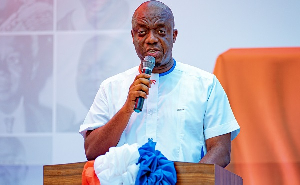


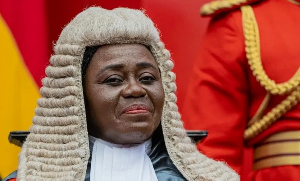



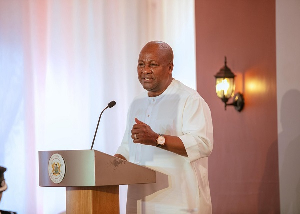
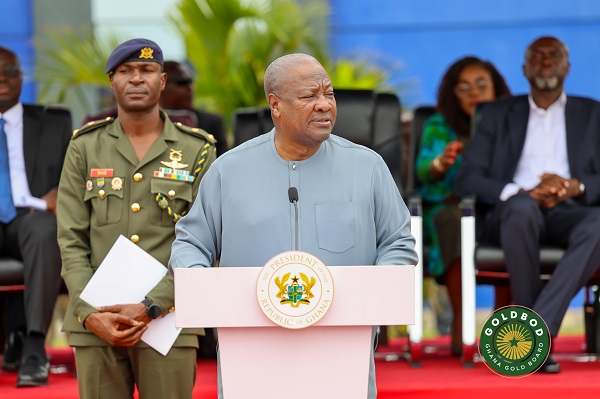

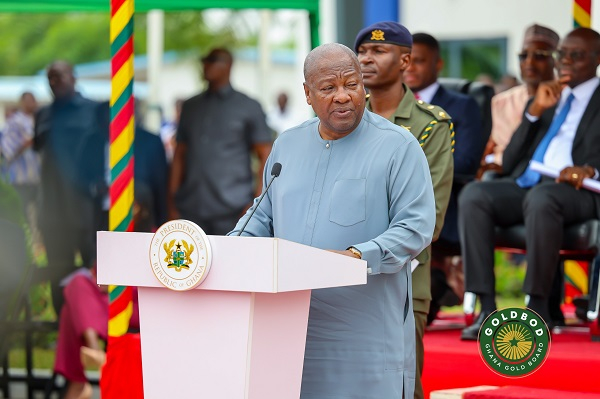

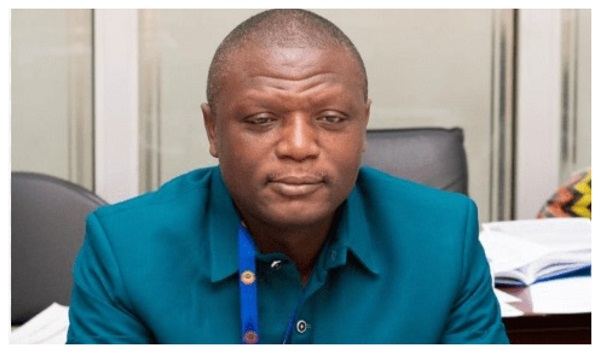

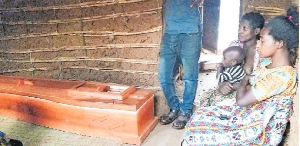


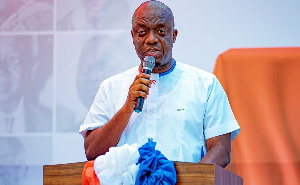



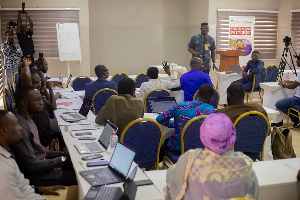
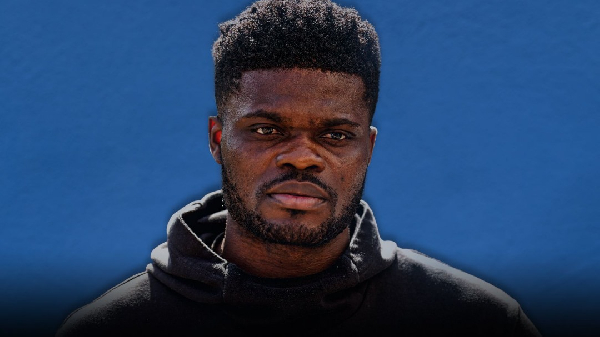


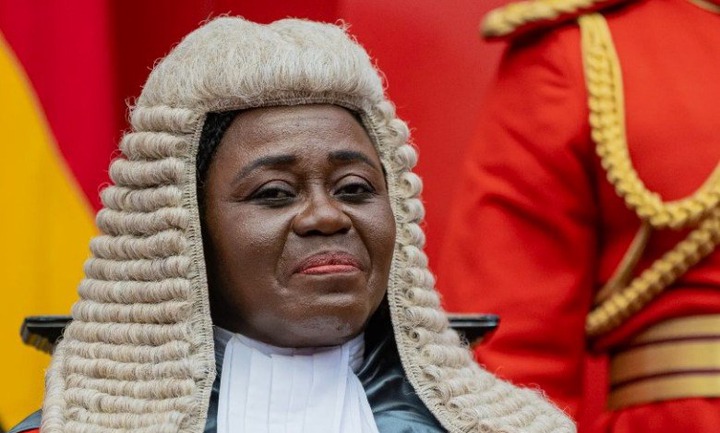

 Today, Ankara styles for ladies go far beyond their traditional roots. They’re a powerful celebration of heritage, individuality, and creative expression. From the streets of Lagos to global fashion runways, Ankara has solidified its place in contemporary wardrobes across the world.