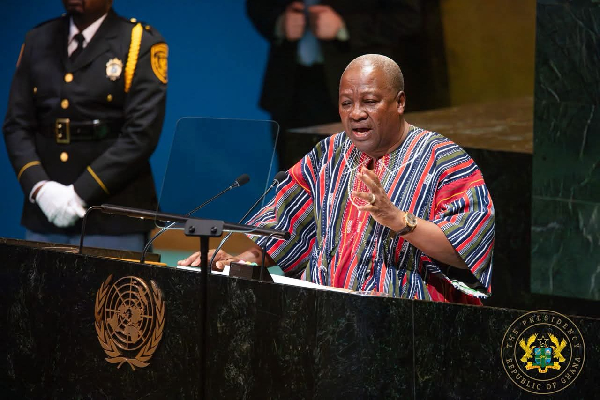
Captain Planet was a member of the now-defunct music group 4X4
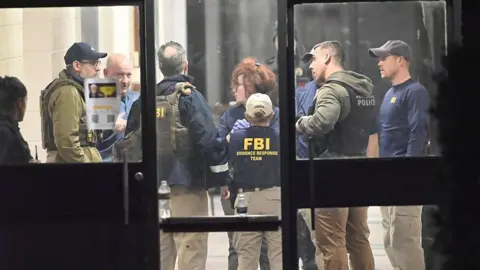
In the wake of the recent indictment of some Ghanaian nationals by the FBI for their alleged involvement in romance scams, artiste Captain Planet of the defunct 4X4 fame has claimed he would never have been suspected if he were involved in fraud.
In a series of posts shared on his X page on December 13, 2025, Captain Planet explained that he would never have been suspected because he would not post anything on his social media that could lead to him being tracked.
“Some of you boys dey slack. Me if I be game boy like nobody go suspect me cuz I no go show u anything on social media for you to track me. You don’t need to post money on social media to show people you’re enjoying life. A fish with its mouth closed never gets caught,” he wrote.
Blakk Rasta speaks on arrest of Abu Trica
The artiste further cautioned that when individuals are signing onto some social media platforms, they need to be cautious because some information provided is what the FBI uses to track movements.
“When joining some social media platforms, be careful cuz they’re collecting DATA from you. They ask for your DOB, your name, your country, your passport number or your social security number. They do all these so they can track your movements. The FBI uses social media to monitor us,” he stated.
Captain Planet also added that the rule of law is selective, arguing that some corrupt politicians never serve jail time while ordinary citizens bear the brunt.
“How many politicians wey you see say them chop money wey them go jail before? I dey tell you people always say the law only governs you and I ( the ordinary citizens) but not some politicians . Know this & know peace. Somebody shout POWERRR,” he added.
Some of you boys dey slack .Me if i be game boy like nobody go suspect me cuz i no go show u anything on social media for you to track me. You don’t need to post money on social media to show people you’re enjoying life.
When joining some social media platforms be careful cuz they’re collecting DATA from you.
They ask of your DOB, your name, your country, your passport number or social security number. They do all these so they can track your movements. The FBI uses social media to monitor us
How many politicians wey you see say them chop money wey them go jail before? I dey tell you people always say the law only governs you and i ( the ordinary citizens) but not some politicians . Know this & know peace
Watch the promo to GhanaWeb’s latest documentary, which uncovers the evolution of ‘kayamata,’ an exploitative practice fueled by love charms and manipulation, titled, “The Dark Side of Kayamata,’ below:
Also, watch why taxi and trotro operators are cautioning the govt about the Traffic Amendment Bill
The wait is over! The GhanaWeb Excellence Awards 2025 is officially launched. Let’s celebrate impact, innovation and excellence across Ghana.
Who deserves to be honoured this year?
Nominate now 👉 https://ghanaweb.com/ghanaexcellenceawards/nominate
Mary Wambui, Lenah Kanywa’s 10-year-old daughter, was killed three years ago. She’d been playing outside in the afternoon.
When Mary didn’t come home, her mother and older sister went to look for her at the place she’d last been seen by a neighbour – the house of the landlord’s adult son.
He is now facing trial for having assaulted and murdered the little girl.
“When I shone light under the bed, I saw Mary`s leg. I screamed. When I pulled her from under the bed, I saw my daughter had been stabbed with a knife,” said Lenah.
Cases like Mary’s are far too common.
The United Nations says one in five women are killed in Kenya every day, but that many cases remain unreported or misclassified, masking the true extent of the crisis.
There is also growing concern about the increase in gender-based violence.
In January 2024, a report by Africa Data Hub and Africa Uncensored showed a record number of femicides in the previous year. It brought thousands of people to the streets in protest.
In response, the government established a task force to address the rising numbers and has since held town hall meetings to investigate the issue.
Njeri Migwi is the founder of Usikimye, one of the most vocal NGOs in Kenya on the topic.
She thinks the government needs to support women at a more fundamental level, the point where crimes are being reported.
“We need to have a lot of psychosocial support, all the way from the minute you report to the police station,” she said.
Migwi said trauma victims should not be received by a police officer.
“They should be a psychologist who walks you through your trauma. And then by the time you`re able to speak up, you`re able to report properly,” she said.
To increase awareness about femicide and gender-based violence, her NGO organised an exhibition which they’ve been taking around Kenya.
The symbolic bloodstained dresses, the cold, uninviting gender desk at the police station, and a grave to honour the victims are hard to stomach.
But the real experiences are even more jarring.
Mary’s mother shared her story at the opening and said the support and counselling she’s received has helped.
“I started speaking to people. I never used to tell people anything. I just stayed silent because I had so much pain inside. When I met the other women, they all had issues, some even bigger than mine. And so I saw I was not alone,” she said.
After three long years, Mary’s case is finally in court and Lenah hopes for some sort of justice. But the pain of losing a child will stay with her forever.
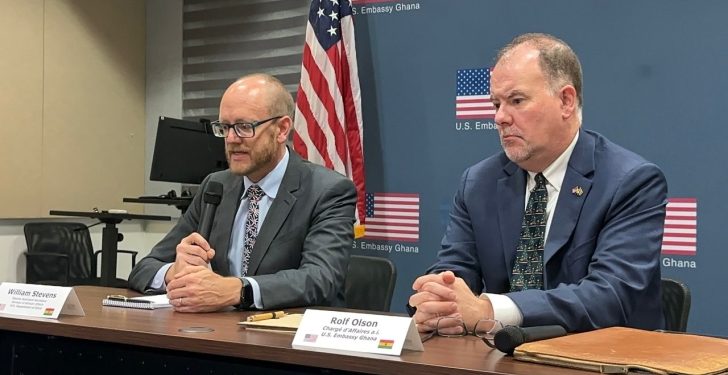
Accra, Dec. 15, GNA – The United States Government says its partnership with Ghana is entering a new phase focused on trade expansion, strategic investment, health sustainability and stronger security cooperation.
It comes as Washington recalibrates its engagement with Africa to emphasise mutual benefit and reduced aid dependency.
Mr. Will Stevens, the Deputy Assistant Secretary for West Africa at the U.S. Department of State’s Bureau of African Affairs, said Ghana remained a priority partner in West Africa, citing consistent high-level engagement, growing trade volumes and strong alignment with U.S. policy objectives under the current American administration.
Speaking at a policy interaction in Accra, Mr. Stevens said the U.S.-Ghana trade relationship had grown significantly in recent years, increasing from about US$2 billion to between US$3.5 billion and US$4 billion, with most Ghanaian exports enjoying tariff exemptions into the American market.
He said key Ghanaian exports such as oil and cocoa were not subject to the 15 per cent baseline tariff applied globally, placing Ghana among countries facing the lowest tariff barriers in U.S. trade.
“That reflects the strength of our relationship and the balanced nature of trade between our two countries,” Mr. Stevens said, adding that the U.S. hoped to see Ghanaian markets open further to American goods to ensure reciprocity in a partnership between equals.
On the future of the African Growth and Opportunity Act (AGOA), he explained that the U.S. administration was seeking a one-year clean renewal of the legislation to allow time for the development of a new trade framework that responds to current global economic realities.
Mr. Stevens stressed that trade, rather than aid, was increasingly at the centre of U.S. engagement with Africa, supported by targeted government tools that could unlock private sector investment.
He cited the Lobito Corridor initiative as a model of effective public-private partnership, involving the U.S. Development Finance Corporation, the Export-Import Bank, the World Bank and private investors, to drive regional integration through rail, logistics, technology and infrastructure.
“These are the kinds of projects where U.S. government engagement can be catalytic, making it possible for private sector investment to flow at scale,” he said, and espressed hope that similar models would be expanded across West Africa.
On investment, Mr. Stevens underscored the U.S. commitment to building local capacity, noting that Newmont Corporation, the single largest taxpayer in Ghana, is run by a Ghanaian national despite being an American company.
“That is exactly what we mean by investing in host-country nationals and national leadership,” he said.
He described it as a practical demonstration of partnership rather than dominance.
Mr. Stevens said the U.S. was negotiating a bilateral Memorandum of Understanding with Ghana to define a clear path for future health financing following the integration of USAID functions into the State Department.
He said health had been the largest area of U.S. assistance to Ghana for many years, particularly in malaria and HIV/AIDS programmes, and that Washington recognised the risks of abruptly cutting support.
Under the proposed framework, he said the U.S. would maintain full funding for health programmes in 2026, followed by a gradual transition towards greater domestic financing over time, in line with Ghana’s own vision for health sector sustainability.
“This reflects our recognition that stopping assistance suddenly would be detrimental, but also that long-term responsibility for healthcare rests with national governments,” Mr. Stevens said, adding that President John Dramani Mahama’s views on the issue closely aligned with U.S. thinking.
Mr. Stevens also addressed reports suggesting that Ghana was barred from certain forms of U.S. assistance due to sovereign debt defaults, clarifying that the matter related to legacy arrears with the U.S. Export-Import Bank.
He said the two governments were actively negotiating bilateral debt restructuring and that discussions had been productive, with several payments already made by Ghana in recent months.
“As long as there is a bilateral default, the law restricts additional government-to-government financing, but we are hopeful that this will be resolved soon,” he said.
Mr. Stevens praised Ghana’s cooperation on migration and security, saying the country had played a constructive role in supporting U.S. efforts to enforce immigration laws while respecting due process.
He said Ghana’s responsiveness and openness had made it “easy to do business” with the country and reinforced its standing as a trusted U.S. partner in the region.
Mr. Rolf Olsen, the Chargé d’Affaires of the U.S. Embassy in Ghana, described bilateral cooperation as “extraordinary,” particularly in the area of law enforcement and the rule of law.
He said Ghana’s extradition of nine individuals to the United States within a year was a remarkable demonstration of judicial cooperation and political commitment, noting that most of the cases involved cybercrime and large-scale financial fraud targeting vulnerable victims.
“Cybercrime does not respect borders, and the level of collaboration we have seen from Ghanaian authorities has been very strong, very efficient and very effective,” Mr. Olsen said, commending the work of Ghana’s security and justice institutions.
Mr. Olsen lauded Ghana’s broader engagement with the U.S. on security, migration and governance, expressing confidence in the Government’s ability to manage complex international obligations responsibly.
He said the depth of cooperation reflected shared values and mutual respect, adding that the U.S. remained proud to stand with Ghana as a key democratic and strategic partner in West Africa.
The Ghana Revenue Authority has pushed back against claims that its intensified tax enforcement disproportionately targets local businesses, arguing the outcome reflects the structure of the economy rather than policy bias.
The Authority says domestically owned firms make up the bulk of businesses, meaning enforcement actions will affect more local operators than foreign companies.
Assistant Commissioner for Enforcement in the Accra Central Area, Joseph Adjeikwei Annan, said the drive is aimed at improving compliance and broadening the tax base, not singling out indigenous enterprises.
“I think it is just something that is imaginary. I say so because look at the number of local businesses we have in Ghana, so many. So if you are even to do percentages, you realize that we have been doing more of the foreign than the local.
“But you go to a place, maybe you have one or two foreign and you have maybe 20 Ghanaian businesses. Obviously, you pick up more Ghanaian businesses than just one foreign business and then it will send that wrong perception that we are after our own. But then, you see, wrong is wrong and right is right. If you have fallen foul of the law, you have fallen foul of the law. But then, this is just to say that we are trying to be as fair as we can.
“But that assertion is not correct that we are more on our own than the foreigners. It is not correct, at least from my perception and I’m on the floor. So if I tell you it’s not correct, it’s not correct,” he said.
The Ghana Revenue Authority (GRA) has in recent times intensified its tax law enforcement drive, cautioning that businesses found breaching tax obligations could face severe sanctions including arrest and prosecution.
The Authority says the move forms part of broader efforts to tighten compliance and improve revenue mobilisation.tt
Deputy Director of Operations at the Presidency, Mustapha Gbande
A Deputy Director of Operations at the Presidency and Deputy General Secretary of the National Democratic Congress (NDC), Mustapha Gbande, has revealed that his ultimate desire is to leave politics and dedicate the rest of his life to Christian ministry.
According to him, his biggest wish in life is not to “die as a politician.”
Speaking in an interview on Starr FM on December 10, 2025, Gbande disclosed that his involvement in government was never driven by personal ambition for power or public office but rather by a sense of duty to the NDC and its supporters.
According to him, even after the NDC won power, he was content without a government appointment.
“If President Mahama didn’t give me an appointment, I was a content person, when we won, my whole objective was to go back into ministry. I had no business being in government.”
Gbande stressed that his personal “prize” in life had already been achieved, explaining that his true calling lies in preaching the gospel rather than holding political office.
Gbande labels Afenyo-Markin ‘subcontractor’ over Torkornoo row
“I pray every day that I don’t die as a politician. Even if it is one year left for me, God should take me out of politics and make me a servant who will go and save souls,” he stated.
He added that if he were not currently serving as Deputy Director of Operations at the Presidency, he would already be preaching full-time.
“If you gave me an opportunity today, I will exit and go and preach,” he
Ghana Armed Forces Issues Strong Warning to All Ghanaians
News Hub Creator2h
The Chief of the Defence Staff of Ghana, Lieutenant General William Agyepong, has given a strong warning to all Ghanaians about the dangers of false information spreading, especially about the military. He said these false stories are causing confusion, distrust, and division among soldiers and the public.
He explained that sharing unverified information can hurt the discipline, teamwork, and morale of the Armed Forces. Everyone is urged to check facts carefully before spreading news, particularly on social media and informal platforms.
Lieutenant General Agyepong also spoke about the welfare of soldiers. He acknowledged that many face challenges with housing and living conditions. He assured that the military leadership is working to fix these problems. By 2026, over 2,000 new houses are planned across military camps nationwide to provide better accommodation for personnel.
The Armed Forces also plan to use their skills and expertise to start projects that generate income. This will help support military operations and improve the welfare of soldiers.
He further reassured the public that the Ghana Armed Forces is fully ready to protect the country and maintain national security. However, spreading false information about the military can weaken public confidence and harm the nation.
These announcements were made during the annual end-of-year interdenominational religious service at Burma Camp in Accra. The event allows soldiers to pray, give thanks, and reflect on the year while building unity among all personnel.
A new poll by Global InfoAnalytics ahead of the Kpandai rerun has tipped the New Patriotic Party (NPP) candidate, Mathew Nyindam, as the frontrunner, with 50% of voter support.
The poll released on Sunday, December 14, 2025, showed that the embattled Member of Parliament for Kpandai, leading his closest challenger, the National Democratic Congress (NDC) candidate, Daniel Nsala Wakpal, who polled 46%.
Additionally, Donkor Eric Nipani, an independent candidate, is likely to poll 1% of the vote, while 3% of respondents said they were undecided.
Although the contest remains tight, the survey places Matthew Nyindam marginally ahead, with his lead falling within a ±3.9% margin of error.
The results indicate limited vote switching between the two leading candidates. About two per cent of voters who previously supported Hon Nyindam have shifted their support to Mr Wakpal. At the same time, an equal proportion of Mr Wakpal’s supporters have moved to Hon Nyindam.
However, the poll shows a significant shift among voters who initially backed Donkor Eric Nipani, with 28% now supporting Mr Nyindam, a development that has boosted his overall standing.
On Matthew Nyindam’s performance during his short stint in the current Parliament, 3% of voters rated him as excellent, while 32% described his performance as very good or good. A further 36% rated his performance as average, with 29% assessing it as poor or very poor.
Beyond the rerun, the poll also captured voter perceptions of the country’s direction. Overall, 66% of voters in the Kpandai constituency believe Ghana is headed in the right direction, compared with 26% who said the country is moving in the wrong direction.
Eight per cent indicated they had no opinion.
Among NPP supporters, 37% said Ghana is headed in the right direction, while 47% believed it is moving in the wrong direction and 16% had no opinion.
In contrast, an overwhelming 97% of NDC supporters said the country is headed in the right direction, with three per cent saying the wrong direction and one per cent expressing no opinion. Floating voters were also largely optimistic, with 65% saying Ghana is headed in the right direction.
Kpandai: NDC favoured but race too close to call – Global InfoAnalytics
The United States has lauded the government of President John Dramani Mahama for its close collaboration in the fight against cybercrime, describing Ghana’s role in facilitating the extradition of suspects as a remarkable milestone in bilateral law enforcement cooperation.
Speaking at a roundtable engagement at the US Embassy in Accra on Friday, December 12, 2025, the US Chargé d’Affaires, Rolf Olson, praised the Mahama administration, particularly the Attorney-General’s Department and the Ministry of the Interior, for their commitment to upholding the rule of law.
According to Mr Olson, nine Ghanaian nationals have been extradited to the United States within the year to face charges related to cybercrime, including online impersonation and large-scale fraud schemes that allegedly caused significant financial losses to victims.
He emphasised that extradition does not amount to a declaration of guilt, explaining that all suspects are entitled to due process and a fair trial under US law.
“They are presumed innocent until proven guilty in court,” he noted, adding that convictions, where secured, could attract custodial sentences.
Mr Olson said individuals found guilty of exploiting vulnerable victims, particularly the elderly, should be held fully accountable, stressing the importance of deterrence in combating cyber-enabled crimes.
He also reaffirmed the United States’ openness to receiving extradition requests from Ghana and other partners, describing such judicial cooperation as a cornerstone of strong bilateral relations, subject to legal scrutiny by the courts.
On migration matters, the US diplomat noted that enforcement of immigration laws remains a priority for Washington, including the deportation of foreign nationals who have exhausted legal avenues to remain in the country.
He commended Ghanaian authorities for their continued cooperation in receiving returning nationals, describing it as further evidence of the strength of Ghana–US relations.
DISCLAIMER: The Views, Comments, Opinions, Contributions and Statements made by Readers and Contributors on this platform do not necessarily represent the views or policy of Multimedia Group Limited.
DISCLAIMER: The Views, Comments, Opinions, Contributions and Statements made by Readers and Contributors on this platform do not necessarily represent the views or policy of Multimedia Group Limited.
Ghanaian journalist and blogger Stephen Adjetey Abban, popularly known as Gabs, has shared a personal tribute recounting how highlife legend Daddy Lumba became the most influential figure in his musical life, displacing Nana Acheampong as his early favourite.
Reflecting on Daddy Lumba’s burial, Gabs said the story felt timely as the country bid farewell to an artiste many regard as Ghana’s greatest of all time.
Prof Ahmed Jinapor Abdulai says GTEC will be going after ‘fake’ lawyers in 2026
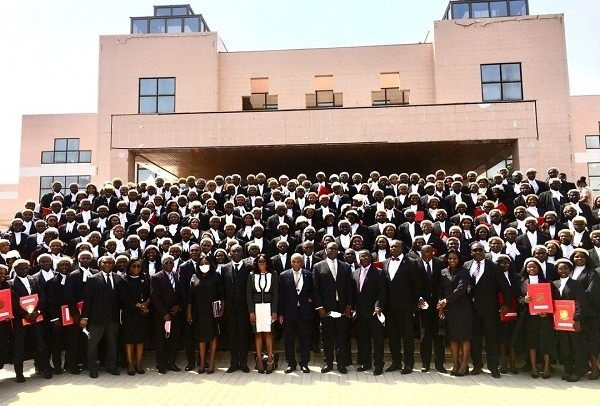
Director-General of the Ghana Tertiary Education Commission (GTEC), Prof Ahmed Jinapor Abdulai, has sounded a strong caution to persons practising law in Ghana without the required qualification.
According to him, his outfit’s focus for the ensuing year, 2026, will be fishing out people who brand themselves as lawyers but have no degrees to back their titles.
Prof. Jinapor, who is reported to have made these remarks in a news card shared by TV3, indicated that his outfit has intelligence that some persons are practising law in the country without the required qualification.
“From next year we are moving into the legal area. We’ve gathered signals that there are people who are lawyers but don’t have the degree,” he is quoted as saying.
The GTEC boss and his outfit made news in 2025 after calling out a number of personalities and ordering them to stop using their academic titles.
Among the personalities is former presidential candidate and leader of the All People’s Congress (APC), Hassan Ayariga, who was asked to stop using his ‘Doctor’ title.
The others include the Chief Executive Officer of the Ghana Investment Fund for Electronic Communication (GIFEC) and Deputy Director of IT and Elections of the ruling National Democratic Congress, Rashid Tanko-Computer, and the party’s Member of Parliament for Awutu Senya East, Phillis Naa Koryoo Okunor, who were both asked to stop using the ‘Doctor’ title.
Presidential Candidate, Minister, MPs: Meet 8 public figures GTEC is chasing for using ‘fake’ titles
BAI
Watch the promo to GhanaWeb’s latest documentary, which uncovers the evolution of ‘kayamata,’ an exploitative practice fueled by love charms and manipulation, titled, “The Dark Side of Kayamata,’ below:
Also, watch why taxi and trotro operators are cautioning the govt about the Traffic Amendment Bill
The wait is over! The GhanaWeb Excellence Awards 2025 is officially launched. Let’s celebrate impact, innovation and excellence across Ghana.
Who deserves to be honoured this year?
Nominate now 👉 https://ghanaweb.com/ghanaexcellenceawards/nominate
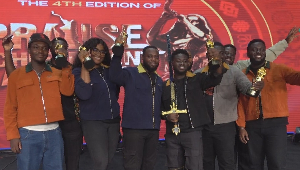
play videoTeam Eternity won 5 awards at the 2025 Praise Achievement Awards
The 4th edition of Ghana’s biggest gospel awards event, the 2025 Praise Achievement Awards, was successfully held at the Perez Chapel, Dzorwulu, in Accra on Sunday, December 14, 2025.
The awards ceremony, which was sold out, celebrates living legends and honours trailblazers who have made significant contributions to the gospel music genre in Ghana.
Patrons were treated to soulful and uplifting performances from celebrated gospel acts, including Luigi Maclean, Carl Clottey, Empress Gifty, and Steve O and the Broken Chains, creating an atmosphere of worship and celebration throughout the night.
Several artistes were recognised for their outstanding contributions to gospel music.
MOG picked up the Songwriter of the Year award, Empress Gifty was crowned Female Artiste of the Year, while Kofi Owusu Peprah won Male Artiste of the Year.
However, the biggest winners of the night were Team Eternity, who emerged as the overall Artiste of the Year.
The group walked away with an impressive five awards, including Album of the Year, Song of the Year, Most Engaged Song on Social Media, Group of the Year, and the ultimate Artiste of the Year award.
Speaking to GhanaWeb’s Isaac Dadzie after the ceremony, Team Eternity expressed gratitude for the recognition.
“It is a blessed privilege. We give all the glory to God because He is the one who set us on this journey. We are truly grateful for these honours,” they said.
When asked about the secret to their consistency over the years, the group attributed their success to “unity, love, fellowship, and prayer.”
Overall, the 2025 Praise Achievement Awards once again proved to be a successful celebration of excellence, dedication, and impact within Ghana’s gospel music industry.
Western Regional Police Command said incident happened on December 14
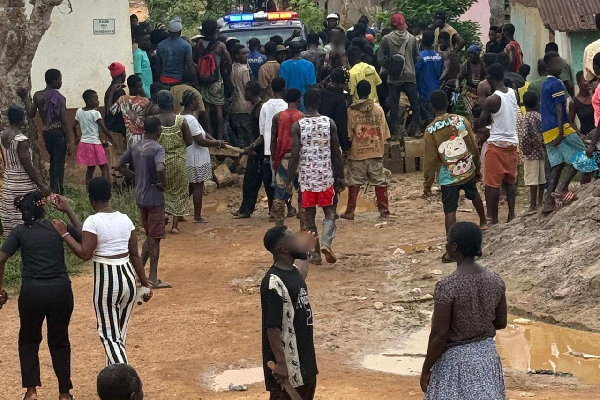
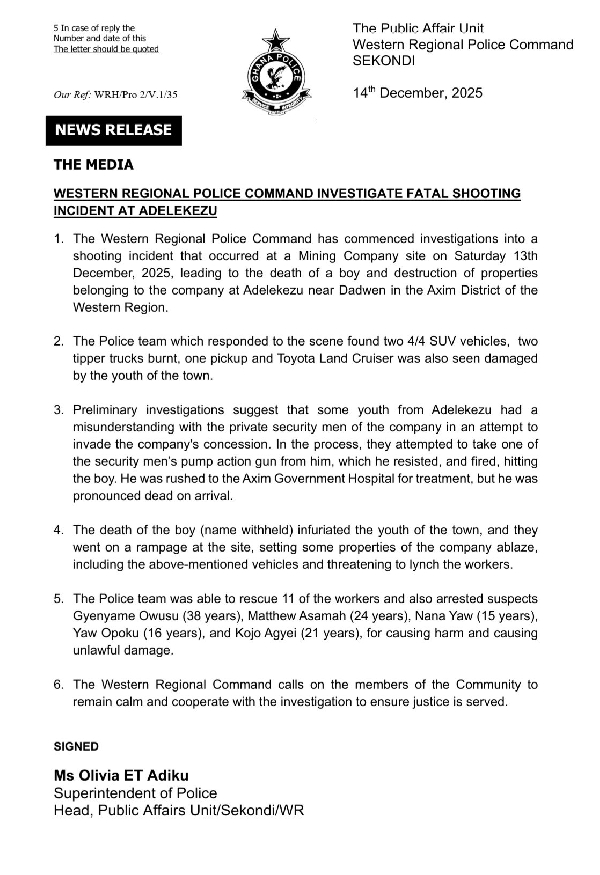
The Western Regional Police Command has begun investigations into a shooting incident that claimed the life of a 13-year-old boy at a mining company site at Adelekezu, near Dadwen in the Axim District of the Western Region.
In a statement issued on December 14, 2025, and signed by Superintendent of Police Olivia ET Adiku, Head of the Public Affairs Unit in Sekondi, police said the incident occurred on Saturday, December 13, 2025.
The shooting resulted in the death of 13-year-old Pious Nkansah, also known as Nkrumah, and the destruction of several properties belonging to the company.
Huhunya Asafoatse demands police agreement over shooting range
According to the police, officers who arrived at the scene found two 4×4 SUV vehicles and two tipper trucks completely burnt. A pickup truck and a Toyota Land Cruiser were also damaged. The destruction was allegedly carried out by some youth from the community.
The statement noted that preliminary findings suggest the incident arose from a misunderstanding between youth from Adelekezu and private security personnel guarding the mining site. The youth reportedly attempted to force their way onto the company’s concession.
During the ensuing confrontation, the youth allegedly tried to take a pump-action gun from one of the security guards. The guard resisted and discharged the weapon, striking the 13-year-old boy.
The victim was rushed to the Axim Government Hospital but was pronounced dead on arrival.
Police said the boy’s death angered the youth, who then went on a rampage at the site, setting company property on fire and threatening to attack workers. Officers managed to rescue 11 workers during the disturbance.
Five suspects have been arrested in connection with the incident. They are Gyenyame Owusu, 38; Matthew Asamah, 24; Nana Yaw, 15; Yaw Opoku, 16; and Kojo Agyei, 21. They are being held for causing harm and unlawful damage.
The Western Regional Police Command has appealed to residents to remain calm and assist with investigations as efforts continue to ensure justice is served.
See the post by the Ghana Police Service below:
PRESS RELEASE:
WESTERN REGIONAL POLICE COMMAND INVESTIGATE FATAL SHOOTING INCIDENT AT ADELEKEZU pic.twitter.com/zi85VaOfQ9
Watch the promo to GhanaWeb’s latest documentary, which uncovers the evolution of ‘kayamata,’ an exploitative practice fueled by love charms and manipulation, titled, “The Dark Side of Kayamata,’ below:
Also, watch why taxi and trotro operators are cautioning the govt about the Traffic Amendment Bill
The wait is over! The GhanaWeb Excellence Awards 2025 is officially launched. Let’s celebrate impact, innovation and excellence across Ghana.
Who deserves to be honoured this year?
Nominate now 👉 https://ghanaweb.com/ghanaexcellenceawards/nominate
Ghana’s recognition by the United Nations as the Sanitation and Waste Management Hub for West Africa in 2025 is credited largely to the extensive infrastructure built by Zoomlion Ghana Limited, the Minister of Local Government has revealed.
Ahmed Ibrahim, speaking at a thanksgiving ceremony for the Jospong Group on Friday, December 12, 2025, in Accra, detailed how the company’s 36 advanced treatment plants positioned the nation as a continental leader.
“In fact, in 2025, the United Nations adjudged Ghana the Sanitation and Waste Management Hub for West Africa—thanks in large part to Jospong and Zoomlion’s comprehensive sanitation infrastructure,” he stated.
He provided tangible evidence of this capability, citing an official benchmarking trip to South Korea. “Only two African countries impressed the Koreans: Ghana and Morocco,” Ibrahim said. “When they saw our integrated systems—our recycling plants, composting facilities, and medical waste treatment centres—they asked, ‘How did Ghana achieve this?’”
“The answer is simple. A strong public–private partnership between government and the Jospong Group,” the Minister declared.
He identified the core of this achievement as “the 36 completed composting, recycling, and waste treatment plants—the largest sanitation infrastructure in West Africa.”
This network, developed over years of partnership, has not only solved local waste challenges but has also made Ghana a regional model, he said.
The Minister traced the journey of this infrastructure from its humble origins, stating, “From a small office at Jamestown, Jospong has grown into a continental giant.” He revealed the group now “operates in over 14 sectors, with 78 subsidiaries, and has expanded to more than 24 African countries.”
He shared that this infrastructure has become a point of national pride and curiosity abroad, noting, “In all these countries, leaders ask me, ‘What is Ghana’s secret?’ And I tell them about the 36 completed composting, recycling, and waste treatment plants.”
Ibrahim’s testimony underscores how strategic investment in domestic waste management infrastructure, led by Zoomlion, has propelled Ghana onto the global stage of sustainability and environmental stewardship, turning a public service into a point of national pride and international acclaim.
In a welcome address, the Executive Chairman of the Jospong Group, Dr Siaw Agyepong, attributed the corporation’s remarkable growth from a single printing press to a multi-national industrial leader to divine providence and consistent national support.
He reflected on the Group’s evolution, stating, “Thus far has the Lord helped us.”
He detailed the scale of their flagship environmental arm, Zoomlion, revealing it now operates “36 functional plants spanning solid waste, liquid waste and medical waste treatment,” making Ghana a “centre of industrial excellence on the African continent.”
The Group’s footprint, which began at the Jospong Printing Press in Jamestown in 1995, he stated, now extends across “more than 25 African countries including Kenya, Nigeria, Uganda, Ethiopia, Tanzania, The Gambia and Gabon.”
Dr Siaw Agyepong indicated that “Truly, this is the doing of the Lord, and it is marvellous in our eyes.”
Acknowledging pivotal governmental support, he paid tribute to late President Jerry John Rawlings, who visited Zoomlion facilities “even on his birthday,” late President Prof. John Evans Fiifi Atta Millis, former Presidents John Agyekum Kufuor and Nana Addo Dankwa Akufo-Addo.
He recalled the early days of meeting the then-President (Kufuor) noting, “I was frightened.”
He also expressed profound gratitude to President John Dramani Mahama and First Lady, Lordina Mahama, for their immense support for his Group.
Dr Siaw Agyepong noted that the company’s success was not merely a result of strategy but a “manifestation of divine covenant, revelation and mystery,” framing the group’s story as a national testimony of what is possible with vision and enablement.
In attendance were ministers of state, including Sam George, members of Parliament, traditional authorities, members of the diplomatic corps, clergy, Muslim clerics, civil society organisations, business owners, and Jospong Group workers.
Ibrahim Khalilulahi Usman (left) with other winners.
Mr Ibrahim Khalilulahi Usman, a Ghanaian investigative science journalist, has won the Best News Story/Feature Category at the Africa Science Journalism Awards, for his investigative piece on coastal erosion in Ghana.
Presently in its second phase, the awards organised by the Science for Africa Foundation seek to honour journalists whose reporting strengthens public understanding of science and combats misinformation across the continent.
The announcement was made during the just-concluded 13th World Conference of Science Journalists in Pretoria, South Africa, marking the event’s first-ever African host.
“These awards recognise more than excellence. We celebrate the vital forces behind it, the courage to investigate, the persistence to verify, and the creativity to translate are the qualities our finalists exemplified,” Dr Evelyn Gitau, the Chief Scientific Officer, SFA Foundation said.
She said each winner used their talent not just to report, but to ignite public curiosity, safeguard factual discourse, and demonstrate that science was not locked away in institutions but a living, breathing part of Africa’s daily life and future.
In his acceptance speech, the award-winning journalist, reframed journalism’s fundamental challenge in the AI era.
Referencing Tom Kovach and Rosenstiel’s 2001 book “The Elements of Journalism,” he highlighted the first principle: that journalism’s obligation was to the truth.
Twenty-five years ago, that statement addressed traditional verification challenges, he said.
He said presently with AI generating and assisting in content creation, science journalists faced dual verification requirements.
“As science journalists, our responsibility is to prioritise truth, leveraging AI responsibly to enhance our work. This means we’ve two tasks,” he noted.
He stressed that “Verifying information created with AI by humans and verifying information created by humans using AI was a challenging task, but it presents an opportunity to use AI responsibly and had enhanced journalistic reporting,” he stressed
Khalilulahi’s award-winning investigation, supported by Dialogue Earth and Wits University, required four months of research and fact-checking.
That timeline, he explained, reflected the depth necessary for responsible science journalism in an era where AI could generate plausible-sounding but potentially inaccurate content at scale.
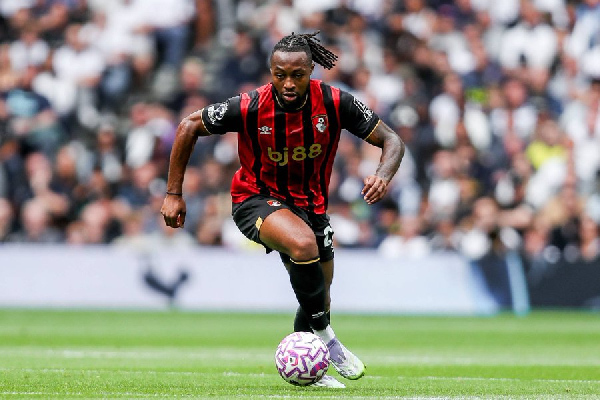
Semenyo is a Ghanaian international playing for AFC Bournemouth
Former Manchester United and Portugal forward, Luis Nani, has urged the Red Devils to make a move for Ghana striker Antoine Semenyo in the winter transfer window.
Semenyo is available for £65M in January after signing a deal last summer, which included the amount as his release clause.
Liverpool and Manchester City are reported as the frontrunners for the signature of the 25-year-old.
However, ahead of United’s Premier League clash with AFC Bournemouth, Nani – a fan of the Ghanaian forward – believes Semenyo has the qualities to succeed at Old Trafford.
“I think all the players who have the ability to move forward at speed, being able to dribble, able to shoot, to score goals, to assist and just have that general creativity in the moment would suit Manchester United,” he told Metro.
“That’s the type of player the fans want to see. However, we know that when players come to Man United, this is totally different. It’s a different environment, different pressure, different mentality, different job, and then they have to adapt.
“I hope if we get Semenyo, he can come with his attitude, with this mentality, and he can put all of his talent on the field and help the team.”
Semenyo has already scored six goals in the ongoing Premier League campaign for the Cherries.
People use these words interchangeably, but they aren’t exactly the same.
From Dracula’s resting place to polished funeral-home displays, the vessels we associate with death have evolved, and so has the language. Take the words coffin and casket, for example.
People tend to use these interchangeably, but is there any difference between the two terms? Here’s what you should know.
For starters, what’s a coffin?
“A coffin is what you probably picture from old horror movies ― six sides, narrow at the head and feet, and shaped to follow the human form,” said Joshua Siegel, co-founder and president of the direct-to-consumer Titan Casket. “The lid is usually flat and fully removable.”
This traditionally hexagonal vessel is usually tapered at the head and feet and wider at the shoulders, thus requiring less material in those narrowed places. Think Dracula sleeping in his coffin.
The term “coffin” stems from Old French and English words referring to a basket, chest or even pie crust. And over time, the word has come to be used to describe any container for the deceased, regardless of shape or number of sides.
What’s a casket?
“A casket is rectangular with four sides, usually with a hinged lid that is often split for viewings, lined with padding and fabric, and designed to look more like a piece of fine furniture,” Siegel explained. “In the U.S., the casket is seen as more elegant and dignified, and that’s by design.”
The term casket can also describe a special box for holding jewellery and other valuables. Many believe the word originated from the Old French “cassette,” meaning a small chest or box.
“The term ‘casket’ started to replace ‘coffin’ in the 19th century, in part to soften the language of death and reflect the idea that the body was something precious,” Siegel noted.
RubberBall Productions via Getty Images
What’s the difference?
“Both are containers for the deceased, but they differ in both design and cultural meaning,” Siegel said.
Coffins tend to be made of wood, while caskets can contain a variety of materials, with wood and metal being the most common. Caskets typically cost more than coffins due to their more ornate design and materials. The lids are different, and caskets are more likely to include swing bar handles for ease of lifting and carrying.
“Caskets are almost exclusively used in the U.S. and Canada,” Siegel explained. “Coffins are more common in the U.K., much of Europe and Latin America. In the U.K., for instance, ‘coffin’ is the default word and the standard shape.”
He explained that there are religious and cultural traditions at play as well.
“Jewish funerals often use simple wooden coffins. Some Christian traditions in the U.S. favour more ornate caskets. In Muslim customs, simplicity is emphasised, and burial may not involve a coffin or casket at all.”
Why are caskets the norm in the U.S.?
“The rectangular casket became the American standard during a broader cultural shift in how death was viewed ― and commercialised ― in the 19th and early 20th centuries,” Siegel explained.
Although coffins were the norm in early U.S. history, the violence and mass casualties of the Civil War ushered in a “beautification of death” movement that changed mourning practices.
“After the Civil War, embalming became more common, and open-casket funerals became a way for families to say goodbye,” Siegel said. “That increased the importance of presentation, not just of the body but of the container itself. The rectangular casket, with its symmetry and polished appearance, resembled fine furniture and felt more dignified to many American families.”
At the same time, there came a shift in language around funerary practices that brought a gentler note.
“The term ‘coffin’ ― associated with morbidity, decay, and old-world death ― was gradually replaced with ‘casket,’ a word that once meant a jewelry box,” Siegel said. “It reframed the entire experience. Instead of a grim vessel, the casket became a respectful resting place for something (or someone) precious. Funeral directors leaned into this narrative, and manufacturers followed suit.”
He added that the rectangular casket shape also made manufacturing, transportation and storage easier.
“In a country that was rapidly industrialising, scaling up mass production of a uniform shape just made sense,” Siegel noted. “In contrast, six-sided coffins remained the norm in Europe, the U.K., and many other parts of the world where local artisans still crafted funeral products by hand ― and where cultural traditions didn’t demand the same emphasis on viewings or presentation.”
You can still find both coffins and caskets today, though in the U.S., the rectangular casket remains the standard. The difference between the two largely lies in design and tradition, but it serves as a reminder of how even the language of death continues to evolve.
Ibrahim Khalilulahi Usman (left) with other winners.
Mr Ibrahim Khalilulahi Usman, a Ghanaian investigative science journalist, has won the Best News Story/Feature Category at the Africa Science Journalism Awards, for his investigative piece on coastal erosion in Ghana.
Presently in its second phase, the awards organised by the Science for Africa Foundation seek to honour journalists whose reporting strengthens public understanding of science and combats misinformation across the continent.
The announcement was made during the just-concluded 13th World Conference of Science Journalists in Pretoria, South Africa, marking the event’s first-ever African host.
“These awards recognise more than excellence. We celebrate the vital forces behind it, the courage to investigate, the persistence to verify, and the creativity to translate are the qualities our finalists exemplified,” Dr Evelyn Gitau, the Chief Scientific Officer, SFA Foundation said.
She said each winner used their talent not just to report, but to ignite public curiosity, safeguard factual discourse, and demonstrate that science was not locked away in institutions but a living, breathing part of Africa’s daily life and future.
In his acceptance speech, the award-winning journalist, reframed journalism’s fundamental challenge in the AI era.
Referencing Tom Kovach and Rosenstiel’s 2001 book “The Elements of Journalism,” he highlighted the first principle: that journalism’s obligation was to the truth.
Twenty-five years ago, that statement addressed traditional verification challenges, he said.
He said presently with AI generating and assisting in content creation, science journalists faced dual verification requirements.
“As science journalists, our responsibility is to prioritise truth, leveraging AI responsibly to enhance our work. This means we’ve two tasks,” he noted.
He stressed that “Verifying information created with AI by humans and verifying information created by humans using AI was a challenging task, but it presents an opportunity to use AI responsibly and had enhanced journalistic reporting,” he stressed
Khalilulahi’s award-winning investigation, supported by Dialogue Earth and Wits University, required four months of research and fact-checking.
That timeline, he explained, reflected the depth necessary for responsible science journalism in an era where AI could generate plausible-sounding but potentially inaccurate content at scale.
The Accra High Court has granted an injunction filed by the maternal family of the late musician Daddy Lumba, restraining the first respondent, Kofi Owusu, the family head (Abusuapanyin), from organising his burial.
The court also barred the third respondent, Transitions Funeral Home, from releasing the body until the substantive matter is resolved.
In its ruling, the court noted that affidavits before it suggested the immediate family had been sidelined in funeral arrangements and stressed the need to consider the merits of the case.
The judge acknowledged that delaying the burial could lead to increased costs but emphasised that due process and proper family involvement must be respected.
While affirming that the family head has the authority to lead funeral preparations, the court held that such authority must be exercised in consultation with the immediate family.
The court subsequently directed the first respondent to convene a stakeholder meeting within three weeks to agree on a new burial date.
It further ordered that all funds raised for the funeral be separated from accounts belonging to the Daddy Lumba Memorial Foundation. The applicants were instructed to file an affidavit with the court registrar.
The case stems from disagreements following Daddy Lumba’s death on July 26, 2025, at age 60. A dispute between his maternal relatives and the family head over who should lead the funeral and how funds should be managed escalated, reflecting long-standing Akan customs that grant significant authority to the maternal lineage in burial matters.
Netizens have criticised Deputy Commissioner of the Narcotics Control Commission (NACOC), Alexander Twum Barimah, after a video showing the arrest of social media influencer Frederick Kumi, popularly known as Abu Trica, went viral.
In the video, Twum Barimah is heard questioning Abu Trica about his source of wealth. Abu Trica, who was handcuffed, insisted that he would only respond in the presence of his lawyers.
The actions of Twum Barimah have drawn condemnation from netizens and legal experts, many of whom described his conduct as inappropriate.
Private legal practitioner Noah Adamtey, who ‘dragged’ the Attorney General to the Supreme Court over the legality of the OSP, expressed disappointment about the NACOC officer’s action.
‘What Work Do You Do’?: Watch how Abu Trica fumbled on a simple question during his arrest
He noted that Twum Barimah, being a lawyer, should have known better. Adamtey urged Parliament to summon the Deputy Commissioner to answer questions regarding Abu Trica’s human rights.
“I’m not familiar with the specific human rights he has committed himself to, but I don’t think this issue should be overlooked, especially given his position. I expect Parliament to invite him to answer questions about his actions. Possibly, a formal petition should be lodged against him. We must take a stand against human rights abuses by those entrusted with public power,” Adamtey wrote.
Another legal practitioner, Afia Blue, also criticised the security agencies for bypassing due process. She questioned why Twum Barimah pressed Abu Trica for answers despite his request to wait for his lawyer.
“Everyday the police/security agencies mess up cases because of things like this. Just follow due procedure. He says he is waiting for his lawyer, why are you still questioning him?” she wrote.
Another social media user questioned the rationale behind forcing Abu Trica to speak while filming the encounter.
“Never thought I’d defend a fraud boy but wtf do they think they’re doing by forcing words out of him while recording him for public display?” the user commented.
During Abu Trica’s arrest on December 11, 2025, Twum Barimah questioned Abu Trica about his source of income.
Handcuffed and seated, Abu Trica stated that he had already provided the information to another officer. Twum Barimah pressed for a clear answer, ultimately eliciting a vague response that Abu Trica does “a lot of jobs” without further specifics.
The exchange between Abu Trica and Twum Barimah unfolded as follows:
Twum Barimah: What work do you do? I am the one asking the question. I don’t care about what you told somebody in my absence.
Abu Trica: My lawyer should answer the question. I have already done this thing. Ask the other people.
Twum Barimah: We are asking you questions under arrest about your work, and you want your lawyer to answer that? The lawyer cannot answer that question for you.
Abu Trica: The last time your officer came here, I answered the same question.
Twum Barimah: I am asking you. Just answer.
Abu Trica: The last time I explained it to the senior man. I keep saying it. I have not done any transaction for me to be handcuffed.
Twum Barimah: I haven’t asked about any transaction. I need the work that you do, so just say it.
Abu Trica: The jobs that I do are a lot.
The 31-year-old social media influencer appeared shaken during his arrest. He faces charges of conspiracy to commit wire fraud and money laundering in the United States, which carry potential prison sentences of up to 20 years.
Abu Trica was arrested in Ghana during a joint operation with US authorities, who are seeking his extradition.
Read some of the posts below:
I learned about Alexander Twum-Barimah, the Deputy Director General (Enforcement, Control & Elimination) at the Narcotics Control Commission (NACOC), for the first time today. He is the individual who was interrogating Abu Trica while he was in handcuffs, under duress, and… pic.twitter.com/cF4TGovBzq
Everyday the police/security agencies mess up cases because of things like this. Just follow due procedure. He says he is waiting for his lawyer, why are you still questioning him? https://t.co/zTBW6la0nd
Never thought I’d defend a fraud boy but wtf do they think they’re doing by forcing words out of him while recording him for public display? https://t.co/m9Xted1VDE
You can clearly see they are struggling in their handcuffs, but those fools are still interrogating them this is wrong, if I was in his position I would’ve sued their asses!!!!! https://t.co/81nPX4sbiL
Twum Barima is a lawyer, and he knows that a suspect must be informed of their Miranda rights. Yet he is attempting to force information out of someone who has clearly denied the allegations and has explicitly requested legal counsel. Such tactics are unacceptable https://t.co/mscL9oHwcR
Guys, is this right? I thought they’re usually told they have the right to remain silent and anything they say will be used against them in the court of law. Is this different?
Watch the promo to GhanaWeb’s latest documentary, which uncovers the evolution of ‘kayamata,’ an exploitative practice fueled by love charms and manipulation, titled, “The Dark Side of Kayamata,’ below:
Also, watch why taxi and trotro operators are cautioning the govt about the Traffic Amendment Bill
The wait is over! The GhanaWeb Excellence Awards 2025 is officially launched. Let’s celebrate impact, innovation and excellence across Ghana.
Who deserves to be honoured this year?
Nominate now 👉 https://ghanaweb.com/ghanaexcellenceawards/nominate
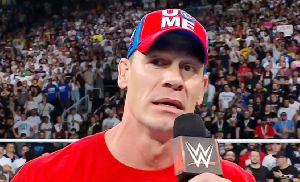
John Cena was the most decorated wrestler in WWE history
John Cena officially retires after final WWE appearance
John Cena, the most decorated wrestler in WWE history, has officially retired from the sport after making his final appearance at Saturday Night’s Main Event in front of more than 19,000 fans at the Capital One Arena in Washington, D.C.
The 17-time world champion brought his year-long retirement tour to a close with a loss to Gunther, tapping out for only the fourth time in his career and the first time in 21 years. Cena was placed in multiple sleeper holds by the “Ring General” and, after repeatedly breaking free, eventually looked into the camera, smiled slightly, and submitted.
It marked Cena’s first tap-out defeat since 2004, when he lost to Kurt Angle.
During the match, Cena attempted several of his trademark moves, including the Five Knuckle Shuffle and the Attitude Adjustment, but was unable to withstand Gunther’s sustained offense. After the bout, Gunther exited the ring as members of the WWE locker room poured out to honour Cena.
World Heavyweight Champion CM Punk and Undisputed WWE Champion Cody Rhodes entered the ring and handed John Cena their championship belts, allowing him to wear them one last time.
The crowd reacted angrily when WWE Chief Content Officer Paul “Triple H” Levesque appeared, showering him with chants of “bullsht” and “You fed up” as fans voiced their displeasure over Cena’s farewell result.
A tribute montage followed, featuring wrestlers from across Cena’s career, including archival footage of former WWE chairman Vince McMahon. Cena then removed his shoes and sweatbands, leaving them in the centre of the ring before taking his bows and walking away.
As he made his way toward the entrance, Cena high-fived fans, took one final bow, and addressed the camera for the last time.
“It’s been a pleasure serving you all these years, thank you,” Cena said before exiting the arena as the broadcast faded to black.
The defeat marked the second retirement match Gunther has ended in 2025, having earlier beaten Bill Goldberg in his final bout.
Cena’s final match capped a dramatic year in which he turned heel for the first time in his career at Elimination Chamber in March.
He later defeated Rhodes for the Undisputed WWE title at WrestleMania, breaking the record for the most world championships in WWE history, before Rhodes reclaimed the title at SummerSlam. Cena’s final reign came after defeating Dominik Mysterio in his hometown of Boston.
The United States has commended the John Mahama administration for its strong cooperation in combating cybercrime and facilitating extraditions, describing the collaboration as “extraordinary.”
Speaking at a roundtable discussion at the US Embassy in Accra on Friday, December 12, 2025, the US Chargé d’Affaires, Rolf Olson, praised the government of President John Dramani Mahama, the Attorney General, and the Interior Ministry for working closely with US authorities to uphold the rule of law.
“Extradition of nine individuals from Ghana in one year is an extraordinary achievement, and the cooperation with the government, obviously with the President, the Attorney General, Interior Minister, has been extraordinary. It’s been a really strong collaboration,” he said.
Mr Olson disclosed that nine Ghanaians have been extradited to the United States this year over cybercrime and related offences, including online impersonation and schemes that allegedly defrauded victims of millions of dollars.
He was joined at the event by the US Deputy Assistant Secretary for West Africa at the Bureau of African Affairs, William B. Stevens.
He clarified that extradition does not automatically result in imprisonment, stressing that suspects are entitled to due process under US law.
“We go through a formal legal process to make a request… and then are legally sent to the United States to stand trial. Everyone gets a fair trial. They’re not guilty. They will be firmly innocent until proven guilty,” he explained.
Mr Olson added that convicted persons could face prison sentences depending on the offences proven in court.
“These are the kinds of people who, obviously, if proven guilty in court, they should be in prison. They shouldn’t be out being able to take advantage of particularly older people,” he stated.
On broader cooperation, he said the US remains committed to working with Ghana to fight cybercrime and financial fraud, adding that Washington is also open to receiving extradition requests from Ghana and other countries.
“We are always open to receiving extradition requests. That is absolutely a firm part of any good bilateral relationship,” he noted, explaining that such requests are subject to judicial review and approval by US judges.
Touching on deportation, Mr Olson said illegal immigration remains a priority for President Donald Trump’s administration, leading to the removal of foreign nationals who have exhausted their legal options in the United States.
He commended Ghanaian authorities for their cooperation in receiving returning Ghanaian nationals and other West Africans, describing it as another example of effective bilateral collaboration.
Abu Trica was one of Ghana’s notorious scammers – EOCO
Sceenshot of a video of Sharaf Mahama’s arrival at the Reffa Awards 2025
Sharaf Mahama, one of the sons of President John Dramani Mahama, is being berated on social media after he was captured arriving at the Reffa Awards 2025 in the company of a soldier.
A viral video of Sharaf Mahama’s arrival captured him entering the venue of the event at the Palms Convention Centre, Accra, with a well-armed soldier walking close to him as if he were offering him protection.
The soldier followed the president’s son until he was offered a seat.
Although it is not clear whether the army personnel was a protective detail for Sharaf Mahama, a number of people have called him and the government out in reaction to the video.
Many have pointed to the government’s withdrawal of military personnel from the Chairperson of the Electoral Commission of Ghana, Jean Mensa, and other dignitaries, following a directive from the late former Minister of Defence, Dr Edward Omane Boamah, that soldiers are not to provide guard duties to authorised persons.
Some have also cited President Mahama’s suspension of the Director-General of Ghana’s National Cyber Security Authority (NCSA), Divine Selasi Agbeti, after he used an unauthorised military officer as a personal bodyguard.
President Mahama suspends CSA boss over use of unauthorised military bodyguard
Others have also criticised the Ghana Armed Forces over the incident.
Meanwhile, GhanaWeb sources close to Sharaf Mahama said he did not go to the event with the soldier captured in the video.
The source indicated that the soldier saw the president’s son at the entrance of the venue and decided to follow him, adding: “He (Sharaf Mahama) doesn’t walk with soldiers.”
Government withdraws military protection for former ministers, others
View some of the reactions to the video below:
👨🏾🍳🇬🇭: In July 2025, the late Defense Minister Dr. OMB(RIP) warned of such guard duties for unauthorized individuals; it is not part of the @GhArmedForces duties.
Even the NCSA Chief was suspended by the President for same after he was seen with one at an event. Not a good look. https://t.co/IiizmGkneL pic.twitter.com/d5pYt6skNY
CEO of @legacyrise_ Sports, Sharaf Mahama just arrived at the Reffa Awards 2025 happening now at the Palms Convention Center Accra.#PrimeRakonpic.twitter.com/onR2XdJeoi
John mahama’s son Sharaf Mahama is the most protected Ghanaian currently.A whole battalion is assigned to him.Meanwhile,there’s insecurity everywhere from Bawku to Gonjaland.Ghanaians lives don’t matter! pic.twitter.com/8AJ9SNixsZ
— Ghs660m for a jet for John mahama?Eiii 😭😭 (@AgbelimorK59060) December 14, 2025
Can’t you see other security services present.
Check the background. Lol 😂
Police service is there
Military service is there
Immigration service is there.
So, you are telling me Sharaff Mahama walks with all the security services in Ghana 😂😂🤪🤪 https://t.co/vE1YFDjXR7 pic.twitter.com/Uju6uQFBlk
Watch the promo to GhanaWeb’s latest documentary, which uncovers the evolution of ‘kayamata,’ an exploitative practice fueled by love charms and manipulation, titled, “The Dark Side of Kayamata,’ below:
The soldier seen following Sharaf Mahama was not acting as his personal bodyguard. He had been hired to provide general security for the event and only began accompanying Sharaf after he arrived at the venue.
Had last week’s coup attempt in Benin been successful, it would have become the ninth to take hold in the region in the last five years alone.
Just a few days after soldiers took power in Guinea-Bissau while a presidential election vote count was still under way, leaders of the West African grouping Ecowas rapidly concluded that Sunday’s attempted overthrow of Benin’s President Patrice Talon was one destabilising step too far.
In support of his government, Nigerian warplanes bombarded mutinous soldiers at the national TV and radio station and a military base near the airport in Cotonou, the largest city.
Ecowas also announced the deployment of ground troops from Ghana, Nigeria, Ivory Coast and Sierra Leone to reinforce the defence of constitutional order.
This is a region that has been shaken by repeated coups since 2020, and which little more than 10 months ago saw the putschist regimes in Mali, Burkina Faso and Niger completely withdraw their countries from Ecowas – the Economic Community of West African States – of which they had all been founding participants 50 years ago.
So, faced with the prospect that yet another civilian government might be overturned by discontented soldiers, the presidents of the remaining Ecowas member states rapidly reached the conclusion that the attempted coup in Cotonou could not be allowed to succeed.
Learning from past mistakes
Having fought off early morning putschist attacks on Talon’s home and the presidency offices, loyalist forces had already reaffirmed government control across the city, locking down the main central administrative district.
But it was proving hard to break down the last-ditch resistance of rebel troops who had shown they were ready to use lethal force without regard for civilians.
In response, Nigeria’s President Bola Tinubu, Benin’s eastern neighbour and much the largest military power in the region, authorised air strikes, while Ecowas leaders decided to despatch ground troops the same day.
Among those sending forces is Ghana’s President John Mahama, who leads a resilient democracy but has made friendly diplomatic overtures to the Sahelian military regimes.
In acting so quickly, Ecowas has perhaps learned a lesson from its misjudged response to the 2023 coup in Niger.
On that occasion it was not practically organised to intervene militarily in the hours after the elected head of state, Mohamed Bazoum, had been detained by coup leaders – the only moment, perhaps, when a rapid commando raid to rescue him and secure key buildings might have had any chance of success.
By the time the bloc had threatened intervention and begun to plan it, the chance had gone: the new junta had consolidated control over the Nigérien army and mobilised popular opinion in its support.
Faced with the prospect of intervention becoming full-scale war, and under strong domestic popular pressure to avoid any such bloodbath, Ecowas leaders backed off – opting to rely on sanctions. And when those also proved counter-productive, they settled for the diplomatic path alone.
This time around, in Benin, the situation was quite different: Talon was still in full control, even if some would-be putschists were still resisting. So he, as the internationally recognised president, could legitimately request support from fellow member countries in the regional bloc.
And this seems to have had popular support in Cotonou.
Many Béninois citizens do have grievances against the current government, notably over the exclusion of Les Démocrates, the main opposition party, from the forthcoming presidential election.
But there is a strong culture in Benin of trying to achieve change through political and civil society action, rather than force.
Béninois are rightly proud of their country’s role as the pioneering instigator of the wave of peaceful mass protest and democratisation that swept across francophone Africa in the early 1990s.
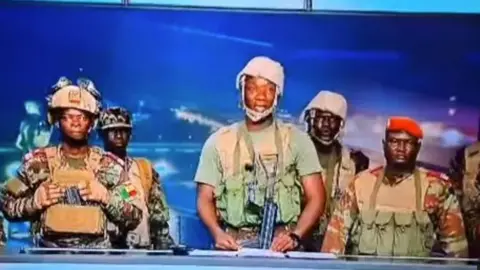
Most of the soldiers who appeared on state TV early on Sunday morning are on the run
While the complaints against Talon aired by the would-be putschists during their brief appearance on national television are widely shared, there has been absolutely no sign of any popular support for their attempt to get rid of the government by force.
So Benin represented a particularly favourable context for a forceful Ecowas intervention in defence of constitutional civilian rule.
Indeed, if anything, the coup plotters are likely to become the target of growing public anger as news of casualties circulates. At least one civilian – the wife of Talon’s key military adviser – was killed.
In recent days two top military officials abducted during Sunday’s failed coup attempt have been rescued, but security forces are still searching for the coup leader Lt Col Pascal Tigri and other plotters.
Simmering grievances
This was just the latest in a string of coup attempts across the region, though most of the others have succeeded.
They have all occurred in a context of fragility and pressure in West Africa at a time of Islamist violence across the Sahel, now spreading into the northern regions of many coastal countries.
There is disenchantment with traditional political elites. Even where economies are growing, there is a desperate shortage of jobs and viable livelihoods for the region’s rapidly growing young population.
However, while the regional context is widely shared, the driving factors for the coups are often local – specific to each country.
The lack of popular support for the Cotonou putschists stands in stark contrast to the mood on the streets of Conakry, the capital of Guinea, in September 2021, when the special forces commander, Col Mamady Doumbouya led the overthrow of then-President Alpha Condé.
Like Talon, Condé had first been democratically elected but later secured re-election in questionable conditions, and presided over a significant erosion of political freedoms. Yet in Guinea, Condé had presided over violent abuse on a far greater scale than in Benin.
In addition, Condé had then strong-armed his way to a third term aged 83. In contrast the 67-year-old Talon has promised to step down next April, albeit having adjusted the electoral rules to almost guarantee an easy victory for his chosen successor, Finance Minister Romuald Wadagni.
Another key difference is Condé’s deeply disappointing economic track record, whereas Talon has presided over strong growth and improving services.
Further north, the wave of coups in the Sahelian countries in recent years were also driven by local conditions.
In Mali and Burkina Faso, military commanders had grown frustrated with the weak leadership elected presidents were providing in the campaign against Islamist insurgents. In both countries, troops had repeatedly suffered brutal losses while their civilian governments appeared incapable of mobilising the extra weapons or sometimes even food that the troops needed.
There was also deep resentment at France’s inability to bring the jihadists to heel, despite the high-tech weaponry at the disposal of its forces then deployed across the Sahel.
Also in Mali, some nationalist sections of political and military opinion were frustrated with the functioning of a 2015 peace agreement with former Tuareg separatists in the far north, overseen by UN troops. Hardliners even accused French forces of actively preventing Bamako from deploying national army units to the north.
In Niger, the circumstances surrounding the 2023 putsch were equally distinctive.
President Bazoum’s political support had been eroded by his very publicly close partnership with France, and particularly his request that Paris provide troops to defend the north-western border from incursions by Mali-based jihadists.
However, his vocal support for judges probing a corruption scandal in defence procurement also risked alienating powerful elements of the military.
The coup that followed soon afterwards in Gabon, in August 2023, was similarly the product of local frustrations. In this case, the opaque management of election results saw an implausible victory awarded to President Ali Bongo, in frail health after a slow recovery from a stroke.
So, circumstances vary widely. And recent events confirm the trend.
The region certainly does face a real crisis of security and, in many countries, politics or development too.
But national conditions are often the major driver for each upheaval or coup attempt.
Many suspect the military takeover in Guinea-Bissau aimed to forestall a possible opposition election victory.
Whereas the Benin rebels seem to have been motivated by a mix of army grievances and broader political and economic complaints.
But they strikingly misjudged the popular appetite in Cotonou for any violent or radical system change.
DISCLAIMER: The Views, Comments, Opinions, Contributions and Statements made by Readers and Contributors on this platform do not necessarily represent the views or policy of Multimedia Group Limited.
DISCLAIMER: The Views, Comments, Opinions, Contributions and Statements made by Readers and Contributors on this platform do not necessarily represent the views or policy of Multimedia Group Limited.
Had last week’s coup attempt in Benin been successful, it would have become the ninth to take hold in the region in the last five years alone.
Just a few days after soldiers took power in Guinea-Bissau while a presidential election vote count was still under way, leaders of the West African grouping Ecowas rapidly concluded that Sunday’s attempted overthrow of Benin’s President Patrice Talon was one destabilising step too far.
In support of his government, Nigerian warplanes bombarded mutinous soldiers at the national TV and radio station and a military base near the airport in Cotonou, the largest city.
Ecowas also announced the deployment of ground troops from Ghana, Nigeria, Ivory Coast and Sierra Leone to reinforce the defence of constitutional order.
This is a region that has been shaken by repeated coups since 2020, and which little more than 10 months ago saw the putschist regimes in Mali, Burkina Faso and Niger completely withdraw their countries from Ecowas – the Economic Community of West African States – of which they had all been founding participants 50 years ago.
So, faced with the prospect that yet another civilian government might be overturned by discontented soldiers, the presidents of the remaining Ecowas member states rapidly reached the conclusion that the attempted coup in Cotonou could not be allowed to succeed.
Learning from past mistakes
Having fought off early morning putschist attacks on Talon’s home and the presidency offices, loyalist forces had already reaffirmed government control across the city, locking down the main central administrative district.
But it was proving hard to break down the last-ditch resistance of rebel troops who had shown they were ready to use lethal force without regard for civilians.
In response, Nigeria’s President Bola Tinubu, Benin’s eastern neighbour and much the largest military power in the region, authorised air strikes, while Ecowas leaders decided to despatch ground troops the same day.
Among those sending forces is Ghana’s President John Mahama, who leads a resilient democracy but has made friendly diplomatic overtures to the Sahelian military regimes.
In acting so quickly, Ecowas has perhaps learned a lesson from its misjudged response to the 2023 coup in Niger.
On that occasion it was not practically organised to intervene militarily in the hours after the elected head of state, Mohamed Bazoum, had been detained by coup leaders – the only moment, perhaps, when a rapid commando raid to rescue him and secure key buildings might have had any chance of success.
By the time the bloc had threatened intervention and begun to plan it, the chance had gone: the new junta had consolidated control over the Nigérien army and mobilised popular opinion in its support.
Faced with the prospect of intervention becoming full-scale war, and under strong domestic popular pressure to avoid any such bloodbath, Ecowas leaders backed off – opting to rely on sanctions. And when those also proved counter-productive, they settled for the diplomatic path alone.
This time around, in Benin, the situation was quite different: Talon was still in full control, even if some would-be putschists were still resisting. So he, as the internationally recognised president, could legitimately request support from fellow member countries in the regional bloc.
And this seems to have had popular support in Cotonou.
Many Béninois citizens do have grievances against the current government, notably over the exclusion of Les Démocrates, the main opposition party, from the forthcoming presidential election.
But there is a strong culture in Benin of trying to achieve change through political and civil society action, rather than force.
Béninois are rightly proud of their country’s role as the pioneering instigator of the wave of peaceful mass protest and democratisation that swept across francophone Africa in the early 1990s.
While the complaints against Talon aired by the would-be putschists during their brief appearance on national television are widely shared, there has been absolutely no sign of any popular support for their attempt to get rid of the government by force.
So Benin represented a particularly favourable context for a forceful Ecowas intervention in defence of constitutional civilian rule.
Indeed, if anything, the coup plotters are likely to become the target of growing public anger as news of casualties circulates. At least one civilian – the wife of Talon’s key military adviser – was killed.
In recent days two top military officials abducted during Sunday’s failed coup attempt have been rescued, but security forces are still searching for the coup leader Lt Col Pascal Tigri and other plotters.
Simmering grievances
This was just the latest in a string of coup attempts across the region, though most of the others have succeeded.
They have all occurred in a context of fragility and pressure in West Africa at a time of Islamist violence across the Sahel, now spreading into the northern regions of many coastal countries.
There is disenchantment with traditional political elites. Even where economies are growing, there is a desperate shortage of jobs and viable livelihoods for the region’s rapidly growing young population.
However, while the regional context is widely shared, the driving factors for the coups are often local – specific to each country.
The lack of popular support for the Cotonou putschists stands in stark contrast to the mood on the streets of Conakry, the capital of Guinea, in September 2021, when the special forces commander, Col Mamady Doumbouya led the overthrow of then-President Alpha Condé.
Like Talon, Condé had first been democratically elected but later secured re-election in questionable conditions, and presided over a significant erosion of political freedoms. Yet in Guinea, Condé had presided over violent abuse on a far greater scale than in Benin.
In addition, Condé had then strong-armed his way to a third term aged 83. In contrast the 67-year-old Talon has promised to step down next April, albeit having adjusted the electoral rules to almost guarantee an easy victory for his chosen successor, Finance Minister Romuald Wadagni.
Another key difference is Condé’s deeply disappointing economic track record, whereas Talon has presided over strong growth and improving services.
Further north, the wave of coups in the Sahelian countries in recent years were also driven by local conditions.
In Mali and Burkina Faso, military commanders had grown frustrated with the weak leadership elected presidents were providing in the campaign against Islamist insurgents. In both countries, troops had repeatedly suffered brutal losses while their civilian governments appeared incapable of mobilising the extra weapons or sometimes even food that the troops needed.
There was also deep resentment at France’s inability to bring the jihadists to heel, despite the high-tech weaponry at the disposal of its forces then deployed across the Sahel.
Also in Mali, some nationalist sections of political and military opinion were frustrated with the functioning of a 2015 peace agreement with former Tuareg separatists in the far north, overseen by UN troops. Hardliners even accused French forces of actively preventing Bamako from deploying national army units to the north.
In Niger, the circumstances surrounding the 2023 putsch were equally distinctive.
President Bazoum’s political support had been eroded by his very publicly close partnership with France, and particularly his request that Paris provide troops to defend the north-western border from incursions by Mali-based jihadists.
However, his vocal support for judges probing a corruption scandal in defence procurement also risked alienating powerful elements of the military.
The coup that followed soon afterwards in Gabon, in August 2023, was similarly the product of local frustrations. In this case, the opaque management of election results saw an implausible victory awarded to President Ali Bongo, in frail health after a slow recovery from a stroke.
So, circumstances vary widely. And recent events confirm the trend.
The region certainly does face a real crisis of security and, in many countries, politics or development too.
But national conditions are often the major driver for each upheaval or coup attempt.
Many suspect the military takeover in Guinea-Bissau aimed to forestall a possible opposition election victory.
Whereas the Benin rebels seem to have been motivated by a mix of army grievances and broader political and economic complaints.
But they strikingly misjudged the popular appetite in Cotonou for any violent or radical system change.
The Minister of Health, Kwabena Mintah Akandoh, has announced that the Ministry of Health has received a GH¢22.8 billion budget allocation for the 2026 fiscal year to strengthen healthcare delivery across the country.
He said the allocation would be used to improve healthcare infrastructure, expand services under the Free Primary Healthcare package, increase funding for the National Health Insurance Scheme (NHIS), and recruit additional health professionals.
The budget, he added, also emphasises improved compensation, allowances, and welfare support for healthcare workers.
Mr Akandoh noted that the government remained committed to sustained engagement with nurses and midwives to improve their working conditions, boost morale, and curb the growing incidence of brain drain in the health sector.
According to him, continuous dialogue with health workers was critical to strengthening Ghana’s healthcare system and ensuring quality service delivery nationwide.
The Minister made these remarks in a speech read on his behalf at the 6th Annual National Dinner and Awards Night organised by the Ghana Registered Nurses and Midwives Association (GRNMA) in Accra on Saturday, December 13, 2025.
He commended nurses and midwives for their immense contributions to building a strong and resilient healthcare system, describing them as the backbone of the nation’s health delivery framework.
Mr Akandoh disclosed that the Ministry of Health had recruited 13,500 nurses and midwives as part of efforts to strengthen the health workforce, particularly at the frontline. He assured that all newly recruited health personnel who had experienced delays in the payment of their salaries would be paid by the end of the year.
He explained that the recruitment formed part of a broader strategy to improve frontline healthcare delivery under the Free Primary Healthcare and Mahama Cares initiatives.
The Minister congratulated award recipients at the ceremony, praising their sacrifices, compassion and dedication to improving health outcomes across the country.
Also speaking at the event, the Okyenhene and King of the Akyem Abuakwa Kingdom, Osagyefo Amoatia Ofori Panin, commended nurses and midwives for their unwavering commitment to duty and urged them to remain pillars of Ghana’s healthcare advancement.
“The value of your profession cannot be measured by the number of hours you work, but by the dignity, comfort, and hope you offer patients,” he said.
He called on the government to invest in state-of-the-art health facilities to position Ghana as a destination for healthcare opportunities, adding that quality infrastructure must be complemented by dedicated and compassionate professionals.
The Director-General of the Ghana Health Service, Dr Samuel Kaba Akoriyea, announced plans to roll out nationwide training in emergency care and basic life support for health workers. He also urged health professionals to improve customer care at health facilities to reduce complaints and build public confidence in the healthcare system.
The President of GRNMA, Dr Perpetual Ofori-Ampofo, said the awards ceremony, instituted in 2020, was aimed at recognising the outstanding contributions of nurses and midwives, particularly those working in rural and underserved communities. She described them as the backbone of the health system whose dedication continues to save lives and inspire hope.
At the ceremony, Beatrice Sewor, a Senior Nursing Officer at St Joseph Catholic Hospital in Nkwanta in the Volta Region, was named the National Best Nurse/Midwife for 2025 in recognition of her professionalism, dedication and commitment to quality care in a challenging rural setting.
Nana Gladys Kusi-Yeboah received the President’s Award for her contribution to advancing maternal health policy, while several other nurses and midwives were honoured for their contributions to the health sector.
Source: GNA
Western Region: Boy killed, properties destroyed in shooting incident at Adelekezu
Ghana’s healthcare system has long depended on the resilience of its frontline workforce. Today, however, it stands at a critical crossroads.
Despite the posting of about 700 newly qualified medical doctors to rural and underserved communities, only a few have reported. Many are unwilling to accept rural postings due to long-standing challenges, including limited infrastructure, poor working conditions, and weak incentive structures. According to the Minister of Health, nearly 50 per cent of medical doctors are concentrated in Accra, leaving rural communities to grapple with deepening health inequalities.
At the same time, a troubling paradox persists. More than 3,896 trained, licensed, and job-ready Physician Assistants (PAs) remain unemployed nationwide, even though they were created specifically to bridge this gap.
One must therefore ask: why is Ghana leaving its most readily available health workforce on the bench when the system is already under severe strain?
Physician Assistants: The Backbone of Rural Primary Healthcare
The role of Physician Assistants in Ghana is neither new nor experimental. Introduced in the mid-1960s, PAs were designed to address the shortage and uneven distribution of doctors in rural areas. Since then, the cadre has evolved significantly.
Today, Ghana trains three categories of PAs — Medical, Dental and Anesthesia — through accredited institutions under the Ministry of Health. They are trained using the medical model and are equipped to diagnose and treat patients, prescribe medicines, perform procedures, manage emergencies, lead health facilities and implement public health programmes.
In practice, particularly in rural Ghana, PAs are not merely assistants. They serve as the primary clinicians and often as heads of facilities, making independent medical and administrative decisions in communities where doctors have not been posted for years.
From attending to hundreds of patients daily to stabilising emergencies, conducting minor surgeries, managing deliveries, leading disease surveillance, supervising CHPS compounds, managing supply chains and ensuring revenue accountability, PAs remain the engine room of rural primary healthcare.
Yet, despite this indispensable role, no financial clearance has been issued for the recruitment of Physician Assistants since 2019.
The Rural Struggle: A Public Health Time Bomb
Rural and hard-to-reach communities continue to record higher rates of preventable diseases, maternal deaths, childhood illnesses and delayed emergency care. Posting clinicians to these areas is not just a staffing exercise; it is a public health survival strategy.
Without adequate clinical staff, maternal emergencies become fatal, common infections escalate into life-threatening conditions, non-communicable diseases go undiagnosed, public health surveillance weakens, and community outreach collapses.
Physician Assistants are trained precisely for these roles and have delivered them effectively for decades. Their continued unemployment is not merely an administrative lapse. It represents a misallocation of critical human resources and a disservice to communities that Ghana has pledged to reach under its universal health coverage agenda.
Why Government Must Act Now
Physician Assistants are the most available and deployment-ready members of the health workforce. Nearly 4,000 have completed training, passed licensure examinations, and are ready for posting without additional preparation.
They are also more willing to work in rural settings. Many PAs are trained, experienced and culturally attuned to the realities of rural healthcare delivery.
Their services are cost-effective and high-impact. PAs provide essential care, preventive services and facility leadership at a fraction of the cost of relying solely on doctors.
Most rural sub-districts already depend on PAs for coordination of staff, finances, logistics and administration. Without them, these systems cannot function.
Allowing rural communities to remain understaffed only widens health inequities, undermines national productivity and contradicts Ghana’s commitments to Sustainable Development Goals 3 and 10.
The Way Forward
Ghana cannot resolve its healthcare workforce crisis without fully utilising its most reliable and available cadre. Government must urgently issue financial clearance for the recruitment of unemployed Physician Assistants.
PAs must be integrated into strategic rural workforce planning, with recognition of their proven contribution to primary healthcare delivery. Working conditions in underserved areas must improve, and clear career progression pathways should be strengthened to reflect the role PAs play in national health outcomes.
This is not professional lobbying. It is a matter of public health necessity, equity and sound governance.
Conclusion: Ghana Already Has the Solution
The health of rural communities should not depend on who is willing to show up. A resilient health system deploys those who are trained, capable and ready.
Right now, that workforce exists.
Failing to post nearly 4,000 competent Physician Assistants while preventable deaths persist is not only inefficient. It is unjust.
The government must act — decisively and urgently. Ghana’s rural communities deserve clinicians, and the country already has them.
It is time to post the Physician Assistants now.
DISCLAIMER: The Views, Comments, Opinions, Contributions and Statements made by Readers and Contributors on this platform do not necessarily represent the views or policy of Multimedia Group Limited.
DISCLAIMER: The Views, Comments, Opinions, Contributions and Statements made by Readers and Contributors on this platform do not necessarily represent the views or policy of Multimedia Group Limited.
Nollywood actress Doris Ogala has attempted suicide after Pastor Chris Okafor of the Grace Nation Bible Ministry ended their relationship.
After discovering that Okafor had ended their romance to propose to another woman, Doris Ogala stabbed herself in the hand, leading to heavy bleeding.
Sharing the video, actor Digidi Dunhill, who was seen taking Doris to the hospital, said, “Please, I don’t know who this Chris is. Whoever you are, please you have to come to her aid because she cut her hand. Doris, are you trying to commit suicide?”
DAILY POST reports that following a video of Pastor Okafor’s engagement, the actress, on Saturday, December 13, 2025, accused him of leaving her to propose to another woman despite promising her marriage.
Speaking about their romance, Ogala, who claimed she once got pregnant for the clergyman, accused him of collecting money from her, leaking their sex video, sharing her nude clip, and forcing her to leave her marriage.
She said, “After everything, after promising me marriage and disgracing me like this, turning my life upside down, you want to marry? I come to present my own account because I saw the proposal video, and it’s not adding up to me. My heart is broken. We have been dating since 2017; you want to leave me and marry who?
“When I got married, you cried that I should leave the man. I left the man and came out. Who are you leaving me for? Who will marry me after sharing my miscarriage video? Your lawyer carried the video and gave it to my lawyer. My sex video with you, you carried my body and sent it to your lawyer, and your lawyer sent it to another lawyer, who sent it to my lawyer.
“After sharing my body publicly, you now want to marry after destroying my life. Was I behaving like this before you met me?”
These allegations came a few days after Okafor, popularly known as the generational prophet, got engaged to another woman.
Samuel Eto’o is locked in a bitter feud with Cameroon manager Marc Brys
Chaos is descending at Cameroon’s Football Federation on the eve of the Africa Cup of Nations. Two squads have been named for the tournament, with two managers both intending to lead the side forward to the finals.
Marc Brys was sacked by FA president Samuel Eto’o but remains in a ‘bitter feud’ with the legendary striker, who he claims is ‘narcissistic’ and has put his own best interests over those of the nation.
Uncertainty reigns as Cameroon prepare to head into the AFCON, which begins in just 10 days on December 21 in host nation Morocco. Cameroon see their campaign begin three days later on December 24 against Gabon, and there could be much controversy yet to come as Eto’o and Brys continue their public feud.
Mail Sport have shed light on the situation in Cameroon, where Eto’o recently marked four years as president of the Football Federation.
The former Barcelona and Chelsea striker has reportedly told the Belgian Brys that he has been relieved of his duties as manager of Cameroon, but he is reportedly ‘refusing the sack’ amidst claims that he has not been officially fired and remains under contract with the nation’s Ministry of Sport until December 2026.
He intends to lead the nation into the tournament, despite the fact that Eto’o has since appointed David Pagou as his replacement. The Cameroonian FA released their 28-man squad for the tournament with Pagou as manager on 1 December, omitting star names such as Andre Onana, ex-Bayern Munich striker Eric Choupo-Moting and Vincent Aboubakar – the latter of whom is just 12 goals away from surpassing Eto’o’s all-time goalscoring record for Cameroon.
Brys has suggested that this decision was, therefore, calculated by Eto’o, and has named his own conflicting squad for the upcoming tournament.
Brys has spoken out, as the stand-off with Eto’o continues: “It’s always been Eto’o’s goal to get me out as quickly as possible,” he told Flemish outlet VTM NIEUWS.
“From the very first minute, he insulted me, and I reacted. I was too much of a competitor for him.”
Referencing the AFCON squad that excluded Onana, Choupo-Moting and Aboubakar, he added: “Eto’o had left key players and leaders out of the squad. Because, of course, he had made that selection.
“How can you go to the Africa Cup of Nations without a world-class goalkeeper? Or without Aboubakar? It’s unbelievable, but actually, it doesn’t surprise me. It’s coming from someone who is narcissistic and thinks he’s the best.
“As long as there is no signed note from the Presidency of the Republic appointing David Pagou as the coach of the Indomitable Lions, in the eyes of the State of Cameroon, Mr. Marc Brys remains. This is not up for discussion, and it has been this way in Cameroon for at least 30 years.”
Coach Charles Quartey is leading Ghana’s six-member boxing contingent at the ongoing 2025 African Youth Games in Angola, as the country targets medals and qualification places for the Dakar 2025 Youth Olympic Games.
The head trainer of the national youth boxing team, the Black Rockets, is accompanied by his assistant, Joseph Martey. Together, they will guide a squad of four boxers — three boys and one girl — as they compete in their respective weight categories at the continental event.
Ghana’s representatives are Margaret Owoo of the Black Hitters in the girls’ 48kg division, alongside William Laryea (boys’ 50kg), Richardson Ofori (boys’ 55kg) and Rahman Ablorh (boys’ 60kg).
Coach Quartey, a long-time advocate for improved welfare for young boxers, is confident his charges will rise to the occasion. He believes their technical ability and natural talent place them in a strong position to excel on the African stage.
According to the veteran trainer, adequate support and proper treatment are key to unlocking the best performances from the athletes. He noted that boxing remains one of Ghana’s most reliable sources of medals at international multi-sport competitions.
In addition to boxing, Ghana is competing in several disciplines at the Games, including athletics, badminton, basketball, canoeing, cycling, fencing, golf, judo, karate, swimming, table tennis, tennis, taekwondo and weightlifting.
Ghana’s junior male boxing team is known as the Black Rockets, while the female boxers compete under the banner of the Black Hitters.
Vice President Professor Jane Naana Opoku-Agyemang has called on industry stakeholders to invest sustainably in Africa’s film industry to create jobs and drive economic growth.
She made the call at the maiden edition of the Regal Film Festival and Awards (REFFA) 2025 on Dec 13, an event, organised to celebrate African storytelling and recognise outstanding films and industry professionals.
The ceremony convened filmmakers, producers and creatives from across the country.
She urged filmmakers, especially emerging creatives, to focus on professionalism rather than visibility.
According to Prof. Opoku-Agyemang, African stories must be told with purpose, in order to compete effectively on the global stage.
The Vice President commended REFFA for providing a platform that recognises talent and creates opportunities for African films to access regional and international markets.
She noted that such initiatives help project African stories globally while maintaining their culture.
The Vice President further congratulated all award winners and participants and expressed optimism about the future of REFFA, describing it as a platform for nurturing young talent and strengthening African storytelling.
The Member of Parliament for Karaga and former Minister of Finance Dr. Mohammed Amin Adam has responded to claims that the strong support Dr. Mahamudu Bawumia enjoys in Northern Ghana is because of ‘blind loyalty’.
Speaking during campaign activities of Dr Bawumia in Yagaba-Kubori , Dr. Amin Adam said assertions that Dr. Bawumia’s popularity in the North is based on regional or ethnic considerations are misplaced.
“Northerners have been told that we are blindly following Dr. Bawumia. I want them to know that we are not blind—we can see clearly,” he said.
Dr. Amin Adam insisted that NPP politicians in the North are backing Dr. Bawumia based on competence and character, not hometown ties.
According to the Karaga MP, what leaders in the region see in Dr. Bawumia is a leader with the experience, integrity, and vision to govern Ghana.
“When we look at Dr. Bawumia, we see a competent man, a humble man, and a truthful man. We see a President,” he stated.
The NPP is expected to elect its presidential candidate on January 31, 2026, as part of preparations for the next general elections.
Dr. Bawumia is among five contenders seeking the party’s flagbearer position. He faces competition from former Assin Central Member of Parliament, Kennedy Agyapong; former Minister for Food and Agriculture, Dr. Bryan Acheampong; former Education Minister, Dr. Yaw Osei Adutwum; and former NPP General Secretary, Kwabena Agyapong.
China has reaffirmed its commitment to working with Ghana to advance sustainable and responsible mining as part of ongoing cooperation in the minerals sector.
Mr. Tong Defa, the Chinese Ambassador to Ghana, who made the commitment at the opening of a three-day workshop for editors and reporters in Peduase, said China was ready to deepen collaboration to promote green mining practices.
“We are ready to work with Ghana to promote green and sustainable development in the mining industry,” he said.Ambassador Tong said China consistently urged its companies to comply with Ghana’s laws and regulations.
China would also support Ghana through knowledge-sharing and technology transfer to help Ghana improve its technology, upgrade its mining equipment, control costs, increase revenue, and enhance the added value of minerals.
Mr Tong noted that the Chinese Embassy recently hosted a China-Ghana Mining Cooperation Roundtable on Sustainable Mining, with some key stakeholders, coming from China, to deepen engagement,” he said.
Ambassador Tong highlighted the role of Chinese mining companies in job creation, community development and environmental responsibility.
He cited the operations of the Cardinal Namdini Gold Mine of Shandong Gold in the Upper East Region and the Wassa Gold Mine of the Chifeng Gold, in the Western region, as among the Chinese mining firms driving sustainable mining in Ghana.
He said Shandong Gold, for instance, had prioritised local employment, noting that “94 per cent of its approximately 1,600 contract employees were local Ghanaians”, while also strengthening ties with host communities.
The Chinese Ambassador said the company had invested about two million US dollars in health, education, environmental sanitation, and community infrastructure construction,” and had built “a 25-kilometre road open to the public, connecting more than 10 communities.”
Ambassador Tong said Chifeng Gold had also made significant investments through the Golden Star Community Development Fund.
“Chifeng Gold has established the Golden Star Community Development Fund, investing approximately 4.5 million US dollars to construct community centres, schools, clinics, drinking water projects, roads, and other infrastructure for the local communities,” he said.
He added that the company had partnered local farmers to reclaim mined lands for agriculture, saying it had worked with smallholder farmers to establish the Golden Star Oil Palm Plantations Limited on former mining land.
“Currently, the company plans to build a medium-sized oil palm processing plant in the area, capable of processing 10 tonnes of fresh fruit bunches per hour, to increase the industry’s added value.
“This would further increase farmers’ income, and provide more employment opportunities for local residents,” he said.
Ambassador Tong said China was committed to expanding cooperation with Ghana across several sectors, including mining, energy, infrastructure, agriculture and fisheries, to support national development.
“China is eager to expand collaboration in mining, energy, infrastructure construction, agriculture, and fisheries with Ghana, to transform Ghana’s natural resource advantages into drivers of development,” he said.
He said the approach would ensure “effective synergy between resource exploitation and environmental protection,” while fostering high-quality cooperation between the two countries.
Ambassador Tong noted that President John Dramani Mahama had expressed appreciation to China for its support through the Forum on China–Africa Cooperation (FOCAC) and the Belt and Road Initiative.
On China’s development strategy, the Chinese Ambassador said cooperation with Ghana would be further strengthened under China’s long-term planning framework.
“Opening up and cooperation for mutual benefit are integral to Chinese modernization,” he said, adding that the Fourth Plenary Session of the 20th Communist Party of China Central Committee had underscored the need to strengthen alignment with Belt and Road partner countries,” he stated.
“This will present greater opportunities for China-Ghana mining cooperation.” Ambassador Tong urged journalists to adopt a fair and comprehensive approach in reporting on mining involving Chinese nationals.
While noting that a “tiny” population of Chinese were involved in illegal mining, he said the actions of a few should not overshadow the contributions of law-abiding companies.
The training, organised by the Ghana News Agency (GNA) in partnership with the Association of China-Ghana Mining, brought together editors and reporters from Accra, Western and Upper East regions.
It strengthened journalists’ capacity to report on mining issues with balance and depth, amid Ghana’s ongoing efforts to address the environmental and socio-economic effects of illegal mining and promote best practices.
DISCLAIMER: The Views, Comments, Opinions, Contributions and Statements made by Readers and Contributors on this platform do not necessarily represent the views or policy of Multimedia Group Limited.
DISCLAIMER: The Views, Comments, Opinions, Contributions and Statements made by Readers and Contributors on this platform do not necessarily represent the views or policy of Multimedia Group Limited.
Education think tank, Africa Education Watch (Eduwatch), has raised alarm over a growing trend in northern Ghana, revealing that about 70% of out-of-school children aged between 12 and 17 are being driven out of the classroom by illegal mining activities, popularly known as galamsey, and betting.
Speaking on Channel One TV’s Newsroom on Sunday, December 14, Eduwatch’s Executive Director, Kofi Asare, said the latest data points to a troubling shift from patterns identified in the 2021 Population and Housing Census, where most out-of-school children were found in younger age groups.
He explained that the new trend indicates that children in the northern regions are increasingly dropping out of school as they grow older, largely due to the lure of galamsey and betting, rather than failing to enrol at the early stages of their education.
“About 70% of the out-of-school population are aged between 12 and 17, compared to the census data in 2021 majority of the out-of-school children were actually in the lower ages, so what we have seen is that a new trend is emerging in the northern region, where the more people grow, the more they grow out of school.
“Perhaps this is affirmed by the qualitative reasons given for their absence in school, one of which is galamsey, especially in the Talensi area, and children participating in betting to be a major driver of the out-of-school situation, especially boys between 12 and 17 years,” he said.
His comment follows an extensive Out-of-School Children (OOSC) Census conducted across Northern Ghana by Africa Education Watch (Eduwatch).
The Census was conducted across 20 districts in Northern Ghana and aimed to generate robust, community-led data to guide education policy and programming.
The Census revealed that the majority of OOSC were males, particularly in districts such as Chereponi, Nanumba South, Tatale Sanguli, and Bawku West.
The Minority Caucus in Parliament has demanded the immediate resignation of Majority Leader Mahama Ayariga and Majority Chief Whip Rockson-Nelson Dafeamekpor over what it calls a “failed and embarrassing” effort to scrap the Office of the Special Prosecutor (OSP).
In a statement signed by First Deputy Minority Whip Habib Iddrisu, dated December 12, 2025, the Minority said the two leaders had acted in direct contradiction to President John Dramani Mahama’s stated commitment to strengthening the OSP. The Minority described the move as unauthorised, ill-conceived, and a serious breach of trust.
OSP Repeal Bill put on hold as Majority responds to President Mahama’s request
According to the Minority, the move conflicted with the President’s public stance. “Their attempt to dismantle an institution the President was at the same time commending points to either gross incompetence or outright insubordination, or both,” the statement said.
The caucus explained that Ayariga, the MP for Bawku Central, and Dafeamekpor, the MP for South Dayi, laid the Office of the Special Prosecutor (Repeal) Bill, 2025, on December 8, proposing that the OSP be abolished and its duties transferred to the Attorney-General’s Department.
However, two days later, President Mahama publicly described the OSP as “a vital cog in the fight against corruption” and called on the office to intensify efforts to build public trust and confront corruption head-on.
On December 11, 2025, the Presidency announced that the bill had been withdrawn at the President’s directive.
The Minority described the withdrawal as a “stinging public rebuke” that disclosed tensions between the President and his parliamentary leadership.
The group also questioned the timing of the bill, linking it to the recent arrest of Martin Kpebu, a critic of the OSP whom the Minority described as an NDC loyalist.
“The timing raises serious concerns,” the statement noted, suggesting that the arrest may have sparked “a coordinated, multi-layered attack on an independent anti-corruption body.”
Additionally, the Minority pointed to the coincidence between the bill and a Supreme Court action challenging Act 959. This legal move was announced on social media by Deputy Attorney-General Justice Srem-Sai, who said a citizen, Noah E. Tetteh, is seeking to nullify sections of the law that grant prosecutorial independence to the OSP.
The Minority argued that the conduct of the Majority Leader and Chief Whip represents a serious breach of trust, stressing that their roles as the President’s key parliamentary allies require sound judgment and discipline.
“The President’s intervention makes it clear that this initiative lacked approval, was poorly thought out, and ran counter to government policy,” the statement said. It added that the episode has harmed Ghana’s anti-corruption standing and weakened confidence in prosecutorial independence.
The Minority maintains that the only appropriate course of action is for both leaders to step aside to uphold accountability and help restore public trust in Parliament and Ghana’s anti-corruption framework.
From Village Girl to Presidency: Woman shares inspiring journey without formal education:
Sceenshot of a video of Sharaf Mahama’s arrival at the Reffa Awards 2025
Sharaf Mahama, one of the sons of President John Dramani Mahama, is being berated on social media after he was captured arriving at the Reffa Awards 2025 in the company of a soldier.
A viral video of Sharaf Mahama’s arrival captured him entering the venue of the event at the Palms Convention Centre, Accra, with a well-armed soldier walking close to him as if he were offering him protection.
The soldier followed the president’s son until he was offered a seat.
Although it is not clear whether the army personnel was a protective detail for Sharaf Mahama, a number of people have called him and the government out in reaction to the video.
Many have pointed to the government’s withdrawal of military personnel from the Chairperson of the Electoral Commission of Ghana, Jean Mensa, and other dignitaries, following a directive from the late former Minister of Defence, Dr Edward Omane Boamah, that soldiers are not to provide guard duties to authorised persons.
Some have also cited President Mahama’s suspension of the Director-General of Ghana’s National Cyber Security Authority (NCSA), Divine Selasi Agbeti, after he used an unauthorised military officer as a personal bodyguard.
President Mahama suspends CSA boss over use of unauthorised military bodyguard
Others have also criticised the Ghana Armed Forces over the incident.
Meanwhile, GhanaWeb sources close to Sharaf Mahama said he did not go to the event with the soldier captured in the video.
The source indicated that the soldier saw the president’s son at the entrance of the venue and decided to follow him, adding: “He (Sharaf Mahama) doesn’t walk with soldiers.”
Government withdraws military protection for former ministers, others
View some of the reactions to the video below:
👨🏾🍳🇬🇭: In July 2025, the late Defense Minister Dr. OMB(RIP) warned of such guard duties for unauthorized individuals; it is not part of the @GhArmedForces duties.
Even the NCSA Chief was suspended by the President for same after he was seen with one at an event. Not a good look. https://t.co/IiizmGkneL pic.twitter.com/d5pYt6skNY
CEO of @legacyrise_ Sports, Sharaf Mahama just arrived at the Reffa Awards 2025 happening now at the Palms Convention Center Accra.#PrimeRakonpic.twitter.com/onR2XdJeoi
Sharaf Mahama, the son of President Mahama being protected by a fully armed soldier to a public event. The hypocritical Ghanaian media and neutrals are quiet because it’s not about Akuffo Addo. @tv3@tv3_ghana @JoyNewsOnTV @BBCWorld pic.twitter.com/thw1RMN3vt
John mahama’s son Sharaf Mahama is the most protected Ghanaian currently.A whole battalion is assigned to him.Meanwhile,there’s insecurity everywhere from Bawku to Gonjaland.Ghanaians lives don’t matter! pic.twitter.com/8AJ9SNixsZ
— Ghs660m for a jet for John mahama?Eiii 😭😭 (@AgbelimorK59060) December 14, 2025
Can’t you see other security services present.
Check the background. Lol 😂
Police service is there Military service is there Immigration service is there.
So, you are telling me Sharaff Mahama walks with all the security services in Ghana 😂😂🤪🤪 https://t.co/vE1YFDjXR7 pic.twitter.com/Uju6uQFBlk
Watch the promo to GhanaWeb’s latest documentary, which uncovers the evolution of ‘kayamata,’ an exploitative practice fueled by love charms and manipulation, titled, “The Dark Side of Kayamata,’ below:
The soldier seen following Sharaf Mahama was not acting as his personal bodyguard. He had been hired to provide general security for the event and only began accompanying Sharaf after he arrived at the venue.
Chabi Yayi, the son of former Beninese president and current opposition figure, Thomas Boni Yayi, was arrested early Sunday at his home, according to several of his relatives.
No reason was given for the arrest, which came a week after the foiled coup attempt there.
“At this time, we don’t know what he is accused of,” one relative told AFP.
“We don’t know if it is linked to the events of last Sunday,” said another close friend, a member of the Democrats party, the main opposition party, which Yahi heads.
Thomas Boni Yayi condemned the abortive coup in a video address two days later.
Several arrests have taken place since the December 7 putsch attempt.
They include alleged participants, the former minister of defence and key opposition figure, Candide Azannai. Azannai was placed in police custody for “conspiracy against the authority of the State and incitement to rebellion”.
Benin has also issued an international arrest warrant against pan-Africanist and anti-Western influencer Kemi Seba, who on Sunday issued a defiant response on video.
In a seven-minute-long statement, Seba said he had taken precautions since the issuing of the warrant against him, though he did not say in which country he was.
“You can never stop us,” he added. “We will go to the end of our fight.”
Benin issued the warrant on Friday for “inciting rebellion” over his support for the coup bid, which he described as the country’s “day of liberation”.
Seba, whose real name is Stellio Gilles Robert Capo Chichi, 44, heads the NGO Pan-Africanist Emergency and is known for his hostile stance towards France and African governments allied with Paris.
He has 1.5 million followers on social media. Born Franco-Beninese, Seba was stripped of his French nationality in 2024. He supports the military juntas that came to power through coups in the Sahel region — hostile to Paris and close to Russia.
He now travels on a passport issued by the military regime in Niger, which neighbours Benin. Several of those who staged the failed coup, including their leader, Lieutenant Colonel Pascal Tigri, remain at large.
Apart from the money, the community leader has another concern: the environment.
“Big companies come in, they rip up the land, they take whatever they can, and they just move off without doing the rehabilitation, leaving the receiving community to deal with the after-effects of their mining,” he alleges.
“The Nama people used to mine themselves, but they’ve done it sustainably, they knew how to use resources from the land but also how to fix the land after using it.”
The damage left behind by commercial mining is hard to miss.
Some mines remain abandoned, and there is little sign of rehabilitation.
Instead, there was clear evidence of extraction, where the earth had been dug up, leaving behind an unsightly landscape.
A mine in Hondeklipbaai, once owned by the mining giant, Trans Hex, looked abandoned.
This is not part of the Richtersveld area but is still considered to be Nama land.
In a letter to the BBC, Trans Hex said it had sold the site five years ago, but while it “was the holder of the mining right it complied with its legal obligations including to make full financial provision for the rehabilitation of the mining areas”.
But now that it has sold the site on, Trans Hex is no longer responsible for the rehabilitation, it added.
Another mining giant, De Beers, has sold its interests in the mines on the west coast and says that it passed on responsibility for repairing the environment.
But in an email to the BBC it did say that “as part of the sale agreement in 2023 with Kleinzee Holdings, De Beers Consolidated Mines committed 50m rand ($3m) to support rehabilitation work in the area”.
There are now concerns that the environmental damage could go further south as mining companies slowly edge their way down the coast.
The BBC asked the department of forestry, fisheries and the environment for a response to the claims that many mining companies were not sufficiently rehabilitating land they mined on.
Dion George, who was the minister until last month, said he was unavailable for comment adding that communicating via the media was “not helpful and does not lead to progress”.
The new minister, Willie Aucamp, in place for just under a month, was not in a position to comment yet.
But Mr Fredericks is clear what should happen next.
“The government should return what is ours,” he says.
To change things he has begun legal action against the CPA, the group that was supposed to run things on behalf of his community, saying that it was not properly constituted.
“A Nama people cannot be a Nama people without control of Nama land. A Nama person cannot be separated from Nama land because of the intrinsic link between the person and the land.”
We all celebrated Farmers’ Day earlier this month under the theme, “Feed Ghana, Eat Ghana, Secure the Future.” It was exciting to celebrate this great day, with an emphasis on local food production, consumption, and self-sufficiency to support a resilient economy.
At the ‘Eat Ghana Rice Campaign’, the theme for the celebration resonated with what we have been campaigning for all this time: We should all eat Ghana Rice. Rice is no longer a luxury food in Ghana. It is a staple consumed daily in households across the country. Over the past decade, domestic paddy rice production has grown impressively from 302,000 metric tonnes in 2010 to nearly 987,000 metric tonnes in 2023. This growth reflects the hard work of our farmers and the impact of government interventions in seeds, mechanisation, irrigation, and input support.
Yet, despite this remarkable progress, Ghana continues to spend over GHS 3 billion each year importing rice. This is money that could stay in our country to support our own farmers, processors, transporters, market women, and the entire rice value chain. It is money that could strengthen rural economies, create jobs for our youth, and build a more resilient agricultural sector.
This is why the ‘Eat Ghana Rice Campaign’ is so important. This is also why we all need to join this campaign to encourage the consumption of Ghana rice. The campaign speaks directly to our shared mission to reduce import dependency, promote agro-processing, build local industry, and ensure food security. The campaign sits squarely within the objectives of the Feed Ghana Programme, the 24-Hour Economy Policy, and our commitments under the African Continental Free Trade Area (AfCFTA) Agreement.
This campaign is about shaping behaviour, correcting misconceptions, and building national pride. The truth is that Ghana Rice brands have seen tremendous improvements over the years. The majority are clean, well-processed, beautifully polished, meet Food and Drugs Authority (FDA) and Ghana Standards Authority (GSA) standards, and cook perfectly for Jollof, Waakye, and plain rice dishes. It is time to bury the old myth that Ghana rice contains stones or is inferior. That is no longer the reality. Ghana Rice brands such as Mama Gold, Striker Gold, Efie Ne Fie, Nana’s Rice, Champion, Avalavi Perfume Rice, Copa, Star, Asafoods, Wofa K, Alsum, among others, are of the kind of quality that can match or is even better than those imported from other nations into Ghana.
Special appeal I want to use this opportunity to make a special appeal to corporate entities and leaders who plan to provide their staff with gifts of rice and chicken during this festive season. I humbly urge all to make Ghana Rice your family’s first choice, and to show leadership by purchasing Ghana Rice for your friends and workers, especially during the Christmas and New Year festivities.
Ghana Rice meets the highest expectations of today’s consumer. Across the country, millers and processors are delivering rice that is clean, nutritious, and processed to international standards, giving families the confidence that every grain is safe and of superior quality. Choosing Ghana Rice is a great investment in our nation. Every bag purchased helps grow the local economy, supports Ghanaian farmers and their families, and keeps income circulating right here at home.
Eating Ghana Rice is also an act of national pride. It reflects our belief in the strength of our people, our farms, and our ability to produce food that competes with the best in the world. Beyond pride, consumers also enjoy real value. Ghana Rice offers the taste, aroma, and quality every household desire, ensuring great meals at a good price. And because our Ghana Rice brands are fresh and produced close to home, they retain their natural nutrients, contributing meaningfully to healthy and balanced diets. Choosing Ghana Rice means choosing quality, supporting livelihoods, celebrating our identity, and nourishing our families, all with one simple purchase.
To the Ghanaian public, I say: Let us all choose Ghana Rice. Every bag you buy supports a farmer. Every meal you cook strengthens our economy. And every choice you make brings us closer to a Ghana that is self-reliant, prosperous, and proud.
Call to action We appreciate the steps taken by the Government of Ghana to help ensure local farmers are able to gain value for their investments in the rice sector. But there is more that needs to be done. Government needs to leverage its influence to boost local demand. It is a great move that President John Mahama has instructed key ministries and agencies, including the Ministry of Education, to prioritize the procurement of Ghana-grown food products such as rice and eggs for schools, prisons, and other public institutions. Let all agencies respect the directive and support Ghanaian farmers. The security agencies should also do well to clamp down on the illegal importation of rice into the country so our local farmers can favourably compete. With unity, determination, and national commitment, we can transform our rice sector into one of the pillars of Ghana’s agricultural future.
Let me end by commending AGRA, The John A. Kufuor Foundation, FarmWallet, Hopeline Institute, Peasant Farmers Association of Ghana, Competitive African Rice Platform, and all the other partners for this great initiative – the Eat Ghana Rice campaign. Let us all continue to do our best to make Ghana Rice the preferred choice of consumers. Ghana Rice – Our Grain, Our Pride.
*******
The writer is the Eat Ghana Rice Campaign lead
DISCLAIMER: The Views, Comments, Opinions, Contributions and Statements made by Readers and Contributors on this platform do not necessarily represent the views or policy of Multimedia Group Limited.
DISCLAIMER: The Views, Comments, Opinions, Contributions and Statements made by Readers and Contributors on this platform do not necessarily represent the views or policy of Multimedia Group Limited.
Member of NCBWTA says ECOWAS protocols are being violated
A group has urged the government to apply the same urgency in resolving challenges faced by Ghanaian cross-border women traders along the Abidjan-Lagos corridor as it did in addressing the recent situation involving Ghanaian citizens in Israel.
Ghana deported three Israelis on Wednesday, December 10, in a tit-for-tat move over the alleged unjustified detention for hours of seven Ghanaian nationals on arrival at Ben Gurion International Airport in Israel on December 7, with three of them denied entry and placed on return flights.
The National Cross-Border Women Traders Association (NCBWTA), which champions the cause of cross-border women, usually trading in goods based on local market demand, commended the Ministry of Foreign Affairs and Regional Integration for the swift response and called for the application of similar urgency to the persistent challenges faced by Ghanaian cross-border women traders along the Abidjan-Lagos corridor in particular.
A press release signed by its National Coordinator and Consultant, Mr. Oscar Akaba-Norvixoxo, noted that many of the Association’s members continued to face harassment and extortion at the Togo border and within the Togo, Benin, and Nigeria stretch, despite carrying valid ECOWAS and professional trader identifications.
“These recurring violations directly contradict the ECOWAS Protocol on Free Movement and continue to undermine the safety, dignity, and livelihoods of Ghanaian traders whose economic contributions are vital to both national and regional development,” the release said.
To strengthen Ghana’s regional trade commitments, the release urged the Ministry to address violations along the corridor with the same decisiveness shown in the Israel case, which demonstrated the government’s commitment to safeguarding Ghanaian lives abroad.
It also called for intensive engagement with Togo, Benin, and Nigeria at high diplomatic levels to enforce ECOWAS free movement and trade facilitation protocols, and to establish a rapid-response mechanism to resolve abuses against Ghanaian traders in real time.
The release again recommended close collaboration with NCBWTA to access first-hand information, verified reports, and actionable insights from the ground, ensuring that diplomatic interventions were timely and well-informed, and supporting and mandating a stakeholder-led cross-border joint trade facilitation committee at all approved border points to proactively address trader-related concerns and strengthen regional cooperation.
“NCBWTA stands ready to work with the Ministry, border institutions, and ECOWAS bodies to guarantee a safe, predictable, and dignified trading environment for all Ghanaian women operating along the West African corridor,” it assured.
A person of interest has been detained in connection with a shooting at Brown University in the US which left two people dead, police said.
Nine others were injured after a gunman opened fire at the university in Providence, Rhode Island, on Saturday.
Police said the detained suspect was in his 20s,and he was later named by US media outlets as Benjamin Erickson.
Providence Mayor Brett Smiley said seven people who were injured in the incident remained in a stable condition, one of them is in critical condition, and another was discharged.
The gunman opened fire in a classroom at around 16:00 local time (21:00 GMT) on Saturday at the Holley engineering building at the eastern end of Brown’s campus, according to officials.
The identities of those killed andmost of the injuredhave not yet been released, but Brown University President Christina Paxson told reporters on Saturday that all the victims, including those killed and wounded, were students.
In an email to staff on Sunday, the head of Durham Academy, a private school in North Carolina, said one of their alumna, Kendall Turner, was injured in the attack, US media reported.
“Our thoughts and prayers are with Kendall, her family, and all members of the Brown University community during this incredibly difficult time,” said Michael Ulku-Steiner.
In a statement released by the university on Sunday, Paxson said some areas of campus were still restricted as police continued their investigations.
Around 2,000 students were relocated to safe locations overnight, she said, adding that she was “deeply moved” by students and locals who opened up their homes.
Paxson said the families of the two students killed were being supported.
“There are not enough words of comfort for families who lose a child, but we will do all we can,” she added.
In a news conference on Sunday, Smiley said an earlier order for residents to shelter had now been lifted.
The mayor said he had met with victims and their families in the hospital and was “overwhelmed” by their “courage, hope, and gratitude”.
A vigil will be held on Sunday evening for the community.
Police had earlier released CCTV footage of a male suspect walking away from the scene wearing all black clothing. Officers said a firearm was not found in a sweep of the building.
In a post on X, FBI director Kash Patel said the suspect was detained at a hotel in Coventry, in the early hours of Sunday morning based on a lead from Providence Police.
Providence Police Chief Oscar Perez confirmed on Sunday that officers were not looking for anyone else and were working with prosecutors to collect evidence.
Hundreds of police officers and federal agents were sent to Providence on Saturday to find the suspect.
Speaking at the White House, President Trump said he hoped the nine injured students “get well fast” and paid respects to the families of the two people who died.
The attack on the Ivy League university brings the number of mass shootings to 389 in the US for this year, according to the Gun Violence Archive.
It defines mass shootings as having four or more victims killed or injured, not including the attacker.
DISCLAIMER: The Views, Comments, Opinions, Contributions and Statements made by Readers and Contributors on this platform do not necessarily represent the views or policy of Multimedia Group Limited.
DISCLAIMER: The Views, Comments, Opinions, Contributions and Statements made by Readers and Contributors on this platform do not necessarily represent the views or policy of Multimedia Group Limited.
China has reaffirmed its commitment to working with Ghana to advance sustainable and responsible mining as part of ongoing cooperation in the minerals sector.
Mr. Tong Defa, the Chinese Ambassador to Ghana, who made the commitment at the opening of a three-day workshop for editors and reporters in Peduase, said China was ready to deepen collaboration to promote green mining practices.
“We are ready to work with Ghana to promote green and sustainable development in the mining industry,” he said. Ambassador Tong added that China consistently urged its companies to comply with Ghana’s laws and regulations.
China would also support Ghana through knowledge-sharing and technology transfer to help improve technology, upgrade mining equipment, control costs, increase revenue, and enhance the added value of minerals.
Mr. Tong noted that the Chinese Embassy recently hosted a China-Ghana Mining Cooperation Roundtable on Sustainable Mining, with some key stakeholders coming from China, to deepen engagement.
Ambassador Tong highlighted the role of Chinese mining companies in job creation, community development, and environmental responsibility.
He cited the operations of the Cardinal Namdini Gold Mine of Shandong Gold in the Upper East Region and the Wassa Gold Mine of Chifeng Gold in the Western Region as examples of Chinese mining firms driving sustainable mining in Ghana.
He said Shandong Gold, for instance, had prioritised local employment, noting that “94 per cent of its approximately 1,600 contract employees were local Ghanaians,” while also strengthening ties with host communities.
The Chinese Ambassador said the company had invested about two million US dollars in health, education, environmental sanitation, and community infrastructure construction, and had built “a 25-kilometre road open to the public, connecting more than 10 communities.”
Ambassador Tong said Chifeng Gold had also made significant investments through the Golden Star Community Development Fund.
“Chifeng Gold has established the Golden Star Community Development Fund, investing approximately 4.5 million US dollars to construct community centres, schools, clinics, drinking water projects, roads, and other infrastructure for the local communities,” he said.
He added that the company had partnered with local farmers to reclaim mined lands for agriculture, saying it had worked with smallholder farmers to establish the Golden Star Oil Palm Plantations Limited on former mining land.
“Currently, the company plans to build a medium-sized oil palm processing plant in the area, capable of processing 10 tonnes of fresh fruit bunches per hour, to increase the industry’s added value.
“This would further increase farmers’ income and provide more employment opportunities for local residents,” he said.
Ambassador Tong said China was committed to expanding cooperation with Ghana across several sectors, including mining, energy, infrastructure, agriculture, and fisheries, to support national development.
“China is eager to expand collaboration in mining, energy, infrastructure construction, agriculture, and fisheries with Ghana, to transform Ghana’s natural resource advantages into drivers of development,” he said.
He said the approach would ensure “effective synergy between resource exploitation and environmental protection,” while fostering high-quality cooperation between the two countries.
Ambassador Tong noted that President John Dramani Mahama had expressed appreciation to China for its support through the Forum on China–Africa Cooperation (FOCAC) and the Belt and Road Initiative.
On China’s development strategy, the Chinese Ambassador said cooperation with Ghana would be further strengthened under China’s long-term planning framework.
“Opening up and cooperation for mutual benefit are integral to Chinese modernization,” he said, adding that the Fourth Plenary Session of the 20th Communist Party of China Central Committee had underscored the need to strengthen alignment with Belt and Road partner countries.
“This will present greater opportunities for China-Ghana mining cooperation.” Ambassador Tong urged journalists to adopt a fair and comprehensive approach in reporting on mining involving Chinese nationals.
While noting that a “tiny” population of Chinese were involved in illegal mining, he said the actions of a few should not overshadow the contributions of law-abiding companies.
The training, organised by the Ghana News Agency (GNA) in partnership with the Association of China-Ghana Mining, brought together editors and reporters from Accra, Western, and Upper East regions.
It strengthened journalists’ capacity to report on mining issues with balance and depth, amid Ghana’s ongoing efforts to address the environmental and socio-economic effects of illegal mining and promote best practices.
China has reaffirmed its commitment to working with Ghana to advance sustainable and responsible mining as part of ongoing cooperation in the minerals sector.
Mr. Tong Defa, the Chinese Ambassador to Ghana, who made the commitment at the opening of a three-day workshop for editors and reporters in Peduase, said China was ready to deepen collaboration to promote green mining practices.
“We are ready to work with Ghana to promote green and sustainable development in the mining industry,” he said. Ambassador Tong added that China consistently urged its companies to comply with Ghana’s laws and regulations.
China would also support Ghana through knowledge-sharing and technology transfer to help improve technology, upgrade mining equipment, control costs, increase revenue, and enhance the added value of minerals.
Mr. Tong noted that the Chinese Embassy recently hosted a China-Ghana Mining Cooperation Roundtable on Sustainable Mining, with some key stakeholders coming from China, to deepen engagement.
Ambassador Tong highlighted the role of Chinese mining companies in job creation, community development, and environmental responsibility.
He cited the operations of the Cardinal Namdini Gold Mine of Shandong Gold in the Upper East Region and the Wassa Gold Mine of Chifeng Gold in the Western Region as examples of Chinese mining firms driving sustainable mining in Ghana.
He said Shandong Gold, for instance, had prioritised local employment, noting that “94 per cent of its approximately 1,600 contract employees were local Ghanaians,” while also strengthening ties with host communities.
The Chinese Ambassador said the company had invested about two million US dollars in health, education, environmental sanitation, and community infrastructure construction, and had built “a 25-kilometre road open to the public, connecting more than 10 communities.”
Ambassador Tong said Chifeng Gold had also made significant investments through the Golden Star Community Development Fund.
“Chifeng Gold has established the Golden Star Community Development Fund, investing approximately 4.5 million US dollars to construct community centres, schools, clinics, drinking water projects, roads, and other infrastructure for the local communities,” he said.
He added that the company had partnered with local farmers to reclaim mined lands for agriculture, saying it had worked with smallholder farmers to establish the Golden Star Oil Palm Plantations Limited on former mining land.
“Currently, the company plans to build a medium-sized oil palm processing plant in the area, capable of processing 10 tonnes of fresh fruit bunches per hour, to increase the industry’s added value.
“This would further increase farmers’ income and provide more employment opportunities for local residents,” he said.
Ambassador Tong said China was committed to expanding cooperation with Ghana across several sectors, including mining, energy, infrastructure, agriculture, and fisheries, to support national development.
“China is eager to expand collaboration in mining, energy, infrastructure construction, agriculture, and fisheries with Ghana, to transform Ghana’s natural resource advantages into drivers of development,” he said.
He said the approach would ensure “effective synergy between resource exploitation and environmental protection,” while fostering high-quality cooperation between the two countries.
Ambassador Tong noted that President John Dramani Mahama had expressed appreciation to China for its support through the Forum on China–Africa Cooperation (FOCAC) and the Belt and Road Initiative.
On China’s development strategy, the Chinese Ambassador said cooperation with Ghana would be further strengthened under China’s long-term planning framework.
“Opening up and cooperation for mutual benefit are integral to Chinese modernization,” he said, adding that the Fourth Plenary Session of the 20th Communist Party of China Central Committee had underscored the need to strengthen alignment with Belt and Road partner countries.
“This will present greater opportunities for China-Ghana mining cooperation.” Ambassador Tong urged journalists to adopt a fair and comprehensive approach in reporting on mining involving Chinese nationals.
While noting that a “tiny” population of Chinese were involved in illegal mining, he said the actions of a few should not overshadow the contributions of law-abiding companies.
The training, organised by the Ghana News Agency (GNA) in partnership with the Association of China-Ghana Mining, brought together editors and reporters from Accra, Western, and Upper East regions.
It strengthened journalists’ capacity to report on mining issues with balance and depth, amid Ghana’s ongoing efforts to address the environmental and socio-economic effects of illegal mining and promote best practices.
Real Madrid recorded a much-needed win with a victory at Alaves in La Liga.
Boss Xabi Alonso has been under pressure after back-to-back defeats by Celta Vigo and Manchester City, and a third consecutive loss at Alaves was likely to spell the end for the 44-year-old.
However, his side closed the gap to league leaders Barcelona to four points with a hard-fought away win.
Real were five points clear at the summit when they beat Barca in El Clásico at the end of October, but a run of poor results since, including draws against Elche and Rayo Vallecano, has allowed Hansi Flick’s side to take control.
Kylian Mbappe scored his 17th league goal of the campaign in the 24th minute, latching on to Jude Bellingham’s pass and firing into the top corner.
The France captain now has 70 goals for Real Madrid since joining in July 2024.
Carlos Vicente equalised for Alaves a minute after entering the field in the 68th minute as he expertly controlled Antonio Blanco’s ball over the top and fired past Thibaut Courtois.
In the 76th minute, Alonso’s side restored their lead when Rodrygo darted into the box and finished from close range from Vinicius Jr’s pass.
The result is a much-needed reprieve for under-fire boss Alonso with Real hosting Sevilla in the league next on Saturday (20:00 GMT).
DISCLAIMER: The Views, Comments, Opinions, Contributions and Statements made by Readers and Contributors on this platform do not necessarily represent the views or policy of Multimedia Group Limited.
DISCLAIMER: The Views, Comments, Opinions, Contributions and Statements made by Readers and Contributors on this platform do not necessarily represent the views or policy of Multimedia Group Limited.
The gunmen behind a shooting targeting the Jewish community at a Hanukkah event on Bondi Beach were father and son, Australian officials say.
Fifteen people – including a 10-year-old girl – were killed in the attack, which Prime Minister Anthony Albanese called “an act of antisemitism… [and] terrorism on our shores”.
The older gunman, 50, died after being shot dead by police. The 24-year-old is in a critical condition.
Mass shootings in Australia are very rare, and the attack at Bondi is the deadliest incident in the country since the Port Arthur massacre in 1996 when 35 people were killed by a lone gunman.
Police have declared the incident a terrorist attack.
Here’s what we know so far.
How the attack unfolded
At around 18:47 local time (07:47 GMT), New South Wales Police received reports that a number of shots had been fired at Archer Park, Bondi Beach.
A short while later, police shared their first public statement, urging anyone at the scene to take shelter and others to avoid the area.
Verified videos captured hundreds of people fleeing the beach, screaming and running as a volley of gunshots rang out.
Footage verified by the BBC appears to show two gunmen firing from a small bridge which crosses from the car park on Campbell Parade towards Bondi Beach.
Separate video verified by the BBC shows a bystander tackling one of the gunmen, before taking his gun and turning it back on him. The gunman then retreats towards the bridge, from where another attacker is firing.
The bystander has since been identified as Ahmed al Ahmed, a fruit shop owner and father of two.
His family told 7News Australia he remains in hospital where he has undergone surgery for bullet wounds to his arm and hand.
He was described by New South Wales Premier Chris Minns as a “genuine hero”.
“I’ve got no doubt there are many, many people alive tonight as a result of his bravery,” Minns told a news conference.
In the same footage, another man – who appears to be injured – is seen fleeing the scene, as police arrive and begin to fire in the direction of the gunmen.
A further verified video shows several police officers on the same bridge. One appears to be administering CPR to a motionless man as someone shouts “he’s dead, he’s dead”.
How many people were killed and injured?
A 10-year-old girl was among the fifteen people killed in the shooting, according to New South Wales Police.
The ages of the victims ranges from 10 to 87 years old. No further details have been provided.
The family of British-born Rabbi Eli Schlanger, 41, has told the BBC that he is among the dead.
Schlanger’s cousin, Rabbi Zalman Lewis, said he was “vivacious, energetic, full of life and a very warm outgoing person who loved to help people”.
Israeli media – citing Israel’s foreign ministry – reported that an Israeli citizen was also killed.
French citizen Dan Elkayam has also been identified as a victim of the attack.
In a tribute shared to X, French Foreign Minister Jean-Noël Barrot said he mourned with Mr Elkayam’s family and loved ones, the Jewish community and bereaved Australians.
The 50-year-old gunman was shot dead by police, while the younger gunman remains in hospital in a critical condition.
A further 42 people are in hospital, police say.
New South Wales Health Minister Ryan Park told ABC News on Monday that some are “critically injured, some seriously injured”.
Park also said four children were transferred to Sydney Children’s Hospital. It is not clear if the child who died is included in this number.
Two police officers were shot and injured during the incident, according to police. They were reported on Sunday to be in a “serious, verging on critical” condition.
What do we know about the gunmen?
Police say the gunmen were father and son aged 50 and 24, New South Wales Police Commissioner Mal Lanyon told a news conference on Monday morning.
The 50-year-old male was a licensed firearms holder. He was linked to six firearms, all of which were believed to have been used in the Bondi Beach attack, Lanyon said.
What is the latest?
Police have declared Sunday’s shooting a terror attack.
Overnight on Sunday into Monday, an exclusion zone was set up around the scene as police use specialist equipment to check improvised explosive devices (IEDs) found in a car linked to one of the gunmen, and police are still urging the public to avoid the area.
During a televised address, Australian Prime Minister Anthony Albanese called the shooting “an act of evil antisemitism”.
“We have seen Australians today run towards dangers in order to help others. These Australians are heroes and their bravery has saved lives,” he added.
Israeli President Isaac Herzog has called the shooting a “very cruel attack on Jews”, while King Charles – who is head of state in the Commonwealth nation – said he was “appalled and saddened by the most dreadful antisemitic terrorist attack”.
What is Hanukkah?
Hanukkah, or Chanukah in Hebrew, is often referred to as the Jewish festival of lights.
The dates of Hanukkah change every year, but it will always fall in November or December and lasts for eight days.
An event to mark the first day of the celebration was taking place on Bondi Beach at the time of the shooting.
A digital flyer for the event, named Chanuka by the Sea 2025, shows it was scheduled to take place near the beach’s children’s playground from 17:00 local time (06:00 GMT) on Sunday.
Organised by Jewish centre Chabad of Bondi, the event was set to feature live entertainment and activities “for all ages”. Around 1,000 people were said to be in attendance.
President John Dramani Mahama addressing the United Nations General Assembly in September 2025
President of the ECOWAS Commission, Omar Alieu Touray, has expressed full confidence in the ability of Ghana’s President, John Dramani Mahama, to lead the African Union (AU).
This follows the unanimous endorsement of President Mahama’s candidature by the ECOWAS Authority of Heads of State for the position of Chairperson of the African Union in 2027.
Addressing journalists in Abuja after the endorsement, the President of the ECOWAS Commission explained that the leaders expressed strong confidence in President Mahama’s candidature because of his experience and competence.
“The Authority has also decided to support Ghana’s candidature for the chairmanship of the African Union for the year 2027,” he said.
He added: “President Mahama deserves this community support. We all know the competence of President Mahama, and the leaders have full confidence in him to represent West Africa in that role.”
The endorsement was earlier announced by Ghana’s Minister for Foreign Affairs, Samuel Okudzeto Ablakwa, in a post shared on social media on Sunday, December 14, 2025.
According to the minister, the presidents of ECOWAS unanimously endorsed Mahama’s candidature at the 68th ECOWAS Heads of State Summit held in Abuja, Nigeria, on Sunday.
“ECOWAS Presidents have unanimously endorsed the resolution of the Ministerial Council, making President Mahama the sole West African candidate for AU Chairperson in 2027.
“This decisive and overwhelming support by the ECOWAS Heads of State and Government clears all hurdles and makes President John Mahama the AU Chairperson-in-waiting when the rotating AU leadership gets to West Africa’s turn in 2027,” the minister wrote.
He also stated that Mahama expressed his gratitude to his fellow heads of state for their endorsement.
ECOWAS presidents endorse Mahama as AU Chairman from 2027
“President Mahama conveyed his deepest appreciation to his peers and assured them that he will meet the legitimate high expectations of the continent.
“Congratulations, Your Excellency — you keep making Ghana proud,” the post concluded.
The endorsement by the presidents comes after the ECOWAS Council of Ministers unanimously endorsed President John Dramani Mahama as West Africa’s sole candidate for the position of Chairperson of the African Union when the regional rotation reaches ECOWAS in 2027.
BAI
Watch the promo to GhanaWeb’s latest documentary, which uncovers the evolution of ‘kayamata,’ an exploitative practice fueled by love charms and manipulation, titled, “The Dark Side of Kayamata,’ below:
Also, watch why taxi and trotro operators are cautioning the govt about the Traffic Amendment Bill
The wait is over! The GhanaWeb Excellence Awards 2025 is officially launched. Let’s celebrate impact, innovation and excellence across Ghana.
Who deserves to be honoured this year?
Nominate now 👉 https://ghanaweb.com/ghanaexcellenceawards/nominate
Ghana’s recognition by the United Nations as the Sanitation and Waste Management Hub for West Africa in 2025 is credited largely to the extensive infrastructure built by Zoomlion
Ghana Limited, the Minister for Local Government has revealed.
Mr. Ahmed Ibrahim, speaking at a thanksgiving ceremony for the Jospong Group on Friday, December 12, in Accra, detailed how the company’s 36 advanced treatment plants positioned the nation as a continental leader.
“In fact, in 2025, the United Nations adjudged Ghana the Sanitation and Waste Management Hub for West Africa—thanks in large part to Jospong and Zoomlion’s comprehensive sanitation infrastructure,” he stated.
He provided tangible evidence of this capability, citing an official benchmarking trip to South Korea. “Only two African countries impressed the Koreans: Ghana and Morocco,” Mr. Ibrahim said. “When they saw our integrated systems—our recycling plants, composting facilities, and medical waste treatment centres—they asked, ‘How did Ghana achieve this?’”
“The answer is simple. A strong public–private partnership between government and the Jospong Group,” the Minister declared.
He identified the core of this achievement as “the 36 completed composting, recycling, and waste treatment plants—the largest sanitation infrastructure in West Africa.”
This network, developed over years of partnership, has not only solved local waste challenges but has also made Ghana a regional model, he said.
The Minister traced the journey of this infrastructure from its humble origins, stating, “From a small office at Jamestown, Jospong has grown into a continental giant.” He revealed the group now “operates in over 14 sectors, with 78 subsidiaries, and has expanded to more than 24 African countries.”
He shared that this infrastructure has become a point of national pride and curiosity abroad, noting, “In all these countries, leaders ask me, ‘What is Ghana’s secret?’ And I tell them about the 36 completed composting, recycling, and waste treatment plants.”
Mr. Ibrahim’s testimony underscores how strategic investment in domestic waste management infrastructure, led by Zoomlion, has propelled Ghana onto the global stage of sustainability and environmental stewardship, turning a public service into a point of national pride and international acclaim.
In a welcome address, the Executive Chairman of the Jospong Group, Dr. Siaw Agyepong, attributed the corporation’s remarkable growth from a single printing press to a multi-national industrial leader to divine providence and consistent national support.
He reflected on the Group’s evolution, stating, “Thus far has the Lord helped us.”
He detailed the scale of their flagship environmental arm, Zoomlion, revealing it now operates “36 functional plants spanning solid waste, liquid waste and medical waste treatment,” making Ghana a “centre of industrial excellence on the African continent.”
The Group’s footprint, which began at the Jospong Printing Press in Jamestown in 1995, he stated, now extends across “more than 25 African countries including Kenya, Nigeria, Uganda, Ethiopia, Tanzania, The Gambia and Gabon.”
Dr. Siaw Agyepong indicated that “Truly, this is the doing of the Lord, and it is marvellous in our eyes.”
Acknowledging pivotal governmental support, he paid tribute to late President Jerry John Rawlings, who visited Zoomlion facilities “even on his birthday,” late President Prof. John Evans Fiifi Atta Millis, former Presidents John Agyekum Kufuor and Nana Addo Dankwa Akufo-Addo.
He recalled the early days of meeting the then-President (Mr. Kufuor) noting, “I was frightened.”
He also expressed profound gratitude to President John Dramani Mahama and First Lady, Lordina Mahama, for their immense support for his Group.
Dr. Siaw Agyepong noted that the company’s success was not merely a result of strategy but a “manifestation of divine covenant, revelation and mystery,” framing the group’s story as a national testimony of what is possible with vision and enablement.
In attendance were ministers of state, including Mr. Sam George, members of Parliament, traditional authorities, members of the diplomatic corps, clergy, Muslim clerics, civil society organisations, business owners, and Jospong Group workers.
Post Views:1
Discover more from The Business & Financial Times
Subscribe to get the latest posts sent to your email.
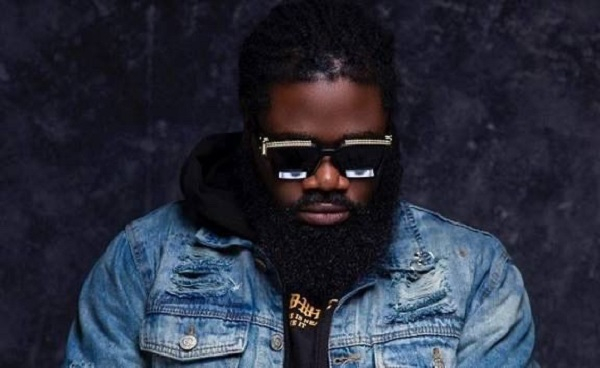
 Captain Planet was a member of the now-defunct music group 4X4
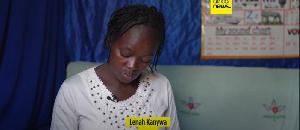



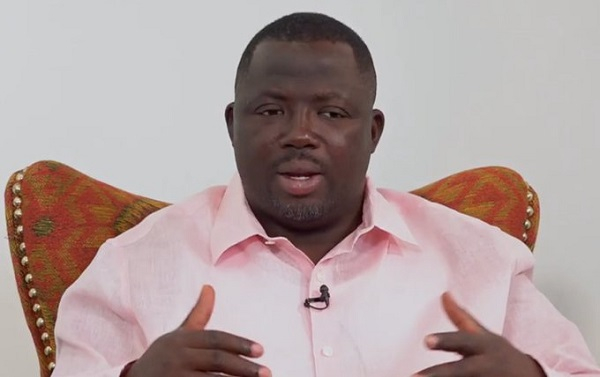

 On Matthew Nyindam’s performance during his short stint in the current Parliament, 3% of voters rated him as excellent, while 32% described his performance as very good or good. A further 36% rated his performance as average, with 29% assessing it as poor or very poor.