7.4 C
London
Saturday, December 27, 2025
Home Blog Page 899

Swiatek’s sensational triumph at Wimbledon

0

Iga Swiatek was not on many people’s radar to win Wimbledon – including her own.

The 24-year-old’s two-year reign as world number one – ended by Aryna Sabalenka last year – was underpinned by dominance on the clay and consistency on the hard courts.

Swiatek became known as the ‘Queen of Clay’ after winning four French Open titles in five years, while she also won the US Open in 2022.

But she now leaves Wimbledon as the champion, thanks to an astonishing 6-0 6-0 victory in just 57 minutes over Amanda Anisimova in last Saturday’s final.

Not only was this Swiatek’s first Wimbledon title, it was her first Tour-level title on grass, having previously won the girls’ competition at SW19.

And as Swiatek herself said as she walked into her post-match news conference – who would have expected that?

“This one and the US Open for sure feel better because no-one expected that,” Swiatek said.

“It wasn’t a relief. It was more of just good tennis and working to make it happen without this baggage on your shoulders.

“It’s something that is just surreal. I feel like tennis keeps surprising me, and I keep surprising myself.”

Finding more peace

What makes victory even more surprising is Swiatek has been nowhere near her dominant best over the past year.

She did not reach a final for a year after her 2024 French Open triumph, slipping to eighth in the world – her lowest ranking since March 2022 – as a result.

There were a mixture of reasons – on and off the court – as to why Swiatek’s level has dipped.

Losing in the Olympic semi-finals in Paris last summer was a bitter blow, with Swiatek saying she cried for “six hours” afterwards.

In November, it was announced Swiatek had tested positive for heart medication trimetazidine (TMZ) in an out-of-competition sample. She was subsequently given a one-month ban after the International Tennis Integrity Agency (ITIA) accepted the result was caused by contamination.

More issues cropped up at the start of this year.

“Honestly, I needed a couple of months to get back on a proper path. It wasn’t easy,” Swiatek told BBC Sport.

But one person who did call Swiatek’s Wimbledon triumph was former Grand Slam semi-finalist Andrea Petkovic.

Petkovic saw a “new freshness” in Swiatek during the grass-court tournament in Bad Homburg – and also tipped her to win Wimbledon, as the German said herself, “for irrational reasons”.

During Swiatek’s semi-final match against Jasmine Paolini at the WTA event, Petkovic spotted a large bird circling above Swiatek for around 10 minutes.

When the players changed ends, the bird followed Swiatek to the other side of the court, which Petkovic took as an omen.

“I said there and then she’s going to win Wimbledon,” Petkovic told BBC Radio 5 Live.

“For most of this year you could sense pressure and tension when she stepped on court.

“In Bad Homburg you could see that was gone.”

More time to prepare on grass

Before this year, Swiatek had only reached the second week of Wimbledon once, in a quarter-final run in 2023.

After a shock third-round defeat by Yulia Putintseva last year, Swiatek said she had not given herself enough time to mentally recover from her French Open win a few weeks earlier.

Having lost to Sabalenka in the Roland Garros semi-finals this year, Swiatek went to Mallorca for a week’s training on grass before returning to competitive action in Bad Homburg.

Swiatek reached the final in Germany, where a defeat by Jessica Pegula left her in tears, but it was an indication that her level on the surface had improved.

“I feel like I have developed as a player and I had time to practise a little bit more [this year],” said Swiatek.

“I would say we mainly focused on my movement and how I should stop before hitting the ball.

“Also, [we worked] on fast hands because obviously it’s important here not to stop the movement, even though the ball sometimes is fast.”

‘Forgiving herself’ a bit more

Swiatek replaced long-time coach Tomasz Wiktorowski with Wim Fissette late last year, and it has taken time for the tweaks she was making to bed in.

“When you make a big change and hire a new coach, it takes a while to see the changes,” said former world number nine Petkovic.

“You feel you’re progressing and you’re expecting to see results right away. But it doesn’t happen right away.”

Swiatek’s serve is an area which Fissette has focused on.

The Pole won 79 per cent of her first-serve points at Wimbledon – the joint-second highest in the women’s singles.

After the Wimbledon final, Swiatek said her serving was the best it has been in the entire grass-court swing.

“I think she got a bit hectic at the start of the season. Now something is different and she has a bit more patience with herself,” said Petkovic.

“I think she’s also forgiving herself a bit more if she makes a few unforced errors on the grass.”

Ghana Confronts Rising Mobile Theft Epidemic Amid Systemic Enforcement Gaps

0

mobilemobile
mobile

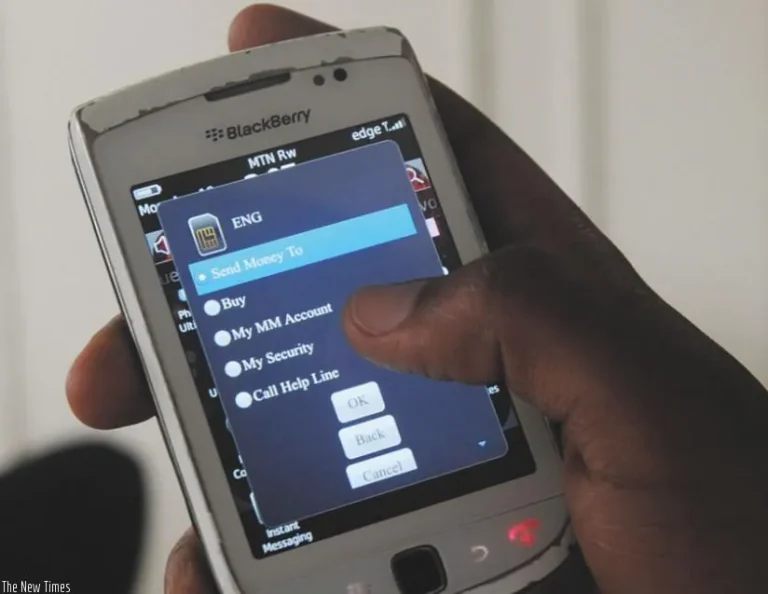
Ghana is grappling with a growing wave of mobile phone thefts that experts say has escalated into a public safety and digital security crisis.

With over 40.4 million mobile subscriptions nationwide according to data from the National Communications Authority the smartphone has become a high-value target, exposing both personal privacy and livelihoods to predatory criminal networks.

Beyond the devices themselves, victims are reporting deeper trauma. Survivors describe losing not just contacts and messages, but critical data tied to work, education, finances, and even patient care.

A senior emergency physician detailed how she was robbed while coordinating an ambulance transfer, forcing her to reroute critical care instructions through borrowed phones. In tertiary institutions, multiple students have suffered physical assaults on campus footpaths, with some requiring medical attention after resisting theft attempts.

Yet, despite the sharp rise in incidents, public confidence in law enforcement remains fragile. Victims consistently report long delays, lack of feedback, and most concerning requests to undertake personal tracking missions.

One young professional recounted how she tracked her stolen iPhone’s live location for 72 hours without police support, eventually abandoning the case after being warned against confronting suspects alone.

Historical data reveals that mobile theft in Ghana is not a new phenomenon. Its roots stretch back to the 1990s, when the introduction of SIM-card portability unlocked a black market for preloaded phones.

By 2006, international media like the BBC had chronicled the scope of thefts across urban centres. What has changed is the value of the devices both as communication tools and as carriers of digital identities, financial apps, and health records.

Authorities are now under growing pressure to act. Communications Minister Samuel Nartey George recently confirmed that government remains committed to deploying a Central Equipment Identity Registry (CEIR) a centralized blacklist system that uses IMEI numbers to render stolen phones inoperable.

The initiative, long championed by former minister Ursula Owusu, is projected to cost around US$4 million and is inspired by successful deployments in India and the UAE.

Cybersecurity analysts argue that the CEIR could serve as a force multiplier for Ghana’s police by removing the economic incentive behind mobile theft. Without the ability to resell or reactivate stolen devices, criminals may find the risk no longer worth the reward.

But without urgent improvements in public trust, police response times, and citizen protection, such technology may struggle to reach its full deterrent potential.

Until then, for many Ghanaians, the threat of mobile theft remains a daily risk with real consequences not just for connectivity, but for personal security, mental health, and public confidence in the justice system.

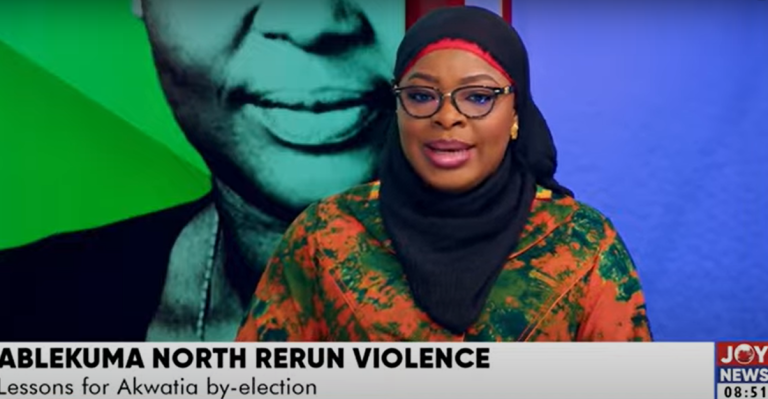
CODEO slams Police over security failures in Ablekuma North rerun

0

The Coalition of Domestic Election Observers (CODEO) has expressed deep concern over the conduct of security personnel and the general state of law enforcement during the parliamentary rerun held on Friday, July 11, 2025, in the Ablekuma North Constituency, warning that the situation poses a “clear and present danger” to Ghana’s democracy.

This follows a violent incident at the St. Peter’s Society Methodist Church polling centre, where police officers reportedly stood by as unidentified men stormed the venue and disrupted the voting process.

Among those assaulted during the disruption were former MP for Awutu Senya East, Hawa Koomson, and the NPP’s parliamentary candidate for the constituency, Nana Akua Afriyie. Two journalists and the NPP’s deputy national organiser, Chris Lloyd Asamoah, were also attacked by the same group of assailants.

In a strongly worded statement released on Monday, July 14, CODEO condemned the Ghana Police Service for failing to protect voters, polling officials, and party agents, despite the heavy deployment of security personnel to the area.

“The security lapses observed during this election rerun—despite the visible police presence—raise very serious questions about the state of the Ghana Police Service,” the statement read.

CODEO further noted that unauthorised individuals, suspected to be political vigilantes, were seen moving freely in and around polling centres, some in unlicensed vehicles, creating an atmosphere of fear and intimidation.

The group described the situation as especially troubling given the high-stakes nature of the election and the urban setting in which it took place.

“This posture of the police was observed during the 2024 elections and transition,” CODEO recalled, warning that the continued “emasculation” of the Ghana Police Service could erode public confidence in democratic processes and threaten national security.

The coalition is therefore urging President John Mahama and the Police Council to invoke their powers under Article 202(2) of the 1992 Constitution to take immediate action.

“This must be done urgently to ensure clear remedial actions are taken ahead of the upcoming bye-election in Akwatia,” CODEO stressed.

Additionally, the coalition called on political parties, the Electoral Commission, security agencies, and the judiciary to reflect on these developments and take concrete measures to tackle election violence, political vigilantism, and threats to police independence.

“The failure to act now could undermine Ghana’s young democracy and endanger future electoral processes,” the coalition warned.

“Violence begets violence” – Hanna Bissiw justifies attack on Hawa Koomson

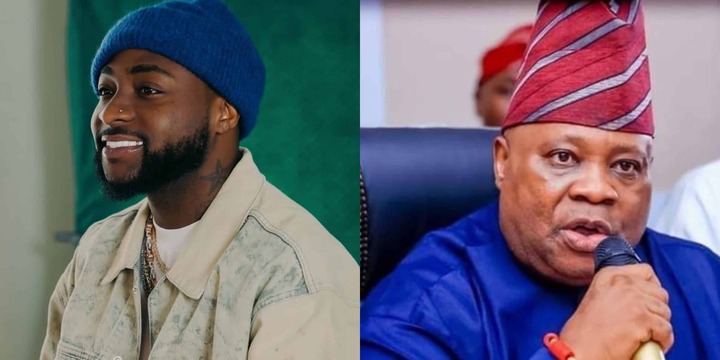
Davido Hints At Gov Adeleke’s Defection To APC In New Track, ‘From Umbrella To Broom’

0

Afrobeats star, David Adeleke, also known as Davido, may have revealed that his uncle, Governor Ademola Adeleke, is planning to leave the Peoples Democratic Party (PDP) for the All Progressives Congress (APC).

Naija News reports that news about the Osun governor’s possible defection started weeks ago after he and Davido visited President Bola Tinubu at his home in Lagos for a closed-door meeting.

US Embassy explains why Ghana’s visa validity was cut to 3 months

0

The revised visa validity schedule for non-immigrant visas is part of a broader immigration policy decision by the United States government to improve fraud detection and prevention, the Chargé d’Affaires at the US Embassy in Ghana, Rolf Olson, has clarified.

“The visa validity schedule was changed for a number of other countries all around the world because we believe that it is easier for us to detect and prevent fraud when we have shorter visa validities,” he said.

In an exclusive interview with the Daily Graphic at the US Embassy in Accra last Wednesday, July 9, 2025, Mr Olson explained that the revised visa policy does not target Ghana specifically but is part of a global adjustment.

He stressed that the new policy does not alter eligibility criteria. “In terms of who can qualify for a given visa—whether it’s a tourist visa or a student visa—nothing has changed. What has been changed is what’s called the reciprocity schedule, and it’s for the various visa categories. It shows the maximum validity of a visa that can be issued for that category at any given time,” he stated.

The Chargé d’Affaires emphasised that the visa validity schedule for Ghana and other countries evolves and is subject to continuous assessment.

Clarifying misconceptions

The US State Department recently revised the validity of non-immigrant B-1 and B-2 visas for tourists and business visitors from five-year multiple entry to three-month single entry.

Mr Olson acknowledged widespread misconceptions, with some assuming that the three-month single-entry limit refers to the duration of stay in the US.

He clarified: “The three-month period is how long you have to enter the United States. It’s not about how long you have to stay in the United States, and that’s a common misperception. Understandably, all these can be quite confusing. So, for example, today is July 9. If you were issued a visa today, it would expire on October 8 or 9—whatever three months is.”

He further explained that under the new policy, if a visa holder fails to travel to the United States within the three-month period, the visa becomes invalid.

Length of Stay and Existing Visas

Mr Olson noted that the length of stay permitted in the US will continue to be determined by US Customs and Border Protection (CBP) officers at the point of entry.

“For B-1 and B-2 visa holders, the six-month stay is not automatic. CBP officers have the discretion to shorten or lengthen that duration,” he said.

For students on F-1 visas, CBP officers will issue a stay period that covers the entire duration of study.

Importantly, Mr Olson assured Ghanaians that the revised validity applies only to new visa issuances.

“Anybody who already has a visa, there’s no change to the status of that visa. If you have five years multiple entry or three years multiple entry, whatever the status, the current visa does not change. This is only about new issuances going forward,” he explained.

Addressing visa overstays

Mr Olson expressed appreciation for the Ghanaian government’s engagement, particularly comments by Foreign Minister Samuel Okudzeto Ablakwa regarding visa overstays.

The US government has raised concerns over a 21 per cent overstay rate among Ghanaian students; exceeding the 15 per cent threshold set by Washington.

He confirmed that the US is working with Ghanaian authorities to address the issue. “We’ve been engaging on immigration matters, including overstays, and are looking at ways to cooperate further,” he said.

He emphasised that visa decisions are linked to national security. “Every visa adjudication is a national security decision, and this policy is in line with a key campaign pledge of the US President,” Mr Olson stated.

Akufo-Addo mourns Buhari’s passing  | Ghana News Agency

0

By Kenneth Sackey

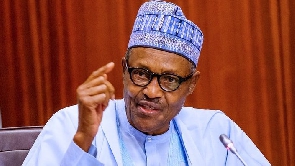
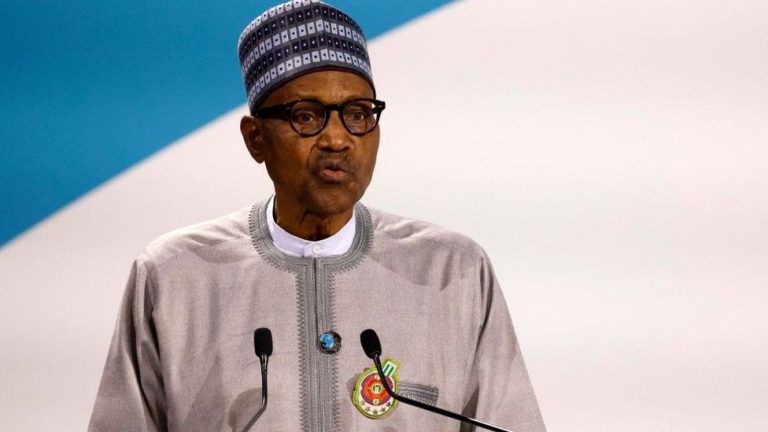
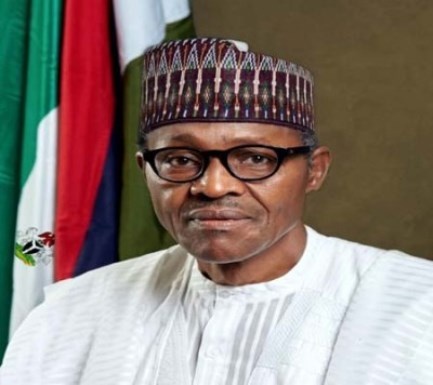
Accra, July 14, GNA – Former President Nana Addo Dankwa Akufo-Addo has expressed sorrow over the death of former Nigerian President Muhammadu Buhari, who passed away on Sunday. 

In a tribute issued Monday, Akufo-Addo described Buhari as “an outstanding Nigerian patriot and a staunch African integrationist.” 

He reflected on their personal friendship and collaboration during their respective tenures, particularly in advancing regional security and economic integration. 

Akufo-Addo cited Buhari’s role in the Accra Initiative, a regional framework to combat terrorism and organised crime, and Nigeria’s commitment to the African Continental Free Trade Area under his leadership. 

“His Excellency, Muhammadu Buhari, GCFR, will be remembered for his exemplary patriotism, his commitment to a united Nigeria, and his deep concern for the social and economic development of the Nigerian people,” he said. 

Buhari, who had longstanding ties to Ghana, contributed significantly to post-independence West African development and remained influential in regional affairs. 

“May his soul continue to rest in perfect peace in the Bosom of the Almighty,” Akufo-Addo prayed. 

GNA 

Edited by Kenneth Sackey 

Give parties power to replace MPs after death or resignation – Prof Prempeh recommends reform

0

Prof Henry Kwasi Prempeh is the Chairman of the Constitutional Review Committee Prof Henry Kwasi Prempeh is the Chairman of the Constitutional Review Committee

The Chairman of the Constitutional Review Committee (CRC), Prof Henry Kwasi Prempeh, has suggested that the constitutional requirement for by-elections to fill vacancies in the country’s Parliament should be re-examined.

In a post shared on Facebook on July 13, 2025, Prof Kwasi Prempeh, who is also the Executive Director of the Ghana Centre for Democratic Development (CDD-Ghana), said that political parties whose seats are declared vacant should be given the chance to fill the seat first.

He indicated that this opportunity should be given to parties if the vacancies are created within the first year of the commencement of a new Parliament.

“What if, instead of a by-election, the party that held the seat was given a right to elect a replacement whenever a vacancy occurs within 12 months of the last election?” Prof Prempeh wrote.

His comments come following the death of the Member of Parliament for Akwatia, Ernest Yaw Kumi, which implies that the Akwatia seat will soon be declared vacant by the Speaker of Parliament, Alban Bagbin.

After the declaration of the Akwatia seat as vacant, the Electoral Commission of Ghana (EC) is expected to announce a by-election, in accordance with the 1992 Constitution of Ghana.

The suggestion by Prof Prempeh, who is leading the ongoing process to review Ghana’s constitution, may imply that a number of the country’s laws, including Article 112 of the 1992 Constitution, must be amended.

Article 112(5) outlines the process for filling vacancies that arise in Parliament.

“Whenever a vacancy occurs in Parliament, the Clerk of Parliament shall notify the Electoral Commission in writing within seven days after becoming aware that the vacancy has occurred; and a by-election shall be held within thirty days after the vacancy occurred, except that where the vacancy occurred through the death of a member, the by-election shall be held within sixty days after the occurrence of the vacancy,” it reads.

Article 112(5) adds, “Notwithstanding clause (5) of this article, a by-election shall not be held within three months before the holding of a general election.”

See his post below:

BAI/AE

Meanwhile, you can watch GhanaWeb TV’s exclusive interview with Arathejay below:

You can also watch the latest news in Twi on GhanaWeb TV below:

Affordability barrier to chronic disease treatment — NHIA study

0

A study by the National Health Insurance Authority (NHIA) and the Korea Foundation for International Healthcare (KOFIH) has revealed that affordability remains a major barrier to the treatment for chronic conditions such as diabetes and hypertension in Ghana, despite increased access to health care through the National Health Insurance Scheme (NHIS).

According to the findings, out-of-pocket costs continued to determine whether patients stayed on treatment or discontinued even when they were enrolled on the NHIS.

The financial pressure, the report warned, could be the difference between managing an illness and suffering severe complications or even death.

Among some of the unexpected revelations was that NHIS members were less likely to monitor their vital signs or adhere to prescribed medications compared to those not enrolled on the scheme.

Individuals with no formal education showed stronger habits in checking vital signs, the report indicated.

Also, urban residents were generally more engaged in regular health checks, likely due to better access to healthcare services.

The findings were presented in Accra last Friday at a dissemination conference, where researchers, policymakers, development partners, and healthcare professionals gathered to discuss how to strengthen the country’s response to non-communicable diseases (NCDs).

The study sought to establish a baseline on how diabetes and hypertension are currently being managed across both NHIS and non-NHIS populations.

Responses

The Deputy Chief Executive of the NHIA in charge of Operations, Dr Senanu Kwesi Djokoto, said the findings should guide a rethink of how the health system approacheed chronic diseases.

He stated that Ghana, like many countries, was experiencing a shift in disease burden from infectious diseases to NCDs such as diabetes and hypertension  which demanded bold, evidence-driven responses.

“If we do not act with urgency and precision, the growing prevalence of chronic diseases will gradually undermine the substantial progress we have made in expanding health access and equity,” Dr Djokoto said.

He described the study not as a mere academic exercise but as a call to action and a step forward toward evidence-based policymaking and strategic reform.

“Let us align policy with evidence and ensure that no Ghanaian, regardless of income, location or circumstance, is left behind in our pursuit of a healthier nation,” he added.

President of KOFIH, Dr Ha Il-Soo, said the insights from the study would help inform future health strategies.

He emphasised the need for continued partnerships, research and targeted investment in health systems to reduce the NCD burden.

“This is not just about data, it is about improving lives and shaping a healthier, more equitable future for all,” Dr Ha said.

Economic toll

Professor Gordon Abeka-Nkrumah of the University of Ghana Business School described the findings as alarming, calling the growing burden of NCDs a development crisis.

“These are not just health statistics — they represent the daily realities of millions of fellow citizens.

The economic implications of inaction are staggering,” he noted.

He warned that NCDs were projected to cost low- and middle-income countries over $7 trillion between 2011 and 2025.

In Ghana, he said, the mean annual cost of managing diabetes was GH¢3,197, while the lifetime cost of treating hypertension could exceed GH¢869,000, depending on age and severity.

For the NHIS, he said, diabetes and hypertension already ranked among the top five cost drivers, consuming over 10 per cent of total claims.

“We must ask: Is the NHIS benefit package sustainable, given the growing burden of NCDs?” Prof. Abeka-Nkrumah asked.

Francis Doku ‘clashes’ with Socrate Safo over 2017 article on lobbying for deputy ministerial position

0

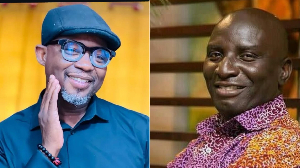
Media personality Francis Doku (L) and filmmaker Socrate Safo (R) have clashed over a 2017 article Media personality Francis Doku (L) and filmmaker Socrate Safo (R) have clashed over a 2017 article

Media personality, Francis Doku, and filmmaker, Socrate Safo, have ‘clashed’ on Joy FM’s Showbiz A-Z over an article the former wrote in 2017.

The article, titled “Classless campaign for Deputy Minister of Tourism,” was published in the Graphic Showbiz on January 19, 2017.

In the article, Francis Doku criticised a campaign by some industry players who were pushing for Socrate Safo to be appointed Deputy Minister of Tourism, Arts and Culture, under former President Nana Akufo-Addo’s government.

Francis Doku described the campaign at the time as “classless,” suggesting that it felt as if people were trying to force the president’s hand.

“It was as though the president had to appoint Safo or live to regret it,” Francis Doku wrote in part of the article.

On July 12, 2025, during a conversation on Showbiz A-Z, Socrate Safo was asked how he felt when he came across the article.

He noted that he was not happy with the piece and said it was written from a place of ignorance.

“I felt funny because he wrote it out of ignorance. Has he lobbied before? Is there any formula to lobby? The person speaking has never lobbied before. And he is writing something from his ignorant point,” Socrate said.

When asked whether he harboured any grudge against Francis Doku for what he wrote, Socrate said he did not.

He explained that he had moved on, though he still believed the article lacked understanding of the lobbying process.

“No, that’s the last thing I have in my heart. Grudge with people? No. And you should know me for that. I know that he’s doing his part from his ignorant point. There are a whole lot of things that people do out of ignorance. It is only when you get deep into it,” he said.

Socrate also argued that certain criticisms should only come from people with real-life experiences on the issues being discussed.

He said, for example, he would never expect Francis Doku to criticise event organisers because he once organised an event that didn’t go well and, therefore, understands how difficult the job is.

In the same way, he said he believed Francis Doku should not have criticised the lobbying efforts for a deputy minister role.

“I don’t think Francis Doku will ever criticise any event organiser. No, because he has organised an event before and it flopped. So, he understands what it takes to organise. But he has not lobbied before. So, that piece was a figment of his own imagination,” he said.

However, responding to Socrate’s remarks live on the show, Francis Doku disagreed.

He argued that having direct experience in something is not the only reason one can have an opinion or offer criticism.

“No, I say your premise is wrong. To say that if you haven’t done this before, you can’t criticize, I think it’s a wrong premise. The fact that I haven’t worked at Joy FM before doesn’t mean that if I listen to a programme and it isn’t nice I can’t say it… No, what you’re saying is that if I haven’t done something before, I cannot criticise. And I’m saying that’s wrong. I haven’t done a film before like you. But if I watch a movie and I feel from where I sit that it’s wrong, I will criticise it,” Francis responded.

Meanwhile, you can watch GhanaWeb TV’s exclusive interview with Arathejay below:

AK/AE

‘NPP will face more attacks during Akwatia by-election for abandoning vigilante groups – Nana Obiri Boahen

0

Nana Obiri Boahen is a former Deputy Secretary of NPP Nana Obiri Boahen is a former Deputy Secretary of NPP

Former Deputy Secretary of the New Patriotic Party (NPP), Nana Obiri Boahen, has taken a swipe at the party’s leadership over what he describes as the continued neglect of grassroots supporters and the disbanding of its vigilante groups.

In an interview on Wontumi TV, monitored by GhanaWeb Sunday, July 13, 2025, he said, “When the NPP was in power, it did not take care of the grassroots, they were completely neglected, what happened at Ablekuma North was just a rehearsal for what will happen at Akwatia, I know NDC”.

Nana Obiri Boahen questioned the party’s decision to disband vigilante groups like the Invisible Forces and Delta Forces.

“How should a party like NPP disband Invisible Forces and Delta Forces? Some of us condemned their actions, but let’s be honest, we could mobilize with them. I recognised and accepted them because who will protect the NPP if not them?”

He lamented that the party no longer listens to advice and is losing control over internal coordination.

“NPP people do not heed to advice,” he added.

His remarks come in the wake of the brutal assault on former Minister Mavis Hawa Koomson at the St Peter’s polling station during the Ablekuma North rerun on Friday, July 11, 2025.

JKB/EB

Meanwhile, you can watch GhanaWeb TV’s exclusive interview with Arathejay below:

Azumah Resources confirms resolution talks with Engineers & Planners

0

The Black Volta Gold Project dispute has sparked national conversations The Black Volta Gold Project dispute has sparked national conversations

Azumah Resources has confirmed it is currently engaged in confidential, good-faith negotiations with Engineers & Planners (E&P), aimed at resolving the ongoing impasse between the two entities regarding the Black Volta Gold Project.

In a statement released by the company and sighted by GhanaWeb Business on July 13, 2025, Azumah Resources said the discussions are taking place “within the framework of applicable laws, commercial norms, and in consultation with the appropriate regulatory and ministerial bodies.”

The company emphasised that the negotiations are guided by a shared objective which is aimed at achieving a constructive and mutually acceptable resolution to the issues at hand.

“In accordance with the directive of the Honorable Minister responsible for the sector, and in a bid to safeguard the sanctity of the ongoing process, we respectfully call upon all media houses, analysts, commentators, and third parties to exercise discretion and refrain from speculative or misleading reportage that could potentially prejudice or distort the dialogue underway,” the statement read.

Azumah Resources further urged the media and public to rely only on official communication.

“The public and media [are advised] to rely solely on authorized spokespersons for any statements or official positions concerning Azumah Resources,” it added.

The company also addressed recent reports involving the ECOWAS Bank for Investment and Development (EBID), describing references to the bank as “unwarranted and inaccurate.”

“For the avoidance of doubt, representatives of Azumah Resources and E&P visited EBID’s offices in Lomé, Togo, in 2023 to assess the Bank’s capacity and willingness to support the transaction,” the statement clarified.

“EBID expressed indicative interest, contingent on its internal credit appraisal and Board approval. Any extrapolations beyond this context are both inappropriate and unauthorised,” it added.

Azumah Resources reaffirmed its commitment to resolving the matter professionally and transparently.

“We remain fully aligned with the broader interest of the Republic of Ghana and all stakeholders involved,” the company stated.

Azumah Resources reiterated that all updates and developments will be shared through authorised channels in due course.

The statement comes in the wake of growing public and media interest in the dispute, which has drawn attention from stakeholders across the extractive sector and beyond.

The Black Volta Gold Project, once operational, is expected to produce an average of 163,000 ounces of gold per year, about five tonnes annually, during its first five years. This would represent roughly 3% of Ghana’s national gold output, which rose to 4.8 million ounces, or 150 tonnes, in 2024.

MA

Iga Świątek makes history as first pole to win both Girls’ and Ladies’ Wimbledon titles

0

Iga Świątek etched her name into tennis history on Saturday, July 12, 2025 Iga Świątek etched her name into tennis history on Saturday, July 12, 2025

IŚwiątek etched her name into tennis history on Saturday, July 12, 2025, becoming the first Polish player to win both the Girls’ and Ladies’ singles titles at Wimbledon.

The 24-year-old phenom from Raszyn Poland secured her maiden Wimbledon Ladies’ title with a commanding 6-0 victory over American Amanda Anisimova in just 57 minutes, adding to her 2018 Girls’ singles crown and cementing her status as one of tennis’ all-time greats.

Świątek seeded number 8, delivered a masterclass on Centre Court, overwhelming the 13th-seeded Anisimova with relentless precision and power.

The victory marked her sixth Grand Slam title and her first on grass, a surface once considered her weakest.

“This feels super surreal. I didn’t even dream of winning Wimbledon because it felt too far”, Świątek said in her post-match press conference, clutching the Venus Rosewater Dish presented by the Princess of Wales.

Świątek’s journey to this historic milestone began seven years ago when, as a 17-year-old junior, she clinched the 2018 Wimbledon Girls’ singles title.

“It felt like a different lifetime,” she reflected, recalling how that victory gave her hope for a professional career on grass.

Her 2025 triumph completes a rare double, making her the first female Pole to achieve this feat at the All England Club.

Świątek, known as the “Queen of Clay” for her four French Open titles, had never advanced beyond the Wimbledon quarterfinals in the main draw before this year.

Her 2024 season was marked by struggles, including a semi-final loss to Aryna Sabalenka at Roland Garros, a one-month suspension for an inadvertent doping violation, and a drop to number 8 in the WTA rankings—her lowest since March 2022.

Determined to conquer grass, Świątek and her new coach, Wim Fissette, focused on refining her movement and serve.

A week of training in Mallorca and a runner-up finish at Bad Homburg boosted her confidence.

“We worked on fast hands and not stopping my movement. On grass, you have to trust your shots and go for it”, she explained.

Świątek dropped just one set and 35 games across the tournament—the fewest by a women’s champion since Martina Navratilova in 1990.

At 24, she is the youngest woman since Serena Williams in 2002 to win Grand Slam titles on all three surfaces: clay, hard, and grass.

“I’m proud of what I’ve done,” she said tearfully.

Świątek’s historic double at Wimbledon Girls’ in 2018 and Ladies’ in 2025 marks a new chapter for Polish tennis.

For Świątek, the victory was more than a title—it was proof that even the toughest surfaces can be conquered with resilience and belief.

ALL/AME

Body of late President Buhari dey on di way from London for a simple burial for Daura

0

Buhari, 82, die for one hospital for London on Sunday, 13 July, 2025 Buhari, 82, die for one hospital for London on Sunday, 13 July, 2025

Di body of late President Muhammadu Buhari dey on di way now as dem dey fly am in from London to Daura im hometown for Katsina state wia dem go give am simple burial.

Buhari die for one London hospital on Sunday at di age of 82.

Guvnor of Katsina State, Dikko Radda, who already dey for London wit Buhari family tell tori pipo say dem go bury am later dis Monday for Daura town, about 80 kilometres from di state capital.

Nigeria Vice-President Kashim Shettima and di Chief of Staff of President Bola Tinubu, Femi Gbajabiamila, also fly into di UK capital early Monday to accompany Buhari body home.

“I just leave im family for di hospital wia e die and di decision be say we go take im body to Daura for burial,” Radda tell tori pipo.

Also in a social media post, Vice President Shettima confirm say na for Daura dem go bury Buhari.

E tok say Buhari bin die afta small sickness but e no tok di exact sickness wey e suffer from. However, Buhari bin don dey sick for many years now.

In line wit Islamic religion, dem go bury Buhari as quickly as possible for simple ceremony, according to weitn one Islamic cleric Abdullahi Garangamawa tell di BBC.

“Di only tin wey fit stop di burial of Buhari bodi today [Monday] na if im body arrive Daura for night bicos Islam no dey allow night burials. In dat case, Tuesday morning go dey ok,” di cleric tok.

Tributes still dey pour in for di late army general who be one of only two pipo wey don led Nigeria two times, both as military and civilian president. Di oda pesin na former President Olusegun Obasanjo wey dey 88 years old now.

Former President Goodluck Jonathan, who Buhari bin win for di 2015 election, don describe di late leader as someone wey “dey selfless for im commitment to im duty and bin serve di kontri wit character and deep sense of patriotism”.

Also, former military head of state Ibrahim Babangida, who Buhari bin overthrow in a coup in1985, shower praises on di late president..

“He na man wey, even for retirement, e remain moral compass to many, and na example of modesty for public life,” Babangida tok.

President Bola Tinubu dey expected to attend di funeral prayer for Daura, and e don declare seven-day national mourning period in honour of im predecessor.

Tinubu say di nation would pay dia final respect to di former leader wit dignity and honour, starting with bringing down all national flags to half-mast across di kontri from Sunday.

BBC Pidgin go dey bring you all di update about Buhari burial later dis Monday.

Jesus Christ is a fool- BullGod

0

Ghanaian entertainment personality, BullGod has said that the sin of God, Jesus Christ is a fool.

BullGod made the statement while speaking on Hitz FM with Andy Dosty.

The media personality based on the Bible states that Jesus Christ is a fool.

Quoting Proverbs chapter 29: 11, BullGod said that “Don’t lose your cool, if you lose your cool, you are a fool”, adding that Jesus Christ is a fool.

NPP Why? – Joe Ghartey Asks

0

Img Wa

As the New Patriotic Party (NPP) heads into its National Delegates Conference from July 18–20, 2025, concerns are mounting over a significant constitutional breach.

Party leadership appears to be violating Article 19 of the NPP Constitution, which outlines strict procedures for proposing and circulating amendments ahead of the conference.

This development, according to experienced politician, former Attorney General and Minister of Justice, Hon. Joe Ghartey, raises fears of increasing exclusivity and sidelining grassroots participation.

Hon. Joe when contacted over the weekend, was flabbergasted about the gross breach of the Constitution, saying: “NPP why?”

Breach of Constitutional Procedure

Article 19 of the NPP Constitution states:

“Every amendment to this Constitution shall be made at the National Delegates Conference provided, however, that no amendment shall be made unless:
i) Notice of such amendment has been submitted in writing to the General Secretary not later than two (2) months before the National Delegates Conference.
ii) The General Secretary has circulated the proposed amendment to every Regional and Constituency Office at least one (1) month before the National Delegates Conference.”

However, with less than a week to the start of the conference, the so-called proposed amendment—contained in the Frank Davis Report—has not been formally circulated by the General Secretary to regional and constituency offices, as required.
This failure suggests that delegates may be asked to vote on constitutional amendments they have neither seen nor had time to review, raising serious concerns about transparency and democratic governance within the party.

Missed Opportunity for Inclusivity

The 2025 conference is expected to consider amendments to the party’s constitution, including proposed changes to the structure of the party’s electoral college. This presents a unique opportunity for the NPP to address one of its most pressing internal challenges: the growing perception of exclusivity and marginalization of local-level party executives.
Many within the party believe that had the proposed amendments been submitted and circulated in accordance with Article 19, it would have demonstrated a commitment to inclusivity, transparency, and collective decision-making. Instead, the current approach is viewed as deepening disconnection between the party’s leadership and its grassroots.

Planning Without Compliance

In June, the NPP constituted a nine-member Conference Planning Committee to oversee preparations for the conference at the University of Ghana Sports Stadium.

Members of the Committee include:

Hon. Joseph Owusu – Chairman

Henry Nana Boakye, Esq. – Vice Chairman

Alhaji Haruna Mohammed – Secretary

Dr. Charles Dwamena – Member

Divine Otoo Agorhom – Member

Hon. Abena Osei Asare – Member

Hon. Jerry Ahmed Shaib – Member

Hajia Safia Mohammed – Member

Salam Mustapha – Member

Despite the committee’s mandate to coordinate logistics and readiness for the conference, the constitutional requirement to circulate proposed amendments was not met.

Per the NPP Constitution, any amendment must be approved by at least two-thirds of delegates at the conference. Yet, without prior access to the document, delegates will be left to debate and vote on unfamiliar content—an approach likened by some critics to a “jamboree,” rather than a serious constitutional reform process.

A Call for Accountability

As the conference draws near, party members—especially delegates—are being urged to demand full transparency and adherence to the party’s constitution. The failure to circulate proposed amendments in advance not only undermines the credibility of the process but may also set a troubling precedent for future governance within the NPP.

The leadership now stands at a crossroads: either reaffirm its commitment to democratic principles and inclusivity or risk deepening internal fractures within the party.

Ghana’s Berla Mundi Reveals Her Secrets to Achieving Glowing Skin

0

Ghana’s Berla Mundi Reveals Her Secrets to Achieving Glowing Skin

News Hub Creator1d

Ghanaian media personality Berla Mundi has recently captured the spotlight on Instagram by sharing her beauty tips for achieving radiant, glowing skin. Known not only for her charming personality but also for her flawless complexion, Berla’s insights resonate with many of her followers who are eager to enhance their skincare routines. In an era where self-care has become increasingly important, Berla’s advice is both timely and inspirational.

In her post, Berla emphasizes the critical role of hydration in achieving luminous skin. She suggests that drinking ample amounts of water each day helps to keep the skin well-hydrated and flushes out toxins that can lead to dullness. By promoting the idea that hydration is key to healthy skin, she encourages her audience to prioritize their water intake. Additionally, she highlights the importance of choosing quality skincare products tailored to individual skin types, allowing followers to nurture and support their unique beauty effectively.

Beyond hydration, Berla stresses the significance of a balanced diet rich in fruits and vegetables, which are known for their vitamins and antioxidants. By incorporating these nutrient-dense foods into daily meals, individuals can help their skin thrive, resulting in a glowing appearance that reflects overall health. Berla’s holistic approach to beauty underscores the idea that healthy skin isn’t just about what you apply externally but also about what you put into your body.

Ultimately, Berla Mundi’s beauty tips encourage a comprehensive approach to skincare, reminding her followers that taking care of oneself is an empowering journey. Through her shared experiences and practical advice, she inspires her audience to embrace self-love and foster confidence in their own skin. As her followers dive into these tips, they are likely to discover that a little consistency can lead to significant improvements in their skin health—something truly worth celebrating.

Source

Ghana Launches Action Plan On Business, HR

0

Stakeholders at the launch


Ghana has launched its National Action Plan on Business and Human Rights (NAP-BHR), as the nation takes steps to solidify its commitment to protecting human rights, by ensuring that private or public businesses operating in the country respect human rights.

The NAP-BHR which was co-chaired and developed by the Office of the Attorney General and Ministry of Justice and the Commission on Human Rights and Administrative Justice (CHRAJ), has been developed as a blueprint and roadmap contextualised to guide the implementation of the United Nations Guiding Principles in Ghana.

The launch saw Ghana becoming the fifth country in Africa, after Kenya, Uganda, Nigeria, and Liberia, to officially adopt a National Action Plan (NAP) on Business and Human Rights, aligned with the United Nations Guiding Principles on Business and Human Rights.

This marks a significant step in the country’s ongoing efforts to promote responsible business practices and enhance national protections against business-related human rights abuses, including environmental pollution, labour violations, child labour, and the lack of effective remedy mechanisms.

Seven key objectives have been identified in the NAP-BHR to address state duty, corporate responsibility and empowering rights-holders to effectively assert their rights.

The 7-chapter document, both in soft and hard copies has also been reproduced into a brail to enhance access to those with visual disabilities.

The Attorney General and Minister for Justice, Dr. Dominic Ayine, in a speech read for him by Dr. Sylvia Adusu, indicated that it is imperative that Ghana joins the league of nations in Africa that have developed a NAP-BHR, especially when the first African Business and Human Rights Forum was held here in Ghana.

“The state is committed to business and human rights. I believe that, that is the reason why even before the guiding principles on business and human rights, our constitution as far back as 1992 noted that human rights shall be respect by all natural and legal persons.”

He assured that his Office will play its role in ensuring that the NAP-BHR is adopted and the objectives stated therein are achieved.

The Commissioner of CHRAJ, Dr. Joseph Whittal, highlighted the significance of the action plan, indicated that it was only a step towards ensuring that the state protected human rights, businesses respected human rights and ensured access to effective remedy when violations occur.

“I wish to use this medium to call on all our partners, both local and international, to support the Commission in setting up a fully equipped and functional NAP Implementation Secretariat,” he said.

BY Gibril Abdul Razak

The unending cycle of electoral violence in Ghana

0

Despite Ghana’s reputation as one of Africa’s most stable democracies, its electoral processes remain plagued by a recurring and troubling pattern—violence. Since the return to constitutional rule in 1992, nearly every election cycle has witnessed pockets of intimidation, chaos, and, in some cases, fatal confrontations.

What began as isolated incidents has now evolved into a retaliatory political culture that threatens to undermine decades of democratic progress.

A History of Violence: Constituency Flashpoints

Several constituencies have become synonymous with violence during elections and by-elections. Among the most notable is the Akwatia Constituency in the Eastern Region, where the 2008 general elections were disrupted by ballot box snatching and widespread vandalism. The violence forced the annulment of results in six polling stations and necessitated a rerun under heavy security.

In the Bono East Region, the Techiman South constituency recorded one of the deadliest electoral incidents in 2020, with at least two people shot dead during post-election disturbances. The disputed outcome sparked nationwide outrage and demands for investigations.

Talensi Constituency in the Upper East Region also witnessed violence during a 2015 by-election, with reports of intimidation and clashes between party supporters. These flashpoints underscore a troubling pattern that continues to manifest in new forms.

The Ayawaso West Wuogon Incident: A National Shock

The Ayawaso West Wuogon by-election in 2019 marked a chilling turning point in Ghana’s electoral history. What began as a routine by-election quickly descended into chaos when masked national security operatives stormed polling stations and assaulted unarmed civilians. The violence led to the withdrawal of the opposition National Democratic Congress (NDC) from the contest.

An Emile Short Commission of Inquiry was swiftly established to investigate the violence. The Commission heard testimonies from over 20 key witnesses, including MP Sam George and the NDC candidate, Delali Kwasi Brempong. The Commission recommended compensation for victims and reforms in the deployment of security forces during elections. However, many of its recommendations were dismissed by the government in a controversial White Paper, deepening public scepticism about the commitment to electoral accountability.

The Hawa Koomson Gunshot Controversy

In yet another troubling incident, former Minister and Awutu Senya East MP, Mavis Hawa Koomson, admitted on live television that she fired a gunshot at a voter registration centre on July 20, 2020, claiming self-defence. The scene at the Step to Christ polling centre in Kasoa descended into panic, with gunfire, burning motorbikes, and frightened residents fleeing for safety.

While she justified her actions by alleging the presence of “outsiders” being bused into the constituency, eyewitness accounts contradicted her narrative, accusing her aides of firing multiple rounds and intimidating registrants. Shockingly, she faced no criminal charges, another example, critics argue, of impunity within the political elite.

Ablekuma North: Violence Revisited

The Ablekuma North Constituency went nearly seven months without a Member of Parliament following the 2024 general election, after the collation process was disrupted by a violent invasion by thugs. Repeated attempts by the Electoral Commission (EC) to compile the results were unsuccessful, largely due to the destruction of essential documents, including pink sheets, during the chaos at the collation centre. Amid persistent irregularities and security concerns, the EC ultimately scheduled a rerun of the parliamentary election for Friday, July 11, 2025.

The Ablekuma North constituency became the latest stage for electoral brutality during its 2024 parliamentary rerun. At St. Peter’s Methodist Polling Station, three journalists were assaulted, and NPP parliamentary candidate Akua Afriyie and Hawa Koomson herself were reportedly attacked, alongside other party members.

While the exact origins of the violence remain contested, the incident provoked polarising responses. Dr. Hanna Bissiw, National Women’s Organiser of the NDC and the Administrator for the Minerals Development Fund, justified the assault on Hawa Koomson, saying:

“Violence begets violence. If you live by the sword, you’ll die by the sword.”

She recounted a personal experience where Hawa Koomson’s thugs allegedly attacked her during the Ayawaso West Wuogon elections.

“I was beaten because she led thugs to come and beat me up. Has she forgotten?”

Although Bissiw later distanced the NDC from the incident, she suggested it could have been an internal NPP feud. Her remarks highlighted the growing public perception that retaliatory violence is becoming normalised in Ghanaian politics.

Calls for Retaliation and Escalation

The situation escalates further after Dennis Amfo Sefa, NPP parliamentary candidate for Tema West, described the Ablekuma North chaos as a dangerous precedent set by the NDC. In an interview with Citi News, he said:

“We are telling our boys and men: get ready, arm yourselves, and prepare for Akwatia. We will meet there and repeat the same thing that they [the NDC] have done in Ablekuma North.”

His comments were in reference to the pending Akwatia by-election, following the recent death of the sitting MP, Ernest Kumi. Such rhetoric fuels concerns that violence is no longer just a byproduct of elections but is being actively planned as a political strategy.

A Culture of Retaliation?

Ghana’s political environment appears to be edging toward a cycle of vengeance. What used to be scattered acts of aggression have evolved into tit-for-tat episodes, with each party justifying their actions by citing past victimisation. Political leaders, rather than condemning violence unequivocally, are often seen rationalising or downplaying its impact.

The consequences go beyond bruises and broken ballot boxes. The erosion of trust in democratic institutions, the intimidation of journalists, and the threat of armed political vigilantes all paint a troubling picture of Ghana’s electoral future.

Will the Cycle Ever End?

As the country prepares for more elections, including the Akwatia by-election, the question remains: Can Ghana break this unending cycle of electoral violence? Or will political actors continue to exploit tensions, deepen divisions, and normalise brutality in the name of democracy?

If retaliation replaces resolution, and violence becomes strategy, then the democratic ideals Ghana is celebrated for may continue to erode, one polling station at a time.

The writer is a journalist with Citi FM/Channel One TV

Email: [email protected]

Kufuor Demands Inclusion in NPP Decisions, Insists Mental Capacity Intact

0

John KufourJohn Kufour
John Kufour

Former President John Agyekum Kufuor has challenged the New Patriotic Party’s (NPP) leadership to end his exclusion from decision-making processes, declaring his “mind and memory are intact.”

The criticism emerged during a meeting at his residence with NPP flagbearer hopeful Bryan Acheampong, where Kufuor condemned the party’s pattern of sidelining his counsel.

The party is currently taking certain decisions but has decided not to tap into my vast knowledge,” Kufuor stated, emphasizing his status as a foundational elder.

If there are elders in this party, I am surely one.” He insisted the party must, at minimum, keep him informed: “Let me hear what’s happening.

The former president underscored his ongoing relevance to the opposition NPP, citing his historical contributions and institutional knowledge.

His remarks highlight internal tensions as the party prepares for Ghana’s 2028 elections under the shadow of consecutive electoral defeats.

A breakdown of Ghana’s domestic debt from 2020 to 2024

0

Ghana's total domestic debt stands at GH¢304 billion as of December 2024 Ghana’s total domestic debt stands at GH¢304 billion as of December 2024

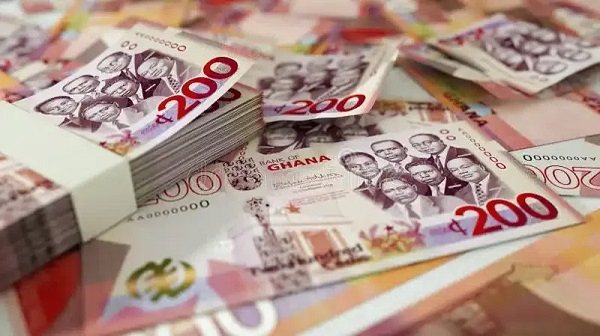
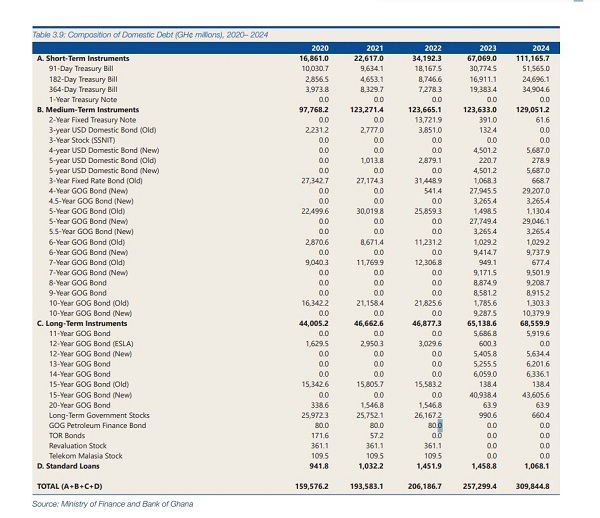
The Bank of Ghana has provided a detailed breakdown of Ghana’s domestic debt from 2020 to 2024.

According to the Central Bank’s 2024 Annual Report and Financial Statement, the country’s total domestic debt stood at GH¢304 billion at the end of 2024, up from GH¢159 billion in 2020.

The report states that Ghana’s domestic debt is held in short-term, medium-term, and long-term instruments, as well as standard loans.

The largest portion of the debt is held in medium-term instruments. These include the 3-year USD Domestic Bond (Old), 3-year Fixed Rate Bonds (Old and New), 5-year Government of Ghana (GoG) Bonds (Old and New), as well as the 6-, 7-, 8-, 9-, and 10-year GoG Bonds.

As of the end of 2024, the Bank of Ghana held a total of GH¢111.165 billion in short-term instruments. These include the 91-day, 182-day, and 364-day Treasury Bills, and the 1-year Treasury Note.

Short-term instruments have risen significantly over the years, from GH¢16.861 billion in 2020 to GH¢22.617 billion in 2021, GH¢24.192 billion in 2022, GH¢67.069 billion in 2023, and GH¢111.165 billion in 2024.

This sharp increase was driven by the country’s economic crisis, which forced the government to rely heavily on short-term instruments after being shut out of the international capital market due to high debt levels.

Standard loans remain the smallest component of Ghana’s domestic debt, amounting to GH¢1.068 billion as of the end of 2024.

See the composition of the country’s domestic debt from 2020-2024 below

SSD/MA

Watch the latest episode of Health Focus below:

Chef Abby Named TIME100 Creator

0

Chef Abby 


GHANAIAN CULINARY sensation Abena Amoakoaa Sintim-Aboagye, popularly known as Chef Abby, has been named among TIME Magazine’s prestigious TIME100 Most Influential Creators for 2025.

Chef Abby, who has gained widespread recognition through her viral TikTok cooking videos, was recognised for her unique storytelling style and dedication to promoting African culinary heritage. With over 1.4 million followers on TikTok, she describes herself as an “African Food Tourist,” showcasing recipes that reflect the soul, struggles, and values of African culture.

According to TIME staff writer Megan McCluskey, who profiled her in the listing, Chef Abby earned her spot after being featured on TikTok’s Global Discover List earlier this year. Her standout content includes cooking iconic dishes such as Ghanaian jollof rice, babenda from Burkina Faso, and amiwo from Benin.

“When you cook a country’s traditional food, you learn about its values, its struggles, and its soul,” she told TIME. “Every ingredient has a meaning. Every method carries a memory. It teaches you respect for the people and the heritage behind the dish.”

TIME’s 2025 list celebrates creators across various fields who are redefining influence in the digital age. Alongside Chef Abby, this year’s honorees include Kai Cenat, Mr. Beast, and Khabby Lame, trailblazers who are using their platforms to inspire, educate, and innovate.

Abena Sintim-Aboagye’s inclusion not only highlights her achievement but also places Ghanaian and African cuisine on the global stage.


First National Bank Appoints New Head Of Internal Audit

0

Richard Edem Akabua 


First National Bank has announced the appointment of Richard Edem Akabua as the new Head of Internal Audit, effective immediately.

Richard has been a key member of the bank’s Internal Audit team, previously serving as Internal Audit Manager. Over the years, he has played a pivotal role in establishing and strengthening the bank’s internal audit function. His unwavering dedication to enhancing the bank’s control environment and governance framework has earned him recognition to step up into leadership.

In his new role, Richard will be responsible for providing strategic leadership for the internal audit function in alignment with the bank’s overarching goals. He will oversee the delivery of independent, objective assurance and advisory services, aimed at adding value and improving the bank’s operations. His mandate includes advancing innovations in audit processes, reinforcing internal controls, and enhancing risk management frameworks.

Before joining First National Bank, he held key positions in audit and risk control at Barclays Bank Ghana and the erstwhile Capital Bank.

Richard brings to this role a wealth of experience and robust academic and professional credentials. He holds an MBA in Finance from Central University and a Bachelor’s Degree in Education (Social Sciences, Accounting) from the University of Cape Coast. He also is a Certified Information Systems Auditor (CISA), a Certified ISO/IEC 27001 Lead Implementer, and an active member of respected professional bodies including the Institute of Internal Auditors (IIA), Information Systems Audit and Control Association (ISACA), and the Association of Chartered Certified Accountants (ACCA).

“Richard’s appointment reflects the confidence we have in his experience, professionalism, and strategic insight,” says Warren Adams, Chief Executive Officer of First National Bank Ghana. “His leadership will play a key role in maintaining the bank’s reputation for strong governance and operational excellence.”

Commenting on his appointment, Richard Edem Akabua expressed his gratitude and commitment to the bank, saying, “I am deeply honored by this appointment and grateful for the confidence placed in me. I look forward to working closely with my colleagues and stakeholders to further strengthen our internal control environment and contribute meaningfully to the bank’s strategic goals.”


We are reviewing the practice of camping players at a ‘clubhouse’ – Sarfo Duku

0

Communications Director of Asante Kotoko, Sarfo Duku, has disclosed that the club is reassessing its player accommodation policy in the light of recent concerns.

A former captain of the club, Justice Blay, has alleged in an interview that some players are engaged in inappropriate behaviour, including snatching girlfriends and indulging in alcoholism while in camp.

Addressing the concerns in an interview with Luv FM, Lawyer Duku said while the club had seen camping as a way to build team cohesion and focus, the fresh allegations have prompted management to take a second look at its effectiveness.

“The idea of bringing these boys together, as you have rightly said, is to ensure that they have some convenience,” he stated. “The struggle of players having to move from their period destinations to come for training, and the traffic situation, and issues of transportation, all those things, we thought that, let’s bring them together and closer to the training facilities so that they will have some comfort”.

Sarfo Duku, however, says the Club is taking a look at the arrangement for possible review.

“It is an initiative that was endorsed by the King himself, with the idea that it will give them some peace. But if, upon a second thought, we realise that it would rather go against the club, and then we will take another look,” he said.

DISCLAIMER: The Views, Comments, Opinions, Contributions and Statements made by Readers and Contributors on this platform do not necessarily represent the views or policy of Multimedia Group Limited.

DISCLAIMER: The Views, Comments, Opinions, Contributions and Statements made by Readers and Contributors on this platform do not necessarily represent the views or policy of Multimedia Group Limited.

IGP position should be free from political influences

0

Ghanaian media personality, Nana Romeo says IGP position should be free from political influence Ghanaian media personality, Nana Romeo says IGP position should be free from political influence

Ghanaian entertainment pundit and media personality, Nana Romeo, has called for the position of the Inspector General of Police (IGP) to be free from politics.

In a discussion on United Showbiz on July 13, 2025, Nana Romeo explained that because the role of the IGP is politically motivated, individuals who occupy the position are not able to work to the fullest without the fear of being sacked by a sitting government.

“I would suggest that the position of the IGP should not be a political appointment. If a government appoints an IGP, he is limited in taking actions in fear of being sacked by the sitting government,” he said.

Nana Romeo suggested that an individual can occupy the IGP role through a vote within the Ghana Police Service.

According to him, people appointed to occupy the IGP role through vote would prevent political inferences.

“I would suggest that the next IGP appointment should be done through votes. If such a thing happens, no political party can influence a person. That would give him the mandate to work without fear,” he expounded.

Nana Romeo’s comment comes in response to the recent election violence that transpired at the just-ended Ablekuma North election rerun on July 11, 2025.

During the election, tensions escalated with reports of voter intimidation, violent clashes, and arrests involving individuals wearing unapproved uniforms.

Watch the video below:

JHM/AE

Meanwhile, you can watch GhanaWeb TV’s exclusive interview with Arathejay below:

‘The madness you display at polling stations are unnecessary’

0

Prophet Kofi Oduro (pictured) says election violence that ensued at Ablekuma North was unnecessary Prophet Kofi Oduro (pictured) says election violence that ensued at Ablekuma North was unnecessary

The General Overseer of Alabaster International Ministries, Prophet Kofi Oduro, has slammed thugs deployed during the just-ended Ablekuma North Election rerun.

In a video shared on X on July 13, 2025, Prophet Oduro, while preaching to his congregation, criticised politicians who involve thugs during elections.

He emphasised that the violence which ensued during the Ablekuma North Rerun was unnecessary, adding that thugs involved in the attack on Hawa Koomsom should be arrested and prosecuted.

“I don’t care who is in power; let’s behave like civilised people. This madness you display at polling stations is unnecessary. This shows that Ghana is a stupid nation. Some of you do things that make all of us look stupid.

“Some individuals invited the thugs who were present at the polling stations. And their duty was to either kill or beat people. What would you gain for killing or beating someone’s mother (Hawa Koomsoom)?” he asked.

Prophet Kofi Oduro further criticised police personnel stationed at the polling stations.

According to him, the presence of the IGP at the constituency was not needed, adding that police personnel deployed during the election were not given the required equipment.

“The saddest part of all that is that the police stood helpless. The police stationed there had no guns and not even a stick. Why do we need an IGP to come to a polling station? Is this country sick? What is the use of the district commander and the Greater Accra commander?

“This is a stupid country, and the thugs are people used to disciplining them. Kids in kindergarten won’t even do this,” he added.

Background:

The Electoral Commission ordered a rerun in 19 polling stations within the Ablekuma North constituency after disputes regarding unauthenticated results from the December 2024 elections popped up.

However, tensions escalated during the rerun, with reports of voter intimidation, violent clashes, and arrests involving individuals wearing unapproved uniforms.

Watch the video below:

Meanwhile, you can watch GhanaWeb TV’s exclusive interview with Arathejay below:

JHM/AE

Why late Akwatia MP Ernest Yaw Kumi was ‘smuggled’ in car boot – MP reveals

0

Late Akwatia MP, Ernest Kumi [ L] and Nana Asafo‑Adjei Ayeh, MP for Bosome-Freh Late Akwatia MP, Ernest Kumi [ L] and Nana Asafo‑Adjei Ayeh, MP for Bosome-Freh

Nana Asafo‑Adjei Ayeh, Member of Parliament for Bosome-Freho, has revealed the ordeal that the late former MP for Akwatia, Ernest Kumi, endured in his short period in Parliament.

According to him, the late legislator despite winning his seat with a margin of over 2,000 votes had to go through a lot of discomfort as he battled a relentless legal challenge and political harassment during his brief tenure in parliament.

“There are people in parliament who are sitting there with less than 20 votes difference and they have peace, sound of mind and they are going about the business. My brother won with over 2,000 votes difference, yet that young man could not have peace, could not have serenity to live as an MP,” he lamented while speaking on Metro TV’s Good Morningh Ghana show.

He disclosed how Ernest Yaw Kumi managed to swerve being arrested or served with court summons in his six-months short-lived time in Parliament which was marred by a barrage of legal threats.

“There times Ernest will have to be bundled in car boot to be brought to parliament because the Minority and NDC are looking for him everywhere with court injunction or court summons. Ernest will have to sleep in parliament because the NDC were on him after one hundred and eighty something seats, a seat that clearly this guy won with over 2000 votes difference. Yet this guy never enjoyed a bit of who an MP true so called is. He could not even make a statement in parliament – sharp young guy – because they wouldn’t allow him to. They called him a fugitive, an MP… What was his crime? Just to serve the good people of Akwatia,” he said, his voice heavy with grief.

Asafo-Adjei disclosed that Kumi spent almost all of his parliamentary salary on legal fees, constantly moving from courtrooms to law offices rather than fulfilling his duties as a lawmaker.

“Virtually all the salary that Ernest got was used to pay lawyers… What was his crime? Just to serve and make laws for the country,” he stressed.

Ernest Yaw Kumi, passed away on July 7, 2025, after a short illness.

KA

GhanaWeb Special: The gold market that fuels galamsey

How social engineering hacks your mind and your bank account

Ghana’s debt burden remains heavy despite reforms

0

IMF says Ghana has significant fiscal adjustments IMF says Ghana has significant fiscal adjustments

The International Monetary Fund (IMF), in its country report on Ghana, has indicated that although the country made significant fiscal adjustments in 2025, its gross financing needs will remain high going forward.

This is mainly due to heavy debt service obligations and efforts to settle outstanding arrears, including debts from the energy sector.

Ghana’s public debt has reached an estimated GH¢761.2 billion, or approximately $43.74 billion, accounting for 75.7% of the nation’s total economic output.

Ghana’s external debt currently stands at $31.6 billion, which is about 46.1% of the country’s Gross Domestic Product (GDP), while domestic debt has reached GH¢290.9 billion, representing 28.5% of GDP.

In practical terms, this means the government spends a large portion of its revenue each year just to pay interest and repay loans, leaving limited funds for essential public services such as education, healthcare, and infrastructure.

To better manage the debt burden, the government plans to resume treasury bond issuance, with a focus on gradually extending the maturity profile to reduce rollover risks.

The possibility of involving foreign investors will also be explored, provided it aligns with the debt management strategy under the IMF programme.

Following the 2023 domestic debt restructuring, the government has primarily relied on treasury bills (T-bills) for domestic borrowing.

While most T-bills are auctioned, in 2024 some were issued privately to non-bank investors such as individuals, insurance companies, and investment funds, who had limited alternative investment options.

“Since the 2023 domestic debt restructuring, the government has been relying on T-bills as the main source of domestic financing. Most T-bills are issued through auctions, but the authorities made private placements in 2024, primarily with non-bank investors with limited alternative investment options (individuals, insurance and investment funds),” the report stated.

T-bill rates have seen a sharp drop since March 2025, driven by market segmentation and a short-term excess of cedi liquidity, partly due to delays in the passage and execution of the 2025 national budget.

The IMF programme is intended to support Ghana in managing its finances more prudently and gradually reducing its debt burden over time.

DR/MA

Meanwhile, you can watch GhanaWeb TV’s exclusive interview with Arathejay below:

How Chelsea became football’s ultimate underdogs

0

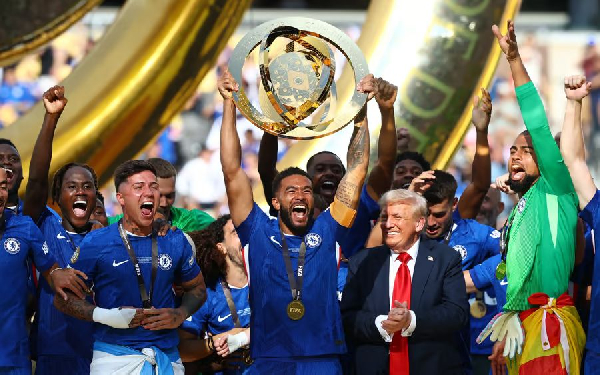
Chelsea won the 2025 FIFA Club World Cup Chelsea won the 2025 FIFA Club World Cup

When Cole Palmer hugged his arms to his chest in his signature “cold” celebration under the scorching MetLife sun on Sunday, July 13, 2025, it wasn’t just a goal; it was a statement.

It was a page torn straight from Chelsea’s own unpredictable playbook, the same script that’s kept them alive when logic said they were done.

In the 2025 Club World Cup final, Chelsea, patched up, doubted, labelled a project still under renovation, tore apart Paris Saint-Germain, football’s ultimate power project. 3–0.

A brace from Palmer. A chip from João Pedro. A stunned PSG bench. And when the whistle blew, a wave of blue jerseys flooded the stands, a stage built for a giant, but owned by the underdog instead.

But this wasn’t the first time Chelsea silenced football’s aristocrats when it mattered most.

The night Munich turned blue

Wind the clock back thirteen years. It’s May 2012, Munich. Chelsea’s season is a soap opera of crisis. They’ve sacked their manager. The old guard, Lampard, Drogba, Terry, are called past their prime.

Barcelona are at their peak. Bayern Munich stand waiting in their own fortress for the final.

Nobody gives Chelsea a chance. But with every block, every Čech save, every desperate tackle, they cling on.

Bayern finally breakthrough in the 83rd minute. It’s over, everyone thinks. But then, with five to play, Chelsea win a corner. Mata swings it in. Drogba rises like a king in borrowed time. Boom. 1–1.

In extra time, Čech saves Robben’s penalty. Then, the shootout. When Drogba slots home the winning kick, he doesn’t just win the trophy; he brands Chelsea forever as a team that will fight the odds until the last gasp.

The blueprint of the unthinkable

Two titles, thirteen years apart, Munich and MetLife. Different continents. Different players. Same heart.

This is the badge that’s seen captains lift European crowns when the experts sneered. The badge that walked into Barcelona’s cathedral and silenced Messi.

The badge that turned a Conference League spot into a Club World Cup title when nobody thought they’d last a round.

When football needs its dreamers

Football loves its giants, the PSGs, the Bayerns, the Barcelonas, built to bulldoze everyone. But it needs its dreamers too.

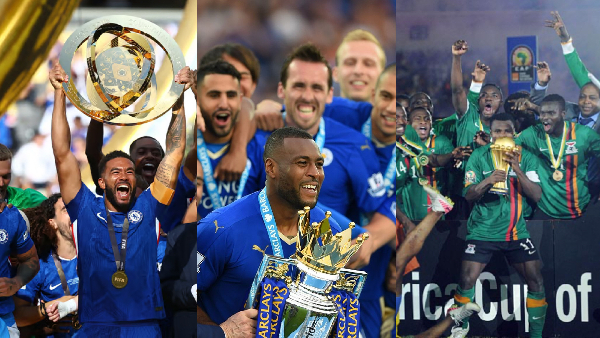
Every so often, someone smaller pulls the sword from the stone. Leicester did it in 2016, 5,000-to-1 outsiders turning the Premier League into a pub fairytale, fireworks crackling above the King Power Stadium as Vardy and Ranieri laughed at fate.

Greece did it in 2004, men no one believed in shutting out Portugal’s golden boys on Lisbon’s biggest night.

Zambia did it in 2012, honouring a lost generation with an AFCON title beside the same ocean where their brothers fell.

Football needs reminders that the script can tear itself up at any second, and Chelsea, more than any club in modern times, have become the living proof.

When the cameras cut to Reece James lifting the golden Club World Cup, it wasn’t just another trophy for Chelsea’s cabinet.

It was the echo of Drogba in Munich. It was the echo of every moment this club refused to fold when folding seemed the only way out.

From the Allianz Arena to an American stage under a summer sky, Chelsea have shown the world that when the odds are stacked, when the pressure is suffocating, this club breathes.

When giants stand in their way, they grin, dig in, and remind football of the oldest magic: sometimes the underdog bites back, and when they do, they bite hardest in blue.

FKA/MA

Watch as Ghanaians speak out on Thomas Partey’s rape charge, suggest fresh start in Saudi Arabia

South African police minister suspended over organised crime allegations

0

Senzo Mchunu denies all the allegations against him Senzo Mchunu denies all the allegations against him

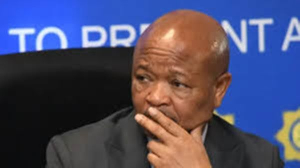
South Africa’s President Cyril Ramaphosa has placed Police Minister Senzo Mchunu on an immediate “leave of absence” after allegations of links to organised crimes were made against him.

In Sunday’s live televised speech to the nation, Ramaphosa also announced a judicial commission would probe the claims, which he said undermined the constitution and threatened national security.

He added that law professor Firoz Cachalia had been appointed as interim police minister.

Mchunu denied any wrongdoing, saying in a statement that he “stood ready to respond to the accusations” against him.

In his speech, the president said that the allegations against Mchunu, which include interference in investigations into political killings and corruption within law enforcement agencies, “call for an urgent and comprehensive investigation”.

He said the judicial commission, led by the country’s deputy chief justice, would examine all the claims.

The commission will also investigate current and former police officials, as well as members of the national executive, Ramaphosa said.

Ramaphosa has been under growing public pressure to act swiftly over the high-profile case.

Mchunu, 67, is an influential figure in Ramaphosa’s African National Congress (ANC) party.

Political analysts have suggested he could run for a leadership position at the ANC’s next elective conference in 2027.

In a statement, Mchunu said: “I welcome and respect the president’s decision and pledge my commitment to the process.

“Honour and integrity are the virtues I personally subscribe to and which we all need to make efforts to uphold.”

He claimed Mchunu was receiving financial support from an allegedly corrupt businessman to fund his “political endeavours”.

Gen Mkhwanazi also detailed a sequence of events he claimed led to the “orchestrated” disbandment of a task force that was set up in 2018 to investigate the killing of politicians, mainly in KwaZulu-Natal.

He said the team’s investigations had uncovered links to high-profile individuals – including politicians, police officials, and businesspeople tied to a drug cartel syndicate – and this is why the team was disbanded.

When he dissolved the unit earlier this year, Mchunu said it was not adding value in the province, despite many cases remaining unsolved.

According to Gen Mkhwanazi, a total of 121 case files were allegedly removed from the unit on the minister’s instruction and without the authorisation of his boss, the national police commissioner Gen Fannie Masemola.

“These case dockets have, since March, been sitting at the head office ever since without any investigation work done on them. Five of these dockets already had instructions to [effect] arrests,” Gen Mkhwanazi said.

He also alleged Mchunu had ties to a controversial businessman who was “financially supporting” the minister’s political career.

Vusimuzi Matlala had a lucrative contract with the police before it was abruptly cancelled when he was arrested for attempted murder in May. Gen Mkhwanazi shared copies of text messages and a payment allegedly made by Mr Matlala to prove this.

I want to help with ideas – Filmmaker, Socrate Safo to creatives in government

0

Ghanaian filmmaker Socrate Safo has expressed his willingness to support creatives serving in the current government, despite his long-standing affiliation with the opposition New Patriotic Party (NPP).

In an interview with arts and culture journalist Kwame Dadzie on , Safo said he is ready to offer ideas and assistance to help shape Ghana’s creative sector—regardless of the political administration in power.

“I am happy for the creatives in the NDC. Let’s support them. I support them. I called Rex Omar and asked why he didn’t invite me to the launch of the Blackstar Experience—because I want to help in any way, with ideas,” he said.

He also revealed that he had already reached out to the Executive Director of the National Film Authority, Kafui Danku, assuring her of his readiness to support her efforts.

When asked whether his recent public admiration for President John Mahama’s support for the arts meant he was considering joining the National Democratic Congress (NDC), Safo replied emphatically: “I am NPP.”

Born John Koranteng Safo, the veteran filmmaker is known for his extensive contributions to Ghana’s film industry. With a career spanning nearly four decades, Safo has directed and produced several popular and often controversial films such as , , , and .

Beyond filmmaking, Safo has played key roles in arts administration and policy. Under the Akufo-Addo-led NPP government, he served as Director for Creative Arts at the National Commission on Culture.

In that role, he significantly influenced cultural policy, promoted local content, and was instrumental in advocating for the Creative Arts Bill, which sought to formalise and support Ghana’s creative economy.

While he has never hidden his political allegiance to the NPP, Socrate Safo continues to advocate for cross-party collaboration in the arts, urging all stakeholders to put the creative industry’s development above partisan interests.

Prof. Kwabena Opuni takes over as Acting CEO of FDA

0

President John Mahama has appointed Professor Kwabena Frimpong-Manso Opuni as the acting Chief Executive Officer (CEO) of the Food and Drugs Authority (FDA).

The appointment, which takes effect on Monday, July 14, 2025, was announced in a Facebook post by the FDA.

According to the Authority, Prof. Opuni previously served as Chairman of the FDA Board and brings extensive experience in public health regulation and governance to the role.

He succeeds Dr. Delese Mimi Darko, who served as CEO from 2017 until her recent elevation to the role of Director-General at the Africa Medicines Agency (AMA).

The FDA commended Dr. Darko for her years of dedicated service, during which the Authority recorded significant progress in regulatory oversight, public safety, and international collaboration.

Her new appointment at the AMA has been widely praised as a testament to her impactful leadership in the health regulatory space.

The Authority congratulated Prof. Opuni on his appointment and expressed confidence in his ability to advance the FDA’s mission of protecting public health and ensuring the safety, quality, and efficacy of regulated products across Ghana.

‘Smirnoff In The Mix’ Brings Unforgettable Night To Joy FM Street

0


Ghana’s vibrant street culture was on full display when Smirnoff took over Joy FM Street with the ‘Smirnoff in the Mix Street Edition’, a high-energy celebration marking Guinness Ghana’s 65th anniversary.

The event drew massive crowds and featured a lineup of top Ghanaian DJs, including DJ Wallpaper, DJ Lord OTB, and DJ Phantom.

The night was filled with non-stop music, with DJs spinning Afrobeats, amapiano, and hip-hop tracks that kept the crowd dancing all night. Surprise performances by Wendy Shay, Kojo Blaq, and Jay Wilder added to the excitement, with the crowd singing along to every word.

Ghana’s popular creators, including Bensontheactor and Sikaofficial, were also in attendance, capturing real moments and dancing with fans. The event featured a special countdown of 65 iconic songs, each representing Guinness Ghana’s 65 years of boldness.

The night’s highlight was the launch of Smirnoff Spicy Tamarind, which added a sweet and fiery flavour to the celebration. As the final song dropped, confetti filled the air, and the crowd erupted in cheers.

The Smirnoff in the Mix Street Edition has quickly become a staple in Ghana’s party scene, showcasing the country’s vibrant music and culture. With its unique blend of music, flavour, and street culture, the event embodied the Smirnoff spirit of “We Do We,” where people come together to show off their individuality and create unforgettable moments.

BY Prince Fiifi Yorke

Former Nigeria President Muhammadu Buhari dead

0

Nigeria’s former President, Muhammadu Buhari, has passed away at the age of 82.

The news was confirmed today via a statement shared on his official X account by press secretary Garba Shehu, which read:

“INNA LILLAHI WA INNA ILAIHI RAJI’UN

The family has announced the passing of the former President, Muhammadu Buhari, this afternoon, in a clinic in London.

May Allah accept him in Aljannatul Firdaus, Amin.”


The former president has been abroad since April. According to sources close to his family, Mr Buhari initially travelled to the United Kingdom for what was described as a routine medical check-up, but subsequently took ill.

Mr Buhari was Nigeria’s president between 2015 and 2023. He stepped down on 29 May 2023 after serving his constitutionally permitted two terms.

He also served as military head of state between January 1984 and August 1985.

During his presidency, he regularly sought medical care in London. Sources say his health improved significantly after he left office, but deteriorated again in April 2025. Since then, he has remained overseas receiving treatment.

Profile

Mr Buhari was born on 17 December 1942 in Daura, Katsina State, to Adamu and Zulaiha Buhari. He was raised by his mother, following the death of his father when he was about four years old. He had his primary school education in Daura and Maiduguri from 1948 to 1952, before proceeding to Katsina Middle School in 1953.

He attended the Katsina Provincial Secondary School (now Government College, Katsina) from 1956–1961, where he earned his West African School Certificate. He was married to Safinatu Yusuf from 1971 to 1988, and since 1989 to Aisha Halilu. He is blessed with ten children.
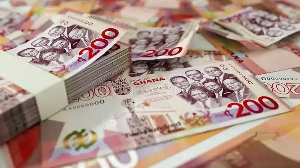
Mr Buhari joined the Nigerian Army in 1961 when he was admitted to the Nigerian Military Training College, Kaduna.

As a military officer, he first underwent Officer Cadets training at Mons Officer Cadet School in Aldershot, England, from 1962 to 1963, and was commissioned as Second Lieutenant in January 1963. He attended the Nigerian Military College, Kaduna, for the Platoon Commanders’ Course from 1963-1964. He was then appointed Platoon Commander of the Second Infantry Battalion in Abeokuta.

In 1965, Mr Buhari attended the Mechanical Transport Officers’ Course at the Army Mechanical Transport School in Borden, England. Further military training included the Defence Services Staff College, Wellington, India, in 1973, and the United States Army War College, from June 1979 to June 1980.

He held several key command and staff positions, as well as political appointments, during his illustrious military career. These included Military Secretary; Member, Supreme Military Council; Military Governor of the North Eastern State; Federal Commissioner of Petroleum Resources; Chairman, Nigerian National Petroleum Corporation; General Officer Commanding, 4th Infantry Division and General Officer Commanding, 3rd Armoured Division.

The military coup of December 1983 led to the emergence of Mr Buhari as Head of State and Commander-in-Chief of the Nigerian Armed Forces, a position he held until he was ousted in another coup in August 1985.

Importers back President Mahama’s move to regulate shipping charges

0

Samson Asaki Awingobit is Executive Secretary of the Importers and Exporters Association of Ghana Samson Asaki Awingobit is Executive Secretary of the Importers and Exporters Association of Ghana

The Importers and Exporters Association of Ghana has praised President John Dramani Mahama’s recent directive requiring all shipping line charges to undergo parliamentary approval, describing it as a timely and necessary step to help curb inflation driven by import costs.

Prices of goods and services in Ghana could see notable declines in the coming months if the directive is fully enforced, as it aims to eliminate unapproved administrative fees and promote transparency at the ports.

Speaking to Citi Business News, the Association’s Executive Secretary, Samson Asaki Awingobit, said the move could help resolve longstanding issues in the country’s trade system.

“If the government manages to get Parliament to approve all handling charges and ensure shipping lines comply with the law, it would eliminate duplicate fees,” he explained.

He added that the directive would not only boost morale and reduce the cost of doing business at the ports but also lead to lower prices of goods for consumers.

President Mahama announced the directive on Friday, July 11, 2025, during a meeting with the leadership of the Ghana Institute of Freight Forwarders (GIFF) at the Jubilee House.

The directive follows complaints from freight forwarders about excessive and arbitrary fees charged by shipping lines. These include demands for administrative charges in US dollars per container, even when multiple containers are covered under a single bill of lading.

DR/MA

Meanwhile, you can watch GhanaWeb TV’s exclusive interview with Arathejay below:

Abigail Ashley Celebrates Birthday With Free Screening

0

Abigail Ashley 


To commemorate the birthday celebration of celebrated media personality and health advocate Abigail Ashley, a free health screening which included pregnancy testing was organised at the Gratitude Children and General Medical Centre.

The comprehensive health screening also included checks for BLUE (Blood Urea and Electrolytes), full blood count, blood sugar levels, blood pressure and malaria.

The initiative, which aimed at giving back to the community and promoting preventive healthcare, has received a lot of accolades from beneficiaries.

The event drew a number of people from the surrounding communities who took advantage of the opportunity to assess their health status at no cost. Abigail Ashley, a chronic kidney disease survivor who has dedicated her life to health advocacy, shared that the screening was her way of expressing gratitude for the gift of life as well as encouraging others to prioritise their health.

Participants also received basic health education and counseling from medical professionals at the centre. This act of compassion underscores Abigail’s ongoing commitment to health awareness and her passion for touching lives beyond the screen.

BY Clifford George Owusu

Electoral violence must be dealt with decisively – Ibn Chambas

0


The African Union High Representative for Silencing the Guns, Dr Mohammed Ibn Chambas, has called for urgent and decisive action to end electoral violence in Ghana and across Africa, warning that peaceful elections are essential for long-term stability on the continent.

Speaking on JoyNews’ News Desk, Dr Ibn Chambas stressed that election-related violence remains one of the major drivers of civil strife across Africa.

“A significant share of civil strife and crises across Africa stems from election-related violence, not always, but most of the time,” he stated.

Dr Ibn Chambas referenced his recent pre-election mission to Abidjan, where he accompanied former Nigerian President Goodluck Jonathan as part of the West African Elders Forum. He noted that Ghana was frequently praised by Ivorian political leaders and civil society groups as a model of peaceful democratic practice.

“In our meetings with Ivorian political parties and civil society, Ghana was repeatedly held up as a shining example,” he said. “They asked, ‘Why can’t Côte d’Ivoire be like Ghana, where elections take place peacefully, without violence?’”

However, he expressed deep concern over the recent violence during the Ablekuma North parliamentary re-run, which left six people injured and disrupted the vote.

“To hear about such violence in Ghana, a nation admired across the continent, is deeply alarming,” he cautioned. “We must stamp out electoral violence and confront it head-on.”

While gun-related election violence is still relatively rare in Ghana, Dr Ibn Chambas recalled the Ayawaso West Wuogon by-election and past disturbances in northern Ghana as warning signs of a dangerous trend.

“This cannot continue. Frankly, this problem is mostly confined to the two major political parties, the NDC and NPP. Smaller parties rarely engage in such violent acts,” he said candidly.

Dr Ibn Chambas urged immediate dialogue between the NPP and NDC, and called for the empowerment of institutions like the National Peace Council and the National Commission for Civic Education (NCCE).

“These bodies must engage especially the youth wings of political parties,” he stressed. “They need comprehensive training in the culture of peace, learning that elections are about mobilising supporters to vote, not about harassing or attacking opponents.”

He concluded with a passionate appeal for stronger election monitoring and early intervention to prevent violence before it erupts.

“Elections must never spiral into violence and confrontation. This has happened before, but decisive action was never taken. This must change, starting now,” he declared.
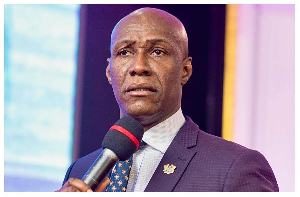
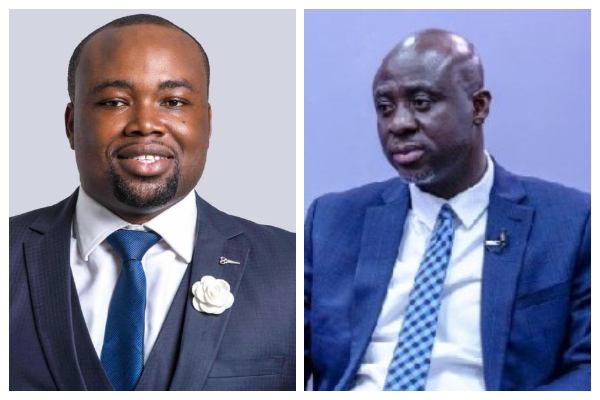
DISCLAIMER: The Views, Comments, Opinions, Contributions and Statements made by Readers and Contributors on this platform do not necessarily represent the views or policy of Multimedia Group Limited.

DISCLAIMER: The Views, Comments, Opinions, Contributions and Statements made by Readers and Contributors on this platform do not necessarily represent the views or policy of Multimedia Group Limited.

If you live by the sword, you must die by the sword

0

A member of the National Democratic Congress (NDC) legal and communications team, Victor Kwadjoga Adawudu, has condemned the assault on former Fisheries Minister Mavis Hawa Koomson during the parliamentary rerun in the Ablekuma North Constituency, but says her political history may have influenced the reaction she received.

Speaking on Channel One TV’s Breakfast Daily on Monday, July 14, Adawudu said that while the attack on the former Member of Parliament for Awutu Senya East is unacceptable, her past conduct in Ghanaian politics might have contributed to the hostility she encountered.

“Why will you even go to a polling station holding pepper spray? What was the motive? You are only going there to monitor, so why go with that?” he questioned. “People from the NPP were there, high-ranking people, and they were not attacked. She should have known. I have always said that if you live by the sword, you must always die by the sword.”

Adawudu argued that Koomson’s political brand has long been associated with aggressive conduct, which may have heightened tensions upon her arrival at the polling centre.

“The optics and the brand for Mavis Hawa Koomson are associated with violence, which may not be good for her. When she arrived and the tension rose, her intelligence should have warned her that the place was not safe for her. This is not a justification. Of course, the incident should be condemned.”

The incident occurred on Friday, July 11, when a group of unidentified men stormed the St. Peter’s Society Methodist Church polling station, disrupting the election process and causing panic among voters and officials.

Channel One News’ Jude Duncan reported that both Hawa Koomson and the NPP’s parliamentary candidate, Nana Akua Afriyie, were physically assaulted during the chaos, with both sustaining facial injuries.

Security personnel were later deployed to restore calm and allow the polls to proceed.

The Electoral Commission organised the rerun in 19 polling stations across Ablekuma North to resolve an outstanding dispute from the December 7, 2024, general elections. The constituency had remained without a Member of Parliament since then.

At the close of polls on July 11, the NDC’s Ewurabena Aubynn was declared the MP-elect with 34,090 votes, narrowly defeating the NPP’s Nana Akua Afriyie, who polled 33,881 votes.

Ghana Medical Relief Commits to Healthcare Delivery in Deprived Communities

0

The Ghana Medical Relief (GMR), a non-profitable international humanitarian organisation, has reiterated its continuous commitment to improve healthcare delivery in deprived communities in the country.

It mentioned for instance, the donation of medical supplies in the form of hospital beds, ultrasound machines, examination tables, cardiac defibrillators, operating room equipment, and medications to hospitals and clinics across the country over the past six years.

The GMR, in a statement issued and copied The Ghanaian Times in Accra yesterday, said that it had a team of healthcare and non-healthcare volunteers who were capable of delivering quality healthcare service across the country.

According to the organisation, in 2024 a team of more than 100 medical and non-medical volunteers in a five-day clinic provided free medical service to over 5,000 persons within Bortianor and its surrounding communities at the St. Carols Nursing School in the Ga South Municipality of the Greater Accra Region.

Related Articles

The statement also indicated that the GMR purchased health insurance for 2,500 persons and dispensed over 8,000 medical prescriptions.

In addition, the GMR said that it provided Cardiopulmonary Resuscitation (CPR) training to workers at the Bortianor Polyclinic and made several donations of medical supplies to other health facilities across the country within the same period.