6.1 C
London
Wednesday, December 24, 2025
Home Blog Page 899

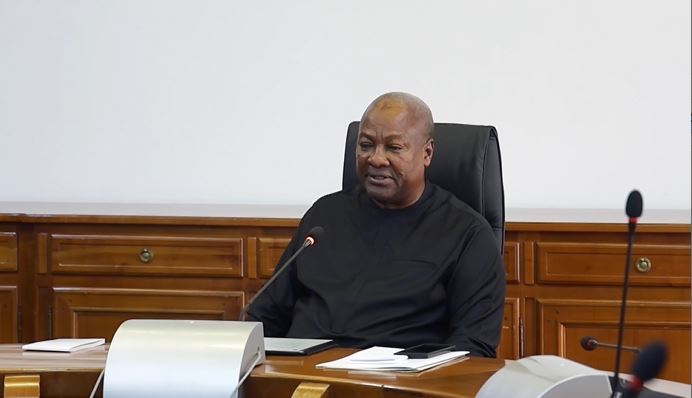
FUND24 is weakest pillar of Ghana’s 24H+ economy: APL cautions  Mahama

0


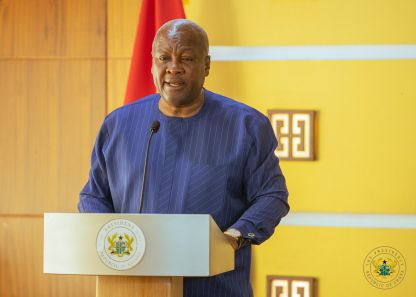
The Africa Policy Lens (APL) has said that FUND24, the financial backbone of Mahama’s 24H+ economy policy, is built on a shaky framework in its current form and predicts less impact.

The FUND24, as part of Mahama’s 24H+ economy, promises affordable capital for SMEs, massive infrastructure, and job creation.

In an extensive review of the policy, the APL casts doubt on the policy to meet its revenue, stating that its reliance on external financial support makes it incompatible with the objectives of the 24-hour economy.

“The FUND24 was sold to Ghanaians as a bold transformation strategy, promising affordable capital for SMEs, massive infrastructure, and job creation. But behind the grand design lies a shaky Framework,” the APL said in its review.

It continued: “Operating across three tracks, enterprise financing (via DBG and VCTF), infrastructure development (through GIIF’s SPVs), and technical assistance (offered by the 24H+ Secretariat), FUND24 aims to raise $4 billion by 2030 through blended finance and foreign institutional capital. On paper, it sounds promising. It’s structurally flawed and fundamentally incompatible with Ghana’s 24-hour economic ambitions.”

‘First, let’s confront the elephant in the room: Ghana’s debt crisis. With public debt ballooning to $ 49.5 billion, 55% of GDP in March 2025, international development finance institutions (DFIs) are understandably cautious. In fact, in 2022, Ghana received absolutely nothing out of the $3.59 billion in infrastructure funding allocated to Sub-Saharan Africa. This is not a system that DFIs trust, and without them, FUND24’s capital flow collapses.”

”Add to that the cedi’s devastating 40% depreciation in 2022, and suddenly any foreign loan becomes a ticking time bomb. If DBG borrows in dollars and lends in cedis, a wave of defaults could drown the entire program.”

”.Even worse, the proposal to channel Ghana’s GHS 42 billion pension fund into risky SME equity is reckless. Pension funds exist to protect retiree livelihoods, not to bankroll fragile startups. One wrong bet and the retirement security of an entire generation could vanish.”

The APL also doubted the  infrastructure track, describing it as ”equally shaky,” as well as the digital loan solution under FUND24.

”The touted Agbledu parks may never rise from the ground thanks to Ghana’s chaotic land tenure system, where over 80% of land is informally owned and legally untraceable.”

”And what of the digital loan revolution FUND24 promises? It assumes a tech-savvy population, yet only 58% of Ghanaians are even online. That’s not a digital revolution; it’s a digital delusion. You can’t run a loan portal on dreams when nearly half the population is offline or digitally excluded,” the APL noted.

”If the government truly wants a 24-hour economy, it needs a homegrown financing model, one not held hostage by foreign lenders or fictional SPVs. Ghana must unlock its own capital markets. Pension funds can play a role, yes, but through mandated low-risk allocations like South Africa’s Regulation 28.”

The APL also urged the government to “issue diaspora bonds to capture part of the $4.7 billion in annual remittances.”

“And instead of chasing phantom foreign investors, it should incentivise real domestic giants, MTN, Dangote, Ghana Oil, to co-invest in SPVs. Most importantly, land reform and a push for local-currency lending must be urgent priorities if financial inclusion is to be real.”

“FUND24 is not just flawed, it is dangerous in its current form. Built on weak assumptions, overdependent on DFIs, and blind to Ghana’s on-the-ground realities, it is the most brittle pillar of the entire 24H+ economy.”

“Without urgent course correction, it will join the growing list of failed Ghanaian economic fantasies?”

DISCLAIMER: The Views, Comments, Opinions, Contributions and Statements made by Readers and Contributors on this platform do not necessarily represent the views or policy of Multimedia Group Limited.

DISCLAIMER: The Views, Comments, Opinions, Contributions and Statements made by Readers and Contributors on this platform do not necessarily represent the views or policy of Multimedia Group Limited.

Lydia Forson condemns poor handling of St. Louis Students found in a car boot in a botched attempt to break bounds

0

Actress Lydia Forson has condemned school authorities for their poor handling of some female students of the St. Louis Senior High School who were found in the trunk of a car.

She believes the name-calling and the insults were not necessary, indicating that the country and its adults continuously fail teenagers at such a critical stage in life, pushing them further into harm’s way.

Springfield Denies Petraco Allegations Amid Arbitration Process

0

SpringfieldSpringfield
Springfield

Springfield Exploration and Production Limited has formally rejected claims circulating in media reports regarding a petition filed by Petraco Oil Company SA with Ghana’s Economic and Organised Crime Office.

Corporate communications from Springfield assert the allegations lack evidentiary support and misrepresent an ongoing commercial dispute. Arbitration records confirm the disagreement involves a 2023 financial agreement between the companies.

Court documents indicate the dispute centers on a $100 million facility agreement. Springfield contends Petraco registered collateral against 10% of its shares after disbursing only half the committed funds. Verified arbitration filings show both parties engaged in due diligence before finalizing terms. Springfield characterizes the EOCO petition as an escalation outside standard commercial dispute resolution mechanisms.

The Ghanaian energy firm expressed concern over media coverage it considers unbalanced. “This remains a contractual matter, not criminal,” stated official correspondence reviewed by this publication. Springfield emphasized its compliance history and commitment to lawful operations within Ghana’s energy sector. Corporate registry confirms the company secured operatorship of West Cape Three Points Block 2 in 2016 under Ghanaian energy regulations.

Industry observers note such disputes typically resolve through established arbitration channels. The case unfolds against Ghana’s broader oil and gas development framework, where Springfield maintains partnership with state-owned Ghana National Petroleum Corporation. No government entities have commented on the petition.

IMF Executive Board approves $370 million disbursement for Ghana

0

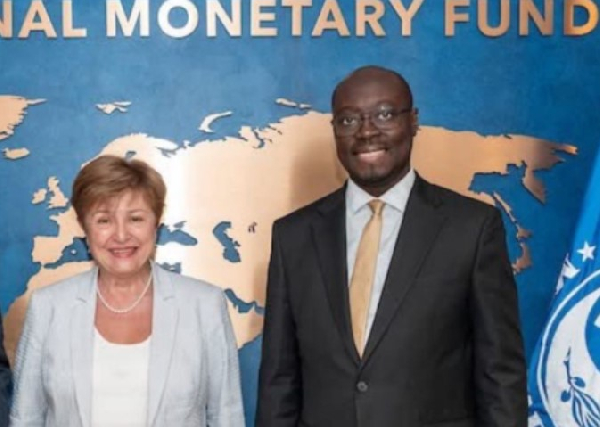
IMF Boss, Kristalina Georgieva [L] and Dr Cassiel Ato Forson, Minister of Finance IMF Boss, Kristalina Georgieva [L] and Dr Cassiel Ato Forson, Minister of Finance

The International Monetary Fund (IMF) Executive Board has approved Ghana’s Fourth Review under the Extended Credit Facility (ECF) Programme, clearing the way for the disbursement of approximately $370 million to support the country’s ongoing economic recovery efforts.

This latest approval brings Ghana’s total disbursements under the $3 billion three-year programme to over $1.5 billion, marking a significant milestone in the government’s push to stabilize the economy, restore debt sustainability, and foster inclusive growth.

In a post shared on X (formerly known as Twitter) on July 7, 2025, Ghana’s Minister of Finance, Dr Cassiel Ato Forson, hailed the decision as a strong endorsement of the country’s reform agenda.

He wrote, “Our comprehensive macroeconomic policies and carefully crafted structural reforms are delivering real results that the international community recognizes and supports!

“Today marks another decisive step forward in Ghana’s economic recovery journey, demonstrating that our reform agenda is not just working — it’s exceeding expectations and rebuilding confidence in our nation’s financial future!,” he added.

The IMF’s endorsement comes at a critical time, as Ghana continues to navigate the aftermath of its worst economic crisis in decades, triggered by a combination of global shocks, rising debt levels, and inflationary pressures.

The recent approval by the Fund also signals growing international confidence in the government’s fiscal discipline, debt restructuring efforts, and broader economic transformation strategy.

KA

Cheque Fraud EXPOSED: How it works and how to stay safe

GhanaWeb Special: The gold market that fuels galamsey

Ex-GFA official names Kudus as better talent than Saka

0

Former Ghana FA and CAF official Ibrahim Sannie Daara has heaped praise on Ghanaian star Mohammed Kudus, while drawing bold comparison with Arsenal’s Bukayo Saka.

The for BBC journalist argues that the Ghanaian superstar is more talented than the English star. 

“There is no team that Mohammed Kudus will go to and be on the bench,” Sannie Daara told 3Sports.

“Kudus is more talented than Bukayo Saka.”

Kudus, 23, is once again at the center of the summer transfer window, with growing speculation over his future at West Ham United. The club reportedly views him as one of their most valuable assets, and several major European clubs are circling.

His contract includes a release clause of £85 million specifically for Premier League clubs — but it’s only active during the first 10 days of July. For European sides, the figure is slightly lower at £80 million, while clubs in Saudi Arabia would have to pay a staggering £120 million.

Despite the interest, sources close to the player say Kudus has no interest in a move to Saudi Arabia, and his preferred destination is Tottenham Hotspur, where he hopes to play European football next season.

However, West Ham have already rejected a £50 million bid from Spurs, insisting that any deal must meet the release clause.

Kudus joined West Ham last summer from Ajax and impressed in his debut Premier League season with his flair, versatility, and eye for goal. 

His performances have only strengthened belief among fans and pundits that he’s destined for a bigger stage — a sentiment echoed by Sannie Daara’s confident endorsement.

Evans Afari Gyan Yeboah endorses Bryan Acheampong’s flagbearer bid

0

Evans Afari Gyan Yeboah, Bono Regional Organizer of the New Patriotic Party Evans Afari Gyan Yeboah, Bono Regional Organizer of the New Patriotic Party

Evans Afari Gyan Yeboah, Bono Regional Organizer of the New Patriotic Party (NPP), has described the declaration by Bryan Acheampong to contest for the NPP’s flagbearer position as a solemn call for decisive, disciplined, and action oriented.

According to him, he believes Bryan Acheampong is urgently needed to transform both the party and the nation.

In a statement rallying support for Acheampong on July 7, 2025, Afari Gyan Yeboah said the NPP stands at a crossroads where it must choose between preserving the status quo and embracing bold, visionary leadership capable of delivering real results for Ghanaians.

“Bryan Acheampong embodies a rare blend of decisiveness and discipline—the type of leadership that is not only heard but felt through action,” he said. “He is not a man of lofty words without substance.

“He is a doer whose track record is steeped in service, results, and pragmatic policy delivery. His leadership is not built in the shadows of convenience but in the blazing heat of commitment and purpose.”

He stressed that Acheampong’s decision to contest is not motivated by mere ambition but by a sincere promise to steer the NPP and Ghana toward a future where leadership is measured not by how long one speaks, but by how effectively one delivers on promises.

“Delegates, this is the time to invest in leadership that listens with empathy and acts with strength,” Afari Gyan Yeboah urged.

He highlighted Bryan Acheampong’s deep connection to the grassroots, noting that throughout his political journey, Acheampong has consistently demonstrated an understanding of the struggles of ordinary Ghanaians and has provided modern solutions to long-standing problems.

“What sets Bryan apart is his ability to make tough decisions—the kind that secure long-term growth over short-term praise. His tenure in various government roles has been marked by seriousness of purpose and an unwavering commitment to excellence,” he added.

“In him, we find a rare clarity of vision and the courage to walk the talk.”

Addressing NPP delegates across the country, Afari Gyan Yeboah called on them to see the upcoming internal contest not as just another political race but as a defining moment to choose action over rhetoric and progress over politics.

AM/KA

GhanaWeb Special: The gold market that fuels galamsey

Government pays $349.52 million Eurobond debt service to fulfill 2025 obligations

0

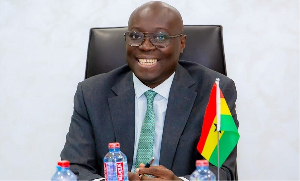
Minister of Finance, Dr Cassiel Ato Forson Minister of Finance, Dr Cassiel Ato Forson

The Government of Ghana has successfully fulfilled its Eurobond debt service commitments for 2025 with the payment of US$349.52 million on Thursday, July 3, 2025.

The Ministry of Finance announced the payment, made through the Bank of Ghana, as part of the country’s post-restructuring debt obligations.

This latest instalment brings the total Eurobond debt service payments for 2025 to US$699.04 million, following two earlier payments of equal value in January and July.

The government had previously made an initial payment of US$475.60 million in October 2024, shortly after concluding a comprehensive Eurobond debt restructuring deal.

In total, Ghana has now serviced US$1.17 billion in Eurobond payments since the restructuring, bringing it fully up to date on all scheduled debt obligations for the year.

The Ministry of Finance emphasised that the timely payment underscores the government’s commitment to macroeconomic stability, prudent debt management, and ongoing cooperation with external creditors.

Looking ahead, Ghana is scheduled to service US$1.41 billion in Eurobond debt in 2026.

According to the Ministry, this latest payment is expected to:

Positively impact Ghana’s credit rating outlook by reinforcing its post-restructuring fiscal discipline,

Strengthen investor confidence in the country’s sovereign creditworthiness and economic recovery programme, and

Support stability in the foreign exchange market, with the payment integrated into the Bank of Ghana’s reserves and liquidity management framework.

The government says it remains committed to meeting all future debt obligations as part of its broader economic recovery and reform agenda

Stunning Outfit Ideas for Ladies to Shine

0

Your birthday is the perfect occasion to dress up, feel confident, and celebrate yourself in style! Whether you’re planning a dinner date, a photoshoot, or a party with friends, your birthday outfit should reflect your personality and make you feel like the star of the day.

For a glamorous celebration, consider a sequin dress or satin gown. These pieces bring sparkle and elegance, perfect for evening parties or upscale dinners. Go for bold colors like gold, emerald green, royal blue, or classic black. Pair with strappy heels, bold makeup, and statement jewelry for that extra wow factor.

If you prefer something trendy yet comfortable, a two-piece set—like a fitted crop top and high-waist skirt or pants—is a chic choice. It flatters the figure and gives you room to mix and match. Opt for bold prints or solid vibrant colors like hot pink, orange, or turquoise to make a statement.

For more casual birthdays or daytime celebrations, a cute Ankara dress, a floral wrap dress, or a stylish jumpsuit can be the perfect balance between casual and classy. These styles offer comfort while still giving you a fashionable edge.

Themed birthdays also offer a fun chance to get creative with your look—think Y2K fashion, all-white parties, or Afrocentric glam. Don’t forget accessories like mini bags, sunglasses, or a statement hairpiece to elevate your look.

Most importantly, choose an outfit that makes you feel beautiful, confident, and celebrated. Whether you’re going big or keeping it simple, the right birthday outfit sets the mood for your special day. After all, it’s your time to shine—so dress like it!

NDC Spain branch lauds Mahama gov’t for prudent economic management and ‘No-academic-fee’ initiative

0


The NDC Spain Branch has commended the Mahama-led government for what it describes as strong economic management and the successful rollout of key campaign promises.

Speaking through the branch secretary, Hanson Dartey, the party expressed satisfaction with the administration’s performance so far.

A major highlight of the government’s initiatives is the ‘No-Academic-Fee’ policy, introduced for the 2025 academic year.

The policy seeks to eliminate academic facility user fees in tertiary institutions, allowing more students to pursue higher education without financial constraints.

The NDC Spain Branch believes this initiative is a bold step toward equitable access to education and a sign of the government’s commitment to social development.

On the economic front, the branch pointed to a number of achievements, particularly the $5 billion in revenue accrued by the Goldboard within the first six months of the year.

According to Mr. Dartey, this milestone is proof of sound economic leadership and effective resource management.

The influx of revenue has also contributed to the stabilisation of the Ghanaian cedi, a development the branch views as a welcome relief in restoring confidence in the economy.

The NDC Spain Branch further noted that the Mahama-led government has fulfilled nearly 70 per cent of its campaign promises, describing this as a demonstration of transparency, accountability, and seriousness in governance.

Mr. Dartey said the administration is delivering results that directly improve the lives of Ghanaians, and urged continued public support for its programmes.

In reaffirming their support, the NDC Spain Branch said the government’s performance so far has earned their vote of confidence.

They believe that as more initiatives take shape, Ghanaians will witness even greater progress, particularly in the education and economic sectors.

DISCLAIMER: The Views, Comments, Opinions, Contributions and Statements made by Readers and Contributors on this platform do not necessarily represent the views or policy of Multimedia Group Limited.

DISCLAIMER: The Views, Comments, Opinions, Contributions and Statements made by Readers and Contributors on this platform do not necessarily represent the views or policy of Multimedia Group Limited.

Omolara, Henrietta shine in Int’l Taekwondo championships

0

Two Ghanaian female taekwondo athletes have made the nation proud in two international cham­pionships in Mali, winning three medals in all.

The medals were made up of gold, silver and bronze.

Ghana was represented by Eunice Adedapo Omolara and Henrietta Armah in the 2025 African Club Champion­ships and the African Open Series which were both held in Bamako, Mali.

The two championships have attract­ed the best from the continent and were sanctioned by governing bodies of the sport.

Omolara was the first of the two to finish her competition, winning a gold medal in the African Open Series and bronze in the 2025 African Club Championships.

Henrietta won silver in the African Open Series but failed to progress from the quarter final stage of the African Club Champion­ships after losing to a Malian opponent.

In a chat with The Times Sports yesterday after her quarter final loss, Henrietta expressed her disappointment for not meeting her expec­tation.

“I came for the championship with modest expectation but after winning the silver medal in the African Open Series, I got the motivation to improve on that in the African Clubs Champion­ship.”

“I had that confidence from the start but unfortunately, I lost to the Malian. I am sad and disappointed,” she said.

The five-day championship also at­tracted top officials including the Ghana Taekwondo Federation (GFA) President, Mr Frederick Lartey Otu, who acted as the Technical Delegate for the 2025 Africa Club Championship.

This follows his appointment by World Taekwondo in a letter signed by its president, Chungwon Choue, and sighted by The Times Sports.

BY ANDREW NORTEY

UBA Ghana Board Chair honoured as Most Financially Responsible Corporate Chairman

0

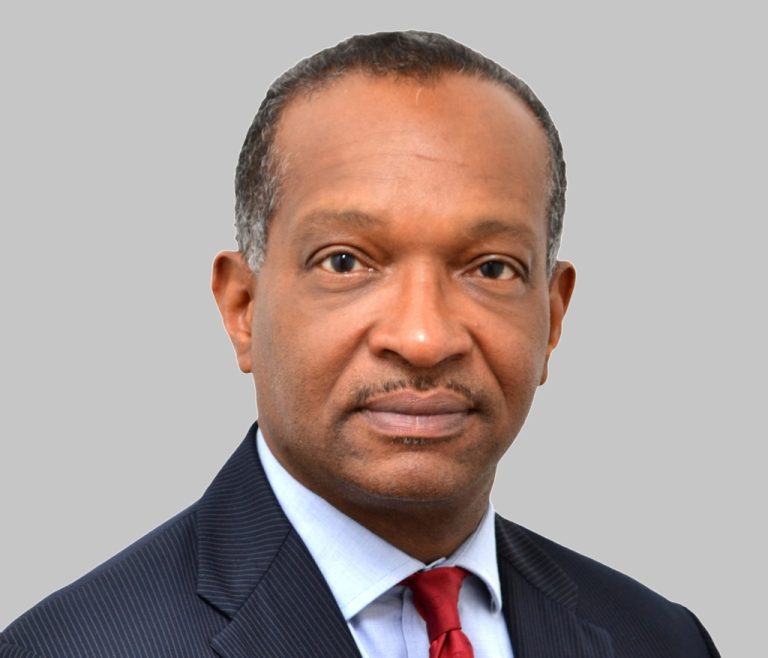
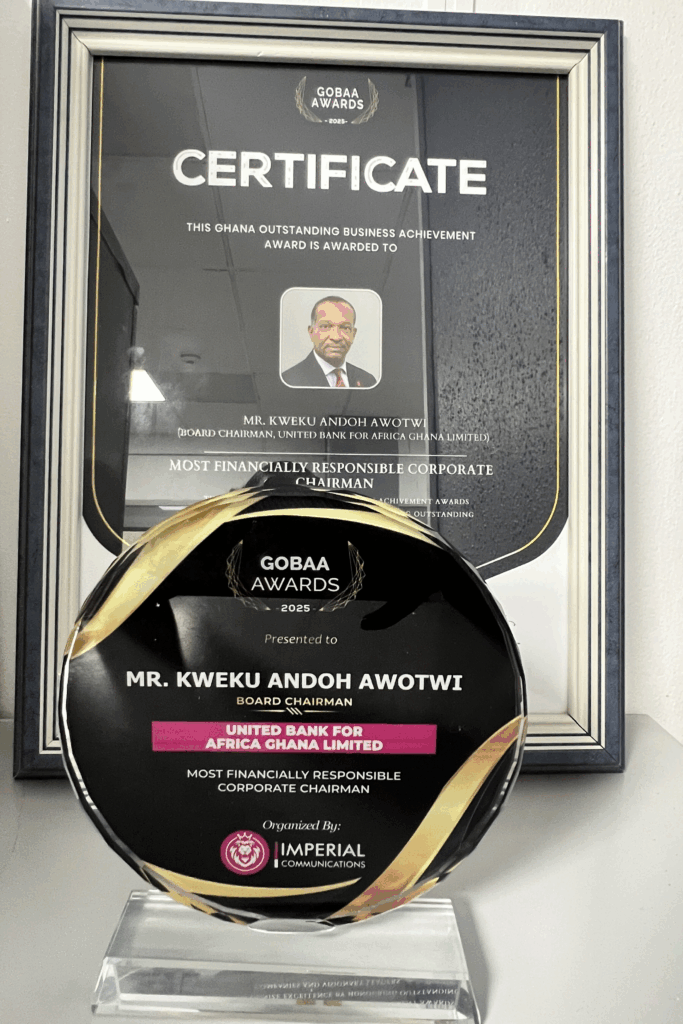
Kweku Awotwi, Board Chairman of UBA Ghana has been honoured as the Most Financially Responsible Corporate Chairman at the 2025 Ghana Outstanding Business Achievement Awards.

This recognition celebrates his strong leadership, financial oversight, and dedication to upholding good corporate governance.

The Ghana Outstanding Business Achievement Awards is an annual event that recognises outstanding businesses, forward-thinking leaders, and organisations that are making a meaningful impact on Ghana’s economy.

The awards aim to promote ethical business practices, innovation, and long-term growth across the country.

Under the direction of the Board Chair, UBA Ghana has experienced steady financial growth, improved efficiency, and maintained a strong reputation for transparency and accountability.

His leadership has helped the bank become a model for responsible banking in Ghana’s financial sector.

By focusing on strong governance, financial discipline, and compliance, the Board Chair has played a key role in increasing value for shareholders, strengthening trust with customers, and ensuring the bank remains resilient in a changing business environment.

This award highlights the important contributions he continues to make in guiding UBA Ghana toward long-term success. It also reflects the bank’s commitment to excellence, ethical leadership, and sound financial management.

The management and entire staff of UBA Ghana warmly congratulate the Board Chairman on this well-deserved honour and reaffirm their commitment to supporting Ghana’s economic development through responsible and forward-looking banking.

DISCLAIMER: The Views, Comments, Opinions, Contributions and Statements made by Readers and Contributors on this platform do not necessarily represent the views or policy of Multimedia Group Limited.

DISCLAIMER: The Views, Comments, Opinions, Contributions and Statements made by Readers and Contributors on this platform do not necessarily represent the views or policy of Multimedia Group Limited.

Maestro Kojo Antwi’s late mother goes home on Saturday

Legendary musician, Kojo Antwi and his late mother Legendary musician, Kojo Antwi and his late mother

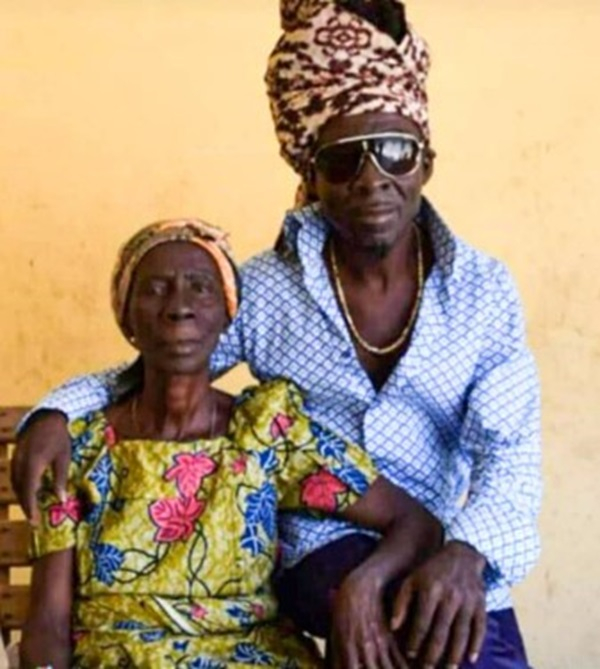
The mortal remains of Madam Mary Adwoa Nyamaa, mother of one of Ghana’s legendary musicians, the Maestro Kojo Antwi, will be laid to rest on Saturday, July 11, 2025.

Madam Nyamaa passed away on November 13, 2024, at the Mpraeso Government Hospital in the Eastern Region.

The final funeral rites will be held at the Presbyterian School in Obo-Kwahu, also in the Eastern Region.

The ceremony is expected to be filled with music, paying tribute to the memory of the 100-year-old God-fearing woman.

Maestro Kojo Antwi has acknowledged that his late mother was the inspiration behind his iconic song “Bre Bre Anowaa,” featured on his To Mother Africa album released in 1996.

He has 13 albums to his credit, with “Bre Bre Anowaa” being one of his most successful songs in Ghana and across Africa.

In addition, Kojo Antwi has recorded two albums with his band, Classique Vibes.

Popularly known as “Mr. Music Man,” Kojo Antwi is the fourth child of his mother. Madam Mary Adwoa Nyamaa had nine children in total, six of whom are still alive.

GhanaWeb Special: The gold market that fuels galamsey

How social engineering hacks your mind and your bank account

KA

Rawlings’ son weds white woman in private ceremony

0

Kimathi Rawlings with his bride dancing Kimathi Rawlings with his bride dancing

Kimathi Rawlings, the son of the late former President Jerry John Rawlings, has tied the knot in a beautiful wedding ceremony attended by family, friends, and dignitaries.

In a short video of the event shared on social media, Kimathi, who is the former leader’s only son, is seen wearing a stunning white agbada outfit alongside his white bride, as they share pleasantries with guests and family members after the church wedding service.

Moments later, the couple are seen dancing to KiDi’s hit song “Odo” at the reception, with Kimathi, in particular, showing off some impressive dance moves.

About Kimathi Rawlings

Kimathi Rawlings was born to Rawlings and Konadu Agyemang in the 1980s in Accra, Ghana.

He was named by his father after a Kenyan freedom fighter called Dedan Kimathi who lived and defended the rights of his people and consistently questioned the integrity of his leaders.

He is the last born of his four siblings: Zanetor Agyemang Rawlings (MP), Yaa Asantewaa Rawlings and Amina Rawlings.

Kimathi began his early education in Accra at the Morning Star School and North Ridge Lyceum.

He proceeded to have his high school education in England, UK at the Millfield School where he excelled in all subjects.

Kimathi’s love for Science, Business and Law inspired him to further his tertiary education at the Aston University in Birmingham England where he studied and graduated with Bachelor of Science (BSc) in International Business.

According to his LinkedIn profile, Kimathi was licensed and certified by the MDT International in Negotiation Skills for the Oil & Gas Industry in 2012 & Introduction to Oil and Gas Production in 2013.

He is an experienced Commercial Advisor and Negotiator who has been working in the Oil and Gas industry for over a decade.

Kimathi Rawlings is also skilled in Analytical Skills, Upstream Marketing, Hydrocarbon Accounting, Risk Management, and Corporate Finance.

He has been working with Eni, an Oil and Gas conglomerate headquartered in Rome Italy as their Commercial and portfolio advisor since 2010.

KA

Björkegren confident Black Queens will bounce back after South Africa defeat

0

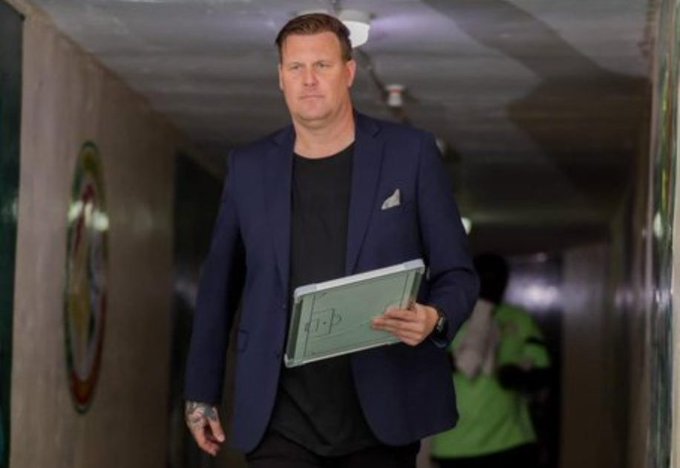
Kim Lars Bjorkegren

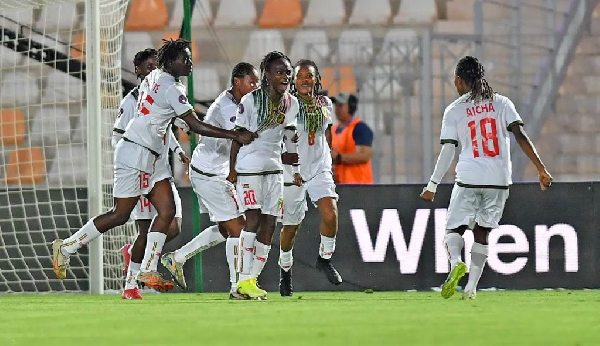
Black Queens head coach Kim Lars Björkegren remains confident in Ghana’s chances of advancing to the next stage of the 2024 Women’s Africa Cup of Nations (WAFCON), despite suffering a 2-0 loss to defending champions South Africa in their opening Group C match.

Ghana made a promising start to the encounter but were undone by first-half goals from Linda Motlhalo and Jermaine Seoposenwe, which handed Banyana Banyana a winning start to their title defence.

The Black Queens came close on several occasions, striking the crossbar twice, but were ultimately unable to find the back of the net.

Speaking after the match, Björkegren praised his team’s overall display and stressed that qualification remains firmly within reach.

“We were the better team in the first half hour until the goal came. They scored from the penalty — it came from nowhere. After that, we gave them the opportunity to score another one, and that is a problem. We lost a little bit of concentration,” said Björkegren.

“Otherwise, I think the performance was pretty good, I will say. We knew we were playing the previous champions, and maybe the toughest game we could play.

“We did many, many good things. We can take the positives into the next two games, and I am pretty sure we will make it to the playoffs — and that is important.

“I am a little bit disappointed with the result but not with the performance,” he added.

Ghana will next face Mali before wrapping up their Group C campaign against Tanzania.

READ ALSO

Minority slams Mahama administration over Eban-Akoma discoveries claim  

0


Minority slams Mahama administration over Eban-Akoma discoveries claim   – Ghana Business News


Four sitting NPP MPs who died in the last five years

0

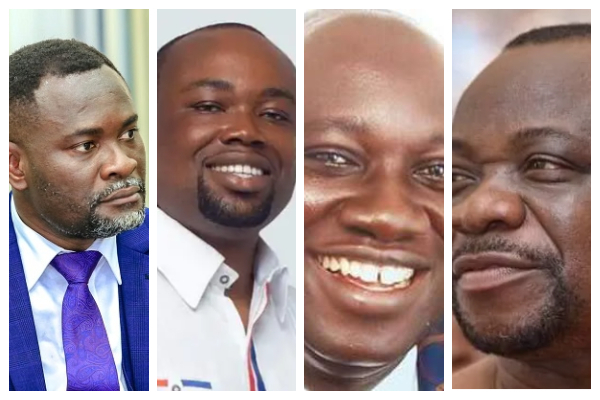
A photo collage of John Kumah, Ernest Yaw Kumi, Ekow Hayford and Philip Basoah A photo collage of John Kumah, Ernest Yaw Kumi, Ekow Hayford and Philip Basoah

Over the past five years, the New Patriotic Party (NPP) has lost four sitting Members of Parliament (MPs) who tragically passed away before completing their terms in office.

These unexpected deaths have not only shaken the party but also triggered by-elections in their respective constituencies.

Below is a list of the four NPP MPs who died while serving in Parliament:

1.Ekow Kwansah Hayford – Mfantseman Constituency (2020)

The then MP for Mfantseman, Ekow Kwansah Hayford, was tragically shot dead on October 9, 2020.

He was returning from a campaign tour on the Nkusukum Mankessim–Abeadze Duadze road in the Central Region around 1 a.m. when unknown assailants attacked his convoy.

According to eyewitness reports, the MP’s vehicle was stopped by suspected robbers. When he identified himself, the assailants accused him of making life difficult for them and shot him.

He had filed his nomination for re-election just a day before the incident.

He was succeeded by his wife, Ophelia Mensah Hayford, who served one term in Parliament.

However, she lost the seat in the 2024 elections to Prince Ebenezer Arhin of the National Democratic Congress (NDC), a first-time candidate who secured 35,832 votes.

2.Philip Basoah – Kumawu Constituency (2023)

Philip Basoah, the MP for Kumawu in the Ashanti Region, died on March 28, 2023, at the age of 53.

He was found unconscious in his room on March 24, 2023, and later passed away at the Korle-Bu Teaching Hospital.

Basoah was serving his third term in Parliament.

His seat was subsequently replaced by Ernest Yaw Anim, who won the by-election.

3.John Kumah – Ejisu Constituency (2024)

John Kumah, the MP for Ejisu and then Deputy Minister of Finance, died on March 7, 2024, at the age of 45.

He was widely regarded as one of the rising stars in the NPP and was even considered by some as a potential running mate to the party’s 2024 flagbearer, Vice President Dr Mahamudu Bawumia.

Kumah was a lawyer, preacher, and entrepreneur. Before entering Parliament in 2020, he served as the CEO of the National Entrepreneurship and Innovation Programme (NEIP).

He is survived by his wife, Apostle Mrs Lilian Kumah, and six children.

His seat has been replaced by Kwabena Boateng.

4.Ernest Yaw Kumi, Akwatia Constituency (2025)

Ernest Yaw Kumi, the NPP MP for Akwatia, passed away on July 7, 2025, after a short illness.

A first-time MP, Kumi had recently been involved in a high-profile legal battle over the legitimacy of his election.

His death came just weeks after the Supreme Court overturned his contempt conviction related to the disputed 2024 parliamentary election results.

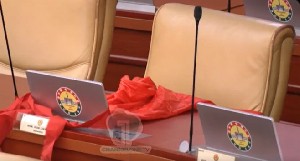
As a tribute, the First Deputy Minority Whip, Habib Iddrisu, draped his seat in red cloth in Parliament.

AM/KA

GhanaWeb Special: The gold market that fuels galamsey

Prof Bokpin urges policy continuity for 24-Hour Economy success  

0


Prof Bokpin urges policy continuity for 24-Hour Economy success   – Ghana Business News


Kimathi Rawlings weds in style, celebrates with family and friends

Kimathi Rawlings with his bride dancing Kimathi Rawlings with his bride dancing

Kimathi Rawlings, the son of the late former President Jerry John Rawlings, has tied the knot in a beautiful wedding ceremony attended by family, friends, and dignitaries.

In a short video of the event shared on social media, Kimathi, who is the former leader’s only son, is seen wearing a stunning white agbada outfit alongside his white bride, as they share pleasantries with guests and family members after the church wedding service.

Moments later, the couple are seen dancing to KiDi’s hit song “Odo” at the reception, with Kimathi, in particular, showing off some impressive dance moves.

About Kimathi Rawlings

Kimathi Rawlings was born to Rawlings and Konadu Agyemang in the 1980s in Accra, Ghana.

He was named by his father after a Kenyan freedom fighter called Dedan Kimathi who lived and defended the rights of his people and consistently questioned the integrity of his leaders.

He is the last born of his four siblings: Zanetor Agyemang Rawlings (MP), Yaa Asantewaa Rawlings and Amina Rawlings.

Kimathi began his early education in Accra at the Morning Star School and North Ridge Lyceum.

He proceeded to have his high school education in England, UK at the Millfield School where he excelled in all subjects.

Kimathi’s love for Science, Business and Law inspired him to further his tertiary education at the Aston University in Birmingham England where he studied and graduated with Bachelor of Science (BSc) in International Business.

According to his LinkedIn profile, Kimathi was licensed and certified by the MDT International in Negotiation Skills for the Oil & Gas Industry in 2012 & Introduction to Oil and Gas Production in 2013.

He is an experienced Commercial Advisor and Negotiator who has been working in the Oil and Gas industry for over a decade.

Kimathi Rawlings is also skilled in Analytical Skills, Upstream Marketing, Hydrocarbon Accounting, Risk Management, and Corporate Finance.

He has been working with Eni, an Oil and Gas conglomerate headquartered in Rome Italy as their Commercial and portfolio advisor since 2010.

KA

Four sitting NPP MPs who died in the last five years

0

A photo collage of John Kumah, Ernest Yaw Kumi, Ekow Hayford and Philip Basoah A photo collage of John Kumah, Ernest Yaw Kumi, Ekow Hayford and Philip Basoah

Over the past five years, the New Patriotic Party (NPP) has lost four sitting Members of Parliament (MPs) who tragically passed away before completing their terms in office.

These unexpected deaths have not only shaken the party but also triggered by-elections in their respective constituencies.

Below is a list of the four NPP MPs who died while serving in Parliament:

1.Ekow Kwansah Hayford – Mfantseman Constituency (2020)

The then MP for Mfantseman, Ekow Kwansah Hayford, was tragically shot dead on October 9, 2020.

He was returning from a campaign tour on the Nkusukum Mankessim–Abeadze Duadze road in the Central Region around 1 a.m. when unknown assailants attacked his convoy.

According to eyewitness reports, the MP’s vehicle was stopped by suspected robbers. When he identified himself, the assailants accused him of making life difficult for them and shot him.

He had filed his nomination for re-election just a day before the incident.

He was succeeded by his wife, Ophelia Mensah Hayford, who served one term in Parliament.

However, she lost the seat in the 2024 elections to Prince Ebenezer Arhin of the National Democratic Congress (NDC), a first-time candidate who secured 35,832 votes.

2.Philip Basoah – Kumawu Constituency (2023)

Philip Basoah, the MP for Kumawu in the Ashanti Region, died on March 28, 2023, at the age of 53.

He was found unconscious in his room on March 24, 2023, and later passed away at the Korle-Bu Teaching Hospital.

Basoah was serving his third term in Parliament.

His seat was subsequently replaced by Ernest Yaw Anim, who won the by-election.

3.John Kumah – Ejisu Constituency (2024)

John Kumah, the MP for Ejisu and then Deputy Minister of Finance, died on March 7, 2024, at the age of 45.

He was widely regarded as one of the rising stars in the NPP and was even considered by some as a potential running mate to the party’s 2024 flagbearer, Vice President Dr Mahamudu Bawumia.

Kumah was a lawyer, preacher, and entrepreneur. Before entering Parliament in 2020, he served as the CEO of the National Entrepreneurship and Innovation Programme (NEIP).

He is survived by his wife, Apostle Mrs Lilian Kumah, and six children.

His seat has been replaced by Kwabena Boateng.

4.Ernest Yaw Kumi, Akwatia Constituency (2025)

Ernest Yaw Kumi, the NPP MP for Akwatia, passed away on July 7, 2025, after a short illness.

A first-time MP, Kumi had recently been involved in a high-profile legal battle over the legitimacy of his election.

His death came just weeks after the Supreme Court overturned his contempt conviction related to the disputed 2024 parliamentary election results.

As a tribute, the First Deputy Minority Whip, Habib Iddrisu, draped his seat in red cloth in Parliament.

AM/KA

GhanaWeb Special: The gold market that fuels galamsey

$100m legal war erupts between E&P and Azumah Resources

0

A high-stakes mining dispute between Engineers & Planners (E&P), the construction firm owned by Ibrahim Mahama, and Azumah Resources, a gold developer backed by global private equity, has exploded into an international legal showdown.

The battle, now before the International Chamber of Commerce (ICC), has escalated into claims and counterclaims exceeding $100 million.

At the centre of the storm is a terminated agreement tied to the Black Volta gold project in Ghana’s northwest, a site long viewed as a strategic addition to the country’s mining portfolio.

E&P had originally filed a claim in October 2024, accusing Azumah of unlawfully scrapping a 2023 agreement that gave it early-stage development rights and a potential equity stake.

But Azumah hit back hard in December 2024, terminating the agreement and accusing E&P of stalling progress.

The company alleges that E&P failed to raise financing, initiate EPC contracts or begin any significant site work—failures Azumah says delayed the mine’s timeline.

Now, Azumah has launched a blistering $100 million counterclaim, citing breaches of contract, unauthorised contractual activities by E&P agents, and alleged misuse of project funds.

In a press statement, Azumah said it “denies each and every allegation” made by E&P and insists it is now pushing ahead with mine construction on its own.

The legal battle has moved to a London-seated ICC tribunal chaired by top Nigerian advocate Funke Adekoya SAN, alongside Ghana’s Shadrack Arhin and the UK’s Edwin Glasgow KC.

E&P is represented by Robert Smith Law Group in Accra, while Azumah is being advised by international law firm Steptoe in London and Ghanaian heavyweight Bentsi-Enchill, Letsa & Ankomah.

The legal war is unfolding as E&P and its owner, Ibrahim Mahama, pursue a separate defamation lawsuit against policy analyst Bright Simons in Accra, over comments suggesting the firm had been financially strained and was influencing mining policy.

The outcome of the ICC arbitration could reshape not just ownership of the Black Volta gold project, but also the broader narrative around contractual discipline and corporate conduct in Ghana’s extractive sector.

DISCLAIMER: The Views, Comments, Opinions, Contributions and Statements made by Readers and Contributors on this platform do not necessarily represent the views or policy of Multimedia Group Limited.

DISCLAIMER: The Views, Comments, Opinions, Contributions and Statements made by Readers and Contributors on this platform do not necessarily represent the views or policy of Multimedia Group Limited.

Lebanese embassy and University of Ghana foster literary exchange through scholarship seminar

0

The Lebanese Scholarship Programme has supported brilliant but needy Ghanaian students The Lebanese Scholarship Programme has supported brilliant but needy Ghanaian students

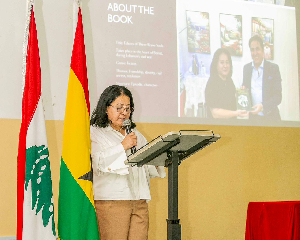
The School of Languages at the University of Ghana has hosted Lebanese writer Mrs. Fatima Hamdan Jouni at a mini seminar organized for students of the faculty.

The collaborative exchange formed part of the Lebanese Scholarship Programme and ongoing efforts to deepen relations between Lebanon and Ghana.

Delivering a presentation on the topic “Echoes of the Three Brave Souls,” renowned Lebanese writer Mrs. Fatima Hamdan Jouni shared insights into her work in an attempt to bridge the gap between Ghanaian and Lebanese literature.

The seminar was held in the presence of the Lebanese Ambassador, Maher Kheir; the Dean of the School of Languages, Prof. Josephine Dzahene-Quarshie; faculty members; students of the university; and representatives of the Lebanese community.

In his address, Ambassador Maher Kheir described the seminar as a stark reminder of the power, purpose, and potential of writing to unite people and transform communities.

“Writing changed the face of the world because it affects every aspect of social living. It is as old as the beginning of time, yet as relevant as ever. Writers are explorers, ambassadors, and culture shapers,” he said.

He emphasized that writers serve as a bridge between people and civilizations, adding:

“Through the writer’s mind, we can travel the world, touch new destinations and dimensions, experience and adopt new cultures, and change society.”

Ambassador Kheir noted that beyond their entrepreneurial acumen, the Lebanese are also gifted storytellers.

“It is no surprise that the Lebanese are great writers, as they trace their roots to the Phoenician civilization, which created the alphabet. I seize this opportunity to extend my profound appreciation to Mrs. Fatima Hamdan Jouni, an emerging Lebanese writer, for this significant lecture,” he stated.

He challenged the students to write more and explore their creativity in order to tell the Ghanaian story.

“I urge you, therefore, to start writing, no matter what. A word after a word is power. Find your inspiration and let it out. The world eagerly waits to read your story,” he emphasized.

The Ambassador also commended the growing partnership between the Embassy and the University of Ghana, urging continued collaboration to promote academic and cultural exchanges between Lebanon and Ghana.

For her part, Mrs. Fatima Hamdan Jouni delivered a presentation on her book, Echoes of the Three Brave Souls.

The book, among other themes, highlights the power of friendship, the essence of time and space, seizing opportunity, and the spirit of endurance in achieving life goals.

She challenged the audience to rise above obstacles and limitations that hinder individuals from achieving their potential.

A question-and-answer session followed the lecture, during which students and faculty exchanged ideas and reflections.

GA

GhanaWeb Special: The gold market that fuels galamsey

Presidential bid not my priority, NPP restructuring is – Patrick Boamah

0

Member of Parliament for Okaikwei Central, Patrick Yaw Boamah Member of Parliament for Okaikwei Central, Patrick Yaw Boamah

The Member of Parliament for Okaikwei Central, Patrick Yaw Boamah, says contesting to represent the New Patriotic Party (NPP) as a presidential candidate is not a priority at the moment.

The private legal practitioner stated that although he qualifies by age to contest in a presidential election and be elected as President, he is not interested in that at the moment.

He was responding to a question during an interview on Frontline on Rainbow Radio 87.5FM.

Host Kwabena Agyapong asked if he would accept suggestions for him to contest the presidential candidate slot, since he was a fine material to be elected as President.

But in his response, he stated categorically that he was not interested in contesting at the moment, although he qualifies.

“I am more than 40 years old. The laws of Ghana grant me the opportunity to contest the presidency if I am able to be elected as President, but that is currently not my priority. It is not my priority because even if I am elected as the candidate for the party to represent it and we have not restructured the party, I will not win the national elections and come back with the same results.

It is about selfishness, but you should be concerned about the welfare of the younger generation now joining the party. If there is anyone who is 14 up to 18 years and desiring to be elected as polling station agents, we have to groom these individuals and allow them to campaign and generate that excitement at the base.”

He stressed that there was the need for the party to take immediate steps in restructuring and rebranding itself so that it will become attractive once more to Ghanaians.

“We need as a Party to win back public confidence and their trust so we will become more attractive to the Ghanaian people. We have a duty as a party to observe the performance of government and be strategic and hold the government to account and examine their performance.”

Music Is my everything; I’ve never thought of quitting – KK Fosu

Ghanaian highlife artiste, KK Fosu says he has no intention of quitting music any time soon Ghanaian highlife artiste, KK Fosu says he has no intention of quitting music any time soon

Ghanaian highlife artiste, KK Fosu, has opened up about his deep, lifelong connection to music, describing it not simply as a career but as the very essence of his existence.

Reflecting on his journey, the ‘Sudwe’ composer made it clear that he has never doubted the path he chose.

“In life, you have to be a soldier and never give up. You see, the challenges will come, but you have to face them. Despite the temptations to doubt and the burden of challenges, I have never once wished to turn away from music. It is my heart, my spirit, my everything,” he reportedly said.

Though the spotlight may shift and trends may change, KK Fosu remains consistently committed to his art. He revealed that even during quieter public moments, he’s constantly immersed in the creative process.

“You might see me quiet or taking things slowly, but behind the scenes, the creativity never ceases. I write and compose every single day. I always thank God for this gift, and I reaffirm: we don’t stop. We never stop,” he added.

Looking ahead, KK Fosu has exciting projects in motion. He hinted at taking his signature Dstyle Concert to the global stage and launching a talent discovery platform designed to nurture the country’s next wave of music stars.

“My fans should get ready for a global Dstyle Concert and also our talent hunt aimed at nurturing the next generation of Ghanaian music stars,” the Ghanaian artiste stated.

Court issues bench warrant for arrest of landguard commander

0

A Dansoman Circuit Court judge has issued a bench warrant for the arrest of one Ussha Haruna, the alleged ringleader of a gang of 10 landguards arrested last Thursday for terrorizing residents of Ashongman in the Ga East District of the Greater Accra Region.

The arrest warrant followed Haruna’s failure to appear in court today when the case regarding the prosecution of the 10 suspects was called.

It is not immediately clear why Haruna did not appear in court.

However, information gathered indicates that some individuals at the Police Criminal Investigations Department (CID) headquarters in Accra have requested that the case docket be brought to them, casting doubts in the minds of Ashongman residents.

Many fear that some officials within the CID, who allegedly have an interest in the case, want to—as they claim— “make it a forgotten case.”

It is unclear how the situation will unfold, but some state prosecuting officers have expressed concern over the turn of events, questioning the CID’s mandate to demand a case that does not fall within its jurisdiction.

They argue that such interference undermines established prosecutorial arrangements.

This worrying development comes at a time when the police claim to have made a major breakthrough in the fight against landguard violence.

This follows a special operation carried out last Thursday, July 3, 2025, by the Anti-Landguard Unit led by DSP Nafiu Shittu, which resulted in the arrest of 10 notorious landguards in Ashongman Estates.

Acting on credible intelligence from distressed residents, the police team stormed the Bank of Ghana lands around 10:00 AM and apprehended the gang of suspected landguards who had long tormented landowners through threats, property destruction, and illegal land claims.

The suspects were arrested without resistance during the well-coordinated raid. They are currently in police custody and face charges under the Vigilantism and Related Offences Act, 2019 (Act 999).

Their reported sponsor, Ussha Haruna, is also under investigation for orchestrating the group’s illegal activities.

The land in question, officially acquired in 2014 through a government auction and backed by court rulings in 2010 and 2024, has been a flashpoint for violent confrontations.

Despite the legal clarity surrounding its ownership, armed landguards repeatedly laid false claims, extorted payments, and intimidated residents.

DSP Shittu emphasized that the raid forms part of a broader national strategy to dismantle landguard networks and restore confidence in land ownership security.

Grateful residents of Ashongman Estates expressed renewed hope and appreciation for the police intervention and commended the Inspector General of Police, COP Christian Tetteh Yohuno, for his dedication since assuming office.

Many had endured years of fear and financial loss due to the unchecked actions of these landguard groups.

The operation highlights the growing importance of community-police collaboration in combating urban land insecurity.

It also reinforces the need for robust legal enforcement against landguardism, which continues to plague parts of Ghana’s rapidly developing neighborhoods.

The land in question, located at the heart of Ashongman Estates, was legally acquired by its original owners in 2014 through a government auction, with full compensation duly paid.

The legitimacy of the ownership was further solidified by court judgments in 2010 and 2024, which affirmed the rights of the owners and dismissed any counterclaims.

Despite these rulings, landguards—often armed and operating with impunity—had been terrorizing residents, laying false claims to plots and extorting payments from legitimate landowners.

Acting on intelligence following multiple complaints from affected residents, the Anti-Landguard Unit meticulously planned the operation to apprehend the culprits.

On the morning of July 3, officers swooped in on the Bank of Ghana lands, catching the landguards off guard. The swift and coordinated effort ensured the suspects were apprehended without incident—a testament to the unit’s professionalism and resolve.

In an engagement with the media, DSP Nafiu Shittu, Commander of the Anti-Landguard Unit, revealed that the arrested individuals were part of an organized group notorious for intimidating residents, demolishing properties, and illegally claiming land.

He further disclosed that the operation was part of a broader initiative by the Ghana Police Service to crack down on landguard activities across the country.

The arrests have sparked hope among Ashongman Estates residents, who have long felt abandoned in their struggle against the unlawful activities of landguards.

The 10 apprehended suspects, who were reportedly sponsored, facilitated, and encouraged by Ussha Haruna, include: Yussif Touffik, Chief Ali Ibrahim, Abdul Wajeed, Seidu Issah, and Graham Smith.

The others are: Latiff Larry, Mohammed Omar, Emmanuel Mensah, Abdul Wallah, and Said Abdullai—all of whom are currently in custody and charged with causing damage and engaging in landguardism under the Vigilantism and Related Offences Act, 2019 (Act 999).

The successful operation at Ashongman Estates underscores the importance of collaboration between communities, law enforcement, and government institutions in tackling the landguard menace.

Prof Klutse calls for rethinking on use, management of plastic waste

0

Professor Nana Ama Browne Klutse, the Acting Chief Executive Officer of the Environmental Protection Authority (EPA) has called for a national re-thinking on the use and management of plastic waste.

She said the nation required a paradigm shift “on how Ghana addresses plastic pollution,” saying “we should shift our perspective and view plastics not merely as waste, but as a valuable resource”.

Prof Klutse said: “Because when properly managed, plastic can significantly contribute to sustainable development,” when speaking at a forum on World Environment Day organized by the Department of Environmental Management of the University of Energy and Natural Resources (UENR), at Fiapre near Sunyani on the theme “Repurpose Plastic Use”.

Prof Klutse who addressed the forum virtually indicated that “Ghana generates over one billion tons of municipal waste annually, with only 58 percent properly managed, 42 percent incinerated, buried or irresponsibly discarded” and thereby impacting biodiversity, public health, and livelihoods reliant on natural resources.

She said: “These unmanaged plastics present serious environmental and health hazards, ranging from microplastic pollution to the contamination of our water bodies,” and called for the need for the nation to adopt the principles of Reduce, Reuse, Recycle and more importantly, Refuse.

Prof Klutse said the EPA remained committed to driving the transformation agenda through enhanced regulatory measures, supporting innovative recycling businesses, and strengthening public-private partnerships.

She outlined a three-pillar strategy of policy-driven transformation, enforcement of the National Plastic Management Policy, and establishment of standardized extended producer responsibility.

Prof Klutse said the launch of Ghana’s Circular Plastic Innovation Hub, aimed at advancing biodegradable alternatives and waste-to-value initiatives including projects converting plastic waste into recycled construction materials.

She said plans were also advanced to expand the ‘Repurpose Ghana’ campaign, and urged households, educational institutions, and businesses to endeavour to segregate waste and adopt reusable packaging and support local recycling markets as well.

Dr Mary Antwi, the Head of Department of the Environmental Management of UENR stressed the need to change the narratives around plastics, saying that the “mismanagement of plastics, not the material itself, is the problem”.

She encouraged stakeholders to re-think “their relationship with plastics” and urged innovative solutions in “reusing plastic waste and reducing single-use plastics,” saying “these efforts are crucial in reducing plastic pollution in landfills and oceans”.

Dr Antwi said: “UENR is looking forward to collaborating with the EPA under a World Bank project, to establish a Center for E-waste Management and Environmental Sustainability to promote responsible environmental practices”.

Forward Giyasu Ibrahim set to leave Karela United amid interest from GPL clubs

0

Giyasu Ibrahim, talented attacker Giyasu Ibrahim, talented attacker

Karela United are set to part ways with forward Giyasu Ibrahim ahead of the 2025/26 Ghana Premier League season, with several top-flight clubs currently circling for his signature.

Sources close to the player confirm that talks are ongoing with a number of Premier League sides, with Giyasu expected to make a decision in the coming days.

The talented attacker has been a key figure for Karela in recent seasons, delivering consistent performances despite the team’s struggles in the league.

His imminent departure is seen as part of a broader reshuffle at the club as they look to rebuild their squad for the upcoming campaign.

Clubs interested in landing the forward are said to value his versatility, experience, and ability to influence games from wide or central attacking positions.

Giyasu’s next destination remains uncertain, but interest from multiple GPL teams suggests he could remain in the domestic top-flight. More updates are expected once formal offers are submitted.

Karela United are also in the market for reinforcements as they prepare to bounce back stronger next season following a difficult 2024/25 campaign.

From Emissions to Opportunities: A policy framework for Ghana’s carbon market transition by CERPA

0


  1. Introduction

Climate change refers to the long-term shift in weather patterns, occurring in increasingly unusual ways and primarily driven by human activities such as pollution and deforestation (IPCC, 2007). These activities release greenhouse gases (GHGs) into the atmosphere, which act like a blanket around the Earth, trapping heat and causing global warming. The impacts of climate change are non-excludable, affecting all nations regardless of geographic location. However, developing countries often bear the brunt of these effects due to their limited adaptive capacity.

The Paris Agreement represents a landmark achievement in the global response to climate change. As an internationally binding treaty governed by the United Nations Framework Convention on Climate Change (UNFCCC), it unites countries in a collaborative effort to address climate change and adapt to its effects. The core objective of the agreement is to limit the rise in global average temperature, ideally to well below 2°C above pre-industrial levels, and pursue efforts to limit it to 1.5°C.

Under the Paris Agreement, each country is required to submit its Nationally Determined Contributions (NDCs). These comprehensive national climate action plans outline specific commitments to reduce greenhouse gas (GHG) emissions and enhance climate resilience. These NDCs form the basis of each country’s contribution to the global climate effort, detailing the mitigation and adaptation strategies they intend to pursue to achieve the goals of the agreement.

Ghana amended its Nationally Determined Contribution (NDC) in 2021, setting a target to reduce greenhouse gas (GHG) emissions by 15% using domestic resources (unconditional actions), amounting to 24.6 million tonnes of CO₂ (MtCO₂e).

With international support (conditional actions), Ghana aims to achieve a further 30% reduction, amounting to 39.4 MtCO₂e. This brings the total emission reduction target to 64 MtCO₂e by 2030. To achieve these goals, Ghana intends to leverage carbon finance through the carbon market and actively engage the private sector.

  1. The Emergence of Carbon Markets

Carbon markets have emerged as critical tools in the global response to climate change, offering a carbon pricing mechanism through which governments and non-state actors can trade GHG emission credits. Countries and corporations can offset their GHG emissions by purchasing carbon credits – emission reductions achieved through various climate mitigation projects. These projects can be nature-based, such as preventing deforestation or promoting carbon sequestration through cover cropping by farmers, or technology-based, such as the use of clean cookstoves and electric vehicles. The carbon markets play a critical role in the shift to a low-carbon economy. Article 6 of the Paris Agreement enables countries to trade carbon credits for meeting emission reduction targets.

A carbon credit equals one metric ton of carbon dioxide or the equivalent amount of other greenhouse gases, such as methane, nitrous oxide, and fluorinated gases, that have been avoided, reduced, or sequestered.

There are two (2) types of carbon markets. The compliance markets, also known as cap-and-trade or emission trading schemes, and voluntary carbon markets, also known as offsetting schemes. In compliance markets, the government imposes limits on greenhouse gas. Voluntary markets arose due to companies voluntarily committing to reduce their greenhouse gas emissions.

The carbon market incentivises emission reductions and creates financial flows to support sustainable development, especially in developing countries like Ghana.

  1. Understanding Ghana’s carbon market dynamics

Ghana is strategically leveraging Article 6 of the Paris Agreement by emphasising cooperative approaches within the international carbon market. According to Ghana’s 2024 Annual Progress Report on Engagements in International Carbon Markets, the country has established bilateral cooperation with five nations: Switzerland, Sweden, Singapore, South Korea, and Liechtenstein.

Ghana has taken proactive steps to establish a national carbon market framework. The Carbon Market Office (CMO), which is part of the Environmental Protection Agency’s (EPA) climate change unit, is the official national authority responsible for managing engagement in carbon markets related to climate change.  Ghana’s framework supports both compliance and voluntary carbon markets, providing clarity on approval processes and the conditions under which mitigation outcomes can be authorised for international transfer.

Ghana has implemented a structured authorisation process for carbon market participation. This includes project registration, approval by relevant ministries, and issuance of Letters of Authorization (LoA) for Internationally Transferred Mitigation Outcomes (ITMO) transfers. These authorisations ensure alignment with Ghana’s NDCs and sustainable development goals.

The verification of carbon credits in Ghana follows international standards, including independent third-party validation and verification processes. These ensure transparency, accuracy, and credibility in emissions reduction claims. Ghana is building national capacity to ensure effective monitoring, reporting, and verification (MRV) systems to support market integrity.

  1. Ghana’s GHG emissions.

 Figure 1: Trend of total GHG emissions over time.
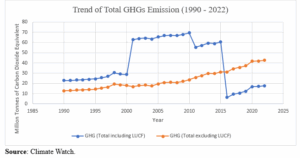
Ghana officially joined the international carbon market in 2016. As illustrated in Figure 1, total GHG emissions, including LUCF (Land Use Change and Forestry), experienced a notable decline immediately after 2015, dropping sharply from around 60 MtCO₂e to below 10 MtCO₂e by 2016, and remaining relatively low through 2022. In contrast, total GHG emissions excluding LUCF have shown a steady increase over the same period.

Although the timing indicates a potential connection between Ghana’s participation in the carbon market and the decrease in total greenhouse gas emissions (including land use change and forestry), it is crucial to recognise that the significant drop is mainly attributed to shifts in land use and forestry emissions, instead of emissions from other sectors. This distinction underscores the role LUCF plays in Ghana’s total emissions profile and highlights the potential impact of carbon market mechanisms and forest-based mitigation strategies.

The reduction in overall greenhouse gas emissions, including those from Land Use Change and Forestry (LUCF), since 2015 can be linked to Ghana’s participation in carbon markets, which has facilitated the development of emission reduction initiatives aimed at decreasing GHG emissions in the country. Consequently, if the Ghanaian Government offers adequate assistance to project developers, it will further lower its emissions and enhance the country’s carbon finance via the sale of carbon credits.

  1. Ghana’s opportunities in the carbon market

Ghana’s active participation in international carbon markets presents a unique opportunity to align climate action with sustainable economic growth. By leveraging carbon finance, the country can attract foreign investment, accelerate green development, and unlock substantial financial resources. The following sub-sections outline key areas where Ghana stands to benefit economically, socially, and environmentally from its engagement in carbon trading mechanisms.

  • Increased Foreign Direct Investment (FDI)

Ghana’s readiness for the carbon market makes it an attractive destination for climate-related increased FDI, particularly in sectors such as renewable energy, forestry, and clean cooking technologies. Investors are more likely to fund projects that can generate verifiable emission reductions, providing both environmental and economic returns.

Carbon finance has the potential to foster the creation of green jobs, facilitate the transfer of technology, and support infrastructure development, particularly in sectors such as afforestation, agroforestry, and clean cooking stove projects. According to Ghana’s 2024 Annual Progress Report on Engagements in International Carbon Markets, the country expects to create over one million jobs and avoid 2,900 deaths due to improved air quality by 2030 (EPA, 2025). These developments will contribute to reducing unemployment and lowering mortality rates in Ghana. Additionally, Ghana’s participation in carbon markets will enhance its global competitiveness in climate-smart investment sectors.

  • Climate Finance to Boost GDP

The carbon market offers a means to fill financing gaps and mobilise additional resources through the sale of carbon credits, which can significantly boost Ghana’s GDP. According to the 2024 Annual Progress Report on Engagements in International Carbon Markets, Ghana has the potential to unlock a minimum of US$9.3 billion by 2030 (EPA, 2025). These funds can be reinvested in climate adaptation, rural development, and environmental restoration projects.

  1. Positioning Ghana to derive maximum benefits from the carbon market

To fully harness the economic and environmental opportunities presented by carbon markets, Ghana must go beyond policy commitments and establish a strong implementation framework. This involves creating an enabling environment that supports effective governance, active public participation, private sector investment, and sustainable project development. The following strategic actions outline how Ghana can position itself to maximize the benefits of carbon finance while advancing its climate and development goals.

  • Enhance the efficiency of key institutions

Strengthening the operational and technical capacities of institutions such as the Environmental Protection Agency (EPA), the Ministry of Energy (MoE), the Ministry of Environment, Science, Technology, and Innovation (MESTI), and the Forestry Commission is crucial. This will ensure the effective implementation of carbon market activities, reduce delays in processes, and improve overall efficiency. Efforts should include digitizing procedures, training personnel, and streamlining bureaucratic systems.

  • Educate the general public on carbon markets

Raising public awareness through media campaigns, workshops, and educational programs is essential for building local support and participation in carbon market initiatives. An informed populace, including financial institutions, can facilitate smoother project implementation and improve access to credit for project developers. Public education is one of the most effective tools for building grassroots support and enhancing climate resilience.

  • Provide government support to project developers

The Ghanaian government must provide financial, technical, and policy incentives to stimulate private sector involvement in the carbon market.  Streamlined regulatory frameworks and tax incentives can lower the entry barriers for local developers.  This initiative will enhance the number of project developers in Ghana and can play a pivotal role in helping the country attain its Nationally Determined Contributions objectives.

Awareness campaigns targeting end-users such as farmers, households, and local communities on the benefits of carbon market-linked products (e.g., improved cookstoves, solar panels) can foster greater acceptance and contribute to the adoption and long-term sustainability of climate projects. This will also support forest preservation and pollution reduction.

  • Promote public-private finance partnerships

Public-private partnerships are essential in the carbon market space, as climate mitigation and adaptation projects require significant investment and face market uncertainties. These partnerships can mobilise capital, share risk, and foster innovation, ultimately enhancing Ghana’s capacity to implement scalable and bankable climate projects.

  1. Conclusion

Ghana stands at a pivotal moment in its climate policy trajectory, where strategic engagement in the global carbon market can unlock significant environmental, economic, and social benefits. Through its structured framework, international partnerships, and commitment to Article 6 of the Paris Agreement, Ghana has laid a solid foundation for leveraging carbon finance to meet its ambitious emission reduction targets.

To fully capitalise on these opportunities, however, targeted interventions are required. These include strengthening institutional capacity, increasing public awareness, incentivising private sector participation, and promoting inclusive public-private partnerships. Moreover, aligning carbon market activities with national development goals ensures that climate action translates into tangible gains such as job creation, improved air quality, and rural development.

As the world intensifies its shift toward low-carbon development, Ghana’s proactive participation in the carbon market not only enhances its climate resilience but also positions it as a leader among developing countries in mobilising innovative climate finance solutions. The challenge now lies in sustaining momentum, fostering transparency, and ensuring that the carbon market delivers equitable and lasting development outcomes for all Ghanaians.

References

  • Environmental Protection Agency (EPA). (2025, March). 2024 annual progress report: Ghana’s progress report on engagements in international carbon markets. Carbon Market Office, EPA Ghana. https://www.cmo.epa.gov.gh
  • Intergovernmental Panel on Climate Change. (2007). Climate change 2007: Synthesis report. Contribution of Working Groups I, II and III to the Fourth Assessment Report of the Intergovernmental Panel on Climate Change (Core Writing Team, R. K. Pachauri & A. Reisinger, Eds.). IPCC. https://www.ipcc.ch/report/ar4/syr/
  • World Resources Institute. (2023). Climate Watch: Ghana—Greenhouse gas emissions data (1990–2022). Climate Watch. https://www.climatewatchdata.org

About CERPA

The Centre for Economic Research and Policy Analysis (CERPA) is an independent, Ghana-based think tank dedicated to delivering policy-relevant research and actionable insights that support inclusive, sustainable economic transformation.


Post Views: 119

Govt cracks down on illegal mining task forces amid extortion claims

0

The government is set to regulate the activities of illegal mining task forces operating in mining areas across the country.

This follows growing concerns from the Ashanti Chapter of the Ghana National Association of Small-Scale Miners over the operations of multiple unregulated groups acting under the pretext of fighting illegal mining.

According to GNASSM, these task forces have harassed and extorted licensed miners while operating without clear authority.

In response, President John Dramani Mahama on Monday, July 7, summoned all key stakeholders to address the issue.

Speaking during a meeting with the Council of State, the President stressed the need for order and coordination in enforcement efforts.

“I know that there are many things that we need to talk about. One was the issue of illegal mining, it is a very complex fight and I am sure that the Minister of Lands advised you about it. It is not an easy one, just this morning I had to summon all the stakeholders in the anti-galamsey fight to my office in order that we can streamline their activities because everybody is running helter-skelter and doing whatever they want.

“It has led to the rise of illegal taskforces that are taking advantage of the situation, and so we held a very good meeting and we are streamlining things,” he said.

24-Hour Economy must compete, not just produce – GNCCI CEO cautions

0

The CEO of the Ghana National Chamber of Commerce and Industry (GNCCI), says government’s proposed 24-Hour Economy cannot succeed on ambition alone if the cost of doing business remains crippling.

Mark Badu-Aboagye, speaking on JoyNews’ PM Express on Monday, July 7, argued that producing more means nothing if local products cannot compete in the global market.

“Launching a 24-hour economy will not change the harsh business environment that we are facing now,” he said, calling for a hard look at structural barriers confronting Ghanaian manufacturers.

When host Kofi Agyei pointed to recent macroeconomic improvements such as the cedi’s appreciation, a drop in inflation to 13.7%, improved business confidence, and growing international reserves, Badu-Aboagye was firm in his response.

“It is a good start, but it’s not enough,” he said. “Having inflation down to 13.7% is a necessary condition, but not sufficient to change the structure of the economy.”

He stressed that Ghana needs to see how lower inflation translates into real benefits for producers.

“We want to see how inflation, lower inflation will reduce the cost of credit. We want to see how lower inflation will reduce the cost of utility, electricity and water. These are key components when it comes to manufacturing.”

Mr Badu-Aboagye revealed that the current electricity tariffs for manufacturers in Ghana are among the highest on the continent.

“In Ghana, the cost per kilowatt hour per manufacturing company, ranging from 12 to 15 cents, is among the highest. In what hour for them is less than five cents.”

He warned that with a monetary policy rate at 28%, which translates into commercial interest rates above 30%, Ghanaian exporters are already priced out of competitive markets.

“No company would want to manufacture and export under these conditions.”

For Mr Badu-Aboagye, the 24-Hour Economy must not be reduced to a slogan for self-sufficiency.

“If it’s for local consumption, then we don’t need a 24-Hour Economy, because we can produce much to feed ourselves. We want to export. That is why the accelerated export is a component of the 24-hour economy.”

But exporting, he stressed, will depend on cost and quality, not patriotic labels.

“When you send your product abroad, people will not buy it because it’s coming from Ghana, because you have launched a 24-hour economy, hm? You will buy your product because one, it is competitive, yeah, two, it is of high quality.”

He urged policymakers to understand that Ghana’s products are competing with cheaper and equally high-quality goods from places like North Africa.

“So you produce and you send it there, and you won’t get people to buy because it’s very expensive.”

Mr Badu-Aboagye concluded by calling for a sharper focus on how the gains in inflation and currency strength can impact the policy rate.

“Let’s look at how the improvements we are seeing now—the lower inflation and the cedi appreciation—will impact the policy rate.”

DISCLAIMER: The Views, Comments, Opinions, Contributions and Statements made by Readers and Contributors on this platform do not necessarily represent the views or policy of Multimedia Group Limited.

DISCLAIMER: The Views, Comments, Opinions, Contributions and Statements made by Readers and Contributors on this platform do not necessarily represent the views or policy of Multimedia Group Limited.

Kalybos shares how a traffic moment earned him GH₵100,000 surprise gift

Actor and comedian Richard Asante, widely known as Kalybos Actor and comedian Richard Asante, widely known as Kalybos

Ghanaian actor and comedian Richard Asante, widely known as Kalybos, has shared a heartwarming story about how a spontaneous act of kindness in traffic turned into a life-changing moment.

Kalybos recounted how he was stuck in traffic along the Osu road when a car pulled up beside him.

Inside were excited children who had recognized him and wanted to take a picture.

Although their father initially declined because of the traffic, Kalybos decided to step out of his car and join them at the backseat to make the kids happy.

“We took pictures, and the man just sat there shocked, staring at me,” he recalled in an interview on Joy FM.

The grateful father later took Kalybos’ number and invited him to his office for a chat. During that meeting, the man handed him an envelope — and what was inside left the actor stunned.

“I opened it, and it was a cheque. The biggest free bono money I have ever had in my life. It was a hundred thousand Ghana cedis,” Kalybos revealed.

Mohammed Kudus returns to West Ham training as Tottenham struggle to meet transfer demands

0

Mohammed Kudus has reported for pre-season training with West Ham United Mohammed Kudus has reported for pre-season training with West Ham United

Mohammed Kudus reported for pre-season training with West Ham United on Monday July 7, 2025, amid ongoing uncertainty over his future, as negotiations with Tottenham Hotspur continue to stall.

The Ghana international is open to a move away from the London Stadium, with a strong preference to join a UEFA Champions League club.

Tottenham, who ended their 17-year trophy drought by winning the UEFA Europa League last season, are currently leading the race for his signature.

However, talks between the two Premier League sides have hit a roadblock in recent weeks.

According to talkSPORT, West Ham rejected Tottenham’s latest bid, which included add-ons that would only be triggered if Spurs won either the Premier League or the Champions League — conditions the Hammers deemed unrealistic.

Kudus remains a valuable asset for West Ham, but the club are willing to sell if the financial terms are right.

The 24-year-old has a release clause in his contract that allows Premier League clubs to secure his services for £85 million.

For European clubs outside England, the price is set at £80 million, while Saudi Arabian teams would need to meet a higher threshold of £120 million. The clause remains active until Thursday.

While Tottenham remain confident a deal can be reached, they may be forced to revise their proposal by removing the performance-based clauses to satisfy West Ham’s demands.

Meanwhile, other suitors including Saudi Pro League side Al Nassr and Chelsea are monitoring the situation closely.

Kudus, who joined West Ham from Ajax in 2023, has scored 19 goals across two seasons and has become one of the club’s most sought-after players.

Akufo-Addo mourns Akwatia MP Ernest Kumi

0

Former President Nana Addo Dankwa Akufo-Addo has expressed profound sorrow over the passing of Ernest Yaw Kumi, the Member of Parliament for Akwatia.

In a Facebook post on Monday July 7, Akufo-Addo described himself as “devastated” upon hearing the news, highlighting Kumi’s popularity among party supporters and his positive standing among constituents and acquaintances alike.

“I am devastated to learn of the passing of Ernest Yaw Kumi, Member of Parliament for Akwatia Constituency. The legislator was adored and loved by party faithful and cherished by all who knew or shared acquaintances with him.”

Akufo-Addo extended his heartfelt condolences to Kumi’s grieving family, the Parliament of Ghana, and the residents of Akwatia during this difficult period.

“My deepest sympathies go to his family, the House and the good people of Akwatia Constituency, at this unimaginably difficult time.”

He concluded his tribute with a prayerful message, wishing Kumi eternal peace in the afterlife.

“May he find peaceful rest in the Bosom of the Almighty, until the Last Day of the Resurrection, when we shall all meet again.”

Ernest Yaw Kumi’s sudden demise has sent shockwaves through Ghana’s political landscape, with tributes pouring in from across the country.

Read also

Ernest Kumi’s death a devastating blow to NPP – Nana B

Mali edge Tanzania to boost hopes as pressure mounts on Black Queens

0

Mali claimed a vital 1-0 win over Tanzania in their opening Group C fixture Mali claimed a vital 1-0 win over Tanzania in their opening Group C fixture

Mali claimed a vital 1-0 win over Tanzania in their opening Group C fixture at the 2024 Women’s Africa Cup of Nations, a result that has significant implications for Ghana’s Black Queens.

Saratou Traoré scored the only goal of the match in first-half stoppage time, finishing calmly from the centre of the box after a well-worked set piece. It proved to be enough in a tightly contested clash at the Stade Municipal de Berkane on Monday evening.

Tanzania had several chances to equalise in the second half but were denied by Mali goalkeeper Fatoumata Karentao, who produced a string of solid saves and controlled her area with authority. The East Africans also struggled with their final delivery and were frequently caught offside.

Mali’s victory lifts them into second place in Group C behind South Africa, who beat Ghana 2-0 earlier in the day. The result puts the Black Queens under immediate pressure ahead of their second group match against Mali, a fixture that now carries added weight.

With only the top two and the best third-placed teams progressing, Ghana must get a result against Mali to keep their qualification hopes alive. Another defeat could leave them with an uphill task when they face Tanzania in their final group game.

Coach Kim’s side will now need to respond with urgency, knowing that Mali have already shown the ability to manage games and take their chances.

IMF Executive Board approves $370m disbursement for Ghana

0

International Monetary Fund boss Kristalina Georgieva [L] and Finance Minister Ato Forson International Monetary Fund boss Kristalina Georgieva [L] and Finance Minister Ato Forson

The IMF Executive Board has approved Ghana’s 4th Review under the ECF Programme, clearing the path for a substantial $370 million disbursement!

This landmark approval validates Ghana’s unwavering commitment to fiscal discipline and strategic economic transformation.

The Minister of Finance, Dr Cassiel Ato Forson announced this in a post on X, formely known as Twitter.

He wrote “Our comprehensive macroeconomic policies and carefully crafted structural reforms are delivering real results that the international community recognizes and supports!

“Today marks another decisive step forward in Ghana’s economic recovery journey, demonstrating that our reform agenda is not just working – it’s exceeding expectations and rebuilding confidence in our nation’s financial future!”

KA

Fire cases up slightly in H1 2025 despite 34% drop in prank calls – GNFS

0

The Ghana National Fire Service (GNFS) has reported a marginal increase in fire incidents nationwide during the first half of 2025, even as efforts to improve public safety yielded significant gains in other areas.
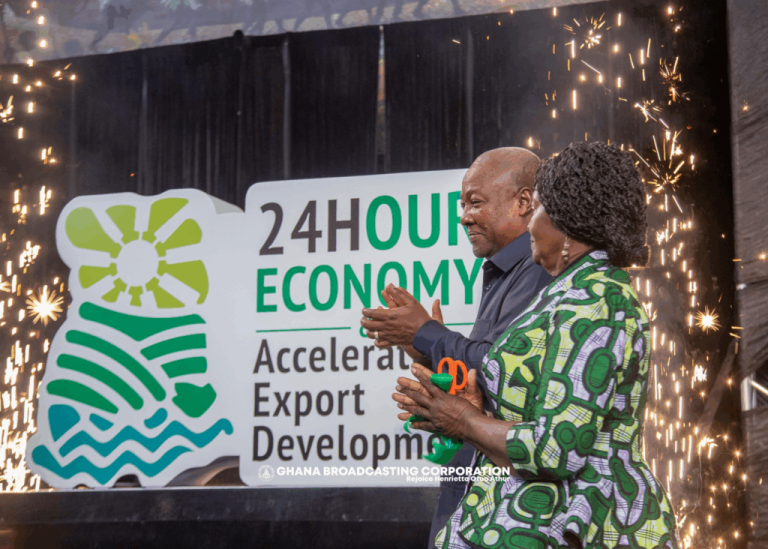
According to comparative data from January to June 2024 and 2025, a total of 3,595 fire outbreaks were recorded in the first half of 2025 — a slight increase of just 19 cases over the 3,576 incidents during the same period in 2024. This represents a 0.53% rise.

Despite the uptick, over GHS 203 million worth of property was salvaged during the period under review, highlighting the impact of firefighting interventions.

Sharp Decline in Prank Calls

One of the most notable improvements was a dramatic 34.77% reduction in prank calls to the fire service. The number of prank calls dropped from 364,020 in the first half of 2024 to 237,470 in 2025.

GNFS attributes this positive trend to sustained public education campaigns and increased awareness of the legal consequences of misusing emergency lines.

“These efforts are clearly paying off,” a GNFS spokesperson noted. “Reducing prank calls means our emergency lines are more accessible to people in real need.”

Top Causes of Fire Incidents

The leading causes of fires in 2025 remained largely consistent with previous years. These include:

  • Electrical faults from illegal connections, poor wiring, and overloading of circuits.
  • Improper use of electrical appliances, such as overused extension cords and unattended devices.
  • Unattended cooking, especially with gas, electric, or coal-based stoves.
  • Careless use of naked flames like candles, mosquito coils, lighters, and matches.
  • Gas leakages and poor handling of LPG cylinders.
  • Bush and vegetation burning, particularly during the dry season.
  • Vehicle fires due to poor maintenance and road accidents.
  • Unsafe welding and other hot-work practices.
  • Deliberate acts of arson.

Regional Breakdown

The Greater Accra Region recorded the highest number of fire incidents with 628 cases, followed by the Ashanti Region with 581 cases and the Central Region with 408. The North East Region reported the lowest number of incidents — just 10.

Cause of the Rise

GNFS attributes the slight rise in fire outbreaks to the harsh harmattan conditions experienced in the first quarter of 2025 and general non-compliance with fire safety protocols by sections of the public.

The Service has reiterated its call for continued vigilance and adherence to safety measures, especially as the dry season approaches again in the latter part of the year.

Every Ghanaian must contribute to nation-building – Cardinal Turkson

Gov’t pays $349.52 million Eurobond debt service to fulfill 2025 obligations

0

Minister of Finance, Dr Ato Forson Minister of Finance, Dr Ato Forson

The Government of Ghana has successfully fulfilled its Eurobond debt service commitments for 2025 with the payment of US$349.52 million on Thursday, July 3, 2025.

The Ministry of Finance announced the payment, made through the Bank of Ghana, as part of the country’s post-restructuring debt obligations.

This latest instalment brings the total Eurobond debt service payments for 2025 to US$699.04 million, following two earlier payments of equal value in January and July.

The government had previously made an initial payment of US$475.60 million in October 2024, shortly after concluding a comprehensive Eurobond debt restructuring deal.

In total, Ghana has now serviced US$1.17 billion in Eurobond payments since the restructuring, bringing it fully up to date on all scheduled debt obligations for the year.

The Ministry of Finance emphasised that the timely payment underscores the government’s commitment to macroeconomic stability, prudent debt management, and ongoing cooperation with external creditors.

Looking ahead, Ghana is scheduled to service US$1.41 billion in Eurobond debt in 2026.

According to the Ministry, this latest payment is expected to:

Positively impact Ghana’s credit rating outlook by reinforcing its post-restructuring fiscal discipline,

Strengthen investor confidence in the country’s sovereign creditworthiness and economic recovery programme, and

Support stability in the foreign exchange market, with the payment integrated into the Bank of Ghana’s reserves and liquidity management framework.

The government says it remains committed to meeting all future debt obligations as part of its broader economic recovery and reform agenda

Kwesi Slay reignites the mic after long break

Ghanaian music heavyweight Kwesi Slay Ghanaian music heavyweight Kwesi Slay

Ghanaian music heavyweight Kwesi Slay has made a bold return to the music scene after a prolonged hiatus, reigniting the mic with renewed lyrical fire, creative clarity, and a deeper artistic resolve.

Emerging from the creative shadows, the Ashaiman-born rapper Bernard Kwesi Appiah, popularly known as Kwesi Slay, returned with renewed vigor, delivering the debut of his six-track EP, Aben, a bold statement that success is near (“Aben” means “it is near”)

This marks his first major project since 2021’s standout single “Eye Clear,” featuring Kofi Mole, which garnered significant attention on streaming platforms.

In between, he dropped fan favorites like “Street Ways” and “Wedi Bet” in 2017, plus a series of collaborations with heavyweights such as Medikal, Kwesi Arthur, and Kuami Eugene.

On Aben, Kwesi reconnects with his roots while pushing his sound forward. Standout tracks include the anthemic singles “Street Ways” and “Wedi Bet,” while fresh collaborations with artists like Ko-Jo Cue, Cabum, Kemenya, and Wanlov, underscore his commitment to creative synergy.

The EP is produced by a blend of talents, including Lyrical Beatz, Kemenya TV, and Kwesi Slay himself.

He first cemented his place in Ghana’s rap elite with gritty, street-savvy anthems such as “3y3 Normal” with Yaa Pono and the viral breakout “Seven” featuring Kwesi Arthur.

His sound became the soundtrack of almost every youth, fusing raw energy with social commentary.

Slay went silent for over two years, a move that stirred both concern and speculation among fans and industry watchers. But now, with new music projects in the pipeline and a sharpened voice, Kwesi Slay has made it clear: his break was not an exit, but a reset.

“I needed to disconnect in order to realign. It was a period of recalibration and creative rebirth,” the rapper said “Sometimes silence is the loudest form of preparation. I’ve lived, I’ve grown, and now I’m ready to speak again, louder than ever.”

His upcoming releases are expected to be soul-baring and hard-hitting, blending poetic introspection with street realism, a sonic evolution fans are already calling “Slay Season.”

Kwesi Slay’s return reaffirms his authenticity. Known for collaborations with Medikal (“Frass”), Quamina MP (“Pussy Cat”), and Kuami Eugene (“Follow Me”), the rapper has consistently pushed boundaries while staying true to his roots.

“This is not about reclaiming fame,” he said. “It’s about representing a truth, mine and that of every dreamer who’s ever had to pause to gather strength.”

According to his management, his re-entry will include collaborations with both local and international talents, alongside a potential headline tour.

They also confirm that he’s working on a multi-track project set for release later this year.

GIPC unveils post-investment support for businesses

0

Simon Madjie, interacting with the new MD of Mantrac Ghana Ltd., Pierre Hill Simon Madjie, interacting with the new MD of Mantrac Ghana Ltd., Pierre Hill

The Ghana Investment Promotion Centre (GIPC) has reaffirmed its commitment to supporting investors through its Aftercare Division, a key mechanism for post-establishment assistance.

This assurance was given by the Chief Executive Officer of GIPC, Mr Simon Madjie, during a meeting with the new Managing Director of Mantrac Ghana Ltd., Mr. Pierre Hill, at the Centre’s office in Accra.

Mr Hill, who recently assumed leadership at Mantrac Ghana, emphasized the company’s long-standing investment in the country, with a workforce of over 1,000 employees.

He highlighted the need for strengthened collaboration with government institutions to resolve operational challenges and ensure business continuity.

Mr Madjie acknowledged the company’s significant contribution to Ghana’s industrial and economic development and reiterated the Centre’s readiness to support investors beyond the initial entry phase.

He noted that GIPC’s Aftercare Division plays a crucial role in helping companies navigate regulatory processes and address issues affecting their operations.

Mr Madjie also referenced ongoing efforts to review Ghana’s investment legislation, including the introduction of a proposed Investor Grievance Mechanism.

Joseph Paintsil named in MLS Team of the Week after brace against Vancouver Whitecaps

0

Ghana forward Joseph Paintsil Ghana forward Joseph Paintsil

Ghana forward Joseph Paintsil has been named in the MLS Team of the Week for matchday 22 following his heroics against Vancouver Whitecaps.

The Black Stars winger scored a brace as Los Angeles Galaxy stunned the in-form Vancouver Whitecaps 3-0 at the Dignity Health Park last Friday.

Paintsil ended his five-week goal drought after converting from the spot on the hour mark before curling home his second with 13 minutes remaining.

The 2025 MLS winner joins Inter Miami’s star Lionel Messi and John Pulskamp of Sporting Kansas City in the best eleven for the week.

Also joining the trio are Minnesota’s Carlos Harvey (MIN), Ethan Bartlow of Houston Dynamo as well as Mitja IleniÄ of New York City FC’

The rest of the players in the start eleven are Evander of Cincinati, Erik Thommy of Kansas City, Pep Biel of Charlotte FC, Hannes Wolf of New York City and Ezequiel Ponce (HOU), Lionel Messi.

Paintsil has netted three goals and delivered an assist in 15 matches this season.

CDD-Ghana urges media, CSOs to resist democracy capture in Africa

0

The Ghana Centre for Democratic Development (CDD-Ghana) has called on the media and civil society organisations across Africa to intensify efforts to resist the growing threat of democracy capture on the continent.

This appeal was made during the launch of the inaugural Democracy Capture Index (DEMCAP Index) on July 7, 2025. Held under the theme “Resisting Capture and Strengthening Democratic Resilience in Africa,” the event convened governance actors and stakeholders from across the sub-region to discuss vulnerabilities in democratic systems and strategies to counter undue influence by entrenched interests.

Speaking on the sidelines of the event, Dr. John Osae-Kwapong, Democracy and Development Fellow at CDD-Ghana, noted that although democracy capture is currently less prevalent among civil society and media institutions, they remain susceptible to future manipulation.

“When asked about their vulnerability to future capture, these institutions—particularly the media—ranked high,” he said. “In Ghana, when public discourse becomes highly partisan and polarised, we often look to these institutions to mediate and refocus the country on national priorities.”

Dr. Kojo Asante, CDD-Ghana’s Director for Policy Engagement and Partnerships, highlighted the broader significance of the DEMCAP Index as part of a concerted strategy to rebuild democratic institutions and values.

“This report, along with other research initiatives, is part of a deliberate intervention to counter democracy decline, build resilience, and reimagine the future of democracy in Africa,” he said.

The DEMCAP Index serves as a new tool for measuring and addressing systemic weaknesses that permit powerful individuals or groups to distort democratic processes and undermine good governance.

Through the index, CDD-Ghana aims to stimulate reforms and foster collaboration among democratic actors to preserve the integrity of institutions across the continent.


Mahama has returned with vision and determination – Archbishop Duncan-Williams

World Bank Appoints New Country Manager for Kosovo and North Macedonia

0

La Banque Mondiale Fait Une Annonce Qui Va Plaire A La Plupart Des Pays Africains XLa Banque Mondiale Fait Une Annonce Qui Va Plaire A La Plupart Des Pays Africains X
La Banque Mondiale Fait Une Annonce Qui Va Plaire A La Plupart Des Pays Africains X

WASHINGTON, USA – July, 07th 2025 -/African Media Agency(AMA)/- The World Bank has appointed Carole Megevand as its the new Country Manager for Kosovo and North Macedonia, effective July 1, 2025.

In her new role, Megevand will lead the World Bank’s engagement in Kosovo and North Macedonia, guiding the implementation of the Country Partnership Frameworks. These frameworks support the two economies in their efforts to create more productive jobs, improve the quality of public services, and foster human capital development, ultimately aiming to accelerate a sustainable growth and converge with the European Union income levels.

“I am honored to assume the role of the World Bank manager for Kosovo and North Macedonia and to have the privilege of serving the people,” said Carole Megevand, World Bank Manager for Kosovo and North Macedoniaas she assumed her position“The development agenda for these two countries is clear: we need to provide people with opportunities for jobs and to productively contribute to the economies so they can grow and advance for the benefit of entire societies.”

Carole Megevand, a French national, brings over two decades of experience with the World Bank, which she joined in 2002. She has led complex operations across Africa, Latin America, and North Africa, with a strong focus on inter-sectoral development and governance. Most recently, she served as Program Leader for the Planet program in the Maghreb region, based in Rabat, Morocco. She holds two master’s degrees, one in Agricultural Economics and another in Environment/Natural Resources Economics.

Distributed by African Media Agency (AMA) on behalf of World Bank Group.

The post World Bank Appoints New Country Manager for Kosovo and North Macedonia appeared first on African Media Agency.

US delays higher tariffs but announces new rates for some nations

0

The latest development comes as a 90-day pause the White House placed on some of its most aggressive import taxes was set to expire this week.

The president renewed his threat of a 25% tax on products entering the country from Japan and South Korea and shared a batch of other letters to world leaders warning of levies from 1 August.

Higher tariffs had been set to come into effect on 9 July, having previously been suspended with White House officials saying they would look to strike trade deals.

When asked by a reporter whether the new August date was a hard deadline, Trump said: “I would say firm, but not 100% firm. If they call up and they say we’d like to do something a different way, we’re going to be open to that.”

The extension came as no surprise since trade agreements often take years to finalise, economist Adam Ahmad Samdin from research firm Oxford Economics told the BBC.

“Such deals are usually extremely detailed,” he said, adding that although Vietnam became only the second country after the UK to strike an agreement with the US, it was more of a “broad framework” speeding up talks, rather than a detailed deal.

Also on Monday, Trump shared letters addressing leaders of 14 countries on social media, informing them of his latest tariff plans, while adding that the rates could be modified “upward or downward, depending on our relationship with your country”.

Most of the tariff rates outlined by Trump were similar to those outlined in April, when he made his “Liberation Day” announcement, threatening a wave of new taxes on goods from various countries.

The comments suggested Trump would be open to further trade talks, investment strategist Vasu Menon from OCBC bank said.

“The expectations that Trump is once again engaged in a negotiating tactic rather than making serious tariff threats, offer hope to investors,” Mr Menon said.

The president argues that introducing tariffs will protect American businesses from foreign competition and also boost domestic manufacturing and jobs.

But economists say the measures will raise prices in the US and reduce trade. The three main share indexes in the US slipped on Monday, with Toyota’s US-listed shares down 4%.

Japan sent more than $148bn (£108.6bn) in goods to the US last year, making it America’s fifth biggest supplier of imports, after the European Union (EU), Mexico, China and Canada, according to US trade data. South Korea was also in the top 10.

As well as South Korea and Japan, Trump on Monday set out plans for a 40% tariff on goods from Myanmar and Laos, a 36% tariff on goods from Thailand and Cambodia, a 35% tariff on goods from Serbia and Bangladesh, a 32% tariff on Indonesia, a 30% tariff on goods from South Africa and a 25% tariff on goods from Malaysia and Tunisia.

She disputed the suggestion that the shifting tariff deadlines from 9 July to 1 August might reduce the power of Trump’s threats.

“The president’s phone, I can tell you, rings off the hook from world leaders all the time who are begging him to come to a deal,” she said.

When the president first announced a raft of steep tariffs in April, turmoil broke out on financial markets, leading to the president suspending some of the highest duties to allow for talks, while keeping in place a 10% levy.

Treasury Secretary Scott Bessent said he expected “a busy couple of days”.

“We’ve had a lot of people change their tune in terms of negotiations. So my mailbox was full last night with a lot of new offers, a lot of new proposals,” he told US business broadcaster CNBC.

Trump had initially described his April tariffs as “reciprocal”, claiming they were required to fight back against other countries’ trade rules he saw as unfair to US exports.

He has separately announced tariffs for key sectors, such as steel and cars, citing national security concerns, and threatened to raise levies on other items, such as pharmaceuticals and lumber.

The multi-layered policies have complicated trade talks, with car tariffs a key sticking point in negotiations with Japan and South Korea.

So far, the US has struck agreements with the UK and Vietnam, as well as a partial deal with China. In all three of those cases, the agreements have raised tariffs compared with levels before Trump returned to the White House, while key issues remain unresolved.

The US has said a deal with India is close.

The EU is also engaged in talks, with reports suggesting officials in the bloc were not expecting to receive a tariff letter. A spokesperson for the EU also said the European Commission’s president, Ursula von der Leyen, had a “good exchange” with Trump.

Just a few weeks ago, the US president had threatened the EU with a 50% tax unless it reached an agreement.

Last week, Trump said Japan could face a “30% or 35%” tariff if the country failed to reach a deal with the US by Wednesday.

Source: BBC.com

Ghanaians rejected NPP over failed policies, not Bawumia – Dr Wereko-Brobbey

0

Dr Mahamudu Bawumia [L] and Dr Charles Wereko-Brobbey Dr Mahamudu Bawumia [L] and Dr Charles Wereko-Brobbey

A founding member of the New Patriotic Party (NPP), Dr Charles Wereko-Brobbey, has attributed the party’s electoral defeat not to its presidential candidate, Dr Mahamudu Bawumia, but to what he describes as a string of failed policies under the NPP government.

Speaking in an interview with TV3 monitored by GhanaWeb, the former Chief Executive Officer of the Volta River Authority(VRA) in a candid assessment of the party’s performance, urged the NPP leadership to focus less on defending its choice of candidate and more on a sincere reflection of why Ghanaians voted against them in such large numbers.

“What I expect from the opposition party is to be more concerned about examining the reasons for its very bad performance in the last election and the huge rejection that Ghanaians gave to them,” he said.

According to him, the 2024 defeat was not a repudiation of Dr. Bawumia’s candidacy but rather a reaction to the government’s inability to deliver on key promises. He warned that attempting to reframe the loss as a communication failure rather than a performance issue would only deepen public disillusionment.

“No amount of trying to use the current session of Parliament to tell Ghanaians that you did not understand our achievements is going to change the fact that we have never seen such a huge defeat,” he noted.

He stressed that the path back to political relevance lies not in personalities but in rebuilding public trust through honest self-assessment and clear policy alternatives.

“I don’t think that better picture is determined by who your candidate is. It will be determined by the conviction of Ghanaians that you have learnt your lessons and are in a better place to offer something more compelling than what Mahama is offering in his tenure,” he added.

Dr. Wereko-Brobbey concluded by reminding the NPP that electoral victories are earned through performance and inspiration, not by default.

“We don’t vote governments out; we vote governments in. So it is the hope and conviction you give people that, given another chance, you will do better, that is what wins elections.”

KA

GhanaWeb Special: The gold market that fuels galamsey

How social engineering hacks your mind and your bank account

What happens to the Akwatia Parliamentary seat following Ernest Yaw Kumi’s death?

0

The seat of Ernest Kumi draped in red cloth The seat of Ernest Kumi draped in red cloth

The Member of Parliament for Akwatia, Ernest Yaw Kumi, passed away on July 7, 2025, after a short illness.

Kumi, a first-time MP elected on the ticket of the New Patriotic Party (NPP), had been present in Parliament just the previous week.

He had recently been at the center of a high-profile legal battle over the legitimacy of his parliamentary seat. His sudden death comes just weeks after the Supreme Court overturned his contempt conviction related to the disputed 2024 parliamentary election results.

As a solemn tribute, the First Deputy Minority Whip, Habib Iddrisu, draped Kumi’s seat in red cloth following the announcement of his passing on Monday, July 7.

What does the law says about his replacement as MP for Akwatia

According to Article 112, Clause 5 of Ghana’s Constitution, “Whenever a vacancy occurs in Parliament, the Clerk of Parliament shall notify the Electoral Commission in writing within seven days after becoming aware that the vacancy has occurred; and a by-election shall be held within thirty days after the vacancy occurred, except that where the vacancy occurred through the death of a member, the by-election shall be held within sixty days after the occurrence of the vacancy.”

In the coming days, the Clerk of Parliament is expected to formally notify the Electoral Commission of the MP’s death.

A by-election will then be scheduled and held within sixty days, as mandated by law.

The NPP will select a candidate to contest the seat against nominees from other political parties.

However, historically, in Ghanaian politics, it is not uncommon for the widows of deceased MPs to be nominated by their parties to contest the vacant seat, a trend that may influence the party’s decision in this case.

AM/KA

GhanaWeb Special: The gold market that fuels galamsey

Wimbledon announces change after line call controversy

0

Umpire Nico Helwerth opted to replay a point when a ‘human error’ led to the line-calling technology being deactivated

Wimbledon has made changes to its electronic line calling system to remove the possibility of “human error” after it was accidentally deactivated in a controversial episode on Sunday.

An “operator error” meant the ball-tracking technology was turned off for one game in the fourth-round match between Britain’s Sonay Kartal and Russian Anastasia Pavlyuchenkova on Centre Court.

“Following our review, we have now removed the ability for Hawk-Eye operators to manually deactivate the ball tracking,” the All England Lawn Tennis Club (AELTC) said in a statement to BBC Sport.

“While the source of the issue was human error, this error cannot now be repeated due to the system changes we have made.”

Kartal sent a backhand long when game point down at 4-4, but this was not detected by the line-call system, which instead made two automated calls of “stop”.

Umpire Nico Helwerth opted to replay the point – which Kartal won – but was criticised by Pavlyuchenkova and some pundits for not using his authority to overrule and call the ball out.

TV replays had shown the ball was well long and Pavlyuchenkova suggested there should be a video review system, similar to that in football, which would have enabled the umpire to make the call.

The AELTC said Helwerth had “followed the established process”, but later added that the issue of video reviews would be “among the matters considered” at the end of the Championships.

Club chief executive Sally Bolton said earlier on Monday that Helwerth was “having a rest day”.

“We have rotation of our umpires regularly. A little bit like the players, the umpires also need rest days throughout the tournament,” Bolton told BBC Sport.

“He’s having a rest day today. He’s fine.

“It’s really important to say that the umpire followed the protocols in place. He did what he needed to do on court and acted entirely correctly.”

Electronic line calling is used at many top-level tournaments, and the US Open and Australian Open also have a video review system.

When there were line judges at Wimbledon, players could challenge the calls by using an electronic review. The new technology is an “enhanced” version of the Hawk-Eye system that was used for player challenges.

There are no challenges under the current system and video replays are not used.

At the moment, replays of points can be shown on the big screens – but they are essentially replays of what the technology has determined and only show that something was a “close call”.

But with millions able to see the replays of points on their televisions at home, fans will always wonder why the umpire is not able to use that footage if they are unsure over a call.

Pavlyuchenkova suggested tennis should use video checks like football does “so that we can review the point”.

“On such a big event I think it is necessary, since this isn’t the first time this has happened,” she told BBC Sport on Sunday.

The AELTC said: “We do not have a video review system as part of our suite of officiating tools.

“As we do every year, we will fully review all aspects of The Championships’ operation following the event and this will be among the matters considered.”

There is a line-calling hub inside Wimbledon’s grounds, where 50 operators use 144 screens to monitor the ball-tracking footage from 12 cameras on each court.

‘When it’s activated, it works extremely well’

Wimbledon’s first week of electronic line calling system has been a big topic of discussion.

Some players questioned its accuracy, others said the calls were too quiet – and some simply missed the 147-year-old tradition of smartly dressed officials around the court.

Former British number one and BBC pundit Tim Henman pointed to the accuracy of the technology as a reason why video reviews were not necessary.

“The technology, when it’s activated, works extremely well,” he said.

“There’s another sort of narrative that the line calling has been inaccurate, and that’s just absolute rubbish.

“When you’re on the court, you’re hoping that it goes out, because if it goes out, you win the point.

“But actually, 100 times out of 100 when you go back and look at it, the human – the player – gets it wrong. The technology doesn’t.”

The AELTC said it continued to have “full confidence in the accuracy of the ball-tracking technology”.

In response to player concerns about not hearing the calls sometimes, the club added that it was “adjusting the volume all the time, given the ambient noise on court and around the grounds”.

DISCLAIMER: The Views, Comments, Opinions, Contributions and Statements made by Readers and Contributors on this platform do not necessarily represent the views or policy of Multimedia Group Limited.

DISCLAIMER: The Views, Comments, Opinions, Contributions and Statements made by Readers and Contributors on this platform do not necessarily represent the views or policy of Multimedia Group Limited.

Measles cases in the US reach 33-year high

0

The number of reported measles cases in the US has reached a 33-year high, with nearly 1,300 confirmed infections across the country as of Friday.

The data, released by John Hopkins University, marks a new milestone in an ongoing outbreak of the highly contagious, vaccine-preventable disease that was once thought to be eliminated in the US.

Measles cases have been reported in 38 states and the District of Columbia this year. At least three people have died from the illness, and 155 others were in hospital.

A vast majority of the measles cases – 92% – were in people who were either unvaccinated or whose vaccination status was unknown, according to the Centres for Disease Control (CDC).

The worst hit state is Texas, CDC data shows, where more than 700 cases have been reported. Other states with dozens of cases include Kansas and New Mexico.

Health officials say that measles spread is occurring mostly in neighbourhoods where vaccination rates are lower, such as Mennonite communities in Texas that opt out of modern medicine.

The outbreak comes as anti-vaccine sentiment in the US and elsewhere has grown in recent years.

Health Secretary Robert F Kennedy Jr had previously spread misinformation about childhood vaccinations and had minimised the outbreak. He later endorsed the measles, mumps and rubella vaccine as illness spread, saying in a post on X that it is “the most effective way to prevent the spread of measles”.

Measles cases in the US were at their highest in recent memory in 1990, with nearly 28,000 reported infections, according to CDC data.

The illness was later declared eliminated around the year 2000, when cases sharply declined to less than 90 thanks to high vaccination rates and rapid outbreak response.

Cases started ticking up slightly in 2014 and again in 2019, when 1,274 confirmed infections were reported. But cases in 2025 have just surpassed that figure, with 1,277 infections now reported across the US.

Public health experts have said that the US will lose measles elimination status if there is continued spread of measles at the current rate for more than 12 months.

As a result of the current outbreak, more people are now getting the measles vaccine in the US. Between 1 January and 16 March, Texas gave at least 173, 000 measles doses compared to 158,000 in the same time period last year, state health department data shows.

The MMR vaccine is the most effective way to fight off the dangerous virus, which can lead to pneumonia, brain swelling and death. The jabs are 97% effective and also immunise against mumps and rubella.

Large measles outbreaks have been reported recently in other countries, including the UK. Last year marked the highest number of confirmed measles cases reported in England since 2012 at nearly 3,000.

Since January of this year, there had been 529 cases reported in England.

Canada is also experiencing a measles outbreak, with more than 3,000 cases reported in 2025 so far. The bulk of the cases are in the provinces of Ontario and Alberta.

DISCLAIMER: The Views, Comments, Opinions, Contributions and Statements made by Readers and Contributors on this platform do not necessarily represent the views or policy of Multimedia Group Limited.

DISCLAIMER: The Views, Comments, Opinions, Contributions and Statements made by Readers and Contributors on this platform do not necessarily represent the views or policy of Multimedia Group Limited.

Fund24 for Mahama’s 24-hour economy agenda ‘not feasible’

0

John Dramani Mahama is the current President of Ghana John Dramani Mahama is the current President of Ghana

The Africa Policy Lens (APL) has cast doubt on the feasibility of Fund24, the financial backbone of Mahama’s 24H+ economy agenda.

The Fund24, as part of Mahama’s 24H+ economy, aims to raise substantial money, and provide capital for SMEs, infrastructure projects and job creation.

However, in an an extensive review of the policy, the APL doubts the policy would meet its revenue target, stating, among other factors, that its reliance on external financial support makes it too fragile to raise the funding for the policy.

“The FUND24 was sold to Ghanaians as a bold transformation strategy, promising affordable capital for SMEs, massive infrastructure, and job creation. But behind the grand design lies a shaky Framework,” the APL said.

It continued; “Operating across three tracks, enterprise financing (via DBG and VCTF), infrastructure development (through GIIF’s SPVs), and technical assistance (offered by the 24H+ Secretariat), FUND24 aims to raise $4 billion by 2030 through blended finance and foreign institutional capital. On paper, it sounds promising. It’s structurally flawed and fundamentally incompatible with Ghana’s 24-hour economic ambitions.”

“First, let’s confront the elephant in the room: Ghana’s debt crisis. With public debt ballooning to $49.5 billion, 55% of GDP in March 2025, international development finance institutions (DFIs) are understandably cautious. In fact, in 2022, Ghana received absolutely nothing out of the $3.59 billion in infrastructure funding allocated to Sub-Saharan Africa. This is not a system that DFIs trust, and without them, FUND24’s capital flow collapses.”

‘”Add to that the cedi’s devastating 40% depreciation in 2022, and suddenly any foreign loan becomes a ticking time bomb. If DBG borrows in dollars and lends in cedis, a wave of defaults could drown the entire program.”

”Even worse, the proposal to channel Ghana’s GHS 42 billion pension fund into risky SME equity is reckless. Pension funds exist to protect retiree livelihoods, not to bankroll fragile startups. One wrong bet and the retirement security of an entire generation could vanish”, the APL added.

The APL also described the infrastructure track as “equally shaky” as well as the digital loan solution under Fund24.

“The touted Agbledu parks may never rise from the ground thanks to Ghana’s chaotic land tenure system, where over 80% of land is informally owned and legally untraceable.”

“And what of the digital loan revolution FUND24 promises? It assumes a tech-savvy population, yet only 58% of Ghanaians are even online. That’s not a digital revolution; it’s a digital delusion. You can’t run a loan portal on dreams when nearly half the population is offline or digitally excluded,” the APL further noted.

It also emphasised; “If the government truly wants a 24-hour economy, it needs a homegrown financing model, one not held hostage by foreign lenders or fictional SPVs. Ghana must unlock its own capital markets. Pension funds can play a role, yes, but through mandated low-risk allocations like South Africa’s Regulation 28.”

The APL also urged government to “issue diaspora bonds to capture part of the $4.7 billion in annual remittances”.

“…instead of chasing phantom foreign investors, it should incentivize real domestic giants, MTN, Dangote, Ghana Oil, to co-invest in SPVs. Most importantly, land reform and a push for local-currency lending must be urgent priorities if financial inclusion is to be real.”

“FUND24 is not just flawed, it is dangerous in its current form. Built on weak assumptions, overdependent on DFIs, and blind to Ghana’s on-the-ground realities, it is the most brittle pillar of the entire 24H+ economy.”

”Without urgent course correction, it will join the growing list of failed Ghanaian economic fantasies, SkyTrain, anyone?”

AME

FUND24 for Mahama’s 24-hour economy agenda ‘not feasible’

0

John Dramani Mahama is the current President of Ghana John Dramani Mahama is the current President of Ghana

The Africa Policy Lens (APL) has cast doubt on the feasibility of FUND24, the financial backbone of Mahama’s 24H+ economy agenda.

The FUND24, as part of Mahama’s 24H+ economy, aims to raise substantial money, and provide capital for SMEs, infrastructure projects and job creation.

However, in an an extensive review of the policy, the APL doubts the policy would meet its revenue target, stating, among other factors, that its reliance on external financial support makes it too fragile to raise the funding for the policy.

“The FUND24 was sold to Ghanaians as a bold transformation strategy, promising affordable capital for SMEs, massive infrastructure, and job creation. But behind the grand design lies a shaky Framework,” the APL said.

It continued; “Operating across three tracks, enterprise financing (via DBG and VCTF), infrastructure development (through GIIF’s SPVs), and technical assistance (offered by the 24H+ Secretariat), FUND24 aims to raise $4 billion by 2030 through blended finance and foreign institutional capital. On paper, it sounds promising. It’s structurally flawed and fundamentally incompatible with Ghana’s 24-hour economic ambitions.”

“First, let’s confront the elephant in the room: Ghana’s debt crisis. With public debt ballooning to $49.5 billion, 55% of GDP in March 2025, international development finance institutions (DFIs) are understandably cautious. In fact, in 2022, Ghana received absolutely nothing out of the $3.59 billion in infrastructure funding allocated to Sub-Saharan Africa. This is not a system that DFIs trust, and without them, FUND24’s capital flow collapses.”

‘”Add to that the cedi’s devastating 40% depreciation in 2022, and suddenly any foreign loan becomes a ticking time bomb. If DBG borrows in dollars and lends in cedis, a wave of defaults could drown the entire program.”

”Even worse, the proposal to channel Ghana’s GHS 42 billion pension fund into risky SME equity is reckless. Pension funds exist to protect retiree livelihoods, not to bankroll fragile startups. One wrong bet and the retirement security of an entire generation could vanish”, the APL added.

The APL also described the infrastructure track as “equally shaky” as well as the digital loan solution under FUND24.

“The touted Agbledu parks may never rise from the ground thanks to Ghana’s chaotic land tenure system, where over 80% of land is informally owned and legally untraceable.”

“And what of the digital loan revolution FUND24 promises? It assumes a tech-savvy population, yet only 58% of Ghanaians are even online. That’s not a digital revolution; it’s a digital delusion. You can’t run a loan portal on dreams when nearly half the population is offline or digitally excluded,” the APL further noted.

It also emphasised; “If the government truly wants a 24-hour economy, it needs a homegrown financing model, one not held hostage by foreign lenders or fictional SPVs. Ghana must unlock its own capital markets. Pension funds can play a role, yes, but through mandated low-risk allocations like South Africa’s Regulation 28.”

The APL also urged government to “issue diaspora bonds to capture part of the $4.7 billion in annual remittances”.

“…instead of chasing phantom foreign investors, it should incentivize real domestic giants, MTN, Dangote, Ghana Oil, to co-invest in SPVs. Most importantly, land reform and a push for local-currency lending must be urgent priorities if financial inclusion is to be real.”

“FUND24 is not just flawed, it is dangerous in its current form. Built on weak assumptions, overdependent on DFIs, and blind to Ghana’s on-the-ground realities, it is the most brittle pillar of the entire 24H+ economy.”

”Without urgent course correction, it will join the growing list of failed Ghanaian economic fantasies, SkyTrain, anyone?”

AME

Court orders Nana Agradaa to be brought back for judgement in another case

0

Founder and Leader of Heaven Way Church, Evangelist Patricia Asiedua Founder and Leader of Heaven Way Church, Evangelist Patricia Asiedua

An Accra High Court has summoned the Founder and Leader of Heaven Way Church, Evangelist Patricia Asiedua, popularly known as Nana Agradaa, to reappear for a final ruling in an ongoing legal battle involving Prophet Emmanuel Appiah Enim, also known as Osofo Biblical.

In a video circulating on social media, Agradaa’s lawyer revealed that following a court session on July 7, 2025, the presiding judge ordered that she be brought from Nsawam Prison, where she is currently serving a 15-year sentence for charlatanic advertisement and defrauding by false pretences.

According to the legal team, this separate case revolves around Agradaa’s alleged unlawful broadcast of a private video showing Osofo Biblical engaged in a sexual act with a married woman.

“Today was scheduled for the ruling on that particular case. However, we respectfully requested that, considering she is in lawful custody, the court adjourn proceedings to a later date,” Agradaa’s lawyer explained.

He added, “An order has been made so that she will be brought from Nsawam Prison, so on the adjourned date she will be available. This is a different case from what happened on Thursday. This is a case between Mama Pat and a complaint called Osofo Appiah.”

Meanwhile, the case has been adjourned to July 30, 2025, with the court ordering that Agradaa be present in person for the final ruling.

How this case started

The case dates back to 2021, when Nana Agradaa became embroiled in a heated public dispute with Prophet Emmanuel Appiah Enim.

What started as a typical war of words on social media took a serious turn when Agradaa allegedly aired nude photos of the prophet during a broadcast on Thunder TV (now Today’s TV), a television station she owned.

She was subsequently arrested in 2022 and charged under Section 67(1) of the Cybersecurity Act (Act 1038) for the non-consensual distribution of intimate images.

The matter intensified in July 2024, when she appeared in court on additional charges of possessing and distributing indecent material.

Reports claimed that not only did she share the images during a live broadcast, but also used them to market a product, a certain type of bitters.

Agradaa was later granted bail set at GH¢200,000, with the condition of providing two justified sureties.

Watch the video below:

JHM/EB

GhanaWeb Special: The gold market that fuels galamsey:

‘Sudden and unexpected’ – Minority Leader reacts to Ernest Kumi’s death

0

Alexander Afenyo-Markin and the late Ernest Kumi Alexander Afenyo-Markin and the late Ernest Kumi

The Minority Leader in Parliament, Alexander Kwamina Afenyo-Markin, has eulogised the late Member of Parliament for Akwatia, Ernest Kumi, describing his passing as a devastating loss to both the House and his constituents.

Speaking in Parliament on Monday, July 7, 2025, he said the MP’s death had come as a shock to everyone, as there were no signs of ill health in the days leading up to the tragedy.

“We know this is sudden; it was unexpected. The member was not seen as someone who was unwell, and therefore, we are all in pain,” he said. “But as we always say, God knows best,” he added.

The Member of Parliament for Effutu recounted Ernest Kumi’s impressive academic and professional record.

“Mr Speaker, he brought remarkable credentials to this House. His contributions at both plenary and committee levels were profound and are well known to all,” the Minority Leader said.

The late MP, affectionately known as the “Akwatia Star Boy,” passed away on Monday, July 7, 2025.

Ernest Yaw Kumi was a first-time MP for the New Patriotic Party (NPP) and had recently been in the news due to legal challenges surrounding his election victory.

JKB/MA

Cheque Fraud EXPOSED: How it works and how to stay safe

GhanaWeb Special: The gold market that fuels galamsey

Cheque Fraud EXPOSED: How it works and how to stay safe

GhanaWeb Special: The gold market that fuels galamsey