A major scandal is brewing at the Forestry Commission as startling revelations emerge about the issuance of fresh permits to three gold mining companies for operations inside Ghana’s protected forest reserves.
Documents intercepted by MyNewsGh show that Dr. Hugh Brown, the newly appointed acting Chief Executive Officer of the Forestry Commission, has authorized multiple entry permits to companies seeking to operate within critical ecological areas.
Vice President of IMANI Africa, Kofi Bentil, has condemned the involvement and complicity of some prominent clergymen in the financial mismanagement of the National Cathedral project, stating that they will never be forgiven or forgotten for getting themselves involved in the scandal.
Speaking on JoyNews’ Newsfile on Saturday, Mr Bentil expressed disappointment that some revered religious leaders lent their credibility to a project that has now become a symbol of waste and opacity.
“We have great respect for our Reverend Ministers, but we said it before time. We said do not lend your bible, your customs, and scholars to these politicians who are embarking on an ill-faithed and godless journey, we said it will cause problems. I don’t have a doubt that some of the Reverend Ministers were not corrupt, I still respect them.”
“But for lending themselves to this, for not speaking truth to power, and not standing for what I believe they knew was not exactly right, they will never be forgotten, they will never be forgiven, history will show that at a point like this, they supported wrong this in the name of God and caused this country almost $100 million, broke down building and left with holes,” he bemoaned.
The National Cathedral, envisioned by former President Nana Akufo-Addo as a personal vow to God, was entrusted to a board of trustees composed largely of senior Christian leaders.
These included Archbishop Nicholas Duncan-Williams, Rev. Eastwood Anaba, and Bishop Dag Heward-Mills, some of whom later resigned over governance concerns and allegations of a lack of transparency.
Although the project was initially promised to be privately funded, revelations from investigations and audits show that $94 million in public funds have already been spent, with little to no tangible results.
DISCLAIMER: The Views, Comments, Opinions, Contributions and Statements made by Readers and Contributors on this platform do not necessarily represent the views or policy of Multimedia Group Limited.
DISCLAIMER: The Views, Comments, Opinions, Contributions and Statements made by Readers and Contributors on this platform do not necessarily represent the views or policy of Multimedia Group Limited.
Franklin Cudjoe, President of IMANI Africa, has criticised the New Patriotic Party’s (NPP) decision to conduct its presidential primary in January 2026, calling the idea “far-fetched” and unnecessarily rushed.
“I think that the whole concept of trying to get the flagbearer elected by the end of the year or early January next year, I think it is just too far-fetched.”
“I don’t know why the rush because it is as though you are in a rush to come back to power,” Cudjoe said during an interview on Channel One TV on Saturday, January 19.
He went on to express concerns about the lack of coherent planning within the party.
“I feel that the whole thing is rushed. There seems to be no head or tail in the whole organisation of NPP. I don’t know how something like that could come up. I don’t know who dreamt about something like that.”
Cudjoe stressed that such accelerated timelines could undermine the internal democratic processes essential for selecting a strong party candidate.
He suggested that the NPP take more time to organize and implement transparent and well-structured primaries.
Read also…
NPP’s constitution must evolve with the times – Hackman Owusu Agyeman
The Editor for the Hawk Newspaper, Charles McCarthy, has shot down claims that the IGP, COP Christian Yohuno, must be fired over some violence incidents recorded during the Ablekuma North election re-run.
The latest to go for the jugular of IGP Yohuno is the former Central Regional Minister, Kwamena Duncan, who believes the Police Chief is responsible for the violence, questioning why he is still at post.
The newly appointed General Manager of Division One League side, Great Olympics FC, Mr Eric Alagidede, has urged supporters of the club to support the new administration in their quest to bring the club back to top-flight football.
Speaking to the supporters of the club during a meeting on Wednesday at the club secretariat, the astute football administrator said it remains a collective effort of every stakeholder.
Mr Aladigede thanked the previous administration for their works and assured a new direction through the support of the new Chief Executive Officer, Mr Kudjoe Fianoo, Mr Maurice Quansah as the new Public Relations Officer and yet to be announced new Head Coach Sulley Adamu.
“It is an operation Olympics Must Return to the Premier League”. This is why we must work together to make Oly better. Management will work collectively with supporters and other important stakeholders to achieve this goal at the end of the 2025/26 campaign” Mr Aladigege assured.
He added that, the club does not deserve playing in the lower tier and should they work hand in hand, Olympics should be able to represent Ghana in Africa.
Great Olympics finished in 4th place at the end of the 2024/25 campaign after being relegated during the 2023/24 season.
Dr Apostle Samuel Amagashie, the head of Amagashie Herbal
In a recent interaction with journalists on July 18, 2025, Dr Apostle Samuel Amagashie, the head of Amagashie Herbal, issued a word of caution to men about certain sexual practices that could pose serious health risks.
Speaking during the media briefing, Dr Amagashie highlighted that while sexual intimacy is vital for a healthy relationship, some positions may have unintended health consequences if not approached with care.
He specifically singled out the popular doggy-style position as potentially dangerous for men.
According to the renowned herbal health practitioner, engaging in the doggy-style position could increase the risk of suffering a stroke.
He explained that the position may put excessive strain on the heart and blood vessels, especially in men with underlying health conditions such as hypertension.
Dr Amagashie urged men to prioritize their health by choosing less strenuous positions that do not overly tax the cardiovascular system.
He advised couples to communicate openly and adopt practices that ensure both pleasure and safety during intimacy.
The head of Amagashie Herbal also emphasised the importance of regular medical check-ups, healthy dieting, and the use of approved herbal remedies to maintain good sexual and overall health.
He warned against ignoring early signs of fatigue or discomfort during intercourse.
Dr Amagashie’s statement has sparked discussions among the public, with many praising him for shedding light on a topic often considered taboo.
He encouraged the media to continue educating the public about safe and healthy sexual practices.
He concluded by reminding men that pleasure should never come at the cost of their well-being and urged them to seek professional advice when in doubt about their sexual health.
The New Patriotic Party (NPP), as part of its National Delegates Conference on Saturday, July 19, 2025, will deliberate on and vote on fifty (50) consolidated motions derived from more than 300 individual proposals submitted by party members across the country.
The conference, themed “Rebuilding Together with Our Values,” marks a critical moment of introspection for the party as it seeks to regroup and reform following its defeat in the 2024 general elections.
Central to the day’s proceedings is a wide range of proposed constitutional amendments aimed at strengthening internal governance, improving grassroots mobilisation, and streamlining party structures in preparation for the 2028 elections.
Here are the 50 consolidated motions to be deliberated and considered by the NPP
1. MOTION ONE Article 1 Amend article 1 of the Constitution to include the Party’s Motto, Symbol and Colours. The absence of the Party’s Motto, Symbol and Colours in the Constitution is an obvious omission and ought to be rectified. The Party’s Motto, Symbol and Colours must find expression in the Party’s Constitution.]
2. MOTION TWO Article 3(7) Amend article 3(7)of the Constitution to give the power to recommend suspension of a Member or an office holder pending disciplinary action against him to the appropriate Disciplinary Committee rather than the Executive Committee. [The amendment is necessary to ensure justified suspension of party executives (elected and appointed) by Executive Committees, only upon recommendation by the Disciplinary Committee, pending disciplinary proceedings against such Officers. It is the Disciplinary Committee that shall recommend suspension having regard to its preliminary findings.
3. MOTION THREE Article 4(3)(7) Amend article 4(3)(7) of the Constitution to allow for a complaint against any Constituency or Regional Officer, whether elected or appointed, to be filed at; (i) in the case of the Constituency Officer, the Regional Executive Committee and (i1) in the case of the Regional Officer, the National Executive Committee. The amendment seeks to achieve fair and equal treatment or handling of who are at the same level of the Party by providing that they should be disciplinary matters involving ‘elected officers’ and ‘appointed officers’ dealt with by the same Disciplinary Committee.]
4. MOTION FOUR Article 5(6) Amend article 5(6) of the Constitution to adopt the Electoral Commission of Ghana’s demarcation/cluster of Electoral Areas. [The EC’s Electoral Area systems are pre-determined, bereft of controversies and involves more polling stations than the party’s demarcations of Electoral Area. The current provision in the Party’s constitution is that where polling stations under an Electoral Area exceed ten(10), an additional Electoral Area may be created. This lack of certainty and exactitude has triggered misunderstandings in the creation of some Electoral Areas. The adoption of the EC’s Electoral Area system cures any such misunderstanding or perceived mischief.]
5. MOTION FIVE Article 6 – new provision Amend article 6 of the Constitution to provide for an Electoral Area Executive Committee structure made up of five (5) members who shall all be elected comprising the Electoral Area Chairperson, Secretary, Organiser, Communications Officer and Electoral Affairs Officer. (The current system requires limited expansion to allow for increased participation and support in the management of the electoral areas. A 5-member Committee enhances operational capacity and ensures a more inclusive and structured approach to supervising polling station activities.
6. MOTION SIX Article 6(1) Amend article 6(1) of the Constitution to increase the Polling Station Executives from five (5) to seven (7) who are all to be elected compromising the Chairperson, Secretary, Organiser, Women’s Organiser, Youth Organiser, Communications Officer and Electoral Affairs Officer. [The Committee recommends one man one vote (OMOV) system as a long term electoral framework for the Party. In the absence of the foundational structures for the OMOV electoral system, the proposed limited expansion (representing 40% rise) at the polling station level is more realistic and manageable. It has the effect of increasing the electoral college considerably while the Party works on the recommended OMOV system.]
7. MOTION SEVEN Articles 6(1); 7(2); 9(1); 10(7)(3) Amend article 6(1), 7(2), 9(1) & 10(7)(3) of the Constitution to split/decouple the position of Research and Electoral Affairs Officer at the Constituency, Regional and Nationals levels of the Party. The amendment brings the needed focus and attention to each of the two responsibilities. Also, it is not every researcher who understands electoral matters and vice versa. Therefore, separating the positions and appointing people with the requisite expertise to occupy the respective positions will inure to the Party’s benefit.]
8.MOTION EIGHT Article 7(2) Amend article 7(2) of the Constitution to include the Constituency Research Officer, Electoral Affairs Officer and PWD Coordinator on the Constituency Executive Committee. This represents a limited expansion of the Constituency Executive Committee and seeks to promote inclusivity and broader participation in Party activities at the Constituency level.]
9. MOTION NINE Articles 7(5); 9(2); 10(7)(3) Amend articles 7(5), 9(2) & 10(7)(3) of the Constitution to make Communication Officers at all levels of the Party elected from the Polling Station, Electoral Area, Constituency, Regional and at the National level. At the National level, the Communication Officer shall be the Director of Communications. The appointment of Communication Officers has, in many instances, been fraught with a lot of challenges occasioned by perceptions of favouritism and lack of candour. Making the positions elective will afford the Party delegates to select persons they think can best communicate for the Party. For the avoidance of doubt, the Deputy Directors of Communications shall remain appointed.]
10. MOTION TEN Articles 7(10); 9(7) Amend articles 7(10) & 9(7) of the Constitution to prevent Party Officers who get appointed into government from continuing to hold their offices. [Party officers who are appointed into government should not be allowed to hold dual positions. So long as they have accepted the appointment to serve in government, they should focus on their mandate in government and give opportunity for other competent Party members to occupy their positions in the Party. It is also in line with the provisions in clause 10 of article 7 & clause 7 of article 9, which are intended to ensure that government appointees do not hold Constituency, Regional and National Executive offices.]
11. MOTION ELEVEN Articles 7(26); 9(24) Amend articles 7(26) & 9(24) of the Constitution to provide that any vacancy that may occur for whatever reason in the case of the Constituency Secretary and Regional Secretary shall automatically filled by the Deputy Constituency and Deputy Regional Secretary [The Deputy Constituency and Deputy Regional Secretaries, just like the substantive Constituency and Regional Secretaries, are also elected by the same delegates at the same Conference. The Deputy Secretaries should be able to occupy the positions of the substantive Secretaries in the absence of the latter.]
12. MOTION TWELVE Article 7(27) Amend article 7(27) of the Constitution to give voting rights to National and Regional Officers at the Constituency Delegates Conference at the Constituency they hail from. [This amendment strengthens the connections between these Officers and the respective Constituencies they hail from, where they may also serve as Patrons and source of logistical support. This amendment is also geared towards the proposed limited expansion of the electoral college pending the OMOV system.]
13. MOTION THIRTEEN Articles 7(27); 9(25); 10(2) Amend articles 7(27), 9(25) & 10(2) of the Constitution to provide that the Party shall hold Constituency/Regional/ National Delegates Conferences every two years (i.e. biennially) instead of annually. [This amendment looks at holding timely but necessary Conferences across all levels of the Party. There shall also be sufficient time to hold other equally important Conferences within the period before the biennial conference. Where it becomes necessary, an Extraordinary Delegates Conference may be called.]
14. MOTION FOURTEEN Article 7(27)(b) Amend article 7(27)(b) of the Constitution to give voting rights to the Electoral Area Executives at the Constituency Biennial Delegates Conference. Executives have voting rights at Constituency Delegates Conference. The proposed Electoral Area Executives (made up of the Electoral Area Coordinator to be now called Electoral Area Chairperson and Jour (4) other executives) should have voting rights at the Constituency Delegates Conference.]
15. MOTION FIFTEEN Articles 7(29); 9(27) Amend articles 7(29) & 9(27) of the Constitution to allow Constituency and Regional Secretaries to present reports on the state of the Party at the Constituency and Regional Delegates Conference, with the prior approval of the Constituency and Regional Executive Committee as the case may be. [Constituency and Regional Secretaries are the administrative heads of the Constituency and Regional Secretariats of the Party and it is appropriate that they present a report on the state of the party to the Constituency and Regional Party respectively to the Delegates Conference with prior approval of the Constituency and Regional Executive Committee as the case may be.]
16. MOTION SIXTEEN Articles 7(29); 9(27) Amend articles 7(29) & 9(27) of the Constitution to require the statement of account to be presented by the Constituency and Regional Treasurers at the Constituency and Regional Delegates Conference to have received prior approval of the Constituency and Regional Executive Committee as the case may be. This allows the Constituency and Regional Executive Committee to scrutinize and give a stamp of approval to the statements before they are presented at the Delegates Conference.]
17. MOTION SEVENTEEN Article 7(30) Amend article 7(30) of the Constitution to provide that the Regional Executive Committee shall appoint persons, other than Polling Station, Electoral Area and Constituency Officers, to supervise Polling Station and Electoral Area elections. [Constituencies are directly involved in the compilation of the album for organising Polling Station and Constituency elections. It is therefore prudent that supervision of these elections should be taken to the Regional level to absolve it from any conflict of interest.
18. MOTION EIGHTEEN Article 8; Article 8(5) Amend article 8 of the Constitution to specifically provide that the External Branches shall have three (3) representatives on the National Executive Committee and five(5) representatives on the National Council. [The Party Constitution under article 8(5) grants the External Branches representation at the National Executive Committee and the National Council but does not indicate the number of representatives they should appoint to serve on these bodies. This amendment brings clarity to the number of representatives the External Branches shall have on the National Executive Committee and National Council.]
19. MOTION NINETEEN Articles 8; 13(11) Amend articles 8 & 13(11) of the Constitution to specifically provide that all former and current executives of the External Branches shall have voting rights at the Presidential Primaries. The amendment seeks to expand the electoral college for the Presidential Primaries to promote inclusivity and broader participation. This is in line with the proposed limited expansion.]
20. MOTION TWENTY Articles 8; 10(2)() Amend articles 8 & 10(2)(f) of the Constitution to specifically provide that ALL current executives of the External Branches shall have voting rights at the National Delegates Conference. (Previously, only twelve (12) Executives of the External Branches were allowed to vote at the National Delegates Conference. This amendment, allowing all of them to vote, promotes inclusivity and broader participation. The amendment is also in line with the proposed limited expansion.]
21. MOTION TWENTY-ONE Article 9 Amend article 9 of the Constitution to include Regional Electoral Affairs Officer, Regional Research Officer (note: the decoupling of the two) Regional Legal Officer, Regional PWD Coordinator, and a Special Duties Officer as part of the Regional Executive Committee. [This represents a limited expansion of the Regional Executive Committee.]
22. MOTION TWENTY-TWO Article 9(1) Amend article 9(1) of the Constitution to expand the composition of the Regional Executive Committee members to include Constituency Secretaries. /Constituency Secretaries are responsible for all administrative matters at the Constituency level and it is only proper that they are part of the Regional Executive Committees.]
23. MOTION TWENTY-THREE Article 9(1) new provision Amend the Constitution by inserting a new provision to create a Regional Steering Committee composed of the Regional Officers, Chairman of the Regional Council of Elders and Regional Parliamentary Caucus Chair. The proposed amendment aligns with what pertains at the national level, where we have a National Steering Committee, which is the body in charge of the day-to-day administration of the Party at the National level. The Regional Steering Committee shall also be responsible for the day-to-day administration of the Party in the Regions. The Regional Steering Committee system shall facilitate decision-making at the Regional level.]
24 MOTION TWENTY-FOUR Articles 9; 10(2); 13 Amend articles 9, 10(2) & 13 of the Constitution to grant voting rights to the Regional & National TESCON Coordinators and the TESCON President from each recognised tertiary institution in the country at the Regional and National Delegates Conference respectively. [The Regional TESCON Coordinators are in charge of coordinating all the activities of TESCON in the various tertiary institutions within the Region. It is only proper to grant them voting rights at Conferences just like the Executives whose activities they coordinate. The same principle applies to the National TESCON Coordinators. The specificity on the TESCON President and not just any representative of TESCON avoids the usual challenge with validation of the representative from TESCON.]
25. MOTION TWENTY-FIVE Articles 9(25); 10(2); article 13(11) Amend article 10(2) & 13(11) of the Constitution to grant voting rights to the TESCON President (and NOT a representative from TESCON) from each recognised tertiary institution in the country at the Regional and National Delegates Conference. The specificity on the TESCON President and not just any representative of TESCON avoids the usual challenge with validation of the representative from TESCON.]
26. MOTION TWENTY-SIX Article 10; new provision Amend article 10 of the Constitution by inserting a new provision to include the consideration of Position Papers from Sector Committees of the Party on key developments since the last National Delegates Conference at National Delegates Conference. [The proposed amendment allows the National Delegates Conference to not only focus on speeches and election of national officers (where necessary), but to also consider and debate the Reports submitted by the Party’s Sector Committees on key national issues and to pass appropriate resolutions on same.]
27. MOTION TWENTY-SEVEN Article 10; new provision Amend article 10 of the Constitution by inserting a new provision to modify the composition of the Sector Committees under the National Executive Committee to include both Members of Parliament and iona-Members of Parliament as well as their functions. [This allows the Party to marshal its available best brains to serve on the various Sector Committees whether or not they are Members of Parliament.]
28. MOTION TWENTY-EIGHT Articles 10(2)(3)(e); 13(11); 16 Amend articles 10(2)(3)(e) & 13 of the Constitution to make all Members of the National Council of Elders delegates at the National Delegates Conference and the Presidential Primaries. [Considering the indispensable roles played by the National Council of Elders, they deserve more representation at the party’s highest decision-making body. In any case, per Article 16, the membership of the National Council of Elders shall not exceed 30, out of which, 15 are already members/delegates to the National Annual Delegates Conference.]
29. MOTION TWENTY-NINE Article 10(3) Amend article 10(3) of the Constitution to increase the representation of the National Council of Elders on the National Council from one(1) to five (5) members including the Chairman of the National Council of Elders. [The National Council of Elders is the foremost advisory body of the Party and therefore ought to be adequately represented at the second highest decision-making body of the Party.]
30. MOTION THIRTY Article 10(3) Amend article 10(3) of the Constitution to provide for four (4) additional Standing Committees and enable the National Council to create new Standing Committees as and when the Council deem fit.
The new four (4) Standing Committees shall be the Electoral Affairs Committee, Communications Committee, Political Strategy & Policy Committee and Security & Intelligence Committee. [The proposed additional Standing Committees to be created are indispensable and crucial in supporting the National Council and by extension the Party to function more effectively. The amendment also grants the National Council the mandate to create additional Standing Committees as and when necessary.]
31. MOTION THIRTY-ONE Article 10(3)A Amend article 10(3)(A) of the Constitution to expand the composition of the Finance Committee from six (6) to ten (10) Members in addition to the National Treasurer. [This amendment expands the composition of the Finance Committee in order to enhance the effectiveness of the Committee.]
32. MOTION THIRTY-TWO Article 10(3)(2)(d) Amend article 10(3)(2)(d) of the Constitution to expressly provide that Chairpersons of Standing Committees and Directors at the Party Headquarters shall have voting rights at the National Council and consequently vote in the Presidential Primaries. This amendment admits Chairmen of Standing Committees and Directors at the Party Headquarters into membership at the National Council with voting rights.]
33. MOTION THIRTY-THREE Article 10(3)(4) Amend article 10(3)(4) of the Constitution to include former Majority and former Minority Leaders to the composition of the National Executive Committee and National Council. /The National Executive Committee stands to benefit immensely from the experiences of persons who have once led the Party’s Parliamentary Group as Majority or Minority Leaders.]
34. MOTION THIRTY-FOUR Article 10(4) new provision Amend article 10 of the Constitution by inserting a new provision to provide that the National Executive Committee shall, in consultation with the Presidential Candidate, develop the campaign structure and establish a Campaign Advisory Committee to oversee the Campaign Team. [The Presidential Campaign should be a collaboration between Party and the Presidential Candidate.]
35. MOTION THIRTY-FIVE Article 10; new provision Amend article 10 of the Constitution by inserting a new provision to specifically provide that the National Chairperson shall be the Leader of the Party. The proposed amendment affirms the position of the National Chairperson as the Leader of the Party.]
36. MOTION THIRTY-SIX Article 10(5) Amend article 10(5) of the Constitution to specifically provide that the National Chairperson shall chair the Party’s Campaign Advisory Committee. [The National Chairperson as the Leader of the Party should chair the Party’s Campaign Advisory Committee to enhance collaborative work between the arty and Campaign.]
37. MOTION THIRTY-SEVEN Article 10(4)(2) Amend article 10(4)(2) of the Constitution to increase the representation of the Parliamentary Group on the National Executive Committee from one (1) to three(3) comprising the Leader and two (2) others, one of whom shall be a woman. The Parliamentary Group is a critical organ of the party. It is the Group that champions the Party’s policies and agenda in the Legislative arm. The amendment seeks to increase the representation of the Parliamentary Group on the National Executive Committee.]
38. MOTION THIRTY-EIGHT Article 10(7) (3); 10(8) Amend articles 10(7)(3) & 10(8) of the Constitution to provide that the National Treasurer shall report to the General Secretary. The General Secretary is the Party’s chief administrator, and the Chief Executive Officer (CEO) of the Party and all Officers except National Chairperson and Vice Chairpersons report to him. The amendment aligns with the administrative structure of the Party.]
39. MOTION THIRTY-NINE Article 10(10) Amend article 10(10) of the Constitution to remove the President from the composition of the National Steering Committee of the National Executive Committee. [The Steering Committee is in charge of the day-to-day administration of the Party and should comprise only the ten(10) Elected Officers, the Presidential candidate, Parliamentary Leader and Chairman of the National Council of Elders.]
40. MOTION FORTY Article 11 Amend article 11 of the Constitution to specifically include a provision that allows the Constituency Executive Committee to remove a Polling Station or Electoral Area Officer from office with the prior approval of the Regional Executive Committee, upon receipt of a Petition from a Member. The Constitution has no provision on how Polling Station and Electoral Area Officers may be removed from office.]
41. MOTION FORTY-ONE Article 11 Amend article 11 of the Constitution to include a provision requiring the need for the body to be constituted by the Executive Committee, to recommend removal before the summoning of an Extraordinary Delegates Conference for the purpose of removing an Elected Officer from office, and for specified timelines for the removal process of such Elected Officer.
[The amendment brings clarity in the removal of Officers and avoids the convening of an Extraordinary Delegates Conference without recommendation from the body constituted by the Executive Committee.]
42. MOTION FORTY-TWO Article 11(7) Amend article 11(7) of the Constitution to explicitly provide guidelines/procedure for the removal from office of an appointed Officer/Executive to be done by the relevant Executive Committee with prior approval of the immediately higher Executive Committee. [The amendment clarifies the process for removal of appointed Officers.]
43. MOTION FORTY-THREE Article 12; new provision Amend the Constitution by inserting a new provision to provide that National Officers, Ministers, Deputy Ministers, CEOs and other government appointees who file to contest to become a Parliamentary Candidate of the Party in a Constituency with a sitting Member of Parliament, shall resign their positions at least twelve (12) months to the National General Elections. [This is to ensure fair competition and level playing field to all prospective aspirants for the position of Parliamentary Candidate.]
44. MOTION FORTY-FOUR New provision; articles 12 & 13 Amend articles 12 & 13 of the Constitution and insert a new provision to grant voting rights to former Members of Parliament, former Parliamentary Candidates, former Metropolitan, Municipal and District Chief Executives (MMDCEs), former Ministers, former Deputy Ministers who are card bearing members of the Party at the Parliamentary and Presidential Primaries. [The amendment seeks to expand the electoral college for the Presidential Primaries to promote inclusivity and broader participation. This is in line with the proposed limited expansion.]
45. MOTION FORTY-FIVE New provision; articles 12 & 13 Amend articles 12 & 13 of the Constitution and insert a new provision to grant voting rights to former Constituency Executives, former Regional Executives at the Parliamentary and Presidential Primaries. (The amendment seeks to expand the electoral college for the Presidential Primaries to promote inclusivity and broader participation. This is in line with the proposed limited expansion.]
46. MOTION FORTY-SIX Article 13 (1)(6) Amend article 13(1)(6) of the Constitution to provide that National Officers, Ministers, Deputy Ministers, CEOs and other government appointees who file to become the Presidential Candidate of the Party, shall resign their positions at least twenty-four(24) months to the National General Elections. [This is to ensure fair competition and level playing field to all prospective aspirants for the flagbearership.]
47. MOTION FORTY-SEVEN Article 13(1)(9) Amend article 13(1)(9) of the Constitution to completely abolish the Special Electoral College/Super Delegates System. [The Special Electoral College system which was introduced in the 2009 constitutional amendments to shortlist aspiring Presidential Candidates, has outlived its usefulness.]
48. MOTION FORTY-EIGHT Article 13(4) Amend article 13(4) of the Constitution to provide for the election of a Presidential Candidate when the Party is in government to a date not later than eighteen (18) months instead of eleven 11) months before the National General Elections. [This amendment gives the party’s presidential candidate an extra seven) months to campaign before the general elections.]
49. MOTION FORTY-NINE
Article 13(11)
Amend article 13(11) to grant voting rights to five (5) members of the Constituency Council of Elders and ten (10) members of the Regional Council of Elders at the Presidential Primaries.
[These Constituency and Regional Elders are members of the Station and Electoral Area Executives, who form part of the delegates Constituency and Regional Delegates Conference respectively. Polling the Constituency Conference have been given voting rights at the Presidential Primaries. The exclusion of the Elders is an omission which should be rectified.]
50. MOTION FIFTY
Article 13(11)
Amend article 13(11) of the Constitution to include thirty (30) National Patrons and all Members of the National Council of Elders to be part of the Presidential Primaries.
[The National Council of Elders is the foremost advisory body of the Party and therefore ought to be adequately represented at the second highest decision-making body of the Party. National Patrons also occupy an important position in the Party structure. The expansion of their numbers in the Presidential Primaries is appropriate.]
51. MOTION FIFTY-ONE
Article 13(11)
Amend article 13(11) to grant voting rights to five(5) Constituency Patrons and ten (10) Regional Patrons at the Presidential Primaries.
[These Constituency and Regional Patrons are members of the Constituency and Regional Delegates Conference respectively. Polling Station and Electoral Area executives, who form part of the delegates 19 the Constituency Conference have been given voting rights at the Presidential Primaries. The exclusion of the Patrons is an omission wh. h should be rectified.]
52. MOTION FIFTY-TWO
Amend article 13(11) to grant voting rights to one (1) TESCON Patron from every recognised tertiary institution t the Presidential Primaries.
[This amendment allows for inclusivity and broader participation. This is in line with proposed limited expansion.]
53 MOTION FIFTY-THREE
Article 15(3)
Amend article 15(3) of the Constitution to make all female delegates at the National Delegates Conference eligible to vote for the position of National Women Organiser.
[The current regulations on the election of the National Women Organiser is not inclusive. This amendment allows all female delegates to participate in the election of the National Women’s Organiser.]
54. MOTION FIFTY-FOUR
Article 15(4)
Amend article 15(4) of the Constitution by defining ‘Youth’ in the Constitution to refer to a Member of the Party who is not above the age of 35 years.
The age limit for ‘Youth’ per all the International Conventions and National Laws shows that the highest age limit is 35 years. The UN puts the age bracket between 15-24 years; WHO: 15-29; UNICEF: 15-24; ILO: 15-24; African Youth Charter: 15-35. In Ghana, the National Youth Authority Act, 2016 (Act 939) defines a ‘Youth’ as a person between 15-35 years.]
55. MOTION FIFTY-FIVE
Article 15(4)
Amend article 15(4) of the Constitution to make all youth delegates at the National Delegates Conference eligible to vote for the position of National Youth Organiser.
[The current regulations on the election of the National Youth Organiser is not inclusive. This amendment allows all youth delegates to participate in the election of the National Youth Organiser.]
56. MOTION FIFTY-SIX
Article 15(5)(d) (e) and related provisions that refer to Nasara Coordinator at all relevant levels
Amend article 15(5)(d)(e) and related provisions of the Constitution to refer to Nasara Coordinators as Nasara Organisers.
[By the nature of their functions, Nama Coordinators should be referred to as Nasara Organisers, just as done with Women and Youth Organisers.] SP/MA
The Chief Executive Officer of Cal Asset Management, James Elijah Donkoh, has attributed the strong performance of the company’s flagship funds in 2024 to disciplined risk management and diversified portfolio strategies.
Speaking on the sidelines of the firm’s Annual General Meeting on July 17, 2025, Donkoh said the asset manager’s results “significantly outpaced inflation, delivering positive real returns for investors,” despite slightly trailing benchmark targets.
“Sustainability is at the core of our approach as we continue to prioritize both performance and investor trust. We remain focused on diversified portfolio strategies, disciplined risk management, and aligning our investments with key growth sectors of the Ghanaian economy,” he was quoted by Citi Business News.
Cal Asset Management reported impressive growth across its two key funds; the Cal Benefit Unit Trust and the Cal Advantage Unit Trust, further cementing its position as one of Ghana’s leading asset managers.
The Cal Benefit Unit Trust posted a full-year return of 24.91% in 2024 and recorded an 88.3% year-over-year increase in asset value, closing the year at GH¢31.80 million.
Meanwhile, the Cal Advantage Unit Trust delivered a strong full-year return of 34.41% and saw its assets under management grow by 179.8% to GH¢12.41 million.
Looking ahead, Donkoh said Cal Asset Management will focus on expanding its product offerings and deepening market penetration.
“Sustainability is at the core of our approach as we continue to prioritise both performance and investor trust,” he reiterated.
How Virtual Reality is enhancing business and customer experience
Thomas Frank believes Mohammed Kudus is a good signing for Spurs
Tottenham Hotspur head coach Thomas Frank has stated that Ghanaian attacker Mohammed Kudus’ footballing skills convinced the club to sign him.
According to him, the player’s brilliance in terms of holding the ball and dribbling past his opponents in tight spaces is an ability the club admires greatly.
The former Brentford manager also commended the player’s passing ability and finishing as one of the attributes that impressed the club officials to push for his signature.
“I think it’s a great signing for the club. I think it’s top work from Daniel Levy. He is a very good player. We can start working with him. I think he brings a bit of unpredictability to the game. I think his one-on-one actions are top-notch.
“I think his short passes are excellent. I think his finishing is very good. And he is in, you know, almost a perfect age to perform, but also take it to the next level,” he said, as shared by Citi Sports on X.
Spurs signed Kudus from West Ham United in a deal worth around 55 million euros after their initial bid was rejected.
The Black Stars attacker will join the likes of Richarlison, Kulusevski, Son Heung-Min, and other players to bolster their attack as they will be competing in the UEFA Champions League and the Premier League next season.
Watch Frank’s remarks below:
“I think Kudus is a great signing, he gives us a bit of unpredictability, his finishing is very good, and he is almost a perfect age” – Thomas Frank
The issue of film piracy appears to be reaching a boiling point, as popular Nollywood actress Mercy Johnson has expressed outrage after discovering that her latest movie, The Firstborn, was aired without her consent on Ghanaian television channel, Blazing TV.
The celebrated actress, clearly shocked by the unauthorized broadcast, took to her social media on Saturday, July 19, to share her frustration. Posting a screenshot of the conversation revealing the infringement, she wrote, “I am speechless at the audacity of it all.”
“Ghana, Blazing TV. How is this even ok? Blazing TV in Ghana is showing my movie The Firstborn on their TV without my consent. How does this even make sense? How?” she further lamented.
The film was only officially released on Thursday, July 17, making the unauthorized airing even more upsetting for the actress, who, like many others in the industry, has invested heavily in production and distribution.
Mercy Johnson now joins a growing list of filmmakers and actors, including Ruth Kadiri, Bimbo Ademoye, and Omoni Oboli, who have publicly called out illegal streaming and airing of their works. Ghanaian actress Juliet Ibrahim has also previously spoken out about the economic and emotional toll piracy takes on creatives.
The incident has reignited conversations around cross-border intellectual property violations and the urgent need for tighter regulations and enforcement in the West African entertainment industry.As stakeholders continue to raise red flags over the rampant issue, many are calling on both Nigerian and Ghanaian authorities to step in with more stringent measures to protect the rights and works of content creators.
The New Patriotic Party (NPP) National Council of the Elders has submitted a series of significant proposed amendments to the party’s constitution, seeking to address the underlying issues that contributed to their defeat in the 2024 general elections.
These amendments, aimed at strengthening the party’s foundation and democratic processes, are expected to be a key focus of deliberation at the NPP National Delegates Conference, scheduled to take place today, July 19, at the University of Ghana.
The New Patriotic Party (NPP) is holding its much-anticipated National Delegates Conference today, Saturday, July 19, at the University of Ghana Stadium.
Over 5,500 delegates are expected to converge to deliberate on a wide range of proposed amendments to the party’s constitution, aimed at strengthening its internal structures and preparing for the 2028 general elections following its significant defeat in 2024.
The conference, themed “Rebuilding Together with our Values”, signals the party’s commitment to introspection and a return to its core principles.
The NPP’s loss in the December 2024 general elections to the National Democratic Congress (NDC), where the NDC secured 56.55% of the presidential vote and 184 parliamentary seats, underscored the urgent need for internal reforms.
Key agenda and proposed amendments
A substantial 59 proposed amendments are on the table, designed to reshape the party and enhance its resilience.
These cover critical areas such as:
Grassroots Empowerment: Proposals seek to expand Polling Station Executive Committees and establish five-member Electoral Area Committees to strengthen the party’s base.
Structural Reorganization: Amendments aim to restructure Constituency and Regional Executive Committees, introducing specialized appointed and elected roles.
National Youth Wing: Article 15 is set for review to redefine and reorganize the National Youth Wing.
Governance Mechanisms: New measures include enlarging the composition and jurisdiction of the National Council’s Vetting Committee for appointed roles and imposing restrictions on dual office-holding.
Formalizing Roles: Article 10 amendments will impose the appointment of specialized roles such as Legal Director, IT Coordinator, and PWDA (Persons With Disability) Coordinator, ensuring greater professionalization within the party.
Below is the full detail.
DISCLAIMER: The Views, Comments, Opinions, Contributions and Statements made by Readers and Contributors on this platform do not necessarily represent the views or policy of Multimedia Group Limited.
DISCLAIMER: The Views, Comments, Opinions, Contributions and Statements made by Readers and Contributors on this platform do not necessarily represent the views or policy of Multimedia Group Limited.
Chairman of the Council of Elders of the New Patriotic Party (NPP), Hackman Owusu Agyeman, has expressed confidence that the party’s ongoing constitutional review will result in reforms that support its future growth and development.
Speaking on the sidelines of the NPP’s National Delegates Conference held at the University of Ghana Sports Stadium on Saturday, July 19, 2025, Mr. Owusu Agyeman said the process is a necessary step in keeping the party’s structure relevant and responsive to changing needs.
“I believe that this conference will, in the final analysis, bring out a constitution that will be good for our development as we go forward,” he stated.
He urged party members to approach the process with an open mind, emphasising that reforms are a natural part of any evolving institution.
“I do not think there should be any problem at all. We have to understand that it is a human institution, and it is dynamic, and it goes forward. If there are changes to be made, we make the changes. That is what we want to do as we go forward,” he added.
The 2025 National Delegates Conference of the NPP is under the theme “Rebuilding Together with our Values.”
The conference represents a critical moment of introspection for the party as it seeks to regroup and reform following its defeat in the 2024 general elections.
Central to the day’s proceedings are a wide range of constitutional amendment proposals aimed at strengthening internal governance, improving grassroots mobilisation, and streamlining party structures ahead of the 2028 polls.
Here are the Constitutional Proposals before NPP Delegates today
The Minister for Defence, Dr. Omane Boamah, has rewarded Lance Corporal Solomon Asare Teye-Tsu for his patriotic act of rejecting a bribe to permit illegal mining at the Bibiani Gold Mines.
He also disclosed government’s plans to enhance operational capacity and improve troop welfare, including the construction of 10,000 new housing units and the provision of logistics and modern equipment.
L/Cpl Teye-Tsu, who currently serves with the Department of Public Relations of the GAF, was promoted from the rank of Private to Lance Corporal by the Chief of Defence Staff, Lieutenant General William Agyapong, on July 11, 2025.
As part of his reward package, he was presented with a citation and nominated for international service with the United Nations Interim Force in Lebanon (UNIFIL).
Earlier, Ojeyz Securities Limited—the private firm responsible for security at the Bibiani Gold Mines—also honoured him for the same act of integrity. Late last year, while on official guard duty at the mines, Teye-Tsu encountered a group of illegal miners who attempted to bribe him to gain access to restricted mining pits. He rejected the offer and promptly handed the culprits over to the authorities.
The 30-year-old soldier hails from Odumase-Krobo in the Eastern Region and is a former student of Manya Krobo Senior High School and King David College. He is also a member of Kloma Gbi, a Krobo-based youth advocacy group.
The New Patriotic Party holds its crucial National Delegates Conference today at the University of Ghana Stadium, with over 5,500 delegates gathering to chart the party’s future after their 2024 election defeat.
The conference comes at a critical time for the NPP, which suffered its worst electoral loss in the Fourth Republic when John Dramani Mahama’s NDC won 56.55% of votes and 184 parliamentary seats in December 2024.
Dr Mahamudu Bawumia’s presidential bid failed, ending the party’s eight-year rule.
Running under the theme “Rebuilding Together with our Values,” today’s meeting aims to rebuild party unity and address the issues that led to their defeat.
Recommended For YouBusiness2025-07-18T14:25:01+00:00
Meet Strive Masiyiwa: Zimbabwe’s richest man defying limits with Africa’s first AI factory
Lifestyle2025-07-18T14:26:46+00:00
Andy Byron: All to know about Astronomer CEO caught cheating in viral ‘kiss cam’ video
Filla2025-07-19T09:08:50+00:00
Man fakes DNA test to avoid taking care of his kids
NPP’s National Delegates Conference
Key agenda items
Delegates will vote on more than 50 consolidated motions covering constitutional changes and party reforms. Planning Committee Chairman Joseph Osei Owusu explained the process:
In all, we have about a little over 50 motions. You may have one amendment, which will have about 50 proposed amendments. So, what the motions are doing is to consolidate the various issues that come around, and the members will have to vote on those motions.
These motions stem from over 300 proposed amendments submitted to the party’s Amendments Committee. The proposals have been compiled into a booklet already reviewed by the National Executive Committee.
NPP’s National Delegates Conference
READ ALSO: No need for fancy goals – Ghana coach draws plan to beat ‘difficult’ Algeria
All 14 constitutional changes proposed
In addition to the Regional Representatives on the NCOE, the Council is allowed to nominate five (5) members for appointment to the Council based on distinguished service, support, and exemplary commitment to the advancement of the Party. This will be done from time to time.
All past Presidents, past Vice Presidents, and past National Chairmen will be inducted to NCOE at the end of their service to ensure the harnessing of their experiences to the Council.
When in power, there shall be a mandatory quarterly meeting with the President where issues of concern will be discussed. This meeting will offer the President or the Presidential Candidate to give account of his/her stewardship for appropriate political counsel.
The NCOE shall be represented by five (5) of its members (Chairman, Vice Chairman, plus three others) on the National Council of the Party.
READ ALSO: ‘I’ve been sidelined and ignored by NPP’ – Kufuor painfully laments
NPP’s National Delegates Conference
The NCOE shall establish a Judicial Committee consisting of both lawyers and non-lawyers which shall act as the final appeal body within the party. The Committee shall apply wisdom to the law, ADR and no bias to resolve controversies and disputes.
Upon election, the Flagbearer shall appear before the NCOE for advice and input into the campaign strategy and direction. Principles regarding the selection of Running Mate (gender, regional balance, religion, etc.)
The Flagbearer, upon selection/ election, shall be introduced to the NCOE by the National Chairman before the official outdooring.
The elected President must select ministers, chief executives, MMDCEs in consultation with the NCOE.
NPP
MUST READ: Government finally breaks silence on the future of National Cathedral Site
Timeline
Osei Owusu expects all motions to be considered and voted on by 4 PM today.
The conference outcome will shape the NPP’s direction as they prepare for the 2028 elections.
The New Patriotic Party (NPP), reeling from the crushing 2024 electoral defeat at the hands of bitter rivals, the National Democratic Congress (NDC), has received 59 amendment proposals to its constitution — a sweeping overhaul aimed at restructuring its internal mechanisms and fast-tracking its return to power.
At the University of Ghana Sports Stadium, and in line with the party’s constitution and the Council’s advice, an Extraordinary National Delegates Conference is scheduled for Saturday, not just to tweak but to comprehensively examine and substantially review leadership selection, internal democracy, communication, and membership mobilisation to ultimately guide campaign strategy.
The proposals (amendment motions) have come from the rank and file of the party, including ex-chairmen and flagbearer aspirants to grassroots members, and are sure to occupy the party for the entire day.
The programme for the day includes allotted time for regular speeches by party officials, including national chairman and general secretary, and then former presidents JA Kufuor and Nana Akufo-Addo, as well as former vice president Dr Mahamudu Bawumia.
The Extraordinary National Delegates Conference is on the theme: Rebuilding together with our values.”
Kufuor and Akufo-Addo, thought to be out of the country, have been confirmed to participate in the conference virtually.
The amendment motions include calls to abolish the Special Electoral College for the election of the party’s Presidential Candidate, which, when carried through, will expand the voting constituency considerably.
That proposal is tabled by Messrs Peter Mac Manu, former National Chairman of the party and Evans Nimako, Director, Research & Elections.
There is also the case of former MP for Awutu Senya East & former Minister for Fisheries & Aquaculture Development, Mavis Hawa Koomson, who thinks the present mode of electing the National Women’s Organiser for the party is not inclusive enough.
Hawa Koomson is proposing that all female delegates at the party’s National Delegates Conference be allowed to participate in the election of the National Women’s Organiser to, among others, unite the women’s wing.
There is also Kwabena Agyei Agyepong, the former General Secretary’s proposal that appears to have ruffled feathers. He has proposed that the party, in order to reduce the tension associated with the numerous elections it conducts at various levels ahead of the Presidential Candidate Election, should hold the presidential primaries first.
For this to materialise, he has called for the establishment in each of the 276 constituencies of a caucus comprising all current and past office holders of the party in the constituency.
Late Friday night, officials were still finalising a running order for a smooth conference expected to chart the future of the New Patriotic Party.
DISCLAIMER: The Views, Comments, Opinions, Contributions and Statements made by Readers and Contributors on this platform do not necessarily represent the views or policy of Multimedia Group Limited.
DISCLAIMER: The Views, Comments, Opinions, Contributions and Statements made by Readers and Contributors on this platform do not necessarily represent the views or policy of Multimedia Group Limited.
Former Health Minister, Dr Bernard Okoe Boye, has assured delegates and attendees of the New Patriotic Party’s (NPP) Annual Delegates Conference of adequate health arrangements to ensure the safety and well-being of all participants.
Speaking on the morning of Saturday, July 19, 2025, at the University of Ghana Sports Stadium, the venue for the conference, Dr Okoe Boye outlined a comprehensive plan put in place by the party’s health team.
“We have six emergency teams made up of physicians, and also six ambulances available. Additionally, we have the University of Ghana Medical Centre on standby, so in the event of any medical emergency, patients can be quickly transferred there,” he said.
In light of the ongoing cold season and the associated rise in respiratory illnesses, Dr Okoe Boye emphasised the importance of preventive health measures.
“We have ensured that the majority of the people are in the open space, where the risks of transmission of viruses are very low,” he explained.
“However, for those in enclosed areas such as the VIP section and the media room, we are providing masks, because the chance of picking up a virus is higher in such settings.”
He urged all attendees to prioritise their personal well-being by taking basic precautions.
“We also recommend that you make sure that you have eaten something before coming here. Also, drink a lot of water. Most of the emergencies usually involve people who have not eaten,” he advised.
His assurance comes in the wake of recent reports from the University of Ghana’s Health Directorate highlighting a spike in COVID-19 cases on campus.
The university recorded approximately 316 suspected cases, with 107 confirmed as COVID-19. Thankfully, there were no hospitalisations or deaths.
In response, the university initially imposed a ban on all social gatherings to curb the spread of the virus.
However, the ban has since been lifted after a notable decline in new cases.
Here are the Constitutional Proposals before NPP Delegates today
A 65-year-old Ivorian national, identified only as Vie, has died following a fatal road crash on the Nkrankwanta-Ahemakrom road in the Dormaa West District of the Bono Region.
The incident occurred on Thursday evening, July 17, 2025, between 6:00 p.m. and 7:00 p.m., during what eyewitnesses described as a high-speed chase involving two vehicles travelling from Ahemakrom to Berekum.
According to reports gathered by , the deceased, who was riding a tricycle (commonly known as “Pragya”), had pulled over to avoid the oncoming vehicles when one of them lost control and crashed into him, killing him instantly.
The driver responsible for the crash reportedly attempted to flee but was apprehended by residents at the Nkrankwanta barrier near the district capital.
Residents have attributed the tragedy to the poor state of the road and rampant recklessness among drivers. They lamented that despite the deteriorated condition of the stretch, many motorists still drive at dangerous speeds, often ignoring the safety of others.
Police have launched an investigation into the incident and are calling for urgent road maintenance and stricter enforcement of traffic laws along the Nkrankwanta-Ahemakrom route to prevent further loss of life.
The Board of the National Cathedral of Ghana has expressed disappointment following President John Mahama’s reported directive for its dissolution, describing the move as premature and lacking a basis in any formal findings of wrongdoing.
In a statement issued on July 18 and signed by Executive Director Dr Paul Opoku-Mensah, the Board raised concerns over a recent press conference held by the Minister for Government Communications, noting that the presentation was incomplete and potentially misleading.
According to the Board, the Minister focused primarily on queries raised in a Management Letter rather than the full audit reports for the years 2020 to 2023.
“This is rather strange, The press conference was skewed towards queries in the Management letter, totally disregarding the detailed responses of the Board,” the statement read.
The Board emphasized that the Management Letter, which contains both the audit queries and the Board’s responses, was already in the possession of the Minister, suggesting a deliberate omission of context.
Most significantly, the Board expressed deep concern over President Mahama’s directive to the Attorney General to initiate steps toward dissolving the Board.
They noted that this move comes despite ongoing investigations by the Office of the Special Prosecutor (OSP) and the National Intelligence Bureau (NIB), and without any conclusive findings of misconduct.
“This is particularly troubling,” the Board noted, “given that, acting on the President’s directive, the Board was actively engaged in discussions with the Minister for Local Government, Chieftaincy and Religious Affairs on the future of the project.”
The Board reaffirmed its commitment to the vision of a National Cathedral, calling it a critical piece of national infrastructure despite the controversy and challenges surrounding the project.
“We remain committed to the vision of a National Cathedral for the Nation,” the statement concluded.
The National Cathedral project, announced in 2017, has faced mounting criticism over issues of transparency, accountability, and financing. The latest developments signal growing tensions between the current administration and the project’s leadership.
Rapper Sarkodie in a photo with Otumfuo Osei Tutu II
The Asantehene Otumfuo Osei Tutu II has expressed interest in catching a glimpse of the famous Rapperholic Concert when Sarkodie and his team hold the event in Kumasi in September.
In expressing his desire to attend the event, Otumfuo said, he would be glad if he will be accorded the necessary courtesies to have an experience of the concert.
The Asante disclosed this when rap legend, Micheal Ofosu Addo known in the showbiz world as Sarkodie and his management team paid a curtesy call on him at this Manhyia Palace on Friday July 18, 2025.
The purpose of the visit was to officially inform the King about the upcoming concert and also seek his blessings and consent.
After offering pieces of advice to the rapper and his management team on the team to remain humble, he gave an assurance that he is willing to grace the occasion with his presence.
He said, “They don’t allow me to go out often but this one, I will like to attend and watch the event myself”.
Rap legend Sarkodie has promised to take his famous Rapperholic Concert to the Ashanti Region in September this year.
This will mark the second time the award-winning rapper will be staging a performance under his “Rapperholic Concert” in the Ashanti Region.
The Concert, which comes off on the 25th of December in the capital city every year, has run for twelve consecutive years making it one of the biggest events in the month of December in Accra.
An artistic impression of the National Cathedral project
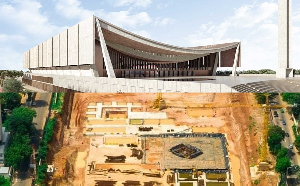
President John Dramani Mahama has ordered the dissolution of the Board of Trustees of the National Cathedral project and the closure of its Secretariat, following what government describes as damning audit findings.
The move follows the uncovering of grave financial and governance irregularities in an independent audit report by Deloitte and Touche.
Addressing the press on Friday, July 18, 2025, Minister of State in Charge of Government Communication, Felix Kwakye Ofosu disclosed that Deloitte and Touche, the firm commissioned to audit the project’s finances, has completed its audit, and the report would be published following the briefing.
“The Secretariat which used to be here at the Presidency stands dissolved as of 1st May,2025. Legal steps are being taken to dissolve the Board of Trustees of the National Cathedral. The Deloitte and Touche audit report will be published after this briefing”, he stated.
However, Kwakye Ofosu emphasized that despite the revelations contained in the Deloitte report, it does not provide a full account of the Secretariat’s operations and the project’s scope.
“For this reason, the Auditor-General has been requested to commission a comprehensive forensic audit into the National Cathedral project and the activities of the Secretariat”, he stated.
In addition to the audit, the Attorney General and Minister for Justice is reportedly initiating the lawful termination of the contract between the state and the project developers in order to prevent further financial losses.
“The Auditor-General has therefore been requested to commission a forensic audit into the National Cathedral Project and the activities of the Secretariat. The Attorney General and Minister of Justice is taking steps to ensure the lawful termination of the contract to prevent further costs and losses to the state.
“After the forensic audit, decisive action will be taken regarding any impropriety determined and the future of the project itself”, he noted.
The National Cathedral was launched in 2017 by former President Nana Addo Dankwa Akufo-Addo to serve as a non-denominational Christian worship centre and a symbol of national unity.
However, construction has stalled in recent years due to funding constraints and mounting questions about accountability and transparency.
JKB/KA
How Virtual Reality is enhancing business and customer experience
Edward Abambire Bawa, Managing Director of GOIL PLC
The Chief Executive Officer (CEO) and Managing Director of GOIL PLC, Mr. Edward Abambire Bawa, has called for a fairer and timelier allocation of petroleum import permits commonly known as laycans-to help sustain the company’s pivotal role in Ghana’s energy security and socio-economic development.
Speaking during a dealer engagement forum at Takoradi in the Western Region, he emphasized that GOIL’s national service obligations, particularly in remote and low-profit areas, are increasingly challenged by operational bottlenecks not faced by many of its private competitors.
“GOIL goes where others won’t—because there’s a hospital, a school, or a community in need,” he said. “But when laycan allocations are delayed or denied, it affects our ability to deliver fuel to these vital institutions and underserved regions.”
As a state-majority-owned enterprise, GOIL has consistently balanced profitability with a strong commitment to national development. Mr. Bawa stressed that while the company willingly bears the cost of serving hard-to-reach areas, a level playing field is essential for it to remain competitive in an increasingly liberalized petroleum sector.
“We are not asking for favours, just fairness,” he stated. “If GOIL is expected to serve the nation wherever needed, then fuel import allocations must reflect that responsibility.”
This appeal comes at a time when Ghana’s downstream petroleum sector is grappling with heightened competition and tightening supply chains. Mr. Bawa believes that resolving inequities in laycan allocation will enable GOIL to enhance supply consistency, maintain high product quality, and better serve the public interest.
Reaffirming GOIL’s position as a dependable national brand, he noted: “GOIL is what it is today because of the people behind it-our dealers, staff, and loyal customers. You are the reason GOIL continues to stand tall.”
He also highlighted GOIL’s enduring reputation as a homegrown brand synonymous with reliability, and quality. “Wherever you go across the country, our brand is recognized not just for our prices, but for our consistency and dependability,” he added.
Looking ahead, Mr. Bawa announced a nationwide renovation of 270 GOIL fuel stations by December 2025 as part of a broader modernization strategy. In the Western Region alone, 30 out of 50 dealer-managed outlets have already been earmarked for immediate upgrades.
“This initiative goes beyond aesthetics,” he explained. “It’s about ensuring our stations are fully equipped, attractive, and capable of offering world-class services at competitive prices.”
Mr. Bawa also hinted at ongoing engagements with the Presidency to secure additional petroleum supply volumes. These efforts, he said aim to ensure more affordable and steady fuel delivery across the country.
In a move to boost operational efficiency, he revealed that GOIL is rolling out a digital platform to provide dealers with real-time access to their account balances and monthly statements. “No more waiting for updates from middle-level staff you’ll be able to log in and view your statement anytime,” he said.
The company’s digital transformation agenda, he added, will span internal systems and customer interfaces, positioning GOIL as a modern, agile, and future-ready energy company.
“There is light at the end of the tunnel,” Mr. Bawa concluded. “GOIL is not just a business-it’s a legacy. Together, we’ll build a company that is modern, trusted, and proudly Ghanaian.”
The dealer engagement forms part of a nationwide stakeholder consultation series aimed at strengthening partnerships, driving growth, and enhancing customer satisfaction across the GOIL network.
Chantelle Boye-Hlorkah is a player of the Black Queens
Chantelle Boye-Hlorkah’s boots have carried her across the cracked parks of Liverpool, the roar of WSL crowds in Merseyside, and now the blazing stadiums of Morocco’s Women’s Africa Cup of Nations.
But more than miles, they’ve carried a truth stitched together with bandages and stubborn hope; unfinished dreams can find new life when you refuse to quit.
Born to a Ghanaian mother in the football-mad heart of Liverpool, Chantelle grew up juggling two worlds.
There were Sunday roasts and red scarves by the Mersey, but always the steady drumbeat of her roots; fufu on the dinner table, stories of Accra, her mum reminding her of where she came from.
By 18, she’d carved out a name for herself as Everton’s academy starlet, then a rising Lioness for England’s U19 and U23 teams.
Wembley finals danced in her head. But behind closed doors, hospital lights replaced stadium floodlights. Years vanished in operating theatres.
“I’ve done three ACL injuries, I’ve had five knee operations. I feel like I’m around 24 years old because I’ve left a lot of years behind. So, I’ve got lots of unfinished football,” she told 3Sports.
She missed call-ups. She missed glory nights. She missed being seen. But when the Lionesses faded from reach, a different door cracked open, one carrying the heartbeat of the continent that raised her family.
Former Black Queens coach, Nora Hauptle, knocked first. The moment Ghana came calling, the decision was already made.
“When Ghana made contact, I went to my mum straight away. She didn’t even hesitate, she was like ‘go and play,” she added.
But it took until April 2025 for her maiden call-up to land. In her first runout against Senegal, she put on the gold and black for the motherland.
By her next game, she’d scored her debut goal against Côte d’Ivoire, proof to herself that the knees, the scars, the lost years hadn’t won.
Now, at the 2025 Women’s Africa Cup of Nations in Morocco, Chantelle isn’t watching from the sidelines.
She’s bossing Ghana’s midfield, voted Woman of the Match in a must-win clash with Tanzania, where she scored a stunning curler to help push the Black Queens into the quarterfinals for the first time since 2016.
“I’m here now, I’m at the WAFCON, I’m playing for Ghana. We just got into the quarterfinal. I’ve helped my team get promoted to the Women’s Super League,” she further stated.
She still carries that Merseyside grit. But on these African pitches, she’s a bridge between the girl who dreamed in Liverpool and the woman now fighting for glory.
As the knockout rounds loom, Chantelle’s mission is clear; this is about more than a personal comeback – it’s about giving her country something bigger to celebrate.
“This tournament will only be successful for me when we take the trophy. I think we deserve it. I think we deserve the respect from African football,” she told JoySports.
Three ACL tears. Five surgeries. But Boye-Hlorkah knows that as she helps steer the Black Queens deep into WAFCON, every scar on her knees built this moment.
FKA/AE
Watch as Ghanaians speak out on Thomas Partey’s rape charge, suggest fresh start in Saudi Arabia
Gianaian social media critic, , has publilcy announced that his Romanian girlfriend as broken up with him.
In a video posted on his social media pages, Kofi Gabs disclosed that Maria, his girlfriend of over seven years, called off their relationship while he was at the airport, preparing to board a flight from the Netherlands to Romania to celebrate his birthday with her.
Member of Parliament for Bongo, Charles Bawaduah, has called for a thorough review of how public infrastructure projects are executed and supervised.
This follows the collapse of roofs on about 10 school buildings in his constituency after a recent downpour. He noted that nearby private schools and homes withstood the storm without any structural failures.
Speaking on Citi Eyewitness News on Friday, July 18, the MP expressed deep concern over the quality of work delivered on public school structures, blaming poor construction practices and weak supervision.
Mr. Bawaduah called for accountability from stakeholders responsible for supervising these projects.
He stressed the need for stronger oversight and enforcement to ensure the safety and durability of public infrastructure, particularly in vulnerable communities.
“As a country, we need to look at how public infrastructure is being executed in terms of the contracts. Because when I went round together with technical people, it became very clear and abundantly so that there was a lot of shoddy work.
“So you wonder why the public schools are the ones affected and not the private ones, or even private homes, which were along the same lines.
“It became clear that the materials that were used and the nature of the execution of the project show that there was shoddy work.
“We need to take a second look at how we supervise this. What are the district engineers doing? What are the consultants doing? How do they approve payment for contractors who put up such works?” he said.
The trial of former Director-General of the National Signals Bureau (NSB), Kwabena Adu-Boahen, and three others began today with the prosecution calling its first witness, Frank Anane Dekpey, an errand boy to Adu-Boahene.
The foremer taxi driver told the court that he knows all three accused person from Cedar Mountain Chapel International, the East Legon branch of the Assemblies of God, Ghana.
Mr. Adu-Boahene is before the court together with wife, Angela Adjei-Boateng and two others for allegedly stealing GHc49.1 million from the state in a purported deal to procure a cybersecurity system for the country.
The two, together with Mildred Donkor and Advantage Solutions Limited are facing 11 counts of conspiracy to commit crime, stealing, using public office for profit, money laundering and causing financial loss to the state.
The prosecution’s first witness led in his evidence in Chief by Deputy Attorney General, Dr. Justice Srem-Sai, told the court that Mildred Donkor often sent him to deposit or withdraw money at UMB Bank or Stanbic Bank to be given to Adu-Boahene.
He said he usually sent the money to Adu-Boahene in his office near Metro TV in Labone.
“I used to collect money from the Labone branch of UMB bank. I also make deposits and withdrawals from the airport branch of Stanbic bank on the instructions of A3 (Donkor),” Dekpey told the court.
He said he either took the monies he withdrew from these banks to Adu-Boahene or Donkor.
“I do not recall ever sending the monies I withdrew to A2 (Angela Adjei-Boateng),” he said.
He said in many of the instances, the cheques given to him by Donkor were sealed in an envelope and she would then direct him to a specific member of the bank’s staff who got the cheques cashed.
“I usually went to the bank with big “Ghana Must Go” bags. The exact amounts which I withdrew were never disclosed to me. Each time I went to the banks, the bank staff gave me a receipt to write my name, telephone number and append my signature,” he added.
Nigerian Afrobeat star, Davido, has disclosed that his wife will kill him if he ever grants the request of a woman who begged him to follow her on Instagram.
The musician made this known in America during a stop on his 5ive Tour.
In the trending video on social media, the female fan, who was dressed in a revealing cloth, had requested if Davido can follow her on Instagram.
Atebubu, (Bono East), July 19, GNA – The Atebubu/Amantin chapter of the Ghana Society of the Physically Disabled (GSFD) in the Bono East Region has called for a flexible and remote work options for the People with Disabilities (PwDs) to contribute to the government touted 24-hour economy.
Mr Sulemana Shiabu, the Chairman of the chapter said the society had 474 registered members and were prepared to contribute to the success of the government flagship economic policy.
In an interview with the Ghana News Agency (GNA) on the side-lines of a meeting of the chapter held at Atebubu, Mr Shaibu said: “We are pleased with the government’s commitment to implement the 24-hour economy in line with its governance system”.
He said: “In fact we also need job opportunities that fit our abilities so that together we can all push for the successful implementation of the policy so as to create a better society for all of us”.
Mr Shaibu said flexible job options that could accommodate the PwDs would greatly tackle the growing unemployment rate within the PwDs community.
He said: “extended hours within the policy can provide opportunities for us to access services, employment and social services to better our lots”.
Mr Shaibu said: “With more flexible and accessible services in the government’s flagship 24-hour economy policy, the PwDs can also enjoy greater independence and autonomy”.
As the opposition New Patriotic Party (NPP) gathers today, July 19, at the University of Ghana Stadium for its National Delegates’ Conference, a significant proposal for constitutional reform is set for deliberation.
Daniel Adomako, also known as Sir Obama-Pokuase of Affa, a Polling Station Secretary at Amasaman, has submitted a comprehensive set of amendments aimed at revitalising the party’s grassroots engagement and democratic processes following its heavy defeat in the 2024 general elections.
This is part of 59 amendment proposals to the NPP constitution submitted by various individuals, groups and organisations within the party.
The NPP suffered a substantial setback in the December 2024 polls, losing the presidency to the National Democratic Congress (NDC) and a significant number of parliamentary seats. The NDC secured 56.55% of the presidential vote and 184 out of 276 parliamentary seats, marking the NPP’s largest loss in the history of the Fourth Republic.
This electoral performance has triggered deep introspection within the party, leading to calls for fundamental structural and procedural changes ahead of the 2028 elections.
Among the key amendments proposed by Adomako, and perhaps the most impactful, is the repeal of Clause 9 of Article 13 of the NPP Constitution.
This clause currently establishes a Special Electoral College, a smaller body of delegates (often senior party members, national, regional, and constituency executives, parliamentarians, and government appointees) who prune the list of presidential aspirants to a manageable number (usually five) before the main presidential primary election involving a larger delegate body.
Adomako argues that this provision is “elitist” and undermines the democratic integrity of the party.
He contends that Clause 9 “assumes that delegates in the main primaries lack the discernment to distinguish between competent and unsuitable presidential candidates, thereby undermining their democratic role.”
Furthermore, he alleges that the operation of this Special Electoral College has been fraught with challenges and susceptible to manipulation.
“The operation of the Special Electoral College has demonstrated significant flaws, as it creates opportunities for a select group of elites to manipulate the process through substantial bribes from aspirants, compromising the integrity of the electoral process.”
He strongly advocates for its complete removal, stating, “Repealing Clause 9 will restore trust in the broader delegate body and eliminate an elitist mechanism prone to corruption. For these reasons, it is hereby proposed that Clause 9 of Article 13 be repealed in its entirety. Thus, all Presidential Aspirants shall proceed directly to the main primaries, ensuring a transparent and democratic selection process free from undue influence by a privileged elite.”
Broader reforms for a stronger NPP
Adomako’s proposals, submitted to the Party’s Constitutional Review and Amendment Committee, span several articles (6, 6A, 7, 9, 10, 13, and 15) and aim to fundamentally reshape the party’s internal structures and operations. These include:
Expanded Polling Station Executive Committees: To enhance grassroots mobilisation and participation.
Establishment of Five-Member Electoral Area Committees: Strengthening party structures at a more localised level.
Restructuring of Constituency and Regional Executive Committees: Introducing specialised appointed and elected roles to improve efficiency and accountability.
Mandating Specialised Director and Coordinator Roles: Proposed amendments to Article 10 would impose the appointment of roles such as Legal Director, IT Coordinator, and PWDA (Persons With Disability) Coordinator, formalising expertise within the party’s management.
Redefining and reorganising the National Youth Wing (Article 15): Aiming to empower and streamline the party’s youth structures.
Robust Governance Mechanisms: These include enlarging the composition and jurisdiction of the National Council’s Vetting Committee for appointed roles and imposing restrictions on dual office-holding to prevent conflicts of interest.
Broader Delegate Representation: Beyond the presidential primary, the proposals seek to expand delegate representation for the Constituency Annual Delegates Conference.
Accountability and Meritocracy: By mandating regular meetings and reports and addressing issues like favouritism and inefficiency, the amendments aim to foster a culture of accountability and merit-based appointments within the party.
The debate over the Special Electoral College is not new in Ghanaian politics.
While the NPP introduced it to manage a potentially large pool of aspirants and prevent a drawn-out, costly primary, it has often been criticised for concentrating power in the hands of a few and being susceptible to financial inducements.
Past NPP flagbearer contests, particularly the 2007-2008 and 2014 primaries, which saw a large number of aspirants, highlighted these challenges.
The 2023 Special Super Delegates Congress, which preceded the main primary for the 2024 elections, also drew scrutiny regarding its effectiveness and potential for manipulation.
Ghana’s major political parties, including the NPP and NDC, have faced ongoing scrutiny regarding their internal democratic practices.
Issues such as the monetisation of internal elections, political patronage, and alleged imposition of candidates often lead to disunity and impact overall electoral performance.
Reforms aimed at enhancing transparency, reducing financial influence, and empowering grassroots members are widely seen as crucial for strengthening party democracy and, by extension, national democracy.
Sir Obama-Pokuase’s submission reflects a growing demand from within the NPP for a more inclusive and transparent internal electoral system.
The deliberations at today’s National Delegates Conference will reveal whether the party is ready to embrace these sweeping changes to rebuild unity and position itself for success in the 2028 elections.
Below is the full 59-point constitution review proposal of the NPP.
DISCLAIMER: The Views, Comments, Opinions, Contributions and Statements made by Readers and Contributors on this platform do not necessarily represent the views or policy of Multimedia Group Limited.
DISCLAIMER: The Views, Comments, Opinions, Contributions and Statements made by Readers and Contributors on this platform do not necessarily represent the views or policy of Multimedia Group Limited.
The New Patriotic Party (NPP) is holding its much-anticipated National Delegates Conference today, Saturday, July 19, at the University of Ghana Stadium, with close to 6,000 delegates expected to attend.
Themed “Rebuilding Together with our Values,” the conference represents a critical moment of introspection for the party as it seeks to regroup and reform following its defeat in the 2024 general elections.
Central to the day’s proceedings are a wide range of constitutional amendment proposals aimed at strengthening internal governance, improving grassroots mobilisation, and streamlining party structures ahead of the 2028 polls.
Joseph Osei Owusu, Chairman of the Planning Committee, confirmed that delegates will deliberate and vote on over 50 consolidated motions that emerged from more than 300 individual proposals submitted by party members across the country.
“In all, we have about a little over 50 motions. You may have one amendment which will have about 50 proposed amendments. So what the motions are doing is to consolidate the various issues that come around, and the members will have to vote on those motions,” Mr. Osei Owusu explained in an interview with Channel One News.
He added that the motions were compiled into a comprehensive booklet and shared with party members through the General Secretary. Voting is expected to be completed by 4:00 PM.
Click HERE to read the full PROPOSALS for NPP’s Delegates Conference today
General Secretary of the National Democratic Congress (NDC), Johnson Asiedu Nketiah, has thrown a playful jab at veteran broadcaster Kwami Sefa Kayi, declaring, “The Lord is my barber, I shall need no comb.”
The humorous remark came during a light-hearted exchange on a radio programme, where the NDC stalwart poked fun at Sefa Kayi’s receding hairline.
Political Science Lecturer at the University of Ghana, Dr. Jalilu Ateku, has urged political parties, particularly the New Patriotic Party (NPP), to broaden their electoral base by allowing all registered members to vote in internal elections as a strategy to curb the growing menace of vote buying.
Speaking on Channel One TV’s Big Issue on Saturday, July 19, Dr. Ateku said the current system that limits voting rights to a select group of delegates creates fertile ground for inducements and undermines democratic integrity within parties.
“As a political party, I think we should be looking forward to expanding the electoral base, not just limiting it to a specific number of people. When more people in the party are given the chance to vote to elect their leader, it will reduce the rate at which people buy fridges, TVs, and offer money for delegates to vote for them.”
His comments come as the NPP holds its National Delegates Conference at the University of Ghana Stadium, a gathering that has drawn over 5,500 delegates from across the country. The conference is a key moment for the party as it navigates its post-election recovery following the 2024 electoral defeat.
Dr. Ateku argued that opening up the electoral process to all registered members would discourage the practice of vote buying, which he believes is both unsustainable and damaging to internal party democracy.
“That will even help the leaders, because how will you bribe everyone to vote for you?” he quizzed. “It will help them to save a lot and channel the revenue into their campaign.”
The conference, themed “Rebuilding Together with our Values,” is expected to deliberate on critical reforms, including over 50 motions derived from more than 300 amendment proposals submitted by party members nationwide.
Chairman of the Planning Committee, Joseph Osei Owusu, told Channel One News that the motions have been carefully reviewed and consolidated by the party’s Amendments Committee for efficient debate and decision-making.
Gospel artiste Diana Asamoah is a staunch NPP supporter
Gospel musician and staunch New Patriotic Party (NPP) supporter, Diana Asamoah, has rejected claims that the party performed poorly in the 2024 general elections.
Speaking in an interview with GhanaWeb at the 2025 NPP National Delegates Conference held at the University of Ghana Sports Stadium on July 19, 2025, Asamoah said the NPP’s second-place finish out of 13 political parties was far from a failure.
“With the elections, we [NPP] were not last but second,” she said, countering public suggestions of a disastrous showing.
She urged party members and leadership to remain united and disciplined as the party gears up for its flagbearer selection scheduled for January 31, 2026.
“I expect that God will be with us for peace to prevail. Victory depends on unity, and I hope we understand ourselves. Genesis 11 shows us that the people couldn’t build to heaven because God brought confusion among them. So, if we are united, we will campaign successfully,” she added.
The 2025 NPP National Delegates Conference brings together delegates nationwide to deliberate on key issues, including proposals to amend the party’s constitution, most notably, suggestions to expand the electoral college.
Watch Diana’s comment below
“Unity is all we want” – Diana Asamoah as she arrives at the University of Ghana Stadium for the NPP’s pivotal National Delegates Conference.
With over 5,500 delegates expected and legal clouds looming, the stage is set for a defining moment in the party’s rebuilding journey.… pic.twitter.com/jrpwodsVUr
Tourism Minister Abla Dzifa Gomashie in a photo with the Serbian Foreign Minister
The Minister for Tourism, Culture and Creative Arts, Abla Dzifa Gomashie, received the Serbian Minister for Foreign Affairs, H.E. Mr. Marko Duric, during a courtesy call aimed at deepening cultural diplomacy and bilateral cooperation between Ghana and Serbia.
The engagement, held at the Ministry’s conference room in Accra, culminated in the symbolic signing of a Memorandum of Understanding (MoU) to formalize collaboration in cultural exchange, creative industry development, and tourism investment.
“This MoU is a legal and diplomatic step forward in building bridges between our two cultures,” Hon. Gomashie stated. “It creates room for mutual learning between our creative sectors and serves as an invitation for industry players to connect and grow together.”
She noted that the agreement lays the groundwork for deeper technical and professional exchanges, including Serbia sharing its expertise in arts, crafts, and creative education, while Ghana presents its unique cultural offerings to Serbian audiences.
The Minister further highlighted Ghana’s upcoming AfroGhastro Festival, a celebration of African and diaspora culinary heritage. She extended an invitation to Serbia to participate and explore the power of food as a tool for cultural storytelling and global connection.
Hon. Gomashie also announced Ghana’s commitment to participate in the 2027 World Expo in Serbia, a global exhibition expected to host over 130 countries. “This is a strategic opportunity to showcase Ghanaian culture, sports, and innovation on the world stage,” she said.
In a gesture of goodwill, the Minister presented her Serbian counterpart with Adinkra-themed gifts symbolizing Ghana’s identity and philosophy. “He leaves with a piece of Ghana; our stories, our symbols, and our spirit,” she added.
H.E. Mr. Marko Duric expressed appreciation for the warm Ghanaian hospitality, describing it as a sign of the “brotherly bond” that has existed between the two nations since the era of President Kwame Nkrumah.
“Our shared history, particularly during the anti-colonial era has always guided our political and diplomatic ties,” he remarked. “Today, we reaffirm our commitment to elevating that friendship into meaningful economic, cultural, and diplomatic cooperation.”
The Serbian Minister also noted Ghana’s development vision, which he said aligns with Serbia’s own transformational journey. “In less than a decade, we doubled the size of our economy. We believe Ghana can do the same and we are ready to support this transformation,” he said.
He extended an open invitation to Dzifa Gomashie to visit Serbia and pledged support for increased trade, investment, and cultural exchange between the two nations. “Let us continue this unique friendship built on shared values, culture, and a vision for the future,” he concluded.
The Serbian delegation led by the sector minister visited the Kwame Nkrumah Memorial Park, paying homage to Ghana’s founding father Dr. Kwame Nkrumah.
The National Cathedral project is one of many being investigated under the ORAL Initiative
A government-commissioned audit by Deloitte and Touche has revealed that Ghana’s National Cathedral project has cost the state $97 million, far exceeding the previously stated $58 million, despite no physical structure being completed.
The audit findings, disclosed on July 18, 2025, point to serious financial mismanagement surrounding what was intended to be the country’s most ambitious religious and cultural monument.
Presidential Spokesperson Felix Kwakye Ofosu told the media on Friday that the audit further uncovered overlapping responsibilities and payments between the Nehemiah Group and Kubik Maltbie, a separate subcontractor.
Despite the Nehemiah Group being tasked with coordination and oversight of Phase 1 of the project, Kubik Maltbie was also contracted for similar services at a cost of US$592,500. This amount represents approximately 87% of the total US$675,000 paid to the Nehemiah Group during the same period.
“This indicates a clear case of paying two entities for the same work, with no clarity on who was actually executing the tasks or who may have received government funds unjustifiably,” Kwakye Ofosu said.
Additionally, the audit flagged a further US$24,498.17 paid to the Nehemiah Group as reimbursable expenses for activities unrelated to construction oversight, highlighting further inefficiencies in the project’s financial management.
“These findings reflect poorly on project oversight and raise broader concerns about accountability and the effective use of public resources on a project of such national significance,” he emphasized.
Kwakye Ofosu assured the public that the government will act on the audit findings and ensure full accountability.
See the full report below
MA
How Virtual Reality is enhancing business and customer experience
The head coach of the Black Queens of Ghana, Kim Lars Bjorkegren, has rallied his players to be clinical in front of goal in their quarter-final clash against Algeria at the 2024 CAF Women’s Africa Cup of Nations (WAFCON).
Speaking ahead of the encounter on Saturday, July 19, the coach described the opponent as a well-organised team with a good goalkeeper.
Coach Kim Lars Bjorkegren noted that if his team would finish the match with a victory, they will have to create better chances and make sure the chances are converted.
He has charged his players not to aim to score fancy goals but to get the ball in the back of the Algerian net by any means necessary.
“Algeria are a really well-organised team, especially in defence, and they have a good goalkeeper.
“We’ve talked about the need to make it a little more difficult for her. We can’t just shoot from 45 meters and hope for the best. We need to create better chances and be clinical. There’s no need to look for fancy goals,” Coach Kim Lars Bjorkegren said.
The quarter-final encounter between Ghana and Algeria on Saturday is scheduled to kick off at 4 pm at Stade Municipal de Berkane.
NIGERIA – A senior lecturer with the Kogi State University, Anyigba, identified as Dr. Olabode Abimbola Ibikunle has died in a hotel room after a sex romp with a 22-year-old level student.
According to a report by SaharaReporters, the incident occurred on Tuesday, July 15, and was later reported to the Anyigba Police Division, which promptly arrested the student involved for questioning.
Minority Chief Whip Frank Annoh-Dompreh, has expressed displeasure over the indefinite postponement of his question to the Governor of the Bank of Ghana (BoG), insisting that public officials must show respect for Parliament and its oversight role.
His frustration followed an announcement by Majority Leader Mahama Ayariga, who informed the House that the BoG Governor would not be able to appear to respond to the question regarding recent dismissals at the central bank.
“There may be the usual formal communications by the Right Honourable Speaker. Questions will be asked of ministers. There is an indication here that the Governor of the Bank of Ghana, but unfortunately, the Governor will not be able to come and answer those questions, so that is where I indicate an amendment,” Mr. Ayariga told Parliament.
He added, “If I had seen it earlier before being given a copy of the report, I would have raised it. But earlier on, I did not notice it when I signed the report. So I just thought to draw attention that the Governor will not be able to come.”
In response, Annoh-Dompreh questioned the precedent being set, warning against what he sees as growing disregard for parliamentary procedures.
“The Bank of Ghana Governor was scheduled to be here two weeks ago,” he said. “He wrote a letter to Parliament and said that he’s engaged in an equally important matter and hence cannot come. Then the same question was rescheduled. Then the Governor again wrote another letter that we should reschedule. Fine. But Speaker, I’m worried and I intend to ask.”
He continued, “Is it the case that when the Table Office goes through the motion of filing a question and the ministers cannot come, the minister can sit in his office, an independent constitutional body, and write that ‘I cannot come’ and decide not to come? because the writing of these letters from ministers to parliament should be at the discretion of Parliament. Parliament must grant that request.”
Annoh-Dompreh further argued that such decisions must lie with the legislature, not with officials themselves: “In other words, I’m saying that when ministers write letters seeking the rescheduling of these programmed questions, they should wait on Parliament to grant that request before deciding not to show up.”
He revealed that Parliament had received 16 such letters in just two weeks, including two from the BoG Governor alone. “ You cannot just write a letter and decide not to come. Within two weeks, we have received 16 letters, and the BoG this is the second time he is writing. To the respect to BoG Governor, when he writes to Parliament for one reason or the other, he should wait for Parliament to grant that request,” he stressed.
“I oppose that. I oppose the Bank of Ghana just saying that ‘I cannot come.’ This is the people’s representative,” Annoh-Dompreh said firmly. “ He must respect us.”
DISCLAIMER: The Views, Comments, Opinions, Contributions and Statements made by Readers and Contributors on this platform do not necessarily represent the views or policy of Multimedia Group Limited.
DISCLAIMER: The Views, Comments, Opinions, Contributions and Statements made by Readers and Contributors on this platform do not necessarily represent the views or policy of Multimedia Group Limited.
The Member of Parliament (MP) for Suame, John Darko, has raised an alarm over potential mass job losses in his constituency and across the country as the country moves toward adopting electric vehicles (EVs) as part of its green energy transition.
Making a statement on the floor of Parliament titled, “The Green Transition and its Effects on Auto Mechanics in Suame Industrial Area (Suame Magazine)”, the Suame MP said while the country’s commitment to the Paris Agreement and global climate goals is commendable, it must be balanced with the realities facing the millions of Ghanaians employed in the combustion engine auto repair sector.
“Mr. Speaker, my constituency is an industrial hub with many workshops for metal, artisanal engineering and vehicle repairs that provide direct and indirect employment to about 500,000 Ghanaians. Across the country, there are over 500,000 additional auto mechanics who depend on fixing combustion engine vehicles for survival,” he said.
He warned that the global shift to green energy and electric mobility, while beneficial for the environment, poses a serious threat to the livelihoods of mechanics whose expertise is built around traditional internal combustion engines.
According to the MP, data cited from the International Energy Agency, the number of electric vehicles globally grew from 26 million in 2022 to over 40 million by 2023.
Mr. Darko disclosed that in Ghana, former Energy Minister, Dr. Matthew Opoku Prempeh, reported that more than 17,000 EVs were already in the country as of 2023, with former Vice President, Dr. Mahamudu Bawumia, championed plans to introduce 1,000 electric buses supported by charging infrastructure.
“While these efforts may help reduce emissions and meet our Nationally Determined Contributions (NDCs), they also risk wiping out jobs for those who depend on engine blocks, cylinder heads, valves, crankshafts, fuel systems, timing belts, lubricants and oil filter sales,” Mr. Darko noted.
He acknowledged arguments that the EV transition would create new opportunities for mechanics trained in electric systems, but questioned the scale and accessibility of such opportunities for current workers.
“How many jobs will be created from this shift? Can they replace the loss of millions? Even if so, can we realistically retrain our illiterate and elderly mechanics, many of whom are aged 50 to 70 and have spent decades mastering combustion engine repair?” he quizzed.
The legislator also pointed out the country’s lack of preparation for the transition, citing insufficient tools, diagnostic equipment, and modern workshops required to support EV maintenance. He called for deliberate government action to mitigate the socio-economic fallout.
“Mr. Speaker, we are too quick to accept concepts like green transition, energy transition, and climate change without doing enough to shield ourselves from their harsh realities. With appropriate support and training, our mechanics can be integrated into the green economy, ensuring a just and inclusive transition,” he said.
Mr. Darko proposed the introduction of a Private Member’s Bill to mandate the Executive to establish a fund and a national action plan for reskilling auto mechanics and upgrading their workshops.
“This is the responsibility I expect the new Ministry of Energy and Green Transition to embrace. Job creation must remain a top priority, and this green transition must not leave our people behind,” he concluded.
Funke Akindele and Toyin Abraham recently sparked online discussions with a surprising interaction.
The two award-winning filmmakers were rumored to have had a feud for some time.
Their recent interaction suggests a possible reconciliation, indicating they may have resolved their differences privately.
Popular Nigerian actresses Funke Akindele and Toyin Abraham recently stirred conversations online with a surprising interaction that hints at reconciliation.
President of the Ghana Journalist Association, Albert Kwabena Dwumfour has vowed that the police officer who brutally assaulted a journalist at Ablekuma will face dire consequences and “live to regret” his actions forever.
The assault on the journalist, he said, would not be taken kindly unlike previous cases and incidents where journalists were shamefully assaulted by the police without any action.
The police, he said, could no longer take members of the public for granted by playing mind games whenever one of their own committed a crime that required punishment.
Speaking in an interview with UTV on the assault a journalist with GHOne, Kwabena Agyekum Banahene suffered during the Ablekuma North election re-run, he gave the strongest indication that the police cannot escape.
He said, “mark this day down he will live to regret…The police cannot take us for granted. They knew that usually cases of this nature do die down just after some few weeks hence their swift action to interdict him”.
He termed the press release issued by the police administration to interdict the officer involved as “wobbling statement” and pure PR gimmicks just to deceive the public.
He explained that the statement was “wobbling” because even though the police administration knew the full details of the officer, they decided to conceal his name and other vital information from the public.
“When the police arrest suspects in this country, their names and other details are provided but when their own officer wearing a uniform was captured in a video assaulting a journalist, they refused to give details about him”. He continued.
Few hours after a video which captured the police officer assaulting the journalist went viral, the police administration quickly issued a statement to interdict the officer.
However, the police clandestinely refused to provide details such as the name and rank of the officer as their statement rather provided information about the victim.
In 2018, a broadcast journalist with Joy News, Latif Iddrisu was viciously was beaten by a group of police officers at the forecourt of the criminal investigation department (CID) in Accra.
Though it has been seven years since the incident occurred right at the nose of the police at the CID headquarters, the journalist is yet to receive justice for the atrocities meted out to him.
However, Kwabena Dwumfour has given the strongest assurance that the assault involving Kwabena Agyekum Banahen would not be allowed to die down without full-scale investigations and necessary legal action.
Police officer who assaulted journalist during Ablekuma North rerun will live to regret it – Albert Kwabena Dwumfour #UTVGhanapic.twitter.com/aXh6bFLszo
A total of 5,600 delegates from across the country are expected to attend the National Delegates Conference of the opposition New Patriotic Party (NPP).
According to the NPP’s National Organiser, Henry Nana Boakye, the delegates arrived in Accra from their various destinations on Friday and are prepared to participate in the conference.
“We are expecting 5,600 delegates to be here,” he told JoyNews.
Speaking on the security arrangements, he said, “There is a joint security operation between the state security agencies and our party’s internal security. It has been very effective so far. We have held a series of meetings with them, and currently, security is very tight. We intend to maintain that level of security at this venue.”
DISCLAIMER: The Views, Comments, Opinions, Contributions and Statements made by Readers and Contributors on this platform do not necessarily represent the views or policy of Multimedia Group Limited.
DISCLAIMER: The Views, Comments, Opinions, Contributions and Statements made by Readers and Contributors on this platform do not necessarily represent the views or policy of Multimedia Group Limited.
The Ranking Member of Parliament’s Economy and Development Committee, Kojo Oppong Nkrumah, has urged the House to intensify its oversight role by demanding official documentation on several government-launched economic programmes.
Speaking on the floor of Parliament on Friday, July 18, the Ofoase Ayirebi MP commended the Business Committee of the house for its detailed schedule of parliamentary business but called for a supplementary statement to include key policy documents that are yet to be submitted to Parliament.
He said these are papers that concern issues of national and economic interest, and that the programmes have been launched by the government, and “till date, we have not received a single A4 sheet detailing them. That makes oversight difficult.”
Mr Oppong Nkrumah cited six major programmes that had been publicly launched in recent months but for which no official documentation had been laid before the House.
These include:
FeedGhana (Agric4 Economic Transformation Programme) – Launched 14 April 2025
One Million Coders Programme – Launched 17 April 2025
National Apprenticeship Programme – Launched 30 April 2025
Ejumawura Programme – Launched 28 April 2025
24-Hour Economy Initiative – Launched in early June 2025
Labour Export Programme – Announced 31 May 2025
He said the flagship programmes of the current administration must of necessity, be scrutinised by parliament, and it is proper that the house is provided with the full documentation to effectively scrutinise them.
He recalled that even the Speaker of Parliament had recently urged that the 24-hour economy policy be formally presented for consideration by the House.
With just a few weeks left before Parliament rises, the former Information Minister urged the Business Committee to expedite the preparation of a supplementary business statement to ensure the documents are made available for parliamentary review.
He pointed out that Parliament cannot carry out effective oversight if policy documents are not laid before Parliament.
DISCLAIMER: The Views, Comments, Opinions, Contributions and Statements made by Readers and Contributors on this platform do not necessarily represent the views or policy of Multimedia Group Limited.
DISCLAIMER: The Views, Comments, Opinions, Contributions and Statements made by Readers and Contributors on this platform do not necessarily represent the views or policy of Multimedia Group Limited.
Joseph Kpemka, Lawyer for the former Chief Executive Officer of the National Petroleum Authority (NPA) Dr. Mustapha Abdul-Hamid, has asserted that the prosecution has no basis for the charges levelled against his client, insisting the allegations will not stand in court.
Speaking on Citi Eyewitness News on Friday, July 18, Mr. Kpemka, who also served as a former Deputy Attorney General, revealed that Dr. Abdul-Hamid has officially been charged with extortion and abuse of office for private gain.
He said the legal team is prepared to appear in court on Wednesday, July 23, but remains confident that the case lacks merit.
“We have received the charge sheet. They have charged my client with extortion, and they have also charged him with using his official office for private gains, and we are going to appear in court. As we let the statement out yesterday, we denied each charge without any doubt at all,” Kpemka said.
He maintained that the legal team is convinced the prosecution will be unable to present credible evidence to support the claims brought against Dr. Abdul-Hamid.
“We are seeking to establish that indeed the prosecution, in our opinion, candidly will not be able to establish these charges against us in the course of the trial,” he added.
The comments follow a press release from the Office of the Special Prosecutor (OSP), naming Dr. Abdul-Hamid among seven individuals and three companies charged in connection with an alleged GHS280 million extortion and money laundering scheme at the NPA.
In a separate statement issued by his legal team on Thursday, July 17, Dr. Abdul-Hamid categorically denied the allegations. His lawyers stressed that he had not been formally charged or served with any charge sheet at the time of the OSP’s release.
They also recounted that back in February 2025, the OSP initially accused Dr. Abdul-Hamid of embezzling GHS1.3 billion from the Unified Petroleum Pricing Fund (UPPF). In response, the former NPA boss demanded a retraction on February 17, a request the OSP allegedly ignored.
He was later invited for questioning on February 25 over the supposed mismanagement of the UPPF and procurement breaches. According to his lawyers, the allegations have since shifted from embezzlement and procurement infractions to extortion and money laundering, with the amount involved revised down from GHS1.3 billion to GHS280 million.
The OSP now alleges that Dr. Abdul-Hamid personally received GHS24 million from the amount said to have been extorted from oil marketing companies and petroleum transporters.
As the case heads to court on Wednesday, July 23, Dr. Abdul-Hamid’s legal team says it will vigorously contest the charges and prove that the accusations are baseless.
Veteran journalist Kwesi Pratt Jnr has called on President John Dramani Mahama to dismiss all appointees who have begun pursuing presidential ambitions.
In a post on X on Friday, July 18, 2025, Pratt expressed concern that some of Mahama’s appointees appear more focused on positioning themselves as his successor rather than delivering on their current responsibilities.
Nadequate water supply, health facilities and difficult access to education in island communities in the Eastern Region have led to children in those areas trekking long distances to access these facilities, UNICEF Ghana has said.
It said the poor access to those facilities was a direct cause of the high attrition of key workers who delivered vital services, resulting in adverse results in education, health and birth registration.
It noted that weak implementation of birth registration protocols and the charges associated with children over 12 months were major drawbacks to achieving universal birth registration.
These were part of key findings from a week-long visit to island communities in the Eastern Region to address child vulnerabilities by the UNICEF Ghana Representative, Osama Makkawi Khogali.
The visit, which marked the first time a head of a development organisation in Ghana had undertaken such an extensive and direct engagement with hard-to-reach communities, saw Mr Khogali travelling by ferry, canoe, and motor bicycle to two communities in the Kwahu Afram Plains South, namely Bumpata and Ekyiamenfrom, and remote fishing villages of Kpatalidzakope and Senafukope in the Kwahu Afram Plains North, to engage directly with the residents.
Objective
The objective of the visit was to gain an understanding of the pressing challenges impacting children in those communities, including significant barriers to birth registration, access to education, health, and adolescent and child protection issues.
Osama Makkawi Khogali, UNICEF Representataive in Ghana, with a child from Kpatalidzakope, Island Community
A statement issued in Accra after the visit said the Eastern Region, while showing progress in some health indicators, continued to present significant challenges for child well-being, particularly in its rural and hard-to-reach areas.
Regarding birth registration, it said, “a significant hurdle exists in rural areas, with 73 per cent of residential clusters lacking health facilities, which are often the primary points for birth registration.
This directly impacts a child’s legal identity and access to essential services”.
For education, it said, the significant lack of access contributed to lowering school attendance and retention rates, disproportionately affecting girls.
“Despite improvements in maternal and neonatal mortality rates, malnutrition remains a concern.
A study in the Denkyembour District highlighted that 15.2 per cent of school-going children suffered from thinness, and 17.8 per cent experienced stunting, influenced by parental education levels and household food insecurity,” it said about health and nutrition.
Visit
Touching on the visit, the statement said, it was a direct reflection of UNICEF’s dedication alongside that of the government and partners to reach marginalised communities across Ghana, ensuring every child had the opportunity to survive, thrive, and reach their full potential.
Osama Makkawi Khogali (right), UNICEF Representative, interacting with a teacher from Bumpata DA Basic School, Afram Plains
It said during the visit, Mr Khogali held constructive dialogues with the Regional Coordinating Council, District Chief Executives, community members and their leaders, teachers, health workers, and religious leaders, and the key discussions centred on challenges hindering birth registration, barriers to accessing quality education, availability of essential health commodities and adolescent pregnancy.
“UNICEF’s presence in these remote communities reaffirms our core principle to protect and promote the rights of every child irrespective of where they live, however isolated,” the statement said.
Osama Makkawi Khogali (5th from left) with some members of the Eastern Regional Coodinating Council
It said understanding the unique barriers children faced in accessing quality education and essential health services, to addressing concerns around adolescent pregnancy and birth registration, were crucial for tailoring support effectively, adding that the visit strengthened their resolve to ensure that no child in Ghana was left behind.
About UNICEF
UNICEF is the world’s leading child rights organisation, working in over 190 countries and territories to reach every child, everywhere.

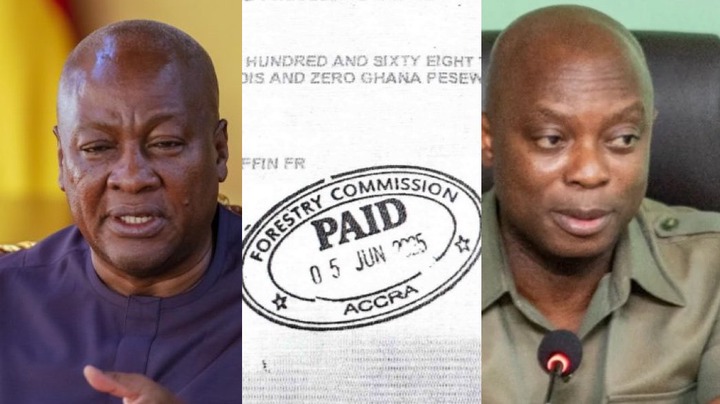

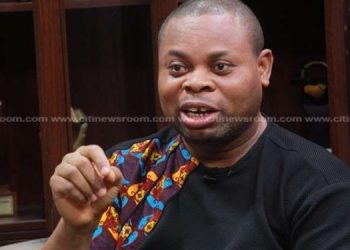


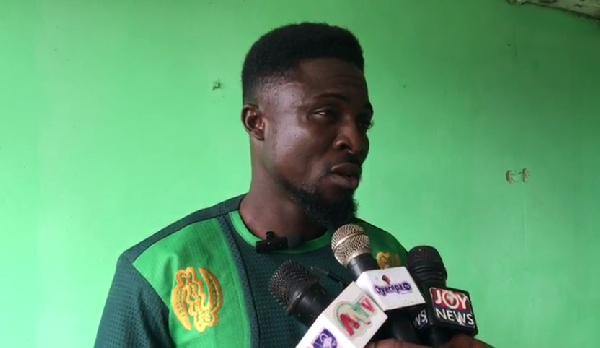

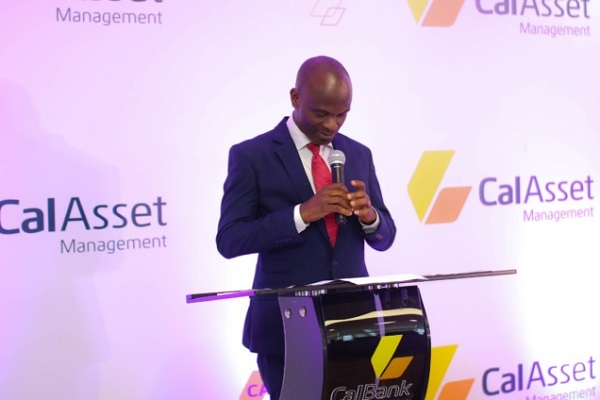


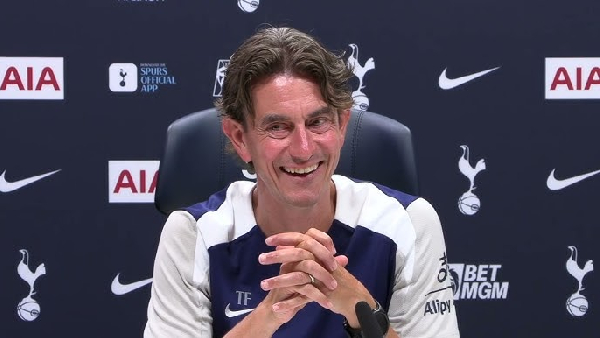







)
)
)
)
)
)
)




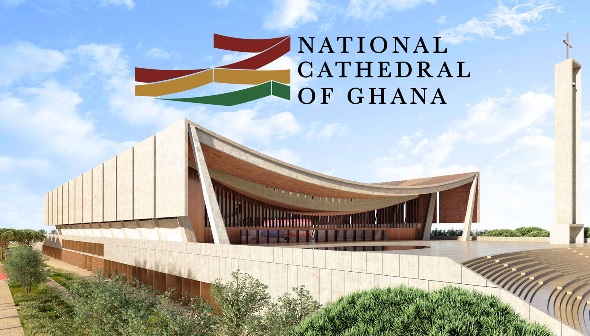
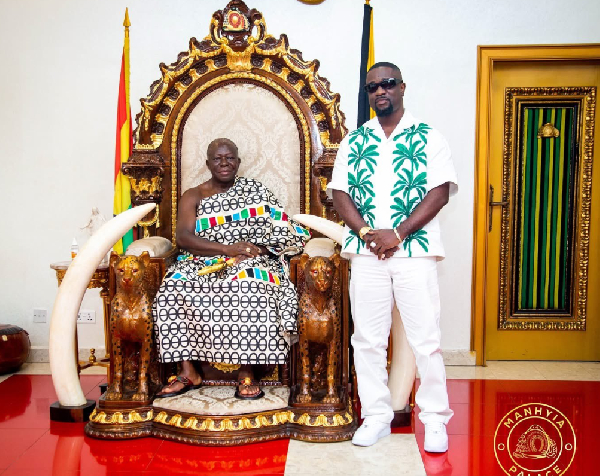


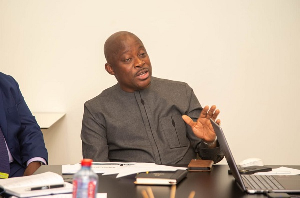
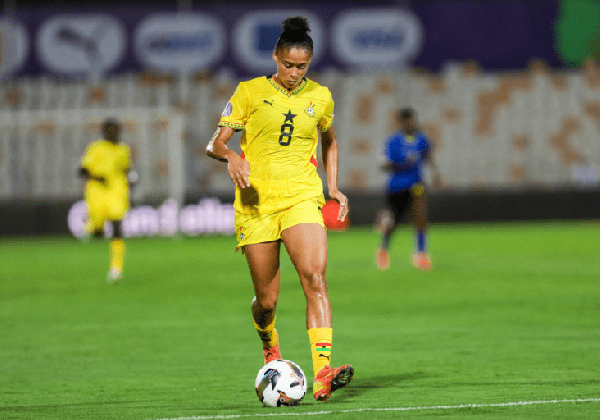



![‘My wife will kill me’ – Davido replies woman asking him to follow her on Instagram [VIDEO]](https://www.ghanamma.com/wp-content/uploads/2025/07/2908aef1283e0728aa3513fff081c283.webp "‘My wife will kill me’ – Davido replies woman asking him to follow her on Instagram [VIDEO]")