4 C
London
Saturday, December 27, 2025
Home Blog Page 825

Toyin Abraham Reacts With Joy To Priscilla Ojo’s Pregnancy Announcement

0

Toyin Abraham, celebrates the pregnancy announcement of Priscilla Ojo.

Priscilla Ojo is the daughter of actress Iyabo Ojo and recently got married in a series of lavish weddings in Nigeria and Tanzania.

She shared her pregnancy news on social media with an ultrasound scan, generating excitement and congratulations from fans and fellow celebrities.

I can’t be ungrateful to Bawumia who blessed me with running mate slot – Napo

0

Former running mate of Dr Mahamudu Bawumia, Dr Mathew Opoku Prempeh has denied claims that he has switched camps.

According to him, he remains committed to Dr Bawumia’s course and will not bebungrateful to the man who blessed him with the running mat position.

What he says he has done is to unite the political party and persons who have declared to contest for the flagbearer position in the political party.

River Guards’ vigilance paying off in galamsey fight – Lands Minister

0

Minister for Lands and Natural Resources, Emmanuel Armah-Kofi Buah, says the government is beginning to see measurable progress in the fight against illegal mining, thanks to the vigilance of the newly deployed river guards under the Blue Water Initiative.

Speaking at the Ezinlibo Naval Base in the Western Region on Friday, July 25, where he inaugurated the second cohort of the Blue Water Guards, Mr Buah stated that the collective efforts of these frontline defenders are beginning to yield results in restoring Ghana’s degraded water bodies.

“This is not just another ceremony but a moment of critical importance as we take steps to reclaim the purity of our rivers, restoring hope to our communities, and renewing our covenant with the land that sustains us all,” he said.

Mr Buah explained that although mining remains a viable and necessary economic activity, its unregulated and destructive form, popularly called galamsey, has become an existential threat to Ghana’s water systems and national development.

“Our rivers, once vibrant lifelines for drinking water, agriculture, and livelihoods, now run thick with pollution from illegal mining activities. In the Western and Central Regions, water treatment plants have been forced to shut down, leaving families without clean water,” he lamented.

However, he noted that the government is not helpless in the face of this crisis, pointing to the success of the first cohort of Blue Water Guards, which was deployed earlier this year.
“453 personnel have already been recruited, trained, and deployed, and their impact has been tremendous. Their vigilance has led to measurable progress in our fight against galamsey, proving that this approach works,” the Minister announced to applause.

About the Blue Water Guards

The Blue Water Guards initiative was launched under President John Dramani Mahama’s administration as part of the broader Blue Water Initiative. The aim is to secure Ghana’s rivers and water bodies by deploying specially trained personnel to monitor, protect, and enforce environmental regulations in galamsey-prone areas. The initiative is backed by the Ghana Navy and the National Anti-Illegal Mining Secretariat (NAIMOS), the operational hub of the fight against illegal mining.

A New Breed of Environmental Defenders

Mr Buah swore in 530 recruits, describing them as more than just guards, but “community vanguards” with a sacred duty to protect the nation’s natural heritage.

“In the spirit of the Young Pioneers, I charge you to uphold this responsibility with courage and integrity. You are to monitor and protect, enforce the law without fear or favour, and engage communities to build local stewardship of our water resources,” he said.

He assured the recruits of continued support from NAIMOS and announced that the ministry will soon roll out the Responsible Cooperative Mining and Skills Development Programme to offer sustainable alternatives to small-scale miners.

“This programme will provide training, modern equipment, and cooperative frameworks to ensure mining benefits communities without destroying our environment,” he disclosed.

A Charge to Serve with Honour

Mr Buah concluded with a rousing call to duty, reminding the guards that their success is tied to national survival.

“Blue Water Guards, be assured, the people of Ghana are behind you, and together, we will restore our rivers to their rightful state: clean, blue, and life-giving. We are proud of your commitment during training, and we expect nothing less than your best in the field,” he declared.

He officially inaugurated the second batch of recruits with a pledge of the government’s unwavering support in the battle to reclaim Ghana’s water bodies.

DISCLAIMER: The Views, Comments, Opinions, Contributions and Statements made by Readers and Contributors on this platform do not necessarily represent the views or policy of Multimedia Group Limited.

DISCLAIMER: The Views, Comments, Opinions, Contributions and Statements made by Readers and Contributors on this platform do not necessarily represent the views or policy of Multimedia Group Limited.

Emotions and politics ruined Ghana-Nigeria movie collaboration

0

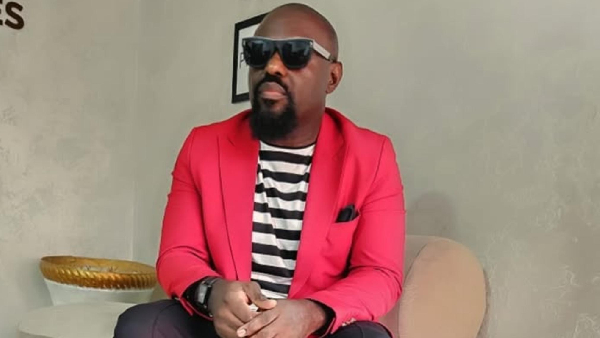
Jim Iyke is a Nollywood actor Jim Iyke is a Nollywood actor

Nigerian actor, Jim Iyke, claims the once-flourishing collaboration between the Ghanaian and Nigerian movie industries ended due to “emotions and politics.”

During an interview with 3FM on July 24, the Nollywood star explained that years ago, the partnership was strong and full of promise.

However, he asserts that a single wrong comment and an emotional reaction were enough to destroy it.

According to Iyke, the collaboration had created significant opportunities for both countries, helping some of Ghana’s biggest acting talents achieve fame.

He, however, believes that personal feelings and political interference ultimately derailed the successful venture.

“There was a certain time where there was a collaboration between Nigerians and Ghanaians that was heading for better waters. We all invested our emotions and our economy in that collaboration. We didn’t need anybody with ulterior motives or the politics or the naysayers to come between us, because it was thriving and working organically… Some of your biggest talents came from that collaboration,” Iyke stated.

When asked why no Ghanaian actor was cast in his new film, SIN, Iyke directly linked it to the breakdown in the relationship between the two industries.

He revealed that somebody spoke the wrong word and somebody got emotional, leading to the partnership’s collapse.

“They were in obscurity till that collaboration. Why end it because somebody spoke the wrong word and somebody got emotional. Now, this is the difference between us and you. We don’t get emotional about money. I can sit here and do business with my worst enemy and still not be in a social circle. But everybody wants to be involved with everybody’s insecurities,” he said.

Iyke emphasised that Nigerians tend to separate emotions from business, which he believes is a key factor in the continued growth of their entertainment industry.

He urged Ghanaians to adopt a similar approach by focusing on the bigger picture and setting aside personal issues for the collective good of the industry.

“Can we have a common ground where we say, ‘F*** our personal life, let’s focus on the ball?'” he said.

“As a collective, we move. As a collective, we can force any leadership to sit down… If they learned the principle and power behind the consensus, they would not have messed up that collaboration. And then since that time, it’s been downhill,” he added.

Meanwhile, you can watch GhanaWeb TV’s exclusive interview with Arathejay below:

AK/VPO

Ghanaians will always support you when you do good songs – Camidoh

0

Camidoh is a Ghanaian singer Camidoh is a Ghanaian singer

Ghanaian singer Raphael Camidoh Kofi Attachie, popularly known as Camidoh, has said Ghanaians will always support artiste who does good music.

Speaking in an interview on Hitz FM on July 24, 2025, Camidoh advised the young artistes to churn out good songs.

According to him, artistes have to put in their hard work, stating “the support has always been there; the people are always there to support us so we just have to churn out the music”.

“Not every song can be a monster hit, so I feel like the people have always been there” Camidoh added.

The Sugarcane hitmaker further said; “We just have to put in the work. They want to see the videos, they want to see us on the road. Somebody connects with you more when you come to their school SRC. It’s like they felt you close and it becomes a whole different level of love. That’s why we have to pace ourselves and grow gradually.”

FG/AME

Meanwhile, you can watch GhanaWeb TV’s exclusive interview with Arathejay below:

Kwaku Azar defends Supreme Court’s dismissal of Kelvin Taylor’s arrest warrant

0

Renowned US-based Ghanaian lawyer and scholar, Professor Stephen Kwaku Asare, has defended the Supreme Court’s decision to dismiss a warrant issued for US-based Ghanaian social commentator, Kevin Taylor.

The apex court of Ghana came under heavy criticism following its ruling on Tuesday, July 22, 2025.

A faction of the public said that the dismissal of the warrant amounts to it permitting verbal attacks on the country’s leaders, including justices of the courts.

However, Professor Kwaku Asare, who is widely known as Kwaku Azar, has said that the court’s decision to quash the warrant was apt.

He argued that the court, by its decision, was not endorsing the attack of leaders but was rather upholding the 1992 Constitution of Ghana.

“What it did, and rightly so, was to address the propriety and legality of the High Court’s order. That is precisely the essence of a certiorari application: it does not invite the Court to endorse or condemn the underlying conduct, but to assess whether the lower court acted within the bounds of law and procedure.

“Ironically, many of the loudest critics of the decision have themselves resorted to insults, not only against Kevin Taylor but also against the SC and those who dared to explain its decision. And they have done so without knowing why the SC ruled the way it did. The irony, it seems, is utterly lost on them!” Azar wrote.

He added, “Bottom line is the SC’s decision is not an endorsement of insult. It is an endorsement of the rule of law, the right to a fair hearing, and judicial restraint. Let’s not pretend that anger at an insulter justifies judicial overreach. Today it’s Kevin Taylor. Tomorrow it could be you. That is why even the foul-mouthed are entitled to due process. That’s not weakness. That’s constitutional strength.”

The legal luminary went on to explain why the arrest warrant issued by the High Court judge, which reads, “I issue a warrant for the apprehension of the scoundrel to be produced before the court… Until he is arrested, this warrant remains in force, and shall last the day this scoundrel that styles himself as Kevin Ekow Taylor also expires from the surface of the earth,” was thrown out by the Supreme Court.

He said that the High Court judge, Justice Eric Kyei Baffour, violated the principle of due process, prejudged guilt, and used improper judicial language, which showed that he was biased.

He added that the judge also violated the contempt procedure and issued an unlawful perpetual warrant.

Read the full reasons given by Kwaku Azar and his post below:

The order drips with bias, impropriety, and constitutional error. Here’s what was wrong with it and why the SC had no real choice but to quash it:

1. Violation of Due Process (Audi Alteram Partem):

• Kelvin Taylor was not heard before the judge issued a warrant for his arrest.

•Contempt ex facie curiae (outside court) requires that the alleged contemnor be served, heard, and given a fair chance to respond.

• The judge prejudged guilt (“scoundrel,” “totally a fabrication,” “committed to prison”), violating Article 19(2) of the Constitution and fundamental principles of natural justice.

2. Improper Judicial Language and Bias:

• The order uses intemperate and personalized language: “scoundrel,” “impeccable integrity of the judge,” and the grotesque phrase about expiration “from the surface of the earth.”

• Such language undermines judicial impartiality, bringing the office of the judge into disrepute more than any insult could.

3. Exceeding Jurisdiction:

• The High Court has no extraterritorial jurisdiction to arrest someone outside Ghana without invoking formal extradition processes.

• The judge purported to bind executive agencies (IGP, BNI, National Security) to effect an arrest without due process, violating the separation of powers.

4. Contrary to Contempt Procedure:

• Contempt ex facie curiae must be initiated through formal process: notice, service, and hearing.

• The judge acted as complainant, prosecutor, and judge—a procedural irregularity that offends Article 296 on fair exercise of discretionary power (see e.g., Asare AJICL 2015 https://www.euppublishing.com/…/10.3366/ajicl.2015.0123)

5. Unlawful Perpetual Warrant:

• The phrase “shall last the day…[he] expires from the surface of the earth” is a constitutional aberration.

• Warrants must be lawful, time-bound, and subject to legal review, not personal vendettas dressed as judicial orders.

6. Improper Reliance on Article 126(2):

• While Article 126(2) empowers courts to punish for contempt, it does not override the right to a fair hearing.

• The Supreme Court has consistently held that contempt powers must be exercised judiciously and in accordance with natural justice (Republic v. Mensa-Bonsu & others; Ex parte AG [1995-96]).

To sum up, this decision is hardly a precedent. It is simply a straightforward application of long-standing constitutional principles: the right to a fair hearing, the duty of judicial impartiality, and the limits of contempt powers. Courts across the common law world have consistently invalidated judicial orders that flout these basics and this case is no different.

What a Proper Order Would Have Looked Like

If the judge had legitimate concerns about scandalizing the court, here is how the order could have been framed properly, following the model used by the Supreme Court in the 2012 Election Petition contempt cases:

IN THE SUPERIOR COURT OF JUDICATURE, HIGH COURT OF JUSTICE

REPUBLIC

v.

Kevin Ekow Taylor (Alleged Contemnor)

ORDER

The Court has become aware of a video circulating on social media, purportedly made by one Kevin Ekow Taylor, which appears to contain statements that, if true, may scandalize the court and prejudice the administration of justice.

Accordingly, and pursuant to Article 126(2) of the 1992 Constitution and the inherent powers of the Court:

1. The Registrar shall issue a notice to show cause to the said Kevin Ekow Taylor to appear before this Court on [date], to show why he should not be committed for contempt.

2. The Registrar shall cause the said notice to be served through appropriate channels, including substituted service if necessary.

3. The alleged contemnor shall be afforded full opportunity to respond to the allegations in accordance with law.

4. No comment shall be made by the Court on the merits of the case until the matter is properly heard.

So ordered.

BAI/VPO

Meanwhile, you can also watch videos from the NPP’s National Delegates Conference below:


Watch the latest episode of Health Focus below:

Finance minister responds to money-hoarding criticisms

0

The Minister for Finance, Dr Cassiel Ato Forson, has sought to quell mounting criticism over the government’s fiscal management by outlining extensive payments made to contractors, suppliers, and key sectors of the economy in the first half of 2025.

Addressing Parliament during the presentation of the 2025 Mid-Year Budget Review on Thursday, 24th July, Dr Forson rejected suggestions that the government was hoarding funds or failing to disburse critical payments.

He insisted that, contrary to the perception of financial inaction, the government was “spending and spending at the right places”.

“Rt Hon Speaker, contrary to the perception that we are not spending, we are indeed spending and spending at the right places. We are making the right investments,” the Minister declared.

His remarks came amid growing discontent from within both the opposition New Patriotic Party (NPP) and the ruling National Democratic Congress (NDC), including from some Ministers of State, government agencies, and departments, over what they described as delays in the release of funds and stagnation in project execution.

However, in a detailed account aimed at silencing his critics, Dr Forson outlined payments totaling GH¢114.5 billion made from the Consolidated Fund between January and June 2025.

These included: US$700 million in Eurobond obligations; GH¢10 billion to domestic bondholders; GH¢2.9 billion to the District Assemblies Common Fund; GH¢2.7 billion to SSNIT; GH¢9.1 billion to the energy sector to ensure a stable power supply and GH¢5 billion in arrears.

GH¢4.6 billion to the Ghana Education Trust Fund (GETFund); GH¢1 billion to support the Free Senior High School programme; GH¢4.6 billion to the National Health Insurance Scheme (NHIS); GH¢1.4 billion for NHIS claims; GH¢252 million for vaccines and essential medicines; GH¢72.8 million as Capitation Grants; GH¢477 million to beneficiaries of the Livelihood Empowerment Against Poverty (LEAP) Programme;

GH¢895 million to the School Feeding Programme; GH¢122.8 million for Basic Education Certificate Examination (BECE) registration; GH¢300 million to support the No Fee Stress Policy; GH¢191.7 million in Teacher Trainee Allowances; GH¢462.6 million in Nursing Trainee Allowances; GH¢25 million in allowances to Assembly Members;

GH¢21 million to the National Apprenticeship Programme; GH¢34.5 million to the Adwumawura Programme; GH¢2 billion for Goods and Services to keep Ministries, Departments, and Agencies running efficiently; GH¢2 billion to recapitalise and rescue the National Investment Bank (NIB).

Additionally, Dr Forson reported that non-interest government expenditures totalled GH¢84.2 billion.

He also reassured Parliament that government efforts were underway to improve fiscal discipline, reduce interest rates, and cut borrowing costs, all aimed at fostering macroeconomic stability.

The Minister’s clarification comes at a time when the circulation of money in the economy and delays in payment to government contractors have become points of concern in both political and business circles.

The mid-year budget update, therefore, served as both an account of government expenditure and a defence against allegations of fiscal inertia.

The Finance Minister announced some “priority projects”. Among them were a new Bridge Across the Volta River at Volivo, the Construction of the Tema-Aflao Road Project-Phase 1, the Tema Motorway Roundabout, through Ashaiman Roundabout to Atimpoku, the Construction of 14 Pedestrian Bridges, the Kumasi Roads and Drainage Extension, the Paa Grant Interchange and the Sekondi/Takoradi Township Roads- Phase 1.

Others included the Rehabilitation of Dome-Kitase Road, Obetsebi Lamptey Interchange Phase 2, Bolgatanga-Bawku-Pulimakom Road, the PTC Roundabout Interchange Project at Takoradi, and the Construction of Drinking Water Facilities in Wenchi.

Sekondi-Takoradi Water Supply; Modernization of Komfo-Anokye Teaching Hospital; Construction of Central Medical Stores in Tema; Effia Nkwanta Regional Hospital in Takoradi;

Bolgatanga Regional Hospital; Establishment of the University of Environment and Sustainable Development at Bunso and Establishment of 9 State of the Art Technical and Vocational Education Training Centres; Integrated E-Learning Laboratories in Senior High Schools; Expansion and Development of Existing Senior High Schools; Renewable Energy Programme: Pilot Photovoltaic System; Renewable Energy and Energy Efficiency Programme; Construction of the Takoradi Market; and Kumasi Central Market Phase 2.

The Finance Minister urged businesses to adjust their prices to reflect the current economic realities.

The Minister said that he recognises that businesses made sacrifices during the turbulent times, but they were not the only ones who made the sacrifices; Ghahains also did, hence his call for the price reductions.

“It is time for prices to come to reflect the realities on the ground.”

In other matters, the Finance Minister stated that Ghana’s progress in economic reforms and debt restructuring efforts has been recognised internationally.

On 16th June 2025, he said, Fitch Ratings upgraded Ghana’s Long-Term Foreign-Currency Issuer Default Rating to ‘B-‘with a stable outlook from ‘Restricted Default’, the first time since 2021.

Fitch cited significant exchange rate appreciation, declining debt levels, strong nominal GDP growth, increased reserve accumulation and normalised relations with external creditors as key drivers.

He said that “Speaker, to sustain these gains, we will, among other things: maintain fiscal discipline through continued implementation of prudent policies to promote fiscal and debt sustainability; continue the aggressive revenue mobilization by strengthening tax collection systems and broadening the tax base to increase domestic revenues without overburdening citizens; accelerate structural reforms in public financial management, including transparency and accountability measures, to improve efficiency and reduce corruption; strengthen monetary policy framework by BoG to complement the fiscal consolidation programme to control inflation and support economic stability; diversify the economy through investments in sectors beyond traditional exports to reduce vulnerability to commodity price shocks; and continue to maintain strong relationships with international financial institutions and development partners to support ongoing reforms and access technical assistance.”

He further stated that it is expected that the other rating agencies, namely S&P and Moody’s will follow suit given the remarkable progress we are making in ensuring economic stability and promoting inclusive growth.

“Speaker, this is just the beginning. We are determined to do better than the B- rating. Ghana deserves better,” he said.

Watch when Usain Bolt showed how fast he is against regular, everyday people

0

Bolt raced with James Corden's TV crew Bolt raced with James Corden’s TV crew

Back in 2016, Usain Bolt lined up for a 100m sprint that looked nothing like the Olympics, and the result made headlines for all the right reasons.

The eight-time Olympic champion joined The Late Show with James Corden for a friendly race against Corden, his TV crew, and actor Owen Wilson.

When the starting gun fired, Bolt barely needed to accelerate. While everyone else sprinted flat out, Bolt cruised past at a relaxed pace, finishing well ahead before they’d even hit halfway.

Viewers loved the clip for its brutal honesty.

“The fact that Bolt is jogging and still faster than people running their hardest is hilarious,” a fan said.

Another added; “When Bolt runs, everyone else is racing for second place.”

A handful of Corden’s crew gave it their all just to stay within sight of the Jamaican superstar, but nobody got close.

Bolt still holds the world records for the 100m (9.58 seconds) and 200m (19.19 seconds).

He remains the only sprinter to win the 100m and 200m at three consecutive Olympic Games, cementing his place as the fastest man in history.

Watch a video of the race below:

FKA/AE

Meanwhile, watch as football fans question FIFA’s move to scrap penalty rebound rule

Former DR Congo president on trial for treason

0

Joseph Kabila is accused by the current president of masterminding the M23 rebels Joseph Kabila is accused by the current president of masterminding the M23 rebels

The treason trial of the former president of the Democratic Republic of Congo, Joseph Kabila, has begun in a military court in the capital, Kinshasa.

He also faces other charges, such as murder, linked to his alleged support for M23 rebels – who control a large part of the mineral-rich east of the country. He denies the charges and did not appear at the hearing.

Kabila’s successor, President Félix Tshisekedi, has accused him of being the brains behind the rebels.

The former president has rejected the case as “arbitrary” and said the courts were being used as an “instrument of oppression”.

A ceasefire deal between the rebels and the government was agreed last week, but fighting has continued.

Kabila had been living outside the country for two years, but arrived in the rebel-held city of Goma, in eastern DR Congo, from self-imposed exile in South Africa in May.

Pointing to overwhelming evidence, the UN and several Western countries have accused neighbouring Rwanda of backing the M23, and sending thousands of its soldiers into DR Congo. But Kigali denies the charges, saying it is acting to stop the conflict from spilling over onto its territory.

In May, the upper house of the legislature lifted Mr Kabila’s immunity as senator for life to allow his prosecution on charges that include treason, murder, taking part in an insurrectionist movement, and the forcible occupation of Goma.

The 53-year-old led DR Congo for 18 years, after succeeding his father Laurent, who was shot dead in 2001. Joseph Kabila was just 29 at the time.

He handed power to President Félix Tshisekedi following a disputed election in 2019, but they later fell out.

In a now-deleted YouTube video released in May, Kabila lashed out at the Congolese government calling it a “dictatorship”, and said there was a “decline of democracy” in the country.

At the time the Congolese government spokesperson, Patrick Muyaya, rejected Kabila’s allegations, saying he had “nothing to offer the country”.

Ahead of Friday’s trial, Ferdinand Kambere – a close ally of Kabila who served in his now-banned PPRD party, accused the government of “double standards”. He said it was too soft in its peace deal but too hard on Kabila, adding that the trial was a way to exclude Kabila from the country’s politics.

Jon Germain turns 50

0

Renowned Ghanaian media personality Jon Germain has marked a major milestone as he turns 50 today.

Known for his decades-long contribution to radio and television, the celebrated broadcaster took to social media to reflect on his journey so far.

In a post on X, Jon wrote, “50. I don’t feel like there’s much to celebrate. It’s been a journey — some amazing memories, proud moments, and even a few that felt almost historic.” He went on to reveal that the past few years have been particularly challenging, saying, “The last 3 years? They’ve given me very little to smile about. But I still thank God.”

fans and well-wishers have flooded his page with heartfelt birthday messages, celebrating his legacy and expressing admiration for his resilience and impact on Ghana’s media landscape.

JUST IN: Mahama replaces one appointee

0

President John Dramani Mahama has made a change to a diplomatic appointment, revoking the designation of Satirieh Dorcas Ocran as Ghana’s ambassador to the Vatican City State.

The president has since directed the Minister of Foreign Affairs, Samuel Okudzeto Ablakwa, to replace Ocran with Benedict Batabe Assorow as Ghana’s new ambassador-designate to the Vatican.

I’ll not be an armchair Deputy Minister

0

Deputy Minister-designate for Transport, Dorcas Affo-Toffey, has pledged her full commitment to assisting the substantive Minister in achieving a well-functioning, safe, and efficient transport system in Ghana.

Appearing before Parliament’s Appointments Committee, she underscored her readiness to play an active and results-driven role at the Ministry of Transport.

According to the Jomoro MP, she will not be a passive figure but will be deeply involved in the day-to-day workings and strategic direction of the Ministry to help implement policies that enhance the overall performance of the sector.

Dorcas Affo-Toffey also emphasised the importance of gender equity in the transport space, describing the current lack of female representation as a gap that needs urgent redress.

She stated her intention to work towards mainstreaming women into various roles within the sector, including technical, operational, and leadership positions across all agencies under the Ministry’s supervision.


Payroll validators to be held accountable for 14,000 ghost names – Ato Forson

Scandals and Reform in Ghana’s Security Sector: Opportunities arising from Revelations by Ministers for the Interior and Defence (Part II)

0

Introduction and Context

In part one of this piece (published on this same site), I touched on some of the security issues that emerged from the revelations by the Ministers of the Interior and Defence. To this end, I provided a brief historical background of police recruitment. Next, I offered some conceptual framework, within which I situated my observations about what the revelations mean for (police) legitimacy in particular, and democratic Security Sector Governance and Reform (SSG/R) more generally. I supported my arguments by drawing on recent findings and past examples from Ghana and elsewhere to illustrate and substantiate them.  

In what follows in this part II, I attempt to scrutinise what the rest of the revelations around some unaccountable ammunition mean for our national security, but argue from the perspective of the Economic Community of West African States (ECOWAS) Convention on Small Armed and Light Weapons (SALW) as well as Ghana’s role as a potential homegrown model for democratic security governance in Africa.   

I conclude this piece with some practical and policy suggestions, drawing on my limited experience and modest expertise.

ECOWAS Convention on Small Arms and Light Weapons (SALW), their ammunition and other related materials

To understand the seriousness and national embarrassment associated with the revelation of the unaccounted ammunition, a brief history of West Africa’s link to this subject is necessary. 

Members of the Economic Community of West African States (ECOWAS) have, since the early 1990s, known that the problem of the illicit proliferation of SALW poses an existential threat to peacebuilding and democracy in West Africa (for further details, see Kwesi Aning’s articles on this subject).

Moreover, that is why ECOWAS mandates its members to set up their small arms commissions. The reason for this is simultaneously simple and complex. The illicit proliferation of SALW, their ammunition and related material has a devastating effect at the regional, national and sub-national levels. It undermines peaceful elections, conflict prevention, peacebuilding, human rights, gender equality and all of the other cardinal principles of liberal democratic governance.

In a region where the states are inextricably connected in several ways, security developments in one state affect the others in ways that make the distinctions between state and regional security more superfluous than real. 

It was because of the seriousness of the problem that ECOWAS first adopted a voluntary moratorium in 1998 to try to address the problem of illicit proliferation before a more concrete and legally binding convention was adopted. This is the ECOWAS CONVENTION ON SMALL ARMS AND LIGHT WEAPONS, THEIR AMMUNITION AND OTHER RELATED MATERIALS.

The problem of the illegal proliferation of these weapons became an even more serious problem following the fall of Gaddafi in Libya, and the associated weapons that flooded the region from the unbridled access to them from state stockpiles in Libya. Added to this already concerning milieu are the activities of bandits and jihadists in the Sahel, who trade in these weapons as though they were toy guns.

As a leading member of the Economic Community of West African States, and a signatory to the ECOWAS CONVENTION ON SMALL ARMS AND LIGHT WEAPONS, THEIR AMMUNITION AND OTHER RELATED MATERIALS, the revelation of what appears as poor stockpile management by the state is embarrassing and at odds with our international credentials. Due to our standing, we always have to demonstrate exceptional stockpile management skills.

This is where Ghana, as a leading member of ECOWAS with enviable democratic credentials, needs to set a high standard with regard to her stockpile management. The rising use of such weapons in Ghana, which undermines peace, security and development, means that the state should send a real and symbolic message of its serious intention to deal with the problem of the illicit proliferation of these weapons.

As a member of the team that conducted the first baseline survey of small arms in Ghana, for the Small Arms Commission with funding from UNDP, I speak from the standpoint of one equipped with a modest degree of firsthand experience of the problem.

The illicit proliferation of arms and ammunition emanates from five traditional sources, which are listed in no particular order. These are viz:

(1) those smuggled into the country,

(2) leakages from state armouries (which were worse during military regimes),

(3) leakages from licensed importers,

(4) local manufacture and

(5) a few smuggled into the country from those who returned from abroad (including from missions).

What this means is that any leakages from the state stockpiles and armouries (no matter how limited, few and far between they may seem) must be prioritised and thoroughly investigated from a national interest perspective that goes beyond party lines. The missing ammunition is antithetical to our admirable credentials and may indicate a far bigger problem of poor stockpile management, which is known to fuel the illicit proliferation of SALW and their related ammunition. We need to pay urgent attention to this and find a solution.

What are some of our options going forward? To progress, we first need to recognise that scandals also incubate embryos of hope and solutions. Let me take a moment to explain what I mean by scandal and reform in the penultimate section below.

Scandals and Reform: Restoring Legitimacy after Scandal(s).

Scandals in the security sector are not new.  For instance, regarding the police, Larry Sherman, a leading police scholar, is convinced that scandals are a defining feature of the police, which may precipitate meaningful reforms. Meaningful reform (meaningful underscored) is not the same as lengthy written inquiries that end up sitting on shelves.

A testament to how scandals have led to various reforms includes investigative commissions such as (a) the Knapp Commission Report, 1972 (USA), (b) the Mollen Commission, 1994 (USA), and (c) the Wood Commission, 1997 (Australia). These reports have often revealed and highlighted the underlying complexity of such challenges and ultimately how they undermined the legitimacy of (or, in other words, the trust and confidence in) the sector.

Unsurprisingly, in what has been described by criminologists as ‘the legitimacy turn’, the element of legitimacy in enhancing the criminal justice system in particular and SSR/G in general has been emphasised several times by systematic studies. From the optical prism of ‘Basic Legitimation Expectation’ to Tyler’s procedural justice and Bottom and Tankebe’s Beyond Procedural Justice, a common thread that runs through their (sometimes opposing) concepts is the issue of legitimacy (or, in other words, trust and confidence issues).

The scandals that we are seeing offer Ghana a unique opportunity to implement meaningful reform because, as stated above, scandals sometimes offer the opportunity for enlightened reforms and/or meaningful transformation.

Let me start concluding my thoughts on how we can turn this alledge scandle into meaningful reform by offering some steps drawn from my modest experience of working on these issues in Ghana and internationally since 1998; as someone who was part of the team from the African Security Dialogue and Research(ASDR) who once taught on the Security Sector Governance and Management course at the Ghana Armed Forces and Commsnd College (GAFCSC) in the late 2000s; as part of the team who conducted the first baslime survey on small arms in Ghana; as one of the few non blacksmiths who set up the first blacksmiths association in Ghana in 2003; as the first head of research at the National Peace Council, Ghana etc..

Conclusion and recommendations

Before I offer some practical and policy suggestions, let me recap my main ideas articulated above. My primary motive in writing this piece is twofold (essentially). (1) To make a modest contribution towards the often neglected but vital need to demystify security and make it interesting and relevant to the ordinary person, and (2) to achieve this by sharing some thoughts intended to further the conversation about democratic security sector governance and reform, and how, through such meaningful discussions and dialogues, we may gradually raise the security sector to a level that is equal to the best principles/practices.

Due to its international credentials, the standard for measuring what is expected of Ghana is high (in my opinion). We not only owe it to ourselves to meet this high standard, but we need to do so, too, for Africa, as an example of homegrown pride. So, the following are some nuggets that I think we could ponder when seeking a resilient, effective response to these two (and other related) problems the Ministers had revealed.

First, the problems that these revelations expose cannot solely be placed at the doorstep of the security agencies. It is like dealing with a problem in an ecosystem; solutions must be comprehensive and interlocking. These problems/revelations by the two ministers equally stem from poor accountability mechanisms and a lack of robust oversight on the part of those who have been charged to do so.

This includes (but is not limited to) the legislature, the bench, the media and other players with various oversight functions in the sector. Then there is the element of corruption. I think that these revelations are also a problem of CORRUPTION (broadly defined, and a leading national security threat to Ghana’s democracy).

[You can click to read Part I of this article]

Moreover, we need to find novel ways to strengthen the democratic oversight of the sector, including how we can use that to improve the welfare of our officers. In this regard, the old orientation of self-censorship among a wide range of critical players within the sector’s oversight structure has sustained this culture of poor oversight.

A result is sometimes what we see: highly undemocratic practices that go unchallenged. An enduring example is the lack of accountability after grotesque military brutalities and abuses against civilians (and occasionally the police) that virtually go unpunished (and sometimes justified by politicians when they are in power) and which are self-perpetuating.

Although the immediate revelations focus on how Ghana handles the staffing needs of its security sector as well as how it manages its state stockpiles and in turn contributes towards the regional efforts to address the illicit proliferation of Small Arms and Light Weapons (SALWs) and their related ammunitions and other related materials, the revelations must lead us to investigate more fully the auditing of our state owned armouries’ as well. This should not be opened to everyone.

The first meaningful step for reform is to have a genuine bipartisan consensus beginning from Parliament. Such an approach should place the nation ahead of partisan interests and loyalties.

We need to see the problem beyond the limited scope of security and broaden it to include such structural issues as the nature of active partisan politics in Ghana.  Additionally, we need meaningful input from both active and retired securocrates and security officers, and other critical stakeholders from both the formal and informal sectors.

One of my major concerns is that, like other such scandals, there will be a lot of talk and visionary ideas, but such highfaluting plans will have very little or no traction on the ground and, in turn leave us – maybe – worse off than at the start because a change of government will also end up making similar claims/allegations.

Let me end with a caution. We can have all the fanciful recommendations on paper, but if corruption is NOT  added to the variables, the intended goal will be notoriously elusive. That said, I remain optimistic about Ghana and Africa. It may take time, but we can build a strong continent in the next century, if the Lord tarries.

Recently, Hutchful, Agykeum, and Kunbour (2021) re-echoed the long-standing observations regarding democratic control of the security sector.

These authors assert that:

“Beyond the 1992 constitution, the effort to subordinate Ghana’s security sector to democratic control would be underpinned by the emerging international and regional discourse of democratic security sector governance, the basic principle of which held that all public institutions providing public goods and services should (without exception) be held to the same standard of accountability. These standards are equally ­ applicable to the sectors providing security services to the citizens”.

I think they knit together my concluding thoughts excellently, and have nothing significant to add to this comment.

A vital caveat before I leave is necessary. If the allegations by the ministers are not entirely accurate or are unfounded, that too has its national security dimension, not least, a reflection of the continued belief among some that regime security outweighs national security (at any cost). A national security interest must transcend party lines and reinforce national cohesion through inclusivity and shared goals.

Each Ghanaian should be interested in contributing towards a more robust democratic oversight of our security sector, and also offer our officers all the needed support and encouragement.  But I admit that such revelations reinforce the perception that the problems we face as a country (and as a continent)  are both enormous and sometimes discouraging. But I remain optimistic and always encourage myself with this quote from Job 14:7 in the Bible

 For there is hope of a tree, if it be cut down, that it will sprout again, and that the tender branch thereof will not cease” (KJV).

Written by Emmanuel Sowatey. (PhD)

Email: [email protected]

DISCLAIMER: The Views, Comments, Opinions, Contributions and Statements made by Readers and Contributors on this platform do not necessarily represent the views or policy of Multimedia Group Limited.

DISCLAIMER: The Views, Comments, Opinions, Contributions and Statements made by Readers and Contributors on this platform do not necessarily represent the views or policy of Multimedia Group Limited.

Ban District League Tables to curb exam malpractices – IFEST to GES

0

The Institute for Education Studies (IFEST) is urging the government to immediately ban the compilation and publication of district education league tables by municipal education directorates under the Ghana Education Service (GES).

The Think Tank argues that the rankings typically based on Basic Education Certificate Examination (BECE) performance are inadvertently fueling examination malpractices among schools.

Speaking to Citi News on Friday, July 25, Deputy Director of IFEST, Patrick Danquah, explained that the intense pressure on schools to maintain or improve their positions on these league tables is pushing some educators to resort to unethical means to boost student performance.

“I want to urge the municipal education directorates, the municipal assemblies, and the Ghana Education Service to place an immediate ban on these league tables. If a headteacher knows that their school will be ranked second, third, or fifth and that this could affect admissions in the following academic year, they may be tempted to explore unethical strategies to ensure students pass.” He said.

Mr. Danquah noted that while league tables are intended to encourage competition and improvement, they may be having the opposite effect by incentivizing misconduct.

“When schools are publicly ranked based on BECE results, some educators feel immense pressure to appear on top. If we discourage or discontinue these rankings, it would go a long way to reduce the motivation for malpractice and prevent schools from engaging in such acts,” he added.

EdTech Mondays: Building Ghana’s Digital Education Infrastructure: From Policy to Practice

0

For over a decade, Ghana has taken necessary steps to embrace technology in education. From digitizing content to experimenting with blended learning models, the momentum toward a more connected and future-ready education system is undeniable. However, translating policy ambition into classroom reality remains one of our biggest challenges.

This month on EdTech Mondays, airing on Monday, July 28, at 9:00 AM on Citi 97.3FM, with live streaming on MEST Africa’s Facebook and YouTube pages, we explore what it truly means to build a sustainable, inclusive, and scalable digital education infrastructure for Ghana, from high-level policy commitments to practical on-the-ground implementation. The theme, “Building Ghana’s Digital Education Infrastructure: From Policy to Practice,” invites an important conversation about systems, investment, coordination, and the people who make it all work.

Moderated by the ever-insightful Bernard Avle, this episode brings together a powerful group of thinkers and doers actively shaping Ghana’s digital education landscape.

Larry K. Agbador, the Deputy Executive Director of CENDLOS (Centre for National Distance Learning and Open Schooling), brings a policy and systems-level view. CENDLOS has been at the forefront of Ghana’s digital education drive, developing platforms, supporting distance learning during the COVID-19 pandemic, and working closely with the Ministry of Education to roll out tech-based learning interventions. Larry will share insights into the strategies and challenges of implementing digital education at scale and the importance of alignment across agencies and partners.

Joining him is Beatrice Owusu Boateng, a respected Strategic Education Consultant who has worked across government, development agencies, and local education organizations. Beatrice offers a unique perspective, balancing big-picture policy thinking with grassroots realities. With her deep experience in teacher development and education systems reform, she will speak to the need for strong leadership, teacher readiness, and systems thinking when turning strategy into sustainable practice.

From the tech innovation side, Bernard Nii Adjei-Aku Lomo, CEO and CTO of Nikasemo Technologies, brings the voice of a builder. As a tech entrepreneur focused on designing digital tools for education, Bernard understands the pressure EdTech companies face to align their innovations with real-world classroom challenges. He’ll explore the role of the private sector in building infrastructure, not just in hardware and software, but in community support, user-friendly design, and continuous improvement.

Rounding out the panel is Clo Willaerts, a global tech speaker, digital strategist, and author based in Belgium, known for her work in digital transformation and education. Clo brings an international lens to the conversation, drawing from her experience helping institutions adopt technology effectively and responsibly. Her insights will help frame Ghana’s progress in a broader context and inspire ideas around partnerships, open platforms, and long-term digital equity.

Together, this panel will explore critical questions:

What infrastructure does Ghana need to support digital learning sustainably?

How do we build systems that serve both urban and rural learners?

How can the private sector, government, and educators work better together?

What can we learn from global models, and how do we make them our own?

Whether you’re a policymaker, school leader, developer, parent, or student, this month’s edition of EdTech Mondays will offer clear takeaways and a deeper understanding about where Ghana’s digital education ecosystem stands, and where it’s headed.

📻 Tune in on Citi 97.3FM

📺 Stream live on MEST Africa’s Facebook and YouTube pages

🗓️ Monday, July 28, 2025

🕘 9:00 AM GMT

This is more than a conversation about tech—it’s a discussion about access, equity, and building a better education system for the future.

‘It is not enough to lay wreaths or sing praises to honour Prof Mills memory’ – John Mahama

0

President John Dramani Mahama has paid tribute to the late Atta Mills President John Dramani Mahama has paid tribute to the late Atta Mills

President John Dramani Mahama has eulogised the late former President John Evans Atta Mills, urging Ghanaians to go beyond praise-singing and wreath-laying in honouring his memory and celebrating his legacy.

According to him, Professor Mills lived an exemplary life and led with values that defined the true meaning of leadership—through his vision, humility, and calm demeanour, especially in tensed political moments.

He believes that Ghanaians can truly honour the memory of Professor Mills by committing to uphold his leadership values and continuing his advocacy for justice.

“To truly honour his memory, it is not enough to lay wreaths or sing his praises. The greatest tribute we can give Professor Mills is to carry forward his values—reviving the spirit of ethical leadership, justice, and accountability that he embodied. His life reminds us of the power of stillness, the strength in gentleness, and the lasting force of quiet conviction,” he posted on Facebook on Friday, July 25, 2025.

President Mahama underscored the significance of the annual memorial in honour of Prof Mills, describing it as a ‘national duty’, a reminder to citizens of the values he embodied.

“This annual moment of reflection is more than just a ceremony; it is a national duty to remember the guiding values of the man we honor—humility, integrity, discipline, and above all, peace,” he said.

“Professor John Evans Atta Mills was indeed a rare breed of leader. In the often-turbulent world of politics, he was a calm in the storm—a voice of reason, restraint, and hope. His was never the politics of insults or vengeance, but consistently one of service, compassion, and reconciliation,” he stated.

He urged Ghanaians to remain steadfast in their commitment to national development and to protect the peace of the country, values that resonate deeply with the legacy of Professor Mills.

“… To the people of Ghana, let us recommit to building the united, value-driven, and peaceful Ghana he envisioned,” he added.

Read his full post below:

MAG/VPO

Meanwhile, watch what Jane Reindorf Osei says about Ghana’s readiness for tourism investment:

‘Never Again!’ – Asiedu Nketiah reflects on past divisions at Atta Mills memorial

0

Johnson Asiedu Nketiah is Chairman of the National Democratic Congress Johnson Asiedu Nketiah is Chairman of the National Democratic Congress

Chairman of the National Democratic Congress (NDC), Johnson Asiedu Nketiah, has expressed satisfaction with the peaceful and unified nature of this year’s commemoration of the late former President John Evans Atta Mills.

According to him, it depicts a sharp departure from events from previous years which were marred by confusion.

Speaking at the solemn event on Thursday, July 24, Asiedu Nketiah recalled how, exactly a year ago, he had struggled to conceal his anger during the ceremony due to the disarray that characterised the occasion in the morning before the start of the event.

“Exactly a year ago, when I was invited to give brief comments as I’m doing at this commemoration, I struggled to contain my anger about what I saw in the morning,” he said.

“But I mustered enough courage to declare that what we were seeing on that day would be the last time any such thing would happen at the commemoration of the passing of the King of Peace,” he added.

He bemoaned the persistent confusion that has often characterised the annual commemoration.

“For the past so many years, we have had to endure the contradiction of commemorating the passing of a man of peace in the midst of confusion,” he noted.

However, he was quick to highlight the stark contrast in this year’s event by using a metaphor from his school days.

“In my mathematical lessons in school, we were taught that when there is a formula that contains constants and variables, and the answer changes, that change in answer can only be attributable to the change in the variables,” he said.

“The formula for the celebration of this event has remained the same. The date 24th July, has remained the same. The true family of Professor Mills has remained the true family of Professor Mills,” he added.

Asiedu Nketiah’s remarks point to a renewed sense of unity and order surrounding this year’s ceremony, which many believe reflects the values of peace and togetherness that the late President Mills stood for.

AS/VPO

Meanwhile, you can also watch videos from the NPP’s National Delegates Conference below:


Watch the latest episode of Health Focus below:

GIHOC launches reset agenda to tackle GH¢427 million debt

0

Gihoc Distilleries to clear over GH¢427 million legacy debt as part of its transformation agenda Gihoc Distilleries to clear over GH¢427 million legacy debt as part of its transformation agenda

The Chief Executive Officer of GIHOC Distilleries Limited, Jones Borteye Applerh, has committed to clearing the company’s over GH¢427 million legacy debt as part of a sweeping industrial recovery and transformation agenda.

Addressing journalists during a media tour of the company’s factory on July 24, 2025, Borteye Applerh said GIHOC is undergoing a reset that will be anchored on discipline, efficiency, and delivery.

“This is not just a change in management. This is a call to integrity, discipline, and above all, delivery. GIHOC must rise again,” he declared.

He revealed that the company is currently operating at less than 40 per cent efficiency, with some of its equipment dating as far back as 1964.

He described the financial situation as dire, with debts exceeding GH¢427 million, including unpaid taxes to the Ghana Revenue Authority (GRA), pension arrears, loans, and obligations to suppliers, MASLOC, and other creditors.

He noted that the lack of raw materials had stalled production for months, resulting in the near disappearance of GIHOC’s flagship brands from the market.

“Let me be frank, GIHOC is facing its own challenges just like other SOEs, but they are not insurmountable.”

In just under three months of assuming office, the new CEO says the tide has begun to turn. GIHOC has procured 2.6 million bottles and reversed the “no bottle return” scheme introduced by his predecessor.

The company has also resolved its ethanol supply crisis, thanks to what he described as “the kind benevolence of a traditional ethanol supplier of GIHOC,” and repaired ageing equipment — including machines that had been idle for years.

He further highlighted internal reforms, noting that “internal controls have been tightened, we are plugging every leak.”

Production has also resumed in full force. The sachet line, G Tot, is currently operational 24/7, positioning the company as a prime player in the government’s 24-hour economy initiative.

“We are poised for the charge given by H.E. the President under Ghana’s 24-hour economy Policy. As you all acknowledge, GIHOC is an easy candidate.”

Looking ahead, Applerh outlined a three-horizon strategy. In the short term, the company will stabilise operations through complete audits, strict cost controls, and renegotiation of debts with GRA, SSNIT, MASLOC, and other creditors.

The medium-term plan focuses on growth through rebranding of key products such as Takai, Sorento Wine, and Chevalier, reactivation of exports across ECOWAS, and revamping of the Kumasi bottling water plant.

SP/MA

How Virtual Reality is enhancing business and customer experience

Remembering Malcolm-Jamal Warner, Everyone’s Favorite Brother

0

“I’ve been dreading the thought of having to write these words all week because it makes the unfathomable real.”

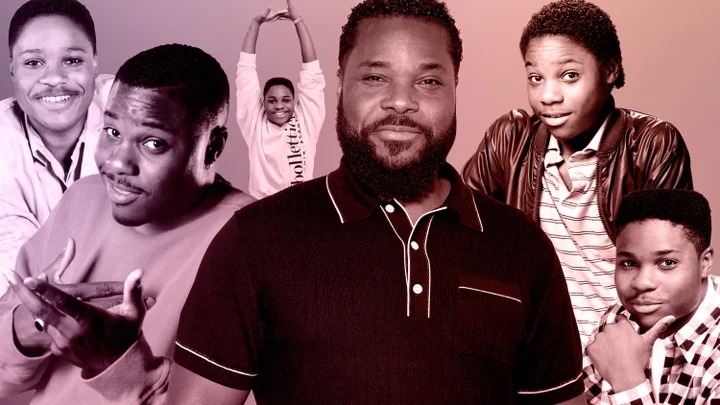
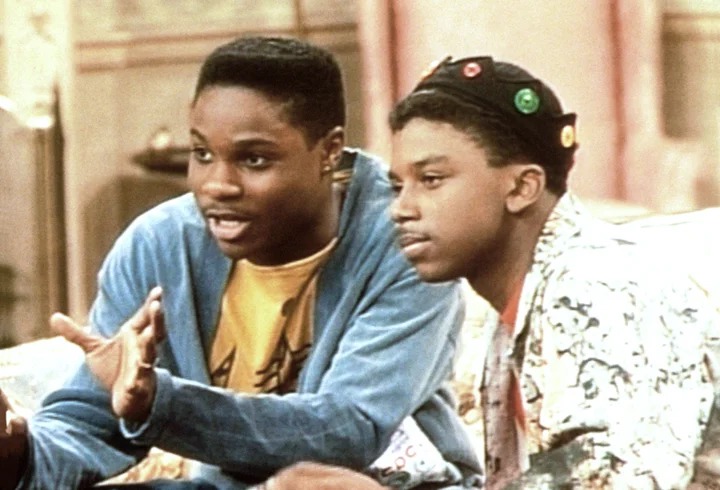
Malcolm-Jamal Warner helped change the image of young Black boys in media with his charming depiction of Theodore “Theo” Huxtable on “The Cosby Show.”

My favorite thing to do as a kid was to sit in front of my mom’s box TV and soak up whatever was playing on the screen like a sponge. Most of the time, it was cartoons, music video countdown shows and the occasional reruns of classic shows she grew up watching. One of them was “The Cosby Show.”

Before a slew of allegations against Bill Cosby tarnished the warm memories associated with his groundbreaking sitcom, I got to know the Huxtable family quite well. I would sometimes imagine them as my own, since I wasn’t blessed to have siblings or live in a two-parent household throughout my adolescent life. Sondra, Denise, Vanessa and Rudy were the sisters who reminded me of my cousins, and Theo was the brother I never had.

To me, he was cool, goofy, charming, endearing and, oddly enough, really familiar. Much of that I credit to the natural charisma of Malcolm-Jamal Warner, who portrayed Theo not as a character (who was inspired by Cosby’s only son, the late Ennis Cosby), but as the curious teenager he was, also finding his way in the world. He gave a piece of himself to Theo that has lived in my heart ever since, which is why it felt as if the actor and that character would somehow both live forever. I really wish that were true.

The worst goodbyes are the ones you’re never prepared for.

That’s why I, like many on Monday, struggled to wrap my mind around news that Warner died unexpectedly on Sunday in an accidental drowning on a family vacation in Costa Rica, an official autopsy concluded. He was 54 years old. He leaves behind his wife and an 8-year-old daughter.

I’ve been dreading the thought of having to write these words all week because it makes the unfathomable real. It means that we’ve actually lost one of the best and brightest much too soon, and that the man who always felt like a big brother to me is gone.

Malcolm-Jamal Warner as Theo Huxtable in “The Cosby Show.”

Warner’s death feels like a gut punch I still haven’t fully processed. Even after his time on “The Cosby Show,” it felt like he was everywhere and in almost everything I appreciated in entertainment. Just last week, he was back on my TV screen as I revisited one of my favorite slept-on shows, “Girlfriends’ Guide to Divorce,” where he played Darrell, the tender-hearted contractor and boyfriend to Barbara (Retta). And before that, he was one of many reasons I became mildly obsessed with the Fox medical drama “The Resident,” in which he played the extra-arrogant and equally passionate cardiothoracic surgeon Dr. AJ Austin, aka The Raptor.

There’s no shortage of Warner playing memorable television characters through the years. Fans on social media proved that ten times over this week, as my timeline was flooded with clips and photos of Warner starring in some of their favorite shows, including “Malcolm & Eddie,” “Reed Between the Lines,” “Suits,” “9-1-1” and “Community.” Not to mention, he was also behind the lens on episodes of beloved classics like “The Fresh Prince of Bel-Air,” “Kenan & Kel” and “All That.”

But all roads always led back to “The Cosby Show.”

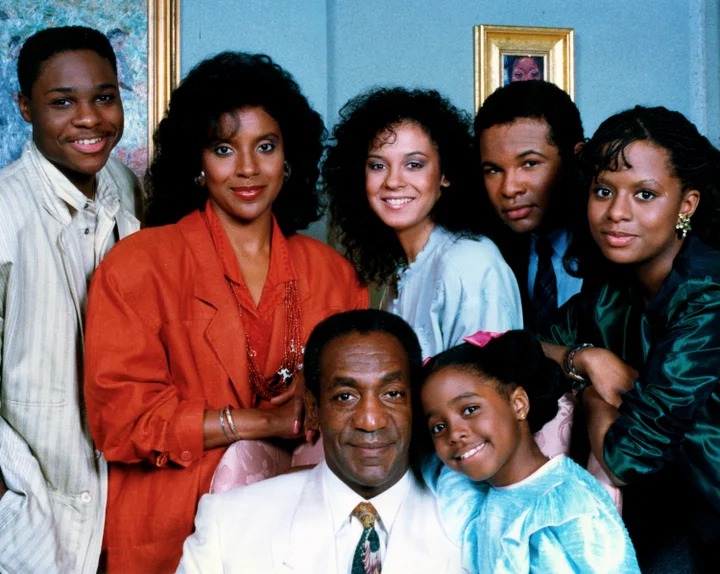
Pictured: (top row) (L-R) Warner as Theo, Phylicia Rashad as Clair Hanks Huxtable, Sabrina Le Beauf as Sondra Huxtable Tibideaux, Geoffrey Owens as Elvin Tibideaux, Tempestt Bledsoe as Vanessa Huxtable, (bottom row) (L-R) Bill Cosby as Dr. Heathcliff ‘Cliff’ Huxtable and Keshia Knight Pulliam as Rudy Huxtable.

It’s where many of us first met Warner as the lovable Theo Huxtable, the optimistic, bright-eyed teenager who was imperfect in all the ways one typically is at that age. But he was real, and a stark contrast to how most media had depicted Black boys in the 20th century. That’s exactly why so many of us connected with him.

“I used to look at ‘The Cosby Show’ when I was young, and I used to see myself in him. You know, and his character, Theo,” Morris Chestnut, who shared the screen with Warner in “The Resident,” told People of the late actor. “Particularly back then, a young progressive, powerful, positive person.”

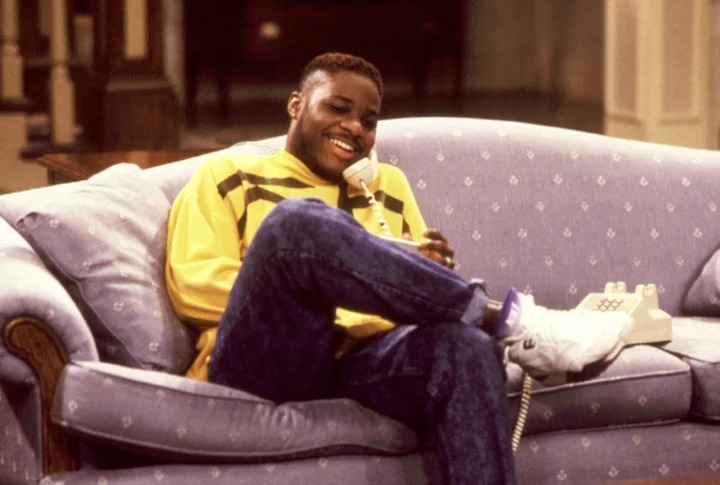
Warner as Theo and Carl Anthony Payne II as Walter “Cockroach” Bradley in Season 4 of “The Cosby Show.”

Theo was everything society tried to tell us Black boys couldn’t be — gentle, well-educated, privileged, determined, innocent and profound. But most of all, he was iconic. If not for rocking that all-too-famous Gordon Gartrell dupe (and giving us a hilarious meltdown over it), then for the countless other moments where his coming-of-age reminded us of our own — even some we could only dream of, like “jammin’ on the one” with the one and only Stevie Wonder.

It’s impossible to forget what Theo or Warner meant to us. Both grew up right before our eyes, and the latter took the world by storm with his charm and talent, permeating spaces as a poet, musician, director and a cultural icon who left this world better than he found it. But that’s an understatement to those who knew him up close and personal.

Raven-Symoné, who starred alongside Warner in “The Cosby Show,” said in an Instagram reel that, “Words cannot describe the pain and sadness and surprise I feel with the recent loss of MJW.”

“He was the big brother. He was a beacon. He was one of the most multifaceted, talented men… so gentle,” she added.

Gary LeRoi Gray, another “Cosby Show” co-star, wrote on X that Warner was “‘one of the good ones’ – as cliché as that has unfortunately become these days.”

“You were mythical,” he continued. “A Black boy didn’t have much to look up to coming up in my era. Even ones we thought were idols have turned out to be coal dressed in chrome. You were the real deal.”

You were mythical.
A Black boy didn’t have much to look up to coming up in my era.
Even ones we thought were idols have turned out to be coal dressed in chrome.

You were the real deal.
“One of the good ones” – as cliche as that has unfortunately become these days. – pic.twitter.com/wGxa1P2TtS

— Mr. Gray (@GaryLGray)
July 21, 2025

Even if you never crossed paths with Warner, we all felt like we knew him. That’s largely due to the care and thought the acting legend poured into every single one of his roles, Theo or otherwise.

“Theo was OUR son, OUR brother, OUR friend… He was absolutely so familiar, and we rejoiced at how TV got it right!!” Viola Davis wrote in a touching tribute to Warner. “But… Malcolm got it right… and now… we reveled in your life and are gutted by this loss.”

Warner as Theo and Phylicia Rashad as Clair Huxtable in “The Cosby Show.”

This goodbye hits different because Warner meant so many things to American culture, but particularly Black culture. As part of a cultural touchstone that reshaped the idea of the Black family, he’ll always be woven into the fabric and stitches that helped bring that image to life beyond our imagination.

To audiences everywhere, he was family, not by blood, but by bond — a bond established by a seminal program that transformed an extraordinary upper-middle-class Black family into “America’s family.”

Theo was a brother, but Warner made him so much more.

20 Years OfFreeJournalism

Your Support Fuels Our Mission

Your Support Fuels Our Mission

For two decades, HuffPost has been fearless, unflinching, and relentless in pursuit of the truth. Support our mission to keep us around for the next 20 — we can’t do this without you.

We remain committed to providing you with the unflinching, fact-based journalism everyone deserves.

Thank you again for your support along the way. We’re truly grateful for readers like you! Your initial support helped get us here and bolstered our newsroom, which kept us strong during uncertain times. Now as we continue, we need your help more than ever. We hope you will join us once again.

We remain committed to providing you with the unflinching, fact-based journalism everyone deserves.

Thank you again for your support along the way. We’re truly grateful for readers like you! Your initial support helped get us here and bolstered our newsroom, which kept us strong during uncertain times. Now as we continue, we need your help more than ever. We hope you will join us once again.

Already contributed? Log in to hide these messages.

A testament to the indelible mark he left, Warner never went without getting his flowers, not even in the final months of his life. On the May 21 episode of the “Hot & Bothered” podcast, host Melyssa Ford gave Warner the floor to reflect on what he hoped his legacy would be.

“I remember my mother said to me one time, ‘Mr. Cosby gave you immortality,’” he recalled. “So, I know on one lane there’s legacy there. But also because my life, those former years, were always about life beyond ‘Cosby.’” And what a life it was.

Afenyo Markin should go back and learn from Osei Kyei Mensah Bonsu –  Political Analyst

0

Political Analyst Emmanuel Nti has cautioned the Minority Caucus leadership in Parliament over their frequent walkouts during crucial debates.

According to Mr. Nti, Minority Leader Kwamena Afenyo Markin has failed to effectively lead the caucus, and his radical approach is not yielding desired results.

Speaking to Akua Oteng Amponsah on Kasapa News on the back of the 2025 mid-year budget review boycotted by the minority, Mr. Nti advised Afenyo Markin to seek guidance from former NPP Leader in Parliament, Osei Kyei Mensah Bonsu, on how to lead the caucus.

Afia Schwarzenegger Responds To Sammy Gyamfi’s GH¢10m Lawsuit

0

Sammy Gyamfi, Afia Schwarzenegger


Media personality and socialite, Valentina Nana Agyeiwaa, widely known as Afia Schwarzenegger, has brushed off a GH¢10 million defamation lawsuit filed against her by the CEO of the Ghana Gold Board (GOLDBOD), Sammy Gyamfi.

In a social media video posted on July 23, 2025, Afia appeared unfazed by the legal action. Reacting with sarcasm and defiance, she wrote, “You people play too much!! Stop it and grow up…If I have GHS10 million, I will be the President of Ghana. Fri me so.”

This response followed Sammy Gyamfi’s defamation suit, which was also filed on July 23, 2024. In the lawsuit, Sammy Gyamfi accuses Afia Schwarzenegger of spreading false claims, including allegations of infidelity, extramarital affairs, and providing luxury vehicles to female students at the University of Ghana.

Gyamfi is seeking GH¢10 million in damages, a public apology published on Afia’s social media platforms and in a national newspaper, and a restraining order to prevent her from making any further defamatory remarks about him.

As of now, Afia Schwarzenegger has not shown any signs of backing down, maintaining her usual bold public stance. The case is likely to draw public attention as it unfolds in the coming weeks.

SSNIT Reaffirms Commitment To Pensioners

0

Mr. Kwesi Afreh Biney (middle) in a group photograph with a section of the participants


The Social Security and National Insurance Trust (SSNIT) has pledged its unwavering commitment to safeguarding the dignity and well-being of pensioners across the country.

Speaking at the 2025 Pensioners’ Engagement in Kumasi, Director-General of SSNIT, Kwesi Afreh Biney, assured retirees that the scheme remains strong, solvent, and fully capable of meeting all its obligations.

The event, held under the theme, “Honouring Experience, Securing Dignity of Pensioners – The Role of SSNIT,” brought together leaders of the National Pensioners Association (NPA), senior citizens, and SSNIT management representatives.

Mr. Biney underscored the importance of pensioners to the nation’s social security framework, stating, “Pensioners are the reason social security — and by extension our work — matters so deeply. Without you, there would be no SSNIT.”

He emphasised that SSNIT’s responsibility goes beyond merely paying pensions, to focusing also on preserving the dignity of retirees and honoring the social contract between generations.


Over GH¢ 5.77bn Paid

Highlighting SSNIT’s performance, the Director-General disclosed that in 2024 alone, the Trust paid more than GH¢ 5.77 billion in pensions to over 253,000 retirees. In the first half of 2025, over GH¢ 3.33 billion has already been paid to more than 257,000 pensioners.

“These payments mean food on your table, medicines for your health, and peace of mind at home. They are proof of our commitment to protecting the dignity of those who have built this country,” Mr. Biney said.


Improved Services/ Digital Transformation

The Trust has introduced SMS notifications to alert pensioners when payments are made — a step toward greater transparency and convenience. It is also expanding its service channels, with 53 branches nationwide and co-location arrangements with selected banks.

Looking ahead, Mr. Biney announced plans to launch a 24/7 Virtual Branch to enable pensioners access SSNIT services anytime and anywhere through mobile phones or the internet.

He said digital tools, including the SSNIT Self-Service Portal and the Mobile App, are making it easier for pensioners to view payslips, check payment histories, and renew life certificates using facial recognition technology — a feature particularly useful for those living abroad.

“For pensioners with mobility challenges, SSNIT continues to conduct home visits to ensure no one is left behind,” he added.


Healthcare Initiatives

Addressing concerns raised by members of the NPA, Mr. Biney assured pensioners that SSNIT is working closely with the Mahama Care Programme to provide support for retirees living with chronic health conditions.

He further noted that plans are also underway to roll out a telemedicine channel by the end of the year, aimed at providing medical advice to pensioners in areas with limited access to healthcare facilities.

SSNIT @ 60

The Director-General revealed that the Trust will soon launch activities to commemorate 60 years of social security in Ghana. Reflecting on the journey, he noted that digital transformation remains central to SSNIT’s efforts to enhance transparency, efficiency, and convenience for its members.

“We value your feedback, experiences, and expectations. A pension scheme is only as strong as the trust it earns from its members,” Mr. Biney remarked.


NPA Commendation

For his part, the Ashanti Regional Chairman of the National Pensioners Association (NPA), Nana Adarkwah Tuffour, praised SSNIT for its continued commitment to fostering open dialogue and improving the welfare of pensioners in Ghana.

Speaking on behalf of the NPA’s General Secretary, Stephen Boakye, Nana Tuffour described the initiative as “a welcome affirmation that SSNIT values its stakeholders and the lives of retirees across the country.”

The event brought together pensioners from the region to engage SSNIT management on issues of welfare, transparency, and the sustainability of the national pension scheme.


By David Afum, Kumasi

“Declare a State of Emergency on Galamsey or Be Disgraced” – St Sark Warns Mahama

0

Apostle Kofi Nkansah Sarkodie, popularly known as St Sark, has issued a strong call to the government to declare a state of emergency over the illegal mining crisis, widely known as galamsey as reported by Ghana Web.

The outspoken head pastor of Open Arms Ministry in Kumasi criticized what he described as a lukewarm approach by the current administration in addressing the environmental and health implications of the menace.

Speaking during a press briefing at his church, Apostle Sarkodie directly addressed President John Dramani Mahama and the National Democratic Congress (NDC), urging them to treat the situation with the urgency it demands.

He lamented the continued destruction of Ghana’s forests and water bodies, warning that the consequences are becoming irreversible.

St Sark proposed the deployment of drones to monitor galamsey-prone areas as a possible solution, adding that modern surveillance could help track illegal operations and improve enforcement.

He expressed deep concern over the health hazards caused by polluted rivers, claiming that chemicals used in illegal mining have led to disturbing medical conditions in newborns.

“It is very worrying that people are suffering due to these illegal activities,” he said.

The pastor warned the Mahama-led government that inaction could cost them public trust, drawing parallels with the previous New Patriotic Party (NPP) government which, according to him, suffered politically for failing to tackle the issue.

“I have said it and I’m saying it again that the government must declare a state of emergency on the galamsey issue. If they don’t want to be disgraced, they should do the needful,” he cautioned.

Manchester City star Doku receives Ghanaian passport 

0

By Simon Asare 
 
Accra, July 22, GNA -  Belgian and Manchester City winger Jeremy Baffour Doku has been granted a Ghanaian passport, cementing and maintaining his Ghanaian roots. 
 
Mr Samuel Okudzeto Ablakwa, Minister of Foreign Affairs, successfully issued the 23-year-old winger with a chip-embedded passport.    
 
Mr Ablakwa, in a social media post, said, “This was the wish of Jeremy and his family when they called on me last week – glad we successfully delivered chip-embedded passports today. 
 
“As a dual citizen, he is legally entitled to a Ghanaian passport. This significant development confirms Jeremy Baafour Doku’s commitment to fully reconnect with Ghana despite playing for Belgium. I wish him the very best in his illustrious career.” 
 
Doku, who is currently on a week-long visit to Ghana, has called on Asantehene Otumfuo Osei Tutu II, Mr Kofi Iddie Adams, the Minister of Sports and Recreation, among others. 
 
He has also undertaken charity visits to the Komfo Anokye Teaching Hospital and has stated his intention to extend his philanthropic footprints across Ghana. 
 
GNA  

Kenneth Odeng Adade 

Rufftown Records Is Now A Partner – Wendy Shay

0

Wendy Shay


Award-winning Ghanaian musician Wendy Shay has officially clarified her current relationship with Rufftown Records, stating that she is no longer signed as an artiste under the label, but now operates in a business partnership with the entity.

In a post shared on social media platform X, the singer wrote: “I am still with Rufftown Records, but it’s more of a partnership this time.” This clarification follows months of speculation regarding her professional ties with the label, particularly after fans noticed the absence of Rufftown Records branding in her recent music releases.

Wendy Shay, whose contract with Rufftown Records reportedly ended earlier this year, confirmed that while she has not severed ties with the label entirely, the nature of their working relationship has evolved. She now has her own management team that oversees her career in collaboration with Rufftown Records.

In May 2024, fans were left puzzled after the release of her music video “Who Cares” did not appear on Rufftown Records’ official channels. Instead, Wendy Shay introduced her new personal YouTube account, urging her followers to subscribe and support her on this “new journey.”

Shortly after, Rufftown Records CEO Ricky Nana Agyemang, popularly known as Bullet, acknowledged in an interview on Accra FM that there had been tensions between the label and Wendy Shay. Although he noted that discussions were underway to resolve the issues at the time, it has now become clear that the outcome is a shift from traditional artiste-label management to a collaborative partnership.

Wendy Shay, who has been the face of Rufftown Records since joining in 2018 following the passing of Ebony Reigns, remains one of the label’s most successful acts. Her new business arrangement signals a new chapter in her career—one that embraces independence while maintaining key industry relationships.

‘Apologise For Peddling Cathedral Lies’

0

Charles Owusu Juanah


DISTINGUISHED INTERNATIONAL lawyer, Charles Owusu Juanah, has called on Felix Kwakye Ofosu, Minister for Government Communications, to apologise to the Christian community for spreading falsehoods during his recent press conference addressing controversies surrounding the National Cathedral project.

Mr. Juanah, addressing journalists at a press conference in Accra, stated that Felix Kwakye Ofosu’s briefing on the National Cathedral audit findings misrepresented the facts.

“The gentleman claimed that the cathedral board mismanaged funds, which is untrue. For instance, $15.7 million was paid to consultants employed by the presidency, not by the Trust. He also mentioned a $4.5 million discrepancy, but it referred to unsettled monies during the audit period, which were later justified through documents. However, he chose to present this information misleadingly,” he disclosed.

He further emphasised that regarding funding, all monies received from external sources were accounted for, saying, “When the cathedral project slowed down, over $400,000 had been received and utilised for its purposes. This funding served as seed money to support the project.”

Addressing issues of the cathedral being a promise of former President Nana Akufo-Addo and his seed money contribution, he stated that, “If the President decides to provide seed money for a project, like building a National Cathedral or a Hajj Village, it’s within their mandate to do so without needing to justify the source of funding.”

He added that, “Ghanaians gave the President the mandate to build the National Cathedral after he promised to do so during the elections. The necessary documents were provided to the auditors, and explanations were made. The audit report did not indict the trustees.”

Mr. Juanah mentioned that the only issue raised by the audit was about Mobile Money (MoMo) payments, amounting to around GH₵40 million, which were made through a platform set up by the Agricultural Development Bank (ADB).

He added that, according to the ADB, these payments failed and never reached the National Cathedral’s accounts or the trustees’ hands. “It’s unfair to label this as embezzlement; instead, questions should be directed to the ADB and the state about what happened to those funds. Calling it embezzlement is false and untrue.”

Kwakye Ofosu had claimed what he described as a disturbing pattern of financial irregularities, procurement breaches, unsupported expenditures, and a general lack of due process in a report prepared by Deloitte and Touche on the operations of the National Cathedral Secretariat.

He indicated that the audit report revealed discrepancies in consultancy fees paid to Sir David Adjaye & Associates Limited for the National Cathedral project, citing a variance of GH¢4,932,091.14 between the Office of the President’s records (GH¢113,040,564.86) and the firm’s reported receipts (GH¢117,972,656.00).

However, payment records show the Ministry of Finance paid GH¢87,938,750.00, and the Office of the President made additional payments totaling GH¢30,033,906.00, which matches the firm’s reported receipts of GH¢117,972,656.00.

He noted that the formal agreement with Ribade JV states a contract sum of $261,965,660, excluding taxes and levies. However, the Office of the President cites a higher figure of $286,465,660, resulting in a $24.5 million discrepancy. Furthermore, the August 2024 Progress Status Report quotes the contract amount as $268,500,000, while the Intern Payment Certificate estimates the final contract value at $283,230,489.

He mentioned that these inconsistent figures indicate a lack of coherence and clarity in contract administration and project cost control.

Meanwhile, Charles Owusu Juanah stated that what has unfolded in the public arena is a calculated campaign of misinformation; politically motivated, legally unfounded, and morally unworthy of those who claim to serve the public interest.

“These statements are false accusations and distorted narratives that have sought to malign a sacred national initiative and the reputation of those who have served it with humility and honour,” he said.

BY Prince Fiifi Yorke

Watch King Teiko Tsuru II reaction after Supreme Court victory against Nii Tackie Adama Latse II

0

The Ga Mantse, King Tackie Teiko Tsuru II, took to the streets of Accra to celebrate after the Supreme Court ruled in his favour in a case challenging a court order that questioned his legitimacy.

In a unanimous decision, the Supreme Court overturned a Kumasi High Court order—which had been upheld by the Kumasi Court of Appeal—that aimed to reinstate Nii Tackie Adama Latse II into the National House of Chiefs’ register as Ga Mantse.

We’ll enforce laws to curb road accidents

0

Deputy Minister-Designate for Transport, Dorcas Affo-Toffey, has pledged to support initiatives aimed at reducing road accidents across the country if approved for the role.

Appearing before Parliament’s Appointments Committee on Friday, July 25, Ms. Affo-Toffey outlined a series of strategies she intends to pursue in collaboration with the substantive Minister.

She emphasised the importance of public education, a robust emergency response system, improved road signage, and the use of technology to monitor speeding.

Madam Affo-Toffey further stressed the need to enforce existing traffic laws and strengthen them where necessary to ensure road safety.

“When I’m given the nod, I will assist my Minister to make sure that we put in place measures that will curb accidents. For instance, by educating the general public and also making sure that we have an effective emergency response system, putting up a clear signage system, and putting in place cameras to detect speed limits.

“Most importantly, making sure that we enforce the existing laws and regulations, and make sure we strengthen them to curb accidents on our roads,” She said.

Payroll validators to be held accountable for 14,000 ghost names – Ato Forson

…..

Explore the world of impactful news with CitiNewsroom on WhatsApp!

Click on the link to join the Citi Newsroom channel for curated, meaningful stories tailored just for YOU:
https://whatsapp.com/channel/0029VaCYzPRAYlUPudDDe53x

No spam, just the stories that truly matter! #StayInformed #CitiNewsroom #CNRDigital

Ghana Audit Service to recover GH¢150.4m unearned salaries from over 50,000 employees

0


Ghana Audit Service to recover GH¢150.4m unearned salaries from over 50,000 employees – Ghana Business News


HACSA London Sankofa Summit rallies aid for Tech4Girls Academy

0

Participants at the HACSA London Sankofa Summit Participants at the HACSA London Sankofa Summit

The Heritage and Cultural Society of Africa (HACSA) Foundation has ended its 7th Sankofa Summit, held for the first time in London, securing commitments towards supporting the growth of Tech4Girls Initiative in Ghana.

This year’s event, themed “Honouring the Past, Empowering the Present, Inspiring the Future,” assembled global change-makers to drive progress across Africa and its diaspora, with a spotlight on supporting digital skills training for girls.

Hosted across key venues including the UK Parliament and the Landmark Hotel, the summit united influential figures from politics, business, media, and the arts to address Africa’s most urgent challenges and opportunities.

At a charity gala to climax the three-day summit, the participants demonstrated their commitments to invest in girls and young women through digital skills, leadership, and innovation by investing in the Tech4Girls initiative in Ghana by the HACSA Foundation.

The international guests rallied to raise funds for the expansion of Tech4Girls Initiative which aims to equip underserved girls in Ghana and beyond with critical skills in coding, generative AI, entrepreneurship, public speaking, and leadership.

Funds raised at the gala will support the development of a dedicated Tech4Girls Academy in Accra, a state-of-the-art training facility designed to give young women the tools they need to thrive in the digital economy.

Speaking at the charity gala on behalf of President John Dramani Mahama, Presidential Advisor Joyce Bawah Mogtari emphasized how initiatives like Tech4Girls are critical to closing the gender gap in science and technology.

“Today, more girls are graduating from our universities than boys. But many are still underrepresented in technology and leadership roles. Tech4Girls gives them the confidence, training, and access to explore new career paths and innovate in spaces they hadn’t imagined before,” she stated.

She commended HACSA for driving the Tech4Girls initiative which falls in line with government’s vision of enhancing digital skills training for the youth, and called on all stakeholders to support the initiative.

For her part, Ambassador Johanna Svanikier, HACSA Founder and CEO, noted that “In today’s digital age, education is no longer just about literacy — it is about digital fluency, innovation, and job readiness. That is why at HACSA, we have invested in the Tech4Girls initiative. We believe coding is the new literacy, and that girls must not be left behind in the future of work.”

The summit was characterized by dialogues sessions featuring key personalities from across the diaspora, including MP Diane Abbott, actor Clarke Peters, DJ and philanthropist Florence “DJ Cuppy” Otedola, and Vice President of Cartier, Bijou Abiola, as well as a fireside chat between legendary photographer James Barnor and actor Hugh Quarshie, celebrated African heritage and storytelling while highlighting the importance of intergenerational dialogue.

The 2025 HACSA Sankofa Summit received endorsements from UNESCO, the Office of Diaspora Affairs, and the Africa Governance Centre, with organizational leadership from UK TV executive Tim Yaw Struthers.

The event underscored HACSA’s mission to bridge the gap between the African continent and its global diaspora, while preparing the next generation, especially girls, for the opportunities of tomorrow.

GSA expects total control with new shipping regulation

0

The Ghana Shippers Authority (GSA) The Ghana Shippers Authority (GSA)

The Ghana Shippers Authority (GSA) will soon implement a new shipping regulation aimed at easing the process of doing business at the ports, Transport Minister Joseph Bukari Nikpe has revealed.

The regulation aims to strengthen GSA’s legal mandate to fully regulate the commercial shipping sector and its associated ancillary services.

Nikpe, addressing members of the Authority’s newly constituted Board of Directors, stated that a draft legislative instrument has been developed and is undergoing stakeholder consultation to implement the new GSA Act 2024 (Act 1122), which Parliament passed in July last year.

“This new regulation’s objective is empowering the Authority to have full control of the commercial shipping space in line with modern and best practices,” the minister said.

The regulation is expected to be finalised and submitted to Parliament by the end of the year for approval, giving the Act full operational effect.

There is a growing concern about the involvement of multiple state agencies in port procedures and processes, leading to a high cost of doing business at the port, complaints of high demurrage charges by shippers, and taxes on transit cargo.

However, it is expected that the new law will enable GSA to roll out and implement measures and strategies which lead to a reduction in the cost of doing business for port users.

The new regulation will also reduce daunting bureaucracies associated with doing business and navigating processes at the ports.

These efforts are expected to improve turnaround time at the ports and general cost of doing business, which have an impact on prices of goods and services in the country.

The minister emphasised that improving port operations will not only ease the financial burden on shippers but also support the broader national agenda, particularly the government’s flagship 24-hour economy policy.

The board members

The newly sworn-in Board is chaired by Mike Allen Hammah. Other members include Prof Ransford Edward Van Gyampo; Brigadier General Paul Seidu Tanye-Kulono; Adjoa Obuobia Darko-Opoku; Dr Kamal-Deen Ali; Dr Frederick Appoh; Dr Eme­lia Assiakwa; Clement Boateng, Nathaniel Amonoo Wilson, Alex Mensah, Yaw Adu-Agyei Gyamfi, Madam Salamatu Fuad and Ewurabena Aubynn.

While expressing confidence in the Board’s capabilities, the minister advised members to focus on strategic oversight and refrain from interfering in day-to-day operations.

Lil Win Issues Stern Warning to TV Stations Airing His Movie

0

I’ll Take You to Court: Lil Win Issues Stern Warning to TV Stations Airing His Movie

News Hub Creator1h

A report by YenNews,Ghanaian actor and Kumawood star Lil Win has voiced his frustration over the unauthorized broadcast of his movie A Country Called Ghana by a local TV station. Taking to Instagram, he expressed his disappointment after discovering a TikTok video where a fan claimed to be watching the film for free on TV, despite its availability on paid platforms like Amazon Prime.

The actor posted the TikTok snippet on Instagram, which featured a fan joyfully watching the movie at home, praising its availability on television. However, this revelation didn’t sit well with Lil Win, who condemned the act as piracy and threatened legal action.

> “STOP PIRATING OUR MOVIES… This person didn’t buy the movie on Amazon Prime but is watching it for free on a Ghana TV station…” he lamented in his caption.

Lil Win, whose real name is Frank Fiifi Gharbin, also serves as the director of A Country Called Ghana. He made it clear that the unauthorized airing of his work was disheartening and warned other media outlets to steer clear of such practices.

My appointment as ambassador was dropped over my Lebanese root – NPP stalwart reveals

0

Fadi Samih Dabbousi, a prominent member of the New Patriotic Party (NPP), has shared how his Lebanese heritage hindered his chances of securing a government appointment under the former Nana Addo Dankwa Akufo-Addo administration.

In a Facebook post dated Friday, July 25, 2025, Dabbousi recounted that his appointment as a Presidential Envoy to the Middle East by then-President Akufo-Addo was later withdrawn.

Two-Piece Outfits for Women: A Versatile Fashion Staple

0

Two-piece outfits for women have become a mainstay in modern fashion, offering versatility, comfort, and effortless style. Whether it’s a casual brunch, a beach day, a work meeting, or a night out, there’s a two-piece ensemble to suit every occasion. These matching sets typically include a top and bottom—like a crop top and skirt, blouse and pants, or tank top and shorts—designed to complement each other while giving women the freedom to mix and match with other pieces in their wardrobe.

One of the key advantages of two-piece outfits is their convenience. They eliminate the hassle of trying to coordinate separates, making them an easy go-to option when time is short. Many brands now offer co-ords in a wide range of styles and fabrics, from linen for a breezy summer look to velvet or satin for more formal occasions. Women can find two-piece sets in minimalist monochromes, vibrant prints, or even structured tailoring for a professional appearance.

These sets are also incredibly adaptable. A matching blazer and trouser set, for example, can be dressed down with sneakers for a casual-chic look or paired with heels for a polished office outfit. Similarly, a crop top and high-waisted skirt set can be styled for both day and night—just switch out sandals for stilettos and add some statement jewelry.

Another reason for their popularity is the confidence boost they provide. Coordinated outfits often create a more put-together look, which can enhance self-assurance and poise. With the rise of social media and fast fashion, two-piece outfits have gained even more popularity for their photogenic appeal and trend-forward nature.

In conclusion, two-piece outfits for women are more than just a fashion trend—they’re a practical, stylish, and empowering wardrobe choice. With so many options available, every woman can find a set that fits her personal taste and lifestyle.

I Paid People To Insult Me – Akuapem Poloo

0

Akuapem Poloo


Actress and socialite Rosemond Brown, popularly known as Akuapem Poloo, has revealed that she once paid people to insult her on social media to gain attention and grow her popularity.

Speaking in an interview on Joy Prime TV on July 23, 2025, Poloo explained that when she first entered the entertainment industry, she received little attention from the media or the public. To change that, she said she took matters into her own hands.

“At first when I started, I was paying for people to insult me for about a year,” she revealed. “I had been in the game and no one was calling me or giving me interviews.”

According to her, the tactic worked. Once she began attracting attention online, her popularity grew, and media houses started inviting her for interviews. She also started receiving offers from musicians to promote their songs by dancing or twerking in social media videos.

“Stars would call me to dance or twerk on their songs and they would pay me,” she said, mentioning musician Fameye as one of those who paid her. “Even Fameye gave me GH¢5,000 to twerk on his song,” she noted.

Poloo has since become a well-known figure in Ghanaian showbiz.

Communication Ministry probes alleged data tampering

0

The Ministry of Communications, Digital Technology, and Innovation has assured the public that it is actively investigating allegations of data tampering by telecom operators and will hold any company found to be in breach of regulations accountable.

This follows mounting public frustration over what consumers have dubbed “vanishing data,” with complaints that mobile internet bundles are depleting rapidly—even after a recent 15% price hike by all telecom providers.

Speaking at the launch of the Ministerial AI Bootcamp on Friday, July 25, Minister for Communications, Digital Technology, and Innovation, Samuel Nartey George, acknowledged the growing concerns and confirmed that his office has received numerous complaints.

However, he stressed that the Ministry cannot take punitive action unless there is clear evidence of wrongdoing.

“So, when I say I’m working on the complaints, there’s no evidence. But if it doesn’t show tariff tampering, I cannot punish; that is a fact. And so people may get sentimental and say the things they are saying on X—I mean, it’s X,” he stated.

Ghana’s economy was worse than we thought – Ato Forson

…..

Explore the world of impactful news with CitiNewsroom on WhatsApp!

Click on the link to join the Citi Newsroom channel for curated, meaningful stories tailored just for YOU:
https://whatsapp.com/channel/0029VaCYzPRAYlUPudDDe53x

No spam, just the stories that truly matter! #StayInformed #CitiNewsroom #CNRDigital

530 additional River Guards commissioned as Minister Buah renews galamsey fight

0

The government has inaugurated the second batch of 530 Blue Water Guards as part of its renewed push to curb illegal mining and restore Ghana’s degraded river bodies.

At a ceremony held at the Ezinlibo Naval Base in the Western Region, the Minister for Lands and Natural Resources and MP for Ellembelle, Hon. Emmanuel Armah-Kofi Buah, described the moment as “a critical step in reclaiming the purity of our rivers” and reaffirmed the government’s unwavering commitment to the galamsey fight.

“This is not just another ceremony but a moment of critical importance,” the Minister told the recruits. “We are restoring hope to our communities and renewing our covenant with the land that sustains us all.”

Blue Water Guards: Ghana’s River Protection Frontline

The Blue Water Guards initiative, introduced under the Blue Water Initiative, forms a key pillar of the government’s environmental protection strategy. Launched in 2024, the initiative is a direct response to the alarming pollution of water bodies due to illegal mining, commonly known as galamsey. The first batch of 453 guards has already been deployed to monitor critical river systems, especially in mining-prone areas.

Their work has been instrumental in flagging illegal mining operations, reporting environmental violations, and supporting law enforcement efforts, leading to noticeable improvements in several water bodies across the country.

The Galamsey Challenge

Hon. Buah painted a stark picture of the national crisis that illegal mining has unleashed. “Our rivers, once vibrant lifelines for drinking water, agriculture, and livelihoods, now run thick with pollution,” he said.

He cited cases in the Western and Central Regions where water treatment plants have been shut down due to pollution. “The very resources that should fuel our prosperity are being plundered, leaving behind environmental degradation, health crises, and economic loss.”

However, the Minister drew a clear distinction between responsible mining and galamsey. “Mining is not the enemy,” he stressed. “When done responsibly, it can uplift communities and drive development. The enemy is the lawlessness that has turned this sector into a threat.”

A Charge to the Recruits

The newly deployed Blue Water Guards, who received specialised training from the Ghana Navy’s Riverine Command, will serve as community vanguards.

“You are not just guards,” the Minister charged them. “You are entrusted with a sacred duty. In the spirit of the Young Pioneers, I charge you to uphold this responsibility with courage and integrity.”

He outlined three core mandates for their work:

Monitor and Protect: Serve as the eyes and ears of the rivers.
Enforce the Law: Hold polluters accountable without fear or favour.
Engage Communities: Foster local stewardship of natural water resources.

He assured them of support from the National Anti-Illegal Mining Operations Secretariat (NAIMOS), the government’s coordinating agency for the anti-galamsey drive, and promised that excellence in duty would be rewarded. “We are not just watching for compliance, we are looking for leaders. Those who exemplify dedication will be recognised and elevated,” he added.

Responsible Mining Alternatives on the Horizon

The Minister also announced an upcoming initiative, the Responsible Cooperative Mining and Skills Development Programme, which will offer legal alternatives to artisanal miners.

“This programme will provide training, modern equipment, and cooperative frameworks to ensure mining benefits communities without destroying our environment,” he said.

Hon. Buah acknowledged the Ghana Navy for their ongoing collaboration, expressing confidence that the combined efforts of state institutions, local communities, and trained guards will restore Ghana’s polluted rivers.

“Be assured, the people of Ghana are behind you,” he concluded. “Together, we will restore our rivers to their rightful state: clean, blue, and life-giving.”

The inauguration marks another bold step in the government’s multipronged fight against illegal mining, a fight that continues to draw sharp national focus as the country grapples with the economic and environmental costs of unregulated mining.

DISCLAIMER: The Views, Comments, Opinions, Contributions and Statements made by Readers and Contributors on this platform do not necessarily represent the views or policy of Multimedia Group Limited.

DISCLAIMER: The Views, Comments, Opinions, Contributions and Statements made by Readers and Contributors on this platform do not necessarily represent the views or policy of Multimedia Group Limited.

Some were charging GHC 17 when the dollar was at 10 – Gyampo exposes shipping lines

0

Professor Ransford Gyampo has disclosed that his outfit directly petitioned the Bank of Ghana (BoG) after freight forwarders raised an alarm over the use of inflated exchange rates by some shipping lines—rates that he said undermine the government’s efforts to stabilise the cedi.

The Chief Executive Officer of the Ghana Shippers’ Authority expressed frustration over what he described as blatant disregard for national economic policy by certain foreign entities operating in the shipping sector.

UN pays compensation to Ghanaian soldier injured on duty in Lebanon

0


Featured


GraphicOnline


1 minute read

The Chief of the Defence Staff (CDS), Lieutenant General William Agyapong, has presented a compensation package from the United Nations to Warrant Officer Class One (WOI) Alhassan Habib, who sustained injuries while on peacekeeping duty in Lebanon.

The presentation took place on Tuesday, July 22, 2025, during the CDS’s familiarisation tour of the 3 Garrison.

WOI Habib was injured in a car accident while serving with the United Nations Interim Force in Lebanon (UNIFIL) as part of Ghana Battalion 89 (GHANBATT 89).

His service-related injury qualified him for the UN’s compensation scheme, which is designed to support personnel affected by incidents such as injury, illness, or death while carrying out peacekeeping duties.

The compensation package reflects the UN’s commitment to ensuring the welfare and financial security of personnel deployed in high-risk missions around the world. Ghana, which is recognised globally for its contributions to peacekeeping operations, has consistently advocated for the protection and welfare of its military personnel deployed under the UN banner.

WOI Habib’s recognition and compensation highlights the importance placed on the sacrifices of Ghanaian soldiers serving abroad and the structures in place to support them in the aftermath of service-related incidents.

President Mahama nominates eight more new ambassadors  

0

By Iddi Yire  

Accra, July 25, GNA – President John Dramani Mahama has in consultation with the Council of State, nominated eight new ambassadors and high commissioners-designate to various countries. 

The nominees include Alhaji Abdul-Rahman Harruna Attah, High Commissioner-designate to Namibia; Mr Kojo Choi, Ambassador-designate to the Republic of South Korea, Dr Kwame Ampofo, Ambassador-designate to Hungary and Madam Mona Helen Kabuki Quartey, Ambassador-designate to Italy. 

The rest are Mr Magnus Kofi Amoatey, Ambassador-designate to the Democratic Republic of Congo, Mr Kenneth Akibate, Ambassador-designate to Burkina Faso, Mr Said Saleh Sinare, Ambassador-designate to the Kingdom of Saudi Arabia, and Paul Evans Aidoo, High Commissioner-designate to Kenya. 

Dr Callistus Mahama, the Executive Secretary to the President, in letter address to the Minister of Foreign Affairs, said the President had also directed Mr Benedict Batabe Assorow to replace Mrs Satirieh Dorcas Ocran as Ghana’s Ambassador-designate to the Vatican City State  

GNA  

Kenneth Odeng Adade 

KATH CEO engages BoG to seek support for hospital retooling

0

The Chief Executive Officer (CEO) of the Komfo Anokye Teaching Hospital (KATH), Dr. (Med) Paa Kwesi Baidoo, has met the Governor of the Bank of Ghana (BoG), Dr. Johnson Pandit Asiama, and his management to court support for the retooling of the hospital.

The meeting, held at the headquarters of the Bank in Accra, formed part of the sustained efforts by the KATH CEO to seek state and corporate funding for addressing some of the equipment and infrastructure deficit challenges facing the hospital.

KATH occupies a unique position in the healthcare delivery system of the country as it receives referrals from 12 out of 16 regions by virtue of its strategic location and wide range of specialist services.

Regrettably, in spite of its highly skilled workforce and the huge demand for its services, it lacks the requisite stock of equipment and other infrastructure required for the comprehensive provision of specialist and sub-specialist care to the public—hence the drive by the CEO to reach out to corporate Ghana for support.

Dr. (Med) Baidoo told the meeting, which had in attendance the two Deputy Governors of the bank and some other senior management, that the obsolete nature of some of the existing equipment and the absence of other critical ones were impeding the delivery of cutting-edge clinical services to the public.

“Currently, most of the critical equipment such as C.T. scans, Magnetic Resonance Imaging (MRI), Fluoroscopy, Oxygen Plants and Central Sterilisation equipment at the hospital are either down or working at fault. Vital equipment like a Catheterisation Laboratory (CATHLAB) and Mammogram are not even available at all,” he noted.

He said given that the state did not have the budget to fully address the above challenges, it would not be out of place if corporate entities like the BoG assisted with funding to procure such vital life-saving equipment to enable the hospital to provide the best of specialist services to the public.

Dr. Asiama acknowledged that health facilities like KATH which were providing critical services to the public deserved to be supported, and the appeal made by its CEO would be seriously considered.

He added that the management of the bank would study the list of the critically needed equipment submitted by the CEO and take a firm decision on what to do as soon as possible so that the hospital could be supported to serve the public better.


Economic Expert Hails Government Over Positive 2025 Mid-Year Budget Review 

0

By Evans Worlanyo Ameamu  

Keta (V/R), July 25, GNA – Mr. Anthony Dagadu, an Economic Expert in the Volta Region, has commended the government for what he described as a positive and impactful 2025 Mid-Year Budget Review, highlighting its potential to drive economic growth and development. 

He said the review was an important step in assessing the government’s fiscal performance and making necessary adjustments to strengthen the economy. 

In an interview with the Ghana News Agency, Mr. Dagadu stated that public sentiment was largely optimistic, with expectations that the review had addressed key economic challenges and provided a clear direction for the second half of the year. 

“The review clearly outlined strategies to stimulate economic activity and improve public services. It was communicated in a way that was understandable to ordinary citizens,” he said. 

He emphasised that the mid-year review served as a timely opportunity for government to evaluate its fiscal policies and realign its strategies to meet intended development goals. 

Mr. Dagadu praised the government for stabilising the economy, highlighting the remarkable performance of the Ghana cedi, which for the first time in 50 years has been recognised as the best-performing currency globally in the first half of the year. 

He expressed hope that the government would continue implementing forward-looking policies to promote economic stability, create jobs, improve infrastructure, and enhance the standard of living. 

Mr. Dagadu applauded several key initiatives in the budget review, including: 

The abolition of the COVID-19 levy, Reduction in the effective VAT rate, Removal of cascading effects from the National Health Insurance Scheme (NHIS) and GETFund , Replacement of the VAT flat rate with a unified VAT system, and Exemption of small and micro businesses from the VAT threshold. 

He also commended the restored collaboration between the Bank of Ghana and the Ministry of Finance, describing it as a driver of cohesive policy development and implementation. This cooperation, he said, helped reduce the inflation rate to 13.7% by the end of June 2025 and expanded the economy by 5.3% in the first quarter of the year. 

“Ghana’s fiscal position has significantly improved. The primary balance on a commitment basis recorded a surplus of about 1.1% of GDP at the end of June, surpassing the government’s target of a 0.4% surplus,” Mr. Dagadu added. 

He also acknowledged the efforts of the previous administration in reducing consumer price inflation from 23.8% in December 2024 to 13.7% in June 2025, representing a 10.1 percentage point decline. 

Mr. Dagadu stressed that mid-year budget reviews are critical tools that enable governments to adjust courses and sharpen their economic policies based on evolving conditions. 

Despite the positive assessment, he acknowledged lingering challenges and urged the government to address them through effective policy implementation and prudent fiscal management. 

He added that the 2025 Mid-Year Budget Review is expected to significantly impact economic stakeholders—including businesses, investors, and citizens—and shape expectations for the remainder of the year. 

Mr  Dagadu also appealed to all Ghanaians, regardless of political affiliation, to rally behind the government in its efforts to sustain and further improve the economy. 

However, some residents who spoke to the GNA noted that the prices of commodities remained high and called on the government to intervene and address the hardship. 

GNA 

Edited by Maxwell Awumah/Audrey Dekalu 

I have made my ex-boyfriend run mad after he married another woman

0

File photo of a worried woman File photo of a worried woman

Dear GhanaWeb,

I’ve been dating a man for 7 years. Everything was going well in the relationship. I loved him deeply, and I thought he did too. We both took care of each other, and everyone around us envied our relationship, saying we were perfect together and inseparable.

Recently, I noticed he’s been distant around me, but I thought I was overthinking it. Months ago, a close friend of mine called to tell me that she had seen my boyfriend’s wedding pictures on a social media page belonging to another woman whom my friend believed was his wife.

I never for once thought he could cheat on me, even though he changed towards me. I was angry when I found out he had married another woman.

I was very angry and in pain; I cried. I didn’t know what to do. I almost lost my life in the process because I couldn’t handle the pain he put me through.

I decided to make him mad. I went to places, and the thought of doing something to him made me feel a lot better.

At some point, I even wanted to let it go, but then I saw him post about his wife on Facebook. That got me angrier, so I went to make him go mad.

A priest gave me something and told me to say anything against him on the item, afterwards throw it away and wait for seven days to see the results.

Honestly, I wasn’t even sure the thing would work. I just did it and forgot about it. On the 7th day, I had a dream where I saw him naked on the streets. When I woke up, I called his phone, but nobody answered.

I kept calling his line for three days before his wife answered, and I introduced myself as an old friend from school, wanting to speak to him.

The wife said he was sick, but didn’t mention he had gone mad. After about a week, I called again to check on him. That was when she mentioned that he was behaving strangely and had been admitted to the psychiatric hospital.

I called again later, and the wife said his condition was getting worse. It’s been 4 months now, and he still isn’t getting better. I’ve been very worried.

I got the chance to see him because his wife thinks I’m just his friend; she has no idea we were dating.

The man looks really bad now. I feel sorry for him and want to reverse the things I have done, resulting in his madness.

I returned to the priest to reverse it, but he asked me to return the item I threw away; I can’t find it.

Though I don’t want the wife to know I’m his ex, I wish to resolve the issue and make him okay. How do I go about this? What do you advise I do?

FG/AME

Meanwhile, you can watch GhanaWeb TV’s exclusive interview with Arathejay below:

‘I saw you taking her number’

0

Ewurabena Aubynn is MP for Ablekuma North play videoEwurabena Aubynn is MP for Ablekuma North

The Speaker of Parliament, Alban Sumana Kingsford Bagbin, has cautioned Members of Parliament (MPs) not to make advances toward the newly sworn-in MP for Ablekuma North, Ewurabena Aubynn of the National Democratic Congress (NDC).

Speaking during her swearing-in on July 22, 2025, the Speaker jokingly warned some MPs whom he claimed were already showing interest in the new legislator.

“The House is now blessed with a new member, a female, bringing the number of women in the House to 41. If this is not a blessing, then what else is?

“I saw some of you taking her telephone number. Please, Honourable Members, she is not in the market, so don’t attempt,” Bagbin said, drawing laughter from the House.

According to the Speaker, Aubynn, who entered Parliament after a rerun of election in her constituency, is “off the market,” hence MPs should desist from making romantic advances.

The swearing-in ceremony was preceded by a walkout by the Minority Caucus.

The protest followed the Speaker’s decision to deny a request from Minority Chief Whip, Frank Annoh-Dompreh, to deliver a statement before the ceremony commenced.

Ewurabena Aubynn’s swearing-in comes after a fiercely contested parliamentary rerun in the Ablekuma North constituency.

The rerun was held in 19 polling stations after the Electoral Commission (EC) nullified the results of the original December 2024 election.

The decision followed widespread concerns over electoral irregularities, including unsigned result forms, discrepancies in vote tallies, and procedural violations during the collation process.

Following the rerun conducted earlier this month, Aubynn secured a narrow victory with 34,090 votes, defeating the New Patriotic Party’s (NPP) Akua Afriyie, who polled 33,881 votes.

AM/KA

GhanaWeb Special: The gold market that fuels galamsey

Nearly 60% of annual 300,000 graduates’ potential remains untapped – Labour Minister

0

Dr Abdul-Rashid Hassan Pelpuo is the Minister of Labour Dr Abdul-Rashid Hassan Pelpuo is the Minister of Labour

The Minister of Labour, Employment and Jobs, Dr Abdul-Rashid Hassan Pelpuo, has revealed that nearly 60 percent of the 300,000 young graduates entering Ghana’s labour market each year remain unemployed, underemployed or lack the relevant skills required for available jobs.

Speaking at the Design & Technology Institute’s (DTI) ‘Jobs & Opportunities Fair’ 2025 edition held at the University of Ghana, Dr Pelpuo highlighted an urgent need to align tertiary education with market demands and expand youth-centred employment programmes.

“We stand at a critical crossroads in Ghana’s development journey. Each year about 300,000 young Ghanaians enter the labour force, brimming with potential. Yet nearly 60 percent face underemployment or are confined to the informal sector, as reported by the Ghana Statistical Service,” he said.

Describing the situation as “dreams deferred and national potential untapped”, the minister noted that youth aged 15–35 account for over 70 percent of the country’s unemployed population. He cited limited job creation and a widening skills mismatch as key contributors.

To address the issue, he stated that the President Mahama administration has committed to creating two million dignified jobs by 2028.

Precision quality framework: bridging the skills gap

Dr Pelpuo underscored the need for technical training, entrepreneurship and stronger academia-industry collaboration to address structural unemployment. He spotlighted the Precision Quality (PQ) framework as a transformative model for skills development.

Developed by the Design and Technology Institute in collaboration with the Mastercard Foundation, PQ is an international standards-based curriculum aimed at strengthening Technical and Vocational Education and Training (TVET) in Ghana. It seeks to close the skills gap by equipping learners with practical, job-ready competencies.

“Too often, academic training fails to meet the demands of today’s workplace. DTI’s PQ Framework directly addresses this shortfall, earning significant recognition and policy attention,” Dr Pelpuo noted.

He further called for scaling-up DTI’s Workplace Experience Learning (WEL) programme into a full-fledged national initiative, with incentives for industry participation.

“In an era driven by artificial intelligence and rapid technological shifts, building future-proof careers will depend on blending technical mastery with creativity, adaptability and critical thinking – skills institutions like DTI actively nurture,” he added.

As youth unemployment continues to weigh on economic and social stability, stakeholders are being urged to adopt evidence-based, scalable solutions to ensure Ghana’s young workforce is not only employable but also competitive in a fast-changing global economy.

Juma Jux and Priscilla Ojo Expecting Their First Child Together

0

Tanzanian musician Juma Jux and his Nigerian wife, Priscilla Ojo, are expecting their first child.

The couple took to Instagram on Thursday to share the joyful news, accompanied by glowing maternity photos that captured Priscilla’s baby bump and their excitement for the new chapter ahead.

Their love story blossomed in July 2024, when they first went public with their relationship. Since then, the pair has celebrated their union with a series of lavish ceremonies — beginning with an Islamic wedding in Dar es Salaam, followed by traditional and white weddings in Lagos in April, and concluding with a grand reception in Tanzania this past May.

Fans and followers have since flooded their social media with congratulatory messages, celebrating the couple’s growing family and continued journey together.

Desperate Zimbabweans get in debt to pay for lifesaving blood transfusions

0

When Lloyd Muzamba was critically injured in a car accident on the Harare–Bulawayo highway in 2023, he needed an urgent blood transfusion to save his life. Despite being admitted at Mpilo Central Hospital, the biggest public health facility in Zimbabwe’s Matabeleland region, a shortage of supplies meant the doctors didn’t have enough for him.

In desperation, Muzamba’s family turned to their only other option – a nearby private hospital that sold them the three pints of blood. But at a cost of $250 per pint, Muzamba – who earned a $270 monthly salary and had no savings – could not afford it.

With time running out, the family had to make a plan. Eventually, Muzamba’s uncle sold a cow for $300 and asked other relatives to contribute the balance.

Two years on, the now recovered Muzamba says the incident has left him psychologically wounded, as he worries about other emergencies when people may need lifesaving blood.

“Three pints can be a small number; others might need more than that. But due to the costs involved, it becomes life-threatening,” said the 35-year-old, who works in a hardware store in Bulawayo.

“I could not get the blood without paying or making a payment plan. It was a painful experience for an ordinary Zimbabwean like me.”

Muzamba’s is not an isolated case.

With ongoing currency woes, rising costs of living and high levels of poverty, desperate Zimbabweans in need of care face life-threatening delays due to financial barriers. This includes blood shortages – despite supplies being free in public health facilities.

Tanaka Moyo, a mother of two in the capital Harare, also experienced the stress of needing to pay for emergency blood supplies during the delivery of her second child.

After excessive postpartum haemorrhaging, the 38-year-old street vendor needed four pints of blood.

Together with her husband, a security guard, she had struggled to raise money for the birth of their child. The sudden need for a blood transfusion was a shocking unplanned cost.

“My husband ran around and borrowed money from a microfinance institution. The interests are steep and conditions stringent, but he had to act quickly,” said Moyo.

“At the hospital, they insisted the blood was free – but it was not available.”

Plaxedes Charuma, a gynaecologist in Bulawayo, says “postpartum haemorrhage is the leading cause of maternal mortality”. The prevalence of the condition means that hospitals should always have supplies on hand to deal with maternal blood loss emergencies that arise, health experts say.

According to the Community Working Group on Health (CWGH), a network of civic health organisations in Zimbabwe, the country faces a high demand for blood transfusions, and those most affected are pregnant women.

“About half a million pregnancies are expected in Zimbabwe, and in some of these, there is excessive blood loss, requiring transfusion of at least three pints of blood,” said Itai Rusike, CWGH’s executive director.

“Maternal mortality in Zimbabwe remains unacceptably high,” Rusike told Al Jazeera. “Timely blood transfusion prevents maternal deaths, which in Zimbabwe stands at 212 women dying per every 100,000 live births.”

Generally, there are two major types of blood transfusions: allogeneic and autologous. Autologous transfusion refers to self-same blood donation by an individual for their own use later. Allogeneic transfusion, which is the most common in Zimbabwe, involves administering blood donated by one person to another who matches their blood type.

The National Blood Service Zimbabwe (NBSZ) is the body that oversees blood donation and distribution in the country. It operates as an independent not-for-profit entity, but it is mandated by law to collect, process and distribute blood throughout Zimbabwe.

While the Ministry of Health and Child Care is permanently represented on its board of directors, NBSZ functions independently of hospitals and government health institutions. It is not present in every facility, but maintains decentralised distribution from five regional centres: Harare, Bulawayo, Gweru, Masvingo and Mutare.

Historically, patients in Zimbabwe paid for blood, but over the years the government worked on lowering costs – from $150 a pint in 2016 and prior to $50 by 2018.

The government then went a step further in July that year, deciding that blood would be made free at all public health institutions.

“The free blood for all move is going ahead as planned and mechanisms have already been put in place to finance the move, and come July 1 [2018], blood will be available for free,” said then-Minister of Health and Child Care Dr David Parirenyatwa during the June 2018 World Blood Donor Day celebrations.

However, despite the policy, hospitals continue to face shortages.

This May, there was a critical lack of blood in public hospitals, a situation that threatened the lives of thousands of people, the Ministry of Health and Child Care said in a statement. Al Jazeera contacted ministry spokesperson Donald Mujiri to ask about the shortage and the implementation of the free blood policy, but he did not respond to our requests for comment.

NBSZ, meanwhile, said that May’s shortage was due to operational and systemic challenges that disrupted its ability to carry out routine blood collection activities.

“Without timely financial support, we faced constraints in mobilising outreach teams, securing fuel, and procuring essential supplies,” Vickie Maponga, NBSZ communications officer, told Al Jazeera.

“Additionally, the crisis was exacerbated by a seasonal dip in donations, particularly from youth, who make up over 70 percent of our donor base.”

These shortages regularly result in patients on the front line needing to buy blood at private clinics. In most cases, the patient is physically transferred to the private facility for the transfusion, where they pay the costs. In some cases, the patient pays and the private hospital sends the blood to them in the public hospital.

The World Health Organization (WHO) aims to ensure that all countries practicing blood transfusions obtain their blood supplies from voluntary blood donors.

The NBSZ told Al Jazeera that a sustainable blood supply in Zimbabwe depends on cultivating a culture of regular, voluntary donations, particularly among the youth and underserved communities.

The service has a mobile outreach model, through which it brings blood donation drives directly to schools and communities. To further engage the youth, Maponga said they also started a club that “encourages young people to commit to donating blood at least 25 times in their lifetime”.

“We also integrate blood donation awareness into school programmes and partner with tertiary institutions to maintain continuity post-high school,” she said.

Ivy Khumalo, 32, is one of those who has been donating blood since she was in high school. But she says the lack of blood donation centres around her now limits her ability to give as an adult.

“As a school child, it was [first started] as a result of peer pressure, but I found it fascinating,” Khumalo said. “It was only when I was an adult that I made a personal decision to continue donating out of love to save life and help those in need.”

But since moving from Bulawayo to Hwange, she said, donating blood has become expensive as the nearest centre is in Victoria Falls, over 100km (62 miles) away.

NBSZ says it routinely deploys mobile blood drives around the country. It also says it offers donors incentives.

“Regular donors who meet specific criteria such as having made at least 10 donations, with the most recent within the past 12 months, qualify for free blood and blood products for themselves and their immediate family members … in times of medical need,” explained Maponga.

However, for keen donors like Khumalo, the effort to reach a far-off donation site is a barrier to entry.

“In such circumstances, it is no longer a free donation as I spent money going there. In the end, most of us decide to stay home despite the passion for blood donation,” she said.

CWGH’s Rusike says the NBSZ and Ministry of Health and Child Care must urgently devise innovative and sustainable ways to increase the number of eligible blood donors.

“The government should utilise the Health Levy Fund of 5 percent tax on airtime and mobile data as it was set up to specifically subsidise the cost of blood and assist public health institutions to replace obsolete equipment and address the perennial drug shortages in our public health institutions,” he said. “That money should be ring-fenced and used for its intended purpose in a more accountable and transparent manner.”

Authorities say that as of mid-2025, Zimbabwe’s national blood supply is showing good progress, and NBSZ has already collected over 73 percent of its half-year target (the 2025 annual target is 97,500 units).

The blood service also says the Ministry of Health and Child Care plays a central role in both subsidising and overseeing the cost of blood within the public health sector.

“Since 2018, this [free blood policy] is made possible through a government-funded coupon system, which absorbs the full cost of $250 per unit, resulting in zero cost to the recipient [in public hospitals],” said Maponga.

The NBSZ maintains that it operates on a cost recovery basis. It says the entire chain of collecting, processing and distributing a pint of blood costs $245. The agency charges $250, making a $5 profit per pint.

However, prices at some private facilities can reach as much as $500 per pint, Zimbabweans say. This has sparked heated debate on social media, as the high cost remains far out of reach for many people.

“NBSZ does not have regulatory authority over how those institutions price their services to patients,” said Maponga, explaining that while blood itself is donated freely, the journey from “vein to vein” involves a complex and resource-intensive process.

Observers, however, say more can be done to lower the costs of blood transfusions.

“At closer look, the whole chain of blood transfusion can cost less than $150 by strategically deploying available resources, use of financial donor stakeholders like corporates, and also holding the government accountable to fund the whole process,” said Carlton Ntini, a socioeconomic justice activist in Bulawayo.

The issue of free blood in the public hospitals is noble, Ntini said, but without full implementation, it remains a false hope and only benefits the “lucky” few, as shortages are the order of the day.

“In reality, any amount above $50 per pint of blood will still be high to Zimbabweans, and it’s a death sentence,” he said.

Meanwhile, for patients, the cost of essentials only adds to an already stressful situation.

Muzamba was fortunate in that his family did not claim back the money they gave him for his blood transfusion. But Moyo and her husband struggled to settle their $1,000 loan debt, which escalated to $1,400 after interest.

“It psychologically drained me more than the physical pain as I wondered, ‘Where would I get such money in this economy?’” said Moyo. “The government must own up to its promises – it’s not only about being free, but must be accessible.”

Public Debt Down By GH¢113.7bn – Ato Forson

0

Dr. Casiel Ato Forson


Ghana’s Public debt has reduced from GH¢726.7 billion as at the end of December 2024 to GH¢613 billion as at June 2025, says Finance Minister, Dr. Casiel Ato Forson.

Dr. Forson who announced this when he presented the 2025 Mid-Year Budget Review to Parliament yesterday said the figure marks a significant debt reduction of GH¢113.7 billion in the last six months.

“For the first time in Ghana’s history, there is a negative 15.6% rate of debt accumulation. Ghana’s public debt as a percent of GDP reduced by 18% in six months,” he said.

“Ghana’s foreign debt, as a percentage of total public debt, declined from 57.4% as at end-December 2024 to 49% by end-June 2025.  This has significantly improved Ghana’s debt sustainability,” he stated.

He also mentioned that  the launch of  an audit  of arrears by the Ghana Audit Service in partnership with  EY and PWC has so far completed  87% of  GH¢68.7 billion of arrears with a total of GH¢28.3 billion validated for payment.

According to the Finance Minister an amount of GH¢3.6 billion has been rejected due to errors, duplications, and non-compliance with Public Financial Management (PFM) and Procurements Rules. An amount of GH¢562.6 million is without adequate supporting documents while GH¢27.3 billion is pending validation.

“Our commitment to fiscal discipline, prudent debt management and exchange rate appreciation has resulted in significant improvement in Ghana’s debt profile, the audit is expected to be completed by end August 2025,” he added.

He also stated that, the Ministry of Finance will commence the building of cash buffers to support the repayment of Ghana’s domestic debt service obligations relating to the Domestic Debt Exchange Programme, bonds which will fall due in 2027 and 2028 at the beginning August 2025.

“The Cedi Sinking Fund Account will specifically target the redemption of debt service humps in 2026 of GH¢20billion, 2027 of GH¢50.3billion and 2028 of GH¢45.75billion. Similarly, the US Dollar Sinking Fund Account will also target Eurobond redemptions which will fall due from 2026 of US$1.42 billion, 2027 of US$1.17 billion, and 2028 of US$1.14 billion,” he noted.

By Ebenezer K. Amponsah

Ghanaians Are Against The Notion Of You Seeking A Third Term In Office – Kwesi Pratt Boldly Tells John Dramani Mahama

0

Veteran journalist and social commentator, Kwesi Pratt Jnr., has made a bold statement directed at President John Dramani Mahama, asking him not to consider running for a third term in office.

In a post on social media platform X on Thursday, 24th July, 2025, Kwesi Pratt stated clearly that Ghanaians do not want the former president to amend the Constitution just to make a third presidential bid possible.

Afua Bulley proposes measures to facilitate business

0

The Head of Global Markets, Corporate and Investment Banking of Stanbic Bank Ghana, Afua Bulley, has said that the artificial shortage of foreign exchange, particularly the dollar, in the market can be attributed to the absence of the requisite documents from clients to the banks for the foreign exchange transaction to be effected.

She also blamed the situation on the many duties, charges and taxes that importers paid at the ports which made them resort to the ‘black market’ to get foreign exchange.

To address the situation, Ms Bulley called for a reduction in charges at the ports to make importers confident of paying and not avoid the charges. 

She also called for further education and enlightenment to make it easier for clients to acquire the requisite documentation to buy foreign exchange at the banks.

“A more efficient port system would not only curb tax evasion but also make Ghana a more attractive destination for international trade,” she noted.

She said this in an exclusive interview with the Graphic Business on the sidelines of the  quarterly Graphic Business-Stanbic Bank Breakfast Meeting at the Labadi Beach Hotel in Accra.

Support

Ms Bulley also called for targeted support for small and medium-sized enterprises (SMEs), which formed a significant portion of the country’s import sector.

She also proposed that banks and regulatory bodies worked together to provide tailored financial products and simplified compliance procedures to help SMEs navigate the foreign exchange market legally.

“Empowering SMEs with the right tools and knowledge will reduce their reliance on informal markets and contribute to economic growth,” Ms Bulley added.

Structural change

She also stressed the need for a structural change in the economy to complement the recent upsurge and appreciation of the national currency, including the de-dollarisation of the national economy.

“The recent upsurge in the cedi’s value is a positive step, but it must be complemented by deliberate structural reforms to ensure long-term stability,” Ms Bulley said.

She also called for leveraging technology to improve transparency in trade finance, highlighting Stanbic Bank’s ongoing efforts to introduce digital platforms that made it easier for clients to access foreign exchange in line with regulatory requirements.

Ms Bulley urged policymakers to align regulations with technological advancements to create a more seamless and competitive business environment.

Commitment

She reaffirmed her outfit’s commitment to supporting initiatives that promoted financial inclusion and economic resilience, emphasising the bank’s role in providing innovative solutions to meet the needs of businesses navigating the nation’s complex economic landscape.

Ms Bulley urged the government to make it easier for importers by simplifying their documentation, and making it easier for them to approach the banks to buy foreign exchange.

“These measures, if adopted, could significantly curb tax evasion, weaken black market activities, and foster a more transparent and robust economic environment,” she added.