4.7 C
London
Monday, December 29, 2025
Home Blog Page 799

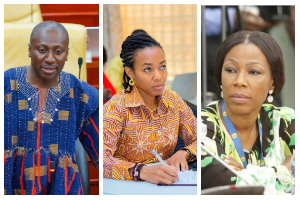
‘I was being pounded while on a hospital bed’ – Afenyo-Markin on Ayensu-Danquah-Zanetor brouhaha

0

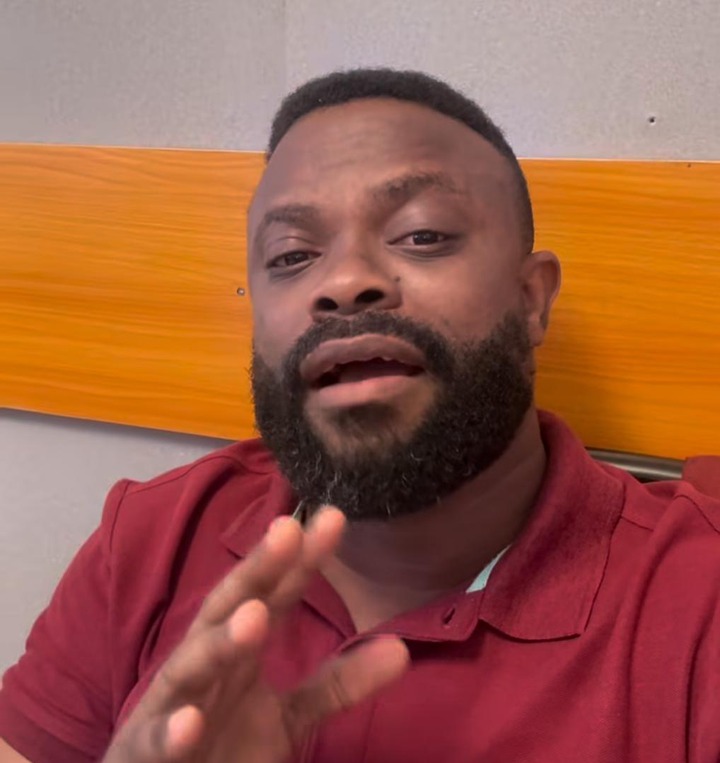
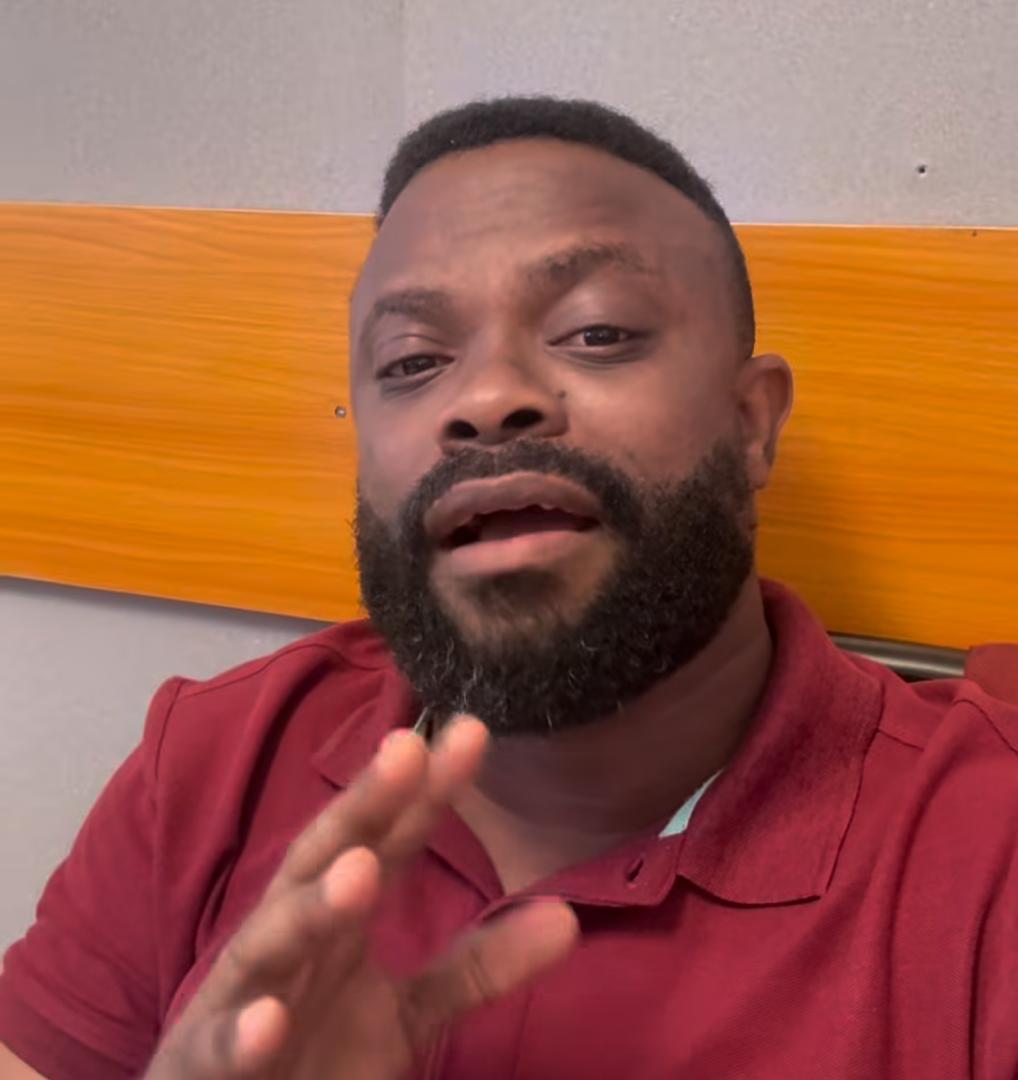
Afenyo-Markin reacted to the matter regarding Dr Zanetor and Prof Grace Ayensu-Danquah play videoAfenyo-Markin reacted to the matter regarding Dr Zanetor and Prof Grace Ayensu-Danquah

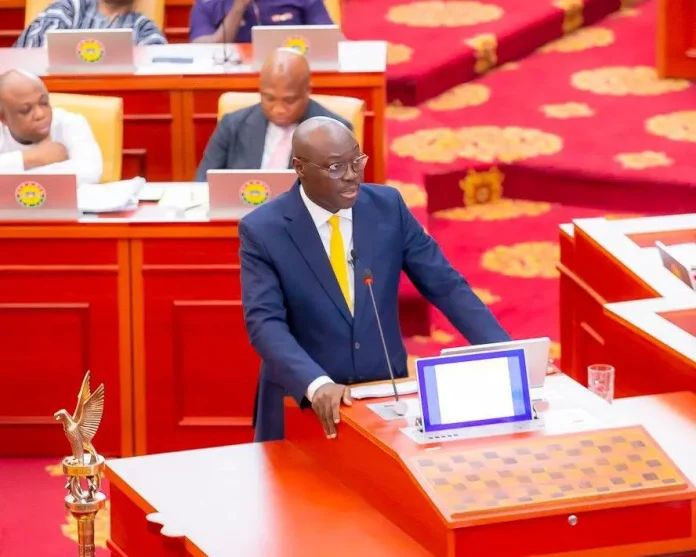
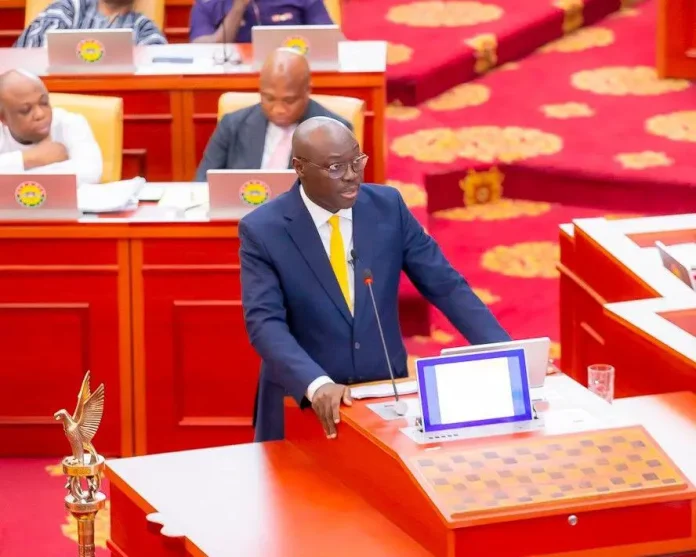
The Minority Leader in Parliament, Alexander Afenyo-Markin, has broken his silence following a heated exchange with Essikado-Ketan MP and Deputy Health Minister, Prof Grace Ayensu-Danquah, during a parliamentary sitting on July 14, 2025.

In an emotional submission to Parliament, Afenyo-Markin revealed that he was seriously unwell and bedridden at the time public backlash against his remarks toward Prof Ayensu began.

He described the widespread criticism he received as hurtful, especially considering the context in which the incident unfolded.

“Last week, I was in my hospital bed. I was unwell. And I saw, whilst watching TV, I saw Afenyo-Markin being pounded and I felt very sad,” he recounted.

“… sometimes we call ourselves names, but they are on lighter notes. It was on that note, that day, my respected colleague Grace Ayensu Dankwa got up, and I knew it was the usual heckling because there are times she comes to sit at the front bench to heckle me.

“I don’t take it personally. We close and we stand outside to talk. We joke.”

The incident that sparked the controversy occurred when Afenyo-Markin, the Effutu MP, ordered Prof Ayensu to sit down during a parliamentary session, accusing her of being out of order.

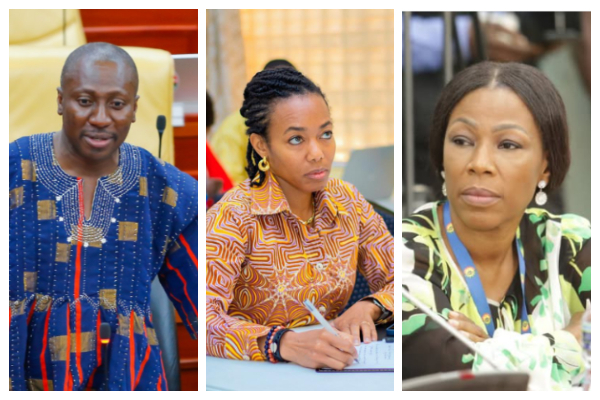
The visibly frustrated Minority Leader questioned why she had been nominated for a ministerial position when more senior figures in the ruling National Democratic Congress (NDC), such as Dr Zanetor Agyeman-Rawlings and Helen Ntoso, had not been considered.

“You came to meet Dr Zanetor here, and for some strange reason, it appears your name is being considered when even party stalwarts like Helen Ntoso are still waiting,” he stated at the time.

Prof Ayensu responded, describing Afenyo-Markin’s comments as offensive and discriminatory toward women in Parliament. She called on the Speaker to expunge the remarks from the record.

“Mr Speaker, there are only 14% of women in this House, and some of these statements are very discouraging… It makes it very difficult for women to speak when we face veiled threats and passive-aggressive behaviour,” she said.

In his recent remarks, Afenyo-Markin insisted his interaction with Prof Ayensu was intended as a light-hearted exchange, rooted in the often-playful banter common among MPs.

He recounted how he and Prof Ayensu had previously shared jokes and cordial relations, even meeting in private with other MPs after the incident to resolve any misunderstandings.

“We met in the office… We sat there and we talked as adults… I said, ‘Oh, but if you are offended, tell me. I will apologise to you.’ I thought we were joking.”

The Minority Leader expressed dismay at what he described as a deliberate effort by some non-governmental organisations and media outlets to portray him as disrespectful and anti-women.

“Only to see a certain NGO attacking me that I am attacking women. I said, How? We are a family.”

Afenyo-Markin further stressed his respect for women, pointing to his role as a husband and father.

He denied any intention to demean Prof Ayensu or undermine her nomination, adding that he had even praised her academic and professional achievements.

“She started as an art student… then she became a medical doctor. This is somebody to admire. And I respect and admire her. And she knows that.”

Meanwhile, the Effutu MP has already apologised to Prof Ayensu during a parliamentary vetting.

AM/SEA

Meanwhile, watch as Prophet Worlasi shares bombshell prophesies on Bawumia and NPP on The Lowdown:

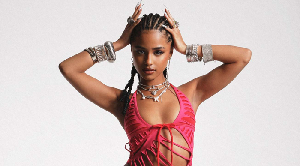
U.S-based songwriters sue Tyla over ‘Water’ song

0

South African singer, Tyla South African singer, Tyla

A legal battle over authorship and compensation has erupted around Tyla’s breakthrough single, “Water,” which peaked at No. 7 on the Billboard Hot 100 in 2023 and earned a Grammy Award for Best African Music Performance.

Two U.S.-based songwriters have filed a new lawsuit against the 23-year-old South African pop sensation, claiming they were wrongfully excluded from production credit and profits for the global hit song.

Billboard Pro reported that the new complaint was filed on Friday, July 25, against Tyla (Tyla Seethal), British producer Sammy SoSo (Samuel Awuku), and Sony Music Entertainment, the parent business of Tyla’s label Epic Records, by songwriters Olmo Zucca and Jackson LoMastro.

The plaintiffs claim that although they co-produced the song in a March 2023 session in Los Angeles, they were intentionally left out of the production credits and earnings.

Zucca and LoMastro are now requesting official producer credits for “Water,” a producer fee—the standard payment given to top-line producers on commercial releases—and a royalty increase to 12.5% each, both retroactively and in the future.

According to the complaint, “Water” has already made over $10 million and may eventually reach over $50 million, based on industry patterns and the song’s continued success.

“Because defendants have refused to recognize plaintiffs’ status as topline producers of the song, and have failed to pay plaintiffs all of the royalties they are owed from the song, plaintiffs have each suffered injury in fact,” the lawsuit states.

But this is not the first lawsuit the pair has brought a complaint concerning “Water.”

A similar complaint was filed earlier this year, in March 2025, but it was voluntarily dismissed on July 24, before being refiled the following day with new legal representation.

Zucca and LoMastro claim to have worked with both SoSo and fellow producer Rayo (Rayan El-Hussein Goufar) at the 2023 studio session. Officially, they are listed as co-writers on the last song, but the two claim that SoSo signed an exclusive contract with Tyla and claimed sole production credit, all the while tricking them into signing what they describe as an unjust and misleading royalty arrangement.

They claim that the contract limited their publication royalties to 10% each, compared to 15% for SoSo, and excluded them totally from producer recognition and remuneration.

“Although plaintiffs tried for months to resolve the matter with Awuku, Awuku refused to cooperate and, instead, engaged in a pattern of deception designed to conceal his nefarious actions,” per the lawsuit.

According to the lawsuit, Zucca and Epic Records President Ezekiel Lewis met in May 2024, and Lewis claimed that SoSo had not disclosed the involvement of any co-producers to the label.

Apart from the strain of court cases, the Grammy-winning singer-songwriter has just made a comeback with her new mixtape since her historic debut.

According to RTT News, the new song bundle, WWP, includes the new singles “BLISS” and “IS IT” as well as other brand-new music. The four-track project was produced by P. Priime and Sammy Soso, with WizKid making a guest appearance on “DYNAMITE.”

Furthermore, Tyla’s popular singles “PUSH 2 START” and “JUMP” from her gold-certified deluxe album TYLA+ have earned an RIAA certification.

She is also scheduled to perform at the prestigious Global Citizen Festival in New York this September.

‘I was being pounded while on a hospital bed’ – Afenyo-Markin on Ayensu-Danquah-Zanetor brouhaha

0

Afenyo-Markin reacted to the matter regarding Dr Zanetor and Prof Grace Ayensu-Danquah play videoAfenyo-Markin reacted to the matter regarding Dr Zanetor and Prof Grace Ayensu-Danquah

The Minority Leader in Parliament, Alexander Afenyo-Markin, has broken his silence following a heated exchange with Essikado-Ketan MP and Deputy Health Minister, Prof Grace Ayensu-Danquah, during a parliamentary sitting on July 14, 2025.

In an emotional submission to Parliament, Afenyo-Markin revealed that he was seriously unwell and bedridden at the time public backlash against his remarks toward Prof Ayensu began.

He described the widespread criticism he received as hurtful, especially considering the context in which the incident unfolded.

“Last week, I was in my hospital bed. I was unwell. And I saw, whilst watching TV, I saw Afenyo-Markin being pounded and I felt very sad,” he recounted.

“… sometimes we call ourselves names, but they are on lighter notes. It was on that note, that day, my respected colleague Grace Ayensu Dankwa got up, and I knew it was the usual heckling because there are times she comes to sit at the front bench to heckle me.

“I don’t take it personally. We close and we stand outside to talk. We joke.”

The incident that sparked the controversy occurred when Afenyo-Markin, the Effutu MP, ordered Prof Ayensu to sit down during a parliamentary session, accusing her of being out of order.

The visibly frustrated Minority Leader questioned why she had been nominated for a ministerial position when more senior figures in the ruling National Democratic Congress (NDC), such as Dr Zanetor Agyeman-Rawlings and Helen Ntoso, had not been considered.

“You came to meet Dr Zanetor here, and for some strange reason, it appears your name is being considered when even party stalwarts like Helen Ntoso are still waiting,” he stated at the time.

Prof Ayensu responded, describing Afenyo-Markin’s comments as offensive and discriminatory toward women in Parliament. She called on the Speaker to expunge the remarks from the record.

“Mr Speaker, there are only 14% of women in this House, and some of these statements are very discouraging… It makes it very difficult for women to speak when we face veiled threats and passive-aggressive behaviour,” she said.

In his recent remarks, Afenyo-Markin insisted his interaction with Prof Ayensu was intended as a light-hearted exchange, rooted in the often-playful banter common among MPs.

He recounted how he and Prof Ayensu had previously shared jokes and cordial relations, even meeting in private with other MPs after the incident to resolve any misunderstandings.

“We met in the office… We sat there and we talked as adults… I said, ‘Oh, but if you are offended, tell me. I will apologise to you.’ I thought we were joking.”

The Minority Leader expressed dismay at what he described as a deliberate effort by some non-governmental organisations and media outlets to portray him as disrespectful and anti-women.

“Only to see a certain NGO attacking me that I am attacking women. I said, How? We are a family.”

Afenyo-Markin further stressed his respect for women, pointing to his role as a husband and father.

He denied any intention to demean Prof Ayensu or undermine her nomination, adding that he had even praised her academic and professional achievements.

“She started as an art student… then she became a medical doctor. This is somebody to admire. And I respect and admire her. And she knows that.”

Meanwhile, the Effutu MP has already apologised to Prof Ayensu during a parliamentary vetting.

AM/SEA

Meanwhile, watch as Prophet Worlasi shares bombshell prophesies on Bawumia and NPP on The Lowdown:
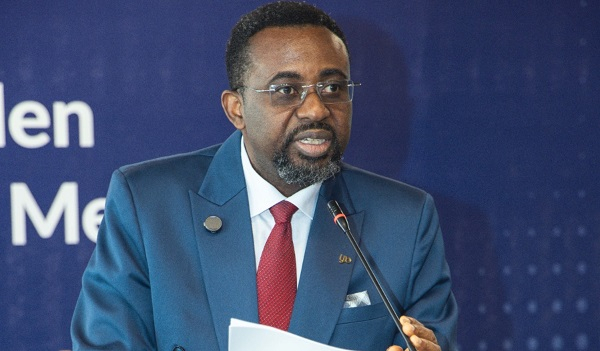
BoG Governor allays fears of US dollar shortage

0

Dr Johnson Pandit Asiama, Governor of the Bank of Ghana Dr Johnson Pandit Asiama, Governor of the Bank of Ghana

Dr Johnson Pandit Asiama, Governor of the Bank of Ghana (BoG), has allayed fears of businesses and investors of shortage of Dollars for their daily transactions following recent concerns.

While indicating that the Central Bank has observed some reduction in remittances since April 2025, the Governor noted that for instances where investigations were carried out, it was observed that there was no appropriate documentation by some importers.

He said this at the 125th Monetary Policy Committee (MPC) press briefing in Accra, on Wednesday, July 20.

“We do not expect a shortage of Dollars at the bank. There have been instances like that, and we moved in to investigate, only to find out that some of those importers did not have the appropriate documentation and that was what was delaying it,” the Governor said.

“What we’ve seen is that certain inflows appear to have reduced, especially remittances since April – we’re investigating that thoroughly,” the Central Bank Chief said, indicating that they were enhancing monitoring mechanisms to shore up foreign exchange inflows.

He stated that Tuesday, July 29, BoG released a notice to banks, Payment and Remittance Service Providers (PRSPs), and Money Transfer Operators (MTOs) to ensure foreign exchange properly entered the Ghanaian financial system.

He said that the Bank was following up with certain data requirements from all the players in the remittance space, which would increase inflows, and gave an assurance, saying, “… and whatever pressures you might be seeing locally will be contained.”

He also announced a stricter oversight of banks’ nostro accounts [foreign currency accounts held abroad that banks use to finance international trade] to prevent unauthorised capital flight and make Ghana’s foreign exchange earnings remain within the domestic financial system.

“From now on, we will be monitoring transactions in the nostro balances of banks, all in an attempt to make sure that we don’t have offshoring going on and that all Ghana foreign exchange that’s earned from abroad is made available to the system to fund our imports and economic activities,” Governor Asiama stated.

The Governor explained that contrary to the concerns of a seeming shortage of Dollars at banks, businesses are rather financed through nostro accounts rather than requiring physical dollar deposits from importers to facilitate trade payments.

“Banks finance trade using their nostro account – it is out of it that they pay for imports – you don’t have to carry US Dollars in Accra to pay for your imports, banks are expected to fund that for you,” he stated.

The enhanced monitoring measures, he said were expected to further stabilise the Cedi, which has appreciated by 40.7 per cent against the Dollar, 31.2 per cent against the Pound Sterling, and 24.2 per cent against the Euro.

‘They lied, dirtied my brother’ – Inaki speaks on Nico Williams’ failed move to Barcelona

0

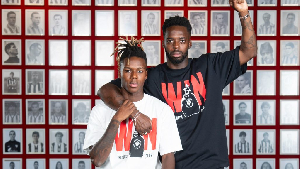
Nico Williams (in white attire) extended his contract at Athletic Bilbao Nico Williams (in white attire) extended his contract at Athletic Bilbao

Ghanaian attacker, Inaki Williams, has accused Spanish giants FC Barcelona of playing media games in their failed pursuit to sign his brother Nico Williams.

He explained that numerous media reports that have emerged from Spain and other international outlets were untrue, as his brother had not decided on his future at that time.

The Athletic Bilbao captain fumed about how his brother’s reputation had been soiled by misleading reportage from the media, describing the situation as “unfair.”

“My brother is not joining Barca? Much of what has been said about Nico is a lie. They have carried out a media campaign, thinking it would work for them. They have dirtied many things. Everyone has the right to think and reflect on their future.

“At many points this summer, people haven’t been fair to my brother. When someone goes to a restaurant and they get the menu, it sometimes takes them minutes to choose,” he said, as reported by the mirror.co.uk.

Meanwhile, after Nico signed a new deal with Athletic Bilbao until June 30, 2025, Inaki commended his brother for making a good decision.

The Black Stars forward noted that the club’s project convinced Nico to extend his stay at San Mames.

“My brother’s decision wasn’t easy. Nico’s maturity has been incredible, with a wide range of options, and he’s opted for Athletic, which is a club that’s making giant strides, and we have one of the best teams in these 12 years that I’ve been in the first team,” Inaki added.

Nico Williams dominated the transfer market after being chased by Barcelona and Bayern Munich but ended up staying at Athletic despite reports he was joining the Catalan club.

Meanwhile, watch as football fans question FIFA’s move to scrap penalty rebound rule

SB/VPO

Man allegedly throws wife, kids out at midnight, returns with thugs to forcefully take children

0

A Nigerian woman has taken to social media to cry out after her ex husband allegedly stormed her apartment with thugs to forcefully take away her children months after sending her and the kids out of their former home in the middle of the night.

The woman, who goes by the username @luckydamsel89 on TikTok, narrated her ordeal in a series of emotional posts shared on her page.

Restoring decorum in Ghanaian Parliament: Moving beyond partisan politics

0


In recent times, the halls of Ghana’s Parliament have witnessed a troubling trend—the rising intrusion of partisan politics into a space meant for national dialogue and policymaking.

As Members of Parliament gather to deliberate on matters critical to the country’s development, the voice of reason and progress is increasingly being drowned out by political discord.

This growing concern, shared by many citizens, is a clarion call for a return to decorum and statesmanship within the legislative chamber. The assertion that strongly resonates with Ghanaians who yearn for a Parliament that prioritizes national interest over party loyalty.

At the heart of the matter is the urgent need to uphold the Standing Orders that govern parliamentary proceedings—ensuring they are enforced firmly and impartially. The Speaker of Parliament must wield authority decisively and curb all attempts by MPs to inject partisan rhetoric into national discourse. By applying the rules without bias, the Speaker can cultivate a culture of constructive debate and genuine collaboration.

It is essential for Members of Parliament—regardless of their party affiliation—to recognize their solemn duty to serve all Ghanaians. When they enter the chamber, they should do so not as party operatives but as custodians of the people’s hopes and aspirations. Placing partisan interest above national well-being undermines the very spirit of our democracy.

The escalating trend of politically charged and confrontational debates is gradually eroding public trust in Parliament. A shift in mindset is urgently needed—one that promotes national development over political point-scoring. As I have rightly stated,

Going forward, both leadership and individual MPs must embrace bipartisanship and mutual respect in all parliamentary engagements. Opening statements laced with political jabs must be curtailed immediately to reaffirm the House’s commitment to democratic principles and good governance.

In conclusion, restoring decorum in Parliament is not just a desirable goal—it is a democratic necessity. Only by rising above the divisive grip of partisan politics can Members of Parliament truly fulfill their mandate with integrity and honor. Ghana’s future depends on a unified, focused, and responsible Parliament—one that puts country above party and the people above politics.

Let us rise to this call. For in our unity lies the promise of a brighter future for Ghana.

Forex crunch persists despite Cedi gains — Importers and Exporters raise alarm

0

The Importers and Exporters Association of Ghana has raised serious concerns over persistent foreign exchange (forex) access challenges, despite the recent appreciation of the Ghanaian Cedi against major international currencies.

In a press statement issued on Wednesday, the Association noted that businesses continue to struggle to obtain forex through commercial banks, pushing many to turn to the black market, where foreign currency is more accessible but at significantly higher rates.

“It is disheartening that while the Cedi has seen some level of appreciation, businesses continue to face significant hurdles in sourcing forex from traditional banking institutions,” the statement read.

“This situation has compelled many legitimate importers and exporters to resort to the black market, where forex is traded at inflated rates, worsening the cost of doing business and undermining macroeconomic stability.”

The Association referenced recent media reports highlighting ongoing dollar shortages and the increasing influence of informal currency dealers—often referred to as “Abokis” accused of hoarding forex and manipulating market prices.

The group also took issue with recent political commentary on the state of the currency. Specifically, it criticised remarks made by the opposition New Patriotic Party (NPP), suggesting that public mockery of the Cedi’s appreciation could erode investor and business confidence.

“While political debate is part of democratic life, such commentary, especially when not grounded in economic facts, only serves to shake the confidence of the business community and investors alike,” the Association warned.

Calling for urgent intervention, the Association urged the Bank of Ghana to release more forex into the formal financial system and to enhance transparency in the allocation and distribution of foreign currency through commercial banks.

“The central bank must also work closely with financial institutions to strengthen accountability and efficiency, while simultaneously intensifying enforcement efforts to curb the dominance of the black market,” the statement added.

The Association reaffirmed its commitment to supporting government-led efforts aimed at stabilizing the economy but stressed that such support must be met with “responsive and targeted interventions” that prioritize the needs of legitimate businesses.

“We respectfully urge the Bank of Ghana to act swiftly to arrest the situation before it spirals further out of control,” it concluded.

Paul Adom-Otchere alleges witch-hunt after OSP’s summons

0

The Office of the Special Prosecutor (OSP) has invited former Board Chairman of the Ghana Airports Company Limited (GACL), Paul Adom-Otchere, for questioning in connection with an ongoing investigation into a revenue assurance audit contract.

A letter dated July 25, 2025, identified Mr. Adom-Otchere as a suspect in the probe, which focuses on alleged corruption and related offences involving a deal between GACL and a private firm.

Reacting to the development in an interview with Accra-based Citi FM, Mr. Adom-Otchere described the invitation as politically motivated.

“I see this as a witch-hunt. I had no direct involvement in the signing of the contract under investigation,” he said.

He explained that the agreement in question was executed by GACL’s Managing Director, Yvonne Opare, adding that he was not even aware that the deal had been finalised.

Mr. Adom-Otchere further questioned the direction of the probe, suggesting that investigators should focus on officials who were directly involved.

“I don’t understand why this is being targeted at me when the relevant management officials—including the Managing Director—are available and were directly involved in the operational decision,” he added.

While the OSP has yet to disclose further details on the scope of the investigation, the broadcaster indicated that he is expected to appear before investigators at 3:00 p.m. on Thursday, July 31.

Adomonline.com

Mahama Administration Retains Opponent-Appointed GIIF CEO

0

Nana Dwemoh Benneh
Nana Dwemoh Benneh

President John Mahama’s government has retained Nana Dwemoh Benneh as CEO of the Ghana Infrastructure Investment Fund (GIIF), extending his tenure despite his 2024 appointment by former President Nana Akufo-Addo.

The decision reflects continuity in key state agencies, with Benneh joining Minerals Commission CEO Martin Ayisi and other Akufo-Addo appointees retained by the current administration.

According to official records, Benneh assumed leadership at GIIF in May 2024 under Section 25(1) of the Ghana Infrastructure Investment Fund Act 2014. The $325 million sovereign fund operates independently of daily government control, financing infrastructure projects through public-private partnerships. Its mandate includes creating ring-fenced sub-funds for affordable housing and strategic non-profit interventions.

The reappointment occurs amid internal NDC debates over retaining opposition-era appointees. GIIF remains central to high-stakes legal disputes, including an ongoing acquisition conflict between Engineers and Planners and Azumah Resources Ltd over a gold mining project.

Analysts view the retention as prioritizing institutional stability over political turnover. GIIF’s governance structure designed to withstand political shifts appears reinforced by Benneh’s continued leadership during Ghana’s infrastructure financing push.

Trade Minister raises alarm over raw material shortages for local industries

0

The Minister for Trade and Agribusiness, Elizabeth Ofosu-Adjare, has expressed concern over the persistent shortage of raw materials for local industries, despite Ghana’s long-standing investment in agriculture.

Speaking on The Point of View on Channel One TV with Bernard Avle on Wednesday, July 30, the Minister highlighted the closure of some tomato processing factories due to the unavailability of raw materials, despite the facilities being in good condition.

She revealed that the Ministry is currently collaborating with a company in Berekum on a commercial contract farming initiative aimed at producing raw materials specifically for industrial use.

“You know we have done agriculture over the years, and we still import about 90% of our raw materials to feed industries. So, the institution of agribusiness in that industry is to give us the opportunity to produce raw materials in commercial contract quantities to feed our industry.

She emphasised, “You realised that some tomato factories have been shut down. The factories are in good shape; the only problem is the raw materials. As I speak to you right now, there’s a company in Brekum that we’re working closely with to help them with commercial contract farming.

“That one is not for your soup or stew; it’s not for the market, it’s for the industry. And so, we work well with the Ministry of Agriculture in helping us get the agricultural people to do proper agricultural practices.”

Her remarks follow the launch of the National Agribusiness Dialogue on Monday, July 28, which brought together stakeholders from the agriculture, trade, and industry sectors to explore innovative strategies for advancing Ghana’s agribusiness sector.

The initiative is part of the Mahama administration’s broader agenda to modernise agriculture, boost industrial productivity, and support rural livelihoods.


National Security picks up three Senior Officials of McDan group

…..

Explore the world of impactful news with CitiNewsroom on WhatsApp!

Click on the link to join the Citi Newsroom channel for curated, meaningful stories tailored just for YOU:
https://whatsapp.com/channel/0029VaCYzPRAYlUPudDDe53x

No spam, just the stories that truly matter! #StayInformed #CitiNewsroom #CNRDigital

Why I Stopped Acting In Movies – Ego Boyo

0

Veteran Nollywood actress, Ego Boyo, has revealed that her decision to stop acting was based on personal interest, not pressure from her husband, as widely believed.

Naija News reports that the 56-year-old spoke in an interview with media personality, Chude Jideonwo.

The thespian said she walked away from acting when she discovered that producing films gave her more satisfaction.

Ghana School of Law Will Not Be Abolished – GSL Director

0

The Director of Legal Education at the Ghana School of Law, His Lordship Barima Nana Yaw Oppong, has affirmed that the Ghana School of Law will not be abolished, countering public assumptions following recent government reform announcements.

This response comes in the wake of Attorney-General and Minister for Justice, Dr. Dominic Ayine’s statement during the Government Accountability Series in Accra.

NDC Rift Deepens Over Mahama’s Retention of Rival-Appointed Officials

0

President Mahama
President Mahama

Growing discontent within the National Democratic Congress (NDC) follows President John Mahama’s retention of at least 14 high-profile appointees from former President Akufo-Addo’s administration, sparking allegations of betrayal among party loyalists.

According to party sources, CEOs and deputies at strategic institutions including the Ghana Airports Company (Yvonne Opare), Minerals Commission (Martin Ayisi), and Ghana Infrastructure Investment Fund (Nana Dwemoh Benneh) remain in post despite expectations of widespread replacements.

Critics claim the decisions align with interests of the Mahama family, sidelining unemployed NDC members who campaigned for the party’s return to power.

At the National Petroleum Authority, Deputy CEO Linda Osei retained her role and gained directorship of a sensitive department, while Obuobia Darko an NDC member serves as her deputy at Ghana Airports.

Similar tensions exist at the Public Procurement Authority, where Akufo-Addo appointee Frank Mantey remains.

Anonymous NDC officials describe the situation as “a betrayal”:

We fought to bring NPP technocrats back? Our youth bled for this victory,” lamented one regional organizer.
How can our own sit idle with CVs while NPP appointees keep jobs?” questioned a senior communicator.

Chief of Staff Julius Debrah previously distanced himself from the retentions. The controversy highlights internal clashes between patronage expectations and Mahama’s emphasis on institutional continuity, testing party unity ahead of the 2028 elections.

Economic Think Tank Slams Ghana’s Mid-Year Budget as “Technically Flawed”

0

Finance Minister Cassiel Ato Forson

The Institute of Economic Research and Public Policy (IERPP) has declared Ghana’s 2025 Mid-Year Budget “contradictory and misleading,” citing inconsistencies between unchanged macroeconomic targets and adjusted revenue-expenditure figures.

Professor Isaac Boadi, IERPP Executive Director, asserted the review presented to Parliament on July 24 undermines fiscal credibility despite touting inflation improvements and currency stability.

According to official records, the budget revised government revenue upward by 1.3% while trimming expenditure marginally from GH¢270.9 billion to GH¢269.5 billion, yet maintained original growth and deficit targets. “Changing the recipe but expecting the same dish defies logic,” Boadi stated at an Accra press conference, noting the absence of corresponding target revisions violates budgetary prudence.

He further criticized “selective data presentation”:

  • Primary surplus claims rely partly on deferred expenditures and underperforming oil revenues/grants

  • Arrears clearance and project loan disbursements fell drastically, risking long-term investment execution

  • Short-term domestic borrowing (treasury bills) escalates rollover risks amid elevated public debt

“The financing gap is bridged unsustainably,” Boadi warned, adding that moving fiscal goalposts threatens transparency. “Ghana’s credibility hinges on aligning stated intentions with actual maneuvers.”

The critique intensifies scrutiny of President Mahama’s economic management following earlier warnings about structural vulnerabilities from University of Ghana economists.

Gold exports exceed total imports in June 2025

0

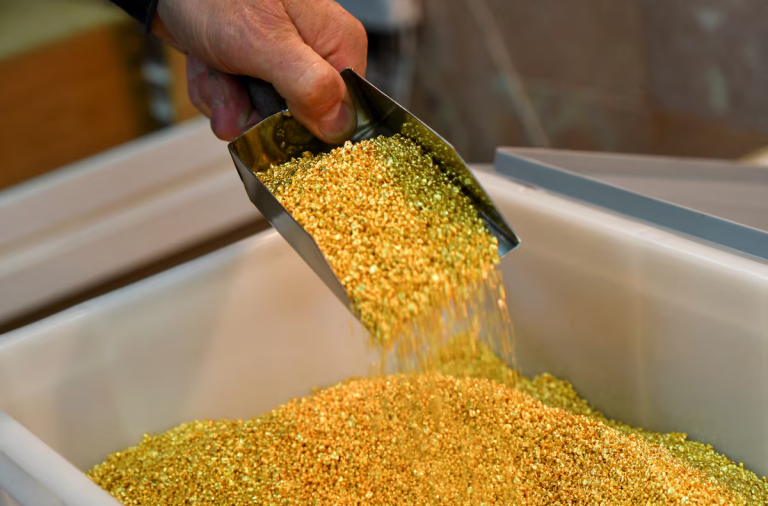
Gold exports totalled US$8.39billion in June 2025, surpassing the country’s total import bill of US$8.23billion by US$160million, Bank of Ghana (BoG) data released this week have shown.

The yellow metal’s exports represented 61 percent of total export earnings in June, an increase from 53 percent in March. The mineral accounted for the nation’s largest export portfolio component during the period under review.

Total export revenues increased to US$13.8billion in June from US$7.03billion for March, recording growth of 96 percent. The expansion, analysts say, reflects increased production volumes and favourable international commodity prices across key export categories.

The trade surplus widened from US$3.3billion in March to US$5.57billion in June. The surplus represented 6.4 percent of Gross Domestic Product (GDP) in June, compared with 3.8 percent in March.

Cocoa exports generated US$2.17billion in June, up from US$1.6billion in March. The commodity’s share of total exports declined from 23 percent to 16 percent over the four-month period as gold exports expanded at a faster rate.

Oil exports recorded US$1.36billion in June, expanding from US$780million in March and US$1.09billion in May. Petroleum products maintained a relatively smaller proportion of total export earnings compared with gold and cocoa.

Total imports increased 120 percent from US$3.73billion in March to US$8.23billion in June. Non-oil imports comprised 69 percent of the total at US$5.64billion while oil imports accounted for 31 percent at US$2.59billion.

The current account balance shifted from a deficit of US$117.6million in March 2024 to a surplus of US$2.32billion for March 2025. The improvement demonstrates enhanced external sector performance over the twelve-month period.

Gross international reserves reached US$11.12billion in June, according to the central bank data, evidence of the positive impact from export earnings on the country’s external position.

Other exports, including manufactured goods and non-traditional commodities, increased from US$925million in March to US$1.88billion in June. This category represented 14 percent of total exports by June.

The data indicate the nation’s continued reliance on commodity exports, with gold, cocoa and oil accounting for 86 percent of total export earnings. The mining sector’s dominant contribution to foreign exchange earnings underscores its importance to the country’s external stability.

Import growth exceeded export growth rates during the period, with imports expanding 120 percent compared to 96 percent growth in exports. However, the higher absolute value of exports ensured the trade surplus continued to widen.

Oil imports increased from US$1.27billion in March to US$2.59billion in June, reflecting Ghana’s dependence on petroleum product imports despite domestic crude oil production capacity.

The balance of payments showed improvement across multiple indicators. Private transfers reached US$3.93billion in June, while the financial account recorded net inflows of US$1.60billion.

Direct investment liabilities totalled US$926.5million in June, indicating continued foreign investor interest in Ghana’s economy. Portfolio investment liabilities recorded negative US$39.8million, reflecting net outflows in this category.

The external sector data reveal structural improvements in Ghana’s trade position during first-half 2025. Gold exports provided the primary driver of this performance, contributing significantly to foreign exchange earnings and reserve accumulation.

Trade balance performance as a percentage of GDP showed consistent improvement throughout the period, rising from 3.8 percent for March to 6.4 percent in June. This trend indicates strengthening external sector fundamentals.

Analysts say the sustainability of current export performance depends on continued global demand for Ghana’s primary commodities and maintenance of production levels across key sectors.

This comes as gold prices continue to rally. The commodity’s price moved past the US$3,400 threshold last week, closing at US$3,431 – underpinned by heightened demand for safe-haven assets in the face of persistent macroeconomic uncertainty.

Domestically, NewGold ETF tracked the upswing; advancing 2.51 percent on the week to GH¢373.75. Trading activity surged sharply, with average daily volumes rising more than tenfold to 9,718 units, up from 844.4 units the previous week.

Average daily turnover followed suit, increasing over 600% to GH¢3.6million with a total of GH¢18.14million in shares traded; almost ten times the prior week’s GH¢1.9million and promoting investors’ pivot toward gold-backed assets amid sustained foreign exchange volatility and uncertainty over the trajectory of global interest rates.

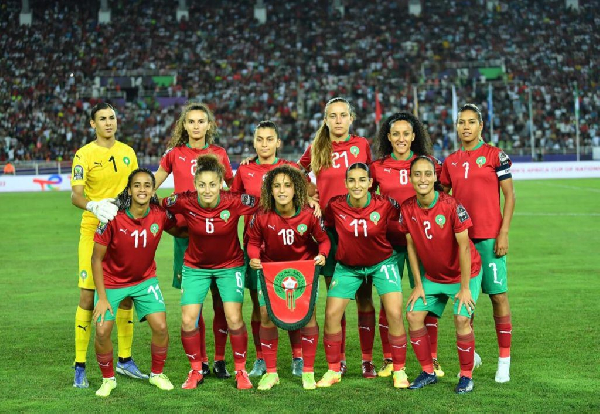
Morocco petitions CAF to ‘punish’ referee over controversial decision in WAFCON final

0

Morocco lost to Nigeria in the 2024 WAFCON final Morocco lost to Nigeria in the 2024 WAFCON final

The Moroccan Football Federation (FRMF) has petitioned the Confederation of African Football (CAF) to take drastic action against Namibian referee Antsino Twanyanyukwa, who officiated the 2024 Women’s African Cup of Nations (WAFCON) final.

According to a report by Morocco World News, the referee’s decision to grant their women’s team a penalty when the score was tied at 2-2 was deemed incorrect, hence the demand for action.

The FRMF claimed that Twanyanyukwa’s decisions were considered “referee injustice,” calling on CAF to review the incident and possibly suspend the official.

Meanwhile, CAF have yet to respond to the petition after a thorough review of the request.

It will be recalled that during Morocco’s final game against Nigeria, the referee awarded a penalty in favour of the host nation after suspecting a handball by Oluwatosin Demehin in the box.

However, the Video Assistant Referee (VAR) reviewed the incident and advised Twanyanyukwa to take a second look.

The Namibian referee subsequently overturned the penalty decision after realising Demehin’s arm was close to her body.

In a shocking turn of events, the Super Falcons scored the third goal through Jennifer Echegini, giving them a 3-2 win and sealing their 10th WAFCON title.

SB/VPO

Meanwhile, watch as football fans question FIFA’s move to scrap penalty rebound rule

Kejetia Market Women cries after losing items when actor Lilwin visited

0

Award-winning Kumawood actor Lil Win has sparked controversy following a promotional parade at Kejetia in Kumasi, Ashanti Region, on Wednesday, July 30, 2025.

The comic actor, known for his dramatic public stunts, stormed the bustling central business district to promote his upcoming film Captain Ibrahim Traoré: The Last African Hero, set to premiere at the Semenhyia Golden (SG) Mall on Saturday, July 30, 2025.

Enhancing electoral infrastructure in Ghana

0

Nana Kweku Ofori Atta, Security Consultant

In the pursuit of a robust democracy, Ghana stands at a pivotal juncture, poised to bolster the integrity of its electoral processes.

Recent discussions have shed light on critical deficiencies in the nation’s electoral infrastructure, prompting a call to action for comprehensive reforms aimed at fortifying the foundation of democratic governance.

Collaborative Database Integration
At the heart of electoral reform lies the imperative for collaborative database integration. Recognizing the interconnected nature of national institutions, there is a pressing need for synergy between the Electoral Commission (EC) and key stakeholders such as the National Identification Authority (NIA), Ghana Statistical Service, and the Ministry of Health’s Births and Deaths Registry. A centralized database, forged through collaboration, would streamline voter registration processes, curb the proliferation of ghost names, and ensure the accuracy and integrity of voter rolls.

Empowering Institutional Autonomy
Central to the reform agenda is the call for institutional autonomy within the Electoral Commission. Liberating the appointment of the EC’s chairperson from political influence is essential to insulate the Commission from undue pressure, thereby fostering transparency and public trust. Moreover, enhancing accountability in the allocation of funds collected through filing fees from political aspirants is imperative, with resources redirected toward fortifying electoral infrastructure and guarding against financial mismanagement.

Safeguarding Data Integrity and Security
The prevalence of ghost names underscores the urgency for proactive measures to cleanse the voter register and uphold data integrity. Regular database updates, complemented by stringent security protocols, are paramount to preventing electoral malpractices and preserving the sanctity of the electoral process. Additionally, prudent resource allocation—avoiding duplicative investments in verification machines—is essential for optimizing operational efficiency and fiscal responsibility within the electoral apparatus.

Forging Strategic Security Partnerships
Security companies emerge as indispensable allies in safeguarding electoral processes against multifaceted threats. Through strategic partnerships with government agencies, these entities offer expertise in cybersecurity, risk management, and emergency response—enhancing the resilience of electoral infrastructure and bolstering public confidence in the democratic process.

Conclusion
As Ghana charts its course toward a more robust democracy, the imperative for electoral reform looms large on the national agenda. By embracing collaborative database integration, empowering institutional autonomy, safeguarding data integrity, and forging strategic security partnerships, Ghana can lay the groundwork for a future where electoral processes reflect the will of the people and uphold the principles of transparency, integrity, and democracy.

Government to reintroduce road tolls to enhance road revenue sustainability — Agbodza 

0

By Iddi Yire

Accra, July 31, GNA – As part of efforts to improve road maintenance financing, the Cabinet has approved the reintroduction of road and bridge tolls, with a focus on modernising toll collection infrastructure.  

Mr Kwame Governs Agbodza, the Minister of Roads and Highways, announced this at the Government Accountability Series press conference at the Presidency in Accra. 

He said key features of the reform included transition to electronic and automated tolling systems, enhanced transparency, auditability of revenue flows, improved user experience and reduced congestion at toll points. 

Others are the launch of a concessionaire prequalification process by the Ministry, issuance of public advertisements, a prequalification conference held on 3rd July 2025, and 12 firms having submitted applications currently under evaluation. 

The Minister said proposed new toll rates had been submitted to Parliament via the Ministry of Finance, explaining that the rates had been structured to be fair, transparent and reflective of road usage intensity.  

He said this modernisation supported their commitment to digital transformation and fiscal discipline.  

Touching on rationalisation of sector project portfolio, Mr Agbodza said an assessment of the status of contractual commitments indicated a very large portfolio of existing road projects (active and inactive) estimated to cost about GHS 105 billion as of 31st December 2024.  

It was obvious that the estimated contractual commitments could not be adequately funded with the available sources of funds, Mr Agbodza said.  

He said the Ministry, together with the Road Agencies, therefore, undertook a comprehensive assessment of the existing contracts with a view to make recommendations for the effective rationalisation of the projects, to make them financially manageable and still meet the Medium-Term plan of the Ministry.  

The key outcomes of the rationalisation exercise were the identification of non-performing and stalled contracts, suspension or restructuring of low-impact projects and prioritisation of high-impact economically justified roads.  

The Minister said the restructuring would ensure that existing and new projects were aligned with available funding sources, while achieving the Ministry’s Medium Term Development Plan goals.  

Again, the rationalisation exercise was consistent with the pillar of financial prudence and responded directly to the National Democratic Congress (NDC) 2024 Manifesto’s pledge to streamline infrastructure investment for maximum socio-economic return.  

He said the existing project portfolio of the road sector was rationalised to reduce current commitments and reduce non-performing contracts.  

GNA 

Edited by Christabel Addo 

Gov’t reviews Bawku, Nalerigu curfews; weapons ban still in force

0

The Minister for the Interior, on the advice of the National Security Council and by Executive Instrument, has reviewed the curfew hours for Bawku and Nalerigu townships and their surrounding areas.

Effective Thursday, July 31, 2025, the new curfew hours will run from 6:00 p.m. to 6:00 a.m., replacing the previous schedule of 6:00 a.m. to 2:00 p.m.

The affected areas include the Bawku Municipality in the Upper East Region and the East Mamprusi Municipality in the North East Region.

The government urged Chiefs, Opinion Leaders, the youth, and residents of the area to continue exercising restraint and to pursue peaceful and non-violent means in addressing local challenges.

In addition, the Ministry has reminded the public that a total ban remains in force on the possession of arms, ammunition, and offensive weapons in the affected areas. Anyone found in violation of this directive will be arrested and prosecuted.

The government reiterated its commitment to restoring peace and security in the region and called on all stakeholders to support efforts to maintain law and order.

Catholic Bishop urges gov’t action to restore peace in Bawku

GACL repossesses 16-acre Airport land from McDan Group

0

The Ghana Airports Company Limited (GACL) says it has regained control of over 16 acres of prime airport land following a ruling by an Accra High Court in its favour against subsidiaries of the McDan Group.

The court’s judgment, delivered on May 6, 2025, granted GACL full re-entry and possession of two parcels of land, measuring approximately 10.63 acres and 5.66 acres, located near Kotoka International Airport, adjacent to and opposite Action Chapel International. 

The lands were leased to McDan Shipping Company and Airport Logistics Limited, both subsidiaries of the McDan Group, since 2012.

In February this year, GACL filed a writ and statement of claim citing repeated breaches of lease agreements and outstanding ground rent. The company sought the recovery of $26,296 in accrued rent and a perpetual injunction to restrain the companies from further interference with the land.

The High Court granted GACL’s application for summary judgment, holding that the defendants had no valid defence. The court awarded all reliefs sought by GACL and further ordered the payment of GH¢50,000 in legal costs.

In a statement, GACL described the outcome as a major recovery of state assets and commended the role played by its Legal Department and Managing Director, Mrs Yvonne Nana Afriyie Opare, in pursuing the case.

“The repossession of these lands not only safeguards millions of dollars’ worth of state assets but also reinforces our commitment to accountability and lawful management of public property,” the statement said.

The land recovery follows a related issue in December 2024 when McDan Aviation’s operations at Terminal 1 of Kotoka International Airport were suspended over debt obligations. Though those debts were later settled, the land dispute remained unresolved until the court’s intervention.

A source at the McDan Group has told Graphic Online that the company has appealed the court’s decision.

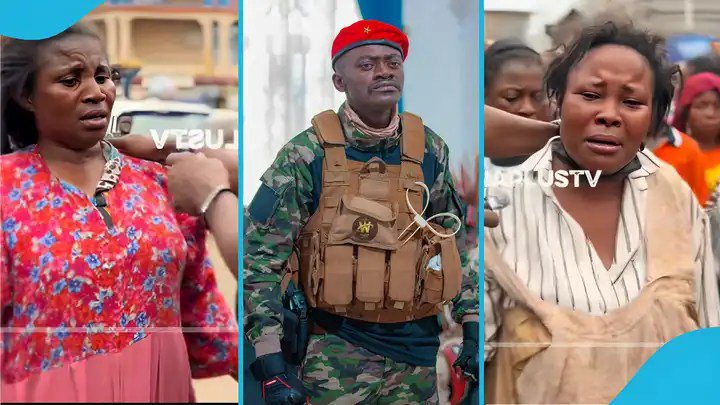
Ghana Military Probes Alleged Assault on Journalist During Demolition

0

Ghana Armed Forces (GAF)
Soldiers North

The Ghana Armed Forces (GAF) has launched an investigation into soldiers accused of assaulting an eyewitness during a televised interview with Joy News.

The incident occurred during a demolition exercise in Spintex, Accra, on July 30, 2025.

According to an official statement, GAF pledged a “thorough” probe into the “inappropriate conduct,” vowing to hold culpable personnel accountable. The military reaffirmed its commitment to professionalism and maintaining operational standards.

Video footage broadcast by Joy News showed soldiers whipping an eyewitness mid-interview about the demolition. The witness was describing the event when the altercation erupted.

GAF emphasized its adherence to disciplined conduct and assured the public of transparency in resolving the matter.

Parliament approves GHS 13.8 billion for government’s “Big Push” programme this year 

0

By Godwill Arthur-Mensah

Accra, July 31, GNA – Parliament on Wednesday, July 30, approved GHS 13.8 billion allocated for road construction and rehabilitation this year, under the government’s “Big Push” infrastructure development programme across the country. 

This follows the adoption of the joint Budget and Finance Committee’s report on request for the Multi-Year Commitments for the selected road projects under the “Big Push” initiative contained in the Mid-Year Fiscal Policy Review of the 2025 Budget Statement. 

The programme forms part of the government’s ambition to promote massive road infrastructure development nationwide, to boost economic growth and create sustainable jobs. 

Mr Isaac Adongo, the Chairman of the Parliament’s Finance Committee, presented the report at the plenary. 

He said the Ministry of Roads and Highways had undertaken feasibility studies, prepared engineering interventions and cost estimates for the selected road projects. 

The adoption of the report allows the government to enter into multi-year contracts to execute the road infrastructure projects under the “Big Push” programme.  

Some of the road projects earmarked for construction are: Ofanko-Nsawam dualisation, Kasoa-Winneba, Winneba-Cape Coast, Cape Coast-Takoradi dualisation, and rehabilitation of Wa-Han Road, and upgrading of Tumu-Hamile road. 

Other road projects were Han-Lawra, Navrongo-Tumu, Wenchi-Sawla, Techiman-Nkonsia,Takoradi-Agona Junction dualisation, Sunyani Outer Ring Road, Kumasi Outer Ring Road, and Adenta-Dodowa dualisation. 

The Ministry of Finance is supposed to brief Parliament on the progress of project execution in compliance with the provision in Section 3(4) of the Public Financial Management Act. 

Pursuant to Section 33(4) of the Public Financial Management Act, 2016, (Act 921), the Committee will submit to Parliament a report on the performance of the multi-year expenditure commitments for each fiscal year. 

GNA 

Kenneth Odeng Adade 

Journalist assault: Firm action expected within 48hrs

0

National Coordinator of the District Road Improvement Programme (DRIP), Nii Lante Vanderpuye, has expressed confidence that firm action will be taken against security personnel involved in the recent assault of a journalist, stressing that such a response must come within 48 hours to set a strong precedent.

Speaking on Channel One TV’s Breakfast Daily on Thursday, July 31, Vanderpuye applauded the government for promptly condemning the incident and welcomed the Ghana Armed Forces’ (GAF) decision to initiate a probe.

“I am happy with the swift response from the government in condemning the action. The GAF have also reacted, and I am sure that within the space of 48 hours, which is permissible under our circumstances, action will be taken to act as a precedent and also restrain other over-anxious security personnel from such action,” he stated.

His comments follow disturbing revelations by JoyNews reporter Carlos Carlony, who recounted being assaulted and detained by National Security operatives while covering a demolition exercise at a warehouse reportedly owned by businessman Daniel McKorley, also known as McDan.

According to Carlony, soldiers on-site questioned why he and his team were filming the operation. Despite identifying themselves as journalists, one of the officers allegedly struck him from behind just as he was preparing to go live.

The Ghana Armed Forces, in response to the incident, announced that it had begun an internal investigation following a directive from the Presidency. The probe aims to establish the facts surrounding what it described as “inappropriate conduct” by its personnel.

Vanderpuye maintained that the outcome of the investigation must not only ensure justice but also serve as a deterrent to prevent future abuse of journalists and civilians by security operatives.

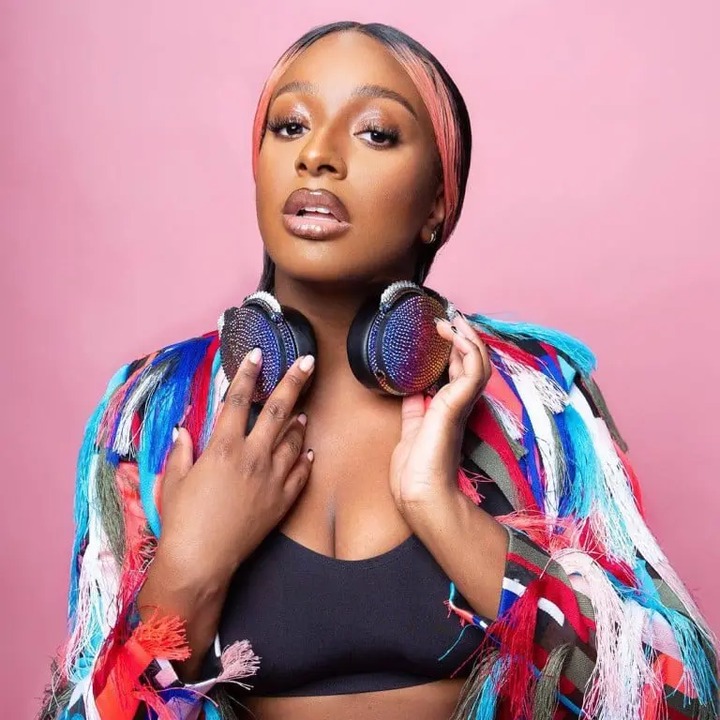
I remind God I’m still single whenever I see wedding photos – DJ Cuppy

0

Famous music star, DJ Cuppy, has revealed that getting married is still a top priority for her.

The billionaire heiress shared that she always remind God that she is still single whenever she sees other people’s wedding photos online.

Sharing a photo of herself, raising her hand in a seemingly worship mood via X, Cuppy captioned, “When I see wedding photos online and I start reminding God… again.”

This is why Paul Adom-Otchere claims the OSP wants to arrest him ahead of corruption probe appearance today

0

Broadcaster and former Board Chairman of the Ghana Airports Company Limited (GACL), Paul Adom-Otchere, says he has received calls from concerned individuals warning that the Office of the Special Prosecutor (OSP) intends to arrest and detain him as punishment for his recent criticisms of the institution and its head.

Speaking in a Facebook video on Thursday, Mr Adom-Otchere said, “Everybody is telling me that Kissi [Agyebeng] wants to arrest you and keep you there for the weekend to teach you a lesson, because you’ve been talking about him… Well, that’s up to him. If that’s what he uses the state authority for, it’s entirely up to him.”

The Office of the Special Prosecutor has officially invited the journalist for questioning over his alleged involvement in a corruption-related investigation concerning a revenue assurance audit contract between the GACL and a private firm, EvaTex Logistics Limited.

In a letter dated July 25, 2025, the OSP identified Mr Adom-Otchere as a suspect and directed him to report to its South Ridge offices on Thursday, July 31, at 3:00 p.m.

Confirming receipt of the summons, Mr Adom-Otchere said his lawyers from Akufo-Addo, Prempeh & Co. had requested a rescheduling of the meeting to Monday, August 4, due to ongoing court commitments in Kumasi. However, the OSP rejected the request and insisted on the original appointment.

“The Office cannot, unfortunately, accept the proposed alternative date,” the OSP’s response read. “Failure to appear as directed may amount to obstruction or non-cooperation, and the Office reserves the right to take appropriate legal action, including compulsion measures.”

Reacting to this, Mr Adom-Otchere suggested that the insistence on the original date was part of a deliberate move to detain him. “Every lawyer is telling me, look, they want you to come at 3 o’clock, and then they will detain you. They may arrest you. They will say, go and bring this. They will say bail,” he stated.

He questioned the basis of the OSP’s interest in him, given that the contract in question was signed by the GACL management after his tenure as Board Chairman had ended. He emphasised that the board, under his leadership, had only directed management to explore ways to raise non-aeronautical revenue, but had made it clear that the company would not pay for any audit services.

“They [EvaTex] were told, and I in particular said it at the board meeting, that we can’t pay any money. The Ghana Airports Company cannot pay you any money at all to do this work. You have to find your own money to do the audit,” he said.

Mr Adom-Otchere explained that the company’s management later dealt with EvaTex and presented a proposal to the board, seeking to give the firm 20% of any additional revenue it could help generate. The board, he said, reduced the proposed share to 16% and instructed management to conduct due diligence and proceed in line with public procurement procedures.

“I didn’t even know that the contract was signed,” he said, adding that he only learnt of the contract’s execution through investigative journalist Manasseh Azure Awuni, who contacted him about two weeks ago.

He further expressed concern over what he described as a pattern of media leaks by the OSP meant to “create the impression that you have done something wrong.”

“They [OSP] sent us the letter, and quickly leaked it to the media. This is what he [Special Prosecutor] does all the time—leak to the media to try and create the impression,” Mr Adom-Otchere alleged.

He also criticised what he described as a “witch-hunt” by the OSP and questioned the relevance of dragging a former Board Chairman into a matter he believes squarely concerns GACL management.

“If the management is doing a contract, they are doing their PPA contracts. Under the law, they don’t come to the board unless the threshold requires it. There are many contracts that management executes that the board doesn’t know about—and that’s normal,” he said.

Despite the mounting concerns, Mr Adom-Otchere confirmed that he would honour the OSP’s directive and appear for questioning, accompanied by legal counsel. “We are going there with my lawyer, and then we’ll be there to answer the questions. I’ll let you know what happens,” he concluded.


Xhaka joins Sunderland – Ghanaian Times

0

Sunderland have completed the signing of former Arsenal midfielder, Granit Xhaka, from Bundesliga club Bayer Leverkusen.

The Switzerland international has signed a three-year deal with the newly promoted Premier League side.

The Black Cats will pay an initial £13m fee for the Swiss midfielder, with the potential for an extra £4m in add-ons.

Xhaka, who spent seven years at Arsenal before joining Leverkusen in 2023, will wear the number 34 shirt at the Stadium of Light.

Xhaka made 297 appearances at Arsenal, winning two FA Cups and briefly captaining the side before leaving in 2023.

In Germany, Xhaka guided Leverkusen to their first Bundesliga title during his opening season at the club.

However, he expressed a desire to return to the Premier League following Xabi Alonso’s departure as head coach at the end of last season.

Xhaka’s arrival takes Sunderland’s summer spending past the £100m mark.

The Swiss is the club’s seventh summer signing, following the arrivals of Enzo le Fee, Habib Diarra, Noah Sadiki, Reinildo Mandava, Chemsdine Talbi and Simon Adingra.-BBC

Ghana Gold Exports Reach US$8.39 Billion in June 2025

0

Gold N
Gold

Bank of Ghana records confirm gold exports totaled $8.39 billion in June 2025, exceeding import costs by $160 million.

Official data shows gold constituted 61% of total export earnings, rising from 53% in March. Total exports reached $13.8 billion, a 96% increase from March’s $7.03 billion.

The trade surplus expanded to $5.57 billion, equivalent to 6.4% of GDP. Cocoa exports rose to $2.17 billion while petroleum exports reached $1.36 billion. Non-oil imports accounted for 69% of the $8.23 billion import total, according to central bank statistics released this week.

Gross international reserves increased to $11.12 billion. Current account data shifted from a $117.6 million deficit in March 2024 to a $2.32 billion surplus in March 2025. The financial account recorded $1.60 billion in net inflows during the period.

Ministry of Trade records indicate commodities represented 86% of export earnings. Gold’s performance drove the trade balance improvement despite import growth exceeding export expansion rates. Production volumes and international prices contributed to the results.

Today at the newsstand July 31, 2025

0

Stack of newspapers | File photo Stack of newspapers | File photo

Below are some of today’s major news headlines:

DAILY GRAPHIC

Bawku violence deliberate – President Mahama directs peace enforcement

GPCC calls for peaceful by-election in Akwatia

BoG drops policy rate to 25%

THE CHRONICLE

Adutwum is the best candidate for NPP – Says Odike

$1.7m gold seized from Burkinabe over to GoldBod

Annor-Dompreh advocates for climate Smart Farming

DAILY GUIDE

NACOC hands over $1.7m seized gold to GoldBod

Ato Essien gets GHC10m bail pending appeal

Soldiers punch Joy Fm reporter, slap witness at McDan warehouse demolition

THE GHANAIAN TIMES

Renewed Bawku killings act of sabotage – President Mahama

Food prices decline …some consumers in Accra yet to feel it

We ‘ll not tolerate shoddy works … Roads minister warns

24-Hour Economy needs total workforce transformation – NLC

0

Dr Bernice Welbeck, acting Executive Secretary of the National Labour Commission (NLC), has called for a complete workforce transformation to ensure the sustainable success of Ghana’s 24-Hour Economy.

Workforce transformation, she said, required new strategies to modernize workforce with upskilling, redefine roles and organizational structures for sustainable decent jobs, integrate new technologies, and drive cultural shifts to meet evolving business needs and challenges.

“We must reimagine how we train, deploy, support workers, and how we perform as workers, in a 24-hour economic framework. That’s the only way to succeed,” she stressed.

Speaking on the topic, “Workforce transformation: Building a skilled, agile, and motivated Labour Force for the 24-Hour Economy,” at a Dialogue on the 24-hour economy, organized by Berkha Africa and the Institute of Directors in Accra, she urged stakeholders in the labour environment to strategise to engage in the new economy.

“The 24-Hour Economy is a call for workforce transformation,” she stressed, and called on all stakeholders, particularly employers and labour unions to cooperatively enhance work performance and remuneration structures for adherence to global decent work frameworks.

The Dialogue Meeting, which had theme, “Innovating for Growth: Adapting Business Models to Ghana’s 24-Hour Economy,” brought together over 100 leaders from stakeholder institutions and businesses from key sectors including finance, manufacturing, mining, hospitality, and agriculture. It served as a critical platform to translate policy vision into actionable insights and public-private collaboration.

The participants urged government and institutional actors to move beyond rhetoric and initiate intentional and measurable steps toward rolling out the execution phase, cautioning that the ambitious national agenda risks becoming ineffective if there are no concrete measurable benchmarks to guide the implementation.

Dr Alfred Braimah, CEO, Institute of Directors, in his remarks called for practical steps for the sustainable implementation of the policy, cautioning against lip-service.

He indicated that the Institute was committed in supporting stakeholders to build strategic processes for quality outcomes from a 24-Hour operational regime.

Prof Michael Kpessa-Whyte, Director-General of the State Interests and Governance Authority (SIGA), reaffirmed the government’s readiness and strategic preparedness to operationalise the initiative, adding the various interventions were underway to enhance the governance of public institutions to enable them to competitively operate in the new economy.

“Good corporate governance is the engine for a sustainable 24-Hour Economy,” he said, adding that SIGA was retooling various investments to enhance their viability and participation in the new economy, and stressed SIGA’s commitment to transforming Specified Entities through robust governance frameworks, investment discipline, and strategic oversight.

“SIGA’s mandate is not just to supervise SEs but to build governance systems that inspire transparency, investment readiness, and accountability. We are deploying integrated risk and compliance dashboards, enforcing ESG standards, and partnering with industry leaders to ensure that Ghana’s 24-Hour productivity vision becomes a sustainable economic reality,” he added.

To ensure effective alignment in the implementation process, he called for cross-sector collaboration to align tax incentives, energy policy, labour standards, and digital infrastructure in support of the initiative.

Abdul Nasser Alidu, Head of Strategy and Programmes at the 24-Hour Economy Secretariat, giving an overview on the policy implementation, explained that initiative was strategically being positioned to draw in active private sector participation.

He said feasibility studies were underway to determine a number of projects that would be conducive for private sector investment and participation.

“We are not only ready to implement; we are developing real-time sectoral engagement models to ensure inclusive rollout,” he noted.

Austin Gamey, renowned labour consultant and CEO of Gamey and Gamey Group, called for strong commitment of all stakeholders, particularly employers and unions, “to the economic transformation agenda,” adding that the country’s labour law has adequate provisions to accommodate a 24-Hour labour system.

Such commitment, he said was needed to enable employers and workers to collectively and cooperatively engage to overcome labour challenges that may emerge in the implementation phase of the 24-hour policy.

For his part, a leadership coach, Scofray Nana Yaw Yeboah, President of the International Coaching Federation-Ghana, reminded stakeholders that the new economic policy could only flourish if it is people and productivity-driven.

That, he said was because systems alone would not produce the desire results, unless the people who drive the produce are well conscientized on the objectives of the new economy through quality leadership and change management.

Lizzy- Ann Kwagbedzi, Country Lead of Berkha Africa, for her part, noted that although embracing a 24-Hour Economy holds significant potential for job creation, industrial growth, service expansion, and stronger global competitiveness, it requires bold leadership, innovative thinking, and collaborative action across sectors.

The organisation of the Dialogue by Berkha Africa, she said, demonstrates their contribution to create a platform to bring together leaders from business, trade unions, and public service to exchange ideas, confront realities, and inspire actionable change.

Lil Win Nearly Falls Off Car as Man Jumps on Him to Grab Money During Kejetia Movie Tour Chaos

0

As actor Lil Win drove through the busy streets of Kejetia yesterday during his movie promotion, something unexpected happened that shocked everyone watching. He was standing through the roof of his moving vehicle, waving and smiling at fans who were shouting and cheering as he passed by. The area was packed with people, all excited to see the popular actor and comedian in person. But in the middle of all the fun and excitement, a man suddenly jumped onto the car from the crowd.

People standing nearby gasped and pointed as the man climbed the side of the moving car and managed to reach the roof. The moment was caught on camera, and many couldn’t believe what they were seeing. Instead of joining the celebration or greeting Lil Win, the man tried to grab cash from the actor. It was clear from the way he moved that he wasn’t just trying to be playful or get a closer look. His hand went straight for where Lil Win had kept the money.

Lil Win looked surprised and confused as he quickly moved back to avoid the man’s hand. The man didn’t give up at first, but within seconds, people around the vehicle started shouting and tried to pull him down. “Come down! Come down from the car!” voices could be heard screaming in the background. Lil Win was still standing inside the car, trying to stay calm, but the situation was clearly dangerous.

What made the scene even more shocking was how bold the man was. In broad daylight, in the middle of a crowded street full of people and cameras, he tried to snatch money from a celebrity who was clearly in the middle of a public event. Some people wondered how he was able to get so close without anyone stopping him earlier. Others blamed the crowd for being too excited and not paying enough attention to safety.

One person who witnessed the whole thing said, “The guy just jumped from nowhere. Before we knew it, he was on top of the car. It’s lucky nothing worse happened.” Another person said, “This is why security should be tighter. Anything could have happened to Lil Win.”

After the man was finally pulled down from the car, Lil Win continued with his promotion, though he looked a bit shaken. He still waved and smiled at his fans, but the mood had clearly changed. What was supposed to be a happy day with laughter and fun had suddenly turned into a dangerous moment.

Many fans online have also reacted to the video. Some praised Lil Win for staying calm, while others called for better protection for public figures during events like this. One person commented, “This was scary to watch. I hope Lil Win is okay.” Another added, “We love him, but people should behave properly. That was not funny at all.”

The video of the incident is already spreading fast on social media, with many people sharing their thoughts and warning others about crowd safety.

Watch the video here

NPP Regional Chairman Defends Akwatia Candidate Selection Process

0

New Patriotic Party (NPP)

Eastern Regional NPP Chairman Jeff Konadu has dismissed claims of candidate imposition, asserting Solomon Kwame Asomadu’s parliamentary nomination for Akwatia followed rigorous grassroots consultation.

Konadu, speaking to MyNewsGh, detailed extensive community engagements across the constituency: “I personally visited communities and listened to voters before this decision.”

According to party procedures, polling station executives and electoral area coordinators unanimously advised against primaries, citing potential party division. A dedicated research team subsequently evaluated community feedback and candidate viability from a shortlist. “Selection required careful consideration and collective agreement—we prioritize grassroots voices,” Konadu emphasized.

With the NPP campaign intensifying, Konadu confirmed Asomadu retains full backing from party leadership and structures. The chairman reiterated that transparency guided the process, rejecting external criticism as unfounded.

Bold action over rhetoric — President Mahama’s urges African Leaders as 13th AU High-Level Dialogue concludes

0

By James Amoh Junior, GNA

Accra, July 31, GNA – President John Dramani Mahama has urged African Union leaders to move beyond rhetoric and take bold, coordinated action to advance justice, reparations, and democratic renewal.as the 13th AU High-Level Dialogue ended in Accra.

He warned that Africa could afford to remain trapped in cycles of lofty declarations and symbolic gestures while its citizens, especially the youth, demand real change.

The time, he said, had come for leaders to match words with action and build systems that reflect the continent’s collective aspirations for justice, dignity, and progress.

The President, in a speech read on his behalf by an official of the Ministry of Foreign Affairs at the closing ceremony of the High-Level Dialogue in Accra, stressed the need for bold leadership grounded in equity, truth, and citizen engagement.

He emphasized that the Dialogue should not conclude with yet another formal declaration but must serve as a meaningful catalyst for action rooted in truth and justice.

The two-day Dialogue, held under the African Union’s 2025 theme “Justice, Rights, Reparations and State Building,” brought together AU officials, representatives from member states, regional bodies, civil society, diaspora communities, and international partners.

Discussions focused on addressing Africa’s enduring governance challenges through the lens of historical justice and structural reform.

President Mahama said the gathering was not about reliving past frustrations, but about building consensus and developing practical strategies to move the continent forward.

He said Africa could no longer afford to be passive in the face of its painful legacy of colonialism, enslavement, and systemic exclusion.

“Justice and rights are not just historical footnotes. They constitute the essential foundation of African statehood,” he emphasized.

One of the key highlights of the Dialogue was the broad endorsement of a Permanent African Union Mechanism on Reparatory Justice, with a dedicated Committee of Experts tasked with advancing the reparations agenda at the continental level.

President Mahama described this initiative as both timely and essential for Africa’s long-term development, and urged swift operationalisation to ensure its effectiveness.

He drew attention to the importance of protecting civic space as a pillar of governance, warning that no society could claim to be democratic while silencing dissent or marginalizing vulnerable groups.

The President cautioned against trends on the continent where journalists faced intimidation, youth were sidelined, and opposition voices stifled.

“A democracy that does not embrace diverse opinions, stifles the voice of journalists, or overlooks the contributions of the youth and marginalised cannot truly be regarded as democratic,” he said, calling for legal safeguards to guarantee fundamental freedoms.

Beyond institutional reform, President Mahama placed emphasis on political and civic education as a foundation for inclusive state-building.

For democracy to take root, he noted that citizens must be informed, empowered, and able to actively participate in national life.

“Our institutions should not only operate effectively but also inspire a sense of legitimacy among the populace. This legitimacy is rooted in a citizenry that is informed about its rights and empowered in its role.”

He further lauded the contributions of the African diaspora and civil society organisations, describing them as central partners in the continent’s justice and development journey.

Their experiences, insights, and persistent advocacy, he said, were not supplementary but foundational to Africa’s progress.

The Dialogue witnessed the launch of two major publications, the 2025 Africa Governance Report and the State of Civil Society Organisations in Africa Report.

President Mahama encouraged governments and stakeholders to use those tools not just for academic reference, but to inform national policies, legislative priorities, and budget allocations.

He noted, “This Dialogue has not focused on reflecting on our history, it has been about addressing it. Moving from recognition to action. Transitioning from memory to proactive engagement.”

President Mahama, who officially opened the Dialogue on Tuesday, urged leaders across the continent to ensure that the resolutions and insights from the Dialogue were embedded in real-life outcomes that improve the lives of citizens.

“Let us ensure that the outcomes of this gathering resonate not just in the form of a concluding report but profoundly within the everyday lives of the individuals we serve,” he appealed.

He called for renewed commitment to Africa’s transformation, built on the foundations of justice, dignity, and people-centred governance.

“Our leadership should be a true reflection of our collective aspirations. Let us strive to enhance genuine and substantive justice to serve as crucial foundational blocks upon which our states are renewed and strengthened,” he stated.

He expressed appreciation to the participants from across Africa and the diaspora for their dedication and engagement throughout the Dialogue, and thanked Ghanaians for supporting the AU’s broader vision of continental unity and progress.

GNA

Edited by Christian Akorlie

GTEC warns NDC Central Regional Chairman over unlawful use of ‘Professor’ title

0

The Ghana Tertiary Education Commission (GTEC) has formally cautioned Richard Kofi Asiedu, the Central Regional Chairman of the National Democratic Congress (NDC), over his continued use of the academic title “Professor” without proper academic validation.

In a letter dated July 28, 2024, addressed to the National Chairman of the NDC, GTEC expressed concern about Mr. Asiedu’s persistent use of the honorary title despite earlier directives to desist.

The Commission cited Section 8(4)(d) of the Education Regulatory Bodies Act, 2020 (Act 1023), which prohibits the use of academic titles without legitimate qualifications.

According to GTEC, Mr. Asiedu was previously instructed on June 2, 2025, to stop using the title and to provide evidence of its removal from all public platforms, along with documentation of his highest academic qualifications.

However, GTEC noted that these instructions were ignored, noting continued misuse, including promotional materials such as a conference poster for the 2025 EELL Conference that described him as “Prof. Richard Kofi Asiedu” and as a holder of “earned doctorates.”

In a separate communication to the St. Andrews Group, dated June 19, 2025, GTEC acknowledged that Mr. Asiedu had received honorary titles from accredited institutions.

However, the Commission stressed that such titles cannot be used as substitutes for formally earned academic ranks, especially without verification or equivalence recognition.

GTEC referenced Sections 7(i) and 8(4e) of Act 1023, which empower the Commission to validate academic credentials and assess foreign degrees—such as those reportedly conferred by Alfred Nobel University in Ukraine.

The Commission has given Mr. Asiedu a final deadline of July 31, 2025, to comply by ceasing the use of the title or face legal consequences. It also appealed to the NDC leadership to intervene to resolve the matter amicably.

“GTEC has the statutory authority to regulate the use of academic titles in Ghana, and any individual who fails to comply risks legal sanctions,” the statement said.

GTEC has, in recent months, written to several government officials and public figures, directing them to stop using the title “Dr.” or “Prof.” due to a lack of verified academic justification.

Those affected include the CEO of the Ghana Investment Fund for Electronic Communications (GIFEC), Rashid Tanko-Computer; President of the Ghana Union of Traders Association (GUTA), Dr. Joseph Obeng; and the Member of Parliament for Gomoa East, Desmond De-Graft Paitoo.

PNP petitions GTEC to audit academic credentials of Mahama appointees

Ghana, Nigeria ease tensions amid social media-induced diplomatic strain

0

By James Amoh Junior

Accra, July 31, GNA – Ghana and Nigeria have reaffirmed their historic ties and mutual commitment to peace following a diplomatic engagement in Accra.

It aimed at de-escalating the seeming tensions stirred by a viral video that sparked outrage and concern across both nations.

A Nigerian national, regarded by some within Ghana’s Nigerian community as a tribal leader, suggested plans to allegedly establish an “Igbo Kingdom” in Ghana.

He later formally apologised to the government and people of Ghana, describing the comments as outdated and regrettable.

He explained that the video was taken from a 2013 interview and no longer reflected his views or intentions.

On Wednesday, July 17, 2025, the Minister for Foreign Affairs and Regional Integration, Mr Samuel Okudzeto Ablakwa, confirmed that he had summoned Mr Chukwudi Jude Ihenetu, the man featured in the video, for a meeting following public concerns over the footage, which resurfaced on social media.

The high-level meeting, therefore, brought together Ghana’s Minister for Foreign Affairs, Mr. Samuel Okudzeto Ablakwa, and Nigeria’s Minister of State for Foreign Affairs, Madam Bianca Odumegwu-Ojukwu.

The Nigerian Foreign Minister led a delegation to Ghana on a special peace mission sent by President Bola Ahmed Tinubu of Nigeria.

The diplomatic effort was prompted by the widely circulated video.

The video, condemned by both governments, incited strong reactions on social media, triggering threats to the longstanding friendship between the two West African states.

Addressing the media in Accra, Madam Odumegwu-Ojukwu said her team was in Ghana on a fact-finding mission to understand the real situation on the ground and to affirm Nigeria’s commitment to bilateral harmony.

“Contrary to the viral narrative, we were pleased to observe calm and peaceful coexistence between our nationals and their Ghanaian hosts. There were no visible protests, no hostility, just the warm Ghanaian hospitality we’ve always known,” she stated.

She expressed deep appreciation to President John Dramami Mahama, Ghana’s Foreign Ministry, and traditional institutions for swiftly containing the situation and ensuring that no harm came to Nigerian nationals in the country.

“Social media, when misused, can be a dangerous tool. The rhetoric in such videos can quickly inflame nations, particularly among youth who may not grasp the far-reaching implications of their reactions,” she warned, urging for responsible use of digital platforms.

According to Madam Odumegwu-Ojukwu, Nigeria’s National Assembly, traditional authorities, and civil society had all expressed concern over the viral incident, and the mission to Ghana served to reassure both governments and their citizens of continued cooperation.

She described Ghana as a “strong pivot” in Nigeria’s regional engagement, noting that both nations remained key architects of ECOWAS and AfCFTA.

“We are committed to cooperating across all spheres of development. We will not allow the actions of a few to disrupt this relationship,” she affirmed.

Mr. Ablakwa, on his part, condemned the contents of the video and disclosed that the individual behind it had been identified, reprimanded, and had publicly apologized to the President and people of Ghana.

“He has shown remorse. He has met with officials and issued a public apology, making it clear that such behaviour does not reflect the views of Nigerians either at home or abroad,” Ablakwa said.

He emphasized that while Ghana was committed to protecting the rights of all residents, it would also not tolerate actions that risk public order or unity.

“We must not allow the careless actions of a few to threaten the peace we all enjoy,” he stressed.

Ablakwa recalled historic moments in Ghana-Nigeria relations, including the Aliens Compliance Order and the “Ghana Must Go” saga of the 1980s, emphasizing that both nations had since worked hard to heal and build stronger bridges.

He warned that if not properly managed, incidents like that could take both countries “back to dark chapters in our shared history.”

The Foreign Minister urged the media and public to avoid spreading inflammatory content and instead promote messages that foster peace and understanding.

He lauded President Tinubu for the swift and mature response to the situation, describing the peace mission as a “model of Pan-African diplomacy.”

“We must always remember the broader vision of African unity. Ghana and Nigeria are at the heart of that dream, from the days of Nkrumah to the present African Continental Free Trade Area (AfCFTA). Let’s not let a moment of online recklessness derail decades of cooperation,” he said.

Both countries pledged to strengthen community-level engagements, improve communication between diaspora groups, and revive bilateral frameworks such as the Permanent Joint Commission for Cooperation.

With over 500,000 Ghanaians living in Nigeria and thousands of Nigerians residing in Ghana, both ministers acknowledged the risks of xenophobic tensions and reiterated their governments’ resolve to prevent escalation.

“We’ve seen what happens elsewhere when xenophobia goes unchecked. We cannot afford that here,” Ablakwa stated.

“Everyone living in Ghana, Ghanaian or not, will be protected, so long as they respect our laws and values.”

Both governments reaffirmed their readiness to work together not just to manage crises but to expand cooperation in trade, culture, and people-to-people engagement across West Africa.

Madam Odumegwu-Ojukwu urged young people and social media users across the continent to embrace responsible communication, saying “We cannot let misinformation define our destiny. Our future lies in unity, respect, and shared progress.”

GNA

Edited by Christian Akorlie

Ghana, Nigeria ease tensions amid social media-induced diplomatic strain

0

By James Amoh Junior

Accra, July 31, GNA – Ghana and Nigeria have reaffirmed their historic ties and mutual commitment to peace following a diplomatic engagement in Accra.

It aimed at de-escalating the seeming tensions stirred by a viral video that sparked outrage and concern across both nations.

A Nigerian national, regarded by some within Ghana’s Nigerian community as a tribal leader, suggested plans to allegedly establish an “Igbo Kingdom” in Ghana.

He later formally apologised to the government and people of Ghana, describing the comments as outdated and regrettable.

He explained that the video was taken from a 2013 interview and no longer reflected his views or intentions.

On Wednesday, July 17, 2025, the Minister for Foreign Affairs and Regional Integration, Mr Samuel Okudzeto Ablakwa, confirmed that he had summoned Mr Chukwudi Jude Ihenetu, the man featured in the video, for a meeting following public concerns over the footage, which resurfaced on social media.

The high-level meeting, therefore, brought together Ghana’s Minister for Foreign Affairs, Mr. Samuel Okudzeto Ablakwa, and Nigeria’s Minister of State for Foreign Affairs, Madam Bianca Odumegwu-Ojukwu.

The Nigerian Foreign Minister led a delegation to Ghana on a special peace mission sent by President Bola Ahmed Tinubu of Nigeria.

The diplomatic effort was prompted by the widely circulated video.

The video, condemned by both governments, incited strong reactions on social media, triggering threats to the longstanding friendship between the two West African states.

Addressing the media in Accra, Madam Odumegwu-Ojukwu said her team was in Ghana on a fact-finding mission to understand the real situation on the ground and to affirm Nigeria’s commitment to bilateral harmony.

“Contrary to the viral narrative, we were pleased to observe calm and peaceful coexistence between our nationals and their Ghanaian hosts. There were no visible protests, no hostility, just the warm Ghanaian hospitality we’ve always known,” she stated.

She expressed deep appreciation to President John Dramami Mahama, Ghana’s Foreign Ministry, and traditional institutions for swiftly containing the situation and ensuring that no harm came to Nigerian nationals in the country.

“Social media, when misused, can be a dangerous tool. The rhetoric in such videos can quickly inflame nations, particularly among youth who may not grasp the far-reaching implications of their reactions,” she warned, urging for responsible use of digital platforms.

According to Madam Odumegwu-Ojukwu, Nigeria’s National Assembly, traditional authorities, and civil society had all expressed concern over the viral incident, and the mission to Ghana served to reassure both governments and their citizens of continued cooperation.

She described Ghana as a “strong pivot” in Nigeria’s regional engagement, noting that both nations remained key architects of ECOWAS and AfCFTA.

“We are committed to cooperating across all spheres of development. We will not allow the actions of a few to disrupt this relationship,” she affirmed.

Mr. Ablakwa, on his part, condemned the contents of the video and disclosed that the individual behind it had been identified, reprimanded, and had publicly apologized to the President and people of Ghana.

“He has shown remorse. He has met with officials and issued a public apology, making it clear that such behaviour does not reflect the views of Nigerians either at home or abroad,” Ablakwa said.

He emphasized that while Ghana was committed to protecting the rights of all residents, it would also not tolerate actions that risk public order or unity.

“We must not allow the careless actions of a few to threaten the peace we all enjoy,” he stressed.

Ablakwa recalled historic moments in Ghana-Nigeria relations, including the Aliens Compliance Order and the “Ghana Must Go” saga of the 1980s, emphasizing that both nations had since worked hard to heal and build stronger bridges.

He warned that if not properly managed, incidents like that could take both countries “back to dark chapters in our shared history.”

The Foreign Minister urged the media and public to avoid spreading inflammatory content and instead promote messages that foster peace and understanding.

He lauded President Tinubu for the swift and mature response to the situation, describing the peace mission as a “model of Pan-African diplomacy.”

“We must always remember the broader vision of African unity. Ghana and Nigeria are at the heart of that dream, from the days of Nkrumah to the present African Continental Free Trade Area (AfCFTA). Let’s not let a moment of online recklessness derail decades of cooperation,” he said.

Both countries pledged to strengthen community-level engagements, improve communication between diaspora groups, and revive bilateral frameworks such as the Permanent Joint Commission for Cooperation.

With over 500,000 Ghanaians living in Nigeria and thousands of Nigerians residing in Ghana, both ministers acknowledged the risks of xenophobic tensions and reiterated their governments’ resolve to prevent escalation.

“We’ve seen what happens elsewhere when xenophobia goes unchecked. We cannot afford that here,” Ablakwa stated.

“Everyone living in Ghana, Ghanaian or not, will be protected, so long as they respect our laws and values.”

Both governments reaffirmed their readiness to work together not just to manage crises but to expand cooperation in trade, culture, and people-to-people engagement across West Africa.

Madam Odumegwu-Ojukwu urged young people and social media users across the continent to embrace responsible communication, saying “We cannot let misinformation define our destiny. Our future lies in unity, respect, and shared progress.”

GNA

Edited by Christian Akorlie

2027: The Coalition are like a very big and attractive manh00d and Peter Obi is their erection

0

2027: The Coalition are like a very big and attractive manh00d and Peter Obi is their erection - Comic actor OkonLagos

Comic actor, Okon Lagos, has taken a swipe at members of the coalition group. 

In a post shared on his Instastories, OkonLagos said the coalition is a synthesis of out-of-favor politicians, disgruntled Buharists and seemingly marginalized politically entitled Northerners. According to him, members of the coalition need to realize that they are like a very big and attractive manhood and Peter Obi is their erection implying that they need Peter Obi to make a difference

. His post reads

‘’The coalition is a synthesis of out-of-favor politicians, disgruntled Buharists and seemingly marginalized politically entitled Northerners.

Their circumstantial unity is to one end: the ouster from office, a common enemy which is Mr. President. In all they do, they (The Coalition) should realize that they are like a very big and attractive manhood and Peter Obi is their erection. A big manhood is useless without the capacity to be erect! Meanwhile, this is not about manhoods and erections!”

2027: The Coalition are like a very big and attractive manh00d and Peter Obi is their erection - Comic actor OkonLagos

Bawku violence deliberate – President Mahama directs peace enforcement

0

President John Dramani Mahama has stated that the recent surge in violence in Bawku represents a deliberate attempt to undermine ongoing peace negotiations. 

Recent peace efforts to end the decades-old inter-tribal conflict appeared to have neared a full agreement until recent fatal attacks, including the killing of a Kusasi chief in the Ashanti Region and some students of the Nalerigu Senior High School.

Speaking during the courtesy visit of the Gonja King, Yagbonwura Bii-Kunuto Jewu Soale I, at the Jubilee House last Tuesday, the President revealed that the attacks, including the tragic shooting of students and forced evacuation of teachers, coincided with significant progress in mediation efforts led by the Asantehene, Otumfuo Osei Tutu II.

The President said the timing of those attacks was not coincidental, as they happened when Otumfuo’s mediation efforts were achieving breakthroughs.

“We have given the mediation to Otumfuo, and he has constantly briefed me on the mediation efforts that we are almost there. So, the current fighting and killing can only be done by people who want to derail the mediation efforts,” he said.

The President announced that he had directed the Ghana Armed Forces to transition from peacekeeping to active peace enforcement operations in Bawku.

“We cannot accept the current situation in Bawku, where students are shot in school and killed. We cannot accept the situation where teachers and workers have run away for their lives,” he said. 

Appeal

The Overlord of the Gonja Kingdom appealed to President Mahama to put in place measures to curb reckless and illegal mining to protect the country’s natural heritage.

He said to be successful, President Mahama must engage and deepen partnerships with local communities to ensure that they contribute to the solutions to curb the rise of the scourge commonly called galamsey in local circles, including in the Savannah Region, where he said illegal miners had started their devastating activities.

“We encourage you to take bold and decisive decisions (on galamsey),” he said.

Yagbonwura Bii-Kunuto Jewu Soale said that in achieving the social contract with the people of Ghana, President Mahama must consider that development thrived where peace prevailed.

“As you travel the length and breadth of our nation to fulfil your social contract with Ghanaians, peace is a cherished commodity for all Ghanaians, and development thrives where peace reigns,” he said.

New strategy

The government escalated its security strategy in Bawku from peacekeeping to peace enforcement last weekend following renewed clashes that threatened the fragile peace process in the Upper East Region.

In that regard, the Ghana Armed Forces intensified operations in the area, enforcing stricter curfew hours to restore order in the town.

A statement issued by the Spokesperson to the President and Minister for Government Communications, Felix Kwakye Ofosu, warned that security forces would “take all necessary measures” to protect lives and property in the area.

The government’s statement acknowledged the near-successful mediation by the Asantehene, supported by the Nayiri (Mamprugu Overlord) and Zugraana (Kusasi Chief), which had nearly resolved the decades-old conflict before the latest violent incidents erupted.

The Bawku chieftaincy crisis, primarily between the Kusasi and Mamprusi ethnic groups, dates back to colonial-era disputes over traditional authority.

Despite intermittent peace, the area has suffered recurrent bloodshed, displacing thousands and disrupting socio-economic activities.

Hopeful progress has been seen in recent months, but fresh killings last week forced the government’s tough response.

Previous engagement

The Nayiri of Mamprugu, Naa Bohagu Mahami Abdulai Sheriga, had recently offered to make some concessions in the Bawku conflict mediation efforts to bring lasting peace to the area.

President Mahama consequently commended the Overlord of the Mamprugu Traditional Area for his “dignified and statesmanlike” role in mediating the protracted conflict.  

Speaking during a courtesy call by a delegation from the Nayiri at the Jubilee House, President Mahama revealed that the Nayiri had shown willingness to make concessions to resolve the conflict following collaborative discussions with the Asantehene.  

“I was with His Royal Majesty, Otumfuo Osei Tutu II, two days ago, and he briefed me on the cooperation you have given him in finding a final traditional solution to the conflict,” President Mahama said.

Canada follows France and UK with plan to recognise Palestinian state

0

Prime Minister Mark Carney has said Canada plans to recognise a Palestinian state in September, becoming the third G7 nation to make such an announcement in recent days.

Carney said the move depends on democratic reforms, including the Palestinian Authority holding elections next year without Hamas.

His remarks come a day after the UK announced it would recognise a Palestinian state in September unless Israel agreed to a ceasefire and other conditions, and a week after France unveiled a similar plan.

Israel’s foreign ministry rejected Canada’s announcement, calling it “a reward for Hamas”. Most countries – 147 of the UN’s 193 member states – formally recognise a Palestinian state.

Carney said Canada would formally recognise the state of Palestine at the upcoming UN General Assembly.

He cited the expansion of Israeli settlements in the occupied West Bank, the worsening humanitarian situation in Gaza, and the 7 October 2023 attacks on Israel by Hamas as reasons behind Canada’s dramatic shift in foreign policy.

“The level of human suffering in Gaza is intolerable and it is rapidly deteriorating,” Carney told reporters on Wednesday.

He said a recognition of Palestinian statehood would hinge on commitments by the Palestinian Authority to fundamentally reform its governance and to demilitarise the territory.

Canada had long been committed to a two-state solution as part of a negotiated peace process, Carney said, but he added “this approach is no longer tenable”.

“The prospect of a Palestinian state is being eroded before our eyes,” he said.

Carney told the news conference he had spoken with Palestinian Authority President Mahmoud Abbas earlier on Wednesday about the announcement.

The Palestinian Authority controls parts of the West Bank through the Fatah party, led by Abbas, while Hamas runs Gaza. Neither territory has held an election since 2006.

Carney’s announcement was criticised by Israel’s Ministry of Foreign Affairs.

It said in a post on X that Canada’s plan “harms the efforts to achieve a ceasefire in Gaza and a framework for the release of the hostages”.

Canada’s Conservatives also took issue with Carney’s announcement.

“Recognising a Palestinian state in the aftermath of the October 7 terrorist atrocities sends the wrong message to the world,” the opposition party said in a statement.

The prime minister has been under pressure to address Palestinian statehood since the UK and France – close allies of Canada – came out with their own statements on the issue in recent days.

Nearly 200 former Canadian ambassadors and diplomats signed a letter on Tuesday calling on Carney to recognise a Palestinian state.

Canada’s principles, the letter said, “are being abandoned daily with the massive displacement, indiscriminate bombardment and starvation of Palestinian civilians in Gaza and the violent attacks by extremist settlers in the West Bank”.

Asked whether he was influenced by the UK and France’s announcements, or whether he had consulted US President Donald Trump, Carney responded that Canada made its own foreign policy decisions.

If France and the UK do formally recognise Palestinian statehood, the US – a strong ally of Israel – will be the only permanent member of the UN Security Council not to do so.

The Israeli military launched a campaign in Gaza in response to the Hamas-led attack on southern Israel on 7 October 2023, in which about 1,200 people were killed, and 251 others were taken hostage.

More than 60,000 people have since been killed in Gaza, and 154 people, including 89 children, have died from malnutrition, according to the territory’s Hamas-run health ministry.

BoG Slashes Policy Rate to 25% in Historic Cut

0

Bank Of Ghana X
Bank Of Ghana

The Ghana National Chamber of Commerce and Industry (GNCCI) has applauded the Bank of Ghana’s unprecedented 300-basis-point reduction of the policy rate to 25%, calling the July 30, 2025, decision a “bold and timely” relief for businesses.

This record cut follows the GNCCI’s urgent appeal five days earlier for lower borrowing costs, citing improved inflation and currency stability.

Monetary Policy Committee (MPC) members announced the shift after their 125th meeting, marking the largest single reduction since the rate held at 28% since March 2025. GNCCI had argued that high lending rates exceeding 25% since 2022 stifled business growth, stressing that falling inflation (23.8% in December 2024 to 13.7% in June 2025) and a 42% cedi appreciation justified easing.

GNCCI CEO Mark Badu Aboagye stated the deeper-than-requested cut would “ease pressure on the private sector” by lowering operational costs and spurring investment in manufacturing, agribusiness, and pharmaceuticals. He emphasized that cheaper credit would enhance Ghana’s competitiveness under the African Continental Free Trade Area (AfCFTA), enabling export expansion.

The Chamber urged commercial banks to promptly reflect the policy shift in lending rates, warning that benefits hinge on financial institutions’ compliance. It further called for targeted government and development partner support to small and medium-sized enterprises to amplify the rate cut’s impact.

‘Why has every artiste you’ve worked with died?’ – Kumchacha asks Roman Fada

0

Controversial Ghanaian preacher, Nicholas Osei, popularly known as Prophet Kumchacha Controversial Ghanaian preacher, Nicholas Osei, popularly known as Prophet Kumchacha

Prophet Nicholas Osei, popularly known as Prophet Kumchacha, has caused a stir online after he dropped an interesting remark about Roman Fada during his tribute to the late Daddy Lumba.

While speaking on Adom FM about the sad passing of Daddy Lumba, Kumchacha asked Roman Fada, the long-time manager of the late musician, to explain why all the artistes he has ever worked with have mysteriously died.

According to Kumchacha, he has known Roman Fada, who currently works with Atinka FM, for over two decades, and during that time, every artiste he has personally seen him manage or associate with has passed away.

He added that back in Kumasi, two musicians died after working with him.

Prophet Kumchacha added a political twist by citing GFP founder Akua Donkor as another example of people who died while working with Roman Fada.

According to Kumchacha, Akua Donkor died under strange circumstances shortly after announcing Roman Fada as her running mate ahead of the 2024 general elections.

“Why has every artiste you’ve worked with died?” he asked Roma Fada.

Despite multiple attempts by the show’s host to steer the conversation back to a respectful tribute for Daddy Lumba, Kumchacha remained resolute on his rants.

Big-Push road projects are skewed towards certain regions

0

Asenso-Boakye (L) and Kwame Agbodza Asenso-Boakye (L) and Kwame Agbodza

Former minister for Roads and Highways, Francis Asenso-Boakye, has alleged in parliament that the government’s Big Push programme on road construction has been highly skewed to favour certain regions.

He alleged further that the government has carefully designed the initiative to give priority to certain regions at the expense of the Greater Accra and Ashanti regions.

Contributing to a debate on the 2025 Mid-Year budget, he claimed to have carefully perused the list of projects presented under what the government calls the Big Push Programme.

According to the MP for Bantama, though both Greater Accra and the Ashanti Regions are densely populated regions in the country, contributing over 30% of Ghana’s total population, the government has clandestinely pushed the two regions out of the Big Push initiative.

He described the two regions as the economic heartbeat of the country, insisting that they cannot be ignored in any programme by the government meant to promote economic development.

He, therefore, termed the initiative as “just a political programme rather than an economically efficient programme”.

He posited that when the government is faced with limited resources, basic economic theory on scarce resources must be considered, and priority must be given to strategic developmental initiatives.

Responding to the claims by Asenso-Boakye, the minister for Roads and Highways, Governs Kwame Agbodza refuted the assertions that the government has deliberately taken out the Greater Accra and Ashanti Regions from its radar on road development under the Big Push.

“Yes, I agree, Accra, Kumasi have the biggest volume of traffic in the country. But when you give the impression that just because that is the biggest volume [and leave out the others], what about the farmer growing yams in Yendi?” he quizzed.

“Don’t we have to take a road there to convey the yams for us to consume in Accra? So you think that just because there are more people in Accra and Kumasi, we should spend all our money in Accra and Kumasi?”. He asked.

He explained that the government’s reset agenda meant that all parts of the country must be developed equally. He asked why the NPP government did not undertake a significant road project in the Oti Region during its tenure.

He denied the allegations that the government has deliberately decided not to continue road projects started by the erstwhile NPP administration and insisted that the government intend to distribute road development across the country evenly.

NAAB/SEA

Meanwhile, watch as Prophet Worlasi shares bombshell prophesies on Bawumia and NPP on The Lowdown:
Government allocates GH¢13.8 billion for road projects

0

Dr Cassiel Ato Forson is the Minister of Finance Dr Cassiel Ato Forson is the Minister of Finance

Government has committed GH¢13.8billion over the next two years to road infrastructure projects under its flagship ‘Big Push’ initiative, finance minister, Dr Cassiel Ato Forson told parliament during the 2025 Mid-Year Fiscal Policy Review presentation.

The amount, representing 1.0 percent of the country’s gross domestic product (GDP), is sourced from oil revenues and mineral royalties as outlined in the 2025 Budget and Economic Policy approved by parliament.

“All budgetary allocations under the Big Push for the next two years have been dedicated to improving road infrastructure,” Dr Forson said, adding that the initiative is a key pillar of government’s broader infrastructure and economic transformation agenda.

The minister noted that the roads and highways ministry conducted a six-month nationwide assessment and has since completed engineering designs and cost estimates for the targetted projects.

Following this, he said, the Ministry of Finance has issued commitment authorisations for several roads across the country.

Some of the key projects include: construction of a new bridge over the Oti River at Dambai, rehabilitation of the Wa–Han road, upgrading the Tumu–Hamile and Tumu–Han–Lawra roads, reconstruction of the Navrongo–Tumu road, rehabilitation of the Techiman–Nkonsia–Wenchi and Wenchi–Sawla roads, construction of the Sunyani Outer Ring Road and Kumasi Outer Ring Road (Eastern Quadrant) and rehabilitation of the Gbintri–Nakpanduri road.

“As part of the Big Push programme, we have also selected the following abandoned road projects, for which no dedicated funding was allocated by the previous administration,” the minister added.

This includes the rehabilitation and upgrading of Kasoa – Winneba Road, rehabilitation of Ofankor – Nsawam Road (Dual Carriageway), dualisation of Takoradi – Agona Junction Road and construction of the Suame Interchange and local roads.

Some of the others are construction of National Route N18, Wa – Han Road; upgrading the Tumu – Chuchuliga – Navrongo road including construction of a 36m span reinforced concrete bridge over Kanyibie River and 24m span reinforced concrete bridge over Bechelihu River, among others,

These investments, according to the minister, are part of efforts to open up economic corridors, improve connectivity and support long-term development.

The Big Push programme was first introduced to accelerate infrastructure development through strategic investments in roads, energy, water and health. This phase, however, focuses exclusively on roads.

However, no timeline was provided for project completion including contractor details or regional allocation breakdowns.

The Finance Minister also announced that government has also taken a decision to remodel the Ghana Road Fund and refocus it toward road maintenance.

“As part of this Mid-Year Review and on behalf of government, the Minister for Roads and Highways will be laying before this House a new Road Maintenance Trust Fund bill. When approved, the Road Maintenance Trust Fund will replace the Ghana Road Fund,” he stated.

The Road Maintenance Trust Fund, he explained, will among others provide for a new governance architecture, provide a formula for fairer allocation of resources and introduce more transparency in utilisation of the road fund levy and others.

“Government has identified 166 constituencies in dire need of road infrastructure. In response, we have programmed to rehabilitate 10km of roads annually in each of these constituencies. This translates to about 5,000km of roads to be reconstructed for these 166 constituencies in dire need of road infrastructure over the next 3 years,” he added.

How Virtual Reality is enhancing business and customer experience

Aid cuts will push Nigerians into arms of Boko Haram militants, WFP warns

0

Drastic cuts to humanitarian aid in north-eastern Nigeria could prove a boon to one of the world’s most deadly militant groups, Boko Haram, aid agencies have warned.

A reduction of funding in recent months has forced the UN’s World Food Programme (WFP) to ration its support, and now it has completely run out.

“It will be much easier for militants to lure youths to join them and spiral insecurity across the whole region,” Trust Mlambo, head of operations in the area for WFP, told the BBC.

Notorious around the world for kidnapping more than 200 schoolgirls from the town of Chibok more than a decade ago, Boko Haram has taken thousands of people captive during its raids and forced more than a million from their village homes.

Boko Haram was initially a religious Muslim group founded in the early 2000s that was opposed to Western education. It went on to launch military operations in 2009 with the political aim of creating an Islamic state, causing mayhem across the region – including in neighbouring countries such as Cameroon, Chad and Niger.

It has been classified as one of the world’s deadliest jihadist groups, and a splinter group pledged allegiance to the Islamic State group in 2015.

Aisha Abubakar has lost more than half her family because of attacks on her village in Borno state and illness.

“My husband and six children were killed in the bush,” the 40-year-old told the BBC.

Four of her children survived, including one recently rescued from captivity after being kidnapped by the insurgents.

She fled to Gwoza, a garrison town to the west of the city Maiduguri, the capital of Borno state.

Gwoza is set at the foot of a stretch of breathtaking rocky hills. But beyond the hills, camped out in dense forested areas lies the danger the town’s tens of thousands of camp residents fear – Boko Haram.

“I could never go back to the village,” said Ms Abubakar. “Life in the village was unbearable, we were always on the run.”

She has been trying to rebuild her life after it was shattered. She has found a new husband at Gwoza’s camp for internally displaced persons and together they have a seven-month-old baby.

Ms Abubakar is among close to 1.4 million displaced people in north-east Nigeria who are fully dependent on humanitarian aid for survival.

She spoke to the BBC after bringing her youngest child to the aid distribution centre at Gwoza. She rocked the baby while waiting for her turn at the registration centre, holding her blue debit card.

The support for the month is credited onto the card and the amount depends on the holder’s family size. Ms Abubukar received $20 (£15) – and with it, she bought a sack of maize and several other food items.

She said she was grateful for the money, but the amount could not sustain her family for a month.

“We don’t have any more to give after this [month’s] cycle,” said Mr Mlambo of the WFP.

“Our warehouses are empty, and we just are desperate for any generous donations.”

The US State Department acknowledged its recent reorganisation of humanitarian assistance programmes had resulted in some cuts, in line with President Donald Trump’s America First policy.

“The United States continues to be the most generous nation in the world, and we urge other nations to increase their humanitarian efforts,” a senior State Department official told the BBC.

It has said previously that the US government’s global support to the WFP – about 80% – has not been affected.

On the ground in Nigeria, the lower support from all donors to the WFP this year has already resulted in a spike in malnutrition rates.

Médecins Sans Frontières (MSF) said the number of children with the most severe and deadly form of malnutrition more than doubled in the first half of the year.

“Six-hundred-and-fifty-two children have already died in our facilities since the beginning of 2025 due to lack of timely access to care,” the medical charity said.

The true scale of the crisis exceeds all expectations, MSF’s country representative for Nigeria Ahmed Aldikhari said in a statement.

He added that 2024 had “marked a turning point in northern Nigeria’s nutritional crisis”, as major donors including the US, UK and the European Union had scaled down or halted their support altogether.

Nigeria is one of Africa’s largest economies and its most populous nation but has long been beset by rampant corruption.

It has also undergone massive inflation and currency devaluation in recent years and failed to bring under control the insurgency in the north-east of the country.

However, its leadership has lately publicly recognised the malnutrition challenge the government faces.

Two weeks ago, Vice-President Kashim Shettima said malnutrition had deprived “40% of Nigerian children under five their full physical and cognitive potential”, and promised to tackle it.

The statement followed the inauguration, last month, of a nutrition board, which he described as a “war room to battle against malnutrition in every corner of the country”.

But beyond the rallying call, the question is how fast and how far it can act to halt and reverse the staggering levels of undernutrition amid the sweeping and sudden cuts to funding much of the region relied on for years.

More than 150 donor-funded clinics that have been treating malnutrition in the north-east of the country are also facing imminent closure.

Back in Gwoza, a mother of two feels defeated after learning her first child, Amina, is now malnourished despite her best efforts to provide healthy food.

“I feel bad, because every mother wants her baby to be healthy,” 25-year-old Hauwa Badamasi told the BBC.

She said she had been unable to access her family’s farm near her home village for years because of insecurity.

“The aid has stopped and people are killed on the farm. What are we going to do with our lives?” she asked as three-year-old Amina ate the nutritional supplement she had just been given at the Hausari B clinic.

It serves some 90,000 people, many of them farmers – like Ms Badamasi – displaced by the insurgency.

“We will be in a dire situation with no food and no medicine,” said Ms Badamasi. “Our survival depends on these essentials.”

She was given a bag of the supplement – peanut paste – to continue treatment at home. It may well be the last, unless the funding situation changes.

The WFP’s Mr Mlambo offered a bleak assessment of things to come, suggesting the lack of food could push desperate people back into the hands of the militants.

“If people here feel that their livelihood [is gone], they can’t even have the next meal, for sure, they will be pushed to go just across the [hills] to enrol,” said Mr Mlambo.

While those living in Gwoza feel protected by the military’s presence there, they have little faith in the army’s ability to end the insurgency – and fear for their future.

Shatta Wale Blasts Kwame Dadzie, Calls Him Foolish With Mouth Odor

0

Ghanaian dancehall artist Shatta Wale has once again found himself at the center of controversy following a fiery verbal attack on entertainment journalist Kwame Dadzie.

In a recent post that’s gone viral on social media, the outspoken musician didn’t hold back as he insulted the entertainment writer, calling him “one of the foolish people in that entertainment industry” and even going as far as accusing him of having mouth odor.

Shatta Wale wrote:

“As for you, you are one of the foolish people in that entertainment industry with that your mouth odor.”

The attack didn’t end there. Shatta Wale mocked Dadzie’s reaction to his harsh words, suggesting that the journalist was clearly affected by the insults.

“You see the way my message touch you ‘Who feels it knows it,’ Bob Marley said it ampa!” he added, quoting the iconic reggae legend to emphasize his point.

It is unclear what exactly triggered the attack, but Shatta Wale has a long history of feuding with media personalities, often accusing them of being biased or disrespectful towards artists.

Kwame Dadzie, known for his bold takes on industry issues, has not yet publicly responded to the insult.

Fans and critics are once again divided, with some defending Shatta Wale’s passion and others calling for more maturity in handling disagreements.

Background Tension

This latest outburst is believed to be linked to recent commentary made by Kwame Dadzie regarding Shatta Wale’s brand and conduct in the music industry. The journalist has been vocal in his criticism of certain behaviors exhibited by entertainers, and it appears Shatta Wale took offense to one of those comments.

As the situation unfolds, many are watching to see whether Dadzie will respond or let the issue die down. Either way, it adds yet another chapter to Shatta Wale’s long-running feud with parts of the Ghanaian media.

Source: https://www.facebook.com/1542834832/posts/pfbid02kZR6aMxjRPaEmr8d5JbEweJGQPkbakqZXhuf6DpsBtkaaoZsR92vcN8xUYRpXsWbl/

Buipe Inland Port to be fully operationalised – Mahama

0

The Buipe Inland Port in the Savannah Region will soon be fully operationalised and integrated into the national transportation strategy, President John Dramani Mahama has announced.

This, the President said would go a long way to enhance logistics and position the Savannah Region as a gateway to the Sahel, boosting regional trade and reducing transport costs.

Renewed Bawku killings act of sabotage -President Mahama

0

President John Dramani Mahama has said the recent fighting and killing in the Bawku conflict is deliberate action by trouble makers to derail the peace-building process.

The President said it was regretta­ble the escalation of violence in the decades-old conflict comes at a time significant progress has been made in the mediation between the two warring factions led by the Asante­hene, Otumfuor Osei Tutu II.

Analysis: Ghana’s gold exports surge in 2025, surpasses total imports for first time in a decade

0

Ghana’s gold industry is enjoying a historic boom.

New data from the Bank of Ghana show that gold exports reached $8.3 billion in the first half of 2025, almost double the figure recorded over the same period in 2024, and the highest half-year total since at least 2016.

Gold accounted for 64% of Ghana’s total exports of $13 billion between January and June, underscoring its dominance in the country’s trade.

Global market conditions have helped. Gold prices have remained elevated throughout the year, currently hovering around $3,290 per ounce. That is slightly below the April peak of $3,500, but well above the 2024 average of $2,300.

The rally has been driven in part by global uncertainty following the return of Donald Trump to the White House in January. Concerns over his erratic trade and fiscal policies have pushed investors to seek safety in gold. Central banks, too, are adding to their stockpiles.

By the end of 2024, gold had overtaken the euro as the second-largest reserve asset globally, according to the European Union.

This global appetite is paying off for Ghana, Africa’s largest gold producer. The country mined 4.8 million ounces of gold in 2024, up 19% from 4 million ounces in 2023.

That gold alone brought in $11.6 billion in export earnings last year. If current trends hold, Ghana could end 2025 with more than $16 billion in gold exports.

Behind the record numbers lies a structural shift. Small-scale miners are driving a growing share of Ghana’s gold production. In 2023, they accounted for 27% of total gold output. By 2024, their share had jumped to 39%.

According to the Finance Ministry, the Ghana Gold Board (formerly the PMMC) purchased $5 billion worth of gold from small-scale miners in just the first half of 2025. At an average price of $3,200 per ounce, that translates to roughly 1.5 million ounces.

For context, small-scale miners produced 1.8 million ounces in all of 2024.

The numbers raise questions. Has production increased that sharply? Or is previously smuggled gold now being captured in official statistics? Another possibility is that unregulated “galamsey” gold is being laundered into the system. The truth may be a mix of all three.

Whatever the case, the Gold Board’s lack of a robust gold tracing system leaves the door open to abuse.

One milestone stands out. Ghana’s gold exports in the first half of 2025 exceeded total imports for the same period.

Gold earned $8.3 billion, while imports amounted to $8.2 billion. This is the first time since at least 2016 that gold exports alone have outpaced imports.

It also matters where the money goes. Because the Gold Board is mandated to surrender its foreign exchange earnings to the Bank of Ghana, the entire $5 billion from its purchases ends up with the central bank. That is a major reason the cedi has remained strong this year.

But there are risks. Ghana still exports raw gold, leaving the economy vulnerable to swings in international prices.

A hedging strategy is reportedly being developed by the central bank, but more needs to be done. Chief among them is establishing a modern gold refinery and enforcing traceability mechanisms across the supply chain.

The current gold windfall offers a rare opportunity. It could be used to strengthen the currency, create jobs, and build economic resilience. But that will require moving beyond exporting unrefined gold ore.

It will also require environmental responsibility and proper oversight. There is no justification for economic growth while destroying forests and polluting rivers.

Ghana is riding high on gold. But what matters now is what we do with the gains.

DISCLAIMER: The Views, Comments, Opinions, Contributions and Statements made by Readers and Contributors on this platform do not necessarily represent the views or policy of Multimedia Group Limited.

DISCLAIMER: The Views, Comments, Opinions, Contributions and Statements made by Readers and Contributors on this platform do not necessarily represent the views or policy of Multimedia Group Limited.

Ghana’s Import Cover Strengthens to 4.8 Months Amid Reserves Rebound

0

Oil Import
Oil Import

Ghana’s import cover has risen to 4.8 months by June 2025, marking its strongest position in years according to Bank of Ghana data.

This metric reflects the duration foreign reserves can finance imports without new currency inflows, a critical stability indicator for trade-reliant economies.

The improvement signals enhanced capacity to manage essential commodity imports like fuel, food, and pharmaceuticals.

Gross International Reserves surged to $11.12 billion by mid-2025, up from $6.86 billion a year earlier. Usable reserves excluding funds committed to debt obligations stand at $8.86 billion, providing 3.8 months of effective import coverage compared to 2.6 months in June 2024. Central bank records confirm steady growth from 3.4 months in mid-2024 to 4.3 months by December before the current peak.

Economists note that import cover below safe thresholds historically triggered cedi depreciation, inflation spikes, and supply disruptions, as witnessed during Ghana’s 2022–2023 reserve crisis.

The current buffer mitigates risks from global oil volatility or delayed donor inflows. Sustaining this position requires prudent management, as reserves rely heavily on gold exports, trade balances, and debt restructuring inflows.

While the rebound offers economic breathing space, long-term stability hinges on maintaining export competitiveness and disciplined fiscal policies under President John Mahama’s administration.