The Africa–China Centre for Policy and Advisory (ACCPA) is set to host the first-ever Ghana–China Climate Summit on Tuesday, September 16, 2025 in Accra.
The landmark summit will bring together senior government officials, diplomats, industry leaders, development partners, academics, and civil society representatives from Ghana and China.
A press release issued by Mr Paul Frimpong, Executive Director of ACCPA and copied the Ghana News Agency has stated.
“Discussions will focus on deepening bilateral cooperation in climate action, renewable energy, sustainable infrastructure, green industrialization, and climate finance, in alignment with the commitments of the FOCAC 2024 Beijing Action Plan,” it added.
“Keynote addresses will be delivered by the Minister of State for Climate Change and Sustainability of Ghana, Mr Seidu Issifu, and the Chinese Ambassador to Ghana, H.E. TONG Defa.”
The event, it said, would also feature high-level panel discussions, including voices from academia, finance, the private sector, and youth organizations.
The Ghana–China Climate Summit 2025 forms part of the Sino–African Green Finance Alliance (SAGFA) programme of ACCPA, supported by the African Climate Foundation (ACF).
The programme is dedicated to fostering Africa–China partnerships in green finance and industrial development, with the goal of advancing sustainable growth across the continent.
“This summit marks a historic milestone in Ghana–China relations,” said Paul Frimpong, Executive Director of ACCPA.
“By bringing together policymakers, experts, and business leaders, we aim to align climate finance with Ghana’s national priorities and ensure that cooperation with China directly supports our green development agenda. This is not just a dialogue — it is a platform for shaping practical partnerships that will impact generations to come.”
The Ghana–China Climate Summit 2025 is expected to serve as a launchpad for deeper bilateral cooperation, with opportunities to explore frameworks for mobilizing climate finance, advancing renewable energy projects, and embedding sustainability across sectors.
Francis-Xavier Sosu (in dark shades) during the presentation
The Member of Parliament for Madina, Francis-Xavier Sosu, has donated 13 motorcycles and 40 streetlights to security agencies in the constituency to enhance mobility, improve visibility, and strengthen crime prevention efforts.
The gesture, made on Friday, September 12, 2025, formed part of the MP’s ongoing “Accounting to the People” tour, which he uses to engage constituents and address pressing needs across Madina, Oyarifa, and surrounding communities.
As part of the tour, Sosu visited various security agencies to assess their operations, listen to their challenges, and provide critical support. The tour began at the Madina Police Station and ended at the Ghana National Fire Service (GNFS) station, where the MP interacted directly with officers.
He presented logistics, including motorcycles, streetlights, building materials, and financial support, to improve their working conditions.
Sosu said the initiative aligns with President John Dramani Mahama’s 24-hour economy vision, stressing that safe, well-lit neighbourhoods and adequately resourced security services are vital to sustaining economic growth.
“Accounting to the people is a fundamental part of leadership. That is why anytime Parliament goes on recess, I make it a point to visit communities to understand their concerns and provide support where I can,” he explained.
The MP noted that this year alone, he has provided 30 motorcycles to security agencies—an achievement he said was not possible during his previous four-year term as an opposition MP.
“This tells you that the reset agenda is affecting every aspect of our lives. That is why we are here today, not only to donate these items but also to hand over Youth Employment Agency (YEA) trainees to institutions to commence their training,” he added.
At the Madina Fire Station, Sosu reiterated his commitment to accountability, consistency, and community-centred leadership. He assured the security services of his continuous support to enable them to carry out their duties more effectively.
Security officers in attendance welcomed the donation, describing it as timely given recent challenges with crime, fire outbreaks, and inadequate resources in the municipality.
The Madina constituency, one of the most densely populated in Accra, has experienced recurring challenges with street crime, fire incidents, and poor lighting. Residents say the lack of mobility for police and fire officers has made crime prevention and response efforts difficult.
The MP’s initiative is expected to bolster patrol operations, improve community safety at night, and strengthen trust between security agencies and residents.
Sosu further assured that more interventions would follow under his tour, which focuses on infrastructure, youth employment, and social accountability.
Ghana’s Mabel Yeboah has won silver in the left arm of the Youth Women’s 60kg event at the ongoing World Armwrestling Championship in Bulgaria.
The young prodigy defied all odds to beat 15 other top armwrestlers from across the world.
Mabel, who recently won gold at the Africa Armwrestling Championship in Nigeria, made her debut on the global stage, giving Ghana a heads-up in the competition.
The four-time African gold medalist, together with Daniel Acquah and Blessed Naa Abekah Nunoo, hopes to snatch more medals in the coming events.
The silver medalist will compete in the right arm category of the Youth Women’s 60kg event on Sunday.
A pilot and co-pilot have tested positive for alcohol after the plane they were operating veered off the runway while landing in Nigeria.
The Nigerian Safety Investigation Bureau (NSIB) screened the pair after the accident in July at the Port Harcourt International Airport. In addition, a crew member tested positive for cannabis.
All 103 people on board the Boeing 737 at the time of the incident were unharmed.
Air Peace, the company that operated the flight, said the 64-year-old pilot had been sacked for failing to adhere to safety regulations, while the co-pilot has since returned to his role.
In a statement, Air Peace said the co-pilot was acquitted by the national regulator, the Nigeria Civil Aviation Authority (NCAA), following preliminary investigations and a clean bill of health.
Tests carried out by the NSIB found the pilot and co-pilot had tested positive for Ethyl Glucuronide (EtG), which indicates recent alcohol consumption.
A cabin crew member also tested positive for THC, the psychoactive component in cannabis.
In a statement, Air Peace said it had not received any toxicology test results from the NSIB.
“We are yet to receive any official communication from the NSIB on such findings, more than a month after the incident and after the testing of the crew for alcohol, which took place in less than an hour of the incident,” Air Peace said.
The pilot had a total flying time of over 18,000 hours, while the co-pilot, aged 28, had almost 1,200 hours.
The NSIB says its investigations are still in progress. For now, it has recommended improved training and the reinforcement of internal procedures.
Although there have been no plane crashes in Nigeria for several years, there have been cases of aircraft overshooting the runway and tyres bursting during landing.
Earlier this month, aviation authorities launched a new flight data centre aimed at improving aircraft safety, but stakeholders say further protective measures and improved technology need to be deployed in the sector.
The Accra Circuit Court has remanded the Bono Regional Chairman of the New Patriotic Party (NPP), Kwame Baffoe, popularly known as Abronye, into NIB custody after he was arraigned today on charges of offensive conduct conducive to the breach of public peace and publication of false news.
Abronye will return to court on September 19.
The Ghana Police Service, in a statement issued on Monday, September 8, confirmed that Abronye had been arrested last week and held in custody ahead of his court appearance.
Although the Police did not disclose details of the conduct that led to his arrest, the outspoken politician has recently attracted widespread public attention.
Before now, he had filed for asylum in eight countries, comprising the United States, the United Kingdom, France, Italy, Canada, Spain, Germany, and Côte d’Ivoire, alleging political persecution and threats to his life.
As part of the investigations, Police officers also searched the residence of former NPP Youth Organiser Moses Abor on Sunday but did not find Abronye there at the time.
The case will return to court on September 19.
DISCLAIMER: The Views, Comments, Opinions, Contributions and Statements made by Readers and Contributors on this platform do not necessarily represent the views or policy of Multimedia Group Limited.
DISCLAIMER: The Views, Comments, Opinions, Contributions and Statements made by Readers and Contributors on this platform do not necessarily represent the views or policy of Multimedia Group Limited.
Removing scales from fish which is part of the post-harvest fishing activities has become a lucrative venture for some women at the Sekondi landing beach.
While fish-mongers throng the Sekondi landing site on daily basis to engage in robust buying and selling of fish, a group of women have also made the removal of fish scales their main economic activity.
When customers buy the fish at the shore, the fishmongers will persuade the buyers to allow the women to remove the fish scales and cut them into pieces for them at a fee.
This processing activity creates income and provide livelihoods for many of the women and their respective households.
Ama Essuon, one of the women told DAILY GUIDE that she charges between GH¢20.00 and GH¢100 cedis depending on the quantity of the fish.
“The business is very brisk from about 6am to 11am each day excluding Tuesdays and I am able to get GH¢600 or GH¢800 a day”, she asserted.
She indicated that because of the lucrative nature of the business some of the women even come along with their grown female children to assist them.
Another woman, Salamatu Abdulai, also indicated that removing of fish scales is very profitable particularly, during bumper catch.
She said normally fishermen bring their catches from the boats, and the women mostly take over the selling of the products on behalf of the fishermen.
“The fishmongers also do the removal of the fish scales after customers have purchased the fish”, she disclosed.
She added “By processing the fish this way, the women add significant value to the catch and sometimes it enhances the marketability of the fish”.
Meanwhile, some of the fishermen told DAILY GUIDE in an interview that they are experiencing bumper catch after the end of this year’s closed season.
They indicated, “We have been catching cassava fish, red fish, sardinella and snapper among others, which is a positive sign that the season will be better”.
The 2025/26 Ghana Premier League kicked off over the weekend, and all signs point to a rejuvenated domestic competition ready to reclaim its glory.
At the Accra Sports Stadium, giants Hearts of Oak were held to a goalless draw by newly-promoted Hoehoe United. Still, the bigger story lies beyond the scorelineâthe league itself is rising again.
A Game-Changer: GH¢18 Million Sponsorship Boost
After years of struggling without sponsorship and TV rights deals, the Ghana Premier League has been handed a lifeline.
Thanks to a GH¢18 million package from the government through a partnership with Adesa Productions, each of the 18 top-flight clubs has received GH¢1 million in pre-season funding.
GFA President Kurt Okraku called it a new dawn:“As part of our new approach, and through this unique partnership with Adesa Productions, each of our GPL clubs will, before the start of the league season, receive GH¢1 million.”
This injection of capital is already having an impactâfrom better branding and matchday organisation to improved competitiveness on the pitch.
A Fresh Look: Coverage and Entertainment
The production quality by Adesa Productions has raised eyebrows for all the right reasons.
Broadcasting is a cornerstone of modern football, and the visuals, graphics, and commentary now rival those of bigger leagues.
The opening ceremony, headlined by dancehall star Stonebwoy, added a new layer of entertainment, setting the tone for a season that blends football with culture.
Competitive Matches, Encouraging Officiating
The opening fixtures have been lively and competitive. From the Hearts of Oak vs. Hoehoe United stalemate to the thrilling Berekum Chelsea vs. Asante Kotoko clash, fans have been treated to spirited contests.
Officiating, often criticised in the past, has shown noticeable improvement in the televised games.
One standout observation: the pitch at Berekum.
It looked sharp and TV-friendlyâsomething the GFA’s competitions department and Club Licensing Board must ensure remains consistent across all venues.
Why This Season Matters
The 2025/26 campaign feels different. There’s energy, professionalism, and above all, hope.
The sponsorship has breathed new life into the clubs, the coverage is world-class, and the football on display is competitive.
Fans who may have drifted away now have every reason to return.
As a football-loving nation, it’s on us to own, support, and cherish this rebirth of our domestic league.
God bless Ghana football. This is our ownâlet’s make it our own. The Ghana Premier League is truly back.
Africa’s leading iGaming brand, betPawa, has made significant strides in modernising African football by unveiling a new digital platform aimed at streamlining its Locker Room Bonus (LRB) initiative.
The announcement came during a two-day technical training workshop that brought together administrators from all 18 clubs in the Ghana Premier League, along with representatives from the Malta Guinness Women’s Premier League.
The training sessions were designed to equip clubs with the necessary skills to digitise the onboarding of players, verify team sheets, and manage the ₵400 Locker Room Bonus awarded for each victory.
Since its inception in 2022, the Locker Room Bonus has revolutionised Ghanaian football by providing players with immediate mobile money rewards following their wins. Originally a pioneering sponsorship model, it has now transitioned into a fully digitised system that enhances payout speed, transparency, and tracking capabilities.
The workshop featured insights from Erki Alliksoo, LRB Operations Manager, and Leonardo Noronha, a developer from pawaTech, who guided club representatives through the functionalities of the new portal.
Each team received dedicated accounts to upload line-ups and player details, facilitating seamless Know Your Customer (KYC) verification and instant bonus disbursement.
“This platform is here to make life easier,” stated Nii Ashong Katai, a betPawa official. “When clubs use it properly, we avoid delays, reduce errors, and guarantee that players receive their bonuses on time. It’s about efficiency, transparency, and building trust.” Among the prominent clubs represented were Hearts of Oak, Asante Kotoko, Medeama SC, Nations FC, Bibiani Gold Stars, FC Samartex 1996, and Dreams FC.
On the second day of training, women’s football administrators expressed their enthusiasm for the new system as a crucial advancement in ensuring equal access and recognition for female players who will also benefit from the Locker Room Bonus.
The digital upgrade is expected to alleviate administrative burdens for club owners while providing players with confidence that their efforts on the pitch will be rewarded fairly and promptly.
Vice President Prof. Naana Jane Opoku-Agyemang has reiterated government’s commitment to equipping the Ghana Navy with the resources needed to safeguard the country’s maritime space and drive the national Blue Economy agenda.
Speaking at the Ghana Navy Memorial Day parade at the Western Naval Command in Sekondi, the Vice President commended the Navy for its strong record in maritime security and paid tribute to fallen personnel whose sacrifices, she said, remain critical to Ghana’s overall security.
She acknowledged the constraints facing the Navy, particularly the shortage of platforms and essential facilities, and assured personnel that government is taking steps to address them.
“Government has been made aware of the constraints facing the Navy, including insufficient platforms and other facilities,” she noted.
“We are exploring every avenue to better equip the Ghana Navy and will tackle the other challenges with the urgency they deserve.”
Prof. Opoku-Agyemang also urged personnel to maintain professionalism and strengthen partnerships with other maritime stakeholders to protect Ghana’s territorial waters.
“I entreat you to continue to work hard in collaboration with other maritime stakeholders to improve maritime security and preserve our territorial integrity,” she said.
The ceremony marked the 11th Ghana Navy Memorial Day, commemorating the service and sacrifices of naval personnel and reflecting on the role of maritime security in national development, particularly under the Blue Economy initiative aimed at sustainably harnessing Ghana’s marine resources.
Read also
Ghana Navy commemorates 11th Memorial Day, marks 35 years since Yogaga bombing
The AOW is seen as the premier global platform for transformative energy deals in Africa
Ghana is set to host the Africa Oil Week (AOW) 2025, dubbed the Energy Week, in Accra from Monday, September 15, to Thursday, September 18.
The event will gather industry players to discuss and shine the spotlight on upstream development, mergers and acquisitions (M&A), as well as exploration.
The focus of the AOW is to serve as the premier global platform for transformative energy deals in Africa’s upstream sector.
Organised in partnership with the Ghana National Petroleum Commission (GNPC), it aims to convene influential government officials, investors, and corporate leaders to broker high-impact M&A deals, raise capital, secure new licenses, and form strategic partnerships.
Information available to the Ghana News Agency indicates that the event is dedicated to advancing upstream development, driving investment, and fostering new partnerships in the African oil and gas sector.
It will also focus on policy dialogue, energy regulation, project development, and capacity building within the African energy industry.
A selection of the prominent speakers who will be sharing their expertise and insights at the AOW include Mr John Jinapor, Ghana’s Minister of Energy and Green Transition, as well as experts from across Africa, the African Union, the World Bank, industry players, and multinational companies.
Participants attending the Summit will include Heads of State and Ministers, Commissioners and heads of Agencies, industry leaders, and chief executive officers.
The AOW will feature a major event known as the “Prospect Forum,” now rebranded as the Africa Energy M&A Summit, a premier platform dedicated to showcasing compelling M&A and farm-in opportunities across the continent.
It will showcase opportunities that provide a platform for operators and governments to present prospective and commercially compelling projects to an audience of investors, operators, and brokers.
Since its inception in 2017 as the AOW Prospect Forum, it has been a central feature of the Africa Oil Week, driving transactions and accelerating upstream development.
The Energy Week 2025 is supported by key institutions including the African Union, the African Petroleum Producers Organisation (APPO), NUPRC, and AFRIPERF.
The Safo family and Kristo Asafo Church have confirmed that Apostle Safo passed away on September 11
Apostle Dr Kwadwo Safo, celebrated preacher, technological innovator, philanthropist, agriculturalist, and industrialist, popularly known as “Kantanka, the African Star” has passed away.
The Safo family and the Kristo Asafo Church confirmed that Apostle Safo died peacefully on Thursday, September 11, 2025.
Romans 14:8 was cited in the family’s statement; “For if we live, we live to the Lord, and if we die, we die to the Lord.”
I became prosperous due to Apostle Kwadwo Safo’s teachings – Akrobeto
In the statement, signed by his daughter, Sarah Adwoa Safo (former MP for Dome Kwabenya), the family described him as a “gallant son” whose legacy and persona were shaped by his life struggles, dreams, and unwavering commitment to excellence.
Apostle Kwadwo Safo donates GH¢100,000 to Kumasi Children’s Home
The family has requested that the public respect their privacy during this period of mourning. Details regarding burial and funeral arrangements will be shared in the coming days.
Apostle Dr Kwadwo Safo was the founder of Kantanka Automobile and the Kristo Asafo Mission Church. Born on August 26, 1948, in Bekwai, Ashanti Region, he became widely recognised for his contributions to local manufacturing and technological innovation in Ghana and beyond.
See the full statement below:
FOR IMMEDIATE RELEASE
THE PASSING OF APOSTLE DR. KWADWO SAFO
With profound sorrow and deepest grief, the Safo Family and the Kristo Asafo Church announces the peaceful passing of Ghana’s beloved man of God, the greatest technological icon, philanthropist, agriculturalist and industrialist popularly referred to as “Kantanka, the African Star”.
Our dearest Father passed away peacefully on Thursday 11th September, 2025.
Romans 14:8 states; “For if we live, we live to the Lord and if we die, we die to the Lord”.
Apostle Safo was a true genius, the beacon of hope for many, a father to the fatherless. Ghana has indeed lost a galant son and a true legend.
His unique persona was shaped by his life struggles, dreams, resilience, courage, determination and dedication to His calling and conviction.
During this time of grief, we humbly request that the general public respects the privacy of the family and loved ones.
The burial and funeral arrangements shall be duly communicated in the coming days
MINISTER OF Energy and Green Transition, John Jinapor, claims the country is making strides towards achieving universal access to electricity, indicating that the government is ensuring every household and community has access to reliable electricity.
The Minister, addressing journalist at the International Solar Alliance (ISA) Regional Committee for the Africa Region, press conference in Accra, stated that access to affordable clean energy is key.
“We’re making significant strides in achieving universal access to electricity. Our power supply is fairly stable, and we have enough to meet our needs, with some even being exported,” he said.
Mr. Jinapor outlined Ghana’s vision for renewable energy, stating, “We aim to have a minimum of 10% of our energy mix coming from renewables, excluding our hydroelectric potential.”
He stated that expanding solar capacity is not only an environmental necessity but a significant socio-economic opportunity.
“About 600 million people in Africa do not have access to electricity. Africa represents 17% of the world’s population, yet consumes just 4% of the world’s energy. Bridging this gap is our collective opportunity: transforming pipeline projects into bankable ones, providing low-risk premiums, and attracting greater private capital,” he added, expressing Ghana’s commitment to working closely with member states to ensure that energy aspirations translate into financed projects on the ground.
ISA Director General, Ashish Khanna, emphasised that access to energy is a fundamental human right.
“ISA’s strategy, ‘Moving from Ambition to Action,’ aims to establish implementation partnerships, innovate financing methods, and strengthen local capacities. The ISA strategy of implementation partnership is aligned with M300 enabling private sector ecosystem in countries. Our goal is to empower countries to develop their own solutions,” he stated.
Niger State Governor Umar Bago has confirmed that religious preachers must submit their sermons for government approval before delivering them to congregations. The mandate represents a significant expansion of state oversight into religious activities, drawing criticism from faith leaders who describe it as an infringement on religious freedom.
Speaking on TVC’s Politics on Sunday, Governor Bago clarified aspects of the controversial regulation, stating he had not banned evangelism entirely. The governor explained that anyone planning to deliver sermons on Fridays must present their scriptures for review beforehand, comparing the practice to similar requirements in Saudi Arabia.
“We cannot say because you have been given the opportunity to be a cleric, you will go out and preach the gospel that is anti-people, anti-government and you think it’s normal,” Bago stated during the television interview. When asked if the measure stemmed from concerns about religious indoctrination, he confirmed this was the direction of the policy.
The directive was first announced earlier this month by Umar Farooq, Director General of the Niger State Religious Affairs bureau, who confirmed that any preacher wishing to conduct services must obtain a license within two months. Farooq explained that applicants must visit the bureau offices, complete forms, and face a screening panel before receiving clearance to preach.
The governor emphasized that security agencies including the Department of State Services, Nigeria Police Force, Nigeria Security and Civil Defence Corps, and military forces are collaborating in implementing the new requirements. Officials indicated the measure aims to monitor religious content and prevent messages that could incite public unrest or oppose government policies.
Religious leaders have responded with strong opposition to the mandate. The Christian Association of Nigeria’s Niger State chapter initially stated they were unaware of the directive and would issue an official response once formally notified. Islamic scholar Uthman Siraja described the policy as “an infringement of freedom of worship and religion,” suggesting the government should instead invite and penalize preachers who incite public disorder rather than implementing blanket restrictions.
The controversy reflects broader tensions between religious freedom and security concerns in Nigeria’s Middle Belt region. Government sources indicated the action follows concerns over controversial religious clerics whose messages have raised security concerns. Niger State has experienced periodic religious and ethnic tensions, making the regulation particularly sensitive for local communities.
Constitutional law experts note that religious freedom remains protected under Nigeria’s 1999 Constitution, though the government retains authority to regulate activities that threaten public order. The implementation of sermon pre-approval requirements represents an unprecedented level of government oversight into religious content, raising questions about the balance between security concerns and constitutional protections.
The two-month licensing deadline means religious leaders must comply with the new requirements or face potential legal consequences for conducting unauthorized services. The policy applies to all faiths operating within Niger State boundaries, though the practical implementation and enforcement mechanisms remain unclear as religious communities assess their response to the mandate.
Eric Agyeman has been jailed for defrauding the UK government of £375,000
A UK-based Ghanaian, Eric Agyeman, has been found guilty and convicted by the government for defrauding the state using COVID-19 bounce-back loans.
Eric Agyeman, 46, was sentenced to two years and two months in prison at the Old Bailey on Tuesday, September 9, 2025, in London for defrauding the government of £130,000 and money laundering.
Per a report by Graphic Online, sighted by GhanaWeb on September 14, 2025, Eric Agyeman admitted to the fraudulent activities, adding that he secured the amount in three separate loan applications for DOK Logistics UK Ltd, a company that never traded.
Investigations conducted by the Insolvency Service revealed that Eric fabricated his company’s turnover figures of up to £375,000 to secure the loans.
7 arrested over brutal mob attack at Darkuman
According to the lead investigator, David Snasdell, Agyeman used more than £40,000 of the defrauded money to ship goods from the UK to an associate in Ghana, who also sold them and returned commission payments.
Chief investigator Snasdell added that proceeds of the goods shipped into Ghana were brought to the UK in cash by travellers.
“Eric Agyeman brazenly exploited a scheme designed to help struggling companies during the pandemic for his own personal gain, using the funds for a business operation in Africa. Agyeman’s admission that he simply ‘made up’ turnover figures shows a complete disregard for the taxpayer-funded support that was meant to keep legitimate businesses afloat,” he said.
The Insolvency Service added that, despite the passing of more than five years since the start of the pandemic, it remains committed to pursuing individuals who unlawfully benefited from government Covid schemes. Officials are now seeking to recover the fraudulently obtained funds under the Proceeds of Crime Act 2002.
The state also noted that Eric Agyeman has been disqualified from serving as a company director for five years.
Africa requires $25–50 billion annually to achieve universal energy access by 2030
A new report from the United Nations University Institute for Natural Resources in Africa (UNU-INRA) confronts one of the most urgent questions of our time: how can Africa navigate the global green transition while safeguarding development, ensuring justice, and protecting sovereignty?
The report, Counting the Cost: From Extraction to Green Transition – Tackling the Dealbreakers of Finance, Justice and Development, shows Africa’s unique paradox: it is the world’s lowest emitter of greenhouse gases yet among the most vulnerable to climate impacts.
At the same time, the continent holds vast renewable and mineral wealth critical for the global green economy. With 75% of global cobalt, abundant solar and wind resources, and rapidly emerging hydrogen potential, Africa stands at a critical inflection point.
The study warns that multiple global crises are undermining sustainable development and increasing vulnerability across Africa, while debt burdens and weak adaptive capacity compound the pressures of climate change.
Although Africa contributes little to global emissions, it is showing leadership in green development. Yet fossil-fuel dependent countries face the risk of stranded assets, with far-reaching consequences for jobs, incomes, and stability.
The report underscores that energy insecurity remains acute. Africa requires $25–50 billion annually to achieve universal energy access by 2030, and a further $200 billion each year to finance its climate commitments (NDCs). However, current climate finance mechanisms continue to favour loans over grants, exposing the continent to new layers of debt.
Meanwhile, the EU’s Carbon Border Adjustment Mechanism threatens to erode Africa’s export earnings, raising fundamental equity concerns. Speaking at the Second African Climate Summit in Addis Ababa, Prof. Fatima Denton, UNU-INRA Director and lead author of the report, noted: “Africa is asked to act as a carbon sink for the world, but there is no compensation or support mechanism to match this demand.”
Despite these risks, the report highlights Africa’s opportunities. The continent’s vast renewable and mineral wealth offers a unique chance to lead in the green economy, but only if countries retain ownership and ensure domestic value addition. Without this, Africa risks repeating extractive patterns of the past.
What is needed, the report argues, is green industrialization: powered by clean energy, anchored in critical mineral value chains, and designed to create jobs, build resilient infrastructure, and foster prosperity while respecting planetary boundaries.
Regional Integration — through intra-African trade, policy alignment, and joint infrastructure — will be essential to strengthen bargaining power and maximize the continent’s resource potential.
“Justice must be at the heart of the green transition,” said Prof. Denton. “Africa cannot remain a cheap carbon sink or a raw materials supplier for the world. The transition must deliver sovereignty, resilience, and prosperity for African people.”
Counting the costs of green transition compared to inaction will enable proactive planning and early action to avoid economic disruptions and ensure a just, resilient and inclusive transition. “Until Africa gives itself the space to change the narrative radically, countries that are high polluters will continue to dictate,” Denton advised.
As the season shifts and style inspiration flows, it’s the perfect time to refresh your look with timeless, low-maintenance, yet incredibly stylish hairstyles and cornrows are leading the charge once again. These braids have stood the test of time, merging cultural pride with contemporary flair. Whether you’re a minimalist or just looking for something quick and classy, simple cornrow braids are your go-to solution this season.
From straight-back rows to side-swept designs, or a few clean lines neatly tucked into a bun, these styles are not only elegant but also super practical for everyday wear. They protect your natural hair, reduce styling time in the morning, and still have you stepping out with confidence and charm. The beauty of cornrows lies in their versatility whether you’re headed to the office, brunch with the girls, or a weekend getaway, they fit every mood and moment.
Pair your cornrows with cute accessories like gold cuffs or beads, or elevate them with a touch of edge think baby hairs laid to perfection. Not only will your hair look neat and polished, but it will alals reflect the richness of culture and creativity.
Dignitaries in a group photograph at the Ghana National Kaizen awards 2025
Chief Representative of the Japan International Cooperation Agency (JICA), Momoko Suzuki, has reaffirmed the agency’s commitment to promoting Kaizen practice for businesses in the country to improve productivity.
Speaking at a recent Kaizen awards held in Accra, Ms Suzuki expressed hope that the winners will represent Ghana and make a significant impact at the 6th Africa Kaizen Awards, initiated by JICA in partnership with AUDA-NEPAD to provide standardisation and excellent service delivery through knowledge and experience sharing, boosting the competitiveness of Africa’s industrial sector.
National Project Coordinator, United Nations Industrial Development Organsation (UNIDO) Ghana, Kipo Dari, noted, “MSMEs play a crucial role in Ghana’s economy, driving societal development and generating employment. Through capacity building, the UNIDO support in Ghana aims to facilitate MSME growth, market access, and international trade.”
He added, UNIDO collaboration with JICA and Ghana Enterprise Agency (GEA), and the development of an innovative digital tool for Ghana manufacturing sector is demonstration of our commitment and drive for inclusive industrialisation.
Professor Elijah Yendaw of Management Development and Productivity Institute (MDPI) indicated that Kaizen provides a practical pathway that shapes how workplaces are organised, innovate, and serve.
To sustain Kaizen, GEA has incorporated Kaizen as service into its core operations and initiatives. This has led to more than 33,478 micro and small enterprises receiving fundamental training in Kaizen through partnerships with other development partners such as UNIDO and the institution’s own initiatives such as the Mastercard Foundation’s Young Africa Works, the Ghana Jobs and Skills Project and the Bizbox Project.
After a rigorous selection process involving field visits, expert evaluations, and performance presentations, the following enterprises were nominated for the GNKA 2025: Odina Couture (micro enterprise, garments, Adenta Lakeside Estate), Eya Naturals (micro enterprise, hair products, Spintex Road), Aniwasu Garment (micro enterprise, textiles, Shama), Kofi Vinyo Ltd (micro enterprise, tiger nut powder production, Sunyani), KNUST Fruits (micro enterprise, fruit juice production, Sunyani), and Amanex Ltd (medium enterprise, Accra).
The UNIDO Smart Performance Analytics for Real-time Kaizen (U-SPARK), a digital tool designed to strengthen the capacity of Ghanaian enterprises to leverage digitalisation for diagnosing challenges, optimising production processes and building resilient value chains that enhance competitiveness both locally and internationally was launched.
“Importantly, the U-Spark Project is expected to serve as a catalyst for the Government of Ghana’s 24-hour economy initiative by enabling enterprises to embrace technology-driven efficiency and expand their production capacity around the clock”, said Ms. Margaret Ansei, Chief Executive Officer of the Ghana Enterprises Agency.
Ms. Margaret also added that through initiatives like the Kaizen Awards and U-Spark pilot, GEA is transforming productivity thinking across MSMEs.
The U-SPARK pilot Companies presented with Certificates includes Aspee Pharmaceuticals Limited, Taabea Company Limited, Yedent Agro Group of Companies Limited, Mass Industries Limited, Bomarts Farms Limited and Aniwasu Garments.
The Minister for Sports and Recreation, Kofi Adams, has reiterated government’s commitment to grassroots sports development with his attendance at the maiden edition of the Yingor Cup 2025 held in Dabala, South Tongu District, over the weekend of September 13–14, 2025.
The two-day football tournament brought together local teams and fans in a display of community spirit and emerging talent. The competition ended in a dramatic final where Yingor FC defeated Cule FC 8–7 on penalties to lift the trophy, marking the first title of the tournament.
The grand finale was also attended by dignitaries including Maxwell Kwame Lukutor, Member of Parliament for South Tongu, and Stan Dogbe, Deputy Chief of Staff (Operations).
In his remarks, Adams emphasised the Ministry’s focus on grassroots talent identification and community engagement as part of its broader sports development agenda.
He noted that competitions at the district level are vital to building a strong national talent pipeline and assured organisers of continued government support through equipment provision, financial assistance, and technical input.
“Grassroots football is the heartbeat of our national sports ecosystem. By supporting community tournaments like the Yingor Cup, we are investing in the future of Ghanaian sports,” he said.
As part of the closing ceremony, he presented the trophy to the champions, reinforcing the Ministry’s commitment to recognising and supporting young athletes and local clubs across the country.
DISCLAIMER: The Views, Comments, Opinions, Contributions and Statements made by Readers and Contributors on this platform do not necessarily represent the views or policy of Multimedia Group Limited.
DISCLAIMER: The Views, Comments, Opinions, Contributions and Statements made by Readers and Contributors on this platform do not necessarily represent the views or policy of Multimedia Group Limited.
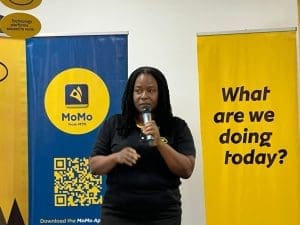
Local businesses, traders, and artisans at Mile 7 Achimota saw a surge in sales over the weekend as MoMo Fest 2025, organized by MobileMoney Ltd, transformed the community into a hub of commerce, culture, and digital awareness.
The two-day festival injected fresh income into the informal sector, giving food vendors, artisans, and small traders a rare opportunity to boost sales and expand their customer base.
At the same time, it highlighted Ghana’s ongoing shift toward a cashless economy, with mobile money serving as the preferred mode of payment throughout the event. This dual impact of economic empowerment on the ground and digital adoption at scale underscored the festival’s growing role as both a marketplace and a catalyst for financial transformation.
Economic Boost for Traders and Vendors
Food vendors, artisans, and small business owners reported strong sales, with many calling the festival one of their most successful weekends in months.
Stalls serving traditional meals, drinks, and handmade crafts bustled with activity from morning till night, while nearby shops, taxi drivers, and guesthouses thrived thanks to the massive crowd.
“This weekend was a game-changer for me. I made more sales than I usually do in an entire week,” said the CEO of Freda Coops of Nature .
The Founder of First Impression Elite Ltd, beaming with excitement, commended MobileMoney Ltd for creating such an impactful platform. She noted that MoMo Fest 2025 not only gave businesses like his the opportunity to showcase their products but also opened doors for networking and brand visibility.
According to her, initiatives of this kind play a vital role in empowering entrepreneurs and strengthening Ghana’s business ecosystem.
Yards by Nhaa, a clothing brand that participated in the festival, also shared its experience. The owner expressed gratitude to MobileMoney Ltd for providing the platform, noting that MoMo Fest 2025 boosted sales and created an avenue to connect with new customers. She added that beyond sales, the exposure and networking opportunities gained at the event would help grow the brand in the long term.
Information gathered by News Ghana’s Journalist Isaac Kofi Dzokpo indicates that festivals like MoMo Fest not only generate direct sales but also boost spending in transportation, hospitality, and retail, creating a ripple effect that supports local economies even after the music ends.
Cashless Festival Experience
A standout feature of MoMo Fest was its cashless fair, where mobile money served as the main mode of payment. Attendees used MoMo to buy food, crafts, and souvenirs, enjoying speed, convenience, and security without the hassle of carrying cash.
The setup gave small traders a practical taste of digital payments while building consumer trust in Ghana’s fast-expanding mobile money ecosystem. For many vendors, this was their first time running a fully cashless business model.
Digital Finance Education and Fraud Awareness
Beyond entertainment and trade, the festival doubled as a learning space. A live drama on mobile money fraud educated the crowd on how scammers operate and how to stay safe, using humor to deliver serious lessons. Service booths provided real-time support, SIM replacements, and demonstrations of secure mobile money practices.
“I came for the fun, but I’m leaving with knowledge on how to protect my MoMo wallet,” said Kofi, a university student who attended with friends.
Blending Culture and Community Engagement
MoMo Fest also celebrated Ghanaian culture with music, dance, and live performances. This blend of entertainment and business engagement deepened community ties and highlighted MTN MoMo’s role beyond financial services as a partner in social and economic development.
For the people of Achimota, it wasn’t just a festival; it was a testament to how economic empowerment and digital finance could be exciting, interactive, and transformative. Families came for the music and food but left with insights on secure mobile transactions. Traders watched their businesses grow, while young people got a firsthand experience of a cashless marketplace.
Long-Term Significance
Industry experts believe MoMo Fest will have lasting impact by promoting entrepreneurship, encouraging digital adoption, and boosting Ghana’s informal sector. With Ghana steadily moving toward a more digitized economy, events like MoMo Fest show how technology can merge seamlessly with culture to benefit businesses and consumers alike.
As the sun set, the festival grounds transformed into a vibrant concert arena. Medikal, Kelvyn Boy, DopeNation, Tulenkey, Mensa Jr, and DJ Aroma lit up the stage with electrifying performances that kept the crowd on its feet. From rap anthems to Afrobeats rhythms, the night was packed with energy, dance, and excitement, turning the festival into not just an economic celebration but also a cultural and entertainment spectacle.
Ghanaian gospel singer Broda Sammy has once again sparked social media reactions after a video of him performing in church went viral.
In a video shared on Instagram by ZionFelix on September 14, 2025, the gospel musician, popularly known as the “Nation Worshiper,” was seen energetically performing Black Sherif’s much-anticipated hit song “Soma Obi” in church.
During his performance, church members who could not hide their excitement were seen dancing along with Sammy’s live band.
Broda Sammy addresses viral video with curvy woman at Lumba’s one-week observation
Halfway through his performance, the gospel musician smoothly transitioned into King Paluta’s “Foko!” song, delivering it in grand style.
The video has sparked discussion online, with some social media users expressing disappointment over the performance, while others have defended his decision to perform such songs in a church setting.
Supporters argue that the two songs performed by Broda Sammy carry messages of encouragement and contain no profane language.
Watch the video below:
JHM/MA
Also catch the latest episode of Talkertainment with Ghana’s most-sought-after MC/Hypeman, Kojo Manuel, below:
Samia Nkrumah, daughter of Ghana’s first president Dr Kwame Nkrumah, recounted her harrowing experience during the 1966 coup that ousted her father from government.
Narrating the incident in an interview with The Break Down on September 6, 2025, she said she was just six years old but remembers everything clearly because it was “quite traumatic,” with the “deafening” sounds of gunfire at Flagstaff House, the presidential residence.
Samia, who shared a room with her two brothers, recalled waking up in the pre-dawn darkness to the sound of gunfire and rushing to her mother’s room with her heart pounding.
“So, this was early in the morning? Dawn, yes, it was still dark. Yes, the three of us, myself and my two brothers, slept in the same room. I remember getting up, rushing to my mother’s room, my heart was racing, boom boom.
“‘What’s going on?’ The sound from the gun battle in our compound was deafening. I took one look at my mother’s face, but before I could say anything, she asked, ‘Where’s your younger brother?’ Our youngest, Seiko, was two years old. I rushed back to pick him up, and the three of us just found ourselves in our mother’s room while we heard her speaking on the phone in Arabic,” Samia shared.
5 reasons the CIA might have taken out Kwame Nkrumah
Samia further recounted that her mother, “had the presence of mind to contact the Egyptian ambassador at the time. The first thing that came to her mind was to send a message to Cairo; that she was Egyptian, had three young children, and could they please do something so we could leave Ghana safely?”
Fathia Nkrumah, an Egyptian citizen, immediately understood the gravity of the situation and sought safe passage for herself and her children.
A father’s mission and a mother’s prayer
Samia confirmed that her father was not in the country during the coup. He was on his way to Hanoi to broker a peace deal between the United States and Vietnam, a trip he had postponed three times due to intelligence warnings.
He ultimately decided to go, believing it would benefit Ghana, Africa, and world peace.
Before the family was forced to leave the residence, Samia’s mother asked them to kneel and pray.
She recalled her mother’s comforting words, saying, “Even if they fire at you, nothing is going to happen to you.”
Her mother’s faith and reassurance provided immense comfort to the children.
The gun battle eventually subsided, and the family was instructed to leave the house with only the clothes on their backs. It was later revealed that the presidential guards, who were prepared to die defending the residence, had surrendered to the coup soldiers after being threatened that the family would be harmed if they resisted.
Controversies that marred Kwame Nkrumah’s death as 53 years passes
From Flagstaff House to the airport
After their surrender, the family was taken by the soldiers to the police headquarters.
Samia remembers sitting with the commander until Egyptian embassy staff arrived to escort them to the airport, where they waited for a flight to Egypt.
She noted that her memories of that day will be detailed in a book she is currently writing.
VPO/MA
GhanaWeb’s latest documentary, Sex for Fish, that explores the plights of teenage girls in coastal communities, all in an attempt to survive, is out. Watch it below:
The Food and Beverages Association of Ghana (FABAG) has opposed proposed increases in utility tariffs, warning that such a move would cripple businesses and undermine the government’s 24-hour economy policy.
The Electricity Company of Ghana (ECG) has for instance proposed a sharp upward review of electricity distribution charges, seeking an average 224 percent increase in the Distribution Service Charge (DSC1) over the 2025–2029 tariff period.
In a press release sighted by Citi News on Sunday, September 14, FABAG said the planned tariff hikes, particularly by the Electricity Company of Ghana (ECG), would worsen the already dire situation facing businesses in the country — especially in the food and beverages sector.
According to the association, sales in the sector have dropped by as much as 70% due to the current economic challenges, including the depreciation of the Ghanaian cedi. Many restaurants, hotels, wholesalers, and retailers are reportedly recording near-zero sales on a daily basis.
“The business sector is at a standstill. Food may be a necessity, but people are simply not buying,” the statement said.
“If the food sector is this badly hit, what is happening in the non-food sector?”
FABAG argues that any upward tariff adjustment will lead to higher production costs, job losses, and the collapse of small businesses such as cold stores, bakeries, and local restaurants — many of which are already struggling to stay afloat.
“The food and beverages sector is one of Ghana’s largest employers and heavily depends on electricity and water. Increasing tariffs will wipe out thin profit margins and force many SMEs to shut down,” the statement added.
The group also warned that such increases could trigger inflationary pressures, pushing prices of essential items like bread, kenkey, water, and beverages even higher. Transport fares may also go up, further burdening ordinary Ghanaians.
FABAG expressed concern that the proposed tariff hikes could directly undermine the government’s flagship 24-hour economy initiative, which aims to promote continuous business activity and industrial growth.
“Utility costs are a major part of food, transport, and housing — the key drivers of inflation in Ghana. Increasing tariffs now will unleash a new wave of price hikes that will hurt households and slow economic growth,” FABAG said.
While the association supports cost-reflective tariffs in principle, it insists that any increases must be fair, phased, and tied to performance improvements by utility providers.
FABAG is calling for greater transparency in how tariffs are calculated, and for the Public Utilities Regulatory Commission (PURC) to publish full cost breakdowns.
“We demand performance-linked tariffs. Utilities must first reduce system losses, improve collections, and eliminate inefficiencies before passing costs onto consumers,” the statement stressed.
FABAG is also urging the PURC to expand lifeline tariff bands to protect low-income households and support measures that cushion small businesses from rising utility costs.
“The government must not allow inefficiencies in the utility sector to be paid for by struggling mothers selling bread at dawn or small business owners trying to survive,” FABAG concluded.
The association has called on the PURC to reconsider the proposed tariff increases in light of the country’s current economic challenges and the long-term impact on jobs, investments, and industrialisation.
Read also
E/R: One dead, four injured in Koforidua-Nyamekrom road crash
Asantehene’s Fontomfrom Hemaa, Nana Ama Akyiaa, has called on all women attending the funeral of the late Asantehemaa, Nana Konadu Yiadom III, to strictly observe Asante customs.
In a viral video sighted by GhanaWeb on Sunday, September 14, 2025, she emphasised the importance of adhering to traditional mourning practices to honor the memory of the Asantehemaa.
Funeral rites for late Asantehemaa to be held from September 14 to 18
“For the young women attending, anklets and large earrings should not be worn. Hairstyles such as ponytails are also discouraged,” Nana Ama Akyiaa said.
“Failure to adhere to this directive and defy these instructions will result in being asked to leave immediately. Compliance is mandatory to honor the late Asantehemaa.”
She also reminded all mourners that the royal funeral rites (Dote Yie) are being conducted in line with Asante tradition, urging everyone to respect the customs during this period of mourning.
President Mahama to attend Asantehemaa’s funeral in Kumasi
The week-long observance of the royal burial rites is expected to attract thousands of mourners and high-profile guests from Ghana and beyond.
The late Asantehemaa was the 14th to ascend the stool and the biological sister of the current Asantehene, Otumfuo Osei Tutu II.
She ascended to the revered position in 2020, succeeding her late mother, Nana Afia Kobi Serwaa Ampem II, and passed away at the age of 91.
Reigning champions Bibiani Gold Stars launched their Ghana Premier League title defence with a hard-fought 2–1 victory over Bechem United.
Samuel Atta Kumi was the hero of the afternoon, striking twice inside the opening 22 minutes. The forward opened the scoring in the 3rd minute after a slick attacking move, then doubled the advantage with a composed finish midway through the first half.
Bechem responded almost immediately, halving the deficit just a minute later through Darlvin Yeboah, but the visitors could not find the equaliser despite periods of second-half pressure.
The result gives Gold Stars a perfect start and a morale boost ahead of their CAF Champions League qualifier against Algeria’s JS Kabylie at the Accra Sports Stadium on Saturday, September 20.
Berekum Chelsea 0–1 Asante Kotoko – Golden City Park, Berekum
Asante Kotoko ended a 15-year wait for an away league win at Berekum Chelsea, edging a tight contest 1–0.
After a cagey first half, Albert Amoah produced the decisive moment midway through the second period.
Pouncing on a loose ball at the edge of the area, he drilled a low strike beyond goalkeeper Adu Emmanuel to give the Porcupine Warriors a precious lead.
Kotoko’s disciplined defending and compact shape frustrated the hosts, who pressed for an equaliser but lacked the finishing touch.
The victory not only earns Kotoko an important opening-day three points but also builds their confidence as they prepare to face Nigeria’s Kwara United in the CAF Confederation Cup preliminary round on Sunday, September 21.
Meanwhile, watch as Ghanaians debate the performance of Black Stars coach Otto Addo
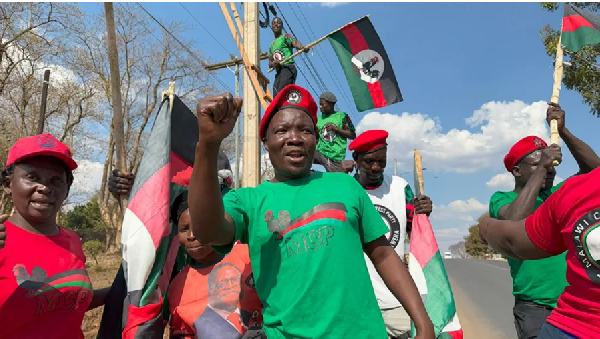
The queue to get fuel rather than the queue to vote is what is on the mind of many Malawians as Tuesday’s general election approaches.
Prolonged petrol shortages, along with regular power cuts, the rising cost of living, hunger, poverty, inequality and youth unemployment, add to the tangible frustration here.
The presidential, parliamentary and local council candidates are competing for votes against a background of cynicism about what might actually change.
In a sign that money is tight, electioneering has been somewhat muted compared to the past. This is despite the presidential race being seen as a rematch between the incumbent, Lazarus Chakwera, and the man he beat in 2020, then-President Peter Mutharika.
There are 15 other candidates.
But the usual colourful campaign carnival is missing. The free T-shirts usually doled out with abandon to whip up enthusiasm are more limited.
There are fewer giant election billboards on the nation’s main roads.
Back in the snaking petrol lines, patience runs thin, which has at times led to fist fights.
Sensing the fuel shortage was becoming an election issue, Chakwera has tried to tackle it head on.
In a televised address, eight days before polls open, he acknowledged the frustration and apologised. The president then turned his fire on allegedly corrupt officials who he accused of deliberately sabotaging the oil market.
Like fuel, new job opportunities are also hard to come by.
To put food on the table, young men have been selling petrol and diesel using small plastic containers at five times the official price.
In the southern town of Mangochi, they refused to be interviewed except to say, as they walked away, that preying on desperate motorists was the only way to survive.
With food costs rising at more than 30% in the past year, and wages not keeping pace, things are becoming harder to afford.
The high inflation rate has been partly put down to a shortage of foreign currency, which has forced some importers to buy US dollars on the more expensive black market. The costs have then been passed on to the consumer.
The effect of the economic troubles on young people could be particularly significant in this election – as around half of registered voters are under the age of 35.
And yet the two leading presidential candidates are considerably older. Chakwera is 70 and Mutharika is 85.
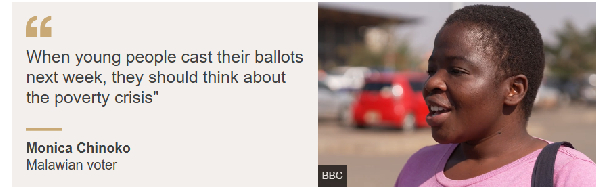
“When young people cast their ballots next week, they should think about the poverty crisis. The coming president should fix the employment rate because many of the young people are unemployed,” said 33-year-old Monica Chinoko, who works in the capital, Lilongwe.
Many younger voters have told the BBC that these continuous problems have dampened enthusiasm for the elections.
“Looking at the candidates – it’s really a tough choice to make because hope has been lost. We’ve been voting and voting but things haven’t gotten better,” said Ashley Phiri, 35. “But I’m hoping that this time around, the next leader will radically transform Malawi.”
Mutharika’s election convoy has made several stops in the villages along the Bakili Muluzi highway.
In one place, a supporter held up a sign saying “back to state house” and said life was better when the former president was in office.
At a Mutharika rally in Machinga, an elderly woman wearing a colourful headscarf and sarong held up a huge bucket and shouted “fertiliser”.
She was highlighting the crucial issue for the 80% of the population who live in rural areas. Many of these people survive on what they grow on their smallholdings and make money from what is left over.
Chakwera had promised to reduce the cost of the vital farming input – but the price has gone in the opposite direction. It is now six times more than it was in 2019.
The president has “accused some opposition parties of working with private traders to distort fertiliser prices”, his office said. He has pledged to smallholder farmers that the price will come back down under a targeted programme due to start next month.
Chakwera has had a tough five years at the helm but remains optimistic.
He says he is investing in the future of the country and as a headline policy he has pledged that the state will deposit 500,000 Malawi kwacha ($290; £210) in individual accounts for every child born after the general election. They will be able to access it once they reach 18.
Another former president, Joyce Banda – the country’s only female head of state – is also running again. She has pledged to fight corruption, transform the economy and improve rural infrastructure.
The other presidential candidates, including Atupele Muluzi, Dalitso Kabambe and current Vice-President Michael Usi, have all promised radical change in one of the world’s poorest countries.
There is no shortage of choice on the ballot paper, but Malawians will be hoping that whoever emerges as the winner, after Tuesday’s vote or a possible second round, will be able to put more food on the table and more fuel in the tank.
Peter Mutharika (L) and Lazarus Chakwera (R) have been political rivals for the past decade
Supporters of opposition candidate Peter Mutharika argue that things were better when he was in State House
Supporters of Lazarus Chakwera are confident he will be re-elected
World boxing champion Ricky ‘The Hitman’ Hatton has been found dead at his home in Greater Manchester.
The Stockport-born fighter was 46 years old. A police cordon was in place at his home in Gee Cross, Hyde, on Sunday, September 14.
Greater Manchester Police has confirmed that a body has been found and said that the death is not being treated as suspicious.
The devastating news comes months after the legendary boxer announced his return to boxing with a fight planned in December.
Mr Hatton, who would have turned 47 in October, had spoken openly about his struggles with mental health and drug addiction.
He survived suicide attempts and overcame a fall out with his family who he made up with after addressing his own mental health.
During his boxing career, he held multiple world championships, as well as UK titles, and was named Fighter of the Year in 2015.
A GMP spokesperson said: “Officers were called by a member of the public to attend Bowlacre Road, Hyde, Tameside, at 6:45am today where they found the body of a 46-year-old man. There are not currently believed to be any suspicious circumstances.”
The Safo family and Kristo Asafo Church have confirmed that Apostle Safo passed away on September 11
The late Apostle Dr Kwadwo Safo ‘Kantanka’ was a Ghanaian entrepreneur, inventor, and pastor, born on August 26, 1948, in Bekwai, Ashanti Region.
He was the founder of Kantanka Automobile, a Ghana-based automotive company, and the Kristo Asafo Mission, a religious and industrial organisation.
“Kantanka” was renowned for his significant contributions to manufacturing and technological innovation in Ghana, particularly through vehicles like the Omama SUV and Onantefo pickup truck, designed for African markets.
From a young age, Kantanka had a passion for science and technology. After completing basic education, he attended the Ghana Technical Works Institute in Kumasi, where he studied engineering, and later worked as a welder at the Volta Aluminium Company (VALCO) and other firms.
BREAKING: Apostle Dr Kwadwo Safo ‘Kantanka’ is dead
In 1969, he founded the Kristo Asafo Mission, initially as a prayer group. By 1971, it had become an African-initiated church that later expanded into manufacturing electronics, agricultural tools, and automobiles. The mission promotes the renewal and development of Africa and teaches that the Holy Spirit dwells within all humans.
In 1994, Kantanka established Kantanka Automobile to produce vehicles suited for African conditions. Manufacturing began in 1998 with locally sourced components for models like the Omama SUV and Onantefo pickup truck.
In 2012, the company partnered with the Chinese firm Chongqing Big Science & Technology to establish an assembly plant in Accra, producing vehicles from knock-down kits. While the vehicles are assembled in Ghana, some parts are imported from China, and the assembly process requires electricity.
The completed vehicles are sold domestically and exported to other West African countries, including Nigeria and Côte d’Ivoire.
Kwadwo Safo Kantanka passed away on Thursday, September 11, 2025. His death was confirmed in a statement issued by his daughter, Sarah Adwoa Safo, former Member of Parliament for Dome Kwabenya.
JHM/MA
Also catch the latest episode of Talkertainment with Ghana’s most-sought-after MC/Hypeman, Kojo Manuel, below:
Dr Mahamudu Bawumia is the 2024 presidential candidate of the NPP
Dr Alhaji Mahamudu Bawumia, 2024 presidential candidate of the opposition New Patriotic Party (NPP), has said he would not have sought another opportunity to lead the party if the Professor Mike Ocquaye committee report had linked the NPP’s electoral defeat to his tribe or religion.
In a 3news.com report on September 14, 2025, the former Vice President disclosed that before the report was released, he told former President Nana Akufo-Addo that he was ready to step aside to protect the party’s political fortunes.
“I told Akufo-Addo that if the findings of the Ocquaye report indicate that because I’m a Muslim or because I’m a Mamprusi-Kusasi we lost the election, I will step down and not contest anymore. I will not choose my interest over the party’s interest,” Dr Bawumia stated.
80% of NPP’s defeat in 2024 was self-inflicted – Obiri Boahen
He stressed that he would not allow personal ambition to override the party’s collective interest, adding that he was prepared to sacrifice any future bid to lead the party if it threatened its electoral chances.
However, he noted that the Ocquaye report, alongside findings from the Ashanti report and the Konrad Adenauer Foundation, concluded that neither religion nor ethnicity played a role in the NPP’s 2024 defeat.
In 2025, the NPP commissioned Professor Mike Ocquaye to lead a 12-member committee to investigate the party’s electoral loss.
High cost of living, E-Levy, corruption led to NPP’s 2024 defeat – GIMPA-KAS survey
The resulting post-election report, which the party has declared confidential, was intended to guide reforms and preparations ahead of the 2028 general elections.
I wouldn’t have contested if Ocquaye report had linked NPP’s 2024 defeat to my religion – Dr. Mahamudu Bawumia#3NewsGHpic.twitter.com/jIm2ukyRBi
The Ghana National Petroleum Corporation (GNPC) will host the 7th edition of the African Petroleum Producers’ Organization (APPO) National Oil Companies (NOCs) Chief Executive Officers’ (CEO) meeting in Accra from September 14 to 15 2025.
This flagship APPO platform will bring together CEOs and senior executives from 19 African oil-producing nations to engage in strategic dialogue on regional collaboration, innovation, and sustainability in Africa’s petroleum sector.
Acting Chief Executive Officer of GNPC and current Chair of the APPO NOC CEOs Forum, Kwame Ntow Amoah, will preside over the meeting. His leadership affirms Ghana’s growing influence in Africa’s energy space and GNPC’s role as a driver of regional partnerships.
“This summit highlights Ghana’s stature in Africa’s petroleum industry and GNPC’s commitment to advancing cooperation and innovation for the continent’s shared progress,” Mr. Amoah said.
Taking place on the margins of Africa Oil Week (AOW) 2025, the forum further positions Ghana at the center of Africa’s energy conversation.
The two-day summit aims to deliver actionable outcomes on shared infrastructure, local content, innovation, and investment opportunities across APPO member states, strengthening intra-African energy cooperation.
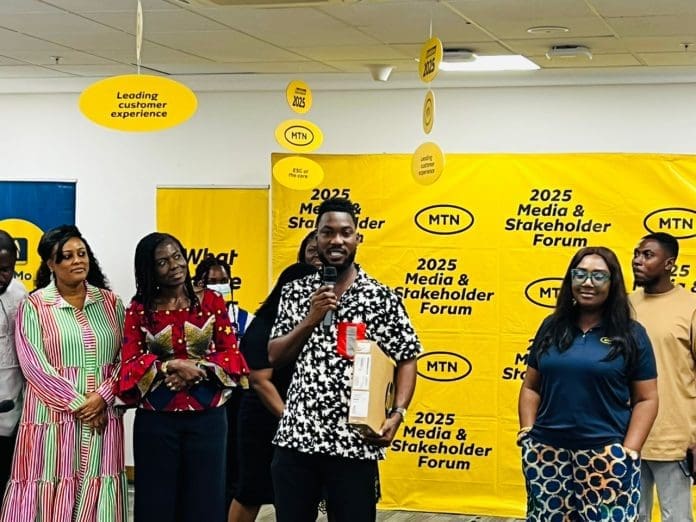
Blogger expressing appreciation after winning a brand-new laptop
MTN Ghana has organised the 2025 Media and Bloggers Forum in Accra, bringing together members of the New Media Association of Ghana (NMAG), journalists, and digital influencers to discuss the evolving media landscape and strengthen collaboration with the company.
The forum, which has become a key engagement platform for MTN, highlighted the company’s investments in digital infrastructure, customer experience, and the fight against mobile fraud, while emphasizing the role of bloggers and new media in shaping public discourse.
Georgina Asare Fiagbenu Senior Manager For Corporate Communications At MTN Ghana
Responsible Media Practices Highlighted
Georgina Asare Fiagbenu, Senior Manager for Corporate Communications at MTN Ghana, underscored the importance of responsible media practices in an era of fast-paced digital communication.
“The work you do has a direct impact on society. As a brand, we are committed to supporting your growth, but we also encourage you to uphold credibility and responsibility in all your platforms,” she said.
She commended bloggers and influencers for their contributions to national conversations and urged them to remain professional, ethical, and innovative in their reporting.
Reuben Opata The Chief Technology Officer Of MTN Ghana
MTN’s Infrastructure and Next-Generation Technology
Reuben Opata, the Chief Technology Officer of MTN Ghana, shared insights with participants about MTN’s infrastructure, highlighting network sites, transmitters, and data centers that guarantee reliable nationwide coverage.
He explained that MTN is investing heavily in next-generation technology such as fiber and fixed wireless access (FWA) to replace older systems like DSL and copper cables. According to him, these innovations will guarantee faster, more reliable connectivity to meet Ghana’s growing demand for data.
“Connectivity is now a way of life. From our homes to workplaces, everything is connected from smartphones to TVs, fridges, and even gaming devices. Our duty as MTN is to ensure that this connectivity is seamless, secure, and future-ready,” Opata said.
He further noted that MTN’s robust infrastructure, from transmission towers to fiber networks and data centers, is the backbone of its service delivery, allowing customers across Ghana to get maximum value from the network.
Faisal Ali Manager For Channel Development Mobile Money At MTN Ghana
Tackling Mobile Money Fraud
Adding to the discussions, Faisal Ali, Manager for Channel Development Mobile Money at MTN Ghana, addressed the issue of mobile money fraud and outlined the company’s efforts to protect customers.
He revealed that MTN has intensified its “Trust Campaign,” aimed at raising awareness and educating customers about safe mobile money practices.
“Mobile money is now a household service, and with its widespread use, fraudsters continue to exploit unsuspecting users. That is why we launched the Trust Campaign to build confidence, raise awareness, and help customers protect themselves,” Ali said.
He mentioned that MTN is using a blend of traditional media, social media, and grassroots engagement, including drama-based initiatives such as the “Shine Your Eye” campaign, to educate customers nationwide.
Ali also encouraged bloggers and influencers at the forum to support the campaign by amplifying MTN’s fraud prevention messages across their platforms.
He further introduced new innovations on the MoMo App, including biometric login with facial recognition and free weekend transactions for new customers, as part of MTN’s drive to enhance security and encourage digital adoption.
He cautioned bloggers to avoid spreading unverified information about mobile money services, noting that misinformation can cause unnecessary panic.
“We are always available to clarify issues. Whenever you come across sensitive information about MoMo, please reach out for confirmation. Together, we can fight fraud and build trust in the system,” he added.
Practical Tips for Data Management
Abdul-Latif Issahaku, Manager for Data and Devices at MTN Ghana, also addressed growing customer concerns over rapid data depletion. He outlined practical tips for reducing usage, stressing that device settings and app features can make a significant difference.
He advised iPhone users to disable background app refresh, limit iCloud backups to Wi-Fi, and turn off Wi-Fi Assist. For Android users, he recommended restricting background data on non-essential apps and performing software updates only on Wi-Fi.
Issahaku also pointed to built-in data saver options on popular apps such as Google Chrome, WhatsApp, YouTube, Facebook, TikTok, and Instagram. Turning off WhatsApp auto-downloads, disabling Facebook video autoplay, and watching YouTube in standard definition were highlighted as easy ways to conserve data.
On bundles, he encouraged customers to choose plans that match their lifestyles. Social media and video bundles, he said, offer discounts of up to 30 percent compared to standard data packages, while the midnight bundle provides 5GB for just GHS 3 between 12 a.m. and 5 a.m. He added that buying larger bundles is more cost-effective than purchasing smaller ones repeatedly.
“By adjusting a few settings and selecting the right bundles, customers can save significantly while still enjoying seamless connectivity,” Issahaku said.
Olivia Mifetu Communications Advisor At MTN Ghana
MTN’s History, Values, and Community Impact
Olivia Mifetu, Communications Advisor at MTN Ghana, also took participants through the company’s history, values, and community impact. She explained that MTN, which began operations in South Africa in 1994 and entered Ghana in 1996 as Spacefon before rebranding to MTN in 2007, is now present in 16 African countries.
Highlighting MTN’s vision “to lead the delivery of a bold new digital world,” Mifetu emphasized the company’s mission to make customers’ lives brighter while driving Africa’s digital progress. She stressed MTN’s core values: leading with care, acting with integrity, collaborating, serving with respect, and embracing inclusion.
She further outlined the role of the MTN Ghana Foundation, which invests 1% of profit after tax into community projects. So far, the Foundation has undertaken over 170 initiatives across education, health, and economic empowerment, directly impacting more than 5 million lives. These include building schools and dormitories, supporting hospitals with maternity blocks, awarding scholarships, and organizing the annual Heroes of Change program to celebrate individuals driving social impact.
Mifetu also touched on MTN’s flagship volunteerism initiative, 21 Days of Y’ello Care, which mobilizes staff across Africa to engage in community service, from digital literacy programs to environmental clean-ups.
She encouraged bloggers and influencers to support MTN’s community initiatives by amplifying their impact through storytelling and digital engagement.
“As communicators and storytellers, your role is critical in helping us showcase the real impact of what MTN is doing in communities. By working together, we can inspire change and ensure our message reaches every corner of the country,” she said.
DigiFest Showcased as Window into the Digital Future
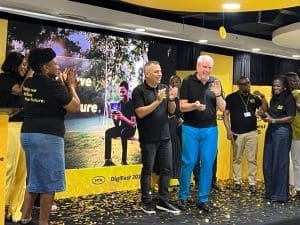
Mr. Ibrahim Misto, Chief Digital Officer of MTN Ghana, used the forum to highlight DigiFest, an initiative launched by the company as a practical showcase of the digital future.
“At DigiFest 2025, attendees will experience more than just technology. They will see how AI is transforming customer engagement, how gaming and digital creativity are connecting Africa’s young talents, and how new platforms are driving entrepreneurship and opportunity,” he said.
“This is about building a digital future where every individual, business, and community has the tools to thrive.”
General Secretary of NMAG Calls for Stronger Collaboration and Regulation
General Secretary of the New Media Association of Ghana (NMAG), Jibriel Suliah, however expressed appreciation to MTN Ghana for creating a platform that fosters interaction between the telecom giant and bloggers.
He commended MTN for its continuous engagement with the new media space and pledged NMAG’s commitment to working closely with stakeholders.
“Even if you haven’t picked something from us, we have picked something from you, and we will ensure we work hand in hand with you,” he said.
Suliah also touched on the recent calls for blogger regulation, noting that NMAG has already begun steps to position itself as a credible body under the Ghana Journalists Association (GJA).
“If you find something online involving any of our members, you can reach out to me or any executive, and we will find a way to address it. We are committed to ensuring responsibility within the space,” he assured.
He further encouraged corporate organizations to collaborate with NMAG when engaging bloggers, highlighting that the association has members across various regions, including Central and Volta, with expertise spanning niche areas such as agriculture, technology, and entertainment.
Suliah emphasized that NMAG’s goal is to bridge the gap between bloggers and the corporate world, ensuring that new media practitioners remain credible partners in national development.
A touch of excitement was added to the forum with a lucky draw, which kept participants on edge as they eagerly awaited the outcome. In the end, the luckiest blogger walked away with a brand-new laptop, sparking cheers and applause from the audience. The gesture underscored MTN Ghana’s commitment to supporting the digital work of bloggers and enhancing their productivity.
The move is to reshape Nigeria’s downstream oil market
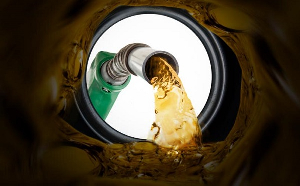
Starting Monday, September 15, 2025, the Dangote Refinery will commence direct petrol supply to 11 Nigerian states.
Petrol will be sold at an ex-gantry price of ₦820 ($0.546) per litre, with free delivery to registered fuel stations. This service is expected to expand nationwide as the company deploys its fleet of 4,000 compressed natural gas trucks.
According to billionaires.africa, the initiative aims to reshape Nigeria’s downstream petroleum sector.
The first direct retail supply will come from the Lagos mega-refinery, with recommended pump prices set at ₦841 ($0.56) per litre for Lagos, Ogun, Oyo, Ondo, Osun, and Ekiti, and ₦851 ($0.567) per litre for Abuja, Delta, Rivers, Edo, and Kwara.
Ghana’s richest investor gains $7.6 million on GCB Bank shares
The investment is projected to move up to 65 million litres of petrol daily and create approximately 15,000 jobs. Fuel costs are expected to drop by more than ₦1.7 trillion ($1.13 billion).
The announcement follows tensions with the Nigeria Petroleum Products Retail Outlet Owners Association, which had threatened to halt sales, warning that the rollout could distort market competition. Other unions, including the Nigerian Union of Petroleum and Natural Gas Workers, staged a two-day strike before suspending action under an agreement brokered by the Department of State Services.
The deal, signed by Dangote executives, union leaders, and regulators, requires the unionisation of willing refinery employees by September 22 and prohibits retaliation against striking workers.
Located in Ibeju-Lekki, the facility is Africa’s largest single-train refinery, capable of processing 650,000 barrels of crude oil per day. It has already begun sourcing crude under Nigeria’s naira-for-crude policy.
The refinery aims to stabilise fuel supply, revive shuttered stations, and challenge the dominance of the Nigerian National Petroleum Company (NNPC) in retail pricing by entering the petrol sales market directly.
Oblique Seville is the new fastest man in the world
Jamaican athlete, Oblique Seville has been crowned as the new fastest man on the planet at the ongoing 2025 World Athletics Championship in Tokyo, Japan.
The 24-year-old won gold in the men’s 100 metres event after beating defending and Olympic Champion Noah Lyles and his countryman Kishane Thompson.
With Oblique Seville winning the gold medal, the silver and bronze medal went to Kishane Thompson and Noah Lyles from the United States of America.
Kishane Thompson and Noah Lyles clocked a time of 9.82s and 9.85s respectively while the winner, Oblique Seville finished with 9.77 records.
Saminu ‘fails’ to qualify for 100m finals at World Athletics Championship
The finishing times of Oblique Seville, Kishane Thompson and Noah Lyles mean Usain Bolt’s world record remains untouched.
Usain Bolt’s 100m world record is 9.58 seconds, set on August 16, 2009 at the World Athletics Championships in Berlin, Germany.
How 🇯🇲 Oblique Seville stormed to a 9.77s to win the men’s 100m final at the #WorldAthleticsChamps with 🇯🇲 Kishane Thompson in second.
Islamic insurgents are making a deadly comeback in Mozambique’s Cabo Delgado region, following a brief lull in violence after Rwanda’s intervention, with tens of thousands of people displaced in recent weeks.
And that has meant Mozambique is turning to the old ally for new back-up, signalling a longer stay of Rwandan troops in the southern African country.
Rwanda first deployed its forces into the resource-rich region of Cabo Delgado, northern Mozambique, four years ago, and they were followed by a South African Development Community (SADC) contingent. Both missions were meant to subdue the Islamic State-affiliated Ahlu Sunnah Wal Jamaah (ASWJ) insurgents.
Mozambican President Daniel Chapo was in Kigali at the end of August seeking a deal to re-establish a strong presence of Rwandan forces in Cabo Delgado in response to the fresh wave of attacks.
A new status of forces agreement with Kigali was announced on August 29 with provisions for a fresh counter-insurgency strategy for the restive Mozambican region.
The agreement that followed a two-day summit between President Chapo and his Rwandan counterpart, Paul Kagame, could pave the way for Kigali to open a permanent military base in Cabo Delgado.
Maputo’s move is informed by realities on the ground, and months after SADC troops pulled out of Mozambique.
The United Nations Office for the Coordination of Humanitarian Affairs (OCHA), in its latest situation report, says over 50,000 people were displaced in the region in the past month due to the renewed insurgency.
Ocha said a spate of attacks in the Chiure district of Cabo Delgado between July 24 and August 3 displaced 51,959 people. Over 5,200 people were displaced in other parts of the province, but the figures could not be verified because of access constraints.
A staggering 60 percent of the internally displaced people were children, with many cases of unaccompanied and separated children recorded at two transit sites.
The situation marked a dramatic reversal from gains made last year, where Rwandan forces had succeeded in flushing the insurgents out of Cabo Delgado.
Rwandan troops remained holding fort when the SADC forces withdrew from the region in July last year due to funding constraints.
Botswana, South Africa, Lesotho, and Tanzania were some of the countries that contributed boots on the ground, while Zimbabwe and Angola had deployed military trainers to assist the Mozambican army.
After dislodging the insurgents from most parts of Cabo Delgado, the Rwandan troops had scaled down their operations to provide static security and patrol major roads.
They were also limited to providing security to commercial sites, and observers say this allowed the insurgents to regroup and to launch attacks against the Mozambican army.
French oil giant TotalEnergies had even moved to resume operations at its $20 billion liquefied natural gas project that was put on hold in 2021 because of the insurgency.
According to the latest report by the United States-sponsored Famine Early Warning System Network (FewsNet), several districts in Cabo Delgado had seen an increase in attacks by armed groups since the beginning of the year.
“Attacks on civilians by non-state armed groups and armed clashes between non-state armed groups and Mozambique’s security forces led to the displacement of over 56,200 people,” FewsNet said in its outlook for the period up to January 2026.
“From October 2025 to January 2026, similar outcomes will persist and likely expand to new areas due to the evolving insurgency tactics, shifting from territorial control to highly mobile and dispersed operations that aim to overwhelm both security forces and civilians.”
It said a notable geographic shift in violence was also observed, as the insurgents expanded their incursions southward into Ancuabe, Chiúre districts, and the Nampula region.
“This expansion further restricted road access to Macomia,” FewsNet added. “OCHA estimates that more than 208,100 civilians have been impacted — both directly and indirectly — by the violence.
“A total of 47 attacks targeting civilians were reported in July, which included killings, abductions, extortion, and looting, resulting in at least 29 deaths and 69 abductions.”
FewsNet expects the violence to persist during the coming months, primarily impacting the southeastern parts of Cabo Delgado.
“The actions and movements of these groups are likely to create a continuous atmosphere of insecurity throughout the scenario period,” it added. “Additionally, surprise attacks may occasionally occur in the neighbouring Niassa and Nampula provinces.”
Charity organisation Médecins Sans Frontières said Cabo Delgado was experiencing its largest wave of displacements since February 2024.
It said entire families, including young children, pregnant women, and elderly people with chronic conditions, were fleeing their homes in fear and walking for days to take refuge in makeshift tents in Chiure town.
“This crisis cannot remain invisible,” said Sebastian Traficante, MSF head of operations in Mozambique, in a recent update.
“The impact of the violence shouldn’t be normalised. More lives will be at risk, and the health and dignity of thousands will continue to deteriorate. People need a coordinated, long-term humanitarian commitment that guarantees access to healthcare and basic services for all.”
Cabo Delgado is a gas-rich province bordering Tanzania and has been gripped by violence since the conflict began in 2017.
Besides the ASWJ, there are various other small armed Islamic groups operating in Cabo Delgado. Mozambique has also been fighting armed bandits in the central parts of the country.
The insurgency is also causing insecurity in neighbouring Tanzania, and other countries in the region fear a spillover of the violence because of porous borders.
Mozambique has a long history of fighting insurgency dating back to the 1970s when it had to contend with Renamo, which was formed by the then neighbouring Rhodesia (now Zimbabwe) and supported by apartheid South Africa.
Afrodancehall star Stonebwoy has raised concerns about the increasing toxicity within Ghana’s entertainment scene, stressing that competition among artistes has crossed the line from healthy rivalry to deliberate sabotage.
Speaking in an interview with MC and hypeman Kojo Manuel, aired on September 10, 2025, the award-winning musician criticised artistes who intentionally release new music on the same day their colleagues unveil projects, a practice he described as “non-directional” and a form of “slavery.”
Who says simplicity can’t turn heads? In a world where bold trends often steal the spotlight, there’s something timeless and refreshing about keeping it simple yet effortlessly elegant. This feature is a celebration of how a minimalistic outfit, paired with the bold charm of a pixie haircut, can speak volumes without screaming for attention.
The pixie cut sharp, clean, and stylish brings out confidence in every frame. It’s not just a hairstyle; it’s a bold declaration of individuality, power, and femininity. And when matched with a well-tailored, simple outfit be it a chic midi dress, crisp co-ords, or a classic blouse and skirt combo the look becomes a visual anthem of sophistication.
Whether you’re heading to work, brunch, or an intimate evening event, this combo allows you to stand tall with quiet confidence. The elegance lies in the clean lines, the subtle textures, and how everything comes together without doing too much. Less truly becomes more.
Watched from the stands by the fastest man of all time, Oblique Seville became the first Jamaican man since Usain Bolt to win a global 100m title as he edged his compatriot Kishane Thompson for the gold at the World Athletics Championships Tokyo 25 on Sunday (14).
An animated Bolt, who had earlier in the night been paraded inside a packed Japan National Stadium in humid conditions, roared on his successor from a VIP box.
Thompson may have been the fastest man this season, his time of 9.75 the quickest by any athlete for 10 years. But when it mattered, Seville peaked at just the right time, clocking a PB of 9.77 (0.3m/s). Olympic silver medallist Thompson was five tenths of a second behind, with defending champion Noah Lyles completing the podium.
“The last time Jamaica won the men’s 100m world gold medal was in 2016, when Usain Bolt got it,” said 24-year-old Seville after winning the first global title of his career. “I feel really amazing and excited that the gold is coming home to Jamaica.
“I have proved that I am a true competitor, that I have the determination of a champion. But still, I was panicking. I didn’t know what was going on throughout the semifinal. Finishing strong in the last 30 to 40 metres was something I was struggling with the whole season, I just didn’t recognise it. Now I have perfected it and I was confident that if I could do it in the final, I would win. I knew if I had a strong finish, the others would not catch me.”
Following the heats, Lyles had declared himself in the “best form I have ever been in my life”. The times and results might not have backed that up, but his self-fuelled hype train was enough to push him to a medal by clocking 9.89.
And typically the US athlete still celebrated as though the gold was his and it might yet be, come the 200m later in this World Championships.
There were disappointments for other finalists. For one, Letsile Tebogo – the Olympic 200m champion and world silver medallist for the 100m in Budapest two years ago – was disqualified for a false start.
And then Kenny Bednarek, who with Thompson was the fastest qualifier for the final – both running 9.85 to the same thousandth of a second – had a dire start from which he never recovered.
Thompson has looked every bit the heir apparent to Bolt this season, with repeated wins and even quicker times, and pre-final he was fist pumping volunteers in relaxed fashion, much was his predecessor’s custom.
There was even levity between Thomson and Bednarek in their earlier semifinal. The Jamaican turned his head to his rival on his way to the line and Bednarek returned the light-hearted side glance, the pair all smiles.
Seville also impressed in his semifinal by clocking 9.86, while Lyles recovered from a poor start to win the other semifinal in 9.92.
In that showdown for a place in the final, Lyles – never knowingly understated – crossed his fingers in front of the camera, stuck out his tongue and produced a big hand clap. Come the final, he raised his arms aloft akin to an exaggerated stretch.
On the evidence of the semifinals, the final looked set to be a duel between the Jamaican and US sprinters with, so it proved, the exception of a faltering Bednarek.
In the end, it was Seville – arguably the most understated of the potential gold medallists, and having gone into the championships in the shadows of the showmen like Lyles and Thompson.
As he crossed the line, he ripped open his race jersey and beat his chest, as Bolt looked on and Jamaica celebrated a first global men’s 100m champion since Bolt achieved the feat at the Rio Olympics in 2016.
DISCLAIMER: The Views, Comments, Opinions, Contributions and Statements made by Readers and Contributors on this platform do not necessarily represent the views or policy of Multimedia Group Limited.
DISCLAIMER: The Views, Comments, Opinions, Contributions and Statements made by Readers and Contributors on this platform do not necessarily represent the views or policy of Multimedia Group Limited.
Roman Fada was the manager of late Ghanaian singer, Daddy Lumba
Roman Fada, manager of the late Ghanaian Highlife legend Daddy Lumba, has revealed the close bond between the late musician and rapper Sarkodie.
In a video shared on X on September 14, 2025, Roman Fada noted that Sarkodie is the only artiste whose picture is framed in Lumba’s residence.
He explained that the two shared a strong relationship, and the ‘Makra Mo’ hitmaker deeply valued Sarkodie’s creativity.
“Sarkodie is the only musician whose picture has been framed in Lumba’s hall. There are other politicians, but this shows the type of person Sarkodie is,” he said.
‘Stop causing unnecessary tension in Lumba’s family’ – Roman Fada fumes
Roman Fada also revealed that Sarkodie refused payment from the late Lumba after their much-anticipated collaboration.
“Sarkodie told me that when Lumba featured him on a song, Lumba tried to pay him, but he refused because he saw it as a privilege to be on the same track with a legend,” he added.
The late Daddy Lumba passed away on July 26, 2025.
Watch the video below:
Sarkodie is the only artist who’s picture can be found in lumba’s house . Daddy lumba tried paying sarkodie for their collaboration buh sarkodie rejected the money “
Dr Mahamudu Bawumia is Ghana’s former Vice President
Former Vice President Dr Mahamudu Bawumia has expressed heartfelt condolences to the family of the late inventor and entrepreneur, Dr Kwadwo Safo ‘Kantanka’.
In a post shared on X on September 14, 2025, shortly after Kantanka’s family announced his passing, Dr Bawumia recalled his fond memories of the late inventor.
He described Dr Safo ‘Kantanka’ as more than a religious leader, highlighting his contributions to innovation, industrial growth, and philanthropy in Ghana.
“Apostle Safo served Ghana beyond the capacity of a religious leader. He pioneered indigenous innovations and forcefully inspired an industrial spirit amongst Ghanaians. He was also dedicated to improving the lives of the less privileged in society, as witnessed in his celebrated numerous philanthropic endeavours,” he said.
‘I wouldn’t have contested if 2024 loss blamed my religion or tribe’ – Bawumia on Ocquaye report
Dr Bawumia further shared how he often sought the late Safo Kantanka’s encouragement and wisdom.
“As a religious leader, his open arms received me. Anytime I called on him, I departed his presence with lasting words of encouragement and wisdom.
“On behalf of my family, I extend my heartfelt condolences to his family, the Kristo Asafo Mission, and all who mourn this irreparable loss,” he added.
Dr Kwadwo Safo Kantanka passed away on Thursday, September 11, 2025. His death was confirmed in a statement issued by his daughter, Sarah Adwoa Safo, former Member of Parliament for Dome Kwabenya.
Read the post below:
I have received with deep sadness the news of the passing of Apostle Dr. Kwadwo Safo Kantanka, a pioneering Ghanaian innovator; and the founder and leader of the Kristo Asafo Mission.
Apostle Safo served Ghana beyond the capacity of a religious leader. He pioneered indigenous… pic.twitter.com/AVEtyQJ7UA
At least four people have been injured and admitted to the Eastern Regional Hospital and St Joseph Hospital in Koforidua after a fatal accident claimed one life on the Koforidua–Nyamekrom road.
The accident, a head-on collision, involved an Opel Astra B taxi cab with registration number GS 4492-Z and a Honda Civic with registration number GR 5529-22.
According to the Assemblyman for the Nyamekrom Electoral Area, Enoch Boahene—who narrowly escaped the accident while riding his motorcycle near the Jehovah’s Witness Church in Nyamekrom—the taxi driver was speeding and made a wrongful overtaking, leading to the head-on collision.
Richard Ahiagbah is the Director of Communications for the New Patriotic Party
Director of Communications for the New Patriotic Party (NPP), Richard Ahiagbah, has accused President John Dramani Mahama of presiding over a scandal involving GoldBod, a government entity mandated to purchase gold.
Speaking on Citi FM’s The Big Issue on Saturday, September 13, 2025, Ahiagbah alleged that GoldBod has been buying gold from illegal miners, popularly known as galamsey operators.
“One honest admission is that the president said that GoldBod is buying galamsey gold. That was an admission from the president. This is a very terrible situation we have on our hands, an entity established by law engaging in business with an illegal enterprise. That is scandalous. That is something you would want to impeach somebody for,” he said.
Ghana’s gold risks being labeled ‘blood gold’ – Joe Jackson
Ahiagbah compared the development to the recent removal of Chief Justice Gertrude Torkornoo, arguing that it reflected a double standard in holding public officials accountable.
“When we just removed a CJ because people processed her travel documents for her, she didn’t even process them herself, that was enough to remove her from office. But now you are telling us that you have set up GoldBod, which is buying illegal gold, and that is, okay?” he questioned.
Paul Adom-Otchere backs President Mahama’s stance on galamsey
He further argued that the situation highlights what he described as the president’s lack of commitment to the fight against illegal mining in Ghana.
The late Apostle Dr Kwadwo Safo ‘Kantanka’ was a Ghanaian entrepreneur
The late Apostle Dr Kwadwo Safo ‘Kantanka’ was a Ghanaian entrepreneur, inventor, and pastor, born on August 26, 1948, in Bekwai, Ashanti Region.
He was the founder of Kantanka Automobile, a Ghana-based automotive company, and the Kristo Asafo Mission, a religious and industrial organisation.
“Kantanka” was renowned for his significant contributions to manufacturing and technological innovation in Ghana, particularly through vehicles like the Omama SUV and Onantefo pickup truck, designed for African markets.
Apostle Dr Kwadwo Safo ‘Kantanka’ is dead
From a young age, Kantanka had a passion for science and technology. After completing basic education, he attended the Ghana Technical Works Institute in Kumasi, where he studied engineering, and later worked as a welder at the Volta Aluminium Company (VALCO) and other firms.
In 1969, he founded the Kristo Asafo Mission, initially as a prayer group. By 1971, it had become an African-initiated church that later expanded into manufacturing electronics, agricultural tools, and automobiles. The mission promotes the renewal and development of Africa and teaches that the Holy Spirit dwells within all humans.
I became prosperous due to Apostle Kwadwo Safo’s teachings – Akrobeto
In 1994, Kantanka established Kantanka Automobile to produce vehicles suited for African conditions. Manufacturing began in 1998 with locally sourced components for models like the Omama SUV and Onantefo pickup truck.
In 2012, the company partnered with the Chinese firm Chongqing Big Science & Technology to establish an assembly plant in Accra, producing vehicles from knock-down kits. While the vehicles are assembled in Ghana, some parts are imported from China, and the assembly process requires electricity.
The completed vehicles are sold domestically and exported to other West African countries, including Nigeria and Côte d’Ivoire.
Kwadwo Safo Kantanka passed away on Thursday, September 11, 2025. His death was confirmed in a statement issued by his daughter, Sarah Adwoa Safo, former Member of Parliament for Dome Kwabenya.
Ghana’s fastest man, Abdul-Rasheed Saminu has failed to qualify for the finals of the men’s 100 metres event at the ongoing 2025 World Athletics Championship in Tokyo, Japan.
Abdul-Rasheed Saminu missed out on the finals of the men’s 100 metres event after finishing 4 in the semi finals Heat 3.
The Ghanaian’s ambition of winning a medal in the men’s 100 metres is now over after clocking a time of 10.08 in Heat 3.
Jamaica’s Oblique Seville won the race with a time finish of 9.86s while Letsile Tebogo from Botswana secured the other automatic slot for the finals with 9.94s on Sunday, September 14, 2025.
South Africa’s Gift Leotlela finished third with 9.97s. He has now qualified to the finals of the men’s 100 metres event together with his countryman Akani Simbini.
The two South African athletes qualified to the finals of the 100 metres as the best third placed runners in the semi finals.
JE
Meanwhile, watch as Ghanaians debate the performance of Black Stars coach Otto Addo
Misuzulu kaZwelithini is the king of South Africa’s large Zulu community
The king of South Africa’s large Zulu community has challenged one of his critics to a stick fight, saying he had been insulted, along with the entire Zulu nation.
King Misuzulu kaZwelithini issued the challenge to Prof Musa Xulu in front of thousands of people who had gathered at his newly built royal palace for the annual Reed Dance.
“We are angry, and we will do anything to protect and preserve our cultures,” he said, according to the Timeslive news site.
Prof Xulu has stood by his statements and warned that the king’s comments have put him at risk, the local IOL site reports.
The BBC has contacted him for further comment.
Stick fighting is a type of martial art long practised by the Zulu people.
King Misuzulu did not specify exactly what Prof Xulu had said to anger him, but he was quoted as saying: “It pains me to see another man telling me how to do my job.”
“It is okay if he is against me, but when he insults me, he insults the Zulu nation as well,” he said, in what was reportedly an unusually short speech on one of the major events in the traditional Zulu calendar.
“If his friends are here, go and tell him that there is a fighting ring – if he wants a stick fight because I can take him up,” the king said.
King Misuzulu was crowned in 2022, after a year-long feud following the death of his father, long-time King Goodwill Zwelithini, and then his mother shortly afterwards.
Two of his brothers challenged Misuzulu’s claim to the throne, but he has been recognised by both the Zulu royal household and the South African state.
The throne has no formal political power, but about a fifth of South Africa’s 64 million people are Zulu and its monarchy remains hugely influential with a yearly taxpayer-funded budget of more than $4.9m (£3.5m).
The Zulu kingdom has a proud history. It is world-famous for defeating British troops during the 1879 battle of Isandlwana.
Ghana’s economy grew by 6.3% year-on-year in the second quarter of 2025, new data from the Ghana Statistical Service (GSS) has indicated.
According to the GSS, the growth rate is higher than the revised 5.7% recorded a year earlier.
The rebound was powered by the services sector spanning finance, insurance, trade, and education, which surged 9.9% compared with the 2% recorded in the same period last year.
Non-oil GDP advanced 7.8%, as gains in agriculture and other sectors helped cushion a contraction in oil production.
Government Statistician, Dr. Alhassan Iddrisu, who released the figures, noted that the data reflects a strengthening recovery from Ghana’s deepest economic crisis in decades.
“The economy grew from 5.7% in the Q2 of 2024 to 6.3% in the Q2 of 2025 meaning the economy produced more goods and services than the same time last year noting a sign of growth and recovery,” he said.
Inflation has also continued to ease, falling to 11.5% in August — its lowest since October 2021, beating the Finance Ministry’s target of 11.9% by year-end.
The stronger-than-expected growth is expected to bolster investor confidence as policymakers work to sustain stability and advance IMF-backed reforms.
Services including ICT, education, finance and insurance and trade contributed more than half (52.2%) of the 2025 Q2 growth of the economy.
Dr. Iddrisu recommended that households should support local agriculture by buying more made-in-Ghana food products to strengthen demand for farmers output.
“Businesses should invest in digital and service-oriented solutions to ride the wave of growth in ICT, finance and education, and lastly, government should prioritise infrastructure and energy investment to sustain growth across all sectors, especially industry and services,” he said.
President John Mahama has personally stepped in to broker peace in the contentious dispute between Azumah Resources Limited and Engineers & Planners over Ghana’s strategic Black Volta Gold Project, according to high-level sources.
The presidential intervention comes after months of escalating legal battles and public exchanges between the two companies over ownership and control of the valuable mining asset in the Upper West Region. Sources indicate significant progress has been made through behind-the-scenes negotiations, raising hopes for an amicable resolution.
The dispute has been marked by conflicting claims and denials. Azumah Resources has categorically denied reports of E&P acquiring their projects, with company officials dismissing such claims as “false information designed to confuse the public” and stating that “E&P formally abandoned its claims” against them.
A temporary court injunction issued in June 2025 directed both parties to “maintain the status quo,” preventing either side from altering ownership or operational control until substantive issues are resolved. The legal standoff had threatened to escalate to international arbitration.
The Black Volta Gold Project represents a strategic national asset with significant potential for job creation, foreign exchange generation, and investor confidence in Ghana’s mining sector. Industry experts warn that prolonged disputes could stall development, erode regulatory trust, and deter potential investors.
The presidential intervention follows earlier government attempts at resolution, including a July directive from the Lands and Natural Resources Minister giving both companies seven days to resolve their differences amicably, warning of governmental action “in the best interest of the country” if they failed to comply.
Sources familiar with the mediation process describe the ongoing negotiations as constructive, with both parties reportedly showing improved cooperation after previous public confrontations. The details of the discussions remain confidential, but insiders express optimism about reaching a comprehensive settlement.
President Mahama’s direct involvement signals the government’s commitment to protecting both domestic and foreign investment interests while maintaining stability in Ghana’s crucial mining industry. The intervention demonstrates executive leadership in addressing disputes that threaten national economic interests.
The resolution effort aims to prevent protracted litigation in both local and international courts, which could further damage investor confidence and delay project development. The project has attracted significant international interest, with the ECOWAS Bank for Investment and Development indicating an additional $30 million investment planned for December 2025.
For Ghana’s broader mining sector, successful mediation would reinforce the country’s reputation as a stable investment destination. The government’s proactive approach to resolving complex commercial disputes could enhance regulatory credibility and encourage future mining investments.
The dispute had raised concerns among foreign investors about Ghana’s regulatory environment and dispute resolution mechanisms. The public nature of the ownership battle had generated “fundamental questions about regulatory” processes for international investors evaluating Ghana’s mining sector.
Both companies are expected to benefit from a negotiated settlement rather than continued legal warfare. For Azumah Resources, resolution would allow focus on project development, while E&P could clarify its position and explore alternative partnerships or arrangements.
The presidential mediation reflects recognition that some commercial disputes transcend private interests and require high-level intervention when national economic priorities are at stake. The approach demonstrates government willingness to facilitate dialogue while respecting legal processes.
Industry observers note that successful resolution could establish a precedent for handling complex mining disputes through executive mediation rather than prolonged litigation. This could strengthen Ghana’s position as a preferred destination for mining investments in West Africa.
While negotiations continue, the constructive atmosphere reported by sources suggests both parties recognize the benefits of compromise over continued confrontation. The outcome could significantly influence investor perceptions of Ghana’s mining sector stability and regulatory effectiveness.
Following the passing of Ghanaian inventor, entrepreneur, and pastor Dr Kwadwo Safo ‘Kantanka,’ rapper Sarkodie has taken to social media to share his heartfelt condolences with the bereaved family.
In a post shared on X on September 14, 2025, Sarkodie described the late Dr Safo as a true superstar of Africa.
While acknowledging his immense contributions to Ghana, Sarkodie noted that a great African icon had fallen.
‘I immediately parked my car when I heard of Lumba’s death’ – Sarkodie recounts
“Rest well, Papa. A true star of Africa has fallen! Apostle Kwadwo Safo Kantanka,” he wrote.
Dr Kwadwo Safo Kantanka passed away on Thursday, September 11, 2025. His death was confirmed in a statement issued by his daughter, Sarah Adwoa Safo, former Member of Parliament for Dome Kwabenya.
Read the post below:
Rest well Papa 🙏🏿 . A true star of Africa has fallen! Apostle Kwadwo Safo Kantanka 🕊️ pic.twitter.com/PpkHm6Qwpz




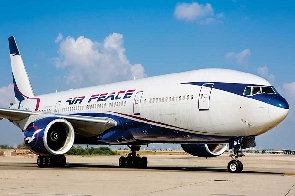










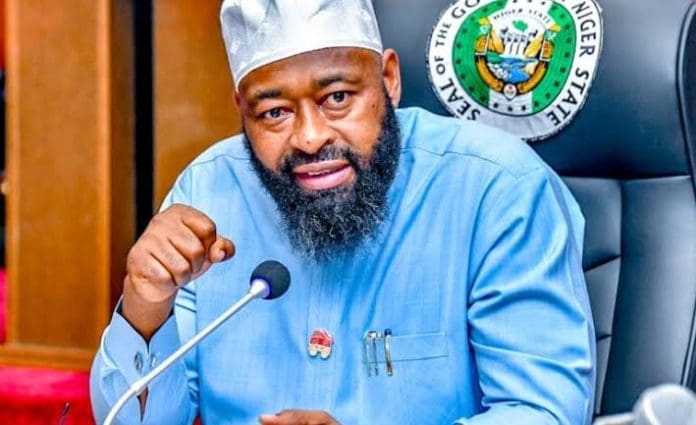



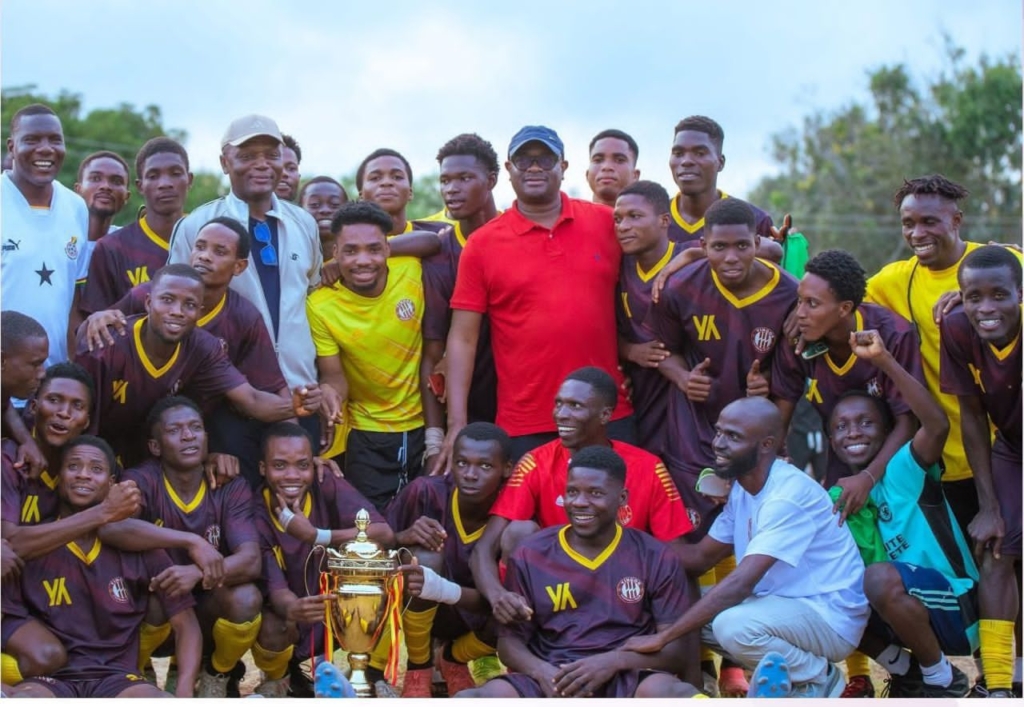
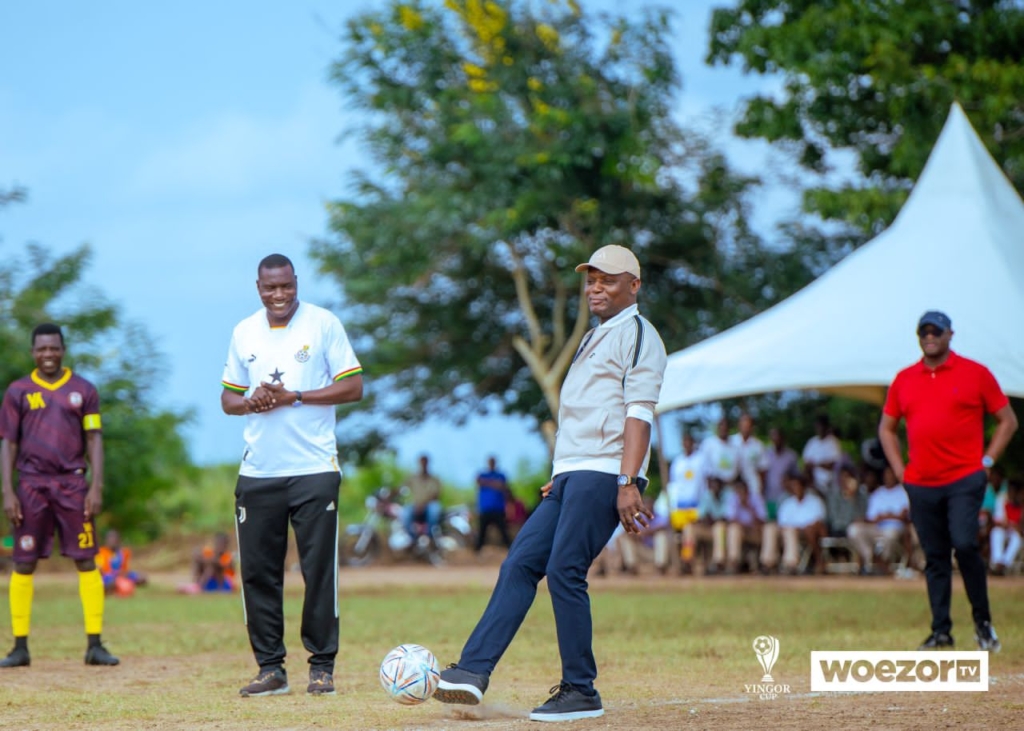
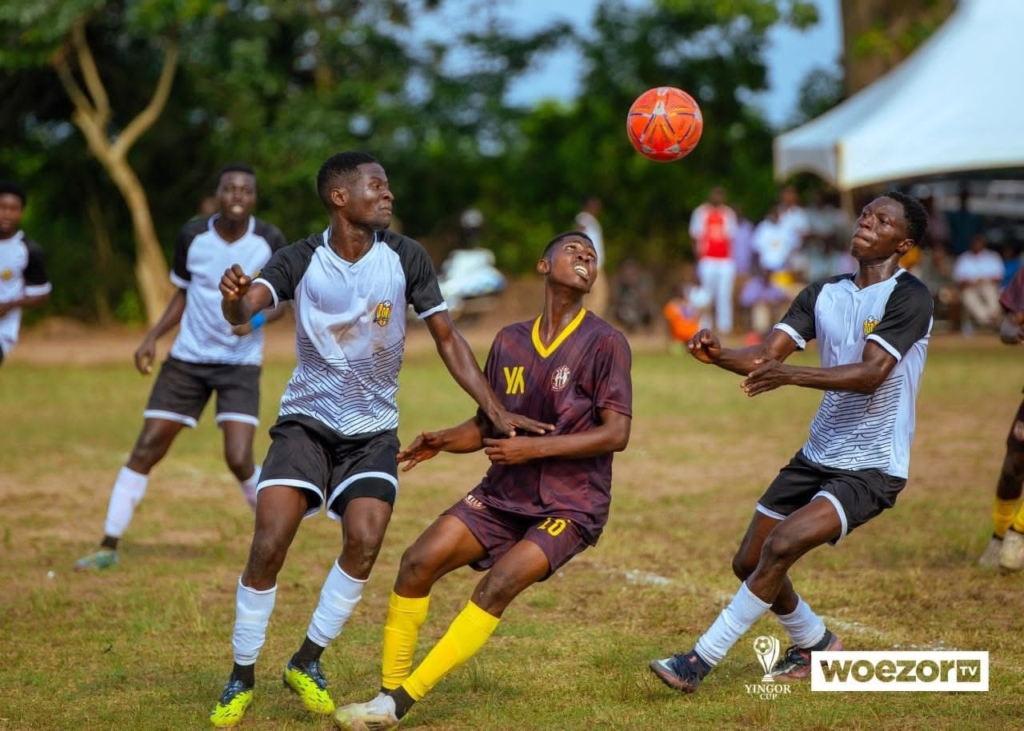


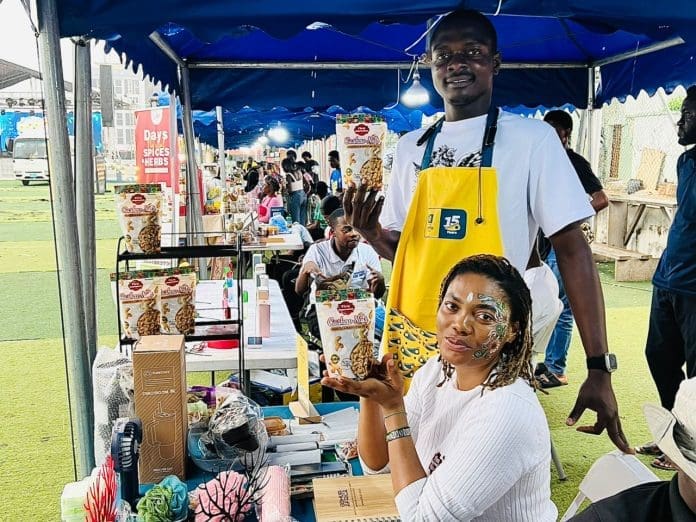
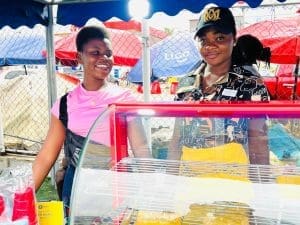
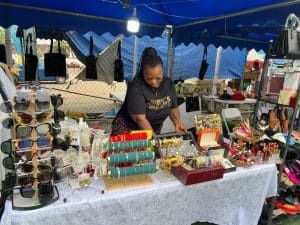
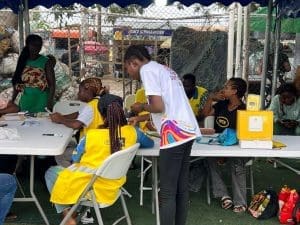
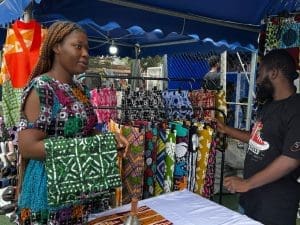
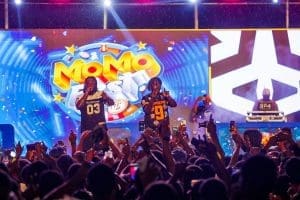
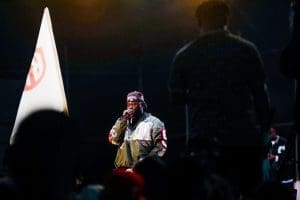
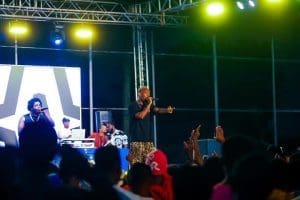
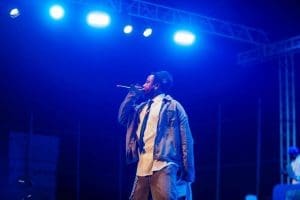



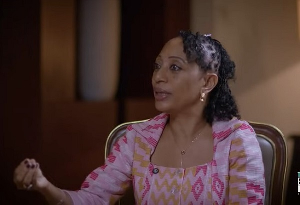


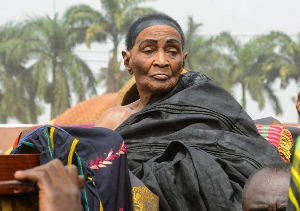


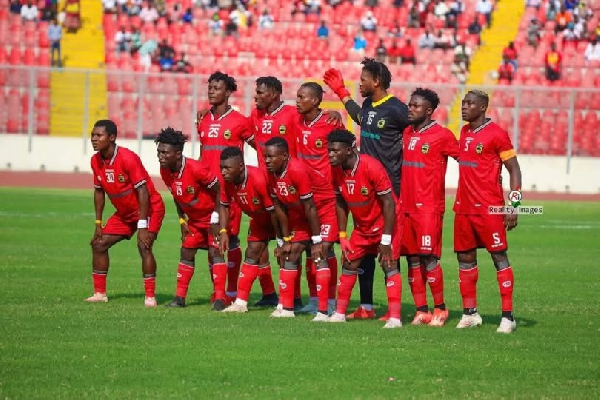

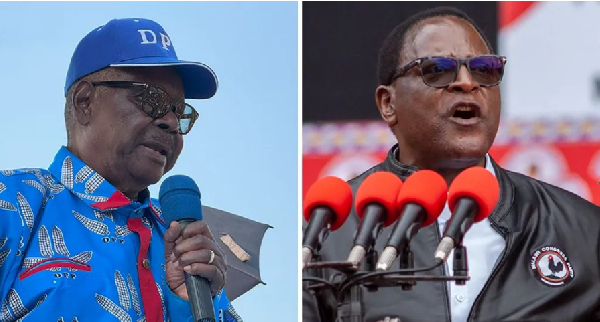
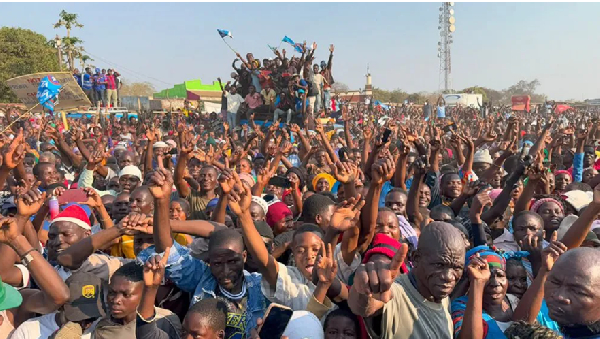 Supporters of opposition candidate Peter Mutharika argue that things were better when he was in State House