Société Générale Ghana has inaugurated a cutting-edge digital library powered entirely by solar energy at the Osu Presbyterian Cluster of Schools, marking a significant milestone in Ghana’s push toward sustainable educational technology infrastructure.
The initiative, developed in partnership with educational technology firm TECHAiDE and renewable energy specialist SolTedd Energy, represents a comprehensive approach to addressing multiple challenges facing Ghana’s educational sector, including unreliable electricity supply and limited access to digital learning resources.
At the inauguration ceremony held on the school premises, Société Générale Ghana Managing Director Ouzzani Hakim emphasized the project’s alignment with the bank’s Environmental, Social and Governance commitments. “This project is very special to us. It combines education, technology, and sustainability in a way that reflects our values as a bank,” Hakim stated during the ceremony.
The digital library features TECHAiDE’s flagship ASANKA platform, an innovative offline learning management system that provides access to educational content without requiring internet connectivity. ASANKA stands for “All Subjects and New Knowledge Access,” and functions as a digital repository filled with educational content based on the Ghana Education Service curriculum.
The technology addresses a critical gap in Ghana’s education system where Information and Communication Technology is a formal, examinable school subject, yet many schools lack adequate computer access or reliable internet connections. Recent deployments show ASANKA has been established in education labs across 12 regions in Ghana, training more than 1,900 teachers.
TECHAiDE representatives highlighted the platform’s offline capabilities during the inauguration, explaining that “the ASANKA is a low-cost, low-powered, durable offline learning management system that connects offline learners to local content for free by sharing learning content over Wi-Fi without accessing the internet”.
The system’s artificial intelligence-powered tools are specifically designed to support seamless learning aligned with Ghana Education Service curriculum requirements. The platform allows up to 25 users to access interactive lessons, videos, and quizzes simultaneously, enabling collaborative learning environments even in areas with limited technological infrastructure.
SolTedd Energy’s solar installation provides the renewable energy foundation for the project, featuring battery storage systems that ensure uninterrupted power supply to the digital library. Representatives from the company emphasized that reliable energy access is fundamental to sustained educational technology deployment in Ghana’s schools.
The solar power system addresses operational cost concerns while contributing to environmental sustainability through reduced carbon emissions. This approach aligns with growing recognition that sustainable energy solutions are essential for scaling educational technology initiatives across Ghana’s diverse geographical landscape.
Société Générale Ghana, formerly known as Société Générale-Social Security Bank, ranks as the seventh largest bank in Ghana with 45 networked branches and stock listed on the Ghana Stock Exchange. The institution’s involvement in educational initiatives reflects broader corporate social responsibility trends among Ghana’s major financial institutions.
The partnership model demonstrated at Osu Presbyterian Schools could serve as a template for similar initiatives across Ghana, where public-private collaborations are increasingly recognized as necessary for advancing educational infrastructure development. The combination of banking sector funding, educational technology innovation, and renewable energy solutions represents a comprehensive approach to addressing systemic challenges.
Educational technology deployment in Ghana faces persistent obstacles including inconsistent electricity supply, limited internet connectivity, and inadequate device availability. The ASANKA platform specifically addresses these challenges by enabling content sharing through Wi-Fi without internet requirements, while gathering analytics on user engagement for educational strategy optimization.
For Osu Presbyterian Cluster of Schools, the digital library represents access to educational resources previously unavailable due to infrastructure limitations. The offline functionality ensures that learning can continue regardless of internet connectivity issues that frequently affect educational institutions across Ghana.
The project’s sustainability focus extends beyond environmental considerations to include long-term educational impact. Recent collaborations between TECHAiDE and the Centre for National Distance Learning and Open Schooling demonstrate growing institutional support for digital learning platforms designed specifically for Ghanaian educational contexts.
As Ghana continues expanding digital education initiatives, projects like the Osu Presbyterian digital library provide valuable models for integrating sustainability principles with educational technology deployment. The success of this collaboration between Société Générale Ghana, TECHAiDE, and SolTedd Energy may influence similar initiatives across West Africa’s educational landscape.
The inaugural ceremony concluded with commitments from all partners to monitor the library’s impact on student learning outcomes and explore opportunities for replicating the model at additional schools throughout Ghana’s Presbyterian education network and beyond.
The secondary bond market activity jumped 284.53% week-on-week to GH¢3.47 billion from GH¢904 million the previous week.
According to trading results, offshore investors dominated the buy side while local players remained cautious.
Activity was concentrated in the short to medium tenors led by the February 2027 maturity at GH¢1.14 billion in volumes traded.
The 2027–2030 bond accounted for 78% of trades at a weighted average Yield-To-Maturity of 16.35%.
Similarly, the 2031-2038 papers comprised 17% of trades at a weighted YTM of 16.30%.
Analysts expect market momentum to persist as investors position themselves ahead of the potential policy rate cut at the upcoming Monetary Policy Committee meeting.
DISCLAIMER: The Views, Comments, Opinions, Contributions and Statements made by Readers and Contributors on this platform do not necessarily represent the views or policy of Multimedia Group Limited.
DISCLAIMER: The Views, Comments, Opinions, Contributions and Statements made by Readers and Contributors on this platform do not necessarily represent the views or policy of Multimedia Group Limited.
Goldstar Air’s Universal Aircraft Maintenance Hub, as portrayed in the picture
above, will be the largest ever established to unlock Africa’s aviation potential,
doubling the current annual air passenger traffic of 161 million across the
continent. By connecting over 121 airports and fostering a free trade market,
this hub will drive efficiency and growth in the aviation industry in Ghana and
beyond.
Private international airline Goldstar Air, Ghanaian and United States registered company with an issued Air Carrier Licence (ACL/N-SCH No. 0239) from the Ghana Civil Aviation Authority (GCAA) and no liabilities as of today, has secured incentives from major airports worldwide. The airline, as an economic tool, is authorized by its Licence to operate passenger and cargo flights across West Africa and intercontinental routes, reinforcing Ghana’s global aviation presence, with a grand vision to establish a 24-hour Universal Aircraft Maintenance Hub at Tamale International Airport (TML), to tap into the global aviation income stream of $3.5 Trillion.
The airline’s vision for Maintenance, Repair, and Overhaul (MRO) extends far beyond servicing aircraft; it is a holistic development strategy designed to empower Ghana’s aviation sector, unlock economic opportunities for its citizens, and establish a globally respected center of excellence in aircraft maintenance. The project will be named after the National Chief Imam of Ghana, Sheikh Dr. Osman Nuhu Sharubutu, who is expected to lead the sod-cutting ceremony and commission the project upon completion. This will mark a historic milestone, carrying with it the promise of technological advancement, employment generation, skills transfer, regional development, and achieving the airline’s “Project $1 Trillion” foreign reserves.
Goldstar Air has sought for international intervention to look into the issuance of the airline’s wide-body aircraft Safety Certificate (AOC) and waiting for the outcome, as the process is above halfway and it has been over eight years that the Ghana Civil Aviation Authority is not willing to authorize a qualified third party to complete the remaining phases of the certification process. Completion of this certification will enable the change of the wide-body aircraft nationality, allowing it to be registered under the Ghana Registry (State of Registry) and for Goldstar Air to commence operations. Typically, aircraft are registered in the jurisdiction where the carrier is resident or based and may enjoy preferential rights or privileges as a flag carrier for international operations.
Tamale, long recognized as the commercial and administrative heartbeat of Northern Ghana, is strategically positioned for the airline’s maintenance hub to serve not only the country but also the wider African region, where the demand for world-class aviation maintenance facilities is rapidly growing. This development will embody a broader national ambition of transforming the country into a hub of economic activity, job creation, and innovation. Therefore, there is no need to delay the issuance of Goldstar Air’s Safety Certificate, which will help kickstart the 24-hour economy in Tamale and create over two million direct and indirect job opportunities for Ghanaians. The Ghanaian youth cannot wait any longer in the ghettos; they need their well-paying jobs now.
The World Bank says Ghana’s rapidly growing youth population has the potential to significantly boost the country’s economy, but only if sufficient job opportunities are created. The Bank recommends that a key focus should be on youth and their transition from school to work, ensuring they acquire the skills needed for a modern economy to provide strong employment opportunities, essential for realizing the demographic dividend.
Goldstar Air, the wings of Ghana and belly of America, through its Universal Aircraft Maintenance Hub in Tamale, will represent more than just a facility; it will be a statement of Ghana’s readiness to compete on the global stage and tap into the projected African Gross Domestic Product (GDP) of $16.3 Trillion by the year 2050. The aviation industry has always depended heavily on Maintenance, Repair, and Overhaul (MRO) services, which ensure the safety, reliability, and operational efficiency of aircraft fleets. For decades, African airlines and aviation operators have had to outsource MRO services to facilities in Europe, the Middle East, or Asia, often incurring significant costs in terms of logistics, foreign exchange outflow, and downtime. Therefore, the establishment of the airline’s maintenance hub in Tamale will directly address these challenges.
Situating such a 24-hour universal hub in Tamale by Goldstar Air, directly addresses the challenges in aircraft maintenance and repositions Ghana as a leader in providing solutions for Africa’s aviation needs. The hub is envisioned to handle multiple classes of aircraft, ranging from fixed-wing and rotary-wing aircraft to narrow-body regional planes and wide-body international jets. This will enable not only Goldstar Air’s fleet to be serviced locally but also attract regional and global airlines to Ghana for their maintenance requirements. This paradigm shift will help retain capital within the country, reduce operational inefficiencies for airlines across Africa, and build Ghana’s reputation as a trusted MRO center.
The heart of this initiative lies the understanding that aviation is not just about aircraft transporting passengers or cargo; it is an ecosystem that thrives on highly specialized technical support services. The maintenance hub will require a highly skilled workforce, opening vast opportunities for Ghanaian youth in fields such as aerospace engineering, avionics, materials science, hydraulics, safety systems, and advanced diagnostic technologies. The airline’s 24-hour maintenance hub will also serve as a catalyst for the establishment of technical training institutes, aviation schools, and apprenticeship programs in Tamale and other parts of Ghana, ensuring that local talent is developed to meet the stringent standards of global aviation safety and compliance.
Goldstar Air’s 24-hour service through its maintenance facility in Tamale will not only create immediate job opportunities but will also ensure long-term skills development, that will enable Ghanaian engineers and technicians to compete with their counterparts globally. This vision aligns with the broader national agenda of empowering the youth, reducing unemployment, and creating a sustainable knowledge-driven economy. Over time, the Northern Region will no longer be viewed solely as an agrarian area but also as a rising industrial and technological hub, with the aviation industry at its forefront. The aviation industry stands as one of the most dynamic and influential sectors shaping global trade, tourism, and connectivity.
According to the Chairman and Chief Executive Officer of Goldstar Air, Eric Bannerman, the airline will acquire certification from the United States Federal Aviation Administration (FAA), the European Union Aviation Safety Agency (EASA), the Ghana Civil Aviation Authority (GCAA), the International Air Transport Association (IATA), the IATA Operational Safety Audit (IOSA), and Authorized Training Center status. Goldstar Air relationship with Boeing Company has committed the airline to prioritize the Boeing series, especially the Boeing 787 Dreamliners and the 777X variants, which are ideal for the airline’s intercontinental routes from the center of the world. Goldstar Air looks forward to placing aircraft orders and acquiring General Electric (GE) equipment soon. This will lead to greater productivity, job creation, and increased revenue for Boeing while contributing to the overall economic growth of the United States. Goldstar Air is committed to the aerospace business and not just purchasing airplanes or establishing an airline but also ensuring proper long-term maintenance of its fleet for the safety and security of passengers.
Goldstar Air’s training school will upskill personnel to remain sharp, fine-tune their expertise, and maintain unwavering calmness and composure in all situations, from routine to exceptional. This training will be more than a requirement; it will be an achievement reserved for the sky’s most elite. It will meet all aviation-related courses, whether initial, recurrent, advanced, or special operations. The airline will operate with an emphasis on safety, reliability, convenience, flexibility, and security.
Boeing Company views Africa as one of the most promising markets in terms of economic and business growth. Blessed with vast natural resources and a young population, Africa offers significant opportunities for the expansion of the aerospace industry. Boeing’s partnership with Africa goes far beyond selling and supporting airplanes; it also includes regional safety and connectivity initiatives, industrial partnerships, sustainability, and community outreach.
Boeing has been a cornerstone of Africa’s aviation sector for over 75 years, with more than 60 airline customers operating around 500 Boeing airplanes across the continent. The flexibility and efficiency of models like the 787 Dreamliner and 737 MAX have significantly contributed to the growth of the African airline fleet. Boeing forecasts a demand for 1,205 new airplane deliveries and 76,000 aviation personnel in Africa over the next 20 years, highlighting the continent’s potential for significant growth in passenger and cargo traffic.
The airline is also in advanced talks with the Michigan Aerospace Manufacturers Association (MAMA) for collaboration in Aviation services/Aerospace, Sales, and Manufacturing, with the aim of becoming their sole representative for parts distribution in Africa. The Association’s vision is to promote Michigan’s aerospace manufacturing industry by encouraging innovation and productivity, facilitating job growth, increasing public understanding of the industry, and contributing to the state’s economy. Additionally, the Michigan Aerospace Manufacturers Association is committed to enhancing Science, Technology, Engineering, and Mathematics (STEM) learning by inspiring students and creating new careers in aerospace for future generations.
Goldstar Air, the wings of Ghana and the belly of America, has initially secured the architectural design and building order to construct a 250 x 250 x 75 Maintenance, Repair, and Overhaul (MRO) facility at Tamale International Airport. The Tamale area offers an ideal location for the maintenance hub because of its desert climate, low humidity, sparse rainfall, and high altitude, all of which minimize rust and corrosion of aircraft. The vast land around the airport will also be good for parking a large number of aircraft awaiting checks or overhauls. Unlike Accra or Kumasi, Tamale does not experience severe humidity problems. Tamale International Airport (TML) is the third-busiest airport in Ghana, after Kotoka International Airport (KIA) and Kumasi International Airport (KMS), with a runway measuring 3,400 meters (11,154 feet).
Ghana Airports Company Limited (GACL) is awaiting a clearance letter from the Ghana Civil Aviation Authority (GCAA) to allocate Goldstar Air the proposed land at Tamale International Airport for the commencement of the Maintenance Hub construction, thereby bridging the north-south gap. Economically, the Universal Aircraft Maintenance Hub is set to transform Tamale and the Northern Region. For decades, the northern part of Ghana has faced developmental imbalances compared to the south, with limited industrial investments and fewer high-paying job opportunities.
The most recent Auditor-General’s Report relating to Tamale International Airport is the Report on the Public Accounts of Ghana: Public Boards, Corporations, and Other Statutory Institutions for the period ending December 31, 2023, published in June 2024. This report identified Tamale International Airport, along with other regional airports, as commercially unviable, failing to generate sufficient revenue to cover operational costs. The Auditor-General recommended that Ghana Airports Company Limited identify potential concessionaires to lease idle spaces in order to improve revenue generation from these underperforming airports.
Goldstar Air’s decision to situate such a critical 24-hour facility in Tamale is a deliberate effort to decentralize development, ensuring that the benefits of industrialization and aviation growth are not concentrated solely in Accra or Kumasi. The hub will attract ancillary businesses such as spare parts suppliers, aviation logistics companies, fuel providers, hospitality services, and real estate developers to the region, creating a multiplier effect on the local economy. Local farmers and suppliers will also benefit indirectly, as increased human activity and international traffic in Tamale will spur demand for food, accommodation, and other services.
Beyond economics and employment, the Universal Aircraft Maintenance Hub will carry strategic geopolitical significance. Aviation infrastructure is a critical tool of soft power and global integration. Countries that dominate the aviation value chain, from aircraft manufacturing to maintenance, command influence in global trade negotiations and attract foreign investment. By establishing this hub, Goldstar Air is ensuring that Ghana asserts itself as a strategic partner in global aviation, not merely as a passenger or cargo market but as a provider of advanced solutions. This move will also elevate Ghana’s diplomatic profile, attracting partnerships with major global aviation firms that may seek to collaborate on training, technology transfer, or spare parts manufacturing. The Tamale facility will serve as a foundation for Ghana to expand further into aerospace manufacturing, drone technology, and even satellite engineering in the long run, making it a cornerstone of Ghana’s broader technological ambitions.
Socially, the hub symbolizes inclusion, empowerment, and national unity. By investing in Tamale, Goldstar Air is sending a strong signal that development in Ghana must be equitable, spanning every corner of the country. For young people in the Northern Region who may have previously felt marginalized or excluded from national development conversations, the facility represents hope and opportunity. It will assure them that they, too, have a stake in Ghana’s aviation future. Families will witness their children employed in well-paying, globally competitive jobs without having to migrate to Accra or abroad. This will reduce rural-urban migration, strengthen local economies, and enhance community development. Furthermore, the presence of such an advanced facility will inspire local schools and universities to align their curricula with aviation and engineering disciplines, ensuring that a pipeline of talent is consistently available to sustain the hub’s operations.
The environmental dimension is equally crucial. As global aviation increasingly comes under scrutiny for its environmental impact, maintenance facilities have an essential role to play in enhancing aircraft efficiency, reducing emissions, and supporting the transition to greener aviation technologies. The Tamale hub will incorporate eco-friendly practices, including advanced waste management systems, renewable energy integration, and technologies that improve aircraft fuel efficiency. Goldstar Air’s commitment to sustainability will align with global climate goals, positioning Ghana as a responsible player in the aviation industry. Moreover, the use of renewable energy, such as solar power, to power sections of the facility will reflect the airline’s commitment to sustainable industrialization. This eco-conscious approach will not only win international recognition but also assure local communities that industrial growth will not come at the cost of environmental degradation.
The establishment of the 24-hour Universal Aircraft Maintenance Hub will bolster national security. Aviation safety and security are directly tied to maintenance standards. By having world-class facilities in Tamale, Goldstar Air will be better equipped to ensure that its own aircraft fleets, including government, military, and humanitarian aircraft, are maintained locally under secure conditions. This will reduce dependency on foreign facilities and strengthens national sovereignty. It will also ensure that during emergencies or crises, Goldstar Air has the internal capacity to keep its aircraft operational without delays associated with overseas maintenance. Tamale’s geographical location further adds to its strategic importance, as it is well-positioned to service not only the airline’s fleets but also those from neighboring Sahel countries and other African nations, thereby making Ghana a partner in regional stability and humanitarian operations.
The ripple effects of this hub extend to the cultural and tourism sectors as well. Increased aviation activity in Tamale will attract international visitors, investors, and professionals, creating opportunities for cultural exchange and tourism growth. Tamale and the broader Northern Region, rich with cultural heritage, festivals, and historical landmarks, will see increased visibility and patronage. This inflow of people will drive demand for hotels, restaurants, tour operators, and cultural events, stimulating the creative economy. Local artisans, musicians, and performers will find new audiences, while international visitors will leave with a deeper appreciation of Ghana’s northern heritage.
The 24-hour Universal Aircraft Maintenance Hub in Tamale is, therefore, not merely an aviation project but a national transformation agenda. It encapsulates the essence of innovation, inclusion, and ambition. Goldstar Air, through this initiative, is not just building infrastructure but laying the foundation for generational change. Young people trained and employed at this facility will acquire skills that are transferable across industries and borders, making them global citizens while still contributing to Ghana’s development. The decision to locate the hub in Tamale is also a symbolic rebalancing of Ghana’s developmental priorities, ensuring that no region is left behind in the pursuit of national progress.
Mr. Bannerman emphasized that the aviation industry supports 87.7 million jobs worldwide and contributes $3.5 Trillion (4.1%) to the world’s Gross Domestic Product (GDP). If aviation were a country, it would rank 17th in size by GDP, equivalent to the economies of Indonesia and the Netherlands. In 2024, the tourism industry also contributed $10.9 Trillion (10%) of the world’s GDP. The African continent is currently undergoing major transitions across technology, energy, infrastructure, agriculture, and digital finance. It is projected to be the 8th largest global economy by 2050 and home to a quarter of the world’s population, about 2.5 billion people, with a projected purchasing power of $16.3 Trillion.
The aviation industry’s dynamic and safety-critical distinctions between maintenance, repair, and overhaul (MRO) are paramount. While closely related, these processes serve different purposes in maintaining the airworthiness of aircraft. Maintenance keeps aircraft in operational condition through routine inspections and minor component replacements. Repair addresses specific issues that arise unexpectedly, while overhaul involves comprehensively rebuilding components or systems to extend their working life.
Maintenance is the routine and planned work that keeps an aircraft operational. It encompasses a wide range of tasks, from regular inspections to minor component replacements, aimed at sustaining the airworthiness of aircraft. Maintenance activities can be categorized into two main types: line maintenance and base maintenance.
Line maintenance is conducted daily between flights, often at airport gates. It includes visual inspections, fluid level checks, tire replacements, and minor repairs that can be completed quickly. These activities are essential for ensuring an aircraft is safe to fly and meets regulatory standards.
Base maintenance, on the other hand, involves more comprehensive work and is carried out at dedicated maintenance facilities. This type of maintenance includes in-depth inspections, repairs, and component replacements that cannot be easily performed in the limited time available during line maintenance. Base maintenance is typically conducted at scheduled intervals, often based on the number of flight hours or cycles an aircraft has completed.
Repair refers to the process of fixing specific issues or defects that have been identified during maintenance inspections. Unlike routine maintenance, which is often planned and systematic, repairs are reactive and aimed at addressing unforeseen problems. Repairs can range from relatively minor fixes, such as replacing a damaged seat cover or a malfunctioning gauge, to more complex tasks, such as repairing structural damage or fixing avionics systems.
The key distinction between maintenance and repair lies in the intent and scope of the work. Maintenance aims to prevent issues by keeping all systems within established parameters, whereas repairs focus on addressing existing problems to restore the aircraft’s proper functioning.
Overhaul represents the most extensive level of maintenance, involving the comprehensive inspection, disassembly, and rebuilding of aircraft components or entire systems. An overhaul aims to restore components to a “like-new” condition, extending their operational life and ensuring continued reliability. Overhauls are often performed at specific intervals determined by manufacturers, regulatory authorities, or the accumulated flight hours or cycles.
Overhauls can encompass various aircraft systems, they are most common for engines. Engine overhaul, also known as engine rebuild, involves disassembling the engine, inspecting all components, replacing worn or damaged parts, reassembling the engine, and testing it to ensure optimal performance. Overhauls significantly extend the lifespan of expensive components and systems, providing a cost-effective alternative to outright replacement.
Goldstar Air will offer scholarships to underprivileged individuals in Northern Ghana, providing them with on-the-job training so they can become part of the next generation of aviation professionals. The airline will provide a comprehensive range of high-quality FAA- and EASA-approved aviation training courseware and reference materials that will be recognized worldwide for decades. The training school will adopt an application-oriented approach, incorporating real-world scenarios and practical examples to help students understand not just the facts required to pass a test, but also the underlying principles and applications of aeronautical concepts.
There are two primary pathways to obtaining the training and experience required to become an FAA-certificated Airframe and/or Powerplant Mechanic. The first is through academy training at an FAA-certificated Aviation Maintenance Technician School (AMTS). The second is through on-the-job training (OJT), which provides practical experience with the procedures, practices, materials, tools, and equipment generally used in constructing, maintaining, or modifying airframes or powerplants appropriate to the rating sought.
Once the on-the-job experience requirements are met, there are commercially available Airframe and Powerplant refresher courses and prep courses that will help candidates prepare to pass the airman knowledge written, oral, and practical tests. On-the-job training is typically the most cost-effective way to gain the required experience. It is important to consistently document all OJT (On-the-job) activities. The FAA recommends candidates record their experience in an Aviation Maintenance Technician (AMT) log, ensuring that each entry includes details such as the maintenance task performed, time spent on each task, and validation by a certificated Airframe and/or Powerplant Technician.
The youth constitute a vital resource for growth and development if they are gainfully and productively engaged. However, if this potential is poorly managed, it could become a source of civil conflict and social tension. Disaffected youth without access to education, employment, or the prospect of a meaningful future may fuel instability, migration, radicalization, and violent conflict. The underutilization of young people’s skills not only exposes them to social exclusion but also perpetuates intergenerational poverty. For these reasons, tackling youth unemployment is a key priority on Goldstar Air’s development agenda.
Recent United Nations Development Programme (UNDP) study analyzing the drivers of vulnerability to violent extremism and radicalization in the five northern regions of Ghana revealed youth unemployment as the most common factor. The report, titled Vulnerability Assessment on the Threats of Violent Extremism and Radicalization in Northern Regions of Ghana, calls for targeted interventions to address the persistent socio-economic challenges and development gaps that have led to a sense of exclusion, marginalization, and frustration among largely unemployed youth. Goldstar Air’s investment in training facilities will equip young Ghanaians with the skills required to pursue careers as pilots, engineers, flight attendants, air traffic controllers, airport management professionals and others. By prioritizing workforce development, the airline aims to build a sustainable talent pipeline that will support the long-term growth of Ghana’s aviation industry.
Ultimately, the establishment of Goldstar Air’s 24-hour Universal Aircraft Maintenance Hub will elevate Ghana’s aviation sector to unprecedented heights, driving economic growth, regional integration, and global recognition. It reflects a bold vision of self-reliance, resilience, and readiness to embrace the future of aviation. Goldstar Air’s foresight in conceptualizing this hub demonstrates a deep understanding of the interconnectedness of aviation with all aspects of national development, from jobs and skills to security, environment, and culture. The hub will not only ensure that aircraft are maintained but will also ensure that Ghana’s aspirations as a nation are sustained, propelled, and continuously elevated on the wings of innovation and determination.
Goldstar Air, the wings of Ghana and the belly of America, is ambitious in providing scheduled and non-scheduled passenger and cargo air services, initially to North America, Europe, Asia, the Middle East, and Africa. The airline has selected Washington, Rhode Island, London, Dubai, Guangzhou, Toronto, Milan, Hamburg, Madrid, Rome, Düsseldorf, Lagos, Freetown, Banjul, Conakry, Dakar, Monrovia, and Abidjan as major originating cities for its initial operations from Ghana. Direct, non-stop services will be deployed where necessary, positioning Ghana as a critical hub for intra-African trade and commerce.
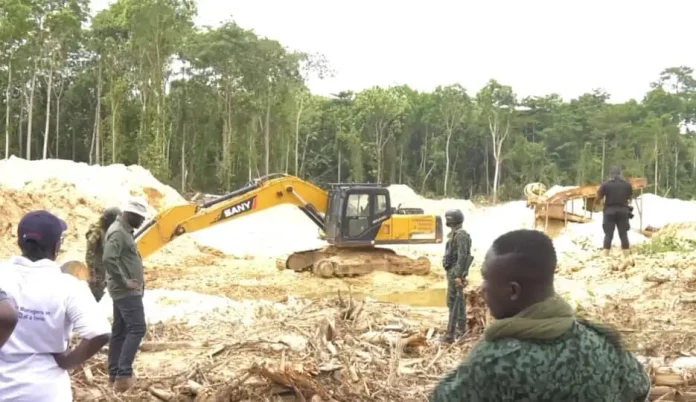
Ghana’s government has unveiled a comprehensive military strategy targeting illegal mining operations, with permanent security forces to be stationed across all 44 areas threatened by galamsey, marking a significant departure from previous short-term enforcement efforts.
Minister of State for Government Communications Felix Kwakye Ofosu disclosed the enhanced approach during a Channel One TV interview on Tuesday, September 16, emphasizing the government’s commitment to sustained action against the environmental crisis that has plagued Ghana’s mining sector for decades.
The new deployment strategy represents a fundamental shift from historical patterns where security forces would conduct short-term operations before withdrawing, allowing illegal miners to resume activities shortly after enforcement teams departed affected areas.
Beyond terrestrial mining sites, the permanent military presence will extend to Ghana’s water bodies, which have suffered extensive contamination from illegal mining operations. The comprehensive coverage reflects growing recognition that galamsey has evolved from isolated incidents into a systematic threat requiring sustained intervention.
This announcement comes amid mounting pressure from environmental groups and civil society organizations who have demanded decisive government action. Recent months have witnessed escalating public demonstrations, including threats of nationwide strikes by labor unions frustrated with what they perceive as inadequate responses to the environmental emergency.
The timing of this military deployment coincides with over 100 armed military personnel already deployed to various water bodies in October 2024, suggesting the government is expanding rather than initiating military involvement in anti-galamsey operations.
However, the permanent deployment approach has drawn constitutional concerns from legal experts who question the appropriateness of sustained military presence in civilian areas. Some consultants have characterized the military deployment as potentially unconstitutional, raising questions about the legal framework governing such extended security operations.
President John Dramani Mahama has maintained that declaring a state of emergency remains unnecessary at this stage, though recent statements indicate this option has not been ruled out entirely. This measured approach reflects the administration’s attempt to balance environmental urgency with constitutional considerations.
The effectiveness of military intervention in combating galamsey remains contested, with illegal miners resuming pollution activities on the Birim River just four days after military action in October. This pattern of resumed operations following enforcement raids has highlighted the persistence of organized illegal mining networks.
Ghana’s illegal mining crisis has intensified alongside gold prices reaching close to $3,000 per gram in late 2024, creating powerful economic incentives that have attracted increased participation in galamsey operations despite environmental and legal risks.
The government’s new strategy acknowledges that previous military operations, including Operation Halt, Operation Vanguard, and Operation Flush Out, achieved only temporary disruption of illegal mining activities. The permanent deployment model aims to establish continuous deterrence rather than cyclical enforcement.
Environmental advocacy groups, while welcoming increased government attention to the crisis, have questioned whether military deployment alone addresses the underlying economic and regulatory factors driving illegal mining. Eco-Conscious Citizens has called for more sustainable, long-term solutions beyond security measures.
The permanent military presence initiative forms part of broader government efforts to protect Ghana’s natural resources, though specific timelines and operational details remain undisclosed. The success of this approach will likely depend on sustained political commitment and coordination between military personnel and civilian mining regulatory authorities.
As Ghana grapples with balancing economic opportunities in its mining sector against environmental protection, the permanent deployment strategy represents the government’s most ambitious anti-galamsey initiative to date, with implications extending beyond immediate enforcement to the country’s long-term environmental sustainability and resource governance.
An IEA poll has revealed that most Ghanaians want MMDCEs elected without political party involvement
A latest nationwide poll by the Institute of Economic Affairs (IEA) has revealed that majority of Ghanaians prefer Metropolitan, Municipal and District Chief Executives (MMDCEs) to be elected on a non-partisan basis rather than appointed.
In a statement issued by the think tank on September 16, 2025, it said the poll which was conducted between August 15 and 26, 2025, covered all 16 regions and engaged citizens aged 18 years and above.
President Mahama releases first list of MMDCEs
“The results showed a preference for the non-partisan election of MMDCEs, with a significant majority of 63.5% of respondents indicating their support for non-partisan elections. A minority of 36.5%, however, indicated their support for partisan elections (34.7%) or other forms of election (1.8%). This majority preference for the non-partisan election of MMDCEs seems to suggest a lack of trust for political parties in local level election,” it noted.
The poll also found that 69.6% of Ghanaians are aware of how MMDCEs currently get into office, a process dominated by presidential appointments.
Sanitation to determine MMDCEs’ performance – Local Government Minister
“The results show a high awareness of the process with 69.6% of respondents indicating that they know how MMDCEs get into office. On the contrary, 30.4% of respondents indicated that they did not know how MMDCEs get into office under the current system. Despite this high level of awareness, the 30.4% respondents who lack knowledge on the current process is significant enough to require civic education on the subject,” it said.
The IEA further stated that the findings indicate that, most of the people who polled seem to lack confidence in political parties when it comes to local level elections.
Read the full statement below :
JKB/VPO
Will Ghana pass the Anti-Witchcraft Bill? Find out in the latest episode of The Lowdown on GhanaWeb TV in this conversation with Amnesty International:
A Kumasi Technical University lecturer has made unsubstantiated allegations against the National Democratic Congress regarding foreign involvement in illegal mining operations, highlighting the increasingly politicized nature of Ghana’s galamsey discourse ahead of electoral periods.
Dr. Afriyie, speaking on Wontumi TV, claimed without providing evidence that the opposition party has allegedly imported foreign nationals to engage in illegal mining activities in Ghana’s water bodies. The academic suggested the NDC’s environmental stance on galamsey serves political rather than conservation purposes.
The lecturer questioned the opposition’s commitment to addressing illegal mining, arguing that if the NDC genuinely considered galamsey a national security threat, they would have declared a state of emergency during their previous administration. This criticism comes as political parties increasingly use environmental issues as campaign talking points.
According to Dr. Afriyie’s statements, opposition leaders are allegedly exploiting galamsey operations to recoup financial losses from the past eight years, while showing insufficient concern for long-term environmental consequences. These claims remain unverified and reflect broader political tensions surrounding resource management policies.
The academic also suggested the NDC would be unlikely to pursue complete prohibition of illegal mining due to political calculations in constituencies where mining activities are economically significant. This assessment reflects the complex relationship between electoral politics and environmental regulation in mining communities.
These allegations emerge within a broader pattern of inter-party accusations regarding galamsey responsibility. Similar claims have been made by NPP legislators alleging NDC involvement in importing foreign nationals for illegal mining, while the NDC has accused the current administration of “grand deception” in its anti-galamsey efforts.
The politicization of galamsey discourse has complicated efforts to address what environmental groups consistently identify as a genuine ecological crisis. Regional NDC branches have characterized such allegations as “malicious fabrications” and “baseless accusations” from political opponents.
Political observers note that galamsey has become a significant electoral issue, with both major parties proposing different approaches to addressing illegal mining. The NDC has proposed facilitating mining equipment pools in small-scale mining districts, while the NPP focuses on utilizing reclamation funds for land restoration.
However, environmental advocacy groups have expressed frustration with the partisan approach to what they consider a non-political environmental emergency. The Ghana Coalition Against Galamsey has noted involvement of political figures from multiple parties in illegal mining operations, suggesting the issue transcends party lines.
The absence of concrete evidence supporting claims about foreign national importation raises questions about the substantive basis for such serious allegations. Political analysts suggest these statements may reflect campaign positioning rather than evidence-based policy discourse.
Dr. Afriyie’s comments on Wontumi TV represent part of ongoing political commentary by the academic, who has previously questioned various opposition policies including economic proposals and leadership qualifications. His statements reflect broader tensions between academic commentary and political advocacy in Ghana’s public discourse.
The timing of these allegations coincides with increased public pressure on all political parties to address galamsey effectively, as environmental groups threaten industrial action over inadequate government responses to the mining crisis.
As Ghana approaches electoral periods, the politicization of environmental issues like galamsey may complicate evidence-based policy development. Experts emphasize the need for substantiated, non-partisan approaches to addressing illegal mining regardless of which party holds power.
The academic’s allegations highlight how environmental crises can become entangled with electoral politics, potentially undermining collaborative efforts needed to address complex challenges like illegal mining that require sustained, cross-party commitment to effective solutions.
Without substantiating evidence, such claims risk contributing to political polarization rather than constructive dialogue about practical approaches to Ghana’s persistent illegal mining challenges.
Ghanaian investigative journalist Manasseh Azure Awuni has weighed in on the government’s newly launched Big Push infrastructure programme, cautioning that corruption could derail its potential impact.
In a Facebook post sighted by MyNewsGh, Manasseh suggested the initiative could deliver transformative results if implemented with transparency.
The Deputy Minister for Education, Dr. Clement Abas Apaak, has warned that persistent examination malpractices risk undermining the credibility of certificates issued by the West African Examinations Council (WAEC) on the global stage.
He expressed concern that such practices, if not checked, could erode trust in Ghana’s educational qualifications and tarnish the country’s image.
Dr. Apaak raised the issue during his inspection tour of examination centres at Kumasi Academy, St. Louis Senior High School, and Kwame Nkrumah University of Science and Technology (KNUST) Senior High School, where the West African Senior School Certificate Examination (WASSCE) is currently ongoing in the Ashanti Region.
According to him, malpractice not only compromises fairness in the assessment process but also threatens the integrity of the nation’s human resource development.
The Deputy Minister cautioned that any stakeholder, including officials of the Ghana Education Service (GES), found to be complicit in examination malpractices would face the full rigours of the law.
The Ghana Stock Exchange (GSE) has reaffirmed its commitment to education and community development with a major donation to the Dzorwulu Special School.
The Exchange refurbished the school’s ICT Centre and donated brand-new computers at a total project cost of more than GHS157,000.
As part of the initiative, GSE staff also contributed groceries and bottled water to support the welfare of the students.
Speaking at the presentation, Ms. Abena Amoah, Managing Director of the Ghana Stock Exchange, highlighted the Exchange’s focus on inclusion and empowerment through education.
“At the GSE, we believe education is a powerful tool for empowerment, and no child should be left behind. By investing in the ICT Centre of the Dzorwulu Special School, we are ensuring that students with special needs have access to the resources and skills required to thrive in today’s digital world. This project also reflects our commitment to social responsibility and inclusive development,” she said.
The Headmaster of the school, Mr. Frederick Tetteh, expressed appreciation on behalf of the students and staff.
“We are deeply grateful to the Ghana Stock Exchange for this generous support. The refurbishment of our ICT Centre and the donation of computers will go a long way in transforming the way our students learn and interact with technology. The groceries and bottled water from staff also demonstrate genuine care for the wellbeing of our children,” he said.
The initiative underscores the GSE’s dedication to ensuring equal opportunities in education, especially for children with special needs. Beyond its role as a financial market operator, the Exchange continues to prioritize projects that impact lives and support national development.
Ghanaian TikToker Oheneba Jude has won over his followers after he graced the late Asantehemaa’s funeral
The popular content creator grabbed attention with his dance moves at the one-week-long funeral rites
Some social media users have commented on Oheneba Jude’s trending video, which he posted on TikTok
Ghanaian TikToker Oheneba Jude has been spotted at the late Nana Konadu Yiadom III, Asantehemaa’s one-week-long funeral rites.
The young influencers have joined top personalities, influencers and politicians who have travelled from other regions and beyond Ghana to commiserate with the Asantehene Otumfuo Osei Tutu II.
Oheneba Jude shows off his dance moves at the late Asantehemaa’s funeral at the Manhyia Palace. Photo credit: @ohenebajude. Source: Instagram
Oheneba Jude shows off kete dance moves
The food content creator stole the spotlight in a black customised ensemble to mourn the late Asantehemaa.
The host of the Edziban cooking show arrived at the Manhyia Palace in grand style, rocking his funeral outfit and designer sunglasses.
Oheneba Jude styled his look with a black side bag to accessorise his look and keep his essentials.
In a trending video which has gone viral, the TikToker showed off his kete dance moves as the all-female popular Kokofu cultural band performed and paid their last respect to the late Asantehemaa.
Many people on TikTok have applauded Oheneba Jude for adhering to the Ashanti culture and traditions.
Oheneba Jude rocks colourful kente and accessories for his photoshoot. Photo credit: @ohenebajude. Source: TikTok
Oheneba Jude attends Asantehemaa’s funeral
Ghanaian TikToker Oheneba Jude showcased his unique kete dance moves at the grand durbar on the first day of the late Asantehemaa’s funeral. YEN.com.gh has compiled some reactions below:
Kweku Victor stated:
“After this dance, we all know what going to happen 🤣🤣🤣.”
Kofibossman_jnr
“By force dance paaaaa 😂😂😂.”
yawcousins
“Because of food oo. Piaaaaaaw 🥰👏👏.”
avatar stated:
“Does he still work at Onua TV for the Edziban program don’t see his videos nowadays.”
Yaa ampomaa stated:
“Aie Jude asem no ay3 critical 😂.”
Adwoa yeboah stated:
“Owie nas3 mo a’ma no banku adi aa😅😅😅.”
Lvi stated:
“Eiiii Jude. They better get his foods ready ooo😂😂😂.”
Mispee stated:
“Well done bro Jude 🥰🥰🥰🥰.”
MONEY GO COME stated:
“Nhwehwenimu paaa ni every program you go fi enter there eiii.”
The TikTok video is below:
Oheneba Jude breaks down over Osanju’s death
Oheneba Jude couldn’t keep calm as he confirmed the passing of his friend Elvis Osanju, who battled with leukaemia for some years.
He posted a video of himself weeping after he heard the news of his friend’s demise on September 1, 2025.
Oheneba Jude was present to support the late Osanju when he lost his mother just three months before his death.
Ghanaian actress Felicity Nana Ama McBrown and Oheneba Jude have assured fans of a befitting burial for the late content creator who inspired many with his funny videos.
The TikTok video is below:
Oheneba Jude insults an air hostess
Earlier, YEN.com.gh wrote about Oheneba Jude, who insulted an air hostess for serving her an unpalatable meal.
The TikToker travelled to Dubai for the first time to enjoy his holidays after he rose to the limelight.
Some social media users blasted him for disrespecting the air hostess on TikTok.
Nigeria’s finance ministry has ordered the immediate suspension of a levy on all imported goods, which companies had said would raise the cost of doing business and crimp economic recovery efforts.
Finance Minister Wale Edun said in a directive issued late on Monday that the 4% Free on Board (FOB) levy, introduced by the Nigeria Customs Service (NCS) last month, should be suspended to address the concerns raised by businesses.
“Following extensive consultations with industry stakeholders, trade experts, and relevant government officials, it has become clear that the implementation of the 4% FOB charge poses significant challenges to Nigerian trade facilitation, the business environment, and economic stability,” Edun said in a statement.
Importers and business groups had warned that the levy would increase the cost of goods, fuel inflation, and hurt Nigeria’s trade competitiveness at a time when the country was trying to end currency volatility and sluggish growth.
The suspension will allow for a comprehensive review of the levy’s framework and its broader economic implications, the ministry said, adding that it would work with the customs service and other stakeholders to develop a more “equitable and efficient revenue structure”.
Nigeria, Africa’s largest economy, has been seeking to boost non-oil revenues amid declining crude output and mounting fiscal pressures.
But businesses have pushed back against what they see as arbitrary levies that complicate trade and raise costs.
DISCLAIMER: The Views, Comments, Opinions, Contributions and Statements made by Readers and Contributors on this platform do not necessarily represent the views or policy of Multimedia Group Limited.
DISCLAIMER: The Views, Comments, Opinions, Contributions and Statements made by Readers and Contributors on this platform do not necessarily represent the views or policy of Multimedia Group Limited.
The 2025 International Building-Infrastructure & Investment Expo (IBIXPO 2025) opened with a strong focus on driving dialogue around ethics, sustainability, and sustainable financing in infrastructure across Africa, with particular emphasis on Ghana.
Held from 12th to 14th September at the Accra International Conference Centre, the three-day conference and exhibition was organised by Image Consortium in partnership with Global Afrisino. It brought together policymakers, industry leaders, financiers, and innovators to explore solutions under the theme “Building Resilient Infrastructure for Sustainable Growth and Regional Integration.”
The event opened with addresses from Eugenia Adjorkor France, COO of Image Consortium and Mr. Albert Mensah, CEO of Global Afrisino who underscored the event’s objectives of bridging knowledge gaps, fostering partnerships, and unlocking investment opportunities in infrastructure.
Deputy Minister for Works, Housing and Water Resources, Hon. (Mrs.) Gizella Tetteh-Agbotui, who served as the Special Guest of Honour, urged stakeholders to embrace a new model of infrastructure development that prioritizes sustainability, inclusivity, and resilience.
Panel discussions set the pace, centering on ethics, sustainability and financing in infrastructure. The first session brought together experts from the Ghana Institution of Engineers, Ing. Yaa Obenewaa Okudzeto, the Ghana Infrastructure Investment Fund (GIIF), CEO, Nana Dwemoh Benneh, GIFEC, Director of Operations, Osuman Zakariah Yahaya and the Deputy Minister for Works, Housing and Water Resources, Hon. (Mrs.) Gizella Tetteh-Agbotui.
Speakers called for stronger regulatory frameworks to protect ethical practices, stressed that public-private partnerships are essential to unlocking long-term financing, and highlighted the importance of sound project preparation in attracting investment. Discussions also pointed to the need to close capacity gaps from the ground up while ensuring environmental sustainability and universal access to services such as telecommunications.
The second session on day one highlighted the theme ‘Public-Private Partnerships (PPPs) for Sustainable Infrastructure – Sustainable Energy’. Discussions explored how PPPs can drive investment into renewable energy and resilient infrastructure, with panelists stressing the importance of clear policy frameworks, risk-sharing mechanisms, and innovative financing models to attract private capital. They also underscored the role of sustainable energy in reducing infrastructure gaps, enhancing regional integration, and ensuring long-term economic growth.
The second day spotlighted regional integration and innovation, with a particular emphasis on financing. The opening panel on “Infrastructure Development for Sustainable Tourism” underscored the potential of infrastructure as an enabler of Ghana’s tourism industry.
A panel session brought together Kofi Sedalo (CEO, Simnet Ghana Limited), Yaw Sompa Esq. (Risk Management/Legal Practitioner), and Ms. Serwaa Bonsu Asubonteng (Lecturer, UPSA) to discuss “Innovative Financing Models for Infrastructure Projects”. Panelists highlighted the need for clear master plans, strong frameworks, and consistent policies to attract long-term capital and ensure continuity. The conversation also explored the future of smart infrastructure, with experts from UPSA showcasing how technology and AI can optimize management, boost efficiency, and strengthen resilience.
The final day of the Expo was dedicated to action-orientated engagements. Business-to-business (B2B) meetings provided a platform for investors and project promoters to explore concrete deals and collaborations.
The event concluded with closing acknowledgements and recognition of exhibitors, affirming IBIXPO’s role as both a thought-leadership hub and an investment marketplace.
Over three days, IBIXPO 2025 reinforced its role as a driver of sustainable development, emphasizing that resilient infrastructure depends on ethical standards, innovative financing, technological advancement, and cross-sector collaboration.
The 2025 International Building-Infrastructure & Investment Expo (IBIXPO 2025) is supported by the Ministry for Works, Housing and Water Resources, Ghana Infrastructure and Investment Fund (GIIF), Ghana Highway Authority, TDC, Joberg and TrueTech Security Solutions.
The International Perspective for Policy & Governance (IPPG) has expressed deep concern over recent proposals by the Electricity Company of Ghana (ECG), Ghana Grid Company (GRIDCo), and the Volta River Authority (VRA) to raise tariffs by 224%, 130%, and 59% respectively.
If approved, these adjustments would represent some of the steepest hikes in Ghana’s history, with profound implications for households, businesses, and the wider economy, including triggering inflationary pressures across all sectors, compromising industrial competitiveness, and encouraging grid defection among consumers.
According to IPPG Research Fellow, Seth Owusu-Mante, “Electricity tariffs in Ghana have historically been heavily subsidized, creating structural imbalances in the sector.
At the same time, inefficiencies including high technical and commercial losses and revenue leakages remain a challenge. Passing these inefficiencies onto consumers without clear reforms undermines public trust.”
IPPG notes that while Ghana must steadily move towards cost-reflective tariffs, doing so through sudden and sharp increases risks worsening the cost-of-living for Ghanaians.
This concern is further compounded by recent adjustments, including a 14.75% electricity tariff increase for the 2nd quarter of 2025, a further 2.45% tariff increase for the 3rd quarter, and a GH¢1 fuel levy per litre introduced to support thermal plant fuel purchases.
These cumulative burdens place enormous strain on both households and businesses already navigating economic pressures.
The utilities have argued that the requested tariff hikes are necessary to sustain their operations. GRIDCo points to the high cost of maintaining and expanding transmission infrastructure, presenting a detailed justification for achieving a cost-reflective tariff, while ECG emphasizes the need to restore its financial viability in the face of inflation and exchange rate pressures.
VRA, on its part, cites full cost recovery of power generation supplied for distribution. While these challenges are real and action to address them cannot be deferred indefinitely, they highlight deeper structural issues highlighted in IPPG’s July 2025 report, “Securing Ghana’s Energy Future: Policy Actions for Sustainability and Efficiency”, and cannot be resolved by simply passing costs on to consumers.
The Public Utilities Regulatory Commission (PURC) already adjusts tariffs every quarter based on external factors such as the exchange rate, inflation, fuel costs, and the power generation mix.
While this process may not fully account for utilities’ operational and infrastructure expansion costs, it is notable that despite multiple adjustments in recent years, persistent inefficiencies and service quality challenges remain unresolved.
This pattern calls for a different approach, one that links tariff adjustments to measurable performance improvements and operational excellence.
Although Ghana does need a roadmap towards cost-reflective tariffs, IPPG stresses that this must be achieved gradually and transparently.
IPPG therefore calls on the Public Utilities Regulatory Commission (PURC) not to approve the tariff hikes in their current form, but rather to consult widely with stakeholders including consumer groups, businesses, and civil society to assess the real economic and social impact before taking any decision.
IPPG further recommends that:
Any tariff adjustments should be incremental and phased, to allow households and businesses time to adjust. PURC must tie tariff approvals to verifiable efficiency improvements by utilities, ensuring that higher revenues are matched with better service delivery. Consumer protection measures, especially for lifeline consumers and low-income households, must be strengthened to cushion the most vulnerable. Government and PURC should communicate transparently on the reasons for adjustments and the safeguards in place, to build public confidence.
“Reliable electricity supply is critical for Ghana’s development, but sustainability cannot come at the expense of fairness,” Mr. Owusu-Mante emphasized, affirming IPPG’s belief that achieving the sector’s sustainability requires more than periodic tariff adjustments.
While recognizing the legitimate need for cost-reflective pricing, IPPG emphasizes that such adjustments must form part of a broader transformation agenda prioritizing operational efficiency, transparent governance, and accountable service delivery. Mr. Owusu-Mante concluded that “Ghanaians deserve an electricity sector that not only recovers its costs but also delivers reliable, efficient, and affordable service.”
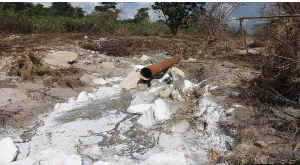
The spill has caused dangerous pollution, locals say
Farmers in Zambia have filed an $80bn (£58.5bn) lawsuit against two Chinese-linked firms, blaming them for an “ecological catastrophe” caused by the collapse of a dam that stored waste from copper mining.
Millions of litres of highly acidic material spilled into waterways in February, leading to “mass fatalities” among fish, making water undrinkable and destroying crops, the farmers said in court papers.
This is one of the biggest environmental lawsuits in Zambia’s history, with the farmers saying the spillage affects about 300,000 households in the copper-mining region.
The US embassy issued a health alert in August, raising concerns of “widespread contamination of water and soil” in the area.
The lawsuit pits villagers, who are mostly subsistence farmers, against Sino Metals Leach Zambia and NFC Africa Mining, which are subsidiaries of Chinese state-owned firms.
A group of 176 of them have filed papers on behalf of their community in the High Court in Zambia’s capital, Lusaka.
They alleged the collapse of the tailings dam – owned by Sino Metals Leach Zambia but located in the surface area of NFC Africa Mining – was caused by numerous factors, including engineering failures, construction flaws and operational mismanagement.
The firms have not yet commented on the lawsuit, but Sino Metals Leach Zambia has previously said there was a spillage of about 50,000 cubic metres.
“The tailings release and breach was promptly brought under control within hours of detection,” the firm said in a statement on 3 September.
In the court papers the farmers said they had learned that the water was highly toxic only several days after the tailings dam had collapsed.
It had put the community’s health at risk, with people reporting various symptoms of illnesses, including blood in urine and chest tightness, the papers said.
Most villages had dug wells, but even they were polluted and crops had to be burned because they were unsafe for consumption, the petitioners said.
They demanded that the two firms should put $80bn in a Zambian government-managed account as “security” for, among others, “environmental reparation” and “full compensation”.
An emergency fund of $20m should also be set up to provide “immediate and urgent” help to people affected by the disaster, and to carry out thorough health and environmental assessments, the petitioners said.
Last month, the US embassy said it had ordered the immediate withdrawal of its personnel from Kitwe – the biggest city in the Copperbelt region – and nearby areas after expressing concern that beyond the “contaminated water and soil, contaminants from the spilled mine tailings may also become airborne, posing a health threat if inhaled”.
In response, Zambian government spokesperson Cornelius Mweetwa had said there were no longer any serious implications for public health, and there was “no need to press the ‘panic button’ today to alarm the nation and the international community”.
The National Identification Authority (NIA) is urging institutions, especially banks, to stop relying on photocopies of Ghana Cards for identity verification, describing the practice as unsafe and prone to fraud.
This was revealed by the Executive Secretary of the Authority, Mr. Yayra Koku, at a press conference to mark Identity Day at the NIA head office in Accra.
The event was held under the theme “My Identity, My Umbrella.”
Mr. Koku explained that photocopies of ID cards do not prove that the person presenting the card is the rightful owner or that they were physically present at the point of transaction.
He noted that only biometric verification, through fingerprints or facial recognition, can confirm the true identity of an individual.
He recounted cases of fraud, including an incident in which a businessman lost $1.5 million after a fake card was used because biometric verification was not carried out.
He stressed that biometric authentication also provides a timestamp, which records that the individual was present at the institution at a particular time.
The Acting Head of Legal at the NIA, Mrs. Theresa Eson-Benjamin, added that while photocopying an ID card is not a crime, it is not a process encouraged by the Authority.
She explained that photocopy-based verification has led to several cases of impersonation and identity theft reported to the police.
Mrs. Eson-Benjamin revealed that the NIA was working on amendments to its regulations to penalize institutions that fail to use biometric verification when it is available.
She urged citizens to insist on biometric checks at banks and other service providers to protect their identities and reduce the risk of fraud.
Former Member of Parliament for Abuakwa South, Samuel Atta Akyea, has stated that any New Patriotic Party (NPP) flagbearer aspirant who struggles to pay the party’s development fee is not fit to contest for the presidency.
In an interview on TV3 and monitored by GhanaWeb on Tuesday, September 16, 2025, he emphasised that a candidate’s inability to pay the GH¢4 million fee signals a lack of influence and credibility.
Torkornoo’s removal could create a vicious cycle – Atta Akyea warns
“If you are in opposition, you will raise money, so it is a sensible way to raise money. If a man says he is credible and people should vote for him as a flagbearer, and he can’t raise GH¢4 million, that means he doesn’t count; he is not even influential. Who is telling you that you are the one going to pay the money?” he said.
The party’s recent decision to impose a GH¢4 million “development fee” on presidential aspirants has sparked widespread criticism and raised questions about the party’s commitment to democratic principles.
Meanwhile, the National Council of Elders of the NPP has announced the formation of an ad hoc Committee to oversee the conduct of all presidential aspirants, their campaign teams, and supporters ahead of the party’s primaries.
Adu-Boahene Case: Atta Akyea given 72 hours to retract, apologise over ‘false’ claims/a>
The Committee will monitor comments, actions, and behaviour of aspirants and their supporters, as well as review petitions related to hate speech, insults, and abusive language.
The decision follows a meeting with aspirants on Thursday, September 11, 2025, as the NPP prepares for its presidential primaries scheduled for January 31, 2026.
JKB/VPO
Will Ghana pass the Anti-Witchcraft Bill? Find out in the latest episode of The Lowdown on GhanaWeb TV in this conversation with Amnesty International:
Tolon (N/R), Sept. 16, GNA – On a quiet morning in Tolon, a farmer named Yussif Adams walks through his maize field, worried about how little he will harvest this season. Like many smallholder farmers in the Northern Region, his challenge is not a lack of hard work. It is low yields, limited access to inputs, and difficulty in getting fair market prices. For Yussif, the newly launched Feed Ghana Programme is more than a government initiative. It is a lifeline that could turn his farm into a thriving business.
Boosting agricultural productivity
The Government has introduced the Feed Ghana Programme to modernise farming, reduce reliance on imports, and create jobs. The initiative seeks to support farmers with improved seeds, fertilisers, mechanisation services, and extension advice. It also promotes climate-smart practices to raise yields in cereals, legumes, vegetables, tubers, and tree crops, while expanding livestock and poultry production.
The programme targets commodities where Ghana has high demand and untapped potential. These include rice, maize, soybean, sorghum, millet, tomato, pepper, onion, cassava, yam, plantain, poultry, cattle, goats, sheep, pigs, cashew, shea, mango, coconut, and oil palm. By focusing on these value chains, farmers can both feed the nation and supply raw materials for agro-industries.
Reducing food imports
Ghana spends more than two billion dollars each year importing rice, poultry, onions, and other staples. This drains foreign exchange and exposes the economy to global price shocks. The Feed Ghana Programme seeks to cut this dependency by boosting domestic production. Increased rice and poultry output, together with year-round vegetable farming, is expected to reduce imports and stabilise food supplies.
Creating jobs for the youth
A central promise of the programme is job creation. Opportunities will open up across the agricultural value chain, from production and mechanisation services to storage, processing, transport, and marketing.
Youth, women, and persons with disabilities are a priority group. With support in training, financing, and market access, they will be encouraged to take up agribusiness ventures.
Sub-programmes
The Feed Ghana Programme is anchored on nine sub-programmes:
Crop Development – improving productivity in cereals, legumes, vegetables, and tubers.
Livestock Development – expanding poultry, cattle, sheep, goats, and pigs.
Farmer Service Centres – one-stop shops for seeds, fertilisers, mechanisation, and extension.
Farm Bank Development – mobilising banks to extend credit tailored to farmers.
Institutional Farming – encouraging schools, prisons, and hospitals to grow food for self-reliance.
Feed the Industry – linking farmers directly with agro-processors.
Infrastructure and Agro-Production Enclaves – building irrigation systems, warehouses, and production hubs.
Innovative Agricultural Financing – blending concessional loans, insurance, and commercial bank lending.
Institutional Development and Regulatory Framework – ensuring policies support sustainable growth.
Together, these sub-programmes cover production, markets, finance, and institutional support. This makes the programme comprehensive in scope.
Spotlight on Farmer Cooperatives
At its core, the programme promotes farmer cooperatives and Farmer-Based Organisations (FBOs). By working in groups, farmers gain access to inputs and mechanisation through Farmer Service Centres. They also receive subsidised livestock and poultry inputs, credit, insurance, and training in leadership and record-keeping.
Cooperatives can negotiate better prices, reduce costs, and link directly with buyers and agro-processors. This ensures that smallholder farmers are not left behind but become key drivers of food security.
Participation Requirements
To join the programme, farmers must belong to FBOs or cooperatives. Groups must have between 15 and 40 members. Registration requires information such as the community name, commodity type, group size, and total cropped area. A membership list with Ghana Card numbers and contacts must also be provided.
Existing groups are expected to indicate whether they are registered with the Department of Cooperatives, District Assembly, or Department of Agriculture.
Role of Agric Departments
Regional and District Agricultural Departments will play a central role. They will register new FBOs, validate existing cooperatives, and provide technical support. They will also monitor group activities and lead public education campaigns to ensure farmers benefit fully from the programme.
National call to action
The Feed Ghana Programme is more than an agricultural project. It is an economic transformation agenda. By raising productivity, reducing imports, and creating jobs, it has the potential to reshape Ghana’s food systems and empower rural communities.
For Yussif in Tolon and many like him, the promise is higher yields, better incomes, and sustainable livelihoods.
MoFA is urging farmers and cooperatives nationwide to embrace the initiative, stressing that its success depends on full participation at all levels.
GNA
Edited by Beatrice Asamani Savage
The author is the Head of the Public Relations Unit of the Ministry of Food and Agriculture
Frank Owusu Has Been Shortlisted As A Finalist For The Africa Prize Of Engineering Innovation
Four entrepreneurs from Kenya, Ghana, and Uganda have emerged as finalists for the 2025 Africa Prize for Engineering Innovation, representing breakthrough solutions in healthcare, agriculture, accessibility, and sustainable energy that address critical challenges across the continent.
The finalists were selected from a record field, with applications received from 30 countries, and will compete for the £50,000 grand prize during a live final event in Dakar, Senegal, on October 16. The competition marks the first time the prestigious engineering award ceremony will be hosted in a Francophone African country.
Vivian Arinaitwe from Uganda developed Neo Nest, a portable neonatal warming device designed to prevent hypothermia during ambulance transfers from rural health facilities to specialized hospitals. The device functions as a compact incubator with smart temperature control systems and visual indicators that alert caregivers to potential complications during critical transports.
The innovation addresses a significant healthcare gap in rural areas where specialized neonatal care remains inaccessible. Since joining the Africa Prize programme, Arinaitwe has secured deployment agreements with health facilities in Uganda and received recognition at the African Women Innovation & Entrepreneurship Forum Awards 2025.
Kenyan entrepreneur Elly Savatia created Terp 360, an artificial intelligence-powered application that translates speech into sign language using three-dimensional avatars. The technology incorporates motion capture capabilities and features over 2,300 recorded signs developed in collaboration with deaf and hard-of-hearing Kenyans to ensure cultural relevance and natural communication.
The innovation tackles interpreter shortages that limit accessibility in educational and public service environments. Savatia’s team has secured funding from Google.org to expand sign language datasets and established operations at Carnegie Mellon University’s College of Engineering in Rwanda, with plans for classroom and public service deployments.
Frank Owusu from Ghana developed Aquamet, a smart water quality monitoring system for smallholder fish farmers that tracks pH levels, dissolved oxygen, and temperature through real-time mobile notifications. Farmers using the device report yield increases of 10-15%, significantly reducing typical mortality rates that can reach 45% without proper monitoring.
The platform provides record-keeping tools, extension services access, and marketplace connections linking farmers with buyers. Owusu has achieved major distribution partnerships across West Africa and secured collaborations with the British High Commission and international aquaculture organizations to strengthen animal health systems.
Carol Ofafa from Kenya founded E-Safiri, a battery-swapping service operating across four locations in Kisumu that addresses electric vehicle adoption barriers in areas lacking charging infrastructure. The solar-powered stations use Internet of Things-enabled batteries providing real-time maintenance updates while serving as power centers for households without electricity access.
The service eliminates personal charging setup requirements for electric bicycle and motorbike users while supporting community energy needs through surplus power distribution. Ofafa has been recognized among Business Daily’s Top 40 under 40 Women and named one of Africa’s Energy Heroes 2025 by Sustainable Energy.
The Africa Prize, launched in 2014 by the Royal Academy of Engineering, has supported 165 businesses from 22 countries with comprehensive training, mentoring, and communication resources. More than 70% of alumni generate revenue for their businesses, collectively securing $34 million in grants and equity funding.
The eight-month training programme provided to shortlisted candidates covers financial modeling, market analysis, and business development skills tailored for entrepreneurs scaling innovative solutions. Participants benefit from collaboration with business experts, product development mentors, and the Academy’s global network of engineers and industry leaders.
Rebecca Enonchong, Chair of the judging panel and Founder of AppsTech, emphasized the significance of hosting the competition in Senegal while highlighting the finalists’ innovations across crucial sectors including healthcare, agriculture, accessibility, and rural energy access.
The comprehensive support package extends beyond financial awards, with the winner receiving £50,000, three runners-up receiving £10,000 each, and an additional £5,000 ‘One to Watch’ prize. The program’s holistic approach includes ongoing mentorship, networking opportunities, and connections to global engineering communities.
Applications for the 2026 Africa Prize opened in July with a new two-stage application process designed to streamline submissions. The deadline for initial applications closes on September 23, 2025, representing the first major procedural change since the program’s inception.
The competition reflects growing recognition of African engineering talent addressing local challenges with global implications. Each finalist’s innovation demonstrates scalable solutions that combine technological sophistication with practical implementation for underserved communities.
The live final event, supported by the British Embassy in Dakar, will feature keynote addresses and finalist presentations to both in-person and online audiences. The ceremony represents a significant milestone in recognizing Francophone Africa’s contributions to engineering innovation and entrepreneurship.
Industry observers note that the finalists’ diverse technological approaches illustrate Africa’s capacity for developing context-specific solutions that leverage advanced technologies while addressing fundamental infrastructure and accessibility challenges across the continent.
Tottenham Hotspur forward Kudus Mohammed is set to make his Champions League bow for the club when they take on Villarreal in their Group Stage opener on Tuesday, September 16, 2025.
Ahead of the game, the Ghanaian has revealed that Lionel Messi is the first player he thinks of when the competition is mentioned.
The 25-year-old joined Spurs this summer in a £55 million move from West Ham United, returning to Europe’s top table after missing out on Champions League football during his two-year spell at the London Stadium.
Kudus had previously featured in the tournament.
Mohammed Kudus signs for Tottenham Hotspurs
Now, with Spurs back in the competition, Kudus is eager to showcase himself on the grandest stage.
Asked what comes into his head when he thinks of the Champions League, the former Ajax player didn’t hesitate to mention Lionel Messi.
Kudus has made an impressive start to life in North London, registering two assists already in the Premier League.
His form has boosted optimism among Tottenham supporters that he can deliver in Europe as well.
FKA
Meanwhile, watch as Ghanaians debate the performance of Black Stars coach Otto Addo
The Minister for Government Communications and Member of Parliament for Abura-Asebu-Kwamankese, Felix Kwakye Ofosu, has accused the opposition New Patriotic Party (NPP) of hypocrisy in its criticism of proposed tariff hikes by utility service providers.
His comments come after the NPP raised concerns over potential increases in charges by the Volta River Authority (VRA), Northern Electricity Distribution Company (NEDCo), Electricity Company of Ghana (ECG), and Ghana Water Limited (GWL), among others.
Speaking on Channel One TV’s Face to Face with Umaru Sanda Amadu on Tuesday, September 16, Mr. Kwakye Ofosu said the tariff adjustment framework was a conditionality agreed upon by the previous NPP administration under the International Monetary Fund (IMF) programme.
“As part of the IMF arrangements that the NPP entered into, they agreed with the IMF as a conditionality for accessing about $300 million when the review that took place before we came to power was completed.
He added, “That was around December 2024, when they were going to do quarterly tariff adjustments. And in September, they will do mid adjustment, which was agreed upon by the NPP. It is cast in stone, classified, and it must also go on record, so when the NPP comes to lament the increase, they are being dubious and hypocritical. They’re not telling the truth, they agreed, we’re bound by it.”
Mr. Kwakye Ofosu further explained that not all proposals submitted by the utilities are accepted, stressing that the government often scales them down.
“It’s not every proposal that is accepted. Almost every time, their proposals are substantially reduced,” he said, adding that he was confident the current proposals would not fully reflect in the final adjustments.
“I’m confident that those figures in the proposals will not reflect in the tariffs.
….
Explore the world of impactful news with CitiNewsroom on WhatsApp!
Click on the link to join the Citi Newsroom channel for curated, meaningful stories tailored just for YOU: https://whatsapp.com/channel/0029VaCYzPRAYlUPudDDe53x
No spam, just the stories that truly matter! #StayInformed #CitiNewsroom #CNRDigital
A deal has been made between the US and China to keep TikTok running in the US, according to President Donald Trump.
“We have a deal on TikTok, I’ve reached a deal with China, I’m going to speak to President Xi on Friday to confirm everything,” Trump told reporters as he left the White House for a state visit to the UK.
The social media platform, which is run by Chinese company ByteDance, was told it had to sell its US operations or risk being shut down.
However, Trump has repeatedly delayed the ban since it was first announced in January. Later on Tuesday, he ordered the deadline extended again, until 16 December.
The US president said a buyer will be announced soon.
The Wall Street Journal reported that under a deal being negotiated between the US and China, TikTok’s U.S. business would be controlled by an investor consortium that would include tech company Oracle, private equity firm Silver Lake, and venture capital firm Andreessen Horowitz.
In a new US entity created under the deal, US investors would hold a roughly 80% stake and Americans would dominate the board, with one member selected by the US government, according to the Journal, which cited people familiar with the matter.
US users, meanwhile, would move to a new app, currently in the testing phase, that will have content-recommendation algorithms using technology licensed from ByteDance. TikTok’s algorithms are a top reason for the app’s success.
Earlier, CNBC reported the deal would include a mix of current and new investors, and would be completed in the next 30 to 45 days.
It also said Oracle would keep its existing agreement to host TikTok servers inside the US. That had been one of the main concerns of American lawmakers, over worries about data being shared with China.
On Monday, a US trade delegation said it had reached a “framework” deal with China amid wider trade negotiations in Madrid.
China confirmed a framework agreement but said no deal would be made at the expense of their firms’ interests.
After the talks, Wang Jingtao, deputy head of China’s cyberspace administration, suggested in a press conference that the agreement included “licensing the algorithm and other intellectual property rights”.
He added: “The Chinese government will, according to law, examine and approve relevant matters involving TikTok, such as the export of technology as well as the license use of intellectual property.”
After initially calling for TikTok to be banned during his first term, Trump has reversed his stance on the popular video-sharing platform.
In January, the US Supreme Court upheld a law, passed in April 2024, banning the app in the US unless its Chinese parent company ByteDance sold its US arm.
The US Justice Department has said that because of its access to data on American users, TikTok poses “a national-security threat of immense depth and scale”.
However, ByteDance has resisted a sale, maintaining its US operations are completely separate, and says no information is shared with the Chinese state.
TikTok briefly went dark in January, but this lasted for less than a day before the initial ban was delayed.
The deadline for a sale has since been extended four times, and the latest delay to the ban is due to end on 16 December.
DISCLAIMER: The Views, Comments, Opinions, Contributions and Statements made by Readers and Contributors on this platform do not necessarily represent the views or policy of Multimedia Group Limited.
DISCLAIMER: The Views, Comments, Opinions, Contributions and Statements made by Readers and Contributors on this platform do not necessarily represent the views or policy of Multimedia Group Limited.
Three people died instantly when a passenger vehicle suffered a catastrophic tyre burst on the notorious Jirapa-Wa road section near Nadowli, with a police officer reportedly on official transfer among the fatalities.
The urvan bus was traveling from Jirapa to Techiman when the mechanical failure caused the driver to lose control, according to eyewitness accounts. The vehicle veered off the roadway and crashed with fatal impact, killing three passengers on the spot.
Emergency responders transported several injured survivors to Nadowli health facility for urgent medical treatment. The exact number of casualties and their current condition remain unconfirmed as authorities continue investigating the incident.
Local residents expressed renewed concerns about vehicle maintenance standards and road safety protocols following the latest tragedy. The Jirapa-Wa road has become synonymous with frequent accidents, with commuters consistently raising alarm about its deteriorating condition.
Previous incidents on routes connecting Nadowli to other regions have resulted in multiple fatalities, including a August 2024 crash that killed a mother and her three-year-old son along with another passenger when their bus suffered dual tyre failures.
The deceased police officer was allegedly being transferred to Techiman at the time of the crash, highlighting the risks faced by public servants during routine deployments. Ghana Police Service protocols typically require officers to use official transport during transfers, though circumstances surrounding this particular journey remain unclear.
Road safety advocates point to mechanical failures as a leading cause of highway deaths in Ghana, particularly on rural routes where vehicle inspection standards may be inconsistently enforced. The incident underscores growing demands for stricter roadworthiness checks and regular vehicle maintenance requirements.
Upper West Region transportation authorities have yet to issue an official statement regarding the crash or announce any immediate safety interventions for the affected road section.
The tragedy adds to Ghana’s concerning road fatality statistics, with mechanical failures accounting for a significant percentage of highway deaths according to National Road Safety Authority data.
Families of the victims are expected to receive support through established protocols, while investigations continue to determine the exact sequence of events that led to the fatal crash.
Flagbearer hopeful for the New Patriotic Party (NPP) in the 2028 general elections, Dr. Yaw Osei Adutwum, has appointed Mr. Yaw Opoku Mensah as his official spokesperson.
Announcing the appointment, Dr. Adutwum described Mr. Opoku Mensah as a passionate communicator with eloquence and a commanding presence, qualities he believes will help in effectively conveying his vision to the public.
“It is an extraordinary honour to appoint you, Mr. Yaw Opoku Mensah, as my official spokesperson. Congratulations on this well-deserved recognition. Your passion, eloquence, and commanding presence are truly inspiring. May your voice resonate with purpose and make a lasting impact. Ayekoo!” Dr. Adutwum said.
The appointment marks a key step in Dr. Adutwum’s preparations toward his presidential bid, as he positions himself to win the mandate of the NPP to lead the party into the 2028 elections.
Mr. Opoku Mensah, a well-known communicator within the party, is expected to spearhead Dr. Adutwum’s media engagements and public relations strategy.
President John Mahama’s administration faces mounting accusations of selective justice and political persecution just six months into office, with a comprehensive IMANI Africa analysis revealing how the “Terminator 1” nickname and controversial law enforcement tactics have eroded public trust.
The think tank’s latest Public Understanding and Literacy for Sentiment and Election Analysis (PULSE) report documents a dramatic credibility crisis stemming from what critics characterize as contradictory approaches to anti-corruption enforcement and politically motivated personnel decisions.
The administration’s credibility problems crystallized in March when mass dismissals of public sector workers earned President Mahama the viral nickname “Terminator 1,” fundamentally altering public perception despite simultaneous praise for abolishing unpopular taxes including the E-levy and betting tax.
However, the more damaging aspect involves the apparent selective implementation of the Operation Recover All Loot (ORAL) initiative, launched as a flagship anti-corruption drive on January 7. While the Attorney General discontinued cases against prominent NDC figures including Collins Dauda, Stephen Opuni, Ato Forson, and Kwabena Duffuor, arrests of outspoken NPP critics have intensified under controversial circumstances.
The IMANI analysis reveals that many arrests have been conducted in what critics term “Rambo-style” fashion using heavily armed and masked security personnel, generating 85% public disapproval according to the sentiment analysis. These militarized enforcement tactics have sparked widespread condemnation across political and civil society circles.
Recent high-profile arrests include NPP Ashanti Regional Chairman Bernard Antwi Boasiako (Chairman Wontumi), who was arrested by EOCO under conditions critics described as excessive, and NPP Bono Regional Chairman Kwame Baffoe (Abronye DC), who was remanded into police custody amid accusations of political persecution.
The NPP has petitioned the diplomatic corps over these “Rambo-style arrests,” describing them as part of “a deliberate strategy to silence dissent and cow the opposition into submission”, while the party’s Youth Wing has announced plans to protest at Ghana Police Headquarters over alleged systematic harassment.
Legal experts have criticized the enforcement methods, with private legal practitioner Andrews Appiah Danquah condemning the ‘Rambo-style’ approach as unnecessary and harmful to law enforcement’s image, while University of Ghana law lecturer Prof. Kwadwo Appiagyei-Atua described Chairman Wontumi’s arrest as unjustified.
The selective justice narrative gained momentum following the Attorney General’s office dropping seven major cases involving NDC officials, with former Attorney General Godfred Dame accusing the current AG of using case withdrawals as “a tactic to exonerate NDC officials” through calculated whitewashing.
The credibility crisis deepened with the private jet scandal, which undermined the administration’s earlier austerity pledges including scaled-down Independence Day celebrations and anti-corruption commitments. IMANI noted that “the opposition successfully amplified the hypocrisy narrative,” warning that even NDC loyalists are beginning to express disappointment.
The think tank’s analysis indicates that charges in many recent arrests often involve vague accusations like “offensive conduct,” raising questions about the substantive basis for law enforcement actions that appear disproportionately targeted at opposition figures.
NPP Communications Director argued that recent arrests “directly contravene Article 21(1)(a) of the 1992 Constitution, which guarantees every Ghanaian the right to freedom of speech and expression”, emphasizing that dissent represents a fundamental human right rather than merely a privilege.
The ORAL initiative’s implementation challenges reflect broader concerns about institutional independence and equal treatment under law. While originally welcomed as part of Mahama’s anti-corruption drive, the initiative’s apparent selective focus has generated skepticism about its true objectives and fairness.
IMANI’s sentiment analysis reveals that even positive policy developments including currency stabilization efforts and mining sector reforms have been overshadowed by governance controversies, demonstrating how credibility issues can undermine substantive achievements.
The “Terminator 1” moniker reflects not only anxiety about job security among civil servants but broader concerns about the administration’s approach to political opposition and dissent. This nickname has become symbolic of perceived authoritarian tendencies that contradict campaign promises of inclusive governance.
Political analysts note that the administration’s response to these criticisms will determine whether the credibility crisis hardens into permanent damage to public trust. The speed and extent of the decline in approval ratings represents one of the steepest falls in recent Ghanaian political history.
The IMANI report emphasizes that “credibility is the most valuable political currency, and the NDC is quickly spending it,” reflecting broader recognition that governance legitimacy depends on consistent application of stated principles rather than selective enforcement based on political considerations.
Opposition parties have seized on the analysis as validation of their criticisms regarding politically motivated law enforcement, while civil society organizations express growing concern about democratic backsliding and institutional capture under the current administration.
The administration faces pressure to address fundamental concerns about transparency, fairness, and equal treatment under law to prevent further erosion of public confidence. Success in rebuilding credibility requires both policy adjustments and demonstrated commitment to even-handed governance across party lines.
Looking ahead, the IMANI findings suggest that unless the government reforms its approach to accountability and avoids partisan enforcement of justice, it risks cementing a reputation for selective governance rather than the promised national renewal that brought it to power.
The Member of Parliament for Tempane and Minister of State for Public Sector Reforms, Lydia Lamisi Akanvariba, has decried the poor state of roads in her constituency, revealing that not even a single kilometer of road has been tarred.
Speaking about the dire situation, the MP described the lack of road infrastructure as deeply troubling.
“Sadly—and I keep on saying—it is very sad because Tempane does not even have one kilometer of road tarred,” she said on Citi Eyewitness News on Tuesday, September 16.
According to her, the constituency currently lacks even basic feeder roads, with residents relying on footpaths to move around.
The situation, she noted, worsens during the rainy season, leaving many communities cut off due to impassable paths.
“We don’t even have feeder roads currently. We just have footpaths. We’ve been managing it like that. For instance, this is the rainy season—we have a lot of washouts that make it difficult for people to pass. The road network is really that bad. Not even one kilometer,” she lamented.
However, she indicated that efforts are underway to address the problem. She said she is currently engaging relevant authorities to push for road development in the area.
“I am currently in talks with the Feeder Roads Engineer. He has brought some estimates to the Roads Ministry. So at least maybe by the time they will approve some of the roads, we are likely to get some of the roads worked on,” she added.
Tempane is located in the Upper East Region and remains one of the many rural constituencies battling with underdeveloped infrastructure.
Read also
‘Big Push Project not for wheelbarrow contractors’ – Mahama
Calin Georgescu came a surprise first in the first round of Romania’s presidential election last November
Romanian far-right former presidential candidate Calin Georgescu has been charged with attempting to stage a coup after the first round of the presidential election was annulled last December.
Horatiu Potra, a former French legionnaire and militia chief in the Democratic Republic of Congo, and 20 other people were also charged.
The case rests on a planned raid on the Romanian capital Bucharest on 8 December, which police foiled.
Romanian prosecutors describe a plot targeting Romania’s constitutional order, involving Georgescu, Potra, their group, and alleged foreign intelligence links.
Potra and others have been charged with instigating the coup, while Georgescu is accused of conspiring with Potra.
Prosecutors say Georgescu met Potra and other members of his group at a horse farm in December, soon after Georgescu’s victory was annulled.
Georgescu initially denied that the meeting took place, but later admitted it after photographs were published in Romanian media. However, he denies discussing plans to stage an insurrection.
In late February, police raided several locations in Romania, uncovering a cache of weapons, gold and cash, with which it is alleged Potra’s group were planning to stage a violent power grab.
Prosecutors say Potra is currently not in the country and may seek asylum in Russia.
Georgescu, 63, came in a surprise first in the first round of Romania’s presidential election last November.
That result was annulled by the Constitutional Court just days before the second round was due to take place amid allegations of Russian interference.
Romanian intelligence services suggested his presence and popularity on social media had been boosted by a mass influence operation – conducted from abroad – to interfere with the result of the vote.
At a press conference, Prosecutor General Florenta described the annulled 2024 election as “the result of a hybrid war orchestrated by Russia.”
He alleged that cyberattacks on airports and public institutions coincided with an online disinformation campaign waged through troll farms, bots, and AI-generated content.
According to investigators, more than 2,000 Facebook pages were used to amplify pro-Georgescu messaging, while TikTok networks of over 20,000 automated accounts boosted his campaign in the days before the vote.
After Georgescu was barred from registering as a candidate his ally George Simion, the leader of the far-right AUR party, stood in his place in the May rerun.
Simion won a dramatic first-round victory but was eventually beaten into second place by Nicusor Dan, the liberal, pro-EU mayor of Bucharest, in the run-off.
Georgescu has not yet commented on the charges, although this month he accused the Romanian authorities of ruling through “deceit, intrigue and division”.
President Dan said the report by prosecutors was “proof” that Russia had exercised “systematic disinformation” in Romania and had tried to influence the 2024 election.
A date for Georgescu’s trial has not yet been given, but it could begin in early 2026.
DISCLAIMER: The Views, Comments, Opinions, Contributions and Statements made by Readers and Contributors on this platform do not necessarily represent the views or policy of Multimedia Group Limited.
DISCLAIMER: The Views, Comments, Opinions, Contributions and Statements made by Readers and Contributors on this platform do not necessarily represent the views or policy of Multimedia Group Limited.
Public goodwill towards the National Democratic Congress (NDC) government, led by , is rapidly declining, according to a new Public Understanding and Literacy for Sentiment and Election Analysis (PULSE) report published by policy think tank, IMANI Africa.
The report reviews the first six months of the current administration, drawing on data from Facebook, X (formerly Twitter), YouTube, TikTok, podcasts, newsfeeds, and the wider web.
According to the GoldBod, the picture published was Shamlal Ahamed instead of Rafeeq
The Ghana Gold Board (GoldBod) has apologised to the public after publishing the wrong photograph of a suspect in the ongoing gold smuggling case involving RAFMOH Gold Limited and NK Bernard Enterprise.
In a statement signed by Prince Kwame Minkah, Media Relations Officer on September 16, 2025, the GoldBod clarified that while the name and personal details of the suspect, Mohammed Nandoli Rafeeq, also known as Salaam, were accurate, the image released during its press briefing on September 16, 2025, was incorrect.
Instead of Rafeeq, the picture published was one Shamlal Ahamed who is the Managing Director for International Operations at Malabar Gold and Diamonds.
GoldBod described the incident as an “inadvertent mistake” and expressed its regret to the affected victim and his brand, the Malabar Gold and Diamonds for the unintended error.
“The GoldBod deeply regrets this inadvertent mistake and conveys its sincerest apologies to Mr Shamlal Ahamed and the Malabar Gold and Diamonds company.
“Attached herewith is the actual photograph of Mohammed Nandoli Rafeeq, the suspect in the gold smuggling case involving RAFMOH Gold Limited and NK Bernard Enterprise.
“We hereby entreat all media outlets that have erroneously published the picture of Mr Shamlal Ahamed to quickly rectify it,” part of the statement read.
AM/
Will Ghana pass the Anti-Witchcraft Bill? Find out in the latest episode of The Lowdown on GhanaWeb TV in this conversation with Amnesty International:
Villarreal coach Marcelino has urged caution over public opinion on Ghanaian midfielder Thomas Partey, insisting the player remains “mentally prepared” to face Tottenham Hotspur in the UEFA Champions League on Tuesday despite ongoing legal proceedings.
Partey, who denies all charges, is set to line up against his former Premier League rivals in north London before attending a plea hearing at Southwark Crown Court the following day.
The ex-Arsenal midfielder was charged in July with five counts of rape and one count of sexual assault, linked to alleged incidents between April 2021 and June 2022 during his time at the Emirates Stadium.
He joined Villarreal on a free transfer in August and has already played in all four of the Spanish club’s La Liga fixtures this season.
The Villarreal boss said: “We’re interpreting things and talking about a player [Partey] who could be totally innocent. We’re playing a game of football where the important thing is football. This [England] is where football was invented, after all.”
Partey remains on conditional bail, requiring him to notify police of international travel and barring contact with complainants.
He is expected to start against Tottenham as the Yellow Submarine open their Champions League campaign before returning to court on Wednesday.
The Office of the Member of Parliament for Madina, Hon. Francis-Xavier Sosu, is pleased to announce the official launch of the Madina Chamber of Commerce, scheduled for Saturday, 20th September 2025.
The MP stated that the Chamber is envisioned as a strategic hub for business collaboration, advocacy, and capacity building, designed to support sustainable economic development within Madina and surrounding communities.
Its launch marks a significant milestone in the ongoing efforts to empower local enterprises and strengthen the area’s economic foundation.
To commemorate this important occasion, the launch event will feature a community health and business awareness walk, dubbed “Madina Walks 4 Business.” The walk will begin at 6:40 AM from Ritz Junction and conclude at the Madina Job Center (Social Welfare) by 10:00 AM.
According to him, this initiative aims to promote wellness while fostering a spirit of unity and engagement among residents and entrepreneurs.
“We are honoured to welcome Hon. Julius Debrah, Chief of Staff, as the Special Guest for this event. All residents, business owners, and stakeholders are warmly invited to participate in this impactful community initiative. Join us as we take this bold step toward a more connected and business-friendly Madina,” he concluded.
Telecel Ghana has joined the nation in mourning the late Asantehemaa, Nana Konadu Yiadom III, as its Chief Executive, Ing. Patricia Obo-Nai, led a delegation of senior management to the Manhyia Palace in Kumasi on Monday.
The team joined many institutions and associations to commiserate with His Majesty Otumfuo Osei Tutu II and express solidarity with the Asante Kingdom during the first day of the Dɔte Yie funeral rites. Telecel Ghana also presented cash and assorted items to support the ceremonies.
Speaking after the presentation, Ing. Obo-Nai said the gesture was both a cultural duty and a heartfelt sign of respect for the Asantehene and the royal family.
“We recognise the Asantehemaa’s enduring legacy, and we share in the pain of the Asante Kingdom at this time,” she said.
The four-day rites, which began on Monday, have drawn traditional leaders, clergy, politicians, and corporate institutions from across Ghana to Kumasi to honour the memory of Nana Konadu Yiadom III, who served as mother of the Asante nation until her passing.
Telecel Ghana’s relationship with the Asante Kingdom spans years of collaboration. The telecommunications company has sponsored the Asantehene Open golf tournament for eight consecutive years, expanded its reforestation initiative to the Ashanti Region with 3,000 indigenous trees at the South Formangso Forest Reserve, and paid regular courtesy calls on Otumfuo at the Manhyia Palace.
Its annual Ashanti Month celebration has also supported health screenings, local businesses, and cultural heritage events across the region.
MTN Ghana has reaffirmed its commitment to leveraging Artificial Intelligence (AI) to transform lives and create opportunities for young people through its newly launched DigiFest initiative.
MTN Ghana’s new initiative aims to equip young people with digital skills, spark innovation, and prepare them to leverage emerging technologies.
As part of the launch, the DigiFest AI Community Engagement took place in Accra, drawing participants from various tertiary institutions.
The event provided a platform for the students to explore how AI can drive innovation, enhance skills, and strengthen participation across multiple sectors.
Senior Manager for Digital Platforms at MTN Ghana
The Senior Manager for Digital Platforms at MTN Ghana, Winnie Dzidonu, highlighted the need to prepare Ghana’s youth for a digital future.
She pointed out how AI is revolutionizing industries worldwide and stressed the of ensuring young people in Ghana are not left behind.
“AI is shaping the future of every industry, and we believe Ghanaian youth must not be left out. Through DigiFest, MTN is creating opportunities for young people to explore, innovate, and apply digital solutions to real-world problems,” she said.
Ms Janet Aborvor
Student Innovations in AI
The program also showcased student-driven innovations. Ms. Janet Aborvor, a student at the Accra Institute of Technology and developer of Cashbot and Stylebot, demonstrated how AI-powered chatbots can transform industries.
She explained that chatbots software applications designed to simulate human conversation are already being used across multiple sectors such as customer service, finance, healthcare, travel, and hospitality.
According to her, Cashbot was specifically developed to assist with financial management, offering features like expense tracking, proactive saving, and personalized financial advice.
“The future of AI chatbots represents the future of technology integrated solutions that enhance productivity across sectors. With continuous advancements in AI, even more sophisticated and personalized products will emerge,” she said.
Another student from the Accra Institute of Technology, Ms. Suad Macaulay, described the training as an eye-opening opportunity to gain hands-on knowledge in AI.
“I’m really excited to be part of this program because I’m learning so much about AI. So far, I’ve learned how MTN uses AI to optimize its operations, and we are also being taught how to build a chatbot. I’ve already gained a great deal of knowledge,” she said.
She added that since AI is not yet fully integrated into her school curriculum, DigiFest provides a valuable platform to bridge that gap.
“That’s why this initiative is one of the best it gives us exposure to new technologies. I would encourage my colleagues to attend such events because they not only gain new skills but also position themselves strongly within the technology industry,” she noted.
Driving Innovation and Digital Inclusion
The DigiFest initiative forms part of MTN’s broader digital transformation agenda, aimed at strengthening Ghana’s technology ecosystem, fostering innovation, and preparing the youth for a future powered by AI and advanced digital tools.
Ghanaian media personality Serwaa Amihere has taken over the streets of London with her stylish knitted outfit
Serwaa Amihere looked effortlessly chic in a two-piece ensemble styled with a designer bag for her shoot
Ghanaian male makeup artist Barima Makeup Artistry and other influencers have commented on Serwaa Amihere’s new look
Don’t miss out! Get your daily dose of sports news straight to your phone. Join YEN’s Sports News channel on WhatsApp now!
Ghanaian media personality Serwaa Amihere has travelled to the United Kingdom for her lavish vacation.
The beauty goddess was photographed in a stylish two-piece outfit by a popular women’s brand for her latest photoshoot.
Serwaa Amihere slays in a stylish two-piece outfit during her vacation in London. Photo credit: @serwaaamihere. Source: Instagram
Serwaa Amihere rocks knitted outfit in UK
Ghanaian fashion entrepreneur Serwaa Amihere flaunted her voluptuous figure in a long-sleeved knitted top and matching form-fitting skirt, which provided comfort and style.
As expected, Serwaa Amihere rocked a glamorous side-parted coiled black frontal laced hairstyle and heavy makeup, which elevated her look.
The GHOne TV morning show host looked gorgeous in flawless makeup with perfectly defined eyebrows, long eyelashes and glossy lipstick.
Serwaa Amihere styled her look with a black designer bag and modelled elegantly in black stilettos.
The style influencer shared the beautiful photos on Instagram with this caption:
“Start your day with renewed energy, positive mindset, hard work and belief that you will be great and successful. Have a wonderful week and stay blessed.”
YEN.com.gh has compiled some reactions below:
Abena Summer stated:
“The elegant Serwaa, you are gorgeous and beautiful, is an understated go girl I am in London, enjoy London ❤️❤️❤️❤️❤️❤️girl.”
darkskinnedgirl_ stated:
“This is the hat classiness looks like😍😍.”
madamestylistzw stated:
“Perfection 😍.”
Serwaa Amihere sells branded tissue in traffic
Serwaa Amihere has wowed many with her unique marketing skills as she sold the late legendary Ghanaian musician Charles Kwadwo Fosu, popularly called Daddy Lumba’s branded boxes of tissue in traffic.
The brand influencer impressed many fans as she convinced them to buy the branded tissue for themselves and their loved ones.
She dressed decently in a customised t-shirt and denim jeans, which accentuated her curves in the beautiful video.
Serwaa Amihere proudly support Manchester United team
Ghanaian TV presenter Serwaa Amihere has publicly declared her support for the Manchester United football club. During her visit to London, she visited the Emirates Stadium to watch former Black Stars player Thomas Partey’s former team, Arsenal, beat Nottingham Forest.
She looked sporty in her jersey and denim jeans while posing in white designer sneakers.
Serwaa Amihere switched up her curly hairstyle for a lustrous, straight, long hairstyle to exude confidence and style.
Serwaa Amihere slays at Lumba’s one-week
Earlier, YEN.com.gh wrote about Ghanaian media personality Serwaa Amihere, who stole the spotlight at the late Daddy Lumba’s one-week with her classy outfit.
Serwaa Amihere wore a form-fitting two-piece ensemble and heavy makeup as she assisted the late Daddy Lumba’s second wife with the funeral arrangements.
Some social media users praised Serwaa Amihere for supporting her late mentor’s family after his demise.
Ho, Sept. 16, GNA – President John Dramani Mahama, has broken grounds for the redevelopment of the Atimpoku to Aflao road under the Big Push Project.
The 117 kilometre road will be from Atimpoku to Asikuma to Anyrawase to Ho to Denu to Aflao.
President Mahama said the Big Push Project was a USD$10 billion project and there would not be a delay in the project which would start in 2025 since contractors would be paid timely.
He said a Big Push Secretariat would be set up at the Presidency to monitor the projects regularly.
Mr Mahama asked the citizenry to bear with the inconveniences that would come with the nationwide construction works under the Project.
He said contractors were strategically positioned to ensure that there was no workload on them to enable them finish timely.
Mr Mahama asked the contractors to engage Ghanaian workforce in all they would need for the success of the project.
He said the Big Push Programme was a great solution to the decayed roads seen across the country adding that “Volta region has had some of the most neglected roads in Ghana over the years”.
Mr Mahama said some town roads would also be worked on within the region aside the major roads when construction began.
Mr Kwame Governs Agbodza, Minister for Roads and Highways, said the past government’s commitments to the road sector had not been fulfilled.
He said government would implement the Programme to its successful end.
Mr Agbodza said Ghanaian contractors were capable of working on the Big Push Project and would complete it within schedule.
He said the roads would be completed to give comfort to the people of the Volta Region.
Mr Agbodza said all contractors and consultants must take a very fit for purpose insurance cover for their work.
He said all projects under the Big Push Programme would be undertaken in the scope of government’s 24-Hour Economy Policy where construction is done day and night.
Some other roads under the Big Push include rehabilitation of Dodo Pepesu – Nkwanta Road, Atimpoku – Asikuma Junction Road, Asikuma Junction – Anyirawasi Road, reconstruction of Anyirawasi – Ho Tritrinu Road, rehabilitation of Ho – Kpetoe Road, Kpetoe-Afiadenyigba Road Afiadenyigba – Penyi Road and Penyi – Aflao Road.
Togbe Afede XIV, Agbogbomefia of the Asogli State, said there was the need for support for the government to deliver the promise of more jobs.
“Certainly, this is not a problem for the government alone to carry.”
He thanked the President for supporting the private sector in delivering its share of the solution.
Messrs. First Sky Ltd, a Ghanaian contractor would work on the dualisation of Anyrawase-Ho section, dualisation of Ho UHAS by-pass road and dualisation of Ho-Denu road section.
Accra, Sept. 16, GNA-The Association of Ghana Industries (AGI) has called on the government to ensure a smooth transition for beneficiary companies of the One District, One Factory (1D1F) policy to the 24-hour economy policy.
AGI President, Dr Humphrey Ayim-Darke, who made the call, said the AGI expected that beneficiaries would be moved to more beneficial incentives under the 24-hour economy policy to prevent disruption to business activities.
He said the AGI welcomed the government’s 24-hour economy agenda as a policy to enhance productivity and position Ghana as a competitive hub in the regional value chain.
“We opine, however, that it goes beyond just keeping businesses open around the clock. It needs a deliberate promotion of resilience, efficiency and global competitiveness.
“For businesses, it means ensuring reliable energy supply, efficient transport and logistics and supportive policy frameworks that make continuous production feasible. Incentives for industry is a necessity, such as a tax exemption regime that can trigger the expansion of business operations.”
Dr Ayim-Darke was addressing the opening session of the Ghana Industrial Summit and Exhibition and Best Forum 2025 in Accra.
The three-day event being held from September 16 to 18 is in collaboration with Ministry of Environment, Science and Technology through its biannual environment science and technology programme and support of other stakeholders.
It is on the theme: “Unlocking Industrial Potential: Strategic Approaches for Ghana’s Economic Transformation.”
Dr Ayim-Darke called for strategic integration and alignment among all government agencies to deliver the results of this landmark policy for transformational economic value chain of the 24-hour economic plans.
Touching on the recent appreciation of the cedi, Dr Ayim-Darke said it has had a mixed impact.
He said while importers of raw materials and finished goods had benefited from reduced foreign exchange, local manufacturers were increasingly under pressure due to the surge in the availability and access to cheaper imported parallel products.
“This development is creating an uneven playing field, making it difficult for domestic industries to remain competitive,” adding that the parallel smuggled imports such as beverages from neighbouring countries were disrupting the local production of companies like Guinness, Coca-Cola and other associated beverage companies.
“This parallel import bypass standard regulatory checks or evade appropriate duties, giving them an artificial cost advantage while local manufacturers who comply with stringent quality and tax requirements find themselves at a disadvantage. We urge the regulatory bodies to enforce their various mandates to correct such market failures and we can attest to a number of cartels that have ganged up and disrupting our operations through the border,” he added.
Dr Ayim-Darke said industrialization was not just an economic aspiration but a national necessity.
“No country has achieved prosperity without establishing a robust industrial base. For Ghana, the opportunity is clear.
Our natural resources, human capital and the strategic location position us as a potentially prominent manufacturing and processing hub in West Africa.”
The challenge, however, lies in unlocking this potential in a way that transforms our economy, creates decent jobs and enhances competitiveness, he said.
He called for The AGI fair electricity tariff pricing, infrastructure and asset investment in the energy sector to ensure competitiveness and reliability for industry to run and create jobs.
“Without deliberate policy and regulatory interventions, local industries risk losing competitiveness which could derail industrialization agenda and long-term economic transformation,” he added.
He urged government to consider enforcing strict import standards to cap unfair competition from low quality or unregulated parallel imports and incentivize local manufacturers.
The Ghana Gold Board (GoldBod) has issued a public apology after mistakenly publishing the wrong photograph of a suspect involved in an ongoing gold smuggling case.
In a statement signed by Prince Kwame Minkah, Media Relations Officer for the Ghana Gold Board and released on Tuesday, September 16, 2025, the Board clarified that while the name and details of the suspect — Mohammed Nandoli Rafeeq, also known as Salaam— were correct, the photo released during its press conference was incorrect.
The image published was actually that of Mr. Shamlal Ahamed, the Managing Director of International Operations at Malabar Gold and Diamonds, who has no connection to the case.
“The GoldBod deeply regrets this inadvertent mistake and conveys its sincerest apologies to Mr. Shamlal Ahamed and the Malabar Gold and Diamonds company,” the statement said.
The correct photograph of Mohammed Nandoli Rafeeq, who is allegedly involved in the gold smuggling case linked to RAFMOH Gold Limited and NK Bernard Enterprise, has since been released.
GoldBod has also called on all media outlets that carried the incorrect photo to immediately update their reports and remove the image of Mr. Ahamed to avoid further reputational damage.
Read also
Police, GoldBod place GH¢1m bounty on gold-smuggling suspects
Chief of Staff Julius Debrah has warned that corruption is no longer confined to Ghana’s public institutions but is steadily creeping into schools, homes, and communities — a trend he says poses a grave danger to the country’s future.
Speaking at the launch of a five-day stakeholder engagement in Accra to draft a new National Ethics and Anti-Corruption Action Plan (NEACAP), Mr. Debrah cited the recent GH Probe–JoyNews exposé on widespread examination malpractice during the 2025 BECE as proof that unethical practices are taking root at an alarming rate.
Read also: Full video: JoyNews’ ‘Dark World of BECE’ documentary reveals how GES officials colluded with candidates to cheat in exams
“Recent events, including the exam malpractice exposed by Joy FM, remind us that ethical decay is not confined to our institutions only. It is creeping into our homes, our schools, and our future,” he cautioned.
According to the Chief of Staff, the previous NEACAP (2015–2024) offered lessons on the risks of underfunding and weak political commitment. He explained that the new framework, running from 2026, will be placed directly under the Office of the President to ensure stronger oversight and prioritisation.
Mr. Debrah stressed that corruption prevention must not be treated as a competing priority against health, education, or infrastructure, but as a fundamental prerequisite for development.
“If we fail to protect our resources, we will never have enough to build schools, hospitals, and roads. We will never create decent jobs for our youth or realize the 24-hour economy we envision,” he said.
He further underscored that ethics must form the backbone of the new plan. “Ethics must be central to the new plan, not just as a policy but as a national culture,” he declared, pledging government’s full commitment to funding the initiative.
“Let me be clear, this government is committed to funding this national ethics and anti-corruption action plan, because fighting corruption is not a cost — it is an investment,” he added.
DISCLAIMER: The Views, Comments, Opinions, Contributions and Statements made by Readers and Contributors on this platform do not necessarily represent the views or policy of Multimedia Group Limited.
DISCLAIMER: The Views, Comments, Opinions, Contributions and Statements made by Readers and Contributors on this platform do not necessarily represent the views or policy of Multimedia Group Limited.
This blog is managed by the content creator and not GhanaWeb, its affiliates, or employees. Advertising on this blog requires a minimum of GH₵50 a week. Contact the blog owner with any queries.
Virgin Blogger Blog of Tuesday, 16 September 2025
Source: Christopher A. Ranson
Dr. Yaw Osei Adutwum, NPP Flagbearer hopeful, has officially appointed Mr. Yaw Opoku Mensah as the Spokesperson for his campaign.
The announcement marks a significant step in building a formidable and strategic communication front as Dr. Adutwum positions himself to lead the New Patriotic Party into the 2028 elections.
Mr. Yaw Opoku Mensah, a seasoned communicator with a strong background in public relations and grassroots engagement, is expected to play a pivotal role in projecting Dr. Adutwum’s vision of transformational leadership rooted in education, innovation, and national development.
The appointment has been met with excitement and congratulations across the party, as many believe it signals Dr. Adutwum’s readiness to rally a competent team capable of delivering his message of hope and progress to the Ghanaian people.
With this appointment, Dr. Adutwum continues to demonstrate his commitment to excellence, team-building, and effective communication—qualities that many see as key to uniting the party and securing victory in the 2028 election
President John Mahama’s administration confronts mounting public discontent just six months into his second term, with comprehensive social media analysis revealing a dramatic erosion of goodwill that threatens his ambitious reform agenda.
The president’s approval ratings plummeted from 70% to 45% during his first six months in office, according to IMANI Africa’s latest Public Understanding and Literacy for Sentiment and Election (PULSE) analysis, marking one of the steepest declines in recent Ghanaian political history.
The sentiment analysis, based on 22,000 online mentions reaching over 31 million users, shows that optimism has steadily eroded since Mahama’s January inauguration, when expectations soared following pledges of fiscal discipline, anti-corruption reforms, and economic diversification.
The president’s initial gestures toward prudent governance, including scaling down Independence Day celebrations and slashing official travel costs, generated early positive momentum for his “ResettingGhana” agenda. However, mounting controversies and perceived inconsistencies in governance have eroded the initial goodwill, according to the comprehensive assessment.
IMANI identified three critical areas driving public frustration: job creation failures, fiscal credibility concerns, and uneven justice delivery. The administration’s approach to employment generation has particularly damaged its standing, with mass dismissals of public sector workers creating anxiety among both civil servants and unemployed youth seeking opportunities.
“Instead of creating new opportunities, the government became defined by mass dismissals of public sector workers, stoking anxiety among both civil servants and unemployed youth,” the analysis found, highlighting how employment policy has become a defining liability rather than an asset.
The president’s fiscal credibility suffered a significant blow through what critics termed the “private jet scandal,” which created perceptions of hypocrisy that undermined earlier austerity measures. This controversy particularly damaged Mahama’s positioning as a leader committed to responsible spending and government accountability.
Justice delivery concerns center on what IMANI characterized as “uneven handling of corruption cases,” fueling perceptions of selective prosecutions that undermine confidence in institutional fairness. The administration’s approach to anti-corruption initiatives has generated criticism about political motivations rather than systematic reform.
The organization warned that unless the administration matches “rhetoric with delivery” and avoids contradictions while engaging youth and civil society with transparency, credibility will remain compromised. This assessment reflects broader concerns about the gap between campaign promises and governance reality.
Even positive policy initiatives including tax cuts, currency stabilization efforts, and new mining sector reforms are being overshadowed by governance controversies. By June, social media narratives had shifted from policy discussions to scandal coverage, including issues involving the U.S. Embassy and revelations within the National Service Scheme.
The PULSE analysis represents IMANI’s continuation of social media sentiment tracking that began during the 2024 election cycle. The methodology focuses on determining social media sentiment regarding political leadership and influential trends shaping public discourse, providing real-time insight into shifting public opinion.
Political analysts note that credibility challenges extend beyond individual controversies to fundamental questions about governance consistency. The administration’s handling of personnel decisions, particularly the mass dismissals, has created uncertainty about policy direction and employment security across the public sector.
The erosion of public confidence comes as Ghana faces significant economic challenges requiring sustained political stability and policy continuity. International observers have emphasized the importance of maintaining reform momentum while addressing legitimate governance concerns that could undermine development objectives.
IMANI’s recommendations include implementing transparent prosecution criteria, ensuring equal treatment of political actors across party lines, and renewing focus on job creation and youth engagement. These suggestions reflect recognition that the administration must address systemic concerns rather than individual controversies.
The think tank emphasized that “credibility remains the most valuable political currency in Ghana’s fast-moving political environment,” warning that failure to rebuild trust quickly could result in permanent damage to public confidence. This assessment highlights the urgency of the administration’s response to mounting criticisms.
Opposition political parties have seized on the analysis as validation of their criticisms, while NDC supporters argue that the administration needs more time to implement comprehensive reforms. However, the data-driven nature of IMANI’s assessment provides objective measurement of shifting public sentiment.
The president’s communication strategy faces pressure to address public concerns more effectively while demonstrating concrete progress on employment generation and governance reform. Political strategists note that successful recovery requires both policy adjustments and improved public messaging.
Looking ahead, the administration must navigate remaining months of 2025 while addressing the specific areas IMANI identified as driving discontent. Success in rebuilding credibility could determine the trajectory of Mahama’s second term and the NDC’s long-term political prospects.
The analysis reflects broader patterns in Ghanaian politics where initial honeymoon periods give way to more critical assessments based on governance performance rather than campaign promises. This transition represents a normal part of democratic accountability but requires careful management to maintain public support.
Industry experts suggest that the administration’s response to IMANI’s findings will indicate whether leadership recognizes the severity of credibility challenges and commits to addressing underlying concerns that drive public dissatisfaction.
President John Mahama’s administration confronts mounting public discontent just six months into his second term, with comprehensive social media analysis revealing a dramatic erosion of goodwill that threatens his ambitious reform agenda.
The president’s approval ratings plummeted from 70% to 45% during his first six months in office, according to IMANI Africa’s latest Public Understanding and Literacy for Sentiment and Election (PULSE) analysis, marking one of the steepest declines in recent Ghanaian political history.
The sentiment analysis, based on 22,000 online mentions reaching over 31 million users, shows that optimism has steadily eroded since Mahama’s January inauguration, when expectations soared following pledges of fiscal discipline, anti-corruption reforms, and economic diversification.
The president’s initial gestures toward prudent governance, including scaling down Independence Day celebrations and slashing official travel costs, generated early positive momentum for his “ResettingGhana” agenda. However, mounting controversies and perceived inconsistencies in governance have eroded the initial goodwill, according to the comprehensive assessment.
IMANI identified three critical areas driving public frustration: job creation failures, fiscal credibility concerns, and uneven justice delivery. The administration’s approach to employment generation has particularly damaged its standing, with mass dismissals of public sector workers creating anxiety among both civil servants and unemployed youth seeking opportunities.
“Instead of creating new opportunities, the government became defined by mass dismissals of public sector workers, stoking anxiety among both civil servants and unemployed youth,” the analysis found, highlighting how employment policy has become a defining liability rather than an asset.
The president’s fiscal credibility suffered a significant blow through what critics termed the “private jet scandal,” which created perceptions of hypocrisy that undermined earlier austerity measures. This controversy particularly damaged Mahama’s positioning as a leader committed to responsible spending and government accountability.
Justice delivery concerns center on what IMANI characterized as “uneven handling of corruption cases,” fueling perceptions of selective prosecutions that undermine confidence in institutional fairness. The administration’s approach to anti-corruption initiatives has generated criticism about political motivations rather than systematic reform.
The organization warned that unless the administration matches “rhetoric with delivery” and avoids contradictions while engaging youth and civil society with transparency, credibility will remain compromised. This assessment reflects broader concerns about the gap between campaign promises and governance reality.
Even positive policy initiatives including tax cuts, currency stabilization efforts, and new mining sector reforms are being overshadowed by governance controversies. By June, social media narratives had shifted from policy discussions to scandal coverage, including issues involving the U.S. Embassy and revelations within the National Service Scheme.
The PULSE analysis represents IMANI’s continuation of social media sentiment tracking that began during the 2024 election cycle. The methodology focuses on determining social media sentiment regarding political leadership and influential trends shaping public discourse, providing real-time insight into shifting public opinion.
Political analysts note that credibility challenges extend beyond individual controversies to fundamental questions about governance consistency. The administration’s handling of personnel decisions, particularly the mass dismissals, has created uncertainty about policy direction and employment security across the public sector.
The erosion of public confidence comes as Ghana faces significant economic challenges requiring sustained political stability and policy continuity. International observers have emphasized the importance of maintaining reform momentum while addressing legitimate governance concerns that could undermine development objectives.
IMANI’s recommendations include implementing transparent prosecution criteria, ensuring equal treatment of political actors across party lines, and renewing focus on job creation and youth engagement. These suggestions reflect recognition that the administration must address systemic concerns rather than individual controversies.
The think tank emphasized that “credibility remains the most valuable political currency in Ghana’s fast-moving political environment,” warning that failure to rebuild trust quickly could result in permanent damage to public confidence. This assessment highlights the urgency of the administration’s response to mounting criticisms.
Opposition political parties have seized on the analysis as validation of their criticisms, while NDC supporters argue that the administration needs more time to implement comprehensive reforms. However, the data-driven nature of IMANI’s assessment provides objective measurement of shifting public sentiment.
The president’s communication strategy faces pressure to address public concerns more effectively while demonstrating concrete progress on employment generation and governance reform. Political strategists note that successful recovery requires both policy adjustments and improved public messaging.
Looking ahead, the administration must navigate remaining months of 2025 while addressing the specific areas IMANI identified as driving discontent. Success in rebuilding credibility could determine the trajectory of Mahama’s second term and the NDC’s long-term political prospects.
The analysis reflects broader patterns in Ghanaian politics where initial honeymoon periods give way to more critical assessments based on governance performance rather than campaign promises. This transition represents a normal part of democratic accountability but requires careful management to maintain public support.
Industry experts suggest that the administration’s response to IMANI’s findings will indicate whether leadership recognizes the severity of credibility challenges and commits to addressing underlying concerns that drive public dissatisfaction.
Kempinski Hotel Gold Coast City Accra has firmly denied claims that it is sponsoring the Israeli Film Festival set to take place at Silverbird Cinema, Accra Mall, from September 16 to 20, 2025.
In a statement issued on Tuesday, September 16, the hotel clarified that it has no affiliation with the event and was unaware that its name and logo had been included in promotional materials.
“Kempinski Hotel Gold Coast City Accra is not a sponsor of the Israeli Film Festival,” the statement said. “The hotel has only recently become aware that its name and logo have been included on the event’s advertising and promotional materials. This information is inaccurate and was published without the hotel’s knowledge or authorisation.”
The management of Kempinski has instructed the Israeli Embassy and the festival’s organisers to immediately rectify the error and update all advertising to reflect the hotel’s non-involvement.
“We respectfully request that the Israeli Embassy and all event organisers take immediate steps to correct the promotional materials to reflect the fact that Kempinski Hotel Gold Coast City Accra is not a sponsor of this event,” the statement concluded.
The clarification comes amid public backlash and growing calls from nearly 400 individuals and organisations for the festival’s cancellation over concerns that it seeks to “whitewash genocide and apartheid” amid the ongoing humanitarian crisis in Gaza.
Kempinski’s strong denial seeks to distance the hotel from the controversy as protests and boycotts are planned throughout the duration of the festival.
A coalition of nearly 400 individuals and organisations has called for the immediate cancellation of the Israeli Film Festival scheduled to take place at Silverbird Cinema, Accra Mall, from today, Tuesday, September 16 to 20, 2025.
The coalition, which includes prominent public figures, academics, artists, activists, and faith-based organisations, argues that the event is an attempt to “whitewash genocide and apartheid” amid the ongoing humanitarian catastrophe in Gaza.
In a strongly worded statement, the group urged Silverbird Cinema to pull out of hosting the festival and demanded that all sponsors, including Kempinski Hotel, SAF STLAmandi Foundation, Rolider, Sienna Services, EON, and the University of Media, Arts and Communications (UniMac), immediately withdraw their support.
But the Hotel says it has nothing to do with the festival.
“We cannot stand by while the genocide of Palestinians is laundered through art and culture. Ghana has always stood on the side of the oppressed – today we must stand with Palestine,” the coalition said in their statement.
The movement has drawn support from some of Ghana’s most influential figures, including veteran journalist Kwesi Pratt Jnr, former CHRAJ Commissioner Justice Emile Short, filmmaker Nii Kwate Owoo, academics Prof. Akosua Adomako Ampofo and Prof. Audrey Gadzekpo, Prof. Takyiwaa Manuh, activist Oliver Barker-Vormawor, and Economic Fighters’ League leader Ernesto Yeboah, among others. The diversity of signatories, which spans trade unions, student networks, feminist groups, and human rights organisations, signals the depth of public concern.
The group has threatened to picket at the Silverbird at Accra Mall today as part of the protest.
Read Also: Ghanaians unite to demand cancellation of Israeli Film Festival at Silverbird over Gaza genocide concerns
DISCLAIMER: The Views, Comments, Opinions, Contributions and Statements made by Readers and Contributors on this platform do not necessarily represent the views or policy of Multimedia Group Limited.
DISCLAIMER: The Views, Comments, Opinions, Contributions and Statements made by Readers and Contributors on this platform do not necessarily represent the views or policy of Multimedia Group Limited.
The government of Ghana has signed a memorandum of intent with ENI, Vitol, and the Ghana National Petroleum Corporation (GNPC) for a significant integrated strategic investment plan.
The US$1.5 billion investment aims to enhance the nation’s oil and gas production capacity. The signing ceremony occurred at the 2025 Africa Oil Week currently being held in Accra.
This strategic investment is designed to increase gas production and optimise oil production, supporting Ghana’s energy sector growth.
President John Dramani Mahama welcomed the agreement, highlighting the government’s commitment to creating a favourable business environment.
“Ghana is building a business environment that meets investors while safeguarding our national interest. The policy interventions introduced since I assumed office are yielding results,” President Mahama stated, emphasizing the positive impact of recent policy changes on attracting investment.
The Minister of Energy and Green Transition John Jinapor, remarked that “This is not just a figure on paper; it is a vote of confidence in Ghana’s upstream petroleum sector, our economy, a commitment to job creation and a catalyst for the infrastructure that will power our nation forward.”
DISCLAIMER: The Views, Comments, Opinions, Contributions and Statements made by Readers and Contributors on this platform do not necessarily represent the views or policy of Multimedia Group Limited.
DISCLAIMER: The Views, Comments, Opinions, Contributions and Statements made by Readers and Contributors on this platform do not necessarily represent the views or policy of Multimedia Group Limited.
President John Dramani Mahama has announced that the Ghana National Petroleum Corporation (GNPC) and Shell are renegotiating Liquefied Natural Gas (LNG) sale and purchase agreements to enable the delivery of imported LNG into Ghana within the next 18 months.
The President explained that the move will help end the country’s reliance on expensive liquid fuels as a backup for domestic gas, reduce energy costs, and strengthen energy security.
He said the government is also rolling out an accelerated plan to expand gas infrastructure. This includes building new pipelines, processing plants, and storage systems, which will create opportunities for private investment and partnerships.
On downstream projects, President Mahama outlined Ghana’s vision to become a petroleum hub in West Africa.
He said government policies were focused on using natural gas as the main fuel for thermal power plants, developing petrochemical industries, building petroleum mooring systems, and expanding pipeline facilities and oil refineries.
According to him, these steps will not only add value to the petroleum sector but also drive energy-based industrialization.
The President further emphasised that Ghana was committed to a balanced energy transition. He stated that the country will continue to develop oil and gas resources while also investing in renewable energy to ensure that all citizens benefit from the shift towards cleaner technologies.
The Manhyia Palace has granted exemptions to essential service providers from a comprehensive business closure order in Kumasi on Thursday, September 18, 2025, as the Ashanti Kingdom conducts the final burial rites for the late Asantehemaa, Nana Konadu Yiadom III.
Banks, pharmacies, fuel stations, restaurants and transport services will operate normally during the day despite the Palace directive suspending most commercial activities across the Kumasi Metropolis. The exemptions ensure continuity of critical services while thousands of mourners participate in the historic Dɔte Yie ceremony.
The four-day funeral rites began on Monday, September 14, and will conclude on Thursday, September 18, 2025, marking the final farewell to the 17th Asantehemaa who succeeded her mother, Nana Afia Kobi Serwaa Ampem II, in 2017 after serving as a key advisor and custodian of Ashanti traditions for eight years.
Acting Chief of Staff Nana Effah Appenteng explained that the exempted services are designed to ensure the city continues functioning while Asanteman pays final respects to their revered queen mother. Essential service providers including the Electricity Company of Ghana, Ghana Water Company, Fire Service, Ambulance Service and Health Service will also operate freely during the night curfew period.
Schools, markets, shops, and commercial centers will remain closed throughout Thursday as part of comprehensive arrangements to facilitate the solemn burial ceremony. All residents of Asanteman are required to remain indoors on Thursday night when the late Asantehemaa will be laid to rest at the royal mausoleum at Breman in Kumasi.
The funeral arrangements demonstrate the careful balance between honoring traditional protocols and maintaining essential urban services. The Dɔte Yie ceremony has attracted thousands of mourners from across Asanteman and beyond to the forecourt of Manhyia Palace, requiring extensive logistical coordination.
The exemptions reflect practical considerations for a modern metropolitan area that cannot completely suspend operations during cultural ceremonies. Banking services remain critical for daily financial transactions, while pharmacies provide essential healthcare access that cannot be interrupted even during traditional observances.
Transport operators will continue services to facilitate movement of mourners and visitors participating in the funeral rites. This exemption proves particularly important given the massive influx of people traveling to Kumasi from across Ghana and the diaspora to honor the late queen mother.
Restaurant operations will continue to serve the thousands of visitors requiring meals during their stay in Kumasi for the extended funeral ceremony. The food service exemption addresses the practical needs of hosting such a large gathering over multiple days.
Fuel stations will remain operational to support transportation needs and emergency services throughout the funeral period. This exemption ensures continued mobility for exempted service providers and emergency response capabilities.
The night curfew arrangements reflect traditional Ashanti customs surrounding royal burials, where the remains of the revered Asantehemaa will be conveyed to Bantama during the night with strict requirements that no one be encountered on the journey.
All residents of Asanteman are required to remain indoors during the final burial procession, emphasizing the sacred nature of the ceremony and the importance of maintaining spiritual protocols during the queen mother’s final journey.
The comprehensive closure order affects one of Ghana’s largest metropolitan areas, demonstrating the profound respect accorded to the Asantehemaa within traditional governance structures. Kumasi serves as both a modern commercial hub and the seat of the Ashanti Kingdom, requiring careful coordination between traditional and contemporary administrative systems.
The funeral committee’s detailed planning reflects months of preparation for an event of national significance. The late Asantehemaa’s role as queen mother of the Ashanti Kingdom made her one of the most influential traditional leaders in Ghana, warranting elaborate funeral arrangements.
Healthcare services will maintain full operations throughout the funeral period, ensuring medical emergencies receive appropriate attention despite the general business closure. This exemption acknowledges that medical needs cannot be postponed for ceremonial observances.
The electricity and water company exemptions ensure continued provision of basic utilities essential for maintaining urban infrastructure. These services support both residential needs and the operations of other exempted service providers.
Fire and ambulance services will remain fully operational to respond to emergencies that may arise during the large gathering. These safety measures demonstrate responsible planning for an event attracting unprecedented numbers of people to Kumasi.
The exemption arrangements illustrate how traditional African societies can maintain cultural practices while accommodating modern urban realities. The balance between honoring ancestral customs and ensuring contemporary service delivery provides a model for similar future events.
As the Ashanti Kingdom concludes final preparations for Thursday’s burial ceremony, the exempted services will play crucial roles in maintaining order and functionality during this historic cultural observance that honors one of Ghana’s most respected traditional leaders.
The Bono Regional Chairman of the New Patriotic Party (NPP), Kwame Baffoe, popularly known as Abronye DC, has been granted bail by the court in the sum of GH¢50,000 with one surety, without justification.
His lead counsel, Daniel Martey Addo, confirmed the bail decision, noting that Abronye’s deteriorating health condition made the ruling a relief for both the legal team and his family. Efforts are currently underway to meet the bail requirements and secure his immediate release.
Abronye DC was arrested on September 8, 2025, on a charge of offensive conduct conducive to a breach of public peace.
According to the police, the arrest was linked to comments he made publicly, which included allegations against the Inspector General of Police (IGP) and the ruling party. Authorities described the remarks as potentially inflammatory.
In the days leading up to his arrest, Abronye submitted applications for political asylum to eight countries — Côte d’Ivoire, the United States, the United Kingdom, France, Italy, Canada, Spain, and Germany.
In those requests, he cited persistent political persecution, threats to his life, and alleged misuse of state security powers under the current government.
The case continues to generate national attention as debates intensify over the limits of free speech, political accountability, and the protection of opposition voices in Ghana’s democracy.
A “thank-you tour” announced by the National Democratic Congress (NDC) National Chairman, Johnson Asiedu Nketia, has stirred political discourse within the party, with some suggesting that the three-day programme is less about gratitude and more about positioning for a future presidential bid.
The tour, set to take place from September 17 to 19, 2025, across 16 constituencies in the Eastern Region.
iIt is being officially marketed as a follow-up appreciation effort on behalf of the NDC.
Party officials say it is meant to recognize the contributions of executives, cadres, and grassroots organizers who worked tirelessly for the NDC’s victory in the 2024 elections.
Prominent Ghanaian entrepreneur Dr. Daniel McKorley has paid tribute to the late Apostle Dr. Kwadwo Safo Kantanka, describing his passing as the loss of a national treasure who demonstrated Ghana’s capacity for indigenous innovation and industrialization.
Apostle Safo passed away peacefully on Thursday, September 11, 2025, ending a remarkable career that spanned automotive manufacturing, religious leadership, and technological innovation. The founder of Kristo Asafo Church and Kantanka Group of Companies died at age 77, leaving behind a legacy that challenged conventional assumptions about African technological capabilities.
McKorley, founder and Executive Chairman of McDan Group of Companies, emphasized that Apostle Safo’s contributions extended far beyond individual achievements to represent what Ghanaian ingenuity could accomplish with vision and determination. The business mogul’s tribute reflects the broader impact of Safo’s work on Ghana’s industrial development discourse.
McKorley, born June 17, 1971, built the McDan Group into a conglomerate spanning logistics, shipping, aviation, and real estate, establishing himself as one of Ghana’s most successful entrepreneurs. His recognition of Apostle Safo’s pioneering role underscores the influence of the late inventor on subsequent generations of Ghanaian business leaders.
The McDan Group chairman recalled encountering Apostle Safo’s engineering breakthroughs during the early stages of what would become the Kantanka automotive enterprise. These innovations occurred decades before “Made in Ghana” became a popular political and economic slogan, demonstrating prescient understanding of local manufacturing potential.
Apostle Safo’s annual innovation fairs became significant showcases of African technological capability, inspiring young people to pursue careers in science, technology, engineering, and mathematics. These events provided practical demonstrations that complex manufacturing and engineering projects could be successfully executed using local resources and expertise.
Beyond automotive manufacturing, Kantanka vehicles were assembled and exported to West African countries including Nigeria and Côte d’Ivoire, proving the commercial viability of Ghanaian manufacturing for regional markets. This achievement remains relevant as Ghana pursues industrialization strategies under the African Continental Free Trade Area framework.
McKorley highlighted Apostle Safo’s dual role as both technological innovator and community builder through the Kristo Asafo Mission, which championed education, skills training, and self-reliance principles. This holistic approach integrated spiritual leadership with practical economic development initiatives.
The tribute comes at a significant moment for Ghana’s industrial development aspirations, as the country seeks to diversify its economy beyond traditional agricultural and mineral exports. Apostle Safo’s example provides a template for indigenous innovation that current policymakers and entrepreneurs continue to reference.
McKorley, who was adjudged Greatest Entrepreneur of All Time at the 14th Ghana Entrepreneur and Corporate Executive Awards, represents the current generation of Ghanaian business leaders who have built on foundations established by pioneers like Apostle Safo.
The late inventor’s approach to combining technical innovation with community development resonates with contemporary discussions about sustainable industrialization and inclusive economic growth. His methodology demonstrated how technological advancement could serve broader social development objectives.
McKorley’s emphasis on Apostle Safo’s legacy as “a rallying call to think boldly, innovate fearlessly” reflects ongoing challenges in Ghana’s quest to reduce unemployment and import dependence through local manufacturing initiatives. The tribute suggests that current economic challenges require the same pioneering spirit that characterized Safo’s career.
The timing of this tribute coincides with renewed government focus on industrialization and job creation, making Apostle Safo’s example particularly relevant for contemporary policy discussions. His success in building viable manufacturing operations provides practical insights for current industrial development strategies.
McKorley recently declared his net worth has surpassed one billion dollars, positioning him among Ghana’s most successful entrepreneurs and lending weight to his assessment of Apostle Safo’s contributions to the country’s business development trajectory.
The late Apostle’s work in automotive manufacturing demonstrated that African countries could participate meaningfully in global manufacturing value chains through indigenous innovation rather than solely through foreign direct investment attraction strategies.
As Ghana continues pursuing economic transformation objectives, McKorley’s tribute to Apostle Safo serves as both commemoration of past achievement and challenge for future innovation. The call to “deploy knowledge not just for profit but for nation-building” reflects enduring themes in Ghana’s development discourse.
The intersection of McKorley’s business success and his recognition of Apostle Safo’s pioneering work illustrates continuity between past innovation and contemporary entrepreneurship in Ghana’s evolving economic landscape.
Prominent Ghanaian entrepreneur Dr. Daniel McKorley has paid tribute to the late Apostle Dr. Kwadwo Safo Kantanka, describing his passing as the loss of a national treasure who demonstrated Ghana’s capacity for indigenous innovation and industrialization.
Apostle Safo passed away peacefully on Thursday, September 11, 2025, ending a remarkable career that spanned automotive manufacturing, religious leadership, and technological innovation. The founder of Kristo Asafo Church and Kantanka Group of Companies died at age 77, leaving behind a legacy that challenged conventional assumptions about African technological capabilities.
McKorley, founder and Executive Chairman of McDan Group of Companies, emphasized that Apostle Safo’s contributions extended far beyond individual achievements to represent what Ghanaian ingenuity could accomplish with vision and determination. The business mogul’s tribute reflects the broader impact of Safo’s work on Ghana’s industrial development discourse.
McKorley, born June 17, 1971, built the McDan Group into a conglomerate spanning logistics, shipping, aviation, and real estate, establishing himself as one of Ghana’s most successful entrepreneurs. His recognition of Apostle Safo’s pioneering role underscores the influence of the late inventor on subsequent generations of Ghanaian business leaders.
The McDan Group chairman recalled encountering Apostle Safo’s engineering breakthroughs during the early stages of what would become the Kantanka automotive enterprise. These innovations occurred decades before “Made in Ghana” became a popular political and economic slogan, demonstrating prescient understanding of local manufacturing potential.
Apostle Safo’s annual innovation fairs became significant showcases of African technological capability, inspiring young people to pursue careers in science, technology, engineering, and mathematics. These events provided practical demonstrations that complex manufacturing and engineering projects could be successfully executed using local resources and expertise.
Beyond automotive manufacturing, Kantanka vehicles were assembled and exported to West African countries including Nigeria and Côte d’Ivoire, proving the commercial viability of Ghanaian manufacturing for regional markets. This achievement remains relevant as Ghana pursues industrialization strategies under the African Continental Free Trade Area framework.
McKorley highlighted Apostle Safo’s dual role as both technological innovator and community builder through the Kristo Asafo Mission, which championed education, skills training, and self-reliance principles. This holistic approach integrated spiritual leadership with practical economic development initiatives.
The tribute comes at a significant moment for Ghana’s industrial development aspirations, as the country seeks to diversify its economy beyond traditional agricultural and mineral exports. Apostle Safo’s example provides a template for indigenous innovation that current policymakers and entrepreneurs continue to reference.
McKorley, who was adjudged Greatest Entrepreneur of All Time at the 14th Ghana Entrepreneur and Corporate Executive Awards, represents the current generation of Ghanaian business leaders who have built on foundations established by pioneers like Apostle Safo.
The late inventor’s approach to combining technical innovation with community development resonates with contemporary discussions about sustainable industrialization and inclusive economic growth. His methodology demonstrated how technological advancement could serve broader social development objectives.
McKorley’s emphasis on Apostle Safo’s legacy as “a rallying call to think boldly, innovate fearlessly” reflects ongoing challenges in Ghana’s quest to reduce unemployment and import dependence through local manufacturing initiatives. The tribute suggests that current economic challenges require the same pioneering spirit that characterized Safo’s career.
The timing of this tribute coincides with renewed government focus on industrialization and job creation, making Apostle Safo’s example particularly relevant for contemporary policy discussions. His success in building viable manufacturing operations provides practical insights for current industrial development strategies.
McKorley recently declared his net worth has surpassed one billion dollars, positioning him among Ghana’s most successful entrepreneurs and lending weight to his assessment of Apostle Safo’s contributions to the country’s business development trajectory.
The late Apostle’s work in automotive manufacturing demonstrated that African countries could participate meaningfully in global manufacturing value chains through indigenous innovation rather than solely through foreign direct investment attraction strategies.
As Ghana continues pursuing economic transformation objectives, McKorley’s tribute to Apostle Safo serves as both commemoration of past achievement and challenge for future innovation. The call to “deploy knowledge not just for profit but for nation-building” reflects enduring themes in Ghana’s development discourse.
The intersection of McKorley’s business success and his recognition of Apostle Safo’s pioneering work illustrates continuity between past innovation and contemporary entrepreneurship in Ghana’s evolving economic landscape.
The Bank of Ghana has sought to reassure the market that the recent slip of the local currency is not a reversal but an adjustment brought on by seasonal trade patterns and reforms.
The Central Bank further points to gross international reserves of about $11 billion, sound monetary policy, and regulatory tightening as anchors of the currency’s stability, or, if you like, modest depreciation.
For now, the cedi has appreciated about 21% year-to-date, still ranking with other major trading partners, the Dollar, British Pound, the Euro, and even currencies such as the Russian ruble, Swedish krona, and Swiss franc, at least the Governor of the Bank of Ghana has said.
On the forex market as of midday on Tuesday, September 16, 2025, the dollar rate was 13.40 [Buying], 13.80 [Selling] – British Pound 17.80 [Buying], 18.20 [Selling]; that of the Euro – 15.50 [Buying], 15.80 [Selling].
Suffice to say, the local currency has this year been oscillating between world-beating gains and sharp losses – developments which highlight both resilience and fragility of the cedi.
The history
The currency opened 2025 at GH¢14.80 to the dollar. It weakened modestly to GH¢15.40 by February. For two months, it held steady. It was one of the longest stretches of stability in over a decade. But between April and May, there was a dramatic turnaround.
The cedi increased by about 34% in just five weeks. It strengthened from GH¢15.40 to GH¢10.20 per dollar. The rally propelled Ghana’s currency to the top of global rankings. It was buoyed by strong gold prices, strict monetary policy, and tough market interventions.
For three months, that’s from May through early August, the cedi hovered between GH¢10.30 and GH¢10.50. In barely three weeks, the currency slipped to GH¢12, which has wiped out part of its earlier gains and ranking among the worst performers in the third quarter.
These current developments have taken many observers and market watchers aback simply because external conditions remain broadly supportive.
For instance, gold prices are at record highs. The U.S. dollar has been subdued, and Federal Reserve rate cuts are widely expected.The pressure could be domestically driven. Here is why.
The factors
One key factor is remittances, a factor that monetary authorities have downplayed. The cedi’s earlier value distorted incentives for diaspora inflows. With their dollars suddenly buying less in Ghana, many senders simply held back, just waiting for the cedi to weaken before sending money.
At the same time, import demand went up because traders took advantage of the stronger cedi to front-load purchases ahead of the festive season. The simultaneous slowdown in inflows and rise in imports stripped the market of a steady cushion of dollars.
To compound these pressures, the Bank of Ghana (BoG) has scaled back its market interventions at least, the President confirms.
The Bank of Ghana is said to have injected $1.4 billion in the first quarter, a move that drew IMF warnings about heavy market interference. The Bank pledged to introduce a new intervention framework by September. Can we say the recent slowdown is a trial run?
Again, the divergence between the interbank rate and the forex bureau rates has also been a factor. Therefore, allowing some depreciation may be a deliberate step to narrow the gap and reduce distortions.
The Bank, in August, issued fresh guidelines which bar commercial banks from granting corporates foreign-currency cash withdrawals unless equivalent deposits are lodged.
The Bank has also intensified enforcement of forex rules, including cracking down on firms pricing in dollars, tighter documentation for importers, and stricter oversight of remittance operators.
The test
In all of this, the cedi remains vulnerable. The over-reliance on gold prices and reserves is risky. A sharp dip in commodities could quickly erode these gains and trigger further depreciation.Without deeper economic diversification, Ghana will remain exposed to recurrent volatility.
As the festive season approaches and dollar demand rises, the cedi’s resilience will once again be tested. For now, with gold at record highs and reserves above $11 billion, the central bank has room to steady the market— but the year’s volatility is a reminder of just how fragile sentiment can be.
Cape Coast, Sept. 16, GNA – Five people have perished, with 12 others sustaining various degrees of injuries, in a fatal accident that occurred at Wakrom near Yamoransa on the Cape Coast-Accra Highway. On Monday afternoon.
The unfortunate incident occurred when a DAF truck with the registration number AW 9548-13, loaded with 700 bags of rice collided with an Accra-bound Toyota Hiace passenger vehicle registered as GC9728-21, resulting in the fatalities and injuries.
Fortunately, before the Ghana National Fire Service (GNFS) rescue team arrived at the scene, twelve of the victims were rescued by the people around and rushed to the Biriwa Polyclinic, but one person was later confirmed dead.
DOII Abdul Wasiu Hudu, the Central Regional Public Relations Officer of the GNFS, told the Ghana News Agency (GNA) that the rescue team arrived at the scene at 14:59 hours and extricated the remaining five victims from the wreckage.
Four of them were, however, pronounced dead at the hospital, while one critically injured victim was also receiving treatment at the Biriwa Polyclinic.
The driver and the mate of the DAF Truck escaped unhurt.
The incident caused heavy traffic on the busy highway as emergency services worked to save lives and clear the scene.