The Foreign Affairs Committee of Parliament has praised President John Dramani Mahama for his strong and thought-provoking address at the 80th United Nations General Assembly (UNGA) in New York on Thursday, September 25.
President Mahama used his speech to call for decisive global action on a range of pressing issues, including lifting the blockade on Cuba, ending atrocities in Gaza, tackling the climate crisis, and granting Africa a permanent seat on the UN Security Council.
Reacting to the address during an interview on Channel One Newsroom on Thursday, the Vice Chairperson of the Foreign Affairs Committee, Cletus Dapilah, lauded the President’s delivery, describing it as bold and impactful.
“I will use this platform to commend President Mahama for demonstrating courage, boldness, capacity, knowledge and experience at the UN General Assembly,” he said in an interview with Channel One Newsroom.
The Committee further noted that Mahama’s proposals, if acted upon, could contribute significantly to reshaping global peace, justice, and equity.
….
Explore the world of impactful news with CitiNewsroom on WhatsApp!
Click on the link to join the Citi Newsroom channel for curated, meaningful stories tailored just for YOU: https://whatsapp.com/channel/0029VaCYzPRAYlUPudDDe53x
No spam, just the stories that truly matter! #StayInformed #CitiNewsroom #CNRDigital
Veteran singer Salawa Abeni has addressed rumours of her death, making it clear that she is alive and in good health.
Naija News reports that the 63-year-old music star took to Instagram on Wednesday with a video where she assured her family, friends, and fans both in Nigeria and abroad that the reports were false.
Twinsdntbeg has received an official nomination for Music Film of the Year at the Black Stars International Film Festival (BSIFF) 2025 for their collaboration with Grammy nominee Rocky Dawuni titled “Rise.”
This project aims to transform the creation and global perception of African music visuals, showcasing cinematography that highlights deep-rooted African themes and a global message.
The film conveys themes of resilience, unity, and spiritual awakening, complemented by Dawuni’s uplifting music, featuring stunning visuals of Ghana’s landscapes and the struggles of everyday people.
About Twinsdntbeg
Twinsdntbeg is a vibrant Ghanaian creative force making waves across social media with a unique blend of humour, sharp observations, and rich West African vibes. Known for their infectious energy and witty takes, Twinsdntbeg has carved a niche as a voice of the moment, capturing and commenting on trending topics with a distinctly Ghanaian touch.
Renowned for crafting snappy and humorous content, Twinsdntbeg brings everyday life and cultural trends to life through engaging digital storytelling. Their style is lively, relatable, and deeply rooted in Ghanaian culture, making their content both entertaining and thought-provoking.
Beyond their individual brilliance, Twinsdntbeg thrives on collaboration, teaming up with other creatives like @swagofafricanews to produce captivating and dynamic content for their followers.
With a growing influence online, Twinsdntbeg continues to add flavour to Ghana’s digital cultural landscape, connecting with audiences through humour, insight, and an unmistakable local flair.
DISCLAIMER: The Views, Comments, Opinions, Contributions and Statements made by Readers and Contributors on this platform do not necessarily represent the views or policy of Multimedia Group Limited.
DISCLAIMER: The Views, Comments, Opinions, Contributions and Statements made by Readers and Contributors on this platform do not necessarily represent the views or policy of Multimedia Group Limited.
The Ghana Grid Company (GRIDCo) has commenced procurement processes for a major $353 million transmission infrastructure project designed to strengthen power supply across Ghana’s Eastern Corridor, marking one of the country’s largest energy investments this decade.
Nicholina Yembilah, Director of Engineering at GRIDCo, announced the initiative during a press briefing on Thursday, revealing that the 161kV transmission project will span from Asebe through Boho, Kajeibi, Salaga, and Banda in the Eastern Region. The comprehensive project includes both expansion of existing substations and construction of new transmission facilities.
The announcement comes as Ghana positions itself within broader continental power initiatives, including the World Bank Group (WBG) and African Development Bank (AfDB) Mission 300 program, which aims to deliver electricity to 300 million Africans by 2030. Ghana’s power sector modernization aligns with these continental electrification goals while addressing domestic energy security challenges.
Yembilah emphasized the project’s complexity and scale, noting that high-level cost estimates have already been submitted to the Ministry of Energy, which has directed the company to begin formal procurement procedures. The ministry’s approval signals government commitment to addressing transmission bottlenecks that have historically affected power reliability in Ghana’s northern regions.
Before the government can secure international financing, comprehensive feasibility studies and environmental and social impact assessments must be completed. These preliminary studies are expected to take at least one year, with the full project likely commencing in 2027, subject to regulatory clearances under the Public Financial Management Act (PFM Act).
The feasibility studies will determine precise project costs through detailed high-level designs, system configurations, and substation layouts. Environmental and social assessments will address critical resettlement and compensation requirements, particularly important given that transmission lines will affect existing residential and agricultural areas.
Yembilah highlighted the social responsibility dimension of the project, explaining that international funding agencies now prioritize social impact considerations before approving financing. As of March 2025, the International Finance Corporation (IFC) portfolio in Ghana includes $345 million in investments supporting key sectors including renewable energy and infrastructure, indicating strong international interest in Ghana’s energy sector development.
The project has been assigned to GRIDCo’s Project Implementation Unit, which specializes in managing donor-funded infrastructure initiatives. A request for expression of interest is being prepared to select qualified consultants for the required technical and environmental studies.
International development partners including the World Bank, African Development Bank (AfDB), and Agence Française de Développement (AFD) are expected to participate in project financing once preliminary assessments are completed. The World Bank recently approved $360 million for Ghana to strengthen macroeconomic stability and support resilient growth, demonstrating continued multilateral commitment to Ghana’s development priorities.
Due to its substantial scope, the Eastern Corridor project will be implemented in phases, with some smaller interventions already under consideration. Yembilah cited the Kpeve Substation as an example, where a transformer installation is being expedited to address immediate capacity needs in the Southern Network.
The project addresses longstanding transmission challenges in Ghana’s northern regions, where power supply reliability has lagged behind southern areas. Improved transmission infrastructure is expected to support economic development in these regions while reducing technical losses that currently cost the state significant resources annually.
Ghana’s broader transmission system has not seen major upgrades in recent years, contributing to power losses and supply reliability challenges. This Eastern Corridor investment represents part of a comprehensive national strategy to modernize the country’s electrical grid infrastructure and support economic growth.
The timing aligns with continental trends toward increased power sector investment, as African governments recognize electricity access as fundamental to economic transformation and social development. Ghana’s approach emphasizes both technical infrastructure development and environmental sustainability through comprehensive impact assessments.
Project financing discussions reflect the growing role of multilateral development banks in supporting African infrastructure development, particularly in the power sector where technical complexity and capital requirements often exceed individual country capacities.
The movie is Ghana’s first official selection at the prestigious Venice Film Festival
The premiere of the award-winning Ghanaian film, The Fisherman, drew a massive crowd to the Silverbird Cinemas at Accra Mall Friday, September 19, 2025, with all viewing sessions sold out as movie lovers and industry insiders flocked to see the highly anticipated feature.
The movie that has put Ghana on the global map as the country’s first official selection at the prestigious Venice Film Festival.
The attendees also showed their strong support for popular dancer Endurance Grand, who made her acting debut in the film.
‘The Fisherman’ movie hits Ghana’s cinemas this September
Speaking to the media after an exclusive viewing, the film’s director and writer, Zoey Martinson, revealed that the story was inspired by a trip to the fishing community of Keta in the Volta Region.
She expressed profound gratitude for the overwhelming support from patrons and the broader community.
“The turnout is incredible. It’s a story close to my heart, and to see Ghanaians embrace it this way is truly special,” Martinson stated.
Patrons who spoke to the press after the screenings unanimously praised the production, stating that the film exceeded their expectations. Many stayed after the viewings for photo opportunities with the cast, further cementing the film’s warm reception.
The Fisherman tells the whimsical story of Atta Oko, a retired traditional fisherman whose life is upended when he is forced into retirement and partnered with a modern, talking fish.
The adventure leads him to Accra, where, with the help of three quirky associates, he pursues his dream of owning a boat.
The Venice Film Festival-winning comedy is described as a delightful tale filled with laughter, magic, and vibrant Ghanaian culture.
The film features a stellar cast including Fred Amugi, Roselyn Ngissah, Ajeezay, and Adwoa Akoto, among others. Beyond its Venice selection, The Fisherman has also won an award at the Los Angeles Pan African Film Festival.
The premiere, produced by Luu Vision Media, successfully showcased the growing potential and international appeal of Ghana’s film industry.
President John Dramani Mahama stood before the United Nations General Assembly in New York on Thursday, September 25, 2025, to address world leaders.
In his address, President Mahama highlighted Africa’s resurgence, citing Ghana’s economic transformation under his leadership, including a significant reduction in inflation and the appreciation of the Ghanaian cedi.
Drawing inspiration from his government’s “Reset Agenda,” he urged a reset of the UN, citing the organisation’s outdated structure and the need for Africa to have a permanent seat on the Security Council.
LIVESTREAMED: President Mahama addresses UN General Assembly
He also criticized the global financial system’s bias against Africa and called for reparations for historical injustices, such as the slave trade.
President Mahama’s ‘Reset Agenda’ sets tone for his address to the UN General Assembly
President Mahama addressed several global issues, including climate change, migration, and the need for equitable representation and empowerment for women and girls.
He also emphasized Ghana’s position on the Gaza conflict, stressing the nation’s support for a two-state solution.
Read President Mahama’s full address below:
Mr Secretary-General, Excellencies,
Ladies and Gentlemen:
At this 80th session of the United Nations General Assembly, I would like to speak about Africa’s role in the future of the organisation. However, it is impossible to do that without first considering the collective role that Africa played in its founding, which was small and relatively insignificant.
Of the 51 Member States involved in the founding of the United Nations in 1945, only four were African: Egypt, Ethiopia, Liberia, and South Africa.
It is important to point out that the United Nations came into being in the aftermath of World War 2 because of the inability of its precursor, the League of Nations, to avert a large-scale global conflict, which had been its guiding purpose when it was founded in 1920 on the heels of World War 1.
Out of the 42 founding member states of the League of Nations, only three were African: Liberia, the Union of South Africa, and Ethiopia. Egypt joined later in 1937. Africa’s overall participation in the organisation’s founding was minimal and relatively unimportant.
That’s because, before all the other talks and meetings, representatives from a group of 14 nations gathered in Berlin for a series of discussions that began in 1884, which led to the partition and formal colonisation of the continent—also called the Scramble for Africa.
It has famously been written that “past is prologue.” Well, in the past, the majority of the 54 nations that now comprise Africa were never offered a seat at the table where plans for a new World Order were being drawn.
But, Madam President,
As fate would have it, the tables have turned, and Africa’s role in the authorship of whatever is yet to come for this world will be huge, and it will be consequential.
According to this organisation’s own projections, by the year 2050, more than 25% of the world’s population is expected to come from the African continent. Additionally, by 2050, one- third of all young people, aged 15 to 24, will be residing on the African continent.
So, you see, the future is African.
Allow me to say this once again, a little louder for the people in the back. The future is African!
Already today, Africa is a catalyst for human potential and development, as well as for economic reform and ecological stability. Africa is a catalyst for systemic change. If this reality—which is fact-based and straightforward—seems provocative or unsettling, perhaps it’s because you’re viewing it through the lens of centuries of racism, colonialism, imperialism, and the resulting implicit bias.
Maybe you’re unaware of the resilience of African nations or their remarkable ability to make a strong comeback, just when you think it’s safe to discount them.
That’s what is happening right now in Ghana. Our Constitution limits leaders to two four-year terms. In January, I was sworn in for a second term, which, I should add, is non-consecutive with the first. Our currency, the Ghana cedi, was rapidly depreciating.
Faced with rising inflation, a huge debt burden, and low morale amongst our citizens, my new administration quickly embarked on an ambitious programme of comprehensive transformation designed to restructure Ghana’s economic foundation and enhance our competitive standing globally. We refer to this process of recalibration as our reset agenda.
In just eight months, we have achieved a significant reduction in inflation, from 23.8% in December 2024 to 11.5% in August 2025, restoring price stability for our citizens. Additionally, the Ghana cedi has appreciated considerably against other currencies, with Bloomberg reporting it as the best-performing currency in the world at one point.
Our improved sovereign credit rating reflects increasing investor confidence. Our 24-Hour Economy Initiative promises to transform our economy. There is a renewed willingness among the people to trust that their elected officials have Ghana’s interests at heart and that we are progressing together.
Madam President,
I believe that, in honour of this milestone celebration, the United Nations should also embark on a process of serious recalibration and establish its own reset agenda. Since the organisation’s founding, the number of UN Member Nations has nearly quadrupled. And, quite frankly, it is not the same world that it was back then.
I mentioned earlier that I began my second non-consecutive term as president this past January. My first term ended in January 2017. In that span of time, the world had changed with such ferocity, my first days in office felt as though I’d just awakened from a Rip Van Winkle-style slumber. That was after only eight years; imagine, then, what it would be like after eighty years.
In 1945, the sun had not yet set on the largest empire in history; the most common mode of international travel was by sea; the personal computer had not been invented, let alone made portable; and television, a new convenience, was still in its infancy, albeit in black and white.
Relations between the US and the Soviet Union were turning frosty, with Winston Churchill declaring that “an iron curtain has descended across the Continent.”
Eighty years on, in today’s world, 100,000 commercial flights take off and land every day; libraries have been digitised so that volumes of literature can exist on a device small enough to fit inside your pocket. This is a world of cryptocurrency, Artificial Intelligence, social media, the Internet, and its dark, hidden dungeon —the dark web—all of which carry a potential threat to global peace and security.
Climate change is real, and we are fighting a losing battle against the loss of the Maldives and other island nations to the rising sea level, Timbuktu to desertification, and the Amazon Rainforest to global warming and deforestation.
Madam President,
The UN founding charter is outdated when it comes to representation. The most powerful post- World War 2 nations are still being rewarded with an almost totalitarian guardianship over the rest of the world. And yet, the first sentence in Chapter 2, Article 1 of the UN charter declares that “The Organisation is based on the principle of the sovereign equality of all its members.”
If this were truly the case, a continent as large as Africa with its numerous UN Member states would have at least one permanent seat on the Security Council. Furthermore, veto power should not be restricted to five nations, nor should it be absolute.
There must be a mechanism for the General Assembly to challenge a veto. No single nation should be able to exercise an absolute veto to serve its own interests in a conflict.
In 1995, during the 50th anniversary of the United Nations, Nelson Mandela stood in this very spot. He said, “The United Nations has to reassess its role, redefine its profile, and reshape its structures. It should truly reflect the diversity of our universe and ensure equity among the nations in the exercise of power within the system of international relations. In general, and the Security Council in particular.”
Thirty years later, we African leaders are still making the same request: for a permanent seat on the Security Council, with the power of veto. So, today, Madam President, I stand here in this exact spot, asking: if not now, then when?
We demand not only a reform of the Security Council, but also a reset of the global financial architecture, which is currently rigged against Africa. Africa must have a greater say in the world’s multilateral financial institutions.
While I am making requests, I would like to call for the removal of the blockade on Cuba. As Dr Kwame Nkrumah, our nation’s founder, famously said, “We seek to be friends of all and enemies to none.” The Cuban people shed their blood on African soil in the fight against apartheid. Indeed, Cuba has been, and continues to be, a faithful friend to Africa.
You see, the very fact that I can stand here and ask these things, and the fact that all nations can ostensibly gather here to address critical global issues, air grievances, and express concerns—that is what makes the survival of this organisation so important.
In every old city or village, you will find a town square, a courtyard, or a plaza that once served as a gathering place for the citizens and their leaders. Meetings and celebrations were held there, as were trials and elections. They were spaces that brought people together and held them as a community. Sadly, time and technology have eroded those spaces.
Madam President,
In many ways, the United Nations is the proverbial town square of our modern global village. And it has never been more critical for us to protect this one space that brings and holds the world’s nations together as a community.
The Internet, social media platforms, and Artificial Intelligence offer us the illusion of connectivity, when in fact they reinforce isolation by using algorithms that ensure we do not receive new ideas and perspectives, but rather more of the same. We are served alternative facts and manipulated images, making it easier to disseminate disinformation and sow seeds of division.
These are dangerous times. Our world is currently experiencing a rise in nationalism and economic instability. There is a general breakdown of multilateralism; various acts of aggression have been committed against the sovereignty of others, and nations are attempting to circumvent the very safeguards put in place to prevent large-scale global conflict.
These conditions are all too similar to the ones that led to the League of Nations’ failure in fulfilling its mandate. The denial of visas to President Abbas and the Palestinian delegation sets a bad precedent and should be deeply worrying to all member nations.
Ghana recognised the state of Palestine in 1988 and supported a two-state solution to the conflict.
Contrary to the claims of some, a two-state solution would not be a reward for Hamas but, rather, a reprieve for the hundreds of thousands of innocent people who have been facing collective punishment and forced starvation for no reason other than the fact that they are Palestinian.
For nearly two years, and for the fear of reprisal, we here in this General Assembly have been playing hide-and-seek with language to find the right words to help us avoid or excuse what we all know is taking place there.
But here’s the thing, it doesn’t matter what you call it: if it looks like a duck, swims like a duck, and quacks like a duck, well then… It must be a duck. The crimes in Gaza must stop.
Madam President,
I want to draw particular attention to the conflict in Sudan, which this body has described as the world’s largest humanitarian crisis. Twelve million people have had to flee their homes.
When we speak of migration, we refer to the 12 million new refugees, whom we, as a global community, should be willing to assist in much the same way that many member nations readily assisted new refugees from Ukraine.
Let’s dispense with euphemisms and dog-whistles and speak frankly. It’s not a mystery that when leaders of Western nations complain of their migration problems, they are often referring to immigrants from the Global South.
Many of those migrants are climate refugees. Interestingly, the Global North emits 75% more greenhouse gases than the Global South. However, the effects of climate change are more severe in the Global South because we lack the resources to address them effectively.
So, when the desert encroaches and our villages and towns become unlivable, we are forced to flee.
Warsan Shire, a Somali-British poet born in Kenya to Somalian refugee parents, was London’s first Youth Poet Laureate. She writes in her poem titled “Home”.
You have to understand that no one puts their children in a boat unless the water is safer than the land No one burns their palms
under trains beneath carriages
No one spends days and nights in the stomach of a truck feeding on newspaper unless the miles travelled mean something more than a journey.
Madam President,
We cannot normalise cruelty. We cannot normalise hatred.
We cannot normalise xenophobia and racism.
If we are going to tell a story, let’s not tell it slant. Let’s tell all the truth.
When we speak of migrants, we speak of Maame Ewusi-Mensah Frimpong, a judge on the US District Court for the Central District of California. She is the first Black female judge on any of California’s four federal district courts. She was born in America to immigrant parents from Ghana.
We speak of Peter Bossman, a medical doctor born in Ghana who moved to the town of Piran in Slovenia in the 1980s. He later became the first Black mayor of Piran, the first Black mayor in Slovenia, and in the whole of Eastern Europe.
We speak of T-Michael, the iconic Ghanaian-Norwegian artist and designer, and the late Kofi Annan, former United Nations Secretary-General and Nobel Peace Prize recipient, who was born in Ghana but spent his adulthood in various places in America and Europe.
These are people who have brought great distinction to the countries that they call home. Just as the migrants and the children of migrants before them did. These are not invaders or criminals.
Madam President,
The slave trade must be recognised as the greatest crime against humanity. As African Champion on reparations, Ghana intends to introduce a motion in this August body to that effect.
More than twelve and a half million Africans were forcibly taken against their will and transported to create wealth for the powerful Western nations.
We must demand reparations for the enslavement of our people and the colonisation of our land that resulted in the theft of natural resources, as well as the looting of artefacts and other items of cultural heritage that have yet to be returned in total. We recognise the value of our land and the value of our lives.
As did our coloniser, as well as the governments that happily paid reparations to former slave owners as compensation for the loss of their “property”—that “property” for which compensation was paid referred to enslaved people who had been freed.
Madam President,
An increasingly insecure world is witnessing upward spending on defence budgets of bilateral partners and steep cuts in Official Development Assistance. Since July 2024, there has been a 40% drop in humanitarian aid to Africa.
In this era of global uncertainty, Africa must exercise sovereignty over its natural resources to raise the necessary funds to ensure the well-being of its citizens.
The days of parceling out vast concession areas to foreign interests for exploitation must come to an end. We will continue to welcome foreign investment, but we must negotiate better for a bigger share of the natural resources that belong to us.
We are tired of the continued image of poverty-stricken, disease-ridden rural communities, living at the periphery of huge foreign-controlled natural resource concession areas. We are tired of having people extract the most they can from us and, in return, offer us the very least by way of respect, consideration, and dignity.
We are tired of not being represented in ways that reveal the richness and complexity of our history or acknowledge all that we have overcome to arrive here, in this liminal space of untold possibilities.
Allow me to echo the Indian-American writer, Arundhati Roy, who wrote: “Another world is not only possible, she is on her way. On a quiet day, I can hear her breathing.”
I want to add that for the sake of Africa, and quite selfishly, for the sake of my 18-year-old daughter, I hope this new world that is arriving is a place of safety and equality for women and girls. To succeed, we must empower everyone, including women and girls, to reach their full potential.
In closing, Madam President,
I would like to congratulate you on your election to preside over this historic 80th General Assembly, and on being the fifth woman to hold this distinction.
I would also like to congratulate Her Excellency Naana Jane Opoku-Agyemang on being the first woman Vice President of Ghana. Now every Ghanaian girl knows the heights to which she can ascend.
Words matter, but issues of representation matter even more, which is why Ghana looks forward to the appointment of a woman as Secretary General of this organisation in the future.
Madame President, Your Excellencies,
Thank you for your kind attention.
GA/AE
Martin Amidu breaks silence on removal of Gertrude Torkornoo
Two Companies to Fifteen Houses Allegations: Abronye DC details ordeal with police during arrest
Confusion erupts after ‘Igbo king’ is allegedly denied handshake with Otumfuo at Manhyia
Cornrow Glow: Trending Cornrow Braids to Try in 2025
News Hub Creator29min
Cornrows remain one of the most iconic and versatile braided hairstyles, and in 2025, they’re back with even more creative flair. From simple straight-back styles to intricate patterns and accessories, cornrows are perfect for protective styling while staying stylish. Here are trending cornrow braid styles you can try this year:
1. Straight-Back Cornrows (Ghana Braids)
This classic style never goes out of fashion. Clean, straight lines give a neat and elegant look, suitable for both casual and formal settings.
2. Zig-Zag Cornrows
Add some personality to your look with zig-zag partings. This trendy twist is bold, edgy, and perfect for anyone wanting to stand out.
3. Cornrows with Heart Designs
Braided hearts are still hot in 2025. Often paired with other braid patterns, these styles are cute and creative, perfect for dates, parties, or just expressing yourself.
4. Cornrow Ponytail
Braid the hair into upward cornrows and gather them into a high or low ponytail. It’s sleek, stylish, and suitable for any occasion.
5. Feed-In Cornrows
This technique creates a natural look by gradually adding hair to the braid. It gives a seamless finish and can be styled in various directions and sizes.
Accra, Sept 25, GNA – President John Dramani Mahama, the African Union Champion for Reparations, has announced his intention to introduce a motion on the payment of reparation by western nations to Africa at the United Nations General Assembly (UNGA).
“The slave trade must be recognised as the greatest crime against humanity. As African Champion on reparations, Ghana intends to introduce a motion in this August body to that effect,” President Mahama stated in his address at the 80th Session of the United Nations General Assembly UNGA80) in New York.
“More than twelve and a half million Africans were forcibly taken against their will and transported to create wealth for the powerful Western nations.
“We must demand reparations for the enslavement of our people and the colonisation of our land that resulted in the theft of natural resources, as well as the looking of artefacts and other items of cultural heritage that have yet to be returned in total. We recognise the value of our land and the value of our lives.”
He said as did their coloniser, as well as the governments that happily paid reparations to former slave owners as compensation for the loss of their “property”—that “property” for which compensation was paid referred to enslaved people who had been freed.
President Mahama said an increasingly insecure world was witnessing upward spending on defence budgets of bilateral partners and steep cuts in Official Development Assistance.
He said since July 2024, there had been a 40 per cent drop in humanitarian aid to Africa.
“In this era of global uncertainty, Africa must exercise sovereignty over its natural resources to raise the necessary funds to ensure the well-being of its citizens,” the President stated.
He said the days of parceling out vast concession areas to foreign interests for exploitation must come to an end.
He said Africans would continue to welcome foreign investment, but they must negotiate better for a
bigger share of the natural resources that belong to them.
“We are tired of the continued image of poverty-stricken, disease-ridden rural communities, living at the periphery of huge foreign-controlled natural resource concession areas,” he said.
“We are tired of having people extract the most they can from us and, in return, offer us the very least by way of respect, consideration, and dignity.
“We are tired of not being represented in ways that reveal the richness and complexity of our history or acknowledge all that we have overcome to arrive here, in this liminal space of untold possibilities.”
President Mahama quoted the Indian-American writer, Arundha Roy, who wrote: “Another world is not only possible, she is on her way. On a quiet day, I can hear her breathing.”
The President said: “I want to add that for the sake of Africa, and quite selfishly, for the sake of my 18-year-old daughter, “I hope this new world that is arriving is a place of safety and equality for women and girls”.
He reiterated that to succeed, African leaders must empower everyone, including women and girls, to reach their full potential.
The African Union (AU) during its Mid-Year Review in July, in Malabo, Equatorial Guinea, adopted a landmark resolution to extend the theme of Reparations by a decade, covering the period from 2026 to 2036 with President John Dramani Mahama as the Champion.
A 21-year-old woman, identified as Namawu Mahmud, has allegedly committed suicide at Tafo, located within the Old Tafo Municipality in the Ashanti Region.
According to family members, the tragic incident occurred on Wednesday, September 24, when Namawu’s boyfriend—whom she had reportedly been living with for some time—discovered her lifeless body in his room.
Reports indicate that the boyfriend initially considered fleeing the scene but was advised to report the incident to the police, which he eventually did.
The family of the deceased remains in shock over the development.
However, they have declined calls for an autopsy to determine the exact cause of death.
Umar Harris, a close family friend, told Citi Newson Thursday, September 25, that “From the family’s narrative, she has been living with her boyfriend for some time now.”
“Nobody knows what happened to cause Namawu to hang herself to death, but according to the family, it is the boyfriend who actually upon coming to see what happened, wanted to bolt but was advised to go and make an official complaint at the police station. So they came in and took her body to the mortuary.”
Read also…
UNGA: ‘We’re fighting a losing battle’ – Mahama warns of climate crisis
In a statement issued in Accra on September 25, the Authority said it had observed an increasing number of indecent and irresponsible posts by some graduates.
These include offensive remarks such as “we go scatter them” and comments about “snatching people’s husbands,” which have attracted wide public attention.
The CSA reminded young people that social media is a powerful tool for expression and networking but also carries serious responsibilities and long-term consequences.
It noted that online posts form part of a person’s permanent digital record, which universities, scholarship boards and potential employers often review when making decisions.
According to the Authority, irresponsible content can damage a person’s academic, career and professional prospects. It also warned that such behaviour could expose young people to cyberbullying, harassment, grooming and other dangers.
In some cases, the conduct may even break Ghana’s cybercrime laws under the Cybersecurity Act, 2020 (Act 1038) and the Electronic Communications Act.
The CSA urged graduates to use social media responsibly by sharing content that promotes personal development, creativity, entrepreneurship and positive networking.
It stressed the need for young people to think carefully before posting online and to avoid indecent, harmful or insulting content.
The Authority said it will continue to work with the Ministry of Education, civil society groups and community leaders to increase awareness about safe and responsible behaviour online.
Mustapha Suleiman, the young man who was mercilessly beaten during the funeral rites of the late Asantehemaa, Nana Konadu Yiadom III, is alive, contrary to earlier rumours of his death.
In an exclusive interview with GhPage, Mustapha’s mother refuted the claims about her son’s death and described him as innocent, introverted, and kind-hearted.
The Barekese Water Treatment Plant (WTP) has been forced to shut down due to power supply challenges from the Electricity Company of Ghana (ECG).
Management of the Ghana Water Company Limited (GWCL) explained that the facility was shut down on Thursday, September 25, 2025, at 9 a.m. after experiencing a low-voltage power supply.
“As a result, the plant has shut down from 9 a.m. due to low voltage and is awaiting power normalisation. Your kind cooperation is needed at this time. You will be updated when power is normalised and production starts,” the statement said.
The shutdown is expected to disrupt water supply to several communities in the Ashanti Region that rely on the Barekese facility.
‘No one will go hungry’ – Hallmark Café to feed participants at Citi Business Olympics
The Municipal Chief Executive (MCE) for Awutu Senya East Municipal Assembly in the Central Region, Seth Banning, has rejected allegations making rounds on social media that GH₵3.9 million in Internally Generated Funds (IGF) was misappropriated and diverted into toilet projects.
Speaking to the press on September 25, 2025, Banning clarified that the claims arose from his appearance before the Public Accounts Committee (PAC) over queries raised in the 2022–2024 Auditor-General’s report.
He explained that the funds were legitimately invested in the construction of toilet facilities and not misapplied as suggested.
He described the accusations as “mischievous propaganda” and urged the public to disregard them.
The MCE further assured residents that the Assembly remains focused on advancing development in line with the government’s “Big Push” initiative.
The national armwrestling team, Golden Arms, have returned from Albena, Bulgaria where they displayed resilliance, strength and skill to win three medals at the just-ended 46th World Armwrestling and 27th Para Armwrestling Championship.
Ghana’s Golden Arms’ gallantry and history making at the global event with an impressive haul of two silver medals and one bronze was engineered by the National Health Insurance Authority (NHIA) and the Ghana Armwrestling Federation is grateful.
Mabel Yeboah, civilian officer with the Ghana Prisons Service, who had a first time world championship experience became the toast of fans as she demolished opponents from Turkey, Sweden, Germany, France, Italy, Georgia, Khazastan etc. to win bronze medal in the 60kg youth women left arm and silver for the right arm for same category.
Immigration Officer Blessed Abeka Nunoo, after a tough competition on day one, revised her skill and adopted the hook style to bring pride not only to Ghana but to the entire African continent by making her way to the finals to win another silver medal for Ghana.
Video of Abedi Pelé destroying Juventus defenders resurfaces online
The display of dexterity by the Golden Arms was the talk of the tournament as many coaches and federation heads from different part of the world applauded their style and technique they adopted to win various battles. Match after match, they had standing ovation as they executed their mandate to win.
Mr. Charles Osei Asibey, President of the Ghana Armwrestling Federation, who was super enthused with the performance of the Golden Arm, attributed the success to the National Health Insurance Authority (NHIA) and expressed his gratitude to the NHIA and the NHIS insurance scheme for their immense support, commending them for their key contribution in ensuring team Ghana participated.
He noted that the support played a significant role in the training and preparation, boosting the team’s momentum and ensuring a succesful competition. He acknowledged the numerous instances of support the NHIA has extended to the Golden Arms, describing the Authority as a cornerstone of the team’s growth and development.
President Osei Asibey has called on corporate Ghana and state institutions to emulate the NHIA steps to enhance sports development and participation, extending appreciation to Ghana Tourism Authority, OmniBSIC Bank, Ghana Olympic Committee, The National Sports Authority, National Lottery Authority, the National Petroleum Authority, Ghana Civil Aviation Authority, Ghana Immigration Service, Ghana Prisons Service, Ghana Police Service etc for their support in the July Africa Armwrestling championships where Ghana won 55 medals.
The Golden Arm on return from the World Championship is now focused on the 2026 Africa Armwrestling Championship to be hosted by Ghana in Accra and the 2027 African Games in Egypt.
Delegation leader Dr. Kofi Addo-Agyekum, Hon. Joseph Cudjoe and Team Manager Abbas Sulley, have been applauded for skillfully ensuring team Ghana gets worked so hard to win a medal.
Meanwhile, watch interviews with Bahubali’s twin sister and promoter below
Gospel singer Anita Afriyie has changed her name after calling it quits with her husband, Dankay
The singer in a recent video poured her heart out about her struggles after leaving the father of her children
Her sorrowful account ended with a caution to Dankay to stop tormenting her
Don’t miss out! Get your daily dose of sports news straight to your phone. Join YEN’s Sports News channel on WhatsApp now!
Ghanaian gospel singer Anita Afriyie has courted attention on social media after her recent live interaction in which she touched on her ordeals after breaking up with her husband.
Anita Afriyie descends on her husband as their marital issues linger. Photo source: AnitaAfriyieMusic Source: Facebook
Anita Afriyie, who has now reportedly relocated to the US, leaving her children and husband, spoke with a teary and fiery voice as she shared her traumatic story.
In a clip culled from the interaction, Anita Afriyie established she had found her voice and would not allow Dankay to drag her name through the mud.
This comes after Dankay granted an interview, berating the singer for abandoning him and their kids.
The singer told Dankay that she was not the feeble wife she used to know and was now ready to face him fair and square.
“My name is Ama Tuni. Your wife Anita is dead. I’m not scared of you. I won’t disrespect or insult you, but be in your lane and leave my life alone,” she told her ex-husband.
According to the Adehye Mogya hotmaker, her husband, Dankay, used to cheat on her with other women when they were together.
During the interaction, Anita Afriyie recounted how her husband’s alleged cheating escapades plagued her life.
“You can tell I have never taken another man. But for you, even when you were meeting me at the airport, you were coming from a woman’s place. Immediately we sleep together, I’ll get an infection, and I’ll have to buy medicine all the time.”
Last week, I drew the attention of John Dramani Mahama to the words of an Akan proverb that forewarns Baah about the cane that was used to lash Takyi.
I used election results over the past 12 years to show how Akufo-Addo squandered his goodwill and, in the process, allowing his electoral fortunes to dwindle within four years and fall, rather heavily, in eight years, the last straw being the loss of the fight against galamsey.
Former Education Minister, Dr Yaw Osei Adutwum, has reaffirmed his commitment to making education the central pillar of his leadership should he emerge as the flagbearer of the New Patriotic Party (NPP) and subsequently President of Ghana in 2028.
Speaking to party members during his campaign launch at Adansi Asokwa in the Ashanti Region, Dr Adutwum underscored the transformative power of education in shaping Ghana’s future.
“Education remains the most effective tool for transforming the country and positioning it for long-term growth and development,” he said.
He stressed the importance of investing in quality and accessible education, noting that such measures would empower young people while equipping the nation to compete more effectively on the global stage.
Dr Adutwum also highlighted accountability as a critical element of effective governance.
“Accountability is the key to achieving better performance in governance, and so leaders must remain vigilant and attentive. Without such oversight, those entrusted to support their vision may end up being the very source of disappointment,” he cautioned.
Two days after appearing before the NPP vetting committee, Dr Adutwum has embarked on what he calls a “Hope Tour” across the Ashanti Region as he seeks to win the mandate of party delegates.
The NPP presidential primary, scheduled for January 31, 2026, is expected to be fiercely contested by former Vice President Dr Mahamudu Bawumia, former Assin Central MP Kennedy Agyapong, Abetifi MP Bryan Acheampong, and Dr Adutwum himself.
New York, USA — [22 / 09 /2025] — The Executive Chairman of the KGL Group and former Board Chair of the Ghana Investment Promotion Centre (GIPC), Mr. Alex Apau Dadey, delivered a resounding opening address at the Forward Africa Leaders Symposium 2025, held in partnership with the Africa Peer Review Mechanism at the iconic home of global enterprise — NASDAQ, New York.
Sharing the global stage with distinguished leaders and innovators such as H.E. Dr. Netumbo Nandi-Ndaitwah President of Namibia, Prime Minister of Lesotho Ntsokoane Samuel Matekane, Deputy Speaker of the Egyptian Parliament and Chair of Cleopatra Group H.E. Mohamed AbdulEnien, and CEO and President MTN Group Mr. Ralph Mupita, to share best practices, build meaningful partnerships, and chart pathways for the future of digital transformation and innovation across the continent.
Opening his keynote, Mr. Dadey posed a bold challenge: “The challenge before us is not whether change is possible, but how quickly and inclusively we can harness it. The answer, I believe, lies in the strength of partnerships — genuine, strategic Public-Private Partnerships that unite the innovation, capital, and execution capacity of the private sector with the legitimacy, reach, and enabling authority of governments.”
Drawing on a distinguished career spanning over three decades, across continents and key sectors, Mr. Dadey recounted how his journey in the United Kingdom and over 25 countries, to his tenure in public service as the former GIPC Board Chair — has shaped his vision. At its core, his lifelong passion remains rooted in multilateral collaboration, diaspora socio-economic inclusion, and harnessing technology to push boundaries for business and society.
Underscoring the vital role of the private sector, Mr. Dadey reaffirmed a principle he has long advocated: “I have always maintained that governments do not create wealth — the private sector does. Governments on their own cannot drive transformation, but sadly, private enterprises that do are most often treated as afterthoughts in national strategies, relegated to the rear when they should be at the center of policy deliberations and implementation.”
He highlighted that the most successful PPPs in Africa are those where private sector profit motives align seamlessly with government revenue generation and public development goals. Citing the KGL Group’s own ethos, he emphasized that “Wealth created through PPPs should make a lasting impact in the communities it operates in. The private sector should not limit PPPs to only commercial collaboration but also be responsible corporate citizens by filling in critical social intervention gaps left uncovered by governments. This philosophy he cited gave rise to the KGL Foundation, established as the CSR arm of the Group to fulfil this vision,” he explained.
In a thought-provoking moment, Mr. Dadey asked: “If multinational corporations can generate wealth in Africa and repatriate to their home countries, why can’t African countries do the reverse?” He asserted that Africa’s true path to global scale lies in mastering its own markets, building resilient business models, and creating fit-for-purpose innovations. According to him, the continent must purposefully create African Global Giants: “These champions are not just wealthy individuals; they are economic shock absorbers, role models who inspire the next generation of business leaders. They are the anchors of supply chains, the investors in local R&D, and the patient capital that foreign direct investment is not. We need an ecosystem where a start-up in Accra can realistically envision becoming a multi-billion-dollar entity that lists here on NASDAQ.”
Mr. Dadey closed with a stirring reminder that Africa’s future lies in how boldly it chooses to celebrate, rather than stifle, its own champions. “We cannot build economies of scale if we constantly cut down the tallest trees,” he declared — urging Africa to purposefully create and support its own Global Giants.
play videoWontumi Morning Show, hosted by Kwaku Kyeremanteng Nkansah, is aired every day of the week
The Wontumi Morning Show, hosted by Kwaku Kyeremanteng Nkansah, continues to make waves as a platform for in-depth analysis of politics and general news.
Broadcasts live every weekday from Monday to Friday, 7:00 AM to 10:00 AM, the programme has become a staple for Ghanaians seeking commentary on national issues.
With its blend of expert analysis and engaging discussions, the programme, hosted in the widely spoken local dialect, Twi, brings together well-experienced guests and professionals to share their perspectives on the nation’s most pertinent political and social matters.
Ghana Investment Promotion Centre (GIPC) Chief Executive Officer Simon Madjie has launched an aggressive dual-track energy investment campaign targeting both traditional fossil fuel projects and renewable energy initiatives as the country positions itself as West Africa’s energy hub.
Speaking at Ghana Energy Day during the recently concluded 2025 Africa Oil Week conference in Accra, Madjie unveiled the new Investor Grievance Academy designed to resolve business disputes before they escalate, demonstrating Ghana’s commitment to long-term investor success rather than mere attraction.
Africa Oil Week 2025 concluded after four days of high-level discussions that positioned Ghana at the center of continental energy transformation, with indigenous industry leaders playing prominent roles in shaping Africa’s upstream development strategies.
The investment drive comes as Ghana implements comprehensive economic reforms, including the elimination of minimum capital requirements for foreign investors and introduction of a residency-by-investment program targeting up to $10 billion in foreign direct investment by 2028.
Madjie emphasized Ghana’s political stability and strong legal protections as compelling advantages for international energy investors seeking African market exposure. The country’s democratic credentials and established rule of law framework provide crucial stability often lacking in regional energy markets.
The Investor Grievance Academy represents a new initiative designed to quickly resolve business concerns before they escalate, marking an evolution from the original Investor Grievance Mechanism developed in collaboration with the World Bank since 2023.
Ghana’s dual energy strategy reflects global transition dynamics while acknowledging realistic African development needs. The approach allows international investors to participate in both traditional oil and gas projects alongside renewable energy initiatives, providing portfolio diversification within a single jurisdiction.
The energy investment push aligns with Ghana’s broader economic diversification efforts. Recent GIPC interventions have facilitated 2,000 jobs through strategic partnerships, demonstrating the center’s capacity to translate investment promotion into tangible employment outcomes.
Ghana’s position as host of Africa Oil Week 2025 reinforced its strategic importance in continental energy discussions. The four-day conference brought together global energy executives, government officials, and industry leaders to explore investment opportunities across traditional and renewable sectors.
The country’s established oil and gas infrastructure provides a foundation for expanded energy investment, while emerging renewable energy potential offers opportunities for investors seeking green energy exposure in African markets. This dual approach addresses diverse investor preferences and risk profiles.
Ghana’s 24-hour economy policy, featuring tax incentives and cheap electricity, creates additional advantages for energy-intensive industries considering Ghanaian operations, potentially attracting manufacturing and processing companies alongside energy developers.
The Investor Grievance Academy represents institutional learning from previous investment challenges, providing systematic dispute resolution mechanisms that protect both investor interests and government policy objectives. This approach addresses a key concern often cited by international investors about African markets.
Ghana’s comprehensive energy investment strategy positions the country to benefit from both immediate fossil fuel development opportunities and longer-term renewable energy transitions, providing flexibility as global energy markets evolve.
Ghanaian rapper, Michael Owusu Addo, popularly called Sarkodie, has showered praises on Shatta Wale
The BET winner opened up about the tremendous support he has received from musicians ahead of his concert
Some social media users have commended Shatta Wale for promoting the Ghanaian music industry through diverse ways
Ghanaian rapper, Michael Owusu Addo, popularly called Sarkodie, publicly applauded some musicians for the offer to support his forthcoming concert in Kumasi.
In an interview on Lawson TV shared on X on September 24, 2025, the Adonai hitmaker stated that Dancehall musician Charles Nii Armah, widely called Shatta Wale, reached out to offer sponsorship for the concert.
Ghanaian rapper Sarkodie goes on a media tour ahead of his Rapperholic concert in Kumasi. Photo credit: @sarkodie. Source: Instagram
Shatta Wale sponsors Sarkodie’s concert
Sarkodie went on to say that he finds it hard to ask for assistance, but that the majority of the musicians scheduled to play at the event directly contacted him to offer their support.
“Almost all those who have heard about the event called me to include them. I find it difficult to call for help. But most of them told me that they want to support, for example, Shatta Wale reached out.”
“He started with SHAXI, so all the cars I am moving out with right now are for Shatta Wale. The ones that will convey the artistes to the event are all sponsored by Shatta Wale,” he said.
Shatta Wale and Fella Makafui rock customised Shaxi t-shirts for an official photoshoot. Photo credit: @fellamakafui. Source: Twitter
When asked why musicians like Stonebwoy and Black Sherif are not part of the singers billed to perform at his concert, Sarkodie noted that they won’t be present due to the time factor.
“Most of the artistes won’t be able to come because of the timing. We can’t say we will reach out to everybody,” he added.
The X video is below:
Sarkodie denies being an NPP member
BET winner Sarkodie has addressed claims that he is a supporter of the New Patriotic Party (NPP).
During his recent interview dated September 25, 2025, Sarkodie, who was a guest speaker at the IDL Conference Hall in the Kwame Nkrumah University of Science and Technology (KNUST), denied having any connection with the New Patriotic Party (NPP).
Speaking to media personality Serwaa Amihere, the rapper stated that he did not know any official from the main opposition party and had not taken any money to campaign for them, remarking:
“Do I have a connection with the NPP? I do not know any member of the party. People keep saying that I did a song for them, but they have not given me any money. I said a line in a verse about our ex-president, for which I still stand by.”
The BET Award winner stated that he only supported former President Nana Akufo-Addo and the New Patriotic Party’s Free education policy during his tenure.
“I was all for the Free Education policy. I am still in support of it, and I will praise it. Whether you bash me or not, I will still stand for it. I have not had the opportunity to sit with people in power.”
The TikTok video is below:
Sarkodie gifts fans money in Kumasi
As part of his last preparations for the Rapperholic Homecoming performance, Sarkodie joined HRM Sariki Abass Giwa, Star Zed, Angel Town, Asafo Powers, and his crew on a float around the streets of Kumasi on September 24, 2025.
Many neighbours enthusiastically greeted the rapper and his group, joining the walk to advertise the Rapperholic Homecoming performance.
The TikTok video is below:
Sarkodie surprises Frank Amoakohene’s wife
Earlier, YEN.com.gh wrote about Ghanaian musician Sarkodie, who surprised the Ashanti Regional Minister Frank Amoakohene’s wife, Juliet, on her husband’s birthday on September 24, 2025.
The famous Ghanaian rapper sent an emotional message to the wife of the proud NDC member to celebrate their third anniversary.
Ghanaian style influencer Juliet Amoakohene was overcome with joy as she screamed with excitement at her residence after she watched the viral video.
President John Dramani Mahama made history on September 24, 2025, by ringing the opening bell at the NASDAQ Stock Exchange, symbolically launching Ghana’s most aggressive investment drive targeting up to $10 billion in foreign capital inflows by 2028.
The ceremonial bell-ringing preceded a high-stakes U.S.-Ghana Executive Business Roundtable organized by the U.S. Chamber of Commerce in collaboration with the Ghana Investment Promotion Centre (GIPC), positioning Ghana as an increasingly competitive investment destination across West Africa.
Central to Ghana’s investment strategy is the elimination of minimum capital requirements for foreign investors, allowing “any investor, however little money you have, to be able to come in and set up a business in Ghana,” as Mahama explained during his August announcement in Japan.
The policy reversal marks a significant departure from over a decade of restrictive investment regulations that previously required substantial capital thresholds for foreign participation in Ghana’s economy. President Mahama first unveiled this reform at the Presidential Investment Forum in Japan on August 20, 2025, demonstrating the administration’s commitment to economic liberalization.
Ghana’s new approach includes introducing a residency-by-investment program alongside the capital requirement elimination, creating multiple pathways for international investors seeking African market exposure. The combined initiatives could generate between $5 billion and $10 billion in investment inflows by 2028, according to government projections.
The timing proves strategic as Mahama attends the 80th United Nations General Assembly, where he plans to advocate for global financial reforms and stronger economic integration across Africa. His NASDAQ appearance reinforces Ghana’s positioning as a gateway to continental markets under the African Continental Free Trade Area (AfCFTA).
The investment drive occurs amid Ghana’s economic stabilization efforts, with inflation dropping to 11.5 percent in July 2025, the lowest since December 2021. This macroeconomic improvement provides a favorable backdrop for attracting international capital seeking stable emerging market opportunities.
The move to scrap barriers to foreign investors represents “a clear bid to open up the state after more than a decade of the Investment Promotion Act, which curbed inflows into the country,” according to financial analysts tracking African investment trends.
The U.S. Chamber of Commerce partnership demonstrates growing American business interest in Ghana’s reformed investment climate. The roundtable format allows direct engagement between Ghanaian officials and potential American investors considering African expansion opportunities.
Maa Na
Ghana’s investment promotion strategy extends beyond regulatory changes to include active international marketing, with Mahama recently declaring at the Africa-Singapore Business Forum that “Africa is investable, and Ghana is your reliable gateway to the continent.”
The NASDAQ bell-ringing ceremony carries symbolic significance beyond mere photo opportunities, representing Ghana’s integration into global financial markets while maintaining its position as a stable democratic anchor in West Africa.
Success of the investment drive could establish Ghana as a preferred entry point for international businesses seeking African market access, particularly as continental trade integration accelerates under AfCFTA protocols.
The comprehensive reform package positions Ghana to compete more effectively with regional rivals for foreign direct investment, potentially reversing years of capital flight and economic uncertainty that characterized previous administrations.
Kumawood actor Salinko has expressed concern over the current condition of one of Ghana’s most popular prayer mountains.
In a video shared on September 25, 2025, by Zionfelix on Instagram, Salinko highlighted that the mountain becomes completely dark in the evenings due to the absence of electricity.
He explained that although the site is one of the most frequented prayer grounds in the country, the lack of lighting has made it difficult for Christians to visit at night.
As a result, he is appealing to President John Dramani Mahama and the ruling NDC government to intervene by providing electricity to the area.
Kumawood actor Salinko remarries in grand style two years after divorce
“There should be light on Atwea mountain to enable the work of God to continue. The general overseers here are even thinking about praying for the nation. What is disturbing the people here is the lack of electricity because people here can’t even pray at night,” he said.
He further accused the Forestry Commission of being responsible for the darkness at the mountain.
According to Salinko, despite numerous complaints, the Forestry Commission has failed to take the necessary action to restore light.
“The Forestry Commission has refused to bring light here at the Atwea mountains. They think that they are hurting the people here, but they don’t know they are harming the entire nation and themselves,” he added.
Watch the video below:
JHM/EB
Founder’s Day Debate: Should Nkrumah still be celebrated?
President John Dramani Mahama is Ghana’s Head of State
President John Dramani Mahama has made a passionate appeal to the United Nations body for a permanent representation of Africa on the UN’s Security Council.
According to him, the current UN structure does not reflect recent global trends.
Speaking at the 80th UN General Assembly on Thursday, September 25, 2025, President Mhama said the UN’s founding charter needs a new identity, stating that the current one is outdated when it comes to representation.
UN General Assembly: ‘If it quacks like a duck, then it’s a duck’ – Mahama condemns Gaza conflict
“30 years later, we African leaders are still making the same simple request for a permanent seat on the Security Council with the power of a veto. So, today, Madam President, I stand here in this exact spot and ask the world, if not now, then when? We demand not only a reform of the Security Council, but also a reset of the global financial architecture, which is currently rigged against Africa,” he said.
He also added that veto power should not be absolute and restricted to only five nations.
He said Africa’s demand for reform had remained unchanged for three decades.
“There must be a mechanism for the General Assembly to challenge a veto. No single nation should be able to exercise an absolute veto to serve its own interests in a conflict,” he added.
Chichester City FC have confirmed that forward Billy Vigar, a former Arsenal academy striker, has died at the age of 21 after suffering a “significant brain injury” during a league match last weekend.
Vigar, from Worthing, sustained the injury while playing against Wingate and Finchley in the Isthmian League Premier Division on Saturday.
Though reports suggest the damage was caused by a collision with a concrete wall, the club has not formally confirmed the circumstances.
His family, speaking on Thursday September 25, 2025, expressed their heartbreak.
“We are devastated that this has happened while he was playing the sport he loved,” they said.
“After sustaining a significant brain injury last Saturday, Billy Vigar was put into an induced coma.
“On Tuesday, he needed an operation to aid any chances of recovery. Although this helped, the injury proved too much for him and he passed away on Thursday morning.
“The responses to the original update show how much Billy was loved and thought of within the sport.”
Vigar’s career began in Arsenal’s academy, and he later spent time with Derby County, Hastings United, and Eastbourne Borough. Tributes from his former clubs poured in following news of his death.
Derby County said: “All at Derby County are deeply saddened by the passing of Billy Vigar. Billy spent the second half of the 2022-23 season with the academy on loan from Arsenal, making several appearances for the Under-21s.
The thoughts of everyone at the club are with his family and friends at this incredibly difficult time.”
Hastings United called the news “devastating,” while Eastbourne Borough added they were “shocked and deeply saddened.”
The FA also released a statement sending “heartfelt condolences” to his family, friends and Chichester City.
Chichester postponed their upcoming match against Lewes, saying it would be rescheduled.
Also, watch some videos from the NPP’s protest below:
Former Interior Minister Henry Quartey has dismissed claims that the Akufo-Addo administration purchased obsolete helicopters for the Ghana Police Service, stressing the procurement was transparent and meant to strengthen operations.
Former Interior Minister, Henry Quartey, has dismissed allegations that the Akufo-Addo administration purchased three obsolete helicopters for the Ghana Police Service.
Will Finance Minister, Ato Forson act to curb the illicit financial flows?
In the bustling markets of Accra and the gleaming banking halls, our economy hums with the daily grind of traders, miners, and entrepreneurs.
Yet beneath this vibrant surface lies a troubling paradox: billions of dollars quietly slip across borders each year, vanishing into foreign accounts without a single container ship docking or a truckload of goods arriving.
Mr. John Humphrey, the UK Trade Commissioner for Africa (L) & Deputy Minister for Trade, Agribusiness and Industry, Sampson Ahi (R)
Ghana and the United Kingdom are accelerating bilateral trade discussions following a 2.4% surge in total trade to £1.6 billion, with officials targeting sweeping investment law reforms to unlock deeper economic partnerships.
The momentum emerged during high-level talks at the UK-Ghana Investment Forum in Accra, where Deputy Minister for Trade, Agribusiness and Industry Sampson Ahi met with UK Trade Commissioner for Africa John Humphrey to address regulatory barriers hampering British business entry into Ghanaian markets.
Central to the discussions was Ghana’s planned overhaul of the Ghana Investment Promotion Centre (GIPC) Act, which President John Dramani Mahama announced would eliminate minimum capital requirements for foreign investors. The revision represents Ghana’s most significant investment policy shift since the original Act 865 was enacted in 2013.
UK exports to Ghana reached £773 million in the four quarters ending Q1 2025, reflecting growing British confidence in the West African market despite global economic uncertainties. The trade relationship has gained urgency as Ghana positions itself as a continental gateway under the African Continental Free Trade Area (AfCFTA).
Ahi emphasized that import restrictions remain a central concern requiring resolution through stronger UK engagement, while infrastructure investments will facilitate commerce and boost competitiveness across sectors. The government’s commitment to infrastructure modernization aligns with broader economic transformation goals.
Humphrey welcomed Ghana’s reform direction, acknowledging the country’s “immense potential for growth” and expressing UK enthusiasm for expanded business collaboration. The British government’s appointment of Bell Ribeiro-Addy as Trade Envoy to Ghana in January 2025 demonstrates renewed UK commitment to the relationship.
Agribusiness emerged as a priority partnership area, with both nations agreeing that value addition in cocoa, cashew, fruits, and other commodities could unlock substantial economic benefits. Ghana’s Feed the Industry programme aims to expand processing, marketing, and packaging capabilities while increasing farmer incomes.
The strategic focus on agribusiness reflects Ghana’s broader diversification efforts beyond traditional commodity exports. Current remittances of $6.65 billion significantly outpace the $1.73 billion in Foreign Direct Investment (FDI) received in 2024, highlighting the potential for increased investment flows.
Ghana’s new GIPC Chief Executive Officer Simon Madjie has prioritized establishing an AfCFTA desk to strengthen the investment drive, recognizing the continental trade agreement’s potential to attract UK businesses seeking regional market access. This institutional reform could position Ghana as a preferred entry point for British companies targeting West African markets.
The bilateral engagement represents Ghana’s calculated strategy to leverage its AfCFTA membership for attracting international investment while offering UK businesses preferential pathways into emerging African markets. With France already committing to similar bilateral agreements, Ghana seeks to finalize UK arrangements before competitors gain advantages.
Trade facilitation improvements could prove decisive for UK-Ghana commercial relationships, particularly as global supply chains increasingly prioritize African partnerships. The timing coincides with growing British interest in diversifying trade relationships beyond traditional European and North American markets.
Success in these negotiations could establish a template for enhanced UK-Africa economic partnerships, positioning Ghana as a strategic hub for British businesses seeking to capitalize on Africa’s demographic dividend and economic transformation.
Mr. John Humphrey, the UK Trade Commissioner for Africa (L) & Deputy Minister for Trade, Agribusiness and Industry, Sampson Ahi (R)
Ghana and the United Kingdom are accelerating bilateral trade discussions following a 2.4% surge in total trade to £1.6 billion, with officials targeting sweeping investment law reforms to unlock deeper economic partnerships.
The momentum emerged during high-level talks at the UK-Ghana Investment Forum in Accra, where Deputy Minister for Trade, Agribusiness and Industry Sampson Ahi met with UK Trade Commissioner for Africa John Humphrey to address regulatory barriers hampering British business entry into Ghanaian markets.
Central to the discussions was Ghana’s planned overhaul of the Ghana Investment Promotion Centre (GIPC) Act, which President John Dramani Mahama announced would eliminate minimum capital requirements for foreign investors. The revision represents Ghana’s most significant investment policy shift since the original Act 865 was enacted in 2013.
UK exports to Ghana reached £773 million in the four quarters ending Q1 2025, reflecting growing British confidence in the West African market despite global economic uncertainties. The trade relationship has gained urgency as Ghana positions itself as a continental gateway under the African Continental Free Trade Area (AfCFTA).
Ahi emphasized that import restrictions remain a central concern requiring resolution through stronger UK engagement, while infrastructure investments will facilitate commerce and boost competitiveness across sectors. The government’s commitment to infrastructure modernization aligns with broader economic transformation goals.
Humphrey welcomed Ghana’s reform direction, acknowledging the country’s “immense potential for growth” and expressing UK enthusiasm for expanded business collaboration. The British government’s appointment of Bell Ribeiro-Addy as Trade Envoy to Ghana in January 2025 demonstrates renewed UK commitment to the relationship.
Agribusiness emerged as a priority partnership area, with both nations agreeing that value addition in cocoa, cashew, fruits, and other commodities could unlock substantial economic benefits. Ghana’s Feed the Industry programme aims to expand processing, marketing, and packaging capabilities while increasing farmer incomes.
The strategic focus on agribusiness reflects Ghana’s broader diversification efforts beyond traditional commodity exports. Current remittances of $6.65 billion significantly outpace the $1.73 billion in Foreign Direct Investment (FDI) received in 2024, highlighting the potential for increased investment flows.
Ghana’s new GIPC Chief Executive Officer Simon Madjie has prioritized establishing an AfCFTA desk to strengthen the investment drive, recognizing the continental trade agreement’s potential to attract UK businesses seeking regional market access. This institutional reform could position Ghana as a preferred entry point for British companies targeting West African markets.
The bilateral engagement represents Ghana’s calculated strategy to leverage its AfCFTA membership for attracting international investment while offering UK businesses preferential pathways into emerging African markets. With France already committing to similar bilateral agreements, Ghana seeks to finalize UK arrangements before competitors gain advantages.
Trade facilitation improvements could prove decisive for UK-Ghana commercial relationships, particularly as global supply chains increasingly prioritize African partnerships. The timing coincides with growing British interest in diversifying trade relationships beyond traditional European and North American markets.
Success in these negotiations could establish a template for enhanced UK-Africa economic partnerships, positioning Ghana as a strategic hub for British businesses seeking to capitalize on Africa’s demographic dividend and economic transformation.
Flyboy I.N.C., the management team for Nigerian singer Kizz Daniel, has rejected reports that a court froze the artiste’s bank accounts and demanded over €200,000 in damages for a missed concert in Berlin in 2022.
Naija News reports that the report, widely circulated online on Wednesday, alleged that Kizz Daniel had received a $50,000 advance but failed to perform, prompting the legal action.
The Kumasi Metropolitan Assembly (KMA) has issued an evacuation notice to car dealers, mechanic shops, taxi operators, squatters, temporary structure owners and other traders along the Santasi-Ahodwo stretch of the road.
The directive is to make way for a major road construction project, which will see the construction of a dual carriage road from Santasi to Ahodwo roundabout.
Lancaster University Ghana (LUG) is intensifying artificial intelligence and robotics training as the country faces a critical digital skills shortage despite tech positions offering salaries up to GH₵27,000 ($1,800) monthly for senior roles.
At the university’s ninth graduation ceremony in Accra, Provost and Chief Executive Officer Dr Emmanuel Arthur announced the newly launched Emerging Technologies Centre has already trained over 60 high school students in robotics, positioning them for Ghana’s expanding digital economy.
The initiative aligns with national urgency around AI skills development. Ghana recently launched its National AI Strategy and aims to train half a million youth in digital skills by 2028 under the government’s ambitious One Million Coders Programme, yet demand for qualified professionals continues to outstrip supply.
Current market data reveals the scale of opportunity awaiting skilled graduates. Cybersecurity specialists earn between GH₢7,000-GH₢12,000 ($470-$800) monthly for mid-level roles, driven by fintech expansion at companies like Zeepay, ExpressPay, and Chipper Cash. Senior positions command GH₢20,000-GH₢27,000 ($1,333-$1,800) monthly salaries.
Dr Arthur announced a fully funded scholarship program specifically targeting female Science, Technology, Engineering, and Mathematics (STEM) students, addressing persistent gender gaps in technology fields. The scholarship represents recognition that women remain underrepresented despite growing opportunities in Ghana’s tech sector.
The timing proves strategic as Ghana recently graduated 250 Platinum AI Trainers through the AiAfrica Labs initiative, creating a cadre of experts expected to support industries, institutions, and economic growth. These developments indicate coordinated national effort to build AI capacity across educational levels.
LUG’s practical approach includes a new moot court facility for law programs and plans for an innovation and incubation hub supporting student entrepreneurs. Since establishment in 2013, the university has produced over 700 graduates contributing across telecommunications, education, banking, finance, and oil and gas sectors.
The institution’s international connections offer students exchange programs and pathways for advanced studies in the United Kingdom, China, Malaysia, Germany, and Indonesia, providing global exposure crucial for competing in international technology markets.
Ghana’s basic education system is simultaneously integrating AI, robotics, and coding through the Basic Science, Technology, Engineering, and Mathematics (BSTEM) project launched in Sunyani. This creates an educational pipeline from primary school through university, ensuring systematic technology skills development.
The Digital Innovation and Vocational Employability (DIVE) Training Programme launched last week further demonstrates coordinated efforts to equip graduates with practical digital skills, addressing persistent unemployment despite high demand for tech talent.
Dr Arthur emphasized that artificial intelligence and robotics “are not just the future; they are shaping our present,” positioning Ghana’s youth preparation as essential for thriving in global technological transformation.
Outstanding students at the graduation ceremony received recognition for academic excellence, leadership, and community service, reflecting the university’s holistic educational approach balancing technical skills with broader development.
The comprehensive strategy positions Ghana to capitalize on Africa’s growing reputation as a premier destination for global tech talent, with developers combining strong technical capabilities, English fluency, and favorable time zone alignment with Western markets.
Mr. John Humphrey, the UK Trade Commissioner for Africa (L) & Deputy Minister for Trade, Agribusiness and Industry, Sampson Ahi (R)
Ghana and the United Kingdom are accelerating bilateral trade discussions following a 2.4% surge in total trade to £1.6 billion, with officials targeting sweeping investment law reforms to unlock deeper economic partnerships.
The momentum emerged during high-level talks at the UK-Ghana Investment Forum in Accra, where Deputy Minister for Trade, Agribusiness and Industry Sampson Ahi met with UK Trade Commissioner for Africa John Humphrey to address regulatory barriers hampering British business entry into Ghanaian markets.
Central to the discussions was Ghana’s planned overhaul of the Ghana Investment Promotion Centre (GIPC) Act, which President John Dramani Mahama announced would eliminate minimum capital requirements for foreign investors. The revision represents Ghana’s most significant investment policy shift since the original Act 865 was enacted in 2013.
UK exports to Ghana reached £773 million in the four quarters ending Q1 2025, reflecting growing British confidence in the West African market despite global economic uncertainties. The trade relationship has gained urgency as Ghana positions itself as a continental gateway under the African Continental Free Trade Area (AfCFTA).
Ahi emphasized that import restrictions remain a central concern requiring resolution through stronger UK engagement, while infrastructure investments will facilitate commerce and boost competitiveness across sectors. The government’s commitment to infrastructure modernization aligns with broader economic transformation goals.
Humphrey welcomed Ghana’s reform direction, acknowledging the country’s “immense potential for growth” and expressing UK enthusiasm for expanded business collaboration. The British government’s appointment of Bell Ribeiro-Addy as Trade Envoy to Ghana in January 2025 demonstrates renewed UK commitment to the relationship.
Agribusiness emerged as a priority partnership area, with both nations agreeing that value addition in cocoa, cashew, fruits, and other commodities could unlock substantial economic benefits. Ghana’s Feed the Industry programme aims to expand processing, marketing, and packaging capabilities while increasing farmer incomes.
The strategic focus on agribusiness reflects Ghana’s broader diversification efforts beyond traditional commodity exports. Current remittances of $6.65 billion significantly outpace the $1.73 billion in Foreign Direct Investment (FDI) received in 2024, highlighting the potential for increased investment flows.
Ghana’s new GIPC Chief Executive Officer Simon Madjie has prioritized establishing an AfCFTA desk to strengthen the investment drive, recognizing the continental trade agreement’s potential to attract UK businesses seeking regional market access. This institutional reform could position Ghana as a preferred entry point for British companies targeting West African markets.
The bilateral engagement represents Ghana’s calculated strategy to leverage its AfCFTA membership for attracting international investment while offering UK businesses preferential pathways into emerging African markets. With France already committing to similar bilateral agreements, Ghana seeks to finalize UK arrangements before competitors gain advantages.
Trade facilitation improvements could prove decisive for UK-Ghana commercial relationships, particularly as global supply chains increasingly prioritize African partnerships. The timing coincides with growing British interest in diversifying trade relationships beyond traditional European and North American markets.
Success in these negotiations could establish a template for enhanced UK-Africa economic partnerships, positioning Ghana as a strategic hub for British businesses seeking to capitalize on Africa’s demographic dividend and economic transformation.
Comedian Waris has stated that there is no division in the Ghanaian comedy industry, explaining that what many think of as controversy is just a way to raise attention to challenges that need solutions.
In an interview with Joy Prime, Waris explained that most of the issues that gain public attention are not as dramatic as they may seem.
He said comedians sometimes bring them up in the media to highlight challenges within the industry and draw the attention of key stakeholders who can help address them.
He emphasised that they are usually handled privately among the comedians, while industry concerns are sometimes taken into the public space to create room for solutions.
He further clarified that the decision to address some issues is not to create the impression of conflict, but rather to contribute to the growth and development of the industry.
“They’re lying! There’s no division in the comedy industry. We sit, eat and laugh. What we have our misunderstanding; we discuss it between us. What we have as industry misunderstanding, we put it where we have to put it.
‘Ghanaian media only promotes failures’ – Comedian Warris
“If I have a misunderstanding with you that I’m giving you fare to come and you don’t want to come, I can discuss with you personally. But if I give fare that you should come to my event and you don’t come, we’ll discuss it on air,” he said.
Dr Jane Ansah is the Vice President-elect of Malawi
Dr Jane Ansah has made a significant stride in her political career by being elected Vice President of Malawi, following the victory of her political party in the country’s 2025 general elections.
As the running mate to Professor Arthur Peter Mutharika, she vied on the ticket of the Democratic Progressive Party (DPP), winning by a landslide 56.8% of the popular votes.
Born October 11, 1955, Dr Ansah, who is a lawyer, served as a judge on Malawi’s High Court from 1998, becoming the first female Attorney General in Malawi from 2006 to 2011.
And then in 2011, she served as a judge on the Supreme Court of Appeal.
Malawi re-elects Mutharika after five years of economic crisis under Chakwera
She also served as the Chairperson of the Malawi Electoral Commission from 2016 to 2020, but announced her resignation after two successive court rulings confirmed massive irregularities in the 2019 Election.
Consequently, the courts ordered that fresh presidential elections be held.
Dr Ansah is the second female in Malawi to hold such a high position, following in the footsteps of Dr Joyce Banda, a former president and a vice president.
Additional details online indicate that Dr Jane Ansah SC is a highly respected legal expert with over 40 years of experience in Malawi’s justice system, having become a lawyer in 1978
Education and Achievements:
She holds three law degrees, including:
– A Bachelor of Laws (LLB) from the University of Malawi. – A Master’s degree and PhD in International Human Rights Law from the University of Nottingham (UK).
She is also the first and only female judge in Malawi with a PhD.
Legacy:
Dr Jane Ansah, SC is known for being a firm but a fair judge, inspiring many young and practicing lawyers as a role model in the legal profession.
She is married to Bishop Dr Joseph Addo Ansah and together, they have been married for 42 years.
MAG/AE
Also, watch some videos from the NPP’s protest below:
A judge in Eswatini has failed to appear for a court hearing about the continued detention of four men deported there by the United States.
The case, scheduled for Thursday, was brought by several non-profit organisations that have challenged the legality of holding the men from Cuba, Laos, Vietnam and Yemen without charges.
The four were sent to Eswatini in mid-July as part of President Donald Trump’s push for the mass deportation of migrants and asylum seekers from the US.
Trump has controversially used so-called third countries to accept non-citizen deportees whose home countries are elsewhere.
Such “third countries” have included at least four African nations: Eswatini, South Sudan, Ghana and Rwanda. More than 30 people have been deported from the US to Africa since July.
But human rights advocates have questioned the constitutionality of such deportations, which leave deportees far from home, in countries where they may not even speak the language.
Some have expressed fears that the deportees will be denied their rights to due process in repressive or unstable countries abroad.
In the case of Eswatini, a small, landlocked country in Southern African, US-based lawyers claim that the four deported men who remain in custody have been denied access to legal counsel.
They have been held at the country’s top maximum-security prison, the Matsapha Correctional Complex, for more than two months.
No reason was given for Judge Titus Mlangeni’s absence from the court hearing on Thursday.
Zakhithi Sibandze — the national coordinator for the Swaziland Rural Women’s Assembly, one of the nonprofit organisations involved in Thursday’s legal challenge — accused the Eswatini authorities of using delaying tactics to avoid criticism over the case.
A second case brought by a lawyer seeking to provide legal counsel for the deportees has also been repeatedly delayed.
Eswatini is considered one of the world’s last absolute monarchies, and the king there rules by decree.
Earlier this week, on Tuesday, the nonprofit Human Rights Watch issued a statement denouncing the deportations to Eswatini and other countries, highlighting the financial transactions involved.
Human Rights Watch reported that the US has agreed to provide $5.1m to build Eswatini’s “border and migration management capacity” in exchange for the country accepting up to 160 deportees.
The nonprofit denounced the “harsh conditions” the four deported men face.
“These agreements make African governments partners in the Trump administration’s horrifying violations of immigrants’ human rights,” Allan Ngari, the group’s Africa advocacy director, said in a statement.
On September 19, Amnesty International, another human rights organisation, likewise slammed the conditions the deportees faced in Eswatini.
“Despite repeated attempts by counsel to secure confidential, in-person, unmonitored legal access to their clients, officials obstructed visits and on a later occasion proposed monitored/video-only contact, which does not meet international standards,” Amnesty wrote in a statement.
It called on officials in Eswatini to provide the men access to confidential legal counsel and “provide legal grounds for their detention”.
Originally, a total of five men were sent in the US’s initial deportation flight to Eswatini. But on Monday, the Eswatini government announced that one of the men had been repatriated to Jamaica a day prior.
The man was identified in the government statement as Orville Isaac Etoria.
“Mr Etoria has safely returned to Jamaica, where he was warmly welcomed by members of his family,” the Eswatini government said in its statement.
It added that the remaining four men are still being held in detention while efforts to repatriate them are ongoing.
Etoria, who arrived in the US as a child, had already completed a 25-year sentence for crimes in the US when he was deported to Eswatini and re-imprisoned there, according to the New York-based Legal Aid Society.
The US Department of Homeland Security said in July that the five individuals sent to Eswatini had been convicted of crimes “so uniquely barbaric that their own countries won’t take them back.”
Etoria had been convicted of murder, it said.
But Eswatini’s government said shortly after that some of the countries had reached out to say it was not true that they had rejected their citizens.
Despite Etoria’s recent return to Jamaica, groups like Amnesty International have continued to petition Eswatini to explain why he was held in prison without new charges for months.
“The safe arrival of Mr Etoria to Jamaica, cannot be an excuse for silence about what happened to him while he was held without charge and without full and confidential access to lawyers,” Tigere Chagutah, the group’s regional director for east and southern Africa, said in a statement on Thursday.
Sundays are the perfect opportunity for women to embrace comfort and style in equal measure. Whether you are heading to church, enjoying a casual brunch with friends, or relaxing at home, your outfit should reflect both ease and elegance. Finding the right balance between cozy and chic can make your Sunday activities even more enjoyable.
As fashion designer Coco Chanel once said, “Fashion is not something that exists in dresses only. Fashion is in the sky, in the street, fashion has to do with ideas, the way we live, what is happening.” Sundays give women the chance to express that lifestyle through fashion that feels as good as it looks.
1. The Versatile Maxi Dress
A maxi dress is a timeless Sunday staple. It transitions effortlessly from casual to semi-formal settings, making it perfect for a day that might include church service, lunch, and family gatherings. Choosing soft, breathable fabrics like cotton or linen keeps you comfortable, while floral prints or pastel colors create a fresh, feminine vibe. Pair with comfortable sandals or wedges for a look that is relaxed yet polished.
2. Jeans and Chic Tops
If you prefer a more laid-back style, you can never go wrong with a pair of well-fitted jeans and a stylish blouse. High-waisted straight-leg or boyfriend jeans paired with a blouse featuring puff sleeves, lace, or ruffles offer a balance of casual and sophistication. Complete this look with sneakers for comfort or block heels for a slightly dressier appearance.
3. Pleated Skirt Elegance
Pleated skirts bring movement and grace to any Sunday outfit. When paired with a fitted top, they create a flattering silhouette that works perfectly for brunch dates or afternoon meetups. Finish the look with ballet flats or low heels to keep it elegant yet comfortable.
4. Jumpsuits and Rompers
For women who love one-and-done outfits, jumpsuits and rompers are a fantastic Sunday choice. They offer a fashionable yet easygoing vibe, and depending on the fabric and cut, they can be dressed up or kept casual. Add a statement accessory like a wide-brim hat, bold earrings, or a chic handbag to elevate the look.
5. Cozy At-Home Chic
Even if your Sunday plans involve staying home, you can still look stylish. Pair a soft knit sweater with lounge pants or a casual skirt for a cozy yet presentable look. Opt for fabrics like cashmere or cotton blends for a touch of luxury while staying comfortable.
Final Thoughts
Sunday fashion is about finding joy in dressing up while staying true to your comfort. Whether you choose a flowing dress, a chic skirt, or a casual jeans-and-top combo, the goal is to feel relaxed and confident. By curating pieces that fit your personal style, you can make every Sunday an opportunity to express yourself effortlessly.
At this 80th session of the United Nations General Assembly, I would like to speak about Africa’s role in the future of the organisation. However, it is impossible to do that without first considering the collective role that Africa played in its founding, which was small and relatively insignificant. Of the 51 Member States involved in the founding of the United Nations in 1945, only four were African: Egypt, Ethiopia, Liberia, and South Africa. It is important to point out that the United Nations came into being in the aftermath of World War 2 because of the inability of its precursor, the League of Nations, to avert a large-scale global conflict, which had been its guiding purpose when it was founded in 1920 on the heels of World War 1.
Out of the 42 founding member states of the League of Nations, only three were African: Liberia, the Union of South Africa, and Ethiopia. Egypt joined later in 1937. Africa’s overall participation in the organisation’s founding was minimal and relatively unimportant. That’s because, before all the other talks and meetings, representatives from a group of 14 nations gathered in Berlin for a series of discussions that began in 1884, which led to the participation and formal colonisation of the continent—also called the Scramble for Africa. It has famously been written that “past is prologue.” Well, in the past, the majority of the 54 nations that now comprise Africa were never offered a seat at the table where plans for a new World Order were being drawn.
But, Madam President, As fate would have it, the tables have turned, and Africa’s role in the authorship of whatever is yet to come for this world will be huge, and it will be consequential. According to this organisation’s own projections, by the year 2050, more than 25% of the world’s population is expected to come from the African continent. Additionally, by 2050, one third of all young people, aged 15 to 24, will be residing on the African continent. So, you see, the future is African. Allow me to say this once again, a little louder for the people in the back. The future is African!
Already today, Africa is a catalyst for human potential and development, as well as for economic reform and ecological stability. Africa is a catalyst for systemic change. If this reality—which is fact-based and straightforward—seems provocative or unsettling, perhaps it’s because you’re viewing it through the lens of centuries of racism, colonialism, imperialism, and the resulting implicit bias. Maybe you’re unaware of the resilience of African nations or their remarkable ability to make a strong comeback, just when you think it’s safe to discount them. That’s what is happening right now in Ghana. Our Constitution limits leaders to two four-year terms. In January, I was sworn in for a second term, which, I should add, is non-consecutive with the first. Our currency, the Ghana cedi, was rapidly depreciating. Faced with rising inflation, a huge debt burden, and low morale amongst our citizens, my new administration quickly embarked on an ambitious programme of comprehensive transformation designed to restructure Ghana’s economic foundation and enhance our competitive standing globally. We refer to this process of recalibration as our reset agenda. In just eight months, we have achieved a significant reduction in inflation, from 23.8% in December 2024 to 11.5% in August 2025, restoring price stability for our citizens.
Additionally, the Ghana cedi has appreciated considerably against other currencies, with Bloomberg reporting it as the best-performing currency in the world at one point. Our improved sovereign credit rating reflects increasing investor confidence. Our 24-Hour Economy Initiative promises to transform our economy. There is a renewed willingness among the people to trust that their elected officials have Ghana’s interests at heart and that we are progressing together.
Madam President, I believe that, in honour of this milestone celebration, the United Nations should also embark on a process of serious recalibration and establish its own reset agenda. Since the organisation’s founding, the number of UN Member Nations has nearly quadrupled. And, quite frankly, it is not the same world that it was back then. I mentioned earlier that I began my second non-consecutive term as president this past January. My first term ended in January 2017. In that span of time, the world had changed with such ferocity, my first days in office felt as though I’d just awakened from a Rip Van Winkle-style slumber. That was a]er only eight years; imagine, then, what it would be like a]er eighty years
In 1945, the sun had not yet set on the largest empire in history; the most common mode of international travel was by sea; the personal computer had not been invented, let alone made portable; and television, a new convenience, was still in its infancy, albeit in black and white. Relations between the US and the Soviet Union were turning frosty, with Winston Churchill declaring that “an iron curtain has descended across the Continent.”
Eighty years on, in today’s world, 100,000 commercial flights take off and land every day; libraries have been digitised so that volumes of literature can exist on a device small enough to fit inside your pocket. This is a world of cryptocurrency, Artificial Intelligence, social media, the Internet, and its dark, hidden dungeon —the dark web—all of which carry a potential threat to global peace and security. Climate change is real, and we are fighting a losing battle against the loss of the Maldives and other island nations to the rising sea level, Timbuktu to desertification, and the Amazon Rainforest to global warming and deforestation.
Madam President, The UN founding charter is outdated when it comes to representation. The most powerful post World War 2 nations are still being rewarded with an almost totalitarian guardianship over the rest of the world. And yet, the first sentence in Chapter 2, Article 1 of the UN charter declares that “The Organisation is based on the principle of the sovereign equality of all its members.” If this were truly the case, a continent as large as Africa with its numerous UN Member states would have at least one permanent seat on the Security Council. Furthermore, veto power should not be restricted to five nations, nor should it be absolute. There must be a mechanism for the General Assembly to challenge a veto. No single nation should be able to exercise an absolute veto to serve its own interests in a conflict. In 1995, during the 50th anniversary of the United Nations, Nelson Mandela stood in this very spot.
He said, “The United Nations has to reassess its role, redefine its profile, and reshape its structures. It should truly reflect the diversity of our universe and ensure equity among the nations in the exercise of power within the system of international relations. In general, and the Security Council in particular.” Thirty years later, we African leaders are still making the same request: for a permanent seat on the Security Council, with the power of veto. So, today, Madam President, I stand here in this exact spot, asking: if not now, then when?
We demand not only a reform of the Security Council, but also a reset of the global financial architecture, which is currently rigged against Africa. Africa must have a greater say in the world’s multilateral financial institutions. While I am making requests, I would like to call for the removal of the blockade on Cuba. As Dr Kwame Nkrumah, our nation’s founder, famously said, “We seek to be friends of all and enemies to none.”
The Cuban people shed their blood on African soil in the fight against apartheid. Indeed, Cuba has been, and continues to be, a faithful friend to Africa. You see, the very fact that I can stand here and ask these things, and the fact that all nations can ostensibly gather here to address critical global issues, air grievances, and express concerns—that is what makes the survival of this organisation so important. In every old city or village, you will find a town square, a courtyard, or a plaza that once served as a gathering place for the citizens and their leaders. Meetings and celebrations were held there, as were trials and elections. They were spaces that brought people together and held them as a community. Sadly, time and technology have eroded those spaces.
Madam President, In many ways, the United Nations is the proverbial town square of our modern global village. And it has never been more critical for us to protect this one space that brings and holds the world’s nations together as a community. The Internet, social media platforms, and Artificial Intelligence offer us the illusion of connectivity, when in fact they reinforce isolation by using algorithms that ensure we do not receive new ideas and perspectives, but rather more of the same. We are served alternative facts and manipulated images, making it easier to disseminate disinformation and sow seeds of division. These are dangerous times. Our world is currently experiencing a rise in nationalism and economic instability. There is a general breakdown of multilateralism; various acts of aggression have been committed against the sovereignty of others, and nations are attempting to circumvent the very safeguards put in place to prevent large-scale global conflict. These conditions are all too similar to the ones that led to the League of Nations’ failure in fulfilling its mandate. The denial of visas to President Abbas and the Palestinian delegation sets a bad precedent and should be deeply worrying to all member nations. Ghana recognised the state of Palestine in 1988 and supported a two-state solution to the conflict
Contrary to the claims of some, a two-state solution would not be a reward for Hamas but, rather, a reprieve for the hundreds of thousands of innocent people who have been facing collective punishment and forced starvation for no reason other than the fact that they are Palestinian. For nearly two years, and for the fear of reprisal, we here in this General Assembly have been playing hide-and-seek with language to find the right words to help us avoid or excuse what we all know is taking place there. But here’s the thing, it doesn’t matter what you call it: if it looks like a duck, swims like a duck, and quacks like a duck, well then… It must be a duck. The crimes in Gaza must stop.
Madam President, I want to draw particular attention to the conflict in Sudan, which this body has described as the world’s largest humanitarian crisis. Twelve million people have had to flee their homes. When we speak of migration, we refer to the 12 million new refugees, whom we, as a global community, should be willing to assist in much the same way that many member nations readily assisted new refugees from Ukraine. Let’s dispense with euphemisms and dog-whistles and speak frankly. It’s not a mystery that when leaders of Western nations complain of their migration problems, they are o]en referring to immigrants from the Global South. Many of those migrants are climate refugees. Interestingly, the Global North emits 75% more greenhouse gases than the Global South. However, the effects of climate change are more severe in the Global South because we lack the resources to address them effectively. So, when the desert encroaches and our villages and towns become unlivable, we are forced to flee. Warsan Shire, a Somali-British poet born in Kenya to Somalian refugee parents, was London’s first Youth Poet Laureate. She writes in her poem titled “Home”. You have to understand that no one puts their children in a boat unless the water is safer than the land No one burns their palms under trains beneath carriages No one spends days and nights in the stomach of a truck feeding on newspaper unless the miles travelled means something more than journey. Madam President, We cannot normalise cruelty. We cannot normalise hatred
We cannot normalise xenophobia and racism. If we are going to tell a story, let’s not tell it slant. Let’s tell all the truth. When we speak of migrants, we speak of Maame Ewusi-Mensah Frimpong, a judge on the US District Court for the Central District of California. She is the first Black female judge on any of California’s four federal district courts. She was born in America to immigrant parents from Ghana. We speak of Peter Bossman, a medical doctor born in Ghana who moved to the town of Piran in Slovenia in the 1980s. He later became the first Black mayor of Piran, the first Black mayor in Slovenia, and in the whole of Eastern Europe. We speak of T-Michael, the iconic Ghanaian-Norwegian artist and designer, and the late Kofi Annan, former United Nations Secretary-General and Nobel Peace Prize recipient, who was born in Ghana but spent his adulthood in various places in America and Europe. These are people who have brought great distinction to the countries that they call home. Just as the migrants and the children of migrants before them did. These are not invaders or criminals.
Madam President, The slave trade must be recognised as the greatest crime against humanity. As African Champion on reparations, Ghana intends to introduce a motion in this August body to that effect. More than twelve and a half million Africans were forcibly taken against their will and transported to create wealth for the powerful Western nations. We must demand reparations for the enslavement of our people and the colonisation of our land that resulted in the the] of natural resources, as well as the looting of artefacts and other items of cultural heritage that have yet to be returned in total. We recognise the value of our land and the value of our lives. As did our coloniser, as well as the governments that happily paid reparations to former slave owners as compensation for the loss of their “property”—that “property” for which compensation was paid referred to enslaved people who had been freed.
Madam President, An increasingly insecure world is witnessing upward spending on defence budgets of bilateral partners and steep cuts in Official Development Assistance. Since July 2024, there has been a 40% drop in humanitarian aid to Africa. In this era of global uncertainty, Africa must exercise sovereignty over its natural resources to raise the necessary funds to ensure the well-being of its citizens.
The days of parceling out vast concession areas to foreign interests for exploitation must come to an end. We will continue to welcome foreign investment, but we must negotiate better for a bigger share of the natural resources that belong to us. We are Pred of the continued image of poverty-stricken, disease-ridden rural communities, living at the periphery of huge foreign-controlled natural resource concession areas.
We are Pred of having people extract the most they can from us and, in return, offer us the very least by way of respect, consideration, and dignity. We are Pred of not being represented in ways that reveal the richness and complexity of our history or acknowledge all that we have overcome to arrive here, in this liminal space of untold possibilities. Allow me to echo the Indian-American writer, ArundhaP Roy, who wrote: “Another world is not only possible, she is on her way. On a quiet day, I can hear her breathing.” I want to add that for the sake of Africa, and quite selfishly, for the sake of my 18-year-old daughter, I hope this new world that is arriving is a place of safety and equality for women and girls. To succeed, we must empower everyone, including women and girls, to reach their full potential.
In closing, Madam President, I would like to congratulate you on your election to preside over this historic 80th General Assembly, and on being the fi]h woman to hold this distinction. I would also like to congratulate Her Excellency Naana Jane Opoku-Agyemang on being the first woman Vice President of Ghana. Now every Ghanaian girl knows the heights to which she can ascend. Words matter, but issues of representation matter even more, which is why Ghana looks forward to the appointment of a woman as Secretary General of this organisation in the future.
Madame President, Your Excellencies, Thank you for your kind attention.
Accra, Sept 25, GNA – Vice President Professor Naana Jane Opoku-Agyemang has paid a working visit to the Ministry of Education in Accra.
She was received jointly by Mr Haruna Iddrisu, the Minister of Education and his Deputy Dr Clement Apaak.
A statement issued by the Office of the Vice President said the visit was a homecoming, because she once served as Minister of Education.
Vice President Opoku-Agyemang in her remarks commended the Minister, all staff and agencies of the Education Ministry for their dedication to the nation’s young people.
She spoke about the importance of technical education at all levels and the need to embrace local language instruction to enhance understanding, as children learn best when the language of instruction aligns with the language spoken at home.
She also stressed that education was a collective responsibility that required collaboration across directors, agencies, teachers, and parents.
She said indiscipline in schools was a challenge and must be addressed collectively, for schools to leave spaces for healthy debate and the nurturing of open minds.
Vice President Opoku-Agyemang urged all agencies under the Ministry to continue working together and share expertise to strengthen education system.
She said the Government was fully committed to providing an environment where students could reach their full potential and contribute meaningfully to Ghana’s development.
On his part, Mr Haruna Iddrisu, the Minister of Education, highlighted key achievements and ongoing priorities.
Among them were plans to establish three new universities, expand support for basic education, and revolutionize Science, Technology, Engineering and Mathematics (STEM) education by providing more equipment.
He also addressed issues of indiscipline among students, stressing the importance of finding sustainable solutions.
The No-Fees Stress policy and free tertiary education for persons with disabilities, he noted as critical initiatives that needed to be sustained for equity and inclusion.
Sampson Ahi, Deputy Minister for Trade, Agribusiness and Industry
Ghana has intensified efforts to attract British investment through its transformative 24-Hour Economy initiative, with Deputy Trade Minister Sampson Ahi positioning the country as a strategic regional hub for agribusiness, industrialization, and export-led growth during the UK-Ghana Trade and Investment Forum in Accra.
Addressing government officials, investors, and business leaders, Ahi emphasized that Ghana seeks partnerships rather than traditional investment relationships. “Ghana does not simply seek investors; we seek partners, partners who will create jobs, transfer technology, and build capacity alongside us,” the Deputy Minister for Trade, Agribusiness and Industry declared.
The forum highlighted specific investment opportunities in agro-processing, pharmaceuticals, textiles and garments, machinery, and Ghana’s rapidly expanding automotive sector, presenting British businesses with entry points into one of West Africa’s most stable economies with significant growth potential.
Ahi stressed that British expertise in food technology, logistics, and standards compliance could prove pivotal in transforming Ghana’s traditional commodity exports including cocoa, cashew, and fruits into globally competitive value-added industries capable of commanding premium international prices.
The 24-Hour Economy framework serves as Ghana’s primary investment attraction platform, designed to maximize industrial productivity through continuous operations while creating employment opportunities and enhancing export competitiveness across multiple sectors simultaneously.
“The 24-Hour Economy provides the platform, our strategic entry points provide the pathways, and our shared commitment to innovation and trade provides the guarantee of success,” Ahi noted, emphasizing the comprehensive nature of Ghana’s economic transformation strategy.
Ghana’s geographic advantages include strategic positioning as a West African gateway, preferential trade access through the African Growth and Opportunity Act (AGOA) and European Union Economic Partnership Agreement, plus hosting the African Continental Free Trade Area (AfCFTA) Secretariat in Accra, creating unique market access opportunities.
The Deputy Minister highlighted ongoing business climate reforms aimed at reducing operational costs, streamlining regulatory processes, and enhancing Ghana’s appeal as a long-term investment destination capable of supporting sustainable business growth and expansion across regional markets.
While acknowledging the longstanding UK-Ghana trade relationship built primarily on raw commodity exchanges, Ahi stressed that future collaboration must prioritize industrial capacity development and value addition rather than continuing traditional export patterns that limit economic benefits.
Recent strategic partnerships demonstrate growing UK interest in Ghana’s economic potential. His Majesty’s Trade Commissioner for Africa, John Humphrey, recently concluded a three-day visit to Ghana focused on deepening trade and investment partnerships across mining, healthcare, and the 24-Hour Economy sectors.
The forum occurs as both countries seek expanded trade flows and strengthened supply chains amid global economic uncertainties. Ghana’s commitment to industrial transformation aligns with UK interests in accessing growing African markets while supporting sustainable development initiatives across the continent.
Investment opportunities span multiple sectors with particular emphasis on agribusiness value chains that could transform Ghana from raw material exporter to processed goods producer. British companies possess technical expertise and capital resources that align with Ghana’s industrialization objectives and export diversification goals.
The pharmaceutical sector presents significant opportunities given Ghana’s position as a regional healthcare hub and growing domestic market for medical products. British pharmaceutical companies could leverage Ghana’s strategic location to serve broader West African markets through local manufacturing and distribution networks.
Textile and garment manufacturing represents another priority area where British technical expertise could revitalize existing industrial capacity while creating new employment opportunities. The sector benefits from preferential trade access to both US and European markets through existing trade agreements.
The automotive sector’s rapid expansion reflects Ghana’s emergence as a regional assembly and distribution hub for international vehicle manufacturers. British automotive companies could participate in this growth through partnerships, technical cooperation, and supply chain integration across West African markets.
Ghana’s emphasis on technology transfer and capacity building distinguishes its approach from traditional foreign investment models. The country seeks partnerships that develop local expertise while building sustainable industrial capacity capable of competing in global markets independently.
The AfCFTA Secretariat’s presence in Accra provides additional advantages for British companies seeking continental market access through Ghanaian operations. The free trade area creates opportunities for efficient distribution across Africa’s rapidly growing consumer markets from a single strategic location.
Reform initiatives targeting business climate improvements include regulatory streamlining, digital government services, and infrastructure development designed to reduce operational costs while enhancing productivity across all economic sectors participating in Ghana’s transformation agenda.
Ernest Owusu-Bempah, the Deputy Director of Communications of the New Patriotic Party (NPP), has called out the party’s double standards following their demonstration over intimidation by the John Mahama government.
According to Ernest Owusu-Bempah, it is an irony that the same party leadership that plans to stage demonstrations against political intimidation is intimidating its own members for speaking their minds.
Presidential aspirant of the New Patriotic Party (NPP) and 2024 flagbearer, Dr. Mahamudu Bawumia, has taken a swipe at former President John Mahama, accusing him of double standards in attributing the country’s economic challenges to global factors.
Speaking on his campaign tour of the Eastern Region, Dr. Bawumia recalled that the NPP government consistently explained Ghana’s economic downturn from 2022 as a result of the COVID-19 pandemic and the Russia–Ukraine war.
He noted that President John Mahama rejected this position during the 2024 elections, insisting instead that economic mismanagement was to blame.
“I have read that President Mahama, in an address in New York, admitted that prices of goods and services increased in Africa because of the economic challenges, and that over a decade of poverty reduction efforts were thwarted by the two-year pandemic. This shows he knew the truth, but he didn’t say the same during the election period,” Dr. Bawumia told party supporters.
The former Vice President insisted that the NPP had been transparent in identifying the real causes of the crisis, unlike the NDC.
He further expressed optimism that Ghanaians would reward the NPP in the 2028 general elections, noting that the party remains committed to delivering sustainable economic development.
“By God’s grace, we will all see the truth, and I believe the NPP will be voted for in 2028 to bring economic development,” he said.
Dr. Bawumia is currently touring parts of the Eastern Region as part of efforts to consolidate grassroots support ahead of the next election cycle.
Ghana’s economic recovery has reached a significant milestone as both businesses and consumers express their strongest levels of optimism in years, driven by falling inflation and remarkable currency stabilization that has seen the cedi appreciate over 20 percent against the US dollar this year.
The Bank of Ghana’s (BoG) latest confidence survey reveals consumer sentiment reached 116.9 in August 2025, approaching the mid-year peak of 119.2 and representing a substantial improvement from the previous year’s reading of 81.2. This surge reflects growing public trust in the country’s economic trajectory following years of challenging macroeconomic conditions.
Business confidence has similarly strengthened, rising to 107.5 from 88.8 over the same period as firms met their short-term targets and expressed optimism about company and industry prospects. The improvement signals a fundamental shift in corporate sentiment as companies increasingly view Ghana’s business environment as conducive to growth and investment.
“The economy continues to demonstrate strong growth, driven largely by the services and agriculture sectors,” declared Governor Johnson Pandit Asiama following the central bank’s 126th Monetary Policy Committee (MPC) meeting. His comments underscore the broad-based nature of Ghana’s economic recovery, with multiple sectors contributing to sustained expansion.
The optimism is supported by robust economic fundamentals. Ghana’s GDP growth reached 6.3 percent in the second quarter of 2025, maintaining momentum from earlier quarters and demonstrating the economy’s sustained expansion trajectory. Non-oil GDP performed even more impressively, expanding by 7.8 percent, with the services sector leading growth at 9.9 percent and agriculture contributing 5.2 percent.
High-frequency economic indicators paint an equally encouraging picture. The Composite Index of Economic Activity recorded annual growth of 6.1 percent in July, a remarkable improvement from just 1.9 percent a year earlier. This acceleration reflects strengthened trade activities, increased household spending, and enhanced industrial output across the economy.
The country’s Purchasing Managers’ Index also registered gains in August, signaling rising new orders and improved business conditions in the manufacturing sector. These indicators collectively point to an economy gaining momentum across multiple dimensions.
Central to this positive transformation has been the dramatic strengthening of the Ghanaian cedi. The currency’s appreciation of more than 20 percent against the US dollar has restored confidence in Ghana’s monetary stability while supporting the central bank’s inflation-fighting efforts. Foreign reserves have climbed to $10.7 billion, providing 4.5 months of import cover and offering substantial protection against external shocks.
This currency stability has enabled the BoG to begin normalizing monetary policy. The central bank implemented an aggressive 350 basis point reduction in its policy rate to 21.5 percent, triggering a cascade of lower borrowing costs throughout the financial system. Treasury bill yields on 91-day instruments plummeted to 10.3 percent in August from 27.7 percent a year earlier, while average commercial lending rates declined to 24.2 percent from 30.8 percent.
The banking sector shows clear signs of improved resilience alongside the broader economic recovery. Capital adequacy ratios strengthened to 17.7 percent in August from 10.2 percent a year earlier, while non-performing loans decreased to 20.8 percent from 24.8 percent. These improvements suggest financial institutions are better positioned to support economic growth through increased lending.
Ghana’s fiscal performance has provided additional support for the improving outlook. The government limited the budget deficit to 1.1 percent of GDP in the first seven months of 2025, beating its 2.1 percent target while recording a primary surplus of 1 percent. This fiscal discipline has reinforced investor confidence and supported the currency’s appreciation.
The confluence of declining inflation, currency stability, lower interest rates, and improved business sentiment creates a virtuous cycle that could sustain Ghana’s economic momentum. Companies report meeting short-term targets while expressing increased optimism about future prospects, suggesting the confidence surge may translate into higher investment and employment.
However, challenges remain as the economy transitions from recovery to sustained growth. Credit growth continues to lag despite lower interest rates, indicating banks remain cautious about lending expansion. The government must maintain fiscal discipline while addressing infrastructure needs and social demands.
The positive sentiment indicators suggest Ghana has turned a corner in its economic recovery journey. With both businesses and consumers expressing multi-year highs in confidence, the foundation appears solid for continued growth momentum as the economy builds on recent stabilization achievements.
The Minister of Education, Haruna Iddrisu, has stated that the ongoing school placement process will be based solely on merit.
According to him, his administration would not oversee a situation where a student with poor grades is placed in a Category A school, which consists of top-performing institutions under the placement system.
SHS Placement: Centers overwhelmed as parents troop in to demand transfers
Addressing concerns raised by some parents, the minister stated that there would be no attempts to manipulate the system, adding that anyone found culpable of trying to do so would be dealt with accordingly.
“Let me assure you that placement of persons who pass in the BECE exams is ongoing. The Director General sitting here have no access, I have no access, the Deputy Minister have no access. No Deputy Director General has access in order to guarantee the meritorious application of it.
“But sometimes there are other persons who may want to abuse it and we’ll deal with them as and when we find culprits. For instance, I would not accept a student with aggregate 37 going into a Category A school. What would be your justification for that if you hear that a student with aggregate 35 or 37 is placed in a category A school. Does he belong there meritoriously? That is questionable,” he said in a video shared online by 1957 news on Thursday, September 25, 2025.
Iddrisu, who is also the Member of Parliament for Tamale South, addressing the issue of inadequate infrastructure to accommodate the high number of students entering senior high schools across the country, said that efforts would be made to deal with the challenge.
“On this matter of boarding schools, the Director General and myself met with the leadership of CHASS. We asked them to give us a list where necessary. But to all this, it just says that government needs to invest more to expand infrastructure. If Achimota got two additional dormitory blocks and two additional state-of-the-art classrooms, it will double its intake, just as Wesley Girls, Yaa Asantewaa, Temasco, Adisadel or any other school,” he said.
2025 SHS Placement Released: Here’s how to check your school
“But the question is, have we invested in them? We have not; so, don’t expect that all of a sudden, we’ll be able to place people adequately. The number of persons who wrote the exams and passed far more exceeds the opportunities available. But we have done well, at least for the first time, we’ve expanded the limit to private senior high schools. Many of the students would be placed within the context of understanding that Free Compulsory Universal Basic Education (FCUBE) have been extended to secondary education,” he added.
MAG/VPO
Also, watch some videos from the NPP’s protest below:
The mascots for the 2026 World Cup have been unveiled
FIFA has officially unveiled the mascots for the 2026 World Cup, introducing three animated characters that symbolize the host nations, the United States, Canada, and Mexico.
The trio, named Clutch, Maple, and Zayu, will serve as the tournament’s ambassadors of fun, culture, and identity.
Clutch, a bald eagle, represents the United States. Dressed in the US men’s national team’s blue away kit, the eagle is one of the country’s most powerful national symbols, appearing prominently on the Great Seal since 1782.
Its inclusion reflects strength, freedom, and the spirit of American football fans.
Video of Abedi Pelé destroying Juventus defenders resurfaces online
Maple, a moose, embodies Canada. Wearing the Canadian red home kit, the character takes inspiration from the maple leaf, an instantly recognizable emblem that has long been a unifying national icon.
The moose, known for its resilience and presence in Canadian wildlife, adds a touch of uniqueness to the country’s representation.
Zayu, a jaguar, stands for Mexico. Clad in El Tri’s traditional green strip, the jaguar has deep roots in the country’s history and mythology.
Revered by ancient civilizations like the Maya, the animal was seen as a symbol of power, bravery, and connection to the underworld.
Together, the three mascots bring the cultural richness of North America into the spotlight as the continent prepares to host the world’s biggest football event.
The 2026 FIFA World Cup will be the first ever to feature 48 teams and will be staged across cities in the US, Canada, and Mexico.
The cocaine was seized from an unflagged fishing vessel off the Gulf of Guinea
The French navy has seized nearly 10 tonnes of cocaine, worth $610m (£540m) off the coast of West Africa, French authorities have said.
Two French naval vessels operating as part of Operation Corymbe intercepted the enormous cocaine haul from an unflagged fishing vessel on Monday, acting on a tip-off from maritime intelligence, anti-drug authorities and the British National Crime Agency.
The Corymbe naval mission has been deployed by France in the Gulf of Guinea since 1990 to ensure security in an area where piracy is fairly common.
The French navy said that 54 tonnes of drugs had been intercepted in the area since the beginning of the year.
France’s Atlantic Maritime Prefecture said “seamless cooperation by national and international actors” in the fight against narcotics had led to the “remarkable seizure” of 9.6 tonnes of cocaine.
The Gulf of Guinea, off the western coast of Africa, has seen multiple drug busts in recent months, with the region being a key transit point in the global trafficking of narcotics, in particular cocaine from South America being shipped to Europe.
The region was once considered the world’s most dangerous area for maritime piracy, surpassing the waters off Somalia. Several Western countries have sent ships to help tackle piracy in the region.
A record cocaine seizure of 10.7 tonnes was made by the French navy in March last year, in what was the biggest interception of the illegal trade off the coast of West Africa.
Dr Jane Ansah is the Vice President-elect of Malawi
Dr Jane Ansah has made a significant stride in her political career by being elected Vice President of Malawi, following the victory of her political party in the country’s 2025 general elections.
As the running mate to Professor Arthur Peter Mutharika, she vied on the ticket of the Democratic Progressive Party (DPP), winning by a landslide 56.8% of the popular votes.
Born October 11, 1955, Dr Ansah, who is a lawyer, served as a judge on Malawi’s High Court from 1998, becoming the first female Attorney General in Malawi from 2006 to 2011.
And then in 2011, she served as a judge on the Supreme Court of Appeal.
She also served as the Chairperson of the Malawi Electoral Commission from 2016 to 2020, but announced her resignation after two successive court rulings confirmed massive irregularities in the 2019 Election.
Consequently, the courts ordered that fresh presidential elections be held.
Dr Ansah is the second female in Malawi to hold such a high position, following in the footsteps of Dr Joyce Banda, a former president and a vice president.
Additional details on her online show that Dr Jane Ansah SC is a highly respected legal expert with over 40 years of experience in Malawi’s justice system, becoming a lawyer in 1978.
𝗘𝗱𝘂𝗰𝗮𝘁𝗶𝗼𝗻 and 𝗔𝗰𝗵𝗶𝗲𝘃𝗲𝗺𝗲𝗻𝘁𝘀:
She holds three law degrees, including:
– A Bachelor of Laws (LLB) from the University of Malawi. – A Master’s degree and PhD in International Human Rights Law from the University of Nottingham (UK).
She is also the first and only female judge in Malawi with a PhD.
𝗟𝗲𝗴𝗮𝗰𝘆:
Dr Jane Ansah, SC is known for being a firm but a fair judge, inspiring many young and practicing lawyers as a role model in the legal profession.
She is married to Bishop Dr Joseph Addo Ansah and together, they have been married for 42 years.
MAG/AE
Also, watch some videos from the NPP’s protest below:
Cultural and traditional events offer the perfect opportunity to showcase heritage through fashion. Whether you’re attending a wedding, festival, naming ceremony, or durbar, your outfit should reflect both elegance and cultural pride. From rich fabrics to unique silhouettes, here are outfit ideas that speak volumes.
1. Kente Glory
Kente is a timeless Ghanaian fabric known for its bold patterns and vibrant colors. Ladies can rock it as a fitted gown, kaba and slit, or even a modern off-shoulder dress with ruffles. Men can go for the traditional wrap or opt for a tailored Kente smock with embroidery.
2. Ankara Elegance
Ankara is both versatile and expressive. For traditional events, women can style Ankara in peplum blouses with floor-length skirts, flared gowns, or high-slit dresses. Men can wear matching Ankara shirts or full two-piece sets. The bold prints and creative designs always steal the spotlight.
3. Lace & Brocade Sophistication
Lace and brocade are perfect for more formal traditional events like engagement ceremonies and weddings. Women can style lace in mermaid gowns or fitted kaba and slit with exaggerated sleeves. Brocade works beautifully for structured dresses or two-piece sets with beaded details.
4. Agbada & Kaftans for Men
Agbada and kaftans add an aura of royalty and class. Rich fabrics like cotton, silk, or damask, often embroidered, create a bold statement. Pair with a traditional cap (fila or hat) to complete the regal look.
5. Accessories Matter
No traditional outfit is complete without matching accessories. Beaded necklaces, waist beads, headwraps (gele or duku), and traditional slippers or sandals enhance the full cultural effect.
Traditional fashion is more than clothing it’s storytelling, identity, and celebration. Wear it with pride!
Accra, Sept 25, GNA – President John Dramani Mahama has used his address at 80th Session of the United Nations General Assembly in New York to praised Professor Naana Jane Opoku-Agyemang on her ascension as Ghana’s first woman Vice President.
“I would also like to congratulate Her Excellency Naana Jane Opoku-Agyemang on being the first woman Vice President of Ghana. Now every Ghanaian girl knows the heights to which she can ascend,” President Mahama said.
He also congratulated Madam Annalena Baerbock, a German diplomat and politician on her election to preside over the historic 80th General Assembly, and on being the fifth woman to hold this distinction.
“Words matter, but issues of representation matter even more, which is why Ghana looks forward to the appointment of a woman as Secretary General of this organisation in the future,” President Mahama stated.
President John Dramani Mahama has disclosed that the Ghana cedi has appreciated significantly, reflecting growing stability and renewed confidence in the country’s economy.
Speaking at the United Nations General Assembly on Thursday, September 25, he highlighted Ghana’s economic progress and the remarkable appreciation of the cedi under his administration.
Reflecting on the state of Ghana’s economy at the start of his second term, he highlighted the challenges his administration faced and the measures taken to restore stability.
“In January, I was sworn in for a second term, which, I should add, is non-consecutive with the first. Our currency, the Ghana cedi, was rapidly depreciating. Faced with rising inflation, a huge debt burden, and low morale amongst our citizens, my new administration quickly embarked on an ambitious programme of comprehensive transformation designed to restructure Ghana’s economic foundation and enhance our competitive standing globally. We refer to this process of recalibration as our reset agenda,” he said.
Highlighting the results of his administration’s economic reforms, President Mahama noted the rapid improvements in inflation and currency stability:
“In just eight months, we have achieved a significant reduction in inflation, from 23.8% in December 2024 to 11.5% in August 2025, restoring price stability for our citizens. Additionally, the Ghana cedi has appreciated considerably against other currencies, with Bloomberg reporting it as the best-performing currency in the world at one point,” he added.
READ ALSO: Full text: Mahama’s address at the 80th United Nations General Assembly meeting
He further pointed to the broader economic gains and growing investor confidence resulting from his government’s initiatives:
“Our improved sovereign credit rating reflects increasing investor confidence. Our 24-Hour Economy Initiative promises to transform our economy. There is a renewed willingness among the people to trust that their elected officials have Ghana’s interests at heart and that we are progressing together.”
Calling for reforms at the global level, President Mahama urged the United Nations to undertake a comprehensive review of its own systems and strategies.
“Madam President, I believe that, in honour of this milestone celebration, the United Nations should also embark on a process of serious recalibration and establish its own reset agenda,” he concluded.
DISCLAIMER: The Views, Comments, Opinions, Contributions and Statements made by Readers and Contributors on this platform do not necessarily represent the views or policy of Multimedia Group Limited.
DISCLAIMER: The Views, Comments, Opinions, Contributions and Statements made by Readers and Contributors on this platform do not necessarily represent the views or policy of Multimedia Group Limited.







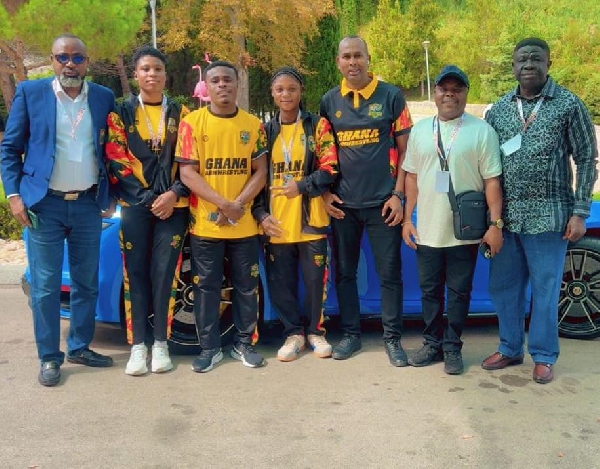


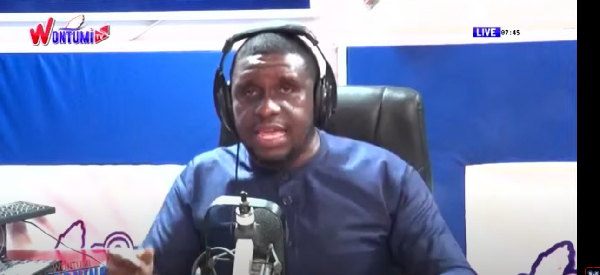


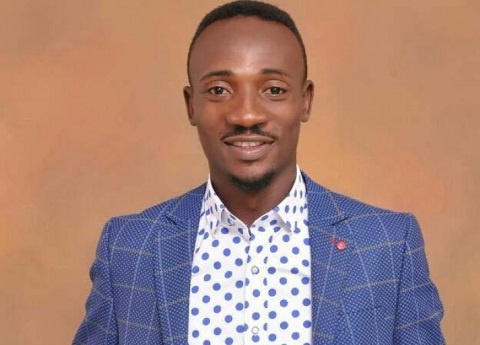

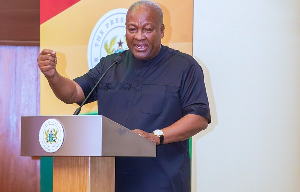

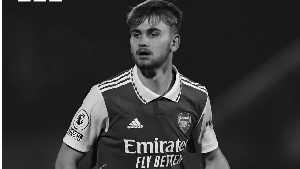


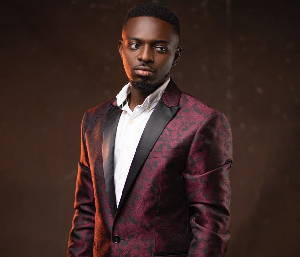

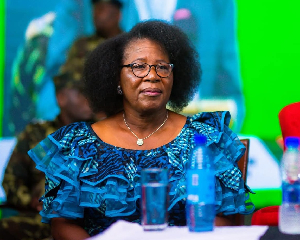
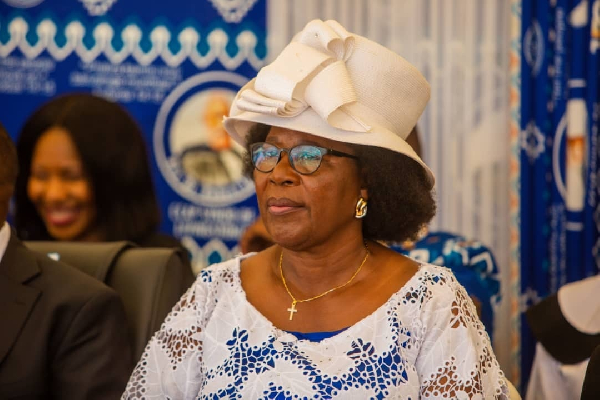
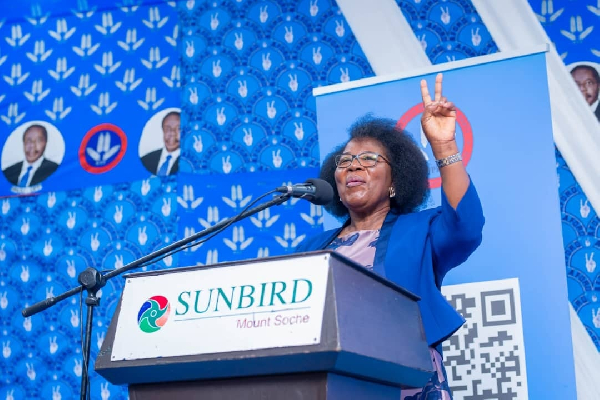
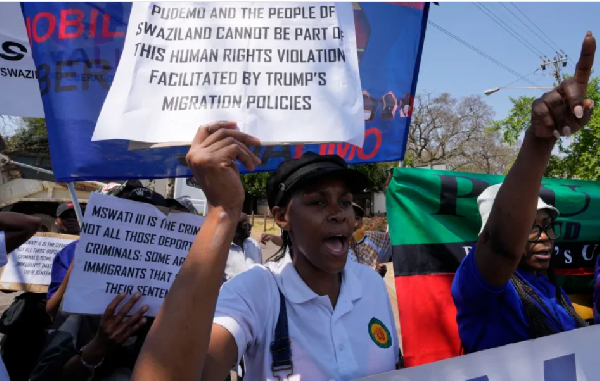


 As fashion designer Coco Chanel once said, “Fashion is not something that exists in dresses only. Fashion is in the sky, in the street, fashion has to do with ideas, the way we live, what is happening.” Sundays give women the chance to express that lifestyle through fashion that feels as good as it looks.


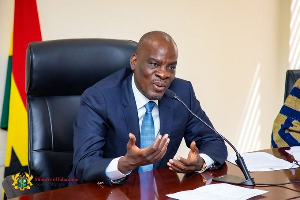



 2. Ankara Elegance


