Traders and business owners along the Santasi–Ahodwo stretch leading to the Santasi Roundabout in Kumasi have agreed to vacate the area following an evacuation notice issued by the Kumasi Metropolitan Assembly (KMA).
On Wednesday, September 24, the Assembly directed all individuals and businesses operating along the Santasi–Ahodwo road to relocate by October 30, 2025. The move is to pave the way for the construction of a dual carriageway funded by the Japanese International Cooperation Agency (JICA).
Those affected include car dealers, mechanics, taxi drivers, squatters, owners of temporary structures, and small business operators.
When Citi News visited the area on Thursday, September 26, several business owners acknowledged they were occupying the land temporarily and were aware of the road project.
Food vendor Ruth Acheampong said, “The construction of the road is not new to us. We have been waiting for it for some time now. We had an engagement with KMA last year where they mentioned that the matter would be revisited this September, but we only heard about the eviction notice in the news [on Wednesday].”
Another shop owner, Veronica Acquah, also noted, “We heard about the eviction notice in the news…although they engaged us somewhere last year. We have no objection because we are aware of the project.”
Amissah Emmanuel, who runs a pub at Dakodwom, added, “Even though I’m not happy about the eviction, it is important for the government to improve the road infrastructure.”
Some traders have appealed for compensation to ease their relocation. “We are pleading with the government to support us financially in order to make the relocation efforts easier,” Acheampong added.
But the KMA insists no compensation will be paid, stressing that the land is a government road reservation. The Assembly’s Public Relations Officer, Henrietta Afia Konadu Aboagye, explained: “So far, in the conversations we have had with JICA, there is no mention of compensation. This is because the place is a road reservation. KMA has not given anybody permit to stay in the road reservation.”
….
Explore the world of impactful news with CitiNewsroom on WhatsApp!
Click on the link to join the Citi Newsroom channel for curated, meaningful stories tailored just for YOU: https://whatsapp.com/channel/0029VaCYzPRAYlUPudDDe53x
No spam, just the stories that truly matter! #StayInformed #CitiNewsroom #CNRDigital
Deputy General Secretary of the National Democratic Congress (NDC), Mustapha Gbande, has cautioned party members that he will not participate in the 2028 election campaign if President John Mahama does not deliver on his mandate.
Speaking on Asempa FM’s Ekosii Sen, Mr. Gbande said the party’s fortunes are closely tied to President Mahama’s performance, stressing that any failure would have serious consequences for the NDC.
The Deputy Chief Executive of the Food Division of the Food and Drugs Authority (FDA), Roderick Kwabena Dadie Agyei, has revealed that heavy metal contamination found in some food and cosmetic products on the Ghanaian market is directly linked to illegal mining, popularly known as galamsey.
According to him, areas where galamsey is prevalent record the highest levels of Lead (Pb), Cadmium (Cd), and Mercury (Hg) in products such as turmeric, cereal mixes (Tom Brown), bentonite clay (“Ayilor”), kohl (“Kaji Kaji”), and certain skin-lightening creams and lotions.
Speaking on Eyewitness News on Friday, September 26, 2025, Mr. Agyei explained that farmers using polluted water from mining areas on their crops was a key driver of the contamination.
“The issue is the areas where these activities are going on and therefore polluting water, and that water is being used on our farms, knowingly or unknowingly. You can see the pictures when they put them on TV. By and large, you can see that illegal mining is playing a big role,” he said.
He stressed that the problem could only be solved by tackling galamsey itself and urged Ghanaians to unite against the menace.
“The interest should be that Ghanaians should talk to each other. You may have a brother, relatives or friend who may be into this practice. In the end, it is not making us safe when it finds its way into the food chain, and it is a serious thing.
“It is not the time to blame people but to look at ways of solving the problem. But one of the sure ways is to ensure that this illegal mining stops,” he urged.
A National Summary Report by the FDA confirmed alarming levels of heavy metals in certain foods and cosmetics. The report found that kohl had the highest contamination rate, with 77.79% of samples testing positive for lead.
The Upper East and Eastern regions recorded a 100% contamination rate for the product. Turmeric also recorded a 42.09% lead contamination rate, with the Greater Accra and Central regions topping the list.
Health Specialist at UNICEF Ghana, Rev. Dr. Emmanuel Kyerematen Amoah, warned of the serious health implications, particularly for children.
According to him, the smallest amount of lead in the body could damage children’s developing organs, reduce IQ, and cause kidney and heart-related diseases.
Mercury, lead found in Turmeric, Tom Brown – FDA report
The Gomoa East District Health Directorate of the Ghana Health Service (GHS) has denied media reports suggesting that 20 diarrhoea cases have been recorded in a coastal community within the district, allegedly linked to a water crisis following the temporary shutdown of the Ghana Water Company Limited’s headworks at Kwanyako.
In a statement, the Directorate categorically refuted the claims, stressing that an audit of health records on September 24, 2025, showed no such cases at the Fetteh CHPS Compound, contrary to earlier reports. It added that no adjacent health facility has recorded incidences of diarrhoea during the period under review.
“The data currently available to the Directorate does not support any assertion of an outbreak or abnormal increase in diarrhoea conditions across the district,” the statement noted.
The Directorate admitted that the district is facing challenges with potable water supply, but emphasised that the situation has not resulted in any public health emergency.
It said it continues to collaborate with local authorities and partner agencies to uphold sanitation and hygiene standards within health facilities and communities.
The release further assured that the district’s disease surveillance infrastructure remains fully operational, with monitoring mechanisms actively engaged across all sub-districts. It concluded that there is currently no epidemiological evidence to suggest the emergence of any waterborne disease cluster in Gomoa East.
….
Explore the world of impactful news with CitiNewsroom on WhatsApp!
Click on the link to join the Citi Newsroom channel for curated, meaningful stories tailored just for YOU: https://whatsapp.com/channel/0029VaCYzPRAYlUPudDDe53x
No spam, just the stories that truly matter! #StayInformed #CitiNewsroom #CNRDigital
Some private businesses and industries in the Ashanti region are demanding a review of the mandatory quota paid to the government on allowances of National Service personnel posted to their facilities.
The businesses are mandated to pay a 20 per cent quota on all allowances of the fresh tertiary graduates recruited to their facilities, which, they argue, is presenting additional costs to their operations.
Chairman of the Association of Ghana Industries in the Ashanti, Bono, Ahafo, and Bono-East regions, Akwasi Nyamekye, is requesting a reduction in the percentage quota.
Speaking on the sidelines of the Annual General Meeting of the association in Kumasi, Mr Nyamekye said the imposition is unfair.
“They should bring it to 10% or 5% for us to take more. Though we are training the guys on behalf of the government, they are still charging us for that. I think it’s unfair,” he noted.
Mr Nyamekye argued that, for agreeing to admit fresh university graduates into their companies for the mandatory service, it is only fair that the government cuts the levy.
“Every year, I have an arrangement with universities in Kumasi [KNUST and KsTU] to take students on internships. When I take a national service personnel and I pay the allowance, sometimes more than the stipulated allowance, and I have to go and pay 20% of the allowance to the secretariat. I think, it is too much,” he noted.
Already, the association has arranged for the secretariat to consider a review of the allowance, awaiting immediate announcement of a reduction.
DISCLAIMER: The Views, Comments, Opinions, Contributions and Statements made by Readers and Contributors on this platform do not necessarily represent the views or policy of Multimedia Group Limited.
DISCLAIMER: The Views, Comments, Opinions, Contributions and Statements made by Readers and Contributors on this platform do not necessarily represent the views or policy of Multimedia Group Limited.
Entertainment pundit, MC Portfolio, has expressed concerns over what he describes as an inferiority complex being a silent killer to most Kumasi-based musicians.
In a video shared by Zionfelix on Instagram on September 26, 2025, MC Porfolio noted that musicians from Kumasi often feel timid and intimidated when they find themselves among other musicians.
MC Porfolio explained how key industry players have personally told him how Kumasi-based musicians struggle in the creative arts industry because of their background.
‘It’s time to ban politicians from using ‘pipeline’ in speeches’ – MC Portfolio
“Inferiority complex is one thing that is killing musicians in Kumasi, and I think it is time we fight against it. I have had many complaints from industry professionals who personally told me that you won’t survive in the industry if you claim to be from Kumasi,” he said.
The entertainment pundit further called on the media to support creatives without necessarily being selective.
“I am also talking to the media. We should play a role and shape the narrative. There are a lot of rappers and creatives here who will make it big on international stages, but the reports from our media are designed to affect them negatively,” he added.
Watch the video below:
JHM/JE
Watch as Ghanaians share their favorite Highlife tunes
Two individuals, Albert Okai and Amoako Darko, have been sentenced to three months’ imprisonment with hard labour at the Nsawam Medium Security Prison for illegally dumping refuse near the Accra Post Office.
The pair pleaded guilty to the offence and were each fined 50 penalty units, equivalent to GH¢600.
Upon failing to pay the fine, they were ordered to serve their jail terms.
A third accused person, Michael Osei, pleaded not guilty and has been remanded in custody for one week.
He is scheduled to reappear in court for the continuation of his case.
Sanitation to determine MMDCEs’ performance – Local Government Minister
Speaking after the judgment, the Chief Executive Officer of the Accra Metropolitan Assembly (AMA), Michael Kpakpo Allotey, stated that the convictions are part of ongoing enforcement efforts to curb indiscriminate refuse dumping in the city.
He added that conviction is a testament to the consequences for those who violate the assembly’s sanitation by-laws, aimed at protecting public health and maintaining a clean environment.
“This is a warning to all. We will not tolerate actions that undermine the cleanliness of our city,” Allotey said.
The mayor announced plans to launch a 24-hour cleaning initiative to tackle Accra’s sanitation challenges.
He added that anyone caught littering within the metropolis would face prosecution in line with the law.
Assemblies to submit monthly sanitation reports under new directive
Allotey urged residents, traders, and visitors to comply with sanitation by-laws by using designated bins and authorised collection services, avoiding open dumping and littering, supporting community clean-up activities, and promptly reporting offenders to the AMA’s taskforce to help keep Accra clean.
GA/AE
3 Attorney Generals ‘divided’ over Torkornoo’s removal:
TWI NEWS
Martin Amidu breaks silence on removal of Gertrude Torkornoo
Two Companies to Fifteen Houses Allegations: Abronye DC details ordeal with police during arrest
Donald Kaberuka, African Union High Representative for the Peace Fund
Rwandan mineral exporters are upbeat that the tax exemption announced by the US earlier in September on exports of minerals such as tungsten and gold, eyeing increased revenues due to the policy, even as experts warn that the move will be detrimental to Africa’s growth.
In a policy seen as motivated by the need to stock up critical minerals that the US needs, President Donald Trump’s administration has exempted gold, tungsten, uranium, and graphite from global tariffs.
The Trump administration said the exemption is “necessary and appropriate” to address a “national emergency” cited when the tariffs were first imposed.
China’s restriction on the export of rare earth minerals created supply-chain disruptions, increased costs, and delays for the US automotive and defence industries, which heavily relied on Chinese processing.
Innocent Kagenga, chair of the Rwanda Mining Association, termed the development positive, noting that it would definitely increase prices.
“We export gold, and we have the Gasabo Gold Refinery. Having a tax-exempt market at this time will positively impact our exports. We have been buying gold at good prices, and we export refined gold, attracting a higher price,” said Kagenga.
Gasabo was put under European Union sanctions in March, amid the takeover of some eastern Congo territory by the AFC/M23 rebels.
Experts say waiving taxes on minerals from Africa seems to be one of the ways the US is remedying the problem of relying on China. The Trump White House stated the move is essential for securing supplies vital to American economic security.
In addition to precious metals, uranium, tungsten, and graphite are strategic inputs for the aerospace, electronics, medical device, and energy sectors.
Analysts critical of Africa’s continued export of its minerals to the West have, however, warned that this is a ploy by the US to stockpile critical minerals it needs to power its growth, and selling off the continent’s minerals to the West might one day lead to depletion of the resources it needs for its energy resources and industrialisation.
“Africa’s strategic minerals must first serve Africa’s own energy transition and industrialisation. The illusion of abundance is simply because we are not industrialising fast enough, and 800 million Africans are trapped in energy poverty,” said renowned economist Dr Donald Kaberuka, who is the African Union High Representative for the Peace Fund.
He said a time will come when African countries will have to import, at a much higher price, the very minerals they are now exporting — leaving the continent with no choice but to spend heavily, as those minerals will be needed for its development.
Uranium is one of those minerals economists say African countries will regret exporting.
Used in the production of nuclear energy, uranium is seen as the shortcut to Africa overcoming its energy poverty.
Yet African countries continue to export it to the US, Russia, and other Western countries, some of which are stockpiling it for use in the future.
Niger, Namibia, and South Africa make up 20 percent of the global uranium deposits, but all these countries export their uranium ores.
Niger, the world’s seventh-largest producer, exported uranium worth $204 million to France in 2023, a 51 percent increase from what it exported in 2022.
When asked if the unregulated export of critical minerals would not lead to depletion, Kagenga said, “We can’t say that they can be depleted in the coming years; for now, the focus is on exporting, as we wait for the industries. We will continue to mine and export until the time comes when our industrialisation is much developed.”
Bryan Acheampong says the endorsement of Dr. Bawumia by 15 Eastern Region MPs will not affect his chances, insisting his support from over 20,000 delegates remains solid.
Former Minister for Food and Agriculture, Bryan Acheampong, has downplayed the declaration of support by 15 Members of Parliament (MPs) in the Eastern Region for former Vice President Dr. Mahamudu Bawumia, insisting it will not affect his chances of winning the majority of delegates in the region.
Former President of Ghana, John Agyekum Kufuor, has called for the establishment of a pan-African media powerhouse to help unite the continent and reshape the global narrative about Africa.
Speaking passionately at the Broadcasting at the Crossroads forum, hosted by the Africa Media Bureau in Accra on Friday, September 26, he emphasised the urgent need for Africans to tell their own stories—stories that reflect the true identity, challenges, and potential of the continent.
Using Accra as a potential hub, Kufuor envisioned a media house that connects Africans across linguistic and regional lines, fostering deeper understanding, cultural exchange, and continental integration.
“If the professional media people will find a way to establish a powerful media agency, say here in Accra—very African—to tell African stories, not just political, it could be economic, it could be social, it could be entertainment, it could be trade, it could be industry. I tell you, before you know it, the African in Nigeria, Nairobi, or South Africa—we would do better.”
Kufuor said that was because Africa was still largely defined by external media, with its people often consuming narratives that do not originate from within the continent.
He stressed that this external definition continues to distort Africa’s image, slow its progress, and fragment its identity.
“Poor Africa so far has tended to be defined from outside. We are seeking our identity,” the former President remarked. “For instance, now we are forming things like AfCFTA, but it tends to be just talk, talk… But then digitalisation, global technology—they are evading us.”
He noted that although technology has reached even the remotest villages, African control over digital platforms remains minimal. “We talk platforms. How many of the platforms are managed and driven by us?” he asked, highlighting the lack of African ownership in digital spaces.
Kufuor also pointed to lingering colonial-era divisions, such as language barriers, that continue to hinder African unity. “We still are locked into the blinkers of colonialism. We are Anglophone, my cousin in Côte d’Ivoire is Francophone, the next person is Lusophone—we do not know ourselves,” he said.
“You stop the person in Accra and you want to discuss something in Nigeria—you’d be lucky if this person knows anything,” he said, underscoring the disconnect between African countries.
Read also
Ghana to review broadcasting policy to address digital convergence – Sam George
The Electricity Company of Ghana (ECG) has declared that there is no more erratic supply of power, commonly known as dumsor, in Ghana.
ECG confidently claimed that Ghanaians are now saying that they are hurting their eyes with the lights.
The Electricity Company of Ghana (ECG) is quoted by JOYNEWS to have stated, “Ghanaians now say we’re hurting their eyes with the lights; there is no dumsor”
DJ Slim, Nana Poku Ashis and Lekzy DeComic will be pundits on the show
Over the years, many creatives have on many occasions, spoken up about the struggles they face in the entertainment industry and how crucial support is needed to help boost the creative arts industry.
However, the question stands, why always government? Can the private sector take up the brunt and help boost the creative arts industry?
Join the team at GhanaWeb tonight, September 26, 2025, as top DJ and entertainment pundit DJ Slim, talent manager Nana Poku Ashis, and stand-up comedian Lekzy DeComic come around to discuss the creative arts industry and how it can progress with or without the help of an overburdened government.
The show will be hosted by GhanaWeb’s Isaac Dadzie and Joseph Henry Mensah at 6pm only on X Spaces.
Prince Hari Crystal, a member of the Executive Council of the Ghana Independent Broadcasters Association (GIBA), has called for urgent reforms to strengthen public service broadcasting in Ghana.
Speaking at the “Broadcasting at the Crossroads” forum organised by the Africa Media Bureau at the Alisa Hotel on Friday, September 26, 2025, he stressed the need to transform the state-owned broadcaster into a genuine public service institution capable of complementing the work of commercial media houses.
“We have the issue of public service broadcasting and the current state, as we have it as the state-owned broadcaster. It needs to move from where it is to a true type of public service broadcaster.
“That helps to complement some of the things that commercial broadcasters will not cover. It fosters growth, cohesion, and many things that inure to the benefit of the state,” he explained.
To achieve this, Mr. Crystal proposed the creation of a media development fund alongside a new legal framework to replace the outdated TV licensing regime.
“We have suggested that there should be a media development fund and we should also find a way to change the old law of the TV licensing regime into a new law that allows for a more ring-fenced arrangement where everybody can contribute so that the state-owned media can become truly independent and not rely on subventions from government,” he said.
Adom-Otchere calls for special courts to handle media-related cases
Music legend 2Baba has celebrated his mother, Mrs. Rose Idibia, on her 70th birthday, describing her as “simply amazing.”
In a heartfelt clip shared on Instagram, he expressed deep love and gratitude, thanking God for the gift of her life.
2Baba also promised a grand celebration in Abuja and called on fans to join him in wishing his mother a happy birthday.
He wrote, “Words cannot capture what I feel and wish for u, my beautiful mother. Today is your special day. I thank the Almighty God for the blessing
According to a report by GhanaWeb, Captain Smart, host of Onua Maakye on Onua TV, has called for the removal of Attorney General and Minister of Justice Dr. Dominic Ayine, citing his inaction on repealing LI 2462, the legislation permitting mining in forest reserves.
The media personality pointed to Ayine’s involvement with the law during his tenure as Chairman of the Subsidiary Legislation Committee in the 8th Parliament, when the law’s wording was amended to allow its passage.
Captain Smart argued that this history has contributed to the ongoing issues with illegal mining, as over two thousand small-scale mining licenses were issued within eight months following the law’s enactment.
While acknowledging that Ayine was in the opposition when the law was initially passed, Captain Smart stressed that his current position as Attorney General gives him the authority to act.
“If this Attorney General does not go, I swear to God, they can’t fight it. Whoever believes he is a man should come for a bet. Because from the very moment Dominic Ayine sat on the Subsidiary Legislation Committee and changed the wording to enable that law to come into fruition, President Akufo-Addo and Mr Ayisi, the then-Minerals Commission CEO, issued over two thousand small-scale mining licenses in a space of eight months,” he said.
He questioned why, after nine months in office, Ayine had not initiated the repeal, pointing to precedents such as the E-Levy and Emission Levy, which were successfully repealed by other government officials.
Captain Smart criticized Ayine for allegedly allowing forest reserves to be exploited for gold and illegal mining activities, despite government intentions under President John Dramani Mahama to repeal the law.
He questioned why the repeal documents remain unaddressed on the Attorney General’s desk.
The host also expressed support for the government’s declaration of a state of emergency on water bodies aimed at combating illegal mining.
Critics have increasingly called on the administration to act decisively against the threat posed by LI 2462, which they argue has fueled environmental degradation in Ghana’s forests and water bodies.
This Saturday on Newsfile, Ghana’s rivers are choking, power lines are under attack, and taps are running dry, while on the streets, young voices cry out against what they call abuse of power. Two national crises, one question: Is Ghana’s leadership truly in control?
The galamsey menace has transformed into a national emergency. A new study reveals poisoned crops and fish in mining communities, threatening food security and public health.
GRIDCo warns its transmission towers are being occupied by illegal miners, some even firing shots at engineers trying to keep the lights on.
Water security is collapsing. Turbidity levels in rivers feeding treatment plants have surged so high that facilities at Sekyere Hemang and Daboase are shutting down, leaving communities like Cape Coast and Elmina grappling with prolonged shortages. For many families, the only available water is muddy, unsafe, and laced with toxins.
The government insists it is responding. The Lands Ministry says it will designate rivers and reserves as national security zones, deploy permanent forces, and points to over 1,400 illegal miners arrested this year, nearly double what the Akufo-Addo government achieved in three years. But with rivers still unfit for treatment and taps still dry, the question remains: is this a decisive war on galamsey, or more of the same rhetoric?
Meanwhile, Ghana’s political arena is heating up. Under the banner “YɛnSuroAhunahuna”, New Patriotic Party youth have taken to the streets, protesting what they describe as state-sponsored harassment and abuse of power.
Their grievances include the detention of party members and the selective use of state institutions against opponents. Petitions have been filed, demands have been issued, and the protest movement is swelling, testing not just the ruling party’s unity, but the resilience of Ghana’s democracy itself.
Join Samson Lardy Anyenini this Saturday at 9 a.m. on JoyNews, JoyFm 99.7, and MyJoyOnline, as we unpack whether the government is winning the fight against galamsey, and whether the growing unrest in the NPP signals a deeper crisis in governance.
Newsfile airs live on the JoyNews channel on digital satellite channels 421 on DSTV and 144 on GoTV, and streams on JoyNews’ Facebook or YouTube channels on Saturdays from 9 am to noon.
Viewers can also follow the discussion by tuning in to Joy 99.7 FM or Luv 99.5 FM on the radio or stream the discussion live on either Google or Apple Podcasts.
Newsfile is your most authoritative news analysis programme.
DISCLAIMER: The Views, Comments, Opinions, Contributions and Statements made by Readers and Contributors on this platform do not necessarily represent the views or policy of Multimedia Group Limited.
DISCLAIMER: The Views, Comments, Opinions, Contributions and Statements made by Readers and Contributors on this platform do not necessarily represent the views or policy of Multimedia Group Limited.
Professor of Finance at the University of Ghana Business School (UGBS), Prof. Godfred Bokpin, has backed the World Bank’s position that Ghana’s 2022 economic collapse was largely the result of homegrown vulnerabilities rather than global shocks such as COVID-19 or the Russia-Ukraine war.
Speaking on JoyNews’ Top Story Friday, Prof. Bokpin described Ghana’s economic downturn as an “accident waiting to happen,” stressing that structural flaws and fiscal mismanagement had set the stage long before the pandemic.
“The World Bank is right. I think my considered view, we have moved on. This is a settled matter, because we had affirmed this position time and again since, actually the third quarter of 2021 when we saw the vulnerability. Of course, the position has been that our economy was heading dangerously.
“COVID only fast-tracked it. It was an accident waiting to happen. So COVID did not initiate our vulnerability; COVID-19 exacerbated it. COVID-19 magnified the existing vulnerability, and then Russia-Ukraine was more or less like the icing on the cake,” he explained.
Prof. Bokpin said the real crisis began when Ghana lost access to the international capital markets in 2021, after investors detected cracks in the economy.
“Nobody, per the data, could convince us that Ghana’s debt-induced macroeconomic instability essentially started from the third quarter of 2021. The investors had seen the cracks,” he noted.
He recalled that even in 2019, the government’s own debt sustainability analysis had confirmed that nearly all indicators were breached.
However, he accused the state of treating significant debts as “below budget line” or “off-balance sheet,” including loans taken by state enterprises such as Cocobod, to give the false impression of stability.
“Remember, the biggest issue at that time was about debt accountability and transparency. We were creating the impression that our debt was sustainable, but that wasn’t the case,” he said.
The professor pointed to the Bank of Ghana’s role in financing the government expenditure after market access was lost, revealing that the central bank printed over GH¢40 billion.
“The exposure of the government to the Bank of Ghana in terms of overdraft and related arrangements came to about GH¢77.6 billion, which had to be restructured,” he added.
He explained that by the time the International Monetary Fund (IMF) stepped in, Ghana’s debt-to-GDP ratio in present value terms had climbed to 109 per cent, far beyond sustainable thresholds. At the same time, liquidity indicators such as the debt service-to-revenue ratio, which should have remained below 18 per cent, were already between 22 and 25 per cent.
According to him, even before COVID-19 struck, Ghana’s fiscal vulnerabilities were apparent but concealed by borrowing from international markets.
“Once we lost market access, we became exposed, not only internationally but domestically. We were priced out in terms of medium- to long-term bonds and had to rely solely on Treasury bills,” he explained.
Prof. Bokpin added that Ghana’s collapse was the inevitable result of weak debt management, poor accountability, and fiscal indiscipline.
“It is not necessarily COVID that exposed us. We had created this, and it was just a matter of time,” he stressed.
DISCLAIMER: The Views, Comments, Opinions, Contributions and Statements made by Readers and Contributors on this platform do not necessarily represent the views or policy of Multimedia Group Limited.
DISCLAIMER: The Views, Comments, Opinions, Contributions and Statements made by Readers and Contributors on this platform do not necessarily represent the views or policy of Multimedia Group Limited.
Kofi Kinaata (L) and Donzy (R) worked on the Crusade project together
Ghanaian Hiplife artiste and songwriter, Donzy Chaka, has revealed that his longtime friend and colleague, Kofi Kinaata, has never compensated him for their joint project “Crusade.”
Speaking in an interview on Oyerepa Entertainment Review hosted by Francisca Intsiful, Donzy made the disclosure when asked whether he received payment for his collaboration with Kinaata.
“Up till now, Kofi Kinaata hasn’t paid me a penny from the Crusade we did,” Donzy stated, making it clear that despite the success of the song, he did not benefit financially.
The “You and the Devil” hitmaker, however, did not disclose whether the issue has affected his relationship with Kofi Kinaata in the industry.
He also made it clear that the “It’s Finished” Hitmaker is not his (Donzy) friend, contrary to what many people perceive them to be.
“Kofi and I are not friends. We always pretended as if we were friends, but we’re not,” he added.
Meanwhile, Donzy Chaka is back on the music scene with a brand-new single titled “Problem” featuring Highlife sensation Fameye.
The track, which blends hip-life rhythms with modern highlife melodies, is already gaining traction across all major Digital Streaming Platforms (DSPs).
Former president, John Agyekum Kufuor has explained the urgent need for Africans to tell their own stories in ways that reflect the true identity, challenges, and potential of the continent.
Speaking at the Broadcasting at the Crossroads forum, hosted by the Africa Media Bureau in Accra on Friday, September 26, 2925, Kufuor said the establishment of a pan-African media house would promote deeper understanding, cultural exchange, and continental integration.
Ex-President Kufuor ‘taunts’ late Akua Donkor’s running mate
“If the professional media people will find a way to establish a powerful media agency, say here in Accra, very African, to tell African stories, not just political, it could be economic, it could be social, it could be entertainment, it could be trade, it could be industry. I tell you, before you know it, the African in Nigeria, Nairobi, or South Africa, we would do better,” Kufuor said.
He lamented that Africa continues to be defined by external media, a situation that distorts the continent’s image, hampers progress and fragments its identity.
Despite advances in digitalisation and technology reaching even the remotest villages, Kufuor stressed that Africans control very few platforms of their own.
He also pointed to colonial-era divisions, particularly language barriers, as key obstacles to African unity.
Kufuor cautions NPP supporters against insults and divisiveness ahead of 2028 polls
“We still are locked into the blinkers of colonialism. We are Anglophone, my cousin in Côte d’Ivoire is Francophone, the next person is Lusophone, we do not know ourselves,” Kufuor added.
JKB/JE
3 Attorney Generals ‘divided’ over Torkornoo’s removal:
Charles Mwesigwa 9known locally as Abbey) sourcing women for high-end parties
Warning: Contains disturbing content and graphic descriptions of sexual acts
The BBC understands the boss of a degrading sex-trade ring that exploited vulnerable women in Dubai’s most glamorous neighbourhoods has been detained in the United Arab Emirates.
Charles “Abbey” Mwesigwa, who was identified in a recent BBC investigation as running the network, was filmed telling an undercover reporter he could provide women for a sex party at a starting price of $1,000 (£750).
He also said the women could do “pretty much everything” clients wanted them to and said he was a former London bus driver.
It is not clear what charges – if any – Mwesigwa is facing in the UAE and the country’s authorities have not yet made a public announcement about the case.
But a Dubai law firm contacted by the BBC said they had received confirmation that Mwesigwa was in custody at the Central Prison Centre in Al Awir, Dubai.
They said a red notice had been issued against Mwesigwa by Interpol Uganda.
A red notice is a request to police worldwide to detain someone pending extradition.
The Ugandan embassy in the UAE’s capital Abu Dhabi last week issued a statement that said “investigations of human trafficking are ongoing and action has been taken by the authorities of the UAE”.
The BBC understands this statement is connected to Mwesigwa’s detention.
The BBC World Service investigation featured testimonies from young Ugandan women who said they travelled to Dubai in the UAE with promises of jobs and opportunities, only to find themselves indebted and forced into prostitution.
In some cases, the women said they believed they were travelling to the UAE to work in places like supermarkets or hotels. Prostitution is illegal in Dubai.
At least one of Mwesigwa’s clients regularly asked to defecate on the women, according to “Mia”, whose name we have changed to protect her identity, and who said she was trapped by Mwesigwa’s network.
Mwesigwa has denied all the allegations made in the BBC’s investigation. He said he helped women find accommodation through landlords, and added that women followed him to parties because of his wealthy Dubai contacts.
“I told you I am just a party person who invites big spenders to my tables, hence making many girls flock [to] my table. That makes me know many girls, and that’s it,” he said.
The investigation by the BBC also found that two women linked to Mwesigwa, Monic Karungi and Kayla Birungi, died after falling from high-rise apartments.
One of the women who lost her life, Monic Karungi, arrived in Dubai from western Uganda
At the maiden National Dialogue on Decentralisation and Responsive Governance in Accra, Vice-President Professor Naana Jane Opoku-Agyemang has admonished Metropolitan, Municipal, and District Assemblies (MMDAs) to strictly observe accountability regimes in the use of the District Assemblies Common Fund (DACF).
Speaking under the theme “Resetting Decentralisation for Responsive Local Governance and Effective Service Delivery,” Prof. Opoku-Agyemang said the government’s decision to disburse over GH¢2 billion to MMDAs, despite a tight fiscal environment, demonstrates its commitment to deepening local governance.
Executive Secretary of the National Media Commission (NMC), George Sarpong, has said that the Supreme Court misunderstood the policy and technological orientation behind the Commission’s content regulation framework when it struck it down in 2016.
Addressing the Africa Media Bureau’s “Broadcasting at the Crossroads” forum in Accra on Friday, September 26, 2025, Mr. Sarpong said the Court’s ruling—which held that the NMC’s content regulatory instrument amounted to censorship—did not reflect the true philosophy behind the law.
“Significant numbers of the Courts have told us in private that they didn’t understand the policy orientation, they didn’t understand the technology,” he revealed.
He explained that the NMC’s framework was designed to complement existing technical rules under the Electronic Communications Act by providing behavioural oversight across broadcasting content. However, the Court’s decision left Ghana without a clear legal mechanism for content regulation, a vacuum he said has undermined effective governance of the sector.
Interestingly, Mr. Sarpong noted that just seven months after Ghana’s Supreme Court struck down the NMC’s framework, Germany passed a similar law widely known as the “Facebook Law.” This legislation became the basis for the European Union’s Digital Services Act, which is now a global benchmark for regulating digital platforms.
“In November 2016 our law was struck down. By June 2017 the Germans had already started talking to us about the philosophy of that law. Today, what Germany did has become the Digital Services Act for the entire EU. In the UK, they have passed a similar piece of legislation called the Online Safety Act,” he said.
Mr. Sarpong argued that Ghana was ahead of its time in developing content regulation for broadcasting but lost momentum due to the Court’s misreading.
“The philosophy that was rejected here has become the global standard,” he stressed, urging a national rethink on how to regulate media content in the digital age.
Read also…
763 Radio Stations authorised, 224 not operating – NCA
The Acting Managing Director of the Electricity Company of Ghana (ECG), Julius Kpekpena, has disclosed significant strides made by the company in addressing internal challenges and enhancing operational performance.
According to Mr. Kpekpena, ECG has successfully retrieved more than 1,000 containers that had gone missing in the early part of 2025.
Friday marks World Tourism Day, and Ghana has plenty to celebrate. New government figures show international visitors pumped a massive GHS15.42 billion into the economy – yet most Ghanaians can’t afford to explore their own country because hotels charge what tourists pay.
Here’s the irony: while Ghana welcomes record numbers of international visitors, accommodation costs have soared to nearly $500 per week, pricing out locals who might spend a weekend discovering their heritage sites.
The Ghana Statistical Service (GSS) dropped some eye-opening numbers this week. Between late 2022 and September 2023, overnight tourists – who made up 98.6% of all visitors – spent GHS15.18 billion. Day-trippers added another GHS24 million. These are the first official figures showing just how much tourism means to Ghana’s wallet.
Things are picking up steam too. August alone brought 112,000 passengers through Ghana’s airports. Cape Coast’s slave forts draw visitors from around the world, Kakum’s canopy walks thrill adventure seekers, and Accra’s festivals showcase culture that tourists can’t find anywhere else.
But here’s where it gets complicated. Those same hotel rates that international visitors happily pay – around ₵700 per night for regular hotels, ₵300-400 for budget options – put domestic tourism out of reach for many Ghanaians. A simple three-day getaway becomes a serious financial commitment.
The numbers tell an uncomfortable story. Tourism revenue surged, passenger arrivals climbed, yet domestic tourism managed just 19% growth in 2024 despite obvious local interest. Something doesn’t add up.
Think about what Ghana’s missing out on. Domestic tourists don’t need flights, don’t require visa processing, and travel year-round instead of following seasonal patterns. They’d visit family, explore different regions, and spend money in local communities that international tourists might never reach.
“The untapped domestic market represents more than just economic potential,” industry watchers often say, and they’re right. Local travelers would strengthen supply chains, support small businesses, and create jobs in every region. More importantly, Ghanaians would discover their own country’s incredible diversity.
The problem runs deeper than expensive hotels. Roads to tourist sites need work, attractions lack proper maintenance, and traffic around Accra can kill any weekend travel plans. Add relatively low average incomes, and domestic tourism becomes a luxury most families skip.
Meanwhile, international tourists keep coming because Ghana delivers exactly what they’re seeking – authentic African culture, historical significance, and hospitality that makes visitors feel welcome. The country has successfully positioned itself as West Africa’s cultural hub, and the investment in that reputation is paying off.
The accommodation sector reflects this focus. Hotels cater to international standards and charge accordingly, creating a two-tier system where world-class facilities serve overseas visitors while locals search for affordable alternatives that barely exist.
Regional competition makes this domestic market gap more concerning. As neighboring countries develop their tourism offerings, Ghana needs every advantage it can find. A strong domestic base would provide stability when international travel faces disruptions – something the pandemic taught everyone about tourism’s volatility.
Government data shows overnight visitors heavily outspend day-trippers, suggesting longer stays generate more economic impact. Domestic tourists could follow similar patterns if accommodation costs weren’t so prohibitive. Weekend trips could become week-long vacations if the pricing made sense.
Infrastructure improvements would benefit everyone. Better roads to Kakum, improved facilities at Elmina Castle, and reduced traffic congestion around major attractions would enhance experiences for international and domestic visitors alike. The question is whether Ghana can balance premium international appeal with domestic accessibility.
Some solutions seem obvious. Mid-range hotels targeting local travelers, tourism packages designed for Ghanaian budgets, and promoting secondary destinations beyond Accra and Cape Coast could open up domestic market potential.
World Tourism Day celebrations this year highlight both achievement and opportunity. Ghana has built an impressive international tourism sector that generates billions and employs hundreds of thousands. The next challenge involves ensuring Ghanaians can participate in exploring their own remarkable country.
The irony shouldn’t be lost: Ghana markets itself globally as a destination where visitors can connect with African heritage and culture, yet many Ghanaians can’t afford to experience these same attractions. Solving this contradiction could unlock tourism’s full potential while ensuring the benefits reach every corner of the country.
Former President John Agyekum Kufuor has raised concerns over Africa’s growing exclusion from the global digital and technological revolution, calling for urgent steps to redefine the continent’s identity and control its own narrative.
Speaking at the high-level media forum held at the Alisa Hotel in Accra by the Africa Media Bureau on Friday, September 26, the former President lamented Africa’s continued reliance on external systems, languages, and narratives, despite growing initiatives like the African Continental Free Trade Area (AfCFTA).
“Poor Africa so far has tended to be defined from outside. We are still seeking our identity,” Kufuor said. “We talk about AfCFTA, but it tends to be just talk. Meanwhile, digitalisation and global technology are evading us.”
He pointed out that while conversations around platforms and digital innovation are becoming common, the actual control and development of these technologies often remain in the hands of non-Africans.
“You go to any village, we see these things, we talk about platforms – but how many are managed and driven by us?” he asked. “We are still locked into the blinkers of colonialism.”
Kufuor also criticised the lingering colonial divisions that continue to fragment the continent along linguistic lines. “We are Anglophone. My cousin in Côte d’Ivoire is Francophone. The next person is Lusophone. We don’t know ourselves,” he said, noting that even among neighbouring countries, there is limited cultural or practical knowledge about one another.
“If you stop someone in Accra to discuss something happening in Nigeria, you’d be lucky if they know anything,” he added.
To address this gap, the former President proposed the creation of a pan-African media agency, headquartered in Accra or any other major African city, to take charge of telling the continent’s own stories — beyond politics.
“If the professional media people can establish a powerful media agency — very African — to tell African stories, not just political, but economic, social, entertainment, trade, industry, I tell you, before long the African in Nigeria, Nairobi, or South Africa [will connect better],” he said.
Read also…
New and Traditional Media must face same standards – Sam George
Recently evicted Big Brother Naija Season 10 housemate, Thelma Lawson, has shed light on why her much-anticipated friendship with fellow contestant Isabella never blossomed in the house.
Thelma, who was evicted on Saturday night alongside Bright Morgan in a surprise double eviction, disclosed in her post-show interview that the misunderstanding stemmed from her closeness with Kayinkunmi, a housemate she already knew before the competition.
Lands Minister Emmanuel Armah-Kofi Buah has declared forests and rivers as Security Zones in Ghana’s intensified anti-galamsey fight, with NAIMOS task force set for permanent deployment.
The Minister for Lands and Natural Resources and Acting Minister for Environment, Science and Technology, Emmanuel Armah-Kofi Buah, has reaffirmed government’s unwavering commitment to ending illegal mining (galamsey), announcing that all forest reserves and river bodies have now been designated as Security Zones to be protected at all costs.
Ghana’s broadcasting sector confronts an existential crisis as nine out of ten television and radio stations operate at a loss while the government simultaneously ends free Digital Terrestrial Television (DTT) operations that could affect over 45 stations nationwide.
Paul Adom-Otchere, former Ghana Airports Company Limited Board Chairman and veteran broadcaster, delivered stark warnings at Friday’s “Broadcasting at the Crossroads” forum, revealing that traditional advertising models have fundamentally collapsed. His assessment comes as Minister Sam George declared government can no longer shoulder the complete financial burden of operating the country’s DTT network.
The timing creates perfect storm conditions for Ghana’s media landscape. While local broadcasters struggle with revenue decline, global broadcast TV advertising revenue is declining 9.3% to $32.83 billion in 2025, indicating worldwide industry disruption rather than isolated Ghanaian challenges.
“Right now in Ghana, 90% of TV and radio stations are running at a loss because advertising is not working anymore,” Adom-Otchere stated during the Africa Media Bureau-hosted forum at Alisa Hotel in Accra. The revelation coincides with government policy shifts that eliminate crucial operational subsidies.
The crisis reflects broader digital transformation pressures across African media markets. Connected TV advertising revenues are projected to reach $51 billion globally by 2029, equal to 45% of traditional broadcast TV advertising, highlighting the fundamental shift toward digital platforms that many Ghanaian stations cannot effectively monetize.
Adom-Otchere, who also serves as Metro TV General Manager and hosts “Good Evening Ghana,” identified content monetization as the sector’s only viable survival strategy. Many broadcasters have already pivoted to YouTube channels for revenue generation as traditional advertising streams evaporate.
“Radio and TV stations are opening YouTube channels and putting their content there because that is how they get money,” he explained, describing a desperate adaptation to digital-first consumption patterns that favor international platforms over local broadcasters.
The government’s DTT policy reversal compounds existing financial pressures. The Ministry of Communication, Digital Technology, and Innovation is reviewing Ghana’s broadcasting policy framework to better reflect digital convergence realities, but immediate relief appears unlikely for struggling stations.
Former President John Agyekum Kufuor, speaking at the same forum, called for establishing a powerful pan-African media agency based in Accra to reshape how the continent is portrayed globally, suggesting continental solutions for industry challenges that transcend national boundaries.
The broadcasting collapse threatens media plurality in Ghana’s democracy. Adom-Otchere warned that financially vulnerable stations face potential political capture as desperate operators seek alternative funding sources that could compromise editorial independence.
“The danger is that they will be overtaken by politicians and politics,” he cautioned, highlighting democratic implications beyond economic concerns. The warning carries particular weight given Ghana’s upcoming electoral cycles and media’s crucial role in democratic discourse.
Industry observers note the paradox of declining local media while international streaming services gain African subscribers. French broadcaster Canal+ recently completed a $2.9 billion takeover of MultiChoice Group, demonstrating foreign confidence in African content markets that local players struggle to access.
The crisis extends beyond commercial broadcasting to public interest journalism. As traditional revenue models collapse, investigative reporting and local news coverage face particular vulnerability, potentially creating information gaps in rural communities dependent on radio broadcasting.
National Communications Authority (NCA) response becomes critical for sector survival. Adom-Otchere urged infrastructure and policy interventions supporting local content monetization, but regulatory solutions require coordinated action across government ministries already managing competing priorities.
The Broadcasting at the Crossroads forum highlighted industry recognition that current trajectories are unsustainable. However, proposed solutions require substantial investment in digital infrastructure and policy frameworks that may arrive too late for stations facing immediate closure.
Ghana’s newspaper advertising market projects continued decline of 2.34% through 2029, indicating broader print and traditional media challenges that extend beyond broadcasting alone.
The sector’s collapse could reshape Ghana’s media landscape permanently, potentially consolidating surviving operations while eliminating smaller community-focused stations. The outcome will significantly impact information access and democratic participation across Ghana’s diverse regional communities.
Ghana’s broadcasting sector confronts an existential crisis as nine out of ten television and radio stations operate at a loss while the government simultaneously ends free Digital Terrestrial Television (DTT) operations that could affect over 45 stations nationwide.
Paul Adom-Otchere, former Ghana Airports Company Limited Board Chairman and veteran broadcaster, delivered stark warnings at Friday’s “Broadcasting at the Crossroads” forum, revealing that traditional advertising models have fundamentally collapsed. His assessment comes as Minister Sam George declared government can no longer shoulder the complete financial burden of operating the country’s DTT network.
The timing creates perfect storm conditions for Ghana’s media landscape. While local broadcasters struggle with revenue decline, global broadcast TV advertising revenue is declining 9.3% to $32.83 billion in 2025, indicating worldwide industry disruption rather than isolated Ghanaian challenges.
“Right now in Ghana, 90% of TV and radio stations are running at a loss because advertising is not working anymore,” Adom-Otchere stated during the Africa Media Bureau-hosted forum at Alisa Hotel in Accra. The revelation coincides with government policy shifts that eliminate crucial operational subsidies.
The crisis reflects broader digital transformation pressures across African media markets. Connected TV advertising revenues are projected to reach $51 billion globally by 2029, equal to 45% of traditional broadcast TV advertising, highlighting the fundamental shift toward digital platforms that many Ghanaian stations cannot effectively monetize.
Adom-Otchere, who also serves as Metro TV General Manager and hosts “Good Evening Ghana,” identified content monetization as the sector’s only viable survival strategy. Many broadcasters have already pivoted to YouTube channels for revenue generation as traditional advertising streams evaporate.
“Radio and TV stations are opening YouTube channels and putting their content there because that is how they get money,” he explained, describing a desperate adaptation to digital-first consumption patterns that favor international platforms over local broadcasters.
The government’s DTT policy reversal compounds existing financial pressures. The Ministry of Communication, Digital Technology, and Innovation is reviewing Ghana’s broadcasting policy framework to better reflect digital convergence realities, but immediate relief appears unlikely for struggling stations.
Former President John Agyekum Kufuor, speaking at the same forum, called for establishing a powerful pan-African media agency based in Accra to reshape how the continent is portrayed globally, suggesting continental solutions for industry challenges that transcend national boundaries.
The broadcasting collapse threatens media plurality in Ghana’s democracy. Adom-Otchere warned that financially vulnerable stations face potential political capture as desperate operators seek alternative funding sources that could compromise editorial independence.
“The danger is that they will be overtaken by politicians and politics,” he cautioned, highlighting democratic implications beyond economic concerns. The warning carries particular weight given Ghana’s upcoming electoral cycles and media’s crucial role in democratic discourse.
Industry observers note the paradox of declining local media while international streaming services gain African subscribers. French broadcaster Canal+ recently completed a $2.9 billion takeover of MultiChoice Group, demonstrating foreign confidence in African content markets that local players struggle to access.
The crisis extends beyond commercial broadcasting to public interest journalism. As traditional revenue models collapse, investigative reporting and local news coverage face particular vulnerability, potentially creating information gaps in rural communities dependent on radio broadcasting.
National Communications Authority (NCA) response becomes critical for sector survival. Adom-Otchere urged infrastructure and policy interventions supporting local content monetization, but regulatory solutions require coordinated action across government ministries already managing competing priorities.
The Broadcasting at the Crossroads forum highlighted industry recognition that current trajectories are unsustainable. However, proposed solutions require substantial investment in digital infrastructure and policy frameworks that may arrive too late for stations facing immediate closure.
Ghana’s newspaper advertising market projects continued decline of 2.34% through 2029, indicating broader print and traditional media challenges that extend beyond broadcasting alone.
The sector’s collapse could reshape Ghana’s media landscape permanently, potentially consolidating surviving operations while eliminating smaller community-focused stations. The outcome will significantly impact information access and democratic participation across Ghana’s diverse regional communities.
Samuel George is the Minister of Communication, Digital Technology & Innovation
The Minister for Communication, Digital Technology & Innovation, Samuel Nartey George, has expressed concerns over the increasing spread of sexually explicit content on Ghanaian airwaves, often disguised as relationship talk shows.
Speaking at a policy dialogue in Accra, organised by the Africa Media Bureau, Sam George urged regulators, broadcasters, and policymakers to take decisive action to restore sanity to the country’s broadcasting landscape.
“Pornographic and sexually explicit material masquerading as adult relationship shows cannot be allowed to continue soiling the innocence of our national airwaves,” he said.
DStv to go off? – Sam George details
He also spoke against the promotion of money-doubling schemes by fetish priests.
“Money-doubling and get-rich-quick schemes being broadcast by unscrupulous fetish priests have no place in our public broadcast,” he said.
The minister insisted that profit cannot not be placed above the collective good, emphasising that the industry must work together to safeguard public morality and protect vulnerable audiences.
“There must be sanity, and we must work together to achieve the same. We cannot put today’s profits ahead of tomorrow’s sanity,” he said.
He urged stakeholders to chart a clear roadmap to clean up the broadcast environment.
He called for strict compliance with licensing conditions, greater investment in local content, fact-checking and media literacy, and a stronger embrace of digital technologies.
The event, held under the theme “Broadcasting at the Crossroads: Shaping Ghana’s Media Future,” brought together policymakers, regulators and industry leaders.
ID/EB
Also catch the latest episode of Talkertainment with Ghana’s most-sought-after MC/Hypeman, Kojo Manuel, below:
Mustapha Gbande is the Deputy General Secretary of the National Democratic Congress
Deputy General Secretary of the National Democratic Congress (NDC), Mustapha Gbande, has cautioned that he will not participate in the party’s 2028 election campaign if President John Dramani Mahama fails to deliver on his mandate.
In an adomonline.com report on September 26, 2025, Gbande stressed that the NDC’s political fortunes are directly tied to the performance of President Mahama’s government.
“Anybody who thinks Mahama’s success is not their success is being delusional. If he fails, the NDC will go into opposition because I will not go for the campaign. My principles will not allow me to go and lie,” he indicated.
You will be invited next time – Gbande warns Ras Mubarak, NDC MP over flagbearer ‘spat’
Gbande, however, expressed optimism that Mahama’s success in government would strengthen the party’s chances in 2028, regardless of who leads the party as flagbearer.
“If President Mahama succeeds, whoever will be our candidate, we will do everything and by every means ensure he becomes president,” he stated.
He also downplayed recent public spats among party members, including criticisms from former MP Ras Mubarak, describing them as needless distractions.
According to him, “the NDC is not run on social media”.
Gbande urged ministers and party leaders to prioritise grassroots engagement over media commentary, stressing that effective policies must be grounded in practical connections with ordinary Ghanaians.
Why hasn’t Ken Ofori-Atta been prosecuted? – Gbande asks OSP
“Policies will fail if we don’t meet the people on the ground. Farmers don’t understand our kind of English; they need practical engagements,” he said.
MRA/VPO
‘What is wrong with this mad minister?’ – Kwesi Pratt goes wild>
Kotoko have set off to Nigeria ahead of the game against Kwara
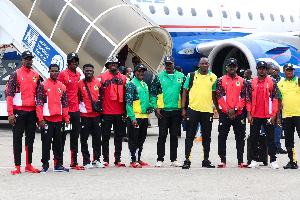
Asante Kotoko have left Ghana for Nigeria, where they will face Kwara United in the decisive second leg of their CAF Confederation Cup preliminary tie on Sunday, September 28, 2025.
The Porcupine Warriors travel with a slim 4–3 advantage from the first leg in Accra; a match that lit up the Accra Sports Stadium with seven goals.
That victory came through a pulsating performance, which saw Emmanuel Antwi, Albert Amoah, and Joseph Ablorh on target for the Ghanaians.
However, defensive lapses allowed Kwara to score three crucial away goals.
Those strikes mean the Nigerians are firmly in the contest and will look to capitalise on home support in Ilorin.
CAF Confederation Cup: Kotoko edge Kwara United in seven-goal thriller
Kotoko’s departure signals the start of their toughest test yet in this year’s campaign.
Head coach and players alike know the mission: protect their narrow lead, stay disciplined in defense, and seize any chances that come their way.
Traveling to Nigeria is never an easy task, but the Porcupine Warriors carry belief that they can finish the job and advance to the next stage.
All eyes will now be on Ilorin, where Ghana’s most successful club hopes to write another chapter in their continental story.
FKA/AE
Meanwhile, watch interviews with Bahubali’s twin sister and promoter below
All boxing activities in Ghana have been suspended following the death of a super-middleweight 11 days after a bout in Accra.
Ernest Akushey, popularly known as Bahubali, died aged 32 on Tuesday.
While the exact cause of death is yet to be determined, preliminary indications suggest it may be linked to internal injuries sustained during his recent fight.
Akushey faced Jacob Dickson at the Bukom Boxing Arena in the Ghanaian capital on 12 September.
In a statement, the National Sports Authority described the nationwide suspension as a “necessary step” to “protect lives, uphold the integrity of the sport and ensure its future”.
Authorities have also announced plans to implement a five-year strategy aimed at establishing safer, more professional, and globally-aligned standards for boxing.
This incident marks the second death of a professional fighter in Ghana within the space of six months, reigniting discussions about safety standards.
In March, Nigeria’s Gabriel Oluwasegun Olanrewaju collapsed while taking on Ghanaian opponent Jon Mbanugu, also in Accra, and died soon after being rushed to the hospital.
Boxing enjoys immense popularity in Ghana and has produced numerous big names, including the legendary former two-weight world champion Azumah Nelson.
Meanwhile, watch interviews with Bahubali’s twin sister and promoter below
Steve Martin, Senior Business Development Manager for BBC News, has cautioned broadcasters to be careful in their use of Artificial Intelligence (AI) to avoid eroding public trust.
Speaking as a panelist at the “Broadcasting at the Crossroads” forum organised by the Africa Media Bureau at the Alisa Hotel on Friday, September 26, 2025, Mr. Martin explained that while AI is increasingly being deployed in newsroom operations, it must be applied responsibly.
“AI is being used within the BBC for operational efficiency, but it is in such a way that it doesn’t compromise the trust the audiences place in the BBC,” he said.
Mr. Martin advised media organisations, particularly established traditional and commercial broadcasters, to ensure that audience trust remains their strongest asset.
“I will just say to everybody who works in traditional media with a big brand, public traditional media or a market-leading commercial broadcaster: don’t put the trust that the audience places in your brand at risk by making simple mistakes through AI,” he warned.
Gov’t can’t keep subsidising DTT operations alone – Sam George warns
Finance Minister Dr. Cassiel Ato Forson has confirmed that the Deloitte audit report on Development Bank Ghana (DBG) will be handed over to the Attorney General for possible legal action, in what he described as a decisive step in restoring integrity at the state-backed lender.
The move follows consultations with key development partners, including the World Bank, African Development Bank, Germany’s KfW, and the European Investment Bank. These institutions have backed the government’s position that accountability at DBG is “non-negotiable.”
Dr. Forson emphasized that individuals found culpable will face consequences, adding: “a new dawn is beginning for DBG,” but stressed that swift reforms are critical to rebuild the Bank’s credibility.
Concerns about governance at DBG have persisted since last year, when the World Bank acknowledged it was reviewing allegations of financial mismanagement at the institution. The claims, amplified by Bright Simons of IMANI Africa, alleged that more than GH¢400 million had been lost through improper contracting.
DBG has consistently denied the allegations, insisting that no development partner funds had been misapplied.
With Deloitte’s findings now complete, government says it is moving quickly to reposition DBG. A new Chief Executive Officer, selected through a competitive process, will be announced on Monday, while a reconstituted Board is expected by the end of October.
Interim Board Chair Albert Essien has pledged transparency and prudent governance — a commitment that has been welcomed by development partners as Ghana seeks to realign DBG with its mandate of financing the country’s economic transformation.
Boxing expert Mohammed Amin Lamptey has criticised the National Sports Authority (NSA) for suspending boxing activities after the death of boxer Bahubali a few days after a fight in Bukom.
He argued that it was wrong to halt all boxing activities because of one incident, stressing that the same action is not taken when tragedies occur in other sports.
According to him, if a footballer dies during play, football matches are not suspended across the country.
Lamptey drew an analogy with road accidents, explaining that the death of someone on the road does not lead to the closure of all roads.
He expressed disappointment at the way the matter was handled, pointing out that the Director General of the NSA, Professor Peter Twumasi, popularly known as Franco, first announced the suspension of boxing but later denied issuing a ban. Lamptey described this inconsistency as unfortunate.
The boxing analyst noted that the decision had deeply discouraged him and left him short of words.
A Deputy Spokesperson for the Dr Mahamudu Bawumia Campaign team, Dr Ekua Amoakoh, has challenged claims by the Minister of Health, Kwabena Mintah Akandoh, that the National Health Insurance Scheme (NHIS) has only now incorporated treatment of Sickle Cell Disease (SCD).
Akandoh, addressing the Africa CDC High-Level Side Event on Sickle Cell Disease in New York on Thursday, September 25, 2025, announced that the inclusion of SCD care under the scheme marked a bold demonstration of health equity. He said the new policy guarantees care for every Ghanaian living with the condition, regardless of income or location, equal access to lifesaving medication.
“This demonstrates equity in action: ensuring that the poorest mother in the most remote part of our country can access the same lifesaving medication as the wealthiest in our cities,” the minister asserted, adding that the move was central to Ghana’s push for Universal Health Coverage.
In a response, a statement shared on her Facebook page on Friday, September 26, 2025, Dr Amoakoh described the minister’s remarks as misleading and an attempt to build his reputation by rebranding projects and policies inherited from the New Patriotic Party (NPP) administration.
Dr Amoakoh said the minister “started his term of office with disingenuity and it seems he wants to continue on that tangent.”
She alleged that instead of pursuing new initiatives, the minister has resorted to what she described as propaganda, using completed NPP projects to create a false impression of progress.
She cited the recent tour of completed Agenda 111 facilities as one such example.
Health Minister Akandoh joins global leaders at high-level roundtable on health taxes
According to her, the minister chose to highlight unfinished sections of the project rather than acknowledge the functioning facilities.
“First, he went on a tour of the three completed Agenda 111 projects, passed by the completely set up consulting and operating rooms, and showed the mortuary that was still under construction for propaganda. Let’s ask ourselves, what facility begins operations from the mortuary?” Dr Amoakoh wrote.
Touching on Ghana’s first vaccine institute, Dr Amoakoh dismissed the minister’s claim of it being a novelty.
She argued that the institute was already a flagship NPP project, established before the party left office, and had even reached advanced stages of accreditation by the World Health Organisation (WHO).
“Then he moved to Ghana’s first vaccine institute, sheepishly trying to sell it as a novel idea when it had been set up under the NPP administration, even reaching the point of accreditation from the World Health Organization to produce vaccines before the NPP left office,” she stated.
Dr Amoakoh further accused the minister of seeking international credit for reforms within the National Health Insurance Authority (NHIA), which she stressed were spearheaded by the former Vice President Bawumia.
These reforms, she explained, included digitisation of the renewal and claims processes and an expansion of NHIA coverage to critical areas that had previously burdened families.
Group backs Dr Ekua Amoakoh’s appointment to Constitution Amendment Committee
She pointed out two significant reforms under Dr Bawumia: the inclusion of Hydroxyurea, a drug vital for managing sickle cell disease, and coverage for four childhood cancers — Burkitt’s lymphoma, Acute lymphoblastic leukaemia, and Wilms’ tumour among them.
According to Dr Amoakoh, the NHIA, under former President Nana Addo Dankwa Akufo-Addo and with Dr Mahamudu Bawumia’s leadership on health financing reforms, had already expanded coverage to include Hydroxyurea, an essential medication for Sickle Cell management.
She stressed the importance of giving credit where it is due, noting that the pioneering role of Dr Bawumia and the NPP in making sickle cell medication accessible under NHIA must not be erased for political convenience.
“My best friend, a hematologist, called one day last year commending the NPP administration for bringing some relief to these children and their parents, admitting how the coverage had improved their numbers at the unit because more parents sought medical care instead of relying on arbitrary alternatives,” Dr Amoakoh revealed.
To buttress her claims, she attached a page from the NHIA’s allocation document in 2023, underscoring that the groundwork for these health interventions had been laid long before the current administration assumed office.
Dr Amoakoh further posed a question about the minister’s performance: “Is the current MOH so lost as to how to improve healthcare that he only relies on loudly rebranding policies he inherited? Where is the growth?”
GA/VPO
3 Attorney Generals ‘divided’ over Torkornoo’s removal:
TWI NEWS
Martin Amidu breaks silence on removal of Gertrude Torkornoo
Two Companies to Fifteen Houses Allegations: Abronye DC details ordeal with police during arrest
Ghana’s fixed income market demonstrated stark contrasts in investor appetite September 26, 2025, with treasury bills capturing GH¢1.13 billion in trading volume while new government bonds from the debt restructuring programme attracted just GH¢1.74 million across a single transaction.
The trading data from the Ghana Fixed Income Market (GFIM) reveals a market increasingly focused on short-term government securities as investors maintain cautious positioning amid ongoing economic stabilization efforts. The preference aligns with recent inflation data showing rates at 11.5% in August 2025, marking the lowest level in four years.
Treasury bills dominated the session with 10 separate transactions, led by 91-day instruments maturing October 20, 2025, which accounted for the largest single volume component. The concentration in short-term instruments reflects investor preference for liquidity and frequent repricing opportunities rather than locking into longer-term commitments.
Corporate bond activity showed surprising strength, with Cocoa Board securities generating GH¢20.4 million across 22 transactions. The state-owned commodity trading entity’s bonds maturing August 30, 2027, represented the entire corporate trading volume, highlighting the narrow depth of Ghana’s corporate debt market beyond government-backed entities.
Bank of Ghana (BoG) bills recorded GH¢165 million in a single large transaction, demonstrating institutional demand for central bank instruments. The transaction size suggests pension fund or insurance company positioning, typical institutional behaviors when managing liquidity requirements.
The minimal activity in new Government of Ghana (GoG) bonds reveals ongoing market hesitation around instruments created through the Domestic Debt Exchange Programme (DDEP). These securities became benchmark bonds following the successful completion of Ghana’s debt restructuring, yet trading volumes suggest investors remain cautious about longer-term government commitments.
Old GoG bonds, representing pre-restructuring instruments, generated GH¢566,000 across three transactions, indicating some residual market interest in legacy securities. These instruments often trade at significant discounts, attracting opportunistic investors seeking higher yields despite elevated credit risks.
Sell and buyback arrangements totaled GH¢199.66 million across 15 transactions, reflecting active repo market conditions. These transactions typically serve short-term funding needs for banks and other financial institutions, providing market makers with inventory management tools.
The absence of activity in collateralized and Global Master Repurchase Agreement (GMRA) trades suggests limited institutional demand for structured repo arrangements during the session. This segment typically reflects more sophisticated trading strategies by larger financial institutions.
Yield patterns across the trading session showed typical term structure characteristics, with longer-dated instruments commanding higher returns. New GoG bonds displayed yields ranging from 15% to 23%, reflecting both credit risk premiums and term risk compensation demanded by investors.
The trading patterns mirror broader trends in Ghana’s post-restructuring financial markets. Recent sessions have recorded volumes exceeding one billion cedis, underlining the substantial scale of Ghana’s domestic debt market operations, though the composition heavily favors short-term instruments.
Market participants attribute the treasury bill preference to several factors: improved government fiscal discipline, clearer monetary policy signals from the BoG, and international investor confidence following successful International Monetary Fund (IMF) programme implementation.
The corporate bond segment’s reliance on Cocoa Board highlights structural challenges in Ghana’s capital markets. Private sector entities remain largely absent from bond markets, reflecting both regulatory constraints and investor risk appetite limitations for non-government backed credits.
Technical market indicators suggest increasing sophistication in Ghana’s fixed income infrastructure. The GFIM platform processed 52 separate transactions across multiple security categories, demonstrating operational capacity for handling diverse trading requirements.
Regional context shows Ghana’s fixed income market development exceeding many West African peers in terms of electronic trading capabilities and instrument diversity. The presence of corporate bonds, central bank bills, and structured repo arrangements positions the market favorably for continued development.
Looking ahead, market observers expect continued concentration in short-term instruments until investor confidence in Ghana’s long-term fiscal trajectory strengthens further. The government’s ability to demonstrate consistent debt service on new restructured instruments will likely determine when longer-term bond trading volumes recover.
Financial sector implications extend beyond immediate trading profits. Banks and insurance companies rely heavily on government securities for regulatory capital and asset-liability matching, making treasury bill market liquidity crucial for broader financial system stability.
The session’s GH¢1.33 billion total trading volume represents approximately 0.02% of Ghana’s gross domestic product, indicating substantial domestic savings mobilization through capital markets. This metric compares favorably with regional peers and demonstrates the growing importance of domestic debt markets in Ghana’s financial system.
ASANTE KOTOKO players have been promised a special bonus package if they advance to the second round of the CAF Confederation Cup preliminary stage.
The Porcupine Warriors carry a narrow advantage into the decisive second leg after edging Nigerian side Kwara United 4-3 in a thrilling first-leg encounter at the Accra Sports Stadium last Sunday.
Kotoko are scheduled to travel to Nigeria today, September 26, ahead of Sunday’s return fixture at the MKO Abiola International Stadium in Abeokuta, the adopted home ground of the Ilorin-based team.
Club Director of Communications, Sarfo Duku, confirmed the incentive, stating “there is always a winning bonus, even in the Ghana Premier League. But qualifying from the preliminary stage will add a significant amount of money.”
The management’s promise is expected to boost morale as the Ghanaian giants push to secure their place in the next round of the continental competition.
Finance Minister Dr. Cassiel Ato Forson has confirmed that the Deloitte audit report on Development Bank Ghana (DBG) will be handed over to the Attorney General for possible legal action, in what he described as a decisive step in restoring integrity at the state-backed lender.
The move follows consultations with key development partners, including the World Bank, African Development Bank, Germany’s KfW, and the European Investment Bank. These institutions have backed the government’s position that accountability at DBG is “non-negotiable.”
Dr. Forson emphasized that individuals found culpable will face consequences, adding: “a new dawn is beginning for DBG,” but stressed that swift reforms are critical to rebuild the Bank’s credibility.
Concerns about governance at DBG have persisted since last year, when the World Bank acknowledged it was reviewing allegations of financial mismanagement at the institution. The claims, amplified by Bright Simons of IMANI Africa, alleged that more than GH¢400 million had been lost through improper contracting.
DBG has consistently denied the allegations, insisting that no development partner funds had been misapplied.
With Deloitte’s findings now complete, government says it is moving quickly to reposition DBG. A new Chief Executive Officer, selected through a competitive process, will be announced on Monday, while a reconstituted Board is expected by the end of October.
Interim Board Chair Albert Essien has pledged transparency and prudent governance — a commitment that has been welcomed by development partners as Ghana seeks to realign DBG with its mandate of financing the country’s economic transformation.
Ho (V/R), Sept. 26, GNA – The National Commission for Civic Education (NCCE), with support from Fidelity Bank Ghana, has held its maiden Civic Fest Celebration and Competition in the Ho Municipality.
The event forms part of NCCE’s Climate Action Awareness Project on the theme “Protecting Our Environment: Reduce, Reuse, Recycle.”
The event featured three Civic Education Clubs from Philip-Akpo Memorial JHS, Dome A.M.E. Zion Basic School, and Mawuli JHS, who showcased their knowledge of civic values, environmental protection, and national issues through drama, poetry, dance, rap, comedy, and exhibitions of recycled plastic products.
After a keenly contested competition, the Ho-Dome A.M.E. Zion Basic School emerged as the overall winner, impressing the judges with their creativity and strong understanding of the theme.
Mr Kenneth Kponor, the NCCE Volta Regional Director, commended Fidelity Bank Ghana for sponsoring the programme and urged pupils to embrace the three ‘Rs’ – reduce, reuse, and recycle – as the only way to combat plastic waste and its harmful health effects.
Rev. Vincent Adzika, the Ho Municipal Director of NCCE, praised the participating schools for their enthusiasm, stressing that Civic Fest was not only about academic competition but also to nurture honesty, patriotism, communal spirit, and environmental consciousness among schoolchildren.
Torgbui Kludzehe of Ho, who chaired the event, expressed admiration for the pupils’ talent and their ability to transform plastic waste into useful products.
The event was attended by dignitaries including Mr Oral-Robert Amenyo, the NCCE Volta Regional Deputy Director; Mr Elliot Setornam and Mr Kwami Akorlor of Fidelity Bank Ghana; Rev. Israel Akrobortu, the Regional Director of the Department of Children, and Mr Michael Tormeti from the Commission on Human Rights and Administrative Justice (CHRAJ).
The rest were Ms Seyram A. Genie-Aidam, the Girl Child Coordinator of GES; Ms Gladys Amuzu, Second Cycle Schools Coordinator, Ghana Education Service (GES), and Ms Cynthia Ayim, the Planning Officer at Ho Municipal GES.
Awards were presented to the winning school and all participating institutions, with a call on the pupils to become ambassadors of environmental protection in their schools and communities.
Ghana has clinched its tenth visa waiver agreement since January, this time with Antigua and Barbuda, as Foreign Minister Samuel Okudzeto Ablakwa continues an unprecedented diplomatic offensive that positions the West African nation as a global travel hub.
The agreement, signed on the sidelines of the 80th United Nations (UN) General Assembly in New York, eliminates visa requirements for holders of ordinary, service, and diplomatic passports from both countries. It allows citizens of both countries to travel without visa restrictions, thereby strengthening bilateral ties and fostering deeper cooperation, marking a strategic milestone in Africa-Caribbean relations.
Ablakwa’s meeting with Antiguan Foreign Minister E.P. Chet Greene represents more than diplomatic protocol—it signals a calculated push to position Ghana as the gateway for Africa-Caribbean economic integration. The timing coincides with growing international recognition of Ghana’s stability and investment potential in West Africa.
The Caribbean connection offers particular strategic value for Ghana’s economy. Antigua and Barbuda, while small with just over 100,000 citizens, serves as a critical financial services hub in the Caribbean with established links to North American and European markets. This creates potential pathways for Ghanaian businesses seeking international expansion beyond traditional African markets.
Greene characterized the relationship as “family ties rooted in history and culture,” acknowledging the shared heritage that connects many Caribbean nations to West Africa through the historical experiences of the African diaspora. The minister emphasized that direct travel links could unlock economic opportunities currently hampered by complex visa requirements and transit restrictions.
The agreement was announced Wednesday evening through Ablakwa’s social media channels, highlighting the modern diplomatic approach of the Mahama Administration, which took office in January 2025. The announcement underscores how Ghana has accelerated its diplomatic engagement since the new government assumed power.
The broader context reveals Ghana’s systematic approach to global mobility. Previous agreements secured in 2025 include deals with Morocco, Serbia, Colombia, and several other nations across multiple continents. This represents a departure from traditional diplomatic practices, where visa agreements often took years to negotiate and implement.
For Ghana’s private sector, the Antigua connection opens potential opportunities in tourism, financial services, and trade facilitation. Caribbean nations have developed sophisticated offshore financial systems that could benefit Ghanaian companies seeking international banking and investment structures.
The agreement also addresses broader African development goals. Enhanced mobility between Africa and the Caribbean could facilitate knowledge transfer, particularly in areas where Caribbean nations have developed expertise, including disaster management, small island development strategies, and sustainable tourism models.
Ablakwa’s diplomatic achievements contrast sharply with previous administrations’ approaches to international relations. The Foreign Minister, who previously served as Deputy Minister for Education and has been a prominent parliamentarian representing North Tongu constituency, has brought a results-oriented approach to Ghana’s foreign policy.
The reparations discussion that emerged during the bilateral meeting adds another dimension to the agreement. Greene’s support for Ghana’s push to elevate reparations to the same international priority level as genocide and xenophobia reflects growing global momentum around historical justice issues.
Trade implications extend beyond immediate bilateral benefits. Antigua and Barbuda’s membership in the Caribbean Community (CARICOM) and the Organisation of Eastern Caribbean States (OECS) potentially provides Ghana with indirect access to broader Caribbean markets through preferential arrangements.
Tourism sectors in both countries stand to benefit significantly. Ghana’s growing reputation as a preferred destination for African diaspora tourism, particularly around the “Year of Return” initiatives, could expand through Caribbean connections. Similarly, Ghanaian travelers gain access to world-class Caribbean hospitality and financial services sectors.
The agreement reflects broader trends in South-South cooperation, where developing nations increasingly bypass traditional North-South diplomatic and economic relationships in favor of direct partnerships. This approach has gained momentum as African and Caribbean nations seek to reduce dependency on former colonial powers.
Implementation timelines remain unclear, though similar agreements negotiated by Ghana in 2025 have typically become effective within three to six months of signing. The expedited process reflects both countries’ commitment to transforming diplomatic agreements into practical benefits for their citizens.
Ghana’s visa waiver strategy represents more than travel convenience—it positions the country as a regional hub for international business, cultural exchange, and investment flows. Each agreement creates network effects that enhance Ghana’s attractiveness as a destination for multinational corporations and international organizations seeking African regional headquarters.
The success of Ablakwa’s diplomatic campaign demonstrates how focused, strategic foreign policy can yield measurable results in relatively short timeframes. The ten visa waiver agreements secured since January exceed the total achieved by many countries over multiple years, reflecting both Ghana’s enhanced international standing and the new administration’s prioritization of economic diplomacy.
Sarkodie has stated that it is unacceptable for veteran artistes to ask for money when their music could have sustained them.
Speaking at the Kumasi Rising Music, Media, and Tourism Dialogue on September 25, 2025, the rapper argued that with the right structures in place, no artiste should grow old and be left seeking financial assistance.
The kind of money in music can rival real estate – Sarkodie
He explained that the revenue generated from music, even on a monthly basis, can be sufficient to support artistes throughout their lives if the industry is properly regulated.
According to him, the financial struggles many veteran musicians face stem from poor deals signed in the past.
He noted that most were paid small amounts in exchange for their entire catalogs, resulting in a loss of ownership and the ability to earn from their work.
Why Sarkodie and Shatta Wale keep clashing despite sharing same goals
Sarkodie mentioned that if Ghana had a stronger system to protect artistes, such situations would not have occurred.
He also emphasized investment and monetization as the two key areas requiring urgent attention.
Strengthening these aspects, he believes, would transform the music sector.
“All these old-age artistes, what music can make for you monthly, there’s no old-age artiste who should be asking for any money from anyone. But if you listen to their stories, somebody gave them some small change and then took the music, so now they have nothing to live off. If the system was right, nobody would have been able to get them to sell their catalogue. So it’s a lot.
“But these two, the investment part and the monetization of the industry, if we get that right, Ghana wouldn’t need to go anywhere. We’d just go out there for the looks, but we’d still make money even if we stay local,” Sarkodie said.
During the event, moderator Serwaa Amihere asked Sarkodie about rumours that he had sold his music catalogue.
The rapper dismissed the speculation, clarifying that he has not sold his catalogue but only switched distribution partners.
He explained that as an independent artiste, he has the freedom to decide which companies distribute his music at any given time.
“No, so we have partnerships. That’s what I’ve been doing. I do distribution with Ditto, and now with a new company. So that’s the luxury I have as an independent artiste. You are able to pick and choose who distributes my music,” he added.
@dailywatchtvonline I Have Not Sold My Catalog; Sarkodie Finally Speaks Out On Rumours Saying He Has Sold His Catalog for Music Company & Added Up That What Music Money Can Make You Monthly Like No “ Old Age Artist Should Be Begging For Money “ Follow Us For More Updates #viral #sarkodie #dailywatchtv #music #tiktok ♬ original sound – DAILY WATCH TV
Watch as Ghanaians share their favorite Highlife tunes
Vice Chairman of the Defence and Interior Committee and Member of Parliament for Wa West, Peter Lanchene Toobu, has urged officers of the Ghana Police Service (GPS) to prioritise their safety while executing their duties.
Speaking in an interview on Sompa FM, the former police officer encouraged his former colleagues not to relent in neutralising individuals who threaten their lives, including hardened criminals.
“If a person decides to be an armed robber and is willing to kill, my message, which I reiterate every day for Mr Christian Tetteh Yohuno to hear, is that only a fool carries a gun and becomes the deceased. Only a fool carries a gun and, within two minutes, is called the late,” he stated.
Explaining his position, the MP said police officers, armed with legal authority, have a duty to protect lives at all costs, especially when their own lives are at risk.
Police dismantle notorious armed robbery gang, with three gunned down
“The point I am making is that you’re talking about a state-supported person given a gun to protect state property. You would only be a foolish police officer to be armed while on duty, covered by the Constitution, and allow someone to shoot and kill you when you’re tasked with protecting us. It is painful, and it happens often, but I am stating as a matter of fact that if you’re a smart person with functioning intelligence, you press the trigger first. You don’t allow the criminal to press the trigger first.
“They don’t go out with the intention of killing people, but when we talk about the protection of life and property, the life and property of the police officer come first. You protect your own life before you can protect others. So, you need the skill to safeguard your own life before you can protect the lives of other citizens. Only a highly professional police officer, armed on duty, will prevent someone from killing them. They don’t go out to kill people, but in protecting their own lives, if you pose a threat, they will end you. We applaud them for the work they are doing and implore them to continue performing better, while cautioning those who intend to perpetrate crime to desist from it, as it will lead to their death,” he added.
His comments were in response to a recent operation by the Ghana Police Service, which led to the arrest of 10 members of a 15-member bank robbery gang operating across the country.
Gun retrieved from notorious robbery gang linked to murder of police officer
According to a recent press conference addressed by the Inspector General of Police (IGP), Christian Tetteh Yohuno, three members of the gang, which primarily targeted rural banks, died during a shootout with police, while the remaining two are still at large.
GA/VPO
3 Attorney Generals ‘divided’ over Torkornoo’s removal:
TWI NEWS
Martin Amidu breaks silence on removal of Gertrude Torkornoo
Two Companies to Fifteen Houses Allegations: Abronye DC details ordeal with police during arrest
Arsenal defender William Saliba has agreed a new five-year contract with the club.
The France international has two years left on his existing deal, but BBC Sport has been told he will sign up in the coming days to stay until 2030.
Saliba, 24, joined the Gunners from Ligue 1 side Saint-Etienne in July 2019 but was loaned back to the French club for the 2019-20 season before having further loan spells in Ligue 1 at Nice and Marseille.
He has established himself as a key part of manager Mikel Arteta’s defence since making his debut in August 2022 and has made 137 appearances for Arsenal.
Saliba’s existing contract was due to expire in June 2027 and his impressive form had drawn transfer interest from Spanish giants Real Madrid.
His commitment to the Gunners will be a further boost to Arteta’s Premier League and Champions League ambitions, after Saliba’s centre-back partner Gabriel Magalhaes agreed a long-term deal until 2029 in June.
Arsenal travel to St James’ Park to face Newcastle in the top-flight on Sunday.
Former U20 and Black Stars player Emmanuel Agyemang Badu visited his former U20 head coach, Sellas Tetteh, and his family.
The former Liberty Professionals coach has not been well for some time now.
Agyemang Badu spent the day with him to learn about his current condition and encouraged the family to take good care of him, also promised to visit him frequently.
The National Communications Authority (NCA) is preparing to roll out commercial Digital Audio Broadcasting (DAB) across Ghana after a successful pilot programme in Accra and Kumasi, Bernard Amissah-Ocran, Acting Director of Engineering at the NCA, has said.
DAB is an innovative broadcasting technology that enables multiple FM radio stations to operate on a single frequency network, offering improved sound quality and interactive features for listeners.
The pilot, conducted in July 2023, involved 18 radio stations—11 in Accra and seven in Kumasi—broadcasting on this new platform.
“Digital Audio Broadcasting (DAB) allows multiple FM stations to operate on a single frequency network,” Amissah-Ocran explained.
“It also operates on a different frequency band and comes with numerous benefits, including better sound quality and interactive features. We piloted DAB with 18 stations in Accra and Kumasi.”
The pilot project has paved the way for the NCA to transition DAB into commercial use. The Authority is currently in the process of selecting an infrastructure operator to manage and expand the DAB network nationwide.
“We are now in the process of getting an infrastructure operator to take over the pilot, which in due course will be done. So we say watch this space for DAB—very soon, the NCA will launch commercial DAB,” Amissah-Ocran stated.
This move is expected to revolutionise the broadcasting landscape in Ghana by increasing the efficiency of frequency use, enhancing audio quality, and introducing interactive capabilities that could redefine listener engagement.
“With the commercial rollout imminent, the NCA is poised to usher in a new era of radio broadcasting in the country.
Read also…
763 Radio Stations authorised, 224 not operating – NCA
Chief Executive Officer of Bibiani GoldStars, Akwasi Adu, says the club is optimistic about overturning their two-goal deficit when they face Algerian side JS Kabylie in the CAF Champions League.
The Ghana Premier League champions fell 2-0 in the first leg of the preliminary round at the Accra Sports Stadium last Saturday, leaving them with a difficult task in the return fixture.
Ahead of the second leg in Algeria, Mr. Adu expressed belief in the team’s ability to mount a strong response.
“We are mapping out our plans and strategies to keep the players on their toes when we get to Kabylie,” he said.
“We are not perturbed by the results from the last match. Football is unpredictable. A club came and scored 2-0 at our home, but we believe we can turn the results around,” he added.
GoldStars will need to produce a memorable performance in Algeria to advance to the next stage of the competition.





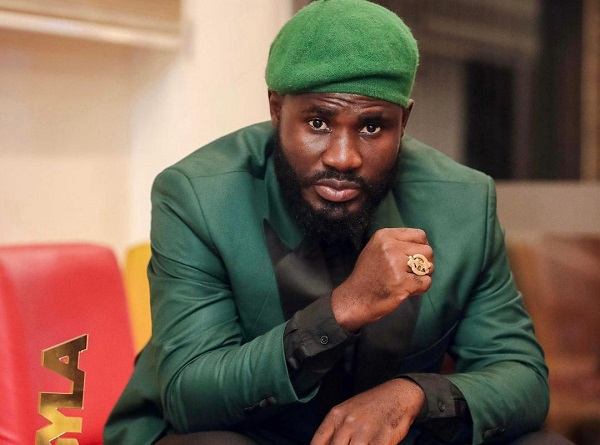





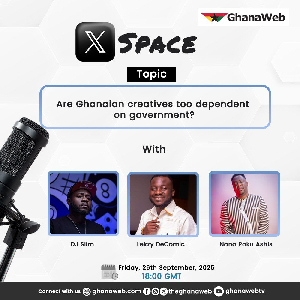


 According to a report by GhanaWeb, Captain Smart, host of Onua Maakye on Onua TV, has called for the removal of Attorney General and Minister of Justice Dr. Dominic Ayine, citing his inaction on repealing LI 2462, the legislation permitting mining in forest reserves.