6.9 C
London
Saturday, December 27, 2025
Home Blog Page 560

You can support any candidate, but you dare not… – Bryan Acheampong fires at ex-COCOBOD CEO

0


Former Minister of Food and Agriculture, Bryan Acheampong, has expressed shock at former COCOBOD CEO, Joseph Boahen Aidoo, over claims regarding the abolition of syndicated loans for cocoa purchases.

Speaking on Adom FM’s Dwaso Nsem morning show, Mr. Acheampong insisted that as the sector minister at the time, he was the one who championed the policy through all official processes.

“The policy to cancel syndicated loans is not a CEO policy; it is a ministerial policy. Before any matter goes to Cabinet, it is first referred to the Economic Sub-Committee. As the sector minister, I had to defend the proposal there, and again when it went to the main Cabinet. I also stood in Parliament to defend it when issues were raised,” he explained.

He continued, “Yes, you may have contributed, but the credit is shared with everybody who worked on this policy. Even in the past, I have given credit to everyone involved and praised the President at the time for supporting it. But the bold leader who took this idea through all the processes to the end was the sector minister.”

Mr. Acheampong dismissed Mr. Aidoo’s claims as politically motivated, suggesting that the former CEO was attempting to score points ahead of the 2028 elections.

“I am really surprised that he would attempt to rebut what I have said. I am aware of his political stance. You may support a candidate, but you dare not come on air and claim credit for something you did not champion” he said.

He also clarified the timeline, noting that while Boahen Aidoo served as COCOBOD CEO from 2017 to 2023, syndicated loans were still in use during that period.

“I was the Minister in 2023 and 2024, and that is when this idea of self-financing began to take shape. The concept had been discussed at COCOBOD for a long time, but the CEO did not originate it. The final decision to stop syndication was driven by the Ministry.”

Mr. Acheampong stressed that policy-making is a collective process.

“In the Boardroom, junior staff may disagree on certain aspects, but the policy is polished and finalized only when it is submitted to Cabinet. As the sector minister, I am the only one who can present such matters to the Economic Management Team. Discussions are thorough, and consensus is reached before it goes forward.”

His comments come after Mr. Boahen Aidoo accused Mr. Acheampong of “blatant intellectual plagiarism and dishonesty” over the policy, which Mr. Acheampong firmly rejected.

“The policy was never the CEO’s alone. It is the responsibility of the sector minister to drive such initiatives from conception to Cabinet approval.”

I pray Naana Opoku-Agyemang becomes Ghana’s first female President – Haruna Iddrisu

0

The Minister of Education, Haruna Iddrisu, has expressed his goodwill for Vice President Prof. Jane Naana Opoku-Agyemang, praying that she will one day become Ghana’s first female president.

Mr Iddrisu made the remarks when the Vice President visited the Ministry of Education in Accra.

Welcoming her, he said, “It’s my pride and honour and grace to want to welcome you back to the Ministry of Education, this time in an elevated capacity as the first female Vice President of our Republic.”

The minister went on to wish her long life and good health, adding, “It is my prayer that God will give you long life and good health, so that probably you will be elevated to become the first female President. God bless you.”

Prof. Opoku-Agyemang previously served as Minister of Education and was appointed Vice President following the 2024 general election, making history as Ghana’s first woman to occupy the office.

DISCLAIMER: The Views, Comments, Opinions, Contributions and Statements made by Readers and Contributors on this platform do not necessarily represent the views or policy of Multimedia Group Limited.

DISCLAIMER: The Views, Comments, Opinions, Contributions and Statements made by Readers and Contributors on this platform do not necessarily represent the views or policy of Multimedia Group Limited.

Toronto Youth Find ‘True Home’ in Ghana Journey

0

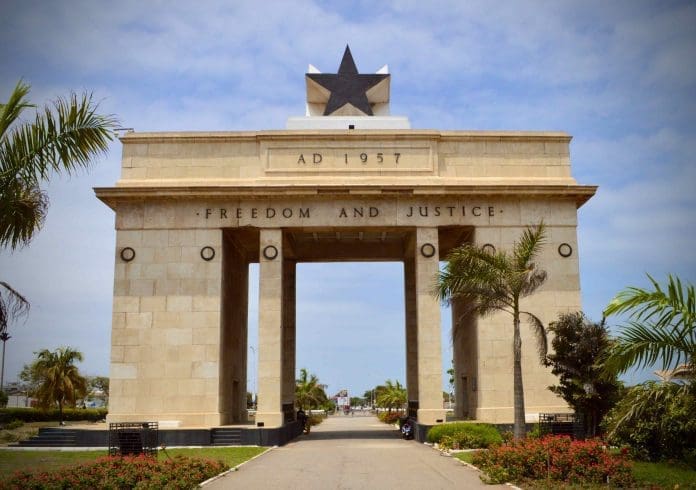
Black Star Square
Black Star Square, Ghana

Eighteen Black youth in care with Toronto’s Catholic Children’s Aid Society experienced what many described as a “spiritual homecoming” during their two-week Freedom Walk: Cultural Journey to Ghana this August, connecting with ancestral roots at historic sites that shaped the African diaspora.

The groundbreaking initiative, organized by CCAS’s It Takes a Village committee and funded through over $100,000 from the Catholic Children’s Aid Foundation, took participants from August 7-20 to transformative locations including Cape Coast Castle, Assin Manso Slave River, and the Ashanti Kingdom.

For youth who often grow up without clear family connections, the journey represented far more than tourism. “Walking along black routes, one is confronted with both the pain and the resilience that define the African diaspora,” reflected participant Emerald Kassa, describing her experience as “more than just a journey across the ocean, it was a homecoming.”

The emotional weight of visiting Cape Coast Castle and Elmina Castle, where millions were confined before forced Atlantic crossings, left profound impacts on participants. Child Protection Supervisor Charles Dannsah-Appiah, who led the group, described witnessing intense emotions as youth processed ancestral trauma while discovering their own resilience.

“Walking through the dungeons and learning how enslaved people were treated as commodities brought intense sadness and anger,” Dannsah-Appiah explained. The visit to Assin Manso, discovering it as the site of enslaved people’s last bath before being sold, proved especially powerful for many participants.

Rather than simply confronting painful history, the experience became transformative. Youth supported each other through difficult moments, prayed together, and channeled emotions into empowerment and learning. Many described feeling transformed, with some calling Ghana their “true home” and expressing hopes to return with future families.

The initiative emerged from CCAS’s commitment to helping Black youth in care connect with cultural heritage under CEO Priscilla Manful’s leadership. Ghana’s historical significance in the transatlantic slave trade and rich cultural value made it an ideal destination for the It Takes a Village group’s long-held vision of taking youth to Africa.

Selection involved careful assessment by frontline staff and caregivers to ensure genuine interest and readiness. The process prioritized youth motivation and goals while evaluating trip feasibility for each participant.

Beyond visiting historic sites, youth explored vibrant Ghanaian communities preserving traditions of music, art, and spirituality. They showed compassion by sharing food with underprivileged children, explored local markets with enthusiasm, and gained deeper appreciation for both their Canadian lives and African heritage.

Many participants were surprised by Ghana’s modernity compared to their previous perceptions, shifting perspectives about the continent. One initially reluctant youth later declared he would never miss such an opportunity again, demonstrating the journey’s transformative impact.

The program faced typical organizational challenges including securing funding, selecting participants and chaperones, coordinating with tour companies, and managing travel documentation. Having both CEO Manful and Supervisor Dannsah-Appiah as Ghanaians proved invaluable for navigation and cultural coordination.

Lessons learned included the need for more rest time between excursions in future trips, though the comprehensive itinerary kept youth engaged throughout. CCAS plans to expand participation so more Black youth can benefit from similar cultural experiences.

The Freedom Walk aligns with CCAS’s broader summer initiatives connecting youth to heritage and faith. The organization also conducted a separate Jubilee pilgrimage to Rome, demonstrating comprehensive commitment to youth development through cultural and spiritual connections.

For Kassa, the experience reinforced that “Black Routes are not only about survival, triumph and reconnection” but showcase the creativity, leadership, and unity that have sustained African peoples through centuries of struggle. Ghana became not just a destination but “a living classroom and a spiritual homecoming.”

The program underscores how understanding the global Black experience requires recognizing everlasting African ties. As these eighteen youth return to school with extraordinary summer stories, they carry renewed cultural pride, strengthened identity, and deeper connections to both their heritage and each other.

Staff plan to build on journey lessons through continued support, ensuring the transformative experience contributes to participants’ ongoing development. The initiative demonstrates how targeted cultural programming can profoundly impact youth in care, providing roots and identity often missing from their experiences.

As Dannsah-Appiah reflected, the work extends beyond safety and well-being to helping youth “see beyond” their circumstances, connecting them to broader histories, cultures, and communities that shape their identities and futures.

Small-scale miners launch taskforce to fight galamsey on water bodies

0

The National Concerned Small Scale Miners Association, Ghana (NCSSMAG) has launched a dedicated anti-galamsey taskforce to combat illegal mining activities on water bodies across the country.

In a press release issued on Tuesday, September 23, the Association announced that the task force will operate across major mining districts and will be responsible for monitoring, enforcing compliance, and promoting responsible mining practices among its members.

“This taskforce has been mandated to monitor and enforce compliance among members, ensuring adherence to standard small-scale mining practices,” the statement read.

As part of the initiative, members of the Association will conduct peer reviews of one another’s operations to ensure full compliance with environmentally sustainable mining guidelines.

To support enforcement efforts, the Association has procured a mini speedboat to help monitor activities on water bodies—an important step as the fight against illegal mining intensifies nationwide.

The move is intended to complement the government’s Blue Water Guards Initiative, led by the Ministry of Lands and Natural Resources, which seeks to protect water bodies from pollution and degradation caused by galamsey operations.

NCSSMAG President Michael Kwadwo Peprah issued a strong warning to illegal miners, particularly those operating directly on rivers, to cease operations immediately.

“Our message is clear: all illegal mining operations on water bodies must cease immediately. The taskforce will not compromise in protecting our rivers for present and future generations,” Peprah stated.

The Association reaffirmed its commitment to responsible mining and pledged to continue working with the government and other stakeholders to ensure Ghana’s natural resources are used sustainably.

Read also

Galamsey: Repeal LI 2462 and declare a State of Emergency – Fix The Country Movement

Nana Konadu dislikes me, some of her children don’t talk to me – Victor Smith

0

Mr And Mrs Rawlings  And Former Spokeperson For Mr Rawlings, Ambassador Victor Smith
Mr and Mrs Rawlings (left) and former spokeperson for JJ Rawlings, Ambassador Victor Smith

Former Secretary to the late President Jerry John Rawlings and current Ambassador to the United States of America (USA), Victor Smith, has opened up about the status of his relationship with the Rawlings family.

Speaking on Channel One TV’s Face to Face, aired on Tuesday, September 23, 2025, Victor Smith said that the wife of the late president, Nana Konadu Agyemang-Rawlings, and some of her children still harbor resentment toward him following his fallout with the family some years ago.

“I still have issues with the children; some of them don’t want to talk to me, but Zanetor, she is down-to-earth. We have had a couple of meetings. I would love to make up with the mother,” he said.

Answering a question about whether the former First Lady should return to the party founded by her husband, the National Democratic Congress (NDC); Ambassador Smith said the decision ultimately lies with Mrs Rawlings.

He further explored the strained relationship between him and Nana Konadu Agyemang-Rawlings while expressing his willingness to patch things up with her.

“As to coming back to the party, it is not within my power to do that. She could have done that herself. We can’t really bring her in against her wishes; it’s up to her. When the husband was alive, she never did. Her husband was caught between a rock and a hard place: founder of a party and my wife’s. Could you abandon your wife? No, nobody abandons their wife because she is the mother of your children, if not for nothing at all. So, he managed to steer his way until God came for him. I don’t know the situation now—whether she wants to come back to our party,” he said.

“I think there are certain things that, if I had the chance, I would explain to her, and she would say that I wasn’t wrong. But she also dislikes me for some reason,” he added.

Asked if the NDC should take the initiative to broker peace with Mrs Rawlings, Ambassador Smith said, “I think the ship has long sailed.”

Former President Rawlings fired Victor Smith as his spokesperson via a text message in April 2008.

In his version of the story, Victor Smith said Rawlings fired him because he (Victor Smith) supported the late Prof John Mills’ choice of John Dramani Mahama as running mate for the 2008 presidential election, against the wishes of the Rawlingses.

However, former President Rawlings, telling his side of the story for the first time in June 2017, disagreed with the assertion by giving a different account during a commemoration of the 38th anniversary of the June 4, 1979, uprising in Wa.

“I used to have a secretary called Victor Smith; we fell out. It wasn’t so much because of disagreement over John Mahama, and yet that’s what he’s touting. And yet I guess he, like a few of us who want to be president, have stepped back, being promised, of course, that he will make them running mates, I presume.

“Listen, why did I turn against this boy called Victor Smith?” the former military ruler asked rhetorically.

“He (Mr Smith) was my secretary. Some Nigerians invited us to the USA—I had left office—to come and give a talk and commission some business for them. We went. When we returned, subsequently—months or how many years later—when Prof Mills was our flag bearer, then these Nigerians decided to help, so they were dealing with my office, Mr Victor Smith. Now, I subsequently heard about it because there was a to-and-fro over this money, contribution issue, till somebody finally called me that this is what is going on: ‘They know me, they want to give me the money, and I can pass it on, not give it to Victor Smith, and Victor Smith is saying that: “No, he would take it to the prof, [because] I’m not the one who is going to be the candidate,” blah blah blah blah—that type of rubbish. So, they come out through somebody and said: “This is what is going on,” he said.

“Eventually, the contribution did not even come. It did not come. I did not receive any contribution from them, through Mills, through Smith, or directly through the person who came to see me also, and I don’t believe that they sent it to Mills, and I don’t believe that Prof Mills received any money from that place because I think they got fed up with the way this man was behaving,” Rawlings continued.

“And yet, when the time to pour poison on me started, this secretary of mine was telling the world on radio stations that a contribution was coming for a certain nationalistic duty, and he had stopped it and diverted it to the flag bearer. In other words, he had stopped it from coming to me. I was disgusted that this guy would make up such a story. And you know the one who angered me the most? Our Prof Mills, who knew the truth but kept quiet for this poison to burn me—I was fraudulent,” he complained.

GA/VPO

Two Companies to Fifteen Houses Allegations: Abronye DC details ordeal with police during arrest

Confusion erupts after ‘Igbo king’ is allegedly denied handshake with Otumfuo at Manhyia

I was shot at and nearly killed – Dr Yaw Osei Adutwum recounts escaping death in the line of duty

Will Ghana pass the Anti-Witchcraft Bill? Find out in the latest episode of The Lowdown on GhanaWeb TV in this conversation with Amnesty International:

SanlamAllianz Ghana launches “Proud Moments” campaign to celebrate everyday achievements

0

SanlamAllianz Ghana, the nation’s leading insurance company, has officially launched “Proud Moments,” a groundbreaking campaign designed to redefine how Ghanaians perceive insurance.

Instead of focusing on fear or uncertainty, this initiative highlights the joy of life’s milestones and reminds people that “Your Achievement Deserves Protection.”

The Proud Moments campaign is set to boost brand and product awareness, deepen customer engagement, and inspire Ghanaians to see insurance as a partner in protecting what matters most.

As part of the initiative, SanlamAllianz Ghana will host a live activation on October 4 at Achimota Mall, where ten extraordinary individuals will be celebrated for their resilience, sacrifices, and hard work.

These unsung heroes, everyday Ghanaians who have achieved significant milestones despite the odds, will be honoured in a heartfelt ceremony that turns their proudest moments into unforgettable memories.

Speaking about the campaign, William Mensah, Executive for Strategy, Business Analytics, Marketing Communications and Brand at SanlamAllianz General Insurance Ghana said:

“At SanlamAllianz, we believe that achievements, big or small, deserve to be celebrated and protected. The Proud Moments campaign is our way of shining a spotlight on the incredible resilience of Ghanaians. We are not only protecting lives and assets but also affirming that every milestone matters and every achievement deserves recognition.”

How to Nominate

SanlamAllianz Ghana is inviting the public to participate by nominating individuals who have overcome challenges and achieved their proudest moments by September 30th. To enter:

· Share a 30-second video on Instagram explaining why your nominee deserves to be celebrated.

· Tag @sanlamallianzghana to complete the entry.

Selected individuals may find themselves walking through a special “Hall of Fame” at Achimota Mall during the live activation.

The campaign underscores SanlamAllianz Ghana’s commitment to celebrating life while ensuring that the most important milestones remain secure for generations to come.

About SanlamAllianz Ghana

SanlamAllianz Ghana is a trusted leader in the insurance industry, dedicated to providing innovative financial solutions that protect and empower individuals, families, and businesses.

With a strong focus on customer-centric service, the company continues to redefine insurance for Ghanaians by aligning products and initiatives with the realities of everyday life.

‘Enough with the character assassination!’

0

Florence Obinim is a Ghanaian gospel musician Florence Obinim is a Ghanaian gospel musician

Ghanaian gospel musician, Florence Obinim, has expressed displeasure with the conduct of some bloggers in the country.

In a video shared on Instagram on September 24, 2025, Florence Obinim stated that many bloggers, and even some mainstream media houses, are fond of tarnishing her hard-earned reputation.

“You people will take videos of us and use them to tarnish our hard-earned reputation. The name tarnishing is too much. We will work hard, and if God helps us, you people will sit on social media to destroy us,” she said.

Florence Obinim made these comments while addressing claims on social media that she has bleached her skin.

I cannot divorce my husband regardless of the situation – Florence Obinim

According to her, the rumours are completely false, and she urged her fans to disregard such unwarranted and misleading narratives.

“Look at me, do I look like someone who has bleached? Ever since I was born, I have not bleached my body before. Some of you will take videos of me and apply effects, making it look like I have bleached,” she added.

Watch the video below:

JHM/EB

GTEC strips NDC’s Central Regional Chairman of all ‘fake’ academic titles:

Watch rare footage of Otumfuo Opoku Ware II’s funeral in 1999

0

Video | Watch rare footage of Otumfuo Opoku Ware II’s funeral in 1999

<!– –>

<!–
(function(w, d) {
var s = d.createElement(‘script’);
s.src=”//cdn.adpushup.com/45999/adpushup.js”;
s.crossOrigin=’anonymous’;
s.type=”text/javascript”; s.async = true;
(d.getElementsByTagName(‘head’)[0] || d.getElementsByTagName(‘body’)[0]).appendChild(s);
w.adpushup = w.adpushup || {que:[]};
})(window, document);

–>


<!– –>

Royal Kingdom Estate announces ‘Bridge to Ghana’ US tour

0

Danny Angels is the CEO of Royal Kingdom Estate Danny Angels is the CEO of Royal Kingdom Estate

Royal Kingdom Estate is set to embark on its much-anticipated “Bridge to Ghana Tour” across the United States this October, as part of its mission to connect the African diaspora with investment opportunities on the continent.

Speaking ahead of the tour, Danny Angels, CEO of Royal Kingdom Estate, explained that the initiative comes after receiving over 50 invitations from the diaspora since 2022.

“The time is now. In the last couple of years, we’ve done so much in Ghana’s real estate landscape, and the news has spread abroad. Most of our clients are in North America, and they’ve been calling on us to come.

The Bridge to Ghana Tour is about reconnecting, building trust, and creating a platform for Africans in the diaspora to invest back home,” he said.

Ghana Stock Exchange indexes climb as market capitalization hits GH¢157.7 billion

The company will also be the lead sponsor of the Ghana Property & Lifestyle Expo in Washington, D.C., which opens on October 1–2, 2025 at the Marriott Georgetown.

Introducing New Developments: Grace City & The Future

As part of its U.S. engagements, Royal Kingdom Estate will also unveil Grace City Prime Lands and Grace City Prime Homes, a 500-acre eco-friendly “green city” that blends residential, commercial, and agricultural developments.

“We are big on holistic living. Grace City will not only provide housing but also agriculture, health and wellness facilities, and sustainable infrastructure,” Angels explained.

Alongside this, the company is introducing The Future, a premium project strategically located near the redeveloped Ghana International Trade Fair, just 10 minutes from Kotoka International Airport.

According to Angels, “This project offers some of the biggest unit sizes on the market, close to key landmarks like the airport, beaches, and hotels. It’s designed for comfort, culture, and investment value.”

A Call to the Diaspora

Royal Kingdom Estate emphasizes that its mission goes beyond brick and mortar. The company envisions real estate as a catalyst for economic growth and collective development.

“There are about 300 million Africans in the diaspora. Imagine if each contributed even $100 towards Africa’s development—what impact that would make. We are creating the bridge, and we are inviting everyone to climb on it,” Angels said.

The Bridge to Ghana Tour will kick off in Washington, D.C., before making stops in Maryland, Virginia, Atlanta, and Houston. Each city will host business forums, investment showcases, and exclusive high-net-worth networking dinners.

Notable partners joining the initiative include Andromeda Peters, Miss United States 2018 and Royal Kingdom’s Global Legacy Partner, and Jay Cameron, celebrated media personality and real estate investor with roots in both the U.S. and Ghana.

Building Trust Through Integrity

Royal Kingdom Estate highlights its track record as one of the main reasons for growing international interest. Between 2022 and now, the company has sold over 600 acres of litigation-free land to clients.

“None of these lands have been lost. They have been protected for our clients. That credibility is what makes organizations abroad eager to work with us,” Angels stressed.

The company says its long-term goal is to not only create thriving real estate developments but also drive a 360-degree impact on the economy by generating employment across multiple professional sectors—from construction and architecture to healthcare, finance, and creative industries.

The Bigger Picture

For Royal Kingdom Estate, the upcoming tour is more than a marketing drive—it’s a movement.

“When we say Bridge to Ghana, we are talking about creating a soft landing for the diaspora. This is about linking people, resources, and opportunities to build the new Africa,” Angels concluded.

Sarkodie pledges to protect Baba Yara pitch ahead of Rapperholic concert in Kumasi

0

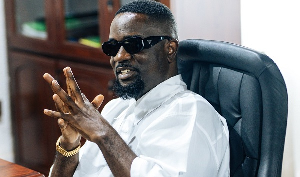
Sarkodie has promised to stick by agreements not to damage the stadium pitch Sarkodie has promised to stick by agreements not to damage the stadium pitch

Ghanaian rapper, Sarkodie, has taken to social media to assure the National Sports Authority (NSA) of his commitment to comply with all directives regarding the use of the Baba Yara Sports Stadium for the upcoming Rapperholic concert in Kumasi.

The Director General of the NSA, Yaw Ampoo Ankrah, earlier cautioned the event organisers during an interview on Asempa FM, emphasising the importance of keeping off the pitch during the concert.

He warned that any breach of the agreement would come with serious consequences for the rapper and his management team.

“We will ensure he [Sarkodie] doesn’t damage the Baba Yara pitch. Using the venue is permitted, but the pitch is prohibited. If there’s any breach of this arrangement, there will be serious penalties,” Ampoo Ankrah warned.

Sarkodie-didn-t-buy-anything-when-he-went-shopping-with-Memphis-and-Demb-l-2002051″>Here’s why Sarkodie didn’t buy anything when he went shopping with Memphis and Dembélé

However, responding to the NSA boss, Sarkodie, in a post shared on X on September 24, 2025, acknowledged the directives accordingly.

“The rules were set from day 1, and we are not ready to break it,” he said.

FKA/AE

Meanwhile, watch interviews with Bahubali’s twin sister and promoter below

The professor who beat fraud allegations to become Malawi’s president…again

0

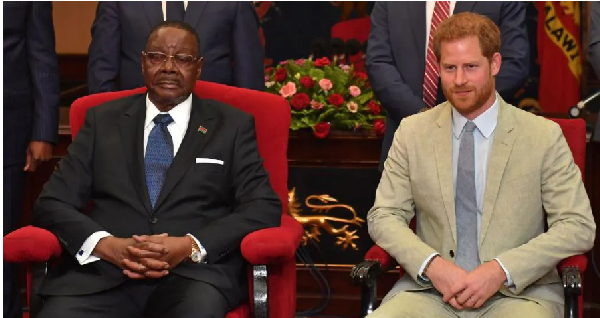
Just five years after being dramatically unseated by a court ruling, Peter Mutharika is set to return to power as the president of Malawi.

Mutharika, who held the top job from 2014 to 2020, seems to have triumphed in last week’s general election, usurping his long-time rival, President Lazarus Chakwera.

Mutharika told voters on the campaign trail that life was simply better under him. Malawi has experienced one of its worst-ever economic downturns since Chakwera took office.

But the record of 85-year-old Mutharika has its own blemishes, from corruption allegations to the debacle that ended his first presidency.

This is the fourth time he has run for office, but initially, Mutharika did not intend to go into politics.

Born in 1940 in the tea-growing region of Thyolo, he was raised by two teachers and developed a love for education.

“I grew up in a family where my parents were educators, and I spent all my life in higher education, at seven universities on three continents,” Mutharika commented in 2017, during an address at the UK’s Oxford University.

He attended Dedza Secondary School, an institution in central Malawi known for nurturing notable politicians, and studied law in the 1960s at the prestigious Yale University in the US.

Mutharika went on to become a professor, building an expertise in international justice. He spent decades away from Malawi teaching at universities in the US, Tanzania, Uganda, and Ethiopia.

Mutharika eventually pivoted to politics in 2004, when his older brother, Bingu, became Malawi’s president.

Mutharika returned home to serve as an adviser to the new president, and in 2009, he was elected as an MP for the ruling Democratic Progressive Party (DPP).

He served in his brother’s cabinet as justice minister, education minister, er and then foreign minister.

Mutharika scaled the heights of power relatively peacefully, but tensions emerged in 2010, amid reports that Bingu planned to name his brother as the DPP’s presidential candidate for the 2014 elections.

“Every week, chiefs from all over the country are paraded on national television to sing praises of Peter Mutharika… Many of the public are outraged, considering this blatant nepotism,” Malawian journalist Francis Chuma wrote in The Guardian.

But the succession plans were abruptly interrupted in April 2012.

At the age of 78, the president suffered a cardiac arrest and died. Mutharika paid a glowing tribute to the late leader at his funeral, describing him as “my brother, my friend and also my hero”.

With the presidency vacant, a power struggle ensued. Malawi’s constitution stipulated that if the head of state dies in office, the vice-president takes over, but Bingu had fallen out with his vice-president, Joyce Banda, over the controversial plans to install his brother.

The DPP had expelled Banda, who subsequently formed a new party, the People’s Party (PP), but refused to step down as vice-president.

When the president died, his supporters tried to install Mutharika as leader in defiance of the constitution, but ultimately Banda prevailed and became Malawi’s first female president.

Mutharika was charged with treason after being accused of being part of a plot to hide his brother’s death to give him time to manoeuvre to keep Banda out of the presidency.

He dismissed the charges as frivolous and politically motivated – and they were dropped after he was elected president in 2014, defeating Banda and Chakwera with just over 36% of the vote.

Mutharika’s supporters say his first stint in power uplifted Malawi, pointing to the billions of dollars of Chinese loans he secured to revamp the country’s infrastructure.

Inflation also dropped significantly during Mutharika’s first term. When he succeeded Banda, the inflation rate was at 24% percent – by the time he left, it had shrunk to single digits.

But Mutharika’s tenure also saw blackouts, food shortages, and more of the corruption scandals that have long plagued Malawian politics.

In 2018, Malawi’s anti-corruption agency accused Mutharika of receiving a kickback from a 2.8bn kwacha ($1.6m; £1.2m) contract to supply food to the police.

Malawians took to the streets toprotest,t but he was later cleared of any wrongdoing.

He has regularly defended himself as a proponent of the fight against corruption and extravagance, telling the BBC in 2015 that he was “the only president in Africa that travels commercial”.

Although Mutharika weathered the corruption allegations, he ended up losing the presidency in one of the most dramatic moments in Malawi’s political history.

Mutharika ran for a second term in 2019, and after the votes were counted, he was declared the victor.

However, the Constitutional Court later annulled the election, saying there had been widespread tampering, including the use of Tipp-Ex correction fluid on results sheets. Commentators mockingly referred to Mutharika as the “Tipp-Ex” president.

Judges ordered a re-run for 2020 and, astonishingly, Chakwera won with 59% of the vote.

Although Mutharika branded the re-run “unacceptable”, the Constitutional Court gained international acclaim for safeguarding democracy and refusing to be influenced by presidential power.

‘Afrobeats is beyond Wizkid, Burna Boy, Davido’ — Tiwa Savage faults ‘big 3’ narrative

0

Tiwa Savage has clarified her viral “f*ck the big three” remark, saying it was a critique of the industry narrative and not a direct attack on the artistes.

The controversy began in August during Savage’s London album launch concert. After hinting she had provocative thoughts to share, the ‘Somebody’s Son’ hitmaker declared, “F*ck the top three”.

Must-Have Styles for 2025 Fashionistas

0

Fashion in 2025 is all about versatility, comfort, and elegance, and kimono outfits perfectly capture these three elements. Once a traditional Japanese garment, the kimono has evolved into a global fashion statement, redefined with modern twists while still maintaining its cultural roots. This year, designers are embracing kimono-inspired outfits in bold prints, flowing fabrics, and contemporary cuts, making them one of the hottest wardrobe essentials.

One of the most trending kimono styles in 2025 is the oversized kimono jacket. Styled with jeans, shorts, or wide-leg trousers, it adds a chic, effortless vibe to casual wear. Paired with a crop top or fitted blouse, this look is perfect for brunch dates, travel, or relaxed weekend outings. Ankara and African print kimonos are also taking center stage, bringing vibrant colors and unique patterns that allow fashion lovers to express culture with a modern flair.

For more formal occasions, the silk and satin kimono dresses are a top pick. These flowing outfits with belted waists highlight femininity while ensuring comfort. Many designers are incorporating thigh-high slits, dramatic sleeves, and intricate embroidery, making kimono gowns suitable for evening events and red-carpet moments. Layered kimonos, worn over jumpsuits or bodycon dresses, are also in vogue, striking a balance between sophistication and boldness.

In street fashion, short kimonos with edgy designs like fringes, lace, or leather detailing are trending among young fashionistas. They can easily be styled with sneakers, boots, or heels, depending on the vibe you want to create. Accessories like wide belts, statement jewelry, and matching handbags elevate the entire look.

In 2025, kimono outfits are more than just clothing—they are a fusion of culture, comfort, and style. From casual outings to glamorous events, these timeless yet modern pieces continue to dominate runways and street style globally.

Ousmane Dembele Reigns, Aitana Bonmati Wins Third Straight Ballon d’Or

0

Aitana Bonmati and Ousmane Dembele


Paris Saint-Germain forward Ousmane Dembele has been crowned the world’s best player after winning the Ballon d’Or for the first time in his career.

The female category saw Barcelona’s Aitana Bonmati cement her place in football history after winning the Ballon d’Or Féminin for a record third consecutive year at Monday’s ceremony in Paris.

Dembele, 28, enjoyed a stunning 2024/25 campaign, scoring 35 goals and providing 14 assists in 53 appearances as PSG secured a historic treble, including their maiden Champions League title.

The French International finished joint top scorer in Ligue 1 with 21 goals and was named both Ligue 1 Player of the Year and Champions League Player of the Year.

Dembele also played a key role in PSG’s run to the Club World Cup final, where they were beaten by Chelsea in New Jersey.

His remarkable form earned him the prestigious award ahead of Barcelona’s teenage sensation Lamine Yamal, who finished second but claimed the Kopa Trophy for best young player.

Visibly emotional, Dembele shed tears on stage in Paris as he collected his award, despite PSG being in action on the same evening. He missed the match, a 1-0 home defeat to Marseille, due to injury.

His triumph marks a sensational revival for a player once plagued by inconsistency and injuries. Before this season, he had not scored double figures in a league campaign since his teenage days at Rennes.

Bonmati History

Barcelona and Spain midfielder Aitana Bonmati is the first women’s player to claim the award three times since its launch in 2018, beating Arsenal forwards Mariona Caldentey and Alessia Russo, who finished second and third respectively.

Bonmati was once again central to Barcelona’s dominance last season, guiding the Catalan side to a domestic treble of the Liga F, Copa de la Reina, and Supercopa de España Femenina.

She contributed 16 goals and 12 assists across all competitions and was named UEFA Women’s Champions League Player of the Season, after steering Barca to the final in Lisbon, where they narrowly lost 1-0 to Arsenal.

Her influence stretched far beyond her club. Despite being diagnosed with viral meningitis just before Euro 2025, Bonmati starred for Spain throughout the tournament.

She scored the decisive goal in the semi-final win over Germany, provided a key assist in the quarter-final against Switzerland, and was named Player of the Tournament, as Spain reached the final before falling to England in a penalty shootout.

“To the criminals out there, we are coming for you” – Police

0

COP Lydia Yaako Donkor
COP Lydia Yaako Donkor, the Director-General of the Criminal Investigations Department (CID), has issued a bold statement to criminals operating in Ghana.
According to COP Lydia Yaako Donkor, no matter how far or long they run, the police will eventually catch up with them.
Speaking during a press briefing at the National Police Headquarters in Accra on Wednesday, September 24, COP Donkor stated, “To the criminals out there, always remember that you may run and hide, but we will surely

President Mahama launches The Accra Reset at UNGA

0

President John Mahama

President John Dramani Mahama, the African Union Champion for African Financial Institutions, has launched “The Accra Reset: Reimagining Global Governance for Health and Development” in New York, United States.

The launch took place when the President hosted a landmark high-level event on the margins of the 80th Session of the ongoing United Nations General Assembly (UNGA80) in New York, United States.

This pivotal initiative will introduce a bold and actionable framework designed to fundamentally transform the global governance architecture, ensuring it is fit-for-purpose in a turbulent, post-SDG era.

President Mahama in his keynote address said as African Union Champion for African Financial Institutions, he carries a mandate to help shape the future of the African continent’s financial architecture.

“As a continent’s advocate for reparations, I’m also deeply aware of the failings of the world’s moral order. That responsibility is also why I’m passionate about the Accra Reset,” he said.

He added: “For I know that without new governance, business, and financing models for development, there can be no sustainable path for health, no resilience for economies, and no workable future for global solidarity.”

He noted that the Accra Summit produced a resounding consensus.

“The health crisis we face is not only a crisis of disease, vaccines, and hospitals, but also a crisis of social and economic inequality. It is a symptom of a deeper malaise in the global development architecture itself,” he said.

President Mahama said the collapse of the legacy aid system, punishing debt burdens in the global south, and fragmented supply chains were not isolated problems.

He said the evidence that the very logic of global development as they had known it was no longer fit for purpose.

“From Accra, a message went out to the world. If we are to heal our health systems, we must first reset development itself,” he stated.

He said the New York meeting was taking place at a time of increasing global uncertainty; adding that humanity had made progress once unimaginable.

He said in 1990, 36 per cent of the world lived in extreme poverty, and by 2019, that figure had fallen to eight per cent, and that global life expectancy had risen by nearly a decade in just one generation.

The President said maternal mortality had declined by a third since the year 2000, and in global health since 2000 alone, more than 50 million lives had been saved through expanded access to vaccines, HIV treatment, and malaria prevention.

He said the Global Fund and Gavi, born out of a new development consensus two decades ago, had provided life-saving tools to billions of the world’s population.

“This progress deserves recognition. It reminds us of what becomes possible when global solidarity rises to meet global challenges. And yet, even as we celebrate these gains, the cracks in the global order are growing deeper,” he said.

He added that, “The question that agitates our mind is:

 how do we sustain these gains in the face of current global shifts?”

President Mahama said the COVID-19 pandemic erased two decades of poverty reduction in less than two years; adding that climate change had driven nearly 735 million people back into chronic hunger and almost one in 10 of the world’s population was facing chronic hunger.

The Accra Reset was anchored on three fundamental shifts – the first was a mindset shift, which was needed, recognising that they live in an era of unpredictability, President Mahama said, warning that the post-war multilateral era was being ripped apart and that it appears they must prepare for a period of global turbulence.

The President said the second was a focus shift moving from beyond crafting new lists of global goals to building executable business models for coalitions, syndicates, and platforms that deliver.

And the third was a reality shift, accepting that diverse, even contradictory, interests are now a permanent feature of our system; and turning these very tensions into the fuel for pragmatic cooperation and mutual investment is imperative.

President Mahama said this new model demands resource multiplication and not rationing.

“Instead of limiting resilience, let us multiply it. Instead of setting new spending targets, let us measure the additional value that health, climate resilience, and food security can contribute to the global economy,” he said.

The President added that, “To give this Reset shape, we must launch a new global coalition, a partnership of the willing, the beginnings of a durable club, a presidential council comprising heads of state and government from Africa, Asia, Latin America, and beyond, which will provide political leadership to this movement.”

Also, a high-level panel drawing from health, finance, innovation, and business would provide intellectual depth and evidence to this exercise.

This coalition, he said, together would apply the operating logic of the Reset to help the world rethink global development itself.

Source: GNA

Ghana Consumer Confidence Hits Multi-Year Peak Despite Banking Sector Headwinds

0

Consumer Confidence
Consumer Confidence

AFP PHOTO / AMINU ABUBAKAR

Ghana’s consumer confidence has surged to its highest level in years as inflation tumbles toward single digits, though persistent weakness in bank lending threatens to constrain the economic recovery despite improving fundamentals across multiple sectors.

Consumer confidence reached 116.9 in August, approaching the mid-year peak of 119.2 and representing a dramatic improvement from 81.2 recorded twelve months earlier, according to the Bank of Ghana’s (BoG) latest survey data. Business confidence similarly climbed to 107.5 from 88.8 over the same period as firms exceeded short-term targets while expressing growing optimism about industry prospects.

The confidence surge reflects Ghana’s remarkable disinflation success, with headline inflation falling to 11.5 percent in August from 12.1 percent in July and down dramatically from 23.8 percent at the end of 2024 – marking the eighth consecutive monthly decline and reaching its lowest level since October 2021.

“The economy continues to demonstrate strong growth, driven largely by the services and agriculture sectors,” declared Governor Johnson Pandit Asiama following the central bank’s 126th Monetary Policy Committee (MPC) meeting, where officials implemented an aggressive 350 basis point rate cut.

Ghana’s Gross Domestic Product (GDP) expanded by 6.3 percent in the second quarter of 2025 compared with 5.7 percent for the same period a year earlier, with non-oil GDP rising by 7.8 percent. Services expanded 9.9 percent while agriculture grew 5.2 percent, offsetting contractions in the oil and gas sector.

High-frequency economic indicators reinforce the improving trajectory. The Composite Index of Economic Activity recorded annual growth of 6.1 percent in July, accelerating from 1.9 percent a year earlier and reflecting stronger trade, household spending and industrial output. Ghana’s Purchasing Managers’ Index also increased in August, signaling rising new orders across the manufacturing sector.

The disinflation breakthrough has created space for substantial monetary policy easing. The Bank of Ghana cut its policy rate by 350 basis points to 21.5 percent from 25 percent, prompting steep declines in government borrowing costs. Yields on the 91-day Treasury bill plummeted to 10.3 percent in August from 27.7 percent a year earlier, while average commercial lending rates fell to 24.2 percent from 30.8 percent.

Ghana’s currency stability has provided crucial support to the disinflation process. The cedi has gained more than 20 percent against the US dollar this year as foreign reserves climbed to US$10.7 billion, providing 4.5 months of import cover and strengthening the central bank’s ability to manage exchange rate pressures.

However, the economic recovery faces a critical constraint from weak credit transmission. Nominal private-sector credit expanded by only 13.3 percent in August compared with a year earlier, translating to just 1.7 percent real growth after adjusting for inflation.

For small business owners like Aunty Bee, who operates a cold storage facility at Adenta, the economic improvement brings mixed results. Customer demand has strengthened as prices stabilized, allowing better business planning compared to the volatile pricing environment of 2024.

“Last year, I could bring in a consignment of chicken and by the time I sold half of it, I had to raise prices again. Now, at least, I can plan,” she explained, highlighting the practical benefits of price stability for retail operations.

Yet access to finance remains her biggest operational challenge despite official interest rate reductions. “Even though interest rates are supposed to be lower, the banks are not eager to give us loans,” she said. “I end up relying more on suppliers’ credit and personal savings.”

The banking sector shows signs of improved resilience with capital adequacy rising to 17.7 percent in August from 10.2 percent a year earlier, while non-performing loans declined to 20.8 percent from 24.8 percent. However, the elevated level of bad loans continues discouraging banks from expanding credit, creating a bottleneck for economic growth.

Governor Asiama acknowledged that “elevated credit risk remains a major concern,” emphasizing that successful adherence to bank recapitalization plans will prove critical for sustaining financial sector stability and supporting broader economic recovery.

Ghana’s fiscal performance has provided additional support for the improving outlook. The government limited the budget deficit to 1.1 percent of GDP in the first seven months of 2025, beating its 2.1 percent target while recording a primary surplus of 1 percent. Public debt fell to 44.9 percent of GDP from 61.8 percent at the end of 2024, demonstrating significant fiscal consolidation progress.

The central bank projects inflation will fall within its 8 percent plus or minus 2 percent target band by year-end, though potential upward adjustments in utility tariffs remain a risk factor. The monetary authorities have indicated continued policy rate reductions remain possible if disinflation momentum persists without threatening financial stability.

Economic analysts emphasize that sustaining the current positive momentum will require credit growth acceleration to match the stronger macroeconomic fundamentals. The disconnect between improving economic indicators and sluggish lending represents a key challenge that could limit Ghana’s recovery potential despite the remarkable progress in inflation control and business confidence.

The coming months will test whether banking sector reforms and continued monetary policy easing can unlock the credit flows necessary to fully capitalize on Ghana’s improving economic fundamentals and translate rising confidence into sustained growth acceleration.

DCE Demands Accountability On Abandoned Nyinahin Sports Complex

0

Ibrahim Issahaq (L) with some of the youth at the facility


The District Chief Executive (DCE) of Atwima Mponua, Issahaq Ibrahim, has raised serious concerns over the state of the Nyinahin Sports Complex, questioning whether taxpayers’ money has been wasted on a project that remains abandoned despite being reported as 95 percent complete.

Speaking after visiting the facility, the DCE expressed disappointment that the contractor left the site in November 2024 without formally handing it over, leaving the multi-million-cedi project to rot. “On paper, this project looks complete, but what we see here is totally different,” Mr. Ibrahim bemoaned.

The facility, initiated under the erstwhile NPP government by former Sports Minister and then Atwima Mponua MP, Isaac Kwame Asiamah, was expected to serve as a major sporting hub for the Ashanti Region.

Instead, the terraces are overrun with weeds, the pitch is untended, and critical internal works remain unfinished.

Mr. Ibrahim revealed further that the stadium has no water source, no electricity, and no inner perimeter wall — making it unsafe and unfit for use.

“This place has been left to bushes and could easily become a breeding ground for reptiles and other dangerous rodents,” he warned.

In the midst of the neglect, local youth from Nyinahin Kyiraso Junction took it upon themselves to clear the bushy facility.

Their effort drew praise from the DCE, who commended their dedication to community service and offered them a token donation to support their meals.

He also acknowledged the support of the Assembly Member for the Nyinahin Junction Electoral Area, Kwabena Karikari.

But Ibrahim insisted that the matter goes beyond community clean-ups, calling on the Minister for Sports and Recreation, Kofi Adams, to hold the contractor accountable.

“If the contractor believes the money he was given was not enough, let him come out and say it. But to abandon this project is unacceptable. The people of Atwima Mponua and Ghana deserve answers,” he declared.

The DCE emphasized that apart from the Baba Yara Sports Stadium in Kumasi, there is no major government-owned sports facility in the Ashanti Region.

According to him, the completion of the Nyinahin Sports Complex would not only provide a world-class sporting center but also create employment, nurture young talents, and help reduce social vices.

Residents are now demanding swift action to prevent the facility from becoming a permanent monument to wasted public funds.

FROM David Afum, Nyinahin


NDC does not run its affairs on social media – Mustapha Gbande warns party folks

0

Deputy General Secretary of the opposition National Democratic Congress (NDC), Mustapha Gbande, has warned party members against using social media to address internal issues.

According to him, the NDC does not run its affairs on social media, and members must respect the party’s structures rather than making pronouncements online.

Mr. Gbande explained that the party has a General Secretary, supported by deputies and a national organizer, who are responsible for managing its affairs.

He cautioned that individuals who ignore these structures and resort to social media risk creating needless distractions.

He further stressed that such members could be invited and reprimanded by the party’s leadership if the practice continues.

Mr. Gbande urged party leaders to focus more on the grassroots, especially farmers, and ensure that policies are explained to them in clear language they can understand.

He added that the NDC is not in crisis, dismissing recent rumors as baseless.

By: Jacob Aggrey

Bawumia Declares Campaign Confidence After Surviving NPP Leadership Vetting

0

Vice President Dr Mahamudu Bawumia

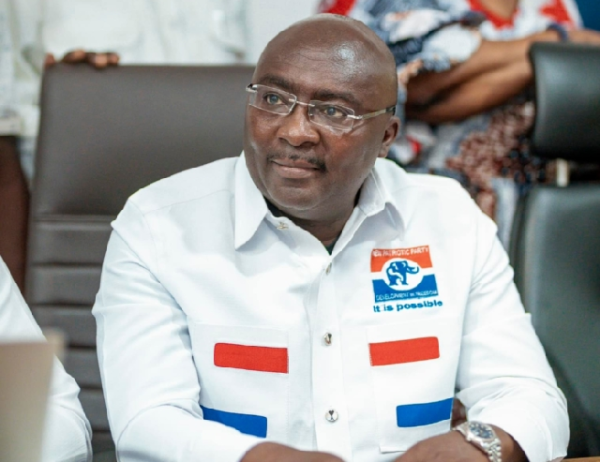
Former Vice President Mahamudu Bawumia emerged from the New Patriotic Party’s (NPP) crucial vetting process declaring himself “very satisfied” and ready to intensify his campaign for the party’s 2028 presidential nomination following Tuesday’s screening session in Accra.

Bawumia declared himself “very satisfied” with how his vetting went, saying he hopes the vetting committee shares that assessment after facing a five-member committee chaired by former Defense Minister Dr. Kwame Addo-Kufuor at the party’s headquarters in Adabraka.

The former Vice President, who served until January under the previous NPP administration, signaled his determination to mount an aggressive campaign despite his high-profile background. “We are not taking anything for granted. We have to campaign, sell our ideas and sell the NPP so that we can secure this nomination and proceed for the 2028 election,” Bawumia told reporters immediately after the session.

His confidence received an immediate boost as 15 out of 23 Eastern Regional MPs endorsed Bawumia, with supporters in Parliament describing him as the candidate with the vision, experience, and grassroots appeal necessary to strengthen the party’s prospects in 2028.

The vetting process represents a critical hurdle in the NPP’s internal race, which has already attracted significant attention with presidential primaries scheduled for January 31, 2026. The early timeline reflects the party’s determination to begin preparations for reclaiming power in the 2028 general elections.

Bawumia faces formidable competition, particularly from Kennedy Ohene Agyapong, the outspoken former Member of Parliament for Assin Central who officially declared his intention to contest the 2026 NPP presidential primaries in August. Agyapong has already demonstrated his organizational capacity by establishing an Anti-Election Rigging Response Squad in all 276 constituencies to ensure fair elections.

The competitive dynamics reflect lessons from the NPP’s previous internal contests, where personalities and campaign strategies proved decisive factors. In the party’s 2023 primaries, Bawumia secured a landslide victory with 61.43% of total votes, followed by Kennedy Agyapong with 37.41%, suggesting both candidates enter this race with established support bases.

However, political observers note that the 2026 race operates under different circumstances, with the NPP now in opposition and facing pressure to present fresh leadership approaches. This context may alter delegate preferences and create opportunities for candidates to redefine their appeal.

Bawumia’s post-vetting comments emphasized his readiness to engage directly with party delegates across the country. “I want to thank the rank and file of this party, and I think that from vetting we are heading straight into the country to campaign,” he stated, outlining an immediate transition from procedural requirements to active campaigning.

The former Vice President’s strategy appears focused on leveraging his government experience while acknowledging that past positions alone cannot guarantee victory. His emphasis on selling ideas rather than relying on credentials suggests recognition that delegates seek forward-looking vision rather than backward-looking achievements.

Bawumia, addressing supporters at the start of his campaign in the Eastern Region, urged party faithful to remain united and focused on recapturing power in 2028, emphasizing that his track record in government and vision for Ghana’s future make him the best choice to lead the NPP.

The NPP’s internal race occurs against the backdrop of John Mahama’s return to the presidency, creating urgency within the party to select a candidate capable of mounting effective opposition while preparing for the next electoral cycle. This dynamic may influence delegate considerations as they evaluate candidates’ electability and appeal to broader Ghanaian voters.

As the vetting process continues with other aspirants, including Kennedy Agyapong who also appeared before the committee this week, the NPP prepares for what promises to be its most competitive internal contest in recent memory. The party’s ability to manage this process while maintaining unity will significantly impact its prospects for returning to power.

For Bawumia, surviving the vetting process represents the first step in a campaign that must now convince thousands of delegates across Ghana’s 16 regions that his combination of experience, vision, and electability offers the NPP’s best path back to the presidency.

The coming months will test whether his confidence translates into delegate support as the party prepares to choose its standard-bearer for what many consider a crucial election in Ghana’s democratic trajectory.

Ghana Unlocks Banking Revolution Through Credit Guarantees

0

Banking
Banking

Ghana’s banking sector stands poised for dramatic expansion following the Bank of Ghana’s (BoG) revolutionary decision to accept state-backed credit guarantees as acceptable collateral, a policy shift that could more than double lending capacity while supporting President John Mahama’s ambitious $4 billion 24-hour economy transformation.

The central bank has officially approved guarantees issued by the Ghana Incentive-Based Risk-Sharing System for Agricultural Lending (GIRSAL) as acceptable collateral, fundamentally altering how commercial banks calculate lending limits and manage credit risk exposure. This breakthrough policy will extend to other institutions including Development Bank Ghana (DBG) as the framework expands.

“The idea was to de-risk agricultural lending and encourage financial institutions to increase their exposure to the sector through credit guarantee schemes,” declared Ismail Adam, Director-Banking Supervision, speaking on behalf of Governor Dr. Johnson Pandit Asiama at a banking sector roundtable in Accra. “Going forward, the same protocol will be extended to DBG.”

The timing proves crucial as President Mahama’s 24-Hour Economy program, officially launched July 2, 2025, aims to create at least 1.7 million jobs over four years while driving industrial transformation, requiring over $4 billion in investments with government providing initial seed capital.

John Awuah, Chief Executive Officer of Ghana Association of Banks, explained how the policy fundamentally transforms lending mathematics. Under current regulations, banks can lend only 10 percent of their net owned funds for unsecured facilities, but the guarantee framework allows them to advance up to 25 percent for secured lending.

“If it is unsecured, you can lend up to 10 percent of your net owned funds,” Awuah explained. “But if it is secured because the central bank is accepting the guarantee, then you can lend up to 25 percent. Instead of giving GH¢10 million I can now give GH¢25 million, which allows businesses to do much more.”

GIRSAL’s credit guarantees now carry zero percent risk rating from BoG, providing banks with cash-backed protection against agricultural loan defaults up to 70 percent coverage, effectively removing the primary barrier facing Ghana’s agricultural sector access to institutional credit.

The policy breakthrough addresses a critical constraint identified by banking executives as they prepare to support the 24-hour economy initiative. Banks can now confidently extend credit to previously “unbankable” agricultural enterprises backed by GIRSAL guarantees, with implications extending across the entire agricultural value chain from seed producers and tractor service providers to food processors and exporters.

Development Bank Ghana’s $70 million partial credit guarantee scheme complements GIRSAL’s agricultural focus by supporting partner financial institutions in managing default risks across manufacturing, agriculture, services and small and medium enterprises (SMEs), with particular emphasis on women-led and first-time borrowers.

Banking sector leaders view the guarantee framework as essential infrastructure for financing the 24-hour economy initiative, which aims to expand production and services beyond traditional hours to boost growth and employment across key sectors. The 24-Hour Economy Initiative represents President Mahama’s signature economic policy, designed to maximize productivity by enabling businesses to operate round-the-clock across key sectors including manufacturing, agriculture, and services.

Adam emphasized that this new framework strengthens the crucial link between banks and the real economy, noting that success for the 24-hour economy program depends significantly on how banks respond to increased demand for financing. A stronger banking sector will provide the stability required to attract investment while supporting round-the-clock operations across multiple industries.

The guarantee acceptance also reduces regulatory capital consumption for banks, since exposures backed by guarantees require lower capital allocation. “Sometimes, in other jurisdictions, guarantees are even netted off exposures on the books. That frees up capacity to lend more,” Awuah noted, suggesting potential for even greater lending expansion as the policy matures.

However, banking leaders acknowledge that access to long-term, affordable funding remains a significant constraint despite the guarantee breakthrough. Awuah cautioned that institutions like DBG were established specifically to fill this gap and provide banks with resources to offer loans with longer maturities at sustainable rates.

“The more long-term arrangements we have, the better it is for both banks and borrowers,” he stated. “This allows businesses to scale, repay comfortably and ultimately strengthens the system.”

Recent banking sector data reveals mixed results in the first half of 2025, with leading institutions strengthening capital positions while others struggle with deteriorating loan portfolios amid low GDP growth and excessive interest rate volatility.

The guarantee framework arrives as Ghana’s agricultural sector desperately needs institutional credit access. Traditional collateral requirements have historically excluded smallholder farmers and agribusinesses from formal credit markets, forcing reliance on informal lending at unsustainable rates.

Awuah emphasized that while government sets the framework, private sector leadership will ultimately determine the program’s success. “As bankers, we are very keen to be the oil that fuels the program,” he declared. “But it takes two to tango. The private sector must also come on board.”

President Mahama has emphasized that while government provides the policy framework, the private sector must lead implementation of the 24-hour economy initiative, making banking sector cooperation essential for success.

For Ghana’s banking sector, the credit guarantee acceptance represents more than regulatory change – it offers a pathway to significantly expand lending while supporting national economic transformation goals. The coming months will test whether this policy innovation translates into the massive private sector investment required to achieve the 24-hour economy’s ambitious job creation and industrial development targets.

Rapperholic Homecoming: ‘We won’t break rules set by NSA’

0

Sarkodie is a Ghanaian rapper Sarkodie is a Ghanaian rapper

Ghanaian rapper Sarkodie has taken to social media to assure the National Sports Authority (NSA) of his commitment to comply with all directives regarding the use of the Baba Yara Sports Stadium for the upcoming Rapperholic concert in Kumasi.

The Director General of the NSA, Yaw Ampofo Ankrah, earlier cautioned the event organisers during an interview on Asempa FM, emphasising the importance of keeping off the pitch during the concert.

He warned that any breach of the agreement would come with serious consequences for the rapper and his management team.

“We will ensure he [Sarkodie] doesn’t damage the Baba Yara pitch. Using the venue is permitted, but the pitch is prohibited. If there’s any breach of this arrangement, there will be serious penalties,” Ampofo Ankrah warned.

Shatta Wale willingly offered to sponsor my Rapperholic concert – Sarkodie

However, responding to the NSA boss, Sarkodie, in a post shared on X on September 24, 2025, acknowledged the directives accordingly.

“The rules were set from day 1, and we are not ready to break it,” he said.

Read the post below:

JHM/EB

Watch the latest edition of BizTech below:

Motorists urged to exercise caution following oil spill on Accra-Tema Highway

0

Motorists are advised to exercise extreme caution on the Accra-Tema highway due to an oil spill that has caused multiple accidents.

An incident along the Accra Mall to Tema stretch has led to at least three accidents, leaving the road dangerously slippery and posing a major risk, especially for smaller vehicles and motorbikes, according to a report by citinewsroom.com on September 24, 2025.

“Authorities have been informed, and the Motor Traffic and Transport Department (MTTD) is anticipated to take quick action to handle the situation,” an initial report indicated.

Drivers are consequently advised to reduce their speed and stay attentive to prevent further accidents.

NAD/VPO

Martin Amidu breaks silence on removal of Gertrude Torkornoo

TWI NEWS

Corporate Chic Redefined: The Yaa Konamah Effect

0

When it comes to redefining corporate fashion, Yaa Konamah’s style has become an inspiration for women who want to blend professionalism with elegance.

Known for her refined and confident wardrobe choices, her trousers and top ensembles have set a new tone for modern office wear. These designs emphasize sophistication while embracing versatility, making them perfect for boardroom meetings, presentations, and after-work networking events.

One of the standout features of Yaa Konamah-inspired fashion is the tailored fit. High-waisted trousers with clean cuts elongate the legs and give a sharp silhouette. Wide-legged trousers in neutral shades such as beige, navy and black bring a timeless elegance, while slim-fit options in bold tones like emerald or wine red add personality without compromising professionalism. Paired with structured tops, these trousers create an ensemble that commands respect and admiration.

The tops inspired by Yaa Konamah often merge classic corporate styles with a modern twist. Peplum blouses, wrap tops, and button-down shirts with delicate detailing offer both comfort and style.

Fabrics such as chiffon, silk, and cotton blends ensure a breathable yet refined look. Subtle elements like puffed sleeves, bow ties, or asymmetrical cuts elevate the outfit, creating an air of confidence that goes beyond the conventional corporate blouse.

A key aspect of Yaa Konamah’s style is her balance between subtlety and boldness. Neutral tones serve as the foundation, but she is not afraid to experiment with striking accents.

A crisp white blouse tucked into navy trousers can be elevated with a statement belt or a splash of color in accessories. Soft pastels also find their place in her palette, offering a refreshing break from the traditional black-and-grey corporate attire.

What makes these designs truly remarkable is their versatility. A Yaa Konamah-inspired trousers-and-top look can seamlessly transition from office hours to social gatherings.

With the right pair of heels or loafers, minimal jewelry, and a sleek handbag, the outfit can take on different roles while maintaining elegance.

Corporate trousers and tops inspired by Yaa Konamah are not just outfits; they are statements of confidence, ambition and grace.

For women seeking to stand out while staying professional, these designs offer the perfect balance between classic corporate wear and modern chic. Kindly like, follow, comment and share for more.

Ada Assurance face financial struggles ahead of week 4 Beach Soccer games

0

Ada Assurance Beach Soccer Club Ada Assurance Beach Soccer Club

The winners of the 2023 Ghana Football Association (GFA) Beach Soccer Premier League, Ada Assurance Beach Soccer Club, have withdrawn from their week 4 league match owing to financial difficulties.

According to the club, the GFA’s sponsorship funds are insufficient to support the team hence the decision to pull out from the league.

Located in the Ada East District of Greater Accra, the team was scheduled to compete against Keta Sunset Sports at Keta Emancipation Beach in the Volta Region on Sunday, September 14, 2025, for the fourth week fixture.

In an interview with the club’s Chief Executive Officer, Maxwell Kpeglo, he revealed that each club is supposed to receive GHC10,000.00 in sponsorship; however, the GFA has only provided GHC5,000.00.

“I incur GHC2000.00 in expenses for each game every weekend, with GHC1200.00 spent on transportation to bring players to the match venue, including those who travel from other regions, along with logistics. The GHC5000.00 is insufficient for three matches,” he lamented.

Maxwell also criticized the FA for its neglect of beach soccer, pointing out that Ghana’s beach soccer, Black Sharks, have contested in the CAF’s African Beach Soccer Nations Cup, which he believes requires the FA to invest more in the sport.

“The GFA views beach soccer players over 30 years old as amateurs, while football players of the same age receive preferential treatment in terms of sponsorship,” he explained.

He further compared the prize money, stating, “The prize money for the Ghana Premier League is one million Ghana Cedis (GHC1,000,000) while the prize money for beach soccer is only GHC15,000.00.”

Maxwell highlighted that the Ada Assurance Beach Soccer Club was the inaugural

winner of the Ghana Beach Soccer Premier League organized by the Ghana Football

Association in 2023, receiving a prize money of GHC15,000, which is significantly lower than that of the football league.

Mnangagwa’s rivalry with VP Chiwenga spreads to provinces

0

Zimbabwean President Emmerson Mnangagwa’s bid to remain in power beyond the two terms permitted by the constitution has triggered an internal revolt within the ruling Zanu PF party—led by the very man who paved the way for his rise eight years ago.

That rivalry is now spilling into the provinces, where grassroots support will be crucial for a decisive constitutional amendment.

Vice President Constantino Chiwenga, the former army general who orchestrated the 2017 military coup that ousted long-time ruler Robert Mugabe, is now locked in a public showdown with President Mnangagwa ahead of a pivotal party conference next month.

In a dramatic twist to the simmering power struggle, Chiwenga presented Mnangagwa with an explosive dossier accusing petroleum magnate Kudakwashe Tagwirei of looting billions of US dollars from Zanu PF.

Mr Tagwirei, a controversial businessman under US and UK sanctions for allegedly fuelling corrupt networks that sustain Mnangagwa’s rule, is being touted as the president’s preferred successor. There have been concerted efforts to install him within Zanu PF structures.

A long-time financier of the party since the Mugabe era, Mr Tagwirei has pledged $3 million for the October 13 conference, which is expected to pass a resolution extending Mnangagwa’s term by two years beyond its scheduled end in 2028.

Chiwenga’s dossier, tabled during a meeting of the party’s top decision-making body—the politburo—a week ago, threw the cat among the pigeons. It triggered a series of events that have laid bare the intensifying factionalism within the ruling party.

Mnangagwa’s loyalists are mobilising party structures to pass a resolution at the October 13–18 conference to extend the 83-year-old leader’s term.

The proposed extension, which would require a constitutional amendment to remove the two-term limit for presidents, has deeply divided Zanu PF.

Retired General Chiwenga opposes the extension, which would derail his own presidential ambitions. He is reportedly backed by the country’s security establishment.

His confrontation with the president came a day after Mr Tagwirei donated 300 luxury vehicles to Zanu PF, amid allegations that he was attempting to influence the term-extension agenda.

Just days earlier, another businessman, Wicknell Chivayo—closely linked to the president—donated cash, vehicles, and ambulances worth over $4 million to Zanu PF regional chairpersons. He said the donation was in celebration of Mnangagwa’s 83rd birthday.

In the dossier, retired Gen Chiwenga alleged that Mr Tagwirei had siphoned $3.2 billion from Zanu PF through opaque investments now being used to buy support for a third term. He called for the immediate arrest of Mr Tagwirei and Mr Chivayo, as well as the recovery of the looted funds.

Zanu PF spokesperson Christopher Mutsvangwa dismissed the dossier, describing it as part of a destabilisation campaign driven by power-hungry individuals.

Mr Mutsvangwa said the former army commander must wait for the party’s elective congress in 2027 if he wishes to succeed Mnangagwa.

“There are persistent efforts from detractors who are throwing cobwebs to make us witch-hunt ourselves,” he told journalists in Harare on Monday.

“The politburo is not unduly moved by these things. This debate should not define Zanu PF.

“There are people who wish to see the president removed so they can take over.

“Wait for your time—it will come at the congress through a democratic process.”

A day after Mr Mutsvangwa’s remarks, President Mnangagwa announced a surprise reshuffle of his top politburo lieutenants, removing a key ally of the VP from the influential secretary-general post.

Eldred Masunungure, a Harare-based academic, said the escalation of Zanu PF’s internal power struggles had reached dangerous levels.

Mr Masunungure drew parallels with past leadership battles in the party, dating back to the pre-independence era when Zanu PF, led by Mr Mugabe, was one of two major liberation movements alongside Zapu, led by the late Vice President Joshua Nkomo.

“Those phases had bloody endings—hopefully that won’t be repeated this time,” he said.

“The long and short of it is that the events in the party are not a mere distraction. These dynamics must not be misread by the public—especially the opposition, such as it remains—as signalling the demise of the party or its regime.”

In 2017, the army—led by retired Gen Chiwenga, then commander—intervened, claiming that Zanu PF infighting over Mr Mugabe’s succession threatened the party’s survival.

At the time, Mnangagwa—Mugabe’s long-time deputy—was in exile in South Africa, having been dismissed over alleged presidential ambitions. The military accused Mr Mugabe of purging war veterans to clear the path for then First Lady Grace Mugabe to succeed him.

Mr Masunungure said Zanu PF’s infighting is likely to intensify after the October conference, which will not feature leadership contests, although the push to extend the president’s term is expected to dominate proceedings.

“If anything, the gladiation will likely be either more vicious—hopefully bloodless—or more subtle in a Machiavellian sense,” he predicted.

“There will clearly be winners and losers at the conference, but it’s hard to imagine the losers turning the other cheek.”

Reuben Mbofana, a Harare-based political commentator, said the reshuffle of the party’s top brass was designed to ensure Mnangagwa’s term extension agenda remains on track.

“To me, this is nothing short of Mnangagwa safeguarding his 2030 agenda just ahead of the party conference, using those reassignments,” Mr Mbofana said.

Political analysts say the military is likely to play a central role in Zanu PF’s succession battles, as it did during Mr Mugabe’s final days.

President Mnangagwa has repeatedly insisted he does not wish to remain in office beyond his two terms, yet he has taken no steps to halt his supporters’ campaign for a two-year extension.

Train services to resume on Tema–Mpakadan corridor October 1

0

Socio-economic activity along the Tema–Mpakadan corridor and surrounding areas is set to receive a major boost as passenger train services resume on October 1, 2025.

The Ghana Railway Development Authority (GRDA) said all challenges that had halted operations — including infrastructure defects and land encroachment — have been resolved.

Speaking during a media briefing in Accra on Wednesday, September 24, the Chief Executive Officer of GRDA, Dr. Frederick Appoh, disclosed that the Authority is also coordinating with other transport operators to ensure seamless onward connections for passengers.

“The trains are ready and capable of running the lines. At the moment, we’re going to run the trains on October 1. We’re going to do so with our sisters and brothers on the Ayalolo buses. Every station, you’re going to have two Ayalolo buses waiting for you and two GPRTU vehicles, as well as Uber services waiting for you to provide a second degree of freedom to take you from the station to your home.

He added, “We are going to provide a door-to-door service on the line. We are also going to operate a micro-economic corridor, where people can ask for leases to sell food products, open smaller shops within our stations, as well as mobile money vendors. We’re encouraging the public to partake in this.”

….

Explore the world of impactful news with CitiNewsroom on WhatsApp!

Click on the link to join the Citi Newsroom channel for curated, meaningful stories tailored just for YOU:
https://whatsapp.com/channel/0029VaCYzPRAYlUPudDDe53x

No spam, just the stories that truly matter! #StayInformed #CitiNewsroom #CNRDigital

‘We’ll uphold Ghana’s reputation on the global stage’ – Minority says amid foreign policy concerns

0

The Minority Caucus on Parliament’s Foreign Affairs Committee has pledged to defend Ghana’s sovereignty and constitutional order in the face of what it describes as dangerous shifts in the country’s foreign policy.

Addressing a press conference in Accra Wednesday, September 24, 2025, Ranking Member on the Committee, Samuel Abdulai Jinapor, raised concerns over both an agreement with the United States to accept deportees and the government’s public stance on the Gaza conflict.

Ledzokuku NCCE holds 2025 constitutional quiz for basic schools 

0

By Mavis Quansah 

Tema, Sept. 24, GNA —The National Commission for Civic Education (NCCE), Ledzokuku Municipal Office, has organised its 2025 constitutional quiz, with Roosevelt International Schools emerging as winners.  

The Roosevelt International School scored 62 points, followed by the Gerald International School with 58 points, Ford Schools Limited, gaining 54 points to claim the third position, and Teshie Estate Preparatory School placed fourth, with 48 points. 

 The competition covered questions from various chapters of the 1992 Constitution, which included human rights and responsibilities, arms of government, current affairs, separation of powers, and checks and balances, among others. 

 The quiz competition formed part of activities organised by the NCCE to mark constitutional week celebration, aimed at enhancing students’ knowledge and understanding of the 1992 Constitution and how it guides the country in its policies, decision-making and governance. 

 Mr. Nicholas Atiogbe, the Municipal Director for the NCCE, said the quiz was organised to educate civic education club members to embrace the history and constitution of the land. 

 He added that the students must inculcate values that will help them to be responsible children in society. 

He indicated that it was the commission’s obligation to educate the students and embed in them good morals through education, counselling and career guidance. 

 Mr. Atigbe said: “Most often, we say the children are our future leaders, but the future is now; it is therefore important to guide and educate them to make good decisions that would benefit them and the country at large and to stay away from social vices.” 

 Mr. Atiogbe noted that the NCCE was working on other innovative activities like quizzes, excursions, and drama, among others, to whip up the students’ interest in state affairs.  

He said that even though they expected that all the students would be given the opportunity to participate in school programmes, the NCCE mostly faced challenges with heads of schools denying civic officers access to engage their students. 

He therefore pleaded with heads of schools and the Parent Teachers Association (PTA) to open their doors for the commission to have engagement with the teachers and students.  

Miss Sybil Aseye Setuagbe, a pupil of Roosevelt International Schools, said the competition has helped them learn to work in teams and broaden their knowledge on the 1992 Constitution and their fundamental rights. 

GNA 

Edited by Laudia Sawer/Benjamin Mensah 

Intensify Galamsey Fight – GJA To Govt

0

Some of the participants


The Ghana Journalists Association (GJA) has bemoaned the lack of political will from successive governments to walk the talk by ensuring an end to illegal mining or galamsey.

According to the Association, governments’ unwillingness to end galamsey has caused a great disservice to Ghana.

Speaking at the opening of a mining workshop for some selected journalists across the country in Kumasi last Thursday, the GJA President, Albert Dwumfour, expressed regret that several water bodies have been destroyed through illegal mining.

“The question is, when will Ghana see an end to this menace? We have a huge role to play as journalists,” he pointed out.

The three-day workshop was organised by the Ghana Chamber of Mines in collaboration with GJA.

The workshop aimed to strengthen the media on mining reporting among others.

Some of the topics discussed included Regulatory regimes on mining in Ghana; Mining as a Catalyst for Development; Responsible Reporting and Media Ethics.

The GJA President indicated that galamsey is no longer a threat to individual livelihoods, but a national security threat.

“We have seen the devastating effects of galamsey, the environmental degradation and the social conflicts that often accompany the resource extraction,” he mentioned.

He added that chronic health conditions such as cardiovascular diseases, children born with deformities, kidney failure, and its attendant health challenges are all linked to galamsey.

He, however, noted that it is the responsibility of journalists to go deeper and push duty bearers to root out illegal mining and use revenues earned from mining judiciously for the benefit of people who are the real owners of the nation’s minerals.

Mr. Dwumfuor mentioned that the workshop was a testament to the shared vision of two pivotal organisations—the GJA and the Ghana Chamber of Mines.

“Your incisive reporting can engender policy shifts, ensuring the better and more responsible extraction of our mineral resources for national development,” he added.

“The Minerals Commission is reviewing its Act. We need to follow the process and ensure that the provisions in the revised Act offer better solutions to our mining challenges,” he told the journalists.

Mr. Dwumfuor indicated that the Association will continue to seek opportunities to enhance the knowledge, skills, and welfare of members across the country.

From Emmanuel Opoku, Kumasi


King Charles III sends condolences to Asantehene

0

King Charles III has conveyed his condolences to the Asantehene, Otumfuo Osei Tutu II, following the passing of the Asantehemaa, Nana Konadu Yiadom III.

In a letter dated August 14, 2025, and addressed from Buckingham Palace, King Charles said he was “profoundly saddened” to learn of the death of the Queen Mother of Asanteman, describing her as a devoted custodian of Ashanti traditions and unity.

“Her Royal Majesty demonstrated a deep devotion to preserving the traditions and unity of the Ashanti throughout her life, and served as an exemplar of wise, fair, and gracious judgment and counsel,” King Charles wrote.

He further praised her years of guidance, leadership, and tireless service to charitable causes, noting that she touched the lives of many mothers and children.

The monarch added that the passing of Nana Konadu Yiadom III was “an immense loss” that would be deeply felt not only in Asanteman but also around the world. He extended his prayers to the Asantehene and his family, stating that Queen Camilla also joins him in mourning with the Ashanti Kingdom.

Nana Konadu Yiadom III passed away on August 11, 2025. Her final burial rites were held at the Manhyia Palace in Kumasi, with the four-day observance concluding on September 18, 2025.


….

Explore the world of impactful news with CitiNewsroom on WhatsApp!

Click on the link to join the Citi Newsroom channel for curated, meaningful stories tailored just for YOU:
https://whatsapp.com/channel/0029VaCYzPRAYlUPudDDe53x

No spam, just the stories that truly matter! #StayInformed #CitiNewsroom #CNRDigital

NDC Deputy Secretary Warns Government Will Fail Without Grassroots Engagement

0

Mustapha Foyo Gbande

Deputy Director of Operations at the Presidency Mustapha Gbande has warned that the National Democratic Congress (NDC) government risks failure if appointees remain confined to Accra instead of engaging directly with grassroots communities across the country.

Speaking on Accra-based Asempa FM, Gbande emphasized that sitting in the capital and making radio appearances has minimal impact on rural populations who are most affected by government policies and programmes. The senior party official called for ministers to prioritize field visits and direct community engagement over media appearances.

“We don’t want the party to be rocked by needless distraction. We want more ministers to the ground to work. They should go to the grassroots and work,” Gbande stated during the radio interview, specifically citing Agriculture Minister Eric Opoku as an example of needed grassroots engagement.

The comments come amid speculation about Opoku’s potential presidential ambitions for the 2028 election, with the Agriculture Minister recently stating he would accept the opportunity if chosen by the grassroots. Gbande dismissed concerns about such political maneuvering as unnecessary distractions from governance priorities.

Gbande particularly highlighted challenges facing the cocoa sector, referencing the need for direct farmer engagement to address issues at the Ghana Cocoa Board (Cocobod). The state cocoa marketing organization is currently grappling with significant debt, with obligations of 5.37 billion Ghana cedis due in 2025, making effective communication with farmers crucial for sector recovery.

“The Cocobod conversation, if we don’t go and meet the farmers, our policies will fail. Let the farmers know the state of affairs at Cocobod,” he explained, emphasizing that English-language radio discussions in Accra fail to reach rural agricultural communities who don’t understand such technical communications.

The Deputy Director’s remarks reflect broader concerns within the ruling party about maintaining connection with its traditional support base while implementing complex policy reforms. Approximately 70 percent of government appointees under the Mahama administration are party stalwarts with deep organizational roots, including Finance Minister Cassiel Ato Forson, according to previous statements by Gbande.

Agriculture Minister Opoku has been active in policy implementation since taking office, including launching the innovative “Feed Ghana Programme” in April 2025 aimed at revitalizing the agricultural sector. However, Gbande’s comments suggest party leadership wants to see more direct community engagement alongside policy announcements.

The warning comes as the NDC government faces the challenge of delivering on campaign promises while managing complex economic pressures. Current cocoa production stands at 530,000 metric tonnes according to Cocobod data, significantly below historical levels, highlighting the urgency of effective farmer engagement strategies.

Gbande’s emphasis on grassroots communication reflects lessons from previous administrations and recognition that policy success depends heavily on public understanding and buy-in, particularly in rural areas where many NDC voters reside.

The call for increased field presence by ministers signals the party leadership’s commitment to maintaining its connection with supporters while delivering effective governance across all regions of the country.

COPEC Calls for Strategic Fuel Reserves to End Ghana’s Price Volatility

0

Chamber of Petroleum Consumers (COPEC)

The Chamber of Petroleum Consumers (COPEC) has intensified calls for Ghana to establish strategic fuel reserves, arguing the country’s reliance on immediate price pass-through mechanisms leaves consumers vulnerable to global market shocks.

Executive Secretary Duncan Amoah warned that Ghana’s current model of “playing to the wind” exposes the nation to excessive fuel price volatility, with pump prices currently ranging from GH₵14.99 to GH₵16.23 per litre for petrol across different Oil Marketing Companies (OMCs).

“We wait and obey the wind. Whatever happens, we pass it on to our people. Whatever adjustment with the local currency, we pass the effect. Whatever taxes the government slaps, we pass them. That era has got to come to an end,” Amoah stated during recent industry discussions.

Ghana currently lacks strategic petroleum reserves, leaving the country without “a single litre of cushioning” against price shocks caused by global events including conflicts in Ukraine and the Middle East, according to the COPEC executive.

Recent market data confirms the volatility Amoah describes. Shell raised petrol prices to GH₵16.23 per litre while diesel increased to GH₵16.20, representing significant increases from earlier price points. Star Oil maintained petrol at GH₵14.99 but raised diesel from GH₵14.99 to GH₵15.37, reflecting the unpredictable nature of current pricing mechanisms.

The pricing challenges have been exacerbated by additional government levies, including a GH₵1 levy introduced on every litre of petroleum products except Liquefied Petroleum Gas (LPG), which took effect July 16, 2025. The levy aims to offset Ghana’s mounting energy sector debt but adds to consumer burden.

Industry experts suggest Ghana would need approximately $3 billion to establish a six-month strategic fuel reserve capacity. The Commodities Monitoring and Analysis Centre (COMAC) Chairman Gabriel Kumi previously indicated such reserves are essential during global supply chain disruptions.

Amoah advocates for a hybrid model combining government and private depot contributions to create a national stockpile. The system would involve replenishing reserves when prices are low and drawing upon them when prices rise, providing consumers with price stability and businesses with predictability.

International examples support COPEC’s arguments. The United States maintains a Strategic Petroleum Reserve with 714 million barrels authorized storage capacity, while South Africa operates reserves through PetroSA’s Saldanha Bay facility with 45 million barrels capacity. Countries within the International Energy Agency maintain such buffers for both national security and economic stability.

Ghana’s vulnerability is heightened by its dependence on refined product imports despite being an oil producer. The country exports crude oil while importing refined products, creating what Amoah describes as a “sickening” $400 million monthly fuel import bill that strengthens foreign economies while undermining domestic stability.

The Bulk Oil Storage and Transportation Company (BOST) was established to expand capacity and maintain strategic petroleum product reserves, according to government policy documents. However, current storage capacity remains insufficient to buffer against significant price shocks affecting consumers.

Current fuel price volatility reflects Ghana’s exposure to currency fluctuations, global crude price movements, and policy changes. The recent pricing windows have seen variations exceeding 10 percent between different OMCs, highlighting the lack of coordinated price stabilization mechanisms.

COPEC projects continued price instability without structural reforms. The chamber previously forecast fuel price increases in September 2025, following patterns of international crude price movements and cedi depreciation against major currencies.

Transport operators, businesses, and households face cascading effects from fuel price volatility, with increases translating into higher transport fares, elevated food costs, and reduced purchasing power across the economy.

Amoah emphasizes that global uncertainty will persist, making reactive pricing policies unsustainable. He argues Ghana must adopt proactive strategies similar to other oil-producing nations to protect consumers from excessive market volatility while maintaining economic stability.

‘Shut up and be careful’ – Appietus cautions Odo Broni

0

Appietus is a Ghanaian music producer Appietus is a Ghanaian music producer

Renowned Ghanaian music producer Appietus has issued a stern warning to Priscilla Ofori Atta, popularly known as Odo Broni, the second wife of the late Highlife legend Daddy Lumba.

In a video shared on Instagram on September 24, 2025, Appietus, during a TikTok live session, cautioned Odo Broni over her ongoing tensions with Akosua Serwaa, the first wife of the late musician.

According to Appietus, any further provocation or public outbursts from Odo Broni could lead to serious legal consequences, including the potential loss of all of Daddy Lumba’s properties if the matter ends up in court.

‘My mother started believing in me when Daddy Lumba visited me’ – Appietus

“Anyone advising her is giving her stupid advice, and she shouldn’t listen. Anyone closer to her should tell her to shut up and stop getting Akosua Serwaa angry. They can even go to Otumfuo and speak with him, plead on her behalf, maybe Akosua Serwaa will listen to it,” he said.

Appietus didn’t mince words, emphasising the legal and emotional weight Akosua Serwaa still holds, having been Lumba’s wife at the time of his death.

“If she takes you to court, they will give her all the properties. Listen to me, Priscilla, don’t make that mistake, or else you will regret it because the woman has power. I am telling you, whoever is giving you such advice is giving you foolish advice. Listen to me,” he stated.

The producer further warned that if the ongoing conflict is not resolved peacefully, Odo Broni risks isolation after the final burial of Daddy Lumba.

“I am angry at you because they are using you. When there is a problem, everyone will run away. In the next year, you will be the only person left, and maybe your children.

Authorities in charge of the creative industry must fix industry problems quickly – Appietus

“I have been in this industry for a long time. If this issue goes to court, the court will take everything for her; maybe your children will get something. Be very careful. The woman was still in Lumba’s life,” he added.

Appietus’ passionate plea comes amid growing tensions between the camps of both wives.

Watch the video below:

JHM/EB

Watch the latest Health Focus on PCOS below

‘Traditional worship gaining acceptance’ — Nana Afua Tabiri at 40th anniversary as Obuor Tabiri priestess

0

Nana Afua Tabiri is priestess of the Obuor Tabiri Shrine Nana Afua Tabiri is priestess of the Obuor Tabiri Shrine

Traditional worship is rising and becoming more beautiful, Nana Afua Tabiri, priestess of the historic Obuor Tabiri Shrine in the New Juaben Traditional Area, has declared as she marked 40 years of service in Koforidua.

In a country celebrated for its religious diversity and tolerance—where Christianity, Islam, and African traditional faiths coexist—her words reflect a growing shift in attitudes.

According to her, once dismissed or stigmatised by many, traditional worship is gradually being embraced as an integral part of Ghana’s cultural and spiritual identity, offering communities not only guidance and healing but also a reaffirmation of their heritage.

The forecourt of the New Juaben Palace was filled with colour, culture, and reverence on Friday, September 19, 2025, as the people of New Juaben celebrated Nana Afua Tabiri’s four decades of dedicated service.

Nestled on the Obuor Tabiri Mountain, the shrine has for centuries remained a spiritual cornerstone of the New Juaben people. Since 1985, when she was chosen at age 17, Nana Afua Tabiri has served as the custodian of its sacred traditions, mediating between the gods and the community while providing guidance, healing, and blessings to thousands who visit the shrine.

Cautioning Ghanaians against harmful practices such as money rituals, drug abuse, and the misuse of spiritual powers, the priestess stressed that quackery exists across all walks of life, including churches and workplaces, and urged the public to embrace righteousness and respect for tradition.

The anniversary coincided with the annual Yam Festival, adding deeper significance to a season of thanksgiving and cultural reflection. For eight days, the celebrations brought together chiefs, queen mothers, traditional priests, cultural troupes, and residents from across the Eastern and Ashanti Regions.

Activities began with the symbolic Lighting of the Festival Fire (Ayga Sor) on September 18, followed by a series of traditional and spiritual events, including a Mini Durbar at the shrine, sacred rites such as Nananom Suman Brafos, Ye Betu Nson, and Apaso Yie, as well as a thanksgiving service at Sankofa Tete Asori. The grand durbar on September 19 stood out as the climax, showcasing rich displays of drumming, dancing, and homage to Nana Afua Tabiri’s four decades of service.

She further recounted her contributions to society, from assisting pregnant women and business operators to ensuring the security and welfare of individuals who seek help at the shrine.

The Member of Parliament for New Juaben South, Michael Okyere Baafi, commended the priestess for her enduring service and called for harmony among different faiths.

“Peaceful co-existence between all religions is essential. Our constitution calls for tolerance, and we must uphold unity and culture as a foundation for national development,” he said.

Also in attendance was Nana Abass, Ashanti Regional Chairman of the Fetish Priests and Priestesses Association of Ghana, who urged the government to collaborate with traditional leaders in promoting cultural education and youth empowerment.

“We plan to establish a skills training school for young people interested in cultural practices. Government support is crucial, and we must also intensify the fight against illegal mining to protect our environment,” he noted.

For the people of New Juaben, the celebrations were more than a tribute to an individual. They reaffirmed the enduring place of the Obuor Tabiri Shrine as both a spiritual refuge and a cultural symbol. Nana Afua Tabiri’s 40 years of service reflect not only her personal commitment but also the resilience of Ghana’s traditional heritage in the face of change.

MTN Ghana Champions ESG as Key Enabler of Digital Progress

0

Georgina Asare-Fiagbenu

MTN Ghana has reaffirmed its commitment to sustainability by making the Environmental, Social, and Governance (ESG) principles central to its operations.

 Participating in a virtual panel discussion at the Accra Climate Communication Summit, Senior Manager for Corporate Communications Georgina Asare-Fiagbenu, explained that the company’s long-term vision for digital progress in Africa is inseparable from its sustainability agenda.

According to her, “At MTN, our strategy places ESG at the core of everything we do. It is not an afterthought but a guiding principle that shapes our decisions, our culture, and the way we deliver services.”

She noted that MTN’s guiding belief is that everyone deserves the benefits of a modern, connected life, which underpins its drive to expand digital inclusion across Africa. This ambition, she explained, requires strong enablers, and ESG is one of the most important.

“Embedding ESG means that every member of the business is constantly asking how we are delivering responsibly, and how our work aligns with sustainability. This makes sure no one is left behind as we connect more people and drive Africa’s digital progress,” she added.

Mrs. Asares-Fiagbenu stated that the company has established a sustainability framework with strategic pillars that make the agenda practical and relatable, highlighting four main strategies: Doing for the Planet, which prioritizes eco-responsibility; and Doing for People, which emphasizes building sustainable communities.

Doing it Right focuses on our leadership and governance, and Doing it for Growth, which highlights economic growth

She stressed that leadership and values remain key drivers of this approach, ensuring that sustainability is integrated into everyday work. “We have built a framework that helps us summarize our commitment to ESG so that all employees understand their role in advancing it,” she said.

The summit, held under the theme Towards a Climate Resilient Africa Through Strategic Communication, brought together stakeholders to explore how organizations can use effective communication strategies to accelerate climate action.

BY Prince Fiifi Yorke

Gyakie’s After Midnight Album shines on Times Square with Spotify EQUAL

0

Ghanaian Afro-fusion star Gyakie has reached another career milestone as her latest project, After Midnight, takes center stage on the world-famous Times Square billboard in New York City. The feature comes through Spotify’s EQUAL initiative, a global program dedicated to celebrating and amplifying the voices of female artists around the world.

The Spotify EQUAL campaign has consistently spotlighted outstanding women in music, and Gyakie’s inclusion reflects her rising influence not only in Africa but also across the international music scene.

Since her breakout with “Forever”, Gyakie has built a reputation for blending soulful melodies with Afrobeats, R&B, and contemporary sounds. After Midnight showcases her growth as an artist, delivering a rich mix of storytelling, emotion, and rhythm that resonates with fans both locally and globally.

Gyakie’s appearance on the iconic Times Square billboard underscores the increasing global recognition of Ghanaian and African music. It also highlights the growing role of African female artists in shaping today’s international soundscape.

With After Midnight now enjoying worldwide attention, fans and industry watchers alike are eager to see what’s next for Gyakie as she continues her ascent on the global stage.

DISCLAIMER: The Views, Comments, Opinions, Contributions and Statements made by Readers and Contributors on this platform do not necessarily represent the views or policy of Multimedia Group Limited.

DISCLAIMER: The Views, Comments, Opinions, Contributions and Statements made by Readers and Contributors on this platform do not necessarily represent the views or policy of Multimedia Group Limited.

Boy, 9, Drowns In River

0


A NORMAL swimming expedition among some young boys in a river at Adugyama, a farming community in the Ashanti Region, turned disastrous as one of the boys unfortunately got drowned.

The deceased, who has been identified by police as Dennis Atta Nyarko Jnr, reportedly dived deep into River Duyan but he couldn’t swim back to safety, sparking fears among his friends.

An alarm was instantly raised and some experienced swimmers in the community were called to the scene to help retrieve the body. They searched for almost six hours in the river before the body was found.

According to a Mankranso District Police statement, the drowning incident happened on September 20, 2025, at about 12pm.

“On 20/09/2025 at about 2015 hours, Stephen Adu of Adugyama, accompanied by Kwabena Nuamah of same town, brought to the station, the lifeless body of his son Dennis Atta Nyarko Jnr. aged 9.

“He reported that on same day at about 1200 hours, Dennis and his peers went and swam in River Duyan at Adugyama. In the process, Dennis got drowned. Divers were called and body of Dennis was retrieved at about 1800 hours,” the police statement pointed out.

Police together with the complainant, the statement disclosed, “took the body to the Mankranso Government Hospital, where it was clinically certified dead by the medics.”

According to the police report, which the paper has sighted, the body has since been deposited at Plus Lab Mortuary in Mankranso for preservation and autopsy, noting that investigation was ongoing.

FROM I.F. Joe Awuah, Kumasi

Aboyanga’s Bribe Bombshell: “Col. Talleh Took Bribe From Me” -National Security Capo Accused But Strongly Denies In Illegal Mining Saga

0

The battle over the Apinto mine in the Prestea Huni-Valley Municipality has exploded into a storm of political muscle, with military involvement, and corruption allegations dragging the National Security apparatus into the mud.

At the centre of the scandal is Ebenezer Amemagakpor, alias Commander or Aboyanga, a self-styled NDC power broker.

GNFS retrieves lifeless body of one-week-old baby dumped in latrine

0

The lifeless body of a one-week-old baby has been discovered and retrieved from a toilet pit by the Ghana National Fire Service (GNFS).

The infant, a boy suspected to have been abandoned and dumped by his mother, who is yet to be identified, was retrieved following distress calls by residents in Suhum.

Nigerian woman arrested in connection with Spintex robbery

According to a report by the GNFS on Wednesday, September 24, 2025, a team of 11 fire crew members was dispatched to the scene after receiving distress calls, where they discovered the tragic incident.

“On Tuesday, 23rd September 2025, Suhum Municipal Fire Rescuers swiftly responded to a distress call at 6:30 a.m. near Gateway Preparatory School at Ali, a suburb of Suhum.

“An 11-member crew led by ASTNO Danso Henry arrived at 6:44 a.m. and, after a careful rescue operation, sadly retrieved the lifeless body of a one-week-old baby boy from a toilet pit at about 7:00 a.m,” the statement read.

The GNFS further stated that the suspect fled the scene after committing the crime.

Meanwhile, the retrieved body has been handed over to the police for further investigation.

Police dismantle notorious armed robbery gang, with three gunned down

“Preliminary findings suggest that the tragic act was allegedly committed by the baby’s mother, who fled the scene. The body has since been handed over to the police for further investigation. We commend the brave Suhum Fire Rescuers for their prompt response, professionalism, and dedication in handling this heartbreaking incident,” it added.

Read the post below:

MAG/VPO

Martin Amidu breaks silence on removal of Gertrude Torkornoo

TWI NEWS

Grammy Africa could happen around 2029 or 2030

0

Dentaa Amoateng is the Chief Executive Officer of GUBA Enterprise Dentaa Amoateng is the Chief Executive Officer of GUBA Enterprise

Chief Executive Officer of GUBA Enterprise and consultant to Recording Academy CEO Harvey Mason Jr, Dentaa Amoateng, has mentioned that the Grammy Africa Awards could debut in 2029 or 2030.

In an interview on Hitz FM, Dentaa disclosed that while the Recording Academy announced the idea in 2024, it is a long process and will take some years before the scheme becomes a reality.

I am not prepared for any political appointment – Dentaa asserts

“It’s going to be a long process because it needs to establish that membership. So it’s something that is going to happen maybe 2029, 2030. It’s going to take a while. Africa is big and there are a lot of different genres of music,” she explained.

According to her, Kenya, Nigeria, South Africa, and Rwanda have been identified as potential hosts when the awards begin.

Addressing why Ghana was not on the list, Dentaa pointed to the financial requirements that come with hosting.

Grammy Africa: Ghana not part of founding members – Dentaa Amoateng

“There is a financial commitment that is involved which is quite heavy for government, so that is why some of the countries have not been able to be part of it,” she said.

The Recording Academy announced its plan to launch an African version in 2024, modeled after the Latin Grammys which were introduced in 1997.

The Academy said the initiative is aimed at serving the continent’s music industry and further expanding its global presence.

As part of this process, the Academy has entered agreements with several Ministries of Culture and cultural stakeholders across Africa and the Middle East.

Partners already signed on include the Ministries of Culture in Kenya, Nigeria, and Saudi Arabia, the Department of Culture and Tourism in Abu Dhabi, the Rwanda Development Board, and South Africa’s Ministry of Sports, Arts and Culture.

Watch the latest Health Focus on PCOS below

AK/EB

Minority demands immediate suspension of deportation deal with US

0

The Minority in Parliament has reiterated its call for the government to immediately suspend the deportation agreement with the United States of America (USA).

Speaking at a press briefing on Wednesday, September 24, 2025, the Ranking Member of the Foreign Affairs Committee, Samuel Abu Jinapor, emphasised the need for parliamentary oversight of the agreement before the government receives West African nationals deported from the United States.

‘Ghana set to welcome 40 additional deportees from the US’ – Ablakwa

“We therefore reiterate our call on the government to suspend, with immediate effect, the unconstitutional implementation of this agreement until Parliament has duly exercised its constitutional mandate to scrutinise, save, and ratify it or otherwise. We further urge government to provide full clarity on the processes safeguarded and other broader implications associated with receiving these deportees,” the group said.

According to him, the government’s decision to agree to the US deal without parliamentary procedure and scrutiny breaches the country’s laws.

“… The government’s conduct in operationalising the agreement with the United States without parliamentary ratification is a direct constitutional violation of Article 75 and an affront to the authority of the Supreme Court.

“It is therefore deeply concerning that the government continues to operationalise the agreement with the United States despite the flagrant constitutional breaches. Such conduct reflects a lack of respect for the rule of law, which is one of the fundamental pillars of our constitutional democracy,” he said.

The group also raised concerns about the agreement, arguing that the move could negatively impact the country’s international relations within the African continent.

“Beyond this blatant constitutional breach, the agreement raises pressing concerns of sovereignty, security, and policy. While regional integration remains a core value of our foreign policy, it cannot be straight to justify the forced deportation of foreign nationals deported from other countries. The ECOWAS protocol on free movement consents voluntary travel, not forced deportations orchestrated by a non-ECOWAS state. On the international stage, the foreign policy consequences of this agreement are equally alarming,” the minority said.

US Deportees: Government deports 11 West African Nationals to home countries

“Ghana has over the years built a proud reputation for principal diplomacy, rooted in non-alignment, regional solidarity, and respect for human rights. The decision to serve as a receiving point for West African deportees against their wishes with emphasis from the United States risk our country being perceived as aligning itself with the United States government’s current immigration enforcement regime, one which has been criticized as harsh and discriminatory,” it added.

MAG/VPO

Martin Amidu breaks silence on removal of Gertrude Torkornoo

TWI NEWS

NIA explains why Ghana card renewal is needed despite 10-year validity

0

Yayra Koku is the CEO of the NIA Yayra Koku is the CEO of the NIA

The Chief Executive Officer of the National Identification Authority (NIA), Yayra Koku, has assured the public that the Ghana Card remains valid for 10 years, despite recent discussions around a possible reduction in its validity period.

In response to public concerns, Koku acknowledged that his earlier remarks about a proposal for shorter validity sparked debate, assuring that no changes have been made.

He, however, noted that stakeholder consultations are ongoing to determine the best way forward.

Ghana moves to list gold on commodity exchange

“Despite my earlier statement about a proposal to reduce the validity of the Ghana Card, it is still valid for ten years. Stakeholder consultation is ongoing, and we have taken note of the public outcry,” he clarified in a post on X.

Koku explained that identity cards are subject to expiration for two main reasons: card lifespan, the physical durability of the card and mandatory data updates to ensure that citizens periodically refresh their information to keep national data dynamic rather than static.

He challenged Ghanaians to reflect on whether the current 10-year cycle is too long before requiring mandatory updates.

“How many of us have updated our information since we registered for our Ghana Card? Is 10 years too long to force such a mandatory information update? These are the questions we should ask ourselves,” he noted.

According to him, updating citizens’ data is not about inconveniencing the public or raising money but about equipping the government with reliable, up-to-date information for effective planning.

“The government requires dynamic data for planning. It’s not about money or putting Ghanaians through stress. Technology is always available to solve this,” he emphasised.

Koku assured that the NIA remains committed to engaging with the public and stakeholders to improve its services and strengthen Ghana’s identity management system.

“We will continue to collaborate with the public to advance the work of the NIA,” he said.

See his post below:

SSD/SA

Watch the latest Health Focus on PCOS below

Tariq Lamptey suffers ACL tear

0

Tariq Lamptey has suffered an ACL injury Tariq Lamptey has suffered an ACL injury

Defender Tariq Lamptey has sustained an anterior cruciate ligament (ACL) tear in his left knee, according to his club Fiorentina.

Lamptey, 24, joined Fiorentina from Brighton and Hove Albion this summer in search of a fresh start, but his time in Italy has been rocked by the serious injury.

The right-back, known for his explosive pace and attacking flair, has unfortunately built a reputation for repeated spells on the sidelines throughout his career.

An ACL tear typically requires several months of recovery, raising fears that Lamptey could miss the rest of the season and possibly Ghana’s upcoming international fixtures.

Tariq Lamptey makes Fiorentina debut in defeat to SSC Napoli

The news comes as a blow not only to Fiorentina, who invested in Lamptey to strengthen their defense, but also to Ghanaian fans who had hoped to see him reclaim his best form after years of stop-start campaigns in England.

FKA/JE

Meanwhile, watch interviews with Bahubali’s twin sister and promoter below

$15K US visa bond halts Malawians’ American dreams

0

In the rural valleys of Malawi, where homes are built of mud and grass, and electricity is scarce, Tamala Chunda spent his evenings bent over borrowed textbooks, reading by the dim light of a kerosene lamp.

During the day, he helped his parents care for the family’s few goats and tended their half-acre maize field in Emanyaleni village, some 400km (249 miles) from the capital city, Lilongwe. By night, he studied until his eyes stung, convinced that education was the only way to escape the poverty that had trapped his village for generations.

That conviction carried him through his final examinations, where he ranked among the top 10 students in his secondary school.

Then, this May, a letter arrived that seemed to vindicate every late-night hour and every sacrificed childhood game: a full scholarship to the University of Dayton in Ohio, the United States.

“I thought life was about to change for the first time,” Chunda told Al Jazeera. “For my entire family, not just myself.”

News of the award brought celebration to his grass-thatched home, where family and neighbours gathered to mark what felt like a rare triumph. His parents, subsistence farmers battling drought and rising fertiliser costs, marked the occasion by slaughtering their most valuable goat, a rare luxury in a village where many families survive on a single meal a day.

Distant neighbours even walked for miles to offer their congratulations to the boy who had become a beacon of hope for the children around him.

But just months later, that dream unravelled.

The US embassy informed Chunda that before travelling, he would have to post a $15,000 visa bond – more than 20 years of the average income in Malawi, where the gross domestic product (GDP) per person is just $580, and most families live on less than $2 a day, according to the World Bank.

“That scholarship offer was the first time I thought the world outside my village was opening up for me,” he said. “Now it feels as if I’m being informed that no matter how hard I work, doors will remain sealed by money I will never have.”

A sudden barrier

Chunda is one of hundreds of Malawian students and travellers caught in the sweep of a new US visa rule that critics say amounts to a travel ban under another name.

On August 20, 2025, the US State Department introduced a yearlong “pilot programme” requiring many business (B-1) and tourist (B-2) visa applicants from Malawi and neighbouring Zambia to post refundable bonds of $5,000, $10,000 or $15,000 before travelling.

The programme, modelled on a proposal first floated during the Trump administration in 2020, is intended to curb visa overstays. But Homeland Security’s own statistics suggest otherwise.

In 2023, the department reported that Malawian visitors had an overstay rate of approximately 14 percent, which is lower than that of several African nations not subject to the bond requirement, including Angola, Burkina Faso, Cape Verde, Liberia, Mauritania, Nigeria and Sierra Leone.

“It is the equivalent of asking a farmer who earns less than $500 a year to produce 30 years’ worth of income overnight,” said Charles Kajoloweka, executive director of Youth and Society, a Malawian civil society organisation that focuses on education.

“For our students, it is less of a bond and more of an exclusion order.”

A US embassy spokesperson in Lilongwe told local media that the bond programme was intended to discourage overstays, and said it did not directly target student visas.

While student visas, known as F-1s, are technically exempt from the bond requirement in the pilot phase of the programme, in practice the situation is more complicated, observers note.

International students on F-1s are allowed to enter the US up to 30 days before their programme start date. However, for those needing to arrive prior to that – for orientation programmes, housing arrangements, or pre-college courses, for instance – they must apply for a separate B-2 tourist visa.

That means that many scholarship recipients need tourist visas to travel ahead of the academic year. But without funds to secure these visas, the scholarships can slip away.

For students entering the US on tourist visas with the intention of changing their status to F-1 once they are there, this is legally permissible, but it must be approved by the US Citizenship and Immigration Services. The visa bond requirements make this pathway much more complicated for Malawian students.

Even for those who manage to raise the funds, there is no guarantee of success. Posting a bond does not ensure approval, and refunds are only granted if travellers depart on time through one of three designated US airports: Logan in Boston, Kennedy in New York, and Dulles outside Washington.

Kajoloweka added that the policy also places extraordinary discretion in the hands of individual consular officers, who decide which applicants must pay bonds and how much.

Students in limbo

For decades, programmes such as the Fulbright scholarships, the Mandela Washington Fellowship, and EducationUSA have created a steady pipeline of Malawian talent to American universities.

“Malawi depends on its brightest young minds acquiring skills abroad, especially in fields where local universities lack capacity,” said Kajoloweka. “By shutting down access to US institutions, we are shrinking the pool of future doctors, engineers, scientists, and leaders … It is basically a brain drain in reverse.”

The visa bond has strained decades of diplomatic and educational ties between the US and Malawi, a relationship built by programmes dating from the 1960s and reinforced by sustained investment in education and development.

Last month, Malawi’s foreign minister, Nancy Tembo, called the policy a “de facto ban” that discriminates against citizens of one of the world’s poorest nations.

“This move has shattered the plans most Malawians had to travel,” said Abraham Samson, a student who had applied for US scholarships before the bond was announced. “With our economy, not everyone can manage this. For those of us chasing further studies, these dreams are now a mirage.”

Samson has stopped monitoring his email for scholarship responses. He feels there is little point, believing that even if an offer were to arrive, the overall costs of studying in the US would remain far beyond his reach.

Section 214(b) of US immigration law already presumes every visa applicant intends to immigrate unless proven otherwise, forcing students to demonstrate strong ties to their home country.

The bond adds another burden, wherein applicants must now prove both their intention to return and that they have access to wealth beyond the means of most.

Hope on hold

The situation is even more difficult for small business owners.

One businessman has spent two decades creating his small electronics import company in Lilongwe, relying on regular trips to the US to identify cost-effective suppliers.

In the aftermath of the mandate, the $15,000 visa bond has disrupted his plans, forcing him to buy from middlemen at outrageous prices.

“Every delay eats away at my margins,” he explained, speaking under the condition of anonymity to protect future visa prospects. “My six employees rely on me. If I can’t travel, I may have to send them home.”

Civil society groups, such as the one Kajoloweka helms, are mobilising against the policy. The group is documenting “real-life stories of affected students,” lobbying both locally and internationally, and “engaging partners in the United States and Europe to raise the alarm”.

“We refuse to let this issue quietly extinguish the hopes of Malawian youth,” he said. “This bond is a barrier, but barriers can be challenged. Your dreams are valid, your aspirations are legitimate, and your voices matter. The world must not shut you out,” he added, speaking generally to Malawian youth.

Meanwhile, back in his village, Chunda contemplates a future far different from the one he had imagined. His scholarship to the University of Dayton sits unused, a reminder of an opportunity denied.

“I thought life was about to change for the first time,” he lamented. “For my entire family, not just myself. I now have to look elsewhere to realise my dream.”
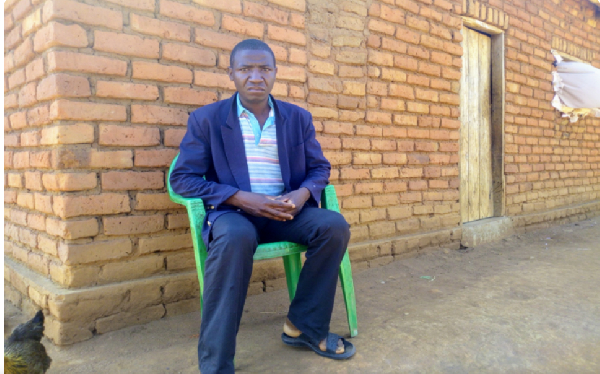


Scholarship recipient Tamala Chunda, whose dream of studying in the United States has been put on hold due to the $15,000 visa bond requirement


The United States embassy in Malawi, where the new visa bond requirement has caused widespread concern among students and business owners
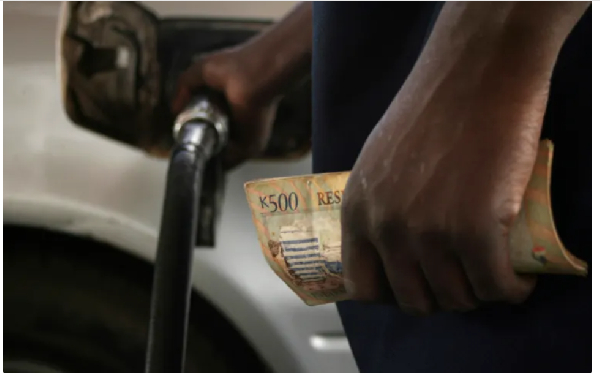


A motorist pumps fuel into his vehicle in the commercial capital of Malawi, Blantyre

It is politics, not truth – Bryan Acheampong clashes with Joseph Aidoo over Cocoa Loan Policy

0

Former Minister of Food and Agriculture and NPP Flagbearer aspirant, Bryan Acheampong, has fired back at former COCOBOD CEO Joseph Boahen Aidoo over claims about the abolition of syndicated loans for cocoa purchases.

Speaking on Adom FM’s morning show Dwaso Nsem, Mr. Acheampong insisted that as sector minister at the time, he played a pivotal role in championing the policy.

“In the end, it is the government, the President, who takes credit, and then we move on. But to say that the minister cannot take credit for it can only be politics,” he said.

He further suggested that Mr. Aidoo’s comments were politically motivated.

“I dare say that because of where he stands in these NPP political primaries, that’s why he is saying this. I even saw a post from his son showing support for Dr. Bawumia, and I am aware of where he stands politically. So he is trying to score political points with these claims,” Mr. Acheampong added.

The former minister disclosed the procedural steps behind the policy, pointing out that the sector minister plays a central role in shepherding such initiatives.

“It is not ingenious for anyone to come out and discredit me. This is a major policy decision. You cannot claim it as yours when the government had not yet taken a final decision.

“After that, we went through the process to get the Economic Management Team and the government subcommittee’s approval before final implementation. There will be agreements and disagreements, but when it is done, the sector minister takes ownership,” he stressed.

Mr. Acheampong’s comments come after Mr. Boahen Aidoo, under whose management the policy was introduced, accused the former minister of “hypocritically” seeking credit for the abolition of syndicated loans.

In a viral video, Mr. Acheampong had told NPP delegates that the policy was his vision and that it had saved the country money.

His office also issued a statement highlighting his role in implementing the self-financing model.

Mr. Aidoo, however, hit back strongly in a press statement, calling Acheampong’s claim “blatant intellectual plagiarism and dishonesty” and expressing surprise that the former minister could claim credit for a policy he “vehemently opposed” during his tenure.

Chic Braided Hairstyles for the Modern Woman

0

Braided hairstyles have stood the test of time, evolving from traditional looks into versatile, fashion-forward styles that suit the modern woman. Today, braids are more than just a protective hairstyle—they are a statement of beauty, culture, and individuality. Whether for work, casual outings, or glamorous events, braids offer endless styling options.

One of the most popular choices is the box braid, loved for its versatility and low maintenance. Box braids can be styled in buns, ponytails, or left flowing for a sleek look. Adding beads, colored extensions, or accessories gives them a modern twist. Similarly, knotless braids have gained popularity for being lightweight and gentler on the scalp, offering a more natural appearance.

For women who prefer chic yet simple styles, cornrows remain timeless. They can be styled straight back for a clean, professional look or in creative patterns for a bold fashion statement. Cornrows paired with a bun or a high ponytail provide a stylish balance of elegance and practicality.

Another trending option is the Ghana braid or feed-in braid, which creates a thicker, more defined pattern. This style is perfect for those who want something striking yet sophisticated. For a softer, feminine vibe, halo braids and crown braids are ideal, often chosen for weddings, parties, or formal occasions.

Modern women also embrace braided updos, which combine creativity and elegance. From twisted buns to braided chignons, these styles are perfect for professional or evening wear. For a playful touch, braided ponytails and side-swept braids highlight both beauty and versatility.

Ultimately, braided hairstyles allow modern women to experiment with fashion while embracing tradition. They are practical, protective, and effortlessly stylish, making them a timeless choice that continues to evolve with today’s trends.

US deportee agreement must be ratified in parliament – Minority insists

0

The Minority in Parliament has emphasised the need for parliamentary oversight following Ghana’s agreement with the United States to serve as a receiving point for West African nationals deported from America.

Speaking at a press briefing on Wednesday, September 24, Samuel Abu Jinapor, Ranking Member on the Foreign Affairs Committee, cited constitutional provisions requiring ratification of international arrangements.

Abu Jinapor stated: “The government of President Akufo-Addo in consonance with Article 75 of our constitution laid before parliament a Defence Corporation Agreement with the United States of America for ratification even though the said agreement had not been signed. The Supreme Court held that the then government was right in laying the said agreement before parliament for even such unsigned agreements to come under Article 75 once government take steps to implement same.

“It is therefore irrelevant whether the agreement is signed, or it is called an agreement or a memorandum of understanding or by exchange of note verbales, parliamentary ratification is required for the implementation of any such agreements.”

However, Foreign Affairs Minister Samuel Okudzeto Ablakwa has pushed back, insisting that the current arrangement does not require parliamentary approval. He explained that the understanding with the U.S. is a memorandum of understanding (MoU), not a binding treaty, and therefore falls within the executive’s mandate.

“I have inherited hundreds of MoUs from the previous administration which were not placed before Parliament,” Mr Ablakwa said. “If this understanding matures into a full-blown agreement, we shall not hesitate to seek parliamentary ratification.”

The divergent positions highlight ongoing debate over the scope of executive power in foreign affairs and the role of Parliament in scrutinising international commitments with potential security and migration implications.

Meanwhile, Foreign Affairs Minister Samuel Okudzeto Ablakwa has announced that Ghana is set to receive 40 more West African deportees from the United States in the coming days.

The disclosure comes in the wake of Minority criticism over the government’s earlier admission of 14 deportees, with accusations that officials bypassed parliamentary approval.

Mahama’s approval ratings dip 6 points but remain strong nationwide — Global InfoAnalytics poll

Mahama’s approval rating drops from 73% in July to 67%

0

President Mahama’s approval rating has dipped six points since July but remains strong nationwide, with all regions backing his leadership, according to a new Global InfoAnalytics poll.

A fresh nationwide survey by Global InfoAnalytics has revealed that President John Dramani Mahama’s approval ratings, though still high, have seen a modest dip in recent months.

Changing Bawumia will set NPP and Ghana back 16yrs – 15 Eastern Region MPs declare support

0

Fifteen out of the 23 New Patriotic Party (NPP) Members of Parliament in the Eastern Region have declared their support for Dr Mahamudu Bawumia’s bid to lead the party into the 2028 general election.

The MPs said replacing the former Vice President as flagbearer in the January 2026 contest would set the NPP and Ghana back by 16 years.

At a press conference in Nkawkaw on Wednesday, the MPs argued that Ghanaians were beginning to embrace Dr Bawumia’s policy ideas, many of which they claimed had been vindicated since the 2024 polls.

“After all the propaganda hurled against the NPP in the 2024 elections, it is becoming clear day by day that Bawumia was right in many of the things he proposed. Now is the time that more Ghanaians are warming up to his ideas. Changing him will be setting ourselves back by another 16 years,” they stated.

Speaking on behalf of his colleagues, Kofi Ahenkorah Marfo, MP for Achiase, described Dr Bawumia as the best candidate to secure victory for the NPP.

“Having been well marketed and having served as Ghana’s most impactful Vice President, he is the best option politically and policy-wise to win us the election,” he noted.

The MPs highlighted Dr Bawumia’s qualities of humility, inclusiveness, and effectiveness, stressing that he embodies the leadership style Ghanaians desire. “He is humble, effective and embracing of all persons. We need a leader who unites and not one who divides,” they said, pledging to campaign vigorously for him across the region.

The fifteen MPs include Kofi Ahenkorah Marfo (Achiase), Michael Okyere Baafi (New Juaben South), Akwasi Acquah (Oda), Charles Owuredu (Abirem), Sammi Awuku (Akuapem North), Kwame Appiah Kodua (Fanteakwa North), Kingsley Agyemang (Abuakwa South), Nana Kwame Ampaw “Buffalo” (Abuakwa North), and Ida Adwoa Asiedu (Ayensuano). Others are Frank Annor Dompreh (Nsawam), Kojo Oppong Nkrumah (Ofoase Ayirebi), Frank Asiedu Bekoe (Suhum), Alexander Agyare (Kade), Henrietta Korkor Asante (Atiwa West), and Duke Ofori Atta (Fanteakwa South).

DISCLAIMER: The Views, Comments, Opinions, Contributions and Statements made by Readers and Contributors on this platform do not necessarily represent the views or policy of Multimedia Group Limited.

DISCLAIMER: The Views, Comments, Opinions, Contributions and Statements made by Readers and Contributors on this platform do not necessarily represent the views or policy of Multimedia Group Limited.