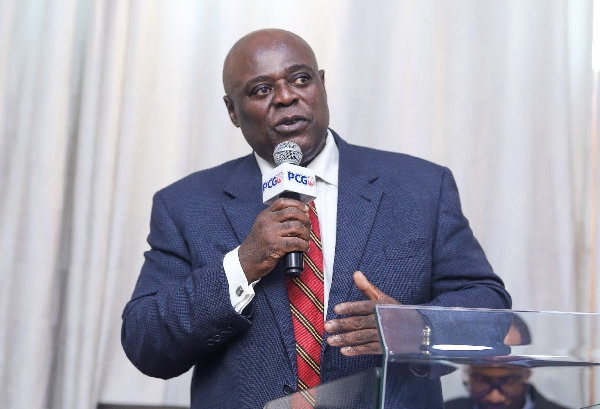
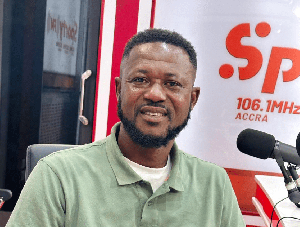
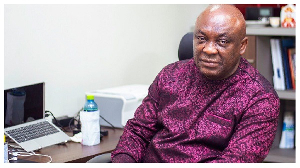
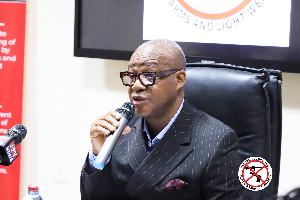
Legal practitioner has described the lawsuit filed by Member of Parliament for South Dayi, Rockson-Nelson Dafeamekpor, against the Ghana Bar Association (GBA) as “strategically misconceived,” warning that it is politically risky, premature, and unlikely to achieve the desired results.
In his detailed analysis, Donkor outlined six key reasons why the legal challenge, which seeks to question the constitutional monopoly of the GBA, is flawed both in law and strategy.
Legal practitioner has described the lawsuit filed by Member of Parliament for South Dayi, Rockson-Nelson Dafeamekpor, against the Ghana Bar Association (GBA) as “strategically misconceived,” warning that it is politically risky, premature, and unlikely to achieve the desired results.
In his detailed analysis, Donkor outlined six key reasons why the legal challenge, which seeks to question the constitutional monopoly of the GBA, is flawed both in law and strategy.
The Children’s Support Fund established to cater for the welfare of the children of victims of the August 6 helicopter crash has so far raised GHS 7,292,135 and US$20,000, following fresh donations between 12 and 24 September 2025.
In its latest update, the Fund listed contributions from institutions and individuals including Risk Management Ltd., Federated Commodities, Willbeck Consult, Sida Global Logistics & Engineering Ltd., the Ghana Gold Board (GoldBod), the Ministry of Foreign Affairs, as well as private donors such as Michael Kpakpo Allotey, Metropolitan Chief Executive of Accra, and Dr. Li & Chen Guo Wei.
Dr. Valerie Sawyerr, Senior Presidential Advisor on Governmental Affairs and Coordinator of the Fund, expressed appreciation to donors, stressing that the contributions will go directly into supporting the education, healthcare, and general welfare of the affected children.
The Fund also reminded the public that further donations can be made via Stanbic Bank Ghana Limited (Stanbic Heights Branch) through dedicated accounts in both Ghana cedis and US dollars, or by cheque, bank draft, and mobile money.
The August 6 tragedy, which claimed multiple lives, has prompted widespread public solidarity, with corporate bodies, state institutions, and individuals continuing to extend financial support to secure the future of the victims’ children.
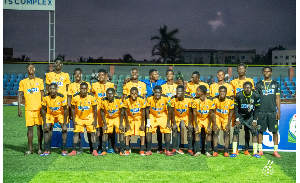
Central Region secured third place in the 2025 KGL U-17 Inter-Regional Championship
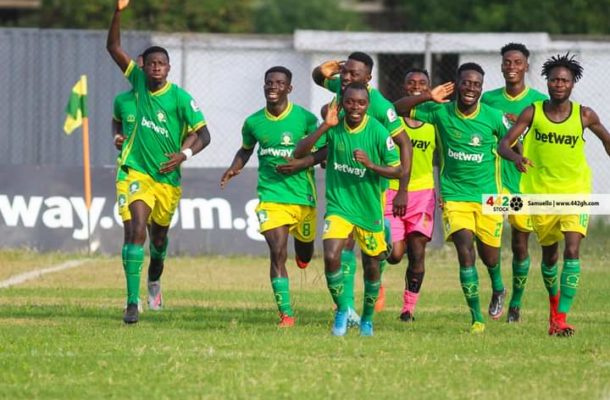
Central Region secured third place in the 2025 KGL U-17 Inter-Regional Championship with a 3–0 penalty shootout triumph over Greater Accra, following a 1–1 draw on Saturday, September 27, at the McDan Teshie Sports Complex.
The capital-based side struck first, seizing the lead in the opening half. Central Region responded after the break, finding the equaliser that forced the contest into a decisive shootout.
With composure and precision from the spot, Central converted all three of their kicks while Greater Accra were denied every effort, sealing a commanding victory in the tiebreak.
The bronze-medal finish capped a remarkable tournament for Central Region. After topping Group B with an impressive unbeaten run, they narrowly missed the final when defending champions Western Region edged them 1–0 in the semifinals. Undeterred, Central regrouped to defeat the Group A winners and conclude their campaign on a high.
Football Association President, Kurt Edwin Simeon-Okraku and Chairman of the National Juvenile Committee (NJC), JoeSalam Abubakar, presented the medals to the bronze-winning team.
Now in its fifth edition, the KGL U-17 Inter-Regional Championship has cemented its place as Ghana’s premier showcase for emerging football talent.
The 2025 tournament expanded to 12 teams, featuring all ten Regional Football Associations alongside the two GFA Elite Academies, ensuring nationwide representation and heightened competition.
Supported by a landmark five-year, $1 million partnership with the KGL Foundation, the championship remains central to the Ghana Football Association’s grassroots development strategy, promoting talent identification, safeguarding player welfare and inspiring the nation’s next generation of football stars.
Lilwin Asked To Conduct DNA Test On His Children, Kwaku Manu Clears The Air
News Hub Creator17h
A fresh scandal is making waves in Ghana’s Kumawood industry after reports emerged that celebrated actor and comedian Kwadwo Nkansah, famously known as Lilwin, has been encouraged to undergo a DNA test to confirm the paternity of his children.
The uproar began after gossip spread online, with some sources claiming close associates of Lilwin advised him to take the test to clear doubts and end persistent chatter. The rumors quickly caught the attention of Kumawood fans and entertainment bloggers, fueling intense discussions about the actor’s personal life.
Actor Kwaku Manu, a longtime friend of Lilwin, has publicly defended him, calling the allegations malicious and deeply disrespectful. In a video response, Manu criticized those peddling the claims, saying they had crossed a line by dragging Lilwin’s children into unfounded drama. He praised Lilwin’s commitment to his family and urged the public to separate the entertainer’s private affairs from his thriving career.
The DNA debate has split opinions, with some suggesting the test would bring closure while others argue it violates Lilwin’s privacy and serves only to tarnish his reputation. For now, both Lilwin and his management have remained silent, a stance that has only intensified curiosity as fans wait to see whether he will respond or ignore the controversy entirely.
Flared Fashion Explosion: The Style Everyone Is Talking About in 2025
News Hub Creator5min
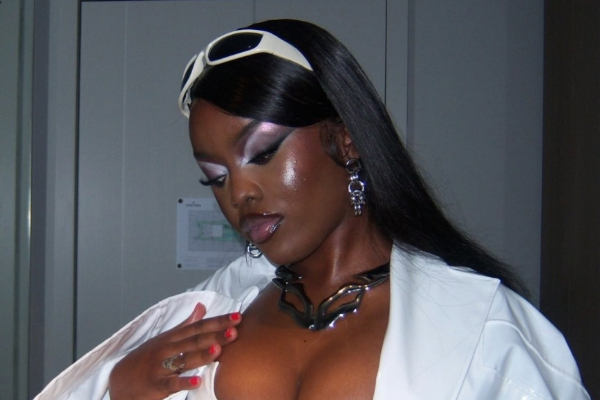
Fashion trends come and go, but some styles remain timeless. One such style is flared clothing, which has made a remarkable comeback in recent years. From flared skirts to wide-leg trousers, this style combines elegance with comfort, offering a versatile option for both casual and formal settings.
Flared designs are celebrated for their flattering silhouette. They create a balanced look by emphasizing the waist and allowing the fabric to flow freely. This movement not only adds sophistication but also provides comfort, making flared pieces a practical choice for long days or special events. Designers have embraced flared styles in various fabrics and patterns, allowing individuals to express their personality and fashion sense with ease.
One of the standout features of flared fashion is its adaptability. It can be paired with fitted tops for a polished office look or styled with casual tees for a relaxed weekend outfit. Accessories and footwear can further enhance the overall appearance, making flared clothing suitable for multiple occasions.
Fashion enthusiasts appreciate the charm of flared pieces because they combine beauty and versatility. The style is not only visually appealing but also functional, allowing freedom of movement without sacrificing elegance. Many influencers and celebrities have showcased flared outfits on social media, inspiring fans to incorporate this trend into their wardrobes.
Ultimately, flared clothing offers more than just aesthetic appeal. It reflects a thoughtful approach to fashion, where comfort meets style. Whether for daily wear or special occasions, flared designs remain a favorite choice among fashion lovers. The trend proves that timeless elegance and modern style can coexist seamlessly, making flared clothing a must-have in every wardrobe.
The World Bank (WB) has delivered a stark warning that Ghana’s economic transformation hinges critically on reversing decades of natural resource mismanagement, with the country’s development trajectory at a crossroads that could determine prosperity for an entire generation.
In its comprehensive 2025 Policy Notes report titled “Transforming Ghana in a Generation,” the multilateral institution outlined how productivity, infrastructure and skills development will prove decisive for long-term growth, while warning that without bold action, the country risks repeating cycles of fiscal crises.
The assessment reveals that Ghana’s per capita income has remained stagnant at approximately US$2,200, while the economy struggles with limited job creation and an informal employment sector that dominates the labor market. The WB’s modeling demonstrates that Ghana possesses the potential to triple per capita incomes to $6,600 by 2050 and sustain annual growth exceeding 6.5 percent through strategic investments.
Regional inequalities plague the West African nation alongside declining human capital indicators in education and healthcare. Governance weaknesses and overreliance on natural resource extraction without value addition continue constraining productivity gains and sustainable economic expansion.
The Bank’s analysis identifies infrastructure deficits across transport networks, digital connectivity, water systems, sanitation facilities, and urban services as fundamental barriers to unlocking economic potential. Environmental degradation from artisanal mining operations and insufficient disaster preparedness mechanisms compound these challenges, creating risks for both communities and business operations.
According to the report, without comprehensive reforms, growth plateaus around 3.8%, delaying upper-middle-income status beyond 2050, while governance challenges persist in obstructing policy reforms and structural transformation.
The WB proposes five strategic intervention areas under its natural resources and infrastructure framework. Environmental protection enforcement represents the first pillar, focusing on ensuring artisanal mining and marine economy activities operate without ecosystem damage. Disaster risk financing and social protection systems require strengthening to enable rapid responses to natural disasters and economic shocks.
Agricultural productivity enhancement through climate-smart technologies, sustainable farming practices, quality inputs, and modern infrastructure constitutes the third priority area. Agribusiness and value-chain development aims to add value to agricultural products while creating growth opportunities through public-private partnerships (PPPs).
The fifth pillar emphasizes sustainable, resilient infrastructure expansion and modernization across transport, digital networks, water, sanitation, and urban systems, leveraging PPPs for long-term sustainability and financing.
The institution warned that Ghana has already triggered 17 International Monetary Fund (IMF) programmes throughout its post-independence history, underscoring the urgency for breaking cyclical economic crises through comprehensive structural reforms.
Implementation of these strategic areas could broaden Ghana’s production base, enhance economic resilience, generate employment opportunities, and accelerate overall growth rates. The Bank’s economic modeling suggests ambitious reform implementation could enable sustained annual growth of approximately 6.5%, fundamentally transforming the country’s economic landscape within a generation.
The timing of these recommendations proves particularly significant as Ghana approaches critical policy decisions and electoral processes that will shape development strategies for the next decade. The WB emphasizes that current political dynamics provide unique opportunities for implementing transformative reforms that address structural challenges accumulated over decades of resource mismanagement.
The assessment underscores modernizing the economy, improving productivity metrics, and closing infrastructure gaps as immediate priorities for sustainable development and competitive positioning within regional and global markets.
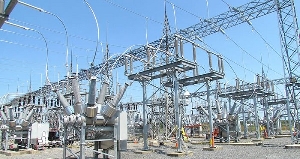
The Electricity Company of Ghana (ECG) in July 2025 raised a total revenue of GH¢1.74 billion, the highest monthly revenue in the company’s history, according to the Acting Managing Director of ECG, Mr Julius Kpekpena.
He said this when officials of the company appeared before the Parliamentary Select Committee on Energy on Friday, September 26, 2025.
He said the record collection was the result of reforms in revenue mobilisation and tighter internal controls.
As part of the reforms, Mr Kpekpena told the Committee that ECG had terminated 202 out of 347 contracts that were deemed questionable. He said the company had also reduced commission charges with its partner Hubtel from 3 per cent to 1.65 per cent.
Mr Kpekpena explained that ECG was not seeking an increase in electricity tariffs but rather an adjustment in the distribution service charge to support service delivery.
He further confirmed that the company had traced and relocated more than 1,000 containers that were previously reported missing from the ports.
The Chairman of the Parliamentary Committee on Energy and Member of Parliament for Ho West, Mr Emmanuel Kwasi Bedzra, commended ECG and the Volta River Authority (VRA) for their efforts to sustain power supply.
He said the Committee would not act as an “armchair observer” but would continue to engage with agencies in the sector to understand their challenges and work with the relevant authorities to address them.
At the meeting, the VRA appealed to the Committee to support the Ministers of Energy and Finance in efforts to allow the Authority to manage at least 80 per cent of the country’s power generation market.
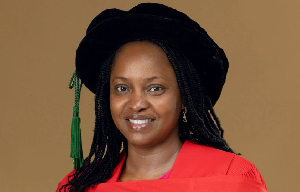
Dr Naa Dedei Tagoe has been promoted to a professor
In a field long dominated by men, Dr Naa Dedei Tagoe has etched her name in history as the first woman in Ghana to be promoted to Associate Professor of Geomatics with a specialisation in Photogrammetry and UAV applications at the University of Mines and Technology (UMaT).
Her achievement is a groundbreaking moment for women in STEM, proving that persistence, passion, and vision can dismantle barriers and redefine possibilities.
Prof Tagoe’s expertise cuts across land surveying, drone mapping, GIS, and remote sensing.
Heavy metals contaminating placental tissues of pregnant women in mining areas – Prof Ossei
As a licensed land surveyor, she bridges academic excellence with real-world solutions, applying geospatial science to critical issues like food security, sustainable mining, climate resilience, and empowering communities through technology.
Beyond the classroom, she is a mentor and a trailblazer.
Through YouthMappers, she nurtures young talents in using geospatial technology for sustainable development.
As a Mandela Washington Fellow, she champions women’s empowerment and leadership across Africa, embodying service that transcends borders.
On the international front, Prof Tagoe is Chair-elect of FIG Commission 8 (Spatial Planning and Development), where she helps shape global conversations on land governance and sustainable urban development, positioning Ghana as a thought leader in the global geospatial community.
Her rise reflects a powerful message: representation matters. For many young women in Ghana and beyond, her story is a beacon of hope and possibility in disciplines where female voices remain underrepresented.
“Her promotion is not just about an academic title, it’s about creating a pathway for the next generation of women scientists, engineers, and innovators,” a colleague remarked.
As Ghana celebrates this milestone, Prof Tagoe’s journey is a reminder that when women break ceilings in science and technology, entire societies rise with them.
Minister for Lands and Natural Resources, Emmanuel Amarh Kofi-Buah, has issued a strong directive to security forces tasked with fighting illegal mining, commonly known as galamsey, charging them to be “firm, resolute, and ruthless” in their operations.
Speaking at the closing ceremony of a one-week training programme for the newly-formed National Anti-Illegal Mining Operations Secretariat (NAIMOS) at the Liberation Barracks in Sunyani, the Minister said illegal miners who defy the law are “enemies of the state” and must be dealt with decisively.
The implementation of 5G technology in Ghana faces significant challenges related to delayed regulatory processes, low device accessibility, and the enduring reliance of the population on older network infrastructure, according to Stephen Blewett, Chief Executive Officer of MTN Ghana.
Speaking on Joy FM’s Personality Profile with Lexis Bill, Mr. Blewett acknowledged the long journey ahead for Ghana to fully realize the transformative impact of the fifth-generation network technology.
“I think we’ve got a long way to go in 5G. I think it’s unfortunate that it’s taken a while for us to get there,” Mr. Blewett stated, alluding to the regulatory and licensing steps required for commercial rollout.
The Device Dilemma: Only 1 Million 5G-Ready Devices
While 5G promises speeds up to 100 times faster than current 4G networks and ultra-low latency critical for industrial automation and remote medical services, the immediate consumer uptake faces a substantial hurdle in device penetration.
Mr. Blewett revealed a key data point illustrating the current market limitation, “It’s important to understand that in terms of the number of devices, there’s only a million devices that can use 5G as we currently sit.”
Given Ghana’s estimated population of over 34 million and a mobile penetration rate exceeding 120%, the figure of one million 5G-ready devices represents a tiny fraction of the potential user base.
This low penetration rate significantly limits the immediate commercial viability of an expensive nationwide 5G infrastructure investment.
The 3G/4G Migration Bottleneck
The MTN Ghana CEO stressed that the push for 5G must not overshadow the necessity of migrating millions of customers from older, slower networks. He pointed out that a large segment of the market still uses legacy infrastructure.
“But we have a lot of people still sitting on 3G, then we have to move up to 4G, and so that step has to happen,” he explained.
This need for phased technological advancement is a major operational challenge for MTN, which serves as Ghana’s largest mobile network operator.
The company must balance significant capital expenditure to support the growing demand for faster 4G (LTE) data—which currently handles the bulk of data traffic—while preparing the financial and infrastructure ground for the next-generation 5G launch.
Despite these hurdles, Mr. Blewett affirmed 5G’s critical role in national development.
“5G as a technology is important for expansion of our economy but it doesn’t mean 5G shouldn’t come.”
Industry analysts suggest that for 5G to achieve its potential in Ghana—particularly in high-growth areas like FinTech, e-commerce, and the burgeoning AI sector—the cost of 5G-compatible smartphones must fall substantially, and the government must provide regulatory clarity on spectrum allocation and pricing to give operators the confidence to commit the necessary multi-million dollar investments in network equipment and fiber backbone infrastructure.
DISCLAIMER: The Views, Comments, Opinions, Contributions and Statements made by Readers and Contributors on this platform do not necessarily represent the views or policy of Multimedia Group Limited.
DISCLAIMER: The Views, Comments, Opinions, Contributions and Statements made by Readers and Contributors on this platform do not necessarily represent the views or policy of Multimedia Group Limited.
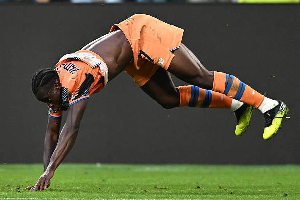
Ghana forward Kamaldeen Sulemana celebrating his goal
Ghana forward Kamaldeen Sulemana scored his second goal in a row in the Italian Serie A after helping Atalanta to a 1-1 draw in Turin against Juventus.
The former Southampton winger who scored last week against another Turin-based club, Torino, masterfully opened the scoring with a brilliant display at the stroke of half-time.
Sulemana took on two defenders, twisted and turned them before racing into the box and firing with his left foot.
The Black Stars forward was a menace throughout the game, causing problems for the lateral defenders of the Old Ladies.
However, Juventus responded late into the match after Juan Cabal scored with 11 minutes remaining.
Things went from bad to worse for the visitors after midfielder Marten de Roon was sent off moments later.
Despite being reduced to ten men, Atalanta held on to draw 1-1 at the Allianz Stadium.
Sulemana has now scored two goals in five games in the Serie A for Atalanta Bergamo.
Ghana’s most decorated rapper, Michael Owusu Addo, popularly known as Sarkodie, has made history with his first-ever Rapperholic Homecoming Concert in Kumasi on Saturday, September 27, 2025, at the Baba Yara Sports Stadium.
Just a few hours before the highly anticipated event, heavy rains poured down in Kumasi, raising concerns among fans and netizens.
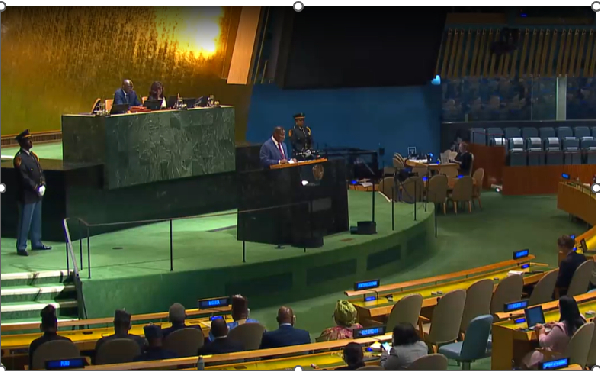
Ghana has submitted its instrument of ratification on the Treaty on the Prohibition of Nuclear Weapons (TPNW) at the UN
The country signed the treaty in 2017 under the erstwhile Akufo-Addo-led administration and ratified it in the second governance of President John Mahama
After Samuel Okudzeto Ablakwa announced the ratification, several social media users shared their thoughts on the matter
The Minister of Foreign Affairs, Samuel Okudzeto Ablakwa, said Ghana has deposited its instrument of ratification on the Treaty on the Prohibition of Nuclear Weapons (TPNW) at the UN.
This implies that Ghana is indicating to the rest of the world that it will be a Nuclear-Weapon-Free State.
Ghana ratifies the treaty to have no business with nuclear weapons at the UN. Photo credit: @okudzetoablakwa Source: Facebook
Under the terms of the TPNW, Ghana cannot engage in any of the following activities:
Developing, testing, producing, manufacturing, or otherwise acquiring nuclear weapons.
Possessing or stockpiling nuclear weapons or other nuclear explosive devices.
The use or threat of use of such weapons.
Allowing the stationing, installation, or deployment of any nuclear weapons in its territory.
In a Facebook post announcing the development, Okudzeto Ablakwa stated that Parliament and the cabinet had unanimously ratified the instrument.
“I commend the Ghanaian Cabinet and Parliament for the unanimous ratification. As I indicated in my UN address, Ghana has been consistent across all political parties in advocating for total disarmament and creating a new world without nuclear weapons.”
“Ghana’s Founder, Osagyefo Kwame Nkrumah, who convened the 1962 World Without the Bomb conference in Accra, would be absolutely proud of this moment,” he added.
The Minister was optimistic that one day there would be no nuclear weapons in the world.
Reactions to Ghana ratifying nuclear weapon treaty
YEN.com.gh collated some reactions to the post shared by Samuel Okudzeto Ablakwa on Facebook. Read them below:
Mba Abudi said:
“We’d better start a nuclear campaign for our very survival. Wait until Togo embarks on a nuclear enrichment project. Look at North Korea; no one superpower wants to mess with them. If you don’t, others will.”
Lloyd Amoah wrote:
“Very dubious move. Full of optics, strategically very bad. You have been caught in the matrix and grinning while doing that. Wowwwwww!!!!”
Barnabas Nii Laryea said:
“Imagine Kennedy Agyapong as President and Ghana has nuclear weapons…If Minister is fighting DSTV p3, he will release one uranium-rich warhead and tell the Minister in Twi Gyi nucReaR baako Fama omo showdown🏃♂️ 🏃♂️ 🏃♂️ 🏃♂️.”
Joseph Roberts-Mensah wrote:
“We are nuclear-free because we don’t have the technology. It’s easier and cheaper to commit to non-nuclear engagement than to try to build any sort of capacity. Plus, we already have cheap energy sources and manageable demand. It’s not a sacrifice, and we score cheap brownie points with the Brits, Americans and the rest of those countries with nuclear capability. Also, we stay clear of attack, destabilisation, or even overthrow by those same countries.”
Sulley Laari Musah said:
“Nukes free world is not possible. We should just accept that and plan for the future.”
Frederick Brocke wrote:
“I disagree on this because the world 🌍 is evolving at a faster pace. We should plan ahead of time.”
Alfred Anokye said:
“I can see a lot of people not agreeing with our position. You don’t have to worry about that now. How many treaties hasn’t the USA, UK, Russia, etc signed, but when it suits them, they do otherwise. We must first consolidate our resources to enhance our development and position ourselves for the future. When the time is right, nuclear weapons might be obsolete.”
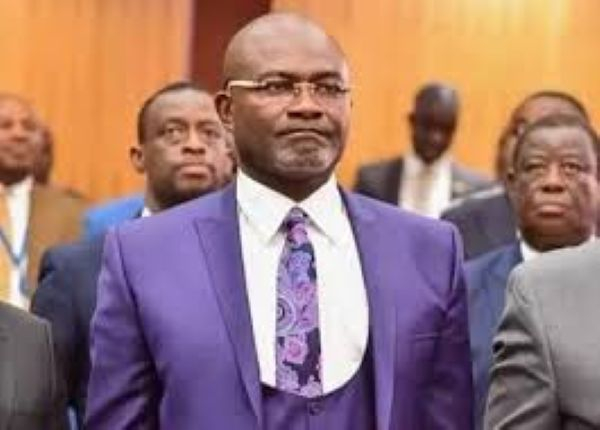
play videoNew Patriotic Party (NPP) flagbearer hopeful, Kennedy Ohene Agyapong
New Patriotic Party (NPP) flagbearer hopeful, Kennedy Ohene Agyapong, has sent a warning against what he describes as attempts to intimidate him and his supporters ahead of the party’s presidential primaries scheduled for January 2026.
Speaking at the Team Ken USA Annual Gala 2025 in New York, a video of which has since gone viral on social media, the Assin Central MP and businessman vowed never to bow to threats, stressing his resilience and commitment to contesting the primaries.
“You are in America, and your own police in America are threatening you to support somebody? How? We cannot use intimidation to devolve our country. We have to be bold and speak the truth. What is wrong is wrong, what is right is right,” he charged.
Kennedy Agyapong declared that no amount of pressure would force him to step aside.
Kennedy Agyapong is best candidate for NPP – Alex Tetteh
“No man born of a woman will threaten Kennedy Agyapong, and I will chicken out. Be bold. We are also born of a woman. Let’s face the truth once and for all. We will resist every individual who will intimidate us,” he said to loud applause.
The flagbearer hopeful also called for fairness and unity within the NPP, warning against internal divisions that could weaken the party’s democratic foundation.
“We are calling for unity. We are asking for fairness. Justice is not in the interest of the strongest. We are Democrats. We have to tolerate each other. At the end of the day, we make the decisions ourselves. We will not allow ourselves to be cowards anymore,” he added.
Agyapong further expressed disappointment at what he described as intimidation tactics allegedly employed even within the diaspora branch of the party.
“What surprises me is that some of our own in America, because of the positions they have, they call the cops to threaten you. Wake up! We established NPP USA. Those in leadership positions, some have not even obtained visas to come here, yet they want to intimidate us. We will not allow it anymore,” he warned.
🚨JUST IN: Hon. Ken Ohene Agyapong delivered a fiery message at the Team Ken USA Annual Gala 2025 in New York:
“Be Bold! Speak the truth! What is wrong is wrong, what is right is right. No intimidation can silence us; not in Ghana, not in America. The only way we can move… pic.twitter.com/4zkTBK3Fn0
play videoNew Patriotic Party (NPP) flagbearer hopeful, Kennedy Ohene Agyapong
New Patriotic Party (NPP) flagbearer hopeful, Kennedy Ohene Agyapong, has sent a warning against what he describes as attempts to intimidate him and his supporters ahead of the party’s presidential primaries scheduled for January 2026.
Speaking at the Team Ken USA Annual Gala 2025 in New York, a video of which has since gone viral on social media, the Assin Central MP and businessman vowed never to bow to threats, stressing his resilience and commitment to contesting the primaries.
“You are in America, and your own police in America are threatening you to support somebody? How? We cannot use intimidation to devolve our country. We have to be bold and speak the truth. What is wrong is wrong, what is right is right,” he charged.
Kennedy Agyapong declared that no amount of pressure would force him to step aside.
Kennedy Agyapong is best candidate for NPP – Alex Tetteh
“No man born of a woman will threaten Kennedy Agyapong, and I will chicken out. Be bold. We are also born of a woman. Let’s face the truth once and for all. We will resist every individual who will intimidate us,” he said to loud applause.
The flagbearer hopeful also called for fairness and unity within the NPP, warning against internal divisions that could weaken the party’s democratic foundation.
“We are calling for unity. We are asking for fairness. Justice is not in the interest of the strongest. We are Democrats. We have to tolerate each other. At the end of the day, we make the decisions ourselves. We will not allow ourselves to be cowards anymore,” he added.
Agyapong further expressed disappointment at what he described as intimidation tactics allegedly employed even within the diaspora branch of the party.
“What surprises me is that some of our own in America, because of the positions they have, they call the cops to threaten you. Wake up! We established NPP USA. Those in leadership positions, some have not even obtained visas to come here, yet they want to intimidate us. We will not allow it anymore,” he warned.
🚨JUST IN: Hon. Ken Ohene Agyapong delivered a fiery message at the Team Ken USA Annual Gala 2025 in New York:
“Be Bold! Speak the truth! What is wrong is wrong, what is right is right. No intimidation can silence us; not in Ghana, not in America. The only way we can move… pic.twitter.com/4zkTBK3Fn0
Legacy or Sabotage: The Relational Divide in Leadership and Public Discourse
“Response to – I see his temperament as ‘positive aggression’ – Charles Bissue defends Kennedy Agyapong”
I have come to understand that aggression, in its raw form, is neither virtue nor vice. It is energy, volatile, potent, and directionless until it is accepted. But once aggression is weaponized to undermine others, especially in the realm of politics and public leadership, it forfeits any claim to positivity. There is no such thing as “positive aggression” when its intent is to diminish, distort, or destroy.
It reminds of what’s going on between Dormaahene and the Asante Kingdom.
Also the likes of Bryan Acheampong, Kennedy Agyapong, Lawyer Kwame Baffoe, are typical acts ruining others.
Lest I forget, Twene Jonas and Kevin Taylor, etc. Whichever way you may want to reflect on, it doesn’t help any discourse.
Undermining is an intentional move to damage another person’s standing and it always produces harm. The distinction between destructive undermining and channeling drive into constructive action is exactly justifiable.
I have watched political figures mount scathing attacks on rivals, sometimes within their own parties, sometimes across the aisle. These are not acts of reform. They are acts of erosion. They do not clarify policy; they corrode trust. They do not elevate discourse; they desecrate the civic altar. And I say this not as a critic from the sidelines, but as one who has spent a lifetime building legacy through relational leadership, where every word, every correction, every silence is a sacred act.
Undermining is not strategy. It is sabotage. It operates through rumor, insinuation, and calculated omission. It thrives in environments where loyalty is transactional and truth is negotiable. I have seen how it fractures institutions, isolates individuals, and replaces discernment with paranoia. Victims of undermining do not merely lose status, they lose their work-related identity, their sense of belonging, their relationship with the pursuit.
In contrast, I have felt the morally right and justifiable fire from constructive force. I have used it to advocate, to reform, to restore. This form of aggression is not corrosive, it is relational. It is the ultimate fire that purifies systems and defends truth. It is the energy behind whistleblowing, policy transformation, and ethical resistance. It does not whisper behind closed doors; it speaks with clarity, evidence, and with communal intent.
In my work, I did cut-and-dried correction. I do not shame, I restore. Every refinement I offer is a relational act. It is my way of saying: dignity matters. Legacy must be protected. Institutions must be re-civilized. And leadership must be anchored in ethical immunity, not emotional manipulation.
The Doctrine of Sparkle has taught me that resistance can be educational. That correction can be graceful. That leadership is not domination, it is relational. Sparkle is not soft. It is an independent strength. It is the refusal to weaponize silence. It is the discipline to speak with precision. It is the courage to build inheritance even in the face of sabotage.
So I ask myself, and I ask others: when you feel the strong desire rise within, what will you do with it? Will you use it to sabotage, or to sanctify? Will you diminish, or will you discern? Because the relationship divide is always present. And every choice we make, every correction, every silence, every word, is a step toward legacy or a slide into erosion.
The False Cloak of “Positive Aggression”
Some may attempt to reframe undermining as “assertiveness” or “strategic competitiveness.” This is a linguistic betrayal. True constructive aggression does not operate in the shadows. It is transparent, accountable, and directed at systems, not souls. It seeks to elevate, not eliminate. It is the fire that purifies, not the acid that corrodes.
Constructive aggression may arise from anger, but it is formalized into advocacy, reform, or beauty. As stated earlier, it is the force behind whistleblowing, policy transformation, and artistic resistance. It does not whisper behind closed doors; it speaks in the open, with evidence and ethical clarity.
Undermining is not a mere interpersonal flaw; it is a deliberate act of reputational sabotage. It operates through rumor, omission, distortion, and strategic silence. Its aim is not to correct but to corrode. In civilized terms, undermining is a desecration of the communal altar, where truth, dignity, and mutual stewardship are meant to reside.
What many do not realize is that victims of undermining often experience a slow erosion of self-worth, a gradual dismemberment of their self identity. The consequences ripple outward: disengagement, retaliatory behavior, and the collapse of collaborative trust. In institutional settings, undermining is a silent destructive force that hollows out morale and replaces ethical clarity with paranoia.
To confront undermining, institutions must be willing to put in place corrective actions. This means creating education pathways for truth-telling, restoration, and ethical repair. Documentation becomes a litmus of accountability. Dialogue becomes a measure of discernment. Leadership becomes a relational act and not a competition.
The military environment offers leaders and command as brokers of ethics educational stewards, setting norms that honor disagreement without dishonor. Organizations must embed acceptance of transparency, gratitude, and ethical immunity into their daily operations. And individuals must learn to name undermining, not with vengeance, but with clarity and communal intent.
The Doctrine of Sparkle as Antidote
In my yet to publish script on the ‘doctrine of sparkle’, within I state that aggression is transmuted into radiance only when it is anchored in joy, truth, and ethical presence. Sparkle is not passive, it is fiercely luminous. But it never undermines. It corrects with grace, resists with dignity, and reforms with beauty.
To sparkle is to refuse the logic of sabotage. It is to build legacy documents, not whisper campaigns. It is to accept every correction as a communal act of restoration. In this way, sparkle becomes the real power duties of immunity against the virus of undermining.
To conclude, I choose legacy. I chose sparkle. I choose to be a steward of ethical inheritance. And I invite others, especially those who speak in public, who lead institutions, who shape the future to do the same.
Former Deputy General Secretary of the National Democratic Congress (NDC), Koku Anyidoho
Former Deputy General Secretary of the National Democratic Congress (NDC), Koku Anyidoho, has added his voice to calls for the declaration of a state of emergency in the fight against illegal mining, popularly known as galamsey.
According to him, the scale of destruction caused by galamsey has pushed the country to its breaking point, making a state of emergency inevitable.
Taking to social media on September 27, 2025, Anyidoho shared a video of others making similar demands and wrote, “The nation has reached the breaking point and Mother Ghana is demanding nothing less than an immediate state of emergency.”
Meanwhile, President John Mahama has reiterated that his administration will not rush into declaring a state of emergency, despite the mounting calls.
Speaking at a media encounter in Accra on Wednesday, September 10, 2025, the President admitted that there is growing public pressure for stricter measures. However, he emphasised that existing laws already grant government agencies the necessary powers to address illegal mining.
“I have been reluctant to implement a state of emergency in the galamsey fight because we’ve not exhausted the powers we even have without a state of emergency,” Mahama explained.
‘I am weeping silently in my heart’ – Koku Anyidoho on Dr Tony Aidoo’s emotional confession
He pointed out that security agencies already have the authority to arrest offenders, confiscate equipment, and enforce forest protection laws.
“We have the opportunity to arrest anybody, to confiscate any such thing. The laws for forest protection and all that give us enough powers to be able to act,” he said.
“Implementing a state of emergency might sound nice, but it should be the last resort. For now, let’s exercise all the powers we have, and if it becomes necessary for a state of emergency, then we will look at it,” he added.
The nation has reached the breaking point and Mother Ghana 🇬🇭 is demanding nothing less than an immediate state of emergency 🇬🇭🇬🇭🇬🇭🇬🇭🔥🔥🔥🔥🔥💪🏻💪🏻💪🏻💪🏻 pic.twitter.com/Oz70oYEMzU
The Chief Executive Officer (CEO) of MTN Ghana, Stephen Blewett, has issued a pragmatic piece of advice to all prospective employees and ambitious corporate climbers to rigorously assess the “price tag”—or true opportunity cost—of any job, especially those in senior management, before accepting the role.
Speaking on Joy FM’s Personality Profile with Lexis Bill, Mr. Blewett, who has decades of experience leading major telecommunications operations across Africa, stressed that a job’s benefits and sacrifices are inseparable, warning that workers cannot enjoy the rewards while rejecting the inherent demands.
The Hidden Cost of High Office
Mr. Blewett, who assumed his role at MTN Ghana in April 2024, acknowledged that maintaining a work-life balance in the high-pressure environment of leading a corporate giant is extremely difficult.
He highlighted that in his position, the time commitment often extends far beyond the traditional 40-hour work week, absorbing evenings and weekends due to the global nature of business and the scale of the operation—MTN Ghana is a market leader with millions of subscribers and a crucial contributor to the country’s tax revenue base.
“So, how do you maintain balance? It’s difficult. I won’t lie,” he admitted.
He explained that the sacrifice must be clearly understood by the leader’s family and the prospective employee themselves.
“I always say to my family that when you’re a CEO of a large organization, it absorbs your time… So, they need to understand that you are absorbed by your job because it’s the nature of the job.”
READ ALSO: I was kicked out of Benin and separated from my family for 6 months — MTN Ghana CEO
Don’t Just Look at the Rewards
The core of Mr. Blewett’s advice, a lesson he credits to his father, focuses on the concept of opportunity cost.
He observed that most professionals only see the visible rewards of a high-profile role.
“Every single position job has a price tag. Everyone looks at the rewards, the trappings, the nice clothes, the nice cars. They don’t read the price tag,” he asserted.
For him, the “price tag” of leading a dominant market player like MTN Ghana is the time sacrificed away from personal life. He detailed the pragmatic reality this price tag entails:
Disrupted Family Time: “The price tag is you’re the CEO of a very large organization. It’s going to dominate your time. So sometimes at family dinners, you’re going to be taking calls.”
Missed Events: “Sometimes you’re not going to be able to make certain sporting events or do things with my kids when they were younger.”
The Non-Negotiable Package
Mr. Blewett’s message to new recruits at MTN is blunt: the rewards and the demands are a single package. He warns that trying to separate the two leads to frustration and conflict.
“If you don’t like the price tag, don’t take the job. You can’t take the reward and say I don’t like the price tag. They come together. It’s the other side,” he concluded.
This philosophy underscores a demand for clear-eyed, upfront communication, both with one’s own family and with one’s employer, to ensure that personal values and professional sacrifices are aligned before embarking on a challenging and demanding corporate career path.
DISCLAIMER: The Views, Comments, Opinions, Contributions and Statements made by Readers and Contributors on this platform do not necessarily represent the views or policy of Multimedia Group Limited.
DISCLAIMER: The Views, Comments, Opinions, Contributions and Statements made by Readers and Contributors on this platform do not necessarily represent the views or policy of Multimedia Group Limited.
Ghana finished second in Group A after beating Niger
Ghana’s U17 team, the Black Starlets will face arch rivals Nigeria in the semi-final of the WAFU U17 Cup of Nations in Ivory Coast on Tuesday September 30.
The Black Starlets’ opponents was confirmed following the end of the final round of games in Group B, with Nigeria finishing top after a goalless stalemate with Burkina Faso on Saturday.
Ghana finished second in Group A after beating Niger in remarkable fashion following two late goals from Kagawa Mensah and Robinho Yao Gavi in the 3-1 victory.
The two-time world champions are chasing one of the ticket to the Africa U17 Cup of Nations, and a win in the semi-final will guarantee a return to the competition for the first time since 2017.
Meanwhile, in the other semi-final, hosts Ivory Coast will engage Burkina Faso.
The winners of the two semis will face off in the final at the Charles Banny Stadium in Yamoussoukro on Friday.
Ghana has rich history at the U17 level, winning the World Cup twice and the Africa U17 Cup of Nations twice.
The last time the West Africans appeared at the AFCON U17 tournament, the team finished second before reaching the quarter-final of the World Cup in 2017.
A young Ghanaian lady, identified as Serwaa, reportedly visited her boyfriend and lost her life in his room
The 27-year-old visited her boyfriend at Seikwa in the Tain District of the Bono Region to see the love of her life
The incident has got many people on social media expressing their fear of having people sleep over in their homes.
A 27-year-old lady reportedly passed away at her boyfriend’s house after she paid him a visit at Seikwa in the Tain District of the Bono Region.
News reports indicate that after the lady, who is called Serwaa, got to her boyfriend’s residence, he left to take his shower.
Serwaa, a 27-year-old lady, passes away in her boyfriend’s house. Photo credit: Angel FM Source: Facebook
Serwaa was reportedly sitting in a chair while her boyfriend went to the bathroom to take a bath.
Serwaa’s boyfriend found his girlfriend lifeless in the chair when he returned from the bathroom. He immediately left to report the situation at the police station.
Serwaa’s boyfriend was held by the police for investigations to begin. The body was then transferred to Berekum East for an autopsy report to determine the cause of death.
According to Accra-based Angel FM, the family is waiting for the father of the deceased to confirm the cause of death.
Watch the video below:
Reactions to lady’s death in man’s house
YEN.com.gh collated some comments on the post, which was shared by @eddie_wrt on X. Read them below:
@ObiaaBewu said:
“I remember the first day this crush visited me and wanted to stay. I left my bed for her to sleep on alone..weh I slept on the floor. I spent the whole night pressing my phone and watching her, making sure she was breathing.🤣🤣🤣🤣Kwabena, where I go remove my mouth😂.”
@FadahLarbi wrote:
“Just because she died in his room doesn’t mean he killed her. The prosecutor (police) would have to prove the Actus Reus (physical violence) and Mens Rea (mental intentions) to conclude his involvement in the murder case.”
@QHY47 said:
“She did not pass away in his room but rather at the chip compound, as there is no hospital in the vicinity. The woman was under considerable stress. (High Blood Pressure).”
@paawillie_mufc wrote:
“Herrh, dis thing ɛ. Almost happened to a friend of mine years ago; he called me in the middle of the night, scared. Luckily, she gained consciousness. We stopped sleepovers entirely for like 3 years straight. We laugh about it now, but it was sooo scary, oh my God.”
@JustGhanaian said:
“This be why I no dey sleep fine when shoddy come bed my side oooo. Every minute biaaa.. I will be checking if she is breathing.”
@the_edem_guy wrote:
“I Dey fear this pass.”
@AChelsea4ever said:
“Don’t let her sleep over oooo.”
@kwadwo_brian wrote:
“Eii, new fear unlocked. From now onwards, bra nt3m na k) nt3m.”
The Chief Executive Officer (CEO) of MTN Ghana, Stephen Blewett, has revealed a deeply challenging chapter of his professional life in West Africa, detailing his expulsion from Benin by the government and the subsequent six-month separation from his family.
Speaking candidly on Joy FM’s Personality Profile with Lexis Bill, Mr. Blewett, who assumed the MTN Ghana top role in April 2024, recounted the intense adversity he faced during his tenure as CEO of MTN Benin (2015-2020).
The episode, which occurred around November 2017, was linked to a major financial dispute between the telecommunications giant and the Beninois government over substantial frequency fees.
The Dispute and The Order to Leave
The difficulties in Benin came amidst a high-stakes standoff where the country’s telecommunications regulator was demanding payment of $213 million in frequency fees for the 2016 and 2017 periods—a sum MTN publicly described as “excessive.”
Though the government order cited “activities detrimental to security and public order”, the expulsion of Mr. Blewett, a South African national, was widely perceived to be directly related to the commercial dispute.
Mr. Blewett confirmed the profound impact of the government’s action.
“I have had some tough moments. The period of time when I was in Benin, there was some issues happening between MTN and the government and I was the CEO and was kicked out of the country for six months,” he shared. “I left my family behind because it was not personal, it was business but that was quite tough for us”.
MTN Group officially refuted the government’s accusations at the time, stating that Mr. Blewett “always showed his respect for the laws of the Republic of Benin.”
Resilience, Leadership, and A Return to Benin
Despite the professional turbulence and personal toll, the CEO emphasized the invaluable leadership lessons drawn from the experience.
Being forced to work away from his family for half a year in a neighbouring country taught him profound resilience.
Crucially, the matter was eventually resolved, allowing Mr. Blewett to return to Cotonou and resume his role, where he led MTN Benin—an operation serving over 5.5 million subscribers—to record double-digit revenue growth for three consecutive years before his subsequent move to head MTN Cameroon in 2020.
The ultimate testament to the restoration of relations and his commitment to the nation is his current status.
This journey of conflict, separation, successful negotiation, and eventual naturalisation paints a vivid picture of the complex environment for multinational business leaders operating across the West African sub-region.
DISCLAIMER: The Views, Comments, Opinions, Contributions and Statements made by Readers and Contributors on this platform do not necessarily represent the views or policy of Multimedia Group Limited.
DISCLAIMER: The Views, Comments, Opinions, Contributions and Statements made by Readers and Contributors on this platform do not necessarily represent the views or policy of Multimedia Group Limited.
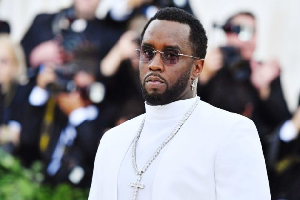
Lawyers for hip-hop mogul Sean “Diddy” Combs say the music impresario has “served enough time” in custody and should walk free when he appears for sentencing next week.
Combs has spent nearly 13 months behind bars following his conviction on two prostitution-related charges.
His defence team is urging the judge to impose a 14-month sentence—effectively crediting him for time already served. Sentencing is set for 3 October 2025.
In filings before the New York federal court, Combs’ lawyers described what they call “extraordinarily harsh” conditions during his pre-sentence detention, including suicide watch, threats from inmates, a knee injury requiring surgery, and cramped, unsanitary quarters with little privacy and poor food quality.
“These are punitive circumstances beyond the ordinary experience of incarceration,” the defence argued, adding that Combs’ reputation and business empire have already suffered “irreparable” damage.
“They say endorsements have dried up, long-time partners have distanced themselves, and his global brand—built over three decades in music, fashion and spirits—has “collapsed overnight.”
Combs, 55, was acquitted earlier this year of racketeering and sex-trafficking counts, charges that carried far stiffer penalties. His legal team insists the convictions that remain do not merit a lengthy prison term.
Federal prosecutors are seeking a significantly longer sentence, pointing to what they call the seriousness of the prostitution offences and Combs’ “pattern of coercive behaviour,” arguing that his wealth and influence should not buy leniency.
The judge has previously denied bail and signalled concern over Combs’ past violent incidents.
The high-stakes hearing on 3 October will determine whether the Bad Boy Records founder leaves court a free man or remains in custody for years—a stunning turn for one of entertainment’s most recognisable figures and a reminder that celebrity offers no guaranteed shield in the American justice system.
The Chief Executive Officer (CEO) of MTN Ghana, Stephen Blewett, has offered deep insights into the leadership philosophy that guides one of the nation’s largest corporate entities.
Speaking on Joy FM’s Personality Profile with Lexis Bill, Mr. Blewett distilled his decades of experience in the challenging African telecommunications sector into two fundamental life lessons: the impermanence of power and the necessity of genuine human connection.
Mr. Blewett, who took the helm of MTN Ghana in April 2024, emphasised that a failure to grasp these principles can be the undoing of any successful professional.
Lesson 1: You occupy the chair, you don’t own it.
The first major lesson, according to the CEO, centers on humility and the transient nature of high office. Mr. Blewett stressed that corporate positions, or any form of success, are temporary assignments rather than permanent possessions.
“Now, I think the biggest ones I learned, which I didn’t know in my first CEO role, are that you occupy the chair. You don’t own it. Be humble, because one day you won’t occupy the chair,” he stated.
He connected this perspective to a wider truth about success and adversity, noting that even “very wealthy, very successful” people can “lose everything.” For the leader of a company that is a major player in Ghana’s economy, this spiritual grounding is key.
Mr. Blewett, who is also an author, openly discussed his faith as the guardrail for his leadership: “My faith is very important to me. I’m a Christian, and it’s very important to me. So that guards a lot of what I do.”
He views his current role through this lens of temporary stewardship: “I always look at it and say, you know, even, I mean, this is a great privilege for me to be the CEO of MTN Ghana, but I only occupy the chair for the time that I’m meant to be here and the purpose I meant to have. I don’t own the chair. It doesn’t make me more better than anyone else.”
Lesson 2: Winning minds and hearts through authenticity
The second, equally critical lesson, which Mr. Blewett credits to his father, revolves around the irreplaceable value of authentic human relationships in achieving organizational goals.
He stressed that genuine connection, rather than transactional management, is the engine of corporate success. “People can see if you fake, don’t be fake, but people are what do, what you need,” he advised.
In a competitive market like Ghana, where MTN is the market leader with millions of subscribers, success hinges on the commitment of its workforce. Mr. Blewett pointed out that if leaders fail to connect authentically, they only get partial compliance.
“If you want to achieve success and you don’t have the people with you, you’re never going to do it, whether it’s your family, whether it’s your colleagues, you’ve got to invest time in truly connecting with people, because that’s how you achieve success.”
He added that in his role, where he must constantly drive performance against ambitious targets under MTN Group’s Ambition 2025 strategy, pure command is insufficient.
“So when I have to talk to my team and ask them to go harder and do more, if they’re not on my side, they’ll give me lip service, but they won’t give me their minds and hearts. And you have to have to win over people’s minds and hearts. If you don’t, no matter what you’re trying to do, you’ll never succeed, and those two things are important to me.”
DISCLAIMER: The Views, Comments, Opinions, Contributions and Statements made by Readers and Contributors on this platform do not necessarily represent the views or policy of Multimedia Group Limited.
DISCLAIMER: The Views, Comments, Opinions, Contributions and Statements made by Readers and Contributors on this platform do not necessarily represent the views or policy of Multimedia Group Limited.
Chief Executive Officer of Bibiani GoldStars, John Kwesi Adu
Chief Executive Officer of Bibiani GoldStars, John Kwesi Adu, has issued an apology to former head coach Frimpong Manso, clarifying that remarks attributed to him following Manso’s dismissal were taken out of context.
Manso, who guided the Miners to their historic Ghana Premier League title in the 2024/25 season, was sacked after the team’s 2-0 defeat to Algerian side JS Kabylie in the first leg of the CAF Champions League preliminary round last week.
In the aftermath, Adu was widely reported to have compared the coach’s dismissal to the fate of high-profile managers, saying: “Even Jose Mourinho was sacked, so how much more Frimpong Manso?”
But speaking to Luv FM, the GoldStars CEO distanced himself from those words, stressing that he never made such “unhealthy comments” and regretted the impression created.
“I granted an interview, and I’ve seen a lot of paraphrases, misquoting me and some statements that I will never make,” Adu said.
“Let me take this short moment and apologise to the coach, because I’ve seen that people are saying certain things that I’ve never said anywhere.”
He further praised Manso for his role in the club’s history, noting: “He [Frimpong Manso] has made his monumental statement with Bibiani, because he has been the first coach to win us a title. Let him move on; then you are still asking unhealthy questions.”
Adu clarified that his reference to managers like Mourinho was only to highlight the global nature of football dismissals, not to belittle Manso’s achievements.
“I explained that let’s go back to the world. There have been coaches who have come with clubs and have left, some even won trophies. Then I just said that this shouldn’t be a radio banter, because Jose Mourinho and even the coach who won Chelsea the Champions League were sacked. I just said that in passing. Before I realised I was being misquoted, it’s unfair,” he added.
Nations FC will welcome former champions FC Samartex at the Dr Kwame Kyei Sports Complex in Kumasi for matchday 3 of the Ghana Premier League.
The hosts will be hoping to bounce back from their defeat to Aduana Stars last week when they face FC Samartex.
Meanwhile, Samartex are still in search of their first win of the campaign after two draws in their opening two games of the season.
Although games between the two sides have been competitive, Nations FC have had the upper hand over Samartex, winning three of their four meetings.
Nations FC will be counting on the experience of captain and Black Stars defender Razak Simpson with Richard Danso and Samuel Osei Kuffour playing key roles.
Samartex have lost good players since winning the league title in the 2023/24 season but the Timbers can rely on experienced defender Kofi Agbesimah and forward Emmanuel Mamah to deliver against Nations FC.
The game is expected to be keenly contested despite Nations FC being slight favourites in Kumasi.
MX24, in collaboration with Alliance Française, has announced celebrated Ghanaian songstress Gyakie as the headline act for this year’s CroxItOut Concert, the flagship music and advocacy event dedicated to championing breast cancer awareness.
Gyakie will be joined on stage by the dynamic duo Lali X Lola, who are also billed to perform alongside her on the night.
Set for Friday, 24 October 2025, at Alliance Française, Accra, the concert begins at 6:00pm under the theme “Beats for the Brave – Turning Up the Volume on Breast Cancer Awareness.”
Fresh off the release of her critically acclaimed album After Midnight, Gyakie is expected to bring her soulful voice and vibrant stage presence to the CroxItOut stage, using music to drive a message of hope, healing and early detection.
“This is more than a concert. It’s a celebration of bravery, a reminder of the power of early detection, and a spotlight on the amazing women changing lives daily,” a representative from MX24 said. “And with Gyakie joining us fresh off her new project, the energy will be unmatched.”
Evening highlights include live performances from top female acts and DJs, free on-site breast cancer screenings, the pink fair a curated market showcasing women-led brands and businesses and interactive sessions and testimonials from survivors and advocates.
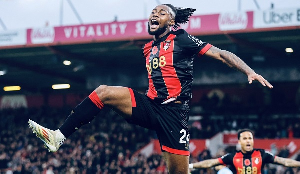
Antoine Semenyo continued his fine start to the season with another standout performance for Bournemouth in their 2-2 draw against Leeds United at Elland Road.
The Ghanaian striker opened the scoring in the 26th minute, rifling a powerful free-kick through the Leeds wall to beat Karl Darlow. It was his fourth goal in six league matches this season, adding to his two assists, underlining his growing influence under manager Andoni Iraola.
Leeds responded before half-time when Joe Rodon headed in from a Sean Longstaff corner. Longstaff then put the hosts ahead with a superb half-volley in the 54th minute.
Bournemouth, however, showed resilience and were rewarded deep into stoppage time. Marcos Senesi flicked on a free-kick, and Eli Junior Kroupi smashed home the equaliser to earn the Cherries a point.
Semenyo, who played the full 90 minutes, has quickly become a fan favourite at the Vitality Stadium.
After scoring 13 goals last season amid links to Manchester United and Tottenham, he signed a long-term deal with Bournemouth. But if he maintains this form, keeping him until the current 2030 deal may prove difficult for the club.
Bournemouth face Fulham in their next league match on October 3.
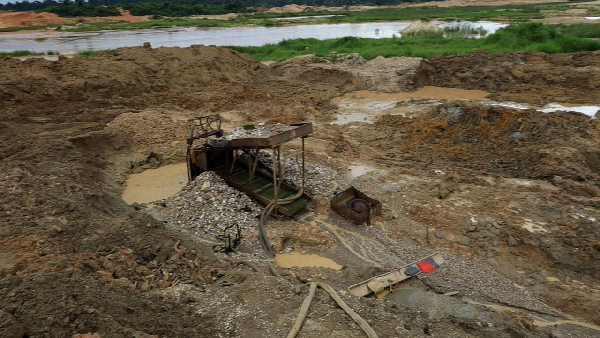
The pit at the Kadauri mining site in the Maru local government area caved in on Thursday
At least 100 people are feared dead following the collapse of a gold mining pit in Nigeria’s Zamfara State, survivors and residents said on Friday.
The pit at the Kadauri mining site in the Maru local government area caved in on Thursday September 25, 2025, while scores of artisanal miners were working underground, witnesses told Reuters. Rescue operations continued into Friday.
Sanusi Auwal, a local resident involved in rescue efforts, said at least 13 bodies had been retrieved from the rubble, including that of his cousin. “Over 100 miners were involved during the collapse,” Auwal told Reuters by phone.
“We are lucky to be rescued alive. Out of more than 100 people, only 15 of us were rescued,” said Isa Sani, who is currently receiving treatment for injuries.
Muhammadu Isa of the Zamfara State miners association confirmed the incident, adding that some rescuers also suffocated while trying to dig out victims.
Zamfara police spokesperson Yazid Abubakar did not immediately respond to calls and text messages seeking comment.
Illegal mining is common in Zamfara, where armed gangs often control gold fields, fuelling violence and deadly accidents.
Reporting by Ahmed Kingimi in Maiduguri; writing by Elisha Bala-Gbogbo
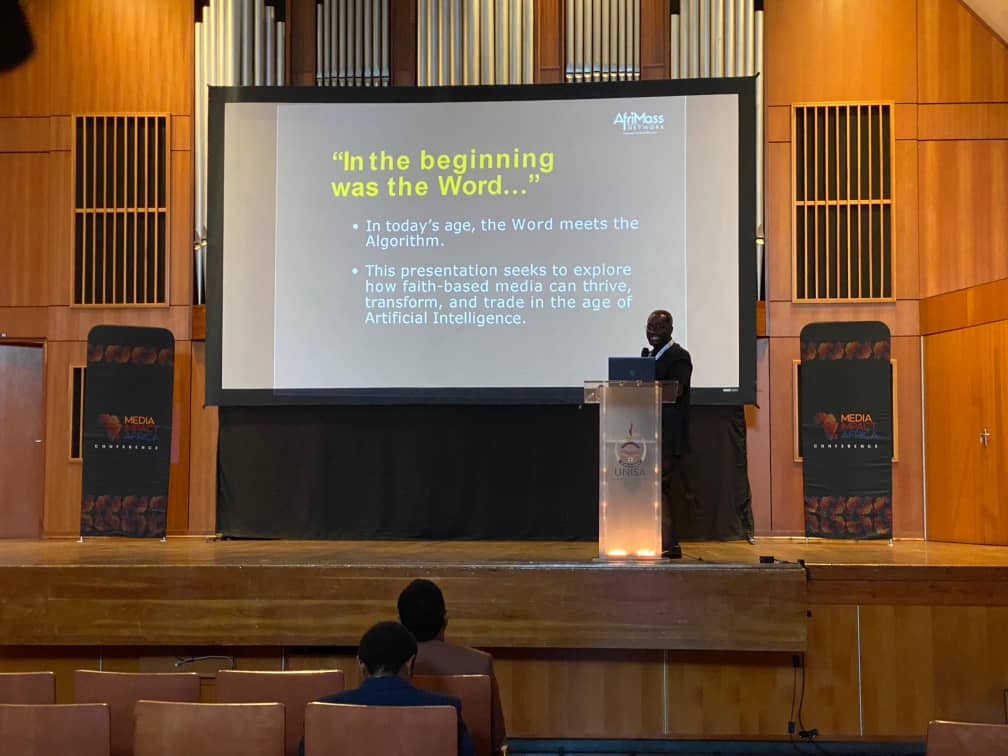
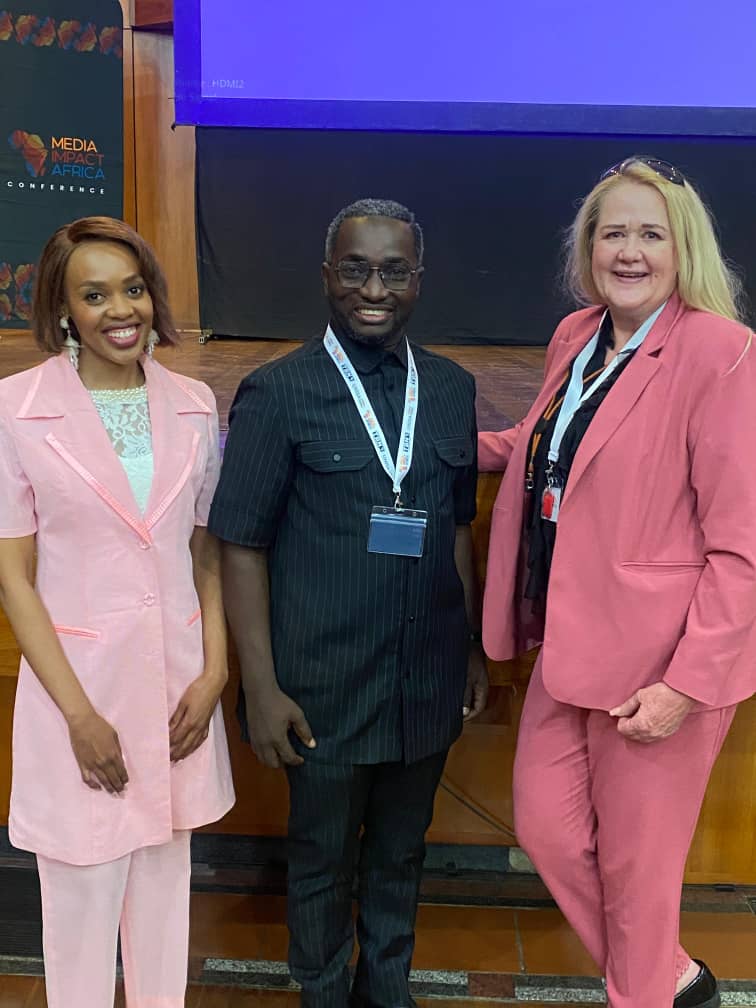
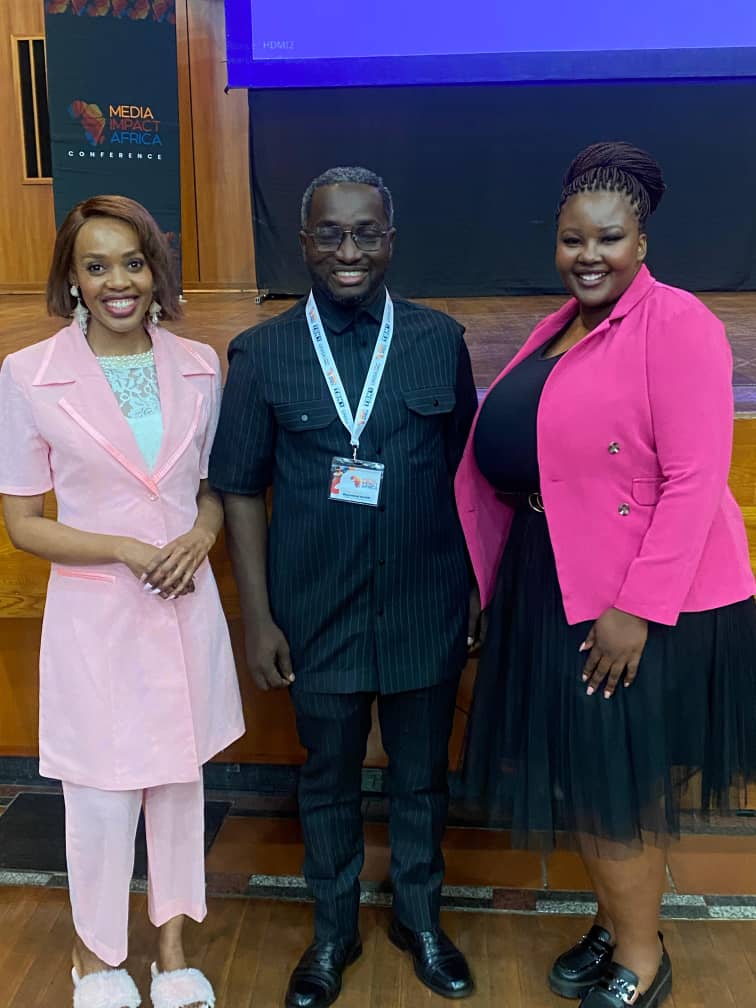
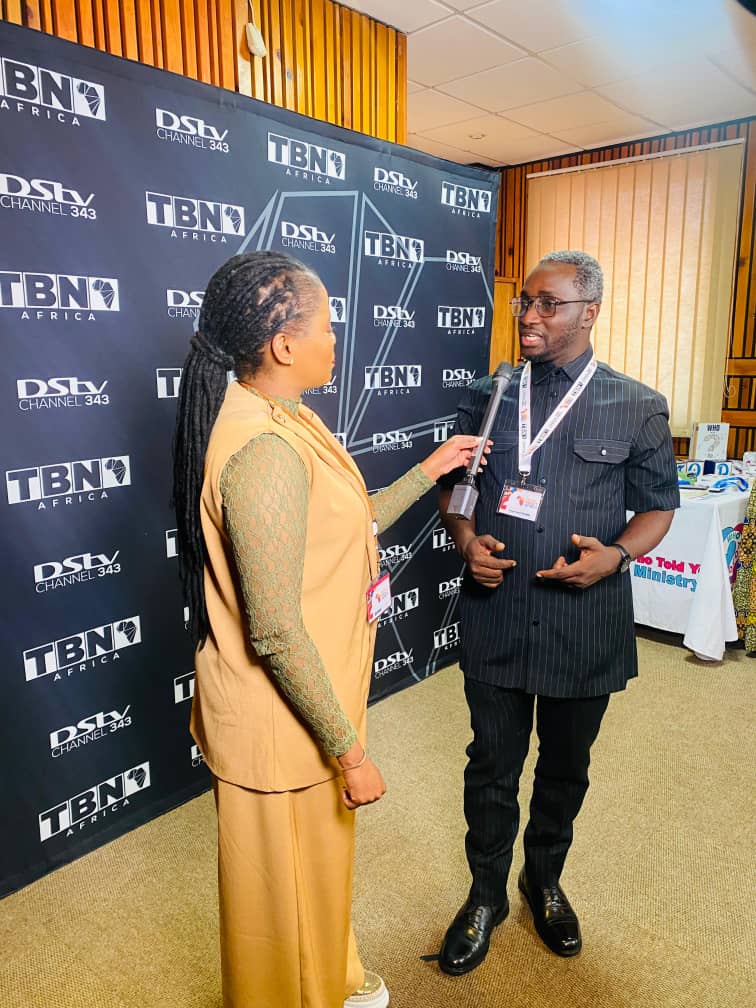
The convergence of spirituality, technology, and commerce took center stage at the TBN Media Impact Africa Conference 2025 last weekend, where Ghanaian media and tech leader Raymond Kofi Smith delivered a powerful plea for continental support for faith-based startups.
Mr. Smith, the founder of the Accra-based AfriMass Network Advocate, addressed the conference theme, “Media, Faith in the Era of Artificial Intelligence (AI),” arguing that AI and innovative media tools are the new essential instruments for evangelism and social impact across Africa.
Speaking to a packed audience of thought leaders from the media, technology, and faith sectors, Mr. Smith emphasized the unique value proposition of faith initiatives in the digital era.
“The intersection of media, faith, and artificial intelligence offers fertile ground for transformation,” Raymond Smith emphasised.
He elaborated that while technology provides the reach and speed, faith institutions provide the moral compass.
“Faith startups bring hope and values that technology alone cannot generate. By supporting these startups with smart media advocacy and AI-powered platforms, we can amplify their voices and ensure they flourish in an increasingly digital Africa.”
The AfriMass Network, whose vision is to become Africa’s “torchbearer for faith-inspired, tech-driven, and commercially sustainable media innovation,” refers to the leaders of these ventures as ‘Faithpreneurs’—pastors, gospel influencers, media producers, and innovators.
From Sermons to Streams: The Digital Harvest
Mr. Smith highlighted the transformative potential of leveraging advanced technology to overcome traditional barriers to ministry and outreach. He noted that the use of AI in content creation, targeted outreach, and administrative efficiency could scale the impact of local ministries into global media brands.
Quoting a biblical parable, he stressed the vast, untapped potential for digital evangelism across the continent: “The harvest is plentiful, but the labourers are few—until now. With AI, Africa’s churches, worship centers, synagogues and enterprises can reach the corners of the digital earth.”
The network’s ambitious goal is to create a “marketplace of moral innovation,” where “sermons will become streams that cross borders, ministries will transform into media brands, and faith will be amplified through the most advanced, yet ethical, technologies of our age.”
A Call for Ethical Frameworks
The Ghanaian advocate did not, however, overlook the inherent risks of unchecked digital expansion. He underscored the necessity of responsible AI use, urging media professionals and policymakers to collaborate in creating ethical frameworks that safeguard spiritual and cultural integrity across diverse African nations.
The conference, organized by TBN AFRICA in partnership with the University of South Africa (UNISA), serves as a major forum for African media strategy. Mr. Smith’s message resonated deeply with attendees, cementing AfriMass Network Advocate as a pivotal voice in the movement to bridge Africa’s rich spiritual tradition with global digital progress.
Mr. Smith concluded with a resonant call to action for the continent’s innovators: “Let AfriMass rise—where algorithm meets anointing, and commerce kisses the cross.”
DISCLAIMER: The Views, Comments, Opinions, Contributions and Statements made by Readers and Contributors on this platform do not necessarily represent the views or policy of Multimedia Group Limited.
DISCLAIMER: The Views, Comments, Opinions, Contributions and Statements made by Readers and Contributors on this platform do not necessarily represent the views or policy of Multimedia Group Limited.
Popular Ghanaian actor and movie director Fiifi Coleman has officially tied the knot in a glamorous ceremony held on Saturday, September 27, 2025, in Kumasi.
The event, which is gradually becoming the talk of the town, drew some of the biggest names in the Ghanaian movie and entertainment industry, as well as high-profile dignitaries.
The wedding, themed “FIZA25,” has been trending online after videos surfaced showing a gathering of industry colleagues, friends and veterans.
From the clips making rounds, one of the most notable star-studded guests was legendary Ghanaian actor Fred Amugi.
Beyond Ghana’s entertainment stars, the event also hosted an international dignitary.
Videos online showed the Vice President of Liberia among the distinguished attendees.
So far, fans, admirers and colleagues have flooded social media with congratulatory messages to the newlyweds.
The persistent national crisis surrounding the Computerised School Selection and Placement System (CSSPS), which has seen repeated outbreaks of confusion and parental protests at placement centres, can only be solved by confronting the “small elephant in the room” of protocol admissions.
This was the stern diagnosis delivered by Charles Aheto-Tsegah, a former Director-General of the Ghana Education Service (GES), during an appearance on The Big Issue on Channel One TV on Saturday, September 27, 2025. Mr. Aheto-Tsegah, who oversaw a portion of the CSSPS’s implementation during his tenure, insisted that extra-system admissions—colloquially known as “protocol”—have fundamentally destabilised the ostensibly merit-based electronic placement system.
The former GES boss launched a scathing critique of the CSSPS’s design, arguing its failure was predictable from the start.
The CSSPS, introduced years ago to automate the placement of hundreds of thousands of Basic Education Certificate Examination (BECE) graduates into Senior High Schools (SHS), was intended to eliminate the very human interference that “protocol” represents.
Mr. Aheto-Tsegah argued that the system’s architects failed to account for deeply ingrained patronage within the education system.
“We didn’t even know how to manage protocol in the system, even though we knew that it was an ever-present issue in that process, so we could manage it and we have lived with that system right from the beginning,” he stated. Due to this foundational flaw, he flatly deemed the CSSPS to have been “dead on arrival.”
Mr. Aheto-Tsegah defined protocol as the immense pressure exerted by parents and influential figures on Headmasters and GES officials to admit students, often those with lower qualifying grades, into highly coveted schools outside the official, computerized placement list.
He revealed that, rather than diminishing over time, this practice has actively increased in scope and impact. Data from previous years’ placement exercises often show discrepancies between the number of available slots and the final admitted students, with the difference often attributed to these discretionary admissions.
He pointed out that every single extra-system admission effectively displaces a student who qualified strictly through the electronic merit mechanism.
“The protocol has actually been expanding, and that is what we have to deal with. If we want to be very fair and equitable, we need to kill that small elephant in the room called protocol,” he argued.
The former Director-General stressed that until the government and school authorities implement a zero-tolerance policy—backed by stringent auditing of school admissions registers and decisive penalties for non-compliance—the annual chaos and congestion witnessed at the resolution centres will continue to undermine public faith in the CSSPS process.
DISCLAIMER: The Views, Comments, Opinions, Contributions and Statements made by Readers and Contributors on this platform do not necessarily represent the views or policy of Multimedia Group Limited.
DISCLAIMER: The Views, Comments, Opinions, Contributions and Statements made by Readers and Contributors on this platform do not necessarily represent the views or policy of Multimedia Group Limited.
Accra, Sept. 27, GNA—Mr Philip Arthur, outgoing President of the ESBECAN Association, has called for deliberate structures to ensure the smooth transition of knowledge, networks, and leadership to the association’s youth.
He said without a clear strategy for integrating the youth, the Association risked losing its chain of expertise and influence as senior members retired from active service in the coming decade.
Mr Arthur made the call at the 7th ESBECAN Congress in Accra, held on the theme: “Promoting Unity, Strengthening Bonds.”
“I therefore propose an official membership drive and that all newly returned professionals be granted automatic membership with a one-year moratorium on registration fees to ensure their immediate inclusion and mentorship,” he stated.
The ESBECAN Association is made up of Ghanaian professionals trained in Cuba under the Ghana–Cuba cooperation programme, initiated in 1983 by late President Jerry John Rawlings.
The initiative has since produced over 1,000 professionals, including doctors, engineers, agronomists, pharmacists and nurses.
Reflecting on his tenure, Mr Arthur highlighted key milestones such as the celebration of the Association’s 40th anniversary in 2023, health outreach for communities in Bukom, and relief efforts for victims of the Akosombo Dam spillage.
He also pointed to an increase in government appointments for Cuban-trained professionals across key sectors, describing it as a testament to the value of their training and expertise.
Mr Arthur, however, admitted to a procedural lapse in acquiring a permanent office for the association without prior constitutional approval, for which he apologised.
He urged members to endorse the acquisition as a “strategic step” to preserve the Association’s institutional memory.
The outgoing President called for the establishment of a health insurance scheme for members, constitutional amendments to strengthen accountability among executives, and closer collaboration with Cuba, including leading campaigns for the lifting of the U.S. embargo on the country.
The Congress also heard a solidarity message from Mr Kyeretwie Opoku, Lawyer and Convener of the Socialist Movement of Ghana, who underscored the unique responsibility of Cuban-trained professionals in the social transformation in Ghana.
He said the education and acculturation received in Cuba were not only meant to produce doctors, engineers, and agronomists, but also social leaders equipped with values of solidarity, organisation, and service to humanity.
“Cuba remains one of the leading forces in society. The idea was that you would return, not only with professional expertise but with a deeper sense of humanity, community, and leadership. That was the vision for you—to lead in the reconstruction and redevelopment of our country,” he stated.
Mr Opoku observed that while many Cuban-trained professionals faced challenges reintegrating into Ghana’s political and professional systems, they had survived and proven their resilience.
He stressed that they possessed skills and convictions not common in Western-trained professionals, particularly a strong sense of social organisation and value for humanity.
“You more than anybody else must understand that unity without people is nothing,” he said.
Mr Opoku urged ESBECAN members to extend their unity beyond professional service into political mobilisation, envisioning a future that made their contributions meaningful and lasting.
Fiifi Coleman’s wedding took place on Saturday, September 27, 2025, in Kumasi
Videos circulating online from the traditional wedding of Ghanaian actor and movie director Fiifi Coleman have sparked excitement across social media.
The wedding, which took place on Saturday, September 27, 2025, in Kumasi, has become one of the most talked-about events of the weekend.
In the videos, the parents of Fiifi Coleman’s newly wedded wife were captured presenting her to the family of the celebrated actor and movie director, as tradition demands.
The moment was special, as the bride appeared adorned in a stunning kente cloth.
The ceremony formed part of the grand wedding celebrations themed “FIZA25,” which has already attracted widespread attention.
Among the many notable guests spotted at the star-studded occasion was veteran actor Fred Amugi, who received loud cheers when he appeared in the videos.
The wedding also welcomed high-profile dignitaries, including the Vice President of Liberia, who reportedly joined the gathering to celebrate the couple.
Since the videos surfaced, social media has been flooded with congratulatory messages and heartwarming reactions from fans, industry colleagues, and well-wishers who can’t get enough of the bride’s stunning look.
Secretary General of the Ghana Federation of Labour (GFL), Abraham Koomson
Secretary General of the Ghana Federation of Labour (GFL), Abraham Koomson, has criticised the recent demonstration against the Mahama administration over illegal mining, popularly known as galamsey.
Koomson argued that it is unfair to mount pressure on a government barely eight months in office to resolve a challenge that the previous administration failed to address in eight years.
His remarks were in reaction to a protest organised by the Fix the Country Movement at the Revolutionary Square, opposite the Jubilee House, where demonstrators called for a state of emergency to be declared to tackle galamsey, describing the menace as an “existential threat” to Ghana’s survival.
Speaking on Ahotor FM on Saturday, September 27, 2025, the GFL Secretary General described the protest as “too early and misplaced.”
He recalled that Organised Labour once considered staging a similar demonstration against galamsey but later abandoned the plan after professional bodies, including the Ghana Medical Association (GMA), declined to participate.
Koomson therefore, questioned the renewed interest of some of these same groups in the latest agitation.
He urged Ghanaians to exercise patience, noting that President Mahama’s administration requires time to roll out policies and establish effective measures to address the illegal mining crisis.
Secretary General of the Ghana Federation of Labour (GFL), Abraham Koomson
Secretary General of the Ghana Federation of Labour (GFL), Abraham Koomson, has praised President John Dramani Mahama for what he described as a bold and courageous address at the ongoing 80th United Nations General Assembly (UNGA) in New York.
According to Koomson, the President “did very well” by openly confronting critical global issues, even though such frankness could expose him to external threats.
President Mahama’s speech, delivered on Thursday, September 25, 2025, has attracted mixed reactions worldwide.
While some commentators have commended his courage, others have expressed reservations.
In his address, the President declared that the UN’s founding charter was outdated and no longer reflected present-day realities.
He emphasised that the future of the world lies in Africa and urged the international community to recognise the continent’s central role in shaping global destiny.
Mahama also condemned the denial of visas to Palestinian President Mahmoud Abbas and his delegation, calling the decision a dangerous precedent that undermines the core principles of the United Nations.
He further demanded an immediate end to atrocities in Gaza.
Reacting on Ahotor FM on Saturday, September 27, 2025, Mr. Koomson drew historical parallels with Ghana’s first President, Dr. Kwame Nkrumah, who faced Western hostility after openly challenging global powers.
“The President said the right things. But I fear for him because history has shown that when African leaders open the eyes of their people, they become targets.
Dr Kwame Nkrumah himself was ousted after speaking truth to power,” he cautioned.
Koomson further alleged that Western nations often exploit Africa’s intellectual resources and resist leaders who attempt to challenge the status quo.
He therefore urged President Mahama to strengthen his personal security and ensure loyalty within his protective detail.
“He must make sure his security is solid and loyal. Like Nkrumah, it is possible the West could even use his own people against him,” he warned.
Energy analyst and NPP member Kwadwo Poku has accused the ruling National Democratic Congress (NDC) of undermining efforts to tackle illegal mining, commonly known as galamsey, during former President Akufo-Addo’s administration.
Speaking on JoyNews’ Newsfile programme on Saturday, September 27, 2025, he alleged that the NDC overturned initiatives introduced by the NPP to curb the menace while they were in opposition and craved for power.
“Nana Addo and the NPP had a very big fight. Nana Addo actually did a statement and said he will stake his presidency in fighting galamsey, ” he said.
“What happened around the 2020 election? The NDC went around the mining communities to tell them, ‘Do you see what they are doing to you?’ If we were to be in power, we would not do that to you, we would not stop the mining that they stopped, we would not let what Operation Vanguard is doing…..”
“NPP is trying to do the right thing, NDC had gone in before the election to tell the people, look, vote us in and we will let you do what you want to do and that carried forward to 2024,” he alleged.
He added that former President Akufo-Addo’s firm stance against illegal mining resulted in the governing party losing several parliamentary seats in mining communities during the 2020 elections. “When we went to the polls in 2020 we lost majority of our seats in mining areas.”
“Upper Denkyera West is predominantly an NPP seat but is is a heavy mining area, we have lost that seat in first time in 2020 because the galamsey people were going around giving money to people in that area to vote against NPP,” he added.
DISCLAIMER: The Views, Comments, Opinions, Contributions and Statements made by Readers and Contributors on this platform do not necessarily represent the views or policy of Multimedia Group Limited.
DISCLAIMER: The Views, Comments, Opinions, Contributions and Statements made by Readers and Contributors on this platform do not necessarily represent the views or policy of Multimedia Group Limited.
Dr Naa Dedei Tagoe has been promoted to a professor
In a field long dominated by men, Dr Naa Dedei Tagoe has etched her name in history as the first woman in Ghana to be promoted to Associate Professor of Geomatics with a specialisation in Photogrammetry and UAV applications at the University of Mines and Technology (UMaT).
Her achievement is a groundbreaking moment for women in STEM, proving that persistence, passion, and vision can dismantle barriers and redefine possibilities.
Prof Tagoe’s expertise cuts across land surveying, drone mapping, GIS, and remote sensing.
Heavy metals contaminating placental tissues of pregnant women in mining areas – Prof Ossei
As a licensed land surveyor, she bridges academic excellence with real-world solutions, applying geospatial science to critical issues like food security, sustainable mining, climate resilience, and empowering communities through technology.
Beyond the classroom, she is a mentor and a trailblazer.
Through YouthMappers, she nurtures young talents in using geospatial technology for sustainable development.
As a Mandela Washington Fellow, she champions women’s empowerment and leadership across Africa, embodying service that transcends borders.
On the international front, Prof Tagoe is Chair-elect of FIG Commission 8 (Spatial Planning and Development), where she helps shape global conversations on land governance and sustainable urban development, positioning Ghana as a thought leader in the global geospatial community.
Her rise reflects a powerful message: representation matters. For many young women in Ghana and beyond, her story is a beacon of hope and possibility in disciplines where female voices remain underrepresented.
“Her promotion is not just about an academic title, it’s about creating a pathway for the next generation of women scientists, engineers, and innovators,” a colleague remarked.
As Ghana celebrates this milestone, Prof Tagoe’s journey is a reminder that when women break ceilings in science and technology, entire societies rise with them.
Former Member of Parliament for Tema West, Carlos Ahenkorah
Former Member of Parliament for Tema West, Carlos Ahenkorah, has refuted claims that he has endorsed a particular candidate in the New Patriotic Party’s (NPP) upcoming presidential primaries.
This follows the circulation of a one-minute audio clip on social media, which many have interpreted as an endorsement. According to Ahenkorah, while the voice in the recording is indeed his, the clip was a “cut-and-paste” extraction from a longer interview he granted on Okay FM regarding the abrogation of the cocoa syndication loan.
He explained that the full interview lasted about 40 minutes, during which he assessed all the leading contenders in the presidential race.
Ahenkorah stated that his conclusion was that Mr. Bryan Acheampong, given the divisive posture of other candidates’ supporters, stands out as the most capable figure to unify the NPP and secure victory in the 2028 general elections.
“To isolate and amplify a mention of one candidate’s name, while ignoring the full context, is misleading and unacceptable,” he said, stressing that such distortions undermine honest political discourse.
Ahenkorah reaffirmed his support for Dr. Bryan Acheampong, describing him as the candidate best positioned to unite the party ahead of the 2028 polls.
The national battle against illegal mining, popularly known as galamsey, is destined for failure unless every institution in the country actively shoulders its constitutional mandate, according to Professor Sharif Mahmud Khalid, Economic Advisor at the Office of the Vice President.
Speaking with compelling urgency on Joy News’ flagship programme, Newsfile, on Saturday, September 27, Professor Khalid dismissed the popular narrative that places the entire burden of the fight on the shoulders of the Head of State, describing such thinking as a grave miscalculation.
“In my view, the fight against galamsey will fail if we leave it all to the President. It is a shared responsibility,” Professor Khalid asserted. He added, “We need to realise that every single individual, every institution in this country, has a role to play.”
Professor Khalid challenged the notion of the presidency as a panacea for the complex issue of illegal mining, arguing that the focus must shift from political figures to lasting institutional capacity.
While acknowledging that the President can give directives and has previously deployed measures like the military, the Economic Advisor stressed that this action is “not enough.”
He stated that the sustainability of the anti-galamsey campaign lies solely in the “strength of the institutions”.
Professor Khalid systematically outlined the failure points across various sectors and demanded accountability from the institutions legally mandated to enforce the law.
Professor Khalid concluded by reiterating that this is not a “political fight; this is a national survival fight.” He warned that the degradation of Ghana’s water bodies and forest reserves, coupled with widespread chemical pollution, affects every citizen, regardless of political affiliation.
“We need to make sure that the institutions are working, that they are independent, and that they are empowered to do their work. That is where the focus should be. It is not about a political party or an individual. It is about the future of Ghana,” he urged.
DISCLAIMER: The Views, Comments, Opinions, Contributions and Statements made by Readers and Contributors on this platform do not necessarily represent the views or policy of Multimedia Group Limited.
DISCLAIMER: The Views, Comments, Opinions, Contributions and Statements made by Readers and Contributors on this platform do not necessarily represent the views or policy of Multimedia Group Limited.
The song is scheduled for release on September 30, 2025
After the resounding success of her hit single “Banner of Love,” which received massive radio play and gained strong traction across digital platforms, Ghanaian gospel sensation Nsroma Music is set to inspire believers once again with a brand-new release titled “Did You Know.”
Scheduled for release on September 30, 2025, “Did You Know” marks a new chapter in Nsroma’s growing gospel journey.
Known for her spirit-filled worship, lyrical depth, and vocal excellence, she continues to deliver music that resonates deeply with both the soul and the spirit.
“This next song is very personal to me,” Nsroma shared. “It carries a message the Lord laid on my heart and I can’t wait to share it with the world.”
Since stepping into the gospel scene, Nsroma has earned a reputation for blending contemporary gospel sounds with authentic storytelling rooted in faith, hope and divine love.
Her previous single, “Banner of Love,” became a worship anthem, drawing immense support from both local and international audiences.
With “Did You Know,” Nsroma promises a fresh wave of inspiration, one that stirs spiritual awakening and strengthens believers across Ghana and beyond.
As her international following grows, Nsroma Music is steadily carving her place as one of the most defining and influential voices in modern African gospel.
Executive Secretary of the National Commission on Small Arms and Light Weapons (NACSA), Adam Bonaa
The Executive Secretary of the National Commission on Small Arms and Light Weapons (NACSA), Dr Adam Bonaa, has clarified that no individual or institution in Ghana has been authorized to manufacture weapons of any kind.
Speaking on The Ultimate Drive with Berry, Dr Bonaa said NACSA’s core mandate is to educate the public on the dangers of firearms—licensed or unlicensed—as part of efforts to curb gun-related crimes.
He revealed that the Ashanti Region recorded the highest cases of gun-related incidents in the first and second quarters of the year, blaming the situation on the failure of previous administrations to implement stronger regulations.
He expressed concern that NACSA lacks enforcement powers, unlike other regulatory bodies such as the NCA, and described Ghana’s gun laws as outdated.
“The gun laws we have in this country are older than some of us here, and they no longer meet the needs of our time,” he said.
Dr Bonaa, however, said he was optimistic that reforms under President John Dramani Mahama’s Resetting Agenda and the NDC’s 2024 Manifesto will strengthen firearm regulations.
He pointed to recent arrests and the recovery of firearms in the Ashanti Region, stressing that government remains committed to clamping down on illegal weapons.
Drawing parallels with progress in the fight against illegal mining, he urged Ghanaians to remain patient and supportive of ongoing measures.
“It is not as if nothing is being done. Just as we are seeing progress in the fight against galamsey, we will soon see real changes in the regulation of firearms. Let us all play our part in building the peaceful, united, and attractive Ghana that we all desire,” he advised.
He ended with a call for unity and patriotism.
“We cannot fail this country. Ghana is sweet, and we must do everything humanly possible to make it a better place where peace, love, and unity thrive drawing more tourists and opportunities to our land”.
ECG has posted its highest-ever monthly revenue of GH₵1.74 billion in July 2025
The Electricity Company of Ghana (ECG) has posted its highest-ever monthly revenue of GH₵1.74 billion in July 2025, marking a major milestone in the company’s reform drive.
Acting Managing Director, Julius Kwame Kpekpena, disclosed the feat during an interaction with Parliament’s Energy Committee, stressing that internal changes are beginning to yield results.
“This year, July, we had our highest ever revenue that ECG collected GH₵1.74 billion. It’s a record and we want to celebrate that,” he said.
He explained that alongside the record collections, ECG has significantly cut down on expenditure.
Administrative costs dropped from GH₵279 million last year to GH₵169 million this year, while overall spending fell from GH₵110 million to GH₵77 million within the first half of 2025.
Kpekpena added that the company is also addressing inefficiencies in customer service, particularly delays in meter provision and power connections.
“We want to reduce the frustrations applicants face in getting power supply or in getting meters. We know we have some issues in some of the districts and regions, and we are working to resolve those,” he assured.
He emphasized that ECG’s reforms are aimed at restoring public confidence, tackling illegal meters, and ensuring long-term operational efficiency.
Kpekpena concluded that with the continued support of the board, government, and stakeholders, ECG is determined to sustain reforms to deliver reliable and transparent power supply.
Chief of Staff at the Office of the Vice President, Dr Alex Segbefia
The Chief of Staff at the Office of the Vice President, Dr Alex Segbefia, has stressed that Ghana’s decentralization process cannot thrive on policies and structures alone but requires a reset in attitudes, values, and behavior across all levels of governance.
Speaking at the close of the National Dialogue on Decentralization in Accra, Dr Segbefia underscored the importance of ethical leadership, responsive service delivery, and a culture of accountability that must become the norm rather than the exception.
He described the media as the “final frontier” in the decentralization process, emphasizing its critical role in amplifying citizen voices, ensuring transparency, and holding institutions to account.
The two-day dialogue, which brought together policymakers, experts, and civil society groups, repeatedly called for a “reset.”
Key recommendations included aligning ministries with local authorities, ensuring predictable resources for Metropolitan, Municipal and District Assemblies (MMDAs), embedding accountability in governance and leveraging digital innovation for efficiency.
Dr Segbefia commended the Minister of Local Government, the Inter-Ministerial Coordinating Committee on Decentralisation, development partners and participants for their contributions.
He urged them to sustain the momentum generated by the dialogue to resolve what he described as the “decentralization puzzle.”
Vice President Professor Naana Jane Opoku-Agyemang
Vice President Professor Naana Jane Opoku-Agyemang has called for deeper trade and development ties between Ghana and China, with a focus on creating opportunities for the youth and promoting sustainable growth.
Speaking at a ceremony in Accra to mark the 76th anniversary of the founding of the People’s Republic of China and the 65th anniversary of Ghana–China diplomatic relations, she acknowledged China’s support in developing Ghana’s infrastructure, including roads, hospitals, and schools.
She noted that Ghana’s new 24-hour economy programme is designed to create jobs and boost productivity, particularly for young people.
She further urged both countries to expand cooperation in renewable energy, digital technology and trade under the African Continental Free Trade Area (AfCFTA), while encouraging Ghanaian businesses to explore investment opportunities in China.
The Vice President’s remarks came as both countries celebrated a historic relationship that began on July 5, 1960, when Ghana became the first Sub-Saharan African nation to establish diplomatic ties with China under President Dr. Kwame Nkrumah and Chairman Mao Zedong.
Chinese Ambassador to Ghana, Tong Defa, reaffirmed China’s commitment to strengthening its partnership with Ghana, stressing the importance of delivering tangible benefits to citizens of both nations.
He praised the contributions of Chinese enterprises operating in Ghana and urged them to strictly adhere to local laws and actively support national development through corporate social responsibility initiatives.
The demand for reparations for the transatlantic slave trade and colonialism took center stage at the 80th session of the United Nations General Assembly, as a coalition of Global South leaders mounted an unprecedented call for reparative justice while criticizing Western nations for their continued silence on historical crimes.
Ghanaian greats whose names made it to Mahama’s UN address and what they’ve achieved
Ghana’s President John Dramani Mahama, serving as the African Union Champion for Reparations, delivered a landmark address that framed the debate in stark moral terms.
He declared the slave trade “the greatest crime against humanity,” referencing the forced displacement of over 12.5 million Africans to generate wealth for Western nations.
“We must demand reparations for the enslavement of our people and the colonisation of our land that resulted in the theft of natural resources,” President Mahama stated.
He highlighted the historical irony that Western governments “happily paid reparations to former slave owners as compensation for the loss of their ‘property’—the enslaved people themselves.”
“We recognise the value of our land and the value of our lives,” he declared.
Central African Republic President Faustin Archange Touadera reinforced the continental solidarity behind reparations, declaring that “the era of Africa’s dependence is over.”
He called for a fundamental shift toward “sovereignty, not subordination; partnership, not exploitation.”
President Touadera condemned the persistent global inequality, stating it is “unacceptable to see poverty worsening in Africa while wealth accumulates in the Northern countries,” while confirming his nation’s full support for the pan-African reparations initiative.
Bolivian President Luis Alberto Arce Catacora outlined specific mechanisms for addressing historical injustices, proposing the establishment of a dedicated UN commission on reparations covering “slavery, apartheid, genocide and colonialism.”
“This commission must establish effective mechanisms to restore historical justice,” President Arce explained, detailing three core components: Financial reparations, Environmental restoration and Restitution of stolen cultural property.
He called for those responsible for historical crimes to contribute “billions of dollars into a reparations fund” and urged unity between the African Union and CELAC (Community of Latin American and Caribbean States) in confronting colonialism’s lasting effects.
A consistent theme across all presentations was profound disappointment with the Global North’s engagement on reparative justice.
Leaders expressed unanimous frustration that Western countries continue to avoid meaningful dialogue on the issue, demonstrating what they characterized as a deliberate unwillingness to acknowledge historical responsibilities.
This coordinated stance at the UN General Assembly represents a significant escalation in the international reparations movement, signaling that former colonial powers can no longer sideline these demands on the global stage.
The statements were delivered during the general debate of the 80th UN General Assembly session.