
Romance fraudsters of Ghanaian descent jailed over money laundering in UK

Five men have been jailed after exploiting people through romance fraud and stealing more than £2m in a money laundering operation.
There were 40 confirmed victims between 2017 and 2024, but the total number of suspected victims of fraud was 99, according to the Crown Prosecution Service (CPS).
Fawaz Ali, 27, Ebenezer Tackie, 42 and Michael Quartey, 28, were found guilty of money laundering offences and sentenced to four years and 10 months, four years and six months, and five years and six months in prison, respectively, at Guildford Crown Court on Tuesday.
Kwabena Edusei, 37, was sentenced to seven years and 10 months, while George Melseaux, 40, was sentenced to three years and nine months.
One victim stated: “I lost my home as I could not keep up with the cost of rising bills.
“I feel so embarrassed and ashamed that I was scammed, so I have not told anyone about this and have lied to my family and friends.
“I am very wary when any man tries to get close to me, as I always wonder if he will try and scam me.”
Another victim said: “It’s ruined me as a person; it took years for me to start to trust anyone again.”
“How can people live with themselves after the hurt they create and the long-lasting damage they leave behind?”
Victims were asked for money to cover fake expenses, including fines in remote locations or urgent travel costs. They transferred money to the bank accounts of the men or even sent cash in the post, according to the CPS.
“The men used flirtatious language to manipulate people into thinking they were entering into a genuine, loving and caring relationship”, a CPS spokesperson said.
The majority of the transactions were conducted in the UK with some overseas victims identified throughout Europe, the USA and Australia.
“The criminals here showed complete disregard for their victims, who were met on an online dating website for the sole purpose of exploiting and scamming them out of money, said Jane Mitchell, a specialist CPS prosecutor.
“They used grooming tactics to gain trust, which caused terrible emotional distress to victims.”
DISCLAIMER: The Views, Comments, Opinions, Contributions and Statements made by Readers and Contributors on this platform do not necessarily represent the views or policy of Multimedia Group Limited.
DISCLAIMER: The Views, Comments, Opinions, Contributions and Statements made by Readers and Contributors on this platform do not necessarily represent the views or policy of Multimedia Group Limited.
Morocco squashes youth-led protesters over health, education

A heavy security presence on Monday evening thwarted for a straight third day youth-led protests across several Moroccan cities, where demonstrators have sought to rally for improvements to the public health and education systems.
The protests were organised online by a loosely formed anonymous youth group calling itself “GenZ 212,” using platforms including TikTok, Instagram and gaming application Discord.
The government and judicial authorities have not yet communicated on the incidents and arrests, and the interior ministry did not immediately respond to a Reuters request for comment.
On Monday evening, dozens were arrested as authorities prevented the group from holding protests in cities including Rabat, Casablanca, Agadir, Tangier and Oujda.
In Rabat, a Reuters witness saw plainclothes officers arresting young protesters as they tried to chant slogans or speak to the press.
The president of a child protection association, Najat Anouar, was arrested as she was speaking to media and released two hours later.
“I came here to investigate allegations that the under-age have been arrested and got arrested myself,” she told Reuters.
One group of protesters in downtown Rabat briefly managed to shout “freedom, dignity, and social justice”, a slogan echoing the 2011 demonstrations that prompted a constitutional reform devolving more powers from the Moroccan monarchy to the elected government.
“We want a better health system and accountability,” said Brahim, 25, moments before fleeing as police sought to prevent people joining the protest.
On Sunday night in Casablanca, protesters briefly blocked a major highway, while in Agadir, videos circulating on social media showed police dispersing students near the university campus.
The recent wave of youth anger was sparked by earlier protests in Agadir over poor hospital conditions, which quickly spread to other cities.
Demonstrators have denounced inadequate care, understaffed facilities, and a lack of medical resources.
Morocco’s unemployment rate stands at 12.8%, with youth unemployment reaching 35.8% and 19% among graduates, according to the national statistics agency.
DISCLAIMER: The Views, Comments, Opinions, Contributions and Statements made by Readers and Contributors on this platform do not necessarily represent the views or policy of Multimedia Group Limited.
DISCLAIMER: The Views, Comments, Opinions, Contributions and Statements made by Readers and Contributors on this platform do not necessarily represent the views or policy of Multimedia Group Limited.
IMF reaches agreement with Ivory Coast, to disburse over $844m

The International Monetary Fund (IMF) announced on Tuesday that it has reached a staff-level agreement with the Ivory Coast under the Extended Fund Facility (EFF) and Extended Credit Facility (ECF) arrangements, which will result in disbursements totalling approximately $843.9 million to the country.
DISCLAIMER: The Views, Comments, Opinions, Contributions and Statements made by Readers and Contributors on this platform do not necessarily represent the views or policy of Multimedia Group Limited.
DISCLAIMER: The Views, Comments, Opinions, Contributions and Statements made by Readers and Contributors on this platform do not necessarily represent the views or policy of Multimedia Group Limited.
Lola Young cancels gigs ‘for foreseeable future’ after stage collapse

Lola Young has said she will be cancelling her upcoming shows “for the foreseeable future”, days after she collapsed on stage during a performance in New York.
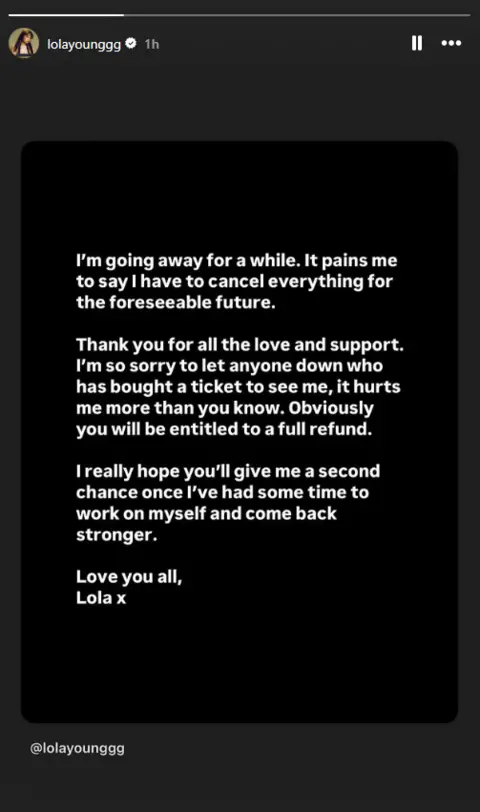
In a statement posted on social media on Tuesday, the 24-year-old singer said she was “going away for a while” and apologised to fans who had bought tickets for her tour.
During a performance at the All Things Go music festival on Saturday, Young appeared to drop her microphone and fall backwards, sparking concern among fans and fellow performers.
The following day she cancelled her Sunday slot at the festival held at Forest Hills Stadium in Washington DC.
“I’m going away for a while. It pains me to say I have to cancel everything for the foreseeable future,” she wrote in an Instagram post on Tuesday.
“Thank you for all the love and support. I’m so sorry to let anyone down who has bought a ticket to see me, it hurts me more than you know.
“Obviously you will be entitled to a full refund.
“I really hope you’ll give me a second chance once I’ve had some time to work on myself and come back stronger. Love you all, Lola x.”
The south London singer had been due to embark on a UK tour in October, followed by tour dates in the US, Mexico and Canada in November and December.
In videos posted on social media of Young performing her song Conceited at the All Things Go Festival, she looks uncomfortable before collapsing backwards onto the stage.
Earlier in the set, she had described having “a tricky couple of days” due to a “sensitive matter”, but added: “Today I woke up and I made the decision to come here… sometimes life can throw you lemons and you just gotta make lemonade”.
Young later reassured fans that she was “doing okay” and thanked them for their support.
A day prior on Friday her team had cancelled a performance at New Jersey’s Prudential Centre.
“Lola is very open about her mental health, and there are very occasional days when myself and my team have to take protective measures to keep her safe,” her manager Nick Shymansky said in a statement.
On Tuesday, Young was nominated in the UK Music Video Award’s best pop music video category for One Thing, a song on her recently released album I’m Only F****** Myself.
The artist shot to fame following the release of her 2024 song Messy, which peaked at number one in the United Kingdom, Australia, Belgium, Croatia, Ireland and Israel.
She became the youngest current British artist to have a number one single since Dave in 2022, and the youngest British woman to score a chart-topper since Dua Lipa in 2017. She has had three UK top 40 singles and one top 10 album.
DISCLAIMER: The Views, Comments, Opinions, Contributions and Statements made by Readers and Contributors on this platform do not necessarily represent the views or policy of Multimedia Group Limited.
DISCLAIMER: The Views, Comments, Opinions, Contributions and Statements made by Readers and Contributors on this platform do not necessarily represent the views or policy of Multimedia Group Limited.
Ghana seeks to curb losses at state water utility

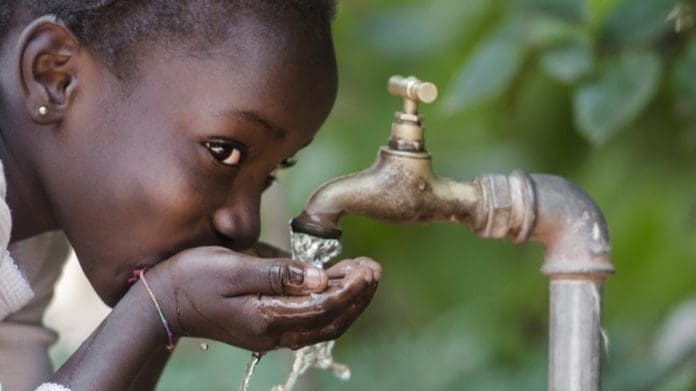
Ghana Water Limited (GWL), the West African country’s state-owned water utility company, held a stakeholders’ dialogue on Monday, seeking ways to end losses blamed on water theft through illegal connections, unpaid bills, meter bypasses, and meter tampering.
GWL Managing Director Adam Mutawakilu told the meeting that the losses threaten the company’s sustainability, as they undermine its financial stability and operational capacity, in the face of rising water production costs.
He warned that the phenomenon could cripple the GWL’s ability to meet the surging urban demands for access to clean water and hamper its ability to expand water infrastructure, maintain and upgrade aging networks, and ensure a consistent and sustained supply of safe and affordable water to all Ghanaians.
The dialogue was organized with support from the World Bank’s Greater Accra Metropolitan Area Sanitation and Water Program.
Mutawakilu said the stakeholders’ input is critical because sustainable water management is not the sole responsibility of the GWL, but “a collective endeavor that requires the active participation of all stakeholders.
Ghanaians to enjoy at least 33 percent tariff reduction from DStv


Ghanaian subscribers will enjoy tariff cuts between 33 percent and 50 percent from pay television channel DStv, Minister of Communication, Digital Technology and Innovations Samuel Nartey George announced late Monday.
The development was the result of months of regulatory pressure and negotiations with Multichoice Africa, operator of the pay TV channel, over DStv pricing in the country.
“MultiChoice Africa has committed to an unprecedented increase in value offer only in Ghana, which will result in Ghanaian DStv subscribers getting more services for less,” George told a press briefing.
The National Communications Authority, Ghana’s communications industry regulator, set up a committee in early September to work with Multichoice Africa to push for a reduction in tariffs for subscribers in the country.
The new arrangement will run for three months, after which the committee will meet again to review the impact and way forward, the minister said.
The Simpsons Movie returns for sequel after two decades

The Simpsons Movie will return for a sequel 20 years after the original, 20th Century Studios and Disney confirmed on Monday.
Based on Fox’s popular and long-running animated sitcom, which follows the lives of Homer, Marge and their three children, Bart, Lisa and Maggie, the as-yet untitled sequel is set to be released on 23 July 2027.
The first film, released in 2007, saw Homer accidentally pollute the water supply of Springfield and then attempt to save his family and city, which had been sealed off under a huge glass dome.
The poster for the new film, shared on various social media platforms, shows a doughnut being grabbed alongside the tagline: “Homer’s coming back for seconds.”
Excited fans posted in the comments underneath, with many satirising the show’s opening credits to show images of Bart writing lines on a school blackboard, which read: “I will not wait 20 years to make another movie.”
The Simpsons first appeared in 1987 as cartoon shorts on another US TV show, The Tracey Ullman Show, before getting their own one two years later.
Created by Matt Groening, it has now aired for 37 seasons. And it was recently renewed through to season 40, which will air in 2028/29.
The first movie, directed by David Silverman, grossed an estimated $536 million (£400m) at the global box office, and there had been rumours in the press of a sequel for years, but nothing was confirmed until now.
Showrunner Matt Selman recently told Variety that streaming had helped the series not only remain relevant to older viewers but also gain new fans.
“Now, instead of the kids watching it on local TV in the afternoon, they can just watch it all, all the time, all day, all forever,” he said.
DISCLAIMER: The Views, Comments, Opinions, Contributions and Statements made by Readers and Contributors on this platform do not necessarily represent the views or policy of Multimedia Group Limited.
DISCLAIMER: The Views, Comments, Opinions, Contributions and Statements made by Readers and Contributors on this platform do not necessarily represent the views or policy of Multimedia Group Limited.
GSA Opens Books to Stakeholders, Reveals Mixed Performance Results


The Ghana Standards Authority (GSA) has done something not enough government agencies do—it opened its books to public scrutiny and invited stakeholders to examine exactly how it performed in 2024.
The stakeholder meeting, organized in partnership with the State Interests and Governance Authority (SIGA), the Ministry of Trade, Agribusiness and Industry, and the Ministry of Finance, brought together development partners, industry players, and the public to review key performance indicators showing the GSA achieved about 53 percent of its projected 443 standards for development in 2024.
Professor George Agyei, the GSA’s Acting Director-General, described the engagement as a milestone in building trust. “The Authority believes that engaging with stakeholders will enable it to better understand their needs and expectations, ultimately leading to more effective standardization and quality assurance in the country,” he explained during the forum.
This wasn’t just corporate speak. By presenting performance indicators, financial results, and key metrics publicly, the GSA demonstrated a willingness to operate transparently—something that matters increasingly as Ghana positions itself within the African Continental Free Trade Area (AfCFTA), where product standards and quality assurance become competitive differentiators.
Professor Agyei emphasized the GSA’s vision of delivering world-class standardization services aligned with international best practices while responding to Ghana’s unique economic needs. “We remain dedicated to enhancing our technical capabilities, expanding our reach, and strengthening partnerships that drive innovation and quality across all sectors,” he added.
Board Chairman Hudu Mogtari, a pharmacist with over 20 years of experience in the pharmaceutical sector and former Chief Executive Officer of the Ghana Food and Drugs Authority, noted that the dialogue with key partners and industry players aimed at advancing Ghana’s industrial transformation in line with the government’s flagship 24-Hour Economy policy.
The numbers tell a story of both progress and challenges. While the GSA completed 53 percent of projected standards—sending them forward for publishing and gazetting—it verified 227,156 weights, measures, and measuring instruments to ensure fair trade practices. That verification work matters because it protects consumers and businesses from fraudulent measurements that can distort markets and erode trust.
Inspections rose to 143,496 compared to 134,268 in 2023, surpassing targets by seven percent. That’s solid progress. However, the Authority issued only 1,128 certificates to locally manufactured products, falling short of the projected 1,600. That gap suggests either that manufacturers aren’t seeking certification as quickly as anticipated, or that bottlenecks exist in the certification process itself.
The meeting served as more than just a performance review. It created space to discuss persistent challenges including resource constraints, evolving industrial demands, and the need to accelerate standard development to match the pace of innovation. Those aren’t small problems—they’re fundamental issues that affect whether Ghanaian products can compete internationally.
Stakeholders commended the GSA for exceeding inspection targets and ensuring quality assurance across industries, but encouraged the Authority to strengthen technical capacity and expand collaboration to drive competitiveness under AfCFTA. That feedback recognizes a basic truth: standards and certifications aren’t bureaucratic red tape when done right—they’re tools that help local industries prove their products meet international quality benchmarks.
What makes this stakeholder engagement noteworthy is its timing. As Ghana works to transform its industrial base and compete within the continental free trade framework, the GSA’s role becomes more critical. Companies need reliable standards, quick certification processes, and confidence that their products will be recognized across borders. Whether the GSA can scale up to meet those demands while addressing resource constraints remains an open question.
By hosting this forum, the GSA has taken a proactive step toward promoting good governance, inclusiveness, and responsiveness in the standardization sector. It signals the Authority’s willingness to be held accountable—and in Ghana’s current economic environment, that transparency matters as much as the technical work of setting standards itself.
Social media goes agog as Basintale promises to ‘spin’ 2000 jobs from coconut husks

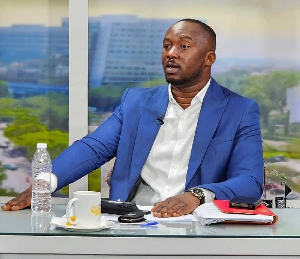 Malik Basintale is the Chief Executive Officer of Youth Employment Agency
An announcement by Youth Employment Agency (YEA) CEO, Malik Basintale, to create 2,000 permanent jobs through the recycling of coconut husks has sparked widespread excitement on social media.
In a post on his X page on September 30, 2025, Basintale assured the youth that opportunities would be created from the waste of the highly patronised fruit.
He noted that the initiative would not only combat unemployment but also help manage the significant amount of coconut waste littering the city.
“You see this here, they are called coconut husks! The left over after enjoying your coconut milk or juice that liters the city,” his post read.
“This afternoon I shall be creating 2,000 permanent jobs from it while saving the environment. Watch out…,” he added.
Arrest of courier riders suspended – YEA CEO
The declaration has sparked widespread excitement among netizens, who flooded the comments section with suggestions for products that can be generated from the husks and proposals for manufacturing hubs.
Reactions included:
• Samuel Cudjoe (@scudjoe321), who highlighted a university project: “We successfully extracted fibers (coir) from coconut husks, which aligns with your current initiatives to utilize coconut husks for beneficial purposes.”
• Qwaci Osei (@kanewuhub), who pointed to existing solutions: “This is @zaacoalenergy turning Coconut husks into charcoal.”
• Muttalib M. Sadatc (@MSadat7241), who provided a long list of potential applications: “Biochar Production, Peat Moss Alternative, Potting Mix, Hydroponics, Soil Amendment, Cocoboards, Insulation, Cement additives… Biomass Fuel.”
• Yardboss4lyf (@Yardboss4l53619), who offered a practical idea: “They can also use it for ‘door mat’ from my experience in Nsawam prison… Coconut husks door mat can last for 7 to 10 yrs.”
Meanwhile, the YEA under Basintale has recently been credited with spearheading the Community Medical First Responders (CMFRs) initiative.
YEA faces scrutiny over 72 percent rent hike
On September 26, Sika Official’s X Page highlighted the program, noting Basintale’s presence at the Ghana National Ambulance Training School in Nkenkaasu for the commissioning of the first batch of 6,000 CMFRs, who are set to bolster emergency medical care in remote areas across the country.
See post below
You see this here, they are called Coconut husks! The left over after enjoying your coconut milk or juice that liters the city.
This afternoon I shall be creating 2,000 permanent jobs from it while saving the environment😊
Watch out ……🇬🇭🔥💪🏾 pic.twitter.com/dD4gMf7uEE
— Maleek Basintale (@malik_basintale) September 30, 2025
MRA/VPO
Mamponteng Chief drags Prophet Roja to court for saying ‘he would die soon’
‘God has anointed Bawumia to lead Ghana to the promised land in 2028’

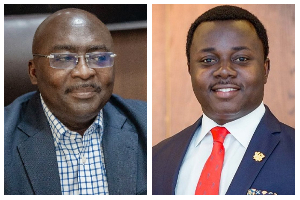 A photo collage of Dr Mahamudu Bawumia and Rev John Ntim Fordjour
The Member of Parliament for Assin South, Rev John Ntim Fordjour, has said that God has anointed the former Vice President and NPP flagbearer hopeful, Dr Mahamudu Bawumia, to lead Ghana into the “promised land” in 2028.
Addressing party members during Dr Bawumia’s Central Region tour on Tuesday, September 30, 2025, he urged Ghanaians to rise above ethnic and religious lines when electing leaders.
Bawumia leads Kennedy Agyapong in Central and other swing regions, poll shows
“The person I have seen with such an anointing is Dr Bawumia. The one God has anointed to lead us to the promised land in 2028 is Dr Bawumia,” he declared.
He continued, “My brothers and sisters, my elders, I beg of you; just take a look at all the leaders in the NPP, and also those who have announced their intention to lead the NDC and compare. Tell me, who among them, if we put them up against Dr Bawumia, can stand him? Who? There’s nobody.”
Bawumia still in clear lead in NPP race – Latest Global Info Analytics survey
“I’m a Christian, I’m a pastor, and the Bible I read tells me that God is no respecter of persons. God can take anyone and anoint them, and it doesn’t matter whether the person is a Christian or a Muslim. He can use them to rule over His country and make His people prosper,” Rev Ntim Fordjour told the gathering.
The opposition NPP is set to hold its presidential primaries in January 2026 to select its flagbearer for the 2028 general elections.
JKB/MA
Mamponteng Chief drags Prophet Roja to court for saying ‘he would die soon’
Ghana’s Industrial Future Hinges on Four Critical Pillars, AGI Leaders Warn
Ghana’s industrial sector stands at a crossroads where success depends entirely on how well businesses align with four fundamental pillars and the Association of Ghana Industries (AGI) isn’t mincing words about what needs to happen next.
Speaking at the 26th Regional Annual General Meeting, AGI’s Regional Chairman for Ashanti, Bono, Bono East, and Ahafo, Kwasi Nyamekye, laid out the framework: policy stability, infrastructure development, innovation, and access to finance are the non-negotiables for Ghana’s industrial transformation. Without these foundations firmly in place, he argued, the country’s ambitions to become an industrial powerhouse will remain just that—ambitions.
Mr. Nyamekye’s message carried an urgent undertone. Ghana has spent decades shipping raw materials abroad only to buy back finished products at premium prices. That cycle needs to break, and it won’t happen unless enterprises fundamentally rethink how they build their growth strategies around these four pillars.
“Policy stability is the foundation of successful businesses,” he told attendees. “Investors and industrialists need assurance that regulatory changes won’t occur overnight.” His point wasn’t subtle—industries need predictability, and government must engage more deeply with AGI and other stakeholders to ensure policies actually reflect the realities businesses face on the ground.
But stable policies alone won’t cut it. Mr. Nyamekye emphasized that reliable infrastructure and robust innovation ecosystems will ultimately determine whether Ghana can hold its own in global markets. Digital infrastructure, in particular, has become the dividing line between countries that compete internationally and those that don’t.
Then there’s the financing problem. Access to affordable capital remains the single biggest barrier confronting local industries, particularly small and medium enterprises (SMEs). With interest rates sitting stubbornly in double digits, manufacturers are getting choked out before they can scale. Mr. Nyamekye urged banks and regulators to design tailored financial products—longer tenures, more manageable repayment structures that would actually allow businesses to grow sustainably rather than just survive quarter to quarter.
He also pushed industry players to embrace technology, adopt sustainable practices, and prioritize workforce skills development. With the African Continental Free Trade Area (AfCFTA) now operational, Ghana’s industries need to strengthen their competitiveness or risk getting swept aside by better-prepared regional rivals.
AGI’s Chief Executive Officer, Seth Twum-Akwaboah, said the association is actively working to ease both the cost and complexity of domestic and international transactions. Through collaboration with the Export Development Council, they’re building stronger export ecosystems, the kind of infrastructure that can turn local manufacturers into credible exporters of finished goods rather than just raw material suppliers.
Mr. Twum-Akwaboah also highlighted AGI’s commitment to collaborating with government on the proposed 24-Hour Economy policy, noting that industries need consistent supplies of high-quality raw materials to maintain production standards. If designed effectively, the 24-Hour Economy concept could provide industries with the operational flexibility and efficiency needed to scale up, tap into export markets, and drive inclusive economic growth.
What’s interesting about AGI’s positioning is how it balances advocacy with pragmatism. The organization isn’t simply demanding government action, it’s also challenging its own members to step up their game through technology adoption and sustainable practices. That dual approach recognizes that Ghana’s industrial transformation will require both supportive policies and capable enterprises willing to invest in their own competitiveness.
The timing of this conversation matters. As Ghana works through economic challenges and positions itself within AfCFTA, the industrial sector’s ability to add value locally and export competitively will significantly impact the country’s economic trajectory. Whether businesses actually align with these four pillars—and whether government creates the environment for them to do so—will determine if Ghana’s industrial potential becomes reality or remains unrealized.
Global Africa Forum 2025 Charts Bold Path for an ‘Africa Beyond Aid’ Amid Global Tariff Wars

The Global Africa Forum 2025 (GAF), convened on the sidelines of the United Nations General Assembly, issued a powerful call for Africa to decisively seize control of its economic destiny. In response to global tariff wars, shifting geopolitics, and donor fatigue, leaders united around a vision of a self-reliant, integrated, and prosperous continent.
Organised by the Africa Prosperity Network (APN) in partnership with the Africa America Institute, the African Continental Free Trade Area (AfCFTA) Secretariat, KRL International, and the Rebranding Africa Forum, the event gathered African and Global African leaders, alongside global investors, innovators, and policymakers. The forum was held under the theme: “Africa’s Response to Tariff Wars: Building a Prosperous, Integrated Continent Beyond Aid.”
A Unified Continent as a Global Growth Frontier
Positioned as an active platform for mobilising Africans and Global Africans to shape their future in praticable terms, GAF 2025 emphasised that Africa’s strength lies in its unity and its capacity to mobilise its vast domestic and diaspora resources. Leveraging the African Continental Free Trade Area (AfCFTA) as a catalyst for economic growth, repositioning Africa and Global Africa or Africa’s Diaspora (designated by the African Union as Africa’s sixth region) as a unified market and a primary architect of its own prosperity defeats the narrative of an aid-dependent region. With a population of 1.5 billion, AfCFTA is the world’s largest single market project. Global Africa counts well over 200 million people.
“At its core, GAF recognises that Africa’s accelerated path to prosperity lies in economic integration,” stated Nana Adjoa Hackman, Executive Director of APN. She said the platform is designed to “deliberately connect resourceful Global Africans, entrepreneurs, professionals, investors, innovators, and institutions in the Americas, the Caribbean, Europe, Asia, and elsewhere, to Africa’s integration and transformation agenda.”
This sentiment was also echoed by Mohamed M. Abou El Enein, Chairman and Founder of Cleopatra Group. “Africa is in my blood, Africa is in my brain, and I’m really proud of what’s happening now in the international market about the big awareness from all the most developed [economies] about Africa. It’s very important for investors to see that this continent is connected together.”

Mobilising Capital and Closing the Infrastructure Gap
A key financing innovation that was unveiled at GAF 2025 was the ‘Dollar-a-Day Initiative’, proposed by Her Excellency Nkosazana Dlamini Zuma, APN Advisory Council Chairperson, during the 2025 Africa Prosperity Dialogues (APD). The initiative aims to mobilise small, consistent contributions from Africans and Global Africans into a dedicated continental infrastructure fund, directly addressing Africa’s $100 billion annual infrastructure deficit through collective action.
GAF also scrutinised the strategic use of existing financial flows. Amine Iddriss Adoum, Director of Infrastructure, Industrialisation, Trade & Economy at AUDA-NEPAD, said: “We all keep saying that there are about $90 billion of remittances that come into Africa every year. But the interesting part of this number is that about 80% to 90% of the remittances don’t go towards productive investments.”
Trade, Partnerships, and Implementing the AfCFTA
High-level sessions interrogated Africa’s place in the global economy, calling for unified negotiation strategies, stronger regional value chains, and accelerated implementation of the AfCFTA. Discussions highlighted the urgent need for more balanced, trade-driven partnerships, particularly between the United States and Africa.
Congresswoman Sheila Cherfilus-McCormick, United States Representative and Chairwoman for the Global Energy Conference, emphasised the need for a transformative engagement: “AGOA [Africa Growth and Opportunities Act] was a mutually beneficial trade policy that needed to be extended. So many people who looked at it said, ‘well Africa is the future’. We keep telling them that no, Africa is today, and it is now. We’re looking at finding different ways to participate more in Africa, specifically when it’s not just extraction, but we’re looking at processing, we’re looking at jobs, we’re looking at maximising the growth of Africa.” AGOA grants eligible African countries tariff-free entry into the United States for over 1,800 products.
Addressing Structural Barriers
While the vision was clear, participants acknowledged the practical challenges to realising a single African market. Dr Amany Asfour, President of the Africa Business Council, highlighted key obstacles: “If we talk about AfCFTA, it’s just an agreement. But to implement this agreement, we need a multifaceted approach. We need to have harmonisation of all the regulations and policies across the continent. You cannot just trade [with one set of regulations in] one country and another [set of] regulations or certificates in another country.”
Vymala Thuron, Director of Funds and Resource Mobilisation at Shelter Afrique Development Bank, pointed to financial infrastructure challenges: “At ShafDB, what we see is [real estate] as really an anchor to unlock trade, manufacturing, and energy. However, cross-border trade has high transaction costs and banking costs. There is the volatility. We need to reduce the cost of capital and we need to have other ways of de-risking investment.”
Governance and the Diaspora as Key Drivers
Joyce Bawah Mogtari, Special Aide to the President of Ghana, underscored the importance of governance: “If we want to make progress we need a fair justice system and we need equity. Ghana is open for business. But yes, [while] we are open for business […] we want the right kind of business.”
The Forum was notably encouraged by the significant number of registered attendees from the African diaspora, including African Americans and Afro-Caribbeans, who answered the call to reconnect with the continent. The event urged a decisive shift from charity and remittances towards strategic investment, innovation, and policy influence, positioning Global Africans as central drivers of connectivity, trade, and industrialisation.
Looking Ahead: Africa Prosperity Dialogues 2026
The event culminated with the launch of the Africa Prosperity Dialogues (APD) 2026, announced by a coalition of leaders including Nana Adjoa Hackman of APN, Joyce Bawa Mogtari, Special Aide to the President of Ghana, Dr Amany Asfour of the Africa Business Council, and Nkiru Balonwu, APN Board Member and Founder of Africa Soft Power. The dialogues will take place from 4–6 February 2026 at the Accra International Conference Centre, Ghana, under the theme: “Empowering SMEs, Women & Youth in Africa’s Single Market: Innovate. Collaborate. Trade.”
The outcomes of the Global Africa Forum will feed directly into APD 2026, where the ideas and proposals raised will be refined into concrete policies, investment commitments, and measurable outcomes for the continent.
For More Enquiries, contact
Africa Prosperity Network, Communication Directorate Tel: +233 20 136 6105
Email:[email protected]
Web: www.africaprosperitynetwork.com
About the Global Africa Forum:
The Global Africa Forum, organised by the Africa Prosperity Network and the Africa America Institute, serves as a dynamic platform to connect the skills, technology, and financial resources of Global Africans with critical sectors such as energy, health, education, housing, transportation, and digital infrastructure. This partnership aims to unlock the potential of Africa’s single market, home to 1.4 billion people, by attracting global investments and facilitating innovative collaborations.
Africa Prosperity Network (APN) is an Accra-based nonprofit organisation dedicated to advancing Africa’s single market and Agenda 2063 through high-impact platforms, including the Africa Prosperity Dialogues. The network connects public and private sectors to accelerate continental integration and sustainable development across Africa.

Indigenous Business Chamber Disputes Fourth Estate NLA Report


A dispute over a National Lottery Authority (NLA) investigation has escalated into competing public statements and legal action, with the Chamber of Indigenous Business and Investors (CIBI) challenging claims made by The Fourth Estate and the Media Foundation for West Africa (MFWA).
The controversy centers on an investigative report alleging NLA gave away a GH₵3 billion business to KGL Technology Limited for GH₵170 million annually—claims CIBI describes as fundamentally misleading.
In a statement signed by Executive Director Alistair Nelson, CIBI argues the arrangement between NLA and KGL is a licensing agreement, not a procurement contract, issued under the National Lotto Act, 2006 (Act 722) and its regulations. The Chamber contends this distinction matters because licensing agreements don’t go through procurement processes.
“It is very misleading for The Fourth Estate and MFWA to conclude that the NLA-KGL deal is a contract. That is very unprofessional,” Nelson’s statement reads.
CIBI challenges the GH₵3 billion figure directly, presenting data showing NLA’s highest annual gross revenue before KGL was GH₵401.7 million in 2017. According to figures the Chamber cites, NLA generated GH₵2.76 billion total from 2013-2020—over eight years, not annually—and paid GH₵1.38 billion to winning ticket holders during that period.
The statement argues that KGL’s annual GH₵170 million payment to the Consolidated Fund through NLA exceeds what the authority itself paid in any single year from 2013-2020, when NLA contributed GH₵182 million total over eight years.
Whether these competing narratives can be reconciled depends partly on how revenue, gross business value, and payment obligations are calculated—technical distinctions that matter significantly in evaluating the arrangement’s fairness.
The dispute has extended beyond public statements. Former NLA Board Chairman Gary Nimako Marfo filed a defamation lawsuit on September 30 against four journalists and MFWA, including Fourth Estate’s Seth Bokpe and MFWA Executive Director Sulemana Braimah. Former NLA Director-General Samuel Awuku has also publicly challenged the investigation’s findings.
CIBI’s statement addresses multiple aspects of the Fourth Estate investigation, including claims about contract duration, exclusivity arrangements, and NLA’s operational capacity. The Chamber notes that other lottery operators have similar 10-15 year agreements with NLA, some with automatic renewal provisions.
On exclusivity, CIBI argues that NLA has never issued multiple USSD and web online licenses for a single lottery game, citing examples of other operators with exclusive short codes for specific products. The statement claims KGL assumes all operational risks and liabilities, including infrastructure costs, marketing, technical fees, daily operating charges, and payment to winning ticket holders.
The Fourth Estate’s original investigation reportedly examined broader concerns beyond just the KGL arrangement, including how NLA funds designated for “Good Causes” were utilized. Those allegations have prompted separate rebuttals from former NLA officials.
What complicates evaluation of competing claims is that both sides present data supporting their positions, but frame that data differently. CIBI emphasizes KGL’s payments exceed NLA’s historical contributions, while critics question whether the licensing terms adequately capture the business value KGL reportedly generates.
The legal action adds another dimension, potentially moving disputes from public debate into court proceedings where evidence standards differ from media investigations. Defamation cases in Ghana require proving statements were false and published with malicious intent—a high bar that protects legitimate journalism while providing recourse against demonstrably false reporting.
For context, NLA was established in 1957 and operates under Act 722, which governs lottery licensing, operations, and revenue distribution. The authority works with various Lotto Marketing Companies (LMCs), collaborators, and private operators under licensing arrangements that CIBI argues are standard industry practice.
Whether the NLA-KGL arrangement represents sound public policy or problematic dealing depends on questions that competing public statements haven’t fully resolved: What is the actual revenue KGL generates from the licensed operations? How does the GH₵170 million annual payment compare to fair market value for the license? What alternatives were available to NLA for operating the 5/90 USSD system?
CIBI positions the KGL deal as “one of the best” arrangements at NLA based on payments to the Consolidated Fund. Critics argue the terms undervalue a lucrative business opportunity. Both perspectives claim data support, but they’re measuring different metrics.
The dispute reflects broader tensions about transparency in government-linked commercial arrangements, particularly when state entities license operations to private companies. What constitutes fair value, proper process, and adequate public benefit remains contested terrain.
As the defamation case proceeds and public debate continues, clarity may eventually emerge about whether the Fourth Estate investigation identified genuine problems or, as CIBI alleges, mischaracterized licensing arrangements through unfamiliarity with lottery operations.
For now, Ghana has competing narratives about the NLA-KGL deal—one alleging significant undervaluation of public assets, another defending the arrangement as beneficial compared to NLA’s historical performance. Which narrative proves more accurate depends on evidence that legal proceedings may eventually test more rigorously than public statements allow.
Below is the full statement from CIBI
According to an investigative report by the Fourth Estate and the Media Foundation for West Africa (MFWA), the National Lottery Authority (NLA) gave away a GHS 3 billion prime business to KGL Technology Limited in exchange for peanuts of GHs 170 million annually.
The Fourth Estate has also stated that the contract signed in 2024 was for 15 years, with automatic renewal for another 5 years after expiration.
However, the FACTS and Data from the National Lottery Authority (NLA) show that the Fourth Estate and Media Foundation for West Africa (MFWA) engaged in sensationalism, while exhibiting Gross Ignorance when it comes to lottery operations.
Below is the Accurate/True Story of the NLA-KGL deal:
15 years Contract of KGL
KGL Technology Limited is not the only company having a 15-year agreement with the National Lottery Authority (NLA). For the avoidance of doubt:
1. Lots Services Ghana Limited had a 15-year contract with NLA in 2013, subject to automatic renewal of another 15 years after expiration.
2. Simnet Ghana Limited had a 10-year contract with NLA in 2015 subject to automatic renewal for another 10 years after expiration.
3. Alpha Lotto Limited and some Private Lotto Operators signed 10-year contract with NLA in 2024 subject to automatic renewal after expiration.
4. All the Lotto Marketing Companies currently doing business with NLA in the Kiosks and using Point of Sale Terminals (POSTs) were issued licenses in 2006 in accordance with Section 58 (Transitional Provisions) and 57 of the National Lotto Act, 2006 (Act 722). These Lotto Marketing Companies have been in operations for the past 19 years.
5. There are also Lotto Receivers who were previously working with the then Department of National Lotteries (DNL), and these Lotto Receivers were admitted as Lotto Marketing Companies under the Act 722. These companies have been doing business with the National Lottery Authority (NLA) for the past 40-50 years.
Contract of KGL
KGL Technology Limited has No “Contract” with the National Lottery Authority (NLA).
The arrangement between NLA and KGL is a Licensing Agreement issued by the Board of the National Lottery Authority (NLA) in accordance with Sections 5, 6, 7, 8, 9, 10, 11, 12, 13, & 14 of Act 722, and Regulations of 12 & 13 of L. I. 1948.
All licensing agreements issued by NLA to Lotto Marketing Companies, Collaborators and Private Lotto Operators have NEVER gone through the procurement process since they are NOT procurement contracts but rather licensing agreements in accordance with Act 722 and L. I. 1948.
Therefore, it is very misleading for the Fourth Estate and Media Foundation for West Africa (MFWA) to conclude that the NLA-KGL deal is a contract. That is very unprofessional, making the submission highly unethical.
NLA Gave Away A GHS 3 Billion Business to KGL for Peanuts
For the avoidance of doubt, the National Lottery Authority (NLA) was NOT operating any GHS 3 billion business before KGL started operating in Ghana. The highest gross revenue ever generated by NLA before KGL was GHS 401, 711, 318 (400 Million Ghana Cedis) in 2017. As a matter of fact and backed by data, the NLA has NEVER generated GHS 3 billion annually since its establishment in 1957.
The National Lottery Authority (NLA) used 8 years to generate GHS 2, 766, 159, 507 (2.7 billion Ghana Cedis), and out of the GHS 2.7 billion, the NLA used GHS 1, 378, 104, 374 (1.3 billion) to pay winning tickets to the staking public.
Below are the revenues generated by National Lottery Authority (NLA) from 2013-2020 before the active operationalization of the KGL licensing agreement:
2013 – GHS 255, 229, 663
2014 – GHS 315, 918, 378
2015 – GHS 365, 529, 893
2016 – GHS 397, 750, 549
2017 – GHS 401, 711, 318
2018 – GHS 381, 038, 324
2019 – GHS 349, 220, 308
2020 – GHS 299, 761, 074
Total Revenue generated by NLA for 8 years (2013-2020) = GHS 2, 766, 159, 507(2.7 billion).
Therefore, Fourth Estate Lied to the public about annual revenue of a GHS 3 Billion business of NLA being given away to KGL based on the aforementioned data.
Below are the Lotto Prizes Payments made by NLA from 2013-2020:
2013 – GHS 122, 407, 648
2014 – GHS 156, 414, 997
2015 – GHS 172, 349, 847
2016 – GHS 203, 687, 057
2017 – GHS 209, 545, 892
2018 – GHS 179, 326, 708
2019 – GHS 171, 375, 506
2020 – GHS 162, 996, 719
Total Payments of Lotto Prizes (Winners of National Lotto) for 8 years = GHS 1, 378, 104, 374(1.3 billion).
This should inform the Fourth Estate and Media Foundation for West Africa(MFWA) that Lotto money is NOT the same as revenue generated by GRA. NLA used 8years to generate 2.7 billion and pay 1.3 billion to winners of National Lotto within that same 8years.
GHS170 million Peanuts Paid by KGL to NLA
So far NLA-KGL deal is the best at the NLA and below are the facts:.
1. From 2013-2020(8years), NLA paid only GHs 182, 009, 000(182 million Ghana Cedis) to the Consolidated Fund. Below is the breakdown of payments to the Consolidated Fund by NLA:
2013 – GHs 25, 000, 000
2014 – GHs 11, 850, 000
2015 – GHs 33, 270, 000
2016 – GHs 16, 000, 000
2017 – GHs 30, 000, 000
2018 – GHs 33, 927, 000
2019 – GHs 16, 962, 000
2020 – GHS 15, 000, 000
The above figures indicate that, the annual payment of GHS 170 million by KGL to the Consolidated Fund through NLA exceeds all the individual figures paid by NLA itself to the Consolidated Fund from 2013-2020.
For the avoidance of doubt, the amount of money paid by KGL to NLA from 2019-2024 (5years) EXCEEDS the amount of money paid by NLA itself to the Consolidated Fund from 2013-2024 and this is the ABSOLUTE FACT.
Therefore, everything shows that the NLA-KGL deal is one of the best regardless of the propaganda by the Fourth Estate and Media Foundation for West Africa (MFWA).
Does NLA Have the Capacity to Operate the 5/90 USSD Short Code?
1. In accordance with Act 722 and L. I. 1948, the NLA cannot sell lottery products/tickets directly to the staking public as a Lotto Marketing company.
2. The NLA has to depend on Lotto Marketing Companies or Collaborators or Private Lotto Operators to sell lottery products/tickets to the public.
3. Under Act 722 and L. I. 1948, NLA has no power to pre-finance Lottery operations.
*Is KGL the Only LMC ever to Have Operated 5/90 USSD?*
1. In 2008, NLA in partnership with a private company operated NLA 5/90 USSD termed as “Mobi Game 2 Sure” but the project FAILED.
2. In 2015, NLA in partnership with a private company operated “Mobile 5/90” but the project FAILED.
3. In 2019-2020, NLA in partnership with a company operated NLA 5/90 USSD(*890#) but the project FAILED.
4. In 2020- 2021, Alpha Lotto Limited started the illegal operations of NLA 5/90 USSD(*896#) but the short code was legally shut down by NLA and NCA.
Why Exclusive License to KGL?
1. The National Lottery Authority(NLA) has NEVER given multiple USSD and Web Online lottery license agreements to Lotto Marketing Companies or Collaborators or Private Lotto Operators to operate one lottery game or product.
2. All License Agreements based on USSD and Web Online are Exclusively preserved for the operation of one particular lottery product.
Below are some of the examples of USSD and Web Online EXCLUSIVELY operating a specific lottery product or game:
(a). 787 is exclusively for Wotiriyie Lottery
(b). 766 is exclusively for Atena
(c). 959 is exclusively for NLA 5/90
(d). 446 is exclusively for Daywa Lotto 5/39
(e). 946 is exclusively for Pick4/Pick1
(f). 987 is exclusively for Lucky 3
Therefore, it is extremely FALSE that, KGL is unfairly enjoying monopoly of NLA 5/90 USSD and Web Online.
*Payments to the Lotto Account*
1. In fulfilment of Section 32 of Act 722, KGL makes quarterly payments to the NLA for onward submission to the Lotto Account as a requirement for the pre-financing of the lottery operations.
2. In alignment with Regulations 13 and 14 of L. I. 1948, KGL is empowered to pay winners of National Lotto via the *959# short code.
3. In fulfillment of Section 2(4) of Act 722, KGL is responsible for all the losses on the *959# short code, and all the losses of KGL throughout the operations of NLA 5/90 USSD and Web Online will NOT be compensated by the State or from the Lotto Account provided for under Section 32 of Act 722.
Conclusion
It is very imperative for the Fourth Estate and Media Foundation for West Africa(MFWA) to understand that, the operations of KGL never started from GHS 3 billion, and also, if KGL stops operations, that supposed GHS 3 billion business would NEVER be automatically available for the State.
Also, we would like the Fourth Estate and Media Foundation for West Africa(MFWA) to remember that NLA has ZERO(0) investments when it comes to the:
1. Cost of IT infrastructure and its periodic maintenance.
2. Cost of daily payment of WINNING TICKETS to the staking public. KGL has been responsible for all the Liabilities and Risks associated with the operations of 5/90 USSD.
3. Cost of Marketing
4. Cost of Technical Fees
5. Daily operating FEES charged by MTN, Telecel and AirtelTigo
Payments of Taxes to GRA by KGL
From 2019-up-to-date, KGL has NEVER defaulted in the payment of taxes to the Ghana Revenue Authority(GRA), and the records are available at the Ghana Revenue Authority(GRA).
Finally, the investigation by the Fourth Estate and Media Foundation for West Africa(MFWA) is completely bogus, and believed to have been executed with malicious intentions.
….Signed…
Mr Alistair Nelson
Executive Director
Ghana can create 2 million jobs through agricultural transformation – Daniel Asomani

The CEO of VODEC Africa, Daniel Asomani, is calling for sweeping reforms in Ghana’s agricultural sector, insisting such a transformation could generate as many as two million jobs and drive stronger economic growth.
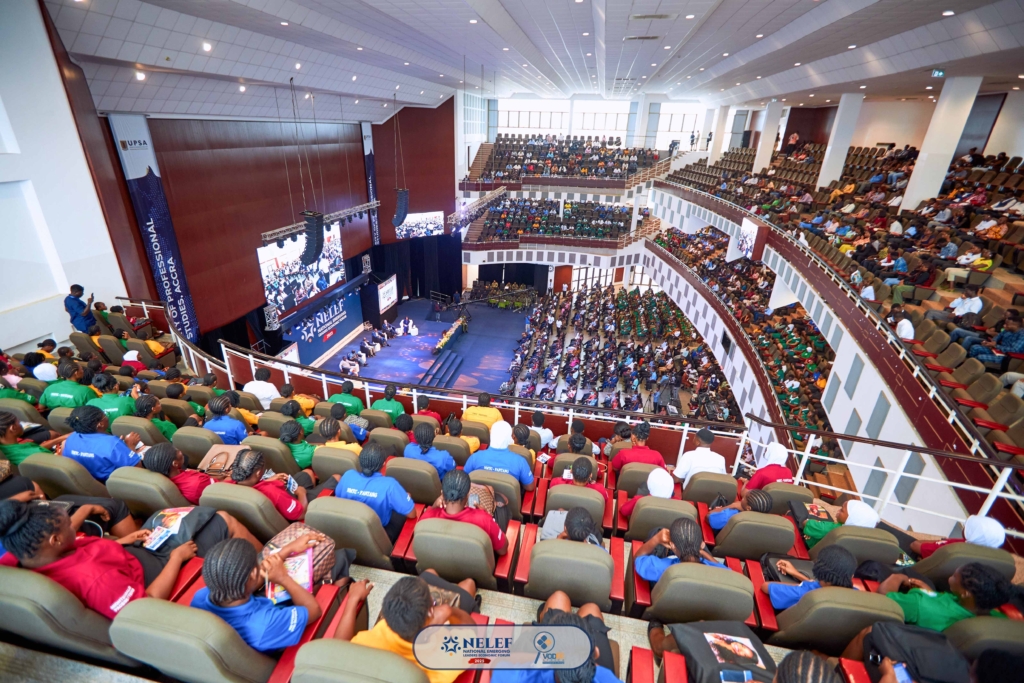
Speaking at the 2025 National Emerging Leaders Economic Forum (NELEF) held at the UPSA Auditorium, Mr. Asomani outlined a seven-pillar economic plan designed to reposition agriculture as a major growth engine.
He noted that the sector’s contribution to GDP currently stands at 18 per cent but stressed that with the right interventions, it could be scaled up to 25 per cent.
The Problem: An Underperforming Sector
Despite its immense potential, Ghana’s agricultural sector has been underperforming for years. A reliance on outdated farming methods, a lack of access to modern technology, and insufficient support for farmers have hampered productivity and limited the sector’s ability to create jobs and drive economic growth. Asomani emphasized that this is a missed opportunity that Ghana can no longer afford.
The Solution: A Green Revolution
The VODEC Africa CEO outlined a multi-pronged approach to revitalizing the agricultural sector. This includes a major push to boost cash crop production, the establishment of agro-processing zones to add value to agricultural products, and the empowerment of farmer cooperatives with access to modern technology and training.
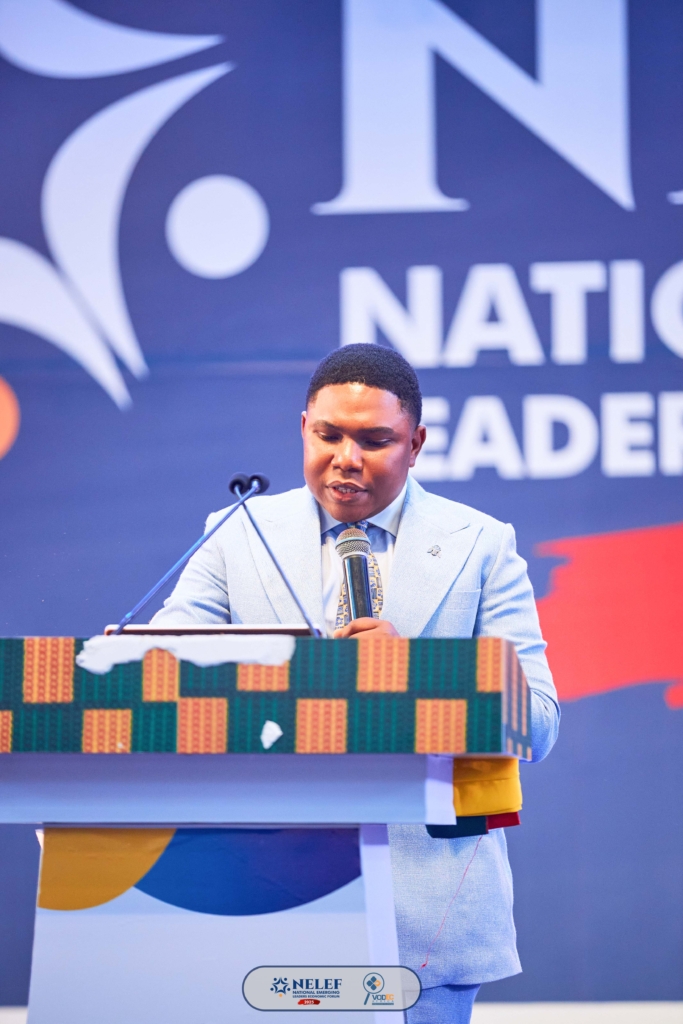
This “Green Revolution,” Mr Asomani argued, would not only ensure food security but also create a vibrant, export-oriented agricultural economy.
A key component of this plan is a focus on empowering women in agriculture. VODEC Africa has already committed to allocating 40 per cent of its Idea Challenge funding to support female entrepreneurs, with a particular focus on industries like shea butter processing, which provides a livelihood for over 600,000 women.
“With our fertile lands and favorable climate, we can boost cash crop production, processing, and exports, while making products accessible to locals. By establishing agro-processing zones, farmer cooperatives with modern technology, and becoming West Africa’s food basket, we can create 2 million jobs and increase agriculture’s GDP contribution from 18% to 25%,” Mr Asomani stated.
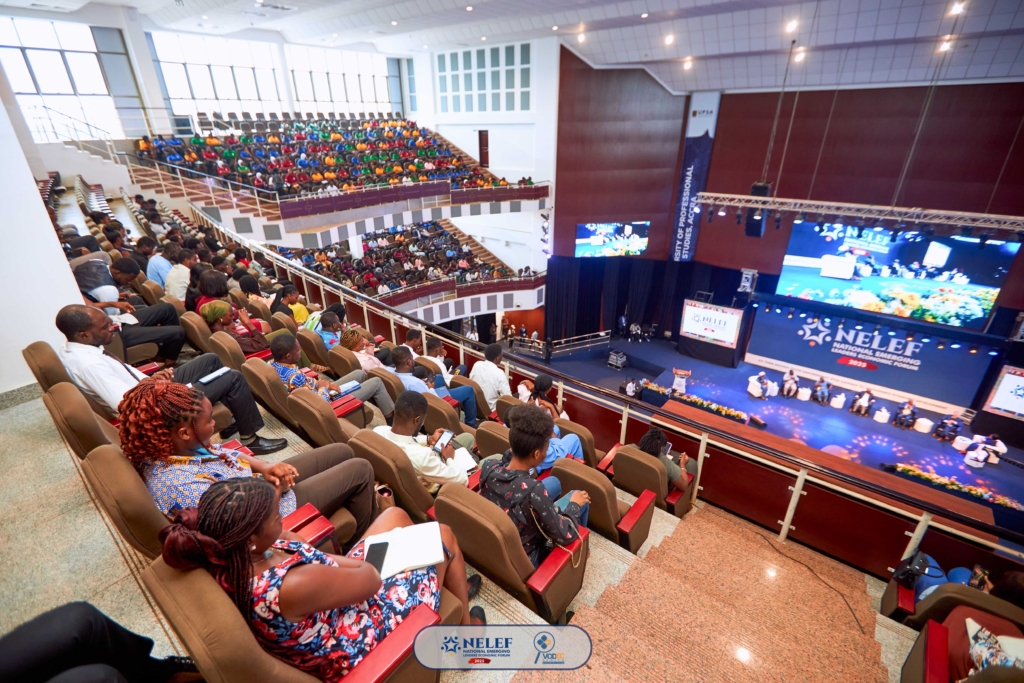
The Call to Action: Investing in a Food-Secure Future
Mr Asomani’s address was a powerful call to action for both the government and the private sector to invest in the modernization of Ghana’s agricultural sector.
He stressed that this is not just an economic issue but a matter of national security, noting that a food-secure Ghana is a stable and prosperous Ghana.
DISCLAIMER: The Views, Comments, Opinions, Contributions and Statements made by Readers and Contributors on this platform do not necessarily represent the views or policy of Multimedia Group Limited.
DISCLAIMER: The Views, Comments, Opinions, Contributions and Statements made by Readers and Contributors on this platform do not necessarily represent the views or policy of Multimedia Group Limited.
Corporate Ghana gears up for 9 days of tennis showdown in Accra

Accra will host a fusion of sport and business when the Corporate Tennis Tournament 2025 serves off from October 3-11, 2025, at the Ghana Tennis Club in Adabraka.
The nine-day event will bring together top corporate institutions to swap boardroom strategies for tennis rallies, with competitions lined up in Men’s and Women’s Singles, Men’s and Women’s Doubles, Mixed Doubles and the highly anticipated CEO’s Challenge. Matches are scheduled for weekdays from 5 pm to 8 pm, and weekends from 7 am to 8 pm.
Speaking ahead of the launch, the Convenor of the tournament, Aaron Eggley, said the event sought to go beyond competition to promote wellness and networking. “The Corporate Tennis Tournament is not so much about winning matches. It’s about bringing professionals together, building camaraderie, and leveraging sport for well-being. We want to offer companies a space where teamwork, determination, and positive competition are as important as they are in business,” he stated.
Registration is open at GH¢200 per team or player per category through MTN MoMo to 055 555 5700, with the deadline set for Sunday, September 28, 2025.
The tournament has attracted significant backing from the corporate community, with MTN, Kivo, Old Mutual, Hollard Insurance and Bedriften Consulting Partners confirmed as headline sponsors. Additional support has come from Equity Health Insurance, Reiss & Co., Suvad Transport and Tours, VeeTickets from Virtual Solutions, deSems Juices from deSem’s Cottage, and Fine Natural Mineral Water from JosAaron.
Eggley expressed appreciation to the sponsors, describing their involvement as vital to the success of the competition.
“We are excited to have such powerful brands supporting this initiative. Their backing is a vote of confidence in the power of sport to unite business. Together, we are building a world in which businesses can compete hard on the court but connect deeply off it,” he said.
The tournament is expected to attract professionals, executives and tennis lovers in what organisers say will be one of the year’s biggest corporate sporting highlights.
“Eventually, our vision is to make this a main event on the sporting calendar in Ghana. We would have every company eagerly anticipating it every year, knowing that it’s just as much networking, wellness, and corporate pride as it is about competition,” Eggley added.
The Adabraka clay courts are set to take the spotlight in October, as players and spectators converge for what promises to be a memorable blend of sport, fun and corporate networking.
Chelsea 1-0 Benfica: Jose Mourinho’s return to Stamford Bridge ends in frustration

Chelsea midfielder Enzo Fernandez had a barrage of objects hurled at him from the away end as he was trying to take a corner but eventually had the last laugh against his former side.
The Argentine, 24, led his team out as captain and helped secure a win in the first Champions League match at Stamford Bridge for two-and-a-half years.
Having helped get the ball out wide, Fernandez was lurking to score a tap-in had Rios not turned into his own net in the 18th minute.
It was an example of the World Cup winner’s increased goalscoring instinct, adopting those Frank Lampard-style late runs into the box to score three goals this season.
Indeed, Fernandez has been involved in 16 goals in his last 27 appearances in all competitions for Chelsea (seven goals, nine assists), with only Liverpool’s Mohamed Salah having a better record among Premier League players.
That final-third impact has been key with star attacker Cole Palmer having suffered patchy form in 2025 before succumbing to a persistent groin injury.
Fernandez has had to be robust and has started all nine of Chelsea’s matches in all competitions this season.
That shows the leadership and grit Maresca needs from one of his leaders – as did the fact he was the most fouled player and involved in the most duels on Tuesday night.
Of course, you can see why the Benfica fans would have been so angry at losing him even for a then-British transfer record £107m in 2023. He left just six months after joining from River Plate, and also forced his exit.
He may well be public enemy number one in Lisbon, but he is increasingly winning over the west Londoners, who chanted his name in a much-needed victory.
Asante Kotoko Edge Kwara United To Seal CAF Confederation Cup Progress
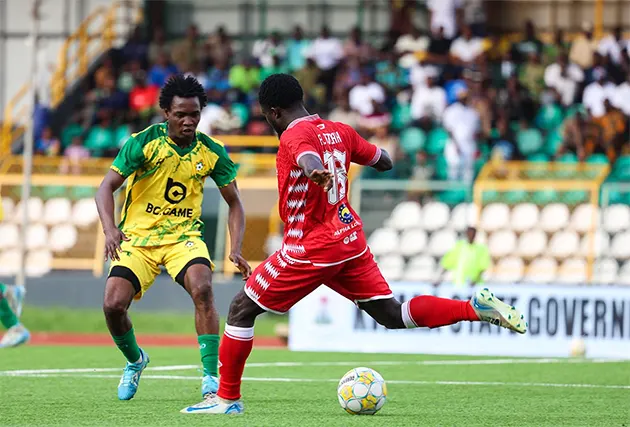
ASANTE KOTOKO kept their flawless start to the 2025/26 CAF Confederation Cup alive with a hard-fought 1-0 victory over Nigeria’s Kwara United in Abeokuta on Sunday.
The Porcupine Warriors travelled with a narrow 4-3 advantage from the first leg in Accra and produced a disciplined performance to finish the tie on top.
After a tense first half with few clear chances, striker Hubert Gyau broke the deadlock, netting the decisive goal that sealed a 5-3 aggregate win for the Ghana Premier League side.
The victory books Kotoko a second-round showdown with Moroccan giants Wydad Athletic Club, setting up what promises to be one of the competition’s most exciting fixtures.
The clash will pit Karim Zito’s side against one of Africa’s most seasoned continental campaigners.
For head coach Zito, the result added to a remarkable personal record. The former Dreams FC manager is now unbeaten in eight away matches in the Confederation Cup, underlining both his tactical acumen and Kotoko’s growing resilience on the road.
BY Wletsu Ransford
Daddy Lumba’s Odo Broni Secures Injunction Against Oheneba Media, Serwaa Bonsu

- Daddy Lumba’s second wife, Priscilla Ofori a.k.a. Odo Broni, has secured an injunction against broadcaster Oheneba Serwaa Bonsu
- Odo Broni and her mother, Cecilia Minta, applied for the injunction on September 15, following attacks by the presenter
- A High Court in Accra granted their application, restraining Oheneba Serwaa, Oheneba Agyei Nimako, and Oheneba Media from publishing the applicants
Ghana’s top stories, now easier to find. Discover our new search feature!
Priscilla Ofori, the partner of the late Ghanaian music legend, Daddy Lumba, and her mother, Cecilia Minta, have chalked success in their bid to silence critics.

Odo Broni secures injunction against Oheneba Media
Their application to injunct three critics, Oheneba Media, Oheneba Agyei Nimako, and Oheneba Serwaa Bonsu, from discussing them has been successful.
The High Court in Accra granted the injunction, restraining the three defendants from publishing or causing anything to be published about Odo Broni and her mother.
A screenshot of the court order granted on September 26, 2025, by Justice Forson Agyapong Baah, indicates it was filed on September 15, 2025.
See below for the screenshot as shared by Ayisha Modi:
Lumba’s Odo Broni and Oheneba Media saga
Odo Broni, widely known as one of Daddy Lumba’s wives, has been severely criticised on social media following the musician’s passing on July 26, 2025.
Among the critical voices have been Oheneba Agyei Nimako and Oheneba Serwaa Bonsu, who have used their online TV platform, Oheneba Media, to lambast Odo Broni.
On many occasions, Oheneba Serwaa has questioned the status of Odo Broni as Daddy Lumba’s wife. For her, Akosua Serwaa, Lumba’s wife, who is based in Germany, was the only legitimate spouse of the late musician.
In a recent video, she blasted Daddy Lumba’s family head for suggesting that Odo Broni could observe the widowhood rites just like Akosua Serwaa.

Oheneba Serwaa insisted that the abusuapanin’s suggestion was wrong because Odo Broni was never officially married to the legendary musician and was only a baby mama, despite staying with him for about 17 years and having five children with him, out of his 11 children.
The Oheneba Media presenter and her other colleagues also drew in Odo Broni’s mother and blasted her for encouraging her daughter in what they described as the wrong path of trying to take over Akosua Serwaa’s marriage.
Watch one of Oheneba Serwaa Bonsu’s below:
After many such videos on Oheneba Media, Odo Broni and her mother got offended and have taken steps to stop the attacks, leading to a successful injunction application.
It is not yet known what Oheneba Serwaa and Oheneba Media’s reaction to the injunction would be.
Lumba’s manager on Broni and Serwaa’s relationship
Earlier, YEN.com.gh reported that media personality Oheneba Ntim Barima had expressed his admiration for Daddy Lumba’s first wife, Akosua Serwaa.
He shared his thoughts about Lumba’s widow after a recent visit to the late musician’s home to commiserate with them.
The Oman FM broadcaster, in an interview, said he felt sad after visiting the bereaved family at their house.
FirstBank Ghana donates GH₵80,000 to support Rotary child-centred projects

Featured
GraphicOnline
3 minutes read
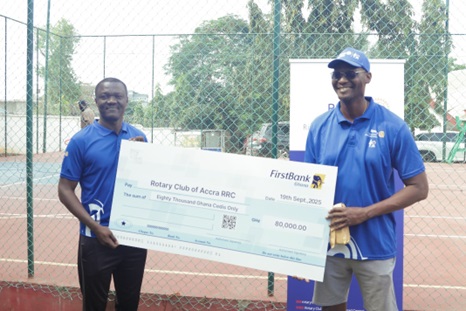
FirstBank Ghana has strengthened its commitment to healthcare and education with a GH₵80,000 donation to the Rotary Club of Accra Ring Road Central in support of its child-focused projects.
The donation, raised by the bank’s staff, was presented by the Managing Director and Chief Executive Officer of FirstBank Ghana, Mr Victor Yaw Asante, to the President of the Rotary Club of Accra Ring Road Central, Mr Henry Lamptey, at a ceremony in Accra.
The funds will be channelled into flagship Rotary initiatives, including the provision of four incubators to neonatal units at selected health institutions. The incubators are intended to improve the survival and care of premature and critically ill newborns. In addition, the support will contribute to refurbishing ICT laboratories at the Abossey Okai Anglican Basic School and the Mataheko Cluster of Basic Schools, providing pupils with interactive and engaging digital learning opportunities.
Mr Asante underlined the bank’s commitment to supporting national development beyond its core financial services. “At FirstBank, our purpose goes beyond banking; it is about making a lasting impact in the lives of people and communities. Supporting children’s health and education is central to building a stronger future for Ghana. This donation by our staff reflects our collective belief that every child deserves the opportunity to live, learn, and thrive. Whether it is ensuring that preterm babies survive their earliest days or giving young learners access to modern technology, we are committed to being a partner in national development,” he said.
Mr Lamptey expressed deep gratitude to FirstBank Ghana and its employees, describing the support as a lifeline for vulnerable groups. “We are deeply grateful to FirstBank Ghana and its staff for standing with us. This donation will directly touch the lives of some of the most vulnerable in our society: pre-term babies who need incubators to survive and schoolchildren who need ICT labs to prepare for the future. When corporate Ghana partners with Rotary, the result is sustainable solutions that change lives,” he said.
The contribution adds to FirstBank’s broader record of investing in healthcare and education through sustainable partnerships. The bank has in the past supported the Rotary Club of Accra Ring Road Central to construct a modern hospital at Berekuso in the Akuapim South Municipality, a facility designed to serve thousands of residents.
In education, FirstBank has consistently advanced initiatives that expand access and opportunity, especially in underserved communities. From providing ICT resources to backing literacy and skills development, the bank continues to prepare Ghana’s young people for future challenges.
FirstBank Ghana, a subsidiary of First Bank of Nigeria Limited, has built on its parent company’s 130-year heritage to position itself as a key player in driving socio-economic growth. By combining banking services with community investment, the institution aims to deliver lasting impact across sectors.
Doreen Andoh Flaunts Metallic Plate Implanted in Her Leg After a Car Accident in a Viral Video

Ghanaian media personality Doreen Andoh has opened up about the life-threatening accident that occurred 38 years ago.
During an exclusive interview with Kafui Dey, the host of the Cosmopolitan Mix, a mid-morning radio show on Joy FM, she showcased the metal plate in her leg.
Doreen Andoh shows metallic plate in her leg
Doreen Andoh’s video evoked strong emotions among her fans on Instagram.
The award-winning radio presenter shared how that accident changed her life forever. Recalling the harrowing experience, Andoh described being pulled out of the bus while pleading with the rescue team to lay her flat on the ground.
“It was September 23, 1993. I was on my way to Accra Polytechnic for a mock exam before the real exams a couple of weeks later.”
“I was sitting in a public transport vehicle; at that time, we had only the Trotro that operated from Accra to Tema. I was seated behind the driver when a large truck collided with the driver’s side.”
“I remember it vividly, the sound of the impact was overwhelming, and the bus tipped onto its side. I sensed that something was seriously wrong as they began to pull people out.”
“The guy sitting next to me, I think he died. They took me out through the window, and I warned them to be careful because my legs didn’t feel right.”
Doreen Andoh celebrates 30th anniversary at Joy
Award-winning radio personality Doreen Andoh has been named as one of the longest-serving staff members at Joy FM after she celebrated her 30th work anniversary.
This significant occasion was marked with great fanfare, receiving heartfelt tributes from colleagues and fans alike.
Louis Kwame Sakyiamah, affectionately known as Lexis Bill, one of Doreen Andoh’s esteemed co-workers, praised her for setting a high standard and for her leadership in the media landscape.
In a touching tribute, Lexis Bill shared a photo of himself alongside Doreen Andoh, accompanied by a caption that beautifully expressed the deep respect and admiration he holds for this legendary radio presenter.
Abronye dismisses petition against him as ‘frivolous’

Bono Regional Chairman of the New Patriotic Party (NPP), Kwame Baffoe, popularly known as Abronye DC, has described the petition against him as “frivolous,” insisting it has no merit.
Abronye made the comments after confirming his readiness to appear before the Disciplinary Committee and proposing that the hearing be broadcast live for transparency.
This followed his referral to the NPP’s National Disciplinary Committee for alleged misconduct, including defamation of party member Kennedy Agyapong and making false claims against the General Secretary, Justin Frimpong Kodua.
Speaking in an interview on Citi Eyewitness News on Tuesday, September 30, Abronye noted that “I will say that the petition itself is frivolous. The petition has no basis.”
He defended his earlier comments about Kennedy Agyapong, stating that he was merely responding to what he believes are anti-party behaviours.
According to him, Kennedy Agyapong, during a campaign tour in the Ahafo Region, accused NPP executives and government appointees of selling security slots between 2017 and 2024.
“Maybe the General Secretary is the one Kennedy Agyapong was referring to. That is why he has failed to invite Kennedy Agyapong to explain or name the people involved,” Abronye alleged.
He further claimed that the General Secretary may have been involved in the alleged misconduct, hence his silence on the issue.
Addressing his controversial comparison of Kennedy Agyapong to an elephant, Abronye stood by his words: “The elephant in the forest is more intelligent than Kennedy Agyapong — and that is the fact. I am not running away from that.”
He also challenged the notion that Kennedy Agyapong is a leading member of the party, stating, “That is not true. He is not a leading member.”
Read also
Abronye agrees to face NPP Disciplinary Committee, calls for live broadcast
PWREP accuses EOCO of “shoddy work” in Adu-Boahene’s case


The Parties Without Representation in Parliament have accused the Economic and Organised Crime Office (EOCO) of conducting “shoddy and incomplete” investigations in the ongoing prosecution of former National Signals Bureau (NSB) Director-General Kwabena Adu-Boahene.
At a press conference in Accra, the group, led by the General Secretary of the Great Consolidated Popular Party, Citizen Ato Dadzie, said EOCO’s flawed investigative work forms the shaky foundation of a politically charged case that not only lacks credibility but also risks compromising Ghana’s national security.
“Let us be clear — the Adu-Boahene trial should never have reached the courtroom. It is based on claims by EOCO that have now been exposed as inaccurate and unverified,” the group said. “The investigative work was shoddy at best, and pursuing this case any further only serves to embarrass the Attorney-General and waste the court’s time.”
The case concerns the alleged non-delivery of a cyber defence system procured by the NSB in 2020. The Attorney-General’s office, citing EOCO’s report, has argued that no such system was received by the government. However, the Parties Without Representation say new evidence from the supplier contradicts this claim.
International Security Consulting Holding Ltd. (I.S.C Holding Ltd.), the Israeli company contracted to supply the equipment, stated in a formal letter dated May 28, 2025, that “all cyber defence systems… were fully delivered to Ghana’s National Security.”
“So, on what grounds is this prosecution continuing?” the group asked. “When the supplier confirms delivery, and the National Security establishment is reportedly using the system, why is Mr. Adu-Boahene being dragged through a public trial?”
The group also criticized Attorney-General Dr. Dominic Ayine for allegedly ignoring this crucial evidence and conducting what they described as a politically motivated “media trial.”
“Justice is being conducted in front of cameras, not in court. The Attorney-General has chosen spectacle over substance,” they said. “This case is not about fighting corruption. It is about persecuting a former public servant based on incomplete investigations and unverified assumptions.”
They further raised concerns about the national security implications of the ongoing trial, warning that publicly debating the delivery and capabilities of a confidential cyber defence system exposes Ghana’s security infrastructure to unnecessary scrutiny and potential threats from foreign adversaries.
“Cyber defence systems rely on confidentiality. Once you start debating their delivery, capabilities, and cost in open court, you weaken the entire architecture. This prosecution is not only baseless — it is reckless,” they cautioned.
Citing inconsistencies in the government’s anti-corruption agenda, the Parties Without Representation accused the Attorney-General’s office of selective justice, noting that cases involving individuals affiliated with the ruling NDC have been quietly discontinued, while former NPP appointees face trial amid intense media attention.
“Justice has become a political tool. The Adu-Boahene case is just one example where due process has been sacrificed for partisan gain,” they said. “This approach threatens to destroy public confidence in the judiciary.”
The group concluded by demanding that the Attorney-General withdraw the case and focus on restoring integrity to the justice system.
“We are not saying wrongdoing should go unpunished. We are saying that prosecutions must be based on credible evidence, not politics. The Adu-Boahene case fails that test entirely.”
They warned that if such practices continue, the rule of law in Ghana risks being permanently undermined.
Digital gun licensing system to start by December 2025 in Ghana

Featured
Mohammed Ali
2 minutes read
The Ministry of the Interior will, from December 2025, introduce a digital firearms licensing system to improve the monitoring of gun ownership and reduce illegal possession of weapons.
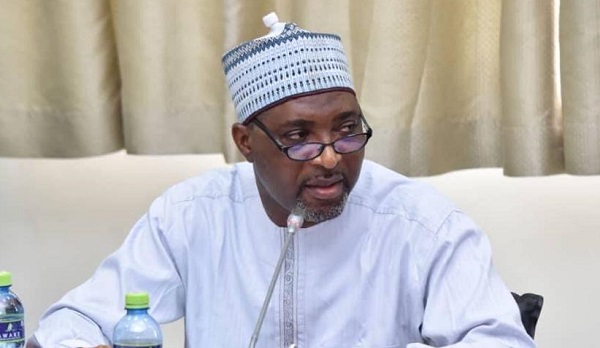
The Minister for the Interior, Muntaka Mohammed Mubarak, told the Public Accounts Committee (PAC) of Parliament on Tuesday [Sept 30], that the digital platform would replace the current manual process and make renewals more efficient.
He said the new system would allow licence holders to renew their permits online and pay fees through mobile money or bank transfer. It would also send reminders three months before expiry and automatically flag individuals with criminal records, who would then be required to renew their licences in person.
“All firearm licences will be linked to the Ghana Card,” Mr Mubarak said. “This will make it easier to track holders, even if they change their address, and help recover firearms that are not renewed.”
The minister’s explanation followed concerns raised by Ms Helen Adjoa Ntoso, a member of the committee, who said a total of 606 firearms were being held illegally by civilians because the owners had not renewed their licences.
The Inspector-General of Police, Mr Christian Tetteh Yohuno, said the Police Service had built a database of all licensed gun holders and was sensitising them to renew their permits promptly. He explained that licences last one year, but many owners fail to renew until incidents occur.
Mr Mubarak said the digital system would improve monitoring of expired licences and strengthen the ability of the police to seize weapons held illegally.
Kuuku Bartels Retained As Chairman Of U19 Boys Management Committee

Kuuku Bartels
PRESIDENT OF VICTORY Club Warriors, Kuuku Bartels, has been retained as Chairman of the U19 Boys Management Committee, a decision that underscores the Ghana Football Association’s commitment to continuity and experienced leadership in youth football.
Bartels is widely recognised for his proactive approach to football administration in Ghana. Over the years, he has played a key role in advancing youth development initiatives and creating pathways for promising young players across the country.
He will be deputised by Enoch Agyare Addo, Administrative Manager of Dreams FC, who has earned a strong reputation in Ghanaian football for his sharp managerial skills and unwavering dedication to nurturing young talent.
The committee also includes Kwadwo Ohene, Haruna Suale, and Zulyadaini Bawa. Suale, currently Team Manager of Steadfast FC, and Bawa, President of Techiman Liberty FC, bring extensive experience and expertise to the group, strengthening its capacity to deliver on its mandate.
The U19 Boys Management Committee is tasked with scouting, grooming, and managing emerging footballers while overseeing competitions and development programs at the U19 level.
Its work forms part of the GFA’s broader strategy to sustain Ghana’s reputation as a breeding ground for football excellence.
BY Wletsu Ransford
Bankam CEO named Denkyirahene
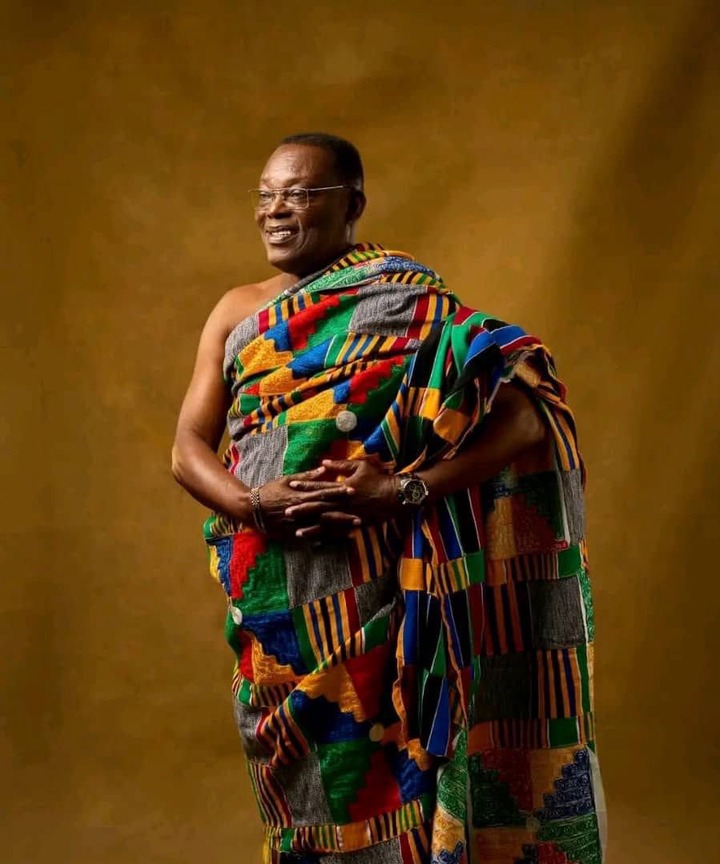
Jukwa (C/R), Sept 30- The Denkyira Traditional Council has announced the nomination of Mr Kwame Mensah Oscar, Chief Executive Officer of Bankam Group of Companies, as the new Denkyirahene.
His appointment comes after the passing of Odeefo Boa Amponsem III, who reigned for decades and left behind a legacy of unity, cultural preservation, and development.
Parliament urged to pass Anti-Witchcraft Accusation Bill

Survivors of witchcraft accusations have appealed to Parliament to urgently pass the Anti-Witchcraft Accusation Bill to protect vulnerable women from stigma, banishment and abuse.
In a statement shared with The Ghanaian Times in Accra on Saturday, the survivors said many continue to live under harsh and degrading conditions in camps, with little or no access to health-care, education and livelihoods.
They stressed that legal intervention remained the only way to restore their dignity and secure their future.
The appeal followed a three-day working visit by the Human Rights Standing Committee of Parliament to the Gambaga,Kukuo and Gnani camps in the Northern and North East Regions from September 17 to 19, 2025.
The visit, supported by Songtaba Foundation, ActionAid Ghana, Amnesty International Ghana, Oxfam Ghana and The Sanneh Institute, sought to expose lawmakers to the lived realities of survivors and strengthen advocacy for the Bill.
The statement noted that this was the second of such initiative, after an earlier mission led by Ac-tionAid Ghana and The Sanneh Institute.
This year’s visit culminated in a stakeholder meeting with the Ministry of Gender, Children and Social Protection, the Regional Coordinating Council, CHRAJ, parliamentarians and traditional leaders to discuss the way forward.
Witchcraft accusations, it emphasised, remain a pressing human rights challenge,disproportionately affecting elderly women and marginalised groups.
Survivors are often banished, stigmatised and stripped of their livelihoods, forcing them into “witch camps.”
The Anti-Witchcraft Accusation Bill, formally the Criminal Offences (Amendment) Bill, 2023, was introduced by Madina MP, Francis-Xavier Kojo Sosu. Though passed by Parliament, it lapsed without presidential assent.
The statement concluded that while legislation alone may not end accusations, its passage, enforcement and community engagement were crucial to preventing further tragedies.
BY TIMES REPORTER
Otumfuo Osei Tutu II Leaves Vice President Opoku Agyemang Laughing During Manhyia Visit

- Otumfuo Osei Tutu II left Vice President Professor Jane Naana Opoku Agyemang laughing as he cracked a light-hearted joke during a meeting
- The Vice President Jane Opoku Agyemang paid a working visit to the Ashanti Region on September 29, 2025, to engage with traders and traditional leadership
- The video of their encounter stirred reactions on social media, with many Ghanaians praising Otumfuo for his jovial nature during meetings with prominent people
Ghana’s top stories, now easier to find. Discover our new search feature!
The Asantehene, Otumfuo Osei Tutu II, stirred reactions online after eliciting a laugh from Ghana’s Vice President, Professor Jane Naana Opoku Agyemang.
The Vice President (Veep) paid a working visit to the Ashanti Region on September 29, 2025, to hold engagements with market traders and traditional leadership.
She visited the Krofrom Market in the regional capital, Kumasi, where she pledged to complete the project that had stalled for over 18 years.
Professor Opoku Agyemang also visited the Mamponteng and Suame markets to engage with traders and listen to their concerns.
Vice President visits Otumfuo
As part of her working visit, the Vice President paid a courtesy call on the Asantehene, Otumfuo Osei Tutu II at Manhyia Palace.
In a TikTok video seen by YEN.com.gh, the Vice President arrived at the prestigious palace and was welcomed by palace officials.
She was ushered into the inner sanctum, where she met the Asantehene, dressed traditionally in cloth draped over one shoulder.
As they walked towards each other to shake hands, Otumfuo Osei Tutu II cracked a joke at the Veep’s expense, which left her laughing uncharacteristically.
The Instagram video of Otumfuo and the Vice President is below.
Reactions to Otumfuo meeting Veep Opoku Agyemang
YEN.com.gh has compiled some comments reacting to the meeting of the Asantehene, Otumfuo Osei Tutu II and Ghana’s Vice President.
adjeiev_ said:
“Otumfuo is soo lovely ❤️.”
cute_slim_tee wrote:
“I got a smile on my face the whole time. 3f3 do do. Otumfuo is always happy to see people when they visit him. Vice President Prof. Nana Jane Opoku Agyeman. 🙏🏿🟡⚫️🟢.”
kcbbysong commented:
“Nana 3kyea Kyra ne nana nom.”
gyamfi4291 said:
“Another press conference is loading.”
robert_badu_artist wrote:
“Great Ashantis ☝️ 🔥 🙌 Piaaw!!! ✌️🙏 💛🖤💚.”
IGP defends shut down of Kukurantumi Police Station

The Inspector General of Police, Christian Tetteh Yohuno, has defended the decision to shut down the Kukurantumi Police Station following an attack by angry youth.
The attack was in response to the alleged death of a suspect in police custody.
The IGP’s comments come after the Member of Parliament for Atiwa East and Chairperson of the Public Accounts Committee (PAC), Abena Osei Asare, raised concerns over the closure during a Public Accounts Committee hearing.
“We all have to condemn the acts of irate youths who are always attacking police stations. There’s a community in this country where we have one police station, which is a divisional headquarters, being built by the government, and then we have another that is a district headquarters being built by the locals themselves.
“When they were going to attack, they went to the building that was built by the government, and they burned the building down.
He added, “They came to their local building, and somebody said, No, no, this one was built by the MP, so let us not touch it. So they didn’t touch it. And so today, when you are in your area and you are asking us, we should come and open a police station; we will ask you to build a police station yourself.
“All those areas where there are these disturbances, they never attacked the stations that were built by the community themselves. And it is not good for this country. And so if you ask about closing down, yes, we’ll close down because you have destroyed the station.”
The Chairperson of PAC rejected the IGP’s explanation, stating, “Mr. IGP, that cannot be the response, because there are several places in this country where mobs have attacked police stations, but we never hear that the police stations have been closed down.
“So, Honourable Minister of Interior, Muntaka Mohammed, for me, I don’t think that should be the response. It’s like the fact that your child pees on your lap doesn’t mean you should cut your lap off.
….
Explore the world of impactful news with CitiNewsroom on WhatsApp!
Click on the link to join the Citi Newsroom channel for curated, meaningful stories tailored just for YOU:
https://whatsapp.com/channel/0029VaCYzPRAYlUPudDDe53x
No spam, just the stories that truly matter! #StayInformed #CitiNewsroom #CNRDigital
CID petitioned to investigate Jakpa, Justice Kulendi over alleged conspiracy

A private citizen has petitioned the Criminal Investigations Department (CID) of the Ghana Police Service to investigate the Director of Special Operations at the National Security, Richard Jakpa, and Justice Yonny Kulendi.
The Private citizen has been identified as Daniel Marfo Ofori-Atta.
Daniel Marfo Ofori-Atta has alleged a conspiracy between Richard Jakpa and Justice Yonny Kulendi to interfere in the Ato Forson ambulance trial.
SU Ghana rallies support for National Youth, Children Development Campsite Project

By Eric Appah Marfo
Accra, Sept. 27, GNA — Scripture Union (SU) Ghana has launched a GH¢15 million fundraising campaign towards the construction of a state-of-the-art National Youth and Children Development Campsite at Pepawani in the Aburi Municipality.
The project, situated on a 14.2-acre plot of land, is expected to provide a permanent, cost-effective venue for SU’s camping ministry, which for decades has relied on rented premises for its activities.
The facility will include a 1,000-seater multipurpose conference hall, dormitories for 250 campers, a cafeteria, an administrative block, and supporting infrastructure.
The successful completion of the campsite will significantly increase the number of camps organised by SU Ghana yearly and help them to have a dedicated camp venue for all-year-round camping and leadership training conferences.
It would also provide a custom-built conference and camp facility for use by churches, corporate entities and other Christian groups.
The project would eliminate the huge expenditure incurred through renting other facilities to host camps and to redirect such funds into other SU ministry endeavours.
It will ensure the maintenance of SU camping standards at all times.
Mr Emmanuel Boate, Chairman of the SU Ghana National Council, said the project was not merely about erecting structures but about securing a spiritual and social legacy for future generations.
“By supporting this project at Pepawani, you are investing in the future of young people whose lives will be touched, guided and empowered for God’s glory and for the good of our nation. Together, we can build a legacy that will impact generations to come,” he told participants at the fundraising dinner in Accra.
He appealed to corporate Ghana, churches, and high-net-worth individuals to contribute to the project, noting that facilities within the campsite would be named after major donors as a memorial.
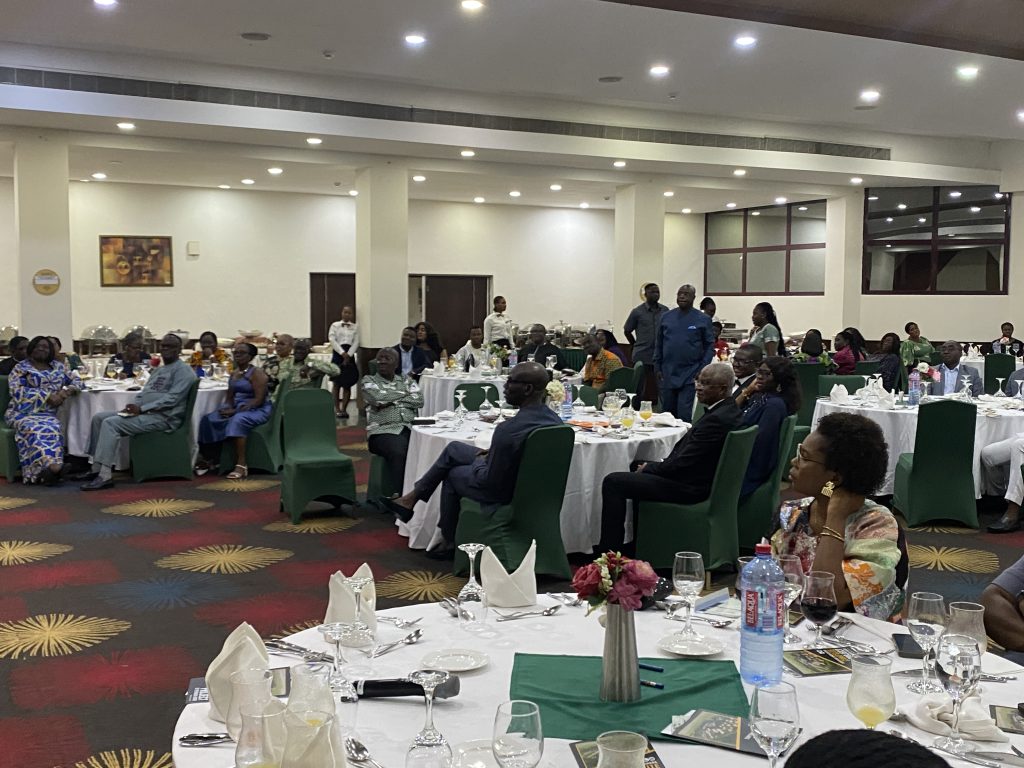
Mr Eric Seddy Kutortse, Executive Chairman of First Sky Group and Chairman of the fundraising event, described the initiative as “a necessity” rather than a luxury, stressing the need for transparency in the application of funds.
“This project is not just about building; it is about building lives. It is not just about raising money; it is about raising leaders,” he said.
He added: “If we do not provide our youth with safe spaces to grow and be equipped, then society risks a deficit of integrity, character, and hope for the future.”
Rev Albert Ocran, Executive Chairman of Combert Impressions Ltd. and Co-founder of the Springboard Roadshow, also pledged his support, recalling SU’s influence on his personal growth and ministry.
“Though your beginning may be small, your latter end will increase abundantly,” he quoted from Job 8:7, affirming his belief that the campsite would serve as a catalyst for raising ethical, Christ-centred leaders across the nation.
He urged the SU to leverage technology and social media to mobilise millions of former SU members across the world, stating: “If two million people give just GH¢10 each, this vision will become a reality.”
SU Ghana, established in 1890, is the country’s largest para-church organisation with a mission to make Christ known to children, young people, and families, and to encourage daily Bible reading and prayer.
Its camping ministry has for decades been a platform for Bible study, leadership development, mentoring, recreation, and character formation.
GNA
Edited by Samuel Osei-Frempong
Committee For Professional Boxers Reject GBA Dissolution, Halt In Boxing

NSA Director-General with some boxing officials
The Committee for Professional Boxing in Ghana has rejected the Interim Management Committee (IMC) to replace the current Ghana Boxing Authority (GBA) Executive Board in running professional boxing in Ghana.
The committee has also criticised the decision to suspend all boxing activities following the demise of professional boxer Ernest Akushey aka Bahubali.
The Ministry of Sports and Recreation dissolved the board of the GBA, replacing it with an Interim Management Committee (IMC) which is expected to be inaugurated in the coming days.
But the Committee for Professional Boxing has criticised the decision, noting thar the NSA has overstepped its boundaries with its decision to replace the current board with an interim management committee.
The Committee in a statement noted that “the NSA has no such mandate since the GBA is governed by a constitution and it is only the congress of the GBA that has the power to elect board members to supervise professional boxing in the country.”
It further argues that the decision of the NSA “is a complete overthrow of the GBA constitution and for that matter cannot be countenanced.”
On the suspension of all boxing activities, the Committee noted that all decisions to be taken concerning professional boxing in Ghana should be within the remits of the GBA constitution and not in the manner in which the NSA seeks to micromanage the GBA.
“We therefore, find the purported suspension of boxing activities and the replacement of the GBA board highly irrational and unlawful,” the statement added.
THE NATIONAL Sports Authority (NSA), in consultation with the Ministry of Sports and Recreation, announced the immediate suspension of all boxing activities in Ghana after the tragic death of professional boxer Ernest “Bahubali” Akushey last week.
The decision, officials say, is aimed at prioritising the safety, health, and welfare of athletes in the sport.
Akushey’s passing came just months after the death of Nigerian boxer Gabriel Oluwasegun Olanrewaju, which had already triggered a ministerial review into safety standards in Ghanaian boxing.
According to the NSA, preparations had already been completed to roll out reforms recommended by the Ministerial Committee on Boxing.
BY Gibril Abdul Razak
Bawumia can’t cross 27% in NPP Presidential Primary – Kwasi Kwarteng


Kwasi Kwarteng, spokesperson for Kennedy Agyapong’s campaign, has delivered a strong assessment of Dr. Mahamudu Bawumia’s chances in the New Patriotic Party’s (NPP) flagbearer race, confidently predicting a decisive victory for Agyapong.
Speaking on Nhyira FM’s , Kwarteng claimed that key figures in Bawumia’s camp have abandoned the former Vice President, leaving his campaign increasingly vulnerable.
“All the bigwigs in Bawumia’s camp have bowed out. That gives Kennedy Agyapong a clear advantage,” he said.
He also dismissed the recent Global Info Analytics poll, which placed Kennedy Agyapong’s support at 17 percent, questioning the credibility of the survey’s methodology.
“The Global Info Analytics poll giving Kennedy Agyapong 17% is unreasonable. It could be biased based on their sampling technique,” Kwarteng stressed.
Projecting confidence, he argued that the data itself reflects a worrying trend for Bawumia, whose support he claims is declining, and predicted a first-round victory for Agyapong.
“Dr. Bawumia cannot cross 27% in the flagbearer race. The Global Info Analytics data itself shows his votes dropping by 5% every month. Ken Agyapong will win this flagbearer race with between 62% and 64%,” he asserted.
Kwarteng also highlighted a symbolic benefit for the Ashanti Region if Agyapong wins.
“Ashanti Region could have another First Lady apart from Konadu Agyemang Rawlings. Kennedy Agyapong’s wife is from Asante Mampong,” he said.
Addressing concerns about Agyapong’s fiery personality, Kwarteng urged delegates to focus on leadership capacity rather than temperament.
“We must look beyond Ken Agyapong’s temper and focus on his competence,” he emphasized.
Communities suffer as galamsey contaminates Ayensu River

The Ayensu River has come under severe threat from illegal mining, with its once-flowing waters now heavily polluted and the surrounding vegetation destroyed. The environmental damage is also affecting human settlements along the riverbanks.
The crisis has already disrupted the water supply in parts of the Central Region. Authorities were forced to shut down the Kwanyako Water Treatment Plant after water supplied from the Winneba Headworks was found to be contaminated beyond safe levels.
During a visit to some villages in the Ayensu River enclave, Channel One TV’s Kwaku David Sakyi-Saforo observed widespread destruction of the river’s ecosystem. Entire stretches of land near the river have been stripped of vegetation, while polluted water threatens both livelihoods and access to potable water.
Residents say the devastation has not only deprived them of clean drinking water but also destroyed farmlands and fishing opportunities that many depend on for survival.
The closure of the Kwanyako Water Treatment Plant has further heightened concerns about public health, with fears that prolonged shutdowns could lead to water shortages in affected communities.
Calls are mounting for urgent intervention by government and security agencies to clamp down on illegal mining activities along the Ayensu and restore the river to its natural state.
Below are some devastating pictures by Channel One TV’s David Kwaku Sakyi-Saforo


….
Explore the world of impactful news with CitiNewsroom on WhatsApp!
Click on the link to join the Citi Newsroom channel for curated, meaningful stories tailored just for YOU:
https://whatsapp.com/channel/0029VaCYzPRAYlUPudDDe53x
No spam, just the stories that truly matter! #StayInformed #CitiNewsroom #CNRDigital
Cocoa tumbles to multi-month lows on Ghana arrivals,demand concerns – Business A.M

54
Onome Amuge
Cocoa prices fell on Tuesday, extending a seven-week downturn as rising deliveries in Ghana and optimism over West Africa’s next harvest weighed on the market, while slowing chocolate sales raised further questions about demand.
In New York, December ICE cocoa futures dropped 3.6 per cent, or $249, to close at their lowest level in 11 months. London cocoa futures for December delivery declined 2.5 per cent, or £120, to a 19-month low.
The sell-off was sparked by data showing a sharp acceleration in Ghana’s port arrivals. Deliveries in the four weeks to September 4 surged to 50,440 metric tonnes, compared with about 11,000 tonnes in the same period last year. Traders said the figures eased concerns over tight supplies in the world’s second-largest cocoa producer, helping to drive prices lower.
Sentiment has also turned bearish on expectations of an improved crop in neighbouring Ivory Coast, the world’s top supplier. Pod counts across West Africa are running 7 per cent above the five-year average, according to Mondelez, with Ivorian farmers expecting the main harvest, due to begin in October, to be materially stronger than last year.
The supply-side optimism has coincided with mounting evidence that record cocoa prices earlier this year have curbed chocolate demand. Swiss group Lindt & Sprüngli cut its margin guidance in July after sales fell more than expected in the first half. Barry Callebaut, one of the world’s largest chocolate makers, lowered its volume forecast twice in three months, reporting a 9.5 per cent sales decline in the March-May quarter, its heaviest quarterly drop in a decade.
Still, some supply risks remain. While Ivory Coast exports for the marketing year to September 28 were up 3.4 per cent at 1.82 million tonnes, Monday’s government data showed the pace of shipments has slowed sharply compared with the 35 per cent increase seen in December. Meanwhile, ICE-monitored inventories in US ports fell last week to a five-month low of just under 2 million bags, tightening near-term availability.
Weather in the region also adds a layer of uncertainty. Analysts note that the past 60 days were the driest in West Africa since 1979, conditions that could reduce pod retention and leave crops vulnerable to black pod disease in Ghana and Nigeria.
When my water broke, I woke my ex up but he ignored me

A Nigerian woman, Morenikeji Igwe, has recalled a traumatic experience during her pregnancy seven years ago.
Morenikeji, who shared her story in a Facebook post on Tuesday, September 30, said she woke her ex when her water broke and informed him that she was in labour but he ignored her.
According to her, she couldn’t get a bike or cab so she trekked to the hospital under the heavy rain.
“Ire will be 7 tomorrow and it reminded me of my traumatic experience during his labour,” she wrote.
“My water broke and I started feeling labour pains very early that morning, I woke my ex up, told him I needed to go to the hospital and he ignored me.
“I trekked to the hospital that morning. It was raining heavily, I couldn’t get a bike or cab so I trekked for almost 2 hours under a heavy rain while I was in labour.
“When I entered the hospital with my dress soaked, I could literally see the pity in the nurses eyes. I have never felt so embarrassed in my life.
“12 hours later, I had my bouncing baby boy who I thought was going to be a girl. This one na story fr another day. My baby will be 7 tomorrow and I still can’t believe it.

Germany stands with Ghana in shared development, multilateralism

By Stephen Asante/Benjamin Nii Martey Botchway Jr
Accra, Sept. 30, GNA – The German Government has praised Ghana for maintaining strong ties with the European nation as the two countries celebrate 50 years of bilateral cooperation.
“Germany stands with Ghana – as a partner, a friend, and a country with whom we share not only interests, but also values.
“In a shifting global order, Ghana and Germany stand side by side in ECOWAS (the West African economic bloc), the European Union (EU), and the United Nations (UN), committed to multilateralism and rule-based international order.” Mr Frederik Landshoeft, the German Amabassador to Ghana, stated.
He was interacting with the media, in Accra, Ghana’s capital.
Underscoring the depth and future potential of Ghana-Germany relations, the Ambassador said Ghana’s reform momentum, international recognition, and opportunities for stronger ties provided the impetus for accelerated growth.
“Beyond politics and economics, people-to-people ties remain central,” he emphasised.
On security, Ambassador Landshoeft pointed out that the two countries cooperated closely on security, saying the German military advisory team had been working alongside the Ghana Armed Forces (GAF) at the KAIPTC Signal School, learning from each other.
“Together, we strengthen the regional security architecture, and help protect our citizens from threats,” he added.
He said 50 years of bilateral cooperation had seen more than 60 university partnerships, thousands of Ghanaian students studying in Germany, and a vibrant cultural exchange.
The two countries have over the years maintained longstanding and cordial relations which have been reinforced through collaboration, in support of Ghana’s development agenda.
The relations cover a wide range of bilateral and multilateral issues bordering on security, diplomacy, economic cooperation, trade, investment, technology transfer, cultural engagements, human resource development, capacity building, among others.
Ghana is an important trading partner for Germany in West Africa. In 2023, Germany’s imports from Ghana amounted to 241.3 million euro, according to the German Embassy.
The authorities say the volume of German exports to Ghana was 251.6 million euro, while foodstuff, machinery and chemical products were the most important exports from Germany to Ghana within the period under review.
A concept note copied to the Ghana News Agency (GNA) indicated that foodstuff and raw materials were the main exports from Ghana to Germany.
Germany is represented across the board in Ghana. Among the country’s political foundations, the Friedrich-Ebert-Stiftung and the Konrad-Adenauer-Stiftung currently have offices in the country.
Additionally, the Goethe-Institut does cultural work in Accra and offers language classes, while the German business sector has maintained a Delegation of German Industry and Commerce in Accra since 2011.
The Germany Trade and Investment has had a representative in Accra since 2014, and the German Academic Exchange Service also has an information office, and supports over 60 German-Ghanaian university partnerships.
GNA
Edited by Samuel Osei-Frempong
Mahama returns to Ghana after attending 80th UNGA in New York

President John Dramani Mahama has returned to Ghana after participating in the 80th Session of the United Nations General Assembly (UNGA) in New York.
He was received at the Kotoka International Airport by Vice President Professor Naana Jane Opoku-Agyemang.
During his trip, President Mahama joined a coalition of global leaders to launch the Accra Reset — a new framework designed to transform global development financing and partnerships.
The initiative, introduced at a high-level side event, seeks to tackle long-standing challenges in the global financial system, particularly those affecting developing nations.
Mahama, who serves as the African Union’s Champion for African Financial Institutions, described the Accra Reset as a timely and ambitious response to what he called a “fraying” global development architecture.
In his address to the General Assembly on Thursday, September 25, President Mahama also:
-
Called for the removal of the economic blockade on Cuba, describing it as unjust and counterproductive;
-
Criticised global migration policies, pointing out what he referred to as hypocrisy in how different groups of migrants are treated;
-
Announced Ghana’s intention to table a motion at the UN to formally recognise the transatlantic slave trade as a crime against humanity.
President Mahama’s engagements at the UNGA, including the launch of the Accra Reset, reaffirmed Ghana’s commitment to multilateralism and global cooperation on issues of finance, justice, and historical accountability.
Read also
Mahama launches ‘Accra Reset’ at 80th UNGA
Ghana August cocoa arrivals quadrupled on early start to season

Ghana’s cocoa deliveries to warehouses in August more than quadrupled from the same period last year as an accelerated start to the season provided early cash to farmers, adding to the uptick in supply that’s cooling global prices.
The country this year decided to start its cocoa season in August, two months ahead of the norm, to appease farmers who fetch a government-set price for their crop.
Arrivals of the chocolate-making ingredient in the four weeks ending Sept. 4, reached 50,440 metric tons, compared to about 11,000 tons delivered in the same period in 2024, according to people familiar with the matter.
The world’s No. 2 producer raised the amount it pays farmers for their cocoa beans by 4.2% to 3,228.75 cedis ($261) per 64-kilogram bag in the current 2025-26 season.
That’s expected to lower the incentive to smuggle beans to nearby nations where prices are higher.
The market is watching supplies from West African growers closely after a series of back-to-back poor harvests fueled a huge global shortage that sent New York futures soaring to a record last year.
While a small surplus is expected in the current 2024-25 season, the market remains tight and prices are well above historical levels.
Most of the beans delivered to warehouses are destined for export, though some are sold to local processors.
Ghana has forecast a cocoa crop of 650,000 tons in the 2025-26 season, up from the 600,000 tons in the previous harvest.
A spokesperson for Cocobod, the national regulator, declined to comment.
The world’s top grower, Ivory Coast, where farmers’ pay is also set by the government, is expected to announce an increase in its farmgate prices for the new season that starts from Oct. 1.
Ghana’s fight to control smuggling has shown some progress.
A new funding model, where top exporters are helping finance purchases, has also improved the tracking of beans from farms, the people said, asking not to be named because they’re not authorized to discuss the matter.
DISCLAIMER: The Views, Comments, Opinions, Contributions and Statements made by Readers and Contributors on this platform do not necessarily represent the views or policy of Multimedia Group Limited.
DISCLAIMER: The Views, Comments, Opinions, Contributions and Statements made by Readers and Contributors on this platform do not necessarily represent the views or policy of Multimedia Group Limited.
Ghana’s 5G Delay Exposes Africa’s Digital Divide Dilemma


Ghana’s challenges mirror broader continental struggles. Kenya faces similar device affordability issues despite operators preparing for rollout.
Nigeria launched 5G early but confronts patchy coverage and low adoption, proving that network launch alone doesn’t guarantee success. South Africa leads the region, yet affordability gaps mean 5G remains accessible primarily to affluent users rather than the masses.
This represents Africa’s digital paradox: the continent is building subsea cables, data centers, and regional backbones at unprecedented speed, yet the “last mile” into people’s hands consistently lags behind infrastructure development.
If Ghana and neighboring countries postpone 5G deployment too long, they risk cementing digital second-class status. While other regions experiment with 5G-powered telemedicine, smart logistics, and immersive education, African small businesses and schools could remain stuck buffering on 3G networks.
The gap extends beyond technology into governance, financing, and policy design. Regulatory delays around spectrum allocation and licensing have slowed progress, while device costs remain prohibitive for most consumers.
Yet a “long way to go” can also mean time to get implementation right. Smart regulation could deliver fast, transparent spectrum decisions without endless bureaucratic delays. Telcos, banks, and manufacturers could design trade-in schemes or micro-loans helping people upgrade devices. Targeted rollouts focusing on health corridors, universities, and industrial parks could demonstrate real value before scaling nationwide.
Cross-border African collaboration offers particular promise. Shared device procurement, harmonized policy frameworks, and coordinated investment could lower costs for everyone rather than having each country reinvent solutions independently.
Despite the hurdles, Blewett affirmed 5G’s critical role in national development: “5G as a technology is important for expansion of our economy but it doesn’t mean 5G shouldn’t come”.
Industry analysts suggest that for 5G to achieve its potential in Ghana—particularly in high-growth sectors like fintech, e-commerce, and emerging AI applications—smartphone costs must fall substantially while government provides regulatory clarity on spectrum allocation and pricing, giving operators confidence to commit necessary multi-million dollar investments.
The real issue isn’t whether 5G arrives, but whether it’s treated as infrastructure for the few or essential service for the many. If Africa wants genuine digital transformation rather than elite connectivity, Ghana’s current moment represents a chance to spark continental rethinking about bridging policy, affordability, and innovation in integrated strategy.
Because here’s the uncomfortable truth: if Africa wants to compete globally, the continent can’t afford to keep buffering while the rest of the world moves forward. Ghana’s 5G delay is either a warning signal or a strategic pause—the choice lies in what comes next.
Gospel musician Brother Ishmael announces new release ‘Nyame Beye’

American-based Ghanaian gospel musician Brother Ishmael has officially announced the release of his latest single, “Nyame Beye” (translated “God Will Do It”), a spirit-filled track anchored on faith, divine assurance, and the unfailing promises of God. The much-anticipated song will be released on 3rd October 2025, marking another significant step in his growing music ministry.
Brother Ishmael has, over the years, built a reputation for delivering deeply inspirational music that blends worship, evangelism, and storytelling. His songs are not only known for their powerful lyrical content but also for their ability to minister directly to the soul, offering encouragement to those navigating the complexities of life. With his unique style, heartfelt delivery, and passion for the gospel, he continues to cement his place as a distinctive voice in Ghana’s contemporary gospel music landscape.
Speaking about the upcoming release, Brother Ishmael emphasised that “Nyame Beye” is more than just a song—it is a prophetic declaration and an anthem of hope. The track calls on believers to hold firmly to their faith, especially in times of uncertainty, and to remember that God is faithful to complete what He has promised. “This song is for anyone who feels forgotten, weary, or stuck in a waiting season. It is a reminder that what God has spoken, He will surely fulfil,” he shared.
The arrangement of the song combines a rich, spirit-lifting instrumentation with Ishmael’s emotive vocals, capturing both the struggles and triumphs that define the Christian walk. Listeners can expect an experience that not only stirs the heart but also leads them into a deeper atmosphere of worship and trust in God’s sovereignty.
Beyond his work in music, Brother Ishmael is equally committed to his calling as a minister of the gospel. He describes himself as a worshipper, evangelist, and shepherd at heart—devoted to using his gift to spread faith, love, and hope across generations. His ministry continues to impact audiences both in Ghana and abroad, where he serves as a beacon of encouragement to many.
“Nyame Beye” is therefore not just another release, but a timely message for a world still grappling with uncertainties. It serves as a declaration that God is not done with His people and that His promises remain steadfast.
The single will be available on all major streaming platforms from 3rd October 2025.
Professor Azar breaks down Dafeamekpor’s suit challenging ‘legitimacy’ of GBA
Renowned US-based Ghanaian lawyer and scholar, Professor Stephen Kwaku Asare, popularly known as Kwaku Azar, has offered what looks like a simple explanation to the brouhaha over a suit filed by Majority Chief Whip, Rockson-Nelson Dafeamekpor, challenging the ‘status’ of the Ghana Bar Association (GBA).
Dafeamekpor, who is the Member of Parliament for South Dayi, alongside private legal practitioner Israel Tetteh and the Ghana Law Society, filed a writ at the Supreme Court challenging the exclusive recognition of the Ghana Bar Association (GBA) within Ghana’s legal and constitutional framework.
The suit, filed on Tuesday, September 23, 2025, invokes the original jurisdiction of the Supreme Court under Articles 2(1) and 130(1) of the 1992 Constitution.
The plaintiffs argued that the current GBA, a private voluntary association, should not be treated as the sole representative body for lawyers in the country.
FULL TEXT: Read details of SC suit by Dafeamekpor, two others challenging GBA’s exclusivity
The plaintiffs are seeking seven key declarations, including a request for the court to interpret references to the “Ghana Bar Association” in the Constitution and the Legal Profession Act as generic or umbrella terms, rather than exclusive to the existing GBA.
In a post shared on Facebook on September 27, 2025, Kwaku Azar using a euphemism, gave a background to how the Ghana Bar Association (GBA) made it into some provisions of the 1992 Constitution of Ghana.
He asserted that the Ghana Bar Association was the only law association that existed at the time when the Constitution was being drawn, but now there are other associations that want to enjoy the same rights as the GBA.
“Article 88 of the Umuofia Constitution says the National Union of Umuofia Students (NUUS) shall have a seat in Parliament.
“When the Constitution was written, NUUS had members from only 3 universities. Today, 11 new universities exist, but NUUS still lets only the original 3 choose the MP. Kwame Patapaa (President of a new university law school) has gone to the Supreme Court, asking that all universities be included,” the legal luminary wrote on X.
He added that others have argued that because the other associations did not exist when the Constitution was being put together, they should be ignored.
Dafeamekpor, two others run to Supreme Court to challenge GBA’s exclusive status
“Yaw Tetensem argues the new schools don’t count since they didn’t exist when the Constitution was passed. Should the constitutional seat for NUUS belong only to the original 3 universities, or must it expand to include all universities in Umuofia today?
Would your answer change if the Constitution named the Umuofia Lawyers Association instead, but now, some lawyers have opted not to belong to that association, and are suing to still be included in the constitutional benefits?” he quizzed.
The academic, in a subsequent post, gave a breakdown of the arguments of the two factions and the likely ruling of the court.
Read his full posts below:
Article 88 of the Umuofia Constitution says the National Union of Umuofia Students (NUUS) shall have a seat in Parliament.
When the Constitution was written, NUUS had members from only 3 universities.
Today, 11 new universities exist but NUUS still lets only the original 3 choose the MP.
Kwame Patapaa (President of a new university law school) has gone to the Supreme Court, asking that all universities be included.
Yaw Tetensem argues the new schools don’t count since they didn’t exist when the Constitution was passed.
Should the constitutional seat for NUUS belong only to the original 3 universities, or must it expand to include all universities in Umuofia today?
Would your answer change if the Constitution named the Umuofia Lawyers Association instead, but now, some lawyers have opted not to belong to that association, and are suing to still be included in the constitutional benefits?
Patapaa v. Tetensem captures the challenge of constitutional interpretation. At first glance, it may seem simple to say “NUUS means NUUS” or “ULA means ULA.” In truth, constitutional questions are rarely that straightforward.
The case exposes a deeper design flaw: by outsourcing public representation to private bodies, the Constitution makes itself vulnerable to their internal fortunes. Such associations can expand, contract, or even dissolve, leaving constitutional text hostage to private politics.
Our task, however, is not to redesign the Constitution but to apply it as it stands. We are asked to live with the flaw while still giving effect to constitutional purposes.
As Justice Sowah observed in Tuffuor v. Attorney-General, the Constitution is a “living organism capable of growth and development.” That insight must guide us in navigating imperfect constitutions, where amendments are neither easy nor always desirable.
Within this case, two variations of the problem emerge. The Expansion Problem arises when new institutions appear after promulgation. The Contraction Problem arises when members exit an existing institution after promulgation.
Both confront us with the same fundamental puzzle: should the Constitution be left hostage to the shifting fortunes of private associations?
Scenario 1: NUUS Parliamentary Seat
In Support of Yaw Tetensem (Limit to 3 universities)
• Textualist approach: The Constitution spoke when NUUS meant three, universities; that historical meaning should bind today.
• Stability concern: Expanding membership would, in effect, amend the Constitution without the people’s consent.
In Support of Kwame Patapaa (Expand to all universities)
• Purposive approach: The framers’ intent was to give students a voice, not just three campuses.
• Avoid absurdity: It would be inequitable for 3 universities to monopolize a parliamentary seat while 11 others are excluded.
•Public character doctrine: Once named in the Constitution, NUUS takes on a public role and must serve all students.
Likely Court Resolution
•Literalist court: Would restrict representation to the three original universities, holding that expansion requires formal constitutional amendment. Such a ruling would be textually defensible but would clash with Sowah’s “living organism” principle, effectively disenfranchising most students.
•Purposive court: Would rule that NUUS’s constitutional seat must expand with the student body. Otherwise, representation becomes arbitrary and exclusionary.
Scenario 2: Umuofia Lawyers Association (ULA)
Argument for Limiting to ULA Members
• Literal reading: If the Constitution names ULA, only members qualify.
• Freedom of association: Those who leave cannot insist on privileges of an organisation they reject.
Argument for Including All Lawyers
• Functional reading: The Constitution aimed to empower the profession of law, not just a voluntary club.
•Avoid hostage-taking: If benefits depend on joining, ULA could expel critics or dissolve, crippling the Constitution.
•Public character doctrine: ULA, once named, must reflect the entire Bar as a constitutional conduit, not a private gatekeeper.
Likely Court Resolution
•Literalist court: Would limit constitutional privileges to ULA members alone. This aligns with textual fidelity but risks making constitutional benefits contingent on the internal decisions of a private club, undermining constitutional supremacy.
•Purposive court: Would hold that benefits extend to all lawyers, since the Constitution cannot be left at the mercy of voluntary membership rules. This approach better reflects Sowah’s “living organism” vision.
Summary
Whether the issue is expansion (NUUS) or contraction (ULA), the underlying principle is the same: the Constitution must not be left hostage to private clubs.
Literalist rulings, while faithful to text, risk freezing constitutional provisions or rendering them sterile, results at odds with Sowah’s doctrine of a living, adaptive Constitution.
PS: Yɛde post no bɛto hɔ. Yɛnyɛ comprehension consultants.
Da Yie!
BAI/VPO
3 Attorney Generals ‘divided’ over Torkornoo’s removal:
Watch more videos from the NPP’s recent demonstration directed at President Mahama
GMB25: Seven Battle For Grand Finale

Afedziwaa
GHANA’S MOST Beautiful (GMB), the country’s premier tourism and cultural pageant reality show, is set to host its semi-final show, “Justify Your Inclusion,” this Sunday.
The seven participants will each present their case for inclusion in the finale, showcasing their talents, charisma, and dedication to promoting Ghanaian culture.
The event promises to be an exciting display of Ghana’s rich heritage and the contestants’ passion for tourism and cultural development.
Currently, the seven contestants ready for the finale include Nana (Bono Region), Afedziwaa (Central Region), Asakia (Upper East Region), Yeli (Bono Region), Sika (Ashanti Region), Etornam (Volta Region) and Adjorkor (Greater Accra).
Last Sunday event, themed, “One Africa” saw two of the contestants bow out from the competition, Busi from the Savannah Region and Diyuah representing the Oti Region. Etornam, Sika and Diyuah won the Star Performer, Most Eloquent and Best Costume respectively.
Among the seven, one of the most sought-after contestants in the competition whose jaw-dropping performances have sailed her through is Afedziwaa. Labelled as the ‘Viewer’s Favourite.”
Afedziwaa, representing the Central Region, has been making waves in Ghana’s Most Beautiful (GMB) 2025. She has on several occasions been saved from eviction. In one of her standout moments, Afedziwaa showcased the cultural significance of the Apatampa dance, a traditional Fante dance, and received accolades from judges and the audience alike.
Her educational performances have been a highlight of the competition, and she’s been praised for her eloquence, outfit, and embodiment of the performances.
Afedziwaa’s journey in GMB 2025 has been notable, and she’s been consistently waving her flag high for the Central Region. With her strong performances and cultural knowledge, she’s a contestant to watch out for in the competition.
BY Prince Fiifi Yorke
We want change, but we are not ready for it – Juliet Asante to Ghanaian filmmakers

President of the Black Star International Film Festival (BSIFF), Juliet Asante, has urged Ghanaian filmmakers to embrace the mindset shifts necessary for meaningful transformation in the industry.
Speaking at the festival’s tenth edition in Accra, Madam Asante highlighted what she described as one of the biggest challenges holding back the growth of Ghana’s film sector: resistance to change.
“One of the major issues we face is that we say we want change, but we do not want to change. We want things to be different, but when it comes to actually shifting our mindset, our structures, or our approach, there is resistance. And that makes it very difficult to move forward as an industry,” she said.
According to her, BSIFF has, over the years, built connections with distributors, funders, and international partners, opening new markets for Ghanaian films. She also revealed that the festival is finalizing a partnership with Ivory Coast that will see selected Ghanaian films premiered there, describing it as a golden opportunity for local filmmakers.
“We are in the process of building a partnership with Ivory Coast to have some Ghanaian films premiered there. These initiatives are designed to expand the reach of Ghanaian cinema. These are golden opportunities, yet many of our filmmakers are absent. If you do not show up where distributors, funders, and partners are, how can you expect your work to travel?” she remarked.

Madam Asante expressed disappointment that many filmmakers are absent from BSIFF and other industry events, stressing that their lack of engagement undermines such efforts.
“For us, funding remains a challenge, but mindset and lack of engagement are equally significant barriers holding the industry back. We do a lot of advocacy behind the scenes, but it will mean little if our own filmmakers are not part of the process,” she emphasized.

She urged that calls for transformation must go beyond rhetoric and translate into practical action. According to her, BSIFF exists to serve the industry by creating spaces for knowledge sharing, networking, and access to markets, but these benefits can only be realized if filmmakers participate fully.
This year’s festival, held under the theme , highlighted cinema not only as a source of entertainment but also as a tool for education, cultural preservation, and social change.
Marking its tenth anniversary, Juliet Asante reiterated her belief that Ghanaian filmmakers must embrace change, seize available opportunities, and take ownership of the platforms designed for their growth.
“The festival exists for the industry, but it cannot work without the industry. If we all want change, then we must all be ready to change,” she concluded.
Ghana Unveils US$3.4bn Clean Energy Drive to Power Jobs, AfCFTA Edge


Ghana has opened the door to $3.4 billion worth of renewable energy investments, betting that a decisive shift toward clean power can simultaneously tackle unemployment, strengthen its continental trade position, and cut carbon emissions by 2030.
Under the government’s Energy Transition Framework, the country plans to add 400 megawatts of renewable energy capacity within five years, supported by both public and private sector funding. That’s not just about meeting climate targets—it’s about creating what officials describe as a new economic foundation built on green technology.
The planned investments span utility-scale solar, wind, and landfill gas projects, along with 1.5 million clean cookstoves for households, expansion of solar street lighting from 100 kilometers to 400 kilometers of road networks, and 400 solar-powered irrigation schemes covering about 400,000 hectares of farmland.
Seth Mahu, who directs renewable energy at the Ministry of Energy and Green Transition, told a Ghana-South Korea business seminar that these initiatives will push renewables from seven percent to 15 percent of Ghana’s power mix by 2030 while generating thousands of green jobs.
The seminar, held under the Water-Energy-Food Nexus Project, brought policymakers and industry leaders together to forge partnerships around climate resilience, food security, and sustainable energy access. Korean companies showcased solutions including thermal drones for predictive management of solar energy facilities, solar monitoring systems for Ghana’s energy transition, upland farming mechanization tools, and off-grid renewable energy power system technology.
What makes Ghana’s pitch distinctive isn’t just the scale of investment—it’s the strategic positioning. Mahu emphasized that Ghana is positioning itself as a regional hub for clean technology production and distribution under the African Continental Free Trade Area (AfCFTA), noting that businesses establishing in Ghana would serve not only the domestic market but also access a continental market of more than one billion people.
That continental advantage sits on top of what’s already a relatively strong energy foundation. National electrification stands above 85 percent, with 98 percent of urban areas connected to the national grid and rural electrification at 71 percent and growing rapidly. The government’s targeting 99.98 percent access by 2030, which would place Ghana second only to South Africa in electricity coverage across the continent.
“This progress means that regardless of where businesses are located, they will have reliable access to electricity to run their investments,” officials noted, pitching it as a competitive edge over countries still struggling with basic power access.
The framework links renewable energy directly to agriculture through solar-powered irrigation, which analysts say could boost food security while insulating farmers from increasingly erratic rainfall patterns. It’s this convergence of climate action, economic opportunity, and infrastructure development that officials hope will attract international green finance.
The social benefits extend beyond jobs. Distributing 1.5 million clean cookstoves could dramatically reduce indoor air pollution, which currently kills thousands annually in homes relying on traditional biomass fuels. Solar irrigation schemes promise to stabilize food production in regions where droughts have become more frequent.
But the real test will be execution. Ghana’s ambitious renewable targets have historically bumped up against financing constraints, regulatory bottlenecks, and institutional coordination challenges. Whether this $3.4 billion pipeline translates into operational capacity depends on how quickly the government can match policy with implementation.
For now, Ghana’s positioning the investment drive as more than just an energy transition—it’s a strategic blueprint to fuel economic growth, build climate resilience, and establish the country as a gateway for Africa’s clean energy future.
Ghana Water Limited uncovers GH¢4.4 million illegal water losses in six weeks
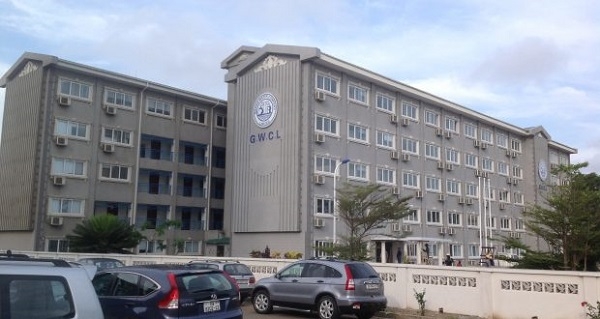
The Ghana Water Limited (GWL) says it has uncovered commercial water losses valued at more than GH¢4.4 million in just six weeks of enforcement operations across Accra and Tema through its National Revenue Enhancement Teams (NRET)
Between August 11 and September 29, 2025, the NRET inspected customer accounts across districts in the Accra-Tema Metropolitan Area including Accra East, Kaneshie-Awudome, Weija, Baatsona, Tema Central, Dome, Darkuman-Gbawe, Sowutuom, and Odorkor.
The investigations uncovered 109 customers engaged in illegal practices, resulting in charges totalling GH¢4,409,017.81.
So far, 67 customers have paid GH¢760,631.71, with 24 of them clearing their debts in full and 43 making part payments, while 42 charged customers are yet to make payment commitments.
The most common infractions were meter bypasses, where consumers diverted water flow to avoid billing, and illegal connections from GWL mains.
Other cases involved meter tampering, manipulating devices to record lower consumption, and the use of in-line booster pumps, which deprived neighbouring households of regular flow.
This, the company said, has sparked the need for fresh measures to curb illegal practices undermining the company’s financial sustainability.
Adam Mutawakilu, Managing Director of GWL, speaking at a day’s stakeholder engagement workshop on commercial water losses in Accra on Monday, described the findings as a wake-up call on the urgent need to protect Ghana’s limited water resources from theft, inefficiency, and abuse.
The workshop brought together officials of the Ministry of Works and Housing, the World Bank, the Public Utilities Regulatory Commission (PURC), the State Interests and Governance Authority (SIGA), metropolitan and municipal assemblies, law enforcement agencies, customer representatives, and the media among others.
From Cheers to Criticism: Ghanaians react to upgraded DStv bundles on X
Commercial water losses not only affect revenue generation for service providers but also compromise equitable access to clean water for consumers significantly affecting Ghana’s urban water infrastructure.
The workshop, with support from the World Bank and the Greater Accra Metropolitan Area (GAMA) project, provided a platform for open dialogue among stakeholders as part of a broader strategy aimed at shaping policy interventions and operational reforms that can curb these losses.
Mutawakilu explained that commercial water losses, driven by illegal connections, meter bypasses, tampering, and billing irregularities, remained one of the most pressing threats to the company’s financial stability.
“Every drop of water lost to theft is a drop denied to a community,” he stressed, adding that such losses not only deprived families of their basic needs but also undermined Ghana Water Ltd.’s efforts to ensure sustainable and equitable distribution of water.
Mutawakilu said: “These practices not only rob GWL of revenue but also prevent us from expanding access, upgrading networks, and ensuring reliable supply for households, schools, and industries.”
Since assuming office in February 2025, the MD said he had been confronted with major liabilities, including electricity and chemical bills, high equipment procurement costs, and a growing wage bill, all worsened by low revenue mobilisation.
To address this, he launched the National Revenue Enhancement Teams (NRET) in July to identify and clamp down on illegal practices.
Mutawakilu emphasised that GWL could not tackle these losses alone and called for stronger collaboration with government, regulators, assemblies, law enforcement agencies, and customers to close enforcement gaps and promote responsible behaviour.
He assured participants that the workshop would not be “a mere talk shop” but would feed directly into GWL’s operational strategy with clear timelines.
The company, he pledged, would strengthen partnerships with law enforcement, improve transparency, and enforce anti-water theft measures.
Linking the initiative to broader national priorities, Mutawakilu reiterated GWL’s commitment to the Government’s “Water for All” agenda and the global Sustainable Development Goal 6, which calls for universal access to safe water.
He said addressing commercial losses was central to expanding coverage, reducing costs, and sustaining Ghana’s water supply systems in the long term.
“As we confront the combined pressures of climate change, population growth, and aging infrastructure, we must act decisively. Together, we can ensure that every drop of water produced by GWL reaches its rightful user, is accounted for, and contributes to national development,” the MD said.
Christopher Bofa, Marketing Manager at the GWL Head Office, explained that such illegal practices not only drained the company of critical revenue but also disrupted fair water distribution.
He added that the situation further undermined GWL’s mandate to provide reliable and equitable water supply, stressing that every cubic metre lost to theft reduced the company’s ability to expand services, maintain infrastructure, and respond promptly to genuine customer needs.
Bofa explained that, “These practices cause not only financial losses but also inequities in distribution, as some communities are denied access while a few benefit unfairly.”
Prof Emmanuel Donkor, Chief Manager, Research and Data Analytics, who presented fresh data on water consumption in Accra East, revealed that 58 per cent of active billable customers consume between 20 and 60 cubic metres per month, placing them in the medium-use category that exerted steady demand on GWL systems.
At the lower end, 27 per cent consume less than 20 cubic metres monthly, equivalent to fewer than 20,000 litres of water, often reflecting restricted access or conservative use.
At the top end, 15 per cent consume more than 60 cubic metres, a category dominated by commercial and institutional users.
To contextualise these figures, Prof. Donkor explained that a typical household of four consumes about 1,000 litres, or one cubic metre, every two weeks.
This translates to more than 40 “Kufuor gallons” of 25 litres each per week, underscoring the extent of urban reliance on treated water.
“Accurate data allows GWL to design targeted solutions, whether in infrastructure planning, billing reforms, or customer education, to ensure water is available, affordable, and efficiently used,” he said.
Watch the latest edition of BizTech below:
Lightning kills two refugees, leaves others critically injured

 Sign board of the refugee camp
Grief has engulfed South Sudanese refugees at Palabek Refugee Settlement Camp in Palabek-Ogili Sub-County, Lamwo District, after a lightning strike killed two refugees and left two others critically injured.
The deceased were identified as Ms Martha Ibalu, 50, a resident of Zone 7, Block 6, and Ms Tereza Eyei, 28, a resident of Zone 4, Block B. They were killed on Sunday afternoon while sheltering from a storm.
Reports indicate that the two women had gone to a nearby bush to burn charcoal when tragedy struck. They had sought shelter under a tree when they were hit by lightning.
Their bodies were taken to Puluda Health Centre III for post-mortem examination.
Two other victims, Mr James Lokiek, 39, a resident of Zone 4, Block 8, and Ms Elizabeth Amuna, 35, a resident of Zone 7, Block 6, survived but sustained serious injuries. They are receiving treatment at Paluda Health Centre III.
The September 28 incident brings the number of South Sudanese refugees killed by lightning strikes since November 2024 to 16, with 36 others injured.
On November 3, 2024, at about 5:30 pm, 14 refugees, 12 children and two adults, died after they were struck by lightning while seeking shelter from the rain at a UN World Food Programme (WFP) food distribution centre in Zone 8, Block 2. Another 34 were seriously injured in that tragedy.
Mr Joe Oloya, the Aswa East Region Police spokesperson, said the victims in Sunday’s incident were caught in the rain while in the bush.
“It is alleged that on September 28, 2025, at around 4 pm, the victims went to Ajaogala village to burn charcoal. After a while, it started raining and they took cover under a tree where lightning struck them, two died on the spot and two survived,” he said in a statement issued Tuesday evening.
He added that police detectives are investigating a case of sudden death by lightning.
With the threat of thunderstorms still looming, the Uganda National Meteorological Authority (UNMA) has urged Ugandans to avoid using mobile phones during storms to reduce the risk of lightning strikes.
According to UNMA, the electric circuit in a mobile phone could attract lightning. The authority has issued the warning to help the public minimize risks.
Dr Bob Alex Ogwang, the Executive Director of UNMA, further advised Ugandans to put contingency measures in place to reduce the loss of life from such natural disasters.
Lightning is a powerful natural phenomenon caused by electrostatic discharges between charged regions in clouds or between clouds and the Earth, producing intense light and sound.
Anas Aremeyaw Anas wins global recognition for pioneering gaming-investigative project

Celebrated undercover journalist Anas Aremeyaw Anas has won international recognition for his innovative project that bridges investigative reporting and gaming.
The announcement was made at the Floodlight Gaming Connects Investigative Reporting event, where Anas’s work was singled out as a groundbreaking approach to storytelling.
The project seeks to adapt real investigative cases into interactive formats, allowing audiences to experience the challenges of exposing corruption, human rights violations, and environmental crimes.
Judges praised the initiative as a model for how journalism can evolve to engage younger, digitally savvy audiences.
Significantly, the success of this pioneering work was made possible through the support of the Organized and Corruption Reporting Project (OCCRP) and other donor partners who believe in advancing new frontiers for investigative journalism.
Their funding and technical backing helped shape the project into a global example of how technology and storytelling can combine to strengthen accountability and public engagement.
Anas described the award as both an honor and a responsibility: “Investigative journalism must never stand still. With gaming, we have a new tool to bring truth to life and empower the next generation to demand accountability.”
This global win not only underscores Anas’s impact as Africa’s leading investigative journalist but also positions him as a pioneer at the intersection of media, technology, and social change.
Asante Fires Up Bibiani Sulphide Plant to Boost Gold Recovery


Asante Gold Corporation has started operations at its $32 million sulphide treatment plant at the Bibiani mine, a technical upgrade that could transform the economics of one of Ghana’s most closely watched gold operations.
The plant began processing ore on a 12-hour schedule September 27 and was expected to ramp up to 24-hour operations by Monday, September 30. If optimization proceeds as planned through October, the facility should boost gold recovery rates from 60% to 92%—a dramatic improvement that would capture value currently lost in tailings.
Dave Anthony, president and chief executive of Asante, framed the milestone as part of a broader growth strategy. “With construction and commissioning of the Bibiani sulphide treatment plant complete, we are focused on the next phase, which moves the plant into operation, ramp-up, testing and optimization to achieve 92% recovery and enhance Bibiani’s growth profile,” he said.
The project came in exactly on budget at $32 million and posted a perfect safety record—zero lost time incidents and zero recordable incidents year-to-date. That’s increasingly rare in mining construction, where cost overruns and safety problems frequently plague new facilities.
The technical challenge the plant addresses is specific but significant. At Bibiani, approximately 30% of gold below 110 meters depth occurs within sulphide mineralization measuring 35 microns. Standard processing can’t efficiently recover gold locked in these fine sulphide particles, meaning Asante was essentially throwing away nearly a third of the metal in deeper ore.
The solution involves flotation to concentrate sulphides, regrinding to 25 microns, elevated oxygen leaching using Aachen reactor technology, and carbon in pulp recovery. Flotation tailings and sulphide plant tailings then return to the carbon in leach plant for additional treatment. It’s a complex flowsheet, but the economics justify the complexity if recovery rates reach projected levels.
TRACS International, which audited Bibiani’s technical report published in April 2024, confirmed the 92% recovery target is achievable with the new processing configuration. Whether Asante actually hits that mark in practice will become clear over the next several months as operators dial in optimal conditions.
The company projects reaching nameplate capacity of 4 million tonnes per year, which combined with 92% recovery would position Bibiani as a significant gold producer by any measure. Asante aims to grow total production across its operations to between 450,000 and 500,000 ounces annually—a substantial increase from current output.
Bibiani itself has a complicated history. The mine originally operated from 1904 through 2006 before closing. Asante acquired it in 2019 and restarted operations in 2022, making it one of Ghana’s more recent mining revival stories. The company also owns the producing Chirano mine and the Kubi gold project, all located on Ghana’s prolific gold belts.
MIIF, Ghana’s sovereign wealth fund focused on mining, invested $40 million in Asante between 2021 and 2022, gaining significant equity across the company’s portfolio including Bibiani and Chirano. That investment increased Ghanaian ownership to approximately 40%, making Asante the only large-scale international gold operation with substantial local equity since Ghana’s divestiture programs in the 1980s.
The relationship positions Asante somewhat differently than purely foreign-owned operations. The company lists on both the Toronto Venture Exchange and Ghana Stock Exchange, giving local investors direct access to shares. Edward Nana Yaw Koranteng, who led MIIF during its investment period, joined Asante’s board in 2023.
For the sulphide plant specifically, Asante worked with multiple international partners. ALS Australia conducted process testing, with principal equipment supplied by FLSmidth (USA), MO Group (Europe), and Maelgwyn (South Africa). Ghanaian firms Mining Process Project Engineering and Jet-Rom Engineering handled design and project management respectively.
That local involvement matters both politically and practically. Ghana increasingly expects mining companies to demonstrate local content in procurement and employment, and Asante’s approach shows how international technology can integrate with domestic engineering capacity.
The October optimization period will be crucial. Getting from initial startup to consistent 92% recovery requires adjusting reagent dosing, grind sizes, residence times, and dozens of other variables. Even with proven technology, translating design targets to operating reality takes time and expertise.
Anthony brings relevant experience to this challenge. He spent 10 years with Barrick in Africa, eventually becoming chief operating officer of African Barrick Gold, and has over 40 years in mine project development spanning multiple continents. The company’s flawless safety record during construction suggests competent execution.
Financial markets will be watching production numbers closely. Asante has been ramping up Bibiani throughout 2025, funded partly by a $100 million deposit from Fujairah Holdings. The sulphide plant represents a critical piece of the growth story that justified that investment.
The broader Ghana mining sector has seen mixed fortunes recently. Some operations face production challenges or reserves issues, while others like Asante are investing in expansions. Government policy around royalties, taxes, and local content requirements continues evolving, creating both opportunities and complexities.
Asante’s approach—combining international capital and technology with significant Ghanaian ownership and local engineering partnerships—offers one model for how mining development might work. Whether it proves commercially successful depends heavily on executing well operationally while navigating Ghana’s regulatory environment.
The company maintains ambitious expansion plans beyond Bibiani. It’s exploring the Keyhole, Fahiakoba, and Betenase projects, all located near major mines in what’s known as Ghana’s Golden Triangle. It has expressed interest in acquiring additional producing assets, including indicating earlier this year that it might bid for Newmont’s Akyem mine.
For now, the focus is getting the sulphide plant performing as designed. The difference between 60% and 92% recovery represents substantial metal that either gets sold or lost. If Asante achieves the higher rate consistently, it fundamentally changes Bibiani’s economics and validates the $32 million investment.
The company’s quarterly results for the period ended July 31, 2025 showed continued operational progress, though detailed production figures and financial performance weren’t included in the sulphide plant announcement. Those metrics will matter increasingly as the new facility ramps up.
October will tell much of the story. If recovery rates climb steadily toward 92% without major operational problems, Asante’s growth trajectory looks credible. If the plant struggles to reach projected performance or encounters unexpected issues, the company faces a more challenging path forward.
The mining industry has enough examples of projects that looked good on paper but disappointed in practice to warrant cautious optimism rather than celebration at this stage. Asante has executed the construction competently and safely. Now comes the harder part—making it work consistently at commercial scale.
For Ghana’s mining sector and for Asante’s shareholders, the stakes are considerable. Success would demonstrate that mid-tier operators can develop complex metallurgical projects on budget and schedule while delivering performance improvements. It would also validate the strategy of significant local equity participation in mining operations.
The plant is running. The next several weeks will show whether it’s running well enough to justify the investment and support Asante’s ambitious growth plans.
BSIFF 2025 highlights Ghana’s cinematic potential and global opportunities

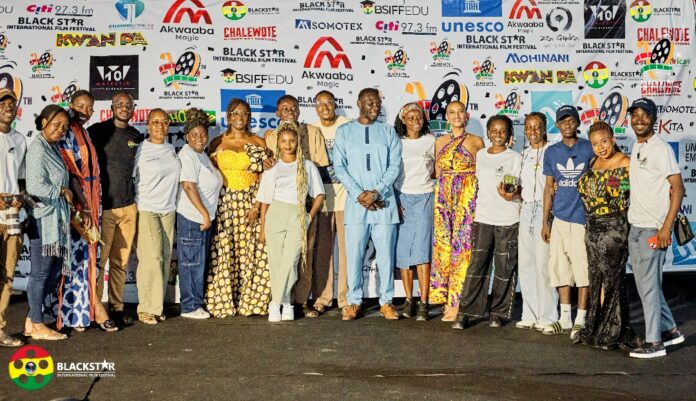
The tenth edition of the Black Star International Film Festival (BSIFF) concluded on Sunday, September 28, celebrating Ghana’s vibrant film industry and its potential on the global stage.
Organizers and international guests encouraged Ghanaian filmmakers to engage more, collaborate widely, and seize opportunities to showcase their work internationally.
BSIFF President Juliet Asante emphasized that the festival is more than just screenings; it is a catalyst for industry growth. She highlighted the importance of networking, knowledge-sharing, and creating pathways for Ghanaian films to reach international audiences.
“Opportunities to showcase our films globally exist, but they require us to show up, collaborate, and engage fully with industry players,” she said. She also revealed that BSIFF is developing partnerships, including plans to premiere selected Ghanaian films in Ivory Coast, aimed at expanding the reach of local cinema.
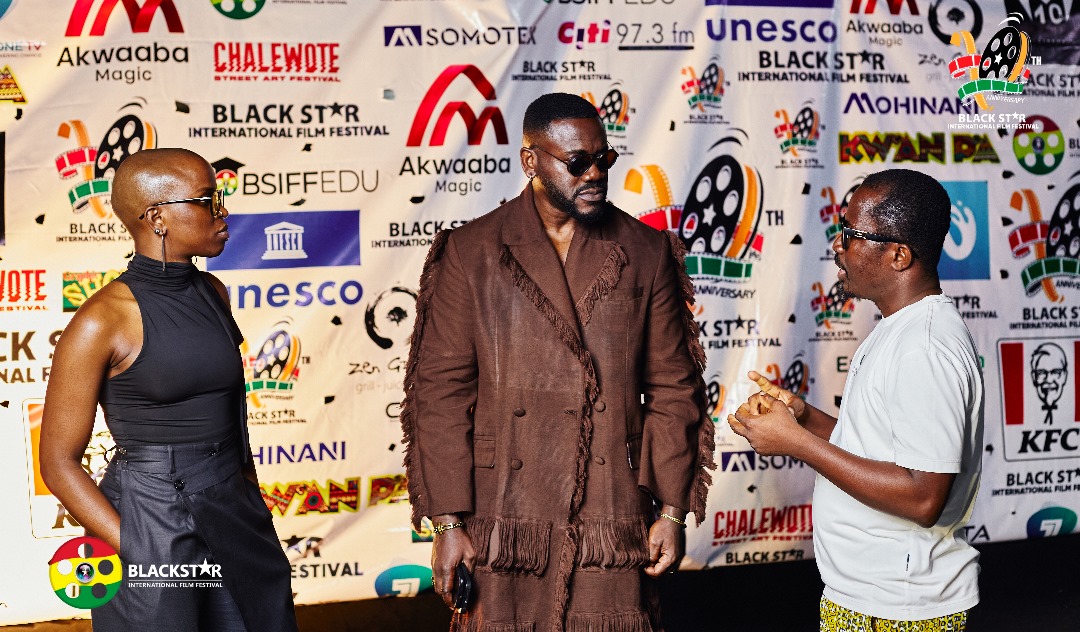
International guests shared insights on creating films that resonate globally. Chee Keong Cheung, British-Chinese director of Son of the Soil, which had its world premiere at the festival, encouraged Ghanaian filmmakers to focus on storytelling, collaboration, and education within the industry.
“Cinema is a universal language. Finding stories that connect both locally and internationally is key, and collaboration across production, distribution, and exhibition helps bring these stories to wider audiences,” he said. He added that he is keen on producing future projects in Ghana, noting that the festival provided an ideal opportunity to understand the local market and identify new talent.
Ghanaian-American actress Aba Arthur urged local filmmakers to embrace Ghanaian narratives rather than only admiring foreign cinema.
“There is immense talent here at home. Platforms like BSIFF are designed to help us collaborate, share skills, and tell stories that reflect our culture. By investing in our own industry, we can reach global audiences without losing our authenticity,” she highlighted.
Actor Razaaq Adoti also emphasized the importance of persistence in filmmaking. “I would have premiered in Nigeria, but being invited to BSIFF, I decided to premiere in Ghana. Ghanaian filmmakers must keep producing, learn from experiences, and face obstacles head-on. Challenges exist everywhere, even in Hollywood, but it all depends on how they are tackled.
That’s how local films can reach international platforms,” he said.
The festival, themed The Relevance of Film in Society, also hosted workshops, masterclasses, and networking sessions, providing participants with tools and connections to thrive both locally and internationally.
As BSIFF marked its tenth anniversary, Juliet Asante reiterated the need for mindset shifts and active engagement for industry growth.
“One of the major issues we face is that we say we want change, but we do not want to change. We want things to be different, but when it comes to actually shifting our mindset, our structures, or our approach, there is resistance. And that makes it very difficult to move forward as an industry,” she stressed.
Source: Irene Adubea Aning