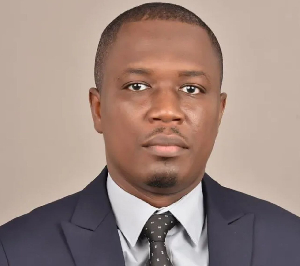
Tang Renjian, former minister of agriculture and rural affairs of China, was on Sunday handed the death penalty with a two-year reprieve for taking massive bribes.
Tang, also a former secretary of the agricultural ministry’s leading Party members group, has been deprived of his political rights for life, while all of his personal property will be confiscated and his illegal gains from bribery will be recovered and turned over to the national treasury, according to the verdict issued by the Intermediate People’s Court of Changchun in northeast China’s Jilin Province.
The court stated that between 2007 and 2024, Tang took undue advantage of his various positions at both central and local levels to assist others in matters such as business operation, project contracting and job adjustment. In exchange, he accepted money and valuables totaling over 268 million yuan (about 38 million U.S. dollars).
The court ruled that Tang’s offenses, which inflicted severe damage on the interests of the state and the people, warranted the death penalty.
Yet considering his cooperation in confessing to his crimes, returning illicit gains, and other mitigating factors, the court granted Tang leniency in its final judgment.
The case was heard at the court on July 25. During the trial, prosecutors, the defendant and his defense counsel cross-examined the evidence and gave their respective accounts. Tang pleaded guilty and expressed remorse in his final statement.
Kennedy Agyapong Warns NPP Executives After Supporter Fires On Helicopter
News Hub Creator9h
Ghanaian politician Kennedy Agyapong has sparked outrage after an intense confrontation with executives of the New Patriotic Party (NPP), following an incident in which one of his supporters allegedly fired shots at a helicopter, resulting in a crash.
According to reports, the incident occurred during a heated political exchange, with Agyapong reportedly issuing stern warnings to NPP executives over decisions and actions he deemed unacceptable. Witnesses say tensions escalated quickly, creating panic among those present.
The helicopter crash, allegedly linked to the firing, caused shock across political and public circles. Authorities are investigating the circumstances surrounding the attack, including whether it was intentional or accidental. While initial reports suggest no fatalities occurred in the crash, the damage to the aircraft and the risk posed to lives has raised serious concerns.
Political analysts have condemned the violent nature of the incident, warning that such actions could have severe repercussions for party unity and public safety. Some citizens have also expressed fear, noting that political disagreements should never escalate to acts that endanger lives.
Agyapong, known for his fiery speeches and controversial statements, has yet to issue a formal response regarding the shooting and the crash. Meanwhile, law enforcement agencies are working to ensure that all those involved are held accountable.
The shocking events have once again highlighted the volatile nature of political tensions in Ghana, raising questions about safety measures at political gatherings and the responsibilities of high-profile leaders to prevent violence.
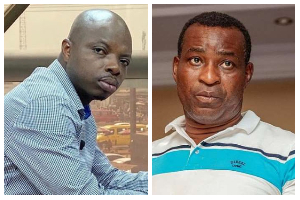
Kwame Baffoe (Abronye) (L) and Bernard Antwi Boasiako (Chairman Wontumi) (R)
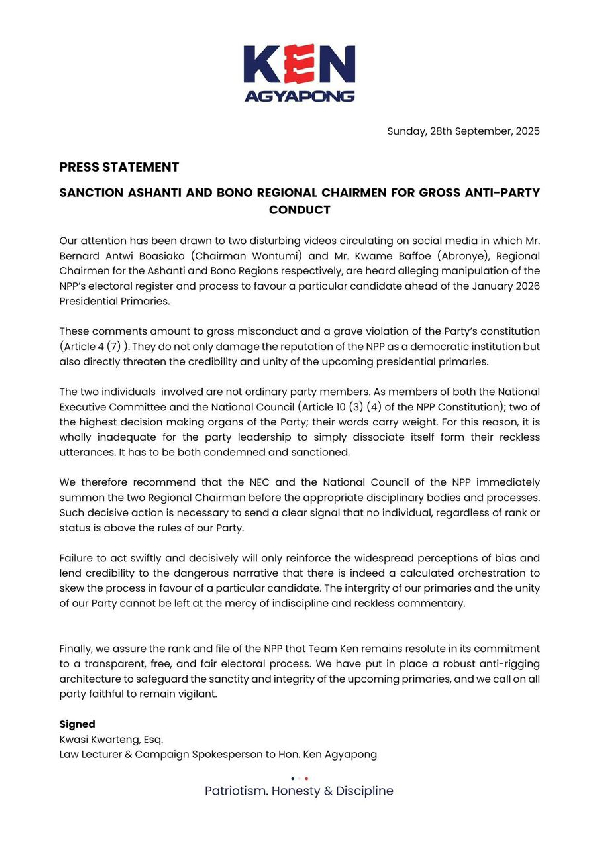
The campaign team of New Patriotic Party (NPP) flagbearer hopeful, Kennedy Agyapong, has called for immediate disciplinary action against two regional chairmen of the Party over what it describes as “gross anti-party conduct.”
In a statement on September 28, 2025, the team expressed concern about recent comments by Bernard Antwi Boasiako popularly known as Chairman Wontumi of the Ashanti Region and Kwame Baffoe popularly known as Abronye DC of the Bono Region.
The two regional chairmen were reportedly captured in separate viral videos alleging manipulation of the NPP’s electoral register and processes to favour a particular candidate in the run-up to the January 2026 presidential primaries.
According to Team Ken, the remarks by Wontumi and Abronye amount to gross misconduct and a violation of the NPP’s constitution.
NPP distances itself from statements by Wontumi, Abronye
The campaign stressed that the two men, being members of both the National Executive Committee (NEC) and the National Council, two of the Party’s highest decision-making bodies, cannot be treated as ordinary members.
“For this reason, it is wholly inadequate for the party leadership to simply dissociate itself from their reckless utterances. It has to be both condemned and sanctioned.
“We therefore recommend that the NEC and the National Council of the NPP immediately summon the two Regional Chairmen before the appropriate disciplinary bodies and processes. Such decisive action is necessary to send a clear signal that no individual, regardless of rank or status, is above the rules of our Party.
“Failure to act swiftly and decisively will only reinforce the widespread perceptions of bias and lend credibility to the dangerous narrative that there is indeed a calculated orchestration to skew the process in favour of a particular candidate,” part of the statement said.
The statement added, “the integrity of our primaries and the unity of our Party cannot be left at the mercy of indiscipline and reckless commentary.
“Finally, we assure the rank and file of the NPP that Team Ken remains resolute in its commitment to a transparent, free, and fair electoral process. We have put in place a robust anti-rigging architecture to safeguard the sanctity and integrity of the upcoming primaries, and we call on all Party faithful to remain vigilant.”
AM/SEA
Also, watch some videos from the NPP’s protest below:
Private legal practitioner Kofi Bentil has criticised fellow lawyer Martin Kpebu over comments he made about New Patriotic Party (NPP) flagbearer hopeful for the 2028 general elections, Dr Mahamudu Bawumia.
The exchange happened on TV3’s Key Points show on Saturday, September 27, 2025.
Martin Kpebu had dismissed Dr Bawumia’s presidential chances ahead of the 2028 elections, arguing that the former Vice President lost by a wide margin in the 2024 polls.
According to him, it would take more than four years to close such a gap, making it impossible for Bawumia to win in 2028.
He suggested that Bawumia could only realistically stand a chance in the 2032 elections, and even then, age would not be in his favour.
“But I’m surprised that they say young people in the NPP prefer Bawumia. He doesn’t stand a chance in 2028… It’s 1.6 million votes. You can’t wipe out 1.6 million votes in a four-year cycle unless the NDC misrules to a level beyond even what Akufo-Addo did.
3 reasons I support Baffoe-Bonnie’s nomination as Chief Justice – Martin Kpebu
“We are not going to sit down for that. What Akufo-Addo did was the last. There’s still a lot of anger in the system. You see why John Mahama’s approval rating is coming down. What Akufo-Addo did to us, we won’t sit down for that to happen again.”
His remarks, however, did not sit well with Kofi Bentil, who doubles as Vice President of IMANI Africa and was also a panellist on the show.
Bentil questioned Kpebu’s authority in declaring that Bawumia had no chance in the upcoming elections.
He schooled him on global democratic trends, particularly in the United States, stressing that age plays a relatively minor role in determining electoral outcomes, as voters are now more focused on issues.
“Well, let me add this. You let my brother Martin go on and on. Look, on this matter, listen to me, he is so wrong, it is not salvageable. He can’t be helped. Listen, there was a trend in America, and America is a very good place to look at when it comes to democratic trends.
“Bill Clinton was 45 or 47 when he became president, with Al Gore as vice president at 44. In US history, Clinton, who many doubted, balanced the budget and stabilised the economy. Then came George Bush, followed by Barack Obama, also in his 40s. People thought America would always go for young leaders.
“But guess what? Donald Trump, who is 79 today, came in almost a decade later and became one of the most impactful presidents in US history, for right or wrong. The point is this: age is just a number. Trump wiped the floor with younger contenders. So, Martin has no basis to talk about age politics,” he said.
He continued, “Who are you? At the end of the day, Ghanaians will decide based on who they believe can deliver.”
Bentil further argued that the current generation of voters, particularly millennials and Gen Z, are a “no-nonsense” group that makes decisions based on competence and results rather than age.
“That generation doesn’t revere anything. They don’t respect age or tradition. They look at what’s on the ground and say, what’s good for me? If someone is 100 years old and can deliver, they’ll vote for him. Age is nothing.”
AM/SEA
Also, watch some videos from the NPP’s protest below:
A fresh storm has erupted in Ghana’s ongoing fight against illegal mining (galamsey) after political activist Atigya-Jakpa publicly confronted influential lawyer and political strategist Gabby Asare Otchere-Darko over his alleged connection to more than 1,200 illegal mining concessions.
The confrontation, which has been simmering for months, came to the fore after investigative reports and leaked documents suggested that Gabby’s name appeared in transactions and negotiations linked to several disputed mining concessions across Ghana’s mineral-rich regions.
In a fiery broadcast, Atigya-Jakpa accused Gabby of being a central figure in what he described as a “grand state-backed syndicate” that has enabled the proliferation of illegal mining concessions. According to him, while ordinary Ghanaian and rural communities have suffered devastating environmental consequences such as polluted rivers, destroyed farmlands, and health hazards, political elites allegedly benefitted from secret deals tied to mining permits and concessions. He stressed that Gabby could no longer deny involvement, declaring that his name was attached to over 1,200 concessions and that he must answer to Ghanaians and to the law.
Gabby Otchere-Darko, a close cousin of President Nana Addo Dankwa Akufo-Addo and a leading figure within the ruling New Patriotic Party (NPP), has long rejected claims linking him to galamsey activities. In previous statements, he maintained that he only acted as a lawyer representing clients within the mining sector and has no personal involvement in illegal operations. However, the latest revelations, tying his name to such a large number of concessions, have reignited public scrutiny and cast new doubts on his denials.
The news has sparked outrage among environmental groups, civil society activists, and sections of the public, many of whom have accused the political class of shielding high-profile individuals while poor miners face harsh crackdowns. Opposition parties have demanded a parliamentary probe into the allegations, arguing that if confirmed, Gabby’s alleged involvement would represent a massive betrayal of the government’s stated commitment to fighting illegal mining. Supporters within the NPP have dismissed Jakpa’s accusations as politically motivated, aimed at tarnishing the image of the party ahead of the 2026 elections.
Illegal mining remains one of Ghana’s most pressing national challenges. Despite numerous task forces, military operations, and presidential pledges to curb galamsey, the practice continues to thrive. Experts estimate that billions of cedis are lost annually due to unregulated mining, while the ecological damage threatens long-term food and water security. The revelation that over 1,200 concessions may be tied to the name of one of Ghana’s most politically influential figures only deepens the crisis.
Atigya-Jakpa has vowed to release further documents and evidence to back his claims, while calls grow louder for a full-scale independent investigation. Whether Gabby will formally respond or seek legal redress remains to be seen, but the scandal has already reignited Ghana’s fierce debate about the intersection of politics, power, and galamsey.
GCB Bank Plc has unveiled a bold, comprehensive sustainability programme that sets a new standard for responsible banking in Ghana.
At the heart of the programme are six flagship initiatives: Sheagles Soar, R³ (Reduce, Reuse & Recycle), i-360, Evolve, and EagleTouch.
Each is crafted to embed social impact, environmental stewardship, and strong governance across the bank’s operations. Together, they position GCB as a leader in sustainable finance.
Launching the programme, Board Chairman Professor Joshua Alabi called it a “blueprint for a sustainable future,” stressing that GCB is forging ahead to lead sustainable banking in Ghana and beyond.
“As the premier bank, we must lead by example. By putting people and planet first in all our operations, we will secure profit in the truest sense: profit that is inclusive, resilient, and beneficial to all stakeholders,” Prof. Alabi said.
Managing Director Farihan Alhassan underscored that sustainability is not an add-on but a cultural shift within GCB.
“Our strategy is anchored in a baseline assessment aligned with national and global commitments, including the Paris Agreement and the UN SDGs.
“Built on three pillars: Environmental Stewardship, Social Responsibility, and Ethical Governance, it reflects the triple bottom line of people, planet, and profit.”
Head of Special Projects and Investor Relations, George Fuachie, added that GCB is determined to lead the charge: “Sustainability is no longer a buzzword. It has become a way of doing business.”
The launch featured a dynamic panel discussion titled “People, Planet, and Profit: Sustainable Operations for Impact and Opportunity.”
It was moderated by Cynthia Ofori-Dwumfuo, Chief Marketing, Communications and Customer Experience Officer of GCB Bank. The panel included GCB Board Member Pamela Addo, SUCCA Africa’s Mark Ofori Kwafo, and GCB’s Head of Credit Risk, Edward Sasu Adofo.
Panellists called for sustainability to be fully integrated into banking operations, highlighting financial inclusion, gender-responsive products, youth banking, and climate-smart agriculture as central to long-term impact.
They cautioned that climate risks pose real threats but also open opportunities in renewable energy, green jobs, and sustainable farming.
Profitability, they stressed, must advance hand in hand with social empowerment and environmental care.
With this programme, GCB Bank takes a decisive step to embed sustainability at its core.
The Bank pledged to invest in innovative solutions, forge transformative partnerships, and keep driving impact that balances people, planet, and profit
DISCLAIMER: The Views, Comments, Opinions, Contributions and Statements made by Readers and Contributors on this platform do not necessarily represent the views or policy of Multimedia Group Limited.
DISCLAIMER: The Views, Comments, Opinions, Contributions and Statements made by Readers and Contributors on this platform do not necessarily represent the views or policy of Multimedia Group Limited.
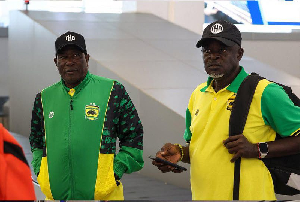
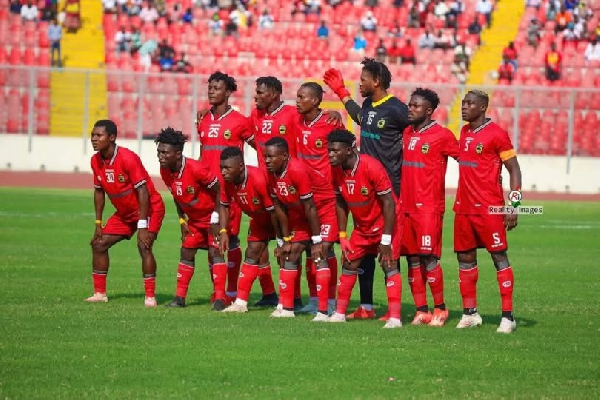
Asante Kotoko head coach Abdul Karim Zito has aimed a dig at Kwara United’s trainer following his side’s narrow 1-0 victory in Abuja to seal qualification in the CAF Confederation Cup.
The veteran coach, who masterminded Kotoko’s aggregate triumph over the Nigerians, did not hold back in his post-match comments.
“Kwara United’s coach, who doesn’t even have a license, was talking nonsense when I beat him in Ghana,” Zito said.
“I taught him sense by beating him again today.”
Kotoko, who had earlier won 4-3 in the first leg in Accra, put up a resolute performance in the return fixture to edge their opponents 1-0, completing a 5-3 aggregate win and advancing to the next stage of the competition.
Zito’s remarks underline the competitive edge and rivalry between the two sides, with the coach now turning his attention to preparing his team for the upcoming continental challenge.
Kotoko will now face Morrocan side Wydad Casablanca in the final round in October in bid for a group stage slot.
Bibiani GoldStars’ debut campaign in the CAF Champions League ended in disappointment
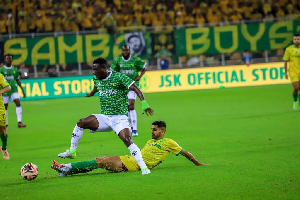
Bibiani GoldStars’ debut campaign in the CAF Champions League ended in disappointment after they suffered a 5-0 loss to Algerian giants JS Kabylie in Tizi Ouzou on Sunday, sealing a 7-0 aggregate exit from the preliminary round.
The Ghana Premier League champions, already trailing 2-0 from the first leg in Accra, faced an uphill task but endured a nightmare start when goalkeeper Emmanuel Kobi turned the ball into his own net after just seven minutes.
Kabylie quickly took control of the contest, with Ryad Boudebouz doubling the lead in the 29th minute. Mehdi Merghem added a third midway through the second half before GoldStars’ hopes collapsed completely. Defender Emmanuel Ankrah was shown a red card on the hour mark, and the hosts ruthlessly exploited the numerical advantage.
Lahlou Akhrib struck four minutes later, and Oualid Maliki completed the rout with a stoppage-time effort to send Kabylie through in emphatic style.
GoldStars’ continental adventure ends at the first hurdle, and they must now regroup and focus on defending their Ghana Premier League crown.
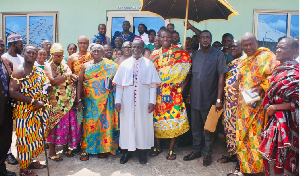
The programme which was attended by representatives from the traditional and religious leaders
The Western North Regional Peace Council has marked this year’s International Day of Peace with a call on the people to choose peace in all situations to propel growth and development.
The Most Reverend Samuel Nkuah Boateng, Chairman of the Western North Regional Peace Council, speaking during the event at Sefwi Bekwai in the Bibiani Anhwiaso Bekwai Municipality, said peace was the most powerful force for a better future and that it was within the grasp of each and every individual to prioritise it at all times.
He expressed worry that Ghana’s peacefulness had deteriorated to some extent citing the 2025 Global Peace Index where the country had fallen six places to rank 61st globally.
“Ghana was ranked 55th in 2024 globally and 4th in Sub-Saharan Africa, and this is worrying and should be a concern and a challenge for our dear country,” he stated.
Most Rev Boateng appealed to the government and other institutions to support the council in the discharge of their duties to help the country to continue to enjoy its relative peace.
Bayeeman Tano Kwaw Benbuin III, Paramount Chief of Aowin Traditional Area, who chaired the function reiterated that clamouring for peace required each and everyone to speak up against violence, hatred, discrimination, and inequality.
He said this could be achieved by inspiring conversations about the urgent need for understanding for peaceful coexistence.
Wilbert Petty Brentum, the Western North Regional Minister, in a speech read on his behalf stressed on the need to ensure peace at all levels stressing on fairness and justice for all.
He assured that the government would continue to invest and provide the needed resources to strengthen the activities of the council to effectively execute its duties.
He urged residents to recommit themselves to this noble call for future generations to inherit a peaceful and prosperous region.
The programme which was on the theme, “Act now for a peaceful world”, was attended by representatives from the traditional and religious leaders, the media, and students from the Wiawso Nursing Training College.
Dr UN has said that Sarkodie has been disrespectful towards him
Controversial Dr UN has expressed disappointment in Africa’s decorated rapper, Sarkodie following the latter’s appearance in Kumasi, the capital town of Ashanti Region.
Upon his arrival, Sarkodie visited the office of the Ashanti Regional Minister among others, to show his respect to them since they are the owners of the land.
Dr UN has said that Sarkodie has been disrespectful towards him, stating that the rapper has been in Kumasi for some days, but hasn’t taken time off his schedule to pay him a visit.
Dr UN stated that he remains the chairman of the musician, because, if not for anything, he once upon a time awarded the musician for his good works.
He noted that after visiting the Ashanti Regional minister, he was the next musician who should have been visited before granting interviews among others.
“Sarkodie has not respected me. You went to visit the regional minister, you should have also visited Dr UN too. Because I am your chairman. Awarding you made you a global icon. But you came to the Ashanti Region but refused to accord me some respect. Even Otumfour would ask why you didn’t visit me should he know about this”, he said he in a viral video.
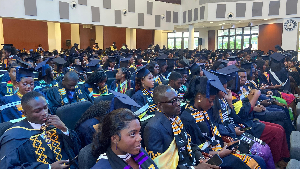
The ceremony saw 1,640 students graduate from the Faculty of Information Technology
The Acting Director-General of the National Information Technology Agency (NITA), Dr Mark-Oliver Kevor, has urged graduates of the University of Professional Studies, Accra (UPSA) not to undermine their potentials as they step into the next phase of life.
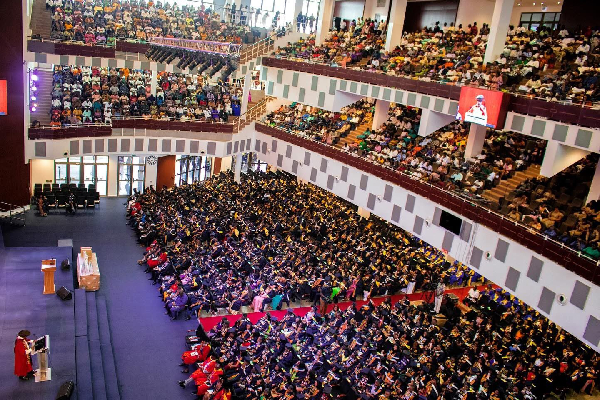
Speaking at the first session of the university’s 17th congregation on Friday, September 26, Dr Kevor encouraged the 1,863 graduating students to embrace integrity and value mentorship in their professional and personal journeys.
“Seriously, don’t underestimate your potentials and I am very happy some of you have already started developing workable applications even while you are still in school,” he said.
The ceremony saw 1,640 students graduate from the Faculty of Information Technology and Communication Studies, and 223 from the Law School.
‘They just want to put fear in us’ – UPSA student pushes back against new dress code rule
The Vice-Chancellor of UPSA, Professor John Kwaku Mensah Mawutor, announced that across the four sessions of the 17th congregation, the university is expected to graduate 5,664 students.
This number comprises 939 postgraduates, 3,825 undergraduates and 900 diploma students.
He praised the graduating class for their resilience, noting that their ability to adapt to online learning, meet tight deadlines and persevere through challenges demonstrates the true spirit of innovation.
“This is not only a celebration of academic achievements, but also a testimony to the power of perseverance, innovation and leadership potential that lies within each of you,” he added.
Dr Harry Lawson Kwaku Agbanu, Chairman of the UPSA Governing Council, also urged the graduates to be worthy ambassadors of the university.
The congregation also celebrated academic excellence, with Rebecca Oppong of the Department of Communication Studies emerging as the Best Graduating Student for the Faculty of Information Technology and Communication Studies.
She was named Valedictorian for the first session, with a Final Cumulative Grade Point Average (FCGPA) of 3.89.
Meanwhile, the Vice-Chancellor disclosed that UPSA enrolled 12,585 new students at the beginning of the 2024/2025 academic year, bringing the total student population to 27,279.
This comprises 2,826 diploma students, 21,617 undergraduates, 2,260 postgraduates and 576 professional students.
AM/AE
Also, watch some videos from the NPP’s protest below:
A Senior Research Fellow at the Institute of Economic Research and Public Policy (IERPP), Dr Frank Bannor, has dismissed suggestions by government functionaries that traditional authorities should lead in the fight against illegal mining, popularly known as galamsey.
In a note shared with some media outlets, Dr Bannor urged the government to take full responsibility for combating galamsey and to halt what he described as a “media-sponsored narrative” shifting the burden onto traditional authorities.
“The government should not shirk its responsibility in the fight against illegal mining activities. These attempts by persons affiliated with the ruling party to push the narrative that chiefs should lead in the fight against galamsey must be halted immediately,” he stated.
The development economist stressed that while traditional authorities have a role to play, they cannot be placed at the forefront of the battle.
“From all indications, this media agenda and advocacy is state-sponsored. It is true we cannot leave traditional authorities out of this fight but pushing them to lead it is nothing but a deliberate effort by the Mahama government to run away from its responsibilities,” he added.
Over the past week, prominent figures—including business magnate Sir Sam Jonah, former Information Minister Kofi Totobi Quakyi, media personalities, and political activists aligned with the NDC—have been calling for traditional leaders to spearhead the galamsey fight.
Dr Bannor, however, insisted that government must take charge by developing a comprehensive blueprint that includes punitive measures against owners of excavators and landowners who enable illegal mining activities.
“We at IERPP posit that whatever blueprint is being developed by the government to combat illegal mining should include punitive actions against owners of excavators and landowners. There can never be galamsey on land without the tacit approval of the landowner. Owners of seized excavators must also be penalized to deter others from renting out their machines for such activities,” he emphasised.
He concluded by pointing out inconsistencies in the ruling party’s approach:
“The NDC told us how they were going to deal with galamsey in their 2024 manifesto. It never included traditional leaders being tasked to lead the fight. Government must lead this fight.”
Also, watch some videos from the NPP’s protest below:
The National Veterinary Services Department has announced that all pets in Ghana will undergo mandatory vaccination beginning January 2026.
According to the Service, vaccinated pets will be issued official vaccination cards to ensure compliance and proper monitoring. The initiative forms part of efforts to curb rabies-related deaths and improve pet health management across the country.
Chief Veterinary Officer, Samuel Cudjoe, explained that the exercise is not only crucial for public health but will also contribute to better management of the country’s pet population.
“From January 2026, a national pet vaccination card will be issued for every vaccinated dog or cat at private veterinary service centres. These measures will make rabies vaccination mandatory nationwide and ensure proper tracking, harmonised reporting, and reliable national data generation,” he said.
The Department believes the exercise will significantly reduce rabies infections, which remain a major public health concern, while also providing an accurate database of pets in Ghana.
B/R: Organisations shift to paper products amid plastic pollution concerns
Digital consumers are expected to enjoy improved picture and sound quality by the second quarter of 2026, as the government moves to clear hurdles delaying Ghana’s full migration from analogue to digital television.
A major setback has been the over 82 million cedis in duties on set-top boxes currently locked up in warehouses. The government says resolving these bottlenecks is critical to fast-tracking distribution and completing the switch.
Sector minister, Sam Nartey George speaking at the Broadcasting at Crossroads forum organized by the Africa Media Bureau in partnership with Channel One TV and Citi FM expressed optimism that final distribution will soon commence, assuring stakeholders of government’s commitment to achieve a full digital migration despite Ghana missing previous deadlines.
“We have not done the digital switch over because of some of the things I inherited—policy wise there was this purchase of set top boxes. The boxes are stack in a warehouse. There are duties in the excess of 82 million Ghana cedis. We have figured a way around it. We will do the digital switch over once these boxes get into the market when the NCA finishes all they are doing,” he said.
He added that: “My hope is that by the end of Q2 2026 we could have finished those distribution and then announce the digital switch over.”
The Broadcasting at the Crossroads Forum was climaxed with the sector minister commending the organisers for driving the industry dialogue. He, however, challenged them to present a draft report for onward technical deliberations, stressing that actionable recommendations will be key to transforming Ghana’s broadcasting landscape.
“We must have some tangibles out of this, so there’s going to be a workshop report and the report will not come and sit on our desk at the Ministry but it is for us to step up a technical working group from the NCA, GIBA, NMC, AMB and all other stakeholders so that all the issues we have raised here we look at the way forward,” he said.
Asante Kotoko head coach Karim Zito has taken aim at Kwara United boss Sanni Tunde after steering his side into the next stage of the CAF Confederation Cup.
The Porcupine Warriors sealed qualification with a hard-fought 1-0 victory at the M.K.O. Abiola International Stadium on Sunday, completing a 5-3 aggregate win after their thrilling 4-3 first-leg success in Accra.
Forward Hubert Gyau delivered the decisive strike in the second half, silencing Kwara United, whose coach had vowed to overturn the deficit following their defeat in Ghana.
Speaking to the media after the match, Zito did not hold back in his assessment of his counterpart.
“Kwara United’s coach, who doesn’t even have a license, was talking nonsense when I beat him in Ghana,” Zito told the media after the game.
“I taught him sense by beating him again today,” he added.
Kotoko, two-time winners of the CAF Champions League, now shift their focus to a daunting second-round clash against Moroccan giants Wydad Athletic Club.
The Ghanaian side will host the first leg before making the trip to Casablanca for the return fixture in October.
The President of the Tour Operators Union of Ghana (TOUGHA), Yvonne Donkor, has called on African tourism leaders to work together to reimagine the future of tourism and unlock its full potential for the continent’s prosperity.
She made the call in Lagos, Nigeria, where she joined the Nigerian Association of Tour Operators (NATOP) at Tarkwa Bay, Victoria Island, to celebrate World Tourism Day 2025.
The invitation was extended by the President of NATOP, Hajia Bolaji Mustapha.
In her goodwill message, Yvonne Donkor highlighted the vital role tourism plays in driving economic growth, cultural exchange and sustainable development across Africa.
“On this World Tourism Day 2025, we recognize the pivotal role tourism plays in fostering economic growth, cultural exchange and sustainable development.
“May our collective efforts continue to promote African tourism, showcase our rich heritage and drive innovation in the industry.
“Together, let’s reimagine tourism’s future and unlock its full potential for the continent’s prosperity. Happy World Tourism Day!” she said.
TOUGHA aims to transform Ghana’s tourism sector after exploring untapped ecotourism gems
The TOUGHA President’s participation reflects growing collaboration among African tour operators aimed at strengthening intra-African travel, promoting the continent’s diverse attractions and creating shared opportunities for industry players.
World Tourism Day, celebrated annually on September 27, is dedicated to raising awareness about the social, cultural, political and economic value of tourism and the role it plays in achieving sustainable development goals.
AM/
Also, watch some videos from the NPP’s protest below:
The Vehicle and Asset Dealers Association of Ghana (VADUG) has pushed back against growing public perceptions that its members are complicit in the sale of stolen cars.
This comes on the back of intensified operations by security agencies this year, which have targeted stolen vehicles circulating on the Ghanaian market.
According to VADUG, while the clampdown is within the mandate of law enforcement, the trend is beginning to affect the business of legitimate dealers.
General Secretary of the Association, Clifford Ansu, told Citi Business News that the stigma is undermining consumer trust.
“How people perceive the car dealers as being the agents of the stolen vehicles is not the best. We are not into selling stolen vehicles,” he stressed.
“When someone is coming to buy something from you and the person hears that the cars these guys are selling are stolen vehicles, there is no way that the person will even come [and make a purchase],” Ansu added.
He urged both the public and dealers to exercise due diligence when purchasing or importing vehicles to help address the issue.
“Go to a very recognized garage knowing very well that where you are buying the vehicle, the people are always there then you can do business with them.
“I am not saying if you buy vehicles online, it is wrong. When you see the thing online, trace the person, go to a particular garage knowing well that this is where I can find this person,” Ansu advised.
In recent months, security agencies have stepped up efforts to curb the trafficking of stolen vehicles into Ghana.
In August, the Ghana Police Service’s Criminal Investigation Department announced the recovery of 43 high-value luxury cars between January and July 2025.
The Economic and Organised Office (EOCO) has also flagged Range Rovers, Dodge models, and other luxury vehicles as among the most intercepted during its operations.
EOCO’s findings, drawn from collaborations with Interpol and other international bodies, highlight Ghana’s growing profile as a destination for stolen cars, particularly from North America.
The Allahabad High Court – one of India’s oldest and most prestigious, once graced by figures like India’s first premier Jawaharlal Nehru and future Supreme Court judges – is back in the spotlight.
This time, though, for very different reasons.
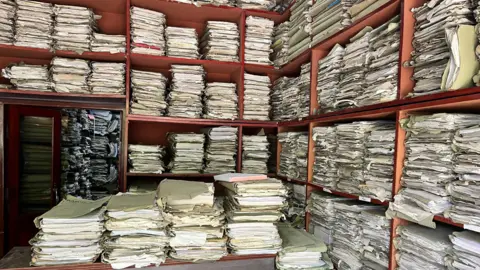
With more than a million cases pending, it is among the most overburdened courts in the country. Matters ranging from criminal trials to property and family disputes have been pending here for decades, leaving thousands of people in India’s most populous state, Uttar Pradesh, trapped in legal limbo.
Consider Babu Ram Rajput, 73, a retired government employee who has been battling a property dispute for over three decades.
He bought land at an auction in 1992, but the previous owner challenged the sale – and the case remains unresolved to this day.
“I just hope my case is decided while I’m still alive,” Mr Rajput says.
The high court’s struggle mirrors a broader crisis in India’s judiciary, where too few judges and a constant flood of cases have caused crippling delays.
With a sanctioned strength of 160 that experts say has never been completely filled, the court is severely understaffed. Delays in police investigations, frequent adjournments, and poor infrastructure further add to the backlog, leaving the system stretched beyond capacity.
Each judge faces hundreds of cases a day – sometimes over 1,000. With just five working hours, that’s less than a minute per case. In practice, many aren’t heard at all.
Over a million cases are pending at the Allahabad High Court
Lawyers say urgent matters – like bail pleas or eviction stays – are heard first, pushing older cases further down the list.
Senior lawyer Syed Farman Naqvi says courts often issue interim or temporary orders in urgent cases – but once the immediate need is met, the matter lingers as new cases pile up.
Retired judge Amar Saran says the mounting backlog has forced judges into a “cut-grass approach” – issuing quick, standard orders, from nudging the government to act to directing lower courts to handle the matter.
In April, the court confronted the scale of its delays while ruling on a rape and murder case pending for over 40 years. By the verdicts delivered, four of the five convicted men had died. Ordering the sole surviving convict to surrender, the court admitted it regretted not ruling sooner.
The backlog has even prompted legal action. Earlier this year, a group of Allahabad High Court lawyers petitioned for more judicial appointments, calling the court “paralysed” by a shortage of judges that leaves cases lingering for years.
The crisis has caught the attention of India’s top court. In January, the Supreme Court called it “worrisome” that case listings at the Allahabad High Court are unpredictable, saying the system had completely collapsed.
Uncertain hearing dates hit people hard, especially in vast Uttar Pradesh. Many travel hundreds of kilometres to Prayagraj where the court is located, on just a few days’ notice for their hearing.
Mr Rajput is from Kanpur, 200km (125 miles) from Prayagraj. He spends around four hours travelling each time his case is listed – yet can never be sure it will actually be heard.
“I’m over 70,” he says. “I often learn just days in advance that my case is listed, “making travel a hassle.” He adds that many times his case isn’t heard because other matters take up the whole day.
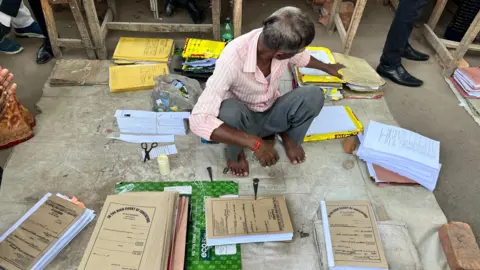
A man preparing court files outside the Allahabad High Court
Lawyers have long urged the court to set up another bench – a branch of the high court in a different city to ease access and speed up hearings – in the western part of the state. Currently, an additional bench exists in the city of Lucknow. A similar recommendation was made in 1985 by a government commission, but it has yet to be implemented.
Earlier this year, the state government reportedly urged the high court to set up another bench, but the letter was later withdrawn for unknown reasons. The push for more benches isn’t limited to Uttar Pradesh; a 2009 Law Commission report said all states would benefit from additional high court branches.
While new benches could help long-term, experts say quicker fixes – like appointing more judges – are needed.
But the process is slow and complex: senior high court judges first shortlist candidates, then the list is reviewed by the state and federal governments, and the Chief Justice of India. After this, senior Supreme Court judges forward the final list to the federal government for appointment.
Experts say picking the right candidates is often challenging. Former Allahabad High Court Chief Justice Govind Mathur notes that chief justices, often appointed from outside the state, may not know local lawyers or judges, complicating recommendations. Names can be rejected at any stage and remain confidential until the Supreme Court forwards them to the government.
Last year, the Supreme Court recommended just one appointment for the Allahabad High Court, despite nearly half the seats being vacant. Some progress came this year with 15 new judges, but almost half the posts remain empty after retirements and transfers. Earlier this month, 26 more names were sent to the government, raising hopes – but the impact on the backlog remains uncertain.
Experts say the backlog is so huge that even at full strength, each judge would handle over 7,000 pending cases. Some progress came this year, after 40 new judges were added – 24 of whom were appointed last week – but the backlog persists.
Mr Mathur says that deeper judicial reforms – like a “uniform policy for hearing and disposing of cases” – are essential, rather than leaving it to individual judges.
DISCLAIMER: The Views, Comments, Opinions, Contributions and Statements made by Readers and Contributors on this platform do not necessarily represent the views or policy of Multimedia Group Limited.
DISCLAIMER: The Views, Comments, Opinions, Contributions and Statements made by Readers and Contributors on this platform do not necessarily represent the views or policy of Multimedia Group Limited.
Oboy Siki (L) and late Kumawood actress, Araba Stamp
Controversial Kumawood actor Oboy Siki has taken Ghanaians down memory lane, recounting his youthful days when he was popularly known as “Boys Boys.”
Speaking on the Rash Hour show with Rashad and King Asu B, the outspoken actor revealed that his womanizing lifestyle did not begin after he became famous.
According to him, even before fame found him, he was actively chasing women and could easily get some for sexual satisfaction.
Oboy Siki disclosed that he once dated a Kumawood actress who is now a member of the Kristo Asafo church, founded by the late Apostle Kwadwo Safo, popularly known as Kantanka. He explained that, for reasons best known to him, he decided to end the relationship. However, unable to let go, the actress allegedly pursued him for two decades.
While that was ongoing, Oboy Siki claimed he also went into a romantic relationship with the late Kumawood actress, Araba Stamp.
“Did you hear about Araba Stamp? She was my girlfriend. It’s been a long time—I was very young then. My relationship with Araba Stamp lasted over 15 years,” he recounted.
He further noted that their relationship began before the movie I Told You So was filmed.
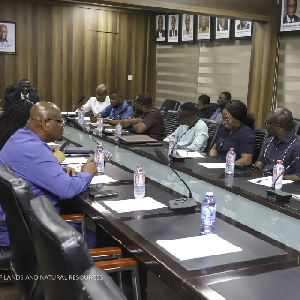
The minister expressed confidence in the committee’s ability to deliver
The Minister of Lands and Natural Resources, Emmanuel Armah-Kofi Buah (MP), has inaugurated a Large-Scale Mining Audit Committee as part of the government’s efforts to tackle long-standing irregularities and improve governance in the mining sector.
The initiative forms part of a broader reform agenda aimed at strengthening both mining laws and the institutions responsible for enforcing them.
Speaking at the inauguration ceremony, Buah noted that while significant progress had been made in streamlining small-scale mining, the government was now shifting its focus to the large-scale industry.
“This is a very critical area, and we must ensure that all irregularities and challenges are tackled head-on.
On behalf of President Mahama, I urge you to work with us to sanitise the industry,” he said.
The Audit Committee’s mandate will cover:
Exploration rights and land tenure agreements
Environmental and social compliance
Safety permits and resettlement approvals
Fiscal obligations, including royalties and taxes
Buah stressed the importance of stakeholder engagement, which he said had often been overlooked in the licensing process.
“Communities must be heard. How can they know what is happening when their voices are ignored?
This is what the whole process is about,” he emphasised.
The minister expressed confidence in the committee’s ability to deliver, adding that its work would strengthen the Minerals Commission and help address illegalities undermining the sector.
“We are determined to completely transform the Minerals Commission, and this audit is the beginning of that transformation,” he declared.
Bernard Mornah, the leader of the People’s National Convention (PNC) at the weekend, lauded President John Dramani Mahama’s performance in government so far.
He mentioned particularly the stabilising and appreciating the Ghana Cedi against major international currencies.
Mr Mornah said: “The stabilisation of the cedi and decline in inflation figures have translated into a marginal reduction in the prices of food items.”
He added: “We support a change in government. The Election 2024 President John Mahama has not failed the nation,”.
Mr Mornah gave the commendation when interacting with the media on the sidelines of the National Executive Committee (NEC) meeting of the PNC held at Abesim, near Sunyani.
Attended by national and regional executives of the party, the NEC meeting, the second-highest decision-making body of the PNC offered a common platform for the party to identify and proffer realistic solutions to emerging challenges confronting the party.
Mr Mornah indicated that President Mahama’s led government had performed creditably in transforming the economic fortunes of the nation and thereby bettering the socio-economic livelihoods of the ordinary citizenry.
Notwithstanding, he added that a PNC government would have performed better if Ghanaians had allowed the party to be in government in Ghana’s Election 2024.
He said presently the PNC was re-strategising and considering the possibility of merging with other Nkrumahist political parties so that together they could make meaningful impacts and thereby win political power in the Election 2028.
Mr Mornah said the party expected that the government would take over about 50 per cent shares of all foreign companies in its efforts to turn around the nation’s economic prospects, build and strengthen resilience and stabilise the economy.
Mr Sampson Asaki Awimgobet, the National Chairman of the PNC, urged the various regional and constituency executives to work tirelessly to make the PNC more attractive at the grassroots levels.
DISCLAIMER: The Views, Comments, Opinions, Contributions and Statements made by Readers and Contributors on this platform do not necessarily represent the views or policy of Multimedia Group Limited.
DISCLAIMER: The Views, Comments, Opinions, Contributions and Statements made by Readers and Contributors on this platform do not necessarily represent the views or policy of Multimedia Group Limited.
Latest data from the Treasury shows that investor demand for Treasury bills weakened last week as the government fell short of its target by 2.11 billion cedis.
Figures from the Bank of Ghana revealed that the Treasury accepted 3.46 billion cedis in bids, against a target of 5.58 billion cedis. This represented a shortfall of 37.5 per cent.
The 91-day bill attracted the bulk of demand. The Treasury accepted 2.65 billion cedis, almost the entire 2.66 billion tendered.
The 182-day bill followed, with 695 million cedis accepted out of 705 million submitted. Meanwhile, 116 million cedis was cleared on the 364-day note, from the 119 million tendered.
Analysts attributed the undersubscription to weak liquidity among commercial banks, following the Bank of Ghana’s open market operation that absorbed nearly ¢19 billion ahead of the auction. They also pointed to persistently low appetite for T-bills.
The shortfall pushed yields slightly higher across the curve. The 91-day bill rose 5 basis points to 10.50 percent from the 10.45 per cent, the 182-day went up 3 basis points to 12.39 percent up from the 12.36 per cent, and the 364-day edged up 1 basis point to 12.89 per cent from the 12.88 percent the previous week
Looking ahead, the government aims to raise 3.71 billion cedis in this week’s auction.
This blog is managed by the content creator and not GhanaWeb, its affiliates, or employees. Advertising on this blog requires a minimum of GH₵50 a week. Contact the blog owner with any queries.
Rocky55 Blog of Sunday, 28 September 2025
Source: Isaac Appiah
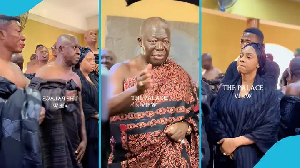
While visiting the Manhyia Palace, Asantehene Otumfuo Osei Tutu Il issued a severe warning to the family of the late Apostle Dr. Kwadwo Safo Kantanka.
The meeting, which attracted public attention, took place on Thursday, September 25, 2025, and was part of continuing interactions between the royal palace and the family after the death of the renowned inventor and founder of Kantanka Automobile, according to a report by Yen.
Otumfuo stated unequivocally that he would not tolerate needless disputes within the family.
“Mempe basabasa biaa,” he said in Twi, meaning “I do not want any form of misunderstanding.
The Asantehene emphasized the need for unity while reminding the family of the late Apostle Safo’s legacy and the importance of protecting it. “Your father was full of ideas. Don’t allow division to destroy his creation. “I will not permit unnecessary arguments,” Otumfuo went on.
Reports state that disputes over succession and management have been brewing within some family segments ever since Apostle Safo’s death.
Therefore, the Asantehene’s remarks were taken as both a warning and a plea for peace.
Palace observers said the message was clear-cut and left no room for misinterpretation.
“Otumfuo’s statements were simple yet profoundly powerful. A person close to the palace claims that “he wants peace to prevail.”
Since then, the statement has garnered attention on social media, with many people applauding Otumfuo for intervening at a crucial time. Only his authority, according to some users, could stop the situation from getting worse.
As the Kantanka family navigates this delicate time, all eyes are on them. Otumfuo has made it clear that the family’s peace and dignity, and consequently Asanteman’s, must be protected at all costs.
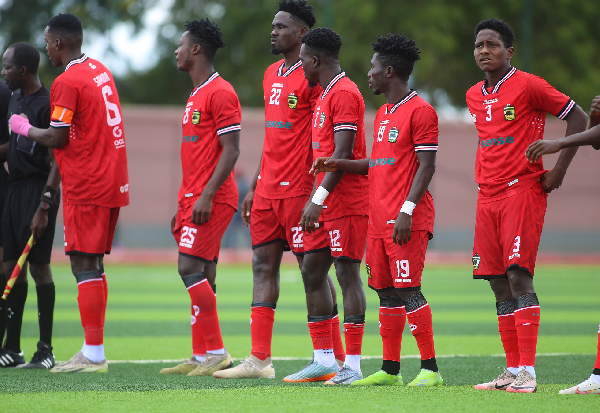
Asante Kotoko will face Moroccan giants Wydad Casablanca
Asante Kotoko will face Moroccan giants Wydad Casablanca in the next round of the CAF Confederation Cup after eliminating Nigeria’s Kwara United.
The Porcupine Warriors advanced with a 5-3 aggregate victory, securing a hard-fought 1-0 win in Abeokuta on Sunday to add to their thrilling 4-3 triumph from the first leg in Kumasi.
Hubert Gyau’s strike proved decisive as Kotoko maintained their discipline to progress.
Their next test is against Wydad, one of Africa’s most successful clubs. The Casablanca-based side are three-time winners of the CAF Champions League and were participants in the expanded FIFA Club World Cup earlier this year.
Kotoko, meanwhile, have twice lifted the Champions League crown but, like their upcoming opponents, are yet to win the Confederation Cup.
The two clubs bring pedigree and quality to what promises to be one of the competition’s standout ties. Kotoko will host the first leg at the Baba Yara Stadium in Kumasi before travelling to Morocco for the decisive return fixture in October.
The clash offers Kotoko a chance to test themselves against elite opposition as they chase continental success.
The Minister for Lands and Natural Resources, Emmanuel Armah-Kofi Buah, has directed the National Anti-Illegal Mining Operations (NAIMOS) Task Force to deal ruthlessly with illegal miners as the government intensifies its fight against galamsey.
He reiterated the administration’s determination to end illegal mining, describing it as a national security threat that demands urgent and decisive action.
Speaking at the deployment of the NAIMOS Task Force in Sunyani on Sunday, September 28, 2025, Mr Buah stressed that the team has the full support of President John Dramani Mahama.
“The fight against illegal mining is not going to stop, and every measure at the Presidency is going to be used. I charge you with a profound sense of duty and patriotism. Any recalcitrant who enters these zones is not only a trespasser, but also an enemy of the state. You are to be firm, resolute, and ruthless.
You will take no obtrusive intrusion from any big man. Remember, the biggest man in Ghana is the President, and he is the one who has sent you,” he said.
Meanwhile, the Deputy Director of Operations at the Presidency, Mustapha Gbande, urged security personnel to enforce the law without fear or favour, stressing that political affiliation must never interfere with the anti-galamsey fight.
“The most powerful person in this country, the President, is fully backing you on this mission. The NDC does not and will not endorse what our President is against. In the bush or in a water body, there is no political colour.
So, if anybody goes in the name of a political colour, arrest the person. If anybody comes in the name of the President, also arrest the person,” he said.
The deployment of NAIMOS is expected to intensify nationwide operations aimed at reclaiming degraded lands and protecting water bodies from the destructive impact of illegal mining.
UDS FISU Champions deserve Black Stars call-up – Gbewaa Palace
Ms. Mavis Achiaa Opoku, the Kwadaso Municipal Director of the National Commission for Civic Education (NCCE), has called on stakeholders to collaborate to help promote adolescent reproductive health.
She said reproductive health and gender-based education for the youth were vital for advancing gender equality, improving health outcomes, and strengthening social cohesion.
She was speaking at a stakeholder’s engagement organised under the auspices of the United Nations Population Fund (UNFPA) 8th Country Programme (2023 – 2027), which seeks to promote adolescent health, gender equality and the prevention of gender-based violence.
It was under the theme: “Empowering Community and Youth for Adolescent Health, Gender Equality, and Preventing Gender-based Violence Through Civic Engagement.”
According to the World Health Organization (WHO), complications from pregnancy and childbirth remain the leading cause of death among girls aged 15-19 globally.
Each year, an estimated 21 million girls aged 15-19 in low-middle-income countries become pregnant, of which 12 million giving birth.
Ms. Achiaa Opoku noted that, the stakeholder engagement, provided a platform for dialogue, collaboration and coordinated action in addressing adolescent pregnancy, family planning and harmful social practices that affected young people, especially girls and underserved youth.
Madam Rita Pulere Gbarinaa of the Ghana Health Service, highlighted the importance of adolescent health, noting that, the adolescent period between the ages of 10-19, was a critical stage of physical, emotional and social development.
She explained that family planning for adolescents was not about promoting sexual activity among the youth, but rather, empowering them with the knowledge and tools to make informed decisions.
Ms. Joyce Amponsah Kusi, Assistant Superintendent of Police (ASP) of the Domestic Violence and Victim Support Unit (DOVVSU) of the Ghana Police Service, explained that gender-based violence was a physical, sexual, psychological, or economic harm inflicted on individuals based on gender, stressing that it often stemmed from gender inequality and She urged intensified community education through churches, mosques and information centers to tackle the menace, adding that “parents must take full responsibility of their children by providing their basic needs.”
The stakeholders were drawn from the local government, traditional and religious leaders, service providers, civil society organizations and local NGOs, representatives from girl or youth empowerment clubs, security institutions and the media.
The International Monetary Fund (IMF) will today, September 29, begin its fifth review of Ghana’s performance under the Fund Programme.
The full team, led by Mission Chief Stéphane Roudet, arrived in Accra over the weekend. The team will be in the country for two weeks, engaging the technical staff of the Ministry of Finance and the Bank of Ghana.
They will also meet the Governor of the Bank of Ghana, Dr Johnson Asiama, and the Minister of Finance, Dr Ato Forson.
Sources tell Joy Business that unresolved arrears clearance issues will be a key focus. Government is yet to finalise its audit on how much was spent on construction and projects last year.
Concerns are also expected about whether the Bank of Ghana’s recent policy rate cuts are adequate given the sharp fall in inflation, as well as questions on its reserve build-up and dollar interventions.
This review is the penultimate one before Ghana concludes the IMF programme in May 2026.
The final review is scheduled for April 2026. Analysts describe the current review as crucial, warning that Ghana may struggle to maintain fiscal discipline once the programme ends.
Some donor partners are therefore pushing for “shock absorbers” to ensure stability beyond the programme.
Government insists there is no cause for alarm. It maintains that measures are already in place to ensure markets of disciplined expenditure after the IMF exit.
If Ghana passes this review, it is expected to receive about $360 million in October 2025. The country has so far received about $2.3 billion since signing the programme.
Joy Business understands the review will assess Ghana’s economic data up to June 2025. Discussions will focus on inflation trends, reserve sustainability, arrears audits, weak private banks requiring recapitalisation, the state of state-owned banks, revenue shortfalls, arrears build-up in statutory funds, and gaps in social spending.
The IMF Executive Board approved Ghana’s $3 billion Extended Credit Facility in May 2023.
The programme aimed to restore fiscal sustainability through revenue mobilisation and efficient spending, protect the vulnerable, implement structural reforms in tax and energy, and preserve financial stability.
It also sought to curb inflation, rebuild reserves under a flexible exchange rate regime, and create conditions for private investment, growth, and jobs.
DISCLAIMER: The Views, Comments, Opinions, Contributions and Statements made by Readers and Contributors on this platform do not necessarily represent the views or policy of Multimedia Group Limited.
DISCLAIMER: The Views, Comments, Opinions, Contributions and Statements made by Readers and Contributors on this platform do not necessarily represent the views or policy of Multimedia Group Limited.
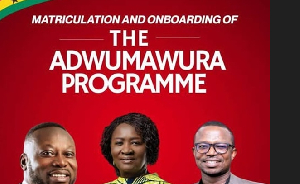
NYEIP announces winners of the Adwumawura Programme
The Chief Executive Officer of the National Youth Employment and Innovation Programme (NYEIP), Eric Adjei, has announced that selected beneficiaries of the flagship Adwumawura Programme will begin receiving official SMS notifications and phone calls from the office.
In his statement, Adjei congratulated all successful applicants who made it into the 2025 cohort of the programme, describing the initiative as a life-changing opportunity for Ghanaian youth.
As part of the onboarding process, a mandatory orientation exercise will be held on Thursday, 2nd October 2025, at the CEDI House, University of Ghana, Legon, for selected beneficiaries within the Greater Accra Region.
The event will take place under the auspices of Her Excellency, the Vice President of the Republic of Ghana.
Adjei further assured unsuccessful applicants that there will be another opportunity to apply in the next cycle of the programme.
The Adwumawura Programme forms part of the government’s broader agenda to create sustainable jobs, empower young entrepreneurs, and promote innovation across the country.
The Christian Council of Ghana has weighed in on calls for the government to roll out stronger measures in dealing with illegal mining, popularly known as galamsey.
The Council noted that although the government has explained why it has not declared a state of emergency, critical actions can and must be taken in the interim. It also commended the designation of forest reserves and water bodies as security zones.
“We commend the designation of forests and water bodies as security zones and hope this step will strengthen the ongoing fight to eradicate this menace and safeguard our God-given environment.
On October 8 last year, we issued a strong call for an immediate and comprehensive ban on galamsey activities. Today, we find it necessary to reiterate that call. Galamsey continues to inflict severe and irreversible damage on our environment—polluting water bodies, destroying forests, and threatening livelihoods across the nation.”
The statement, signed by Rev Dr Cyril Fayose, General Secretary of the Christian Council of Ghana, stressed that the effects of galamsey are dire, and as Christian leaders, they cannot remain silent.
“The evidence is all around us: once-pristine rivers are now toxic with mud and mercury; fertile farmlands have become barren wastelands; and forests—God’s sacred gifts of life and balance—are being stripped away with reckless abandon.
The consequences are dire. Our citizens face grave health risks from contaminated water sources. Our food crops are imperiled by poisoned soils. Our national food security hangs in the balance. The very air we breathe, the water we drink, and the food we eat are all under threat.
As faith leaders, we cannot remain silent while the land cries out and the poorest among us suffer. Illegal mining is not just an environmental issue—it is a profound moral, social, and national security crisis. It diminishes human dignity, entrenches poverty, and deprives the nation of resources meant for the common good.”
The Council emphasized the need for authorities to intensify the fight against illegal mining.
“We therefore call on the Government, in the strongest possible terms, to intensify its efforts and act swiftly and decisively to combat this national crisis. The law must be enforced without fear or favour. Those who sponsor or benefit from galamsey—regardless of political affiliation, social standing, or economic power—must be brought to justice. Our institutions must rise above partisanship and corruption to uphold the national interest and protect God’s creation.”
It further called on all Ghanaians to play their part in the fight.
“We also call on all citizens—traditional leaders, politicians, businesspeople, security agencies, and indeed every Ghanaian—to reject any form of complicity in this destruction of our environment. The fight against galamsey is not the sole responsibility of government. It demands the collective will, commitment, and action of the entire nation.
This fight must be won. Our children and future generations deserve a Ghana where rivers run clean, farms flourish, and communities thrive in dignity and peace.
May God grant us the courage, wisdom, and unity of purpose to rise together against this threat and secure the future of our beloved country.”
Carlos Ahenkorah, former Deputy Minister for Trade
Carlos Ahenkorah, former Deputy Minister of Trade and Former Member of Parliament for Tema West Constituency in the Greater Accra Region, has declared his support for Dr Bryan Acheampong.
He has strongly debunked an audio clip in circulation on social media, which is being misrepresented as his endorsement of a rival candidate in the New Patriotic Party’s (NPP) upcoming presidential primaries.
In a statement, Ahenkorah clarified that while the voice in the recording is indeed his, the one-minute clip has been “deliberately cut-and-paste extracted” from a much longer 40-minute interview he granted on Okay FM.
The subject of that interview was the abrogation of the cocoa syndication loan, during which he also discussed the party’s flagbearership contest.
According to Ahenkorah, his comments in the full interview provided a balanced and honest assessment of all the front-runners.
However, his ultimate conclusion was clear: given the growing divisions fueled by the supporters of other leading candidates, Bryan Acheampong stands out as the candidate most capable of unifying the NPP and securing a decisive victory for the party in the 2028 general elections.
He described the act of isolating one reference to another candidate’s name while deliberately ignoring the broader context as “not only misleading but also unacceptable.”
Ahenkorah cautioned that such tactics distort political discourse and erode trust within the party.
“Honest debate must be anchored on facts and integrity,” he said, stressing that any attempt to twist his words for political gain will not go unanswered.
As the NPP moves closer to its January 2026 National Delegates Congress, this episode highlights both the heightened stakes in the flagbearership race and the increasing role of misinformation.
Ahenkorah’s rebuttal serves as a reminder that unity, not distortion, will be the party’s most potent weapon in its quest to break the eight-year cycle and retain power in 2028.
The government missed its treasury bills target just a week after recording an oversubscription, as some investors continue to prefer fixed deposits and the Bank of Ghana bills.
According to auction results by the Bank of Ghana, the government recorded a 37% undersubscription of the short term instruments.
The Treasury received GH¢3.486 billion of the total bids, but accepted GH¢3.463 billion.
A little over 76% of the bids came from the 91-day bill.
About GH¢2.66 billion of the bids were tendered. The uptake was GH¢2.65 billion.
For the 182-day bill, GH¢705.7 million of the bids were tendered. The bids accepted were estimated to be worth GH¢695.3 million.
Similarly, GH¢119.5 million of the bids were tendered for the 364-day bill. About GH¢116.5 million of the bids were accepted.
Meanwhile, the yield on the 91-day bill increased by 5.0 basis point to 10.50%.
That of the 182-day bill also shot up to 12.39% from 12.36% the preceding week.
However, the yield on the 364-day bill increased by a basis point to 12.89%.
DISCLAIMER: The Views, Comments, Opinions, Contributions and Statements made by Readers and Contributors on this platform do not necessarily represent the views or policy of Multimedia Group Limited.
DISCLAIMER: The Views, Comments, Opinions, Contributions and Statements made by Readers and Contributors on this platform do not necessarily represent the views or policy of Multimedia Group Limited.
Following his recent appointment as Tullow Chief Executive, Mr Ian Perks, has met with Ghana’s President John Dramani Mahama at the Jubilee House in Accra.
The meeting, which included a quarterly business update by Tullow to the President, outlined Mr Perks’s key priorities, refinancing Tullow’s capital structure, production optimisation activities and resolution of ongoing tax disputes.
During the meeting with President Mahama, and Mr Perks expressed appreciation for the collaboration and support of the government for Tullow’s operations in Ghana.
Mr Perks said with the right commitment, investment and resources, Ghana and other stakeholders would continue to realise the full benefit of the national assets entrusted to Tullow.
On the part of government’s expectations, Energy sector Minister John Abdulai Jinapor commented on the effective working relationship with Tullow and emphasised that the regular gas provision by Tullow to Ghana National Gas Company (GNGC) remained critical to sustaining power supply to the country’s households and industries.
The year has been a busy one for the leading operator in Ghana, following the completion of planned maintenance shutdowns of its two FPSOs, a 4D seismic survey and the launch of a two-year drilling campaign for six new wells between 2025 and 2026.
Already one well has been completed, with a second well set to be drilled in November this year. The remaining four wells will be drilled in 2026.
Recently, the Jubilee and TEN partners entered into a Memorandum of Understanding (MOU) with the government of Ghana to extend the terms of the fields’ licenses to 2040.
The extension, which will require Parliamentary ratification, is expected to deliver material reserves additions and provide greater long-term optionality for Tullow’s core assets.
Mr Perks was joined by Tullow Board member Roald Goethe, Ghana Managing Director, Jean-Medard Madama and Deputy Managing Director, Cynthia Lumor.
The government team included Energy Minister John Jinapor and Finance Minister Cassiel Ato Forson.
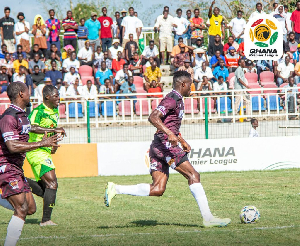
2025/26 Ghana Premier League: Week 3 Match Report – Heart of Lions 1-0 Bechem United
The 2025/26 Ghana Premier League continued to unfold exciting narratives in its third week, with Heart of Lions clinching a narrow but significant 1-0 victory over Bechem United. This match not only showcased the competitive spirit of the league but also highlighted the tactical prowess of both teams as they vie for supremacy in Ghanaian football.
Match Overview
Played at the historic Kpando Stadium, the encounter between Heart of Lions and Bechem United was marked by intense rivalry and strategic gameplay. The match kicked off under the watchful eyes of an enthusiastic home crowd, eager to see their team secure a vital three points. The atmosphere was electric, with fans clad in the colors of their respective teams, chanting and cheering for their players.
Key Moments
The decisive moment of the match came in the 67th minute, when Heart of Lions managed to break the deadlock. A well-orchestrated move saw the ball find its way to the feet of the Lions’ striker, who deftly slotted it past the Bechem United goalkeeper. This goal not only underscored the attacking capabilities of Heart of Lions but also reflected the challenges Bechem United faced in containing their opponents throughout the match.
Throughout the first half, both teams exhibited moments of brilliance, creating several scoring opportunities. However, the defenses held firm, resulting in a goalless stalemate at halftime. Bechem United, known for their solid backline, struggled to convert their chances, while Heart of Lions aimed to exploit any lapses in their opponent’s defense.
Tactical Analysis
Heart of Lions’ Strategy
Heart of Lions approached the game with a balanced strategy that emphasized both offensive and defensive play. Their formation appeared to be a 4-3-3, allowing them to maintain control of the midfield while providing ample support to their forwards. The Lions’ midfielders were instrumental in transitioning the ball quickly from defense to attack, which ultimately led to their winning goal. Their ability to maintain possession and create space was crucial in breaking down Bechem United’s defense.
Bechem United’s Approach
In contrast, Bechem United opted for a more defensive setup. Their 4-2-3-1 formation was designed to absorb pressure and hit on the counter. While this approach worked well in limiting Heart of Lions’ scoring opportunities in the first half, it proved less effective as the match progressed. The inability to adapt to the Lions’ increasing pressure led to a lack of offensive output. Bechem United’s attempts to launch quick counter-attacks were thwarted by the Lions’ disciplined defensive organization.
Player Highlights
Standout Performer
One of the standout performers for Heart of Lions was their striker, whose decisive goal was a testament to his skill and determination. His ability to find space in the box and finish clinically made him a constant threat to the Bechem United defense. Additionally, the Lions’ goalkeeper made several crucial saves, ensuring that the narrow lead was preserved until the final whistle. His performance was critical in maintaining the team’s momentum and confidence.
Bechem United’s Key Player
For Bechem United, their captain and midfield maestro tried to orchestrate play, but he often found himself isolated due to the Lions’ relentless pressing. His efforts to push forward and create chances were commendable, yet the lack of support from the attacking players limited his effectiveness throughout the match. The absence of coordination in the midfield hampered their ability to create meaningful opportunities.
Implications of the Match
This victory places Heart of Lions in a strong position early in the season, boosting their confidence as they look to build momentum. The three points are crucial as they aim to climb the league table. Conversely, Bechem United will need to reassess their tactics moving forward, particularly their attacking strategy, as they seek to bounce back in the coming weeks.
Upcoming Fixtures
Looking ahead, Heart of Lions will face a challenging match against another top contender, which will test their newly found confidence. Bechem United, on the other hand, will look to regroup and refine their strategies ahead of a critical matchup that could define their early-season trajectory. Both teams will need to analyze their performances critically and make necessary adjustments to their strategies to ensure better outcomes in their upcoming fixtures.
Historical Context
The Ghana Premier League has a rich history, with clubs like Heart of Lions and Bechem United contributing to its vibrant tapestry. Established in 1993, the league has seen various teams rise and fall, with passionate fanbases supporting their local clubs. Heart of Lions, based in Kpando, has a storied history, while Bechem United, often viewed as underdogs, has made significant strides in recent years. The clash between these two teams is always keenly contested, and this match was no exception, reflecting the competitive nature of the league.
Conclusion
The week 3 clash between Heart of Lions and Bechem United illustrated the fierce competition inherent in the Ghana Premier League. With tactical battles, standout performances, and a closely contested match, it served as a reminder of why fans are passionate about Ghanaian football. As the season progresses, both teams will seek to learn from this encounter and adapt accordingly, setting the stage for more thrilling matches in the weeks to come.
FAQ
Q1: What was the final score of the match between Heart of Lions and Bechem United?
A1: The final score was 1-0 in favor of Heart of Lions.
Q2: When was the match played?
A2: The match took place during the third week of the 2025/26 Ghana Premier League season.
Q3: Where did the match occur?
A3: The match was held at Kpando Stadium.
Q4: Who scored the winning goal?
A4: The winning goal was scored by a striker from Heart of Lions in the 67th minute.
Q5: What are the upcoming fixtures for both teams?
A5: Heart of Lions will face another top contender in their next match, while Bechem United will look to regroup for an important upcoming game that could impact their season.
Q6: How does this victory affect the league standings?
A6: This victory boosts Heart of Lions’ position in the league standings, giving them vital points early in the season, while Bechem United may need to reassess their tactical approach to avoid falling further down the table.
Q7: What strategies might Bechem United employ in their next match?
A7: Bechem United may consider adopting a more aggressive offensive strategy to support their midfield and capitalize on scoring opportunities, adjusting their formations to create more dynamic play.
Q8: How do the performances of Heart of Lions and Bechem United reflect the overall competitiveness of the Ghana Premier League?
A8: The close nature of the match and the strategies employed by both teams highlight the depth of talent and tactical awareness present in the league, showcasing how every match can be a battle for supremacy.
John M. Anderson
Editor in Chief
John M. Anderson
John has over 15 years of experience in American media, previously working with The Washington Post and Politico. He specializes in U.S. politics and policy analysis, ensuring every piece published by Berawang News meets the highest standards of accuracy and fairness.
President John Dramani Mahama has formally designated the Millennium Development Authority (MiDA) as the government’s primary focal institution for coordinating philanthropic and grant-based partnerships.
In a letter dated September 19, 2025, addressed to the Chairperson of MiDA and copied to the Ministers of Finance and Foreign Affairs, President Mahama cited MiDA’s track record of technical excellence, fiduciary discipline, and effective delivery as the basis for the new designation.
The move is intended to streamline and enhance the country’s engagement with major international philanthropic entities.
“This designation affirms Government’s confidence in MiDA’s institutional strength,” the letter stated, emphasizing MiDA’s historical success in implementing large-scale development projects such as the Millennium Challenge Corporation (MCC) Compacts.
The new role empowers MiDA to serve as the central coordinating body for all government engagements with philanthropic partners.
This includes strategic alignment with national priorities like the Feed Ghana Programme and the Sustainable Development Goals (SDGs).
As part of its expanded mandate, MiDA will now be responsible for acting as the lead institution for aligning philanthropic efforts with national development goals, managing secured funds grants, and implementing robust procurement systems.
MiDA’s designation specifically includes, but is not limited to, collaboration with global philanthropic giants such as the Open Society Foundation (OSF), the Bill and Melinda Gates Foundation, the Mastercard Foundation, and other similar entities.
President Mahama has instructed MiDA to work proactively with the Ministry of Finance, relevant sector ministries, and designated organizations to unlock impactful development financing opportunities for Ghana.
“We are confident that under your leadership, MiDA will excel in this strategic role,” the President’s letter concluded, expressing optimism about Ghana’s potential to become a trusted global partner in international philanthropy.
This strategic shift is expected to bolster Ghana’s capacity to attract and manage international grants effectively, ensuring that partnerships deliver measurable, lasting benefits to the Ghanaian people.
Liliana Gómez, the Peruvian Ambassador to Ghana, has called for enhanced bilateral trade relations between the two countries, learning from its shared values of democracy, human rights, and sustainable development, lasting the last 38 years.
She said this during the second edition of the Peru-Ghana Trade and Investment forum – a hybrid event held on the theme: “Strengthening Trade and Investment between Peru and Ghana: Exploring Opportunities in Agribusiness and Sustainable Mining.”
Ms Gómez, in her address, said the forum was to place a spotlight on high-potential sectors, including agribusiness and sustainable mining, where Peru and Ghana could collaborate as co-creators of inclusive trade growth.
“Peru has positioned itself as a gateway for Ghanaian goods into South America, especially through the newly inaugurated Megaport of Chancay, which offers advanced connectivity to Asia-Pacific markets,” she said.
Ambassador Gómez stated that Ghana’s strategic position as the centre of the world, and its dynamic role within the African Continental Free Trade Area (AfCFTA), offered access to West African and continental markets to be tapped into by Peruvian businesses.
Mrs Nana Krah Ansah-Agyei, the Director of the Economic, Trade and Investment Bureau at the Ministry of Foreign Affairs, applauded the two countries for the age-long bilateral ties and called for deeper collaboration in untapped
sectors.
She highlighted opportunities in agribusiness, mining, fisheries, textiles, pharmaceuticals, automobiles, as well as Small and Medium-sized Enterprise (SME) development as complementary strengths that could be harnessed for mutual benefit.
“Despite our cordial relations, Ghana and Peru are yet to fully explore their trade potential. With the MoU on political consultations, we are ushering in a new era of cooperation,” said, Ansah-Agyei.
She noted that the forum proved the commitments to South-South cooperation, encouraging public-private sector partnerships as bilateral trade relations between the two countries had been on the rise.
The Director said bilateral trade volumes reached US$27.4 million in 2023, with Ghana’s exports to Peru increasing by 33.5 per cent. while Peru’s exports to Ghana grew by 33.3 per cent.
The Hunters have now suffered back-to-back away defeats
Heart of Lions continued their impressive start to the Ghana Premier League with a 1-0 victory over Bechem United at the Kpando Sports Stadium on Sunday.
The decisive moment came from substitute Michael Ephson, who was introduced at the start of the second half. He made an immediate impact, scoring in the 59th minute to hand the Lions all three points.
The win marks Lions’ third straight victory of the campaign, a run that has propelled them to the top of the league table. Their strong start is now set for a real test when they face Asante Kotoko in their next fixture.
For Bechem United, the struggles continue.
The Hunters have now suffered back-to-back away defeats and remain winless after three games. Their next assignment comes against Hearts of Oak, where they will aim to put an end to their poor run.
With confidence high in Kpando, Lions will look to extend their momentum, while Bechem are already under pressure to turn their season around.
In this Nigerian epic movie, Calamity befell a fruitful and peaceful community after a greedy man sold his soul to the devil in the quest to become the king.
Nigerian Movie Starring; Don Brymo, Chizzy Alichi, Jnr. Pope Odonwodo
Asante Kotoko are in Ilorin on Sunday, September 28, 2025, for the decisive second leg of their CAF Confederation Cup preliminary tie against Kwara United.
After edging the Nigerians 4-3 in Accra, Kotoko must tighten up defensively if they are to protect their slim advantage.
Kwara, backed by their home crowd, will fancy their chances of overturning the deficit in what promises to be a fiery contest.
US pop star and actress Selena Gomez has married music producer Benny Blanco in a ceremony in California.
Gomez posted pictures to Instagram of her wearing a white halter-neck wedding gown and Blanco in a dark tuxedo, alongside the caption “9.27.25” bookended by love hearts.
The couple exchanged vows in Santa Barbara on Saturday in front of around 170 guests, including singer-songwriter Taylor Swift, actor Paul Rudd, and Gomez’ Only Murders in the Building co-stars Steve Martin and Martin Short, according to fashion magazine Vogue.
“My wife in real life,” Blanco commented on his bride’s post.
The couple were both dressed by Ralph Lauren, according to Vogue
Gomez, 33, and Blanco, 37, became engaged in December 2024 after a year of dating, having previously collaborated on several music projects together.
The couple released the album I Said I Love You First in March, which explores their own love story.
They previously released the hits Same Old Love and Kill Em with Kindness in 2015, and the 2019 track I Can’t Get Enough featuring Tainy and J Balvin.
Gomez starred in the Disney Channel’s Wizards of Waverly Place before beginning her music career in the 2000s. She recently starred in the film Emilia Perez as Jessica Del Monte.
Blanco released his only solo studio album Friends Keep Secrets in 2018, and has produced records for the likes of Katy Perry, Britney Spears and Kesha.
DISCLAIMER: The Views, Comments, Opinions, Contributions and Statements made by Readers and Contributors on this platform do not necessarily represent the views or policy of Multimedia Group Limited.
DISCLAIMER: The Views, Comments, Opinions, Contributions and Statements made by Readers and Contributors on this platform do not necessarily represent the views or policy of Multimedia Group Limited.
Ghanaian champions Bibiani GoldStars endured a nightmare in Algeria as they were thrashed 5-0 by JS Kabylie in the second leg of their CAF Champions League First Preliminary Round tie.
The loss, added to the 2-0 first-leg defeat in Accra, eliminated the Miners on a 7-0 aggregate.
The Canaries dominated from start to finish, with Emmanuel Kobi’s own goal setting the tone early. Veteran Ryad Boudebouz doubled the lead from the penalty spot before the break.
The second half brought more misery for the Ghanaians. GoldStars were reduced to ten men when Emmanuel Ankrah was sent off on the hour mark. Minutes later, Mehdi Merghem struck for the third, before Lahlou Akhrib added a fourth just four minutes later.
In stoppage time, Oualid Malki sealed the rout, completing a comprehensive demolition of the Ghanaian debutants.
The humiliating defeat ends GoldStars’ maiden continental campaign, while JS Kabylie advance to face US Monastir of Tunisia in the next round.
Robert Lewandowski nodded in a second-half winner as Barcelona came from behind to beat Real Sociedad and top the La Liga table.
With the scores locked at 1-1, Barca manager Hansi Flick brought on Ballon d’Or runner-up Lamine Yamal in the 58th minute.
Just seconds later, the 18-year-old beat a defender before dinking in a perfect cross, which an unmarked Lewandowski headed in.
Real Sociedad had taken a shock lead in the 31st minute on the counter-attack when Alvaro Odriozola slid in to turn home Ander Barrenetxea’s low cross.
But the hosts levelled two minutes before half-time when defender Jules Kounde met Marcus Rashford’s corner with a thumping header.
Rashford had another fine game for the hosts, regularly carving out chances down the left and had dipping shots well saved by Sociedad keeper Alex Remiro either side of half-time.
The Manchester United loanee was brought off in the 78th minute with Flick presumably having one eye on his side’s Champions League tie with Paris St-Germain on Wednesday.
Sociedad had a late opportunity to level after Kounde dawdled and had the ball pinched off him, but Takefusa Kubo was unable to finish off the move, instead clattering the crossbar.
About 30 seconds later, Barca went up the other end with Yamal setting up Ferran Torres, who found Lewandowski, but the Pole’s effort bounced off the underside of the bar, down on to the goalline but stayed out.
Ultimately, though, the miss wasn’t costly as the defending champions held on for their sixth win in seven league matches and moved a point clear of Real Madrid, who lost 5-2 at Atletico Madrid on Saturday.
DISCLAIMER: The Views, Comments, Opinions, Contributions and Statements made by Readers and Contributors on this platform do not necessarily represent the views or policy of Multimedia Group Limited.
DISCLAIMER: The Views, Comments, Opinions, Contributions and Statements made by Readers and Contributors on this platform do not necessarily represent the views or policy of Multimedia Group Limited.
Barcelona’s return to the Nou Camp has been further delayed after the city council turned down their request for an essential permit on Tuesday.
The La Liga champions were hoping to host Real Sociedad in the league on Sunday with a reduced capacity of 27,000.
Instead, the fixture will be at the 55,000-seater Olympic Stadium on the city’s Montjuic hill, where Barca have played for the previous two seasons during the renovation work.
The club thanked members and supporters, “for their understanding and support during such a complex and exciting process”, and said they were working on the amendments given by the council.
Barcelona have played their two home games against Valencia and Getafe at the much smaller 6,000-capacity Johan Cruyff Stadium, home to their women’s team.
The city’s fire department said there were problems with evacuation routes, among other safety issues.
However, Barca’s operations director Joan Sentelles told reporters during a tour of the stadium on Tuesday: “Just because it’s not finished, doesn’t mean it’s not safe.”
Sentelles also said the roof will be put on the stadium in the summer of 2027, a year later than originally planned.
Work on the Nou Camp began in June 2023, at a cost of about £1.1bn, to modernise the stadium and expand its capacity to 105,000 – making it one of the largest grounds in the world.
The plan was to be back playing games there in November 2024, to coincide with the club’s 125th anniversary, but that target has long since passed.
Laia Bonet, Barcelona’s deputy mayor, said the city council must guarantee the safety of everyone who wants to go to the stadium. “This is the priority,” she added.
DISCLAIMER: The Views, Comments, Opinions, Contributions and Statements made by Readers and Contributors on this platform do not necessarily represent the views or policy of Multimedia Group Limited.
DISCLAIMER: The Views, Comments, Opinions, Contributions and Statements made by Readers and Contributors on this platform do not necessarily represent the views or policy of Multimedia Group Limited.
Robert Lewandowski nodded in a second-half winner as Barcelona came from behind to beat Real Sociedad and top the La Liga table.
With the scores locked at 1-1, Barca manager Hansi Flick brought on Ballon d’Or runner-up Lamine Yamal in the 58th minute.
Just seconds later, the 18-year-old beat a defender before dinking in a perfect cross, which an unmarked Lewandowski headed in.
Real Sociedad had taken a shock lead in the 31st minute on the counter-attack when Alvaro Odriozola slid in to turn home Ander Barrenetxea’s low cross.
But the hosts levelled two minutes before half-time when defender Jules Kounde met Marcus Rashford’s corner with a thumping header.
Rashford had another fine game for the hosts, regularly carving out chances down the left and had dipping shots well saved by Sociedad keeper Alex Remiro either side of half-time.
The Manchester United loanee was brought off in the 78th minute with Flick presumably having one eye on his side’s Champions League tie with Paris St-Germain on Wednesday.
Sociedad had a late opportunity to level after Kounde dawdled and had the ball pinched off him, but Takefusa Kubo was unable to finish off the move, instead clattering the crossbar.
About 30 seconds later, Barca went up the other end with Yamal setting up Ferran Torres, who found Lewandowski, but the Pole’s effort bounced off the underside of the bar, down on to the goalline but stayed out.
Ultimately, though, the miss wasn’t costly as the defending champions held on for their sixth win in seven league matches and moved a point clear of Real Madrid, who lost 5-2 at Atletico Madrid on Saturday.
DISCLAIMER: The Views, Comments, Opinions, Contributions and Statements made by Readers and Contributors on this platform do not necessarily represent the views or policy of Multimedia Group Limited.
DISCLAIMER: The Views, Comments, Opinions, Contributions and Statements made by Readers and Contributors on this platform do not necessarily represent the views or policy of Multimedia Group Limited.
This Sunday edition of JoyNews’ The Probe will turn the spotlight to Africa’s voice on the global stage.
As world leaders gather for the 80th United Nations General Assembly (UNGA), how well is Africa making its case? What successes can the continent point to, what gaps remain, and where have opportunities been missed?
Host Carlos Calony will engage a distinguished panel: Dr. Liborous Oshoma, Legal Practitioner and Foreign Policy Analyst from Nigeria; Dr. Lassane Ouédraogo, Associate Professor at Nazi Boni University, Burkina Faso; Jerolinmek Piah, Liberia’s Minister of Information, Cultural Affairs and Tourism; and Gordon K’achola, Foreign Policy Analyst from Kenya.
Join in the conversation:
DISCLAIMER: The Views, Comments, Opinions, Contributions and Statements made by Readers and Contributors on this platform do not necessarily represent the views or policy of Multimedia Group Limited.
DISCLAIMER: The Views, Comments, Opinions, Contributions and Statements made by Readers and Contributors on this platform do not necessarily represent the views or policy of Multimedia Group Limited.
Award-winning Ghanaian singer Sefadzi Abena Amesu, better known as S3fa, has revealed that fame sometimes feels overwhelmingly lonely despite the admiration and celebration that come with it.
In a recent appearance on the Not Me podcast, the ‘E Choke’ hitmaker broke down in tears as she spoke candidly about her personal challenges in recent months.
West Africa’s ambitious electricity expansion program reached a critical milestone this week as regional experts gathered in Nigeria’s capital to evaluate progress on one of the continent’s most significant power infrastructure investments.
The four-day mid-year review of the Regional Electricity Access and Battery Energy Storage Technology (BEST) Project brought stakeholders together in Abuja from September 23-26 to assess achievements and challenges across five participating countries. The session served as both a progress report and strategic planning forum for the initiative’s second half.
Launched in March 2022 with $465 million in World Bank funding, the BEST Project represents ECOWAS’s most comprehensive approach to addressing West Africa’s persistent electricity access challenges. The initiative spans Senegal, Mauritania, Mali, Niger, and Côte d’Ivoire, with goals that seemed ambitious three years ago but now show tangible progress across the region.
Mr. Bayaornibe Dabire, ECOWAS Director of Energy and Mines, opened the review with cautious optimism about the project’s trajectory. “Since its launch in 2022, the BEST Project has brought us together with rigor, enthusiasm, and consistency,” he noted, emphasizing how the initiative has fostered unprecedented regional cooperation in energy infrastructure development.
The numbers tell a compelling story of progress despite implementation challenges. The project aims to electrify 2,201 localities, install 205 megawatt-hours of battery storage capacity, and connect more than 235,000 households to modern electricity services. These targets, while ambitious, appear increasingly achievable given current progress rates.
Côte d’Ivoire emerges as the project’s standout performer, with its storage component reaching 81.5% completion. Three major sites totaling 105 MWh are scheduled for commissioning by March 2026, potentially serving as a model for other participating countries. This success story provides valuable lessons for accelerating implementation elsewhere in the region.
Senegal has completed comprehensive studies to electrify 1,041 communities, affecting more than 50,000 households. Construction activities await the end of the rainy season, reflecting the practical challenges of implementing large-scale infrastructure projects in West Africa’s climate conditions.
The Sahel countries demonstrate varied progress patterns that reflect their unique circumstances. Mali signed contracts for an 80 MWh storage system in July 2025, while Niger awarded contracts covering 91% of its commitments worth $95.4 million, including electrification of 742 communities and a 20 MWh storage system. Mauritania has reached 48% progress in access works for 481 communities, though technical challenges persist in this desert nation.
Ms. Elise Akitani, Senior Energy Specialist at the World Bank, described the BEST Project as pioneering work toward greater renewable energy integration. Her assessment highlighted the initiative’s potential to transform not just electricity access but the entire regional power market structure. The project strengthens both the Economic Electricity Regulatory Authority (ERERA) and the West African Power Pool (WAPP), creating foundations for enhanced cross-border electricity trading.
The timing of this review couldn’t be more critical. With approximately two years remaining until project completion, stakeholders face pressure to address implementation bottlenecks while maintaining quality standards. The meeting focused on streamlining procedures and capitalizing on successful experiences, particularly Côte d’Ivoire’s achievements, to accelerate progress in other countries.
Beyond immediate infrastructure gains, the BEST Project represents a shift toward modern energy systems across West Africa. Battery storage technology integration allows for better renewable energy utilization while improving grid stability—essential factors for supporting economic development in the region.
The project’s regional approach offers advantages over traditional country-by-country energy investments. Shared expertise, coordinated procurement, and unified technical standards create efficiencies that individual national programs typically cannot achieve. This collaborative model could influence how future regional infrastructure projects are structured.
Implementation challenges remain significant. Technical risk management, procurement delays, and coordination complexities across multiple countries continue testing project managers’ capabilities. However, the mid-year review suggests these obstacles are being addressed systematically rather than being allowed to derail overall progress.
The meeting’s outcomes will likely influence resource allocation and strategic priorities for the project’s remaining phase. With tangible results already visible in communities gaining electricity access for the first time, stakeholders appear committed to maintaining momentum despite ongoing challenges.
For West Africa’s energy future, the BEST Project represents more than infrastructure development. It’s testing whether regional cooperation can deliver on promises of improved living standards through modern electricity services. Early indicators suggest cautious optimism may be justified, though significant work remains before final evaluation becomes possible.
Moldovans have voted in parliamentary elections seen as critical for their future path to the European Union amid allegations of “massive Russian interference” before the vote.
The claims, first made by Moldova’s security forces, were repeated by pro-EU President Maia Sandu, who told reporters outside a polling station in the capital Chisinau the future of her country, flanked by Ukraine and Romania, was in danger.
Partial results will emerge in the coming hours, and the electoral commission said turnout was just over 52% – higher than in recent years.
Two political forces are seen as almost neck and neck in the race: Sandu’s Party of Action and Solidarity (PAS) and the pro-Russian Patriotic Electoral Bloc.
Another important factor is the more than 270,000 voters who turned out in the largely pro-Western diaspora. In a measure of the tension surrounding the vote, bomb scares were reported at polling stations in Italy, Romania, Spain and the US.
Similar scares were reported in Moldova itself.
Moldova also has a pro-Russian breakaway enclave called Transnistria along its border with Ukraine, complete with a Russian military presence.
Residents in this sliver of land have Moldovan passports and most are strongly pro-Moscow, but they have to cross the Dniester river to vote.
Moldovans have been buffeted by Russia’s full-scale war in neighbouring Ukraine, but they are also grappling with spiralling prices and high levels of corruption.
President Sandu, 53, won a second term of office last November and warned Moldovans the future of their democracy was in their hands: “Don’t play with your vote or you’ll lose everything!”
If her PAS party loses its majority in the 101-seat parliament, it will have to look for support from two of the other parties expected to get into parliament, the Alternativa bloc or the populist Our Party.
One of Sandu’s main rivals, Socialist leader Igor Dodon, went on national TV as soon as polls closed to claim his pro-Russian allies in the Patriotic Electoral Bloc had won the election, despite there being no exit polls and before any early results were declared.
Thanking Moldovans for voting “in record numbers”, he called on the PAS government to leave power, and for party supporters to take to the streets on Monday to “defend” their vote outside parliament at midday.
“We will not allow destabilisation,” he promised. “The citizens have voted. Their vote must be respected even if you don’t like it,” he added, addressing President Sandu and her party.
One of the parties in Dodon’s bloc was barred from running two days ago because of alleged illicit funding.
In the run-up to the vote, police reported evidence of an unprecedented effort by Russia to spread disinformation and buy votes. Dozens of men were also arrested, accused of travelling to Serbia for firearms training and co-ordinating unrest. A BBC investigation uncovered a network promising to pay participants if they posted pro-Russian propaganda and fake news.
Parties sympathetic to Moscow rejected the police claims as fake and a show – created by the government to scare people into supporting them. Russia’s embassy in the UK rejected the BBC’s allegations, accusing Moldova and its “Western sponsors” of seeking to divert attention from Chisinau’s “internal woes”.
At the edge of Moldova’s separatist enclave of Transnistria on Sunday, a long queue of cars waited to cross the river to register their vote at 12 polling stations opened beyond the administrative border, some of them more than 20km (12 miles) away.
The number of voters was down on recent years, at just over 12,000, an indication of the struggle many faced.
Moldovan police checked documents and car boots before letting them pass. Most cars had several people inside, often whole families.
By mid-afternoon, the queue stretched into the distance beyond a kiosk with a Soviet-style hammer-and-sickle emblem on top, and the green-and-red striped flag of Transnistria.
Speaking to drivers, most seemed unconcerned by the inconvenience, and the atmosphere was relatively relaxed.
One man told the BBC in Russian that he was voting for change because the PAS government had “promised paradise and delivered nothing”. No-one would be more specific than that, insisting their voting preference was “secret”.
DISCLAIMER: The Views, Comments, Opinions, Contributions and Statements made by Readers and Contributors on this platform do not necessarily represent the views or policy of Multimedia Group Limited.
DISCLAIMER: The Views, Comments, Opinions, Contributions and Statements made by Readers and Contributors on this platform do not necessarily represent the views or policy of Multimedia Group Limited.