Dr Bernie Asher is a lecturer at the University of Professional Studies, Accra
A lecturer at the University of Professional Studies, Accra, Dr Bernie Asher, has downplayed the impact of President John Dramani Mahama’s address at the 80th Session of the United Nations General Assembly, stressing that such speeches carry little to no policy weight.
Speaking in an interview on Joy News and monitored by GhanaWeb on October 1, 2025, Dr Asher acknowledged Mahama’s strong delivery, describing him as an orator who effectively conveyed his sentiments.
However, he said Ghanaians should not be overly excited about the address.
“This forum is a free-for-all where every leader can say everything they want. These things don’t mean much. This is not policy. This is just a forum for people to rant, for presidents to say what they want on their mind. It carries no policy impact, there are no consequences of it, and nobody has to listen or act on it,” he said.
Dr Asher recalled how leaders like Libya’s Muammar Gaddafi and Cuba’s Fidel Castro once delivered marathon speeches at the Assembly that made no tangible impact on global policy.
He added that even in recent times, speeches by world leaders such as US President Donald Trump and the Israeli Prime Minister have been met with walkouts or dismissal.
Mahama’s UNGA 80 Address: Three bold statements that have won widespread plaudits
He emphasised that while Mahama’s delivery was commendable, the address should not be mistaken for an achievement.
“Let’s not trick ourselves that something very powerful has been achieved. Nothing has been achieved. This is just a speech,” Dr Asher reiterated.
President Mahama in his address at the UNGA pressed for permanent African representation on the Security Council with veto power, arguing that the current arrangement is outdated and unjust.
Gov’t spokesperson outlines why President Mahama’s UNGA 80 address was ‘historic and highly successful’
He also demanded reforms to the global financial system, which he said is “Rigged against Africa.”
The president also called for reparations for slavery and colonization, the return of stolen African artefacts, and a fairer share of natural resource benefits for African nations.
“We are tired of people extracting the most they can from us and offering the least in return,” he added.
JKB/VPO
‘Stop the crocro the john attitude’ – Watch as Kofi Kapito blasts Sam George over DStv saga
Ghana has joined the rest of the world to mark the National Cyber Security Awareness Month (NCSAM), a month-long programme dedicated to building a safe, informed, and accountable digital space for all.
The 2025 edition of NCSAM, themed “Building a Safe, Informed, and Accountable Digital Space,” responds to growing digital threats by focusing on the intersection of cybersecurity, misinformation and disinformation, and human rights in the era of artificial intelligence and emerging technologies.
The programme, scheduled throughout October, seeks to raise awareness among children, businesses, the public, and government institutions on the importance of protecting digital rights, combating misinformation and disinformation, and promoting the ethical and responsible use of technology.
President John Dramani Mahama is expected to inaugurate members of the JCC.
The best sports betting site 1xBet presents the mainmatch of the league phase round 2, which will beplayed on October 1. Remember the principles ofresponsible gambling, make your prediction via thislink and win with your favorite team!
Champions League classics
In recent years, the rivalry between Barcelona andParis Saint-Germain, official partners of 1xBet, hasbecome one of the most intense in Europe’s premierclub tournament.
The most memorable match was theBlaugranas’ crazy comeback (6-1) in 2017 after losing0-4. The teams last met in the 2023-24 season: in thequarter-finals, Barcelona won 3-2 in the first leg, butParis Saint-Germain crushed their opponents away (4-1).
Hansi Flick’s second attempt
In his first season at Bayern Munich, the Germancoach won all the trophies and came close to repeatinghis success with Barcelona. However, in theChampions League semi-finals against Inter Milan, theCatalans were just a little unlucky.
Flick’s team is aiming to win the title at its secondattempt and is in excellent form. Barça have won 7 oftheir 8 games at the start of the season, including a victory over Newcastle United in the Champions League round 1 (2-1).
On Sunday, in the match against Real Sociedad, theBlaugranas’ leader, Lamine Yamal, returned frominjury and took just one minute to assist Robert Lewandowski’s winning goal.
We should also noteMarcus Rashford’s great form – the Englishman scored2 goals against Newcastle and has no intention ofslowing down. However, Raphinha, Fermín López andJoan García won’t be able to help Barcelona due toinjuries.
Difficult period for Paris Saint-Germain
The intense 2024-25 season has had a significant effecton Luis Enrique’s team. Today, the French giants can’tperform at their best due to the absence of their biggeststars.
The Ballon d’Or winner Ousmane Dembélé andthe leader of the Parisians’ defense Marquinhos willdefinitely miss the match against the Catalans, whilethe participation of Vitinha, Khvicha Kvaratskhelia, Désiré Doué and João Neves is in doubt.
However, theRed-and-Blues’ attack shouldn’t be underestimated – their wing-backs Achraf Hakimi and Nuno Mendes cancause big problems for any opponent.
The statistics from the previous encounters atBarcelona’s home ground favor Paris Saint-Germain: the French giants have won the last two games with a score of 4-1.
Odds: W1 – 2.015, X – 4.14, W2 – 3.6
We’ve analyzed the key points of the upcoming gameto make it easier for you to place a winning bet. Play responsibly on the best sports betting site 1xBet, bet onthe giants’ battle via this link and enjoy top football!
The Executive Director of Uwezo Uganda, Dr Gorreti Nakabugo (M), briefs journalists
The Executive Director of Uwezo Uganda, Dr Gorreti Nakabugo, has said the high cost of education and harmful cultural practices remain huge barriers to girl-child education in Uganda and need urgent attention to reverse the situation.
“Though progress has been made over the past decade, girls in Uganda and across Sub-Saharan Africa are still faced with enormous challenges to enroll in and complete quality education. Poverty, harmful cultural norms, teenage pregnancies, child marriage, gender discrimination, and lack of safe learning environments are some of the barriers to girl-child education,” Dr Gorreti Nakabugo told journalists during a press conference in Kampala on September 30, ahead of the national conference What Works in Girls’ Education.
The conference, scheduled for October 1 to 3, 2025, under the theme Breaking Barriers, Building Benefits: Evidence and Action for Girls’ Education, will bring together experts from 20 countries.
According to Dr Nakabugo, the cost of education is a key determinant of whether children enroll, stay in school, and complete their education cycle.
“Girls are forced to drop out especially at the lower levels of education, which translates into a vicious cycle of poverty. We have eight to eleven themes under which different researchers and practitioners are going to present papers during the conference. One of them is the issue of policy and financing,” she said.
Despite Uganda’s free education policy, extra charges, such as contributions to teachers’ salaries even when they are on government payroll, remain a challenge. In addition, many parents cannot afford the fees charged by private schools.
Available records indicate that at least 30 percent of parents in Uganda borrow money to pay school fees for their children.
Associate Professor George Wilson Kasule, Dean of the School of Education at Kyambogo University, said parents and guardians also have a responsibility to ensure children stay in school.
Mr Emmy Zoomlamai Okello, Country Lead for the Regional Education Learning Initiative (RELI) -Africa Uganda Chapter, said misinterpretation of the Universal Primary Education (UPE) and Universal Secondary Education (USE) policies by leaders has misled parents.
“The leaders are preaching to the parents that we have free education, but this is universal education, which is for everyone. What needs to be done is to engage parents more closely so that they understand what the policy means when it comes to universal education. That alone is costing the country much in terms of children not learning and lagging behind in some of the competencies in literacy and numeracy at the foundation level,” he said.
Prof Richardo Sabates from the University of Cambridge said intentional collaborative efforts must be promoted to address barriers in the education system to ensure both boys and girls access quality education needed to drive human capital development.
Weeks after the husband of Evangelist Patricia Asiedua, popularly known as Nana Agradaa, expressed deep concern over her struggles in prison, a new directive is reportedly bringing relief to the embattled evangelist.
Nana Agradaa, who has been at the center of several controversies in recent years, was said to be going through severe challenges behind bars. Her husband publicly lamented the harsh conditions she was facing, calling on authorities to intervene and ensure her well-being. His plea stirred mixed reactions among Ghanaians, with some sympathizing with her situation while others argued that she must face the consequences of her actions.
In a recent development, a new order from higher authorities is expected to ease her situation. While details of the directive remain limited, sources close to the matter indicate that the order could positively impact her prison conditions and possibly open a path toward her reintegration.
A video shared on social media by Nana Agradaa herself through her official TikTok account, @originalagradaa, suggests a wave of hope and renewed faith. Supporters of the evangelist have since flooded her page with encouraging messages, expressing optimism that the new development marks the beginning of a turnaround in her ongoing ordeal.
Nana Agradaa, once known for her controversial practices before switching to evangelical work, has remained a household name in Ghana’s media and religious circles. Her story continues to spark national debate, balancing between redemption, justice, and the human cost of incarceration.
As events unfold, the public awaits clearer details on the nature of this new order and what it ultimately means for Nana Agradaa’s future.
The Chamber of Indigenous Business and Investors (CIBI) has strongly rejected claims made in a recent investigative report by The Fourth Estate and the Media Foundation for West Africa (MFWA) that the National Lottery Authority (NLA) handed over a GH¢3 billion business to KGL Technology Limited for just GH¢170 million annually.
The report alleged that the contract, signed in 2024, spans 15 years with an automatic five-year renewal clause, and framed it as an undervaluation of NLA’s operations.
However, CIBI, in a statement signed by its Executive Director, Alistair Nelson, described the report as “misleading, inaccurate and highly unprofessional,” insisting that the authors demonstrated “ignorance about lottery operations.”
According to CIBI, the arrangement between NLA and KGL is a licensing agreement, not a procurement contract. Licensing agreements, it explained, are authorised by the NLA Board under the National Lotto Act, 2006 (Act 722) and L.I. 1948, and do not require procurement processes.
“Licensing agreements issued by NLA to Lotto Marketing Companies, collaborators and private operators have never gone through the procurement process, since they are not procurement contracts,” the statement stressed.
The Chamber further explained that KGL is not the only company with such a long-term arrangement. Lots Services Ghana Limited signed a 15-year contract in 2013, Simnet Ghana Limited had a 10-year deal beginning in 2015, while Alpha Lotto Limited and other private lotto operators signed 10-year contracts in 2024.
Many Lotto Marketing Companies licensed in 2006 have also been operating for nearly two decades under transitional provisions in Act 722, the statement said.
On the financial claims, CIBI emphatically denied that NLA had ever run a GH¢3 billion annual business.
It said the Authority’s highest revenue on record was GH¢401 million in 2017, adding that it was factually impossible for a GH¢3 billion operation to exist prior to KGL’s entry.
“For the avoidance of doubt, the NLA has never generated GH¢3 billion annually since its establishment in 1957,” the statement said.
To support its point, CIBI released figures showing total prize payouts to lottery winners from 2013 to 2020 reached GH¢1.3 billion, averaging between GH¢122 million and GH¢209 million annually.
It also revealed that during the same eight-year period, the NLA paid just GH¢182 million in total to the Consolidated Fund, with yearly contributions ranging from GH¢11.8 million in 2014 to GH¢33.9 million in 2018.
By contrast, CIBI argued, the current licensing deal guarantees GH¢170 million annually from KGL to the Consolidated Fund – more than the Authority’s own highest annual payment in recent history.
“This clearly shows that the NLA-KGL deal is the best arrangement so far, and ensures greater value for the state,” the Chamber concluded.
Big Brother Naija Season 10 housemate, Faith Adewale, has emerged as the winner of the highly-anticipated Innoson Vehicle task, securing one of the most prestigious prizes of the season.
The intense task, staged as part of the final week’s activities, was divided into two rounds.
A Senior Communicator of the Movement for Change, Solomon Owusu, has backed recent remarks made by two key New Patriotic Party (NPP) regional chairmen, stating that their claims about internal control over the party’s delegate album are indeed factual.
According to Owusu, the Bono Regional Chairman, Kwame Baffoe (popularly known as Abronye), and the Ashanti Regional Chairman, Bernard Antwi Boasiako (Wontumi), made truthful statements when they claimed that they wield the power to manipulate the delegate album including the removal or inclusion of names in ways that benefit the former Vice President Dr. Mahamudu Bawumia’s presidential bid.
The Head of the Centre for European Studies at the University of Ghana, Dr Kwame Asah-Asante, has criticised President John Mahama’s call for reparations during his recent address at the United Nations General Assembly, describing it as misplaced.
Speaking on the AM Show on JoyNews, Dr Asah-Asante acknowledged that many people have praised the former president’s UN speech as bold and visionary.
“It is an apt description of a speech from a leader who is visionary, who fears nobody, and a leader worth his salt,” he said.
“I have no problem with that, and I concede to a large extent that yes, the speech had what it takes to be presented at that forum.”
However, he said he disagreed with the part of the address that focused on reparations for slavery. “The president touched on the issue of reparations, and that is where I have a difficulty,” he said.
Drawing on history, Dr Asah-Asante said Africa’s role in the transatlantic slave trade cannot be ignored. “If you look at the history of the slave trade, it was not committed by one person. In every market, there is the demand and there is the supply. Who were those who supplied the slaves? Our people here, chiefs, opinion leaders, and all that. We sold our people into slavery,” he said.
“So that exercise, if there is a problem, it cannot be borne by only one person. It takes two to tango. We sold our people, people bought them, and then used them for whatever purpose they wanted.
“That argument for me has been discussed and discarded, and I was not looking forward to hearing my president recounting that because it can never be sustained anywhere,” he added.
According to him, while the slave trade was “distasteful” and its methods “inhuman,” Africans must also admit their complicity. “With all due respect to Mr President, I disagree that Africans qualify for any reparations because we were part and parcel of the slavery,” he said.
Dr Asah-Asante recalled his own visits to slavery heritage sites abroad and recognised the pain associated with that history, quoting the late historian Professor Adu Boahen, who once described slavery as “an unmitigated misery.”
“But I believe that Africans were part and parcel of it even before the transatlantic trade, we also had domestic slavery. What about that?”
DISCLAIMER: The Views, Comments, Opinions, Contributions and Statements made by Readers and Contributors on this platform do not necessarily represent the views or policy of Multimedia Group Limited.
DISCLAIMER: The Views, Comments, Opinions, Contributions and Statements made by Readers and Contributors on this platform do not necessarily represent the views or policy of Multimedia Group Limited.
Ghana’s consumer price inflation extended its nine-month decline
Ghana’s consumer price inflation extended its nine-month decline, hitting single digits for the first time in four months at 9.4% in September 2025.
This marks the lowest rate since August 2021 and the ninth consecutive monthly drop.
According to the Ghana Statistical Service, the slowdown was largely driven by an easing in food prices, with food inflation falling to 11% in September from 14.8% in August.
The year-on-year rate eased to 9.4% in September 2025, down from 11.5% in August.
Non-food inflation also edged down, declining to 8.2% from 8.7% in August.
Ghana’s inflation drops for 8th straight month
Inflation for locally produced items slowed to 10.1% in September from 12.2% in August 2025, while imported items recorded 7.4% in September, down from 9.5% in August.
Sarkodie paid a courtesy call on Otumfuo at the Manhyia Palace
Rapper Sarkodie has disclosed that the Asantehene, Otumfuo Osei Tutu II, has instructed his council of elders to secure a land in Kumasi so he can build a house in the Ashanti regional capital.
In an interview with Kessben TV, Sarkodie recounted how the King expressed surprise when he told him he did not own a home in Kumasi.
Sarkodie said Otumfuo described him as a “son” of the land and felt it was not right for him not to have a permanent residence there.
Sarkodie pays surprise visit to Agya Koo at his Kumasi mansion
“He (Otumfuo) asked me why I don’t have a house in Kumasi and instructed his council of elders to secure land for me to build and reside in Kumasi. And when he said that, it stuck with me,” Sarkodie disclosed.
According to Sarkodie, the conversation took place when he and his management team recently paid a courtesy call on the Asantehene at the Manhyia Palace.
The purpose of the rapper’s visit was to officially inform the King about his Rapperholic Homecoming Concert, which was staged at the Baba Yara Sports Stadium on September 27, 2025.
Rapperholic Homecoming: ‘I was scared and nervous when it started raining’ – Sarkodie
Sarkodie also sought Otumfuo’s blessings and consent for the event, which was one of the biggest shows in Kumasi’s entertainment calendar this year.
During the meeting, Otumfuo did not only pledge his support but also indicate willingness to attend the concert, although he was unable to make it on the day.
The King also offered words of counsel to Sarkodie and his team, encouraging them to remain humble and focused as they make strides in their careers.
Sarkodie was joined at the palace by his manager Angel Town and Nabil Alhassan of Event Factory, who were also part of the team behind the Kumasi edition of the Rapperholic concert.
Sarkodie revealed on Kessben TV that Asantehene Otumfuo Osei Tutu II asked if he owned a house in Kumasi and instructed his council of elders to secure a land for him to build and reside in Kumasi. pic.twitter.com/JC28U1FiFv
The United States Embassy’s visa and passport services might be affected due to the gov shutdown
The United States Embassy in Ghana has served notice to the general public of how the government shutdown will disrupt operations at the embassy.
In a post shared on X on Wednesday, October 1, 2025, the embassy indicated that the shutdown of the government of Donald Trump would affect a number of its operations.
It indicated that the delay in the release of funds due to the shutdown would affect its social media operations.
It also indicated that the delay is also likely to affect the issuance of passports and visas, which would continue in the meantime.
US reverses visa restrictions on Ghana; five-year multiple entry visas restored
“Because of the lapse in appropriations, the U.S. Embassy’s Facebook, X, and Instagram accounts will not be updated regularly until full operations resume, with the exception of urgent safety and security information.
“At this time, scheduled passport and visa services in the United States and at U.S. Embassies and Consulates overseas will continue during the lapse in appropriations as the situation permits. For information on our services and operating status, visit http://travel.state.gov,” the post read.
US Embassy breaks silence after Ablakwa announced reversal of visa restrictions on Ghana
About the US government shutdown:
The US government shut down on Wednesday after Congress failed to pass a bill to keep federal funding flowing.
According to The New York Times, the shutdown is expected to affect hundreds of thousands of workers who are set to be sent home without pay.
It would also affect a wide range of federal programs, which will be disrupted until a deal is reached.
Read the social media post below:
Because of the lapse in appropriations, the U.S. Embassy’s Facebook, X, and Instagram accounts will not be updated regularly until full operations resume, with the exception of urgent safety and security information.
Ghana’s cocoa deliveries to warehouses in August more than quadrupled from the same period last year, as an accelerated start to the season provided early cash to farmers, adding to the uptick in supply that’s cooling global prices.
The country this year decided to begin its cocoa season in August, two months ahead of the norm, to appease farmers who fetch a government-set price for their crop.
Arrivals of the chocolate-making ingredient in the four weeks ending Sept. 4 reached 50,440 metric tons, compared with about 11,000 tons delivered in the same period in 2024, according to people familiar with the matter.
The world’s No. 2 producer raised the amount it pays farmers for their cocoa beans by 4.2% to 3,228.75 cedis ($261) per 64-kilogram bag in the current 2025-26 season.
That’s expected to lower the incentive to smuggle beans to nearby nations where prices are higher.
The market is watching supplies from West African growers closely after a series of back-to-back poor harvests fueled a huge global shortage that sent New York futures soaring to a record last year.
While a small surplus is expected in the current 2024-25 season, the market remains tight and prices are well above historical levels. Most of the beans delivered to warehouses are destined for export, though some are sold to local processors. Ghana has forecast a cocoa crop of 650,000 tons in the 2025-26 season, up from 600,000 tons in the previous harvest.
A spokesperson for Cocobod, the national regulator, declined to comment.
The world’s top grower, Ivory Coast—where farmers’ pay is also set by the government—is expected to announce an increase in its farmgate prices for the new season that starts Oct. 1.
Ghana’s fight to control smuggling has shown some progress.
A new funding model, where top exporters are helping finance purchases, has also improved the tracking of beans from farms, the people said, asking not to be named because they’re not authorized to discuss the matter.
The Ghana Chamber of Telecommunications (GCT) and the Digital Chamber of Ghana (DCG) announce the appointment of Sylvia Owusu-Ankomah as their new Chief Executive Officer effective 1st October 2025.
With close to two decades of progressive leadership experience spanning Ghana’s telecommunications, digital, and FMCG sectors, Sylvia combines deep industry knowledge with a proven ability to build partnerships and deliver results which she brings on board in her new roles. Her inspiring career spans high-impact positions at leading multinational organizations, including MTN Ghana, Tigo (Millicom Ghana), AirtelTigo (AT Ghana), and Guinness Ghana Breweries PLC (Diageo/Castel Group).
Throughout her telecoms career, Sylvia has been at the forefront of transformational projects shaping Ghana’s telecom and digital landscape. She played a pivotal role in securing regulatory approvals for Ghana’s first landmark telecom merger, spearheaded high-stakes public policy advocacy, and championed initiatives that expanded connectivity, enhanced regulatory compliance, and strengthened industry-government relations. At MTN Ghana, she was instrumental in securing the 3G License and Submarine Cable Landing rights, both of which helped establish MTN as Ghana’s market leader in data services.
At AirtelTigo, Sylvia provided executive leadership during one of Ghana’s most complex mergers, navigating regulatory landscapes, stakeholder management, and post-merger government relations. She also supported the acquisition of its EMI License from the Bank of Ghana and served as a former Council Member of the Ghana Chamber of Telecommunications, giving her deep insight into the Chamber’s mission and governance.
In addition to her executive roles, Sylvia has served as Board of Trustee Member of the Ghana Investment
Fund for Electronic Communications (GIFEC) under the Ministry of Communications, where she
contributed to strategies for digital inclusion and the expansion of connectivity to underserved
communities. Sylvia also served as a Former Advisory Board Member of the Ghana Innovation Hub,
supporting initiatives aimed at fostering innovation, entrepreneurship, and the growth of Ghana’s digital
economy.
Most recently, Sylvia served as Director of Corporate Relations at Guinness Ghana, where she led public
policy advocacy, sustainability, strategic communications and reputation management, achieving
significant wins. These included safeguarding their license to operate, driving local sourcing, and leading
their business sustainability agenda in Ghana.
Commenting on her appointment, Stephen Blewett, Chair of the Governing Council and CEO of MTN
Ghana, said:
“Sylvia’s appointment represents an exciting new chapter for the Chamber. Her deep roots in the telecom
sector, coupled with her proven ability to unite stakeholders and deliver tangible results, position her
perfectly to lead the industry Chamber into its next phase of digital growth and innovation.”
Today’s announcement follows the successful conclusion of Ing. Dr. Kenneth Ashigbey’s tenure on June,
2025, after nearly eight years of service. The Council expresses its gratitude for his leadership and contributions, which helped establish strong advocacy platforms for the sector and laid the groundwork for the Digital Chamber.
Expressing her vision for the role, Sylvia stated:
“I am humbled to lead the Ghana Chamber of Telecommunications and the Digital Chamber of Ghana at such a defining time for Ghana’s digital journey. My mandate is clear – strengthening collaboration across government, industry and consumers. Together with our members, we will advocate for policies that enable inclusive and sustainable industry growth, safeguard critical telecommunication infrastructure, empower innovation, and ensure Ghana remains at the forefront of Africa’s digital renaissance.”
Sylvia holds an MBA in Management from Coventry University (UK), a Public Policy Analysis certification from the London School of Economics, and a Leading Sustainable Corporations certification from the University of Oxford’s Saïd Business School.
Sylvia Owusu-Ankomah’s appointment underscores the two Chambers commitment to visionary leadership that serves industry, government, and Ghanaians as a whole. As she steps into this new chapter, the two Chambers wish her great success and commit to support her every step of the way.
About the Ghana Chamber of Telecommunications:
The Ghana Chamber of Telecommunications is the foremost industry association representing the interests of telecommunication operators and infrastructure companies in Ghana.
The Chamber is deeply dedicated to promoting and advancing the growth of the telecommunications industry, ensuring the delivery of high-quality services to consumers, and supporting the country’s socio-economic development.
The Chamber represents AT Ghana (formerly AirtelTigo), MTN Ghana, Telecel Ghana and associate members across infrastructure and technology, including ATC Ghana, CSquared, Ericsson, Helios Towers Ghana, Huawei, and Spectrum Fibre Limited.
About the Digital Chamber of Ghana:
The Digital Chamber of Ghana is the unified voice for Ghana’s digital finance ecosystem.
The Chamber brings together the country’s electronic-money issuers and fintech partners – including AT Money, G-Money, Mobile Money Limited (MTN), Telecel Cash, Zeepay among others – to foster innovation, enhance regulatory collaboration, and promote financial inclusion.
The Parties without Representation in Parliament (PwRP) have accused the government of engaging in selective prosecution in its anti-corruption campaign, Operation Recover All Loot (ORAL).
According to the group, while officials of the former New Patriotic Party (NPP) administration are being targeted, cases involving individuals linked to the ruling National Democratic Congress (NDC) are quietly abandoned in the name of public interest.
Addressing a press conference in Accra yesterday, the General Secretary of the Great Consolidated Popular Party (GCPP), Citizen Ato Dadzie, alleged that the Mahama administration was undermining the credibility of the ORAL Committee by weaponising its findings against political opponents.
“We are witnessing a disturbing trend where the law is applied differently depending on one’s political affiliation. This is not the justice Ghanaians voted for. Justice must be impartial, not partisan,” he stated.
The ORAL Committee was established by President Mahama in 2024, with the Minister of Foreign Affairs, Mr Samuel Okudzeto Ablakwa, as Chair. It was tasked to investigate corruption under the previous NPP administration.
The committee’s report reportedly triggered 33 prosecutions, with the Attorney General, Dr Dominic Akuritinga Ayine, confirming that some trials had commenced while others were still pending.
However, Mr Dadzie expressed concern that high-profile scandals involving NDC figures, like the Saglemi Housing Project, the fertiliser contract saga, and the ambulance procurement deal had seen little or no progress, despite evidence of huge financial losses to the state.
“In contrast, individuals associated with the former NPP government have been arrested, paraded in the media, and subjected to public trials before any court ruling. This is not justice; it is political theatre,” he argued.
Mr Dadzie also criticised the ongoing trial of former National Signals Bureau (NSB) Director-General, Kwabena Adu-Boahen, describing it as weak and a threat to national security.
He cited a letter from Israeli firm, ISC Holding Limited, which he said confirmed that the cyber defence systems in question were fully delivered, contradicting the Attorney General’s claim that no equipment was received.
“This case should never have been made public. It compromises sensitive national security infrastructure and undermines Ghana’s ability to protect itself in the digital space,” he warned.
Mr Dadzie, therefore, called for an immediate review of the Attorney General’s handling of corruption-related cases. He insisted that justice must be pursued transparently and without political bias.
“Justice cannot be selective. If the fight against corruption is to be credible, it must be even-handed and grounded in evidence, not partisanship,” he emphasised.
Jemilat Mahamah is the Vice President of the Ghana Chamber of Shipping
Persistent congestion, high costs and operational inefficiencies at Ghana’s seaports are undermining trade and investment and weakening the country’s competitiveness, according to Jemilat Mahamah, Vice President of the Ghana Chamber of Shipping.
Addressing the Maritime Transport Stakeholders Forum in Tema, she said that unless transparency and efficiency are made central to port reforms, Ghana risks losing ground in regional and global trade.
“Our maritime sector stands as a gateway to regional trade and a cornerstone of our national economy. Yet, the challenges surrounding port congestion, operational inefficiencies, lack of transparency, and high costs have hindered the full realisation of our maritime potential,” she noted.
The forum, convened under the theme ‘Streamlining Ghana’s Maritime Transport and Logistics Sector for Transparency, Efficiency and Competitiveness’, brought together officials from the transport ministry, private operators, regulators, and civil society to examine reforms aimed at strengthening port performance.
She stressed that the economic toll of inefficiencies extended beyond Ghana’s borders. Tema and Takoradi ports handle the vast majority of the country’s seaborne trade, with Tema alone processing about 80 percent of all imports and exports. Both ports also serve as gateways for landlocked neighbours including Burkina Faso, Mali and Niger, making their performance critical to regional supply chains.
“These issues not only stifle trade and investment but also diminish Ghana’s standing in the African Continental Free Trade Area and the global marketplace,” she said.
She identified transparency as a critical tool for reversing the trend, arguing that openness in port operations would enhance regulatory compliance, reduce costs, and encourage innovation.
“The nexus between transparency and shipping efficiency is one of a positive correlation,” she told attendees.
“Together, these effects reduce costs, improve sustainability, and increase customer satisfaction, fundamentally transforming shipping performance,” she added.
Discussions at the forum centred on port modernisation, the deployment of digital tools such as the Port Community System, and policy frameworks intended to improve accountability. Industry leaders were expected to share experiences and propose strategies for tackling the high costs and delays that continue to burden shippers and businesses.
Mahamah urged stakeholders to take a proactive role in shaping reforms, warning that the nation’s maritime transport system could not sustain inefficiencies if it was to compete effectively.
“Your insights, experiences, and commitments are vital to shaping a maritime landscape that not only serves the economy efficiently but also attracts sustainable investment and unleashes new economic opportunities for Ghanaians,” she said.
She further called for collective resolve to reposition Ghana’s ports as efficient and competitive trade gateways capable of delivering long-term economic benefits.
Minister of Food and Agriculture, Eric Opoku, has credited the government’s Feed Ghana Programme for the bumper harvest currently being recorded across the country.
His remarks follow complaints from farmers in several agricultural communities who say that while they have been able to produce food in large quantities, they are struggling to find ready markets for their produce.
Speaking on the Citi Breakfast Show on Wednesday, October 1, 2025, Mr. Opoku said the glut reflects the success of the programme.
“The farmers in many parts of the country are complaining that they have produced in quantities beyond the market there, and they are not getting buyers. In Asunafo South, the youth who participated in the Feed Ghana Programme came to me and said that they have been harvesting the rice in quantities, and they are looking for a market.
“So, it is not the case that these are isolated cases. What is happening now is a nationwide bumper harvest that Ghana is experiencing,” he said.
The minister explained that the initiative was designed to encourage mass participation in agriculture.
“We launched the Feed Ghana Programme. The first leg of that programme is to campaign for mass participation in the programme. We campaigned that individual households must have backyard gardens, and SHS must have school farms.
“From the beginning of the campaign up to today, we have on record that 129 SHS are participating. We also campaigned for church and faith-based organisations to enter the programme. We have records of churches, and we have some records that have directed their branches with fertile lands to participate in the programme. Even state agencies are participating,” he noted.
Mr. Opoku added that while agriculture is largely private-sector-led, the government’s role in providing an enabling environment has been crucial to sustaining output.
“We must admit that the agricultural space is private sector-led. So when the government creates that continual atmosphere, and they take advantage of some of them, certainly, they see some of these things. The weather has also been favourable, so the results are a bumper harvest, which we anticipated at the beginning of the programme,” he explained.
He further hinted that the glut could intensify in the coming months, as most of the produce currently on the market is from the southern sector, while harvests from the northern belt are yet to reach markets.
Stop dragging NPP, focus on galamsey fight – Miracles Aboagye
A video making rounds on social media has stirred reactions after a group of young Nigerians appealed to Ghanaians to “lend” them their president, His Excellency John Dramani Mahama, for a short period.
In the viral footage, the group — made up of young men and women — said they were deeply inspired by President Mahama’s recent speech at the United Nations (UN), which they described as “so strong it could break a stone.”
Tema, Sept. 25,GNA-The AbibiNsroma Foundation, a climate change focused Civil Society Organisation(CSO), has embarked on a massive capacity building community engagement on Just Energy Transition in the Tema Metropolitan Area.
The group, led by its Comvenor, Mr Bob K. T. Amiteye, engaged with traditional rulers, Councilors, drivers and transport union members, and market women.
The rest are retired workers, teachers in coastal communities, Director of the Tema Central Sub Metro Council, Journalists and the Youth.
Speaking at the coastal community of Tema Manheam, where the whole coastal line has suffered sea erosion, he called for the official involvement of community leaders and members in the Ciimate Change and energy transition process.
He said Ghana’s current approach remains heavily centralized and investor-focused, sidelining traditional authorities and rural communities which held deep ecological knowledge and bore the greatest burden of energy poverty and climate vulnerability.
He told the pathetic story of a fish monger who after a night toil, woke up the next morning only to find out that all her smoked fish had been washed away by sea erosion.
In such circumstances, who does she go to for relief? He asked. “Obviously, the poor woman has to figure out a survival strategy all by herself after losing all her investment.”
Community-led energy governance structures offer a transformative solution. These institutions would allow for inclusive co-decision-making, ensure fair allocation of project benefits, and strengthen accountability through citizen-based monitoring and localised oversight, he said.
Expanding on the foundation’s policy on energy transition, he said Ghana’s just energy transition would remain incomplete without deliberate and institutionalised mechanisms for community engagement at the local level.
The foundation recommends that Ghana formally establish community-led energy governance structures as a central feature of its national energy transition strategy.
These bodies must reflect the legitimacy of traditional authorities—who hold jurisdiction over land and natural resources—and build upon their lived experience and contextual expertise.
” However, recognition alone is insufficient. Local authorities must also be equipped with technical capacity and embedded within national policy processes to co-govern energy systems from the outset. ” Mr Amiteye said.
To ensure that these structures are effective, they should be recognised under national law, endowed with regulatory and oversight responsibilities, and supported through a blend of public, donor, and private finance. They must not operate as temporary consultative forums but as statutory mechanisms with powers over planning, budget review, and dispute resolution.
These structures should also serve as local delivery arms for Ghana’s Nationally Determined Contributions (NDCs), helping translate national climate targets into place-based implementation strategies that reflect community needs and rights.
Ghana should establish Regional and District-Level Community Energy Committees with inclusive representation from traditional authorities, women’s associations, youth leaders, and cooperative groups.
These committees must hold formal co-decision-making powers on issues such as site selection, procurement terms, and community impact assessments for renewable energy projects.
Drawing in the experiences from Kenya’s Energy Sector Working Groups and Senegal’s Local Energy Committees, he said early-stage community involvement improved project acceptance, reduced implementation delays, and enhanced sustainability.
He explained that those bodies should serve as formal interlocutors with state and private actors and be embedded in statutory planning cycles.
We are also calling for the introduction of Community Benefit Trusts to create local financial structures that allocate a designated share of renewable energy project revenues to social infrastructure and development programmes, he said.
Transparent revenue management builds public trust and creates a material stake in energy infrastructure.
He said developing a Citizen Energy Audit Framework could also empower communities to track project compliance with environmental laws, labour standards, and equity commitments.
“This function is critical in areas where state enforcement remains weak. Drawing lessons from Peru’s Environmental Vigilance Committees and Ghana’s own Local Governance Act (Act 936), community monitors should be trained and supported by the Energy Commission and the Environmental Protection Authority(EPA). Such frameworks must be codified in national guidelines, with legal pathways for escalating violations and submitting compliance reports.”
The foundation bemoaned that fact that customary ecological knowledge remained vastly underutilised in national energy planning.
Ghana has an opportunity to develop hybrid energy solutions by connecting traditional knowledge systems with modern technological innovation. Partnerships between technical universities, vocational training centres, and grassroots innovators can generate context-specific solutions such as solar-powered irrigation, wind pumps, and biomass conversion systems adapted to regional ecosystems,it said.
Ghana’s energy transition can set a precedent for equity, sustainability, and accountability in Africa—if it roots innovation in local institutions, not just infrastructure. Community-led energy management structures offer more than consultation; they provide a governance scaffold for just transition outcomes.
These structures can stabilize energy markets, enhance policy legitimacy, and deliver measurable development dividends.
“As international institutions, donors, and state actors invest in clean energy expansion, their frameworks must reflect the social architecture that sustains long-term equity. Supporting local governance in Ghana is not only good development practice—it is a strategic choice that aligns climate ambition with social cohesion.”Mr Amiteye said.
Some participants called for regular interaction and partnership with the CSO for constant information sharing which they could use as a tool for community sensitization and development.
Minister for Sports and Recreation, Kofi Adams has implored the Black Stars to triumph over Comoros in the final round of the 2026 World Cup qualifiers.
In a highly competitive clash on October 12, 2025, the West African football heavyweights will play host to Comoros at the Accra Sports Stadium, with both teams yearning for a win to cushion their qualification chances.
Ghana currently sit top of Group I with 19 points, and need just one more victory to confirm their place for the biggest soccer mundial to be staged in the United States, Canada, and Mexico next year.
The Black Stars will begin their final doubleheader against the Central African Republic at the Al Abdi Stadium in El Jadida on Wednesday, October 8, before hosting Comoros.
Ghana’s only defeat in the World Cup qualification series came against Comoros last year. Before this tie, the Black Stars had succumbed to a defeat in the group stage of the 2023 AFCON tournament.
However, the Sports Minister has charged the Black Stars to payback Comoros by beating them convincingly in Ghana.
“Every Ghanaian want the Black Stars to payback Comoros by beating them convincingly in matchday ten, which is our final qualifying game against Comoros” he said.
Meanwhile, Ghana coach Otto Addo is expected to unveil his squad for the double-header this month.
The Minister of Interior, Muntaka Mohammed-Mubarak, has criticised the current promotion system within Ghana’s security services, warning that it rewards complacency and undermines professionalism.
Speaking before the Public Accounts Committee of Parliament on September 30, 2025, the Minister stated that the existing arrangement allows officers to rise through the ranks simply by serving their years in office without demonstrating competence, skills, or a commitment to duty.
“It is the one who goes to fetch water that breaks the pot. So, I don’t want any infraction, so I will fold my hands and just be lying down. And then four years count, I get promoted,” he lamented.
According to him, hardworking officers often face unnecessary setbacks due to queries and disciplinary records, while others who lie low benefit from automatic promotions after completing their mandatory years of service.
4 police officers promoted for diligence and professionalism
Mubarak insisted that Ghana’s security services, including the Police, Immigration, Fire and Prisons Service, must anchor promotions on three key pillars: attitude, skills, and knowledge.
“I think that for us to have a very efficient service, whether police, immigration, fire, or prisons, it must be anchored on three things. One, the attitude of the service person. Two, the skills that you have.
“And three, the knowledge. And the skills can only be gotten only through periodic training. So, in my view, you should not just get promoted when you’ve not gone through certain…what we call regimental training.
“I’m sorry to say, we have police officers today. If you take them to the police range for firing, madame chair, they will piss on themselves, yet they are walking around every four years, promote me, promote me,” he added.
He argued that while professionals are valuable, their roles should have clear limits to ensure that only officers with operational and tactical expertise are elevated to senior command positions like Commissioner of Police or Inspector General of Police (IGP).
“Someone comes as a PR, then before you realise, he hasn’t done anything significant, tomorrow he’s COP. And once he’s COP, he starts knocking on politicians’ doors, saying, I want to be IGP. That is wrong. It doesn’t happen anywhere,” he stressed.
@justiceman25
“Some police officers today would pee on themselves if taken to the firing range, yet they seek promotions every four years,” – Interior Minister Muntaka
♬ original sound – Justice_Man
AM/SEA
‘Ghanaians regret voting for you’ – Watch more videos from the NPP’s recent demonstration directed at President Mahama
A private citizen has petitioned the Director General of the Criminal Investigations Department (CID) of the Ghana Police Service to investigate Justice Yonny Kulendi of the Supreme Court and Richard Jakpa, Director of Operations at the National Security Council, for allegedly conspiring to interfere with the administration of justice in the ambulance trial.
According to the petition filed by Daniel Marfo Ofori-Atta, Jakpa right from the beginning of the trial in January 2022, allegedly deployed the highly influential Justice Kulendi “to obstruct the course of justice in the case with the ultimate object of ensuring that the prosecution of Richard Jakpa was either abated by the then Attorney General, Godfred Yeboah Dame, or he (Jakpa) was acquitted.”
It indicates that the acts of Justice Kulendi and Richard Jakpa border on the commission of crimes relating to interference with legal proceedings.
This is the second petition the CID has received in respect of the ambulance trial in which Jakpa and Finance Minister, Dr. Casiel Ato Forson, were accused of willfully causing financial loss of €2.37 million to the state, through a contract to purchase 200 ambulances for the Ministry of Health, among other charges.
The ambulances, according to court documents, are ordinary buses which are not fit for purpose as they do not have the needed equipment that an ambulance requires.
The two were acquitted by the trial court after the Court of Appeal granted their appeal challenging the decision of the High Court which ordered them to open their defence, after it found that the Attorney General had made a prima facie case against them.
Jakpa has petitioned the CID to investigate former Attorney General, alleging he fabricated evidence in the trial. Mr. Dame is expected to appear before the CID today.
Second Petition
The petition filed by Daniel Marfo Ofori-Atta on September 29, 2025, detailed court proceedings capturing Jakpa telling the court under cross-examination how he contacted Justice Kulendi, who is his cousin, to assist him in the ongoing trial.
For instance, the petition points out that on January 18, 2022, after Richard Jakpa had been arraigned in court, he solicited the help of Justice Kulendi, to procure the assistance of the then Attorney General “to facilitate the release of Richard Jakpa when he had not satisfied the conditions of the bail granted to him.”
“Justice Kulendi actually went to the office of the former Attorney General, Godfred Dame, to request that his cousin be permitted to go home,” the petition indicated.
It also pointed a proceeding where Richard Jakpa “confessed” to obtaining the telephone number of Mr. Dame from Justice Kulendi, after which he confidently attempted to meet with Mr. Dame and inundated him with many WhatsApp messages.
“The evidence shows that from the time Richard Jakpa first got in touch with Attorney-General Godfred Dame via WhatsApp, he sent in all sixty-eight (68) WhatsApp messages to him, in reply to which the then Attorney-General sent only two (2). Richard Jakpa confirmed this under cross-examination by the Director of Public Prosecutions, Mrs. Yvonne Atakora-Obuobisa,” the petition noted.
Again, the petition alleged that Justice Kulendi “lured” Mr. Dame into a meeting at his (Justice Kulendi’s) home to meet Jakpa after Jakpa’s several attempts to get the former Attorney General to meet him in person failed.
“Indeed, the record showed that apart from inside the courtroom and the house of Justice Yonny Kulendi, Mr. Godfred Dame has never met Mr. Richard Jakpa anywhere,” the petition stated.
These, the petition alleged, show “a calculated effort by the learned Justice of the Supreme Court, Justice Yonny Kulendi together with his cousin, Richard Jakpa, to interfere in the prosecution of the criminal case filed against Richard Jakpa by the Republic of Ghana.
“This is not only dishonourable but also borders on the commission of crimes in accordance with the Criminal and Other Offences Act, 1960 (Act 29),” it added.
The petitioner, therefore, urged the CID to commence investigations into the conduct of Justice Yonny Kulendi and his cousin, Richard Jakpa, to unravel all acts of criminality disclosed by their conduct, and take such prosecutorial action as is consistent with law.
Ghana’s High Commissioner to Malta and renowned actress, Kalsoume Sinare, accompanied by the immediate past High Commissioner to Malta, Barbara Akuorkor Benisa, has paid a courtesy call on the Director-General of the National Lotteries Authority (NLA), Mohammed Abdul-Salam.
H.E. Sinare informed Mr. Abdul-Salam that, in preparation for her new assignment, she contacted her predecessor, H.E. Barbara Benisa, who briefed her on the ties and partnerships between the NLA, the Maltese government, and the Malta Gaming Authority (MGA).
Her primary objective was to explore potential areas of collaboration with the NLA to strengthen the existing relationship and address any outstanding issues with Malta.
The Director-General, Mr. Mohammed Abdul-Salam, welcomed and commended the ambassadors for their collaborative efforts in promoting the NLA as an Authority and working in the interest of Ghana.
Following a briefing on the history and relationship between the NLA and the MGA, which included visits by the former President of Malta, H.E. Dr. George Vella, and Dr. Ian Borg, the former Foreign, European Affairs and Trade Minister, Mr. Abdul-Salam reaffirmed his commitment to maintaining the relationship between the NLA, the MGA, and the Maltese government, with the support of H.E. Sinare and H.E. Benisa.
H.E. Sinare also expressed her heartfelt gratitude to H.E. Benisa for her significant support and the foundation she established during her tenure in Malta.
She assured the DG of her commitment to continuing the work started by her predecessor, especially in promoting collaboration between the NLA and MGA.
She emphasized her intention to advocate for the signing of the MOU between NLA and MGA, which would enable NLA staff to participate in an exchange program with their counterparts in Malta.
Once finalized, the MOU will permit ten NLA staff members to visit MGA annually to observe best practices.
H.E. Benisa, Ghana’s immediate past High Commissioner, also reiterated her full support for her successor, H.E. Sinare, and the Director-General, Mr. Mohammed Abdul-Salam, in their efforts to build on the foundation she established.
Ghana’s consumer price inflation has dropped into single digits for the first time in four years, extending a nine-month streak of declines.
The year-on-year rate eased to 9.4% in September 2025, down from 11.5% in August.
According to the Ghana Statistical Service, the slowdown was largely driven by an ease in food prices, with food inflation falling to 11% in September from 14.8% the previous month.
Non-food inflation also edged down, easing to 8.2% from 8.7% in August.
The sustained decline means inflation has already beaten government’s full-year target, offering relief to households and businesses that have endured prolonged price pressures.
This trend strengthens prospects for monetary policy stability, exchange rate resilience, and improved consumer confidence heading into the final quarter of the year.
The last time Ghana enjoyed single-digit inflation was in August 2021.
Kwaku Dawuro presents the morning political show on Movement TV
Kwaku Dawuro presents The Morning Political Show on the Wontumi morning show.
Seated with his guests, they discussed some of the most topical political subjects of the week.
Together with his guests, they provided in-depth analysis of political stories making headlines today.
With its blend of expert analysis and engaging discussions, the programme, hosted in the widely spoken local dialect, Twi, brings together well-experienced guests and professionals to share their perspectives on the nation’s most pertinent political and social matters.
Sam George is the Minister of Communication, Digital Technology and Innovations
Local talent and resources will be placed at the centre of efforts to build a multibillion-dollar digital economy, the Minister for Communication, Digital Technology and Innovations, Samuel Nartey George, has said at the opening of the Africa Internet Summit (AIS) 2025 in Accra.
Speaking at the summit, which also marked 30 years of the internet in Ghana and the country’s pioneering role in Africa’s digital transformation, he said the government’s strategy aims to shift Ghana from being mainly a consumer of foreign technology to a producer of home-grown solutions.
The approach, George added, will nurture indigenous tech talent, support local start-ups and promote open digital infrastructure to retain more value within the domestic economy.
“For too long, Africa has been a consumer of technology rather than a creator. We are determined to train a generation that will design, code, secure and scale digital solutions made in Ghana, for Africa,” he said.
The plan includes expanding national training programmes such as the One Million Coders initiative, scaling digital innovation hubs, and boosting university-based research and development through targeted funding, he explained. The pathway also intends to adopt open-source software, open standards and transparent artificial intelligence frameworks to cut costs while enhancing national digital sovereignty, he noted.
This comes against the backdrop of a fast-growing sector, with the GSMA projecting that reforms could add US$3.4 billion to the economy and create 500,000 jobs by 2029. While estimates vary, analysis in early 2024 put the size of Ghana’s digital economy at around US$1 billion, with forecasts suggesting growth to reach US$5 billion by 2030.
Much of this expansion has been driven by mobile broadband penetration exceeding 90 percent and internet usage reaching about 68 percent of the population. Yet Mr. George acknowledged that significant revenue continues to leave the country, captured by foreign-owned platforms in areas such as cloud hosting, software licensing and e-commerce infrastructure.
“Every year, billions of cedis in digital value leak out of our economy to pay for foreign services. Our goal is to reverse this trend by building systems that are open, secure and locally driven,” the minister said.
The commemoration of Ghana’s three decades of internet connectivity also highlighted the contributions of Prof. Nii Narku Quaynor, a key architect of the country’s early adoption of the technology. Often referred to as the “Grandfather of the internet in Africa,” Professor Quaynor said the anniversary was both a milestone and a call to action.
“Thirty years ago, Ghana showed that Africa could lead in digital innovation,” he said at the summit, which had as its theme: ‘A resilient internet ecosystem for an innovative digital Africa’.
“We now have the responsibility to ensure that the next phase is built on African expertise, African infrastructure, and African solutions. The internet must become a tool of empowerment, not dependency,” he added.
Professor Quaynor also urged policymakers to sustain investments in skills, research and infrastructure.
“Digital sovereignty is not achieved by declarations alone. It requires long-term commitment to building talent pipelines, securing our networks, and ensuring that our entrepreneurs have the capital to innovate,” he noted.
Whilst welcome, sector analysts continue to insist that the strategy’s success would depend on sustained investment, access to venture capital and stronger collaboration between academia and industry to close persistent skills gaps.
There is the prevailing sentiment that Ghana should aim for a bigger share of the pie, especially as Africa’s digital economy is projected to reach US$180 billion by 2025 and to expand to US$712 billion by 2050.
The strategy aligns with broader continental ambitions under the African Union’s Digital Transformation Strategy and the Smart Africa Alliance, both of which emphasise building local capacity in the creation and governance of digital technologies.
George further called for deeper regional cooperation, stating: “Let us move beyond access metrics to focus on real impact. By building apprenticeships, research labs and start-ups, we can ensure that African engineers and entrepreneurs will design and maintain Africa’s internet infrastructure and services”.
Ghana’s agricultural sector, a cornerstone of its economy, has long been a story of immense potential held back by persistent challenges. For generations, farmers have battled with the unpredictable nature of the weather, significant post-harvest losses, and limited access to modern farming methods and financial support.
These problems represent the real struggles of small-holder farmers and the missed opportunities for a nation’s growth.
Today, we stand at the intersection of opportunity and urgency.
According to the World Bank’s Commodity Markets Outlook and Agricultural Risk Assessment, agriculture is a US$4.82 trillion industry in 2025, projected to grow steadily at 3.44% Compound Annual Growth Rate, driven by demand for food, biofuels, and sustainable commodities.
However, the sector faces risks from climate change, input costs, and geopolitical tensions, making innovation and resilience more critical than ever.
In Africa, agriculture remains the backbone of economies.
As reported by the World Bank’s West Africa Digital Agriculture Projects, the connected agriculture market alone is expected to grow from US$2.9 billion in 2025 to US$9.87 billion by 2031, as digital platforms revolutionize access to markets, finance, and advisory services for smallholder farmers.
In Ghana, the agriculture sector is valued at US$15.2 billion in 2025, with a projected growth rate of 7.01% Compound Annual Growth Rate, fueled by urbanization, mechanization, and digital transformation.
A year ago, Fidelity Bank, through its Young Entrepreneurs Initiative,
decided to tackle these deep-rooted problems head-on.
They did this to to support a new way of thinking. This led to the launch of the GreenTech Innovation Challenge (GTIC), a program designed to empower young minds in the use of technology to transform agriculture.
The story of impact
The inaugural GreenTech Innovation Challenge (GTIC) was a journey of transformation, designed to turn untapped potential into market leadership. In partnership with InnoHub Foundation, Fidelity Bank invested GH¢1,400,000 in 17 brilliant young entrepreneurs.
This funding was strategically deployed to both nurture innovative ideas and provide critical scale-up capital for existing commercial ventures ready to expand their impact.
The problem was clear: How do we use technology to make farming more resilient, efficient, and profitable for everyone? Derrick Awumey, the founder of AgricCom Assurance, saw the vulnerability of farmers to climate risks.
His solution? A service that provides smallholder farmers with insurance,
protecting them from the financial devastation of drought or floods.
The GTIC was instrumental in helping him refine his business model, connecting him with key players in the ecosystem, and helping him shape a viable and sustainable business.
Another innovator, Emmanuel Acquah of AgriMercab, was on a mission to solve the problem of organic waste.
He saw the potential to turn waste into valuable resources like animal feed and
fertilizer. Before the GTIC, his operation was limited, processing only two tons of waste monthly.
With the support from the challenge, he was able to expand significantly, jumping to processing six tons of organic waste monthly. The grant also enabled him to invest in solar panels, a leap towards a sustainable, mechanized process.
This is a powerful example of how solving one problem like waste management can create a solution for another: a sustainable supply of agricultural inputs.
For Abdallah Salia of Farmitecture, the challenge was addressing the disconnect between urban living and fresh, healthy food. His company provides urban farming systems for people with limited space.
The capital boost from the GTIC was a game-changer, transforming his
“demo farm idea into reality” and allowing for crucial product development to make his systems more market-ready.
The GTIC also supported established businesses like Axis Drone Surveys, led by Derrick Annan.
He recognized the lack of reliable data for farmers, a critical barrier to modern, efficient farming.
His drone services provide farmers with the data they need to make informed
decisions.
The program didn’t just support his current operations; it helped him think bigger, providing a roadmap to expand into new markets like Tanzania.
And then there’s Violet Amoabeng of Skin Gourmet. Her company makes raw, handmade skincare from wild-sourced Ghanaian ingredients.
While seemingly unrelated to agriculture, her work highlights the potential of value addition and a robust supply chain.
The GTIC grant helped her strengthen her supply chain and expand her reach and impact, ensuring that the investment made would continue to benefit the community.
These are just a few of the 17 success stories from the first cohort. The numbers speak for themselves: these businesses collectively generated over GHS 13 million in revenue, created 49 new jobs, and raised an additional GHS 597,000 in funding.
These represent real lives transformed, communities empowered, and a more resilient agricultural sector taking root.
The Next Chapter: Cohort 2 and beyond
Following the remarkable success of the first cohort, Fidelity Bank is now preparing for GTIC Cohort 2.
Building on what they’ve learned, they are focusing on identifying and empowering a new wave of innovative entrepreneurs.
This time around, the challenge is concentrating exclusively on early-stage businesses (the Ideation Tier).
The bank is providing over GHS 1 million in grant funding and support to 16
selected enterprises, with the top three receiving GHS 200,000, GHS 100,000, and GHS 70,000 respectively.
This strategic shift is designed to nurture disruptive concepts, accelerate early validation, and build collaborative teams from the ground up.
The focus areas for this new cohort remain vital to Ghana’s agricultural future, including:
• Precision Agriculture: Enhancing crop monitoring and resource management.
• Post-Harvest Management: Innovations to reduce losses and add value.
• Digital Finance Services: Improving financial access for farmers.
• Value Chain Optimization: Enhancing the efficiency and profitability of the entire agricultural process.
The success of the first cohort, and the commitment to a second one, shows a clear message: the problem isn’t a lack of brilliant ideas; it’s a lack of the right partnerships and support to turn those ideas into reality.
Fidelity Bank’s approach is about seeing the potential in people, investing in their solutions, and helping them build a future where Ghana’s agriculture is not just a source of food, but a source of innovation and prosperity.
Black Stars head coach, Otto Addo is set to unveil his squad this week for Ghana’s decisive fixtures in the final round of the 2026 FIFA World Cup qualifiers.
The Black Stars are currently leading Group I with 19 points and need just one more victory to confirm their place at next year’s tournament in the United States, Canada, and Mexico.
The Black Stars will begin their final doubleheader against the Central African Republic at the Al Abdi Stadium in El Jadida on Wednesday, October 8, before returning to Accra to face Comoros at the Accra Sports Stadium on Sunday, October 12.
Otto Addo and his technical team are expected to assemble a strong squad capable of sealing qualification, with preparations set to begin in Accra before the team departs for Morocco.
After the disappointment of missing out on the 2025 Africa Cup of Nations, the Black Stars are eager to redeem themselves by securing a spot at the global showpiece and restoring confidence among Ghanaian supporters.
Watch the latest episode of Sports Check with Boxer Jacob Dickson below:
The Success Story of Kwadwo Nkansah Lil Win: From Dropout to Dynamic Star
News Hub Creator2d
Kwadwo Nkansah, popularly known as Lil Win, is a prominent Ghanaian actor, comedian, and musician whose career exemplifies a triumph over early life challenges through sheer talent, hard work, and versatility.
Born on April 15, 1987, Lil Win’s journey from humble beginnings to one of Ghana’s most celebrated entertainers is a source of inspiration.
Lil Win’s early life in Kwaman, Ashanti Region, was marked by difficulty with formal education.
He attended primary school but dropped out at Class Six because he struggled academically and felt unhappy constantly being among the “poor performing” students.
After leaving school, he followed his elder brother and engaged in menial jobs, including working as a cobbler and a petty trader.
Despite his lack of advanced formal education, his passion for comedy and his naturally jovial lifestyle were evident, leading people in his community to suggest he pursue acting.
His blend of acting, music, and business has made him a dynamic and inspirational figure in the Ghanaian entertainment industry, proving that dedication and diverse talent can lead to greatness regardless of one’s background.
Communications Minister Sam Nartey George has strongly dismissed claims suggesting that the government is seeking to regulate social media. Instead, he emphasized that the bill being drafted by his ministry is primarily focused on combating misinformation, disinformation, and hate speech across all media platforms, both traditional and digital.
The Parliamentary Select Committee on Energy has urged the government to take decisive action to curb widespread power theft in the Northern Region, warning that the practice is draining vital resources needed to sustain the country’s power sector.
Speaking to journalists after inspecting installations of the Northern Electricity Distribution Company (NEDCO) on Tuesday, September 30, 2025, the Committee Chairman, Emmanuel Bedzrah, said electricity theft is undermining the work of major power players, including the Volta River Authority (VRA) and the Ghana Grid Company (GRIDCo).
“They have to pay VRA and also pay GRIDCo. If they do not do that, we cannot generate, and GRIDCo cannot transmit. So, we want to beg our people — when you steal power, you are depriving them of their job,” Mr. Bedzrah explained.
He appealed to residents in the Northern Region, as well as MPs representing the area, to help educate communities on the dangers and illegality of power theft.
“Power theft is illegal and a criminal activity. When you are caught, the law will take care of you,” he warned.
The Committee’s call comes amid growing concerns from NEDCO about mounting revenue losses linked to illegal power connections, which have further worsened the financial strain in Ghana’s electricity sector.
Mahama returns to Ghana after attending 80th UNGA in New York
There is growing concern within the ruling National Democratic Congress (NDC) over the activities of Musah Danquah and his outfit, Global InfoAnalytics, following the release of controversial polls on the presidential ambitions of key government appointees just eight to nine months into the Mahama administration.
Many within the party believe these surveys are being fuelled by appointees eager to see the back of President John Dramani Mahama, while others oppose him outright as flagbearer.
Agricultural Development Bank (ADB) PLC and Swedru All Blacks Football Club have announced an official partnership, with the Bank (ADB) becoming the club’s Official Banking and Match Day Sponsor.
The announcement, which was made at a short unveiling ceremony at the bank’s head office in Accra, marks the beginning of a strategic relationship between one of Ghana’s oldest football clubs and ADB.
Speaking at the event, the Managing Director of ADB, Edward Ato Sarpong, explained that the bank was excited about the partnership, adding that advancing football is part of the bank’s agenda of building partnerships and nurturing communities.
“At ADB, our goal is to go beyond banking by investing in institutions that positively impact lives, and Swedru All Blacks is a perfect partner in that regard,” the MD remarked.
Mr. Sarpong emphasized that ADB’s partnership with Swedru All Blacks is rooted in shared values of transformation, innovation, and excellence.
“Just as the football club is committed to rebuilding its legacy, ADB is equally focused on becoming one of the top three banks in the country,” he stated.
“This alignment of vision makes the partnership a natural fit, as both institutions are driven by the desire to create lasting impact within their communities, industries and beyond,” he added.
The ADB MD also noted that the partnership was part of efforts to complement the government’s support towards the Premier League, describing it as a renewed advocacy for domestic football and to strengthen sports development across the country.
Mr. Sarpong disclosed that the bank is prepared to offer other incentives to motivate Swedru All Blacks Football Club to ensure a successful season and beyond.
The General Manager of the club, Eugene Nobel Noel, welcomed the partnership, noting that ADB’s involvement is timely and will serve as a springboard for Swedru All Blacks Football Club to achieve greater heights in the Ghana Premier League.
He described the sponsorship as a vital boost that will provide financial stability while enhancing the team’s ability to compete at the highest level.
“With ADB as our partner, I am confident Swedru All Blacks will not only rise to greater heights on the field but also play a vital role in creating opportunities off the field,” he noted.
DISCLAIMER: The Views, Comments, Opinions, Contributions and Statements made by Readers and Contributors on this platform do not necessarily represent the views or policy of Multimedia Group Limited.
DISCLAIMER: The Views, Comments, Opinions, Contributions and Statements made by Readers and Contributors on this platform do not necessarily represent the views or policy of Multimedia Group Limited.
Shatta Wale is a Ghanaian musician and the CEO of an online ride hailing platform
Ghanaian dancehall artiste Shatta Wale has announced that 20% of proceeds from his ride-hailing service, Shaxi, will be donated to the Manhyia Palace to support education and healthcare in the Ashanti Region.
Shaxi, which has quickly grown into one of Ghana’s leading ride-hailing platforms, recently expanded its operations to Kumasi.
The official launch in the city followed the brand’s sponsorship of Sarkodie’s “Homecoming” Rapperholic concert, held at the Baba Yara Sports Stadium on September 27, 2025.
I could have spent the over $2m I invested in Shaxi on myself – Shatta Wale
Following his performance at the event, Shatta Wale took to Facebook to share a heartfelt message, posting a photo of himself on stage with the caption: “Small time shaxi will be Kumasi’s number 1 ride hailing app and I will give 20% of our proceeds to the Manhyia Palace to cater for schools and hospitals in the region.”
He also extended appreciation to Otumfuo Osei Tutu II, and to his fans in Kumasi for their overwhelming love and support.
“The love is too much, the support is too much. I thank you OTUMFUO OSEI TUTU II… I bow my King,” he stated.
See the post below:
Watch as Ghanaians share their favorite Highlife tunes
The NPP Bold Ladies of the Eastern Region have criticised 15 NPP MPs they accuse of undermining party unity and working against Dr Bryan Acheampong.
In a statement signed by Wilhemina Ayesu, Dora Quashie, and Elizabeth A. Atuobi, the group expressed “great disappointment” with the conduct of the MPs, branding their recent actions as selfish and destructive.
Earlier, the MPs, led by Achiase lawmaker Kofi Ahenkorah Marfo, had declared support for Vice President Dr Mahamudu Bawumia.
But the Bold Ladies say their latest statement “gives true meaning” to Speaker Alban Bagbin’s criticism that some MPs behave “like kindergarten pupils,” eroding public respect for Parliament.
“We shall not allow them to mortgage the future of the region and the party at large for their personal gains or gratification. Hate and envy can’t and won’t win,” the statement said.
The group accused some of the MPs of pocketing campaign funds that Dr Bryan Acheampong allegedly provided during the last general elections.
According to them, monies meant for polling station executives were diverted, leaving many grassroots members angry.
“Anytime Dr Acheampong mentions the support offered, it becomes evident that many of the MPs have pocketed the money,” the Bold Ladies charged, calling on the MPs to refund the cash.
The group praised Dr Acheampong for his sacrifices and described his campaign as one anchored on truth, honesty, transparency, and unity.
They said his candid disclosures about internal financial support had unsettled some elements within the party, but must be commended rather than condemned.
“To our 15 MPs, you have lost the plot and missed the road. You must be aware that we are many, and you are few. We shall fight for Dr Bryan, and we shall fight for our party,” the statement declared.
DISCLAIMER: The Views, Comments, Opinions, Contributions and Statements made by Readers and Contributors on this platform do not necessarily represent the views or policy of Multimedia Group Limited.
DISCLAIMER: The Views, Comments, Opinions, Contributions and Statements made by Readers and Contributors on this platform do not necessarily represent the views or policy of Multimedia Group Limited.
Chairman Wontumi with a friend beside one of the confiscated cars
The Economic and Organised Office (EOCO) has impounded close to 15 luxury vehicles belonging to the Ashanti Regional Chairman of the New Patriotic Party (NPP), Bernard Antwi-Boasiako, popularly known as Chairman Wontumi.
Wontumi himself disclosed the development during an interview on Adom FM’s Dwaso Nsem morning show, where he confirmed that the cars included high-end brands such as a Bentley and a Rolls Royce.
“At the moment, EOCO has taken close to 15 of my cars, but I have decided not to speak. The vehicles are in EOCO’s custody. I bought them from Bright Selby at Asylum Down near the NPP office. He registered them, paid the duties, and did everything. My Bentley, Rolls Royce, and others are all there,” Wontumi said.
Despite the seizure, the outspoken NPP regional chairman maintained that all his acquisitions were legitimate and had cleared the necessary port duties.
He added that he was relying on divine intervention in the matter, saying, “I have been quiet because I know that at the right time, God will intervene and speak for me.”
The impoundment follows earlier reports that the Microfinance and Small Loans Centre (MASLOC) had retrieved three vehicles alleged to be government property from his residence.
MASLOC’s Chief Executive Officer, Abigail Elorm Mensah, confirmed the recovery, stating that the Centre was still pursuing two more vehicles believed to be in Wontumi’s possession.
“I have gone with National Security operatives to the house of the Chairman of the NPP in Ashanti Region, Chairman Wontumi. Three cars. In fact, the cars were five. We’ve retrieved three. I have collected all from his house. We are still chasing him for the two. He has to pay for them,” she said.
According to her, MASLOC’s policy requires that beneficiaries who default on repayment or misuse government assets must either return the vehicles or settle their debts before the assets are released.
Mr. Antwi Boasiako, however, strongly rejected MASLOC’s claims, describing them as “lies.”
He challenged the Centre to provide evidence showing that he had acquired unpaid government vehicles.
“Someone in my house went for the MASLOC vehicles. I was there one day and got a call saying MASLOC wants to come to my house, but it’s been locked. I asked why, and they said someone in my house has gone for their cars but isn’t staying there anymore, and the cars are parked on the compound.
“So I told them to open the house, but in the end, they took my Land Cruiser as well. We’re dealing with it. I want to ask if MASLOC gives out Land Cruisers?” he queried.
The seizure of Wontumi’s cars comes against the backdrop of his arrest on May 27, 2025, over allegations of fraud, money laundering, and causing financial loss to the state, linked to his company, Akonta Mining.
He was picked up by EOCO after reporting to the Criminal Investigations Department (CID) for questioning and was subsequently detained.
The NPP leadership later described his arrest as a political witch-hunt. Wontumi has since been granted bail in the sum of GH¢50 million with two sureties.
Korle Klottey Member of Parliament(MP), Dr Zanetor Agyeman-Rawlings, has said she has no respect for people who lack the courage to confront her directly.
Speaking on JoyNews’ podcast Talk No Dey Cook Rice, she declared, “I have no respect for people who are cowards.
“If you have something to say, own up and say it. Let’s know that you have said it and you are owning what you’ve said.”
She explained that leadership requires humility, decorum, and respect, not callousness.
“I don’t appreciate people who feel that they should be callous because they can,” she said, stressing that those who hold public office must set an example of restraint and decency.
Dr Agyeman-Rawlings reflected on the abuse she has endured, both as a child and in politics, often because of her father’s legacy.
She recalled how, even in primary school, classmates would make comments at her expense.
During a parliamentary session on February 4, this year, there was heated discussions commemorating the 60th anniversary of Joseph Boakye Danquah’s death.
As Minority Leader Alexander Afenyo-Markin addressed the House, an unidentified male voice from the parliamentary backbench interrupted, shouting, “Daughter of a murderer, sit down!”
The Speaker of Parliament apologised to Dr Zanetor and her family.
Aside from the apology, the Speaker also announced the launch of a formal investigation to identify the MP responsible for the statement, and warned that failure by the MP to show up will result in stiffer punishment when the person is found out.
Responding to such abuse, Dr Agyeman-Rawlings said, “In society, when you have people who feel they must have a swipe at the child of someone because of their disdain for the parent, I’m not quite sure if it shows a certain level of maturity.”
The MP said she has chosen to deal with such attacks with focus and prayer.
“To a large extent, I do pray a lot. You just surrender certain things and pray for the grace to move on and keep focused on what your purpose is.”
She believes God alone defines destiny and that distractions from critics cannot change it.
She recalled her father advising her not to inherit his enemies.
“I remember my father actually saying to me, ‘Don’t make enemies of your parents’ enemies. It stayed with me, and it’s something I’ve lived by.”
Dr Agyeman-Rawlings acknowledged that her father had apologised for the excesses of the revolution, even on behalf of people whose actions he did not know of.
She said many people who know the truth about that period remain silent for reasons best known to them. But she maintains she will never turn her back on her parents.
“I will not publicly or privately turn my back on my parents, because I know what they did. I’m also aware of the sacrifices they made.”
She said her approach to politics has been shaped by these experiences. She does not tolerate abuse on her platforms.
“I do not take kindly to people on my platform abusing or assaulting other people. It’s not something I like to endorse, because I understand what it’s like to be on the receiving end of something you may have had nothing to do with.”
Despite the hostility, she said she has learned not to react in ways that would derail her path.
“You can choose to rise above it and be who you will be, rather than be a reaction to how people are behaving. Each of us has a destiny. When you start looking too much at what somebody else in their path is doing, you may lose your path.”
For her, those who try to discourage her only expose their fear of conviction.
“Sometimes people see the level of conviction you have. They know that perhaps if they attack you enough, they can get you to move away from what you believe in.
“So you have to try not to be reactionary so much that you lose your pathway. Then they’ve won.”
Ghanaian boxer, Jacob Dickson has revisited the humble beginnings of his professional career in an exclusive interview with Joel Eshun on GhanaWeb’s Sport Check show.
According to Jacob Dickson, his loss to Albert Ramirez was due to a late change of opponent, as the boxer he had originally prepared to face withdrew at the last minute because of immigration issues, leaving him with little time to prepare for Ramirez.
Dickson explained in the interview with GhanaWeb that visa issues prevented Perez from traveling which led to a sudden switch to Venezuelan powerhouse Albert Ramirez, an unbeaten veteran boasting 14 knockouts in 14 victories as a late replacement.
‘Bahubali forced me into a fight I never wanted’ – Jacob Dickson
“When we got to France, we were told that my opponent couldn’t get his visa to travel for the fight, since we went there for business we had to pick another opponent who was much experienced and better than me. That was how my first defeat came about.”
“When the contract came I went through it together with my coach, saw my potential opponent’s credentials and video and I was sure I will defeat him but i lost,” Dickson declared.
Watch the latest episode of Sports Check with Boxer Jacob Dickson below:
More than 100 Persons with Disabilities (PWDs) in the Northern Region have received intensive training in entrepreneurship to help them unlock their business potential and strengthen their participation in Ghana’s economy.
The programme aimed at equipping the participants with knowledge in customer care, business management, financial literacy, digital skills and access to finance.
It also educated them on how to pitch business ideas to attract sponsorship and investment.
The training, which was organised by Innohub, a business accelerator and impact investment platform, and sponsored by MTN Ghana and Fidelity Bank Ghana, sought to prepare PWD-led enterprises to take advantage of economic opportunities.
Building Capacity
At the event, the Corporate Communications and Marketing Lead at Innohub, David Amoa, said PWDs represented a significant but often overlooked pool of entrepreneurial activity.
“Several of them are already running businesses, but many lack the skills to communicate effectively with customers or access finance. With this training, they have gained foundational knowledge that can transform their operations,” he said.
He stressed that empowering PWDs with managerial skills such as leadership, communication, and decision-making would help them grow sustainable businesses and reduce dependence on street begging.
Mr Amoa further urged financial institutions to deliberately design inclusive lending opportunities that consider the unique circumstances of PWD entrepreneurs.
Corporate support
The Manager in Charge of Enterprise Business at MTN Ghana, Adwoa Ackonor, said the initiative was in line with MTN’s Ambition 2025 Strategy, which prioritised digital inclusion, SME empowerment and community support.
“The goal is not only to train but also to ensure that PWDs have the resources, networks and support to sustain and scale their businesses,” she stated.
She explained that MTN’s business growth and enterprise solutions provided SMEs, including PWD-led enterprises, with tools to reach customers, manage payments and operate more efficiently.
Ms Ackonor encouraged PWDs to leverage MTN’s digital platforms to access partnerships and continuous innovations designed to support small businesses.
Tears and Tribute — Maame Tiwaa’s Emotional Performance at Funeral Moves Many
News Hub Creator2h
In a deeply moving moment captured on video, gospel singer Maame Tiwaa broke down in tears while performing one of Yaw Sarpong’s soul-stirring songs at a funeral. The atmosphere was heavy with emotion as her voice trembled through the lyrics, reflecting the pain and sorrow shared by many in attendance. Her heartfelt rendition resonated with the mourners, turning the performance into a powerful tribute that transcended music.
Maame Tiwaa, known for her spiritual depth and vocal strength, was visibly overwhelmed by the weight of the occasion. As she sang, memories of the departed seemed to flood her spirit, and she could no longer hold back her tears. The rawness of her emotions reminded everyone present of the healing power of gospel music and the vulnerability that often accompanies loss. It was not just a performance—it was a moment of shared grief and spiritual connection.
The song she chose, originally by Yaw Sarpong, is one that speaks to comfort, hope, and the promise of eternal peace. Her delivery, though interrupted by sobs, carried a message that touched hearts and stirred souls. Many in the crowd were seen wiping their eyes, moved by the authenticity of her pain and the beauty of the song’s message. It was a reminder that even in mourning, music can offer solace and strength.
If this moment touched you too, don’t keep it to yourself. Like, share, comment, and follow for more heartfelt stories and uplifting content. Let Maame Tiwaa’s courage and vulnerability inspire others to embrace emotion and find healing through music.
Fifteen Eastern Region MPs backing Bawumia issue a bold challenge to Bryan Acheampong, hinting at betrayal within party ranks
Fifteen Members of Parliament (MPs) from the Eastern Region who recently endorsed Vice President Dr Mahamudu Bawumia have strongly dismissed what they described as ‘false and divisive’ claims made by Dr Bryan Acheampong, a New Patriotic Party (NPP) presidential hopeful.
Mondays can often feel like a fresh start, a chance to set the tone for the entire week. Why not make the most of it by embracing chic corporate style inspiration that not only boosts your mood but also enhances your productivity and confidence? As the saying goes, “When you look good, you feel good, and when you feel good, you perform better.”
Starting your week with a polished, stylish look can do more than impress others—it empowers you to face challenges with a sense of poise and readiness.
The Timeless Blazer: A Must-Have
One of the best ways to approach office fashion is by mixing timeless staples with modern touches. The blazer remains an undisputed classic. Whether paired with tailored trousers for a sharp, traditional look or layered over a chic pencil skirt for a feminine vibe, a well-fitted blazer instantly elevates your outfit. For a relaxed yet professional style, try combining it with a smart blouse and high-waisted jeans. This balance of sophistication and comfort ensures you look the part without feeling restricted.
Power of Monochrome Dressing
If you’re seeking an effortless yet striking approach, monochrome outfits are a game-changer. Dressing in one color palette—such as all-black, navy tones, or neutral beige—creates a sleek, streamlined look. To avoid monotony, play with different textures like silk, wool, or leather. This subtle variation adds depth and refinement, proving that simplicity can still be incredibly stylish.
Accessorize with Intention
Sometimes, the smallest details make the biggest impact. Incorporating statement accessories can transform an otherwise minimal outfit into a head-turner. A bold handbag, minimalist jewelry, or pointed-toe heels brings personality to your look while maintaining professionalism. Accessories are the easiest way to express individuality without compromising corporate elegance.
Style Meets Confidence
Ultimately, starting your Monday with chic corporate style inspiration is not just about fashion—it’s about mindset. An intentional wardrobe choice signals to yourself that you’re ready to own the week ahead. As one style enthusiast puts it, “Clothing is a form of self-expression; what you wear can influence not just how others see you, but how you see yourself.”
So, the next time Monday rolls around, don’t dread it. Instead, embrace it as an opportunity to step into your workweek with style, confidence, and purpose. After all, your outfit is the first chapter of the story you tell each day—make it one worth remembering.
Former Minister of Energy, Boakye Kyremateng Agyarko, has declared his intention to contest the position of National Chairman of the opposition New Patriotic Party (NPP) when nominations open.
In a statement issued yesterday, Mr. Agyarko described his decision as a “call to duty,” emphasising that it came after broad consultations with his family, close associates, and grassroots members of the party.
“I have had consultations with members of my family and those who are very close to me, and whose lives would be most affected by the decisions I make. I have also listened carefully to what the broad masses of our party people, and indeed many outside our party, are asking of me,” he said.
According to him, these considerations had convinced him that it was his responsibility to step forward and lead the party at the national level.
“Having factored in all the considerations, I see it as my bounden duty to respond to this call to duty, and hereby announce that I will contest for the position of National Chairman of my party upon the opening of nominations,” he declared.
Mr. Agyarko, who has been a long-standing figure within the NPP, brings to the race years of experience in politics, governance, and party organisation.
Nominations for the NPP’s national executive positions are yet to be officially opened, but preparations are already underway for what is expected to be a keenly contested internal election.
Owner of Powerland TotalEnergies Service Station at Madina, Thomas Kofi Classpeter, has raised concerns over his inability to run his business following what he describes as a crippling regulatory impasse.
According to him what began as a long-standing partnership with the multinational company is now threatening to wipe out his life’s work.
Mr. Classpeter, who claims to have worked with the company for nine years, said he built the Madina station and brought the oil giant onboard as a petroleum products supplier.
But when he decided in July 7, 2023 to sever ties over what he described as ‘exploitative’ practices—including unauthorised deductions from his commissions and fuel deliveries made without request—his attempt to move on was frustrated.
He claims the oil company refused to issue him a release letter, a vital regulatory document from the National Petroleum Authority (NPA) that allows a dealer to switch suppliers.
Without the release letter, Mr. Classpeter indicates he is unable to sell fuel from any other company, leaving his multimillion-cedi investment in limbo.
Court Case
He recounted when TotalEnergies, on August 23, 2023, sued at an Accra High Court claiming ownership of the station.
But after two years of legal battle, the presiding judge, Justice Patrick Baayeh, found that TotalEnergies’ contribution of pumps, machines, and branding did not make it co-owner of the property.
The court also ruled that the installation of CalBank’s ATM at the station without Mr. Classpeter’s consent was wrongful, ordering TotalEnergies to pay him 50% of the rental income collected. Additionally, he was awarded GH¢50,000 in costs.
For Mr. Classpeter, the May 23, 2025 judgment should have paved the way for him to resume business, with the court directing TotalEnergies to issue the release letter within 30 days.
Instead, he said more than 50 days later, TotalEnergies has filed an appeal and a stay of execution, effectively prolonging the closure.
The appeal ensures that the station will remain closed until the case is fully resolved.
MOU
At the heart of the conflict lies a six-month Memorandum of Understanding (MoU) signed in January 2014, under which the parties agreed to enter a 15-year contract after the expiration of the MoU, but that was never executed.
Mr. Classpeter said the toll has been devastating. With loan repayments due, salaries unpaid, and equipment rusting at the abandoned station.
The Economic and Organised Crime Office (EOCO) has reportedly seized 15 luxury vehicles belonging to Bernard Antwi-Boasiako, popularly known as Chairman Wontumi, the Ashanti Regional Chairman of the New Patriotic Party (NPP).
In an interview on Adom FM on Tuesday, September 30, 2025, Wontumi revealed that the confiscated vehicles included high-end models such as a Rolls-Royce, Bentley, and Toyota Land Cruiser.
Communication Minister Sam Nartey George has rejected suggestions that he called for a state of emergency in the fight against illegal mining, insisting his call has always been for targeted operations.
Speaking on JoyNews’ PM Express on September 30, he said surgical strikes by the security forces were the best way to deal with galamsey.
“Let me put it on record here, I have never talked about a state of emergency. I believe that you can have targeted operations without necessarily declaring a state of emergency.
“People have said ‘Sam George calls for a state of emergency’…I have never, ever called for a state of emergency,” he said.
The minister described galamsey as Ghana’s most pressing threat.
“Don’t forget I said, and I still stand by, that galamsey remains the biggest existential threat to our nation, and that galamsey is Ghana’s version of Colombia’s drug cartels.
“I’ve said that you can have targeted surgical operations led by our security forces. And I believe that we’re on our way there,” he said.
Mr George said President Mahama had shown more will to deal with the problem than the previous government.
“President Mahama has been president for nine months now. Do I wish I have seen more? Absolutely. I wish it’s ended today.
“But in the nine months, I can confidently say that I see a desire and a will to deal with galamsey that didn’t exist in the previous eight years,” he said.
He contrasted Mahama’s actions with the past administration.
“I see a president who has asked the security services to investigate two of his own national executives on allegations of being involved in galamsey.
“Meanwhile, under the previous president, you had a regional chairman talking to a minister saying that they must engage in galamsey because ‘party hiya sika.’
“And the president went to campaign for that individual in their party’s elections. You saw the tacit endorsement of the presidency then of party apparatchiks getting involved in galamsey,” he said.
According to him, President Mahama had already chalked up progress.
“I see a president who, under the immediate past, may his soul rest in peace, Defence Minister Dr Omane Boamah, had the military carry out operations and recover seven out of nine forest reserves where mining operations were. All of this, in seven months.
“In fact, on Friday, October 3, the president has invited over 30 CSOs to come and sit with him, for us to develop that roadmap and work collectively to rid our country of the menace of galamsey,” he said.
Mr George added that while progress had been made, enforcement needed to go further.
“A lot more in terms of enforcement, we could move a bit faster. I believe that there could be a lot more. And again, I see the work. I see the briefs in the cabinet that the Minister for Lands and Natural Resources brings, the joint briefs between himself and other sectoral ministers working towards this.
“So I have seen it, and I know what’s going on. I’m just saying that we need, we don’t need to rest on our oars,” he said.
He said Ghanaians voted for a change, and the government had a duty to deliver.
“Ghanaians voted for us as a political party because they thought that we will do better, and we should do better. And all I’m saying is, let’s not rest on our oars.
“Yes, the Ministry of Lands and Natural Resources has started fantastically well. They’re doing a lot of work, working under the auspices of the president. But let’s not relent.
“Let’s go all out and win this war, if not for anything, in memory of the eight gallant sons who died in the helicopter crash,” he said.
DISCLAIMER: The Views, Comments, Opinions, Contributions and Statements made by Readers and Contributors on this platform do not necessarily represent the views or policy of Multimedia Group Limited.
DISCLAIMER: The Views, Comments, Opinions, Contributions and Statements made by Readers and Contributors on this platform do not necessarily represent the views or policy of Multimedia Group Limited.
Japanese business delegation to visit Ghana in January 2026
Featured
GraphicOnline
Business News
A 50-member Japanese business delegation is expected to visit Ghana in January 2026 to explore investment opportunities across key sectors of the economy.
The First Secretary and Head of Economic and Development Cooperation at the Japanese Embassy in Ghana, Madam Junko Masuda, disclosed that the mission follows President John Dramani Mahama’s recent participation at the ninth Tokyo International Conference on African Development (TICAD 9) in Japan.
She explained that the delegation will hold a Ghana–Japan Business and Investment Forum in Accra, as well as engage in bilateral meetings with government agencies and private sector players. The discussions will cover trade, agribusiness, transportation, energy, logistics and communications, among other sectors.
According to her, the upcoming visit is also intended to deepen bilateral relations between the two countries while creating jobs and supporting Ghana’s economic growth agenda.
At a preparatory meeting in Accra on Tuesday, September 30, 2025, the Chief Director of the Ministry of Trade, Agribusiness and Industry, Mr Noah Tumfo, speaking on behalf of the sector minister, Elizabeth Ofosu-Adjare, welcomed the announcement and described the visit as timely and appropriate.
He said the ministry and its agencies were ready to collaborate with the Japanese Embassy in Ghana to ensure the smooth facilitation of investment partnerships. Mr Tumfo added that the government viewed the initiative as an opportunity to advance economic diplomacy and expand Ghana’s trade and industrial base.
The January visit is expected to strengthen commercial ties and position Ghana as a key investment destination for Japanese businesses in West Africa.
The Parties Without Representation in Parliament (PWREP) is calling on Attorney General Dr Dominic Ayine to immediately withdraw the ongoing prosecution of former National Signals Bureau (NSB) Director-General, Kwabena Adu-Boahene, describing the case as “legally shaky, strategically reckless and a waste of judicial resources.”
At a press conference at the Ghana International Press Center on Tuesday, September 30, 2025, themed “The ORAL Committee Report, Attorney General Unfinished Cases, Delays & Unanswered Questions”, the group, led by Jerry Owusu Appauh, General Secretary of the Liberal Party of Ghana (LPG) and Citizen Ato Dadzie, General Secretary of the Great Consolidated Popular Party (GCPP), argued that the prosecution of Adu-Boahene was not only baseless but also risked compromising Ghana’s national security.
PWREP emphasised their moral obligation “to ensure accountability and transparency in governance,” warning that President Mahama’s anti-corruption fight risked being undermined by selective justice and politically motivated prosecutions.
Referring directly to the Adu-Boahene trial, they declared, “We find the continuous public commentary and media trial by the Attorney-General on the ongoing prosecution of the former Director-General of the National Signals Bureau (NSB), Kwabena Adu-Boahene to be both unlawful and improper.
“The Attorney-General’s duty is straightforward: to prosecute the Adu-Boahene case in court and not in the media.”
The group accused Dr Ayine of prejudicing the judicial process, adding, “By making premature pronouncements and passing judgment in the public space, the Attorney-General risks undermining the integrity of the judicial process… Justice must be served in the courtroom and not in the court of public opinion.”
PWREP further stated, “We, therefore, demand that the Attorney-General withdraw the Republic vs Kwabena Adu-Boahene case from court, as the evidence clearly shows that investigations were shoddy and incomplete.
“Pursuing a weak case not only wastes the court’s time but also exposes the AG’s office to public ridicule.”
The group also highlighted a major contradiction at the heart of the prosecution. While the Attorney-General told the court on record that
“No cybersecurity system of the description in the January 30, 2020, contract was ever received by the Bureau of National Communications or by its successor agency, the National Signals Bureau, or by the Government of Ghana,”
The Israeli supplier, International Security Consulting Holding Ltd. (ISC Holding), had officially confirmed delivery.
In a letter dated May 28, 2025, addressed to Adu-Boahene’s lead counsel, ISC Holding stated, “We hereby declare and for the avoidance of any doubt, that all cyber defence systems procured by the NSB, supplied under a confidential agreement signed on January 30, 2020, with an associated continuing service covenant, were fully delivered to Ghana’s National Security.”
PWREP stressed that this revelation “strikes at the very heart of the Attorney-General’s case,” adding that ISC Holding was “not a fly-by-night entity” but a seasoned global supplier of defence and intelligence solutions.
The group further warned of the dangerous national security implications of the trial, “The most troubling aspect of this matter is that it could easily have been resolved outside court.
“The supplier has confirmed delivery. The National Security outfit is reportedly using the very system to track IP addresses of dissenting voices… Already, through media sensationalism, the public has been given more information than is prudent about the system: its cost, its contractual origins and now conflicting claims about its delivery. In the intelligence world such information is gold.”
They cautioned that putting such a sensitive security system on public trial could weaken its effectiveness, arguing, “Should a system designed to defend the Republic from cyber threats be laid bare in open court for partisan political gain? Should the credibility of our intelligence operations be jeopardized merely to satisfy a narrative of anti-corruption crusading?”
PWREP insisted, “Ghana cannot afford a justice system that sacrifices fairness for politics nor can we afford an Attorney-General who gambles with national security for optics.
“The Adu-Boahene trial is not just about one man it is about the credibility of our justice system, the sanctity of due process and the safeguarding of sensitive state security infrastructure.”
They urged the Attorney-General to “re-evaluate his posture” and bring the matter to a close, warning that continuing with the prosecution would “erode trust, endanger security and weaken our Republic.”
“Ghana deserves better. The people deserve justice. And the future demands nothing less.”
‘Ghanaians regret voting for you’ – Watch more videos from the NPP’s recent demonstration directed at President Mahama

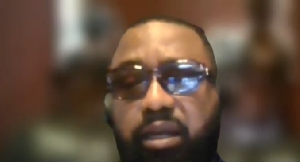 Dr Bernie Asher is a lecturer at the University of Professional Studies, Accra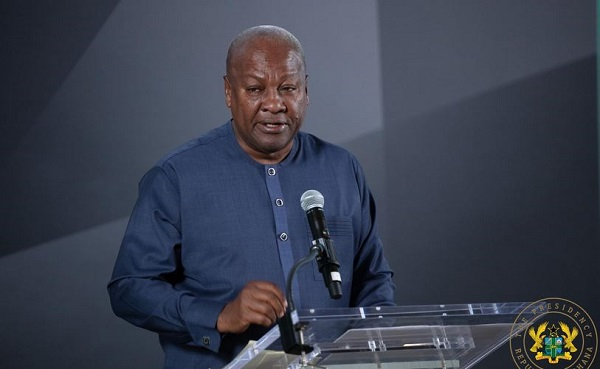



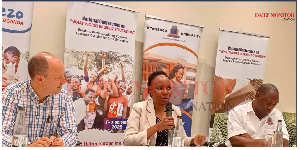



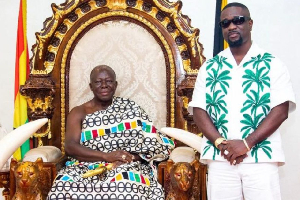

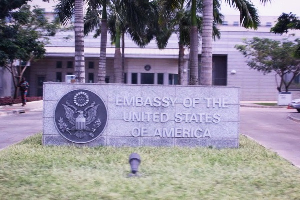


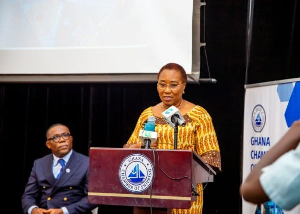


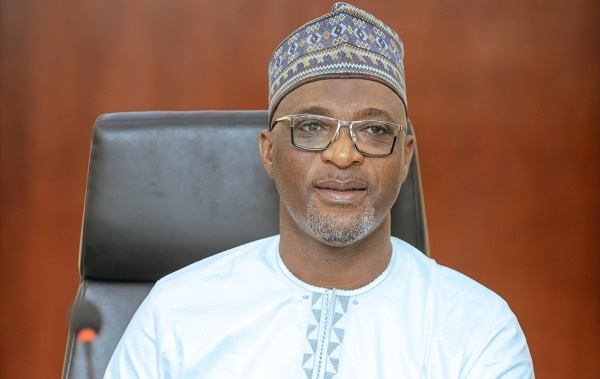








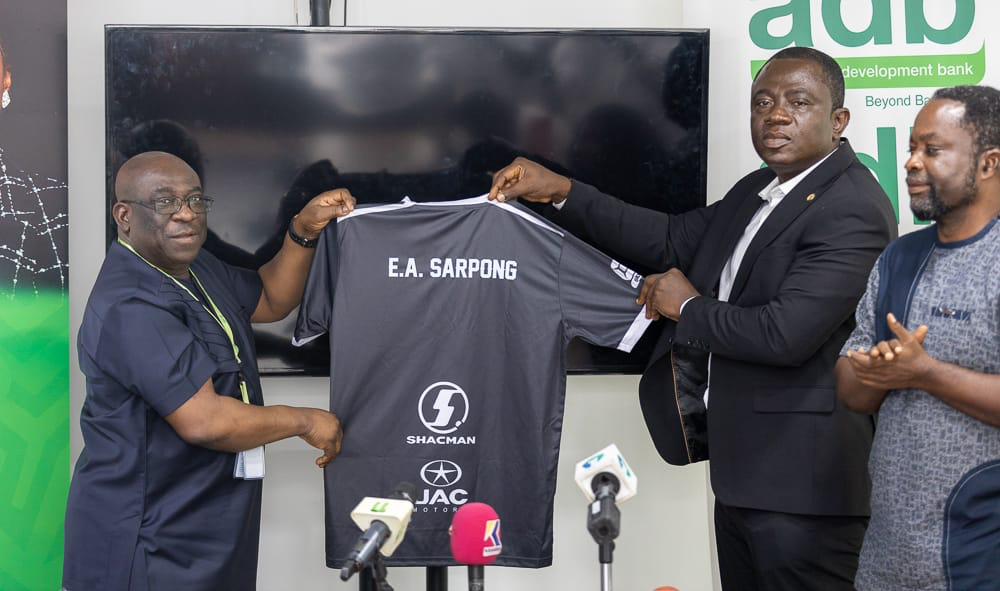
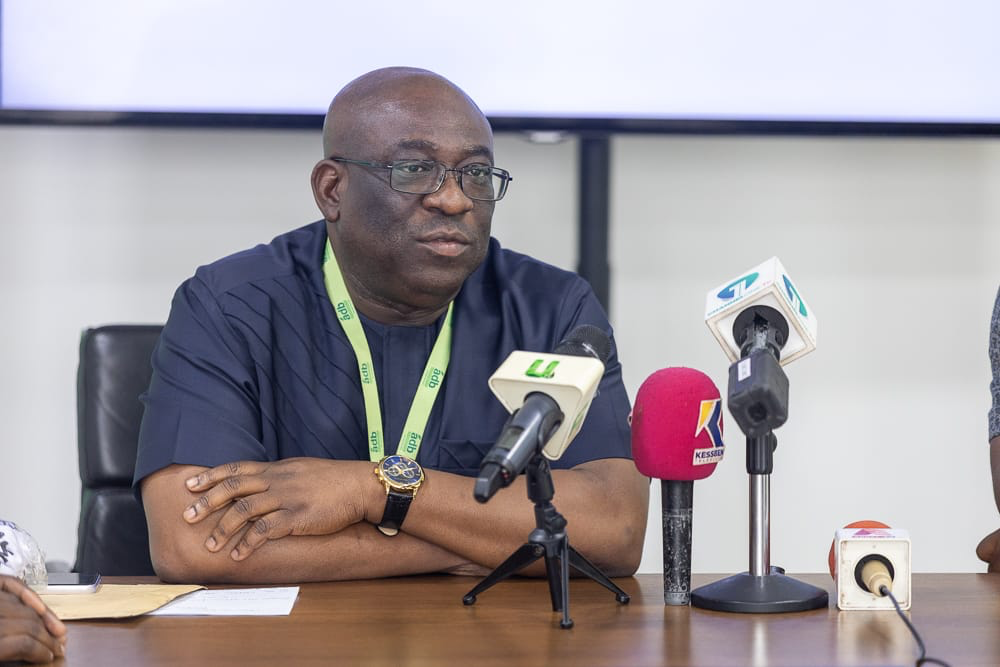
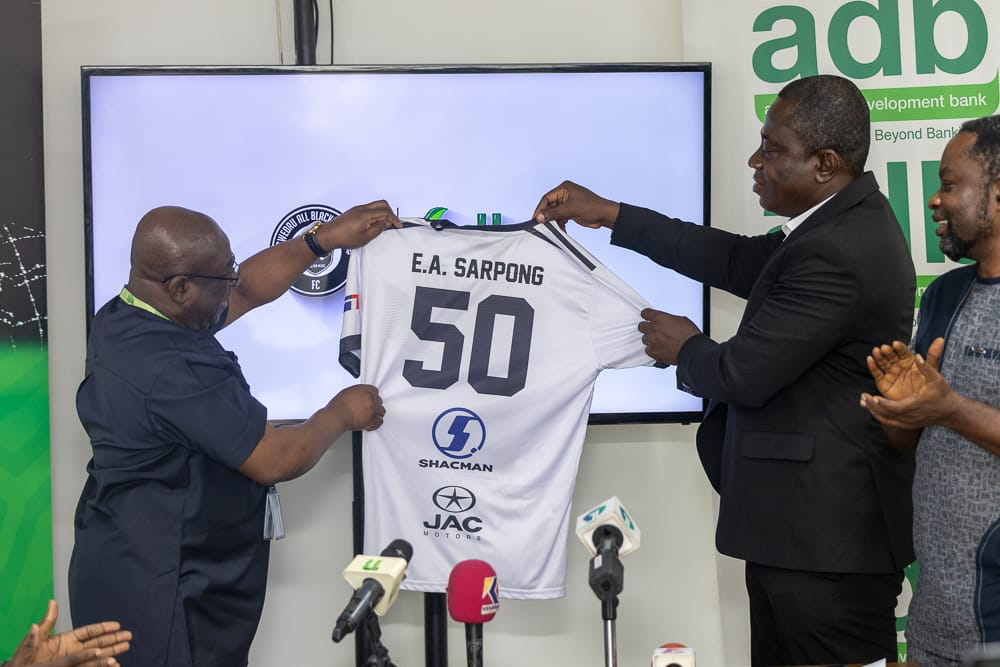
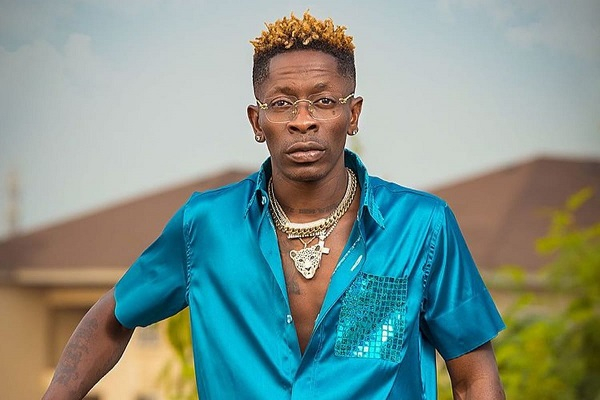




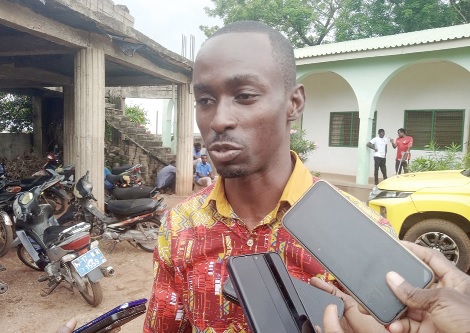


 Starting your week with a polished, stylish look can do more than impress others—it empowers you to face challenges with a sense of poise and readiness.


