December in Ghana has evolved into a global brand: Detty December, Diaspora December — a season sold as music, culture, freedom, and unforgettable nights. The world is watching, and the hype has never been louder.
But after attending several events this festive season, one uncomfortable truth stood out: beneath the excitement, we are quietly normalising exploitation, paying more for less, and accepting dangerously poor security — all packaged as “vibes.”
Late Starts Are Not Culture — They’re Disrespect
An event advertised for 8 PM that doesn’t start until 2 am is not African timing. It’s not funny. It’s not a flex. It’s disrespect. People show up on time because that’s what they were told — yet many stand for six to eight hours with no updates, no apologies, and no seating.
At Kweku Smoke’s Revival Concert, I saw tired bodies, sore legs, and growing frustration met with silence from organisers. Why are we so comfortable wasting people’s time and energy? Artistes like Kojo-Cue and AraTheJay start on time and end on time — why can’t others do the same?
Price Gouging Disguised as “December Premium”
Imagine this: after standing for hours, you need water. A bottle that costs ₵5 normally is being sold for ₵25. Not cocktails. Not champagne. Water.
This stops being business; it’s exploitation. People are dehydrated, exhausted, and trapped in venues where basic necessities are priced like luxury items — after already paying for entry. So, who is December really for?
Smoking in Crowds: Freedom or Recklessness?
At Black Sherif’s Zaamadisco and Kweku Smoke’s Revival Concert at GhudPark, people openly smoked weed in tightly packed crowds. No control. No intervention. And how did they even bring these substances past security?
Let’s be honest: what if someone in that crowd has asthma or another respiratory condition? Concerts are public spaces, not private hangouts. Freedom shouldn’t come at someone else’s expense.
Security at Events Is a Joke
Some outdoor events had fewer than 20 security personnel managing thousands. That’s decoration, not protection. What happens if a fight breaks out, a stampede occurs, or someone collapses? How many events provide first aid? Organisers charge high fees but deliver minimal safety. Ghana shouldn’t wait for a tragedy to take this seriously.
When Bloggers Become the Main Act
At Kweku Smoke’s Revival Concert, and even at Black Sherif’s Zaama Disco, bloggers dominated the crowd, invading VIP areas and blurring boundaries. People who paid for general access ended up where they shouldn’t. This isn’t organic crowd movement — it’s poor crowd control. If VIP means nothing, what are people paying for?
No Feedback, No Accountability
After the last song, the lights go off, and that’s it. Patrons complain online, promoters dismiss concerns as “noise,” and the same mistakes repeat at the next event. How can events improve if the audience is never truly heard?
December Brings Money — But at What Cost?
Yes, December in Ghana has done amazing things:
But growth without structure becomes greed, and hype without standards eventually collapses. Are we building a sustainable cultural movement, or just cashing out while the world watches?
If December continues this way, it may attract tourists and the diaspora — but it risks alienating the locals who built it. And when the hype fades, vibes alone won’t save it.
The Coalition of Concerned Exporters, Importers and Traders has strongly rejected the Ghana Shippers’ Authority’s (GSA) planned rollout of the Smart Port Note (SPN), warning that the policy will impose unnecessary costs and bureaucratic burdens on Ghanaian businesses.
The GSA announced that the Smart Port Note would become mandatory from February 1, 2026, citing goals of trade facilitation, compliance, cargo monitoring, and reliable logistics data.
However, the coalition argues that no evidence has been provided to show how the system uniquely achieves these outcomes.
“The policy appears to be designed solely to generate revenue for the service provider, Inter-Ocean Maritime and Logistics Institute (IOMLI), contradicting GSA’s core mandate to protect shippers from unnecessary costs,” the statement said.
Revised Ghana Shippers Authority Act set to overhaul maritime operations
The coalition insists that the SPN, an advance shipment notification platform, falls outside the GSA’s jurisdiction and conflicts with the Ghana Revenue Authority’s (GRA) destination-inspection regime.
“Critically, the GSA has not shown alignment or approval from the GRA to introduce this system,” it noted.
They further argue that the system is ineffective, as Antaser Afrique — the operator — lacks legal authority to compel suppliers at ports of origin to submit trade data, undermining its verification capability.
The coalition further dismissed claims that the SPN imposes “no additional cost” on traders, stressing that fees charged to exporters will ultimately be passed on to Ghanaian consignees, adding that, “it will be a direct, new financial burden.”
New GSA law to transform shipping industry – Glover
They also cautioned that the SPN risks duplicating the government’s own plans to deploy Artificial Intelligence through customs to combat revenue leakage, creating an uncoordinated parallel system.
“The SPN adds no real-time tracking, risk analysis, or verification capability. It is merely an administrative transaction that introduces an unnecessary bureaucratic hurdle, defeating the objective of trade facilitation,” the coalition declared.
The group has called for an immediate and full reassessment of the initiative, reminding the GSA of its strengthened mandate under the Ghana Shippers’ Authority Act, 2024 (Act 1122) to protect traders from exploitative practices.
“We remain ready to collaborate with the Ministry of Transport, Ministry of Finance, the Ghana Revenue Authority, the Ghana Shippers’ Authority and all relevant bodies to develop policies that genuinely reduce the cost of doing business and facilitate trade,” the statement concluded.
Read the full statement below:
FOR IMMEDIATE RELEASE
Coalition of Concerned Exporters, Importers and Traders Rejects Proposed Smart Port Note, Calls for Policy Reassessment
ACCRA, Ghana, December 29, 2025 — A Coalition of Concerned Exporters, Importers and Traders has reviewed the Ghana Shippers’ Authority (GSA) notice regarding the mandatory rollout of the Smart Port Note (SPN) effective February 1, 2026. The Coalition fundamentally opposes this policy, warning it will impose unnecessary costs and bureaucratic burdens on Ghanaian traders, defeating the government’s trade facilitation agenda.
Questioning the Policy Justification
While the GSA cites goals of trade facilitation, compliance, cargo monitoring, and the availability of reliable shipping and logistics data, no position paper has been provided to demonstrate how the SPN uniquely achieves these outcomes. The policy appears to be designed solely to generate revenue for the service provider, Inter-Ocean Maritime and Logistics Institute (IOMLI), contradicting GSA’s core mandate to protect shippers from unnecessary costs. Previous stakeholder objections to similar schemes have been ignored.
Lack of Mandate and Practical Deficiencies
The SPN, an advance shipment notification platform, is a tool for pre-shipment inspection and compliance. This is a function outside the GSA’s jurisdiction and in conflict with the Ghana Revenue Authority’s (GRA) destination-inspection regime. Critically, the GSA has not shown alignment or approval from the GRA to introduce this system. Furthermore, while Antaser Afrique can compel importers or their agents to submit trade data, it holds no legal authority to compel suppliers at ports of origin to submit such data, rendering its verification capability ineffective. This fundamental flaw, among others, explains why CTN/SPN has failed to deliver proven benefits elsewhere in the region.
Duplication with National AI Strategy and Added Costs
The SPN directly risks duplicating the government’s own announced plans to deploy Artificial Intelligence through customs to combat revenue leakage. This creates an uncoordinated, parallel system that undermines national digital modernisation efforts.
Critically, the claim that the SPN imposes “no additional cost” on Ghanaian traders is misleading, as all fees charged to exporters are ultimately passed to Ghanaian consignees, for whom it will be a direct, new financial burden.
Ineffectiveness as a Cargo Monitoring Tool
Ghana’s existing Integrated Customs Management System (ICUMS) already provides full cargo data and inventory history. The current framework combines carrier tracking, risk profiling, scanning and audits. The SPN adds no real-time tracking, risk analysis, or verification capability. It is merely an administrative transaction that introduces an unnecessary bureaucratic hurdle, defeating the objective of trade facilitation.
Conclusion: An Urgent Call for Full Reassessment
The Coalition of Concerned Exporters, Importers and Traders calls for an immediate and full reassessment of the Smart Port Note initiative. The policy lacks justification, duplicates existing systems, increases costs, and was developed without exhaustive stakeholder consultation.
The GSA is reminded that its strengthened mandate under the Ghana Shippers’ Authority Act, 2024 (Act 1122) is to sanitise the shipping industry and protect Ghanaian traders from exploitative practices by shipping service providers, especially the shipping lines—not to introduce them.
The Coalition remains ready to collaborate with the Ministry of Transport, Ministry of Finance, the Ghana Revenue Authority, the Ghana Shippers’ Authority and all relevant bodies to develop policies that genuinely reduce the cost of doing business and facilitate trade.
About the Coalition of Concerned Exporters, Importers and Traders:
The Coalition is composed of exporters, importers and traders who have come together to advocate for policies that enhance fair trade, reduce operational burdens, and promote economic growth.
Ethiopian jazz musician Mulatu Astatke smiled as he held his arms aloft to acknowledge his audience.
Last month in London, the 82-year-old pioneer, who has done much to bring his blend of musical styles to the world, played a concert as part of a farewell tour after a six-decade performing career.
Twenty years ago, he gained a wider listenership after the soundtrack for the 2005 Hollywood film Broken Flowers included his music, and the use of one of his recordings in last year’s best-picture-Oscar-nominated Nickel Boys saw further interest.
But since the 1960s he has used the studio and rehearsal room as a laboratory where he has mixed musical styles to create what he calls the “science” of Ethio-jazz.
Outside, it was a cold November evening, but inside the West End venue, Mulatu was bathed in the warm embrace of a crowd eager to get one last glimpse of this alchemist at work.
Dressed in a shirt featuring work by Ethiopian artist Afework Tekle, he slowly and steadily walked on stage.
Squeezing past a set of congas he came to his signature instrument – the vibraphone.
With two pink-felted mallets in his right hand and one in the left, he began to pick out the mesmeric rhythm and melody, expertly striking the xylophone-like metal bars creating a delicate, resonant sound.
The first song was based on a 4th Century tune from the Ethiopian Orthodox church.
It was a nod to his musical heritage and the Ethiopian pentatonic scale that gives his sound its unique flavour when combined with other jazz traditions from around the world.
“It was a beautiful show. Really enjoyed it,” Mulatu told the BBC in his gentle voice after the concert.
But he would not be drawn on how he felt saying goodbye to his international fans.
For US musician and composer Dexter Story the gig was “bittersweet”.
“It was so vibrant and so alive. A reverent and gracious… and wonderful, wonderful energy,” he said.
“I’m very saddened that we won’t have this genius… touring the world.”
But his influence will live on in his recordings.
“My instinct when someone asks me to introduce them to Ethiopian music or to Ethiopian culture is to play Mulatu,” says London-based fan Juweria Dino.
“They have listened to it all over the world,” the musician said with pride. “They loved it. It was so beautiful.”
He remains determined to promote music from Ethiopia and the wider continent which he feels does not get the acknowledgment it deserves.
“Africa has given so much culturally to the world. It is not being recognised as it should be recognised,” he said.
His knowledge of life and culture beyond his home began at an early age.
Mulatu was born in 1943 in Jimma, south-western Ethiopia. As a teenager, his parents sent him to Lindisfarne College, near Wrexham in North Wales, to continue his education.
“I wanted to study engineering,” he said.
But during his time there, Mulatu got drawn into the world of music, first taking up the trumpet. The headmaster at the time noticed his natural talent and eventually encouraged him to devote more of his energy to developing that gift.
“After I finished my school, they were telling me: ‘Mulatu, if you become a musician, you will be successful.’ So, I followed their advice. I went to Trinity College here in London.”
He remembers this period at one of the UK’s foremost music colleges as a formative part of his journey. He has fond memories of jamming in jazz clubs with his musician friends.
“[Jamaican] Joe Harriot was one of the greatest alto saxophone players and we used to play together at a place called the Metro Club in London,” he said.
To this day, Mulatu holds the UK close to his heart.
“To me it was so really great to be back again here.”
In the 1960s, Mulatu moved to the US to enrol at Berklee College of Music in Boston – the first African to do so.
He studied vibraphone and percussion and began incorporating Latin jazz into his own music, recording his first two albums.
But it was only when he returned to Addis Ababa in 1969 that he created his own sound.
He changed the face of music at home during these “Swinging Addis” years. Using what he had learned at Berklee and combining it with Ethiopian modes, he “created this science called Ethio-jazz”, Mulatu said.
Initially his radical sound was met with complaints.
“I remember them telling me ‘get off, stop, stop there’. Because they don’t understand.”
But the resistance did not last long and his influence quickly grew.
In 1974, after Emperor Haile Selassie was deposed in a coup, many musicians left the country, but Mulatu stayed in Addis and kept making music.
Throughout his career, his deepest inspiration came from traditional musicians back home, who he calls “our scientists”.
His tracks weave together traditional instruments from his homeland like the washint (flute), kebero (drum), and the masenqo, a single-stringed fiddle.
Mulatu describes the masenqo as sounding exactly like a cello.
“But the question is, who came first? Was it the cello or the masenqo?” he asked.
“The problem is we don’t do research. We have so many great scientists in Africa. Great people, geniuses, who created all these instruments. But we don’t give them credit.”
Today, he says his mission is to broaden the range of the traditional instruments of his homeland by “computerising” the sound.
For his fans, it is his unique blend of the modern and traditional that makes Ethio-jazz so special.
“It reminds me a lot of music from South Asia, melded with the pentatonic scale which reminds me more of Arab music, along with the African percussion sounds that come through,” said concert-goer Joseph Badawi-Crook.
“It’s a completely unique mix and I just fell in love with it years ago.”
Mulatu’s legacy spans generations.
“Some of our grandparents or our parents or our aunts or our uncles, have seen Mulatu throughout his career,” said London-based Ethiopian fan Solliana Kineferigb.
“To also be part of the younger generation and to have the opportunity to still see him live is amazing.”
While the touring may soon be over, Mulatu pledges to continue to bring Ethiopian music to the world.
Many top British media outlets reported Anthony Joshua’s accident
The British media carried various narratives after two‑time heavyweight champion Anthony Joshua was involved in a tragic car accident in Ogun State, Nigeria, on Monday, December 29, 2025.
The fatal crash occurred on a busy highway in Makun, just hours after Joshua and his associates had reportedly spent time playing tennis together.
Reports indicate that the vehicle he was travelling in collided with a stationary truck, an incident that tragically claimed the lives of two people, while Joshua reportedly sustained minor injuries.
Anthony Joshua’s coach and close friend among accident fatalities – Reports
In a video circulating on social media, Joshua was seen shirtless as bystanders and members of his entourage assisted him out of the car.
However, Joshua’s two friends, Kevin Latif Ayodele and Sina Ghami, have been confirmed dead, as they could not survive the injuries sustained in the crash.
Authorities continue to investigate the circumstances of the accident.
Officials have also urged the public to avoid speculation as they work to determine the full details, while tributes and messages of sympathy pour in for the families of the deceased.
The incident was widely reported by British media outlets, with some describing it as “Joshua cheated death,” given the horrific nature of the accident and the fact that he survived while others tragically lost their lives.
Read the reportages by some of the media houses below:
Sky Sports
BBC
Daily Mail
The Sun
The Mirror
SB/AE
Also, watch why taxi and trotro operators are cautioning the govt about the Traffic Amendment Bill
Abuakwa South Member of Parliament (MP) Dr. Kingsley Agyemang, has named a newborn baby girl after First Lady Lordina Dramani Mahama, following months of support he provided to a 13-year-old mother during her pregnancy.
The teenage girl, from Adukrom near Boamang in the Ashanti Region, became pregnant after allegedly being ganged-raped and was left vulnerable with little support from her family or community.
Hearing about her situation on Kumasi-based Oyerepa TV, the lawmaker stepped in to provide medical care, food, and essential items to ensure the health and safety of both mother and child.
After the successful delivery, the MP chose to name the baby after the First Lady, explaining that the decision was guided by a spiritual experience rather than political motives.
“I was on a plane to the USA from London when I suddenly fell asleep, or was in a trance. Then I heard a voice saying I should name the baby, yet to be delivered, after the First Lady,” Dr. Agyemang recounted.
He added that initially he questioned why he should follow this instruction. “The voice then asked me who the First Lady of Ghana was, and I answered quietly in my head. Then I got up,” he said.
At the time, the MP did not know the gender of the unborn child. “The name was given to me by God. I didn’t even know the gender of the baby, yet I was asked to name her after the First Lady,” he said.
Dr. Agyemang clarified that although he had other naming options, including naming the child after his own mother, he felt compelled to follow the spiritual direction.
“Ideally, I wouldn’t have named her after the First Lady, but the voice said so. This tells me that we should continue to help each other in the best of our ability without any political colourisation,” he added.
The MP emphasized that the naming represents compassion, gratitude, and collective responsibility toward supporting vulnerable children and survivors of abuse.
He expressed hope that the baby may grow to emulate the First Lady’s example in making a positive impact in society.
“We are spiritual beings, and we believe that when we name a child after someone, the child inherits the traits and character of that person. I believe the newborn baby will grow and become like First Lady Lordina Mahama in the future,” he concluded.
First baby mama of Nigerian singer, David Adeleke, better known as Davido, Sophia Momodu, has warned fans against referring to her as the wife of the music star.
Naija News reports that Sophia, during an Instagram live session, recounted her experience with a male content creator who publicly referred to her as “OBO’s wife.
The Nalerigu Youth Association has condemned recent incidents involving the burning of two houses and an attempted arson attack on a vehicle, insisting that the acts were criminal and not the result of communal or tribal conflict.
In a statement issued on Tuesday, December 30, 2025, the youth described the incidents as “purely criminal” and urged the public to reject narratives portraying the situation as factional violence.
They stressed that Nalerigu remains a peaceful and united community, where people of diverse ethnic and tribal backgrounds coexist harmoniously, adding that there is no fighting in the town.
According to the association, efforts are ongoing to sensitise the youth to refrain from misconduct and to cooperate fully with security agencies to maintain peace and public order.
“The unfortunate incidents recorded are isolated criminal acts,” the statement said, noting that the perpetrators are allegedly non-indigenes. The group therefore called on security agencies to intensify intelligence-led operations to identify, arrest and prosecute those responsible in accordance with the law.
While expressing support for security interventions, the youth raised concerns about the repeated imposition of curfews following such incidents, saying the measures have caused hardship for law-abiding residents and unfairly projected Nalerigu as a conflict-prone area.
They highlighted restrictions on motorbike use and the wearing of smocks, explaining that motorbikes are the primary means of transportation in the area. The group said the restrictions disrupted livelihoods, economic activities and daily movement, with significant impact during the Christmas festivities.
The association appealed to authorities to urgently review the restrictions and adopt more targeted, intelligence-driven approaches that address criminal activity without unduly affecting innocent residents.
They assured Ghanaians and the international community that Nalerigu remains peaceful, safe and welcoming, encouraging investors and business partners to continue engaging with confidence.
“Nalerigu is peaceful, secure, and open for business,” the statement said.
Police in Elmina have declared self-style prophet Ebo Noah wanted after a Liberian national travelled to Ghana allegedly acting on his viral prophecy predicting a global flood, MyNewsGh.com can authoritatively confirm.
Police sources told MyNewsGh.com. that the Elmina District Commander, Chief Superintendent Abraham Bansah, had earlier on December 18th 2025 tasked a team led by Police Assistant Superintendents Lawrence Anane and Augustina Quainoo to locate and arrest Ebo Noah for interrogation.
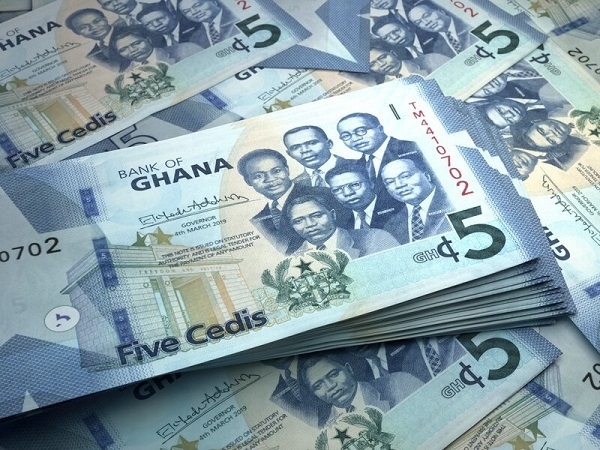
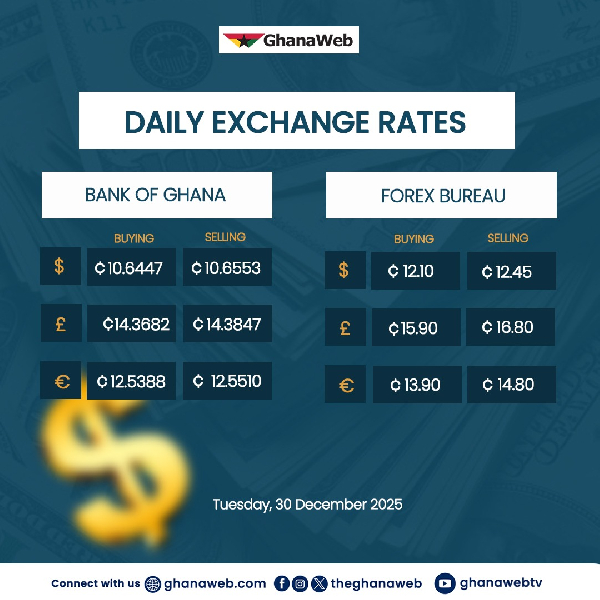
The Ghana cedi has recorded a strong appreciation against major international currencies, with the US dollar now trading at about GH¢10.65, marking a significant improvement in the performance of the local currency in recent days.
According to the Bank of Ghana’s latest daily exchange rate update for Tuesday, December 30, 2025, the dollar was quoted on the interbank market at a buying rate of GH¢10.6447 and a selling rate of GH¢10.6553.
This represents a further strengthening of the cedi compared to the previous trading day when the dollar sold above GH¢11.
On Monday, December 29, 2025, the Bank of Ghana had quoted the dollar at a buying rate of GH¢11.0945 and a selling rate of GH¢11.1056, indicating a notable appreciation of the cedi within a short period.
The British pound sterling also declined against the cedi, trading at a buying rate of GH¢14.3682 and a selling rate of GH¢14.3847, down from earlier rates close to GH¢15. The euro similarly weakened, with buying and selling rates of GH¢12.5388 and GH¢12.5510 respectively.
The Bank of Ghana explained that the published figures represent the average interbank exchange rates used by commercial banks at the close of business on Monday, December 29, 2025.
The development is expected to help reduce import costs, ease inflationary pressures and improve overall economic stability.
Overall, the cedi’s strong performance during the festive period is expected to boost consumer purchasing power and provide much-needed relief to households and businesses as the year 2025 draws to a close.
A 24-Hour International Livestock Market has been launched at Volivo in the Shai-Osudoku District of the Greater Accra Region to transform livestock trade, create jobs, and strengthen Ghana’s agricultural value chain.
The Lower-Volta Association of Small-scale Miners and Farmers provided the market facility which consists of production and processing area, logistics, and a trade center.
Designed as a comprehensive agribusiness hub, the facility aims to enhance livestock production, expand regional trade, and create sustainable employment opportunities, particularly for youth and women.
When fully operational, the market is projected to generate more than 1,600 direct and indirect jobs for farmers, traders, transporters, processors, and allied service providers.
Speaking at the event, Mr. Godwin Ogah Awudi, Leader of the project and former Assemblyman for the Kotoko Electoral Area, said the market addressed longstanding challenges in Ghana’s livestock sector, including fragmented markets, limited value addition, and post-harvest losses.
He said Volivo’s strategic location along the Lower Volta corridor positioned it as a central trading point linking southern Ghana to northern regions and neighbouring countries.
“This initiative goes beyond buying and selling animals. It is about building a complete value chain that supports production, processing, trade, and sustainability,” he said and added that “By operating 24 hours, the market ensures continuous trade and reduces losses caused by delays. ”
The market facility is structured around several thematic areas to strengthen the agricultural value chain.
He said the Trade Livestock24 provides organised spaces for cattle, sheep, goats, and local poultry trading, while Rear Livestock 24 promotes intensive ranching to guarantee a steady supply and improve animal health.
Mr. Awudi noted that environmental sustainability features prominently, whereby Aquatic Weed Harvest24 converts aquatic weeds from the Lower Volta into affordable livestock feed while improving water flow and ecosystem health.
“Aquaculture24 supports small-holder cage culture for tilapia, catfish, and heterotis, boosting fish production and local livelihoods,” he said.
He explained that Make-Livestock & Fish24 included a modern slaughterhouse and processing facility for deboning, sausage production, and small-scale fish feed manufacturing.
“Grow24 promotes small-scale irrigation farming of rice, maize, cassava, plantain, and soya beans, while Build24 encourages environmentally responsible sand dredging to support infrastructure,” he said.
Chief Alhaji Iddrisu Mohammed Bingle, National President of the National Council of Fulani Chiefs, hailed the project as a practical solution to unemployment in peri-urban communities.
“When fully operational, this initiative will provide hundreds of jobs and contribute meaningfully to local economic growth,” he said.
Mrs. Linda Obenewaa Ocloo the Member of Parliament for Shai-Osudoku and Minister for Greater Accra Region, said the market will improve access to buyers, stabilise prices, create jobs, and strengthen food security.
She praised the association for its focus on structured facilities, small-holder ranching, and local poultry production.
“The initiative aligns with government efforts to modernise agriculture and support farmer-led development,” she indicated.
The project also integrates tourism and transport through Show24, which promotes eco-tourism and aqua-tourism, and Connect24, linking Shai-Osudoku to North Tongu via inland waterways.
Youth and women empowerment is addressed under Aspire24, while Zero Waste/Recycling24 promotes Black Soldier Fly larvae farming to convert organic waste into animal feed.
Stakeholders expressed optimism that the Volivo International Livestock Market will serve as a model for integrated agribusiness development, significantly contributing to food security, rural development, and regional economic integration.
The launch ceremony attracted government officials, traditional leaders, business executives, and investors from Ghana and the West African sub-region.
John Abdulai Jinapor is the Minister of Energy and Green Transition
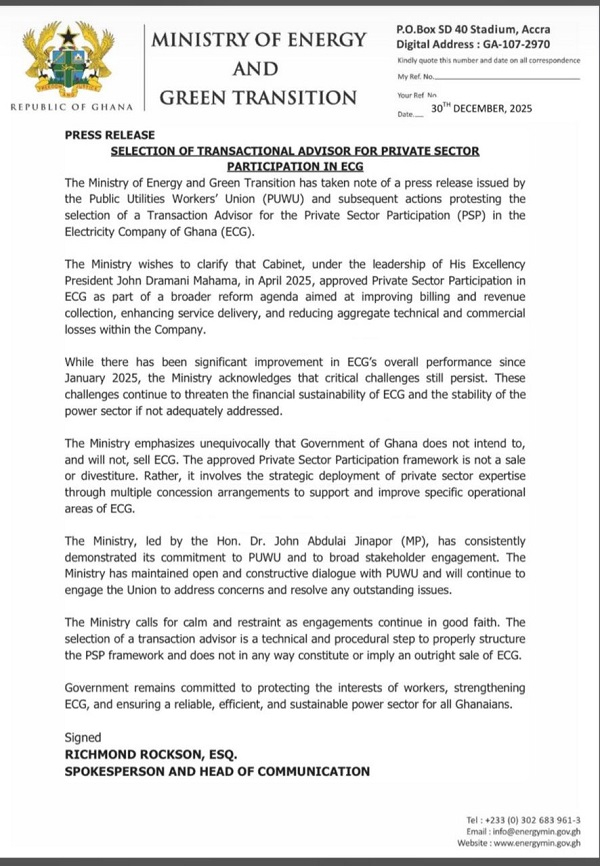
The Ministry of Energy and Green Transition has responded to concerns raised by the Public Utilities Workers’ Union (PUWU) over the selection of a transactional advisor for private sector participation (PSP) in the Electricity Company of Ghana (ECG), assuring the public that ECG is not being sold.
In a press release dated December 30, 2025, the ministry stated that the move is part of a broader reform agenda approved by Cabinet in April 2025 under President John Dramani Mahama.
The initiative, according to the statement, aims to improve billing and revenue collection, enhance service delivery, and reduce technical and commercial losses within ECG.
“The Government of Ghana does not intend to, and will not, sell ECG. The approved Private Sector Participation framework is not a sale or divestiture. Rather, it involves the strategic deployment of private sector expertise through multiple concession arrangements to support and improve specific operational areas of ECG,” the statement stressed.
Staff of ECG hoist red flags to protest against privitisation
The ministry acknowledged improvements in ECG’s performance since January 2025 but noted that persistent challenges continue to threaten the company’s financial sustainability and the stability of the power sector.
Led by Dr John Abdulai Jinapor, the ministry reaffirmed its commitment to engaging PUWU and other stakeholders in constructive dialogue.
“We have maintained open and constructive dialogue with PUWU and will continue to engage the Union to address concerns and resolve any outstanding issues,” the statement said.
The ministry called for calm and restraint, clarifying that the selection of a transactional advisor is a technical and procedural step to properly structure the PSP framework.
“It does not in any way constitute or imply an outright sale of ECG,” it added.
PUWU-TUC opposes government’s plan to introduce private sector in ECG
The government reiterated its commitment to protecting workers’ interests while strengthening ECG and ensuring a reliable, efficient, and sustainable power sector for all Ghanaians.
Read the statement below:
Meanwhile, watch how ‘okada’ riders reacted to passage of Road Traffic Amendment Bill
October’s shocking events in Tanzania offer a snapshot of some of the tensions which have shaped a difficult year for African politics.
Demonstrators were shot dead by police while protesting against what they saw as a rigged election – condemned by regional and continental bodies – shattering the country’s reputation for peace and stability.
With opposition candidates either imprisoned or barred from running, President Samia Suluhu Hassan was elected with 98% of the votes.
Any moves towards Tanzania becoming a more open democracy had been seemingly reversed.
From Mali to Guinea-Bissau: Africa’s new era of coups
Arguably what happened there highlighted a broader breakdown in many African nations between the people and those who govern them.
Several countries saw protests and election disputes in 2025, while military leaders cemented their power in others, with analysts believing next year could bring more upheaval.
“If we look at the overall picture across the continent, the trend is worrying,” said Mo Ibrahim, whose foundation analyses data to assess the state of African governance.
Its most recent report suggests that in its measure of governance, which includes things like security, participation in decision-making and the state of health and education, progress has stalled when compared to the decade up to 2022.
“The increase in coups [in recent years], the return of military governments and the closing of democratic space all point to the same problem: a failure of governance.”
The spike in the cost of living has been the spark that lit the fire of dissatisfaction in many places. This was not unique to the continent but, as Mr Ibrahim told the BBC, “the risk for Africa is that these negative patterns spread unchecked, much of the hard-won progress achieved over recent decades could be reversed”.
AFP via Getty Images A group of people hold up a giant image of the head of Lazarus Chakwera that has been torn down from a billboard.
Supporters of Malawi’s Peter Mutharika celebrated his election victory with a torn billboard image of his rival, incumbent Lazarus Chakwera
For those who believe that democracy is the best way to channel the demands of the population, there have been some points of positivity in 2025 with peaceful transfers of power and free and fair elections.
In Malawi the country’s former leader, Peter Mutharika, won back the presidency after a period in opposition. Seychelles saw long-term ruling party United Seychelles returned to office, five years after losing power.
Both incumbents lost in part because of a perceived failure to mitigate the impact of inflation. These results followed other setbacks for ruling parties in 2024.
In South Africa, the African National Congress lost its overall majority for the first time since 1994 and entered a power-sharing government with its main opposition.
In Senegal, a combination of street protests and the courts prevented apparent attempts by the president to extend his time in office and a relative unknown was elected president after the main opposition leader was barred.
But analysts point to shifts elsewhere as evidence that democracy on the continent is being challenged.
Perhaps no more so than through the consolidation of the power of military-led governments across West Africa’s Sahel region.
Mali, Niger, and Burkina Faso all split from the regional bloc, Ecowas, forming a new alliance of governments which seized power through coups.
Also, watch why taxi and trotro operators are cautioning the govt about the Traffic Amendment Bill
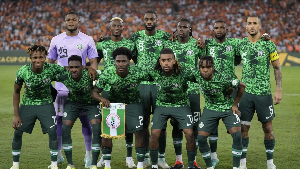
Nigeria have won their first two matches at the 2025 AFCON
The Super Eagles of Nigeria take on Uganda in their final group game of the 2025 Africa Cup of Nations (AFCON) on December 30, 2025.
Nigeria will look to continue their excellent start to the tournament after winning their first two matches in the group stage, securing qualification for the knockout phase.
The Super Eagles have scored five goals and conceded three in their opening two games, with Victor Osimhen, Ademola Lookman, and other key players making their marks at the tournament.
2025 AFCON: Late Appollis penalty fires South Africa into knockout stages
Since the result will not affect Nigeria’s qualification, some fringe players are expected to be given the opportunity to showcase their talents.
Meanwhile, Uganda’s chances of progressing looks slim after collecting just one point from two matches, following disappointing performances.
The Cranes could change their fortunes if they manage to upset Nigeria with a win, which would give them four points. They would then hope for a favorable result in the Tunisia vs Tanzania game to secure qualification.
In Group C, Nigeria lead with six points, followed by Tunisia with three. Tanzania are third with one point, while Uganda sit bottom with the same tally.
Apart from Nigeria, who have already qualified, the final group matches will determine which other teams advance to the knockout stage.
SB/AE
Meanwhile, watch as Acting Defence Minister Ato Forson inaugurates 9-Member Ministerial Advisory Board
Dr Osei Kwame Despite
Dr Osei Kwame Despite, a Businessman and media mogul, has revealed he owns a 700-acre salt production with over 600 workers.
According to Kwame Despite, he exports salt across Africa and questioned why it surprises people when he enjoys luxury cars despite his investments.
He quizzed his critics, questioning him on spending his wealth on luxury cars.
According to Kwame Despite, people are free to say what they want.
Speaking during an interview, Dr Osei Kwame Despite stated, “Whatever
National Chairman of the National Democratic Congress (NDC), Johnson Asiedu Nketia, has stressed that the enforcement of law and order in Bawku is non-negotiable and must be carried out in a professional, fair, and unbiased manner.
Speaking at the 2025 Samanpiid Festival, an annual cultural celebration of the Kusaug people in the Upper East Region, Mr Nketia emphasized that lasting peace in Bawku can only be achieved when the rule of law is respected and enforced without favoritism.
He underscored the need for continued support for traditional mediation and reconciliation processes, describing them as essential tools for resolving long-standing conflicts in the area.
According to him, security interventions alone cannot guarantee peace without sincere dialogue and community-led reconciliation efforts.
Mr. Asiedu Nketia further highlighted the critical role of traditional authorities in peacebuilding, urging them to remain proactive and effective in promoting harmony among the people.
He noted that the success of any peace initiative largely depends on the commitment of traditional leaders to unity and fairness.
“The quality of every governance is measured by the extent to which minority rights are protected. The recognition of the Kusaug authority in Bawku must not be interpreted to mean the extinguishing of the rights of other minority ethnic groups in the area, to live in peace, to go about their businesses, as free citizens of the Republic of Ghana,” he stated, adding that inclusiveness is fundamental to national stability and development.
Using a symbolic analogy, the NDC Chairman remarked that Kusaug represents the head of the Bawku human body, stressing that no part of the body, whether the head or the legs, can be left behind.
He explained that peace and development in Bawku require collective effort and mutual respect among all groups.
Mr Nketia also called on the Zugraan, the Overlord of Kusaug, Naba Asigri Abugrago Azoka II, to continue supporting dialogue, mediation, and reconciliation to sustain and strengthen peace in the area.
“As the Overlord, [you are] responsible for the protection of all inhabitants of Bawku, and not just the Kusaas ethnic group. No peace efforts in Bawku can succeed without your guidance, leadership and unwavering commitment,” Mr. Nketia stated.
He acknowledged Zugraan’s efforts and emphasised that achieving and maintaining peace in Bawku is impossible without the active involvement and leadership of traditional authorities.
Also speaking at the festival, a peace and security expert, Emmanuel Bombande, called on all residents of Bawku and its surrounding communities to embrace coexistence and commit themselves to peacebuilding.
He emphasised that the implementation of law and order remains a critical foundation for sustaining peace, stressing that everyone is protected and safeguarded by the state, regardless of ethnic or political affiliation.
Mr. Bombande commended Asantehene Otumfuo Osei Tutu II for his well-thought-out mediation process, which ensured that all parties involved in the conflict were given a fair hearing.
He further expressed gratitude to the President of the Republic for implementing the recommendations that emerged from Otumfuo’s peace initiative.
“We have all won,” he noted, explaining that peace efforts should not be seen as a victory for one group over another, but as a collective gain for the entire nation. He urged the people to unite and move forward, rather than allowing themselves to be held back by past tragedies.
Mr. Bombande also encouraged musicians and creative artists in the area to use their talents to promote songs of unity, peace, and coexistence, noting that music has the power to heal wounds and bring communities together.
He also called on all stakeholders to remain committed to dialogue, reconciliation, and mutual respect as the surest path to lasting peace in Bawku.
Thousands of people across the country, including the Majority Leader in parliament, Mahama Ayariga, and other members of parliament attended the event.
The Samanpiid Festival is an annual post-harvest thanksgiving event celebrated by the people of the Kusaug Traditional Area in the Upper East Region of Ghana. It is held to thank God and the ancestral spirits for a successful farming season, as well as for their protection and guidance.
The festival was not always celebrated as a single, and unified event. Before 1987, Samanpiid was celebrated separately by different Kusaas clans, each taking turns to hold the festival at the clan level.
In 1987, all the Kusaas clans came together for the first time to celebrate Samanpiid as a centralized festival. Since then, it has been observed as a unified annual celebration for the entire Kusaug Traditional Area.
DISCLAIMER: The Views, Comments, Opinions, Contributions and Statements made by Readers and Contributors on this platform do not necessarily represent the views or policy of Multimedia Group Limited.
DISCLAIMER: The Views, Comments, Opinions, Contributions and Statements made by Readers and Contributors on this platform do not necessarily represent the views or policy of Multimedia Group Limited.
2025 was a rollercoaster year for Ghana—one that tested national resilience, reshaped political destiny, and reignited enduring debates about leadership, accountability, identity, and reform.
It was a year of returns and reckonings: the return of a familiar leader, moments of collective grief, economic recalibration, institutional reforms, and social tensions that demanded deep reflection.
From devastating fires and national tragedies to landmark elections, courtroom drama, cultural milestones, and renewed hope for economic recovery, the country navigated twelve intense months marked by both progress and pain.
As the year draws to a close, Ghana’s 2025 story is one of hard-earned gains, deeply felt losses, and defining moments whose impact will echo well beyond the calendar.
Below are some of the key national happenings from January to December 2025:
1. Kantamanto Market Inferno (January 1)
The year opened with tragedy as a massive fire swept through Kantamanto Market in Accra, Ghana’s largest second-hand clothing hub. Thousands of traders were affected as goods worth millions of cedis were destroyed. Cleanup and relief efforts began immediately, reigniting debates about market safety, urban planning, and trader welfare.
2. Mahama Returns to the Presidency (January 7)
John Dramani Mahama was sworn in as President following his victory in the 2024 general election, becoming the first Ghanaian leader to be democratically elected to a non-consecutive second term. His return marked a major political reset and set the tone for the year.
3. Mahama Begins Key Appointments (January)
The President moved swiftly to constitute his administration, appointing ministers, heads of state agencies, and senior public officials. The appointments aimed at stabilising governance, restoring confidence in public institutions, and advancing his policy agenda, with emphasis on competence, regional balance, and gender inclusion.
4. Obuasi Mine Shooting (January 18)
A violent confrontation between soldiers and small-scale miners at AngloGold Ashanti’s Obuasi Mine resulted in seven deaths and several injuries. The incident sparked nationwide outrage and renewed calls for reforms in mining security and galamsey enforcement.
5. MPs Clash Over Ministerial Vetting (January 30)
On January 30, 2025, proceedings of Parliament’s Appointments Committee were thrown into disarray after a heated clash between Majority and Minority members during the vetting of Samuel Okudzeto Ablakwa, nominee for Foreign Affairs, and Kwabena Mintah Akandoh, nominee for Health.
Tensions rose when Minority MPs proposed that the vetting be deferred to the following day, citing procedural concerns and the intensity of the session. The Majority rejected the request, insisting the process should continue as scheduled.
The disagreement quickly escalated into open exchanges, briefly halting proceedings and highlighting the sharp partisan divisions that marked the early days of President John Dramani Mahama’s new administration. The incident drew public attention to the strained atmosphere in Parliament and set the tone for a highly contested vetting process.
6. IMF Staff Visit Ahead of 2025 Budget (February 10–14)
An IMF mission visited Ghana to assess progress under the IMF-supported programme and engage government ahead of the 2025 Budget, focusing on revenue mobilisation, energy reforms, and macroeconomic stability.
7. Ken Ofori-Atta Declared Wanted by OSP
In February 2025, the Office of the Special Prosecutor declared former Finance Minister Ken Ofori-Atta wanted after he failed to honour multiple invitations over corruption and procurement-related investigations. The OSP rejected claims that he was abroad for medical reasons, insisting he was evading the probe and warning of possible international action.
The move sparked sharp political debate, with critics alleging persecution while civil society groups hailed it as a major test of accountability and the rule of law in Ghana.
Ken Ofori-Atta, a former Finance Minister
8. National Economic Dialogue (March 3–4)
Stakeholders from government, business, civil society, and academia convened in Accra for the National Economic Dialogue to chart a path for economic reset. Discussions centred on fiscal discipline, private-sector growth, infrastructure, and institutional reforms.
9. Ghana Marks 68th Independence Anniversary (March 6)
Ghana commemorated 68 years of independence with nationwide ceremonies, parades, and patriotic reflections on unity, resilience, and national identity.
10. ECOWAS 50th Golden Jubilee Launch (April 22)
Ghana hosted the official launch of ECOWAS’ 50th anniversary celebrations in Accra, with President Mahama leading regional dignitaries in marking five decades of West African integration and cooperation.
12. Chairman Wontumi Arrested (May 27)
Ashanti Regional NPP Chairman Bernard Antwi-Boasiako, popularly known as Chairman Wontumi, was arrested by EOCO over alleged illegal mining activities linked to Akonta Mining. The case sparked intense political debate and legal drama, including a briefly issued bench warrant later withdrawn.
13. Parliament Approves $2.8bn Debt Relief Deal
Parliament approved a major external debt restructuring agreement with 25 creditor nations, a key milestone in Ghana’s IMF-backed economic recovery efforts.
14. Energy Levy Rollout Delayed
Following public backlash, the Ghana Revenue Authority postponed implementation of a controversial energy sector levy—often dubbed the “Dumsor levy”—to mid-June.
15. ‘Accra By Night’ Tourism Initiative Launched (June)
The Ministry of Tourism launched the Accra By Night initiative to promote nightlife tourism, cultural experiences, and local enterprise growth.
16. Republic Day Restored (July 1)
Parliament reinstated July 1 as Republic Day, restoring its status as a public holiday marking Ghana’s transition to a republic in 1960.
17. Agradaa Jailed 15 Years (July 3)
Evangelist Patricia Asiedua, formerly Nana Agradaa, was sentenced to 15 years’ imprisonment for defrauding by false pretence over a widely publicised money-doubling scheme.
Nana Agradaa
18. Death of Ernest Kumi and Akwatia By-Election
Ernest Kumi, the sitting Member of Parliament for Akwatia, passed away on July 7, 2025, creating a vacancy in the constituency.
The subsequent by-election, held on September 2, saw the National Democratic Congress (NDC) emerge victorious, reclaiming the seat and strengthening its foothold in the Eastern Region.
19. Ablekuma North Parliamentary Rerun (July 11)
The July 11 parliamentary rerun in Ablekuma North marked a major political upset as the NDC’s Ewurabena Aubynn defeated the NPP to win a seat the party had traditionally dominated. The rerun, ordered after disputes over results from the 2024 general election, was marred by pockets of tension and chaotic scenes at some polling centres, including confrontations between party supporters and security interventions to restore order.
Despite the disturbances, the Electoral Commission declared the poll credible, and the NDC victory was widely seen as a signal of shifting voter sentiment in urban constituencies.
20. Death of Highlife Legend Daddy Lumba (July 26)
Ghana mourned the death of legendary musician Daddy Lumba (Charles Kwadwo Fosu). His passing was followed by public grief and a prolonged family dispute over his estate and legacy.
Charles Kwadwo Fosu (Daddy Lumba)
21. Military Helicopter Crash (August 6)
A helicopter crash claimed eight lives, including Defence Minister Edward Omane Boamah and Environment Minister Ibrahim Murtala Mohammed. The tragedy shocked the nation and triggered investigations.
22. Government Takes On DStv Pricing
The government threatened to suspend MultiChoice Ghana’s licence over refusal to cut subscription prices, igniting debate over consumer protection and media regulation.
President Mahama removed the Chief Justice, a rare and consequential development that stirred legal, political, and constitutional debate.
24. Mahama Leads Ghana to UN General Assembly (September)
President Mahama led Ghana’s delegation to the 80th UN General Assembly in New York, addressing global development, climate, and peace issues.
25. Ghana Agrees to Accept Deported West Africans
Ghana agreed to temporarily accept West African nationals deported from the United States, sparking legal and human-rights concerns.
26. Legal Challenge Over Deportations
A lawsuit was filed in Accra on behalf of some deportees, citing fears of torture or persecution if returned to their home countries.
27. Shatta Wale Arrested by EOCO (August 20)
Dancehall star Shatta Wale was arrested over investigations into a luxury vehicle linked to U.S. fraud proceeds. He was later granted bail, with the case dominating public discourse on celebrity accountability.
28. Black Stars Qualify for 2026 World Cup
Ghana’s senior national team secured qualification for the 2026 FIFA World Cup, reigniting national football pride.
29. Deadly Stampede at Military Recruitment Drive
At least six people died during a chaotic recruitment exercise in Accra, exposing the desperation of youth unemployment and gaps in crowd control.
30. Death of Nana Konadu Agyeman-Rawlings (October 23)
Former First Lady and women’s rights icon Nana Konadu Agyeman-Rawlings passed away at age 76, prompting tributes across political divides.
The Supreme Court halted preparations for the Kpandai parliamentary rerun scheduled for December 30, pending judicial review.
Conclusion
Ghana’s 2025 journey was turbulent yet transformative—a year that tested institutions, challenged leadership, and reaffirmed the resilience of its people. As the nation steps into 2026, the lessons, losses, and landmarks of 2025 will continue to shape the road ahead.
Industrialization is the backbone of sustainable economic growth, job creation, and technological advancement. In West Africa and the wider Sub-Saharan region, Ghana stands out as one of the countries best positioned to become a leading industrial hub, largely due to its growing and relatively advanced infrastructure base notably electricity, roads, seaports, airports, and railways.
Reliable Electricity as a Foundation for Industry
Electricity is the lifeblood of industrial activity. Ghana has one of the most developed power sectors in West Africa, with a mix of hydro, thermal, and renewable energy sources.
Major power facilities such as Akosombo, Kpong, and Bui dams, along with thermal plants, provide relatively stable electricity compared too many neighboring countries.
Ghana is also a net power exporter to parts of West Africa, demonstrating surplus generation capacity.
Ongoing investments in renewable energy and grid expansion further strengthen energy security for factories and industrial zones.
Reliable electricity reduces production costs, minimizes downtime, and makes Ghana attractive to manufacturers seeking stable operating conditions.
Road Network Connecting Markets and Production Centers
A strong road network is essential for moving raw materials to factories and finished goods to markets.
Ghana has one of the most extensive and well-maintained road networks in the sub-region.
Major highways link industrial and commercial cities such as Accra, Tema, Kumasi, Takoradi, and Tamale.
Cross-border roads connect Ghana to Burkina Faso, Togo, Côte d’Ivoire, and beyond, supporting regional trade under ECOWAS and the African Continental Free Trade Area (AfCFTA).
These road connections make Ghana an efficient transit and logistics hub for inland and coastal trade.
Strategic and Modern Seaports Seaports are critical for import-export-driven industrialization, and Ghana has a strong advantage in this area.
The Tema Port, one of the most modern ports in Africa, handles large container volumes and supports industrial exports.
The Takoradi Port serves the western industrial and mining corridor and supports oil, gas, and heavy industry.
Port expansion and automation have reduced turnaround times and improved efficiency.
These ports allow Ghanaian manufacturers to easily access global markets, giving the country a competitive edge over landlocked neighbors.
International Airports Supporting Trade and Business
Air transport plays a growing role in industrial logistics, business travel, and high-value exports.
Kotoka International Airport in Accra is a major aviation hub in West Africa, with strong cargo and passenger handling capacity.
Regional airports in Kumasi, Tamale, and Takoradi enhance domestic connectivity and decentralize industrial activity.
Air cargo facilities support exports of pharmaceuticals, perishables, and manufactured goods.
Efficient air transport strengthens Ghana’s integration into global value chains.
Reviving and Expanding the Railway System
Railways are vital for heavy industry, bulk transport, and cost-efficient logistics.
Ghana is investing in the revitalization of its railway network, particularly the Western and Eastern railway lines.
Rail links between ports, industrial zones, mining areas, and inland cities reduce pressure on roads and lower transport costs.
Future rail connectivity to neighboring countries can position Ghana as a regional industrial and logistics gateway.
A functional rail system supports large-scale manufacturing and industrial clustering.
Combined Infrastructure Advantage What makes Ghana especially competitive is not just individual infrastructure assets, but how they work together:
Electricity powers factories Roads and railways move goods efficiently Seaports and airports connect industries to global and regional markets
This integrated infrastructure ecosystem supports industrial parks, export processing zones, and manufacturing clusters across the country.
Conclusion Ghana’s relatively reliable electricity supply, expanding road network, modern seaports, strong aviation sector, and revitalizing rail system place it in a unique position to become the industrial hub of West Africa and Sub-Saharan Africa. With continued investment, policy consistency, and effective maintenance of infrastructure, Ghana can lead regional industrialization, create millions of jobs, and serve as a manufacturing and logistics center for the African continent.
Industrial growth anchored on strong infrastructure will not only transform Ghana’s economy but also drive regional development and integration across West Africa.
Mustapha Bature Sallama Medical Science communicator. Private Investigator and Criminal Investigation and Intelligence Analysis, International Conflict Management and Peace Building. Alumni Gandhi Global Academy United States Institute of Peace.
The Institute for Energy Security (IES) congratulates Tema Oil Refinery (TOR) on resuming crude oil refining operations, marking a major boost to Ghana’s energy security.
The Institute for Energy Security (IES) has congratulated the Tema Oil Refinery (TOR) for successfully resuming crude oil refining operations, marking a major milestone in Ghana’s downstream petroleum sector.
A nine-member Ministerial Advisory Board has been inaugurated to support the Ministry of Defence in delivering on its mandate.
The board includes Minister of Finance Dr Casiel Ato Forson, who currently serves as Acting Minister of Defence, and Deputy Defence Minister Ernest Brogya Genfi.
The swearing-in took place during a brief ceremony at the ministry.
Pressure mounts on President Mahama to appoint defence minister
In an address on December 29, 2025, Dr Forson emphasised that the ministry’s primary responsibility is to oversee the Ghana Armed Forces and ensure the country’s territorial integrity.
He added that the advisory board’s role is to complement the ministry’s work by providing strategic guidance and oversight.
“Territorial integrity is of critical importance to President Mahama as Commander-in-Chief of the Armed Forces. This board is, therefore, essential to strengthen our defence policy and oversight,” Dr Ato Forson stated.
The first board meeting is scheduled for the second week of 2026, where members are expected to deliberate on key issues affecting the Ministry of Defence.
Minister of Defense inaugurates DIHOC governing board
Dr Ato Forson called on the board members, drawn from public and private sectors, veterans, academia, and civil society, to serve with diligence and commitment to achieve the objectives of the board.
The diverse composition of the board is intended to ensure holistic, effective defence policy, strategic advice, and accountability.
Watch the video below:
Acting Defence Minister Ato Forson inaugurates 9-Member Ministerial Advisory Board
MRA/AE
Mahama promises Alan Kyerematen ‘a very special place’ ahead of AU chair position:
The Ministry of Energy and Green Transition has responded to concerns raised by the Public Utilities Workers’ Union (PUWU) over the selection of a Transaction Advisor for the Private Sector Participation (PSP) in the Electricity Company of Ghana (ECG).
In a press release, the Ministry clarified that Cabinet, under the leadership of President John Dramani Mahama, approved the Private Sector Participation in ECG in April 2025 as part of a broader reform agenda aimed at improving billing and revenue collection, enhancing service delivery, and reducing aggregate technical and commercial losses within the company.
While acknowledging significant improvements in ECG’s overall performance since January 2025, the Ministry noted that critical operational and financial challenges persist. These challenges, it said, continue to threaten the company’s financial sustainability and the stability of Ghana’s power sector if not adequately addressed.
The Ministry stressed that “Government of Ghana does not intend to, and will not, sell ECG.” The approved PSP framework, according to the ministry is not a divestiture. Instead, it involves the strategic deployment of private sector expertise through multiple concession arrangements to support and improve specific operational areas of the company.
The Ministry affirmed its commitment to maintaining open and constructive dialogue with PUWU to address the Union’s concerns. It urged calm and restraint while engagements continue in good faith. The Ministry explained that the selection of a transaction advisor is purely a technical and procedural step to structure the PSP framework and does not imply an outright sale of ECG.
It reaffirmed the government’s dedication to protecting workers’ interests, strengthening ECG, and ensuring a reliable, efficient, and sustainable power sector for all Ghanaians.
King Paluta has been thrilling fans with some memorable performances
Ghanaian music sensation King Paluta has dropped a new single ‘Ewor Me’ that is already making waves across the music scene, setting the stage for a strong finish to the year.
The track, which features Highlife legend Kwabena Kwabena, is available on all major streaming platforms and has fans buzzing with excitement especially on TikTok.
The release comes despite controversy surrounding King Paluta’s interaction with a fan during his London concert earlier in the year.
Far from slowing down, the 2025 Most Popular Song of the Year winner continues to deliver chart-worthy hits, proving his resilience and dominance in the industry.
Adding to his momentum, King Paluta recently wowed audiences with a standout performance at the 2025 AfroFuture Concert, cementing his reputation as one of Ghana’s most electrifying music talents and performers.
He is gearing up to host his own headline concert on December 30 in Atonsu, Kumasi, promising an unforgettable night for fans.
With a new hit single, a major festival performance, and an upcoming homecoming show, King Paluta is closing out the year in style and setting the tone for an even bigger 2026.
Public policy advocacy is a constant wrestle between precision/rigour and clarity. I thought my recent piece on the GoldBod losses saga was comprehensive, and therefore convenient. But even finance-steeped friends reached out to advise that I need to get more focused.
Three key questions, in their view, are confusing people, and clearing them up would do far more good for the important debate than discussing “accounting treatment” disputes.
The Questions
How exactly did GoldBod incur losses? Even if GoldBod incurred losses, are they significant? But even if significant losses have occurred, aren’t they vastly offset by the benefits of the Cedi’s stability in recent years?
Questions 2 and 3 are, obviously, tightly linked.
I will try and be super-focused and just walk readers through my reasoning without any philosophical meandering.
The Answers
Part I: How did the losses come about
According to the IMF, GoldBod sold about $5 billion to the Bank of Ghana (BoG) “aggregated” from small-scale and artisanal (ASM) gold miners.
2. It also bought $2.6 billion from legacy sources, including large-scale mining companies, outside the GoldBod channel.
3. It then spent about $10 billion intervening in the foreign exchange (FX) market to deliver the Cedi stability Ghanaians are now enjoying.
4. It still has ~$11.4 billion of “reserves”, of which at least $3.58 billion is made up of gold bullion. I say “at least” because BoG uses a conservative valuation for its gold holdings. Using spot prices today (not advisable) would imply $5.3 billion of gold in over $13 billion of reserves.
5. Trust me, all these numbers are relevant. You will soon see, so keep track.
6. The IMF says that the gold that was bought from local ASM miners led to a loss of 4.28% ($214 million). That is to say the dollar value of the Cedis supplied by the BoG to the miners through GoldBod and the dollars delivered to the BoG from the overseas buyers (we shall call them “off-takers”) don’t match; there is a shortfall.
7. (Note: we are all dependent on the IMF’s data because the IMF is the only entity the government would give such data to.)
8. How that arises is not difficult to explain at all. I will walk readers through two hypothetical transactions using real market numbers for two separate days.
9. Let’s start with 10th December 2025.
The LBMA benchmark for 24 carats/K gold (think of this as the “global price for pure gold”) was: USD 4,196 per troy ounce (think of this as the unit in which gold is sold internationally). The official exchange rate used by GoldBod: 11.42 GHS/USD GoldBod price per Ghana pound (23 carats/K) was: GHS 11,446 (the “Ghana pound” is the main local unit for gold; 23 carats is the usual assay benchmark locally). The now famous bonus offered by GoldBod to local miners to encourage them to sell: GHS 650 per Ghana pound of 23K. Convert 23K “pound” to 24K equivalent = 11,943.652 GHS per Ghana pound of 24K Convert Ghana pound to ounces = 47,934.078 GHS Convert to USD = USD 4,197.380 The result is a tiny premium (GoldBod is paying more for local gold than it can sell internationally). Premium vs 4,196 = USD 1.38/oz; Percent = +0.033% Now add the bonus on top of the 23K price per Ghana pound: 11,446 + 650 = 12,096 GHS (23K) Convert to 24K equivalent = 12,621.913 GHS (per Ghana pound of 24K) Convert to troy oz = 50,656.178 GHS per troy oz (24K) Convert to USD = USD 4,435.742 Premium = 4,435.742 − 4,196 = USD 239.742 per ounce Percent = 239.742 / 4,196 = 5.714%
10. So, on that day, GoldBod lost 5.714% just on the buying side. Even if it had sold at the full international price, it would still have lost money. We shall explain in a moment why it can’t really sell at the full international price, either.
11. Now, let’s take today, the 29th of December.
GoldBod quotes GHS 11,467 per Ghana pound Per ounce equivalent = GHS 46,023.112 Per USD per ounce at official exchange rate of 11.10 = USD 4,146.22 Compare to the “world market price” of USD 4,325 Implied Discount (GoldBod is making a marginal profit) = USD 178.774 In percentage terms = 4.13% discount But remember the bonus! With bonus = GHS 12,117 total per Ghana pound Ounce equivalent = GHS 48,631.789 USD equivalent = USD 4,381.242 Implied Premium = USD 56.242 Premium % = 1.30% premium (GoldBod is making a loss of 1.30% per trade)
12. It should be obvious what is happening here: ASM gold was a relatively efficient market in Ghana for many years with many buyers and many sellers until GoldBod was imposed on the system. The miners were used to getting as much of the “world price” as possible. They sold through lean, mean, and highly efficient intermediaries with very low costs who could time the onward sale to maximise their margin.
13. In the current model, GoldBod buys all the gold in the ASM market and must be ready to buy at all times and deliver to offtakers in all weather. It must offer close to market rate across the board all lose to smugglers or from miners and local traders just hoarding the gold. On the domestic, buying, side, things are that simple.
14. On the external, selling, side, GoldBod must sell at a discount to World prices because one has to factor in freight, insurance, and the assay verification and other costs on the importer’s side since this is the dore (raw gold) market outside a trusted exchange. The importer/offtaker takes a risk and must be compensated.
15. The importer/offtaker also advances dollars to the Bank of Ghana/GoldBod because the liquidity needs of the BoG are pressing and fast settlement is vital for that reason. That is also a risk that the offtaker must be compensated for.
16. In India, dore gold has favourable customs treatment because the Indian government wants to promote refining in India. If the gold was being refined in Ghana, GoldBod would have been hit by additional discounts because the importer/offtaker’s custom duties would have increased.
17. In short, when you displace a large, heterogenous, group of buyers, sellers, and intermediaries, with a very concentrated ecosystem of a super-aggregator (Bawa Rock), a few mega offtakers in India and Dubai, and one ultra-intermediary (GoldBod), you can get efficiency but risks can also concentrate and by the time you compensate for those risks, there would be losses.
Part II: Are the losses even significant?
18. If GoldBod was operating strictly using its own capital, yes!
19. In 2025, GoldBod was allocated $279 million as working capital but the Finance Ministry did not disbursed. We can interpret this to mean that the Ministry was unclear about its trading strategy of model.
20. But assuming it had disbursed and this was the only fiscal buffer available to the GoldBod, not the limitless-seeming Bank of Ghana tap. Then:
Consider losses on the ASM doré leg at US$214 million through end-Q3 2025 (i.e. about 9 months). Annualising that run-rate gives roughly:
– Now assume GoldBod’s only loss-absorbing capital is the Ministry of Finance allocation of US$279 million.
Time to wipe-out (straight-line, assuming no recapitalisation)
In effect, it would take 12 months for GoldBod to become functionally insolvent if it continued operating at the same scale and loss structure. Do you realise though that the Ministry of Finance would be forced to recapitalise it due to political reasons? You see why some of us are arguing that this is a fiscal subsidy that must be transparently borne by the policy owners? In fact, a more conservative “functional insolvency” trigger is when half the buffer is gone. Half of US$279m = US$139.5m. At ~US$285m/yr loss rate:
Operationally: you would expect serious stress within ~6 months, and likely failure within ~12 months, absent a bailout or a major restructuring of the model.
21, Remember that Cocobod is a policy institution too. Yet, we have all been witnessed to how capital stress has damaged it.
22. Using SIGA and Auditor General reports, we have attempted to construct similar loss-per-turnover numbers for Cocobod below.
23. See the numbers for Cocobod below:
24. As readers can judge themselves, Cocobod records significantly lower losses benchmarked against the reported GoldBod losses.
25. The self-evident implication is that even as a policy organ of the government of Ghana (GoG), a consistent near- 5% loss on annual turnover by any would seriously stress its sponsoring government.
26. Bear in mind that the loss prospect could amplify if a single off-taker refused delivery, a prospect far from remote given the current level of concentration.
Part III: But don’t the benefits far outweigh the costs?
27. This is obviously the most complex part of the analysis. But if readers bear with me and follow the numbers, they should be fine.
28. It is a trivial point for everyone to grasp regardless of their economics knowledge that no one factor alone explains exchange rate movements. Surveys of economists by popular research houses normally surface more than 15 major factors.
29. In Ghana, we know that the fiscal deficit and how it is financed, inflation, export performance, and a whole host of factors both influence the exchange rate and are in turn influenced by it.
30. No serious person would thus attribute the stability being enjoyed by the Cedi so far to just one factor, such as the policy innovation represented by the GoldBod.
31. The right question thus is: how much of the Cedi’s stability should we attribute to the GoldBod and through what mechanism has it been exerting its influence? (Some of us have held the position for a while now that the Ghana Cedi is overvalued, and that it has moved from a generally managed float regime to a substantially managed peg one. But that is a separate debate. What is relevant is twofold: a) how the government found the capacity to manage the peg (never a trivial undertaking as the UK learnt on Black Wednesday) and b) whether macro-indicators, such as inflation, move in a manner that makes the peg sustainable.)
32. First, we know that the only plausible mechanism is through the “gold dollars” the GoldBod has diverted from commercial banks and parallel forex markets (which used to get most of the dollars from ASM gold, including even the smuggled portion since smugglers still need Cedis eventually to continue their nefarious trade) to the central bank. The BoG uses these dollars to cushion the Cedi.
33. Remember, however, that only about half of the funds used by the BoG to intervene in the FX market comes from the GoldBod. The remaining 50% comes from other exporters and large-scale gold mines, as well as IMF and other official financial flows. So, whatever impact we attribute to the BoG’s interventions (and remember that intervention alone can never halt depreciation), 50% is what we must attribute to the GoldBod.
34. Second, we know that gold prices have risen dramatically. This has nothing to do with the GoldBod but it is on course to nearly triple the amount of gold dollars in the system compared to, say, 2023.
35. If we use year-end values, the Cedi has risen from 14.7 (2024/12) to the US dollar to 11.14 to the US dollar (2025/12). That is a near -25% appreciation rate.
36. From the historical gold-Cedi relationship, we estimate a lagged effect of 3.9 percentage points appreciation in the Cedi if gold prices rise by 10%. The financial return on gold in 2025 is ~72%. Through a complex series of technical calculations to fix temporality and directionality, we estimate that 8.4% of the Cedi’s appreciation is due to the rise of the gold price through the export channel.
37. It is important to note that gold as a share of exports in Ghana has risen from the mid-30% range about two decades ago to roughly 65% today (double the long-run 2-decade average), a sign of insane overdependency on the commodity’s price rally.
38. The simple result of the above analysis to isolate the GoldBod’s effect is that of the ~25% appreciation rate, the GoldBod must share with other factors a maximal bound of 8% (that is half of the positive residual after accounting for the gold price rally’s effect on export performance).
39. A lot of other complex calculations follow to determine the impact to be allocated to the IMF-supervised fiscal consolidation and primary balance enforcement and its influence on money supply; the impact of the improved harvests (primarily a function of rainfall) on food inflation; the debt restructuring effort and the resulting relief from debt servicing; and the fall in interest rates, which appears to have been primarily driven by Finance Ministry policy. All these have had some complex direct or indirect effect on the Cedi.
40. It would be difficult in light of all the above to assign more than 3 percentage points of the 25% Cedi appreciation to the role the GoldBod has played in resourcing the Bank of Ghana’s FX market intervention capacity. Even those who will disagree with this specific estimate cannot dispute the logic of capping GoldBod’s contribution.
41. A 3% appreciation corresponds to about $600 million in relief on the import bill front. A significantly higher number than the $214 million we have been quarreling about.
42. Don’t get me wrong. It is a significant new development that we must all respectfully follow. But it serves no one’s interest, lest of all GoldBod management’s, if we start blowing up expectations. That would amount to setting them up to fail.
43. But we must not be oblivious about the costs of central bank intervention. The cost-benefit ledger extends to that aspect too. As I will show shortly, things don’t end at $600 million in “import burden relief”. Relax, I am not going to try and offset the relief with any speculative symmetric pressure on exporters. There is something more interesting to explore.
44. When BoG (via GoldBod) purchases gold locally in Cedis, it creates new Cedi liquidity. If BoG sterilises (mops up) that liquidity through Open Market Operations (OMO), it converts a monetary expansion into a recurring interest expense.
45. OMO simply means it borrows money from banks and other large institutions to “back” the paper money it has created (keeping things simple.) That money doesn’t come free.
46. On a US$5 billion gold purchase base, sterilising the Cedi created by that purchase through OMO transactions costs the central bank roughly GHS 11–13bn every year at realistic BoG OMO rates.
47. It is thus possible that the BoG will announce losses for this year. In addition to all the opacity and shadowy dealings, these fiscal stresses are the reason why some of us have been consistently wary and apprehensive about all these gold programs. Who has noticed that since the Gold-for-Oil program was terminated there has been no discernible impact at the fuel pumps? Who really was that program serving?
48. Remember also that we have only accounted for GoldBod losses in the Gold-for-Reserves intervention program. If even the other half of the intervention budget implies half of GoldBod’s trading losses, the total costs of the program would easily neutralize the $600 million in import burden relief calculated earlier (not accounting for sterilization costs of the other half of the intervention budget to avoid double-counting).
49. In simple terms, the GoldBod-backed intervention program yields no net benefit to the extent that it does not cover enough of the BoG’s need nor alleviate import burden sufficiently.
50. But that is still in neutral territory. It implies, at worst, that the GoldBod approach once its full costs become transparent cease being the miracle that on the surface it appears to be.
51. There is a more worrying issue. The GoldBod-backed intervention program is generally cost-neutral only whilst the price of gold remains elevated.
52. Readers may recall that the BoG stores some of the gold in its reserves and relies on a liquidity conversion cycle to turn the gold dollars into a cedi cushion in the domestic FX markets. Imagine a sudden drop in the price of gold, perhaps to its historic two-decade mean in the $2000-ish range.
53. Because of the policy commitments, BoG cannot simply suspend the program in its entirety. Not when funds have been advanced and long- or medium-term supply obligations have been established.
54. In such a bear market downside scenario, the BoG’s gold reserves would suddenly lose value in the multibillion-dollar range.
55. Gold bought at the height of the market could then only be liquidated for Cedi cushioning at less than half their value. That would imply printing even more Cedis to underwrite the effort. It is unbelievable how pro-cyclical the whole thing is until you work through all the risk-scenarios.
56. To repeat: the whole GoldBod thing can persist in a reasonably contained manner if the price of gold stays high and volatility continues to tilt upwards than downwards most of the time.
57. A significant drop in the price of gold would hit the program very hard. But then again the entire export channel will implode anyway.
58. Gold is now the real risk-driver for the economy. An important lesson in all of this is that the country should stop bifurcating its budget design into oil and non-oil and use gold and non-gold.
59. As for GoldBod, the more transparency there is, the better prepared this country would be when the markets turn and deft navigation is needed to prevent it from skidding off the tracks.
60. Hopefully, this tightly focused piece has done a better job in addressing the three questions on the minds of many readers.
FIFA President Gianni Infantino on Monday justified the controversially high ticket prices for the 2026 World Cup by announcing that the tournament had already received over 150 million ticket requests during the latest sales window, an unprecedented level of demand.
Infantino also said that most of the proceeds from the tournament — which will be held across the U.S., Canada and Mexico next year — will be steered to develop soccer worldwide, stating flatly that “without FIFA, there would be no football in 150 countries in the world. “
His comments at the World Sports Summit in Dubai were his first public remarks since the most recent application period for tickets opened up in early December — leading to outrage after fans saw the prices being charged.
Those prices range from $140 for a handful of initial round games to as much as $2,735 for the U.S. opening match against Paraguay that will be held in Los Angeles next year.
Prices for knockout rounds surge even more, with FIFA charging $4,185 for the cheapest ticket for the final that will be held in July in New Jersey — and $8,680 for the most expensive seats.
FIFA subsequently announced a special tier of $60 tickets for each of the 104 games of the tournament for followers of participating countries’ teams, though that will represent only a small fraction of available tickets.
“In the last few days, you have probably seen there is a lot of debate about ticketing and ticket prices,” Infantino said before announcing the tournament had received 150 million ticket requests since the application period for tickets opened on Dec. 11, a number he described as “absolutely crazy.”
“This shows how powerful the World Cup is,” he said.
FIFA has defended its December prices — which are much higher than in previous World Cups and in many cases higher than ticket prices in sales windows earlier this year — by saying that the vast majority of the proceeds from the tournament will support the development of soccer worldwide.
“There is football because [of] and thanks to these revenues we generate with and from the World Cup, which we reinvest, of course, all over the world,” Infantino said in Dubai on Monday.
The ongoing sales window will remain open until Jan. 13. People can apply to buy tickets for each of the 104 games. The date when they end up submitting their applications will have no bearing on their chances of succeeding, according to FIFA.
Industrialization is the backbone of sustainable economic growth, job creation, and technological advancement. In West Africa and the wider Sub-Saharan region, Ghana stands out as one of the countries best positioned to become a leading industrial hub, largely due to its growing and relatively advanced infrastructure base notably electricity, roads, seaports, airports, and railways.
Reliable Electricity as a Foundation for Industry
Electricity is the lifeblood of industrial activity. Ghana has one of the most developed power sectors in West Africa, with a mix of hydro, thermal, and renewable energy sources.
Major power facilities such as Akosombo, Kpong, and Bui dams, along with thermal plants, provide relatively stable electricity compared too many neighboring countries.
Ghana is also a net power exporter to parts of West Africa, demonstrating surplus generation capacity.
Ongoing investments in renewable energy and grid expansion further strengthen energy security for factories and industrial zones.
Reliable electricity reduces production costs, minimizes downtime, and makes Ghana attractive to manufacturers seeking stable operating conditions.
Road Network Connecting Markets and Production Centers
A strong road network is essential for moving raw materials to factories and finished goods to markets.
Ghana has one of the most extensive and well-maintained road networks in the sub-region.
Major highways link industrial and commercial cities such as Accra, Tema, Kumasi, Takoradi, and Tamale.
Cross-border roads connect Ghana to Burkina Faso, Togo, Côte d’Ivoire, and beyond, supporting regional trade under ECOWAS and the African Continental Free Trade Area (AfCFTA).
These road connections make Ghana an efficient transit and logistics hub for inland and coastal trade.
Strategic and Modern Seaports Seaports are critical for import-export-driven industrialization, and Ghana has a strong advantage in this area.
The Tema Port, one of the most modern ports in Africa, handles large container volumes and supports industrial exports.
The Takoradi Port serves the western industrial and mining corridor and supports oil, gas, and heavy industry.
Port expansion and automation have reduced turnaround times and improved efficiency.
These ports allow Ghanaian manufacturers to easily access global markets, giving the country a competitive edge over landlocked neighbors.
International Airports Supporting Trade and Business
Air transport plays a growing role in industrial logistics, business travel, and high-value exports.
Kotoka International Airport in Accra is a major aviation hub in West Africa, with strong cargo and passenger handling capacity.
Regional airports in Kumasi, Tamale, and Takoradi enhance domestic connectivity and decentralize industrial activity.
Air cargo facilities support exports of pharmaceuticals, perishables, and manufactured goods.
Efficient air transport strengthens Ghana’s integration into global value chains.
Reviving and Expanding the Railway System
Railways are vital for heavy industry, bulk transport, and cost-efficient logistics.
Ghana is investing in the revitalization of its railway network, particularly the Western and Eastern railway lines.
Rail links between ports, industrial zones, mining areas, and inland cities reduce pressure on roads and lower transport costs.
Future rail connectivity to neighboring countries can position Ghana as a regional industrial and logistics gateway.
A functional rail system supports large-scale manufacturing and industrial clustering.
Combined Infrastructure Advantage What makes Ghana especially competitive is not just individual infrastructure assets, but how they work together:
Electricity powers factories Roads and railways move goods efficiently Seaports and airports connect industries to global and regional markets
This integrated infrastructure ecosystem supports industrial parks, export processing zones, and manufacturing clusters across the country.
Conclusion Ghana’s relatively reliable electricity supply, expanding road network, modern seaports, strong aviation sector, and revitalizing rail system place it in a unique position to become the industrial hub of West Africa and Sub-Saharan Africa. With continued investment, policy consistency, and effective maintenance of infrastructure, Ghana can lead regional industrialization, create millions of jobs, and serve as a manufacturing and logistics center for the African continent.
Industrial growth anchored on strong infrastructure will not only transform Ghana’s economy but also drive regional development and integration across West Africa.
Mustapha Bature Sallama Medical Science communicator. Private Investigator and Criminal Investigation and Intelligence Analysis, International Conflict Management and Peace Building. Alumni Gandhi Global Academy United States Institute of Peace.
A 27-year-old driver’s mate, Edem Avenyo, has been sentenced to three months’ imprisonment for stealing GH¢7,000 and a mobile phone at Tema Station in Accra.
Avenyo, who appeared before the Gbese District Court, pleaded guilty to the charge of stealing and was convicted on his own plea.
The court heard that after stealing the phone, Avenyo used it to take a photograph of himself and uploaded the image on the complainant’s WhatsApp status.
He was later arrested at his hideout.
During sentencing, Avenyo pleaded with the court to temper justice with mercy, promising to work and repay the stolen amount and replace the phone. The court, however, sentenced him to three months in prison.
Prosecuting, Inspector Isaac Agyemang told the court that the complainant is a public transport driver residing at Aplaku in Accra, while Avenyo lives at the Arts Centre area.
According to the prosecution, on October 24, 2025, the complainant parked his vehicle at the Tema Station car park behind the National Lotteries Authority and slept in the vehicle with his mate, Godwin Owusu.
At about 4:00 am on October 25, 2025, the complainant woke up to discover that his Samsung Galaxy smartphone, valued at GH¢2,900, and GH¢7,000 cash kept under the vehicle seat had been stolen.
Later that morning, Owusu called the complainant’s phone number, which Avenyo answered. Despite being asked to return the phone, he refused.
On October 26, 2025, Avenyo took a photograph of himself using the stolen phone and uploaded it on the complainant’s WhatsApp status.
He was subsequently arrested on December 19, 2025, at his hideout near the COCOBOD area.
Investigations revealed that Avenyo sold the phone at Nsawam for GH¢800 and spent the GH¢7,000.
Nollywood actor, Rotimi Salami, has broken silence about the death of his colleague and best friend, Allwell Ademola.
Naija News reports that this follows earlier reports within the entertainment industry that Allwell died at the age of 43 after suffering a heart attack at her residence before being taken to the hospital.
The Bawku Naba, Zug-Raan Asigri Abugrago Azoka II, has reiterated the appeal for the government to create a new administrative region in the Bawku area.
He has also appealed for the establishment of a university in the Kusaug Traditional Area.
This, he said will enhance peace, governance and expand access to tertiary education in the area.
Speaking during the 38th Samampiid Festival in Bawku on Monday [Dec 29, 2025], the Bawku Naba said these initiatives would ensure effective allocation of resources, accelerate local development, and provide opportunities for the youth and communities across the six administrative districts of Kusaug.
Present at the Samampiid Festival were traditional leaders, government officials.
The festival, first celebrated in 1987, is performed annually by the Kusasis in the Kusaug Traditional Area in the Upper East Region to thank God for a bumper harvest.
This year’s Samampiid Festival was held under the theme: “Effective enforcement of law and order – the key to sustainable peace in Kusaug.”
The Bawku Naba emphasised that the establishment of a new region in the Kusaug Traditional Area would consolidate the peace process and ensure inclusive development.
“We humbly appeal to the government to give this request your kind and respectful consideration. Timely intervention will not only affirm our faith in the state but also open a new chapter of inclusive development, unity and prosperity for Kusaug and the nation at large,” he said.
He also noted that the establishment of a university in Kusaug, or the elevation of the Savannah Agricultural Research Institute (SARI) at Manga into a unicersity, would expand access to tertiary education in agriculture, science and rural development, empower local youth and support national progress.
The Bawku Naba linked his renewed appeal to national efforts to resolve the Bawku conflict, noting that the government had fully endorsed the Otumfuo Osei Tutu II–led mediation report, describing it as a fact-based roadmap for reconciliation and stability.
“Sustainable peace cannot be built on defiance of the law or inflammatory rhetoric. It must be built on respect for constitutional authority,” he said.
Highlighting years of socio-economic damage caused by the protracted conflict, the Bawku Naba welcomed the government’s announcement of a GH¢1 million Bawku Revitalisation Fund to support reconstruction, infrastructure, agriculture, healthcare, education and economic recovery.
The Bawku Naba welcomed the continued presence of the Ghana Police Service across Bawku, noting that sustained security was essential for development and social cohesion.
“All roads into and out of Bawku, and all roads within our municipality, will be opened for safe movement of all inhabitants, visitors and traders, irrespective of their ethnic origin,” he said.
He called on the youth to lead peacebuilding efforts through dialogue and resist the temptation to be used for distractions. He also reassured the government of the full cooperation of traditional authorities with law enforcement agencies to maintain public order and security.
The National Chairman of the National Democratic Congress (NDC), Johnson Asiedu Nketia, speaking on behalf of President John Dramani Mahama, urged the youth in the area to actively participate in building peace and driving development.
He emphasised that sustainable peace must be anchored in respect for the Constitution, the rule of law and justice.
“Peace is not merely the absence of violence; it is the presence of justice, accountability, fairness and trust in institutions. As youth, you must support dialogue, mediation and lawful conduct while rejecting violence and provocation,” he said.
Mr Nketia highlighted that the Mahama-led government was committed to development, noting that the GH¢1 billion revitalisation fund, set for disbursement from 2026 to 2028 to support reconstruction, infrastructure, healthcare, among others, would scale up development in the area.
He further outlined strategic infrastructure and agricultural interventions under the 2026 budget, including the construction of roads such as the Bolgatanga–Bawku–Pulmakom Road, the establishment of 24-hour markets across six districts, and the development of irrigable lands for year-round farming.
He assured that these measures would restore Bawku’s historical role as a commercial hub while ensuring inclusive growth, trade expansion and access to social services.
“Where lawlessness prevails, development retreats. Our government is committed to ensuring that security, infrastructure, education and agriculture work together to bring prosperity and peace to the people of Bawku,” he added.
The Chamber of Licensed Gold Buyers has rejected suggestions that losses reported under the Bank of Ghana’s Gold for Reserves programme point to failures by GoldBod or licensed gold buyers, insisting the figures must be properly understood within their accounting and operational context.
In its Fifth Review of Ghana’s IMF programme, the International Monetary Fund reported that the Bank of Ghana had recorded provisional losses of about US$214 million on the Gold for Reserves initiative as of September 2025. The Fund attributed the losses mainly to trading shortfalls involving artisanal and small scale mining gold and fees linked to GoldBod operations, warning that the rapid expansion of the programme could expose the central bank to balance sheet risks if pricing gaps and operational costs are not carefully managed.
Responding to the concerns, the Chamber clarified that the reported losses sit on the books of the Bank of Ghana and should not be interpreted as losses incurred by GoldBod or licensed gold buyers.
“The US$214 million relates to the overall position recorded by the Bank of Ghana under the Gold for Reserves programme. GoldBod itself was not identified as an entity making the loss,” the Chamber said, stressing that licensed buyers operate within regulated margins and do not carry the balance sheet risk of the central bank.
According to the Chamber, licensed gold buyers function as intermediaries within the aggregation framework and neither profit from nor absorb losses arising from movements in international gold prices. It added that the IMF’s assessment reflects a broader macroeconomic concern rather than a direct criticism of the programme’s operational legitimacy.
“The IMF’s focus goes beyond profit and loss. It is concerned with how large commodity backed programmes may affect the central bank’s balance sheet and fiscal stability,” the statement explained.
Chief Executive Officer of the Chamber, Kwaku Amoah, said the IMF’s caution should be seen as a call to strengthen the commercial structure and financial reporting surrounding Ghana’s gold aggregation efforts.
“Reforms in the gold sector must be grounded in national interest, but also supported by sound commercial design and effective risk management,” he said, adding that improvements in pricing transparency, settlement efficiency and private sector participation would be essential to reducing future balance sheet pressures.
The Chamber also pointed to operational challenges confronting industry players, including inconsistent quality of artisanal gold affecting valuation, high logistics and compliance costs, and volatility in global gold prices that complicate sales timing under the policy. These challenges, it said, highlight the need for a more predictable pricing framework and clearer risk sharing arrangements across the value chain.
To strengthen the integrity of the programme, the Chamber called for closer reconciliation between the Bank of Ghana, GoldBod and licensed buyers, clearer pricing benchmarks aligned with international standards, explicit definition of where market risk lies at each stage, and safeguards to shield the central bank from commercial exposure. It also urged consideration of hedging and forward sale mechanisms to reduce vulnerability to future price swings.
While reaffirming its support for efforts to retain more value from Ghana’s gold resources and strengthen foreign exchange reserves, the Chamber stressed that transparency must remain central to implementation.
“With clear reporting, defined risk allocation and effective pricing systems, the gold sector can support sustainable reserve accumulation, formal sector growth and lasting economic gains for Ghana,” it said.
Ghana today stands at a pivotal moment. After a challenging economic period marked by high debt, currency volatility, inflation pressures, and structural weaknesses exposed by the pandemic and global shocks, the country’s political and economic trajectory is under intense national debate. The coming 2028 general election presents a clear opportunity for Ghana to “reset” its direction politically, economically, and socially so that growth is sustainable and inclusive for all citizens.
Ghana Needs Leaders Who Prioritize Long-Term Vision Over Short-Term Politics
Ghana’s democratic vitality is a strength but frequent policy reversals following electoral cycles have contributed to instability and hindered sustained reform. Citizens increasingly want leaders who can commit to strategic continuity, not just campaign promises. This means politicians who speak less in short electoral cycles and more in multi-year national plans that transcend party lines and focus on development goals such as industrialization, human capital, and climate resilience.
Ghana Center for Democratic Development
In practice this means: Policy continuity: Develop bipartisan, long-term development frameworks that survive changes in government.
Evidence-based policy making: Use rigorous data and professional civil service expertise to guide decisions.
Depoliticisation of key institutions: Ensure central banks, the civil service, and regulators operate independently and transparently.
Ghana Needs an Economic Reset Anchored in Structural Reform
The World Bank and Ghana’s own government acknowledge that while Ghana has strong growth potential, its economy remains overly dependent on commodities (oil, gold, cocoa), making it vulnerable to global price swings. To achieve stable, inclusive growth before and after 2028, Ghana must focus on structural transformation, fiscal discipline, and economic diversification.
Key economic priorities include: Completion of fiscal consolidation and debt restructuring: Build a robust, transparent fiscal framework with strict controls on public expenditures.
Reform public financial management: Enhance tax systems, budget monitoring, and expenditure efficiency.
Diversify exports and stimulate industrialization: Promote agro-processing, light manufacturing, services, and digital economy sectors.
Strengthen domestic capital markets: Reopen bond markets and revive confidence for private investment.
Ghana Needs New Leadership Profiles even Within Parties
The 2028 election will be a moment for generational and strategic leadership renewal within both major parties:
NPP(New Patriotic Party) has recently amended its constitution to deepen internal democracy and strengthen its structures after the 2024 electoral defeat. This reform, which expands its decision-making base and introduces new training institutes, could help the party rebuild and present fresh leadership in 2028.
NDC(National Democratic Congress) must also prepare for a leadership transition: President John Dramani Mahama, currently serving his second and final term, cannot run again in 2028 under Ghana’s constitutional two-term limit. The NDC will therefore need a credible successor to maintain momentum and inspire voter confidence.
Potential 2028 candidates emerging in public discourse include Naana Jane Opoku-Agyemang and Mahamudu Bawumia, among others, according to recent surveys.
Ghana Needs to Tackle Youth Unemployment and Social Inclusion
Youth unemployment remains a pressing issue as half a million young Ghanaian entrants join the workforce each year. Without jobs, skills training, entrepreneurship support, and pathways into productive sectors, social tensions and economic exclusion will grow fueling political dissatisfaction.
Vocational training and apprenticeships with clear progression paths into industry.
Micro-enterprise support, credit access and mentoring to spur small business growth.
Ghana Needs to Protect and Improve Public Services and Quality of Life
Long-term growth must be paired with improvements in social infrastructure:
Health and sanitation reform: Upgrade healthcare delivery and clean water access.
Roads and energy infrastructure: Guarantee reliable connectivity and electricity to support business and rural development.
Environmental stewardship: Combat illegal mining and protect ecosystems to preserve livelihoods and public health.
Ghana Needs Stronger Democratic Institutions and Accountability
Public trust in democratic governance has faced pressure due to economic hardship, perceptions of corruption, and partisan politics. Strengthening institutions that ensure transparency, accountability, and rule-based governance is essential for lasting stability.
Examples of reforms needed: Empower anti-corruption agencies with independence and enforcement capacity.
Enhance electoral integrity and timely election administration.
Strengthen local governance to improve service delivery and citizen engagement.
Conclusion: A Path Toward 2028 and Beyond
Ghana’s journey toward a stronger 2028 election outcome is not just about who wins but how the country prepares. From economic restructuring to leadership renewal and democratic deepening, the choices made today will shape Ghana’s resilience, prosperity, and unity. The 2028 election can be a turning point but only if political leaders, civil society, and citizens alike commit to a shared vision of inclusive growth and accountable governance.
Mustapha Bature Sallama Medical Science communicator. Private Investigator and Criminal Investigation and Intelligence Analysis, International Conflict Management and Peace Building. Alumni Gandhi Global Academy United States Institute of Peace.
Member of Parliament for Manso Nkwanta, Tweneboa Kodua Fokuo, has described the response by the Chief Executive Officer of the Ghana Gold Board, Sammy Gyamfi, to the reported $214 million loss under the Gold-for-Reserves programme as “unfortunate.”
The statement follows Mr. Gyamfi’s preliminary response to claims made by the Minority in Parliament regarding the Bank of Ghana’s Gold-for-Reserves (G4R) programme.
The Minority in Parliament had earlier called for a bipartisan inquiry into the losses, urging full disclosure of procurement practices, fees, and pricing formulas associated with GoldBod and the Bank of Ghana’s gold purchase programmes.
Mr. Gyamfi has indicated that he will provide a detailed response to the IMF report and related concerns starting January 5, 2026. The CEO had also noted that audited losses under the Gold-for-Oil (G4O) and G4R schemes in 2023 and 2024 totaled approximately 7 billion cedis, while the 2025 unaudited loss of 2.3 billion cedis (214 million dollars) represents a reduction compared to previous years.
Mr. Gyamfi also highlighted positive macroeconomic indicators, including consecutive monthly declines in inflation from 23.8 percent to 6.3 percent and a cedi appreciation of over 35 percent against the US dollar, claiming that these outcomes show the government’s economic management is yielding results.
Speaking on the matter on Channel One Newsroom on Monday December 29, the lawmaker criticised Mr. Gyamfi for framing the losses in comparative terms with previous administrations rather than addressing the scale of the issue.
“The response by the CEO of GoldBod is rather unfortunate. The first point is if you are a CEO and this issue happened, significant loss like this through your activities, the institution you are head I am surprised to hear or see you on social media that his response is that I have a loss but NPP also made certain losses.
“If it was some party communicators doing their usual thing we would have said they are making their usual communication.”
Read also
Sammy Gyamfi slams minority over BoG loss claims, welcomes probe
Arise Ghana, a national interventionist group, has announced a comprehensive, independent review of the John Mahama-led government’s performance in its first year in office.
The press conference, themed “Independent Assessment of the John Mahama Government’s First Year in Office”, is scheduled for 7th January 2026 at the International Press Centre, Accra.
Arise Ghana, a national interventionist group, has announced plans to independently assess the performance of the John Dramani Mahama-led government after its first year in office.
In a statement issued on Tuesday, 30th December,2025, the group said the assessment will be presented at a press conference scheduled for 7 January, 2026, at the International Press Centre in Accra. The event is titled “Independent Assessment of the John Mahama Government’s First Year in Office.”
According to Arise Ghana, the review will evaluate the government’s progress on key campaign promises and major policy initiatives. These include the economy, the Operation Recover All Loot (ORAL) agenda, education, healthcare, energy, governance, and other critical sectors.
The group noted that the assessment is intended to provide an objective analysis of the government’s commitment to its manifesto, highlighting key achievements, challenges encountered, and recommendations for improvement.
Arise Ghana stressed that one year in office provides a sufficient basis to review the social contract between the government and the people.
The group has therefore called on all stakeholders to participate in the process as it assesses the performance of the Mahama administration in its first year.
The National Road Safety Authority has announced that beginning 2026, vehicle owners will be required to remove broken-down vehicles from intercity roads and highways within 30 minutes to one hour.
The directive follows concerns raised by road users over the dangers posed by parked or broken-down vehicles and trucks, which have been identified as a major cause of road crashes.
Speaking in an interview on the Citi Breakfast Show on Tuesday, December 30, the Executive Director of the Authority, Abraham Amaliba, explained that the recently passed Road Traffic Amendment Bill contains provisions mandating vehicle owners to tow broken-down vehicles off the road within a specified time frame or face legal consequences.
“The stationary vehicles are also a cause of accidents, and the new law has also provided that coming next year, every vehicle owner must subscribe to a towing company, which means that once your car breaks down, you have 30 minutes, if it is in the city centre, to call a towing company. You are not bound to subscribe to one particular towing company.
“Insurance companies can also provide that same service. It’s allowed. If it’s on the highways you have one hour, within which to call your towing company. Failure to do this, then the National Road Safety Authority will come and remove the stationary vehicle and then surcharge you for the removal of the vehicle. These are the exciting things that are going to be in the L.I. So, within 30 minutes, you must call the subscriber and they must respond,” he stressed.
2025 has been targed as one of the most busy election years across Africa. From West to East, voters went to the polls in several countries, while in others, elections exposed deeper questions about democracy, power and political transition.
in all, one key element out was not just who won, but how power was retained, reshaped or legitimised, often by incumbents, former military rulers, or dominant parties.
Here’s a look at the major presidential elections that took place in Africa in 2025 and the political dynamics.
Gabon: from coup leader to elected president
Gabon’s election in April was one of the most closely watched in Africa.
Former general Brice Oligui Nguema, who led the 2023 coup that ended the Bongo family’s decades-long rule, won the presidential election with an high majority. The vote formally ended the transition period and returned the country to civilian rule, at least on paper.
While supporters framed the election as a reset after years of political stagnation, some critics argued it mainly legitimised military power through the ballot box. Still, the election marked a rare case where a coup leader sought public approval rather than ruling indefinitely by decree, a common feature in Africa.
Malawi: competitive politics returns
Malawi’s September election stood out for a different reason.
Incumbent president Lazarus Chakwera faced a tough race centred on economic hardship, inflation and public frustration. Voters turned out in large numbers, and the contest was widely seen as open and unpredictable.
The election reinforced Malawi’s reputation as one of Southern Africa’s more competitive democracies, where incumbents can lose and institutions still matter.
Seychelles: a rare second-round showdown
In Seychelles, the presidential election went to a runoff, highlighting political pluralism in the island nation.
President Wavel Ramkalawan failed to secure an outright majority in the first round, forcing a second vote in October. The tight contest reflected a divided electorate and growing debate over governance, cost of living and accountability.
Runoff elections remain rare in Africa, making Seychelles an exception in a year dominated by landslide victories elsewhere.
Cameroon: power endures despite age and fatigue
At 92 years old, Paul Biya once again secured another term in October, extending one of the world’s longest presidencies.
The election took place amid low voter enthusiasm, opposition complaints and concerns over succession. Biya’s victory reinforced a familiar pattern in Cameroon: elections that change little at the top, while deeper questions about leadership renewal remain unanswered.
Ivory Coast: stability through exclusion?
President Alassane Ouattara won a fourth term in October with a large margin, after several key opposition figures were barred from running.
Authorities defended the process as constitutional, while critics said the exclusions weakened political competition. The election avoided the violence seen in previous cycles, but debates over fairness and inclusivity continue to shape Ivorian politics.
Tanzania: landslide victory, muted opposition
Tanzania’s October general election delivered a massive win for President Samia Suluhu Hassan.
The scale of her victory was striking, but it came against a backdrop of opposition restrictions and allegations of harassment. While the government highlighted stability and economic progress, critics questioned whether the political playing field was truly open.
Guinea: voting after years of military rule
In December, Guinea held its first presidential election since the 2021 coup.
Junta leader Mamadi Doumbouya was widely expected to win, positioning the election as a transition back to civilian rule. As in Gabon, the vote raised a key question facing several African states: does holding elections automatically mean democracy has returned?
Central African Republic: changing rules, familiar faces
Also in December, voters in the Central African Republic went to the polls after constitutional changes allowed President Faustin-Archange Touadéra to seek another term.
The election took place amid security concerns and heavy international scrutiny, reflecting how legal reforms can reshape term limits without necessarily reshaping power.
The presidential elections of this year underscore a persistent tension in African politics between formal democratic processes and the concentration of power. While ballots were cast across the continent, the outcomes suggest that holding an election does not automatically translate into meaningful political change.
Incumbents and entrenched leaders remain dominant
Across multiple countries, from Cameroon to Ivory Coast, sitting presidents leveraged their institutional advantages, name recognition, and control over state resources to secure another term. These victories reflect a broader pattern where longevity in power often trumps electoral competitiveness.
Military influence continues to shape political transitions
In Gabon and Guinea, former coup leaders used elections to legitimize authority, transforming military power into civilian leadership without fully opening the political space. These cases highlight how the line between authoritarian control and democratic legitimacy is increasingly blurred.
Overall, 2025 demonstrates that African elections serve multiple purposes: they can confirm public support, signal political transitions, or legitimize entrenched power. The challenge for 2026 and beyond will be whether elections evolve into tools for democratic deepening, or continue to function primarily as instruments that consolidate authority.
The Ministry of Defence has sworn in a nine-member Ministerial Advisory Board at a ceremony held at Burma Camp, Accra.
The Acting Defence Minister, Dr Cassiel Ato Forson, administered the Oaths of Allegiance, Office and Secrecy to members of the Board.
Dr Forson said the establishment of Ministerial Advisory Board was mandated by the Civil Service Act, 1993 (PNDC Law 327), noting that Section 39 required all ministries to constitute such boards to enhance collaboration with stakeholders.
He said the law required the selection of three representatives from the public and private sectors, in addition to institutional members comprising the Minister, Deputy Minister, and Chief Director.
Dr Forson said the Board was tasked to promote continuous interaction between the Ministry and service users, and to advise on policy direction, planning objectives and operational strategies, in accordance with Section 40 of the Act.
He reminded members that the Board was required to meet at least once every quarter, with minutes submitted to the Office of the Head of the Civil Service, as stipulated under Section 41.
Dr Forson underscored the Ministry’s role in safeguarding national security and territorial integrity and noted the constitutional responsibility of the President as Commander-in-Chief of the Ghana Armed Forces.
Members were urged to support the Ministry’s mandate with diligence and integrity.
The Board, which is chaired by Dr. Forson, includes Mr. Samuel Okudzeto Ablakwa, Minister of Foreign Affairs; Mr. Dominic Ayine, Minister of Justice and Attorney-General; and Mr. Ernest Brogya Genfi, Deputy Defence Minister.
Other members are Mr. E. A. Kartey, Chief Director of the Ministry of Defence; Mr. Patrick Nomo, Chief Director of the Ministry of Finance; Mr. Robert Gyang; Mr. Christian Bankas; and Ms. Beatrice Akpene Kom of the Ghana Institute of Surveyors.
Chief Executive of the Ghana Tourism Development Company, Dr Kobby Mensah, has hit back at the Minority in Parliament after their press conference regarding the country’s economic management.
The Minority, led by former Information Minister Kojo Oppong Nkrumah, accused the ruling NDC government on December 29 of lacking originality and competence in management, specifically targeting the Bank of Ghana’s Gold-for-Reserves programme.
Victims of a recent shooting at the Ho Central Mosque have appealed to President John Mahama and other appropriate authorities to intervene.
The cited mounting medical bills, safety concerns, and fears of displacement should prompt action be taken.
The incident, which occurred between masked gunmen and some youths at the Ho Central Mosque last Friday, left 11 people, including one woman, injured and caused damage to property.
Survivors say the event has upended their lives, with some still receiving treatment and others struggling to cope with trauma and uncertainty.
Speaking to Adom News Correspondent Odehyeba Owusu Job, some of the injured recounted what transpired that day.
They are, therefore, calling on President Mahama to ensure that the perpetrators are brought to book to prevent future accidents in the area.
Beyond medical concerns, residents and traders around the mosque expressed fear for their safety.
Some said they were considering leaving the area to protect their lives.
“We are now living in fear,” some of the residents noted.
DISCLAIMER: The Views, Comments, Opinions, Contributions and Statements made by Readers and Contributors on this platform do not necessarily represent the views or policy of Multimedia Group Limited.
DISCLAIMER: The Views, Comments, Opinions, Contributions and Statements made by Readers and Contributors on this platform do not necessarily represent the views or policy of Multimedia Group Limited.
Israel has taken the controversial decision to recognise the breakaway state of Somaliland as an independent nation, sparking condemnation from many other countries.
Israel became the first in the world to do so on Friday, more than 30 years after the region declared independence from Somalia.
Somaliland’s president called the development “a historic moment”, but Somalia furiously rejected Israel’s move as an attack on its sovereignty.
Since then, dozens of countries and organisations including Turkey, Saudi Arabia and the African Union have criticised the surprise declaration.
China added to the chorus of dissent most recently, with its foreign ministry spokesperson Lin Jian telling reporters: “No country should encourage or support other countries’ internal separatist forces for its own selfish interests.”
The US, however, defended Israel’s decision at an emergency session of the UN Security Council to discuss the issue, saying the response contrasted with the decision taken by a number of UN member countries to recognise a Palestinian state earlier in the year – a move the US strongly opposed.
“Earlier this year, several countries, including members of this council, made the unilateral decision to recognise a non-existent Palestinian state, and yet no emergency meeting was called to express this Council’s outrage,” the US deputy ambassador to the UN, Tammy Bruce, said.
Israel’s deputy ambassador to the UN, Jonathan Miller, told the council that Israel’s move was not a “hostile step toward Somalia, nor does it preclude future dialogue between the parties”.
“Recognition is not an act of defiance. It is an opportunity,” he added.
Why does Somaliland want independence?
A breakaway, semi-desert territory on the coast of the Gulf of Aden, Somaliland declared independence after the overthrow of Somali military dictator Siad Barre in 1991.
The move followed a secessionist struggle during which Siad Barre’s forces pursued rebel guerrillas in the territory. Tens of thousands of people were killed and towns were flattened.
Though not internationally recognised, Somaliland has a working political system, government institutions, a police force, and its own currency.
Its history as a distinct region of Somalia dates back to nineteenth century colonial rule. It was a British protectorate – known as British Somaliland – until it merged with Italian Somaliland in 1960 to form the Somali Republic.
Those in favour of Somaliland’s independence argue that the region is predominantly populated by those from the Isaaq clan – an ethnic difference from the rest of Somalia.
Also, Somaliland, home to roughly six million people, enjoys relative peace and stability. Its proponents argue that it should not be shackled to Somalia, which has long been wracked by Islamist militant attacks.
However, Somalia considers Somaliland to be an integral part of its territory. The government in Somalia’s capital city, Mogadishu, has repeatedly said that any recognition of Somaliland’s independence would contravene Somalia’s sovereignty.
Somali President Hassan Sheikh Mohamud has also characterised Israel’s declaration as an “existential threat” to his country’s unity.
Why did Israel recognise Somaliland as an independent state?
In a phone call with Somaliland President Abdirahman Mohamed Abdullahi on Friday, Israeli Prime Minister Benjamin Netanyahu said his country was acknowledging Somaliland’s “right of self-determination”.
He also said official recognition would be “a great opportunity for expanding” the countries’ partnership.
Israel has pledged to cooperate with Somaliland in agriculture, health, technology and the economy.
However analysts say there are strategic reasons for Israel’s declaration.
“Israel requires allies in the Red Sea region for many strategic reasons, among them the possibility of a future campaign against the Houthis,” Israeli think tank the Institute for National Security Studies said, referring to Yemen’s Iran-backed rebels, in a paper last month.
“Somaliland is an ideal candidate for such cooperation as it could offer Israel potential access to an operational area close to the conflict zone.”
Israel repeatedly struck targets in Yemen after the Gaza war broke out in October 2023, in response to Houthi attacks on Israel that the rebels said were in solidarity with Palestinians in the Gaza Strip.
In response to Israel recognising Somaliland, the Houthis warned that any Israeli presence in Somaliland would be considered a “military target” for their forces.
A few months ago, a number of news outlets reported that Israel had contacted Somaliland over the potential resettlement of Palestinians forcibly removed from Gaza.
Israel did not comment on the reports, but at the time, Somaliland said that any move by Israel to recognise its independence would not have anything to do with the Palestinian issue. Both Somalia and the Palestinian Authority have suggested Israel’s recognition of Somaliland could be linked to a plan to displace Palestinians.
Why has Israel’s move been condemned so widely?
Israel has been criticised by the likes of Egypt, Turkey, Saudi Arabia, the African Union, Yemen, Sudan, Nigeria, Libya, Iran, Iraq and Qatar.
In their condemnations, many of these countries have referred to Somalia’s “territorial integrity”.
The African Union has long been concerned that recognising Somaliland could set off a chain reaction, where separatists could demand recognition for the territories they claim.
“Regions could attempt to establish external alliances without the consent of central governments, creating a dangerous precedent that risks widespread instability,” Abdurahman Sayed, a UK-based analyst for the Horn of Africa, told the BBC.
“Somalia will never accept the people of Palestine to be forcibly evicted from their rightful land to a faraway place,” Somalia’s president told his parliament on Sunday.
Offering his perspective, US-based Africa analyst Cameron Hudson told the BBC that Israel has recognised Somaliland primarily because it is trying to counter Iran’s influence in the Red Sea region.
“The Red Sea is also a conduit for weapons and fighters to flow up the Red Sea into the Eastern Mediterranean. It has traditionally been a source of support and supply to fighters in Gaza. And so having a presence, having a security presence, having an intelligence presence at the mouth of the Red Sea only serves Israel’s national security interests,” he said.
Could more countries support Somaliland’s independence?
Countries considered to be allies of Somaliland, or sympathetic to its campaign for recognition, have largely remained quiet.
For instance, the United Arab Emirates (UAE), which operates a military port in Somaliland, has not released a statement.
Mr Hudson told the BBC that the UAE is “very much aligned with the Israelis on this question of Somaliland”.
“I think even now today you’re going to see an alignment of Israeli and Emirati interests across the entire Red Sea region,” he added.
Ethiopia’s government has also refrained from commenting. Last year Somaliland agreed to lease part of its coastline to landlocked Ethiopia – a move that angered Somalia.
Mr Abdurahman said Turkey stepped in to mediate between Somalia and Ethiopia. It led Ethiopia to sign an agreement with Somalia’s government, committing to respect its territorial integrity.
“As a result, although Israel’s unilateral recognition of Somaliland may be quietly welcomed by Ethiopia, Addis Ababa appears to have adopted a cautious ‘wait-and-see’ approach,” the analyst added.
Somalilanders had hoped the US would recognise it as an independent state following signals given before Donald Trump began his second term as president.
But in response to Israel’s declaration, Trump suggested to the New York Post that he would not swiftly follow Netanyahu’s lead.
“Does anyone know what Somaliland is, really?,” he reportedly said.
The European Union and the UK have also refused to recognise Somaliland’s independence, saying they support Somalia’s territorial integrity.
Former Vice President Dr. Mahamudu Bawumia has assured delegates of the New Patriotic Party (NPP) that unity and collective effort will secure victory for the party if he is elected flagbearer on January 31.
Dr. Bawumia said the NPP must be rebuilt and repositioned, stressing that restoring the party to its rightful place would be a shared mission driven by teamwork and commitment from all members.
He gave the assurance in a Facebook post following his visit to the Ayawaso North, Ayawaso East and Ayawaso Central constituencies on Monday, December 29, where he met party supporters and delegates.
“Thank you all for the great reception, for the groundwork you have been doing for me, and for your continuous support,” he wrote.
“This is a journey with all and for all; we will win together in January, by the grace of God, to continue with our ultimate mission of restoring our great party to its rightful place.”
The NPP is currently preparing to elect a new flagbearer ahead of the 2028 general elections.
Earlier, delegates in the Tema East Constituency expressed overwhelming support for Dr. Bawumia, telling him there was no need to campaign in the area as they had already made up their minds to vote for him.
Chanting “Bawumia no change,” the delegates filled the auditorium with applause, insisting that their decision was final. Even when the former Vice President attempted to address them, they maintained that it would be unnecessary, reaffirming their unwavering support for his candidature.
DISCLAIMER: The Views, Comments, Opinions, Contributions and Statements made by Readers and Contributors on this platform do not necessarily represent the views or policy of Multimedia Group Limited.
DISCLAIMER: The Views, Comments, Opinions, Contributions and Statements made by Readers and Contributors on this platform do not necessarily represent the views or policy of Multimedia Group Limited.
The Nigerian entertainment industry, particularly Nollywood, has faced a heartbreaking wave of losses in 2025, spanning film, music, comedy, and broadcasting.
From veteran actors to emerging broadcasters, these deaths have sparked widespread grief among fans, colleagues, and industry leaders, drawing attention to ongoing concerns over health, road safety, and security in the country.
A group calling itself Concerned Citizens of Ghana has formally petitioned the Office of the Attorney-General and Minister for Justice, the Office of the Special Prosecutor (OSP), and the Economic and Organised Crime Office (EOCO) over what it describes as the alleged unlawful involvement of unlicensed and investigated persons in the operations of Ghana GoldBod.
This blog is managed by the content creator and not GhanaWeb, its affiliates, or employees. Advertising on this blog requires a minimum of GH₵50 a week. Contact the blog owner with any queries.
Attractive News Blog of Tuesday, 30 December 2025
Source: Andre Mustapha NII okai Inusah
Chief Executive Officer of GoldBod, Mr. Sammy Gyamfi, has released audited and unaudited figures detailing losses incurred by the Bank of Ghana under the Gold for Reserves (G4R) and Gold for Oil (G4O) programmes since their inception.
In a detailed statement dated December 29, 2025, Mr. Gyamfi said the figures were intended to provide context following a press conference by the Minority Caucus, which alleged that losses under the G4R programme could reach $300 million in 2025.
According to the figures released, audited losses for 2023 stood at GH¢2.15 billion, comprising GH¢1.18 billion under the G4O programme and GH¢973 million under G4R. In 2024, total audited losses rose to GH¢4.84 billion, with GH¢667.79 million attributed to G4O and GH¢4.18 billion to G4R.
For 2025, Mr. Gyamfi stated that the G4O programme had been discontinued, while unaudited losses under G4R amounted to approximately GH¢2.3 billion, equivalent to $214 million, from January to September, based on IMF estimates. He noted that the Minority Caucus had placed the figure higher, at $300 million, or about GH¢3.3 billion.
Mr. Gyamfi questioned the Minority’s call for a probe, arguing that cumulative losses under the programmes between 2023 and 2024 amounted to about GH¢7 billion, a period during which inflation and currency depreciation were significantly higher.
He contrasted this with developments in 2025, noting that inflation had declined for 11 consecutive months to 6.3 percent, while the Ghana cedi had appreciated by over 35 percent against the U.S. dollar.
Despite criticizing the Minority’s claims, Mr. Gyamfi said he welcomed calls for an investigation into the programme and assured the public of further details in January.
“Stay tuned for more from 5th January, 2026,” he concluded.
The Northern Ghana Foto Festival has received a major cultural endorsement following a private audience with the Yagbonwura, Overlord of the Gonja Kingdom, in a ceremony that highlighted the growing role of visual storytelling in promoting Ghana’s cultural identity and tourism potential.
The engagement, marked by traditional rites and a special prayer led by the Yagbonwura, underscored the palace’s support for youth-driven creative initiatives.
In his address, the Overlord expressed deep appreciation for the festival’s mission, commending the young visual storytellers for using photography to project Northern Ghana—and Ghana at large—to the global stage.
He noted that powerful imagery has the ability to preserve heritage, correct misconceptions, and strengthen national pride, urging the festival team to remain committed to authenticity, discipline, and cultural respect.
Speaking at the ceremony, Alhaji Sulley Ahmed, Savannah Regional Director of the Ghana Tourism Authority (GTA), described the Northern Ghana Foto Festival as more than an artistic gathering, calling it “a development tool, a cultural archive, and a strategic tourism promotion platform.”
“In today’s world, images speak louder than brochures, and visual stories travel faster than words,” he said. “What this festival is doing is redefining how the world sees Northern Ghana beyond stereotypes to stories of beauty, resilience, creativity, and opportunity.”
Alhaji Ahmed emphasised that the festival aligns strongly with the Ghana Tourism Authority’s vision of positioning the Savannah Region as a must-see destination, rich in culture, landscape, and lived experiences.
He assured the organizers of the Authority’s readiness to support initiatives that promote responsible tourism, heritage preservation, and positive storytelling.
Geoffrey Buta, Team Lead of the Northern Ghana Foto Festival, described the audience with the Yagbonwura as both symbolic and transformative for the team.
“This moment affirms that our work matters not just as photographers, but as custodians of memory and identity,” Buta said. “We are intentional about telling our own stories, from our own perspective, with dignity and truth.”
He stressed that the festival was born out of the need to challenge dominant narratives about Northern Ghana and Africa more broadly, using visual storytelling as a tool for cultural preservation, advocacy, and social change.
“We are not waiting for the world to define us,” he added. “Through this festival, young people are reclaiming the narrative and showing the richness, complexity, and beauty of our communities.”
Buta also expressed gratitude to the Yagbonwura for his encouragement and to the Ghana Tourism Authority for its continued support, noting that collaboration between traditional leadership, creative professionals, and public institutions is essential for sustainable cultural promotion.
The Northern Ghana Foto Festival brings together photographers, visual journalists, and storytellers from across the region and beyond, using exhibitions, workshops, and community engagements to spotlight culture, heritage, wildlife, and everyday life in Northern Ghana.
With the endorsement of the Gonja Kingdom and the backing of tourism authorities, the festival is increasingly being seen as a key platform for cultural diplomacy and creative-led tourism development in Ghana.
As preparations continue for upcoming festival activities, organizers say the vision remains clear: to tell honest stories, empower young creatives, and position Northern Ghana as a destination of global cultural significance.
The National Peace Council has cautioned prophets, evangelists, and other religious leaders to be measured in their prophecies during the 31st Watch Night services, despite the appointment of a new Inspector General of Police.
In previous years, the Ghana Police Service, under the leadership of former Inspector General of Police, Dr George Akuffo Dampare, consistently warned against doom prophecies that could create fear and panic among the public.
Speaking to Citi News on Monday, December 29, 2025, Public Relations Manager of the National Peace Council, Kwesi Yirenkyi Boateng, stressed that religious pronouncements must not threaten national peace or disrupt the country’s peaceful coexistence.
“I believe the level we have gotten to as a nation, we all understand what it means with the directive the former IGP gave. But be that as it may, we ought to also be cautious and measured in the prophecies that we share.
“I think with respect to Prophet Nathan telling David about his sins, he committed with Uriah and all those things, Prophet Nathan put it allegorically, and then he confronted David nicely. Prophecies should come, but we need to see how we deliver these prophecies so that they won’t disturb the peaceful coexistence. It won’t disturb or unnecessarily exacerbate the tension in the country.
“We should be measured in how we communicate these prophecies to each other or to the country, especially on 31st [December, 2025], that we will still have our country intact. This is our plea to Christians and our prophets,” he said.
He further noted that prophecies and religious messages should edify the nation, inspire hope and contribute to national progress rather than instil fear or create anxiety among the public.
The National Peace Council has cautioned prophets, evangelists, and other religious leaders to be measured in their prophecies during the 31st Watch Night services, despite the appointment of a new Inspector General of Police.
In previous years, the Ghana Police Service, under the leadership of former Inspector General of Police, Dr George Akuffo Dampare, consistently warned against doom prophecies that could create fear and panic among the public.
Speaking to Citi News on Monday, December 29, 2025, Public Relations Manager of the National Peace Council, Kwesi Yirenkyi Boateng, stressed that religious pronouncements must not threaten national peace or disrupt the country’s peaceful coexistence.
“I believe the level we have gotten to as a nation, we all understand what it means with the directive the former IGP gave. But be that as it may, we ought to also be cautious and measured in the prophecies that we share.
“I think with respect to Prophet Nathan telling David about his sins, he committed with Uriah and all those things, Prophet Nathan put it allegorically, and then he confronted David nicely. Prophecies should come, but we need to see how we deliver these prophecies so that they won’t disturb the peaceful coexistence. It won’t disturb or unnecessarily exacerbate the tension in the country.
“We should be measured in how we communicate these prophecies to each other or to the country, especially on 31st [December, 2025], that we will still have our country intact. This is our plea to Christians and our prophets,” he said.
He further noted that prophecies and religious messages should edify the nation, inspire hope and contribute to national progress rather than instil fear or create anxiety among the public.
By Richard Quashigah – Media Practitioner since 1995, Legislator for 8 years, and three-term Member of the NMC
Introduction
As someone who has worked in Ghana’s media space since 1995, served as a legislator for eight years, and contributed across three terms on the National Media Commission (NMC), I have seen both the strengths and shortcomings of our current constitutional framework. The Constitution Review Committee’s proposals for reform present a bold reimagining of the NMC – what I call the envisioned National Media Commission. This vision is ambitious, but it is not without risks. While it promises a modern, empowered regulator, it also raises questions about inclusivity, independence, and balance.
From Protector to Regulator
The existing NMC has functioned largely as a protector of media freedom and a mediator in disputes. However, the envisioned Commission is designed to be a proactive regulator- accrediting journalists, enforcing standards, and preventing monopolization. This transformation is necessary in an era of digital disruption and misinformation. Yet, it must be approached with caution to avoid undermining the very freedoms it seeks to protect.
Streamlined Governance- Less Representation
The proposal reduces Commission membership from 18 to 7, introducing an Executive Secretary as Chief Executive Officer. While this promises efficiency, it risks excluding diverse voices — civil society, academia, and other professional associations that have historically enriched the Commission’s deliberations. A leaner Commission may be faster, but it could also be less representative of Ghana’s pluralistic society.
Expanded Mandate- Risks of Overreach
The envision NMC will:
Accredit journalists and media houses.
Issue and revoke broadcast authorizations.
Sanction ethical breaches.
Prevent monopolization and cross-media dominance.
Define media broadly to include digital platforms.
These powers are impressive, but they raise concerns:
Accreditation could be perceived as licensing journalists, potentially restricting free expression.
Sanctions and enforcement may politicize the Commission if not carefully safeguarded.
Anti-monopoly powers are laudable, but thresholds and enforcement mechanisms remain vague, risking inconsistent application.
Overlap with other regulators like the National Communications Authority could create confusion and turf wars.
The Executive Secretary- Power and Accountability
The creation of a powerful Executive Secretary role professionalizes leadership, but it also concentrates authority. With part-time commissioners and a full-time CEO, the Commission risks becoming Executive Secretary–driven rather than Commission–driven.
The appointment process, involving the President and Parliament, may expose the role to political influence. Without strong oversight, the Executive Secretary’s wide powers could weaken the control of Commission members.
Funding Independence- Risks of Dependence
For decades, inadequate and inconsistent funding has weakened the effectiveness of the National Media Commission. The envision reforms seek to address this by guaranteeing resources and making the Commission eligible for grants from the Democracy Fund. Such financial independence is vital for ensuring impartial regulation and institutional resilience.
Yet, guaranteed funding alone does not eliminate risks. Because these resources remain government-controlled, the Commission could still be vulnerable to delays, manipulation, or political influence. True independence requires more than constitutional promises — it must be safeguarded in practice through transparent disbursement, predictable budgeting, and strong protections against interference.
The Importance of Realism
As someone who has lived the realities of Ghana’s media evolution – from the early liberalization years to today’s digital disruptions – I believe the envision National Media Commission represents a necessary leap forward. It seeks to balance freedom with responsibility, diversity with regulation, and independence with accountability. This vision is not about curtailing media freedom, but about strengthening the integrity of the media space so that it continues to serve democracy, empower citizens, and reflect Ghanaian cultural values.
Yet, this promise will only be realized if its weaknesses are addressed. Without safeguards, the Commission risks becoming a regulator that is efficient yet less representative, powerful yet politically vulnerable. The challenge, therefore, is to build an institution that is both strong and fair – capable of regulating a complex media environment while preserving the pluralism and independence that are the lifeblood of our democracy.
Conclusion
The Constitution Review Committee’s proposals should be embraced as a blueprint for reform, but with critical safeguards. The envisioned National Media Commission must be both strong and fair: strong enough to regulate a complex media environment, yet fair enough to protect media freedom, diversity, and independence.
As a practitioner, legislator, and Commission member, I believe this vision is achievable – but only if we confront its weaknesses head-on and build an institution that truly serves Ghana’s democracy.
I’m a 34-year-old man and I’ve been married for five years now. My wife cleans the church every weekend, mostly Saturday afternoons.
She devoted herself to doing this even before we got married so I haven’t ever tried to interrupt at all.
About two months ago, I offered to go and help her clean the church because I was horny and wanted to spend time with my wife but she claimed she was late and couldn’t compromise.
I offered to go with her so we can finish quickly and get back home for me to enjoy my wife. As I drove us to the church, I kept touching and trying to play with her private part. I really was at that point where I was craving to be intimate badly.
She didn’t give in though. We got to the church and she instructed me to do some things while she did other things. There are other people who come to help too, so she shared everyone’s roles for them.
I ended up working alongside one of the ladies in the church. So, we started talking, and she asked why I had come to help because they’ve never seen me around before.
I told her I wanted my wife by me but she had to come to the church so I came with her. Then the lady jokingly asked me whether I was horny.
I was shocked but I denied it and asked why she thought like that, then she said she saw us alighting from the car and I was touching my wife’s buttocks. I figured she caught me but I still laughed and said I was just playing with her.
This lady and I continued talking, and she wouldn’t let us change the topic until she said she didn’t mind me lying with her. It sounded funny at first but before I realised, we were hiding in one of the offices and we had sex.
She grabbed my manhood, sucked me till I got an orgasm. I hit her from behind and she was moaning on top of her voice and when I asked her to bring her voice down, she said she didn’t care we were at the church.
I loved every bit of it. I took her contact and we’ve been meeting to have sex. Ever since I married my wife, that day was the first time I cheated on her.
Now, I’m addicted to the other lady so though I always feel bad, I keep going back to the lady. My wife doesn’t know yet but this isn’t who I am and I don’t know why I’m struggling to stop.
I don’t want to cheat on my wife anymore and the young lady won’t stop coming at me. I’m out of ideas on how to stop myself from going back to the lady for sex. I need your advice.
FG/AE
Watch Ofori Amponsah discuss interesting issues surrounding Lumba’s death, career path on this episode of Talkertainment:
Kojo Oppong Nkrumah is Member of Parliament for Ofoase-Ayirebi
The Minority in Parliament has lashed out at the John Dramani Mahama-led government for failing to come up with new policy initiatives
Addressing journalists on Monday, December 29, 2025, the Member of Parliament for Ofoase-Ayirebi, Kojo Oppong Nkrumah, said the NDC administration’s approach has largely involved rebranding pre-existing initiatives rather than introducing new ones.
Minority Leader vows to resist democratic decline
He argued that such cosmetic changes, without technical competence or strategic vision, risk economic mismanagement and public distrust.
“Fellow Ghanaians, let us be brutally honest; this government has shown, in its very first full year, that it came with no ideas and has governed with no new ideas.
“Ghanaians have found out that the promise to reset Ghana was nothing more than rebranding projects and initiatives that were already in place by the NPP government. But rebranding without the requisite competence can be disastrous,” he noted.
Oppong Nkrumah urged Ghanaians to recognise that governance is more than packaging and cosmetic changes.
Minority flags growing democratic risks ahead of elections
“When the IMF is no longer here after mid-2026 and they have finished copying from the NPP, who will they copy from? Who will shepherd them then?”, he quizzed.
JKB/AM
Christmas Festivities: Avenor traders, buyers speak on livestock sales
The Ghana cedi has recorded a notable appreciation against major trading currencies, strengthening significantly on the interbank market as the year draws to a close.
Data from the Bank of Ghana indicate that the cedi was trading at GH¢10.65 to the US dollar as of Tuesday, December 30, 2025, with just two days remaining in the year, marking one of its strongest performances in recent weeks.
This follows a sharp gain from GH¢11.10 to the dollar on Monday, December 29, 2025, reflecting increased stability and renewed confidence in the local currency toward the end of the year.
Cedi holds steady at GH¢11.10 to the dollar with three days left in 2025
The currency’s firming position is expected to moderate the cost of imported goods, including food, clothing, electronics, and household items, which typically experience heightened demand during the Christmas and New Year festivities.
The stronger cedi also provides some relief on fuel prices, as imported petroleum products are priced in dollars. This development could help contain transportation costs and reduce operational expenses for businesses.
Overall, the cedi’s significant gains during the festive period are expected to support consumer purchasing power and offer much-needed relief to households and businesses as 2025 comes to an end.
Cedi holds at GH¢11.51 to $1, a week to Christmas
Here’s how the cedi is faring on the Bank of Ghana interbank market:
⦁Dollar – Buying at GH¢10.64, Selling at GH¢10.65
⦁Pound – Buying at GH¢14.36, Selling at GH¢14.38
⦁Euro – Buying at GH¢12.53, Selling at GH¢12.55
Here’s how the cedi is trading at the forex bureaus:
When Sudan player Ammar Taifour first heard gunfire outside his hotel room, he shrugged it off and went back to sleep. He had a soccer match to play.
But hours later, gunfire erupted again and gunmen surrounded the hotel in Omdurman, central Sudan, trying to seize control of the area. Taifour, a 28-year-old American-Sudanese midfielder, didn’t realize the shots marked the beginning a brutal war that would claim tens of thousands of lives and displace millions.
“We saw them from the windows all around the hotel holding guns,” Taifour told The Associated Press at the Africa Cup of Nations this week. “They were shooting at army aircraft. It was completely unexpected.”
Taifour and his teammates, coaches and medical staff were trapped inside the hotel for more than two days, as food and water supplies ran low. They left only after the gunmen withdrew, and Taifour flew back to the United States, leaving his career in Sudan behind as he searched for a new team.
His experience mirrors that of other Sudanese players forced to flee the country, leaving family members behind in the war-torn African nation while attempting to pursue soccer careers at the highest level.
A brutal war
The war in Sudan was labeled by the U.N. as the world’s worst humanitarian crisis. It erupted in April 2023 when a power struggle between the military and the powerful paramilitary Rapid Support Forces exploded into open fighting, with widespread mass killings and rapes, and ethnically motivated violence.
The conflict has killed more than 40,000 people according to U.N. figures, but aid groups say the true number could be many times higher. More than 14 million people have been displaced, as disease outbreaks and famine spread in parts of the country.
But the Sudanese national team, known as the Falcons of Jediane, is persevering, and it qualified for the Africa Cup despite training and playing every qualifying game abroad. Sudan even defeated Ghana, denying the African powerhouse qualification for the four-week tournament.
Symbol of hope
For many Sudanese, the team has become a symbol of hope and unity and a rare source of joy to escape wartime hardship. Ahead of their team’s opening match against Algeria in the Moroccan capital Rabat, Sudanese supporters erupted in celebration, waving national flags and honking car horns. Hundreds chanted “Sudan!” and danced as they made their way to stadiums and fan zones.
“The war has destroyed many parts of the country and killed far too many innocent people,” national team player Mohamed Abuaagla told the AP. “Playing and winning games brings happiness to our people back home. We are trying to plant a small seed of a smile in them, despite the hardships they are enduring.”
The players themselves have faced many challenges. With the league suspended due to the war, players were forced to play abroad, often in neighboring Libya.
Sudan’s two largest clubs, Al Merrikh and Al Hilal, compete in Rwanda’s league. Previously, they played in Mauritania’s championship, with Al Hilal going on to win it. Last year, the Sudan Football Association organized what it called an “elite league,” an eight-team competition that lasted less than a month.
Abuaagla lost his uncle during the war
“He was sick, but we couldn’t take him to a hospital because they were all deteriorated from the fighting,” Abuaagla said, fighting tears.
Both players said the war is a driving force for Sudanese players on the field. They carry the weight of their compatriots’ struggle, whether at home or abroad, and feel a greater responsibility to represent Sudan now than ever before.
Something to celebrate
Sudanese rally behind their team because it serves as an apolitical symbol of the country, political and security risk analyst Thomas O’Donoghue told the AP. It can unify people and remind them or something worth celebrating, he said.
“But I don’t think the soccer team alone can push the warring parties toward a cease-fire or mediation,” O’Donoghue said. “The conflict has been ongoing for nearly three years and involves numerous domestic and international stakeholders, many with economic interests in Sudan.”
Sudan lost its opening Africa Cup match against Algeria but recovered Sunday with a hard-fought 1-0 win over Equatorial Guinea. The team has also been plagued by injuries, with three forwards, the team captain and a full back all ruled out.
“It’s a difficult situation. Sometimes I don’t feel comfortable talking about it, but I just have to deal with those who are available and how best you can use them,” Sudan coach James Kwesi Appiah said after the loss to Algeria.
Sunday’s win revived hopes of progress from Group E, with a showdown against Burkina Faso coming on Wednesday.
“This team brings joy despite the pain we have endured in Sudan over the past three years,” supporter Badr-Eddine Zambel told the AP.
The players are determined to go as far as possible, and they dream of lifting the trophy.
“Before each game, I pray for the people back in Sudan,” Taifour said. “They deserve happiness, and I try to do my best to bring that to them.”

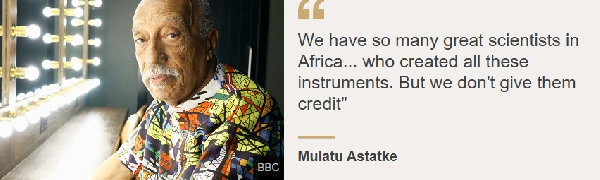
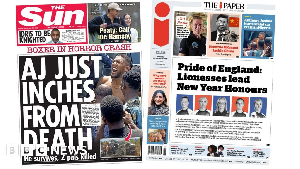
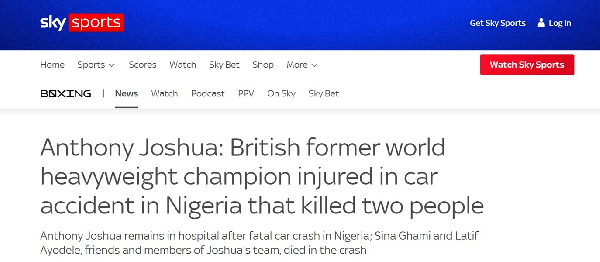
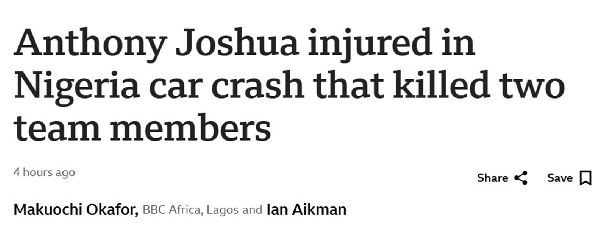
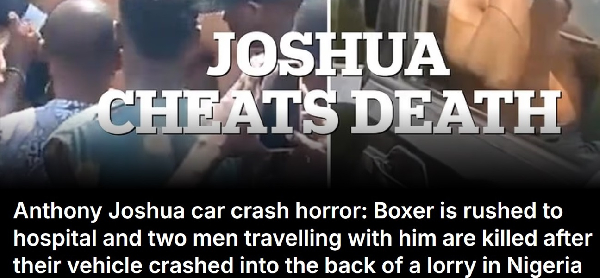
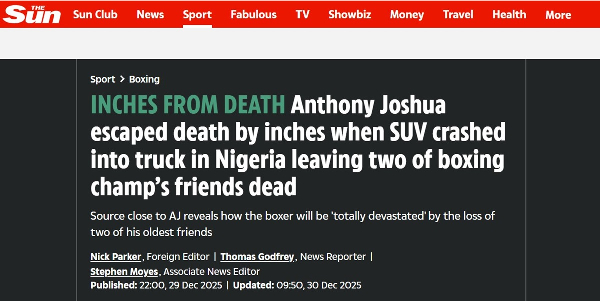
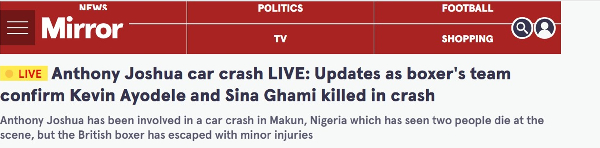


,autocrop(1200:630) "Cedi records strong gains as dollar falls to GH¢10.65")
&format=webp)
&format=webp)