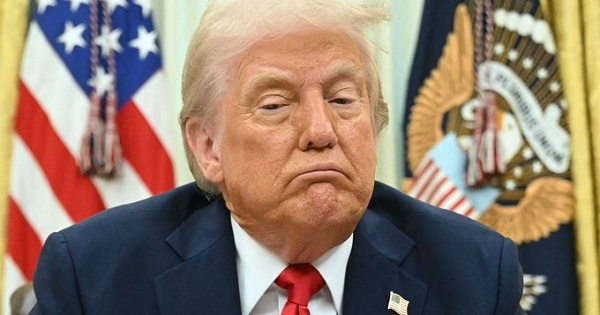
President Donald Trump don suspend di US green card lottery scheme.
Dis dey come afta one mass shooting for Brown University last week wey lead to di death of two pipo.
Authorities find di suspect, wey be one Portuguese man dead on Thursday, 18 December.
E enta di US through di Diversity Lottery Immigrant Visa Programme (DV1) for 2017 and dem give am green card.
Homeland Security Secretary Kristi Noem tok say she don pause di visa scheme under Oga Trump direction to “ensure say no Americans go suffer again sake of dis disastrous programme”.
US officials say dem believe say na di suspect, 48-year-old Claudio Neves Valente, also kill one Portuguese Massachusetts Institute of Technology professor Nuno Loureiro earlier dis week.
Why US suspend di program
Oga Trump order di Homeland Security Secretary Kristi Noem to suspend di program, few hours afta police discover Neves Valente deadi body for one storage facility for Salem, New Hampshire, from wetin police believe say na self-inflicted gunshot wound.
Police say video evidence and tips from di public lead investigators to one car rental location wia dem find di suspect name and match am to dia pesin of interest, afta one six-day multi-state manhunt.
Dem find am dead wit one satchel and two firearms. Evidence for one car nearby bin match go di scene of di shooting for Brown University for Providence, according to Rhode Island Attorney General Peter Neronha.
Brown University President Christina Paxson say Neves Valente enrol for Ivy League school from di autumn of 2000 to di following spring, and e bin dey study for a PhD in physics.
E “no get current active affiliation” to Brown, she tok.
Officials tok say dem believe Neves Valente shoot and kill MIT professor Nuno F Gomes Loureiro, 47, on Monday for im house for Brookline, wey be about 50 miles (80km) from Providence.
Wetin be di Diversity Immigrant Visa Program
Di programme dey make up to 50,000 visas available each year through one random selection process among entries from countries wit low rates of immigration to di US.
Dem launch am for di 1990s. Every year, millions of pipo dey apply for visas through di program.
To qualify for a diversity visa, applicants must get at least high school education or two years of work experience for field wey require training. E also dey compulsory for dem to undergo vetting and interview bifor dem fit get visa.
Na Congress create di program and e neva dey clear under which legal mechanism Madam Noem fit order suspension.
Di US State Department dey oversee most of di visas wey dey issued through di lottery programme, although, di U.S. Citizenship and Immigration Services dey process some parts of dem.
President Trump na long time critic of di diversity visa program, e push to end am during im first tenure, afta one man we yenta America via lottery kill eight pipo inside one truck accident attack for New York.
Supporters of di visas say dem dey vet recipients and di programme dey good for di US economy plus di kontri image abroad.
Trump suspend di program for 2020 during im first administration.
Wetin be green cards?
.Green cards dey give immigrants legal permanent residence and di opportunity to apply for American citizenship
.In a typical year, dem dey issue nearly one million green cards for di US
.Majority – roughly 70% – dey go to pipo wey get relatives wey dey live for US, according to one 2018 report from di US Senate
,For employment-based green cards, one common form of di residency status, roughly 80% dey issued to dos wey already dey di kontri, wey dey shift from temporary visa to permanent residence
The Brown University shooter, Claudio Manuel Neves Valente entered the United States through the diversity lottery immigrant visa program (DV1) in 2017 and was granted a green card. This heinous individual should never have been allowed in our country.
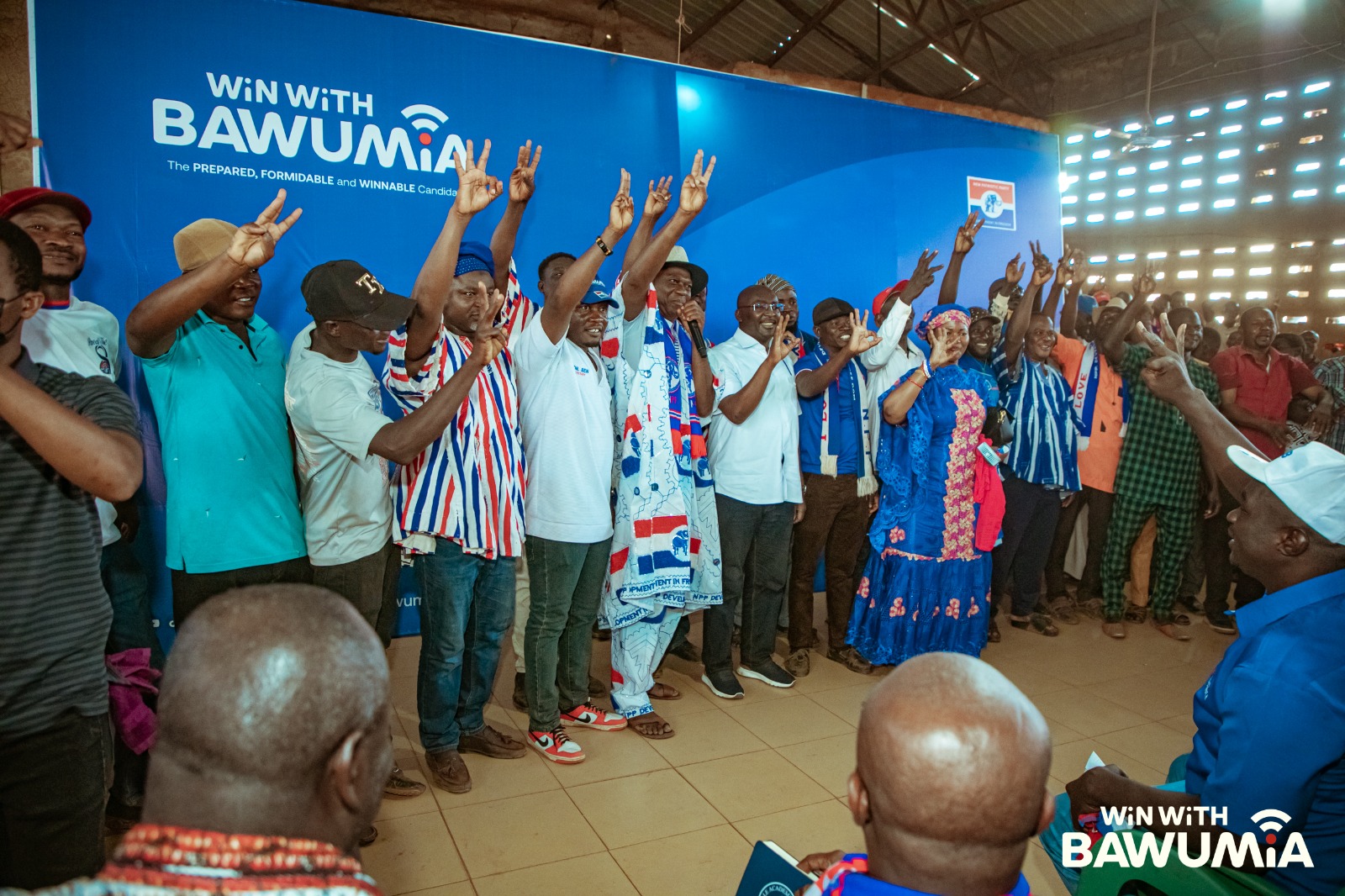
The spokesperson for New Patriotic Party presidential aspirant Dr. Yaw Osei Adutwum has urged delegates of the party in the Ashanti Region to close ranks behind the Bosomtwe Member of Parliament, describing the flagbearer contest as a defining moment for the region’s political relevance and unity.
Speaking on the evolving dynamics of the internal race, Yaw Opoku Mensah questioned what he described as political repositioning by some aspirants who, in his view, have distanced themselves from their original home regions only to later claim ancestral ties to Ashanti for strategic advantage.
He argued that such moves, driven by internal party calculations, risk diluting authenticity and confusing the party’s grassroots base. According to him, Ashanti must respond with clarity and purpose, not political sentimentality.
Mr. Opoku Mensah maintained that Dr. Yaw Osei Adutwum stands apart as the only candidate whose connection to the region is both organic and unquestionable.
He stated that Dr. Adutwum, the sitting MP for Bosomtwe, is a full-blooded Ashanti, with both parents originating from Jachie, and has consistently represented the region’s values on the national stage.
Beyond lineage, the spokesperson pointed to Dr. Adutwum’s competence and dedication to national service as evidence that Ashanti has successfully groomed one of its own for higher leadership.
He said the aspirant’s approach to governance reflects discipline, strategic thinking, and a deep understanding of the country’s development needs.
Drawing lessons from the cohesion often displayed by northern party strongholds, Mr. Opoku Mensah urged Ashanti delegates to adopt a similar sense of collective responsibility.
He argued that a united regional base is critical to motivating party faithful and strengthening the NPP’s prospects in future national elections.
“This is a rare opportunity to mobilize our base around a candidate who embodies both identity and performance,” he said, describing Dr. Adutwum as a leader capable of inspiring confidence beyond the party’s core supporters.
Mr. Mensah concluded by framing the decision before delegates as a patriotic obligation rather than a routine political choice.
He cautioned against “settling for less,” insisting that Ashanti’s strength lies in backing a candidate whose roots, record, and readiness align with the party’s long-term vision.
The remarks come as internal deliberations intensify across the party, with stakeholders weighing regional balance, competence, and electability as key factors in the flagbearer race.
DISCLAIMER: The Views, Comments, Opinions, Contributions and Statements made by Readers and Contributors on this platform do not necessarily represent the views or policy of Multimedia Group Limited.
DISCLAIMER: The Views, Comments, Opinions, Contributions and Statements made by Readers and Contributors on this platform do not necessarily represent the views or policy of Multimedia Group Limited.
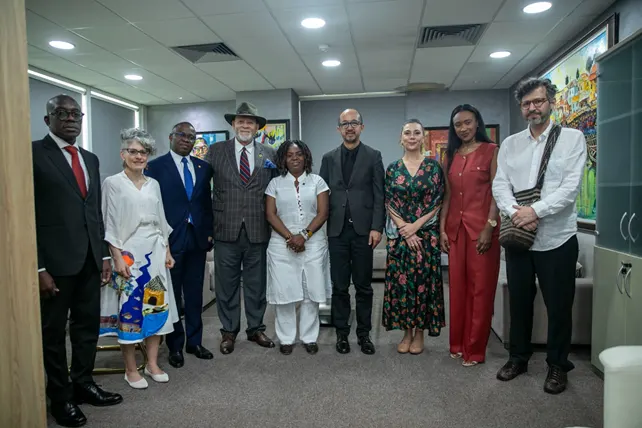
Colombian Vice President Francia Márquez (middle) with representatives from Fidelity Bank and Colombia at Fidelity Bank Headquarters
Fidelity Bank Ghana has positioned itself as the financial anchor for a new era of South-South cooperation, following a high-level strategic dialogue with Francia Elena Márquez Mina, Vice President of the Republic of Colombia, at the Bank’s Headquarters in Accra.
The engagement brought together Colombian business leaders, Ghanaian entrepreneurs, and representatives of the financial sector to explore opportunities for job creation, technology transfer, and sustainable economic growth across both countries.
Speaking on the outcome of the engagement, Atta Yeboah Gyan, Deputy Managing Director for Operations and Support Functions at Fidelity Bank, described the meeting as a catalyst for deeper economic cooperation.
“This was largely a facilitating role for us,” he said. “We brought together business owners from Ghana, who are our clients, and the Colombian business delegation to explore areas where collaboration and mutual support are possible. The meeting was a huge success because we identified clear sectors where further collaboration is needed.”
Key areas identified for collaboration included agribusiness and agri-processing, industrial machinery, and joint financing structures between local banks in Ghana and Colombia.
Mr. Gyan noted that similarities between the two economies create opportunities for South-South cooperation, particularly in adapting machinery and processing technologies suited to local conditions.
“There should be no reason why governments from Colombia and Ghana cannot empower local banks to finance development, instead of relying solely on European or American banks,” he said. “We have the capacity here in Ghana, and we see opportunities to syndicate with Colombian banks to finance projects that advance our economies.”
Addressing the gathering, Vice President, Francia Márquez Mina, reaffirmed Colombia’s commitment to strengthening bilateral relations through private-sector engagement and cultural connection. She underscored the importance of restoring historic trade routes as channels for dignity, opportunity, and shared prosperity.
“We are here to encourage business people and entrepreneurs to see mutual opportunities in the exchange of goods and services,” she said. “Colombia wants to serve as a bridge, not only to our country, but to Latin America and the Caribbean, just as we see Ghana as our gateway to Africa.”
She also highlighted Colombia’s focus on energy transition, tourism, technology, pharmaceuticals, and food production, inviting Ghanaian entrepreneurs to explore investment opportunities.
“The opportunities to do business between our nations are very great,” she said. “We want Ghana to be the gateway to Colombia, and for Colombia to be considered the gateway to Latin America.”
The Colombian Deputy Minister for Trade, Tito Yepes, expressed strong optimism about the partnership, describing the opportunities as “enormous.” He highlighted Colombia’s broader Africa strategy and the symbolic importance of strengthening ties with Ghana.
“We are starting here with Fidelity,” Mr. Yepes declared. “Fidelity has proposed facilitating engagement between the two private sectors to enable collaboration. We see Ghana as a gateway to West Africa because our sectors are complementary. Ghana has inputs we need, especially in agriculture and cosmetics, while Colombia has machinery and technology adapted to similar economic realities. This is not theory; we are already taking samples and exploring purchases.”
Mr. Yepes also outlined ambitions to improve connectivity between the two countries, including maritime and air links, to reduce travel and trade barriers.
“Why not have a maritime route between Cartagena and Accra, or a direct flight from Bogotá to Accra,” he said. “Instead of taking 40 hours through Europe, we can do this in 12 hours.”
The engagement marks a significant step in advancing Ghana – Colombia private sector cooperation, with Fidelity Bank positioned as a key enabler of trade finance, investment partnerships, and long-term economic collaboration between the two regions.
The government has resubmitted the lithium mining agreement with Barari DV Ghana Limited to Parliament for consideration, after initially withdrawing the deal to allow for further stakeholder consultations.
The submission has reignited debate over the proposed royalty rate of 5%, with critics arguing that it represents a reduction from the 10% rate negotiated under the previous administration.
They contend that the lower rate could undermine Ghana’s ability to derive maximum benefit from its lithium resources.
In response to the concerns, the government says it is taking steps to ensure a broader reform of the country’s mining royalty framework, aimed at achieving a more balanced and sustainable approach to resource exploitation.
Meanwhile, former Speaker of Parliament, Professor Mike Oquaye, has questioned the fairness of the royalty regime underpinning the agreement between the government and Barari DV.
He noted that the existing royalty cap has historically disadvantaged Ghana, particularly in the extraction of high-value natural resources such as lithium.
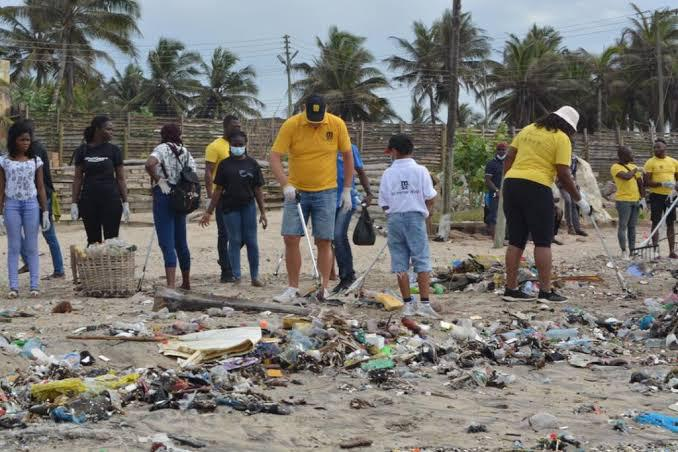
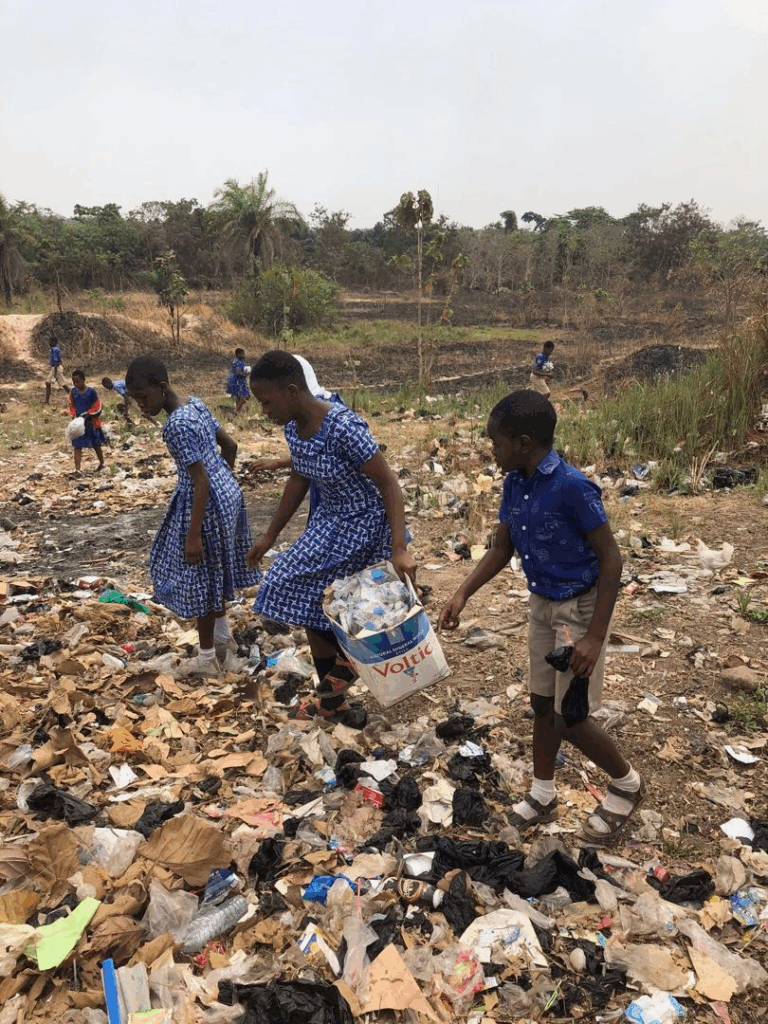
A new study on littering in Ghana suggests that public education messages may be more effective when they share two clear ideas at the same time: that more people are using bins and that the community supports and expects people to use bins.
The research comes at a time when littering remains a major concern, especially in large cities.
The study, titled “Examining Anti-Littering Intentions in Ghana Through the Theory of Normative Social Behavior and the Influence of Dynamic Norms,” was published in the 2025 edition of Current Research in Ecological and Social Psychology. It was authored by Kwaku Sarpong Danso, MA; Taylor Ann Foerster, PhD; and Rain Wuyu Liu, PhD.
The study notes that Accra generates over 3,000 metric tons of waste each day and that up to 40% may end up in streets and other public spaces.
What The Study Looked At The study examined why people choose to dispose of trash properly and what kinds of campaign messages might encourage better waste disposal.
To do this, the researchers carried out in-person, paper surveys with 527 adults in Accra in August 2024.
Participants were approached in public places, including markets, malls, major roads, and suburban areas.
Key Findings The study found that single messages may not be enough. For example, only telling people that “many people use bins” did not strongly predict whether they planned to dispose of trash properly.
However, messages were stronger when they worked as a pair—combining what people are doing (for example, “more people are using bins”) and what people expect (for example, “people think using bins is the right thing to do”).
The research also found that personal and health reasons mattered a lot.
People were more likely to say they would use bins when they believed proper waste disposal protects their health and benefits them personally.
Why This Matters For Campaigns In Ghana The authors suggest that anti-littering campaigns could be stronger when they show that good disposal habits are becoming more common, make it clear that the community supports proper disposal, and connect the message to everyday benefits people can relate to, especially health.
DISCLAIMER: The Views, Comments, Opinions, Contributions and Statements made by Readers and Contributors on this platform do not necessarily represent the views or policy of Multimedia Group Limited.
DISCLAIMER: The Views, Comments, Opinions, Contributions and Statements made by Readers and Contributors on this platform do not necessarily represent the views or policy of Multimedia Group Limited.
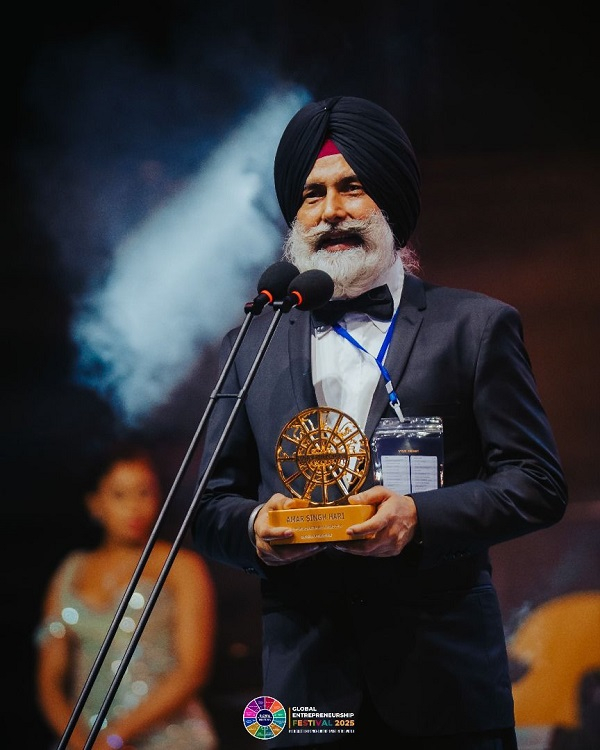
IPMC founder Amar Deep Singh Hari, founder of IPMC
Tech pioneer and IPMC founder Amar Deep Singh Hari has received a lifetime achievement award at this year’s Global Entrepreneurship Festival (GEF) in Accra, recognising more than three decades of work that helped transform Ghana’s digital landscape.
Hari is widely regarded as one of the architects of Ghana’s modern technology ecosystem. His career spans early software development, large-scale business automation and a sustained push to expand digital skills across West Africa.
He created Ghana’s first accounting software, Accounts Manager, in the early 1990s before steering IPMC’s rollout of India’s Tally system and the ERP platform Ebizframe, allowing thousands of businesses to computerise their operations.
By the mid-1990s he had moved further into uncharted territory. He built what is described as the country’s first data centre based on 64-bit RISC-architecture Alpha computer systems from Compaq, installed at the then SSB Bank. A second installation at the Ghana Statistical Service later became home to West Africa’s first storage area network, introduced through IPMC using technology developed by EMC Corporation.
Many of the digital services Ghanaians use daily now run on systems deployed by his company. Whether purchasing electricity units, paying water bills, using mobile money, shopping online or checking out at major retail stores, the transactions are often processed through IPMC-installed infrastructure.
His influence has also been felt in training and skills development. The IPMC University College of Technology has equipped hundreds of thousands of students across the region with practical IT skills and recently partnered with Harvard Online to introduce AI programmes curated by Harvard.
Organisers of GEF said the award recognised a career defined by steady innovation and a commitment to expanding digital access. The festival, held this year at La Palm Beach in Accra, brought together global innovators, business leaders and entrepreneurs. Ghana hosted the 2025 edition, with Namibia expected to take its turn in 2026.
Hari was praised as a visionary whose work helped accelerate Ghana’s entry into the digital era.
“Technology only has meaning when it improves everyday life. My goal has always been to make digital tools accessible to ordinary people and to help Ghana build systems that work for everyone,” he said after receiving the award.
“In the early days many thought these innovations were too ambitious for our market. But Ghana proved that with the right talent and commitment, we could be early adopters and even regional leaders. This honour is really for the thousands of young people who passed through IPMC and went on to shape the West African IT landscape. Their success is the clearest evidence that investing in people is the most powerful form of innovation.”
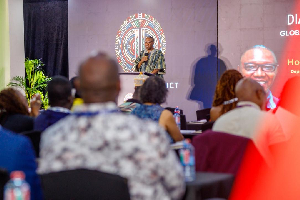
Clement Apaak speaking at the Diaspora District Global Education Conference
The Deputy Minister of Education, Dr Clement Abas Apaak, has urged the diaspora to partner local intellectuals to expand global opportunities and build pathways that align education with work.
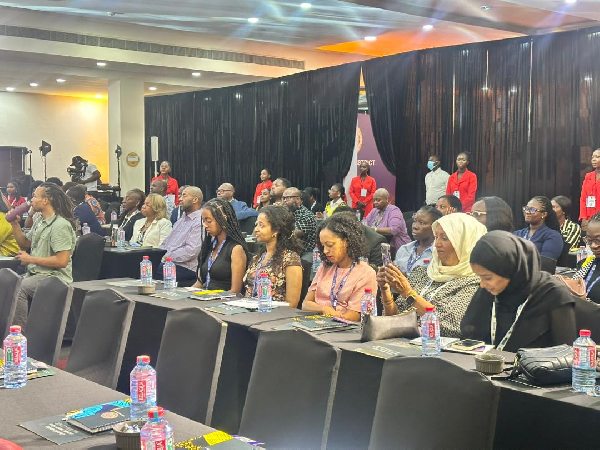
Delivering an address at the Diaspora District Global Education Conference in Accra on Wednesday, December 17, 2025, Dr Apaak said sustainable progress depends on collaboration rather than replacement.
Education Plus Initiative: Let’s strengthen safe, inclusive school environments – Apaak
“To the diaspora: your role is not to rescue or replace, but to connect with local brilliance and build together for global opportunity,” he stated.
He emphasised that Ghana’s development agenda must be anchored in co-creation.
“We must co-create systems where talent can thrive wherever it is found,” Dr Apaak said, adding that the future young people deserve requires intentional partnership.
He added that, “The future where young people graduate with purpose, confidence, and pathways will not happen by accident. It will happen because we chose to work together.”
The deputy minister called for a shift from rhetoric to action in supporting educators.
“Let us honor educators not only with praise, but with partnership. Let us connect education to opportunity with intention, and let us build systems worthy of the talent that already exists across Ghana, Africa, and our global diaspora,” he added.
Dr Apaak outlined a four-part partnership framework, stressing the complementary roles of key actors.
“Educators shape minds and potential. Industry understands skills, markets, and the future of work. Government sets vision and creates conditions for scale. And the diaspora brings global perspective, experience across systems, and bridges to opportunity,” he explained.
He warned that fragmentation leaves young people stranded.
“When these forces operate separately, young people are left to navigate the gap alone. When they work together, that gap becomes a bridge,” Dr Apaak said.
According to him, the focus should be on building practical ecosystems.
“We must create ecosystems where learning leads somewhere, where skills translate into livelihoods, where education prepares young people not only for exams but for life,” he noted.
Dr Clement Abas Apaak reaffirmed the central role of teachers and education professionals in shaping policy and partnerships.
“To the educators in this room and beyond: your work matters more than you are often told. Your insight must shape policy. Your experience must inform partnerships, and your leadership must remain central to how we design the future of education and work,” he added.
WASSCE results: We inherited a challenged educational system – Dr Apaak
He maintained that aligning education with opportunity does more than transform individuals.
“When education is aligned with opportunity, it shapes communities, strengthens economies, and defines the future,” he said.
President John Dramani Mahama, in partnership with Labadi Beach Hotel has renovated the late Mawuli Semevo’s house after his death
In a video, the newly-renovated house in Adentan was officially handed over the late actor’s family members on Thursday, December 18, 2025
Many Ghanaians took to social media to commend President John Mahama for the generous gesture towards Mawuli Semevo’s family
Ghana’s top stories, now easier to find. Discover our new search feature!
President John Dramani Mahama has renovated the burnt residence of the late veteran Ghanaian actor Mawuli Yao Semevo in Adentan for his family, months after his tragic death on February 20, 2025.
President John Dramani Mahama and Labadi Beach Hotel renovate the late Mawuli Semevo’s burnt home for his family. Photo source: John Dramani Mahama, Y 107.9 FM, Labadi Beach Hotel Source: Facebook
The late Mawuli Semevo died at the age of 63 while he was admitted at the Ridge Hospital, where he was receiving treatment for severe burns sustained in a fire incident. Ghanaian actors Ken Fiati and Edinam Atatsi confirmed the unfortunate news.
The news of Semevo’s unfortunate passing garnered touching tributes from Naa Ashorkor and media personality Serwaa Amihere, who had donated money to support the actor’s treatment on behalf of Flora Tissues at the hospital.
The late veteran Ghanaian actor had been admitted to the hospital after he suffered severe burns on almost half of his body after a fire incident at his residence. The actor was reportedly asleep when the fire broke out in his home, ravaging the structure.
A dedicated non-profit organisation, Beyond Burns International, described his situation as dire at the time and joined some veteran actors to appeal for support to save his life as he battled with respiratory injuries, which made it difficult for him to breathe properly.
Following Mawuli’s death, his colleagues honoured his memory with a vigil at the National Theatre on Thursday, March 27, 2025.
The veteran actor was later buried on Saturday, April 5, 2025, after his funeral service was held at the National Theatre.
Mahama renovates Mawuli’s residence for his family
On Thursday, December 18, 2025, officials from Labadi Beach Hotel handed over the renovated residence of the late Mawuli Semevo to his family at a simple ceremony in Adentan in the Greater Accra Region of Ghana.
In a video shared by Metro TV Ghana on Instagram, the house, which was previously gutted by the tragic fire incident, was restored following a call by President Mahama for corporate support after a meeting with Mr Beautiful.
Labadi Beach Hotel responded to the president’s call through its corporate social responsibility to support the renovation project for the late actor’s family.
Ghanaian movie stars hold a vigil for the late Mawuli Semevo at the National Theatre. Photo source: @the1957news Source: TikTok
In the video, the residence had been fully furnished and equipped with electronic gadgets, resembling a five-star hotel room.
At the ceremony, the late Mawuli’s daughter expressed her appreciation to President Mahama, Mr Beautiful, Labadi Beach Hotel, and SSNIT for the renovation work on behalf of her family.
Aside from the renovated house, the president is reported to have donated a large sum of money to support the late actor’s family.
The Instagram video of Mawuli Semevo’s renovated house being handed over to his family is below:
Ghanaians commend Mahama for Mawuli’s house renovation
YEN.com.gh has gathered some comments from social media users below:
Buysmart Enterprise commented:
“Thank you, Mr President. May the good Lord continue to bless and protect you.”
He cares Jesus wrote:
“May God bless Mr President John Dramani Mahama. You’re indeed a blessing.”
Efyah Kumkum Dzifa said:
“Well done Mr Beautiful. God bless you Mr President 🙏🏼.”
Jackie Appiah renovates ICT lab on birthday
Earlier, YEN.com.gh reported that Jackie Appiah renovated an ICT lab for the University of Ghana School of Communications on her 42nd birthday.
In several videos, the veteran actress handed over the facility equipped with new computers and furniture to the school’s authorities.
Jackie Appiah’s benevolent act earned her major praise from many Ghanaians on social media.
Dr. Sanusi Zankawah, a Ghanaian international trade expert, says Ghana is on the brink of a rare and strategic opportunity to reclaim its position as a continental leader in textile and apparel manufacturing.
He points to a proposal to establish two major textile factories—one in the Ashanti Region and the other in the Savannah Region—as a bold yet realistic pathway to economic transformation. Beyond industrial expansion, he notes, the initiative could drive sustainable job creation along the north–south corridor, boost foreign exchange earnings, and reduce the country’s dependence on imported textiles.
Dr. Zankawah stresses that the choice of locations is deliberate. The Ashanti Region and Northern Ghana are globally recognised for Kente and fugu, respectively—two iconic fabrics that embody deep cultural heritage and strong brand identity within Africa’s textile tradition. These cultural assets, he argues, give Ghana a unique competitive edge in the global fashion industry.
By linking the two factories into a single production ecosystem, Ghana could develop a fully integrated textile value chain—from cotton cultivation and yarn production to weaving, finishing, garment manufacturing, and export. This integrated approach would significantly enhance local value addition, support both rural and urban employment, and position the country as a credible and competitive player in global apparel markets.
To Dr. Zankawah, the dual‑factory model is more than an industrial plan; it is a practical blueprint for merging culture, agriculture, and manufacturing into a sustainable, export‑driven industry.
Read the full statement below:
A Dual-Factory Solution: How Ashanti and Savannah Can Anchor Ghana’s Next Big Export Industry
Ghana stands at a defining moment where cultural heritage, agricultural potential, and industrial ambition can converge to create a powerful new economic pillar. With global demand rising for ethically sourced, culturally inspired, and competitively manufactured textiles, the country has a unique opportunity to establish itself as a leading apparel producer in Africa. The proposal to set up two major textile factories, one in the Ashanti Region and the other in the Savannah Region offers an ambitious yet realistic pathway to transform the economy, increase foreign exchange earnings, and create sustainable jobs across the north–south corridor.
The Ashanti Region and Savannah/Northern Ghana are globally associated with the elegance and prestige of kente and Fugu respectively, possessing a cultural brand unmatched in Africa’s textile landscape. Kente and Fugu has transcended borders, appearing in global fashion shows, diaspora events, and international media. Yet despite the visibility remains under-industrialized and largely confined to artisanal production. Establishing a modern textile and apparel factory in Ashanti and Savannah region creates the platform for Ghana to pair its cultural heritage with world-class manufacturing standards. The factory would not only scale up Kente/Fugu-inspired designs but also produce a wide range of contemporary, globally competitive apparel that aligns with international fashion trends, seasonal collections, and mass-market demand. This ensures that Ghana is not limited to traditional fabrics alone but directly competes with foreign-made garments that dominate the domestic market and global shelves.
Complementing this effort is the Savannah Region, where fertile lands make it Ghana’s most promising zone for large-scale cotton cultivation. Cotton is the lifeblood of any serious textile industry, and Ghana’s dependence on imported lint and yarn has long weakened its competitiveness. Establishing a cotton processing and textile mill in Savannah will address this challenge by producing the raw materials needed to feed domestic factories. Beyond cotton, Savannah is also the homeland of the iconic smock, a fabric whose authenticity and rugged beauty continue to gain global attention. A modernized smock production system will allow Ghana to upgrade quality, standardize output, and develop export-ready smock apparel lines.
By linking these two factories, Ghana can create a complete value chain, from cotton farming to yarn production, weaving, fabric finishing, apparel manufacturing, and export. This integrated model drastically reduces import dependency, increases local value addition, and positions Ghana as a credible player in global fashion manufacturing.
Crucially, these factories will serve a broader purpose beyond cultural exports. They will be designed to produce a wide spectrum of apparel that competes directly with imported garments from Asia, Europe, and the Americas. From casual wear and uniforms to corporate clothing, sportswear, and fashion capsules, Ghana can build a manufacturing base capable of supplying both domestic and export markets. This is how countries such as Kenya, Mauritius, Ethiopia, Morocco, Madagascar, and Lesotho built apparel sectors that now supply major global brands. Their success demonstrates that Africa can indeed compete internationally when supported by the right policies and production capabilities.
With the right infrastructure and industrial standards, Ghana can replicate and even exceed these achievements. A combined Ashanti–Savannah textile axis will not only create products; it will create confidence. It will signal to international fashion brands that Ghana is a serious contender in the global apparel supply chain. The availability of quality cotton, skilled labour, design innovation, and modern production facilities will make Ghana an attractive sourcing destination for renowned fashion houses looking for ethical, African, and sustainable materials. Over time, Ghana could become a regional hub where global brands establish sourcing offices, contract local manufacturers, or even relocate parts of their production lines to take advantage of Ghana’s stability, logistics access, and emerging industrial ecosystem.
The economic impact would be extensive. Textile and apparel value chains are labour-intensive, creating jobs at every stage, from thousands of farmers cultivating cotton in the Savannah Region to technicians, weavers, tailors, designers, quality controllers, and logistics professionals in Ashanti. Young people, especially women, stand to benefit enormously from this industrial expansion. Moreover, the shift from exporting raw or low-value products to exporting finished garments will significantly increase foreign exchange earnings and diversify the national export basket. By complementing cocoa, gold, and oil with a strong manufacturing export base, Ghana strengthens its economic resilience and reduces vulnerability to global commodity fluctuations.
A supportive policy environment is essential to unlock this vision. This includes reviving cotton production through seed improvement and guaranteed offtake, offering tax incentives to textile manufacturers, establishing industrial parks with reliable energy, and creating certification labs to meet U.S. and European export standards. Equally important is a national branding agenda, promoting “Made in Ghana Textiles” as a symbol of authenticity, quality, and creativity.
Ultimately, the dual-factory strategy is more than an industrial development initiative. It represents a new era of economic identity for Ghana, one that merges cultural pride with modern competitiveness. With Ashanti driving design and finishing, and Savannah supplying raw materials and weaving strength, Ghana can position itself as a preferred African hub for textile and apparel manufacturing. The country will not only export kente and smock but also produce globally competitive garments that rival foreign imports and attract international brands seeking sustainable African partnerships.
If executed boldly, this model could define Ghana’s next major export industry, one that elevates local talent, boosts national earnings, empowers regions, and projects Ghanaian creativity onto the world stage like never before.
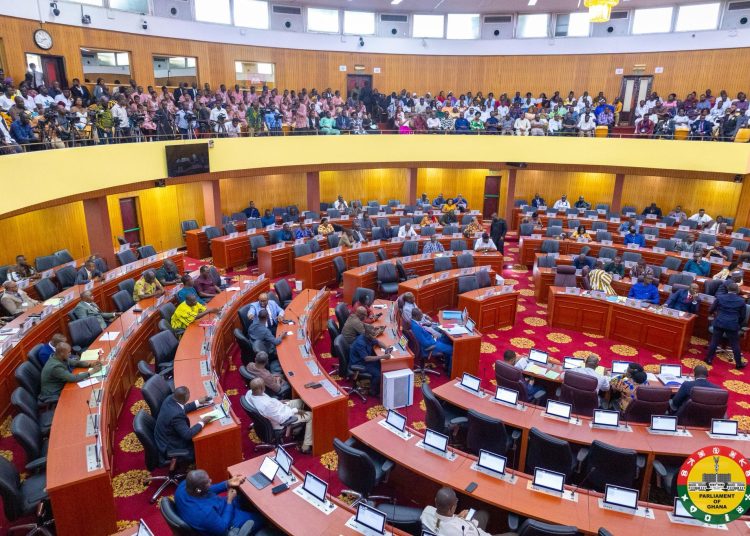
The Minority Leader in Parliament, Alexander Kwamina Afenyo-Markin, has accused the government of failing to take care of its own Members of Parliament while promising to create jobs for unemployed youth across the country.
Speaking on the floor of Parliament on Thursday, December 18, 2025, he questioned the credibility of the 24-Hour Economy policy, which proposes a three-shift system.
Reggae musician cum radio presenter, Blakk Rasta, has alleged that former traditional priestess turned evangelist, Patricia Asiedua Asiamah, popularly known as Nana Agradaa, who was sentenced 15 years’ imprisonment, has now established a church in prison.
Nana Agradaa, on Thursday, July 3, 2025, was sentenced to 15 years’ imprisonment with hard labour by an Accra Circuit Court following her conviction on multiple charges of charlatanic advertisement and defrauding by false pretence.
According to Blakk Rasta, after visiting Agradaa at Nsawam Prison, it was revealed to him that Agradaa now operates a church in the correctional facility.
“I decided to follow up to the prison facility and visit Agradaa. People that l spoke to said Agradaa has now opened a church in the female prison.
“On Sundays, she gathers the people at Nsawam female prison to preach to them and speak in tongues,” he stated.
According to Blakk Rasta, following the incarceration of Agradaa, a lot of people have been trooping into the prison facility to inquire about the former fetish priestess turned evangelist.
“Because they don’t believe that she is there. My information has it that the number keeps increasing, every now and then, people are running there and they come in the pretext of donating to the prison service. People have been donating to the female prison because of Agradaa, and this is unprecedented according to the prison officials,” he added.
Ghana Reinsurance Company PLC. has made donations totalling GH¢200,000 to three institutions as its corporate social responsibility interventions for 2025, being this year’s edition of the state-owned company’s long-standing annual tradition. The donations were made earlier this week at the roof top of Ghana Re’s head office in Accra,
The donations, in line with the company’s corporate tradition, were made to the health and education sectors, with each sector getting GH¢100,000.
Giving the rationale behind Ghana Re’s focus on those two sectors, the company’s Managing Director, Seth Kobla Aklatsi, explained: “The insurance industry is fundamentally sustained by businesses and individuals with the capacity to utilise our services. This capacity is largely built on key resources, foremost among them being a healthy human capital. Accordingly, it is essential that as a player in the industry, we support institutions who provide quality healthcare and education toward the development of much-needed human capital.”
Two health sector organisations shared the GH¢100,000 allocated to that sector, each getting GH¢50,000.
Lifeline for Childhood Cancer Ghana (LCCG), which has been regularly supported by Ghana Re over the years, is a patient organisation and fundraising foundation partner for the Pediatric Oncology Treatment Unit of the Korle Bu Teaching Hospital as well as the Komfo Anokye Teaching Hospital. Ghana Re’s latest donation is to assist with the building of a new 40-bed Paediatric Oncology Centre at the Korle-Bu Teaching Hospital to cater for more children because the current ward at the hospital can only take 25 children at a time; and there are about 500 cases every year, with many children having to be turned away.
The other health sector beneficiary of Ghana Re’s largesse is the Ghana Heart Foundation, (GHF), another organisation which the reinsurer has supported in the past. GHF is a charitable entity that supports the National Cardiothoracic Centre at Korle-Bu Teaching Hospital by facilitating public donations for heart-related research, patient care and creating a supportive environment for heart health in Ghana. The GHF has supported every patient undergoing health surgery to the tune of between 50 and 100 percent of the surgeries costs through the donations it receives and so the latest Ghana Re donation will assist patients in accessing heart surgery at the Korle-Bu Teaching Hospital.
The other GH¢100,000 given by Ghana Re has gone to the University of Cape Coast School of Business, which has been running programmes for the past 50 years. Currently, the school runs 37 programmes across the undergraduate, masters and doctoral levels with the potential to add 24 more within the next four years. Student enrolment has already increased to over 6,000, with further increases in the offing; and this has placed tremendous pressure on the school’s existing infrastructure, with students being forced to use corridors for group and personal studies, which is not conducive. Ghana Re’s donation is, therefore, to assist with the construction of six summer huts with a snacks shop to ease congestion in the learning spaces and, thus, facilitate effective learning and administration.
“A healthy population is the backbone of productivity, innovation and economic growth,” Seth Aklatsi asserted during the donation ceremony. “Similarly, education empowers individuals with knowledge, skills and confidence, enabling them to contribute meaningfully to society. By supporting both sectors, we are investing not only in institutions, but in people and in the future because healthcare and education remain two of the most crucial pillars of national development.”
Ghana Re, owned by the Government of Ghana, is the largest reinsurance company domiciled in the country.
Post Views:1
Discover more from The Business & Financial Times
Subscribe to get the latest posts sent to your email.
Parliament has passed the Appropriation Number 2 bill, 2025, authorising the government to make a withdrawal of GHS357 billion from the Consolidated Fund and other public funds effective January 1, 2026, to meet government expenditure.
The 2026 budget allocates GHS90.7 billion for the compensation of employees whiles GHS81 billion goes into the payment of wages and salaries.
The Appropriation Number 2 bill 2025 also earmarks GHS29.8 billion for the payment of arrears.
The government has also re-presented the lithium mining agreement with Barari DV Ghana Limited to Parliament for consideration, after initially withdrawing it for further stakeholder engagement.
The agreement proposes a 5 percent royalty rate, which has sparked controversy, with critics arguing it is a downgrade from the previous 10 percent rate agreed upon by the previous administration.
The government says it is working to ensure a comprehensive reform of the royalty framework for mining in Ghana.
The Nigeria Police Force has announced the arrest of a Nigerian, Okitipi Samuel, over his alleged involvement in a cyberattack that targeted Microsoft 365 users across multiple countries.
The Force Public Relations Officer, Benjamin Hundeyin, disclosed this on Thursday in Abuja while briefing journalists on the outcome of investigations carried out by the National Cybercrime Centre of the Nigeria Police Force.
Hundeyin said the centre, under the leadership of its Director, Commissioner of Police Ifeanyi Uche, commenced investigations in collaboration with Microsoft, the Federal Bureau of Investigation, the United States Secret Service, and the United Kingdom’s National Crime Agency.
According to him, investigations revealed that a phishing toolkit known as “Raccoon 0365” was used to create fake Microsoft login portals to harvest user credentials and unlawfully access email accounts belonging to corporate organisations, financial institutions, and educational institutions in several countries.
“This investigation commenced following credible intelligence received from Microsoft USA through the FBI, indicating that a malicious phishing toolkit known as Raccoon0365 was being used to create fake Microsoft login portals, harvest user credentials, and unlawfully access the email accounts of corporate organisations, financial institutions, and educational establishments,” Hundeyin said.
He added that between January and September 2025, several reports of unauthorised access to Microsoft 365 accounts were traced to phishing emails designed to mimic legitimate Microsoft login pages, enabling business email compromise, internal phishing, data breaches, and other cyber-enabled fraud.
Hundeyin said digital forensic analysis and cryptocurrency tracing identified wallets connected to the illegal operation.
He noted that operatives were deployed to Lagos and Edo states, leading to the arrest of three suspects identified as Joshua, James, and Okitipi Samuel between September 20 and October 4, 2025.
“Following extensive digital forensic and technical intelligence analysis, the centre conducted cryptocurrency tracing that identified suspicious wallets connected to cash-out schemes. Acting on actionable intelligence, operational teams were deployed to Lagos and Edo states, resulting in the arrest of Joshua, James, and Okitipi Samuel. Searches at their residences led to the recovery of mobile devices, laptops, and other digital exhibits linked to the fraudulent scheme,” he said.
Hundeyin identified Okitipi Samuel, also known as “0365”, and Moses Felix as the principal suspect and developer of the phishing infrastructure.
“The primary suspect, Okitipi Samuel, also known as Moses Felix, has been identified as the developer and operator of the phishing infrastructure. Investigations revealed that he managed a Telegram channel used to sell phishing links in exchange for cryptocurrency and hosted fake login pages on Cloudflare using stolen or fraudulently obtained email addresses,” he said.
He added that investigations confirmed Samuel unlawfully used the email details of one of the arrested individuals without consent to register some of the accounts used in the operation.
The police spokesperson said further investigations revealed that the identities of Joshua and James were used without their consent.
“There was no evidence linking them to the creation or operation of the phishing scheme. They were victims of identity theft,” Hundeyin said.
He said a prima facie case had been established against Samuel for identity theft, unlawful access to computer systems, creation and distribution of malicious software, unauthorised interference with network data, and aiding and abetting fraud.
Hundeyin added that the suspect would be charged under relevant provisions of the Cybercrimes (Prohibition, Prevention, etc.) Act, 2024.
He said the suspect would be prosecuted in Nigeria, noting that the country has the capacity to enforce its cybercrime laws, although extradition could be considered if formally requested through due process.
Hundeyin assured Nigerians that the police, under the leadership of the Inspector-General of Police, Kayode Egbetokun, would continue to protect the country’s digital ecosystem and urged citizens to practise good cyber hygiene by being cautious when clicking links and sharing personal information online.
Speaking separately, the Director of the National Cybercrime Centre, CP Ifeanyi Uche, urged Nigerians to exercise caution online.
Uche advised members of the public to avoid clicking on links from unknown or unexpected sources, noting that such links often contain malware or phishing tools designed to compromise devices and personal data.
He warned that indiscriminate clicking of links or responding to unsolicited emails could lead to unauthorised access to personal and corporate accounts, urging citizens to “wash their cyber hands” by verifying sources before taking action online.
New Patriotic Party (NPP) presidential hopeful and Member of Parliament for Abetifi, Dr. Bryan Acheampong, has disclosed that he privately urged former Vice President and fellow flagbearer aspirant, Dr. Mahamudu Bawumia, to withdraw from the party’s January 2026 Presidential primary.
Speaking in an interview on Good Evening Ghana with Paul Adom-Otchere on Thursday, December 18, Dr. Acheampong explained that his appeal was motivated by what he describes as structural challenges within the party.
According to him, those challenges could undermine the NPP’s chances in the 2028 general elections if Dr. Bawumia leads the party again.
“Those structural challenges are in addition to what he Mussa Dankwah does not know, the ones that I compiled and reached out to the candidate and said ‘look we will have challenges if we continue like this and therefore if you consider the interest of the party and bow out, that will be great for us so that we can find a new candidate and press on.’
“But then also the perceived division, the supporters of himself and that of Kennedy Agyapong was emerging. It was very clear to me that it was going to take us into 2028, and it will not give us the opportunity of winning that election and you know if we do not win, we are in serious trouble,” he stated.
The Abetifi MP, who supported Dr. Bawumia during the 2023 flagbearer contest, has since withdrawn from backing him and entered the race himself.
He said his decision came despite attempts by Former Second Lady Samira Bawumia to persuade him to remain with her husband’s campaign.
Popular Canadian singer and songwriter, The Weeknd
Abel Tesfaye, known as The Weeknd, and his team have established a new business partnership with Lyric Capital Group.
The agreement involves Lyric Capital investing in The Weeknd’s music catalog, spanning from the start of his career up to 2025. Crucially, the deal ensures that The Weeknd and his team will retain creative control, along with their status as shareholders and owners of the company.
According to Variety, the representative noted that the joint venture is not a conventional catalog sale: “From the beginning of the meeting, it was clear to all at Lyric that Abel would not sell his catalog. He wanted to be more innovative and creative in the way we established a partnership.
“To that end, through this venture, we constructed and launched a new business model with Abel and his iconic catalog whereby Abel and his team have the freedom to execute their creative vision with the entirety of his rights, both publishing and masters. This unique catalog deal sets a new standard for artist equity and control.”
The Weeknd’s new $1 billion catalog deal covers his music masters and publishing up to 2025, specifically excluding any future releases. He is retaining his existing collaboration with XO/Republic/Universal Music Group, and Universal Music Publishing Group will continue to handle the administration of his publishing catalog.
Although the representative said this was not a normal catalog buy, so a usual royalty calculation wasn’t possible, news reports from Variety, Billboard, and Bloomberg earlier in the year estimated the assets were worth at least $1 billion.
This value was based on around $55 million in net money for the label and publisher, which suggests the price was 18.2 times that amount.
Representatives for The Weeknd and Lyric would, however, not verify the figures with Variety. But if the reported $1 billion valuation is accurate, the deal stands as one of the most significant single-artist catalog acquisitions ever, and certainly for a contemporary artist.
The only publicly confirmed single-artist catalog deal to exceed it was Sony Music’s acquisition of the Queen catalog last year, which was valued at $1.27 billion.
“There is no ABS or securitization deal here,” the rep added. “Lyric created a first-of-its-kind structure with direct input from Abel and his team, which includes a first-of-its-kind ‘Royalty Backed Note—produced by Lyric, ft. Partners Group—that drastically enhances the artist-friendly theme that underpins this partnership.”
Ross Cameron, Lyric founding/co-managing partner, said, “I couldn’t be more excited about what Lyric, Abel and team have created together. From our first meeting, it was clear to me that we were sitting around the table with individuals that were going to change the way an artist thinks about his assets, music and legacy. The collaboration resulted in a first-of-its-kind partnership between an artist and Lyric, and we are beyond thrilled about this new venture.”
Rich Garzia, Lyric co-managing partner, stated, “Lyric strives to create artist-friendly structures and we believe this partnership demonstrates that at the highest level with the top artist in the world. I want to thank Abel and his team for putting their trust in Lyric.”
The Weekend is among the world’s most listened-to recording artists, boasting over 120 million monthly listeners on Spotify. Furthermore, his current “After Hours ‘Til Dawn” tour has reached a milestone, generating more than $1 billion and setting a new record for a solo male artist.
Chord Music Partners, with support from Universal Music Group and Dundee Partners, previously held a 50% stake in The Weeknd’s publishing rights.
Foreign Affairs Minister, Samuel Okudzeto Ablakwa, has called for coordinated global action to advance the cause of reparative justice for Africans and people of African descent, describing it as a moral and historical imperative.
Speaking at the Diaspora Summit 2025, held under the theme “Resetting Ghana: The Diaspora as the 17th Region,” Ablakwa stressed that the summit should mark a turning point from rhetoric to concrete action in the demand for justice over the transatlantic slave trade and its lasting consequences.
He emphasised that reparative justice is not merely about the past, but about restoring dignity, recognising historical wrongs, and forging a united global African front with a shared purpose.
According to Ablakwa, honouring the sacrifices and suffering of ancestors requires deliberate efforts to ensure their experiences are acknowledged and remembered, while empowering future generations to move beyond historical trauma.
The Minister noted that Ghana’s engagement with the diaspora remains central to the broader reparation agenda, positioning the country as a rallying point for justice, unity, and renewed global African identity.
“Let history record that this summit marked the moment when we move beyond rhetoric to coordinated action and when we unreservedly demanded justice for the greatest sin against humanity. In so doing, we honour our ancestors by insisting that their plight be recognised, that their pain and suffering be remembered and that their dignity be restored.
“We may be the answers to the prayers of our ancestors, but our children will be the beneficiaries of our refusal to be defined by the wounds of the past and our strength to join forces as one global African family with a collective purpose. Together, let us reaffirm that Africa’s rights is not only inevitable, it has already begun here in Accra,” he stated
Accra, Dec. 19, GNA – The Ghana Chamber of Construction Industries (GhCCI) has sworn in a new set of executives to steer the affairs of the chamber for the next three years following their election at the Chamber’s elective congress held last Wednesday.
The swearing-in ceremony, which took place in Accra, brought together delegates from various professional institutions within the construction industry. In all, 40 delegates were on the electoral roll, with 32 votes cast across the executive positions.
Five candidates contested for three key positions: Chairperson, Vice Chairperson, and General Secretary. Nana Opare Kwafo I, Acting Chief of Ahwerase and immediate past Vice Chair of the GhCCI, was elected Chairperson after securing 31 votes. The Vice Chairmanship contest was between Engr. Henry Kwadwo Boateng of the Institution of Engineering and Technology, Ghana, and Mr Patrick Ebo Bonful, immediate past President of the Ghana Real Estate Developers Association (GREDA). Mr Bonful emerged victorious with 24 votes, while Engr. Boateng polled eight votes.
Mr Reginald Obeng of the Chartered Institute of Building was elected General Secretary after obtaining 20 votes to defeat Harriette Naa Lamley Bentil of the Artisans Association of Ghana, who had 12 votes.
The elections were conducted peacefully and described by delegates as transparent and credible. The newly elected executives pledged to serve with diligence and integrity, strengthen the operations of the chamber, promote professionalism within the construction industry, and ensure sustainable growth and progress.
Nana Kwafo I assured members that quality construction would be central to his tenure, stressing that roads and infrastructure must meet safety and durability standards. He said the chamber would intensify advocacy against poor and unethical construction practices.
He welcomed the government’s Big Push infrastructure programme as a major boost to the industry, noting that it addresses longstanding concerns about delayed payments and accumulated debts in the road sector.
The ceremony was supervised by the Electoral Commission, with a High Court Judge administering the oath of office. GNA Christian Akorlie
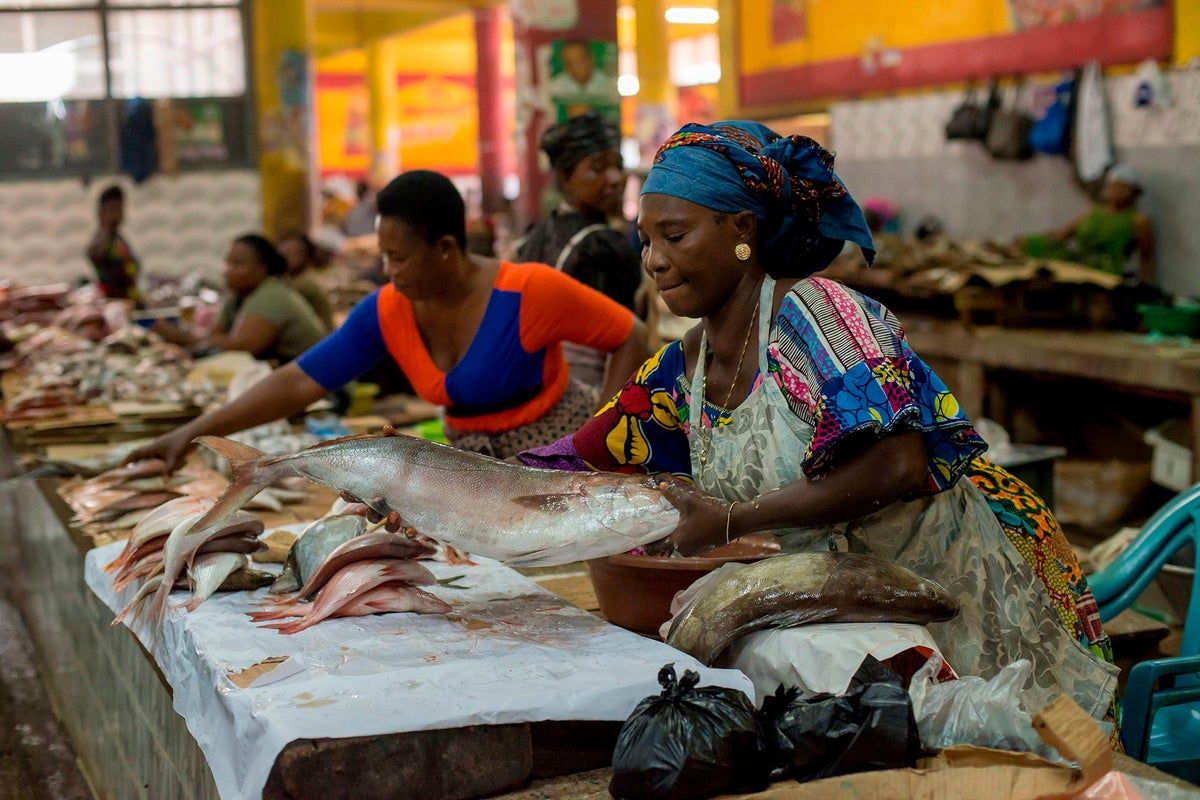
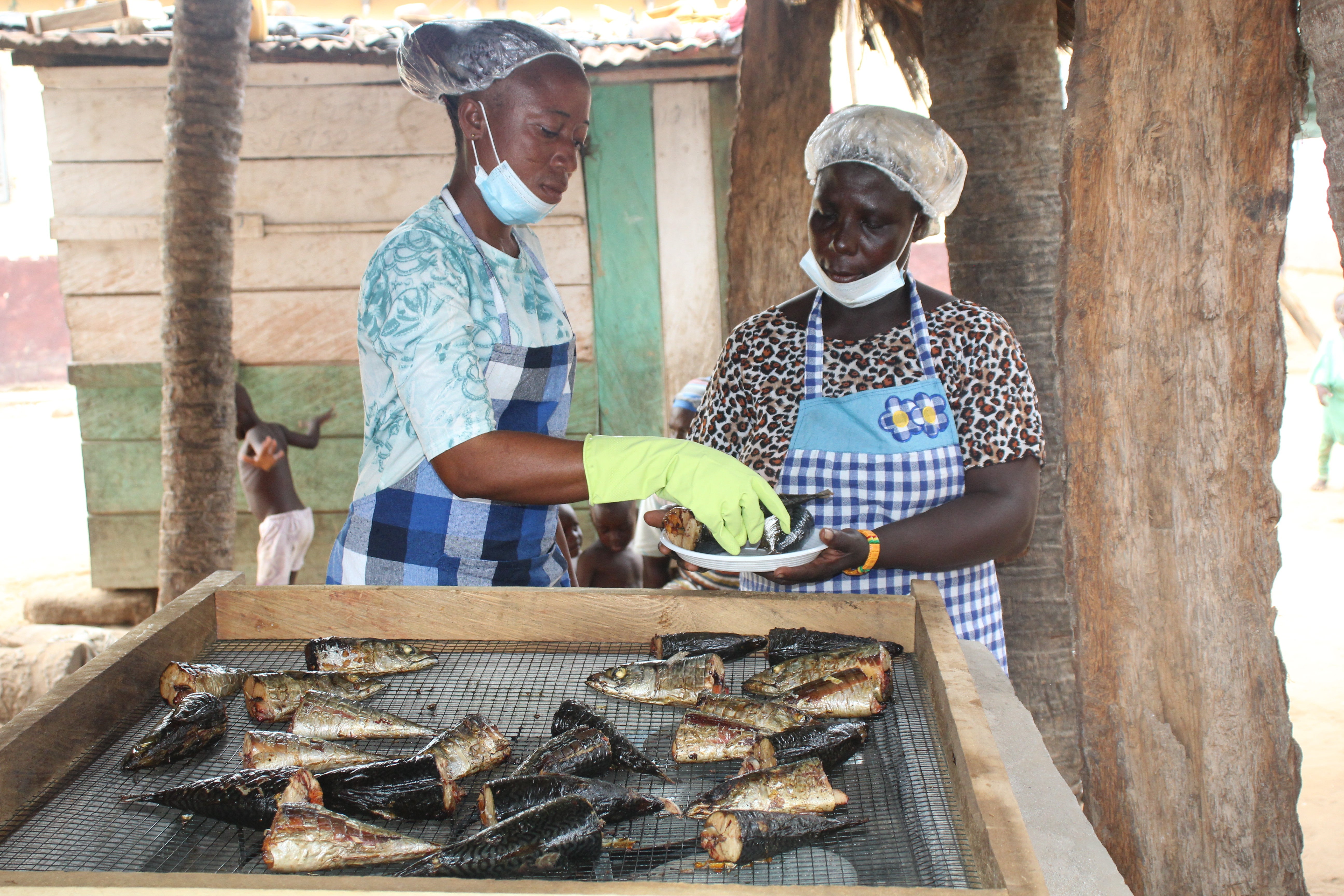
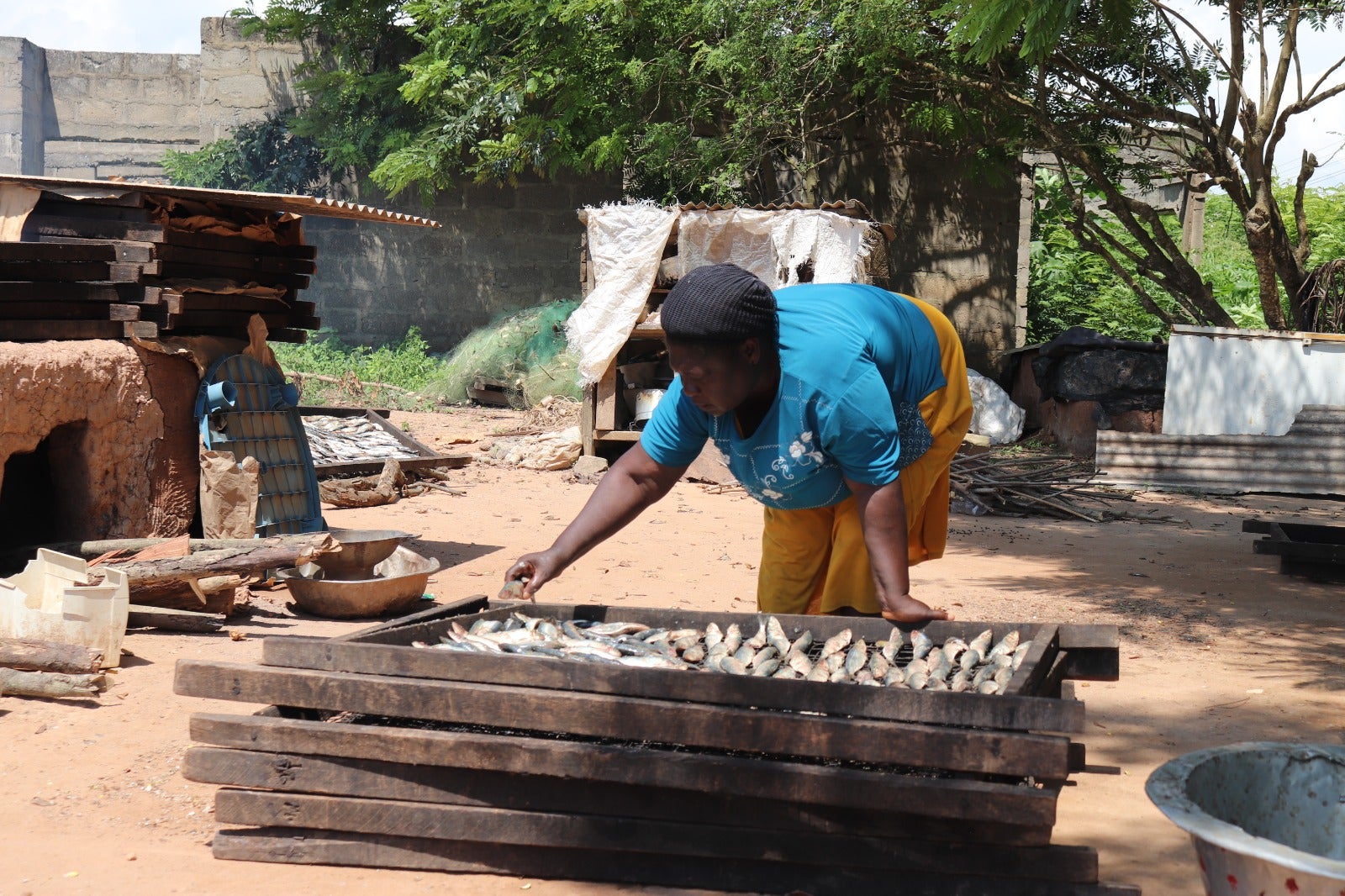
Every day Esi Akomade, a mother-of-five from Mumford in Central Ghana, heads down to the beach at 4am to purchase sardines, mackerel, and anchovies from the catch of fishermen arriving home in their canoes, which she then takes back to her home to clean, lays out on a wire mesh, and smokes.
It’s a job that her mother did before her, and one that she hopes that her children will do after her – but it is one that is becoming increasingly difficult as the climate warms, and weather patterns are becoming more volatile.
“Due to the fact that I do not have a shed, when there are excessive rains, it destroys my oven since it is made out of clay,” the 50-year-old says. “I have to move my belonging to another colleague’s shed and sometimes cover my fish with polyethene rubber and secure it with stones.
“Additionally, when it is extremely hot, it becomes very difficult to smoke the fish,” she adds, in comments that were recorded by aid workers and shared with The Independent.
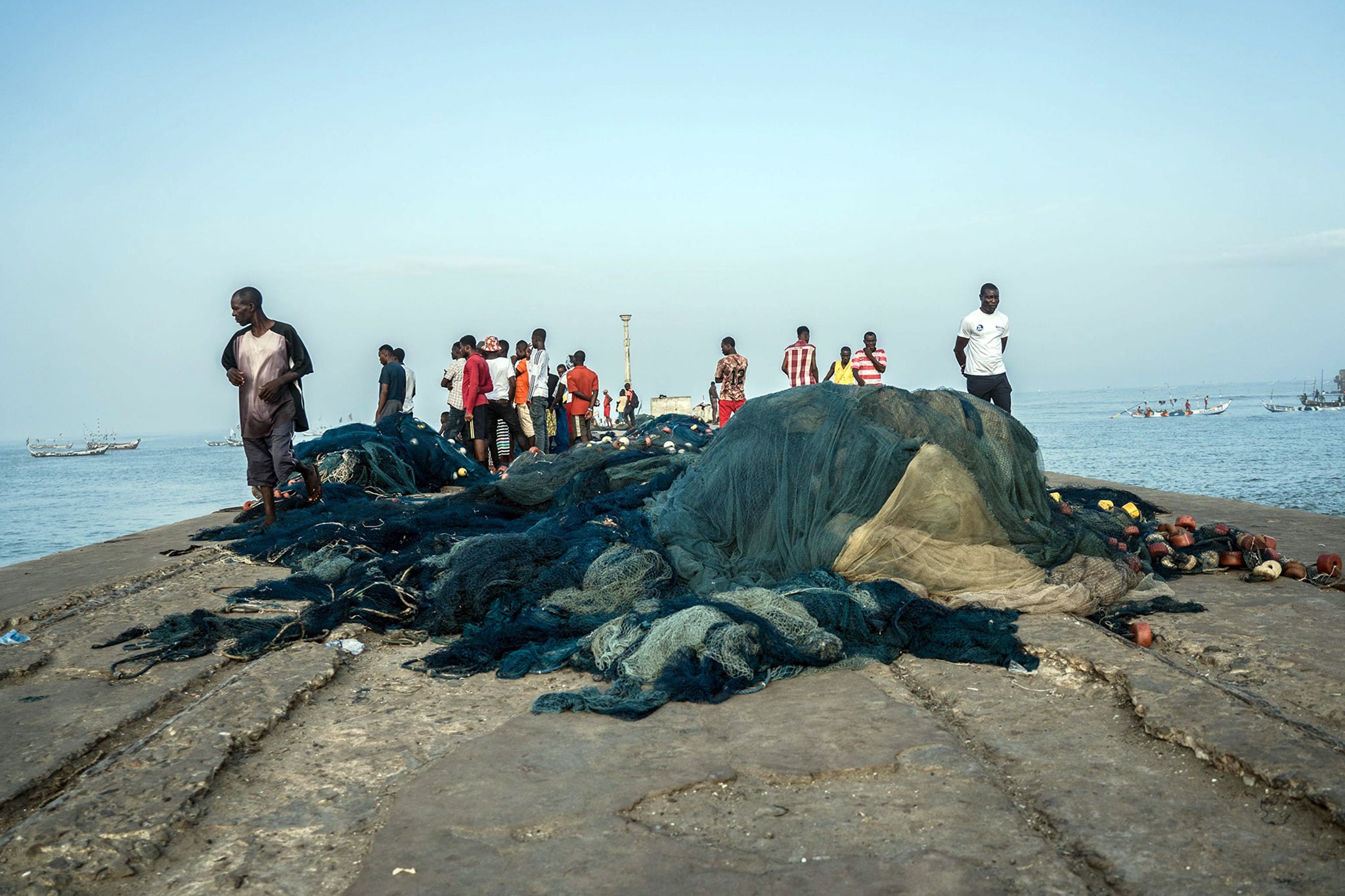
Artisanal fishing is big business in Ghana, employing or supporting some two million people, or around 10 per cent of the country’s population. It contributes around $1 billion (£748 million) to the country’s economy. Men usually work on the boats, which are small, wooden canoes, while women like Akomade typically work in post-harvest processing, storage and distribution.
Recent years, however, have seen a growing clamour of voices warning of threats faced by fishermen, perhaps most famously in the form of the destructive fishing methods of foreign industrial trawlers, which come from rich countries and hugely deplete fish stocks off Ghana’s coasts.
Fishing is a vital sector to Ghana’s economy, employing or supporting some two million people, or around 10 per cent of the country’s population (AFP/Getty)
The impacts of the climate crisis are also a big problem, with a warming ocean resulting in some fish stocks declining, migrating, or becoming more vulnerable to disease. Speaking to The Independent, Ghanaian fisheries minister Emelia Arthur explains that more extreme weather conditions and sea level rises are also threatening the safety of fishermen and the viability of their boats.
“Coastal communities are experiencing tidal waves that are destroying their means of livelihood,” she says. The size of boat landing sites is also “reducing” as the sea level rises, she adds, while coastal walls are also disintegrating, with stones falling from the walls into the sea then damaging fishing vessels.
Protecting fisheries is also vitally important from a food security point of view, with key fish species making up around 60 per cent of the animal protein in Ghanaians’ diets. A large share of the fish that Ghana consumes is also currently imported, so anything that can be done to maximise the country’s catch could also have far-reaching impacts on the country’s economy and trade deficit.
Fishermen stand amidst their nets on the Jamestown Pier in Ghana’s capital Accra (AFP/Getty)
’Not really paid attention to’
There was significant fanfare earlier this year, when the government signed into law its landmark Fisheries and Aquaculture Bill, which has been hailed by many as the saviour of the country’s troubled fishing sector.
At the heart of the new law is a promise to expand the fishing exclusion zone for foreign vessels from six to 12 nautical miles from the shoreline, to give Ghanaian artisanal fishermen priority over the fish close to the coast. The law also promises to establish an independent body to manage the country’s fisheries; to boost exports and strengthen regulations; and also to protect fisherfolk through “improved safety, security, and welfare standards for crew and workers on fishing vessels”.
“Artisanal fishermen are very happy with the extended inshore inclusion zone,” says Arthur, who explains that the government is now in the process of devising regulations that will ensure the aims of the bill are carried out on the ground.
Women represent around 60 per cent of fishery workers, with many employed smoking the sardines, mackerel, and anchovies after they are caught (CERATH)
But not everyone is satisfied with the scope of the new law. Speaking exclusively to The Independent, an NGO that specialises in supporting women that work in Ghanaian fisheries – the CERATH Development Organization – has suggested that not enough is being done to support women in the sector, who in actual fact make up 60 per cent of the workforce.
“The bill solves a lot of problems for fish capture, which is great,” says Matilda Ababio, the acting country director at CERATH. “But the post-harvest, which is where a lot of women work, is not really paid attention to.”
Most of these women work directly under the sun or in spaces covered with metal sheets, and are constantly faced with high temperatures and suffocating smoke, Ababio explains. “Smoking technologies are inefficient, and they result in smoke and heat exposure, which is detrimental to their health and also to the environment,” she says.
CERATH currently works with 26 fishing communities, promoting and subsidising more efficient fish-processing ovens, which use less fuel and produce less smoke. The NGO also promotes alternative income sources for women including small-scale farming, and also helps women to organise and boost their voices so that they can become part of decision-making processes in the sector.
The new fisheries law – which has no prominent mention of women or post-harvest – represents the continuation of a dynamic where “women get overlooked”, according to Ababio. “When they were drafting the bill, we were present and we did speak about post-harvest, but in the end that was not the focus,” she says.
Being surrounded by smoke can seriously impact women’s health – while extreme weather, including intense heat as well as rainstorms, can make the work impossible (CERATH)
In response to these claims, the fisheries minister Arthur says that if there are advocates for greater inclusion of women in the regulations that are currently being devised around the bill, then she is open to listening. “If the point being made is that women in the fishery sector are not adequately catered for by the law, we will look at that and have it reflected in the regulations,” she says.
“We did use a very expensive, comprehensive stakeholder engagement process to develop the law,” she adds. “But I do agree that there are serious health concerns around the burning of firewood in smokeries, and I would be very happy if organisations come forward and work with us to improve regulations around the fish processing that women are involved in.”
The government will be devising these regulations until next August, which is a year after the bill was signed into law, according to Arthur.
A backdrop of foreign aid cuts
The need to get the new fisheries law right is all the more pressing as Ghana’s fishing sector was hit hard by foreign aid cuts that have devastated communities across countries in Sub-Saharan Africa this year.
Earlier this year, a $17.8 million programme funded by the United States Agency for International Development (USAID), called Ghana Fisheries Recovery Activity (GFRA), was terminated more than a year early following the USAID stop-work order from Donald Trump.
“USAID had been working with civil society organisations to carry out work to protect recover fish stocks, and when the cut came, it affected the development of the law as well,” explains Arthur. “As a country and as a sovereign nation, we are now looking for new partners and using resources from within our own budget to push forward this agenda.”
According to Awo Ablo, from the philanthropic organisation Co-Impact – which helps to fund CERATH – aid cuts have “disproportionately impacted women and girls” in Ghana, so it is important that programmes going forward should make a special effort to ensure their needs are reflected.
“Domestic resources need to be mobilised, and international resources must be channelled, to local organisations with proven solutions and a long-term commitment to shifting the underlying systems that produce poor outcomes in health and education, and hold back gender equality,” she says.
This article was produced as part of The Independent’s Rethinking Global Aid project
Winners in a photograph with MTN Ghana and NLA facilitators
Six winners of the MTN Ghana’s “Me Nsa Aka” Mobile Money (MoMo) promotion held from September 15 to December 15 were on Wednesday awarded.
The ultimate winner, Frank William Kwasi Beecham walked away with an impressive GH¢100,000 at the grand finale of the three-month campaign.
Mr. Beecham expressed his intention to invest the money by purchasing more MTN shares. The other winners include Dorothy Esenam, who received GH¢50,000 and stated that she would share her winnings with her family and friends.
Hui Ling took home GH¢30,000, while Texson, Joseph Kofi Agbavor, and Gideon Obeng each won GH¢10,000. Both Texson and Joseph Kofi Agbavor indicated that they would, like the overall winner, invest their prizes by buying additional MTN shares.
Speaking at the event, Faisal Ali, Channel Development Manager at MTN Ghana, highlighted that the “Me Nsa Aka” promotion was MTN’s way of appreciating customers for their loyalty and consistent use of MoMo.
He explained that the campaign also aimed to encourage customers to transition from the USSD channel (*170#) to the MoMo App, which offers a more seamless and convenient digital experience. He took the opportunity to remind customers to stay safe during the festive season by keeping their PINs secure and avoid sharing sensitive details such as OTPs.
He emphasised that MTN only contacts winners through its official number, 024 300 0000. Mr. Ali further announced an ongoing free weekend transaction offer for MoMo App users, allowing customers to enjoy zero transaction fees on all weekend transfers made via the app.
A representative from the National Lottery Authority (NLA), Ernestina Ofosua Addo, who supervised the draw, assured the public of the transparency and credibility of the process. She stated that the NLA, as a regulator, carefully scrutinised and validated all entries before the final selection of winners.
“Everything was done right, and the process was fair. We are excited about the outcome and congratulate all the winners,” she remarked. The grand finale brought the “Me Nsa Aka” promotion to a celebratory close, reinforcing MTN Ghana’s commitment to rewarding customer loyalty while promoting safe and convenient digital financial services.
Top Premier League clubs are battling to sign Black Stars forward Antoine Semenyo in January 2026.
According to the British Broadcasting Corporation (BBC), Manchester United’s hierarchy has expressed concrete interest in the Bournemouth winger following his impressive performances.
Reports indicate that head coach Ruben Amorim was highly impressed with Semenyo’s display at Old Trafford, where he scored in a thrilling 4–4 draw between the Red Devils and Bournemouth.
Ghana to face Germany in pre-World Cup friendly
Manchester United officials are reportedly preparing a move for the player in the January transfer window and are confident of winning his preference.
Meanwhile, Manchester City are also said to be interested in Semenyo and are considering when to make their approach. However, United believe that uncertainty surrounding Pep Guardiola’s future could give them an advantage in securing the player.
Earlier reports suggested that reigning Premier League champions Liverpool were also monitoring Semenyo, particularly due to Mohamed Salah’s recent dip in form.
With the 2025 Africa Cup of Nations (AFCON) approaching, Salah will be away with Egypt. Signing Semenyo, who will be available during that period because Ghana failed to qualify for the AFCON, would help Liverpool remain competitive across all competitions.
Although Semenyo’s release clause is set at £65 million, it is reported that Bournemouth could accept offers in the region of £50 million.
The Ghanaian is in top form for his club, having scored seven goals and provided three assists in the 2025/26 Premier League season.
SB/JE
Mahama promises Alan Kyerematen ‘a very special place’ ahead of AU chair position:
The Ghana cedi is under pressure against major trading currencies, raising concerns ahead of the festive season.
Data from the Bank of Ghana show that the cedi is trading at GH¢11.51 to the US dollar on the interbank market as of December 15, 2025, and on the forex market the dollar is trading at GH¢12.45 on Friday, December 19, 2025.
A weaker cedi typically leads to higher prices for imported goods such as food, clothing, electronics, and household items, increasing the cost of Christmas and New Year celebrations.
Fuel prices may also rise since petroleum products are imported in dollars, potentially resulting in higher transport fares and increased costs for businesses.
Overall, the continued depreciation is expected to reduce purchasing power and place additional strain on household budgets.
Interbank Market: Cedi trading at GH¢11.50 to a dollar with 8 days to Christmas
Here’s how the cedi is faring on the Bank of Ghana interbank market:
⦁Dollar- Buying at GH¢11.50, Selling at GH¢11.51
⦁Pound – Buying at GH¢15.42, Selling at GH¢15.43
⦁Euro – Buying at GH¢13.49, Selling at GH¢13.51
Here’s how the cedi is trading at the forex bureaus:
⦁Dollar – Buying at GH¢12.05, Selling at GH¢12.45
⦁Pound – Buying at GH¢15.80, Selling at GH¢16.70
⦁Euro – Buying at GH¢13.70, Selling at GH¢14.60
SP/AE
All you need to know about Ghana’s new vehicle number plates |BizTech:
Veteran musician, Ofori Amponsah, has revealed that the late highlife legend, Daddy Lumba, foresaw the turmoil that would erupt after his death, insisting the late icon even sang about it in one of his songs.
Speaking on Talkertainment with Elsie Lamar on GhanaWeb TV, Ofori Amponsah said the scale of the chaos surrounding Daddy Lumba’s funeral did not surprise him, describing it as the price of greatness.
“Greatness attracts these kinds of things. I know everybody wants a piece of this great man. I believe he knew that when he’s not around, something of this sort will happen,” he said.
The musician, who described himself as “not part of the family, just a ‘son’, warned that the public dispute among Daddy Lumba’s relatives risks damaging the legacy the celebrated artiste spent decades building.
According to Ofori Amponsah, disagreements over funeral arrangements and rites should have been handled privately to protect both the family’s dignity and the emotional wellbeing of Daddy Lumba’s children.
“This is the time for them to sit down carefully. The legacy he left is for the children and the family. Any misunderstanding should be settled in the backyard,” he urged.
Ofori Amponsah, who has previously described working with Daddy Lumba as the peak of his career, added that he hopes the late musician will one day be honoured with a mausoleum.
“I am envisioning that one day I will see a mausoleum of this great man, and I’ll be the first person to visit,” he said.
His comments come against the backdrop of a highly publicised legal battle that followed Daddy Lumba’s death on July 26, 2025. The Kumasi and Accra High Courts were drawn into a flurry of injunctions and lawsuits over funeral arrangements, widowhood rites and custody of the musician’s remains.
An injunction filed by Daddy Lumba’s legally married wife, Akosua Serwaa, sought to halt funeral preparations and assert her role in widowhood rites, but it was dismissed by the Kumasi High Court.
Days later, maternal relatives secured another injunction to block the release of the body, but it was lifted hours after they failed to pay a GH¢2 million compensation for costs incurred.
The funeral eventually took place on December 13 in Kumasi, though notable absences included some members of the family, particularly Daddy Lumba’s legal wife.
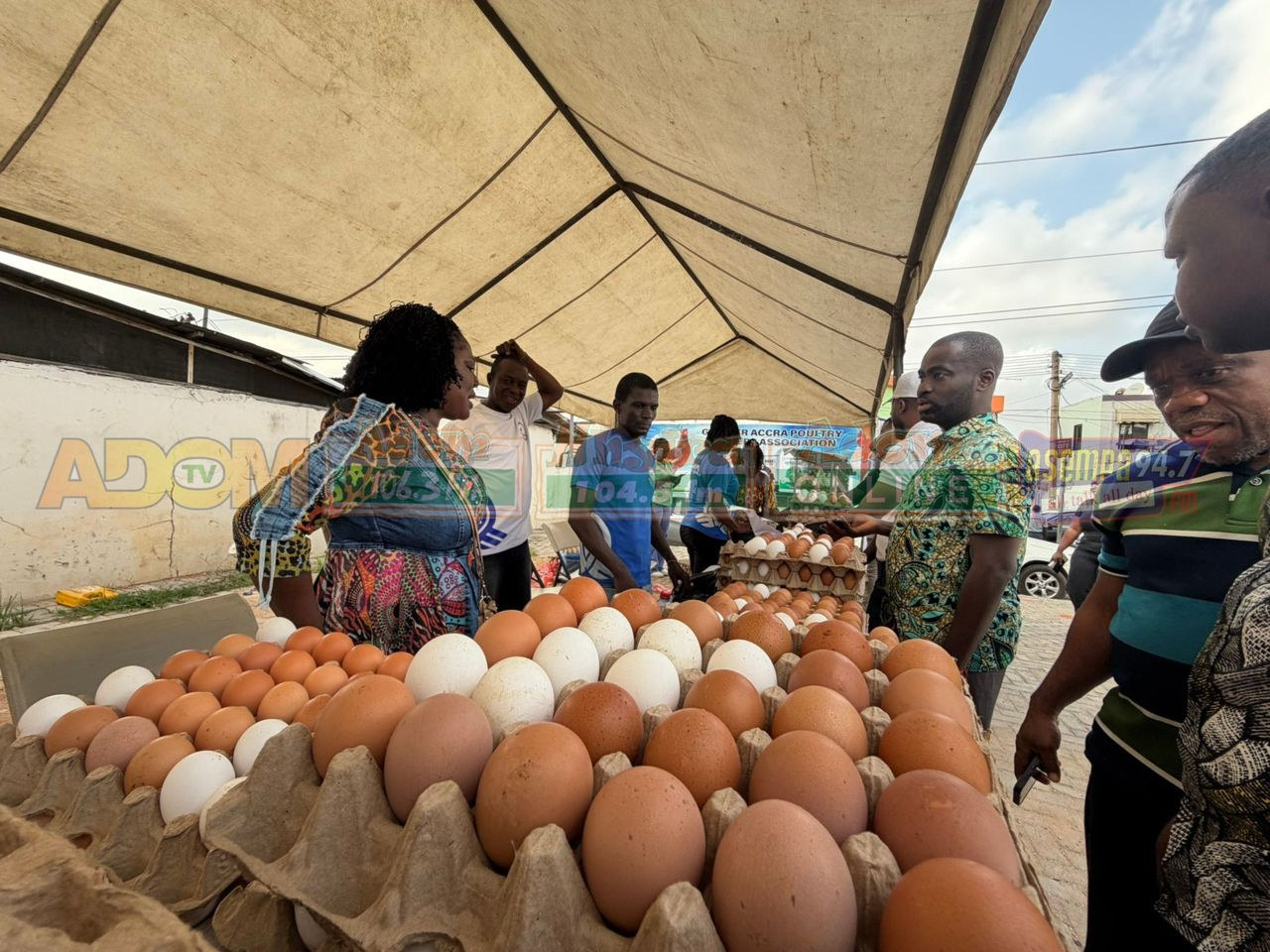
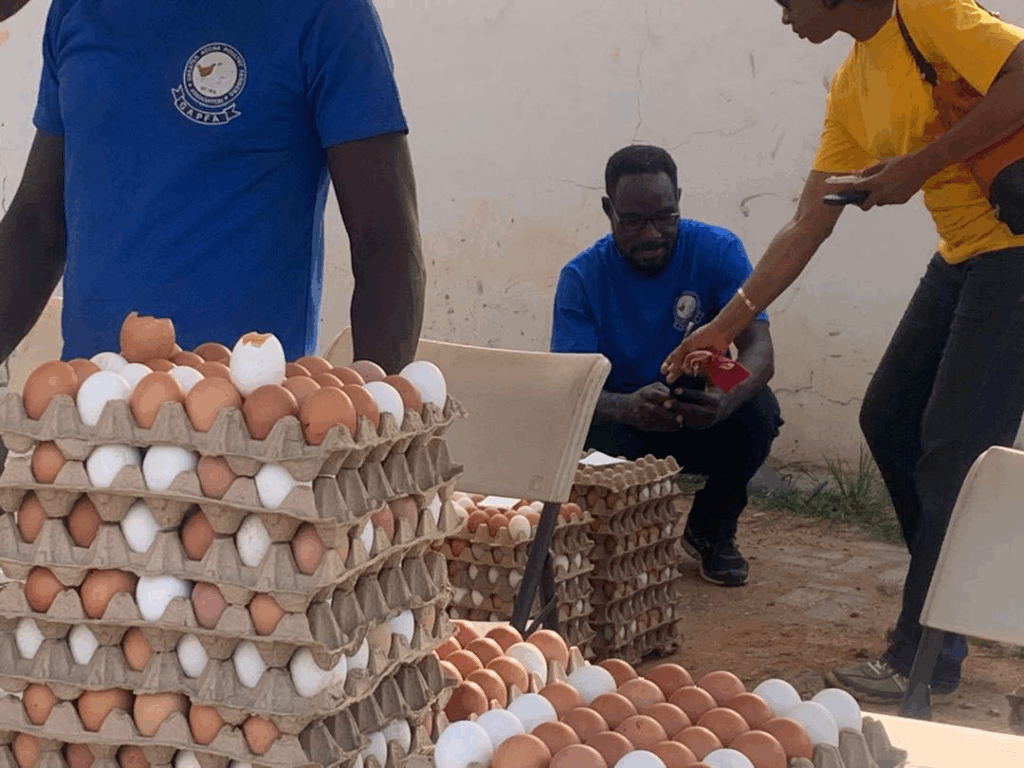
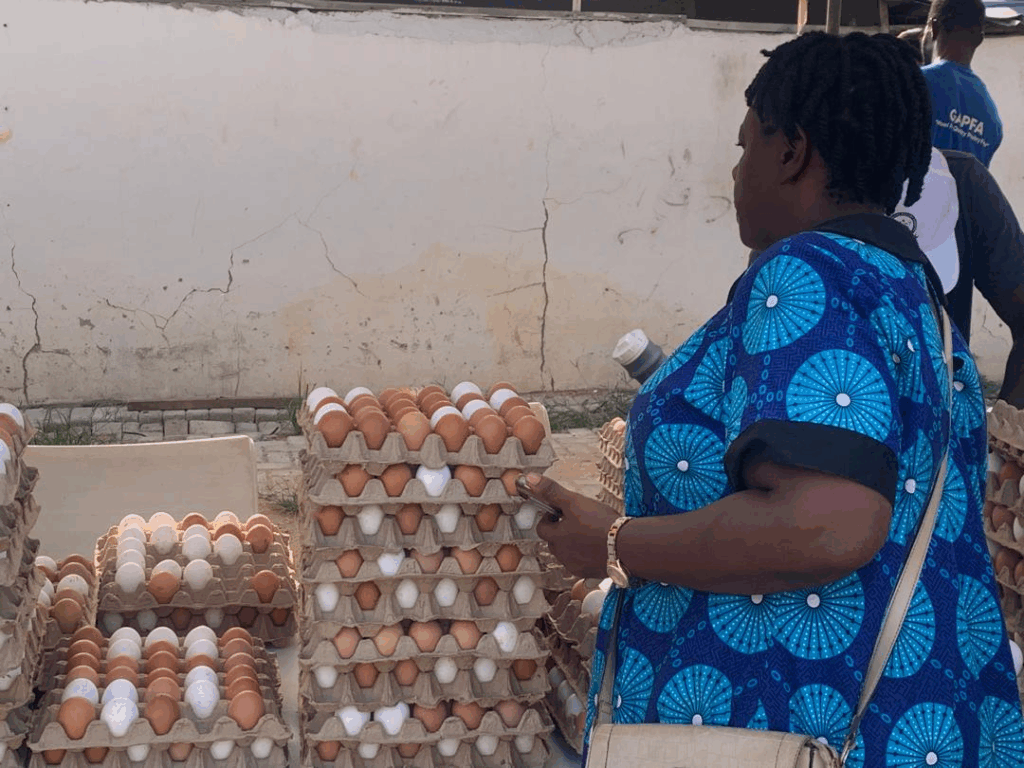
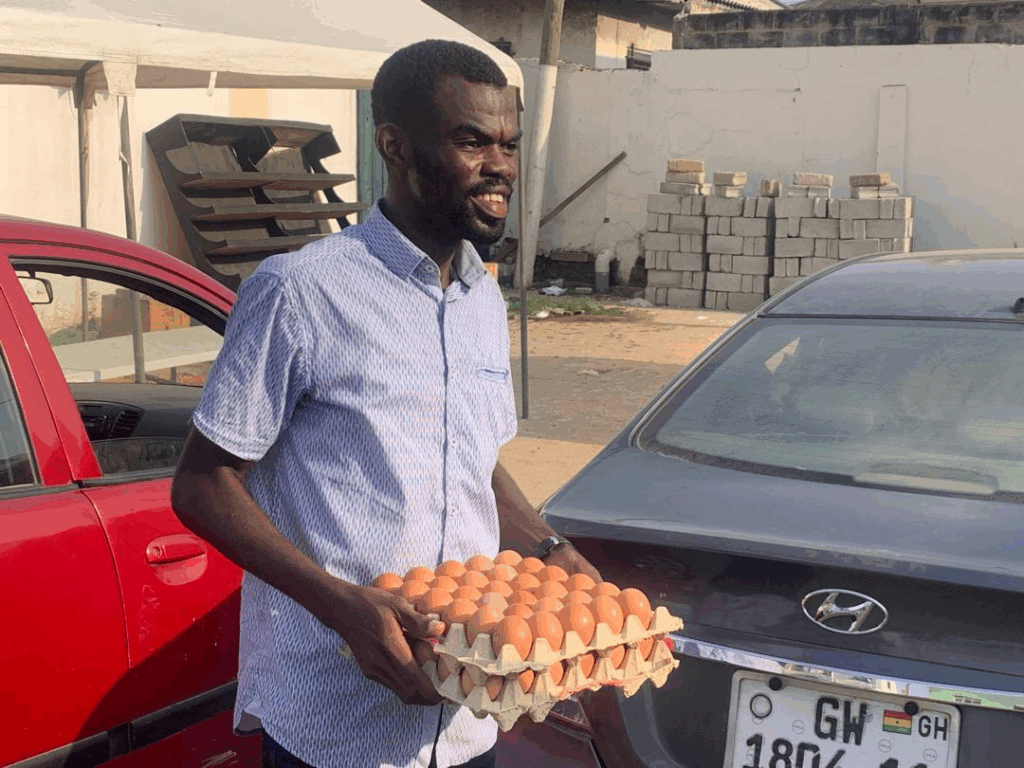
A festive initiative to sell affordable eggs to consumers saw overwhelming demand on its opening day, leading to a complete sell-out hours ahead of schedule.
The popular X’mas Egg Market will resume sales tomorrow, Saturday, December 20.
The market, a partnership between the Multimedia Group Limited (MGL) and the Greater Accra Poultry Farmers Association, opened this morning at the Joy FM Car Park in Kokomlemle.
Poultry farmers set up on-site to directly offer eggs at prices ranging from GHC 40 for smaller sizes to GHC 45-50 for larger ones.
However, the surge of consumers eager to secure affordable, high-quality protein for Christmas celebrations exhausted the entire supply before the close of the first day.
The initiative was designed as a dual solution: providing relief to households facing festive expenses and assisting local poultry farmers grappling with a persistent surplus, falling market prices, and escalating production costs.
By cutting out middlemen, the event aimed to ensure better returns for farmers and cheaper eggs for consumers.
Buyer Afua Browne, at the market earlier today, hailed the effort as a “timely intervention supporting both farmers and families.”
Poultry farmer Isaac Manful expressed optimism that the direct sales would ease financial pressure on producers and significantly improve their end-of-year sales.
Organisers have confirmed that fresh stock will be available when the market reopens tomorrow, Saturday, December 20, at the same location. They encourage the public to come early.
DISCLAIMER: The Views, Comments, Opinions, Contributions and Statements made by Readers and Contributors on this platform do not necessarily represent the views or policy of Multimedia Group Limited.
DISCLAIMER: The Views, Comments, Opinions, Contributions and Statements made by Readers and Contributors on this platform do not necessarily represent the views or policy of Multimedia Group Limited.
The newly elected executives pledged to serve with diligence and integrity
The Ghana Chamber of Construction Industries (GhCCI) has sworn in a new set of executives as the new leadership of the chamber following their victory in the GhCCI delegates’ election held last Wednesday, December 17, 2025.
The swearing-in ceremony, which took place in Accra after the successful conduct of the Chamber’s elective congress, brought together delegates from various professional institutions within the construction industry.
In all, 40 delegates were on the electoral roll, with 32 votes cast across the executive positions. Five candidates contested the elections for three key positions: the Chairperson, Vice Chairperson, and General Secretary.
Nana Opare Kwafo I, Acting Chief of Ahwerase and the immediate past Vice Chair of the GhCCI, was elected Chairperson after securing 31 votes.
The Vice Chairmanship contest was between Ing Henry Kwadwo Boateng of the Institution of Engineering and Technology, Ghana, and Patrick Ebo Bonful, the immediate past President of the Ghana Real Estate Developers Association (GREDA). Bonful emerged victorious with 24 votes, while Ing Boateng polled 8 votes.
Reginald Obeng of the Chartered Institute of Building was elected as the General Secretary of the chamber, after obtaining 20 votes to defeat Harriette Naa Lamley Bentil of the Artisans Association of Ghana, who had 12 votes.
The elections were conducted peacefully and described by delegates as transparent and credible.
The newly elected executives pledged to serve with diligence and integrity. They vowed to strengthen the operations of the chamber, promoting professionalism within the construction industry, and ensuring sustainable growth and progress of the GhCCI.
The new leadership also mentioned that it will work closely with stakeholders to advance the interests of the construction industry and contribute to national development.
Nana Kwafo I explained that he would ensure the quality of construction would be central to his tenure. He emphasised that quality must remain the ultimate standard, noting that roads are constructed to ensure safety, durability, and convenience for the communities.
“If roads are built and fail to last, they become a burden rather than an asset to the nation. The chamber would intensify advocacy against poor and unethical construction practices,” he remarked.
He said the government’s Big Push infrastructure programme was a major boost to the industry. Nana Kwafo I indicated that the initiative addresses longstanding concerns about delayed payments and accumulated debts in the road sector.
Award-winning Ghanaian comedian, OB Amponsah, has thrown down a bold challenge to the entertainment industry, declaring that comedians, not musicians, could be the ones to fill iconic venues like London’s O2 Arena.
Speaking in an interview on Hitz FM on December 16, 2025, OB Amponsah said comedy has the reach, originality and audience loyalty to pull off what some musicians have struggled to achieve.
“The O2 Arena is not impossible. Some musicians couldn’t fill it, but comedians might do it,” he said confidently.
The stand-up star attributed his optimism to the growing support system within the country’s creative space, singling out the African Arts Network and its founder for believing in his vision from the outset.
“When I first went to him and shared the vision, he told me not to worry—just go and write the jokes. We need more people like that in the industry,” OB Amponsah noted.
According to the comedian, success in entertainment goes beyond talent, stressing that strong backing and belief from industry players can be the difference between ambition and achievement.
“Having people who support your vision and add to it is everything,” he added.
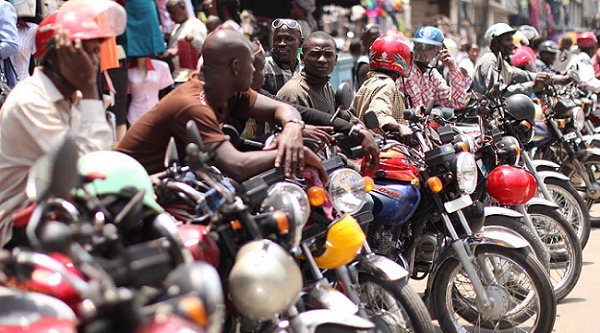
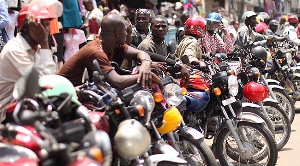
The Association has reiterated that the frequency of crimes has dropped sharply over the last decade
The Okada Riders Association of Ghana has noted a significant downward trend in the use of motorbikes for robberies, physical attacks, and other criminal activities.
While acknowledging that isolated incidents still occur, the Association’s General Secretary, Alhaji Majid Amadu, maintains that the frequency of such crimes has dropped sharply over the last decade.
He has openly challenged anyone doubting this progress to seek official clarification from the Ghana Police Service.
Speaking in an interview on Nyankonton Mu Nsem on Rainbow Radio 87.5FM, Alhaji Amadu explained that the Association has taken a proactive stance by rolling out specific initiatives designed to deter members from engaging in illicit acts.
He noted that internal research conducted by the organisation suggests that criminal activities involving riders have reduced drastically over the past eight years.
This improvement is largely attributed to a new culture of accountability within the trade.
“Because the Okada business has become so widespread and vital to local transport, the riders themselves have become the first line of defense against criminals,” he noted.
Alhaji Amadu pointed out that it is now nearly impossible to use a motorbike for crime without being caught, as fellow riders are often the ones to fish out, arrest, and hand over offenders to the authorities.
“This community-led policing is further bolstered by a dedicated internal taskforce that supports the police in managing such cases.”
He added that the Association has introduced a mandatory registration system that links every rider to a specific operating area, ensuring easy identification and tracking.
As the festive season approaches, Alhaji Amadu has issued a firm advisory to all members to maintain strict discipline on the road.
He urged riders to operate within the bounds of the law and to avoid any actions that might undermine the safety and security of the Ghanaian public during the holidays.
The newly elected executives pledged to serve with diligence and integrity
The Ghana Chamber of Construction Industries (GhCCI) has sworn in a new set of executives as the new leadership of the chamber following their victory in the GhCCI delegates’ election held last Wednesday, December 17, 2025.
The swearing-in ceremony, which took place in Accra after the successful conduct of the Chamber’s elective congress, brought together delegates from various professional institutions within the construction industry.
In all, 40 delegates were on the electoral roll, with 32 votes cast across the executive positions. Five candidates contested the elections for three key positions: the Chairperson, Vice Chairperson, and General Secretary.
Nana Opare Kwafo I, Acting Chief of Ahwerase and the immediate past Vice Chair of the GhCCI, was elected Chairperson after securing 31 votes.
The Vice Chairmanship contest was between Ing Henry Kwadwo Boateng of the Institution of Engineering and Technology, Ghana, and Patrick Ebo Bonful, the immediate past President of the Ghana Real Estate Developers Association (GREDA). Bonful emerged victorious with 24 votes, while Ing Boateng polled 8 votes.
Reginald Obeng of the Chartered Institute of Building was elected as the General Secretary of the chamber, after obtaining 20 votes to defeat Harriette Naa Lamley Bentil of the Artisans Association of Ghana, who had 12 votes.
The elections were conducted peacefully and described by delegates as transparent and credible.
The newly elected executives pledged to serve with diligence and integrity. They vowed to strengthen the operations of the chamber, promoting professionalism within the construction industry, and ensuring sustainable growth and progress of the GhCCI.
The new leadership also mentioned that it will work closely with stakeholders to advance the interests of the construction industry and contribute to national development.
Nana Kwafo I explained that he would ensure the quality of construction would be central to his tenure. He emphasised that quality must remain the ultimate standard, noting that roads are constructed to ensure safety, durability, and convenience for the communities.
“If roads are built and fail to last, they become a burden rather than an asset to the nation. The chamber would intensify advocacy against poor and unethical construction practices,” he remarked.
He said the government’s Big Push infrastructure programme was a major boost to the industry. Nana Kwafo I indicated that the initiative addresses longstanding concerns about delayed payments and accumulated debts in the road sector.
John Baptist Muzahura in the dock at Isingiro Chief Magistrate’s court
The Chief Magistrate’s court in Isingiro has remanded a 48-year-old health worker, John Baptist Muzahura, for theft of government drugs.
Muzahura, a clinician at Nyamuyanja Health Center IV, is accused of stealing 18 boxes of assorted medicine on November 15, 2025.
“You are charged with two counts, theft contrary to section 237(1) and 204 of the Penal Code Act. You, Mutazindwa John Baptist, on November 15, 2025, at Nyamuyanja Health, stole 18 boxes of assorted medicine bearing marks ‘Applied stores under control of Ministry of Health, Government of Uganda for public use only, not for sale’,” the prosecution told the court.
Muzahura denied the charges and prayed for bail, but Chief Magistrate Patrick Bamuhiga remanded him to Isingiro government prisons until December 30, 2025. “You are remanded up to December 30, 2025, for bail application and hearing, bring four sureties, and they should be responsible people,” Bamuhiga ruled.
District Health Officer Dr Edson Tumusherure described the incident as isolated but warned other health workers. “We are happy with this arrest because, since I came here, we have not had any case of that nature. Good enough, the one who attempted was arrested. This will serve as a warning to others who had plans to get involved in this criminality,” he said.
National Drug Authority (NDA) Spokesperson Abiaz Rwamwiri said they are prepared to see the case handled expeditiously. “We have to see such people prosecuted and given deterrent sentences. Half of the drugs the government sends to its health facilities end up getting stolen. We have to break this drug theft racket and save innocent Ugandans from dying, yet they pay taxes even for the salaries of these health workers,” Rwamwiri said.
Rwamwiri added that theft of government drugs remains a syndicated
crime between health workers and members of the public in the country.
Legal practitioner Frank Davies says the activation of extradition processes against former Finance Minister Ken Ofori-Atta does not automatically mean he will be returned to Ghana, stressing that the procedure must first satisfy strict legal requirements under United States law.
Speaking on The Big Bulletin with Fritz Delanyo Anegashie on Thursday, (18 December) Davies explained that although Ghana is a signatory to extradition treaties with the United States, the United Kingdom, and other countries, extradition is neither immediate nor guaranteed.
The Minority Leader in Parliament, Alexander Kwamina Afenyo-Markin, has accused the government of failing to care for its own Members of Parliament, while promising to create jobs for unemployed youth across the country.
Speaking on the floor of Parliament on Thursday, December 18, 2025, he questioned the credibility of 24-Hour Economy policy that proposes a three-shift system, arguing that a government that is unable to cater for its Members of Parliament cannot be trusted to address widespread unemployment in the country.
‘You’ve taken GH¢4b, so you’re quiet’ – Watch as Afenyo-Markin ‘provokes’ Muntaka
“They also said they were going to create one job with three shifts. Mr Speaker, a government that cannot take care of its 189, cannot take care of the many jobless youth that are seeking for jobs. A government that cannot take care of its 189 in this chamber cannot take care of the many youths… Mr Speaker, this government is a promise and fail government”, he remarked.
The Member of Parliament for Effutu further suggested that some National Democratic Congress (NDC) MPs rely on taxis and ride hailing apps to attend parliamentary sittings.
“Some (NDC MPs) are coming to back bench in Uber and in taxi. Mr Speaker, your Majority should take care of your back bench,” he noted.
Afenyo-Markin also took aim at the Member of Parliament for Bolgatanga Central, Isaac Adongo, claiming that despite frequently attacking the Minority on the floor of the House, he had not been given any position by the government.
“What Adongo needs is a job. He is always on the floor attacking the Minority, yet he is jobless,” he added.
JKB/AE
What Cletus Avoka said that made Otumfuo warn him over Bawku conflict:
play videoAfi Amoro, the CEO of Jandel Limited lights up the streets of Accra every Christmas
Every December, Accra’s streets come alive with dazzling lights, festive installations, and a renewed sense of joy.
But behind the project is the determination of one woman who refused to let her dream fade, even after years of rejection.
Afi Amoro, the CEO of Jandel Limited, recalled in an exclusive interview with Elsie Lamar on GhanaWeb’s Talkertainment, “I decided to do lighting for the public areas. I wanted to take light to the city. I pitched that it was going to give more money to the economy, because when people are uplifted, they spend more.”
She noted that although banks such as ECOBANK and Standard Chartered offered initial support, it was not sufficient to fully realise her vision.
Undeterred, Madam Afi Amoro said she poured her own earnings from weddings and events into the project.
With grit and creativity, she transformed the Ako Adjei stretch, renamed Independence Avenue, up to Ridge Roundabout into a glowing corridor of hope.
Old lorry tyres, abandoned cars, and graffiti from Kokompe artisans became part of the vibrant décor.
“I decided to do light for the public areas; I wanted to take light to the city. I pitched that it was going to give more money to the economy, because when people are uplifted, they spend more. Two banks held my bank; ECOBANK and Standard Chartered. They held my back but it was not enough to do what I envisaged, so I decided to use my own money.
“So every wedding and event we did, I just collected the money and poured it into the project. I had named the Ako Adjei stretch Independence Avenue. I decided to decorate from Ako Adjie to Ridge Roundabout. I used lorry tyres, old cars, I got someone from Kokompe to do graffiti and so on,” she said.
She added that her pride is not only rooted in the lights but also in the people who built them.
@exploregh A very beautiful Christmas in Accra. Enjoy #ghana #ghanatiktok🇬🇭 #ghanatiktokers🇬🇭🇬🇭🇬🇭 #ghanatourism ♬ It’s Beginning to Look a Lot like Christmas – Michael Bublé
Having encountered this development in China, Madam Afi Amoro said she transferred her knowledge to over 120 local artisans who constructed Christmas trees, animal figures, and other installations.
“All the things you see there are our local artisans, and that is my pride,” she added.
@brightseye_ Christmas is Here 🇬🇭 📍Kotoka International Airport Follow for more #accra #ghana #brightseye #christmas #dettydecember #citylights #fyp #cityview ♬ It’s Beginning to Look a Lot like Christmas – Michael Bublé
Speaking on how the idea was birthed, she said countless ‘doors were closed in her face’.
Eventually, with the help of a friend named Kelly, Madam Amoro said she developed a concept and pitched it to corporate institutions.
Although many dismissed her vision, she emphasised the economic, religious, and social value of Christmas decorations.
She said her travels across the world reinforced her conviction.
Even in China, Dubai, and Russia, countries with different religious traditions, Afi Amoro said she witnessed grand Christmas displays.
“Even in China, they are not a Christian society, but they have done extensive decorations. Dubai, a Muslim enclave, they do décor as well. Russia too. They are concentrating on lights,” she maintained.
@nyameba_pesewa Christmas 🎄 in the city #Christmas #citylights #viral #Ghana ♬ original sound – TheDon
Black Females in Architecture will on December 20 stage an exhibition, a fusion of arts and entertainment themed, “You Are Invited”, a showcase co-curated and co-designed with Ɛdan Ghana, exploring women’s ways of knowing the city Accra, Ghana.
Speaking in an interview on Guide Radio, Carina Tenewaa Kanbi, founder of Edan Studios, said through artist works and public activations, the showcase aims to foreground and celebrate the resilience, creativity, and essential contributions of women to African cities.
The event, which seeks to engage hundreds of guests, envisions the showcase as an extension of Accra’s urban landscape, promoting care and community, inviting visitors into a shared space of rest and reflection.
Guests will have a chance to interact with artists behind span visual art (painting, murals, textiles, sculpture, mixed media, film, and print). There will also be performances, design, music, and participatory practice.
The event, organised in collaboration with Ɛdan Ghana, will centre on women’s lived experiences, and everyday practices that shape the urban environments of Accra and beyond.
Former Vice President Dr Mahamudu Bawumia’s growing momentum in the New Patriotic Party (NPP) presidential primaries received a significant boost on Wednesday following emphatic endorsements from key party officials.
All Electoral Area Coordinators in the Yunyoo and Chereponi constituencies in the North East Region, as well as Saboba in the Northern Region, openly declared their support for Dr Bawumia.
On the final day of his tour of the North East Region, the Yunyoo and Chereponi constituencies followed the example of Yagaba, Walewale and Bunkpurugu, which had announced similar mass declarations a day earlier.
During separate engagements in Yunyoo and Chereponi, all Electoral Area Coordinators stepped forward to formally announce their support in the presence of Dr Bawumia and a packed gathering that included polling station executives.
From there, Dr Bawumia proceeded to the Saboba Constituency in the Northern Region, where Electoral Area Coordinators also endorsed him en bloc.
In all three constituencies, the coordinators, while pledging their full support and commitment to work for the former Vice President, urged him not to campaign to them, insisting that it would be unnecessary since they had already made up their minds to vote for him.
At Saboba, where party supporters initially resisted his attempt to address them, Dr Bawumia appealed for the opportunity to speak. When they eventually agreed, he delivered a brief ten-minute address — far shorter than his usual hour-long campaign message — during which he expressed gratitude for the overwhelming support.
Dr Bawumia’s campaign has continued to attract strong backing at the grassroots level, with Electoral Area Coordinators in several constituencies across the country publicly endorsing his candidature.
Electoral Area Coordinators constitute a key bloc within the NPP’s electoral college, and political analysts regard their support as critical to success in the party’s presidential primaries. They work closely with polling station executives, and endorsements at the electoral area level often reflect broader support within the party’s grassroots structures.
DISCLAIMER: The Views, Comments, Opinions, Contributions and Statements made by Readers and Contributors on this platform do not necessarily represent the views or policy of Multimedia Group Limited.
DISCLAIMER: The Views, Comments, Opinions, Contributions and Statements made by Readers and Contributors on this platform do not necessarily represent the views or policy of Multimedia Group Limited.
ACCRA, Dec. 19 (Xinhua) — The office of the International Organization for Migration (IOM) in Ghana on Thursday marked International Migrants Day with a pledge to strengthen migration governance in the country.
In a press release, IOM Ghana said this year’s commemoration highlights the contributions of migrants, returnees, and diaspora communities to Ghana’s social, cultural, and economic development.
According to the release, the IOM has embarked on a range of activities to amplify migrant voices and ensure that migration contributes meaningfully to inclusive and sustainable development.
To achieve this goal, the release said IOM Ghana, in collaboration with key government institutions and development partners, is implementing strategic activities that reflect how migration narratives translate into development outcomes.
Among its key partners is the Ghana Immigration Service, with which the IOM has launched the Community Engagement and Policing (CEP) Strategy and implemented a migration curriculum and training manual.
“The CEP framework promotes trust, dialogue, and people-centered approaches between border communities and law enforcement, strengthening social cohesion, human security, and safer mobility in border areas,” the release added.
Moreover, IOM Ghana is convening a migration data dialogue with the Ghana Statistical Service (GSS) under the theme “My Great Story: Data and Development” to showcase progress in harmonizing migration data and integrating datasets into the GSS StatsBank, thereby strengthening evidence-based migration governance. ■
The newly elected executives pledged to serve with diligence and integrity
The Ghana Chamber of Construction Industries (GhCCI) has sworn in a new set of executives as the new leadership of the chamber following their victory in the GhCCI delegates’ election held last Wednesday, December 17, 2025.
The swearing-in ceremony, which took place in Accra after the successful conduct of the Chamber’s elective congress, brought together delegates from various professional institutions within the construction industry.
In all, 40 delegates were on the electoral roll, with 32 votes cast across the executive positions. Five candidates contested the elections for three key positions: the Chairperson, Vice Chairperson, and General Secretary.
Nana Opare Kwafo I, Acting Chief of Ahwerase and the immediate past Vice Chair of the GhCCI, was elected Chairperson after securing 31 votes.
The Vice Chairmanship contest was between Ing Henry Kwadwo Boateng of the Institution of Engineering and Technology, Ghana, and Patrick Ebo Bonful, the immediate past President of the Ghana Real Estate Developers Association (GREDA). Bonful emerged victorious with 24 votes, while Ing Boateng polled 8 votes.
Reginald Obeng of the Chartered Institute of Building was elected as the General Secretary of the chamber, after obtaining 20 votes to defeat Harriette Naa Lamley Bentil of the Artisans Association of Ghana, who had 12 votes.
The elections were conducted peacefully and described by delegates as transparent and credible.
The newly elected executives pledged to serve with diligence and integrity. They vowed to strengthen the operations of the chamber, promoting professionalism within the construction industry, and ensuring sustainable growth and progress of the GhCCI.
The new leadership also mentioned that it will work closely with stakeholders to advance the interests of the construction industry and contribute to national development.
Nana Kwafo I explained that he would ensure the quality of construction would be central to his tenure. He emphasised that quality must remain the ultimate standard, noting that roads are constructed to ensure safety, durability, and convenience for the communities.
“If roads are built and fail to last, they become a burden rather than an asset to the nation. The chamber would intensify advocacy against poor and unethical construction practices,” he remarked.
He said the government’s Big Push infrastructure programme was a major boost to the industry. Nana Kwafo I indicated that the initiative addresses longstanding concerns about delayed payments and accumulated debts in the road sector.
Pearl Adusu Sateckla is Public Relations Officer (PRO) of the National Road Safety Authority (NRSA
The National Road Safety Authority (NRSA) has said it would be operating Operation Comply as part of efforts aimed at reducing crashes during the festive season.
According to the NRSA, activities earmarked for the campaign launch include highway enforcement and sensitisation on road safety benefits across the country.
Pearl Adusu Sateckla, Public Relations Officer of NRSA, in an interview on Nyankonton Mu Nsem on Rainbow Radio 87.5FM, said the Operation Comply campaign is aimed at maximising road safety benefits, reducing accidents, and ensuring lives are saved.
The NRSA would be working in collaboration with the Motor Traffic and Transport Department (MTTD) of the Ghana Police Service, the Ghana National Fire Service, the DVLA, NGOs, and other stakeholders.
She explained that they would be educating road users, including drivers, passengers, and pedestrians, on speed limits, traffic signs, road markings, seatbelt wearing, and others.
She said drivers are to abide by road traffic regulations to help prevent accidents, and those who fail to comply will be arrested and prosecuted.
Additionally, the NRSA has specifically collaborated with the GNFS to implement a nationwide vehicle fire extinguisher compliance exercise to ensure that all vehicles on the road are equipped with functional and easily accessible fire extinguishers.
The initiative would be led by the GNFS Fire Safety Compliance Taskforce, together with the National Road Safety Authority and the Motor Traffic and Transport Department of the Ghana Police Service.
The taskforce would conduct on-the-spot fire safety checks on vehicles, issue GNFS certification tags for effective fire extinguishers, and provide technical advice on proper fire extinguisher use in line with the Ghana National Fire Service Act, 1997 (Act 537).
She has therefore advised drivers to comply with this to avoid being on the wrong side of the law.
“Drivers and vehicle owners are required to ensure that fire extinguishers are serviceable by checking pressure gauges, expiry dates, and tamper seals, and that extinguishers are securely mounted in vehicles and easily accessible. Those who do not have them would be issued an instant fine.”
She added that the NRSA would be working with the media to intensify their campaign while working with religious bodies and groups in educating Ghanaians on the need to ensure an accident-free festive season.
President Donald Trump has suspended the US green card lottery schem
President Donald Trump has suspended the US green card lottery scheme in the wake of a mass shooting at Brown University last week in which two people were killed.
The suspect, a Portuguese man who was found dead on Thursday, entered the country through the diversity lottery immigrant visa programme (DV1) in 2017 and was granted a green card.
Homeland Security Secretary Kristi Noem said she has paused the visa scheme under Trump’s direction to “ensure no more Americans are harmed by this disastrous programme”.
US officials said they believe the suspect, 48-year-old Claudio Neves Valente, also killed Portuguese Massachusetts Institute of Technology professor Nuno Loureiro earlier this week.
The programme makes up to 50,000 visas available each year through a random selection process among entries from countries with low rates of immigration to the US.
Writing on social media, Noem said Trump had previously “fought to end” the scheme in 2017 after eight people were killed in a truck-ramming attack in New York City.
Uzbekistan national Sayfullo Saipov, an Islamic State supporter who is serving multiple life sentences for the attack, entered the US through the DV1 scheme, according to Noem.
Her comments come just hours after Neves Valente was found dead in a storage facility in Salem, New Hampshire, from what police believe is a self-inflicted gunshot wound.
Police said video evidence and tips from the public led investigators to a car rental location where they found the suspect’s name and matched him to their person of interest, following a six-day multi-state manhunt.
He was found dead with a satchel and two firearms. Evidence in a car nearby matched to the scene of the shooting at Brown University in Providence, according to Rhode Island Attorney General Peter Neronha.
Brown University President Christina Paxson said Neves Valente was enrolled at the Ivy League school from the autumn of 2000 to the following spring, and was studying for a PhD in physics.
He had “no current active affiliation” to Brown, she said.
Officials said they believe Neves Valente shot and killed MIT professor Nuno F Gomes Loureiro, 47, on Monday at his home in Brookline, which is about 50 miles (80km) from Providence.
Both men had studied at the same university in Portugal in the late 1990s, police said.
Officials said the cases were linked when the suspect’s vehicle was identified via CCTV footage and a witness at Brown University.
The same car was spotted near the scene of the professor’s shooting, which happened just two days later.
Authorities have not provided any suspected motive for either of the attacks.
Two students were killed and nine others were injured as a gunman burst into Brown University’s engineering building on 13 December and opened fire during final exams.
They have been identified as Ella Cook, 19, a second-year student from Alabama, and Mukhammad Aziz Umurzokov, 18, an Uzbek-American who had just started at the university.
play video13 African coaches and 11 European coaches will lead their team at the AFCON
A historic shift in African football leadership will be on display at the 2025 Africa Cup of Nations (AFCON) in Morocco, with a majority of participating teams now entrusted to African head coaches.
Out of the 24 nations set to compete at the continent’s flagship tournament, 13 will be led by African nationals, marking the first time in AFCON history that local coaches outnumber their foreign counterparts.
The remaining 11 teams are managed by coaches from Europe and South America.
Tournament hosts Morocco are led by Walid Regragui, whose reputation soared after guiding the Atlas Lions to a historic semi-final finish at the 2022 FIFA World Cup.
Former sports minister backs Ghana Sports Fund but rejects levy on athletes
Senegal, the 2021 champions, will be coached by former international Pape Thiaw, while Egypt have turned to national legend Hossam Hassan in their bid to reclaim continental dominance.
Nigeria’s Super Eagles will be handled by Malian coach Éric Sékou Chelle, Sudan are under the guidance of Ghanaian tactician Kwesi Appiah, and defending AFCON champions Ivory Coast continue with Emerse Faé, who steered the Elephants to glory in dramatic fashion in 2023.
Elsewhere, African coaches are also in charge of Mozambique, Zambia, Cameroon, Gabon, Equatorial Guinea, Botswana and Burkina Faso.
For decades, African football federations largely depended on European coaches, often citing tactical sophistication and experience as justification.
That narrative is now shifting, with federations increasingly backing homegrown expertise and former players who understand the unique demands of African football.
Many of the African coaches at AFCON 2025 are ex-national team stars, bringing not only technical knowledge but also cultural awareness, emotional intelligence and a strong sense of national identity.
Their familiarity with local player mentality and football environments is seen as a key advantage.
The foreign contingent still features notable names, including Vladimir Petkovic (Algeria), Hugo Broos (South Africa), Gernot Rohr (Benin) and Sébastien Desabre (DR Congo).
FKA/JE
Attorney General rejects reports of contradictions in ongoing Adu-Boahene trial
The Executive Board of the International Monetary Fund (IMF) has completed the fifth review of Ghana’s US$3 billion, 39-month Extended Credit Facility (ECF) arrangement, clearing the way for the immediate disbursement of about US$385 million (SDR 267.5 million).
The latest tranche brings Ghana’s total receipts under the IMF-supported programme to approximately US$2.8 billion.
In a statement following the Board’s decision, the Fund said Ghana’s reform programme is yielding positive results, after policy slippages recorded last year.
According to the statement, economic growth through September 2025 exceeded expectations, supported mainly by strong performance in the services and agriculture sectors.
The IMF said inflation has returned to the Bank of Ghana’s target range, while the external sector has strengthened, buoyed by robust gold and cocoa exports. International reserve accumulation surpassed programme targets, the cedi appreciated, and the country’s debt trajectory improved markedly.
IMF Deputy Managing Director, Bo Li, commended Ghana’s progress but underscored the need for sustained reforms to consolidate the gains made.
“Ghana’s performance under its ECF-supported reform programme has been generally satisfactory. Going forward, continued reform efforts remain essential to maintain macroeconomic stability and debt sustainability, while addressing longstanding structural vulnerabilities,” she said.
She stressed that strengthening domestic revenue mobilisation and streamlining primary expenditure are critical to sustaining fiscal discipline.
These efforts, she noted, must be backed by reforms to improve tax administration, expenditure control, arrears management, and the efficiency and governance of State-Owned Enterprises (SOEs).
The IMF also highlighted the need to decisively address challenges in the energy sector, particularly the accumulation of arrears, to contain fiscal risks.
While acknowledging progress in improving financial sector stability through ongoing bank recapitalisation, the Fund cautioned that vulnerabilities persist, especially among state-owned banks.
It called for stronger governance, full use of the bank resolution framework, contingency planning for undercapitalised banks, and robust supervisory strategies.
The IMF said the BoG had appropriately begun a cautious monetary easing cycle, adding that any further easing should be gradual and data-dependent. It also welcomed the introduction of a structured foreign exchange operations framework to smooth excessive market volatility and support reserve accumulation.
On fiscal policy, the Fund noted that Ghana’s 2026 budget is aligned with programme objectives and the new fiscal responsibility framework, while accommodating development and security needs.
However, it cautioned that successful implementation will depend on effective revenue mobilisation, expenditure rationalisation, and measures to protect vulnerable groups.
The Member of Parliament for Old Tafo, Vincent Ekow Assafuah, has criticised the Ghana Premier League (GPL), describing it as one of the least attractive leagues on the African continent.
He made the remarks on the floor of Parliament on Thursday following the passage of the Sports Fund Bill.
Mr. Assafuah, who also serves as the Ranking Member of Parliament’s Select Committee on Sports, stressed the urgent need for improved financial investment in Ghanaian sports.
“It is clear that in our country, as we speak, when it comes to resources that are supposed to be used to fund our sporting activities, we have a huge challenge. Let me bring to your mind even the Ghana Premier League — as we speak, it is one of the most unattractive sporting activities even in Africa,” he said.
He attributed the league’s declining appeal to chronic underfunding.
“The growing unattractiveness is because of a lack of funding. Funding that is supposed to be available to boost morale in the Ghana Premier League is unavailable. It is on this basis that we believe we need to pass this Sports Fund urgently,” he added.
In the ongoing 2025/26 season, Aduana Stars currently top the league table with 27 points after 14 matches.
READ ALSO
Derek Boateng rejects World Cup call-up for Nketiah, Hudson-Odoi
Ex-Black Stars Midfielder says injuries prevented Stephen Appiah from winning trophies
Ghana’s youth unemployment rate has reached alarming levels, with 1.3 million young people aged 15-24 out of work, school, or training
Minister for Youth Development, George Opare Addo, warned that rising unemployment poses a national security threat to Ghana
The NDC in its 2024 election campaign, promised to create 1.7 million jobs through a 24-hour economy policy, but its success remains to be seen
Ghana’s unemployment rate has reached concerning levels, with many Ghanaian youth struggling to secure jobs.
Latest figures from the Ghana Statistical Service (GSS) indicate that about 1.3 million people between the ages of 15 and 24 were out of work, school, or training in the third quarter of 2025.
George-Opare Addo, Minister for Youth Development and Employment, raises national security concerns over Ghana’s rising unemployment figures. Photo credit: George Opare Addo/Facebook. Source: Facebook
This group, representing 21.5 percent of the age cohort, was classified as not in education, employment, or training (NEET) in the GSS report.
Reacting to the GSS data in an interview with Citi FM on Thursday, December 18, 2025, the Minister for Youth Development and Employment, George Opare Addo, stated that the rising youth unemployment poses a serious national security threat for Ghana.
Read also
Government bans mining in forest reserves after revoking L.I. 2462
He consequently called for collective action to address the growing challenge, describing the situation as alarming.
“The number of unemployed people is a scary situation. It is a big national security threat, and all of us must be worried about the rising trend of youth unemployment,” he said.
George Opare Addo, who doubles as the Youth Organiser of the ruling National Democratic Congress (NDC), added that the government is taking steps to significantly reduce the numbers.
The Minister stated that the President John Mahama-led administration will intensify efforts to curb youth unemployment and re-engage young people in productive economic activities.
This, he said, forms part of the government’s broader measures to safeguard national stability.
NDC’s promise to address unemployment in Ghana
In the run-up to the 2024 general elections, the NDC, then in opposition, promised to address the unemployment situation in the country through a policy dubbed the 24-Hour Economy.
Read also
What to know about the EU-Mercosur deal
The 24-Hour Economy and Accelerated Export Development Programme, they said, would be a national production-led revamp of Ghana’s import-dependent, low-value raw material exporting economy.
Under the 24-hour economy, the party said it would create 1.7 million jobs in various sectors, including manufacturing, agriculture, and the services industry.
The policy promised to introduce a 24-hour job system, with a three-shift schedule where one job would be done by three people in separate shifts.
After being in government for close to a year, it remains to be seen if the NDC can fulfill this bold promise of creating 1.7 million jobs for Ghanaian youth.
If this is achieved, there woud be excess jobs in Ghana, considering the 1.3 million youth unemployment figure released by the Ghana Statistical Service.
President John Dramani Mahama’s government is set to launch the 24-hour economy policy. Photo credit: John Dramani Mahama/Facebook. Source: Instagram
Government set to launch 24-hour economy
Earlier, YEN.com.gh reported that the Presidential Advisor on the 24-hour economy had stated the date for the launch of the policy.
The programme, which aims to transform production with agriculture as its main anchor, included several other key components.
Read also
Ghanaian declares life as a young man to be ‘hell’ due to lack of jobs
Support groups like Grow 24, Make 24, and Aspire 24 would play a crucial role in ensuring the success of the policy.
The Ghana Revenue Authority (GRA) has sealed four Chinese companies operating in the Mallam area of Accra for failing to keep and produce mandatory sales records, as part of an intensified tax enforcement exercise.
The actions formed part of a nationwide compliance drive aimed at ensuring businesses met their tax obligations.
Speaking to the media during the enforcement operation, Mr. Joseph Adjeikwei Annan, Assistant Commissioner in charge of Accra Area Enforcement, GRA, said the enforcement team visited five companies located within a large industrial yard, most of which are foreign-owned manufacturing and trading firms.
He said WZL Doors Manufacturing Company, Alicanonizing Company Limited, Hai Ning Chen Yu Limited, and Yida Feng Company Limited were sealed after failing to provide sales records upon request, with some also found to be selectively issuing VAT invoices.
Mr. Annan said Mingzhou Ghana Limited initially failed to present its records but was spared closure after producing the required documents when enforcement officers began sealing procedures.
He stressed that keeping proper records was a legal requirement under Ghana’s tax laws, noting that failure to do so constituted a serious infraction.
Mr. Annan said businesses sealed during the exercise would remain closed until they submitted their sales records to the Authority.
He added that the GRA had embarked on weeks of public education through radio, print, and other media platforms ahead of the operation, making it clearer that enforcement would follow non-compliance.
The Assistant Commissioner warned that the enforcement exercise would continue across the Accra area and beyond until compliance improves, urging all businesses to regularise their tax affairs.
He cautioned that tampering with GRA seals attracted stiffer penalties and that enforcement measures could escalate to arrests and prosecution where necessary.
Mr. Annan appealed to the public not to shield tax offenders, stressing that tax compliance was a shared civic responsibility essential for national development.
Former Minister for Food and Agriculture, Bryan Acheampong, has expressed concern over recent comments made by former Dome-Kwabenya Member of Parliament, Sarah Adwoa Safo, regarding her former husband, Kennedy Agyapong.
Speaking on Good Evening Ghana, Bryan Acheampong said he wished Adwoa Safo had not made the comments, describing the issue as a private family matter that should not have been discussed publicly.
Former Special Prosecutor, Martin Amidu, has criticised the government’s handling of the Bawku Conflict mediation, describing the December 2025 presentation of the Asantehene’s Mediation Report at Jubilee House as a “gargantuan political scam.”
According to him, he is of the conviction that the process, the presentation of the Asantehene’s report at Jubilee House and the government’s subsequent statement were not grounded in law or the constitution.
‘The report should bind us all’ – Asantehene on peace efforts in Bawku
In his criticism of the government, Amidu suggested that the process was used as a political tool rather than as a genuine attempt to resolve the Bawku conflict.
“… In the absence of the government stating the legal basis of the Asantehene’s Mediation Report, I dare say that the concluding circus enacted and performed at the Jubilee House on 16 December 2025 and the Government of Ghana Statement on the Bawku Conflict Mediation Report of 17 October 2025 which have no constitutional or legal basis appears as a gargantuan political scam by the government on the Bawku Conflict to justify the needless deaths between 7 January 2025 and 16 December 2025 which in my estimation exceeds those of the past eight years under the previous regime,” he said in a statement dated December 18, 2025, and shared with GhanaWeb.
Amidu asserted that the mediation further undermined the constitutional processes needed to resolve issues pertaining to chieftaincy disputes.
“The Asantehene’s mediation whether pursuant to Nana Akufo-Addo’s request or President Mahama’s request is not a customary mediation under Asante tradition and customary law because the Bawku-Naba and the Nayiri are not subjects of the Asante Stool or residents of Asante to bring them under its customs.
“The Bawku-Naba and the Nayiri are Supreme Customary Rulers of their respective exclusive traditional areas in their own right for which reason the 1992 Constitution and the Chieftaincy Act provides for how disputes between them may be resolved and appealed against,” he argued.
The anti-corruption advocate, who questioned the revitalisation fund, also raised concerns about the use of state funds for conflict management.
He noted that it could become a tool for corruption and may not be used effectively for its intended purpose.
“The composition of the management of the ‘One Billion Ghana Cedis (GHS1,000,000,000) Bawku Revitalisation Fund’ and the high-level Committee Chaired by The Minister for Finance, …, who also serves as the Acting Minister for Defence;… with the Upper East Regional Minister, and the Majority Leader who is the Member of Parliament for Bawku Central demonstrates how ineffective the utilization of the funds will be as it will be informed more by electoral politics than a reconciling and united national endeavour. It also smells of pure crony capitalism dressed as conflict resolution,” he noted.
Otumfuo issues stern warning to Cletus Avoka over Bawku conflict
Amidu also warned that “sycophancy and stomach politics will destroy and not help the legacy of President John Dramani Mahama and the National Democratic Congress (NDC) during this tenure of his government,” emphasising that “the 1992 Constitution demands at all times a government of laws, and not of men.”
Read the full statement below:
MAG/AE
What Cletus Avoka said that made Otumfuo warn him over Bawku conflict:
Wisdom Gomashie says the argument by the minister is flawed
A mining consultant, Wisdom Gomashie, has challenged recent government claims suggesting that mining in forest reserves is banned in Ghana.
He insisted that under the country’s existing laws, mining in forest reserves remains legal unless the Minerals and Mining Act, 2006 (Act 703) is amended.
Sharing these arguments in a detailed public post, Gomashie accused the government of “playing with words” and attempting to mislead the public, urging media houses to report accurately on the matter.
According to him, Legislative Instrument (LI) 2462, which has been at the centre of public debates, does not grant licences for mining in forest reserves and never did.
Mining in forest reserves banned as government revokes LI 2462
Rather, he explained that the LI was introduced to impose tighter mining and environmental control standards on companies that had already been granted leases in forest reserves.
“LI 2462 was a law meant to ensure stricter environmental and mining standards for companies operating in forest reserves, not to legalise mining there,” portions of his statement said.
He further cited examples of large-scale mining firms such as Chirano Gold Mine and Newmont Akyem, which were granted mining leases in forest reserves as far back as 2005 — about 17 years before LI 2462 was passed.
He noted that these companies continue to operate, demonstrating that mining in forest reserves predate the controversial Legislative Instrument.
He also argued that Ghana’s forest depletion cannot be blamed solely on LI 2462, pointing to data showing that between 2002 and 2023, the country lost about 143,000 hectares of humid primary forest, accounting for 8.9 per cent of total tree cover loss.
Galamsey Fight: Forestry Commission pushes for paramilitary status
From 2001 to 2023, Ghana reportedly lost 1.64 million hectares of tree cover — a 24 per cent decrease since 2000 — largely due to illegal mining, illegal logging and other activities that predate the passage of LI 2462.
“If the Minister for Lands and Natural Resources, Emmanuel Armah-Kofi Buah, and President John Dramani Mahama genuinely want to stop mining in forest reserves, the solution is straightforward.
“State it explicitly clear in the Mining Policy Amendment Document. Eg. ‘Ghana will not allow mining in forest reserves’,” he added.
More importantly, he stressed the need to amend Act 703 to reflect that policy direction.
Specifically, he called for amendments to Sections 4, 5, 9, 11, 13, 18, and Sections 31 to 47 of the Minerals and Mining Act, 2006, to legally prohibit mining activities in forest reserves.
“Until these amendments are made, mining in forest reserves remains legal under the laws of Ghana,” he emphasised, warning that revoking LI 2462 alone would create significant legal and operational challenges for the government.
Moses Foh-Amoaning was a member of the 2014 Dzamefe Commission of Inquiry
A member of the 2014 Dzamefe Commission of Inquiry, Moses Foh-Amoaning, has urged the Ghana Football Association to consider the inclusion of Eddie Nketiah and Callum Hudson-Odoi in the Black Stars squad for the 2026 FIFA World Cup.
Ghana secured qualification for the tournament, which will be jointly hosted by the United States, Canada and Mexico next summer, and both players who are of Ghanaian descent are reported to have indicated their willingness to represent the four-time African champions.
Their potential call-up, however, has sparked debate. Some stakeholders, including GFA President Kurt Okraku, have maintained that players who previously turned down invitations to play for the senior national team should not be considered for selection ahead of the global showpiece.
Foh-Amoaning, a private legal practitioner, disagrees, insisting that the quality and experience of Nketiah and Hudson-Odoi would significantly strengthen the team and should outweigh past decisions.
“I will plead that we should forgive and do away with the motions when we are talking about Eddie Nketiah and Callum Hudson-Odoi.”
“The players we had in 2006 and 2010 cannot be compared with what we have today. That is why I am pleading that we include these two players in the Black Stars squad because of England,” he told Asempa FM.
“I watched Hudson-Odoi against Tottenham, and I saw Kudus as well, and you can see the best player on the pitch, and that was Hudson-Odoi, so if we have him and Eddie Nketiah in this Black Stars team, it will be good for our country, and they will improve the team as well,” he added.
At the 2026 World Cup, Ghana have been drawn in Group L alongside Panama, England and Croatia.
The Black Stars will begin their campaign against Panama on June 17 in Toronto, face England in Boston on June 23, and wrap up the group stage against Croatia in Philadelphia on June 27.
The countdown is officially on as Global Fashion Week returns to celebrate 12 years of creativity, culture, and couture on the grandest runway in Accra.
Set to take place on December 20 to 21 this year, the runway fashion show organised by Global Ovations is gearing up for two unforgettable nights of fashion excellence where visionary designers, bold artistry, and global style take centre stage.
Patrons will firsthand have a preview to newest collection from the continent’s finest designers, notable among them include Rayaw By Asante (@rayawbyasante), who brings a modern day fashion experience at the Global Fashion Week XII.
Bilindtir brings to the stage beauty and elegance from (@bilindtir), where every thread and garment tell a story.
Jevi Couture (@jevicouture) is set to take the runway to make a bold statement. All eyes are set on Chapters Couture (@chapterscouture) as they take the stage at Global Fashion Week XII. It urged patrons to expect bold silhouettes, refined craftsmanship, and a story told through every look.
hamz.fashion steps into the spotlight at Global Fashion Week bringing sharp tailoring, strong details, and a powerful presence to the stage.
Organisers have called on the public to save the date and secure seats at the continent’s most anticipated fashion experience by contacting 0557331947.
“Let’s make history. Let’s create magic. Let’s celebrate the art of fashion together. This is one showcase you don’t want to miss. The runway is set. Are you ready?” they stated.
Ho, Dec 19, GNA – Mr James Gunu, Volta Regional Minister, has described the Ghana News Agency (GNA) as one of the most trusted and credible news organisations in the country.
He said the discipline, training and professional orientation of journalists at the Agency enabled them to deliver news with accuracy, balance and professionalism.
Mr Gunu made the remarks when the Volta Regional Office of the GNA paid a courtesy call on him at his office in Ho.
He reaffirmed his commitment to supporting the Agency and the media fraternity in the region, stressing the importance of a strong working relationship to drive development.
“I cannot succeed without the media,” the Minister said, expressing satisfaction with the work of the GNA in the region and calling for sustained support to enable the Agency to effectively carry out its mandate.
He assured the media of his openness and readiness to collaborate with them in the discharge of their duties, adding that his administration would work closely with the GNA to champion development initiatives in the region.
Mr Gunu thanked the GNA team for the visit and reiterated that the Agency remained one of the most authentic and credible news institutions in Ghana.
He encouraged the Agency to continue to innovate and expressed confidence in its plans to reposition and evolve from 2026.
The Regional Minister further noted that his administration was moving beyond cooperation to true collaboration with key stakeholders.
Referring to Sustainable Development Goal 17, Mr Gunu, once a stringer, emphasised that partnerships and collaboration formed the backbone of development efforts.
He assured the GNA of his full support, describing the Agency as a key institution he was committed to helping grow and succeed.
Mr Maxwell Awumah, Volta and Oti Regional Manager of GNA, welcomed the Regional Minister to the region and pledged the Agency’s support to his administration.
Mr Awumah said the GNA had a strong presence across the two regions with 11 correspondents strategically positioned to provide comprehensive coverage for Volta.
He emphasised the Agency’s readiness to support the Regional Minister through accurate, timely and professional reportage, as well as effective collaboration.
The GNA team also used the opportunity to seek further support from the Minister, including additional working tools to complement a laptop earlier provided, and to discuss areas of collaboration as the Agency prepares to transition into a new operational phase from 2026.
The meeting highlighted the importance of strong partnerships between government and the media in promoting development, accountability and the dissemination of accurate information in the Volta region.
The Minority in Parliament has accused the government of sidelining Parliament in key national security decisions, following the deployment of Ghanaian troops to Benin and Jamaica without prior parliamentary approval.
Addressing a press conference in Parliament yesterday, the Ranking Member on the Defence and Interior Committee, Rev. John Ntim Fordjour, said while the Minority has no objection to Ghana offering assistance to friendly countries, the constitutional procedures governing such deployments were ignored.
According to him, decisions involving the deployment of military personnel outside Ghana require prior consultation with, and approval by, Parliament to allow for transparency, accountability and scrutiny of the operational framework, duration and financial implications.
“We don’t have a problem with the principle of assisting other countries, but the procedures and due process must be followed,” Rev. Fordjour stressed, adding that Parliament was denied the opportunity to interrogate the modalities and cost of the deployments.
He questioned why Parliament was consulted when the government sought to procure military helicopters, but ignored when it decided to deploy troops to Benin and Jamaica. “What are they hiding?” he asked.
The Minority is demanding answers from the Minister for Defence and other relevant agencies on the legal protocols governing the Benin deployment, the number of troops involved, the duration of the mission and the cost to the state.
Rev. Fordjour further cast doubt on the effectiveness and propriety of the deployment, recalling a similar mission to Guinea-Bissau where Ghanaian troops were present when a coup eventually occurred.
“In a situation where a coup attempt had already happened in Benin, what impact will this post-factual deployment make, considering the cost to the nation?” he queried.
The Minority also criticised what it described as a show of force by security agencies on the streets of Accra, involving personnel from the military, police, fire service and immigration service.
Rev. Fordjour described the action as misplaced and inappropriate, especially given unresolved security flashpoints elsewhere in the country.
He cited areas such as Bawku and illegal mining sites, where security officers face real threats, as more deserving of decisive security operations than peaceful high streets in Accra, including areas around the Supreme Court and Accra High Courts.
According to him, the deployment of armoured vehicles and security personnel in the capital without consulting Parliament or the Defence and Interior Committee amounted to a waste of resources and achieved no meaningful objective.
Rev. Fordjour warned that the executive must not run the country as a one-party state, and urged the government to respect institutions of accountability.
He expressed concern about Ghana’s declining ranking on the Global Peace Index, noting that the country has slipped from being among the most peaceful nations in Africa.
The Minority called on the government to refocus its security efforts where they are most urgently needed and to take decisions that would restore Ghana’s reputation as one of the most peaceful countries on the continent.
 US President Donald Trump