9.6 C
London
Sunday, December 21, 2025
Home Blog Page 414

Rich Kids of Instagram star jailed for handbag scam

0

Jack Watkin created a fantasy life that he funded with cash he had conned out of his victims Jack Watkin created a fantasy life that he funded with cash he had conned out of his victims

A man who described himself as Cheshire’s very own Kardashian and tricked victims out of thousands of pounds for designer handbags has been jailed.

Jack Watkin, 26, formerly of Wilmslow Road, Alderley Edge, funded his fantasy Instagram influencer lifestyle by defrauding businesses and individuals to a total value of more than £200,000.

Watkin, who appeared in Channel 4’s Rich Kids Of Instagram documentary series, was jailed for six years at Chester Crown Court after admitting fraud and theft, possession of indecent photographs, and making indecent images.

The court heard he used the lure of the designer handbag brand Hermès as a ruse to trick people into giving him the money.

Purchasing the handbags is by invitation, which makes it a lucrative investment as the resale value can be much higher than the original price.

Victims were told by Watkin that he had contacts who could give access to the handbags, and they could split the profits on resale.

They handed over their money in good faith, but when no bag or sign of any money from the investment opportunity arose, they would begin to ask for their money back.

But the court heard that Watkin always had excuses.

He duped one woman into handing over thousands of pounds, thinking she was investing in the much sought-after luxury handbag, when in fact she was paying his bills at The Dorchester hotel in London.

None of the victims received the handbags or their share of the profits from their resale.

The investigation was launched after the woman who inadvertently paid for his luxury hotel bill contacted the Metropolitan Police in 2022, having become suspicious of Watkin’s continued excuses.

The case was investigated by Cheshire Constabulary’s Economic Crime Unit, which unearthed a string of victims and a large amount of luxury goods and hotel bills.

Detectives also found indecent images on his mobile phone, for which he was found guilty at a previous hearing for possession of indecent images, extreme pornography, and prohibited images.

The phone that was seized on his first arrest in March 2024 had 637 indecent images, and a further 274 category A indecent images of children.

Officers also found he made 307 category B indecent images of children, 158 category C indecent images of children, possessed six extreme pornographic images of animals, and five prohibited images of children.

On his second arrest, when he was met at Macclesfield train station by officers in October 2024, his new phone was forensically downloaded, and this had five category B and two category C indecent images of children as well as five category B indecent images of children.

Officers also found he had made two category C indecent images of children.

Det Con Gareth Yates, of Cheshire Constabulary Economic Crime Unit, said: “Not only did Watkin deceive his victims by befriending them and taking thousands from them, but he was also hiding a depraved secret habit, sickening his victims further after his hideous secret was uncovered when his mobile phones were downloaded by specialist officers.”

Watkin “deluded himself that he was a successful rich kid influencer, but in reality, he was stealing money from wealthy individuals under the guise of ‘business opportunities’ to fund his expensive habit of fast cars, luxury goods, including Versace crockery, and designer footwear and clothing”, the detective added.

“It was never going to end well, and his downfall was inevitable. Eventually, his lies caught up with him, and he is now facing the consequences of his deceit and his perversions.”

Watkin must spend 10 years registered as a sex offender, and be subject to a 10-year Sexual Harm Prevention Order.

New Assessment Shows Tigers Critically Depleted but Recovery Possible

0

Tigers
Tigers

Wild tigers remain critically depleted after a century of population collapse, but conservation efforts have prevented extinction and offer realistic hope for recovery, according to the first comprehensive IUCN Green Status assessment for the species released Thursday.

The evaluation, led by Wildlife Conservation Society scientists in collaboration with WWF, Panthera and other partners, found that tigers now occupy only 10 of 46 countries where they historically bred and are extinct in nine of 24 spatial units analyzed. Yet conservation work has demonstrably slowed declines and prevented the species from vanishing in up to seven additional areas.

Current wild tiger populations stand at approximately 4,500 to 5,500 individuals, though estimates vary. If restored to all suitable historic habitat through natural recolonization or reintroduction, the population could potentially reach over 25,000, more than five times current numbers, according to Luke Hunter, Executive Director of WCS’s Big Cat Program and lead assessment author.

The Green Status framework, which complements the IUCN Red List of Threatened Species, measures both extinction risk and recovery potential. Tigers remain classified as Endangered globally, with more than half of remaining populations considered regionally Critically Endangered.

The assessment rated tigers’ Conservation Legacy as High, indicating that sustained protection over recent decades significantly slowed declines. Without this intervention, tigers would likely have faced extinction across most of their range, researchers concluded.

South Asia has seen notable recoveries, particularly in India, which now hosts roughly 75% of the world’s wild tigers. India’s population grew from approximately 1,706 in 2010 to around 3,682 by 2022, representing one of the few major conservation success stories for the species.

Southeast Asia presents a contrasting picture. The region continues experiencing steep declines and local extinctions, though targeted efforts in Thailand’s Western Forest Complex and Malaysia’s Central Forest landscape demonstrate that recovery remains possible where resources and political will align.

Abishek Harihar, Director of Panthera’s Tiger Program, noted that recent recoveries highlight considerable potential to boost populations and restore ecological roles, but cautioned that Southeast Asia’s crisis underscores ongoing threats including habitat loss, prey depletion, poaching and human wildlife conflict.

Tigers now persist in countries including Bangladesh, Bhutan, Cambodia, China, India, Indonesia, Laos, Malaysia, Myanmar, Nepal, Russia, Thailand and Vietnam. They have vanished from Afghanistan, Iran, Pakistan and across Central Asia, representing massive range contractions from historical distributions.

The assessment identifies medium term Recovery Potential, suggesting that intensified conservation could secure survival and enable substantial population increases over the next century. Under optimistic scenarios, as many as 11 spatial units could achieve viable status with ecological functions restored across key landscapes.

However, recovery depends on sustained political will, investment and local engagement. Without ongoing conservation, extinction risk would rise dramatically, with tigers potentially disappearing from up to eight more spatial units.

Specific landscapes showing promise include Russia’s Land of the Leopard National Park, Northeast China Tiger Leopard National Park, Thailand’s Western Forest Complex, Malaysia’s Endau Rompin and greater Taman Negara, and regions across Nepal and Bhutan.

Thomas Gray, assessment co-author and WWF’s Tiger Recovery Lead, said the decline in range also represents opportunity for conservationists to collaborate with governments and communities to drive recovery and expand tiger territory across Asia.

The assessment acknowledges that tiger populations recover slowly, meaning major changes remain unlikely over the next decade despite conservation efforts. Habitat fragmentation, illegal trade and human settlement patterns continue constraining recovery across much of the species’ potential range.

Molly Grace, Lecturer at University of Oxford and Co-Chair of the IUCN Green Status Working Group, said the assessment provides formal documentation of conservation success in preventing greater past declines, showing that efforts have worked and realistic hope exists for future recovery.

The Green Status approach aims to inspire greater ambition by demonstrating how species can move beyond merely avoiding extinction toward achieving recovery and ecological functionality. For tigers, this means restoring their role as apex predators regulating prey populations and maintaining ecosystem balance.

Critics of tiger conservation sometimes question whether resources devoted to charismatic megafauna might better serve broader biodiversity goals. Supporters counter that tigers serve as umbrella species, with habitat protection benefiting countless other organisms sharing their ecosystems.

The assessment involved comprehensive evaluation of historical data, current population surveys, habitat analyses and threat assessments across tiger range countries. It represents years of collaborative work among conservation organizations, government agencies and research institutions.

Whether optimistic recovery scenarios materialize depends on factors including funding availability, governance quality, enforcement capacity against poaching, land use planning that maintains connectivity between tiger populations, and community support for conservation initiatives.

Here’s how the Accra Sports Stadium pitch looks ahead of Ghana-Comoros game

0

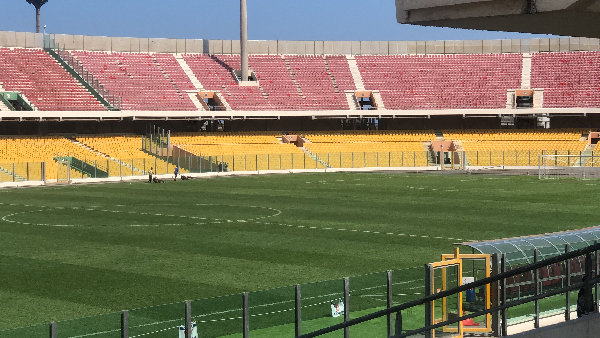
With just days to the Black Stars’ decisive 2026 World Cup qualifier against Comoros on Sunday, October 12, 2025, the Accra Sports Stadium has been given a stunning facelift, and it’s ready for the big night.

The Black Stars stand on the brink of history, just a single point away from booking their ticket to the 2026 World Cup. Sunday’s clash could be the crowning moment of their qualification journey.

As such, a quick inspection of the venue by GhanaWeb shows a perfectly trimmed pitch, with alternating shades of lush green that highlight the meticulous mowing pattern.

The dark and light stripes across the turf glisten beautifully under the afternoon sun, signaling that every blade has been tended to with precision.

Asamoah Gyan explains why Semenyo, Inaki, and others struggle in the Black Stars

From the stands to the touchline, the stadium looks set to host a capacity crowd of 35,000 fans, a significant upgrade from the 26,000 that witnessed Ghana’s 1-0 victory over Mali in September 2025.

Workers have spent the past few days ensuring that every section, from the VIP stands to the players’ tunnel, meets matchday standards.

Watch the video below:

FKA/JE

NSA announces ticket prices for Ghana-Comoros game at Accra Sports Stadium

Russian Language Competition Attracts Teams From 56 Countries

0

Russia

More than 450 teams from 56 countries have registered for the 2025 World Championship of Russian Language for Foreigners, surpassing last year’s participation numbers, organizers announced Wednesday.

The competition has drawn 455 teams comprising over 2,600 participants including 375 mentors, according to Ksenia Starygina, Championship Coordinator. The geographic spread covers Mongolia, China, Cuba, Nicaragua, France, Italy and dozens of other nations across continents.

CIS countries account for the largest share with 277 teams, led by participants from Uzbekistan, Kazakhstan, Kyrgyzstan and Moldova. Asia and Oceania contributed 78 teams, Africa sent 40, the Americas registered 39, while Europe fielded 21 teams.

Registration remains open until October 15, with online workshops for mentors running through October 10. The qualifying round launches in the second half of October to narrow the field.

Ten teams will advance to Moscow with expenses covered by organizers. The top five will compete in a Super Final scheduled for December 17, which includes a cultural program focused on Russian history and traditions.

The championship targets foreign citizens aged 16 to 22 who have achieved at least A2 level Russian proficiency, roughly equivalent to elementary conversational ability. Each team requires five members plus a mentor over 21 years old.

FSBI Interobrazovanie organizes the event with support from Russia’s Ministry of Science and Higher Education. The stated aims include promoting Russian language learning abroad and strengthening intercultural dialogue through competitive language assessment.

Last year’s inaugural championship attracted approximately 2,000 participants from countries including India, China, Greece and Vietnam, establishing the format for this expanded edition. The growth reflects Russia’s ongoing efforts to maintain global influence through cultural and educational programming.

Language competitions serve diplomatic purposes alongside educational goals, particularly for countries seeking to expand soft power through cultural exports. Russia has invested in Russian language promotion globally through organizations like Rossotrudnichestvo and the Russkiy Mir Foundation.

The championship comes as Russia faces international isolation following its 2022 invasion of Ukraine. Western countries have imposed extensive sanctions and reduced cultural exchanges, though Russia maintains strong ties with CIS nations, much of Africa, parts of Asia and Latin America.

Critics view such language programs as tools of Russian soft power that complement harder geopolitical objectives. Supporters argue language learning itself remains politically neutral and valuable for cross-cultural understanding regardless of current political tensions.

For participants, the competition offers recognition, cultural immersion and potentially valuable language credentials. Russian remains widely spoken across former Soviet states and serves as a lingua franca in Central Asia, making proficiency professionally useful in those regions.

The A2 proficiency requirement represents an accessible entry level, allowing relative beginners to participate while ensuring basic communicative competence. Higher level speakers may find the competition less challenging, though team dynamics and cultural knowledge components add complexity beyond pure language skills.

Mentors receive training in championship structure and teaching methodology through the online workshop series. This professional development component aims to build capacity among Russian language educators globally, extending the program’s impact beyond direct participants.

The December finals in Moscow provide participants from diverse countries an opportunity to visit Russia’s capital, potentially their first exposure to the country beyond classroom learning. Such experiences can significantly influence perceptions, which forms part of cultural diplomacy strategies.

Russia’s educational outreach competes with similar programs from China (Confucius Institutes), France (Alliance Française), Germany (Goethe Institut), Spain (Instituto Cervantes) and Britain (British Council), all promoting their languages and cultures internationally.

Whether language programs translate into lasting political influence remains debatable. Studies show language learning creates familiarity but doesn’t necessarily generate political alignment, particularly when learners maintain critical perspectives on the countries whose languages they study.

Volta Region: Ghana’s new renewable energy frontier — data, opportunities & imperatives

0

Ghana has long prided itself on its hydrocarbon and hydropower endowments. The Volta Region stands today as Ghana’s next economic frontier. A region blessed not only with natural beauty and vast arable lands but also with an abundance of renewable energy resources that remain largely untapped. As Ghana strives for energy security, industrialization, and sustainable development, the Volta Region offers a golden opportunity to lead the next wave of green energy investment through utility-scale wind, solar, and waste-to-energy projects.

Below, I present the best available data on potential capacities, situate the case in the Volta context, and call on public and private actors to move decisively.

National Context & Ambitious Targets

Ghana’s Renewable Energy Master Plan (REMP, 2019) sets a target of 1,363.63 MW of grid-connected non-hydro renewables by 2030. Yet as of 2023–2024, non-hydro renewable contribution remains minimal, with only tens of megawatts feeding the national grid. Estimates suggest Ghana’s technical wind energy potential is on the order of 5,640 MW (gross potential) per earlier SWERA data interpretations, though realizable potential is lower.

In more recent assessments, the figure for onshore wind potential in Ghana is often cited as “over 500 MW” (practical potential) with far greater offshore potential.

For solar, Ghana’s solar irradiation levels (global horizontal irradiation) are favorable across the country. A spatial mapping effort shows values ranging from ~1.5 to 7 kWh/m²/day, with many Volta districts in the higher bands.

Some studies conclude that solar PV is more cost-effective than wind under Ghana’s wind speeds, with levelized cost of electricity (LCOE) for solar PV in Ghana estimated around US $58.75 to 65.82/MWh, versus much higher LCOE for onshore or offshore wind in many cases.

These figures indicate two things: the ambition is high, and we have considerable unexploited space to grow. But meeting national targets requires that regions like Volta capture a significant share.

Volta Region: Site-Specific Potential

Electricity access in the Volta Region has improved remarkably in recent years, but the cost of on-grid power remains prohibitively high for many local industries and farmers. Agricultural enterprises, cold chain facilities, and emerging agro-processing ventures rely heavily on expensive electricity tariffs that erode their competitiveness and threaten their long-term viability. This challenge underscores the need to diversify the regional energy mix through renewables. Affordable and locally generated renewable energy can significantly reduce production costs, make agribusinesses profitable, and attract light manufacturing industries into the region.

While much of Ghana’s renewable planning has focused on the south and central belts, Volta offers unique comparative advantages:

Wind along the coast & hills: Wind assessments in Ghana have identified the eastern coastal belt and hill tops around Lake Volta and the Togo border as among the higher-potential zones. Wind resource assessments by the Energy Commission and various independent studies indicate promising wind corridors along:the Keta–Anloga coastal stretch, with average wind speeds above 6 m/s suitable for commercial turbines. A Ghana Market Overview Study (CJR Wind) maps coastal wind speeds in Volta and neighboring areas in the range of 6.2 to 7.1 m/s, which is within the range considered viable for utility-scale wind development. The Aflao–Atiteti–Ada zone, where consistent sea breezes create stable generation potential. Inland ridges such as Anfoega, Hohoe, and Kpeve, where elevated terrains enhance wind velocity. These sites offer ideal conditions for utility-scale wind farms that can supply power to both local industries and the national grid, particularly during evening hours when solar output declines.

Solar potential: District-level solar radiation datasets (Energy Commission) show that many Volta districts receive strong solar insolation, supporting utility PV deployment. The Volta Region enjoys over 2,200–2,400 hours of sunshine annually, making it one of Ghana’s most solar-abundant areas. Specific high-insolation zones include Adidome and Sogakope, with vast flat lands suitable for ground-mounted solar farms. Ho and Hohoe townships, where solar rooftops could power municipal facilities and schools. Krachi East and Nkwanta South, offering large tracts of land for solar agro-parks to power irrigation and agro-processing. Harnessing even a fraction of this solar potential could transform the energy landscape of the region — powering irrigation schemes, cold storage for fish and fruits, and light industries processing cassava, maize, pepper, and palm produce.

Though no public published estimate for maximum MW in Volta exists (in open sources), one can conservatively propose that 100–300 MW of solar PV and 50–150 MW of wind (onshore and hybrid) would be achievable as initial anchor projects, subject to site screening. These provisional numbers are modest relative to national potential but quite significant for regional industrialization.

Additionally, waste-to-energy opportunities exist around urban centers such as Ho, Kpando, and Aflao, where municipal solid waste quantities could support small-to-medium waste-to-energy plants tied to district power demands for CHPS compund, 24 Hour Markets, schools, farmers etc.

Why Volta Needs Utility-Scale Renewables — Beyond the Data

Cost relief for productive users (farmers, processors, industry)

Many farmers in Volta rely on on-grid electricity, paying high tariffs and absorbing costs from inefficiency, voltage instability, and power cuts. This erodes profitability and discourages scalability, especially for agro-processing, cold storage, and irrigation systems. A regionally embedded renewable generator can lower marginal costs, deliver more predictable pricing, and improve investment viability for value-added agriculture.

Industrialization, anchor loads & competitiveness

As Volta Corridor aspires to become Ghana’s new economic zone, anchor industrial investors (e.g. agro-processing clusters, assembly plants, electronic vehicle and motorcycle promotion, logistics hubs etc) will demand reliable, low-cost, high-quality power. In many jurisdictions globally, industrial zones attract renewable generation capacity on-site or co-located, which helps to bring down grid burden and ensures power quality (voltage, frequency).

Grid stability & reduced losses

Local generation reduces transmission distance losses, relieves congestion on main lines, and can help with voltage support and reactive compensation if properly integrated. A healthier grid environment further reduces the frequency and duration of outages.

Employment, local development, and environmental benefit

Construction, operations, maintenance, training, and supply chains generate local jobs. Waste-to-energy plants help manage municipal solid waste, improve sanitation, reduce methane emissions, and generate power—making them a dual-purpose investment.

Strategic Recommendations & Institutional Call-Outs

To translate potential into MW on the ground, the following coordinated actions are required:

Grid Company (GRIDCo)        

Prioritize Volta in transmission expansion plans. Build new substations or upgrade existing ones in Ho, Kpando, Denu, and coastal subzones. Embed voltage stabilization equipment (STATCOMs, capacitors) in planning. Ensure sufficient transformer capacity margins.

Electricity Company of Ghana (ECG / sub-distribution):       

Integrate renewable injection nodes into distribution designs; plan radial feeders to renewable plants; implement smart regulation to manage reverse flows; partner with developers in “wheeling” schemes.

Ministry of Energy / Energy Commission / Public Agencies:

Fast-track land acquisition, permitting, and environmental impact assessments; establish feed-in tariffs or competitive bidding frameworks; provide tax incentives, import duty waivers, and guarantee mechanisms; coordinate with local assemblies for benefit-sharing.

Private Investors / IPPs / PPPs      

Consider Volta as priority in siting decisions. Engage early with local stakeholders and traditional authorities. Use clustering (solar + storage, wind + hybrid) to mitigate intermittency. Explore integrated waste-to-energy + solar hybrids in municipal zones.

Local Government & Traditional Authorities      

Facilitate community acceptance, land access, and benefit-sharing arrangements (community equity, social contracts). Promote local workforce development to support O&M roles.

Important Caveats & Risk Mitigation

Grid integration challenges: High penetrations of variable renewables require grid flexibility, storage (batteries, pumped hydro, hybridization), and grid operational upgrades.

Intermittency & capacity factors: Wind and solar are variable; capacity factors in Ghana may be modest (e.g. 20–25% for wind, depending on site).

Financing & cost: Capital costs, interest rates, and currency risk can make the Levelized Cost of Electricity (LCOE) sensitive. Guarantee mechanisms and concessional financing may be necessary.

Regulatory & policy delays: The biggest bottleneck is often institutional inertia, that is, delays in permits, network access, approvals, and off-taker certainty.

Land use conflicts & environmental/social impact: Some suitable sites may overlap with agriculture, forests, or community land; stakeholder engagement is critical.

Despite these challenges, they are not insurmountable. Many developing countries have navigated them with a combination of policy clarity, institutional reform, and bold partnerships.

The Volta Region stands at the cusp of becoming Ghana’s renewable energy and industrialization powerhouse. With conservative estimates that the region can reasonably host hundreds of megawatts of solar and wind (plus waste-to-energy), the opportunity is manifest. But it will not materialize spontaneously.

It is an open invitation to GRIDCo, ECG, the Ministry of Energy, the Energy Commission, the Ghana Investment Promotion Centre, and private sector developers to put Volta in the front row of Ghana’s next growth trajectory. The infrastructure, policy frameworks, incentives, and stakeholder alignment must be put in place now.

For Volta to realize its vision and for Ghana to transform, region by region, renewable energy must no longer be an abstract ideal but a working economic backbone. Let Volta be the model that demonstrates how clean energy can power industrialization, reduce energy cost burdens, and unlock inclusive growth.

DISCLAIMER: The Views, Comments, Opinions, Contributions and Statements made by Readers and Contributors on this platform do not necessarily represent the views or policy of Multimedia Group Limited.


DISCLAIMER: The Views, Comments, Opinions, Contributions and Statements made by Readers and Contributors on this platform do not necessarily represent the views or policy of Multimedia Group Limited.

Afrigha Surrogacy Gains Recognition for Ethical Reproductive Care

0

Afrigha Surrogacy
Afrigha Surrogacy

A West African surrogacy agency is attracting international attention for its approach to assisted reproduction, combining what it describes as African hospitality with advanced medical partnerships.

Afrigha Surrogacy, founded by Akosua Nyantakyiwaa Asamoah, serves families from Europe, North America, Asia, and across Africa. The agency operates with a stated mission to “help create families while upholding dignity, respect, and transparency at every step,” according to Asamoah, who emphasized the organization’s adherence to Ghanaian law and international standards.

The agency has positioned itself differently in the reproductive care sector by treating surrogates as partners rather than service providers. Afrigha provides comprehensive health screenings, prenatal care, fair compensation, and psychological support throughout pregnancy and post-birth recovery. This holistic model addresses both the physical and emotional dimensions of surrogacy, creating what the agency believes is a more sustainable and ethical framework.

Medical excellence underpins the operation through partnerships with Lister Hospital in Accra and Kinderwens Kliniek in Aalen, Germany. These collaborations give clients access to advanced fertility treatments and have contributed to successful births across multiple continents. The dual-country medical network allows Afrigha to offer options that suit different client needs and circumstances.

Cross-border surrogacy involves complex legal considerations, particularly regarding citizenship and parental rights. Afrigha provides what it calls one-on-one guidance from initial consultation through birth and beyond, helping international clients navigate these challenges. The agency’s experience with multiple jurisdictions has become a key part of its service offering.

The surrogacy landscape in Africa remains relatively underdeveloped compared to established markets in the United States, Ukraine, and parts of Asia. However, Ghana’s legal framework and the country’s healthcare infrastructure have created conditions that could support growth in this sector. Afrigha is betting on this potential by investing in a new facility in Accra designed to centralize all services under one roof.

This planned center represents a significant expansion of the agency’s capacity and ambitions. By consolidating operations, Afrigha aims to improve coordination and patient comfort while positioning Ghana as a regional hub for assisted reproduction. The investment reflects confidence in both the demand for ethical surrogacy services and Ghana’s ability to meet international standards.

The agency’s business model rests on what it describes as cultural sensitivity and trust-building between intended parents and surrogates. This emphasis on relationships, combined with transparent practices, forms the foundation of Afrigha’s competitive positioning. Whether this approach can scale as the agency grows remains to be seen, but early results suggest there’s appetite for alternatives to traditional surrogacy markets.

Afrigha continues to navigate the delicate balance between commercial viability and ethical responsibility in an industry where those tensions often surface. The agency’s stated commitment to surrogate welfare, paired with its international medical partnerships, offers a model that other African countries might examine as they develop their own reproductive care sectors.

Pioneering ethical parenthood from the heart of Africa

0

In the heart of West Africa, a quiet revolution in assisted reproduction is taking place, transforming lives and redefining the meaning of family. Afrigha Surrogacy, an emerging leader in ethical reproductive care, is gaining international recognition for what it calls “a blend of African hospitality with world-class medical excellence.” The agency’s mission, as clearly stated, is “to create families with compassion, integrity, and unwavering excellence,” a vision that has earned it the trust and admiration of intended parents from across the globe.


Different approach to surrogacy

According to Afrigha Surrogacy’s founder and director, the agency’s guiding vision is to “help create families while upholding dignity, respect, and transparency at every step.” This philosophy, the agency emphasizes, defines its operations and “strictly adheres to Ghanaian law and international best practices.” It is this approach that sets Afrigha apart in an industry that often grapples with questions of ethics, trust, and fairness.

The agency’s commitment to ethical standards remains unwavering. As highlighted in its statement, Afrigha Surrogacy “prioritizes the rights, health, and dignity of its surrogates,” treating them as “partners in the journey, not just a means to an end.” This distinction, the agency believes, is “a crucial foundation of trust” that not only safeguards the wellbeing of the women involved but also brings integrity and humanity into the surrogacy process.

Afrigha’s operations are uniquely global yet deeply rooted in Africa’s warmth and sense of community. The agency serves families from Europe, North America, Asia, and across Africa, offering a seamless cross-border experience. It “expertly navigates the complex legal and citizenship matters that come with cross-border surrogacy,” the statement notes, ensuring that international clients receive the assurance and clarity they need. “Every client receives one-on-one guidance from the initial consultation all the way through to the birth and beyond,” Afrigha adds, stressing that this “tailored support ensures a smooth and less stressful experience for all parties.”

Afrigha’s mission

At the core of Afrigha’s mission are the women who make the journey of surrogacy possible. The agency describes its surrogates as “the lifeblood of its mission,” underscoring a commitment to their total wellbeing. Afrigha ensures that “surrogates receive comprehensive health screenings and prenatal care, along with fair and transparent compensation.” Beyond the physical and financial aspects, the agency also provides “emotional and psychological support throughout the pregnancy” and “post-birth recovery assistance,” demonstrating a holistic approach that values the surrogate’s health, dignity, and emotional stability as integral to the process.

Medical excellence forms another cornerstone of Afrigha’s growing reputation. The agency’s partnerships with Lister Hospital in Accra and Kinderwens Kliniek in Aalen, Germany, “guarantee access to advanced fertility treatments,” a collaboration that has directly contributed to its high success rates. These alliances, the agency points out, have “celebrated the birth of many healthy babies into loving homes,” reflecting Afrigha’s ability to combine the best of African compassion with cutting-edge global medical science.

For Afrigha, however, surrogacy transcends science. It is, at its heart, a deeply human experience built on trust, empathy, and shared dreams. “Afrigha Surrogacy is not just building families; it’s building bridges,” the statement affirms. By merging “the warmth of African hospitality with global medical standards,” Afrigha creates what it calls “a safe, culturally sensitive environment where trust can flourish between intended parents and surrogates.”

The road ahead

Looking to the future, Afrigha is setting its sights on further growth and innovation. The agency announced that it is currently investing in “a new state-of-the-art surrogacy center in Accra, which will centralize all services under one roof.” This upcoming facility is designed to enhance coordination, improve patient comfort, and establish Ghana as a leading hub for ethical assisted reproduction in Africa and beyond.

Afrigha Surrogacy further reaffirmed its enduring commitment to its values. “As Afrigha Surrogacy continues to grow, it remains committed to its core principles of safety, transparency, and support,” the agency declared. Through these values, it remains steadfast in “making the dream of parenthood a reality for more families than ever before,” a mission that continues to inspire hope and shape the future of ethical parenthood from the heart of Africa.


Explore the world of impactful news with CitiNewsroom on WhatsApp!

Click on the link to join the Citi Newsroom channel for curated, meaningful stories tailored just for YOU:
https://whatsapp.com/channel/0029VaCYzPRAYlUPudDDe53x

No spam, just the stories that truly matter! #StayInformed #CitiNewsroom #CNRDigital

IMF Staff Approve Ghana Review Unlocking US$385 Million

0

International Monetary Fund (IMF)

The International Monetary Fund has reached staff-level agreement with Ghana on the fifth review of the country’s three-year economic reform program, potentially unlocking USD 385 million in additional financing pending executive board approval expected by December.

The agreement, announced Thursday following meetings in Accra from September 29 to October 10, brings total IMF disbursements under the Extended Credit Facility (ECF) arrangement to approximately USD 2.825 billion since the program began in May 2023. The original three-year facility totals USD 3 billion.

Ruben Atoyan, who led the IMF staff team, said Ghana’s macroeconomic stability had strengthened significantly, with first-half 2025 growth exceeding expectations due to robust services activity and agricultural output. He projected 4.8 percent growth for 2026 with inflation remaining within the Bank of Ghana’s target band of 8±2 percent.

“The positive momentum is expected to continue into 2026,” Atoyan stated, noting that improved export performance, particularly in gold and cocoa, enabled continuous improvement in international reserve accumulation that exceeded program targets.

The USD 385 million represents SDR 267.5 million, using the IMF’s Special Drawing Rights currency basket. The disbursement requires approval from IMF management and the executive board, processes that typically take several weeks following staff-level agreements.

Ghana’s external sector has strengthened considerably, with a solid current account surplus supporting reserve accumulation. However, Atoyan cautioned that “external risks remain significant largely on account of lingering uncertainty of commodity prices for Ghana’s key exports.”

The IMF team welcomed progress in Ghana’s comprehensive debt restructuring efforts. The country recently signed a Memorandum of Understanding with the Official Creditor Committee under the Group of 20 Common Framework and concluded bilateral agreements with five countries.

This debt restructuring represents a critical component of Ghana’s economic recovery strategy. The country defaulted on most external debt in December 2022 as foreign reserves depleted and the cedi collapsed, forcing the government to seek IMF support.

Finance Minister Cassiel Ato Forson expressed satisfaction with the review outcome, stating that macroeconomic stabilization is taking root. The government has implemented fiscal consolidation measures, including revenue mobilization efforts and expenditure controls, as conditions for continued IMF support.

However, significant challenges persist. Ghana’s public debt remains elevated at over 70 percent of GDP despite restructuring efforts. High domestic interest rates, while declining from crisis peaks, continue constraining private sector credit and economic activity.

The country’s banking sector has shown resilience, maintaining adequate capitalization despite economic turbulence. However, non-performing loans increased during the economic crisis, and full recovery in asset quality will require sustained economic improvement.

Inflation has declined substantially from peaks above 50 percent in 2023 to current levels around 20 percent, approaching but not yet reaching the Bank of Ghana’s target range. Further disinflation depends on continued fiscal discipline and stable exchange rates.

The cedi has stabilized relative to the dollar after losing over 50 percent of its value during 2022 and early 2023. Reserve accumulation supported by strong commodity exports has enabled the central bank to intervene more effectively in foreign exchange markets.

Gold and cocoa exports have performed strongly, with gold prices remaining elevated and cocoa production recovering from disease-related declines. However, commodity price volatility represents a significant risk to Ghana’s external position and fiscal revenues.

The IMF program includes structural benchmarks beyond macroeconomic targets, including public financial management reforms, revenue administration improvements, and state-owned enterprise restructuring. Progress on these structural reforms has been mixed, with some areas advancing faster than others.

Political considerations loom as Ghana approaches future elections. IMF programs often face implementation challenges during election periods as governments face pressure to increase spending and delay unpopular reforms. Maintaining program discipline through political cycles represents a perennial challenge.

For ordinary Ghanaians, the IMF program’s success will be measured by improved living standards rather than macroeconomic indicators. While inflation has declined and growth resumed, many citizens continue struggling with high living costs and limited employment opportunities.

The fifth review’s approval suggests Ghana has met most quantitative performance criteria and structural benchmarks for the period. However, sustained compliance through the program’s remaining period will determine whether macroeconomic stability translates into lasting economic transformation.

Whether the USD 385 million disbursement and broader program ultimately achieve their objectives depends on factors beyond IMF financing, including global commodity prices, domestic policy discipline, and the government’s ability to implement difficult structural reforms while maintaining political support.

MTN Agricultural Training Centre Nears Completion at University of Ghana

0

Inside The Greenhouse Guests Observe The Seedling Nursery Process And The Stages Of Plant Development

MTN Ghana Foundation’s GH¢3 million Vegetable Centre of Excellence has reached 70 percent completion, with officials projecting a year-end handover that will provide modern agricultural training for over 300 beneficiaries annually.

Foundation representatives, university officials, and partner organization Defarmercist Group inspected progress at the University of Ghana farms on Thursday, October 10, five months after groundbreaking ceremonies in May. The facility aims to bridge the gap between theoretical agricultural education and practical farming skills among graduates.

Adwoa Wiafe, Chief Corporate Services and Sustainability Officer of MTN Ghana, emphasized the centre’s role in transforming agricultural education. “Too many graduates leave school with theoretical knowledge but without practical experience. Here, they will gain hands-on training that turns knowledge into opportunity,” she stated during the site visit.

The five-acre facility currently features three greenhouse structures, solar panel installations, and fully equipped training rooms and offices. The centre will serve as a training ground for at least 300 young people over the next two years, focusing on modern vocational agriculture techniques.

Training modules will cover seedling nursing, smart irrigation installation and scheduling, transplanting, fertigation management, pest and disease control, and post-harvest handling. The curriculum combines classroom instruction with practical field experience in greenhouse farming and crop production.

Samuel Agyemang, Co-Founder of Defarmercist Group, highlighted technology integration as key to attracting young people to agriculture. “We are introducing smart solutions like automated irrigation and greenhouse systems that make farming less labor-intensive. The students will see how technology transforms farming into a profitable and sustainable business,” he explained.

Beyond University of Ghana students, the program will extend training opportunities to unemployed youth and smallholder farmers seeking to scale their operations. This broader reach reflects MTN Ghana Foundation’s strategy of addressing youth unemployment through agricultural entrepreneurship.

Wiafe positioned the project as a potential model for replication nationwide. “Our vision is to create a model that can be replicated across the country, supporting Ghana’s fight against youth unemployment and contributing to food security,” she said, framing the initiative within broader economic development objectives.

The project operates as a two-year pilot program, after which its impact will be assessed for possible expansion to other institutions and regions. This phased approach allows for evaluation and adjustment before committing to larger-scale implementation.

The partnership brings together MTN Ghana Foundation, the University of Ghana’s Faculty of Agriculture, and Defarmercist, a smart agronomic service provider, combining corporate philanthropy, academic resources, and private sector agricultural expertise.

Whether the centre will meaningfully address youth unemployment or food security challenges remains to be seen. Ghana has numerous agricultural training programs, yet youth unemployment persists and food imports continue growing. The project’s success will depend on factors beyond training, including access to land, credit, markets, and supportive agricultural policies.

The emphasis on greenhouse farming and smart irrigation systems may also raise questions about scalability and appropriateness for smallholder farmers who lack capital for such infrastructure. While modern techniques offer productivity gains, their relevance for resource-constrained farmers operating on small plots with minimal mechanization deserves scrutiny.

Nevertheless, the project addresses a legitimate gap in agricultural education. Many agriculture graduates lack practical farming experience, limiting their employability or ability to start their own enterprises. Providing hands-on training in modern techniques could enhance graduate preparedness for agricultural careers.

The MTN Ghana Foundation, established in 2007, has undertaken 178 major projects across health, education, and economic empowerment. This agricultural training centre represents its latest intervention in youth economic empowerment through skills development.

Completion by year end would mark relatively rapid construction for a project of this scale, suggesting efficient project management and adequate resource allocation. The 70 percent completion rate at the five-month mark indicates the timeline remains achievable barring unforeseen complications.

For now, stakeholders await the centre’s opening and initial cohort of trainees. Only after graduates enter the agricultural sector, either as employees or entrepreneurs, will the project’s true impact on youth employment and agricultural productivity become apparent.

GSE Composite Index Dips as NewGold ETF Dominates Trading

0

Ghana Stock Exchange

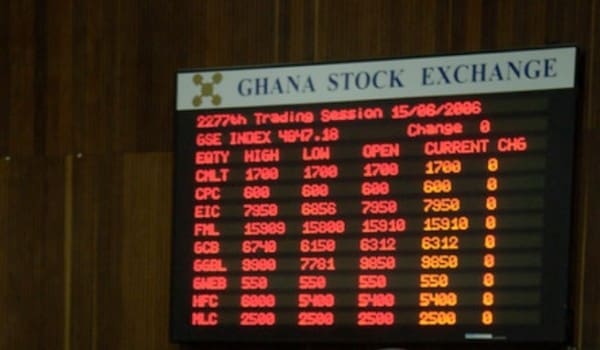
The Ghana Stock Exchange Composite Index declined modestly on Thursday, October 10, shedding 8.62 points to close at 8,488.81 as trading activity remained subdued across most listed equities during Session 7068.

The 0.10 percent decrease in the GSE-CI contrasted with a slight gain in the GSE Financial Stocks Index, which rose 2.86 points to 3,949.15, representing a 0.07 percent increase. The divergence suggests mixed performance across sectors, with financial stocks showing relative resilience while broader market sentiment weakened.

NewGold ETF emerged as the day’s most valuable trade by a substantial margin, recording 3,073 units worth GH¢1.44 million. The exchange-traded fund’s dominance reflects continued investor interest in gold-backed securities amid economic uncertainty and currency pressures affecting traditional equity investments.

MTN Ghana recorded the second-highest trade value with 102,104 shares changing hands for GH¢459,468, though the telecommunications giant’s market capitalization of GH¢59.56 billion still positions it as Ghana’s most valuable listed company. The stock trades at a price-to-earnings ratio of 8.20, suggesting investors view it as reasonably valued relative to earnings.

CAL Bank led volume trading with 112,114 shares traded worth GH¢88,164.69, indicating active interest in the financial sector despite the modest transaction value. The bank’s current price-to-earnings ratio of 2.84 suggests the market values it at a significant discount to earnings, potentially reflecting concerns about asset quality or growth prospects.

The week’s trading activity from October 6 through 10 totaled 2,854,160 shares valued at GH¢2,197,660.77, numbers that underscore the Ghana Stock Exchange’s ongoing liquidity challenges. Trading volumes remain far below levels seen during more active periods, with many listed companies experiencing no trades on any given session.

Market capitalization for all listed equities stands at approximately GH¢166.74 billion, though this figure masks significant concentration in a handful of large-cap stocks. MTN Ghana alone accounts for roughly 36 percent of total market value, creating vulnerabilities should investor sentiment toward the telecommunications company shift.

The Ghana Alternative Market, which lists small and medium enterprises under less stringent requirements, recorded no trading activity on Thursday. Samba Foods Ltd, the sole company on GAX, saw zero shares change hands, highlighting the persistent challenges facing smaller listed companies in attracting investor interest.

Access Bank maintains a market capitalization of GH¢2.84 billion with a price-to-earnings ratio of 4.67, positioning it among the more attractively valued financial stocks. However, the bank’s dividend yield and trading volume suggest limited investor enthusiasm despite apparently reasonable valuations.

The odd lot market, where trades of fewer than 100 shares occur, also recorded no activity across 31 listed securities. This absence reinforces concerns about market depth and the difficulty investors face when attempting to trade positions in less liquid stocks.

Thursday’s trading patterns reflect broader challenges facing the Ghana Stock Exchange as it struggles to attract both listing companies and active investors. High interest rates on government securities continue diverting investment away from equities, while economic uncertainty and currency depreciation make stocks less attractive to both domestic and foreign investors.

The financial sector’s slight outperformance suggests some investors view banks as potentially benefiting from high interest rate environments, though asset quality concerns and economic headwinds temper enthusiasm. Whether financial stocks can sustain relative strength depends largely on how Ghana’s broader economic challenges evolve.

For retail investors, Thursday’s session offered few opportunities beyond the handful of actively traded names. The concentration of trading in MTN Ghana, CAL Bank, and NewGold ETF leaves most listed companies effectively illiquid, creating challenges for portfolio diversification and exit strategies.

Looking ahead, the Ghana Stock Exchange faces fundamental questions about its role in capital formation and wealth creation. Without significant increases in trading activity, new listings, and investor participation, the exchange risks becoming increasingly irrelevant to Ghana’s economic development.

The modest losses on Thursday may seem insignificant, but they continue a pattern of weak performance that has characterized Ghanaian equities for extended periods. Until macroeconomic conditions improve and alternative investments like treasury bills offer less attractive returns, expecting sustained recovery in stock market activity appears optimistic.

Century Aviation Marks Milestone with SkyCourier Demonstration Flight to Ho

0

Whatsapp Image At Am

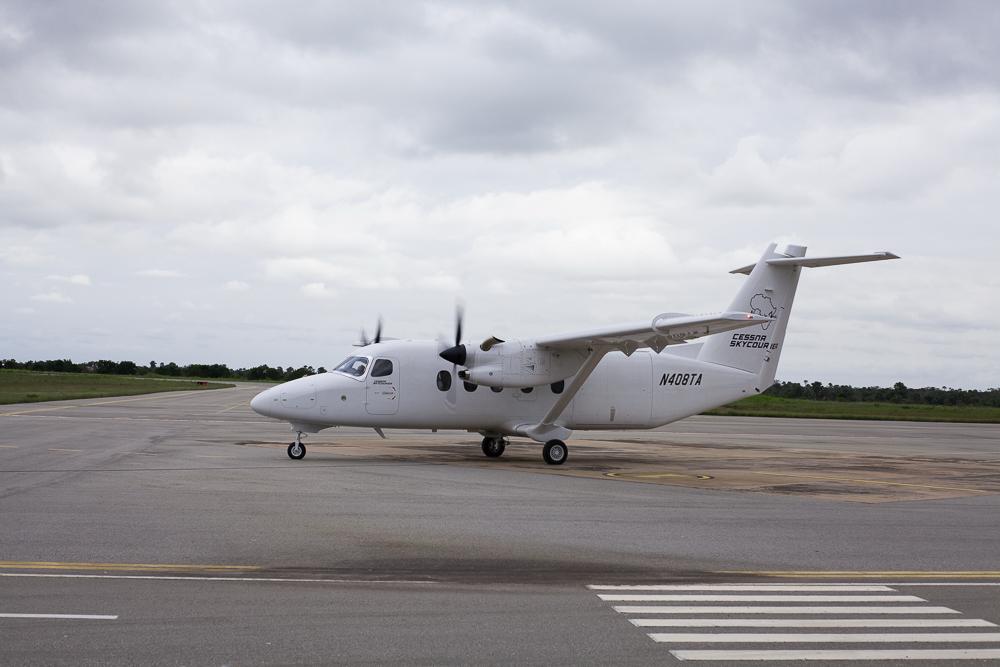
Century Aviation Ltd., a fully Ghanaian-owned aviation company, successfully conducted a demonstration flight of the Cessna SkyCourier to Ho Airport on Sept. 25, signaling a new chapter in domestic air travel for Ghana.

The aircraft departed Kotoka International Airport at 2:40 p.m. with 19 passengers aboard and landed in Ho after a 30-minute flight. It returned to Accra around 4:35 p.m. The demonstration was a collaborative effort between Century Aviation and Africair, the authorized African representative of Textron Aviation, which manufactures the SkyCourier.

The flight marks the culmination of four years of planning between Century Aviation and Africair to launch a reliable air taxi service in Ghana. The company plans to provide scheduled passenger and cargo flights to underserved domestic markets and expand its charter services to multinational corporations, oil and gas firms, and mining companies.

“We are particularly impressed with two things – one is that you can easily reconfigure the internal space for passengers or cargo, depending on the flight requirements,” said Essie Anno Sackey, managing director of Century Aviation. “The other thing is that the SkyCourier can land and take off on various runway surfaces, allowing us to service underserved destinations in Ghana and West Africa, as we are planning.”

The Cessna SkyCourier is a twin-engine, high-wing turboprop aircraft designed for both passenger and cargo operations. It can carry up to 19 passengers and 6,000 pounds of cargo, with features including extra legroom, USB charging ports, and windows along every row. The aircraft has a cruise speed of 389 km/h, a maximum range of 1,704 km, and can be flown by a single pilot.

Century Aviation, established in 2009, holds an Air Carrier License and Airline Operators Certificate from the Ghana Civil Aviation Authority, and is registered with the Petroleum Commission. Its services include offshore/onshore helicopter support, medevac, ground handling, aviation training, and technical support. The company has previously served clients including Tullow Oil, Kosmos Energy, Schlumberger, and Newmont Ghana Gold.

For media inquiries, contact: [email protected] or +233 30 393 0658.

By Kingsley Asiedu

Adutwum’s campaign energised by grassroots support

0

The campaign team of New Patriotic Party (NPP) flagbearer hopeful Dr. Yaw Osei Adutwum says the former Education Minister is gaining strong grassroots momentum across key regions as the race for the party’s presidential slot intensifies.

Speaking after the balloting exercise held at the NPP headquarters in Accra on Friday, Dr. Adutwum’s spokesperson, Yaw Opoku Mensah, said the excitement from the party base reflects growing confidence in the candidate’s message and leadership.

“It’s been energetic. The base is really giving us that momentum, the edge to carry on with the good works that Dr. Yaw Osei Adutwum has been doing for the party and the country at large,” Mensah said.

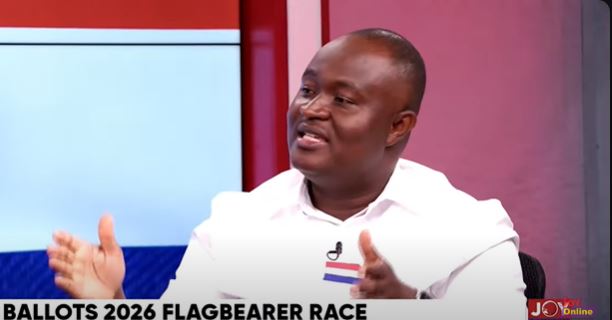
Dr. Adutwum picked the fourth position on the ballot ahead of the party’s much-anticipated presidential primaries scheduled for January 31, 2026. He is one of five aspirants seeking to lead the NPP into the 2028 general elections.

Other contenders include former Assin Central, MP Kennedy Agyapong (position 1), former Agriculture Minister Dr. Bryan Acheampong (position 2), former Vice President Dr. Mahamudu Bawumia (position 3), and former General Secretary Kwabena Agyepong (position 5).

Mensah said Dr. Adutwum’s recent campaign tours through the Bono, Ahafo, Bono East, Western North, and Ashanti Regions have demonstrated a surge in support among delegates and grassroots members.

“The euphoria that we recently witnessed in the Bono regions — Bono itself, Ahafo, and Bono East — plus the Western North and the Ashanti regions speaks volumes,” he noted. “It gives us a new wave as to how the engagement should be.”

He added that Dr. Adutwum’s humility, leadership, and track record in education and public service have earned him widespread admiration within the party.

“The way Dr. Yaw Adutwum has carried himself has earned him a respectable place in the heart of the party,” Mensah said.

Read also

NPP Flagbearer race: Ken Agyapong takes top spot, Bawumia third on ballot paper

Rising insecurity in West Africa and the threat to mining investment

0

The hum of generators and the clatter of mining trucks across West Africa’s mineral belts tell a story of a region rich in resources but increasingly uneasy about its future.

From Ghana’s goldfields to the copper deposits of the Sahel, the mining sector—long seen as a driver of growth—is now grappling with a growing and complex security crisis.

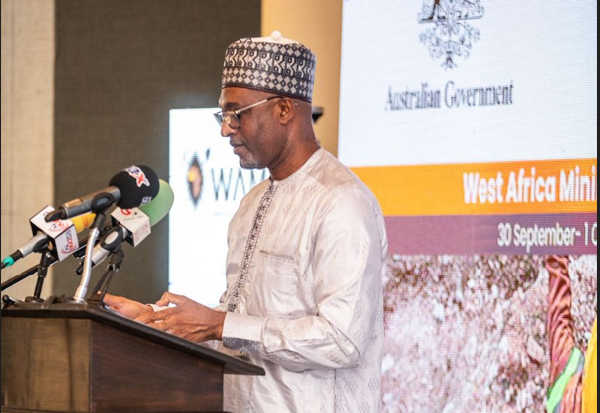
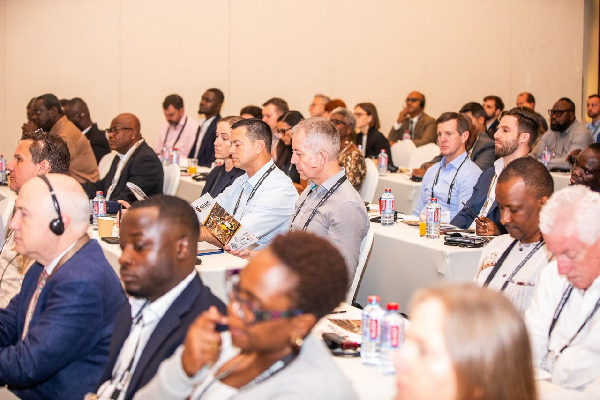
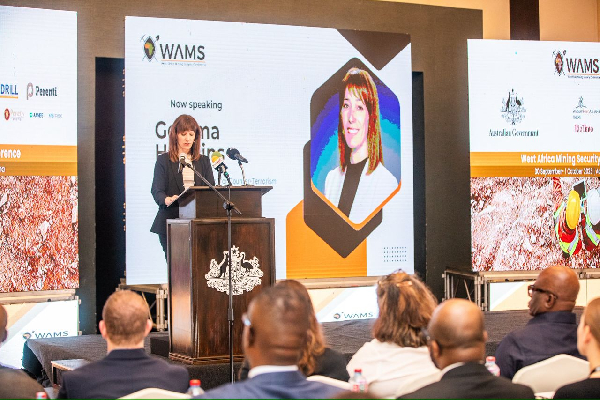
At the just-ended West Africa Mining Security (WAMS) Conference in Accra, government officials, security experts and industry leaders gathered to confront a worrying trend: insecurity is becoming one of the greatest risks to investment and development across the region.

A region under pressure

Speakers at the conference painted a sobering picture. Terrorist activity, armed banditry, and political instability are no longer confined to the Sahel—they are slowly edging southward, disrupting communities, businesses and trade routes.

Australia’s Counter Terrorism Ambassador, Ms Gemma Huggins, warned that the humanitarian and economic costs are mounting.

“Terrorism and violent extremism impede sustainable development and erode human rights. They undermine economic growth, food security and social cohesion. And they exacerbate displacement,” she said.

In Ghana, Burkina Faso, Mali and Niger, communities that once relied on mining and agriculture for livelihoods are increasingly finding themselves caught in the crossfire—sometimes between security forces and non-state armed groups, and at other times between competing economic pressures.

The mining industry at a crossroads

The mining sector has been one of West Africa’s strongest performers in recent years, accounting for a significant share of GDP and export revenues in countries like Ghana, Burkina Faso and Guinea. But the instability is beginning to leave its mark.

Several speakers at the conference noted that companies are spending more on security, delaying exploration, and scaling down community engagement in affected regions.

The ripple effects are significant—fewer jobs, reduced revenues, and weakened investor confidence.

Australia’s High Commissioner to Ghana, Berenice Owen-Jones, whose country is a leading mining partner across the region, said the situation calls for renewed regional cooperation and inclusive strategies that go beyond security patrols.

She stressed that economic inclusion, community trust, and resilience-building are vital to ensuring that mining continues to contribute to long-term stability.

Climate and livelihoods: the overlooked link

Beyond the immediate security concerns, many experts at WAMS pointed to deeper structural challenges—chief among them, climate change and food insecurity. As arable land shrinks and weather patterns become less predictable, traditional farming communities are pushed to the brink.

This dynamic, Ambassador Huggins noted, creates fertile ground for radicalization. She said:

“Australia’s development investments in climate resilient agriculture and food security, including the new Africa Australia Partnership for Climate Responsive Agriculture (AAPCRA), will bolster Africa’s ability to withstand the escalating impacts of climate change and combat food insecurity.

And in doing so, address some of the key factors in creating fertile ground for radicalization and terrorism.”

Her remarks drew a connection that resonated across the conference: food, jobs, and climate resilience are integral to peace and security. When livelihoods are secure, extremist recruitment becomes harder.

Collaboration as the way forward

The WAMS conference closed with a call for deeper public–private partnerships and more information sharing among regional governments, security agencies, and the private sector. Participants also called for initiatives that link development, governance and security recognizing that the challenges facing West Africa’s mining and agricultural sectors are interwoven.

In that spirit, projects like AAPCRA, led by the Australian Centre for International Agricultural Research (ACIAR), signal how development and security can reinforce each other. By helping communities adapt to a changing climate, improve productivity, and secure livelihoods, such partnerships may offer a quieter but powerful antidote to instability.

A test for the region

For miners, investors, and communities alike, the stakes could not be higher. If insecurity continues to spread, West Africa risks losing not just capital but also opportunity—the promise of jobs, infrastructure and shared prosperity that responsible mining can deliver.

Yet amid the uncertainty, there remains a shared determination among governments, partners, and industry leaders to keep investing in peace.

Whether through stronger security coordination or the quieter resilience of a farmer tending a climate-smart field, West Africa’s future may depend as much on what happens beneath the soil as above it.

Meanwhile, catch the highlights of Sarkodie x Shatta Wale’s epic performance at Rapperholic Homecoming on GhanaWeb TV below:

I Resigned as Majority Leader to Save the NPP Party – Osei Kyei-Mensah-Bonsu

0

Former Majority Leader of Parliament, Osei Kyei-Mensah-Bonsu, has stated that his decision to resign from the leadership position in Parliament was motivated by his desire to protect and preserve the unity of the New Patriotic Party (NPP).

Speaking in a recent interview, the long-serving legislator said he has no regrets about stepping down, explaining that the move was necessary to ease growing tensions within the party.

Black Stars To Play Japan, South Korea In Asian Tour Friendlies

0

Black Stars players celebrating a goal


Ghana’s Black Stars are scheduled to play two enticing friendly matches against two Asian giants ̶ South Korea and Japan in November as the team prepares for its fifth World Cup with just a draw needed for a qualification.

The senior national team will take on Japan on November 14, 2025 in Toyota, Japan, where they will test their skills against a technically gifted Samurai Blue side who have already qualified for the 2026 World Cup.

Otto Addo’s side will then take on South Korea, another side which will be featuring at next year’s World Cup, on November 17, 2025 in Seoul.

The South Korean team have qualified for every World Cup since Mexico 1986 and are expected to give the Black Stars a tough game.

Ghana secured a dramatic 3-2 victory the last time the two sides met at the Qatar 2022 World Cup, with a brace from Mohammed Kudus and a goal from Mohammed Salisu putting the Stars above their Asian rival.

The Asian tour is part of the Ghana Football Association’s strategy to prepare the team and keep them competitive ahead of the World Cup in the United States, Canada and Mexico.

It will also give the team the opportunity to test themselves against teams they are likely to face at the World Cup, hence allowing the coach and his technical team to prepare ahead of the tournament.

It could also present an opportunity for Otto Addo to further assess his players and make changes where necessary.

BY Gibril Abdul Razak

I broke up with my boyfriend weeks before BBNaija audition – Imisi

0

Big Brother Naija Season 10 winner, Imisi, has stated that she broke up with her boyfriend, Hakeem, weeks before the show’s audition.

She made the disclosure during a post-show interview with Ebuka Obi-Uchendu, the host.

While describing the breakup as “hectic,” she refused to disclose the reason for their separation.

Dafeamekpor vows to sue Ghana Armed Forces over recruitment age cap

0

Majority Chief Whip and Member of Parliament for South Dayi, Rockson-Nelson Dafeamekpor, has declared his intention to initiate legal proceedings against the Ghana Armed Forces (GAF) should it fail to revise the current maximum age requirement for recruitment.

The lawmaker has maintained that medical fitness, rather than age, should serve as the determining factor for enlistment.

Speaking on Accra-based Citi FM, Mr. Dafeamekpor argued that the existing age restriction should correspond with the National Youth Authority Act, 2016 (Act 939), which classifies “youth” as persons aged between 15 and 35 years.

“I intend to test this matter because, you see, we need to test systems to let systems work. And when systems are supposed to work, they must work within the existing legal framework. We must all obey the law,” he said.

He further stated that the Armed Forces could adopt an age bracket consistent with the law, as long as applicants satisfy the medical criteria for service.

“I won’t have any problem if the armed forces say that the person between the ages of 15 years and 35 years is eligible to apply, but subject to a medical fitness test, because in a lot of countries, persons below 18 years are eligible to be recruited into the army, subject to parental consent,” he noted.

Mr. Dafeamekpor cautioned that if the GAF ignores the call for reform, he would be compelled to pursue legal redress.

“So this matter must be tested; if the army resists this call, it may leave me with no option but to seek a remedy in the judicial forum. Our army is constitutionally established and given effect to it under Article 102 by Parliament, and subsequently with legislation such as the National Youth Authority Act, which is the law that governs the youth bracket of this country, whether the army can continue to conduct its business without recourse to this laid-down legislation,” he explained.

Earlier, in a post on his official X (formerly Twitter) page, Mr. Dafeamekpor revealed that several party supporters had raised concerns about the current age ceiling.

He also cited comparative examples showing that nations such as Benin, Côte d’Ivoire, Togo, Nigeria, and the United States allow enlistment into the military well into one’s 30s or beyond.

DISCLAIMER: The Views, Comments, Opinions, Contributions and Statements made by Readers and Contributors on this platform do not necessarily represent the views or policy of Multimedia Group Limited.

DISCLAIMER: The Views, Comments, Opinions, Contributions and Statements made by Readers and Contributors on this platform do not necessarily represent the views or policy of Multimedia Group Limited.

Wontumi maintains innocence in ongoing galamsey cases – Lawyer

0

Legal counsel for Bernard Antwi Boasiako, popularly known as Chairman Wontumi, says the embattled Ashanti Regional Chairman of the New Patriotic Party (NPP) remains resolute in his denial of all charges levelled against him in the ongoing illegal mining cases.

Enoch Afoakwa, Wontumi’s lawyer, reaffirmed his client’s plea of not guilty following his release from police custody, stressing that Wontumi continues to enjoy the full protection of the law, particularly the presumption of innocence guaranteed under Ghana’s Constitution.

“When he was arraigned, he pleaded not guilty to all the several counts of allegations that have been levelled against him,” Afoakwa said on Channel One Newsroom on Friday October 10.

“So certainly his position has not changed. He still maintains his innocence. Once he has pleaded not guilty to the various counts that he has been charged with, his presumption of innocence under Article 19(2c) triggers — and that means he is presumed innocent until proven.”

Chairman Wontumi was released from custody after meeting bail conditions imposed by two separate High Courts in Accra in relation to charges involving Akonta Mining Company Limited. He is accused of facilitating illegal mining operations and unlawfully allocating mineral rights without ministerial approval.

Justice Audrey Kocuvie-Tay granted him bail in the first case, setting the amount at GHS15 million with three sureties, two to be justified with landed property. In a second ruling by Justice Ruby Aryeetey, Wontumi and his co-accused, Edward Akuoko, were granted bail of GHS10 million each with similar surety requirements.

Despite being granted bail on Tuesday, October 7, Wontumi remained in custody due to administrative procedures, including the verification of property documents through the Lands Commission.

Afoakwa said his client is now free and spending time with family while preparing for the next stage of the legal process. Wontumi is expected to reappear in court later this month as the trial continues.

Read also

Bureaucratic delays kept Wontumi in custody, co-accused yet to meet conditions – Lawyer

The Volta Region you didn’t know

0

Ah, the Volta Region! home of the Ewe-speaking people of Ghana. One of the most beautiful regions in the country and, if I may be bold, in the whole of West Africa. I observed it with my own eyes, oh!

In this article, I’ll walk you through who the people of Volta are, what the region has to offer, and why you may just find what you’ve been searching for right there, between the mountains and the mighty .

The AFRIWOCC Dream: Realising the Afrocentric mandate on climate change

0

By bringing together some of the best and brightest minds within the climate change, innovation, and sustainability space, Mrs. Bawumia has made sure that she has not left her foot off the pedal even after leaving office as the second lady. Samira Bawumia’s focus on such critical issues bedeviling human sustenance is a timeous contribution to our nation, Africa and the world. Under the auspices of the highly recognized and well-regarded African Women and Children’s Conference (AFRIWOCC), Mrs Bawumia is dedicating her time and efforts to some of the debilitating issues facing young people especially women in Ghana and across the continent.

This year AFRIWOCC  gathered under the theme “Young Voices, Innovative Ideas, Greater Impact for Africa,” dedicating two days to quality, multi-faceted, practical oriented discourse aimed at highlighting innovation, experiences, lessons, challenges, success stories and crafting a road map for a more sustainable environment and uplifting lives. The talent and quality on display were a true testament of Africa’s potential and inexorable depth, agency and value in addressing contemporary challenges.

It is therefore no wonder that the conference garnered widespread support. In fact, the event was co-hosted by the United Nations Resident Coordinator’s Office in Ghana further establishing its significance and profile.  This is an immense endorsement of the initiative and transformational work that Samira Bawumia has been undertaking. Her work has attracted the support of other stakeholders both nationally and internationally including the AfCFTA Secretariat, Fordham University, Kosmos Innovation Center, Global Affairs Canada, Ashesi University, the Canadian Embassy, Norwegian Embassy, Merton and Everret LLP amongst others. The Minister for Environment in Guinea Hon. Djami Diallo, international development agents such as the Vice President for the African Development Bank Dr Kevin Kariuki and representatrion from the United Nations Convention to Combat Desertification were fully on board.

However the most visible and significant partners were the youth.  Young people from various backgrounds were present showcasing their innovative work and sharing their experiences. At the dawn of independence, the iconic African figure Kwame Nkrumah stated that “Africa is ready to fight his own battles and show that after all the black man is capable of managing his own affairs.” On that stage, at the moment, at AFRIWOCC 2025, this quote came full circle as young people what the African youth is capable of through their awe-inspiring products, innovative works and presentations. For instance, the design of renewable sanitary pads by ECO-PERIOD, an initiative led by one of Africa’s gifted young women is a monumental contribution to addressing period poverty, plastic pollution and youth unemployment.

It was not just about science and technology. The unique feature about AFRIWOCC is its ability to draw on the arts and African culture as a tool to address ecological degradation. The arts are such a powerful and compelling instrument to engage in environmental education, behavior change and intergenerational engagement. Impact makers such Latif Abubakr, Okbell Bedwei Majdoun, Wode Maya and Eugene Konboye were tat hand to show they have used their ingenuity to tell compelling stories. Others included Makafui Awuku, who was motivated to establish Mckinngtorch an organization that creates sustainable cities by converting plastic waste into valuable products due to his experience  growing up as an asthma patient who suffered from frequenting burning in his community.

Other sessions included artificial intelligence for sustainable development, demystifying the policy process, youth climate leadership, education frameworks for building technical skills, governance structures that include rather than exclude young voices, and entrepreneurship pathways that turn environmental challenges into economic opportunities. Hajia Samira Bawuia herself led a session on clean cooking call on women to embrace environmentally sustainable cooking initiatives that will be less harmful to the ecosystem and healthier for families.

Forward looking recommendations such as strengthening initiatives to empower the youth and children in addressing climate change, training children to become educators in climate change and the encouragement of government to transition from AI as a theory to its practical usage were set forth at the end of the conference. A major outcome was the development of a communique which sets forth a practical, actionable and solution-oriented road map for women and young people’ s meaningful participation in climate governance.  It also called for larger commitment to financing green initiatives and strengthening gender responsive climate action amongst others. Environmental scientist Dr Frederick Out-Larbi, lecturer at the University of Energy and Natural Resources, has stated that air pollution is a major health concern in Ghana leading to about 28, 000 deaths each year, higher than deaths related to malaria and HIV. The call for climate action is therefore both urgent and critical.

Samira Bawumia has demonstrated that whether in or out of office as second lady,  she is not just an observer but a protagonist of transformation. Her influence stretches far beyond her position, far beyond her immediate enjoinment, far beyond her community, far beyond her nation and far beyond those living now to future generations.  Her commitment to the development and empowerment of women, youth and creating a sustainable environment is one that inspires and stands as a testament to her quality, leadership, potential and character.

*******

Prof. Etse Sikanku is an Associate Professor at the School of Journalism and Media Studies, University of Media, Arts and Communication (UniMAC)

DISCLAIMER: The Views, Comments, Opinions, Contributions and Statements made by Readers and Contributors on this platform do not necessarily represent the views or policy of Multimedia Group Limited.

DISCLAIMER: The Views, Comments, Opinions, Contributions and Statements made by Readers and Contributors on this platform do not necessarily represent the views or policy of Multimedia Group Limited.

‘It’s the message that wins elections’ – Bawumia’s camp downplays ballot position

0

An aide to former Vice President Dr. Mahamudu Bawumia has dismissed concerns over his candidate’s number three position on the ballot paper in the upcoming New Patriotic Party (NPP) presidential primary, stressing that the message—not the position—is what wins elections.

Dennis Miracles Aboagye, a key spokesperson for the Bawumia campaign, said the ballot position is of minimal consequence in a delegate-based election and pointed to the former Vice President’s landslide victory in the 2023 NPP primaries as proof.

“In spite of the position on the ballot, we have a responsibility to sell the message of Dr. Mahamudu Bawumia and, most importantly, why the party should present him,” he stated.

“In the 2023 primaries, he was number two. He won the election because the emphasis is not on the position on the ballot paper but on the message that we carry to the people.”

Dr. Bawumia drew the third slot on the ballot during a balloting exercise held at the NPP headquarters in Accra on Friday, October 10, 2025. The draw sets the tone for the party’s high stakes presidential primary scheduled for January 31, 2026.

Former Assin Central MP, Kennedy Agyapong secured the number one spot, followed by former Agriculture Minister Dr. Bryan Acheampong at number two. Bawumia came third, with Dr. Yaw Osei Adutwum and Kwabena Agyepong taking the fourth and fifth positions respectively.

But Aboagye insisted that for the over 280,000 delegates voting in the primaries, ballot positions are not a major factor.

“Remember that this is a delegates’ conference. These are voters who are very political. There is not a single voter out of the over 280,000 who cannot identify any of the five candidates,”* he argued.

“They can all be identified by name, they can all be identified by position. So typically, except for the funfair, when it comes to delegates’ elections, really the position on the ballot paper isn’t such a big deal.”

Read also

NPP Flagbearer race: Ken Agyapong takes top spot, Bawumia third on ballot paper


This Saturday on Newsfile: NAIMOS clampdown on galamsey and ORAL delay in corruption fight

0

When justice drags and the rivers run brown, who really benefits, the people, or the power brokers behind the scenes? This Saturday on Newsfile, we ask whether Ghana’s fight against corruption and galamsey is breaking new ground or sinking into old habits.

When justice is delayed, is it simply the wheels of the law grinding slowly or a deliberate attempt to cut deals in the shadows? The ORAL initiative, hailed as a bold anti-corruption drive, now faces sharp criticism.

Nine months on, prosecutions crawl, with former Auditor-General Daniel Domelevo warning that delays only embolden corrupt actors. Others insist that due process takes time. So, is ORAL a shield of accountability or a smokescreen for sabotage?

Meanwhile, NAIMOS is in overdrive. In the last two months, its task force has stormed forests and rivers, seized or destroyed dozens of excavators, over a hundred chanfang and pumping machines, and arrested scores of illegal miners, including foreign nationals in Wassa Akropong and Bole.

Just this week, along the Ankobra River, NAIMOS torched nearly 100 makeshift structures and confiscated heavy equipment in a sweeping raid.

Backed by new funding and vehicles from the Gold Board, the task force is pledging no safe haven for kingpins, but questions remain. Are these decisive blows to the galamsey economy, or just temporary disruptions in a much bigger illegal gold network?

Join host Samson Lardy Anyenini this Saturday on Newsfile at 9 a.m. on JoyNews, JoyFm 99.7, and MyJoyOnline to connect the dots: legal delays, sabotage fears, rampaging galamsey syndicates, and the fight to reclaim Ghana’s resources.

Newsfile airs live on the JoyNews channel on digital satellite channels 421 on DSTV and 144 on GoTV, and streams on JoyNews’ Facebook or YouTube channels on Saturdays from 9 am to noon.

Viewers can also follow the discussion by tuning in to Joy 99.7 FM or Luv 99.5 FM on the radio or stream the discussion live on either Google or Apple Podcasts.

Newsfile is your most authoritative news analysis programme.

DISCLAIMER: The Views, Comments, Opinions, Contributions and Statements made by Readers and Contributors on this platform do not necessarily represent the views or policy of Multimedia Group Limited.

DISCLAIMER: The Views, Comments, Opinions, Contributions and Statements made by Readers and Contributors on this platform do not necessarily represent the views or policy of Multimedia Group Limited.

Albert Amoah Deserves Black Stars Call-Up – Karim Zito

0

Albert Amoah (with ball) against Gold Stars


Head Coach of Kumasi Asante Kotoko, Abdul Karim Zito has made a strong case for Kotoko forward, Albert Amoah to be called for the senior nation team, the Black Stars.

Speaking to the media after his side’s 2-0 victory against Bibiani Gold Stars in an outstanding game at the Baba Yara Stadium on Wednesday, Coach Zito said Amoah deserves a shot in the national team.

“You saw what he did and you are called into the Black Stars based on performance and if it is performance, I think Amoah is on top; he deserves at least to be called,” Karim Zito said.

The 23-year-old is in good form for the Kumasi based side and has two goals in three matches in this season’s Ghana Premier League.

He scored the Porcupine Warrior’s second goal against Gold Stars on Wednesday while providing the assist for Peter Amidu’s opener in the 14th minute.

Albert Amoah who joined Kotoko from Accra Great Olympics, was expected to replace Inaki Williams in the Black Stars team following an injury to the Athletic Bilbao Captain.

However, Coach Otto Addi opted for Coventry City forward Brandon Thomas-Asante who was called as Williams’ replacement.

But coach Zito is optimistic Amoah has what it takes to play for the Black Stars while praising his side for sticking to the game plan.

He said the team that played Gold Stars was a ‘different Kotoko’ as it approached the game with a different attitude.

“You’ve seen a different Kotoko today with different attitude. What I told them-the players-was to go on the attack and make sure no goal is conceded,” he said.

“We’ve played two matches at home, we won one, and drew one. It’s not bad but we are going to fight in the away games and get points to replace the two we lost here” Karim Zito added.

BY Gibril Abdul Razak

MTN Ghana Foundation Equips Women with Future-Ready Digital Skills

0

Mtn Ghana Foundation Tech

The MTN Ghana Foundation has reaffirmed its commitment to promoting digital inclusion and gender equality through the 2025 edition of the Girl Code Hackathon, an annual initiative aimed at equipping young women with practical technology skills and innovation experience.

The 30-hour hackathon, themed “Future-Proofing Africa: Innovation at the Intersection of Fintech, Cybersecurity, and AI,” brought together 100 female students from tertiary institutions across the country to develop technology-based solutions to real-world challenges.

Senior Manager For The Mtn Ghana Foundation Robert Kuzoe

Speaking at the event, Senior Manager for the MTN Ghana Foundation, Robert Kuzoe, said the programme forms part of MTN’s broader mission to empower young women to participate meaningfully in the digital economy.

“Every year, we bring together young women from tertiary institutions for a hackathon that challenges their creativity and technical skills. The goal is to empower them with relevant digital skills, particularly in coding, cybersecurity, and artificial intelligence,” Mr. Kuzoe stated.

He explained that the hackathon encourages participants to identify pressing social and business problems and design technology-driven solutions to address them.

“The best-performing team with a practical and impactful innovation will be rewarded by MTN. This initiative also falls under our inclusion pillar, which focuses on helping women excel in industries traditionally dominated by men,” he added.

Mr. Kuzoe noted that the 2025 edition was unique because it featured only tertiary-level participants, who are expected to deliver more advanced and scalable innovations.

“This year, we have 100 young women from tertiary institutions, which makes the event special. We’re expecting their projects to go a step further than what we’ve seen in previous years,” he said.

He further emphasized that the Foundation’s long-term vision is to promote digital empowerment and employability among young people.

“Our goal is to equip the youth with skills that make them employable or self-reliant, rather than depending solely on white-collar jobs. For those passionate about engineering and technology, MTN can be a place of opportunity if they make the most of this platform,” he said.

Adding her voice, Head of Technology and Service Management at Absa Bank Ghana, Ms. Anita Twum-Ampofo, urged participants to leverage technology as a tool for inclusion, empowerment, and ethical innovation.

“Over the next 30 hours, you will not only build solutions but also build legacies. As we digitize our economies, we must secure them. As we innovate, we must ensure inclusion. And as we embrace AI, we must do so ethically and intentionally,” she said.

Tech

Ms. Twum-Ampofo underscored the importance of cybersecurity and trust in technology, stressing that every innovation must prioritize user safety and reliability.

“Cybersecurity is no longer a back-office function; it’s a frontline necessity. Every line of code you write and every interface you design must be trustworthy, because without trust, technology fails,” she emphasized.

She encouraged participants to see themselves as active contributors to Africa’s digital transformation.

“You belong here  not just in this hackathon, but in boardrooms, policy tables, and innovation labs. You are not only the future; you are the now,” she said to applause.

CEO and Founder of GirlCode, Ms. Zandile Mkwanazi, outlined the competition’s judging criteria, which focused on innovation, technical execution, impact and usefulness, and presentation or demonstration.

She also encouraged participants to take advantage of the MTN Skills Academy, a free digital platform offering access to financial and technology-based training across Africa.

“The Skills Academy aims to bridge the gap between the high demand for digital skills and the low supply while creating employment opportunities. It’s not only in Ghana; it runs across the continent,” she said.

Ms. Mkwanazi added that beyond the prizes, the hackathon offers participants the opportunity to learn, network, and strengthen their problem-solving capabilities.

The Girl Code Hackathon, supported by MTN Ghana Foundation, continues to serve as a platform for nurturing the next generation of female tech innovators and promoting inclusion within Africa’s growing digital landscape.

Young Female Referees Shine At Elite U15 Girls Championship

0

A young referee tossing a coin


The development of young referees under the ‘Catch Them Young’ initiative reached a new milestone as budding female officials took charge of matches at the ongoing Elite U15 Girls Inter-Regional Championship at the Ghanaman Soccer Centre of Excellence in Prampram.

The exercise forms part of a Capacity Building Course jointly organised by the Ghana Football Association (GFA) and FIFA through the FIFA League Development Programme.

It provides practical, match-day experience to help young female referees apply what they have learned in real-game situations.

Former FIFA referee and programme mentor, Emmanuella Aglago, supervised the young officials on the field, offering real-time guidance and encouragement. She stressed that combining mentorship with practical sessions is crucial for developing confidence and professionalism in officiating.

Fitness Instructor, Millicent Kanor, commended the girls for their discipline, fitness, and steady improvement, noting that their participation in the championship would serve as a strong foundation for future national and international assignments.

Madam Louisa Amanor also emphasised the importance of the hands-on sessions, explaining that they sharpen the referees’ communication, decision-making, and game management skills.

The Catch Them Young Refereeing initiative continues to be a vital component of the GFA’s youth development strategy, empowering young female referees with the technical knowledge, leadership qualities, and confidence required to officiate at the highest levels of the sport.

BY Wletsu Ransford

Ghana’s Struggle with Depreciation and Growth in the Solow Model

0

Ghanaians see the evidence of economic wear-and-tear every day. Potholes often appear soon after a road project is commissioned. Power plants operate below capacity within a decade. Irrigation projects are abandoned after only a few seasons. They are signs of an economy where capital depreciates quickly, slowing the path to long-term growth.

Economists have long studied this problem through the Solow growth model, a framework that explains how capital, labour, population growth, and technology interact to shape economic outcomes.

I’ll try to explain the Solow model in accessible terms and explore what it means for Ghana. We will examine how depreciation, capital and labour shares, population growth, and technology influence growth trajectories. Although the model can seem abstract, its lessons are highly practical: Ghana’s future prosperity depends not only on building more but also on ensuring what we build lasts, is inclusive, and is complemented by productivity gains.

The Solow Model in Plain Language

The Solow model, developed in the 1950s by Robert Solow, remains a fundamental part of growth economics. It explains how output in an economy is produced using capital (machines, infrastructure, buildings), labour (workers), and technology (the know-how that makes both productivity). A key idea is the concept of the steady state, which is a point where investment in new capital is just enough to replace the capital that depreciates each year.

In simple terms, think of a farmer with a set of tools. Each season, the farmer can save some harvest to buy or repair tools. But tools also rust and break down. If the farmer saves enough, they can maintain or expand their toolkit and produce more in the future. If not, output stagnates or even declines. Ghana’s economy operates on the same principle.

The Solow model helps us see three critical dynamics:

Depreciation (δ): Capital wears out over time. The higher the depreciation rate, the harder it is to grow.

Capital and Labour Shares (α and 1–α): The economy’s total output is divided between capital (machines, buildings, land, financial assets) and labour (workers’ wages and salaries). The allocation of resources to each side influences both income inequality and the motivation to invest or work efficiently.

Population Growth (n): More workers can increase total output, but unless savings and investment rise, capital per worker falls.

Technology (A): In the long run, sustained growth comes from technological progress, not just more inputs.

With this framework, we can examine Ghana’s growth challenges.

Depreciation and Ghana’s Infrastructure Challenge

Depreciation is arguably the most visible issue in Ghana’s economy. In the Solow model, a higher δ (depreciation rate) raises the break-even line. This indicates that more of today’s investment is used solely to replace worn-out capital, leaving less room for expanding capital per worker. Consequently, the steady-state level of output per worker decreases.

In Ghana, depreciation is evident everywhere, from roads to transmission losses in the national grid to water and irrigation projects in decline.

High depreciation weakens fiscal planning. The government borrows heavily to fund new projects, but without proper maintenance, the growth benefits are short-lived. Instead of reinvesting in capital (machines, buildings, land, financial assets), Ghana finds itself in a cycle of rebuilding. The Solow model warns us that without reducing δ (depreciation rate), our economy risks stagnation.

Capital and Labour in the Solow Framework

The Solow model also reminds us that growth is not only about how much we produce, but about how the rewards are shared between those who own machines and money (capital) and those who do the work (labour). In simple terms, part of the economic pie goes to investors and part goes to workers. If more goes to capital, investors benefit more; if more goes to labour, wages improve.

In Ghana this balance matters. In sectors like mining or oil, much of the profit flows to capital owners, often abroad, while workers see relatively little. In the informal sector, many people work but earn very low and unstable wages. If the share going to labour keeps shrinking, inequality grows, and the wider society feels the strain.

The lesson is that Ghana needs growth that improves both capital and labour. Investment in machines and infrastructure should make workers more productive and better paid, not replace them or leave them behind.

Population Growth and Ghana’s Demographic Path

Population growth enters the Solow model through the break-even investment line: (δ + n)k. A higher population growth rate means more workers, but also more capital dilution. Investment must stretch further to maintain capital per worker.

Ghana’s population is growing at around 2% annually. This creates both opportunity and risk:

Opportunity: A youthful population can drive a demographic dividend if young people are employed productively.

Risk: If job creation lags, rising numbers of workers lead to underemployment, pressure on infrastructure, and slower growth per worker.

The Solow model demonstrates that when ‘n’ (population growth) falls, steady-state capital per worker increases, meaning each worker has more capital to utilise. In countries with declining populations like Japan, this has led to higher capital intensity but also ageing challenges. For Ghana, the question is whether we can leverage our demographic trend through education, job creation, and urban planning, or if it will surpass the current capital stock.

To put it more simply: if 10 workers share 10 tractors, each worker gets one. If 20 workers share the same 10 tractors, each worker gets half. Population growth without corresponding investment risks overwhelming the available tractors, machinery, and infrastructure.

Technology and the Missing Piece

Even if Ghana saves more, invests better, and manages its population well, long-term growth still depends on technology. Without new ideas and better ways of working, economies only climb to a certain level and then stall.

In Ghana, technology is both the weakest point and the greatest opportunity for progress. Mobile money has already transformed how people access banking services. In agriculture, simple tools like weather apps or small machines could increase crop yields. In industry, adopting cleaner energy sources and modern equipment could make factories more efficient.

The Solow model’s clear message is that without consistent improvements in productivity, Ghana risks becoming stagnant. Therefore, making technology adoption and innovation a national priority is vital.

Policy Lessons for Ghana

The Solow model offers Ghana some practical lessons.

First, we must take care of our roads, power plants, and schools so they last, because repeatedly rebuilding them wastes resources. Second, growth should boost workers’ wages along with investors’ returns. Otherwise, inequality will get worse. Third, our young population can be a strength if education and job creation keep up, but a burden if neglected. Fourth, more of our savings should fund our own growth to reduce reliance on external debt. Fifth, technology must go beyond being just a buzzword and be felt in everyday farming, trading, and industry. Sixth, better governance is needed to ensure that money is used for real development and not lost in waste. And seventh, trading more within Africa gives Ghana larger markets and spreads risk.

Taken together, these lessons show that Ghana’s future growth relies on durable infrastructure, fairer opportunities, and smarter innovation. Just spending more money will not work.

Key Takeaway

Ghana’s growth puzzle reflects the Solow model’s predictions. High depreciation means we are constantly rebuilding rather than increasing wealth. Unequal capital-labour relationships strain social unity. Population growth risks diluting capital, and slow technological progress limits our long-term potential. However, the model also suggests a way forward. By addressing depreciation, balancing returns, managing demographics, and embracing technology, Ghana can alter its growth path.

The lesson is simple yet profound: growth is not just about building more. It is about ensuring that what we build lasts, benefits everyone, and evolves with new knowledge. If Ghana can internalise this, the struggle with depreciation can be transformed into a springboard for sustainable growth.

I hope you found this article both insightful and enjoyable. Your feedback is greatly valued and appreciated. I welcome any suggestions for topics you would like me to cover or provide insights on. You can schedule a meeting with me through my Calendly atwww.calendly.com/maxwellampong. Alternatively, connect with me through various channels on my Linktree page at www.linktr.ee/themax. Subscribe to the ‘Entrepreneur In You’ newsletter here: https://lnkd.in/d-hgCVPy.

I wish you a highly productive and successful week ahead!

—- —- —- —-

The author, Dr. Maxwell Ampong, serves as the CEO of Maxwell Investments Group. He is also an Honorary Curator at the Ghana National Museum and the Official Business Advisor with Ghana’s largest agricultural trade union under Ghana’s Trade Union Congress (TUC). Founder of WellMaxInclusive Insurance and WellMax Micro-Credit, Dr. Ampong writes on relevant economic topics and provides general perspective pieces. Entrepreneur In You operates under the auspices of the Africa School of Entrepreneurship, an initiative of Maxwell Investments Group.

Disclaimer: The views, thoughts, and opinions expressed in this article are solely those of the author, Dr. Maxwell Ampong, and do not necessarily reflect the official policy, position, or beliefs of Maxwell Investments Group or any of its affiliates. Any references to policy or regulation reflect the author’s interpretation and are not intended to represent the formal stance of Maxwell Investments Group. This content is provided for informational purposes only and does not constitute legal, financial, or investment advice. Readers should seek independent advice before making any decisions based on this material. Maxwell Investments Group assumes no responsibility or liability for any errors or omissions in the content or for any actions taken based on the information provided.

Lewis Family Inject £100m Into Tottenham

0


Tottenham Hotspur’s majority owners, the Lewis Family Trust, have injected £100 million of new capital into the club to reinforce its financial stability and support its long-term sporting ambitions.

In a statement, Spurs said the fresh investment would “further strengthen the club’s financial position and equip the club’s leadership team with additional resources to continue the focus on driving long-term sporting success.”

The injection comes from ENIC, the investment group controlled by the Lewis Family Trust, which holds an 86.58% majority stake in the club. The remaining 13.42% is owned by minority investors.

Former chairman Daniel Levy, who stepped down from his position in September, retains a 29.88% share in ENIC but no longer plays an active role in the club’s operations.

British businessman Joe Lewis, who once owned the majority of ENIC, transferred ownership to the Lewis Family Trust in 2022 and is no longer involved with Tottenham.

The Lewis family has overseen a series of leadership changes in recent months, and the club described the latest funding as part of their “ongoing commitment to the club and its future.”

A source close to the family said: “This is initial additional funding. As the club’s management decides what’s needed to deliver success, more money will be available. The Lewis family is committed to backing the club to be successful.”

Since Levy’s departure, Tottenham has reportedly received three separate expressions of interest regarding a potential takeover.

Watch Man of God lose his cool and lambast a mourner

0

A viral video of a Ghanaian man of God losing his cool during a burial service has surfaced on social media.

According to reports, the Man of God lost his cool when a mourner was persistently calling for him to hasten a burial service.

The man of God had wanted to read a bible from verse 1 to 12 when the man stated in twi, “ Pastor, up to verse 12, we are not leaving soon”.

UHAS Alumni visit Council of State Member, promise partnership on Volta health initiatives

0

Dr Kwamigah-Atokple (in fugu) with the UHAS delegation Dr Kwamigah-Atokple (in fugu) with the UHAS delegation

The Executive Committee of the University of Health and Allied Sciences (UHAS) Alumni Association has paid a courtesy call on the Volta Regional Member of the Council of State, Dr Gabriel Tanko Kwamigah-Atokple, to congratulate him on his appointment and pledge their support for ongoing health development initiatives in the region.

Led by Alumni President Gabriel Kwabla Agbanyo, the delegation expressed their readiness to partner with Dr Kwamigah-Atokple, particularly in providing qualified health professionals for upcoming health screening exercises across the Volta Region.

Agbanyo noted that since its establishment in 2012, UHAS has produced over 15,000 medical practitioners, many of whom are serving across Ghana and beyond.

He also highlighted the pressing need for additional hostel facilities to accommodate the university’s growing student population.

“The university continues to expand, and the demand for accommodation far exceeds current capacity. We believe this can be addressed through private partnerships or government intervention,” the alumni president stated.

In response, Dr Kwamigah-Atokple commended the alumni association for its commitment to community health and pledged to collaborate closely with them.

“Discussions are already underway with potential investors under a Public Private Partnership (PPP) module to address the accommodation challenges in the region,” he assured, according to a Facebook post.

The delegation also invited Dr Gabriel Tanko Kwamigah-Atokple to the UHAS Alumni Guest Lecture scheduled for November 21, which he gladly accepted.

“I encouraged them to continue making a positive impact wherever they serve.

“I also expressed my interest in partnering with them to produce a documentary showcasing the achievements of UHAS,” he added.

He lauded the Alumni for their proactive engagement, describing their efforts as vital to advancing education and healthcare in the Volta Region.

“#Volta rising with UHAS,” he remarked, reaffirming his commitment to supporting initiatives that uplift the region.

AE

One killed, three injured in armed robbery attack on Duuklotuk–Nakpanduri highway

0

The gunmen killed one and injured three others The gunmen killed one and injured three others

One person has been confirmed dead and three others injured after a Metro Mass Transit (MMT) bus traveling from Bunkpurugu to Tamale was attacked by armed robbers in the early hours of Friday, October 10, 2025.

The incident occurred around 2:27 am on the Duuklotuk–Nakpanduri highway, when the armed assailants reportedly attempted to stop the moving bus using torchlights.

According to citinewsroom.com report on October 10, 2025, the driver, suspecting danger, refused to stop, prompting the attackers to open fire on the vehicle.

2 dead as police engage in a shootout with highway robbery gang

“The armed robbers didn’t block the road with any object. They stopped the bus with torchlights, and when the driver refused to stop, they started shooting at the back of the bus. The place where it happened was not a community-based location,” an eyewitness recounted.

The deceased and the injured passengers were rushed to the Faith Community Hospital in Nakpanduri for medical attention.

Some surviving passengers have expressed concern over the continued scheduling of early-morning departures from Bunkpurugu to Tamale, noting that such timings increase the risk of robbery attacks and ambushes along the route.

MRA/VPO

Decomposed body of US-based Ghanaian woman discovered three weeks after death

‘I have not issued a single cement import licence since taking office’

0

Elizabeth Ofosu-Adjare is the Minister of Trade, Agribusiness and Industry Elizabeth Ofosu-Adjare is the Minister of Trade, Agribusiness and Industry

The Minister of Trade, Agribusiness and Industry, Elizabeth Ofosu-Adjare, has declared that she has not issued a single licence for the importation of cement since assuming office, warning individuals and companies involved in illegal cement imports to desist from the practice immediately.

Speaking at a meeting with the Chamber of Cement Manufacturers Ghana (COGMAG) in Accra on Wednesday, October 8, 2025, the Minister described the illicit importation of cement as a serious concern that undermines the local industry and Ghana’s regulatory framework.

“I have not issued one licence since I became a Minister,” Ofosu-Adjare stated. She cautioned that Ghana’s free market economy must operate within legal and regulatory boundaries, which require manufacturers and importers to hold valid licences before trading in cement.

She commended the Ghana Revenue Authority (GRA) for its ongoing efforts to clamp down on cement smuggling at the country’s borders, but urged the Authority to intensify its operations to eliminate the menace entirely.

Trade minister urges envoys to promote the Ghana brand

“I want the Ghanaian brand to adhere to standards in order to obtain the moral right in curbing invaders,” she said, emphasising the need for quality assurance and ethical business practices within the cement sector.

She also tasked the Ghana Standards Authority (GSA) to ensure that only licensed manufacturers and importers operate in the market.

She stressed that strict enforcement of standards and licensing regulations was essential to promoting fair competition and protecting consumers.

The meeting also discussed concerns about cement pricing, product quality, and industry sustainability. The Chairman of COGMAG, Frederic Albrecht, revealed that in July 2025, cement prices saw a 20 percent reduction on average due to the relative stability of the cedi.

He noted that COGMAG continues to monitor market trends and advised customers to remain vigilant against counterfeit products to ensure value for money.

Watch the latest edition of BizTech below:

Paul Adom Otchere Reacts to Akosua Serwaa’s Lawsuit

0

  • The legal tussle over who is Daddy Lumba’s legitimate wife has become far more complex following the discovery that the artiste was a German citizen
  • Metro TV’s Paul Adom Otchere weighed in on the implications of the late Daddy Lumba’s German ties
  • Some legal analysis and perspectives shared on the show have opened new angles to the ongoing frenzy ahead of Daddy Lumba’s funeral

Ghana’s top stories, now easier to find. Discover our new search feature!

Ghanaian media broadcaster Paul Adom Otchere of Metro TV’s Good Evening Ghana has weighed in on the frenzy surrounding Daddy Lumba’s funeral after an injunction was filed by his wife, Akosua Serwaa.

“Daddy Lumba Was a German Citizen By Law”: Paul Adom Otchere Reacts to Akosua Serwaa’s Lawsuit Source: Facebook

During the show’s October 13 episode, Adom Otchere, with the help of a legal expert, conducted a deep dive into the legal tussle between Akosua Serwaa and the late singer’s partner, with whom he had several children. Per Adom Otchere’s findings, Daddy Lumba, who died on July 26, was a German citizen.

Daddy Lumba’s family spokesperson addresses Akosua’s lawsuit

Earlier, YEN.com.gh reported that Daddy Lumba’s family spokesperson went public regarding the lawsuit filed by Akosua Serwaa.

Collins Owusu Amankwah dismissed claims that an injunction had been filed to stop the family from proceeding with the funeral.

Daddy Lumba’s family spokesperson then had some words of advice for Akosua Serwaa regarding the lawsuit.

Trendy Hairstyles for Kids to Rock Anytime

0

Kids deserve to feel stylish and confident just like adults, and the right hairstyle can do just that. Whether it’s for school, a weekend outing, or a special event, having a go-to list of cute and manageable hairstyles is a must for every parent or stylist. Here are some trendy and practical hairstyle ideas for kids that are both stylish and age-appropriate.

1. Braided Styles

Braids are a classic and versatile choice for kids. Cornrows, two-strand twists, or box braids can be styled in creative patterns that not only look adorable but also protect the child’s hair. You can add beads or colorful rubber bands to make it more fun.

2. Afro Puffs & Buns

Afro puffs and space buns are cute, quick, and perfect for natural hair. They are great for active kids who need a style that stays in place throughout the day. Add ribbons or bows for a playful finish.

3. Ponytails & Puff Ponytails

A high or low ponytail works wonders for kids with medium to long hair. For a fuller look, try a puff ponytail using extensions or by fluffing out the natural hair. This look is tidy, fun, and perfect for school.

4. Twists & Twirl Outs

Flat twists and twist-outs are easy to manage and soft on the scalp. These are great protective styles that also give a naturally curly and bouncy finish when unraveled.

5. Simple Natural Styles

Sometimes, less is more. Letting kids wear their natural curls with a little styling gel or leave-in conditioner can make for a beautiful, carefree look.

Whichever style you choose, make sure it’s comfortable, gentle on the scalp, and allows your little one to express their personality with pride.

Bureaucratic delays kept Wontumi in custody, co-accused yet to meet conditions

0

The lawyer for Ashanti Regional Chairman of the New Patriotic Party (NPP), Bernard Antwi Boasiako, also known as Chairman Wontumi, has attributed the delay in his client’s release from police custody to what he described as “administrative bureaucracies.”

Although Wontumi was granted bail by two separate Accra High Courts on Tuesday, October 7, he remained in custody for three additional days before being released on Friday, October 10.

His lawyer, Enoch Afoakwa, in an interview on Eyewitness News, explained that the delay was not due to any legal complications, but rather the time-consuming administrative procedures involved in justifying the bail conditions.

“Yes, it is true that Mr Bernard Antwi Boasiako was granted bail last Tuesday by the Accra High Court — both Criminal Court 1 and Criminal Court 4 — but unfortunately, due to administrative procedures, he had to stay in custody until today, when the fulfilment of the bail was met, and he is a free man, subject to the trial,” Afoakwa confirmed.

Wontumi faces charges related to illegal mining activities involving Akonta Mining Company Limited. In one of the cases before Criminal Court 4, he was granted bail of GHS15 million with three sureties, two of whom were required to justify with landed property.

Afoakwa explained that justifying sureties with property involves a multilayered process to confirm ownership and value.

“When you are granted bail and the condition is that the sureties must be justified with landed properties, it means that there must be proof that the properties are in the name of the persons who are standing sureties and that the property has value as stated by the court,” he said.

“The landed property must meet the GHS15 million threshold. For that, you need to have an evaluation report from a certified state agency or a credible institution. It is administrative. It must go through a few processes.”

He added that the land used as surety must be fully registered and verified.

“The land must be registered land with land title registration, and you need authentication from the Lands Commission. These are all administrative bureaucracies that kept our client in custody until today, when we had all the confirmations and justifications to secure his liberty,” Afoakwa noted.

Meanwhile, the lawyer also confirmed that Wontumi’s co-accused, Edward Akuoko, remains in custody. Akuoko, who was granted bail alongside Wontumi in the Criminal Court 1 case, could not meet the bail conditions due to similar administrative delays.

“Unfortunately, the third accused person in respect of the Criminal Court 1 matter, Mr Edward Akuoko… we could not meet the conditions as stated because of administrative bureaucracies. We are set to continue on Monday,” Afoakwa added.

Read also

Wontumi released from Police custody after meeting bail conditions

Family of Ghanaian US postal worker who died in custody demands justice

0

A newly filed federal lawsuit alleges that a Minnesota postal worker died after police officers and jail staff ignored clear signs he was suffering from a massive stroke – mistaking his medical emergency for drug impairment.

The suit, filed in U.S. District Court, accuses the City of Eagan and Dakota County of deliberate indifference in the death of 50-year-old Kingsley Fifi Bimpong, a U.S. Postal Service employee and lawful permanent U.S. resident originally from Ghana.

The lawsuit claims arresting officers failed to do a proper screening to determine whether Bimpong was having a stroke or experiencing a drug overdose – and it says jail guards allowed Bimpong to remain helpless on a jail cell floor in his own urine for hours without medical attention.

The Night of the Arrest

On the night of November 16, 2024, Bimpong vanished from his shift at the Eagan Postal Distribution Center after complaining of a headache.

At 10:44 PM, an Eagan police sergeant saw his car driving the wrong way on Pilot Knob Road – into oncoming traffic and striking a median curb.

According to police reports, after being pulled over, Bimpong appeared extremely confused. He couldn’t say where he lived or worked, even though he was wearing a USPS vest, and repeatedly said, “I don’t know.” Officers noted there was no smell of alcohol.

Bimpong, in his USPS vest, told Eagan police he didn’t know where he worked or lived

Eagan Officer Martin Jensen, a specially trained Drug Recognition Evaluator (DRE), was called to assess whether Bimpong was under the influence of drugs. DRE training, provided by the Minnesota State Patrol to officers, emphasizes distinguishing drug impairment from medical emergencies such as strokes.

But the lawsuit alleges Jensen disregarded his training.

According to the lawsuit, body camera audio captured him saying a full DRE evaluation, which typically takes between 30 and 45 minutes, would be “a whole bunch of time wasted.” When another officer questioned whether Bimpong should be taken to the hospital, Jensen replied, “For what?”

Eagan police officer Martin Jensen did not complete his Drug Recognition Evaluation on Bimpong, but arrested him on suspicion of DWI

Instead, Bimpong was arrested for suspected DWI. He had his blood drawn at Eagan police headquarters and was then transported to the Dakota County Jail.

Hours Suffering in a Jail Cell

At the jail, video shows Bimpong stumbling, unable to complete the booking process. He was placed in a holding cell, where he fell, urinated on himself repeatedly, and writhed on the floor.

Guards conducting legally-mandated well-being checks repeatedly wrote “inmate and cell OK” in the official jail logs – even though security video showed him sprawled across the floor in his own waste, unable to stand.

Dakota County Jail guards’ wellbeing checks documented Bimpong as “inmate and cell OK” as he laid on the floor in his own waste

For more than three hours, correctional officers can be seen walking past his cell while he lay on the floor in obvious distress. The jail nurse was not called until a female guard noted he was foaming at the mouth and having seizure-like activity. Assuming a drug overdose, based on his DWI arrest by the DRE officer, the nurse administered Narcan three times without response.

When paramedics finally arrived, Bimpong’s blood pressure was measured at a life-threatening 240/216 – which indicated a hypertensive crisis.

Bimpong was in a hypertensive crisis when paramedics arrived at the Dakota County Jail

Body-worn camera captured a conversation between the nurse and a guard discussing how Bimpong was ignored, and the so-called well-being checks were not being done properly.

As Bimpong was being loaded onto a stretcher, the guard tells the jail nurse what happened earlier.

“He said, ‘he’s been that way all night, not to worry about it,’” said the guard.

The nurse replies, “That’s not okay.”

“Well,” the guard responded, “this person (the other guard) is not checking when he’s doing rounds. He’s just walking by and scanning.”

Bimpong was rushed to Regina hospital in Hastings and ultimately transferred to United Hospital in St Paul, but it was too late.

Tests showed he’d had a large intraparenchymal hemorrhage – a massive brain bleed – that had caused his brain to shift and his brain stem to squeeze out of the bottom of his skull.

Bimpong was in a hypertensive crisis when paramedics arrived at the Dakota County Jail

He was declared brain dead and removed from life support on November 19, 2024.

Toxicology reports, by both the hospital and later the state crime lab, confirmed no drugs were in his system. The assumption he’d overdosed on drugs was clearly wrong.

Allegations of Systemic Failures

The lawsuit names three Eagan police officers and seven Dakota County correctional officers, along with Dakota County itself, as defendants. It claims violations of Bimpong’s constitutional rights under the Eighth and Fourteenth Amendments.

Among the allegations:

  • Ignored Training: Despite advanced DRE certification, Officer Jensen allegedly skipped required evaluation steps that could have revealed a medical emergency.
  • Deliberate Indifference: Both police and jail officers are accused of ignoring classic stroke symptoms – confusion, drooling, one-sided weakness, and loss of bladder control.
  • False Documentation: Jail logs recorded “inmate and cell OK” while video shows Bimpong incapacitated on the floor.
  • Policy Failures: The Minnesota Department of Corrections later found that jail staff were behind on mandatory CPR and first-aid training, and that well-being checks were performed improperly.

Katie Bennett, an attorney representing Bimpong’s family, told KARE 11 that from the police officers in the field, to the correctional officers in the jail, authorities failed him at every step. “This is one of the worst jail deaths we’ve ever seen.”

Awaiting Response

The City of Eagan and Dakota County have not yet filed formal responses to the lawsuit. Eagan’s Police Chief, Officer Jensen, and the Dakota County Sheriff all declined comment when contacted for this report.

Bimpong, who had no criminal record, had worked for the Postal Service since 2016. He leaves behind a daughter and extended family in Ghana.

2025/26 Ghana Premier League: Week 5 Match Report – Medeama 2-1 Dreams FC – Ghana Latest Football News, Live Scores, Results

0

Medeama SC climbed to the summit of the Ghana Premier League after a dramatic 2-1 victory over Dreams FC at the TnA Stadium in Tarkwa on Friday evening.

Despite their dominance throughout the match, it took a 92nd-minute own goal to hand the former champions all three points in a tense encounter.

Abdul Salam opened the scoring for the Mauves and Yellows in the 19th minute, capping off a bright start by converting a fine team move. However, Dreams FC drew level just before halftime when defender Christian Owusu turned home from a set piece in the 45th minute.

The visitors, still chasing their first win of the season, looked poised to claim a valuable away point until late pressure from Medeama forced a defensive error that resulted in an own goal deep into stoppage time.

Medeama dominated possession (59% to 41%) and created the better chances, registering 10 total shots with five on target, compared to Dreams’ eight efforts and two on target.

The result leaves Dreams FC winless in five games (L4, D1), increasing pressure on coach Winfred Dormon. Medeama, meanwhile, continue their fine home form and will face Samartex next in a Western Derby, while Dreams host Nations FC in search of their first victory of the campaign.

GFN Calls For Renewed Commitment To Ending Modern Slavery

0

Franca Pellegrini


The Head of the Global Freedom Network (GFN), Franca Pellegrini, has called for renewed global commitment to ending modern slavery, describing the challenge as “immense but surmountable through faith, unity, and action.”

Speaking at the GFN’s tenth anniversary gathering in Accra, Ms. Pellegrini expressed both gratitude for the network’s achievements and urgency about the ongoing fight. She recalled the GFN’s founding in December 2014, when twelve global religious leaders from Christianity, Islam, Hinduism, Judaism, and Buddhism signed a historic declaration at the Vatican to eradicate modern slavery within a generation.

“That moment was not just symbolic,” she said. “It signalled that slavery is a moral crisis — and that faith communities have a unique role in confronting it.”

Ms. Pellegrini explained that over the past decade, GFN has mobilised faith leaders worldwide, equipped communities to recognise and respond to slavery, and championed survivor-led initiatives that ensure lived experiences inform policy and action. The organisation has also fostered strong partnerships among faith communities, governments, and civil society to strengthen prevention and promote ethical practices.

She warned that despite these successes, modern slavery persists, with more than 50 million people worldwide trapped in various forms of exploitation, from forced labour to domestic servitude and child marriage, and asked stakeholders to take decisive steps towards ending this menace.

“Slavery continues to evolve adapting to conflict, climate change, migration, and inequality. Our response must match its scale and complexity.

“Ending modern slavery is the work of all of us together. Faith leaders, use your pulpits as platforms for freedom. Governments, let your policies uphold dignity. Civil society, continue to reach the marginalised. Survivors, your leadership is essential.”

“The road ahead is long, but our unity makes it possible. May our faith guide us, our unity give us strength, and our action bring freedom, dignity, and justice to all,” she said.

The founding executive director of the Sanneh Institute, Dr. John Azumah, drew links between slavery and religion, and admitted that there were many instances where religious leaders used scriptures to justify the act.

“Faith leaders in many different ways have been complicit in using very oppressive religious texts to justify slavery; religion was always corrupted to justify the practice,” he said.

He also urged the government to prioritise the passage of a bill aimed at addressing witchcraft accusations, highlighting that the recent change in parliament has hindered the progress of this important legislation, which was close to being approved.

“We have campaigned along with faith leaders in this room and other organisations for the last four years to really get the government to pass a bill against witchcraft accusations. We managed to get a bill passed in 2023 by Ghana’s parliament, but unfortunately, the bill was not signed into law. We’re praying that the current government will take responsibility and do something about this kind of danger to our vulnerable,” he added.

By Vera Owusu Sarpong


Concerned stakeholders secure court injunction to halt Ghana Swimming Association Congress

0

A group calling itself Concerned Stakeholders of Ghana Swimming has obtained a court injunction from the Accra High Court, effectively halting Saturday’s scheduled Ghana Swimming Association (GSA) Congress at the Accra Digital Centre.

The congress, which was expected to elect new executives to run the association for the next four years, is expected to be put on hold pending the court’s decision.

The group — made up of Daniel Opare of the University of Ghana Sports Directorate, Rita Naa, Inez Arthur, Evelyn Nuno-Armateifio, Deborah Osei, Gideon Agyemang, and Gina Apenteng — said the injunction was served on key respondents on Friday.

Those listed in the suit include the Ghana Swimming Association, its president, general secretary, treasurer, and the election committee.

In a statement copied to the media, the stakeholders accused the GSA’s leadership of financial irregularities, poor governance, and attempts to rig the upcoming elections. They alleged that “for over a decade, the GSA has failed and refused to produce audited accounts to the National Sports Authority or its stakeholders, in flagrant violation of Section 18 of the Sports Act, 2016 (Act 932) and Article 8 of the GSA Constitution.”

They also challenged the integrity of the electoral process, claiming the GSA’s Election Committee sought to “interpret representatives from the sixteen Regional Swimming Associations to mean representatives from only ten regions,” which they described as “flawed and unconstitutional.”

The group further alleged the illegal introduction of proxy voting and the inclusion of unrecognized clubs and associations, saying these infractions “would amount to fraud and render any elections held null and void.”

The stakeholders called on the Ministry of Youth and Sports and the National Sports Authority to dissolve the current executive council, appoint an interim management committee, and commission a forensic audit of the GSA’s finances dating back to 2014.

When contacted by Joy Sports, a senior member of the GSA confirmed receiving the injunction but declined to comment. A member of the Election Committee also said the injunction had not reached their desk and refused to speak on record.

DISCLAIMER: The Views, Comments, Opinions, Contributions and Statements made by Readers and Contributors on this platform do not necessarily represent the views or policy of Multimedia Group Limited.

DISCLAIMER: The Views, Comments, Opinions, Contributions and Statements made by Readers and Contributors on this platform do not necessarily represent the views or policy of Multimedia Group Limited.

Include stability clauses to shield indigenous miners – Gomashie

0

Mining consultant and policy analyst, Ing Wisdom Edem Gomashie Mining consultant and policy analyst, Ing Wisdom Edem Gomashie

A mining consultant and policy analyst, Ing Wisdom Edem Gomashie, has raised concerns over Ghana’s low returns from the export of its mineral resources, despite decades of large-scale mining activities across the country.

Speaking at a roundtable discussion organised by the Institute of Economic Affairs (IEA) on “The Ideal Mining and Mineral Rights for Effective Natural Resources Management in Ghana,” on Tuesday, October 7, 2025, Ing Gomashie stated that between 1990 and 2019, Ghana exported minerals worth about US$65.6 billion, but earned only about 10%, equivalent to US$6.5 billion from royalties, corporate taxes, PAYE, and dividends.

He warned that at the current rate of production and gold prices, multinational mining firms operating in Ghana could walk away with over US$5 billion in after-tax profits in 2025 alone.

“This year, for all things being equal, if the year comes to an end with the current gold price… more national mining companies in this country are going to walk away with over $5 billion after tax. They deserve it; it isn’t their fault. It’s our laws and systems,” he stated.

Wisdom Gomashie argued further that Ghana cannot expect to benefit more from its mineral wealth without making significant investments in exploration, mining finance, and geological data.

He pointed out that while the country takes pride in owning its minerals, the ability to extract them is dependent on heavy upfront capital and risk-taking, areas dominated by foreign multinationals.

“There is a difference between the mineral being in the ground… and how the mineral leaves the ground. It’s all about cost. That is one. Are we ready as a country?

“We often admire Chile and Botswana, but are we ready as a country to commit the funds required to actively participate in mining?” he asked.

Calls for Policy and Legal Reforms

Ing Wisdom Gomashie also made several key recommendations to ensure fairer value retention and stronger local participation in Ghana’s mining sector.

They include:

1. Establish a National Exploration and Bankable Data Fund under the Ghana Geological Survey Authority (GGSA) to generate detailed geological data that meets international standards such as JORC, NI 43-101, or SAMREC.

2. Adopt a Bankable-Auction Model for transparent and competitive mineral rights allocation, in line with Regulation 258 of the Minerals & Mining (Licensing) Regulations 2012 (L.I. 2176).

3. Develop Strong Industrial Linkages between the mining sector, trade policy, and manufacturing to ensure genuine local content and procurement.

4. Ensure Direct State and Indigenous Participation through equity investments, partnerships, and joint ventures, backed by real financial commitment from the government.

5. Introduce Stabilization Clauses that protect indigenous mining ventures from political interference and concession revocations during government transitions.

Include stability clauses to shield indigenous miners – Gomashie

“Local Procurement Figures Don’t Reflect Reality”

Citing Ghana Chamber of Mines data, Gomashie noted that reported local procurement increased from US$2.5 billion in 2023 to US$2.9 billion in 2024, yet the country’s economic conditions and manufacturing base do not reflect such inflows.

“Ghana doesn’t look like a country where that money was actually spent here. If it were, we wouldn’t have gone to the IMF,” he remarked, suggesting that much of what is termed ‘local procurement’ still involves imports.

He concluded by warning that unless Ghana addresses these structural weaknesses, from exploration financing to industrial linkages, policy reviews alone will not yield the desired transformation.

“We can review laws and policies repeatedly, but if these fundamentals remain unattended to, we’ll keep returning to ground zero,” he cautioned.

The event, chaired by Justice Sophia Akuffo, former Chief Justice of Ghana, and featuring Prof Kofi Abotsi as guest speaker, also had in attendance Prof Mike Oquaye, Alexander Kwamena Afenyo-Markin, and representatives from key regulatory bodies and the Ghana Chamber of Mines.

ID/AE

Watch the latest edition of BizTech below:

What Acting CJ told new lawyers at the 2025 ‘call to the Bar’ ceremony

0

Paul Baffoe-Bonnie is the Acting Chief Justice Paul Baffoe-Bonnie is the Acting Chief Justice

Acting Chief Justice Paul Baffoe-Bonnie has urged new lawyers to uphold the core values of the legal profession and serve society with integrity.

Speaking at the call-to-Bar ceremony held on Friday, October 10, 2025, at the Accra International Conference Centre, he encouraged the new baristers to look beyond personal interests and serve the marginalised and vulnerable in society.

Meet Paul Chen: Chinese national called to the Ghana Bar in 2025

“You have chosen a path that demands courage, but it is a path that leads to purpose and fulfilling greatness. Congratulations again, our newly qualified lawyers. May you serve with humility and purpose, and above all, let your integrity shine,” Justice Baffoe-Bonnie stated.

Latifa Teiya Fuseini named 2025 overall best Ghana School of Law graduate

A total of 824 new lawyers, including journalists, a Chinese national, and six persons with disabilities (PWDs), were called to the Bar.

JKB/EB

Decomposed body of US-based Ghanaian woman discovered three weeks after death

Include stability clauses to shield indigenous miners – Gomashie

0

Mining consultant and policy analyst, Ing Wisdom Edem Gomashie Mining consultant and policy analyst, Ing Wisdom Edem Gomashie

A mining consultant and policy analyst, Ing Wisdom Edem Gomashie, has raised concerns over Ghana’s low returns from the export of its mineral resources, despite decades of large-scale mining activities across the country.

Speaking at a roundtable discussion organised by the Institute of Economic Affairs (IEA) on “The Ideal Mining and Mineral Rights for Effective Natural Resources Management in Ghana,” on Tuesday, October 7, 2025, Ing Gomashie stated that between 1990 and 2019, Ghana exported minerals worth about US$65.6 billion, but earned only about 10%, equivalent to US$6.5 billion from royalties, corporate taxes, PAYE, and dividends.

He warned that at the current rate of production and gold prices, multinational mining firms operating in Ghana could walk away with over US$5 billion in after-tax profits in 2025 alone.

“This year, for all things being equal, if the year comes to an end with the current gold price… more national mining companies in this country are going to walk away with over $5 billion after tax. They deserve it; it isn’t their fault. It’s our laws and systems,” he stated.

Wisdom Gomashie argued further that Ghana cannot expect to benefit more from its mineral wealth without making significant investments in exploration, mining finance, and geological data.

He pointed out that while the country takes pride in owning its minerals, the ability to extract them is dependent on heavy upfront capital and risk-taking, areas dominated by foreign multinationals.

“There is a difference between the mineral being in the ground… and how the mineral leaves the ground. It’s all about cost. That is one. Are we ready as a country?

“We often admire Chile and Botswana, but are we ready as a country to commit the funds required to actively participate in mining?” he asked.

Calls for Policy and Legal Reforms

Ing Wisdom Gomashie also made several key recommendations to ensure fairer value retention and stronger local participation in Ghana’s mining sector.

They include:

1. Establish a National Exploration and Bankable Data Fund under the Ghana Geological Survey Authority (GGSA) to generate detailed geological data that meets international standards such as JORC, NI 43-101, or SAMREC.

2. Adopt a Bankable-Auction Model for transparent and competitive mineral rights allocation, in line with Regulation 258 of the Minerals & Mining (Licensing) Regulations 2012 (L.I. 2176).

3. Develop Strong Industrial Linkages between the mining sector, trade policy, and manufacturing to ensure genuine local content and procurement.

4. Ensure Direct State and Indigenous Participation through equity investments, partnerships, and joint ventures, backed by real financial commitment from the government.

5. Introduce Stabilization Clauses that protect indigenous mining ventures from political interference and concession revocations during government transitions.

Include stability clauses to shield indigenous miners – Gomashie

“Local Procurement Figures Don’t Reflect Reality”

Citing Ghana Chamber of Mines data, Gomashie noted that reported local procurement increased from US$2.5 billion in 2023 to US$2.9 billion in 2024, yet the country’s economic conditions and manufacturing base do not reflect such inflows.

“Ghana doesn’t look like a country where that money was actually spent here. If it were, we wouldn’t have gone to the IMF,” he remarked, suggesting that much of what is termed ‘local procurement’ still involves imports.

He concluded by warning that unless Ghana addresses these structural weaknesses, from exploration financing to industrial linkages, policy reviews alone will not yield the desired transformation.

“We can review laws and policies repeatedly, but if these fundamentals remain unattended to, we’ll keep returning to ground zero,” he cautioned.

The event, chaired by Justice Sophia Akuffo, former Chief Justice of Ghana, and featuring Prof Kofi Abotsi as guest speaker, also had in attendance Prof Mike Oquaye, Alexander Kwamena Afenyo-Markin, and representatives from key regulatory bodies and the Ghana Chamber of Mines.

ID/AE

Watch the latest edition of BizTech below:

Partner gov’t to end chieftaincy disputes

0

The Minister for Local Government, Chieftaincy and Religious Affairs, Ahmed Ibrahim, has called on traditional leaders in the Greater Accra Region to work closely with the government to end recurring chieftaincy disputes and promote peaceful local development.

Speaking at an emergency meeting with members of the Greater Accra Regional House of Chiefs in Dodowa, the Minister described the recent merger of his ministry with the Ministry of Chieftaincy and Religious Affairs as a bold step by the government to strengthen coordination between traditional authorities and local governance institutions.

“The merger of the Ministry for Local Government with the Ministry of Chieftaincy and Religious Affairs is one of the government’s most strategic public sector reforms in recent times. His Excellency the President decided this under his reset agenda, and this is to reflect a vision to promote coordination and to terminate administrative overlaps and also to strengthen integration between traditional leadership and the modern local governance system,” he said

Mr Ibrahim also indicated that the region has recorded six chieftaincy-related violent incidents in recent times, resulting in eight deaths, with Teshie and Sowutuom accounting for the highest casualties and appealed to chiefs to help resolve disputes amicably to safeguard peace and unity.

“The Greater Accra region remains one of the most affected by chieftaincy disputes. In recent times, six incidents of chieftaincy-related violence have been recorded, resulting in the loss of eight lives. I therefore appeal to you, our esteemed community leaders join hands with the government to find a lasting solution to this chieftaincy conflict together, we can preserve peace, protect life and property,” he added

He also reaffirmed the government’s commitment to supporting traditional councils through capacity building, legislative review, and logistical resourcing and added that the Ministry will empower chiefs to lead community clean-up exercises under the re-launched National Sanitation Day initiative to sustain a culture of cleanliness and civic responsibility.

Ken Agyapong’s candidature is divine, ‘Saul has been rejected, he’s the new David’ – Spokesperson

0

The campaign team of Kennedy Ohene Agyapong, an aspirant in the New Patriotic Party’s (NPP) flagbearer race, says his bid for the party’s leadership is divinely orchestrated and represents a new era of renewal for the party and Ghanaians.

Speaking on The Pulse on JoyNews on Friday, October 10, the spokesperson for the Ken Agyapong campaign, Kwasi Kwarteng, said the team is convinced that Mr. Agyapong’s candidature goes beyond politics and reflects divine intervention in Ghana’s political landscape.

“Before I went in, I indicated that we are not so much fixated on numbers. We are of a strong and firm conviction that Ken’s election and Ken’s candidature is more divine than we can imagine. It is about time that God is using Ken to restore a certain order,” Mr. Kwarteng said.

Drawing an analogy from the Bible, he likened Mr. Agyapong to the biblical David, saying God is bringing him forth to replace what he called the “rejected Saul” and restore order and purpose.

“If you recall the days of the Israelites, when the Israelites were determined to move in a certain direction, and they intimated to God that they wanted a human king, and God gave them Saul. But at some points, the Israelites felt the conditions and everything about Israel went down. The Israelites went back to God and God gave them David,” he said.

He continued saying, “So we are taking an inspiration from that story that Saul has been rejected, a new David is coming in. So everything that happens through this process is in the hands of the Lord, who is introducing David, and that David is honourable Kennedy Agyapong.”

Mr. Kwarteng added that while the campaign team is encouraged by Mr. Agyapong’s position on the ballot, they are more focused on the message of transformation and divine calling that underpins his candidacy.

“The numbers are good in terms of one being visible if you look at how easy you can identify it on the ballot. It gives us another advantage in terms of when people are not sure and undecided, they go and vote for one. In terms of marketing for the number, it also gives us another advantage,” he added.

Mr. Agyapong is among five aspirants vying for the NPP’s flagbearer slot ahead of the party’s presidential primaries scheduled for January 31, 2026.

DISCLAIMER: The Views, Comments, Opinions, Contributions and Statements made by Readers and Contributors on this platform do not necessarily represent the views or policy of Multimedia Group Limited.

DISCLAIMER: The Views, Comments, Opinions, Contributions and Statements made by Readers and Contributors on this platform do not necessarily represent the views or policy of Multimedia Group Limited.

Century Sky Courier demonstration marks new era of domestic air travel in Ghana

0

Century Aviation Ltd, a 100% Ghanaian-owned aviation company, has marked a new milestone in Ghana’s transportation industry with a successful demonstration flight to Ho Airport.

The flight departed from Kotoka International Airport on September 25, 2025 at 14:40 GMT with 19 passengers aboard a Cessna Sky Courier aircraft, with a flight time of about 30 minutes, and returned to Accra around 16:35.

The demonstration flight was a collaboration between Century Aviation and Africair, the authorized Africa representatives of Textron Aviation, manufacturers of the aircraft.

Both companies have been working closely on a plan to introduce a reliable and efficient air taxi service for Ghana for the past four years.

Century Aviation intends to provide scheduled passenger and cargo flights across under-served markets while augmenting its charter services for multinational, oil and gas, and mining companies.

Managing Director of Century Aviation, Essie Anno Sackey, commended the safety, efficiency, versatility, and performance of the Sky Courier aircraft.

Managing Director of Century Aviation, Essie Anno Sackey

“We are particularly impressed with two things – one is that you can easily reconfigure the internal space for passengers or cargo, depending on the flight requirements. The other thing is that the Sky Courier can land and take off on various runway surfaces, allowing us to service under-served destinations in Ghana and West Africa, as we are planning,” she said.

The Cessna Sky Courier is a low maintenance twin-engine, high wing turboprop aircraft able to transport up to 19 passengers, along with luggage.

The aircraft is designed for comfort, offering extra legroom, USB charging ports, and windows along every row.

The aircraft has a maximum cruise speed of 389kmh, maximum operating altitude of 25,000ft, and a maximum range of 1,704km.

The Cessna SkyCourier can be operated by a single pilot and has a cargo capacity of 6,000 pounds.

The Cessna Sky Courier

DISCLAIMER: The Views, Comments, Opinions, Contributions and Statements made by Readers and Contributors on this platform do not necessarily represent the views or policy of Multimedia Group Limited.

DISCLAIMER: The Views, Comments, Opinions, Contributions and Statements made by Readers and Contributors on this platform do not necessarily represent the views or policy of Multimedia Group Limited.

Missing Man Found Dead In Essikado-Ketan

0


A 24-year-old man who went missing for sometime in the Essikado-Ketan Constituency of the Western Region, has been found dead.

The deceased, Ebenezer Donkor, was found dead at Eshiem, a community near Kojokrom in the constituency.

His lifeless body was discovered under a high-tension pole with visible bruises and marks believed to be from severe beatings.

According to family sources, Ebenezer had reportedly left home last Saturday afternoon with two neighbours, whose names were given only as Hamza and Pisto, in search of job.

However, the two perceived friends returned home the following day without the deceased.

Hamza and Pisto allegedly told the deceased’s family members that they were attacked by unknown assailants who attempted to rob them of their phones.

They claimed they fled and left Ebenezer behind. The two friends agreed to take some family members of the deceased to the location where the alleged attack occurred.

However, while leading the family members to the scene, the two friends reportedly absconded.

Meanwhile, some of the community members have alleged that, one of the friends, Hamza, is a known thief who has long been on their wanted list.

Members of the community therefore suspected that the deceased was lured into the area for criminal activity but the friends might have fled when the situation turned violent.

They insisted that Hamza is notorious for theft and may have dragged the deceased into trouble.

“Hamza is a well-known thief here. Just a few days ago, he stole someone’s phone, and we have been searching for him. We believe Ebenezer may have unknowingly followed him and lost his life,” they asserted.

The body of the deceased has since been conveyed to the mortuary.

Ebenezer’s mother, Theresa Baidoo, said she had often cautioned her son about the company he kept.

“He is my first child. Though he rented a room with his girlfriend in the same community, I always warned him about his friends, but he would not listen.

“I was told he had gone missing, but was later found dead,” she indicated.

His girlfriend, Naomi Andoh, who is said to be one month pregnant, recounted her last communication with him.

“Around 4 p.m. on Saturday, he left home with our neighbours Hamza and Pisto. I was chatting with him until his phone went off around midnight.

“I did not l hear from him again until I was called and told his body had been found. We have lived together for two years, and now he is gone, leaving me alone,” she said.

Assembly member for the area, Bismark Eshun, expressed worry over rising cases of robbery in the community.

“We have been facing a lot of theft cases here. I was informed someone had been lynched, and when we arrived, it turned out to be Ebenezer.

“From what the family members said, he is not a thief, but his friends are known to be. I cannot say what exactly led to his death,” he indicated.

From Emmanuel Opoku, Takoradi

Ghana bound by decisions of African Human Rights Court

0

Justice of the Supreme Court, Dennis Dominic Adjei, has affirmed that Ghana and other signatories to the African Charter on Human and Peoples’ Rights are legally bound by the decisions of the African Court on Human and Peoples’ Rights.

Speaking at the launch of his latest book, International Human Rights Law and Practice, on Friday, October 10, Justice Adjei explained that the African Court was established to ensure that member states uphold the principles enshrined in the Charter.

He stressed that the Court serves as an essential mechanism for harmonising national legal systems with continental human rights standards.

However, Justice Adjei clarified that access to the African Court is contingent upon the exhaustion of all available local legal remedies, as outlined in the Court’s protocols.

“When you sit in your courts and use your common sense to interpret a human rights treaty, you are going off track,” he said.

Justice Adjei also urged Ghanaian authorities to consider making formal reservations on specific provisions of international treaties that the country does not wish to be bound by during the ratification process.

He cited, as an example, a treaty ratified by Ghana that allows men to adopt their wives’ surnames upon marriage—contrary to Ghanaian custom, where women traditionally take their husband’s surname.

….

Explore the world of impactful news with CitiNewsroom on WhatsApp!

Click on the link to join the Citi Newsroom channel for curated, meaningful stories tailored just for YOU:
https://whatsapp.com/channel/0029VaCYzPRAYlUPudDDe53x

No spam, just the stories that truly matter! #StayInformed #CitiNewsroom #CNRDigital

Ghanaian-US Postal Worker Dies in Custody: Family demands justice

0

A photo of the late Kingsley Fifi Bimpong A photo of the late Kingsley Fifi Bimpong

The family of Ghanaian-American postal worker Kingsley Fifi Bimpong has filed a federal lawsuit seeking $120 million in damages, alleging that police and correctional officers ignored clear signs that he was suffering a stroke.

According to them, this situation ultimately led to his death while in custody.

Filed on Thursday, October 9, 2025, the suit, according to myjoyonline.com, has accused Eagan police, Dakota County, and its jail staff of deliberate indifference to the 50-year-old Cottage Grove resident’s medical needs during the five hours and 40 minutes he was in custody.

Bimpong, a postal worker originally from Ghana, left work early on November 16, 2024, complaining of a headache, and was pulled over by Eagan police after driving into oncoming traffic.

Body camera footage cited in the lawsuit shows him exhibiting serious physical and cognitive abnormalities.

The report stated that Bimpong was unable to provide basic information, including his name and where he lived or was coming from.

A drug recognition evaluator was called, but did not complete the required 12-step evaluation to determine if he was under the influence.

Officers found no signs of alcohol or drugs.

Despite observing possible medical issues, Bimpong was arrested and taken to the Eagan Police Department for a blood draw.

While at the station, he stumbled, remained confused, and at times nodded off.

The report notes that an emergency medical provider recommended hospital care, but officers declined, reportedly saying, “It’s a whole thing.”

Body camera footage during transport to Dakota County Jail captured an officer beginning to say, “Is this dude having a stro–” before muting the camera.

At the jail, Bimpong struggled to walk and repeatedly fell. Despite this, officers documented him as “OK” in booking paperwork and during mandatory 30-minute checks.

Video footage showed him rolling on the floor for hours, losing control of his bladder, the report adds.

A nurse arrived after more than three hours, finding him cold and unresponsive. Narcan was administered three times with no effect.

At the hospital, tests revealed no drugs or alcohol, and a CT scan showed a brain hemorrhage and swelling.

Bimpong was declared brain dead on November 18, 2024, and removed from life support the following day.

Why an 81-year-old British citizen has been stranded in Ghana for months

Katie Bennett, Bimpong’s attorney, said, “At every step along the way, it was a conscious choice of deliberate indifference not to bring him to the hospital.”

An investigation by the Minnesota Department of Corrections, cited in the report, found none of the jail officers were current on first aid or CPR certifications and had failed to document emergency medical information or conduct mental health screenings, violating state law.

81-year-old Ghanaian-British woman back in UK after travel row

A statement by the City of Eagan said, “While Bimpong’s death is tragic, he was not exhibiting an objectively serious medical condition that was obvious to lay persons at the time he was in the Eagan officers’ custody, and there was no indication that he required emergent medical treatment.”

Meanwhile, Dakota County declined to comment due to ongoing litigation.

JKB/EB

Decomposed body of US-based Ghanaian woman discovered three weeks after death

TDC Ghana introduces compulsory military training for NSS personnel

0

TDC Ghana Ltd has announced that all National Service Personnel posted to the company will now undergo a mandatory two-week basic military and disciplinary training before assuming their duties.

The initiative, according to the Managing Director of TDC Ghana, Mr. Courage K. M. Nunekpeku, is designed to instil discipline, teamwork and professionalism across the organisation.

Mr. Courage K. M. Nunekpeku made this announcement at a colourful passing-out parade held for the company’s newly trained Security Task Force at the First Infantry Battalion (1BN) at Michel Camp, on Friday, October 10.

Managing Director of TDC Ghana, Mr. Courage K. M. Nunekpeku

The event, commanded by Trainee Alex Alemah, saw thirty-eight personnel graduate after completing an intensive two-week training programme conducted in collaboration with the Unit.

In his address, the Managing Director expressed deep appreciation to the IBN for their continued support in shaping TDC’s Security Task Force into a disciplined and professional unit.

He described the occasion as a proud moment in TDC’s history and emphasised that discipline, emotional intelligence and first aid competence are critical attributes for effective security operations.

Mr. Nunekpeku further disclosed that future Task Force recruitment will be done collectively to ensure uniform training and consistent standards among all recruits.

He encouraged the newly trained personnel to serve as good ambassadors of TDC, perform their duties with integrity, and contribute to maintaining safety and order within the Tema Acquisition Area, particularly in addressing issues of encroachment.

He also commended the Commanding Officer of the First Infantry Battalion, Lt. Col. Frank Adams, for his leadership and steadfast collaboration, reaffirming TDC’s commitment to strengthening its partnership with the Ghana Armed Forces.

The passing-out ceremony marks yet another milestone in TDC Ghana Ltd’s pursuit of security excellence and institutional discipline. The company’s collaboration with the Ghana Armed Forces continues to promote professionalism, unity, and effective security operations within its operational areas.

Gov’t ‘undermining’ Made-in-Ghana products – AGI

0

The Association of Ghana Industries (AGI) has criticised the government for contributing to the waning confidence and interest in Made-in-Ghana products among citizens—a situation the group says is stifling the growth of local industries.

According to the AGI, although there have been persistent appeals for Ghanaians to patronise locally produced goods, the government has failed to lead by example, particularly by continuing to import food items for the School Feeding Programme.

Speaking at the maiden Regional Agribusiness Dialogue organised by the Ministry of Trade, Agribusiness and Industries, with support from AgriImpact Limited, in the Ashanti Region, the Middle Belt Chairman of AGI, Mr. Kwesi Nyamekye, urged the government to take deliberate steps to support and promote local businesses as a means of strengthening the domestic economy.

“It is a very good policy that the government is coming out with, but what the industry is looking for is a deliberate policy that is aimed towards growing businesses in Ghana. And why am I saying that? I think no country develops through imports.

“So the government should deliberately build local businesses, for whatever policy the government is trying to implement.

“We should try to set up policies deliberately to encourage Ghanaians to consume made in Ghana, that is one. And it should start from the government itself,” he said.

Mr. Nyamekye further urged the government to ensure that its own programmes reflect its commitment to local production.

“The government has policies like school feeding, the government should start buying made in Ghana products so that industry will follow, I mean industry will thrive. The government shouldn’t be doing school feeding or other programs and importing products from outside to feed local people. That’s not the way to develop a country. So the government should lead the way and help industries to thrive,” he added.

The AGI Middle Belt Chairman also expressed concern over the current taxation regime, describing it as one that favours importers while stifling the operations of local manufacturers.

He therefore called on the government to urgently review existing tax policies, which he says are crippling Ghanaian industries.

JoyNews’ Becky wins Media Personality and TV Personality of the Year at Ghana Media and Entrepreneurship Awards 2025

0

JoyNews’ Rebecca Tweneboah Darko, affectionately known as Becky, has been crowned Media Personality of the Year and TV Personality of the Year at the Ghana Media and Entrepreneurship Awards 2025.

The Ghana Media and Entrepreneurship Awards, one of the most prestigious recognitions in Ghana’s media and marketing industry, celebrates outstanding achievements and excellence across the creative and communications sectors.

This double win affirms Becky’s remarkable dedication, creativity, and passion for delivering compelling storytelling and quality content to audiences of JoyNews, Joy Prime, and Joy FM.

Speaking after receiving her awards, an elated Becky expressed her gratitude to the Multimedia Group Limited for providing her with the platform and support that have fueled her growth in the industry.

“I’m really grateful for this recognition, it’s a testament that my hard work is being seen and appreciated. I owe a huge thank you to the Multimedia Group for the opportunity and platform to grow in my craft, and to our amazing viewers and listeners who make time to watch, listen, and support my work,” she said.

Becky is a multi-award-winning Ghanaian entertainment journalist, TV producer, presenter, and media consultant at the Multimedia Group. She is the creator, host, and producer of two flagship entertainment shows — E Vibes and Showbiz News on JoyNews and Joy Prime.

Over the years, she has built a strong reputation as one of Ghana’s most respected entertainment voices, conducting exclusive, high-profile interviews with leading African and international personalities, and covering major entertainment events both locally and abroad. Her work continues to bridge Ghana’s entertainment industry with the global stage, cementing her credibility and influence as a trailblazer in showbiz journalism.

Other Big Winners

Also honored at the event was Merqury Quaye, who took home the Creative Art Personality of the Year award, alongside a Special Honorary Award recognizing his over 10 years of dedication as the host and founding figure of the Ghana DJ Awards since 2013.

Mauvie Hayford, host on Joy Prime, was named Entertainment Personality (Television Category) of the Year, further highlighting the Multimedia Group’s dominance in entertainment broadcasting.

The Group’s Akan-speaking station, Asempa FM, also recorded impressive wins , its flagship women’s sports programme, Ladies Time, was adjudged Radio Sports Show of the Year, while its host, Fire Lady, clinched Female Sports Journalist of the Year.

These achievements reaffirm The Multimedia Group’s rich legacy of delivering quality, informative, and entertaining content across television, radio, and digital platforms and its continuing role in shaping Ghana’s media landscape.

DISCLAIMER: The Views, Comments, Opinions, Contributions and Statements made by Readers and Contributors on this platform do not necessarily represent the views or policy of Multimedia Group Limited.

DISCLAIMER: The Views, Comments, Opinions, Contributions and Statements made by Readers and Contributors on this platform do not necessarily represent the views or policy of Multimedia Group Limited.