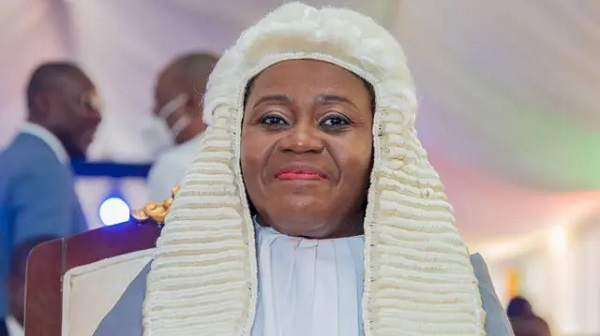
According to a Joy News publication dated Tuesday, August 19, 2025, renowned legal expert and Newsfile host Samson Lardy Anyenini has disclosed the actual motive behind the dismissal of former Auditor-General Daniel Yaw Domelevo in 2024.
Delivering a speech at the 2025 Communication and Media Studies Festival held at the University of Education, Winneba, Anyenini rejected claims that Domelevo was compelled to leave office due to retirement concerns. He clarified that Domelevo’s removal stemmed from his uncompromising stance against corruption and his determination to expose high-profile figures involved in embezzling state funds.
“Domelevo was targeted because he was fearlessly chasing those who looted public money. That was why he was pushed out,” Anyenini stated.
He pointed out that Domelevo’s recovery of millions of cedis stolen from the national coffers unsettled influential persons, resulting in his forced exit.
Anyenini also drew attention to the alarming extent of corruption in Ghana, revealing that the country had lost about GH₵18.41 billion over five years. He argued that labeling such losses as “financial irregularities” was misleading, emphasizing instead that they amount to outright theft.
The outspoken lawyer expressed disappointment that no one had been held accountable for these huge losses, cautioning that corruption would persist as long as citizens remained passive.
He appealed to Ghanaians to demand transparency and responsible management of national resources, warning that continued silence would only encourage leaders to disregard the constitution and misuse public funds.
Dressing for church is all about embracing elegance, modesty, and class while still showcasing your personal sense of style. Whether you’re attending a Sunday service, mid-week program, or special church event, choosing the right outfit can help you feel confident and appropriately dressed for worship.
1. Ankara Dresses: Ankara fabrics are vibrant, cultural, and perfect for church. Opt for a midi or long gown with structured sleeves or a peplum waist for a polished look. High necklines, flared skirts, and modest slits add style while keeping things respectful.
2. Lace and Brocade Gowns: Lace and brocade are great for women who love elegance with a touch of tradition. These fabrics work well for fitted or A-line gowns. Go for soft tones like lilac, white, peach, or navy for a clean, church-appropriate aesthetic.
3. Skirt and Blouse Combos: A high-waisted skirt paired with a puff-sleeved blouse or a neatly tailored top is a classic church outfit. Pencil skirts, pleated midis, or flared skirts in cotton, crepe, or Ankara give you multiple styling options.
4. Maxi Dresses and Bubu Gowns: For a flowy and modest look, maxi dresses or bubu gowns are ideal. These styles are not only comfortable but also perfect for women of all ages. Look for subtle embellishments or prints for a refined finish.
5. Suits and Two-Piece Sets: For a more corporate church vibe, especially for leaders or elders, suits and tailored two-piece outfits offer a smart, dignified look. Style with kitten heels or loafers for added grace.
Add minimal accessories, a structured bag, and clean makeup to complete your look. Church fashion can be modest and stylish—let your outfit reflect both your faith and fashion sense.
Veteran Nollywood actor, Dele Odule, has stated that the viral story about suffering heartbreak over his relationship with a young female student was completely misinterpreted.
Naija News reports that the movie star, in a recent interview with Punch, said people took his motivational post out of context, turning it into gossip.
Leading member of the ruling National Democratic Congress (NDC), Prof Kwamena Ahwoi, has responded to claims that he questioned the integrity of President John Dramani Mahama over the withdrawal of the Ambulance Case appeal involving Finance Minister Dr Cassiel Ato Forson.
A former Central Regional Minister under the erstwhile New Patriotic Party (NPP) administration, Kwamena Duncan, reportedly said on Peace FM that Prof Ahwoi had expressed displeasure with President Mahama regarding the government’s decision to drop the appeal in the case.
Alan Kyerematen’s newly launched United Party has articulated a centrist political philosophy that seeks to transcend Ghana’s traditional ideological divisions, positioning itself as an alternative to what party leaders characterise as the rigid left-right alignment of the National Democratic Congress and the New Patriotic Party. The framing represents an attempt to appeal to voters frustrated with decades of two-party dominance and seeking pragmatic governance focused on results rather than ideology.
Alhaji Abubakar Saddique Boniface, a former NPP legislator and interim chairman of the United Party, described the movement as a “broad-based centrist” formation that draws inspiration from both socialist and capitalist principles without committing exclusively to either extreme. In articulating the party’s approach, Boniface explained the philosophy underlying the United Party’s positioning in Ghana’s political landscape.
According to Boniface, the United Party represents a fundamental departure from how the NDC and NPP have historically governed. He characterised the NDC as “center-left” and the NPP as “center-right,” while positioning the UP as occupying genuinely neutral ground that remains “open to every good policy, no matter its origin.” This framing suggests a pragmatic rather than ideological approach to governance.
The United Party received its provisional certification from the Electoral Commission on October 3, 2025, and was officially unveiled on October 16 at the Coconut Groove Hotel in Accra. Kyerematen declared that the party emerged from a national desire to end winner-takes-all politics and replace it with inclusive, transparent, and accountable governance, adopting the slogan “a new dawn that will end the duopoly, eliminate rancour and acrimony, and create prosperity for all.”
The centrist positioning carries strategic significance. Kyerematen has argued that Ghanaians naturally gravitate toward consensus and balance rather than political extremes, characteristics he claims his party embodies. This framing suggests the party believes an untapped constituency exists among voters fatigued by partisan conflict and seeking middle-ground governance.
The party’s broader vision, called Vision 2040 or the Paradise Project, seeks to make Ghana the economic powerhouse of Africa within fifteen years through transformation focused on job creation and business development. This economic focus represents a deliberate pivot away from traditional ideological positioning toward measurable outcomes and competence-based governance.
The launch strategy appears designed to appeal to multiple constituencies simultaneously. The Interim General Secretary, Yaw Buaben Asamoa, described the United Party as offering a home for Ghana’s silent majority, particularly the millions who abstained from voting in the 2024 elections out of frustration with the traditional parties. This framing suggests the party views disaffected voters as a primary growth opportunity.
The party maintains the monarch butterfly logo of the Movement for Change, said to symbolise transformation, resilience and endurance, whilst the party colours of yellow, black, and white signify Ghana’s natural wealth, the Black Star of Africa, and purity of purpose.
The naming strategy has drawn scrutiny. Kyerematen described the United Party as a rebirth of the original United Party founded in November 1957, when seven political groups merged to avoid being dissolved under the Avoidance of Discrimination Act introduced by President Kwame Nkrumah. He explained that the contemporary UP draws inspiration from the same political heritage, claiming that the original party stood for “unity, freedom, and fighting dictatorship.”
Some observers have questioned whether this centrist positioning will translate into electoral success. Franklin Cudjoe, President of IMANI Africa, urged Kyerematen to anchor his political message around enterprise development and private sector advocacy, arguing that this approach could uniquely appeal to ordinary Ghanaians seeking opportunity and skills development rather than traditional political messaging.
The United Party’s emergence represents the most significant challenge to Ghana’s two-party system in recent years. Kyerematen has emphasised the urgent need for a third party that would bridge political divides, stating that the UP seeks to unite the nation and mobilise the collective strengths of all Ghanaians irrespective of age, religion, or ethnic affiliation.
Whether the party’s centrist philosophy can overcome structural barriers to third-party success in Ghana’s electoral system remains uncertain. The strategy depends on maintaining coherence around pragmatism and results-oriented governance whilst appealing across traditional party lines.
A billion-barrel glut floating on tankers worldwide is creating the conditions for fuel prices to fall further at Ghana’s pumps, provided the cedi remains stable and the nation’s pricing mechanisms function efficiently. The global oil surplus marks a significant shift that should benefit Ghana, a net fuel importer, but whether that benefit reaches consumers depends on multiple factors beyond international market movements alone.
More than 1 billion barrels have been amassed on the world’s tanker fleet, the largest flotilla of oil on the water since 2020 when a price war between Saudi Arabia and Russia flooded the market during the Covid-19 pandemic. This surplus reflects a straightforward market dynamic: when supply outpaces demand significantly, prices decline. Global oil balances have seen a 1.9 million barrel-per-day surplus since the start of 2025, with crude prices fluctuating around $70 per barrel.
For Ghana, the timing appears favourable. The Chamber of Oil Marketing Companies has already projected price reductions beginning October 16, 2025. COMAC projected petrol prices would fall by as much as 4.15 percent, reducing the average pump price to about GHS 13.93 per litre from the previous GHS 14.52, while diesel was expected to record a reduction of between 2.08 and 4.10 percent, selling at approximately GHS 14.56 instead of GHS 15.17, and LPG may drop by up to 4.46 percent.
Two factors drive these projections. First, international crude has come under pressure. The US Energy Information Administration forecasts that Brent crude oil prices will fall to an average of $62 per barrel in the fourth quarter of 2025 and $52 per barrel in the first half of 2026. Second, the cedi strengthened to 12.25 per US dollar from 12.40, marking a 1.21 percent gain, with experts attributing the rebound to improved foreign exchange inflows from commodity exports and renewed investor confidence following Ghana’s fifth International Monetary Fund review and enhanced market interventions by the central bank.
This combination matters because fuel prices in Ghana depend on three key elements: international crude oil prices, the cedi-to-dollar exchange rate, and domestic taxes and levies. When crude falls and the cedi strengthens, import costs decline. The question becomes whether oil marketing companies pass those savings to consumers promptly.
The broader international picture adds context to local developments. Global oil supply in September was up by a massive 5.6 million barrels per day compared with a year ago, with OPEC+ accounting for 3.1 million barrels per day of the increase as the Group of 8 unwound 2 million barrels per day of production cuts, and as Libya, Venezuela and Nigeria all posted strong gains. This production expansion, combined with softer global demand, creates structural downward pressure on prices.
However, consumers shouldn’t expect automatic relief at every fuel station. COMAC cautioned that not all oil marketing companies may reflect the changes immediately, with some companies reportedly having absorbed earlier price increases at the beginning of October and therefore maintaining current rates during this pricing window instead of lowering them further. This mixed response reflects divergent company strategies for managing margins and market share.
The structural components of Ghana’s fuel price formula also merit attention. Taxes and levies include the Energy Sector Shortfall and Debt Repayment Levy implemented on July 16, 2025, under Act 1141 to address sector shortfalls and debts. These tax components account for a significant portion of the final pump price, and changes to tax policy can limit consumer benefits from falling crude prices.
Currency stability remains critical. While the cedi has shown resilience over longer timeframes with a 20.99 percent gain over 12 months, quarterly fluctuations continue creating unpredictability for businesses dependent on imported petroleum. Any depreciation would offset gains from falling crude prices, making exchange rate management by the Bank of Ghana essential to sustaining price relief.
Global demand patterns also matter. Global oil demand rose by 750,000 barrels per day year-on-year in the third quarter of 2025, but oil use is forecast to remain subdued over the remainder of 2025 and 2026, resulting in annual gains forecast at around 700,000 barrels per day in both years, well below historical trend due to a harsher macroeconomic climate and transport electrification. This subdued demand outlook reinforces downward pressure on prices.
For Ghanaian households and transport operators already contending with high living costs, the convergence of global oversupply and local currency strength presents a genuine window of opportunity. Fuel costs feed through to transportation, electricity, and goods prices, making pump prices significant for inflation management and household budgets.
The National Petroleum Authority’s biweekly review mechanism will determine how quickly global benefits translate into local relief. The challenge for Ghana’s policymakers is maintaining currency stability whilst allowing the pricing mechanism to function transparently so that global market improvements reach consumers fairly and promptly.
William Kusi, legal counsel for Akosua Serwaa, the estranged wife of the late highlife legend Daddy Lumba, has cautioned that recognising Odo Broni as a widow of the musician would have serious legal implications for his client.
In an interview with Top Radio on October 9, 2025, Lawyer Kusi explained that such a move would affect Akosua Serwaa’s inheritance rights and diminish her lawful entitlement to her late husband’s estate.
Leaked communications between Ghana’s Office of the Special Prosecutor and the Attorney-General’s Department over the Ken Ofori-Atta extradition case have raised questions about institutional coordination at a critical moment in the former Finance Minister’s prosecution.
The leaked documents, which allegedly revealed internal exchanges between the two agencies, have fueled public speculation about whether Ghana’s anti-corruption efforts are proceeding smoothly or are hampered by bureaucratic friction.
Contrary to popular narrative, there appears to be a fundamental misunderstanding about the extradition process, with the issue being not friction between institutions but rather the provision of detailed information required to complete Ghana’s extradition paperwork. The leaked materials have suggested confusion over case file transfers between the two bodies, though sources familiar with the process indicate the matter may centre on timing and procedure rather than institutional rivalry.
The timing of the leaks comes as Ghana pursues one of its most high-profile corruption investigations. Ofori-Atta, whose location remains unclear as he reportedly seeks medical treatment, is being investigated over a string of high-profile contracts relating to petroleum revenues, electricity supply and ambulance procurement, and over a controversial national cathedral project that swallowed tens of millions of dollars in public money.
The reality is that the OSP remains the only institution that has formally placed Ofori-Atta on a Red Notice and is cooperating with international partners to secure his return, and extraditing someone from the United States requires demonstrating that the process is free from political interference and that the accused will receive a fair trial. This international dimension makes internal coherence particularly significant.
The US Department of Justice and the Federal Bureau of Investigation have indicated that ongoing processes against the former minister are legitimate, with sources at the US Embassy suggesting the FBI and State Department concluded that the extradition request does not amount to witch-hunting. Such diplomatic validation underscores the importance of maintaining procedural integrity.
The OSP has indicated that it has completed all its legal obligations, with the official extradition request submitted through Ghana’s Attorney-General, who has since initiated the appropriate procedures, and that delays should not automatically be seen as obstruction or refusal, as extradition is governed by law.
Public concerns have emerged about the case’s progression. The Secretary General of the Ghana Federation of Labour has questioned the Office of the Special Prosecutor over its failure to arrest Ofori-Atta despite declaring him wanted earlier this year, noting that the former Finance Minister was recently spotted in the United States without any visible effort by Ghanaian authorities to bring him to justice.
The leaked documents have created an unfavourable backdrop at a sensitive juncture. In any extradition case, credibility matters significantly. Foreign courts scrutinise whether Ghana’s process remains free from political manipulation or procedural confusion. Even perceptions of internal disunity can complicate the legal pathway to extradition that already demands meticulous documentation and international coordination.
The leaks raise broader governance questions about how Ghana handles sensitive institutional communications. Both the OSP and the Attorney-General’s office face significant demands in building watertight cases and navigating international legal processes. The challenge lies in maintaining confidentiality about ongoing investigations whilst preserving public confidence in Ghana’s anti-corruption machinery.
Ofori-Atta served as former President Nana Akufo-Addo’s finance minister for seven years. His case represents a flagship anti-corruption effort under President John Mahama’s administration. Success requires not only building solid legal cases but ensuring that internal processes appear seamless to both local and international observers.
The coming weeks will test whether Ghana’s institutions can demonstrate the coordination and confidentiality necessary to move the extradition process forward without further damaging publicity.
Azumah Resources Ghana Ltd has officially become a wholly Ghanaian-owned mining company following a landmark US$100 million acquisition by Engineers & Planners Company Limited (E&P). The historic deal cements Ghanaian ownership and control over the Black Volta and Sankofa Gold Projects, marking a significant milestone in the nation’s mining sector.
In a statement issued by the Board of Directors in Accra, the company confirmed that E&P had successfully completed negotiations and full payment for all rights and interests in the two gold projects.
The transaction, totaling US$100,000,000, represents the final phase of the equity transfer process, completing the shift of Azumah Resources Ghana Ltd into local hands. The deal underscores Ghana’s ongoing efforts to promote indigenous participation in the extractive industry.
Following the acquisition, Azumah Resources Ghana Ltd has undergone a full board reconstitution. All former foreign directors have formally resigned, paving the way for a new Ghanaian management team to assume full responsibility for the company’s operations and strategic direction.
The new management team is expected to immediately begin engagements with statutory regulators, government agencies, and stakeholders to ensure a smooth transition in line with Ghana’s mining regulations and corporate governance standards.
Chief Executive Officer Noel Nii Addo described the change in ownership and leadership as “a defining moment” in the company’s growth trajectory.
> “The conclusion of this transaction and the restructuring of the board mark a defining moment for Azumah Resources Ghana Ltd. We are confident that the new management and shareholders have the capacity, integrity, and commitment to advance the Black Volta and Sankofa projects in line with Ghana’s highest standards of governance and sustainability,” he said.
The company reaffirmed its pledge to develop the Black Volta and Sankofa Gold Projects responsibly and sustainably, emphasizing local employment creation, community infrastructure development, and environmental stewardship as the cornerstones of its strategy.
According to the statement, the new Ghanaian management aims to ensure that the projects deliver measurable value to the people of the Upper West Region, the Government and people of Ghana, and its shareholder, Engineers & Planners Company Limited.
The acquisition of Azumah Resources by Engineers & Planners is being hailed as a boost for local content participation and resource nationalism in Ghana’s mining sector. Analysts say the move strengthens national control over strategic mineral resources while creating broader socio-economic benefits.
Azumah Resources Ghana Ltd is a Ghanaian-incorporated mining company that holds the Black Volta and Sankofa Gold Projects in the Upper West Region. The company’s mission is to responsibly explore, develop, and operate these assets to generate long-term economic and social value for Ghana.
Asante Kotoko head coach Karim Zito remains confident of his team’s chances in the CAF Confederation Cup despite a home defeat to Wydad Athletic Club (WAC) in the first leg of their playoff tie at the Accra Sports Stadium.
Kotoko, who ended the game with 10-men, lost 0-1 to the North African side as their chances of progressing looks very minimal.
Speaking after the match, the experienced tactician admitted that his side made errors but insisted that the battle is far from over.
“Anything can happen in football. There were mistakes, but we are not going there as losers. We are going there to play better than we did here,” Zito said.
Kotoko will now travel to Casablanca for the decisive second leg on Saturday, October 25, 2025, where they must overturn the deficit to secure qualification to the group stage.
Despite the setback, Zito expressed belief in his players’ resilience and determination, stressing that the team has learned valuable lessons from the first encounter.
Elikem Kotoko (L) claims Wontumi (R) called and offered to meet in Kumasi after anti-galamsey raid
The Deputy Chief Executive Officer of the Forestry Commission, Elikem Kotoko, has opened up on a phone call he got from the Ashanti Regional Chairman of the New Patriotic Party (NPP), Bernard Antwi Boasiako, also known as Chairman Wontumi, who has been slapped with six criminal charges over the illegal mining allegations against him and his company, Akonta Mining Limited.
Speaking in a recent interview on Joy Prime, Elikem Kotoko indicated that the phone call came after security officials busted people engaging in illegal mining at a site that belonged to Akonta Mining Limited at Samreboi in the Western Region.
He said that to date, he is still trying to understand why Wontumi called him after the incident in Samreboi, which is in the Tano Nimri Forest Reserve.
“I’m still wondering why Chairman Wontumi called me one day after the Samreboi incident, something I never spoke about. (Wontumi said) ‘Hello, Elikem, this is Chairman Wontumi.’ I said, ‘Aha’,” he narrated.
The Deputy CEO claimed that the NPP regional chairman thought it was going to be a ‘friendly’ conversation, but after realising he (Elikem) was in no mood to entertain him, he (Wontumi) became frustrated.
Chairman Wontumi rearrested
He added that Wontumi then offered to meet him in Kumasi.
He quoted Wontumi as having said the following words: “Oo, Elikem, why are you doing this to me? Your boss is my friend. When are you going to come to Kumasi so we sit and talk?”
Elikem Kotoko suggested that Wontumi had a sinister motive, saying, “What was he calling me for? I never said this anywhere, but I’ve decided… He has never called me, not even when I won my elections.”
The Deputy CEO went on to say that he is not surprised by the legal challenges the NPP regional chairman is facing because he was alleged to be a kingpin in the galamsey menace.
“Who didn’t know that if you want to mention names, he was one of the number one people who probably was perceived to be leading people into the forest, into the places, because he saw himself as the greatest kingpin and all — nobody comes through the mine except through me, Wontumi,” he said.
Watch video of his remarks below:
BAI
Watch the latest episode of Health Focus below
Watch as Ghanaians share bold ideas to end galamsey
Kwame Djokoto, a well-known Ghanaian media figure, has openly condemned fellow broadcaster Captain Smart, accusing him of personal attacks and past criminal conduct. In an interview, Djokoto, a declared supporter of the National Democratic Congress (NDC), expressed outrage after learning that Captain Smart had allegedly insulted him during a television broadcast.
According to Djokoto, friends and family informed him that Captain Smart had mocked his career, calling it “dead.” Responding to the insult, Djokoto warned the outspoken journalist to desist from such behavior, emphasizing that he values mutual respect. “They told me Captain Smart said my career is finished. He should be warned I don’t trade insults, but I work with respect,” he asserted.
Djokoto then leveled serious allegations against Captain Smart, claiming that during his tenure at Fox FM in Kumasi, he was involved in several criminal incidents documented in police reports. “Captain, when you were at Fox FM, go check the police files there were cases against you. Have you ever heard of one against me?” Djokoto challenged.
He further voiced strong confidence in the NDC, arguing that the party has proven more capable than the ruling New Patriotic Party (NPP) in driving national progress. Expressing surprise, Djokoto criticized Media General for hiring Captain Smart despite his alleged history. “I can’t believe Media General employed someone with such a background. Don’t they verify people before hiring them?” he questioned.
The heated exchange has sparked public debate about professionalism and ethics within Ghana’s media community. As tensions rise, both journalists are now under scrutiny from viewers and political observers eager to see whether the accusations will escalate or be resolved.
You can also watch the video through the link below:
Actress Yvonne Jegede Sends Strong Message to Regina Daniels Amid Marital Crisis
News Hub Creator7min
Nollywood actress Yvonne Jegede has spoken out in defense of her colleague Regina Daniels, following the ongoing drama surrounding her marriage to billionaire husband, Senator Ned Nwoko.
Yvonne, who appeared displeased by the manner some netizens and Nollywood stars were mocking the young actress, cautioned against making light of domestic violence allegations. She emphasized that once violence becomes part of a marriage, it’s best to walk away rather than endure it.
In her post, she advised Regina Daniels to prioritize her peace of mind and safety, writing: “Regina, you are still very young. If there’s violence in your marriage, please carry your bag. There is never sugarcoating for me when violence is involved — whether man or woman. Carry your bag, young girl, and continue to cry in your Bentley. Na marriage no work, no be person you kill.”
She further urged Regina not to allow online trolls dictate her decisions, reminding her that her mental health and her children’s well-being should come first.
Pius Enam Hadzide, the Campaign Spokesperson of NPP Flagbearer hopeful Bryan Acheampong, has revealed how Dr Bryan Acheampong gave Kennedy Agyapong GH¢5 million after persuading him to step out and campaign for the NPP in the 2024 Election following the last NPP primaries.
In an interview on Asempa FM, Pius Hadzide, who was praising his boss’ unifying ability, said that after the last NPP presidential defeat, Kennedy Agyapong appeared reluctant to campaign for the NPP.
This year’s World Food Day marks 80 years since the founding of the Food and Agriculture Organisation of the United Nations (FAO), whose mandate from the outset has been to ensure humanity’s freedom from want.
Today, around 8.2 per cent of people face chronic undernourishment. That compares to roughly two-thirds of the global population living in areas with inadequate food supply in 1946, as revealed by the first World Food Survey conducted by FAO in its first months of existence. Moreover, in 2025, even with a population more than three times as large, the world produces more than enough calories to feed everyone.
As we mark this day and reflect on challenges past, present and future, I am reminded of one conclusion from that long-ago survey: “The choice is between going forward and going backward.”
FAO and its member countries have achieved a lot: eliminating the rinderpest virus, establishing the Codex Aliment Arius food safety standards, nearly tripling global rice yields since setting up the International Rice Commission in the late 1940s, negotiating international treaties on fisheries practices and genetic resources, setting up early-warning monitoring schemes to mitigate the risk of pests and plant and animal diseases, establishing and hosting the Agricultural Market Information System to support trade, and the development of dietary guidelines to tackle not just stunting but also the world’s growing overweight trend.
When desert locust outbreaks started in 2019 – coinciding with the hardest times of COVID-19 – $231 million was mobilised to mitigate a crisis that ultimately saved $1.77 billion in losses and secured food for more than 40 million people across 10 countries.
Credit for such achievements goes rightly to our Members who have been steadfast in their support of the idea that a world without hunger is a better one for everyone, rich or poor, North or South. These and other successes show what is possible when nations pool knowledge and resources, when there is political will, and when effective partnerships are forged.
Sustaining the spirit of cooperation that has existed for the past 80 years is increasingly urgent; the global agrifood system is more interconnected than ever with more than a fifth of all calories crossing international borders before being consumed.
At the same time, threats to those agrifood systems from climate shocks, pests and diseases, economic downturns, or the fallout from conflict, respect no borders and can unwind years of progress against hunger and malnutrition. As we see today with the spread of highly pathogenic avian influenza, more commonly known as bird flu, fall armyworm and locust, no single country can combat such transboundary threats by working alone.
We must ensure that the more than one billion people working in the agrifood systems that feed us all have the resilience to withstand and overcome the risks they constantly face.
We have the technologies, proven financial mechanisms, along with enabling policies, know-how and the capacity to rapidly achieve the goal of ending hunger.
Enabling access to markets is key both to mitigating inequalities that erode resilience and to getting food to where it is needed. Full market participation means access to drought-resistant seeds, sustainable fishery and forestry norms, agreed phytosanitary standards, digital technologies, innovative resource-management tools and early-warning systems.
We have a framework in place to scale up and accelerate our task. The FAO Hand-in-Hand Initiative identifies and prioritises investment opportunities in places where poverty and hunger are highest and agricultural potential is the greatest. The FAO One Country One Priority Product initiative promotes unique national agricultural products to drive sustainable agrifood systems and rural prosperity.
The South-South and Triangular Cooperation programme recognizes that many developing countries have become major players in global development and economic governance and supports investment and partnership. The Digital Villages initiative aims at enabling farmers around the world to use digital technologies, expanding access to e-commerce opportunities and reducing the digital gap. And the G20 Global Alliance Against Hunger and Poverty unites countries and partners to mobilise action and investments for ending hunger and reducing poverty worldwide.
These and many other tools work when they are deployed efficiently and effectively, and they work even better when consistently and coherently applied.
At FAO, we channel this vision through the Four Betters: Better Production, so farmers can produce more with fewer resources; Better Nutrition, because quality matters as much as quantity; a Better Environment, to sustain healthy ecosystems and their multiple benefits; and a Better Life for all, so rural communities can build dignity and opportunity. Together, the Four Betters ensure that no one is left behind.
If we choose not to pursue these goals, we will go backwards. Eighty years on, hunger is still with us, but it is not inevitable. With shared purpose, we can – we must – move forward. With continued collaboration, we can finish the job of ending hunger. For a better food-secure future for all.
The writer is the Director-General of the Food and Agriculture Organisation of the United Nations
07 MONDAY, OCTOBER 20, 2025 GHANAIAN Times Features www.ghanaiantimes.com.gh
“We must ensure that the more than one billion people working in the agrifood systems that feed us all have the resilience to withstand and overcome the risks they constantly face.”
Afenyo-Markin rallies MPs ahead of heated parliamentary session
The Minority Leader in Parliament, Osahen Alexander Kwamena Afenyo-Markin has entreated members of the New Patriotic Party (NPP) in the legislature to diligently carry the aspirations of Ghanaians and be the voice of the people.
Speaking at a strategic workshop for the Minority Caucus ahead of the opening of the Third Meeting of the First Session of the Ninth Parliament tomorrow, 21st October, 2025, Osahen Afenyo-Markin said the NPP lawmakers are in a privileged position to protect and defend Ghana’s democracy.
The University of Ghana Medical Centre (UGMC) has been named the Best Human Resource Management Organisation in Healthcare at the 2025 Human Resource (HR) Focus Africa Awards, reaffirming its leadership in strategic work culture practices in the healthcare space.
In a double honour, UGMC’s Director of Human Resources, Mr. Francis Kyereboah, was also recognised as First Finalist for HR Practitioner of the Year, highlighting his pivotal role in transforming the centre’s workforce and HR systems.
Since its inception in 2018, UGMC has grown into a world-class academic medical facility by recruiting smart and diligent professionals who have set new records and standards in the healthcare landscape in Ghana and Africa.
Mr. Kyereboah said the awards were humbling and inspiring.
“These honours affirm the transformative journey we’ve embarked on at UGMC to place people at the heart of healthcare delivery,” he said, dedicating the honours to the staff and clients of the Medical Centre. Under Mr. Kyereboah’s leadership, the Centre has expanded staff strength from 120 (in 2018) to over 1,900, introduced a comprehensive Conditions of Service Manual, and championed initiatives such as wellness programs, staff development schemes, and mental health support.
The Centre has also sponsored about 332 employees for specialist training and doubled up the number of specialist doctors from 46 in 2021 to 88 by mid-2025, part of grand efforts to upgrade skills to meet the changing needs of healthcare delivery.
It has also hosted more than 2,300 student interns and 800 National Service personnel, creating an avenue for learning and a pipeline of professionals for other healthcare institutions nationwide.
Mr. Kyereboah said these successes, which are a few of the basis of the award were made possible by the incredible hard work and resilience of the UGMC Staff and Management.
He noted that their dedication and pursuit of excellence made the HR vision a reality every single day, resulting in the recognitions received over the years.
Going forward, the UGMC HR Director said the double honours will motivate his directorate and the entire staff to deepen their commitment to strategic human resource development by continuously raising the bar in delivering world-class patient care, training and research.
“On behalf of UGMC, we pledge to continue building a healthcare workforce that delivers compassionate, innovative, and world-class care, training and research,” he said.
Beyond UGMC, Mr. Kyereboah has contributed to national HR policy development.
Among others, he served as a World Health Organisation (WHO) Advisor and led major consultancy projects across Ghana’s health sector.
Earlier in his career, he also played a key role in deploying the iHRIS system across health 306 facilities and expanding Christian Health Association of Ghana (CHAG’s) workforce from 8,000 to nearly 22,000 in five years.
The Executive Board of the International Monetary Fund (IMF) is expected to meet in the first week of December to consider Ghana’s Fifth Programme Review.
Sources with knowledge of Ghana’s IMF programme in Washington, D.C., told Joy Business that this date follows a staff-level agreement reached with Ghana in October 2025.
According to insiders, the board meeting is scheduled for December to allow sufficient time for the final staff report on Ghana to be prepared for the Executive Board’s consideration.
A key document currently awaited is the Audit Report on Arrears, which is expected to be released by the government later this week.
The report will undergo scrutiny across several IMF departments before submission to IMF Management for review.
Following this process, a slot will be secured for the Executive Board to assess the report. If Ghana passes the assessment, the board is expected to approve a disbursement of approximately $380 million to the Bank of Ghana, likely before mid-December 2025.
Sources indicate that, given Ghana’s current performance, it is highly likely the Executive Board will approve the Fifth Programme Review.
Impact on Markets and Investors
Market analysts note that the significance of the board approval goes beyond the US$380 million disbursement.
The decision will send a strong signal to donors and investors about Ghana’s commitment to fiscal discipline and adherence to IMF programme conditions.
Government officials have also assured markets that fiscal discipline will continue after Ghana exits the IMF programme in May 2026.
While concerns have been raised about the risk of unsustainable spending post-programme, sources insist that Ghana’s current performance under the IMF demonstrates a strong commitment to prudent economic management.
To further bolster investor confidence, the government is reportedly considering subscribing to one of the IMF’s policy instruments, though not a full programme.
Officials argue this would provide an additional signal of stability and assure markets that fiscal discipline will be maintained.
IMF Highlights Ghana’s Progress
The IMF has acknowledged Ghana’s meaningful progress in establishing a foundation for fiscal discipline post-programme.
During a press conference in Washington, D.C., IMF Director of Communications Julie Kozack highlighted key initiatives, including a revamped fiscal responsibility framework, the establishment of an independent fiscal council, and improvements in public financial management aimed at enhancing the efficiency of public spending.
Fifth Programme Review Details
On October 10, 2025, the IMF announced it had reached a staff-level agreement with Ghana following a two-week mission to assess developments on the ground.
The agreement is subject to IMF Management approval and Executive Board consideration.
Once the Executive Board review is complete, Ghana will have access to SDR 267.5 million (approximately $385 million), bringing total IMF financial support under the arrangement since May 2023 to SDR 1,975.5 million (about $2,825 million).
The IMF staff report also commended Ghana’s progress in key areas, including debt restructuring, fiscal consolidation, energy sector reforms, foreign exchange operations, and financial sector resilience.
“The authorities are making progress on debt restructuring, fiscal consolidation, energy sector reforms, foreign exchange operations, and financial sector resilience,” the report noted.
DISCLAIMER: The Views, Comments, Opinions, Contributions and Statements made by Readers and Contributors on this platform do not necessarily represent the views or policy of Multimedia Group Limited.
DISCLAIMER: The Views, Comments, Opinions, Contributions and Statements made by Readers and Contributors on this platform do not necessarily represent the views or policy of Multimedia Group Limited.
Vice President Prof Naana Jane Opoku-Agyemang (3rd from left) with the Archbishop and other priests
Vice President Professor Naana Jane Opoku-Agyemang has announced the government’s commitment to partner with the Catholic Church to complete the ‘Legacy of Hope Paediatric and Childhood Cancer Hospital’ at Adjen Kotoku in the Ga West District of the Greater Accra Region.
Speaking at the Closing Mass of the 2025 Rosary Congress, the Vice President said the initiative aligns with the government’s vision to strengthen healthcare delivery across the country.
“Government will work with the Church because this request is not for personal gain, but for the national interest,” she affirmed, assuring the congregation of continued collaboration in the health sector.
Prof Opoku-Agyemang further encouraged the faithful to place the collective good above individual interests, stressing that national unity and shared purpose are essential to sustainable development.
Her remarks followed an appeal by the Metropolitan Archbishop of the Roman Catholic Archdiocese of Accra, Most Rev John Bonaventure Kwofie, C.S.Sp, who called for government and public support to complete the hospital project.
The Archbishop explained that the ‘Legacy of Hope Paediatric and Childhood Cancer Hospital’ will serve children from all parts of Ghana and beyond, providing critical healthcare irrespective of religion or cultural background.
Most Rev Kwofie described the project as “a beacon of hope and compassion for children battling cancer and other complex medical conditions,” adding that it reflects the Church’s enduring commitment to human dignity and public welfare.
Once completed, the facility will feature an Outpatient Department (OPD), theatre, radiology unit, Intensive Care Unit (ICU), pharmacy, medical block, maternity ward, and special accommodation unit to support patients and families.
Ghana Women’s Premier League champions, Police Ladies, secured the 2025 Champion of Champions trophy after defeating Faith Ladies 2-0 on Saturday, October 18.
The thrilling encounter was hosted at the Ghanaman Soccer Centre of Excellence and marked the official curtain-raiser for the upcoming 2025/26 women’s football season.
Philicity Asuako broke the deadlock for Police Ladies in the 33rd minute, giving her team the lead before half-time. After the break, Deborah Afriyie doubled the advantage, sealing a comfortable victory for the Premier League winners over the FA Cup holders, Faith Ladies.
Police Ladies clinched the Premier League title for the first time in their history by overcoming Ampem Darkoa Ladies in the final. Faith Ladies earned the FA Cup crown by defeating Jonina Ladies but faced relegation from the Premier League, making their Champion of Champions appearance bittersweet.
This victory stands as a major boost for Police Ladies’ head coach, Abu Kassim Tabasu, who now prepares his side to defend their league title with confidence. The team’s strong start in this prestigious tournament sets a positive tone for the challenges ahead in the new season.
The 2025/26 Women’s Premier League season is scheduled to kick off on October 31, with Police Ladies eager to build on their recent success and continue their rise in Ghanaian women’s football.
Faith Ladies, despite relegation, will also be looking to regroup and make a strong impact in the coming season.
In a Facebook post on the night of 19th October, 2025, Ghanaian social commentator Albert Nat Hyde, popularly known as Bongo Ideas, has lashed out at Nigerian music influencer Big Jiggy for what he described as “ungrateful and disrespectful” behaviour toward Ghanaian dancehall artiste Shatta Wale.
The outburst comes after Big Jiggy went on social media to vent his frustration about how he was treated by Shatta Wale’s team during his visit to Ghana for the artiste’s ‘Shatta Fest’ birthday concert, held on October 18, 2025, at the Independence Square in Accra.
Following his rant, Big Jiggy unfollowed Shatta Wale across multiple social media platforms, including Instagram, and deleted all videos he had previously shared promoting the musician’s songs.
In his fiery Facebook post, Bongo Ideas fired back at Big Jiggy, dismissing him as irrelevant and accusing him of biting the hand that fed him.
“I’ve seen videos of one unknown guy ranting on social media, saying Shatta Wale disappointed him and all that nonsense. My guy, relax. You’ve even deleted all your Ghana videos and unfollowed Shatta Wale, like who cares? Bro, you’re a nobody in Ghana. Go back to that your so-called apartment in the village and stop acting like you were booked for Coachella. We’ve got people here who do exactly what you do, and even better,” Bongo wrote.
He continued his post with a sharp jab:
“Stop talking like a rejected Nigerian pastor from Soccer Bet and just shut up. Even Ay Poyoo and his goat get more fame than you. You got the chance to perform before 50,000 people in Ghana and still no gratitude. No wonder Nigerian celebs no dey help you.”
Bongo Ideas accused Big Jiggy of failing to appreciate the platform he was given at Shatta Fest, saying the influencer was barely recognized by the crowd despite being offered an opportunity to perform before tens of thousands of fans.
“You came to the show, and nobody even recognized you. We gave you a platform, yet you’re here talking trash. Ungrateful human being. I blame Shatta Wale for even giving you that spotlight. Did you see the love fans showed you at the airport, or is it because Pella has more fans than you? Be real bro, nobody knows you,” he wrote.
In his usual confrontational style, Bongo Ideas also mocked Big Jiggy’s communication skills, saying:
“And please, stop going live with that 2 by 3 English of yours, you sound like a drunk ECG accountant trying to balance light bills.”
He concluded by comparing Big Jiggy to another Nigerian content creator, stating:
“I’ll always rate Ananzo over Big Jiggy. Ananzo would never disrespect Davido.”
The post has since sparked heated debate online, with fans of both Shatta Wale and Big Jiggy trading jabs across platforms. While some supported Bongo Ideas for defending Shatta Wale, others accused him of being unnecessarily harsh and stoking controversy. Click here to watch Big Jiggy’s complain video.
The clash adds to the ongoing social media storm following Shatta Wale’s record-breaking Shatta Fest celebration, which drew what many have described as one of the largest crowds ever seen for a musical event in Ghana.
Prof. Kwamena Ahwoi Breaks Silence Over False Reports Linking Him to Mahama and AG Case
News Hub Creator18min
Former Local Government Minister, Professor Kwamena Ahwoi, has publicly denied reports circulating online that falsely attribute comments to him about former President John Dramani Mahama and a recent decision made by the Attorney-General. The reports have sparked widespread attention on social media, prompting Professor Ahwoi to address the issue directly.
According to a statement referenced by Citi Newsroom, Professor Ahwoi clarified that he has not made any public remarks or given interviews related to the Attorney-General’s move to drop an appeal in the widely discussed ambulance case. The inaccurate reports suggested that he supported statements allegedly made by Kwamena Duncan, a member of the New Patriotic Party, during a radio program on Peace FM. These statements were purportedly critical of former President Mahama’s integrity in connection with the legal proceedings surrounding the case.
Professor Ahwoi firmly refuted these claims, emphasizing that he has neither appeared on Peace FM nor commented on the ambulance case or on President Mahama. He described the stories as completely untrue and expressed concern over their intent, suggesting that those spreading the misinformation seek to create confusion and damage his reputation.
In response, he urged the public to exercise caution when consuming information from social media platforms. He highlighted the importance of verifying facts from credible sources before accepting or sharing such reports.
The former minister’s clarification aims to set the record straight amid the growing misinformation surrounding the incident. His statement serves as a reminder of the need for responsible sharing of information, especially on sensitive political matters.
Some business associations have launched a scathing attack on the country’s electricity pricing regime, describing it as “anti-business, anti-growth, and fundamentally flawed.”
In a joint statement, the Food and Beverages Association of Ghana (FABAG), the Ghana Union of Traders Association (GUTA), and the Ghana Plastic Manufacturers Association expressed outrage at the Public Utilities Regulatory Commission’s (PURC) plans to increase electricity tariffs next year.
The groups warned that persistent hikes in power tariffs are crippling local industries, discouraging investment, and forcing some businesses to downsize or shut down operations. “Ghanaian enterprises and citizens are being strangled by tariffs that defy economic logic, crush competitiveness, and create fertile ground for illegal connections and power theft,” the statement said.
FABAG argued that the current pricing system “punishes honest businesses and rewards inefficiency,” forcing many law-abiding consumers to subsidize losses caused by mismanagement and corruption within the power sector. The association cautioned that unaffordable power bills are driving some businesses to bypass official systems, worsening the menace of illegal electricity connections.
“When electricity becomes unaffordable, it becomes a target for illegal access,” FABAG warned. “We are fast creating a society where honest business owners are punished while defaulters thrive.”
The associations further criticized the tariff structure for disproportionately affecting energy-intensive sectors such as manufacturing, cold storage, and agribusiness. They argued that the system undermines the government’s vision of industrialization and makes imported goods more competitive than locally produced alternatives.
“The current pricing system is a clear betrayal of government’s own promise to make Ghana an industrial hub,” the statement said.
FABAG and its partners called for comprehensive reforms, including an independent audit of power generation and distribution costs, a transparent tariff structure that rewards efficiency, and urgent relief measures for businesses. They also demanded tougher action against internal waste and corruption in the utilities sector.
“No amount of higher tariffs can sustainably compensate for inefficiency, poor revenue collection, and corruption,” the groups asserted. “The government and PURC must face the truth — this is not a pricing system, it’s a trap that kills jobs, discourages investment, and fuels criminality.” The associations urged President Nana Akufo-Addo and the PURC to act decisively. “Electricity must empower, not impoverish. It’s time for policies that support honest businesses and Ghana’s economic future,” they declared.
Afrobeats star David Adeleke, popularly known as Davido, has honoured his late mother, Dr Veronica Adeleke, with the commissioning of a hostel named after her at Clifford University in Abia State.
The singer arrived in the state alongside members of his 30BG crew and nightlife entrepreneur Cubana Chief Priest to officially unveil the project, drawing excitement from students and fans present at the event.
After Shatta Wale’s highly anticipated Shatta Fest came to an end at Independence Square, the aftermath was not as glamorous as the concert itself. The entire area was covered with piles of plastic bottles, food packs, and general waste left behind by the thousands of fans who had attended the show. Videos shared online showed heaps of rubbish scattered across the venue, painting a disturbing picture of what was once a lively celebration of music and culture.
In the middle of the mess, a group known as the Buzstop Boys decided not to wait for anyone else. They came out early in the morning, armed with rakes, shovels, gloves, and waste bags to clean up the massive mess that had been left behind. These young volunteers, known for their dedication to keeping Ghana clean, moved from one end of the Square to the other, collecting trash and restoring the place to order.
Their act of service has drawn attention and praise across social media, especially after a video of them working tirelessly in the dirt began to circulate. In the clip, the Buzstop Boys can be seen loading huge piles of rubbish into waste bins and trucks, while some onlookers stopped to applaud their effort. One user who posted the video on X (formerly Twitter), wrote that the group deserved respect for their love for the environment. He said the Buzstop Boys “have proven again that they care more about the country than most people who only talk about change but never act.”
Many Ghanaians who commented on the video shared the same feeling. Some said that although the festival was a success, the sight of so much waste after the event was embarrassing. They praised the Buzstop Boys for always stepping up to clean areas after concerts, football matches, and other big gatherings, even when they receive little or no support.
One of the group’s members who spoke in a short clip said they didn’t come for fame or recognition. “We just want to see a cleaner Ghana. We can’t keep waiting for the government or anyone else to do what we can do ourselves,” he said while packing trash into a black waste bag. Another added, “We are used to this. Anytime there’s a big event, we already know we’ll have to come back here the next day. We just hope people learn to stop throwing rubbish around.”
The cleanup at Independence Square lasted for several hours, but by the end of the day, the venue looked completely different from the morning. What had looked like a dumpsite was now clean and calm again.
Communications specialist Kweku Obeng-Adjei has been appointed as the Head of Corporate Affairs at the Centre for Policy Scrutiny (CPS), a new-generation policy research and advocacy think tank based in Ghana.
Obeng-Adjei brings over 17 years of experience in communications and media practice, having worked with some of Ghana’s leading media brands since 2006.
His expertise spans media relations, communications strategy, events management, and building news organisations.
He holds a Bachelor’s Degree in Fine Arts (Radio and TV) and a Master’s Degree in Journalism.
He is currently pursuing a Bachelor of Laws at GIMPA Law School, as well as a Master’s Degree in Organisational Leadership and Governance at the University of Ghana Business School, Legon.
In October 2018, Obeng-Adjei was appointed Media Relations Manager at the Ministry of Information of the Republic of Ghana.
His role was later expanded in 2021 to include events management, where he played a key role in coordinating PR and media relations for major national and international engagements, including state visits by former U.S. Speaker Nancy Pelosi and Vice President Kamala Harris, Ghana’s COVID-19 mass media outreach program, and ECOWAS summits hosted in Accra under the chairmanship of President Nana Akufo-Addo.
An alumnus of Mfantsipim School, the University of Ghana, and the University of Media, Arts and Communication, Obeng-Adjei is also a fellow of the Bloomberg Media Initiative Africa. He is married to Anita Obeng-Adjei.
At CPS, he is expected to leverage his extensive communications experience to strengthen the think tank’s public engagement, policy advocacy, and institutional outreach, positioning it as a key player in Ghana’s policy research landscape.
DISCLAIMER: The Views, Comments, Opinions, Contributions and Statements made by Readers and Contributors on this platform do not necessarily represent the views or policy of Multimedia Group Limited.
DISCLAIMER: The Views, Comments, Opinions, Contributions and Statements made by Readers and Contributors on this platform do not necessarily represent the views or policy of Multimedia Group Limited.
Ghana’s Ambassador to China, Kojo Bonsu, has been widely praised for his exceptional organisational skills during President John Dramani Mahama’s state visit to China.
Barely three weeks into his tenure, Ambassador Bonsu, together with his embassy team and officials from the Ministry of Foreign Affairs and Regional Integration, led by Minister Samuel Okudzeto Ablakwa, successfully coordinated the high-profile visit.
The visit included a Global Leaders’ Meeting on Women’s Empowerment and Gender Equality, an official meeting with Chinese President Xi Jinping, and the Ghana Investment Forum, reflecting the strong bilateral relations between the two countries.
During the trip, President Mahama and First Lady Lordina Mahama were warmly received in Beijing, where they met embassy staff, Ghanaian students, and business leaders residing in China.
Ambassador Bonsu ensured smooth coordination throughout the various engagements.
President Mahama participated in the Global Leaders’ Summit and held business meetings with several Chinese investors, while the Ghana Investment Forum showcased the country’s investment potential.
The Chief Executive Officer of the Ghana Investment Promotion Council, Simon Majie, highlighted opportunities across various sectors, while ministers reiterated the government’s commitment to fostering a conducive business environment.
The final leg of the visit saw President Mahama travelling to Fujian Province to visit industries in Fuzhou and engage with potential investors interested in Ghana’s manufacturing sector.
Ambassador Bonsu expressed his commitment to deepening Ghana-China relations, particularly in areas of health, education, renewable energy, transportation, and agriculture.
“I am fully committed to strengthening business, trade, and investments between our countries,” he said.
The successful state visit has been hailed as a milestone in Ghana-China relations, with Ambassador Bonsu’s leadership and coordination earning widespread commendation.
DISCLAIMER: The Views, Comments, Opinions, Contributions and Statements made by Readers and Contributors on this platform do not necessarily represent the views or policy of Multimedia Group Limited.
DISCLAIMER: The Views, Comments, Opinions, Contributions and Statements made by Readers and Contributors on this platform do not necessarily represent the views or policy of Multimedia Group Limited.
Governor of the Bank of Ghana (BoG), Dr. Johnson Asiama, has reaffirmed the central bank’s independence and operational strength despite being technically insolvent following the domestic debt exchange.
He assured that the Bank remains fully functional and committed to safeguarding monetary and financial stability.
Speaking at the Governor Talks Series during the ongoing World Bank/IMF Annual Meetings in the United States, Dr. Asiama admitted that the BoG’s balance sheet had been severely impacted by the 2022 domestic debt restructuring but stressed that this had not weakened its policy effectiveness.
“The domestic debt issue has impacted, to a large extent, on our balance sheet. The central bank itself is policy solvent, but then, technically, you can say we are almost insolvent. The challenge is to be able to correct and to repair our balance sheet within a short time, but we are looking at it as a medium-term problem. And that said, operationally, we are able to function,” he clarified.
The Bank posted an operational loss of GH¢13.23 billion in 2023, which narrowed to GH¢9.49 billion in 2024. Despite this, Dr. Asiama emphasized that the institution remains “policy solvent,” maintaining its ability to conduct monetary operations and fulfill its mandate without hindrance.
He also rejected claims that the Bank’s weakened financial position had subjected it to government influence.
“I must say that even at current levels, we have our independence. In no way are we controlled by the government. We are not constrained in any way at all,” he insisted.
Dr. Asiama further disclosed that the BoG is advancing legislative amendments to strengthen its autonomy and eliminate future risks of fiscal dominance.
“A number of reforms that we are making to the Central Bank Act should permit us to be able to hold that anchor going forward,” he explained. “We need to define, for example, what constitutes an emergency… So yes, the legislation will help to strengthen our independence going forward.”
Citi Newsroom reported on Saturday, September 20, 2025, that police officers in Accra shot dead three suspected armed robbers and captured two others in a dramatic, intelligence-led raid at Shiashie on November 15, 2024.
The Ghana Police Service said in a statement that the operation was part of an ongoing clampdown on organized robbery gangs that have been terrorizing parts of the city.
“This mission stemmed from weeks of coordinated intelligence work. Our teams acted with precision to safeguard the public,” said a police spokesperson.
Witnesses in the area recounted the tense scene, saying gunshots echoed for several minutes. Resident Kofi Mensah told reporters, “I thought it was a car misfiring at first, but when the shots continued, I knew it was something dangerous.”
Investigators said the suspects were intercepted while planning another robbery, and a violent gunfight broke out when they resisted arrest.
“The suspects were armed and posed a direct threat, leaving our officers no option but to use deadly force,” the spokesperson explained.
The two captured suspects are currently being interrogated and are reportedly giving valuable information about their group’s operations and accomplices.
“Justice will prevail,” police vowed. “We will not relent in ensuring the safety of everyone in Accra.”
Residents of Shiashie have expressed both gratitude and unease. “We appreciate the police for their bravery,” said local trader Ama Nyarko. “But it’s alarming to know such criminals were so close to home.”
Authorities have called for continued public vigilance and cooperation, emphasizing that community intelligence remains vital in preventing future crimes. The bodies of the deceased have been sent to the morgue for autopsy, and police presence in the neighborhood has been reinforced to maintain security.
The Presiding Bishop of the Methodist Church Ghana, Most Rev. Professor Johnson Kwabena Asamoah-Gyadu, has expressed concern about the galamsey menace in Ghana, which he said had been overly politicised.
Speaking to journalists on the sidelines of the induction of Rt Rev. Ebenezer Popeson Adjei as the new Bishop of Tema Diocese of the Methodist Church Ghana, last Sunday, held at the St Paul’s Methodist Church Cathedral in Tema, the Presiding Bishop called on the government to stop pampering galamsey operators and to take decisive action to address the issue.
He stated that the problem of galamsey was self-inflicted, adding that politicians often promised galamsey operators relief during election campaigns, only to renege on their promises once in office.
Most Rev. Prof. Asamoah-Gyadu urged the government to tackle the issue with full force and to prioritise the protection of the environment for the sake of future generations.
“Any activity affecting the environment or the earth that affects our drinking water and our food must be seen as a demon that must be cast out. I suggest that the politicians should stop pampering the galamseyers,” he said.
Charge
In his charge to the new bishop, Most Rev. Prof. Asamoah-Gyadu emphasised the importance of seeking God’s guidance and presence in leadership. He cited Exodus 33:14, where God says, “My presence will go with you”, and encouraged the new Tema bishop to rely on God’s wisdom and strength. He also cautioned the new bishop of the Tema Diocese against the spirit of bitterness and complaint, noting that leaders should build on the accomplishments of their predecessors rather than criticising them.
Bishop’s message Rt Rev. Adjei, who succeeds Rt Rev. Samuel Ofori-Akyea as the new Bishop of the Tema Diocese, expressed gratitude to the conference and the Tema Diocese for the honour bestowed upon him. He pledged to continue serving with dedication and humility, seeking God’s guidance in all aspects of his ministry. Rt Rev. Adjei emphasised the importance of hope and unity and encouraged Ghanaians to depend on Christ and to look to the cross for guidance and strength. He also prayed for national unity, urging Ghanaians to come together as one people, one nation and one destiny. He emphasised that divisions along political or religious lines would not promote national unity or cohesion.
Profile Rt Rev. Adjei has had a distinguished career in the ministry, serving in various roles, including chaplain, management member, part-time lecturer, and resource person in pastoral care and counselling. He has also written or contributed to several publications on topics such as ministering to invalids, managing crises in African Christian marriages, pastoral ethics, and discipleship. He is expected to provide spiritual leadership and guidance to the congregation and to work towards the growth and development of the church. The ceremony was attended by esteemed guests, including past presiding bishops, namely Most Rev. Dr Paul Kwabena Boafo, and Most Rev. Titus Awotwe Pratt, the Administrative Bishop of the church, Rt Rev. Dr William Agyei Mpere-Gyekye, the Connexional Lay President of Conference, Kwesi Attah Antwi, ministers of the gospel and their spouses, as well as friends and family members. Writer’s email: [email protected]
Dr Razak Kojo Opoku is the President and Founder of the UP Tradition Institute
The President and Founder of the UP Tradition Institute, Dr Razak Kojo Opoku, has publicly distanced his organisation from the newly formed United Party (UP) established by former Trade Minister Alan Kyerematen.
In a statement issued in Accra, Dr Opoku clarified that his institute, which promotes the historical and ideological roots of the United Party tradition within the New Patriotic Party (NPP), has no affiliation whatsoever with Mr Kyerematen’s new political movement.
“My UP Tradition Institute has absolutely nothing to do with Alan’s United Party,” Dr Opoku said.
“He left the NPP and has now turned around to form a party named United Party (UP), forgetting that the UP tradition belongs to the NPP,” he said.
Dr Opoku, a known advocate of the NPP’s Danquah-Busia-Dombo heritage, described the use of the “United Party” name as historically misplaced, noting that it symbolises the foundation upon which the NPP was built.
He stressed that no “true blue-blooded Elephant”—a reference to loyal NPP members—would join or support Mr Kyerematen’s new party.
“He defied a united NPP to form his own United Party. It’s ironic that he ran away from unity only to create something called ‘United,’” Dr Opoku remarked.
While asserting that the NPP has every legal right to take action against the use of the “United Party” name, Dr Opoku indicated that the opposition party is unlikely to pursue litigation.
“The NPP may not waste its time, energy, and resources on their ‘United Party,’” he stated.
Dr Opoku reaffirmed his institute’s commitment to preserving the intellectual and ideological heritage of the UP tradition within the NPP and ensuring that its historical significance is not distorted or misappropriated.
Mr Alan Kyerematen, who resigned from the NPP in 2024 after withdrawing from the party’s presidential primary, launched the Movement for Change as an independent political organisation aimed at promoting unity, job creation, and national transformation in the last elections.
A section of Asante Kotoko supporters have accused rival fans of Hearts of Oak of sabotaging the club during defeat to Wydad Athletic Club (WAC) in the first leg of the CAF Confederation Cup playoff in Accra.
In a video shared on Facebook by journalist Ayishatu Zakaria, one passionate Kotoko fan alleged that some Hearts supporters assisted the Moroccan side ahead of the game, claiming their actions contributed to Kotoko’s narrow loss.
“I have no words for the Hearts of Oak fans who led the Moroccans and showed them what to do,” the angry fan said.
“They wanted to disgrace us, and that’s fine, but the disgrace they will encounter is unheard of.”
Kotoko now have a tall order in the tie after losing 0-1 the first leg at the Accra Sports Stadium.
The fiery comments come amid heightened tension between the two rival fan bases, with the Reds now facing a tough return leg in Morocco next week.
Despite the setback, Kotoko remain hopeful of overturning the deficit when they meet WAC in Casablanca on Saturday, October 25, 2025, for a place in the CAF Confederation Cup group stage.
Dr Mark Kurt Nawaane is the Member of Parliament for the Nabdam Constituency
The Member of Parliament for the Nabdam Constituency in the Upper East Region, Dr Mark Kurt Nawaane, has cautioned young people against paying money to individuals in the hope of securing recruitment into the Ghana Armed Forces or any of the country’s security agencies.
He emphasised that under the current National Democratic Congress (NDC) administration, such illegal practices will not be tolerated, assuring the youth that recruitment will be based strictly on merit and transparency.
Nawaane made these remarks during an interaction with applicants of the Ghana Armed Forces (GAF) at his constituency office in Kongo. The meeting formed part of his efforts to stay in touch with constituents and offer guidance to the youth preparing for various recruitment processes.
He warned against the growing trend where unsuspecting applicants fall victim to fraudulent individuals who demand bribes with false promises of recruitment slots.
“No one should pay money to anyone for recruitment. Under the NDC government, that will not happen. It will be purely on merit,” he stressed.
Dr Nawaane also urged the applicants to remain calm and patient, acknowledging the age and academic qualification limitations set by the military. He encouraged those who may not meet the current criteria to remain hopeful and prepare for future opportunities.
“Before you can go through the physical endurance test and the medical test, you would need to stay away from alcohol intake and cigarette smoking,” he warned.
The MP also took the opportunity to encourage the applicants to lead disciplined and healthy lifestyles, especially as they prepare for physical and medical screenings. He noted that adopting good habits not only improves their chances of success in the selection process but also positions them as responsible future leaders.
Dr Nawaane reaffirmed his commitment to supporting the youth and ensuring equal opportunities for all.
The Food and Drugs Authority (FDA) has suspended the operations of nine sachet water producers in the Western North Region over expired registration licences.
The sachet water producers are within the Wiawso Municipality and the Bia West and East Districts.
Albert Ankamah, Western North Regional Director of the FDA, told the Ghana News Agency (GNA) that the exercise to clamp down on unlicensed producers was a directive from the Acting CEO to ensure safety among producers.
According to him, the exercise was to ensure that water producers, food and drug manufacturers complied with good manufacturing, hygienic, and storage practices to ensure the safety of consumers.
The exercise, according to the Regional Director, would be extended to all the districts within the region and advised sachet water producers to take advantage of the existence of the FDA office in the region to register their products.
Ankamah explained that per the Public Health Act, it was illegal to sell, manufacture, or store products in an unlicensed facility and asked producers to initiate the processes leading to the licensing of their manufacturing or storage facilities and registration so as not to fall foul of the law.
He advised the public to always buy products regulated and registered by the FDA and to endeavour to cross-check to ensure they are truly registered.
Ankamah announced that the FDA was assisting producers and manufacturers with a programme called the “Progressive Licensing Scheme” with financial support from the Ghana Enterprise Agency, and asked producers within the region to take advantage of the initiative to register their products.
He hinted that “the sale and use of Tramadol has reduced significantly as a result of a series of training workshops for over-the-counter medicine operators and education in junior and senior high schools within the region.”
He said the FDA would continue to collaborate with the police and the Narcotics Control Authority to fight the sale and use of illicit drugs in the region.
Staff, customers, and partners of Zenith Bank Ghana took to the streets of Accra on Saturday, October 18, to mark the bank’s 20th anniversary with a health walk that was a blend of fitness and fun.
Themed “20 Years of Impact, A Lifetime of Shared Growth,” the walk began at Zenith Heights, the bank’s headquarters, and covered several major city landmarks: from Liberation Circle to the 37 Military Hospital, Lands Commission, Cantonments, Danquah Circle, and back to Zenith Heights.
By the end of the route, many participants had clocked over a thousand steps and shared their excitement about being part of the event, praising Zenith Bank for their dedication to wellness and teamwork.
Managing Director and Chief Executive Officer, Henry Onwuzurigbo, said the anniversary was not only about celebrating longevity but also about appreciating the shared effort that built the bank’s success story.
“Twenty years ago, we began a journey fueled by vision, driven by innovation, and anchored in service excellence. Today, we have walked to honour the strides we’ve made, strides that have transformed the banking landscape in Ghana.”
The event was filled with friendly competition and moments of celebration as Nana Yaa Asomani and her Kumasi Branch team won the Early Bird Treasure Hunt and took home GHS 1,000. The Most Spirited Team Award went to Ashfoam, who received GHS 3,000, while two young participants, a four-year-old boy and a five-year-old girl, were each awarded GHS 500 as the Youngest Walkers.
The Managing Director also acknowledged the Graphic Communications Group, which is celebrating its 75th anniversary, and members of the Ghana Wheelchair Basketball Federation who also joined the walk.
Mr. Onwuzurigbo said the 20-year milestone serves as a reminder of the bank’s responsibility to innovate and adapt in a fast-changing financial landscape.
“The next 20 years will demand even more innovation, agility, and heart, but if history has taught us anything, it’s that Zenith Bank Ghana doesn’t just rise to the occasion, we redefine it.”
The Health Walk saw a massive turnout of participants eager to engage in a healthy and invigorating activity and was filled with musical performances and aerobics.
The Office of the Special Prosecutor (OSP) has announced that it is actively pursuing several corruption-related cases in court as the new legal year begins, with more prosecutions expected before the end of 2025.
The announcement comes as the courts reopen after their annual break, paving the way for the continuation of several high-profile corruption cases that have captured national attention.
In a statement posted on X, formerly Twitter, on Sunday, October 19, 2025, the anti-graft agency revealed that it is currently handling multiple cases on behalf of the public and hinted that “more cases will be filed in the last quarter of the year.”
The OSP also disclosed that seven individuals had already been convicted earlier this year through plea bargains—an outcome the Office described as evidence of “steady progress” in its mission to investigate and prosecute corruption and corruption-related offences.
“With the courts resuming from vacation, these are the cases the OSP is actively prosecuting on your behalf, with more cases to be filed in the last quarter of the year. Earlier this year, seven individuals were convicted through plea bargains,” the post on X read.
According to the statement, the Office has a number of ongoing cases in court targeting individuals and entities implicated in acts of financial misconduct across public and private institutions.
Asante Kotoko SC head coach Abdul Karim Zito has refused to give up despite his outfit losing 1-0 at home to Wydad Casablanca in the 2025/26 CAF Confederation Cup first leg game.
The Porcupine Warriors trainer believe his lads showed up at the Accra Sports stadium on Sunday with a wonderful performance and can not take anything away from them though they lost. Zito remains optimistic going into the second leg and refuse to give up, insisting Kotoko is down but not out.
Asante Kotoko SC held WAC to a brilliant first half, taking the advantage to create some decent chances but struggled to found net.
The visitors with determination, utilized their physic to their benefit immediately after the first half, connecting perfectly a ball from a corner kick to hand them a 1-0 narrow victory just two minutes after recess.
Speaking at the presser after the encounter, Abdul Karim Zito remain positive with confidence of also beating WAC away to overturn scoreline.
“This is the game of football, sometimes certain things happen beyond your control and along the line it affected us, we are down but not out yet”
“Anything can happen in the second leg when we go there, and we as Kotoko are not going there as losers, we’re going there to step up our feet and play better than what we did”, he said.
“Football is not always right, we’ve lost here and WAC can also suffer defeat at home. It is not impossible rather very difficult situation but let’s all wait for the second leg”.
The return leg is scheduled for Friday, October 24, 2025 in Morocco.
Asante Kotoko SC head coach Abdul Karim Zito has refused to give up despite his outfit losing 1-0 at home to Wydad Casablanca in the 2025/26 CAF Confederation Cup first leg game.
The Porcupine Warriors trainer believe his lads showed up at the Accra Sports stadium on Sunday with a wonderful performance and can not take anything away from them though they lost. Zito remains optimistic going into the second leg and refuse to give up, insisting Kotoko is down but not out.
Asante Kotoko SC held WAC to a brilliant first half, taking the advantage to create some decent chances but struggled to found net.
The visitors with determination, utilized their physic to their benefit immediately after the first half, connecting perfectly a ball from a corner kick to hand them a 1-0 narrow victory just two minutes after recess.
Speaking at the presser after the encounter, Abdul Karim Zito remain positive with confidence of also beating WAC away to overturn scoreline.
“This is the game of football, sometimes certain things happen beyond your control and along the line it affected us, we are down but not out yet”
“Anything can happen in the second leg when we go there, and we as Kotoko are not going there as losers, we’re going there to step up our feet and play better than what we did”, he said.
“Football is not always right, we’ve lost here and WAC can also suffer defeat at home. It is not impossible rather very difficult situation but let’s all wait for the second leg”.
The return leg is scheduled for Friday, October 24, 2025 in Morocco.
Rev Isaac Owusu-Bempah is the founder and leader of Glorious Word Power Ministry International
The founder and leader of Glorious Word Power Ministry International, Apostle Isaac Owusu-Bempah, has descended heavily on the erstwhile New Patriotic Party (NPP) government led by former President Nana Addo Dankwa Akufo-Addo for allegedly lying to him.
Speaking to his congregation on Sunday, October 19, 2025, Rev Owusu-Bempah, while castigating the previous administration and the NPP, asserted that they made promises to him that were not kept.
He indicated that they promised to do certain things for him if he helped them win power, but after he fulfilled his bargain, the promises were never honoured.
“Sometime ago, we worked for nothing, we worked in vain. We fasted and prayed for nothing. They reneged on all the promises they made to us. Because of this, we had to make them go home. We needed to put them in a cage; some were pushed into the forest.
“You make a promise to me and fail to keep it. I fulfilled my side of the deal but you reneged on yours; then the God of David would punish you… When you labour, you must enjoy its fruits,” he said in the Twi dialect.
Prophet Adu Boahen dares Owusu Bempah to prophetic contest
He added, “Some people deceived me sometime past… This time around we are not going to suffer for nothing. If you joke, we will push your car into a ditch.”
The renowned prophet went on to say that, unlike the previous government, the John Dramani Mahama administration and the National Democratic Congress (NDC) have kept their promises to him.
“These people (the current government) are wise. They honour promises. They are not like others I know, who even lock you up in addition,” he said.
Thousands of mourners, relatives and dignitaries paid their final respects to Kenyan opposition leader Raila Odinga on Sunday as he was laid to rest close to his farm in Bondo near Lake Victoria in western Kenya.
Sunday’s Anglican service and burial took place without major incident after an outpouring of national grief this week, in which at least five people were killed and hundreds injured when surging crowds eager for a glimpse of his body overwhelmed authorities.
“Now finally Baba is home,” said his son and namesake, Raila junior, as his father’s casket, draped in the Kenyan flag, stood under a marquee. Odinga senior had died on Wednesday, aged 80, in India, where he was receiving medical treatment.
CHAMPION OF PEACE
Odinga was widely referred to as “Baba” or “father” in the Swahili language. After the main service at a local university, the funeral cortege headed to a private interment with a military band gun salute.
In a message on social media platform X, former U.S. President Barack Obama praised Odinga as a champion of peace who placed his country’s interests ahead of personal ambitions.
“Like few other leaders anywhere, he was willing to choose the path of peaceful reconciliation without compromising his core values,” Obama said.
Tributes also came from current Kenyan President William Ruto, as well as former Kenyan and Nigerian presidents, Uhuru Kenyatta and Olusegun Obasanjo, who were at the service in Bondo.
Though mainly known as an opposition figure, Odinga became prime minister in 2008 and struck political pacts with Kenyatta in 2018, and with Ruto last year, in a career of shifting alliances. He was once imprisoned for treason and ran unsuccessfully for president five times.
SEVERAL KILLED, MANY INJURED
Back from India on home soil, the first public viewing of his body on Thursday turned deadly when officers opened fire to disperse crowds after they breached a stadium gate.
On Friday, another two people were killed and more than 160 others injured at the state funeral in the capital, Nairobi, while dozens of mourners were injured on Saturday after his body was flown to the city of Kisumu, the political heartland of his Luo tribe.
“I’m feeling so low having lost him and this feels like a bad dream … I still can’t believe Baba is gone,” Ainea Opilu, a 25-year-old tutor, told Reuters.
The 2025 Volta Regional Representative in the 2025 Ghana’s Most Beautiful pageant has been crowned the winner
The outspoken and gorgeous delegate wowed many with her stellar performances throughout the competition
YEN.com.gh has compiled five compelling facts about Etornam’s rise to success through resilience and cultural pride
2025 GMB winner Isabella Etornam Gagblezu, popularly called Etornam, has been named as the beauty queen passionate about culture, education, and youth empowerment.
The Volta Regional representative in the 2025 GMB pageant stood out with her real story about starting school as a teenager and how she managed to become a role model for young girls in her community.
Here are five things you didn’t know about Volta Region’s Isabella Etornam Gagblezu, the new GMB winner. Photo credit: @tv3 Source: Instagram
5 Things To Know About The 2025 GMB Winner
Born in Yeji and hailing from Mafi Dove in the Central Tongu District of the Volta Region, Etornam’s real-life hustle has shaped her into a woman of valour. YEN.com.gh has compiled five compelling things to know about the new GMB 2025 winner.
Etornam represented Volta Region in 2025 GMB
Isabella Etornam Gagblezu became a household name after competing in the 2025 edition of Ghana’s Most Beautiful (GMB) pageant.
On the stage, Etornam showcased the Volta Region’s traditions, highlighting fabrics like Ewe kete and performing traditional dances such as the Atrikpui/Agbadza war dance.
Her blend of beauty, cultural knowledge and regional pride made her a standout contestant.
2025 GMB Winner Etornam’s academic background
Etornam began her education at Addiome Roman Catholic School, proceeded to Madina Cluster of Schools (JHS), and completed SHS at Adidome Senior High School.
She later advanced her studies at the Oxford Institute of Business & Journalism, proving her commitment to education.
The 2025 Ghana’s Most Beautiful winner had all her basic education at government schools.
2025 GMB Winner Etornam’s Personal Background
The 2025 Ghana’s Most Beautiful winner, Etornam, said on the show that she started school at age 14.
She shared an emotional story about growing up in a broken home, hawking, and working as a “tro-tro mate” to survive.
Despite her struggles, she remained focused on academics and inspired many with her resilience and ambition.
2025 GMB Winner Etornam’s Pageant Track Record
Before GMB 2025, Etornam had already been crowned Miss Hogbetsotso 2015, Miss Oxford SRC 2018, and Miss Oxford Queen 2019.
During GMB 2025, she won the Star Performer award during an eviction show, earning praise on social media.
She also bagged Best Costume and another Star Performer award during the semi-finals, securing her spot in the grand finale. Her experience clearly reflected in her outstanding performance.
2025 GMB Winner Etornam promotes Ewe culture
Etornam has used her platform to spotlight Ewe culture. In a viral video, she spoke about Ewe kete weaving, its clan totems, and its origins in Keta/Anlo areas.
During the “Justify Your Inclusion” night, she performed the Atrikpui war dance (now Agbadza), showcasing deep-rooted storytelling rather than pageant flair.
Investor appetite for Treasury bills eased last week, as the government fell short of its issuance target by GH¢3.68 billion. This comes just a week after demand had rebounded strongly.
Of the GH¢2.92 billion tendered, the Treasury accepted GH¢2.89 billion, falling short of the GH¢6.57 billion target. This represents a 56% shortfall.
A breakdown from the auction results shows that the 91-day bill dominated the auction, attracting GH¢2.09 billion in bids, with GH¢2.08 billion accepted.
The 182-day bill followed, with GH¢704 million tendered and GH¢699 million accepted, while the 364-day bill drew GH¢136 million in bids, with GH¢110 million accepted.
Analysts believe the pullback stemmed from tight liquidity conditions, as some institutional investors, particularly banks, may have locked up funds in Bank of Ghana OMO bills ahead of the Treasury auction. This likely constrained participation in last week’s primary auction.
Meanwhile, yields rose sharply along the short end.
The 91-day bill rose by 16 basis points to 10.69% from 10.53%, the 182-day bill increased by 13 basis points to 12.43% from 12.30%, and the 364-day bill edged up by 6 basis points to 12.92% from 12.86% the previous week.
Looking ahead, the government aims to raise GH¢6.82 billion in the upcoming auction.
Governor of the Bank of Ghana (BoG), Dr Johnson Asiama, has confirmed that part of Ghana’s diaspora remittances is now flowing through cryptocurrency channels, bypassing traditional banking systems.
Speaking in Washington DC at the ongoing IMF/World Bank Spring Meetings, he said the central bank has observed a shift in remittance patterns, with some inflows now routed through virtual assets and stablecoins instead of regulated financial institutions.
“Crypto is one area. We always knew that the phenomenon was there,” he said. “But as you know, as some people say, crypto is like the air we breathe. It’s around us. It’s used around us. If you don’t engage in it, you don’t know it’s going on.”
He explained that the trend became evident when official remittance inflows suddenly dropped, coinciding with a period of local currency appreciation.
The shift, he said, was partly driven by Ghana’s strengthened cedi, which reduced the local value of transfers from abroad.
“But we saw the phenomenon at play when remittances suddenly reduced; apparently, the local currency had appreciated,” Dr Asiama noted.
“And so therefore the diaspora that was sending the money, some of them, were getting lesser amounts in local currency terms. And so we saw a diversion by way of the channels of transmission. It was no longer going through the banks.”
He said the Bank of Ghana later discovered that parallel market dealers were using stablecoins and other virtual assets to transfer funds into the country.
“What we observed was that some of the parallel market dealers through which these were coming indicated to us that they were using stablecoins and what have you. And so suddenly there was that active use of virtual assets, you know, to terminate even remittance inflows,” he explained.
Dr Asiama said this development confirmed the central bank’s earlier assessment that cryptocurrency activity in Ghana was more widespread than previously recognised.
“So it confirmed our sense that it was an important area. We could not leave it just as that. We have to, you know, step up and be able to regulate and monitor these,” he said.
He revealed that the Bank of Ghana, with technical assistance from the International Monetary Fund (IMF), has since drafted a new Virtual Assets Bill to regulate cryptocurrency operations and protect the financial system from emerging risks.
“We’ve done a lot of work in the past four months to put together the regulatory environment, and I must thank the IMF again. They’ve helped us to put together a new bill to regulate virtual assets,” Dr Asiama said.
“That bill is on its way to Parliament as I speak, and so hopefully before the end of December, we should be able to regulate cryptos in Ghana.”
The Governor stressed that regulation alone will not be enough. The ability to track and monitor digital flows, he said, will be essential for maintaining financial integrity.
“But I must say that passing a law is just one step in this process. Going down the road, the ability to monitor those flows will be key,” he said.
“So therefore, we are developing the expertise, we are developing the manpower. We are putting together a new department altogether that will help us to regulate that area.”
Dr Asiama said the central bank is determined to build the institutional capacity required to oversee Ghana’s fast-evolving digital finance ecosystem.
“But yes, it is an important area,” he concluded. “We can no longer ignore it, and we are trying very hard to be able to regulate that as well.”
DISCLAIMER: The Views, Comments, Opinions, Contributions and Statements made by Readers and Contributors on this platform do not necessarily represent the views or policy of Multimedia Group Limited.
DISCLAIMER: The Views, Comments, Opinions, Contributions and Statements made by Readers and Contributors on this platform do not necessarily represent the views or policy of Multimedia Group Limited.
Fisherfolks within coastal communities in Keta Municipality of the Volta Region are enjoying a bumper harvest of fish over the months due to what was described as favorable weather conditions.
The communities include Tetekope, Abutiakope, Vodza, Kedzi, among others.
The abundant catch has brought relief and joy to the fishing community with varieties of fish species caught such as tilapia and anchovies.
Mr. Simon Tettevi, a fisherman, told the Ghana News Agency, in an interview that the bumper harvest was attributed to the rainy season, which has brought favorable fishing conditions.
“We are really harvesting a lot, but despite the abundance of fish, we don’t have a ready market to sell,” he said.
He explained that many fisherfolks were still struggling to sell their catches while others sell on credit, and the situation could result in a substantial loss of income for the fisherfolks as well as ripple effect on the local economy.
He added that the bumper harvest has also led to an increase in the supply of fish in local markets, which has resulted in lower prices, beneficial to consumers.
However, this could have a negative impact on the livelihoods of fisherfolks who are struggling to make a living due to the lack of markets.
“Formerly we use to take our catches to Agbozume, Aflao, Sogakope, Akatsi and others, but the problem now is that other fisherfolks along the coast are also experiencing bumper harvests and the fishes are plenty in the market.”
He said the supply in the various markets was high, but the demand was low which led to low income for the fisherfolks and called on the authorities and the government to intervene with proper assistance to solve the challenges.
Madam Mawulorm Woashie, a fishmonger, also called on stakeholders and other authorities to provide support to the fishing industry through collective action to protect the marine ecosystem and ensure that the long-term viability goal of the industry is achieved.
She said the fishing communities along the coast of Keta were celebrating the bumper harvest but were also worried about the challenges that lie ahead and appealed to the public to support the local fishing industry by buying from them to promote and sustain the fishing industry.
She urged stakeholders and the government to as a matter of urgency prioritise the fishing industry and initiate alternatives methods including proper storage facilities and other innovative ways to prevent spoilage of produce.
Madam Woashie also expressed concerned about the impact of climate change on fish stocks and the threat of alleged illegal fishing practices and charged fishing authorities to take measures to address such challenges and ensure the sustainability of the fishing business.
The GNA also gathered that the Keta Municipal Assembly and other authorities have earlier promised to provide support to the fisherfolks, including improved infrastructure and equipment to boost the fishing industry and to address the challenges faced to ensure smooth running of the fishing business.
The fisherfolks pleaded with individuals, hotels, restaurants, guesthouses and others to buy and support the local economy and promote food security in the communities to sustain the fishing practices, ensure protection and long-term viability goals of the industry and the marine ecosystem.
The National Coalition on Mining has cautioned that deploying the military and police to combat illegal mining, popularly known as galamsey, will not achieve lasting results.
According to the Coalition, the government must adopt a more strategic and sustainable approach if it truly intends to win the fight against the menace.
A member of the Coalition, Emmanuel Ellimah, on Sunday, October 19, said past military interventions have proven ineffective, as illegal mining continues to thrive despite several operations over the years.
“Under former President Kufuor, we had Operation Flashout. During President Mahama’s first term, there was Operation Cowleg. Under President Akufo-Addo, we’ve had Operation Vanguard, Operation Halt One, and Operation Halt Two,” he recounted.
“If the military could stop galamsey, we wouldn’t still be having this conversation. That’s why we are calling for a shift in the measures being applied to tackle this problem,” he added.
Mr. Ellimah emphasised the need for stronger community involvement, better regulation of small-scale mining, and enforcement of environmental standards to ensure long-term solutions.
Meanwhile, the government has put together an inter-security agency, the National Anti-Illegal Mining Operations Secretariat (NAIMOS), to embark on a brutal fight against galamsey. Since their commissioning, the group has made some arrests in executing their mandates.
W/R: NAIMOS busts Chinese, Burkinabe nationals in fresh galamsey operations
Thousands thronged the Independence Square in Accra to witness Shatta Wale’s birthday concert, one of Ghana’s biggest music events in recent years.
The two-day event dubbed “Shatta Fest 2025” was organised in partnership with MobileMoney Ltd to celebrate Ghanaian music culture in grand style.
The music festival, which was also part of activities to mark Shatta Wale’s 40th birthday, delivered some unforgettable experiences that lasted for hours, with many attendees unable to reach the venue due to the large crowd.
The concert, which was free entry, saw patrons dressed in white to celebrate Shatta Wale, who is undoubtedly one of Ghana’s biggest music exports.
The festival, which was also dubbed “Shattabration”, witnessed a star-studded artiste lineup show up on stage to render their support to Shatta Wale, who has had an illustrious music career spanning over two decades.
Sarkodie, who recently staged a successful Rapperholic Concert in Kumasi, pulled up on stage to support Shatta Wale as the duo delivered another impressive performance on stage.
Also, the likes of Medikal, Samini, Tinny, Article Wan, Pataapa, Lyrical Joe, Jupitar, Kelynboy and a host of artistes also performed at the concert.
Shatta Wale’s relentless energy on stage was remarkable as he commanded the thousands who sang along to his songs effortlessly.
In summary, the Shatta Fest 2025 event was a landmark and historic event that would certainly go into the annals of the Ghanaian music industry as one of the most-attended events.
Hadzide (M) claims Byran Acheampong (L) offered money to Kennedy
Pius Enam Hadzide, the Campaign Spokesperson of NPP Flagbearer hopeful, Bryan Acheampong, has made a startling revelation of how Dr Bryan Acheampong gave Kennedy Agyapong GH¢5 million as he persuaded him to step out to campaign in the 2024 Election, after the last NPP primaries.
In an interview on Asempa FM, Pius Hadzide, who was praising his boss’ unifying ability, said following the last NPP presidential defeat, Kennedy Agyapong appeared reluctant to step out to campaign for the NPP, and it took Bryan Acheampong to persuade him to go out and campaign, including offering him GH¢5 million support.
“Bryan Acheamping doesn’t have a problem with anyone in this party. He has no problem with Dr Bawumia. He has not said that if he doesn’t win, he will stay in the party and frustrate him. So, if Bryan wins, it won’t be difficult for Bryan and his supporters to bring others together.
“He doesn’t have a problem with Mr Kennedy Agyepong too. In fact, after the 2023 primaries, when Kennedy lost, Bryan Acheampong convinced him to go out and campaign. He told Kennedy that maybe you’re just coming out of a contest, so maybe you’re not financially strong. So, he gave Kennedy GH¢5 million and said ‘Take this and step out to campaign,'” he said.
He added that, “To be fair to Kennedy, he had just come out of a campaign, so asking him to go out and campaign, maybe he didn’t have the money. So, Bryan gave him GH¢5 million to help him go and campaign.”
Togbe Awudza Adabla XV, Dufia of Mafi-Avakpedome, has strongly condemned the sale and consumption of hard drugs, particularly a substance locally known as “red red”.
He said drug abuse is a growing threat to the moral fabric and future of Mafi youth.
Speaking in an interview with the Ghana News Agency (GNA), Togbe Awudza Adabla said that he, elders and opinion leaders, had vehemently dissociated themselves from the sale, distribution, or use of illicit substances within the area, stressing that such practices were alien to the customs and values of the Mafi people.
“We and our elders completely distance ourselves from these acts. The sale and use of hard drugs, especially the so-called ‘red red,’ have no place in our community or our culture,” Togbe Awudza Adabla, also the Avafiaga of the Mafi Traditional Area, declared.
He observed that the increasing involvement of young people in drug use could be traced to peer influence, imitation of foreign cultures, and the misuse of social media, noting that these modern influences were eroding traditional discipline and community upbringing.
“Our youth are learning these bad habits from others, especially through social media. We never trained them to do these things. They think such drugs will give them strength for their work or farming, but the long-term damage is far worse than they imagine,” he stated.
The Avafiaga expressed deep concern that the abuse of drugs was gradually affecting the productivity of young men and women in the area, with many abandoning their potential and health for fleeting pleasures.
He, therefore, advised the youth of Mafi-Avakpedome and the entire Mafi Traditional Area to desist from the use of hard drugs and rather embrace discipline, hard work and good nutrition as means to build strength and sustain their livelihoods.
“The youth should eat natural food that gives them real energy and strength instead of relying on drugs. We need them healthy and strong to work hard and contribute meaningfully to the development of Mafi and Ghana as a whole,” he said.
Togbe Awudza Adabla further called on the Ghana Police Service and other law enforcement agencies to intensify surveillance and clamp down on persons who sell or promote the use of such substances in the communities.
He said: “Those who sell these drugs live among us. I am calling on the police to arrest and prosecute them immediately.”
“No one should expect sympathy from the traditional leaders if caught in this illegal act. I will never entertain or defend anyone involved in it,” he emphasised.
The Chief made it clear that his palace and the Mafi Traditional Council would not condone or shield any individual arrested for drug-related offences, adding that traditional authorities were committed to working closely with state agencies to curb the menace.
He also expressed appreciation to community volunteers, civil society groups and the GNAwho continue to raise awareness against drug abuse.
He urged them to sustain the campaign until the practice is completely eradicated.
“I want to thank all who have shown concern and come to our community to help end this menace. Together, we can protect our youth and secure a better future for our traditional area and the nation,” Togbe Awudza Adabla added.
He reaffirmed the traditional council’s resolve to promote peace, discipline, and development across the Mafi Traditional Area through sustained community education and collaboration with security agencies and local institutions.
The judiciary, like the two other arms of government — the legislature and the executive — has been dominated by men.
Yet, a number of women have broken the male dominance and played significant roles in shaping the judiciary, the third arm of government.
These pioneering women, who deserve to be celebrated, not only broke the glass ceiling but also contributed immensely to the judiciary, shaping the justice system Ghana enjoys today.
Below are five women who have shaped Ghana’s judiciary:
Justice Annie Jiagge – 1st Ghanaian woman to become a judge
Justice Annie Jiagge is a well-deserved mention on the list, being Ghana’s first female judge.
According to a brief profile of her, Justice Jiagge joined the bench in 1953 when she was appointed as a magistrate. Her appointment came more than a century after Sir Chambers became Chief Justice of the Gold Coast.
She was on the bench for about 30 years, rising from her initial role as a magistrate to a district court judge, then to a High Court judge, and eventually to a Justice of the Court of Appeal.
The first Ghanaian female High Court judge also became the first woman to be President of the Court of Appeal. She retired from the bench in 1983.
She trained as a teacher before studying law at the London School of Economics (LSE) and was called to the Bar at Lincoln’s Inn in 1950.
Justice Jiagge, who was born in Keta in the Volta Region of Ghana, died in 1996.
Justice Joyce Adeline Bamford-Addo – first female Justice of the Supreme Court of Ghana
Another pioneering Ghanaian female judge was Justice Joyce Adeline Bamford-Addo, the first woman to be appointed a Justice of Ghana’s apex court, the Supreme Court.
Justice Bamford-Addo served on the bench for several decades, including serving as a Supreme Court judge for about five years, from 1991 to 2004.
Before her appointment to the bench, Justice Bamford-Addo had an extensive career at the Attorney-General’s Department as a State Attorney.
She was appointed to the bench as a High Court judge in 1980 before her elevation to the Court of Appeal, and subsequently to the Supreme Court of Ghana in 1991.
Her exploits did not end with the judiciary, as she became Ghana’s first female Speaker of Parliament in 2009, just five years after voluntarily retiring as a Supreme Court judge.
Justice Georgina Theodora Wood – Ghana’s first female Chief Justice
From the first female Supreme Court judge came Ghana’s first female Chief Justice — the head of the judicial arm of government — Justice Georgina Theodora Wood.
Justice Wood was appointed Chief Justice in 2007 and served in the role for about 10 years until her retirement in 2017.
She was a State Attorney at the Attorney-General’s Department before her appointment to the bench as a district magistrate.
She rose through the ranks from district magistrate to circuit court judge before being promoted to the High Court.
She was elevated to the Court of Appeal, and in 2002, appointed to the Supreme Court of Ghana.
Justice Sophia Abena Boafoa Akuffo – second woman Chief Justice
Following the retirement of Justice Georgina Theodora Wood in 2017, another woman, Justice Sophia A. B. Akuffo, was appointed Chief Justice.
She was appointed straight to the Supreme Court in 1995, serving on the court for over 20 years before her appointment as Chief Justice.
Before her appointment to the bench, she had an impressive career as a lawyer, which included her stint at the Legal Department of the Ghana Airways Corporation.
Aside from her exploits on Ghana’s bench, Justice Akuffo also served at the African Court on Human and Peoples’ Rights, where she once served as President of the Court.
Justice Akuffo, who has been very vocal on social issues since her retirement, is currently a member of the Council of State.
Justice Gertrude Araba Esaaba Sackey Torkornoo – third woman Chief Justice
Ghana saw its third female Chief Justice in June 2023, following the appointment of Justice Gertrude Araba Esaaba Sackey Torkornoo to the role.
She was appointed to the bench in 2004 as a High Court judge after working for years in private legal practice, where she co-founded the law firm Sozo Law Consult.
Justice Torkornoo was promoted to the Court of Appeal in 2012, where she served for several years before her appointment to the Supreme Court in 2019.
She was removed from office on September 1, 2025, after a five-member committee (under Article 146(6)) investigated petitions against her and recommended her removal.
BAI
Watch the latest episode of Health Focus below
Watch as Ghanaians share bold ideas to end galamsey




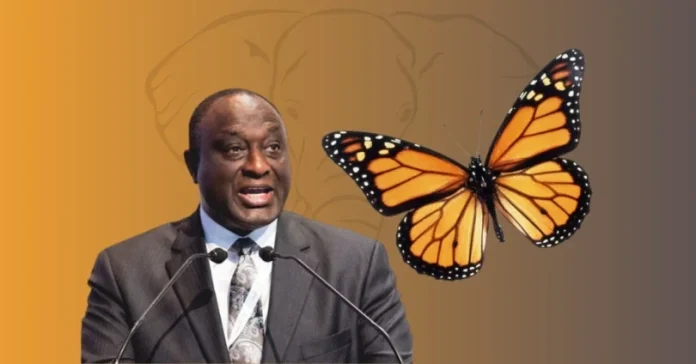





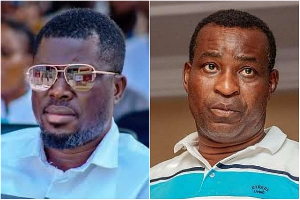


 D
D jokoto then leveled serious allegations against Captain Smart, claiming that during his tenure at Fox FM in Kumasi, he was involved in several criminal incidents documented in police reports. “Captain, when you were at Fox FM, go check the police files there were cases against you. Have you ever heard of one against me?” Djokoto challenged.


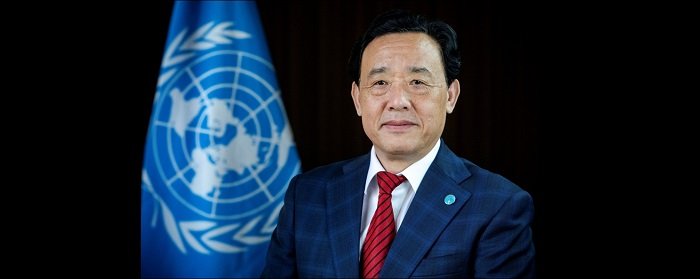





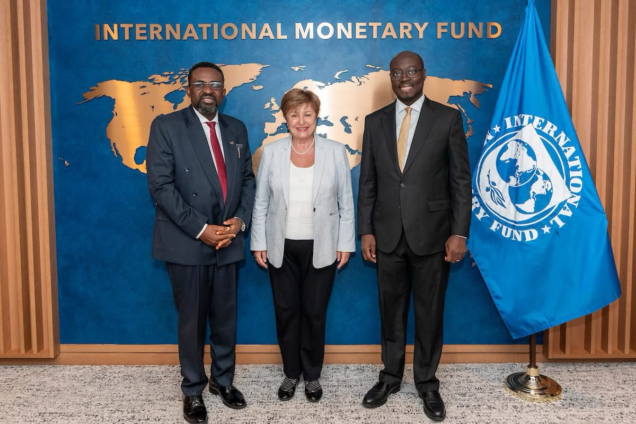

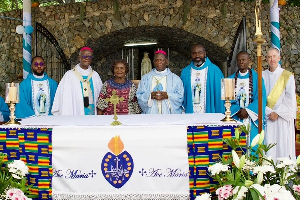


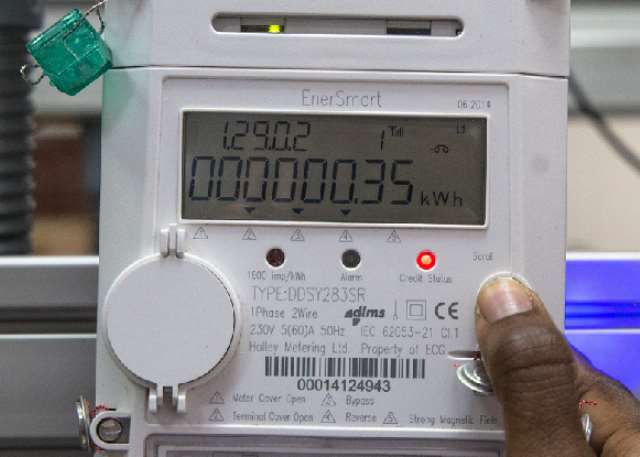


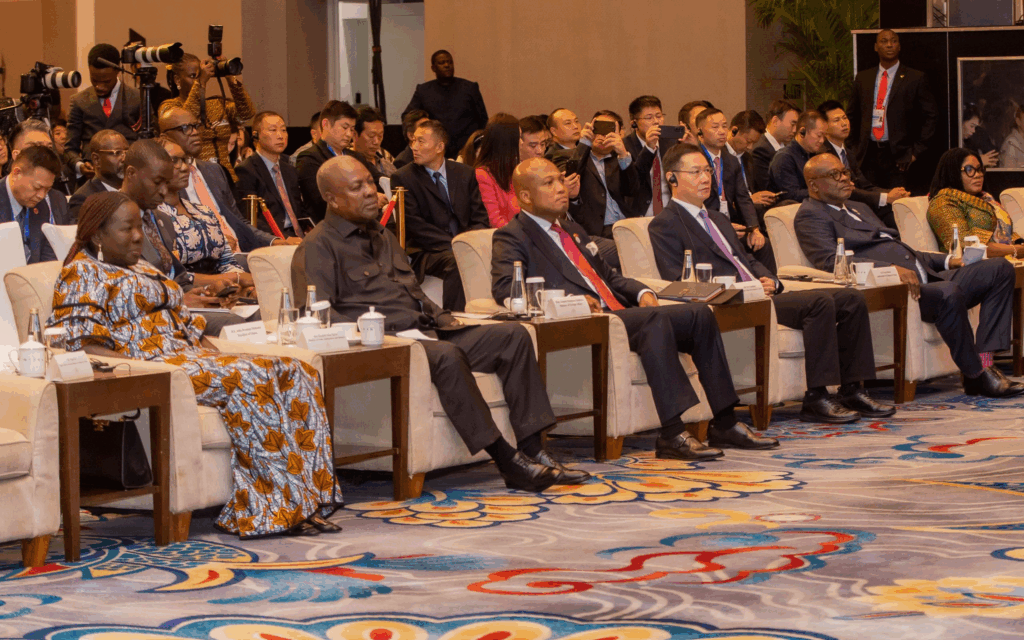
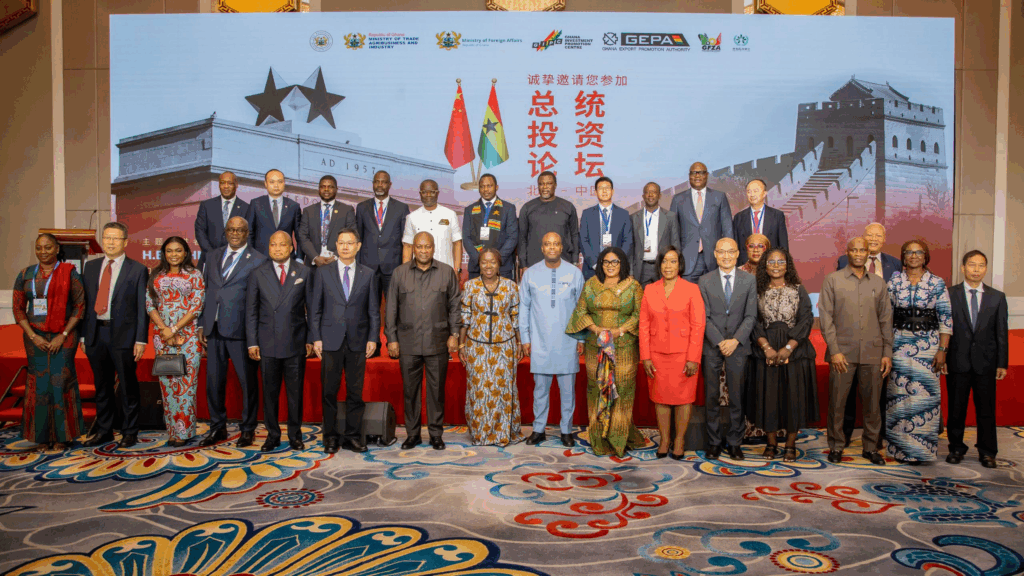



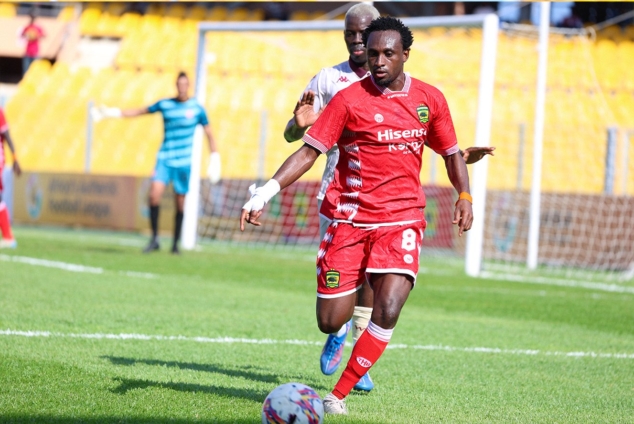


 Themed “20 Years of Impact, A Lifetime of Shared Growth,” the walk began at Zenith Heights, the bank’s headquarters, and covered several major city landmarks: from Liberation Circle to the 37 Military Hospital, Lands Commission, Cantonments, Danquah Circle, and back to Zenith Heights.
 By the end of the route, many participants had clocked over a thousand steps and shared their excitement about being part of the event, praising Zenith Bank for their dedication to wellness and teamwork.
 “Twenty years ago, we began a journey fueled by vision, driven by innovation, and anchored in service excellence. Today, we have walked to honour the strides we’ve made, strides that have transformed the banking landscape in Ghana.”
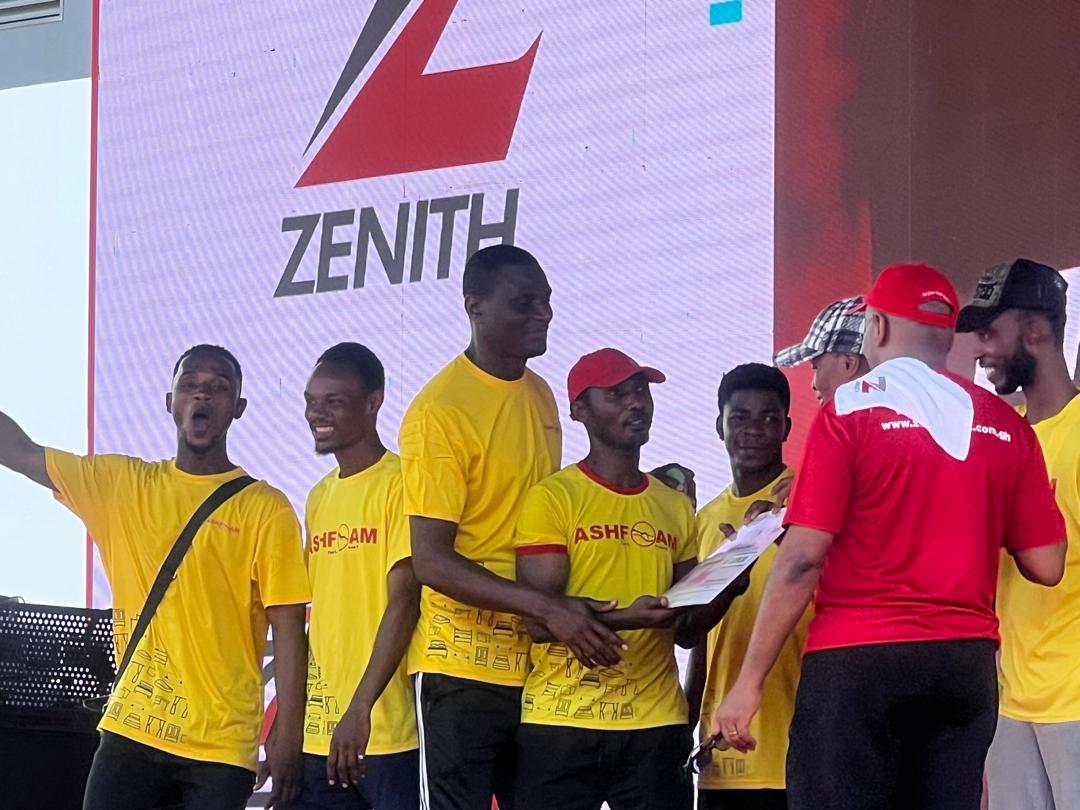 The Managing Director also acknowledged the Graphic Communications Group, which is celebrating its 75th anniversary, and members of the Ghana Wheelchair Basketball Federation who also joined the walk.
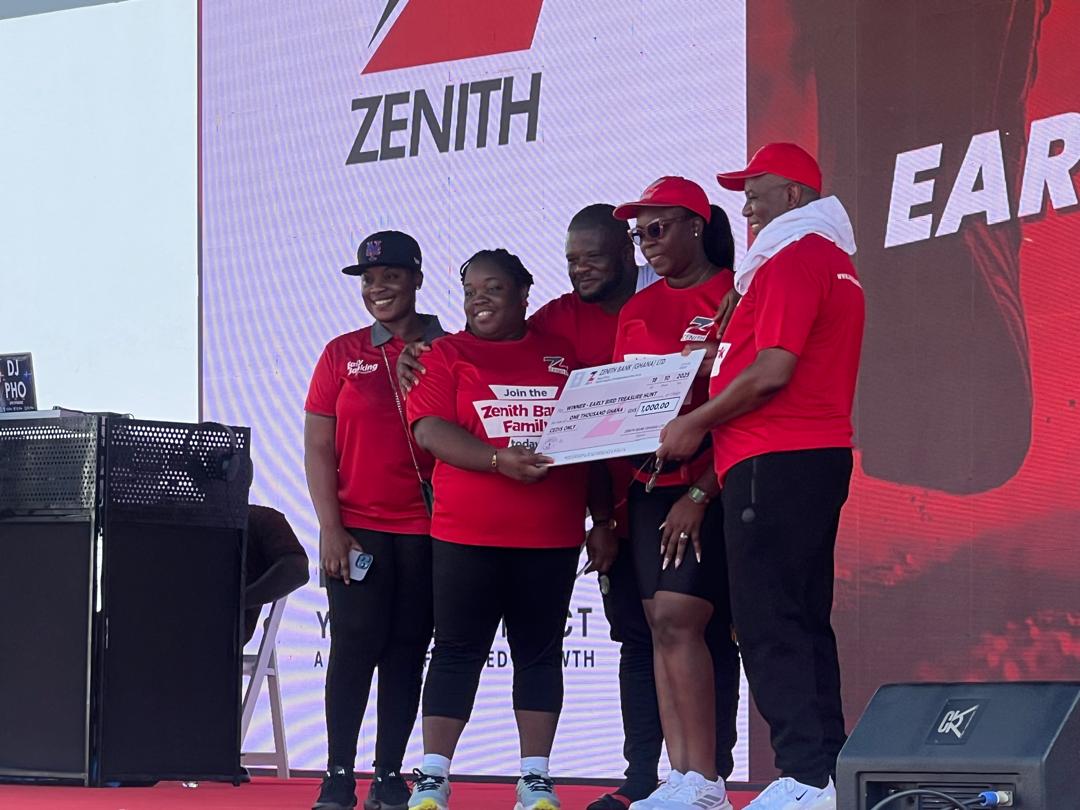 Mr. Onwuzurigbo said the 20-year milestone serves as a reminder of the bank’s responsibility to innovate and adapt in a fast-changing financial landscape.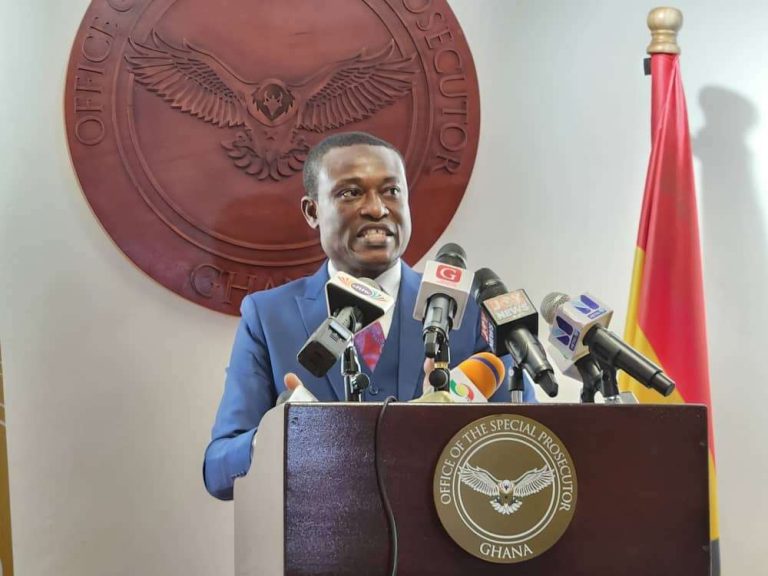


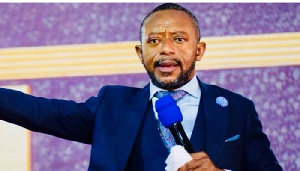

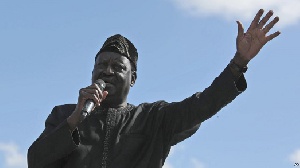


 Fisherfolks within coastal communities in Keta Municipality of the Volta Region are enjoying a bumper harvest of fish over the months due to what was described as favorable weather conditions.

 Thousands thronged the Independence Square in Accra to witness Shatta Wale’s birthday concert, one of Ghana’s biggest music events in recent years.