Prophet Kumchacha is the founder of Heaven’s Gate Ministries
Clergyman and founder of Heaven’s Gate Ministries, Prophet Nicholas Osei, popularly known as Prophet Kumchacha, has described women as “more courageous than the devil” while commenting on the growing trend of hookups in Ghana.
Speaking on Onua TV with snippet of the video shared on their social media page on October 8, 2025, the preacher decried the rise of young women engaging in online hookups, where men meet women through social media platforms and invite them over for sexual encounters.
He noted that some of these men could be dangerous, mentally unstable, or even spiritually possessed, yet women still take the risk of meeting them.
Kumchacha explains why he was seen copying tribute in Daddy Lumba’s book of condolence
Kumchacha painted a vivid picture to illustrate what he believes shows the bravery of some women involved in sex work.
According to him, in areas like Lapaz, some young women stand in pitch darkness at night waiting for clients, conditions so frightening that, in his words, “even the devil would be afraid to stand there.”
“Right now, there’s a new thing called ‘hookup.’ You just go online, make a booking, and someone picks a ride to your location. Honestly, women are more courageous than the devil. Think about it, you don’t even know who you’re going to meet. It could be a god, a ghost, or someone who’s been mad before.
“What if his madness returns when you get to the hotel? That’s why I say women are truly courageous. If you ever pass through Lapaz at night and see the kind of darkness some young girls stand in, even the devil himself would be afraid to be there,” Kumchacha said.
@onuaonline
“Women Are More Courageous Than the Devil!” — Prophet Kumchacha sparks debate on Biribi Gyegye Wo #OnuaTV
♬ original sound – onuaonline
Meanwhile, catch this week’s episode of Nkommo Wo Ho, packed with showbiz gist and street buzz here!
CEO of GoldBod, Sammy Gyamfi and Vice President of IMANI Africa, Kofi Bentil
A heated exchange unfolded on TV3’s The KeyPoints programme on Saturday, October 11, 2025, as Vice President of IMANI Africa, Kofi Bentil, and Chief Executive Officer of the Ghana Gold Board (GoldBod), Sammy Gyamfi, clashed over claims that 85% of GoldBod’s gold purchases originate from illegal mining operations, popularly known as galamsey.
Kofi Bentil, contributing to discussions on the ongoing fight against the environmental menace, alleged that the majority of small-scale gold mined in Ghana is illegal, citing published research as his source.
“We continue to buy gold from illegal miners who constitute 85% of small-scale miners, and yet we claim we are fighting galamsey,” he stated.
Smuggling syndicate worth $10 million uncovered by GoldBod
The policy analyst expressed deep frustration with the government’s efforts, arguing that more is being done to mobilise gold resources than to curb the destruction of water bodies and farmlands.
He recounted his decision to decline an invitation to a presidential meeting with civil society organisations, opting instead to share his recommendations on Facebook including the immediate dismissal of Municipal, Metropolitan and District Chief Executives in areas plagued by galamsey.
What President Mahama said about GoldBod buying gold that is ‘turning heads’
“If I don’t see DCEs being sacked, I will not believe President Mahama is serious about fighting galamsey,” he stressed.
His claim, however, drew an immediate rebuttal from Sammy Gyamfi, who called into the programme to set the record straight.
The GoldBod CEO categorically denied the 85% claim, insisting that his organisation adheres strictly to legal standards.
“GoldBod doesn’t buy gold from illegal miners. We only deal with licensed small-scale miners. GoldBod does not buy gold directly from small-scale miners,” Sammy Gyamfi asserted.
The CEO however acknowledged a potential vulnerability in the supply chain, noting that GoldBod procures gold through licensed agents.
“I cannot say if any of these agents buy from illegal sources,” he stated.
Despite his concession, Sammy Gyamfi outlined some proactive measures being implemented to deal with the challenge.
He assured listeners that GoldBod is implementing a comprehensive traceability scheme to verify the legitimacy of all gold sources, ensuring only responsibly sourced precious metals enter their operations.
On his part, the Government Communications Minister Felix Kwakye Ofosu, contributing to the conversation, emphasised that the government has no policy that aims to capitalise on illegal mining
“There is no government policy to purchase gold from illegal miners. If for nothing at all, the international community is very interested in the source of our gold,” he declared.
GA/MA
Meanwhile, catch this week’s episode of Nkommo Wo Ho, packed with showbiz gist and street buzz here!
The Minister for Labour, Jobs, and Employment, Dr Abdul-Rashid Hassan Pelpuo, has called for a national movement to prioritise worker health and mental well-being as central pillars of Ghana’s economic development.
Speaking at the Ghana Health and Labour Summit on October 9, 2025, under the theme: Mobilising against Non-Communicable Diseases: The role of workplaces in safeguarding employee wellbeing, the minister said the country must “move beyond normal relations and take immediate, decisive actions” to build a healthier, more productive workforce.
He warned that the rising burden of non-communicable diseases (NCDs), workplace stress, and poor lifestyle habits pose significant threats to national productivity.
“Non-communicable diseases now account for over 43% of all deaths in Ghana. These are not just statistics; they represent mothers, fathers, innovators, and professionals who drive our nation forward,” he said.
The Minister noted that when workers are unwell, the cost is borne not only by families but also by companies and the national economy through lost productivity and increased healthcare expenses.
“A healthy workforce is the bedrock of productivity in our economy,” he said, adding that the government remains committed to aligning labour reforms with technological changes and global workplace standards.
Human capital pivotal to economic transformation – Labour Minister
Referencing the 2025 Gallup Workplace Report, which ranked Ghana among the least thriving workforces globally, the minister described the findings as “a powerful indicator of low engagement and high stress”, one that demands urgent policy action.
He emphasised that the ministry is implementing systematic workplace reforms aimed at transforming offices and factories from “spaces of stress and decline into engines of empowerment and sustainable growth.”
At the summit, the Minister launched the Ghana Workplace Health Declaration and the Employee Safeguarding Toolkits, which he described as practical instruments to embed health and well-being into corporate governance and labour contracts.
“Well-being is not a luxury or a reward to be granted. It is a prerequisite for a successful nation, and the foundation upon which our flagship 24-hour economy policy will be hinged,” Dr Pelpuo said.
Vunania (U/E), Oct. 11, GNA – WaterAid Ghana, a Water, Sanitation and Hygiene (WASH) focused organisation, has reiterated the need for sustained investment in the empowerment of girls.
Ms Fauzia Aliu, an Advocacy, Campaigns, and Inclusion Manager at WaterAid Ghana, who made the call, said supporting girls to realise their potentials was key to building a stronger, fairer, and more inclusive Ghana.
Ms Aliu made the call on behalf of Ms Ewurabena Yanyi-Akofur, the Country Director of WaterAid Ghana at a community durbar held at the Vunania Junior High School (JHS) in the Kassena-Nankana Municipality, to mark the 2025 International Day of the Girl Child.
The theme for this year’s commemoration; “The Girl I Am, The Change I Lead: Girls on the Frontlines of Crisis,” highlights the leadership, resilience, and determination of girls who continue to drive positive change in their communities despite numerous challenges.
The event was part of the Sexual Health and Reproductive Education (SHARE) project, a five-year initiative (2021–2026) funded by Global Affairs Canada (GAC) and implemented by a consortium led by Right to Play, in partnership with WaterAid Ghana, the Forum for African Women Educationalists (FAWE), and FHI 360.
The SHARE project seeks to promote gender equality and empower women and girls by strengthening access to adolescent-friendly sexual and reproductive health services, improving menstrual health management and gender-responsive WASH facilities in schools, as well as building girls’ confidence and leadership skills.
Ms Aliu said in the Upper East Region, many girls continued to face barriers such as teenage pregnancy, early marriage, limited access to education and health information, as well as the absence of safe water and sanitation facilities in schools to ensure menstrual hygiene.
She, however, commended the courage of girls who continued to pursue education and leadership despite these obstacles.
She also commended the Government of Ghana and the Ghana Education Service (GES) for their commitment towards promoting girls’ education and well-being, through adolescent health and menstrual hygiene education, and counselling programmes, adding that these initiatives were helping to make schools safer and more inclusive for girls.
Ms Aliu also expressed appreciation to traditional and community leaders for their efforts towards discouraging child marriage, promoting girls’ education, and addressing harmful cultural practices.
“When traditional authority, government institutions, and civil society work hand in hand, our girls have a stronger chance to thrive,” she stated.
Ms Aliu said the SHARE project had contributed to empowering girls to speak up for their rights, stay in school, and pursue their dreams, and reaffirmed WaterAid Ghana’s commitment towards ensuring that every girl had access to safe water, sanitation, and hygiene both at home and in school.
“Clean water and dignity are not privileges, but fundamental human rights that enable girls to learn with confidence, manage their menstruation safely, and stay healthy,” she stated.
She encouraged parents, teachers, traditional leaders, and all stakeholders to continue playing their roles in nurturing and protecting girls, adding “empowering girls is not the job of one organisation, it is a collective responsibility.”
Madam Pamela Adamwaba Buntugu, the Sub-Coordinator of the Kassena-Nankana Municipal School Health Education Programme, stated that the failure of parents to honour their responsibilities, was the major cause of teenage pregnancy and child marriage.
She called on parents to be open to their adolescent children, particularly girls, to ensure that they provided them with the needed sexual health and reproductive education required to make informed decisions.
In a speech read on his behalf, Pe Asagpaare Aneakwoa Dennis Balinia Adda II, the Paramount Chief of the Navrongo Traditional Area, reminded his subjects that child marriage was criminalised in his traditional area, and warned that perpetrators would be dealt with according to the law.
Archbishop Maurice Muhatia Makumba urges priests to source new wine from authorised outlets
The Kenyan Catholic Church has introduced a new brand of altar wine for Holy Mass after the previous one became widely available in local bars.
Simply labelled Mass Wine, the new sacramental drink bears the coat of arms of the Kenya Conference of Catholic Bishops (KCCB) and an official signature to certify its authenticity.
“The newly approved wine is not for sale at any business outlet, but is imported and owned by the KCCB, and only distributed to the dioceses,” Archbishop of Nyeri Anthony Muheria told the BBC.
The move has been welcomed by the Catholic faithful, who believe that the previous brand had lost its sanctity due to its widespread use outside the church.
Wine is used during Mass where – according to the teaching of the Catholic Church – it is “transubstantiated” into the blood of Jesus Christ and then drunk by the priest as part of the Holy Eucharist ritual. At many churches, it is given to the congregation as well as part of Communion.
The composition of the wine is regulated by the Catholic Church’s Canon Law, according to Archbishop Muheria.
“Vigilance on the quality and standards of the wine and hosts [Communion wafers] used in the Mass is given to the Catholic bishops of the country. This is reviewed from time to time,” the archbishop added.
The old wine, which was distributed by a local alcohol manufacturer, was widely sold in liquor shops, hotels, bars and supermarkets.
“It has become common that unfortunately, the former wine is readily available in secular outlets and bars,” Archbishop Muheria told the BBC.
After exploring several wine options, the Catholic Church in Kenya settled on a South African vintage.
The new wine was officially introduced for the first time to thousands of worshipers during this year’s National Prayer Day at the Subukia National Marian Shrine in Kenya’s Nakuru area on Saturday.
“This is the only wine that will be used in Mass celebrations across the country, going forward,” said Archbishop Maurice Muhatia Makumba, the KCCB chairman, as he held a bottle of the new sacramental wine.
He directed all Catholic churches in the country to discontinue use of the old wine and urged priests to familiarise themselves with the new distribution guidelines and authorised outlets.
“The newly approved wine is not for sale at any business outlet,” said Archbishop Muheria, adding that the new drink was imported and owned by the KCCB.
“This assures purity from source.”
The label on the new wine reads: “The fruit of the vine and the work of human hands will become our cup of joy” – a reflection of the wine’s sacred purpose.
Altar wine, popularly known as divai in Swahili language, is consumed differently across dioceses, depending on the liturgical season and the level of church activity.
Demand peaks during Easter, Christmas, and other major religious events.
Some members of the Catholic community welcomed the introduction of the new wine, expressing concern that the old was being sold casually in shops like any ordinary drink, diminishing its sacred significance.
“It is a valid step toward preserving the sacredness of the Eucharist and ensuring that only properly prepared wine is used for Mass,” one Catholic told BBC.
More than 80% of Kenya’s 50 million poeple identify as Christians. Of these, around 10 million – about 20% of the total population – are Catholic, according to government statistics.
Other Christians belong to a variety of evangelical churches and other denominations, including the Anglican Church of Kenya and the Presbyterian Church.
DISCLAIMER: The Views, Comments, Opinions, Contributions and Statements made by Readers and Contributors on this platform do not necessarily represent the views or policy of Multimedia Group Limited.
DISCLAIMER: The Views, Comments, Opinions, Contributions and Statements made by Readers and Contributors on this platform do not necessarily represent the views or policy of Multimedia Group Limited.
When the US Department of Homeland Security (DHS) listed Ghana as a potential destination for a deportee named Kilmar Abrego Garcia, the news went viral and sparked outrage and confusion.
However, on October 10, 2025, Ghana’s Minister of Foreign Affairs, Samuel Okudzeto Ablakwa, denied that any such arrangement existed to receive Kilmar Abrego Garcia.
But the question many are asking is “Who is Kilmar Abrego Garcia?” And why has his deportation become a tangled international issue involving the White House, the US Supreme Court, and several African countries?
US government backtracks on decision to deport Salvadoran to Ghana
Who is Kilmar Abrego Garcia?
According to a BBC article published in April 2025, Kilmar Abrego Garcia is a 29-year-old from El Salvador who entered the United States illegally in 2012.
He settled in Maryland, where he worked in construction and raised three children with his wife, Jennifer Vasquez Sura.
For years, he lived quietly until 2019, when police in Hyattsville, Maryland, detained him and three others in a Home Depot parking lot.
Officers claimed the men were “loitering” and later identified them as members of the MS-13 gang, a transnational criminal organisation with roots in El Salvador.
The allegation was based on a “Gang Field Interview Sheet” in which officers described his clothing as “indicative of Hispanic gang culture.”
They said his Chicago Bulls hat and hoodie design were symbols linked to MS-13.
However, experts disagree. Steven Dudley, a journalist who has studied MS-13 extensively, told the BBC that while the Chicago Bulls logo had at times been associated with gang symbolism, it was “far too common and popular to be taken as proof of gang membership.”
The White House has also alleged that tattoos on Abrego Garcia’s hands, a marijuana leaf, a smiley face, a cross and a skull, are gang symbols, an allegation that Trump repeated in an interview with ABC News journalist Terry Moran.
Kilmar Abrego Garcia has consistently denied belonging to MS-13, and there is no record of him ever being convicted of gang-related crimes, either in the US or El Salvador.
‘We are not accepting him!’ – Ablakwa on deportation of Salvadoran by US government to Ghana
A disputed deportation
Despite the lack of criminal convictions, US immigration judges deemed the information from police and an anonymous source credible enough to deny Garcia bail.
He remained in custody and later applied for asylum, citing fear of persecution from a rival gang, Barrio-18, if sent back to El Salvador.
In October 2019, he was granted a “withholding of removal” order, a legal protection that prevents deportation to a country where the person might face harm.
Though not the same as asylum, it allowed him to stay in the US under supervision.
For several years, Kilmar Abrego Garcia complied with immigration check-ins without incident. But in March 2025, he was suddenly deported, and something multiple courts later ruled was done in error.
Judges, including those at the US Supreme Court, said the government should “facilitate” his return to Maryland.
President Donald Trump, however, has refused to act on that ruling. He insists Garcia is an MS-13 member and has said publicly that he “will never live in the US again,” despite acknowledging he has the power to bring him back.
Controversial allegations
There were two other allegations that surfaced after Kilmar Abrego Garcia’s deportation. In 2021, his wife filed for a protective order, claiming he had physically attacked her on multiple occasions.
She later withdrew the petition, saying they had resolved their issues through counselling and that her husband was “a loving partner and father.”
In April 2025, the White House press secretary also accused Kilmar Abrego Garcia of involvement in human trafficking, referencing a 2022 incident reported by a conservative news outlet, The Tennessee Star.
The report said he was stopped for speeding in Tennessee while transporting eight other people in his car.
DHS documents noted that none of the passengers had luggage, raising suspicions of trafficking.
But once again, no criminal charges were filed. His wife said the passengers were construction workers he was transporting between job sites, something he mostly did as part of his work.
Why Africa?
With El Salvador legally off-limits due to Kilmar Abrego Garcia’s protection order, the Trump administration has reportedly struggled to find a country willing to accept him.
Testimony in the US federal court revealed that attempts to send him to Uganda and Eswatini fell through.
On October 10, 2025, international media outlets reported that DHS had identified Ghana as a possible destination. But Ghana’s government immediately rejected the idea.
Samuel Okudzeto Ablakwa took to Facebook to clarify the situation, saying Ghana had “never agreed to receive Garcia” and that DHS had since “complied” with the country’s position.
He mentioned that Ghana’s humanitarian policy of accepting limited numbers of non-criminal West African migrants “does not, and will not apply to persons from other regions or those facing criminal allegations.”
A diplomatic and legal dead end
Kilmar Abrego Garcia’s case now sits in a diplomatic and legal limbo. The US government cannot legally return him to El Salvador, the country of his birth, due to the risk of persecution. At the same time, no third country is willing to take him as of yet.
Meanwhile, catch this week’s episode of Nkommo Wo Ho, packed with showbiz gist and street buzz here!
Kofi Bentil (L) has accused Sammy Gyamfi (R) of buying gold from illegal miners
The Vice President of IMANI Africa, Kofi Bentil, has questioned the Chief Executive Officer (CEO) of the Ghana Gold Board (GoldBod), Sammy Gyamfi, over his outfit’s gold purchases.
During The Key Points program aired on TV3 on October 11, 2025, Bentil alleged that 85% of GoldBod’s gold purchases come from illegal mining activities, locally known as galamsey.
The IMANI Vice President argued that the practice undermines the nation’s efforts to combat galamsey, which is why he declined to honor President John Dramani Mahama’s invitation to meet with Civil Society Organisations (CSOs).
Trump announces 100% tariffs on China from November 1
“We continue to buy gold from illegal miners who constitute 85% of small-scale miners, and yet we claim we are fighting galamsey. When I declined to attend the president’s meeting with civil society organisations, I posted my suggestions on Facebook. One is that we should dismiss all DCEs whose areas have galamsey operations. If I don’t see DCEs being sacked, I will not believe President Mahama is serious about fighting galamsey,” he stressed.
During the discussion, Sammy Gyamfi called into the program to rebut the claims, clarifying that GoldBod purchases gold only from licensed small-scale miners.
He stated that Kofi Bentil’s claims are spurious and should be disregarded by the public, as the government remains committed to the fight against illegal mining.
“GoldBod doesn’t buy gold from illegal miners. We only deal with licensed small-scale miners. GoldBod does not buy gold directly from small-scale miners,” Gyamfi said.
Meanwhile, the Minister in charge of Government Communications, Felix Kwakye Ofosu, also emphasised the government’s commitment to sourcing gold responsibly.
“There is no government policy to purchase gold from illegal miners. If for nothing at all, the international community is very interested in the source of our gold,” he assured.
The galamsey menace has become a major talking point in the country, as pressure mounts on the government to declare a state of emergency.
Dela Edem, the head of Corporate Affairs at the Mineral Commission, has blown an alarm on Kwame Baffoe, popularly known as Abronye DC, the Bono Regional Chairman of the New Patriotic Party (NPP).
According to Dela Edem, Abronye owes a mining concession and has been storming the Minerals Commission to see Martin Ayisi, who has now been reassigned to the Lands Ministry for license.
Comoros, Ghana’s opponent for the final game of the 2026 FIFA World Cup qualifiers, have arrived in Accra for the encounter.
The players and technical team landed at the Kotoko International Airport late on Friday evening from Abidjan. Comoros travelled from Ivory Coast to Ghana following their matchday 9 clash with Madagascar, a game they lost 2-1 and effectively lost out on qualifying for the tournament.
The team will hold a mandatory training session at the Accra Sports Stadium on Saturday afternoon before the game on Sunday.
A pre-match presser will also be held for the team at the press centre of the Accra Sports Stadium for tomorrow’s match.
Although, Comoros have nothing to take from the game, the match is expected to be keenly contested as Ghana seeks revenge following their back-to-back defeats against the Islanders.
Meanwhile, the Black Stars needs at least a point to finish top of the table with points advantage despite having a healthy goals lead over second-place Madagascar.
The Black Stars will be making it to their fifth World Cup barring any shocking update.
International ratings agency Moody’s has upgraded Ghana’s long-term foreign currency credit rating from Caa2 to Caa1,
The agency attributed the development to stronger prospects for debt reduction and macroeconomic stability under the country’s ongoing IMF-supported reform program.
Moody’s also revised Ghana’s outlook to stable from positive, reflecting growing confidence in the country’s fiscal trajectory.
IMF reaches staff-level agreement with Ghana on fifth ECF review
In a statement issued on Friday, October 10, 2025, Moody’s said the upgrade reflects continued fiscal consolidation, progress in debt restructuring, and improved foreign reserve buffers, which have strengthened Ghana’s capacity to meet external obligations.
“Greater macroeconomic stability and favorable external dynamics are supporting more controlled funding costs and foreign exchange reserve replenishment,” the agency noted.
According to Moody’s, Ghana’s debt metrics are now on a clearer path toward sustainability, supported by prudent budget management and reforms under the IMF Extended Credit Facility (ECF).
Meanwhile, Ghana’s economy continues to show signs of solid recovery in 2025, with single-digit inflation, a firmer cedi, and renewed investor confidence. Additionally, the government continues to post primary surpluses and tighten expenditure controls in line with the Fiscal Responsibility Framework.
The latest upgrade by Moody’s is expected to lower borrowing costs, boost market sentiment, and improve access to international capital markets, which are key steps toward sustaining growth and completing ongoing debt restructuring efforts with private creditors.
Personnel from the Ghana National Fire Service (GNFS) are currently leading a rescue operation to save a worker trapped under a collapsed building at Kasoa New Market in the Central Region.
According to eyewitness accounts, the building, which was an old residential structure, collapsed earlier today, October 11. Reports indicate that the owner had decided to construct a summer hut within the building and hired masons to reinforce the weakened structure with supporting pillars.
However, while the workers were on site, the building suddenly caved in. Three of the masons managed to escape unhurt, while one was trapped beneath the debris.
Fire officers, supported by other emergency response teams, have cordoned off the area and are working tirelessly to remove the rubble to reach the trapped victim.
Authorities have appealed to residents to keep away from the scene to enable emergency teams to carry out the rescue operation without obstruction.
Rescue efforts are currently ongoing.
….
Explore the world of impactful news with CitiNewsroom on WhatsApp!
Click on the link to join the Citi Newsroom channel for curated, meaningful stories tailored just for YOU: https://whatsapp.com/channel/0029VaCYzPRAYlUPudDDe53x
No spam, just the stories that truly matter! #StayInformed #CitiNewsroom #CNRDigital
Legal practitioner Martin Kpebu has backed President John Dramani Mahama’s stance against calls for a state of emergency in areas affected by illegal mining, commonly known as galamsey.
September 20, Kpebu questioned the practical impact such a declaration would have, noting that the same security structures required for enforcement are already in place.
Young Apostles will be hoping to continue their fine start to the Ghana Premier League when they hosts winless Basake Holy Stars on Sunday at Wenchi Sports Stadium.
Fresh off victory from their trip to Eleven Wonders, Young Apostles could make it back-to-back wins by inflicting more misery on Holy Stars, who have drawn two and lost one in three matches.
Meanwhile, the hosts have won two games and drawn one in four matches to sit fifth on the table.
Young Apostles will rely on prolific striker, Richmond Opoku, the leading scorer in the new campaign to continue his exploits with support from Hussein Issah and Ramzy Abubakar.
Holy Stars will be looking for inspiration in forward Bismark Teye and the experienced Prince Tweneboah.
The two sides have however met twice in the Ghana Premier League, each sharing a win at home. Holy Stars defeated Young Apostle 3-0 with the latter also securing a 2-0 win in the reverse fixture last season.
Both teams survived the drop after a nerve-wracking end to last season and will be hoping to avoid a similar situation in the ongoing campaign.
(L) Rebbel Ashes, Socrate Sarfo(M) and Brave King (R)
Belgium-based Ghanaian artiste Rebbel Ashes has joined the growing chorus of voices echoing veteran filmmaker Socrate Sarfo’s bold remarks about the current state of Ghana’s entertainment industry.
Socrate’s recent comments — describing the creative sector as crippled by poor structure, ego, and lack of vision have reignited national debate and drawn widespread attention from both local and international stakeholders.
In a strong and thoughtful response, Rebbel Ashes, known for his creativity, versatility, and unique international sound, agreed with Socrate’s sentiments, emphasizing that Ghana’s entertainment space is indeed struggling to reach its full potential due to long-standing structural deficiencies.
“Socrate said it exactly as it is — many Ghanaian artistes are doing incredible work, but they’re not being projected right,” Rebbel Ashes stated. “We have the potential to compete globally, but what’s missing is structure, professionalism, and proper branding. Until we fix that, many talents will remain undiscovered.”
The “Good Morning” hitmaker further pointed out that while Ghana is blessed with some of the most talented creatives on the continent, the absence of well-organized systems, investor confidence, and international marketing frameworks continues to hinder progress.
He urged government institutions, industry leaders, and investors to take deliberate action in building solid foundations that prioritize long-term growth.
This, he said, includes the creation of music export programs, international collaborations, creative funding schemes, and training opportunities for emerging talents.
“We need systems that connect Ghanaian creatives with international markets. It’s not enough to just make good music; we must build brands that can travel. That requires investment, structure, and unity,” Rebbel Ashes stressed.
Socrate Sarfo’s original comments which highlighted issues of mismanagement, poor coordination, and lack of leadership within the entertainment industry have sparked one of the most important conversations in recent years.
He warned that if these problems persist, Ghana risks falling further behind nations like Nigeria and South Africa, whose entertainment sectors are thriving due to strong business models and targeted government support.
Adding to the discussion, Brave King (B.K.), another Belgium-based Ghanaian artiste and actor, described Socrate’s statement as “a necessary wake-up call” for all creatives. He believes that the entertainment ecosystem in Ghana must move beyond personal interests and politics to focus on genuine growth and collaboration.
“The industry is too politicized. Until we unite and support each other genuinely, we’ll keep talking without real results,” Brave King remarked.
Both Rebbel Ashes and Brave King have become influential voices for Ghanaian creatives abroad, consistently using their platforms to highlight challenges faced by local artistes.
Their alignment with Socrate Sarfo’s call reflects a collective desire to see Ghana’s entertainment industry operate at a world-class level one that nurtures talent, attracts investment, and celebrates professionalism.
As the conversation gains momentum, one thing is clear: Ghana’s creative industry stands at a crossroads.
The voices of Socrate Sarfo, Rebbel Ashes, and Brave King represent a unified demand for reform a call for Ghana to restructure, invest, and rise to its rightful place as a global entertainment powerhouse.
play videoAkosua Serwaa Fosu has filed an injunction to halt Daddy Lumba’s funeral preparation
It’s been an exciting week in entertainment, with post-Rapperholic buzz around Sarkodie taking centre stage.
The September 27, 2025, concert at Baba Yara Sports Stadium saw fans defy the rain to enjoy Sarkodie and Shatta Wale’s performances.
Since then, Stonebwoy’s retweet has sparked debate, with pundit Arnold Asamoah-Baidoo insisting it implies endorsement.
Nkommo Wo Ho Returns: Akrobeto reacts to Agradaa’s jail term for the first time
Meanwhile, the final funeral rites of late Charles Kwadwo Fosu, aka Daddy Lumba, are set for December 6, 2026, at the same stadium. His wife, Akosua Serwaa Fosu, has filed an injunction, claiming she was excluded from the planning and insisting on her involvement before the ceremony.
She also filed against the head of the Fosu family and Odo Broni over her exclusion from the funeral arrangements.
Grab a seat and watch host Maame Akua Kyei bring you all the latest on these stories.
Nkommo Wo Ho: Rapperholic concert, Agradaa’s prison update, and more!
Catch the full Nkommo Wo Ho gist on GhanaWeb TV below:
Former MP for Asante Akyem North, Andy Kwame Appiah-Kubi
Former New Patriotic Party (NPP) Member of Parliament for Asante Akyem North Constituency, Andy Kwame Appiah-Kubi, has revealed that he faced immense pressure to allow illegal mining activities during his tenure as the legislator for the area.
Speaking on TV3’s Key Points on Saturday, October 11, 2025, the former MP said the pressure came from various angles, including chiefs, fellow government officials, and security service members.
“Your own government appointee comes to you and says that his colleague from here is making so much money, and you are preventing them from doing the same. Most of the time, government appointees, sometimes even policemen, and other times our chiefs, some of them campaigned against me because I wouldn’t allow them to engage in galamsey when their colleague chiefs in other jurisdictions were making money. I said I wouldn’t allow it,” he stated.
MP hails MCE for ‘revealing’ NDC leader’s son involved in galamsey
He added that he faced a similar situation when dealing with clashes between residents and herdsmen within the constituency.
“Yes, those who are doing it next door, here and there, were saying, ‘This man is doing it and making money. Why would you say we, of all people, can’t do it?’ I faced the same situation with the Fulani conflict, but in both situations, I said no. You can keep your money, but we will do the right thing,” the former MP said.
However, he emphasised that the fight against illegal mining cannot be won without the active involvement of chiefs, traditional leaders, and community members.
DCE’s, Police Commanders in ‘galamsey’ endemic areas must be sacked – Solomon Owusu
“We must do away with politics and fight galamsey. This fight cannot be won without the support of the chiefs and community members who know the whereabouts of the miners,” he said.
GA/MA
Meanwhile, catch this week’s episode of Nkommo Wo Ho, packed with showbiz gist and street buzz here!
The convenor of the Ghana Coalition Against Illegal Mining, Ing Dr Ken Ashigbey, has stated that Ghana’s gold exports may soon be rejected by international markets due to widespread contamination caused by illegal mining activities, commonly known as galamsey.
According to a report by 3news.com, Dr Ashigbey urged both the government and well-meaning individuals to take decisive action to address the galamsey menace, which he described as a growing threat to the country’s mining credibility.
Speaking on The Key Points show on Accra-based TV3 on Saturday, October 11, 2025, he stated, “Our gold may soon be rejected on the international market due to the increasing scale of contamination by illegal miners.”
Ghana must ensure data-driven mining – Dr Ken Ashigbey
He further called on the National House of Chiefs to hold accountable any traditional leaders allegedly involved in or enabling illegal mining activities.
“We need the National House of Chiefs to start calling out Chiefs who are complicit in the illegal mining activity. We may also have to consider confiscating lands from Chiefs who are involved in or given our lands to illegal miners,” he said.
GTEC declares Kenneth Ashigbey’s doctorate invalid, orders him to drop the title
VKB/MA
Meanwhile, catch this week’s episode of Nkommo Wo Ho, packed with showbiz gist and street buzz here!
Otumfuo’s Assinhene has waded into the growing controversy surrounding the burial of the late Highlife legend Daddy Lumba.
He has unequivocally stated that the legendary musician’s remains legally and traditionally belong to his family, not his wife.
Speaking in an exclusive interview with Busumuru Sean Kingston on Sean TV, the chief stated emphatically that although the late musician’s first wife, Akosua Serwaa, may have legitimate concerns if her husband’s properties were being shared without her knowledge, she has no authority over decisions regarding his funeral and burial arrangements.
The Ghana Education Service (GES) has distributed more than 6.6 million sanitary pads to schoolgirls across all 16 regions of the country as part of activities marking the 2025 International Day of the Girl Child.
The initiative, announced in a statement signed by the Head of Public Relations, Daniel Fenyii, on Saturday, October 11, aims to address menstrual hygiene challenges and ensure that no girl misses school during her period.
A total of 6,607,095 sanitary pads have been distributed to schoolgirls from the basic to second-cycle levels. The intervention is in fulfilment of the government’s promise to provide free sanitary pads to all schoolgirls on a monthly basis throughout their time in school.
According to the GES, the move underscores the government’s commitment to improving menstrual hygiene, promoting gender equality in education, and safeguarding the health and confidence of adolescent girls.
The statement reaffirmed GES’s dedication to building an inclusive, equitable, and responsive education system that meets the needs of every learner. It also encouraged girls to remain focused on their studies and take full advantage of available educational opportunities.
The Service expressed appreciation to the Ministry of Education for its role in implementing the initiative, describing it as a life-changing effort that promotes the welfare and dignity of schoolgirls nationwide.
….
Explore the world of impactful news with CitiNewsroom on WhatsApp!
Click on the link to join the Citi Newsroom channel for curated, meaningful stories tailored just for YOU: https://whatsapp.com/channel/0029VaCYzPRAYlUPudDDe53x
No spam, just the stories that truly matter! #StayInformed #CitiNewsroom #CNRDigital
Ho, Oct 11, GNA- Mr James Gunu, Volta Regional Minister has reaffirmed the Regional Coordinating Council’s commitment to the government’s 24-Hour Economy programme, aimed at maximising resource utilisation through shifts.
Speaking at the 12th Annual Conference of Chairpersons of Governing Boards/Councils, Chief Directors and Chief Executives of the Public Services of Ghana in Ho, the Minister emphasised the ambitious programme’s potential to stimulate economic growth, create jobs and increase productivity in the region and the entire country.
“We are ready to partner with you. And as indicated, when it comes to the 24-Hour Economy programme of His Excellency President Mahama, Volta Region is key – talking about Volta Economic Corridor Project (expected to transform Lake Volta into a logistics and production powerhouse), which is a flagship programme for government. We are ready to work together so that we develop Volta Region, reset this region, and reset Ghana for a better tomorrow.”
He said the Coordinating Council, the interface between the assemblies (the people) and the institutions, ministries and departments had decided to apply a three-point agenda for the region, the first being to ensure peace and stability of the region in order to make Volta Region the best investment destination.
“Two, to build the capacities of the municipal and district assemblies in the region in order that they can deliver on their core mandates, including local economic development and job creation. And last but not the least, is to collaborate with ministries, departments, agencies in order to ensure His Excellency President John Dramani Mahama’s vision for this region is achieved within record time.
…I have seen all the shakers and movers of our public sector here. So, we are ready to collaborate with you and make sure that President Mahama’s vision for Volta Region, and not only Volta but the entire nation is achieved.”
Mr Gunu flaunted the tourism credentials of Volta, mentioning among others, the Mount Afadja, Wli Waterfalls and Tafi-Atome Monkey Sanctuary inviting all to take a tour of the region saying, “There is no single municipal or district assembly in this region without one or two tourist sites.”
The conference held on the theme, “Strengthening the Public Sector Leadership and Governance to Enhance Service Delivery,” saw presentations including on the 24-Hour Economy, disclosing it was being built on three pillars; production transformation, supply chain efficiency, and human capital development.
Mr. Augustus Goosie Tanoh, Presidential Advisor on the 24-Hour Economy and Accelerated Export Development, emphasised the need for a 24-Hour Economy, where services were accessible around the clock.
“I would like to use the 24-Hour Economy as a practical case study rather than just a slogan. It is a test of whether our institutions can deliver services reliably, digitally, and around the clock. Citizens and businesses must be able to apply for permits, pay taxes, clear goods, access health and emergency services, and obtain information with speed and certainty at any hour.
He bemoaned institutional fragility that had had negative consequences including trust deficit and said the 24-Hour Economy was a non-threatening way to “rebuild capability, trust and collaboration.”
The Ghana Education Service (GES) has distributed more than 6.6 million sanitary pads to schoolgirls across all 16 regions of the country as part of activities marking the 2025 International Day of the Girl Child.
The initiative, announced in a statement signed by the Head of Public Relations, Daniel Fenyii, on Saturday, October 11, aims to address menstrual hygiene challenges and ensure that no girl misses school during her period.
A total of 6,607,095 sanitary pads have been distributed to schoolgirls from the basic to second-cycle levels. The intervention is in fulfilment of the government’s promise to provide free sanitary pads to all schoolgirls on a monthly basis throughout their time in school.
According to the GES, the move underscores the government’s commitment to improving menstrual hygiene, promoting gender equality in education, and safeguarding the health and confidence of adolescent girls.
The statement reaffirmed GES’s dedication to building an inclusive, equitable, and responsive education system that meets the needs of every learner. It also encouraged girls to remain focused on their studies and take full advantage of available educational opportunities.
The Service expressed appreciation to the Ministry of Education for its role in implementing the initiative, describing it as a life-changing effort that promotes the welfare and dignity of schoolgirls nationwide.
….
Explore the world of impactful news with CitiNewsroom on WhatsApp!
Click on the link to join the Citi Newsroom channel for curated, meaningful stories tailored just for YOU: https://whatsapp.com/channel/0029VaCYzPRAYlUPudDDe53x
No spam, just the stories that truly matter! #StayInformed #CitiNewsroom #CNRDigital
Paul Chen, a Ghana-based Chinese called to the Bar, has shared his aspiration after being called to the Bar.
According to Paul Chen, he hopes to educate all Chinese nationals involved in galamsey about Ghana’s legal system.
The Ghana-based Chinese is quoted by GHOne to have said, “ hope to educate all Chinese nationals involved in galamsey about Ghana’s legal system and laws”.
The Member of Parliament for Afigya Kwabre North, Collins Adomako Mensah, has urged the Mahama-led administration to declare illegal mining hotspots as security zones to effectively tackle the galamsey menace.
Speaking with Selorm Adonoo on The Big Issue on Channel One TV on Saturday, October 11, Mr. Adomako Mensah argued that designating certain galamsey areas as restricted security zones would yield better results than calls for a nationwide state of emergency.
“For me, my point is that certain areas must be declared as major security zones. People should be barred from going into those areas. It’s as simple as that. The data is there, we all know, where the mining and galamsey are ongoing.
He emphasised, “I’m sure the National Security is aware of it. Simply stop everybody from going into those particular areas as quickly as possible; otherwise, we will be back with this same discussion. We need to double up.”
The MP also cautioned government officials and communicators against self-praise and political blame in addressing the issue, urging them instead to focus on practical solutions to end the destructive practice.
….
Explore the world of impactful news with CitiNewsroom on WhatsApp!
Click on the link to join the Citi Newsroom channel for curated, meaningful stories tailored just for YOU: https://whatsapp.com/channel/0029VaCYzPRAYlUPudDDe53x
No spam, just the stories that truly matter! #StayInformed #CitiNewsroom #CNRDigital
Speaking in an interview with Saturday Beats, Fabiyi said his relationship with Imisi predates her reality TV fame, describing himself as a “father figure” to the young star within the movie industry.
Nollywood actor and filmmaker, Yomi Fabiyi, has clarified that his public support for Big Brother Naija Season 10 winner, Imisi, was driven by genuine loyalty and gratitude, rather than personal interest or financial gain.
Hilda Baci, a name synonymous with style and elegance, never fails to impress with her fashion choices. Recently, she was spotted in an outfit that turned heads and instantly became a source of inspiration for fashion enthusiasts everywhere. Her look combines sophistication, trendiness, and effortless charm—making it a perfect style template for ladies wanting to recreate a stunning and polished ensemble.
The foundation of Hilda Baci’s outfit was a sleek, tailored jumpsuit in a vibrant shade of royal blue. This choice was both bold and elegant, highlighting her silhouette while adding a splash of color that commands attention. The jumpsuit featured a cinched waist and a subtle V-neckline, flattering the figure and enhancing femininity without being overly revealing.
To complement the jumpsuit, Hilda opted for a pair of nude stiletto heels. This choice was smart—nude shoes elongate the legs and maintain the outfit’s focus on the striking blue. The minimalistic approach in footwear balanced the boldness of the jumpsuit perfectly.
Accessories played a crucial role in elevating the look. Hilda chose gold statement earrings and a matching bracelet, which added just the right amount of shimmer and sophistication. The warm tones of the gold complemented the cool blue, creating a harmonious contrast. She kept her makeup natural yet glowing, with soft highlights and a nude lip, emphasizing her fresh and radiant skin.
For ladies aiming to recreate Hilda Baci’s stunning outfit, start with a tailored jumpsuit in a bright, eye-catching color. Ensure the fit is impeccable to enhance your shape. Pair it with nude heels to keep the focus on the outfit and add minimal but bold accessories in gold to provide a touch of elegance. Keep makeup natural to allow your confidence and style to shine through.
Hilda Baci’s fashion choice is a masterclass in combining boldness with simplicity. This look is perfect for evening events, formal gatherings, or even upscale casual outings, proving that with the right pieces, any lady can achieve a stunning and unforgettable style.
The British Council’s TeachingEnglish programme will hold a free, three-day online conference from October 9 to 11, 2025, to celebrate World Teachers’ Day.
The conference is themed “Global Voices, Future Focus.” Over three inspiring days, participants will have the chance to connect with peers from every continent, share experiences, and gain practical skills that can be applied immediately in their classrooms.
This dynamic professional development event goes beyond theory—it’s an immersive learning experience that blends cutting-edge ideas with real-world classroom practice.
All sessions are led by experienced English language teachers and teacher educators who understand the challenges and opportunities of today’s teaching environments. Participants will explore fresh approaches to digital teaching, managing multilingual classrooms, integrating sustainability education, and embedding 21st-century skills into everyday lessons.
World Teachers’ Day 2025 will unfold across three thematic days:
9 October – Professional Development and Digital Tools Sessions include: • Rethinking Professional Development in a Connected World (Plenary, Cecilia Nobre) • Top Tips for Reflective Practice (Anestin Lum Chi) • Using AI to Boost Confidence (Man Wu) • Digital Storytelling and Multimedia Projects (Mary Rose Banaag)
10 October – Multilingualism and 21st-Century Skills Sessions include: • Multilingual Approaches in the Classroom (Panel: Amol Padwad, Yiviri Tombir, Adrienn Szlapak) • Classroom Management in Multilingual Classes (Aung Min Paing) • Design Thinking in Projects (Ana Lucía Castells Ruiz) • Integrating 21st-Century Skills (Sherly Hephzibah)
11 October – Sustainability and Language Skills Sessions include: • Making Sustainability Part of Daily Practice (Plenary, Christopher Graham) • Role Play to Teach Climate Change (Iman Hassan Zain) • Vocabulary Games for Problem Solving (Iyabọ Adebimpe Akintola) • Boosting Learner Engagement in Speaking Activities (Inga Mdivani)
Nii Doodo Dodoo, Country Director of British Council Ghana, commented: “This event is a fantastic opportunity for teachers in [country] to access global thought leadership on English language teaching—from AI innovation to sustainability in teaching, all for free. We especially encourage educators to register, learn, and connect with peers internationally. All attendees will receive a professional development certificate from the British Council.”
Speaking about the planned event, Michael Connolly, Director of English and School Education at the British Council, added: “At the British Council, we’re proud to connect, inspire, and empower English teachers around the globe. This conference, themed ‘Global Voices, Future Focus,’ is a celebration of our shared commitment to professional growth, inclusivity, and innovation in the classroom. We unite educators from every continent to explore themes like digital teaching, multilingual approaches, climate action, and 21st-century skills toward a more progressive future for learners around the world.”
Alison Devine, Head of English Connects, commented: “The conference captures the very essence of what TeachingEnglish achieves as a global hub for English educators. The TeachingEnglish online platform enables teachers to connect, reflect, and grow. We plan to extend this to the conference, where our experienced panelists will speak about digital innovation while exploring multilingualism and 21st-century skills. For us, this fuels teachers’ professional development, creativity, and global community.”
Deputy Chief Executive Officer of the Forestry Commission, Elikem Kotoko, says Ghanaians should expect prosecutions in corruption-related cases within a year or more as the government takes time to follow due process and build airtight cases.
Speaking on JoyNews’ Newsfile on Saturday, October 11, during discussions on the topic “ORAL: Legal Delay or Deal-Cutting Sabotage?”, Mr Kotoko explained that the government is determined to ensure justice is served without loopholes that could undermine prosecutions.
“Government is being meticulous to make sure that due process is followed and that you get watertight evidence so that when prosecution begins, it can be unturnable. You don’t want a situation where someone can punch holes here and there,” he said.
He noted that while defendants may mount legal defences, prosecutors must ensure their cases are grounded on indisputable facts.
“We understand the judicial processes — no matter how tight you have prepared your docket, somebody may also have a certain defence anyway. But you will want to make sure you have your facts very right,” he added.
Mr Kotoko explained that the Office of the Report on Alleged Looting (ORAL), which investigated several corruption cases, has no prosecutorial powers and has therefore submitted its findings to the Attorney-General for further action.
“ORAL, as we all know, didn’t have any prosecutorial or judicial powers. They have now submitted their findings to the Attorney-General, who will now take on that mantle of doing the needful,” he said.
He revealed that the Attorney-General’s office is currently reviewing about 2,400 pieces of evidence submitted by ORAL to determine which cases to prioritise for prosecution.
“When that document was handed to the President and transmitted to the Attorney-General, it contained about 2,400 pieces of evidence. This is raw data now being transmitted, and you trust that in a year or more, there will be prosecutions,” he assured.
Mr Kotoko acknowledged growing public pressure for swift accountability, stressing that while citizens are eager to see justice served, due diligence must not be sacrificed for speed.
“Yes, Ghanaians out there are making it very clear. One of the major things of concern to us is to see people behind bars — the very people who plundered this nation, who caused us this pain and anguish. We want to see them behind bars. Yes, that is the wish, but we must make sure we follow due process and due diligence to ensure that when that is done, it will be unturnable,” he emphasised.
He further noted that President John Dramani Mahama shares the public’s concern and remains committed to recovering all stolen state funds.
“President Mahama has admonished that he feels the concern of Ghanaians. We have made it clear that we will recover all loot. We have now realised that if these things go through, approximately GH¢21 billion will be recovered. How are we going to do that? That is the process being gone through,” Mr Kotoko explained.
He urged the public to remain patient as the government works through the legal and investigative processes to ensure credible and lasting outcomes.
“A little bit of patience will work,” he said.
DISCLAIMER: The Views, Comments, Opinions, Contributions and Statements made by Readers and Contributors on this platform do not necessarily represent the views or policy of Multimedia Group Limited.
DISCLAIMER: The Views, Comments, Opinions, Contributions and Statements made by Readers and Contributors on this platform do not necessarily represent the views or policy of Multimedia Group Limited.
Vice President Jane Opoku-Agyemang has directly linked Ghana’s ambitious 24-hour economy initiative to cocoa value addition, arguing that transforming raw beans into finished products requires the infrastructure, financing, and continuous operations her government envisions.
Speaking at the Sustainable Cocoa Initiative Scale-up session during the Global Gateway Forum in Brussels, she traced Ghana’s cocoa journey from Tetteh Quarshie’s introduction of the first beans in the late 1800s to today’s network of over 800,000 farmers. However, she emphasized that true sustainability in cocoa must go hand in hand with equity for the farmers who sustain the sector.
The Vice President identified access to affordable financing as a critical obstacle preventing local processors from capturing more value. Investments often concentrate in multinational or state-owned facilities, leaving local processors struggling with high borrowing costs, she explained, highlighting a structural imbalance that perpetuates Ghana’s role as primarily a raw material exporter.
To tackle this challenge, Opoku-Agyemang proposed structured blended financing models that combine capital investment with affordable working capital, risk-sharing mechanisms, and technical support, particularly for small and rural processors. She described the EU Sustainable Cocoa Initiative and the Global Gateway Framework as vital platforms to crystallize such partnerships.
Her remarks connected cocoa processing directly to the 24-hour economy model, which aims to improve the flow of goods, energy, and data while creating round-the-clock employment opportunities. The initiative envisions industrial facilities, including cocoa processing plants, operating continuously to maximize productivity and generate multiple employment shifts.
While the African Continental Free Trade Area offers opportunities to strengthen regional value chains, Opoku-Agyemang noted that financing constraints limit how effectively Ghana can leverage this continental market. The inability of local processors to access working capital at competitive rates undermines their capacity to scale operations and compete with established multinational facilities.
The Vice President also addressed resilience amid rising global cocoa prices and supply shortfalls. She highlighted Ghana’s openness to collaborations supporting pest and disease control while expanding commercial plantations for quality assurance. These partnerships become particularly important as Ghana’s cocoa production faces challenges from swollen shoot disease, aging trees, and climate variability.
Reaffirming confidence in Ghana’s quality control systems, she stated that the country’s grading standards remain among the most rigorous in the world. Reforms at the Ghana Cocoa Board, known as COCOBOD, are aimed at fairness and investor confidence, she added, acknowledging that institutional improvements must accompany infrastructure development.
Ghana currently processes only about 30% of its cocoa beans domestically, with the remainder exported raw to be processed primarily in Europe and North America. This means the country captures a small fraction of the chocolate market’s value despite producing roughly 20% of global cocoa supplies, second only to neighboring Côte d’Ivoire.
The economics of this arrangement have long frustrated Ghanaian policymakers. While farmers receive approximately $3,000 to $5,000 per tonne for raw beans, processed cocoa butter and powder command significantly higher prices, and finished chocolate products generate margins many times greater than raw bean values. The bulk of these profits flow to multinational companies headquartered in consuming countries.
Opoku-Agyemang’s emphasis on blended financing models reflects recognition that traditional bank lending hasn’t adequately supported local cocoa processors. High interest rates, short repayment periods, and collateral requirements often prove insurmountable for small and medium enterprises seeking to establish or expand processing capacity.
The proposed financing approach would combine patient capital willing to accept longer payback periods with affordable working capital for operational expenses, risk-sharing mechanisms to reduce lender exposure, and technical assistance to help processors meet international quality standards. European development finance institutions and impact investors could potentially provide such blended finance structures.
Her Brussels speech occurred as Ghana grapples with multiple cocoa sector challenges. Production has declined from peaks above 900,000 metric tons annually to around 700,000 tons in recent seasons, driven by disease pressure, aging plantations, illegal mining damaging farmland, and climate change impacts. Simultaneously, global cocoa prices reached historic highs due to supply constraints.
The production shortfalls have complicated Ghana’s ability to meet pre-sold commitments to international buyers, forcing COCOBOD to purchase beans on spot markets at premium prices to fulfill contracts. These difficulties underscore the urgency of diversifying beyond raw bean exports toward value-added products that generate higher returns per ton.
The 24-hour economy initiative, a central plank of the National Democratic Congress government’s economic agenda, envisions coordinated infrastructure investments in energy, transportation, digital connectivity, and industrial zones. For cocoa processing, this means reliable electricity for continuous operations, cold storage facilities, efficient logistics to move products to ports, and digital systems for inventory management and quality tracking.
Without these enabling conditions, even well-financed processors struggle to compete globally. Intermittent power supply forces costly investment in backup generators, poor road infrastructure increases transportation costs and product damage, and inadequate port facilities create delays that erode profit margins.
Opoku-Agyemang’s connection between the 24-hour economy and cocoa processing suggests the government views agricultural value addition as a proving ground for broader industrialization strategies. Success in cocoa could demonstrate that Ghana can move up value chains in other commodities where it currently exports raw materials with minimal domestic processing.
The Vice President concluded by reiterating Ghana’s commitment to move beyond raw exports. We must build an economy that empowers farmers, creates decent jobs, and promotes sustainability, she stated, underscoring a vision for a cocoa industry that rewards Ghanaians as much as it sweetens the world.
Her speech comes amid ongoing debates about Ghana’s economic development model. Critics have questioned whether the 24-hour economy initiative offers concrete benefits or represents political rhetoric, while supporters argue it provides a coherent framework for addressing infrastructure deficits and unemployment simultaneously.
For cocoa specifically, the success of value addition strategies depends on multiple factors beyond financing and infrastructure. Ghana must maintain quality standards that meet international buyers’ requirements, develop marketing capabilities to sell processed products globally, and potentially compete with established chocolate manufacturers who may resist losing control over processing margins.
The European Union, Ghana’s major trading partner and chocolate consumer, will play a crucial role. EU policies on cocoa imports, sustainability certification, and development financing directly impact Ghana’s ability to expand processing capacity. The Global Gateway Forum provided an opportune platform for Opoku-Agyemang to press European partners on these issues.
Whether Ghana can significantly increase domestic cocoa processing while implementing the 24-hour economy model remains uncertain. The initiative requires sustained political commitment, substantial investment, institutional reforms, and international cooperation. However, the Vice President’s explicit linkage between the two suggests her government views them as mutually reinforcing rather than separate policy tracks.
The speech also reflects growing impatience among cocoa-producing nations with their position in global value chains. Like Ghana, Côte d’Ivoire has pursued value addition strategies with mixed results, constrained by similar financing and infrastructure challenges. Coordinated action through forums like the Brussels gathering may prove necessary to shift market structures that have favored consuming countries for over a century.
For Ghana’s 800,000 cocoa farming families, the promise of value addition offers hope for higher incomes and improved livelihoods. Whether that promise translates into reality depends partly on government policy execution and partly on international partners’ willingness to support structural changes that may reduce their own economic advantages in the chocolate value chain.
A five-year national security risk assessment has revealed that only the Volta and Greater Accra Regions remain free from illegal mining, popularly known as galamsey, highlighting the widespread nature of the menace in six of Ghana’s original ten regions, according to security consultant Richard Kumadoe.
Speaking on The Big Issue on Channel One TV on Saturday, October 11, 2025, Mr. Kumadoe said the findings underscore the need for a well-coordinated and forceful national security response, such as the National Anti-Illegal Mining Operations (NAIMOS) task force.
“Out of the original ten regions, there are only two—Volta and Greater Accra—that you do not have galamsey activities or inappropriate mining. There are another two that you have minimal inappropriate mining, which is also of concern. But you have about six regions where there is aggressive inappropriate mining,” he said.
According to him, the scale of the threat explains the scope and composition of the NAIMOS task force and the aggressive operational posture adopted in recent weeks.
“They have three objectives: they want to destruct the activities of the inappropriate mining; two, they want to prevent them from coming to the sites or accessing the sites; and three, they want to curtail the activities of the inappropriate mining,” Mr Kumadoe outlined.
He said NAIMOS had so far demonstrated significant operational effectiveness, particularly with its warnings and enforcement measures targeting illegal mining operators.
“When we assess what they have done so far to the extent that they warned that there would be disciplinary actions for people they find doing inappropriate mining, we can say that we can score them very high,” he stated.
Galamsey remains one of Ghana’s most pressing environmental and security challenges, with heavy pollution of rivers, land degradation, and the involvement of both local and foreign operators threatening national stability and livelihoods.
Kumadoe stressed the need to sustain momentum and ensure the task force’s actions translate into lasting deterrence and environmental recovery.
Meanwhile, the Trades Union Congress (TUC) has vowed to intensify pressure on the government in the coming days to take firm and decisive action against illegal gold mining, popularly known as galamsey.
The Union sharply criticised the government’s recent stakeholder engagements with Civil Society Organisations (CSOs), arguing that such discussions have failed to yield any meaningful or lasting results.
“The fight to dismantle galamsey is the government’s fight. All of us must and will support. In the few weeks, the TUC will outline a few measures to support the fight against galamsey.
“The call of these measures will be to exert maximum pressure on the government and its agencies to act decisively on galamsey.
“Government must act decisively and must act now. Galamsey must stop; enough of the meetings and advocacy, talking, we need action now. The leadership of TUC will meet after this important tour and make a very decisive decision with the government on the way forward,” he said.
Telecommunications and digital technology are more than just keeping people connected. It is the foundation for education, commerce, agriculture, national security, healthcare, and national development as a whole. This is why the policies by which the sector is governed should be very clear and unambiguous. But as of now, we can’t say that for Ghana.
The country’s telecoms policy seems to be at crossroads, marked by significant shifts such as the wholesale 5G policy through s special purpose vehicle, awarding of tech neutrality and extra 4G spectrum to the only SMP (significant market power) in the sector, debates over ISP access to 5G, and recently, the proposed absorption of/merger of AT Ghana (formerly AirtelTigo) by/with Telecel. It is not even clear exactly what it is.
These significant policy issues are being discussed with passion, but also with confusion. But it is a no brainer, that until and unless the policies around these issues are made clear, and are handled with stringent financial measures, and stakeholder engagement, the sector risks repeating the very past mistakes, which have resulted in the one-directional telecoms market structure in the country today.
The Current State of Play
Recent reporting confirms several key developments:
The Ministry of Communications, Digital Technology and Innovations has proposed a restructuring involving AT Ghana and Telecel. Although the Minister, Sam George, was earlier reported on the Ministry’s own LinkedIn page to have told workers of AT Ghana that the two companies were being “merged,” he later clarified that, legally, it is not a merger or acquisition, but rather a regulatory intervention due to AT’s severe debt situation.
Per the Minister’s own earlier submission, government was presented with a debt of GHS1.5 billion by tower company ATC Ghana with respect to its services to AT Ghana during the era of the previous government. In addition to that, the Minister said AT Ghana has been carrying large losses of up to $10 million in the first eight months of the year.
Additionally, both AT and Telecel are described by some members of the Parliamentary oversight committee as financially constrained and unable to inject fresh capital. It is estimated that AT Ghana’s debt is around $200 million, while that of Telecel is also about $200 million or more. In fact, the Minister himself had openly accused Telecel of failing to inject the US$100 million capital they promised before the 70% majority shares in Ghana Telecoms was signed off to them.
While that matter is still hanging around the neck of Telecel, Group CEO Moh Damush has recently given another promise that the company is ready to invest some US$50 million to expand the network to accommodate the additional 3 million plus subscribers from AT Ghana. Whether the current government is going to take that second promise on face value or demand proof of funds a a condition precedent, is yet to be seen.
Meanwhile, the government has granted special purpose vehicle, NGIC (NextGen Infrastructure Company) an exclusive wholesale licence for 5G and instituted a shared/neutral host model for 4G. Under this model, other operators should be able to connect to NGIC rather than building a standalone 5G infrastructure. The Minister was clear in stating the choice to build a shared 5G network was a “deliberate policy decision” meant for the good of all stakeholders, including MNOs, ISPs, government and most importantly consumers.
AT Ghana and Telecel have indicated readiness to subscribe to the shared 5G model, in keeping with the government’s policy. But MTN Ghana, currently the dominant player, with a market share of over 75% in data, has resisted or delayed connecting to NGIC, raising questions about the implementation of policy. In fact, MTN Ghana’s CEO has openly stated that there is no business case for 5G in Ghana, simply because, according to him, there are only one million 5G-ready devices on MTN. This comment flies in the face of the government policy decision to pursue a shared network model. But the minister and industry regulator are dead silent on it. In fact, the minister rather repeated MTN’s chorus in a TV interview shortly after his appointment.
To deepen the confusion even further, recently, the MTN Group CEO, Ralph Mupita told journalists in Ghana that the company is in talks with the government and the regulator, which will hopefully result in the launch of 5G on MTN Ghana soon. Again, this flies in the face of the 10-year exclusivity clause in the licensing terms of NGIC with regards to 5G in particular. It is not clear if the Group CEO’s comment meant that MTN will soon connect to NGIC, or government is considering altering the terms of the NGIC license to make way for MTN to be granted a standalone 5G license.
Also Read: Elephant in the Room: MTN’s Confusing 5G Stance and What It Means for Ghana’s Digital Future
In the face of the dominant player dragging its feet on the shared 5G network model, ISPs would have been a critical channel (in addition to the two smaller MNOs) through which 5G could be made accessible to the public faster. But ISPs face a phased access restriction; the regulatory directives (policy decision) is that, for the first six months of NGIC operations, ISPs may only connect to NGIC’s wholesale infrastructure through an “anchor” MNO, not directly. After this period, ISPs are expected to have full rights to connect independently.
Clearly, there is a serious policy confusion in all these. And it gets even more confusing as government attempts to merge two weak players into a supposed competitive player. This is not new. Airtel and Tigo merged into AirtelTigo, which is today called AT Ghana. In fact, the merged entity, AT Ghana, which is now 100% owned by the government of Ghana, has become weaker and weaker over the years.
The Weakness of Merging Two Weak Entities
The sector Minister initially announced that government was in talks with Canadian investor, Rektron Group, which was reported to have offered US$150 million for a 60% stake in AT Ghana. But later, the minister announced that steps are far advanced to ‘merge’ AT and Telecel to create a stronger second player to compete with MTN. He actually mentioned three specific levels of the merger and stated that the process was far advanced. The minister has since clarified that it is an absorption and not a merger. But there are inherent weaknesses in merging two underperforming telcos without first resolving their foundational problems:
Debt burden will persist and perhaps magnify: Both AT and Telecel carry large debts. As stated above, the Minister himself said that AT owes over GH¢1.5 billion to one tower company, plus other legacy debt to other creditors and vendors, and had also piled up an additional $10 million debt in the last eight months alone. Telecel also has an estimated debt of well over US$200 million. Without a clean-up or capital injection, the merged entity may be larger but still fragile. Experts estimate that the merged entity would need at least $500 million to both settle its debts and invest. The minister even places the figure at US$600 million.
Operational inefficiencies are not magically eliminated by size: Two weak networks, poor billing systems, and low customer satisfaction will remain unless management and processes are overhauled. Per the minister’s own word, AT Ghana infrastructure has reached “end of life”. At this stage, about 3.2 million AT Ghana customers are already roaming on Telecel as part of the consolidation process. Telecel has announced that by close of 2026 all of AT Ghana’s subscribers would have been absorbed. But technical experts in the industry maintain that Telecel’s own network is as old as AT Ghana’s and therefore not particularly capable of taking on the AT Ghana load. Indeed, so far, the AT customers roaming on Telecel are still complaining of poor service quality.
Investment capacity remains constrained: Neither AT nor Telecel has demonstrated the ability to bring sufficient new investment. A merged entity still needs capital for 4G/5G upgrades and rural coverage expansion. Telecel has hinted of some US$50 million investment in the pipeline. That is just half of what experts estimate is required to make some meaningful impact. Merging AT and Telecel means the Rektron $150 million deal for AT Ghana is off the table. Meanwhile, the Minister himself has once accused Telecel of failing to bring in a $100 million upfront investment earlier. So, there is a big issue about capital investment, and there are no guarantees so far.
The market power of MTN will likely remain overwhelming: Even combined, AT + Telecel’s market share remains way below MTN’s. At the last count, MTN controlled at least 73% total market share, which leaves a combined AT and Telecel with only 27%, which is significantly low, given the fact that the Minister himself had said openly that any player with less than 30% market share cannot survive the market. Besides, MTN’s infrastructure, brand, and subscriber base give it a persistent competitive advantage. MTN has proven a tough customer to deal with at every turn in the development of the industry over the years. That trend will not be suspended for the merged entity to grow unless government mastered the courage to implement SMP interventions robustly. This writer is reliably informed that MTN has no interest in becoming a monopoly, so it is up to the government to implement the right policy measures to prevent that.
Risk of creating another fragile “second best”: The merged entity risks being a larger but still weak operator, which does little to drive genuine competition and innovation.
Member of Parliament for Mpraeso, Davis Ansah Opoku, has warned that “merging two struggling companies without new investment will only lead to more losses,” asking, “What happens to the huge debt [which] has not been dealt with.”
The Problem of ISP Access, Wholesale Model, and MTN SMP Risk
As stated earlier, under the current Regulator guidance, ISPs may only connect to NGIC’s wholesale infrastructure through an “anchor” MNO for the first six months. This phased approach ensures stability but delays ISP independence and competitive entry.
MTN Ghana, as the dominant operator and currently designated a Significant Market Power (SMP) entity, wields substantial influence over the market. SMP status legally obliges MTN to avoid anti-competitive practices, such as delaying interconnection or limiting access to wholesale infrastructure. MTN’s hesitation to fully connect to NGIC raises the risk of SMP-related regulatory breaches, potentially undermining the effectiveness of the wholesale model. Delays or restrictive practices could give MTN continued control over pricing, service innovation, and market entry for smaller providers.
Once the six-month anchor-MNO phase ends, ISPs are expected to connect directly to NGIC’s infrastructure, restoring competitive balance. But the interim period shows how MTN’s SMP position could reinforce market dominance and slow competition, impacting consumers and smaller operators alike. In fact, as MTN drags its feet on joining the shared network model, it has put more drive into expanding its fibre to the home (FTH) offering to capture the broadband market with its improved 4G network, ahead of the rollout of 5G.
This is the more reason why the restriction on ISP’s initial access, combined with MTN’s SMP leverage, risks reducing price competition, slowing innovation, and limiting consumer choice, contrary to the objectives of Ghana’s broadband policy.
Proposed Fixes: What We Can Do to Get It Right
Per conversations with industry experts on the matter, avoiding pitfalls means Ghana needs reforms that balance stability, fairness, and competitiveness:
Debt Audit and Restructuring before Mergers or Restructuring
There is a need to transparently quantify all debts owed by AT and Telecel, especially to tower companies, creditors, and regulatory agencies. A restructuring plan must be created, which includes write-downs, renegotiation, or phased repayment backed by fresh capital. Only after debts are managed should any merger or restructuring proceed.
Requirement for Fresh Capital and Operational Turnaround
AT and Telecel must commit to a credible capital injection plan and management overhaul. The regulator must then enforce performance milestones: network coverage, subscriber growth, and customer satisfaction. This is non-negotiable.
Clarity and Speed in Policy Implementation
In all of this, the regulator must also ensure that NGIC issues clear timelines for all operators, including MTN, to connect once robustness, reliability, and coverage meet market standards/expectations. This is critical because one of the arguments against NGIC is that till date, there is no network for any player to connect to even if they wanted to. Indeed, the two MNOs with connecting entity licenses are not technically ready to connect and the only player who is technically ready, MTN, had refused to apply for a connecting entity license.
But it is still very important for the regulator to formally monitor and enforce these timelines, ensuring that no operator delays access to wholesale infrastructure beyond the approved period. It would also be useful for ISPs to gain a timely “connecting entity” status to ensure a level playing field after the 6-months-long anchor-MNO phase.
Regulatory Independence and Enforcement
The NCA must actively enforce rules around infrastructure sharing, licensing, and SMP obligations. How NCA has remained indifferent to and silent on MTN’s posturing on the infrastructure sharing for 5G is surprising.
Merger or Restructuring Conditions
As suggested earlier, any AT–Telecel restructuring must be conditional. There must be proof of fresh capital, clean balance sheets, improved customer metrics, expanded rural coverage, and transparent governance.
Stakeholder Engagement and Transparency
Regular public consultation involving ISPs, consumer groups, tower companies, operators, the Ministry, and the NCA is critical to this whole drive to addressing the policy confusion. In the spirit of transparency, there will be a need to publish progress reports, particularly regarding debts resolution, NGIC implementation, ISP access, and merger milestones among other things.
Safeguards for Consumer Welfare
Ensure pricing remains affordable, service quality is high, and rural areas are included. This means the regulator must monitor outcomes and enforce compliance.
How These Fixes Benefit All Stakeholders
Consumers: faster, affordable broadband and mobile services, especially in underserved areas.
Operators: AT–Telecel can become a credible challenger; MTN faces real competition.
ISPs: phased access ensures they can compete independently post anchor-MNO period.
Government: strengthened credibility, reduced fiscal risk, and better digital inclusion outcomes.
Investors: transparency and restructuring improve confidence and sector attractiveness.
If Ghana gets it right, the result is a stronger, fairer, and more resilient telecoms sector player, capable of competing meaningfully with MTN and delivering for all citizens. If not, we risk cementing inequality – fast, affordable connectivity for some, and continued exclusion and high cost for many.
For policymakers, regulators, and industry leaders, the time for clarity is now.
The author, Samuel Dowuona, is a multiple awarding winning telecoms and technology journalist with many years of experiences in churning out articles that influence industry policies at both the regulatory and operator levels. He can be reached at [email protected]
DISCLAIMER: The Views, Comments, Opinions, Contributions and Statements made by Readers and Contributors on this platform do not necessarily represent the views or policy of Multimedia Group Limited.
DISCLAIMER: The Views, Comments, Opinions, Contributions and Statements made by Readers and Contributors on this platform do not necessarily represent the views or policy of Multimedia Group Limited.
The Customs Preventive Unit of the Ghana Revenue Authority in collaboration with the National Security has busted a diesel diversion syndicate attempting to evade custom taxes of about 2.3 million cedis.
Intelligence gathered suggests that this mode of operation has been a recurring practice in the past, leading to significant revenue losses to the state.
In view of this, over the past few months GRA, together with National Security has carried out several arrests relating to Oil Marketing Companies that have engaged in diversion of petroleum products with the intention of circumvention of due process and tax evasion.
The operation led to the interception of 10 trucks loaded with Automotive Gas Oil (AGO) commonly known as diesel estimated at about 540,000litres.
The Authority said this interception is a strong signal that the Ghana Revenue Authority is alert, vigilant, and fully committed to protecting national revenue and supporting Ghana’s economic recovery.
Addressing Journalists, Commissioner General of the Ghana Revenue Authority, Anthony Kwasi Sarpong observed that the syndicates have decided not to use the tracking devices affixed on the various tracks few minutes after loading.
“Based on intelligence, the team followed the trucks to the port as they were suspected to be export goods.
However, upon arrival at the port, it was discovered that no vessel had been designated to receive the product.
Investigations later revealed that the company disengaged the tracking devices on the tankers and diverted them under the cover of darkness.
The trucks, instead of completing the export process, exited the port area at about 3:00 a.m. and were traced to the Kpone enclave.
Acting swiftly on intelligence, the Customs Preventive Wing, working with National Security operatives, intercepted the tankers at Kpone” he noted.
The vehicles have since been impounded in line with the Customs Law and investigations are ongoing.
According to the Commissioner, preliminary estimates indicate that the state stood to lose approximately GHS 2.3 million in taxes and levies from this single illegal operation.
The GRA has also commissioned a forensic audit into the operations of the OMCs that have been identified and individuals that are found culpable of tax evasion, smuggling and diversion of petroleum products will face the necessary sanctions.
“Under the leadership of His Excellency the President, and in line with the renewed national agenda to reset the nation and restore integrity in our revenue systems, the GRA remains resolute in dismantling such illegal networks that undermine our collective progress.
Let me state clearly: this Authority will not tolerate any act that seeks to defraud the state or undermine the integrity of our petroleum export regime” he warns.
He further revealed that the GRA is intensifying monitoring, enforcement, and intelligence coordination with the National Security, the NPA, and other agencies to ensure full compliance with the laws.
He used the occasion to urge all licensed petroleum operators, depot managers, and transporters to adhere strictly to established export and tax procedures.
Any entity or individual found to be complicit in these revenue-damaging schemes will face the full force of the law.
Genoveva Marais and Kwame Nkrumah were supposed lovers about whom Nkrumah’s wife reportedly knew
The story of Ghana’s founding father, Osagyefo Dr Kwame Nkrumah, is well-known for his role in leading the nation to independence in 1957 and his vision for African unity.
However, a lesser-known aspect of his personal life involves his close relationship with Genoveva Esther Marais, a South African educator and broadcaster who was described as his confidante and, by some accounts, his alleged lover.
Genoveva Marais arrived in Ghana on February 22, 1957, just weeks before the country’s independence, to serve as an Inspector of Schools through an expatriate appointment facilitated by Michael Dei-Anang, a recruitment officer in the Colonial Civil Service.
A highly educated woman with a master’s degree earned during her time in New York and a background in teaching, writing, and broadcasting, Marais quickly became a notable figure in Ghana and later rose to the position of Head of Television Programmes at the Ghana Broadcasting Corporation.
Smiling Faces and Handshakes: How Nkrumah’s close allies bid him goodbye while plotting his ousting
It was at the Independence State Ball on March 6, 1957, that Marais first met Dr Kwame Nkrumah, then Ghana’s Prime Minister.
According to accounts, Nkrumah noticed her dancing with another man, approached her, and invited her to dance.
This encounter sparked a nearly decade-long companionship that saw Genoveva Marais become Nkrumah’s closest confidante during his time in power (1957–1966).
Described as his “bosom companion,” Marais provided emotional support to Nkrumah amidst the pressures of leadership and multiple assassination attempts, which fueled his growing paranoia and drew the two closer.
Their relationship was characterised by shared moments of leisure, including early morning tennis matches, listening to music, and discussing politics. Genoveva Marais also influenced Nkrumah’s personal style, advising on his iconic dandy outfits and hiring his tailor.
Nkrumah reportedly proposed marriage to Marais, but she declined, prioritising her career ambitions and believing that his dedication to African unity would make a wife “a hindrance rather than an asset.”
Dr Kwame Nkrumah, who married Fathia Nkrumah in 1957 and had three children with her, shared details of his relationship with Marais only with Fathia and two close associates, Ayeh Kumi and Professor Dei-Anang.
Sources indicate that Fathia was aware of the companionship and that the trio maintained an amicable dynamic.
Rare photo of Dr Kwame Nkrumah resurfaces as Ghana marks his 116th birthday
The nature of Dr Kwame Nkrumah and Genoveva Marais’s relationship remains a subject of speculation. While Marais’s 1972 memoir, ‘Kwame Nkrumah: As I Knew Him’, describes their bond as one of “affection and friendship rather than by law,” a 1966 Life magazine article referred to her as Nkrumah’s “mistress,” implying a romantic connection.
The relationship came to an abrupt end following the February 24, 1966, military coup that ousted Nkrumah while he was on a state visit to North Vietnam and China. Genoveva Marais faced severe repercussions, including detention in Togo, where she was interrogated, searched, and briefly jailed.
Ghanaian authorities labeled her as Nkrumah’s “mistress” and scrutinised her possessions, including a Ford Thunderbird she had purchased independently. During her detention, Marais endured significant hardship, including reported sexual assault by her captors, before being expelled from Ghana.
Genoveva Marais later visited Nkrumah in exile in Guinea at least once before his death in Bucharest, Romania, in 1972.
She went on to marry Victor S. Kanu, heir to a Sierra Leonean chieftaincy, and documented her experiences in her memoir, offering a rare glimpse into the personal side of Ghana’s iconic leader.
Renowned football-focused X account, ‘The Touchline’, has faced backlash on social media after falsely claiming that the Black Stars did not qualify for the 2022 FIFA World Cup hosted in Qatar.
The account stated that after Ghana missed out on the 2022 tournament, the team is now on course to secure qualification for the 2026 World Cup, which will be jointly hosted by the United States, Canada, and Mexico.
It was reported that the Black Stars are on the brink of qualification and will secure their ticket if they win, draw, or lose by no more than nine goals.
‘Come on Ghana!’ – Why it’s time to teach Comoros a lesson
“After missing out on the 2022 FIFA World Cup, the Black Stars of Ghana are almost through to next year’s edition. Ghana will host Comoros in Accra tomorrow night and will directly qualify if they win, draw, or lose by a margin of less than nine goals,” The Touchline wrote on their X account on October 11, 2025.
However, the claim that Ghana missed out on the 2022 World Cup was inaccurate, as the country was among the participants in the tournament.
The error attracted widespread criticism from football fans across the world, who viewed the statement as disrespectful to Ghana’s football legacy.
Some called on the account handlers to correct the mistake or delete the post to avoid misleading their global audience. Others pointed out that Ghana missed the 2018 World Cup, not the 2022 edition, and urged the account managers to verify their facts before posting.
The Black Stars currently lead Group I with 22 points, followed by Madagascar with 19 points, while Mali and Comoros occupy third and fourth positions with 15 points each.
Ghana will face Comoros in their final group game at the Accra Sports Stadium on Sunday, October 12, 2025.
Read the read the reactions below:
Ghana was at the 2022 world cup, get your facts abd stop posting rubbish!
Esther Njoki is the murdered niece of a Kenyan woman
The niece of a Kenyan woman allegedly murdered by a former British army soldier is to visit the UK to meet the defence secretary and other MPs to push for the man’s extradition.
Last month, a High Court in Kenya issued an arrest warrant for a British national accused of murdering Agnes Wanjiru, who had a five-month-old baby, in a market town in central Kenya, around 124 miles (200km) north of Nairobi, in 2012.
The 21-year-old’s body was found in a septic tank at a hotel in Nanyuki, near a British army training camp. On the night she was killed, she had reportedly been at a bar with friends where British soldiers were also present.
Agnes’s niece, Esther Njoki, told the BBC she was visiting the UK to seek “the justice our family has been denied for 13 years”.
Speaking before her arrival in the UK on Sunday, Njoki, 21, a communications student from Nairobi, said: “The UK has been too slow in acting.
“Our whole family has experienced years of trauma which has been made worse by continued failure to act by the authorities – both Kenyan and British.”
Ms Wanjiru’s family has long accused the British army of covering up her death and the Kenyan authorities of failing to properly investigate the case at the time.
Njoki said her aunt was a “poor Kenyan woman” and “for a long time people didn’t care”.
However, her family, along with Kenyan rights groups and feminists continued to push for justice and in 2018 an inquest was opened into her death.
In 2019, this concluded that Ms Wanjiru had been unlawfully killed by one or two British soldiers and that she had suffered stab wounds to the chest and abdomen.
Then in 2021, a Sunday Times investigation reported that a British soldier had confessed to colleagues that he killed Ms Wanjiru. The soldier left the army after the incident and reportedly continues to live in the UK.
In 2024, the army announced it was launching an internal review into the conduct of British soldiers in Kenya, including in Nanyuki.
It found 35 suspected cases of soldiers having engaged in sexual exploitation and abuse, including transactional sex, with local women – nine of these being after the army officially banned such conduct in 2022.
Njoki said she would ask Defence Secretary John Healey about what systems the British army intended to put in place to protect vulnerable local women who live around international army bases.
The pair met in April this year in Kenya, during which Healey said the UK government would “continue to do everything we can to help the family secure the justice they deserve”.
Short jumpsuits, often referred to as rompers, are a wardrobe staple for women who want to combine style and comfort. These one-piece wonders are versatile and can be dressed up or down, making them perfect for a wide range of occasions, from casual brunches to evening parties. With the right styling, short jumpsuits can easily become a go-to outfit for any season. Here are some trendy ways to rock short jumpsuits for women.
Short jumpsuits are ideal for laid-back, everyday wear. Opt for a simple cotton or linen romper in neutral colors like white, beige, or navy. Pair with sneakers or flat sandals for ultimate comfort while running errands or grabbing coffee with friends. A basic short jumpsuit with a drawstring waist or belt can help accentuate your figure without compromising on comfort. Add a sun hat or a crossbody bag for extra flair on sunny days.
For a more put-together look, consider a tailored short jumpsuit. Choose one in a solid color, such as black, blush, or deep green, with structured details like a belt, pleats, or sharp lines. These jumpsuits work well for a day at the office, a lunch date, or even a cocktail party when paired with heels and statement jewelry. A blazer or a chic cardigan can add sophistication and make the outfit more versatile for different settings.
Floral short jumpsuits are perfect for adding a playful, feminine element to your wardrobe. Whether you’re attending a garden party, a wedding, or enjoying a day at the beach, a floral romper exudes charm and lightheartedness. Pair it with sandals or wedges, and accessorize with dainty jewelry to complete the look. Floral patterns in bright colors like coral, yellow, or pastel hues are especially popular during spring and summer.
Short jumpsuits for women are a versatile and stylish addition to any wardrobe. Whether you’re looking for something casual, chic, bohemian, or even formal, there’s a short jumpsuit to suit every occasion. By pairing the right accessories and shoes, you can effortlessly transition your romper from day to night, making it a go-to option for any season. From floral prints to sleek, tailored designs, short jumpsuits offer a fashion-forward way to showcase your style and personality.
The CEO of Oh My Hair and sister to media personality Serwaa Amihere has praised her sister for her hard work, dedication, and perseverance throughout her time in law school.
Speaking in an interview with 1957 News on October 10, 2025, Gyamfua disclosed that Serwaa’s commitment to both her education and professional life came with sleepless nights and a tight schedule.
“I watched my sister work so hard, and today means a lot to me. For the past five years, she put in her all. I’m very proud of her, and today, I just turned up watching her take her certificate because it’s such a humbling moment for me,” she said.
Rare footage surfaces of Serwaa Amihere studying from sick bed before Bar call
Maame continued, “I’m very happy she’s made all of us proud, and we can’t wait to see what the future holds for her.”
Speaking about the challenges Serwaa faced, her sister revealed that combining her demanding career with her studies was far from easy.
“Families and friends stood in for her, but some of the challenges were working and attending school at the same time. Law school is very demanding, and adding work, ambassadorial deals, and hosting events made it extremely challenging for her,” she stated.
Maame Gyamfua added, “She had little to no sleep all the time. Sometimes she would stay up all night studying, and by 4 a.m., she had to be on air.”
Fidelity Bank Ghana has committed more than GH¢2 million across two cohorts of its GreenTech Innovation Challenge, positioning the initiative as one of the country’s most substantial private sector investments in agricultural technology and youth entrepreneurship.
The programme, launched in partnership with InnoHub Foundation, targets a critical gap in Ghana’s agricultural value chain. While the sector is valued at approximately $15.2 billion and projected to grow at 7.01% annually, smallholder farmers continue to face persistent challenges including climate volatility, post-harvest losses, and limited access to modern farming methods.
For the inaugural cohort, Fidelity Bank invested GH¢1.4 million in 17 young entrepreneurs whose innovations ranged from climate insurance to organic waste processing. The results exceeded expectations. Those businesses collectively generated over GH¢13 million in revenue, created 49 new jobs, and attracted an additional GH¢597,000 in external funding, suggesting the bank’s investment catalyzed far broader economic activity.
Among the standout success stories is Derrick Awumey’s AgricCom Assurance, which provides smallholder farmers with insurance protection against climate shocks like droughts and floods. The programme helped Awumey refine his business model and connect with key industry players, turning what was essentially a concept into a viable commercial operation serving vulnerable farming communities.
Emmanuel Acquah of AgriMercab demonstrated how solving one problem can address multiple challenges simultaneously. His operation converts organic waste into animal feed and fertilizer, and with GTIC support, he tripled his processing capacity from two tons to six tons monthly. The grant enabled him to install solar panels, creating a more sustainable and mechanized process that tackles both waste management and agricultural input supply.
Urban agriculture also received attention through Abdallah Salia’s Farmitecture, which provides farming systems for space-constrained city dwellers. The capital injection transformed his demonstration farm concept into a market-ready product, addressing the growing disconnect between urban populations and fresh food production.
Established businesses benefited too. Derrick Annan’s Axis Drone Surveys uses aerial technology to provide farmers with data for informed decision making, addressing what he identified as a critical barrier to modern farming. The programme didn’t just support his current operations but provided a strategic roadmap for expansion into markets like Tanzania.
Even businesses seemingly tangential to agriculture found value in the initiative. Violet Amoabeng’s Skin Gourmet produces handmade skincare from wild-sourced Ghanaian ingredients, highlighting the potential of agricultural value addition. The grant strengthened her supply chain and expanded her market reach, demonstrating how agricultural innovation extends beyond traditional farming.
Building on the first cohort’s success, Fidelity Bank is now focusing exclusively on early-stage businesses for Cohort 2. The bank is providing over GH¢1 million in grant funding to 16 selected enterprises, with the top three receiving GH¢200,000, GH¢100,000, and GH¢70,000 respectively. This strategic shift aims to nurture disruptive concepts at their most vulnerable stage, when traditional funding sources often remain inaccessible.
The second cohort maintains focus on critical areas including precision agriculture, post-harvest management, digital financial services, climate-smart practices, and value chain optimization. These themes reflect both immediate challenges facing Ghanaian farmers and longer-term structural issues that technology and innovation might address.
The timing couldn’t be more relevant. Global agriculture is experiencing simultaneous growth and disruption. The sector’s value stands at $4.82 trillion with projected growth of 3.44% annually, driven by demand for food, biofuels, and sustainable commodities. However, climate change, input costs, and geopolitical tensions create unprecedented risks requiring innovative responses.
In Africa specifically, connected agriculture markets are expected to surge from $2.9 billion to $9.87 billion between 2025 and 2031, as digital platforms revolutionize how smallholder farmers access markets, finance, and advisory services. Ghana’s agricultural entrepreneurs are positioning themselves at this intersection of traditional farming and technological transformation.
What distinguishes Fidelity Bank’s approach is its willingness to invest in unproven concepts and early-stage businesses that conventional financial institutions typically consider too risky. The bank isn’t simply writing checks; it’s providing mentorship, industry connections, and strategic guidance that often prove as valuable as the funding itself.
The challenge’s structure also reflects a sophisticated understanding of entrepreneurship. First cohort participants received support across different business stages, from ideation to scale-up, allowing the bank to assess what worked best. The decision to focus the second cohort exclusively on early-stage businesses suggests lessons learned about where intervention creates the most impact.
For Ghana’s agricultural sector, the initiative represents something beyond corporate social responsibility. It’s an acknowledgment that the country’s farming future depends on young people viewing agriculture as a technology-driven opportunity rather than a traditional occupation. By celebrating and funding agricultural innovators, Fidelity Bank is working to reshape perceptions and attract talent to a sector that desperately needs fresh thinking.
The programme also addresses a fundamental challenge in African entrepreneurship: the valley of death between concept and commercialization. Many brilliant ideas never reach the market simply because founders lack resources to test, refine, and scale their solutions. GTIC provides precisely that bridge, transforming potential into tangible businesses.
As applications closed for Cohort 2 in early July, interest reportedly exceeded available slots, suggesting strong demand among young Ghanaians for opportunities to innovate in agriculture. The question now is whether the programme’s success will inspire other financial institutions to make similar commitments, creating an ecosystem where agricultural innovation receives the sustained attention and investment it requires.
Private legal practitioner Martin Kpebu has called for increased value addition in Ghana’s cocoa sector as a way of creating more jobs, arguing that exporting raw beans enriches other countries’ economies at Ghana’s expense.
Kpebu emphasized that Ghana should process more cocoa locally rather than shipping raw beans abroad for processing into chocolate and other products. His comments highlight a longstanding debate about how Ghana can capture more value from its position as the world’s second largest cocoa producer.
“Let’s add value, process the cocoa here,” Kpebu stated, pointing to the massive economic opportunities Ghana misses by exporting primarily unprocessed beans while importing finished chocolate products at much higher prices.
The economics of cocoa value addition are compelling. Around 80% of the global cocoa industry’s annual wealth of between $130 billion and $150 billion is generated during secondary processing, including cocoa paste manufacturing, cocoa butter production, and chocolate making. Ghana currently captures only a tiny fraction of this value.
Ghana exports approximately 70% to 80% of its cocoa as raw beans. While the country has some processing capacity through companies like Cargill Ghana and Barry Callebaut, most processing happens in Europe and North America, where the bulk of value creation occurs.
The price differential tells the story clearly. Ghana receives around $3,625 per tonne for raw cocoa beans at current farmgate prices. However, processed cocoa products like cocoa butter can fetch $8,000 to $10,000 per tonne, while finished chocolate products command exponentially higher prices in retail markets.
This means that for every tonne of raw beans Ghana exports, it forgoes thousands of dollars in potential revenue that could support jobs, pay taxes, and drive economic development. European countries with no cocoa farms earn billions annually from processing and selling chocolate made from African beans.
Kpebu’s argument resonates with broader calls for African countries to move up the value chain in commodity exports. The continent produces most of the world’s cocoa, coffee, and many minerals, yet captures minimal value because processing happens elsewhere.
Ghana has made some progress on cocoa processing. The country now processes about 20% to 30% of its production domestically, up from virtually nothing decades ago. The government has implemented policies to encourage local processing, including tax incentives and guaranteed bean supplies for processors.
However, significant challenges remain. Processing cocoa requires substantial capital investment in machinery and facilities. Energy costs in Ghana are relatively high, affecting competitiveness. Access to finance for industrial projects can be difficult, and technical expertise in advanced processing remains limited.
Additionally, global chocolate manufacturers have established supply chains and processing facilities elsewhere, creating barriers to entry for Ghanaian processors trying to compete. Brand recognition and market access present further hurdles for Ghanaian chocolate products trying to penetrate international markets.
The job creation potential is substantial. Processing cocoa locally would create employment not just in factories but across the entire value chain, including packaging, logistics, quality control, marketing, and distribution. These would be higher paying, more skilled jobs than primary cocoa farming.
Some Ghanaian companies have attempted to build local chocolate brands with varying success. Products like Niche Cocoa and Golden Tree Chocolate have gained some traction, but competing with established global brands like Cadbury, Nestlé, and Lindt requires significant investment in quality, marketing, and distribution.
The government’s role is crucial. Beyond tax incentives, authorities could invest in shared processing infrastructure, provide targeted financing for cocoa processing businesses, support research and development for product innovation, and negotiate market access agreements with trading partners.
Energy sector reforms that reduce electricity costs would significantly improve the competitiveness of local processing. Reliable power supply is essential for industrial operations, and Ghana’s periodic power challenges have deterred some investors.
Education and training programs to develop local expertise in food processing, quality control, and chocolate manufacturing could help build the human capital needed for a thriving processing sector. Partnerships with international chocolate schools and training institutions could accelerate knowledge transfer.
Kpebu’s call reflects growing impatience with Ghana’s continued reliance on exporting raw materials despite decades of talk about industrialization and value addition. The question is whether political will, private sector investment, and enabling policies can finally align to transform the cocoa sector.
The recent price increases for cocoa farmers, while welcome, do not address the fundamental issue of value capture. Ghana can pay farmers better prices and still lose out on billions in potential revenue by shipping raw beans abroad for others to process and profit from.
For Kpebu and other advocates of industrialization, the path forward is clear: invest aggressively in processing capacity, develop local chocolate brands, support entrepreneurs in the sector, and gradually shift from being a raw material supplier to becoming a major player in the global processed cocoa and chocolate market.
Captain Smart (L) insists nobody can stop Daddy Lumba’s funeral in December
Media personality Blessed Godsbrain Smart, popularly known as Captain Smart, has stated that nothing will stop the funeral of the late highlife legend Daddy Lumba from taking place as planned on December 6, 2025.
Speaking on his Onua Maakye show on October 10, 2025, Captain Smart dismissed reports that a court injunction filed by Lumba’s wife, Akosua Serwaa, could halt the ceremony. He insisted that the funeral would proceed as scheduled.
Read details of Akosua Serwaa’s marriage certificate with the late Daddy Lumba
“Daddy Lumba’s funeral will be held on December 6. No one can stop the funeral from happening,” he said during an interview with comic actors Jeffery Nortey, Aka Ebenezer, and Opoku Bilson.
The Media General broadcaster went further to challenge any court officer or bailiff who might attempt to enforce the injunction on the day of the funeral.
Captain Smart maintained that the presence of the Asantehene, Otumfuo Osei Tutu II, at the ceremony would make it impossible for anyone to interfere with the proceedings.
“If you are a bailiff and you see Otumfuo sitting under his palanquin at the funeral, bring the court injunction. Bring it there. We will be waiting for you,” he stated.
Daddy Lumba’s funeral planning committee responds to Akosua Serwaa
On October 8, 2025, the family of the highlife legend, who died on July 26, 2025, at the age of 60, announced that his final funeral rites would be held on December 6 at the Baba Yara Sports Stadium in Kumasi.
The coordinator of Lumba’s funeral planning committee and former Manhyia North MP, Collins Owusu Amankwah, shared the burial arrangements and detailed activities for the ceremony.
However, after the announcement, reports emerged that Akosua Serwaa had secured a court injunction against the family head, Kofi Owusu, Transitions Funeral Home, and Odo Broni.
In a statement shared on social media, Akosua Serwaa said she had been excluded from all funeral preparations and described learning about her husband’s burial date on social media as “disrespectful and distressing.”
Court documents that surfaced on October 9, 2025, confirmed that she is seeking to prevent the funeral from going ahead until the court rules on her concerns regarding her position as the legitimate widow of the late musician.
@onuaonline
“No one can stop Daddy Lumba’s funeral rites from taking place on December 6” — Captain Smart. #OnuaMaakye
♬ original sound – onuaonline
Watch as Ghanaians share their favorite Highlife tunes
President Ouattara increases cocoa farm gate price in Ivory Coast
The world’s leading cocoa producer, Ivory Coast, has raised its cocoa farmgate price to a record $4.50 equivalent to 2,800 CFA francs per kilogram, a move that could significantly boost farmer incomes and influence the political climate ahead of the country’s October 25 presidential election.
President Alassane Ouattara, who is seeking a fourth term, announced the increase from $3.40 earlier this year, marking a substantial rise in response to surging global cocoa prices in 2024.
For Ivory Coast, cocoa is not just a commodity, it is the backbone of the economy.
The sector contributes about 14% of the country’s GDP, accounts for 40% of global supply, and supports approximately five million people, either directly or indirectly.
Government increases 2025/26 cocoa crop season price again
The timing of the price hike has drawn attention from analysts, who see it as both an economic relief measure and a strategic political gesture ahead of the polls.
The decision is also expected to send ripples across West Africa’s cocoa belt, particularly in Ghana and Nigeria, where governments often adjust prices in response to Ivorian policy shifts.
However, the Ghana Cocoa Board (COCOBOD) may face pressure to raise its own farmgate prices to prevent cross-border smuggling and maintain farmer loyalty.
With global demand soaring and climate pressures threatening future yields, the latest Ivorian cocoa price signals a new era in which African producers could wield greater influence in setting the terms of trade for one of the world’s most valuable commodities.
The world’s oldest head of state – 92-year-old Paul Biya – has promised Cameroon’s electorate “the best is still to come” as he seeks his eighth consecutive presidential term on Sunday.
The nonagenarian has already been in power since 1982 – another seven-year mandate could see him rule for 50 years until he will be almost 100.
He defied widespread calls to step down and has been criticised for only showing up for one rally, spending most of the campaign period on a 10-day private trip to Europe.
A backlash over his reliance on an AI-generated campaign video, as his opponents actively wooed voters on the ground, saw him rush north on his return home.
In the vote-rich city of Maroua on Tuesday he addressed crowds of his party supporters – reaching out in particular to women and young people, promising to prioritise their plight in his next mandate.
“I will keep my word,” he insisted, urging them to “give me your valuable support once again”.
But political analyst Immanuel Wanah tells the BBC that Biya’s primary focus since coming to power has been to stay in power, “often at the expense of efforts to enhance the living conditions of the country’s citizens”.
It is a view echoed by Dr Tilarius Atia, another political analyst, who puts this survivalist mindset down to an abortive coup against Biya in 1984.
It means that for the vast majority of the population, Biya is the only president they have known – more than 60% of Cameroon’s 30 million people are below the age of 25.
Young political activist Marie Flore Mboussi is desperate for “new blood” as she believes “longevity in power inevitably leads to a kind of laziness”.
“After 43 years, the people are tired,” she tells the BBC.
The presidential election comes amid growing concerns about inflation, security challenges, poor social services, corruption and unemployment.
Youth unemployment has been a particular talking point for most of the candidates running in the election.
Nearly 40% of young Cameroonians between the ages of 15 and 35 are unemployed, with 23% of young graduates facing challenges in obtaining formal employment, according to the International Organization for Migration (IOM).
“Young people are more inclined to emigrate abroad because they tell themselves that inside the country, they do not have the possibility of becoming somebody,” 26-old-year graduate Vanina Nzekui tells the BBC.
“They tell themselves that all positions are occupied by older people,” she says, adding that this comes at the cost of using their skills to help develop the country.
But Aziseh Mbi, 23, believes age should not be a criterion for leadership.
In Biya’s case, the civil society activist says, the president has been able to do “significant things,” citing several youth initiatives.
Beyond youth unemployment, the electoral process has also stirred controversy, especially with the exclusion of Maurice Kamto from the presidential race.
In July the electoral body barred the 71-year-old opposition leader from running because a rival faction of the party that had endorsed him presented someone else as a candidate.
His exclusion, confirmed by the Constitutional Council, was widely criticised as a ploy to prevent any strong challenge to President Biya.
After coming second in the 2018 presidential election, Kamto claimed victory and organised street protests.
“The exclusion of Prof Kamto waters down the legitimacy of our democracy because we should have been fair enough to allow for everybody to partake,” says Dr Atia.
Wanah agrees that the absence of the country’s main opposition figure “reinforces the perception that truly fair elections cannot take place in Cameroon”.
Twelve candidates were approved to contest for the country’s top job, including Issa Tchiroma Bakary and Bello Bouba Maigari – both former Biya allies from the north of the country. They resigned from their ministerial positions in government to take on their boss.
Lawmaker Cabral Libii, chairman of the opposition Social Democratic Front (SDF) party Joshua Osih and Patricia Tomaïno Ndam Njoya – the lone female candidate – are also in the race.
At the launch of the election campaign, two aspirants, including renowned anti-corruption lawyer Akere Muna, withdrew their candidacies to support Maigari of the NUDP party. This means 10 people will now compete for the presidency.
The Real Housewives of Potomac star Dr. Wendy Osefo and her husband Eddie Osefo have been booked on multiple criminal fraud charges in Maryland, according to TMZ.
Court documents reveal that Wendy faces 16 charges, including seven felonies for allegedly providing false or misleading information in a fraud case involving losses of over $300,000. She also faces a misdemeanor count for allegedly lying to law enforcement.
The couple was reportedly taken into custody Thursday night in Westminster, Maryland, after a year-long investigation into a burglary claim they made in April 2024.
At the time, the Osefos told police their bedroom had been “ransacked” while they were away on a trip to Jamaica, claiming designer handbags and jewelry had been stolen. But prosecutors now say the entire incident was fabricated.
According to the Carroll County Sheriff’s Office, investigators uncovered major inconsistencies in their story. In one glaring example, officials said Wendy was later seen wearing a diamond ring on social media — the very same ring she claimed had been stolen.
Court filings also allege that many of the items listed in the couple’s insurance claim were returned to stores for full refunds prior to the supposed break-in. The Osefos allegedly filed a $450,000 insurance claim for personal property losses.
Wendy, 39, joined RHOP in Season 5 and is known for her impressive résumé as a Johns Hopkins University professor, MSNBC and The Hill political commentator, and public affairs scholar with a Ph.D. from Rutgers University. She is also a proud Alpha Kappa Alpha Sorority member — the same organization as Vice President Kamala Harris, with whom she was once photographed during Harris’s presidential campaign.
Just days before her arrest, Wendy appeared all smiles at CultureCon in Brooklyn, where she spoke on panels and posed for photos.
The Osefos’ shocking arrest follows another Real Housewives of Potomac scandal — Karen Huger’s recent release from jail after serving six months of a one-year sentence for back-to-back DUI offenses.
Looks like Potomac’s drama has officially leapt from reality TV to real-life courtroom chaos.
The British High Commissioner to Ghana, Dr Christian Rogg, has reaffirmed the United Kingdom’s commitment to strengthening ties with Ghana.
He emphasised the importance of collaboration between the two nations, highlighting shared interests in economic growth, security and development.
Dr Rogg gave this assurance during a courtesy call on the Gbese Mantse, Nii Ayi-Bonte, at his palace in Accra.
The British High Commissioner’s visit marks his second meeting with the Gbese Mantse, demonstrating the UK’s commitment to building strong relationships with traditional leaders in Ghana.
His first visit was during his previous posting in Ghana from 2006 to 2009.
This latest visit was to strengthen the ties with the traditional leader and his commitment to work closely with stakeholders to promote mutual understanding and cooperation.
Trade and Investment
Dr Rogg stated his eagerness to boost trade and investment between the UK and Ghana, citing the potential for growth in sectors such as health care, agriculture, education, infrastructure and clean energy. He emphasised the need for cooperation in addressing global challenges such as counter-terrorism, organised crime and cyber threats.
He expressed the UK’s modernised approach to international development, focusing on partnerships that foster shared prosperity and leveraging expertise to support Ghana’s growth.
Gbese Mantse’s Initiatives
Nii Ayi-Bonte, who is also the Adonten of the Ga State, highlighted the rich history of his stool, tracing it back to Queen Elizabeth II.
He emphasised the importance of education and economic empowerment in addressing urban poverty, which he believed was a pressing issue in the Ga State.
The Gbese Mantse mentioned his recent attendance at a CEO Summit in Virginia and a business summit in the Netherlands, where he attracted investments to Ghana and showcased the country’s potential for growth and development.
He expressed his commitment to creating opportunities for his people, leveraging their education, discipline and strong work ethic to drive economic progress.
Sports Development
The Gbese Mantse also expressed his passion for developing sports talent, particularly in football, and revealed plans to build a sports village in one of his 104 communities to nurture young athletes.
The Member of Parliament for Afigya Kwabre North, Collins Adomako Mensah, has called on the Mahama-led administration to move beyond rhetoric and take decisive action in addressing the persistent menace of illegal mining, popularly known as galamsey.
He expressed concern that despite repeated assurances from government officials, including the President and the Minister for Lands and Natural Resources, Emmanuel Armah Kofi Buah, little progress has been made on the ground to curb the environmental destruction caused by the activity.
Speaking with Selorm Adonoo on The Big Issue on Channel One TV on Saturday, October 11, Mr. Adomako Mensah said the government must deliver on the promises it made during the 2024 general elections.
“Yes, I have seen a lot of activities the president is talking about, the minister is running around, but Trades’ Union Congress is telling you that what is happening on the ground does not reflect the rhetoric being made by the President and the Minister. And I think the President, the government and the minister go beyond the rhetoric into action. They promised a few things. I believe that they can start from there,” he urged.
The MP cited specific commitments, including the repeal of Legislative Instrument (L.I.) 2462, which regulates small-scale mining operations.
“They promised that they’re going to repeal the L.I 2462. I have been told that the Minister has sent some documentation to the Attorney General and that when Parliament resumes, it will be laid. I’m just hoping that this time round, it will be laid.
He stressed, “I hope this time they will make do on the promise. They talked about using AI to fight galamsey; I have not seen any activity around that as promised in their manifesto.”
Mr. Adomako Mensah also urged the government to act on its pledge to go after the masterminds behind illegal mining operations, emphasising the role of national security agencies in identifying and prosecuting such individuals.
“The President talked about going after the kingpins. I’m sure National Security can assist in the investigation to get to the kingpins. The first thing they should do is to fulfil the promise they made to Ghanaians,” he stated.
He further advised the government to communicate openly with the public if it requires additional time to address the challenge, while calling for a collective national effort to tackle the crisis.
“It’s my wish that we all come together as a people to bring this terrible menace under control,” he said.
….
Explore the world of impactful news with CitiNewsroom on WhatsApp!
Click on the link to join the Citi Newsroom channel for curated, meaningful stories tailored just for YOU: https://whatsapp.com/channel/0029VaCYzPRAYlUPudDDe53x
No spam, just the stories that truly matter! #StayInformed #CitiNewsroom #CNRDigital
Accra, Oct. 11, GNA-Moroccan King Mohammed VI has called for greater social justice during the opening of the first session of the 5th legislative year of the 11th Legislature.
Addressing parliamentarians, King Mohammed VI praised their work, whether legislative, monitoring government action, or evaluating public policies.
The Sovereign also emphasized the importance of partisan and parliamentary diplomacy, calling for more diligent and effective work, in cooperation with official diplomacy.
The King then called on members of the House of Representatives to work seriously and responsibly to successfully complete legislative processes and to remain committed to advocating for the citizens.
“There should be no inconsistency or competition between national flagship projects, on the one hand, and social programmes, on the other, since the goal is to achieve the country’s development and improve the living conditions of citizens, wherever they may be,” King Mohammed VI said.
The King emphasised that the fight against social justice and territorial inequalities was not a short-term slogan, but a strategic orientation that must permeate all development policies.
For the King, the level of local development is the true mirror of the progress of an emerging and united Morocco.
This major transformation required a significant change in mentalities, the entrenchment of a results-based culture and the use of digital technologies.
Regarding the new generation of territorial development programmes, the King urged the government to develop projects characterized by greater speed and stronger impact, while respecting a win-win relationship between urban and rural areas.
Three priority areas have been specifically defined. This involves paying particular attention to mountainous areas and oases (which cover 30% of the territory), by providing them with an integrated public policy for harmonious development.
Secondly, to lead the optimal operationalization of sustainable development levers, including the law relating to the coastline, to ensure the balance between accelerated development and protection of these areas, within the framework of a national maritime economy.
The Sovereign also called for the expansion of the National Programme so that it becomes a suitable lever for managing urbanisation and providing local administrative, social and economic services to citizens in rural areas.
In conclusion, the Sovereign called on all stakeholders, from the government to Parliament, Majority and Opposition alike, to mobilize all energies and to ensure that the higher interests of the Nation and its citizens prevail. GNA Christian Akorlie
Kwame Nkrumah University of Science and Technology (KNUST)
The Electricity Company of Ghana’s Ashanti Sub Transmission Region has donated two high voltage substation panels to the Kwame Nkrumah University of Science and Technology’s Electrical Engineering Laboratory in a move aimed at strengthening practical training for students.
The donation comprises a 33kV Gas Insulated Switchgear panel and an 11kV panel, equipment that will allow engineering students to gain hands on experience with real world power distribution systems. The presentation bridges classroom theory with actual engineering practice used in Ghana’s electricity transmission network.
The high voltage panels represent significant additions to KNUST’s training infrastructure, giving students access to the same type of equipment they will encounter in professional practice after graduation. Gas Insulated Switchgear technology is commonly used in modern substations due to its compact design and reliability.
For KNUST’s Electrical Engineering Department, the donation addresses a critical need for practical training equipment. Students pursuing degrees in electrical and electronic engineering require exposure to actual power systems equipment to complement their theoretical knowledge and prepare them for the workforce.
The 33kV and 11kV voltage levels donated are standard in Ghana’s power distribution network. The 33kV equipment is typically used in primary transmission systems, while 11kV panels are common in secondary distribution that delivers power to communities and industrial areas.
ECG’s Ashanti Sub Transmission Region oversees significant portions of the power infrastructure serving Kumasi and surrounding areas. The donation of decommissioned or surplus equipment to educational institutions represents a valuable way to support technical education while giving new life to functional training equipment.
The collaboration between ECG and KNUST reflects growing recognition of the need for stronger partnerships between industry and academia. Such donations help ensure that graduates have practical skills that match industry requirements, potentially reducing the gap between academic training and job market needs.
KNUST’s College of Engineering is one of Ghana’s premier institutions for training engineers, producing graduates who go on to work in various sectors including power generation, transmission, and distribution. Hands on experience with industry standard equipment can give these graduates a competitive advantage in the job market.
The donation comes at a time when Ghana’s power sector is undergoing significant reforms and expansion. Training engineers who understand modern power systems equipment and can work safely with high voltage installations remains crucial for the sector’s development.
Access to such specialized equipment can also support research activities at the university level. Faculty and graduate students conducting research on power systems, grid stability, and electrical safety can use the panels for experimental work and testing.
While the exact timing and ceremony details were not immediately available, the donation represents a positive development in the relationship between Ghana’s power utility and the country’s leading technical university.
For students at KNUST, the new equipment means enhanced learning opportunities and better preparation for careers in Ghana’s electricity sector. The ability to work with actual substation equipment under supervised conditions provides invaluable experience that cannot be replicated through simulations alone.
Fresh off the announcement of his ambitious 17-track project, “The Odyssey” LP, dynamic Ghanaian music storyteller AratheJay is set to take his sound across the continent, confirming his debut headline European tour this November.
The Odyssey Tour, which is scheduled immediately following the October 24 release of “The Odyssey”, is a significant step in the artist’s burgeoning international career.
It will bring the next chapter of his conceptual “Finding Nimo Series” to key European cultural capitals.
The three-city tour, which will be AratheJay’s first time headlining venues in Europe, is set to solidify his growing global footprint.
The tour will see AratheJay perform across three major cities, namely Hamburg, Germany (Paradiso) on November 19, Amsterdam, Netherlands (Uebel & Gefährlich) on November 21, and London, United Kingdom (XOYO) on November 22.
Fans can purchase tickets now on https://arathejay.com
The tour’s timing is strategic, allowing European fans to experience the new material from “The Odyssey” live, just weeks after the project drops.
The LP, the major instalment in the “Finding Nimo Series” that began with the 2024 “The Capsule” EP, is already generating buzz with massive singles like the Black Sherif-assisted “Jesus Christ II” and the Bella Shmurda collaboration “Fire.”
AratheJay, who adopts the alias Nimo Constantine, has built his reputation on intricate storytelling that blends Hiplife(African Rap), Afrobeats, and introspective themes rooted in his Ghanaian background.
The title “The Odyssey” suggests a journey of growth, discovery, and resilience, themes expected to be brought to life on stage.
This November tour is positioned as the essential live expression of the new album. Having already proven his stage command with a sold-out debut headline show, “Nimo Live,” the European dates offer the international audience a chance to witness AratheJay’s unique blend of spiritual depth and modern African sound, reinforcing his status as a key figure in the global rise of Ghanaian music.
The announcement signals a decisive move to connect directly with the growing global fanbase that has championed his music across streaming platforms, and industry observers are already predicting a rapid sell-out for these intimate headline dates.
Monica Moreta Galarza felt relieved after her husband’s routine immigration hearing at New York City’s 26 Federal Plaza.
A judge had ordered Rubén Abelardo Ortiz López to return to court in May, and she believed that meant a reprieve from his potential deportation to Ecuador.
“One of them charged at me so aggressively that I was terrified, and he ended up throwing me to the ground,” Ms Moreta Galarza told BBC News Mundo in Spanish. “They treated us like animals.”
The incident, which has since gone viral, led to one immigration agent being temporarily suspended. But it is not an isolated occurrence. The BBC witnessed similar incidents at the courthouse, while others—including an aggressive encounter between Immigration and Customs Enforcement (ICE) and the media—have sparked public outcry.
ICE’s operations inside the building have created a charged, tense environment, attorneys said.
“I would honestly sum it up as just traumatic,” said Allison Cutler, a New York Legal Assistance Group (NYLAG) attorney who works at 26 Federal Plaza.
“It’s traumatic for the clients we’re serving, for the families getting ripped apart.”
While many of the detentions at 26 Federal Plaza are swift and non-violent, reporters and lawyers have witnessed several chaotic episodes in recent weeks.
On a Tuesday in late August, the BBC watched as a dozen officers waiting outside a courtroom descended on a man, two women, and a small boy. They quickly detained the man, and a melee ensued as the group fought to stay together.
The crying woman, clinging to the detained man, was wrenched away by a federal officer—who appeared to be the same man who pulled Ms Moreta Galarza from her husband—as the man was carted off.
The judge closed the courtroom, and, as a result, the BBC could not verify details of the case. The Department of Homeland Security (DHS) did not provide details of the man’s current status, but stated that the agency “takes its responsibility to protect children seriously”.
They added that ICE gives parents the option of being removed with their children or having them placed with a designated individual.
After the images of the incident with Ms. Moreta Galarza spread on social media, DHS reported that the officer involved in the incident had been disciplined.
Then last week, immigration officers were captured on video shoving two journalists to the ground as they tried to document a possible detention. One of the journalists could not get up and was transported to the hospital.
“Nothing like this has happened with journalists before,” Olga Fedorova, the other photojournalist thrown to the floor, told the BBC. Ms. Fedorova frequently reports from the building and said that before the incident, “We were able to work with federal agents, around federal agents, with no incidents 99% of the time.”
DHS spokeswoman Tricia McLaughlin told the BBC in a statement that officers were making an arrest when they were “swarmed by agitators and members of the press, which obstructed operations.”
Ms McLaughlin said that “officers repeatedly told the crowd of agitators and journalists to get back, move, and get out of the elevator.”
Chaotic encounters with government officials have played out multiple times in the lower Manhattan building this year, as immigration courts become key sites of a mass deportation initiative ordered by the Trump administration.
Half of the 3,320 immigrants ICE has detained in the New York City area between Trump’s inauguration and the end of July were arrested at 26 Federal Plaza, according to data obtained by the Deportation Data Project. The numbers suggest the building’s immigration courts and offices are a primary engine of the administration’s deportation plans in America’s biggest city.
About three quarters of people arrested at 26 Federal Plaza since Trump’s inauguration did not have past criminal convictions or pending criminal charges, the Deportation Data Project numbers suggest.
Officers routinely pull multiple detainees from their hearings without giving them the chance to speak to lawyers.
“We’ve never seen anything like this,” said Benjamin Remy, a NYLAG lawyer who spends several days a week working with immigrants at Federal Plaza.
Many immigrants no longer show up to court, he said. At one August hearing, a man with a criminal record failed to appear. The judge therefore ordered him removed from the country and threw out his asylum case.
His attendance may not have changed the outcome; immigration enforcement was assembled outside that courtroom as well.
Non-citizens in the US without a visa or similar documentation have always been subject to removal, said Triciah Claxton, supervising attorney with Safe Passage, an immigration rights group focused on minors.
“There used to be a concentrated effort on those who might have had criminal histories or prior arrests,” said Ms Claxton, whose clients mostly appear virtually to avoid detention.
But now, she said, that net appears to have widened.
“You see a lot of people who are in the process—they have asylum claims pending, they have other forms of relief pending—are still being taken in,” Ms. Claxton said.
People wait to enter immigration court as federal agents patrol the halls
Legal experts say this is an abuse of the courts system and puts immigrants into an impossible position. If they turn up for court hearings, as they are instructed to do, they could be arrested. But if they skip their court date, a judge could automatically order their deportation.
The government argues it has broad authority to detain people who are in the US illegally.
The administration says it is removing dangerous criminals from the country, and the White House and Department of Homeland Security frequently tout the arrests and detentions of undocumented migrants with violent criminal histories.
It says it makes arrests in immigration court for safety reasons.
“DHS enforcement operations are highly targeted, and officers do their due diligence. We know who we are targeting ahead of time,” an agency official said in a statement to BBC.
A New York Times/Siena poll found that the majority of respondents, 54%, supported deporting people who are here illegally. Over half (51%) felt the government was targeting the right people.
In the case of Rubén Abelardo Ortiz López, whose wife Ms Moreta Galarza, was pushed to the floor, the government says he was a violent criminal and that it was justified in arresting him at court.
Ortiz López entered the country illegally on 20 March 2024 and was wanted after being arrested on 18 June for “assault and criminal obstruction of airway or bloodstream.”
“President Trump and Secretary (of Homeland Security Kristi) Noem will not allow criminal illegal aliens to terrorize American citizens,” the statement added.
“If you come to our country illegally and break our laws, we will arrest you, and you will never return.”
But for Ms Moreta Galarza, the incident at the courthouse reminded her of the injustices she says she fled in her home country of Ecuador.
“I suffered a lot in my country. I had no protection, and the authorities there didn’t care,” she tells BBC News Mundo.
She adds that she never thought the same thing would happen to her in the US.
Samuel Abu Jinapor, MP for Damongo and Ranking Member of Parliament’s Foreign Affairs Committee
The Member of Parliament for Damongo and Ranking Member of Parliament’s Foreign Affairs Committee, Samuel Abu Jinapor, has welcomed the clarification provided by the Minister for Foreign Affairs, Samuel Okudzeto Ablakwa, regarding recent reports about a planned deportation of an alleged criminal to Ghana under a U.S.–Ghana deportee agreement.
In a Facebook post on Saturday, Mr. Jinapor, also a former Minister of Lands and Natural Resources, described the Foreign Minister’s clarification as “a major relief and a welcome development,” noting that it had brought calm and clarity to an issue that had generated widespread public concern.
The U.S.-based ABC News had earlier reported that the U.S. Department of Homeland Security intended to deport one Kilmar Abrego Garcia, an alleged notorious criminal, to Ghana. However, Mr. Ablakwa clarified that the individual in question would not be deported to Ghana and that the existing Ghana–U.S. agreement was limited to the possible reception of a small number of non-criminal West Africans on humanitarian grounds, consistent with the principles of African solidarity.
Mr. Jinapor commended the Foreign Minister for swiftly addressing the matter but stressed the importance of transparency and constitutional compliance in all international agreements entered into by the Government of Ghana.
“The Minister’s clarification that the said agreement concerns only the possible reception of a limited number of non-criminal West Africans, on humanitarian grounds and in the spirit of African solidarity, seems to contradict the widely held view that this agreement is a quid pro quo for the recent visa concessions granted by the Trump administration,” Mr. Jinapor noted.
He emphasised that such sensitive agreements must be subjected to parliamentary ratification as required by Article 75 of the 1992 Constitution, which mandates all international agreements to be laid before Parliament for approval to ensure accountability and safeguard Ghana’s sovereignty.
“It is for reasons such as these that the Minority has consistently called on Government to lay the said agreement before Parliament for ratification. The constitutional requirement that such agreements be laid before Parliament is intended to safeguard the sovereignty of our Republic and ensure that the actions of the Executive remain consistent with the rule of law,” he stated.
The Damongo MP further called on Government to take advantage of the upcoming parliamentary session, which resumes on 21st October, 2025, to lay the agreement before the House for scrutiny and formal ratification.
“Government has a golden opportunity to uphold this constitutional requirement. Doing so will promote transparency, restore public confidence, and strengthen the principles of accountability that underpin our democratic governance,” Mr. Jinapor said.
The statement has been widely welcomed by sections of the public and civil society advocates, who have long called for greater transparency and parliamentary oversight in the negotiation and ratification of international agreements affecting Ghana’s security and foreign policy.
DISCLAIMER: The Views, Comments, Opinions, Contributions and Statements made by Readers and Contributors on this platform do not necessarily represent the views or policy of Multimedia Group Limited.
DISCLAIMER: The Views, Comments, Opinions, Contributions and Statements made by Readers and Contributors on this platform do not necessarily represent the views or policy of Multimedia Group Limited.
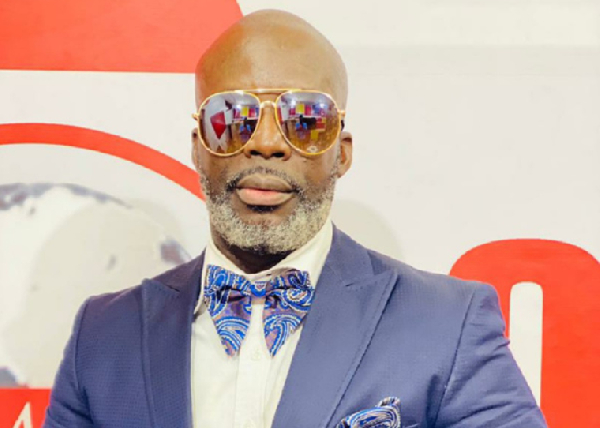
 Prophet Kumchacha is the founder of Heaven’s Gate Ministries


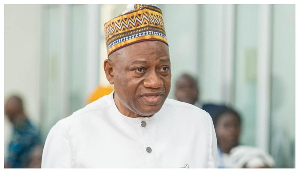





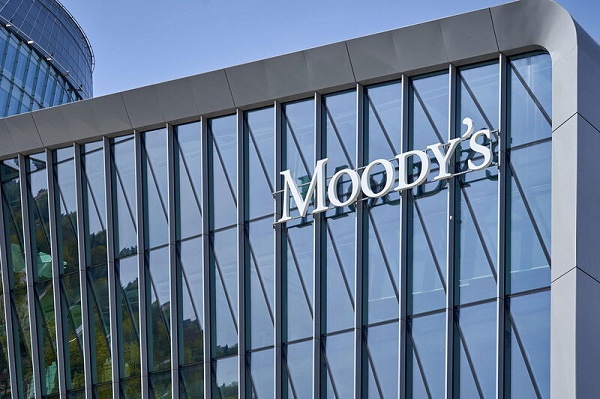




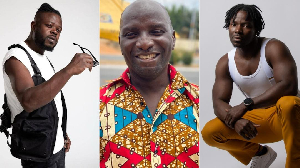
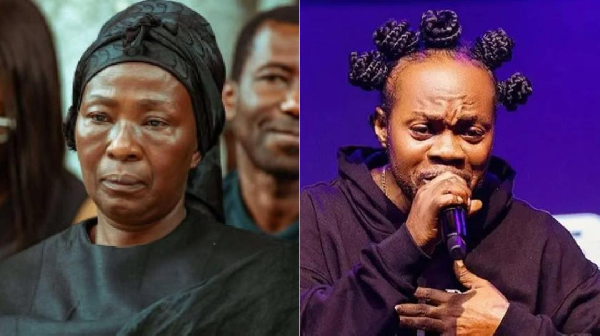
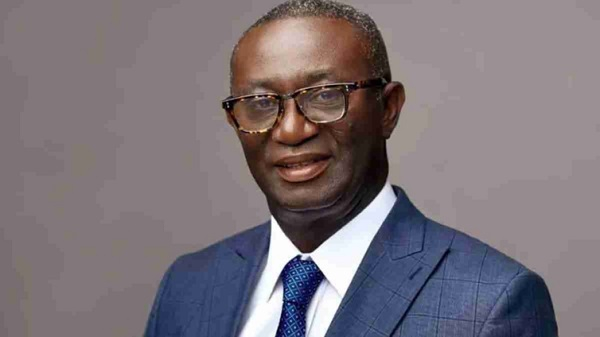


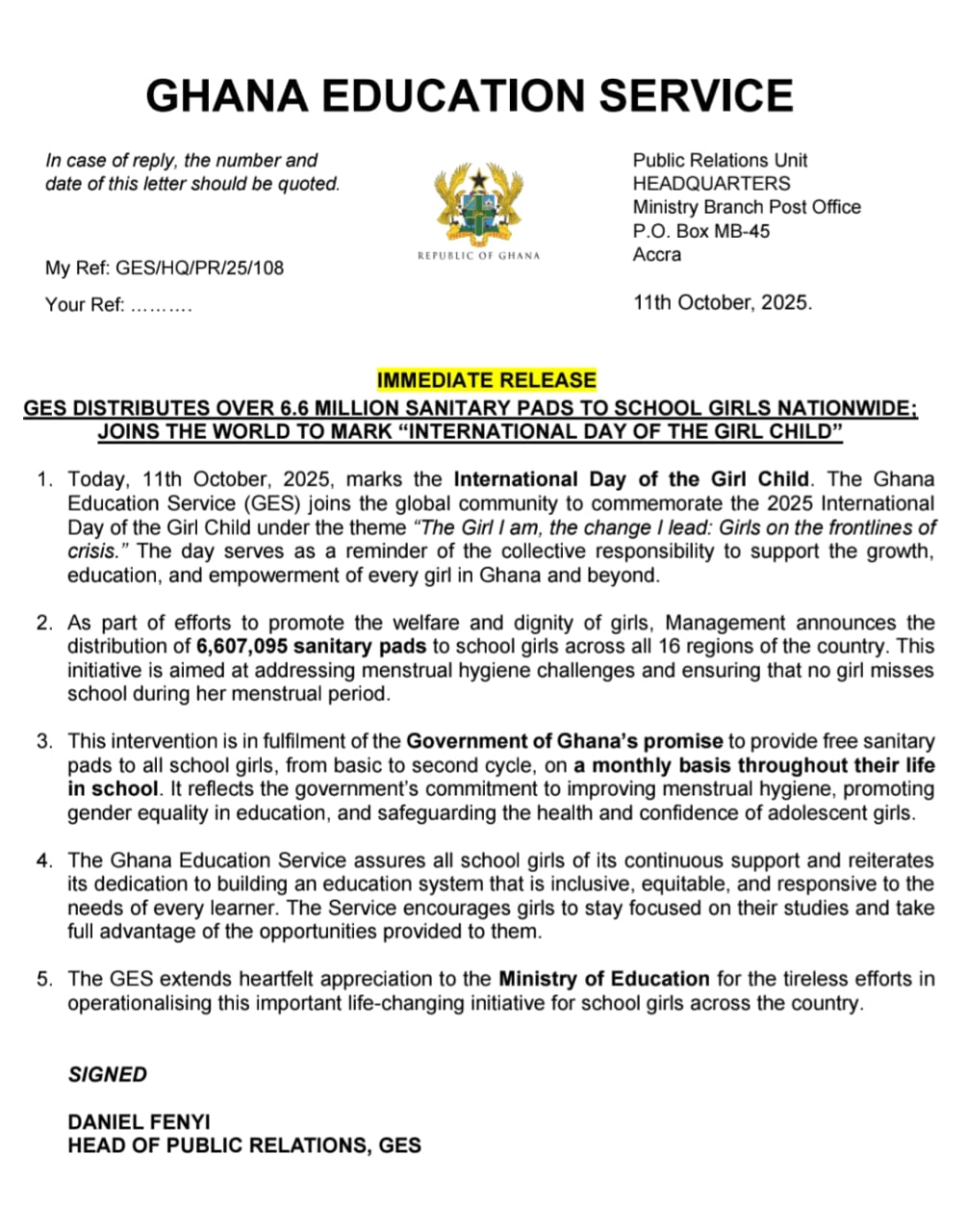













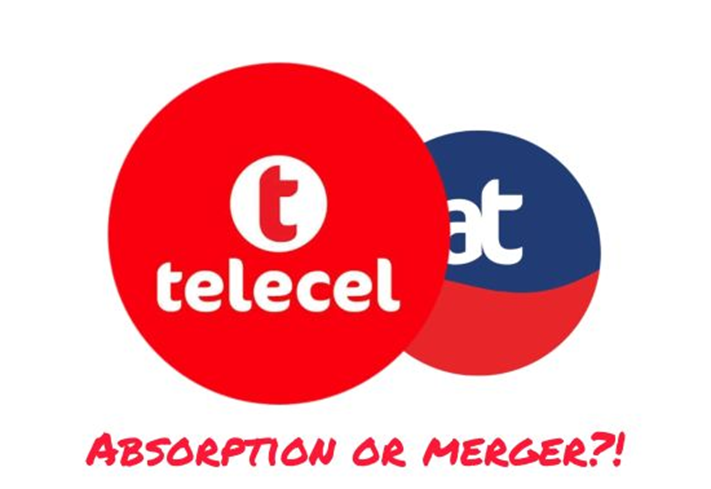



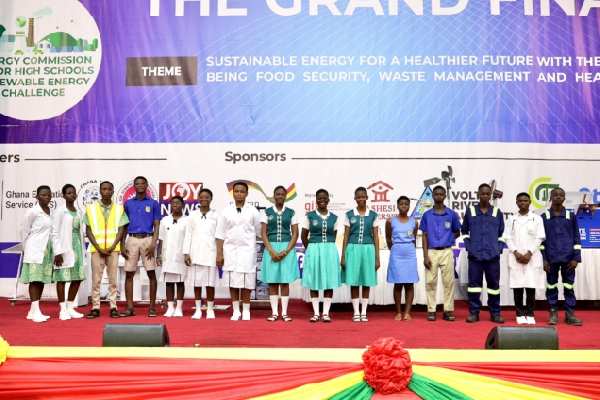
















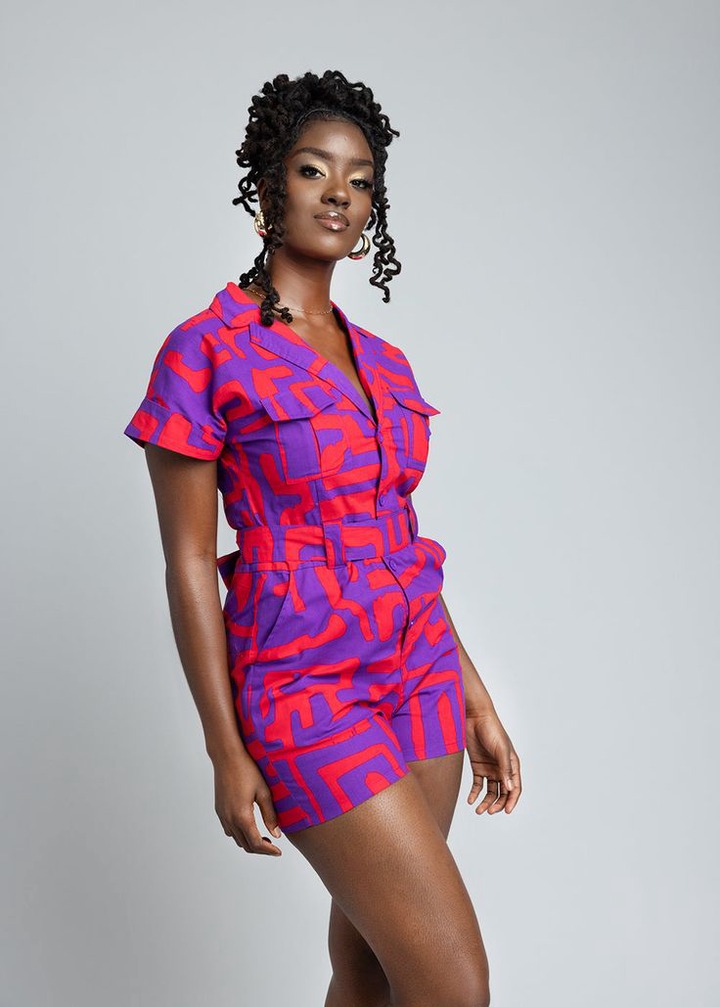


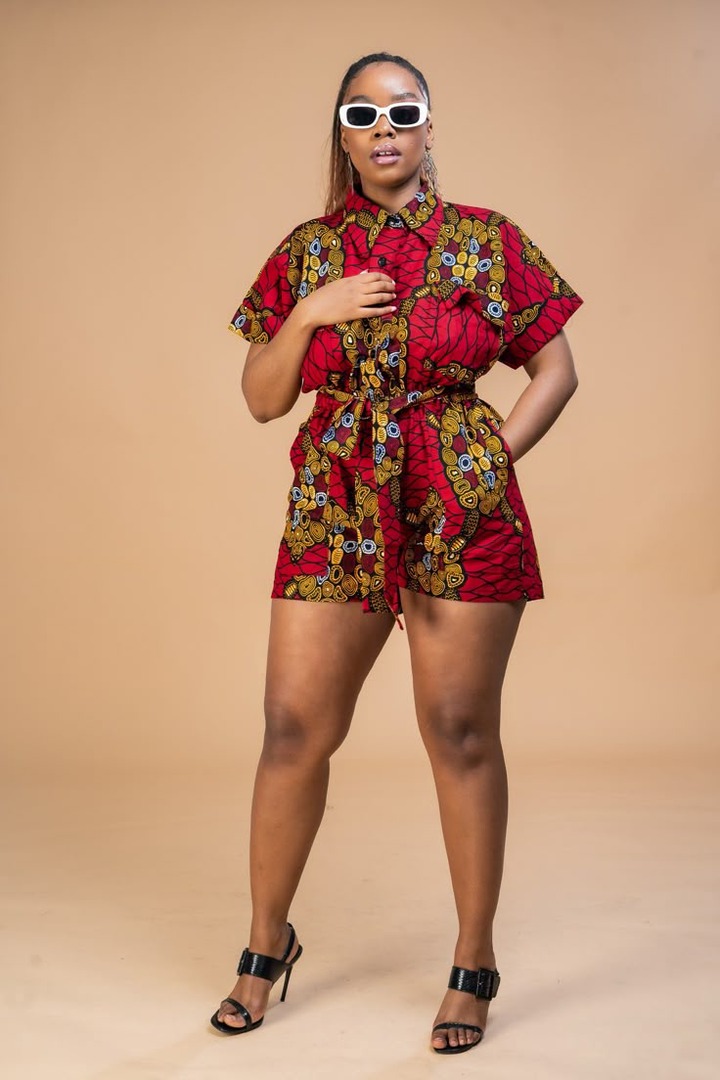





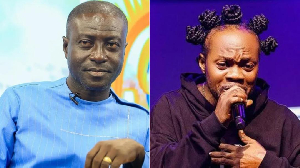
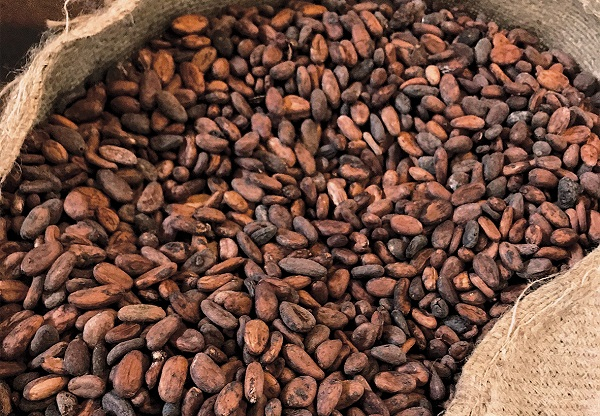



 AratheJay, who adopts the alias Nimo Constantine, has built his reputation on intricate storytelling that blends Hiplife(African Rap), Afrobeats, and introspective themes rooted in his Ghanaian background.

