6.8 C
London
Sunday, December 28, 2025
Home Blog Page 406

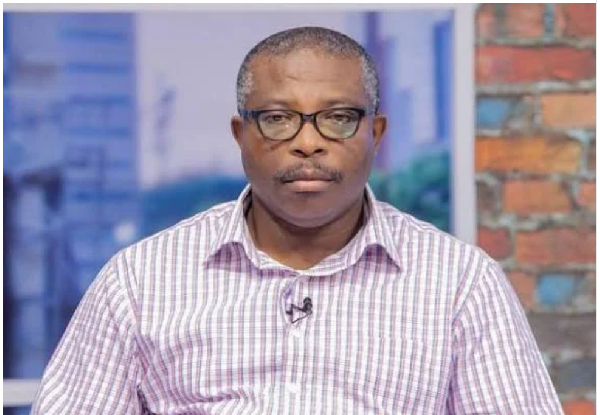
Kotoko have a good record against North African sides – Sarfo Duku on WAC clash 

0

Asante Kotoko’s Head of Communications, Lawyer Sarfo Duku Esq, has acknowledged the challenge ahead of the club’s CAF Confederation Cup playoff clash with Wydad Athletic Club (WAC) but insists the Porcupine Warriors have what it takes to prevail.

Speaking in an interview with GTV Sports+, Sarfo Duku described the fixture as a difficult one, given the history of encounters between Ghanaian and North African clubs. 

He, however, pointed out Kotoko’s impressive record against teams from the region.

“Yes, the game is coming live and from whichever angle we look at it, it’s going to be a tough game. It has never been easy for Ghanaian clubs when they come face-to-face with their North African counterparts,” Duku said.

“But I think Kotoko has not fared badly against North African sides. Especially when we talk about WAC, and you look at the records, they show that Kotoko have done well.”

The experienced communicator also reflected on one of the club’s most painful memories against the Moroccan giants — the 2002 CAF Cup Winners’ Cup final, which Kotoko lost on the away goal rule after winning 2–1 in Kumasi.

“Except for that terrible experience in 2002 when we had to lose the cup to them in the grand finale on the away goal rule. In that game, Kotoko won 2-1, but we lost the trophy,” he recalled.

“Most of our supporters have not forgiven us. Sometimes we meet some of them and they tell us that from that day till date, they have not watched any of our matches because they lost interest.”

Asante Kotoko will host Wydad AC at the Accra Sports Stadium on Sunday, October 19, 2025, after CAF declined approval for the Baba Yara Sports Stadium to host the game due to renovation works.

Assibey Antwi, Gifty Oware to face court today over NSA ghost names scandal

0

Former Executive Director of the National Service Authority (NSA), Osei Assibey Antwi, and his deputy, Gifty Oware, are expected to appear in court today, Friday, 17th October 2025, to answer charges of alleged financial misconduct involving several millions of cedis.

Mr. Assibey Antwi faces 14 counts, including causing financial loss to the state, stealing, and money laundering.

His charges are in line with sections 179A(1) and 124(1) of the Criminal Offences Act, 1960 (Act 29), and section 1(2)(c) of the Anti-Money Laundering Act, 2020 (Act 1044).

According to prosecutors, the former NSS boss allegedly approved payments to over 60,000 ghost national service personnel and misappropriated public funds during his tenure between August 2021 and February 2025.

His deputy, Gifty Oware, also faces multiple charges, including stealing, money laundering, and abuse of office.

The Attorney-General’s Department accuses her of misappropriating about GH¢38.46 million between February 2022 and March 2024, while overseeing finance, audit, and procurement at the Authority.

Prosecutors allege that Ms. Oware dishonestly transferred GH¢31.5 million from a loan facility meant to support national service personnel into the account of her private firm, Blocks of Life Consult, under the guise of supplying goods on a hire-purchase arrangement.

Read more details…

National Service Scandal: Gifty Oware-Mensah charged for stealing over GH¢38m

Prophet outlines plans to tackle illegal mining nationwide

0

The Founder of Glory and Dominion Ministry in Takoradi of the Western Region, Prophet Elisha Joshua Kabenlah, has announced that he has developed strategies aimed at eradicating illegal mining, commonly referred to as galamsey, within the country.

These strategies, according to him, propelled by citizen advocacy, would concentrate on the Electoral Commission’s database, chiefs, landowners, merchants, fuel stations, and the judicial system (law courts).

“We will formulate these strategies, and I sincerely hope that the President will grant me this permission and opportunity. I pledge that within 90 days, galamsey will cease. The practice is still ongoing, and we will initiate our efforts in the Western Region. We are ready to engage with the government on this matter,” Prophet Kabenlah said.

“Galamsey represents a significant national concern, and it is our shared duty to eliminate this ‘cancer.’ The Church must take a leadership role by being proactive rather than passive participants and campaigning against this national disgrace; we cannot afford to be idle, absolutely not! We require a revitalisation in our efforts to protect the environment and our natural resources,” he highlighted.

Prophet Kabenlah disclosed these strategies during an interview with The Ghanaian Times, where he expressed his views on the rampant illegal mining that has devastated much of Ghana’s valuable land and environmental resources.

He pointed out that illegal mining had led to a decline in cocoa production, emphasising that the fish in the Ankobra River within the Evalue Gwira enclave have also suffered due to significant pollution.

He said attempts made by security agencies have not been entirely effective, as illegal miners receive information from informants well in advance of the operatives’ arrival at the galamsey sites.

He added that the offenders quickly resumed their activities with new equipment provided by merchants.

His advocacy team, Prophet Kabenlah explained to The Ghanaian Times, would obtain an Electoral Commission database of all chiefs in the communities and, along with other officials, hold them accountable for any environmental violations, including galamsey.

Moreover, he stated, “Chiefs receive their shares from landowners who sell properties for galamsey. They play a crucial role in the galamsey industry, alongside the ‘merchants of the trade,’ who provide equipment such as Chang Fan machines. You apprehend the young individuals but leave the masterminds untouched. It is impossible to halt galamsey.”

He suggested that the coalition of advocates would collaborate with the district assemblies and assembly members to issue summons to defiant chiefs and landowners.

Prophet Kabenlah emphasised that landowners conspired with the chiefs in the sale of lands for galamsey and, as a result, they would be subjected to prosecution in specialised high courts, required to sign a bond of good behaviour, and upon violation, face imprisonment.

He believed that this approach would act as a deterrent and compel chiefs and their accomplices to cease illegal mining activities in their regions.

FROM CLEMENT ADZEI BOYE, TAKORADI

🔗 Follow Ghanaian Times WhatsApp Channel today. https://whatsapp.com/channel/0029VbAjG7g3gvWajUAEX12Q
🌍 Trusted News. Real Stories. Anytime, Anywhere.
✅ Join our WhatsApp Channel now! https://whatsapp.com/channel/0029VbAjG7g3gvWajUAEX12Q

Ghana faces cataract surgery crisis as access remains critically low

0


Ghana faces cataract surgery crisis as access remains critically low – Ghana Business News


Man set ablaze after being found with human hand

0

When the Police finally arrived, the suspect had already succumbed to the crowd’s fury When the Police finally arrived, the suspect had already succumbed to the crowd’s fury

The quiet town of Assin Bereku, district capital of Assin North, was shattered on Tuesday October 14, 2025 morning by a chilling scene of vigilante justice.

A man, known only as Asuo and in his 30s, was brutally lynched by an enraged crowd after being caught with a blood-soaked bag containing what appeared to be a human hand.

A neighbour watched in horror as Asuo left his home, clutching the grisly bundle and alarmed by the sight, the vigilant neighbour raised the alarm just as the boy’s frantic parents combed the area for their missing nine-year-old.

The community’s rage exploded instantly when the connection was made and within minutes, Asuo was dead.

When the Police finally arrived, the suspect had already succumbed to the crowd’s fury.

A search of his home revealed a horrifying stash of bloodied knife and bedsheets.

The two bodies had been taken to the morgue in Assin Fosu as authorities launch a full investigation into the horrific crime.

Sylvester Amakye, the District Chief Executive on hearing the news visited the site to denounce the tragedy and issued a strong warning: “Such acts of vigilante justice must never happen again.”

He implored the youth not to take the law into their own hands and to trust law enforcement agencies to bring offenders to justice.

Museveni rallies supporters on wealth creation in Yumbe

0

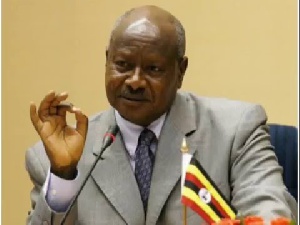
People attend President Museveni's campaign rally in Yumbe District People attend President Museveni’s campaign rally in Yumbe District

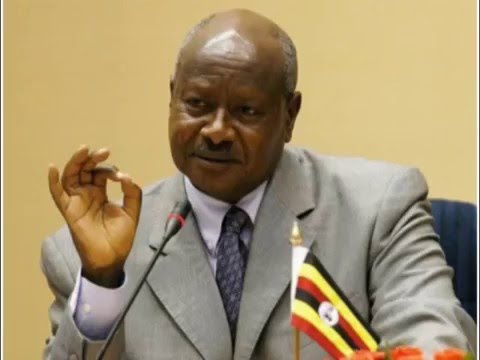
President Museveni, the National Resistance Movement (NRM) party candidate, has re-echoed his call on Ugandans to embrace wealth creation and improve their livelihoods.

He said while the NRM government has prioritised infrastructural programmes such as road tarmacking, construction of health centres, schools, and industrial parks, kicking poverty out at the household level comes at the top of his five-year agenda in case he is re-elected.


“We started with Entandikwa, Bonna bagaggawale, Operation Wealth Creation, Parish Development Model, and the Uganda Women Empowerment Programme to empower Ugandans and get them out of poverty,” Mr Museveni, who is seeking a seventh term, told a gathering at Geya Primary School Ground in Yumbe District yesterday.

Throughout his campaign rallies, Mr Museveni has emphasised peace and security and wealth creation and development, which he refers to as major pillars of his ruling NRM government.

The residents recognise the NRM government for its concerted effort in restoring peace in the once war-ravaged area. The government has also upgraded Yumbe Hospital to a Regional Referral Hospital with a view to improving health services in the district. 

“I want Ugandans to get involved in wealth creation. We are putting Shs100 million per parish per year. We are going to add another Shs15 million for local leaders because they have not been getting money in the current arrangement,” Mr Museveni said.

He announced the creation of special funds for religious leaders, university graduates, and cultural leaders. 

“All these are aimed at chasing poverty out of homes. We shall also open up model farms for seed multiplication and commercial farming,” he said. 

But district leaders, in a memorandum they presented before him, cited infrastructural developments such establishment of industrial parks, road tarmacking, and construction of more schools and upgrading of health centres, among others, that they said needed urgent attention. 

Mr Museveni also encouraged locals in Terego and Yumbe to embrace fish farming through the establishment of fish ponds, and to grow coffee and bananas. 

The promises

He promised to construct industrial parks that will create jobs. Already, more than 200 acres of land have been secured by the district for the construction of the industrial park. 

Responding to unfulfilled pledges of supporting the families of former rebels, the late Col Nasur Ezaruku and Gen Ali Bamuze, and the construction of a secondary school, Mr Museveni asked the State House team to capture details for a possible follow-up.


According to statistics from the Electoral Commission, in 2021, of the 113,855 registered voters, Mr Museveni won with 50,686 (71.24 percent). Meanwhile, the runner-up, Robert Kyagulanyi, garnered 16,890 (23.74 per cent) votes.

National Boardroom Governance Summit 2025 Champions Bold Leadership and Governance Excellence

0

The second edition of the National Boardroom Governance Summit concluded with a call for African board leaders to embrace bold, ethical, and inclusive governance to sustain institutional growth and public trust.

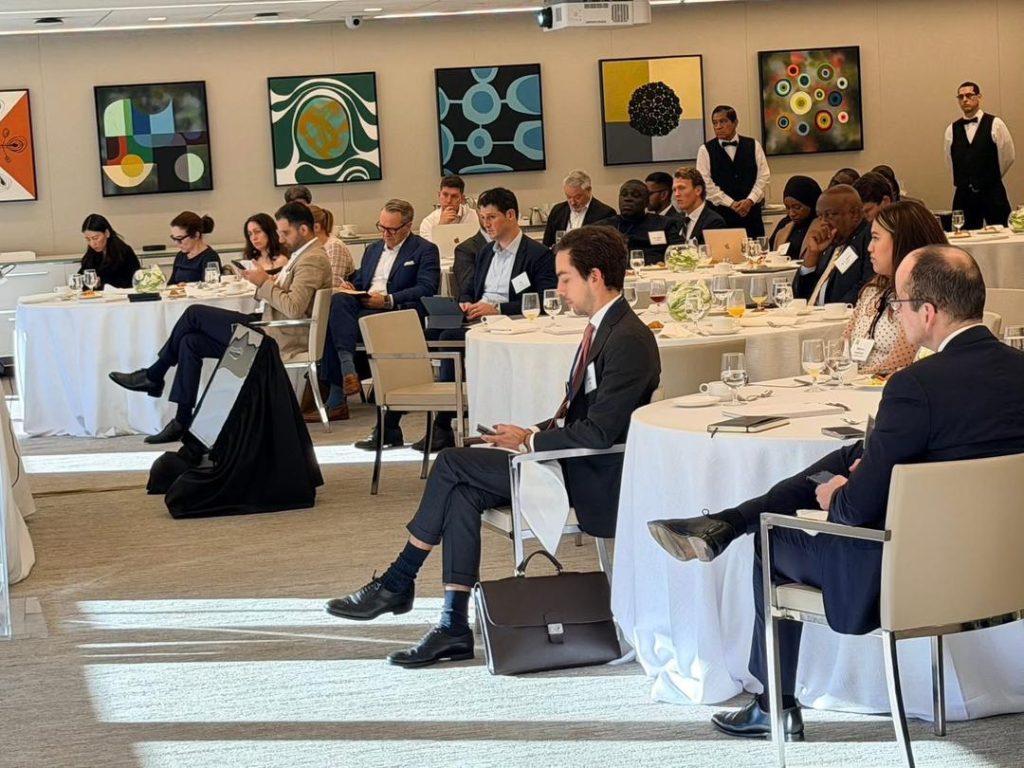
Convened by Professor Douglas Boateng, the summit, held on October 14, 2025, at the Labadi Beach Hotel, brought together over 800 participants, including board chairpersons, CEOs, policymakers, regulators, and governance experts, under the theme “Daring to be Different: The Role of the Chairperson in Effective Boardroom Governance.”

Delivering the keynote address, Hon. Julius Debrah, Chief of Staff at the Office of the President, highlighted that effective boardroom governance is vital to translating national strategies into tangible results. He stressed that when leadership upholds integrity, accountability, and professionalism, it builds investor trust, drives job creation, and reinforces Ghana’s overall economic stability and growth.

“Sound boardroom governance determines whether strategy becomes success or another shelved ambition. When boards are transparent, accountable, and professionally run, capital becomes confident, jobs multiply, and institutions grow resilient. Weak governance, however, invites inefficiency, politicization, and public mistrust. Ghana’s economic resilience, investor confidence, and national reputation are all reflections of how its boardrooms function,” the Chief of Staff stated.

He further emphasized that government, recognizing this principle, remains committed to strengthening accountability and transparency through initiatives such as the Reset Agenda and the Government Accountability Series, which ensure that sector ministers publicly report on policies and progress.

He emphasized that these efforts reflect government’s resolve to build trust and integrity in governance, noting that while policies provide structure, true accountability must be nurtured within the culture of leadership itself.

He concluded by urging Chairpersons to lead with courage, fairness, and unwavering ethics, noting that aligning productivity with purpose strengthens boardroom governance, drives sustainable economic growth, and fosters national stability.

In his welcome remarks, Professor Douglas Boateng, Africa’s first-ever Professor for Industrialization and Supply Chain Governance, emphasized the need for board chairs to move beyond routine compliance and embrace leadership anchored in purpose, conscience, and service to the greater good.

He noted that effective governance is not merely about titles or procedures, but about fostering trust, fulfilling duty, and shaping a sustainable future for society.

“The seat of the chairperson is not a furniture, it is a promise made to the people we meet today and those we may never meet especially the children who will inherit the output of our decisions,” he stated.

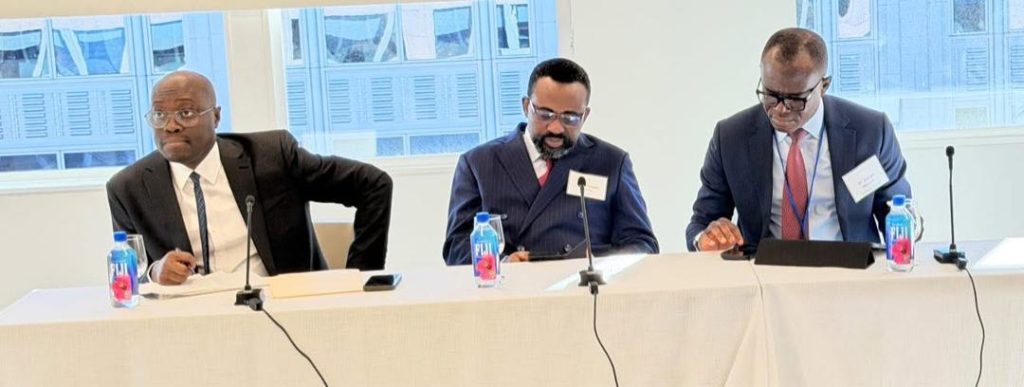
Other distinguished speakers, including Mr. Alex Apau Dadey, Executive Chairman, KGL Group, Stephane Abass Miezan, President of the Ghana National Chamber of Commerce and Industry (GNCC), and Chief Alhassan Andani, Executive Chairman of LVS Africa reiterated that Accountability, effective communications and respect for the CEO’s operational independence remains essential for effective boardroom governance.

The event featured three engaging panel sessions, interactive Q&As, and a networking session that facilitated cross-sector collaboration and peer learning. Participants commended the summit for offering actionable insights on improving corporate governance practices in both private and public institutions.

Closing the summit, Professor Boateng thanked all sponsors and partners for their continued support.

“This year’s summit reinforces that governance transformation must begin from the top. Chairpersons must dare to be different; to inspire, to innovate, and to hold themselves accountable to the people and institutions they serve,” he said.

The National Boardroom Governance Summit is an annual platform convened by Professor Douglas Boateng to advance the culture of ethical governance, leadership accountability, and sustainable business growth across Africa. The summit fosters learning, dialogue, and peer exchange among current and aspiring board leaders.


Gov’t will be able to exit current IMF Programme come next year – BoG Governor assures

0

Bank of Ghana Governor, Dr Johnson Asiama, has assured that Ghana will be able to exit the current programme with the International Monetary Fund (IMF) next year.

According to him, the country is currently ahead of most of the targets and benchmarks under the IMF programme.

The Governor noted that Ghana has worked hard to undertake the necessary reforms to firmly stabilise the economy.

Dr Asiama gave the assurance during an interaction with the IMF’s Director of the African Department, Abebe Selassie, on the sidelines of the IMF/World Bank Annual Meetings in Washington DC.

The discussion formed part of the “Governor Talks Series” organised by the IMF, focusing on Ghana’s recent macroeconomic journey—marked by external shocks, fiscal vulnerabilities, and a challenging global environment.

The Governor’s assurance comes at a time when there have been reports suggesting that the country could be forced to extend the IMF programme to give investors and development partners confidence in government’s commitment to fiscal discipline.

However, Dr Asiama’s remarks appear to calm such fears.

“We should not forget that when this administration took over, there were concerns that we should cancel the programme, and there were doubts about whether we could carry on with it,” he said.

“But the current developments show that we have delivered and turned things around,” he added.

He further noted that “the current ECF programme has also introduced a lot of structural reforms, including those designed to strengthen the Bank of Ghana’s operational capacity and its monetary policy framework.”

Ghana signed up for the IMF programme in 2023, which is expected to end in May 2026. According to the Fund, it has already advanced more than US$2 billion to support Ghana’s economic recovery.

Dr. Asiama also praised the IMF for the support it has provided to help stabilise the economy.

Ghana’s Economic Recovery

The Governor highlighted some of the drastic measures undertaken by both fiscal and monetary authorities to stabilise the economy.

“We met an economy that was challenged, with high levels of inflation, and this was our priority when this administration took over,” he said.

Dr. Asiama added that the Bank of Ghana worked hard to tighten monetary policy and step up liquidity management.

He revealed that following the high inflation levels experienced in 2023 and 2024, the central bank moved swiftly to raise the policy rate and strengthen liquidity controls.

“These measures have helped to reduce inflation to 9.4 per cent as of September 2025,” he said.

“Our policies, going forward, will be data-driven and adaptable to changes in the economy,” the Governor added.

On sustaining the current inflation levels, Dr Asiama emphasised that “now that inflation is within the target band, the challenge is to sustain the gains by continuing to implement sound monetary and exchange rate policies to ensure inflation remains within target.”

He also highlighted the critical role of Ghana’s Gold for Reserves programme, saying it has yielded positive results and enabled the Bank of Ghana to build its reserves.

Exchange Rate Framework

Dr Asiama disclosed that, in collaboration with the IMF, the Bank of Ghana has developed a structured foreign exchange operations framework to intermediate FX flows and smooth excessive market volatility while building international reserves.

“As these framework changes take place, they will bring further transparency to our foreign exchange market operations and help ease volatilities in the market,” the Governor said.

DISCLAIMER: The Views, Comments, Opinions, Contributions and Statements made by Readers and Contributors on this platform do not necessarily represent the views or policy of Multimedia Group Limited.

DISCLAIMER: The Views, Comments, Opinions, Contributions and Statements made by Readers and Contributors on this platform do not necessarily represent the views or policy of Multimedia Group Limited.

Vulcanizer jailed 15 years for motorbike robbery

0

File photo of a jailed person File photo of a jailed person

An Adenta Circuit Court has sentenced a 32-year-old vulcanizer to 15 years’ imprisonment for robbing a rider of his motorbike.

Issiful Bilal, charged with robbery, pleaded guilty before the court on September 25, 2025.

The court convicted him on his own plea but deferred his sentence to today (October 16).

The prosecution, led by Chief Inspector Maxwell Lanyo, told the court that the complainant, Razal Mukiala, was a commercial motorbike rider and a resident of Adenta New Site.

Chief Inspector Lanyo said on September 16, 2025 at about 10:30pm, the complainant was riding his Royal Motorbike with registration number M-25-WX1145 at Ritz Junction, Madina.

Prosecution said the complainant was transporting some passengers with his motorbike when Bilal and his accomplice, now at large, conspired to rob him (complainant), luring him to take them to Adenta New Legon.

On reaching a section of the road near Pinnacle Estate at Adenta Commandos, Bilal pretended his mobile phone had fallen onto the ground and asked the complainant to stop.

Prosecution said Bilal and his accomplice alighted and then pulled out a knife, threatening the complainant and robbed him of his motorbike.

The court heard that Bilal and his accomplice sat on the motorbike and sped off.

Prosecution said the complainant, who had fixed a sensor on the motorbike, activated it and the bike stopped a few meters away.

The complainant then raised the alarm, which attracted people to the scene.

Bilal, sensing danger, pushed the complainant into a gutter, picked up a big stone in an attempt to smash the complainant’s head.

Prosecution said Bilal then pretended it was his motorbike that had been taken by the complainant, however, with the timely intervention by the witnesses, Bilal was arrested but his accomplices escaped.

Bilal led the police to Agbogboloshie and Komba to arrest his accomplice, but he could not be found, prosecution said.

Federation presents over 80,000 coconut seedlings to small-holder farmers in Techiman Municipality

0

The programme aimed at improving household nutrition as well as building a strong foundation The programme aimed at improving household nutrition as well as building a strong foundation

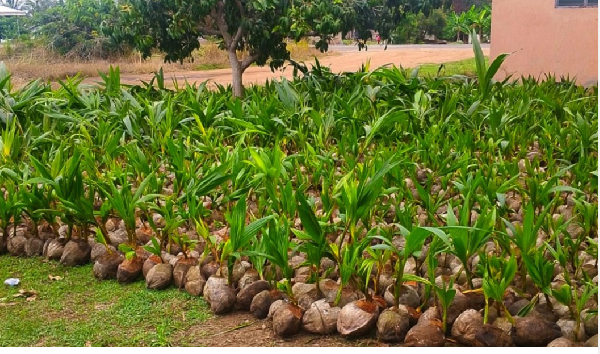
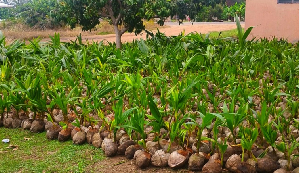
The Coconut Federation of Ghana (COCOFEG), the nation’s largest umbrella organisation in the coconut sector, has presented 81,000 seedlings to the Techiman Municipal Directorate of Agriculture, for onward distribution to small-holder farmers in the municipality.

Stephen Aidoo, the Techiman Municipal Director of Agriculture who disclosed this, said the seedlings (hybrid) would scale-up agribusiness, boost the coconut sector and improve the socio-economic livelihoods of the farmers.

He explained that the directorate had already distributed 61,000 seedlings to small-holder farmers and hoped to share the additional 20,000 by the end of October 2025.

In an interview with the Ghana News Agency (GNA) at Techiman, Aidoo said the coconut sector had huge economic potential, explaining that so far over 500 small-scale and commercial farmers had registered to benefit from the distribution.

He said the coconut seedlings had been planted on about 1,000 acres of land and explained that the distribution was aligned with the implementation of the government’s “Feed the Industry Programme.”

The programme aimed at improving household nutrition as well as building a strong foundation for agro-industrial growth, to ensure food security for the country.

Aidoo said the directorate was expected to distribute three million hybrid coconut seedlings to farmers nationwide, under the programme explaining that “coconut is an economic crop that embodies resilience and versatility and has huge global prospects.

He said the coconut sector created job opportunities for millions of people with vibrant markets, saying the nation’s annual production exceeded 65 million metric tons, with small-holder farmers contributing about 95 percent.

Baba Yara Stadium will get CAF and FIFA clearance soon

0

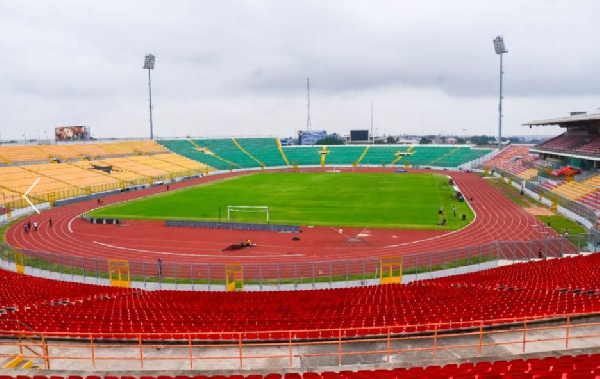
The Baba Yara Sports Stadium is the home grounds of Asante Kotoko The Baba Yara Sports Stadium is the home grounds of Asante Kotoko

The Minister of Sports and Recreation, Kofi Adams, has assured that the Baba Yara Stadium will soon get FIFA and CAF approval. 

The edifice is currently undergoing renovation after the Confederation of African Football [CAF] described it as unfit to host FIFA and continental-sanctioned games.

The decision has forced Asante Kotoko to play their CAF Confederation Cup games in Accra.

However, speaking to Asempa FM, the Member of Buem constituency hinted that the Baba Yara Stadium will soon be cleared to host international games.

“FIFA is concerned about the Baba Yara Sports Stadium, but massive improvements are currently underway. I believe the pitch will be approved after CAF conducts its inspection,” he assured.

“We have been given some areas to fix before we get the place approved, and I know that we will surely do that.”

At the moment, the Accra Sports Stadium remains the only stadium fit to host CAF and FIFA-sanctioned games.

Having hosted Kwara United in Accra in the first round of the preliminary round, Asante Kotoko will host Moroccan side Wydad Athletic Club in the second round of games on Sunday, October 19.

Police probe hammer and hoe attacks that claimed two lives in Jinja

0

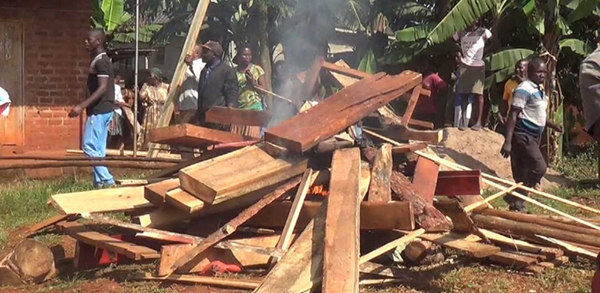
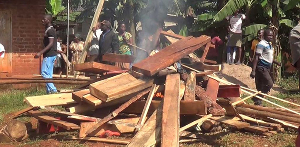
Mafubira residents react violently by setting timber on fire following murder of two people Mafubira residents react violently by setting timber on fire following murder of two people

Police in Jinja have launched investigations into two separate murders that occurred on the night of October 14, which claimed the lives of two residents.

The first incident happened in Lwanda Ward, where Ms Nusula Nakaziba, a mobile money agent, was attacked while returning home with her young daughter.

When the thugs attacked them, her daughter fled while raising an alarm. This alerted residents who came to their rescue. 

Police deployed a sniffer dog to assist with the investigation, and the dog led investigators to Grace’s Furniture Workshop, located across the road, and later to a residence in Lwanda Village.

The dog stopped at a residential house, and the angry locals started accusing its occupants of being involved in the crime.

They stoned the house, breaking windows, and looted property, forcing the occupants to run for their dear lives.

Mr Dan Mulangira, a Nakabango resident, expressed frustration over the death of the security guard, describing him as a law-abiding citizen.

In protest, residents blocked the Kamuli–Jinja Highway using timber and furniture taken from Grace’s Furniture Workshop, which they accused of harbouring criminals. Police intervened, but the situation escalated as some residents set fire to parts of the workshop, while others looted timber and furniture.

The Jinja Northern Division Deputy RCC, Mr Hamisi Kiganira, condemned the incidents, blaming them on the rising youth unemployment and indiscipline in the community.

“It’s alarming that many of our youth have turned into criminals. They don’t want to work; instead, they spend their days betting and later resort to robbing and even murdering innocent people,” Mr Kiganira said.

Mr Kiganira added that security forces have launched regular patrols in the area to restore peace and prevent further violence.

The Overlooked Key to Secure Banking (Part 2)

0

Most people imagine that robust technology and strong systems are the main barriers standing between their money and cybercriminals. In reality, the greatest risk to your security often lies in your own daily habits. Cybercriminals are not just targeting complex systems. Increasingly, they are focusing on individuals, exploiting predictable routines and small lapses in judgement.

Banks such as Absa Bank Ghana invest extensively in security systems. However, no amount of technology can protect against habits that leave personal information exposed. If you believe you are too smart to fall victim, you may already be more vulnerable to the latest tactics employed by fraudsters.

In this series, we are examining some of the most common digital habits that make people vulnerable when banking online, and how you can avoid them. Previously, we highlighted the dangers of weak passwords, acting on urgent requests without verification, and accessing your accounts over public Wi-Fi. In this instalment, we turn to three more habits that deserve your immediate attention.

Digital Habit #4: Ignoring Security Updates on Your Devices

Security updates can feel like an inconvenience. Many people are tempted to dismiss update reminders with a quick tap of “Remind Me Later,” without thinking of the potential consequences. However, neglecting to update your phone, computer, or banking apps can create real vulnerabilities that cybercriminals are quick to exploit.

Software updates do more than introduce new features or fix minor bugs. Their most important function is to address security gaps that attackers are actively searching for. Once a weakness in an operating system or application is discovered, criminals develop malicious software specifically designed to exploit it. If you continue to use outdated software, you are effectively leaving your digital door unlocked.

These risks are not only theoretical: many major cyber incidents worldwide have succeeded because users delayed critical updates. Banks such as Absa Bank Ghana work continuously to strengthen the security of their platforms, releasing regular updates to protect customers from new threats. However, these measures only work if customers update their apps promptly. In fact, many security updates are released in response to threats that have already been identified, which means that delaying installation may leave you exposed to risks that criminals are already exploiting.

The simplest way to stay protected is to enable automatic updates on your devices and banking apps. This ensures you always have the latest security enhancements without having to remember to check manually. For those who prefer to update manually, it is essential to develop a habit of checking for updates regularly, especially for apps related to finance, communication, and identity.

Device security settings also play a role in your overall protection. Take the time to review your phone or computer’s privacy and security settings, switch off unnecessary tracking, and enable features such as biometric authentication where possible. These steps help reduce the amount of personal information available for criminals to use against you.

Security updates are not just another notification to ignore. They are a vital layer of protection in a constantly evolving digital world. The next time your device prompts you to update, do not put it off. A few minutes spent installing updates today may prevent a far greater loss tomorrow.

Digital Habit #5: Relying on Browser-Saved Passwords

Trusting your web browser to remember your passwords often seems like an easy way to save time. Many people choose this option for the sake of convenience, believing their passwords are safely stored behind a single login or fingerprint. However, relying on browser-saved passwords introduces a significant risk to your digital security.

If your device is ever lost, stolen, or compromised by malware, stored passwords can quickly become accessible to cybercriminals. While modern browsers use encryption to protect saved passwords, determined attackers and malicious software can still extract these credentials from your device. This risk is particularly crucial when it comes to banking details, as a single breach may allow an intruder to access your accounts, transfer money, or lock you out entirely before you become aware.

A safer alternative is to use a dedicated password manager. Unlike browser storage, which is directly linked to your device, a password manager stores your login details in a secure, encrypted vault. Even if someone gains access to your device, your passwords remain protected by a single master key that only you control.

Another important habit is to avoid letting browsers auto-fill passwords on shared or public computers. Always log out of banking websites and apps after transactions and never save passwords on any device that does not belong to you.

Digital security often requires prioritising safety over convenience. It may take a few extra moments to enter your password or use a password manager, but that extra effort can make the difference between keeping your information safe and handing it over to a criminal. Protecting your credentials should always be a priority, especially as banking becomes increasingly digital.

Digital Habit #6: Ignoring Bank Alerts and Security Notifications

It can be tempting to treat bank alerts and security notifications as background noise. They arrive frequently and therefore are often overlooked or dismissed as unimportant. However, ignoring alerts from your bank can result in missed warnings about suspicious activity and expose your accounts to greater risk.

Bank alerts serve as an early warning system. Notifications about transactions, logins from new devices, or changes to your account details are designed to keep you informed and help you react quickly if something is amiss. Criminals often attempt unauthorised transactions outside of your usual banking patterns, knowing that a delayed response can give them the time they need to complete their fraud.

By paying close attention to your alerts, you give yourself a critical advantage. If you receive a notification about an activity you do not recognise, contact your bank immediately using a verified number. Prompt action can make the difference between preventing a crime and suffering financial loss.

It is also important to ensure that your contact details are up to date with your bank so that you never miss a notification. If you change your phone number or email address, update your records promptly. Make it a habit to review your account activity regularly, even if you do not receive an alert, and always enable security notifications on your banking app.

Viewing bank alerts as essential safeguards rather than inconveniences will help you maintain control over your finances and protect your accounts from fraud. In the digital age, vigilance is a habit that pays off.

End of Part Two

This concludes part two of our series on digital habits for secure banking. In the final instalment, we will address more habits to avoid and provide further guidance on how to keep your finances safe in an ever-changing digital world.

By: Benjamin Abiemo, Head, Cyber Security Management, Absa Bank Ghana LTD

BoG interventions target market stability, not cedi manipulation – Asiama

0

Governor of the Bank of Ghana, Dr. Johnson Asiama, has rejected suggestions that the Central Bank is overstepping its bounds in managing the foreign exchange market, stressing that its actions fall squarely within a flexible exchange rate framework aimed only at curbing excessive volatility.

Speaking at the IMF–World Bank Governor Talk Series in Washington, D.C., Dr. Asiama explained that while the Bank occasionally intervenes to stabilise the cedi, such actions are reserved for periods of exceptional market pressure.

“The framework that we have is a flexible exchange rate management framework. Essentially, what we do is smoothen excessive volatilities,” he stated.

Addressing concerns about the scale of intervention, he said: “Yes, there were allegations about whether we were intervening in the market, but that was not exactly the case,” noting that significant foreign outflows had required short-term support from the Central Bank.

According to Dr. Asiama, between the second and third quarters of 2025, Ghana undertook several “lumpy” foreign payments, including billions of U.S. dollars to Independent Power Producers (IPPs) and domestic bondholders who exited their holdings amid the cedi’s appreciation.

At the same time, remittance inflows weakened, draining liquidity from the interbank foreign exchange market.

“In the mix of that, the central bank had to step in. The interbank FX market had dried up, so the central bank had to provide that support,” he said.

Dr. Asiama added that market conditions have since improved, thanks to directives requiring mining firms to channel all foreign exchange inflows through commercial banks — a measure that is already showing positive results.

“We do not over-support the market at all. What we seek to do is limit volatility to ensure smooth dynamics in the market, and that is the framework we will maintain going forward,” he affirmed.

Ghana is on track, we’ll sustain the gains — Ato Forson tells global investors

Billions in energy debt triggered temporary foreign exchange pressure – BoG Governor

0

Governor of the Bank of Ghana (BoG), Dr Johnson Asiama Pandit, says recent pressures on the foreign exchange market were triggered by large energy sector payments and investor exits, not by direct market intervention from the Central Bank.

Speaking in an interview with the International Monetary Fund (IMF) at the ongoing IMF/World Bank Spring Meetings in Washington, D.C., on October 16, he said the Bank of Ghana had to undertake a series of “lumpy” foreign exchange payments between July and August to clear long-standing energy debts and other domestic obligations.

“Yes, there were allegations about whether we were intervening in the market. But that was not exactly the case,” he explained.

The Governor’s remarks come amid renewed public scrutiny of the Bank of Ghana’s foreign exchange management practices and growing interest in the country’s energy sector debt, which continues to weigh heavily on fiscal stability.

“Between the second and third quarter, we had to do a number of lumpy payments. There were all these large arrears in payments to some of the IPPs. These were billions of US dollars.”

He revealed that the Central Bank also faced additional outflows from some domestic bondholders who decided to liquidate their investments after the cedi appreciated.

“We also had some of the domestic debt-affected bondholders who wanted to exit. They felt that because the currency had appreciated, it was the right time to take up their investment. We had to allow them to go,” he said.

The Bank of Ghana Governor said those combined pressures temporarily tightened liquidity in the foreign exchange market.

“We did a lot of lumpy payments between July and August, and you might have seen some bit of that,” he noted.

Dr. Pandit further disclosed that the situation coincided with a decline in remittance inflows, which typically provide over US$6 billion in annual FX injections.

“Because all these inflows accrue to the central bank, and it was happening at a time when we saw some decline in remittance inflows, the central bank needed to step in to meet all those lumpy payments,” he said.

According to him, the interbank foreign exchange market “had dried up” during that period, forcing the Bank of Ghana to provide temporary support.

“The central bank needed to provide that support. But I’m happy to say that the interbank FX market has come back,” Dr Pandit said.

He explained that the Central Bank has since written to mining firms to route their inflows through commercial banks to improve liquidity in the FX market.

“We are beginning to see some pick-up in interbank FX market activity,” he said, clarifying that the directive covers all commodities except gold.

Dr Pandit stressed that with improved market conditions, the Central Bank no longer needs to be heavily involved in supplying dollars.

“As of yesterday, we had committed to make available $150 million. This morning, when I checked, the market had picked up only $90 million, so $60 million automatically goes into our reserves,” he said.

“Same thing Tuesday — we made available $150 million, and the markets picked up less than half that. So automatically, it goes into our reserves.”

He dismissed claims that the Bank was over-supporting the market.

“We do not over-support the markets at all. All we seek to do is to limit volatility and ensure smooth market dynamics. That’s the framework we will maintain going forward,” Dr Pandit emphasised.

DISCLAIMER: The Views, Comments, Opinions, Contributions and Statements made by Readers and Contributors on this platform do not necessarily represent the views or policy of Multimedia Group Limited.

DISCLAIMER: The Views, Comments, Opinions, Contributions and Statements made by Readers and Contributors on this platform do not necessarily represent the views or policy of Multimedia Group Limited.

Serwaa Amihere breaks silence on her law career plans

0

Serwaa Amihere is a Ghanaian media personality Serwaa Amihere is a Ghanaian media personality

Ghanaian media personality and newly called lawyer Serwaa Amihere has finally addressed the big question many have been asking since news broke about her successful call to the Bar.

The big question from what Ghanaians have seen on social media is whether she intends actually to practice law or not.

In a recent video from her hosting the popular morning political show on GHOne TV, Serwaa responded after her colleague, Muntala, playfully asked if she would practice or not.

In her response, she made it clear that not practicing law is out of the question, emphasising that she did not go through five years of intense academic and professional struggle for nothing.

The celebrated broadcaster further noted that she has already taken her first step into the legal field.

According to her, on Monday, October 13, 2025, she was officially introduced by the law firm she practices with at the court, although she declined to mention the firm’s name publicly due to the rules that govern the practice.

Power struggle rocks Resurrection Power New Generation Church after death of Kwadwo Boakye

0

The church’s legal representative, Alexander Kodwo Kom Abban The church’s legal representative, Alexander Kodwo Kom Abban

The ongoing turmoil in the Resurrection Power New Generation Church (RPNGC) is a “coordinated effort” by a faction within the church to seize control under the pretext of demanding financial transparency and accountability, the church’s legal representative, Alexander Kodwo Kom Abban, has revealed.

According to him, the countless allegations and rumours were all part of a grand scheme by a few disgruntled members of the church and underlined the power struggle that had bedevilled the church, following the untimely demise of its founder, Reverend Dr Anthony Kwadwo Boakye.

RPNGC has been embroiled in a leadership crisis following allegations of financial mismanagement and a power struggle by a faction within the church who were bent on seizing control under the pretext of demanding financial transparency.

Addressing a news conference in Accra on Tuesday October 14, 2025, Abban denied the allegations of financial mismanagement, stressing that some purported elders of the church are spreading false rumours to hijack the administration of the church.

“These individuals are spreading baseless allegations and inciting division with the sole intention of hijacking the church,” Abban said, labelling the effort as a “calculated coup d’état.”

These purported individuals, led by Elder Benjamin Frimpong Yeboah, have planned to cut off the children of the late founder, Dr Anthony Boakye, from all administrative roles in the church alleging that the children are living liverish life after the demise of the founder, their father.

Rev Dr Anthony Boakye, who died in February 2023, had formally registered himself, his wife Margaret Boakye, and their children Benjamin and Jennifer Boakye as directors of the church at the Registrar General.

He also appointed John Kofi Boateng (known as “Dada Boot”) as General Secretary and Linda Naa Odarley as Deputy Secretary.

Founded in 2002, the church grew into a nationwide movement but lacked formal governance structures, with leadership largely centralised around the late founder and his inner circle.

Following his death, a funeral committee was formed comprising family members, elders, legal advisors, and staff, of which Shardrack Adjetey Sowah, who is a member of the church, was made the chairman of the said funeral committee.

In June 2024, the crisis deepened when an audio recording surfaced allegedly featuring Kofi Nyarko, who claimed to be Rev. Boakye’s grand-nephew, accusing the founder’s children of embezzling church funds.

Abban dismissed the claims as “malicious and unfounded,” adding that Nyarko had previously been implicated in theft during Dr Boakye’s illness at his house.

“Every individual named in the recording denied the allegations when I met them. Nyarko was invited to substantiate his claims but never showed up,” Abban stated.

Poultry farmers in Western Region urge government to entrust birds into professional hands

0

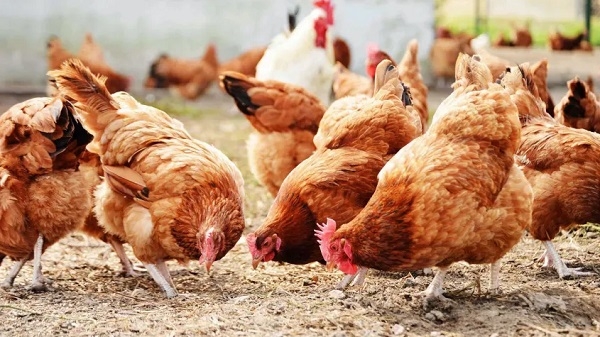
The government’s policy of (Nkoko Nkitinkiti) intends to give every constituency 10,000 birds The government’s policy of (Nkoko Nkitinkiti) intends to give every constituency 10,000 birds

The Western Regional Poultry Farmers Association says distributing broilers to non-poultry farmers or inexperienced groups at the constituency level was tantamount to the failure of the programme. 

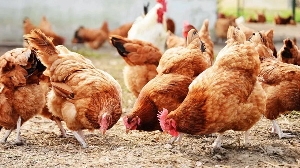
The government’s policy of (Nkoko Nkitinkiti) intends to give every constituency 10,000 birds at an estimated cost of 200 million cedis, a significant commitment to the Poultry sector.

The group said, broilers required specialised care; feed regime, housing, vaccination and stress management, therefore without adequate training to beneficiaries it would result in high mortality and economic loss to the state.

Emmanuel Benya, the Regional Chairman of the Association, at a press conference at Takoradi said though the initiative was a bold one to reduce dependency on imported Poultry, critical implementation risks must be addressed.

He mentioned bird mortality, threats of outbreak of diseases and market disruption as a major challenge of poultry farming, and recommended Cockerell as a more sustainable and cost-effective alternative for the project, than broilers which were very fragile and had less resistance to infections.

“We strongly recommend Cockerell or Saso which are more resilient, require less intensive care or management and are better suited to the Ghanaian climate with lower risks options and are also in high demand,” the Chairman explained.

Benya said the ability to raise birds was not a task for the faint hearted; “members of the Association are therefore cardinal in the successful implementation of the policy…this could also save numerous birds from the mortality bracket.”

They were also of the view that the government must gave each identified Poultry farmer or commercial farmer specific number to rear as against giving all 10,000 birds to one farmer…this will save deaths associated with mobility after the four weeks period.

Benya said the policy had the power to become a transformative game changer for Ghana in revitalising local agriculture, achieving food security and strengthen the cedi but for implementation hiccups.

The Association suggested a biosecurity protocol, comprehensive training, government supported veterinary services and monitoring framework in partnership with existing farmer Association. 

Benya therefore called on the Ministry of Food and Agriculture and other relevant state agencies to help the government with the right information and management abilities to ensure that the programme became a great success to the teeming sector players.

Some of the poultry farmers encouraged the government to depoliticise the programme to achieve the utmost result.

Dr Randy Abbey commends Black Stars players’ commitment after World Cup qualification

0

Black Stars Management Committee Chairman, Dr Randy Abbey, has lauded the playing body of the senior national team’s dedication following their successful qualification for the 2026 FIFA World Cup.

Ghana secured their fifth World Cup appearance with a hard-fought 1-0 victory over Comoros in their final group game at the Accra Sports Stadium, courtesy of a second-half strike from Mohammed Kudus.

In the wake of criticism surrounding the commitment of certain players, Dr. Abbey insisted that the squad displayed full dedication throughout the campaign. He highlighted that differences in club and national team performances do not reflect a lack of effort from the players.

“Every player has been eager to deliver. No player decided not to give us a bad performance. The performance at the club level is not the same as the national team,” he told Asempa FM.

“The game plan and tactics are always different from the national team. At the club side, they train more and play more together than the national team.

“We shouldn’t criticise that, but we can criticise the performance and not the commitment of the players because they were committed and ready to deliver,” he added.

Ghana will learn their opponents for the 2026 World Cup group stage when the draw takes place on December 5.

The ‘shadow army’ helping Uganda’s long-serving president keep an iron grip on power

0

Toting sub-machine guns and sometimes wearing masks as they drive along the streets of Uganda, members of an elite military unit are increasingly viewed as a private army to keep 81-year-old President Yoweri Museveni in power – along with his ever-growing family dynasty.

Museveni has led Uganda since 1986, when his rebel forces marched into the capital, Kampala. He has since won four elections – all marred by allegations of violence and rigging.

But this is nothing new in the country – since Uganda gained independence in 1962, power has only ever changed hands through rebellions or military coups.

Museveni is seeking re-election next year and the opposition fears that the Special Forces Command (SFC) could be used to prevent it from campaigning, as it says was the case in 2021.

But the SFC, which for years was commanded by Museveni’s son Gen Muhoozi Kainerugaba, has been accused by government critics of abducting, torturing, and killing opposition activists all year round, not just during elections. The SFC denies these allegations.

“It’s like a shadow army within the army, which is only answerable to the president and his son. Its rise and influence are causing resentment among senior generals,” one military source told the BBC.

This is compounded by the fact that Gen Kainerugaba, 51, who is now the army chief and has said he wants to succeed his father one day, has enlisted his own son into the army.

Gen Kainerugaba has also been contemptuous of some long-serving generals, calling one a “buffoon”.

His remarks sent shockwaves through military and political circles, but the government downplayed them as “mere social-media banter” – something for which Gen Kainerugaba is well known.

Several years ago he made a joke remark about invading neighbouring Kenya, to the dismay of generals.

Analysts say the unit has become so influential that it rivals the power of the regular army, which still has commanders who fought in the guerrilla war that brought Museveni and his National Resistance Movement (NRM) to power.

These observers have raised fears that the two could clash one day – as in Sudan where a civil war has broken out following a power struggle between the army and a paramilitary group once allied with it, the Rapid Support Forces (RSF).

The unit now known as the SFC was established when Museveni first took office, and has a motto stating “there is no substitute for loyalty”.

“The SFC is the most powerful unit within the Ugandan military, comprising the [most] highly trained, best-equipped, and best-funded officers in the country,” Dr Gerald Bareebe, a Uganda-born academic based at Canada’s York University, told the BBC.

Both the Ugandan army and the SFC declined to comment when approached by the BBC.

Museveni has previously defended the SFC, saying it was formed for Ugandans. He said that only people who did not wish Uganda well could be unhappy with such a force.

But Museveni’s critics see it differently – arguing that the president has ruled with an iron fist since seizing power, and has turned the country into his family’s fiefdom.

They note that the president’s wife, Janet, is the education minister and Gen Kainerugaba is the army chief. His grandson’s enrolment into the army – announced in July – is seen as perpetuating the family dynasty.

Gen Kainerugaba has twice led the SFC and is credited with expanding it into a force with an estimated membership of more than 10,000. The regular army is thought to have around 40,000 active members.

“They go through specialised training. And also they have sophisticated weapons, unlike the regular army,” a former senior military officer told the BBC.

Although his father promoted him to chief of the defence forces in March last year, Gen Kainerugaba is said to have maintained de facto control over the SFC, with its current commander, Maj Gen David Mugisha, reporting to him.

Gen Kainerugaba mostly operates from the unit’s headquarters – in a building named after his father – in Entebbe, about 34km (21 miles) south of the capital, Kampala.

The SFC boasts on its website that it carries out specialised missions “at a moment’s notice”, and is assigned to secure critical installations such as the main airport and oil fields.

It is widely suspected to have crossed into Kenya last November to capture opposition politician Kizza Besigye, once Museveni’s doctor, and take him back to Uganda to face trial for treason, which has yet to start. The army’s prosecutor has acknowledged the involvement of the Ugandan security forces.

Analysts like Dr Bareebe feel the SFC’s core function “is to guarantee regime survival” by fending off threats – not only from the opposition but also army generals.

“It plays a disproportionately central role in suppressing anti-regime mobilisation and shielding the ruling NRM from both internal dissent and external threats,” Dr Bareebe said.

Although the SFC has denied involvement in the wave of abductions and torture of opposition members, some of its officers have been convicted of abusing their power.

The most prominent case was that of a 32-year-old SFC soldier, who was court-martialled and sentenced to death last November for shooting dead three people and injuring two others, including a one-year-old child.

In May, the presidency said it was investigating a reported incident where SFC soldiers were accused of torturing the driver of a boda boda – as motorbike taxis are known locally. The rider had been rushing to reach his pregnant wife when he got caught up in a presidential convoy.

In the same month, Gen Kainerugaba sparked public outrage after he confirmed the detention of an opposition leader’s bodyguard, who had been missing for days.

He said his “boys” were holding Edward Sebuufu, alias Eddie Mutwe, “in my basement”, and in a social media post, attached a photograph of the bodyguard with a clean-shaven head.

Gen Kainerugaba mocked Mr Sebuufu, saying he was “looking very smart these days” as his beard had been shaved by “my boy”, referring to a junior soldier.

The Uganda Law Society said Mr Sebuufu’s ordeal had not been an isolated case, but was “part of a systematic campaign to silence dissent and crush the aspirations of people yearning for freedom”.

It added that the incident underscored “a dangerous nexus of military power and political oppression”.

The shadowy nature of the unit and its operations have often led to accusations that its existence was illegal.

But in June, parliament passed a controversial legislative amendment, recognising the SFC as one of four official military services – along with the land forces, air force, and reserve force.

Opposition MPs criticised the move, saying the unit should not be given such legitimacy and should instead be disbanded.

“The new law validates an entity that has been operating illegally,” said opposition MP Ibrahim Ssemujju Nganda.

For Dr Bareebe, the SFC’s “elevation in law merely reflects its already dominant position within Uganda’s militarised power structure and reinforces its role as the cornerstone of regime security”.

This concern was shared by respected Ugandan analyst Godber Tumushabe. He recently warned that despite the country’s apparent stability, “all that we have is the absence of war”.

A senior army officer, who preferred not to be named for fear of repercussions, told the BBC that there has been growing discontent within the military about the unit’s recruitment process as it appeared to be along ethnic lines.

Various sources, including those in the military, told the BBC that the SFC was heavily dominated by officers from President Museveni’s Banyankore ethnic group and related communities in order to guarantee loyalty.

“If you look at all SFC commanders since its inception, they come from Museveni’s ethnic group,” says Nganda, the opposition MP.

Of the six commanders who have held the position since 2007, only one does not hail from the west country, where the Banyankore live.

Given these competing interests, analysts fear that a power struggle could break out between rival military factions in the post-Museveni era.

“My greatest fear is that we don’t know what will happen when Museveni goes and there is dissent within the army,” Nganda said.

Dr Bareebe echoed this concern: “A stand-off between the SFC and the regular army – each with its own loyalties, interests, and command structures – could trigger significant political instability and even violence, especially in the absence of a clear succession plan.”

But other analysts disagree, saying that this is where Gen Kainerugaba will come into his own, given his long career with both the army and SFC.

They argue he is well placed to hold the rival factions together and ensure that the Museveni dynasty continues, guaranteeing stability in Uganda.

Such an outcome would, of course, be seen as undemocratic by the opposition.

Robert Kyagulanyi, a former pop star better known as Bobi Wine who is running against President Museveni for a second time next year, describes the unit as a “torture squad”.

Earlier this year, Gen Kainerugaba threatened to behead the opposition leader, though he later deleted the “joke” tweet and apologised.

Bobi Wine told the BBC he and his colleagues were often targeted and beaten up by SFC officers – and he wants the squad disbanded.

“This is largely seen as the section in the military that is responsible for regime survival through brutality,” he said. “They operate with impunity, and they operate under the protection of General Museveni and his son.”

Health Ministry denies withholding funds for La General Hospital Project

0

The Ministry of Health has dismissed claims by former Health Minister Dr. Bernard Okoe Boye that the government has failed to make payments to the contractor working on the La General Hospital project.

Dr. Okoe Boye had accused the government of neglecting the project despite an allocation of ₵60 million in the national budget.

Responding to the allegations on Thursday, October 16, 2025, a spokesperson for the Ministry, Tony Goodman, maintained that the government remains fully committed to completing the hospital.

“The case is that we are making ₵130 million — the Minister made a public statement on that. We have asked the contractor to return to the site. As to whether it is ₵30 million or ₵60 million, that is not for him to say,” Mr. Goodman said.

He further criticised Dr. Okoe Boye for what he described as an attempt to shift blame, arguing that the former minister failed to complete the project during his tenure.

“He failed the people and could not deliver what was expected. Now that the project is being handled by another person, he should allow the new minister to work,” he added.

The La General Hospital project, which has faced several delays since its demolition in 2020, has been a major subject of public concern over the years, with residents and health professionals repeatedly calling for its speedy completion.

Akandoh: Funds for La General Hospital Project to be released soon

7 Things That Still Make No Sense About Thanos

0

The comic book movie genre is home to plenty of lackluster villains. It comes with the territory, as on most occasions the goal is to prop up the good guys and make sure everyone in the theater walks out feeling good. However, a couple of evildoers stand out among the crowd. The first superhero movie villain that comes to mind when talking about the best of the best is almost always The Dark Knight‘s Joker, who loves to explain where he got his scars and just wants to watch the world burn. He has some competition, though, and it comes from the Marvel Cinematic Universe.

Thanos makes his MCU debut in The Avengers‘ post-credits scene, but it takes him until Avengers: Infinity War to really hit his stride. Once the ball finally does get rolling, there’s nothing that can stop the Mad Titan, as he does what he sets out to do, wiping out half of life in the universe using the Infinity Gauntlet. But just because Thanos wins initially doesn’t mean he’s a perfect villain. Here are seven things that still make no sense about the MCU’s Thanos.

7) Giving Away an Infinity Stone

Tom Hiddleston as Loki with his scepter in The Avengers

Loki arrives on Earth in The Avengers with a major upgrade, wielding a staff that allows him to control people. It takes until Avengers: Age of Ultron for the truth to come out, but it turns out that there’s an Infinity Stone hiding in the weapon. While the idea of using a stone to get a stone seems sound, Thanos screws up big-time because he loses one of the objects that will help him complete his goal.

6) Trusting the Wrong People

Ronan from Guardians of the Galaxy.

One would think getting burned by Loki would ensure that Thanos doesn’t take any more chances. However, he doesn’t feel like getting out of his chair in Guardians of the Galaxy, tasking his daughters and Ronan the Accuser with acquiring the Power Stone. Of course, that plan blows up in his face because Ronan and Nebula aren’t up for the task, and Gamora turns her back on him. The Mad Titan’s laziness forces him to make another stop on Xandar that could’ve easily been avoided.

5) Waiting Too Long to Attack


Speaking of laziness, the MCU never reveals the exact moment that Thanos becomes aware of the existence of the Infinity Stones, but it’s fair to assume it’s years before the event of The Avengers. That means he sits idly by while a team of powerful superheroes forms and the gems are used to create powerful beings that can challenge him in the future, such as Captain Marvel and Scarlet Witch.

4) Letting Tony Stark Live


Despite his plan to wipe out trillions, Thanos isn’t exactly blood thirsty in Infinity War. He lets his minions do most of the killing, and even when he has a chance to put someone down, he doesn’t take it. Tony Stark witnesses Thanos’ mercy when the Mad Titan leaves him and his friends on Titan to pursue the final stone. That comes back to bite the villain, as Tony completes the time-travel formula that leads to his defeat.

3) Never Mentioning His Brother


Thanos tells Doctor Strange all about his past and what happened to his home world, Titan. There weren’t enough resources to go around, and it led to a catastrophe. However, Thanos makes it out like he’s the only member of his family still alive. That’s very much not the case because his brother, Starfox, is still kicking and even announces himself as a relative of Thanos. Maybe Thanos isn’t aware of the fact that his brother survived the fall of Titan, but the MCU has yet to confirm that.

2) Only Seeing One Way Through

Josh Brolin as Thanos in Avengers: Infinity War

What went down on Titan was tragic, and it would probably change anyone who witnessed it. But Thanos himself says the entire debate boils down to the fact that resources are finite, which isn’t necessarily true. He could easily use the Infinity Stones to ensure that every planet has everything it needs. Instead, he decides to play judge, jury, and executioner for the entire galaxy. Despite how smart the MCU makes Thanos out to be, he’s also a bit of a fool.

1) Having No Connection to Death


Infinity War had the oppurtunity to make Thanos’ quest make more sense by making him obsessed with Death, the cosmic figure in the Marvel Universe that controls who lives and who dies. The comics use Death to motivate the Mad Titan, and they’re better for it. The MCU chooses to ground the Infinity Saga in reality where it can, though, which makes its Big Bad’s story less interesting than it could be.

What do you think? Leave a comment below and join the conversation now in the ComicBook Forum!

Ghana secures additional 200m RMB Chinese grant for Aflao market, National Theatre

0

President John Dramani Mahama has announced that China has committed an additional grant of 200 million RMB to Ghana.

This builds on an earlier grant of 200 million RMB intended for the construction of the proposed Aflao Market and the renovation of the National Theatre in Accra.

According to President Mahama, the Aflao Market is expected to become a vital trading hub linking Ghana and Togo, aligning with his broader “Resetting Ghana” agenda.

He also revealed that Ghana aims to finalise a Zero Tariff Policy with China by the end of October.

Other topics discussed during the meeting with President Xi Jinping included strengthening regulation of small-scale mining to ensure operations are responsible and licenced, and expanding trade and investment opportunities for Ghana’s business sector.

China has expressed interest in supporting Ghana’s 24‑hour economy initiative and its Green Transition policy, positioning itself as a partner for government and private enterprise.

President Mahama reaffirmed Ghana’s commitment to the One China Policy and expressed eagerness to continue bilateral collaboration under what he called a new era of global governance.

Read also

25,000 students placed in private schools under Free SHS so far – GNACOPS

Ghana is on track, we’ll sustain the gains — Ato Forson tells global investors

0

Minister for Finance, Dr. Cassiel Ato Forson, has assured international investors that the country’s economy is firmly on a measurable path to recovery and is poised for sustained growth and stability.

Speaking to a packed audience of investors in Washington on the sidelines of the 2025 IMF and World Bank Annual Meetings, Dr. Forson declared that “Ghana is on track. We will sustain the gains.”

He underscored that the country’s economic turnaround is already evident in declining debt vulnerabilities and stronger macroeconomic fundamentals, reflecting the effectiveness of government’s policy interventions and reforms.

Dr. Forson expressed strong optimism about the sustainability of the ongoing structural and fiscal reforms, which he said are designed to secure long-term macroeconomic stability.

Looking ahead, Dr. Forson highlighted that Ghana’s economic prospects remain positive.

Growth is projected to rebound strongly in the final quarter of the year, led by a revitalised real sector, while inflation, which has already seen significant declines, is expected to ease further and remain in single digits by year-end.

He added that government remains on course to achieve a positive primary balance of 1.5% of GDP by the close of the fiscal year, a milestone that will further consolidate the gains made under ongoing fiscal reforms.

Dr. Forson reaffirmed government’s dedication to implementing fiscal consolidation measures anchored on tight expenditure controls and prudent financial management.

Recruitment into security services will be merit based, not politics — Asiedu Nketia

0

The National Chairman of the National Democratic Congress (NDC), Johnson Asiedu Nketia, has assured that recruitment into Ghana’s security agencies under an NDC administration will be based strictly on merit.

He emphasised that political affiliation or influence will play no role in the recruitment process, adding that only qualified and competent individuals will be considered for service.

Speaking in the Akatsi North constituency as part of his thank-you tour on Thursday, October 16, 2025, Mr. Asiedu Nketia said the move is aimed at restoring professionalism and fairness within the country’s security institutions.

“We will make sure that our security services are properly balanced, even regionally. We are departing from a system where people are recruited based on their surnames to ensure that the services are truly representative and professional,” he said.

Mr. Asiedu Nketia further noted that the NDC is committed to building a transparent and credible security recruitment system that reflects Ghana’s diversity and strengthens national cohesion.

‘Jirapa Dubai’ owner’s murder: Residents welcome sentence, question acquittal

National Boardroom Governance Summit 2025 champions bold leadership and governance excellence

0

The second edition of the National Boardroom Governance Summit concluded with a call for African board leaders to embrace bold, ethical, and inclusive governance to sustain institutional growth and public trust.

Convened by Professor Douglas Boateng, the summit, held on October 14, 2025, at the Labadi Beach Hotel, brought together over 800 participants, including board chairpersons, CEOs, policymakers, regulators, and governance experts.

It was under the theme “Daring to be Different: The Role of the Chairperson in Effective Boardroom Governance.”

Delivering the keynote address, Hon. Julius Debrah, Chief of Staff at the Office of the President, highlighted that effective boardroom governance is vital to translating national strategies into tangible results.

He stressed that when leadership upholds integrity, accountability, and professionalism, it builds investor trust, drives job creation, and reinforces Ghana’s overall economic stability and growth.

“Sound boardroom governance determines whether strategy becomes success or another shelved ambition. When boards are transparent, accountable, and professionally run, capital becomes confident, jobs multiply, and institutions grow resilient.

“Weak governance, however, invites inefficiency, politicisation, and public mistrust. Ghana’s economic resilience, investor confidence, and national reputation are all reflections of how its boardrooms function,” the Chief of Staff stated.

He further emphasised that government, recognising this principle, remains committed to strengthening accountability and transparency through initiatives such as the Reset Agenda and the Government Accountability Series, which ensure that sector ministers publicly report on policies and progress.

He emphasised that these efforts reflect government’s resolve to build trust and integrity in governance, noting that while policies provide structure, true accountability must be nurtured within the culture of leadership itself.

He concluded by urging Chairpersons to lead with courage, fairness, and unwavering ethics, noting that aligning productivity with purpose strengthens boardroom governance, drives sustainable economic growth, and fosters national stability.

In his welcome remarks, Professor Douglas Boateng, Africa’s first-ever Professor for Industrialisation and Supply Chain Governance, emphasised the need for board chairs to move beyond routine compliance and embrace leadership anchored in purpose, conscience, and service to the greater good.

He noted that effective governance is not merely about titles or procedures, but about fostering trust, fulfilling duty, and shaping a sustainable future for society.

“The seat of the chairperson is not a furniture, it is a promise made to the people we meet today and those we may never meet, especially the children who will inherit the output of our decisions,” he stated.

Other distinguished speakers, including Alex Apau Dadey, Executive Chairman, KGL Group, Stephane Abass Miezan, President of the Ghana National Chamber of Commerce and Industry (GNCC), and Chief Alhassan Andani, Executive Chairman of LVS Africa, reiterated that Accountability, effective communications and respect for the CEO’s operational independence remain essential for effective boardroom governance.

The event featured three engaging panel sessions, interactive Q&As, and a networking session that facilitated cross-sector collaboration and peer learning.

Participants commended the summit for offering actionable insights on improving corporate governance practices in both private and public institutions.

Closing the summit, Professor Boateng thanked all sponsors and partners for their continued support.

“This year’s summit reinforces that governance transformation must begin from the top. Chairpersons must dare to be different; to inspire, to innovate, and to hold themselves accountable to the people and institutions they serve,” he said.

The National Boardroom Governance Summit is an annual platform convened by Professor Douglas Boateng to advance the culture of ethical governance, leadership accountability, and sustainable business growth across Africa.

The summit fosters learning, dialogue, and peer exchange among current and aspiring board leaders.

DISCLAIMER: The Views, Comments, Opinions, Contributions and Statements made by Readers and Contributors on this platform do not necessarily represent the views or policy of Multimedia Group Limited.

DISCLAIMER: The Views, Comments, Opinions, Contributions and Statements made by Readers and Contributors on this platform do not necessarily represent the views or policy of Multimedia Group Limited.

AG discontinues case against 3rd accused in Adu-Boahen case

0

The AG has dismissed charges filled against Mildred Donkor (R) in the Adu-Boahene's case The AG has dismissed charges filled against Mildred Donkor (R) in the Adu-Boahene’s case

Amid the ongoing legal tussle between the State and a former Director-General of the National Signals Bureau (NSB), Kwabena Adu-Boahene, the Attorney General, Dr Dominic Akuritinga Ayine, has withdrawn all charges filed against one of the accused persons after she agreed to testify for the prosecution.

In a six-page document dated October 15, 2025, and signed by the Deputy Attorney General, Dr Justice Srem Sai, it detailed that the 3rd accused, Mildred Donkor, has been discharged from prosecution under Section 59 of the Criminal and Other Offences (Procedure) Act, 1960 (Act 30).

She is expected to testify against Adu-Boahene (the first accused), Angela Adjei Boateng (the second accused), and Advantage Solution Limited (the fourth accused) in the ongoing trial.

GH¢49m Adu-Boahene Case: 3rd accused sacks Atta Akyea in open court – Report

Also in the witness statement sighted by GhanaWeb, it detailed how Mildred Donkor became acquainted with Kwabena Adu-Boahene, Angela Adjei Boateng (2nd Accused), and also how she played a pivotal role in the Advantage Solutions Limited company.

Per the document, Donkor explained that she became acquainted with Adu-Boahene, the 2nd accused, and the company through Cedar Mountain Assembly of the Assemblies of God Church in East Legon in 2011.

“I know A1 and A2. I also know A4- the company. I got to know them at the Cedar Mountain Assembly of the Assemblies of God Church (hereinafter known as the “church”). The church is in East Legon, Accra. A1, A2, and I are members of the church. I am also a treasurer at the church. I first met A1 at the church on his 30th birthday. That was about 14 years ago.

“Rev Wengam, the head pastor of the church, introduced A1 to me. At the time, Rev Wengam wanted me to assist A1 to pay his thanksgiving offering to the church. At the time, I didn’t know the work that A1 did,” the document stated.

Donkor further detailed, on page 3 of the document, how she became a director of Adu-Boahene’s Advantage Solutions Limited (A4), adding that she became part of the company after A1 requested she occupy the role when he couldn’t meet the minimum requirement for two directors.

Adu Boahene’s driver disputes AG’s account in Gh¢49m fraud case

According to Donkor, she also sought employment from Adu-Boahene after resigning from her previous work at UMB in 2018, adding that she had no decision-making power and only acted on instructions from Adu-Boahene and Adjei Boateng (A2).

“A1 requested that I become the second director, which I consented to. I put my name down as the second director. That is how I became a director of A4. In July 2018, I resigned from UMB after I was transferred from the Legon branch to the Tema branch… I informed A1 that I was no longer working with UMB.

“I told him I needed a new job. A1 agreed to assist by involving me in the operations of A4… However, I never received a letter of employment or appointment as A4… I was paid a monthly stipend. For instance, I was paid Three Thousand One Hundred and Thirty-Seven Ghana cedis (GH¢3,137) up to January 2021,” Donkor added.

Read the full document below:

JHM/AE

Watch as some Ghanaians demand quick prosecutions in ORAL cases

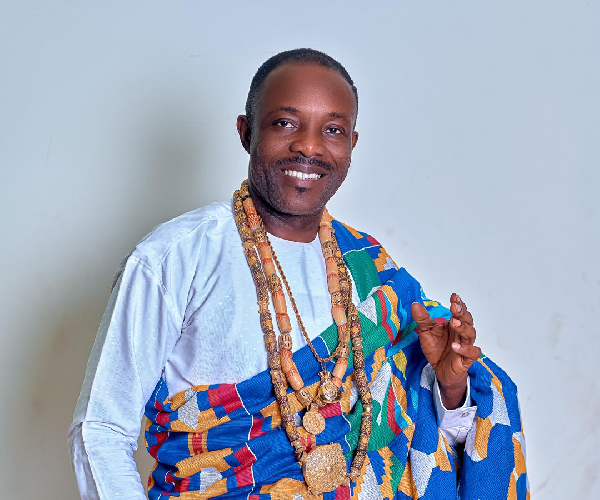
Traditional leader advocates investments in C/R as prime agricultural investments destination

0

According to Nana Kumasah Krampah II, the region had existing agricultural infrastructure According to Nana Kumasah Krampah II, the region had existing agricultural infrastructure

Nana Kumasah Krampah II, Omankrado of Gomoa Asempayin has advocated agricultural investors to central region positioned as a prime agricultural investment destination.

To gain the recognition as Ghana’s next agricultural hub, the region leverages diverse crop production with favourable climatic conditions fostering business growth and sustainability.

Nana Krampah II, who is also Amankra-Kumahene of Gomoa Assin Traditional Area, made the call in an interview with the Ghana News Agency at Gomoa Asempanyin in the Gomoa West District.

He said the region produced substantial quantities of maize, cassava, plantain, Yam and pineapple, with emerging opportunities in vegetable cultivation such as pepper, okra, eggplant, cabbage and watermelon.

Others are Livestock farming with potential in sheep and goat rearing, poultry and snail farming, creating diversified investment portfolios for agricultural developers.

Nana Amankra-Kumahene who is also a farmer, stated that, weather conditions supported all year-round agricultural activities in the region, with temperatures maintaining optimal ranges between 24-25°C and humidity levels conducive to tropical crop production.

Additionally, these climatic advantages had the potential for boosting agriculture, improving economic fortunes of the people and also positioning the region competitively with other West African agricultural regions.

“Hence, the call for strategic agriculture investment that capitalises on the region’s capacity which demonstrate high yield production across multiple crop categories to align strategically with a call by President John Dramani Mahama for development partners to engage as collaborative investors rather than traditional donors in the country’s agricultural transformation drive,” he stated.

He disclosed that, Gomoa Assin Traditional Council had set-aside three thousand acre of land and were wooing investors to take advantage of the numerous investment opportunities in the region to partner them to utilised it.

He said a partnership approach emphasised mutual benefits and sustainable development rather than dependency relationships.

According to him the region had existing agricultural infrastructure which include, support from International Development Organizations such as MOAP GIZ and World Vision Ghana.

It also has institutional backing from University of Cape Coast and the Ministry of Food and Agriculture (MoFA), providing technical expertise and capacity building frameworks for potential investors.

“The Central Region Agriculture Sector benefits from Ghana’s broader investment promotion initiatives, including the Ghana Agriculture Sector Investment Programme (GASIP) and Ghana Commercial Agriculture Project (GCAP), providing institutional frameworks for scaling agricultural investments nationwide.

This current progress has established investor confidence in the region’s agriculture, including Precise Agro Processing company into major cassava processing operations at Ekumfi Asokwa.”

He indicated that, Infrastructural development supported agricultural expansion which include the ongoing improvement of roads networks, electricity supply and telecommunications that enhanced operational efficiency for modern agricultural enterprises.

“We the Central Region Traditional leaders focuses on collaborative development which reflect broader trends in African agricultural investment, where traditional authorities play increasingly important roles in facilitating private sector engagement while ensuring community benefits from developmental initiatives.

“We are therefore calling on local and foreign investors to take advantage of what the region has which include vast farm lands and human capital to invest here,” he added.

Dr Randy Abbey open to flying fans to support Black Stars at the 2026 World Cup

0

Dr Randy Abbey is the Chairman of the Black Stars Management Committee Dr Randy Abbey is the Chairman of the Black Stars Management Committee

Dr Randy Abbey, Chairman of the Black Stars Management Committee, has suggested that flying fans to support Ghana at the 2026 FIFA World Cup should be considered.

The proposal revisits a controversial recommendation from the 2014 Dzamefe Commission of Inquiry, which advised that government funds should not be used to fly supporters to major international tournaments.

Speaking on Asempa FM, Dr Abbey emphasized the importance of fan support, describing it as indispensable to the team’s performance.

“Taking or flying fans to the World Cup is something that cannot be denied, but I think it is about how it is done. During the qualifiers, the fans travelled to support the team during away games,” he said.

“At the World Cup, every country that has qualified and those countries that have not qualified will even show up to show their support.

“When you talk about that, what comes to mind is the Dzamefe Commission, but beyond that, we have to look at the mistakes and the recommendations. But as for the supporters going to support the team, nobody can discount that, but we should look at how it will be done properly,” he added.

Ghana secured its fifth World Cup appearance and will discover its group-stage opponents on December 5. The tournament will be jointly hosted by the USA, Canada, and Mexico.

Ghana’s food production system faces serious gaps — UN warns

0

The United Nations has raised concern over weaknesses in Ghana’s food production system, describing them as worrying lapses that threaten both livelihoods and lives.

Speaking at the 45th World Food Day celebration in Accra on Thursday, October 16, 2025, the UN Resident Coordinator in Ghana, Zia Choudhury, said his personal observations of the country’s food value chain revealed troubling conditions hidden behind the meals many Ghanaians enjoy daily.

Mr. Choudhury observed that several challenges persist across the food production process — from farming to processing — directly affecting the health and income of those involved.

“I saw that the women who smoke food are suffering from respiratory illnesses because they spend long hours in smoky environments. The farmers producing the yams we enjoy in Accra are receiving very low prices — not because that is the true market value, but because they have nowhere to store their produce,” he lamented.

He stressed the need for targeted interventions to improve food safety, strengthen support for smallholder farmers, and protect the welfare of workers in the agricultural value chain.

Mr. Choudhury reaffirmed the UN’s commitment to partnering with Ghana to build sustainable and inclusive food systems that enhance productivity, resilience, and public health.

AG drops charges against 3rd accused in GHS49m Adu Boahen trial

Jennifer Lopez reveals who she will ‘forever cherish’

0

Jennifer Lopez revealed who she will ‘forever cherish’ in her latest social media post featuring a series of stunning photos.

On Thursday, she took to her Instagram to share a series of photos from behind the scenes of filming her new musical movie, Kiss of the Spider Woman. 

In the cover photo, she was being strapped into a corset by stylists on set as she snapped a quick mirror selfie in the middle of getting into costume for her character. 

She was wearing a bleach blonde wig with voluminous pin-up curls and a bold, red lip. 

Alongside her post, she wrote in her caption: ‘I will forever cherish my Kiss family. See you this weekend at the theater!’ 

This comes after she seemingly took a swipe at her ex-husband, Ben Affleck, who is also an executive producer on the same movie, while discussing dating apps this week. 

Jennifer Lopez revealed who she will 'forever cherish' in her latest social media post featuring a series of stunning photos
Jennifer Lopez revealed who she will ‘forever cherish’ in her latest social media post featuring a series of stunning photos

On Thursday, she took to her Instagram to share a series of photos from behind the scenes of filming her new musical movie, Kiss of the Spider Woman

In her post, she included a photo of a bedazzled tumbler with a spider web and the name of the movie on it. 

She also shared a vintage-inspired, black-and-white movie poster with her face and her character’s name Ingrid Luna on it. 

JLo also included an additional selfie of her posing in a white blazer minidress and matching fedora costume for one of the musical numbers. 

In another outfit, she wore a short, black bob wig paired with a sheer, sultry dress, and the superstar also shared a clip of her posing in a dress with a spiderweb-inspired cape. 

And another clip showed her and her co-stars embracing in a warm hug. 

Other photos showed the original actress with glamorous selfies of JLo outside of her trailer mixed in. 

She also posted many other group photos alongside the director Bill Condon as well as castmates Diego Luna and Tonatiuh. 

There were other clips of her showing off her old Hollywood-inspired glam and her blonde pin curls while filming scenes on set or in between takes while working on the movie.

Alongside her post, she wrote in her caption: 'I will forever cherish my Kiss family. See you this weekend at the theater!'
Alongside her post, she wrote in her caption: ‘I will forever cherish my Kiss family. See you this weekend at the theater!’

In her photos and videos, she frequently had a smile on her face as she previously talked about how it was one of her dreams to work on the musical movie — and even praised her ex-husband Affleck for helping her make it come true.

Back in August 2024, Lopez filed for divorce from Affleck on their second wedding anniversary, citing ‘irreconcilable differences.’ 

Just last month, she made an appearance on CBS News Sunday Morning and told Lee Cowan about how she had a ‘tough time’ in the wake of their split as production kicked off for the movie. 

The On the Floor hitmaker said she later realized their divorce was the ‘best thing that ever happened to me’ as it helped her ‘grow.’ 

She also spoke fondly of her ex when talking about his contribution to her film adaptation of the Broadway musical Kiss of the Spider Woman. 

‘The movie wouldn’t have been made if it wasn’t for him and Artist Equity,’ she said of her ex-husband and his production company. 

‘I will always give him credit for that,’ she said before explaining that it wasn’t because he was always ‘pushing’ for the movie but rather because ‘they financed it.’ 

‘I told him this was the role I was born to play and I wanted to do it and he was like, “Okay.” And he helped make it happen,’ she recalled. 

She also shared a vintage-inspired, black-and-white movie poster with her face and her character's name Ingrid Luna on it
She also shared a vintage-inspired, black-and-white movie poster with her face and her character’s name Ingrid Luna on it

She also posted many other group photos alongside the director Bill Condon as well as castmates Diego Luna and Tonatiuh

There were other clips of her showing off her old Hollywood-inspired glam and her blonde pin curls while filming scenes on set or in between takes while working on the movie

The superstar also shared a clip of her posing in a dress with a spiderweb-inspired cape

Lopez and Affleck were married for two years, from their initial, low-key wedding ceremony in July 2022 up until to the singer filed for divorce in August 2024. 

They had previously been in a relationship back in the early 2000s and rekindled their romance in 2021 before tying the knot a year later. 

In an interview with Howard Stern on his SiriusXM show, Lopez admitted she’s ‘old-fashioned’ when it comes to romance. 

‘You would never go on Raya, would you?’ asked the radio shock jock on Wednesday, to which she replied, ‘No, I don’t want that.’ 

‘I don’t know. I’m just old-fashioned, I guess,’ she added. Her roster of failed relationships most recently includes her divorce from Affleck, who has been exposed as a Raya user. 

Reflecting on the doomed romances, she said, ‘What I learned, it’s not that I’m not lovable; it’s that they’re not capable.’ 

The Bronx native explained, ‘They don’t have it in them. They need to appreciate the little person inside of them. They need to love them.’ 

She noted, however, that her exes gave as much as they could: ‘They gave me what they had. They gave me all of it, every time. All the rings, all the things I could ever want. The houses, the rings, the marriages. All of it. But…’ 

Howard interjected: ‘They didn’t love you.’ 

JLo also included an additional selfie of her posing in a white blazer minidress and matching fedora costume for one of the musical numbers

She posed outside of her trailer, which was decorated with flowers and plants outside

She showcased a number of her vintage, glamorous costumes she wore to transform into her character Ingrid Luna

Many clips showcased her with blonde hair and a bright red lip

And she showcased the many intricate, spider-inspired dresses she wore for the role in her new musical drama

Lopez agreed, ‘They didn’t,’ before admitting, ‘And I didn’t love myself.’ 

In the future, she said she wants to keep her romantic relationships ‘more quiet.’ 

She revealed, ‘I think I’ve made mistakes in the sense that I live my life very out loud, even though I was in the public eye.’ 

The mother-of-two elaborated, ‘I wanted to share my life with someone. I want someone to be there when I’m having my big important moments on the red carpet. I want someone to be there when I’m doing whatever, or when we’re going to the store. Whatever it is, I wanted to share that. 

‘So I didn’t hide from it, and I spoke about it. And I think now, after what’s happened in the past few years to me and my children, I just feel like I want to keep that part so much more quiet in my life.’ 

In addition to tying the knot with Affleck in 2022, she was previously married to Ojani Noa, 51, Cris Judd, 56, and 57-year-old Marc Anthony, with whom she shares 17-year-old twins Emme and Max. 

Richard Ofori eyes Ghana comeback ahead of 2026 World Cup

0

Richard Ofori is Ghanaian goalkeeper Richard Ofori is Ghanaian goalkeeper

Ghanaian goalkeeper Richard Ofori says he knows exactly what he must do to earn a recall to the Black Stars ahead of the 2026 FIFA World Cup.

The 31-year-old has not featured for Ghana since the 2023 Africa Cup of Nations, held in early 2024 in the Ivory Coast, where a costly error in the 2-2 draw with Mozambique contributed to the Black Stars’ elimination from the tournament. Since then, Ofori has been excluded from the national setup.

Now plying his trade with AmaZulu FC in South Africa after joining as a free agent in September 2024, Ofori says his priority is to work hard for his club and let his performances speak for themselves.

Speaking to iDiski Times, he said: “I’m working hard with my team to help my team in the league, and then the rest will take over. Recently, no, I haven’t spoken to coach Otto Addo, but before, he used to call me. He’s a good man who checks up on his players.”

Ofori, who previously served as Ghana’s first-choice goalkeeper, added that he understands what is required to make a return to the squad. “I’m focused on my club right now. That’s what you need to do if you want to be there [at the World Cup],” he said.

Ofori made his Ghana debut in 2015 and has 33 caps to his name.

Petroleum funds record US$1.424 billion total value in first half

0

The GSF’s financial performance began with an Opening Book Value of US$196,915,182.98 The GSF’s financial performance began with an Opening Book Value of US$196,915,182.98

Ghana’s two dedicated petroleum funds; the Ghana Stabilisation Fund, and the Ghana Heritage Fund, collectively recorded a book value of US$1,424,530,233.56 as of June 30, 2025.

The semi-annual report for the first half of the year, covering January 1 to June 30, and published by the Bank of Ghana (BoG), said the figure indicates a sustained growth in the country’s petroleum savings vehicles.

The Ghana Heritage Fund (GHF), established to provide an endowment for future generations, reported a Closing Book Value of US$1,361,556,511.17 at the end of the period.

It commenced the year with an Opening Book Value of US$1,258,860,023.12 and saw Receipt during the period, totalling US$19,057,851.20.

Its Net Return was calculated at US$23,918,736.85, derived primarily from Investment Income of US$23,942,965.36, after deducting Bank Charges of US$24,228.51.

There were no withdrawals from the Heritage Fund during the review period, in line with the Petroleum Revenue Management Act (PRMA).

The Ghana Stabilisation Fund (GSF), which serves as a buffer to support the national budget during periods of low oil revenues, closed the period with a Book Value of US$122,974,616.89.

The GSF’s financial performance began with an Opening Book Value of US$196,915,182.98 and registered a Receipt during the period of US$44,468,319.46.

Sung Biela Foundation supports boy’s dream of becoming a pharmacist

0

The Sung Biela Foundation has come to the aid of a young boy from Zebilla whose dream of becoming a pharmacist was at risk due to financial challenges.

The Foundation responded to the plea of Stephen Abanga, a determined student who completed Yikurigu Junior High School in the Bawku West District of the Upper East Region.

Stephen has gained admission to pursue General Science at the Bolgatanga Senior High School — a crucial step toward achieving his dream career.

Even though Stephen scored an aggregate of 24 in his final Basic Education Certificate Examination (BECE), he appealed for support because of financial difficulties that could have ended his education.

In his plea, he admitted he did not feel he deserved such help because of his results, but said he was determined to work hard if given the opportunity.

Touched by his honesty and courage, the Sung Biela Foundation decided to take up his case.

“We at the Sung Biela Foundation listened to Stephen Abanga’s plea, and we are taking up the challenge to support him from the senior high school up to the tertiary level,” the Foundation said in a statement.

The Foundation has already supported Stephen with an undisclosed amount of money, educational materials, and other essential items to help him begin his studies at Bolgatanga Senior High School.

The founder of the Foundation, Hajia Zenabu Awinbe Salifu, said Stephen’s persistence and humility were key reasons for the support.

“His courage to send messages and make calls showed how much he wants to learn. I would not want that dream of the young boy to die,” Hajia Zenabu said.

She explained that her personal struggles to complete her own education inspired her to create the Foundation — so that no child would have to give up on their dreams because of poverty.

“Our founder has always said no one should go through the same struggles she faced in school. Life must be better for everyone,” a statement from the Foundation added.

Stephen’s parents could not hide their joy and gratitude for the life-changing support.

His mother, Aburiya Nansaki, said the Foundation has brought new hope to their family.

“Mere words can’t express how happy we are. God bless the Foundation for coming to our aid,” she said.

His father, Aburiya Abanga, also expressed deep appreciation.

“We, the family, are more than happy to receive this support. God bless Hajia and the Foundation as well,” he added.

The Foundation also thanked its contributors and donors, whose continuous generosity makes such interventions possible.

“To our contributors who constantly provide their support, keep on doing it. You are the best we have — now and forever,” the Founder said.

For Stephen, the gesture is a second chance to pursue his dream of becoming a pharmacist, and a reminder that courage and determination can open doors even in the hardest of circumstances.

DISCLAIMER: The Views, Comments, Opinions, Contributions and Statements made by Readers and Contributors on this platform do not necessarily represent the views or policy of Multimedia Group Limited.

DISCLAIMER: The Views, Comments, Opinions, Contributions and Statements made by Readers and Contributors on this platform do not necessarily represent the views or policy of Multimedia Group Limited.

Ghana champions climate resilience through Global Shield initiative

0

Seidu Issifu is seen here at the meeting in Washington, DC Seidu Issifu is seen here at the meeting in Washington, DC

Ghana reaffirmed its leadership in climate resilience and innovative finance during the Global Shield Partner Country Roundtable held at 2000 Pennsylvania Avenue, Washington, DC.

Addressing the session, Seidu Issifu, Minister of State for Climate Change and Sustainability, highlighted Ghana’s pioneering role as the first country to operationalize the Global Shield against Climate Risks — a landmark initiative advancing pre-arranged financial protection for climate-vulnerable nations.

Ghana: Breaking the Climate–Debt Cycle

Minister Issifu emphasized that Ghana stands at the frontline of the climate crisis. The country continues to face recurrent droughts in the north, severe flooding in the south, and unpredictable rainfall patterns that undermine agriculture and food systems.

These events, he noted, erode infrastructure, displace communities, and destabilize public finances — forcing governments to borrow or divert scarce resources to finance recovery efforts.

“Climate impacts deepen debt vulnerability, and debt limits our ability to invest in resilience,” Minister Issifu stated. “Breaking this cycle is a national priority.”

From Commitment to Action: Ghana’s Global Shield Success

Ghana’s leadership in the Global Shield process is already yielding tangible results. With support from partners, the country purchased its first parametric drought insurance through the African Risk Capacity (ARC).

The insurance was triggered in late 2024, leading to payouts totaling nearly USD 2.9 million to support drought-affected farmers in northern Ghana.

The minister commended the collaboration with the National Disaster Management Authority (NADMO) to ensure payouts reach vulnerable communities swiftly and transparently.

These experiences, he explained, prove how pre-arranged finance can provide rapid relief while safeguarding fiscal stability and reducing the need for emergency borrowing.

Expanding Protection and Building Resilience

Beyond drought insurance, Ghana is working with the Global Shield Solutions Platform and other partners to develop additional instruments, including urban flood protection and broader climate risk financing. These innovations form part of Ghana’s growing portfolio under its national Global Shield package.

Minister Issifu also announced that Ghana is updating its Climate Prosperity Plan—a flagship initiative of the Climate Vulnerable Forum (CVF) and V20 Group of Finance Ministers—to integrate comprehensive Climate and Disaster Risk Finance and Insurance (CDRFI) strategies.

Three Strategic Shifts in Ghana’s Climate Finance

The updated plan reflects three strategic transformations:

1. Diversified Financing Mix: With overseas development assistance projected to decline by up to 21% after 2027, Ghana is designing a blended finance model combining concessional and commercial capital, guarantees, carbon revenues, and domestic savings to sustain climate investments.

2. Macro-Fiscal Stability: Under the IMF Extended Credit Facility, Ghana’s fiscal framework has stabilized, creating an enabling environment to synchronize economic recovery with climate ambition.

3. Integration with the 24-Hour Economy: Ghana’s national development agenda will embed climate risk management and private capital mobilization into its 24-hour economy strategy—ensuring every investment reduces vulnerability and strengthens competitiveness.

A Model for Climate-Resilient Growth

Minister Issifu concluded by reaffirming Ghana’s unwavering commitment to fiscal responsibility, financial innovation, and climate ambition.

He lauded the Global Shield as a transformative mechanism that shifts countries from reactive disaster aid to proactive financial preparedness.

“The Global Shield is not just a response tool—it is the foundation for long-term economic stability and sustainable growth,” he declared. “Ghana is proud to lead by example and stands ready to collaborate with all partners to advance resilience for the most vulnerable.”

Lady Cries As Spiritual Lip Gloss She Bought To Attract Rich Sugar Daddies Fails & Leaves Her Lips

0

According to a report by Ghpage News, a young woman has shared a distressing experience after suffering a severe reaction to a lip product she purchased online, allegedly marketed as a charm to attract wealthy men.

The incident has sparked renewed debate about the risks associated with unregulated beauty and “spiritual” enhancement products being sold on social media.

The woman, whose identity was not disclosed, appeared in a video visibly shaken and in pain as she displayed her swollen lips.

According to her account, she bought the product believing it would help her appear more attractive and boost her chances of gaining the attention of affluent suitors. Instead, the gloss caused an intense physical reaction within a short period of application.

In the video, she can be heard crying as she struggles to speak through the swelling. She explains that she applied the gloss shortly after receiving it, only to feel burning sensations and discomfort that quickly escalated.

Viewers could clearly see that her lips had become excessively inflamed and misshapen, prompting concerns about her wellbeing.

The product was reportedly promoted on social media under the category of “kayamata,” a term commonly associated with charm products, intimacy enhancers, and supposed spiritual items aimed at influencing affection, attraction, or financial favor.

Many of these items are advertised without proper safety testing, ingredient disclosure, or regulatory approval.

Health professionals and consumer rights advocates have repeatedly warned about the dangers of purchasing unverified cosmetic products online.

Dermatologists note that products containing unknown substances can trigger severe allergic reactions, chemical burns, infections, or long-term skin damage.

In recent years, the rise of influencers promoting unconventional beauty products has led many young women to expériment with items promising quick results in relationships or finances.

However, regulatory bodies across several countries have issued statements emphasizing that many such products fall outside approved cosmetic standards.

Following the viral video, social media users reacted with a mix of sympathy and criticism. While some expressed concern for her health and encouraged her to seek medical attention immediately, others questioned the growing dependence on unregulated enhancement products and the desperation that fuels such purchases.

Authorities are yet to announce whether any investigation has been launched into the seller of the lip gloss. Legal experts say the circulation of unsafe cosmetic items online remains difficult to control due to anonymity, lack of licensing, and absence of clear supply chains.

As the video continues to circulate, it has become a cautionary tale about the consequences of using beauty products from unverified sources.

Health experts advise anyone who experiences swelling, irritation, or pain after using a cosmetic product to discontinue use immediately and consult a medical professional.

The incident has also reignited calls for stricter monitoring of online vendors and improved public awareness on the importance of product safety.

Watch video below to know more…

Benjamin Asare can still improve, says Ghana coach Otto Addo – Ghana Latest Football News, Live Scores, Results

0

Black Stars coach Otto Addo is confident goalkeeper Benjamin Asare can still improve despite his heroic performances during the 2026 World Cup qualifiers. 

The Hearts of Oak goalkeeper, after making his debut in March earlier this year against Chad, has remained the first-choice goalkeeper.

Asare played six games during the qualifiers and kept five clean sheets.

Speaking to 3Sports after Ghana’s qualification to the global showpiece, Addo beleives the 33-year-old shot-stopper can still get better.

“He’s really good. I think his strength is definitely on the line. Short blocking and on the line. There’s still room to improve, but I think he’s growing from game to game,” the 49-year-old said.

Asare is expected to keep his place in the team ahead of the tournament, which will be co-hosted by the USA, Canada and Mexico.

Meanwhile, Ghana will discover their group opponents on December 5.

Visa restrictions still hinder Africa’s integration

0

Some of the stakeholders at the event Some of the stakeholders at the event

The former Special Representative of the Secretary-General in Mali and Head of the United Nations Multidimensional Integrated Stabilization Mission in Mali (MINUSMA), El-Ghassim Wane, has voiced strong concern over the continuing visa barriers that hinder travel and trade among African countries.

Speaking at a High-Level Public Lecture on the theme “The Evolving Global Reset: Leveraging African Agency Through Pragmatic Options” organized by the Legon Centre for International Affairs and Diplomacy (LECIAD) at the University of Ghana, Wane described the current situation as “a shame for our continent,” lamenting that Africans still face greater difficulty traveling within Africa than citizens from outside the continent.

“Despite the progress we have made, traveling across our continent is still harder than it should be,” he stated.

“Africans require visas for nearly half of all intra-African trips—more, in fact, than citizens of many countries outside Africa. Often, when you arrive at African airports, you see Europeans and Americans moving through more easily than Africans themselves. It is a shame for our continent.”

Wane also drew attention to broader structural issues that continue to slow Africa’s economic transformation.

He noted that the continent’s exports remain dominated by raw materials, while its contribution to global manufacturing is minimal.

“Inter-African trade is still stuck at around 15%. Air transport within the continent is limited and about 50% more expensive than in most other regions of the world,” he explained.

He further highlighted that Africa faces an annual financing gap estimated between $70 and $110 billion and remains home to nearly two-thirds of the world’s extreme poor, a stark reminder of how far the continent still has to go.

Touching on governance, Wane cautioned that Africa’s political future remains uncertain, with democratic processes under growing strain and conflicts persisting across several regions.

He concluded by stressing that these challenges—ranging from visa restrictions to weak governance, tell a larger story of Africa’s immense potential still trapped by systemic constraints.

'Matlock' Season 2 Episode 2 Recap: The Matty vs. Olympia War Has Turned This Into a Whole New Show

0

Megan Vick is a pop-culture journalist and freelance writer whose coverage spans TV, film, celebrities, seasonal events, and online culture. Her bylines include Collider, Entertainment Weekly, TV Guide, Parade Magazine, Variety, Reality Blurred, and others. Known for her list-driven stories, recaps, reviews, and exclusive takes, she also reports on TV stars, teen romances, K-pop, and “mom shows.” She’s been writing professionally since 2008 and often mixes trending pieces with evergreen features that engage devoted pop culture audiences.

Tracing the Roots and Rise of the Rebranded United Party (UP)

0

A few days ago, while diving deep into Ghana’s political history, I found myself revisiting the story of the Northern Students Union and, more significantly, the Northern People’s Party (NPP). That journey naturally led me to the towering figure of Simon Diedong Dombo, under whose leadership the NPP became the main opposition force of the time.

My curiosity didn’t end there. I traced the historical transition from the NPP into the broader United Party (UP) and followed the thread all the way to the present. It became clear to me how these early opposition movements laid the foundation for what we, today, know as the New Patriotic Party (NPP).

The original United Party, formed during the political turbulence of the late 1950s, had at its helm Dr. Kofi Abrefa Busia. The UP symbolized unity, liberal democratic values, and national character—especially after ethnic-based parties were outlawed. It brought together forces from the Northern People’s Party, National Liberation Movement (NLM), Anlo Youth Organisation, Ga Shifimokpee, and others.

Fast forward to 2025: a political phoenix has risen from the ashes. The Movement for Change, led by Alan Kwadwo Kyerematen, has metamorphosed into a fully-fledged political partythe United Party (UP). This move, I consider as not just symbolic, but strategic.

It evokes the historical memory and emotional attachment of a political tradition many Ghanaians still hold dear.

You may recall that the Movement for Change was formed in September following serious internal issues with the NPP. Alan Kyerematen resigned from the NPP after alleging that he has been treated unfairly by the party.

The former Minister of Trade formed the Movement to enable him and his followers as well as the Ghanaian youth participate in the country’s democratic space. He led the movement to introduced its development agenda called the 10-point Agenda. Subsequently, in the presidential elections, Alan pulled 32, 457 votes representing 0.28% of the total votes.

Many thought, that, with this seeming abysmal performance, the Movement for Change would have aborted its political escapades. However, the Movement from Change is far from giving up hence this development.

WHY THE NAME MATTERS

The choice of the name “United Party” is no accident. It carries ideological and emotional currency.

For those who understand Ghana’s political ancestry, this new UP taps into the legacies of the Progress Party, Northern People’s Party, and the NLM. It is not just a name it is a reclamation of history, a nod to political roots, and an attempt to reawaken a dormant tradition.

The original UP was a political melting pot—a coming together of various smaller opposition groupings under one banner to challenge the dominance of the CPP government. Its liberal democratic orientation stemmed from the fact that it had to accommodate diverse views and regional interests. The same ethos seems to guide the current UP under Alan.

THE UP-Plus AGENDA

Branded as UP Plus, the new party seeks to provide a third force in Ghana’s entrenched two-party system. Alan Kyerematen, a former Trade and Industry Minister, has positioned the party as a credible alternative anchored on three key pillars:

KEY OBJECTIVES

•Economic Transformation: Position Ghana as the economic hub of Africa by 2040.

•Inclusive Governance: Uphold transparency, accountability, and zero tolerance for corruption.

•National Unity: Heal political divisions and foster a collective sense of national purpose.

SYMBOLISM

The party’s emblem a Monarch Butterfly symbolizes transformation, resilience, and endurance. Its colours (yellow, black, and white) represent Ghana’s gold wealth, the Black Star of Africa, and purity of intent, respectively.

A STRATEGIC GAMBLE OR POLITICAL MASTERSTROKE?

One question that remains unanswered is whether the current UP intends to forge alliances with other smaller parties to create a broader coalition perhaps even a reimagined opposition front. If history is anything to go by, this would not be a far-fetched strategy.

After all, the original UP was itself a coalition of forces, necessitated by the political climate of the time.

What is, however, palpably clear is that the new UP is deeply rooted in Ghana’s political tradition. It is not alien. For those who believe in the ideals of the NPP of Dombo, the Progress Party of Busia, or the NLM of Baffour Osei Akoto, the current UP offers a familiar ideological home.

There’s no denying that in Ghana, many people choose their political affiliation based on ideology, tradition, or identity not just manifestos. And herein lies the potential threat to the current New Patriotic Party (NPP).

If the NPP does not handle its internal cracks and factionalism carefully, it risks losing key members and floating sympathizers to a party like the UP, which shares a common ancestry.

ALAN’S CALCULATED MOVE

Say what you will about Alan Kyerematen and his team, but they are playing the long game. Their approach calculated, calm, and anchored in strategic branding may not yield immediate electoral gains, but it has the potential to disrupt the status quo.

In fact, with their communication style, their historical appeal, and Alan’s personal gravitas, the UP is well-positioned to rival the NPP in areas where ideological loyalty matters.

Let’s face facts the NPP, despite being the largest opposition party today, often relies heavily on two key regions to clinch victory. Any noticeable drop in turnout, disaffection, or apathy in these strongholds can tilt the balance as we saw in the last general elections.

While some may downplay Alan’s departure from the NPP and his presidential ambition, the numbers don’t lie.

He’s not standing alone. There’s a solid support base behind him—numbers that any serious political party would need to secure a win in Ghana’s fiercely competitive electoral space.

CONCLUSION:

The emergence of the new United Party may appear to some as a political rebrand, but for those with an understanding of Ghana’s political history, it is a revival of a deeply rooted tradition.

In a political environment ripe for disruption, this could be more than just a passing phase it could be the beginning of a new political paradigm.

Denis Andaban

The Village Boy From DBI

Penplusbytes engages Ivorian stakeholders on Disinformation Index ahead of 2025 elections

0

Penplusbytes has expanded its regional engagement on disinformation to Côte d’Ivoire, convening government officials, civil society actors, academics, and media professionals to discuss strategies for strengthening democratic resilience ahead of the country’s upcoming elections.

The event, held in Abidjan, forms part of a broader regional initiative supported by the National Endowment for Democracy (NED) and implemented by Penplusbytes in partnership with West Africa Democracy Radio (WADR) and the Sahel Institute for Democracy and Governance, following a successful convening in Accra, Ghana, last month.

Building on the Ghana convening in September, the Côte d’Ivoire edition spotlighted findings from the Disinformation Index Report (DIR), an evidence-based assessment of disinformation trends across Ghana, Côte d’Ivoire, Mali, and Burkina Faso.

Presenting the findings, Rebecca Avusu, a researcher at Penplusbytes, highlighted key insights specific to Côte d’Ivoire, which ranked second (after Ghana) among the four countries assessed in the Disinformation Index Report. The report shows that Côte d’Ivoire achieved a 90% score in universal detection of misinformation, with 53% of respondents verifying content before sharing and 50% reporting misinformation or disinformation to platforms. These figures reflect the country’s growing public awareness and civic engagement in addressing false information, a trend that offers valuable lessons for the subregion. 

The session on the current state of the information space highlighted the growing spread of disinformation on social media, especially WhatsApp, and stressed the importance of fact-checking and mindful media consumption.

Executive Director Jerry Sam reiterated Penplusbytes’ commitment to “fostering cross-border collaboration and evidence-based strategies that strengthen democratic resilience across West Africa. By bringing together governments, civil society, media, and citizens, we aim to build a regional ecosystem capable of detecting, countering and ultimately reducing the harmful impact of disinformation on our democratic processes. Disinformation knows no borders, and neither can our response.” 

On the part of the Independent Electoral Commission of the Ivory Coast, they stated that “the official opening of the presidential campaign period marks a critical moment for our democracy. As we convene today, we recognise that the integrity of information circulating among voters is as essential as the integrity of the ballot itself. The Independent Electoral Commission calls on all stakeholders, including candidates, media, civil society, and citizens, to uphold the truth and accuracy in political discourse. When voters have access to credible information, free from manipulation and falsehood, they can make informed choices that reflect their true will, ensuring peaceful and legitimate elections that strengthen our democratic foundations.”

The convening also provided a platform for stakeholders to exchange experiences, identify national vulnerabilities, and recommend practical measures to curb the growing influence of disinformation on democratic processes.

The discussions form part of Penplusbytes’ ongoing efforts to promote cross-border learning and enhance the region’s collective resilience to disinformation.

Renowned fetish priest plants machete in Jomoro believed to be unmovable after seven days

0

According to Blay Miezah, if after seven days, the machete is not removed, nobody could remove it According to Blay Miezah, if after seven days, the machete is not removed, nobody could remove it

Correspondence from Western region

In what could be described as a mystical move, a renowned Fetish Priest in the Western Nzema Traditional Area, Nana Blay Miezah has out of spiritual possession and influence by the muses, on Sunday, October 12, 2025, implanted a machete at the spiritual healing home of his ancestors at Miegyena, a farming community near Nzulezo in the Jomoro Municipality of the Western Region.

This followed his initiation as a fetish Priest barely a week ago at Miegyena.

According to him the implanted machete symbolizes the healing prowess and presence of his ancestors in the spiritual home to offer the power of healing.

According to Nana Blay Miezah, if after seven days, the machete is not removed, nobody could remove it again.

Barring any positive signs in the future, Miegyena would become a tourist attraction just like the famous Komfo Anokye implanted sword in the Ashanti Region which he prophesied that nobody could ever remove or uproot till date.

Speaking to GhanaWeb Western Regional Correspondent, Nana Blay Miezah said the phenomenon was borne out of a covenant between him and his ancestors when he was initially called to assume the duty of a Chief priest two decades ago.

According to Nana Blay Miezah, the priest recounted his proven track record in assisting many football clubs in Africa including Kumasi Asante Kotoko and Accra Hearts of Oak with spiritual prowess to win trophies and fame.

Nana Blay Miezah reiterated on his wondrous and mystical works which earned many politicians’ enviable positions in Africa.

The Chief Priest threw the challenge to be banished from the place if someone or a machine was able to remove the planted machete after the stipulated period.

Meanwhile, catch the highlights of Sarkodie x Shatta Wale’s epic performance at Rapperholic Homecoming on GhanaWeb TV below:

Watch as some Ghanaians demand quick prosecutions in ORAL cases

African leaders must seize new opportunities for growth

0

Professor Peter Quartey, Acting Director of LECIAD Professor Peter Quartey, Acting Director of LECIAD

The Legon Centre for International Affairs and Diplomacy (LECIAD) at the University of Ghana held a thought-provoking High-Level Public Seminar on October 14, 2025, under the theme “The Evolving Global Reset: Leveraging African Agency Through Pragmatic Options.”

The seminar drew an impressive audience of scholars, diplomats, and policymakers from the University of Ghana and the Ghana Institute of Management and Public Administration (GIMPA), alongside several master’s and PhD students from the Centre.

The event was chaired by Professor Peter Quartey, who also serves as the Acting Director of LECIAD.

Delivering the keynote address, Professor Quartey urged African leaders to take bold and strategic steps in seizing emerging opportunities for development in the face of global transformation.

He lamented that Ghana, like many African countries, failed to capitalize on the numerous chances presented in the 1990s to convert foreign aid and partnerships into meaningful national growth.

“In the 1990s, Ghana and other African nations had numerous opportunities to transform their economies,” he recalled.

“We were the favorites of the donor community, receiving significant financial and technical support. Yet, due to poor planning and mismanagement, we could not turn those resources into lasting progress.”

According to him, the consequences of that missed opportunity continue to haunt the continent.

“The challenges we faced three decades ago are the same challenges confronting us today,” he said.

“Our roads remain in deplorable condition, many communities still lack streetlights, and our once vibrant rivers have become polluted. These are signs of leadership that failed to manage aid efficiently for the public good.”

Professor Quartey, however, highlighted Ethiopia as a model of what visionary leadership and disciplined planning can achieve.

“I have been to Ethiopia, and I must commend them for their remarkable progress,” he stated.

“They have transformed their cities by improving road networks, maintaining clean environments, and providing adequate lighting. Such progress attracts investors, stimulates real estate growth and supports agricultural expansion.”

He added that Ethiopia’s successful harnessing of the Nile River for electricity generation should serve as an inspiration for other African nations.

“Ethiopia has utilized the Nile River to expand power generation, creating opportunities for industries and regional trade. Ghana and other African countries must emulate this by using our natural resources wisely to promote sustainable development and attract investment,” he advised.

In closing, Professor Quartey delivered a strong message on the need for foresight and accountability in leadership across the continent.

“No serious investor will commit funds to a country that struggles with basic amenities like lighting, clean water and sanitation,” he warned.

“Our leaders must think beyond politics, act decisively, and invest in systems that guarantee long-term growth and stability.”

Also addressing the gathering, the former United Nations Special Representative in Mali and Head of MINUSMA, El-Ghassim Wane, reflected on the shifting global order and its implications for Africa.

“The world is changing rapidly—politically, economically, and geopolitically,” he noted. “If international law continues to lose its strength, Africa, being among the most vulnerable, could be at the receiving end of global instability.”

However, Wane expressed optimism that the current global realignment also presents new openings for Africa to redefine its role in world affairs.

“With the decline in official aid, Africa has a unique opportunity to become more self-reliant and assertive,” he said.

“The restructuring of the global order allows Africa to contribute meaningfully to shaping a new system that reflects its interests and aspirations.”

He emphasized two key steps toward this vision: ensuring that African leaders fulfill their own commitments and strengthening the African Union as the main platform for dialogue and collective decision-making.

“The African Union has its shortcomings,” Wane admitted, “but it remains our continental home for debate, collaboration, and policy direction. We must strengthen it, not abandon it, if we want Africa’s voice to matter in the new global order.”

Court sets Nov 26 for rapper Odumodublvck’s trial

0

Singer Levi Ogbogiri better known as Kraziecent has sued Odumodublvck for violently assaulting and battering him at a public event in December 16, 2024.

Kraziecent alleged that the rapper attacked him without any form of provocation while he was “peacefully taking videos and pictures” of himself at the event.

Singer Teni Stirs Social Media With New Look and Dress Mode

0

Nigerian singer, Teniola Apata popularly known as Teni, has shared a video of her new look and mode of dressing with fans on her Instagram page.

The singer, who is famously known to always be dressed in baggy clothes, while preparing for a wedding dressed in a gorgeous orange lace corset blouse and skirt.

Chintua The Fearless Queen – Lizzy Gold Nigerian Movies 2025

0

Drop your comment

Comments on this video

In this Nigerian royal movie, In the royal palace, shame and mystery surround Princess Chintua, the king’s daughter, who battles a secret that brings disgrace to the throne — she still wets the bed. Her father’s anger grows as elders whisper of curses and hidden sins from the past.

New Ugandan Radio Show Sparks Political Debate During Campaign Season

0

Robert Kyagulanyi
Robert Kyagulanyi

A new political radio program has launched in Uganda as the country enters a heated campaign period. “NUP Speaks” airs live every Friday at 7 PM on NUP Radio 91.4, featuring host Deejay Blockboy and promising open political discourse during the crucial election season.

The show positions itself as a platform for diverse voices rather than pure party propaganda. It invites political commentators, civil society representatives and occasional opposition figures to discuss pressing campaign issues while allowing listeners to call in with questions and opinions.

The timing coincides with escalating competition among Uganda’s major political parties. Such media platforms carry significant potential to influence public opinion and provide transparency in political messaging as elections approach.

Critics express concern that even seemingly neutral programs can blur lines between editorial content and campaign material in charged electoral environments. Supporters counter that the show gives NUP supporters a voice in media spaces they consider dominated by government aligned outlets.

Initial episodes have focused on policy issues including youth employment, agriculture and governance topics that resonate strongly with urban voters. As the campaign intensifies, observers will monitor whether the program maintains balanced discourse amid Uganda’s politicized media landscape.

A Prince Pretended To Be A Driver Just To Find Real Love

0

Drop your comment

Comments on this video

In this Nigerian village movie, After suffering multiple heartbreaks from women who only loved him for his wealth, Obinna decides to disguise himself as an ordinary driver in search of true love. His plan takes an unexpected turn when he meets Olanma — a simple, genuine woman who loves him for who he truly is.

CIA deployment gives Trump no ‘limitations’ on Venezuela action

0

US President Donald Trump has acknowledged that he has authorised the CIA to conduct covert operations in Venezuela – a highly unusual admission of what is normally a highly sensitive and tightly guarded state secret.

The authorisation – more typically known as a presidential finding – could give the agency broad leeway to conduct operations in the region, including lethal strikes against suspected drug traffickers or broader operations aimed at destabilising or toppling the regime of Nicolas Maduro.

Previous presidential findings have ultimately led to drone strikes on militants overseas, money and weapons funnelled to insurgencies, and even efforts at full regime change.

Most, however, remain classified.

According to US law, presidents may authorise covert actions if they determine that these operations are “necessary to support identifiable foreign policy objectives…[and] important to the national security of the United States.”

Once that determination is made, it must be shared with the House and Senate intelligence committees, and, in some sensitive cases, the “gang of eight” composed of leaders in both parties and the chairs and ranking members of the intelligence committees.

But that notification – which is expected to be detailed and outline legal risks – does not mean congressional approval is necessary. Congress can only block these operations through legislation or by cutting funding.

In practice, the authorisation could be as focused – or as broad – as the president deems necessary.

“The parameters of the authorities are laid out in the finding,” explained Mick Mulroy, a former CIA paramilitary officer and deputy under secretary of defence.

“But there really isn’t any limitations, and it does not need congressional approval.”

Any restrictions imposed on the CIA’s activities are executive orders, which Mr Mulroy said “means the president can simply write a new executive order and change it.”

Once approved by the president, CIA actions could take the form of targeted killings, covert influence operations, shaping local politics or helping set up and equip armed rebel movements fighting foreign governments.

In December 1979, for example, a presidential finding from Jimmy Carter allowed the CIA to deliver lethal aid to Afghan guerrillas fighting the Soviet invasion of the country.

Just a few years later, another finding – this time from the President Ronald Reagan administration – allowed the CIA to extend covert aid to the Contras, rebel groups that were trying to unseat the leftist Sandinista government in Nicaragua.

More recent findings led to worldwide operations against al-Qaeda after the 9/11 attacks, as well as Operation Timber Sycamore, a CIA-run operation to train and supply Syrian rebels fighting the Assad regime.

In other countries across Latin America – including Guatemala, Chile and Brazil – the US helped overthrow governments in the name of fighting communism, or helped bolster regimes that were harsh oppressors of human rights.

“We just don’t have a great track record,” said Dexter Ingram, the former director for combating violent extremism at the State Department and now an advisory council member at the International Spy Museum in Washington.

“There’s a long history, and it’s not always positive,” Mr Ingram added. “I think we have to look at our history….it’s a slippery slope.”

Getty Images Contra soldiers standing in formation and receiving weapons while training in Honduras in 1985.
CIA-backed rebels in Nicaragua fought an 11-year insurgency against the leftist Sandinista regime.

It remains unclear whether the CIA is already conducting covert actions in Venezuela, is planning to, or whether those plans are being kept as contingencies.

Trump earlier this week justified the CIA authorisation and US airstrikes against vessels in the Caribbean by saying that “a lot of drugs” are flowing from Venezuela to the US.

His disclosure about the CIA authorisation comes as US long-range B-52 bombers were seen circling near the Venezuelan coast.

CIA operations, though, would be covert and could take various different forms against an array of targets.

Suspected members of Tren de Aragua and the Cartel of the Suns, both of which the US has designated terrorist organisations, could be struck in paramilitary operations or by drones.

Marc Polymeropoulos, a 26-year veteran of the CIA who served in both Iraq and Afghanistan and oversaw clandestine missions around the world, told the BBC that the methodology of “find, fix and finish” the agency developed during the “global war on terror” could be readily applied to criminal networks.

“It’s going after certain individuals, networks, or supply chains,” he said. “It’s manhunting, and there’s nobody better on the planet at that than the CIA.”

The primary difference between striking criminals in Venezuela and striking Al Qaeda or other militant targets in places like Syria, Yemen or tribal areas of Pakistan, he added, is that the latter targets mostly operated in “ungoverned” spaces.

“Conceptually, it would be a little different. Those were really lawless countries,” he said. “This would obviously be done without the cooperation of the Venezuelan [government].”

Alternatively – or additionally – sabotage operations could be conducted against targets aligned to Maduro’s government, “influence operations” could be used to shift public opinion through media and money, training and weapons could be provided to anti-Maduro groups – all operations with historical precedent for the CIA in Latin America and elsewhere.

“Nobody knows what this [authorisation] is,” Mr Polymeropoulos added. “There’s a million different questions.”

DISCLAIMER: The Views, Comments, Opinions, Contributions and Statements made by Readers and Contributors on this platform do not necessarily represent the views or policy of Multimedia Group Limited.

DISCLAIMER: The Views, Comments, Opinions, Contributions and Statements made by Readers and Contributors on this platform do not necessarily represent the views or policy of Multimedia Group Limited.

Ghana’s breast cancer crisis: Access gaps persist despite Mahama Care launch

0

Breast Cancer
Breast Cancer

Ghana faces a growing breast cancer epidemic marked by late diagnosis, financial barriers to treatment, and inadequate screening infrastructure, challenges that the government’s newly approved Ghana Medical Trust Fund aims to address though experts question whether current funding mechanisms sufficiently bridge access gaps. The disease remains the leading cancer among Ghanaian women, affecting thousands annually while survival rates lag far behind high-income countries due to systemic healthcare constraints.

The statistics underscore urgency. More than 4,000 Ghanaian women receive breast cancer diagnoses annually, with nearly 70 percent identified at advanced stages when treatment becomes complex and expensive. The three-year survival rate in Eastern Ghana reaches only 52 percent, compared to over 80 percent in developed nations. Across West Africa, five-year survival ranges between 35 and 48 percent. This disparate outcome reflects not cancer biology but healthcare system capacity—women diagnosed early in Ghana achieve survival rates equivalent to developed countries, yet early detection remains uncommon.

The barriers to early detection operate across multiple levels. Access to screening technology remains geographically concentrated. Mammography machines, essential for early detection, exist in extremely limited numbers, with only small percentages of hospitals and diagnostic centers providing access. Research indicates Ghana would need substantially more fully functional mammography equipment to support even basic population screening, yet capital investment constraints limit expansion. Breast ultrasonography, more widely available and less expensive, offers partial solution though trained personnel and equipment limitations persist.

Rural areas face particular disadvantage. Radiologists concentrate overwhelmingly in urban centers, particularly Accra and Kumasi, leaving rural women with limited access to imaging interpretation. The journey for screening involves transportation costs, time away from agricultural or domestic work, and uncertainty about service availability. These practical barriers compound medical ones, with awareness of breast self-examination and early warning signs remaining low even among educated populations.

When diagnosis occurs, financial burden becomes catastrophic. Studies of breast cancer patients at Ghana’s leading teaching hospitals found that 87 to 93 percent bore diagnostic costs entirely out-of-pocket rather than through insurance. Treatment costs exceeded what most households could absorb, forcing families into impossible choices between medical care and basic necessities. Many patients abandon therapy partway through when costs become unsustainable, converting potentially survivable cancers into terminal illnesses through economic constraint rather than medical necessity.

The National Health Insurance Scheme, while providing baseline coverage for some services, contains critical gaps. NHIS benefits include many treatment elements but explicitly exclude routine screening tests like mammography and pap smears, meaning prevention remains unaffordable for most women. Additionally, NHIS coverage for specialized treatments remains incomplete, leaving expensive interventions like immunohistochemistry testing and targeted therapies inaccessible to poor patients despite their clinical necessity.

Into this constrained environment, Ghana’s government launched the Ghana Medical Trust Fund, popularly known as Mahama Care, in April 2025. The initiative, approved by Parliament in July 2025 following contentious debate, aims to provide dedicated financial support for chronic disease treatment including cancer, kidney failure, cardiovascular disease, and diabetes. The fund dedicates resources specifically toward specialist-level care that NHIS does not fully cover, including chemotherapy, radiotherapy, and surgical interventions.

The funding mechanism immediately generated controversy. The bill allocates 20 percent of National Health Insurance Fund revenues to Mahama Care, creating parliamentary tension over whether this strengthens or undermines existing health financing structures. Opposition members questioned whether the fund represents genuine expansion of capacity or merely redirection of scarce resources from basic healthcare toward specialized treatment. They argued the government should explore alternative funding through mechanisms like the COVID-19 levy rather than diminishing NHIS allocations.

The government secured 9.9 billion Ghana cedis (approximately $584 million) for healthcare initiatives including Mahama Care in the 2025 budget, though debate continues about whether this adequately funds operations. Implementation depends partly on private sector contributions, with officials appealing to Ghanaian corporations to allocate corporate social responsibility budgets toward the fund’s sustainability. This reliance on voluntary private support introduces uncertainty about long-term financial stability.

Beyond financing, structural barriers to care access remain substantial. Distance from treatment facilities, limited diagnostic capacity outside tertiary hospitals, and healthcare worker shortages constrain what funding alone can overcome. Research recommends systematic interventions across screening, diagnosis, and treatment pathways rather than financing solutions alone. Early detection costs per life-year saved remain far lower than late-stage treatment, suggesting prevention investment would yield superior health outcomes compared to expensive tertiary interventions, yet prevention receives minimal attention compared to treatment support.

The Mahama Care taskforce, chaired by healthcare professionals and policy experts, faces demanding timelines. They were given five weeks to develop comprehensive operational frameworks, eligibility criteria, and sustainability plans for a fund designed to serve potentially millions of Ghanaians chronically ill with expensive conditions. Rapid policy development risks inadequate stakeholder consultation and implementation challenges typical of hastily designed programs.

For breast cancer specifically, Mahama Care potentially improves access to chemotherapy, radiotherapy, and surgical care for economically disadvantaged patients. A woman able to access early diagnosis through improved screening and affordable diagnosis could potentially benefit from fully financed treatment through Mahama Care, creating genuine care pathway from detection through recovery. However, this scenario remains conditional on prior achievements in screening expansion, radiologist training, and diagnostic capacity that remain unrealized.

The reality for Ghanaian women remains that most will continue facing delayed diagnosis, incomplete treatment, and high mortality unless systematic reforms address the entire care continuum rather than financing alone. Mahama Care represents policy acknowledgment that financial barriers drive unnecessary deaths and that government intervention can reduce this burden. Whether the fund succeeds depends on implementation quality, sustainable funding mechanisms, stakeholder clarity about roles and responsibilities, and parallel investments in diagnostic infrastructure and healthcare workforce development.