Ghanaian goalkeeper Richard Ofori says he knows exactly what he must do to earn a recall to the Black Stars ahead of the 2026 FIFA World Cup.
The 31-year-old has not featured for Ghana since the 2023 Africa Cup of Nations, held in early 2024 in the Ivory Coast, where a costly error in the 2-2 draw with Mozambique contributed to the Black Stars’ elimination from the tournament. Since then, Ofori has been excluded from the national setup.
Now plying his trade with AmaZulu FC in South Africa after joining as a free agent in September 2024, Ofori says his priority is to work hard for his club and let his performances speak for themselves.
Speaking to iDiski Times, he said: “I’m working hard with my team to help my team in the league, and then the rest will take over. Recently, no, I haven’t spoken to coach Otto Addo, but before, he used to call me. He’s a good man who checks up on his players.”
Ofori, who previously served as Ghana’s first-choice goalkeeper, added that he understands what is required to make a return to the squad. “I’m focused on my club right now. That’s what you need to do if you want to be there [at the World Cup],” he said.
Ofori made his Ghana debut in 2015 and has 33 caps to his name.
The GSF’s financial performance began with an Opening Book Value of US$196,915,182.98
Ghana’s two dedicated petroleum funds; the Ghana Stabilisation Fund, and the Ghana Heritage Fund, collectively recorded a book value of US$1,424,530,233.56 as of June 30, 2025.
The semi-annual report for the first half of the year, covering January 1 to June 30, and published by the Bank of Ghana (BoG), said the figure indicates a sustained growth in the country’s petroleum savings vehicles.
The Ghana Heritage Fund (GHF), established to provide an endowment for future generations, reported a Closing Book Value of US$1,361,556,511.17 at the end of the period.
It commenced the year with an Opening Book Value of US$1,258,860,023.12 and saw Receipt during the period, totalling US$19,057,851.20.
Its Net Return was calculated at US$23,918,736.85, derived primarily from Investment Income of US$23,942,965.36, after deducting Bank Charges of US$24,228.51.
There were no withdrawals from the Heritage Fund during the review period, in line with the Petroleum Revenue Management Act (PRMA).
The Ghana Stabilisation Fund (GSF), which serves as a buffer to support the national budget during periods of low oil revenues, closed the period with a Book Value of US$122,974,616.89.
The GSF’s financial performance began with an Opening Book Value of US$196,915,182.98 and registered a Receipt during the period of US$44,468,319.46.
The Sung Biela Foundation has come to the aid of a young boy from Zebilla whose dream of becoming a pharmacist was at risk due to financial challenges.
The Foundation responded to the plea of Stephen Abanga, a determined student who completed Yikurigu Junior High School in the Bawku West District of the Upper East Region.
Stephen has gained admission to pursue General Science at the Bolgatanga Senior High School — a crucial step toward achieving his dream career.
Even though Stephen scored an aggregate of 24 in his final Basic Education Certificate Examination (BECE), he appealed for support because of financial difficulties that could have ended his education.
In his plea, he admitted he did not feel he deserved such help because of his results, but said he was determined to work hard if given the opportunity.
Touched by his honesty and courage, the Sung Biela Foundation decided to take up his case.
“We at the Sung Biela Foundation listened to Stephen Abanga’s plea, and we are taking up the challenge to support him from the senior high school up to the tertiary level,” the Foundation said in a statement.
The Foundation has already supported Stephen with an undisclosed amount of money, educational materials, and other essential items to help him begin his studies at Bolgatanga Senior High School.
The founder of the Foundation, Hajia Zenabu Awinbe Salifu, said Stephen’s persistence and humility were key reasons for the support.
“His courage to send messages and make calls showed how much he wants to learn. I would not want that dream of the young boy to die,” Hajia Zenabu said.
She explained that her personal struggles to complete her own education inspired her to create the Foundation — so that no child would have to give up on their dreams because of poverty.
“Our founder has always said no one should go through the same struggles she faced in school. Life must be better for everyone,” a statement from the Foundation added.
Stephen’s parents could not hide their joy and gratitude for the life-changing support.
His mother, Aburiya Nansaki, said the Foundation has brought new hope to their family.
“Mere words can’t express how happy we are. God bless the Foundation for coming to our aid,” she said.
His father, Aburiya Abanga, also expressed deep appreciation.
“We, the family, are more than happy to receive this support. God bless Hajia and the Foundation as well,” he added.
The Foundation also thanked its contributors and donors, whose continuous generosity makes such interventions possible.
“To our contributors who constantly provide their support, keep on doing it. You are the best we have — now and forever,” the Founder said.
For Stephen, the gesture is a second chance to pursue his dream of becoming a pharmacist, and a reminder that courage and determination can open doors even in the hardest of circumstances.
DISCLAIMER: The Views, Comments, Opinions, Contributions and Statements made by Readers and Contributors on this platform do not necessarily represent the views or policy of Multimedia Group Limited.
DISCLAIMER: The Views, Comments, Opinions, Contributions and Statements made by Readers and Contributors on this platform do not necessarily represent the views or policy of Multimedia Group Limited.
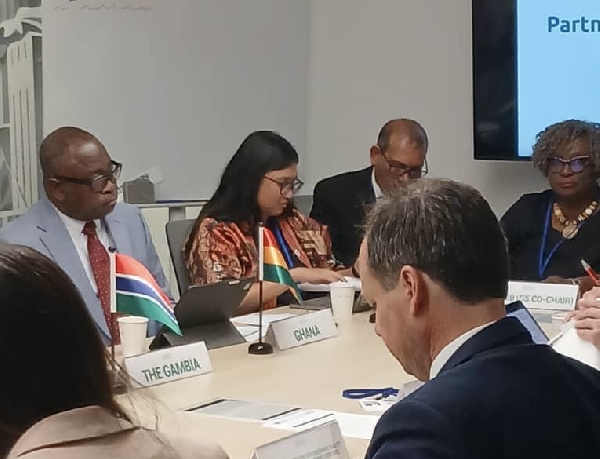
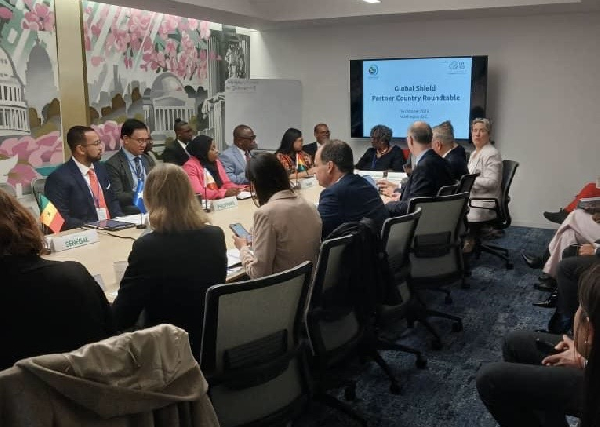
Seidu Issifu is seen here at the meeting in Washington, DC
Ghana reaffirmed its leadership in climate resilience and innovative finance during the Global Shield Partner Country Roundtable held at 2000 Pennsylvania Avenue, Washington, DC.
Addressing the session, Seidu Issifu, Minister of State for Climate Change and Sustainability, highlighted Ghana’s pioneering role as the first country to operationalize the Global Shield against Climate Risks — a landmark initiative advancing pre-arranged financial protection for climate-vulnerable nations.
Ghana: Breaking the Climate–Debt Cycle
Minister Issifu emphasized that Ghana stands at the frontline of the climate crisis. The country continues to face recurrent droughts in the north, severe flooding in the south, and unpredictable rainfall patterns that undermine agriculture and food systems.
These events, he noted, erode infrastructure, displace communities, and destabilize public finances — forcing governments to borrow or divert scarce resources to finance recovery efforts.
“Climate impacts deepen debt vulnerability, and debt limits our ability to invest in resilience,” Minister Issifu stated. “Breaking this cycle is a national priority.”
From Commitment to Action: Ghana’s Global Shield Success
Ghana’s leadership in the Global Shield process is already yielding tangible results. With support from partners, the country purchased its first parametric drought insurance through the African Risk Capacity (ARC).
The insurance was triggered in late 2024, leading to payouts totaling nearly USD 2.9 million to support drought-affected farmers in northern Ghana.
The minister commended the collaboration with the National Disaster Management Authority (NADMO) to ensure payouts reach vulnerable communities swiftly and transparently.
These experiences, he explained, prove how pre-arranged finance can provide rapid relief while safeguarding fiscal stability and reducing the need for emergency borrowing.
Expanding Protection and Building Resilience
Beyond drought insurance, Ghana is working with the Global Shield Solutions Platform and other partners to develop additional instruments, including urban flood protection and broader climate risk financing. These innovations form part of Ghana’s growing portfolio under its national Global Shield package.
Minister Issifu also announced that Ghana is updating its Climate Prosperity Plan—a flagship initiative of the Climate Vulnerable Forum (CVF) and V20 Group of Finance Ministers—to integrate comprehensive Climate and Disaster Risk Finance and Insurance (CDRFI) strategies.
Three Strategic Shifts in Ghana’s Climate Finance
The updated plan reflects three strategic transformations:
1. Diversified Financing Mix: With overseas development assistance projected to decline by up to 21% after 2027, Ghana is designing a blended finance model combining concessional and commercial capital, guarantees, carbon revenues, and domestic savings to sustain climate investments.
2. Macro-Fiscal Stability: Under the IMF Extended Credit Facility, Ghana’s fiscal framework has stabilized, creating an enabling environment to synchronize economic recovery with climate ambition.
3. Integration with the 24-Hour Economy: Ghana’s national development agenda will embed climate risk management and private capital mobilization into its 24-hour economy strategy—ensuring every investment reduces vulnerability and strengthens competitiveness.
A Model for Climate-Resilient Growth
Minister Issifu concluded by reaffirming Ghana’s unwavering commitment to fiscal responsibility, financial innovation, and climate ambition.
He lauded the Global Shield as a transformative mechanism that shifts countries from reactive disaster aid to proactive financial preparedness.
“The Global Shield is not just a response tool—it is the foundation for long-term economic stability and sustainable growth,” he declared. “Ghana is proud to lead by example and stands ready to collaborate with all partners to advance resilience for the most vulnerable.”
According to a report by Ghpage News, a young woman has shared a distressing experience after suffering a severe reaction to a lip product she purchased online, allegedly marketed as a charm to attract wealthy men.
The incident has sparked renewed debate about the risks associated with unregulated beauty and “spiritual” enhancement products being sold on social media.
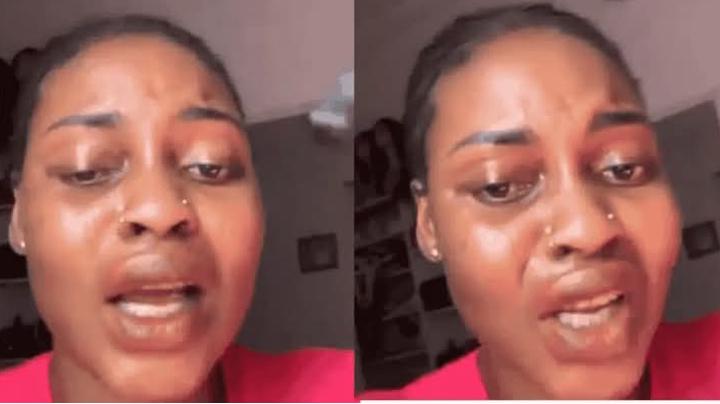
The woman, whose identity was not disclosed, appeared in a video visibly shaken and in pain as she displayed her swollen lips.
According to her account, she bought the product believing it would help her appear more attractive and boost her chances of gaining the attention of affluent suitors. Instead, the gloss caused an intense physical reaction within a short period of application.
In the video, she can be heard crying as she struggles to speak through the swelling. She explains that she applied the gloss shortly after receiving it, only to feel burning sensations and discomfort that quickly escalated.
Viewers could clearly see that her lips had become excessively inflamed and misshapen, prompting concerns about her wellbeing.
The product was reportedly promoted on social media under the category of “kayamata,” a term commonly associated with charm products, intimacy enhancers, and supposed spiritual items aimed at influencing affection, attraction, or financial favor.
Many of these items are advertised without proper safety testing, ingredient disclosure, or regulatory approval.
Health professionals and consumer rights advocates have repeatedly warned about the dangers of purchasing unverified cosmetic products online.
Dermatologists note that products containing unknown substances can trigger severe allergic reactions, chemical burns, infections, or long-term skin damage.
In recent years, the rise of influencers promoting unconventional beauty products has led many young women to expériment with items promising quick results in relationships or finances.
However, regulatory bodies across several countries have issued statements emphasizing that many such products fall outside approved cosmetic standards.
Following the viral video, social media users reacted with a mix of sympathy and criticism. While some expressed concern for her health and encouraged her to seek medical attention immediately, others questioned the growing dependence on unregulated enhancement products and the desperation that fuels such purchases.
Authorities are yet to announce whether any investigation has been launched into the seller of the lip gloss. Legal experts say the circulation of unsafe cosmetic items online remains difficult to control due to anonymity, lack of licensing, and absence of clear supply chains.
As the video continues to circulate, it has become a cautionary tale about the consequences of using beauty products from unverified sources.
Health experts advise anyone who experiences swelling, irritation, or pain after using a cosmetic product to discontinue use immediately and consult a medical professional.
The incident has also reignited calls for stricter monitoring of online vendors and improved public awareness on the importance of product safety.
Black Stars coach Otto Addo is confident goalkeeper Benjamin Asare can still improve despite his heroic performances during the 2026 World Cup qualifiers.
The Hearts of Oak goalkeeper, after making his debut in March earlier this year against Chad, has remained the first-choice goalkeeper.
Asare played six games during the qualifiers and kept five clean sheets.
Speaking to 3Sports after Ghana’s qualification to the global showpiece, Addo beleives the 33-year-old shot-stopper can still get better.
“He’s really good. I think his strength is definitely on the line. Short blocking and on the line. There’s still room to improve, but I think he’s growing from game to game,” the 49-year-old said.
Asare is expected to keep his place in the team ahead of the tournament, which will be co-hosted by the USA, Canada and Mexico.
Meanwhile, Ghana will discover their group opponents on December 5.
The former Special Representative of the Secretary-General in Mali and Head of the United Nations Multidimensional Integrated Stabilization Mission in Mali (MINUSMA), El-Ghassim Wane, has voiced strong concern over the continuing visa barriers that hinder travel and trade among African countries.
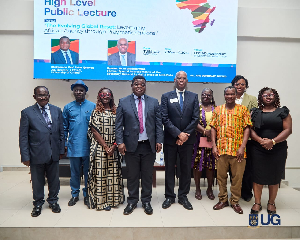
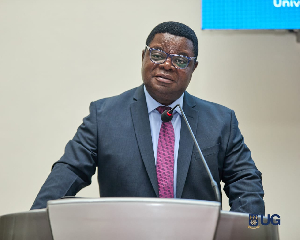
Speaking at a High-Level Public Lecture on the theme “The Evolving Global Reset: Leveraging African Agency Through Pragmatic Options” organized by the Legon Centre for International Affairs and Diplomacy (LECIAD) at the University of Ghana, Wane described the current situation as “a shame for our continent,” lamenting that Africans still face greater difficulty traveling within Africa than citizens from outside the continent.
“Despite the progress we have made, traveling across our continent is still harder than it should be,” he stated.
“Africans require visas for nearly half of all intra-African trips—more, in fact, than citizens of many countries outside Africa. Often, when you arrive at African airports, you see Europeans and Americans moving through more easily than Africans themselves. It is a shame for our continent.”
Wane also drew attention to broader structural issues that continue to slow Africa’s economic transformation.
He noted that the continent’s exports remain dominated by raw materials, while its contribution to global manufacturing is minimal.
“Inter-African trade is still stuck at around 15%. Air transport within the continent is limited and about 50% more expensive than in most other regions of the world,” he explained.
He further highlighted that Africa faces an annual financing gap estimated between $70 and $110 billion and remains home to nearly two-thirds of the world’s extreme poor, a stark reminder of how far the continent still has to go.
Touching on governance, Wane cautioned that Africa’s political future remains uncertain, with democratic processes under growing strain and conflicts persisting across several regions.
He concluded by stressing that these challenges—ranging from visa restrictions to weak governance, tell a larger story of Africa’s immense potential still trapped by systemic constraints.
Megan Vick is a pop-culture journalist and freelance writer whose coverage spans TV, film, celebrities, seasonal events, and online culture. Her bylines include Collider, Entertainment Weekly, TV Guide, Parade Magazine, Variety, Reality Blurred, and others. Known for her list-driven stories, recaps, reviews, and exclusive takes, she also reports on TV stars, teen romances, K-pop, and “mom shows.” She’s been writing professionally since 2008 and often mixes trending pieces with evergreen features that engage devoted pop culture audiences.
A few days ago, while diving deep into Ghana’s political history, I found myself revisiting the story of the Northern Students Union and, more significantly, the Northern People’s Party (NPP). That journey naturally led me to the towering figure of Simon Diedong Dombo, under whose leadership the NPP became the main opposition force of the time.
My curiosity didn’t end there. I traced the historical transition from the NPP into the broader United Party (UP) and followed the thread all the way to the present. It became clear to me how these early opposition movements laid the foundation for what we, today, know as the New Patriotic Party (NPP).
The original United Party, formed during the political turbulence of the late 1950s, had at its helm Dr. Kofi Abrefa Busia. The UP symbolized unity, liberal democratic values, and national character—especially after ethnic-based parties were outlawed. It brought together forces from the Northern People’s Party, National Liberation Movement (NLM), Anlo Youth Organisation, Ga Shifimokpee, and others.
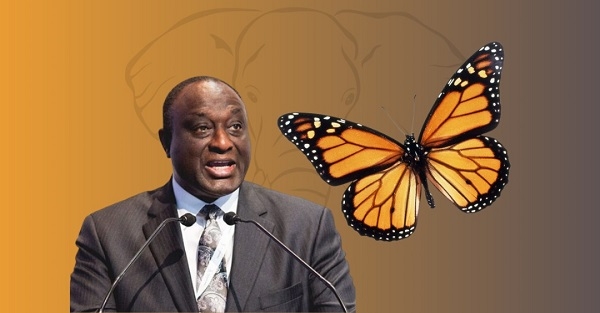
Fast forward to 2025: a political phoenix has risen from the ashes. The Movement for Change, led by Alan Kwadwo Kyerematen, has metamorphosed into a fully-fledged political partythe United Party (UP). This move, I consider as not just symbolic, but strategic.
It evokes the historical memory and emotional attachment of a political tradition many Ghanaians still hold dear.
You may recall that the Movement for Change was formed in September following serious internal issues with the NPP. Alan Kyerematen resigned from the NPP after alleging that he has been treated unfairly by the party.
The former Minister of Trade formed the Movement to enable him and his followers as well as the Ghanaian youth participate in the country’s democratic space. He led the movement to introduced its development agenda called the 10-point Agenda. Subsequently, in the presidential elections, Alan pulled 32, 457 votes representing 0.28% of the total votes.
Many thought, that, with this seeming abysmal performance, the Movement for Change would have aborted its political escapades. However, the Movement from Change is far from giving up hence this development.
WHY THE NAME MATTERS
The choice of the name “United Party” is no accident. It carries ideological and emotional currency.
For those who understand Ghana’s political ancestry, this new UP taps into the legacies of the Progress Party, Northern People’s Party, and the NLM. It is not just a name it is a reclamation of history, a nod to political roots, and an attempt to reawaken a dormant tradition.
The original UP was a political melting pot—a coming together of various smaller opposition groupings under one banner to challenge the dominance of the CPP government. Its liberal democratic orientation stemmed from the fact that it had to accommodate diverse views and regional interests. The same ethos seems to guide the current UP under Alan.
THE UP-Plus AGENDA
Branded as UP Plus, the new party seeks to provide a third force in Ghana’s entrenched two-party system. Alan Kyerematen, a former Trade and Industry Minister, has positioned the party as a credible alternative anchored on three key pillars:
KEY OBJECTIVES
•Economic Transformation: Position Ghana as the economic hub of Africa by 2040.
•Inclusive Governance: Uphold transparency, accountability, and zero tolerance for corruption.
•National Unity: Heal political divisions and foster a collective sense of national purpose.
SYMBOLISM
The party’s emblem a Monarch Butterfly symbolizes transformation, resilience, and endurance. Its colours (yellow, black, and white) represent Ghana’s gold wealth, the Black Star of Africa, and purity of intent, respectively.
A STRATEGIC GAMBLE OR POLITICAL MASTERSTROKE?
One question that remains unanswered is whether the current UP intends to forge alliances with other smaller parties to create a broader coalition perhaps even a reimagined opposition front. If history is anything to go by, this would not be a far-fetched strategy.
After all, the original UP was itself a coalition of forces, necessitated by the political climate of the time.
What is, however, palpably clear is that the new UP is deeply rooted in Ghana’s political tradition. It is not alien. For those who believe in the ideals of the NPP of Dombo, the Progress Party of Busia, or the NLM of Baffour Osei Akoto, the current UP offers a familiar ideological home.
There’s no denying that in Ghana, many people choose their political affiliation based on ideology, tradition, or identity not just manifestos. And herein lies the potential threat to the current New Patriotic Party (NPP).
If the NPP does not handle its internal cracks and factionalism carefully, it risks losing key members and floating sympathizers to a party like the UP, which shares a common ancestry.
ALAN’S CALCULATED MOVE
Say what you will about Alan Kyerematen and his team, but they are playing the long game. Their approach calculated, calm, and anchored in strategic branding may not yield immediate electoral gains, but it has the potential to disrupt the status quo.
In fact, with their communication style, their historical appeal, and Alan’s personal gravitas, the UP is well-positioned to rival the NPP in areas where ideological loyalty matters.
Let’s face facts the NPP, despite being the largest opposition party today, often relies heavily on two key regions to clinch victory. Any noticeable drop in turnout, disaffection, or apathy in these strongholds can tilt the balance as we saw in the last general elections.
While some may downplay Alan’s departure from the NPP and his presidential ambition, the numbers don’t lie.
He’s not standing alone. There’s a solid support base behind him—numbers that any serious political party would need to secure a win in Ghana’s fiercely competitive electoral space.
CONCLUSION:
The emergence of the new United Party may appear to some as a political rebrand, but for those with an understanding of Ghana’s political history, it is a revival of a deeply rooted tradition.
In a political environment ripe for disruption, this could be more than just a passing phase it could be the beginning of a new political paradigm.
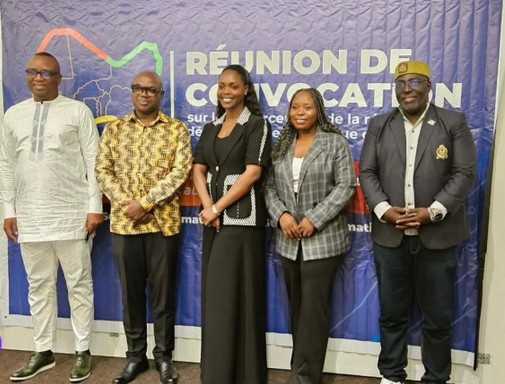
Penplusbytes has expanded its regional engagement on disinformation to Côte d’Ivoire, convening government officials, civil society actors, academics, and media professionals to discuss strategies for strengthening democratic resilience ahead of the country’s upcoming elections.
The event, held in Abidjan, forms part of a broader regional initiative supported by the National Endowment for Democracy (NED) and implemented by Penplusbytes in partnership with West Africa Democracy Radio (WADR) and the Sahel Institute for Democracy and Governance, following a successful convening in Accra, Ghana, last month.
Building on the Ghana convening in September, the Côte d’Ivoire edition spotlighted findings from the Disinformation Index Report (DIR), an evidence-based assessment of disinformation trends across Ghana, Côte d’Ivoire, Mali, and Burkina Faso.
Presenting the findings, Rebecca Avusu, a researcher at Penplusbytes, highlighted key insights specific to Côte d’Ivoire, which ranked second (after Ghana) among the four countries assessed in the Disinformation Index Report. The report shows that Côte d’Ivoire achieved a 90% score in universal detection of misinformation, with 53% of respondents verifying content before sharing and 50% reporting misinformation or disinformation to platforms. These figures reflect the country’s growing public awareness and civic engagement in addressing false information, a trend that offers valuable lessons for the subregion.
The session on the current state of the information space highlighted the growing spread of disinformation on social media, especially WhatsApp, and stressed the importance of fact-checking and mindful media consumption.
Executive Director Jerry Sam reiterated Penplusbytes’ commitment to “fostering cross-border collaboration and evidence-based strategies that strengthen democratic resilience across West Africa. By bringing together governments, civil society, media, and citizens, we aim to build a regional ecosystem capable of detecting, countering and ultimately reducing the harmful impact of disinformation on our democratic processes. Disinformation knows no borders, and neither can our response.”
On the part of the Independent Electoral Commission of the Ivory Coast, they stated that “the official opening of the presidential campaign period marks a critical moment for our democracy. As we convene today, we recognise that the integrity of information circulating among voters is as essential as the integrity of the ballot itself. The Independent Electoral Commission calls on all stakeholders, including candidates, media, civil society, and citizens, to uphold the truth and accuracy in political discourse. When voters have access to credible information, free from manipulation and falsehood, they can make informed choices that reflect their true will, ensuring peaceful and legitimate elections that strengthen our democratic foundations.”
The convening also provided a platform for stakeholders to exchange experiences, identify national vulnerabilities, and recommend practical measures to curb the growing influence of disinformation on democratic processes.
The discussions form part of Penplusbytes’ ongoing efforts to promote cross-border learning and enhance the region’s collective resilience to disinformation.
According to Blay Miezah, if after seven days, the machete is not removed, nobody could remove it
Correspondence from Western region
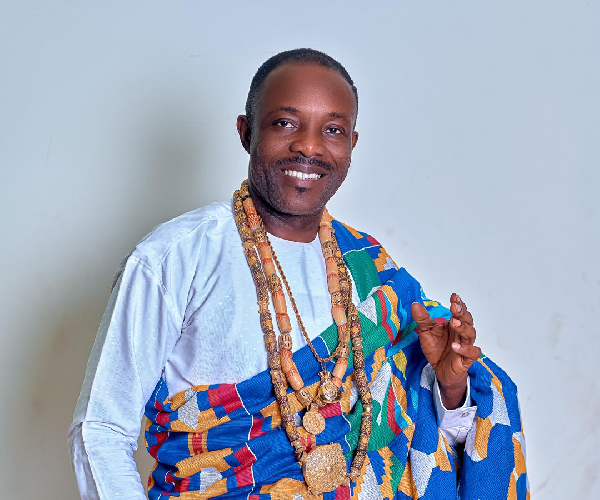
In what could be described as a mystical move, a renowned Fetish Priest in the Western Nzema Traditional Area, Nana Blay Miezah has out of spiritual possession and influence by the muses, on Sunday, October 12, 2025, implanted a machete at the spiritual healing home of his ancestors at Miegyena, a farming community near Nzulezo in the Jomoro Municipality of the Western Region.
This followed his initiation as a fetish Priest barely a week ago at Miegyena.
According to him the implanted machete symbolizes the healing prowess and presence of his ancestors in the spiritual home to offer the power of healing.
According to Nana Blay Miezah, if after seven days, the machete is not removed, nobody could remove it again.
Barring any positive signs in the future, Miegyena would become a tourist attraction just like the famous Komfo Anokye implanted sword in the Ashanti Region which he prophesied that nobody could ever remove or uproot till date.
Speaking to GhanaWeb Western Regional Correspondent, Nana Blay Miezah said the phenomenon was borne out of a covenant between him and his ancestors when he was initially called to assume the duty of a Chief priest two decades ago.
According to Nana Blay Miezah, the priest recounted his proven track record in assisting many football clubs in Africa including Kumasi Asante Kotoko and Accra Hearts of Oak with spiritual prowess to win trophies and fame.
Nana Blay Miezah reiterated on his wondrous and mystical works which earned many politicians’ enviable positions in Africa.
The Chief Priest threw the challenge to be banished from the place if someone or a machine was able to remove the planted machete after the stipulated period.
Meanwhile, catch the highlights of Sarkodie x Shatta Wale’s epic performance at Rapperholic Homecoming on GhanaWeb TV below:
Watch as some Ghanaians demand quick prosecutions in ORAL cases
Professor Peter Quartey, Acting Director of LECIAD
The Legon Centre for International Affairs and Diplomacy (LECIAD) at the University of Ghana held a thought-provoking High-Level Public Seminar on October 14, 2025, under the theme “The Evolving Global Reset: Leveraging African Agency Through Pragmatic Options.”
The seminar drew an impressive audience of scholars, diplomats, and policymakers from the University of Ghana and the Ghana Institute of Management and Public Administration (GIMPA), alongside several master’s and PhD students from the Centre.
The event was chaired by Professor Peter Quartey, who also serves as the Acting Director of LECIAD.
Delivering the keynote address, Professor Quartey urged African leaders to take bold and strategic steps in seizing emerging opportunities for development in the face of global transformation.
He lamented that Ghana, like many African countries, failed to capitalize on the numerous chances presented in the 1990s to convert foreign aid and partnerships into meaningful national growth.
“In the 1990s, Ghana and other African nations had numerous opportunities to transform their economies,” he recalled.
“We were the favorites of the donor community, receiving significant financial and technical support. Yet, due to poor planning and mismanagement, we could not turn those resources into lasting progress.”
According to him, the consequences of that missed opportunity continue to haunt the continent.
“The challenges we faced three decades ago are the same challenges confronting us today,” he said.
“Our roads remain in deplorable condition, many communities still lack streetlights, and our once vibrant rivers have become polluted. These are signs of leadership that failed to manage aid efficiently for the public good.”
Professor Quartey, however, highlighted Ethiopia as a model of what visionary leadership and disciplined planning can achieve.
“I have been to Ethiopia, and I must commend them for their remarkable progress,” he stated.
“They have transformed their cities by improving road networks, maintaining clean environments, and providing adequate lighting. Such progress attracts investors, stimulates real estate growth and supports agricultural expansion.”
He added that Ethiopia’s successful harnessing of the Nile River for electricity generation should serve as an inspiration for other African nations.
“Ethiopia has utilized the Nile River to expand power generation, creating opportunities for industries and regional trade. Ghana and other African countries must emulate this by using our natural resources wisely to promote sustainable development and attract investment,” he advised.
In closing, Professor Quartey delivered a strong message on the need for foresight and accountability in leadership across the continent.
“No serious investor will commit funds to a country that struggles with basic amenities like lighting, clean water and sanitation,” he warned.
“Our leaders must think beyond politics, act decisively, and invest in systems that guarantee long-term growth and stability.”
Also addressing the gathering, the former United Nations Special Representative in Mali and Head of MINUSMA, El-Ghassim Wane, reflected on the shifting global order and its implications for Africa.
“The world is changing rapidly—politically, economically, and geopolitically,” he noted. “If international law continues to lose its strength, Africa, being among the most vulnerable, could be at the receiving end of global instability.”
However, Wane expressed optimism that the current global realignment also presents new openings for Africa to redefine its role in world affairs.
“With the decline in official aid, Africa has a unique opportunity to become more self-reliant and assertive,” he said.
“The restructuring of the global order allows Africa to contribute meaningfully to shaping a new system that reflects its interests and aspirations.”
He emphasized two key steps toward this vision: ensuring that African leaders fulfill their own commitments and strengthening the African Union as the main platform for dialogue and collective decision-making.
“The African Union has its shortcomings,” Wane admitted, “but it remains our continental home for debate, collaboration, and policy direction. We must strengthen it, not abandon it, if we want Africa’s voice to matter in the new global order.”
Singer Levi Ogbogiri better known as Kraziecent has sued Odumodublvck for violently assaulting and battering him at a public event in December 16, 2024.
Kraziecent alleged that the rapper attacked him without any form of provocation while he was “peacefully taking videos and pictures” of himself at the event.
Nigerian singer, Teniola Apata popularly known as Teni, has shared a video of her new look and mode of dressing with fans on her Instagram page.
The singer, who is famously known to always be dressed in baggy clothes, while preparing for a wedding dressed in a gorgeous orange lace corset blouse and skirt.
In this Nigerian royal movie, In the royal palace, shame and mystery surround Princess Chintua, the king’s daughter, who battles a secret that brings disgrace to the throne — she still wets the bed. Her father’s anger grows as elders whisper of curses and hidden sins from the past.
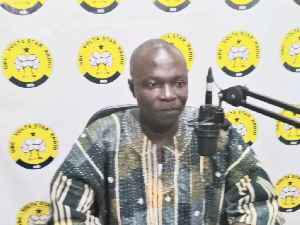
A new political radio program has launched in Uganda as the country enters a heated campaign period. “NUP Speaks” airs live every Friday at 7 PM on NUP Radio 91.4, featuring host Deejay Blockboy and promising open political discourse during the crucial election season.
The show positions itself as a platform for diverse voices rather than pure party propaganda. It invites political commentators, civil society representatives and occasional opposition figures to discuss pressing campaign issues while allowing listeners to call in with questions and opinions.
The timing coincides with escalating competition among Uganda’s major political parties. Such media platforms carry significant potential to influence public opinion and provide transparency in political messaging as elections approach.
Critics express concern that even seemingly neutral programs can blur lines between editorial content and campaign material in charged electoral environments. Supporters counter that the show gives NUP supporters a voice in media spaces they consider dominated by government aligned outlets.
Initial episodes have focused on policy issues including youth employment, agriculture and governance topics that resonate strongly with urban voters. As the campaign intensifies, observers will monitor whether the program maintains balanced discourse amid Uganda’s politicized media landscape.
In this Nigerian village movie, After suffering multiple heartbreaks from women who only loved him for his wealth, Obinna decides to disguise himself as an ordinary driver in search of true love. His plan takes an unexpected turn when he meets Olanma — a simple, genuine woman who loves him for who he truly is.
US President Donald Trump has acknowledged that he has authorised the CIA to conduct covert operations in Venezuela – a highly unusual admission of what is normally a highly sensitive and tightly guarded state secret.
The authorisation – more typically known as a presidential finding – could give the agency broad leeway to conduct operations in the region, including lethal strikes against suspected drug traffickers or broader operations aimed at destabilising or toppling the regime of Nicolas Maduro.
Previous presidential findings have ultimately led to drone strikes on militants overseas, money and weapons funnelled to insurgencies, and even efforts at full regime change.
Most, however, remain classified.
According to US law, presidents may authorise covert actions if they determine that these operations are “necessary to support identifiable foreign policy objectives…[and] important to the national security of the United States.”
Once that determination is made, it must be shared with the House and Senate intelligence committees, and, in some sensitive cases, the “gang of eight” composed of leaders in both parties and the chairs and ranking members of the intelligence committees.
But that notification – which is expected to be detailed and outline legal risks – does not mean congressional approval is necessary. Congress can only block these operations through legislation or by cutting funding.
In practice, the authorisation could be as focused – or as broad – as the president deems necessary.
“The parameters of the authorities are laid out in the finding,” explained Mick Mulroy, a former CIA paramilitary officer and deputy under secretary of defence.
“But there really isn’t any limitations, and it does not need congressional approval.”
Any restrictions imposed on the CIA’s activities are executive orders, which Mr Mulroy said “means the president can simply write a new executive order and change it.”
Once approved by the president, CIA actions could take the form of targeted killings, covert influence operations, shaping local politics or helping set up and equip armed rebel movements fighting foreign governments.
In December 1979, for example, a presidential finding from Jimmy Carter allowed the CIA to deliver lethal aid to Afghan guerrillas fighting the Soviet invasion of the country.
Just a few years later, another finding – this time from the President Ronald Reagan administration – allowed the CIA to extend covert aid to the Contras, rebel groups that were trying to unseat the leftist Sandinista government in Nicaragua.
More recent findings led to worldwide operations against al-Qaeda after the 9/11 attacks, as well as Operation Timber Sycamore, a CIA-run operation to train and supply Syrian rebels fighting the Assad regime.
In other countries across Latin America – including Guatemala, Chile and Brazil – the US helped overthrow governments in the name of fighting communism, or helped bolster regimes that were harsh oppressors of human rights.
“We just don’t have a great track record,” said Dexter Ingram, the former director for combating violent extremism at the State Department and now an advisory council member at the International Spy Museum in Washington.
“There’s a long history, and it’s not always positive,” Mr Ingram added. “I think we have to look at our history….it’s a slippery slope.”
CIA-backed rebels in Nicaragua fought an 11-year insurgency against the leftist Sandinista regime.
It remains unclear whether the CIA is already conducting covert actions in Venezuela, is planning to, or whether those plans are being kept as contingencies.
Trump earlier this week justified the CIA authorisation and US airstrikes against vessels in the Caribbean by saying that “a lot of drugs” are flowing from Venezuela to the US.
His disclosure about the CIA authorisation comes as US long-range B-52 bombers were seen circling near the Venezuelan coast.
CIA operations, though, would be covert and could take various different forms against an array of targets.
Suspected members of Tren de Aragua and the Cartel of the Suns, both of which the US has designated terrorist organisations, could be struck in paramilitary operations or by drones.
Marc Polymeropoulos, a 26-year veteran of the CIA who served in both Iraq and Afghanistan and oversaw clandestine missions around the world, told the BBC that the methodology of “find, fix and finish” the agency developed during the “global war on terror” could be readily applied to criminal networks.
“It’s going after certain individuals, networks, or supply chains,” he said. “It’s manhunting, and there’s nobody better on the planet at that than the CIA.”
The primary difference between striking criminals in Venezuela and striking Al Qaeda or other militant targets in places like Syria, Yemen or tribal areas of Pakistan, he added, is that the latter targets mostly operated in “ungoverned” spaces.
“Conceptually, it would be a little different. Those were really lawless countries,” he said. “This would obviously be done without the cooperation of the Venezuelan [government].”
Alternatively – or additionally – sabotage operations could be conducted against targets aligned to Maduro’s government, “influence operations” could be used to shift public opinion through media and money, training and weapons could be provided to anti-Maduro groups – all operations with historical precedent for the CIA in Latin America and elsewhere.
“Nobody knows what this [authorisation] is,” Mr Polymeropoulos added. “There’s a million different questions.”
DISCLAIMER: The Views, Comments, Opinions, Contributions and Statements made by Readers and Contributors on this platform do not necessarily represent the views or policy of Multimedia Group Limited.
DISCLAIMER: The Views, Comments, Opinions, Contributions and Statements made by Readers and Contributors on this platform do not necessarily represent the views or policy of Multimedia Group Limited.
Ghana faces a growing breast cancer epidemic marked by late diagnosis, financial barriers to treatment, and inadequate screening infrastructure, challenges that the government’s newly approved Ghana Medical Trust Fund aims to address though experts question whether current funding mechanisms sufficiently bridge access gaps. The disease remains the leading cancer among Ghanaian women, affecting thousands annually while survival rates lag far behind high-income countries due to systemic healthcare constraints.
The statistics underscore urgency. More than 4,000 Ghanaian women receive breast cancer diagnoses annually, with nearly 70 percent identified at advanced stages when treatment becomes complex and expensive. The three-year survival rate in Eastern Ghana reaches only 52 percent, compared to over 80 percent in developed nations. Across West Africa, five-year survival ranges between 35 and 48 percent. This disparate outcome reflects not cancer biology but healthcare system capacity—women diagnosed early in Ghana achieve survival rates equivalent to developed countries, yet early detection remains uncommon.
The barriers to early detection operate across multiple levels. Access to screening technology remains geographically concentrated. Mammography machines, essential for early detection, exist in extremely limited numbers, with only small percentages of hospitals and diagnostic centers providing access. Research indicates Ghana would need substantially more fully functional mammography equipment to support even basic population screening, yet capital investment constraints limit expansion. Breast ultrasonography, more widely available and less expensive, offers partial solution though trained personnel and equipment limitations persist.
Rural areas face particular disadvantage. Radiologists concentrate overwhelmingly in urban centers, particularly Accra and Kumasi, leaving rural women with limited access to imaging interpretation. The journey for screening involves transportation costs, time away from agricultural or domestic work, and uncertainty about service availability. These practical barriers compound medical ones, with awareness of breast self-examination and early warning signs remaining low even among educated populations.
When diagnosis occurs, financial burden becomes catastrophic. Studies of breast cancer patients at Ghana’s leading teaching hospitals found that 87 to 93 percent bore diagnostic costs entirely out-of-pocket rather than through insurance. Treatment costs exceeded what most households could absorb, forcing families into impossible choices between medical care and basic necessities. Many patients abandon therapy partway through when costs become unsustainable, converting potentially survivable cancers into terminal illnesses through economic constraint rather than medical necessity.
The National Health Insurance Scheme, while providing baseline coverage for some services, contains critical gaps. NHIS benefits include many treatment elements but explicitly exclude routine screening tests like mammography and pap smears, meaning prevention remains unaffordable for most women. Additionally, NHIS coverage for specialized treatments remains incomplete, leaving expensive interventions like immunohistochemistry testing and targeted therapies inaccessible to poor patients despite their clinical necessity.
Into this constrained environment, Ghana’s government launched the Ghana Medical Trust Fund, popularly known as Mahama Care, in April 2025. The initiative, approved by Parliament in July 2025 following contentious debate, aims to provide dedicated financial support for chronic disease treatment including cancer, kidney failure, cardiovascular disease, and diabetes. The fund dedicates resources specifically toward specialist-level care that NHIS does not fully cover, including chemotherapy, radiotherapy, and surgical interventions.
The funding mechanism immediately generated controversy. The bill allocates 20 percent of National Health Insurance Fund revenues to Mahama Care, creating parliamentary tension over whether this strengthens or undermines existing health financing structures. Opposition members questioned whether the fund represents genuine expansion of capacity or merely redirection of scarce resources from basic healthcare toward specialized treatment. They argued the government should explore alternative funding through mechanisms like the COVID-19 levy rather than diminishing NHIS allocations.
The government secured 9.9 billion Ghana cedis (approximately $584 million) for healthcare initiatives including Mahama Care in the 2025 budget, though debate continues about whether this adequately funds operations. Implementation depends partly on private sector contributions, with officials appealing to Ghanaian corporations to allocate corporate social responsibility budgets toward the fund’s sustainability. This reliance on voluntary private support introduces uncertainty about long-term financial stability.
Beyond financing, structural barriers to care access remain substantial. Distance from treatment facilities, limited diagnostic capacity outside tertiary hospitals, and healthcare worker shortages constrain what funding alone can overcome. Research recommends systematic interventions across screening, diagnosis, and treatment pathways rather than financing solutions alone. Early detection costs per life-year saved remain far lower than late-stage treatment, suggesting prevention investment would yield superior health outcomes compared to expensive tertiary interventions, yet prevention receives minimal attention compared to treatment support.
The Mahama Care taskforce, chaired by healthcare professionals and policy experts, faces demanding timelines. They were given five weeks to develop comprehensive operational frameworks, eligibility criteria, and sustainability plans for a fund designed to serve potentially millions of Ghanaians chronically ill with expensive conditions. Rapid policy development risks inadequate stakeholder consultation and implementation challenges typical of hastily designed programs.
For breast cancer specifically, Mahama Care potentially improves access to chemotherapy, radiotherapy, and surgical care for economically disadvantaged patients. A woman able to access early diagnosis through improved screening and affordable diagnosis could potentially benefit from fully financed treatment through Mahama Care, creating genuine care pathway from detection through recovery. However, this scenario remains conditional on prior achievements in screening expansion, radiologist training, and diagnostic capacity that remain unrealized.
The reality for Ghanaian women remains that most will continue facing delayed diagnosis, incomplete treatment, and high mortality unless systematic reforms address the entire care continuum rather than financing alone. Mahama Care represents policy acknowledgment that financial barriers drive unnecessary deaths and that government intervention can reduce this burden. Whether the fund succeeds depends on implementation quality, sustainable funding mechanisms, stakeholder clarity about roles and responsibilities, and parallel investments in diagnostic infrastructure and healthcare workforce development.
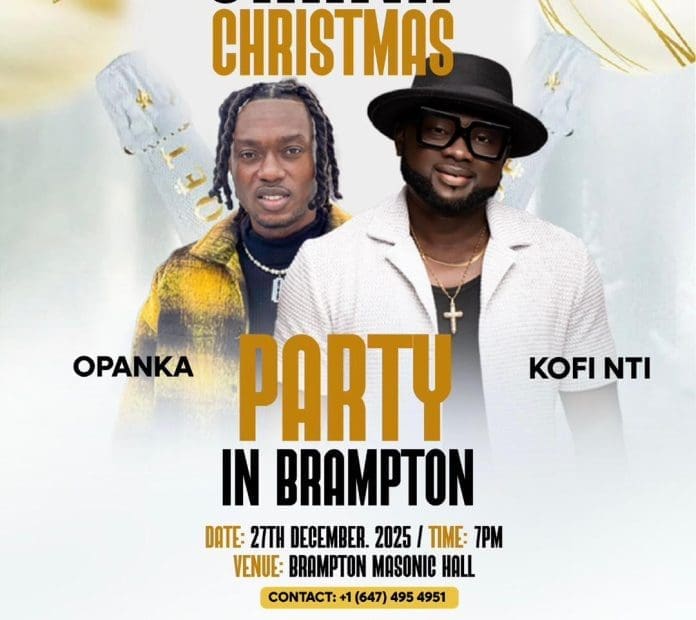
The Ghanaian community in Brampton, Canada, is set to celebrate Christmas with a vibrant party featuring musical performances by celebrated artistes Opanka and Kofi Nti.
This event, organised by Freeway Business, aimed at fostering community spirit and celebrating Ghanaian culture, will bring together residents for a night of music, food, and festivities.
The presence of these popular Ghanaian artistes is expected to draw a significant crowd, eager to experience a taste of home during the holiday season.
The “Ghana Christmas Party in Brampton” is an annual or recurring event that serves as a cultural cornerstone for the Ghanaian diaspora in the Greater Toronto Area, particularly Brampton, which has a significant Ghanaian population.
Opanka, known for his unique blend of hiplife and rap, and Kofi Nti, a highlife music veteran, are both highly regarded figures in Ghanaian music, ensuring a high-quality entertainment experience for attendees.
Their participation underscores the event’s importance and its ability to attract prominent artists from Ghana, reflecting the strong ties between the diaspora and their homeland.
The party would feature traditional Ghanaian cuisine, cultural dances, and opportunities for networking and community building, further enriching the experience for all who attend.
In this Nigerian village movie, Every young woman wants the teacher, but he is more interested in the widow with two children, but her children are not making it easy for him.
Nigerian Movie Starring; Georgina Ibeh, TCharles Ozuruigbo, Oluebube Obio
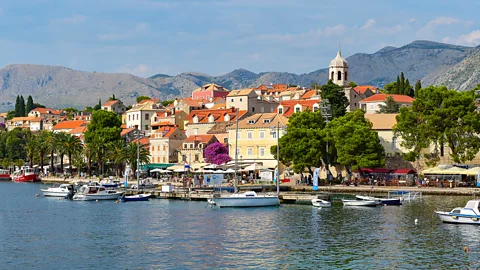
In Dubrovnik, “pomalo” isn’t just a holiday indulgence. It’s a philosophy of life that shapes everything from seaside swims to long lunches.
When I told my husband I needed a mumcation, he knew exactly where I’d go. My obsession with Croatia is no secret: I’ve lost count how many times I’ve visited my grandparents’ homeland (more than two dozen) and I even wrote a novel set there. Dubrovnik’s stari grad – the medieval walled old town – stole my heart when I first glimpsed it in 2001 on a holiday with my parents.
For my solo trip, I had a singular goal: to embody pomalo, a deeply ingrained Dalmatian lifestyle that emphasises a relaxed, unhurried approach. I needed to reconnect with myself away from my fast-paced New York City life.
“We wake up pomalo, we drink coffee pomalo, we eat pomalo, we spend time with our friends pomalo, we live pomalo,” said Ivan Vuković, my longtime friend and a local Dubrovnik tour guide. He cautioned me not to confuse pomalo with fjaka, a fleeting state akin to Italy’s dolce far niente (the sweetness of doing nothing).
“As a local, I would describe pomalo as much more than just ‘take it easy’,” echoed Deša Karamehmedović, PhD, an associate professor at the University of Herzegovina specialising in cultural tourism. “It is a mindset and a philosophy of life. It means slowing down, being present in the moment and savouring the simple joys without hurry.”
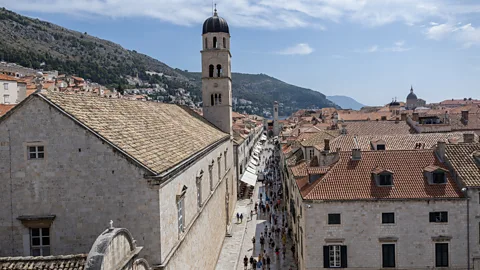
Stradun, Dubrovnik Old Town’s main thoroughfare, served as a filming location for scenes depicting King’s Landing in Game of Thrones (Credit: Getty Images)
I was craving some unhurried time alone – a return to my people-watching days 21 years ago when I studied in Dubrovnik and wrote in my journal at Café Festival on Stradun, the old town’s main thoroughfare, lingering over a cup of coffee for hours. I wanted to reacquaint myself with the selves contained within me, ensconced like matryoshka nesting dolls: the university student who fell in love with Dubrovnik; the woman who got engaged and married there; the mum who celebrated her daughter’s first birthday at Restaurant Magdalena on the same terrace where we’d held our wedding reception.
I’m used to having a plan and itinerary, but this time, I simply bought a ticket for mid-August and booked a room at my favourite hotel. Apart from alerting Vuković and several friends of my trip, I had no real plans. After all, pomalo encourages you to go with the flow. “In Dubrovnik, it influences our daily rhythms – coffee is not rushed, conversations are not interrupted and life flows at its own pace,” Karamehmedović explained.
Pomalo feels distinctly Dalmatian, tied to the sea, the sun, the gentle povjetarac breeze and the slower island and coastal lifestyle. Karamehmedović believes it can even be a meaningful response to overtourism. “Instead of rushing through checklists, it invites travellers to deeply savour one place, one encounter, one moment and to enjoy every minute,” she said.
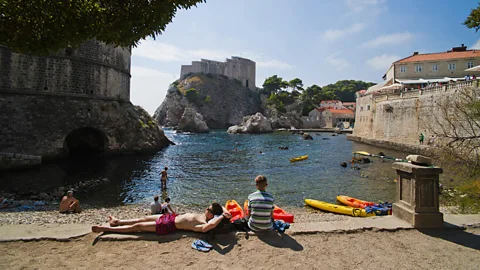
I’d been dreaming of swimming in the Adriatic and feeling saltwater on my skin, so on my first afternoon, Vuković and I headed straight for Titova villa beach on Lapad peninsula, where locals at Splendid beach bar lingered over beers and card games. The minute I dove into the clear water, my jet lag vanished and I felt refreshed and ready for a good night’s sleep.
Pomalo is a cherished Dalmatian philosophy that emphasises a relaxed, unhurried approach to life (Credit: Ivan Vuković)
I was staying at Hotel Stari Grad, where I’d lodged on my first solo visit to Dubrovnik. The next morning, I climbed five flights to breakfast at the hotel’s rooftop restaurant. As I sipped coffee, I watched visitors walking the walls and locals shooting hoops on what is one of the most scenic basketball courts in the world. Much to my delight, there were fresh figs and organic eggs from the owners’ farm. I could have spent all morning watching the city awaken from my bird’s-eye view, but I was eager to see how the day would unfold.
The boutique hotel had changed hands since my first stay more than two decades ago, and Vuković introduced me to the new owners, Anna Slabovska and Sedi Fetahi, who shared their own Dubrovnik love story: they met in 2016 on Stradun and it was “love at first sight”, Slabovska said. “We fell head over heels for Dubrovnik.”
Born in Ukraine and ex-Yugoslavia respectively, they had to learn pomalo after years living in the UK and Switzerland. “It turns out what we truly needed was a dose of the ‘pomalo’ lifestyle,” Slabovska said.
I was eager for adventure and quickly agreed to tag along when they invited me to see their renovation project – a holiday villa perched on a secluded bay in Kobaš village on the Pelješac peninsula, about a 90-minute drive from the old town. “We are designing the [guest] experience around the essence of pomalo,” Slabovska said. “The tension melts. Their rhythm softens. They notice the light, the sea, the silence. That’s the moment pomalo begins to work its quiet magic.”
Pomalo is tied to the sea, the sun and the gentle povjetarac breeze – reflecting the slower rhythm of island and coastal life (Credit: Getty Images)
On the way, we stopped to see their chickens and their fruit and vegetable garden in Ston, where they grow much of the produce used in the hotel restaurant. We spent the afternoon swimming and munching on fresh figs while their young son zipped around the seaside promenade on his new scooter, ending with a pasta meal whipped up by Fetahi with meatballs made by Slabovska’s mother who was visiting from Ukraine. By the end of the day, pomalo had started to work its magic on me: my overactive mind slowed, my shoulders softened and I started paying attention to the rhythm of my breath as I gazed at the shimmering sea.
How to experience pomalo in Dubrovnik
Linger over coffee or cocktails: Spend hours people-watching in a café on Stradun, or sip prosecco with sea views at Fratellos Restaurant and Bar.
Swim like a local: Head to Lapad peninsula or Cavtat for late-afternoon dips in the Adriatic.
Stretch out meals: Order fresh fish with blitva (Swiss chard) or the traditional Dubrovnik dish šporki makaruli (“dirty pasta”) and sip local wine slowly over lunch.
Take the scenic route: Ride the ferry to Cavtat, take a day trip to the Pelješac peninsula for wine and oysters or simply stroll the old town without a set itinerary.
“In Dubrovnik we have a saying: ‘Pomalo, vrag odnio prešu!’ meaning ‘Slowly, the devil takes the rush!'” said author Jadranka Ničetić, who has written extensively about the region’s gastronomy, traditions and recipes. “The slow-paced lifestyle is reflected in our everyday lives because it runs in our genes.”
Meals in Dubrovnik epitomise pomalo. “We do not allow the hectic pace of the city to dictate the pace at the table,” Ničetić said. Last-minute on a Saturday afternoon, I met my writer friend Vesna Jakšić Lowe, who grew up here, for a long lunch at Restaurant Orsan on Lapad peninsula, where we sipped locally cultivated pošip wine and nibbled on octopus salad and local cheese. In the crushing afternoon heat, we slowly meandered to her family home and lazed on the stone terrace overlooking the sea.
Later, we reconvened in the old town for an impromptu evening at M’arden, a wine bar on a cloistered, leaf-shaded terrace. Back in New York, we usually squeeze in catchups or writing afternoons before school pickups. But that evening, we luxuriated in conversation without a deadline and lingered over glasses of wine until closing.
I discovered my university friend Tristan Perich was also visiting Dubrovnik, and we made a plan to meet for swimming and Sunday dinner. Although we both live in New York City, we hadn’t seen each other for at least a decade.
Cavtat, a historic seaside town on Croatia’s Adriatic coast, is known for its picturesque harbour and waterfront cafés (Credit: Getty Images)
In the spirit of pomalo, I took the scenic 45-minute ferry to Cavtat, a historic seaside town, stopping for a glass of wine at Wine Bar Banac with my friend Vlaho Carević, the founder and CEO of Habitat Distillery, Dubrovnik’s first small-batch artisanal gin.
“As a distiller, [pomalo] shapes everything I do,” Carević said. “It means striving for balance, refining methods and drawing out flavours that go beyond taste alone – flavours that spark real emotions in the person experiencing them. In that way, pomalo is both my philosophy of life and the essence behind every spirit we create.”
More like this:
• Dalmatia’s fjaka state of mind
• Disneyland to living city: Dubrovnik’s bold fight against overtourism
• Living in: The world’s greatest walled cities
Later, Carević drove me to Perich’s family home in Mikulići. I swam in the sea with his family at Prevlaka near the Montenegro border, and then we all had dinner at Konavoski Dvori Eco Green Restaurant, situated on the grounds of an ancient mill adjacent to the Ljuta river. Perich and I took a stroll with his son on a trail through the darkening woods, imbibing the pristine nature and soothing gurgles from the river, attempting to catch up on a decade’s worth of life. Back at the table with his wife and daughter, we relished homemade bread with kajmak (a rich, creamy dairy product) and freshly caught grilled trout.
“So glad we got a real hang in after all these years,” Perich wrote to me after I returned home.
And that’s pomalo, distilled: enjoying life at a leisurely pace, finding joy in authentic connection and savouring each moment.
As Ničetić reminded me: “Why rush when you can enjoy life?”
DISCLAIMER: The Views, Comments, Opinions, Contributions and Statements made by Readers and Contributors on this platform do not necessarily represent the views or policy of Multimedia Group Limited.
DISCLAIMER: The Views, Comments, Opinions, Contributions and Statements made by Readers and Contributors on this platform do not necessarily represent the views or policy of Multimedia Group Limited.
This blog is managed by the content creator and not GhanaWeb, its affiliates, or employees. Advertising on this blog requires a minimum of GH₵50 a week. Contact the blog owner with any queries.
Harry Graphic Blog of Thursday, 16 October 2025
Source: Harry Graphic
The Ho Central Constituency Communications Officer of the National Democratic Congress (NDC), Hon. Sefadzi Agama, has emphasized the importance of civil servants maintaining their neutrality in the face of growing political pressures.
Speaking on the political segment of the Morning Show on GBC Volta Star Radio, hosted by Tony Mark-Boye, Agama cautioned civil servants against allowing their positions to be used as an extension of their political offices. “Don’t make your position as a civil servant an extension of your political office. Once you’re a civil servant and benefiting from neutrality allowance, you must not show your political clours while working,” he advised.
Agama’s comments reference the views of Mustapha Gbande, Deputy General Secretary of the NDC, but suggest a more measured approach to addressing the issue. “I agree with Mustapha Gbande, but we should not fire people who expose their political clours outrightly. We should tie them to ethical standards in writing and caution them when they do not play according to the rules of the game. If they still fail to comply and push comes to shove, we may then fire them.”
The call for civil servants to maintain their neutrality is not new. The Ghana Civil Service has consistently warned its employees against engaging in partisan politics, citing the need to uphold the principles of impartiality and anonymity.
The issue has sparked debate, with some arguing that purging the civil service of perceived political sympathizers could be detrimental to democracy. The Centre for Democratic Development (CDD-Ghana) has warned that such actions could undermine the country’s democratic progress.
Ghana became Africa’s first country to meet international emission reduction verification standards, securing cumulative carbon payments of $16.8 million through its groundbreaking Cocoa Forest REDD+ Programme while 140,000 farmers adopt climate-smart practices across cocoa-growing landscapes. The achievement positions the country as a continental leader in translating forest conservation into direct farmer benefits, though implementation challenges remain substantial.
Ghana’s carbon finance success rests on a distinctive structure. The World Bank’s Forest Carbon Partnership Facility provided initial financing while Ghana’s government committed 69 percent of carbon revenues directly to farmer groups and local communities, a benefit-sharing ratio that exceeds many comparable initiatives globally. The first tranche of $4.86 million arrived in January 2023, followed by $16 million in June 2024 after successful verification of 3.4 million metric tons of carbon dioxide equivalent emissions reductions achieved during the 2020 to 2021 monitoring period. This payment trajectory demonstrates that Ghana’s forest conservation efforts meet rigorous international verification standards consistently.
What distinguishes Ghana’s pathway is the recognition that carbon finance alone cannot drive deforestation-free cocoa. Rather, payments function as catalytic capital within an integrated approach combining verified emission reductions with agroforestry expansion, farmer training, and landscape restoration. The $16.8 million operates alongside Ghana Cocoa Board investments in farm rehabilitation, community-based resource management initiatives, and supply chain traceability systems aligned with European Union deforestation regulations. This integration suggests policymakers view carbon payments not as sector transformation’s solution but as one financial tool among several needed to address complex forest-cocoa-farmer dynamics.
Ghana’s continental distinction carries significance. The country fulfilled all Conditions of Effectiveness under the World Bank’s Emission Reductions Payment Agreement before any other African nation, demonstrating institutional capacity to measure, verify, and report forest carbon outcomes according to international standards. This technical achievement opens doors for scaling. The original agreement specified potential payments up to $50 million for ten million tons of cumulative verified reductions through 2024, suggesting Ghana’s current $16.8 million represents roughly one-third of targeted potential. Future tranches depend on sustained verification success and continued political commitment to forest protection policies.
The programme’s reach across 140,000 farmer participants represents substantial on-the-ground engagement, though questions about benefit distribution warrant scrutiny. Cooperative structures often concentrate advantages among leadership and larger producers while marginal smallholders capture limited gains. Ghana’s implementation framework stipulates that 69 percent of payments flow to farmer groups and communities, yet translating this commitment into equitable farmer income remains operationally complex. Village savings groups, cocoa producer associations, and farmer cooperatives serve as intermediaries, but transparency mechanisms and accountability structures determine whether benefits actually reach intended beneficiaries at the farm level.
The carbon finance achievement arrives alongside mounting external pressures on Ghana’s cocoa sector. The European Union Deforestation Regulation requires deforestation-free sourcing verification for all cocoa entering EU markets, with compliance deadlines in 2025 and 2026. The African Regional Standard for cocoa sustainability establishes parallel requirements. These regulatory frameworks create costs for traceability systems, farm mapping, and farmer certification. Carbon payments help finance these compliance investments, though whether revenues sufficiently offset total implementation costs across 792,954 registered cocoa farmers remains uncertain.
Ghana’s competitive positioning within global carbon markets reflects both opportunity and vulnerability. Carbon pricing varies dramatically depending on project characteristics, verification standards, and buyer preferences. Ghana’s $5 per ton rate reflects verified commodity-based emissions reductions, yet specialized projects elsewhere command premiums exceeding $20 per ton. Meanwhile, international carbon market architecture remains contested. Discussions around Article 6 of the Paris Agreement, bilateral carbon trading arrangements, and voluntary offset standards continue evolving, creating uncertainty about long-term payment reliability. Ghana’s carbon registry remains incomplete, complicating transaction tracking and investor confidence in future programmes.
Structural barriers to farmer participation persist despite financial incentives. Land tenure uncertainty affects roughly 70 percent of cocoa-growing communities, limiting smallholder eligibility for carbon-linked benefits since formal ownership documentation becomes prerequisite for payment claims. Technical expertise gaps among district agricultural extension officers hamper effective farmer engagement with sustainable practices that carbon programmes attempt to finance. The gap between national policy commitments and community-level implementation capacity remains pronounced, suggesting that carbon payments alone cannot overcome institutional constraints limiting programme effectiveness.
Looking forward, Ghana’s carbon finance model faces critical junctures. The country must demonstrate that current payments drive sustained behavioral change among farmers toward forest-friendly practices rather than representing temporary subsidies without lasting impact. Verification protocols for subsequent monitoring periods will determine whether emission reductions continue or stabilize at current levels. Political transitions, budget constraints, and competing development priorities could affect government commitment to forest protection policies underlying carbon payment eligibility.
For Ghana’s cocoa sector, carbon finance represents proof that forest conservation can generate revenue within commodity production systems. The $16.8 million achievement and status as Africa’s first country meeting ERPA Conditions of Effectiveness demonstrate technical capacity and sustained commitment. Yet this success remains partial. It validates programmatic structure and international verification mechanisms while leaving unresolved questions about farmer-level benefits, tenure reform, institutional capacity, and long-term financial sustainability. Ghana’s next chapters will test whether continental carbon finance pioneering translates into genuine transformation of cocoa landscapes or remains a successful programme within a sector still fundamentally shaped by deforestation pressures.
Ghana’s business leaders are increasingly viewing the African Continental Free Trade Area as essential protection against global trade shocks, according to a comprehensive survey of over 2,000 African executives released this week. The finding carries particular weight as Ghana faces renewed tariff pressures following August adjustments by the United States that left the country among the seven worst-hit African nations.
The PAFTRAC Africa CEO Trade Survey Report 2025, released alongside the World Trade Organization Public Forum, captures a continent recalibrating its trade strategy amid unprecedented volatility. Nearly 98 percent of respondents rated the AfCFTA as crucial for safeguarding Africa’s trade interests, with more than half calling it extremely important. This near-unanimous sentiment reflects a strategic shift toward regional resilience as external markets grow unpredictable.
Ghana’s presence throughout the report underscores local relevance. The country appears among top trading destinations for African exports and imports, while participating actively in the Guided Trade Initiative since its 2022 launch in Accra itself. Yet the data also highlights an uncomfortable reality for Ghanaian businesses: many remain unaware of mechanisms designed to help them navigate this new trading landscape.
The tariff pressures facing Ghana and six other African countries in August represent a tangible challenge captured in the survey’s timeframe. Respondents described a world where US protectionism under the current administration has disrupted supply chains and forced companies to reconsider established trading relationships. This environment paradoxically strengthens the case for intra-African commerce, where risks are more calculable and relationships more stable.
Intra-African trade rebounded sharply in 2024, climbing 12.4 percent to reach $220.3 billion after a decline the previous year. This turnaround, while encouraging, still leaves regional trade at just 14.4 percent of Africa’s total formal trade, meaning most African commerce flows outward rather than internally. For Ghana, a nation with manufacturing capability and port infrastructure, the opportunity to capture greater share of that 220 billion dollar market remains largely untapped.
The survey reveals a paradox that directly affects Ghanaian entrepreneurs. While 98 percent of executives believe the AfCFTA matters, awareness of specific tools designed to facilitate trade remains surprisingly low. Just 25.24 percent of respondents said they actively benefit from AfCFTA tariff preferences, though another 30.29 percent plan to do so soon. More troubling, 21.17 percent reported not knowing the preferences existed at all. Ghana’s SME sector, which comprises roughly 90 percent of businesses on the continent, faces particular disadvantages navigating these gaps.
Digital transformation emerges as another critical factor shaping Ghana’s trade future. The survey found 53.64 percent of African firms now use digital payment systems, yet high implementation costs remain prohibitive for smaller enterprises. Ghana can influence this trajectory given its position as a tech hub and the expansion of systems like the Pan-African Payment and Settlement System (PAPSS), which now links 18 central banks and 150 commercial banks across Africa. Yet only 60 percent of respondents knew PAPSS existed two years ago, compared to much higher awareness today, suggesting promotion and adoption remain ongoing challenges.
Sustainability also figured prominently in executive thinking, with 98 percent rating green business practices as central to future competitiveness. Ghanaian companies exporting agricultural goods, services, and manufactured products increasingly face international demand for environmental credentials. The report suggests businesses prioritizing sustainable energy solutions and reducing carbon emissions gain advantages in accessing both regional and global markets.
What strikes observers is the timing of this strategic pivot. Global trade uncertainty has pushed African businesses toward each other almost by necessity rather than preference. Geopolitical tensions, shipping route disruptions, and tariff wars have made external markets less dependable. Simultaneously, the AfCFTA infrastructure continues expanding with new tools and mechanisms becoming operational throughout 2025.
For Ghana specifically, the implications run deep. The country’s port infrastructure, growing digital sector, and manufacturing base position it well to become a regional trade hub under AfCFTA preferences. Yet this requires businesses to understand and access mechanisms that remain inadequately promoted. The gap between near universal recognition that the AfCFTA matters and actual operational engagement with its tools represents both a challenge and an opportunity.
The survey captured respondents during a moment of genuine disruption. US tariff announcements dominated headlines, multilateral trade systems appeared fragile, and African businesses faced questions about their trading futures. Against this backdrop, nearly all opted for regional resilience over external dependence. Whether that sentiment translates into actual behavior and business practice will become clearer as 2026 approaches. For Ghana’s trade sector, the next chapter depends on closing the awareness gap and building capacity among smaller firms to participate in the continental market that AfCFTA promises.
Johnson Asiama, the governor of the Central Bank of Ghana, at the sidelines of the International Monetary Fund’s meetings in Washington on Thursday, disclosed that a law to regulate cryptocurrencies and virtual assets would be put in place by the end of December.
“It is an important area, and we have to step up to regulate and monitor these transactions,” Asiama said in a discussion with Abebe Aemro Selassie, director of the IMF’s African department.
“We have put together the regulatory framework and have a new bill to regulate virtual assets. That bill is on its way to parliament, hopefully before the end of December, we should be able to regulate cryptocurrencies in Ghana,” he added.
As seen on Bloomberg, Johnson Asiama stated that Ghana is establishing a new division and building the knowledge necessary to assist in controlling the sector.
This cryptocurrency project, led by Ghana’s central bank, is meant to bring clarity and stability to the business, protecting consumers while encouraging innovation.
The BoG governor has in the past pointed out that the action is reliant on the approval of the Virtual Asset Providers Act, which would empower the Bank of Ghana to license and regulate virtual asset platforms and participants.
The central bank’s move is consistent with a rising trend in Africa toward establishing defined regulations for cryptocurrency activities.
In April 2025, Ghana’s central bank set a September 2025 deadline for cryptocurrency regulation, which it was not able to meet; thus, the new due date of December.
In July, the Governor of the Bank of Ghana (BoG) noted that the bank was finalizing a regulatory framework for virtual asset service providers (VASPs) and cryptocurrency platforms.
Ghana’s stance on the use of cryptocurrencies
The Bank of Ghana (BoG) has already clarified in a number of public statements that digital assets are not governed by Ghanaian law and are not accepted as legal cash.
Ghana now follows South Africa, Nigeria, Kenya, and other African countries that have published guidelines on the usage, acquisition, and exchange of cryptocurrencies.
Ghana now follows South Africa, Nigeria, Kenya, and other African countries that have published guidelines on the usage, acquisition, and exchange of cryptocurrencies.
By emphasizing the dangers of uncontrolled digital currencies, including fraud, money laundering, and consumer protection issues, this position demonstrated the central bank’s cautious attitude.
In a similar vein, Ghana’s Securities and Exchange Commission (SEC) took a cautious stance toward digital assets, warning against using cryptocurrencies and making it clear that it has no authority over cryptocurrency offers, platforms, or exchanges.
The Bank of Ghana initially indicated its desire to address the expanding digital asset market in 2021, which sparked Ghana’s interest in regulating cryptocurrencies.
Nigerian comedian and actor Ayo Makun, popularly known as AY, has cautioned Nigerians against falling into the trap of social media comparisons, warning that much of what people see online is staged and unrealistic.
In a video shared on his Instagram page on Thursday, AY spoke about how social media often presents a distorted version of reality, where luxury lifestyles, exotic vacations, and designer fashion create the illusion of effortless success.
Food connects us, through culture, community, and increasingly through economic opportunity. World Food Day 2025 is calling for global collaboration in creating a peaceful, sustainable, prosperous, and food-secure future. We must look not only at what we eat, but how access and inclusion are built into the food system.
In Ghana, digital food delivery platforms are evolving beyond convenience to become a pillar in our urban food ecosystem. They are helping small food outlets reach new customers, enabling couriers to earn in more flexible ways, and expanding consumer access to quality meals. Despite market challenges, the industry that persists is strengthening the net of economic opportunity across Accra, Kumasi, and beyond.
According to a recent market forecast by 6W Research, Ghana’s online food delivery services market is projected to grow robustly through 2031, driven by rising internet penetration and growing urban demand. 6Wresearch While precise up-to-date revenue figures are less publicly available, multiple industry observers note the sector remains under pressure, reflecting opportunity.
Across the cities, delivery couriers, many of them youth, are turning to digital platforms for income. Some deliver part-time; others depend fully on this work. The ability to choose hours, routes, and commitment level offers a flexible entry into the digital economy for those underserved by formal labour markets.
Each completed delivery is not just food delivered but opportunity realized. For small food outlets in Ghana, joining digital platforms opens access to a wider, often urban, customer base far beyond their immediate neighbourhood. They gain tools like order management, delivery logistics, and insights on demand. These are capabilities that, previously, only larger chains could afford. Every order supports a chain: from cooks and packers, to delivery couriers, to order coordinators, each step adding value back into the local ecosystem.
As the sector grows, fairness, safety, and trust must remain nonnegotiable. Platforms are progressively introducing safety kits, training programmes, transparent payments, and fair commission models to protect couriers.
Restaurants, in turn, benefit from clearer dashboards, lower barriers to entry, and more predictable service terms. Consumer trust is boosted via reliability, hygiene standards, and transparent pricing, pillars of sustainable growth.
Ghana’s broader digital transformation adds momentum. Mobile and fintech penetration continue to expand, enabling more consumers to order and pay online. Gig work’s prevalence is growing in response to limited formal employment. According to commentary in national media, platforms like Bolt are contributing meaningfully to the resilience of the gig economy, especially in cities facing high youth unemployment.
This World Food Day’s theme, “Better production, better nutrition, better environment, better lives”, is more than aspiration. In Ghana’s food delivery sector, we see it in practice: better lives, as couriers gain income and autonomy; better production, as small food outlets leverage demand signals to adapt; better nutrition, when consumers access diverse offerings; and a better environment when logistics, routing, and consolidation reduce waste and emissions.
On this day, let us honour the couriers who connect kitchens to communities, the small food joints innovating under pressure, and the customers whose choices fuel this ecosystem. In Ghana’s evolving food economy, the true measure of success lies not in scale alone but in how many people it empowers.
Explore the world of impactful news with CitiNewsroom on WhatsApp!
Click on the link to join the Citi Newsroom channel for curated, meaningful stories tailored just for YOU: https://whatsapp.com/channel/0029VaCYzPRAYlUPudDDe53x
No spam, just the stories that truly matter! #StayInformed #CitiNewsroom #CNRDigital
Source:
Ali Zaryab | General Manager, Bolt Food Ghana
Ghana’s minister for finance, Dr Cassiel Ato Forson, has assured international investors that the country’s economy is firmly on a measurable path to recovery and is poised for sustained growth and stability.
Speaking to a packed audience of investors in Washington on the sidelines of the 2025 IMF and World Bank Annual Meetings, Dr Forson declared that “Ghana is on track. We will sustain the gains.”
He underscored that the country’s economic turnaround is already evident in declining debt vulnerabilities and stronger macroeconomic fundamentals, reflecting the effectiveness of the government’s policy interventions and reforms.
Dr Forson expressed strong optimism about the sustainability of the ongoing structural and fiscal reforms, which he said are designed to secure long-term macroeconomic stability.
Looking ahead, Dr Forson highlighted that Ghana’s economic prospects remain positive.
Growth is projected to rebound strongly in the final quarter of the year, led by a revitalised real sector, while inflation, which has already seen significant declines, is expected to ease further and remain in single digits by year-end.
He added that the government remains on course to achieve a positive primary balance of 1.5% of GDP by the close of the fiscal year, a milestone that will further consolidate the gains made under ongoing fiscal reforms.
Dr Forson reaffirmed the government’s dedication to implementing fiscal consolidation measures anchored on tight expenditure controls and prudent financial management.
DISCLAIMER: The Views, Comments, Opinions, Contributions and Statements made by Readers and Contributors on this platform do not necessarily represent the views or policy of Multimedia Group Limited.
DISCLAIMER: The Views, Comments, Opinions, Contributions and Statements made by Readers and Contributors on this platform do not necessarily represent the views or policy of Multimedia Group Limited.
At a time when countries are reshaping their identities through trade and innovation, Africa is poised to chart its own path toward greater self-reliance.
Across the continent, conversations around trade liberalisation, local production, and intra-African consumption are gaining renewed urgency.
Ghana, too, is embracing this vision, “Grow Ghana, Eat Ghana, Wear Ghana”, a mantra that speaks to self-belief, creativity, and economic empowerment.
Residents of Jirapa in the Upper West Region are reacting with mixed feelings following the sentencing of Elisha Mahama, the prime suspect in the murder of prominent entrepreneur, Mr. Eric Johnson, the owner of the Royal Cosy Hills Hotel popularly known as “Jirapa Dubai.”
A High Court in Wa on Tuesday handed Elisha Mahama a life sentence for the February 2024 killing of Mr. Johnson, whose death shocked the region and the nation. Mahama, a former employee of the Royal Cosy Hills Hotel, was found guilty of murdering the businessman in his private residence.
Two others, Belinda Miller and Kweku Kankumbata, were acquitted and discharged due to lack of evidence linking them directly to the crime.
The ruling has drawn mixed reactions from residents, with some expressing satisfaction that justice had been served, while others questioned the release of the co-accused.
“As a native of Jirapa, I am satisfied with the judgment, but I believe those who assisted in the crime should also have faced some punishment,” said Zedong Sebastian, a resident of Jirapa.
Ngmen Fortunarus shared a different perspective. “I am content with whatever the judge said. The guy deserves whatever happened to him. I think he was pushed to do what he did—people are behind it. I don’t think he did it with his own might,” he said.
“The other two suspects that have been left free—I’m okay with that. But I think life in prison should have been something more because a government can come and grant him amnesty.”
For Beyuo Richmond, the sentencing brought only partial closure. “The judgment that happened in court yesterday—for the life imprisonment, we are happy with that. But for the two that were left to go, we are unhappy. I think they should have also been punished.”
Mr. Eric Johnson was widely admired for his role in boosting local tourism and creating employment opportunities in the Upper West Region through his iconic “Jirapa Dubai” resort. His murder triggered widespread grief and calls for swift justice.
Read also
Justice served in ‘Jirapa Dubai’ owner murder case – Principal State Attorney
Nollywood actress Sarah Martins has raised alarm over an alleged assault by some uniformed men while she was preparing free meals for homeless people on the streets of Lagos.
The actress, who shared her ordeal on Instagram, said she was cooking for the less privileged when the officers believed to be members of the Kick Against Indiscipline (KAI) task force approached her.
Renowned Islamic scholar, Sheikh Yusuf Umar Jallo, has commended President John Dramani Mahama and his administration for their decision to reduce the cost of Hajj, describing the move as a compassionate act of leadership that directly supports the spiritual and economic well-being of Ghanaian Muslims.
The scholar’s remarks come in the wake of the government’s recent adjustment of Hajj fees, bringing the total cost down from GH¢75,000 to GH¢62,000 and subsequently to GH¢60,000, a move that has been widely welcomed by members of the Muslim community.
In a statement issued in Accra on October 15, 2025, Sheikh Jallo extended warm congratulations to Muslims across Ghana, emphasising that the government’s decision reflects a deep understanding of the sacrifices and aspirations of citizens seeking to fulfill one of the five pillars of Islam.
“The reduction in Hajj cost is not only an economic relief but also an act of kindness that meets the needs of the people,” he said.
“It is an expression of leadership that listens, empathizes, and acts in the interest of its citizens. This initiative deserves commendation, appreciation and respect.”
He added that acknowledging good deeds is itself a religious duty, quoting the Prophet Muhammad (peace and blessings be upon him): “He who does not thank people does not thank Allah.”
According to the cleric, gratitude towards people for their efforts is a reflection of gratitude to Allah, as it nurtures continued generosity and the preservation of blessings within society.
Islamic scholar Sheikh Yousuf Umar Jallo calls for radical action against galamsey
Sheikh Jallo described the government’s decision as a reflection of “cooperation in righteousness and piety,” citing the Qur’anic verse from Surat Al-Ma’idah (5:2) which states: “And cooperate in righteousness and piety, but do not cooperate in sin and aggression.”
He explained that cooperation in matters of Hajj administration aligns with the spirit of Islamic teaching, as it promotes unity, compassion and mutual support among believers.
“Hajj cooperation,” he said, “is not merely an administrative act; it is a sacred responsibility that fosters social harmony, strengthens faith and deepens the sense of brotherhood among Muslims.”
The scholar further noted that Hajj, being both a spiritual and logistical endeavor, requires consistent government attention and moral responsibility.
“When leadership demonstrates concern for the people’s ability to fulfill their religious duties, it is a sign of governance that prioritizes human dignity and divine accountability,” he remarked.
Sheikh Jallo praised President Mahama for maintaining an open and inclusive relationship with Ghana’s Muslim community, particularly through policies that ease the burden of religious observance and support national cohesion.
He expressed hope that the government’s commitment to serving Muslims would remain steadfast and free from any form of political interference or short-term considerations.
“The reduction of the Hajj cost is a tremendous achievement that reflects both empathy and foresight,” he said.
“It is our hope that this effort will continue beyond any political cycle or administrative change, focusing solely on the service of the Muslim Ummah and the broader Ghanaian society.”
He also encouraged the Muslim community to respond to such gestures with prayers, unity and continued support for peaceful national development.
In his closing remarks, Sheikh Jallo highlighted the importance of reciprocating kindness and good deeds.
“In Islam,” he said, “when someone does good to you, it is preferable to reward them with something similar or better. If that is not possible, then one should pray for them, for supplication is also a form of reward.”
He concluded by invoking divine blessings upon President Mahama and his administration.
“We ask Allah the Almighty to protect our government from evil, from the envy of the envious, and from the deceit of the deceitful. May He continue to guide the President and his team to act with wisdom and justice in the service of our nation and its people.”
AM
Meanwhile, catch the highlights of Sarkodie x Shatta Wale’s epic performance at Rapperholic Homecoming on GhanaWeb TV below:
Watch as some Ghanaians demand quick prosecutions in ORAL cases
Minister of Works, Housing, and Water Resources, Kenneth Gilbert Adjei, has reaffirmed Ghana’s commitment to deepening ties with Türkiye in the areas of housing and infrastructure development, describing the partnership as a key driver in tackling the country’s growing housing needs.
Speaking to JoyNews on the sidelines of the ongoing Türkiye–Africa Business and Economic Forum (TABEF) in Istanbul, the Minister said Ghana sees Türkiye as “a reliable partner in our drive to deliver affordable, climate-resilient housing and improve urban infrastructure.”
He explained that Ghana’s participation in the Forum is focused on strengthening existing bilateral relations and attracting new investment into the housing and construction sectors.
“We are here to strengthen existing relations with our Turkish counterparts and explore new investment opportunities in housing and infrastructure,” he said.
With Ghana’s housing deficit currently estimated at two million units, driven by rapid urbanisation, population growth and lack of affordable housing, the Minister said the government is implementing a multi-sector strategy to close the gap.
“We are tackling it through multi-sector collaboration, encouraging local material use, supporting developers with access to serviced land, and ensuring housing is accessible to low- and middle-income earners. Our ministry is also promoting new building technologies that make housing faster and more affordable to deliver,” he said.
On sustainability, Minister of Works, Housing, and Water Resources, Kenneth Adjei, noted that Ghana is aligning its housing agenda with the UN Sustainable Development Goals (SDGs) and the National Climate Change Policy.
“Sustainability is at the heart of our policies. We are promoting energy-efficient buildings, water conservation, and the use of locally sourced, climate-resilient materials,” he said, adding that the government aims to ensure that all new housing developments contribute to environmental resilience.
Asked about investment opportunities for Turkish businesses, the Minister described Ghana as one of Africa’s most attractive destinations for housing and infrastructure investors.
“Ghana has a growing urban population and a strong demand for affordable and middle-income housing. The government has created an enabling environment, through public-private partnerships, tax incentives, and simplified land processes, for investors who want to enter the market.
“We welcome Turkish expertise, particularly in prefabricated construction, green building technologies, and housing finance models,” he said.
Mr Adjei praised Türkiye’s global reputation in construction and engineering, emphasising that Ghana–Türkiye cooperation has already yielded positive results.
“Our partnership with Turkey has been mutually beneficial. Turkish firms are known for their technical expertise and quality delivery.
“We believe the Türkiye –Africa Forum will open even more doors for collaboration in infrastructure, housing, and skills transfer,” he stated.
He assured potential investors of Ghana’s commitment to transparency and accountability, noting that strict oversight mechanisms are in place to guarantee value for money.
“We are guided by strong procurement laws and monitoring frameworks. Transparency and accountability are central to our work. We also emphasise local participation to ensure projects deliver both economic and social value,” he explained.
Responding to whether specific projects are available for collaboration, the minister said several public-private partnership projects are open to foreign participation.
“Yes. We have ongoing and upcoming projects in affordable housing, urban renewal, and infrastructure upgrading.
“These include public-private partnership housing projects and industrial housing for key economic zones. We welcome Turkish participation in these initiatives,” he revealed.
Kenneth Gilbert Adjei extended a strong invitation to Turkish investors, assuring them of Ghana’s stable political climate and investor-friendly policies.
“Ghana is open for business. We offer political stability, a growing economy, and an investment-friendly environment. We invite Turkish investors to be part of our housing transformation story, where investment meets real social impact,” he said.
The 5th Türkiye–Africa Business and Economic Forum has brought together over 4,000 participants, ministers, and business leaders.
It continues in Istanbul with a focus on deepening trade and investment between Türkiye and African nations under the theme “Leveraging Türkiye–Africa Relations for Mutual Gains.”
DISCLAIMER: The Views, Comments, Opinions, Contributions and Statements made by Readers and Contributors on this platform do not necessarily represent the views or policy of Multimedia Group Limited.
DISCLAIMER: The Views, Comments, Opinions, Contributions and Statements made by Readers and Contributors on this platform do not necessarily represent the views or policy of Multimedia Group Limited.
The number of Ghanaians facing food insecurity rose by 7.3 percent between the first and last quarters of 2024, according to new data released by the Ghana Statistical Service (GSS).
The report indicates that the population experiencing food insecurity — defined as limited access to adequate and nutritious food — increased from 12.4 million in the first quarter to 13.3 million by the end of 2024.
The GSS said the trend underscores growing pressure on household food systems despite ongoing government and development interventions.
Regional disparities persist
The Volta Region recorded the highest incidence of food insecurity at 52 percent in the fourth quarter of 2024, up slightly from 51.5 percent earlier in the year.
In Greater Accra, food insecurity rose sharply from 20.2 percent to 29 percent over the same period, highlighting the increasing vulnerability of urban households.
Gender and child nutrition concerns
The report also points to widening gender disparities in food access. Food insecurity among female-headed households rose from 40.4 percent to 44 percent, compared to 37.1 percent among male-headed households, maintaining a seven-point gap.
The GSS further linked food insecurity to poor child nutrition and poverty, noting that the proportion of households with underweight children under five increased from 38 percent to 44.9 percent.
Additionally, the number of Ghanaians who are both food insecure and multidimensionally poor grew by 400,000, reaching 4.1 million by the end of 2024.
Call to action
The GSS is urging coordinated, data-driven policies to combat hunger, promote climate-resilient agriculture, and ensure equitable access to nutritious food in line with Sustainable Development Goal 2 — Zero Hunger.
Read also…
Ghana’s economy is “back on track” — BoG Governor declares at IMF/World Bank talks
New Patriotic Party(NPP) Member of Parliament (MP) for the Walewale Constituency, Dr Tia Abdul-Kabiru Mahama has lashed out at Alan Kyeremanten and his associates for naming their newly formed political party Unity Party(UP Plus), saying that it is an appropriation of the the United Party(UP), the party from which the New Patriotic Party (NPP).
The newly formed United Party, also known as UP Plus, says it is on a mission to unite the best minds from across Ghana’s political divide to offer a credible, competent, and inclusive alternative to the governing duopoly of the NPP and NDC.
Speaking on Channel One Newsroom on Thursday, October 16, the party’s Director of Communications, Solomon Owusu, said UP Plus aims to tap into talents from across the political spectrum and civil society to create a truly representative government.
“It signifies a party that is ready to depose the duopoly that has led this country into its worst ebb,” Owusu stated.
“We have been treated to misgovernance by the NPP and the NDC, and the majority of Ghanaians want to see a change.”
He stressed that the party’s goal is not just to win power, but to offer a new model of leadership that draws on the best of Ghana.
“If you want to see change, then you must bring something that reassures people that you are ready to offer that change. That is why we are united. United seeks to bring the best from all the political parties together to govern this country—take the best from the NPP, the best from the NDC, the CPP, civil society, farmers, professionals—to build a better Ghana,” he added.
The comments come on the heels of the official unveiling of UP Plus, the rebranded identity of Alan Kyerematen’s Movement for Change.
At the party’s launch earlier this month, Chairman Abubakar Saddique Boniface said UP Plus is committed to transformational leadership, grounded in competence and integrity. Party leader Alan Kyerematen described the rebrand as a “new dawn” in Ghanaian politics, focused on economic transformation, transparency, and inclusive governance.
UP Plus received its official registration certificate from the Electoral Commission on October 3, 2025, and is positioning itself as a third-force alternative in the run-up to the 2028 general elections.
Senior Lecturer at the University of Ghana’s Political Science Department, Dr Kwame Asah Asante, has cast doubt on the ability of Alan Kyerematen’s newly formed United Party (UP) to make any significant impact on Ghana’s political landscape.
Speaking on JoyFM’s Top Story on Thursday, October 16, Dr Asante said that while the new party may have good intentions, history shows that Ghana’s political system has long been dominated by two main political parties, the National Democratic Congress (NDC) and the New Patriotic Party (NPP).
“As for the duopoly, they cannot do much in that area to break it,” he said.
“If we look at the political history of this country, it was founded on a two-party system from 1951 up to date. All the parties we’ve had are just born out of these two dominant traditions.”
According to Dr Asante, any other political movement that has emerged over the years has struggled to gain traction because the political culture and voter loyalty remain deeply entrenched in the two major parties.
“Any other party has been eclipsed by these dominant parties. I have no doubt about that,” he added.
“What the new party, the UP, wants to do, they can profess it and say very good things about it. But as to whether they will be able to wrestle power from the dominant political parties, I know it’s an impossible adventure.”
Dr Asante’s comments come after Alan Kwadwo Kyerematen, founder of the Movement for Change, officially rebranded his group into a political party known as the United Party, signaling his intent to contest the 2028 general elections outside the NPP fold.
DISCLAIMER: The Views, Comments, Opinions, Contributions and Statements made by Readers and Contributors on this platform do not necessarily represent the views or policy of Multimedia Group Limited.
DISCLAIMER: The Views, Comments, Opinions, Contributions and Statements made by Readers and Contributors on this platform do not necessarily represent the views or policy of Multimedia Group Limited.
The National Youth Organiser of the New Patriotic Party (NPP), Salam Mustapha, has responded to the United Party’s rejection of the NPP’s amnesty offer, stating that the party remains committed to fostering internal unity and reconciliation.
Speaking on JoyFM’s Top Story on Thursday, October 16, Salam dismissed claims that the amnesty offer was a desperate move, insisting it was a strategic effort to rebuild the party and move forward after a period of internal suspensions and resignations.
“I don’t think that we are panicked at all. As a political party, we understand the need for internal cohesion,” Salam said. “A number of suspensions were done before and during the election, and we thought that looking at where we were as a party, it was prudent to clean up our slate and offer amnesty to all members who had pending issues before the disciplinary committee or who, for one reason or another, were suspended.”
His remarks come after the newly rebranded United Party (formerly the Movement for Change), led by Alan Kyeremateng, publicly rejected the amnesty extended by the NPP.
At the party’s launch, United Party National Chairman Abubakar Saddique Boniface dismissed the offer as “morally unjustified,” arguing that no wrongdoing had occurred to warrant forgiveness.
“They sacked us from the NPP, and now they want to offer amnesty? What crime did our leader commit? What crime did I commit? And now you are telling me you are giving me amnesty? No way,” Boniface said, likening the split to a final divorce.
Responding to this, Mustapha Salam explained that under NPP rules, members who resigned or went against the party’s sponsored candidates automatically forfeited their membership and would need to apply formally if they wished to return.
“When you resign from the party voluntarily, you have left. If you wish to rejoin, you must apply,” he stated. “Again, in the constitution of the party, when the party sponsors a candidate and you go against that candidate, you automatically forfeit your membership. To rejoin, you must go through a formal process.”
He added that while some individuals may reject the offer, several others had already returned to the party following the amnesty announcement.
“A number of people have rejoined the party based on the amnesty that was granted. Some of the long-standing disciplinary actions have been resolved, and we are rebuilding the party from a fresh, united front,” Salam said.
Alan Kyerematen, a former Minister of Trade and Industry, resigned from the NPP in 2023 citing unfair treatment. He later formed the Movement for Change, which has now transitioned into the United Party ahead of the 2028 elections. Despite the NPP’s call for reconciliation, the United Party maintains it has moved on and is not seeking a return.
Read also…
We’ll not return to NPP – United Party rejects amnesty offer
Accra, Oct.16, GNA – Madam Fatimatu Abubakar, former Minister of Information and other accomplished Zongo women have set up a not-for-profit NGO to build the capacity of young Zongo women to scale up their businesses.
She stated that about 70 per cent of small-and-medium size businesses in Ghana belonged to women, therefore, building their entrepreneurial and leadership skills, particularly those from the five northern regions would enhance their economic potential.
Madam Abubakar, a Founding Member of the NGO, at the launch of Growlead Foundation, a not-for-profit organisation, in Accra on Thursday, said the NGO was committed to empowering women, girls, and marginalised communities, particularly within Upper East, Upper West, Savannah, North East and Northern regions, Zongo neighbourhoods, and settler communities across the country.
The NGO, she said, would assist women and girls with capacity-building multidimentional programmes and financial support to have meaningful influence in decisions in society.
It would also to strengthen the leadership capacities of women and girls, equipping them to drive positive change within their communities.
It is expected that women, girls, and marginalised groups become fully aware of their social and political rights and empowered to actively participate in civic activities.
Madam Abubakar noted that United Nations statistics indicated that if the potential of young women were enhanced globally, it would boost their economic potential by four trillion dollars by 2030.
“So, the NGO will build the capacity of girls and young women to scale up, modernise, and package their products to export beyond Ghana.
Dr Fatimatu N-Eyare Sulemana, the keynote Speaker at the event, and a lecturer at the University of Ghana’s Department for the Study of Religions and Islamic Studies, a scholar with expertise in women’s empowerment, underscored the need for Ghana to make conscious efforts to resource and strengthen the leadership capacity of girls and women to contribute meaningfully towards socio-economic development of the nation.
“Empowering women is not a charity, it’s a strategy to building a movement of today and future leaders,” she stressed.
Mr Alexander Afenyo- Markin, the Minority Leader in Parliament and NPP Member of Parliament for Effutu, encouraged young women and girls to remain steadfast in life, and not despise humble beginnings.
The legislator recounted his personal experiences growing up in Winneba and challenges he faced in paying his school fees.
The legislator pledged to support financially and other material resources to enable the NGO to achieve its vision.
The inauguration of the NGO attracted high profile personalities including National Chief Imam, Sheikh Osman Nuhu Sharubutu, traditional leaders, former ministers of state and members of Parliament.
Hey there, beautiful readers — welcome to The Celebrity fashion vibes! You know how we do it. Today, we’re diving into the stylish world of African celebrities and their show-stopping braided hairstyles for 2025.
Across the continent, braids have taken over – not just as hairstyles, but as powerful statements of identity and pride. African stars like Tiwa Savage, Jackie Appiah, Boity Thulo, Zozibini Tunzi, and Ayra Starr are showing how creativity and culture can blend perfectly through stunning braids that speak volumes.
This year, it’s all about bold and expressive styles. Many celebrities are rocking jumbo braids decorated with beads, shells, or colorful threads – bringing back the essence of African royalty. Others are switching things up with bright shades like caramel blonde, copper, and burgundy, giving the traditional look a refreshing modern twist.
These braided styles are not only eye-catching but also easy to maintain and protective for natural hair. From Fulani patterns to knotless twists and Ghana weaving, every look tells its own story of beauty, confidence, and heritage.
So, if you’re thinking of changing your hairstyle this year, take a cue from these African queens. Let your braids mirror your personality – bold, confident, and unapologetically African!
Join the conversation:
Whose braid style do you admire most this year? Tell us in the comments and follow The Celebrity fashion vibes for more celebrity updates and fashion inspiration from across Africa.
The General Secretary of the United Party (UP), Yaw Buaben Asamoa, has ruled out any possibility of returning to the New Patriotic Party (NPP), insisting that the party has lost its moral compass and core values.
The NPP revoked the membership of Yaw Buaben Asamoa and three others after they publicly endorsed a presidential aspirant other than the party’s elected flagbearer, Dr. Mahamudu Bawumia.
Speaking in an interview on JoyNews‘ The Pulse on Thursday, October 16, the former NPP Communications Director said the once value-driven party has become arrogant and disconnected from the principles of humaneness, integrity, and service that once defined it.
“Everything they performed was overshadowed by the lack of humaneness. For me, that is the biggest problem that party has. It got too arrogant,” he said.
When asked if this was the reason he would not consider rejoining the NPP, Mr. Asamoa responded emphatically: “I don’t intend to go back to the NPP. They don’t have values. First of all, let’s examine the NPP — which NPP are we talking about now?”
He argued that the current state of the party no longer reflects its founding ideals, claiming that its leadership and internal culture have drifted far from the conservative, right-of-center tradition it once upheld.
“As far as I recollect, the roots of the NPP came from the CPP tradition for about eight years. The party was later managed by a chairman who had CPP roots but became NPP. The presidential candidate that took over has NDC antecedents, and his wife is from a PNC family with NDC connections,” he explained.
Mr. Asamoa said these ideological shifts have diluted the party’s identity and corrupted its traditional values of integrity, service, and sacrifice.
This comes at a time when Alan John Kwadwo Kyerematen’s newly rebranded United Party (UP) has rejected suggestions that former members who broke away from the New Patriotic Party (NPP) could be granted amnesty to return to the party.
DISCLAIMER: The Views, Comments, Opinions, Contributions and Statements made by Readers and Contributors on this platform do not necessarily represent the views or policy of Multimedia Group Limited.
DISCLAIMER: The Views, Comments, Opinions, Contributions and Statements made by Readers and Contributors on this platform do not necessarily represent the views or policy of Multimedia Group Limited.
Chief Fire Officer/Ms. Daniella Mawusi Ntow Sarpong
A correspondence from the management of the Ghana National Fire Service (GNFS) to some personnel demanding refund of feeding fees expended on them during their training days as recruits and officer cadets has triggered public outrage.
Being the first time such a demand is being made from personnel who have passed out already and serving in various commands of the GNFS, the outrage is unsurprising.
Dated October 9, 2025 and authored by the Chief Fire Officer, the correspondence is titled “Notice For Payment Of Feeding Fees”.
The unusual demand, according to the correspondence, is informed by funding challenges. “Recruits, cadets and existing personnel who went for their training were made to pay something to subsidise their feeding cost for the period of their training.
“The list has been grouped into two categories
Appendix A contains the list of personnel who still owe but will be deducted from their accounts directly by their various banks.
Appendix B contains the list of personnel who are to make Cash payment for the amount owed.”
Payments, the correspondence added, must be made to a GNFS Donor Fund at Bank of Ghana and affected personnel must do so by December 31, 2025.
Some Actors Do Ask Me To Have S€x With Them, So As To Allow Me To Sleep In Their Houses” Omidan Lege
News Hub Creator40min
Nollywood actress Omidan Lege has revealed how some actors usually try to have an affair with her whenever she is stranded and needs to sleep in their houses at a movie location.
According to the video that was posted on the official YouTube channel of Feel Right News TV on Thursday, October 16, 2025, during an interview, she explained that some actors usually try to have an affair with her whenever she is stranded and needs to sleep in their houses.
According to Omidan Lege, she said, “I encountered a lot of challenges when I started film making and I could remember the time that I used to sleep under the bridge. Sometimes when I’m stranded and I go to my colleagues’ place to sleep, they would tell me there is no space to accommodate me. Some actors do ask me to have sex with them, so as to allow me to sleep in their houses. They know that I wouldn’t have had a choice but to agree because I was stranded, but I always preferred to remain stranded rather than give them my body.”
Watch from (6:56 to 7:30). https://youtu.be/7gI47Z-Cxgg?si=g05zirqBaAyyZQuC&t=7m16s
The Attorney-General, Dr Dominic Ayine, has withdrawn all charges against one of the co-accused persons in the ongoing case involving the former Director General of the National Signals Bureau (NSB), Kwabena Adu-Boahene, after she agreed to testify for the prosecution.
According to a notice filed at the High Court in Accra on October 15, 2025, Mildred Donkor, the 3rd accused person, has been discharged from prosecution under Section 59 of the Criminal and Other Offences (Procedure) Act, 1960 (Act 30).
The Attorney General and Minister for Justice, Dr. Dominic Ayine, has discontinued prosecution against Mildred Donkor, the third accused person in the ongoing GHS49 million theft case involving former National Signals Bureau boss, Kwabena Adu-Boahene, and his wife, Angela Adjei-Boateng.
According to a notice filed at the High Court in Accra on Wednesday, October 15, 2025, Ms. Donkor was formally discharged under Section 59 of the Criminal and Other Offences (Procedure) Act, 1960 (Act 30). The decision follows her reported agreement to serve as a prosecution witness in the case.
Her testimony is expected to shed light on the alleged theft and misappropriation of state funds that led to charges being brought against Adu-Boahene (1st accused), Adjei-Boateng (2nd accused), and their company, Advantage Solutions Limited (4th accused).
Ms. Donkor’s role in the case shifted when she abruptly dismissed her lawyer in open court on July 18 — moments before the prosecution was scheduled to call its first witness.
“I wish to take a separate lawyer, please,” she told the judge at the time, signaling a possible change in her legal strategy.
Sources from AG’s department confirmed that Mildred Donkor in her witness statement, described her association with the first and second accused persons as longstanding, dating back to their time together at the Cedar Mountain Assemblies of God Church in East Legon.
She explained that she became a director of Advantage Solutions Limited at the request of Mr. Adu-Boahene, who needed an additional director for company registration purposes. However, she clarified that her role was largely nominal. “Although I was listed as a director, I had no decision-making power and only acted on instructions from Mr. Adu-Boahene and Madam Adjei-Boateng,” she said.
With her discharge, the prosecution is now expected to rely on her testimony to strengthen its case against the remaining accused persons as the high-profile trial continues before the Accra High Court.
Background
According to the facts of the case, Kwabena Adu-Boahen as director of the National Signals Bureau signed a contract with an Israeli Company ISC Holdings limited for the provision of cyber security equipment costed at 7million dollars.
According to Investigations, Kwabena Adu-Boahen is said to have created a private company named BNC communications bureau similar to the Bureau of National Communications, a company the National Signals Bureau replaced.
Investigations further revealed that GHC 49.1 million, cedi equivalent of the $7 million contract, was transferred from the accounts of the National Signals Bureau to the private accounts of the BNC communications Bureau.
However, the facts of the offences reveal that ‘no cyber security equipment of the description in the contract was ever received by the Bureau of National Communications, it’s successor agency of National Signals Bureau of the Government of Ghana.’
Angela Adjei-Boateng is said to be director of the private BNC communications Bureau.
Kwabena Adu-Boahen and his wife are alleged to have used the GHc 49.1 million to purchase landed properties in Accra, Kumasi, London and a fleet of luxury cars with the active assistance of Mildred Donkor, the third accused person.
TOUGHA president, Yvonne Donkor (L) and Dominic Louis, Head of Sales at Air Tanzania Company (R)
The President of the Tour Operators Union of Ghana TOUGHA), Yvonne Donkor, is leading renewed efforts to strengthen partnerships between Ghana and East African countries as part of a broader agenda to boost intra-African tourism and travel.
Earlier this month, Donkor embarked on a working tour of Kenya, Tanzania and Zanzibar, where she engaged key tourism and government stakeholders to explore opportunities for collaboration and connectivity across the continent.
Her first stop was in Kenya, where she attended this year’s Magical Kenya Travel Expo (MKTE) one of East Africa’s largest tourism trade events that brings together international buyers, sellers and destination marketers.
Following the event, she continued to Tanzania and Zanzibar to further deepen ties and create platforms for cross-border tourism exchange.
While in Zanzibar, Donkor held high-level discussions with the Principal Secretary of the Ministry of Tourism and Heritage, Dr Aboud Suleiman Jumbe, the Lord Mayor of Zanzibar City Council, Mahmoud M. Mussa and Dr Abdulla Mohammed Juma, Director, Ministry of Tourism and Heritage, Department of Tourism.
The talks focused on cultural tourism, heritage promotion and sustainable destination development between Ghana and Zanzibar.
Significantly, the discussions also explored the possibility of TOUGHA participating in next year’s Z-Summit Zanzibar, an annual global tourism event that convenes leading industry stakeholders, investors and innovators to network, share insights and shape the future of tourism.
TOUGHA’s participation, Donkor noted, would help position Ghanaian tour operators and destinations more prominently on the African and international tourism stage.
In Tanzania, Donkor also met with executives of Air Tanzania, which is set to commence direct flights between Tanzania and Ghana in the coming days, a development expected to strengthen connectivity and encourage both tourism and business travel between West and East Africa.
Back in Accra, during TOUGHA’s monthly general meeting, officials from Air Tanzania made a formal presentation to TOUGHA members on the airline’s imminent flight operations to Ghana.
Speaking at the engagements, Donkor expressed her optimism about the new partnership and the growing momentum for intra-African tourism.
“For far too long, Africans have had to travel through Europe or the Middle East to reach fellow African destinations,” Donkor said.
“With Air Tanzania’s direct flights to Ghana, we are breaking down barriers and making it easier for Africans to connect, explore and do business with one another. This is a milestone for African tourism integration.”
She added that TOUGHA remains committed to building bridges across the continent in alignment with the African Union’s Agenda 2063, which envisions an integrated and prosperous Africa driven by its own people.
“Our vision is to make Africa the first choice for Africans. Through partnerships like these, we can create seamless travel experiences, strengthen cultural ties, and unlock the vast tourism potential that exists across our regions,” she emphasised.
Principal Secretary Ministry of Tourism and Heritage, Dr Aboud Suleiman Jumbe, Zanzibar in the middle, left is the Lord Mayor of Zanzibar City Council, Mahmoud Mussa on the right is Dr Abdulla Mohammed Juma-Director, Ministry of Tourism and Heritage, Department of Tourism
play videoLiberia’s fast-rising Afropop and Drill sensation, Lil More
Liberia’s fast-rising Afropop and Drill sensation, Lil More, has officially released the much-anticipated music video for his latest single, “Kpor Kpor,” further solidifying his place as one of the most dynamic voices shaping the new wave of African music.
The vibrant visual, which dropped on October 15, 2025, captures Lil More’s signature fusion of cultural authenticity and contemporary urban energy.
True to his musical identity, the song and video embody themes of hope, empowerment and resilience, continuing the narrative that has become central to his artistry.
Since breaking onto the scene in 2021, Lil More has built an impressive track record of consistent hits, including fan favourites like “Ayy Hurting Dem” and “Down Waterside.”
His ability to blend rhythm, storytelling and emotion has earned him recognition both in Liberia and across the West African region.
Speaking about the new release, Lil More described “Kpor Kpor” as “a song of self-belief and positive energy, something that speaks to everyone pushing through challenges to make their dreams real.”
Currently signed under Sound of Greatness Records Empire (SOG Records), Lil More continues to expand his influence with each release, blending Afropop’s infectious melodies with the gritty pulse of Drill music, a sound that reflects his generation’s drive and determination.
The “Kpor Kpor” video is now available on major streaming platforms and YouTube, marking another milestone in Lil More’s evolving career and setting the tone for what promises to be a groundbreaking musical year ahead.
The launch of the report was attended by rice farmers from Volta and Oti regions
The Acting Executive Director of the Institute for Fiscal Studies (IFS), Dr Said Boakye, has called for the establishment of a Rice Development Board (RDB) to ensure active state intervention to transform the sector.
The call, he said, was against the backdrop of the poor performance of rice production in the country due to the lack of active government involvement in addressing critical constraints, unlike in Vietnam and Thailand, where governments played a leading role.
He said the government had relegated itself to creating an enabling environment, while expecting the private sector to address production bottlenecks.
That, Dr Boakye said, had resulted in market failures, with the private sector unable to adequately improve productivity.
To correct this, he said the government must take a proactive role through the proposed RDB, to handle interventions covering production, harvesting, milling, and storage.
Speaking at the launch of a report on the theme, “Increasing the Importation of Rice in Ghana, Can the Country Transform its Fortunes in the Rice Sector,” Dr Boakye said a new study on the country’s rice sector had identified low fertiliser application, use of uncertified seed, low degree of mechanisation, and limited irrigation facilities as militating against the growth of the sector.
The study, conducted by the think tank, the Institute for Fiscal Studies (IFS), said these factors were the main reasons the country could not produce enough rice for local consumption and for export.
The report said Ghana could become a net exporter of rice and reduce importation if the challenges facing farmers were addressed.
Currently, domestic production stands between 600,000 and 800,000 metric tonnes, compared to consumption levels of 1.4 to 1.7 million metric tonnes.
The launch of the report was attended by rice farmers from Volta and Oti regions, representatives of development partners, members, farmer organisations, state agencies and members of the diplomatic corps.
The RDB, Dr Boakye said, should be well-resourced financially and technically to provide certified seeds, fertilisers, irrigation facilities, and mechanisation support to farmers.
The Acting Director of IFS appealed to the government to acquire large tracts of land suitable for rice farming, compensate current holders, and redistribute the land to interested farmers at affordable rates.
He called for youth mobilisation into rice farming through access to start-up capital, regardless of political affiliation.
Dr Boakye said Ghana possessed the right conditions, fertile land, labour, and favourable climate, to become a major rice exporter if strategic interventions were implemented.
“With an estimated 5.9 million hectares suitable for rice cultivation, the country can achieve yields comparable to Thailand and Vietnam if managed effectively,” he said.
A Research Assistant at IFS, Frederick Amoh, said the Volta and Oti regions were chosen for the study because they contribute over 40 per cent of Ghana’s rice production.
He said the study was to examine and bring to limelight the challenges facing farmers in rice cultivation for policy attention.
The Brazilian Ambassador to Ghana, Mariama Gonçalves Madeira, commended IFS for the study and urged government to adopt policies that would promote the rice sector, citing Brazil’s success in large-scale rice production through strong government support.
The Chief Executive Officer of the National Food Buffer Stock Company, Mr George Abradu-Otoo, lauded IFS for the report, affirming government’s commitment to boosting local rice production and consumption through targeted initiatives.
Suspect Kofi Cole and One of the victims receiving treatment
Six people, including a month-old baby, sustained gunshot wounds after a man identified as Kofi Cole allegedly fired shots indiscriminately during a celebration at Kwabenakwa in the Obuasi East Municipality on Tuesday.
The tragic incident, reportedly, followed a court ruling on the Kwabenakwa chieftaincy dispute, which went in favour of one of the rival families. In the heat of jubilation, some members of the victorious faction took to the streets in a tricycle (Pragyia), firing gunshots into the air to express their excitement.
According to ABN’s Senior Correspondent, Chukwu Joseph, eyewitnesses and some relatives of the victims confirmed that the gunfire came from Kofi Cole, who is said to be related to one of the winning family members. Stray bullets struck six bystanders, including the baby, leaving the community in shock and panic.
The Assembly Member for Kwabenakwa, Mr. Charles Abu, in an interview, expressed deep concern over the incident. He said he rushed to the scene upon hearing the gunshots and assisted in transporting the injured victims to the hospital for treatment.
He described the act as reckless and called on the police to ensure that justice is served.
Police have since launched investigations into the matter, while residents of Kwabenakwa have appealed for calm as the victims receive medical attention.
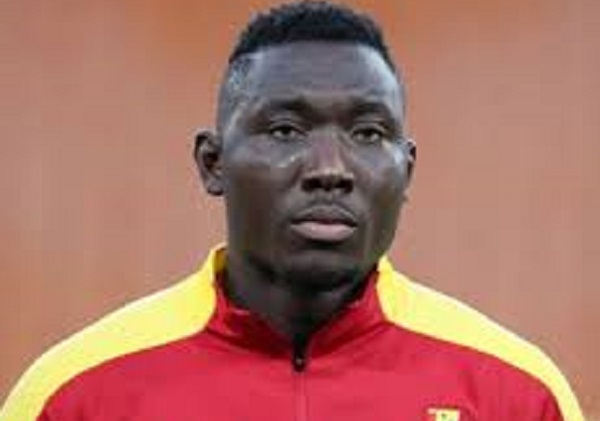
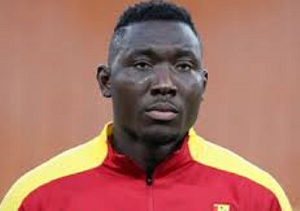 Richard Ofori is Ghanaian goalkeeper