0.4 C
London
Wednesday, December 31, 2025
Home Blog Page 381

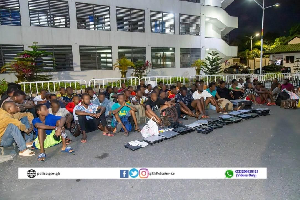
Police arrest five suspects, rescue 57 Nigerian nationals from human trafficking, cybercrime syndicate

0

The syndicate is accused of trafficking 57 Nigerian nationals into Ghana The syndicate is accused of trafficking 57 Nigerian nationals into Ghana

The Criminal Investigation Department (CID) of the Ghana Police Service has arrested five suspects believed to be part of a human trafficking and cybercrime syndicate operating in Ghana.

The suspects identified as Joel Nosa, Collins Rotimi, Shadrack Lulu, Austin Amahuaro, and John Uloko were apprehended at Adom Estates, Community 25, during an intelligence-led operation conducted by the CID’s Operations Unit.

According to a police statement, the syndicate is accused of trafficking 57 Nigerian nationals into Ghana under the pretense of offering them employment and educational opportunities.

Upon arrival, the victims aged between 18 and 26 years were allegedly coerced into participating in online romance scams and other cyber-related crimes.

During the operation, police retrieved 77 assorted laptops, 38 mobile phones, two vehicles, three television sets and several other internet-enabled devices suspected to have been used in the criminal activities.

The statement added that all 57 rescued victims are currently receiving the necessary care and support, while the suspects remain in police custody assisting with ongoing investigations. The seized items have been retained for forensic examination.

Every Ghanaian should have the chance to fight for Black Stars shirt – Randy Abbey – Ghana Latest Football News, Live Scores, Results

0

Black Stars Management Committee Chairman Dr Randy Abbey has urged caution over reports linking foreign-born players to Ghana’s national team.

Speaking on Sporty FM, Abbey said, “We need to be careful about the conversation regarding the interest of foreign-born players in the Black Stars. Every Ghanaian who qualifies to play for Ghana should have the opportunity to fight for the shirt.”

The Ghana Football Association Executive Council member explained that some players have been scouted and that the association submitted requests to FIFA for clearance.

“I am aware of players who have been scouted, and we wrote to FIFA for clearance, but perhaps we didn’t get the green light before we qualified. So, a player like that is not in the category of those who have turned us down,” Abbey added.

The comments come amid media reports linking Eddie Nketiah, Callum Hudson-Odoi, and Francis Amuzu to the Black Stars following Ghana’s 2026 FIFA World Cup qualification after their win over Comoros in early October. All three players were born abroad and hold dual eligibility; Nketiah and Hudson-Odoi have represented England, while Amuzu has featured at youth level for Belgium.

Abbey reiterated, “Officially, I’m not aware of Eddie Nketiah showing interest in the Black Stars. It’s the same for Callum Hudson-Odoi and Francis Amuzu. I only read about it in the media.”

EPA urges climate communicators to tell Ghana’s story at COP30 

0

By Edward Acquah

Accra, Oct. 22, GNA – Professor Nana Ama Browne Klutse, the Chief Executive Officer of the Environmental Protection Authority (EPA), has urged journalists and climate communicators to take the lead in telling Ghana’s climate story at the upcoming United Nations Climate Change Conference (COP30) in Brazil. 

Speaking at the launch of the National Climate and Environmental Communication Initiative (NCECI) in Accra on Tuesday, Prof. Klutse said Ghana had made significant progress in implementing its Nationally Determined Contributions (NDCs) and advancing a just transition agenda, which deserved to be effectively communicated on the global stage. 

“As the global community prepares for COP30 in Brazil later this year, communication on climate action is shifting towards implementation and transparency,” she said.  

“For Ghana, this means strengthening not only our policies and commitments, but also the way we communicate them. Effective climate communication is essential for demonstrating our progress on the NDCs, the just transition, and the action for climate empowerment,” she added. 

Prof. Klutse noted that while Ghana continued to experience the effects of climate change, including rising temperatures, erratic rainfall, and coastal erosion, public understanding of the crisis remained limited.  

“Too often, climate information stays confined to technical reports and policy circles,” she said, adding: “But the farmers, the fishermen, the youth, and the business leaders whose choices shape our future need to hear and understand this message.” 

Prof. Klutse said the NCECI, launched in partnership with Knutsford University, was designed to build a national community of skilled communicators, journalists, corporate actors and educators capable of delivering clear and relatable environmental messages.  

The initiative, she added, would also strengthen the capacity of media professionals to report accurately and creatively on climate and environmental issues. 

“This initiative positions Ghana to tell its own story; one of resilience, innovation, and leadership, in a language our people understand…A well-informed nation is a stronger negotiating nation,” she said. 

Prof. Akua Opokua Britwum, Chairperson of the National Media Commission, welcomed the initiative and encouraged journalists to take advantage of the opportunity to specialise in environmental reporting.  

She said effective communication on climate and environmental issues was vital to fostering behavioural change and driving community-level action. 

The NCECI programme is designed to also support corporate sustainability communication and environmental, social and governance (ESG) reporting. 

It is also to engage youth through the Action for Climate Empowerment framework, and promote collaboration among government, academia, and the private sector. 

COP30, to be held in Belém, Brazil, in November 2025, will mark 10 years since the signing of the Paris Agreement.  

The conference is expected to focus on reviewing countries’ progress toward limiting global temperature rise to 1.5°C and accelerating implementation of climate commitments. 

GNA 

Edited by Agnes Boye-Doe 

President Mahama launches Ghana infrastructure plan, emphasises need for collective commitment

0

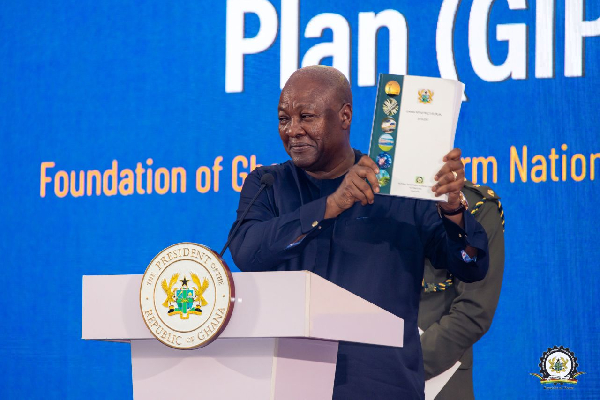
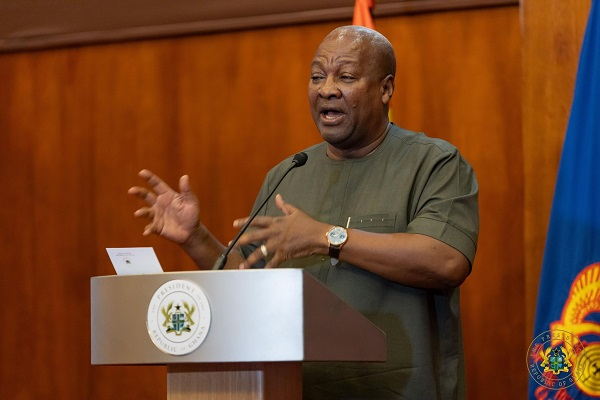
The President of the Republic of Ghana, John Dramani Mahama, has called for an end to scattered and politically motivated projects, urging the adoption of long-term, nationalistic plans capable of delivering sustainable success to the country.

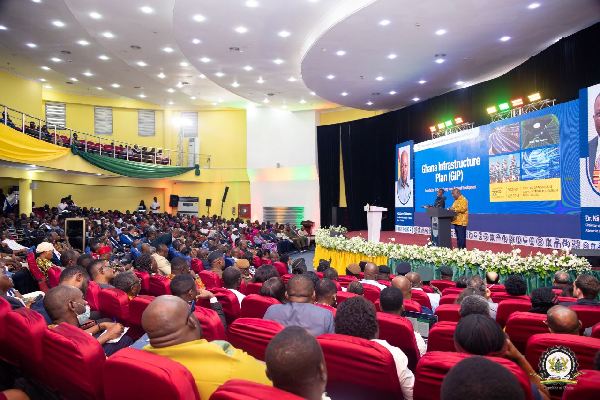
Delivering an address at the launch of the Ghana Infrastructure Plan (GIP) on Wednesday, October 22, 2025, President Mahama said the government would ensure that its flagship initiatives, including the Big Push Agenda, align with the tenets and objectives of the GIP, developed by the National Development Planning Commission (NDPC).

He assured the public that the Big Push initiative would be implemented through deliberate, high-impact investments, in line with Article 35(7) of the 1992 Constitution, which mandates the continuity of development programmes across successive administrations.

The President also pledged to revitalise the Ghana Infrastructure Investment Fund (GIIF) to finance commercially viable projects and strengthen institutional capacity for project preparation, monitoring and evaluation.

Addressing the persistent geographical imbalance in national development, President Mahama expressed disappointment over the discontinuation of the Savannah Accelerated Development Authority (SADA) and the ineffectiveness of its successors.

He stressed the urgent need to rebalance development, particularly in northern Ghana, where young people face limited economic opportunities despite completing secondary education.

Underscoring the importance of governance, President Mahama argued that infrastructure development must be depoliticised and guided by merit, transparency, and continuity.

He cautioned that weak infrastructure governance costs countries billions, while robust systems drive economic growth.

The President further called on Parliament to enact enabling laws to safeguard the vision of the GIP and urged ministries, departments, and agencies to align their sectoral plans with the national infrastructure strategy.

He described the GIP as a national endeavour requiring collective commitment across political divides, public institutions, civil society, and generations.

“To build better, we must govern better,” he concluded, reaffirming the government’s dedication to a shared vision of progress.

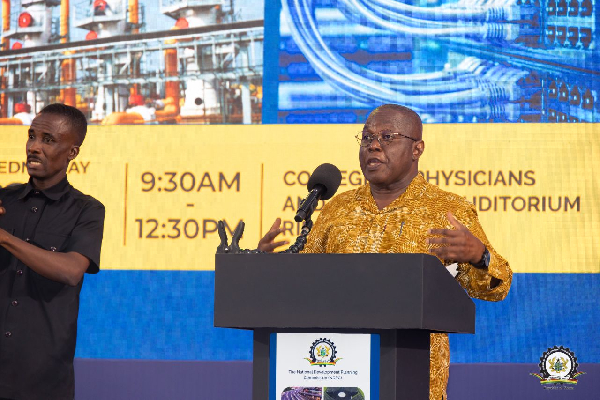
Deputy Minister of Finance, Thomas Ampem Nyarko (MP), described the Ghana Infrastructure Plan as a bold, long-term framework that aligns national priorities with limited resources and rising demographic pressures.

He emphasised its potential to generate strong fiscal multipliers, address infrastructure deficits, and attract blended financing through public-private partnerships (PPPs).

Highlighting a ₵13.9 billion allocation under the Big Push initiative, he pledged the Ministry’s commitment to co-leading implementation with the NDPC and Parliament to ensure continuity, efficiency and sustainable investment across political transitions.

NDPC launches evaluation process for 2022-2025 National Development Policy Framework

On his part, the Chairman of the NDPC, Dr Nii Moi Thompson, said the launch of the GIP marks an important step toward developing a holistic national plan that provides a clear blueprint for Ghana’s long-term development.

“The launch of the infrastructure plan today is the first step in preparing a composite long-term plan that will include a systematic review and incorporation of not only the 40-Year Development Plan, which was prepared under the NDC government, but also Ghana Beyond Aid, Ghana@100, and the Long-Term National Development Perspective Framework, all of which were prepared under the NPP government,” Dr Thompson explained.

“By the end of 2026, we expect to have a composite long-term plan to be known as Ghana Vision 2057: A Roadmap to Economic Transformation and Shared Prosperity. I know some of you may wonder why we need a long-term development plan when we have failed in recent attempts to establish one acceptable to all.

“We need it because, without such a plan, we are not going anywhere. We may make some progress here and there, but it will likely fall below what we truly need, and our development challenges will accumulate until they become a crisis and a threat to social stability and national security,” he added.

Citing the success story of the United States of America, Dr Thompson highlighted the importance of long-term planning and noted that many of Ghana’s challenges stem from the absence of one.

“Every serious country has a long-term plan, even if we haven’t heard of it,” he said.

“The United States, for example, has one of the most dynamic labour markets and lowest unemployment rates among its peers.

“This didn’t happen by accident.

“The US has a 100-year strategy for job creation (1950–2050), backed by an Employment Act, research by the Council of Economic Advisors (NDPC’s rough equivalent), and the designation of ‘maximum employment’ as the primary objective of monetary policy, followed by price stability and moderate long-term interest rates.”

He cautioned that Ghana’s past failures in planning stemmed from the misconception that long-term plans have nothing to do with the present.

“In fact, whatever we do today must reflect the future and the opportunities it offers. Only a strategic or long-term plan can help us maximise our chances of success—even in the short term,” he noted.

In her welcome address, the Director-General of the NDPC, Dr Audrey Smock Amoah, emphasised that the GIP represents the infrastructure arm of Ghana’s 40-year national development plan (2018–2057), crafted through an evidence-based, participatory process grounded in constitutional mandates and nationwide consultations.

She highlighted the plan’s integrated approach covering energy, transport, housing, ICT and more and its alignment with global frameworks such as the Sustainable Development Goals (SDGs) and the African Union’s Agenda 2063.

Dr Amoah called for a unified national effort across public institutions, the private sector, academia, and civil society to ensure that the GIP becomes a living framework for inclusive and sustainable transformation, underpinned by transparency, effective monitoring, and accountability.

Watch as Ghanaians share bold ideas to end galamsey

NPP UK Bristol chapter declares galamsey a national emergency

0

The group is calling on government to take immediate, coordinated action to halt galamsey The group is calling on government to take immediate, coordinated action to halt galamsey

The New Patriotic Party (NPP) UK Bristol Chapter has described illegal mining, popularly known as galamsey, as a national emergency that threatens Ghana’s environment, health and future.

The group is calling on government to take immediate, coordinated action to halt the destruction of the country’s water bodies and farmlands.

Addressing a press conference themed “Galamsey as a National Emergency: A Diaspora Call to Conscience”, the Chapter’s Communications Officer, Michael Ampadu, said illegal mining was “destroying Ghana’s land, water and future,” yet too many people remained silent.

He described the situation as a full-blown crisis, noting that rivers such as the Pra, Ankobra and Offin, once clean and teeming with life, are now polluted and dangerous.

According to him, Ghana Water Company’s proposed 280 percent increase in tariffs to make water safe for consumption underscores the severity of the problem.

“This is not about politics; it is about our health,” he stressed.

Ampadu criticised the lack of coordination among state institutions tasked with addressing the menace, saying that despite the alarm being raised by farmers, teachers, chiefs, students, and civil society, those in charge were not working together and no one was being held accountable.

He cited the efforts of organisations such as the Peasant Farmers Association, the University Teachers Association of Ghana (UTAG), the Ghana Bar Association and the Catholic Bishops’ Conference, which have all called on government to declare a state of emergency in areas affected by galamsey.

He described their warnings as legitimate, noting that the ongoing destruction is equivalent to environmental terrorism.

National Concerned Small Scale Miners Association destroys over 100 galamsey machines

He further revealed that even the National Security Council had advised urgent intervention, yet the President had not declared an emergency.

Offering a diaspora perspective, Ampadu said Ghanaians living abroad have seen better environmental management practices and are disheartened by the situation back home.

He contrasted Ghana’s natural rivers with the man-made rivers in the United Kingdom, which are clean, protected, and used for recreation and tourism.

“In Ghana, we have natural rivers, gifts from God, but we are destroying them because of galamsey,” he said.

“Our leaders have travelled; they know what good leadership looks like. The question is not whether they know better, but why they are not doing better.”

He emphasised that members of the Ghanaian diaspora are closely watching events in Ghana and will continue to speak up against the destruction of the environment.

He argued that agencies already have data on the ownership of concessions and that publishing information on sites visited by the National Anti-Illegal Mining Operations Secretariat (NAIMOS) and their ownership would compel stakeholders to act responsibly.

He also called for introspection within NAIMOS, alleging that some insiders with links to illegal miner’s leak information ahead of operations, allowing perpetrators to evade capture.

He proposed that any excavator found parked in a mining area should be impounded to trace its operators, since they are likely to return once enforcement teams leave.

Watch as Ghanaians share bold ideas to end galamsey

Ghana not in a hurry to borrow from international capital market

0

President John Dramani Mahama President John Dramani Mahama

President John Dramani Mahama has stated that his government is ready to generate revenue internally for its Big Push initiative, which aims to enhance national connectivity and economic development.

Speaking at the official launch of the Ghana Infrastructure Plan (GIP) held in Accra, the president noted that his government is not ready to borrow money from the international capital market so far as the Big Push agenda is concerned.

He explained that ever since the launch of the Big Push agenda on September 16, 2025, the country has not borrowed a single dollar from the international market.

“…With the kind of infrastructure we are doing, we are out of the international capital market. We are not borrowing one single dollar from outside for the big push,” he said.

The president also noted that he is certain his administration can construct the necessary infrastructures under the Big Push agenda without returning to the international capital market.

“And so somebody asked me, when are you going to return to the international capital market? I said, we’re not in a hurry at all, because I never knew that you could survive without going to borrow for infrastructure. So far, we’re doing good, and we’ll continue to keep our foot on the pedal,” he added.

Watch as Ghanaians share bold ideas to end galamsey

ID/AM

Dr Yaw Osei Adutwum hails Akufo-Addo’s leadership, urges NPP to stay united for 2028 victory

0

Education Minister Dr Yaw Osei Adutwum MP Former Minister of Education, Dr Yaw Osei Adutwum

Former Minister of Education and New Patriotic Party (NPP) presidential aspirant, Dr Yaw Osei Adutwum, has lauded former President Nana Addo Dankwa Akufo-Addo for his exemplary leadership and timely call for party unity as the NPP approaches its presidential primaries.

Speaking after a cordial breakfast meeting with the former President and other aspirants in Accra, Dr Adutwum said President Akufo-Addo’s guidance remains crucial to preserving cohesion within the party.

“I commend the former President for his exemplary leadership and timely call for unity, civility, and restraint as our party prepares to elect its next flagbearer,” he said.

He reaffirmed his confidence in the NPP’s collective spirit, describing unity and civility as essential to sustaining public trust.

“The enduring strength of the NPP lies in our ability to disagree without discord and contest without contempt,” Dr Adutwum noted.

I’ll make university education free for all Ghanaians – Dr Yaw Adutwum

The Bosomtwe MP further urged party members to focus on Ghana’s broader progress rather than internal competition, pledging to uphold the NPP’s founding ideals.

“United and focused, we will lead Ghana into a new era of growth, stability, and transformation,” he affirmed.

Dr Adutwum, known for his transformative initiatives in the education sector, is among several aspirants vying to succeed President Akufo-Addo as the NPP’s next flagbearer.

Watch as Ghanaians share bold ideas to end galamsey

Ghana highlights commitment to clean sport at UNESCO Anti-Doping Conference – Ghana Latest Football News, Live Scores, Results

0

Ghana’s Sports and Recreation Minister, Kofi Adams, represented the country at the 10th Session of the Conference of the Parties (COP10) to the UNESCO International Convention Against Doping in Sport, held in Paris, France.

This year’s conference marked the 20th anniversary of the Convention, bringing together ministers, experts, and international stakeholders to review global efforts to safeguard sports ethics and promote clean sport.

In a statement, Minister Adams said, “Ghana has made great strides in this area. With the passage of the Anti-Doping Act 2024 (Act 1116), we’ve laid the foundation for a robust, athlete-centred system of integrity and accountability.”

At COP10, Adams addressed the conference on strengthening international cooperation, equitable funding mechanisms, and promoting continental leadership in sport governance. On the sidelines, he engaged with representatives from the African Union Sports Council and other ministers to deepen collaboration on policy, athlete protection, and infrastructure development.

Reflecting on Ghana’s participation, Adams added, “Ghana’s voice was heard. And Ghana’s vision was clear. Our future in sport must be clean, ethical, inclusive, and globally respected.”

The minister’s engagement underscores Ghana’s commitment to fostering integrity and transparency in sport while positioning the country as a leader in African and international sports governance.

Two suspected robbers killed in police shootout at Mankranso

0

Two suspected robbers have died in a police shootout Two suspected robbers have died in a police shootout

Two suspected armed robbers believed to be part of a criminal gang operating around Mankranso in the Ashanti Region have been killed during a shootout with the police.

According to a report by graphiconline.com on October 21, 2025, the suspects sustained gunshot wounds during an intelligence-led operation by the Ashanti South Regional Police Command and were rushed to the Bekwai Municipal Hospital, where they were pronounced dead on arrival.

Their bodies have since been deposited at the hospital’s morgue for preservation and autopsy.

Three armed robbers killed in shoot-out with police at Kpone

The police said investigations are ongoing to arrest the remaining members of the gang and retrieve weapons believed to be in their possession.

Police intelligence had earlier linked one Osman Majid Abdul Sadik, alias ‘Cross’, to a series of robberies and killings in the Mankranso area.

Acting on a tip-off, the command identified three hideouts in Offinso in the Ashanti North Region, where the suspect and his accomplices were believed to be hiding.

An intelligence-led operation was launched, and a team of officers in four service vehicles simultaneously raided the identified locations.

At Offinso Anyankaso, one of the suspects reportedly fired at the police from his room and attempted to escape through the ceiling.

Officers returned fire, injuring two suspects who were later arrested.

“An intelligence-led operation was conducted and led three officers and other ranks to the area. The team, comprising four service vehicles (branded and unbranded), simultaneously raided the identified locations.

“At Offinso Anyankaso, the suspect fired a gunshot from his room and attempted to escape through the ceiling. The police tactically returned fire, and two suspects sustained gunshot injuries,” the police said.

A search of the premises uncovered a pump-action gun with six rounds of ammunition, a Smith & Wesson pistol, 50 rounds of 9mm ammunition, an unmarked pistol, two spent cartridges, three smart mobile phones, two keypad phones, mobile phone accessories, an Apple laptop, a machete, a smock, talisman, body armour, two pairs of long boots, a picture frame of the gang, a Ghana Card bearing the suspect’s photo, and GH¢2,680 in cash.

The suspects, identified as Abdul Sadik alias ‘Cross’, 25, and Abdulai Sadik, 20, reportedly confessed during interrogation.

‘Cross’ admitted to multiple robberies in the Manso area and claimed responsibility for the killing of three people at Mankranso.

2 dead as police engage in a shootout with highway robbery gang

He also named other accomplices identified only as ‘Kingkong,’ ‘Roy,’ ‘Fii,’ ‘Raph,’ ‘Koboo,’ ‘Ali,’ and ‘Ike’ alleging that some of the gang’s weapons were kept at a mining site in Manso.

The police have assured that efforts are being intensified to apprehend the remaining suspects and bring them to justice.

MRA/VPO

Also catch the latest episode of Talkertainment with Ghana’s most-sought-after MC/Hypeman, Kojo Manuel, below:

Ghana to introduce new sports legislation to boost funding and development – Ghana Latest Football News, Live Scores, Results

0

The Majority Leader of Parliament, Mahama Ayariga, has revealed that the Ministry of Sports and Recreation will soon present a series of legislative proposals aimed at strengthening sports financing and governance in Ghana.

Speaking on the floor of Parliament on October 21, 2025, Ayariga, a former Sports Minister, said, “The Ministry of Sports and Recreation will bring the following for consideration: Sports Fund Bill, Sports Fund Regulations, National Sports College Bill, Anti-Doping, and others.”

The Sports Fund Bill is expected to be a central piece of legislation, creating a sustainable pool of resources for sports development, athlete welfare, and capacity building nationwide. A draft of the proposal, posted on social media by the Minister for Government Communications, Felix Kwakye Ofosu, outlines about 14 sources for the Fund, including parliamentary allocations, special sports lotteries, grants, gifts, sponsorships, and revenues from sports betting companies.

Additional inflows will come from gate proceeds, athlete transfer fees locally and abroad, sponsorship deals, support from international sports federations, and a percentage of proceeds from competitions, athlete certification, and commercial sports vendors.

According to the document, the Fund aims to “ensure adequate and equitable funding for sports development; promote transparency and accountability in resource mobilisation; support sports research, innovation, and inclusion; and strengthen monitoring and evaluation within the sector.”

The accompanying Sports Fund Regulations will operationalise the law once passed, while the National Sports College Bill focuses on enhancing training and technical development for athletes and coaches. The Anti-Doping Bill is expected to align Ghana’s sports governance framework with international standards.


Akufo-Addo’s meeting with aspirants was frank, productive and unifying

0

Flagbearer hopeful for the New Patriotic Party (NPP), Kwabena Agyei Agyepong, has described the recent meeting between former President Nana Addo Dankwa Akufo-Addo and the party’s presidential aspirants as frank, open, and productive, emphasizing that it helped set boundaries for a fair and united internal contest.

The closed-door meeting, held at the former President’s private residence at Nima, Accra, on Tuesday, October 21, brought together all five NPP flagbearer hopefuls and senior party officials in what has been described as a cordial effort to strengthen party unity ahead of the January 2026 primaries.

Speaking on The Point of View on Channel One TV on Wednesday October 22, Mr. Agyepong said the session allowed every aspirant to freely express their views and concerns, noting that it reflected a genuine commitment to dialogue and internal cohesion.

“Everybody had the chance to speak, so it was very open and very frank. Some tough things were said. It was an in-camera meeting,” he explained.

According to the former NPP General Secretary, the meeting provided valuable guidance from the former President, who drew on his experience to encourage the aspirants to remain disciplined and respectful throughout the campaign period.

“He was using his experience to try and draw some boundaries for us,” Agyepong said. “We should try and operate within some parameters. That will make it easier for us to work together because eventually, one of us will become the victor.”

Agyepong expressed optimism about his own prospects in the upcoming contest but maintained that unity should remain the ultimate goal.

The meeting, attended by former Vice President Dr. Mahamudu Bawumia, Dr. Bryan Acheampong, Dr. Yaw Osei Adutwum, and Ken Ohene Agyapong, was also graced by senior party figures including Council of Elders Chairman Hackman Owusu-Agyemang, Acting National Chairman Danquah Smith Buttey, and General Secretary Justin Kodua Frimpong.

Former President Akufo-Addo urged the aspirants to focus on ideas and policies rather than personal attacks, stressing that unity and a transparent process would be key to positioning the NPP for victory in the 2028 general elections.

Read also

Akufo-Addo hosts NPP presidential aspirants to promote unity ahead of primaries

Stakeholders engaged on Draft 2026–2029 Medium-Term Development Plan 

0

By Kekeli K. Blamey 

Sogakope (VR), Oct. 22, GNA – The South Tongu District Assembly has held a public hearing on its Draft Medium-Term Development Plan (MTDP) for 2026–2029 at the District Assembly Hall at Sogakope. 

The event formed part of the statutory requirements under the Local Governance Act, 2016 (Act 936), Section 86, which mandates district assemblies to engage stakeholders in reviewing draft development plans before adoption by the General Assembly. 

Mr Mohammed Abu Shiraz, the District Planning Officer, said the hearing followed the completion of the draft plan which outlined key developmental priorities for the next four years. 

“As we are all aware, we are ending the 2022–2025 medium-term plan, and by law, we must prepare a new one covering 2026 to 2029. After finalizing the draft, the Act requires us to hold a public hearing to enable stakeholders to review, critique, and help fine-tune the plan before its adoption and submission for certification,” he stated. 

Mr Shiraz explained that the draft plan covers four major thematic areas — economic development, social services, infrastructure and human settlement, and governance and accountability. 

He said the economic component focused on agriculture, private sector growth, and tourism development, while the social sector includes education, health, water and sanitation, gender issues, and support for persons with disabilities. 

Mr Henry Adjei, the District Statistician, explained that the public hearing provides a platform for all stakeholders to scrutinise the draft plan and ensure it aligns with the district’s development priorities. 

He said that the exercise was built on the performance of the 2022–2025 plan and included the current demographic and socio-economic data of the district. 

“Our current projected population for 2025 is 118,825, with females forming over 50 per cent. The statistics help us determine the district’s needs in education, health, and other key sectors,” he said. 

Mr Adjei noted that while the West African Senior Secondary Certificate Examination (WASSCE) performance in the district had improved, Basic Education Certificate Examination (BECE) results continued to decline due to limited parental supervision at the basic level.  

He said the new plan sought to address such challenges through targeted interventions in education, health, and sanitation. 

He reiterated that after the stakeholders’ review, the plan would be presented to the General Assembly for approval, paving the way for implementation. 

“When we implement the strategies in the plan, such as improving teaching and learning facilities, strengthening health services, and enhancing sanitation infrastructure, we expect to see measurable improvements in development outcomes across the district,” he said. 

Participants at the forum unanimously lauded the Assembly for the public engagement, describing it as a commendable platform that promotes transparency and inclusiveness in local governance. 

They expressed optimism that the concerns, ideas, and recommendations raised during the hearing would be duly incorporated into the final plan and translated into concrete actions for the accelerated development of the South Tongu District. 

Key stakeholders present included assembly members, representatives from the traditional council, civil society organisations, donor agencies, the media, youth and women groups, security agencies, farmer-based organisations, and unit committee members. 

GNA  

Edited by Maxwell Awumah / Christabel Addo 

Video: Asante Kotoko hold first training session in Casablanca, Morocco for WAC Clash

0

Asante Kotoko SC have safely arrived and hold their first training session in Morocco ahead of their crucial CAF Confederation Cup second-leg tie against Wydad Athletic Club (WAC).

Coach Karim Zito has named a 20-man travelling squad for the trip, featuring key players such as Aziz Haruna Dari, Patrick Asiedu, Francis Acquah, Amidu Peter, and Donzo Morifing.

The team will train later today to fine-tune preparations before Sunday’s decisive encounter in Casablanca.

Kotoko trail 0–1 from the first leg in Kumasi and will be aiming for a strong performance to overturn the deficit and progress to the next stage.

Watch the Porcupines first training session as they touched in Casablanca on Wednesday morning:

I didn’t distribute fertilisers to NPP PCs in 2024 polls – Bryan Acheampong

0

Dr Bryan Acheampong, former Minister for Agriculture Dr Bryan Acheampong, former Minister for Agriculture

Former Minister for Food and Agriculture and Member of Parliament for Abetifi, Dr Bryan Acheampong, has refuted claims that he distributed government fertilisers to New Patriotic Party (NPP) parliamentary candidates during the 2024 general elections.

He clarified that the fertilisers were distributed through the Ministry’s district agricultural offices, not through political party structures.

Dr Acheampong made the clarification following a confrontation with the NPP’s 2024 parliamentary candidate for Ejura, Gifty Ndomah, during his campaign tour of the constituency.

Ndomah had challenged the former Minister’s earlier assertion that fertilisers had been given to parliamentary candidates for distribution but were allegedly withheld by some candidates who sought to smuggle them.

Speaking later at a rally in Ejura as part of his campaign ahead of the NPP’s forthcoming presidential primaries, Dr Acheampong described the allegations as false and misleading.

He stressed that fertilisers purchased with public funds could not have been allocated to political candidates, as that would amount to an abuse of government resources.

“The government can’t distribute fertilisers from the Ministry of Food and Agriculture to your parliamentary candidate on the ticket of a political party. That’s not how government funds are used,” he said.

“If that were the case, then during the election period, government funds would have been taken and given to our parliamentary candidates across the country but that’s not how a country is governed.”

NPP 2024 Ejura PC confronts Bryan Acheampong over fertiliser allegations

Dr Acheampong further explained that all fertilisers under government agricultural programmes were dispatched to the district level for accountability and effective supervision.

“When the fertilisers are sent to the district, then during their distribution, as your party is in government, you can have some influence but in terms of accountability and responsibility, it is not in your hands,” he clarified.

Watch as Ghanaians share bold ideas to end galamsey

Mahama’s tinkering with military, judiciary threatens democracy – Kwabena Agyepong

0

Flagbearer hopeful for the New Patriotic Party (NPP), Kwabena Agyei Agyepong, has expressed disappointment in President John Dramani Mahama’s handling of key state institutions, cautioning that political interference in the military and judiciary threatens Ghana’s democratic stability.

Speaking in an interview on Channel One TV’s The Point of View on Wednesday, October 22, Agyepong said he was particularly concerned about what he described as the President’s “tinkering” with vital state institutions that are meant to remain independent and apolitical.

“I am a bit more disappointed in our current president, the way he dealt with the army, which I felt was touching a very vital state institution,” he said. “So I feel very uncomfortable when I see presidents tinker with state institutions.”

Agyepong added that his concerns extend beyond the military to include the judiciary, stressing that the balance of power among the executive, legislature, and judiciary must be maintained to safeguard democratic governance.

“Not only that, [he] moved on to the judiciary, which is one of the three legs of our democracy,” Agyepong noted. “I think that the idea that one leg of democracy can take over the other is something that all of us have to repudiate and find a way to protect.”

His comments come after President Mahama, on September 1, 2025, acting under Article 146(9) of the 1992 Constitution, removed the Chief Justice, Her Ladyship Justice Gertrude Araba Esaaba Sackey Torkornoo, from office.

The decision followed the report of the Committee of Inquiry established under Article 146(6) of the Constitution to investigate a petition submitted by Ghanaian citizen Daniel Ofori calling for the removal of the Chief Justice.

After examining the petition, extensive evidence, and testimonies, the Committee concluded that the allegations of misbehaviour under Article 146(1) had been sufficiently proven and recommended her removal from office.

Earlier in March 2025, the President made sweeping changes to the leadership of the Ghana Armed Forces (GAF). The shake-up, announced on Monday, March 17, 2025, saw the removal of the Chief of Defence Staff, the Chief of Army Staff, the Chief of Naval Staff, and the Chief of Air Staff.

Additionally, 12 of the most senior officers, holding ranks of Major-General and above—including 2-star, 3-star, and 4-star Generals—were also dismissed.

Read also

Ghanaians vote for vision, not wealth – Bawumia

NDC Gov’t has done so well, we won’t treat them with kid gloves—Majority Leader

0

Accra, Oct 22, GNA- Mr Mahama Ayariga, the Majority Leader and Leader of Government Business in Parliament, has assured Ghanaians that the National Democratic Congress (NDC) government will not treat its executive arm with kid gloves.

Speaking at the opening of the Third Meeting of the First Session of the Ninth Parliament of the Fourth Republic, Mr Ayariga emphasised that the NDC majority would demand performance and delivery of promises made in the party’s manifesto.

‘We’ll back policies that benefit Ghanaians’

0

Offinso North Member of Parliament, Dr. Fred Kyei Asamoah, has declared that the Minority in Parliament is fully prepared to collaborate with the government to advance national development initiatives during the current legislative session.

Speaking on the Channel One Newsroom on Wednesday, October 22, Dr. Asamoah said the Minority caucus, which he referred to as the “87 Mighty Minority,” is poised to support policies and programs that serve the best interests of Ghanaians.

“When we started yesterday, the Speaker laid down some government agenda we intend to work on, and we as the 87 Mighty Minority are poised to support the government to make sure that Ghanaians can have the best and we can help develop this nation,” he said.

Meanwhile, Speaker of Parliament Alban Sumana Kingsford Bagbin on Tuesday officially swore in two new Members of Parliament, Bernard Bediako Baidoo of Akwatia and Professor Alidu Seidu of Tamale Central.

Speaking after administering the oaths of allegiance and office, Speaker Bagbin congratulated the two lawmakers and reminded them of the weight of the responsibility they now carry.

He urged them honour their oath, uphold the dignity of the House, and let your service be marked by integrity and accountability..

Speaker Bagbin also proposed that Members of Parliament (MPs) be granted official leave periods, highlighting the intense demands of the role and its impact on personal and family life.

Read also

Anti-LGBTQ bill’s inclusion on order paper was an error – Ayariga

Teshie 11 & 12 class of 1993 donates printer-photocopier machine to alma mater

0

In a remarkable act of generosity and community spirit, the leadership of the Teshie 11 & 12 Class of 1993 has donated a printer-photocopier machine and accompanying accessories to their alma mater, now known as Teshie LEKMA 11 Junior High School.

The presentation, held on the school premises, was met with joy, appreciation, and heartfelt gratitude from the school’s management, staff, and students. The group, led by Mr. Michael Agordo (current President), mobilised resources from members both locally and internationally.

This thoughtful gesture by the 1993 Year Group demonstrates their continued commitment to the growth and development of their former school and the community that nurtured them. By donating this essential equipment, they have addressed one of the school’s pressing logistical needs — facilitating administrative work, easing lesson material preparation, and improving the overall teaching and learning environment.

The printer-photocopier machine will significantly enhance the efficiency of the school’s operations. Teachers will now be able to prepare and reproduce teaching materials with greater ease, allowing them to dedicate more time to classroom engagement and innovation. Students, on the other hand, will benefit from improved access to printed learning resources, particularly for assignments, tests, and continuous assessment activities.

Speaking on behalf of the school, the Headteacher, Ms. Vivian Esinam Adegbedu, expressed deep appreciation to the donors, saying:

“The entire staff and students of Teshie LEKMA 11 JHS wish to express our heartfelt gratitude for your generous donation to our school this morning. Your thoughtful contribution has touched our hearts and will significantly support our students’ learning and development.

“Your gesture bridges the past and present, connecting the history of Teshie 11 & 12 JSS to the current Teshie LEKMA 11 JHS. We are thankful for your continued connection to the school and for thinking of us. Thank you once again for your kindness and for investing in the future of our students. God bless you abundantly.”

During the presentation, representatives of the Class of 1993 encouraged the current students to remain focused, disciplined, and determined in their studies.

The group’s Vice President, Ms. Wendy Pappoe, speaking on behalf of the team, reminded the students that education remains the surest path to empowerment and success, urging them to make the most of the opportunities provided at Teshie LEKMA 11 JHS.

The day’s event was not only one of donation but also one of reconnection — a bridge between generations of students united by shared history and pride in their alma mater.

In closing, the school’s leadership extended an open appeal to other old students, corporate bodies, and benevolent individuals to emulate this noble example. Support, whether in kind or in cash, goes a long way toward improving the learning environment and shaping the next generation of leaders from Teshie.

“When old students give back, they don’t just donate equipment — they invest in the dreams of the future.”

DISCLAIMER: The Views, Comments, Opinions, Contributions and Statements made by Readers and Contributors on this platform do not necessarily represent the views or policy of Multimedia Group Limited.

DISCLAIMER: The Views, Comments, Opinions, Contributions and Statements made by Readers and Contributors on this platform do not necessarily represent the views or policy of Multimedia Group Limited.

NPP 2024 Ejura PC confronts Bryan Acheampong over fertiliser allegations

0

Bryan Acheampong, MP for Abetifi Bryan Acheampong, MP for Abetifi

The New Patriotic Party’s (NPP) 2024 parliamentary candidate for Ejura, Gifty Ndomah, on Wednesday October 22, 2025, confronted the former Minister of Food and Agriculture, Dr Bryan Acheampong, over his recent comments alleging that fertilisers distributed to parliamentary candidates ahead of the 2024 elections were not properly shared because some individuals attempted to smuggle them.

The confrontation occurred during Dr Acheampong’s campaign tour of the Ejura Constituency, as part of his bid to lead the NPP in the upcoming presidential primaries.

FACT CHECK: Bryan Acheampong’s claim that NPP left exchange rate at GH¢17 to a dollar is false

Ndomah, visibly displeased with the remarks, challenged the former minister’s claims and reportedly presented evidence to refute his account.

In response, Dr Acheampong, who is also the Member of Parliament for Abetifi, clarified that he did not personally distribute fertilisers to NPP parliamentary candidates during the 2024 elections.

He explained that the fertilisers in question were supplied through the Ministry’s district agricultural offices and not through political channels.

“The government can’t distribute fertilisers from the Ministry of Food and Agriculture to your parliamentary candidate on the ticket of a political party. That’s not how government funds are used,” Dr Acheampong stated.

“When the fertilisers are sent to the district, then during their distribution, as your party is in government, you may have some influence but in terms of accountability and responsibility, it is not in your hands.”

Watch as Ghanaians share bold ideas to end galamsey

‘He hasn’t judged anyone’ – Vitus Azeem backs AG’s public briefing on corruption cases

0

Anti-corruption campaigner Vitus Azeem has dismissed claims that the Attorney General is engaging in public persecution by announcing planned prosecutions against former public officials, saying the move is simply part of government transparency and due process.

His comments come in response to criticisms following Attorney General Dr. Dominic Ayine’s announcement that the former CEO of the National Food and Buffer Stock Company, Abdul-Wahab Hanan, and his wife, Faiza Seidu Wuni, will be charged with multiple offences including stealing, conspiracy to steal, and money laundering.

The AG during the series revealed that investigations had uncovered a complex scheme of money laundering and fraudulent activities during the former CEO’s time. Some he said  involved suspicious transfers totaling over GHS 40.5 million through Sawtina Enterprise, a company linked to the former CEO.

Addressing concerns that the Attorney General had effectively judged the accused in the public domain in an interview on Citi Eyewitness News on Wednesday October 22, Mr. Azeem clarified that the AG had merely shared findings from his office’s investigations and indicated the intent to prosecute.

“As far as he is concerned, they are allegations. He hasn’t condemned them as such. These are the findings of his investigations which he now intends to proceed to the court for prosecution, so he has not judged the persons alleged to be involved,” Azeem explained.

“I don’t think that is the way you should look at it… I think he is just rendering his account to Ghanaians. There should be nothing wrong with that,” he added.

Read also

Former Buffer Stock CEO Abdul-Wahab laundered and transferred over GHS40m – AG

Justice Baffoe-Bonnie’s nomination as Chief Justice referred to Parliament 

0

By Elsie Appiah-Osei  

Accra, Oct. 22, GNA – Mr Alban Bagbin, the Speaker of Parliament, has officially referred the nomination of Supreme Court Justice Paul Baffoe-Bonnie as Chief Justice of Ghana, to Parliament’s Appointments Committee for vetting. 

This follows the nomination of Justice Baffoe-Bonnie by President John Dramani Mahama, who announced the decision on Tuesday, September 23, 2025. 

The nomination was made in accordance with Article 144(1) of Ghana’s 1992 Constitution, following the removal of the former Chief Justice Gertrude Torkornoo. 

In an official communication from the President to Parliament, read  by Speaker Bagbin on Tuesday October 21, 2025, to the House in Accra, the Speaker said the House had received formal correspondence from the Presidency regarding the nomination and had, in line with parliamentary procedure, forwarded the matter to the Appointments Committee for further action. 

Justice Baffoe-Bonnie, currently serving at the Supreme Court, is known for his long and distinguished judicial career.  

He had previously served at the High Court and the Court of Appeal. 

The Presidency, in its earlier statement, described him as a jurist of “unwavering commitment to justice” whose “invaluable contributions to the development of Ghanaian jurisprudence” make him well suited for the nation’s highest judicial office. 

The Appointments Committee is expected to schedule a public vetting session in the coming days, after which a recommendation will be made to the full House for approval or otherwise. 

If confirmed by Parliament, Justice Baffoe-Bonnie will become Ghana’s next Chief Justice, succeeding Justice Gertrude Torkornoo. 

GNA 

Edited by Christabel Addo 

“Nana Agradaa Led a Church Service”

0

  • Ghanaian blogger and videographer Nana Obeng Ampem shared details of Nana Agradaa’s life behind bars following a trip to Nsawam Prison
  • In a video, he narrated how he joined a church to donate to inmates at the prison and took part in a church service led by Nana Agradaa
  • Bishop Peter Doe of the Aroma of Faith Chapel led the donation to the facility, where the infamous preacher is serving a 15-year jail term

Nana Agradaa reportedly led a church service and played drums during a recent visit to Nsawam Prison, Ghanaian blogger and videographer Nana Obeng Ampem has stated.

Blogger shares details of a trip to Nsawam Prison on October 21, 2025, during which Nana Agradaa reportedly led a church service. Image credit: @ghonetv, @obengampem, @ghana.eye Source: TikTok

On October 22, 2025, TikToker Mama Diana, also known as Nana Agradaa’s Mother, announced that she had recently visited the jailed televangelist in Nsawam Prison.

She shared a video of a donation exercise they carried out at the facility and stated via her caption that they met the former priestess, who she claimed was in good spirits.

The TikTok video of the donation at Nsawam Prison is below.

Nana Agradaa leads church service at Nsawam

TikToker Nana Obeng Ampem, who was part of the visit to Nsawam Prison, has shared more details of the trip and given an update on Nana Agradaa.

In a video, he claimed that the donation was organised by a Ghanaian man of God, Bishop Peter Doe of the Aroma of Faith Chapel in Sapeiman.

He stated that when they got to the prison for the donation, they were not allowed to record anything going on apart from the donation itself, which was presented to the officers.

Nana Obeng added that following the conclusion of the donation, they were allowed to enter the prison yard to interact with the inmates.

The blogger stated that they organised a church service with the inmates, which was led by Nana Agradaa, who also played the drums during the praises and worship.

He concluded by giving a rundown of activities that Nsawam Female prison inmates enjoy in their free time, including watching television, church services, and others.

The Facebook video shared by the blogger is below.

Reactions to Nana Agradaa leading Nsawam service

YEN.com.gh has compiled some comments from social media users reacting to the video with details about Nana Agradaa’s prison life.

Church service, led by Nana Agradaa who played drums. Aisha Huang. They watch tv, hold service, get all they want

Rose said:

“Awwwwwww, my godmother Mama Pat, may the Lord be with you”

Danquah Bright 🇬🇭 wrote:

“Will visit her when I go to Ghana.”

Grandma is a vgn commented:

“Thanks God, she is ok.”

Pini’s smock hub said:

“Some even cook their own food in the prison.”

Anibee💅🏼✅❣️ wrote:

“No matter how you feel good there, as you are saying, prison is not a good place to go, and you can’t feel comfortable as you would feel at home🙏.”

Frankkito🩵🇬🇭 commented:

“They should add another 10 years.”

Nanaadjoaafariwa said:

“Ei Aisha Huan, I thought they returned her to the home country ooo. I still remember some videos of her with some MPs.”

Nana Agradaa, Nana Agradaa birthday, Agradaa prison, Agradaa Nsawam, Nana Agradaa jailed, Agradaa age
Nana Agradaa celebrates her first birthday in Nsawam Prison on October 18, 2025. Image credit: NanaAgradaa Source: Instagram

Nana Agradaa celebrates birthday in prison

Previously, YEN.com.gh reported that Nana Agradaa celebrated her birthday in Nsawam Prison.

The controversial televangelist turned a year older on October 18 and was celebrated by her husband, Angel Asiamah, who shared a video celebrating their love.

‘You failed to fix ECG as board chair’ – Mahama Ayariga chides Afenyo-Markin

0

Majority Leader Mahama Ayariga has taken a swipe at the Minority Leader Alexander Afenyo-Markin, accusing him of failing to address deep-rooted financial challenges at the Electricity Company of Ghana (ECG) during his tenure as Board Chair.

Speaking at the Parliamentary Leadership Conference on Wednesday, October 22, Mr. Ayariga dismissed Afenyo-Markin’s earlier criticism that the government had increased electricity tariffs twice in 2025, arguing that the current financial difficulties at ECG stem from mismanagement under the previous administration.

According to the Majority Leader, the debts inherited from the past government continue to burden the power distributor, and Afenyo-Markin bears responsibility for leaving behind significant liabilities.

“You [Akufo-Addo government] left us with a huge and unreasonable debt at ECG. You [Afenyo-Markin] were the Board Chair of ECG. You know how much debt was left. You yourself have admitted it on the floor of Parliament during a debate about how bad the situation at ECG was when you assumed the leadership role as Board Chair.

“And the effort you tried to make to address that situation. At the time you were leaving office, you hadn’t fixed it. The debt is still lying there; who is going to pay for those debts?” he asked.

Mr. Ayariga further accused the previous administration of manipulating electricity pricing for political advantage, claiming it blocked tariff reviews by the Public Utilities Regulatory Commission (PURC) in 2024.

“In 2024, you stopped PURC from adjusting tariffs because you were afraid of its implications for you on your electoral fortunes in the elections. The records are there; you stopped them. The debts kept mounting,” he said.

He stressed that the current government’s tariff adjustments were aimed at stabilising the energy sector and ensuring the long-term financial health of ECG, warning that failure to take such steps could have plunged the sector into deeper crisis.

…..

Afua Asantewaa Set To Co-Host CCAC Summit In Calgary, Canada

0


Guinness World Records (GWR) contender Afua Asantewaa O. Aduonum is set to host the prestigious Calgary African Community Conference (CCAC) System Change Summit in Calgary, Canada this weekend.

The polished dark skinned music diva is scheduled to emcee the summit arranged by CCAC, an umbrella organization for over 120 African and Black focused organizations and agencies in Calgary.

And according to CCAC’s Executive Director Dr. Charles Odame-Ankrah, all is set for the three-day summit beginning this Friday at the Best Western Premier Calgary Plaza Hotel and Conference Centre, and expected to end on Sunday.

Themed ‘Beyond the fixes -towards grassroots sustainability’, a special exhibition set up is billed to usher in the program on day one which will dwell on ‘Understanding Systems change in practice’.

It continues on day two on the theme ‘Scaling impact through partnership’, with ‘Roots, resilience and Reflections lowering the curtains on the summit as a theme for the final day.

The summit is expected to attract high profile dignitaries including Eva Friesen, President &CEO of Calgary Foundation, James Stauch, a renowned Professor of Systems Change, Mrs Yinka Oladele, Board Chair, CCAC, regional representatives and distinguished guests from far and near.

CCAC is a black-led, Black-serving and black-focused collective umbrella in Calgary that serves grassroots organizations.

Prudential Bank assures customers of full operations following staff protest

0

Prudential Bank Ghana has reassured customers that all its branches and digital platforms are fully operational, following a sit-down protest by some staff over salary concerns on Wednesday, October 22.

In a brief statement on Wednesday,  October 22, the bank confirmed that it has taken the necessary steps to end the industrial action, which disrupted operations at its head office and some branches.

Management apologised for any inconvenience caused and thanked customers for their continued support and patience.

The protest was in opposition to what they described as discriminatory salary adjustments. According to the aggrieved staff, the bank had implemented selective pay increases for about 55 employees, sparking discontent among the broader workforce.

Following several hours of negotiation behind closed doors, Industrial and Commercial Workers’ Union (ICU)-Ghana General Secretary Morgan Ayawine announced that Prudential Bank had agreed to suspend the selective salary increases pending further discussions.

“Management has graciously agreed to suspend the process,” Ayawine told protesting workers. “Although some 55 staff have already received the increases, we’ve proposed solutions to address that. We demand that the bank take steps to reverse the discriminatory pay adjustments.”

He also reiterated the union’s call for the bank to honour a 15 percent general salary increase agreed upon earlier in the year and to establish a standing negotiation committee to address all outstanding issues.

Read also…

Prudential Bank halts selective salary increase after ICU intervention

Cabinet to decide what to do with NAM1’s properties – Attorney General

0

The Attorney-General and Minister for Justice, Dr Dominic Ayine, says the state will decide whether to sell or reuse properties confiscated from Nana Appiah Mensah, also known as NAM1, after Cabinet deliberations.

Dr Ayine said this on Wednesday, October 22, 2025, while responding to a question during a press briefing.

He was asked about what the government intends to do with assets seized in connection with the ongoing criminal case involving the embattled Menzgold chief executive.

Dr Ayine explained that the fate of the confiscated assets would depend on the type of property and the state agency responsible for managing them.

He said that if the assets include real estate, they would be handed over to the Ministry of Works and Housing, which would determine their appropriate use.

He added that Cabinet may also consider auctioning some of the confiscated properties and depositing the proceeds into the Consolidated Fund. “When they are handed over to the state, the appropriate authorities will know what to do with them,” Dr Ayine said.

“If it is also the case that we should auction them and then put the money into the consolidated account, that decision will be taken by Cabinet and then we will continue from there.”

Dr Ayine cautioned that the process could take time, as individuals indicted in such cases often challenge confiscation proceedings in court.

He said the Attorney General’s office would continue to pursue the matter thoroughly on behalf of the Ghanaian people.

The Attorney-General’s remarks formed part of a broader engagement with journalists on ongoing investigations and prosecutions being handled by his office.

I want to be remembered for doing what’s right

0

Flagbearer hopeful for the New Patriotic Party (NPP), Kwabena Agyei Agyepong, says his political journey is guided by principle and integrity rather than the pursuit of power.

Speaking in an interview on Channel One TV’s The Point of View on Wednesday October 22, the former NPP General Secretary said he is determined to advocate for what is right in Ghana, even if doing so comes at a political cost.

“No, I shouldn’t [give up]. I want to be known as the one who stood up for what is right in Ghana. I want to die on principle and push for things to be done properly in our country, and if it comes at a political cost, it doesn’t matter,” he stated.

Mr. Agyepong, who has been vocal about the need for discipline, transparency, and ethical leadership within Ghana’s political system, said his focus is on promoting good governance and accountability.

He noted that public service should be about national interest, not personal ambition, and urged politicians to prioritise honesty and competence in their dealings.

As one of the NPP figures expected to contest the party’s next presidential primaries on January 31, 2026, Agyepong said his vision is to restore integrity to Ghanaian politics and ensure that leadership is driven by values rather than expediency.

Read also…

‘He hasn’t judged anyone’ – Vitus Azeem backs AG’s public briefing on corruption cases

Ministry of Education launches investigation into GH¢30,000 school placement bribe claim

0

Deputy Minister of Education, Dr Clement Apaak Deputy Minister of Education, Dr Clement Apaak

The Ministry of Education has announced that it has launched urgent investigations into allegations of bribery in the ongoing school placement process.

This follows media reports attributing claims of corruption to the Member of Parliament for Akrofuom, Joseph Azumah, who reportedly stated that an individual paid GH¢30,000 to secure their child’s admission into a school.

In a statement signed by Deputy Minister of Education, Dr Clement Abas Apaak, on Tuesday, October 22, 2025, the Ministry described the allegations as serious and concerning, especially following similar claims made by the Secretary of the Construction and Building Workers’ Union of the Ghana TUC, Richard Asamoah Mensah.

“The Ministry of Education views these allegations and similar ones recently raised by the Secretary of the Construction and Building Workers’ Union of the Ghana Trade Union Congress (TUC), Richard Asamoah Mensah, with the utmost seriousness and concern,” it read.

The statement said the Minister has convened a meeting with National Security and referred the allegations for urgent and thorough investigation.

“The Ministry wishes to assure the public that it is committed to maintaining the highest standards of integrity, transparency, and fairness in the school placement process,” it said.

It warned that any individual found guilty of bribery or manipulation of the Computerized School Selection and Placement System (CSSPS) would face the full rigours of the law.

The Ministry also called on Azumah, Mensah, and anyone with credible information to cooperate with investigators to ensure accountability.

Dr Apaak reaffirmed the Ministry’s commitment to safeguarding the integrity of the placement process and ensuring that access to secondary education remains free, fair, and merit-based.

See the full statement below:

ID/AM

Ghana’s Ambassador Nancy Sam appointed as West African regional representative for AITEC World

0

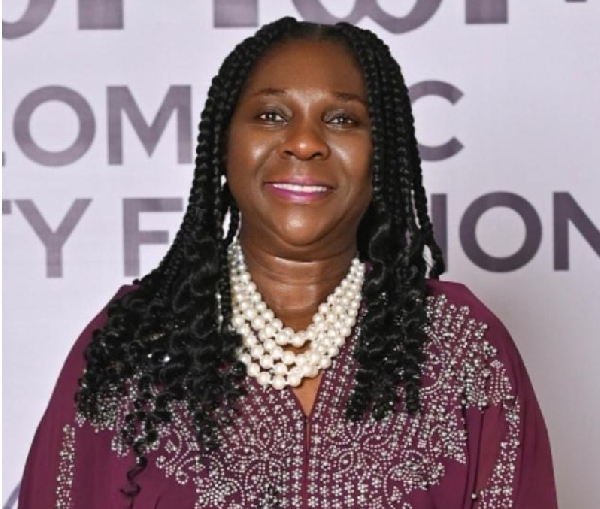
Ambassador Nancy Q Sam, the Vice President of the Confederation of Private Sector Tourism Organisati Ambassador Nancy Q Sam, the Vice President of the Confederation of Private Sector Tourism Organisati

The Africa International Tourism and Economic Council (AITEC World) has appointed Ambassador Nancy Q Sam, the Tourism Ambassador for Miami in the United States of America (USA), as its Regional Representative for West Africa and Special Advisor.

Ambassador Sam who doubles as Vice President of the Confederation of Private Sector Tourism Organisations in ECOWAS (COPITOUR) is widely recognised as one of Africa’s leading voices in tourism development, celebrated for her visionary leadership, strategic advocacy and steadfast dedication to strengthening regional collaboration within the ECOWAS tourism landscape.

With an extensive background in private sector tourism initiatives and sustainable economic development, Amb Sam brings invaluable expertise that aligns perfectly with AITEC World’s mission to promote economic growth through sustainable tourism, innovation and international cooperation.

AITEC World extends its heartfelt congratulations to Ambassador Sam on this well-deserved appointment and looks forward to her dynamic leadership in advancing the organisation’s vision of a more connected and prosperous African tourism industry.

Avoid public commentary on ongoing criminal cases

0

Former Deputy Attorney General Joseph Kpemka has cautioned Attorney General Dr. Dominic Ayine against making public comments that delve into the merits of ongoing criminal cases, warning that such remarks violate the constitutional principle of presumption of innocence.

His caution follows Dr. Ayine’s public disclosure of details from certain criminal cases during a Government Accountability Series held on Wednesday, October 22.

Speaking on Eyewitness News after the event, Mr. Kpemka urged Dr. Ayine to refrain from discussing the merits and facts of active cases, arguing that such commentary prejudices public perception and undermines the rights of accused persons.

“If you have heard what happened this afternoon, and you go through social media, people have concluded that the person who is alleged to have committed the offence indeed committed the offence and is guilty of the same.

And if you read the commentary being run, it is as if judgment has been passed by the court and the accused person has been found to be guilty, but that is not the case at all. We must avoid discussing the merit of the case,” he said.

Mr. Kpemka acknowledged that the Attorney General has the right to update the public on cases under prosecution, but cautioned that sharing too many details could mislead the public and create confusion if the eventual verdict differs from public expectations.

“The facts of the case you can put out, but to discuss the merits and say, for example, you won’t go to court if you are not convinced that the crime has been committed—and therefore it is only when you know that you will get conviction that you go to court—you have already determined the issue. That is where the details and the nitty-gritty you have actually churned out to the public will create mischief tomorrow.

It is good that you can come out and enlighten the public that you are prosecuting someone who is facing ten charges and has been put before the court. But the details as to how you will strategise and execute the prosecution should be reserved for the courtroom,” he stated.

Mr. Kpemka emphasised that such commentary breaches Article 19(2) of the 1992 Constitution, which guarantees every accused person the presumption of innocence until proven guilty.

“The danger is very clear, and the presumption of innocence in the Constitution—Article 19(2)—was not put there for nothing. It was to ensure that people who are put before a court and haven’t been convicted are not treated as though they are convicted. Discussing the details and merits of the case, for me, will be a sin as far as the Constitution is concerned,” he added.

Buffer Stock scandal: Allegations by AG are false and damaging – Former CEO

Champions League: Chelsea teenagers humiliate ten-man Ajax

0

Chelsea became the first team in Champions League history to have three teenage scorers as they secured a 5-1 win over a woeful Ajax side at Stamford Bridge.

Marc Guiu, 19, was the first teenager to score and briefly became Chelsea’s youngest Champions League goalscorer in a calamitous minute and 17 seconds for Ajax after captain Kenneth Taylor was sent off.

However, Guiu’s record was broken 33 minutes later when Estevao Willian, 18, scored the third of three penalties – after spot-kicks from Enzo Fernandez and Wout Weghorst – and a long-range strike from Moises Caicedo in a chaotic first half.

Chelsea made three changes at half-time, including forward Tyrique George, who scored from just inside the box three minutes after coming on to become the third teenager on the scoresheet.

Substitute midfielder Reggie Walsh, 17, then became the youngest player to appear for the club in the Champions League and the second youngest Englishman after Jack Wilshere for Arsenal.

It was a poor performance from Ajax, who have won this competition four times, with Taylor’s high and late lunge setting the tone.

Weghorst’s poor tackle on Fernandez allowed the midfielder to pick himself up and seal victory with 45 minutes gone – despite the former Manchester United striker pulling a goal back after a clumsy tackle by Tosin Adarabioyo.

Remarkably, Ajax gave away another penalty as Youri Baas trod on Estevao, who picked himself up to score in the sixth minute of first-half added time.

After George’s fifth, both sides dropped in intensity.

Such was Chelsea’s dominance that manager Enzo Maresca began resting players like Caicedo, Fernandez and Adarabioyo, making all five changes by the 65-minute mark.

Ajax were once giants of European football but have now lost all three Champions League matches and sit bottom of the 36-team table. They are also without a win in four matches in all competitions.

Meanwhile, Chelsea have won back-to-back matches in Europe since losing their opening game at Bayern Munich, with a trip to Azerbaijan to face Qarabag next.

DISCLAIMER: The Views, Comments, Opinions, Contributions and Statements made by Readers and Contributors on this platform do not necessarily represent the views or policy of Multimedia Group Limited.

Tags:  

DISCLAIMER: The Views, Comments, Opinions, Contributions and Statements made by Readers and Contributors on this platform do not necessarily represent the views or policy of Multimedia Group Limited.

Former Buffer Stock Company CEO, three others to face various charges – Attorney-General  

0

By Iddi Yire, GNA  

Accra, Oct. 22, GNA – Dr Dominic Akuritinga Ayine, the Attorney-General and Minister of Justice has disclosed that Mr Hanan Abdul-Wahab, the former Chief Executive Officer of the National Food and Buffer Stock Company Limited, and three others will be charged with various offenses on Friday, 24th October 2025. 

He made the disclosure when he took his turn at the Governance Accountability Series press conference held at the Presidency in Accra. 

He said Mr Abdul-Wahab and his wife, Faiza Seidu Wuni, had acquired properties from proceeds of crime between 2018 and 2024, saying Mr Abdul-Wahab was also involved in acts of money-laundering. 

As of March 20, 2025, when we announced the arrest and detention of suspects Kwabena Adu Boahene and his wife Angela Boateng, the Economic and Organised Crime Office (EOCO) had gathered credible intelligence regarding a criminal enterprise that had been operated by the former CEO of the National Food and Buffer Stock Company Limited, Mr Hanan Abdul-Wahab,” he stated. 

“Initial estimates put the amount of money pilfered by Mr Abdul-Wahab and his collaborators at the time at around GHS58 million, far in excess of the GHS49 million suspected to have been stolen by Mr Kwabena Adu Boahene and his co-accused persons.” 

The Attorney-General referred to the criminal enterprise operated by Mr Abdul-Wahab and his collaborators at the Buffer Stock “the Rumble in the Jungle” not only because of the huge amount of money involved, but because food suppliers were facing challenges due to failure to receive payment for supplies made to the Company. 

He said because of this school children were being denied nutrition under the School Feeding Programme for lack of funds. 

Dr Ayine explained that it was through painstaking investigations that the Economic and Orgainsed Crime (EOCO) Unit discovered this illicit, criminal enterprise run by a gang of corrupt, lawless officials at the Buffer Stock Company. 

He said on June 25, 2025, the EOCO conducted a coordinated operation based upon their initial investigations which resulted in the arrest of Mr Abdul-Wahab, former Chief Executive of the NAFCO, his wife Faiza Seidu Wuni  and James Atieku, the Buffer Stock Manager for the Northern Sector, who was based in Tamale.  

The Attorney-General said the operation also led to the arrest of Emmanuel Arthur, the Head of Corporate Affairs of NAFCO.  

The arrest followed Initial intelligence and assessment by EOCO which suggested that while serving as CEO of Buffer Stock between 2017 and 2024, Mr Hanan Abdul-Wahab colluded with his wife, Faiza Seidu Wuni, Richard Sam Asante (Head of Finance), Bismark Owusu Boakye (Finance Department), and Emmanuel Arthur (Corporate Affairs Manager) and others to, to create an elaborate criminal enterprise that was used to steal and launder public funds from the Buffer Stock Company. 

He said between 2017 and 2024, Mr Abdul-Wahab, in concert with Richard Sam-Asante and Bismark Owusu Boakye, orchestrated the transfer of over GHS78 million from the bank accounts of  the Buffer Stock Company into  a private company linked to the CEO, his wife and some staff respectively at Republic Bank and ECOBANK.  

Again, evidence showed that the funds were instantly retransferred to companies owned by Mr Abdul-Wahab, companies and entities owned or associated with him. 

He said similarly evidence showed that between December 2017 and May 2019, Mr Abdul-Wahab transferred GHC 5,495,748.36, from the Buffer Stock Company’s accounts to two other bank accounts belonging to Aludiba Enterprise at Republic Bank and ABSA, a company he owns. 

He said Aludiba Enterprise was not a registered supplier of Buffer Stock Company.  

He said Mr Abdul-Whab between October 2019 to January 2022 also orchestrated some suppliers to transfer an amount of over GHS11 million to an entity owned by a staff of the Buffer Stock Company and later instructed the staff to re-transfer the funds into a company owned and run by Hanan Abdul Whab and his wife.  

GNA 

Reviving the Korle Lagoon — Restoring the Heartbeat of Accra’s Natural Beauty

0

The Korle Lagoon, nestled at the southern edge of Accra, is one of the city’s most defining natural landmarks.

Fed by the Odaw River, which snakes through the heart of the capital, the lagoon empties gently into the Gulf of Guinea, forming a natural connection between Accra’s inland ecosystem and the Atlantic Ocean.

Once a thriving water body teeming with aquatic life and serving as a buffer against floods, the Korle Lagoon was both a source of life and a scenic jewel that framed the city’s coastline.

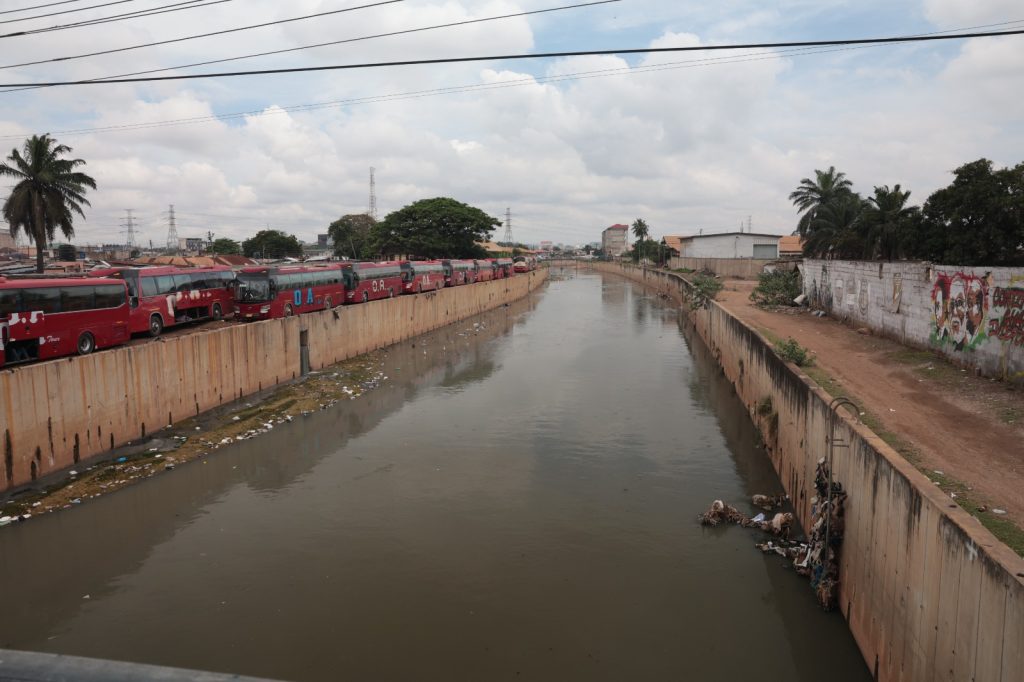
Over the years, however, urbanisation and waste mismanagement have turned this once-beautiful lagoon into one of the most polluted water bodies in West Africa. The rapid growth of Accra, coupled with poor drainage systems, indiscriminate dumping of solid waste, and encroachment along its banks, has choked the lagoon’s natural flow.

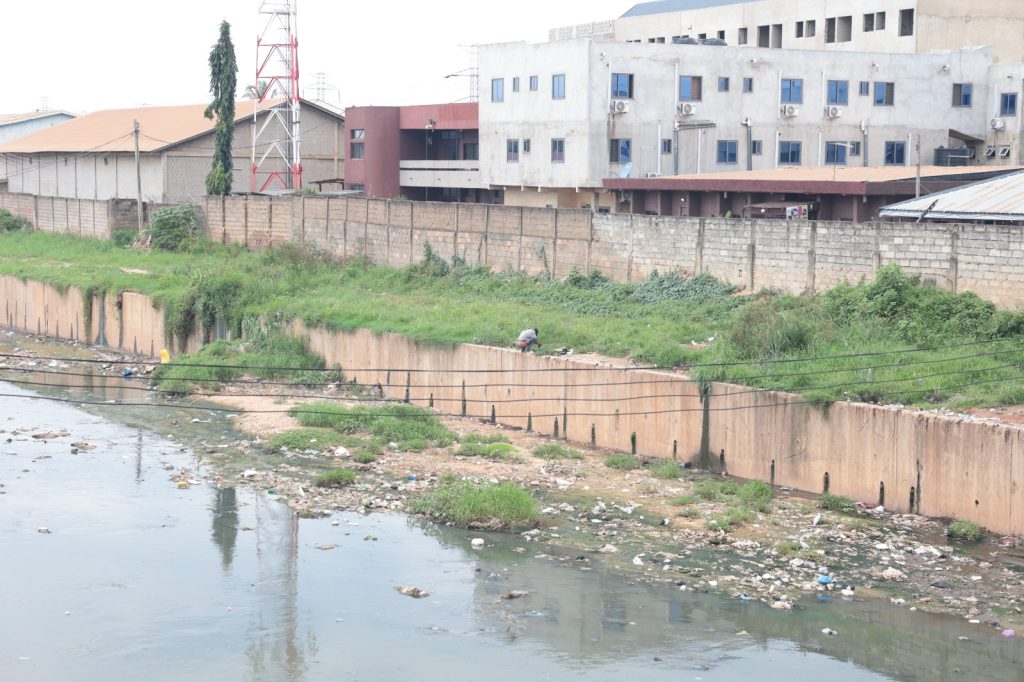
This encroachment and mismanagement are most acutely felt along its main feeder, the Odaw River. The banks of the Odaw have become a zone of intense, informal human activity that directly contributes to the lagoon’s degradation.

Stretches of the river are lined with slum dwellings, where a lack of basic sanitation facilities leads to the widespread practice of open defecation, introducing harmful pathogens directly into the watercourse. Nearby, informal vehicle repair shops and vulcanising operations often discharge used engine oil, grease, and other chemical pollutants into the river. The practice of cattle rearing along the banks adds organic waste and further contributes to the pollution load.

Most visibly, the riverbank has become an unofficial dumping ground, where everything from household refuse to industrial waste is discarded directly into the water or piled along the edges, only to be washed into the main channel during rains.

Furthermore, landfilling and construction on the river’s floodplains not only narrow the river’s channel—increasing flood risk—but also destabilise the banks, causing erosion and siltation.

These activities collectively transform the Odaw River into a conduit of pollution, delivering a constant stream of contaminants, nutrients, and solid waste that silts up and poisons the Korle Lagoon. What could have been a shimmering mirror reflecting the city’s skyline has instead become a symbol of neglect — a reminder of how human activity can degrade nature’s gifts when stewardship is lacking.

Yet, the environmental importance of the Korle Lagoon remains undeniable. It serves as a critical catchment basin that helps control flooding in Accra, especially during heavy rains.

The lagoon also plays a vital ecological role, acting as a habitat for birds and marine organisms and as a natural filter for the city’s stormwater before it reaches the sea. Reviving it, therefore, is not just an environmental necessity but a civic and economic opportunity.

Around the world, cities have transformed their water bodies into icons of beauty and sustainability. In Singapore, the once heavily polluted Singapore River was cleaned and revitalised into a vibrant waterfront precinct that now anchors tourism and nightlife.

Cape Town’s V&A Waterfront, built around its restored harbour basin, is today one of Africa’s most visited destinations. Even Lagos, with its Lagoon and Eko Atlantic development, is showing what visionary urban planning can achieve when water and the city coexist harmoniously.

Accra can follow suit. The Korle Lagoon’s revival could become the centrepiece of an urban regeneration project that fuses environmental restoration, public recreation, and eco-tourism. Imagine landscaped walkways, bicycle paths, floating gardens, and art installations along its banks. Picture a lagoon clean enough to host canoeing festivals, bird-watching tours, and weekend family picnics — all powered by local businesses and community participation. Such an initiative would not only restore the lagoon’s ecological balance but also stimulate green jobs, boost tourism, and redefine Accra’s aesthetic identity.

To achieve this vision, a multi-stakeholder approach is essential. City authorities, environmental agencies, private investors, and community leaders must collaborate to enforce waste regulations, invest in proper drainage systems, and promote public education on sustainable waste disposal. Schools, media houses, and civic organisations can also help by championing awareness campaigns that rekindle public affection for the lagoon.

The Korle Lagoon can once again be a symbol of pride, not pollution. It can tell a new story — one of redemption, resilience, and responsible city living. Restoring it is not just about cleaning a body of water; it’s about reclaiming the soul of Accra.

If we choose to see the Korle Lagoon not as a lost cause, but as a living opportunity, then Accra can stand among the world’s great coastal cities — proud, clean, and beautiful by nature.

Two suspected robbers killed in police shootout at Offinso

0

Two suspected members of a criminal gang believed to be behind a series of robberies in the Ashanti Region have been shot dead during a police operation at Offinso.

The incident occurred following an intelligence-led raid by security personnel on Tuesday.

According to a police incident report circulating online, the operation was mounted after intelligence suggested that one of the suspects, identified as Osman Majid Abdul Sadik, also known as Cross, who was wanted for multiple robberies and murders in the Mankranso area, was hiding in Offinso in the Ashanti North Region.

Ghana not in a hurry to borrow from international capital market

0

President John Dramani Mahama President John Dramani Mahama

President John Dramani Mahama has stated that his government is ready to generate revenue internally for its Big Push initiative, which aims to enhance national connectivity and economic development.

Speaking at the official launch of the Ghana Infrastructure Plan (GIP) held in Accra, the president noted that his government is not ready to borrow money from the international capital market so far as the Big Push agenda is concerned.

He explained that ever since the launch of the Big Push agenda on September 16, 2025, the country has not borrowed a single dollar from the international market.

“…With the kind of infrastructure we are doing, we are out of the international capital market. We are not borrowing one single dollar from outside for the big push,” he said.

The president also noted that he is certain his administration can construct the necessary infrastructures under the Big Push agenda without returning to the international capital market.

“And so somebody asked me, when are you going to return to the international capital market? I said, we’re not in a hurry at all, because I never knew that you could survive without going to borrow for infrastructure. So far, we’re doing good, and we’ll continue to keep our foot on the pedal,” he added.

Watch as Ghanaians share bold ideas to end galamsey

ID/AM

Countdown begins to close of nominations for 9th Ghana Energy Awards

0

The countdown is on for the close of nominations in the 9th edition of the prestigious Ghana Energy Awards (GEA), with just ten days remaining before the window officially shuts on Friday, 31st October, 2025.

Nominations for this year’s event opened on Tuesday, 9th September, 2025, inviting submissions from individuals, companies and institutions across Ghana’s energy value chain. Established to recognise and honour outstanding achievements, innovation and leadership within the energy sector, the Ghana Energy Awards has over the years become a respected benchmark for excellence.

The initiative is endorsed by the Ministry of Energy and Green Transition, its allied agencies and the World Energy Council – Ghana.

Held under the theme ‘Repositioning the Energy Sector as a Pillar of National Development’, this year’s edition underscores the central role of energy in driving Ghana’s economic transformation. It calls for strategic reforms that foster sustainable growth, inclusivity and resilience across the sector.

Now in its ninth year, the Ghana Energy Awards continues to evolve in line with global and national energy trends. The 2025 edition features twenty-six competitive categories, reflecting the breadth of Ghana’s energy landscape—from the power to the petroleum sub-sectors.

The Awards Secretariat has also introduced new categories this year, broadening participation and ensuring recognition for diverse contributions that support the country’s energy development agenda.

The response to this year’s call for nominations has been exceptional, with a noticeable shift from the traditional last-minute submissions. Entries have been overwhelming so far, with several nominations coming in earlier than expected. This change signals stronger engagement and a growing sense of ownership among industry players.

With over 300 entries already received from across the energy sector, competition for shortlisting is expected to be intense. The ssecretariat has, however, reminded prospective nominees who have yet to file their submissions to do so within the stipulated period, stressing that no extensions will be granted beyond the October 31 deadline.

As part of the rigorous evaluation process, the Ghana Energy Awards Secretariat and Awarding Panel have commenced site visitations, which will continue through to 15th November, 2025. These visits form a crucial component of the awards’ verification framework, allowing the panel to assess nominated projects and initiatives first-hand. The exercise ensures that all submissions meet the highest standards of authenticity, impact and operational excellence. This transparent, evidence-based approach has become one of the hallmarks of the Ghana Energy Awards’ credibility and integrity within the sector.

The post Countdown begins to close of nominations for 9th Ghana Energy Awards appeared first on The Business & Financial Times.

Read More

Kotobabi Assemblyman dragged to court for allegedly seizing public toilet

0

Tommy Thomson, the accused Assemblyman Tommy Thomson, the accused Assemblyman

A private construction and sanitation management company has filed a lawsuit against the Assemblyman for Kotobabi Electoral area in the Greater Accra Region, Tommy Thomson, for allegedly using force to seize control of a 20-seater public toilet facility in Kotobabi.

The case, filed at the District Magistrate Court in Accra, accuses the Assemblyman of unlawfully taking over the operations of a modern water closet facility that the company claims to have constructed and operated under a valid 15-year lease agreement with the Ayawaso Central Municipal Assembly.

According to court documents, the plaintiff, Prince Setraco Ghana Ltd, is seeking multiple reliefs, including a declaration of ownership over the leasehold, a daily compensation of GH₵2,000 for lost revenue and an injunction restraining the defendant and his agents from further interference.

In its statement of claim, the company explained that it entered into a formal agreement with the Ayawaso Central Municipal Assembly on May 1, 2023, which granted it a 15-year leasehold interest in the site of a dilapidated KVIP toilet facility at Kotobabi.

Under the agreement, the plaintiff was authorised to demolish, rebuild and operate the facility using its own resources, while paying an agreed share of daily revenue to the Assembly.

The company said it duly fulfilled its obligations, completing the construction and beginning operations on August 1, 2023.

However, on September 19, 2025, the plaintiff alleges that Thomson, the defendant, “used machomen to forcibly take over the toilet facility”, preventing the company’s staff from accessing or operating the premises.

Since then, the statement claims, the Assemblyman has been collecting all proceeds from the facility “to himself”, in defiance of the lease agreement and without remitting any funds to either the company or the Assembly.

Prince Setraco Ghana Ltd is asking the court to declare that it remains the lawful holder of the 15-year leasehold interest and that the defendant’s takeover was illegal.

It is also seeking: An order for the immediate return of the toilet facility to the company.

Payment of GH₵2,000 per day in compensation from September 19, 2025, until the facility is handed back.

A perpetual injunction to prevent the defendant, his agents, or assigns from any future interference.

The plaintiff argues that the defendant’s continued occupation of the facility “is a blatant abuse of authority” and that only the court’s intervention can protect its lawful investment and leasehold rights.

The case has been filed and is expected to be heard in the coming weeks at the District Magistrate Court, Accra Central.

Legal practitioners from Prestige Legal Practitioners, representing Prince Setraco Ghana Ltd, have confirmed that all necessary documentation has been submitted and that the plaintiff will direct service of the suit on the defendant.

OPDAG calls for urgent action to stop smuggling of illegal vegetable oil into Ghana

0

The Association emphasised that supporting local oil palm production would not only protect jobs The Association emphasised that supporting local oil palm production would not only protect jobs

The Oil Palm Development Association of Ghana (OPDAG) is calling on the government to take swift and decisive measures to curb the smuggling of illegal vegetable cooking oil into the country, warning that the situation poses both serious health risks and economic threats to the nation.

According to Paul Kwabena Amaning, President of OPDAG, the influx of unregulated and substandard vegetable oils into the Ghanaian market is undermining the local palm oil industry and threatening the livelihoods of more than 1.2 million people who depend on the sector.

“Smuggling of vegetable oil not only endangers public health but also threatens the survival of local producers who are working hard to grow the industry,” Amaning stated.

Ghana currently cultivates approximately 300,000 hectares of land for oil palm, yielding around 300,000 metric tonnes of crude palm oil each year. However, national demand stands at about 400,000 metric tonnes, leaving a deficit of 100,000 metric tonnes annually.

This shortfall, OPDAG explained, has created a market gap that smugglers are exploiting by bringing in illegal, low-quality oils, many of which do not meet health and safety standards.

“If these illegal activities continue unchecked, local industries could collapse, thousands of jobs could be lost, and the country’s economy would suffer greatly,” the association cautioned.

OPDAG is urging government agencies to strengthen border surveillance and ensure better coordination among regulatory bodies, including the Food and Drugs Authority (FDA), the Ghana Standards Authority (GSA), and the Customs Division of the Ghana Revenue Authority (GRA).

The Association also called for strict enforcement of certification and traceability systems to ensure that only safe, quality-assured vegetable oils are sold on the market.

“We are appealing to the government to equip enforcement agencies with the necessary logistics to combat this smuggling menace,” OPDAG said in a statement.

OPDAG further appealed to the media to use their platforms to educate the public on the dangers of consuming unapproved oils and to help expose illegal trade networks.

It also warned that anyone caught smuggling or distributing unlicensed vegetable oil would face prosecution to serve as a deterrent to others.

The Association emphasised that supporting local oil palm production would not only protect jobs but also enhance Ghana’s economic resilience and reduce dependence on imports.

“By promoting certified, locally produced oils, Ghana can create sustainable employment, grow its industrial base, and ensure that consumers have access to safe and quality products,” Amaning added.

OPDAG reaffirmed its commitment to collaborating with the government, regulatory agencies, and industry stakeholders to ensure the growth and long-term sustainability of Ghana’s oil palm sector.

African scholars gather in Singapore for groundbreaking international education conference

0

The three-day conference concluded with renewed energy and optimism among participants The three-day conference concluded with renewed energy and optimism among participants

The Admission Experts International Multidisciplinary Journal for Research, Publications, and Conferences (AEIMJRPC), in partnership with the Philippine Christian University (PCU), has successfully hosted yet another highly impactful International Education Conference under the theme:

“The Africa We Are Building: Emerging Scholars Advancing Knowledge, Driving Change for a Transformative and Resilient New Africa.”

Held from October 18–20, 2025, at PSB Academy in Singapore, the conference brought together a distinguished assembly of PhD graduates and candidates from across Botswana, Ghana, Namibia, Rwanda, Zimbabwe, Kenya, and the Philippines, creating a vibrant atmosphere of intellectual exchange and continental collaboration.

The Special Guest of Honour, Professor Dr Anicia Peters, Chief Executive Officer of the National Commission on Research, Science and Technology (NCRST) of Namibia, delivered an inspiring address emphasising the importance of African scholars owning their narratives.

“Africa’s researchers must tell their own stories — not wait for others to interpret our experiences for us,” she urged, drawing resounding applause from participants.

Also in attendance was Saddick Adams, a renowned Ghanaian journalist and development advocate, who encouraged participants to remain steadfast in their belief in Africa’s potential.

“The transformation of Africa begins with believing in Africa,” he stated, challenging scholars to develop research-driven solutions that will shape the continent’s future.

Adding his voice, Dr James Antwi, Adjunct Professor at the Philippine Christian University and Director of the Ghana Adventist Health Services, called for greater collaboration and funding opportunities among researchers.

“Research becomes meaningful only when it improves lives. Let us work together, share ideas, and seek partnerships that can bring our findings to life,” he noted.

Dr Mohammed Sumaila, Chief Executive Officer of AEIMJRPC and host of the event, encouraged participants to humanise their research through storytelling and social relevance.

“Behind every research is a story — a story that connects to people, inspires change and solves real problems. Let’s tell those stories boldly,” Dr. Sumaila said.

He also underscored the importance of networking and collaboration, highlighting that conferences like AEIMJRPC’s are not just academic gatherings but platforms for continental transformation.

In a major highlight of the event, Dr Sumaila officially launched the Africa Alumni of Philippine Universities (AAPU) an initiative with the mission to connect, support and inspire African alumni of Philippine universities through professional networking, academic collaboration, mentorship and community impact programmes.

The three-day conference concluded with renewed energy and optimism among participants, who pledged to champion research that drives Africa’s progress and resilience in an ever-changing global landscape.

The Long Road To Equality: Affirmative Action In Ghana

0

The writer


From the earliest days after independence, Ghana sought to increase women’s participation in governance. For example, in 1959, the Representation of the People Act reserved ten seats for women in the National Assembly.

Although that measure ended following political upheavals in 1966, it set a precedent. Over the years, Ghana signed regional and international agreements on women’s rights, issued administrative directives to promote women’s involvement in public boards and committees, and adopted gender policies to address inequality in education and public service.

Despite these initial efforts, many policies remained largely aspirational. In 1979, a quota guideline aimed for 40 percent representation of women on state boards, commissions, and committees; however, that goal was seldom achieved. During the late 1990s, the government under then President Rawlings introduced administrative directives targeting similar aims, but implementation faced significant challenges due to weak institutional structures, a lack of enforcement mechanisms, and cultural resistance.

As a result, women continue to be glaringly absent from the corridors of power where critical decisions about national life are made. Their voices are often muted in Parliament, their representation on public boards is minimal, and their ambitions are frequently undermined by unwritten rules that favor conformity to a male-dominated political culture.

Our dear country has repeatedly promised equality, yet these promises have often gone unfulfilled. Passage of the Affirmative Action (Gender Equity) Act, 2024 (Act 121), represents the boldest attempt yet, to disrupt systemic exclusion and write gender equality and incorporate gender equality into the framework of governance.

This legislation marks an important milestone in our nation’s development and aims to transform equality into a lived reality. Act 121 indicates that the current situation of underrepresentation, systemic discrimination, and deeply rooted gender norms can no longer be tolerated. With the government instituting minimum quotas for women in governance and public institutions, Ghana stands at a pivotal point: this Act has the potential to initiate real, measurable change, or it could become just another unfulfilled good intention.

The Affirmative Action Act 2024

In July 2024, Parliament passed the Affirmative Action (Gender Equity) Bill, showcasing a strong commitment to achieving gender equity in public and political life. The Act aims to promote gender equity across various aspects of society, including political, social, economic, educational, and cultural spheres.

Key provisions of the law include progressive quotas for women’s representation: a minimum of 30 percent in public decision-making bodies by 2026, increasing to 35 percent by 2028, and reaching 50 percent by 2030.

The Act also mandates institutional reforms within political parties, local governance, public recruitment processes, and the monitoring of gender balance.

Successful implementation will depend on establishing supportive structures. For example, the Act proposes the creation of Affirmative Action Units within ministries to conduct gender parity audits and outlines sanctions for non-compliance. While the passage of this law is a significant achievement, it does not guarantee change on its own.

One year after the law was enacted, various stakeholders, including civil society organisations, government agencies, and academic institutions, evaluated its implementation process. They identified several barriers, which are institutional, financial, and cultural, that could limit the law’s impact.

Concerns have been raised regarding the law’s effectiveness, with a significant issue being the weak enforcement of the law and vague political provisions.

Although it establishes quotas and targets, it lacks strong penalties or binding mechanisms to ensure compliance from political parties and the private sector.

For example, women who aspire to run for office often face financial obstacles, limited access to fundraising networks, little institutional support, and social norms that stigmatize or ridicule women in politics. Additionally, negative stereotypes and ongoing resistance within political parties create informal barriers to women’s participation.

Data indicate that women’s representation in Parliament remains low, as witnessed in the 2024 elections, despite the Act; women held only about 14-15 percent of the 275 parliamentary seats, a figure that falls far short of the quotas established by the law.

What is left to be done

Looking ahead, the promise of the Affirmative Action Act will require consistent political will, institutional capacity, adequate funding, legislative clarity, and social transformation.

The government must first ensure that implementation tools such as Legislative Instrument (LI), regulations and other administrative guidelines are drafted, adopted, and widely disseminated to clarify the obligations of ministries, political parties, and public institutions.

Additionally, enforcement gaps need to be addressed so that quotas are mandatory rather than optional. Political parties serve as the primary gatekeepers and must be required to field women in competitive constituencies, not just as token candidates. For instance, political parties can establish clear criteria for filling quota-allocated positions, ensure transparent selection processes, impose sanctions for non-compliance, and implement oversight by independent bodies. They must also challenge deeply ingrained cultural attitudes that view politics as a male domain through civic education, media campaigns, and leadership role models.

Financial barriers for female candidates need to be addressed through public funding or subsidies, mentoring programmes in grassroots politics, measures to alleviate campaign costs, and capacity-building initiatives. These efforts should aim to support capable women who may lack the resources or networks to run for elections, thereby leveling the playing field. Without such measures, quotas will merely be symbolic.

Additionally, public institutions, political parties, and traditional authorities must work to change social norms and cultural practices that undermine women’s participation through civic education and media campaigns aimed at shifting attitudes, reducing stigma, and challenging stereotypes. They should also support women in leadership positions to withstand hostility and scrutiny.

It’s important not to overlook regional and local levels in this process. Implementation must extend to every district and local government. If not, the targets of the Act will be achieved only in visible institutions in the regional capitals, while large segments of rural districts remain unaddressed. This could ultimately mask regional inequalities by relying on national averages.

Transparency will be essential. Therefore, effective monitoring and evaluation systems should collect data that is disaggregated by gender, region, and socioeconomic status. This data must be published regularly to show the proportion of women in Parliament, district assemblies, boards, and executive positions.

Additionally, ministries and political parties should be required to submit public reports on their progress towards meeting these targets. Civil society and the media should be empowered to monitor compliance and work in partnership with the government to ensure transparency and encourage accountability.

“Equality is not an abstract aspiration. It is a right to be realised in law, policy, and practice.”

Lessons from around the world show that affirmative action works when it is supported by enforcement and complemented by supportive measures. Rwanda combined constitutional quotas with targeted recruitment, training, and public appointments, and now women dominate its Parliament.

Argentina adopted a “zebra list” law requiring parties to alternate male and female candidates on their ballots, ensuring women are placed in winnable positions. India reserved one-third of local council seats for women through its 73rd Constitutional Amendment, which has transformed village-level governance and created a pipeline of women who later ran for higher office. These examples prove that when quotas are supported by training, financing, and institutional reforms, they lead to lasting change.

Conclusion

“Gender equality must become a lived reality.” — Michelle Bachelet.

These words from former UN Women Executive Director, Michelle Bachelet, capture the essence of Ghana’s current moment: Equality cannot just be a lofty principle written in laws or policy documents while women continue to be excluded from the decision-making rooms. Affirmative action is not about giving women special favors; it aims to break down the barriers that prevent half of the population from having an opportunity to shape their country’s future. Countries that have embraced gender parity have experienced numerous benefits, including more inclusive governance, stronger democracies, and better development outcomes.

Ghana has taken a bold step by passing the law, but it now faces the more challenging task of ensuring its enforcement.

This requires creating regulations, funding programmes, changing party rules, and shifting public attitudes, not just in speeches but in concrete actions. As the nation reflects on its past efforts and current frameworks, it becomes clear that while significant progress has been made, much work still lies ahead.

Strategic Communications Expert & PR Consultant

By Rufina Dimboey Pwawuvi
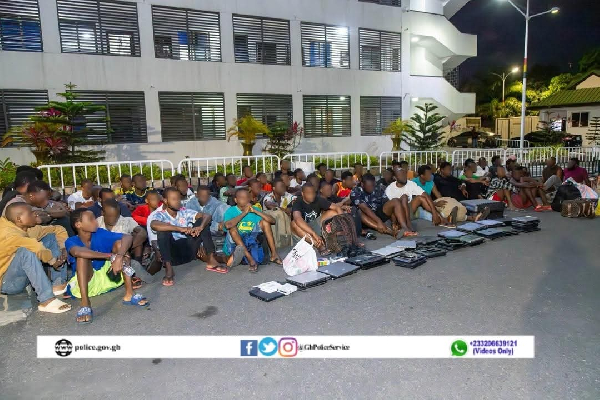
Prof. Beyuo calls for dialogue on fertility treatment access 

0

By Laudia Sawer, GNA   

Tema, Oct. 22, GNA – Professor Titus Beyuo, former General Secretary of the Ghana Medical Association and Member of Parliament for Lambussie, has called for a social dialogue on how to ensure equitable access to fertility services in the country. 

Prof. Beyuo said those who needed fertility services most were those who lacked access due to geographic and financial barriers. 

 He made the call at the 2025 annual general meeting (AGM) and scientific conference of the Fertility Society of Ghana (FERSOG), held in Tema. 

The conference was held on the theme: “Reducing the Burden of Infertility in Ghana: Prevention, Fertility, Awareness and Preservation.” 

 “Those who need our services most are those who lack access due to geographic and financial barriers. In the upper West region, almost a million people have no access to even Intra Uterine Insemination; the region has only three gynaecologists.” 

According to him, even though he was championing fertility issues, his constituents and those in the five northern regions of Ghana could not have access to such fertility services. 

 “If somebody needs IVF in Wa, the person has to come down to Kumasi with all its attendant problems; even getting a specialist in that area is a challenge. There is a huge unmet need for ART services; let us not assume that all the money is in Accra and Kumasi, and some of you get people from those places from Wa and Bolgatanga to come down,” he added. 

Prof. Beyuo urged stakeholders and practitioners to think of equity in their service, observing that “many tears go unnoticed, many marriages are being dissolved in silence, and many are suffering quietly. 

Dr Padi Ayertey, the Secretary of the Fertility Society of Ghana (FERSOG), agreed that it was the right of individuals to be able to reproduce, adding that it was also the government’s responsibility to support fertility establishments to help people reach that goal.  
Dr Ayertey, who is also the Medical Director of Elimmas Health, revealed that anything concerning fertility and health insurance did not support it, as authorities regarded fertility as their business instead of an immediate concern. 

  He described it as unfair for a woman undergoing fertility treatment to pay for a scan which was free for pregnant women and asked for something to be done about it. 

 “We strongly believe that basic investigations for fertility should be met by the NHIS so that they can achieve some progress in the investigation for their disease condition.” 

 He revealed that fertility centres were also faced with the expensive cost of equipment and the payment of full customs duties on them. 

According to him, interactions with colleagues from Algeria and Tunisia revealed that in their countries, either the full cost of medication is paid for the patient by their government, or half payment was done, lessening the high cost of fertility service on the patient. 

Touching on accessibility, he suggested that the teaching hospitals should at the very least have In Vitro Fertilisation (IVF) centres, stating that doctors who were currently being trained in reproduction were  go to the private sector for their attachments and practicals because the teaching hospitals do not have a full setup. 

“If each of them has a full setup, patients will be able to receive care at that level of cost, making it a bit lower, while more and more people will be trained as well.” 

GNA 

Late Singer’s Cousin Speaks Out on Death Allegations and Final Moments

0

  • Daddy Lumba’s cousin has responded to the recent allegations concerning his late relative’s demise
  • In an interview, Ebenezer Oppong denied claims that the singer died at his residence and not the Bank Hospital
  • Daddy Lumba’s cousin also gave an account of his late relative’s final moments at the hospital

Ebenezer Oppong, a cousin of the late highlife musician Daddy Lumba, has addressed the recent allegations concerning his demise.

Late singer Daddy Lumba’s cousin speaks out on the allegations about his death and his final moments. Photo source: DADDY LUMBA Source: Facebook

The late music icon sadly passed away at 60 in the early morning hours of Saturday, July 26, 2025 at the Bank Hospital in Cantonments. He had been admitted to the medical facility for treatment after falling ill.

Following his demise, a big dispute has broken out in Daddy Lumba’s family, with his first wife, Akosua Serwaa, dragging his second wife, co-wife Odo Broni, his family head, Mr Victor Kofi Owusu Banahene, and Transitions Funeral Home to court.

The late singer’s widow filed the suit to seek an interlocutory injunction over her late husband’s funeral.

In a recent public statement, Akosua Serwaa and Daddy Lumba’s elder sister, Ernestina Fosu, sparked speculations about the cause of the late singer’s demise as they called for an investigation.
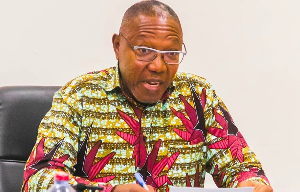
The two women publicly challenged the widely reported events that led to the musician’s sudden demise, with allegations that he passed away at home and not at the Bank Hospital.

Daddy Lumba’s cousin addresses allegations about demise

In an interview with media personality Akwasi Aboagye on Monday, October 21, 2025, Ebenezer Oppong denied the allegations that Daddy Lumba passed away at his residence in East Legon.
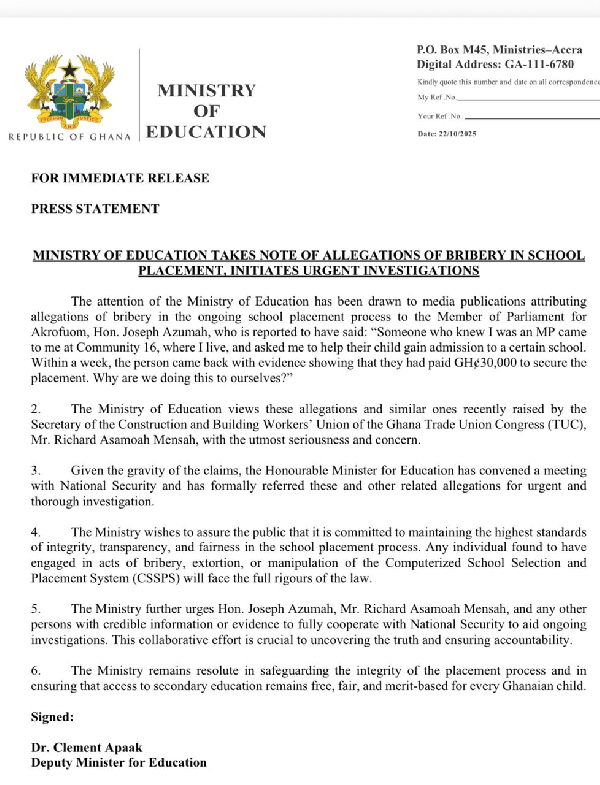
He noted that he met with his late cousin’s personal doctor at the Bank Hospital, Dr Akoto, who gave him an update on the singer’s health from the medical facility, where he was on admission, a day before his demise.

Mr Oppong stated that the doctor took photos of himself with Daddy Lumba and sent them to him before the latter’s demise.

He said:

“I met Dr Akoto. He was Daddy Lumba’s doctor at the Bank Hospital. The day before Daddy Lumba died, he was okay. The man took photos with him and showed them to me.”

He said Dr Akoto escorted his late cousin and his second wife, Odo Broni, to settle his medical bills and go for a walk around the hospital. He said the doctor had planned to discharge him on the day he passed away.

Mr Oppong added that he got the information from the doctor during a one-on-one meeting and that contrary claims about Daddy Lumba’s demise were not accurate.

The video of Daddy Lumba’s cousin addressing the allegations surrounding his demise is below:

Daddy Lumba’s sister clarifies rumours about children

Daddy Lumba’s sister clarified the rumours concerning the number of children her late brother had before his demise.

Daddy Lumba, Ernestina Akosua Brimpomaa Fosu, Daddy Lumba's children, Daddy Lumba's wives
Ernestina Akosua Brimpomaa Fosu shares details on the number of children Daddy Lumba had. Photo credit: @plus1tv, @daddylumbaofficial Source: TikTok

In an interview on UTV’s United Showbiz show, Ernestina Akosua Brimpomaa Fosu said her young brother gave birth to 11 children with four women.

She explained why Daddy Lumba’s legally married wife, Akosua Serwaa, had gone to court to seek some relief before the funeral service.

When she was asked to explain why she is demanding to know the cause of death of Daddy Lumba, she said there have been different stories, so she wants to know the actual cause.

The video of Daddy Lumba’s elder sister, Ernestina Fosu, speaking about her late brother’s children is below:

Daddy Lumba’s cousin’s remarks stir reactions

YEN.com.gh has gathered some comments from social media users below:

sarahcloud09 commented:

“The doctor needs to be investigated paa.”

Mens said:

“People are just framing all sort of lies just to make Odo Broni look bad. Eii.”

Stone wrote:

“This man is not a doctor. Why can’t the doctor come out to talk? If he died at the hospital, why did police come in?”

Kuna Brokenheart commented:

“The God that spoke for Maame Serwaa for poisoning allegations for ten years is speaking.”

Riviera love said:

“We need to see the CCTV camera footage from the hospital on that day.”

Daddy Lumba’s Abusuapanin denies embezzlement allegations

Earlier, YEN.com.gh reported that Daddy Lumba’s Abusuapanin denied allegations of embezzling the funds generated from the late singer’s one-week observation event.

In a resurfaced video, Mr Victor Kofi Owusu Banahene clarified that he paid for his own accommodation at a hotel during his stay in Accra after his relative’s demise.

He also declined to explain why he did not stay in the late Daddy Lumba’s house during his stay

We’re poised to unlock full potential of nature-based solutions – Minister of State for Climate Change and Sustainability

0

The Minister of State for Climate Change and Sustainability, Seidu Issifu, has announced a major government initiative to unlock the full potential of Nature-Based Solutions (NbS) through strengthened collaboration across all sectors of society.

Speaking at the Africa Climate Dialogue 2025 held at the Accra City Hotel, the Minister said the plan aims to deepen partnerships among government, academia, the private sector, and civil society to ensure that research drives policy and that investments support sustainable, nature-aligned development.

He stressed that the new approach would align Ghana’s climate agenda with global frameworks such as the Kunming-Montreal Global Biodiversity Framework and the UN Decade on Ecosystem Restoration, both of which seek to mobilize international support and attract climate finance for ecosystem protection and restoration.

“To unlock the full potential of Nature-Based Solutions, we must strengthen collaboration across all sectors,” the Minister said. “Our goal is to align national priorities with global frameworks to mobilize support and ensure that nature continues to sustain both our people and our economy.”

Mr Issifu reiterated that the government is taking a whole-of-government approach to climate action, with efforts underway to institutionalise Climate Change and Sustainability Units across all Ministries, Departments, and Assemblies to mainstream climate considerations into national planning and budgeting.

He also revealed plans to establish a National Climate Change and Sustainability Hub, which will serve as a centre of excellence for policy innovation, research, and knowledge exchange.

The Hub, he said, will act as a bridge between science, policy, and practice to enhance coordination and accountability in national climate action.

The Minister further noted that Ghana’s Nationally Determined Contributions (NDCs) and Biodiversity Strategy and Action Plan already reflect strong commitments to large-scale tree planting, sustainable agriculture, and the restoration of degraded lands and watersheds, interventions that not only enhance carbon sequestration but also create green jobs and improve livelihoods.

He praised the Africa Centre for Nature-Based Climate Action (AC4NCA) for convening the maiden Africa Climate Dialogue, describing it as “a crucial platform for innovation and collaboration at a time when Africa must take ownership of its climate destiny.”

Board Chair of AC4NCA, Rev. Dr. Joyce R. Aryee, in her welcome address, reiterated the Centre’s commitment to supporting governments and stakeholders to integrate nature-based solutions into national policy frameworks.

She described NbS as “the most cost-effective and practical pathway to environmental protection, social progress, and economic resilience.”

“By valuing and investing in nature, we secure not only our environment but also our future prosperity,” she said, urging African nations to embrace nature as a partner in development.

The dialogue brought together key stakeholders, including development partners, researchers, private sector leaders, and civil society actors, to explore how nature-based approaches can accelerate the continent’s transition to a sustainable, low-carbon future.

There as a panel session on including Science, Innovation and Local Action for Nature-Based Solutions.

It was followed by another on ‘Policy Coherence for NbS Integration into Development Frameworks’ and financing as well.

Partners for the event were Climate & Development Knowledge Network, Ghana Wildlife Society, Golden Star.

It was organised by the Africa Centre for Nature-Based Climate Action.

DISCLAIMER: The Views, Comments, Opinions, Contributions and Statements made by Readers and Contributors on this platform do not necessarily represent the views or policy of Multimedia Group Limited.

DISCLAIMER: The Views, Comments, Opinions, Contributions and Statements made by Readers and Contributors on this platform do not necessarily represent the views or policy of Multimedia Group Limited.

CDA Consult, Rabito Clinic offer free breast cancer screening for Channel One TV/ Citi FM staff

0

As part of efforts to promote early detection and raise awareness about breast cancer, Communication for Development and Advocacy (CDA) Consult, in partnership with Rabito Clinic, has organised free breast cancer screening for staff of Channel One TV and Citi FM.

The screening, held on Wednesday October 22, 2025, forms part of a month-long campaign targeting female journalists and media professionals across Ghana. The initiative is being rolled out at five strategic media houses throughout October, aiming to make breast health checks more accessible while minimising disruption to the demanding schedules of journalists.

Executive Director of CDA Consult, Mr. Francis Ameyibor, underscored the importance of early screening, stressing that “Regular breast cancer screening can help detect the disease at an early stage when it is more treatable.”

“Women with a family history may need to start screening earlier and more frequently.”

Mr. Ameyibor also urged journalists not only to report on health issues but to actively prioritise their own well-being.

“For a moment, get in front of the news and get screened,” he said. “You must first be a healthy person to report healthy news. Through maintaining a healthy lifestyle, journalists can reduce their risk of developing this disease and continue to tell the stories that matter to save the world.”

He encouraged all journalists to fully engage in the campaign:

“Don’t only participate in covering breast cancer events; take part in it,” he urged.

In addition to the free screening sessions, CDA Consult and Rabito Clinic are using both traditional and social media platforms to educate the public on the importance of early detection and regular screening. The outreach campaign also shares basic health information to empower women to take control of their health.

Other media houses benefiting from the initiative include ATV, Daily Graphic, Ghanaian Times, and Multimedia.

Through this initiative, CDA Consult and Rabito Clinic are helping to break down barriers to access and promote a culture of proactive health management, especially among the country’s media front-liners.


Over 1,000 displaced as severe rainstorm devastates Zabzugu District

0

A severe rainstorm has devastated the Zabzugu District in the Northern Region, displacing more than 1,000 residents and causing extensive damage to schools, homes, and public infrastructure.

The storm, which struck on Friday afternoon, tore off the roofs of over 40 houses and destroyed several school buildings, including the District Education Office, disrupting teaching and learning across the area.

Channel One News’ Northern Regional Correspondent, Mohammed Aminu Alabira, who visited the district, reported that the violent rainstorm swept through Zabzugu township and surrounding communities, leaving widespread destruction in its wake.

More than a 1000 residents have been rendered homeless, while classrooms and offices lie in ruins. The District Education Office was particularly hard hit, with several departments unable to operate.

Teaching and learning have come to a halt as pupils are left without classrooms or furniture. The Headteacher of Friends of the Earth Primary School — one of the worst-affected schools — told Channel One News that the disaster has severely affected enrolment and academic activities. He appealed to the District Assembly and well-meaning individuals for urgent support.

The Human Resource Manager of the Zabzugu District Education Office also described the extent of the damage as worrying and called for immediate intervention to enable the education directorate to resume normal operations.

Some displaced residents, who lost their homes and personal belongings, are appealing for relief assistance from government agencies and humanitarian organisations.

The Zabzugu District Director of the National Disaster Management Organisation (NADMO) said the situation is dire, noting that his office lacks the resources to support the affected families. He appealed to the central government and development partners to come to their aid.

After touring some of the affected schools, the Zabzugu District Chief Executive expressed sympathy for the victims and assured that the assembly would take swift action to provide relief and restore academic activities.

Meanwhile, the safety of pupils remains a major concern, as some are forced to study under unsafe makeshift structures. According to the Headteacher, classes are often suspended whenever the weather changes, further deepening the disruption to learning.

Buffer Stock scandal: Allegations by AG are false and damaging – Former CEO

Ghana-US deportation agreement must be scrutinised – Afenyo-Markin urges parliamentary approval 

0

By Elsie Appiah-Osei, GNA 

Accra, Oct. 22, GNA – Mr Alexander Kwamena Afenyo-Markin, the Minority Leader in Parliament, on Wednesday, called on the government to submit the recent agreement between Ghana and the United States regarding the acceptance of deported persons for parliamentary approval.  

At a Leaders’ Media Briefing at the Parliament House, Mr Afenyo-Markin said such agreements were constitutionally required to go through Parliament under Article 75 of the 1992 Constitution. 

The Leaders’ Media Briefing is a periodic engagement between the Leadership of the House and the Parliamentary Press Corps (PPC) at the beginning of every Meeting of Parliament to outline the framework of the Meeting. 

It also serves as a platform of interaction between the Leaders, the Media Relations Department of Parliament, and the PPC. 

Mr Afenyo-Markin said, “Agreements of such magnitude should be subject to parliamentary scrutiny under Article 75 of the 1992 Constitution,” adding that “We will demand that this arrangement be brought before Parliament for ratification.” 

The Minority Leader, also the New Patriotic Party Member of Parliament for Efutu, warned that bypassing parliamentary approval on international agreements could set a dangerous precedent, undermining democratic accountability and Ghana’s sovereignty in global affairs. 

He said Ghana’s foreign policy must never be conducted in secrecy, nor should the nation compromise her sovereignty for expediency. 

“We urge the government to always place Ghana’s dignity first and ensure that any international agreements reflect our values and command the confidence of the Ghanaian people,” he said. 

Mr Afenyo-Markin noted that Ghana’s progress over the years had been built on visionary leadership and the resilience of its people and urged the government to uphold transparency and constitutionalism in all its dealings with international partners. 

He said “Ghana’s story is one of triumphs achieved through visionary leadership and the indomitable spirit of our people.” 

GNA 

Edited by Christabel Addo 

‘You failed to fix ECG as board chair’

0

Majority Leader Mahama Ayariga has taken a swipe at the Minority Leader Alexander Afenyo-Markin, accusing him of failing to address deep-rooted financial challenges at the Electricity Company of Ghana (ECG) during his tenure as Board Chair.

Speaking at the Parliamentary Leadership Conference on Wednesday, October 22, Mr. Ayariga dismissed Afenyo-Markin’s earlier criticism that the government had increased electricity tariffs twice in 2025, arguing that the current financial difficulties at ECG stem from mismanagement under the previous administration.

According to the Majority Leader, the debts inherited from the past government continue to burden the power distributor, and Afenyo-Markin bears responsibility for leaving behind significant liabilities.

“You [Akufo-Addo government] left us with a huge and unreasonable debt at ECG. You [Afenyo-Markin] were the Board Chair of ECG. You know how much debt was left. You yourself have admitted it on the floor of Parliament during a debate about how bad the situation at ECG was when you assumed the leadership role as Board Chair.

“And the effort you tried to make to address that situation. At the time you were leaving office, you hadn’t fixed it. The debt is still lying there; who is going to pay for those debts?” he asked.

Mr. Ayariga further accused the previous administration of manipulating electricity pricing for political advantage, claiming it blocked tariff reviews by the Public Utilities Regulatory Commission (PURC) in 2024.

“In 2024, you stopped PURC from adjusting tariffs because you were afraid of its implications for you on your electoral fortunes in the elections. The records are there; you stopped them. The debts kept mounting,” he said.

He stressed that the current government’s tariff adjustments were aimed at stabilising the energy sector and ensuring the long-term financial health of ECG, warning that failure to take such steps could have plunged the sector into deeper crisis.

…..

Explore the world of impactful news with CitiNewsroom on WhatsApp!

Click on the link to join the Citi Newsroom channel for curated, meaningful stories tailored just for YOU:
https://whatsapp.com/channel/0029VaCYzPRAYlUPudDDe53x

No spam, just the stories that truly matter! #StayInformed #CitiNewsroom #CNRDigital

63 Dead After 2 Buses Crash in ‘Head-On’ Collision on Highway Causing ‘Chain Reaction’

0

NEED TO KNOW

  • Two buses in Uganda collided in a multi-vehicle crash on a highway on Wednesday, Oct. 22
  • Local police confirmed that 63 people died in the tragedy, while several others were injured
  • Authorities said initial investigations indicate both buses had been attempting to overtake other vehicles when the crash occurred

More than 60 people have died and others have been injured after two buses crashed on a highway in Uganda.

On Wednesday, Oct. 22, the Uganda Police Force confirmed 63 people had died and “several” others had suffered injuries after the buses collided at 12:15 a.m. on the Kampala-Gulu Highway at Kitaleba Village in the Central Region of the African country.

Local police confirmed that the fatal crash involved four vehicles in total, including a car and truck, per a press release.

“According to initial investigations, the driver of UBF 614X Isuzu bus, traveling from Kampala towards Gulu, attempted to overtake the Tata Lorry (UBK 647C) at the aforementioned location,” the release said, adding that the other bus traveling from the opposite direction was attempting to overtake the car when the incident occurred.

Both buses hit each other “head-on during the overtaking manoeuvres,” the release continued.

Wreckage of a bus involved in a highway collision that left dozens dead near Gulu, northern Uganda, on Wednesday, Oct. 22, 2025
The wreckage of another bus involved in the collision. AP Photo/ Hakiim Wampamba

“One of the drivers swerved in an attempt to avoid collision, but this resulted in a head-on and side collision, causing a chain reaction that led to other vehicles losing control and overturning several times,” authorities said. “As a result, 63 people lost lives, all occupants from involved vehicles and several others sustained injuries.”

Officials said authorities were quick to arrive at the scene and transported injured victims to Kiryandongo Hospital and other local clinics.

Bodies of those who had died were also transported to “the same hospital mortuary for post-mortem and identification.”

The police advised people to “exercise maximum caution on the roads, especially avoiding dangerous and careless overtaking, which remains one of the leading causes of crashes in the country.”

Police car Uganda
A police vehicle in Uganda. Alamy

Never miss a story — sign up for PEOPLE’s free daily newsletter to stay up-to-date on the best of what PEOPLE has to offer, from juicy celebrity news to compelling human interest stories.

“We extend our heartfelt condolences to the families of the deceased and wish a quick recovery to the injured,” they concluded.

Producer price inflation increases to 3.2% in September 2025

0

The year-on-year producer price inflation for all goods and services was 3.2% in September 2025.

This was 0.2 percentage points higher than that of August 2025.

It was, however, 27.3 percentage points lower than the September 2024 producer inflation rate

According to the Ghana Statistical Service (gss), the producer price inflation on a month-on-month basis, the producer price inflation between August and September 2025 was 0.9%.

Thus, on average, prices received by producers for their goods and services increased by 0.9% in September, compared to August 2025.

Mining and Quarrying, the largest sector with a weight of 43.7%, recorded a 0.1 percentage point increase in inflation from 4.9% in August to 5.0% in September 2025.

Similarly, Manufacturing, which makes up 35% of the PPI weights, increased from 1.6% to 1.7%, gaining 0.1 percentage point.

Transport and storage prices continued to fall, declining by 8.2% in September 2025 compared to a price decline of 8.0% in August 2025.

The GSS recommended that businesses cut waste, boost efficiency, and reinvest savings in technology and skills.

It also urged businesses to turn inflation pressure into productivity gains.

It also advised that the government to target tax relief, fix energy and transport gaps, and strengthen local supply chains to make production cheaper and faster.

For households/consumers, it advised them to compare prices, buy smart, and favor sellers who pass savings to them.

“Spend with intention to stretch income and reward fair pricing”, it concluded.

DISCLAIMER: The Views, Comments, Opinions, Contributions and Statements made by Readers and Contributors on this platform do not necessarily represent the views or policy of Multimedia Group Limited.

DISCLAIMER: The Views, Comments, Opinions, Contributions and Statements made by Readers and Contributors on this platform do not necessarily represent the views or policy of Multimedia Group Limited.

SCANDAL|| Female University Student Dies After Long bedroom session with boyfriend at Guesthouse

0

KENYA – Residents of Nyamira County were shocked on Monday morning after a 22-year-old Moi University student was found dead in a local lodging.

The third-year student had reportedly travelled from Eldoret to visit her boyfriend in Nyamira town over the weekend.

According to police, the boyfriend, who is from Kisii County, had booked a room for the two at a nearby guesthouse.