2.9 C
London
Saturday, December 27, 2025
Home Blog Page 349

Minority demands full disclosure on Ghana-US deportee pact

0

A request for accountability over Ghana’s agreement to accept deportees from the United States sparked a tense exchange in Parliament, with the Majority Leader, Mahama Ayariga, promising future engagement but avoiding an immediate floor debate.

The Minority is demanding to know if the diplomatic concession—the reversal of restrictive US visa sanctions—was tied to the controversial deportation deal.

The central issue surrounds the nature of the understanding reached between Accra and Washington that led to the US repatriating not only Ghanaian citizens but also third-country West African nationals via Ghana.

The debate was ignited by the Second Minority Whip, Habib Iddrisu, who formally requested the Majority Leader to schedule the Minister of Foreign Affairs, Samuel Okudzeto Ablakwa, to brief the House.

The request follows the US Embassy in Accra’s decision to reverse a sanction that had dramatically scaled back visa privileges for Ghanaian applicants.

The previous sanction had slashed the standard five-year multiple-entry visa down to a stringent three-month single-entry visa, posing significant travel and business hurdles. The reversal restores the more favourable conditions.

Mr. Iddrisu directly challenged the official narrative of the visa reversal:

“We need to know the reasons associated with the reversal. Is it tied to Ghana accepting the deportees into the country?”

The Minority Whip also drew a historical parallel to the 2016 transfer of the two former Guantanamo Bay detainees (the “Gitmo Two”), noting that that case had required a Supreme Court ruling to settle constitutional questions regarding the executive branch’s power to bring foreign nationals into the country without parliamentary assent.

In his robust counter-argument, Majority Leader Mahama Ayariga defended the government’s diplomatic success while downplaying the legal necessity of a special agreement for receiving West African nationals.

Mr. Ayariga emphasized the significant relief the visa reversal offers to the nation’s economy and its citizens:

“The Leader of Government Business said it was a good thing that the American government had reversed its visa sanctions on Ghana and the Foreign Affairs Minister should be commended to achieve the visa reversal.”

He stressed the negative impact of the sanctions on global commerce, noting that the restrictions were going to “very inconveniencing to them [Ghanaians with family in the US]” and would “cripple a lot of those businesses” engaged in the multi-billion-dollar trade relationship between Ghana and the US.

“And so for the minister to have successfully within a very short period of time when the US announced the sanctions gotten the US to reverse the sanctions is something that we should be happy and proud of and commend the minister very highly,” he said.

On the core issue of accepting third-country deportees, Mr. Ayariga anchored the government’s position in the ECOWAS Protocol on Free Movement of Persons (1979). This foundational regional treaty grants community citizens the right to enter and remain in any member state for up to 90 days without a visa.

“I clearly knew that every citizen of ECOWAS had the right to sit in an aircraft, disembark in Ghana and continue to their countries after 90 days with or without an agreement with the US government.”

“The ECOWAS protocol entitles every citizen to decide that they want to be sent to Ghana and when they come to Ghana, they have a right to remain in Ghana for at least 90 days.”

“And so any agreement that we will receive you when you arrive in Ghana is a natural consequence of the right of that ECOWAS citizen to decide that they want to disembark in Ghana from the US,” he concluded.

Despite the firm defence, Mr. Ayariga assured the House he would personally “engage with the Minister of Foreign Affairs” to ensure a briefing occurs.

However, he also advised the Second Minority Whip—a “senior member of the House”—to use the established legislative process by filing an urgent question to compel the minister’s appearance.

The ball is now in the Minority’s court to use its parliamentary tools to force the long-awaited public clarity on the diplomatic arrangement.

DISCLAIMER: The Views, Comments, Opinions, Contributions and Statements made by Readers and Contributors on this platform do not necessarily represent the views or policy of Multimedia Group Limited.

DISCLAIMER: The Views, Comments, Opinions, Contributions and Statements made by Readers and Contributors on this platform do not necessarily represent the views or policy of Multimedia Group Limited.
The British Museum’s new book on the Asante Jug

0

The British Museum’s Object in Focus series has published The Asante Ewer that unpacks the history of a fascinating vessel and its journey from medieval England of the fourteenth century to West Africa and back to England. 

Published in collaborative distribution with the leading US Barnes and Noble, it throws light on a single object of curiosity and is authored by two English curators and a Ghanaian historian.

In elegant prose, it draws on archival and new research of the jug popularly known today as The Asante Ewer with its remarkable details of the royal arms of England.

Transported to West Africa, possibly at some point between the fifteenth and seventeenth centuries, it had by the nineteenth century, been located in a courtyard associated with the royal palace of the Asantehene in Kumasi.

During widespread looting by British forces in the aftermath of the so-called Fourth Anglo-Asante War of 1896, the ewer was removed from the royal building before the British forces set it on fire. It was subsequently purchased by the British Museum in 1896.

This however was not the first interest in the ewer. Major essays and inquiries into it have included those of the well-known English art historian Martin Bailey in The Art Newspaper of, “Two Kings, their Armies and Some Jugs- The Asante Ewer (1993) and “The Long Curious Journey of British Museum’s Asante Ewer” (2023).

There is a trade or commodity exchange dimension of an inquiry that possibly brought the jug to Kumasi through the Caravan Trade from the Sahel or Moors in North Africa and even close-by Cape Coast in the central region to Kumasi. This is speculated in Jack Goody’s Metals, Culture and Capitalism.

This book captures in a more detailed way (including assessing the previous arguments of provenance) one of the finest examples of late medieval English bronze casting. It also explores the significance of the vessel in both European and African contexts – from the intricate medieval symbolism, linked to English royalty, that forms its decoration, to its potential connections with the trade in ivory and gold across the Sahara and the West African coast.

This publication also addresses collecting practices of the nineteenth century and their inextricable links with colonialism, as well as discussing how the ewer has historically been presented in a European context and is now being re-evaluated to include its African history.

The 72-page book with over 40 illustrations, had a research grant from the British Academy and the Wolfson Foundation. It’s chapters has a preliminary Historical Notes and the following: What is the Asante Ewer? Material Values from England to West Africa, A Military Expedition and the Looting in Kumasi, Acquisition and an Epilogue.

The interesting backgrounds of the three authors – two English staff of The British Museum and a Ghanaian historian give the book an agreeable condor.

The lead, Lloyd de Beer, a PhD in English from the University of East Angelia, is a curator with responsibility for the late medieval collection. A researcher in art and architecture of the Middle Ages, he has worked on the alabaster sculptures of medieval England after the English Reformation. De Beer curated the 850th martyrdom anniversary exhibition and lecture on, Thomas Becket: Murder and the Making of a Saint (2021).

Julie Hudson is a well-known English curator in many African museums where she has curated major exhibitions. She works in the Department of Africa, Oceania and the Americas, and among her particular areas of interest are the textiles of Tunisia. She co-authored with Chris Spring, Silk of Africa (2002). An Egyptologist, she studied at the University of Liverpool and Cambridge University.

The third is Director of the Manhyia Palace Museum, Ivor Agyeman-Duah, co-editor with the late Peggy Appiah and world leading philosopher, Kwame Anthony Appiah of, Bu Me Be: Proverbs of the Akans; of essays on art and the evolution of currency notes in Ghana as well as architectural history. He is the winner of several international awards including ‘The Distinguished Friend of Oxford 2012’ at Oxford University.

DISCLAIMER: The Views, Comments, Opinions, Contributions and Statements made by Readers and Contributors on this platform do not necessarily represent the views or policy of Multimedia Group Limited.

DISCLAIMER: The Views, Comments, Opinions, Contributions and Statements made by Readers and Contributors on this platform do not necessarily represent the views or policy of Multimedia Group Limited.

A trailblazer, pillar of women’s empowerment

0

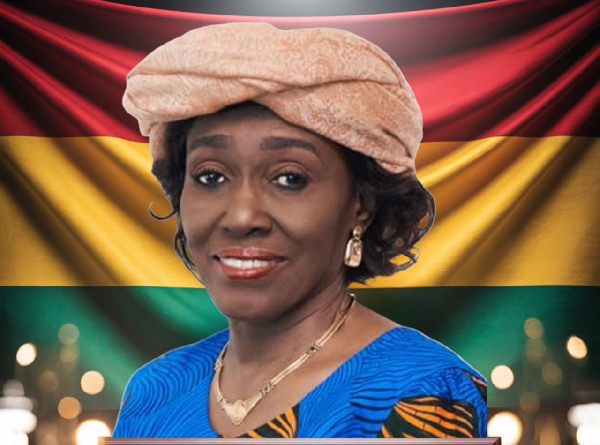
The late Former First Lady Nana Konadu Agyeman-Rawlings The late Former First Lady Nana Konadu Agyeman-Rawlings

A delegation of Members of Parliament (MPs), led by Majority Leader Mahama Ayariga, on Friday October 24, 2025 paid a courtesy call on the family of the late former First Lady, Nana Konadu Agyeman-Rawlings, to offer their condolences.

The parliamentary leadership, both from the Majority and Minority Caucuses, lauded the former First Lady’ contributions to national development and social welfare, describing her as a trailblazer and pillar of women’s empowerment.

The MPs praised Nana Konadu’s pioneering role through the 31st December Women’s Movement, which provided opportunities for women in education, entrepreneurship, and community development.

“Her impact on national development and social welfare remains unmatched,” Ayariga said.

The delegation signed a book of condolence opened in her honor and assured the family of Parliament’s continued support during the period of mourning.

Rockson-Nelson Dafeamekpor, the Majority Chief Whip, expressed his shock at her passing, paying tribute to her commitment to women’s rights, child welfare, and social progress.

Nana Konadu Agyeman-Rawlings served as Ghana’s longest-serving First Lady, spanning both military and civilian administrations.

She died at age 76 on Thursday, October 23, 2025, at the Ridge Regional Hospital, Accra.

Peller loses composure for making over N82m on TikTok after attending event

0

Fans react to streamer Peller's Hallelujah challenge testimony Fans react to streamer Peller’s Hallelujah challenge testimony

Nigerian streamer Hamzat Habeeb Adelaja, popularly known as Peller, has joyfully shared what happened to him after attending the Hallelujah Challenge for one night.

In his video, the content creator explained that after attending the program, he played a match on TikTok. Initially, he cancelled his match on the networking app, but when he played again, he received 11 million coins from the viewers.

Peller noted that after cancelling the match, he waited three days before playing again, and the result was amazing. The content creator mentioned that 100,000 people showed him love and engaged with him on the app.

Peller also took the opportunity to appreciate Nathaniel Bassey, the convener of the Christian program, who was recently called out by a lady.

Peller expressed his belief that the Hallelujah Challenge was working and prayed that God would bless Nathaniel Bassey for the program.

It should be noted that the 11 million coins received online will be converted into money, with the app taking a 55% commission.

This left Peller with over N82 million in just one night. Recall that many people have been sharing their testimonies of what God has done for them through the program.

Last year, comedian Dele Omowoli shared how his family was granted Canadian visas after presenting their request to God during the programme.

21-year-old man commits suicide at Nkawkaw

0

The lifeless body of the deceased was found hanging with nylon rope around his neck The lifeless body of the deceased was found hanging with nylon rope around his neck

A 21-year-old man, identified as Kwadwo Asomani, has allegedly committed suicide at Amanfrom, a Suburb of Nkawkaw in the Eastern Region.

The lifeless body of the deceased was found hanging with nylon rope around his neck in his room about 11:00a.m on Friday, October 24, 2025.

According to residents, Kwadwo Asomani was known to be calm and respectful but had reportedly been behaving strangely in the days leading up to the incident. He was said to have been seen talking to himself on several occasions.

Police have since retrieved the body after taking an inventory of the crime scene, and investigations have been launched to establish the circumstances surrounding the incident.

‘We’re kidding to be discussing Otto Addo’s future after World Cup qualification’

0

Kurt Okraku, President of the Ghana Football Association GFA Kurt Okraku, President of the Ghana Football Association GFA

Ghana Football Association President Kurt Okraku has strongly defended Black Stars coach Otto Addo, describing calls for his dismissal as misplaced and ‘a joke’.

Okraku reaffirmed that Addo will remain in charge of the national team after guiding Ghana to a fifth FIFA World Cup appearance in style.

The GFA boss insisted that the coach deserves credit, not criticism, for delivering qualification.

“Otto qualified Ghana in a grand style to the upcoming World Cup and Otto will lead Ghana as a proud Ghanaian to the World Cup,” Okraku told Asempa FM.

Okraku expressed disbelief that the conversation had shifted so quickly to the coach’s future, saying,

“For people to all of a sudden talk about the future of a coach that has qualified you to the Mundial, we are kidding in this country.”

He added that the GFA remains committed to honoring Addo’s contract, stressing that both he and the coach accept that perfection is impossible.

“He is not perfect, and no coach is perfect, neither is Kurt Okraku perfect. For me, he’s delivered what we asked of him, and he has done it in a grand style.”

Addo is expected to lead Ghana on an Asian tour next month ahead of the 2026 World Cup draw in December.

Ghana dispatch: Parliament forges ahead in Chief Justice nomination amid misconduct allegations – JURIST

0

On Tuesday, October 21, the Speaker of Parliament, Rt.  Hon. Alban Sumana Kingsford Bagbin, read to the House a letter endorsed by Ghana’s President, His Excellency John Dramani Mahama. The letter, dated October 7, formally announced President Mahama’s nomination of Justice Paul Baffoe-Bonnie for the position of Chief Justice under Article 144(1) of Ghana’s 1992 Constitution. The constitutional provision reads, “The Chief Justice shall be appointed by the President acting in consultation with the Council of State and with the approval of Parliament.”

The nomination comes amid a pending petition seeking Justice Baffoe-Bonnie’s removal from office on grounds of alleged misconduct and follows the recent removal of former Chief Justice and Supreme Court Justice Gertrude Araba Esaaba Torkornoo.

Following the announcement in the House, Rt. Hon. Bagbin referred the nomination to Parliament’s Appointments Committee, directing it to hold a public hearing and submit a report to the House for consideration.

The petition against Justice Baffoe-Bonnie, dated October 6, was filed by Ghanaian citizen Gbande Nabin Yusif. It cites alleged “misbehaviour” under Article 146(1) of the 1992 Constitution, which provides that “a Justice of the Superior Court…shall not be removed from office except for stated misbehaviour or incompetence, or on ground of inability to perform the functions of his office arising from infirmity of Body or mind.”

Provided to JURIST.

According to Yusif, Justice Baffoe-Bonnie’s actions breached Ghana’s Judicial Code of Conduct and contravened internationally recognized principles of judicial propriety, independence, impartiality, and avoidance of conflicts of interest.

Yusif explained in a recent interview with Joy News that Justice Baffoe-Bonnie’s alleged conduct related to a pending lawsuit filed by the Ghana Law Society on September 24 against the Ghana Bar Association. He accused Justice Baffoe-Bonnie of meeting with one of the litigants and making public remarks about the ongoing case—actions Yusif argues constitute “misbehaviour” under Article 146(1) of the Constitution. He said:

…according to the recognised Bangalore Principles [of Judicial Conduct], Judicial Independence is a prerequisite of rule of law and a fundamental guarantee for fair trial, thus, by entertaining a meeting with the litigant and endorsing elements of their legal arguments, Justice Baffoe-Bonnie compromises the very independence that he is sworn to protect.

In an interview with JURIST, Yusif elaborated his position, stating, “It is within the common knowledge of every law student that a matter pending in court cannot be discussed as that can even operate as contempt to the court. Thus, a Justice going contrary to this well-known principle has fallen within the sight of misbehaviour.”

When asked about the status of his petition, Yusif told JURIST there has been no official communication from the Office of the President regarding whether the petition will be acted upon. He added:

If no feedback is given and Justice Bonnie is approved for his nominated position as the Chief Justice, it will mean that the President does not believe in the constitutionality upon which he was elected. If the President decides not to act upon the petition, or turns a deaf ear to it, then the removal of the former Chief Justice was occasioned—not based on constitutionality—but based on emotions which is not fair to the rule of law. Should the approval be completed without question into the petition’s merit, we will advise ourselves.

Former Director of the Ghana School of Law Dr. Kweku Ansah Asare disagreed, contending that the petition lacked legal merit. He argued that the acts in question arose from an administrative courtesy call paid to the Acting Chief Justice, and that he failed to see how the acts constituted judicial impropriety because they had not involved any judicial or quasi-judicial functions. He said:

I do not think that we should stretch article 146(1) to a point of absurdity, when we do that, it means all the judges can now stand and be accused of judicial impropriety. This is because, from time to time they make extra judicial pronouncement and the rule of law does not suggest that a judge is not supposed to express his views…Justice Date-Bah (as he then was) said that it is not everything that a judge does that will attract the invocation of Article 146.

He urged the President to dismiss the petition outright, stating that it fell short of the threshold required to invoke the Judicial Code of Conduct or the Bangalore Principles.

In my humbled understanding, Dr. Asare’s arguments fall within the scope of those made by former Chief Justice of Ghana Her Ladyship Sophia Akuffo—a current member of the Council of State—regarding the removal of former Chief Justice and Supreme Court Justice Getrude Torkornoo from office.

If my memory serves, Her Ladyship Akuffo asserted that the grounds for removal under Article 146(1) are vague and discretionary, as they do not specify what amounts to “misbehaviour” or “misconduct.” Likewise, some critics have shared that but for the “wilful causing of financial loss to the state” —a crime in and of itself—the other grounds on which the former Chief Justice was removed were not based on clear-cut rules that she ought to have acknowledged to guide her actions and inactions.

It is high time Ghana, as a country and a signatory to the observance of constitutionality and the rule of law, considered broad reforms that define the scope and extent of Article 146 so that the judiciary can be properly regulated. This would serve the dual purposes of establishing and maintaining the integrity of the judiciary as a system immune from political interests, while also ensuring that the judiciary and its members remain accountable.

Notwithstanding, I do believe that based on the precedent occasioned by the successful removal of Ghana’s former Chief Justice, Ghana has now reached a stage where, as a matter of fairness and justice, it is necessary for a committee to be set up for every “proper” petition—to determine not only the merits but also whether alleged misbehaviors or incompetence rightly fall within the spectrum of Article 146(1).

As the approval process for Justice Baffoe-Bonnie’s nomination as Chief Justice begins, what will happen with the petition?

Opinions expressed in JURIST Dispatches are solely those of our correspondents in the field and do not necessarily reflect the views of JURIST’s editors, staff, donors or the University of Pittsburgh.

How I got the name ‘Computer’ – NDC’s Rashid Tanko explains

0

The enduring nickname of Mr. Tanko Rashid-Computer, the Deputy National Elections Director of the National Democratic Congress (NDC), is a direct legacy of his extraordinary talent in the classroom, dating back to his early academic days.

Mr. Tanko-Computer revealed in a recent interview on JoyNews’ Personality Profile that the name was bestowed upon him by a mathematics teacher impressed by his calculative speed and conceptual clarity.

The nickname, which has become so ubiquitous that many in Ghana know him only as “Computer,” stemmed from his ability to grasp and solve complex problems faster than his peers.

Mr. Tanko explained that the formative incident occurred during a mathematics lesson where the teacher, whose accent or “slang” at the time was difficult for many of his classmates to understand, relied on him as a personal teaching assistant.

“I was the only person who could understand what the lady was doing. Wow. So I was more or less like a PA to her,” he recalled. The teacher would complete a lesson and then turn to him to simplify the concepts for the rest of the class.

“She will finish and okay, ‘Tanko, come and explain to your colleagues. They seem not to understand what I’m doing.'”

Mr. Tanko said that Mathematics and Science were his best subjects, a direct result of his innate abilities. He described his proficiency in the subject with the analogy: “Math was like drinking water to me.”

The nickname was a direct acknowledgement of his mental processing speed, which the teacher likened to a machine. Mr. Tanko noted that he could often predict the solution before the lesson’s methodology was fully articulated.

“She used to call me ‘computer’, and I didn’t understand what a computer was, but she was calling me ‘computer’,” he stated. “I’m sure because of the way I used to work maths, and then she will bring the formulas—I’ll even get the answers before we start putting it together and all this. So that’s how the name came about.”

A separate report confirmed this detail, stating that on one math examination, Mr. Tanko scored 98 out of 100, while the next highest student scored 57, prompting his teacher, reportedly Madam Katherine, to exclaim: “This is a computer man.”

The name, which started as an academic compliment, quickly caught on among his peers and became an indelible part of his identity.

“So from that area she gave the computer, computer. She started calling [me] computer, computer, and well, I say I have to just take the name,” he said.

Though his career path eventually took him from pure science into IT lecturing and now to the strategic hub of the NDC’s election directorate, his nickname remains a constant testament to his early intellectual brilliance, demonstrating the foundational role of mathematical precision in his highly analytical political work today.

DISCLAIMER: The Views, Comments, Opinions, Contributions and Statements made by Readers and Contributors on this platform do not necessarily represent the views or policy of Multimedia Group Limited.

DISCLAIMER: The Views, Comments, Opinions, Contributions and Statements made by Readers and Contributors on this platform do not necessarily represent the views or policy of Multimedia Group Limited.

Two dead, one critically injured in Kabisayu Electoral Area fire incident

0

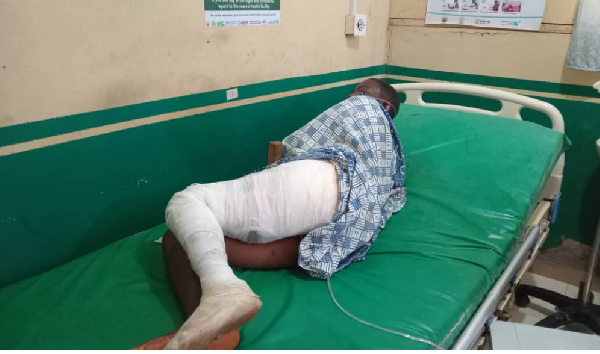
One of the affected victims One of the affected victims

A devastating fire outbreak has occurred at the Kabisayu Electoral Area in the Jasikan Municipality of the Oti Region.

A statement signed by Justice Kelly Ayitevi, the Jasikan Municipal Director of the National Disaster Management Organization (NADMO) and copied to the Ghana News Agency (GNA), said the incident happened on Tuesday at approximately 2023 hours and claimed the lives of two males.

It again said another elderly woman sustained severe injuries and is in critical condition.

According to the statement, emergency services were immediately alerted, and response teams were deployed to the scene to help with excavation and medical support.

The statement said investigations are ongoing to determine the cause of the fire outbreak and assess the extent of damage to properties.

Libyan giants Al Ahly Benghazi sign Asante Kotoko forward Albert Amoah

0

Libyan powerhouse Al Ahly Benghazi have completed the signing of Asante Kotoko forward Albert Amoah Libyan powerhouse Al Ahly Benghazi have completed the signing of Asante Kotoko forward Albert Amoah

Libyan powerhouse Al Ahly Benghazi have completed the signing of Asante Kotoko forward Albert Amoah in a deal that takes immediate effect, the club confirmed on Friday.

The 23-year-old attacker has been in scintillating form for the Porcupine Warriors since joining from Accra Great Olympics ahead of last season, emerging as one of the most consistent performers in the Ghana Premier League.

Amoah netted 16 goals in 30 league appearances for Kotoko, establishing himself as the club’s most potent weapon in attack and one of the standout players in the domestic championship.

His blend of pace, composure and finishing prowess made him a fan favourite at the Baba Yara Stadium.

In continental football, Amoah also impressed, scoring two goals in four appearances during the CAF Confederation Cup preliminary rounds, despite Kotoko’s eventual elimination.

His performances did not go unnoticed, as Al Ahly moved swiftly to secure his signature amid reported interest from clubs in North Africa and the Middle East.

The move represents a major step in Amoah’s career as he joins one of Libya’s most successful clubs, who are regular participants in CAF inter-club competitions.

Kotoko are expected to begin the search for a replacement as they continue to rebuild for the ongoing campaign.

NDC Dep. Elections Director explains how IT background is an ‘added advantage’ to party work

0

Mr. Tanko Rashid Computer, the Deputy National Elections Director for the National Democratic Congress (NDC), has revealed that his famous moniker is intrinsically linked to his professional career, arguing that his passion and extensive background in Information Technology (IT) provide a strategic and “interchangeable” advantage in his crucial role within the party’s election machinery.

Speaking in a recent interview on JoyNews’ Personality Profile, Mr. Tanko, whose full name is often overshadowed by his nickname, explained that the worlds of IT and election management operate on the same logical wavelength.

The NDC official, a well-known figure in the party’s operational hierarchy, stressed that his enthusiasm for technology—from “gadgets” to “equipment”—is more than a personal hobby; it’s a direct asset for the high-stakes work of the National Elections Directorate.

“I’m somebody who is so much passionate in… gadgets, I mean, equipments and all that. So don’t ask me why I’m called computer,” Mr. Tanko quipped, highlighting the depth of his technical inclination.

He went on to emphasise the practical synergy between his technical expertise and his political responsibilities: “It’s more or less like an impetus to what I do at the election directorate. I mean it’s an added advantage to the work of the election directorate. It makes it easier.”

This previous knowledge, he suggested, enables a more systematic and efficient approach to data management, security protocols, and logistical planning that underpin a modern national electoral campaign.

Mr. Tanko detailed his specific professional history that cemented his technical credentials and earned him the nickname. He confirmed that he served as an IT lecturer during a critical period, where he was involved in pioneering the integration of technology into various subject areas in Ghana’s educational sector.

“That previous knowledge of having worked at in the field of IT… I used to be an IT lecturer,” he confirmed. He specified the timeframe for this groundbreaking work: “We are the first pioneers in using IT to teach subject areas in the around 2004 to 2008.”

This experience, which occurred during a nascent phase of widespread computer literacy drives in Ghana, armed him with the analytical and strategic skills necessary to manage the vast datasets and complex logistical chains inherent in supervising national elections.

According to Mr. Tanko, his dual identity—Tanko Rashid and the ubiquitous moniker “Computer”—reflects a seamless and highly beneficial fusion of his technical past and his current, high-pressure political responsibilities.

DISCLAIMER: The Views, Comments, Opinions, Contributions and Statements made by Readers and Contributors on this platform do not necessarily represent the views or policy of Multimedia Group Limited.

DISCLAIMER: The Views, Comments, Opinions, Contributions and Statements made by Readers and Contributors on this platform do not necessarily represent the views or policy of Multimedia Group Limited.
Israeli envoy slams critics for attempting to block Accra film festival

0

Israeli Ambassador to Ghana, H.E. Roey Gilad

The Israeli Ambassador to Ghana, H.E. Roey Gilad, has emphatically dismissed criticisms that the recent Israeli Film Festival, held at Silverbird Cinema in Accra, was merely a vehicle for “propaganda”.

The Ambassador defended the festival as a genuine cultural exchange aimed at building bridges between the two nations, highlighting a deliberate strategy of intertwining Israeli and Ghanaian arts.

Ambassador Gilad, speaking at a recent press briefing, addressed the backlash—which included public protests and calls for boycotts from a coalition of activists and prominent Ghanaians—by focusing on the event’s cultural substance and high public attendance.

READ ALSO: Israeli film ‘psychological warfare disguised as entertainment on Silverbird screens’ – Ernesto Yeboah

“We brought here five excellent Israeli films,” the Ambassador stated. “We went to UNIMAC (University of Media, Arts and Communication, formerly GIJ and NAFTI) … We told them, let’s add to those Israeli long films short Ghanaian films.’ That’s exactly the essence of this embassy: to intertwine, to put together Israeli art and Ghanaian art and culture… and to build a bridge.”

‘A Hollow Argument’

The Film Festival, which took place over several days at the Silverbird Cinema at the Accra Mall, was a flashpoint for pro-Palestinian groups who viewed the event as an attempt to “whitewash” Israel’s image amidst the ongoing conflict in Gaza.

A broad coalition of Ghanaian individuals and organisations reportedly signed a petition urging Silverbird to cancel the screenings.

Ambassador Gilad, however, countered the narrative of political manoeuvring with the evidence of public interest, noting that the venue was well-attended.

READ ALSO: Protesters threaten to picket Silverbird Cinema over Israeli Film Festival

“The Silverbird Theatre was full of people who wanted to see art, wanted to see culture, Israeli culture and Ghanaian culture,” he said.

He characterised the opposition as a small, non-representative group seeking to stifle cultural freedom.

“The very few people who objected to it basically wanted to prevent Ghanaians from watching this Israeli culture, Israeli art, and Israeli films.”

When questioned directly about the “propaganda” label by MyJoyOnline, the Ambassador dismissed the claim outright.

“If there are some – I don’t know, how should I call them? – Some people who think this is propaganda, then really this argument is so hollow, it’s so empty that I really think it’s not worth my reaction.”

Cultural Diplomacy as a Core Mandate

The Ambassador detailed the Embassy’s consistent focus on cultural exchange programmes, providing figures on past and future collaborations as proof of its genuine, long-term commitment beyond any immediate political context.

  • Past Collaborations: “Last year we brought in Israeli choreographers to work with local dancers. We brought an Israeli jazz trio to play with local jazz groups.”
  • Future Plans: “Next year we are going to bring a playwright to work with your wonderful playwrights.”

The Ambassador stressed that cultural interaction remains a foundational pillar of the Embassy’s work, designed to create mutual understanding at a grassroots level.

“Culture is a very important bridge in the work of this embassy. We did it in the past. We are doing it now and we’ll continue to do it in the future,” H.E. Gilad concluded, reaffirming the Israeli mission’s focus on people-to-people ties between Jerusalem and Accra through the arts.

DISCLAIMER: The Views, Comments, Opinions, Contributions and Statements made by Readers and Contributors on this platform do not necessarily represent the views or policy of Multimedia Group Limited.

DISCLAIMER: The Views, Comments, Opinions, Contributions and Statements made by Readers and Contributors on this platform do not necessarily represent the views or policy of Multimedia Group Limited.

Week 7 Match Preview – Karela United vs Bechem United

0

Karela United will look to return to winning ways when they host Bechem United Karela United will look to return to winning ways when they host Bechem United

Karela United will look to return to winning ways when they host Bechem United at the Aliu Mahama Sports Stadium on Sunday, October 26, 2025.

The Pride and Passion got off to a promising start to the campaign but are winless in their last three matches which leaves them in 9th position in the league standings.

Nurudeen Amadu and his charges will definitely set their sights on all three points at their backyard where they are unbeaten.

The visitors secured their first win of the campaign last weekend and would want to build up on that victory but the Hunters would have to put up a stellar performance to stand any chance in Tamale.

Israeli Ambassador to Ghana rejects ‘Gaza genocide’ tag

0

Israeli Ambassador to Ghana, H.E. Roey Gilad

The Israeli Ambassador to Ghana, H.E. Roey Gilad, has criticised the action of Ghana’s Minister of Foreign Affairs, Samuel Okudzeto Ablakwa, to adopt a recent United Nations report and accuse Israel of conducting genocide in the Gaza Strip, calling the move “a very wrong thing to do”.

During a press briefing this week, Ambassador Gilad addressed the contentious adoption, which follows the release of the comprehensive report by the UN’s Independent International Commission of Inquiry (COI) on the Occupied Palestinian Territory.

The ambassador challenged the basis of the accusation, arguing that the designation of genocide, particularly when applied to the Jewish state, carries immense historical gravity.

“Genocide is a very, very serious blame, especially when you blame Israel,” Ambassador Gilad stated, noting that the term itself was coined by Polish-Jewish lawyer Raphael Lemkin in 1944, a survivor of the Holocaust, “to depict what happened in the Holocaust.”

The Question of Intent and Hamas’s Role

The core of the Ambassador’s defence rested on the legal definition of genocide, which requires establishing specific intent (“dolus specialis“) to “annihilate completely” a national, ethnical, racial, or religious group.

“The main definition of genocide is the intent. If you have an intention to annihilate completely, to destroy the other side, this is genocide,” he explained.

Ambassador Gilad unequivocally shifted the accusation of genocidal intent onto the non-state actor, Hamas, which controls the Gaza Strip.

“The attitude of Hamas towards Israel is genocidal. They say there is no room for a Jewish sovereign state in the Middle East,” the Ambassador asserted. “Actually, if you can blame somebody for being genocidal, this is the Hamas. Israel was forced to conduct a war in Gaza against a terror organisation.”

Tragedy, Collateral Damage, and Military Comparison

The Israeli envoy acknowledged the immense human cost of the conflict, which the UN report—a document of more than 70 pages that the ambassador said he had read in full—details in depth.

“What we saw in Gaza was a huge tragedy. That has to be said. We are not happy with what happened. It was a huge tragedy for the Palestinians, and it was a huge tragedy for us, the Israelis,” he admitted.

However, he stressed that the magnitude of the loss does not determine responsibility.

The military operation, according to the Ambassador, was necessitated by Hamas’s strategy of operating within civilian populations.

He cited the challenge of targeting an estimated 25,000 Hamas terrorists/activists, many of whom utilise an extensive network of tunnels while taking “shelter behind human shields, behind 2 million Palestinians”.

Ambassador Gilad detailed the operational complexities, including the presence of 251 Israeli citizens taken hostage in Gaza and the inevitability of civilian casualties.

“There is no way you can bring down those terrorists… without causing some what is known as collateral damage,” he said, citing the grim reality that Israeli forces even “killed by mistake some of our own people.”

In an effort to contextualise the scale of civilian casualties, the Ambassador controversially compared the Gaza operation to recent Western military campaigns, asserting that Israel’s performance was comparatively superior.

“Judging from the experience of the Americans in Iraq and the Brits in Afghanistan, those things always happen with a lot of collateral damage. I think basically we did a better job than the Americans in Iraq and the Brits in Afghanistan,” he claimed, reiterating, “There was no intent to destroy the Palestinian people. There was an intent to destroy Hamas.”

The Ambassador concluded by describing the Ghanaian minister’s endorsement of the UN report as a “mistake”, though adding that the matter is “already water under the bridge” in diplomatic terms.

DISCLAIMER: The Views, Comments, Opinions, Contributions and Statements made by Readers and Contributors on this platform do not necessarily represent the views or policy of Multimedia Group Limited.

DISCLAIMER: The Views, Comments, Opinions, Contributions and Statements made by Readers and Contributors on this platform do not necessarily represent the views or policy of Multimedia Group Limited.
Ghana tana alhinin mutuwar matar tsohon shugaban ƙasar, Nana Konadu Agyeman-Rawlings

0

Shugaban ƙasar Ghana John Dramani Mahamaya ya jagoranci shiru na girmamawa a fadar gwamnatin ƙasa ta Jubilee House kafin a rantsar da sabbin alƙalai 37 da aka naɗa a manyan kotun ƙasar.

Shugaban ya tabbatar da cewa an sanar da gwamnatin rasuwarta a hukumance kuma a jawabinsa ga jami’ai na fannin shari’a da ‘yan siyasa ya nemi a haɗa kai a girmama matar da zama ‘yar takarar shugaban ƙasa a shekarar 2016.

Tsohon shugaban ƙasa Nana Addo Dankwa Akufo-Addo, ya fitar da wata sanarwa inda ya bayyana alhininsa game da rasuwar Nana Konadu Agyeman-Rawlings, yana mai bayyana ta a matsayin  “mata mai ƙarfin yarda da sha’awar ƙarfafa wa matan Ghana gwiwa.”

Gidan rediyon Joy FM na ƙasar ya ruwaito cewa ɗaukacin ‘yan Ghana — mata ‘yan kasuwa da manoma da malamai a karkara — sun ji zafin rasuwarta sosai. Suna ganin kansu cikin jajircewar matar da, duk da cewa ta bar fadar shugaban ƙasa, ta ci gaba da takara.

Ta yi wa’adi biyu a matsayin matar shugaban ƙasa — ta yi wani gajeren wa’adi a shekarar 1979 da kuma dogon wa’adi daga shekarar 1981 zuwa shekarar 2001 — inda ta sake fasalin kujerar daga mai uwargida ta zamantakewa kawai zuwa wani muƙami mai ƙarfi da ke tasiri kan siyasa.

Asante Kotoko skipper Samba O’Neil reacts to heavy defeat to Wydad Casablanca

0

Asante Kotoko SC captain Samba O’Neil after seeing his side suffer a heavy defeat to Moroccan giants Wydad Casablanca, reacted to the whole situation apologising to the fans.

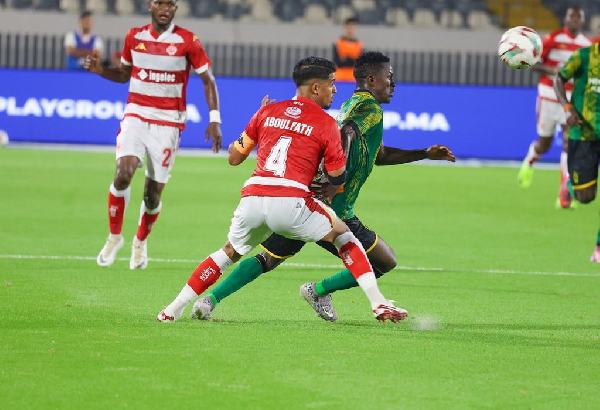
The Ghanaian powerhouse despite starting on a brilliant foot in the second leg of the CAF Confederation Cup game at the Mohammed V sports stadium, lavished all chances to bow to Wydad Casablanca once again, following a 5-1 scoreline at full time.

Kotoko in their attempt to secure qualification to the group stage of the 2025/26 CAF Confederation Cup, conceded 6 goals in both legs, having lost 1-0 in the first leg at home.

With their campaign shattered, skipper of the side Samba O’Neil has apologised to the fan base and encouraging his teammates to make it to the fans by clinching the MTN FA Cup or the 2025/26 Ghana Premier league title.

“It is difficult to take, but we apologise to our fans. We need to keep our head up and win both the FA Cup and league and compensate for the lose”, Samba said.

The rocky defender capable of operating as a defensive midfielder registered the only consolation goal for Asante Kotoko SC in Morocco by scoring in the first half to draw parity before Wydad Casablanca took the lead before recess.

Asante Kotoko SC captain Samba O’Neil after seeing his side suffer a heavy defeat to Moroccan giants Wydad Casablanca, reacted to the whole situation apologising to the fans.

The Ghanaian powerhouse despite starting on a brilliant foot in the second leg of the CAF Confederation Cup game at the Mohammed V sports stadium, lavished all chances to bow to Wydad Casablanca once again, following a 5-1 scoreline at full time.

Kotoko in their attempt to secure qualification to the group stage of the 2025/26 CAF Confederation Cup, conceded 6 goals in both legs, having lost 1-0 in the first leg at home.

With their campaign shattered, skipper of the side Samba O’Neil has apologised to the fan base and encouraging his teammates to make it to the fans by clinching the MTN FA Cup or the 2025/26 Ghana Premier league title.

“It is difficult to take, but we apologise to our fans. We need to keep our head up and win both the FA Cup and league and compensate for the lose”, Samba said.

The rocky defender capable of operating as a defensive midfielder registered the only consolation goal for Asante Kotoko SC in Morocco by scoring in the first half to draw parity before Wydad Casablanca took the lead before recess.

‘Gospel and secular musicians must be paid the same for shows’ – Piesie Esther

0

Ghanaian gospel musician Piesie Esther Ghanaian gospel musician Piesie Esther

Ghanaian gospel musician Piesie Esther has expressed concern over the significant disparity in remuneration between gospel and secular musicians in the country.

Speaking in an interview with Eddie Ray on the Midmorning Show on Rainbow Radio 87.5FM, the artist asserted that secular musicians are currently paid substantially more for shows than their gospel counterparts.

Piesie Esther said she prays for the day when artists across both genres will be treated and paid equally for their craft.

She offered a hypothetical scenario to illustrate her point, arguing that the discrepancy is an undeniable reality within the industry.

“It is a fact that gospel musicians are paid less compared to what secular musicians are paid. I don’t know why that is the case. It is my prayer that we will get to the point where this disparity will be addressed,” she said.

She continued, “If, for example, Shatta Wale, Stonebwoy, and Piesie Esther are billed on the same show, I am not sure they will give me the same amount as Shatta or Stonebwoy. Kuami Eugene would even take more than Piesie Esther. Anyone who would dispute this fact does not want to be truthful.”

Piesie Esther also addressed the participation of gospel artists at events hosted by secular acts, such as the recent ShattaFest, stating that she finds absolutely nothing wrong with it.

In her view, performing on such platforms serves as a vital evangelism opportunity, allowing gospel musicians to minister directly to a diverse audience and potentially “transform a life.”

She concluded, “If a gospel musician is invited to minister on the stage of a dancehall musician, there is nothing wrong with that because it is a form of evangelism. There are those who will not accept such an invitation while others will go. I don’t have a problem with a gospel musician standing on a dancehall platform to perform gospel. Who knows—probably God will use that as an opportunity to transform a life.”

President Mahama launches free tertiary education for persons with disabilities

0

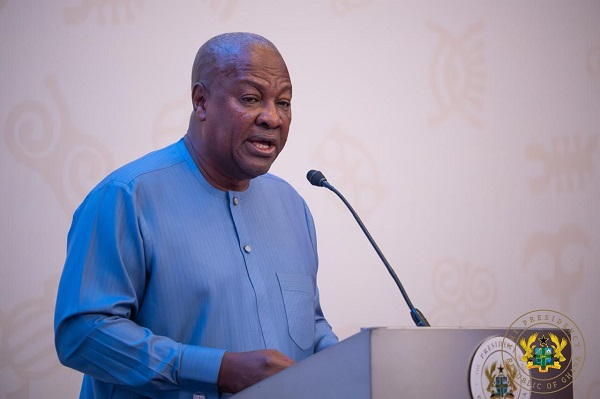
John Dramani Mahama is the President of Ghana John Dramani Mahama is the President of Ghana

John Dramani Mahama has launched the Free Tertiary Education for Persons with Disabilities initiative at the University of Professional Studies, Accra, reaffirming his administration’s dedication to creating an inclusive and equitable education system that leaves no Ghanaian behind.

The initiative, themed “Disability Not Inability: Advancing Inclusive Access to Higher Education under the Reset Agenda,” forms part of the government’s broader “No Fees Stress” policy, which aims to eliminate financial barriers to higher education across Ghana.

Speaking at the event on Friday, October 24, 2025, President Mahama described the policy as a landmark step toward ensuring that every Ghanaian, irrespective of financial status, gender or physical ability, can access quality tertiary education without the burden of fees.

“The implementation of this initiative will be led by the revamped Students Loan Trust Fund, which is now modernised and digitalised to ensure transparency, efficiency and sustainability,” President Mahama said.

“…This initiative is not an act of charity; it is an act of justice and equality,” he said.

He added, “Every district and municipal assembly will establish disability desks which will integrate disability issues into the district assemblies Development bank.

“We will also enforce a minimum five percent employment quota for persons with disabilities across our public and private sectors”.

The Acting Chief Executive Officer of the Students Loan Trust Fund (SLTF), Dr Saajida Shiraz, described the policy as “a testament to the President’s unwavering commitment to inclusivity and equity in education,” adding that it marks “a significant milestone in government’s efforts to empower persons with disabilities through education.”

More than 19,700 students receive second semester loans – Dr Saajida Shiraz

Dr Shiraz announced that, based on lessons from the pilot phase of the “No Fees Stress” initiative, students with disabilities will no longer need to apply directly to the SLTF.

Instead, public tertiary institutions will provide verified lists of eligible students through the SLTF’s Tertiary Institutions Portal for direct disbursement of full fees.

“We are grateful to our partner institutions public universities, technical universities, colleges of education, health training institutions and colleges of agriculture for agreeing to insulate persons with disabilities completely from the stress of fees,” Dr Shiraz stated.

The government has earmarked GH₵499.8 million for the “No Academic Fees” policy and GH₵40 million specifically for the “Free Tertiary Education for Persons with Disabilities” initiative.

MA

Scenes from Accra Ridge Hospital after news of Nana Konadu Agyeman-Rawlings’ death

Kimathi Rawlings and other prominent figures depart residence after brief meeting

The wait is over! The GhanaWeb Excellence Awards 2025 is officially launched. Let’s Celebrate impact, innovation and excellence across Ghana.

Who deserves to be honoured this year?


Nominate now 👉 https://ghanaweb.com/ghanaexcellenceawards/nominate

SDGs and Agenda 2063 are powering Africa's ascent – Prof Amevi Acakpovi

0

Video | SDGs and Africa’s Agenda 2063 are complementary pathways – Prof Amevi Acakpovi

<!– –>

<!–
(function(w, d) {
var s = d.createElement(‘script’);
s.src=”//cdn.adpushup.com/45999/adpushup.js”;
s.crossOrigin=’anonymous’;
s.type=”text/javascript”; s.async = true;
(d.getElementsByTagName(‘head’)[0] || d.getElementsByTagName(‘body’)[0]).appendChild(s);
w.adpushup = w.adpushup || {que:[]};
})(window, document);

–>


<!– –>

Kwasi Sibo praises Kylian Mbappe’s humility after facing Real Madrid star

0

Ghanaian midfielder Kwasi Sibo (L) French forward Kylian Mbappe (R) Ghanaian midfielder Kwasi Sibo (L) French forward Kylian Mbappe (R)

Ghanaian midfielder Kwasi Sibo has hailed French forward Kylian Mbappe as one of the humblest footballers he has ever faced.

The Real Oviedo player met Mbappe earlier this season when his side faced Real Madrid in La Liga.

Despite Oviedo’s defeat, Sibo described the encounter as a memorable experience, revealing he exchanged shirts with the World Cup winner after the match.

Speaking to Joy Sports, Sibo reflected on Mbappe’s character and professionalism, describing him as a model of humility on and off the pitch.

“[Kylian Mbappe is] a very humble guy. A very quiet and focused person. His humility is at a different level.

“In the game, even if you touch or foul him, he will just look at you and move on. Also, when you speak to him, he responds. He speaks different languages. I feel he is a humble person,” he said.

Sibo also highlighted Mbappe’s on-field brilliance, calling him “fast, intelligent and a finisher.”

He compared the Frenchman to Real Madrid teammate Vinicius Jr, who he said reacts differently under pressure from opposing fans.

“Vinicius is just the same. He’s a speedster and very difficult to mark, but their attitudes are different,” he noted.

Although Sibo has not featured in Oviedo’s last three league matches, the Ghanaian remains determined to reclaim his place in the starting lineup as the season progresses.

‘’Osoreɛ Mu Tumi’ is my most impactful project’– Piesie Esther

0

Veteran gospel musician Piesie Esther Veteran gospel musician Piesie Esther

Veteran gospel musician Piesie Esther has described ‘Osoreɛ Mu Tumi’ as one of the most impactful projects of her career.

With over two decades of experience in the gospel music industry, the artist expressed her pride in being a vessel used by God, noting that the song has inspired numerous testimonies from listeners.

During an appearance on the Mid-Morning Show on Rainbow Radio 87.5FM, Piesie Esther highlighted the profound effect of the worship project, specifically mentioning individuals who had difficulty conceiving but were later able to give birth attributing their breakthrough to the song.

She told host Eddie Ray that throughout her career, she feels a deep sense of fulfillment as a musician because she believes God has used her work to touch lives, transform destinies, and win souls for the Kingdom.

“There were several testimonies after ‘Osoreɛ Mu Tumi’ was released,” she stated. “People who were overdue for labour but faced difficulties testified that the worship blessed them, and God intervened for them. Others who struggled with conception also experienced God’s grace through ‘Osoreɛ Mu Tumi’.”

Recalling a powerful moment, she said, “I remember a woman who brought her daughter to testify. She traced me to my church to share that she had used this song as a prayer point and was subsequently blessed with her daughter.”

Piesie Esther added that she hopes to one day organize a gathering where all those who have been blessed by this song—and her other works—can come together to share their testimonies and give thanks to God.

When asked about the financial rewards of her career, the musician offered a humble perspective, stating that she would not describe herself as wealthy but acknowledged that God has used music to bless her and significantly improve her life.

“I am not rich or wealthy, but by the grace of God, I am also not destitute,” she explained. “God has indeed been good to me.”

Palgrave Boakye-Danquah clarifies ‘good name’ comment amid NSS, Buffer Stock discussions

0

Former Government Spokesperson on Governance and Security, Dr Palgrave Boakye-Danquah Former Government Spokesperson on Governance and Security, Dr Palgrave Boakye-Danquah

Former Government Spokesperson on Governance and Security, Dr Palgrave Boakye-Danquah, has called for integrity and accountability in public service, stressing that a “good name is better than riches,” amid ongoing controversies involving the National Service Secretariat (NSS) and the National Food Buffer Stock Company (NAFCO).

Speaking in an interview on Joy Prime’s morning show, Dr. Boakye-Danquah referenced Proverbs 22:1, stating, “A good name is rather to be chosen than great riches, and loving favour rather than silver and gold.”

He said this Biblical principle should guide all who hold public office.

However, the former government spokesperson expressed concern over what he described as deliberate misinterpretations of his statement by some supporters of the New Patriotic Party (NPP.

According to him, sections of the public have wrongly suggested that his remarks implied that former Vice president Dr Mahamudu Bawumia surpasses his preferred candidate, Kennedy Ohene Agyapong in the NPP presidential race, in moral standing.

Dr Boakye-Danquah dismissed those claims, stating that his biblical reference had no political undertone but was a call to integrity and good leadership.

“I emphasised the value of integrity during my Joy Prime morning interview while discussing the Attorney General’s press conference on the National Service saga and Buffer Stock issues,” he said.

Palgrave Boakye-Danquah named National Coordinator of OAK movement

“However, I have noted attempts by some supporters of Dr. Bawumia to misrepresent my statement, falsely suggesting that I implied he surpasses my preferred candidate, Kennedy Agyapong. For clarity, I firmly maintain that Kennedy Agyapong is the best choice at this time, and my reference to a ‘good name’ aligns with his character and leadership. Let’s focus on the issues and avoid political mischief.”

His remarks came in response to revelations that the former CEO of the National Food Buffer Stock Company and his wife have been charged in connection with alleged financial improprieties amounting to GHS 78 million.

He highlighted comments made by the Attorney General, indicating that at a certain point, the former CEO’s personal bank account reportedly held unusually large sums of money.

“In some of the statements that came from the Attorney General, he stated and alleged that at a time, Republic Bank was having more money from the former CEO of Buffer Stock.

“It meant that his deposits were more and he’s not a businessman; he is not trading in anything. Unless, of course, maybe he was doing some private business that we are not aware of,” he said.

“But it bewails on us as public servants, as people that serve in the interest of the public, to remain accountable. And I’m always reminded of the fact that the good Bible says that a good name is really better than riches.”

Scenes from Accra Ridge Hospital after news of Nana Konadu Agyeman-Rawlings’ death

Kimathi Rawlings and other prominent figures depart residence after brief meeting

The wait is over! The GhanaWeb Excellence Awards 2025 is officially launched. Let’s Celebrate impact, innovation and excellence across Ghana.

Who deserves to be honoured this year?


Nominate now 👉 https://ghanaweb.com/ghanaexcellenceawards/nominate

European Union, partners launch project to boost cocoa sector

0

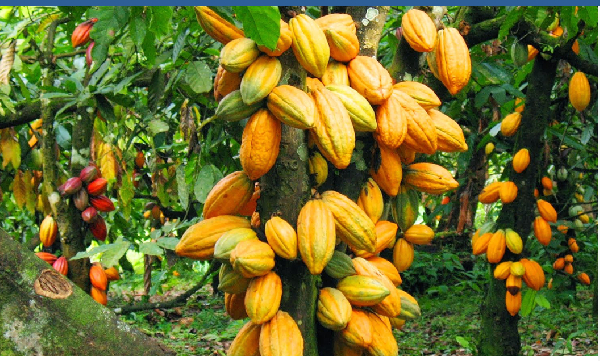
The European Union (EU) in partnership with three organisations have launched a £2 million project to help promote deforestation free cocoa supply chain across two regions in the country.

The organisations; Solidaridad West Africa, Tropenbos Ghana, Rights and advocacy Initiative Network (RAIN), and Taylor Crabbe Initiative (TCI), would implement the project in the Asunafo-Asutufi Hot spot Intervention Area (HIA) in the Ahafo Region, and Wiawso, Bibiani-Anhwiaso-Bekwai, Bia East, and Juaboso HIA in the Western North Region.

The three-year project dubbed: “Deforestation-Free Cocoa Project”, is expected to directly support about 5,000 farmers with over 1,000 hectares of old monoculture farms to be rehabilitated with agro forestry systems.

It represents a significant step towards aligning Ghana’s vital cocoa sector and tackling pressing challenges within the sector especially in the Western North Region by promoting inclusive governance and community-led monitoring systems.

Rune Skinnebach, the European Union Ambassador to Ghana, at the launch of the project said the initiative was part of a series of interventions under the EU Global Gateway strategy intended to promote sustainability and improve upon livelihoods for cocoa farmers.

He stated that the initiative aligned with the EU Deforestation Regulation (EUDR) and complemented their partnership with COCOBOD on the EU-Ghana COCOBOD monitor, which puts planets and people first.

He said the EU was proud to be working with all the partners including the local authorities to ensure the sustainability and growth of the cocoa sector in Ghana.

Eric Agare, Country Representative of Solidaridad Ghana, indicated that through the partnership, his outfit would support cocoa farmers to adopt climate smart practices to enhance productivity without driving forest loss.

“Our goal is to curb cocoa-led deforestation through sustainable intensification of existing cocoa farms, while helping farmers diversify their livelihoods through alternative income generating activities,” he added.

Dr Mercy Owusu Ansah, Country Director, Tropenbos Ghana, also stated that equipping traditional leaders, the youth, and women with the necessary tools to monitor forest reserves and practice climate smart cocoa farming meant that the benefits of sustainable cocoa would reach those who needed them the most.

Wilbert Petty Brentum, Western North Regional Minister, on his part said the project would complement ongoing efforts such as the Ghana Cocoa Red Plus programme aimed at addressing the causes of deforestation and forest degradation to ensure sustainable cocoa sector.

He was confident that the project would equip communities and stakeholders with special tools to help drive advocacy for sustainable natural resource management.

He said: “Let’s all commit ourselves to preserve our environment, sustain the cocoa industry and improve upon the livelihoods of the people.”

Nana Kofi Nkuah II, Chief of Awhiam, who chaired the function lauded the EU and their partners for the initiative and called on all to make the project a success.

Ghana eyes Josh Acheampong for 2026 World Cup campaign

0

Chelsea's 19-year-old defender Josh Acheampong Chelsea’s 19-year-old defender Josh Acheampong

Chelsea’s 19-year-old defender Josh Acheampong has caught the attention of Ghana’s national football setup as the Black Stars prepare for next summer’s World Cup in North America.

The London-born player has recently started making an impact at Stamford Bridge, earning starts in Chelsea’s last two Premier League matches against Liverpool and Nottingham Forest.

Despite representing England at the Under-21 level and progressing through the Three Lions’ youth system since the Under-16s, Acheampong remains eligible for international football through his heritage.

His parents provide him with options to represent both Ghana and the Republic of Ireland, making him an attractive prospect for multiple nations.

According to BBC, Ghana’s technical team sees considerable potential in the emerging defender and hopes to persuade him to commit to the Black Stars.

The report adds that football officials view him as a key long-term prospect for their World Cup campaign.

In the 2025/26 Premier League season, Acheampong has made limited appearances but is gradually establishing himself within Enzo Maresca’s squad as competition intensifies for positions across Chelsea’s defensive line.

Wamfie court remands 3 for mining without a licence.

0

The Wamfie District Magistrate Court has remanded three adults into police custody and granted bail to one minor after they were arrested for engaging in illegal mining (galamsey) without a licence.

The suspects were arraigned before the court on Thursday, October 23, 2025, presided over by His Worship Eugene Obeng Ntim Esq.

The three adult suspects—Moses Ayando (30), Joseph Akuwaaya (32), and John Akanboei (34)—were ordered to be held in police custody.

The fourth suspect, a minor identified as Kwaku Atingani (16), was granted bail to the tune of GH₵ 50,000 Ghana Cedis with one surety.

All four suspects are scheduled to re-appear in court on Tuesday, November 4, 2025.

The arrests followed a successful operation carried out on October 22, 2025, by the Dormaa Paramount Chief Anti-Galamsey Task Force. The suspects were caught engaging in the illegal activity at Akontanim, a community near Wamfie in the Bono Region.

The Bono Regional Police Command, through its Public Relations Officer, Chief Inspector Thomas Akeelah, issued a strong caution to the public.

The Command warned “all persons engaging in illegal mining activities within the region to advise themselves or risk being arrested, investigated, and prosecuted.”

The action underscores the collaboration between traditional authorities and law enforcement in the Bono Region to curb environmental degradation caused by unlicensed mining.

DISCLAIMER: The Views, Comments, Opinions, Contributions and Statements made by Readers and Contributors on this platform do not necessarily represent the views or policy of Multimedia Group Limited.
DISCLAIMER: The Views, Comments, Opinions, Contributions and Statements made by Readers and Contributors on this platform do not necessarily represent the views or policy of Multimedia Group Limited.

Israel calls on Ghana to demand that Hamas disarm for lasting peace

0

Israel’s Ambassador to Ghana, H.E. Roey Gilad, has made an urgent and pointed appeal to the Ghanaian government to leverage its “strong voice” in Africa to pressure Hamas into fully disarming, a critical, non-negotiable precondition for the successful implementation of the second phase of the Trump Peace Plan.

Speaking at a recent press briefing in Accra on the progress of the multi-phase peace initiative, Ambassador Gilad stressed that the future of Gaza and the security of Israel are now hanging on Hamas’ commitment to lay down its weapons, as agreed upon in the 20-Point Plan.

The Ambassador specifically called upon Ghana to use its diplomatic weight, noting the country’s existing commitment to stability through its participation in the United Nations Interim Force in Lebanon (UNIFIL), where Ghana maintains an estimated 850-strong peacekeeping battalion and is one of the oldest and largest troop-contributing nations.

“Ghana is not just another state. It’s not just another one of the 54 states in the AU. It has a very strong voice… We expect now Ghana, which has a very strong voice in Africa, to use its own voice to echo through the AU and add its voice to the Arab states and all the European states and the United States that are calling that ‘Hamas, enough is enough.’”

Ambassador Gilad continued with a plea for the welfare of the Palestinian people, stressing that Hamas should not be part of Gaza’s future governance.

“The future of the Palestinian people is more important than the future of Hamas… They should not have a role in the future of Gaza. The future of Gaza should be, in the long run, in the hands of innocent Palestinians who would like to live next to Israel and not instead of Israel.”

Ambassador Gilad underscored the existential security concerns facing Israel, contrasting its small size with Ghana’s territorial expanse to highlight its vulnerability.

“This small piece of land of Israel is 10 times smaller than Ghana. Ghana is 250,000 square kilometres. Israel is less than 25,000 square kilometres… often people in the world think that Israel is a superpower… No, that’s not the case.”

The Ambassador clarified that the peace plan, brokered under the sponsorship of President Donald Trump, is structured in three phases.

The first phase, which included Israel’s limited redeployment and the release of living Israeli hostages by Hamas, is largely complete. However, the second phase is facing a major roadblock: the disarmament of Hamas.

“The biggest challenge is the disarming of Hamas… It seems to us that they have no intention to disarm… For us, this is one of the most important parts of the agreement, of the 20-point agreement.”

Phase two requires Israel to pull back further to the pre-October 7th border lines, short of a one-to-two-kilometre military perimeter, in exchange for Hamas disarming.

This demilitarised area is then expected to be governed by a Special Peace Council, reportedly headed by President Trump and former British Prime Minister Tony Blair, overseeing a technocratic Palestinian committee and an International Stabilisation Force (ISF).

Ambassador Gilad warned that Hamas’s apparent refusal to disarm threatens to halt the entire process.

“If Hamas will not disarm itself, Israel will not pull back to the international border, short of the perimeter… Without it, the second phase will not be completed unless they disarm themselves.”

He referenced the precedent set by the Irish Republican Army (IRA) in 2005, which disarmed fully following the Good Friday Agreement, stating, “That can happen here.”

DISCLAIMER: The Views, Comments, Opinions, Contributions and Statements made by Readers and Contributors on this platform do not necessarily represent the views or policy of Multimedia Group Limited.

DISCLAIMER: The Views, Comments, Opinions, Contributions and Statements made by Readers and Contributors on this platform do not necessarily represent the views or policy of Multimedia Group Limited.

Nana Konadu Agyeman-Rawlings, the catalyst for women’s empowerment in Ghana

0

Nana Konadu Agyeman-Rawlings, the catalyst for women’s empowerment in Ghana

When Nana Konadu Agyeman-Rawlings passed away on 23 October 2025 at the age of 76, Ghana lost the leading champion of women’s economic empowerment.

Her name will be remembered not simply for her role as First Lady but for the movement she led that helped Ghanaian women reclaim their place in the economy, become business owners, and build legacies of their own.

The relevance is clear. This is the story of how empowerment, entrepreneurship and infrastructure came together to forge new opportunities and what today’s women can learn from that example.

Early on, Nana Konadu understood that meaningful empowerment would begin with income generation. She founded the 31st December Women’s Movement in 1982 to mobilise rural and urban women alike into productive ventures. Through training in small-scale processing, group enterprises and savings cooperatives, countless women took the leap from dependence to enterprise.

Cassava-to-gari processing, palm-oil extraction, soap-making cooperatives, garment workshops and market trading units emerged under her guidance. These modest ventures were powerful because they used local resources, local demand and collective will. They allowed women to earn incomes, reinvest in their businesses, educate their children and transform their communities.

The economic significance of this work cannot be overstated. These enterprises contributed to rural economic activity, strengthened value-addition and created linkages between farm production and downstream processing.

In doing so they helped reduce import dependency for certain goods, improved household incomes and increased the contribution of women-led businesses to Ghana’s informal and formal economies. In towns across Ghana women’s cooperatives emerged as suppliers to larger markets, sometimes even to urban wholesalers. The ripple effects included more stable household consumption, greater savings, improved schooling for children and communities more resilient to economic shocks.

From Small Ventures to Value Chains

Nana Konadu’s vision was not merely to encourage women to trade, but to equip them to create value-added enterprises. The shift from raw produce to processing is at the heart of her legacy. Instead of women selling palm fruits cheaply to intermediaries they learned how to process oil, package and trade finished goods.

Instead of subsistence gari production as a home activity they began to form groups, organise production and connect with markets in nearby towns and cities. These moves elevated women’s economic status, provided greater earnings and helped establish women as stakeholders in Ghana’s value chains.

By building capacity at the grassroots level Nana Konadu laid the foundation for what today we call women-led SMEs. Many of these businesses have grown, diversified and inspired younger women to follow suit. They show that with the right support, modest beginnings can turn into scalable operations. For the economy the result is a stronger base of entrepreneurship, more inclusive growth and a more balanced distribution of economic activity.

Addressing Social Barriers to Work

Economic empowerment alone was not enough. Nana Konadu recognised that for women to thrive in business they needed practical support, especially in reconciling caregiving responsibilities with income-earning work. The movement established community-based day-care centres and pre-schools thus enabling mothers to engage in economic activities while their children were supervised and educated. This approach acknowledged the reality of women’s dual roles and removed a key barrier to participation in enterprise.

In parallel, the movement provided adult literacy programmes, savings-and-loan co-operatives and leadership training. Women who had been illiterate, financially excluded or socially sidelined were brought into networks, organised groups and business training schemes. By doing so Nana Konadu bridged the gap between aspiration and execution, equipping women with the tools to claim agency, build businesses and shape their futures.

Legal and Institutional Foundations for Empowerment

Empowerment in Ghana under her leadership was not simply about business ideas; it was anchored in social justice and rights. One landmark outcome of her advocacy was the work around securing inheritance and property rights for women.

By advancing reforms such as the Intestate Succession Law women gained greater security in home ownership, savings and investments. These rights underpin business activity since entrepreneurs who lack legal access to assets or property are constrained in growth.

By combining business training, rights protection and social infrastructure, Nana Konadu created a holistic model. Women did not operate in isolation; they worked in networks, accessed credit, owned assets and functioned as economic citizens, not just labourers. This has profound implications for business development, investment and growth. It means that when women own, invest and lead enterprises the economy becomes richer and more diversified.

Practical Lessons for Women in Business Today

For Ghanaian women who aspire to build businesses or recover lost momentum the following lessons stand out from the Konadu legacy:

Begin at the grassroots – small processing units, savings groups and micro-enterprises can form the base of larger ventures.

Build infrastructure support – whether it is childcare, training, literacy or a savings cooperative, enabling structures matter.

Secure your legal and asset rights – property, inheritance, savings access and organisation count as much as business ideas.

Add value, move up the chain – selling a raw commodity is a start; processing it, branding it and scaling it makes a difference.

Network, collaborate and lead – join cooperatives, mentorship groups or peer platforms that amplify your impact and capacity.

Ensuring the Legacy Lives On

In an era of digital entrepreneurship, global value chains and competitive markets the Konadu approach remains relevant. Women must continue innovating and adapting, transforming small ideas into enterprises that matter. They must use technology, market insight and collaboration to scale. Institutions must recognise women-led enterprises as growth drivers, integrate them into policy frameworks and support their expansion with training, financing and infrastructure.

Most importantly, the culture of enterprise for women must become legacy-driven. Just as Nana Konadu turned gari processing, palm oil and savings groups into business vehicles, today’s women must view their work as part of a broader economic story. Whether you are a young woman starting out, a mother returning to trade, or an entrepreneur recovering from setbacks you have everything you need to build anew. Her legacy says: nothing is impossible if you rise to the occasion.

A Call to the Next Generation

For young women, mothers and entrepreneurs who might have paused due to health, family or other battles the message is clear. You are not defined by the delay, the challenge or the fall. You are defined by your next move, your resilience and your impact. The life of Nana Konadu shows that greatness emerges less from circumstance and more from purpose, perseverance, and collaboration.

Every woman in Ghana can turn a modest idea into an enterprise, a burden into a business and a hope into a legacy. As you work, build, invest and innovate remember that you stand on the shoulders of a giant whose mission was to empower, equip and elevate. Honour that mission by making your mark.

When the story of Ghana’s economic transformation is written it will not ignore the contributions of women. And when it is written it must recognise that one of the strongest catalysts of that transformation was Nana Konadu Agyeman-Rawlings. Not because of her title but because of her action, not because of her ceremony but because of her service. She enabled women to become business owners, producers and decision-makers in Ghana’s economy.

In every small processing unit turning palm fruit into oil, every cooperative packaging local products, every woman balancing trade and motherhood and every young girl dreaming of enterprise her spirit lives on. The lesson is bold and timeless: work with your hands, think with your mind and build for tomorrow. Because your small thing can become your big thing and the wealth you build is not just for you but for generations to come.

By Elikem Adiku

The writer is a journalist

Read More

Amansie West DISEC arrests 21 Burkinabe nationals for mining in water bodies at Esaase Bontefufuo

0

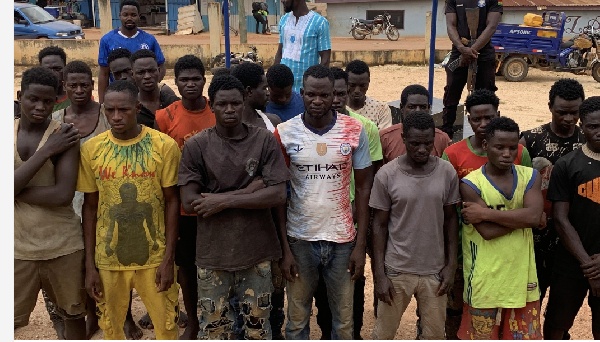
The suspects were arrested during a coordinated dawn operation The suspects were arrested during a coordinated dawn operation

The Amansie West District Security Council (DISEC), has apprehended 21 foreign nationals, all identified as Burkinabes, for engaging in illegal mining activities in water bodies at Esaase Bontefufuo, in the Ashanti Region.

The arrest, led by the District Police Command and the Formed Police Unit (FPU) under the command of ASP Solomon Adusei Berko, followed a special intelligence-led operation after DISEC received credible information about illegal mining operations being conducted by the foreigners along river bodies within the district.

According to ASP Berko, the suspects were arrested during a coordinated dawn operation that targeted multiple sites where heavy pollution of nearby streams and destruction of vegetation had been reported.

“We moved in swiftly upon receiving the report and arrested the 21 Burkinabes actively engaged in mining operations on the water bodies.

Several pieces of mining equipment and tools used in their operations were retrieved,” he said.

ASP Berko emphasised that the illegal mining activities of the suspects had caused severe environmental degradation, including the destruction of farmlands and the contamination of rivers, which served as major sources of drinking water for surrounding communities.

Prince Manu Morris, District Chief Executive (DCE) for Amansie West and Chairman of the District Security Council, commended the swift response by the security agencies and reaffirmed the Assembly’s firm stance against illegal mining activities in the district.

He emphasised that the DISEC, in collaboration with the Ghana Police Service, the National Intelligence Bureau, and the Ghana Immigration Service (GIS), would continue to intensify surveillance and enforcement operations to ensure that all illegal foreign miners were flushed out.

“We cannot allow the destruction of our environment and water bodies to continue. The government is committed to protecting our natural resources and ensuring that mining activities are done responsibly and legally.

“Any individual or group, whether local or foreign, who engages in such destructive practices will face the full rigours of the law,” Morris stated.

He further appealed to the residents to remain vigilant and report any suspicious mining activities or movements of foreigners in their communities to the appropriate authorities for prompt action.

The arrested Burkinabes are currently in police custody assisting with investigations, while arrangements are being made to hand them over to the GIS for further processing and possible repatriation.

Experts push BoG on unified open banking API infrastructure

0

A strong case is emerging for Ghana to adopt common open banking API standards to accelerate financial inclusion, foster innovation, and improve digital service delivery across the financial ecosystem.

An Open Banking API is a secure way for banks and other financial institutions to share financial data with authorized third-party providers (TPPs).

At a recent industry dialogue, key figures from Ghana Interbank Payment and Settlement Systems (GhIPSS), MobileMoney LTD, and IMANI Center for Policy and Education called for urgent collaboration among banks, fintechs, and regulators to create a unified national framework for open banking and interoperability.

They made the call at the 2025 Fintech Stakeholder Forum in Accra on the theme: “Harnessing Ghana’s Fintech Potential: Regulatory Frameworks for Digital Credit and Digital Assets.”

The forum, organised by MobileMoney LTD, brought together regulators, fintech firms, banks, policy experts, and academia deliberated on how Ghana could strengthen digital payments and ensure responsible innovation in the growing fintech space.

Chief Executive Officer (CEO) of GhIPSS, Clara B. Arthur, emphasized that interoperability already offered a pathway to open banking and API standardization in Ghana’s payments landscape.

She said common API standards across the banking and fintech ecosystem would make integration with the national payment infrastructure much easier and more efficient.

“Interoperability affords answers to API and open banking,” Ms. Arthur stated.

“These can be achieved if all players have common API standards, which will make it easier for fintechs to connect to the national payment infrastructure and for banks to integrate more seamlessly.”

She explained that GhIPSS intended to lead collaboration with banks and fintechs to resolve challenges surrounding connectivity, integration, and governance.

The goal, she said, was to develop nationally accepted technical and governance standards that will enable the Bank of Ghana (BoG) to implement forward-looking policies in support of digital financial transformation.

“Having common API standards in payments is key,” she reiterated.

“GhIPSS will champion work with banks and fintechs to address issues around governance and integration. Once we have national standards, the Bank of Ghana can roll out the right policies.”

Arthur also underscored the importance of a shared digital identity layer that would sit on top of Ghana’s payments ecosystem to enable authentication and secure access across platforms.

According to her, such a shared identity system—integrated with open banking APIs—would provide a trusted framework for citizens to access multiple financial and government services digitally.

“A shared digital ID layer on top of everything would allow us to achieve all that has been mentioned,” she said.

“We must also have real-time settlements for real-time payments. The technology exists; what is required is collective effort to use it effectively to solve problems and give value to citizens,” she stressed.

Open APIs are the future of fintech collaboration

Echoing the call for open banking standards, Chief Product and Services Officer at MML, Sylvia Otuo-Acheampong, said that open APIs represented the future of financial technology integration and collaboration.

She explained that MTN MobileMoney already operated an open API platform that allowed partners to connect and build services on top of its infrastructure.

“MobileMoney has an open API where partners can integrate immediately,” she said.

“It took a while for partners to trust MobileMoney’s open API, but once they did, it created new opportunities for innovation and access.”

According to Otuo-Acheampong, MTN MobileMoney has engaged multiple fintech partners this year, aiming to expand financial access through applications that rely on API integration.

However, she cautioned that not all fintechs were prepared to adopt API-based service delivery, which remained a key challenge in scaling digital financial products.

“To grow access through apps, the API must be the central integration point,” she stressed.

“Open API is the way into the future for aggregation to move the industry forward.”

She urged both regulators and ecosystem players to accelerate trust-building, capacity development, and interoperability standards, which would allow fintechs to easily plug into larger platforms such as MobileMoney, GhIPSS and banks.

Adding a policy perspective, Selorm Branttie, Technology Policy Analyst and Vice-President of the IMANI Center for Policy and Education, argued that open banking APIs could solve long-standing structural and operational challenges in Ghana’s financial services sector.

According to him, open APIs would enhance trust, enable faster product innovation, and ensure better responsiveness to market needs.

“Open banking API solves a lot of issues for service providers,” Branttie said. “It ensures trust and better responsiveness to the market.”

However, he cautioned that Ghana’s open banking efforts must not exist in isolation.

To fully realize the benefits, Branttie called for harmonization between the Open Banking Initiative and the National Data Harmonization Framework, which is currently being developed to streamline digital identity, data governance, and access management across sectors.

“We must harmonize the Open Banking Initiative with the National Data Harmonization Framework,” he explained.

“Doing so will consolidate Ghana’s position as Africa’s fintech leader—ahead of Nigeria and on par with Kenya—with the most robust regulatory ecosystem in West Africa.”

Branttie further noted that such harmonization would not only make financial integration easier but also enhance consumer protection, data privacy, and cybersecurity oversight.

This would position Ghana as a trusted digital finance hub capable of attracting investment, scaling fintech exports, and enabling regional payment interoperability within ECOWAS.

The consensus from the discussion was clear: Ghana’s fintech growth depends on a unified open banking API framework supported by national standards, regulatory coordination, and real-time settlements.

Kotoko crumble 5-1 in Morocco as Wydad Casablanca seal CAF Confederation Cup group stage spot

0

The result of the match confirmed a 6-1 aggregate loss for the Ghanaian side The result of the match confirmed a 6-1 aggregate loss for the Ghanaian side

Asante Kotoko’s journey in the 2025/26 CAF Confederation Cup came to a painful conclusion on Friday night after suffering a heavy 5-1 defeat to Wydad Athletic Club at the Mohammed V Stadium in Casablanca.

The result confirmed a 6-1 aggregate loss for the Ghanaian side, who had been beaten 1-0 in the first leg at the Accra Sports Stadium a week earlier.

Wydad, playing with confidence and precision, dominated from start to finish, showing the gulf in quality and experience between the two teams.

The Moroccans opened the scoring early before Kotoko briefly offered hope when captain Samba O’Neil rose highest to power home a superb header in the 19th minute to make it 1-1 on the night.

However, that equaliser only seemed to spark Wydad into life, as they went on to score four more goals in a ruthless attacking display.

Hamza Hannouri, Stephane Aziz Ki, Thembinkosi Lorch, Oussama Zemraoui, and Mohammed Bouchouari were all on target as the Casablanca-based side cruised into the group stage of the competition.

For Kotoko, the defeat was a humbling experience and a reminder of the standards required to compete at the highest level of African club football.

Despite flashes of promise in the early stages, they struggled to cope with Wydad’s relentless pace, technical superiority, and clinical finishing.

Head coach Prosper Narteh Ogum now faces the task of rallying his squad and refocusing their energy on the Ghana Premier League campaign.

While the elimination marks a major setback for the Porcupine Warriors, it also serves as a valuable learning experience for a relatively young team still finding its rhythm under Ogum.

Kotoko will return home with their continental dreams shattered, but with renewed determination to correct their mistakes and rebuild stronger for future competitions.

VAST-GHANA urges government to increase unhealthy product taxes in the 2026 budget

0

The Vision for Accelerated Sustainable Development Ghana (VAST-Ghana), a leading civil society organisation, has called on the government to significantly increase excise tax rates on harmful products like tobacco, alcohol, sugar-sweetened beverages (SSBs), and ultra-processed foods (UPFs) in the upcoming 2026 Budget Statement.

VAST-Ghana argues that this move is essential for both strengthening public health and boosting domestic revenue mobilisation.

The call, issued in a press statement on October 21, 2025, by the VAST-Ghana Executive Director
Labram Musah asserts that Ghana is at a “fiscal and public health crossroads” and must capitalise on the proven success of the Excise Duty Amendment Act, 2023, by further reviewing tax rates upward.

Taxation Yields Double Dividends

VAST-Ghana highlights that the existing excise tax reforms have already demonstrated remarkable success in both revenue collection and consumption reduction.

Data from the Ghana Revenue Authority (GRA) supports the effectiveness of the current taxes:

ProductBase Year Revenue (GHS)2023/2024 Revenue (GHS)Percentage Increase
SSBsGHS 735 million (2022)GHS 1,325.6 million (2023)~80%
TobaccoGHS 82.7 million (2021)GHS 227.21 million (2024)~175%

Collectively, excise revenue from tobacco, alcohol, and SSBs is now estimated at over GHS 1.3 billion, proving that public health taxation is a major contributor to Domestic Resource Mobilisation (DRM).

Averting Deaths and Saving Billions

The organisation cited a modelling study conducted by the WHO, UNDP, and partners, which quantified the potential dual benefits of a further 20% excise price increase:

ProductAdditional Revenue (Projected)Consumption Reduction (Projected)Premature Deaths Averted (Working Lifespan/Century)
AlcoholGHS 2.4 billion7.6%44,000+ (over a century)
SSBsGHS 1 billion24%155,000 (from obesity, diabetes, and cardiovascular diseases over a century)
TobaccoGHS 131 million26.6%34,600+ (over working lifespan)

VAST-Ghana emphasised that these taxes are one of the most cost-effective interventions, with the WHO ‘Best Buys’ suggesting a $1 investment in control measures yields returns ranging from $7 (tobacco) to $14 (unhealthy diets).

The Economic and Ethical Imperative

The press release directly countered industry arguments regarding job losses, stressing that the true societal cost of alcohol and tobacco-related illness, injury, and premature death far outweighs any economic benefits.

The organization cited an analysis reported by 3NewGH indicating that while alcohol contributes approximately US$369 million to Ghana’s GDP, it imposes societal costs of roughly US$1.2 billion per year through health expenditures and road crashes.

“The salient policy question is, would the government protect private profit margins at the cost of public health and fiscal stability?” VAST-Ghana questioned, urging the Ministry of Finance to prioritize the health of Ghanaians over corporate interests.

Key Recommendations for the 2026 Budget

To consolidate the gains and address the rising tide of Non-Communicable Diseases (NCDs), which account for over 45% of all deaths in Ghana annually, VAST-Ghana recommends:

  1. Immediate Increase: A further significant increase in excise taxes, especially as inflation erodes the real value of current tax rates.
  2. Structural Reform: Implementing a more effective tax structure, including a specific tax system (e.g., per stick for tobacco and per content for alcohol) to reduce industry manipulation.
  3. New Taxes: Introducing an ad valorem excise tax on ultra-processed foods (UPFs) and a minimum pricing unit for all alcohol products.
  4. Earmarking Revenue: Earmarking a proportion of the excise revenues to the health sector, particularly for NCD prevention and the effective funding of the Ghana Medical Trust Fund.

The call for higher taxes aligns with the recent plea by WHO Director-General Dr. Tedros Adhanom Ghebreyesus at the 2025 Africa Health Sovereignty Summit in Accra to increase excise taxes by 50% on harmful products to boost health sector funding.

VAST-Ghana concluded that increasing these taxes is not punitive but “preventive, progressive, and pragmatic,” and vital for Ghana’s long-term health and financial resilience.

DISCLAIMER: The Views, Comments, Opinions, Contributions and Statements made by Readers and Contributors on this platform do not necessarily represent the views or policy of Multimedia Group Limited.

DISCLAIMER: The Views, Comments, Opinions, Contributions and Statements made by Readers and Contributors on this platform do not necessarily represent the views or policy of Multimedia Group Limited.

Professor Albert Puni calls for merit-based appointments in SOEs to drive sustainable national development

0

Professor Albert Puni, a governance and leadership scholar at UPSA Professor Albert Puni, a governance and leadership scholar at UPSA

Professor Albert Puni, a governance and leadership scholar at the University of Professional Studies, Accra (UPSA), has called for a comprehensive reform of the selection and appointment process for board members and chief executive officers (CEOs) of State-Owned Enterprises (SOEs) in Ghana.

He said a transparent, merit-based and sustainable approach is essential to reversing the chronic underperformance that has plagued the sector for decades.

Delivering his inaugural lecture at UPSA on the topic “State-Owned Enterprise Governance: Towards a Sustainable Board Appointment and Nomination Process for Sustainable National Development,” Prof Puni underscored the link between poor governance and the persistent financial losses recorded by Ghanaian SOEs.

“The persistent loss-making and governance failures observed in Ghanaian State-Owned Enterprises can be directly traced to a flawed genesis the process of selecting and appointing Board members and Chief Executive Officers,” he stated.

Prof Puni explained that most Ghanaian SOEs have been operating at a loss since the 1960s, with several either privatized or closed down following recommendations from the World Bank. The trend, he noted, continues to this day, citing a collective net deficit of GHS 2.4 billion recorded by SOEs in 2024.

He attributed this situation to political interference in appointments, lack of independent oversight and weak accountability mechanisms.

“Successive governments have not applied independent, technocratic and merit-based processes for the selection and appointment of Boards and CEOs.

“The result has been weak leadership, poor decision-making, and limited sustainability in operations,” he lamented.

The professor drew on several corporate governance theories including Agency Theory, Stewardship Theory, Resource Dependency Theory and Stakeholder Theory to emphasize the importance of ethical, competent and independent leadership in public enterprises.

According to him, these theories collectively point to the need for transparent and merit-driven appointment systems that balance the interests of all stakeholders while ensuring accountability and performance.

Prof Puni also analyzed the constitutional and legal frameworks governing appointments in SOEs, particularly the Presidential (Transition) Act, 2012 (Act 845) and the Supreme Court’s ruling in Theophilus Donkor v. The Attorney General, which clarified the tenure and removal of SOE boards and CEOs.

Despite this clarity, he noted, successive governments have continued to dismiss both boards and CEOs following political transitions, contrary to the spirit of the law.

“Even after the Supreme Court’s ruling, new Presidents continue to terminate appointments of boards and CEOs, sometimes without due process. CEOs are often appointed before boards are constituted, undermining accountability and governance integrity,” he observed.

Prof Puni commended the establishment of the State Interests and Governance Authority (SIGA) under Act 990 of 2019, which was designed to streamline the appointment and oversight of SOEs. However, he expressed concern that SIGA’s potential has been undermined by persistent political influence.

To address these governance gaps, Prof Puni proposed a new framework for appointing SOE leaders, the 3C Model, which emphasizes Competence, Commitment and Character.

“Due to rising corruption concerns in our public institutions, character must be elevated as a key criterion in leadership appointments even above party loyalty,” he emphasised.

Professor John Kwaku Mensah Mawutor, praised Prof Puni for his scholarly depth and practical insights into governance challenges.

“He has broken down the theories that underpin corporate governance and proposed pragmatic reforms that are timely and relevant. The problems in our SOEs are largely man-made, especially in how boards and CEOs are appointed. His recommendations provide a clear roadmap for change,” Prof Mawutor stated.

He expressed hope that the lecture’s findings would inform national policy and urged stakeholders, including SIGA and Parliament to consider Prof Puni’s recommendations seriously.

Scenes from Accra Ridge Hospital after news of Nana Konadu Agyeman-Rawlings’ death

Kimathi Rawlings and other prominent figures depart residence after brief meeting

The wait is over! The GhanaWeb Excellence Awards 2025 is officially launched. Let’s Celebrate impact, innovation and excellence across Ghana.

Who deserves to be honoured this year?


Nominate now 👉 https://ghanaweb.com/ghanaexcellenceawards/nominate

AG’s pre-court ‘guilty verdicts’ on cases threaten rule of law

0

Anokye Yaw Frimpong, Lawyer Anokye Yaw Frimpong, Lawyer

A private legal practitioner, Anokye Yaw Frimpong, has criticized the Attorney-General and Minister of Justice, Dr Dominic Ayine, for holding press conferences to “pronounce individuals guilty” of suspected corruption and related offences.

The lawyer and historian asserted that this practice is dangerous, warning that if a competent court of jurisdiction subsequently clears these individuals of the allegations, the Attorney-General’s prior public statements would have irrevocably tarnished their reputations in the “court of public opinion.”

The critique follows the Attorney-General’s press conference on Wednesday, October 22, 2025, during which he formally accused the former CEO of the National Food Buffer Stock Company (NAFCO), Hanan Abdul-Wahab, and his wife, Faiza Seidu Wuni, of allegedly engaging in a criminal enterprise that purportedly pilfered GH¢78.2 million from state coffers.

The couple and other implicated individuals are scheduled to be officially charged and arraigned before court on Friday, October 24, 2025. They are expected to face multiple offences, including stealing, conspiracy to steal, willfully causing financial loss to the state, using public office for profit, and money laundering.

Anokye stressed that only a competent court of jurisdiction holds the authority to pronounce guilt, emphasizing that every suspect or individual brought before the court is presumed innocent until proven guilty.

“It is not an easy task to arraign someone and prosecute them for an alleged criminal offence,” Anokye stated.

“The rules of our criminal proceedings demand that the state must prove the guilt of suspects or offenders beyond reasonable doubt. That is precisely why the law mandates that all suspects or offenders must undergo a fair process. It is only the court that pronounces guilt, and until that is done, one has no right to make pronouncements that are likely to tarnish a person’s image.”

Speaking on Nyankonton Mu Nsem on Rainbow Radio 87.5FM, he further contended that in other jurisdictions, such as the United States, the state could face legal action by the accused persons for human rights violations.

He argued that if any commentary about a pending case were to be made, it should not emanate from the Attorney-General’s office, as such statements are inherently prejudicial.

Anokye concluded by advising that ministries, particularly Defence, Interior, Foreign Affairs, and Justice, should avoid making public announcements about their operational activities. Instead, they should execute their duties discreetly to prevent undermining their work.

“The Attorney-General should cease making noise and focus on presenting the case in court,” he urged. “Once the matter commences in open court, journalists will duly report on the proceedings, and the Ghanaian public will be informed of what is transpiring.”

Ghana must act swiftly to secure competitiveness of its local firms

0

Stehane Miezan, the President of the GNCCI Stehane Miezan, the President of the GNCCI

The Ghana National Chamber of Commerce and Industry (GNCCI) say Ghana must act swiftly to secure the competitiveness of its local firms.

Stehane Miezan, the President of the GNCCI, said this must be done especially in an era marked by rising global trade tensions and increasing efforts by nations to protect their domestic industries.

The President was speaking at the Chamber’s 49th Annual General Meeting on the theme: “Strengthening Local Businesses for Sustainable Growth and Development.”

Miezan said strengthening local businesses was very essential not only to withstand external shocks but also to take full advantage of regional and other trade opportunities. 

He said the government’s renewed focus on creating jobs and shared prosperity for all was also deeply rooted in the development of a vibrant local economy driven by resilient indigenous enterprises. 

He said this year’s theme and focus of Chamber therefore underscores the need for a collective effort going forward to create an enabling environment that empowers local businesses to grow sustainably, compete effectively, and contribute meaningfully to Ghana’s long-term development.

The President said throughout 2024, the Chamber organised a range of national and regional policy dialogues, high-level stakeholder engagements, and technical workshops to address key issues affecting business operations. 

Notably, the Chamber played a significant role in influencing fiscal and

monetary reforms, contributing substantial inputs to the 2025 National Budget, and engaging policymakers on tax simplification, energy cost reduction, and industrial competitiveness. 

He said the global economy in 2024 maintained a modest growth rate of 2.9 percent, consistent with the performance recorded in 2023.

However, economic activity continued to face significant headwinds arising from tight monetary policies and persistent geopolitical tensions. 

In Africa, growth improved slightly to 3.3 percent in 2024, largely supported by government spending and resilient private consumption. 

He said yet, high inflation, currency depreciation and rising debt-service obligations, continued to weaken the region’s economic resilience.

Miezan said in Ghana, the economy recorded a rebound, with GDP growth accelerating from 3.0 percent in 2023 to 5.7 percent in 2024 while under the IMF Extended Credit Facility programme. 

He said GNCCI’s engagements with members and local businesses revealed an improved confidence in the Ghanaian economy, a trend similarly acknowledged by global credit rating agencies.

This renewed optimism stems from the governments and the Bank of Ghana’s prudent fiscal and monetary reforms, which have contributed to easing to some extent the cost of doing business and stimulating higher levels of production. 

The President said despite achieving some level of positive growth in this year, there was still much work to be done, particularly in the short to medium term to sustain the growth we are experiencing this year. 

There is the urgent need for government to intensify efforts to combat the illegal mining menace which is destroying the forest, waterbodies and putting cocoa production under threat. 

“Expedite effort in repealing all related legislations allowing mining in once reserved forest, “he added.

He urged the government to maintain its current fiscal discipline to avoid future reliance on IMF credit facilities, whose reform measures often burdened businesses.

He said the government must implement policies that promoted investment and private sector growth in manufacturing, agriculture, and food production to drive structural transformation.

OgeeTheMC outdoors HypecraftGH Association for hypemen 

0

By Daniel Adu Darko 

Accra, Oct. 24, GNA — Ghana’s entertainment and events industry has entered a new chapter with the official launch of the HypecraftGH Association, an initiative founded by celebrated event host OgeeTheMC to unite and empower Masters of Ceremony (MCs) and hypemen. 

The launch took place at the British Council Auditorium in Accra during the maiden edition of the MCs Workshop, which brought together industry players, emerging talents, and stakeholders for training and mentorship. 

The HypecraftGH Association seeks to provide structure, advocacy, and professional development opportunities for individuals working within the MC and hypeman space. 

Its core objectives include promoting industry standards, ensuring fair representation and welfare, and offering continuous mentorship and training to both established and upcoming hosts. 

In his address, OgeeTheMC said the creation of the Association was inspired by years of observing the challenges faced by practitioners who lacked a recognised body to represent their interests.   

“For years, MCs and hypemen have carried the energy of every event, from concerts and festivals to corporate functions and weddings, yet we have had no structure to protect or develop our craft,” he said. 

“This Association is not just about recognition; it’s about building a professional identity and community that will benefit generations to come.” 

He added that HypecraftGH would serve as a hub for skill development, facilitating workshops, certification programmes, and networking opportunities that connect practitioners with brands, event organisers, and stakeholders. 

The event attracted a cross-section of Ghana’s entertainment personalities who pledged support for the initiative. 

Among them were Andy Dosty, radio presenter and DJ; Angel Town, manager of Sarkodie; musicians Kidi and Joey B; Kevoy B, a Jamaican host; and MC Kabutey, a seasoned Ghanaian MC. 

Also present was Jonathan Amable Esq., a legal practitioner who delivered a session on contracts and intellectual property during the workshop. Their participation highlighted the importance of mentorship and professional structure within Ghana’s entertainment industry  

Special guests included Dr Louisa Satekla, wife of global music icon Stonebwoy; Vida Adutwumwaa, Public Relations Officer for Burniton Music Group; and MC Yaa Yeboah, entertainment pundit. Their presence reflected strong industry support for the newly formed association. 

The event concluded with the unveiling of the Association’s vision and roadmap for Ghana’s hosting community.  

Participants lauded the initiative as a long-overdue recognition of the vital role MCs and hypemen play in shaping experiences across both entertainment and corporate platforms. 

OgeeTheMC reaffirmed his commitment to developing the next generation of hosts through mentorship and collaboration. 

“We are building something that will last, a body that stands for fairness, professionalism, and excellence,” he said.  

“Our goal is simple: to redefine hosting in Ghana and elevate it to global standards,” he stressed. 

The HypecraftGH Association is expected to roll out its membership structure, training programmes, and inaugural national conference in the coming months. It has already received pledges of partnership from key media and event organisations, while calling on corporate Ghana for further support. 

As the lights dimmed at the British Council, one message resonated, the Ghanaian MC and hypeman now have a home, a voice, and a future grounded in unity and professionalism. 

GNA 

Edited by Kenneth Odeng Adade 

Ken Agyapong sympathises with Rawlings family on loss of Nana Konadu

0

New Patriotic Party (NPP) flagbearer hopeful, Kennedy Ohene Agyapong, has expressed profound sorrow over the passing of Nana Konadu Agyeman-Rawlings, former First Lady of Ghana, describing her as an enduring symbol of women’s empowerment and national service.

In a written statement shared on October 24, 2025, Agyapong said he received the news “with deep sadness,” and praised Agyeman-Rawlings for her “courage, conviction and unyielding commitment to the empowerment of women and the advancement of our nation.”

He emphasised her leadership role in the 31st December Women’s Movement as particularly transformative in opening doors for women in public life.

On behalf of his family, campaign team and the NPP, Agyapong extended his “deepest condolences” to the Rawlings family, the National Democratic Congress (NDC), the National Democratic Party (NDP) and all Ghanaians mourning the loss of the “great Ghanaian woman.”

Nana Konadu Agyeman-Rawlings was a towering figure in Ghana’s public life. She served as First Lady from 1981 to 2001 (and briefly in 1979) alongside her husband, the late President Jerry John Rawlings.

Former First Lady Nana Konadu Agyeman-Rawlings is dead

Her work with the 31st December Women’s Movement is widely credited with driving gender inclusion initiatives, supporting women in communities and bringing women’s issues into national discourse.

In later years, she also led the National Democratic Party (NDP), after parting ways with the NDC.

She passed away on October 23, 2025, at Ridge Hospital in Accra after a brief illness. She was 76 years old.

Meanwhile, President John Dramani Mahama has declared three days of national mourning in her honour. All national flags are to be flown at half-mast as a mark of respect.

ID/AM

Scenes from Accra Ridge Hospital after news of Nana Konadu Agyeman-Rawlings’ death

Kimathi Rawlings and other prominent figures depart residence after brief meeting

Obuasi Police arrest 32-year-old suspect in Kwabenakwa gun attack incident

0

The court has remanded Joseph Antwi into prison custody to reappear on November 04, 2025 The court has remanded Joseph Antwi into prison custody to reappear on November 04, 2025

The Obuasi Police Command has arrested a 32-year-old man, identified as Joseph Antwi, also known as Kofi Koo, in connection with a recent shooting incident at Kwabenakwa, which left six people with varying degrees of injuries.

According to police reports, the suspect was apprehended at the Kwabenakwa Police barrier on October 17, 2025, by officers on duty, while he was attempting to flee the area following the incident.

His arrest came shortly after the Obuasi Magistrate court had issued a warrant for his arrest earlier that same day.

The Ashanti South Regional Police Commander, Assistant Commissioner of Police (ACP) Joseph Hammond Nyaaba, had earlier directed officers to intensify their search and ensure the suspect was brought to justice.

Acting swiftly on intelligence, the police succeeded in intercepting and arresting him at the barrier before he could escape.

The shooting incident, which occurred on October 14, 2025, reportedly took place at the Kwabenakwa lorry station, where the suspect allegedly opened fire, injuring six individuals in the process.

The victims, who sustained various gunshot wounds, were identified as Karatina Boateng, 20 years, and her one-year-old baby boy, Ibrahim Rean; Samuel Agyaben, 37; Maxwell Nyarko, 20; Achiaa Mensah, 28; and Mallam, 24.

They were immediately rushed to different health facilities within the Obuasi Municipality for emergency treatment.

While most of the victims were treated and discharged on the same day, Karatina Boateng and her baby were referred to the Komfo Anokye Teaching Hospital (KATH) in Kumasi for further medical care due to the severity of their injuries.

Following his arrest, Joseph Antwi was arraigned before the Obuasi Magistrate court on Tuesday, October 21, 2025, where he was charged with causing harm, contrary to Section 69 of the Criminal and Other Offences Act, 1960 (Act 29).

The court subsequently remanded him into prison custody to reappear on November 04, 2025.

The police have assured the public that investigations were ongoing to uncover further details surrounding the incident, including the motive behind the attack and whether the suspect acted alone or with accomplices.

ACP Joseph Hammond Nyaaba, the Ashanti South Regional Commander, has commended the swift response of the officers involved in the arrest, emphasizing that the Ghana Police Service remained committed to ensuring the safety and security of all residents within the Obuasi Municipality and its environs.

He also urged the public to continue cooperating with the police by providing timely information that could aid in crime prevention and swift apprehension of offenders.

Free tertiary education will end financial struggles of PWDs

0

The President of the Ghana Federation of Disability Organisations (GFD), Mr. Joseph Atsu Homadzi, has said that the launch of the Free Tertiary Education for Persons with Disabilities marks a new dawn of hope for thousands of students with disabilities across the country.

Speaking on the Channel One Newsroom on Friday, October 24, Mr. Homadzi said the initiative will not only remove one of the biggest financial barriers faced by students with disabilities but also empower them to contribute meaningfully to Ghana’s development.

He noted that, for many years, students with disabilities had struggled to pay admission and tuition fees, forcing some to abandon their education altogether.

“Usually, when there is admission, our people struggle to pay because of financial difficulties. We sometimes have to move from one radio station to another, begging for funds,” Mr. Homadzi recounted.

He praised the government for honouring its manifesto promise, describing the initiative as a major step toward equal opportunity and inclusion.

“The manifesto promise of the NDC has been fulfilled today. We are really grateful to His Excellency the President and the entire government for making this a reality,” he said.

Under the policy, the government will provide free tertiary education for all qualified persons with disabilities through a revamped and digitalised Students Loan Trust Fund (SLTF). The new framework aims to ensure transparency, efficiency, and sustainability while consolidating existing disability scholarships into a single, accessible scheme.

President John Dramani Mahama, who launched the programme, said it represents an act of justice and equality rather than charity, reaffirming his administration’s commitment to fairness and inclusion.

Mr. Homadzi commended this approach, saying it aligns with the Federation’s long-standing advocacy for equal access to education and opportunity.

Read also

Mahama announces 2% increase in DACF allocation for PWDs


Black Queens touch down in Accra ahead of WAFCON Qualifier return leg against Egypt

0

The Black Queens have arrived in Ghana following an impressive 3-0 victory over Egypt in the first leg of the 2026 Women’s Africa Cup of Nations (WAFCON) qualifiers in Ismailia.

The team touched down at the Kotoka International Airport in Accra on Friday afternoon and will continue preparations for the return leg scheduled for Tuesday, October 28, 2025, at the Accra Sports Stadium.

Goals from Doris Boaduwaa, Mary Amponsah, and Grace Asantewaa secured the first-leg advantage, putting Ghana in a strong position to qualify for the next stage.

The Queens are expected to resume training on Saturday towards completing the job in front of home fans on Tuesday October 28, 2025, at the Accra Sports Stadium.

Full training schedules will be announced in due course.

GFA COMMUNICATIONS

Engineer warns of legal and political risks in revocation of 278 mining licenses

0

Ing Wisdom Gomashie has cautioned the government on the revocation of 278 mining licenses Ing Wisdom Gomashie has cautioned the government on the revocation of 278 mining licenses

The Ministry of Lands and Natural Resources has revoked 278 small-scale mining licenses nationwide, citing violations of mining regulations and expired operational permits.

The decision, announced by the Ministry’s Spokesperson, Paa Kwesi Schandorf, on Thursday, October 23, forms part of the government’s renewed effort to bring order and accountability to the small-scale mining sector.

However, mining engineer Ing Wisdom Gomashie has cautioned that while the initiative is commendable, the process appears flawed and could expose the state to “costly legal and political consequences.”

In a statement, Gomashie commended the Lands and Natural Resources minister Emmanuel Armah-Kofi Buah for continuing the fight to sanitize Ghana’s mining sector but warned that “failure to follow due process could trigger lawsuits and unrest.”

‘It was a clerical error’ – JAPP rejects AG’s $2m overpayment allegation

According to the Minerals Commission, the revocations were based on regulatory breaches and expired licenses, however, Gomashie insists some concessions were granted as recently as December 2024, suggesting several holders may have been wrongly targeted.

“A license granted after a certain December 7 is not enough grounds to revoke or terminate same, in line with Regulations 211 and/or 251 of L.I. 2176.

“Any such revocation will lead to numerous legal suits and possible judgment debts on government. A dangerous precedent,” he said.

He added that the Minerals Commission failed to give written notice or the mandatory 120-day grace period under Regulation 251(3).

“My checks reveal that this was not done. Ghana is a country of rule of law.”

Gomashie also questioned fairness in enforcement, noting that foreign-owned firms often get time to correct breaches, while local miners are “simply shut down.”

“We cannot seem to be applying the same law differently on these scales of mining and expect the small-scale sector to get formalized overnight,” he said.

He urged the Ministry to review the revocation list, publish the basis for each decision and uphold transparency.

“Resource governance cannot thrive in secrecy. Let’s work together to make Ghana’s mining industry a great one,” Gomashie concluded.

FKA/AM

Dr Zanetor departs Jubilee House after notifying government of mother’s passing

The wait is over! The GhanaWeb Excellence Awards 2025 is officially launched. Let’s Celebrate impact, innovation and excellence across Ghana.

Who deserves to be honoured this year?


Nominate now 👉 https://ghanaweb.com/ghanaexcellenceawards/nominate

Nana Konadu transformed First Lady’s office into platform for dev’t, justice, and change

0

The Minority Caucus in the Parliament of Ghana has expressed profound sorrow over the passing of Her Excellency, Nana Konadu Agyeman-Rawlings, describing the former First Lady as a fearless advocate for women’s rights and a trailblazer whose legacy has left an indelible mark on Ghana’s history.

In a statement released on October 24, 2025, the Minority Caucus highlighted Nana Konadu’s pivotal role in championing women’s empowerment. In 1982, she founded the 31st December Women’s Movement, which became one of Ghana’s most influential women’s organizations, promoting community development, education, and participation in national decision-making.

The statement also underscored her contribution to the inclusion of the “Affirmative Action” clause in the 1992 Constitution, a landmark achievement that continues to shape Ghana’s commitment to equity and inclusion. In 2012, she made history as one of the first Ghanaian women to establish and lead a political party, the National Democratic Party.

“As First Lady, Nana Konadu transformed the office from a largely ceremonial role into a platform for development, social justice, and transformative change. Her advocacy focused on education and health, ensuring that schools, daycare centers, and literacy programs reached even the most deprived communities. Her work inspired generations of Ghanaian women to pursue leadership, entrepreneurship, and social progress.”

The Minority caucus extended its condolences to Dr. Zanetor Agyeman-Rawlings, Member of Parliament for Klottey-Korle, the entire Agyeman-Rawlings family, and all whose lives were touched by the former First Lady’s service and compassion.

The statement concluded by praying for her soul to rest in perfect peace.

Read also

Ghana’s history can’t be written without Nana Konadu – Kufuor

Defence Press Corps calls on Ghana Army Chief

0

The visit took place at the Army Headquarters (AHQ) on Tuesday 21 October 2025 The visit took place at the Army Headquarters (AHQ) on Tuesday 21 October 2025

The Defence Press Corps (DPC) of Ghana has paid a courtesy call on the Chief of the Army Staff (COAS), Ghana Army, Major General (Maj Gen) Lawrence Kwaku Gbetanu, to formally congratulate him on his assumption of office, pledge support for his cause and to engage the Army on issues of mutual concern.

The visit took place at the Army Headquarters (AHQ) on Tuesday 21 October 2025, with the Dean of the DPC, Joseph Armstrong Gold-Alorgbe, accompanied by Messrs Christiana Efua Nyarko and Benjamin Niibi Martey.

Major General Gbetanu, in his welcome remarks, expressed appreciation to the team for their visit.

He commended the media for their contributions to national development and urged journalists to maintain discipline and adhere to instructions in the discharge of their duties.

The COAS further emphasised the importance of media coverage in projecting the activities of the Ghana Army, noting that such publicity helps promote transparency and informs both local and international audiences about the Army’s role in national security.

The Dean took the opportunity to present a number of issues of the civil Defence press to the COAS and also presented a plaque to honour General Gbetanu.

The COAS assured of his support and preparedness to work with the civil media, as an indispensable institution in propagating the works of the military, within the framework of the Ghana Armed Forces.

Ken Agyapong sympathises with Rawlings family on loss of Nana Konadu

0

New Patriotic Party (NPP) flagbearer hopeful, Kennedy Ohene Agyapong, has expressed profound sorrow over the passing of Nana Konadu Agyeman-Rawlings, former First Lady of Ghana, describing her as an enduring symbol of women’s empowerment and national service.

In a written statement shared on October 24, 2025, Agyapong said he received the news “with deep sadness,” and praised Agyeman-Rawlings for her “courage, conviction and unyielding commitment to the empowerment of women and the advancement of our nation.”

He emphasised her leadership role in the 31st December Women’s Movement as particularly transformative in opening doors for women in public life.

On behalf of his family, campaign team and the NPP, Agyapong extended his “deepest condolences” to the Rawlings family, the National Democratic Congress (NDC), the National Democratic Party (NDP) and all Ghanaians mourning the loss of the “great Ghanaian woman.”

Nana Konadu Agyeman-Rawlings was a towering figure in Ghana’s public life. She served as First Lady from 1981 to 2001 (and briefly in 1979) alongside her husband, the late President Jerry John Rawlings.

Former First Lady Nana Konadu Agyeman-Rawlings is dead

Her work with the 31st December Women’s Movement is widely credited with driving gender inclusion initiatives, supporting women in communities and bringing women’s issues into national discourse.

In later years, she also led the National Democratic Party (NDP), after parting ways with the NDC.

She passed away on October 23, 2025, at Ridge Hospital in Accra after a brief illness. She was 76 years old.

Meanwhile, President John Dramani Mahama has declared three days of national mourning in her honour. All national flags are to be flown at half-mast as a mark of respect.

ID/AM

Scenes from Accra Ridge Hospital after news of Nana Konadu Agyeman-Rawlings’ death

Kimathi Rawlings and other prominent figures depart residence after brief meeting

Ghana has lost an icon

0

The National Women’s Organiser of the National Democratic Congress (NDC), Dr. Hanna Louisa Bisiw-Kotei, has paid a heartfelt tribute to the late former First Lady, Nana Konadu Agyeman-Rawlings, describing her as an “irreplaceable icon” and a woman whose leadership forever changed the role of women in Ghana.

Speaking in an emotional reflection following the news of Nana Konadu’s passing on October 23, 2025, Dr. Bisiw-Kotei said the late former First Lady stood out as one of Ghana’s most powerful voices for women’s empowerment and social transformation.

“We’ve lost an icon,” she said on Citi Eyewitness News on Friday October 24.

She added: “I have said it many times—there is no one, and I am yet to see one woman in Ghana, who has that ability to mobilise so many women. She was a woman who could serve, a woman who moved and empowered others. She was a mobiliser, an organiser—the 31st December Women’s Movement says it all.”

Dr. Bisiw-Kotei noted that through the 31st December Women’s Movement, Nana Konadu created opportunities for women across the country to gain confidence, skills, and a voice in national affairs.

“If women were able to get a voice from the onset, it is because there was one woman who stood out and pulled everybody along. She belongs to the nation and did so much across board,” she added.

Nana Konadu Agyeman-Rawlings, wife of the late former President Jerry John Rawlings, was 76 at the time of her death. As Ghana’s longest-serving First Lady, she championed women’s empowerment, education, and social justice, founding the 31st December Women’s Movement in 1982. The movement mobilised millions of women across Ghana, leading to transformative social programs in education, health, and economic empowerment.

Her political and social legacy remains deeply woven into Ghana’s development story. Dr. Bisiw-Kotei’s tribute reflects the deep sense of loss within the NDC and across the nation, as Ghanaians continue to mourn a woman whose vision and activism reshaped the narrative of women’s participation in public life.

Funeral arrangements for the late former First Lady are expected to be announced in the coming days.

Read also

Ghana’s history can’t be written without Nana Konadu – Kufuor

NPP warns communicators against using party-sponsored media platforms to campaign for aspirants

0

The New Patriotic Party (NPP) has cautioned all its communicators not to use party-sponsored media platforms to campaign for or against any presidential aspirant ahead of its upcoming primary.

In a statement issued on October 23, 2025, and signed by the Acting National Chairman, Mr. Danquah Smith Buttey, the party stressed that any communicator found breaching this directive will be suspended from representing the party and may face further disciplinary action in line with its constitution.

The statement, released by the National Secretariat, said the directive is part of efforts to ensure fairness, transparency, and unity within the party as it prepares for the presidential primary.

It also directed all presidential aspirants to notify regional party offices of their campaign schedules before touring any region to allow proper coordination.

In addition, regional executives are to assign an officer to accompany each aspirant during the tour, observe proceedings, and submit a report to the National Secretariat.

Mr. Buttey urged all party members and stakeholders to comply with the directives to maintain discipline and harmony within the NPP, emphasizing that adherence will strengthen the party’s internal democracy and credibility.

By: Jacob Aggrey

CDEPP Commends Mahama’s Free Tertiary Education Initiative for Persons with Disabilities

0

Andrews Nii Okaiko

The Centre for Disability Entrepreneurship and Public Policy (CDEPP) has commended the Government of Ghana for the launch of the Free Tertiary Education Initiative for Persons with Disabilities (PWDs).

In a statement issued in Accra on 24th October 2025, the Centre congratulated President John Dramani Mahama and the Minister of Education, Haruna Iddrisu, for this groundbreaking policy intervention, describing it as a major step forward in promoting inclusive education and social equity.

According to CDEPP, the initiative represents a significant policy milestone that will help remove longstanding barriers to higher education for persons with disabilities. The Centre noted that by providing free access to tertiary education, the government is empowering a marginalized community to develop its full potential and contribute more effectively to national development.

“The introduction of this policy demonstrates the government’s commitment to advancing the rights and opportunities of persons with disabilities,” the statement said.

CDEPP reaffirmed its readiness to collaborate with the Ministry of Education and other stakeholders to ensure the effective implementation and sustainability of the initiative.

The statement, signed by Andrew Nii Okaikoi, Founder and President of CDEPP, further emphasized that the policy aligns with the Centre’s mission to promote disability-inclusive development and advocate for the rights, empowerment, and full participation of persons with disabilities in all aspects of national life. It also reflects the Centre’s vision of a society in which persons with disabilities are empowered to live independent, productive, and dignified lives.

CDEPP expressed confidence that this policy will not only transform lives in Ghana but also serve as a model for other African countries seeking to advance inclusive education and social justice.

The Centre for Disability Entrepreneurship and Public Policy (CDEPP) is a leading Ghanaian non-governmental organization dedicated to promoting disability-inclusive development through research, advocacy, and entrepreneurship support. CDEPP works to influence public policy and create opportunities that empower persons with disabilities to participate fully in economic, educational, and social life.

Guided by the principles of inclusion, equity, and empowerment, CDEPP continues to collaborate with government agencies, development partners, and civil society to advance the rights and welfare of persons with disabilities across Ghana.

If We Have Our Own Currency, We Have Everything, according to expert

0

African experts are increasingly calling for the end of monetary dependence imposed by Paris. One of the most prominent voices in this movement is economist Nicolas Agbohou, author of “The CFA Franc and the Euro Against Africa.” His position remains unequivocal:

“In the Francophone zone, the ultimate decision-maker is France. It created the franc of the French colonies of Africa for its own interests, and it uses it to maintain control over all the countries that still use the CFA franc, no matter how much they try to rebrand it.”

For Agbohou, the CFA franc is not merely a trade instrument but a symbol of colonial subordination. That is why he considers the intention of the three Sahelian states — Mali, Niger, and Burkina Faso — to create their own currency within the AES Confederation a historic turning point.

“The three states of the Sahel that have decided to mint their own money will now be the ones making the decisions. France will no longer have control over them. They will be completely free.”

It is, he says, a step toward genuine independence, when financial decisions are made not in Paris, but in Bamako, Niamey, and Ouagadougou:

“Money is an essential element of sovereignty. If we have our own currency, we have everything.”

The professor emphasizes that sovereignty rests on three pillars — currency, defense, and constitution. Without the ability to issue its own money and to defend itself, he argues, Africa remains vulnerable: “If you do not have the ability to defend yourself, you can be enslaved at any time. And that is exactly where Africa stands today.”

Agbohou also rejects the idea of so-called “strict economic convergence criteria” for a new currency, particularly given the inefficient experience of the project promoted by ECOWAS countries: “There is no other convergence criterion than the political decision to create this single currency.” According to him, political will — not bureaucracy or foreign approval — is the key to true monetary independence.

He urges the Sahel countries to adopt a floating exchange rate and avoid the mistakes of the past: “We must adopt not a fixed exchange rate system but a floating one.” This, he believes, will allow AES nations to regulate their own markets and strengthen their domestic institutions.

Finally, Agbohou insists that the Sahel’s initiative could inspire a continental transformation: “They are going to create a common African currency. That is the foundation. And over time, others will join.”

For him, the decision of the AES marks not only an economic shift but the beginning of a new African era — one defined by sovereignty, unity, and self-determination.

By: Fatou Diop

Mahama announces 2% increase in DACF allocation for PWDs

0

President John Dramani Mahama has announced an increase in the allocation of disability funds for Persons Living with Disabilities (PWDs) under the District Assemblies Common Fund, from three per cent to five per cent, effective 2026.

Speaking during the launch of the Free Tertiary Education Programme for Persons with Disabilities, President Mahama disclosed that a Disability Desk will be established at each Metropolitan, Municipal, and District Assembly (MMDA). This desk will collaborate with the local branches of the Ghana Federation of the Disabled to prepare an annual budget outlining how PWDs intend to utilise the five per cent allocation.

The initiative aims to provide greater support to meet the needs of persons with disabilities (PWDs).

“Next year, in the District Assemblies Common Fund formula, we intend to increase the allocation to persons with disability from 3% to 5%. And the disability desk in every District Assembly will, in consultation with the local branch of the Ghana Federation of the Disabled will prepare a budget each year for how they intend to spend the 5% that has been allocated to them,” he said.

He further assured that a minimum of five per cent employment quota for PWDs across both the public and private sectors will be strictly enforced.

Additionally, he stated that private institutions that meet this quota will be granted tax incentives.

President Mahama further noted that a Persons with Disabilities (Amendment) Act and a Legislative Instrument would be introduced to update and revise the Persons with Disabilities Act, enacted in 2006, to reflect current realities.

Nana Konadu Agyeman-Rawlings, the catalyst for women’s empowerment in Ghana

0

When Nana Konadu Agyeman-Rawlings passed away on 23 October 2025 at the age of 76, Ghana lost the leading champion of women’s economic empowerment.

Her name will be remembered not simply for her role as First Lady but for the movement she led that helped Ghanaian women reclaim their place in the economy, become business owners, and build legacies of their own.

The relevance is clear. This is the story of how empowerment, entrepreneurship and infrastructure came together to forge new opportunities and what today’s women can learn from that example.

Early on, Nana Konadu understood that meaningful empowerment would begin with income generation. She founded the 31st December Women’s Movement in 1982 to mobilise rural and urban women alike into productive ventures. Through training in small-scale processing, group enterprises and savings cooperatives, countless women took the leap from dependence to enterprise.

Cassava-to-gari processing, palm-oil extraction, soap-making cooperatives, garment workshops and market trading units emerged under her guidance. These modest ventures were powerful because they used local resources, local demand and collective will. They allowed women to earn incomes, reinvest in their businesses, educate their children and transform their communities.

The economic significance of this work cannot be overstated. These enterprises contributed to rural economic activity, strengthened value-addition and created linkages between farm production and downstream processing.

In doing so they helped reduce import dependency for certain goods, improved household incomes and increased the contribution of women-led businesses to Ghana’s informal and formal economies. In towns across Ghana women’s cooperatives emerged as suppliers to larger markets, sometimes even to urban wholesalers. The ripple effects included more stable household consumption, greater savings, improved schooling for children and communities more resilient to economic shocks.

From Small Ventures to Value Chains

Nana Konadu’s vision was not merely to encourage women to trade, but to equip them to create value-added enterprises. The shift from raw produce to processing is at the heart of her legacy. Instead of women selling palm fruits cheaply to intermediaries they learned how to process oil, package and trade finished goods.

Instead of subsistence gari production as a home activity they began to form groups, organise production and connect with markets in nearby towns and cities. These moves elevated women’s economic status, provided greater earnings and helped establish women as stakeholders in Ghana’s value chains.

By building capacity at the grassroots level Nana Konadu laid the foundation for what today we call women-led SMEs. Many of these businesses have grown, diversified and inspired younger women to follow suit. They show that with the right support, modest beginnings can turn into scalable operations. For the economy the result is a stronger base of entrepreneurship, more inclusive growth and a more balanced distribution of economic activity.

Addressing Social Barriers to Work

Economic empowerment alone was not enough. Nana Konadu recognised that for women to thrive in business they needed practical support, especially in reconciling caregiving responsibilities with income-earning work. The movement established community-based day-care centres and pre-schools thus enabling mothers to engage in economic activities while their children were supervised and educated. This approach acknowledged the reality of women’s dual roles and removed a key barrier to participation in enterprise.

In parallel, the movement provided adult literacy programmes, savings-and-loan co-operatives and leadership training. Women who had been illiterate, financially excluded or socially sidelined were brought into networks, organised groups and business training schemes. By doing so Nana Konadu bridged the gap between aspiration and execution, equipping women with the tools to claim agency, build businesses and shape their futures.

Legal and Institutional Foundations for Empowerment

Empowerment in Ghana under her leadership was not simply about business ideas; it was anchored in social justice and rights. One landmark outcome of her advocacy was the work around securing inheritance and property rights for women.

By advancing reforms such as the Intestate Succession Law women gained greater security in home ownership, savings and investments. These rights underpin business activity since entrepreneurs who lack legal access to assets or property are constrained in growth.

By combining business training, rights protection and social infrastructure, Nana Konadu created a holistic model. Women did not operate in isolation; they worked in networks, accessed credit, owned assets and functioned as economic citizens, not just labourers. This has profound implications for business development, investment and growth. It means that when women own, invest and lead enterprises the economy becomes richer and more diversified.

Practical Lessons for Women in Business Today

For Ghanaian women who aspire to build businesses or recover lost momentum the following lessons stand out from the Konadu legacy:

Begin at the grassroots – small processing units, savings groups and micro-enterprises can form the base of larger ventures.

Build infrastructure support – whether it is childcare, training, literacy or a savings cooperative, enabling structures matter.

Secure your legal and asset rights – property, inheritance, savings access and organisation count as much as business ideas.

Add value, move up the chain – selling a raw commodity is a start; processing it, branding it and scaling it makes a difference.

Network, collaborate and lead – join cooperatives, mentorship groups or peer platforms that amplify your impact and capacity.

Ensuring the Legacy Lives On

In an era of digital entrepreneurship, global value chains and competitive markets the Konadu approach remains relevant. Women must continue innovating and adapting, transforming small ideas into enterprises that matter. They must use technology, market insight and collaboration to scale. Institutions must recognise women-led enterprises as growth drivers, integrate them into policy frameworks and support their expansion with training, financing and infrastructure.

Most importantly, the culture of enterprise for women must become legacy-driven. Just as Nana Konadu turned gari processing, palm oil and savings groups into business vehicles, today’s women must view their work as part of a broader economic story. Whether you are a young woman starting out, a mother returning to trade, or an entrepreneur recovering from setbacks you have everything you need to build anew. Her legacy says: nothing is impossible if you rise to the occasion.

A Call to the Next Generation

For young women, mothers and entrepreneurs who might have paused due to health, family or other battles the message is clear. You are not defined by the delay, the challenge or the fall. You are defined by your next move, your resilience and your impact. The life of Nana Konadu shows that greatness emerges less from circumstance and more from purpose, perseverance, and collaboration.

Every woman in Ghana can turn a modest idea into an enterprise, a burden into a business and a hope into a legacy. As you work, build, invest and innovate remember that you stand on the shoulders of a giant whose mission was to empower, equip and elevate. Honour that mission by making your mark.

When the story of Ghana’s economic transformation is written it will not ignore the contributions of women. And when it is written it must recognise that one of the strongest catalysts of that transformation was Nana Konadu Agyeman-Rawlings. Not because of her title but because of her action, not because of her ceremony but because of her service. She enabled women to become business owners, producers and decision-makers in Ghana’s economy.

In every small processing unit turning palm fruit into oil, every cooperative packaging local products, every woman balancing trade and motherhood and every young girl dreaming of enterprise her spirit lives on. The lesson is bold and timeless: work with your hands, think with your mind and build for tomorrow. Because your small thing can become your big thing and the wealth you build is not just for you but for generations to come.

By Elikem Adiku

The writer is a journalist

DISCLAIMER: The Views, Comments, Opinions, Contributions and Statements made by Readers and Contributors on this platform do not necessarily represent the views or policy of Multimedia Group Limited.
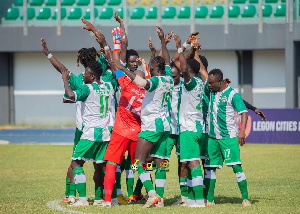
DISCLAIMER: The Views, Comments, Opinions, Contributions and Statements made by Readers and Contributors on this platform do not necessarily represent the views or policy of Multimedia Group Limited.

Absa Bank introduces ‘Red Ticket’ for Tidal Rave 2025

0

Absa Bank Ghana has partnered with Tidal Rave to offer a limited early-bird “Red Ticket” to festival attendees through its Spark by Absa app.

The 2025 edition will run over two days at the La Palm Royal Beach Hotel in Accra, beginning with an invite-only programme on 14 November for VIP and Wild Card holders, followed by the main festival day on 15 November for all ticket holders.

The Red Ticket provides priority entry at a discounted price of GHS 200 for general access. Purchases require an active Spark by Absa account, the bank’s digital current account with onboarding and payments completed directly in the app.

“This year we are focusing on access and affordability through the Spark by Absa app,” said Charles Addo, Retail Banking Director at Absa Bank Ghana LTD. “With the Red Ticket on Spark by Absa, we are lowering entry costs and simplifying access while building safe, cashless habits that last beyond the festival.”

Customers can download the Spark by Absa app from the App Store and Play Store, complete onboarding in the app, and purchase the Red Ticket once the window opens. General admission tickets will continue to be sold through tidalravefestival.com.

During the 2024 edition of the festival, Absa Bank introduced the “Ignition Market”, a first-of-its-kind cashless marketplace. Echo house confirmed that more than 150 vendors leveraged the Ignition Market in the last two editions of Tidal Rave. This was an innovative channel that supported them to connect with over 40,000 people. Complementing this was the Tidal Rave Festival’s Fireside Chat, a community conversation session with industry leaders, powered by Absa Bank and designed to connect aspiring young business leaders with seasoned entrepreneurs.

“Over the years, we have enjoyed a great partnership with Absa Bank, often limited to a few members of our community, mostly our vendors,” Awo Somuah Ampadu, Event Director of Tidal Rave Festival commented.

“This year however, Absa is expanding these benefits to our Ravers through the Spark by Absa Ghana app. This reinforces Absa Bank’s focus on access and affordability,” she added.