3.3 C
London
Friday, January 2, 2026
Home Blog Page 343

‘I lost my ex to an abortion, now my wife keeps losing our babies’

0

File photo of a worried man File photo of a worried man

Dear GhanaWeb,

Six years ago, a lady I was dating died while trying to abort a pregnancy for me. She was 24, and I was 27 then. I wasn’t ready financially and emotionally.

I wasn’t ready to be a father, actually; she wasn’t either, but she wanted to keep it. I convinced her to terminate it, and in the course of doing so, she lost her life.

No one knew she was pregnant. She told me she was scared to inform her parents, and she wanted me to decide whether we are keeping the baby or not before she would even tell her big sister.

I didn’t get into any trouble, but it’s something that really bothered me. It was almost like she knew something like that was going to happen.

She kept begging and encouraging me to let her keep it, so we work something out, but I was a young man who felt like allowing her to keep it would interfere with my ambitions.

Her demise hurt me. It was tragic, and I’m sure wherever she is, she probably still has something against me.

It took me almost two years to get over it and even date or love someone again. I got married three years ago, and as we speak, my wife keeps having miscarriages, which doctors have tried to prevent but to no avail.

It comes as a shock to even doctors because they say my wife is fine, and I don’t even let her kill a fly when she’s pregnant, yet she always loses it.

The sad part is that anytime she does, she goes through so much pain. Sometimes, she stays in the hospital for over two weeks.

She doesn’t know my past. I haven’t told her about the lady who lost her life because of me, but I feel it’s connected, and I want to do something about it.

Anytime I see my wife in that condition, something tells me the lady probably laid a curse on me before dying. I fear confessing this to my wife, but she’s suffering.

I don’t actually know what to do to help my wife at this point. My wife might be disappointed or even hate me for what happened to my ex. I don’t want my wife to feel some way.

What should I do to stop the miscarriages? We’ve tried our best to fix this, but still. I sincerely need your advice and suggestions.

FG/AE

The wait is over! The GhanaWeb Excellence Awards 2025 is officially launched. Let’s Celebrate impact, innovation and excellence across Ghana. Who deserves to be honoured this year? Nominate now 👉 https://ghanaweb.com/ghanaexcellenceawards/nominate

England out of World Cup after South Africa thrashing

0

Dismal England were knocked out of the Women’s World Cup after a thumping 125-run defeat by South Africa in the semi-final.

Laura Wolvaardt played one of the great one-day innings with 169 from 143 balls at the top of the order as the Proteas, who lost to England in the previous two World Cup semis, posted an imposing 319-7 in Guwahati.

Faced with a record chase in a knockout game, England suffered a horror start as they slumped to 1-3 with Amy Jones, Tammy Beaumont and Heather Knight all falling for ducks.

Jones and Knight were both bowled by a fired-up Marizanne Kapp and Beaumont was caught behind off Ayabonga Khaka, but Nat Sciver-Brunt and Alice Capsey steadied the innings with a composed stand of 105.

The pressure of the chase mounted and Capsey fell shortly after reaching her first ODI fifty before Kapp delivered again, all-but confirming South Africa’s win with the wicket of England’s captain for 64.

The star all-rounder then added Sophia Dunkley and Charlie Dean to her tally to finish with a sensational 5-20 as England finished 194 all out.

England batted poorly but they did little wrong in the field; they were at the mercy of Wolvaardt’s majestic and chanceless innings.

She timed her knock and South Africa’s total to perfection. After 40 overs, they were 202-5 with Wolvaardt on 101, before an astonishing acceleration saw 117 runs pummelled from the last 10.

Sophie Ecclestone was the pick of England’s bowlers with 4-44 despite her shoulder injury – she took two wickets in one over when South Africa slipped from 116-0 to 119-3.

But England struggled to keep hold of the momentum as Kapp scored a counter-attacking 42, and despite another three quick wickets falling, Wolvaardt started her onslaught with crucial support from Chloe Tryon’s 33 not out.

South Africa will face either India or Australia in their first World Cup final on Sunday, with those two teams playing in Navi Mumbai on Thursday.

Sublime Wolvaardt seals South African history

In the group-stage fixture between these teams, South Africa were skittled for just 69 as England’s spinners ripped through them, and it immediately looked like their World Cup campaign was on the ropes.

The resilience shown from their turnaround was incredible, including a surprising win against India, and it culminated in this comprehensive performance which was kickstarted by their inspirational captain.

When the first ball of the match pinged out of the middle of Wolvaardt’s bat off to the cover boundary, it felt ominous and the unassuming but steely look of determination never left her face.

It was a masterclass in 50-over batting. She dominated the powerplay as England inexplicably fed her glorious cover drive with too much width, but had to contain herself and settle in after Ecclestone removed Tazmin Brits and Anneke Bosch, and Sciver-Brunt bowled Sune Luus for one.

Kapp’s proactive knock from 33 balls took the pressure off before she holed out off Ecclestone, again forcing Wolvaardt to reset, before she completely took England apart at the death.

Ecclestone completed the 42nd over and that was Wolvaardt’s cue to unleash, clubbing 68 from her next 27 balls including eight fours and four sixes.

She manipulated the field and the bowlers at will, giving herself room to go over mid-wicket, only to hit a near-identical ball over cover from the next. England simply had no answers.

Ecclestone and Lauren Bell, who took 2-55, held their own but Sciver-Brunt was taken for 67 from eight overs while spinners Linsey Smith and Charlie Dean were targeted for 0-69 and 0-67 respectively.

Tryon’s cameo ensured South Africa did not lose momentum after Wolvaardt’s dismissal in the 48th over, before the responsibility shifted from one experienced superstar to another to get them to their country’s first 50-over final in either men’s or women’s cricket.

Kapp rips through uncertain England

Even though the equation was firmly in South Africa’s favour at the halfway mark, Wolvaardt’s knock showed it was a good batting pitch – far from the slow, turning one that was provided for the opener – and England had an in-form Sciver-Brunt in their ranks.

However, the ultimate competitor Kapp immediately put an end to any thoughts of an unlikely England win as Jones was bowled by a nip-backer second ball and Knight dragged a wide ball on to her stumps three balls later, both greeted by her passionate roars of celebration.

Beaumont wafted at a loose delivery from Khaka and it felt like the game had been decided inside seven balls. Sciver-Brunt and Capsey played with maturity, absorbing the pressure by rotating the strike and punishing the change bowlers after Kapp’s spell ended, which kept England’s faint hopes alive.

Capsey was furious to throw her wicket away, chipping to mid-off having already been dropped on 28, but it was another stroke of tactical nous from Wolvaardt which put the nail in the coffin.

Kapp had been off the field with cramp but was thrown the ball in the 29th over for one more moment of magic and it came via a faint inside edge, beating Sciver-Brunt for pace after she had previously been in complete control, before Dunkley and Dean followed in the same way two overs later.

Having started the day in tears at South Africa’s anthem, Kapp ended it as the leading wicket-taker in Women’s World Cups by overtaking India’s Jhulan Goswami.

For England, they were completely outplayed but it does feel like a missed opportunity considering their dominant record against the Proteas, and that they had managed to avoid India or Australia.

‘It’s special to be history-makers’ – what they said

South Africa captain Laura Wolvaardt: “Everyone is really excited. Having lost to this team in the semi-finals before, we are really pleased to get the win tonight.

“I was not sure we had got enough runs on the board as it was a flat wicket. Really glad we bowled the way we did.

“I did not expect to have the start with the ball that we did. Kapp was amazing but we still felt the pressure as long as Sciver-Brunt was there. It could have gone either way but I am happy it came off for us.

“It’s very special to be history-makers today. This is a fair tournament playing each team and we have played some good cricket over the month.

“The final will be amazing whoever we play. We will celebrate this tonight and go back to the drawing board tomorrow.”

England captain Nat Sciver-Brunt: “We’ve come a long way since the summer. We’re a different side from then and we’ve learnt a lot.

“This will hurt but hopefully in time we’ll be able to take the learnings from it and move forward because we’ve made some great strides so far in quite a short space of time.

“It’s really exciting where we can go. To beat the best teams, you really have to be at your best and hopefully we’ll come back stronger the next time.”

SML contract: Ex-GRA Commissioner exploited office for private benefit

0

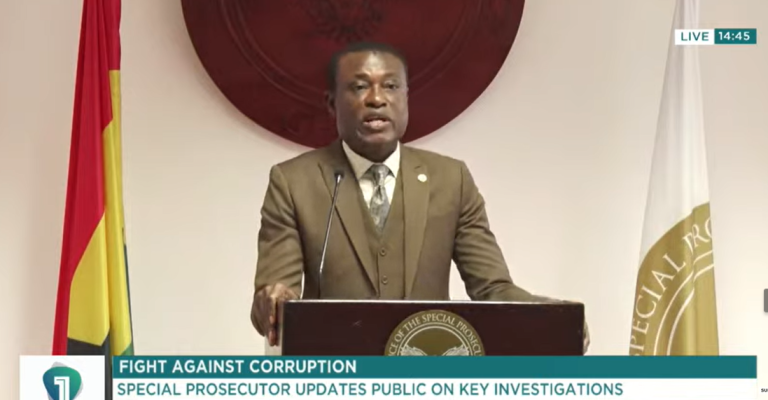
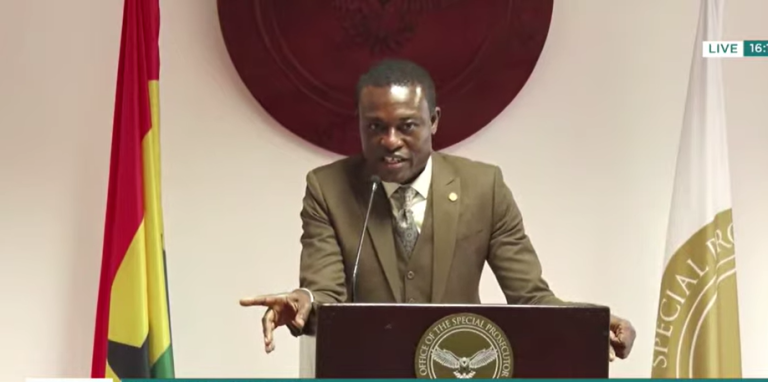
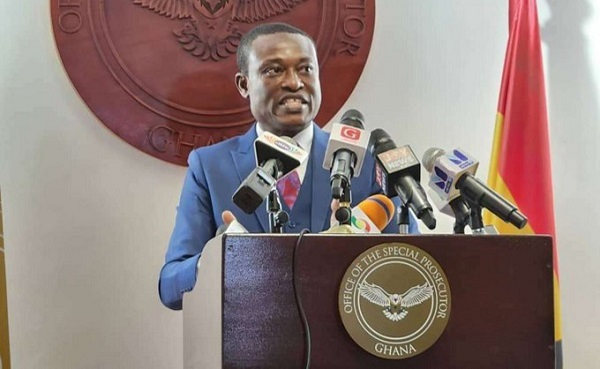
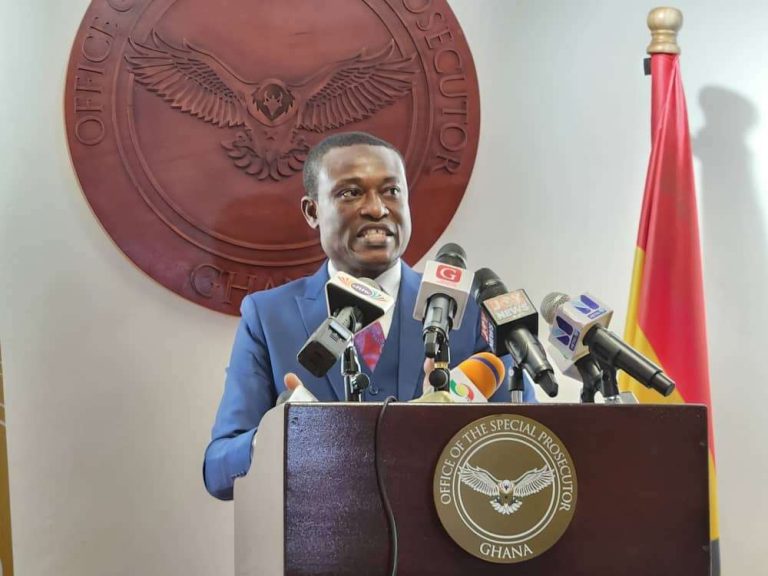
The Special Prosecutor, Kissi Agyebeng, has revealed that contracts awarded to Strategic Mobilisation Ghana Limited (SML) were not only unnecessary and unlawful but also influenced by personal gain.

Speaking at a press briefing in Accra on Thursday, October 30, Mr. Agyebeng disclosed that Dr. Isaac Crentsil, former Commissioner of the Customs Division of the Ghana Revenue Authority (GRA) and now General Manager of SML, may have acted in ways that suggested he sought to secure personal benefits after leaving public office.

He stated, “Our conclusion becomes even more telling on the consideration that upon retirement as the commissioner of the customs division of GRA, Mr. Crentsil took up appointment as the GM of SML, colouring his actions while in office as an inducement for future rewards of a retirement benefit and use of public office for private benefit.”

According to Mr. Agyebeng, investigations by the Office of the Special Prosecutor (OSP) established that the contracts awarded to SML lacked genuine justification and were approved in clear violation of statutory procedures.

The probe further found that payments were made without adequate verification of work done, leading to significant financial losses to the state.

The Special Prosecutor noted that several key officials exploited their positions for self-serving interests, sidestepping due process in procurement and weakening accountability mechanisms within the GRA and the Ministry of Finance.

The revelations come amid ongoing legal proceedings filed by SML officials, including Dr. Crentsil, against the OSP. The applicants have accused the OSP of violating their constitutional rights during the investigation and are seeking to restrain the Office from publishing their photographs.

The case, currently before the Human Rights Division of the High Court in Accra, also seeks to safeguard their rights to dignity and privacy.

Read also…

SML contract unjustified — OSP cites patronage, breaches, and financial loss

I never said Lightwave isn’t Ghanaian – Akandoh to Okoe Boye

0

The Minister of Health, Kwabena Mintah Akandoh, has dismissed claims by his predecessor, Dr. Bernard Okoe Boye, that he described the Lightwave Health Information Management System (LHIMS) as a foreign-owned company.

This development adds to the ongoing public exchanges between the two officials over the management and performance of the LHIMS project, which was designed to digitise patient records across the country.

Earlier, Dr. Okoe Boye asserted that Lightwave is a fully Ghanaian-owned company and that the country’s health data is securely hosted within the Ministry of Health, not in India as some reports had suggested. He further cautioned that the government’s move to transition to a new platform — the Ghana Healthcare Information Management System (GHIMS) — could erode the progress achieved under the LHIMS project.

Responding in an interview on Citi Eyewitness News on Thursday, October 30, Mr. Akandoh accused the former minister of deliberately twisting his words to deflect attention from the substantive issues surrounding the troubled digital health platform.

“It is very interesting that Okoe Boye is the spokesperson for Lightwave at this point in time. I have never on this earth stated that Lightwave is not a Ghanaian company.

“So Okoe Boye is setting his own questions and answering them. He should play my voice anywhere that I said that company is not a Ghanaian company,” Mr. Akandoh said.

Read also

NHIS System Saga: Lightwave not foreign-owned; Akandoh lied – Okoe-Boye

No rift between OSP and Attorney General – Kissi Agyebeng

0

The Special Prosecutor, Kissi Agyebeng, has refuted claims of tension between the Office of the Special Prosecutor (OSP) and the Office of the Attorney General (AG), Dr Dominic Ayine, regarding the handling of the extradition case involving former Finance Minister, Ken Ofori-Atta.

Speaking at a press conference on Thursday, October 30, Mr. Agyebeng said the two institutions are working together and that reports of disagreement are unfounded.

“It’s unfortunate that there’s been talk about dockets, and we’ve refused to give the docket and all. That is beside the point; that is not the issue at all,” he stated. “The issue is that you need to get it right the first time; you don’t keep going back and forth.”

He emphasised that Ofori-Atta will still be extradited even if he has US citizenship, adding that the OSP remains committed to pursuing the case in collaboration with the Attorney General’s office

“US citizenship status doesn’t prevent extradition. We will not give up; we will still move on with the processes and ensure that Ghanaians become less restive and appreciate the work we’re doing with the Attorney General,” Mr. Agyebeng added.

OSP to charge Ofori-Atta, five others over SML-GRA contract

….

Explore the world of impactful news with CitiNewsroom on WhatsApp!

Click on the link to join the Citi Newsroom channel for curated, meaningful stories tailored just for YOU:
https://whatsapp.com/channel/0029VaCYzPRAYlUPudDDe53x

No spam, just the stories that truly matter! #StayInformed #CitiNewsroom #CNRDigital

Kween Peppa named best new artiste at GGL Awards 

0

Accra, Oct 30. GNA – Music sensation Kween Peppa has been named Best New Artiste of the Year at the 2025 Ghana Governance & Leadership (GGL) Awards. 
 
The annual Ghana Governance & Leadership Awards is a highly recognized event that celebrates individuals and organizations demonstrating exceptional contributions across various sectors. 
 
It highlights achievements in creativity, innovation, and leadership, honoring those who are driving positive change, inspiring communities, and setting new standards of excellence in their respective fields. 
 
Known for her Afro-Fusion sound, Kween Peppa blends Caribbean rhythms with African beats, incorporating elements of reggae, trap and soul. 
 
Her music promotes themes of freedom, wealth and legacy, and is noted for its spiritual and empowering undertones. 
 
Her debut extended play (EP), We Done Dun, features tracks such as She Worth It, Gratitude and King Flame, showcasing her commitment to self-expression and artistic authenticity. 
 
The award highlights her growing influence in Ghana’s music industry and marks a significant milestone in her emerging career. 

GNA 

Kenneth Odeng Adade 

St. John’s Hospital and Fertility Centre named ‘Healthcare Provider of the Year’ at 2025 Ghana Business Awards

0

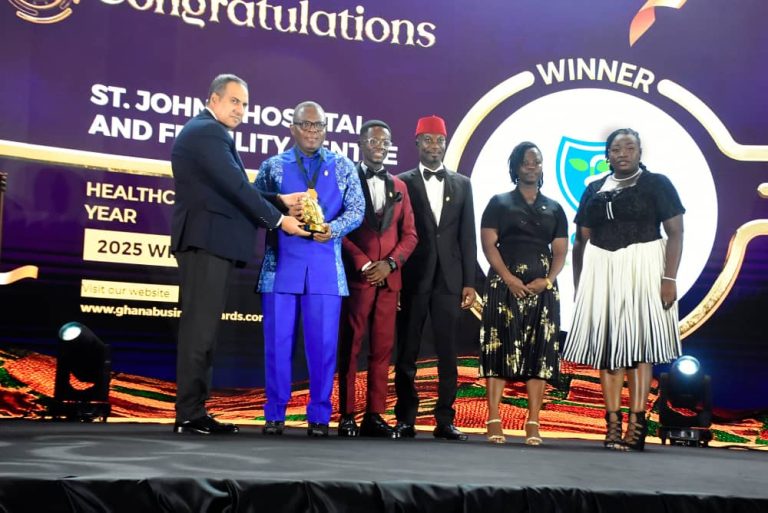
St. John’s Hospital and Fertility Centre has been honoured as the Healthcare Provider of the Year at the 8th Ghana Business Awards, held at the Kempinski Gold Coast Hotel on Friday, October 24, 2025.

The Ghana Business Awards, regarded as the nation’s premier platform for celebrating excellence, innovation, and transformative impact across industries, recognised the hospital for its exceptional healthcare delivery and contribution to national development.

The award reflects St. John’s Hospital’s commitment to providing a wide range of clinical, diagnostic, and surgical services, including general medicine, internal medicine, ENT, home care, ophthalmology, and obstetrics and gynaecology, among others.

According to the awarding board, the facility is equipped with state-of-the-art imaging and laboratory systems, enabling it to operate as a one-stop centre offering specialised and auxiliary services tailored to patient needs.

This year’s Ghana Business Awards was held under the theme, “Creative Economy Revolution through Innovation: Redefining Ghana’s GDP Landscape.”

In response to the honour, Afia Sarfo, Head of Procurement at St. John’s Hospital and Fertility Centre, expressed gratitude, saying: “This remarkable recognition is not just about St. John’s Hospital, but a testament to the collective effort of our incredible team, our clients, and partners who continue to believe in our vision. It reinforces the hospital’s commitment to offering innovative solutions to healthcare.”

DISCLAIMER: The Views, Comments, Opinions, Contributions and Statements made by Readers and Contributors on this platform do not necessarily represent the views or policy of Multimedia Group Limited.

DISCLAIMER: The Views, Comments, Opinions, Contributions and Statements made by Readers and Contributors on this platform do not necessarily represent the views or policy of Multimedia Group Limited.

DJ Sly King tipped to win big at 2025 Guinness Ghana DJ Awards

0

DJ Sly King, popularly known as The Unstoppable DJ Sly King, popularly known as The Unstoppable

DJ Sly King, popularly known as The Unstoppable, is the leading favorite to sweep multiple awards at this year’s Guinness Ghana DJ Awards, happening on Saturday, November 29th, at the Palm Convention Center.

The celebrated Ghanaian DJ has emerged as the most nominated record spinner for the 2025 edition, reflecting his exceptional year of dominance on the turntables. His competitors include DJ Vyrusky, DJ Lord OTB, DJ Millzy, AD DJ, DJ Loft, and TMSKDJ.

DJ Sly King earned nominations in several major categories, including:

• DJ of the Year

• Mobile DJ of the Year

• Male Radio DJ of the Year

• Afrobeats DJ of the Year

• Nocturnal People’s Choice

• Best DJ (Greater Accra)

• Event DJ of the Year

• DJ/Artist Collaboration of the Year

During the year under review, DJ Sly King delivered over 50 electrifying performances at major events across Ghana and beyond, cementing his reputation as one of Africa’s most sought-after DJs.

Some of His Top Performances Include:

• DJ Sly King Unstoppable Concert

• Unstoppable Rave at KTU (Koforidua)

• Hey Ibiza Festival

• Tech in Ghana (Accra Edition)

• Detty Splash

• Fuse ODG’s Kente Party

• The Mainstack Africa Launch

• Rapperholic: The Homecoming

• Shatta Fest 2025

• Chale Wote Street Art Festival 2025

• Womba Accra Street Art Festival 2025

• Momo Fest 2025 ( Osu )

• Momo Fest 2025 ( Cape Coast )

• DJ Sly King Live at Cape Fetu Afakye Festival 2025

• Stonebwoy’s Up & Running North America Tour (USA)

• Detty Manchester End-of-Year Party (Manchester, UK)

• Ghana Music Awards UK (London)

• Appearances at 042 Night Club (London, UK) , Joy Skype (London, UK) , House of Afrobeats (London, UK)

DJ Sly King live in Atlanta at Redroom, Fantasy

Watsup on Campus at Accra Technical University

* Watsup on Campus at Cape Coast technical university

* Watsup on Campus at University of Energy and natural resources (Sunyani)

* Y Rave Night at UG Mensah Serbah Hall

* UG 67th SRC Week Artist Night

* 3 Music Apocalypse at Accra City Campus

* 3 Music TV Apocalypse at University of Ghana

* Asaase Nation Jamz

• Guinness Ghana DJ Awards Launch

• Sickle Cell & Awareness

• Numerous festival and club appearances across Accra, Cape Coast, Sunyani, Kumasi, Takoradi, Ho, Tarkwa, Lome, and more.

Adding to his impressive achievements, DJ Sly King was recently announced as a member of the Recording Academy’s 2025 Grammy Class, joining an exclusive global community of music professionals who contribute to shaping the future of the Grammy Awards.

As anticipation builds, fans have taken to social media, confidently predicting that DJ Sly King will win big — including the coveted DJ of the Year title — at the 2025 Guinness Ghana DJ Awards.

Dr Afriye denies reports linking him to LHIMS deal

0

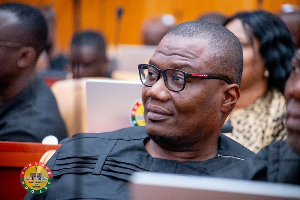
Dr Nana Ayew Afriye is the Ranking Member of Parliament’s Health Committee Dr Nana Ayew Afriye is the Ranking Member of Parliament’s Health Committee

The Ranking Member of Parliament’s Health Committee, Dr Nana Ayew Afriye, has refuted media reports linking him to the Lightwave Health Information Management System (LHIMS) deal.

The report alleged that Dr Afriye and his wife, Maame Yaa Antwi, were involved in the deal signed under the previous government.

Infractions in LHIMS contract now with Attorney General – Health Minister

In a Facebook post on Thursday, October 30, 2025, Dr Afriye strongly rejected the claims, expressing displeasure over the publication and denying any involvement in the alleged transaction.

He stated categorically that the report was false, reiterating that he has no connection whatsoever with the said management system.

According to Dr Afriye, who is also the Member of Parliament for Effiduase-Asokore, the report may be an attempt to use his name for attention. He therefore urged the public to disregard what he described as falsehoods.

“Folks! I’m sorry but this may be another form of madness! It’s FAKE. Nana Ayew Afriye has nothing to do with this fake news from Opera. When you open the link, it’s empty… I’m not sure whether today is 1st April. Cheap portal wanting cheap attention,” he wrote.

The Lightwave Health Information Management System (LHIMS), implemented by the Ghana Health Service in 2018, enables the digital storage and management of patient health records.

Lightwave Contract Saga: Okoe Boye challenges Mintah Akandoh over fine details

The system provides accurate and timely data for hospital administrators, management, healthcare providers, and clinicians, facilitating vital decision-making and improving patient outcomes.

MAG/MA

Watch as Ghanaians share bold ideas to end galamsey

IMF Board likely to approve Ghana’s 5th review by December

0

The International Monetary Fund (IMF) The International Monetary Fund (IMF)

The International Monetary Fund (IMF) is likely to grant board approval for the fifth review of Ghana’s bailout programme in December 2025, IC Research has projected.

This development follows a staff-level agreement reached between the Government of Ghana and the IMF mission in October 2023, with the authorities meeting all six quantitative performance criteria and four indicative targets for the period ending June 2025.

Board approval would trigger a disbursement of US$385 million from the Fund, bolstering Ghana’s forex reserves ahead of the January 2026 Eurobond debt service, estimated at US$689 million.

IC Research noted that the IMF adopted a notably more optimistic tone in the fifth review compared to the gradually softer language used during the first four reviews.

“We took a closer view of the language adopted by the Fund at the end of the fifth review and inferred a more positive and tangibly confident assessment of the latest performance and near-term economic prospects. The Fund described the authorities’ actions to support financial sector stability as ‘strong,’ while indicating that the authorities made ‘notable strides’ in addressing longstanding challenges in the energy sector,” the research firm stated.

The IMF also concluded that macroeconomic stabilization is taking root, with inflation expected to remain within the Bank of Ghana’s medium-term target range of 8.0% ±2.0%, allowing for gradual monetary policy normalization.

“In our view, this indicates the Fund’s confidence in the durability of Ghana’s disinflation trend and support for the Central Bank’s cautious pivot towards policy rate cuts,” IC Research added.

Looking ahead, the IMF expressed its expectation for positive momentum to continue into 2026. This outlook contrasts sharply with the assessments during the first four reviews, which progressively softened—from “strong” in the first review to “generally strong” in the second, “generally satisfactory” in the third, and culminating in a “marked deterioration” in the fourth review, when most indicators deviated from targets.

The more upbeat tone of the fifth review is expected to facilitate a relatively smooth and favorable consideration by the IMF Executive Board in December 2025, enabling the disbursement of US$385 million to support budget operations and balance of payments.

This support is anticipated to enhance Ghana’s net international reserves, which stood at US$8.4 billion in August 2025—equivalent to 3.6 months of import cover, surpassing the programme target of three months by 2026.

All you need to know about Ghana’s new vehicle number plates |BizTech:

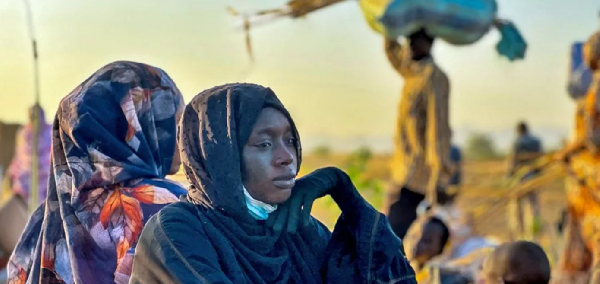
A simple guide to what is happening in Sudan

0

Sudan plunged into a civil war in April 2023 after a vicious power struggle broke out between its army and a powerful paramilitary group, the Rapid Support Forces (RSF).

It has led to a famine and claims of a genocide in the western Darfur region, with fears for the residents of the city of el-Fasher after it was recently captured by the RSF.

More than 150,000 people have died in the conflict across the country, and about 12 million have fled their homes in what the United Nations has called the world’s largest humanitarian crisis.

Here is what you need to know.

Why is there a civil war?

It is the latest episode in bouts of tension that followed the 2019 ousting of long-serving President Omar al-Bashir, who came to power in a coup in 1989.

Huge street protests were calling for an end to his nearly three-decade rule, and the army mounted a coup to get rid of him.

But civilians continued to campaign for the introduction of democracy.

A joint military-civilian government was then established, but that was overthrown in another coup in October 2021.

The coup was staged by the two men at the centre of the current conflict:

1. Gen Abdel Fattah al-Burhan, the head of the armed forces and, in effect, the country’s president

2. And his deputy, RSF leader Gen Mohamed Hamdan Dagalo, better known as “Hemedti”.

But then Gen Burhan and Gen Dagalo disagreed on the direction the country was going in and the proposed move towards civilian rule.

The main sticking points were plans to incorporate the 100,000-strong RSF into the army, and who would then lead the new force.

The suspicions were that both generals wanted to hang on to their positions of power, unwilling to lose wealth and influence.

Shooting between the two sides began on 15 April 202,3, following days of tension as members of the RSF were redeployed around the country in a move that the army saw as a threat.

It is disputed who fired the first shot,ot but the fighting swiftly escalated, with the RSF seizing much of Khartoum until the army regained control of it almost two years later in March 2025.

Who are the RSF fighters?

The RSF was formed in 2013 and has its origins in the notorious Janjaweed militia that brutally fought rebels in Darfur, where they were accused of genocide and ethnic cleansing against the region’s non-Arab population.

Since then, Gen Dagalo has built a powerful force that has intervened in conflicts in Yemen and Libya.

He also controls some of Sudan’s gold mines and allegedly smuggles the metal to the United Arab Emirates (UAE).

The army accuses the UAE of backing the RSF and carrying out drone strikes in Sudan. The oil-rich Gulf state denies the allegation.

The army also accuses eastern Libyan strongman Gen Khalifa Haftar of supporting the RSF by helping it to smuggle weapons into Sudan and sending fighters to bolster the RSF.

In early June 2025, the RSF achieved a major victory when it took control of territory along Sudan’s border with Libya and Egypt.

This was followed by the capture of el-Fasher in late October, meaning it controls almost all of Darfur and much of neighbouring Kordofan.

With the RSF’s recent formation of a rival government, it is likely Sudan will split for a second time – South Sudan seceded in 2011, taking with it most of the country’s oil fields.

What does the army control?

The military controls most of the north and the east.

Its main backer is said to be Egypt, whose fortunes are intertwined with those of Sudan because they share a border and the waters of the River Nile.

Gen Burhan has turned Port Sudan – which is on the Red Sea – into his headquarters, and that of his UN-recognised government.

However, the city is not safe – the RSF launched a devastating drone strike there in March.

This was retaliation after the RSF suffered one of its biggest setbacks, when it lost control of Khartoum – including the Republican Palace – to the army in March.

“Khartoum is free, it’s done,” Gen Burhan declared, as he triumphantly returned to the city, though not permanently.

The city was a burnt-out shell by the time the RSF left, with government ministries, banks, nd towering office blocks standing blackened and burned.

Hospitals and clinics were destroyed, hit by air strikes and artillery fire, sometimes with patients still inside.

The international airport – which was a graveyard of smashed planes – re-opened in mid-October to domestic flights, though its official opening was delayed by a day because an RSF drone hit an area nearby.

The army has also managed to win back near total control of the crucial state of Gezira.

Losing it to the RSF in late 2023 had been a huge blow, forcing hundreds of thousands of civilians to flee its main city of Wad Madani, which had become a refuge for those who had escaped conflict in other parts of the country.

But el-Fasher, which was the last major urban centre in Darfur held by the army and its allies, fell to the RSF at the end of October.

Over 18 months, the RSF laid siege to the city, causing hundreds of casualties, overwhelming the hospital, and blocking food supplies.

It recently stepped uitsit efforts by building an earthen wall around the city to trap residents and stop food from reaching people, and destroyed the nearby Zamzam displacement camp, which had already been hit by famine.

Is there a genocide?

Many Darfuris believe the RSF and allied militias have waged a war aimed at transforming the ethnically mixed region into an Arab-ruled domain.

In March 2024, the UN children’s agency, UNICEF, gave harrowing accounts of armed men raping and sexually assaulting children as young as one.

Some children have tried to end their own lives as a result.

In the same month, campaign group Human Rights Watch (HRW) said the RSF and allied militias might have been carrying out a genocide in Darfur against the Massalit people and other non-Arab communities.

Thousands had been killed in el-Geneina city in a campaign of ethnic cleansing with the “apparent objective of at least having them permanently leave the region,” it said.

HRW added that the widespread killings raised the possibility that the RSF and their allies had “the intent to destroy in whole or in part” the Massalit people.

As this could constitute a genocide, it appealed to international bodies and governments to carry out an investigation.

A subsequent investigation by a UN team fell short of concluding that a genocide was taking place.

Instead, it found that both the RSF and the army had committed war crimes.

However, the US determined in January this year that the RSF and allied militias have committed a genocide.

“The RSF and allied militias have systematically murdered men and boys – even infants – on an ethnic basis, and deliberately targeted women and girls from certain ethnic groups for rape and other forms of brutal sexual violence,” then-Secretary of State Anthony Blinken said.

“Those same militias have targeted fleeing civilians, murdering innocent people escaping conflict, and preventing remaining civilians from accessing lifesaving supplies. Based on this information, I have now concluded that members of the RSF and allied militias have committed genocide in Sudan,” he added.

This led to the US imposing sanctions on Gen Dagalo, followed by similar measures against Gen Burhan.

Sudan’s government filed a case against the UAE in the International Court of Justice (ICJ), accusing it of being complicit in the genocide by funding and arming the RSF.

However, the ICJ refused to hear the case, saying that it had no jurisdiction over it.

The UAE welcomed its ruling, with an official saying that the Gulf state “bears no responsibility for the conflict”.

The RSF also denies committing genocide, saying it was not involved in what it describes as a “tribal conflict” in Darfur.

But the UN investigators said they had received testimony that RSF fighters taunted non-Arab women during sex attacks with racist slurs and saying they would force them to have “Arab babies”.

With reports of atrocities, including mass-killings, now coming out of el-Fash, er, there are concerns about the fate of an estimated 250,000 people in the city, many from non-Arab communities.

What attempts to end the conflict have been made?

There have been several rounds of peace talks in Saudi Arabia and Bahrain,n – but they have failed.

BBC deputy Africa editor Anne Soy says that both sides, especially the army, have shown an unwillingness to agree to a ceasefire.

UN health chief Tedros Adhanom Ghebreyesus has also lamented that there is less global interest in the conflict in Sudan and other recent conflicts in Africa compared to crises elsewhere in the world.

“I think race is in play here,” he told the BBC in September 2024.

The International Crisis Group (ICG) think-tank has called diplomatic efforts to end the war “lacklustre”, while Amnesty International has labelled the world’s response “woefully inadequate”.

Humanitarian work has also been badly affected by the decision of the Trump administration to cut aid.

The WFP says more than 24 million people in the country are facing acute food insecurity.

Aid volunteers told the BBC that more than 1,100 – or almost 80% – of the emergency food kitchens have been forced to shut, fuelling the perception that Sudan’s conflict is the “forgotten war” of the world.

Where is Sudan?

Sudan is in north-east Africa and is one of the largest countries on the continent, covering 1.9 million sq km (734,000 sq miles).

It borders seven countries and the Red Sea.

The River Nile also flows through it, making it strategically important for foreign powers.

The population of Sudan is predominantly Muslim, and the country’s official languages are Arabic and English.

Even before the war started, Sudan was one of the poorest countries in the world, even though it is a gold-producing nation.

Its 46 million people living on an average annual income of $750 (£600) a head in 2022.

The conflict has made things much worse. Last year, Sudan’s finance minister said state revenues had shrunk by 80%.


Promotions, Postings In Police Service

0


President John Dramani Mahama has approved the promotion of four Deputy Commissioners of Police to the rank of Commissioner of Police with effect from October 1, 2025.

A signal message to regional commanders, Police Management Board members and other relevant unit heads on the subject and headed ‘Special Recommendation’ reads, “His Excellency the President of the Republic of Ghana has upon the recommendation of the Police Council approved the promotion of the undermentioned Deputy Commissioners of Police to the rank of Commissioners of Police with effect from 01/09/2025.”

The promoted officers include DCOP/Mr. Emmanuel Twumasi-Ankrah, DCOP/Mr. Teye-Cudjoe, DCOP/Mr. Arhin Kwasi Annor and

DCOP/Mr. Frederick Kofi Blagodzi.

Also promoted from their current ranks of Assistant Commissioners of Police to Deputy Commissioners of Police are ACPOL/Mr. Alex Kwame Safo-Adu, ACPOL/Mr. Francis Nchor, ACPOL/Mr. Francis Kwaku Yiribare, ACPOL/Mr. Solomon Aboninga Ayawine, ACPOL/Mr. John Ferguson Dzineku, ACPOL/Mr. Theordore Hlormenu, ACPOL/Mr. Frank Kwashie Hukporti, ACPOL/Mr. Joseph Hammond Nyaaba, ACPOL/Mr. Adamu Seidu, ACPOL/Mr. Nana Adane Ameyaw Nyamekye (Rev), ACPOL/Ms. Grace Akrofi-Ansah and ACPOL/Mr. Al-Meyaw Abass Kwarasey.

In another development, the Transfer Board has approved with immediate the movement of the following senior officers: COP/Mr.  Emmanuel Teye-Cudjoe, Reg Commr/Ashanti To DG/PPSB/AR; DCOP/Mr. Arthur Osei Akoto Reg Commr/WR to Reg Commr/Ashanti; DCOP/Mr. Joseph O. Bempah, Nat Headquarters /AR to Reg Commr/ER; DCOP/Mr. Oduro Amaning, Reg Commr/BER to National Headquarters/AR; DCOP/Mr. Frank Abrokwah, 2i/c Legal & Prosecution to Reg. Commr/WR; DCOP/Mr. Joseph Owusu-Ansah, 2i/c VR to Reg Commr/BER; ACPOL/Mr. Samuel Okunor Stephen, Director/PSO to 2i/c VR; and ACPOL/Mr. Amos K. Yelisong, Director/NPD to 2i/c WNR.

Try Ofori-Atta in absentia if he fails to appear

0

Private legal practitioner Martin Kpebu has urged the Office of the Special Prosecutor (OSP) to initiate a trial in absentia against former Finance Minister Ken Ofori-Atta, insisting that the law permits such action if the accused has been duly informed but fails to appear.

Speaking on Eyewitness News on Thursday, October 30, 2025, Mr. Kpebu dismissed claims that a person must first appear before a court before a trial in absentia can proceed.

“OSP officials are busy saying that they can’t do a trial in absentia because Ofori-Atta should have attended court once before fleeing, which is not our law. Our law — Article 19(3a) — says that if you are informed about a criminal trial and you don’t come, then the trial can go on without you. That is what our constitution says,” he stated.

He added that physical presence in court is not always a prerequisite for prosecution, noting that the former minister could still be tried through virtual means if he remains outside the country.

“It is not the law that the person must always physically come. What we have here is Ofori-Atta, who says he is willing to cooperate with investigators, so take his offer. He said he would do a Zoom call, etc., so take his offer,” he said.

Mr. Kpebu’s comments come in response to the Special Prosecutor, Kissi Agyebeng, who earlier disclosed at a press conference on Thursday, October 30, that his office is collaborating with the Attorney General’s Department to extradite the former Finance Minister as part of ongoing investigations into the controversial Strategic Mobilisation Ghana Limited (SML) contracts.

NPP Minority slams Majority Caucus over absenteeism in Parliament 

0

By Godwill Arthur-Mensah/ Elsie Appiah-Osei  

Accra, Oct.30, GNA–The New Patriotic Party (NPP) Minority Caucus in Parliament has criticised the ruling National Democratic Congress (NDC) Majority Caucus for dereliction of duty, citing persistent absenteeism at the plenary, thereby, crippling government business.  

The Caucus said the persistent absenteeism of the Majority Caucus with “super majority” was making it difficult for the House to form a quorum. 

Speaking to the Parliamentary Press Corps on Thursday, Mr Samuel Abu Jinapor, Member of Parliament for Damongo and a leading figure of the Caucus, expressed deep concern over the situation, saying, “This is unfortunate and embarrassing”. 

He indicated that at the start of parliamentary proceedings on Thursday, October 30, there were only 81 members in the Chamber. 

Currently, the NDC has 185 seats with four independent MPs deciding to do business with the Majority side, thereby bringing their numbers to 189, while the NPP Minority has 87 seats. 

Mr Jinapor said: “The Minority is prepared and ready to help the Majority to do government business, but the NDC Majority is not ready, and it seems after taking power, they’re taking Ghanaians for granted”. 

According to Mr  Jinapor, the Majority Caucus, which holds 189 out of the 276 seats in Parliament, has failed to consistently show up for plenary sessions, thereby obstructing the legislative process. 

 “We cannot conduct government business if we cannot even form a quorum,” he lamented. 

The issue was also raised by Speaker Alban Bagbin during Wednesday’s sitting on October 29.  

The Speaker warned that he would be forced to take action if the trend of absenteeism continued, stressing the importance of attendance and active participation in parliamentary duties. 

The Minority Caucus has called for accountability and urged the leadership of the Majority to address the matter urgently.  

They argued that the absence of MPs undermines the democratic process and erodes public confidence in the institution. 

As Parliament grapples with this internal crisis, observers are watching closely to see whether Speaker Bagbin would follow through on his warning and what measures might be implemented to restore discipline and commitment among lawmakers. 

Earlier in the chamber, Habib Iddrisu, First Minority Chief Whip and Member of Parliament for Tolon, referenced article 102 of the 1992 Constitution on the issue of lack of a quorum to do government business. 

This caused the Speaker Bagbin to let the bell ring for 10 minutes. 

 Afterwards, the Speaker asked the Clerks to count the number of MPs at the plenary. When counting was conducted, the Speaker announced that there were 102 members present in the Chamber therefore forms a quorum to do government business. 

At the moment, there must be one-third of the MPs to do government business, which translates to 92 members. 

GNA 

Edited by Linda Asante Agyei 

Fire destroys China City Mall in Kumasi

0

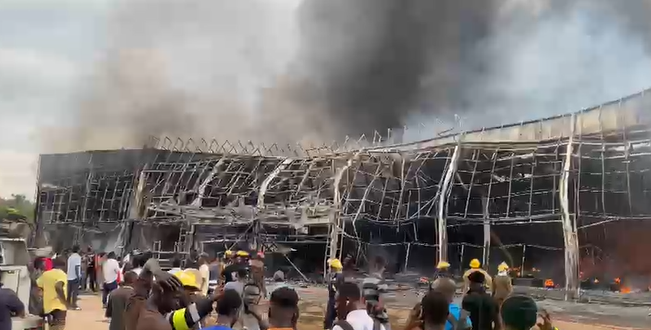
Fire has destroyed the China City Mall at Santasi in Kumasi, causing heavy damage to the building and goods.

The fire started on Thursday, October 30, and quickly spread through the mall, with thick smoke visible from a distance.

Early reports suggest it began at the back of the building before engulfing the entire structure.

Firefighters from the Ghana National Fire Service worked to control the blaze, but the mall, which contained shops selling groceries, electronics, and home items, was completely lost.

Witnesses said the fire moved so fast that most traders could not save their goods.

China City Mall, which opened earlier this year, had become a popular shopping spot for Kumasi residents.

The Ghana National Fire Service has begun investigating the cause of the fire and the extent of the damage.


Protect your integrity — Health Minister tells Okoe-Boye amidst LHIMS saga

0

Health Minister Kwabena Mintah Akandoh has urged former Health Minister Dr. Bernard Okoe-Boye to be careful in his public statements regarding the ongoing controversy surrounding the Lightwave Health Information Management System (LHIMS) contract.

Speaking on Adom TV’s Badwam on Thursday, Mr. Akandoh said that while political parties often encourage their members to speak in defence of the government, personal integrity should always come first.

“I have seen Okoe-Boye issue statements regarding the ongoing software saga,” Akandoh said. “My advice to him is this: issues of this nature may prompt your party to push you to speak, but you must remember that your integrity is what lasts beyond political office. He has to be careful with everything he says.”

He further warned that those encouraging public defence may abandon supporters if the situation turns unfavourable.

“The same people pushing you, if things do not go well and you are disgraced, when power changes hands, you will be pushed aside. They will tell you that you have no integrity,” he cautioned.

Dr. Okoe-Boye, who served under the previous administration, recently defended the engagement of LHIMS for Ghana’s national health data platform, insisting the contract followed due process and aimed to modernise health data management.

Mr. Akandoh, however, stated that the contract did not deliver value for money and revealed that the government has referred the matter to the Attorney-General for legal and security advice after the vendor allegedly withheld access to the health data platform following the contract’s expiration.

DISCLAIMER: The Views, Comments, Opinions, Contributions and Statements made by Readers and Contributors on this platform do not necessarily represent the views or policy of Multimedia Group Limited.

DISCLAIMER: The Views, Comments, Opinions, Contributions and Statements made by Readers and Contributors on this platform do not necessarily represent the views or policy of Multimedia Group Limited.

Kween Peppa wins Best New Artiste at 2025 Ghana Governance & Leadership Awards

0

Afro-Fusion artiste, Kween Peppa Afro-Fusion artiste, Kween Peppa

Afro-Fusion artiste Kween Peppa has been honoured with the Best New Artiste of the Year award at the 2025 Ghana Governance & Leadership Awards, a prestigious national event that honors outstanding individuals making an impact through creativity, innovation, and leadership. The recognition celebrates her rising influence and distinctive sound within the music scene.

Blending the rhythm of the Caribbean with the heartbeat of Africa, Kween Peppa’s sound fuses reggae, trap, and soulful Afro influences to convey her message of Freedom, Wealth, and Legacy. Her music reflects authenticity, spirituality, and divine feminine energy.

Her debut EP, “We Done Dun,” introduces her artistic vision through tracks like “She Worth It,” “Gratitude ” and “King Flame.” The project embodies her commitment to empowerment and self-expression, positioning her as a bold new force in Afro-Fusion.

Stream EP below:

https://www.youtube.com/watch?v=videoseries

Former Buffer Stock CEO Abdul-Wahab, wife get GH¢150 million bail

0

Hanan Abdul-Wahab, his wife, Faiza Wuni, and three others have been charged with 21 criminal offence Hanan Abdul-Wahab, his wife, Faiza Wuni, and three others have been charged with 21 criminal offence

A former CEO of the National Food and Buffer Stock Company, Hannan Abdul-Wahab, and his wife, Faiza Seidu Wuni, both standing trial in the ongoing Buffer Stock Company case, have been granted bail totaling GH¢150 million.

The bail was granted by the Accra High Court, presided over by Justice Audrey Kocuvi-Tay, on Thursday, October 30, 2025.

The two pleaded not guilty to 24 counts, including stealing, defrauding by false pretences, intentional dissipation of public funds, money laundering, and using public office for profit.

Hannan Abdul-Wahab was granted bail in the sum of GH¢100 million with six sureties, four of whom must be justified with landed property.

The sureties are required to submit copies of their Ghana Cards and must inform and update the court of any change in address.

Here are the 24 charges AG has filed against former NAFCO CEO and his wife

Faiza Seidu Wuni, the second accused, was granted bail in the sum of GH¢50 million with four sureties, three of whom must also be justified with landed property.

She is required to deposit all her passports and report to the investigator every Wednesday.

The court has also placed both accused persons on a stop list at all entry and exit points in the country.

The case has been adjourned for a Case Management Conference on November 27, 2025.

SP/AE

Tragedy as farmer drowns while seeking loan to send child to SHS

The wait is over! The GhanaWeb Excellence Awards 2025 is officially launched. Let’s Celebrate impact, innovation and excellence across Ghana.

Who deserves to be honoured this year?


Nominate now 👉 https://ghanaweb.com/ghanaexcellenceawards/nominate

ADB holds branch managers strategy session for sustainable growth

0

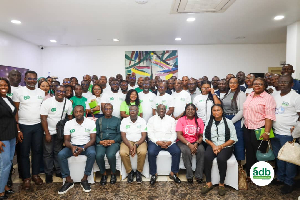
The session brought together branch managers, executive committee members, and senior management The session brought together branch managers, executive committee members, and senior management

The Agricultural Development Bank PLC (ADB) has held a two-day strategic session for its branch managers, aimed at driving service excellence and setting the tone for a stronger performance going forward.

The session, which took place on October 23 and 24, 2025, brought together branch managers, executive committee members, and senior management to review the bank’s performance, share insights, and realign strategies for the last quarter of this year as well as expectations for 2026.

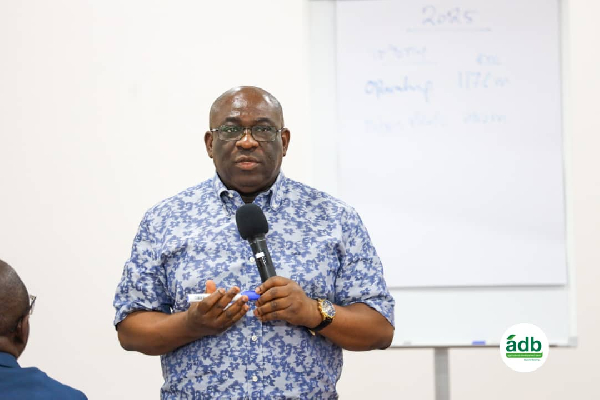
Opening the session, the Managing Director of ADB, Edward Ato Sarpong, set the tone by sharing inspiring success stories from leading multinational companies, urging participants to adopt bold and innovative thinking in their operations.

“The global business environment is evolving rapidly, and so must we. We cannot continue to do things the same way and expect different results. The time has come to think differently, act decisively, and lead with creativity,” Ato Sarpong charged.

He further reiterated management’s resolve to strengthen ADB’s leadership in agribusiness financing, digital transformation, and customer service excellence, noting that the Bank’s 60th Anniversary milestone should mark a new era of growth and innovation.

On his part, Deputy Managing Director (Operations), Professor Ferdinand Ahiakpor, encouraged branch leaders to demonstrate ownership and accountability in driving results.

He described the strategy session as a “crucial bridge between vision and execution,” urging managers to deepen customer relationships and embrace technology as a growth enabler.

“The branch network is ADB’s frontline strength. As we prepare for 2026, we must shift from transactional thinking to strategic engagement, understanding customer needs, leveraging data, and offering tailored financial solutions that reinforce trust in the ADB brand,” Prof. Ahiakpor said.

The general manager in charge of retail banking, Frank Okyere-Adarkwa, re-echoed the purpose-driven agenda of the bank. He reiterated the need for proactiveness in ensuring service experience that delivers value and convenience for our customers.

“We must live by our corporate social architecture of delivering exceptional service experience that creates positive top-of-mind customer recall and leads to repeat patronage and referrals by our customers and stakeholders,” Okyere-Adarkwa stated.

The Head of Marketing and Communications, Mohammed Ali, underscored the importance of consistent brand communication and customer engagement in achieving the Bank’s strategic goals.

“Our marketing efforts must speak the same language as our strategy, one of relevance, visibility, and impact. As we move into the next phase of the Bank’s growth journey, every branch is a brand touchpoint, and every staff member a brand ambassador,” Ali remarked.

The Branch Managers’ Strategy Session forms part of the Bank’s broader effort to ensure alignment between management and field operations. Discussions centered on consolidating gains in 2025 and exploring new business frontiers under ADB’s Beyond Banking brand direction.

Angry lady blasts Apostle Femi Lazarus over menstruation comments, netizens react

0

Apostle Lazarus and unknownj lady who called him out Apostle Lazarus and unknownj lady who called him out

Apostle Femi Lazarus is under fire after a viral video showed him making controversial comments about women and their behaviour during menstruation.

In the clip, the popular preacher told women not to use menstrual pains as an excuse for rudeness or emotional outbursts.

He shared that “bad character is bad character,” regardless of hormonal changes, and even referenced women in the Bible who, according to him, “maintained good behavior despite their monthly flow.”

The message, which was intended to promote emotional discipline, didn’t sit well with many female viewers, one of whom dragged the cleric in a fiery online rant.

Switching between English and Igbo, the lady warned that she hoped never to meet Lazarus in person, hinting she would “teach him a lesson” if she ever did.

She accused the preacher of veering off his spiritual calling, saying, “Talk about Jesus Christ, not about women’s bodies.”

The critic further challenged him to return to preaching about faith and victory over Satan instead of “policing women’s pain.”

According to her, every time the pastor speaks about women, “one girl will rush to my DM with his picture, blushing and saying how handsome he is.”

This isn’t the first time Femi Lazarus has been at the center of controversy. Just months ago, he came under fire for his comments about gospel singers, which many fans labeled “judgmental” and “insensitive.”

Many social media users have reacted differently to pastor Lazarus’s remarks as well as the lady’s reaction.

See some of the comments and the video below:

vivianekpewu_ “No matter what, Respect man of God”

ugomma.loveth_”Mada,m are you sure you are ok?”

morenikeji_”Has he offended her before. This is a sound person. al”

eenation_77_ “Public apology please. She’s one of my patients and we have been looking for her everywhere.”

ifyogbugo1_”Sometimes when people face the wrath of God, don’t ask God why”

Mahama and Macron strengthen Ghana-France ties at Paris Peace Forum 

0

By Iddi Yire  

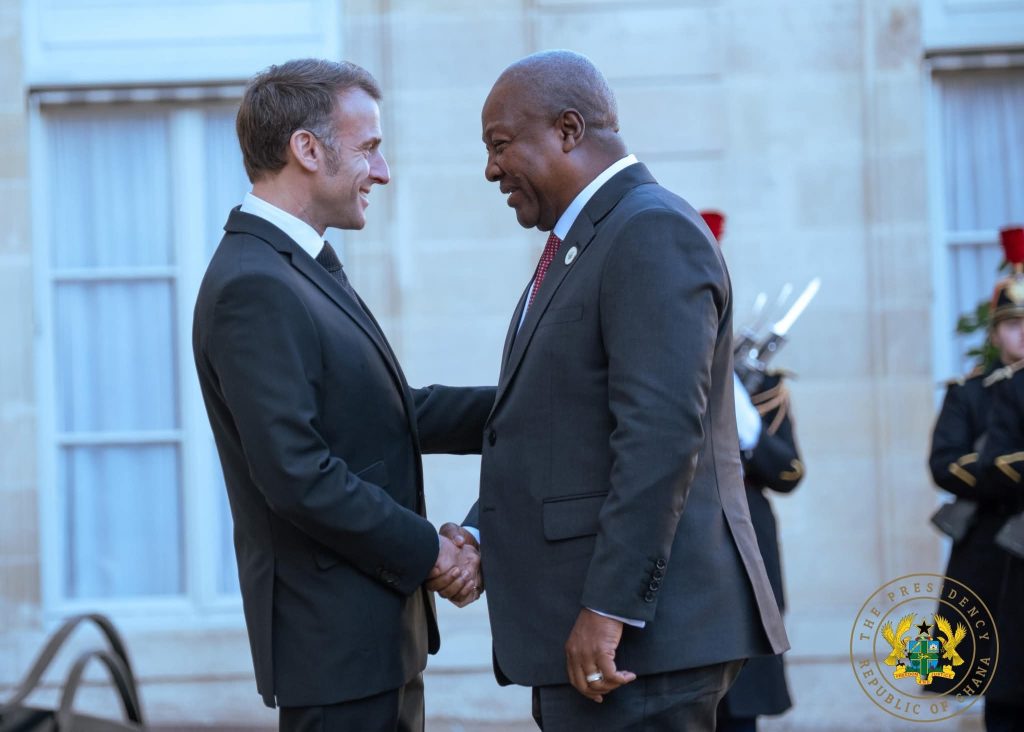
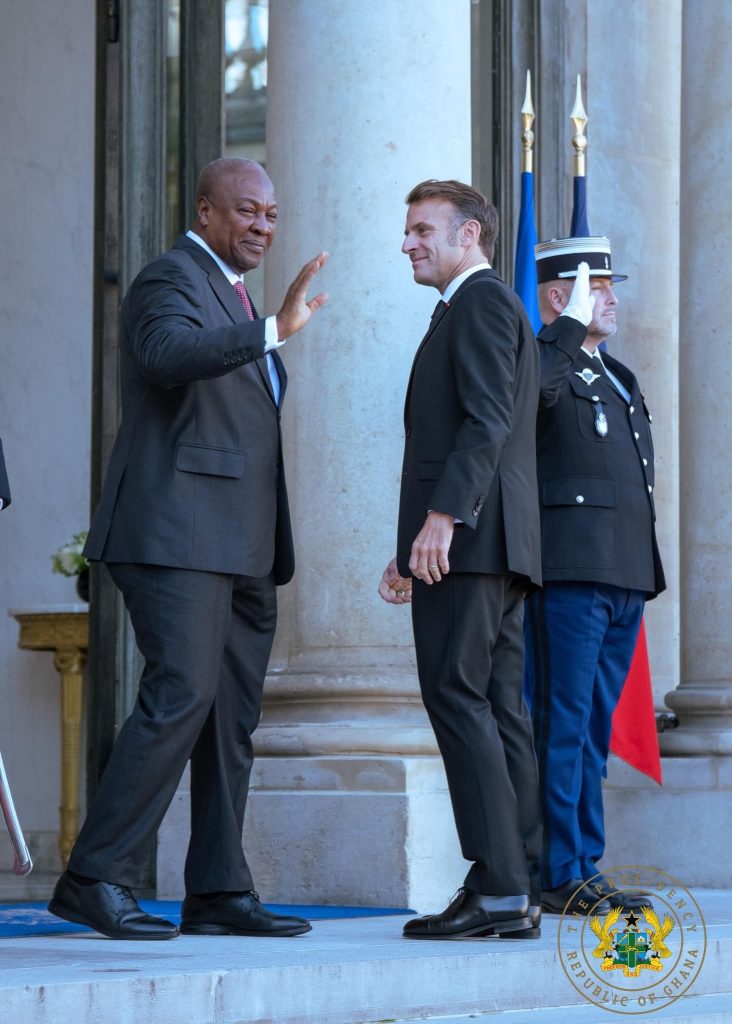
Accra, Oct 30, GNA – President John Dramani Mahama of Ghana and French President, Emmanuel Macron, held extensive bilateral talks at the Élysée Palace on Thursday, discussing security cooperation, economic development, and regional stability on the sidelines of the 2025 Paris Peace Forum. 

A statement issued by Ghana’s Presidency said the meeting opened on a solemn note, with President Macron offering condolences for the recent passing of Ghana’s former First Lady, Nana Konadu Agyeman-Rawlings. 

It noted that both leaders praised the Paris Peace Initiative and the strengthening of relations between Ghana and France.  

A key focus of the talks was Ghana’s request for French assistance in combating piracy in its territorial waters.  

President Mahama sought support to protect Ghana’s maritime integrity from increasing piratical threats in the Gulf of Guinea. 

The two leaders also discussed a French concessionary loan for Ghana’s health sector that is awaiting parliamentary approval.  

President Mahama asked his French counterpart to use his influence with the International Monetary Fund to secure Ghana’s access to the facility from the French Development Bank, noting Ghana’s improved debt-to-GDP ratio. 

President Mahama, in his capacity as the African Union (AU) Champion of African Financial Institutions, advocated for collaboration to renegotiate loan agreements with lower interest rates for infrastructure projects.  

He emphasised Ghana’s role as home to the African Continental Free Trade Area (AfCFTA) secretariat and the need for enhanced road infrastructure to facilitate intra-African trade. 

President Mahama highlighted Ghana’s ambitious one-million-coders programme, which has already registered 200,000 students.  

He requested French support to train additional French language teachers to improve language education in Ghanaian schools. 

President Macron noted several upcoming opportunities for collaboration, including the VivaTech Summit in Nairobi in May 2026, where Ghana could showcase its digital innovation capabilities, the African Union-European Union summit in Angola, and the June 2026 G7 summit, where France would advocate for increased support for Ghana. 

President Mahama raised the subject of reparations for slavery, which Ghana is currently championing.  

President Macron pledged support for the initiative, noting that France had criminalised slavery, while cautioning that the reparations discussion should acknowledge the involvement of various actors beyond Western powers. 

The leaders discussed the deteriorating security situation in the Sahel region, particularly terrorist incursions in Mali and other countries of the Alliance of Sahel States (AES).  

President Macron commended President Mahama’s leadership in the subregion, and Ghana’s economic reforms, pledging continued French support for Ghana’s development agenda. 

GNA 

Christian Akorlie  

FIC clears McDan, Nii Armah-Quaye of financial misconduct

0

The Financial Intelligence Centre (FIC) has exonerated prominent Ghanaian businessmen Daniel McKorley, popularly known as McDan, and Richard Nii Armah-Quaye after thorough investigations found no evidence of financial wrongdoing.

The FIC in March 2025 froze the accounts of the two entrepreneurs as part of a wider inter-agency probe into alleged financial irregularities.

The decision was taken in accordance with Section 56(1) of the Anti-Money Laundering Act, 2020.

Chief Executive Officer of the FIC, Ing. Kwadwo Twum Boafo in an interview with GHOne TV, confirmed that the accounts of both men, which were previously frozen during an inter-agency probe, have now been unfrozen following a conclusive determination that there was no basis for further action.

“McDan’s issue has been resolved. His accounts are unfrozen. The accounts of Richard Nii Armah-Quaye were also unfrozen after it was determined there was no need to proceed,” Ing. Twum Boafo said.

He praised the two entrepreneurs for fully cooperating with investigators, noting that their transparency helped clarify the legitimacy of their business operations.

“He came here, sat down with us and gave a thorough explanation of what he does, and there was no problem. We deal with people fairly, there are no personal vendettas,” he emphasized.

Kwadwo Twum Boafo further dismissed claims of political bias in the Centre’s operations, stressing that the FIC works strictly based on evidence and due process to protect Ghana’s financial system from abuse.

He reiterated the agency’s commitment to strengthening Ghana’s anti-money laundering regime and urged citizens to trust state institutions to act fairly and independently.

SML lacked tools and competence to run audit and revenue assurance services – OSP

McDan and Nii Armah-Quaye’s cleared, bank accounts unfrozen after FIC probe

0

Nii Armah-Quaye and McDan
Ghanaian businessmen Daniel McKorley, popularly known as McDan, and Richard Nii Armah-Quaye have been cleared of any wrongdoing by the Financial Intelligence Centre (FIC).
The two Ghanaian businessmen have been cleared following detailed investigations into their financial transactions.
It will be recalled that the Financial Intelligence Centre (FIC) in March 2025 froze the accounts of the two entrepreneurs as part of a wider inter-agency probe into alleged financial irregularities.

Full text: OSP’s report on contractual arrangements involving Finance Ministry, GRA and SML

0

  1. The Office of the Special Prosecutor (OSP) presents this corruption and corruption-related investigation report on contractual arrangements involving Ministry of Finance (MoF), Ghana Revenue Authority (GRA), and Strategic Mobilisation Ghana Limited (SML).
  • This report is founded on sections 2 and 3 of the Office of the Special Prosecutor Act, 2017 (Act 959) and regulation 31(1)(g) of the Office of the Special Prosecutor (Operations) Regulations, 2018 (L.I. 2374) – which mandate the OSP to investigate and prosecute allegations of corruption and corruption-related offences involving public officers, politically exposed persons and persons in the private sector under any relevant law; to recover and manage assets; and to publish detected acts of corruption as a measure to prevent corruption.

Ministry of Finance (MoF)

  • MoF is one of the central management agencies of the public services of the Republic of Ghana. It is mandated to ensure effective and efficient macroeconomic and financial management of Ghana’s economy. It is headed by the Minister of Finance.

Ghana Revenue Authority (GRA)

  • GRA is a statutory authority with the responsibility of tax and customs administration of Ghana. It is headed by the Commissioner-General.

Strategic Mobilisation Ghana Limited (SML)

  • SML is a private company limited by shares and incorporated in Ghana. It was originally incorporated on 14 February 2017 as Strategic Mobilisation Enhancement Limited (SMEL). Its stated principal activities are general trading and services and import and export of general goods. Its directors are Evans Adusei, Margaret Adusei, Esther Adusei, and Patrick Adusei. Its controlling mind and owner is Evans Adusei.
  • By a special resolution and with the approval of the Registrar of Companies, the company’s name was changed to Strategic Mobilisation Ghana Limited on 22 November 2017. The directorship, beneficial ownership, and company structure remained the same after the change of name.

       The Complaint

  • In a written complaint dated 18 December 2023 and addressed to the Special Prosecutor by Evans Aziamor-Mensah, Adwoa Adobea-Owusu, and Manasseh Azure Awuni – journalists with The Fourth Estate, a non-profit investigative journalism project of Media Foundation for West Africa, the complainants petitioned the OSP to investigate contracts between MoF, GRA, and SML for possible corruption and a breach of the Public Procurement Act.
  • The complainants alleged that Ghana stood to lose One Hundred Million United States Dollars (US$100,000,000.00) yearly if the contractual arrangements involving MoF, GRA, and SML are not abrogated. The complainants based their assertion in the context of their investigation which they commenced in December 2022 on the back of reports that suggested that Ghana was losing hundreds of millions of Cedis in revenue through lapses in the downstream petroleum sector.
  • The complainants stated that their investigation revealed that though there existed adequate measures instituted by National Petroleum Authority (NPA) and GRA to prevent loss of revenue in the downstream petroleum sector, MoF and GRA had contracted SML to undertake a parallel and an altogether unnecessary exercise in the sector in the guise of revenue assurance steeped in fantastic claims by SML of its value addition, which turned out to be false. In the reckoning of the complainants, GRA did not employ the purported input of SML for revenue collection.
  1. The complainants maintained that notwithstanding the non-value addition of revenue generation by SML in the downstream petroleum sector, MoF and GRA had proceeded, based on false claims, to expand the scope of SML’s contracts to include revenue assurance in the upstream petroleum and minerals sectors.
  2. The complainants further maintained that the contractual arrangements involving MoF, GRA, and SML stand to corruptly strip Ghana of One Hundred Million United States Dollars (US$100,000,000.00) yearly for five years with a further renewal option of another five years.
  1. The complaint was based on an audio-visual investigative journalism piece, which was widely broadcast in the media.

       OSP Preliminary Investigation

  1. The Special Prosecutor, upon determining that the complaint was within the mandate of the OSP, promptly authorised relevant officials of the OSP to commence preliminary investigation into the matter in accordance with regulation 5(1)(b) of L.I. 2374.
  1. The preliminary investigation was conducted with as little intrusion into the privacy of individuals and the business operations of corporate entities as the circumstances permitted.

       Presidential Intervention

  1. Following extensive media coverage on what had become known as the SML scandal, the President of the Republic, by a letter dated 29 December 2023, appointed KPMG Ghana (KPMG) – an audit, tax and advisory services firm – to audit, within two weeks, “the transaction” between GRA and SML. The President stated the following as KPMG’s terms of reference:
  1. Conduct an audit to ascertain the rationale or needs assessment performed prior to the contract approval by GRA; and assess how the arrangement aligns with specific needs;
    1. Assess the appropriateness of the contracting methodology, verifying compliance with legal standards and industry best practices in the procurement process for the selection of SML;
    1. Evaluate the degree of alignment between current activities and the stipulated contract scope, identifying any deviations;
    1. Evaluate the value or benefit that SML has so far offered to GRA through this engagement;
    1. Review the financial arrangements, including pricing structures, payment terms and the resolution of any financial compliance issues; and
    1. Submit a report on your findings on the above, together with appropriate recommendations.
  1. On 2nd January 2024, the Director of Communications at the Jubilee House released a press statement informing the public of the KPMG appointment; and also that the President had directed the suspension of the performance of the SML contracts pending the submission by KPMG of the audit report.
  2. By a letter dated 2 January 2024, the Chief of Staff at the Presidency transmitted the President’s directive of the suspension of the performance of the SML contracts to the Commissioner-General of GRA.

         KPMG Report

  1. KPMG submitted its audit report to the President on 27 March 2024, with the following key findings:
  1. There was no specifically commissioned and purposed needs assessment report, except standalone industry analysis and reports which were issued post the contracting of SML.
  2. SML was initially contracted by GRA without the required approval of the Public Procurement Authority (PPA).
  1. There was no evidence of the required Parliamentary Approval for the award of multi-year contracts to SML.
  1. There was no evidence that the 2018 and 2019 contracts awarded to SML were effected with the required consideration and approval by the GRA Board.
  2. GRA did not institute monitoring and evaluation processes to assess the performance of SML in respect of transaction audit services.
  • SML delivered partially on the transaction audit services and GRA may not have obtained all the expected benefits from the service.
  • SML delivered partially on the external price verification services and GRA may not have obtained all the expected benefits from the service.
  • In respect of measurement audit for downstream petroleum, there was reported incremental volume that is attributable to the involvement of SML determined at 1.70 billion litres for the period, which translates to incremental revenue of GHC2.45 billion attributable to the involvement of SML.
  1. In respect of upstream petroleum audit, SML was yet to deploy and implement its system to commence operations at the time of the KPMG review; and that activities toward implementation have been halted following the President’s directive to suspend the performance of the contract.
  • SML was yet to commence measurement audit of the minerals sector at the time of the KPMG review.
  1. On the back of their key findings, KPMG offered the following relevant resolution options by way of recommendations:
  2. The Consolidated Assurance Revenue Services contract signed in October 2023 present complexities, including legal and cost value concerns that need to be resolved. If the contract is terminated it could trigger specific financial obligations on the Government of Ghana (GoG) and GRA as follows:
  1. liability to settle SML for services rendered but not yet paid;
  • GoG and GRA are not entitled to a refund of any compensation already paid to SML, regardless of the termination clause; and
  • if the contract is terminated without cause, GoG and GRA become liable to pay SML an equivalent of the fair value of SML’s investment in the contract;
  • If the contract is terminated, the investment claimed to have been made by SML should be validated as SML did not provide supporting documentation on its investment in the contract.
  • KPMG appeared to favour orderly resolution – based on systematic impact, cost to state, sustainability, complexity and deliverability, and public trust and implications – as follows:
    • In respect of upstream petroleum and minerals audit –
      • parliamentary approval should be sought to regularise the contract;
      • the contract should be subjected to a technical needs and value-for-money assessment to ensure that the services are justified and the fees are proportionate to and commensurate with the services rendered; and
  • MoF, GRA, and SML should conduct extensive engagement with relevant stakeholders to ensure awareness creation, and stakeholder buy-in and alignment.
    • In respect of transaction audit and external price verification – these services, partially delivered, require comprehensive review

to assess their ongoing relevance, especially viewed in light of the implementation of the Integrated Customs Management System (ICUMS), which has portended a duplication of external price databases and research services provided by SML. Utilising ICUMS capabilities for external price verification, the services provided by SML should be reassessed to optimise efficiency and adapt to evolving business dynamics.

  • In respect of downstream petroleum audit – based on the reckoning that SML has gained over four(4) years’ experience and has become more proficient, the contract price should be renegotiated, including the consideration of shifting from a variable to a fixed fee structure.
  1. Consideration should be given to incorporating periodic monitoring and evaluation at least every two years to formally assess the performance of the components of the contract and related key performance indicators.

      OSP Full Investigation

  • Upon the conclusion of preliminary investigation, and upon the reckoning that the facts and circumstances of the case reasonably indicated that an investigation may be conducted to prevent or prosecute corruption or a corruption-related offence, especially in light of the KPMG report which the OSP incorporated into its preliminary investigation, the Special Prosecutor, in pursuance of regulations 5(1)(c) and 6(1) of L.I. 2374, assigned the case to authorised officers of the OSP for a full investigation.
  • Our review of the KPMG report firmed up our opening of a full investigation on three main grounds. First, the major factual findings in the KPMG report tallied with our preliminary findings. Second, the KPMG report, much like our preliminary investigation, turned up more critical questions than answers, which required further investigation. Third, the KPMG audit work and outcome differed significantly from the OSP investigation and likely outcome.
  • While KPMG rightly identified the overall objective of its assignment as reviewing the work and activities of SML in relation to the contracts with the State and assessing the propriety of procurement and contracting processes as well as the appropriateness of cost value analysis in the performance of the contracts, the OSP’s work in this case is a criminal corruption and corruption- related investigation, of not just assessing the propriety and appropriateness of acts and activities in the context of the SML contracts but also examining the

criminal culpability or otherwise of implicated persons – which is wider in scope and outlook than the audit work of KPMG.

  • Then again, while the OSP’s preliminary findings accorded with the major factual findings in the KPMG report, the OSP found itself unable to agree with some major conclusions drawn by KPMG, especially in respect of accountability and value-for-money.
  • The OSP investigation was concluded on 3 October 2025, after extensive surveillance, comprehensive review and analysis of hundreds of relevant and related documents at MoF, GRA, and PPA; and digital and electronic review and analysis and of thousands of relevant and related documents and computer servers and hard-drive components retrieved from two premises of SML at Osu in Accra and in Tema, and assets of SML at relevant depots; and the discovery and validation of electronic communication among the persons of interest.
  • The OSP conducted comprehensive interviews of thirty-one persons of interest in respect of the investigation. The identities of the interviewees are disclosed where necessary.
  • The OSP collaborated with several public institutions including Ministry of Finance, Ghana Revenue Authority, National Security Secretariat, Ghana Police Service, National Intelligence Bureau, National Signals Bureau, Financial Intelligence Centre, National Petroleum Authority, Petroleum Commission, Public Procurement Authority, and Office of the Registrar of Companies.
  • The OSP also collaborated with several financial institutions.
  • In augmentation of the expertise and skill of the authorised officers of the OSP, the Office also relied on expert opinion of persons in the revenue assurance set- up in transaction audit, external price verification, measurement audit of downstream petroleum, upstream petroleum audit, and measurement audit in the minerals sector. KPMG officers also assisted the OSP in the verification of KPMG’s analysis and conclusions.
  • The OSP investigation establishes that:
  1. There was no genuine need for contracting SML for the obligations it purported to perform and that the contracts were secured for SML through self-serving official patronage, sponsorship and promotion based on false and unverified claims.
  1. The SML contracts were attended by egregious statutory breaches as mandatory prior approvals were wantonly disregarded by relevant officials who acted with increased emboldened impunity.
  1. There was no established financial management system of monitoring and verification to ensure that the Republic was obtaining the value for the money it was paying to SML and that the payment channels of payments to SML were set on automatic mode detached from actual performance, causing financial loss to the Republic.
  2. The investigation outcomes are based on the following events and analysis:

The Genesis

  • On 27 January 2017, Kenneth Nana Yaw Ofori-Atta assumed office as the Minister of Finance of Ghana. He would serve in this position till 14 February 2024. Barely three weeks after Mr. Ofori-Atta’s assumption of office, SMEL was incorporated on 14 February 2017 by a timber merchant, Evans Adusei, with the company’s stated principal activities as general trading and services and import and export of general goods. A little over four months after its incorporation, the Commissioner-General of GRA, Emmanuel Kofi Nti presented SMEL (a company he had barely heard of), to PPA seeking approval to sole-source SMEL as a service provider for enhanced classification, valuation, and risk management platform in the customs set-up.
  • These events – the assumption of office by Mr. Ofori-Atta, the incorporation of SMEL by Mr. Adusei, and the application for sole-sourcing of SMEL by Mr. Nti – seemed unrelated at first glance. However, a closer look at subsequent events from June 2017 to 14 February 2024, when Mr. Ofori-Atta’s tenure ended, show a tightly-knit and non-coincidental association of the prior identified events as the precursors of a masterful and mischievously crafted scheme designed by Mr. Ofori-Atta, immediately upon assumption of office and throughout his tenure, as the chief promoter, patron, and sponsor of the company and the previously unseen power that unlawfully force-fed the company into the revenue assurance drive of GRA through a series of reckless decision-making and management and flagrant violation of statute though the use of public office for profit contrary to section 179C of the Criminal Offences Act, 1960 (Act 29), and by directly and indirectly influencing the procurement process to obtain an unfair advantage in the award of procurement contracts to the company contrary to section 92(2)(b) of the Public Procurement Act, 2003 (Act 663), with the pliant and avaricious unquestioning compliance of two successive GRA Commissioner-Generals,

who he kept at his slavish subservience – leading to colossal financial loss to the Republic.

  • By December 2024, SML had been paid a total amount of One Billion Four Hundred and Thirty-Six Million Two Hundred and Forty-Nine Thousand Eight Hundred and Twenty-Eight Cedis Fifty-Three Pesewas (GH₵1,436,249,828.53).
  • The OSP investigation also show that the company was incorporated for the sole purpose of employing it as a vehicle to ride on official patronage and sponsorship erected on false and contrived acclaim and attributes for the award of public procurement contracts in the revenue assurance set-up.

The SMEL Period

First Application by GRA to PPA

  • By a letter dated 16 June 2017, Mr. Nti (then as acting Commissioner-General of GRA) requested PPA for approval to engage SMEL through single source procurement under section 40(a)&(b) of Act 663 for enhanced classification, valuation and risk management in the context of the payment of duties and levies on imported goods.
  • The request stated that there were incidents of same goods given different classification and duties which were giving rise to challenges and undue delays at the ports of clearance; and that SMEL would address these challenges faced by GRA to “allow for full, smoother, and better services in the Customs processes and procedures.” The request touted SMEL as having particular interest in providing effective and measurable solutions for the enhancement of government revenue; and that SMEL also enjoyed financial and technological backing from its investors – one of which was COTECNA S.A., described as a multinational company well versed in the business of inspection, testing, certification and the provision of tailor-made information technology solutions.
  • The request further stated that though COTECNA S.A. had given SMEL the right of ownership, COTECNA S.A would provide, implement and maintain a comprehensive information technology platform that includes its proprietary systems for classification and valuation (Value Quest) and Executive Reporting System (ERS); and that these solutions would ensure full integration with the systems in the customs chain at the time to further enhance the purpose of the exchange of information between the systems.
  • The request was most irregular and perplexing. It was simply unfathomable that a company which commenced business on 14 February 2017 would have attained the experience and track-record that was advertised in the request dated 16 June 2017 for the nature of the proposed assignment. SMEL did not possess the experience and know-how to engage in revenue assurance services on behalf of the Republic. And this obvious incredulity, which must have been prevailing on the mind of Mr. Nti, triggered an internal conflict in the request, as Mr. Nti then promptly referred to the financial and technological backing of the supposed investors of SMEL. And from then on, the 16 June 2017 letter no longer sounded as a request to sole-source SMEL but a pseudo-request to sole- source COTECNA S.A., a supposed investor of SMEL.
  • The copious reference to COTECNA S.A. and its notable technological acclaim was merely a ruse to divert attention from the glaring incapacity of SMEL in an attempt to directly influence the procurement process to obtain an unfair advantage for SMEL, notwithstanding its lack of experience and technological capability. Indeed, GRA failed to submit any evidence of a partnership or investor agreement between SMEL and COTECNA S.A. The request merely attached the profiles of the two entities and a letter of intent from COTECNA S.A.
  • Further, nothing in section 40 of Act 663, which governs single-source procurement, operated in favour of the attempt to sole-source SMEL to engage in revenue assurance on behalf of the Republic.
  • It came as no surprise then that by a letter dated 4 July 2017, PPA communicated its disapproval of the 16 June 2017 request by GRA. PPA was emphatic that SMEL had no proven experience in the business it sought to undertake. Further, PPA stated that the letter of intent by COTECNA S.A. did not establish any legally binding relationship between SMEL and COTECNA for the provision of the service; and that the company seeking to be considered for a contract must demonstrate an appreciable capacity and strength of its own and possibly sub-contract a portion to a qualified sub-contractor or agent, which was absent in the instant case.

Second Application by GRA to PPA

  • Then followed a second stranger and more perplexing request by Mr. Nti (still as Acting Commissioner-General of GRA) to PPA by a letter dated 1 August 2017 by which GRA applied for approval to sole-source SMEL and Ghana Link. The request recited that SMEL had a acquired a software for the classification, valuation and risk management (CVRM) platform from COTECNA S.A., and

that SML had agreed to enter into a partnership with Ghana Link, a renowned local inspection and verification service provider, to provide the necessary support services for the implementation of the platform for GRA. The request further stated that in the partnership agreement, SMEL would provide the CVRM platform while Ghana Link would provide external verification services using an appropriate platform; and that Ghana Link would also provide monitoring and supervision of customs valuation to ensure that the appropriate values are applied.

  • The tone and tenure of the content of his own application should have portended pause and reflection on the part of Mr. Nti. In effect, he was stating that SMEL did not possess the requisite expertise and track record and no appreciable capacity and strength of its own, yet he was actively urging SMEL on PPA for approval merely six weeks after the PPA disapproval on this same ground.
  • This was not reasonable persistence. It was a deliberate attempt to manipulate the procurement process, introduce a redundant private actor, and distort the facts and create a backdoor entry for SMEL into Ghana’s revenue assurance architecture.
  • This time, PPA did not even bother to respond, as the circumstances surrounding SMEL’s lack of capacity and track record had not changed from the time of the rejection of the first application. Even more troubling was the fact that these CVRMs were being carried out by Customs officers through the National Single Window platform.

Repetition of Second Application by GRA to PPA

  • Seeing that PPA had not responded to the second GRA application six weeks after the request was transmitted, and the powerful behind-the-curtain chief promoter, patron and sponsor of SMEL was insistent on pushing the company into the revenue assurance space through him, Mr. Nti repeated the second application by GRA to PPA for the sole-sourcing of SML and Ghana Link by a letter dated 14 September 2017 – which was almost word for word with the 1 August 2017 request.
  • PPA responded by a letter dated 29 September 2017 and rejected the second repeated GRA request. PPA forcefully stated that SMEL had still not shown any proven capacity in terms of experience and provision of similar assignments intended to be undertaken under the proposed joint venture agreement with

Ghana Link. PPA also noted that the relationship between SMEL and Ghana Link did not provide the needed joint capacity to undertake the assignment since SMEL would not be responsible for the bulk of the assignment by GRA’s requirements. PPA signed off by stating that the re-application by GRA did not address SMEL’s lack of capacity in respect of the assignment.

  • PPA did right on all accounts, up to this point. And with this, for SMEL was blocked from the revenue assurance drive of GRA, or so it seemed.

SML

  • Following these setbacks, a simple but clever second plan was implemented to ensure that the company would certainly be awarded public procurement contracts for revenue assurance, come what may. On 22 November 2017, Strategic Mobilisation Enhancement Limited (SMEL) changed its name to Strategic Mobilisation Ghana Limited (SML). Only the name changed. Everything else remained the same – including personnel and lack of expertise and capability.
  • By a letter dated 30 November 2017, Mr. Adusei informed GRA of the name change, while reserving the binding and full effect of all prior transactions.
  • Seven months after the name change, GRA and MoF commenced the unlawful award to SML of a string of specialised revenue assurance public procurement contracts running into late 2023 – in respect of transaction audit and external price verification, downstream petroluem, upstream petroleum, and the minerals sector.
  • Transaction audit involves post-clearance review of import and export declarations to ensure accurate classification, valuation, and risk assessment under the Customs Act, 2015 (Act 891). It scrutinises Customs Classification and Valuation Reports (CCVRs) generated at the ports, and the verification of compliance with international standards like the World Customs Organisation’s Harmonised System, and the Valuation Agreement of the World Trade Organisation. The object is to detect under-valuation, misclassification, and evasion, which erode tax revenues.
  • External price verification complements this by providing independent third- party checks on the authenticity of supporting documents such as invoices, bills of lading, and certificates of origin – often employing digital tools for real-time data cross-matching.
  • The downstream petroleum sector encompasses the refining, distribution, storage, and retail of petroleum products, from import terminals to fuel stations. It involves the activities of bulk oil distributors, depot operators, and marketers handling products like gasoline, diesel, and liquefied petroleum gas. Revenue assurance in this context focuses on metering liftings from depots like Tema Oil Refinery (TOR) to prevent under-reporting.
  • The upstream petroleum sector involves exploration, drilling, and production of crude oil and natural gas, primarily offshore in the Jubilee, Tweneboa Enyenra Ntomme, and Sankofa Gye-Nyame major oil fields operated by companies like Tullow Oil and Kosmos Energy. Revenue assurance entails metering crude volumes on Floating Production, Storage, and Offloading (FPSO) vessels and verifying production data to curb misreporting.
  • The minerals sector covers the extraction, processing, and export of all identifiable minerals occurring naturally on or in the land and in water, whether solid or in liquid form (excluding petroleum) and also those forged by means of industrial processes. Revenue assurance here involves the measurement of mined minerals.

Contract for Transaction Audit Services

  • After the change of name of the company from SMEL to SML, the public official promoters, sponsors and patrons of the company were actively looking for an opportunity to re-introduce the re-christened company back into their design of awarding it public procurement contracts for revenue assurance notwithstanding its lack of experience and capacity.
  • The opportunity presented itself in a most unusual way through the enforced wrestling of a public procurement contract from a company named West Blue Ghana Limited (West Blue) through official accretional duress and browbeating.
  • West Blue was incorporated in Ghana on 3 July 2012. It commenced business on 6 July 2012. Its core mandate, as stated in its objects, is to facilitate trade, reform, and modernisation programmes, with a particular focus on ICT implementation and management consultancy.
  • By a contract dated 4 August 2015, GoG (acting through MoF and GRA) contracted West Blue for the provision of National Single Window Integrated Risk Management (NSWIRM), which entailed the delivery, installation, and maintenance of the NSWIRM to enable GRA undertake core classification, valuation and risk management functions of the Destination Inspection

Companies (which were exiting the sector on 1 September 2015); and the provision of support services including error correction and hotfixes. The contract was billed for an initial five-year period, subject to earlier termination by either party.

  • Through the 4 August 2015 contract, West Blue became central to Ghana’s trade facilitation and customs automation reforms until the contract’s termination at the end of 2018, after which it became involved in legal disputes over outstanding payments and retained equipment.
  • Unbeknownst to West Blue, the public official promoters, sponsors and patrons of SML were eyeing its contract and devising means to dislodge it from the revenue assurance space and hand it over to SML. And by a letter dated 21 September 2017 authored by a company named Ports and Customs World Ghana Limited addressed to the Minister of Finance, the public official promoters, sponsors and patrons saw an opening – and they promptly took it.
  • By the 21 September 2017 letter, Ports and Customs World Ghana Limited informed MoF that it was to purchase and take over shares in West Blue, and that it was committed to re-negotiating the terms of the West Blue contract dated 4 August 2015 with a more competitive price and improved technology.
  • Citing a value-for-money audit by Crown Agents Ghana Limited on the West Blue contract, which recommended the option of a re-negotiation of the contract to give GoG better value for money, MoF responded to Ports and Customs World Ghana Limited with deadly effect by a letter dated 25 January 2018. MoF stated that it would terminate the West Blue contract on 31 December 2018. However, before the indicated termination date, it would reduce the contract price of 0.35% to 0.28% of the final invoice of cost, insurance, freight (CIF) value of import consignments handled by West Blue.
  • How a cited recommended option of a re-negotiation of the contract was drastically elevated to termination of the contract, can only be explained by one hypothesis – that the public official promoters, sponsors and patrons of SML were setting the tone for the unlawful substitution of West Blue with SML, without the required statutory prior approvals; and also that the reduction of the contract price payable to West Blue was not a cost saving measure in the least but a design with the sole purpose of withering down and stifling West Blue to hand over the contract to SML.
  • The public official promoters, sponsors and patrons of SML knew they could not simply replace West Blue with SML before the indicated termination date of

31 December 2018 of the West Blue contract because of contractual obligations; and more pressing was the reckoning that SML’s involvement would trigger the requirement of mandatory prior statutory approvals. Indeed, the public official promoters, sponsors and patrons of SML dared not return to PPA at the time with a request for approval of SML’s involvement, since the only thing that had changed about the company, since the 29 September 2017 rejection by PPA, was the company’s name.

  • Therefore, the public official promoters, sponsors and patrons of SML decided to place SML on the lap of West Blue and did in fact force SML on West Blue as its supposed subcontractor on the West Blue contract, without the mandatory prior statutory approvals. Thus, the public official promoters, sponsors and patrons of SML commenced participation in a series of outright criminal conduct by knowingly disregarding and breaching criminal prohibitions backed by a sense of impunity as they viewed themselves as all too powerful.
  • By a contract dated 1 June 2018 – entitled Transaction Audit Services Agreement – and with the parties as GRA, West Blue, and SML, the company, which was rightfully characterised by PPA as having no proven capacity in terms of experience and provision of similar assignments in the sector, was introduced as the supposed subcontractor of West Blue. The recitals of the contract stated that SML desired to perform and West Blue desired to have SML perform transaction audit services for and on behalf of West Blue in respect of the latter’s contract for the implementation of the National Single Window Project; and that GRA had agreed to pay for the services of the SML.
  • The 1 June 2018 agreement was certainly not a result of West Blue’s initiative; and its conduct after the execution of the contract showed that it did not welcome SML as its supposed subcontractor. It was openly opposed to SML acting as its supposed subcontractor. Indeed, this was not a case of one private entity subcontracting another private entity to carry out specialised services for it in respect of a public procurement contract. This was a forceful peel-away of West Blue’s mandate under the 4 August 2015 contract and an unlawful donation of the cut-out mandate to SML by the public official promoters, sponsors and patrons of SML.
  • Under the 1 June 2018 agreement, West Blue was not the client of SML. GRA was described as the client; and the obligation to pay SML fell directly on GRA. SML’s invoices for payment were to be submitted not through West Blue but directly to GRA. The only contractual obligation placed on GRA was that it should pay SML’s fees directly to SML. West Blue had no compensation obligation toward SML. Indeed, to all practical and legal purposes, SML was not

performing any services for West Blue. SML’s purported services were directly for GRA and not indirectly through West Blue.

  • The specific contractual involvement of GRA in this at once clever and not-so- clever arrangement rendered it a sole-sourced public procurement contract, which required prior PPA approval. However, PPA’s prior approval was neither sought for nor obtained for the 1 June 2018 contract. This unlawfulness was perpetrated with the full knowledge and involvement of the Minister of Finance.
  • The duration of the 1 June 2018 agreement was tied with the termination date of West Blue’s mother contract. The contract required SML to provide transaction audit services of CCVRs generated and issued at the pre-arrival processing phase of the implementation of the National Single Window Project. Upon completion of the audit and the statement of its findings, SML was required to forward the transaction audit reports together with all relevant attachments to the Customs Post Clearance Audit (PCA) officer through data exchange protocols agreed with West Blue. The Customs PCA officer was then required to review the transaction audit reports and either accept or reject them.
  • The fee payable to SML under the contract was a transaction fee equivalent to 0.1% of the CIF value of CCVRs generated at the pre-arrival processing phase. For payment of contract fees to be effected by GRA, SML was required to submit invoices to West Blue for endorsement before SML would then submit the invoices and the transaction audit reports in reference to GRA for payment. The contract also stipulated that where SML was unable to perform the services in whole or in part, GRA should prorate or withhold SML’s fees altogether.
  • By way of obligations, SML was required to provide all resources, facilities, management, labour expertise, skills, tools and equipment necessary for the performance of its assumed services. On the other hand, West Blue was to ensure that SML performed the services with the degree, skill and diligence normally required in the industry.
  • Thus, in fairness, it did sound like a contractor and subcontractor relationship on paper – under which the subcontractor was expected to apply skill, expertise and tools. However, the reality was starkly different. SML did not provide any such skill, expertise and tools under the contract. It merely sat on the skill, expertise and tools of West Blue in a pretend-posturing-sham of delivering transaction audit services for the Republic. It became painfully clear a little over a month after the signing of the 1 June 2018 contract that SML had no skill, expertise and tools of its own and that West Blue had been forced into an unwanted marriage which required it to shoulder the assumed primary

obligations of SML. It was as if West Blue was the subcontractor for SML as it was being required to work for SML.

  • By mid-July 2018, the tenuous and artificial relationship between West Blue and SML was falling apart, and by November 2018 the enforced partnership had collapsed – evidenced by a series of letters and emails exchanged between the two entities. SML was perpetually vexed by West Blue’s apparent stance of ignoring the former’s repeated request for information. West Blue, on the other hand, was registering its consternation at the forced marriage by supplying little or no information to SML in a silent protest of a demonstration that SML’s participation was needless and downright otiose; and that it had no skill, expertise, and tools of its own to function.
  • By an email dated 7 July 2018 and a follow up letter dated 9 July 2018, SML was already complaining to West Blue. By a letter dated 13 July 2018, West Blue reluctantly sent SML an Application Programming Interface (API) specification guide regarding CCVR data exchange web service. This was the nature of the enforced relationship and by a letter dated 14 September 2018, GRA stepped in and directed West Blue to transmit the top twenty revenue yielding goods to SML, with a stipulated deadline of twelve hours.
  • By an email dated 26 November 2018, SML informed West Blue that it had not received any files from West Blue in the previous four days; and that only four files, out of the expected twenty files, had been received per day on 14, 20, and 21 November 2018. And by the first week of December 2018, SML had come to the grim realisation that West Blue had no intention of transmitting any information to it and whatever work SML was purporting to perform under the contract had ceased since 22 November 2018. Therefore, by a letter dated 6 December 2018 – titled Cessation of Files Receipt from West Blue – SML frankly acknowledged its incapacity to West Blue that it depended on West Blue for its output to GRA. In effect, without West Blue, SML could not purport to be performing any service.
  • Though West Blue later cited technical challenges as the cause of the paucity of transmission of information to SML in the last quarter of 2018 by a letter dated

15 January 2019 addressed to GRA, it had ably demonstrated (from its standpoint), by the close of 2018, which was the termination date of the transaction audit services agreement involving SML as supposed subcontractor, what had been obvious from the inception of that contract that SML was not a subcontractor for West Blue, that the inclusion of SML in the National Single Window Project was needless, and that SML had no demonstrable and

appreciable capacity, skill, expertise, and strength of its own to participate in the sector.

  • These events forcefully establish that the public official promoters, sponsors and patrons of SML compelled West Blue to take on SML as a purported subcontractor, notwithstanding repeated rejections by PPA for lack of capacity coupled with the absence of demonstrated operational need. The recurring unhappy friction between West Blue and SML underscores the fact the former neither sought for nor welcomed the latter’s involvement in its contractual dealings with the Republic; and that SML’s entry unnecessarily disrupted the system of transaction audit and created an added layer of wasteful inefficiency in the sector.
  • On 31 December 2018, the 4 August 2015 West Blue contract for the provision of a National Single Window Integrated Risk Management for the classification, valuation and risk management in respect of imported goods, terminated. On the same day, the 1 June 2018 transaction audit services agreement, involving SML as supposed contractor to West Blue under the latter’s 4 August 2015, also terminated.
  • Upon the termination of the mother contract and its offshoot so-called subcontract on 31 December 2018, any reasonable person would have thought that if the public official promoters, sponsors and patrons of SML were not criminally minded and were not engaged in criminality and were not intending to engage further in criminality, they would have naturally rolled out SML from the GRA revenue assurance drive and properly and lawfully given it an above- the-table chance in competition with like-minded entities. However, intending to further perpetrate criminality and to profit from same, they purported to extend SML’s engagement, without the subsistence of the mother West Blue contract. Later, they then purported to unlawfully include West Blue in the extended service when they faced the formidable challenge of the obvious – that SML could not operate without the expertise of West Blue and that SML’s participation could only be justified by them if that participation rode on the back of West Blue.

Extension of Contract for Transaction Audit Services

  • The events commencing from 1 January 2019 were most troubling – as the public official promoters, sponsors and patrons of SML doubled down on their criminal conduct with an enhanced sense of impunity. By a contract titled Contract Extension and dated 1 January 2019 and signed between GRA and SML,

the public official promoters, sponsors and patrons of SML purported to extend the 1 June 2018 contract involving GRA, West Blue, and SML for a month with the same terms and conditions in favour of SML and a provision for monthly renewal unless terminated by GRA. By this time, Mr. Nti had been confirmed as the substantive Commissioner-General of GRA.

  • The striking feature of the contract extension was that it was executed without a corresponding renewal of West Blue’s mother contract upon which the 1 June 2018 contract sat and upon which the 1 January 2019 contract extension should have sat. The effect was that the contract extension sat on nothing, factually and legally. It stood alone in abject illegality and criminality, without approval by PPA.
  • Thus, on 1 January 2019, the public official promoters, sponsors and patrons of SML finally reached their intended and eventual goal commenced in 2017 of their forcible entry of SML into the revenue assurance drive of GRA with the successful dislodgment of West Blue and the donation of its contract to SML.
  • Further, by not stipulating the specific duration of the contract, the public official promoters, sponsors and patrons of SML handed the company a potentially perpetual contract and thereby sought, unsuccessfully, to avoid the statutory requirement under section 33(1) of the Public Financial Management Act, 2016 (Act 921), that provides that a covered entity (such as GRA) shall not enter into any agreement with a financial commitment that binds the Government for more than one financial year or that results in a contingent liability (as was the outlook of the contract) except where the financial commitment or the contingent liability is with the prior written approval of the Minister of Finance and authorised by Parliament in accordance with article 181 of the Constitution.
  • No sooner had this unlawful feat been attained than critical problems commenced their attendance on the new arrangement. SML still did not possess the skill, expertise, and tools to engage in transaction audit services and it lacked a functioning system to receive and process CCVRs; and West Blue, upon whose tools and expertise SML relied to purport to perform the services, had been kicked out and was without a contract.
  • Therefore, the public official promoters, sponsors and patrons of SML decided on a short-lived course of bullying West Blue further into submission to hand over its work to SML. By a letter dated 10 January 2019, the Commissioner of the Customs Division of GRA, Isaac Crentsil directed West Blue to cause the transfer of the transaction audit services for the top twenty imports to SML with effect from 11 January 2019. For added measure, Mr. Crentsil threw in a threat

that if West Blue failed to cause the transfer, it would not be paid its outstanding fees for December 2018 and thereafter, for any month in which it failed to comply with the directive – forgetting that West Blue had exited the service.

  • In that same letter, Mr. Crentsil advised SML to position itself by taking the necessary steps to take over the transaction audit services for the top twenty imports from West Blue. This letter was copied to the Minister of Finance, the Commissioner-General, and the Chief Executive of SML.
  • By a letter dated 15 January 2019, West Blue responded to the 10 January 2019 directive by pointing out the obvious – that the 1 June 2018 arrangement between GRA, West Blue, and SML expired on 31 December 2018. Nonetheless, it explained that it had been submitting the required information to SML since 1 June 2018 but that it encountered technical challenges in the last quarter of 2018. This letter was copied to the Minister of Finance, the Commissioner-General of GRA, and the Chief Executive of SML.
  • However, on the same day, reeling under the intense bullying of the public official promoters, sponsors and patrons of SML and faced with the open threat of the non-payment of its outstanding December 2018 fees should it fail to comply with the 10 January 2019 directive, West Blue handed over the transaction audit services for the top twenty imports between October and December 2018 to SML not through any established system but on a Universal Serial Bus (USB) drive.
  • Upon receipt of West Blue’s 15 January 2019 response, the public official promoters, sponsors and patrons of SML upped their unlawful conduct. By a letter dated 23 January 2019 and addressed to the Chief Executive of West Blue, Mr. Crentsil stated that though West Blue’s contract with SML had expired on 31 December 2018, he was advising West Blue to proceed under the same terms and effectively collaborate with SML until further notice. This letter was copied to the Minister of Finance, the Commissioner-General of GRA, and the Chief Executive of SML.
  • This directive, dressed by way of an advice, blurred all good sense and the exercise of lawful authority. In effect, Mr. Crentsil, by the 23 January 2019 letter, was seeking to effectively resurrect the expired 1 June 2018 contract involving GRA, West Blue, and SML, any by necessary extension the terminated West Blue mother contract of 4 August 2015 to the benefit of the public official promoters, sponsors and patrons of SML.
  • Our conclusion becomes even more telling on the consideration that upon retirement as the Commissioner of the Customs Division of GRA, Mr. Crentsil took up appointment as the General Manager of SML, colouring his actions while in office as an inducement for future reward of a retirement benefit and use of public office for his private benefit.
  • On the same 23 January 2019, SML wasted no time in formalising its new position by a letter addressed to West Blue acknowledging receipt of the USB, stating that only 9.7% of the expected files had been transmitted to it by West Blue, and effectively affirming the shift of responsibility from West Blue to SML. This letter was copied to the Minister of Finance, the Commissioner-General of GRA, and the Commissioner of the Customs Division of GRA.
  • By a letter dated 28 January 2019, SML and addressed to the Commissioner of the Customs Division of GRA, SML accepted the offer of contract extension. It intimated that it looked forward to the updated contract extension. This letter was copied to the Minister of Finance and the Commissioner-General of GRA.
  • Then, by a letter dated 1 February 2019 authored by Mr. Crentsil, West Blue was informed that the agreement involving GRA, West Blue, and SML had been renewed and that West Blue was requested to send files to SML through WEBService as before. This letter was transmitted without the slightest regard to the grave legal implication that it was effectively unlawfully reviving the 4 August 2015 West Blue mother contract.
  • The transition was now complete. West Blue had been sidelined – its mother contract had been terminated; it had been coerced into an unhappy relationship with SML; that arrangement had also expired; the purported communication of extension was not worth the letter in which it was written; and its vital information had been wrestled from it and donated to SML.
  • Consequently, by 1 February 2019, SML – which had been repeatedly rejected by PPA for lack of capacity, experience, and expertise – had been successfully seated and entrenched in the public revenue assurance space through the back door by a simple name-change and thereby bypassing and escaping scrutiny of statutory prior approvals – through the unlawful conduct of its public official promoters, sponsors and patrons.
  • Naturally, West Blue fought back at the legal absurdity of the new arrangement. By a letter dated 14 February 2019 and addressed to the Commissioner of the Customs Division of GRA, its lawyers strongly questioned how GRA could extend or alter a contract without a formal agreement, and why West Blue, whose

contract had expired, was being compelled to service a subcontractor that had no legal or operational footing. The lawyers also noted that the 1 January 2019 contract extension signed by GRA and SML excluded West Blue as a party and without according it similar treatment as SML. The lawyers also pointed out that GRA could not rely on the contract extension clause in the 1 June 2018 contract since that clause did not survive the expiration of the contract. The lawyers then advised that a new contract had to be executed with the involvement of West Blue. This letter was copied to the Minister of Finance and the Commissioner- General of GRA.

Contract for Additional Services (External Verification)

  1. The public official promoters, sponsors and patrons of SML then proceeded to firmly entrench the company in the public revenue assurance space by once again mounting another contract upon a contract which was itself based on nothing.
  1. By a contract for additional services dated 1 April 2019 between GRA and SML – recited as made pursuant to the 1 January 2019 contract extension – GRA appointed SML to provide external verification services to Customs Technical Services Bureau (CTSB). The contract was tied to the unspecified duration of the 1 January 2019 contract extension, and with an additional fee of 0.07% of the CIF value of CCVRs it generated.
  1. This contract was reckless by all accounts as it was executed and implemented at a time when SML still did not possess the capacity, experience, and expertise to perform the services it was originally engaged to deliver. It beats the imagination then that the public official promoters, sponsors and patrons of SML added on additional services in respect of which the company had absolutely no skill, expertise, experience, and capacity. It was a case of more money for no work and, much like the 1 January 2019 contract, the 1 April 2019 contract was bedeviled by all the unlawfulness of the absence of statutory prior approvals by PPA and Parliament.
  1. Having estimated that SML had been cleaned up enough to gain acceptance by July 2019, the chief public official promoter, sponsor and patron of SML, Mr. Ofori-Atta commenced a more direct involvement in the company’s activities and interface with public institutions to secure more public procurement contracts for the company and to ensure that its path to that attainment was well-cleared and smoothened.
  1. On the instructions of Mr. Ofori-Atta, the Technical Advisor, ICT at MoF, by an email dated 16 July 2019, invited the controlling mind of West Blue to a meeting

with Mr. Ofori-Atta at the boardroom of the Minister of Finance slated for 17 July 2019.

  1. On 17 July 2019, Mr. Ofori-Atta hosted SML and West Blue in his office at the Ministry of Finance and impressed upon West Blue to transmit to SML all that was required for SML to perform its assumed obligations under the two contracts. The meeting resolved that West Blue should reactivate its webservice to SML by transmitting all CCVR data in respect of January to June 2019.
  1. Emboldened by the resolution at the 17 July 2019 meeting, SML authored a letter dated 19 July 2019 addressed to the Deputy Minister of Finance and copied to the Minister of Finance and the Commissioner-General of GRA by which it recapped the resolution and stated its mandate – upon which it required specific actions to be performed by West Blue and the CTSB.
  1. A week later, Mr. Nti, by a letter dated 26 July 2019 addressed to the Chief Executive of West Blue, requested for an urgent technical meeting to facilitate the implementation of the outcome of the 17 July 2019 meeting held in Mr. Ofori- Atta’s office. All these actions were pushed through by the public official promoters, sponsors and patrons of SML with the full knowledge that West Blue was out of a contract.
  1. By the end of July 2019, SML had been fully and unlawfully entrenched as the revenue assurance service provider of GRA in respect of transaction audit and external price verification services of imported goods. And by a letter dated 31 July 2019, SML was now issuing seeming directives on what it required from West Blue to enable it to undertake transaction audit services in the pre-arrival environment before goods are cleared at the ports.
  1. During this period, Mr. Ofori-Atta’s increased participation in personally promoting the cause of SML had become pronounced. On 29 August 2019, he directed his technical adviser, through his Chef de Cabinet, Mr. Akore, to lead the integration of West Blue and SML alongside the new leadership of the Customs Technical Services Bureau (CTSB).
  2. By September 2019, SML’s lack of capacity, expertise, and tools had come full circle evidenced in email exchanges in late August and early September among the Technical Advisor to the Commissioner of Customs, the Head of Operations at SML, and West Blue. On one end, West Blue was still stalling and not following up fully with its promise of transferring its work to SML – if only to prove the point that SML was redundant. Indeed, at the time of the exchange of the emails, West Blue had transmitted just 166 out of an expected 3,500 CCVRs to SML. In

very strong language, the Head of Operations at SML expressed the company’s frustration by stating that: “[W]e are frankly appalled at the lack of urgency that you seem to be displaying towards the Honourable Minister’s directive for the data integration and transfer.”

  1. Mr. Ofori-Atta was copied in that email chain. This is highly significant because, as Minister of Finance, he was placed in direct knowledge of SML’s operational and tool incapacity, and that it was hardly performing any service to deserve the payment of fees. Had he not been personally benefitting from SML’s unlawfully procured contracts, the open display by SML of lack of capacity, expertise, and tools would have immediately triggered his intervention to halt payments to SML and demand accountability.
  2. Instead, he looked on conspiratorially in silence while endorsing and approving payments to SML from the Consolidated Fund, Petroleum Revenue Account, and Tax Refund Account – with no technical or operational basis. Indeed, by a directive dated 12 November 2020, when SML’s circumstances remained the same, Mr. Ofori-Atta instructed the Controller and Accountant General to transfer an amount of Sixty-Five Million One Hundred and Ninety-Three Thousand Seven Hundred and One Cedis Ninety Pesewas (GH₵65,193,701.90) from the Petroleum Revenue Account to enable GRA make payments to SML for downstream petroleum audit for the months of June, July, and August 2020. By this act, Mr. Ofori-Atta threw his full ministerial weight and blessing behind a contract that had been, to his knowledge, procured unlawfully. It became a pattern that GRA would directly petition Mr. Ofori-Atta to authorise extraordinary disbursements from public accounts – the favourite being the Tax Refund Account.
  3. On another hand, the CTSB staff were unsure of SML’s involvement in the transaction audit and external price verification space. Also, they had not been briefed about the process flow of activities and the agreement between GRA and SML. The Technical Advisor to the Commissioner of Customs expressed this concern to the Head of Operations at SML in an email dated 3 September 2019 and copied to an extraordinary list of persons including Mr. Ofori-Atta and Mr. Nti.
  1. The OSP investigation shows that the troubleshooting displayed during this period was borne of the unlawful imposition of SML in the space and the still lingering reality of SML’s lack of capacity to carry out transaction audit and external price verification, after fifteen months of engagement. The company had no system in place to receive CCVRs, while West Blue was under no legal obligation to release the vital data to it. As a result, the work went undone yet SML

continued to be paid. It is highly worrisome that though SML were doing practically nothing, GRA kept authorising steady payments to the company.

  1. The OSP investigation shows that the 1 June 2018 contract involving GRA, West Blue and SML; the 1 January 2019 contract extension between GRA and SML; and the 1 April 2019 contract for additional services between GRA and SML were of no real benefit to the Republic and an unnecessary drain on the public purse. Indeed, all the away into May 2021, SML was displaying its incapacity by seeking integration into the transaction audit and external price verification systems by two requests dated 12 May 2021 and 15 May 2021.
  1. On 20 September 2019, MoF, by a press release, announced that Mr. Nti would retire as the Commissioner-General of GRA, effective 1 October 2019. The release also stated that Ammishaddai Owusu-Amoah, the Commissioner for the Domestic Tax Division of GRA, would take over as the Acting Commissioner- General.
  2. This was in clear reference to a letter dated 19 May 2020 signed by the Secretary to the President, which appointed Rev. Ammishaddai Owusu-Amoah to act as the Commissioner-General of GRA effective 1 October 2019 pending the receipt of the constitutionally required advice of the Governing Board of GRA.
  1. On the other hand, by the end of September 2019, Mr. Crentsil had also been replaced by Col. Kwadwo Damoah (Rtd.) as the Commissioner of the Customs Division of GRA; and Mr. Crentsil was on his way to cash-in on his retirement package as the General Manager of SML. Curiously, Christian Tetteh Sottie, who was the Technical Adviser to Mr. Nti also followed and became a high-level employee of SML.

Consolidation   of   Services    Agreement   (Transaction   Audit   &    External Verification Services)

Measurement Audit for Downstream Petroleum Products Agreement

  1. From October 2019, the public official promoters, sponsors and patrons of SML enhanced their unlawful conduct to a frightening degree. On 3 October 2019, GRA and SML signed a contract for the consolidation of transaction audit services and external verification services. The previous standalone contracts, which were masqueraded as piecemeal and of very short durations, were merged and enhanced with a duration of five years, with the option of renewal. SML was to be paid a lucrative monthly transaction fee of 0.17% of the CIF value of CCVRs generated at the pre-arrival processing phase. To be eligible for payment of the monthly

transaction fees, SML was required to complete audit reports stating its findings and transmit same to the CTSB and PCA officers. These officers were then tasked with reviewing the SML reports with a view to either accepting or rejecting same to validate payments upon invoices raised by SML.

  1. The OSP investigation shows that SML did not submit a single invoice in respect of this contract and under its predecessor-standalone contracts. In addition, SML did not transmit the required reports to the CTSB and PCA officers. Nonetheless, GRA kept a constant stream of automatic payments to SML under this contract and under its predecessor-standalone contracts. Consequently, the unlawful strategic investiture of SML in the public revenue assurance space became a windfall of automatic payments detached from the performance of actual work and without monitoring and verification.
  1. On the same day, 3 October 2019, GRA signed another contract with SML for the measurement audit of downstream petroleum products. It was recited in this contract, by referencing the previous contracts including the one signed on that same day, that having regard to the expertise of SML in providing transaction audit services, the services being rendered by SML to GRA was being extended to operations within the downstream petroleum sector.
  2. Upon this official falsehood, SML was handed another contract to undertake a comprehensive review of workflow and operations within the downstream uploading and offloading points; develop and implement an end-to-end electronic metering management system; measure products, monitor and digitalise the entire delivery chain by deploying very accurate computerised fiscal metering system; identify quantities of petroleum products delivered to the Bulk Distribution Centre depots; and implement an Electronic Metering Management System (EMMS) dedicated solely to fiscal management aimed at loss prevention.
  1. This contract also had an initial term of five years with the option to renew; and with a monthly service fee of 1% of the CIF value of the total volume value of petroleum products for national domestic supply. SML could only earn this fee under the contract upon submission of reports and invoices. However, much like the conduct of the transaction audit and eternal verification services, GRA kept a constant stream of automatic payments to SML without reference to the performance of actual work.
  2. The OSP investigation shows that the contract for measurement audit of downstream petroleum products was an unnecessary parallel layer since this service was already being performed satisfactorily by NPA and Customs officials.

Also, SML’s measuring system was unsuitable for measurements at several depots, rendering its services of no import in respect of those depots.

  1. NPA promptly anticipated the clear and present danger of duplication. Therefore, by a letter dated 10 February 2020 addressed to the Commissioner-General of GRA, the Chief Executive of NPA requested for closer collaboration between the two authorities to avoid duplication of efforts on the consideration that NPA, had over the years, instituted technological interventions in the petroleum downstream industry aimed at improving controls and curbing illicit activities in the sector; and that it planned to introduce further measures to monitor inflows and outflows of petroleum products from depots in the country.
  1. The public official promoters, sponsors and patrons of SML were certainly not interested in whatever measures the designated state regulator of the petroleum downstream industry had instituted or was about to implement for revenue purposes. For them, it had to be SML and it could only be SML. It was their easy rainmaker.
  1. The 3 October 2019 contracts both required prior approval by PPA. That mandatory statutory prior approval was absent in each regard as there was no request to PPA.
  2. In addition, the multi-year term of five years duration of the contracts which bound the Government to financial commitments for more than a year and resulted in a contingent liability also triggered section 33(1) of the Public Financial Management Act which requires the prior written approval of the Minister of Finance and authorisation by Parliament.
  3. The OSP investigation did not uncover a prior written approval by the Minister of Finance of the 3 October 2019 contracts. However, Mr. Ofori-Atta’s involvement in the procurement of the contracts by his actions showed that he firmly approved of the contracts, even if not in writing.
  1. Therefore, if the claim in his defence is that he did not write to approve the contracts and so he bears no criminal culpability, then it is the worse form of dereliction of duty as the contracts were secured under his direct watch and supervision, and he subsequently wrote to three state institutions falsely touting the unique expertise of SML under those contracts. On the other hand, if the claim is that he was unaware of the execution of those contracts, then it is a debased form of willful blindness for the same reasons.
  1. The OSP investigation established that there was no Parliamentary authorisation for the contracts.
  2. Further, both contracts were signed by Mr. Nti on behalf of GRA on 3 Ocotber 2019 although he retired on 1 October 2019 and Rev. Owusu-Amoah had assumed office as Acting GRA Commissioner-General on 1 October 2019.
  1. This wanton illegality was perpetrated by the public official promoters, sponsors and patrons of SML by ensuring that their co-conspirator, Mr. Nti signed the contracts before clearing his desk at GRA although he was no longer the Commissioner-General of GRA on 3 October 2019 – as they were unsure of whether the newly installed Reverend Minister head of GRA would team-play and sign the contracts. They need not have worried. This is because Rev. Owusu- Amoah quickly joined in on the conspiracy to unlawfully invest SML in the public revenue assurance project.

Senior Minister’s Directive for the Discontinuance of SML’s Service

  1. By the close of 2018, the Government had firmed up a policy to implement an end-to-end customs clearance regime by the engagement of a single service provider. The project was named Integrated Customs Management System (ICUMS); and it was intended to address the challenge of the multiplicity of service providers with different contract terms and tenures, its attendant disagreements, and the difficulty in achieving complete interoperability of the different systems. Another concern was that the legal handicaps of many of the multiple contracts posed significant threat to the nation’s customs and automation programme and modernisation.
  2. By a notice dated 28 September 2018, the Commissioner-General of GRA informed all service providers of Government’s impending policy to engage a single service provider to operate ICUMS. And by a directive dated 22 October 2018, the Commissioner-General of GRA requested the service providers to grant access to a government team for the purposes of reviewing the regime subsisting at the time. Curiously, Mr. Nti did not include SML in the distribution list of the 28 September 2018 notice and the 22 October 2018 directive though SML had been forcibly mounted on West Blue as its enforced subcontractor on 1 June 2018.
  1. The public official promoters, sponsors and patrons of SML had resolved, as subsequent events showed, to ensure that their rainmaker SML would not be dislodged from the customs sector even though the Government Policy was to appoint a single service provider under ICUMS. Armed with insider information obtained by Mr. Ofori-Atta as a member of Cabinet by his position as Minister of

Finance, the public official promoters, sponsors and patrons of SML went ahead of the Government and unlawfully installed SML in the sector with the intended objective of running its phantom operations parallel to the incoming ICUMS sole service provider.

  1. By a letter dated 16 April 2020 titled Deployment of the Integrated Customs Management System (ICUMS) on the 28th of April 2020 and addressed to the Chief Executives of three companies including SML, the Senior Minister, Yaw Osafo-Maafo recalled government’s policy to deploy an end-to-end customs management system operated by a sole service provider. He notified the companies that the new system would take off the midnight preceding 28 April 2020, and from which date all customs processes would take place within the new system. He invited the three companies to submit any justifiable claims they may be entitled to following the discontinuation of their service. He then directed them to submit all sovereign data of Ghana in their possession to his office by 24 April 2020. This letter was copied, inter alia, to the Minister of Finance and the Commissioner-General of GRA.
  1. It is evidently clear that as far as the Government itself was concerned, the purported services of SML in the customs set-up ended on 28 April 2020, with just an outstanding issue of a justifiable claim, if any – to be submitted by SML. And in the ordinary circumstances of mankind, any reasonable person who is not criminally minded would have taken a cue from the Government’s stance and shut down the SML rainmaker project. Not so for the public official promoters, sponsors and patrons of SML. They decided to unlawfully entrench SML nonetheless and persist in the unlawful design which was set in motion in 2017.
  2. First, a clearly dictated Without Prejudice response was sent to the Senior Minister by SML in a letter dated 20 April 2020. This letter was copied to the Minister of Finance and the Commissioner-General of GRA. SML sought to distinguish its purported service from ICUMS, and it mounted a defence of its contract by calling up its termination provisions. In fairness to SML on this matter, the Senior Minister’s notification and directive would have come as a very startling surprise of a grave breach of contract. If that were the case, it was SML’s own public official promoters, sponsors and patrons that had kept it in the dark and placed it in that unhappy state of ignorance of the government policy on ICUMS by not serving the 28 September 2018 notice of discontinuation on it.
  3. In the letter, SML also requested the Senior Minister to take a second look at his directive – as if it was his singular action to discontinue the services. The OSP did not find any evidence of a response by the Senior Minister to SML’s 20 April 2020

letter. The Senior Minister probably had no desire to engage in such a pointless debate.

  1. In June 2020, the public official promoters, sponsors and patrons of SML decided to act – by which time Rev. Owusu-Amoah had fully joined the conspiracy. He had assumed office as the head of GRA on 1 October 2019 and without seeing a single invoice backed by a verified report from SML in respect of transaction audit and external price verification services, he had been happily signing off and supervising automatic payments to SML.
  1. By a letter dated 5 June 2020, Rev. Owusu-Amoah responded to the Senior Minister’s directive with a spirited advocate of SML’s purported services by stating that by reason of SML’s services their mandate would encompass the auditing of activities and functions performed by ICUMS. Whereupon Rev. Owusu-Amoah strongly recommended that SML should be retained. He also requested that a new contract be agreed with SML to discharge system auditing functions.
  1. This request was not acceded to, yet the public official promoters, sponsors and patrons of SML pushed ahead and entrenched it further in its purported services in transaction audit and external verification; and in its unnecessary shortfall service in measure audit for downstream petroleum products.

PPA Ratification of the 3 October 2019 SML Contracts

  1. Upon the closure of the first half of 2020, and faced with the recent commencement of ICUMS and the obvious illegality of their engagement of SML and the real prospect of SML being knocked off its perch in the customs set-up, the public official promoters, sponsors and patrons of SML calculated that it was time to attach SML’s status with legality since in their estimation SML had been laundered enough and its history and gaping lack of capacity would escape scrutiny.
  1. Consequently, by a letter dated 28 July 2020, the Commissioner-General of GRA requested PPA to ratify the 3 October 2019 SML contracts on transaction audit and external verification services and measurement audit for downstream petroluem products. He falsely claimed that the two contracts were procured based on exhibited expertise and performance by SML after their initial piecemeal engagement. And that, SML’s performance under the 3 October 2019 contracts had greatly increased revenue. Therefore, GRA was seeking ratification in the national interest under section 90(3)(c) of Act 663.
  1. Crucially, Rev. Owusu-Amoah failed to disclose that in 2017 his predecessor had unsuccessfully thrice presented the company to PPA for prior approval and that the company had subsequently changed its name from SMEL to SML.
  1. PPA promplty set up an investigation team the next day with the object of investigating the circumstances under which the contracts were procured without the prior approval of PPA and the authoring of a report to assist the PPA Board to process GRA’s request.
  2. The least said about the PPA investigation, the better. The OSP investigation shows that the investigation was shallow and incomplete; and the resultant report was outrighlty misleading in parts. A cursory glance at SML’s incorporation certificate by the PPA investigators would have immediately raised red flags that it was the same company previously known as SMEL which had been firmly serially rejected by PPA in 2017 for lack of capacity, expertise, and experience. And that within a year of its disapproval by PPA, GRA had still gone ahead to award the contracts in question and more to the company anyway. The PPA investigators merely traced the various engagements by GRA after the name change of the company to SML and they made it seem that the 1 June 2018 agreement was just between West Blue and SML – with the former subcontracting the latter without the involvement of GRA as a party.
  1. Though they had SML’s incoporation records before them, which have the bold notification of a name change from SMEL to SML and which have its stated objects as general trading and services and import and export of general goods, the PPA investigators ignored the incorporation documents and chose to copy from the recitals of the various contracts awarded by GRA to SML – which repeatedly state SML’s object as a company with a focus on Transaction Audit Service Assurance, which is quite distinct from its stated objects in its own incorporation documents.
  2. Had the PPA investigators paid the slightest regard to PPA’s own record of GRA and SML, it would have occurred to them to enquire as to why a company incorporated in 2017 and serially rejected by PPA in that same year was nonetheless handed the same and additional contracts of grave national import in 2018. This is because the records at PPA, which show its rejection of GRA’s serial presentation of the company, formed enough basis for contemplation as to whether PPA’s concerns about the company in 2017 had been addressed by 2018.
  1. In the end, the PPA investigation seemed like a box ticking formality as the investigators ignored PPA records on the Transaction File of GRA and SML; and they merely copied the GRA request and what two assistant commissioners and a

finance officer at GRA told them. Upon this, they recommended to the PPA Board that it should ratify GRA’s engagement of SML for the various services upon their conclusion that the services were needed based on the expertise and performance of SML and the resultant increase in revenue.

  1. The Board Technical Committee Meeting of PPA held on 26 August 2020, deliberated on the investigation report and approved its recommendation. It seems to us that the PPA Board itself was overwhelmed with such requests for ratification as the GRA request was one of seven such applications considered that day. Indeed, a member of the Board expressed concern that entities seemed to proceed with procurement processes without the prior approval of PPA on the comfort of ratification. He enquired if PPA could take measures to deter entities from the practice. The other members agreed and considered possible punitive measures to deter further requests for ratification.
  1. By a letter dated 27 August 2020, the Acting Chief Executive of PPA communicated to the Commissioner-General of GRA that PPA had ratified GRA’s decision to single source SML to provide consultancy services for tansaction audit, external verification and measurement audit for petroleum products without the prior approval of PPA.

Effect of PPA Ratification of the 3 October 2019 Contracts

  1. Generally, PPA ratification of covered contracts procured without prior approval does not absolve implicated persons of responsibility of their actions, except where the procurement of the contract was unavoidable in the peculiar circumstances that dictated the procurement.
  1. The OSP investigation is focused on criminal conduct in the context of corruption and corruption-related offences. On this score – in the province of the Criminal Law – PPA ratification of covered contracts procured without prior approval does not erase criminal conduct and it does not extinguish criminal culpability. And this is especially so in respect of the inchoate offences of attempt and consipiracy to commit any of the prohibited acts described under section 92 of the Public Procurement Act. Inchoate offences refer generally to acts that are began but not completed – that is, steps taken up until the actual execution of the deed – and acts that are fully completed but do not achieve the desired result.
  1. The OSP investigation shows that the public official promoters, sponsors and patrons of SML conspired to directly and indirectly influence the procurement process to obtain an unfair advantage in the award of the various procurement

contracts to SML contrary to section 23(1) of the Criminal Offences Act and section 92(2)(b) of the Public Procurement Act; and they went beyond this to commit acts in furtherance of the conspiracy. That is to say – they agreed to act together with a common purpose to directly and indirectly influence the procurement process to obtain an unfair advantage in the award of the various procurement contracts to SML.

  1. These acts are unaffected by PPA ratification in the sense that in our criminal jurisprudence, the crime of conspiracy was committed the moment the words of agreement were spoken – whether with or without previous concert or deliberation. Therefore, nothing in the form of a ratification of the procurements can affect that. Further, this was not a case of unavoidable procurement of SML. This was a coldly calculated conspiracy to defy PPA after the 2017 rejections of the company by awarding it with the procurement contracts anyway notwithstanding the grave concerns raised by PPA about its lack of capacity, expertise and experience.
  2. Then again, the PPA ratification did not cure the absence of the quite distinct mandatory authorisation by Parliament. Thus, the contracts still stood in illegality.
  3. Further, the PPA ratification did not apply to and it did not affect the Government’s discontinuation of SML’s purported services in April 2020. The contracts still remained discontinued.

Contract for Consolidation of Revenue Assurance Services – Upstream Petroleum Audit Services/Minerals Audit Services

  1. After running SML unlawfully alongside ICUMS and unnecessarily illegally inserting the company in the downstream petroluem revenue assurance model for two years, the public official promoters, sponsors and patrons of SML rolled out their biggest and final act aimed at imposing SML as the sole entity to undertake revenue assurance through a deliberate and coordinated plot spearheaded directly by Mr. Ofori-Atta himself and reinforced by Mr. Akore and Rev. Owusu-Amoah.
  1. The plan was to consolidate the unlawfully procured revenue assurance contracts – transaction audit, external price verification and downstream petroleum audit – and enhance the largess further to SML by awarding it with upstream petroleum audit and minerals audit services. The public official promoters, sponsors and patrons of SML erected the entire plot on highly false claims by Mr. Ofori-Atta in official communication to relevant state institutions and equally false claims by Rev. Owusu-Amoah in official communication to the GRA Board – which false claims found their way in detail in the recitals of the eventual contract – to the

effect that SML had proven to the Government that it had the technical expertise and capacity to develop a system for real-time monitoring of the production, storage, and sales of oil and gas to assist GRA and identified regulators to account for losses arising from miscalculation and flawed interpretation of upstream petroleum data; and also that SML had proven to the Government that it had the technical expertise, processes and systems capability, capacity, technical knowhow and experience in the provision of relevant electronic and technical solutions and can develop requisite technology to assist Government to monitor and account for losses arising from miscalculation and interpretation of mineral resources.

  1. The public official promoters, sponsors and patrons of SML rolled out the elaborate con from November 2022. They convened a meeting involving SML, GRA main and Customs officials for a discussion of the modalities in furtherance of their plan. And by a letter dated 24 November 2022 authored by its Chief Executive, Christian Tetteh Sottie, SML was already inviting the Commissioner of the Customs Division of GRA for a follow-up meeting to discuss the implementation of the plan.
  1. The plot seemed to have stalled a bit between December 2022 and February 2023. Whereupon Mr. Ofori-Atta directly took it upon himself to drive the scheme. By a letter dated 16 March 2023, he informed the Chief Executive of Ghana National Petroleum Corporation (GNPC) that the offtake and hydrocarbon storage facilities operated independently of each other without any means of interconnectivity; and GRA had no real-time insight into the production, storage, and sales of oil and gas operations. Therefore, there was a need to bridge the gap. His solution was that GRA would be seeking to replicate the downstream petroleum assurance solution which he claimed had yielded significant results to Government to ascertain the quantities of hydrocarbons produced upstream from all Ghanaian oilfields. Then came the pitch. He continued that SML had demonstrated to GRA that it had the technical expertise and capability in the real- time monitoring of hydrocarbons put in storage as well as the quantities of hydrocarbons exported out of the country. Upon these false claims knowingly made by Mr. Ofori-Atta, the plan was firmly anchored.
  2. Then again, by a letter dated 14 August 2023, Mr. Ofori-Atta repeated the pitch to the Minister of Energy. Curiously, he copied the Chief Executive of SML and ushered it into insider information on Minister-to-Minister communication in a disturbing show of official patronage. Further, by a letter dated 16 August 2023 and addressed to the Minister of Lands and Forestry, he falsely stated that SML had demonstrated to GRA that it had the technical expertise and capability in the real-time monitoring of minerals mined and exported out of the country.
  1. By a letter dated 3 April 2023, the Acting Head of Petroleum Operations at GRA, who was clearly acting under the instructions of Rev. Owusu-Amoah, invited SML to meet GRA’s technical team on 5 April 2023 to discuss the implementation of its systems as GRA was seeking to conduct revenue assurance to ascertain the quantities of hydrocarbons produced upstream from all Ghanaian oilfields. The invitation was premised on the false statement that SML had demonstrated technical expertise and capability in the real-time monitoring of hydrocarbons.
  2. Then, by a letter dated 5 April 2023, Mr. Ofori-Atta directed the Commissioner- General of GRA to arrange to meet with SML and Minerals Income Investment Fund to fashion out a strategy to ensure full and effective monitoring of mineral and metal production in Ghana. This directive was based on Mr. Ofori-Atta’s false preamble that – “Strategic Mobilization Ghana Limited (SML) has demonstrated to GRA that it has the technical expertise and capability in the real-time monitoring of hydrocarbons dug out of the ground and exported out of the country, and we believe they can give GRA real-time insight into the mining of minerals and metals by the mining industry operators.”
  1. The 16 March 2023 letter to GNPC and the 5 April 2023 directive to the Commissioner-General of GRA reveal two things. First, it was Mr. Ofori-Atta who directly introduced SML into the scheme. Second, Mr. Ofori-Atta expected Rev. Owusu-Amoah to be pliant and copy from his rulebook – as subsequent events show.
  2. By a letter dated 22 June 2023 titled Expansion of Scope of Work by Messrs Strategic Mobilization Limited, Mr. Akore, as Mr. Ofori-Atta’s Chef de Cabinet, informed the Commissioner-General of GRA that the Minister of Finance had determined that there was a need to monitor the production and shipment of oil and gold out of the country. To this end, he stated that the Minister would like to expand the scope of the revenue assurance work being performed by SML to include upstream oil drilling by the oil production companies and the gold mining companies. Attached to the letter was a revised expanded contract to this effect and GRA was invited to review and opine on it. This letter was copied to the Minister of Finance.
  1. By sponsoring letters on behalf of SML to GNPC, the Minister of Energy, and the Minister of Lands and Forestry; and by actively pushing through a draft contract emanating from him and to the benefit of SML, Mr. Ofori-Atta fully established himself as the chief promoter, sponsor and patron of SML.
  1. Upon this, Mr. Ofori-Atta carefully shepherded the other public official promoters, sponsors and patrons of SML into crafting the now well-known 25

October 2023 Contract for Consolidation of Revenue Assurance Services. The timing, coordination and persistence of his interventions in pursuit of entrenching SML in the public revenue assurance set-up give Mr. Ofori-Atta away as not a luckless unknowing Minister of Finance but an active procurer and beneficiary of SML.

  1. By a response dated 2 August 2023 and addressed to the Minister of Finance and to the attention of Mr. Akore, the Commissioner-General of GRA submitted GRA’s review and comments on the revised contract. And by a response dated 7 August 2023, Mr. Akore acknowledged receipt and stated that he had been directed by the Minister of Finance to inform the Commissioner-General of GRA that the Minister had directed that GRA’s review had been noted for acceptance and that the comments should be forwarded to SML for resubmission to MoF. Then by a letter dated 11 August 2023, Mr. Akore informed Rev. Owusu-Amoah that upon the resubmission by SML of the draft contract to the Minister of Finance and the incorporation of GRA’s input, the Minister had directed that the contract be duly executed.
  1. By a memo dated 20 September 2023, Rev. Owusu-Amoah, in his presentation to the Board of GRA on the enhanced engagement of SML, repeated Mr. Ofori- Atta’s false claims about SML that it had demonstrated to GRA that it had the technical expertise and capability in the real-time monitoring of hydrocarbons put in storage as well as the quantities of hydrocarbons exported out of the country and also gold mined and exported out of the country. Upon these misrepresentations, the GRA Board approved the engagement.
  2. By a letter dated 27 September 2023, GRA requested PPA’s approval to use the single-source procurement method to further engage SML for the expansion of the scope of work to include upstream petroleum products and minerals and metals resources value chain audit. In this request, Rev. Owusu-Amoah upgraded the fictitious narrative of SML’s capabilities by falsely stating that after a thorough independent review of the successful and significant revenue mobilisation in the downstream sector since the rollout of SML’s proprietary monitoring systems and cutting-edge technologies at full risk and reward, MoF and GRA had decided to broaden the scope of SML’s engagement. Rev. Owusu-Amoah furthered the untruthfulness by stating that SML was an “independent, value-driven entity currently exclusively with the only such patented, proven technology systems in the world and successfully deployed in Ghana for value chain transaction audits, external verification, and measurement audit services in the downstream sector.”
  1. Upon these imaginary and fantastic claims, the PPA Board, that had been placed in a position as to not know any better, approved the request for approval – with

a crucial intervention of reducing an indicated term of ten years in the draft contract to a duration of five years. However, this was because, Rev. Owusu- Amoah, who was exhibiting a certain degree of moral conflict and concern about the very long term of ten years indicated in the draft contract, presented the procurement to PPA at a five-year proposed duration – and for the first and only time, he acted against the wishes of Mr. Ofori-Atta.

  1. By a letter dated 20 October 2023, Rev. Owusu-Amoah requested the Minister of Finance to execute the contract, following the PPA and GRA Board approvals, and to confirm the source of funding on his suggestion of either the Consolidated Fund or the Tax Refund Account.
  2. Then, by a letter dated 23 October 2023, Rev. Owusu-Amoah presented more amendment proposals to Mr. Ofori-Atta through Mr. Akore. In this letter, he stated that the ten-year term stated in the draft contract was contrary to the five- year term approved by PPA – thereby making it seem as if the PPA on its own initiative had capped the contract at a five-year duration and not that that was he presented to PPA. Therefore, he advised that the contract period be revised to five years in accordance with the PPA approval.
  3. Upon the false and fanciful claims and without prior authorisation by Parliament as required under section 33 of the Public Financial Management Act – MoF, GRA, and SML signed the contract for the consolidation of revenue assurance on 25 October 2023 as an emergency project to consolidate the transaction audit and downstream petroleum audit contracts and to extend SML’s purported services to upstream petroleum and minerals revenue audit for a duration of an initial five- year term from 25 October 2023 at a service fee of US$0.75 per barrel of petroleum products per month and 0.75% of the total volume value of mineral resources monitored by SML totaling an estimated Two Billion Seven Hundred and Ninety- Nine Million Six Hundred and Four Thousand Eight Hundred and Sixty-Four United States Dollars Seventy-One Cents (US$2,799,604,864.71) – based on the volume of crude and gold exported by 2023 figures. And this was to be taken out of the Consolidated Fund and the Tax Refund Account.

Status of Transaction Audit and External Prices Verification Services

  1. The OSP investigation shows that total fees paid to SML under the Transaction Audit and External Price Verification contracts amount to Five Hundred and Six Million Seven Hundred and Twenty-Eight Thousand Three Hundred and Thirty- Four Cedis Twenty-One Pesewas (GH₵506,728,334.21) between July 2018 and December 2024. The breakdown is as follows:
YearPeriodAmount Paid
20187 monthsGH₵18,556,390.26
201912 monthsGH₵28,484,828.84
202012 monthsGH₵37,688,522.76
202112 monthsGH₵57,054,744.98
202212 monthsGH₵86,143,874.47
202312 monthsGH₵112,586,693.04
202412 monthsGH₵166,213,279.86
 TotalGH₵506,728,334.21
  1. These payments were effected automatically, contrary to the terms of the various contracts, without reference to actual work done and without the submission by SML of reports to the PCA and CTSB units for verification and without the submission of invoices by SML, notwithstanding the reality that SML performed very minimaaly or at all by way of these contract services.
  1. SML’s tenuously enforced relationship with West Blue as a supposed subcontractor was such that the latter was unwilling to share its expertise and information with the former. This resulted in the transmission by West Blue to SML of only about ten percent of the data required by SML and also in light of the fact that SML had no system in place to receive and process CCVRs. During the West Blue period, SML was paid an amount of Eighteen Million Five Hundred and Fifty-Six Thousand Three Hundred and Ninety Cedis Twenty-Six Pesewas (GH₵18,556,390.26).
  1. The situation was further aggravated by the expiration of West Blue’s contract on 31 December 2018. Indeed, there is no evidence of work done by SML from January 2019 to April 2020, since SML did not submit a single report to the PCA and CTSB units and it did not raise a single invoice. SML was paid a total amount of Thirty-Five Million Two Hundred and Fifteen Thousand Nine Hundred and Ninety-Five Cedis Thirty-Six pesewas (GH₵35,215,995.36) during this period.
  1. Upon the Government’s discontinuation of SML’s purported service through the 16 April 2020 notice authored by the Senior Minister upon the introduction of ICUMS till December 2023, SML was paid a total amount of Two Hundred and Eighty-Six Million Seven Hundred and Forty-Two Thousand Six Hundred and Sixty-Eight Cedis Seventy-Three pesewas (GH₵286,742,668.73).
  2. The payments to SML between April 2020 and December 2023 were made on the back of Rev. Owusu-Amoah’s 5 June 2020 ungranted request to the Senior

Minister for a reconsideration of Government’s decision to discontinue SML’s purported service. The OSP investigation shows that Rev. Owusu-Amoah had the comfort of the full backing of Mr. Ofori-Atta to continue the automatic payments notwithstanding the Senior Minister’s notice of discontinuance, especially as the content of the 5 June 2020 letter were dictated by Mr. Ofori-Atta and transmitted to Rev. Owusu-Amoah by an assistant of Mr. Akore on Mr. Akore’s instructions – in furtherance of the resolve by the public official promoters, sponsors, and patrons of SML to keep the company installed in the customs set-up alongside ICUMS at all cost.

  1. It is instructive to note that by the time Rev. Owusu-Amoah transmitted the 5 June 2020 letter to the Senior Minister, CCVRs had been replaced with Bills of Entry (BOEs) – raising the obvious question as to what SML was actually working on at the time. Indeed, as at May 2021, SML had still not been connected by API to ICUMS, and it admitted in a letter dated 12 May 2021 to the Commissioner- General of GRA that it needed that connectivity to enable it perform the audit and that the non-connectivity was making it difficult for it to carry out its assignment.
  1. A total amount of Forty-Three Million Four Hundred and Seventy-Five Thousand Nine Hundred and Sixty-One Cedis Fifty-Two Pesewas (GH₵43,475,961.52) was paid to SML between January 2024 and April 2024 contrary to the President’s 2 January 2024 directive to the Commissioner-General of GRA for the suspension of the performance of the SML contracts pending the outcome of the KPMG audit.
  1. In a remarkable act of defiance, GRA moved in the opposite direction of the Presidential directive and made a payment to SML on 3 January 2024. Rev. Owusu-Amoah personally approved this payment. Then by a letter dated 16 January 2024, Rev. Owusu-Amoah requested the President to suspend his directive of suspension of performance in respect of the downstream petroleum sector. There is no evidence that the President responded and acceded to this request.
  2. Throughout all the periods under reference, payments to SML were made automatically and SML neither submitted a single invoice nor a single report of work verified by the PCA and CTSB units. The circumstances were such that payments to SML were routinely initiated and processed without the direct approval by the Commissioner-General and funds were disbursed based on internal memos and directives from senior GRA officials to the Bank of Ghana – effectively insulating payments to SML from lawful oversight.
  1. The automatic payments to SML founded on a systemic bypass of contractual payment conditions precedent denuded the payments of contractual foundation. This was compounded by the reckoning that the transaction audit and external price verification engagements pegged the compensation payable to SML at a combined 0.17% of the CIF value of all verified CCVRs. Indeed, the payment vouchers and supporting documentation examined by the OSP contained neither the number of CCVRs worked on by SML nor the CIF values of the CCVRs to which the fees were supposedly applied. Further, all the payments were irregularly charged agaisnt the 1% CCVR processing fee pool – a cost element that was neither contemplated under the arrangement nor justifiable under its financial architecture.
  2. By a letter dated 8 July 2024 authored by the new Commissioner-General at the time, Julie Essiam and addressed to the Managing Director of SML, GRA served notice to SML, citing GRA’s compliance with Presidential directives, that the Consolidation of Services Agreement (Transaction Audit Services and External Price Verification) would terminate on 8 November 2024.
  1. The effect of the 8 July 2024 notice of termination is that on 8 November 2024, the purported services of SML in the customs set-up in respect of transaction audit and external price verification came to an end. However, SML was paid a total amount of Thirty Million Two Hundred and Thirty-One Thousand Eight Hundred Cedis Eleven pesewas for November and December 2024 – as a result of the automatic payment system set in motion from June 2018 and though Ms. Essiam had directed non-payment in an email chain.

Status of Downstream Petroleum Audit

  1. It would be recalled that the measurement audit for downstream petroleum agreement was one of two contracts unlawfully signed by Mr. Nti on 3 October 2019 as Commissioner-General of GRA although he retired on 1 October 2019. SML was required to develop and implement an end-to-end electronic metering management system dedicated solely to fiscal measurement aimed at loss prevention by deploying very accurate computerised fiscal metering system by identifying quantities of petroleum products delivered to the Bulk Distribution Centre depots per day and month – for a service fee of 1% of the CIF of the total volume value of petroleum products for national domestic supply per month.
  1. By an addendum to the measurement audit for downstream petroleum agreement dated 29 July 2020, GRA and SML changed the service fee to five pesewas per litre of the total volume of petroleum products lifted per month from the various depots in the country.
  1. By a letter dated 12 October 2020, the Commissioner-General of GRA explained to the Minister of Finance that the addendum was necessitated by the consideration that the duty and taxes of oil products are not based on the CIF but on specific amounts – meaning that it would be difficult to ascertain the CIF value for the calculation of the fees. Therefore, GRA and SML agreed to a specific amount.
  1. The OSP investigations shows that SML’s participation in downstream petroleum audit was unnecessary, and that its monthly audit reports were unreliable as its metering system was unsuitable for the design of the pipes at several depots. Further, SML could not integrate into ICUMS and the NPA system. Therefore, it resorted to waybill scanning, at some point, as a substitute for end-to-end electronic monitoring. Notwithstanding these known inhibiting factors, the public official promoters, sponsors, and patrons of SML continued to disburse substantial sums of public funds to the company.
  2. In July 2017, NPA introduced the Enterprise Relational Database Management System (ERDMS) on a test phase to monitor the supply and distribution of petroleum products in the downstream sector. ERDMS is an electronic common platform for the transaction of business in the entire supply chain processes within the downstream industry. It provides a single stream of transferring and sharing data between stakeholders and regulators.
  1. In January 2018, ERDMS became mandatory for the participation of all industry players. It is unlawful for a licensed service provider in the industry to engage in petroleum distribution outside the System. Its data covers imports, storage, loading, and transportation. It regulates the placement of orders, approval of orders, good-standing checks by GRA with integration of ICUMS, depot approval, loading of trucks, product marking with marking certificates, the release of orders by GRA, product delivery, and claims submission.
  2. The System’s key digital solution affords clear visibility over the movement and account of petroleum products in the downstream sector. Thus, by October 2019 when SML was unlawfully handed the contract for downstream petroleum audit, the NPA system was fully functional, and it rendered the SML model a moribund- at-birth layer.
  1. SML commenced operations in June 2020, and it showed an inordinate desire to show that its services were indispensable in the sector by churning out reports of very high readings of lifted volumes of petroleum products (based on false claims as attributable to its excellent metering system) as compared to the existing systems.
  • In early September 2020 it submitted its first audit report for July, August, and September 2020. The company claimed in the report that it had observed a sharp increment in petroleum products lifting of the depots at which it had installed its metering system commencing from May 2020 when it deployed its meters to measure lifted volumes. In addition, it stated that its readings for the period were about the same as that of NPA; and that this attested to the fact that its readings were reliable and could be depended on for the revenue assurance process. Further, SML claimed that the pattern of increase could be attributed to the effective monitoring by the introduction of its Electronic Meter Monitoring System and the vigilance of Customs officers.
  • This report drew a sharp rebuttal from the Commissioner of the Customs Division of GRA, Col. Damoah (Rtd.). By a letter dated 3 September 2020 and addressed to SML, he stated:

Your report on Revenue Savings has been considered. However, we are unable to accept conclusively that the growth in revenue is as a result of the installation of meters by Strategic Mobilization Limited (SML).

This is because the figures provided are readings from the Depots’ own meters. The impact of SML activities can only be properly analysed after you have provided data from the various Depots with the meters installed by your Company. This will enable us to establish discrepancies and for that matter effects of the installation of your meters.

  • Notwithstanding this remarkable awareness of SML’s false claims, Col. (Rtd.) Damoah neither recommended suspension nor insisted on remedial action; and he participated in the contrived system of unjustifiable payments to SML even when further evidence of SML’s technological incapacity came to his attention in April 2021 through the service provider for ICUMS. His inaction after rebuking SML amounted to self-serving acquiescence.
  • SML persisted in its claims. And by a letter dated 17 September 2020 addressed to the Commissioner-General of GRA, it sought to offer explanation for the differences between its readings and the depot readings. It maintained that the main difference between its figures and that of the Depots was that of temperature compensation which it claimed to be significant. It invited GRA to address this difference by standardisation. SML then falsely claimed that in the past, there was no way for GRA to know and assess the volume of products lifted for a particular period; and that GRA now had its meters as a tool for comparison.
  • SML continued its fantastically false claims into early 2021. By a letter dated 9 February 2021 addressed to the Minister of Finance and copied to the Commissioner-General of GRA and the Commissioner of the Customs Division of GRA, SML stated that the discrepancies were the differences between the products lifted as per its gathered data and what was reported for the revenue purposes in ICUMS. On the back of this clear solicitation for official patronage, SML suggested that this could mean revenue loss. Whereupon it requested for immediate investigation to identify the reasons for the discrepancies.
  • The significant disparities in the SML readings and the depot readings drew the attention of Ghana Audit Service. In a letter signed for the Auditor-General dated 5 October 2020 addressed to the Chief Executive of NPA, the Service took it that the depots were engaged in some underhand dealings and that GRA was not leveraging on the services of SML to validate the records of NPA. It therefore recommended such leveraging and that data from NPA should be accessible to SML for timely reporting on any fraudulent activities in the tank farms. This letter was copied to the Minister of Finance and Mr. Akore.
  • The vast differences in the readings – with the SML figures being remarkably higher than the depot readings – was bound to elicit such a stance and reaction from the Audit Service. However, the reality was far different from what the Audit Service suspected.
  • As stated above, the reality was that SML lacked the technological capacity to integrate into ICUMS and ERDMS and as a result, it resorted to scanning waybills at the depots by the end of December 2021. Further, its monthly audit reports were unreliable as its metering system was unsuitable for the design of the pipes at and mode of operation at several depots.
  • In April 2021, GRA took a management decision to ensure the sharing of information between ICUMS and the SML metering system. It soon became obvious after the bringing togther of SML and Ghana Link Network Services Limited (the service provider for ICUMS) that SML had been operating on very wrong assumptions as they faced challenges in respect of utilising bills of entry datasets matched against liftings. Ghana Link Network Services Limited made this point clear to the Commissioner-General by a letter dated 20 April 2021. It was at this point that SML requested training by Ghana Link on basic customs processes. Further, it was not until May 2021 that GRA commenced the quest to integrate the SMS metering system with ERDMS.
  • These developments signified that contrary to the claims by the public official promoters, sponsors and patrons of SML especially Mr. Ofori-Atta and Rev.

Owusu-Amoah that SML had proprietary monitoring systems and cutting-edge technologies and that it was an independent, value-driven entity currently exclusively with the only such patented, proven technology systems in the world – the reality was that SML had no reliable stand-alone system of revenue assurance in the downstream petroleum sector and it was hugely struggling to integrate into ICUMS and ERDMS. Further, by being compelled to resort to scanning of waybills at the depots, SML was merely converting exisitng ICUMS/ERDMS data into text through Optical Character Recognition (OCR) technology and re-presenting it as work done.

  • However, from July 2021, SML doubled-down on its false claims of superior metering and monitoring, and high-level official solicitition at it was now transmitting its audit reports directly to the Minister of Finance, its chief patron – instead of GRA. In its May and June 2021 audit report, covered by a letter dated

7 July 2021 addressed to the Minister of Finance and copied to the Commissioner-General of GRA and the Commissioner of the Customs Division of GRA, SML claimed boldly that its figures reconciled with the figures of almost all the depots and that the reported figures revealed under-reporting in ICUMS, upon which claim it called for investigations.

  • SML submitted similar reports to the Minister of Finance through to December 2021. However, reality hit it when it could not integrate into ICUMS and ERDMS until the Commissioner of the Customs Division of GRA, by a letter dated 20 December 2021, directed the depots to accord SML the support to scan waybills.
  • SML still did not take stock of reality. It pushed its false narrative on the back of official patronage throughout 2022, though by January 2022 it had become obvious, even to its public official promoters, sponsors and patrons that its meter readings were unreliable and that it had to take corrective measures by installing level sensors on all the tanks to aid in the recording of the levels and quantities of products in each tank.
  • In the first half of 2023 SML changed its tone in its audit reports as a result of design unsuitablity problems discovered in respect of its meters and that corrective measures were required for accurate readings. The language in the January – June 2023 SML audit reports was subdued. It declared that the volumes declared in ICUMS tallied with that recorded by SML. From August 2023 running into 2025, the langauge became contrite and restitutive – as the ICUMS volumes began outstripping the SML readings.
  • The OSP investigation shows that SML’s meters were Honeywell Versaflow TWS9000W Multi-Path Ultrasonic Flow Meters. According to Ghana Standards

Authority, the Custodian of Weights and Measures, these meters are attractive for measurement in the oil and gas industry because of their non-intrusive clamp-on installation which does not require any cutting or welding. And that, the use of these meters ensures high accuracy as opposed to single-path ultrasonic flow meters.

  • However, on SML’s own showing from its audit reports from August 2023 – added to an operational shortfall of not having fixed meters in at least five depots, its metering system was encountering substantial physical and operational challenges in a good number of the depots, resulting in inability of measurements – tabled as follows:
  • SML’s meters were unable to measure residual fuel oil because the temperature and fluid viscosity were too high for clamping and performance of ultrasonic flow meters.
  • SML did not measure volumes at depots that load products at atmospheric pressure using natural gravity because ultrasonic flow meters are unsuitable for work in such conditions.
  • SML did not measure volumes at depots where flows of petroleum products go through underground pipelines – since it was physically impossible to clamp the meters on underground pipes.
  • To address some of these concerns, SML perenially expressed the intention of installing an automatic tank gauging system. SML fixed automatic tank guages at only eight out of twenty-nine depots.
  • The OSP investigation also discovered that the high discrepancy in readings that SML kept reporting from June 2020 through December 2022 was largely due to SML’s meters reading vibrations and sounds from trucks as they discharged petroleum products at night. Further, the meters sometimes recorded pressurised water used in washing the pipes and driving products through the pipes.
  • The OSP investigation shows that the public official promoters, sponsors and patrons of SML were fully aware of the acute shortfall of SML’s service in the downstream petroleum sector, yet they persisted in their patronage by permitting it to operate and religiously authorising payments to it while they remained in a lethargic state of willful-blindness. This could only have been for their private benefit. Indeed, as recently as January 2025, SML was exhibiting inability of comprehending the loading process through ERDMS/ICUMS. This was

evidenced in a letter dated 17 January 2025 by the Head of Petroleum (Operations) at GRA addressed to the Managing Director of SML.

  • The OSP investigation shows that between 2020 and 2024, SML was paid a total amount of Nine Hundred and Twenty-Nine Million Five Hundred and Twenty- One Thousand Four Hundred and Ninety-Four Cedis Thirty-Two Pesewas (GH₵929,521,494.32) in respect of measurement audit of downstream petroleum products, with the breakdown as follows:
YearPeriodAmount Paid
20207 monthsGH₵37,274,145.05
202112 monthsGH₵294,367,050.70
202212 monthsGH₵197,007,765.53
202312 monthsGH₵197,908,321.09
202411    months    (No    payment    for December)GH₵202,964,211.95
Total GH₵929,521,494.32
  • Upon the Government’s discontinuation of SML’s purported service through the 16 April 2020 notice authored by the Senior Minister with the introduction of ICUMS till December 2023, SML was paid a total amount of Seven Hundred and Twenty-Six Million Five Hundred and Fifty-Seven Thousand Two Hundred and Eighty-Two Cedis Thirty-Seven Pesewas (GH₵726,557,282.37).

Status of Upstream Petroleum and Minerals Audit

  • The upstream petroleum and minerals audit engagement sought to transform SML overnight from a purported transaction auditor, purported external price verifier, a sort-of downstream petroleum monitor into a shadow state within the nation’s upstream petroleum and minerals audit sector – handpicked, patronised, shielded, sponsored and empowered by Mr. Ofori-Atta in defiance of mandatory statutory requirements.
  • There was little wonder then that the operators of Ghana’s oilfields showed their reluctance, discomfiture and security concerns in respect of SML’s requests for permission to conduct technical surveys on the FPSO Kwame Nkrumah and FPSO John Evans Atta Mills and demands for access to technical documents and operational data. This was also coupled with the fact SML had no authorisation from the regulator, Petroleum Commission, to operate in the sector – as required by law.
  • Empowering an unlicensed private contractor, with no experience and proven capability, to foray into upstream petroleum and minerals audit was the height of official complicity and recklessness. Mr. Ofori-Atta had succeeded in institutionalising SML as the central player in the revenue monitoring framework contrary to law, capacity, and value-for-money.
  • There was no work done by SML in respect of upstream petroleum and minerals sector audit and no payments were transmitted to SML in this regard. This was as a result of the fact that the KPMG audit had ended and the OSP investigation was in full force at the time. Indeed, it was not until 4 December 2024, about a month before the end of his presidency, that President Akufo-Addo gave his non- objection to the implementation of the upstream petroleum and minerals assurance system.

Tax Obligations of SML

  • A central issue arising from the automatic payments by GRA to SML in respect of downstream petroleum audit is that GRA, the central tax authority, failed to deduct statutory taxes totalling Thirteen Million Three Hundred and Eighty Thousand Cedis (GH₵13,380,000.00). GRA offset this tax component on 24 July 2024. However, the penal component of Eighteen Million Eight Hundred Thousand Cedis (GH₵18,800,000.00) remain outstanding. In addition, there is an outstanding Pay As You Earn tax liability of Three Hundred and Forty-Six Thousand Nine Hundred and Sixty-Seven Cedis Fifty-Three Pesewas (GH₵346,967.53).

KPMG Audit and OSP Investigation

  • We recall that while the OSP’s preliminary findings accorded with the major factual findings in the KPMG report, the OSP found itself unable to agree with some major conclusions drawn by KPMG, especially in respect of accountability and value-for-money. This is because the OSP investigation shows that the KPMG report was placatory in material respects – as it sought to beatify SML by ignoring the fact that it did not possess independent reconciliation algorithms and audit tools, and that it was plying its purported trade alongside ICUMS and ERDMS without adding any real value to the products of these established processes. Indeed, the causal relationship it sought to draw between improvements in the downstream petroleum audit sector and SML’s services was non-existent.
  • The OSP agrees with KPMG on its conclusion that there was no specifically commissioned and purposed needs assessment report, except standalone industry

analysis and reports which were issued post the contracting of SML. Although the PPA Act does not expressly require formal needs assessment, the OSP reinforces the World Bank’s Guide to Assessing Needs and the Chartered Institute of Procurement and Supply’s 13-point Procurement Cycle that needs assessment is vital for defining the precise problem to be solved, establishing the scope of work, and ensuring that the chosen intervention aligns with the strategic objectives of the procuring entity.

  • KPMG’s narrative on contracting methodology did not quite examine SML’s capacity at inception. The OSP investigation buttresses the grounds upon which it was serially rejected by PPA in 2017. When it was presented to PPA for approval by Mr. Nti, barely four months after incorporation, it had no record of performance history, technical capability, and the financial wherewithal for revenue assurance activities.
  • In respect of transaction audit and external price verification services, KPMG concluded that SML delivered partially and that GRA may have not obtained all the expected benefits from the services. KPMG based this conclusion on its observation that SML submitted some of the expected reports and that in respect of some, it sourced its data from wrong documents. However, the OSP found no verifiable evidence of the said reports in GRA’s records or in the records of SML as having been transmitted to PCA and CTSB for verification. Further, the PCA unit confirmed that no such report came to its attention. Then again, there was no critical examination as to the substantive quality and validity of the said reports referred to by KPMG.
  • Indeed, KPMG’s own officials failed to substantiate the claim of partial delivery when they attended the OSP. They could not provide any documentary evidence to shore up their claims.
  • Then there is the payment methodology which tells a different story, which is that GRA was paying SML automatically without the submission by SML of a single invoice backed by reports verified by PCA and CTSB. And the overwhelming evidence from the OSP investigation shows that SML lacked the operational system and data access required for its audit performance.
  • Further, the OSP investigation shows that the external price verification end was handled internally by Classification and Valuation Committees, which identify and resolve discrepancies on their own established procedures; and that although there was an attempt by SML to introduce a Transaction Value Assessment System (TVAS) by pilot-system-testing and training of CSTB officers, it never

became operational as the process was truncated by the Presidential directive of 2 January 2024 for the suspension of performance.

  • KPMG’s conclusions also ignore the introduction of ICUMS in May 2020, which fundamentally altered the operational landscape. ICUMS was deployed with an inbuilt external price verification module, effectively absorbing the service SML was to perform – rendering it redundant.
  • Then again, contrary to KPMG’s finding that SML was not paid for the period between 1 April 2019 and 1 October 2019, the OSP investigation shows that SML received payments in excess of Twenty-Nine Million Cedis (GH₵29,000,000.00) for external price verification services for that period.
  • In respect of measurement audit for downstream petroleum, KPMG concluded that there was reported incremental volume that is attributable to the involvement of SML determined at 1.70 billion litres for the period, which translates to incremental revenue of GH₵2.45 billion attributable to the involvement of SML. The OSP disagrees with this conclusion by KPMG.
  • Indeed, the OSP investigation shows that KPMG relied heavily on trend analysis of petroleum lifting volumes between 2018 and 2013 and not so much on the actual work done by SML, and without much consideration of the impact of the concurrent implementation of ERDMS and ICUMS during that period. These systemic upgrades surely accounted for much more accountability and records of lifting volumes. KPMG later contradicted itself in its report by acknowledging that revenue growth in this period resulted from macroeconomic factors such as pricing and demand; and regulatory enforcement and increased taxes.
  • In any case, the OSP investigation shows that SML’s participation in downstream petroleum audit was unnecessary, and that its monthly audit reports were unreliable as its metering system was unsuitable for the design of the pipes and operational modes at several depots. Further, SML could not integrate into ICUMS and the ERDMS. Therefore, it resorted to waybill scanning, at some point, as a substitute for end-to-end electronic monitoring.

Post KPMG Audit

  • Following the KPMG audit, MoF, GRA, and SML acted on the KPMG recommendation of the consideration of shifting from a variable to a fixed fee structure in respect of downstream petroleum products audit. By a memorandum of understanding signed on 1 November 2024, they changed the variable fee mechanism to a monthly fixed fee of Twenty-Two Million Six Hundred and

Twenty-Nine Thousand Two Hundred and Four Cedis Ninety-Five Pesewas (GH₵22,629,204.95) being the equivalent of One Million Four Hundred and Thirty-Two Thousand Two Hundred and Twenty-Eight United States Dollars Sixteen Cents (US$1,432.228.16) inclusive of all taxes at the prevailing Bank of Ghana Exchange Rate of GH₵15.80 per US$ as at 1 October 2024 in respect of the twenty-four depots SML was operating in.

  • The cedi version of the stated fixed monthly fees is unnecessarily deceptive as the parties’ real intention, as captured in clause 13 of the memorandum of understanding, is the institution of a monthly fee of One Million Four Hundred and Thirty-Two Thousand Two Hundred and Twenty-Eight United States Dollars Sixteen Cents (US$1,432.228.16).
  • GRA has not paid SML since December 2024 as a result of the OSP investigation.

    Action in Respect of Key Actors

  • The outcome of the investigation is that the OSP would charge the following persons with various corruption and corruption-related offences before the expiration of November 2025:
  • Kenneth Nana Yaw Ofori-Atta – former Minister of Finance
  • Ernest Akore Chef de Cabinet to Kenneth Nana Yaw Ofori-Atta as Minister of Finance
  • Emmanuel Kofi Nti – former Commissioner-General of Ghana Revenue Authority
  1. Ammishaddai Owusu-Amoah – former Commissioner-General of Ghana Revenue Authority
  • Isaac Crentsil – former Commissioner of the Customs Division of Ghana Revenue Authority and General Manager of Strategic Mobilisation Ghana Limited
  • Kwadwo Damoah – former Commissioner of the Customs Division of Ghana Revenue Authority and Member of Parliament for Jaman South constituency
  • As part of the process, the OSP would seek to recover the financial loss caused to the Republic from the persons listed above.
  • The OSP would also seek to recover a total amount of One Hundred and Twenty- Five Million Cedis (GHC125,000,000.00) from SML – by way of a disgorgement of unjust enrichment of overpayment – by the return of the benefit of this amount it obtained unfairly at the expense of the Republic.
  • This amount was arrived at on two considerations. First, the participation of SML in the public revenue assurance regime was based on largely undeserved automatic payments detached from performance. In the scheme of affairs, its lack of expertise and capacity in the transaction audit and external price verification sectors; its non-submission of invoices backed by verified reports in respect of transaction audit and external price verification; and the initial variable percentage-based payments made to it in respect of downstream petroleum products audit rendered the underserved payments more pronounced as these factors created and engendered a free payment system on one hand and a conflictual system of padding-up figures of petroleum products lifted to attract artificial higher fees on the other hand.
  • Second, the figure was adjusted on a quantum meruit basis. This is a legal doctrine that developed from English common law as a form of implied contract or quasi- contract to ensure that a person who conferred a benefit on another received fair compensation, even when no valid contracted existed. The courts introduced the doctrine as an equitable remedy to prevent unjust enrichment, recognising that fairness sometimes required payment even without an enforceable agreement.
  • In the present context, the OSP configured the doctrine in respect of adjusting the fair value of the investments made by SML in pursuance of performing its obligations under the various contracts even where the contracts were procured unlawfully and even where services were minimally performed or not performed at all – on the back of SML’s reasonable expectations created under the various contracts which were awarded to it by high ranking public officials who represented ostensible authority and statutory and regulatory compliance to that private company. The investments include the setting-up and maintenance of two offices – one in Accra and the other in Tema; hiring of employees, payment of employee salaries and attendant statutory payments; the acquisition of vehicles; the acquisition of and installation of ultrasonic meters and automatic tank gauges and the procurement of a Transaction Value Assessment System (TVAS).

Recommendations

  • The circumstances surrounding the enforced insertion of SML in the nation’s quest for increased revenue were regrettable unlawful conduct and reckless financial decision-making. Indeed, this was a case of unnecessary and wasteful pretend revenue assurance – except for comparison purposes only. Even then, the basis of the supposed comparison was a collection of disappearing acts of no worthy utility. And even now, some officers of GRA are issuing letters and statements along the lines of the pretence that this has been worthwhile for the nation. Such statements are feeble attempts at face-saving and they do not operate to extinguish the criminal culpability of the public official promoters, sponsors, and patrons of SML.
  • However, there is much wisdom and force in the institution of real revenue assurance as it involves the identification, prevention, and correction of revenue leakages – thereby enhancing the public purse.
  • In the estimation of the OSP, GRA did right by finally terminating the transaction audit and external price verification aspects of SML’s engagement in November 2024. The OSP recommends that that termination should be made to lie where it fell – as SML showed a classless non-performance of the services it was unlawfully engaged to perform in this sector.
  • Further, the OSP can neither choose nor recommend contractual partners for public institutions. Therefore, if in the estimation of MoF and GRA, they are desirous of retaining SML in other areas of revenue assurance, then critical needs assessment should be performed, and the Ministry and its regulatory agency must ensure that all statutory and regulatory prior approvals and licenses are obtained; and further that contractual obligations are mounted on expertise, experience, and capability based on responsible value-for-money verification and monitoring constructs.

     Commendation

  • The OSP highly commends Evans Aziamor-Mensah, Adwoa Adobea-Owusu, and Manasseh Azure Awuni – journalists with The Fourth Estate.

DISCLAIMER: The Views, Comments, Opinions, Contributions and Statements made by Readers and Contributors on this platform do not necessarily represent the views or policy of Multimedia Group Limited.

DISCLAIMER: The Views, Comments, Opinions, Contributions and Statements made by Readers and Contributors on this platform do not necessarily represent the views or policy of Multimedia Group Limited.

A marriage based on love or survival?

0

Throughout my experiences, I have generally abstained from being a social media in-law to Regina Daniels and Mr. Ned Nwoko. Nonetheless, as a Catholic priest devoted to the principles and teachings of marriage, I feel strongly compelled to share my reflections on their current situation. It is essential to clarify that I am not a marriage counselor by profession; however, I write this piece as a priest who holds a profound appreciation for the significance of marriage and the values that should guide it.

Protect your integrity — Health Minister tells Okoe-Boye amidst LHIMS saga

0

Health Minister Kwabena Mintah Akandoh has urged former Health Minister Dr. Bernard Okoe-Boye to be careful in his public statements regarding the ongoing controversy surrounding the Lightwave Health Information Management System (LHIMS) contract.

Speaking on Adom TV’s on Thursday, Mr. Akandoh said that while political parties often encourage their members to speak in defence of the government, personal integrity should always come first.

“I have seen Okoe-Boye issue statements regarding the ongoing software saga,” Akandoh said. “My advice to him is this: issues of this nature may prompt your party to push you to speak, but you must remember that your integrity is what lasts beyond political office. He has to be careful with everything he says.”

He further warned that those encouraging public defence may abandon supporters if the situation turns unfavourable.

“The same people pushing you, if things do not go well and you are disgraced, when power changes hands, you will be pushed aside. They will tell you that you have no integrity,” he cautioned.

Dr. Okoe-Boye, who served under the previous administration, recently defended the engagement of LHIMS for Ghana’s national health data platform, insisting the contract followed due process and aimed to modernise health data management.

Mr. Akandoh, however, stated that the contract did not deliver value for money and revealed that the government has referred the matter to the Attorney-General for legal and security advice after the vendor allegedly withheld access to the health data platform following the contract’s expiration.

GRA failed to deduct over GH₵13m taxes from SML

0

The Office of the Special Prosecutor (OSP) has disclosed that significant tax irregularities connected to automatic payments made by the Ghana Revenue Authority (GRA) to Strategic Mobilisation Ghana Limited (SML) for downstream petroleum audit services.

Special Prosecutor Mr. Kissi Agyebeng stated that GRA, the country’s central tax authority, failed to deduct statutory taxes amounting to GHS13,380,000 during the processing of payments. While the tax component was later offset in July 2024, a penal component of GHS18,800,000 remains unpaid.

In addition, Mr. Agyebeng noted that SML still owes a pay-as-you-earn tax liability of GHS346,967.53, further highlighting lapses in tax compliance and oversight.

He told journalists in Accra on Thursday, October 30, that “A central issue arising from the automatic payments by GRA to SML in respect of downstream petroleum audit is that GRA, the central tax authority, failed to deduct statutory taxes totaling GHS13,380,000. GRA subsequently, in July 2024, offset this tax component.

“However, a penal component of GHS18,800,000 remains outstanding. In addition, there is an outstanding pay-as-you-earn tax liability of GHS346,967.53.”

The revelations form part of the broader investigation by the OSP into contracts awarded to SML, which have already been criticised for unlawful approvals, automatic payments without verification of work performed, and minimal service delivery.

Read also

SML contract: Ex-GRA Commissioner exploited office for private benefit – OSP

Special Prosecutor to Charge Notorious Former Minister, Others Over SML-GRA Contract

0

The Office of the Special Prosecutor has said it has new corruption charges in store for former Finance Minister Ken Ofori-Atta.

The charges related to corruption in the revenue assurance contracts between the Ghana Revenue Authority and Strategic Mobilisation Ghana Limited.

At a press conference, the special prosecutor, Kissi Agyabeng, said the charges will be filed in November.

Others facing charges are current and former Commissioner-Generals of the GRA — Dr. Ammishaddai Owusu-Amoah and Emmanuel Kofi Nti, GRA officials Isaac Crentsil and Kwadwo Damoa.

Ernest Akore, former Technical Advisor at the Ministry of Finance, will also be charged by the Special Prosecutor.

The Special Prosecutor maintains that contracts awarded to Strategic Mobilisation Ghana Limited were unlawful and influenced by personal gain.

“Our conclusion becomes even more telling on the consideration that upon retirement as the commissioner of the customs division of GRA, Mr. Crentsil took up appointment as the GM of SML, colouring his actions while in office as an inducement for future rewards of a retirement benefit and use of public office for private benefit.”

Read also

Chukwudi Nwachuku: Sex trafficking suspect sentenced to 10 years imprisonment for Ghana

0

Girl wey dey hide her head for her legs or wetin look like school hall

Wia dis foto come from, SDI Productions via Getty Images

Wetin we call dis foto, Nwachukuwu bin carry ten girls wey include im sister enta prostituition for Ghana

One Circuit court for Ghana don sentence Nigerian Chukwudi Nwachuku to 10 years imprisoment for sex trafficking.

Dis na sake of say di 29-year-old carry im younger sister and nine oda girls from Nigeria go Ghana to do sex work.

Di court wey Akosua Anokyewaa Adjepong preside ova find Nwachuku guilty on di two counts and sentence am to 10 years imprisonment for each count wey go run concurrently.

Di judgement also tok sat make di convict give 15,000 Ghana Cedis ($1,382) to each of im 10 victims.

Di court tok say even though Nwachukwu na first time offender, dem sama am dat judgement to take draw ear give oda pipo wey dey run dis kain parole.

Di victims dey between di age of 15 and 18 years and tori be say dem tell dem from Nigeria say dem dey go work for restaurant but na prostitution dem go meet for Ghana.

Prosecution say im make im victims dey submit 300 Ghana Cedis give am evri dey afta dem don do sex work for a part of Ghana capital city of Accra wey dem dey call Odorkor.

According to di case wey prosecution bin bring come front, na one member of di Nigerians in Diaspora Organisation for Ghana, Chief Calistus Elozieuwa bin open di fowl yansh wey lead to di rescue of di victims.

Assistant Supritendent of Police Isaac Babayi tok say for 7 June, 2024, di Anti-Trafficking Unit for CID Headquaters get report from di Nmai Dzorm Police station say oga Elozieuwa and im team gbab Nwachukwu and rescue di victims.

Di court hear say Nwachuku get di girls from collabo wit pipo wey dem dey call agents wey dey find girls from villages for Nigeria and wen di girls reach Ghana, Nwachukwu keep dem for im house for Liberia Camp near Kasoa.

Tori be say e collect hair for dia private parts and make dem swear for shrine bifor im threaten dem say dem go get skin disease wey no get cure if dem disobey am or carry di money wey dem make run.

Afta dat Nwachukwu give di girls waist beads from di shrine bifor e carry dem go Odorkor traffic light, force dem to do prostitution dey write di money wey dem make per day for note book.

For April, di Chairman/CEO of di Nigerians in Diaspora Commission (NIDCOM), Abike Dabiri-Erewa reveal say so far, na about 200 girls wey dem don rescue from Ghana say dem bin dey trafficked in di past months.

She tok dis one for press release say she thank di Chairman for NIDO Ghana Board of Trustees, Chief Callistus Elozieuwa for di work wey im dey do to fight against trafficking.

She add say, “human trafficking no go stop if pipo wey dey do am and dia agents no dey exposed and shamed”.

She say while di National Agency for the Prohibition of Trafficking in Persons (NAPTIP) dey steady rescue victims and gbam criminals, human trafficking still dey on di rise world wide bicos pipo no gree to “name and shame di pipo ey dey behind di mordern day slavery”.

SML lacked technical capacity to audit on behalf of GRA

0

Special Prosecutor of Ghana, Kissi Agyebeng play videoSpecial Prosecutor of Ghana, Kissi Agyebeng

The Special Prosecutor, Kissi Agyebeng, has said that Strategic Mobilisation Ghana Limited (SML) lacked both the technical expertise and logistical capacity to perform the audit and revenue assurance services it was contracted to provide for the Ghana Revenue Authority (GRA).

Speaking at a press conference on Thursday, October 30, 2025, Agyebeng said investigations by the Office of the Special Prosecutor (OSP) uncovered serious statutory breaches, conflicts of interest, and unjustified payments associated with the SML contracts.

“There was no genuine need for contracting SML for the work it purported to perform,” he stated.

According to him, the agreements between SML and the GRA were ‘blighted by statutory breaches,’ adding that the company lacked the necessary infrastructure and professional competence to execute the assigned tasks.

The Special Prosecutor revealed that the GRA failed to provide the OSP with the complete agreements between SML and its third-party partners, describing the omission as a breach of transparency and governance standards.

“GRA failed to submit the agreement between SML and other parties. The failure violated procurement and accountability protocols,” he added.

Agyebeng further alleged that the deal was driven by ‘self-serving official patronage and promotions based on false and unverified claims.’

LIVESTREAMED: Special Prosecutor addresses Ofori-Atta extradition, SML investigations

He identified former Finance Minister Ken Ofori-Atta as ‘the chief patron’, supporter, and promoter of the SML deal, alleging that both Ofori-Atta and SML management acted ‘with criminal intent’.

The OSP concluded that the SML contract had no genuine operational justification and that payments made under the agreement amounted to a misuse of public funds.

The revelations deepen public concern over the controversial SML–GRA agreement, which has long faced criticisms for alleged conflicts of interest, procurement breaches, and a lack of value for money.

MRA/AE

Watch the livestream of the OSPs address below:

Saudi Arabia’s floating ‘Sky Stadium’ video turns out to be AI hoax

0

The viral 'Sky Stadium' design video is a hoax The viral ‘Sky Stadium’ design video is a hoax

A viral video claiming to showcase the world’s first Sky Stadium, named ‘NEOM’, to be built by Saudi Arabia ahead of the 2034 FIFA World Cup, has turned out to be an Artificial Intelligence (AI) hoax.

The stadium was said to have a seating capacity of 46,000 spectators to accommodate fans and officials during matches. Reports also claimed it would be suspended 1,150 feet above the ground and powered entirely by wind and solar energy instead of conventional electricity.

A promotional video depicted the stadium perched atop a skyscraper, illuminated by vibrant lights surrounding the structure.

Saudi Arabia unveils floating ‘Sky Stadium’ concept for 2034 World Cup

However, investigations by Mail Sport revealed that the video was created using AI by 34-year-old Liam Hawes while he was lying in bed.

Hawes said he was astonished when he discovered that the video had been published by major news outlets around the world and believed to be real.

“It was crazy. Two weeks ago, while I was on my phone before bed, the idea just popped into my head. I put the concept together, and before you know it, it was going all around the world. We had 13,000 people share it initially, and after that, there was no containing it.

“I saw all sorts of publications and social media accounts spreading the video as if it were the official Saudi Arabia skyscraper stadium for the World Cup,” he said. “I was like, I have no idea what’s going on here. I had no knowledge of the Saudis’ project. Before I knew it, my friends and even my mum were calling, saying, ‘Isn’t that video on the news the thing you designed?’ It was crazy,” he told Mail Sport.

SB/MA

Meanwhile, watch the latest Sports Check interview with Alex Kotey, the GFA Referees Manager below:

Prof. Nabila Passes On –

0

The late Prof. Nabila


Former President of the National House of Chiefs, Naba Pugansoa Naa Prof. John Sebiyam Nabila, has died in Accra after a short illness.

A delegation was dispatched to inform the Nayiri, the King of Mamprugu, before the death could be formally announced, according to sources.

Naba Pugansoa Naa Prof. John Sebiyam Nabila was enstooled as the Wulugu Naba on May 22, 1993. He served as President of the National House of Chiefs and was a prominent figure in Ghanaian traditional governance.

Beyond his traditional leadership role, Prof. Nabila was a distinguished Ghanaian politician, geographer, philanthropist, and academic. He previously served as the Minister for Information and Tourism in the Limann government during the Third Republic.

The book of condolence has been opened at his East Legon private residence in Accra. Further details about funeral arrangements are expected to be announced after consultations with traditional authorities in Mamprugu.

Prof. Nabila’s death represents a significant loss to both Ghana’s traditional leadership and academic community, where he made substantial contributions throughout his distinguished career.


How Ghana can turn China’s zero-tariff policy into a win-win strategy

0

In June 2025, China unveiled a landmark decision to grant zero-tariff access to all 53 African countries with which it maintains diplomatic relations. Announced at a high-level meeting in Changsha, the policy extends duty-free treatment to 98 percent of taxable products, symbolizing Beijing’s deepening commitment to South–South cooperation through trade rather than aid.

For Ghana, this marks both a historic opportunity and a strategic policy test.

The initiative promises to unlock vast new prospects for Ghanaian exports — from processed cocoa, cashew, and shea butter to horticultural and light-manufactured products — at a time when the country is actively pursuing an export-led, productivity-driven agenda under its 24-Hour Economy initiative.

Yet beneath the optimism lies a complex economic puzzle. Ghana is not classified as a Least Developed Country (LDC), meaning that under World Trade Organization (WTO) rules, China’s offer could eventually require reciprocity — tariff

concessions by Ghana in return. This article argues that Ghana must pursue “smart reciprocity” — a data-driven, selective approach that satisfies WTO obligations while protecting domestic producers.

Handled strategically, China’s zero-tariff initiative could evolve from a

generous gesture into a mutually beneficial framework that advances Ghana’s industrialization and strengthens its 24-Hour Economy vision.

Ghana’s trade profile and economic context

Ghana’s trade relationship with China has expanded remarkably over the past two decades.

China is now Ghana’s largest trading partner, accounting for roughly 17–20 percent of total imports and serving as a major destination for Ghanaian exports, albeit at a much smaller scale.

The structure of trade, however, remains highly asymmetric. Ghana primarily exports raw commodities—gold, crude oil, cocoa beans, and timber—while importing a wide range of manufactured goods, including machinery, textiles, electronics, steel, and construction materials.

This imbalance reflects a deeper structural challenge: Ghana’s economy is still largely dependent on primary commodity exports, which are vulnerable to price shocks and offer limited value addition.

The government’s 24-Hour Economy initiative seeks to address this by fostering

continuous industrial productivity, encouraging export diversification, and positioning Ghana as a regional manufacturing and logistics hub under the African Continental Free Trade Area (AfCFTA).

Within this context, China’s zero-tariff policy could serve as a timely catalyst—providing Ghana with a powerful incentive to restructure its export base, deepen industrial linkages, and transition from a raw-material exporter to a producer of value-added goods for the Chinese market.

Opportunities – The promise of China’s zero-tariff policy

China’s zero-tariff policy presents Ghana with a significant opportunity to restructure its export profile and strengthen its integration into global value chains.

The removal of tariffs on almost all product lines opens vast potential for non-traditional exports, including processed cocoa, shea butter, cashew, fruits, textiles, and handicrafts. These sectors already possess comparative advantages but have struggled with limited access to competitive markets.

Duty-free entry into the Chinese market could ignite new demand, stimulate rural livelihoods, and drive job creation across multiple value chains.

Beyond goods, the initiative also has implications for foreign direct investment (FDI).

Ghana could leverage the policy to attract Chinese manufacturers seeking to relocate or expand production within Africa, using Ghana as a base to serve both the African Continental Free Trade Area (AfCFTA) and the Chinese market.

Such industrial linkages would support local production, technology transfer, and skills upgrading—key pillars of sustainable growth.

Most importantly, the zero-tariff framework aligns with the objectives of Ghana’s 24-Hour Economy initiative, which aims to boost productivity through continuous industrial activity.

By expanding export capacity and fostering new industrial clusters, Ghana can transform market access into real economic empowerment rather than symbolic trade gains.

Challenges – WTO rules, reciprocity, and risks

While China’s zero-tariff policy carries enormous promise, it also presents complex challenges for Ghana.

Chief among them is the issue of WTO compliance. Because Ghana is not

classified as a Least Developed Country (LDC), unconditional preferential access to the Chinese market could be seen as inconsistent with the Most-Favoured-Nation (MFN) principle under the World Trade Organization’s rules.

This means that, sooner or later, Beijing may expect reciprocity—requiring Ghana to extend tariff concessions on certain Chinese goods

in return.

However, reciprocity without strategic design risks deepening Ghana’s trade imbalance. The country already imports far more from China than it exports, and broad tariff concessions could flood the local market with Chinese goods.

This would undermine domestic manufacturing challenge the competitiveness of emerging sectors central to Ghana’s 24-Hour Economy.

Moreover, Ghana’s institutional capacity to monitor and enforce trade rules—such as rules of origin and anti-dumping mechanisms—remains limited. Without careful calibration, the zero-tariff arrangement could inadvertently widen structural vulnerabilities rather than narrow.

The path forward – Designing smart reciprocity

To turn opportunity into tangible progress, Ghana must adopt a strategic and data-driven approach to reciprocity—one that protects its domestic economy while aligning with WTO obligations.

A blanket tariff concession to China would expose local industries to unfair

competition. Instead, Ghana should pursue Selective Reciprocity, a pragmatic framework that balances openness with protection.

Under this approach, policymakers would begin by analyzing Ghana’s import basket from China using detailed trade data. The goal would be to identify product categories that Ghana imports in very low volumes or does not produce domestically—for instance, specialized machinery or intermediate industrial components.

Ghana could then offer tariff exemptions only on these items, satisfying WTO reciprocity requirements while avoiding harm to sensitive local industries such as textiles, ceramics, and food processing.

Reciprocity should also go beyond tariffs. Ghana can negotiate industrial and technological reciprocity—securing Chinese investments in manufacturing, renewable energy, and agro-processing.

This would promote technology transfer, skills development, and job creation,

ensuring that trade fosters long-term capacity-building rather than dependency.

Finally, aligning this strategy with the 24-Hour Economy initiative can reinforce Ghana’s ambition to become a continuous-production hub.

By coupling selective trade liberalization with industrial collaboration, Ghana can transform China’s zero-tariff policy from a goodwill gesture into a lever for industrial transformation and export diversification.

Policy Recommendations

To maximize the benefits of China’s zero-tariff policy, Ghana should consider the following

actions:

1. Adopt Data-Driven Reciprocity: Base tariff decisions on empirical trade data to identify low-risk product lines.

2. Negotiate Industrial Partnerships: Tie tariff concessions to Chinese commitments in local manufacturing, skills transfer, and green investment.

3. Safeguard Sensitive Sectors: Maintain protective measures for industries critical to job creation and value addition.

4. Enhance Export Capacity: Expand export financing, logistics, and certification support for Ghanaian firms targeting the Chinese market.

5. Strengthen Institutional Coordination: Align efforts across GEPA, MOTI, GRA, etc to ensure coherent trade policy implementation.

Conclusion – Making trade work for transformation

China’s zero-tariff initiative is more than a diplomatic gesture—it is a strategic opening that could redefine Ghana’s trade and industrial future. Yet, the ultimate outcome depends on how Ghana manages reciprocity.

A well-calibrated, data-driven approach can transform potential risks into

opportunities for structural transformation.

Ghana must act not as a passive recipient of goodwill but as an active partner shaping the terms of engagement. With strategic reciprocity, the country can turn this policy into a cornerstone of its 24-Hour Economy, advancing inclusive growth, industrial resilience, and sustainable prosperity.

All you need to know about Ghana’s new vehicle number plates |BizTech:

Sekyere Afram Plains MP Nasira Afrah appointed Ghana’s representative to Young Parliamentarians Forum

0

The Speaker of Parliament, Alban Sumana Kingsford Bagbin, has appointed the Member of Parliament for Sekyere Afram Plains, Nasira Afrah, as Ghana’s representative to the Young Parliamentarians Forum (YPF) of the Inter-Parliamentary Union (IPU).

The appointment is part of Parliament’s efforts to promote youth leadership and gender inclusion within Ghana’s legislative institutions. It also places Afrah within a global network of emerging legislative leaders committed to deepening democratic governance and advancing social transformation.

Her inclusion in the IPU, the world’s oldest and most respected organisation of national parliaments, reinforces Ghana’s standing as a country dedicated to developing young voices in policymaking and strengthening women’s representation in governance.

“This appointment is not just about me — it’s a recognition of the potential of young people, especially women, to shape the future of governance,” said Afrah. “I carry with me the hopes of my constituents and the aspirations of every young woman who believes in her ability to lead and make a difference.”

Representing one of Ghana’s rural constituencies, Afrah has been a strong advocate for equitable development, youth empowerment, and women’s participation in leadership. Her work in Parliament has focused on improving access to quality education, strengthening healthcare systems, and promoting sustainable livelihoods through agricultural support and small-scale enterprise development.

As Ghana’s representative on the Young Parliamentarians Forum, she is expected to highlight the challenges and opportunities faced by rural communities on the global stage. She will also contribute to discussions on sustainable development, inclusive governance, and innovation in public policy, with a focus on ensuring that developing nations have a voice in shaping the future of global democracy.

Afrah’s appointment has been widely hailed as a testament to Ghana’s progress in nurturing a new generation of public leaders, particularly young women whose service, integrity, and vision continue to inspire transformation.

Her journey from community advocacy to international recognition reflects the growing influence of young legislators in redefining governance across Africa.

EU Parliament Chair urges Ghana to weigh partnerships carefully amid China, U.S. global shifts

0

By James Amoh Junior, GNA

Accra, Oct. 30, GNA – Mr. David McAllister, Chair of the Committee on Foreign Affairs of the European Parliament, has urged Ghana and other African nations to carefully assess the long-term implications of their economic partnerships, particularly with global powers like China, while reaffirming the European Union’s (EU) commitment to fair and sustainable cooperation with Africa.

Mr. McAllister, speaking at a youth engagement session at the Ghana Institute of Management and Public Administration (GIMPA) in Accra on Wednesday, cautioned that while new trade agreements with China might appear generous, they could deepen trade imbalances and create dependencies that may not benefit Ghana’s long-term development goals.

He was responding to a student’s question about Ghana’s recent discussions with China to establish a zero-tariff trade arrangement for certain products.

The event formed part of the delegation’s broader mission to engage West African governments and civil society on strengthening EU-Africa relations under the themes of democracy, trade, and youth empowerment.

The EU Parliament Chair stressed that Ghana, as a sovereign state, had every right to choose its partners, but warned that such partnerships must always be guided by sustainability, transparency, and equality.

“Zero tariffs from China might sound very generous at first sight, but one needs to put this in context. There is a huge trade imbalance between Ghana and China, which must be taken into account,” Mr. McAllister said.

He said: “The European Union has more or less a balanced trade with Ghana. Through the Economic Partnership Agreement (EPA) we’ve had since 2016, Ghana enjoys duty-free and quota-free access to the EU market, the world’s largest single market.”

Mr McAllister emphasized that the EU’s trade and development support to Ghana comes with “no strings attached,” contrasting the EU’s model of cooperation with what he described as China’s “different motives, different interests, and different values.”

“Our support is designed to promote sustainable growth and inclusive development, not dependency. We are an honest and sincere partner,” he noted.

Mr. McAllister, who led a six-member delegation of Members of the European Parliament (MEPs) on visit to Ghana, explained that the EU’s engagement with Ghana had evolved beyond traditional aid to encompass political, trade, and strategic cooperation.

He cited the EU’s Global Gateway initiative as the new blueprint for Europe’s partnership with Africa, focusing on building smart, clean, and secure links in energy, transport, and digital sectors, as well as strengthening local capacities in health and education.

“The Global Gateway is our answer to the challenges humanity faces today. We want to help build resilient economies and infrastructure fit for the 21st century, whether that means improving transport systems or producing vaccines locally, as we are supporting here in Ghana,” he said, referring to an EU-supported vaccine factory project expected to start production by 2026.

On broader international relations, Mr. McAllister addressed questions about the role of the United States in global development, expressing concern over America’s recent withdrawal from several international commitments, particularly in aid and development funding.

He said while the European Union remained a close ally of the United States through NATO and other strategic partnerships, Europe regrets Washington’s retreat from multilateral engagement, especially in supporting humanitarian and development initiatives in Africa.

Mr McAllister said: “The United States of America should be leading, not leaving international institutions,” he remarked. “We have seen the effects of the U.S. cutting support for USAID and other development programmes. These decisions have left noticeable gaps in regions facing famine and humanitarian crises. The European Union is trying to fill some of these gaps, but we do not have the financial capacity to cover them all.”

He said Europe’s foreign policy approach remains grounded in multilateralism, cooperation, and the defense of the international rules-based order. He reaffirmed the EU’s desire to work closely with Ghana and other African nations to promote peace, stability, and economic resilience in an increasingly competitive global landscape.

“Ghana has proven itself as a leader in democratic governance, peacekeeping, and regional diplomacy within ECOWAS. These are values we deeply admire and wish to strengthen through our partnership,” he said.

He noted that while competition among global powers for influence in Africa was inevitable, what mattered most was that African countries engaged in partnerships that respected sovereignty, promoted equality, and fostered sustainable development.

“Every country, including Ghana, must look carefully at what each partner offers, not only in terms of immediate gains but in the long-term implications for national development,” he advised.

The engagement at GIMPA, organised as part of the European Parliament’s outreach programme on youth participation and development cooperation, brought together students, youth leaders, and policymakers for open dialogue on Ghana’s future and the role of international partners in shaping it.

In attendance were H.E. Rune Skinnebach, Head of the EU Delegation to Ghana; Mr. Jonas Claes, Head of Political, Press and Information; Alhaji Inusah Mahama, Deputy Chief Executive Officer of the National Youth Authority; and Prof. Ebenezer Adaku, Deputy Rector of GIMPA.

Mr. McAllister reaffirmed the European Union’s steadfast commitment to working with Ghana and its youth to build a more equitable global economy.

GNA

Edited by Christian Akorlie

COMOG Announces Crucial Decisions –

0


The Coalition of Muslim Organisations (COMOG) following a meeting the membership held last Tuesday has announced crucial decisions which take immediate effect.

The meeting has formally dissolved the Functional Executive Committee (FEC) whose tenure expired in February 2024.

According to a communique issued by the Transitional Committee of COMOG, “the dissolution is to pave the way for the establishment of a new leadership structure and restore normal governance within COMOG.”

Also announced is the constitution of a transitional team to manage the affairs of COMOG from October 28, 2025 to November 23, 2025. The team is mandated to oversee the transitional process leading to the reconstitution of COMOG’s leadership, according to the statement.

The team is made up of the Chairman in the person of the President of Faidhutul Tijjaniya Ibrahimiya Council of Ghana, Vice Chairman who is the President of the Federation of Women’s Associations in Ghana (FOMWAG) and a member who is a representative of the Conference of Regional Chief Imams of Ghana.

Other members are representatives of Ahlunsuna Wal Jama’a and the Shia Community, Jama’a Tabligh, Ghana.

The Secretary is Shamsudeen Shuaib.

The transitional team shall among things organise a stakeholders’ conference scheduled for Sunday, November 23, 2025 to deliberate on the way forward for COMOG.

It will also facilitate the handing over process by inviting the outgoing President, General Secretary, Financial Secretary and Programmes Coordinator to present their reports to the Conference.

The team shall also recommend suitable persons for positions not filled during the vetting process for approval by the Electoral College.

The meeting reaffirmed the collective commitment of all stakeholders to uphold unity, transparency and accountability within COMOG. It further called upon all stakeholder organisations to actively participate in the forthcoming stakeholders’ conference to ensure a smooth transition and the revival of the organisation’s mandate to serve the Muslim community and the nation at large.

‘I Will Never Like Her’ – Nollywood Actress, Rita Edochie Blasts Yinka Theisen

0

Nollywood actress, Rita Edochie, has called out Linc Edochie’s ex-lover, Yinka Theisen.

Naija News recalls that Yinka and Linc were in a relationship before they parted ways a few months ago.

However, after the breakup, Yinka has continued to drag the actor, May Edochie, and other members of the Edochie family.

Rare Photo of Zanetor Agyeman-Rawlings And Her Daughter Trend on Instagram

0

  • The first daughter of the late Jerry John Rawlings and Nana Konadu, Dr Zanetor Agyeman-Rawlings, has posted a photo of her daughter on Instagram
  • The member of parliament for the Klottey‑Korle Constituency, Greater Accra Region, since January 2017, beautifully captured the delicate moment with her daughter
  • Some social media users have praised the politician for sharing a private moment with her fans on Instagram

Dr Zanetor Agyeman-Rawlings, the first daughter of Ghana’s late former President, Jerry John Rawlings, and former First Lady, Nana Konadu Agyeman-Rawlings, has shared a rare glimpse of her life as a mother on Instagram.

The celebrity mother has impressed many as she juggled between her career as a public figure, politician and mother.

Dr Zanetor Agyeman-Rawlings,Yaa Asantewaa Agyeman-Rawlings, Amina Agyeman-Rawlings, and Kimathi Agyeman-Rawlings, Jerry John Rawlings, and former First Lady, Nana Konadu Agyeman-Rawlings
Zanetor Agyeman-Rawlings poses with her daughter before her parents, Jerry John Rawlings, and Nana Konadu Agyeman-Rawlings passed away. Photo credit: @zanetorofficial. Source: Instagram

Zanetor Agyeman-Rawlings flaunts her daughter

According to research by YEN.com.gh, Dr Zanetor Agyeman-Rawlings is the proud mother of three beautiful daughters, although she has never shared photos of her pregnancy or maternity online.

The eldest sister of Yaa Asantewaa Agyeman-Rawlings, Amina Agyeman-Rawlings, and Kimathi Agyeman-Rawlings has posted a photo of her daughter on Instagram, encouraging young mothers to spend more time bonding with their children.

In a rare throwback photo, the medical doctor, who has served both in Ghana and abroad for decades, appeared simple yet classy in a short-sleeved top and black trousers, with her daughter lying on her tummy.

Dr Zanetor Agyeman-Rawlings,Yaa Asantewaa Agyeman-Rawlings, Amina Agyeman-Rawlings, and Kimathi Agyeman-Rawlings, Jerry John Rawlings, and former First Lady, Nana Konadu Agyeman-Rawlings
The late Nana Konadu Agyeman-Rawlings attends the late Asantehemaa’s dote yie with Kimathi before her passing on October 23, 2025. Photo credit: @asantenation. Source: Instagram

The granddaughter of the late Nana Konadu Agyeman-Rawlings looked gorgeous in a stylish onesie, her hair styled in Bantu knots, accessorised with ribbons.

Zanetor Agyeman-Rawlings shared the photo on Instagram with this caption:

“I was blessed to have been able to breastfeed my 3 daughters for up to 1 year each. That was over ten years ago!! How time flies!!! Breastfeeding is the best thing you can do for your baby. It supports the baby’s immune system and strengthens the bond between mother and child. Let’s encourage young mothers to breastfeed their babies if there is no medical reason otherwise.”

Zanetor Agyeman-Rawlings mourns late mother, Nana Konadu

Zanetor Agyeman-Rawlings appeared devastated as the family head announced the passing of her mother, Nana Konadu Agyeman-Rawlings.

The former First Lady and women’s empowerment advocate passed away on October 23, 2025, at Ridge Hospital.

The outstanding female politician and elder sister of Yaa Asantewaa Agyeman-Rawlings dressed in a black pantsuit and turban, a look that reminded many of her late mother’s distinctive fashion sense.

The Facebook video is below:

Zanetor Agyeman-Rawlings comments on mom’s state burial

On behalf of her siblings and family, Dr Zanetor Agyeman-Rawlings expressed heartfelt appreciation to President John Dramani Mahama for the government’s immense support following her mother’s passing.

She highlighted the three-day mourning period, which was announced by the president and thanked him for declaring a state burial for the late former First Lady.

In an emotional moment, the late Nana Konadu’s only son, Kimathi Agyeman-Rawlings, was seen nodding his head as his elder sister spoke at the high-profile gathering.

The Facebook video is below:

Who Is Zanetor Agyeman-Rawlings?

Born on June 1, 1978, in Accra, Ghana, Zanetor began her education at North Ridge Lyceum and Achimota School, before attending Wesley Girls’ High School in Cape Coast.

Zanetor, who hails from Dzelukope in the Volta Region, her father’s maternal hometown, demonstrated an early aptitude for science and leadership.

She continued her education at the Royal College of Surgeons in Ireland (RCSI), where she earned her medical degree.

Zanetor Agyeman-Rawlings later pursued a Master’s in Conflict, Peace, and Security from the Kofi Annan International Peacekeeping and Training Centre (KAIPTC) and received additional training in defence and crisis management from the Ghana Armed Forces Command and Staff College.

The Facebook photos of Zanetor Agyeman-Rawlings at a TEIN event are below:

Rawlings’ children’s names and their meaning

Earlier, YEN.com.gh wrote about the meaning of the unique names of the Rawlings’ four well-educated children.

According to the research by YEN.com.gh, the children of the late Nana Konadu Agyeman-Rawlings were named after important leaders.

Some social media users reacted to the post with positive reviews after knowing the importance of choosing the right names for their children.

OSP to charge former finance minister Ken Ofori-Atta and others over SML deal

0

The Office of the Special Prosecutor (OSP) has completed its investigation into the controversial contract between Strategic Mobilization Ghana Limited (SML) and the Ghana Revenue Authority (GRA) and will soon begin legal action against several key figures, including former Finance Minister Ken Ofori-Atta.

At a press briefing in Accra today, Special Prosecutor, Kissi Agyebeng announced that Mr. Ofori-Atta and six others will be charged with various corruption and corruption-related offenses before the end of November 2025.

The individuals to be charged include Ken Ofori-Atta, former Minister for Finance; Ernest Akore, chef de cabinet
to the former Finance Minister; Emmanuel Kofi Nti, former Commissioner-General of GRA; Amishadai Owusu-Amoah, former Commissioner-General of GRA; Isaac Crentsil, former Commissioner of the Customs Division of GRA; Kwadwo Damoah, former Commissioner of Customs and current Member of Parliament for Jaman South; and the General Manager of SML Ghana Limited.

According to Mr. Agyebeng, the investigation found that the government’s agreement with SML was “unnecessarily deceptive” and caused significant financial loss to the state.

The OSP described parts of the deal as misleading, particularly the conversion of SML’s payment from U.S. dollars to Ghana cedis, which the OSP said disguised the true cost.

He revealed that the fixed monthly fee agreed upon in the November 2024 addendum amounted to the cedi equivalent of $1.43 million (₵16.29 million) per month, inclusive of all taxes, at the Bank of Ghana’s exchange rate at the time.

The OSP said the GRA has not made any payments to SML since December 2024 due to the ongoing investigation.

Mr. Agyebeng further stated that the OSP will seek to recover funds lost to the state as a result of the deal.

In addition, SML will be made to refund ₵125 million, described as “unjust enrichment” money the company received unfairly from the state.

Explaining the decision, the Special Prosecutor said the refund amount was calculated based on the principle of quantum meruit, a legal concept that ensures a person receives fair compensation for benefits conferred, even if the underlying contract is invalid.

He explained that although some of SML’s contracts were unlawfully awarded and services were only partly performed, the company had invested in infrastructure such as setting up and maintaining offices.

The OSP therefore adjusted the refund to reflect the fair value of work done.

The Special Prosecutor also said his office has initiated processes to recover the full financial loss caused to the state from the individuals involved.

Mr. Agyebeng emphasised that the OSP remains committed to holding all public officials and private actors accountable for corruption and abuse of office.

The SML deal, signed under the Ministry of Finance and GRA, was intended to enhance revenue assurance in the petroleum downstream sector but has faced public backlash following allegations of inflated payments and poor performance.

By: Jacob Aggrey

Ghana’s gold sector faces its biggest audit in years as Africa redefines mining control

0

Ghana, Africa’s leading gold producer, has launched its most extensive mining audit in a decade, marking a bold move to tighten oversight and reclaim revenue from some of the world’s largest mining firms

A government letter seen by Reuters says the Minerals Commission will deploy teams of government auditors, forensic accountants and independent consultants in a nationwide physical and financial review running from November 1, 2025, to June 2026.

The probe will scrutinise production volumes, mineral flows, tax and royalty payments and environmental compliance at sites run by major gold miners which include Newmont (US), Zijin (China), AngloGold Ashanti and Gold Fields (South Africa), Perseus (Australia), Asante Gold (Canada) and others.

The audit begins with Gold Fields’ Damang mine and Perseus in November and ends with Xtra-Gold’s Kibi unit in June 2026.

Ghana’s mining sector is central to its economic rebound. Mining generated 17.7 billion cedis ($1.68 billion) in 2024 after output surged 25.1%, and authorities expect production to reach 5.1 million ounces this year.

Officials say the audit aims to close reporting gaps that have eroded public revenues while restoring trust in sector governance.

Across the continent, governments are moving beyond audit letters to reshape how minerals are governed.

From Zimbabwe’s lithium policy shifts to the DRC’s cobalt contract reviews and the Alliance of Sahel States, where Mali, Burkina Faso and Niger are advancing nationalisation and prompting the exit of some foreign operators, a clearer pattern is emerging.

Across the continent, governments are enforcing stronger oversight, tougher revenue rules and a renewed drive to capture local value. These moves show that African states are no longer passive sellers of raw materials but active architects of a new, fairer resource order.

Ghana’s audit offers a pragmatic playbook for others: rigorous verification of production and payments, tighter licence conditions, and clearer community revenue sharing.

If properly implemented, audits can translate into higher royalties, better environmental standards, and more local jobs, especially when paired with shorter licence terms and mandatory host-community agreements, the Mines Ministry is proposing.

The risk, however, is investor flight if reforms feel arbitrary or punitive. The policy task for Accra and peers is to combine credible enforcement with transparent rules that bolster, not shatter investor confidence.

Ministry of Tourism holds orientation for National Film Authority

0

NFA Board and Ministry officials in a group photo after the orientation NFA Board and Ministry officials in a group photo after the orientation

The Ministry of Tourism, Culture and Creative Arts has organized an orientation and capacity-building session for the Governing Board and Management of the National Film Authority (NFA), aimed at strengthening leadership, teamwork, and emotional intelligence within the Authority’s operations.

In her remarks, the Minister for Tourism, Culture and Creative Arts, Abla Dzifa Gomashie, emphasized the importance of structure, collaboration, and continuous learning in public service delivery.

She explained that the orientation was part of a broader capacity-building initiative designed for all agencies under the Ministry. The Minister shared insights from her personal journey through various cultural institutions, including the National Theatre, which shaped her understanding of leadership and institutional discipline.

Dzifa Gomashie noted that while the creative sector thrives on passion and expression, it must equally be guided by professionalism, respect, and strategic cooperation.

“We are emotional people, but we must learn to communicate effectively, respect structures, and work together for the collective good of the sector,” she said.

She further urged members of the board and management to position themselves as leaders capable of earning public trust, adding that leadership in the creative industry should reflect discipline, empathy, and a commitment to national development.

She stressed that the Ministry is committed to creating more opportunities for knowledge sharing, noting that even though financial resources may be limited, there is a wealth of expertise within the Ministry that can be leveraged to enhance performance across agencies.

The Director for Human Resource Management at the Ministry, Otto Langmagne, led a presentation on leadership, teamwork, and emotional intelligence within the context of the NFA’s mandate.

He highlighted that true leadership extends beyond authority, it is about inspiring, influencing, and guiding others toward a shared vision. He emphasized the need for adaptability, empathy, and effective communication in resolving conflicts and achieving organizational goals.

Chairman of the National Film Authority Governing Board, Ivan Quashigah, expressed appreciation to the Ministry for organizing the session, describing it as timely and insightful.

He underscored the significance of emotional intelligence in leadership, stating that effective leaders must be able to read situations, understand people, and make decisions that promote harmony and progress.

Quashigah also expressed gratitude to the Hon. Minister for the provision of office space for the Authority and appealed for logistical support to facilitate the execution of its mandate.

The orientation program served as an important step in fostering a culture of collaboration and accountability within the National Film Authority, reinforcing the Ministry’s commitment to building a more professional and results-driven creative sector.

‘There was no genuine need for contracting SML’

0

Kissi Agyebeng is the Special Prosecutor Kissi Agyebeng is the Special Prosecutor

The Special Prosecutor, Kissi Agyebeng, has said that Strategic Mobilisation Ghana Limited (SML) lacked both the technical expertise and logistical capacity to perform the audit and revenue assurance services it was contracted to provide for the Ghana Revenue Authority (GRA).

Speaking at a press conference on Thursday, October 30, 2025, Agyebeng said investigations by the Office of the Special Prosecutor (OSP) uncovered serious statutory breaches, conflicts of interest, and unjustified payments associated with the SML contracts.

“There was no genuine need for contracting SML for the work it purported to perform,” he stated.

Paul Adom-Otchere has declared assets to OSP; legal action is to settle law and procedure

According to him, the agreements between SML and the GRA were ‘blighted by statutory breaches,’ adding that the company lacked the necessary infrastructure and professional competence to execute the assigned tasks.

The Special Prosecutor revealed that the GRA failed to provide the OSP with the complete agreements between SML and its third-party partners, describing the omission as a breach of transparency and governance standards.

“GRA failed to submit the agreement between SML and other parties. The failure violated procurement and accountability protocols,” he added.

Agyebeng further alleged that the deal was driven by ‘self-serving official patronage and promotions based on false and unverified claims.’

He identified former Finance Minister Ken Ofori-Atta as ‘the chief patron’, supporter, and promoter of the SML deal, alleging that both Ofori-Atta and SML management acted ‘with criminal intent’.

OSP invites DVLA boss over GH¢4 million bribe attempt claim

The OSP concluded that the SML contract had no genuine operational justification and that payments made under the agreement amounted to a misuse of public funds.

The revelations deepen public concern over the controversial SML–GRA agreement, which has long faced criticisms for alleged conflicts of interest, procurement breaches, and a lack of value for money.

MRA/AE

NPP’s KOKA speaks on NDC government’s performance in 10 months

34 MPs shine with perfect attendance records in parliament

0

By Elsie Appiah-Osei

Accra, Oct 30, GNA- A recent parliamentary attendance report has commended 34 Members of Parliament (MPs) for their unwavering dedication to their duties, recording perfect attendance at all 43 Sittings held between Tuesday, January 7 and Saturday, March 29, 2025.

The MPs who achieved this impressive feat included Madam Felicia Adjei, a National Democratic Congress (NDC) MP for Kintampo South; Mr. Michael Kwasi Aidoo, a New Patriotic Party (NPP) MP for Oforikrom; and Madam Faustina Elikplim Akurugu, NDC MP for Dome-Kwabenya, among others.

Speaker Alban Bagbin, the Speaker of Parliament’s office, has acknowledged the commitment of these lawmakers, who demonstrated their dedication to representing their constituents.

“The perfect attendance record is a testament to the MPs’ hard work and commitment to their duties. “These lawmakers have set a good example for their colleagues, demonstrating the importance of diligence and responsibility in public service,” he said.

The list of MPs with perfect attendance included Madam Felicia Adjei, NDC MP for Kintampo South; Mr Michael Kwasi Aidoo, NPP MP for Oforikrom; Madam Faustina Elikplim Akurugu, NDC MP for Dome-Kwabenya; Mr Seidu Alhassan Alajor, NDC MP for Chereponi; Mr Suhuyini Sayibu Alhassan, NDC MP for Tamale North; and Mr Tanko Mustapha Amadu, NDC MP for Bia West.

The others are Mr Kofi Amankwa-Manu, NPP MP for Atwima Kwanwoma; Mr Kwaku Asante-Boateng, NPP MP for Asante Akim South; Madam Theresa Lardi Awuni, NDC MP for Okaikwei North; Madam Laadi Ayii Ayamba, NDC MP for Pusiga; Mr Benjamin Narteh Ayiku, NDC MP for Ledzokuku; and Mr Frank Asiedu Bekoe, NPP MP for Suhum.

Mr Abed-Nego A. Lamangin Bandim, NDC MP for Bunkpurugu; Mr Bawah Muhammad Braimah, NDC MP for Ejura Sekyeredumase; Mr Bright Asamoah Brefo, NDC MP for Bibiani-Anhwiaso-Bekwai; Madam Lawrencia Dziwornu, NDC MP for Akuapem South; and Mr Kwame Dzudzorli Gakpey, NDC MP for Keta; Mr Richard Gyan-Mensah, NDC MP for Gomoa West; Mr Yussif Issaka Jajah, NDC MP for Ayawaso North; and Mr Oscar Ofori Larbi, NDC MP for Aowin, made the list. Finally, Mr Anthony Mmieh, NDC MP for Odotobri; Mr Abdul-Khaliq Mohammed Sherif, NDC MP for Nanton; Mr Stanley Yaw Nandaya, NDC MP for Wulensi; Mr Alamzy Nikyema Billa, NDC MP for Chiana-Paga; Madam Mavis Nkansah-Boadu, NPP MP for Afigya Sekyere East; Madam Helen Adjoa Ntoso, NDC MP for Krachi West; Mr Isaac Yaw Opoku; NPP MP for Offinso South; Madam Rachel Amma Owusuah, NDC MP for Dormaa East; Madam Damata Ama Appianimaa Salam; NPP MP for Afigya Kwabre South; Mr Jerry Ahmed Shaib, NPP MP for Weija-Gbawe; and Mr Yusif Sulemana NDC MP for Bole Bamboi, Mr Peter Lanchene Toobu; NDC MP for Wa West, Mr Ntebe Ayo William; NDC MP for Tatale-Sanguli and Mr Isaac Awuku Yibor; and NDC MP for Domeabra Obom were among the MPs that were present throughout the 34 Sittings.

GNA

Edited by George-Ramsey Benamba

SML lacked tools and competence to run audit and revenue assurance services – OSP

0

The Special Prosecutor, Kissi Agyebeng, has revealed that Strategic Mobilisation Ghana Limited (SML) lacked both the tools and technical competence to execute the audit and revenue assurance services it was contracted to perform for the Ghana Revenue Authority (GRA).

Addressing a press conference on Thursday, October 30, Mr. Agyebeng said investigations by the Office of the Special Prosecutor (OSP) uncovered glaring statutory breaches, conflicts of interest, and unjustified payments surrounding the SML contracts.

“There was no genuine need for contracting SML for the work it purported to perform,” the Special Prosecutor stated.

He described the SML agreements as “blighted by statutory breaches,” stressing that the company had neither the infrastructure nor the professional capacity to undertake the assigned tasks.

According to Mr. Agyebeng, the GRA failed to submit the full agreements between SML and its third-party collaborators, a lapse he said obstructed transparency and accountability in the contract process.

“GRA failed to submit the agreement between SML and other parties,” he said, noting that such omissions violated public procurement and governance protocols.

The Special Prosecutor further alleged that the entire deal was propelled by what he called “self-serving official patronage, sponsorship, and promotions based on false and unverified claims.”

He named former Finance Minister Ken Ofori-Atta as “the chief patron, supporter, and promoter” of the SML deal, alleging that both Ofori-Atta and SML management “were criminally minded in their operations.”

Mr. Agyebeng said the OSP’s investigation established that the SML contract was not grounded in any genuine operational need and that payments made to the company amounted to a misuse of public funds.

The findings mark a major turn in the ongoing scrutiny of the SML–GRA agreement, which has faced widespread public and political criticism over allegations of conflict of interest, lack of value for money, and procurement irregularities.

Read more…

SML contract unjustified — OSP cites patronage, breaches, and financial loss

I will resign if… Akandoh vows over LHIMS saga [Listen]

0

Health Minister Kwabena Mintah Akandoh has issued a bold challenge to the contractor of the Lightwave Health Information Management System (LHIMS), saying he is willing to resign if there is any proof that he demanded money or a commission.

Speaking on Adom TV’s Badwam morning show, Mr. Akandoh said, “If he has any evidence to show that I, Kwabena Mintah Akandoh, have demanded even one Ghana cedi from him, I will step down immediately. Let him bring it out, and I will resign.”

He continued, “If there is any proof that I have taken money from him since I assumed office as Health Minister, I will resign without hesitation. These allegations are baseless and completely unfounded.”

Mr. Akandoh added that working in public office often attracts unfounded accusations.

“If you are in public office, some of these things will come. I am prepared for worse than this. But I stand firm that I have done nothing wrong,” he stressed.

His comments come amid ongoing tensions surrounding LHIMS, which the Minister has accused of being deliberately shut down by the vendor following disagreements over a new service maintenance agreement.

However, Mr. Akandoh has reaffirmed his commitment to transparency and accountability in public service, insisting that he will continue to oversee health sector projects with integrity.

Female inclusion key to building fair, secure digital space — TAG International 

0

By Eric Appah Marfo 

Accra, Oct. 29, GNA – Madam Francesca Quirke, Gender Equality and Social Inclusion Specialist at TAG International, a global security and resilience consultancy, has called for balanced female representation at the decision-making table on cybersecurity issues to promote a fairer and more secure digital space. 

She observed that inequalities experienced in the physical world were being replicated in the digital sphere, often leaving women and other vulnerable groups exposed to exclusion and online violence. 

“There is, therefore, the need to create more room for women to thrive and contribute meaningfully to the cyber space,” she told the media on the sidelines of the Cyber Security 360 Workshop in Accra on Monday. 

The three-day workshop, organised by Women in Cyber Security (WiCyS) West Africa Affiliate, forms part of activities marking Ghana’s National Cyber Security Awareness Month, on the theme: “Building a safe, informed and accountable digital space- Strengthening Our Human Firewall.” 

It was organised in partnership with the CSA and supported by TAG International through the UK Government’s FCDO Africa Cyber Programme. 

The event brought together cyber experts, journalists, civil society and non-governmental organisations, and small and medium-sized enterprises to develop critical skills in identifying misinformation and enhancing cyber resilience. 

Madam Quirke said while the digital era offered immense opportunities for social and economic growth, those opportunities could only be equitably realised when women and underrepresented groups were made part of the structures and systems that governed the cyberspace. 

She said those inequalities needed to be addressed to create that safe and secure world in which more diverse voices were represented to “counter the violence and harms that are being done.”  

“We need to stand together to recognise who’s being silenced, who’s not being invited into the space, who’s not being given leadership opportunities, how are women being held back in the home and in the workplace,” she said. 

Madam Quirke noted that women’s involvement must go beyond mere participation to leadership, where their perspectives could help shape cybersecurity frameworks and digital safety policies. 

Men also had a crucial role to play as allies in advancing gender inclusion within the digital ecosystem, she added. 

She said TAG International, through the Africa Cyber Programme funded by UKAID, was supporting governments’ initiatives to strengthen cybersecurity across the continent with a deliberate focus on gender equality and social inclusion. 

“And the FCDO and TAG International are really committed to ensuring that all of the work being done to enhance cyber security has this lens of gender equality and social inclusion” she added. 

Madam Quirke highlighted the importance of addressing gender biases from early childhood, noting that cultural perceptions about boys and girls often shaped how they engaged with technology and caregiving roles later in life. 

Empowering both boys and girls with equal opportunities would enable them to share responsibilities and support each other in the workplace, home, and wider community, she said. 

“As parents, as mothers, how are we raising our sons and how are we raising our girls? How are we giving them equal opportunities to learn the skills that are important? And I’m not saying that only girls should learn about technology, but boys also, how can they learn about caregiving?” 

“The problem is that we often devalue caregiving and domestic work, but it’s the glue that holds our society together. It’s what creates families, what creates societies,” she explained. 

Her advocacy formed part of a broader conversation on day one of the WiCyS workshop on promoting gender-responsive approaches to digital transformation and ensuring that technology served as a tool for inclusion rather than exclusion. 

Day one of the workshop also featured a panel discussion titled: “The Human Firewall: Why People Are the First Line of Defence.” 

The panelists; Ms Julia Asante-Mensah, Secretary of WiCyS West Africa Affiliate; Ms Georgette Mirekua Kissi, Network and Security Engineer at the University of Ghana; and Ms Elizabeth Amankwah, Events and Programmes Lead of WiCyS West Africa Affiliate, encouraged participants, especially the females, to upscale their potential through personal grooming and continuous self-development in order to properly position themselves for opportunities within the cyberspace. 

Participants were also urged to become ambassadors of cybersecurity awareness by carrying out sensitisation campaigns in simple, relatable ways, using local languages and practical illustrations to reach wider audiences. 

GNA 

Edited by Agnes Boye-Doe 

Bortianor-Ngleshi MP tops list of most absent MPs in first 2025 parliamentary session

0

Several MPs have been named in list of most absent legislators Several MPs have been named in list of most absent legislators

A new attendance record from Parliament has detailed the Members of Parliament (MPs) who recorded the highest number of absences during the House’s first session of 2025.

The report, which covers 43 sittings held between January and March 2025, lists Felix Akwetey Nii Okle, MP for Bortianor-Ngleshi Amanfro, as the most absent legislator, missing 23 sittings during the period.

According to a citinewsroom.com report dated October 30, 2025, Felix Nii Okle was followed by Joseph Frempong of Nkawkaw, who was absent on 22 occasions, and Ernest Yaw Anim of Kumawu, who missed 21 sittings.

Attend sittings or lose your seat – Bagbin to MPs

Other MPs with high absentee rates include Col Kwadwo Damoah (Rtd) of Jaman South, who missed 19 sittings; Dr Cassiel Ato Forson, MP for Ajumako-Enyan-Essiam and Minister for Finance, who was absent 17 times; and Blay Nyameke Armah of Sekondi, who missed 16 sittings.

Samuel Okudzeto Ablakwa, MP for North Tongu and Minister for Foreign Affairs, recorded 15 absences, while Dr Nana Ayew Afriye (Effiduase-Asokore), Kwabena Okyere Darko-Mensah (Takoradi), and Kwaku Agyeman Kwarteng (Obuasi West) each missed 14 sittings.

Several others, including Sam Nartey George (Ningo-Prampram), Dr Abdul-Rashid Hassan Pelpuo (Wa Central), Minister for Employment, and Francis-Xavier Sosu (Madina), were each absent 13 times.

Minority scolds Majority MPs over rampant absenteeism

The Speaker of Parliament, Alban Bagbin, has since directed parliamentary clerks to strengthen attendance monitoring, warning that persistent absenteeism could trigger sanctions, including the loss of a seat, in accordance with parliamentary rules.

MRA/AE

NPP’s KOKA speaks on NDC government’s performance in 10 months

Ex-NAFCO boss and wife placed on travel ban list after GH¢150 million bail granted

0

Accra High Court bars Hannan Abdul-Wahab and his wife from travelling out of Ghana Accra High Court bars Hannan Abdul-Wahab and his wife from travelling out of Ghana

A former CEO of the National Food and Buffer Stock Company, Hannan Abdul-Wahab, and his wife, Faiza Seidu Wuni, both standing trial in the ongoing Buffer Stock Company case, have been granted bail totaling GH¢150 million.

The bail was granted by the Accra High Court, presided over by Justice Audrey Kocuvi-Tay, on Thursday, October 30, 2025.

The two pleaded not guilty to 24 counts, including stealing, defrauding by false pretences, intentional dissipation of public funds, money laundering, and using public office for profit.

Hannan Abdul-Wahab was granted bail in the sum of GH¢100 million with six sureties, four of whom must be justified with landed property.

The sureties are required to submit copies of their Ghana Cards and must inform and update the court of any change in address.

Here are the 24 charges AG has filed against former NAFCO CEO and his wife

Faiza Seidu Wuni, the second accused, was granted bail in the sum of GH¢50 million with four sureties, three of whom must also be justified with landed property.

She is required to deposit all her passports and report to the investigator every Wednesday.

The court has also placed both accused persons on a stop list at all entry and exit points in the country.

The case has been adjourned for a Case Management Conference on November 27, 2025.

SP/AE

All you need to know about Ghana’s new vehicle number plates |BizTech:

Mahama Pushes for Debt Relief, Infrastructure Funding in Talks with Macron

0

By: Nana Kwasi Roka

Paris, France –

President John Dramani Mahama has called on French President Emmanuel Macron to help champion a fairer global financial system that supports developing economies with lower interest rates and sustainable loan conditions.

The appeal was made during bilateral talks at the Élysée Palace in Paris on the sidelines of the 2025 Paris Peace Forum, where the two leaders discussed economic reforms, infrastructure development, and financial partnerships.

SML contract unjustified — OSP cites patronage, breaches, and financial loss

0

The Office of the Special Prosecutor (OSP) has concluded that the contract awarded to Strategic Mobilisation Ghana Limited (SML) was unnecessary, unlawfully approved, and financially damaging to the state.

According to findings shared by the Special Prosecutor, Mr. Kissi Agyebeng, at a presser in Accra on Thursday, October 30, the investigation revealed that there was no genuine need for engaging SML for the services it purported to perform.

The contracts, he said, were secured through “self-serving official patronage, sponsorship, and promotion based on false and unverified claims.”

Mr. Agyebeng stated that the OSP’s probe uncovered serious statutory violations, with key officials disregarding mandatory approval processes in what he described as acts carried out with “increased impunity.”

The investigation also established that there was no proper financial management or verification system to monitor SML’s performance. As a result, the payment systems were reportedly set on “automatic mode,” detaching disbursements from actual work done — a situation that caused significant **financial loss to the Republic.

The Special Prosecutor noted that the manner in which the contracts were initiated and executed undermined due process and accountability in public procurement.

The OSP’s findings form part of a broader investigation into the awarding of revenue assurance and monitoring contracts to SML by the Ghana Revenue Authority (GRA) and the Ministry of Finance. 

Read also…

MPs with the most absences without permission