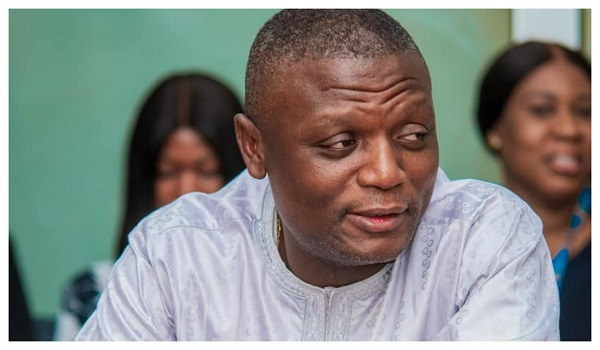
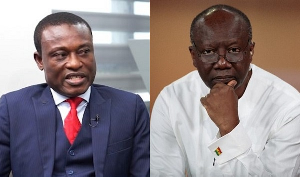
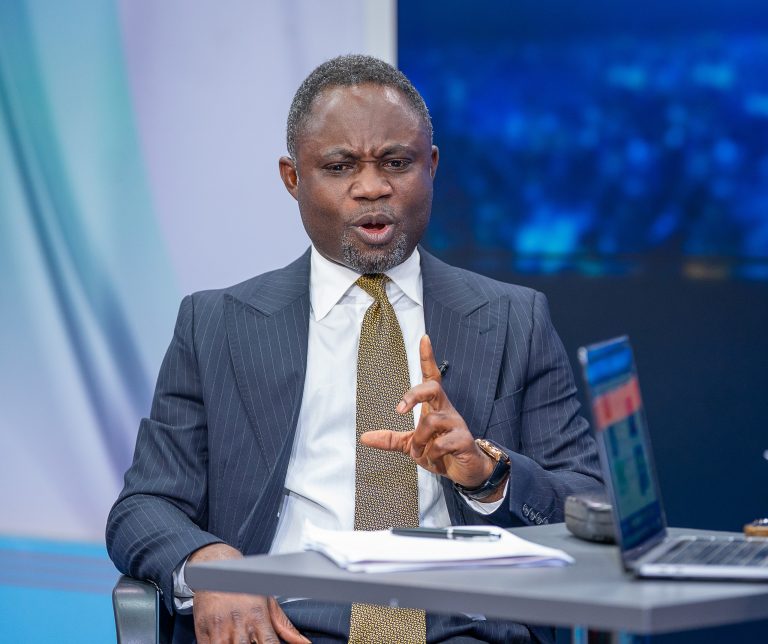
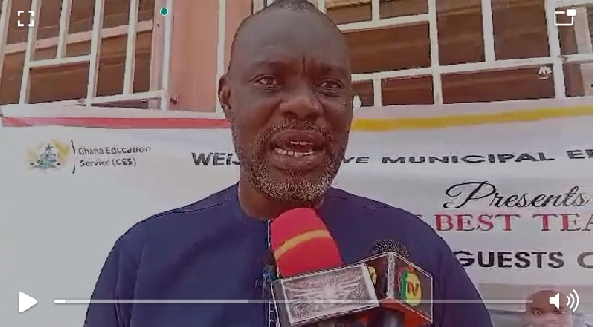
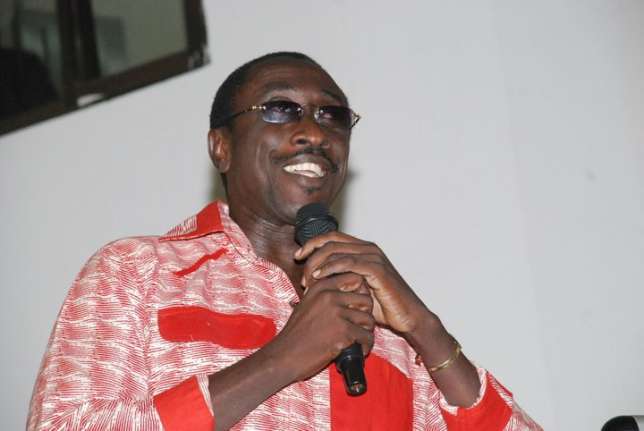
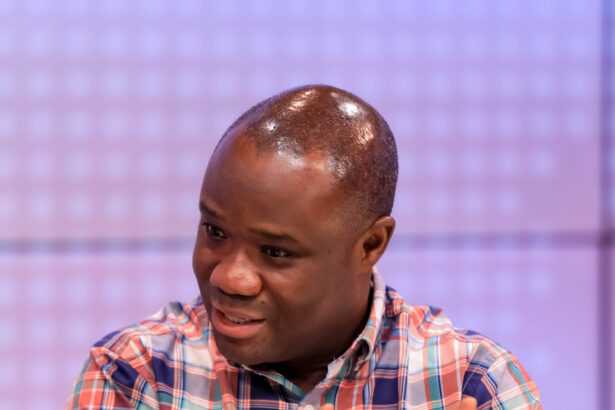
President of the NPP Patriots, Calvin Mensah, has strongly criticized the recent directive from the Minister of Education, Haruna Iddrisu, mandating strict adherence to no-haircut policies in second-cycle institutions.
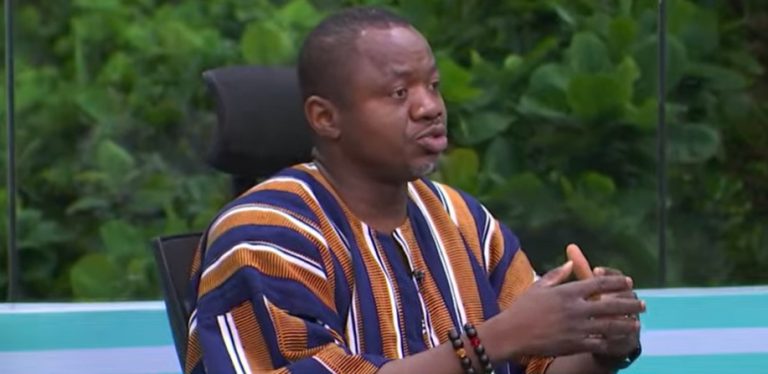
Calvin Mensah, speaking on Movement TV, argued that the timing of such a directive is misplaced, urging the Minister to shift his attention to more pressing challenges within the education sector.
Speaking in reaction to the Minister’s pronouncements at the 75th Anniversary celebrations of Mawuli School, where Iddrisu empowered the Ghana Education Service (GES) and school heads to strictly control student behavior and appearances, Mensah labeled the focus on hairstyles as an “outdated form of control.”
“In a modern educational system that aims to nurture creativity, confidence and innovation, enforcing mandatory haircuts is an outdated form of control that does more harm than good,” Mensah stated.
According to him, education today is supposed to shape minds, not appearances. Adding that when institutions focus on uniformity of looks instead of quality of thought, they unconsciously suppress individuality and self-expression, two key pillars of modern education and leadership development.
He further disclosed that such utterances to parents is an insult to them since they usually know and choose what is best for their wards.
The education minister had emphasised that schools are meant to “mould character, not to host beauty contests” and warned that “giving in on hair today could lead to demands regarding shoes and dress codes tomorrow.”
He stressed, “We’ll not tolerate today, we’ll not tolerate it tomorrow, in so long as we are moulding character. Anybody who thinks that your child will walk into any institution of learning, as if that Child was to attend a beauty contest, the school environment is not for that purpose and not cut for that purpose and will not tolerate that as an institution.”
However, Mensah believes this directive diverts attention from critical issues.
“At a time when our focus should be on digital literacy, innovation, and youth empowerment, it is deeply disappointing that we are still debating on hair. The Ministry of Education must instead tackle the real issues affecting our schools: wrong school placements, lack of access to nutritious meals, inadequate clean water, and poor learning conditions that hinder sound education and mental growth.”
He further elaborated, “My point is that leadership, especially in education, must prioritize issues that have real impact on students’ growth and well-being. The conversation shouldn’t be about controlling appearance, but about improving access, welfare, and quality. Policies like the haircut directive feel outdated because they don’t solve any of the pressing challenges students face daily. Wrong placements, poor nutrition, lack of clean water, and mental health struggles.”
Addressing potential perceptions of his stance as political, Mensah clarified, “That’s a fair question, and I understand why some may see it that way. But my position isn’t political; it’s patriotic and progressive. When young people speak on national issues, it shouldn’t always be reduced to politics.
“I’m speaking as a Ghanaian who believes our education system should match the times we live in. If calling for better school conditions and a focus on student welfare is seen as political, then perhaps it’s time we redefine what true patriotism looks like.”
The NPP Patriots’ President is therefore calling for a renewed focus on the substantive challenges within Ghana’s educational system, urging the Ministry of Education to prioritize policies that foster genuine learning and student well-being over perceived superficial disciplinary measures.
Tragedy as farmer drowns while seeking loan to send child to SHS
The wait is over! The GhanaWeb Excellence Awards 2025 is officially launched. Let’s Celebrate impact, innovation and excellence across Ghana.
Who deserves to be honoured this year?
Nominate now 👉 https://ghanaweb.com/ghanaexcellenceawards/nominate
Minister of Sports and Recreation, Kofi Adams, has announced that companies investing in sports sponsorship will receive tax incentives once the long-awaited Sports Fund Bill is passed into law.
Speaking about the government’s new approach to sustainable sports financing, the Minister said the Sports Development Fund will introduce a structured and transparent system to track funding and corporate contributions across all sporting disciplines.
“We’ve not really had a formalised and structured funding of sports,” Adams said.
“Government’s plan now is to have a sports development fund. The bill will soon be laid in Parliament, and once we have that fund, there will be tracking of funding and support from corporates. Those who fund will also benefit from some tax incentives.”
He added that the policy seeks to motivate private sector involvement in sports by ensuring sponsors are duly recognised and rewarded for their contributions.
The initiative forms part of broader government efforts to create a sustainable sports ecosystem in Ghana and reduce overreliance on public funding.
The Sports Fund Bill, once approved, will serve as a key pillar in financing sports development and athlete welfare nationwide.
The Krowor Municipal Assembly has announced collaborative efforts with the Member of Parliament and Ghana Water Limited to address the ongoing water challenges in the municipality following the shutdown of the desalination plant.
In an interview with Citi News, the Municipal Chief Executive, Ing. Paul Afotey Quaye, disclosed that the plant had been operating at only 20 percent capacity for several months before its eventual closure, exacerbating water shortages across multiple communities.
He said temporary water supplies have been arranged for the most affected areas, while plans are underway to install community storage tanks as a sustainable, long-term solution. He also urged residents to store water as authorities work to restore regular supply.
“One of the short-term solutions is to give community members relief. And so the assembly, working together with the MP, will provide water to the communities in water tanks to give them some relief.
“But as a long-term solution, we’ll provide the community storage tanks connected to the Ghana Water grid. So when water comes into the network, we store. Community members can use the household water, when they deplete them, then they can fall on the community storage tanks,” he explained.
The policy blueprint has a strong focus on stakeholder engagement
Ghana has become the first country in West Africa to launch a national policy blueprint for plastic alternatives and non-plastic substitutes.
The blueprint, which was launched earlier this year, sets out a roadmap for establishing a thriving industry that can create over 300,000 jobs in Ghana over the next two decades.
Dr Ebenezer Laryea, Reader (Professor) at Aston University and Project Director for FRESHPPACT, expressed his excitement about the implementation of the policy blueprint, which is being supported by the UK Government and the United Nations Conference on Trade and Development (UNCTAD).
The implementation of the policy blueprint is a collaborative effort between the government, NGOs, research institutions and the private sector. Dr. Laryea emphasized the importance of strong stakeholder networks in ensuring the success of the project.
The policy blueprint has a strong focus on stakeholder engagement, including with SMEs, big businesses, consumers, and research institutions.
The implementation of the policy blueprint is expected to have numerous economic and environmental benefits, including creating over 300,000 jobs in Ghana over the next two decad harnessing the benefits of the Africa Continental Free Trade Area (AfCFTA) and the ECOWAS sub-region reducing plastic waste and promoting a cleaner environment and ncreasing trade opportunities for Ghana.
The government has expressed its commitment to the project, with Professor Nana Amoah, Head of the Environmental Protection Agency (EPA), demonstrating a deep understanding of the process.
Dr Laryea praised the government for its support and cooperation, citing President John Dramani Mahama’s vision for job creation and environmental protection.
He called on all Ghanaians to support the implementation of the policy blueprint, emphasising the need for a paradigm shift in the way we think about plastic use and waste management.
He also urged Ghanaians to take advantage of the economic opportunities presented by the transition to plastic alternatives and non-plastic substitutes.
Tragedy as farmer drowns while seeking loan to send child to SHS
The wait is over! The GhanaWeb Excellence Awards 2025 is officially launched. Let’s Celebrate impact, innovation and excellence across Ghana.
Who deserves to be honoured this year?
Nominate now 👉 https://ghanaweb.com/ghanaexcellenceawards/nominate
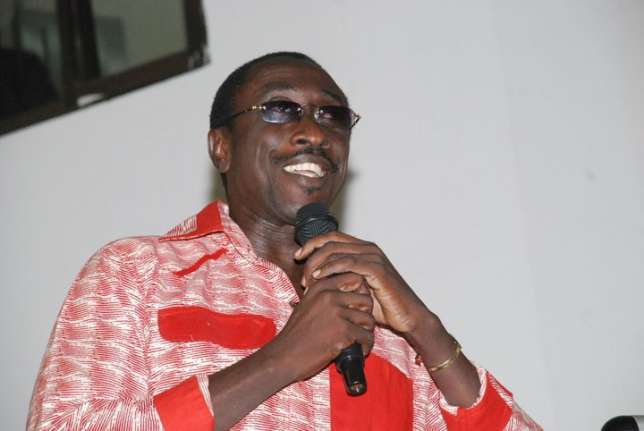
Renowned playwright and founder of Roverman Productions, James Ebo Whyte, aka Uncle Ebo Whyte, has paid a courtesy call on the newly appointed Executive Director of the National Theatre of Ghana, Henry Herbert Malm.
This is part of his ongoing collaboration with the institution.
The meeting, held at the National Theatre on Tuesday, served as both a gesture of goodwill and a reaffirmation of the long-standing partnership between Roverman Productions and the Theatre.
For the past 17 years, Roverman Productions has been one of the Theatre’s most consistent and influential partners, presenting a rich catalogue of stage plays that have drawn large audiences and contributed significantly to the sustainability of live theatre performances in Ghana.
This partnership has not only strengthened the Theatre’s performance calendar but also advanced its mandate to promote and develop the performing arts while providing a platform for authentic Ghanaian storytelling.
During the visit, the National Theatre boss expressed a heartfelt appreciation to Mr Ebo Whyte for his unwavering support and loyalty as a consistent patron of the National Theatre.
Mr Malm further assured him of management’s commitment to enhancing the Theatre’s facilities and creative environment to make the space even more conducive for artists, audiences, and future collaborations.
Mr Ebo Whyte, in turn, conveyed his gratitude to the Theatre’s leadership and the entire technical and administrative team who have supported Roverman Productions throughout the years.
He also expressed optimism for an even more fruitful partnership under the new leadership, reaffirming his commitment to the shared vision of promoting Ghanaian theatre and creative talent.
DISCLAIMER: The Views, Comments, Opinions, Contributions and Statements made by Readers and Contributors on this platform do not necessarily represent the views or policy of Multimedia Group Limited.
DISCLAIMER: The Views, Comments, Opinions, Contributions and Statements made by Readers and Contributors on this platform do not necessarily represent the views or policy of Multimedia Group Limited.
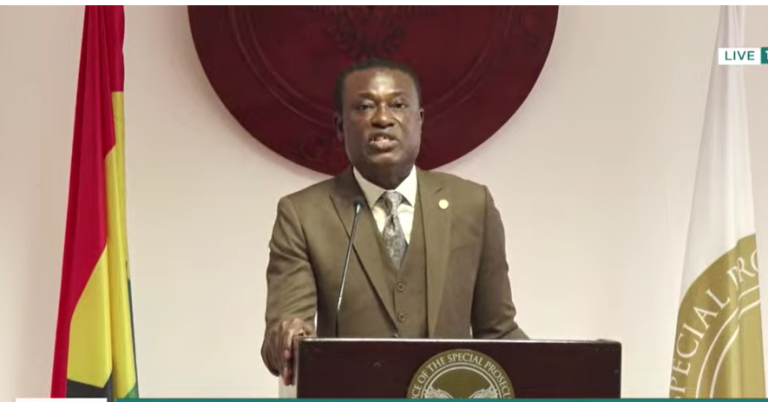
Special Prosecutor Kissi Agyebeng has reaffirmed his office’s commitment to ensuring the extradition of former finance minister Ken Ofori-Atta, despite reports suggesting challenges in the process.
Providing an update at a press conference on Thursday, October 30, 2025, he said the Office of the Special Prosecutor (OSP) is working closely with the Office of the Attorney General to complete the extradition procedures.
He stressed that the process is on course and will not be derailed by speculation or misinformation.
Text
“It’s unfortunate that there’s been talk about dockets and we’ve refused to give the docket and all. That is beside the point; that is not the issue at all,” he stated.
“The issue is that you need to get it right the first time; you don’t keep going back and forth.”
He further clarified that legal processes are being meticulously followed to ensure Ofori-Atta’s return to face justice, emphasising that he will still be extradited even if he has US citizenship.
“US citizenship status doesn’t prevent extradition. We will not give up; we will still move on with the processes and ensure that Ghanaians become less restive and appreciate the work we’re doing with the Attorney General,” Kissi Agyebeng noted.
The OSP has announced that it will charge Ken Ofori-Atta and five other former government officials by the end of November 2025, following a detailed investigation into alleged corruption and financial irregularities linked to contracts between the Ghana Revenue Authority (GRA) and Strategic Mobilisation Ghana Limited (SML).
“The outcome of the investigation is that the OSP will charge the following persons with various corruption and corruption-related offences before the end of November 2025,”
Ofori-Atta was first identified by the OSP in January 2025 as a suspect in several corruption-related cases, including alleged irregularities in contracts with Strategic Mobilisation Ghana Limited (SML), expenditures linked to the National Cathedral project, and issues in health and tax refund operations.
‘There was no genuine need for contracting SML’ – Kissi Agyebeng
He was declared a fugitive in February 2025 after failing to honour multiple OSP summonses.
His lawyers later requested that his name be removed from the wanted list, promising he would return. However, after he again failed to appear before the OSP in June 2025, his fugitive status was reinstated and the OSP indicated it would pursue extradition while maintaining the Interpol Red Notice.
Ten months after being first declared a fugitive, Ofori-Atta has neither been arrested in the United States nor voluntarily returned to Ghana.
JKB/AM
Short hair won’t stop double-salary scandals’ – Ras Mubarak fires back at Haruna Iddrisu
The Office of the Special Prosecutor (OSP) will by the end of November 2025 file charges against former Finance Minister Ken Ofori-Atta and five others over their roles in the controversial revenue assurance contracts between the Ghana Revenue Authority (GRA) and Strategic Mobilisation Ghana Limited (SML).
Those expected to face prosecution include former Commissioner-Generals of the Ghana Revenue Authority, (GRA) Dr Ammishaddai Owusu-Amoah and Emmanuel Kofi Nti, as well as GRA officials, Isaac Crentsil and Kwadwo Damoa, Ernest Akore, former Technical Advisor at the Ministry of Finance.
Text
Addressing a press conference in Accra on Thursday, October 30, 2024, the Special Prosecutor Agyebeng said, “The outcome of the investigation is that the OSP will charge the following persons with various corruption and corruption-related offences before the end of November 2025.”
He noted that months of investigations revealed acts of corruption, abuse of office and serious breaches of procurement laws in the awarding and execution of the contracts.
“There was no genuine need for contracting SML for the work it purported to perform,” Kissi Agyebeng said.
‘There was no genuine need for contracting SML’ – Kissi Agyebeng
He further revealed that the GRA failed to submit the full agreements between SML and its third-party collaborators, a lapse he said undermined transparency and accountability in the entire process.
“The investigations revealed glaring statutory breaches, conflicts of interest and unjustified payments tied to the SML agreements,” the Special Prosecutor noted.
He disclosed that the OSP will recover GH¢125 million from Strategic Mobilisation Ghana Limited (SML).
“The OSP will recover a total amount of GH₵125 from SML by way of disgorgement of unjust enrichment of overpayment by the return of the benefit this amount obtained unfairly at the expense of the Republic,” he added.
Ken Ofori-Atta was first identified by the OSP in January 2025 as a suspect in several corruption-related cases, including alleged irregularities in contracts with Strategic Mobilisation Ghana Limited (SML), expenditures linked to the National Cathedral project, and issues in health and tax refund operations.
He was declared a fugitive in February 2025 after failing to honour multiple OSP summonses.
His lawyers later requested that his name be removed from the wanted list, promising he would return. However, after he again failed to appear before the OSP in June 2025, his fugitive status was reinstated, and the OSP indicated it would pursue extradition while maintaining the Interpol Red Notice.
Ten months after being first declared a fugitive, Ofori-Atta has neither been arrested in the United States nor voluntarily returned to Ghana.
JKB/AM
Short hair won’t stop double-salary scandals’ – Ras Mubarak fires back at Haruna Iddrisu
Kennedy Agyapong, flagbearer hopeful of the New Patriotic Party
Flagbearer hopeful of the New Patriotic Party (NPP), Kennedy Agyapong, has vowed not to accept the outcome of the party’s January 2026 delegates election if he is recorded zero votes in any constituency, particularly in the Northern region of Ghana.
According to Agyapong, although he is a strong advocate for peace, he cannot accept results that he believes are unfair or manipulated.
Kennedy had earlier recalled the 2023 primaries, stating that some people had shown him evidence of voting for him despite him receiving zero votes in certain areas.
He warned that if any such irregularities occur again, particularly in the northern constituencies, he would respond similarly in the southern regions.
Speaking in a video shared on social media, Agyapong said, “I’m assuring you this time, if we get zero from any constituency, we will not accept a result.
“I’m telling you, I am for peace but I’m advising them, if they give zero, let them try and see. We are all men in this party. What you do in the North, I will do it in the South. I want to state it in practical terms because it’s too much. That is too much.”
Oda MP details why he rejected Kennedy Agyapong
The NPP will elect its flagbearer ahead of the 2028 general elections in 2026.
Agyapong is competing for the position against former Vice President Dr Mahamudu Bawumia, former Agriculture Minister Bryan Acheampong, former Education Minister Dr Yaw Osei Adutwum and former party General Secretary Kwabena Agyei Agyepong.
AM
Watch CCTV footage of alleged soldier assaulting two civilians inside a pharmacy
Tragedy as farmer drowns while seeking loan to send child to SHS
The wait is over! The GhanaWeb Excellence Awards 2025 is officially launched. Let’s Celebrate impact, innovation and excellence across Ghana.
Who deserves to be honoured this year?
Nominate now 👉 https://ghanaweb.com/ghanaexcellenceawards/nominate
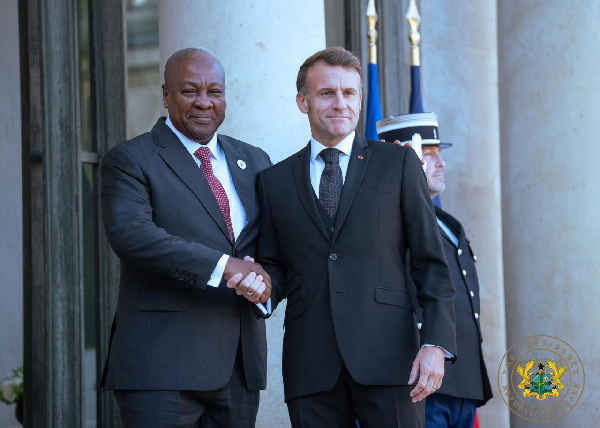
French President Emmanuel Macron (L) and President Mahama (R)
President John Dramani Mahama of Ghana and French President Emmanuel Macron held extensive bilateral talks at the Élysée Palace on Thursday October 30, 2025, focusing on security cooperation, economic development and regional stability on the sidelines of the 2025 Paris Peace Forum.
The meeting opened on a solemn note, with President Macron offering his condolences over the recent passing of Ghana’s former First Lady, Nana Konadu Agyeman-Rawlings.
Both leaders praised the Paris Peace Initiative and reaffirmed their commitment to strengthening relations between Ghana and France.
A key focus of the discussions was Ghana’s request for French assistance in combating piracy within its territorial waters.
President Mahama sought France’s support in safeguarding Ghana’s maritime integrity against growing piratical threats in the Gulf of Guinea.
The two presidents also discussed a proposed French concessionary loan for Ghana’s health sector, which is currently awaiting parliamentary approval.
President Mahama urged his French counterpart to leverage his influence with the International Monetary Fund (IMF) to help secure Ghana’s access to the facility from the French Development Bank, noting Ghana’s improved debt-to-GDP ratio.
In his capacity as the African Union (AU) Champion of African Financial Institutions, President Mahama advocated for closer collaboration to renegotiate loan agreements at lower interest rates to support infrastructure development across Africa.
He further emphasised Ghana’s role as host of the African Continental Free Trade Area (AfCFTA) Secretariat and highlighted the need for enhanced road infrastructure to promote intra-African trade.
President Mahama attends Paris Peace Forum
President Mahama also drew attention to Ghana’s ambitious One Million Coders Programme, which has already registered over 200,000 students.
He requested French support to train more French language teachers to improve language education in Ghanaian schools.
President Macron, in response, outlined several forthcoming opportunities for collaboration including the VivaTech Summit in Nairobi in May 2026, where Ghana could showcase its digital innovation capabilities; the African Union–European Union Summit in Angola and the June 2026 G7 Summit, where France intends to advocate for increased international support for Ghana.
President Mahama also raised the issue of reparations for slavery, an initiative currently championed by Ghana.
President Macron expressed support for the effort, noting that France had already criminalised slavery but cautioned that the reparations discourse should acknowledge the involvement of multiple actors beyond Western powers.
The two leaders additionally discussed the worsening security situation in the Sahel region, particularly terrorist incursions in Mali and other member countries of the Alliance of Sahel States (AES).
President Macron commended President Mahama’s leadership in the subregion and Ghana’s ongoing economic reforms, pledging France’s continued support for Ghana’s development agenda.
Tragedy as farmer drowns while seeking loan to send child to SHS
The wait is over! The GhanaWeb Excellence Awards 2025 is officially launched. Let’s Celebrate impact, innovation and excellence across Ghana.
Who deserves to be honoured this year?
Nominate now 👉 https://ghanaweb.com/ghanaexcellenceawards/nominate
The Lands Commission has launched an aggressive ground rent collection and compliance enforcement exercise across some of Accra’s most expensive neighbourhoods, marking one of its boldest moves yet to boost state revenue and restore discipline in land administration.
The ongoing operation is covering prime enclaves including Airport Residential Area, East Legon, Tema Motorway Industrial Area, and the North Industrial Area, where teams from the Greater Accra Regional Lands Commission are personally delivering ground rent demand notices to property owners and lessees.
Led by the Acting Greater Accra Regional Lands Officer, Dr Pius Asumadu, and supervised by Surv. Owusu Peprah, Regional Head of the Public and Vested Lands Management Division (PVLMD), the exercise is part of a nationwide effort to ensure that individuals and corporate entities occupying state lands honour their lease obligations.
Preliminary findings from the exercise have revealed widespread irregularities in the use and management of public lands in the capital. Officers identified numerous instances of unauthorized land use changes, unapproved subletting, illegal redevelopment of properties into apartments, and non-payment of ground rent for several years.
Dr Asumadu described these activities as “a worrying trend that undermines the integrity of Ghana’s land administration system.”
He explained that some lessees have turned residential plots into commercial facilities without seeking the Commission’s consent, while others have subdivided and resold lands contrary to lease covenants.
In response, the Commission has announced tough compliance measures, including a comprehensive review of leases, variation of terms to reflect current land use, and upward revision of ground rents.
Persistent defaulters risk having their names published in national newspapers and forfeiting their lands through lawful re-entry, in line with the provisions of the Land Act, 2020 (Act 1036).
The Lands Commission is urging all lessees whether or not they have received a demand notice to voluntarily visit the nearest Lands Commission office to verify their payment status and settle arrears.
The Commission says the ground rent collection drive is a crucial part of its broader reform agenda to streamline land administration, protect public lands from encroachment, and improve revenue generation for national development.
Officials have hinted that similar exercises will soon be extended to other regions, with a focus on high-value government lands in Kumasi, Takoradi, and Tamale.
The Lands Commission’s renewed enforcement posture reflects its determination to promote responsible land stewardship, enhance public trust, and strengthen institutional integrity in Ghana’s land sector.
Watch CCTV footage of alleged soldier assaulting two civilians inside a pharmacy
Tragedy as farmer drowns while seeking loan to send child to SHS
The wait is over! The GhanaWeb Excellence Awards 2025 is officially launched. Let’s Celebrate impact, innovation and excellence across Ghana.
Who deserves to be honoured this year?
Nominate now 👉 https://ghanaweb.com/ghanaexcellenceawards/nominate
Despite growing speculation linking him with a move to Real Madrid, Antoine Semenyo remains fully focused on continuing his brilliant form with Bournemouth, as the Cherries enjoy a historic start to the Premier League season.
The 25-year-old forward has been central to Bournemouth’s success, netting six goals and assisting three in nine matches to lift the club to second in the table. His blend of power, pace, and precision has made him one of the Premier League’s most exciting players.
While pundits such as Troy Deeney have tipped him for future stardom, even suggesting he could play for Madrid, sources close to the player indicate Semenyo is intent on helping Bournemouth sustain their title challenge.
Under Andoni Iraola, the Ghanaian has evolved into a leader in attack, thriving in a system that prioritises vertical football and fluid transitions. His consistency has filled the void left by big-money departures like Milos Kerkez and Dean Huijsen, proving his importance to the team’s structure.
Semenyo’s focus now is to maintain his rhythm and guide the Cherries through a demanding schedule before turning attention to international duty with Ghana. With the 2026 World Cup on the horizon, the in-form forward’s performances could define both club and country’s ambitions in the coming months.
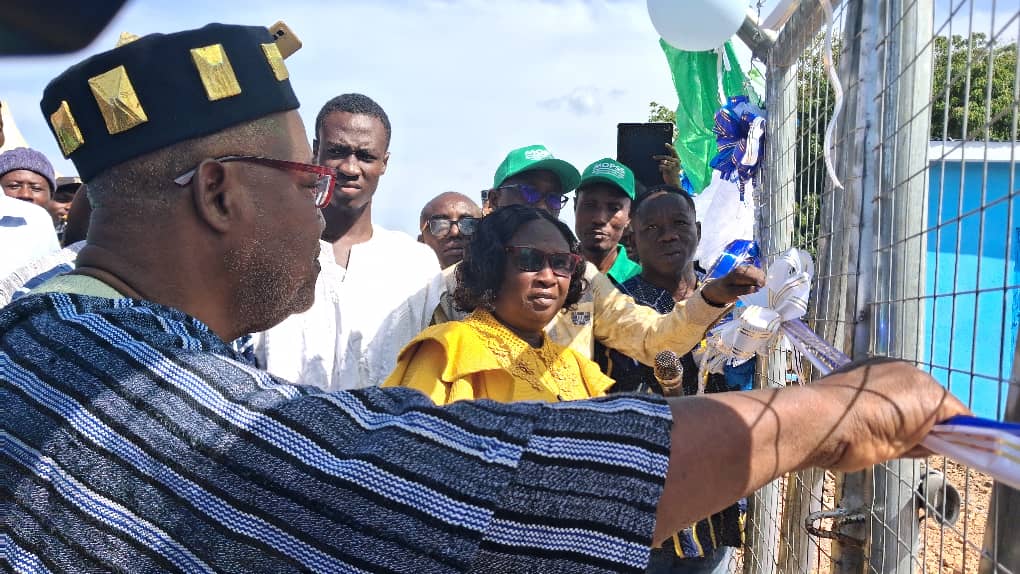
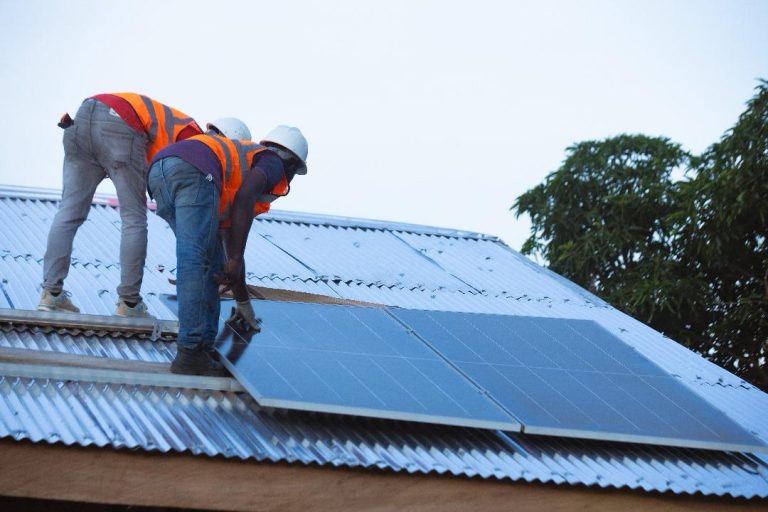
Wiesi (U/E), Oct. 30, GNA – A solar-powered mechanised water system has been commissioned at Wiesi, a farming community in the Builsa district to address water scarcity and promote peaceful coexistence between local residents and transhumant herders.
The facility, valued at about GH¢350,000, was constructed under the Peaceful Cross-Border Pastoral Mobility and Social Stability in the Sahel (MOPSS) Phase II project (2023-2026), implemented by the Netherlands Development Organisation (SNV) and its consortium partners with funding support from the Danish International Development Agency (DANIDA).
The other consortium partners include the Maroobé Billital Network (RBM), the Association for the Promotion of Livestock in the Sahel and Savannah (APESS), the Network of Farmers’ and Producers’ Organisations of West Africa (ROPPA), Rural Hub, and CARE Denmark.
The commissioning formed part of MOPSS’ broader efforts to promote peaceful co-existence, inclusive natural resource management, and livelihood resilience among pastoralist and farming communities across northern Ghana to reduce conflicts over water resources.
The MOPSS project is a regional initiative being implemented in seven West African countries, namely Ghana, Burkina Faso, Mali, Niger, Benin, Togo, and Côte d’Ivoire, to strengthen social stability and improve cross-border pastoral mobility and inclusive local economy.
Speaking at the commissioning ceremony in Wiesi, Mr Amadi Coulibaly, MOPSS Project Manager, SNV, said the mechanised borehole marked another milestone in the consortium’s commitment to improving access to safe and reliable water for both people and livestock, while fostering peaceful coexistence between pastoral and host communities.
“The borehole we inaugurate today represents more than just access to clean water. It symbolises hope, inclusion, and collaboration, a testament to what is possible when communities, local authorities, and development partners work together with a shared vision,” he said.
He expressed appreciation to the Government and people of Denmark for their generous support and partnership through DANIDA and encouraged the Builsa South District Assembly and the beneficiaries to take full ownership of the facility to ensure proper maintenance and equitable access.
“SNV remains committed to working with the Government of Ghana, local authorities, and communities to strengthen livelihoods, promote peace, and build climate-resilient systems that serve everyone,” he added.
The solar-powered water system includes a high-yield borehole and a 5,000 litre capacity overhead tank, capable of providing a steady water supply throughout the year and it is designed to serve both human and livestock needs.
It has separate sections but multiple fetching points and drinking troughs for residents and animals, with different taps for fetching water, and four watering troughs, three for cattle and one for small ruminants such as goats and sheep.
To ensure long-term sustainability, a Borehole Management Committee (BMC) comprising representatives of traditional authorities, pastoralists, farmers, agricultural officers, women, and youth has been established and trained to oversee maintenance, cost recovery, and equitable access.
Mr Mohammed Abdul-Ganiyu Shitu, Technical Advisor on the MOPSS project, SNV, said the design ensured that people and livestock did not interfere with one another, promoting hygiene and reducing potential sources of conflict.
“This project is aimed at easing the pressure on local water sources and promoting peaceful coexistence between farmers and herders. When people and animals have access to water, the chances of conflict reduce drastically,” he said.
Imam Hanafi Sonde, National President, Ghana National Association of Cattle Farmers, commended the choice of the Wiesi as it laid along, a major livestock movement corridor and hosts several pastoralists from Burkina Faso and other neighbouring countries and urged the government to invest in similar projects to reduce farmer-herder conflicts in farming communities.
Madam Anne Musah, the Builsa South District Chief Executive, commended the MOPSS’ consortium and their sponsors, for investing in water, which was a major challenge in the area, adding that it would help reduce tension in the community over access to water.
Nab Akanaab Apoom-Ween, the Chief of Wiesi Community, expressed gratitude for the gesture and added that the water system would strengthen the unity and social cohesion between the residents and the pastoralists in the community for shared development.
THE BLACK QUEENS of Ghana delivered a commanding performance to defeat Egypt 4–0 in the second leg of the 2026 Women’s Africa Cup of Nations (WAFCON) qualifier at the Accra Sports Stadium, sealing their qualification for next year’s tournament in Morocco.
Ghana, who had won the first leg 3–0 in Ismailia, completed the job in emphatic fashion to advance with a 7–0 aggregate victory.
The Queens dominated proceedings with a potent attack led by Princess Marfo and Doris Boaduwaa, while Evelyn Badu, Grace Asantewaa, and Jennifer Cudjoe controlled the midfield. Cynthia Findiib Konlan was solid between the posts, keeping the visitors at bay throughout.
After a goalless first half, Doris Boaduwaa broke the deadlock in the 52nd minute before doubling Ghana’s advantage just three minutes later, finishing off a fine combination between Grace Asantewaa and Princess Marfo.
Comfort Yeboah made it 3–0 in the 57th minute, and Boaduwaa completed her hat-trick in stoppage time to cap off a superb display.
The result marks a significant milestone for the Black Queens as they return to the continental stage with renewed confidence.
Ghana will now aim to build on their strong resurgence, having claimed bronze at the 2025 Women’s Africa Cup of Nations, where they edged South Africa 4–3 on penalties in a thrilling third-place playoff.
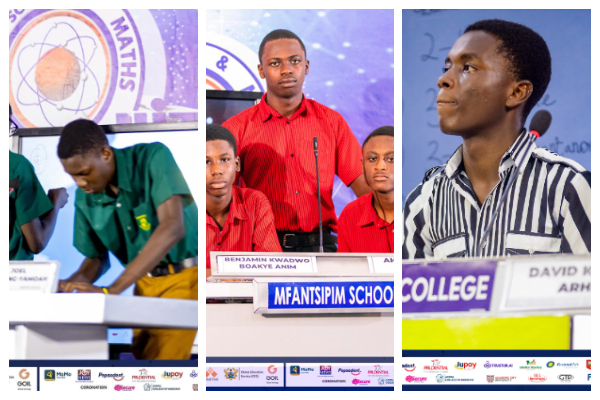
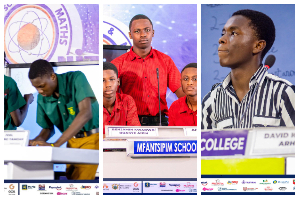
There was chaos at the University of Cape Coast (UCC) on Thursday as the National Science and Maths Quiz (NSMQ) Quarterfinal contest involving Adisadel College, Prempeh College, and Mfantsipim School was delayed.
Reports from the scene indicate that several students were assaulted as they attempted to gain entry into the UCC auditorium, where the much-anticipated contest was scheduled to take place.
Eyewitnesses say tensions flared as security personnel and students clashed at the entrance, though the reasons for the assault remain unclear.
Videos and photos circulating on social media show students in school uniforms being pushed back from the auditorium gates, with some reportedly sustaining injuries.
The incident caused significant confusion and delayed the start of the contest, which had drawn large crowds of supporters from the three elite schools.
Organisers of the competition, Primetime, issued an official statement indicating that the highly anticipated clash between Adisadel College, Prempeh College, and Mfantsipim School will take place at a later date.
The Speaker of Ghana’s Parliament, Rt. Hon. Alban Sumana Kingsford Bagbin, has been appointed to the Inter-Parliamentary Union’s Task Force on the peaceful resolution of the war in Ukraine.
The appointment, made by the IPU President, highlights Speaker Bagbin’s integrity, impartiality, and proven ability to build trust among conflicting parties. He joins seven other distinguished parliamentarians from across the six IPU geopolitical groups.
In a letter confirming the appointment, IPU Secretary General Martin Chungong stated, “We are confident that your leadership and experience will enhance the work and impact of the Task Force in its mission to support diplomatic efforts in seeking a peaceful resolution to the war in Ukraine.”
Established as an ad-hoc body in March 2022, the IPU Task Force has provided a platform for dialogue between Ukrainian and Russian parliamentarians. Since its inception, it has convened over 13 meetings, conducted a mission to Kyiv and Moscow in July 2022, and held biannual consultations during IPU Assemblies.
Speaker Bagbin, a seasoned international peace negotiator, will participate in hearings, discussions with Ukrainian and Russian delegations, and engage government leaders from both countries. His involvement is expected to strengthen the Task Force’s efforts to promote dialogue and seek a peaceful resolution to the ongoing conflict.
The appointment underscores Ghana’s active role in supporting global diplomatic initiatives and fostering international peace.
Read also
NHIS system saga: Okoe Boye part of Lightwave contract mess – Akandoh
Quantum Terminals posted profit after tax of GH¢23.6 million for the nine months ended September 30, 2025, maintaining profitability despite foreign exchange headwinds and rising operational costs at its strategic LPG storage facilities, according to management financial statements released by the Ghana Stock Exchange listed company.
The result represents a 6.3% increase from the GH¢22.2 million earned in the corresponding period of 2024, demonstrating the company’s ability to navigate volatile macroeconomic conditions while servicing critical petroleum infrastructure that supports Ghana’s energy security.
Revenue declined to GH¢52.7 million from GH¢59 million in the prior year period, driven primarily by lower throughput fees and premium charges from customers using the company’s storage and loading facilities. The company operates an LPG evacuation terminal at Atuabo near the Ghana Gas Processing Facility with 750 metric ton storage capacity, capable of loading up to 1,500 metric tons daily across eight truck loading bays.
What kept Quantum profitable despite the revenue decline was significantly improved foreign exchange management. The company recorded a foreign exchange gain of GH¢7 million compared to a devastating GH¢17.8 million loss during the same period last year. That’s a GH¢24.8 million swing that essentially salvaged the year’s results and demonstrates how Ghana’s relatively stable cedi in 2025 has benefited companies with dollar denominated debt obligations.
Direct operational costs surged to GH¢6.7 million from GH¢3.9 million, with direct wages and salaries nearly doubling to GH¢5.1 million from GH¢2.8 million. The sharp increase in personnel costs likely reflects adjustments to match Ghana’s elevated inflation environment and the need to retain skilled workers in the competitive petroleum sector.
General and administrative expenses also climbed substantially, reaching GH¢23.6 million compared to GH¢13 million in the prior year. Travel and accommodation expenses increased to GH¢1.4 million from GH¢1 million, while group cost recovery expenses rose to GH¢2.6 million from GH¢1.6 million, reflecting the higher cost structure facing Ghanaian businesses.
The company’s balance sheet tells a more encouraging story. Total assets reached GH¢496.2 million, essentially unchanged from GH¢496.5 million at the end of September 2024, but the composition shifted meaningfully. Long term debt declined dramatically to GH¢29.7 million from GH¢80.4 million, representing a 63% reduction that speaks to aggressive debt paydown.
That debt reduction came primarily from the company’s bond and EAIF loan facilities. The Ghana Fixed Income Market 10 year bond dropped to GH¢10 million from GH¢20 million, while the EAIF loan facility fell to GH¢20.7 million from GH¢61.5 million. These reductions demonstrate Quantum’s commitment to deleveraging, though it comes at the cost of reducing financial flexibility for future growth initiatives.
Cash and bank balances stood at GH¢12.5 million at quarter end, down from GH¢19.8 million a year earlier. The company maintains additional liquidity through its debt service reserve accounts totaling GH¢19.4 million, down from GH¢21.9 million. These restricted accounts ensure Quantum can meet its bond obligations even during periods of operational stress.
Shareholders’ equity expanded to GH¢371.5 million from GH¢333.7 million, with retained earnings turning positive at GH¢58.7 million compared to a deficit of GH¢9.6 million previously. The turnaround in accumulated profits reflects the company’s sustained profitability and strategic decision to prioritize earnings retention over aggressive dividend distributions as it works through its debt obligations.
Operating cash flow remained robust at GH¢27.2 million before taxes and interest, though this declined from GH¢50.1 million in the prior year period. After servicing debt with GH¢10.2 million in loan interest payments and paying GH¢8.8 million in taxes, net cash from operating activities totaled GH¢9.1 million compared to GH¢21.2 million previously.
The company deployed GH¢20.4 million toward repaying borrowings, while investing GH¢2.9 million in property, plant and equipment. This capital allocation prioritizes debt reduction over expansion, a prudent strategy given the need to maintain bondholder confidence and reduce interest expense.
Fair value imputed interest income reached GH¢16.7 million, representing accounting adjustments related to related party receivables that totaled GH¢154.9 million on a non current basis. These intercompany balances with entities like Quantum Gas HoldCo and The Quantum Terminals Group reflect the integrated structure of the broader Quantum Group’s operations.
Finance costs totaled GH¢8.4 million for the nine months, down from GH¢11 million in the prior year despite higher interest rates in Ghana’s debt markets. The decline reflects the reduced debt balances as the company systematically pays down its obligations. Bond interest and charges consumed GH¢3.5 million, while loan interest and fees took another GH¢4.8 million.
Earnings per share came in at GH¢0.21, up from GH¢0.20 in the corresponding period of 2024, based on the company’s 110 million shares outstanding. The stable share base and modest earnings growth provide shareholders with predictable returns, though the lack of dividend payments means investors must rely on potential capital appreciation for returns.
EBITDA totaled GH¢25.6 million compared to a much stronger GH¢55.6 million in the prior year period, reflecting the revenue decline and cost pressures before accounting for the foreign exchange gain that ultimately supported bottom line profitability. This EBITDA compression highlights the operational challenges facing the business independent of forex movements.
Property, plant and equipment stood at GH¢296.5 million, down slightly from GH¢311.6 million, with depreciation outpacing new capital investments. The company’s storage tanks, civil works, and loading infrastructure represent critical assets that require ongoing maintenance and eventual replacement, creating long term capital needs that must be balanced against debt service obligations.
Quantum Terminals made history in 2018 as the first non financial institution to list a corporate bond on the Ghana Fixed Income Market, issuing a 10 year tenor guaranteed 75% by GuarantCo, an AA rated development finance institution. The bond also listed on London Stock Exchange’s International Securities Market, making it the first local currency corporate bond from Ghana and West Africa to achieve that distinction.
The company has maintained a strong track record of meeting its bond obligations, most recently transferring GH¢1.7 million for September interest payments well ahead of the required deadline. This consistent compliance with bond covenants supports investor confidence and potentially paves the way for future capital market access by other Ghanaian corporates.
Looking at the competitive landscape, Quantum Terminals remains one of Ghana’s key petroleum infrastructure providers, with its Atuabo facility strategically positioned to offtake LPG produced as a byproduct at the Ghana Gas Processing Facility. The terminal handles LPG that supports cleaner cooking alternatives to wood and charcoal, contributing to health and environmental benefits particularly for women and children who spend more time exposed to cooking fumes.
The third quarter results demonstrate Quantum’s resilience in a difficult operating environment. While revenue pressures and cost inflation create headwinds, aggressive debt reduction and improved forex management position the company on a firmer financial foundation. The challenge ahead is whether Quantum can reverse the revenue decline and stabilize margins while continuing to service its remaining debt obligations.
For bondholders, the aggressive debt paydown provides comfort that the company takes its obligations seriously and is willing to sacrifice growth opportunities to maintain financial stability. For equity investors, the lack of dividends and modest earnings growth may limit near term returns, though the strengthening balance sheet and strategic asset base offer longer term value as Ghana’s LPG market continues developing.
The company’s work in progress account stood at just GH¢2.3 million compared to GH¢12.6 million a year earlier, suggesting minimal expansion projects currently underway. This reflects management’s conservative approach during a period focused on financial consolidation rather than aggressive capacity additions.
Inventory levels remained modest at GH¢838,000, down slightly from GH¢940,000, consisting primarily of spare parts, tools, and minimal fuel stock. The low inventory requirements reflect the nature of Quantum’s business model, where customers own the LPG being stored and the company primarily provides infrastructure and handling services rather than holding product for its own account.
Trade receivables increased marginally to GH¢5.8 million from GH¢5.6 million, with the company maintaining an impairment provision of GH¢50,600 against potential bad debts. The relatively small receivables balance relative to annual revenue suggests efficient collections processes or contractual arrangements that minimize credit exposure to customers.
Current tax liabilities declined to GH¢3.9 million from GH¢5.1 million, reflecting payments made during the period and adjustments to tax provisions. The company paid GH¢8.8 million in income taxes during the nine months, demonstrating its role as a meaningful contributor to government revenues despite operating in a capital intensive sector with substantial depreciation shields.
The deferred tax liability increased to GH¢68.2 million from GH¢73 million, driven by temporary differences between book and tax treatment of assets, particularly the revalued property, plant and equipment that forms the bulk of Quantum’s asset base. These deferred taxes will become payable over time as assets are depreciated or disposed of.
What stands out most in these results is the stark contrast between Quantum’s operational performance and its overall profitability. Strip away the foreign exchange gain, and the company would have posted significantly weaker results. That vulnerability to forex movements underscores the risk inherent in operating dollar denominated debt in a cedi functional currency environment, even as it also demonstrates how much Ghana’s improved currency stability in 2025 has benefited companies in Quantum’s position.
The LPG sector in Ghana continues facing structural challenges around pricing, distribution infrastructure, and competition from traditional fuels. Quantum’s role as an evacuation terminal makes it dependent on gas production volumes at the upstream facility and customer decisions about how much LPG to offtake and store. The company can’t easily control its top line growth, making cost discipline and financial management the primary levers available to management.
Looking ahead to the final quarter and into 2026, Quantum faces questions about whether it can stabilize or grow revenues while continuing to reduce costs to offset inflationary pressures. The company’s debt maturity profile will also matter, with investors watching whether the aggressive paydown creates sufficient headroom to weather any operational challenges or whether additional capital might eventually be needed to maintain and upgrade aging infrastructure.
For now, though, Quantum Terminals has delivered what bondholders and shareholders needed to see: profitability maintained, debt reduced substantially, and financial discipline enforced even when it means foregoing growth opportunities. In Ghana’s volatile business environment, sometimes survival and stability represent success stories of their own.
The National Food Buffer Stock Company (NAFCO) has announced that the Ministry of Food and Agriculture (MoFA) is preparing to seek Cabinet approval for an additional GH₵100 million in funding to support the large-scale purchase of surplus food commodities, including maize and rice.
The move is part of efforts to meet Ghana’s annual staple food consumption threshold of 6.8 million metric tonnes and to build up the 10 percent annual food reserve requirement under the national food reserve programme.
According to NAFCO, the fresh request follows an initial Cabinet release of GH₵100 million, which was used to procure 60,000 bags of rice, 120,000 bags of maize, and 10,000 bags of gari for strategic reserves.
Speaking at a media briefing on Wednesday, October 30, Deputy Chief Executive Officer of NAFCO, Osmond Amuah, said the additional funding is crucial to prevent post-harvest losses and enhance food security.
He further disclosed that NAFCO’s Producer Price Determination Committee has set a floor price of GH₵5 per kilogram of paddy rice to guide purchases and ensure fair compensation for farmers.
This intervention, he explained, is aimed at clearing the over 200,000 metric tonnes of unsold rice currently stored in warehouses across northern Ghana.
NAFCO’s initiative aligns with government’s broader strategy to strengthen Ghana’s food security framework and reduce dependence on imports by promoting local production and sustainable storage systems.
Peasant Farmers cry for help as 200,000 metric tons of local rice remain unsold
The Global AI Show returns to Abu Dhabi on December 8 and 9, 2025, at Space42 Arena, bringing together more than 5,000 attendees, 200 AI experts, and 150 exhibitors under the ambitious theme AI:2031: Accelerating Intelligent Futures as the United Arab Emirates cements its position as a global artificial intelligence powerhouse.
Organized by VAP Group in partnership with Times of AI, this year’s edition represents the most expansive gathering yet for an event that has become the UAE’s premier platform for exploring how artificial intelligence will reshape economies, societies, and governance over the next decade.
The choice of Abu Dhabi as host city reflects more than geography. The emirate is driving initiatives like the $500 billion Stargate Consortium, ADQ’s Growth Lab, and development of the world’s largest AI campus, positioning itself at the forefront of what organizers describe as a global AI revolution that extends far beyond Silicon Valley.
The event operates with strategic support from the Abu Dhabi Convention & Exhibition Bureau, the National Program for Artificial Intelligence, and the Cyber Security Council, signaling government level commitment to establishing the UAE as both an innovation hub and ethical regulator for artificial intelligence technologies.
Speaker lineups this year include Dr. Ott Velsberg, Estonia’s Chief Data Officer who architected one of the world’s most advanced e governance systems, and Andy Tang, Managing Partner at Draper Dragon, whose firm has backed AI unicorns across health technology, fintech, and frontier tech sectors. H.E. Dr. Mohamed Al Kuwaiti, the UAE government’s head of cybersecurity, will address protecting digital ecosystems for national resilience, while Dr. Marwan Al Zarouni from Dubai Blockchain Center will explore intersections between blockchain, AI, and national policy frameworks.
Philippe Gerwill, a digital futurist advocating human centric AI adoption, rounds out a speaker roster designed to move conversations beyond hype toward actionable insights for governments, enterprises, and citizens navigating rapid technological change.
Session topics span artificial general intelligence, AI applications in space exploration, healthcare transformation, educational innovation, and autonomous mobility systems. The programming aims to bridge theoretical possibilities with practical implementation challenges facing organizations attempting to deploy AI at scale.
What distinguishes this gathering from countless other technology conferences is its explicit focus on the 2031 timeframe, a deliberate choice that aligns with UAE national strategies including the Centennial 2071 plan and the National AI Strategy. These frameworks prioritize developing AI research and education infrastructure, creating inclusive and ethical AI systems, attracting global talent and capital, and enhancing cybersecurity resilience.
The event expects 72% of attendees to hold C level, director, VP, or founder positions, creating networking opportunities between decision makers who control capital allocation, technology adoption, and policy formation. For startups and scale ups, access to UAE royal family offices and sovereign wealth funds represents a distinctive value proposition unavailable at most technology gatherings.
VAP Group, the organizing company, operates across the UAE, UK, India, and Hong Kong with a team exceeding 170 professionals. Beyond the Global AI Show, the firm runs the Global Games Show and Global Blockchain Show, positioning itself at intersections of emerging technologies reshaping digital economies. The company’s 12 year track record in consulting around AI, blockchain, and gaming provides institutional knowledge about how these sectors evolve and interconnect.
Early bird ticket pricing remains available for a limited period, though organizers haven’t disclosed what standard pricing will become once promotional periods expire. The two day format allows for depth in individual sessions while maintaining enough variety that attendees from different sectors and specializations can find relevant programming.
Abu Dhabi’s infrastructure for hosting large scale international events has expanded significantly in recent years, with venues like Space42 Arena offering modern facilities designed for technology focused conferences. The emirate’s investments in hospitality, transportation, and digital connectivity aim to make it seamless for international participants to attend multi day events without the friction points that sometimes plague conferences in less developed locations.
The timing in early December positions the event after major American technology conferences but before year end holidays, potentially capturing executives finalizing 2026 technology budgets and strategic plans. For AI companies seeking Middle Eastern partnerships or customers, the concentrated access to regional decision makers offers efficiency compared to individual business development trips.
Whether the Global AI Show delivers on its ambitious promises about shaping the next decade of intelligent systems remains to be seen. Technology conferences routinely overstate their importance and impact. However, the combination of serious government backing, participation from credible technical leaders rather than just motivational speakers, and Abu Dhabi’s genuine financial commitments to AI infrastructure suggests this gathering represents more than typical conference circuit theater.
For Ghana and African nations watching from afar, events like this underscore how quickly the global AI landscape is evolving and how Middle Eastern petrostates are leveraging energy wealth to fund positions in technology sectors that will define 21st century economic competitiveness. The question isn’t whether African countries should care about gatherings in Abu Dhabi, but rather how quickly they can develop their own strategies for participating in AI driven transformation rather than becoming mere consumers of systems designed and deployed elsewhere.
Registration information and full agendas are available through the event’s official website at globalaishow.com, with organizers encouraging early registration to secure preferred access levels and networking opportunities.
Enterprise Group posted consolidated profit after tax of GH¢289.2 million for the nine months ended September 30, 2025, though the figure represents a modest decline from the GH¢311.2 million recorded during the same period last year, according to unaudited financial statements released by the insurance and financial services conglomerate.
The results show Ghana’s oldest insurance company navigating a challenging environment while maintaining profitability across its diversified operations spanning life insurance, general insurance, pensions, real estate, and funeral services.
Group net income reached GH¢572.6 million, essentially flat compared to the GH¢573.6 million generated in the first nine months of 2024. What’s notable is how the company achieved similar top line numbers despite significant headwinds in the insurance finance line, which saw net insurance finance expenses balloon to GH¢274 million from just GH¢84.4 million a year earlier.
That GH¢190 million swing in finance costs tells a story about the investment environment Enterprise Group has been operating in. Higher interest rates and market volatility create both opportunities and challenges for insurers who manage substantial investment portfolios to back their policy liabilities.
The company’s core insurance operations delivered insurance revenue of GH¢1.33 billion, up from GH¢1.20 billion in the prior year period. However, insurance service expenses also climbed to GH¢794.6 million, while reinsurance arrangements cost the group GH¢175.4 million compared to a small gain of GH¢1.6 million last year. These dynamics compressed the net insurance service result to GH¢89.7 million from GH¢328.6 million previously.
Investment income provided crucial support, reaching GH¢411 million for the group compared to GH¢123.5 million in the same period of 2024. That’s more than tripling investment returns year over year, reflecting both the higher yield environment Ghana’s fixed income markets have been offering and potentially some strategic repositioning of the group’s investment portfolio.
On the balance sheet side, total assets expanded to GH¢4.61 billion from GH¢3.65 billion at the end of September 2024, representing a 26% increase. Investment securities led the growth, climbing to GH¢2.95 billion from GH¢2.10 billion, reinforcing the company’s role as a major institutional investor in Ghana’s capital markets.
Insurance contract liabilities, which represent the group’s obligations to policyholders, increased to GH¢1.99 billion from GH¢1.58 billion. The growth in liabilities tracks with the expansion in insurance revenue and reflects the accumulation of policy reserves as the business writes more coverage.
Cash and bank balances stood at GH¢413 million at quarter end, down from GH¢531.5 million a year earlier. The decline partly reflects the group’s decision to deploy more capital into higher yielding investment securities rather than hold excess cash in an inflationary environment.
Shareholders’ equity attributable to owners reached GH¢1.31 billion, up from GH¢1.23 billion, while the group paid out GH¢21.5 million in dividends during the period. Non controlling interests, representing minority stakes in subsidiaries like Enterprise Life and Enterprise Insurance, totaled GH¢456.9 million.
Operating cash flow generation remained robust at GH¢690.9 million, though investing activities consumed GH¢614.1 million, primarily for net acquisitions of investment securities and property and equipment purchases totaling GH¢76.9 million. The property investments likely relate to the group’s ongoing real estate development projects, including its 7th Avenue office complex.
Basic earnings per share came in at GH¢1.09, down from GH¢1.19 in the prior year period, reflecting the slight decline in attributable profit despite a stable share count of 258.9 million shares.
The results come as Enterprise Group’s share price has surged 72.2% year to date to GH¢3.41, making it one of the stronger performers on the Ghana Stock Exchange in 2025. That market performance suggests investors remain confident in the group’s long term trajectory despite the near term earnings compression.
Enterprise Group was recently named among the Financial Times’ top 100 fastest growing companies in Africa with a compound annual growth rate of 27.6%, recognition that underscores the group’s track record of navigating Ghana’s volatile macroeconomic environment while delivering consistent growth.
The company operates through seven business segments across Ghana, Nigeria, and The Gambia, with subsidiaries including Enterprise Life, Enterprise Insurance, Acacia Health, Enterprise Trustees, Enterprise Properties, and Enterprise Funeral Services. This diversification provides some insulation when individual business lines face headwinds.
Looking at the cash flow statement, the group generated GH¢760.6 million from operations before taxes and levies, paid GH¢48.7 million in income taxes, and remitted GH¢25 million in growth and sustainability levy, Ghana’s additional corporate tax imposed to support fiscal consolidation efforts.
What stands out in these results is Enterprise Group’s ability to maintain profitability while absorbing substantially higher insurance finance costs and reinsurance expenses. The investment income surge provided a crucial offset, but the compression in core insurance margins suggests the group faces ongoing pricing and underwriting discipline challenges in a competitive market where customers remain price sensitive.
For investors, the question heading into the final quarter is whether Enterprise Group can sustain its investment income momentum and whether insurance margins will stabilize or face further pressure. The 26% asset growth and expanding policy base position the company well for future earnings, but converting that growth into bottom line results remains the management challenge in what continues to be a difficult operating environment.
As part of efforts to address the growing challenge of disinformation and misinformation which can undermine democratic institutions, social cohesion and effective leadership, the Konrad Adenauer Stiftung (KAS) Ghana Office in collaboration with the National Queen mothers Ghana, Bono Region chapter has organized a workshop for Queen Mothers in the region.
The 6th Annual Queen Mothers workshop which took place in Sunyani was on the theme “Combating Disinformation and Misinformation: The role of Queen Mothers in Ensuring Good Governance “
In her welcome address, the President of the Bono Queen Mothers Platform and Paramount Queen Mother of the Drobo Traditional Area, Nana Yaa Ansua III observed that disinformation and misinformation are a major threat to security in communities.
“I am particularly grateful to our development partners KAS and the resource personnels for agreeing to come and take us through this workshop aimed at equipping us in our bid to combat disinformation and misinformation in our localities.
“One of the major threats to our security in the localities is this disinformation and misinformation and I am excited we are being trained about it, so we impact our various localities,” she said.
Speaking at the gathering, the Programmmes Director of the Konrad Adenauer Stiftung, Ghana Office, Dr Joseph Darmoe explained the rationale for the program.
“The key reason for this workshop is to provide the Queen Mothers with the necessary capacity to address issues of disinformation and misinformation in our echo system. We want them to understand their roles and how to properly manage relevant information so that there would be peace and harmony in the various communities”, he noted.
Dr James Kwabena Bomfeh Jnr who serves as a lecturer at the University of Professional Studies (UPSA) in Accra, was one of the Facilitators for the workshop.
He admonished the Queen Mothers to ensure they stay away from partisan politics.
“The office they hold is political, but it is not partisan in nature as we have seen in contemporary times.
“So, for them to be able to win the respect and honor deserving of that office, it is important they stay above the fray and do what is dignifying” he added.
The Ambassador-Designate of the Republic of Ghana to the Czech Republic Theresah Adjei- Mensah who was the Chairperson for the conference, entreated the Queen Mothers to ensure they leave lasting legacies in their localities.
“You need to thrive to make impacts in your communities just as some Queen Mothers did in the past. You are the Custodians of our traditions, and a lot is expected from you”, she stated.
About KAS Ghana.
The Konrad Adenauer Stiftung (KAS) is a political foundation based in Germany whose mission is to promote democracy, rule of law, social market economy, and human rights worldwide.
Watch CCTV footage of alleged soldier assaulting two civilians inside a pharmacy
Tragedy as farmer drowns while seeking loan to send child to SHS
The wait is over! The GhanaWeb Excellence Awards 2025 is officially launched. Let’s Celebrate impact, innovation and excellence across Ghana.
Who deserves to be honoured this year?
Nominate now 👉 https://ghanaweb.com/ghanaexcellenceawards/nominate
Brong Ahafo Region produced a commanding performance to defeat Western Region 4–1 in their final Group A fixture of the MTN Elite U19 Championship on Wednesday morning at the Ghanaman Soccer Centre of Excellence in Prampram.
The emphatic win keeps Brong Ahafo firmly in contention for a semi-final spot, pending the results of the remaining group matches.
Western Region drew first blood in the 4th minute when Ahmed Yankey finished off a brilliant solo run to give his side an early lead. However, Brong Ahafo quickly regained control, with Dankwah Bismark equalising in the 22nd minute to set up a thrilling contest.
After the break, Gideon Otabil — the talented left-footer who later deservedly earned the Player of the Match award — fired Brong Ahafo ahead in the 57th minute with a composed strike.
The team’s momentum continued as Mohammed Hafiz extended the lead ten minutes later, before Lord Quansah’s unfortunate own goal from an Otabil cross sealed a comprehensive 4–1 victory for Brong Ahafo.
The result lifts Brong Ahafo to nine points from four matches, level with Eastern Region at the top of Group A. However, their qualification to the semi-finals will hinge on the outcome of the final group games, with Northern Region — on six points with a game in hand — still in the running.
In Group B, Central Region will face Upper East in their final group fixture, while Greater Accra and Ashanti Region remain well-placed to secure spots in the knockout stage following impressive campaigns.
Running from October 23 to November 2, 2025, the MTN Elite U19 Championship features ten regional teams from across Ghana.
The competition serves as a vital platform for the country’s most promising young footballers to showcase their talents, gain valuable experience, and catch the eye of national team selectors and professional scouts.
Accra, Oct. 30, GNA – The National Food Buffer Stock Company (NAFCO) has appealed to government for an additional GH¢100 million to purchase surplus produce, particularly paddy rice, to curb post-harvest losses.
Mr Osmond Amuah, Deputy Chief Executive Officer of NAFCO, who made the appeal at a press conference in Accra on Thursday, said the request followed the full utilisation of an earlier GH¢100 million allocation under the national food reserve programme.
He said the initial funding was used to procure 60,000 bags of rice, 120,000 bags of maize, and 10,000 bags of gari, bringing some relief to farmers but falling short of absorbing the glut in key production zones.
“The first GH¢100 million was applied prudently to support farmers in distress, but the volumes on the market are still high. We need additional funding to mop up the remaining grains to prevent farmers from losing their livelihoods,” he said.
Mr Amuah disclosed that the Minister for Food and Agriculture had agreed to present the request to Cabinet for urgent consideration, with the proposed funds earmarked exclusively for paddy rice purchases.
He announced that NAFCO’s Producer Price Determination Committee had set a floor price of GH¢5 per kilogram for paddy rice to ensure fair compensation for farmers.
“This means that no aggregator working with NAFCO or on behalf of the government will be permitted to buy below GH¢5 per kilogram. It’s a protective measure to guarantee farmers a decent return,” he stated.
Mr Amuah emphasised that the additional funding was critical to prevent post-harvest losses and safeguard food security, noting that many farmers lacked adequate storage and access to markets.
In recent weeks, rice farmers in the Upper East, Northern, and Volta regions have raised concerns over unsold produce, with some forced to sell at reduced prices or incur losses.
Farmers at the Tono and Fumbisi irrigation schemes reported that the price of a 220-kilogram bag of paddy had dropped to about GH¢700, down from GH¢900 last year, despite rising input costs.
They called for increased government intervention to absorb the surplus and stabilise prices to sustain their livelihoods.
Mr Amuah said the proposed GH¢100 million support would help address these concerns by stabilising the market and protecting farmers’ incomes.
He underscored the need continued investment in storage infrastructure, financing, and institutional capacity to ensure the long-term sustainability of the national food reserve system.
Established in 2010, NAFCO is mandated to maintain national food reserves, stabilise producer prices, and ensure food availability during shortages.
Ghana’s fixed income market processed over GH¢613 million across 278 transactions on Thursday, October 30, with treasury bills commanding nearly 94% of total activity as investors maintained their overwhelming preference for short term government securities.
The Ghana Fixed Income Market trading report revealed treasury bills generated GH¢574.7 million through 256 separate transactions, dwarfing all other categories and continuing a pattern that’s defined the country’s debt markets throughout 2025. It’s a familiar story by now: institutional investors favoring flexibility and liquidity over longer commitments despite Ghana’s improving economic fundamentals.
New government bonds contributed GH¢26.2 million across just five trades, with the February 2033 maturity recording the day’s largest single government bond transaction at GH¢26.1 million. That security, carrying a 9.25% coupon, closed at a yield of 15.44% and a price of 73.41 cedis per 100 cedis face value, illustrating the substantial discount at which these bonds trade relative to their face value in the current high yield environment.
The most actively traded treasury bill was the January 12, 2026 maturity, which changed hands in 13 transactions totaling GH¢273.1 million. This concentration in a single bill maturity suggests coordinated institutional activity, possibly driven by liquidity management needs or regulatory requirements that create demand at specific tenors.
Corporate bonds showed modest but meaningful participation with GH¢3.96 million across 14 transactions. Ghana Cocoa Marketing Board dominated the corporate segment, a quasi government entity whose securities consistently attract more investor interest than purely private sector issuers. The cocoa board’s August 2027 bond accounted for the bulk of corporate trading, closing at a price of 98.07 cedis.
Bank of Ghana bills, which serve as monetary policy instruments for the central bank’s liquidity management operations, recorded GH¢1.45 million in a single transaction. These central bank instruments typically see less secondary market activity than treasury bills but play crucial roles when the BoG needs to fine tune banking system liquidity.
Sell and buyback trades, which are essentially repurchase agreements using government bonds as collateral, generated GH¢6.87 million through two transactions. The February 2028 maturity bond accounted for most of this repo style activity at GH¢5.37 million, with a yield of 13.51% and price of 90.32 cedis. These transactions allow investors to access temporary liquidity while maintaining their bond market exposures.
What’s striking about Thursday’s trading isn’t just the volume but how it mirrors patterns that have persisted for months now. Treasury bills consistently capture the lion’s share of activity, government bonds see selective interest, and corporate bonds struggle to gain meaningful traction despite yields that should theoretically attract capital.
The concentration in treasury bills creates both opportunities and risks for Ghana’s debt management. On one hand, strong investor appetite allows the government to continuously roll over short term funding at manageable rates. On the other hand, this heavy reliance on bills rather than longer dated bonds creates refinancing pressure, forcing the government to repeatedly tap markets instead of locking in multi year funding at today’s rates.
Yields across government securities remain elevated, typically ranging between 15% and 16% for bonds and delivering similarly attractive returns on treasury bills when annualized. These rates offer positive real returns given that Ghana’s inflation has moderated considerably from its 2022 peaks, making fixed income instruments compelling for investors who can tolerate the sovereign credit exposure.
The corporate bond market’s persistent weakness reflects multiple realities. With government securities offering 15% plus yields backed by sovereign credit, corporate issuers must price bonds at even higher rates to attract capital. That creates affordability challenges for most companies. Additionally, limited financial disclosure and thin secondary market liquidity make corporate credit analysis difficult and position sizing risky for larger institutional investors.
Thursday’s trading demonstrates that Ghana’s fixed income market continues functioning effectively for its primary purpose of facilitating government securities transactions. The 278 trades spread across different security types indicate genuine market participation rather than just a handful of large block trades dominating the numbers.
Whether this market structure can evolve to support more vibrant corporate bond trading and greater investor willingness to extend duration remains Ghana’s fixed income challenge heading into 2026. For now, though, the message from Thursday’s data is clear: when it comes to Ghanaian debt, investors want their money back soon, they want it backed by the government, and they’re willing to accept whatever that preference costs in foregone yield on longer dated securities.
The Minister of Health, Kwabena Mintah Akandoh, has hit back at his predecessor, Dr. Bernard Okoe Boye, over remarks concerning the troubled Lightwave Health Information Management System (LHIMS) project, describing him as part of the problem confronting the Ministry.
The rebuttal follows Dr. Okoe Boye’s criticisms of Akandoh’s handling of the project and plans to transfer the contract to a new vendor.
Speaking in an interview on Citi Eyewitness News on Thursday, October 30, Mr. Akandoh expressed surprise at the former minister’s comments.
“I am exceedingly surprised that Okoe Boye should even be talking at this point in time because, to put it bluntly, he is part of the mess we are facing at the moment,” he said.
Earlier, at a Public Accounts Committee sitting, the Health Minister also accused Dr. Boye of authorising an overpayment to the LHIMS contractor. He claimed the vendor received more than US$77 million—over 70 percent of the total contract amount—despite delivering less than half of the expected work.
According to Mr. Akandoh, official records show that as of December 2024, there remained an unutilised advance of US$10.6 million yet to be expended by the contractor. He emphasised that the contract did not allow for pre-payments, adding that funds should only be released upon verified completion of work.
“This is not a pre-payment procedure. You pay as and when the job is executed. So if you have paid more than the work done, it means you have been overpaid,” he told the committee.
Read also
Okoe-Boye: $76m paid for NHIS system reflects actual work done
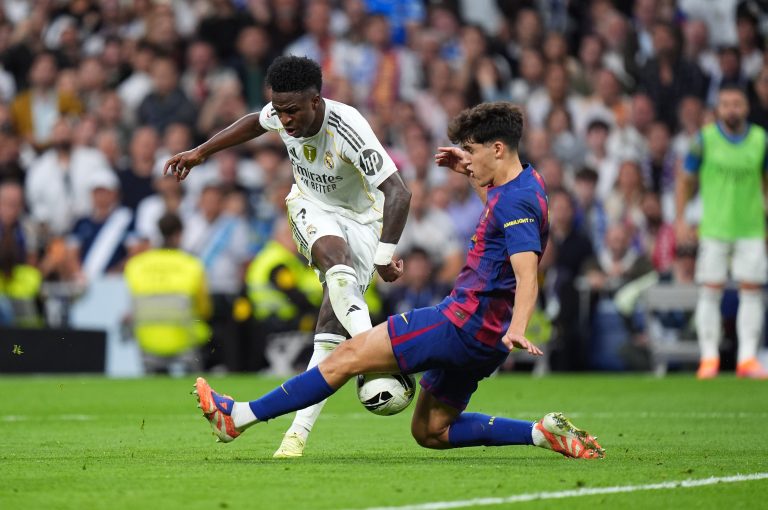
In recent days, much has been made of Vinicius Junior’s alleged rift with Real Madrid head coach Xabi Alonso. However, there is a much bigger issue going on in the background, that being the Brazilian winger’s contract situation, which has had supporters worried over the last few months.
Over the summer, it was reported that Real Madrid and Vinicius were unable to come to an agreement over a new contract, which caused talks to break down. Since then, they have been on hold, although the club is still determined to ensure that an agreement is reached with the 24-year-old.
Despite the ongoing situation with Alonso, it has now been reported by Diario AS that Real Madrid and Vinicius have come closer to reaching an agreement on a new contract, although it is stated that there will be no new offer tabled until the end of the season.
Image via Denis Doyle/Getty Images
At that point, Vinicius will only have a year remaining on his current deal, which runs out on the 30th of June 2027. Real Madrid are not concerned about their player running that down before leaving as a free agent, as their belief is that he also wants to stay at the Santiago Bernabeu for many years to come.
Real Madrid and Vinicius close to settling financial issue
One of the reasons that an agreement was not reached during the summer was due to Vinicius’ wage demands being deemed to be too high by Real Madrid, but according to the latest update, the two parties are now close to coming to a full agreement on this matter. Once that is achieved, it is expected that there would be few barriers between them.
Vinicius has had a strong start to the season, despite the off-field issues that has been swirling. He is very much a key player for Real Madrid, and this should remain the case for years to come.
MTN Ghana delivered a 45.9 percent surge in profit after tax to GH¢5.5 billion for the first nine months of 2025, powered by explosive data revenue growth and expanding mobile money adoption that’s transforming Ghana’s largest telecommunications operator into a digital services powerhouse.
The financial results released Wednesday show service revenue climbing 36.3 percent year-on-year to GH¢17.3 billion, while earnings before interest, tax, depreciation and amortization rose 41.6 percent to GH¢10.2 billion, achieving a margin of 58.4 percent. That margin improvement of 2.2 percentage points signals MTN is squeezing more profitability from each cedi of revenue, a crucial metric as the telco pivots from traditional voice services toward data and fintech offerings.
What stands out in these numbers is how completely data services now dominate MTN’s business model. Data revenue surged 46.8 percent to GH¢9.3 billion, accounting for 53.6 percent of total service revenue, marking the first time in company history that data alone contributed more than half of all revenue. That milestone reflects fundamental shifts in how Ghanaians use mobile networks, moving beyond basic calls and texts to video streaming, social media, mobile banking, and digital entertainment.
Active data subscribers increased 11.4 percent to 18.9 million, meaning roughly two-thirds of MTN’s 30.5 million total subscribers now actively consume data services. The company deployed GH¢3.3 billion in capital expenditure excluding leases to expand coverage, improve network quality, and upgrade IT systems, achieving 98.9 percent 4G population coverage nationwide. That near-universal 4G availability creates infrastructure foundation for delivering faster speeds and more sophisticated services.
Mobile Money’s Growing Footprint
Mobile money revenue increased 39.2 percent to GH¢4.3 billion, supported by 17.7 million active users, a 4.1 percent increase reflecting MTN’s growing role in Ghana’s financial inclusion drive. The MoMo platform has evolved from simple person-to-person transfers into a comprehensive financial services ecosystem encompassing digital payments, lending services, merchant transactions, and cross-border remittances.
Voice revenue, while growing more modestly at 9.3 percent to GH¢2.9 billion, demonstrates the legacy business isn’t disappearing but clearly represents declining importance relative to data and fintech. Digital entertainment services more than doubled to GH¢324.4 million, driven by consumer appetite for streaming video, gaming, and digital content, categories that barely existed in MTN’s revenue mix just a few years ago.
CEO Stephen Blewett attributed the strong performance to consistent execution of the company’s commercial strategy and improvements in the macroeconomic environment. The results were driven by subscriber growth and sustained capital expenditure, supported by better operational conditions that strengthened performance across key business lines, he stated.
MTN’s total subscriber base grew 6.4 percent to 30.5 million, adding roughly 1.8 million customers over the period. While that growth rate appears modest compared to revenue surges, it reflects market maturity in Ghana where mobile penetration already exceeds 100 percent when accounting for multiple SIM card ownership. The real growth opportunity lies in increasing revenue per user through data consumption and mobile money transactions rather than simply adding subscribers.
Economic Contribution and Tax Payments
The company paid GH¢7.3 billion in direct and indirect taxes during the period, up from GH¢6.1 billion in 2024, reinforcing its role as major contributor to government revenue. Additionally, MTN contributed GH¢1.2 billion in fees and levies to government agencies, bringing total fiscal contributions to GH¢8.5 billion. Those payments represent significant portions of Ghana’s telecommunications sector tax revenue, highlighting MTN’s economic importance beyond its commercial operations.
Total capital expenditure reached GH¢4.6 billion including lease obligations, demonstrating MTN’s commitment to long-term infrastructure development despite operating in an economy still grappling with inflation and currency pressures. That investment level positions the company to capitalize on growing data demand while maintaining service quality that differentiates it from competitors.
MTN achieved 57.3 percent increase in data traffic year-on-year, indicating subscribers aren’t just adopting data services but consuming dramatically more content. That traffic growth validates network capacity investments and suggests headroom for continued revenue expansion as usage patterns mature.
Social Impact and Community Development
Through the MTN Ghana Foundation, the company launched several initiatives including construction of a digital resource centre at the University for Development Studies in Tamale expected to train over 30,000 students in artificial intelligence, robotics, and Internet of Things technologies. The Foundation also trained 160 small businesses in fintech and accounting principles and supported over 4,000 learners through its Digital Skills Academy.
These corporate social responsibility programs position MTN as contributor to Ghana’s digital transformation beyond commercial service provision. By training students and entrepreneurs in emerging technologies, the initiatives create potential future customers while addressing skills gaps that could constrain digital economy growth.
Blewett noted that MTN’s approval from the National Communications Authority to harmonize its spectrum licenses would improve service quality and support Ghana’s digital transformation agenda. This milestone will enhance network performance and strengthen our ability to deliver innovative services nationwide, he said.
Spectrum harmonization allows more efficient use of radio frequencies, potentially improving network speeds and capacity without requiring additional physical infrastructure. For MTN, that regulatory approval removes constraints that might otherwise limit its ability to meet surging data demand as customer usage patterns continue evolving.
Strategic Priorities and Future Outlook
Looking ahead, MTN remains optimistic about the final quarter of 2025, projecting service revenue growth in the mid-to-upper thirties percentage range and EBITDA margins in the mid-fifty percent range. That guidance suggests management expects momentum to continue despite seasonal variations and competitive pressures.
The company reaffirmed commitment to stakeholder collaboration, cost efficiency, and customer satisfaction, emphasizing plans to leverage artificial intelligence tools to enhance customer engagement. Adoption of advanced AI tools in customer value management initiatives will be a priority to improve satisfaction and engagement, with continued scaling of group platforms including ongoing development of the myMTN and MoMo apps by adding innovative services to meet customers’ changing needs.
MTN plans to keep introducing advanced features to improve security and enable smooth transactions, strategically investing in areas with highest demand, especially in data and home connectivity services, aiming to capitalize on growing market opportunities. That focus on data and home connectivity reflects recognition that fixed wireless access and home broadband represent next growth frontier as Ghanaians seek alternatives to traditional fixed-line internet.
The company’s Ambition 2025 strategy focuses on growth, efficiency, and innovation, positioning MTN as Ghana’s leading digital solutions provider. Whether that ambition translates into sustained competitive advantage depends on execution amid intensifying competition from rivals also investing heavily in data infrastructure and mobile money services.
Challenges remain despite strong results. Inflationary pressures continue affecting operational costs, regulatory burdens including sector-specific taxes add financial strain, and currency volatility creates uncertainty for a business dependent on imported equipment denominated in foreign currencies. However, expanding margins signal MTN is managing these challenges effectively while capturing growth in high-value segments.
The company’s performance contrasts sharply with broader economic headwinds affecting Ghana, suggesting telecommunications and digital services represent sectors showing resilience and growth potential even during difficult macroeconomic periods. For investors, the combination of 46 percent profit growth, expanding margins, strong cash generation, and clear strategic direction presents a compelling narrative.
For Ghana’s digital economy, MTN’s continued infrastructure investment and service innovation accelerate transformation toward digital-first society where mobile connectivity enables education, commerce, financial services, and entertainment. The 98.9 percent 4G coverage achievement means nearly all Ghanaians can theoretically access high-speed internet, though affordability and device availability remain barriers for some segments.
As MTN marks these strong results, the telecommunications landscape continues evolving with potential 5G deployments, satellite internet competition, and regulatory changes that could reshape competitive dynamics. The company’s ability to maintain growth momentum while adapting to these shifts will determine whether 2025’s performance represents peak achievement or foundation for sustained leadership in Ghana’s digital transformation journey.
Ghana’s Sports and Recreation Minister, Kofi Adams, has praised Team Ghana for their outstanding performance at the ANOCA Zone III Games in Burkina Faso.
Team Ghana, comprising 47 athletes across four sporting disciplines — volleyball, handball, taekwondo and karate-do — returned with a remarkable tally of 10 medals. Impressively, every athlete secured at least one medal, contributing to a haul of one gold, four silver and five bronze medals.
The standout performance came from the men’s volleyball side, who clinched gold after a dominant campaign.
Both the men’s and women’s handball teams earned silver medals, while karate-do contributed two silver and two bronze medals.
The taekwondo team added three bronze medals, rounding off a strong multisport effort.
The Sports Minister lauded the athletes for their dedication, mental fortitude and discipline, emphasising that their success reflects the rising competitiveness of Ghanaian sport within the region and beyond. “In all these difficult circumstances, you have proven yourselves and made the nation proud,” he said.
He also recognised the crucial support of the GOC, technical officials and Ghana’s Embassy in Burkina Faso throughout the Games, stressing that collaboration remains essential to sustained progress.
Reaffirming Government’s commitment to sports development and youth empowerment, the MP for Buem constituency announced plans to construct multi-purpose courts in every district, with markings for basketball, netball, handball, tennis and volleyball.
“When you invest in sports, you are investing in something good and great,” he noted, adding that the incoming Sports Development Fund will help resolve funding challenges confronting athletes and federations.
He further highlighted that Ghanaian athletes continue to be powerful ambassadors for the nation, projecting the country’s values and excellence through sport.
The Ministry extended congratulations to all athletes, coaches and officials for their achievements and pledged continued support as preparations begin for upcoming international competitions.
DISCLAIMER: The Views, Comments, Opinions, Contributions and Statements made by Readers and Contributors on this platform do not necessarily represent the views or policy of Multimedia Group Limited.
DISCLAIMER: The Views, Comments, Opinions, Contributions and Statements made by Readers and Contributors on this platform do not necessarily represent the views or policy of Multimedia Group Limited.
The Municipal Chief Executive (MCE) for Weija-Gbawe, Felix Odartey Lamptey, has denied any wrongdoing in the ongoing dispute involving the Panbros Salt Factory, following accusations by some residents and factory workers.
The aggrieved residents and workers have alleged that the MCE, together with a group of Chinese investors, is attempting to take over portions of the company’s land with the support of armed security personnel.
However, Lamptey has dismissed the allegations, explaining that the Municipal Assembly was merely facilitating discussions related to land use and potential investment opportunities within the area.
According to eyewitness accounts, the incident reportedly occurred earlier this week when a team believed to be working for the investors entered the disputed site with earth-moving equipment, claiming they had authorisation from the Assembly.
Officials of the Panbros Salt Industry have described the move as an act of land encroachment. They are calling for urgent intervention from the Lands Commission and relevant security agencies to prevent possible clashes.
The Panbros Salt Industry, one of Ghana’s oldest salt production companies, has been embroiled in a series of land-related disputes in recent years, largely due to rapid urban expansion around the Weija enclave.
The Minority in Parliament has criticised the Majority for failing to ensure sufficient attendance during parliamentary sittings.
In a formal submission to the Speaker, the Minority highlighted that only 70 Members of Parliament were present out of 276, falling below the constitutionally mandated quorum of 92 needed to commence proceedings.
The caucus urged the Speaker to enforce the House’s standing orders to address the absenteeism.
Despite the Minority’s concerns, an official headcount later confirmed that 103 MPs were in attendance, allowing parliamentary business to continue as scheduled.
The Minority’s complaint underscores ongoing frustrations over attendance and discipline in the House, pointing to the need for greater commitment from the Majority to uphold parliamentary standards.
Meanwhile, a parliamentary attendance report has revealed that a significant number of Members of Parliament (MPs) missed sittings without official permission.
The report, which covers 43 sittings held between January and March 2025, showed that a number of MPs absented themselves, some for more than 20 days without official permission.
Housing is central to social equity, human dignity, and sustainable development. Ghana faces a persistent housing deficit exceeding 1.8 million units, constraining inclusive growth and exacerbating urban inequality. This paper critically examines how Ghana, under H.E. John Dramani Mahama, could reform its housing policy to promote equity, affordability, and sustainability. Using social justice and urban political economy as conceptual lenses, the study employs qualitative policy analysis and draws on international models such as the U.S. Housing Choice Voucher Program, Low-Income Housing Tax Credit (LIHTC), and Fair Housing Act. The analysis highlights the need for integrated policy frameworks that combine rental assistance, homeownership support, developer incentives, anti-discrimination measures, and community reinvestment strategies to achieve socially inclusive and economically sustainable urban development.
Keywords: Ghana, housing policy, John Dramani Mahama, social justice, urban development, homeownership, public-private partnerships
1. Introduction
Housing is a fundamental determinant of socio-economic well-being. In Ghana, a deficit exceeding 1.8 million units manifests in overcrowding, informal settlements, and spatial inequality, particularly in Accra, Kumasi, and Takoradi (Owusu & Agyei, 2022; Ministry of Works and Housing, 2023). Beyond serving as physical shelter, housing embodies human dignity and social inclusion. Persistent challenges—limited mortgage access, complex land tenure, and fragmented institutional coordination—have hindered systematic solutions (World Bank, 2021).
This study argues that, under H.E. John Dramani Mahama, Ghana can realign housing policy through participatory governance that integrates public-sector intervention, private-sector innovation, and community engagement, fostering a socially equitable and economically sustainable housing system.
2. Theoretical Framework
The analysis draws on social justice and urban political economy perspectives.
Social Justice: Housing is a universal right. Policies must ensure fairness and equitable access, particularly for low- and middle-income households (Harvey, 2012).
Urban Political Economy: Housing outcomes are shaped by governance, markets, and institutional power. The state plays a pivotal role in moderating inequality and guiding urban development (Logan & Molotch, 2007).
Together, these frameworks position housing as both a social right and a strategic national asset, linking human welfare to sustainable economic growth.
3. Methodology
A qualitative policy analysis was conducted, integrating interpretive and comparative approaches. Sources included Ghana’s National Housing Profile (2023), Saglemi Project reports, scholarly literature on housing policy (Amoako & Boamah, 2021; Schill, 2020), and international models (HUD, 2021).
Thematic analysis identified four key dimensions of Ghana’s housing challenge: affordability, accessibility, governance, and equity. These were interpreted through the theoretical lenses to highlight structural constraints and opportunities for transformative policy (Creswell & Poth, 2018).
4. Literature Review
Scholarship identifies housing as a multidimensional policy challenge requiring institutional coordination and sustainable financing (UN-Habitat, 2022; World Bank, 2021). State-led projects, including Saglemi, have experienced setbacks due to weak oversight, politicization, and lack of transparency (Amoako & Boamah, 2021). The proliferation of informal settlements highlights systemic weaknesses in land administration and urban governance (Owusu & Agyei, 2022).
International models demonstrate valuable lessons: the U.S. Housing Choice Voucher Program and LIHTC showcase effective public-private collaboration, while fair housing legislation mitigates structural inequities (HUD, 2021; Schill, 2020). These insights provide a foundation for reforming Ghana’s housing policy.
5. Policy Analysis and Recommendations
5.1 Rental Assistance
A National Rental Assistance Programme, modeled on U.S. vouchers, could subsidize rent for low-income households, reducing overcrowding and promoting social inclusion.
5.2 Homeownership
State-backed mortgages and first-time buyer programs, supported by institutions such as the Ghana Housing Finance Association, could expand affordable homeownership and reduce reliance on informal housing.
5.3 Affordable Housing Development
LIHTC-style incentives for developers, alongside a National Housing Trust Fund financed through levies and budgetary allocations, could ensure sustainable low-cost housing construction.
5.4 Fair Housing and Anti-Discrimination
A Ghanaian Fair Housing Act would institutionalize equity, prohibiting discrimination based on ethnicity, gender, disability, or religion, reflecting Mahama’s inclusive governance philosophy.
5.5 Housing Sustainability and Urban Renewal
Complementary programs—including home repair grants, homelessness prevention, and community reinvestment—would improve housing quality, neighborhood resilience, and social cohesion.
6. Conclusion
Ghana is at a pivotal moment in redefining its housing trajectory. Housing should be recognized not only as an economic sector but also as a cornerstone of social welfare and national cohesion. Under H.E. John Dramani Mahama, Ghana can implement a coherent housing strategy that integrates rental assistance, affordable homeownership, developer incentives, and anti-discrimination measures. Such reforms could reduce the housing deficit, improve quality of life, and affirm housing as both a human right and a driver of sustainable national development.
The Ministry of Education has confirmed that English has not been dropped as the language of instruction in Ghanaian basic schools.
This follows concerns over the Ministry’s directive for schools to use the mother tongue for pupils from KG to primary three.
In a statement signed and issued by Dr. Clement Apaak, Deputy Minister for Education, on Thursday, October 30, the Ministry emphasised that the policy of using children’s home languages alongside English is long-standing, dating back to independence, but has not been fully implemented.
The Ministry explained that teaching children in a language they understand, alongside English, strengthens learning outcomes across all subjects.
It also noted that using a language a child does not understand can create significant barriers to literacy and overall academic performance.
To improve learning outcomes from Kindergarten to Basic Year 3, the Ministry plans to revisit the policy and draw upon successful local programmes such as Complementary Basic Education, which engage communities and extend early-grade teaching across Ghana’s 12 official languages.
The policy aims to ensure that by the end of Basic Year 3, children are proficient in their home or playground language, providing a strong foundation for learning English and other languages as they progress in school.
International evidence from countries including China, Finland, Japan, and Malaysia supports this approach, showing that home language proficiency enhances learning in additional languages and fosters national identity and cultural appreciation.
The Ministry reiterated that no learner will be left behind and that English and other international languages will continue to be taught in schools. The statement stressed that this approach ensures children receive the quality education they are entitled to while nurturing responsible national and global citizens.
Mafikope (E/R), Oct. 30, GNA – The Africa Just Transition Network (AJTN), through its Renewable Energy Working Group, has installed and commissioned a 6kWp + 10kWh off-grid rooftop solar photovoltaic (PV) system to power a community centre at Mafikope in the Kwahu Afram Plains North District of the Eastern Region.
The project aims to promote community design and own solar systems and ensure equitable access to clean energy for underserved communities.
Mafikope, a peninsula community of about 500 residents, is not connected to the national electricity grid, which has long affected residents’ productivity and limited access to education and livelihood opportunities.
The initiative followed a community profiling exercise conducted by AJTN in three island communities, including Mafikope, to assess their energy challenges. The findings revealed significant constraints ranging from the inability to use ICT facilities to difficulties in preserving fish and crop produce.
Mrs. Patricia Odeibea Bekoe, Co-Facilitator of AJTN’s Renewable Energy Working Group, said the initiative highlighted the importance of community-led solutions in advancing energy access and justice.
“The Mafikope community solar centre symbolises empowerment through clean energy and demonstrates how renewable power can drive social and economic transformation,” she said.
Mafikope was selected for the project based on its strong community readiness and commitment. The community provided the building for the solar installation, while AJTN funded and installed the solar system, creating what has been described as a “community solar centre.”
The PV system, designed by International Climate & Energy Consult (ICEC) and installed by Echoace Energy Solutions Limited, includes solar panels, hybrid inverters, and battery storage to ensure a continuous power supply with post-installation maintenance training for selected youth to ensure sustainability.
The system currently provides lighting and electrical outlets for six rooms, and the community have plans to convert some rooms into a computer lab and library for children, a cold storage facility, and an entertainment centre to improve social life and livelihoods.
Ms Marina Agortimevor, Coordinator of AJTN, said the project was part of the network’s effort to scale up community-based renewable energy initiatives across Africa’s off-grid communities.
“Through this project, we are showing what is possible. We remain committed to ensuring Africa’s transition to clean energy is fair, inclusive, and locally driven,” she said.
The community’s leaders expressed gratitude to AJTN, noting that having electricity would bring positive change and development to Mafikope.
The commissioning was marked by music, dance, and celebration as community members expressed optimism that the solar project would enhance education, health delivery, and overall living standards.
EXCITEMENT IS building nationwide as the 2025/26 Malta Guinness Women’s Premier League kicks off this weekend, ushering in another highly anticipated season of top-flight women’s football in Ghana.
After months of meticulous preparation, all systems are set for kickoff — from referees and match commissioners to players and technical teams who have worked tirelessly behind the scenes to ensure a smooth start.
Clubs across both zones have been fine-tuning their tactics, unveiling new signings, and building squad cohesion in readiness for a campaign expected to showcase passion, skill, and unforgettable football moments.
Fans can look forward to fierce competition, dazzling performances, and emerging rivalries as Ghana’s best female footballers take centre stage once again.
Defending champions Police Ladies will be aiming to retain their title, but with several teams strengthening their squads and new talents breaking through, this season promises to be one of the most competitive in recent years.
The league continues to flourish under the proud sponsorship of Malta Guinness, whose steadfast partnership with the Ghana Football Association (GFA) has been instrumental in elevating women’s football across the nation.
Together, they remain committed to promoting empowerment, inclusion, and excellence within the women’s game.
Member of Parliament (MP) for Lambussie and a member of the Parliamentary Select Committee on Health and the Subsidiary Legislation Committee, Professor Titus Beyuo, says health personnel at the Greater Accra Regional Hospital (Ridge Hospital) are commending the new digital health platform being implemented across the country, describing it as more user-friendly and adaptable than previous systems.
The new system, the Ghana Healthcare Information Management System (GHIMS), was recently procured by the government to address the persistent failures of the Lightwave Health Information Management System, which had caused widespread disruptions across hospitals, particularly in the Ashanti Region.
Health Minister Kwabena Mintah Akandoh has outlined a four-week plan to migrate health facilities gradually onto the new platform. The rollout will start with teaching hospitals, regional hospitals, and heavily populated district hospitals, followed by other district hospitals, clinics, health centers, and CHPS compounds.
The introduction of GHIMS is intended to restore reliable electronic record-keeping, reduce delays in patient processing, and prevent a return to manual systems that had slowed service delivery under the previous Lightwave platform.
Speaking on the Channel One Newsroom on Thursday, October 30, Prof. Beyuo said staff at Ridge Hospital were celebrating the introduction of the new software, which allows greater flexibility and customisation to meet institutional needs.
“What I can confirm to you is that our colleagues at Ridge Hospital are jubilating as of today because the new software introduced is more user-friendly to them. It is very accessible.
“People can make any changes and customise it to the institutional demands. I have personally called the Minister of Health to suggest that Korle Bu should be the next place for piloting,” he said.
Read also…
NHIS system saga: Okoe Boye part of Lightwave contract mess – Akandoh
Veteran satirist Kwaku Sintim Misa has pinned Ghana’s corruption crisis squarely on the shoulders of its educated professionals, arguing that university degrees have produced not ethical leaders but more sophisticated thieves who understand systems well enough to exploit them.
The television personality, known as KSM, delivered the scathing assessment on his eponymous show, pointing out that major corruption scandals currently before Ghana’s courts don’t involve uneducated villagers but well schooled professionals with degrees in psychology, accounting, and philosophy. It’s people who’ve studied Aristotle, he noted, who’ve become the architects of the country’s moral decay.
According to him, the major corruption scandals currently before the courts do not involve uneducated people but well-schooled professionals, individuals who understand the systems and manipulate them for personal gain. That understanding makes educated corruption the most dangerous threat to Ghana’s progress, KSM argued, describing perpetrators as greedy bastards whose formal training only equipped them to loot more efficiently.
The comments reflect growing public frustration that decades of investment in higher education haven’t translated into ethical leadership. Ghana spends roughly 4 percent of its GDP on education, producing thousands of graduates annually from universities, polytechnics, and professional training institutes. Yet forensic audits keep uncovering massive financial irregularities orchestrated by people with impressive credentials and responsible positions.
KSM lamented that the very people trusted to manage the country’s finances and institutions have become the architects of its moral decay. He posed a provocative question: if education produces thieves, why continue educating them? The implication cuts deep, suggesting that Ghana’s education system fundamentally fails at character formation even while succeeding at skills transmission.
Recent forensic audits have exposed alleged irregularities at multiple state agencies, including the National Service Authority, the National Lottery Authority, and various procurement processes. The common thread isn’t ignorance but sophisticated manipulation by people who knew exactly what they were doing and how to cover their tracks, at least temporarily.
KSM extended his critique beyond individual corruption to systemic failures under the previous administration. He questioned how former President Nana Akufo Addo feels about the level of corruption that reportedly took place under his party’s administration. The satirist expressed dismay over what he characterized as a culture of indifference among some New Patriotic Party members who downplay corruption reports and dismiss them as exaggerations.
KSM argued that Ghana’s escape from what he termed “eight years of barbaric loot” was a stroke of divine intervention, suggesting that a continuation of the NPP’s rule would have extended what he called “the senseless corrupt decadence” witnessed in recent years. If the NPP had broken the eight year cycle by winning the 2024 elections, he suggested, it would have meant continuity of loot rather than accountability.
The satirist rejected attempts to blame Ghana’s economic troubles on COVID 19, arguing that the pandemic served as convenient cover for mismanagement. The NPP got more aid during that period than ever before, he noted, yet the country witnessed massive financial leakages that had nothing to do with virus containment efforts. Healthcare spending during the pandemic offers a case study, with some procurements flagged for inflated prices or questionable specifications that auditors are still investigating.
KSM’s broader argument is that Ghana’s governance challenges stem less from political ideology than from moral decay. He concluded that Ghana’s governance challenges have less to do with political ideology and more with moral decay, warning that excuses only serve to normalize wrongdoing. When officials rationalize corruption through references to external shocks or inherited problems, they gradually make theft acceptable, eroding the social contract between government and governed.
The satirist called for urgent integration of moral and civic training into Ghana’s education system, warning that without character formation, academic learning produces only more intelligent looters. That recommendation echoes longstanding debates about values education in Ghanaian schools, where religious and moral education exists as a subject but critics argue it’s taught poorly and assessed inadequately.
Ghana’s education system emphasizes academic achievement measured through exams that test knowledge retention and analytical skills but rarely evaluate ethical reasoning or civic responsibility. Students can graduate with honors while viewing corruption as normal, even smart, if it means securing resources for themselves and their families. That disconnect between intellectual achievement and moral formation creates exactly the problem KSM identified, educated people who excel at gaming systems rather than improving them.
The question of how to integrate character education effectively remains contentious. Some advocate for revived focus on religious instruction, though Ghana’s religious institutions themselves face corruption allegations. Others push for civic education that teaches constitutional values and citizen responsibilities, but skeptics wonder whether classroom lessons can counteract broader societal norms that reward corruption and punish whistle blowers.
KSM has built a career using satire to critique Ghana’s political and social dysfunction, performing one man shows with comical characters that illustrate key issues while making audiences laugh at themselves. Born in 1956 in Kumasi, he studied at the National Film and Television Institute before earning degrees in acting and film production from Trinity College in Connecticut and New York University. His return to Ghana launched productions that blend entertainment with social commentary, a tradition he continues through stage performances and his television show.
The satirist’s platform gives him unusual latitude to voice criticisms that might land others in trouble. Comedy provides cover for commentary that would sound inflammatory in straight news reporting or political speeches. When KSM calls educated elites greedy bastards, audiences laugh while absorbing the underlying message about systemic rot. That’s strategic communication, using humor as a delivery mechanism for uncomfortable truths.
Whether KSM’s critique will spur actual reforms remains uncertain. Ghana has heard similar diagnoses before, from civil society groups, opposition politicians, and even some government officials who bemoan corruption while participating in the same system. The challenge isn’t identifying the problem, it’s building institutions strong enough to enforce accountability regardless of political connections or educational credentials. Forensic audits that expose wrongdoing mean little without prosecutions that result in convictions and asset recovery.
The satirist’s comments landed amid preparations for prosecutions related to alleged corruption under the previous administration. The current government has promised accountability, but Ghana’s history suggests political will often fades when cases drag through courts or investigations threaten to expose inconvenient connections. KSM’s frustration reflects broader public cynicism that nothing will fundamentally change despite periodic outrage and promises of reform.
The Government of Ghana is finalizing legislation that promises to end chronic underfunding plaguing national sports teams through a dedicated fund drawing from fourteen revenue sources including betting taxes, lotteries, and athlete transfer fees.
Felix Kwakye Ofosu, Minister for Government Communications, confirmed Thursday that work continues on the Sports Fund Bill before it’s laid before Parliament for consideration. The proposed legislation aims to create a sustainable pool of resources for sports infrastructure, capacity building, and athlete welfare, addressing persistent complaints about inadequate investment that leaves Ghanaian athletes competing at global events without proper preparation or support.
A draft of the proposal, shared by Kwakye Ofosu on October 10, 2025, outlines 14 potential funding sources, including parliamentary allocations, sports lotteries, sponsorships, grants, and taxes from sports betting companies. Additional inflows will come from gate proceeds, athlete transfer fees both locally and abroad, sponsorship deals, international federation support, and percentages of revenues from competitions and sports vendors.
The minister stated that the condition of Ghanaian sports, including football, athletics, and boxing, continues raising concerns particularly about infrastructure, incentive packages, and general investment. He expressed belief that the bill will generate significant resources enabling investment in sports that yields desired outcomes, arguing Ghana can’t expect to perform at the highest level globally when not investing what it should.
That acknowledgment reflects years of frustration from athletes and sports administrators who’ve watched promised support fail to materialize while competitors from similarly situated countries pull ahead through sustained investment. Ghana’s sports infrastructure largely consists of aging facilities built decades ago, with the Accra Sports Stadium, Baba Yara Stadium, and other major venues requiring constant repairs rather than serving as modern training and competition centers.
Sports Minister Mustapha Ussif disclosed on the floor of Parliament on October 21, 2025, that the Ministry of Sports and Recreation will soon present key bills including the Sports Fund Bill, Sports Fund Regulations, National Sports College Bill, and Anti-Doping legislation. That bundled approach suggests government recognizes sports governance needs comprehensive reform rather than piecemeal fixes.
The Sports Fund represents one element in broader restructuring aimed at professionalizing how Ghana develops and supports athletes. The National Sports College Bill would create dedicated training institutions, while Anti-Doping legislation would align Ghana’s framework with international standards required for Olympic participation and other major competitions. Together, these measures could transform Ghana’s sports ecosystem if properly implemented and funded.
Kwakye Ofosu clarified on October 10 that no special levy has been proposed or approved by Cabinet, contradicting earlier speculation following comments attributed to a Ghana Olympic Committee member. The fund will draw on existing revenue streams within sports and gaming sectors rather than imposing new taxes on the general public, an important distinction given Ghana’s already heavy tax burden and resistance to additional levies.
That clarification matters because initial reports suggesting a new sports levy sparked public backlash from citizens who feel overtaxed and skeptical that additional government revenue actually reaches intended purposes. By positioning the fund as capturing sports related income already flowing through the economy rather than creating fresh tax obligations, the government hopes to reduce opposition while still generating substantial resources.
The fourteen proposed funding sources include some straightforward mechanisms like parliamentary allocations and international federation support alongside more complex arrangements involving percentages of betting taxes, transfer fees, and commercial vendor revenues. How those percentages get calculated, who collects them, and what oversight ensures the money actually reaches the fund rather than getting diverted will determine whether the legislation delivers promised results.
Ghana’s sports betting industry has exploded in recent years, with companies like BetPawa, SportyBet, and 1xBet attracting millions of young Ghanaians wagering on football matches and other events. The industry generates substantial tax revenue, though critics argue it encourages gambling addiction and financial irresponsibility. Dedicating a portion of betting taxes to sports development creates a logical connection between gambling on sports and funding athletes, though it also ties the fund’s health to an industry with questionable social impacts.
Athlete transfer fees represent another potentially significant revenue source, particularly given how many Ghanaian footballers move to clubs abroad each year. Stars like Mohammed Kudus, Thomas Partey, and Inaki Williams command multimillion dollar transfer values when changing clubs. If the fund captures even small percentages of those transactions, it could generate meaningful income. But implementing collection mechanisms for international transfers involving multiple countries and jurisdictions poses administrative challenges.
The government expects the Sports Development Fund to become operational by the first quarter of 2026, providing stable funding for grassroots sports, maintenance of facilities such as the Accra Sports Stadium, and support for national teams and athletes across various disciplines. That timeline assumes Parliament passes the legislation relatively quickly and implementing regulations get drafted efficiently, outcomes not guaranteed given Ghana’s sometimes sluggish legislative processes.
Past sports funding initiatives haven’t always succeeded as promised. The Ghana League Clubs Association has repeatedly complained about unpaid subsidies, while national teams have threatened strikes over unpaid allowances and bonuses. The Black Stars famously refused to train before a 2014 World Cup match until the government flew cash to Brazil to settle bonus disputes. Such incidents damage Ghana’s reputation and distract athletes from competition when they should focus on performance.
The proposed fund aims to prevent such embarrassments by creating predictable, reliable revenue streams independent of annual budget battles or ministerial discretion. If properly structured with transparent governance and regular audits, it could ensure athletes receive promised support without delays or excuses. But if the fund becomes another bureaucratic layer subject to political interference and resource diversion, it’ll simply add complexity without solving underlying problems.
Key implementation questions remain unanswered in available information. Who will govern the fund and make allocation decisions? What criteria will determine which sports receive what shares? How will the fund balance support for elite athletes competing internationally against grassroots development that builds future talent? Will athletes and sports administrators have input into governance, or will it remain purely ministerial control?
International examples offer lessons about what works and what doesn’t. Countries like Kenya and Ethiopia have thrived in athletics through focused investment in specific disciplines where they enjoy competitive advantages. South Africa has built relatively successful sports programmes through lottery funding similar to what Ghana proposes. But corruption and mismanagement have undermined sports funds in other African countries, turning well intentioned legislation into vehicles for patronage rather than athlete support.
Ghana’s draft proposal includes percentages of revenues from athlete certification, federation licensing, and equipment importation, creating comprehensive capture of sports related economic activity. That breadth could generate substantial income if properly administered, but it also creates multiple collection points where leakage or corruption could occur. The fund’s ultimate success will depend heavily on governance structures and enforcement mechanisms that prevent such losses.
The minister’s confidence that the bill will generate significant resources enabling proper sports investment reflects optimism that fourteen diverse revenue sources collectively produce enough income to meaningfully improve infrastructure, training, and athlete support. Whether that optimism proves justified depends on how much each source actually contributes once the fund becomes operational. Projections about expected revenues weren’t included in available information, making it difficult to assess whether proposed sources can realistically fund Ghana’s sports ambitions.
Parliament’s consideration of the Sports Fund Bill will test whether legislators from both ruling and opposition parties see sports funding as worthy of creative financing mechanisms or whether they view it as discretionary spending vulnerable to budget cuts when resources get tight. Sports development lacks the immediate political urgency of healthcare or education, potentially making the fund’s dedicated revenue streams especially valuable by insulating sports investment from competing priorities.
Reports suggest that inadequate security arrangements contributed to the confusion
There was chaos at the University of Cape Coast (UCC) on Thursday October 30, 2025 during the National Science and Maths Quiz (NSMQ) quarterfinal contest involving Adisadel College, Prempeh College and Mfantsipim School.
The much-anticipated contest, which was expected to draw huge crowds from the three competing schools, had to be postponed by the organizers according to multiple reports following violent disturbances allegedly involving some supporters of the various schools.
CHASS withdraws from 2025 National Science and Maths Quiz over lack of funds
According to a post by Radio Univers on its official Facebook page, “students are being assaulted as they attempt entry into the UCC auditorium for the NSMQ quarterfinal contest between Adisadel College, Prempeh College, and Mfantsipim School. The reasons for the assault are unknown.”
Reports suggest that inadequate security arrangements contributed to the confusion, making it difficult for officials to control the large and agitated crowd.
Security personnel were later reportedly deployed to restore calm and ensure the safety of contestants, spectators and event organizers.
AM
Tragedy as farmer drowns while seeking loan to send child to SHS
The wait is over! The GhanaWeb Excellence Awards 2025 is officially launched. Let’s Celebrate impact, innovation and excellence across Ghana.
Who deserves to be honoured this year?
Nominate now 👉 https://ghanaweb.com/ghanaexcellenceawards/nominate
Acclaimed UK actress of Ghanaian descent, Lauren Akosia, is exploring new aspects of her creativity by venturing into music. She makes her debut on wax with an appearance on the Afro-house tinged single by rising producer JODÉ. The song inspired by melodies and rhythms from the southernmost part of the African continent also features celebrated Ghanaian DJ Mz Orstin.
‘Let It Go’ borrows elements from the House music genre popularized by South Africa and Afrobeats. It has an upbeat rhythm with punchy synths, which are softened intermittently but a soothing lead progression. JODÉ’s amazing production, paired with Mz Orstin’s experience and Lauren’s stellar vocal performance makes this single a standout track.
Lauren is no stranger to the spotlight. Already known for enthralling audiences with her performances on screen through acclaimed TV shows like the BBC TV series ‘Mr Loverman’ and ‘Whitstable Pearl,’ her vocal performance on ‘Let It Go’ is just an addition to proof of her storytelling capabilities. In 2025, ‘Mr Loverman’ premiered at Tribeca Festival with Sony Pictures Television distributing the series internationally. Lauren was also selected as a TOP 10 FINALIST in the International Africa Monologue Challenge.
JODÉ on the other hand is a rising boundary-pushing House Artist, Producer and DJ who fuses the soul of Afrobeats, the groove of R&B, the energy of EDM, and the accessibility of pop into his electrifying sound. He is currently signed to one of Ghana’s leading boutique music labels, Lynx Entertainment, known for spawning talents like KiDi, Kuami Eugene, MzVee and Asem over the years. Mz Orstin has also made waves in the DJ circuit both locally and internationally, distinguishing herself in the electronic music, house and afrobeats genres.
‘Let It Go’ is now available for streaming on all DSPs here!
Keep up with Lauren Akosia also on Instagram | X | Tiktok | Facebook | Youtube and IMDB.
The Mayor of Kumasi, Richard Ofori Boadi Agyemang, has expressed deep regret over the fire that devastated the China City Mall at Santasi, resulting in the loss of millions of dollars in goods and property.
The fire, which began on Thursday at the back of the building, quickly engulfed the mall, causing extensive damage to shops selling groceries, electronics, and household items. Witnesses reported that the flames spread so rapidly that many traders could not save their goods.
Speaking on the incident, Mayor Agyemang said, “It is unfortunate that we have lost millions of dollars out of this fire, and it is sad. The owners, I am told, are out of the country, but their workers and representatives are here.
“We will try as much as possible to speak to the investors as early as feasible, calm them, and offer them the nation’s support. These are foreign nationals who have come to invest in our country. They employ hundreds of our youth, so we will do whatever we have to do to assist them, if possible, to come back.”
The mayor reassured the public that there were no casualties in the incident, noting that all staff were safely evacuated with assistance from firefighters and bystanders.
“The fire department was able to evacuate all the staff. All the workers, with the help of bystanders, were able to evacuate. What we have is the losses that we have,” he added.
China City Mall, which opened earlier this year, had become a popular shopping destination for Kumasi residents. The Ghana National Fire Service is currently investigating the cause of the fire and assessing the full extent of the damage.
Award-winning investigative journalist Manasseh Azure Awuni has slammed former Finance Minister Ken Ofori-Atta, accusing him of orchestrating what he describes as a “dubious” contract involving Strategic Mobilisation Limited (SML).
In a statement shared on Facebook sighted by MyNewsGh, Manasseh claimed that under the controversial agreement, SML was to receive a fixed percentage of Ghana’s revenue from multiple sources, including every litre of petroleum product sold, every barrel of oil produced, and every ounce of gold mined in the country.
Private legal practitioner Kweku Paintsil has taken strong exception to the conduct of the Special Prosecutor, Kissi Agyebeng, accusing him of turning its investigations into a public spectacle instead of adhering to proper judicial procedures.
His remarks were prompted by the Special Prosecutor’s recent briefing on ongoing investigations.
Speaking on Joy FM’s Top Story on Thursday, October 31, Mr. Paintsil said the Special Prosecutor’s frequent press conferences and detailed public briefings about ongoing investigations are contrary to the principles of fair trial and due process.
“I think what the OSP is doing is highly and very unprofessional. He is conducting a trial in the court of public opinion, which is against the very tenet and essence of a trial under our system of adjudication,” he said.
Mr. Paintsil described the conduct of the OSP as “most abhorrent and shameful”, questioning what motivates such public commentary on cases that are yet to be tried in court.
The lawyer stressed that every accused person is entitled to the presumption of innocence and accused the Special Prosecutor of undermining that constitutional right.
“I don’t know what pushes him to do all the kinds of things that he does by giving all these press statements. He is acting as if the media are going to be the judges in this matter. It’s very, very unfair,” he remarked.
His comments follow the latest press briefing by the OSP, indicating that former Minister of Finance, Ken Ofori-Atta and several other former government officials will be prosecuted following a detailed investigation into alleged corruption and related offences.
Special Prosecutor Kissi Agyebeng said the investigation uncovered evidence of serious financial irregularities involving top officials of the Ministry of Finance and the Ghana Revenue Authority (GRA), as well as individuals connected to Strategic Mobilisation Ghana Limited (SML).
According to Mr Agyebeng, the OSP will charge Mr Ofori-Atta, along with:
Ernest Akore, former Chef de Cabinet to the former Minister of Finance
Emmanuel Kofi Nti, former Commissioner-General of the GRA
Rev Ammishaddai Owusu-Amoah, former Commissioner-General of the GRA
Isaac Crentsil, former Commissioner of the Customs Division of the GRA and General Manager for Strategic Mobilisation Ghana Limited
Kwadwo Damoah, former Commissioner of the Customs Division of the GRA and Member of Parliament for Jaman South
Mr Agyebeng explained that each of the named individuals will face charges of corruption and corruption-related offences before the end of next month.
DISCLAIMER: The Views, Comments, Opinions, Contributions and Statements made by Readers and Contributors on this platform do not necessarily represent the views or policy of Multimedia Group Limited.
DISCLAIMER: The Views, Comments, Opinions, Contributions and Statements made by Readers and Contributors on this platform do not necessarily represent the views or policy of Multimedia Group Limited.
The Office of the Special Prosecutor (OSP) is set to press charges against several individuals implicated in the controversial revenue assurance contracts between the Ghana Revenue Authority (GRA) and Strategic Mobilisation Ghana Limited (SML) by the end of November 2025.
Those expected to face prosecution include former Finance Minister Ken Ofori-Atta, current and former Commissioner-Generals of the GRA — Dr. Ammishaddai Owusu-Amoah and Emmanuel Kofi Nti — as well as GRA officials, Isaac Crentsil, and Kwadwo Damoa. Ernest Akore, former Technical Advisor at the Ministry of Finance, will also be charged by the Special Prosecutor.
The decision follows months of investigations by the OSP, which uncovered alleged acts of corruption, abuse of office, and breaches of procurement laws in the award and execution of the SML-GRA contracts.
According to Special Prosecutor Kissi Agyebeng, evidence gathered by his office points to criminal conduct on the part of some officials during the negotiation, approval, and implementation of the contracts. The OSP is expected to formally announce the specific charges and commence legal proceedings in the coming weeks.
Addressing a press conference in Accra on Thursday, October 30, Mr. Agyebeng said the OSP’s investigation had revealed glaring statutory breaches, conflicts of interest, and unjustified payments tied to the SML agreements.
“There was no genuine need for contracting SML for the work it purported to perform,” the Special Prosecutor stated.
He described the SML contracts as “blighted by statutory breaches,” adding that the company lacked both the infrastructure and professional competence to deliver the services it was contracted to provide.
According to Mr. Agyebeng, the GRA also failed to submit the full agreements between SML and its third-party collaborators — a major lapse, he said, that undermined transparency and accountability in the entire process.
SML lacked tools and competence to run audit and revenue assurance services – OSP
….
Explore the world of impactful news with CitiNewsroom on WhatsApp!
Click on the link to join the Citi Newsroom channel for curated, meaningful stories tailored just for YOU: https://whatsapp.com/channel/0029VaCYzPRAYlUPudDDe53x
No spam, just the stories that truly matter! #StayInformed #CitiNewsroom #CNRDigital
The Special Prosecutor (SP), Kissi Agyebeng, has announced that he will press charges against several individuals implicated in the controversial SML revenue assurance contracts.
According to Kissi Agyebeng, he will press charges against the individual implicated in the controversial revenue assurance contracts between the Ghana Revenue Authority (GRA) and Strategic Mobilisation Ghana Limited (SML) by the end of November 2025.
The Commission on Human Rights and Administrative Justice (CHRAJ) has dismissed a preliminary objection filed by the Electoral Commission (EC) of Ghana and directed the Commission to fully cooperate with an ongoing investigation into alleged maladministration, procurement breaches and waste in the management of the country’s biometric election systems.
In a ruling dated October 28, 2025, and signed by Commissioner Joseph Whittal, sighted by GhanaWeb, CHRAJ rejected arguments by the EC’s counsel, Ace Ankomah, that the Commission lacked jurisdiction to hear the matter.
The objection sought to halt a petition challenging the EC’s handling of the Biometric Voter Management System (BVMS) and the disposal of related voter registration and verification equipment.
CHRAJ held that its constitutional mandate under Articles 218 and 287 of the 1992 Constitution empowers it to investigate allegations of corruption, abuse of office, maladministration, conflict of interest and waste in public administration.
The commission emphasised that such issues fall squarely within its oversight powers, even when elements of the allegations may also amount to criminal offences.
CHRAJ explained that while it does not prosecute, it is authorised to investigate and refer any findings of potential criminality to the Attorney-General, EOCO or the Auditor-General for further action.
According to CHRAJ, procurement irregularities, financial waste, and the improper disposal of public assets constitute “suspected corruption” and therefore fall within its jurisdiction.
Background
The complaint before CHRAJ questions the EC’s decision to replace its biometric voter management infrastructure and dispose of older registration and verification kits.
The petition, which was filed by IMANI, alleges that the systems were prematurely declared obsolete, resulting in unnecessary costs to the state.
The EC, however, argued through its lawyers that CHRAJ lacked jurisdiction to entertain the matter, insisting that any allegations of financial loss or criminality should be handled by other investigative bodies.
Uphold human rights while carrying out operations – CHRAJ to GIS
CHRAJ, however, disagreed, ruling that the EC’s constitutional independence does not exempt it from accountability or external scrutiny.
With the objection dismissed, CHRAJ has directed the Electoral Commission to cooperate fully with the ongoing investigation.
The inquiry will focus on:
The procurement and award process for the new BVMS platform;
The evaluation and selection of vendors;
The disposal and auctioning of existing biometric equipment; and
The protection of biometric data and other sensitive election materials during the disposal process.
BAI/MA
Tragedy as farmer drowns while seeking loan to send child to SHS
The wait is over! The GhanaWeb Excellence Awards 2025 is officially launched. Let’s Celebrate impact, innovation and excellence across Ghana.
Who deserves to be honoured this year?
Nominate now 👉 https://ghanaweb.com/ghanaexcellenceawards/nominate
Group Vivendi Africa’s planned launch of fibre broadband services in Ghana through its CanalBox brand promises consumers faster internet speeds and stronger competition, but realizing those benefits requires vigilant regulation preventing anti competitive practices that have undermined previous market entries, according to a leading competition economist.
Appiah Kusi Adomako, West African Regional Director of CUTS International and Co Chair of Ghana Extractive Industries Transparency Initiative, welcomes Canal Plus’s entry while cautioning that optimism surrounding the development must be tempered with realism about Ghana’s telecommunications history. The country has seen multiple market entries that failed to fundamentally change dynamics or consumer experiences, he notes.
“The announcement of Canal Plus fibre broadband in Ghana is a welcome development,” Adomako stated. “It holds promise for better access, more choice, lower cost, and stronger competition. But optimism must be matched with realism and regulatory vigilance.”
Group Vivendi Africa, parent company of CanalBox, plans to launch high speed fibre to the home internet services in Ghana beginning with Accra and Kumasi, marking the company’s entry into its tenth African market. A delegation led by Chief Executive Officer Jean François Dubois met with Ghana’s Minister for Communication, Digital Technology and Innovation Samuel Nartey George in Accra to discuss the commercial rollout.
Minister George described GVA’s proposed pricing model as “revolutionary” and consistent with government’s vision to expand affordable digital access nationwide. “I’m fully committed to initiatives that lower data costs and expand fibre connectivity across Ghana,” George stated, pledging to engage the Energy Minister and Electricity Company of Ghana management to address infrastructure access challenges.
The minister encouraged GVA to submit detailed proposal outlining service plan, investment framework, and areas requiring ministerial intervention. He also suggested collaboration between GVA and Canal Plus to bundle broadband access with premium entertainment content from Canal Plus and MultiChoice, potentially reshaping Ghana’s pay TV and internet ecosystem.
Canal Plus completed acquisition of South African pay TV giant MultiChoice Group in October 2025, securing 94.39 percent stake. The timing proves significant, as MultiChoice Ghana has spent much of 2025 under pressure from Ghanaian authorities over subscription prices after attempts to raise DStv tariffs triggered threats of regulatory action.
A fibre led offer gives Canal Plus route to defend video revenues when traditional satellite revenues face political scrutiny. By distributing channels and on demand services over its own broadband pipe and potentially steering viewers toward legal streaming via Showmax, Canal Plus can retain control of premium content while addressing long standing piracy and grey import decoder issues in Ghana.
GVA has deployed over 40,000 kilometers of fibre optic cable across Africa, covering more than 2.8 million homes and businesses in Burkina Faso, Democratic Republic of Congo, Rwanda, Congo, Côte d’Ivoire, Togo, Gabon, Uganda, and Benin, where it recently launched CanalBox services in Cotonou and Abomey Calavi. The company intends to replicate its successful mass market fibre model proven across these nine African countries.
Adomako explained that Ghana’s broadband market is inherently contestable, meaning with the right policy environment, new entrants can successfully capture fair market share. Unlike the voice segment where subscribers resist changing numbers, broadband consumers show far more flexibility and willingness to switch providers if they receive better deals.
“The broadband market is very contestable and it makes it possible for new entrants to enter the market, so I am sure that Canal Plus fibre will be able to get a share of the consumer pie,” he noted. “Unlike the voice market where the majority of subscribers do not want to change their numbers, consumers can easily switch fibre broadband providers if the algebra adds up.”
Yet the competition economist stressed that Canal Plus’s presence could trigger healthy shake up in Ghana’s telecom ecosystem only if regulatory bodies like the National Communications Authority ensure a level playing field preventing dominance and sustaining fair competition. Ghana’s telecom history contains promising announcements that failed to transform market dynamics or consumer experiences because regulatory frameworks proved inadequate.
“As someone deeply focused on competition and consumer protection, I believe that true benefits will only arrive if the entry of this provider triggers a market shift: more challengers, better infrastructure access, and empowered consumers,” Adomako stated, emphasizing that competition isn’t one time event where a new player enters and everything magically improves.
The central concern involves whether Ghana’s competition laws prove strong enough to handle sophisticated market manipulation. Predatory pricing, where incumbents temporarily slash rates to bankrupt competitors before raising them again, abuse of dominant positions, and refusals to collaborate with smaller players all require robust legal frameworks to combat effectively.
“This is where we need competition laws that truly protect the consumer,” Adomako noted, highlighting a gap that has plagued Ghana’s telecom sector for years. Without adequate enforcement, Canal Plus’s entry might not matter long term if incumbents deploy anti competitive tactics that regulations fail to prevent.
Ghana’s broadband market has seen new entrants before with mixed results at best. Multiple internet service providers operate, yet prices remain high relative to regional peers and service quality varies wildly. Subscribers frequently complain about high installation costs, unreliable speeds, and inconsistent customer service, challenges GVA’s entry promises to address but must deliver on to justify enthusiasm.
If successful, CanalBox could pressure existing fibre operators including MTN, Vodafone, and Teledata, who have struggled to expand coverage beyond urban centers. The question becomes whether six months or a year from now, ordinary Ghanaians can point to specific ways their internet experience improved because of this entry. If not, then excitement was premature and Ghana’s broadband challenges run deeper than simply needing another provider.
As of 2021, Ghana had over 11,000 kilometers of fibre optic cable infrastructure connecting over 2,000 communities across the country. Fiberisation efforts led to significant increases in broadband penetration, from 1.7 percent in 2008 to 38.5 percent in 2020, according to National Communications Authority data. Average broadband speed increased from 1.5 Mbps in 2014 to 17.8 Mbps in 2020.
Despite these achievements, coverage remains uneven with rural and remote areas lagging behind urban centers in terms of broadband access. The cost of broadband services stays high for many Ghanaians, limiting ability to fully benefit from digital opportunities. Quality of service and customer experience from some broadband providers has drawn criticism, calling for more regulation and oversight.
Minister George has emphasized critical importance of standardized specifications in protecting Ghana’s fibre optic infrastructure. Without standardized specifications, Ghana risks fragmentation, continued infrastructure destruction, inefficiency, and high maintenance costs. Standards covering aspects from trenching depth to splicing procedures prove essential as the nation pushes toward increased broadband coverage, especially in rural communities.
The minister stressed that protection of fibre infrastructure is non negotiable, calling for collective effort from all stakeholders including communication operators, infrastructure providers, municipalities, and contractors. He urged active participation in shaping Ghana’s fibre future by adhering to and refining standards.
Adomako called on citizens and stakeholders to support the initiative while demanding accountability. For Ghana to reap full rewards of Canal Plus’s investment requires continuous monitoring of pricing structures, interconnectivity access, and consumer protection frameworks. Without that vigilance, excitement could fade quickly, leaving consumers right where they started.
The broader context matters significantly. Ghana’s broadband future depends not on how many companies operate but on whether the regulatory and market environment makes them genuinely compete for consumer business. Competition isn’t about press releases announcing new market entrants but about daily pressure that forces all providers to continuously improve or lose customers.
Canal Plus’s announcement represents news, but it shouldn’t be the end of the story. The real test involves whether implementation delivers on promises of revolutionary pricing and whether regulatory authorities prevent anti competitive practices that could undermine potential benefits. Success requires sustained commitment from government, regulators, industry players, and civil society organizations monitoring market conduct.
The initiative’s timing aligns with government goals to expand digital inclusion and reduce data costs nationwide, priorities Minister George has championed consistently. Government readiness to support genuine investors committed to enhancing Ghana’s digital infrastructure and bridging connectivity gaps creates favorable environment, but support must be matched with enforcement ensuring fair competition.
Whether Canal Plus’s entry proves transformative or merely incremental depends on execution details not yet revealed. No commercial launch date or final tariff has been confirmed. GVA must table formal proposal covering rollout plans, pricing, and specific bottlenecks where it needs state support. Until then, consumers should maintain cautious optimism while demanding regulatory vigilance ensuring promised benefits materialize.
For consumers, the potential exists for improved access to affordable, unlimited broadband connectivity if Canal Plus delivers on commitments and regulators prevent incumbents from using market power to suppress competition. The convergence of fibre broadband with premium entertainment content through Canal Plus and MultiChoice could create compelling value propositions unavailable from traditional internet service providers.
Yet history suggests skepticism remains warranted until concrete improvements emerge. Ghana’s telecommunications sector has seen numerous announcements promising transformation that failed to deliver because implementation fell short, regulatory enforcement proved inadequate, or incumbents successfully defended market positions through tactics regulations couldn’t prevent.
The coming months will reveal whether Canal Plus’s fibre launch represents genuine breakthrough or another case of promising announcements failing to fundamentally change market dynamics. The answer depends less on Canal Plus’s intentions than on Ghana’s regulatory capacity to enforce competitive markets and government commitment to supporting new entrants while preventing anti competitive conduct by established players threatened by disruption.
Ghanaian singer Wendy Asiamah Addo, popularly known as Wendy Shay, has opened up about why she is currently single.
Speaking in an interview on Joy Prime on October 29, 2025, the ‘Survivor’ hitmaker said that her decision to remain single stems from her inability to easily trust people.
“I’m single, well, because I feel like when I came to the industry, things happened so fast that it’s sometimes hard for me to trust. I have trust issues,” she said.
According to Wendy Shay, her experiences in the music industry have shaped how she views relationships and the kind of partner she desires.
“I’ve grown to understand that there’s more to life than appearance. I’m really such a soul fixed person. He has to be involved in my vision, and he needs to understand where I’m going because I need someone to understand the work I’m doing,” she stated.
It is very normal for women to receive unwanted advances from men in the industry – Wendy Shay
She noted that her partner must understand the nature of her job as a performer and not be insecure about what she does on stage.
“When I go on stage and I’m twerking, he needs to understand that it’s show business. I know men are very jealous, so he has to understand that what I’m doing is part of the work, and I’m just doing what I’m supposed to do. When I come home, I’m your woman,” she shared.
Wendy Shay also emphasised that spiritual connection is very important to her in a relationship.
“I also need someone who will be there for me spiritually. Be my head, cover me with prayers. I’m not really so fixed on money because I believe in building something together,” she added.
FG/AE
The wait is over! The GhanaWeb Excellence Awards 2025 is officially launched. Let’s Celebrate impact, innovation and excellence across Ghana.
Who deserves to be honoured this year?
Nominate now 👉 https://ghanaweb.com/ghanaexcellenceawards/nominate
The Manya Krobo Traditional Council and the Ngmayem festival planning committee took another significant step toward empowering women and advancing education when the Konor of the Traditional Area, Nene Sakite II, on Monday, October 27, 2025, named two distinguished Krobo women as Yokama 2025.
The ceremony, held at the forecourts of the Konor’s palace as part of the annual Ngmayem Festival, saw the recognition of Dr Edith Narkuor Osei, a U.S.-based nurse practitioner, and Clara Mlano, a seasoned broadcast journalist with the Ghana Broadcasting Corporation (GBC).
The title Yokama, meaning a virtuous and accomplished woman, is conferred annually by the Konor to women of Krobo descent who have excelled in their respective fields and serve as role models for the younger generation.
This year’s honourees have not only achieved personal excellence but have also demonstrated strong commitment to community service.
A Scholarship for the Girl Child
In a landmark gesture, Dr Osei announced the establishment of the E.T. & B. Larnor Scholarship Foundation, aimed at supporting girl-child education in the Manya Krobo Traditional Area.
Backed by an initial ₵50,000 seed fund, the foundation seeks to assist girls from deprived backgrounds to pursue formal education and professional training.
“This recognition gives me the opportunity to offer my help,” Dr Osei said in her acceptance remarks. “Many of our youth are engaged in substance abuse, which often leads to mental health challenges. My goal is to collaborate with my fellow Yokamahi and provide the needed education to reduce these incidents.
Most girls lack the financial support to continue schooling, and I believe that when you educate a woman, you educate a nation.”
Supported by her husband, Dr Nana Kwabena Osei, the virtuous woman presented the cheque to the Manya Krobo Traditional Council, represented by members of the Yokama group and Ngmayem 2025 planning committee, who commended her initiative.
The Konor praised both women for their dedication, describing them as beacons of excellence and symbols of Krobo womanhood.
“Yokama stands for a virtuous woman one who is disciplined, visionary, and focused on building a better future.
These women have excelled in their endeavors, and they must be celebrated so our daughters can emulate their hard work and commitment. Our Yokamahi will continue to serve as role models for young girls who are ready to sacrifice for success.”
Continuing the Legacy
Building on the achievements of their predecessors, Yokama 2025 has pledged to expand outreach efforts to address challenges such as girl child education and drug abuse.
Dr Osei’s scholarship initiative marks a milestone, aligning with previous Yokama recommendations to institutionalize annual workshops and mentorship sessions for women and girls across Manya Krobo.
Co-honouree Clara Mlano expressed gratitude to the Konor for the honour and reaffirmed her commitment to work alongside her fellow Yokamahi. “I thank Nene Sakite for this recognition and pledge my support to collaborate with other Yokama women to sustain this vision of the honour,” she said.
The 2024 Yokama cohort, comprising Lady Asabea Cropper and Francisca Nutsu, left a strong legacy.
Their report, delivered at this year’s event, highlighted numerous impactful projects undertaken by Yokama 2024 and the Yokama Foundation.
These included a tree-planting campaign, Mother’s Day celebration for 250 women, and an outreach visit to Kom community in the Yilo Krobo District, where they mentored girls at risk of dropping out of school and distributed sanitary pads.
They also partnered with the Ghana Education Service to engage parents and teachers on promoting girl-child retention in school. Additionally, the group supported GNAT-Ladies (GNATLAS) during a women’s empowerment roundtable on motivating female teachers for quality education.
The Yokama Foundation, working with Yokama 2012 Professor Anna Lartey, also organized a Rural Women Leadership and Mentorship Programme, training young women as community leaders and change agents.
As the Manya Krobo Traditional Area continues to celebrate its heritage through the Ngmayem Festival, the Yokama initiative stands out as a living testament to the community’s dedication to nurturing capable, confident, and compassionate women.
With the launch of the E.T. & B. Larnor Scholarship Foundation, Yokama 2025 sets a new benchmark in the enduring legacy of women-driven development in Manya Krobo — a beacon of hope lighting the path for the next generation of Krobo girls.
Honouring Virtuous Women: The Yokama Tradition
The Yokama initiative, established by Nene Sakite II in 2003, has grown into a transformative platform for women’s empowerment within the Krobo State.
Over the years, it has recognized accomplished Krobo women in diverse fields — from academia and health to business and public service and encouraged them to spearhead community development projects.
Watch CCTV footage of alleged soldier assaulting two civilians inside a pharmacy
Emerging evidence of systematic killings in the Sudanese city of el-Fasher have prompted human rights and aid activists to describe the civil war between the paramilitary Rapid Support Forces (RSF) and the military as a “continuation of the Darfur genocide”.
The fall of el-Fasher, in the Darfur region, after an 18-month RSF siege brings together the different layers of the country’s conflict – with echoes of its dark past and the brutality of its present-day war.
The RSF emerged from the Janjaweed, Arab militias who massacred hundreds of thousands of Darfuris from non-Arab populations, in the early 2000s.
The paramilitary force has been accused of ethnic killings since its power struggle with the army erupted into violence in April 2023. The RSF leadership has consistently denied the accusations – although on Wednesday its leader Gen Mohamed Hamdan Dagalo admitted to “violations” in el-Fasher.
The current charges are based on apparent evidence of atrocities provided by the RSF fighters themselves.
They have been sharing gruesome videos reportedly showing summary executions of mostly male civilians and ex-combatants, celebrating over dead bodies, and taunting and abusing people.
Accounts from exhausted survivors also paint a picture of terror and violence.
“The situation in el-Fasher is extremely dire and there are violations taking place on the roads, including looting and shooting, with no distinction made between young or old,” one man told the BBC Arabic service. He had escaped to the town of Tawila, a hub for those displaced from el-Fasher.
Another woman, Ikram Abdelhameed, told the Reuters news agency that RSF soldiers separated fleeing civilians at an earthen barrier around the city and shot the men.
And satellite images collected by Yale University’s Humanitarian Research Lab show evidence of what seem to be massacre sites – clusters of bodies and reddish patches on the earth that the analysts believe could be blood stains.
El-Fasher “appears to be in a systematic and intentional process of ethnic cleansing of… indigenous non-Arab communities through forced displacement and summary execution”, the Yale researchers say in a report.
There is a clear ethnic element to the battle for el-Fasher, because local armed groups from the dominant Zaghawa tribe, known as the Joint Force, have been fighting alongside the army.
The RSF fighters see Zaghawa civilians as legitimate targets.
That is what many survivors of the paramilitary takeover of the Zamzam displaced persons camp next to el-Fasher reported earlier this year, according to an investigation by the medical charity Doctors Without Borders (MSF).
The army has also been accused of targeting ethnic groups it sees as support bases for the RSF in areas it has recaptured, including the states of Sennar, Gezira and some parts of North Kordofan.
“Whether you’re a civilian, wherever you are, it is not safe right now, even in Khartoum,” says Emi Mahmoud, strategic director of the IDP Humanitarian Network which helps coordinate aid deliveries in Darfur.
“Because at the flip of a hat, the people in power who have the guns, they can and will continue to falsely imprison, disappear, kill, torture, everyone.”
Both sides have been accused of war crimes – ethnically motivated revenge attacks are part of that.
It was Sudan’s military government in 2003 that weaponised ethnicity – enlisting the Janjaweed to put down rebellions by black African groups in Darfur who accused Khartoum of politically and economically marginalising them.
The pattern of violence established then has been repeated in Darfur now, says Kate Ferguson, the co-founder of NGO Protection Approaches.
This was most evident in the 2023 massacre of members of the Masalit tribe in el-Geneina in West Darfur, which the UN says killed up to 15,000 people.
“For more than two years, the RSF have followed a very clear, practiced and predicted pattern,” Ms Ferguson said at a press briefing.
“They first encircle their target town or city, they weaken it by cutting off access to food, to medicine, to power supplies, the internet. Then when it’s weakened, they overwhelm the population with systematic arson, sexual violence, massacre and the destruction of vital infrastructure. This is a deliberate strategy to destroy and displace, and that’s why I feel the appropriate word is genocide.”
The RSF has denied involvement in what it has called “tribal conflicts”, but Gen Dagalo, widely known as Hemedti, appeared to be hearing expressions of mounting international outrage, including from the UN, the African Union, the European Union and the UK.
He released a video saying he was sorry for the disaster that had befallen the people of el-Fasher in a war that had been “forced upon us” and admitted there had been violations by his forces, promising they would be investigated by a committee that has now arrived in the city.
Any “soldier or any officer who committed a crime or crossed the lines against any person… will be immediately arrested and the result [of the investigation] to be announced immediately and in public in front of everyone,” the general pledged.
However, observers have noted that similar promises made in the past – in response to the accusations over el-Geneina, and alleged atrocities during the group’s control of the central state of Gezira – were never fulfilled
It is also not clear how much control the RSF leadership has over its foot soldiers – a loose mix of hired militias, allied Arab groups, and regional mercenaries, many from Chad and South Sudan.
“The reality is that the way that the RSF is, it’s very, very hard to believe that a command is going to be given by Hemedti, and then people on the ground are going to follow it,” says aid co-ordinator Ms Mahmoud. “By that time, we’ll have lost many, many people.”
Aid groups and activists warn that if the pattern of the past two years is allowed to continue, it could happen again. They stress that the el-Fasher killings were entirely predictable, but the international community failed to act to protect civilians despite ample warning.
“The reality is that we laid these options out multiple times over six meetings with UN Security Council elements, with the US government, with the British government, with the French government, basically saying they had to be ready for a protection kinetic option [direct military action] in the summer of last year,” says Nathaniel Raymond, executive director of the Yale Humanitarian Research Lab.
“This cannot be something settled by a press conference. It has to be something settled by immediate action.”
In particular, activists are urging pressure on the United Arab Emirates, which is widely accused of providing military support to the RSF. The UAE denies this despite evidence presented in UN reports and international media investigations.
“This is exactly like the siege of Sarajevo,” says Ms Mahmoud, referring to the Srebrenica massacre during the Bosnia war, which galvanised international action. “This is the Srebrenica moment.”
Birthdays aren’t just milestones — they’re opportunities to celebrate life, create memories, and bring people together. Whether you’re planning a cozy family dinner or an extravagant bash with friends, finding the perfect birthday party venue can make all the difference.
With so many venue options available today, choosing the right one can feel overwhelming. From intimate rooftop lounges to stylish event spaces and creative outdoor locations, there’s something for every taste and budget.
This article will guide you through unique birthday party venue hire ideas and essential tips to make your next celebration unforgettable.
Why the Right Venue Matters
The venue sets the tone for your entire event. It influences the atmosphere, theme, guest experience, and even the logistics of your celebration.
A thoughtfully chosen venue can turn a simple birthday gathering into a remarkable event that everyone talks about for years. Whether you’re celebrating a milestone 30th, a fun 21st, or a child’s first big party, it’s important to select a location that reflects your personality and style.
Platforms like HeadBox make this process easy — you can host your birthday with HeadBox venues and explore a wide range of unique spaces designed to suit every celebration type.
Step 1: Define Your Birthday Theme and Style
Before diving into venue options, think about your party’s theme. The theme helps guide your decisions on décor, music, food, and of course — the venue itself.
Popular birthday themes include:
Elegant Dinner Party: Perfect for milestone birthdays or adults who prefer sophistication.
Outdoor Garden Party: Ideal for summer birthdays with a relaxed and cheerful vibe.
Rooftop Celebration: Trendy and scenic, offering city views and great photo opportunities.
Retro or Themed Party: Bring the 80s, Hollywood glam, or tropical vibes to life.
Family-Friendly Gathering: Designed with kids’ entertainment and comfort in mind.
Once you’ve settled on a theme, it becomes easier to plan unforgettable birthday events with HeadBox venues — you can filter options based on ambiance, size, and location.
Step 2: Consider Guest Count and Space Requirements
Your guest list plays a major role in determining the type of venue you’ll need.
Small Gatherings (10–30 guests): Boutique restaurants, private dining rooms, or wine bars.
Medium Events (30–80 guests): Rooftop terraces, art galleries, or event halls.
Large Celebrations (100+ guests): Banquet halls, hotel ballrooms, or outdoor gardens.
Make sure the venue has enough space for guests to move comfortably, dance, and interact. Overcrowded venues can make even the best party feel stressful, while overly large venues can feel empty and impersonal.
You can easily find venues that fit your capacity needs when you host your birthday with HeadBox venues, where filters let you choose by size, location, and setup style.
Step 3: Focus on Atmosphere and Décor Flexibility
A venue’s design and ambiance should match your birthday theme. Consider:
Lighting: Soft, warm lighting for intimate dinners; vibrant lights for dance parties.
Decor Options: Can you bring your own decorations, or does the venue offer in-house styling?
Layout: Is there enough space for entertainment, food stations, or photo booths?
Some venues come beautifully designed and need minimal decoration, while others provide a blank canvas for you to personalize.
If you want your birthday to stand out, look for a venue that allows creative freedom — a place where you can truly make the space your own.
Step 4: Check Catering and Bar Options
Great food and drinks are the backbone of any celebration. When choosing a venue, explore its catering policies:
In-House Catering: Many venues offer tailored menus and packages.
External Catering: If you prefer your own chef or vendor, ensure the venue allows it.
Dietary Options: Confirm vegetarian, vegan, and allergy-friendly meals are available.
Bar Services: Does the venue offer a licensed bar or allow BYO (Bring Your Own) options?
A well-fed and refreshed guest is a happy guest — so don’t overlook this part of your planning!
To simplify decisions, you can plan unforgettable birthday events with HeadBox venues, many of which list catering details and beverage packages upfront.
Step 5: Entertainment and Activities
The right entertainment can transform your birthday from ordinary to spectacular. Depending on your audience, you can consider:
Live Bands or DJs for dance-filled evenings.
Photo Booths or Selfie Walls for Instagram-worthy moments.
Game Zones or Trivia Nights for fun and engagement.
Kids’ Entertainers or Magicians for family celebrations.
Make sure your chosen venue can accommodate your entertainment setup — enough space, sound systems, and the right layout for both performers and guests.
Step 6: Accessibility and Convenience
A beautiful venue isn’t enough if guests can’t reach it easily. Consider:
Transport Links: Is the venue near public transport or main roads?
Parking: Does it have on-site or nearby parking for guests?
Accommodation: Are there nearby hotels or stays for out-of-town attendees?
Parramatta, Sydney CBD, and surrounding suburbs all offer great venues with excellent accessibility — ensuring guests can arrive and leave without hassle.
Step 7: Budget and Hidden Costs
Birthday parties can quickly add up, so it’s essential to budget wisely.
Check for:
Venue hire fees
Food and beverage packages
Overtime or cleanup charges
Deposit and cancellation terms
Get a full cost breakdown upfront to avoid surprises later. When you host your birthday with HeadBox venues, you can easily compare prices, package inclusions, and time slots — saving both time and stress.
Step 8: Capture the Memories
A birthday is more than just a day — it’s a memory in the making. Choose venues that provide great photo opportunities, natural lighting, or scenic backdrops.
Whether it’s a rooftop overlooking the city skyline or a charming courtyard filled with fairy lights, the right setting makes your celebration truly Instagram-worthy.
Tip: Consider hiring a professional photographer or setting up a themed photo booth to capture the joy and energy of the day.
Step 9: Add a Personal Touch
Make your event stand out by adding personal touches that reflect your personality:
A curated playlist of your favorite songs
A signature cocktail named after you
Personalized invitations and thank-you notes
A slideshow or video montage of your life highlights
These small details create emotional connections and make your birthday feel intimate and special, no matter the size of the event.
Step 10: Book Early and Confirm Details
Popular venues get booked months in advance, especially during weekends and festive seasons. Once you find the perfect venue, don’t wait — confirm your booking early.
Double-check all the key details, such as:
Date and time
Guest count
Setup requirements
Payment terms
With everything locked in, you can focus on enjoying the celebration without last-minute stress.
And remember — you can always plan unforgettable birthday events with HeadBox venues, which makes booking, managing, and customizing your celebration seamless and stress-free.
Final Thoughts
Choosing the right birthday party venue is about more than just finding a space — it’s about creating an experience that reflects who you are.
By focusing on your theme, guest comfort, catering, and entertainment, you can transform any venue into a celebration that shines.
From rooftop soirées to cozy dining rooms and outdoor retreats, HeadBox makes it simple to explore, compare, and book your dream venue. So go ahead — host your birthday with HeadBox venues and turn your next birthday into a celebration your guests will never forget.

 President of the NPP Patriots, Calvin Mensah