A viral video claiming to showcase the world’s first Sky Stadium, named ‘NEOM’, to be built by Saudi Arabia ahead of the 2034 FIFA World Cup, has turned out to be an Artificial Intelligence (AI) hoax.
The stadium was said to have a seating capacity of 46,000 spectators to accommodate fans and officials during matches. Reports also claimed it would be suspended 1,150 feet above the ground and powered entirely by wind and solar energy instead of conventional electricity.
A promotional video depicted the stadium perched atop a skyscraper, illuminated by vibrant lights surrounding the structure.
Saudi Arabia unveils floating ‘Sky Stadium’ concept for 2034 World Cup
However, investigations by Mail Sport revealed that the video was created using AI by 34-year-old Liam Hawes while he was lying in bed.
Hawes said he was astonished when he discovered that the video had been published by major news outlets around the world and believed to be real.
“It was crazy. Two weeks ago, while I was on my phone before bed, the idea just popped into my head. I put the concept together, and before you know it, it was going all around the world. We had 13,000 people share it initially, and after that, there was no containing it.
“I saw all sorts of publications and social media accounts spreading the video as if it were the official Saudi Arabia skyscraper stadium for the World Cup,” he said. “I was like, I have no idea what’s going on here. I had no knowledge of the Saudis’ project. Before I knew it, my friends and even my mum were calling, saying, ‘Isn’t that video on the news the thing you designed?’ It was crazy,” he told Mail Sport.
SB/MA
Meanwhile, watch the latest Sports Check interview with Alex Kotey, the GFA Referees Manager below:
Former President of the National House of Chiefs, Naba Pugansoa Naa Prof. John Sebiyam Nabila, has died in Accra after a short illness.
A delegation was dispatched to inform the Nayiri, the King of Mamprugu, before the death could be formally announced, according to sources.
Naba Pugansoa Naa Prof. John Sebiyam Nabila was enstooled as the Wulugu Naba on May 22, 1993. He served as President of the National House of Chiefs and was a prominent figure in Ghanaian traditional governance.
Beyond his traditional leadership role, Prof. Nabila was a distinguished Ghanaian politician, geographer, philanthropist, and academic. He previously served as the Minister for Information and Tourism in the Limann government during the Third Republic.
The book of condolence has been opened at his East Legon private residence in Accra. Further details about funeral arrangements are expected to be announced after consultations with traditional authorities in Mamprugu.
Prof. Nabila’s death represents a significant loss to both Ghana’s traditional leadership and academic community, where he made substantial contributions throughout his distinguished career.
In June 2025, China unveiled a landmark decision to grant zero-tariff access to all 53 African countries with which it maintains diplomatic relations. Announced at a high-level meeting in Changsha, the policy extends duty-free treatment to 98 percent of taxable products, symbolizing Beijing’s deepening commitment to South–South cooperation through trade rather than aid.
For Ghana, this marks both a historic opportunity and a strategic policy test.
The initiative promises to unlock vast new prospects for Ghanaian exports — from processed cocoa, cashew, and shea butter to horticultural and light-manufactured products — at a time when the country is actively pursuing an export-led, productivity-driven agenda under its 24-Hour Economy initiative.
Yet beneath the optimism lies a complex economic puzzle. Ghana is not classified as a Least Developed Country (LDC), meaning that under World Trade Organization (WTO) rules, China’s offer could eventually require reciprocity — tariff
concessions by Ghana in return. This article argues that Ghana must pursue “smart reciprocity” — a data-driven, selective approach that satisfies WTO obligations while protecting domestic producers.
Handled strategically, China’s zero-tariff initiative could evolve from a
generous gesture into a mutually beneficial framework that advances Ghana’s industrialization and strengthens its 24-Hour Economy vision.
Ghana’s trade profile and economic context
Ghana’s trade relationship with China has expanded remarkably over the past two decades.
China is now Ghana’s largest trading partner, accounting for roughly 17–20 percent of total imports and serving as a major destination for Ghanaian exports, albeit at a much smaller scale.
The structure of trade, however, remains highly asymmetric. Ghana primarily exports raw commodities—gold, crude oil, cocoa beans, and timber—while importing a wide range of manufactured goods, including machinery, textiles, electronics, steel, and construction materials.
This imbalance reflects a deeper structural challenge: Ghana’s economy is still largely dependent on primary commodity exports, which are vulnerable to price shocks and offer limited value addition.
The government’s 24-Hour Economy initiative seeks to address this by fostering
continuous industrial productivity, encouraging export diversification, and positioning Ghana as a regional manufacturing and logistics hub under the African Continental Free Trade Area (AfCFTA).
Within this context, China’s zero-tariff policy could serve as a timely catalyst—providing Ghana with a powerful incentive to restructure its export base, deepen industrial linkages, and transition from a raw-material exporter to a producer of value-added goods for the Chinese market.
Opportunities – The promise of China’s zero-tariff policy
China’s zero-tariff policy presents Ghana with a significant opportunity to restructure its export profile and strengthen its integration into global value chains.
The removal of tariffs on almost all product lines opens vast potential for non-traditional exports, including processed cocoa, shea butter, cashew, fruits, textiles, and handicrafts. These sectors already possess comparative advantages but have struggled with limited access to competitive markets.
Duty-free entry into the Chinese market could ignite new demand, stimulate rural livelihoods, and drive job creation across multiple value chains.
Beyond goods, the initiative also has implications for foreign direct investment (FDI).
Ghana could leverage the policy to attract Chinese manufacturers seeking to relocate or expand production within Africa, using Ghana as a base to serve both the African Continental Free Trade Area (AfCFTA) and the Chinese market.
Such industrial linkages would support local production, technology transfer, and skills upgrading—key pillars of sustainable growth.
Most importantly, the zero-tariff framework aligns with the objectives of Ghana’s 24-Hour Economy initiative, which aims to boost productivity through continuous industrial activity.
By expanding export capacity and fostering new industrial clusters, Ghana can transform market access into real economic empowerment rather than symbolic trade gains.
Challenges – WTO rules, reciprocity, and risks
While China’s zero-tariff policy carries enormous promise, it also presents complex challenges for Ghana.
Chief among them is the issue of WTO compliance. Because Ghana is not
classified as a Least Developed Country (LDC), unconditional preferential access to the Chinese market could be seen as inconsistent with the Most-Favoured-Nation (MFN) principle under the World Trade Organization’s rules.
This means that, sooner or later, Beijing may expect reciprocity—requiring Ghana to extend tariff concessions on certain Chinese goods
in return.
However, reciprocity without strategic design risks deepening Ghana’s trade imbalance. The country already imports far more from China than it exports, and broad tariff concessions could flood the local market with Chinese goods.
This would undermine domestic manufacturing challenge the competitiveness of emerging sectors central to Ghana’s 24-Hour Economy.
Moreover, Ghana’s institutional capacity to monitor and enforce trade rules—such as rules of origin and anti-dumping mechanisms—remains limited. Without careful calibration, the zero-tariff arrangement could inadvertently widen structural vulnerabilities rather than narrow.
The path forward – Designing smart reciprocity
To turn opportunity into tangible progress, Ghana must adopt a strategic and data-driven approach to reciprocity—one that protects its domestic economy while aligning with WTO obligations.
A blanket tariff concession to China would expose local industries to unfair
competition. Instead, Ghana should pursue Selective Reciprocity, a pragmatic framework that balances openness with protection.
Under this approach, policymakers would begin by analyzing Ghana’s import basket from China using detailed trade data. The goal would be to identify product categories that Ghana imports in very low volumes or does not produce domestically—for instance, specialized machinery or intermediate industrial components.
Ghana could then offer tariff exemptions only on these items, satisfying WTO reciprocity requirements while avoiding harm to sensitive local industries such as textiles, ceramics, and food processing.
Reciprocity should also go beyond tariffs. Ghana can negotiate industrial and technological reciprocity—securing Chinese investments in manufacturing, renewable energy, and agro-processing.
This would promote technology transfer, skills development, and job creation,
ensuring that trade fosters long-term capacity-building rather than dependency.
Finally, aligning this strategy with the 24-Hour Economy initiative can reinforce Ghana’s ambition to become a continuous-production hub.
By coupling selective trade liberalization with industrial collaboration, Ghana can transform China’s zero-tariff policy from a goodwill gesture into a lever for industrial transformation and export diversification.
Policy Recommendations
To maximize the benefits of China’s zero-tariff policy, Ghana should consider the following
actions:
1. Adopt Data-Driven Reciprocity: Base tariff decisions on empirical trade data to identify low-risk product lines.
2. Negotiate Industrial Partnerships: Tie tariff concessions to Chinese commitments in local manufacturing, skills transfer, and green investment.
3. Safeguard Sensitive Sectors: Maintain protective measures for industries critical to job creation and value addition.
4. Enhance Export Capacity: Expand export financing, logistics, and certification support for Ghanaian firms targeting the Chinese market.
5. Strengthen Institutional Coordination: Align efforts across GEPA, MOTI, GRA, etc to ensure coherent trade policy implementation.
Conclusion – Making trade work for transformation
China’s zero-tariff initiative is more than a diplomatic gesture—it is a strategic opening that could redefine Ghana’s trade and industrial future. Yet, the ultimate outcome depends on how Ghana manages reciprocity.
A well-calibrated, data-driven approach can transform potential risks into
opportunities for structural transformation.
Ghana must act not as a passive recipient of goodwill but as an active partner shaping the terms of engagement. With strategic reciprocity, the country can turn this policy into a cornerstone of its 24-Hour Economy, advancing inclusive growth, industrial resilience, and sustainable prosperity.
All you need to know about Ghana’s new vehicle number plates |BizTech:
The Speaker of Parliament, Alban Sumana Kingsford Bagbin, has appointed the Member of Parliament for Sekyere Afram Plains, Nasira Afrah, as Ghana’s representative to the Young Parliamentarians Forum (YPF) of the Inter-Parliamentary Union (IPU).
The appointment is part of Parliament’s efforts to promote youth leadership and gender inclusion within Ghana’s legislative institutions. It also places Afrah within a global network of emerging legislative leaders committed to deepening democratic governance and advancing social transformation.
Her inclusion in the IPU, the world’s oldest and most respected organisation of national parliaments, reinforces Ghana’s standing as a country dedicated to developing young voices in policymaking and strengthening women’s representation in governance.
“This appointment is not just about me — it’s a recognition of the potential of young people, especially women, to shape the future of governance,” said Afrah. “I carry with me the hopes of my constituents and the aspirations of every young woman who believes in her ability to lead and make a difference.”
Representing one of Ghana’s rural constituencies, Afrah has been a strong advocate for equitable development, youth empowerment, and women’s participation in leadership. Her work in Parliament has focused on improving access to quality education, strengthening healthcare systems, and promoting sustainable livelihoods through agricultural support and small-scale enterprise development.
As Ghana’s representative on the Young Parliamentarians Forum, she is expected to highlight the challenges and opportunities faced by rural communities on the global stage. She will also contribute to discussions on sustainable development, inclusive governance, and innovation in public policy, with a focus on ensuring that developing nations have a voice in shaping the future of global democracy.
Afrah’s appointment has been widely hailed as a testament to Ghana’s progress in nurturing a new generation of public leaders, particularly young women whose service, integrity, and vision continue to inspire transformation.
Her journey from community advocacy to international recognition reflects the growing influence of young legislators in redefining governance across Africa.
Accra, Oct. 30, GNA – Mr. David McAllister, Chair of the Committee on Foreign Affairs of the European Parliament, has urged Ghana and other African nations to carefully assess the long-term implications of their economic partnerships, particularly with global powers like China, while reaffirming the European Union’s (EU) commitment to fair and sustainable cooperation with Africa.
Mr. McAllister, speaking at a youth engagement session at the Ghana Institute of Management and Public Administration (GIMPA) in Accra on Wednesday, cautioned that while new trade agreements with China might appear generous, they could deepen trade imbalances and create dependencies that may not benefit Ghana’s long-term development goals.
He was responding to a student’s question about Ghana’s recent discussions with China to establish a zero-tariff trade arrangement for certain products.
The event formed part of the delegation’s broader mission to engage West African governments and civil society on strengthening EU-Africa relations under the themes of democracy, trade, and youth empowerment.
The EU Parliament Chair stressed that Ghana, as a sovereign state, had every right to choose its partners, but warned that such partnerships must always be guided by sustainability, transparency, and equality.
“Zero tariffs from China might sound very generous at first sight, but one needs to put this in context. There is a huge trade imbalance between Ghana and China, which must be taken into account,” Mr. McAllister said.
He said: “The European Union has more or less a balanced trade with Ghana. Through the Economic Partnership Agreement (EPA) we’ve had since 2016, Ghana enjoys duty-free and quota-free access to the EU market, the world’s largest single market.”
Mr McAllister emphasized that the EU’s trade and development support to Ghana comes with “no strings attached,” contrasting the EU’s model of cooperation with what he described as China’s “different motives, different interests, and different values.”
“Our support is designed to promote sustainable growth and inclusive development, not dependency. We are an honest and sincere partner,” he noted.
Mr. McAllister, who led a six-member delegation of Members of the European Parliament (MEPs) on visit to Ghana, explained that the EU’s engagement with Ghana had evolved beyond traditional aid to encompass political, trade, and strategic cooperation.
He cited the EU’s Global Gateway initiative as the new blueprint for Europe’s partnership with Africa, focusing on building smart, clean, and secure links in energy, transport, and digital sectors, as well as strengthening local capacities in health and education.
“The Global Gateway is our answer to the challenges humanity faces today. We want to help build resilient economies and infrastructure fit for the 21st century, whether that means improving transport systems or producing vaccines locally, as we are supporting here in Ghana,” he said, referring to an EU-supported vaccine factory project expected to start production by 2026.
On broader international relations, Mr. McAllister addressed questions about the role of the United States in global development, expressing concern over America’s recent withdrawal from several international commitments, particularly in aid and development funding.
He said while the European Union remained a close ally of the United States through NATO and other strategic partnerships, Europe regrets Washington’s retreat from multilateral engagement, especially in supporting humanitarian and development initiatives in Africa.
Mr McAllister said: “The United States of America should be leading, not leaving international institutions,” he remarked. “We have seen the effects of the U.S. cutting support for USAID and other development programmes. These decisions have left noticeable gaps in regions facing famine and humanitarian crises. The European Union is trying to fill some of these gaps, but we do not have the financial capacity to cover them all.”
He said Europe’s foreign policy approach remains grounded in multilateralism, cooperation, and the defense of the international rules-based order. He reaffirmed the EU’s desire to work closely with Ghana and other African nations to promote peace, stability, and economic resilience in an increasingly competitive global landscape.
“Ghana has proven itself as a leader in democratic governance, peacekeeping, and regional diplomacy within ECOWAS. These are values we deeply admire and wish to strengthen through our partnership,” he said.
He noted that while competition among global powers for influence in Africa was inevitable, what mattered most was that African countries engaged in partnerships that respected sovereignty, promoted equality, and fostered sustainable development.
“Every country, including Ghana, must look carefully at what each partner offers, not only in terms of immediate gains but in the long-term implications for national development,” he advised.
The engagement at GIMPA, organised as part of the European Parliament’s outreach programme on youth participation and development cooperation, brought together students, youth leaders, and policymakers for open dialogue on Ghana’s future and the role of international partners in shaping it.
In attendance were H.E. Rune Skinnebach, Head of the EU Delegation to Ghana; Mr. Jonas Claes, Head of Political, Press and Information; Alhaji Inusah Mahama, Deputy Chief Executive Officer of the National Youth Authority; and Prof. Ebenezer Adaku, Deputy Rector of GIMPA.
Mr. McAllister reaffirmed the European Union’s steadfast commitment to working with Ghana and its youth to build a more equitable global economy.
The Coalition of Muslim Organisations (COMOG) following a meeting the membership held last Tuesday has announced crucial decisions which take immediate effect.
The meeting has formally dissolved the Functional Executive Committee (FEC) whose tenure expired in February 2024.
According to a communique issued by the Transitional Committee of COMOG, “the dissolution is to pave the way for the establishment of a new leadership structure and restore normal governance within COMOG.”
Also announced is the constitution of a transitional team to manage the affairs of COMOG from October 28, 2025 to November 23, 2025. The team is mandated to oversee the transitional process leading to the reconstitution of COMOG’s leadership, according to the statement.
The team is made up of the Chairman in the person of the President of Faidhutul Tijjaniya Ibrahimiya Council of Ghana, Vice Chairman who is the President of the Federation of Women’s Associations in Ghana (FOMWAG) and a member who is a representative of the Conference of Regional Chief Imams of Ghana.
Other members are representatives of Ahlunsuna Wal Jama’a and the Shia Community, Jama’a Tabligh, Ghana.
The Secretary is Shamsudeen Shuaib.
The transitional team shall among things organise a stakeholders’ conference scheduled for Sunday, November 23, 2025 to deliberate on the way forward for COMOG.
It will also facilitate the handing over process by inviting the outgoing President, General Secretary, Financial Secretary and Programmes Coordinator to present their reports to the Conference.
The team shall also recommend suitable persons for positions not filled during the vetting process for approval by the Electoral College.
The meeting reaffirmed the collective commitment of all stakeholders to uphold unity, transparency and accountability within COMOG. It further called upon all stakeholder organisations to actively participate in the forthcoming stakeholders’ conference to ensure a smooth transition and the revival of the organisation’s mandate to serve the Muslim community and the nation at large.
The first daughter of the late Jerry John Rawlings and Nana Konadu, Dr Zanetor Agyeman-Rawlings, has posted a photo of her daughter on Instagram
The member of parliament for the Klottey‑Korle Constituency, Greater Accra Region, since January 2017, beautifully captured the delicate moment with her daughter
Some social media users have praised the politician for sharing a private moment with her fans on Instagram
Dr Zanetor Agyeman-Rawlings, the first daughter of Ghana’s late former President, Jerry John Rawlings, and former First Lady, Nana Konadu Agyeman-Rawlings, has shared a rare glimpse of her life as a mother on Instagram.
The celebrity mother has impressed many as she juggled between her career as a public figure, politician and mother.
Zanetor Agyeman-Rawlings poses with her daughter before her parents, Jerry John Rawlings, and Nana Konadu Agyeman-Rawlings passed away. Photo credit: @zanetorofficial. Source: Instagram
Zanetor Agyeman-Rawlings flaunts her daughter
According to research by YEN.com.gh, Dr Zanetor Agyeman-Rawlings is the proud mother of three beautiful daughters, although she has never shared photos of her pregnancy or maternity online.
The eldest sister of Yaa Asantewaa Agyeman-Rawlings, Amina Agyeman-Rawlings, and Kimathi Agyeman-Rawlings has posted a photo of her daughter on Instagram, encouraging young mothers to spend more time bonding with their children.
In a rare throwback photo, the medical doctor, who has served both in Ghana and abroad for decades, appeared simple yet classy in a short-sleeved top and black trousers, with her daughter lying on her tummy.
The late Nana Konadu Agyeman-Rawlings attends the late Asantehemaa’s dote yie with Kimathi before her passing on October 23, 2025. Photo credit: @asantenation. Source: Instagram
The granddaughter of the late Nana Konadu Agyeman-Rawlings looked gorgeous in a stylish onesie, her hair styled in Bantu knots, accessorised with ribbons.
Zanetor Agyeman-Rawlings shared the photo on Instagram with this caption:
“I was blessed to have been able to breastfeed my 3 daughters for up to 1 year each. That was over ten years ago!! How time flies!!! Breastfeeding is the best thing you can do for your baby. It supports the baby’s immune system and strengthens the bond between mother and child. Let’s encourage young mothers to breastfeed their babies if there is no medical reason otherwise.”
Zanetor Agyeman-Rawlings mourns late mother, Nana Konadu
Zanetor Agyeman-Rawlings appeared devastated as the family head announced the passing of her mother, Nana Konadu Agyeman-Rawlings.
The former First Lady and women’s empowerment advocate passed away on October 23, 2025, at Ridge Hospital.
The outstanding female politician and elder sister of Yaa Asantewaa Agyeman-Rawlings dressed in a black pantsuit and turban, a look that reminded many of her late mother’s distinctive fashion sense.
The Facebook video is below:
Zanetor Agyeman-Rawlings comments on mom’s state burial
On behalf of her siblings and family, Dr Zanetor Agyeman-Rawlings expressed heartfelt appreciation to President John Dramani Mahama for the government’s immense support following her mother’s passing.
She highlighted the three-day mourning period, which was announced by the president and thanked him for declaring a state burial for the late former First Lady.
In an emotional moment, the late Nana Konadu’s only son, Kimathi Agyeman-Rawlings, was seen nodding his head as his elder sister spoke at the high-profile gathering.
The Facebook video is below:
Who Is Zanetor Agyeman-Rawlings?
Born on June 1, 1978, in Accra, Ghana, Zanetor began her education at North Ridge Lyceum and Achimota School, before attending Wesley Girls’ High School in Cape Coast.
Zanetor, who hails from Dzelukope in the Volta Region, her father’s maternal hometown, demonstrated an early aptitude for science and leadership.
She continued her education at the Royal College of Surgeons in Ireland (RCSI), where she earned her medical degree.
Zanetor Agyeman-Rawlings later pursued a Master’s in Conflict, Peace, and Security from the Kofi Annan International Peacekeeping and Training Centre (KAIPTC) and received additional training in defence and crisis management from the Ghana Armed Forces Command and Staff College.
The Facebook photos of Zanetor Agyeman-Rawlings at a TEIN event are below:
Rawlings’ children’s names and their meaning
Earlier, YEN.com.gh wrote about the meaning of the unique names of the Rawlings’ four well-educated children.
According to the research by YEN.com.gh, the children of the late Nana Konadu Agyeman-Rawlings were named after important leaders.
Some social media users reacted to the post with positive reviews after knowing the importance of choosing the right names for their children.
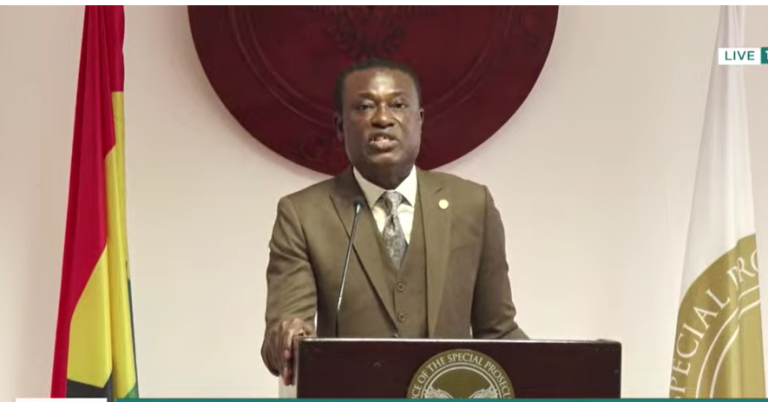
The Office of the Special Prosecutor (OSP) has completed its investigation into the controversial contract between Strategic Mobilization Ghana Limited (SML) and the Ghana Revenue Authority (GRA) and will soon begin legal action against several key figures, including former Finance Minister Ken Ofori-Atta.
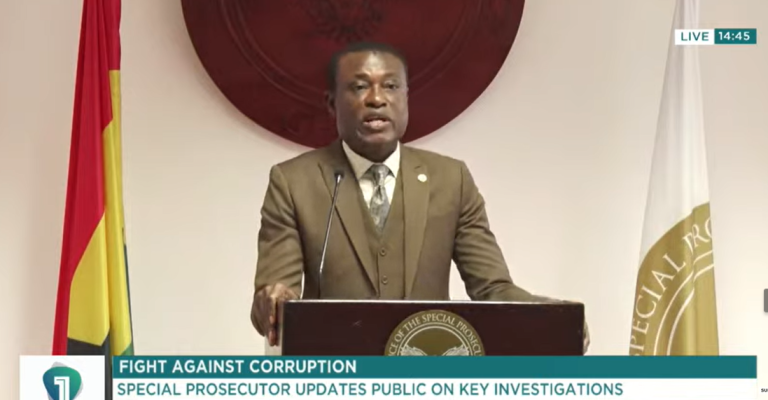
At a press briefing in Accra today, Special Prosecutor, Kissi Agyebeng announced that Mr. Ofori-Atta and six others will be charged with various corruption and corruption-related offenses before the end of November 2025.
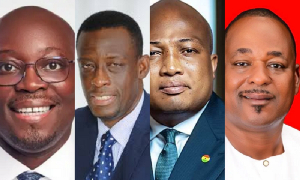
The individuals to be charged include Ken Ofori-Atta, former Minister for Finance; Ernest Akore, chef de cabinet to the former Finance Minister; Emmanuel Kofi Nti, former Commissioner-General of GRA; Amishadai Owusu-Amoah, former Commissioner-General of GRA; Isaac Crentsil, former Commissioner of the Customs Division of GRA; Kwadwo Damoah, former Commissioner of Customs and current Member of Parliament for Jaman South; and the General Manager of SML Ghana Limited.
According to Mr. Agyebeng, the investigation found that the government’s agreement with SML was “unnecessarily deceptive” and caused significant financial loss to the state.
The OSP described parts of the deal as misleading, particularly the conversion of SML’s payment from U.S. dollars to Ghana cedis, which the OSP said disguised the true cost.
He revealed that the fixed monthly fee agreed upon in the November 2024 addendum amounted to the cedi equivalent of $1.43 million (₵16.29 million) per month, inclusive of all taxes, at the Bank of Ghana’s exchange rate at the time.
The OSP said the GRA has not made any payments to SML since December 2024 due to the ongoing investigation.
Mr. Agyebeng further stated that the OSP will seek to recover funds lost to the state as a result of the deal.
In addition, SML will be made to refund ₵125 million, described as “unjust enrichment” money the company received unfairly from the state.
Explaining the decision, the Special Prosecutor said the refund amount was calculated based on the principle of quantum meruit, a legal concept that ensures a person receives fair compensation for benefits conferred, even if the underlying contract is invalid.
He explained that although some of SML’s contracts were unlawfully awarded and services were only partly performed, the company had invested in infrastructure such as setting up and maintaining offices.
The OSP therefore adjusted the refund to reflect the fair value of work done.
The Special Prosecutor also said his office has initiated processes to recover the full financial loss caused to the state from the individuals involved.
Mr. Agyebeng emphasised that the OSP remains committed to holding all public officials and private actors accountable for corruption and abuse of office.
The SML deal, signed under the Ministry of Finance and GRA, was intended to enhance revenue assurance in the petroleum downstream sector but has faced public backlash following allegations of inflated payments and poor performance.
Ghana, Africa’s leading gold producer, has launched its most extensive mining audit in a decade, marking a bold move to tighten oversight and reclaim revenue from some of the world’s largest mining firms
A government letter seen by Reuters says the Minerals Commission will deploy teams of government auditors, forensic accountants and independent consultants in a nationwide physical and financial review running from November 1, 2025, to June 2026.
The probe will scrutinise production volumes, mineral flows, tax and royalty payments and environmental compliance at sites run by major gold miners which include Newmont (US), Zijin (China), AngloGold Ashanti and Gold Fields (South Africa), Perseus (Australia), Asante Gold (Canada) and others.
The audit begins with Gold Fields’ Damang mine and Perseus in November and ends with Xtra-Gold’s Kibi unit in June 2026.
Ghana’s mining sector is central to its economic rebound. Mining generated 17.7 billion cedis ($1.68 billion) in 2024 after output surged 25.1%, and authorities expect production to reach 5.1 million ounces this year.
Officials say the audit aims to close reporting gaps that have eroded public revenues while restoring trust in sector governance.
Africa’s mining rethink: Nations tighten their grip on resources
Across the continent, governments are moving beyond audit letters to reshape how minerals are governed.
From Zimbabwe’s lithium policy shifts to the DRC’s cobalt contract reviews and the Alliance of Sahel States, where Mali, Burkina Faso and Niger are advancing nationalisation and prompting the exit of some foreign operators, a clearer pattern is emerging.
Across the continent, governments are enforcing stronger oversight, tougher revenue rules and a renewed drive to capture local value. These moves show that African states are no longer passive sellers of raw materials but active architects of a new, fairer resource order.
Ghana’s audit offers a pragmatic playbook for others: rigorous verification of production and payments, tighter licence conditions, and clearer community revenue sharing.
If properly implemented, audits can translate into higher royalties, better environmental standards, and more local jobs, especially when paired with shorter licence terms and mandatory host-community agreements, the Mines Ministry is proposing.
The risk, however, is investor flight if reforms feel arbitrary or punitive. The policy task for Accra and peers is to combine credible enforcement with transparent rules that bolster, not shatter investor confidence.
NFA Board and Ministry officials in a group photo after the orientation
The Ministry of Tourism, Culture and Creative Arts has organized an orientation and capacity-building session for the Governing Board and Management of the National Film Authority (NFA), aimed at strengthening leadership, teamwork, and emotional intelligence within the Authority’s operations.
In her remarks, the Minister for Tourism, Culture and Creative Arts, Abla Dzifa Gomashie, emphasized the importance of structure, collaboration, and continuous learning in public service delivery.
She explained that the orientation was part of a broader capacity-building initiative designed for all agencies under the Ministry. The Minister shared insights from her personal journey through various cultural institutions, including the National Theatre, which shaped her understanding of leadership and institutional discipline.
Dzifa Gomashie noted that while the creative sector thrives on passion and expression, it must equally be guided by professionalism, respect, and strategic cooperation.
“We are emotional people, but we must learn to communicate effectively, respect structures, and work together for the collective good of the sector,” she said.
She further urged members of the board and management to position themselves as leaders capable of earning public trust, adding that leadership in the creative industry should reflect discipline, empathy, and a commitment to national development.
She stressed that the Ministry is committed to creating more opportunities for knowledge sharing, noting that even though financial resources may be limited, there is a wealth of expertise within the Ministry that can be leveraged to enhance performance across agencies.
The Director for Human Resource Management at the Ministry, Otto Langmagne, led a presentation on leadership, teamwork, and emotional intelligence within the context of the NFA’s mandate.
He highlighted that true leadership extends beyond authority, it is about inspiring, influencing, and guiding others toward a shared vision. He emphasized the need for adaptability, empathy, and effective communication in resolving conflicts and achieving organizational goals.
Chairman of the National Film Authority Governing Board, Ivan Quashigah, expressed appreciation to the Ministry for organizing the session, describing it as timely and insightful.
He underscored the significance of emotional intelligence in leadership, stating that effective leaders must be able to read situations, understand people, and make decisions that promote harmony and progress.
Quashigah also expressed gratitude to the Hon. Minister for the provision of office space for the Authority and appealed for logistical support to facilitate the execution of its mandate.
The orientation program served as an important step in fostering a culture of collaboration and accountability within the National Film Authority, reinforcing the Ministry’s commitment to building a more professional and results-driven creative sector.
The Special Prosecutor, Kissi Agyebeng, has said that Strategic Mobilisation Ghana Limited (SML) lacked both the technical expertise and logistical capacity to perform the audit and revenue assurance services it was contracted to provide for the Ghana Revenue Authority (GRA).
Speaking at a press conference on Thursday, October 30, 2025, Agyebeng said investigations by the Office of the Special Prosecutor (OSP) uncovered serious statutory breaches, conflicts of interest, and unjustified payments associated with the SML contracts.
“There was no genuine need for contracting SML for the work it purported to perform,” he stated.
Paul Adom-Otchere has declared assets to OSP; legal action is to settle law and procedure
According to him, the agreements between SML and the GRA were ‘blighted by statutory breaches,’ adding that the company lacked the necessary infrastructure and professional competence to execute the assigned tasks.
The Special Prosecutor revealed that the GRA failed to provide the OSP with the complete agreements between SML and its third-party partners, describing the omission as a breach of transparency and governance standards.
“GRA failed to submit the agreement between SML and other parties. The failure violated procurement and accountability protocols,” he added.
Agyebeng further alleged that the deal was driven by ‘self-serving official patronage and promotions based on false and unverified claims.’
He identified former Finance Minister Ken Ofori-Atta as ‘the chief patron’, supporter, and promoter of the SML deal, alleging that both Ofori-Atta and SML management acted ‘with criminal intent’.
OSP invites DVLA boss over GH¢4 million bribe attempt claim
The OSP concluded that the SML contract had no genuine operational justification and that payments made under the agreement amounted to a misuse of public funds.
The revelations deepen public concern over the controversial SML–GRA agreement, which has long faced criticisms for alleged conflicts of interest, procurement breaches, and a lack of value for money.
MRA/AE
NPP’s KOKA speaks on NDC government’s performance in 10 months
Accra, Oct 30, GNA- A recent parliamentary attendance report has commended 34 Members of Parliament (MPs) for their unwavering dedication to their duties, recording perfect attendance at all 43 Sittings held between Tuesday, January 7 and Saturday, March 29, 2025.
The MPs who achieved this impressive feat included Madam Felicia Adjei, a National Democratic Congress (NDC) MP for Kintampo South; Mr. Michael Kwasi Aidoo, a New Patriotic Party (NPP) MP for Oforikrom; and Madam Faustina Elikplim Akurugu, NDC MP for Dome-Kwabenya, among others.
Speaker Alban Bagbin, the Speaker of Parliament’s office, has acknowledged the commitment of these lawmakers, who demonstrated their dedication to representing their constituents.
“The perfect attendance record is a testament to the MPs’ hard work and commitment to their duties. “These lawmakers have set a good example for their colleagues, demonstrating the importance of diligence and responsibility in public service,” he said.
The list of MPs with perfect attendance included Madam Felicia Adjei, NDC MP for Kintampo South; Mr Michael Kwasi Aidoo, NPP MP for Oforikrom; Madam Faustina Elikplim Akurugu, NDC MP for Dome-Kwabenya; Mr Seidu Alhassan Alajor, NDC MP for Chereponi; Mr Suhuyini Sayibu Alhassan, NDC MP for Tamale North; and Mr Tanko Mustapha Amadu, NDC MP for Bia West.
The others are Mr Kofi Amankwa-Manu, NPP MP for Atwima Kwanwoma; Mr Kwaku Asante-Boateng, NPP MP for Asante Akim South; Madam Theresa Lardi Awuni, NDC MP for Okaikwei North; Madam Laadi Ayii Ayamba, NDC MP for Pusiga; Mr Benjamin Narteh Ayiku, NDC MP for Ledzokuku; and Mr Frank Asiedu Bekoe, NPP MP for Suhum.
Mr Abed-Nego A. Lamangin Bandim, NDC MP for Bunkpurugu; Mr Bawah Muhammad Braimah, NDC MP for Ejura Sekyeredumase; Mr Bright Asamoah Brefo, NDC MP for Bibiani-Anhwiaso-Bekwai; Madam Lawrencia Dziwornu, NDC MP for Akuapem South; and Mr Kwame Dzudzorli Gakpey, NDC MP for Keta; Mr Richard Gyan-Mensah, NDC MP for Gomoa West; Mr Yussif Issaka Jajah, NDC MP for Ayawaso North; and Mr Oscar Ofori Larbi, NDC MP for Aowin, made the list. Finally, Mr Anthony Mmieh, NDC MP for Odotobri; Mr Abdul-Khaliq Mohammed Sherif, NDC MP for Nanton; Mr Stanley Yaw Nandaya, NDC MP for Wulensi; Mr Alamzy Nikyema Billa, NDC MP for Chiana-Paga; Madam Mavis Nkansah-Boadu, NPP MP for Afigya Sekyere East; Madam Helen Adjoa Ntoso, NDC MP for Krachi West; Mr Isaac Yaw Opoku; NPP MP for Offinso South; Madam Rachel Amma Owusuah, NDC MP for Dormaa East; Madam Damata Ama Appianimaa Salam; NPP MP for Afigya Kwabre South; Mr Jerry Ahmed Shaib, NPP MP for Weija-Gbawe; and Mr Yusif Sulemana NDC MP for Bole Bamboi, Mr Peter Lanchene Toobu; NDC MP for Wa West, Mr Ntebe Ayo William; NDC MP for Tatale-Sanguli and Mr Isaac Awuku Yibor; and NDC MP for Domeabra Obom were among the MPs that were present throughout the 34 Sittings.
The Special Prosecutor, Kissi Agyebeng, has revealed that Strategic Mobilisation Ghana Limited (SML) lacked both the tools and technical competence to execute the audit and revenue assurance services it was contracted to perform for the Ghana Revenue Authority (GRA).
Addressing a press conference on Thursday, October 30, Mr. Agyebeng said investigations by the Office of the Special Prosecutor (OSP) uncovered glaring statutory breaches, conflicts of interest, and unjustified payments surrounding the SML contracts.
“There was no genuine need for contracting SML for the work it purported to perform,” the Special Prosecutor stated.
He described the SML agreements as “blighted by statutory breaches,” stressing that the company had neither the infrastructure nor the professional capacity to undertake the assigned tasks.
According to Mr. Agyebeng, the GRA failed to submit the full agreements between SML and its third-party collaborators, a lapse he said obstructed transparency and accountability in the contract process.
“GRA failed to submit the agreement between SML and other parties,” he said, noting that such omissions violated public procurement and governance protocols.
The Special Prosecutor further alleged that the entire deal was propelled by what he called “self-serving official patronage, sponsorship, and promotions based on false and unverified claims.”
He named former Finance Minister Ken Ofori-Atta as “the chief patron, supporter, and promoter” of the SML deal, alleging that both Ofori-Atta and SML management “were criminally minded in their operations.”
Mr. Agyebeng said the OSP’s investigation established that the SML contract was not grounded in any genuine operational need and that payments made to the company amounted to a misuse of public funds.
The findings mark a major turn in the ongoing scrutiny of the SML–GRA agreement, which has faced widespread public and political criticism over allegations of conflict of interest, lack of value for money, and procurement irregularities.
Read more…
SML contract unjustified — OSP cites patronage, breaches, and financial loss
Health Minister Kwabena Mintah Akandoh has issued a bold challenge to the contractor of the Lightwave Health Information Management System (LHIMS), saying he is willing to resign if there is any proof that he demanded money or a commission.
Speaking on Adom TV’s Badwam morning show, Mr. Akandoh said, “If he has any evidence to show that I, Kwabena Mintah Akandoh, have demanded even one Ghana cedi from him, I will step down immediately. Let him bring it out, and I will resign.”
He continued, “If there is any proof that I have taken money from him since I assumed office as Health Minister, I will resign without hesitation. These allegations are baseless and completely unfounded.”
Mr. Akandoh added that working in public office often attracts unfounded accusations.
“If you are in public office, some of these things will come. I am prepared for worse than this. But I stand firm that I have done nothing wrong,” he stressed.
His comments come amid ongoing tensions surrounding LHIMS, which the Minister has accused of being deliberately shut down by the vendor following disagreements over a new service maintenance agreement.
However, Mr. Akandoh has reaffirmed his commitment to transparency and accountability in public service, insisting that he will continue to oversee health sector projects with integrity.
Accra, Oct. 29, GNA – Madam Francesca Quirke, Gender Equality and Social Inclusion Specialist at TAG International, a global security and resilience consultancy, has called for balanced female representation at the decision-making table on cybersecurity issues to promote a fairer and more secure digital space.
She observed that inequalities experienced in the physical world were being replicated in the digital sphere, often leaving women and other vulnerable groups exposed to exclusion and online violence.
“There is, therefore, the need to create more room for women to thrive and contribute meaningfully to the cyber space,” she told the media on the sidelines of the Cyber Security 360 Workshop in Accra on Monday.
The three-day workshop, organised by Women in Cyber Security (WiCyS) West Africa Affiliate, forms part of activities marking Ghana’s National Cyber Security Awareness Month, on the theme: “Building a safe, informed and accountable digital space- Strengthening Our Human Firewall.”
It was organised in partnership with the CSA and supported by TAG International through the UK Government’s FCDO Africa Cyber Programme.
The event brought together cyber experts, journalists, civil society and non-governmental organisations, and small and medium-sized enterprises to develop critical skills in identifying misinformation and enhancing cyber resilience.
Madam Quirke said while the digital era offered immense opportunities for social and economic growth, those opportunities could only be equitably realised when women and underrepresented groups were made part of the structures and systems that governed the cyberspace.
She said those inequalities needed to be addressed to create that safe and secure world in which more diverse voices were represented to “counter the violence and harms that are being done.”
“We need to stand together to recognise who’s being silenced, who’s not being invited into the space, who’s not being given leadership opportunities, how are women being held back in the home and in the workplace,” she said.
Madam Quirke noted that women’s involvement must go beyond mere participation to leadership, where their perspectives could help shape cybersecurity frameworks and digital safety policies.
Men also had a crucial role to play as allies in advancing gender inclusion within the digital ecosystem, she added.
She said TAG International, through the Africa Cyber Programme funded by UKAID, was supporting governments’ initiatives to strengthen cybersecurity across the continent with a deliberate focus on gender equality and social inclusion.
“And the FCDO and TAG International are really committed to ensuring that all of the work being done to enhance cyber security has this lens of gender equality and social inclusion” she added.
Madam Quirke highlighted the importance of addressing gender biases from early childhood, noting that cultural perceptions about boys and girls often shaped how they engaged with technology and caregiving roles later in life.
Empowering both boys and girls with equal opportunities would enable them to share responsibilities and support each other in the workplace, home, and wider community, she said.
“As parents, as mothers, how are we raising our sons and how are we raising our girls? How are we giving them equal opportunities to learn the skills that are important? And I’m not saying that only girls should learn about technology, but boys also, how can they learn about caregiving?”
“The problem is that we often devalue caregiving and domestic work, but it’s the glue that holds our society together. It’s what creates families, what creates societies,” she explained.
Her advocacy formed part of a broader conversation on day one of the WiCyS workshop on promoting gender-responsive approaches to digital transformation and ensuring that technology served as a tool for inclusion rather than exclusion.
Day one of the workshop also featured a panel discussion titled: “The Human Firewall: Why People Are the First Line of Defence.”
The panelists; Ms Julia Asante-Mensah, Secretary of WiCyS West Africa Affiliate; Ms Georgette Mirekua Kissi, Network and Security Engineer at the University of Ghana; and Ms Elizabeth Amankwah, Events and Programmes Lead of WiCyS West Africa Affiliate, encouraged participants, especially the females, to upscale their potential through personal grooming and continuous self-development in order to properly position themselves for opportunities within the cyberspace.
Participants were also urged to become ambassadors of cybersecurity awareness by carrying out sensitisation campaigns in simple, relatable ways, using local languages and practical illustrations to reach wider audiences.
Several MPs have been named in list of most absent legislators
A new attendance record from Parliament has detailed the Members of Parliament (MPs) who recorded the highest number of absences during the House’s first session of 2025.
The report, which covers 43 sittings held between January and March 2025, lists Felix Akwetey Nii Okle, MP for Bortianor-Ngleshi Amanfro, as the most absent legislator, missing 23 sittings during the period.
According to a citinewsroom.com report dated October 30, 2025, Felix Nii Okle was followed by Joseph Frempong of Nkawkaw, who was absent on 22 occasions, and Ernest Yaw Anim of Kumawu, who missed 21 sittings.
Attend sittings or lose your seat – Bagbin to MPs
Other MPs with high absentee rates include Col Kwadwo Damoah (Rtd) of Jaman South, who missed 19 sittings; Dr Cassiel Ato Forson, MP for Ajumako-Enyan-Essiam and Minister for Finance, who was absent 17 times; and Blay Nyameke Armah of Sekondi, who missed 16 sittings.
Samuel Okudzeto Ablakwa, MP for North Tongu and Minister for Foreign Affairs, recorded 15 absences, while Dr Nana Ayew Afriye (Effiduase-Asokore), Kwabena Okyere Darko-Mensah (Takoradi), and Kwaku Agyeman Kwarteng (Obuasi West) each missed 14 sittings.
Several others, including Sam Nartey George (Ningo-Prampram), Dr Abdul-Rashid Hassan Pelpuo (Wa Central), Minister for Employment, and Francis-Xavier Sosu (Madina), were each absent 13 times.
Minority scolds Majority MPs over rampant absenteeism
The Speaker of Parliament, Alban Bagbin, has since directed parliamentary clerks to strengthen attendance monitoring, warning that persistent absenteeism could trigger sanctions, including the loss of a seat, in accordance with parliamentary rules.
MRA/AE
NPP’s KOKA speaks on NDC government’s performance in 10 months
Accra High Court bars Hannan Abdul-Wahab and his wife from travelling out of Ghana
A former CEO of the National Food and Buffer Stock Company, Hannan Abdul-Wahab, and his wife, Faiza Seidu Wuni, both standing trial in the ongoing Buffer Stock Company case, have been granted bail totaling GH¢150 million.
The bail was granted by the Accra High Court, presided over by Justice Audrey Kocuvi-Tay, on Thursday, October 30, 2025.
The two pleaded not guilty to 24 counts, including stealing, defrauding by false pretences, intentional dissipation of public funds, money laundering, and using public office for profit.
Hannan Abdul-Wahab was granted bail in the sum of GH¢100 million with six sureties, four of whom must be justified with landed property.
The sureties are required to submit copies of their Ghana Cards and must inform and update the court of any change in address.
Here are the 24 charges AG has filed against former NAFCO CEO and his wife
Faiza Seidu Wuni, the second accused, was granted bail in the sum of GH¢50 million with four sureties, three of whom must also be justified with landed property.
She is required to deposit all her passports and report to the investigator every Wednesday.
The court has also placed both accused persons on a stop list at all entry and exit points in the country.
The case has been adjourned for a Case Management Conference on November 27, 2025.
SP/AE
All you need to know about Ghana’s new vehicle number plates |BizTech:
President John Dramani Mahama has called on French President Emmanuel Macron to help champion a fairer global financial system that supports developing economies with lower interest rates and sustainable loan conditions.
The appeal was made during bilateral talks at the Élysée Palace in Paris on the sidelines of the 2025 Paris Peace Forum, where the two leaders discussed economic reforms, infrastructure development, and financial partnerships.
The Office of the Special Prosecutor (OSP) has concluded that the contract awarded to Strategic Mobilisation Ghana Limited (SML) was unnecessary, unlawfully approved, and financially damaging to the state.
According to findings shared by the Special Prosecutor, Mr. KissiAgyebeng, at a presser in Accra on Thursday, October 30, the investigation revealed that there was no genuine need for engaging SML for the services it purported to perform.
The contracts, he said, were secured through “self-serving official patronage, sponsorship, and promotion based on false and unverified claims.”
Mr. Agyebeng stated that the OSP’s probe uncovered serious statutory violations, with key officials disregarding mandatory approval processes in what he described as acts carried out with “increased impunity.”
The investigation also established that there was no proper financial management or verification system to monitor SML’s performance. As a result, the payment systems were reportedly set on “automatic mode,” detaching disbursements from actual work done — a situation that caused significant **financial loss to the Republic.
The Special Prosecutor noted that the manner in which the contracts were initiated and executed undermined due process and accountability in public procurement.
The OSP’s findings form part of a broader investigation into the awarding of revenue assurance and monitoring contracts to SML by the Ghana Revenue Authority (GRA) and the Ministry of Finance.
A member of the National Democratic Congress (NDC) Communications Team, Hamza Suhuyini, has accused the former New Patriotic Party administration of failing to confront corruption and called for sustained scrutiny even in opposition.
Suhuyini alleged that corruption under the NPP was systemic rather than isolated, pointing to investigations involving state agencies.
The Office of the Special Prosecutor (OSP) has announced plans to recover a total of GHS125 million from Strategic Mobilisation Ghana Limited (SML), following findings that the company received overpayments from the state.
Special Prosecutor Mr. Kissi Agyebeng explained at a presser in Accra on Thursday, October 30, that the amount represents unjust enrichment by SML through largely automatic payments that were detached from actual performance.
According to the OSP, SML lacked the expertise and capacity to deliver the transaction audit and external price verification services it was contracted for, and failed to submit invoices supported by verified reports.
The investigation revealed that the payment system for downstream petroleum audits had effectively allowed SML to earn fees without delivering corresponding services. Additionally, variable percentage-based payments created incentives to inflate figures, further increasing undeserved payments.
The OSP said the recovery figure of GHS125 million was also calculated using the legal principle of quantum meruit, which ensures that a party that received an undue benefit returns it to prevent unjust enrichment, even in the absence of a valid contract.
The move forms part of broader efforts by the OSP to hold individuals and companies accountable for financial losses incurred by the state, and to reinforce transparency and integrity in public procurement processes.
Read also
OSP: GRA failed to deduct over GH₵13m taxes from SML
With an inappropriate encounter still fresh in singer Sista Afia’s memory, she has recounted how a fan once pressed her inappropriately when she was about to go on stage.
In an interview on Hitz FM on October 30, 2025, Sista Afia disclosed that she dislikes it when fans try to touch her as she makes her way to the stage because it makes her very uncomfortable.
According to her, during one of her performances, a fan pressed her ‘front part’ so intensely that she instinctively hit the person with a microphone, causing injuries that led to the fan going to the hospital.
I may never be a favourite in the music industry despite all my efforts – Sista Afia
“I hate it when people like to touch me when I’m going on stage, especially the fans, and it’s something that I don’t like at all. It’s very uncomfortable for me. When they press me, I don’t like that press. One time, somebody pressed me so hard, and I hit him with a mic. The person had to go to the hospital,” she said.
Sista Afia added that although security personnel were present at the event, her immediate reaction was to defend herself because of how uncomfortable the situation made her feel.
She explained that such incidents mostly happen at poorly organised events where artistes are forced to walk through crowds to reach the stage.
“My first instinct was to react immediately. Sometimes, you have to go through the crowd to reach the stage, especially when the event isn’t well organised. So, when the guy did that, my first instinct was to find out who it was, and I hit him with the mic so hard,” she added.
The Minister of Health, Kwabena Mintah Akandoh, has blamed his predecessor, Dr Bernard Okoe Boye, for overpaying the contractor for the controversial Lightwave Health Information Management System (LHIMS) project.
Appearing before the Public Accounts Committee (PAC) on Thursday, October 30, 2025, Akandoh said Dr Okoe Boye had made excessive payments to the vendor despite the project being far from complete.
He urged the former minister to refrain from making further public comments on the matter.
Dr Okoe Boye defends Lightwave, calls for fair resolution of e-health dispute
“Mr Chairman, today I woke up to a response from the immediate past minister. And if anything at all, he should be keeping quiet. It’s not in his interest to be talking, because he overpaid the contractor,” he stated.
According to Akandoh, the contractor received over US$77 million, representing more than 70 percent of the total contract value, although less than half of the targeted health facilities had been connected to the system.
“This is one of the things he said. He said that payments have been 62% from the Ministry of Finance and 68% from the National Health Insurance Authority, totaling 76.99 million paid. So, he has admitted that about 77 million has been paid, and 23 million dollars are outstanding.
“As of December 2024, reconciliation showed an unutilised advance of 10.6 million yet to be expended by the vendor. And he is the one who paid for this. Why should he be talking?” the minister added.
Akandoh further clarified that the LHIMS contract did not allow pre-payments, insisting that funds were to be disbursed only after work had been executed and verified.
Lightwave Contract Saga: Okoe Boye challenges Mintah Akandoh over fine details
“Mr Chairman, this is not a pre-payment procedure. You pay as and when you have executed the job. So, if you have paid more than the work you have done, you have been overpaid,” he indicated.
The exchange between the current and former health ministers adds to the ongoing scrutiny surrounding the LHIMS contract, which has drawn public attention over issues of transparency and value for money.
MRA/AE
NPP’s KOKA speaks on NDC government’s performance in 10 months
Accra High Court bars Hannan Abdul-Wahab and his wife from travelling out of Ghana
A former CEO of the National Food and Buffer Stock Company, Hannan Abdul-Wahab, and his wife, Faiza Seidu Wuni, both standing trial in the ongoing Buffer Stock Company case, have been granted bail totaling GH¢150 million.
The bail was granted by the Accra High Court, presided over by Justice Audrey Kocuvi-Tay, on Thursday, October 30, 2025.
The two pleaded not guilty to 24 counts, including stealing, defrauding by false pretences, intentional dissipation of public funds, money laundering, and using public office for profit.
Hannan Abdul-Wahab was granted bail in the sum of GH¢100 million with six sureties, four of whom must be justified with landed property.
The sureties are required to submit copies of their Ghana Cards and must inform and update the court of any change in address.
Here are the 24 charges AG has filed against former NAFCO CEO and his wife
Faiza Seidu Wuni, the second accused, was granted bail in the sum of GH¢50 million with four sureties, three of whom must also be justified with landed property.
She is required to deposit all her passports and report to the investigator every Wednesday.
The court has also placed both accused persons on a stop list at all entry and exit points in the country.
The case has been adjourned for a Case Management Conference on November 27, 2025.
SP/AE
All you need to know about Ghana’s new vehicle number plates |BizTech:
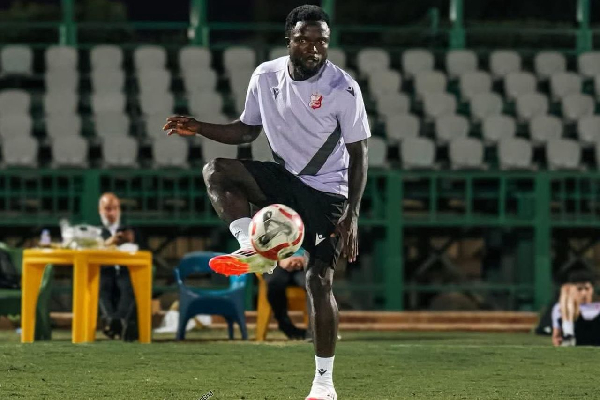
Striker Albert Amoah has officially begun training with Al Ahly Benghazi, marking the start of his new chapter just days after sealing a move from Asante Kotoko.
The 23-year-old forward, who was one of the brightest stars in the Ghana Premier League, completed his transfer to the Libyan giants on Friday, October 24, 2025.
His switch came on the back of an impressive season in which he netted 16 goals in 30 appearances for the Porcupine Warriors, a run that established him as one of the most lethal attackers in the Ghana Premier League.
In pictures shared by Al Ahly Benghazi, Amoah was seen taking part in intense training sessions, looking sharp and focused as he acclimatised to his new surroundings.
The club’s technical team reportedly has high hopes for him as he gears up for his debut.
However, his departure from Kumasi was not without drama.
$20,000 Salary: Details emerge on Albert Amoah’s lucrative move to Al Ahly Benghazi
The timing of his transfer announcement, made immediately after Kotoko’s 6-1 aggregate defeat in the CAF Confederation Cup preliminary round, sparked outrage among sections of the club’s fanbase.
Many supporters felt blindsided by the news, describing it as poorly timed given the club’s disappointing continental exit.
Despite the controversy, Amoah appears determined to turn the page and make a strong impression in Libya.
With his trademark blend of pace, composure, and finishing power, the former Kotoko marksman will be eager to replicate his goal-scoring form and justify Al Ahly Benghazi’s faith in him.
FKA/JE
The wait is over! The GhanaWeb Excellence Awards 2025 is officially launched. Let’s Celebrate impact, innovation and excellence across Ghana.
Who deserves to be honoured this year?
Nominate now 👉 https://ghanaweb.com/ghanaexcellenceawards/nominate
The Special Prosecutor, Kissi Agyebeng, has disclosed that the Office of the Special Prosecutor (OSP) does not agree with some of the conclusions reached by KPMG in its audit report on the revenue assurance contracts between the Ghana Revenue Authority (GRA) and Strategic Mobilisation Ghana Limited (SML).
He added that while some aspects of KPMG’s findings aligned with the OSP’s preliminary report, the OSP could not agree with the audit firm’s conclusions regarding accountability and value for money.
Speaking at a press conference on Thursday, October 30, Mr. Agyebeng said the KPMG report revealed that SML only partially delivered on its contractual obligations to the GRA.
He argued that the contract was not genuine, adding that it required a comprehensive review.
He explained that the findings compelled the OSP to conduct a further probe into the matter.
“KPMG report said SML partially delivered on the transaction audit services. Major factual functions in the KPMG report tallied with our preliminary findings. The KPMG report, much like our preliminary report, turned out to have more critical questions than answers. It required further investigation. The KPMG audit differs significantly from the OSP investigations.
“The OSP is unable to agree with some conclusions of the KPMG in respect of accountability and value for money.”
The OSP launched an investigation into the controversial SML-GRA contract earlier this year following widespread public concern over the deal’s legality, procurement process, and whether it offered value for money.
SML lacked tools and competence to run audit and revenue assurance services – OSP
….
Explore the world of impactful news with CitiNewsroom on WhatsApp!
Click on the link to join the Citi Newsroom channel for curated, meaningful stories tailored just for YOU: https://whatsapp.com/channel/0029VaCYzPRAYlUPudDDe53x
No spam, just the stories that truly matter! #StayInformed #CitiNewsroom #CNRDigital
The Western Central Regional Police Command has confirmed that calm has returned to Nsuaem in the Tarkwa-Nsuaem Municipality following a violent attack on the local police station on Wednesday, October 29, 2025.
According to a statement issued by ASP Beatrice Turkson on Thursday, October 30, the incident began after officers detained 25-year-old Sulley Moses.
During the confrontation, three police officers and four civilians sustained injuries and received treatment at Nsuaem Government Hospital, with one civilian referred to Effia Nkwanta Regional Hospital for further care.
Preliminary investigations indicate that Moses was arrested after residents accused him of attempting to lure two children, aged seven and five, to an unknown location.
“On Wednesday, October 29, a group of about 15 men, accompanied by two children, brought suspect Sulley Moses to the station, reporting that they had spotted him near Nivo Filling Station talking to the children,” the statement said.
“They suspected he intended to lure the children to an unknown destination and demanded police action.”
Following the children’s confirmation that Moses had forcibly held them, tensions escalated as news of his arrest spread. A mob of about 500 people, reportedly armed with stones and other weapons, stormed the station, demanding his release.
The crowd blocked the Takoradi–Tarkwa highway, set tyres ablaze, and hurled stones at police, causing damage to two vehicles, parts of the station building, and several impounded motorbikes.
Reinforcement teams, supported by military personnel, were deployed to disperse the crowd and restore order. Sulley Moses has since been transferred to the Tarkwa Regional Police Headquarters for further investigation.
All personnel at Nsuaem Police Station have been relocated for safety, and the station has been temporarily closed.
The Western Central Regional Police Command strongly condemned the attack, assuring the public that all perpetrators will be identified, arrested, and brought to justice.
“The Command assures the public that all perpetrators will be identified, arrested, and brought to justice,” the statement concluded.
A massive fire has razed the newly opened China City Mall at Santasi in Kumasi, destroying the entire structure and goods worth thousands of cedis.
The inferno, which started on Thursday, October 30, engulfed the commercial facility, leaving in its wake a scene of heavy damage and thick smoke visible from several metres away.
Officials from the Ghana National Fire Service (GNFS) say the cause of the fire is yet to be determined, but preliminary reports suggest it may have started from the rear section of the building before spreading rapidly throughout the mall.
“We received a distress call about the fire and dispatched two fire tenders to the scene immediately. Our men have been working tirelessly to contain the blaze,” a GNFS officer told MyJoyOnline at the scene.
Despite the firefighters’ efforts, the fire consumed the entire building, which housed various shops dealing in home accessories, electronics, and groceries.
No casualties have been reported so far, according to officials from the National Disaster Management Organisation (NADMO), who were also on-site to assist with recovery efforts.
The mall, which opened earlier in 2025, had become a popular shopping destination for residents of Kumasi and surrounding communities.
Eyewitnesses say the fire spread too quickly for most traders to salvage their goods. “It was frightening. Within minutes, the whole place was burning,” one shop attendant recounted.
The GNFS has since launched investigations to determine the exact cause of the fire and assess the extent of the damage.
This incident adds to the growing number of market and commercial property fires recorded across major cities in Ghana in recent months, raising renewed concerns about fire safety compliance and emergency preparedness in business facilities.
DISCLAIMER: The Views, Comments, Opinions, Contributions and Statements made by Readers and Contributors on this platform do not necessarily represent the views or policy of Multimedia Group Limited.
DISCLAIMER: The Views, Comments, Opinions, Contributions and Statements made by Readers and Contributors on this platform do not necessarily represent the views or policy of Multimedia Group Limited.
Ibrahim Mahama embracing Kimathi Rawlings (L) and Dr Zanetor Agyeman-Rawlings (R)
Ghanaian business mogul Ibrahim Mahama, recently visited the family of the late former First Lady, Nana Konadu Agyeman-Rawlings, to commiserate with them following her passing on October 23, 2025.
Mahama, who is the Chief Executive Officer of Engineers & Planners Company Limited and Dzata Cement Limited, assured the family of his support during the visit.
Visuals of the visit showed the businessman consoling members of the Rawlings family, including the children of the late former First Lady.
One of the photos captured Ibrahim Mahama embracing Dr Zanetor Agyeman-Rawlings, while another showed him hugging Kimathi Rawlings.
He was also seen exchanging pleasantries with the Speaker of Parliament, Alban Bagbin, and other dignitaries who had gathered at the Rawlings residence at Ridge in Accra.
Nana Konadu Agyeman-Rawlings, the wife of the late former President Jerry John Rawlings, passed away on Thursday, October 23, 2025, at the Ridge Hospital in Accra.
President Mahama announces state burial for Nana Konadu Agyeman-Rawlings
She was Ghana’s longest-serving First Lady and a pioneering advocate for women’s empowerment, child welfare, and social development.
Her death has drawn tributes from across the country, with many describing her as a trailblazer whose influence helped shape Ghana’s political and social transformation.
See visuals below:
BAI/MA
Tragedy as farmer drowns while seeking loan to send child to SHS
The wait is over! The GhanaWeb Excellence Awards 2025 is officially launched. Let’s Celebrate impact, innovation and excellence across Ghana.
Who deserves to be honoured this year?
Nominate now 👉 https://ghanaweb.com/ghanaexcellenceawards/nominate
Minister for Government Communications and MP for Abura Asebu-Kwamankese, Felix Kwakye Ofosu, has reaffirmed the government’s commitment to passing the proposed Sports Fund Bill into law to enhance sports development in Ghana.
In an interview with Joy Sports, Kwakye Ofosu stated that work is ongoing to finalise the draft legislation before it is presented to Parliament.
“Efforts are still underway to ensure that the Bill is finalised and then it comes to Parliament for consideration,” he said.
He highlighted concerns about the state of Ghanaian sports, including football, athletics, and boxing, particularly regarding infrastructure and incentive packages for athletes.
“The proposed fund will serve as a game-changer for sports financing in the country. My belief is that this Bill will generate significant resources that enable us to invest in sports in a manner that yields the outcomes we want because we cannot expect to perform at the highest level globally when we are not investing what we should,” Kwakye Ofosu added.
A draft version of the Bill, shared on October 10, 2025, outlines 14 potential funding sources, including parliamentary allocations, sports lotteries, sponsorships, grants, and taxes from sports betting companies. Additional funding is expected from gate proceeds, athlete transfer fees, sponsorship deals, contributions from international federations, and revenue shares from competitions and commercial sports vendors.
Once passed, the Sports Fund Bill aims to establish a sustainable financing framework to support sports infrastructure, capacity building, and athlete welfare across Ghana.
Prof. Naana (M), Edward Annan (3-L), Dr. Godwin Acquaye (2-R) other dignitaries in a group photograph
Vice President, Jane Naana Opoku-Agyemang, has cautioned stakeholders against being complacent with the cedi’s recent recovery, urging them to develop financial discipline to help sustain the trend.
Speaking at the opening at the Ghana Economic Forum 2025, themed, “Current Stability – A Reset for Sustainable Economic Growth,” Prof. Opoku-Agyemang stated that the value of the cedis is determined by hard work and deliberate disciplinary choices.
“And when we fail to discipline our fiscal habits, the Cedi pays the price. The cedis recovery is not a miracle. It is the outcome of deliberate disciplinary choices. The Bank of Ghana’s careful policies, stronger export performance and the Gold Board initiative, which ensures our gold directly strengthens our gold reserves, have helped to increase cedis confidence both at home and abroad.
“Investors are returning. However, this is not a time for complacency. It is a time for consolidation,” she said.
The Vice President said value addition to raw materials produced in the country will make the cedi strong. “The cedi will never be as strong as it should be if we continue to export, for example, cocoa beans instead of chocolate, bauxite instead of aluminum,” she stated.
The Vice President added that through prudent expenditure cuts, strengthening employment controls and sound financial management by the government, the economy is restoring confidence, rebuilding value and achieving tangible economic gains.
CEO of Business and Financial Times (B&FT), Dr. Godwin Acquaye, emphasised that a stable currency is more than an economic indicator. According to him, it reflects national confidence, business certainty, and social well-being. “When the cedi is stable, businesses can plan better, investors are more likely to stay longer, and households thrive.”
He also highlighted the Ghana Economic Forum’s impact, saying it has not only discussed problems but also generated insights, influenced policies, and strengthened public-private sector collaborations.
Chairman of the Ghana Economic Forum 2024, Edward Annan, emphasised the need to learn from the past, acknowledge the present, and envision the future to build a Ghana that is more competitive, inclusive, and resilient.
Nollywood actress, Eve Esin, has opened up about finding love and getting married at 43, using her story to encourage single ladies who feel time is slipping away.
Naija News reports that the thespian in a post via her Instagram page, revealed that she legally tied the knot at 43 and later had her traditional wedding a day after her 44th birthday.
The Special Prosecutor, Kissi Agyebeng, has revealed that contracts awarded to Strategic Mobilisation Ghana Limited (SML) were not only unnecessary and unlawful but also influenced by personal gain.
Speaking at a press briefing in Accra on Thursday, October 30, Mr. Agyebeng disclosed that Dr. Isaac Crentsil, former Commissioner of the Customs Division of the Ghana Revenue Authority (GRA) and now General Manager of SML, may have acted in ways that suggested he sought to secure personal benefits after leaving public office.
He stated, “Our conclusion becomes even more telling on the consideration that upon retirement as the commissioner of the customs division of GRA, Mr. Crentsil took up appointment as the GM of SML, colouring his actions while in office as an inducement for future rewards of a retirement benefit and use of public office for private benefit.”
According to Mr. Agyebeng, investigations by the Office of the Special Prosecutor (OSP) established that the contracts awarded to SML lacked genuine justification and were approved in clear violation of statutory procedures.
The probe further found that payments were made without adequate verification of work done, leading to significant financial losses to the state.
The Special Prosecutor noted that several key officials exploited their positions for self-serving interests, sidestepping due process in procurement and weakening accountability mechanisms within the GRA and the Ministry of Finance.
The revelations come amid ongoing legal proceedings filed by SML officials, including Dr. Crentsil, against the OSP. The applicants have accused the OSP of violating their constitutional rights during the investigation and are seeking to restrain the Office from publishing their photographs.
The case, currently before the Human Rights Division of the High Court in Accra, also seeks to safeguard their rights to dignity and privacy.
Dr Bawumia was the 2024 NPP presidential candidate
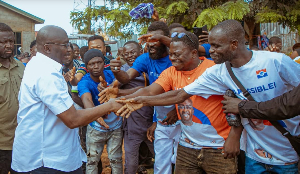
Former Vice President, Dr Mahamudu Bawumia, appears poised to sweep the Western North Region in the NPP’s presidential primaries in January following a series of endorsements from delegates across constituencies in the Region.
The former vice president, on the 4th leg of his nationwide tour, having already visited the Bono, Bono East, and Ahafo Regions, has seen a rising support from the Western North Region as he toured the Region on Tuesday.
On the opening day in Sefwi Akontombra, Aowin and Suaman, Bawumia received an enthusiastic welcome from delegates and constituency executives amidst chants of his name.
They spoke highly about his values and openly endorsed his candidature to lead the New Patriotic Party (NPP) in 2028.
The support grew on the second day with several subsequent endorsements in Bia East, Bia West, Juaboso, and Bodi constituencies.
Bawumia’s decency, humility, experience, and commitment to the progress of the NPP, as well as his long-standing relationship with the grassroots members of the party in the Region, were particularly highlighted by party faithful as the reason for their choice of the former Vice President.
The speakers, declaring their unflinching support for Bawumia, minced no words as they highlighted his unique and unmatched abilities.
“Here in Bia East, you are adored because of your humility. Despite all the attacks against you, you don’t even respond, and this is part of the reasons why here in Bia, we are resolved to vote for you again,” Bia East constituency Chairman, John Ameyaw, remarked.
He emphasised, “We commend you for your decency and humility. Let them say whatever they want to say about you. It will never be the case. Continue to be who you are, and victory will be yours.”
Bawumia further received an emphatic endorsement in Bia West with the constituency Chairman saying, “as for us, the only person we know is Dr Bawumia”.
“We’ve known you for so many years. You have been with us all these years here and in the Region, so we will continue to be behind you until you lead us to victory.”
Bawumia’s popularity and growing support in the Western North Region are also influenced by several projects he is credited with establishing in the Region as part of his development agenda while serving as Vice President, which the party members observe to be very remarkable, especially because the Region had previously been deprived of the necessary amenities.
They cited a major road from the Region linking to Kumasi, which was spearheaded by Dr Bawumia, among other developmental projects such as his Zipline medical drone delivery service.
The drone delivery service sends essential medical supplies to remote areas in real time, and the Western North has been a chief beneficiary of this project.
The party delegates expressed their appreciation to Bawumia for championing these initiatives and many more.
“Thanks to your vision, farmers in this Region are no longer afraid of emergencies because the drone you helped to establish has been delivering essential medical supplies to us.”
Bawumia’s close association with the delegates through his previous visits, numbering a minimum of six times in some constituencies, is also widely acknowledged.
In the 2023 NPP presidential primaries, Bawumia swept the votes in 7 out of the 8 constituencies of the Western North Region, and from all indications, it is obvious that Bawumia’s support in the Region remains intact.
The Ghana Stock Exchange Composite Index fell 3.14 points to close at 8,341.87 on Thursday, October 30, 2025, marking a modest decline from the previous day’s level of 8,345.01 during the bourse’s 7,082nd trading session.
The GSE Financial Stocks Index also declined, dropping 7.06 points to settle at 4,132.90 from Wednesday’s close of 4,139.96. Despite the daily losses, both indices remain significantly higher for the year, with the Composite Index up 70.64 percent and the Financial Stocks Index gaining 73.59 percent since January 1, 2025.
Trading activity was subdued on Thursday compared to the week’s earlier sessions. Just 268,624 shares changed hands with a total value of 1,022,561.81 Ghanaian cedis. This represents a dramatic decline from Wednesday’s exceptional trading day, which saw 8,247,146 shares traded worth 34,382,327.38 cedis.
Market capitalization stood at 166,163.62 million cedis by Thursday’s close, down from 166,202.58 million cedis the previous day. The modest decline reflects the broader pattern of consolidation after the exchange’s strong year to date performance.
The Ghana Stock Exchange operates from its headquarters in Accra and conducts continuous trading every weekday from 10:00 to 15:00 Greenwich Mean Time. Settlement of trades is handled by the Bank of Ghana’s Central Securities Depository on a T plus 3 business days basis.
Ghana has maintained its position as Africa’s best performing equity market in 2025 with year to date gains exceeding 70 percent, outpacing major bourses in Egypt, Kenya, and Nigeria. The strong performance has been supported by improved investor sentiment and continued liquidity inflows into equities.
The exchange’s two main indices, launched in January 2011, track different segments of the market. The Composite Index measures overall market performance across all listed securities, while the Financial Stocks Index focuses specifically on banking and insurance sector stocks.
The government has imposed an immediate moratorium on the procurement and use of independent biometric Automated Fingerprint Identification Systems (AFIS) by Ministries, Departments and Agencies (MDAs), as well as Metropolitan, Municipal and District Assemblies (MMDAs).
This forms part of a renewed effort to streamline identity management, eliminate duplication, and enhance data security across the public sector.
The directive, issued from the Office of the President at Jubilee House and signed by the Secretary to the President, Dr. Callistus Mahama, is part of the government’s commitment to ensuring efficient resource utilisation and standardisation of biometric identification systems nationwide.
The moratorium takes effect immediately and prohibits any MDA or MMDA from procuring, developing, or operating independent biometric systems outside the framework managed by the National Identification Authority (NIA).
The directive also bans new biometric-related contracts without express presidential authorisation and requires agencies currently operating such systems to integrate with the NIA’s National Identification System within six months.
The decision, the government said, is intended to ensure the exclusive use of the NIA’s biometric infrastructure, which serves as the backbone of the National Identification System and the Ghana Card scheme.
The NIA, established by the National Identification Authority Act, 2006 (Act 707) and the National Identity Register Act, 2008 (Act 750), is mandated to register Ghanaians and legally resident foreign nationals, maintain the National Identity Register, and issue national identity cards.
GSA shuts down factories over substandard products
According to the directive, the proliferation of biometric systems across government institutions has led to inefficiencies, security vulnerabilities, and unnecessary costs associated with maintaining parallel databases.
The Presidency stated that the establishment of a unified national biometric system will eliminate duplication, improve interoperability, and strengthen national verification mechanisms.
The moratorium also references the Data Protection Act, 2012 (Act 843), which requires that all personal and biometric data collected by public institutions be secured and processed lawfully.
By centralising identity data under the NIA, the government seeks to safeguard the confidentiality, integrity, and security of citizens’ biometric information.
“All MDAs are prohibited from operating parallel biometric databases to the NIA and from verifying the identities of persons using only visual inspection of the Ghana Card without biometric authentication,” the directive stated.
It further warned that any procurement in violation of the moratorium would be deemed illegal and a direct disregard of presidential authority.
Institutions that require specialised biometric systems due to operational needs must now submit formal justification to the Office of the President for written approval.
The NIA has been tasked to provide technical support to MDAs to facilitate data harmonisation and integration into the National Identity Register and the Identity Verification System platform.
The Minister for the Interior, Muntaka Mohammed-Mubarak has been designated to oversee implementation of the directive and to take enforcement action where necessary.
The new measure reaffirms an earlier presidential moratorium issued in June 2014 on similar grounds, which sought to prevent fragmentation in biometric data management.
All you need to know about Ghana’s new vehicle number plates |BizTech:
Teenage cricket star, Ben Austin has tragically passed away after being struck by a ball while practicing his batting in the nets before a game.
Reports indicate that the 21-year-old was rushed to the hospital for emergency treatment and placed on life support, but was confirmed dead on Wednesday, October 29, 2025.
The Ferntree Gully Cricket Club announced his passing in a statement on social media, extending condolences to the bereaved family and urging the public to respect the privacy of the family during this difficult time.
Watch as Mohammed Kudus ‘fights’ Joelinton during Tottenham Hotspur’s 2-0 Carabao Cup loss
“The Ferntree Gully Cricket Club sadly wishes to advise of the tragic passing of our player, Ben Austin, on 29/10/25. Our thoughts and prayers are with his family – Jace, Tracey, Cooper & Zach, his extended family, his friends, and all those who knew Ben and the joy that he brought.
“We ask you to please respect the privacy of Ben’s family during this time. Jace & Tracey would like to thank Ambulance Vic, the Police, the Monash Children’s Hospital, and those who assisted on Tuesday. Further details will be shared as they become known, and we will advise of these through our usual process. We ask for your continued support in this time of grieving. May Ben rest in peace,” the statement read.
Ben’s father, Jace, also shared a heartfelt message on behalf of the Austin family.
“For Tracey and me, Ben was an adored son, a deeply loved brother to Cooper and Zach, and a shining light in the lives of our family and friends.
“This tragedy has taken Ben from us, but we find some comfort in knowing he was doing something he loved going down to the nets with mates to play cricket. He loved cricket, and it was one of the joys of his life,” he said, as reported by The Sun Sport.
SB/JE
Meanwhile, watch the latest Sports Check interview with Alex Kotey, the GFA Referees Manager below:
For the first time, the opposition parties in Cameroon have come “close” to unseating 92-year-old Paul Biya, who has run the country since 1982.
The stiffest competition for Biya in the 2025 election came from 76-year-old Tchiroma Bakary, a former ally and government spokesperson, who contested on the platform of the Cameroon National Salvation Front.
He won more than 35% of the vote – the second highest ever scored by an opposition candidate since Biya has been contesting.
Though it was one of the best performances by opposition parties in Cameroon since 1992, the opposition suffered from its failure to present a united front and field a single candidate.
Biya once again triumphed, albeit with a reduced majority of 53.66%. Other candidates scored a combined 11%.
His previous win in 2018 was at 71.28% against Maurice Kamto’s 14.23%.
This result is at variance with Bakary claiming an overwhelming victory at the polls with 60%.
His claims have been dismissed by the constitutional court and the electoral commission.
Biya’s controversial win has resulted in countrywide protests and a crackdown, resulting in casualties.
I am a longtime scholar of and political commentator on African politics, regime types, and democratic governance, with a keen interest in Cameroon.
I argue that Cameroon is at an inflection point, where Biya’s triumph might herald a “quiet” resignation to see through one of the world’s longest presidencies.
For Biya, the to-do list couldn’t have gotten any longer.
For Cameroon and the continent, democracy is yet again being asked hard questions with no obvious answers.
Divided opposition
Determined by a simple majority, the election meant that Biya – sometimes described as the absent landlord due to his prolonged stay outside Cameroon – only needed a sliver of support to triumph for a life term presidency.
His new seven-year term of office ends in 2032, by which time he will be close to 100 years old.
Though his share of the vote fell by about 20 percentage points, he triumphed again because of the perennial challenges faced by the opposition.
Failure to coalesce around a single unifying candidate meant that the opposition, with 11 candidates, was still seen as divided.
With all state apparatus, especially the constitutional court, stacked against the opposition, it was not surprising that they were fighting a losing battle from the start.
The challenges ahead are monumental.
With dissatisfaction running high, one of the core priorities is to ensure the political stability of his regime.
Recent forced regime changes iWestst Africa, and very recently in Madagascar, would perhaps give pause for thought about the vulnerability of the regime.
It is possible that sustained political upheaval could provoke a palace coup, as Gabon attests.
That said, Biya’s effort to coup-proof his regime with loyalist military co-ethnics, the Betis, appears to have bought him some comfort.
Many of the senior officers’ fates would be intertwined with Biya’s.
The reality that his reported triumph comes with a much-reduced mandate would mean reasserting legitimacy will be another priority. Biya will have to work to establish or “enforce” his legitimacy both domestically and internationally.
The South West continues to be a place of concern.
With the Anglophone crisis – caused by perceived marginalisation of the Anglophone south-west – still festering, the election result may galvanise the rebellion in the hope that renewed active hostilities may create conditions for willingness to settle the conflict before Biya bows out.
There is no question that Biya has entered into the last mile of his life presidency.
The political elite jostling for post-Biya relevance will inevitably become more pronounced.
This infighting could destabilise the regime and make it a challenge to hold course.
Ambitious elites may abandon Biya’s ship, as Bakary did.
On the campaign trail, Biya promised especially the young Cameroonians and women that their “best is yet to come”.
He was acutely aware of the high level of dissatisfaction, and his regime will be pressed to address their plight.
According to the World Bank, about 40% of Cameroonians live below the poverty line.
Urban unemployment is running at 35% and many educated youths face challenges in obtaining formal employment.
A 2024 Afrobarometer survey says 51% of young Cameroonians have considered emigrating.
The perennial challenges of systemic corruption, service delivery, poverty, nd slow growth persist.
Today, the average Cameroonian is wealthier than in 1986. How Biya’s new term attends to this will be crucial to temporarily assuaging pent-up frustration.
As the 92-year-old Biya begins another term of office, along with the president of the constitutional court, Clement Atangana (84), chief of staff Claude Meka (86), president of the senate Marcel Niat (9), and national assembly speaker Cavaye Yegue (85), Cameroon should confidently be looking at a generational shift after the Biya era.
President John Dramani Mahama’s speech at the 80th session of the United Nations General Assembly gained significant attention.
His address touched on pressing issues – from Africa deserving its rightful seat on the Security Council to the continent’s future being shaped by its unstoppable youth. Without a shred of doubt, his speech resonated with many.
The part that particularly stood out for me, however, was his statement on the rising levels of mis/disinformation, hate speech, and political polarization.
As a frontliner in this space, his statement resonated deeply. In my work as a Media and Information Literacy (MIL) trainer and advocate, I have witnessed firsthand how fake news and hate speech are continuously being weaponized on platforms like TikTok and X to mislead and divide our societies.
This is not the first time President Mahama has spoken about information disorder since assuming office on 7th January 2025.
In his inaugural address, he stated, “Technology, such as Artificial Intelligence, has taken us to new heights, opening up the potential for national, financial, and personal security issues that we cannot yet imagine. One example is the use of misinformation and algorithm manipulation on social media platforms to sway a particular group’s sentiments.”
In recent events, when the Ghana Journalists Association (GJA) executives paid a courtesy call on him at the Presidency and during his first media encounter, he hinted at plans to track the IP addresses of individuals who engage in such menaces and to regulate the operations of bloggers (new media).
The president’s continuous emphasis on this issue across national and local platforms underscores how seriously he and his government view these threats.
The Seriousness of Information Disorder
While the President’s focus on tracking IP addresses and regulating bloggers highlights the urgency of the issue, these measures primarily address the symptoms of information disorder through enforcement and control. To build long-term, societal resilience, we must also treat the root cause: the public’s vulnerability to mis/disinformation. This is where a proactive, educational strategy becomes indispensable.
The seriousness of this issue is reflected in recent events. Over the past few months, several arrests have been made concerning threats to kill government officials, journalists, and civil servants.
Similar incidents occurred under the previous administration of President Akufo-Addo, where individuals were arrested for social media comments that incited violence or were said to have caused fear and panic.
The root of this new reality lies in technology. We are no longer living in normal times. The unprecedented speed and scale at which information travels, enabled by global connectivity and social media, have transformed how societies communicate and make decisions.
While this is a positive development, it has also created vulnerabilities, leading to the spread of misleading and manipulated information. The rise of generative artificial intelligence (AI) has further exacerbated this challenge.
AI tools can now create realistic images, audio, videos, and text, drastically lowering the barriers to producing highly convincing false content.Deepfakes and AI-generated mis/disinformation now pose serious threats to public trust, electoral integrity, and social cohesion.
The Foundational Solution: Media and Information Literacy (MIL)
As disinformation tactics evolve, so must our strategies to counter them. While an effective response demands a multifaceted approach, including regulation and platform accountability, I would like to underscore the critical role of MIL. As a country, our topmost priority should be teaching and equipping people (both young and old) with the skills to access and assess reliable information.
The focus on MIL is aligned with global priorities. Enhancing skills and competencies in MIL is widely recognized as a key weapon in the fight against mis/disinformation, hate speech, and other online harms.
The Pact for the Future adopted at the UN Summit of the Future in September 2024 positions MIL as an essential tool for promoting information integrity and fostering inclusive societies. At UNESCO, MIL is a flagship programme and a vital contributor to sustainable development and effective global governance of digital platforms.
The Heightened Need for Media and Information Literacy (MIL)
While its definition has evolved to include AI literacy, MIL can be explained as a set of competencies that empower citizens to access, reflect, understand, evaluate, use, create, and share information and media content in all formats, using various tools, in a critical, ethical, and effective way.
Key trends that point towards the heightened need for enhanced MIL include an increased reliance on digital platforms to access public interest information, reduced trust in traditional journalism and the growing influence of content creators as information channels, rapid developments in AI, and increasing online harms and risks to digital safety.
Worldwide, MIL is increasingly being integrated into formal education through its inclusion in school curricula. In countries like Finland, MIL has been incorporated to enhance students’ critical thinking, communication, and digital skills.
This approach integrates critical thinking and source verification skills across all educational levels, from basic school to tertiary, enabling citizens to develop lifelong capabilities to evaluate information quality and identify potential manipulation.
Other countries such as Taiwan, Estonia, and Singapore have also implemented comprehensive MIL programmes with measurable success in building digital resilience among their populations.School supplies
Beyond formal education, a national MIL strategy that engages all segments of the population is essential. For Ghana, the path forward is clear. We must develop a comprehensive National MIL Strategy, coordinated by the Ministry of Education and the Ministry of Communication, Digital Technology and Innovations in partnership with civil society organizations like Penplusbytes.
This strategy should integrate MIL into our national curriculum while simultaneously championing widespread public awareness campaigns, workplace training, and community outreach. Given Ghana’s diverse linguistic landscape, such a strategy must also prioritize delivering MIL content in local languages to ensure inclusivity and maximum reach.
Conclusion
Addressing misinformation, disinformation, hate speech, and political polarization certainly requires a whole-of-society approach. Essential strategies like universal access to fact-based information sources, strong legislation rooted in a human rights framework, and transparent standards for both legacy and new media are crucial. However, these top-down measures will have limited effect if the citizenry lacks the fundamental skills to distinguish fact from falsehood. Mr. President, getting the basics right is not just an educational priority but a national security imperative. Media and Information Literacy is that essential foundation. It is the vaccine against information disorder, empowering citizens to build their own cognitive defenses and, in doing so, safeguarding our democracy.
A forensic audit by the Auditor-General has uncovered that former National Service Personnel Association (NASPA) president, Arkosah Brimpong Emmanuel, personally received GH¢1.4 million in payments from the National Service Scheme (NSS) on his Ezwich card, without any official documentation or approval.
The revelation is part of a wider finding in the 2025 Auditor-General’s Technical and Forensic Audit Report on the NSS, which flagged unsupported payments totalling GH¢9,276,535 made to NASPA between 2017 and 2024.
A new parliamentary attendance report has commended 34 Members of Parliament (MPs) for demonstrating exceptional commitment by attending all 43 sittings held between January 7 and March 29, 2025.
The report, which covered the first session of the year, highlighted these legislators as examples of diligence and consistency in parliamentary work.
Among those recognised for perfect attendance are Felicia Adjei (Kintampo South), Michael Kwasi Aidoo (Oforikrom), Faustina Elikplim Akurugu (Dome-Kwabenya), Seidu Alhassan Alajor (Chereponi), and Suhuyini Sayibu Alhassan (Tamale North).
Attend sittings or lose your seat – Bagbin to MPs
Others include Tanko Mustapha Amadu (Bia West), Kofi Amankwa-Manu (Atwima Kwanwoma), Kwaku Asante-Boateng (Asante Akim South), Theresa Lardi Awuni (Okaikwei North), and Hajia Laadi Ayii Ayamba (Pusiga).
The list also features Benjamin Narteh Ayiku (Ledzokuku), Frank Asiedu Bekoe (Suhum), Abed-Nego Bandim (Bunkpurugu), Bawah Muhammad Braimah (Ejura Sekyeredumase), and Bright Asamoah Brefo (Bibiani-Anhwiaso-Bekwai).
Others with flawless attendance include Lawrencia Dziwornu (Akuapem South), Kwame Dzudzorli Gakpey (Keta), Richard Gyan-Mensah (Gomoa West), Yussif Issaka Jajah (Ayawaso North), Oscar Ofori Larbi (Aowin), Anthony Mmieh (Odotobri), Abdul-Khaliq Mohammed Sherif (Nanton), Stanley Yaw Nandaya (Wulensi), Alamzy Nikyema Billa (Chiana-Paga), and Mavis Nkansah-Boadu (Afigya Sekyere East).
We’re working, just not in the chamber – Doyoe fires back at absenteeism criticism
The rest are Helen Adjoa Ntoso (Krachi West), Isaac Yaw Opoku (Offinso South), Rachel Amma Owusuah (Dormaa East), Damata Ama Appianimaa Salam (Afigya Kwabre South), Jerry Ahmed Shaib (Weija-Gbawe), Yusif Sulemana (Bole Bamboi), Peter Lanchene Toobu (Wa West), Ntebe Ayo William (Tatale-Sanguli), and Isaac Awuku Yibor (Domeabra Obom).
The report forms part of ongoing efforts to promote transparency and accountability in parliamentary performance.
MRA/AE
NPP’s KOKA speaks on NDC government’s performance in 10 months
Ghana’s media industry has been handed a new mandate: to tell the full story of the country’s extractive sector.
At the revelatory launch event in Accra, Kwakye Afreh‑Nuamah, Programme Lead of the Africa Extractives Media Fellowship (AEMF), challenged journalists to move beyond boardrooms and policy tables and bring community voices to the fore.
“We have some of the world’s richest deposits of gold, oil, gas, and now green minerals. And yet, the people whose lives are most affected … are often missing from the narrative,” Afreh-Nuamah said.
The fellowship, which is already underway, has selected 30 journalists to participate in its inaugural cohort.
This strong uptake underscores the hunger for improved coverage of Africa’s extractive industries, particularly in Ghana.
“More than 300 applications poured in — over ten times the number we had space for,” he revealed.
Designed to be the first of its kind in the sub-region, AEMF brings together journalists, academics, industry practitioners and policymakers.
Fellows will engage in training on data journalism, environmental and climate impact, gender equity, and community development in extractive-economy contexts.
“Our hope is that by the end of this six-month journey, these Fellows will not only leave with stronger technical skills but with a deeper sense of mission: to tell stories that shape policy, challenge power, and give voice to the voiceless.”
Kwakye Afreh‑Nuamah, Programme Lead of the Africa Extractives Media Fellowship (AEMF)
At the event, Afreh-Nuamah acknowledged key partners, including the Australian High Commission, Ghana led by High Commissioner Berenice Owen‑Jones, and organisations such as the Ghana Chamber of Mines, Digital Earth Africa, University of Ghana Business School, and University of Mines and Technology (UMaT).
A particularly personal moment came when Afreh-Nuamah shared the story of the Fellowship’s CEO, Rebeccah Asante, who returned to work only 24 hours after delivering her baby daughter — nicknamed “Abena Extractives” in tribute to the new generation of storytelling.
“Her story mirrors what drives us at NewsWire Africa — commitment that goes beyond comfort, a belief that Africa deserves a stronger, braver, more responsible media.”
With training already underway, the AEMF is now setting its sights on ensuring that these 30 Fellows emerge not just as better journalists, but as storytellers who re-shape how extractive industries are reported — shifting from projection to impact, from abstraction to accountability.
DISCLAIMER: The Views, Comments, Opinions, Contributions and Statements made by Readers and Contributors on this platform do not necessarily represent the views or policy of Multimedia Group Limited.
DISCLAIMER: The Views, Comments, Opinions, Contributions and Statements made by Readers and Contributors on this platform do not necessarily represent the views or policy of Multimedia Group Limited.
Daddy Lumba’s nephew, Miller Adu Atakora, appeared at the Kumasi High Court on Tuesday, October 28, 2025
Miller Atakora, the son of Daddy Lumba’s sister, Faustina Fosu, came looking and sounding like his late uncle
A video of him, which emerged online, has sparked reactions about the striking resemblance he shares with Lumba
Ghana’s top stories, now easier to find. Discover our new search feature!
One of Daddy Lumba’s real nephews, Miller Adu Atakora, has gone viral after his appearance at the Kumasi High Court on Tuesday, October 28, 2025.
Miller, the son of Lumba’s Ghana-based sister, Faustina Fosu, has caught attention with his striking resemblance to his famous uncle.
Miller Atakora, the son of Daddy Lumba’s sister Faustina Fosu, shares a striking resemblance with his uncle. Photo source: @mysidetv2, @officialdaddylumba Source: Instagram
The young man was at the court to observe proceedings in the suit brought against their family head, Abusuapanin Kofi Owusu, and Lumba’s partner, Priscilla Ofori Atta, a.k.a. Odo Broni, by his Germany-based aunt, Ernestina Fosu, and his uncle’s Germany-based wife, Akosua Serwaa.
An interlocutory injunction application by Akosua Serwaa and Ernestina Fosu, seeking to halt Daddy Lumba’s funeral scheduled for December 6, 2025, which was heard on the day, was subsequently dismissed by Justice Dorinda Smith Arthur.
The court ruled in favour of the family proceeding with funeral arrangements at the Baba Yara Sports Stadium in Kumasi, determining that under Ghanaian customary law, authority over a deceased person’s remains lies with the family.
See below for a video explaining the court ruling on Akosua Serwaa’s injunction application:
“We will all see what will happen at the end of everything, so you later,” he said.
As soon as he opened up his mouth to talk, the crowd cheered in excitement, pointing out that Miller bears an uncanny likeness to the legendary musician, not only in his facial features but also in his voice, which echoes the distinctive tone of Daddy Lumba.
Watch the video below:
Reactions to Daddy Lumba and nephew’s resemblance
The video of Daddy Lumba’s nephew in court has triggered loads of comments from fans and social media users who were awed by the resemblance. Many sounded excited about how Miller’s appearance and vocal qualities mirror those of his late uncle.
Below are some of the reactions YEN.com.gh sighted under the post.
JEDI said:
“Eiii it’s serious oo.”
PHOENIX FOODS said:
“Heerh! Even his voice. Eii…nipa di ns3 saa?”
Sika Sika said:
“He talks like his uncle waawo.”
reality check said:
“Woti s3 wo wofa”
Maame Dufie🌸💘♏️ said:
“Same voice oo.”
samuraii said:
“Blood is thicker than water😳.”
Daddy Lumba’s sister, Faustina Fosu, who follows him directly, is the mother of the late musician’s lookalike nephew Miller Atakora. Photo source: @ohenebatv Source: TikTok
Daddy Lumba’s Mother’s Day post sparks reactions
Meanwhile, YEN.com.gh reported that an old Facebook post of Daddy Lumba celebrating Odo Broni and his mother, Ama Saah, had resurfaced on social media.
In the post shared shared few months before his passing, the legendary musician had referred to Odo Broni as his wife.
Reemerging amid the tussle over who he was married to, the old post by Lumba has triggered massive reactions from Ghanaians
The debate on Ghana’s economic stewardship resurfaced on Metro TV’s Good Morning Ghana as Hamza Suhuyini defended the National Democratic Congress’s management while sharply criticising the former New Patriotic Party administration.
Suhuyini argued that the NPP repeatedly relied on “political theatrics” instead of sound policy, claiming that their redenomination exercise in 2007 and the recent domestic debt exchange programme were escape routes from mismanagement.
The Auditor-General has recommended sweeping reforms at the National Service Authority (NSA) following a technical and forensic audit of its Central Service Management Portal (CSMP) and Metric App, covering the period from January 2018 to December 2024.
The audit, commissioned by the Office of the President, exposed significant weaknesses in the Authority’s internal controls, enrollment processes, and payroll management systems. In response, the Auditor-General has outlined five key reforms aimed at improving governance, accountability, and operational efficiency.
Among the recommendations is an immediate end to all private and manual enrollments, with all postings and validations to be conducted exclusively through approved CSMP channels. The report further calls for strict enforcement of a “No Biometric Verification, No Posting” policy, requiring service personnel to present valid Ghana Cards and complete biometric validation before being deployed.
The Auditor-General also advised the Authority to discontinue all out-of-system processes, including manual overrides, and to strengthen system-based controls. This includes restricting overrides to exceptional cases, maintaining comprehensive audit trails, and implementing automated alerts to flag suspicious postings.
In addition, the report recommends transferring the management of NSA’s payroll to the Controller and Accountant-General’s Department, a move intended to enhance financial oversight and reduce the risk of irregular payments.
The reforms follow an earlier audit report that uncovered GH¢2.45 billion in financial and administrative irregularities at the NSA. The irregularities ranged from payments without biometric validation to unsupported vendor transactions and duplicated service numbers, highlighting serious lapses in compliance and data integrity.
The Auditor-General’s report has been submitted to the Office of the President and Parliament, with calls for urgent implementation of the reforms to strengthen governance at the Authority and prevent future financial and administrative abuses.
Read also…
Ex-National Service boss pleads not guilty to financial crimes, granted GH¢800m bail
Nigerian TikTok star Habeeb Hamzat Adelaja, known as Peller, will host a live-streaming session.
The event features Chelsea forward Cole Palmer and other top English Premier League players.
The live session is scheduled for November 11, 2025, in the United Kingdom.
Nigerian TikTok sensation Habeeb Hamzat Adelaja, popularly known as Peller, has announced that he will be hosting a live-streaming session with Chelsea forward Cole Palmer and other top players from the English Premier League.
The Ghana Armed Forces has confirmed the arrest of the soldier seen in a viral video on GhOne TV and other social media platforms assaulting a drugstore attendant and a female customer on Wednesday, 29 October 2025 at a pharmacy in Burma Camp.
The statement indicated that the arrest of the suspect was carried out by Ghana Military Police personnel at dawn today, Thursday, 30 October 2025.
Ghanaian Entertainment pundit, Arnold Asamoah Baidoo, has described the late Nana Konadu Agyeman-Rawlings as arguably the most efficient and productive First Lady Ghana has ever experienced.
Arnold made these comments on United Showbiz while expressing shock over the news of her passing.
“I’m sure everyone who heard the news on the first day received it with some level of shock. I’m saying this because we all didn’t know she was sick.
The few public appearances she made, the most prominent one where she was with her children, we all saw how she was.
“We didn’t see or heard of any health complications, we suddenly heard of her death. We send our condolences to the family, especially the children,” he stated on United Showbiz on October 26, 2025.
Arnold noted that the videos circulating online show how deeply affected her children are as they have since tried to remain strong in the face of the loss.
“Looking at the video circulating online, we could clearly see that the children are deeply affected and they are trying to be strong,” he stated.
Akosua Serwaa has every right to seek redress in court – Arnold Asamoah-Baidoo
He went on to praise the late Nana Konadu’s impact, style, and independence during her time as First Lady.
“We all know our mother, the late Nana Konadu Agyeman-Rawlings, was arguably the most productive and efficient First Lady Ghana has ever had. Despite the fact that her husband was a prominent figure, his aura didn’t overshadow her. She was visible as the husband,” Arnold shared.
He further highlighted her consistent promotion of African culture through fashion and her literary contribution to Ghana’s history.
“Another thing I loved about her was her love for Ghanaian and African prints. Most of the time she appeared in public, she always projected African prints. Fortunately for us she wrote a book where she wrote about her own story, what she went through in her early life to after her First Ladyship,” Arnold added.
FG/EB
The wait is over! The GhanaWeb Excellence Awards 2025 is officially launched. Let’s Celebrate impact, innovation and excellence across Ghana.
Who deserves to be honoured this year?
Nominate now 👉 https://ghanaweb.com/ghanaexcellenceawards/nominate
Dr Bawumia was the 2024 NPP presidential candidate
Former Vice President, Dr Mahamudu Bawumia, appears poised to sweep the Western North Region in the NPP’s presidential primaries in January following a series of endorsements from delegates across constituencies in the Region.
The former vice president, on the 4th leg of his nationwide tour, having already visited the Bono, Bono East, and Ahafo Regions, has seen a rising support from the Western North Region as he toured the Region on Tuesday.
On the opening day in Sefwi Akontombra, Aowin and Suaman, Bawumia received an enthusiastic welcome from delegates and constituency executives amidst chants of his name.
They spoke highly about his values and openly endorsed his candidature to lead the New Patriotic Party (NPP) in 2028.
The support grew on the second day with several subsequent endorsements in Bia East, Bia West, Juaboso, and Bodi constituencies.
Bawumia’s decency, humility, experience, and commitment to the progress of the NPP, as well as his long-standing relationship with the grassroots members of the party in the Region, were particularly highlighted by party faithful as the reason for their choice of the former Vice President.
The speakers, declaring their unflinching support for Bawumia, minced no words as they highlighted his unique and unmatched abilities.
“Here in Bia East, you are adored because of your humility. Despite all the attacks against you, you don’t even respond, and this is part of the reasons why here in Bia, we are resolved to vote for you again,” Bia East constituency Chairman, John Ameyaw, remarked.
He emphasised, “We commend you for your decency and humility. Let them say whatever they want to say about you. It will never be the case. Continue to be who you are, and victory will be yours.”
Bawumia further received an emphatic endorsement in Bia West with the constituency Chairman saying, “as for us, the only person we know is Dr Bawumia”.
“We’ve known you for so many years. You have been with us all these years here and in the Region, so we will continue to be behind you until you lead us to victory.”
Bawumia’s popularity and growing support in the Western North Region are also influenced by several projects he is credited with establishing in the Region as part of his development agenda while serving as Vice President, which the party members observe to be very remarkable, especially because the Region had previously been deprived of the necessary amenities.
They cited a major road from the Region linking to Kumasi, which was spearheaded by Dr Bawumia, among other developmental projects such as his Zipline medical drone delivery service.
The drone delivery service sends essential medical supplies to remote areas in real time, and the Western North has been a chief beneficiary of this project.
The party delegates expressed their appreciation to Bawumia for championing these initiatives and many more.
“Thanks to your vision, farmers in this Region are no longer afraid of emergencies because the drone you helped to establish has been delivering essential medical supplies to us.”
Bawumia’s close association with the delegates through his previous visits, numbering a minimum of six times in some constituencies, is also widely acknowledged.
In the 2023 NPP presidential primaries, Bawumia swept the votes in 7 out of the 8 constituencies of the Western North Region, and from all indications, it is obvious that Bawumia’s support in the Region remains intact.

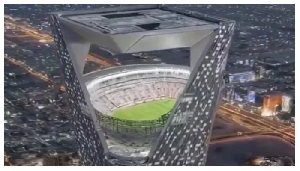 The viral ‘Sky Stadium’ design video is a hoax

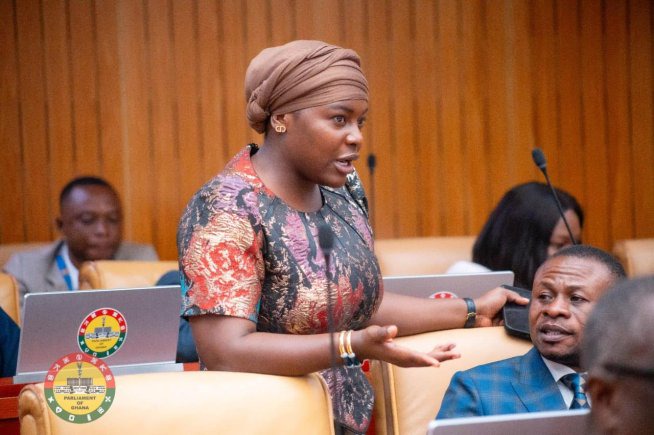


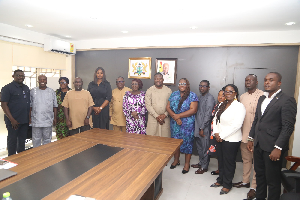
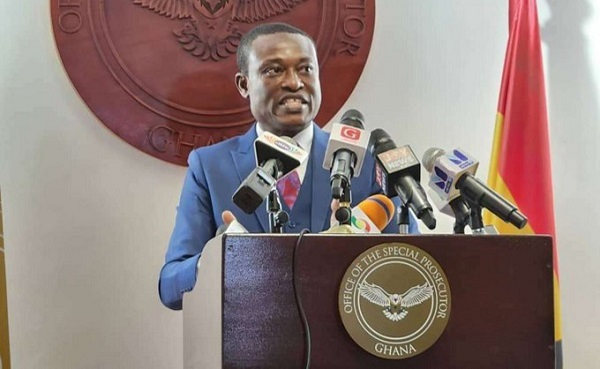

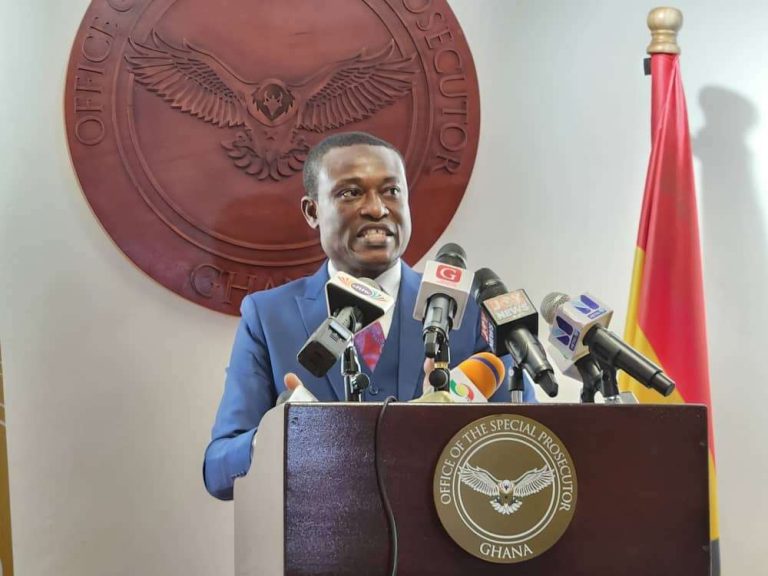
![I will resign if… Akandoh vows over LHIMS saga [Listen]](https://www.ghanamma.com/wp-content/uploads/2025/10/6ef73b39e7fbd39079779b3b4426ddbc.jpeg "I will resign if… Akandoh vows over LHIMS saga [Listen]")