The Western North Regional Police Command has apprehended two individuals in connection with the alleged theft of food items intended for students of Sefwi Bekwai STEM Senior High School at Awaso.
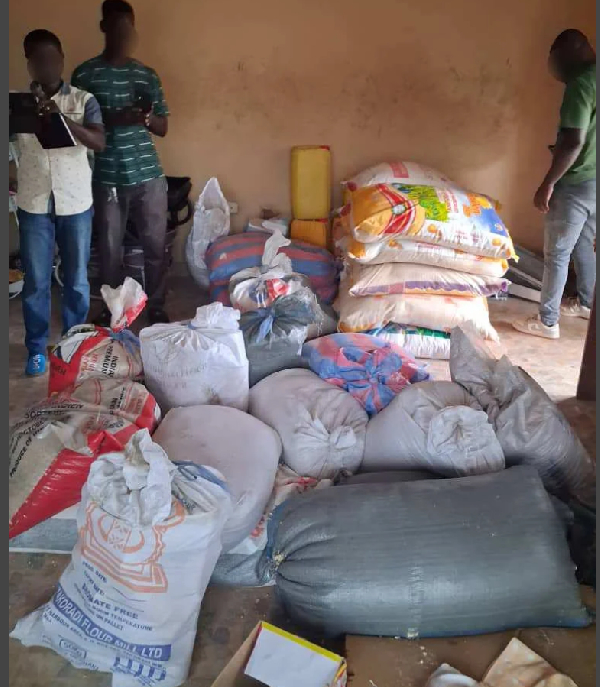
Acting on intelligence, a joint team comprising police officers, the local Member of Parliament, and the Municipal Chief Executive raided the homes of the suspects: Benedicta Nyamadi, a school matron, and Rachael Kyeremateng, a kitchen cook.
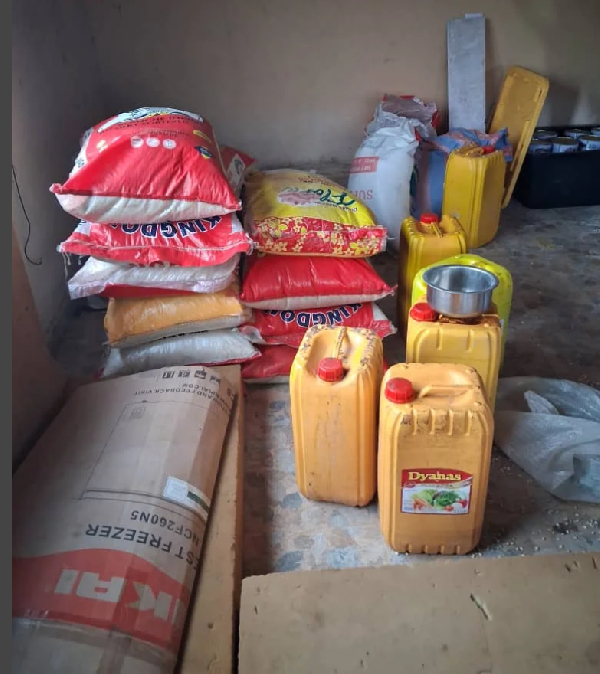
During the search, authorities recovered a substantial cache of food items believed to have been stolen from the school.
Items seized included twenty-one 50kg bags of rice, four sacks of gari, two sacks of maize, one and a half bags of millet, one bag of sugar, three bags of beans, forty large tins of tomato paste, four cartons of milk, six gallons of cooking oil, and fifty-four tins of canned mackerel.
Preliminary investigations revealed that the suspects had allegedly planned to sell the food items at a later date. The police have confirmed that further investigations are ongoing.
Boxing Day, observed on December 26, has its roots in centuries-old traditions of charity and service that emerged in Britain.
The origins of the day trace back to St Stephen’s Day, which is commemorated on December 26.
In churches throughout England, alms boxes used to collect donations during Advent were opened, and their contents were distributed to the poor, widows, and others in need.
Christmas 2025: Ghanaian churches embrace season with renewed hope and festivity
This act of generosity reflected the Christian response to Christmas, sharing the blessings received.
During the Victorian era, Boxing Day also became the day when household servants who worked on Christmas Day were given time off and presented with “Christmas boxes” from their employers.
These boxes often contained money, food, or gifts as tokens of appreciation for a year of service.
Know these four things that come with Christmas
Over time, this tradition of giving and rest became formalised, evolving into a recognised public holiday.
Through British colonial influence, the observance spread to several parts of the world, including Ghana, where it was incorporated into the country’s official holiday calendar.
While the original practice of giving out boxes has largely faded, the spirit behind the day has endured.
Today, Boxing Day is widely regarded as a time to recover after Christmas celebrations.
It is marked by family gatherings, sporting activities, charity events, and quiet reflection.
In many communities, it has also become a moment to extend kindness to the vulnerable, reconnect with loved ones, and reset ahead of the New Year.
Though its meaning has evolved over time, Boxing Day remains a reminder that the joy of Christmas finds its fullest expression not in receiving, but in sharing.
JKB/MA
Christmas Festivities: Avenor traders, buyers speak on livestock sales
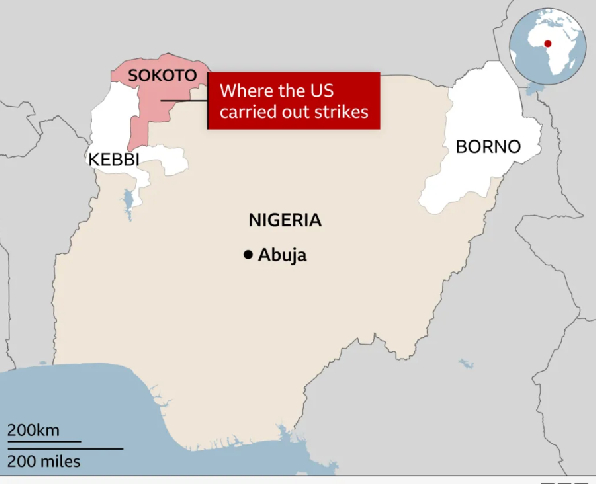
The US has launched strikes against militants linked to the Islamic State group (IS) in north-western Nigeria, where jihadists have long carried out an insurgency.
Camps run by the group in Sokoto state, which lies on Nigeria’s border with Niger, were hit, the US military said, adding that an “initial assessment” suggested “multiple” fatalities.
US President Donald Trump said the Christmas Day strikes were “powerful and deadly” and labelled the group “terrorist scum”, saying it had been “targeting and viciously killing, primarily, innocent Christians”.
Nigerian Foreign Minister Yusuf Maitama Tuggar told the BBC it was a “joint operation” and had “nothing to do with a particular religion”.
Tuggar said the strikes had been planned “for quite some time” and had used intelligence information provided by Nigeria. He also did not rule out further strikes.
Referencing the timing of the strikes, he said they did not have “anything to do with Christmas, it could be any other day – it is to do with attacking terrorists who have been killing Nigerians”.
The Nigerian government has been fighting a complex network of jihadist groups, which includes Boko Haram and IS-linked splinter groups, for several years.
The Trump administration has previously accused the Nigerian government of failing to protect Christians from jihadist attacks and has claimed a “genocide” is being perpetrated.
Trump has previously labelled Nigeria a “country of particular concern”, a designation used by the US state department that provides for sanctions against countries “engaged in severe violations of religious freedom”.
The US military was ordered to prepare to intervene in Nigeria in November.
At the time, an adviser to Nigerian President Bola Tinubu told BBC News that militants had targeted people “across faiths”, and said any US military action should be carried out jointly.
Groups monitoring violence say there is no evidence to suggest that Christians are being killed more than Muslims in Nigeria, which is divided roughly evenly between followers of the two religions.
In a social media post late on Christmas Day confirming the strikes, Trump said that he would “not allow Radical Islamic Terrorism to prosper.
US Defence Secretary Pete Hegseth said on Thursday that he was “grateful for Nigerian government support & cooperation.
“Merry Christmas!” he added, writing on X.
The US Department of Defense later posted a short video that appeared to show a missile being launched from a ship.
On Friday morning, the Nigerian foreign ministry said in a statement that the country’s authorities “remain engaged in structured security co-operation with international partners, including the United States of America, in addressing the persistent threat of terrorist and violent extremism”.
“This has led to precision hits on terrorist targets in Nigeria by air strikes in the North West,” the statement said.
Jihadist groups such as Boko Haram and IS-linked offshoots have wrought havoc in north-eastern Nigeria for more than a decade, killing thousands of people.
Most victims have been Muslims, according to Acled, a group that analyses political violence around the world.
Nigerian human rights lawyer and conflict analyst Bulama Bukati speculated that Thursday’s strikes had targeted a relatively new IS-aligned splinter group, which originated in the Sahel region and has recently moved its fighters to Nigeria.
The largest IS-linked group in Nigeria – Islamic State West Africa Province – operates in the north-east of the country, he told BBC World Service, while the smaller group – known locally as Lakurawa – has sought to establish a base in north-western Sokoto state.
He continued: “They started slipping into Nigeria in 2018 but over the past 18 months or two years they established camps in Sokoto state and Kebbi state.
“They have been launching attacks and imposing their social laws over people in Sokoto state over the past 18 months or so.”
According to BBC Monitoring, a pro-IS social media channel has been reporting on almost daily US reconnaissance flights in Sokoto, as well as in the north-western state of Borno, where the Nigeria’s largest IS-linked group has its stronghold.
In central Nigeria, there are also frequent clashes between mostly Muslim herders and farming groups, who are often Christian, over access to water and pasture.
Deadly cycles of tit-for-tat attacks have also seen thousands killed, but atrocities have been committed on both sides.
The Nigeria strikes are the second major US intervention targeting IS in recent weeks.
Last week, the US said it had carried out a “massive strike” against IS in Syria.
US Central Command (Centcom) said fighter jets, attack helicopters, and artillery “struck more than 70 targets at multiple locations across central Syria”. Aircraft from Jordan were also involved.
Those strikes were launched in retaliation for the killing of three Americans – two soldiers and a civilian interpreter – in an ambush launched by the group.
The US carried out strikes on Islamic State-linked militants in north-western Nigeria, targeting camps in Sokoto state near the Niger border. The US military said an “initial assessment” indicated multiple fatalities.
US President Donald Trump described the Christmas Day strikes as “powerful and deadly,” calling the militants “terrorist scum” and claiming they had targeted “primarily innocent Christians.”
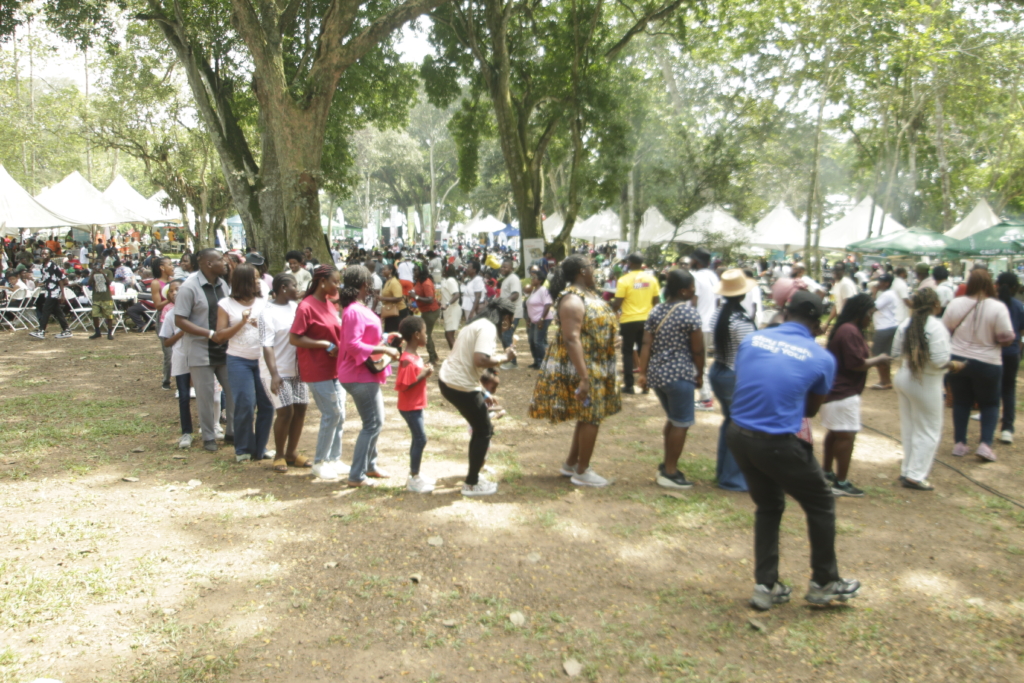
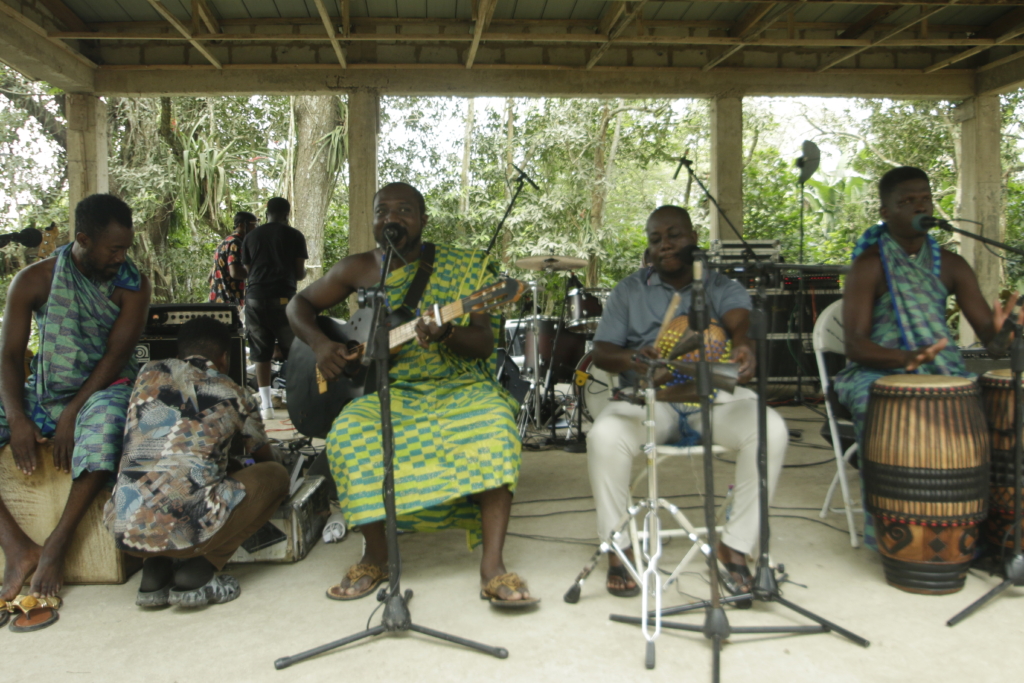
The atmosphere at Joy FM’s much-anticipated Family Party in the Park has reached an exciting new level following the arrival of the Kwanpa Band on stage, delivering a series of thrilling live performances to the delight of patrons.
As families and music lovers continue to troop into the venue, the band’s energetic set has captivated the growing crowd, drawing applause, cheers, and spontaneous dancing.
Their lively blend of popular Ghanaian rhythms, classic hits, and contemporary sounds has created an engaging and festive mood, turning the park into a vibrant hub of entertainment.
Children, parents, and groups of friends could be seen enjoying the performance together, singing along and soaking in the relaxed, family-friendly ambience that has become synonymous with Joy FM’s annual outdoor event.
The band’s stage presence and musical precision have ensured that patrons remain fully engaged as the programme gathers momentum.
The live performance by the Kwanpa Band has not only heightened excitement but has also set a strong tone for the rest of the day’s activities.
Food and beverage vendors remain busy as attendees explore various stands while keeping an ear tuned to the music echoing across the park.
Joy FM’s Family Party in the Park has, over the years, established itself as a flagship lifestyle and entertainment event, bringing together families through music, leisure, and community bonding.
As the programme unfolds, patrons can look forward to more performances and activities designed to keep the entire family entertained throughout the day.
DISCLAIMER: The Views, Comments, Opinions, Contributions and Statements made by Readers and Contributors on this platform do not necessarily represent the views or policy of Multimedia Group Limited.
DISCLAIMER: The Views, Comments, Opinions, Contributions and Statements made by Readers and Contributors on this platform do not necessarily represent the views or policy of Multimedia Group Limited.
Dr Johnson Asiam is the Governor of the Bank of Ghana
The Bank of Ghana has disclosed that its international reserves could cross $13 billion by the end of 2025.
This, according to the bank’s projection, is based on its data as of mid-December 2025.
According to a statement issued by the Central Bank, the development is expected to increase investor and donor confidence.
According to its November Economic and Financial Data, as of the end of October 2025, Ghana’s international reserves stood at $11.4 billion, up from $7.4 billion in October 2024.
However, market watchers have attributed the strong growth in BoG’s reserves to the bank’s reserve accumulation programme and the domestic gold purchasing programme.
BoG dismisses gold loss claims, cites IMF-backed macroeconomic gains
The 2025 development indicates that the Bank of Ghana added $4 billion to its international reserves this year, marking another record achievement in the country’s reserves build-up.
In 2025, the Central Bank auctioned approximately $10 billion to cover obligations to Independent Power Producers (IPPs), bondholders, dividend payments, and other essential commitments.
Read BoG’s full statement below:
SP/EB
All you need to know about Ghana’s new vehicle number plates |BizTech:
Legendary Nigerian musician 2Face Idibia, also known as 2Baba, has made a candid admission about his personal life.
Speaking at a recent event in Edo State on December 26, 2025, the music icon declared, “I have a confession, and I make this confession everywhere I go to set the record straight,” he stated.
He added, “I have stopped impregnating women casually.”
This statement immediately ignited social media and sparked intense public discussion.
Delivered with his characteristic bluntness, this comment is seen by many as a significant personal announcement, signaling a new chapter for the artiste.
“Ask anyone; they’ll tell you I’m an innocent man now,” he shared.
This declaration comes amidst ongoing conversations about responsible fatherhood and the impact of public figures’ personal lives on their careers.
2Face, known for his numerous hit songs and long-standing presence in the Nigerian music scene, has often been the subject of media attention regarding his family life.
“It’s all love to everyone who made it to this event; I see you all,” he continued, welcoming his fans.
His latest statement suggests a deliberate effort to redefine his public image and personal conduct.
The implications of 2Face’s statement are far-reaching, opening up dialogues about personal responsibility, public accountability, and the evolving dynamics of relationships in the spotlight.
Fans and critics alike are eager to see how this declaration will influence his future actions and the narrative surrounding his personal life.
He concluded, “I’m not going to entertain all those internet people here. We’ve already provided content for two years; there’s no need to go further. We’re here to just enjoy ourselves and network. One love to everyone present today.”
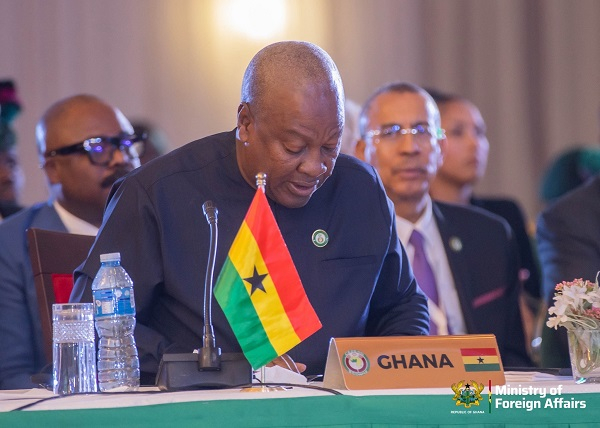
President John Dramani Mahama represented Ghana at an event
The chairman of Ghana’s Constitutional Review Committee, Professor Kwasi Prempeh, has clarified that the proposed shift from a four-year to a five-year presidential term will not apply to President John Dramani Mahama.
Speaking on the committee’s recommendation on JoyNews on December 25, 2025, Professor Prempeh emphasised that President Mahama was elected under the current constitution, which stipulates a four-year term.
President Mahama presents brand-new vehicle to Chief Imam Osman Nuhu Sharabutu
“It’s not possible, he [John Mahama] was elected under a constitution that gives him only four years. It cannot change his term midstream; it’s not possible,” he said.
He added that the committee initially debated whether to explicitly state in their report that the five-year term would only take effect after the current tenure.
“In fact, in an earlier version of this report, for the avoidance of doubt, we had stated that this would take effect after this [tenure], and then some amongst us said, well, but if we say that only with respect to this recommendation, it would appear that the rest would not apply,” Professor Prempeh explained.
Ultimately, he said, the committee decided against specifying the clause in detail, opting instead for a broad application of all recommendations after the current tenure.
“So, we said no, everything applies after. So, we just said no, we didn’t need to be that specific about it, so we left it,” he added.
Koku Anyidoho blasts Professor Kwasi Prempeh over CRC media engagements
The clarification comes amid ongoing public discussion about proposed constitutional changes, including extending the presidential term from four to five years and other governance reforms.
MAG/EB
Christmas Festivities: Avenor traders, buyers speak on livestock sales
The surge was driven by expectations that the United States may cut interest rates
Silver crossed the $75 mark for the first time on Friday, December 26, 2025, as gold and platinum also climbed to record highs.
The surge was driven by expectations that the United States Federal Reserve may cut interest rates, as well as rising global tensions.
Gold prices rose by 0.8% to trade at $4,516.50 per ounce by 9:33 GMT, after earlier hitting a new record of $4,530.60.
According to UBS analyst Giovanni Staunovo, “Prospect of lower US interest rates is still supporting demand for gold and silver, lifting both metals to new record highs.”
Gold on track for $50 weekly gain as prices hold at $4,340 per troy ounce
He added that, “Low liquidity is amplifying the volatility across all precious metals.”
Gold is now heading for its strongest annual performance since 1979. This is being supported by expectations of easier US monetary policy, strong buying by central banks, increased investment through gold-backed funds, and a gradual shift away from the US dollar.
Market expectations currently point to the US Federal Reserve cutting interest rates twice next year [2026]. This outlook has increased demand for assets such as gold, which do not earn interest but are considered safe during periods of economic uncertainty.
In physical markets, gold discounts in India rose to their highest level in more than six months, while discounts in China eased after hitting a five-year high last week.
Silver jumped by 4% to trade at $74.82 per ounce after earlier reaching an all-time high of $75.14. The metal has gained about 158% so far this year, supported by supply shortages, its classification as a critical mineral in the United States, and strong industrial demand.
Platinum also recorded strong gains, rising by 7.3% to trade at $2,382.35 per ounce after earlier hitting a record high of $2,448.25. Palladium climbed by 8.3% to $1,823.76, extending gains after reaching a three-year high in the previous session.
Overall, all major precious metals are on course to end the week higher, with platinum recording its strongest weekly increase on record.
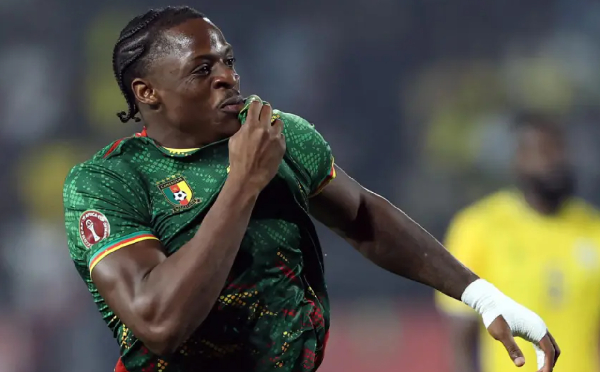
Karl Etta Eyong opened his Cameroon account on his fourth international appearance
Karl Etta Eyong’s early strike gave five-time champions Cameroon victory over Gabon in their 2025 Africa Cup of Nations Group F opener in Agadir.
In an intense meeting between Central African neighbours, Cameroon set a bristling pace from the start by snapping up transitions and advancing at speed in the hope of catching Gabon cold.
The ploy paid off when Bryan Mbeumo collected Samuel Kotto’s ball over the top and threaded a deft pass on to the run of Eyong inside the box, allowing the Levante forward to slide a first-time finish through goalkeeper Loyce Mbaba’s legs – with the goal confirmed as onside by a Video Assistant Referee (VAR) check.
Sensing the need for a considerable momentum change, Gabon coach Thierry Mouyouma produced a surprise by shuffling his attack in the 33rd minute, replacing Teddy Averlant and Eric Bocoum with Mario Lemina and the leading marksman in the nation’s history, Pierre-Emerick Aubameyang – who had been expected to miss the game through injury.
Royce Openda had Gabon’s best chance 18 minutes from time, drawing an excellent save from the advanced Devis Epassy after Andre Poko’s raking pass provided him with a shooting opportunity from a tight angle inside the box.
Substitute Frank Magri almost doubled Cameroon’s lead shortly afterwards, heading Manchester United forward Mbeumo’s corner against the crossbar via a deflection off defender Jacques Ekomie.
Both sides play the second of their three group stage games on Sunday, when Gabon are in Agadir against Mozambique, who lost 1-0 to holders Ivory Coast earlier on Wednesday, and Cameroon face the Elephants in Marrakech (20:00).
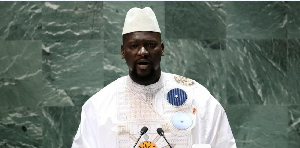
Supporters and critics of Guinea’s military leader made their voices heard Thursday as Gen. Mamadi Doumbouya held his final campaign rally in Conakry ahead of Sunday’s presidential election.
“I’m here to support Mamadi Doumbouya because of his kindness, for the job opportunities he gave to the people who need it, and for the efforts he did for us, for the population,” said voter Mariame Kourouma, who joined thousands at the Palace of the People. “So we are here to support him as the president of our country.”
The rally marked the close of campaigning for Guinea’s first presidential vote since the 2021 military coup that brought Doumbouya to power. The election comes after years of political instability and amid growing concerns over democratic backsliding across West Africa.
While Doumbouya enjoys strong public backing among supporters who credit him with infrastructure development and anti-corruption efforts, the campaign period has been overshadowed by a crackdown on dissent. Major opposition figures have been sidelined, with some barred from running or forced into exile.
Among Doumbouya’s challengers is Abdoulaye Yero Baldé, a former education minister under ex-president Alpha Condé. His candidacy has drawn attention from opposition supporters who see him as a symbol of resistance to constitutional manipulation.
“Since Alpha Condé asked Yero Baldé to follow him into a third term, he said no, Mr. President, I cannot follow you,” said Mohamed Lamine Bangoura, an opposition supporter. “We told the Guinean people we would restore democracy. After two terms, we leave power and another group comes.”
Baldé resigned from government in protest after Condé pursued and won a controversial third term — a move that sparked unrest and ultimately preceded the 2021 coup that ousted Condé just a year later.
Despite Guinea’s vast mineral wealth, more than half of its estimated 15 million people live in poverty and face food insecurity. Doumbouya has campaigned on promises of modernization and economic development, pointing to new roads, public works projects and a new constitution approved in a referendum boycotted by the opposition.
The junta has repeatedly delayed a return to civilian rule, ultimately clearing the way for Doumbouya to seek a newly extended seven-year term.
Around 6.7 million registered voters are expected to cast ballots at more than 24,000 polling stations nationwide. Results are expected within 48 hours, with a runoff possible if no candidate secures an outright majority.
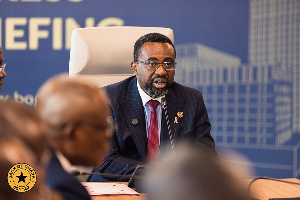
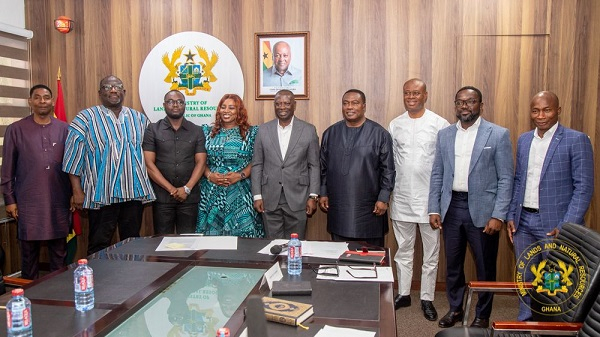
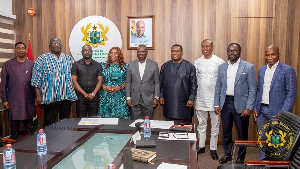
The governing board of the Volta Aluminum Company Limited (VALCO), led by Ambassador Horace Nii Ayi Ankrah, has held its first strategic engagement meeting with company management to address operational challenges and chart a course for the smelter’s revival.
The meeting, held recently in Accra, provided an opportunity for the board to engage management on key operational, administrative and strategic matters aimed at strengthening VALCO’s performance and advancing its mandate within Ghana’s industrial and manufacturing sector.
During the engagement, the board reaffirmed its commitment to providing strong leadership, policy direction and effective oversight to support management in repositioning VALCO as a critical driver of value addition, job creation and economic growth.
Management briefed the board on ongoing operations, prevailing challenges and strategic plans for the future. The engagement underscores a shared commitment by both parties to work collaboratively towards ensuring long term operational excellence and sustainable growth at VALCO.
VALCO currently operates at roughly 40 percent capacity, producing approximately 40,000 tonnes of aluminum annually against its nameplate capacity of 200,000 tonnes. The company employs about 750 workers at its Tema facility.
The smelter has struggled with high production costs, outdated machinery inherited from previous owners Kaiser Aluminum and Alcoa, and frequent shutdowns due to energy supply issues. The plant has been operating with the same dated technology for decades, resulting in one of the highest production costs per tonne of aluminum globally.
Government acquired Kaiser’s 90 percent stake in VALCO in 2004 for 18 million dollars and purchased the remaining 10 percent from Alcoa four years later for two million dollars, making it a wholly Ghanaian owned company under the Ghana Integrated Aluminum Development Corporation (GIADEC).
VALCO was established in 1967 as a joint venture between the Government of Ghana and Kaiser and Reynolds of the United States, forming a key component of Ghana’s industrialization strategy linked to the Volta River Project and Akosombo Dam. Ghana’s first president, Kwame Nkrumah, identified the Integrated Aluminum Industry (IAI) as the starting point for the country’s industrialization agenda.
The company initially began operations with three cell lines, producing 120,000 metric tonnes of aluminum annually. Significant expansions in 1970 and 1974 increased capacity to 200,000 metric tonnes per year, solidifying VALCO’s position as a key player in Sub-Saharan Africa’s primary aluminum production.
VALCO has gone through turbulent phases including a series of shutdowns largely due to lack of investment, repairs and maintenance. Since 2011, the smelter has resumed operations albeit at reduced capacity.
The government established GIADEC in 2018 with a mandate to develop and promote Ghana’s Integrated Aluminum Industry. GIADEC has developed a comprehensive strategy and master plan to utilize Ghana’s 900 million metric tonnes of bauxite deposits, existing aluminum smelter and related assets, with a key focus on value addition and job creation.
The modernization and retrofitting of VALCO is estimated to require 600 million dollars. The project aims to increase the plant’s current production to 300,000 tonnes annually, representing a 650 percent capacity increase. After retrofitting and modernizing the plant, the smelter is expected to create thousands of high paying direct and indirect jobs for Ghanaians.
Government inaugurated an investor selection committee in November 2025 to evaluate proposals from prospective investors and recommend the most suitable partner who brings capital, technology, technical expertise, local capacity building, environmentally responsible practices and a shared commitment to Ghana’s long term prosperity.
The absence of a domestic alumina refinery has long been the missing link in achieving full integration of Ghana’s aluminum industry. Currently, VALCO continues to import alumina from countries such as Jamaica to feed its production process.
Plans for the Integrated Aluminum Industry include building an in country alumina refinery to ensure a stable and cost effective supply of alumina to VALCO, reducing reliance on imports. The refinery project, Ghana’s first of its kind, will enable the country to refine its own bauxite into higher value alumina that will feed a modernized VALCO smelter.
GIADEC requires more than six billion dollars to fully develop Ghana’s aluminum value chain, including both the refinery and smelter modernization projects. The corporation has been actively engaging investors with the financial capability and industry expertise to support the IAI’s development.
The African Selection Group (ASG) has expressed strong interest in Ghana’s aluminum value chain, particularly in retrofitting and modernizing the VALCO smelter and constructing an alumina refinery. The company aims to enhance the smelter’s efficiency and production capacity from its current level to over 300,000 metric tonnes annually.
For almost six decades, VALCO has been a cornerstone in Ghana’s journey toward developing a robust and integrated aluminum industry. Using VALCO as the anchor of the IAI project, Ghana aims to add value to its over 700 million metric tonnes of bauxite deposits at Kibi and Nyinahin, potentially generating over 1.05 trillion dollars and creating approximately 2.3 million sustainable jobs.
The Chamber of Digital Assets and Blockchain Innovation Ghana (CDABI-GH) has praised regulators and Parliament for passing the Virtual Asset Service Providers Bill, describing it as a major milestone that brings clarity and credibility to the country’s digital asset ecosystem.
In a statement issued in Accra on December 23, 2025, the Chamber said the new law provides a clear signal that while Ghana is open to innovation, it remains equally committed to responsibility, consumer protection and market discipline.
Parliament passed the legislation on December 19, 2025, with Bank of Ghana (BoG) Governor Dr. Johnson Asiama announcing the development during the central bank’s annual Nine Lessons, Carols and Thanksgiving Service. The law now awaits presidential assent before taking full effect.
According to CDABI-GH, the legislation marks Ghana’s transition from regulatory uncertainty to a structured and supervised digital asset environment. The Chamber praised the Governor and the Virtual Asset Service Provider (VASP) policy and technical teams, as well as the Director General of the Securities and Exchange Commission (SEC) and Commission officials, for what it described as their discipline, foresight and commitment to national interest.
The Chamber stated that the work of regulators had transformed a complex and fast moving frontier into a governed, credible and investable ecosystem. CDABI-GH characterized the legislation as more than a law, calling it a signal to innovators that Ghana is open, to investors that Ghana is safe, and to citizens that Ghana is protected.
The Chamber commended Parliament for passing the legislation without undue delay, noting that the decision reflects a preference for thoughtful regulation over hesitation. According to the statement, the move positions Ghana to shape its digital finance future rather than react to developments elsewhere.
Ghana’s digital asset market has grown substantially despite regulatory uncertainty. Approximately three million Ghanaians, representing roughly 17 percent of the adult population, already use cryptocurrencies. Transaction data shows crypto activity in Ghana reached approximately three billion dollars in the year through June 2024.
The absence of a comprehensive legal framework had raised concerns about consumer protection, market integrity and regulatory oversight. Industry players and regulators have repeatedly highlighted the need for clear rules to guide innovation while managing associated risks.
The new law establishes a dual regulator model, with the Bank of Ghana and the Securities and Exchange Commission sharing oversight responsibilities. All individuals and entities engaged in virtual asset activities will be required to obtain a licence or registration from either the BoG or SEC, depending on the nature of their services.
Governor Asiama confirmed that virtual asset trading is now legal and no one will be arrested for engaging in cryptocurrency activities. However, companies offering digital asset services must obtain licenses, comply with reporting requirements and submit to ongoing supervision.
The Bank of Ghana plans to implement licensing and supervisory rules in phases throughout 2026. Regulatory instruments and detailed guidelines are expected in early 2026, giving firms time to prepare for compliance. Existing virtual asset service providers will need to register and meet compliance standards to continue operating.
At the National Virtual Asset Literacy Program on December 22, 2025, SEC Deputy Director General Mensah Thompson detailed that licensing requirements extend to public figures and online promoters. He stated that no one will be allowed to offer advice on crypto performance without authorization, with law enforcement agencies prepared to arrest violators and apply sanctions.
CDABI-GH said the new law addresses longstanding concerns by providing certainty for market participants and strengthening confidence among local and international investors. It added that the framework is expected to support sustainable growth of the sector by balancing innovation with accountability.
The Chamber pledged its support to the Bank of Ghana and the Securities and Exchange Commission during implementation. It said its role will include promoting compliance, building capacity within the industry, educating market participants and supporting responsible innovation across the digital asset ecosystem.
Ghana now joins countries like South Africa and Nigeria in moving toward structured oversight of digital assets. According to Chainalysis’ 2025 Geography of Cryptocurrency Report, Ghana ranks among the top five Sub-Saharan African countries by total crypto value received between July 2024 and June 2025.
CDABI-GH had previously engaged with the BoG in July 2025 at The Bank Square in Accra, where Governor Asiama assured the Chamber of inclusion in future stakeholder forums. Those consultations contributed to finalizing the regulatory framework that has now become law.
According to CDABI-GH, the passage of the Virtual Asset law represents a defining moment in Ghana’s digital development, laying the foundation for a more mature, trusted and well regulated digital asset market aligned with broader financial sector stability and economic growth objectives.
The Ghana Statistical Service (GSS) says conditions are ripe for government to accelerate infrastructure projects under the ‘Big Push’ programme, urging it to capitalise on the current decline in building costs.
Omar Seidu, Acting Deputy Government Statistician, at the release of the Prime Building Cost Index (PBCI) for November 2025, in Accra, stated that the year-on-year building construction cost had seen a significant decline.
The PBCI, which tracks how overall construction costs change over time by measuring prices of building materials, labour, and plant equipment, recorded year-on-year inflation of 5.9 percent in November 2025, down from 21.7 percent in November 2024.
At the sub-group level, labour inflation dropped from 22 percent in November 2024 to 12.7 percent in 2025, materials inflation reduced from 22.3 percent to 4.2 percent, while plant inflation declined from 9.7 percent to 5.3 percent.
“The construction economy is in a period of relative stability. Costs are still higher than last year, but the pace of increase has slowed dramatically. This is a useful environment for households, businesses, and government to plan and execute projects,” Seidu said.
“With prices relatively stable, it is an opportune time to fast-track the infrastructure programme, especially the Big Push programme. The current stability provides an ideal environment to accelerate road construction, hospital building, school infrastructure,” he noted.
The Acting Deputy Government Statistician, however, called for investments and incentives for local production and improvement in utilisation of the top 10 high contributors of inflation in the sector, noting their impact on overall sector inflation.
They are steel (37.1 percent), skilled labour (26.3 percent), unskilled labour (15.5 percent), tiles (13.2 percent), equipment (4.7 percent), glazing (4.2 percent), coarse aggregate (3.2 percent), surface finishes (2.1 percent), timber (1.9 per cent) and door (1.6 percent).
“Ghana now has local capacity for plumbing materials and other exports. If more companies produce these essential items locally, it will reduce our reliance on imports and stabilise the inflationary pressures we currently face,” he stated.
He encouraged the government to target the top drivers to help stabilise the prime building cost index for the construction sector as well as upskilling artisans by expanding training for them.
He also urged households to phase their projects to take advantage of the reduced cost, advising businesses to fix the price of major items for medium-term contracts before any potential price hikes.
Seidu said GSS had rebased the PBCI, using 2023 as the rebasing year, with the new series now tracking 406 items from 16 regional markets across 489 outlets, providing much greater detail than the old series.
He explained that the new system tracked four different building models including hotels and office blocks, compared to only a two-bedroom house used previously, giving a comprehensive view of the construction industry.
Alhassan Iddrisu Abdulai, the Head of Price Indices and Inflation, speaking exclusively with the Ghana News Agency after the event, said: “a steady decline in construction costs could make building cheaper.”
“Fiscal policy discipline by the government is contributing to economic stability [and] inflation is easing partly due to the stabilisation of the local currency. If this stability continues, building will become more affordable than it was in the recent past, which the government could benefit from current economic conditions,” he said.
All you need to know about Ghana’s new vehicle number plates | BizTech:
Ghana has achieved substantial progress in education access and participation, with enrollment figures reaching historic highs following the introduction of free senior high school education.
Senior high school enrollment jumped from 308,799 students in 2016 to 507,519 in 2024, reflecting the impact of the Free Senior High School (Free SHS) policy implemented in 2017. The programme, which covers tuition, boarding, meals and textbooks, has transformed access to secondary education across the country.
The policy has particularly benefited female students. Research shows the Free SHS policy increased girls’ senior high school completion rates by 14 percentage points, helping to narrow longstanding gender gaps in education attainment.
Beyond secondary education, Ghana’s tertiary sector has expanded significantly. Tertiary enrollment reached 635,000 students in 2022, representing more than fivefold growth over 17 years. The country operates several large public universities alongside an expanding network of private institutions and technical colleges.
Adult literacy has also improved markedly. Ghana’s adult literacy rate climbed from 64.5 percent in 2017 to 76.5 percent in 2021, continuing a decades-long upward trend. Youth literacy rates now exceed 90 percent for both males and females.
Education experts credit these gains to sustained policy reforms and increased public spending. The government has invested in teacher recruitment, infrastructure development and student financial support programmes to boost access at all levels.
However, challenges remain. Research indicates the Free SHS policy has strained resources at the basic education level, with capital investment reduced to almost zero. Quality concerns have also emerged, with overcrowding in some schools and questions about learning outcomes despite higher enrollment numbers.
UNESCO assessment data from 2018 showed only 19 to 25 percent of pupils met proficiency standards across grades and subject areas, highlighting the need for continued focus on educational quality alongside access.
Ghana continues to attract international students and partnerships, positioning itself as a regional education hub. The country’s politically stable environment and English-language instruction have made it an appealing destination for students from across West Africa.
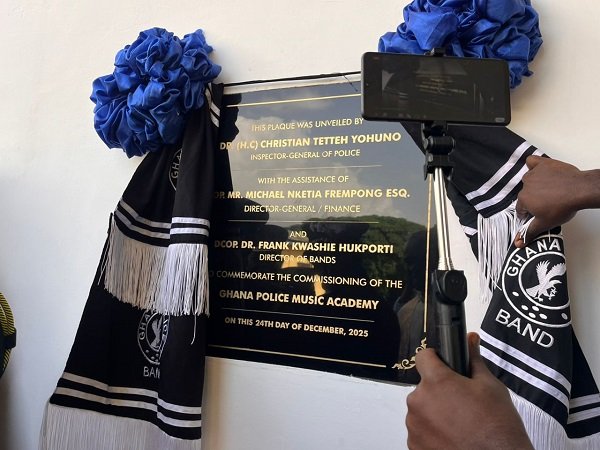
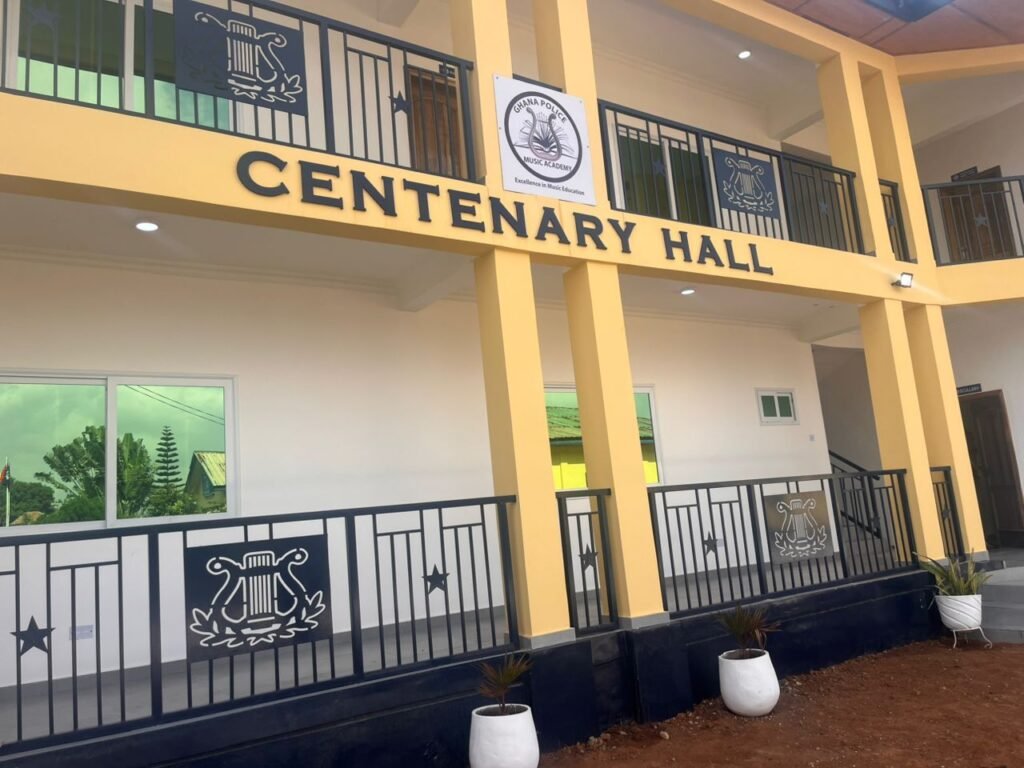
The Inspector General of Police (IGP) Mr Christian Yohunu has inaugurated an ultra -modern police music academy centenary in Accra which would play a major role in the police music department.
The edifice would contribute to the police musical development in the country and world at large.
Inaugurating the facility in Accra yesterday , the IGP said the building would significantly enhance the police musical department and its activities adding it came at a timely moment.
According to him , music by all standards is a universal part of human life, present in culture and every stage of human life which needed critical attention.
“Whether we sing, play instrument, or simply listen, music weaves itself into moments of Joy, Stress, or reflection, “ he said.
The IGP said the occasion was historic, not merely because they were unveiling an edifice, but because they were affirming a strategic philosophy of policing that recognised music as an essential instrument of security, discipline and public confidence.
He said in modern security management, effectiveness was no longer measured solely by enforcement capability but by public trust, morale, discipline and cultural legitimacy.
He highlighted that the establishment of the academy positioned Ghana as a regional hub for structured, professional, and disciplined security music training within West Africa and beyond.
Mr Tetteh Yohunu noted that the commissioning was happening during the Christmas season, “Christmas reminds us of peace, sacrifice, and service, values that align directly with the mandate of the Ghana Police Service”.
For his part , Deputy Commissioner of Police, (DCOP )Dr Frank Hukporti described the edifice as “historic” and “deeply personal”, adding that it marked the culmination of a vision he had nurtured for over a decade.
“This occasion is not only historic for the band, but deeply personal to me, as it represents the culmination of a vision that has has began over a decade ago and marks the closing chapter of my active service,”he said.
He said the country‘s institutions provided theory but lacked practical band training, so he envisioned an academy blending academia with hands-on professionalism through the new building.
Dr Hukporti credited the IGP for his support, saying his leadership ensured the completion despite funding challenges.
He also thanked corporate organisations and individuals who contributed to the success of the project adding that the project would go a long way to promote music in the future.
Buah recalled that the vision of adding value to Ghana’s bauxite dates back to 1967
The Minister for Lands and Natural Resources, Emmanuel Armah-Kofi Buah, has charged the newly inaugurated Governing Board of the Volta Aluminium Company Limited (VALCO) to lead the transformation of Ghana’s vast bauxite resources into a thriving and sustainable aluminium industry.
Speaking at the inauguration ceremony, where 10 board members were sworn in, the Minister described the responsibility placed on the board as both national and historic.
“Ghana is blessed with abundant bauxite resources, and your duty is to ensure these resources are converted into tangible economic benefits that will support industrial growth, create jobs, and strengthen our economy,” he stated.
Buah recalled that the vision of adding value to Ghana’s bauxite dates back to 1967 but has remained largely unrealised. He urged the board to provide strong leadership and clear direction.
“You must pursue a compelling vision, strengthen governance, and commit to strategic investments that will finally deliver a responsible and sustainable aluminium value chain for this country,” he said.
The Minister expressed concern that downstream aluminium industries currently utilise less than 20 percent of VALCO’s output, describing it as a major missed opportunity.
“It is unacceptable that after all these years, VALCO is still unable to meet the needs of the local market. By the end of your tenure, the Ghanaian market must be fully supplied,” he stressed.
He further called for the modernisation and expansion of the VALCO smelter to improve efficiency and increase capacity, while reminding the board of its critical oversight role.
In his acceptance remarks, Board Chairman Horace Nii Ayi Ankrah expressed gratitude to President John Dramani Mahama and the government for the confidence reposed in the board. He assured management and staff of the board’s full support, pledging strong corporate governance and accountability.
Cristiano Ronaldo continues to deepen his ties with Saudi Arabia, this time away from the football pitch.
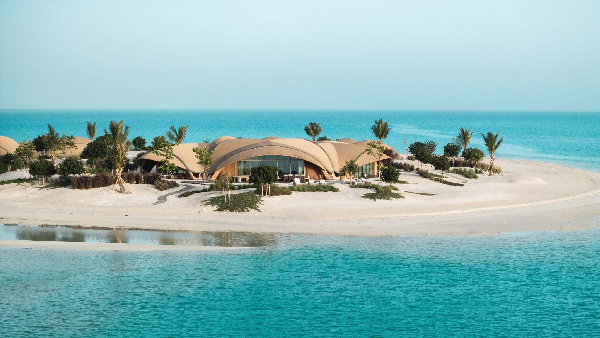
The Portuguese superstar and his partner, Georgina Rodríguez, have reportedly purchased two ultra-luxury villas in Nujuma, an exclusive resort area within the Red Sea Islands, one of Saudi Arabia’s flagship tourism projects.
Designed for absolute privacy, the villas are surrounded by the calm blue waters of the Red Sea and fitted with world-class facilities that match the highest global luxury standards.
Access to the properties is deliberately restricted, with arrivals only possible by chartered boat or amphibious aircraft, adding to their exclusivity and appeal.
Meet Georgi Minoungou: The Burkina Faso forward who is blind in one eye
The Nujuma resort forms part of Saudi Arabia’s ambitious plan to position the Red Sea coast as a premium global tourism destination, blending untouched natural beauty with high-end hospitality.
The development focuses on sustainability, seclusion, and luxury, making it attractive to elite figures seeking both comfort and discretion.
Each villa is reported to cost around $5 million, reflecting the location’s exclusivity and the level of bespoke design and services offered.
The investment further underlines Ronaldo’s long-term commitment to life in Saudi Arabia following his move to Al Nassr.
FKA/JE
#TrendingGH: Mixed reactions greet church members on 2025 Christmas celebration
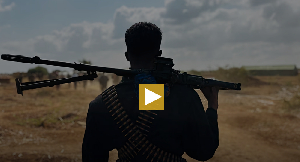
A Somalia National Army soldier with ammunition belts strapped around him on the frontline
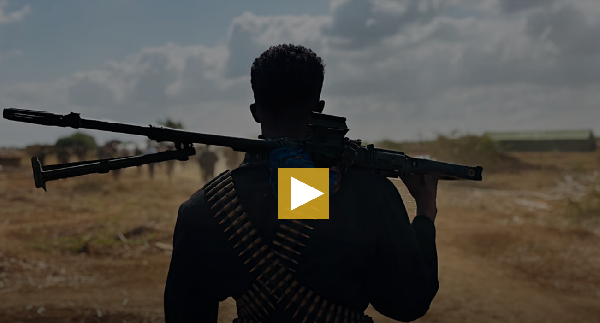
The al-Shabab extremist group continues to pose the greatest immediate threat to peace and stability in Somalia and the wider region, including neighboring Kenya, U.N. experts warned in a report released Wednesday. Despite ongoing military efforts by Somali and international forces to curb its activities, al-Shabab’s ability to execute complex, asymmetric attacks remains undiminished.
The group, which is linked to al-Qaida, not only carries out deadly attacks but also maintains a sophisticated network of extortion, forced recruitment, and effective propaganda. The report highlighted an attempted assassination of Somalia’s president on March 18 in Mogadishu, underscoring the persistent danger posed by the group in the capital.
The U.N. Security Council on Tuesday voted to extend the mandate for the African Union’s peacekeeping force in Somalia until December 31, 2026. This force, which includes 11,826 personnel, plays a key role in stabilizing the country amid ongoing threats from al-Shabab.
In neighboring Kenya, the extremist group’s influence is felt through a range of attacks, including improvised explosive devices, kidnappings, and raids, particularly in counties bordering Somalia. The report revealed that al-Shabab has averaged six attacks per month in Kenya this year.
The panel also raised concerns over the growth of the Islamic State’s presence in Somalia, noting that although smaller than al-Shabab, the group’s expansion poses a significant security threat to the region.
One suspect is in police custody in the Northern Region for possession of narcotic drugs without lawful authority.
The suspect, Mohammed Alhassan, aged 28, according to a police statement, was arrested by the Inspector-General of Police’s Special Operations Team on Wednesday, December 24, 2025, at about 12:30 pm in Kpalsi, a suburb of Tamale.
A police press release said the arrest followed a distress call from the Tamale Task Force, which had intercepted 98 parcels of compressed dried leaves suspected to be cannabis during an operation in the area.
According to the release, the Taskforce initially apprehended one Hashim with the exhibits. During interrogation, Hashim indicated that Mohammed Alhassan was responsible for the narcotic substances, leading to Alhassan’s arrest.
Hashim was subsequently released at the time, and the suspect was handed over to the Drug Law Enforcement Unit for further investigations.
However, further investigations revealed that Hashim was indeed a controller of the narcotics, and he has since been reclassified as a suspect.
Police said strenuous efforts were underway to locate and arrest Hashim, who is currently at large, to assist in ongoing investigations.
Mohammed Alhassan is expected to be arraigned before the court on Monday, December 29, 2025, to answer charges of possession of narcotic drugs without lawful authority.
The police reaffirmed their commitment to combating drug-related crimes and urged the public to continue supporting security agencies with timely information.
Let our actions prove we’re ready for power – Afenyo-Markin to NPP
Government has reaffirmed its commitment to achieving near-universal access to electricity, pledging to raise the national access rate from the current 89.03 per cent to about 99.9 per cent by 2030.
Deputy Minister for Energy and Green Transition, Richard Gyan Mensah, said the goal is central to accelerating socio-economic development, particularly in underserved communities.
“Government remains resolute in achieving universal access to electricity, moving beyond the current 89.03 per cent access rate to about 99.9 per cent by 2030,” he said.
Mr Mensah was speaking at the commissioning of two electrification projects for Awurahae and Sapor in the Asuogyaman Constituency of the Eastern Region. The two communities located just a few kilometres from the Akosombo Hydropower Dam but have had to live without electricity for decades.
Project details and cost
Awurahae, a fishing and aquaculture community with an estimated population of 200–300, was connected through a 2.4-kilometre network extension from Kudi Junction. The project, initiated in 2024 and completed in 2025, had to contend with difficult terrain and landscape.
According to the Deputy Minister of Energy and Green Transition Richard Gyan Mensah, the works included the installation of a 100 kVA distribution transformer, a medium-voltage network using 120 sqmm aluminium conductors, and a low-voltage network using ABC cables.
“The total project cost stood at GH¢3.05 million, reflecting the distance, terrain and quality standards required to ensure reliable electricity supply,” Mr. Mensah further noted.
Mr Mensah also praised the leadership of the MP for Asuogyaman and Deputy Minister for Finance, Thomas Ampem Nyarko, describing his role as pivotal to the project’s success.
“I wish to acknowledge the exceptional leadership and advocacy of the MP for Asuogyaman, Thomas Ampem Nyarko, for his unwavering commitment to this project,” he said.
Biggest Christmas gift
Commissioning the projects on Christmas Day, December 25, 2025, Mr Ampem Nyarko described the electrification as the “biggest Christmas gift” to residents who had lived their entire lives without power.
“The best Christmas present that President Mahama is giving you today is connecting you to the national grid. This electricity will significantly improve your living conditions,” he said.
He explained that the project was self-funded, with support from the Volta River Authority (VRA), the Ministry of Energy and Green Transition, and volunteer labour from community members.
The MP recalled that before the 2024 elections, he pledged to connect the communities to the national grid if given the mandate, a promise he says has now been fulfilled barely a year into his third term in Parliament.
Roads, market and economic boost
Beyond electricity, Mr Ampem Nyarko assured residents that work is progressing on the Akosombo–Kudi–Kofe–Gyekiti road, which forms part of government’s “Big Push” infrastructure agenda.
“The contractor will remain on site until the final bitumen asphalt overlay is laid to make the road fully motorable,” he said.
He also announced plans to construct a 24-hour market in Awurahae to boost local economic activity, particularly fishing.
“Now you have light and your road is being worked on, the next step is to establish a thriving market. You can freeze your catch, attract buyers from other areas and stop selling your fish cheaply for fear of spoilage,” he added.
Teachers to get accommodation in Sapor
In Sapor, residents highlighted longstanding challenges, including high teacher attrition, largely due to the lack of electricity and basic amenities. Teachers posted to the community often leave within months, forcing schools to combine classes.
Mr Ampem Nyarko said the situation would change with the extension of electricity and the commencement of a six-unit teachers’ accommodation project.
“This community has suffered very high teacher attrition. One of the major reasons was the absence of electricity,” he said. “We have secured a contract for the construction of six-unit teachers’ bungalows so teachers can live here comfortably. We expect to complete the project in 2026.”
Joy and gratitude
Residents of both communities expressed excitement and relief at the long-awaited development.
Awurahae community leader Daniel Bisi told JoyNews the impact would be immediate. “This electrification will change everything here. Fishing and farming will improve, and people will no longer sell their catch cheaply,” he said.
The Assembly Member for the Adjinadornir–Sapor Electoral Area, Noah Tetteh, said the power supply would transform education outcomes.
“Now that we have light, teachers will stay, and students can study at night. This is good news for the entire community and for the future of our children,” he said.
Amid drumming, dancing and jubilation, chiefs and residents of Sapor and Awurahae expressed gratitude to the government, the Energy Ministry, the VRA and the MP for delivering electricity to communities that had waited for decades to be connected to the national grid.
Felicity Nelson, founder of the Felicity Nelson Foundation and Deputy CEO (Operations) of the Ghana Tourism Development Company, led a humanitarian outreach on Thursday, December 25, 2025, distributing hot meals, beverages, toiletries, and essential supplies to over 200 individuals held at the Railways, Baatsona, and Cantonment Police Stations.
The foundation’s Humanitarian Support Initiative aims to provide essential support, promote dignity, and address welfare gaps, particularly for detainees who rely entirely on external assistance for food, water, and hygiene—needs that become more acute during the festive season.
Madam Felicity Nelson’s act of compassion was deeply personal. In 2024, she was arrested and detained for 17 days following her participation in the ‘Fix the Country’ demonstrations—14 days at Cantonment, one at Baatsona, and two at Railways Police cells.
“Not all the inmates are guilty; many are just charged at the moment. None has been convicted. They are human beings who deserve love, care, and to feel important. That’s why I decided to do this initiative,” Madam Nelson told the media during the distribution.
She added, “For many detainees, Christmas passes like any other day, without family, food, or comfort. This initiative is about restoring dignity, sharing compassion, and ensuring that no one is forgotten during the holidays.”
She said the outreach also represents a shift in approach to activism, moving beyond advocacy and protests to community-centred action.
Felicity Nelson, founder of Felicity Nelson Foundation and Deputy CEO (Operations) of the Ghana Tourism Development Company, with some Prison officers
“Activism must not only speak truth to power but also show up, meet people where they are, and respond to real human needs,” she said.
Madam Felicity Nelson expressed appreciation for the cooperation of the Ghana Police Service, which facilitated the Christmas Day distribution.
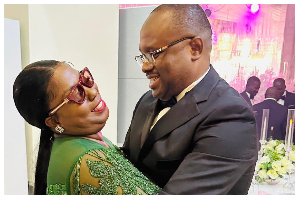
The late Dr Omane Boamah in a warm embrace with Obuobia Darko-Opoku
The Administrator of the Ghana Medical Trust Fund, Obuobia Darko-Opoku, has paid an emotional tribute to the late Minister of Defence, Dr Edward Omane Boamah, on what would have been his 50th birthday, describing the milestone as painful, quiet, and deeply unfair.
In a reflective Facebook post on Boxing Day, she said the day should have been a moment of celebration but was instead heavy with grief.
Profile of the late Dr Edward Omane Boamah
“Today should have been loud. Fifty years old. Fifty reasons to pause and say thank you for your life. Instead, today is quiet and heavy.
“August still feels too close. Too unfair, too final. Yet here we are, marking a birthday for someone we should still be calling, laughing with, arguing with and planning the future with,” she wrote.
According to her, turning 50 should have been a victory lap, a moment to pause and acknowledge a life lived with purpose, courage, and conviction.
“Your absence is loud. It shows up in the conversations that stop halfway, in the moments when your voice should have weighed in, in the spaces you once filled so effortlessly. You didn’t just leave memories; you left gaps. Yet even in this loss, your life refuses to be silent,” Obuobia noted.
She also lauded the late Dr Omane Boamah for living boldly, standing firmly for causes bigger than himself, and loving people deeply even when it came at a personal cost.
My experience with Dr Edward Omane Boamah
Reflecting on the painful significance of the day, Obuobia said the grief is also for the future that never came; the wisdom, impact, and moments that would have followed.
“Today hurts because fifty meant more time. More wisdom, more impact, more of you, and we grieve not just the man we lost but the years we were robbed of.
“Still, on this painful milestone, we honour you. Not with cake or music, but with remembrance soaked in love and tears we don’t apologise for,” she said.
Obuobia continued, “Happy 50th Birthday, Omane Boamah. You were deeply loved, you are fiercely missed and you will never, ever be forgotten.”
Dr Omane Boamah passed away on August 6, 2025, when a Ghana Air Force Harbin Z-9 helicopter carrying eight people crashed into a forested mountainside at Sikaman in the Adansi Akrofuom district of the Ashanti Region.
See the post below:
JKB/MA
#TrendingGH: Mixed reactions greet church members on 2025 Christmas celebration
Elizabeth Ofosu-Adjare is the Minister of Trade, Agribusiness, and Industry
Minister of Trade, Agribusiness and Industry, Elizabeth Ofosu-Adjare has expressed confidence that the Ministry will record steady gains in 2026 to support economic growth.
She said achieving that objective would depend on sustained collaboration, mutual respect, and a shared sense of purpose among management and staff.
She was speaking at the Ministry’s End-of-Year Carols and Thanksgiving Service held in Accra on December 22, 2025.
She said the period should allow staff to rest, reflect and renew, noting that despite demanding tasks ahead, collective effort would ensure continued progress in delivering the Ministry’s mandate.
“It is my hope that this period will provide each of you with the opportunity to rest, reflect and renew your spirits. As we look ahead, the tasks before us remain demanding, but together we will continue to make steady progress in the delivery of our mandate in service to our nation,” she said.
The Minister described the Nine Lessons and Carols service as an opportunity for staff to step away from daily routines to reflect, connect and celebrate, adding that the season highlighted gratitude, community and renewal.
She said the gathering was significant as it marked the Ministry’s final opportunity to come together before the end of the year.
Ofosu-Adjare commended staff for their dedication and service, saying, “After months of shared effort, sacrifice and service to the nation, you deserve to applaud yourselves.”
“The lessons and carols we have shared this morning remind us of the enduring message of Christmas- hope, humility, service and renewal.”
She said those values aligned with the Ministry’s mandate of supporting enterprise, strengthening agribusiness, promoting industry and facilitating trade to improve livelihoods and advance national development.
The Minister expressed appreciation to management and staff for their commitment, professionalism and resilience throughout the year, despite challenges encountered.
She said the season also called for recognition of staff as individuals with families and personal responsibilities.
“Notwithstanding the various challenges encountered, you have continued to discharge your duties with diligence and a strong sense of responsibility,” she noted.
Ofosu-Adjare said staff efforts, often undertaken quietly, had contributed significantly to the Ministry’s performance, stating that, “Your efforts, many of which take place quietly and behind the scenes, have contributed meaningfully to the performance of the ministry and its agency.”
She said she had fulfilled a commitment made upon assuming office by presenting two staff buses to ease commuting challenges.
“Although I promised one bus, I am pleased to inform you that two staff buses are here and ready. This is a modest but practical expression of appreciation for your dedication…”
She encouraged staff to use the festive season to rest and reconnect with family and loved ones and to return in the new year refreshed to continue their collective efforts.
All you need to know about Ghana’s new vehicle number plates | BizTech:
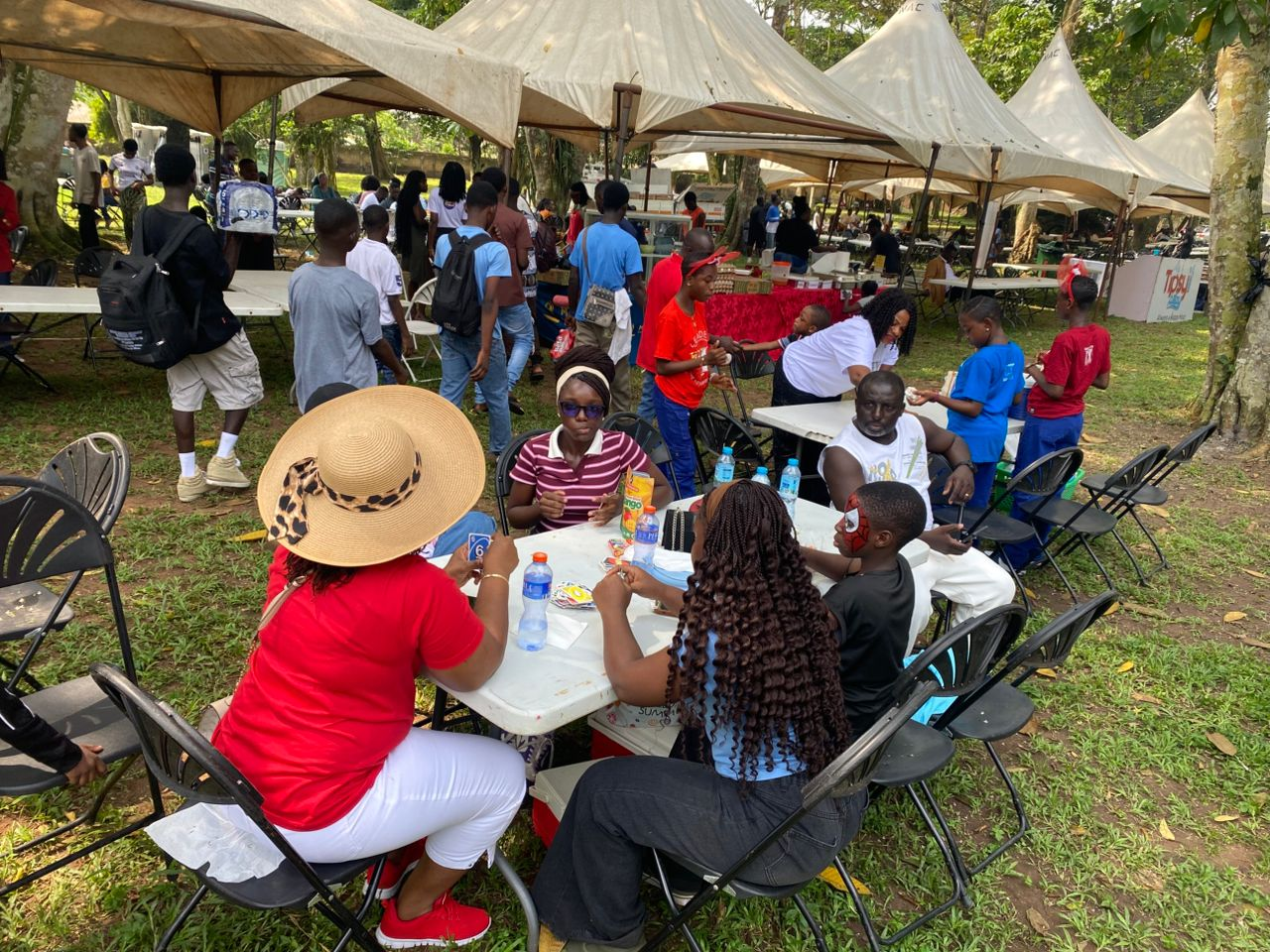
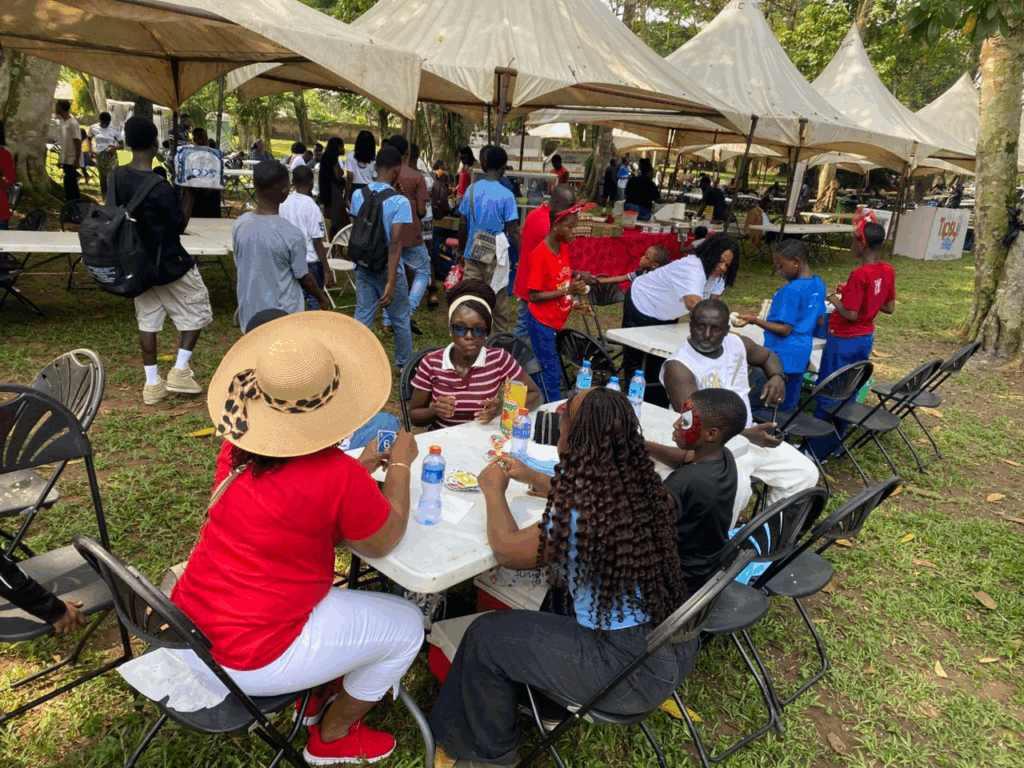
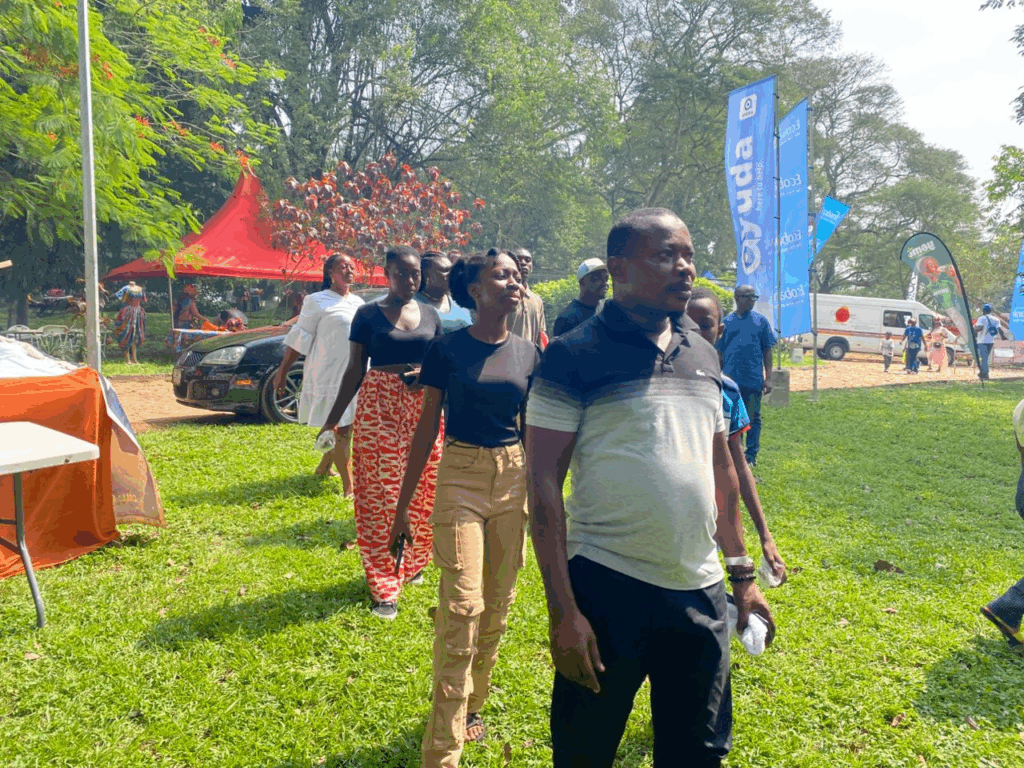
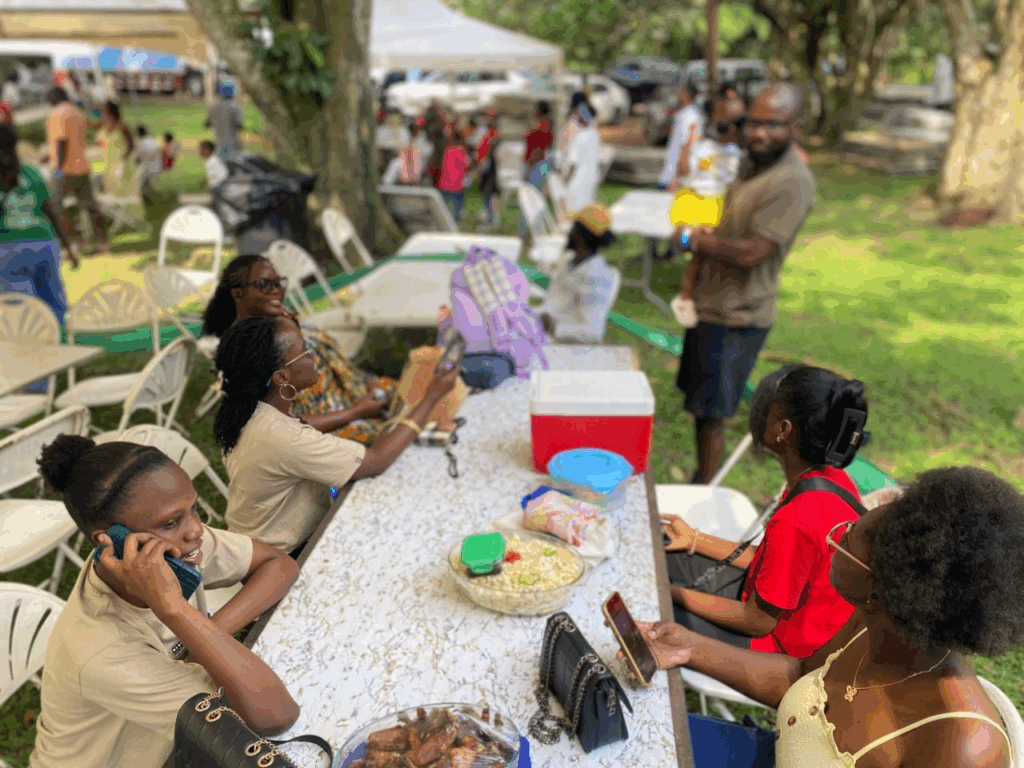
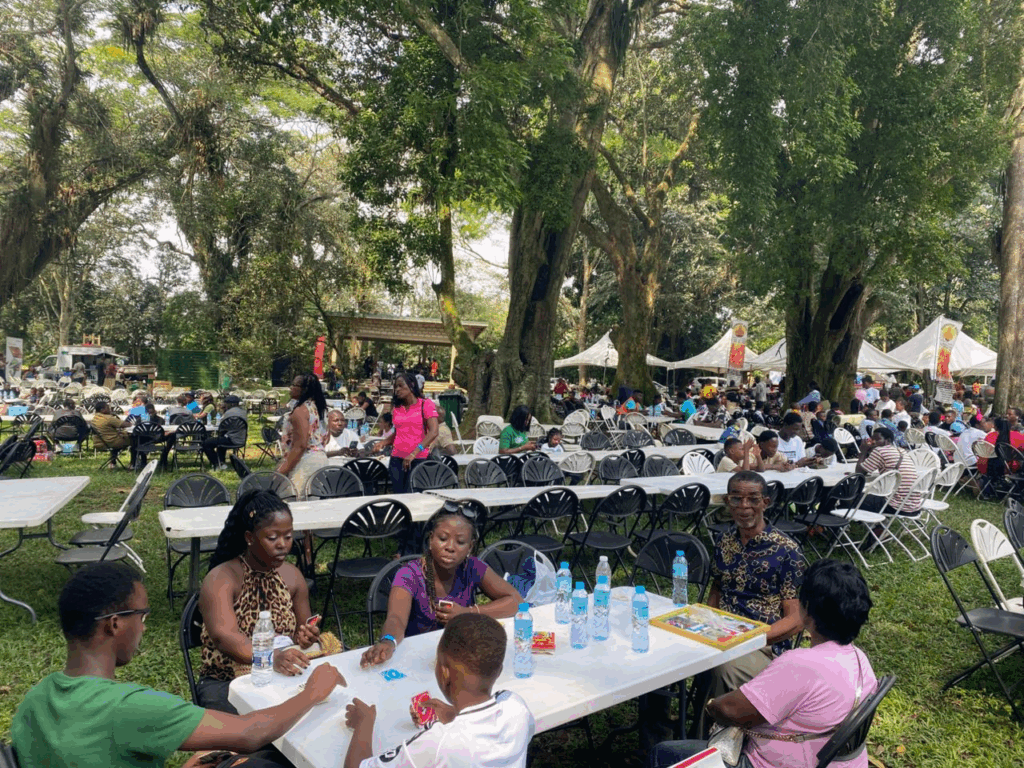
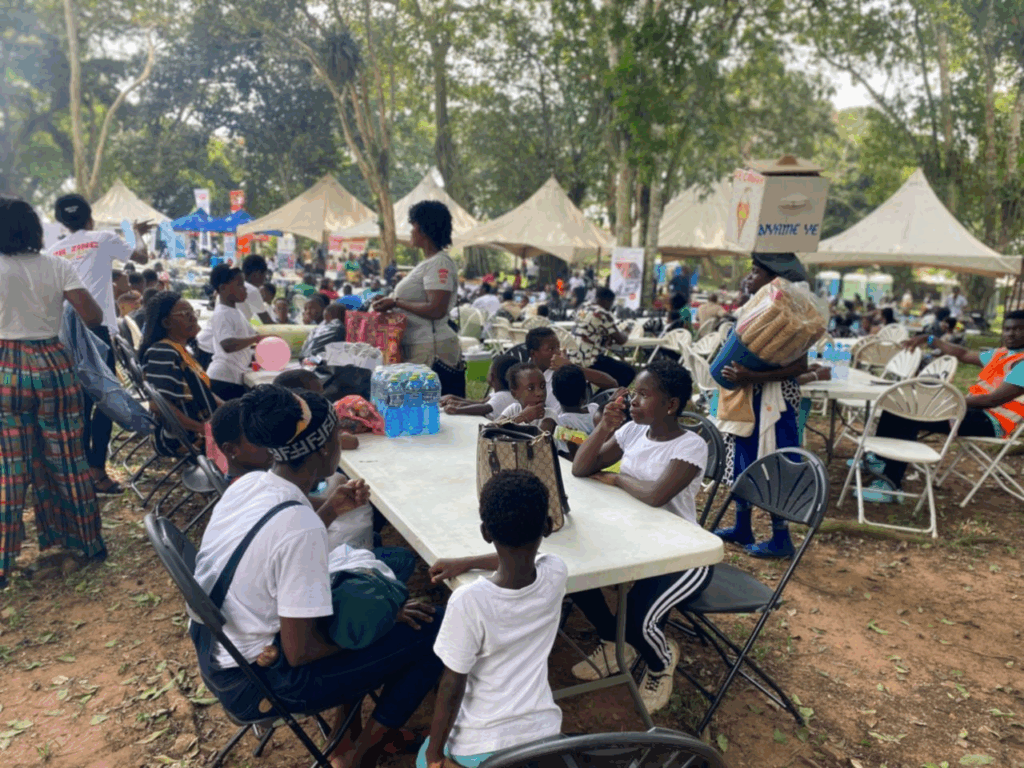
The highly anticipated Joy FM Party in the Park 2025 is officially underway, with a steady stream of patrons trooping into the Aburi Botanical Gardens as excitement builds for what promises to be an unforgettable entertainment experience.
From the early hours, music lovers, families, and revellers have been arriving in large numbers, creating a vibrant and festive atmosphere.
The annual event, held every 26th of December, runs from morning into the late afternoon at the lush gardens just outside Accra.
The park is already alive with colour, energy, and sound as attendees soak in the ambience of the open-air event.
Setting the tone for the day is a live band performance the Shakers Royal Band, which is currently thrilling patrons with energetic renditions of popular tunes and classic crowd favourites.
The live music has drawn cheers and applause, warming up the audience and heightening anticipation for the lineup of activities and performances scheduled throughout the event.
Vendors are actively serving food, drinks, and merchandise, while groups of friends and families gather across the park to enjoy the music and socialise.
Security personnel and event organisers are also on hand to ensure smooth coordination and safety as the crowd continues to grow.
The Joy FM Party in the Park has become a staple on the entertainment calendar, celebrated for bringing people together through music, culture, and community engagement.
This year’s edition is expected to deliver even more excitement, with several performances and interactive segments lined up for patrons.
DISCLAIMER: The Views, Comments, Opinions, Contributions and Statements made by Readers and Contributors on this platform do not necessarily represent the views or policy of Multimedia Group Limited.
DISCLAIMER: The Views, Comments, Opinions, Contributions and Statements made by Readers and Contributors on this platform do not necessarily represent the views or policy of Multimedia Group Limited.
Dancehall artiste Stonebwoy has urged his fans to be proud of themselves after the 2025 BHIM Festival sold out the Accra Sports Stadium on December 24, marking a milestone achievement in Ghanaian entertainment.
In a post shared via social media on Thursday, Stonebwoy noted that his fans, though they are the silent majority, represent Ghana with excellence, discipline and honor, a representation he deems enviable. To him, they have earned bragging rights for selling out a paid concert at the forty thousand capacity venue.
The Gidigidi hitmaker, alongside dozens of fellow musicians, filled the Accra Sports Stadium and treated fans to a musical spectacle on Christmas Eve. BHIM Festival 2025 stood apart from the many shows scheduled for December, delivering what many described as a world class production.
DopeNation, D Cryme, Praye, LalixLola and many others electrified the audience with their performances. Stonebwoy later returned in all black, flanked by Incredible Zigi and the Afrozigi dance crew, delivering yet another outstanding set. The night’s major highlight was the surprise appearance of international artiste Mr P, formerly of P Square, who thrilled the crowd with his classic tunes.
The show’s organization, sound, lighting and performances were on point, leaving the audience craving more. As BHIM Festival marks its tenth year, the event has grown into one of Ghana’s most anticipated music events, celebrating African creativity, unity and global appeal.
The festival, originally scheduled for December 26, was rescheduled to December 24 with support from the Ghana Tourism Authority (GTA) as part of the December in GH celebrations, which promote Ghana as a premier destination for music, culture and tourism during the festive season. Janet Mensah, a representative of the Ghana Tourism Authority, said the date adjustment was made to enhance event coordination and ensure the best possible experience for both artists and fans.
Beyond the star power, the BHIM Festival stage also spotlighted emerging and young artistes, giving them opportunities to showcase their talent to a massive audience. This stays true to Stonebwoy’s longstanding commitment to growth, mentorship and empowerment within the music industry.
In his message to fans, Stonebwoy wrote that with the power invested in him as the President of BHIMNATION, fans should go out there and be extremely proud of themselves. He noted they are the silent majority and should celebrate their wins and give glory to the Most High.
No amount of agenda can deflect your consistent forcefulness, he said. The way you represent our great nation, Ghana, with excellence, discipline and honor is enviable. You’ve secured every bragging right. Go on, just be chilling and cooling into the coming New Year. Merry Christmas. I love you dearly.
The sold out concert at Accra Sports Stadium represents a significant achievement in Ghana’s entertainment industry, demonstrating strong support for locally produced music events and the growing commercial viability of paid concerts in the country.
Despite improved timing compared to other shows, some attendees felt the event overpromised and underdelivered in parts. VIP and VVIP ticket holders also complained about limited access to facilities such as washrooms. Still, the overall consensus remained positive, with many praising the production quality and artist performances.
The BHIM Festival has grown from its inception to become a signature event on Ghana’s entertainment calendar, attracting both local and international acts. The 2025 edition featured performances from Fantan Mojah, Efya Nokturnal, Epixode, Fameye, Kwabena Kwabena, Cina Soul, Ras Kuuku, Eno Barony and Lyrical Joe, among others.
Stonebwoy used the opportunity to wish his fans well during the yuletide, urging them to chill into the coming year with the hashtag BaakoBiaye1000, which translates to one of a kind or unique.
Boxing Day is an extension of Christmas Day for leisure, gift giving and relaxation
December 26 is widely known as Boxing Day, a time when friends, families, and loved ones exchange, give, and receive gifts.
Given current economic and global trends, you don’t necessarily need to break the bank to find the perfect gift.
Although Christmas is a season of joy, it is important to remain mindful of the coming year and its financial obligations.
In this era of DIY (Do It Yourself), many people are becoming more innovative, turning to budget-friendly options amid rising living costs and tighter household budgets.
Here’s a curated list of tips for budget gifting this Christmas:
Christmas on a Budget: 10 affordable gift ideas to consider this Christmas
1. Plan and set a budget first
It’s hard to stick to a budget if you haven’t created one. Write down all the occasions that will require you to buy a gift. Then decide how much you want to spend overall and stick to those limits. By knowing your spending limits beforehand, you can stretch your budget and still give great gifts without feeling like you’ve overspent.
2. Research gift options and prices
Once you’ve set a realistic gift budget, do some research. Look for sales and discounts, as many stores offer holiday or seasonal deals. Take advantage of these sales to make your gift budget go further.
3. Prioritise your gift list
When creating a gift budget, list all the people you need to buy gifts for and rank them in order of importance. This will help you allocate your budget more effectively. Focus first on the most important people in your life, such as close family members and friends.
4. Consider shared gifts
Sometimes your gift budget can feel limiting. Shared gifting is a smart solution, go in with a friend or sibling on a gift. This way, you can afford a more expensive or special item that the recipient would really appreciate or may not buy for themselves.
5. Opt for services as gifts
Think about acts of kindness or skills you can offer that someone would value. You could help clean a family member’s home, babysit their children, or offer lessons if you have a special talent. For example, if you play the piano, you could give piano lessons as a thoughtful gift.
With these five tips, you can protect your finances while ensuring that the gifts you choose will be cherished by your loved ones.
SP/MA
All you need to know about Ghana’s new vehicle number plates | BizTech:
Manchester United forward Amad Diallo’s composed strike gave holders Ivory Coast victory over Mozambique in their 2025 Africa Cup of Nations Group F opener in Marrakech.
The Elephants, aiming to become the first defending champions since Egypt in 2010 to retain the title, squandered a succession of first-half chances against opponents ranked 60 places below them at 102nd in Fifa’s rankings.
Amad provided relief for Emerse Fae’s side four minutes after the restart, capitalising on static defending to meet Franck Kessie’s knockdown with a cool low finish that arrowed between Sunderland defender Reinildo’s legs on its way in.
Mozambique goalkeeper Ernan was busy before the break, acrobatically tipping Yan Diomande’s miscued shot from Guela Doue’s delivery over the crossbar and denying Kessie when the midfielder sent a close-range header straight at him.
Ghislain Konan should have opened the scoring when Amad tricked his way inside the box and teed the left-back up in space in front of goal, only to flash a shot comfortably wide.
Ivory Coast came close to a second with added time looming, Kessie breaking clear but dithering before substitute Vakoun Bayo collected the loose ball and was denied by Ernan and midfielder Guima’s athletic clearance off the line.
Both sides play the second of their three group stage games on Sunday, when Mozambique meet Gabon in Agadir (12:30 GMT) and Ivory Coast meet five-time champions Cameroon in Marrakech (20:00).
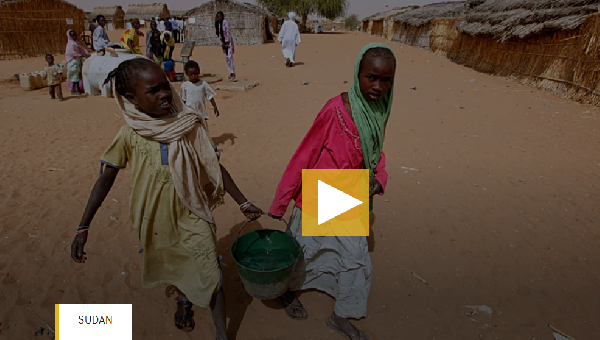
Sudanese refugee girls carry water supplies near a polling station in the refugee camp of Zamzam
In a high-stakes meeting, Turkish President Recep Tayyip Erdogan discussed the escalating war in Sudan with President Abdel Fattah al-Burhan.
The violence has led to one of the worst humanitarian crises in the world with some 13 million people displaced.
Erdogan highlighted the severe impact, especially in regions like El-Fasher, where human rights violations are rampant. Since the war began in April 2023, the conflict has devastated communities, and the need for action has never been more urgent.
Turkey is stepping up, offering crucial humanitarian aid and strengthening cooperation in key sectors, including trade, defense, and agriculture. Erdogan stressed that peace, stability, and Sudan’s territorial integrity must be preserved.
The Volta Regional House of Chiefs (VRHC) has renewed its call on the Ghana Immigration Service (GIS) to remove the inland barriers at Sogakope and Asikuma.
“Those barriers are not serving the national interest; they are only there, demeaning and harassing travelers for no reason,” the President of the house, Togbe Tepre Hodo IV said at the last meeting of the house for the year 2025, at Ho, on Tuesday (Dec 23, 2025).
He said Sogakope and Asikuma were not entry or exit points for travelers, and there were no secessionist threats from the Western Togoland Group.
For that matter, Togbe Tepre, Hodo who is Paramount Chief of Anfoega, said it was high time the two immigration posts were removed to help restore the dignity of travelers.
He asked that the Volta Regional Minister should arrange a meeting between the house and the Minister of the Interior for a thorough discussion on the issue.
“We do not see inland immigration barriers in other parts of the country, so we need to know why we have them in our area,” he added.
The Paramount Chief of Amugo-Vego, Togbui Tenge Dzokoto Gligui VII shared his personal experience at the meeting and narrated how he was handled by personnel of the GIS at the Sogakope barrier some time ago, while returning home from Accra, in the presence of his wife and children.
He said he was asked to produce his passport at the inland barrier, in a very intimidating tone, without any recognition of his status as a chief.
“It is most unfortunate that the Ghana Immigration Service personnel whose uniforms were bought with our taxes could disrespect and humiliate us to such an extent,” he said.
The Volta Regional Minister, James Gunu who was at the meeting assured that he would arrange the meeting between the house and the Minister of the Interior as soon as possible.
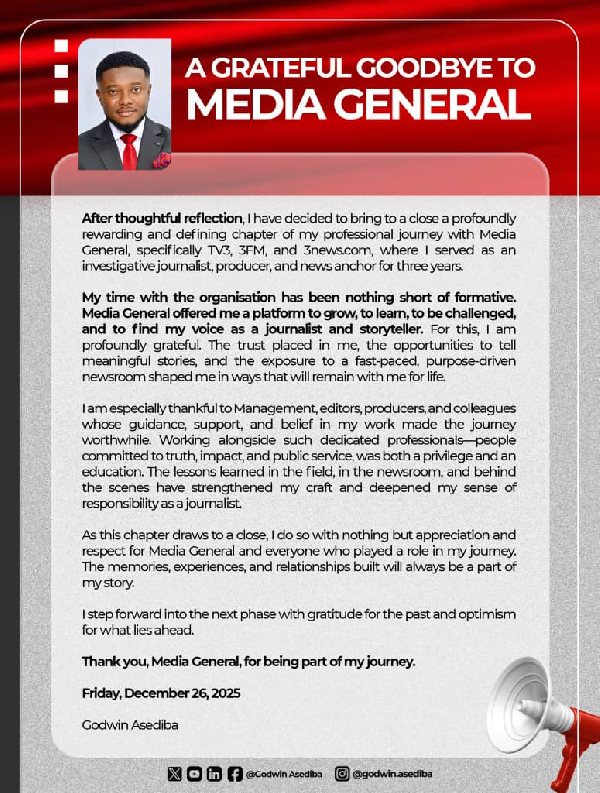
Godwin Asediba, an investigative journalist, producer and news anchor with Media General, has announced his departure from the media organisation after three years.
In a statement issued on Friday, December 26, 2025, he described his time with Media General, particularly TV3, 3FM and 3news.com, as a defining and formative chapter of his professional journey.
“After thoughtful reflection, I have decided to bring to a close a profoundly rewarding and defining chapter of my professional journey with Media General,” he said.
Asediba noted that the organisation provided him with a platform to grow professionally, sharpen his craft and find his voice as a journalist, describing the experience as one that would remain with him for life.
“Media General offered me a platform to grow, to learn, to be challenged, and to find my voice as a journalist and storyteller. For this, I am profoundly grateful,” he stated.
He expressed appreciation to management and colleagues across the newsroom, acknowledging their role in shaping his career and strengthening his commitment to public-interest journalism.
“I am especially thankful to management, editors, producers, and colleagues whose guidance, support, and belief in my work made the journey worthwhile,” Asediba said, adding that working alongside professionals committed to truth and impact was both a privilege and an education.
Reflecting on his experiences, he said the lessons learnt in the field and newsroom had deepened his sense of responsibility as a journalist and enhanced his storytelling skills.
Godwin Asediba named 2025 Journalist of the Year
“As this chapter draws to a close, I do so with nothing but appreciation and respect for Media General and everyone who played a role in my journey,” he said.
He indicated that he was stepping into the next phase of his career with optimism and gratitude for the path that had shaped him.
Godwin Asediba wins 2025 BBC Komla Dumor Award for impactful African storytelling
“I step forward into the next phase with gratitude for the past and optimism for what lies ahead,” the statement added.
See the full statement below:
JKB/EB
Christmas Festivities: Avenor traders, buyers speak on livestock sales
The incident happened midway through his performance
Nigerian singer Timaya suffered an awkward fall on stage while attempting to lift a plus-sized female fan during a live performance.
The incident happened on December 25, 2025, at the Gbaramatu Christmas Carnival in Delta State, Nigeria, while he was performing his hit song Ukwu.
Midway through the performance, the plus-sized female fan jumped onto the stage and leapt at the artiste, seemingly expecting him to carry her. Timaya lost his balance and fell backward, landing on his back with the woman falling on top of him.
The moment ignited loud reactions from the crowd, who screamed in shock as the singer quickly regained his footing. Timaya brushed off the incident and continued his performance.
‘Breaking off from drugs was a hell, it was a tough fight’ – Timaya recounts
Timaya is one of the most influential figures in Nigerian music. Over the years, he has carved out a distinctive career, rising from a voice for the marginalised to a consistent hitmaker.
At the peak of his dominance, he ruled the airwaves and proudly represented his home city, becoming one of the early artistes to place Port Harcourt on the musical map before the emergence of artistes like Burna Boy and Omah Lay.
With a career spanning over two decades, Timaya’s catalogue blends social commentary, personal reflection and crowd-moving anthems.
Timaya’s influence on Afrobeats is undeniable, and any conversation about Nigerian hits from the 2000s would be incomplete without his name.
Watch the video below:
Moment Timaya fell on stage while trying to lift a fan during his “UKWU” performance at the Gbaramatu Christmas Carnival in Delta State 😂❤️ pic.twitter.com/ww1YvV1ip4
Boxing Day is an extension of Christmas Day for leisure, gift giving and relaxation
December 26 is widely known as Boxing Day, a time when friends, families, and loved ones exchange, give, and receive gifts.
Given current economic and global trends, you don’t necessarily need to break the bank to find the perfect gift.
Although Christmas is a season of joy, it is important to remain mindful of the coming year and its financial obligations.
In this era of DIY (Do It Yourself), many people are becoming more innovative, turning to budget-friendly options amid rising living costs and tighter household budgets.
Here’s a curated list of tips for budget gifting this Christmas:
Christmas on a Budget: 10 affordable gift ideas to consider this Christmas
1. Plan and set a budget first
It’s hard to stick to a budget if you haven’t created one. Write down all the occasions that will require you to buy a gift. Then decide how much you want to spend overall and stick to those limits. By knowing your spending limits beforehand, you can stretch your budget and still give great gifts without feeling like you’ve overspent.
2. Research gift options and prices
Once you’ve set a realistic gift budget, do some research. Look for sales and discounts, as many stores offer holiday or seasonal deals. Take advantage of these sales to make your gift budget go further.
3. Prioritise your gift list
When creating a gift budget, list all the people you need to buy gifts for and rank them in order of importance. This will help you allocate your budget more effectively. Focus first on the most important people in your life, such as close family members and friends.
4. Consider shared gifts
Sometimes your gift budget can feel limiting. Shared gifting is a smart solution, go in with a friend or sibling on a gift. This way, you can afford a more expensive or special item that the recipient would really appreciate or may not buy for themselves.
5. Opt for services as gifts
Think about acts of kindness or skills you can offer that someone would value. You could help clean a family member’s home, babysit their children, or offer lessons if you have a special talent. For example, if you play the piano, you could give piano lessons as a thoughtful gift.
With these five tips, you can protect your finances while ensuring that the gifts you choose will be cherished by your loved ones.
SP/MA
All you need to know about Ghana’s new vehicle number plates | BizTech:
The Rubber Farmers Association of Ghana (RUFAG) has rejected claims that exports of raw rubber are unchecked and harmful to Ghana’s industrialisation agenda.
In a statement copied to the Ghana News Agency, the Association said calls for a complete ban on such exports were false and inimical to the livelihoods of farmers.
It said recent pronouncements by Ghana Rubber Estates Limited (GREL), the Rubber Processors Association of Ghana (RUPAG), the Western Regional House of Chiefs and the Ranking Member of Parliament’s Trade and Industry Committee, Mr Michael Okyere Baafi, did not reflect the realities of the industry.
The Association said allegations that raw rubber exports were “unchecked” and responsible for annual losses of up to US$100 million lacked credible evidence.
It explained that exports of unprocessed rubber were carried out under a regulated regime approved by Government and supervised by the Tree Crops Development Authority (TCDA), Customs Division of the Ghana Revenue Authority, the Ghana Ports and Harbours Authority and other security agencies.
The association noted that a TCDA directive issued on May 2, 2025, required all exporters of unprocessed rubber, cashew and shea to be registered, licensed and issued permits before export, stressing that the directive was being strictly enforced under Act 1010 and the Tree Crops Regulations, 2023 (L.I. 2471).
“The narrative of unchecked exports is therefore entirely false,” the Association stated.
It argued that the push by processors for an export ban was aimed at monopolising the market and suppressing competition, leading to low farm‑gate prices.
The Association said while processing companies employed fewer than 1,000 workers combined, the farming and trading ecosystem sustained over 300,000 tappers, 200,000 carriers and loaders, 150,000 farm maintenance workers, tens of thousands of transport operators and more than two million dependents.
RUFAG said any policy that reduced competition would worsen rural poverty, unemployment and social instability in rubber‑growing communities.
It questioned claims that raw rubber exports deprived Government of revenue, noting that exporters complied with statutory levies payable to the TCDA, while some processors were allegedly in default.
The Association said Ghana lacked advanced rubber processing factories, explaining that most existing plants converted cup lumps into Technically Specified Rubber (TSR), which was still exported as a primary commodity.
It said that after more than five decades of operation, major processors had not transitioned into the manufacture of finished products such as tyres, gloves, or medical supplies.
RUFAG rejected claims that processors were unable to operate at full capacity due to raw material shortages, attributing the situation to low prices offered to farmers and labour shortages on processor‑owned plantations.
It cited payment delays by some processors, sometimes lasting weeks or months, contrasting this with prompt payments and better prices offered by exporters.
On legal matters, RUFAG said neither Act 1010 nor L.I. 2471 prohibited the export of raw rubber but empowered the TCDA to regulate exports through a permit system to ensure traceability and market balance.
The Association reiterated that it was not opposed to rubber processing but advocated fair competition, lawful regulation and inclusive growth that placed farmers at the centre of the industry.
It appealed to Government and the public to resist calls driven by narrow interests and pledged readiness to engage transparently with any committee or investigative body in the national interest.
“The future of Ghana’s rubber industry depends on fairness, transparency and shared prosperity, not monopoly control,” the statement said.
All you need to know about Ghana’s new vehicle number plates |BizTech:
Professor H. Kwasi Prempeh has clarified that proposals to extend Ghana’s presidential term from four years to five would not apply to President John Mahama if adopted, explaining that constitutional amendments cannot retroactively alter the conditions under which a sitting president was elected. The chairman of the Constitution Review Committee said Mahama was elected under the existing framework stipulating a four year term, making it legally impossible to change his current tenure even if Parliament and voters approve the proposed extension.
Speaking in an interview with JoyNews on December 25, 2025, two days after presenting the committee’s report to President Mahama, Professor Prempeh emphasized the principle underlying this position. He said that in an earlier draft of the committee’s report, they had explicitly stated the five year term would take effect only after Mahama’s current tenure ends. The clarification aims to address speculation that the proposal might be designed to benefit the incumbent president or any specific political figure.
The Constitution Review Committee presented its final report at the seat of government in Accra on December 22, 2025, after 11 months of deliberations that included visits to all 10 regions and consultations with academics, trade unions, former presidents and citizens. Among numerous recommendations touching on governance structure, state enterprises and the Council of State, the proposed extension of presidential tenure emerged as one of the most consequential and publicly debated proposals.
Professor Prempeh explained that the committee received strong feedback from individuals who had worked closely with the 1992 Constitution, including some who had occupied the presidency. These eminent persons argued that four years proved insufficient to assemble a competent government and govern effectively. The committee weighed this input against public skepticism, with some citizens arguing that if four years isn’t enough, the real problem lies in governmental inefficiency rather than inadequate time.
Comparative evidence played a decisive role in the committee’s thinking. Professor Prempeh noted that Ghana now belongs to a dwindling group of countries maintaining four year presidential terms, particularly among new democracies in Africa. The global norm in presidential systems has shifted from four to five years, with most African nations following this pattern. In West Africa specifically, Ghana and Nigeria represent outliers with their four year cycles, while Benin and Liberia operate six year terms, and most others have adopted five year presidencies.
The committee identified serious management and timing problems under the current system. New presidents require approximately six months to settle into office, a period consumed by appointing cabinet members, convening the Council of State, conducting consultations and completing other administrative requirements. At the other end of their term, presidents spend nearly a year campaigning for re election, leaving a narrow window of perhaps 30 months for actual policy implementation and governance.
To address these constraints, the committee proposed regulating campaign seasons to establish definite periods before which electioneering cannot occur. Professor Prempeh referenced Senegal’s model where strict campaign timing prevents the continuous political activities that currently distract from governance in Ghana. Combined with the five year term, these reforms aim to create an environment where governments receive adequate time to implement policies without constant campaign pressure.
Professor Prempeh rejected the notion that extending the term makes life easier for presidents. He argued the opposite, describing the five year system as tougher on incumbents and more demanding. Under the current four year arrangement, Ghana has developed what he characterized as a tradition where virtually every president receives eight years, with voters accepting arguments that four years provided insufficient time to complete work. This pattern has created an unhealthy expectation of automatic second terms regardless of performance.
A five year term changes that calculation fundamentally. Professor Prempeh said that if a president hasn’t performed well in five years, Ghanaians are unlikely to entertain the idea of granting additional time. The longer initial term removes the excuse of inadequate time while raising voter expectations for visible results. According to the committee’s analysis, this shift could disrupt the eight year tradition, potentially leading to more presidents serving only five years rather than the current near automatic eight.
The professor addressed concerns that multiplying five by two equals 10, suggesting the proposal simply extends presidential rule. He dismissed this arithmetic as missing the political reality, explaining that earning a second five year term will prove far more difficult than securing re election under the four year system. The 10 year total becomes harder to achieve because voters judge performance over a longer initial period with higher standards.
President Mahama received the report and indicated it would be published soon, though he provided no specific date. He said he doesn’t want the document kept like a nuclear secret, signaling transparency about the committee’s recommendations even as the actual reform process begins. The president acknowledged that some proposals are far reaching but necessary to strengthen Ghana’s democratic order, particularly given strains on constitutional governance elsewhere in the sub region.
Article 66(2) of Ghana’s 1992 Constitution strictly limits the presidency to a maximum of two four year terms. The Constitution Review Committee deliberately avoided reopening debates about this provision, finding no public demand or political appetite for a third term. Professor Prempeh said the committee looked extensively for arguments supporting additional terms but concluded that even President Mahama opposes such changes. Rather than addressing term limits, they focused on improving governance efficiency within existing constraints.
The committee’s broader recommendations extend beyond presidential tenure. They propose ending what they describe as the hybrid relationship between executive and legislature, favoring clearer separation between these arms of government. Changes targeting the public sector aim to reduce partisan influence, including placing state owned enterprises under constitutional oversight through a body similar to the State Interests and Governance Authority. Professor Prempeh explained that the economic weight and systemic risks of such enterprises justify closer constitutional regulation to protect them from over politicization.
The Council of State would receive expanded authority under the proposals, moving closer to its original 1969 conception as a co guarantor in presidential appointments. These structural changes complement the five year term by creating institutional checks that prevent concentration of power while giving governments adequate time to implement policy without excessive interference or the constant distraction of electoral politics.
Implementation of any constitutional amendments requires a complex process involving parliamentary approval, national referendum and broad political consensus. The 1992 Constitution cannot be amended easily, requiring two thirds parliamentary support and voter approval in a referendum where participation must exceed 40 percent of registered voters. This high threshold ensures that fundamental changes reflect genuine national consensus rather than partisan advantage.
Political reactions to the five year proposal have varied. Some commentators, including lawyer Martin Kpebu, have publicly rejected the extension, arguing it could create opportunities for abuse or entrench poor performers for longer periods. Supporters counter that comparative evidence and governance efficiency concerns justify the change, particularly given how much effective governing time presidents lose under the current arrangement.
The timing of these proposals carries significance beyond their technical merits. Ghana faces substantial governance challenges including economic recovery following International Monetary Fund (IMF) intervention, debt restructuring, security concerns in northern regions and broader questions about institutional effectiveness. Constitutional reforms touching on term lengths, separation of powers and state enterprise oversight speak directly to these challenges by attempting to create structures that promote competent, accountable governance regardless of which party holds power.
Whether Parliament and voters ultimately embrace the five year term remains uncertain. The proposal requires navigating political calculations, public opinion and competing visions of optimal governance structures. Opposition parties must weigh whether supporting an extension initiated under National Democratic Congress (NDC) government serves their long term interests, while the ruling party must demonstrate the proposal advances national interests rather than partisan advantage.
Professor Prempeh’s clarification that the change won’t apply to President Mahama attempts to remove one potential objection. By making clear the sitting president receives no personal benefit, the committee signals that the proposal flows from principle rather than political convenience. Whether this reassures skeptics depends partly on broader trust in the constitutional review process and confidence that reforms aim at institutional improvement rather than partisan engineering.
The debate highlights fundamental tensions in constitutional design. Term lengths involve tradeoffs between giving governments adequate time to implement policy and maintaining regular accountability through frequent elections. Four years privileges frequent democratic refreshment but potentially sacrifices policy continuity and effective implementation. Five years grants more governing time but extends the period before voters can render judgment on performance.
International experience offers no definitive answer. Countries have adopted various presidential term lengths based on their specific histories, political cultures and governance challenges. What works effectively in one context may prove problematic in another. Ghana’s task involves determining which approach best serves its democratic development at this particular moment, considering both comparative evidence and distinctive national circumstances.
The Constitution Review Committee spent nearly a year gathering input, analyzing evidence and formulating recommendations. Professor Prempeh presented their work as the product of inclusive, structured engagement rather than elite imposition. Whether Ghanaians perceive the proposals this way will significantly influence their ultimate fate. Constitutional amendments require not just technical soundness but political legitimacy flowing from genuine consultation and transparent deliberation.
As Ghana begins processing these recommendations, attention will focus on several questions. Does extending presidential terms genuinely improve governance or simply entrench power? Will voters hold five year presidents to higher standards or treat extended terms as entitlements? Can campaign regulations actually limit electioneering to defined periods? Will structural reforms reduce partisan influence over state institutions or merely reshuffle existing power arrangements?
For now, Professor Prempeh has laid out the committee’s vision for constitutional reform centered on governance efficiency, institutional integrity and democratic accountability. The five year term stands as perhaps the most visible element of a broader reform package that touches multiple aspects of Ghana’s constitutional order. Whether this vision becomes reality depends on the complex political process ahead, where technical arguments, partisan calculations and popular sentiment all play roles.
The clarification that President Mahama would remain unaffected by the five year term if adopted removes one line of criticism but leaves substantive debates about the proposal’s merits intact. Ghana faces choices about fundamental governance structures with implications extending far beyond any single presidency. How these choices are made and what they ultimately produce will shape the country’s democratic trajectory for decades to come.
A senior technical advisor at Ghana’s Finance Ministry has defended the International Monetary Fund’s (IMF) proposed three month extension of the country’s Extended Credit Facility (ECF) programme, characterizing such adjustments as routine practice in fund supported arrangements worldwide. Dr. Theo Acheampong said the extension carries no negative implications for Ghana’s economic recovery trajectory or the government’s reform commitments.
The IMF disclosed the proposed extension in its staff report following completion of the fifth review of Ghana’s three billion dollar, 39 month ECF arrangement approved in May 2023. The extension would push the programme’s conclusion from May 2026 to August 2026, providing additional time to implement reforms underpinning the sixth and final review. According to the fund, the adjustment reflects the complexity of structural reforms rather than programme failure or performance concerns.
Dr. Acheampong emphasized that minor extensions occur frequently across IMF programmes globally when countries need additional time to complete challenging structural reforms while maintaining satisfactory performance on quantitative targets. He said Ghana’s case fits this pattern, with the government meeting all end June 2025 performance criteria and indicative targets despite facing significant policy slippages in late 2024.
The fifth review assessment praised Ghana’s corrective actions following pre election fiscal deterioration. The IMF Executive Board noted that growth through September 2025 exceeded expectations, driven by strong services and agriculture sectors. Inflation fell within the Bank of Ghana’s target range, the external sector strengthened on robust gold and cocoa exports, and reserve accumulation surpassed ECF targets. The cedi appreciated against major currencies, and Ghana’s debt trajectory improved significantly.
Completion of the fifth review triggered immediate disbursement of approximately 385 million dollars, bringing Ghana’s total disbursements under the arrangement to roughly 2.8 billion dollars. The fund described Ghana’s performance as generally satisfactory, acknowledging that authorities showed strong programme ownership by decisively implementing ambitious corrective actions after 2024 policy slippages.
The extension addresses structural reform delays rather than quantitative performance failures. Out of eleven structural benchmarks for the fifth review, four were met on time, two were implemented with delays, one was completed as a prior action, one is expected in December 2025, and three were missed. The missed benchmarks included merging certain statutory funds with their line ministries, though authorities adopted an alternative approach to achieve the programme’s objective of reforming earmarked funds.
Ghana’s 2024 policy slippages emerged from pre election fiscal pressures that led to large accumulation of payables. Preliminary fiscal data showed the primary balance posted a deficit of approximately 3.25 percent of gross domestic product (GDP) compared to a targeted surplus of 0.5 percent. Inflation exceeded programme targets during that period, and several reforms across fiscal, financial and energy sectors experienced delays.
The National Democratic Congress (NDC) government led by President John Mahama, which took office following December 2024 elections, responded with strong corrective measures. These included auditing 2024 payables, cleansing the taxpayer registry and ledger data, submitting the 2026 budget to Parliament aligned with programme objectives, and implementing a strategy for state owned banks that had been delayed since April 2024.
The 2025 budget enacted by the new administration targets a 1.5 percent of GDP primary surplus, representing a significant fiscal adjustment from the 2024 deficit. The government achieved this through additional revenue mobilization and expenditure rationalization while protecting vulnerable populations from adjustment impacts. Several public financial management reforms strengthened budget controls and ensured alignment of spending commitments to available resources.
Dr. Acheampong also addressed IMF commentary on Ghana’s Domestic Gold Purchase Programme (DGPP), saying the fund signaled overall support for retaining the stabilisation benefits while recommending operational reforms. The programme has generated controversy following claims of losses, though the Bank of Ghana dismissed these as speculative and premature pending completion of annual external audits.
The IMF staff report flagged financial risks associated with the DGPP but acknowledged its broader contribution to macroeconomic stability. The programme strengthened international reserves, supported currency stability, and enabled access to foreign exchange without increasing public debt. The operational role of GOLDBOD as an aggregator channeling gold inflows from small scale mining into formal markets received particular praise.
To address fiscal and operational concerns, the Bank of Ghana’s Board approved reforms to improve pricing and operational efficiency in the programme’s downstream segment. These reforms take effect January 2026, supported by allocations in the 2026 national budget to fully resource GOLDBOD. The measures aim to minimize losses and ensure long term macroeconomic and institutional sustainability.
Ghana’s international reserves have grown substantially under the programme. Provisional central bank data suggest reserves could exceed 13 billion dollars by end 2025, bolstering confidence in the economy. Gold reserves specifically surged nearly 39 percent over the past year, climbing from 25.97 tonnes in August 2024 to 36.02 tonnes by August 2025, valued at 3.17 billion dollars.
The cedi’s appreciation of more than 50 percent against major trading currencies since January 2025, trading at 11.85 to the US dollar by May, reflects both the DGPP impact and broader macroeconomic improvements. Dr. Acheampong previously warned that cedi gains could prove temporary without disciplined policy action, emphasizing structural economic reforms beyond reserve accumulation.
Despite generally positive performance, the IMF expressed concern about Ghana’s economic outlook. The fund said the macroeconomic outlook remains positive though subject to significant downside risks, mainly stemming from potential deterioration in the external environment, particularly commodity price volatility. Confidence effects arising from policy and reform slippages represent additional risk factors.
The programme extension occurs as Ghana works to complete its comprehensive debt restructuring. The government reached agreements with commercial eurobond holders and major bilateral partners including China, addressing approximately 13 billion dollars in external debt. The restructuring restored Ghana’s debt sustainability and allowed the country to regain market access after being shut out during the 2022 debt crisis.
Ghana’s debt trajectory has improved markedly under the IMF programme. The government enacted an enhanced fiscal responsibility framework limiting debt to GDP ratio to 45 percent and requiring minimum primary surpluses of 1.5 percent. These rules, enforced through constitutional amendments and legislation, aim to prevent future fiscal crises by institutionalizing discipline regardless of electoral cycles.
The Finance Ministry is establishing a Fiscal Council to provide independent oversight of budget processes and prevent future slippages. Dr. Acheampong explained that while the ministry works internally to achieve targets, an external institution ensures discipline and enhances credibility. The council, created under amended Public Financial Management Act 1136, should be fully operational as Ghana exits the IMF programme by mid 2026.
Abdul Karim Mohammed, coordinator of the Economic Governance Platform, welcomed the Fiscal Council as an independent oversight mechanism comparable to the Public Interest and Accountability Committee’s role in the extractive sector. He said several platform recommendations on debt sustainability are being implemented, including new commitment control measures to curb unauthorized borrowing by state institutions.
The three month extension provides breathing room to complete remaining structural reforms while maintaining momentum on fiscal consolidation. Key outstanding benchmarks include finalizing energy sector reforms, strengthening revenue administration, improving state owned enterprise management, and completing cocoa sector restructuring. These reforms address longstanding structural vulnerabilities that contributed to Ghana’s 2022 economic crisis.
Looking ahead, the government faces pressure to maintain reform momentum while managing political demands for increased spending. The 2026 budget submitted to Parliament aligns with programme objectives and the new fiscal responsibility framework while accommodating developmental and security needs. Balancing these competing priorities will test the administration’s commitment to fiscal discipline.
International investors are watching Ghana’s performance closely. Successful programme completion and establishment of credible fiscal institutions could restore confidence and lower borrowing costs when Ghana eventually returns to international capital markets. Conversely, backsliding on reforms or failure to institutionalize discipline would signal continued vulnerability and maintain risk premiums.
The IMF programme has provided crucial breathing space for Ghana to implement difficult but necessary reforms. The 3 billion dollar facility supported balance of payments, enabled debt restructuring, and restored macroeconomic stability after the 2022 crisis. Whether Ghana emerges from the programme with durable improvements to fiscal and economic management depends on implementing and maintaining institutional reforms beyond the programme period.
Dr. Acheampong’s comments reflect government efforts to manage public perception of the extension, emphasizing normalcy rather than difficulty. His technical explanation aims to prevent the extension from becoming politically weaponized or interpreted as programme failure. Whether this messaging succeeds depends partly on the government’s ability to complete remaining benchmarks and exit the programme on the revised timeline.
For now, Ghana’s immediate challenge involves implementing the sixth review’s outstanding structural benchmarks while preparing for programme exit. The three month extension provides additional time but also extends IMF oversight, delaying the moment when Ghana must demonstrate it can maintain discipline independently. That test will ultimately determine whether the programme achieved lasting transformation or simply postponed difficult choices.
Stadiums at the 2025 AFCON have been perfect even after heavy rains
As torrential rain swept across Morocco during the opening week of the 2025 Africa Cup of Nations, one thing refused to give way: the pitches.
While fans watched matches unfold without delay, a circulating video has revealed the stadiums’ drainage systems, offering a glimpse into the quiet engineering masterpiece beneath the grass.
Morocco, the host nation, is asserting itself more than ever as a home for African and international football.
Beyond the spectacle on the field, the tournament is underpinned by an ambitious infrastructure modernisation programme designed to meet the highest CAF and FIFA standards.
Antoine Semenyo chooses Lionel Messi over Ronaldo in GOAT debate
Days into the competition, global attention has shifted to the remarkable quality of the playing surfaces, which remained largely unaffected despite persistent heavy rainfall across the Kingdom.
At the heart of this success is SubAir pitch technology.
With no signs of waterlogging, no puddles, and uninterrupted play, the system ensured the ball kept rolling naturally throughout the games.
SubAir works by using pumps and blowers connected to underground drainage to control subsurface conditions, pushing fresh air into the soil, removing harmful gases, and extracting excess water up to 36 times faster than traditional gravity drainage.
“This technology ensures optimal playing conditions and the healthiest grass possible,” Bernhard Company, the British firm behind Morocco’s first SubAir installation, had promised months earlier and the results are now on full display.
Prince Moulay Abdellah Stadium also boasts Africa’s first hybrid grass pitch, combining natural grass with synthetic fibers for enhanced durability, drainage, and player safety.
Tunisia coach Sami Trabelsi summed it up best after his side’s win over Uganda: despite hours of heavy rain, the pitch was “excellent,” allowing his team to play their football.
Weeks of planning, a switch from Bermuda to Ryegrass, and state-of-the-art systems across all nine stadiums have ensured the pitches remain perfect even after torrential rainfall.
Watch the video below:
The technology that allows moroccan stadium pitches to withstand heavy rain 🏟️🇲🇦
A drainage system has been installed directly beneath the turf. 🤯
Central African President Faustin-Archange Touadera
In the Central African Republic, President Faustin-Archange Touadéra, in power since 2016, is seeking a third consecutive term in general elections taking place this Sunday.
At 68 years old, Touadéra faces six challengers. But Touadéra enters the contest as the clear favorite, helped by his strong grip on state institutions.
A victory would also reinforce Russia’s influence in the country. Moscow has signed multiple cooperation agreements with Bangui, providing security support in exchange for access to natural resources such as gold and diamonds.
The president has centered his campaign on improving security, pointing to peace deals signed this year with several armed groups. Others have been weakened by Russian Wagner mercenaries and Rwandan troops, deployed alongside UN peacekeepers at the government’s request.
The opposition, however, accuses Touadéra of clinging to power after a 2023 constitutional referendum removed presidential term limits. Critics say he has failed to lift the country’s 5.5 million people out of poverty, citing crumbling infrastructure and a struggling economy.
Presidential, legislative, municipal, and regional elections will be held simultaneously, with preliminary results expected on January 5.
Despite claims of stability, analysts warn the vote remains high-risk, as rebel groups remain active and insecurity persists, particularly in the east.
Observers stress that a credible vote will be crucial to preventing renewed violence.
The Ghana National Fire Service (GNFS) in the Tema Region has recorded a total of 536 fire outbreaks between January and November 2025, representing a reduction from the 616 cases reported during the same period in 2024.
Divisional Officer II (DO II) Ebenezer Yenzu, the Tema Regional Public Relations Officer of the GNFS, disclosed this in an interview with the Ghana News Agency (GNA) in Tema.
He said that out of the 536 incidents, 170 occurred in residential homes, while 115 were recorded in commercial premises, largely due to human activities.
DOII Yenzu urged the public to prioritise fire prevention measures, particularly during the Christmas festivities, when fire risks tend to increase.
He advised residents to observe safety measures while cooking, conduct regular electrical checks, keep flammable materials away from heat sources, and ensure the availability of functional fire safety equipment.
He cautioned against leaving cooking unattended, keeping curtains and towels near open flames, allowing grease to accumulate on cooking appliances, and leaving electrical appliances switched on when away from home or shops.
The Tema Fire PRO also warned against overloading electrical sockets, using faulty appliances, and neglecting regular inspections of electrical cords. He advised that matches and lighters be stored safely out of reach of children.
DOII Yenzu further urged residents to keep candles at least 12 inches away from flammable materials and to extinguish them before sleeping to prevent fire outbreaks. He stressed the importance of installing smoke alarms in kitchens, bedrooms, hallways, markets, and offices to ensure early detection of fire incidents.
He also encouraged households and businesses to acquire fire extinguishers, keep them accessible, and learn how to use them effectively.
DOII Yenzu reminded the public that the GNFS can be reached on emergency numbers 112 or 192 for prompt response to fire incidents.
Ghana is working to position the Czech Republic as a key partner for foreign investment and technology transfer into its emerging cannabis industry, as sector leaders prepare for an April 2026 trade mission expected to draw participants from across Europe and North America. The Chamber of Cannabis Industry Ghana is strengthening bilateral ties ahead of the event, which aims to connect Ghanaian producers with international capital and expertise.
Dr. Mark Darko, Chief Executive Officer of the Chamber of Cannabis Industry Ghana (Cannacham), told reporters his organization recently met with officials from the Czech Embassy in Accra to advance cooperation across the cannabis value chain. The discussions covered medicinal cannabis, industrial hemp, research, technology transfer, capacity building and investment opportunities. The April mission represents a critical moment for Ghana’s nascent cannabis sector to establish itself within global supply networks.
The Czech Republic offers several features that make it attractive as a partnership target. The country has operated a medical cannabis programme since 2013 and is implementing adult use legalization starting January 2026, allowing adults to grow up to three plants at home and possess specified quantities. Czech regulators also introduced the Psychomodulatory Substances Act in July 2025, creating a framework for low tetrahydrocannabinol (THC) cannabis products containing up to one percent THC, positioning the country as a regulatory innovator within the European Union.
Beyond its evolving legal framework, the Czech Republic has developed strong capabilities in agricultural technology, precision farming and pharmaceutical research. Dr. Darko emphasized these strengths align with Ghana’s ambitions to move beyond raw cultivation into value added processing. The chamber views Czech expertise in controlled environment agriculture, genetic optimization and quality standards as particularly valuable for helping Ghana meet international market requirements.
The trade mission scheduled for April will bring together Ghanaian private sector players, regulators and policymakers with cannabis firms from Canada, the United States, Germany, the Netherlands and other jurisdictions. Despite being hosted in Prague, Dr. Darko characterized it as having global reach. He described the event as essential networking infrastructure for Ghanaian companies seeking partnerships, investment capital and technical knowledge.
According to Dr. Darko, the chamber’s outreach to Czech industry groups pursues two objectives: attracting Czech capital and technology into Ghana’s cannabis sector, and exposing Ghanaian businesses to international best practices in cultivation, processing and medical research. He said building relationships with established European players would help Ghana avoid common pitfalls that have plagued cannabis markets elsewhere, particularly around quality control, regulatory compliance and sustainable business models.
Ghana legalized cannabis for medicinal and industrial purposes through amendments to the Narcotics Control Commission Act, opening pathways for licensed cultivation and processing. The legislation permits production of cannabis with THC levels not exceeding point three percent for industrial hemp applications, while separate provisions cover medical cannabis cultivation. The Narcotics Control Commission oversees licensing, though industry participants have pressed for clearer guidance on fees, operational requirements and export procedures.
Climate represents Ghana’s most significant structural advantage in global cannabis production. Dr. Darko pointed out that cannabis can grow year round in Ghana’s tropical conditions, contrasting sharply with European and North American markets where cultivation typically requires expensive indoor facilities with artificial lighting, climate control and substantial energy inputs. This natural advantage translates into lower production costs, a compelling factor for international entrepreneurs evaluating where to establish supply operations.
The chamber expects foreign direct investment to accelerate once regulatory clarity improves. Licensing procedures remain a work in progress, with potential investors seeking definitive information about application processes, compliance standards, inspection protocols and renewal requirements. Ghana’s parliament passed the enabling legislation, but secondary regulations governing day to day operations continue evolving. This uncertainty has slowed capital deployment despite strong interest from international firms.
Dr. Darko’s strategy centers on integrating Ghana within established global value chains rather than building an isolated domestic industry. The Czech partnership exemplifies this approach. By connecting with a European Union member state that maintains strong trade relationships across the continent, Ghana positions itself to access broader European markets once its products meet required standards. The Czech Republic’s experience navigating EU pharmaceutical and agricultural regulations makes it a valuable bridge.
Beyond the Czech engagement, Ghana’s Chamber of Cannabis Industry has pursued similar partnerships with Israel, hosting a forum in September that showcased precision agriculture technologies, smart irrigation systems and genetic optimization. These efforts reflect recognition that success in global cannabis markets demands more than favorable growing conditions. Product consistency, laboratory testing infrastructure, supply chain traceability and regulatory compliance separate viable export operations from those unable to penetrate sophisticated markets.
The global cannabis industry continues expanding rapidly, with medical markets leading growth. Allied Market Research valued the sector at twenty five point seven billion dollars in 2021 and projects it will reach one hundred forty eight point nine billion dollars by 2031. Europe is expected to emerge as the largest medical cannabis market globally, with projections suggesting it could reach forty five billion dollars within five years. Ghana aims to capture a meaningful share of this growth.
Dr. Darko has consistently emphasized cannabis as an economic transformation opportunity for Ghana, comparing it favorably to cocoa. Unlike cocoa, where Ghana exports raw beans and imports expensive processed chocolate, cannabis offers opportunities for full scale industrialization within the country. Processing facilities could create value added products including pharmaceuticals, cosmetics, textiles and construction materials, generating employment across multiple sectors while boosting gross domestic product.
The chamber estimates Ghana could generate approximately one billion dollars annually from cannabis if the industry develops according to projections. Dr. Darko calculated that farmers could earn at least ten thousand dollars per hectare of cannabis cultivation, substantially more than most traditional crops. These figures have energized stakeholders across Ghana’s agricultural sector, particularly in regions like Volta where favorable agro ecological conditions align with established farming expertise.
However, significant obstacles remain before Ghana realizes these ambitions. The country needs substantial investment in processing infrastructure, laboratory facilities capable of conducting required quality testing, and training programmes to build technical capacity among farmers and processors. The Chamber of Cannabis Industry has established a training centre to address skill gaps, partnering with private companies like Sky Bridge Pharmaceuticals to equip participants with cultivation and processing techniques meeting international standards.
Export market access presents another major challenge. Ghana must demonstrate its cannabis products meet stringent quality standards required by target markets. This means implementing good agricultural practices, good manufacturing practices, and establishing supply chain controls that satisfy importing country regulators. Building this infrastructure requires capital, technical expertise and time, all factors driving Ghana’s pursuit of international partnerships.
The April trade mission to Prague represents one component of a broader internationalization strategy. Ghana is simultaneously engaging multiple markets and seeking diverse partnerships to accelerate industry development. The Czech relationship offers particular value because it combines regulatory sophistication, technological capability and membership in the European Union. For Ghana’s cannabis sector, gaining credibility within European frameworks could unlock opportunities across the continent.
Beata Matusiková, Economic and Trade Counselor at the Embassy of the Czech Republic in Accra, confirmed strong potential for cooperation between Czech and Ghanaian stakeholders. She emphasized knowledge exchange, investment and technical collaboration as priority areas. The embassy’s willingness to facilitate business connections suggests Czech interest in African cannabis markets extends beyond rhetoric into practical engagement.
The timing appears favorable for both sides. The Czech Republic’s cannabis sector is expanding as new regulations take effect, creating opportunities for companies to diversify supply sources and establish positions in emerging markets. Ghana offers competitive production costs and favorable growing conditions, while seeking the technology, capital and market access that Czech partners could provide. These complementary needs form the basis for mutually beneficial collaboration.
As the April trade mission approaches, attention will focus on whether discussions translate into concrete deals. Past experience across Africa shows that trade missions often generate enthusiasm but struggle to produce sustained commercial relationships. Success will depend on whether participants move beyond general interest into specific commitments around investment, technology transfer and market development. Ghana’s cannabis sector needs tangible partnerships, not just diplomatic encouragement.
For now, Dr. Darko and the Chamber of Cannabis Industry Ghana continue building international networks and preparing the groundwork for Ghana’s entry into global cannabis supply chains. The Czech Republic represents one piece of a larger puzzle, but potentially an important piece given its regulatory leadership in Central Europe and connections throughout the European Union. Whether this partnership delivers the transformation Ghana seeks will become clearer in the months and years ahead.
Ebo Noah introduced Sarkodie on stage at 2025 Rapperholic
Self-acclaimed prophet Ebo Noah, who had predicted a devastating global flood on December 25, 2025, made a surprise appearance at Sarkodie’s Rapperholic concert held at the Grand Arena on the very day the prophecy was supposed to come to pass.
Ebo Noah has been one of the most talked-about “religious figures” in recent months after claiming he received divine revelations about an impending worldwide flood.
His warnings, which included plans to build modern-day “arks” to save believers, earned him a following but also attracted criticism from religious leaders, scientists and social media users who questioned the credibility of his claims.
Ebo Noah claims God allegedly postponed destruction of the earth by water
His unexpected presence at Rapperholic immediately caught the attention of the crowd. As he mounted the stage to introduce the headline act, Sarkodie, some audience members questioned him over the much-publicised prophecy.
Addressing the issue on the Rapperholic stage, Ebo Noah told the crowd the flood did not happen because he prayed against it.
According to him, God revealed a message of redemption, and the collective prayers offered changed the course of events. He added that since God had answered their prayers, it is only right for everyone to party.
His explanation was met with loud cheers from the packed crowd, as animated flood visuals played on the LED screens behind him.
Moments after Ebo Noah ended his introduction, Sarkodie’s DJ dropped the rapper’s hit song “Happy Day,” featuring Kuami Eugene.
Sarkodie then stormed the stage, rapping the iconic line, “It’s a beautiful brand-new day, ma sendi Nyankopɔn WhatsApp wɔe ready, obe reply Tuesday,” sending the crowd into a frenzy and turning what was once a doomsday prediction into a full-blown party moment at Rapperholic.
According to Koku Anyidoho, the CRC Chairman has no business engaging in public commentary
Former Deputy General Secretary of the National Democratic Congress (NDC), Samuel Koku Anyidoho, has criticised Professor Henry Kwasi Prempeh, Chairman of the Constitutional Review Committee (CRC), over his recent media engagements following the formal presentation of the committee’s report to President John Dramani Mahama.
According to Koku Anyidoho, the CRC Chairman has no business engaging in extensive public commentary after submitting the committee’s work.
He warned that Professor Prempeh risks undermining his own work if he continues making public pronouncements on the report.
Responding to a recent interview granted by the Professor, Koku Anyidoho wrote on his X page, “If you don’t keep quiet and continue talking ‘bla-bla-bla’, you will destroy your own work ooo HKP. You have finished your work; allow the Government’s White Paper to speak for itself. Prof. Fiadzo did not speak the way you are speaking when he chaired the first CRC. The more you speak, the more you will sound like a very partisan politician. Merry Christmas.”
He added in a subsequent post, “HKP; you are not the first person to have chaired a CRC. Prof Albert Fiadzo did it before you under President Atta Mills. You have finished your work; why all this media blitz as if what you have done is cast in iron? Why don’t you just keep quiet and wait for the Government White Paper? Chil.”
The comments come amid ongoing public exchanges involving Professor Prempeh and former Attorney General and Special Prosecutor, Martin Amidu.
It may be recalled that Professor Henry Kwasi Prempeh recently rebuked Martin Amidu, accusing him of having “lost his senses” following a critical opinion piece written by the former Attorney General.
My father triggered the Bawku conflict for political gain – Sekou Nkrumah’s painful reflection
In the opinion article dated May 5, 2025, Martin Amidu alleged that Professor Prempeh’s appointment by President John Dramani Mahama to chair the CRC was part of a covert anti-NDC agenda that could potentially jeopardise the party’s future.
Reacting to the article in a comment on a Facebook post by US-based Ghanaian lawyer and academic, Professor Kwaku Asare, Professor Prempeh dismissed Amidu’s claims as “a bunch of tosh,” adding, “Amidu has lost his marbles. I am now more convinced than ever.”
In his article, Martin Amidu accused Professor Prempeh who also serves as Executive Director of the Ghana Center for Democratic Development (CDD-Ghana) of pushing ideological reforms under the guise of constitutional review, particularly targeting the Council of State.
He warned that Professor Prempeh’s public utterances could result in reforms that may become “John Dramani Mahama’s Waterloo” in the 2028 general elections.
Amidu further criticised Professor Prempeh for what he described as selective activism, noting his silence on the role of the Council of State during the Akufo-Addo administration while appearing vocal under the current NDC government.
Contrary to calls for reforming the Council of State, Amidu argued, “The problem is not with the Constitution or the Council of State. The problem is with We the People, particularly the educated and political elite.”
However, Professor Kwaku Asare, in his Facebook post, criticised Amidu’s attack on Professor Prempeh, stating, “Amidu’s attack on Prof H betrays a fundamental misunderstanding of how a Constitutional Review Committee operates just as his tenure as Special Prosecutor revealed confusion about his own mandate.”
President John Dramani Mahama appointed Professor Henry Kwasi Prempeh to chair the eight-member Constitutional Review Committee on January 19, 2025. The committee was tasked with reviewing the 1992 Constitution and submitting recommendations for amendment within five months.
If you don’t keep quiet and continue talking “bla-bla-bla”, you will destroy your own work ooo HKP.
You have finished your work; allow the Government’s White Paper to speak for itself.
Prof Fiadzo did not speak the way you are speaking when he Chaired the First CRC.
HKP; you are NOT the first person to have Chaired a CRC. Prof Albert Fiadzo did it before you under President Atta-Mills. You have finished your work; why all this media blitz as if what you have done is cast in iron? Why don’t you just keep quiet and wait for the Government… pic.twitter.com/Fvu96ihAq1
Half of the joint venture will be owned by a group of investors
TikTok’s Chinese owner ByteDance has signed binding agreements with American and global investors to operate its business in the US, the video platform’s boss told employees on Thursday.
Half of the joint venture will be owned by a group of investors including Oracle, Silver Lake and the Emirati investment firm MGX, according to a memo sent by chief executive Shou Zi Chew.
The deal, which is set to close on 22 January, would end years of efforts by Washington to force ByteDance to sell its US operations over national security concerns.
It is in line with a deal unveiled in September, when US President Donald Trump delayed the enforcement of a law that would ban the app unless it was sold.
TikTok said in the memo that the deal would enable “over 170 million Americans to continue discovering a world of endless possibilities as part of a vital global community”.
Under the agreement, ByteDance will retain 19.9% of the business, while Oracle, Silver Lake and Abu Dhabi-based MGX will hold 15% each.
Another 30.1% will be held by affiliates of existing ByteDance investors, according to the memo.
The White House previously said that Oracle, which was co-founded by Trump supporter Larry Ellison, will license TikTok’s recommendation algorithm as part of the deal.
The deal comes after a series of delays.
In April 2024, during President Joe Biden’s administration, the US Congress passed a law to ban the app over national security concerns, unless it was sold.
The law was set to go into effect on 20 January 2025 but was pushed back multiple times by Trump while his administration worked out a deal to transfer ownership.
Trump said in September that he had spoken on the phone to China’s President Xi Jinping, who he said had given the deal the go-ahead.
The platform’s future remained unclear after the leaders met face-to-face in October.
The app’s fate was clouded by ongoing tensions between the two nations on other matters including trade.
“TikTok has become a bargaining chip in the wider US-China relationship,” said Alvin Graylin, a lecturer at the Massachusetts Institute of Technology.
“With recent softening tensions, Beijing’s sign-off on the structure and algorithm licensing now looks less like capitulation and more like calibrated de-escalation, letting both capitals claim a win at home.”
The White House referred the BBC to TikTok when contacted for comment.
Oracle and Silver Lake declined to comment. The BBC has contacted MGX for comment.
The deal drew critiques from Senate Democrat Ron Wyden of Oregon, who said it would not do “a thing to protect the privacy of American user”.
Under the terms, TikTok’s recommendation algorithm is set to be retrained on US user data to ensure feeds are free from external manipulation.
“It’s unclear that it will even put TikTok’s algorithm in safer hands,” said Wyden.
He opposed the 2024 law and was among US lawmakers who lobbied to extend the TikTok deadline in January in a bid to give Congress more time to mitigate threats from China.
Some users also expressed caution at the prospect of new investors.
Small business owner Tiffany Cianci, who has more than 300,000 followers and nearly four million likes on the platform, said she hopes the incoming investors will maintain the same user experience for entrepreneurs like her.
“I hope small business owners are protected,” she said.
TikTok has said that more than seven million small businesses market their products and services on TikTok in the US.
“I reserve judgement on whether or not we have saved the app for those small businesses,” Ms Cianci said.
She added that she chose TikTok for promotion because the platform offered profit-sharing on terms that are more favourable than what competitors like Meta offered.
Over the last year, Ms Cianci has been active in organising protests in Washington and on TikTok aimed at saving the app.
Government has reaffirmed its commitment to achieving near-universal access to electricity, pledging to raise the national access rate from the current 89.03 per cent to about 99.9 per cent by 2030.
Deputy Minister for Energy and Green Transition, Richard Gyan Mensah, said the goal is central to accelerating socio-economic development, particularly in underserved communities.
“Government remains resolute in achieving universal access to electricity, moving beyond the current 89.03 per cent access rate to about 99.9 per cent by 2030,” he said.
Mr Mensah was speaking at the commissioning of two electrification projects for Awurahae and Sapor in the Asuogyaman Constituency of the Eastern Region. The two communities located just a few kilometres from the Akosombo Hydropower Dam but have had to live without electricity for decades.
Project details and cost
Awurahae, a fishing and aquaculture community with an estimated population of 200–300, was connected through a 2.4-kilometre network extension from Kudi Junction. The project, initiated in 2024 and completed in 2025, had to contend with difficult terrain and landscape.
According to the Deputy Minister of Energy and Green Transition Richard Gyan Mensah, the works included the installation of a 100 kVA distribution transformer, a medium-voltage network using 120 sqmm aluminium conductors, and a low-voltage network using ABC cables.
“The total project cost stood at GH¢3.05 million, reflecting the distance, terrain and quality standards required to ensure reliable electricity supply,” Mr. Mensah further noted.
Mr Mensah also praised the leadership of the MP for Asuogyaman and Deputy Minister for Finance, Thomas Ampem Nyarko, describing his role as pivotal to the project’s success.
“I wish to acknowledge the exceptional leadership and advocacy of the MP for Asuogyaman, Thomas Ampem Nyarko, for his unwavering commitment to this project,” he said.
Biggest Christmas gift
Commissioning the projects on Christmas Day, December 25, 2025, Mr Ampem Nyarko described the electrification as the “biggest Christmas gift” to residents who had lived their entire lives without power.
“The best Christmas present that President Mahama is giving you today is connecting you to the national grid. This electricity will significantly improve your living conditions,” he said.
He explained that the project was self-funded, with support from the Volta River Authority (VRA), the Ministry of Energy and Green Transition, and volunteer labour from community members.
The MP recalled that before the 2024 elections, he pledged to connect the communities to the national grid if given the mandate, a promise he says has now been fulfilled barely a year into his third term in Parliament.
Roads, market and economic boost
Beyond electricity, Mr Ampem Nyarko assured residents that work is progressing on the Akosombo–Kudi–Kofe–Gyekiti road, which forms part of government’s “Big Push” infrastructure agenda.
“The contractor will remain on site until the final bitumen asphalt overlay is laid to make the road fully motorable,” he said.
He also announced plans to construct a 24-hour market in Awurahae to boost local economic activity, particularly fishing.
“Now you have light and your road is being worked on, the next step is to establish a thriving market. You can freeze your catch, attract buyers from other areas and stop selling your fish cheaply for fear of spoilage,” he added.
Teachers to get accommodation in Sapor
In Sapor, residents highlighted longstanding challenges, including high teacher attrition, largely due to the lack of electricity and basic amenities. Teachers posted to the community often leave within months, forcing schools to combine classes.
Mr Ampem Nyarko said the situation would change with the extension of electricity and the commencement of a six-unit teachers’ accommodation project.
“This community has suffered very high teacher attrition. One of the major reasons was the absence of electricity,” he said. “We have secured a contract for the construction of six-unit teachers’ bungalows so teachers can live here comfortably. We expect to complete the project in 2026.”
Joy and gratitude
Residents of both communities expressed excitement and relief at the long-awaited development.
Awurahae community leader Daniel Bisi told JoyNews the impact would be immediate. “This electrification will change everything here. Fishing and farming will improve, and people will no longer sell their catch cheaply,” he said.
The Assembly Member for the Adjinadornir–Sapor Electoral Area, Noah Tetteh, said the power supply would transform education outcomes.
“Now that we have light, teachers will stay, and students can study at night. This is good news for the entire community and for the future of our children,” he said.
Amid drumming, dancing and jubilation, chiefs and residents of Sapor and Awurahae expressed gratitude to the government, the Energy Ministry, the VRA and the MP for delivering electricity to communities that had waited for decades to be connected to the national grid.
Casablanca, Dec. 26, GNA – The General Confederation of Moroccan Enterprises (CGEM), a premier network of entrepreneurs, is urging the creation of localised and complementary value chains across Africa to accelerate industrialisation and reduce dependency on imports.
Ali Zerouali, Vice President of CGEM’s Africa Commission, said regional integration could drive investment and create jobs by leveraging each country’s competitive advantages.
“We don’t want to grow alone. We want to bring along our African brothers by building regional and continental value chains,” he told a group of African journalists.
He cited Ghana’s rubber industry as an example, saying it could supply raw materials for Morocco’s automotive sector, while Ghana imports Moroccan-made tyres and vehicles.
“Industrialisation is crucial, and we must use each country’s strengths to create a complementary system,” Zerouali added.
CGEM, which represents more than 90,000 companies, has hosted over 30 African delegations to deepen commercial ties and operates 19 bilateral business councils across the continent, including one in Ghana.
The group aims to foster investment and entrepreneurship, as Africa’s population is projected to reach 2.5 billion in 2050 by the United Nations.
Madam Marwa Tellal, Director of Communications and International Affairs at CGEM, said the demographic surge makes industrialisation urgent.
“We must harness our natural resources and agricultural potential to reduce reliance on imports,” she said.
Madam Tellal stated that they had been working closely with Ghana’s Employers’ Associations to foster a positive business environment, providing more possibilities, and supporting entrepreneurs.
Board member Karim Tazim stressed that a shared vision among African nations would help build a stronger business ecosystem and drive sustainable growth.
He also emphasised the importance of African countries supporting each other in development across various sectors of the economy.
The Industrial and Commercial Workers’ Union (ICU-Ghana) has renewed its commitment to protecting the interests of Ghanaian workers, particularly in ensuring fair and adequate pay as the country enters the New Year.
While recognising the government’s efforts, the Union stressed that more must be done to address the needs of ordinary workers and Ghanaians who have long endured economic difficulties.
This was contained in a statement signed by the General Secretary of ICU-Ghana, Morgan Ayawine.
The statement noted that while not all expectations for 2025 have been fully met, the progress achieved so far should serve as a springboard to drive workers into the New Year with higher productivity and improved remuneration.
It urged workers not to despair but rather to continue working harder to consolidate the government’s economic gains and ensure their sustainability for the benefit of all.
The Union commended the government for fully recapitalising the National Investment Bank Limited during the year under review, saying this has empowered the bank to deliver effectively on its mandate towards national economic growth.
ICU-Ghana also urged the government to address the financial challenges confronting COCOBOD. It called for the bailout of selected state-owned enterprises, including PBC Limited, Volta Star Textile Limited, Graphic Communications Group Limited, New Times Corporation, and the Pwalugu Tomatoes Factory. The Union further appealed for the completion of processes required for ALUWORKS to bounce back.
According to the statement, these measures would help create jobs for the growing unemployed youth and enable them to contribute meaningfully to the country’s socio-economic development.
Acknowledging the importance of collaboration in enhancing productivity for sustainable economic growth, ICU-Ghana urged employers to adhere to Collective Agreements and Ghana’s Labour Laws, which regulate industrial relations and promote harmony. It also warned anti-union employers who trample on workers’ labour rights to desist from such practices, noting that such actions carry serious consequences.
In wishing Ghanaian workers well during the festive season, ICU-Ghana urged them to remain dedicated and hardworking in order to promote sustainable economic growth and shared prosperity.
Following the International Monetary Fund’s (IMF) proposal to extend Ghana’s bailout programme by three months, economist and Technical Advisor at the Ministry of Finance, Dr. Theo Acheampong, has moved to calm public concerns about the recommendation.
The extension, which would shift the programme’s end date from May 16, 2026, to August 16, 2026, was disclosed in an IMF Staff Report released after the Fund’s Executive Board approved Ghana’s fifth programme review. Dr. Acheampong stressed that the recommendation is purely technical and routine rather than a sign of trouble.
In his analysis, the economist explained that the extension is linked to the sixth and final review of Ghana’s IMF programme scheduled for April 2026. Once successfully completed, Ghana is expected to receive its final tranche of approximately US$360 million, bringing total IMF disbursements since May 2023 to roughly US$3 billion.
Dr. Acheampong clarified that the data used to assess the final review runs through the end of December 2025, but some reforms under the programme require supporting data that arrives later than the cutoff date. This timing gap represents the main reason the IMF is proposing a short extension.
The IMF explained in its report that the extension through August 16, 2026, would help reach an understanding on the policies supporting completion of the sixth review while allowing sufficient time to prepare and circulate Board documents. The adjustment creates enough space for Ghana and the IMF to align fully on remaining policy actions and finalize reform related data.
“This three month technical extension is to complete the final review, as some data points accompanying some of the reforms, which were delayed, come in later,” Dr. Acheampong explained. “Such minor extensions are common in IMF programmes worldwide. There is nothing untoward about this.”
The economist emphasized that the extension does not mean Ghana has failed the programme or is seeking new support. Rather, it represents a routine administrative step aimed at completing the final review properly and avoiding a rushed ending that could undermine the process.
Ghana’s 36 month Extended Credit Facility (ECF) arrangement was approved by the IMF Executive Board in May 2023, providing access equivalent to 303.8 per cent of quota, amounting to Special Drawing Rights (SDR) 2.2419 billion, or about three billion US dollars. Following the successful completion of the fifth programme review, Ghana has received approximately US$2.8 billion.
The IMF assessed programme implementation as broadly satisfactory, noting that all end June 2025 performance criteria and indicative targets were met. Three prior actions were completed ahead of the fifth review, including the audit of 2024 payables, the cleanup of taxpayer registry and ledger data, and the submission of the 2026 budget to Parliament in line with programme objectives.
Beyond the extension, the IMF is also proposing adjustments to Ghana’s programme framework, including revisions to the Indicative Targets (ITs) and the Monetary Policy Consultation Clause (MPCC). The Fund noted that by the end of March 2026, the primary balance and non oil revenue indicative targets will be revised to reflect prevailing macroeconomic conditions while preserving the overall fiscal effort relative to gross domestic product.
Dr. Acheampong’s clarification comes amid concerns that the proposed extension could signal difficulties with the programme. His intervention aims to reassure the public that such extensions are standard practice in IMF programmes across the world, particularly at the final stage of an arrangement when countries need to tidy up outstanding issues.
The economist is allaying fears that the proposed three month extension represents a setback. Instead, he characterizes it as ensuring Ghana closes the programme smoothly, accesses its final funds, and locks in the reforms already undertaken.
The Ghanaian cedi has maintained value against the US dollar on Friday, December 26, 2025, recording an average buying rate of GHS11.17 and a selling rate of GHS11.77.
At forex bureaus, the cedi is trading at GHS12.10 for dollar purchases and GHS12.45 for dollar sales.
These figures are sourced from Cedirates.com, a reliable Ghanaian platform that tracks daily currency and fuel rates.
On the Bank of Ghana interbank market, the cedi is trading at GHS11.09 for buying and GHS11.11 for selling.
For the British pound, the average forex bureau rate stands at GHS14.97 for buying and GHS15.85 for selling, while the Bank of Ghana’s interbank rate for the pound is GHS15.00.
The Euro is also trading at GHS13.06 for buying and GHS13.83 for selling at forex bureaus, with an interbank rate of GHS13.08.
In the money transfer space, LemFi and Taptap Send are offering dollar rates of GHS11.31 and GHS11.30 respectively for remittances from the US or UK to Ghana.
For the British pound, LemFi and Taptap Send are offering GHS15.23 and GHS15.20 respectively for remittances from the US or UK.
For the Euro, Taptap Send and LemFi have quoted GHS13.25 and GHS13.26 respectively for remittances from the US or UK to Ghana.
For digital subscription payments such as Netflix, Spotify, and Apple Music made via Visa and Mastercard, the exchange rate stands at GHS11.77 and 11.93 respectively.
Frank Kumah, brother of the late former Deputy Minister of Finance, Dr John Ampontuah Kumah, has expressed shock and emotional discomfort over developments following his brother’s death, particularly the recent remarriage of his wife that he left behind.
Speaking in an interview, Kumah said that although the family does not oppose Apostle Lilian Owusu Kumah’s decision to remarry, he believes the move was rushed, considering the honour and sacrifices his late brother made for her and the family.
He lamented that he wishes there were life after death for his brother to return and witness what he described as “what is happening behind him.”
“When you make it seem like you only remember someone when you are enjoying the benefits, I feel some way about such people,” he said.
According to Frank Kumah, his late brother worked hard to build strong institutions around him, including his immediate family, children, political family and extended family. However, he expressed disappointment that, in his view, some of these institutions have moved on too quickly.
“If you look at the four families John Kumah built around him, two have already moved on so quickly. People were fasting and praying for her to get another man to marry, yet this is someone who struggled to build the church she worships in,” he stated.
He stressed that while no one is saying the widow’s marriage is wrong, respect should be accorded to the memory of the deceased.
“If someone gives you such honour, at least give him that respect, whether he is alive or dead. I even wrote on my Facebook page that if there is a second chance, my brother should come and see what is happening behind him after his death,” he added.
‘I will not allow pain to cage me’ – Widow of John Kumah speaks on her new husband
“I will always advise people to take care of themselves before anything else, even including their children,” he said.
Meanwhile, Apostle Lilian Owusu, former wife of the late Deputy Minister of Finance and Member of Parliament for Ejisu, has addressed public concerns surrounding her remarriage following intense debate on social media.
Speaking during a thanksgiving service at her church on Sunday, December 21, 2025, Apostle Owusu explained that her decision to remarry was carefully considered and grounded in faith, love, and personal conviction.
She stated that the decision was not influenced by public pressure but by her resolve to move forward with life rather than remain trapped in grief.
“I believe in ‘forward ever, backward never.’ By the grace of God, I prayed and made up my mind to move forward. I will not allow pain to cage me. I have a lot to do,” she said.
She explained that resilience and optimism form part of her family’s values.
“This is the culture of the family, no matter what comes, we look at the positive side and move forward. By the grace of God, my prayer was that God would bring a man into the house of God,” she added.
Apostle Owusu described her new marriage as one founded on prayer and genuine affection, noting that it was not entered into lightly.
“They came for a business alliance, and it was love at first sight. He pursued me, and fortunately, it happened at a time when I was ready,” she said.
She was quick to clarify that her new husband is not a replacement for her late spouse.
“God has answered our prayers and given us a calm man. He is not a replacement. Nobody has said we have gotten a replacement,” she emphasised.
Apostle Lilian Owusu remarried approximately 18 months after the death of her husband, Dr John Kumah, who passed away on Thursday, March 7, 2024, at the age of 45. She is now married to Samuel Aryeequaye and is known as Apostle Lilian Aryeequaye.
She remains the founder, Senior Pastor, and General Overseer of Disciples of Christ Ministries, also known as Disciples of Christ Ministries Worldwide.
News of her remarriage has sparked intense debate on social media, particularly on X (formerly Twitter), where opinions have been sharply divided.
Some critics argued that the remarriage came too soon after the legislator’s death, with others making cynical remarks such as, “Just know you can be replaced when you’re no more,” and “Fake tears all because the support system is gone.”
However, many users have rallied in her defence, insisting that widowhood should not condemn a woman to a lifetime of loneliness and that every individual has the right to rebuild their life.
TRENDING 🚨: John Kumah’s brother is disappointed in his brother’s ex-wife, Lilian Owusu, for remarrying quickly after her husband’s death.
According to him, he wishes John would return to earth to witness it himself.
A staunch NDC supporter, Ex-Doe, broke down in tears on his 50th birthday, lamenting neglect after years of sacrifice
Ex-Doe claimed he sold two taxis and used personal funds to support campaigns between 2017 and 2024
He announced his decision to quit politics after being ignored by party leaders following the NDC’s 2024 victory
A staunch supporter of the ruling National Democratic Congress (NDC) has broken down in tears, lamenting the lack of acknowledgement for his support for the party.
According to the middle-aged man, identified as Ex-Doe, who is a commercial driver at the Madina Zongo Junction, party leadership, especially the Member of Parliament for Madina, Francis-Xavier Kojo Sosu, has neglected him since winning the 2024 elections.
President John Mahama’s NDC isuffers a major blow as a staunch supporter quits politics due to neglect from Francis-Xavier Sosu, MP for Madina. Photo credit: John Dramani Mahama & Francis-Xavier Sosu. Source: Facebook
In a video recorded and shared on social media on the occasion of his 50th birthday, Thursday, December 25, 2025, Ex-Doe was captured crying and wailing over his wasted investment in the party.
He said he invested significant time and personal resources in supporting the party’s campaign for eight years, between 2017 and 2024, with the hope of benefitting when they returned to power.
NDC supporter recounts wasted investments in campaigns
The seemingly disgruntled NDC supporter claimed he sold two of his cars (taxis) to purchase fuel, print stickers, banners, and paraphernalia to support the party’s campaign activities.
Despite these sacrifices, he said he has been ignored after helping the party win the 2024 elections, adding that Francis-Xavier Sosu no longer answers his calls.
“I used my personal money to buy fuel from 2020 to 2024 for Lawyer Sosu and Mahama. He [Sosu] won the election, but Mahama didn’t win. I did same from 2021 to 2024, using my money to campaign. I bought fuel, stickers, banners for Sosu to win, but after the victory no one calls me and no man minds me,” he lamented.
Consequently, Ex-Doe said he has been left with no other option than to quit politics, completely withdrawing his support for the NDC to focus on his life and save what is left of his meagre resources.
“I’m 50 years today. I was born December 25, 1975, and it was a Thursday. Today is also December 25, 2025, and it’s a Thursday. I have quit politics. I’m quitting politics because my money has gone into it. I sold two of my taxis to do politics, but I didn’t get anything from it, and so from today, I, Ex-Doe of Madina Zongo Junction, I quit politics,” he stated while shedding tears.
Watch the X video below:
Reactions to NDC supporter’s withdrawal from politics
After the NDC supporter’s video went viral on social media, some Ghanaians who chanced on it took to the comment section to share their views.
YEN.com.gh compiled a few of the reactions below:
“Anyone in active politics, it’s because of their selfish interest and not the betterment of Ghana.”
@Simply_miles8 also said:
“He no work or campaign pass anyone If this is the mindset then all who voted for NDC deserves some recognition. Our vote is only one so what does he expect.”
@BaafiBantama commented:
“1 Job 3 shift and the 24-Hour economy will come through for you.”
Beatrice Annangfio urges NDC grassroots to remain patient over appointments. Photo credit: Beatrice Annangfio /Facebook. Source: Facebook
NDC supporters urged to be patient over opportunities
Meanwhile,YEN.com.gh reported that a presidential staffer at the Jubilee House, Beatrice Annangfio, had appealed to grassroots supporters of the NDC to remain calm over delays in appointments and employment opportunities.
She assured them that the government’s four-year mandate allows time for inclusion and opportunities
The presidential staffer cited personal experiences and pressure in public service as reasons for the delays.
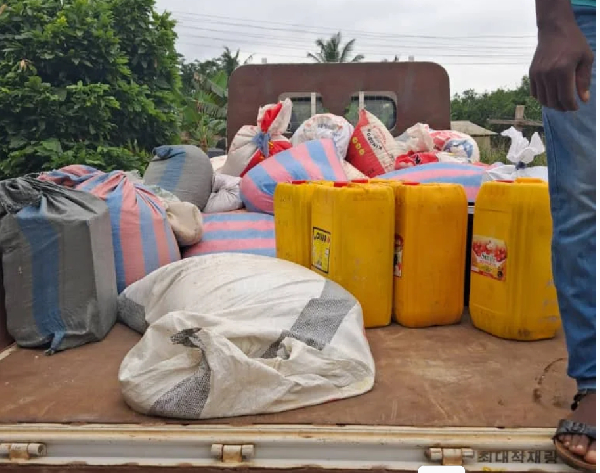
 A photo of some of the stolen items