0.9 C
London
Wednesday, December 31, 2025
Home Blog Page 3

We will work to transform Atwima Nwabiagya South — Osei Boamah 

0

By Charles Tawiah, GNA 

Bankyease (Ash) Dec. 30, GNA – Mr Wisdom Osei Boamah, District Chief Executive for Atwima Nwabiagya South Municipality, has assured residents of the area of the assembly’s commitment to provide infrastructure to help transform the living conditions of the people. 

He said the assembly had initiated a few development projects aimed at improving basic social amenities to enhance their socio-economic conditions.        

Mr Osei Boamah was speaking at a sod-cutting ceremony for the construction of health and educational projects in three communities in the municipality. 

The beneficiary communities are Atwima-Agogo and Atwima Mim, where a clinic with nurses’ quarters are being constructed for the people at the cost of GHS 124,589.67 each. 

The Bankyease community is also benefiting from a three-unit classroom block with a 12-seater toilet facility and a mechanized borehole, at an estimated cost of GHS 801,731.38. 

The projects, which are expected to be completed in six months, are being funded through the District Assembly’s Common Fund. 

 Mr Osei Boamah, pointed out that, tender, evaluation and all processes including approval of budget had been complete. 

He charged the contractors to work hard and complete the work within the stipulated time. 

The MCE also urged the chiefs, assembly members, and the community members to co-operate with the contractors to ensure successful completion of the projects. 

He said the assembly would work to improve infrastructure for the people to understand that they made the right choice by voting for the NDC in the 2024 general elections. 

He mentioned poor roads, electricity, and bad communication networks, as challenges facing some communities in the area, and said urgent attention was being given to address them. 

Nana Akwasi Owusu Ababio, Chief of Bankyease thanked the MCE for the project and appealed for the tarring of the 19-kilometre road linking the community to other parts of the municipality. 

He encouraged the MCE to continue to work hard since that could earn him a bigger position in his political career. 

Nana Akwasi Amakwatiah Asempa Nkwantabisa, Adonten-hene of Atwima Agogo also called for improvement in the road network in the area to prevent drivers from charging unapproved lorry fares. 

GNA 

Edited by Kwabia Owusu-Mensah/George-Ramsey Benamba 

Mali and Burkina Faso impose travel ban on US citizens

0

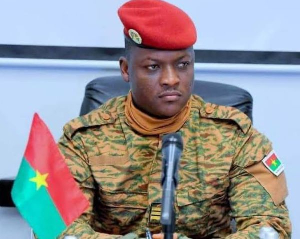
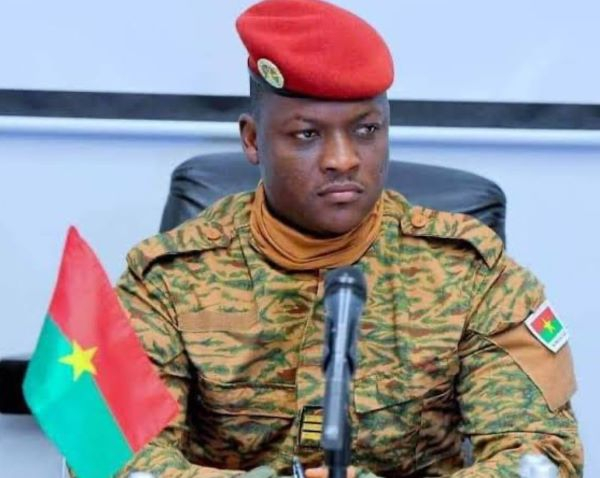
Captain Ibrahim Traore is the President of Burkina Faso Captain Ibrahim Traore is the President of Burkina Faso

Mali and Burkina Faso say they will bar US citizens from entering their countries in response to a similar move by the Trump administration.

The two West African states were recently placed under full entry restrictions under US President Donald Trump’s expanded travel ban.

In separate statements, they said they would apply the same measures on US nationals.

Burkina Faso’s foreign affairs minister Karamoko Jean-Marie Traoré said his government was acting on the “principle of reciprocity”, while Mali’s foreign ministry called for “mutual respect and sovereign equality”.

Trump ban Burkina Faso, impose partial ban on Nigeria and oda kontris

The latter said it regretted the US’s move, adding that “such an important decision was made without any prior consultation”.

Mali and Burkina Faso’s decision comes days after neighbouring Niger announced a similar travel ban on US citizens.

The three states are ruled by military juntas which seized power in coups.

They have formed their own regional bloc, and have pivoted towards Russia after relations with other West African states and Western powers became strained.

Earlier this month, the White House said that full-entry restrictions would be imposed on people from the three countries, as well as South Sudan, Syria and Palestinian Authority passport holders.

The decision would come into effect on January 1 and was intended to “protect the security” of the US, it said.

The administration also moved Laos and Sierra Leone, which were previously subject to partial restrictions, to the full ban list, and put partial restrictions on 15 other countries, including Nigeria, Tanzania and Zimbabwe.

Meanwhile, watch as Acting Defence Minister Ato Forson inaugurates 9-Member Ministerial Advisory Board

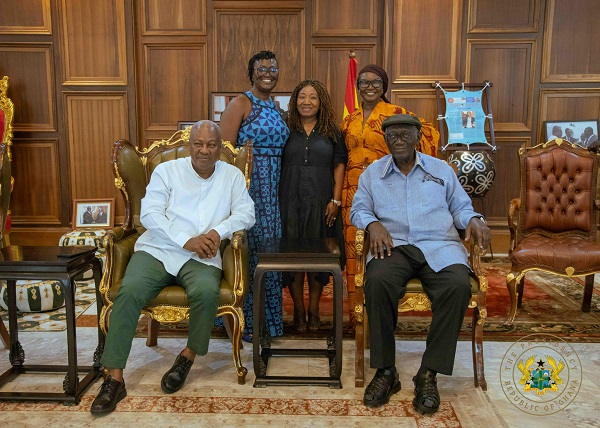
Mahama pays courtesy visit to Kufuor [Pictures]

0

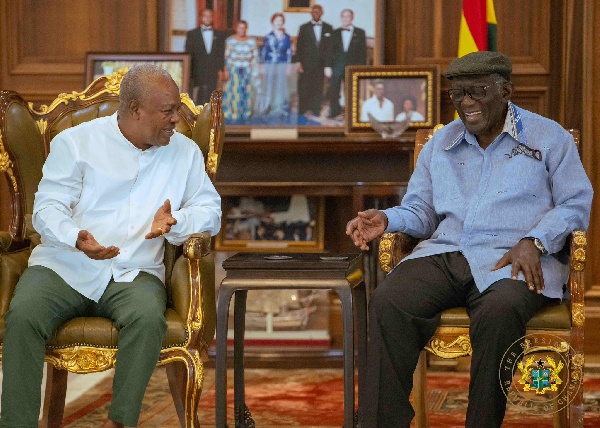
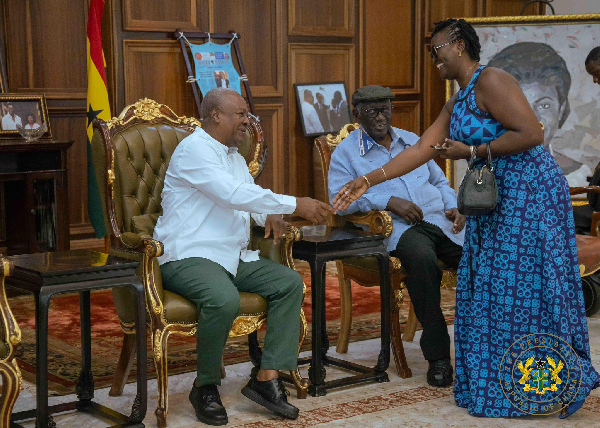
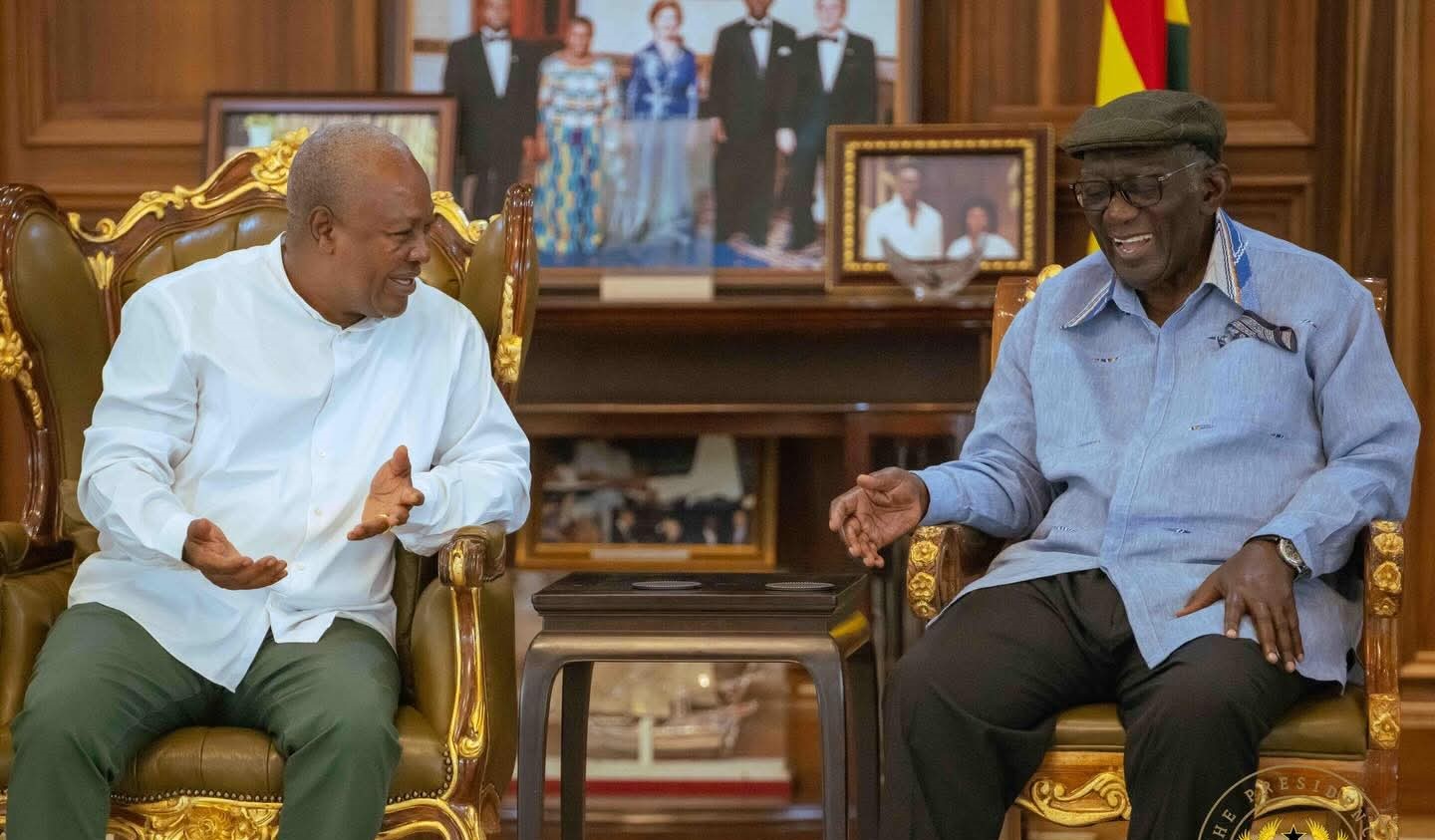
President John Dramani Mahama has paid a courtesy visit to former President John Agyekum Kufuor to extend seasonal greetings to him and his family.

In a brief interaction, Mahama conveyed his best wishes to the former president, describing the visit as an opportunity to share goodwill and reflect the spirit of the season.

The meeting underscored the tradition of mutual respect and statesmanship among Ghana’s leaders, particularly during periods of national celebration and reflection.

More Photos

Watch highlights of Semenyo’s performance against Chelsea

0

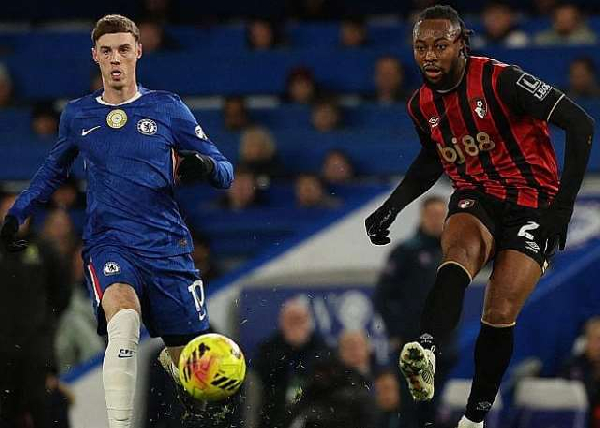
Cole Palmer and Semenyo featured in the Chelsea-Bournemouth game Cole Palmer and Semenyo featured in the Chelsea-Bournemouth game

Ghanaian winger Antoine Semenyo played a pivotal role in Bournemouth’s 2–2 draw with Chelsea at Stamford Bridge on December 30, 2025.

The winger was a thorn in the Blues’ side as he consistently took on defenders and delivered incisive passes to penetrate their backline.

Semenyo’s game began nervously when his tackle on Willian Estevão resulted in a penalty, which Cole Palmer converted to equalize after David Brooks had opened the scoring in the 6th minute.

Argentine midfielder Enzo Fernández restored Chelsea’s lead in the 23rd minute, but Bournemouth quickly fought back.

Bournemouth planning to sign Fatawu Issahaku to replace Semenyo

Semenyo’s long through ball split the defense, and goalkeeper Robert Sánchez failed to deal with it, allowing Justin Kluivert to pounce and level the score at 2–2.

In the second half, both sides created chances but were unable to find the back of the net, as the game ended in a draw.

Semenyo was instrumental throughout, constantly supporting the attack while also tracking back to help the defense, giving his side the balance they needed.

This comes as Semenyo’s move to Manchester City is expected to be finalised in the coming days in a £65 million deal, following his impressive performances.

Watch the highlights below:

SB/AE

Meanwhile, watch as Acting Defence Minister Ato Forson inaugurates 9-Member Ministerial Advisory Board

NPP Primaries: Dr Bawumia takes commanding 73% lead

0

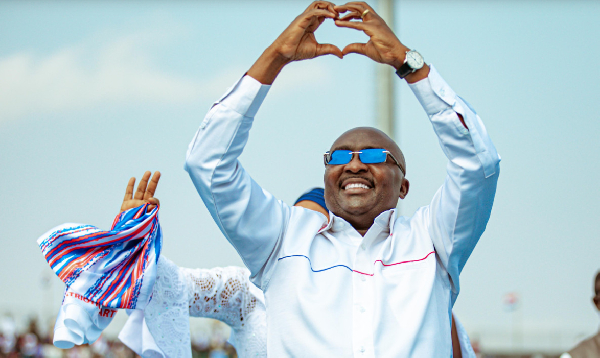
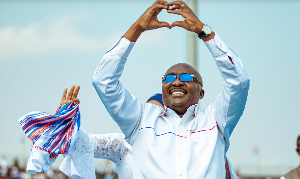
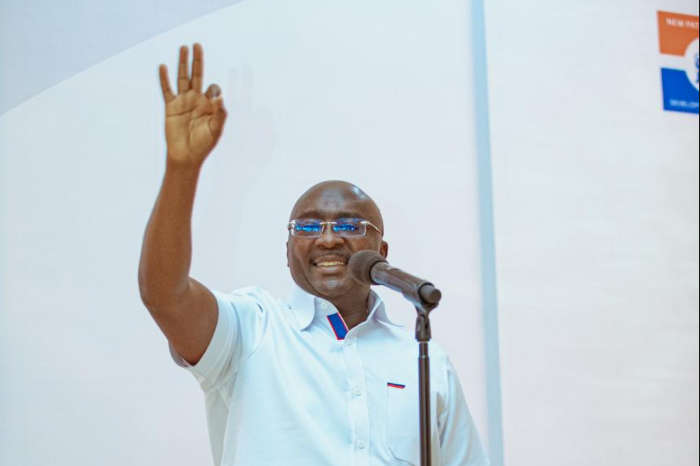
Former Vice President, Dr Mahamudu Bawumia Former Vice President, Dr Mahamudu Bawumia

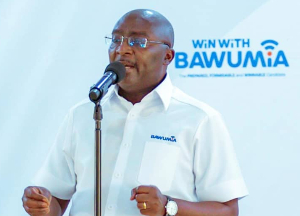
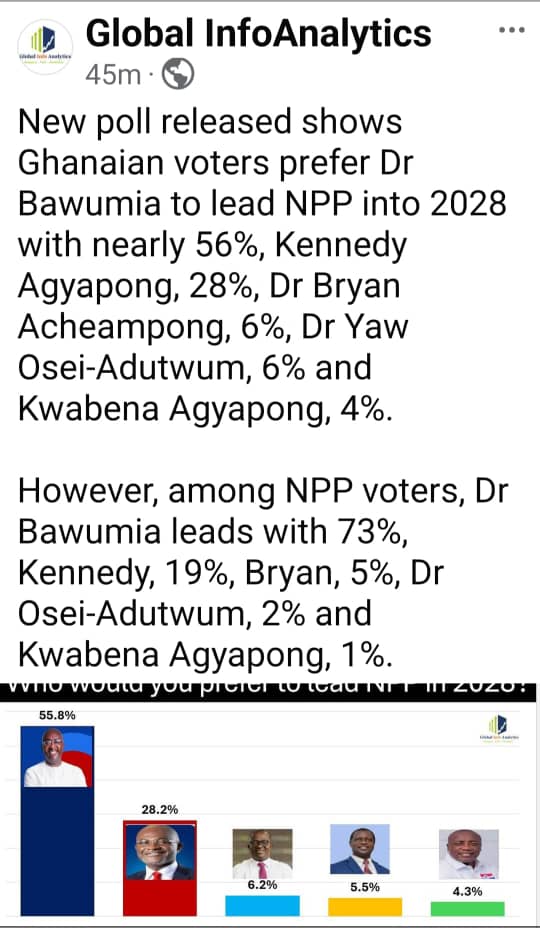
Latest survey report by Global InfoAnalytics have showed a clear, commanding lead for former Vice President, Dr Mahamudu Bawumia in the NPP Flagbearer race.

In its latest survey report, Global Info Analytics, which has been consistently tracking the NPP polls for some months now, revealed that Dr Bawumia has now taken a 73% lead among NPP delegates.

Following at second-placed is Kennedy Agyapong with 19% and Dr Bryan Acheampong at 5%.

Dr Osei Yaw Adutwun and Kwabena Agyei Agyapong follow with 2% and 1% respectively.

The latest Global InfoAnalytics report, unlike previous reports, did not leave out percentages for undecided and undisclosed, thereby giving a broader picture of the likely outcome of the NPP primaries.

In its last report, which did not account for as much as 20% of NPP delegates, who were either undecided or not ready to disclose their votes, Dr Bawumia was in a 45% lead, while Kennedy had 31% – with the huge 20% to fight for.

However, the latest report, has seen Bawumia in a commanding lead, with Kennedy significantly dropping.

In other focus of the Survey, Global InfoAnalytics also reported that about 56% of general Ghanaian voters prefer Dr Bawumia to lead NPP into 2028.

Kennedy Agyapong was second with 28% while 6% preferred Dr Bryan Acheampong, and Dr Yaw Osei-Adutwum and 4% for Kwabena Agyapong.

The NPP goes to the polls on January 31st to elect a Flagbearer for the 2028 election.

Put aside your egos and collaborate more

0

KiDi wants artistes to do more collaborations among Ghanaian acts play videoKiDi wants artistes to do more collaborations among Ghanaian acts

Award-winning Ghanaian musician KiDi has urged his fellow artistes to embrace collaborations as a key strategy for expanding Ghana’s presence on the global music stage.

Speaking in an interview with GhanaWeb’s Isaac Dadzie at the AfroFuture Festival on December 29, 2025, the ‘Lomo Lomo’ hitmaker noted that Ghana’s relatively small population places its music industry at a numerical disadvantage internationally.

According to him, collaborations offer a powerful solution to this challenge.

“We’re from a country where there are not many of us. And one of the strategies I feel like will get us out there and get our names out there is through collaboration. There is so much power in collaboration – two powers coming together to form something amazing,” he noted.

KiDi stressed that many African songs that have achieved significant global success over the past decade were products of strategic collaborations.

“You can cast your mind to all the African songs in the last decade that have crossed over into the world. Most of the time, lasting impacts have been collaborations,” he said.

He, therefore, called on artistes to put aside egos and differences and work together more, describing collaborations as a necessary tool for amplifying reach, influence, and global recognition for Ghanaian music.

“We need to put aside our egos and put aside our differences and collaborate more,” he said.

KiDi said this after his jaw-dropping performance at the 2025 AfroFuture Festival where he joined a strong lineup, featuring Moliy, King Paluta, Asake and Rema, for one of Ghana’s premier music and culture festivals, delivering two days of top-tier entertainment on December 28 and 29.

The festival offered high-energy performances, surprise guest appearances and a memorable climax led by Rema on the final night.

Beyond the music, AfroFuture also celebrated African culture through food, fashion and art installations, creating a vibrant, immersive experience that lived up to expectations and reinforced the festival’s place as a key highlight on Ghana’s Detty December calendar.

Watch the video below:

ID/AE

Watch more videos from the night below:

Bawumia opens 73% lead in NPP primary

0

Dr Mahamudu Bawumia is former Vice President of Ghana Dr Mahamudu Bawumia is former Vice President of Ghana

Latest survey report by Global InfoAnalytics have showed a clear, commanding lead for former Vice President, Dr Mahamudu Bawumia in the NPP Flagbearer race.

In its latest survey report, Global Info Analytics, which has been consistently tracking the NPP polls for some months now, revealed that Dr Bawumia has now taken a 73% lead among NPP delegates.

Following at second-placed is Kennedy Agyapong with 19% and Dr. Bryan Acheampong at 5%.

Dr Yaw Osei Adutwun and Kwabena Agyei Agyapong follow with 2% and 1% respectively.

The latest Global InfoAnalytics report, unlike previous reports, did not leave out percentages for undecided and undisclosed, thereby giving a broader picture of the likely outcome of the NPP primaries.

In its last report, which did not account for as much as 20% of NPP delegates, who were either undecided or not ready to disclose their votes, Dr Bawumia was in a 45% lead, while Kennedy had 31% – with the huge 20% to fight for.

However, the latest report, has seen Bawumia in a commanding lead, with Kennedy significantly dropping.

In other focus of the Survey, Global InfoAnalytics also reported that about 56% of general Ghanaian voters prefer Dr Bawumia to lead NPP into 2028.

Kennedy Agyapong was second with 28% while 6% preferred Dr Bryan Acheampong, and Dr Yaw Osei-Adutwum and 4% for Kwabena Agyapong.

The NPP goes to the polls on January 31st to elect a Flagbearer for the 2028 election.

ACEPA slams ninth parliament over weak fight against galamsey

0

The African Centre for Parliamentary Affairs (ACEPA) has expressed disappointment in the Ninth Parliament over what it describes as its weak role in the fight against illegal mining, popularly known as galamsey.

According to ACEPA, Parliament failed to give sustained attention to the galamsey menace, despite its devastating impact on the country’s environment, water bodies, and livelihoods.

Speaking in an interview with Citi News, the Executive Director of ACEPA, Dr Rasheed Draman, said he had expected Parliament to make the fight against galamsey a top priority and a daily subject of debate until concrete action was taken.

“What many Ghanaians were expecting was that this Parliament would consistently focus on galamsey and discuss it daily until we saw action. Galamsey is destroying all of us, including Members of Parliament and the people they represent. On that score, Parliament has woefully failed Ghanaians,” he said.

Dr Draman further expressed concern over allegations linking some Members of Parliament to illegal mining activities, describing the situation as deeply troubling.

“What galamsey is doing to this country is frightening. I don’t know how Ghana will look in the next 10 to 15 years if this continues. If there is one issue this Ninth Parliament should be most worried about, it is galamsey. When history is written, they will bear the first and ultimate responsibility for fixing this problem,” he stressed.

He lamented what he described as the lack of robust debate and critical scrutiny of government policies, attributing it partly to the overwhelming majority in Parliament.

“Apart from occasional debates, we did not see the kind of vibrant discussions and policy challenges we witnessed in the Eighth Parliament, particularly during budget debates. I had hoped the majority would challenge itself and force the government to reconsider certain assumptions and policies, but that did not happen,” he added.

Dr Draman observed that the failure to sustain pressure on the government over galamsey represents a major downside of the Ninth Parliament’s first year.

Airtime, data purchases to be unavailable as telcos update systems for VAT changes

0

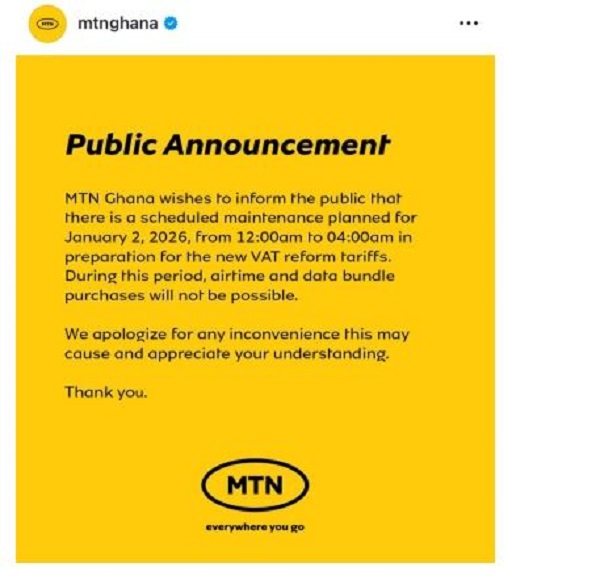
MTN Ghana has announced a temporary interruption to some of its services early in the new year as it prepares its systems to comply with changes to Ghana’s national tax policy.

In a public notice to customers, the telecommunications company said it has scheduled a system maintenance on January 2, 2026, from 12:00am to 4:00am, specifically to align its platforms with new VAT reform tariffs.

MTN Ghana cautioned that airtime and data bundle purchases will not be possible during the four-hour maintenance period, as all recharge and data purchase channels will be temporarily suspended. The planned downtime is expected to affect customers who rely on late-night or early-morning top-ups.

The company did not indicate whether other services, including voice calls, mobile money transactions, or internet access on already active data bundles, will be affected during the maintenance window.

MTN Ghana apologised for the inconvenience, stating, “We apologize for any inconvenience this may cause and appreciate your understanding,” and concluded the announcement with its signature tagline, “everywhere you go.”

The system update follows the Ghana Revenue Authority’s announcement of major tax reforms effective January 1, which include a reduction in the VAT rate, the abolition of the COVID-19 Health Recovery Levy, and the scrapping of the VAT flat rate scheme. These measures are expected to influence pricing and billing structures across several sectors, including telecommunications.

According to MTN Ghana, the maintenance exercise is a proactive step to ensure its billing and sales systems remain fully compliant and functional under the revised VAT regime.

Customers have therefore been advised to purchase any required airtime or data bundles before midnight on January 2 to avoid disruption during the scheduled maintenance period.

Airtime, data purchases to be unavailable as telcos update systems for VAT changes

0

MTN Ghana has announced a temporary interruption to some of its services early in the new year as it prepares its systems to comply with changes to Ghana’s national tax policy.

In a public notice to customers, the telecommunications company said it has scheduled a system maintenance on January 2, 2026, from 12:00am to 4:00am, specifically to align its platforms with new VAT reform tariffs.

MTN Ghana cautioned that airtime and data bundle purchases will not be possible during the four-hour maintenance period, as all recharge and data purchase channels will be temporarily suspended. The planned downtime is expected to affect customers who rely on late-night or early-morning top-ups.

The company did not indicate whether other services, including voice calls, mobile money transactions, or internet access on already active data bundles, will be affected during the maintenance window.

MTN Ghana apologised for the inconvenience, stating, “We apologize for any inconvenience this may cause and appreciate your understanding,” and concluded the announcement with its signature tagline, “everywhere you go.”

The system update follows the Ghana Revenue Authority’s announcement of major tax reforms effective January 1, which include a reduction in the VAT rate, the abolition of the COVID-19 Health Recovery Levy, and the scrapping of the VAT flat rate scheme. These measures are expected to influence pricing and billing structures across several sectors, including telecommunications.

According to MTN Ghana, the maintenance exercise is a proactive step to ensure its billing and sales systems remain fully compliant and functional under the revised VAT regime.

Customers have therefore been advised to purchase any required airtime or data bundles before midnight on January 2 to avoid disruption during the scheduled maintenance period.

Two arrested over unlawful possession of 2,600 AK-47 ammunition

0

The Ashanti South Regional Police Command has arrested two persons for the unlawful possession of 2,600 rounds of AK-47 ammunition at the Kantanso–Asankare Police Barrier in the Ashanti Region.

The suspects, identified as Kwame Afram, a bus driver, and Godfred Essel, his mate, were arrested on December 26, 2025, after police intercepted a Kia Granbird bus with registration number GT 5771-18.

According to police, the bus was travelling from Accra to Walewale, en route to Paga, when officers on duty stopped it for inspection.

A thorough search of the vehicle uncovered two concealed containers containing the 2,600 rounds of AK-47 ammunition.

Police further retrieved a bag hidden beneath the driver’s seat containing two bulletproof plates, a black crushed helmet, and a pair of long boots.

The suspects are currently in police custody, assisting with the investigation, while the bus and all retrieved exhibits have been impounded to aid in the ongoing investigation.

NPP Primaries: Dr Bawumia takes commanding 73% lead

0

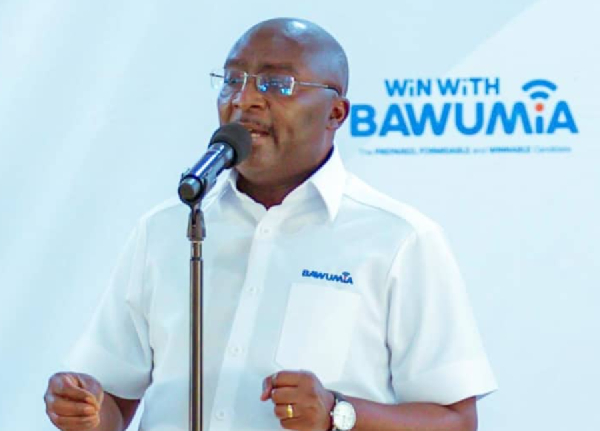
Former Vice President, Dr Mahamudu Bawumia Former Vice President, Dr Mahamudu Bawumia

Latest survey report by Global InfoAnalytics have showed a clear, commanding lead for former Vice President, Dr Mahamudu Bawumia in the NPP Flagbearer race.

In its latest survey report, Global Info Analytics, which has been consistently tracking the NPP polls for some months now, revealed that Dr Bawumia has now taken a 73% lead among NPP delegates.

Following at second-placed is Kennedy Agyapong with 19% and Dr Bryan Acheampong at 5%.

Dr Osei Yaw Adutwun and Kwabena Agyei Agyapong follow with 2% and 1% respectively.

The latest Global InfoAnalytics report, unlike previous reports, did not leave out percentages for undecided and undisclosed, thereby giving a broader picture of the likely outcome of the NPP primaries.

In its last report, which did not account for as much as 20% of NPP delegates, who were either undecided or not ready to disclose their votes, Dr Bawumia was in a 45% lead, while Kennedy had 31% – with the huge 20% to fight for.

However, the latest report, has seen Bawumia in a commanding lead, with Kennedy significantly dropping.

In other focus of the Survey, Global InfoAnalytics also reported that about 56% of general Ghanaian voters prefer Dr Bawumia to lead NPP into 2028.

Kennedy Agyapong was second with 28% while 6% preferred Dr Bryan Acheampong, and Dr Yaw Osei-Adutwum and 4% for Kwabena Agyapong.

The NPP goes to the polls on January 31st to elect a Flagbearer for the 2028 election.

Survey Shows Ghanaian Businesses Feel Pressured by Tax Authority

0

Survey Shows Ghanaian Businesses Feel Pressured by Tax Authority
Tax

A recent social media poll conducted across multiple platforms reveals that most Ghanaian businesses believe the Ghana Revenue Authority (GRA) is hurting rather than helping their operations, reigniting a debate about how tax enforcement impacts entrepreneurship and job creation in the country.

The survey, conducted by Business Outlook with Vivian Kai Lokko, asked respondents whether the GRA’s activities were helping, hurting, or doing both to businesses. Results varied significantly across platforms, with informal sector operators expressing the most negative views.

On Instagram, where many micro-entrepreneurs, traders and side hustlers are active, 100 percent of respondents said the GRA is hurting businesses. TikTok users, who tend to represent similar demographics, showed 79 percent saying the authority hurts businesses, with only 21 percent believing it helps.

LinkedIn users, typically professionals and formal business operators, presented more mixed opinions. Among this group, 56 percent said the GRA hurts businesses, 33 percent said it both helps and hurts, and 11 percent believe it is helping.

On X (formerly Twitter), respondents were split evenly, with 38 percent saying the GRA hurts businesses, 38 percent saying it both helps and hurts, 19 percent unsure, and only six percent saying it helps.

The findings suggest that businesses closer to daily cash flow pressures and informal trading expressed more negative views of the tax authority. This pattern indicates the problem may not be taxation itself but rather how tax enforcement is experienced by different categories of businesses.

The survey results emerged after businessman and New Patriotic Party (NPP) politician Kennedy Agyapong made strong statements in December 2025 during an outreach engagement in the Central Region. Agyapong called on the GRA to stop intimidating entrepreneurs and instead support job creation efforts.

“The GRA should stop treating Ghanaian businessmen like criminals,” Agyapong stated. “When people try to build companies in this country, they go through too much frustration. How do we expect to create jobs when the very institutions meant to help are scaring business owners?”

The Assin Central Member of Parliament is not the first prominent figure to raise such concerns. In March 2024, Vice President Dr. Mahamudu Bawumia accused the authority of harassing businesses under the guise of tax collection during an interaction with members of the Ghana Chamber of Commerce and Industry.

According to Dr. Bawumia, the problem stems from the GRA’s practice of setting unrealistic revenue targets for its officers. This situation, he argued, results in overtaxing existing businesses instead of expanding the tax base to include more taxpayers.

“They are harassing businesses. That harassment is coming from the sort of targets that are created at their office,” Dr. Bawumia explained. “They are setting unrealistic targets. Because the tax base is narrow, officers are given monthly targets and are left wondering where to find the money.”

The Vice President added that officers often return to the same taxpayers already paying taxes and come up with new reasons for them to pay more, rather than bringing new businesses into the tax net.

Following Bawumia’s March 2024 statements, the GRA denied allegations of harassment. Assistant Commissioner Emelia Assam, speaking at the Oxfam Tax Dialogue on March 21, 2024, stated that no tax officer authorized to carry out compliance work is expected to harass any client.

“There is no harassment with tax collection. GRA staff don’t go out to harass,” Assam said, adding that the authority has compliance issues to address daily but does so professionally.

The Ghana Revenue Authority Workers’ Union (GRAWU) also expressed displeasure with Bawumia’s characterization of their work. In a press statement, the union said it found the Vice President’s comments unfortunate and considered them an attack on the efforts of hardworking staff.

However, the Traders Advocacy Group Ghana (TAGG) supported Bawumia’s assessment. In a March 2024 statement, TAGG said its members continue to face extortion and harassment by GRA officials.

“The Vice President couldn’t have said it any better because his pronouncement is a true reflection of daily happenings in the business community,” TAGG stated. The group criticized the deployment of multiple task forces to monitor traders when the GRA could leverage cutting edge systems instead.

Small and medium sized enterprises contribute approximately 70 percent of Ghana’s Gross Domestic Product (GDP) and account for roughly 92 percent of all businesses in the country as of 2024, according to economic data. This makes their survival and growth a national economic priority.

Business Outlook’s poll findings indicate that many enterprises question whether the current tax system understands their cash flow realities, supports growth during difficult economic cycles, and treats them as partners in development rather than targets for extraction.

When compliance feels intimidating instead of enabling, the consequences extend beyond frustration to include slower business growth, job losses and discouraged entrepreneurship. The perception gap between how the GRA views its enforcement activities and how businesses experience those activities appears significant.

The broader debate centers on whether Ghana’s tax system can simultaneously collect revenue efficiently while building trust with the businesses generating that revenue. Trust appears to be a missing component in current relationships between many taxpayers and the tax authority.

For businesses operating in Ghana’s informal sector, which comprises a substantial portion of economic activity, the challenges are particularly acute. These enterprises often lack sophisticated accounting systems, operate on thin profit margins, and face irregular cash flows that make compliance with formal tax requirements especially difficult.

The survey responses suggest that Kennedy Agyapong’s December 2025 comments resonated with widespread sentiments among business owners rather than representing an isolated political statement. The consistency of negative perceptions across different platforms, particularly those dominated by smaller businesses, points to systemic concerns about how tax enforcement affects entrepreneurial activity.

Tax experts note that effective revenue collection requires balancing enforcement with taxpayer education, support services and proportionate penalties. Systems that rely primarily on aggressive audits and penalties without corresponding support mechanisms risk damaging the business environment they depend upon for sustainable revenue generation.

Ghana’s tax base remains narrow relative to the size of its economy, with a significant portion of economic activity occurring outside formal tax structures. Expanding this base requires not only enforcement but also making compliance accessible and worthwhile for businesses currently operating informally.

The ongoing tension between revenue mobilization targets and business sustainability raises questions about long term economic development strategies. If existing taxpayers consistently feel pressured rather than supported, efforts to formalize more businesses and expand tax compliance may face resistance.

For many Ghanaian businesses, particularly those in the small and medium enterprise sector, the fundamental question is not whether they should pay taxes but whether the system helps them survive long enough to generate taxable income consistently. Until that concern is addressed through policy and practice, negative perceptions of the GRA are likely to persist regardless of the authority’s stated intentions.

The Business Outlook survey, while not a scientific study with controlled sampling, provides insight into how different segments of Ghana’s business community perceive their interactions with tax authorities. The strong negative sentiment among informal sector operators suggests an urgent need for dialogue about how tax enforcement can support rather than hinder economic growth objectives.

How Nigeria’s rigid fuel market puts Dangote Refinery in survival mode

0

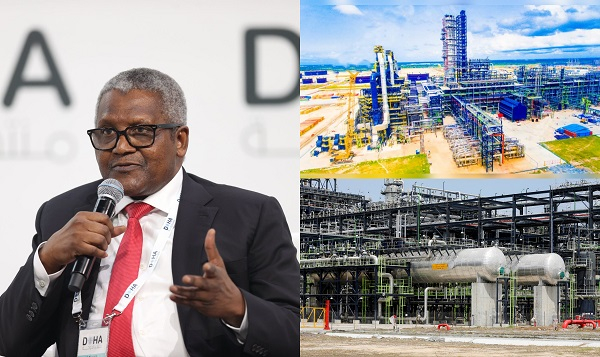
Facing escalating conflicts across numerous areas, the Dangote Refinery is fighting for survival while competitors stand firm. Each day brings renewed resistance, ranging from blocked access to crude oil and persistent fuel imports to confrontations with labour unions. Yet recent events have arguably solidified the founder’s reputation as a tenacious combatant. This report by DARE OLAWIN examines the refinery’s ongoing quest for calm and solid footing following many months of severe challenge.

If he had had a premonition of the battles that awaited him in the refining sector, Alhaji Aliko Dangote himself testified that he would not have built the Lekki $20bn plant. But despite this regret, the billionaire businessman remains resolute; he said he had been fighting battles all his life, though he confessed that the mafias in oil are stronger than the mafia in drugs.

When the $20bn oil refinery came on stream in 2024, Nigerians heaved a sigh of relief. For decades, the nation had endured long queues and the shame of importing petroleum products despite being Africa’s largest crude producer. This was because the government-owned refineries remained dormant despite billions of dollars spent on turnaround maintenance. The Dangote refinery was hailed as the game-changer, a 650,000-barrel-per-day behemoth that would finally break the chains of fuel dependency.

But two years on, the refinery found itself locked in battles that threaten its promise. Instead of a smooth take-off, it grappled with opposition on all fronts, from alleged crude supply denials and international oil traders to entrenched unions and import cartels.

At one time, it was the Nigerian National Petroleum Company Limited; at another time, it was the regulator. Later, the marketers, depot owners and importers joined the battle. When it seemed the refinery had begun to know peace and stability, the workers’ union mobilised tanker drivers to picket it over allegations of disallowing unionisation among its workers.

Aliko once said he planned to build a refinery after the government of the late Umaru Yar’Adua stopped the acquisition of the Port Harcourt and Warri refineries by a consortium of which he was a part. Since inception, the facility, which was initially designed to be sited in the Olokola Free Trade Zone in Ogun State, faced a three-year delay due to the inability of the Dangote Group and the Ogun State Government to agree on issues.

Last year, Dangote disclosed that the delay in securing a site for his petrochemical facility in Ogun State resulted in a $500m loss for his conglomerate. He attributed the financial setback to the protracted process of acquiring Olokola land for a petrochemical facility, which cost him $500m out of the $2.5bn initial drawdown on bank loans.

After the three years wasted in Ogun, the company secured land in the Lekki Free Zone, Lagos, and the journey started. The billionaire recalled how he encountered difficulties in getting capable and trusted engineering, procurement and construction contractors to handle the project, noting that one of the global contractors once tried to sabotage the project.

After about 10 years, the deed was done. The plant was ready. Nigerians were eager to have access to affordable fuel. It was a historic moment for a nation whose refining capacity was almost zero for decades. Unaware of what was on the minds of the existing traders in the downstream, Dangote went to the CEO Forum in Rwanda to say Nigeria would no longer import any fuel.

“Nigeria shouldn’t import anything like gasoline; not one drop of a litre. We have enough gasoline to give to at least the entirety of West Africa and diesel to give to West Africa and Central Africa. We have enough aviation fuel to give to the entire continent and also export some to Brazil and Mexico,” he said.

When Dangote made this comment, the NNPC was the sole importer of petrol due to subsidy payments. The comment triggered a subtle competition in the sector. Dangote refinery was supposed to start petrol production in June 2024, but the crude producers reportedly exported their product, forcing the 650,000-barrel-per-day facility to import feedstock.

Crude war

In June 2024, the Vice President of Oil and Gas at Dangote Industries Limited, Devakumar Edwin, accused international oil companies of plans to frustrate the survival of the refinery. Edwin said the IOCs were “deliberately and wilfully frustrating” the refinery’s efforts to buy local crude by hiking the cost above the market price, thereby forcing the refinery to import crude from countries as far away as the United States.

He added that though the Nigerian Upstream Petroleum Regulatory Commission was trying its best to allocate crude oil for the refinery, “the IOCs are deliberately and wilfully frustrating our efforts, making the refinery pay a $6 premium above the market price.”

Edwin said, “It appears that the objective of the IOCs is to ensure that Nigeria remains a country which exports crude oil and imports refined petroleum products.”

The refinery also traded words with the NUPRC, accusing the upstream regulator of failing to enforce the domestic crude supply obligation. The NUPRC defended itself, arguing that it had facilitated the domestic supply of crude oil to the Dangote refinery and other refineries using the monthly production curtailment platform.

However, oil producers, under the aegis of the Independent Petroleum Producers Group, warned against being forced to sell crude oil to the Dangote refinery. The IPPG said some of its members already owned and were supplying crude oil to local refineries but insisted that the NNPC was in a good position to mitigate the crude supply shortfall faced by local refiners by leveraging its statutory crude allocation for meeting local domestic consumption.

The IPPG said some of its members received letters from the Dangote refinery for crude supply nominations and faulted the approach as bringing them under an obligation, saying it conflicted with the spirit of the willing-buyer, willing-seller framework prescribed by the Petroleum Industry Act 2021.

Naira-for-crude deal

As the battle for local crude supply escalated, President Bola Tinubu waded in, ordering the NNPC to sell crude to the Dangote refinery in naira. The idea was to strengthen the naira by reducing spending of foreign exchange earnings on the importation of crude and fuel into Nigeria.

The President’s Special Adviser on Revenue, Mr Zacch Adedeji, who also serves as Chairman of the Federal Inland Revenue Service, said the move would mitigate Nigeria’s heavy reliance on foreign exchange for crude oil imports, accounting for roughly 30 to 40 per cent of its forex expenditure.

The revenue chief said that by denominating crude oil transactions in naira, the government expects to significantly lighten its forex burden, with estimated annual savings of $7.3bn. It is also expected to reduce monthly forex expenditure on petroleum products to $50m from approximately $660m.

“Monthly, we spend roughly $660m on these exercises, and if you analyse that, that will give us $7.92bn in savings annually,” he stated.

War over direct fuel distribution

During President Tinubu’s visit to the refinery in June, Dangote revealed plans to do something that would shake the country. He later announced the deployment of 4,000 CNG-powered trucks to distribute fuel directly to filling stations and bulk buyers. This marked the beginning of another serious battle against the refinery.

Truck drivers, middlemen, DAPPMAN and others affected by the decision reacted angrily. The sector was truly shaken. Members of the Nigerian Union of Petroleum and Natural Gas Workers shut down refineries and depots nationwide over allegations that drivers were not allowed to join the union.

The National Association of Road Transport Owners said they had lost all their customers to the Dangote refinery. They cried out over job losses. DAPPMAN said the refinery’s price reductions were designed to stifle importers whose cargoes were already at sea.

Depot owners alleged that Dangote sold petrol to international traders at ₦65 cheaper than it sold to local off-takers, claiming the company refused to sell to its members.

But Aliko Dangote said he had to protect his investment because marketers were not buying from him. According to him, DAPPMAN members demanded an annual subsidy of ₦1.5tn to enable them to match the refinery’s gantry prices.

The refinery alleged that its refusal to comply with the subsidy demand was the real reason behind the public criticisms and attacks in October. It reiterated that it had sufficient capacity to meet domestic demand and support exports, with about 500 million litres of fuel monthly.

Between June and September, it said the refinery exported 3,229,881 metric tonnes of petrol, diesel and aviation fuel, while marketers imported 3,687,828 metric tonnes within the same period.

From DAPPMAN, the refinery entered another battle with the Petroleum and Natural Gas Senior Staff Association of Nigeria, which picketed oil and gas facilities over allegations that Dangote sacked about 800 workers who joined the union. Dangote said those dismissed were sabotaging the refinery.

Expansion amid crisis

Amid the crisis, Aliko Dangote said he had begun expanding the refinery from 650,000 to 1.4 million barrels per day. This came as a surprise to many. The courage to expand despite crude shortages and stiff opposition was seen as highly ambitious.

But Dangote appears to have deep confidence in President Bola Tinubu. It appeared the duo held a closed-door meeting where undisclosed agreements were reached.

15% fuel import duty drama

A few days after Dangote announced the expansion plan, the Federal Government imposed a 15 per cent duty on imported petrol and diesel. The policy was meant to discourage fuel imports and support local refining. While refiners welcomed the move, importers warned it could raise fuel prices.

However, less than two weeks later, the Nigerian Midstream and Downstream Petroleum Regulatory Authority announced that “the implementation of the 15 per cent ad valorem import duty on imported premium motor spirit and diesel is no longer in view.”

Though the government said the duty would be reintroduced in the first quarter of 2026, refiners expressed disappointment.

Otedola backs Dangote

Dangote’s billionaire friend, Femi Otedola, emerged as one of his strongest supporters during the crisis. He backed Dangote against accusations of monopolistic tendencies and criticised those resisting reform.

“But times have changed… With the Dangote refinery now supplying fuel locally, the old business model is crumbling,” Otedola said.

Officials of DAPPMAN told our correspondent that “Otedola is entitled to his opinion.”

Dangote winning?

With the resignation of regulators, some argued that Dangote had won the battle, but the war may be far from over. Dangote himself believes the vested interests he is confronting are powerful, but he insists he will never give up.

Conclusion

After months of bruising battles over crude supply, pricing, regulation, distribution, union politics and market share, the Dangote refinery appears to have carved out space for itself through persistence, political backing and an aggressive operational strategy.

Despite crude shortages, price wars, regulatory run-ins and lawsuits, the refinery has stabilised domestic supply, forced long-overdue market adjustments and compelled powerful players in the downstream sector to rethink their old models. Each confrontation tested the strength of the project and the resolve of its founder.

Yet, instead of retreating, Dangote doubled down, not only pushing ahead with production but also embarking on a massive expansion that signals confidence rather than fear.

The refinery may not yet have won the war, but it has survived its most turbulent phase and appears to be entering a more predictable terrain. Its success or otherwise will depend on how major stakeholders adjust to its growing dominance and how the government enforces policies to protect both consumers and local production.

But one thing is clear: most players in the industry are not opposed to the refinery; rather, everyone is fighting for survival — and that is where collaboration becomes critical.

As Adetunji Oyebanji of 11 Plc put it, all players want to recover their costs, which explains why it appears they are fighting Dangote.

For now, the battle seems to have subsided, but experts said it has not ended, especially as parties struggle for survival in an industry long ruled by ‘powerful’ stakeholders.

23-year-old arrested for killing father

0

Innocent Owusu, 23, has been arrested by the Jasikan District Police in connection with the murder of his father, Peter Owusu, 59, at their home in Likpe Abrani, Oti Region, on December 30, 2025.

According to a police press release, the suspect allegedly committed the act before fleeing the scene. Acting on intelligence, officers tracked him to a hideout in the Abrani forest and apprehended him.

Authorities have recovered the decapitated body of the deceased, which has been deposited at the Hohoe Government Hospital Morgue for preservation and autopsy.

Owusu remains in police custody, assisting with investigations as authorities seek to determine the motive and whether others were involved.

The Oti Regional Police Command commended residents of Likpe Abrani for their swift cooperation, which facilitated the arrest, and extended condolences to the bereaved family.

Ghana’s Silence from the Pulpit as 2026 Approaches

0

As December 31 approaches, Ghana holds its breath not in anticipation of celebration alone, but in uneasy silence. For decades, Watchnight services have been filled with dramatic prophecies, ominous warnings, and sensational titles promising spiritual warfare against unseen enemies. Yet this year, something is different. The prophets are quiet. And that silence is louder than any prophecy ever declared.

Every year, December 31 Watchnight services in Ghana mark a defining moment where faith, fear, hope, and spectacle collide. Churches overflow. Streets empty. Television and social media become pulpits. Christians and non-Christians alike tune in, waiting to hear what the “men of God” have seen for the coming year.

From afar, watching developments unfold, I have observed the intense preparations once again underway. Choir rehearsals, all-night vigils, prayer marathons these are familiar. What is unfamiliar, however, is the absence of the loud, dramatic prophecies that have become synonymous with Ghana’s Watchnight culture.

Where are the prophets?
In the past, they came armed with bold declarations. Some foretold election outcomes. Others announced deaths of prominent figures, plane crashes, coups, disasters, and bloodshed. They packaged fear with catchy titles: “Kill the Devil,” “Shoot the Devil,” “Bomb the Devil,” “Roast the Devil,” and other violent metaphors dressed up as spiritual warfare.

On December 31, 2024, many of these same prophets confidently declared that the NPP government would lose the 2024 elections. Indeed, Dr. Mahamudu Bawumia lost, and John Dramani Mahama emerged victorious. That single “accurate” prediction elevated many prophets in the eyes of their followers, reinforcing the dangerous belief that prophecy equals divine authority.

Yet today, as 2026 approaches, there is an unsettling quiet.

No bold declarations.
No dramatic watchnight titles.
No visions about Ghana’s future beyond vague prayers.

This raises serious questions.
If these prophets see so clearly into the future, what are they seeing now? Why has no one come forward to tell Ghanaians what awaits them in 2026? Are there no revelations, or is the risk of being wrong finally outweighing the appetite for attention?

Historically, Watchnight prophecies in Ghana have not merely been spiritual messages, they have shaped national anxiety. Some have sparked panic. Others have damaged reputations. A few have even required police intervention after pastors predicted the deaths of chiefs, musicians, politicians, or public officials.

These so-called prophecies rarely come with accountability. When they fail, excuses are offered. When they succeed by coincidence, they are celebrated as proof of divine insight.

But prophecy without responsibility is not faith, it is manipulation.

As we approach another Watchnight, Ghanaians especially Christians, must pause and reflect. Is Watchnight meant to be a night of hope, gratitude, repentance, and prayer? Or has it become a stage for fear-mongering, sensationalism, and spiritual intimidation?

The Bible itself warns against false prophets, those who speak not from God but from ego, influence, or profit. Yet in Ghana, questioning a prophet is often treated as rebellion against God Himself. This culture of silence has allowed excesses to flourish unchecked.

What makes this year even more telling is that the usual theatrics are missing. No “jump over,” “roll over,” or “burn over” slogans. No dramatic countdown to doom. Perhaps the prophets are recalculating. Or perhaps the nation is slowly waking up.

Faith should unite, not terrify. It should build peace, not anxiety. It should inspire development, not distract from responsibility.

As Ghanaians prepare for December 31 Watchnight, both Christians and non-Christians alike, we must remain discerning. The future of a nation should not be held hostage by unverified visions. Our unity, peace, and progress are too important.

The Ghana Police Service and state institutions must also take this moment seriously. Freedom of worship does not mean freedom to spread fear, misinformation, or psychological harm.

For now, we watch.
We listen.
And we ask the hard questions.
Because sometimes, the absence of prophecy tells a deeper truth than prophecy itself.

Let’s keep watching.

Ghana clears $709m Eurobond early as debt discipline tightens

0


Ghana has repaid a $709 million Eurobond ahead of schedule, signalling renewed confidence in its debt-restructuring programme and a strengthening economic recovery.

The payment, made on December 30, 2025, was confirmed by Cassiel Ato Forson, the finance minister, on Wednesday and ranks among the country’s largest single external debt-service transactions since its 2022 default.

Read also: Nigeria Eurobonds defy rising insecurity

The early settlement brings Ghana’s total Eurobond payments in 2025 to about $1.4 billion, under the restructuring memorandum. This includes two earlier payments of $349.52 million each, in addition to the latest $709 million repayment.

“The timely settlement reaffirms Ghana’s credibility as a sovereign borrower and underscores the government’s commitment to restoring investor confidence through transparent, predictable and disciplined debt-service practices,” Forson said in a statement posted on social media platform X, formerly Twitter.

He added that the government would build on this progress by intensifying reforms in domestic revenue mobilisation, public financial management and public debt management, while strengthening fiscal buffers to meet future debt-service obligations and sustainably finance development priorities.

The gold-rich West African economy has also benefited from a sharp currency rebound. The cedi is Africa’s best-performing currency this year, appreciating by about 26 percent in the first 11 months of 2025, supported by improved macro fundamentals and tighter fiscal controls.

Beyond Eurobond repayments, Ghana has stepped up efforts to clear legacy arrears across key sectors. The government has settled most of the approximately $75 million owed to Nigeria for gas supplies, leaving only a small outstanding balance, as part of broader energy-sector debt management.

Read also: FX Reforms support successful Eurobond issuance

In the social sector, the National Health Insurance Authority (NHIA) paid GH¢834 million in arrears to healthcare providers in April 2025. The government has also made payments toward outstanding tuition fees for Ghanaian students studying abroad, although some arrears remained as of mid-2025.

The country completed a major Eurobond restructuring in late 2024, a move that contributed to a ratings upgrade by Moody’s and a more positive sovereign outlook.

So, where is Kofi Wayo?

0

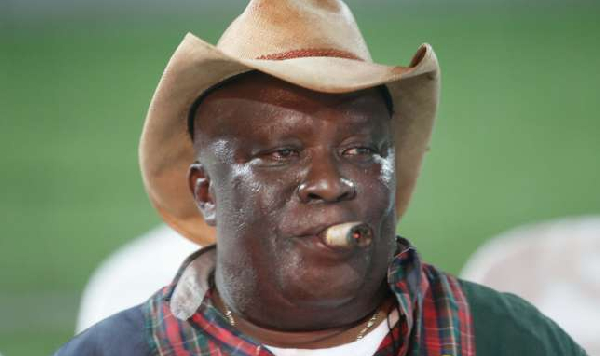
Kofi Wayo once wanted to become president of Ghana Kofi Wayo once wanted to become president of Ghana

The political landscape in Ghana has travelled many journeys, especially since 1992; the dawn of the current republic. And with it have come various names who are neither aligned with the National Democratic Congress (NDC) nor the New Patriotic Party (NPP), but who have made great attempts at becoming president of Ghana.

Among those unsuccessful names is the man Eric Charles Kofi Wayo, who was the Founder of the defunct United Renaissance Party (URP).

In his case, he made a few attempts at the topmost job of the country, first on the ticket of the People’s National Convention (PNC) in 2004.

In March 2004, Kofi Wayo filed his presidential nomination on the ticket of the People’s National Convention (PNC) to challenge for the presidency in the 2004 Election.

This was an official attempt to become a presidential candidate, although he did not become the flagbearer of the party.

And then in 2007, he formed the United Renaissance Party (URP) and stepped into its flagbearer role, after leaving other parties.

Wayo became the leader and presidential candidate of the URP in the 2008 Election and while his party was registered and he was its flagbearer going into the election cycle, he was unsuccessful in appearing on the official presidential ballot due to the party’s limited activity and organizational issues.

But he remained a likeable political figure for a while until he announced his departure from Ghanaian politics in 2017, hinting that he was going into farming.

Giving reason for his decision he said; “I am now into farming and assisting the farmers in the villages with implements and other logistics unlike their MPs who are cruising in Land Cruisers and don’t care about them.”

He observed that successive governments had paid lip service to farmers in rural Ghana and further impoverished the farmers who were unable to fend for their families when they were rather the ones to be properly taken care of.

“While you guys were at the Independence Square dancing and making some useless noise, I was in the farm working. These farmers need first aid and I want government to institute measures to make health care accessible to them. I am a celebrated being in the village giving exercise books and cutlasses to the poor farmers who need them,” he stated.

That was what he stood for, but since then, very little has been heard about the man who once had a burning desire to become Ghana’s president.

With little details about him and what he has been up to online – social media especially, the real question is where is Kofi Wayo? What has he been up?

As 2025 winds down, GhanaWeb hopes to, possibly, get the attention of the political maverick and update readers on what he has been doing since retiring from politics.

AE

Two allegedly shot dead by police in Abosso galamsey protest

0

Two demonstrators have reportedly been fatally shot by police on Wednesday, December 31, in Abosso near Tarkwa, following efforts by police to disperse residents protesting the alleged handing over of a gangway illegal mining (galamsey) site to Chinese operators.

The Western Central Regional Police Command in Tarkwa told Channel One News that the incident has not yet been officially confirmed.

However, Louis Afful, Deputy NADMO Director for Prestea-Huni-Valley Municipality, confirmed to Channel One News that he witnessed the two individuals being shot. He said the victims have since been taken to the morgue at Tarkwa Government Hospital.

“This morning a Police Patrol Squad came to town to fire warning shots. As I speak, two people have lost their lives. The community members have also blocked the road,” he said.
GoldBod’s $214m ‘loss’ a policy cost

0

The Bank of Ghana’s Domestic Gold Purchase Programme (DGPP) has been accused of recording a US$214 million loss, but experts say the figure represents a deliberate policy cost with significant economic benefits for the country.

Established in 2025, GoldBod centralises Ghana’s gold trade, boosts official foreign exchange inflows, and accumulates gold reserves. In its first year, the agency has sharply reduced gold smuggling, increasing official artisanal and small-scale mining exports from 63.6 metric tons in 2024 to 101 metric tons in 2025.

Entrepreneur and economic policy analyst Senyo K. Hosi argues that while the $214 million is technically an accounting loss, it should be viewed in the broader context of economic gains. The programme has helped raise Ghana’s foreign reserves from USD8.98 billion in 2024 to USD11.12 billion by October 2025, with projections of USD13 billion by year-end.

The appreciation of the cedi, from an average of GH¢14.2/USD in 2024 to GH¢12.53/USD in 2025, has generated substantial fiscal savings. External debt service payments fell by over GH¢6.2 billion (USD560 million), payments to independent power producers dropped by GH¢6.45 billion (USD582 million), and projected savings on imports exceed GH¢60 billion, boosting real spending power for Ghanaians.

Senyo Hosi explains that the “loss” arises partly from GoldBod paying world-market rates to local miners and offering bonuses to discourage smuggling. This strategy ensured gold was sold through official channels rather than foreign networks, strengthening reserves and generating foreign exchange inflows.

The International Monetary Fund has acknowledged the programme’s success, noting that Ghana reached its 2028 reserve coverage target in 2025. Hosi stresses that economic policies should be evaluated by their outcomes rather than accounting measures, noting the programme has also helped reduce inflation from 24% in 2024 to 6.3% by November 2025.

“The DGPP has delivered stability, fiscal savings, and inflation reduction,” Hosi said. “The $214 million is not a loss but a policy cost whose benefits far outweigh its financial cost.”

Govt settles $709m Eurobond obligation – Ministry of Finance

0

The Ministry of Finance has announced that it has
successfully settled a $709-million Eurobond obligation on Tuesday 30th December 2025, ahead
of its due date.

That, it said marked another significant milestone in Ghana’s economic recovery and
debt-management efforts.

“This brings total payments in 2025 alone to $1.4 billion to Eurobond holders
under the restructuring memorandum, comprising payments of $349.52 million,
$349.52 million, and $709.00 million.

A statement issued by the Public Relations Unit of the Ministry of Finance and copied to the Ghanaian Times in Accra on Wednesday said “The timely settlement reaffirms Ghana’s credibility as a sovereign borrower and
underscores government’s commitment to restoring investor confidence through
transparent, predictable, and disciplined debt-service practices.”

Building on this achievement, the Ministry of Finance said, government would intensify reforms in domestic
revenue mobilisation, public financial management, and public debt management.

“Fiscal buffers will continue to be strengthened to support debt-service obligations
and sustainably finance Ghana’s development agenda,” the Ministry of Finance stated.

The statement said the government expressed gratitude to Ghanaians for their support and understanding,
which had been vital to the country’s economic recovery.

“We also take this opportunity to appeal for continued forbearance and cooperation
as further economic reforms are implemented in the coming year to consolidate the gains
achieved in 2025,” the Ministry of Finance stated, adding that “May 2026 be our best yet .”

BY TIMES REPORTER

President Mahama visits former President Kufuor    | Ghana News Agency

0

By Iddi Yire, GNA   

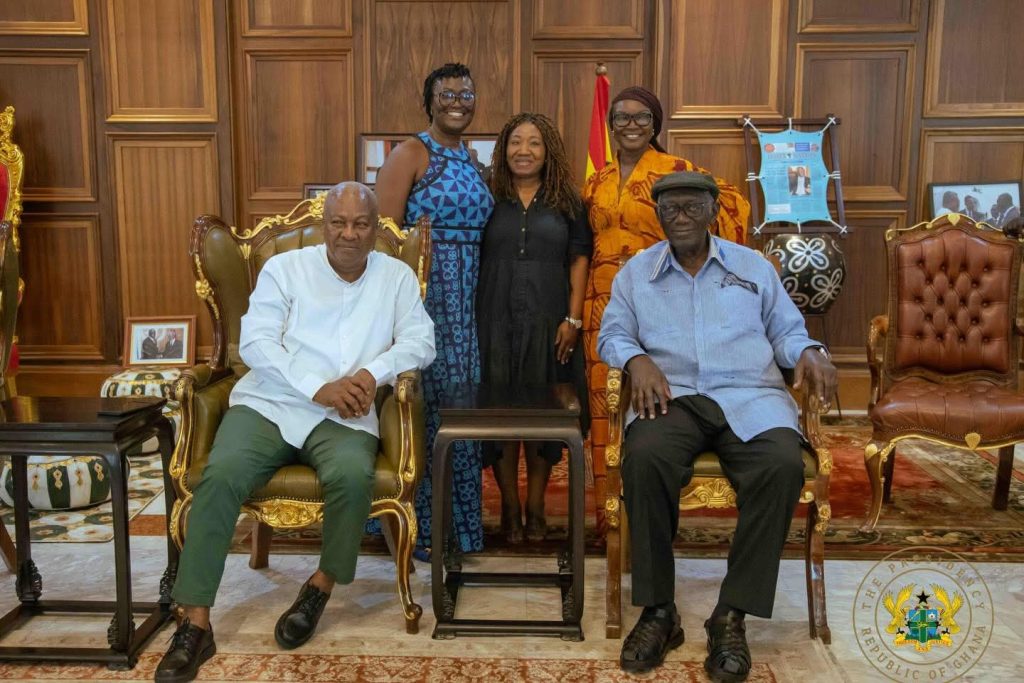
Accra, Dec 31, GNA – President John Dramani Mahama on Tuesday, December 30, visited former President John Agyekum Kufuor at his Peduase residence in the Eastern Region.  

The visit was to extend to the former President and his family the best wishes of the season.  

GNA 

Edited by George-Ramsey Benamba   

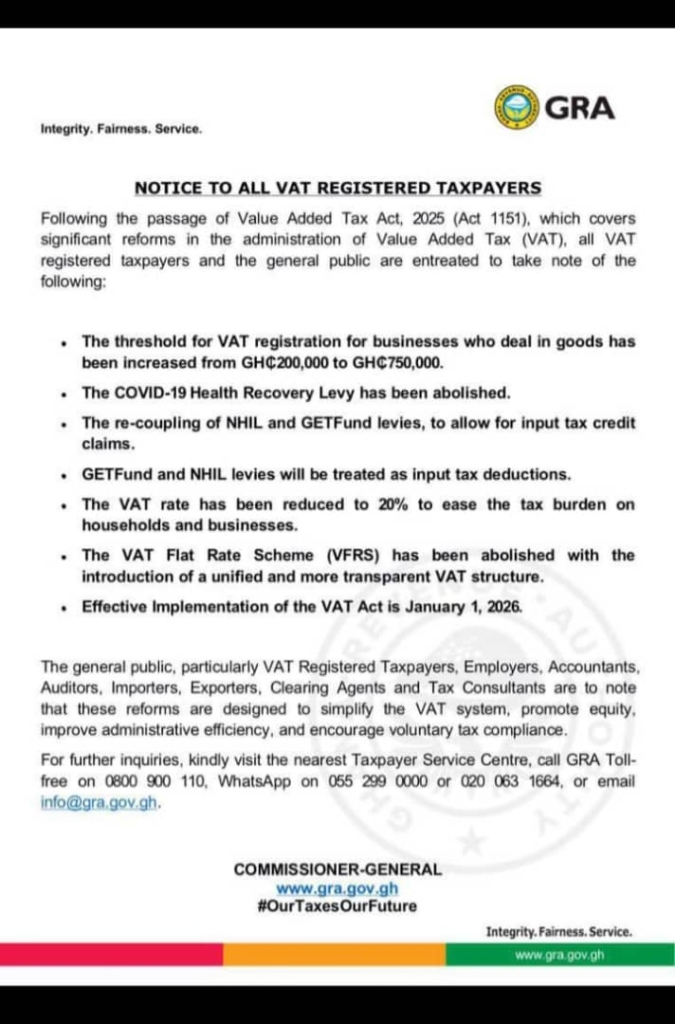
GRA announces major VAT reforms effective January 1, 2026

0

The Ghana Revenue Authority (GRA) has unveiled sweeping reforms to the national Value Added Tax (VAT) system, set to take effect on Jnauary 1, 2026.

The changes include a reduction in the standard VAT rate, higher registration thresholds for small businesses, and the removal of several ancillary levies.

In an official notice to all VAT-registered taxpayers, the GRA confirmed that the standard VAT rate will drop to 20 percent, aimed at reducing the tax burden on households and businesses.

Additionally, the VAT registration threshold for businesses dealing in goods has been increased from GH¢200,000 to GH¢750,000, a move expected to exempt thousands of smaller traders from mandatory registration.

The reforms also abolish certain levies introduced in recent years. The COVID-19 Health Recovery Levy will no longer apply, while the NHIL and GETFund levies will now allow input tax credit claims, providing more transparency and easing compliance.

The VAT Flat Rate Scheme (VFRS) has been discontinued, replaced with a unified VAT structure designed to simplify the system and ensure clarity for all businesses.

The GRA emphasized that the reforms are intended to simplify VAT administration, promote fairness, improve efficiency, and encourage voluntary compliance.

The authority has directed its notice to VAT-registered taxpayers, employers, accountants, auditors, importers, exporters, clearing agents, and tax consultants.

For guidance or questions, the GRA encouraged taxpayers to visit the nearest Taxpayer Service Centre or reach out via their toll-free lines, WhatsApp numbers, or email.

The effective date of implementation is January 1, 2026, marking a significant milestone in Ghana’s ongoing tax and economic reforms.

Ghana settles us$709m Eurobond obligation

0

Accra, Dec. 31, GNA – Ghana has  settled a US$709 million Eurobond obligation, bringing the total payments made to Eurobond holders in 2025 to US$1.4 billion under the government’s restructuring memorandum, the Ministry of Finance has announced.

A press release issued by the Public Relations Unit of the Ministry and copied to the Ghana News Agency on December 31, stated that the payment marked “a major milestone in Ghana’s economic recovery and debt-management efforts.”

The settlement was done on Tuesday, December 30.

The statement noted that the 2025 payment schedule, comprise three major tranches: two payments of US$349.52 million each, and a final US$709 million settlement.

The Ministry noted that the timely settlement reaffirmed the country’s credibility as a sovereign borrower and the government’s commitment to restoring investor confidence through transparent, predictable, and disciplined debt-service practices.

“Building on this achievement, government will intensify reforms in domestic revenue mobilisation, public financial management, and public debt management,” the statement said.

It added that fiscal buffers would continue to be strengthened to support future debt-service obligations and sustainably finance Ghana’s development agenda.

The government expressed gratitude to the public for their support and understanding throughout the economic recovery process.

The Ministry appealed for continued forbearance and cooperation as the country prepared to implement further economic reforms in 2026 to consolidate the gains achieved over the past year.

GNA

Edited by Beatrice Asamani Savage

Water’s whisper gone silent: Are Ghana’s cities ready for the thirsty future?

0

Think of Ghana’s rivers and wetlands as the nation’s secret lovers: vital, life-giving, often taken for granted, and now vanishing before our eyes.

The seductive flow that once quenched cities and cradled ecosystems is fading, choked by climate change, greed, and neglect. As Ghana sweats under an unrelenting sun and whispers circulate about another dry season looming, a critical question simmers: Are our cities ready for a future where water is the most coveted lover of all?

The evidence is stark, flowing far beyond mere anecdote. Rivers that once roared are now timid trickles. Iconic wetlands, nature’s sponges and water filters, are shrinking, paved over or poisoned. Researchers point to an alarming new phenomenon: “extinct rivers.”

Streams like the once-perennial Kawir River in the Tarkwa Nsuaem municipality, or countless smaller tributaries across Ashanti, Western, and Eastern regions, exist now only in memory and old maps, buried under concrete or suffocated by silt from unchecked erosion.

The Climate Squeeze:
Ghana’s Updated Nationally Determined Contribution (NDC) under the Paris Agreement (2020-2030) lays bare the threat. It identifies water resources as critically vulnerable to climate change, predicting intensified droughts, erratic rainfall, and rising temperatures.

These changes directly threaten the recharge of rivers and aquifers cities desperately rely on. The NDC ambitiously targets a 10% reduction in greenhouse gas emissions by 2030 and significant adaptation, but the water clock is ticking faster.

“Climate change isn’t just about hotter days; it’s about disrupting the entire hydrological cycle,” explains Dr. Millicent Kwaw, a post-doctoral researcher at the Institute of Environment and Sanitation Studies, University of Ghana, whose focus is on climate change and health.

“Longer dry spells mean less water feeding our rivers and replenishing groundwater. When the rains do come, they are often intense, causing floods that carry topsoil and pollutants straight into our remaining waterways, further degrading them. Our cities are caught between scarcity and deluge.”

The Galamsey Guillotine:
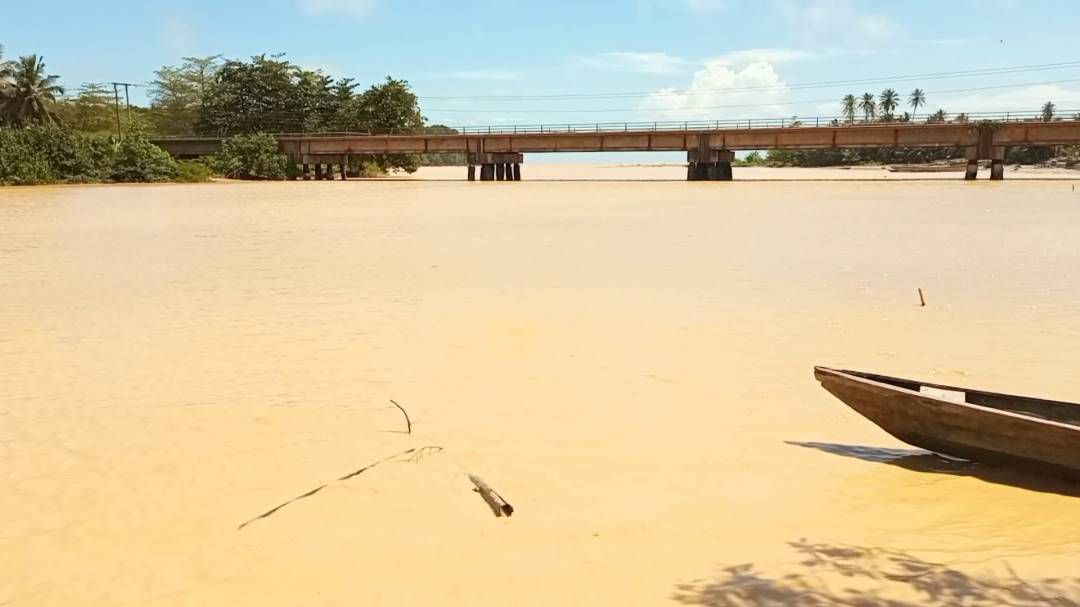
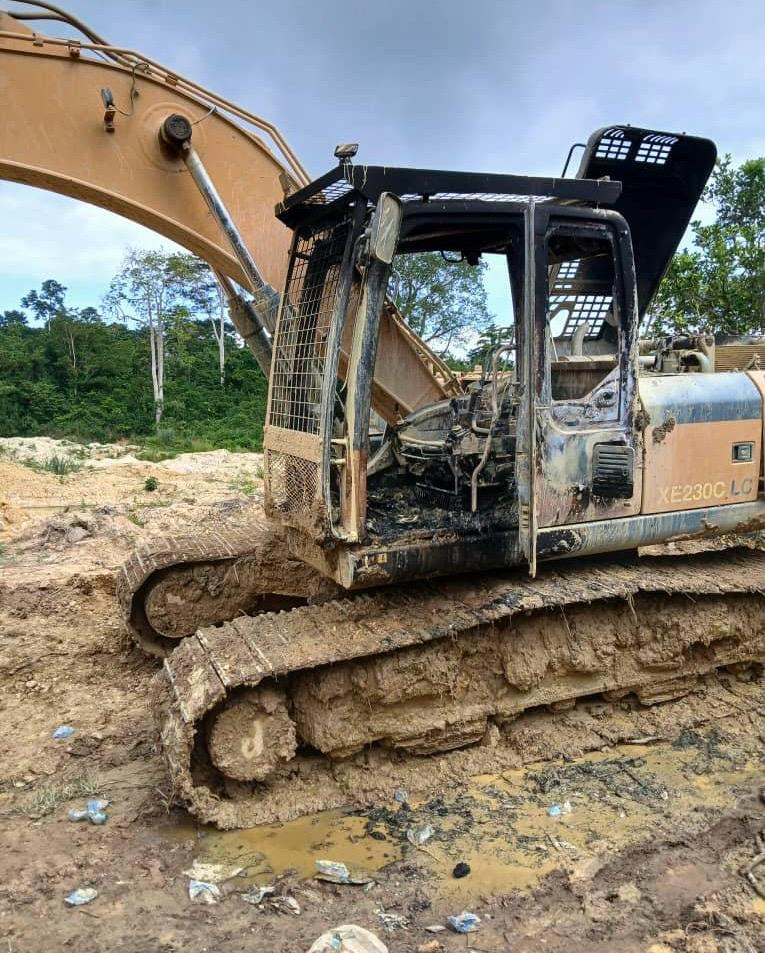
Compounding the climate crisis is the relentless assault of illegal mining – galamsey. This isn’t just about lost gold; it’s about murdered watersheds. Excavators rip through riverbanks and forest buffers. Mercury and cyanide poison the water.

Silt, thick as gruel, smothers riverbeds, destroying habitats and drastically reducing water storage capacity. Researchers point to rivers like the Pra, Ankobra, and Offin as tragic case studies.

“The impact of galamsey on river systems is catastrophic and often irreversible on human timescales,” states Dr. Solomon Owusu Ansah, a Mining Engineering and Mineral Economics Consultant. “We’re not just talking about dirty water; we’re talking about fundamentally altering river morphology, destroying the natural infrastructure that regulates flow and filters water. These rivers are becoming sterile channels of mud. The extinction of smaller streams is directly linked to upstream deforestation and mining activities that destroy their headwaters.”

The Urban Blind Spot?
Meanwhile, Ghana’s cities swell, demanding more water while often treating their natural water assets – wetlands and river corridors – as waste dumps or land banks for development. Wetlands in urban peripheries, crucial for flood absorption and groundwater recharge, are disappearing under housing and industry.

“The National Adaptation Plan (NAP) Framework rightly prioritizes ecosystem-based adaptation, specifically highlighting wetland restoration and protection as key strategies for urban resilience,” notes Dr. Millicent Kwaw. “But translating this framework into enforceable local plans and changing the mindset that sees wetlands as ‘waste lands’ is the real battle. Cities are engines of growth, but without water security, that engine seizes.”

Is There Hope in the Flow?
The NDC and NAP Framework offer a roadmap. Key actions include:

· Strengthening Water Resource Management: Implementing integrated approaches as outlined in the NDC.
· Ecosystem Restoration: Prioritizing wetland and riparian buffer zone rehabilitation (a core NAP strategy).
· Cracking Down on Galamsey: Enforcing mining laws and promoting sustainable alternative livelihoods – essential for protecting water sources.
· Urban Water Sensitive Design: Mandating rainwater harvesting, greywater reuse, and protecting urban green-blue infrastructure (wetlands, parks along rivers).

Projects like the ongoing restoration of the Sakumono Ramsar site near Tema and efforts to protect the Densu Delta wetlands demonstrate commitment. Community-led initiatives reviving small urban streams are also emerging.

The Bottom Line:
The future of water in Ghana’s cities is not a distant abstraction; it’s written in the drying beds of once-great rivers, the ghostly silence of extinct streams like the Kawir, and the shrinking embrace of vital wetlands. Ghana’s climate pledges recognize the crisis and propose solutions.

But the urgency demanded by researchers – to curb galamsey’s devastation, rigorously implement the NAP’s ecosystem protections, and fundamentally revalue urban water landscapes – must translate into relentless, visible action. Our cities’ vitality, economy, and very habitability depend on winning back the love of our most essential resource before its whisper fades into silence forever.

This article is written as part of a collaborative project between JoyNews, CDKN Ghana, and the Centre for Climate Change and Sustainability at the University of Ghana, with funding from the CLARE R41 Opportunities Fund.

DISCLAIMER: The Views, Comments, Opinions, Contributions and Statements made by Readers and Contributors on this platform do not necessarily represent the views or policy of Multimedia Group Limited.

DISCLAIMER: The Views, Comments, Opinions, Contributions and Statements made by Readers and Contributors on this platform do not necessarily represent the views or policy of Multimedia Group Limited.

King Promise turns Accra upside down with PromiseLand Concert

0

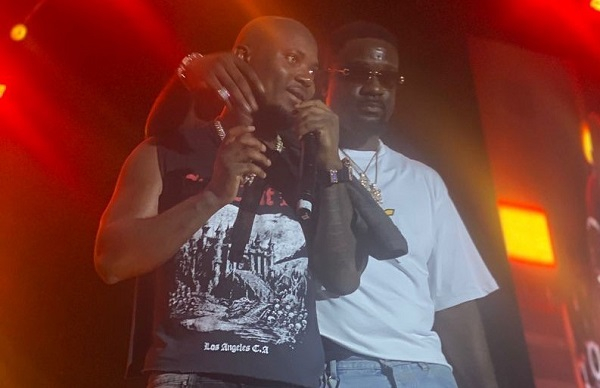
King Promise during his performance with rapper Sarkodie King Promise during his performance with rapper Sarkodie

Accra came alive in the late hours of December 30, 2025, as award-winning Ghanaian musician King Promise delivered a thrilling edition of his much-anticipated PromiseLand Concert, cementing its status as one of the biggest events on the capital’s festive calendar.

Thousands of music lovers poured into the venue at Ghud Park, braving the late hours to witness a night packed with high-energy performances, star power, and unforgettable moments.

The atmosphere was electric from the opening acts to the final song, as fans sang along, danced, and waved their phone lights in celebration of Ghanaian music.

Before King Promise took the stage around 1:00 AM on December 31, attendees were treated to an exciting opening marked by a series of back-to-back hit performances from supporting artistes.

Musician Black Sherif held the crowd spellbound with his emotionally-charged delivery and hit songs that had the audience singing word for word.

Rap heavyweight Sarkodie followed with a powerful set, reminding fans why he remains one of Africa’s most respected lyricists, as he effortlessly commanded the stage with confidence and precision.

Rising star AratheJay brought fresh energy and street vibes, earning loud cheers from the crowd, while KiDi delivered smooth vocals and crowd-pleasing hits that turned the venue into a massive sing-along arena.

Other supporting artistes, including La Meme Gang, Joey B, GonaBoy, and Lalid, among others, also mounted the stage, each adding their unique flavor and contributing to the night’s rich musical diversity.

The highlight of the night came when King Promise finally appeared on stage at around 1:00 AM to thunderous applause.

Dressed in style and backed by a solid live band, he treated fans to a nonstop performance of his biggest hits, from fan favorites to recent chart-toppers.

His stage presence, vocal control, and connection with the audience kept the energy high throughout the night.

King Promise performed for nearly four hours, taking fans on a musical journey that spanned his entire career.

He officially wrapped up the concert around 5:00 AM, leaving the crowd exhausted but fulfilled after an unforgettable experience.

The 2025 PromiseLand Concert once again proved King Promise’s star power and influence in Ghana’s music scene.

With a strong supporting lineup, flawless execution, and massive fan turnout, the event not only “turned Accra upside down,” but also reaffirmed King Promise’s place as one of the country’s leading live performers.

JHM/AE

Iddrisu, Ato Forson, Asiedu Nketia in close contest – Global InfoAnalytics

0

The latest Global InfoAnalytics poll indicates that the race to replace President John Dramani Mahama  within the ruling National Democratic Congress (NDC) has become increasingly competitive, with no candidate commanding a decisive lead.

According to the poll, the contest has now evolved into a three-horse race after the vice president drew support away from other aspirants. Education Minister, Haruna Iddrisu remains in the lead with 26 percent support, although this is a decline from the 29 percent he recorded in October 2025.

Finance Minister Dr Ato Forson has moved into second place with 23 percent, up from 18 percent in the previous poll. He is closely followed by NDC Chairman Johnson Asiedu Nketia, who polls 22 percent, down from 24 percent in October 2025.

The poll further places Professor Jane Naana Opoku-Agyemang in fourth position with 11 percent support. Julius Debrah follows with 7 percent, while Samuel Okudzeto Ablakwa records 6 percent. Professor Joshua Alabi and Eric Opoku each poll 2 percent.

However, in a scenario where Professor Opoku-Agyemang, Haruna Iddrisu, Julius Debrah, and Okudzeto Ablakwa do not contest, Dr Ato Forson emerges as the clear frontrunner. In that scenario, he leads with 48 percent support, ahead of Asiedu Nketia, who polls 41 percent. Joshua Alabi and Eric Opoku trail with 6 percent and 5 percent respectively.

The findings highlight a closely fought succession race within the governing party as attention gradually turns to leadership beyond President Mahama.

What Mahama told Asake as he tried to lobby release for gun-wielding man in Accra

0

President John Dramani Mahama with Asake at a supercar spectacle event President John Dramani Mahama with Asake at a supercar spectacle event

President John Dramani Mahama has told Nigerian musician Ahmed Ololade, popularly known as Asake, that ‘the law is the law,’ following the recent firearm discharge incident at a public event in Accra.

He made the remark when he met the singer at a supercar spectacle event held in Accra on December 30, 2025.

A video from the gathering, which has since gone viral, showed President Mahama in the company of his brother, Ibrahim Mahama; businessman Richard Nii Armah Quaye; actor and MP John Dumelo; and Asake.

Watch the viral video that led to the arrest of ‘Cyborg’

During introductions, President Mahama was heard asking, “Ooh, so he is the one the guy fired the gun for?”

When the question was answered in the affirmative, Asake burst into laughter.

President Mahama then reached out to the musician, who responded apologetically, saying, “We are not happy about what happened.”

President Mahama then replied with a smile, stating; “Don’t worry, the law is the law,” underscoring that due process would take its course.

The comments come in the wake of the arrest of a suspect captured in a viral video discharging a firearm at a public event at the El-Wak Stadium on December 28, 2025.

Police arrest suspect seen in viral video discharging firearm at public event

In a press release dated December 30, 2025, the Cyber Vetting Team at the Criminal Investigation Department (CID) Headquarters announced the arrest of the suspect.

“The suspect, identified as Abubakari Sadick, popularly known as ‘Cyborg,’ was arrested on December 29, 2025, at Adenta for possession and discharging of a firearm,” the statement said.

Police say investigations are ongoing.

Watch the video below:

MRA/AE

Acting Defence Minister Ato Forson inaugurates 9-Member Ministerial Advisory Board

Mahama tells Nigerian singer Asake ‘the law is the law’ after firearm incident

0

A brief exchange between President John Mahama and Nigerian singer Asake has caught the attention of social media users following a recent firearm-related incident at a public event in Accra.

The interaction occurred on December 30 at a supercar exhibition, where the President met the musician in the presence of Ibrahim Mahama, Richard Nii Armah Quaye, John Dumelo and other guests.

BBC Radio WM’s Steve Hermon says he feels sorry for West Brom’s Tammer Bany

0

First and foremost, I feel sorry for Tammer Bany. He’s a polite and pleasant lad and this has been a rotten first year in English football for him.

I spoke to him during the club’s pre-season training camp in Austria where he was looking forward to finally making an impression after struggling with minor injuries in his debut campaign in English football.

He’d made just four substitute appearances under previous boss, Tony Mowbray after arriving for a reported fee of around £3m from Danish side FC Randers in the January transfer window.

In that interview, Bany spoke about his quick rise through the Danish league system. It wasn’t long ago that the 22-year-old was playing at a level the player himself likened to League Two in our pyramid system.

Not long after we spoke, he picked up another injury that kept him out until November.

Since then, he’s appeared on the bench eight times, and played a single minute in in an away defeat for QPR, where the PA announcer was perhaps as surprised as everyone else at his cameo appearance because he was announced as fellow midfielder, Ousmane Diakite.

Despite head coach Ryan Mason explaining his absence on multiple occasions in interviews and revealing just last week that the young midfielder is even struggling with the rigours of training, frustration has grown amongst supporters over his lack minutes, particularly after he made his international debut for Jordan in November.

He played 70 minutes in a goalless draw with Mali, while in 11 months for the Baggies, he’s not started a single game and played a combined 51 minutes off the bench.

Perhaps it was down to the anticipation of seeing him play after sporting director Andrew Nestor cited “significant interest” from across the Europe in the midfielder, who he called “one of the most effective attacking midfielders in Denmark”, when they announced his signing on a three-and-a-half-year deal at the start of 2025.

A fair chunk of money was spent based on that data and his potential to grow, but at the moment it’s looking like a poor use of limited funds by the club, who’ve already revealed they don’t have money to spend in next month’s transfer window on a full-time replacement.

It leaves Mason’s already stretched midfield department now even thinner, with another injured midfielder, Toby Collyer expected to be recalled from his loan by parent club Manchester United in the next few days.

All smiles as President Mahama visits Kufuor and his family

0

President Mahama (L) with former President Kufuor during the visit President Mahama (L) with former President Kufuor during the visit

President John Dramani Mahama, on December 30, 2025, visited former President John Agyekum Kufuor and his family at their home.

Mahama, who announced the visit in a post shared on X, said the visit was to extend seasonal greetings to the former president and his family.

“I paid a visit to President John Kufuor today to extend to him and his family the best wishes of the season,” the president wrote.

Visuals of the visit showed the two men giggling as they exchanged pleasantries.

One of the photos showed former President Kufuor cracking up at remarks passed by President Mahama.

Relatives of the former president were also captured exchanging pleasantries with the current president.

Mahama and Kufuor also posed for pictures with family members and officials during the visit.

Among the entourage of President Mahama was Joyce Bawa Mogtari, the Special Aide to the President.

PHOTOS: Former President Kufuor visits President Mahama following tragic helicopter crash

See photos of the visit below:

All smiles as President Mahama visits Kufuor and his family

BAI

All smiles as President Mahama visits Kufuor and his family

0

President Mahama (L) with former President Kufuor during the visit President Mahama (L) with former President Kufuor during the visit

President John Dramani Mahama, on December 30, 2025, visited former President John Agyekum Kufuor and his family at their home.

Mahama, who announced the visit in a post shared on X, said the visit was to extend seasonal greetings to the former president and his family.

“I paid a visit to President John Kufuor today to extend to him and his family the best wishes of the season,” the president wrote.

Visuals of the visit showed the two men giggling as they exchanged pleasantries.

One of the photos showed former President Kufuor cracking up at remarks passed by President Mahama.

Relatives of the former president were also captured exchanging pleasantries with the current president.

Mahama and Kufuor also posed for pictures with family members and officials during the visit.

Among the entourage of President Mahama was Joyce Bawa Mogtari, the Special Aide to the President.

PHOTOS: Former President Kufuor visits President Mahama following tragic helicopter crash

See photos of the visit below:

All smiles as President Mahama visits Kufuor and his family

BAI

Gov’t settles $709 million Eurobond obligation

0

The Government of Ghana has successfully settled a US$709 million Eurobond obligation ahead of schedule, reinforcing its commitment to economic recovery and prudent debt management.

The payment, which was completed on Tuesday, December 30, 2025, brings Ghana’s total Eurobond repayments for the year to approximately US$1.4 billion.

The amount covers earlier disbursements of US$349.52 million made twice during the year, in line with the country’s debt restructuring agreement with bondholders.

In a Facebook post, the Minister for Finance, Dr. Cassiedl Ato Forson explained that the early settlement underscores Ghana’s renewed credibility as a sovereign borrower and signals government’s determination to rebuild investor confidence through transparent, disciplined, and predictable debt-servicing practices.

He noted that the milestone reflects steady progress in stabilising the economy and restoring confidence in Ghana’s public finances.

He added that government will build on this achievement by deepening reforms in domestic revenue mobilisation, public financial management, and public debt administration.

The Ministry further assured that fiscal buffers will continue to be strengthened to meet future debt obligations while sustainably financing national development priorities.

Government also expressed gratitude to Ghanaians for their patience and support, acknowledging that public cooperation has been critical to the gains made so far. It appealed for continued forbearance as further economic reforms are rolled out in 2026 to consolidate the progress achieved in 2025.

Kpandai: GH¢3m mortuary facility commissioned for Evangelical Church of Ghana Hospital

0

Kpandai: GH¢3m mortuary facility commissioned for  Evangelical Church of Ghana Hospital

Featured


Simon Unyan


2 minutes read

A new mortuary facility with a storage capacity of between 350 and 400 bodies has been commissioned at the Evangelical Church of Ghana Hospital in Kpandai in the Northern Region.

It was constructed at a cost of GH¢3 million and it is the first of its kind in the Kpandai area.

Speaking at a ceremony to commission the facility, the Medical Superintendent of the hospital, Dr. Joseph Sonlaar, raised concerns about persistent power fluctuations in Kpandai and the absence of a dedicated transformer for the new mortuary, warning that unreliable electricity could undermine its effective operation.

He appealed to the Kpandai District Assembly, the Ministry of Energy, NEDCo,  corporate bodies, and other stakeholders to support the hospital with a dedicated power transformer to ensure an uninterrupted electricity supply and sustain high operational standards.

Dr. Sonlaar said the project was financed largely through the hospital’s internally generated funds, with significant support from 24 committed health workers who sacrificed portions of their salaries after attempts to secure external funding and bank loans proved unsuccessful.

The General Secretary of the Evangelical Church of Ghana,  Bishop James Aluruba, commended the hospital’s management for its foresight and dedication, describing the mortuary as a timely intervention that would bring relief to families in Kpandai and beyond.

The District Chief Executive (DCE) for Kpandai, Mr. Haruna Abdul-Karim, pledged the Assembly’s support, adding that the assembly will, in the coming days, provide the facility with a mechanised water system to ensure a reliable water supply and improve sanitation and hygiene. 

Ghana government settles $709m Eurobond obligation – Ministry

0

The Ministry of Finance has successfully settled a $709 million Eurobond obligation on December 30, ahead of its due date, marking another significant milestone in Ghana’s economic recovery and debt management efforts. 
In a statement, the Ministry said the payment brings total disbursements to Eurobond holders in 2025 to $1.4 billion under the restructuring memorandum. The amount comprises payments of $349.52 million, $349.52 million, and $709.00 million. 

The Ministry said the timely settlement reaffirmed Ghana’s credibility as a sovereign borrower and underscored government’s commitment to restoring investor confidence through transparent, predictable and disciplined debt-service practices. 

Building on the achievement, the statement said the government would intensify reforms in domestic revenue mobilisation, public financial management, and public debt management. 

It said fiscal buffers would continue to be strengthened to support debt-service obligations and sustainably finance Ghana’s development agenda. 

The statement expressed government’s appreciation to the people of Ghana for their support and understanding, which it described as vital to the country’s economic recovery. 

“We also take this opportunity to appeal for continued forbearance and cooperation as further economic reforms are implemented in the coming year to consolidate the gains achieved in 2025,” it said. 

“May 2026 be our best year yet.” 

Source: GNA 

Police Arrest 28 Youth In Security Operation

0

The Ghana Police Service has arrested twenty-eight (28) youths at identified ghettos within the New Juaben South Municipality of the Eastern Region as part of intensified security operations.

The suspects were arrested for their alleged involvement in various criminal activities, including gambling, the use and trafficking of narcotic drugs, and the sale of unauthorized pharmaceutical products.

Friends of Love Donates Items to Beads of Life Foundation

0

Madam Ama Tweneboah presenting an item to Mr. Addo Collins


A philanthropic group known as Friends of Love, based at Nsima in the Kwadaso Municipality of the Ashanti Region, has donated assorted items to the Beads of Life Foundation, formerly the Beads of Life Orphanage, at New Koforidua in the Juaben Municipality.

The donation comprised four bags of rice, fruits, assorted soft drinks, toiletries, detergent, soaps, four boxes of mackerel sardines, second-hand clothing, cooking oil, sandals, shoes, biscuits, and other items.

Presenting the items, the spokesperson of the group, Madam Afua Pokuaa, said the gesture was intended to bring joy to the children and demonstrate love to the underprivileged, especially during the Christmas season.

She expressed gratitude to the group’s patron, Anthony Baffour Awuah, for his support and revealed that members of the group made financial contributions towards the donation.

“Christmas is a season of love, and as parents, we felt it was important to also come here to feed and clothe these children, as the Bible teaches that there is more blessing in giving than in receiving,” she stated.

One of the leaders of the group, Ama Tweneboah, commended the management of the foundation for the care and dedication shown to the children and pledged the group’s continued support to the home.

Another leader, Georgina Osei, appealed to corporate bodies and philanthropists to come to the aid of the children, noting that the visit was aimed at showing love and compassion.

Receiving the items, the father of the house, Addo Collins, expressed appreciation to Friends of Love for the kind gesture and prayed for God’s blessings upon them. He also encouraged other well-meaning individuals to emulate the group’s example.

Special prayers were later offered for the group by one of the inmates, asking for God’s guidance, protection, and prosperity in their endeavours.

FROM David Afum, New Koforidua

Eating to get sick: Poor diets fuelling rise of NCDs in Ghana  

0

When Dorcas reaches for a chilled bottle of her favourite soft drink after lunch, she rarely considers its long-term effects on her health. 
For the 29-year-old secretary in Accra, the sweetness is comforting. The tiny print on the label- numbers, percentages and scientific terms- feels too distant to warrant concern. 

“I take these drinks because they are less expensive compared to natural fruit juice. They are easy to get. Sometimes the drinks paired with a bun, buff loaf, cookies or biscuits serve as a full meal,” she says. 

Nutrition experts, however, warn that a single 300ml bottle of soda can contain as many as nine cubes of sugar, almost twice the recommended daily limit. 

“Even when you dilute it, the sugar content doesn’t reduce. Your tongue may not taste it, but your body absorbs every gram,” says Harriett Nuamah Agyemang, Country Director of SEND Ghana, which is leading advocacy for Front-of-Pack Labelling (FOPL) to help consumers make healthier choices. 

Rising consumption, growing risk 

Professor Richmond Nii Okai Aryeetey, a Public Health Nutrition Expert at the University of Ghana, says a recent study shows that one-third of Ghanaian adolescents consume sugary drinks at least once a day. 

“Before the end of 2025, Ghana has already purchased almost $1.3 billion worth of sugar-sweetened beverages. There is not enough data, but we know enough to see that consumption is high and rising, especially among the youth,” he says. 

According to the Ghana Living Standards Survey, households spend nearly three per cent of their income- about GH¢2,200 annually-on sugary drinks. 

Prof. Aryeetey says diets dominated by sugar, salt and fat, common in Ultra-Processed Foods (UPFs), are driving increases in hypertension, diabetes and heart disease. 

“Ultra-processing takes food to another level. You combine ingredients that are intensely refined, and add industrial formulations, colours, flavours, sweeteners, that never appear in home cooking,” he explains. 

He identifies doughnuts, pizza, ketchup, burgers, and fizzy drinks as common UPFs. 

The numbers behind the burden 

The World Health Organisation (WHO) estimates that non-communicable diseases (NCDs), including stroke, heart disease, diabetes and cancers, account for 48 per cent of all deaths in Ghana. 

In 2019, the age-standardised mortality rate for major NCDs stood at 750 per 100,000 males and 563 per 100,000 females. 

Projections indicate that by 2034, nearly 41 per cent of all deaths could be linked to complications from four major NCDs: stroke, heart attack, heart failure and chronic kidney disease, largely driven by unhealthy diets. 

Ghana Health Service (GHS) data show that in 2024 alone, more than 584,000 people were diagnosed with hypertension and nearly 200,000 with diabetes.  

In the first half of 2025, a further 255,000 hypertension cases and 88,000 diabetes cases were recorded. 

Public health experts describe this as evidence of a “sick food environment”, where consumers are surrounded by cheap, aggressively marketed products high in salt, fat and sugar. 

Convenience foods and changing lifestyles 

From instant noodles and tomato paste to packaged snacks and fizzy drinks, UPFs have become staples in homes, schools, and workplaces. 

Ms Agyemang links the trend to changing lifestyles. 

“People spend hours in traffic and get home late. They go for the quick options canned, instant or fried. But the long-term cost to their health is enormous,” she says. 

Ghana’s current labelling regulations require nutritional information to be placed on the back of packages, often in fine print that many consumers struggle to interpret. 

“Even educated consumers struggle with it. For the ordinary person, it’s even more confusing,” she adds. 

Front-of-pack labeling 

Several countries, including South Africa, Nigeria, Mexico and Chile, have adopted Front-of-Pack Labelling, using simple symbols or colours to indicate high levels of salt, sugar or fat. 

The WHO says FOPL enables consumers to identify healthier options at a glance and encourages manufacturers to reformulate products to avoid warning labels. 

“It doesn’t only guide shoppers. It forces companies to compete on health, not just price,” Ms Agyemang notes. 

At Rawlings Park in Accra, food vendor Asia Bintu says she checks only expiry dates. 

“I don’t understand the numbers and those tiny inscriptions. Canned foods are cheaper and easier to cook,” she says. 

Advocates say such responses reflect low food literacy, underscoring the need for public education and regulation. 

Health system under pressure 

Maxwell Bisda Konla, Principal Dietician at the University of Ghana Hospital, says Ghana’s progress in improving national nutrition has slowed. 

“Obesity, hypertension and other NCDs are rising at an alarming rate as Ghanaians shift from traditional fibre-rich foods to highly processed meals, sugary drinks and refined carbohydrates,” he says. 

Heart disease, kidney failure, and liver complications now feature prominently in mortality data. 

He calls for stronger policies to limit the importation and marketing of unhealthy foods while promoting local alternatives such as brown rice, whole grains, fruits, vegetables, nuts, and seeds. 

Schools as a focal point  

Labram Musah, National Coordinator of the Ghana NCD Alliance, says schools are critical to reversing current trends. 

“Children are increasingly exposed to unhealthy diets, especially in urban areas. What they eat in school shapes their lifelong habits,” he says. 

He advocates regulation of foods sold in and around schools and the introduction of practical nutrition education, including school gardens and healthy meal plans. 

“It’s not enough to tell children what to eat. We must make healthy options available and affordable. Imagine if every school had a small garden, it would change how children think about food.” 

Mr Musah also urges the integration of FOPL into Ghana’s broader NCD prevention strategy, alongside salt reduction, sugar taxes and restrictions on marketing UPFs to children. 

Evidence from Africa  

A randomised controlled trial in Kenya involving 2,198 shoppers found that FOPL significantly improved participants’ ability to identify sugar, salt and saturated fat in packaged foods and reduced intentions to buy unhealthy products, particularly when black warning labels were used. 

A South African study similarly found that simplified front-of-pack labels were more effective than detailed back-of-pack tables in helping consumers identify unhealthy foods. 

Prevention as priority 

The WHO says clear labelling can drive product reformulation and reduce diet-related diseases over time. 

“Reading a label could be the difference between good health and a lifetime of medication. If we don’t act now, we will keep spending millions treating preventable diseases,” Ms Agyemang warns. 

For Ghana, a stronger focus on prevention could reduce pressure on health facilities already managing growing NCD caseloads. 

Nutrition advocates say introducing Front-of-Pack Labelling would strengthen Ghana’s response to NCDs by making nutritional quality visible at the point of purchase and supporting healthier decision-making. 

Advancing SDG three 

The rising burden of diet-related NCDs poses a significant challenge to achieving Sustainable Development Goal Three, which aims to reduce premature deaths from NCDs through prevention and treatment. 

Improving Ghana’s food environment through clearer labelling, salt and sugar reduction policies and better access to affordable healthy foods is considered essential to meeting these targets. 

By prioritising preventive nutrition policies and healthier diets, Ghana could reduce avoidable illness, ease pressure on the health system and advance efforts to ensure healthy lives and well-being for all. 

By Linda Naa Deide Aryeetey 

Source: GNA 

Apology and Retraction to the Ukrainian Embassy

0

CitiNewsroom.com extends its sincere apologies to the Embassy of Ukraine and the George Padmore Research Library for the publication of an opinion article titled “Nationalism, Historical Memory and Cultural Outreach: Questions Raised by a Ukrainian Bookshelf in Ghana.”

We acknowledge that the article contained factual inaccuracies. We also regret that the author’s name, Dr. John Roberts, was omitted at the time of publication, which may have inadvertently created the impression that the views expressed were those of Citi Newsroom.

We wish to clarify that the opinion was authored solely by Dr. John Roberts and did not represent the editorial position of Citi Newsroom.

We hereby retract the publication and unreservedly apologise to the Embassy of Ukraine and the George Padmore Research Library for the oversight and any inconvenience, misunderstanding, or discomfort this may have caused.

Please accept our assurances of our highest consideration.

Management
CitiNewsroom

GoldBod Chief Promises January Exposé While Accusing Opposition of Hypocrisy Over Losses

0

Sammy Gyamfi
Sammy Gyamfi

Ghana Gold Board (GoldBod) Chief Executive Officer Sammy Gyamfi has announced plans to publicly address allegations surrounding the International Monetary Fund’s (IMF) reported 214 million dollar loss under the Bank of Ghana’s (BoG) Gold for Reserves (G4R) programme, promising detailed clarification beginning Monday, January 5, 2026. Gyamfi released preliminary data Monday, December 29, accusing the New Patriotic Party (NPP) Minority of hypocrisy while defending the programme’s macroeconomic contributions.

In a statement shared on social media responding to a Minority press conference earlier that day, Gyamfi characterized opposition criticism as uninformed and unfounded, arguing that losses have decreased substantially under current management despite purchasing significantly larger gold volumes at higher prices. He released what he described as audited figures showing Bank of Ghana losses from artisanal small scale gold purchases under both G4R and Gold for Oil (G4O) programmes during NPP administration.

For 2023, Gyamfi stated that G4O gold component losses recorded 1.18 billion cedis while G4R losses reached 973 million cedis, bringing total losses for the year to 2.15 billion cedis. In 2024, audited figures showed G4O losses of 667.79 million cedis and G4R losses of 4.18 billion cedis, producing total losses for 2024 at 4.84 billion cedis, according to the GoldBod chief executive.

For 2025, Gyamfi explained that the G4O programme has been discontinued while G4R losses remain unaudited. He cited the IMF’s estimate of approximately 2.3 billion cedis, equivalent to about 214 million dollars, in losses between January and September 2025. However, he noted that the NPP Minority has placed the unaudited 2025 G4R losses at 300 million dollars, equivalent to about 3.3 billion cedis.

Describing the situation as a paradox, Gyamfi questioned why the NPP, under whose administration cumulative losses of about seven billion cedis were recorded between 2023 and 2024, was now calling for a probe into what he claims represents a significant reduction in losses. He argued that NPP is now demanding investigation into how BoG and GoldBod have reduced their recurring losses to 3.3 billion cedis, characterizing the opposition position as a joke.

Gyamfi further linked the performance of gold programmes to broader economic indicators. He noted that during the period when higher losses were recorded under NPP administration, the Ghana cedi depreciated cumulatively by 27.8 percent in 2023 and 19.2 percent in 2024, while inflation stood at 22.3 percent in 2023 and 23.8 percent in 2024.

By contrast, he stated that in 2025, inflation has declined for 11 consecutive months falling from 23.8 percent to 6.3 percent, while the cedi has appreciated by over 35 percent against the US dollar, a development he described as unprecedented since 2007. Despite the criticisms, Gyamfi said GoldBod and its partners welcome calls for an independent probe into the programme.

The Minority in Parliament has raised grave concerns over GoldBod operations, warning that Ghana risks losing up to 300 million dollars in 2025 under what it describes as a deeply flawed and opaque gold trading arrangement threatening the economy, environment, and national institutions. Addressing media during the Christmas period, the Minority said it was compelled to suspend holidays to alert the nation to what it termed darkness beneath the glow of Christmas lights.

Citing an IMF report, the Minority noted that 214 million dollars had already been lost within the first nine months of 2025 under the G4R programme but cautioned that the true scale of losses goes beyond what is publicly reported. Central to the Minority’s concerns is the role of Bawa Rock Limited, owned by Alhaji Rashid Bawa Namoro, which they allege has been made the sole aggregator licensed by GoldBod to purchase artisanal and small scale gold across the country.

The Minority questioned why a monopoly was deliberately created in an industry where competition is critical to transparency and fair pricing. They demanded answers on how Bawa Rock was selected, who its beneficial owners are, and why all gold suppliers must route their products through a single private entity before reaching GoldBod and ultimately BoG. Until these questions are answered publicly, no Ghanaian can trust the integrity of this scheme, the Minority declared.

According to the Minority, the losses stem from the structural design of the programme rather than market fluctuations. They explained that GoldBod pays miners at global market prices and prevailing forex bureau rates but later sells the dollars earned from offshore buyers to BoG at weaker interbank rates. The resulting exchange rate losses, they argue, are transferred directly to the central bank, forcing the state to absorb the financial hit while intermediaries remain protected.

The Minority contrasted the current arrangement with the original G4R programme under NPP administration, under which Ghana’s gold reserves increased from 8.7 tonnes to 31 tonnes in under two years without reported losses. Under current administration, however, reserves have reportedly increased by only seven tonnes despite large volumes of gold passing through GoldBod. They accused government of shifting the programme from a strategic reserve building initiative to a gold trading operation driven by rent seeking rather than national interest.

Beyond financial implications, the Minority warned of social costs of the reported losses, noting that 214 million dollars could have funded dozens of hospitals, thousands of boreholes, and critical infrastructure for deprived communities. They also linked GoldBod operations to worsening environmental destruction, alleging that inability to meet Organisation for Economic Co-operation and Development (OECD) traceability standards has effectively turned state sanctioned gold buying into a laundering channel for illegal mining known as galamsey.

The Minority criticized what it described as official arrogance, pointing to public statements dismissing losses as speculative despite the IMF relying on data submitted by Ghana itself. They further accused government of lacking original ideas, arguing that GoldBod is merely a rebranding of existing NPP era initiatives such as G4R and G4O without the technical competence required to operate in global commodities markets.

In response, the Minority outlined four key demands: establishing a Parliamentary Ad Hoc Investigative Committee with powers to subpoena contracts, licenses, and intermediaries including Bawa Rock; full public disclosure by GoldBod and BoG of pricing formulas, fee structures, and foreign exchange arrangements; emergency environmental measures including suspending mining in forest reserves and enforcing mine level traceability; and accountability requiring the BoG Governor and GoldBod CEO to appear before Parliament with prosecutions to follow where wrongdoing is established.

Minority Ranking Member on Parliament’s Economy and Development Committee, Kojo Oppong Nkrumah, criticized Gyamfi’s response as unfortunate, saying if a CEO presides over significant losses, the response should not focus on comparative losses under previous administrations but rather address the scale of the issue. Speaking on Channel One Newsroom on December 29, Oppong Nkrumah said he was surprised to see a CEO respond on social media claiming he has losses but NPP also made certain losses.

Gyamfi emphasized in his statement that G4R is designed to generate foreign exchange and strengthen Ghana’s reserves, not to operate as a profit making venture. He argued the programme should be judged by its broader economic impact rather than profit and loss figures alone. If profit is the ultimate goal of G4R, why was BoG under NPP buying gold at spot prices between 2023 and 2024 as government policy, Gyamfi questioned.

The GoldBod chief executive also highlighted that in 2025, BoG purchased 102 tonnes of artisanal small scale mining gold worth more than 10 billion dollars at a time when gold prices had risen above 2,600 dollars per ounce. He characterized NPP complaints about 3.3 billion cedis in unaudited and unverified losses as hypocritical given they purchased far less gold at lower prices yet incurred larger losses.

The IMF disclosed in its fifth review report released December 17 that operational costs from GoldBod alongside trading shortfalls drove losses under G4R to 214 million dollars within the first nine months of 2025. The Fund characterized this development as a potential threat to economic stability. In 2025 through end Q3, losses from the artisanal and small scale gold transactions component of G4R have reached 214 million dollars, mostly on trading losses but also on GoldBod off takers’ fees, according to IMF documentation.

However, GoldBod has rejected these findings, clarifying that the board does not charge off taker fees and that its mandate is limited to purchasing, assaying, and exporting gold on behalf of the central bank. Gyamfi emphasized that all gold trading and sales decisions remain the sole responsibility of BoG, with GoldBod functioning purely as a procurement and logistics intermediary.

Policy analyst Dr. Emmanuel Steve Asare Manteaw has defended losses reported under gold backed programmes, arguing that economic policy must be judged by macroeconomic outcomes rather than isolated financial figures. He characterized criticism of GoldBod as politically motivated attacks rather than substantive institutional assessment. Dr. Manteaw stated that benefits from GoldBod activities currently outweigh operational losses.

Economist Dr. Theo Acheampong’s recent econometric analysis using nearly three years of official BoG data demonstrated that reserve accumulation follows programmatic decisions rather than reactive price driven strategies. His research showed that while gold prices and Ghana’s reserves show strong correlation over time, when examining month to month movements, correlation becomes negative, confirming that purchases follow policy rather than prices.

The coming days leading to Gyamfi’s January 5 exposé will test whether his detailed response can address opposition concerns or whether the debate intensifies further. The GoldBod chief executive has promised to provide comprehensive clarification on IMF figures, the programme’s overall performance, and the role of intermediaries including Bawa Rock Limited.

As Parliament prepares to reconvene in the new year, the question of whether a bipartisan investigative committee will be established remains unresolved. The Minority has maintained that without transparency and competitive processes, the gold aggregation scheme risks undermining public trust while potentially worsening environmental destruction linked to mining activities.

Gyamfi concluded his December 29 statement with a political jab at the opposition, urging the public to stay tuned for further disclosures beginning January 5. The escalating rhetoric between GoldBod management and parliamentary opposition suggests that the controversy over Ghana’s gold purchase programmes will remain a dominant political and economic issue throughout early 2026.

The Wire and Veep actor dies at 71

0

Isiah Whitlock Jr, who was known for his memorable acting roles on The Wire and Veep, has died at the age of 71, according to his manager.

“It is with tremendous sadness that I share the passing of my dear friend and client Isiah Whitlock Jr,” manager Brian Liebman wrote on Instagram.

GoldBod’s $214m ‘loss’ a policy cost

0

The Bank of Ghana’s Domestic Gold Purchase Programme (DGPP) has been accused of recording a US$214 million loss, but experts say the figure represents a deliberate policy cost with significant economic benefits for the country.

Established in 2025, GoldBod centralises Ghana’s gold trade, boosts official foreign exchange inflows, and accumulates gold reserves. In its first year, the agency has sharply reduced gold smuggling, increasing official artisanal and small-scale mining exports from 63.6 metric tons in 2024 to 101 metric tons in 2025.

Entrepreneur and economic policy analyst Senyo K. Hosi argues that while the $214 million is technically an accounting loss, it should be viewed in the broader context of economic gains. The programme has helped raise Ghana’s foreign reserves from USD8.98 billion in 2024 to USD11.12 billion by October 2025, with projections of USD13 billion by year-end.

The appreciation of the cedi, from an average of GH¢14.2/USD in 2024 to GH¢12.53/USD in 2025, has generated substantial fiscal savings. External debt service payments fell by over GH¢6.2 billion (USD560 million), payments to independent power producers dropped by GH¢6.45 billion (USD582 million), and projected savings on imports exceed GH¢60 billion, boosting real spending power for Ghanaians.

Senyo Hosi explains that the “loss” arises partly from GoldBod paying world-market rates to local miners and offering bonuses to discourage smuggling. This strategy ensured gold was sold through official channels rather than foreign networks, strengthening reserves and generating foreign exchange inflows.

The International Monetary Fund has acknowledged the programme’s success, noting that Ghana reached its 2028 reserve coverage target in 2025. Hosi stresses that economic policies should be evaluated by their outcomes rather than accounting measures, noting the programme has also helped reduce inflation from 24% in 2024 to 6.3% by November 2025.

“The DGPP has delivered stability, fiscal savings, and inflation reduction,” Hosi said. “The $214 million is not a loss but a policy cost whose benefits far outweigh its financial cost.”

NPP Primaries: Dr Bawumia takes commanding 73% lead — latest Global InfoAnalytics report

0

Former Vice President Dr. Mahamudu Bawumia

A latest survey by Global InfoAnalytics has shown a clear and commanding lead for former Vice President, Dr Mahamudu Bawumia, in the New Patriotic Party (NPP) flagbearer race.

According to the report, Global InfoAnalytics, which has been consistently tracking the NPP primaries over the past few months, revealed that Dr Bawumia has secured 73% support among NPP delegates.

Kennedy Agyapong follows in second place with 19%, while Dr Bryan Acheampong trails with 5%.

Dr Osei Yaw Adutwum and Kwabena Agyei Agyapong recorded 2% and 1% respectively.

Unlike previous surveys, the latest Global InfoAnalytics report did not include categories for undecided or undisclosed voters, providing a clearer picture of the likely outcome of the NPP primaries.

In the previous report, which left out nearly 20% of delegates who were either undecided or unwilling to disclose their preferences, Dr Bawumia led with 45%, while Kennedy Agyapong polled 31%, leaving a significant portion of votes still in contention.

However, the latest findings show Dr Bawumia extending his lead significantly, with Kennedy Agyapong’s support declining.

Beyond the NPP delegate base, the survey also found that 56% of the general Ghanaian electorate prefer Dr Bawumia to lead the NPP into the 2028 general elections.

Kennedy Agyapong followed with 28%, while 6% preferred Dr Bryan Acheampong. Dr Osei Yaw Adutwum and Kwabena Agyei Agyapong recorded 4% and 2% respectively.

The NPP is scheduled to go to the polls on January 31 to elect its flagbearer for the 2028 general elections.

DISCLAIMER: The Views, Comments, Opinions, Contributions and Statements made by Readers and Contributors on this platform do not necessarily represent the views or policy of Multimedia Group Limited.

DISCLAIMER: The Views, Comments, Opinions, Contributions and Statements made by Readers and Contributors on this platform do not necessarily represent the views or policy of Multimedia Group Limited.

‘Enemies are not God’ – Bawumia claps back at critics

0

Dr Mahamudu Bawumia is former Vice President of Ghana Dr Mahamudu Bawumia is former Vice President of Ghana

A flagbearer hopeful of the New Patriotic Party (NPP), Dr Mahamudu Bawumia, has responded to critics who doubt his chances of becoming president, while also outlining initiatives aimed at strengthening the party’s structures ahead of the 2026 Election.

Addressing supporters in a video shared on X on Wednesday, December 31, 2025, Dr Bawumia dismissed claims that he cannot ascend to the presidency, stressing that destiny is determined by divine will, rather than human opposition.

“Some say I cannot be president, but I remind them that enemies are not God. It is God who protects the vulnerable, and I trust that He will provide for me,” he declared.

The former vice president further emphasised his commitment to party unity and capacity building, promising to introduce measures that will empower executives, members, and constituencies.

Bawumia leads NPP flagbearer race with 56% support – Poll

“If I am chosen as the flagbearer of this party, I will introduce initiatives that empower our executives, members, and constituencies, strengthening the party to secure victory in the elections,” he said.

Dr Bawumia’s remarks come as part of his broader campaign message, positioning him as a candidate of resilience, faith, and organisational reform within the NPP.

‘Wherever we go, our polling station executives are yearning for Bawumia’ – NPP Coordinators

Watch the video below:

VKB/AE

VAT rate cut, flat rate scheme scrapped, COVID levy abolished from Jan 1

0

The Ghana Revenue Authority (GRA) has unveiled a comprehensive reform of the national Value Added Tax (VAT) system, announcing a reduction in the standard rate and the abolition of several ancillary levies, set to take effect from the start of the new year.

In an official notice to all VAT-registered taxpayers, the GRA outlined the key changes following the passage of the Value Added Tax Act, 2025 (Act 1151). Among the most impactful measures is a direct cut to the core VAT rate. 

“The VAT rate has been reduced to 20 percent to ease the tax burden on households and businesses,” the authority stated.

In a major shift for small and medium-sized enterprises, the registration threshold for businesses dealing in goods has been substantially raised. 

“The threshold for VAT registration for businesses who deal in goods has been increased from GH¢200,000 to GH¢750,000,” the notice confirmed, a move expected to deregulate thousands of smaller traders.

The reforms also dismantle specific charges introduced in recent years. The notice declared that “the COVID-19 Health Recovery Levy has been abolished.” Furthermore, the GRA announced “the re-coupling of NHIL and GETFund levies, to allow for input tax credit claims,” specifying that “GETFund and NHIL levies will be treated as input tax deductions.”

Another significant structural change is the discontinuation of a separate scheme for retailers. “The VAT Flat Rate Scheme (VFRS) has been abolished with the introduction of a unified and more transparent VAT structure,” the GRA explained.

The collective changes are slated for a swift implementation, with the GRA noting the “effective implementation of the VAT Act is January 1, 2026.”

The authority directed its notice to “the general public, particularly VAT Registered Taxpayers, Employers, Accountants, Auditors, Importers, Exporters, Clearing Agents and Tax Consultants,” stating that the reforms are “designed to simplify the VAT system, promote equity, improve administrative efficiency, and encourage voluntary tax compliance.”

For further clarification, the GRA has advised the public to contact their nearest Taxpayer Service Centre or use the provided toll-free lines, WhatsApp numbers, and email address. The notice was issued under the authority of the Commissioner-General.

Mahama pays courtesy call on Kufuor

0

President John Dramani Mahama on Tuesday, December 30, 2025, paid a courtesy visit to former President John Agyekum Kufuor at his residence in Peduase.

The visit, described as a private and informal engagement, was to convey festive greetings and extend goodwill to the former President and his family ahead of the New Year.


The meeting was held in a relaxed atmosphere and reflected the cordial relationship between the two leaders, who belong to different political traditions.


President Mahama, who was accompanied by a small team of aides, praised Kufuor for his lifelong dedication to Ghana’s peace, stability and democratic growth.


He noted that such interactions among past and present leaders help strengthen national unity, particularly as the country looks forward to 2026.


He also wished the former President good health and longevity, describing him as a respected elder whose experience and counsel continue to be valuable to the nation.

Mr. Kufuor, in response, expressed appreciation for the visit and welcomed President Mahama warmly.


He thanked him for the gesture and offered prayers for wisdom, strength and divine guidance for the Presidency in the year ahead.


Gender minister fetes children on Christmas Day

0

The minister with some of the children The minister with some of the children

The Ministry of Gender, Children and Social Protection has organised an End-of-Year Christmas Party for children, bringing together children from care homes, basic schools, and partner institutions for a day of celebration.

The colorful event, held at the Efua Sutherland Children’s Park, was led by the Minister of Gender, Children and Social Protection, Dr Agnes Naa Momo Lartey, who described the gathering as an expression of gratitude to God and a demonstration of the ministry’s commitment to child welfare and social protection.

Addressing the children, caregivers, and stakeholders, the Minister thanked God for seeing the nation through 2025, a year she noted began with transition but ended with renewed hope.

She said the Christmas season was an important moment to remind children under the care of the Ministry that they are loved, remembered, and supported.

“Christ is the father to the fatherless and the mother to the motherless. Today, we want the children to know that they are not alone. They have created a community of their own here, and we want them to feel that sense of family,” she said.

The programme featured fun games, music, dancing, bouncing castles, and shared meals, with visible excitement and joy among the children.

The minister further noted that the Christmas party was not a one-off activity but part of the Ministry’s broader approach to child care and protection, which includes regular visits to children’s homes and continuous social support initiatives.

Touching on parental responsibility, she encouraged parents and guardians to take advantage of government social intervention programmes, including the Livelihood Empowerment Against Poverty (LEAP) Programme and the School Feeding Programme, to support the care and education of their children.

“No matter the challenges, there are interventions to support families. Let us all play our part in raising children who will have a brighter future,” she urged, calling for collective responsibility in line with the vision of President John Dramani Mahama.

Children from selected basic schools, including Osu Salem 1 Basic School, Kotobabi 5 Basic School, Martyrs of Uganda R/C Basic School, St Mary’s Girls R/C Basic School, Mamprobi Methodist Basic School, EP Basic School (Mamprobi), Lerato Preparatory School, Amrahia Community School, and the Ministry of Health School, participated in the event.

Institutions and partners such as UNHCR, Compassion International Ghana, SOS Children’s Village, International Needs, the Early Childhood Development (ECD) Council, and Osu Children’s Home were also represented.

Teyana Taylor and Aaron Pierre reportedly split after less than a year together

0

Teyana Taylor and Aaron Pierre reportedly split after less than a year together

American singer-songwriter and actress, Teyana Taylor, and British actor Aaron Pierre have reportedly called it quits after less than a year of dating.

According to Page Six, the Straw actress, 35, and the Rebel Ridge actor, 31, are no longer together.

The reason behind the split is unclear, but the report says they have gone their separate ways.

Taylor and Pierre, who starred in last year’s “Mufasa: The Lion King,” first sparked dating rumors earlier this year when they both attended the Fifteen Percent Pledge Gala in Los Angeles in February.

Weeks later, the couple was together at the Vanity Fair Oscar party, and Pierre popped up in a trailer for Taylor’s 2025 album, “Escape Room,” in which the two shared a steamy kiss.

By June, they made things Instagram official, as the saying goes, when Taylor posted a sweet tribute to Pierre to mark his 31st birthday.

The couple then attended the BET Awards in LA together, and Taylor, 35, told Complex in an interview about her younger beau, “He’s very gentle … It allows me to feel warm and to feel safe and not be in survival mode.”

Pierre subsequently participated in a panel discussion for Taylor’s album launch, saying, “I’m sure everybody knows this, but I’ve got to say it, Teyana is really one of one,” and the duo cutely even started wearing matching outfits to events promoting the project. (Taylor got a Grammy nomination for the album.)

Justice Torkonoo’s removal had economic implications – Samson Lardy Anyenini

0

Host of JoyNews’ Newsfile, Samson Lardy Anyenini, has argued that the removal of former Chief Justice Gertrude Torkonoo had implications beyond the judiciary.

He warned that “attacks” on constitutionally independent institutions could harm the economy.

Contributing to discussions on JoyNews’ 2025 Year in Review on Tuesday, December 30, Mr Anyenini said economic performance cannot be separated from the strength and credibility of state institutions, particularly the judiciary.

“It is easy to focus only on the economy, but there are several sectors and factors that contribute to building the economy you want. Trust in institutions is one of them,” he said.

According to the private legal practitioner, the perception of judicial independence plays a critical role in building investor confidence and sustaining economic growth, just as confidence in digital systems depends on strong cybersecurity.

Mr Anyenini explained that Ghana’s economy is increasingly driven by mobile money, electronic payments, national identification systems, and e-governance, all of which rely on trust in institutions.

“When you have strong cybersecurity, it builds trust in your digital systems. In the same way, if the judiciary is perceived to be under attack or not independent, it affects the economy,” he noted.

He said the manner in which the former Chief Justice was removed sent troubling signals, particularly because the judiciary is constitutionally required to operate independently of the executive and legislature.

Drawing on his personal legal experience with Article 146 proceedings, Mr Anyenini said he fully understood the gravity of processes relating to the removal of heads of independent constitutional bodies.

He noted that although multiple allegations were raised against her, only a few became the focus of public debate, some of which related to administrative practices previously adopted by her predecessors.

NPP race: Bawumia holds commanding lead – Global InfoAnalytics

0


Dr. Mahamudu Bawumia

Former Vice President Dr. Mahamudu Bawumia holds a dominant position to become the New Patriotic Party’s (NPP) flagbearer for the 2028 elections, according to the latest National Tracking Poll by Global InfoAnalytics.

Conducted from December 1 to December 21, 2025, the survey reveals Dr. Bawumia securing 56% support among all voters, a significant 28-point lead over his nearest rival, Kennedy Agyapong, who stands at 28%. Dr. Bryan Acheampong and Dr. Yaw Osei-Adutwum are tied at 6% each, with Kwabena Agyapong at 4%.

The former Vice President’s lead grows even more substantial within the party’s own ranks. A decisive 72% of NPP voters back Dr. Bawumia, solidifying his frontrunner status ahead of the crucial internal election on January 31. Among party voters, Kennedy Agyapong garners 19%, followed by Dr. Bryan Acheampong at 4%, Dr. Osei-Adutwum at 3%, and Kwabena Agyapong at 1%.

These findings suggest the contest is tilting heavily in Dr. Bawumia’s favour, with his rivals facing a substantial deficit in voter preference. The fragmented support among other contenders may further consolidate his advantage as the party enters the final weeks of campaigning.

The poll, which carries a 99% confidence level with a ±1.1% margin of error, was conducted nationwide across all 16 regions using a mixed methodology of web, telephone, and in-person interviews.

DISCLAIMER: The Views, Comments, Opinions, Contributions and Statements made by Readers and Contributors on this platform do not necessarily represent the views or policy of Multimedia Group Limited.

DISCLAIMER: The Views, Comments, Opinions, Contributions and Statements made by Readers and Contributors on this platform do not necessarily represent the views or policy of Multimedia Group Limited.