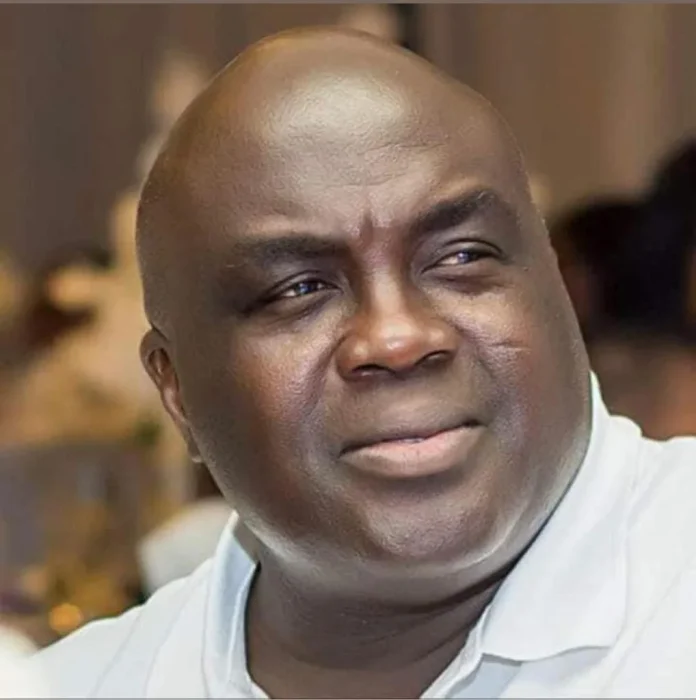
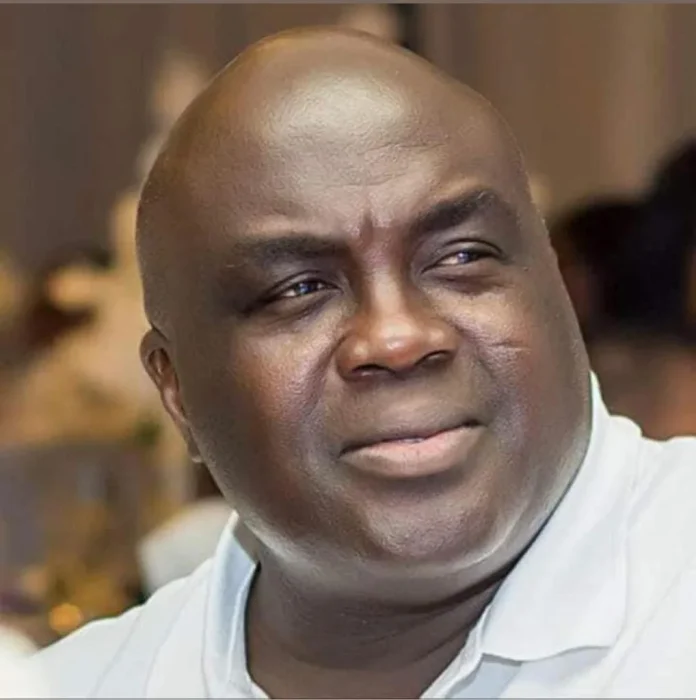
Asante Kotoko SC have received squad boost following the return of forward Baba Yahaya. The Ghanaian suffered an hamstring injury and got sidelined for weeks but now back.
The former King Faisal kingpin shaked off his injury to return to team training early this week, with huge expecting of making match day squad for Asante Kotoko SC Ghana Premier league clash against Karela United FC.
Asante Kotoko SC will battle off with the Northern-based outfit on Sunday at home as they aim to stretch their unbeaten run this weekend in the 2025/26 Ghana Premier league season. Baba Yahaya’s absence has seen the Porcupine warriors struggle with creativity upfront especially in their Africa campaign.
According to deep source within the club, Baba is expected to break into the 20-man squad for the crunchy encounter having impressed manager Abdul Karim Zito at training already.
Baba though have yet to offer enigmatic performance at Kotoko since joining but remains one of the best attacking creativities within the set-up.
The clash is scheduled to kickoff at exactly 3:30pm at the Kumasi Baba Yara Sports Stadium.
Asante Kotoko SC have received squad boost following the return of forward Baba Yahaya. The Ghanaian suffered an hamstring injury and got sidelined for weeks but now back.
The former King Faisal kingpin shaked off his injury to return to team training early this week, with huge expecting of making match day squad for Asante Kotoko SC Ghana Premier league clash against Karela United FC.
Asante Kotoko SC will battle off with the Northern-based outfit on Sunday at home as they aim to stretch their unbeaten run this weekend in the 2025/26 Ghana Premier league season. Baba Yahaya’s absence has seen the Porcupine warriors struggle with creativity upfront especially in their Africa campaign.
According to deep source within the club, Baba is expected to break into the 20-man squad for the crunchy encounter having impressed manager Abdul Karim Zito at training already.
Baba though have yet to offer enigmatic performance at Kotoko since joining but remains one of the best attacking creativities within the set-up.
The clash is scheduled to kickoff at exactly 3:30pm at the Kumasi Baba Yara Sports Stadium.
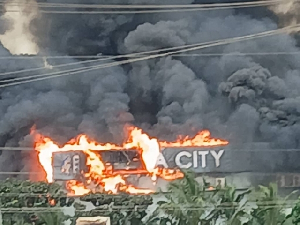
The Ghana National Fire Service (GNFS) has confirmed that Thursday’s fire that gutted parts of the China City Mall in Kumasi started from a warehouse located on the first floor of the affected building.
Head of Public Relations at the GNFS, Divisional Officer II Desmond E. Ackah, disclosed this during an interview on Morning Starr with Joshua Kodjo Mensah on Friday, October 31.
According to him, preliminary investigations by officers at the scene established the point of origin, though the exact cause of the fire is yet to be determined.
“The good news is that we’ve been able to establish the origin of the fire at the warehouse, which was on the first floor of the affected structure,” he said.
Mr Ackah noted that investigators are still on-site conducting detailed examinations of the debris to reconstruct the sequence of events that led to the outbreak.
“Investigations have begun, and as I have been briefed, investigators are currently on the ground to ensure that they excavate, reconstruct, and get to know what actually led to the fire,” he explained.
He urged the public to allow the process to be completed before drawing conclusions about the cause of the incident.
“I believe that once investigations have begun, we should allow them to be able to conclude on their investigations and tell us the exact cause of the fire,” he said.
Mr Ackah also commended the swift response of firefighters, noting that their timely intervention prevented the blaze from spreading beyond the main structure and helped avert loss of life and further property damage.
The inferno, which began around 3 p.m. on Thursday at the Santasi Star Junction branch of China City Mall, destroyed the entire building and goods worth thousands of cedis.
No casualties have been reported, while investigations continue into the exact cause of the fire.
Power is changing its form. The traditional image of a nation standing tall behind its borders, projecting strength through armies and diplomacy, now faces a quieter, more widespread type: power without borders. The kind that moves through fibre-optic cables, trade routes, data centres, and remittance channels. The type of power that isn’t held solely by states, but also by networks, corporations, and even individuals.
As someone who has spent a few decades navigating the intersection of business, policy, and development, I’ve seen this shift firsthand. The Ghana I work in today is not the Ghana of my childhood. Our future now depends not only on political decisions made in Accra but also on boardroom discussions in London, commodity prices determined in Chicago, and algorithms operating in California. The network of interdependence that once linked only diplomats now connects everyone, including traders, tech start-ups, farmers, regulators, and even influencers.
This reality is at the heart of what modern political thinkers call transnationalism, the concept that power and influence now flow across national borders through multiple channels, influencing outcomes faster than most governments can react.
From Power Over to Power Through
Classical realism, as we’ve explored before, treated power as a contest, a rivalry among sovereigns in an anarchic world. But in this era of interdependence, power has evolved from power ‘over’ to power ‘through’.
Today, influence relies less on domination and more on participation. The countries, institutions, and companies that succeed are those that can integrate into broader systems without being consumed by them. In business, we refer to this as leverage. In diplomacy, it’s soft power. In life, it’s interdependence.
Consider Ghana’s digital economy. A local fintech app might process transactions for small shops in Kumasi, but its servers are hosted in Europe, its data analytics outsourced to India, and its regulatory frameworks guided by global anti-money-laundering standards. The company’s success is woven through a web of foreign and domestic actors, each indispensable, and none in complete control.
In that sense, sovereignty now feels more like stewardship than ownership. You don’t possess power; you maintain it through collaboration.
The Networked World of Modern Power
If realism was about states and armies, transnationalism is about networks and flows. Trade, technology, finance, and migration have become the new instruments of influence. The most powerful entities today, such as Amazon, Google, Visa, Huawei, or even the African Continental Free Trade Area (AfCFTA) Secretariat, wield power not by ruling territories but by managing connectivity.
In Ghana, this has been clearly evident in both agriculture and finance. When cocoa prices fall, it’s not merely a matter of local production. It’s a ripple in a transnational value chain involving buyers in Amsterdam, factories in Zurich, and logistics routes through Abidjan. When MTN or Vodafone changes mobile-money fees, the decision affects millions of livelihoods and even the informal credit ecosystem. These are examples of economic governance without government, where rules are set not in parliaments but in corporate boardrooms and international regulatory bodies.
And this isn’t necessarily bad. Power spread across networks can foster resilience, provided the links are based on fairness and mutual strength. However, it also means nations can no longer pretend that isolation equals control.
The Private Sector as the New Diplomatic Actor
In this new order, entrepreneurs, banks, and investors have become de facto diplomats. Every cross-border transaction is a micro-act of foreign policy. Every logistics contract, export agreement, or ESG-linked bond shapes how Ghana interacts with the world.
At Maxwell Investments Group, we frequently negotiate with partners whose decisions are influenced as much by international climate finance policies as by local economic priorities. A farmer in Tamale growing soybeans today may find her profitability affected by EU carbon standards or American trade subsidies, frameworks she’ll never read but must live under.
That’s transnationalism at work: invisible rules, real consequences.
That’s also why business leaders must now think like diplomats. We are no longer just market players. We are interpreters of global systems for local realities. Understanding the politics of power, like who sets the rules, who benefits, and who bears the cost, is as essential as understanding balance sheets.
Interdependence Is Power
So here lies the paradox. Dependence, when structured well, can become a source of power. A nation deeply integrated into trade networks, global supply chains, and knowledge systems can be more influential than one that stands alone.
Ghana’s membership in the AfCFTA, its partnerships within ECOWAS, and its growing involvement in green finance initiatives show that interdependence, when managed wisely, enhances capacity. The aim is a healthy balance of economic independence and the ability to engage without subservience.
Africa must take this lesson seriously. True independence today means having the power to negotiate your dependencies. To remain relevant, you must be needed; to earn respect, you must be dependable. The nations that will flourish in the next decade are those that learn to turn interdependence into their advantage.
The Fragility of Connection
But interdependence also comes with vulnerability. When systems are closely connected, shocks spread faster. A cyber-attack in Singapore could disrupt Ghanaian banks. A drought in Argentina might increase bread prices in Accra. A trade policy in Brussels could alter Africa’s industrial future.
The COVID-19 pandemic revealed this clearly. Borders shut, supply chains halted, and suddenly the invisible channels of global interdependence became visible and fragile.
For businesses, this requires strategic humility. No firm, regardless of size, can fully insulate itself. At MIG, we have learned to view diversification not as a luxury but as a vital survival strategy across products, partners, and even regions. In an interconnected world, resilience is the new power.
When Non-State Actors Lead
One of the most profound shifts in modern power is the rise of actors that are not states at all. Technology companies, advocacy networks, diaspora communities, and global NGOs now hold influence comparable to medium-sized countries.
In Ghana, look at how diaspora remittances surpass foreign aid, influencing entire neighbourhood economies. Or how digital influencers can amplify or damage brand reputations faster than any press release. Or how international think tanks and climate-policy networks now shape which African projects receive funding.
The landscape of power is no longer vertical; it’s horizontal, a web where strength depends on participation.
The New Meaning of Sovereignty
Sovereignty today is no longer about sealing borders but about steering flows. The challenge for modern nations is to find a way to avoid isolation from the world and to manage their interdependence skillfully.
For Ghana, this means investing in digital infrastructure that secures our data sovereignty, strengthening regional manufacturing to capture a larger share of the value chain, and developing institutional competence to negotiate fairer terms in global finance and trade.
Lessons for Business Leaders
Once again, entrepreneurs and executives must learn from this same playbook. The companies that succeed are those that understand the ecosystem they operate within. Power today resides in networks, not monopolies. It’s less about control and more about coordination.
Your supplier, regulator, customer, and even competitor are all part of your sphere of influence. To lead in such an environment, one must balance ambition with empathy, recognising that the prosperity of one node depends on the health of the whole web.
This is why collaboration has become a strategic advantage. It’s a survival skill.
A Personal Reflection: The Entrepreneur as Diplomat
When I reflect on this shift from power to interdependence, I think about my own journey. As an entrepreneur working across Africa, the UK, and the US, I’ve realised that success relies less on dominance and more on alignment. For a while now, I have wanted to align our local interests, timelines, and values across borders.
Running a business today feels like conducting an orchestra, where each musician has their own score, but the harmony depends on your ability to listen, adapt, and guide.
That’s what the new power demands: quiet authority, steady trust, and the humility to learn from those you once thought you led.
Power Without Borders
The defining lesson of the 21st century is that influence depends on interdependence. Those who foster trust, trade, and technology will shape the world more than those who build walls.
Realists taught us that survival depends on strength. Interdependence now shows us that strength depends on connection. In this evolving landscape, Ghana, and indeed Africa, must learn to transform dependence into design, partnerships into platforms, and networks into nations.
Because in the end, power no longer belongs to those who hold the most, but to those who can hold it together.
I hope you found this article both insightful and enjoyable. Your feedback is greatly valued and appreciated. I welcome any suggestions for topics you would like me to cover or provide insights on. You can schedule a meeting with me through my Calendly at www.calendly.com/maxwellampong. Alternatively, connect with me through various channels on my Linktree page at www.linktr.ee/themax. Subscribe to the ‘Entrepreneur In You’ newsletter here: https://lnkd.in/d-hgCVPy.
I wish you a highly productive and successful week ahead!
♕ —- ♕ —- ♕ —- ♕ —- ♕
The author, Dr. Maxwell Ampong, serves as the CEO of Maxwell Investments Group. He is also an Honorary Curator at the Ghana National Museum and the Official Business Advisor with Ghana’s largest agricultural trade union under Ghana’s Trade Union Congress (TUC). Founder of WellMax Inclusive Insurance and WellMax Micro-Credit, Dr. Ampong writes on relevant economic topics and provides general perspective pieces. ‘Entrepreneur In You’ operates under the auspices of the Africa School of Entrepreneurship, an initiative of Maxwell Investments Group.
Disclaimer: The views, thoughts, and opinions expressed in this article are solely those of the author, Dr. Maxwell Ampong, and do not necessarily reflect the official policy, position, or beliefs of Maxwell Investments Group or any of its affiliates. Any references to policy or regulation reflect the author’s interpretation and are not intended to represent the formal stance of Maxwell Investments Group. This content is provided for informational purposes only and does not constitute legal, financial, or investment advice. Readers should seek independent advice before making any decisions based on this material. Maxwell Investments Group assumes no responsibility or liability for any errors or omissions in the content or for any actions taken based on the information provided.
The Ashanti North Regional Police Command says it has arrested two men in connection with a robbery and murder at Aduman in the Kodie Municipality.
According to the Police, the suspects, Sani Abacha, 28, and Asante Eric, 23, attacked two young men and stole a tricycle, popularly known as Aboboyaa, on Sunday, October 19, 2025.
They explained that Abacha lured the victims, 18-year-old Kwabena Yankyira and 15-year-old Kwabena Boateng, under the pretence of using the tricycle to carry firewood from his farm. After leading them into a bush, he attacked both with a cutlass, leaving them with several wounds before fleeing with the tricycle.
Police said Abacha later contacted his accomplice, Eric, and together they hid the tricycle at the Aboabogya Cemetery.
They later sold it to another man, identified only as Balawe, who is now on the run.
The Police said that the next morning, a resident found Kwabena Yankyira unconscious in a cocoa farm near the Aduman Old Town Cemetery, with deep cutlass wounds to his neck, head, and ear.
He was rushed to St. Patrick’s Hospital at Maase-Offinso for treatment. Sadly, the body of the second victim, Kwabena Boateng, was later found nearby with similar injuries.
They said officers who visited the scene recovered a cutlass believed to have been used in the attack and took the deceased’s body to St. Patrick’s Hospital for preservation and autopsy.
According to them, after an intelligence-led operation, they arrested Sani Abacha on October 24, 2025, at Asafo Tinkamu.
He later led the team to arrest his accomplice, Asante Eric, at Aboabogya. Both have reportedly confessed to committing the crime.
They added that the suspects were arraigned before the Kodie Magistrate Court on October 28, 2025, on provisional charges of robbery and murder. They have been remanded into prison custody to reappear on November 25, 2025.
The Command said they are still working to arrest the third suspect and recover the stolen tricycle.
They assured the public that they remain committed to fighting violent crime and urged anyone with information that could lead to the arrest of the remaining suspect to contact the nearest Police station or call 191, 18555, or 112.
Emmanuel Armah-Kofi Buah is the Minister of Lands and Natural Resources
Minister of Lands and Natural Resources, Emmanuel Armah-Kofi Buah, has presented a new legislative instrument before Parliament seeking to revoke L.I. 2462, the regulation that granted the President authority to issue mining leases within forest reserves.
The decision represents a major policy reversal aimed at reinforcing environmental protection and combating deforestation linked to mining activities. L.I. 2462, which came into force in 2022, allowed the President discretionary powers to approve mining operations in forest reserves.
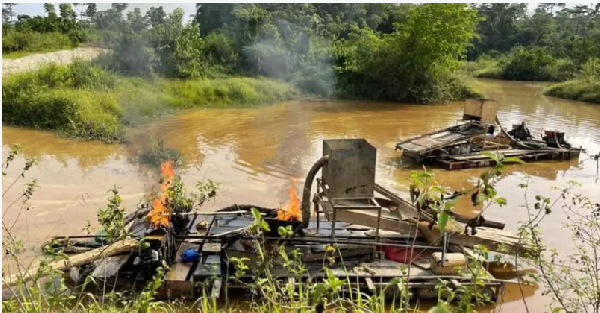
Blue Water Guards vow no retreat in Wassa Amenfi East illegal mining clampdown
Addressing the media in Parliament on Friday, October 31, 2025, he explained that the government had listened to persistent public outcry and carried out a comprehensive consultation and review process, leading to the decision to revoke the instrument entirely.
He recalled that Regulation 32 of L.I. 2462 was previously deleted to limit presidential powers, paving the way for L.I. 2501, which came into effect on June 2, 2025.
“After continued public concern and a full review, it became clear that we could completely revoke that L.I. and rely on the guidelines enacted in 2020,” the Minister stated.
Galamsey: Ghana Federation of Labour commends government for setting up NAiMOS
He emphasised that the move demonstrates the government’s unwavering commitment to protecting Ghana’s pristine forest reserves, safeguarding the environment, and ensuring sustainable management of the country’s natural resources.
“It must send a clear message that this government is committed to protecting our pristine forest reserves and the environment. We are keeping our word, providing guidance, and taking every step in line with what President Mahama has been preaching,” he noted.
Once approved by Parliament, the new instrument will permanently remove the President’s unilateral power to grant mining permits in protected forest areas, restoring stricter safeguards over Ghana’s forest ecosystems.
JKB/MA
All you need to know about Ghana’s new vehicle number plates | BizTech:
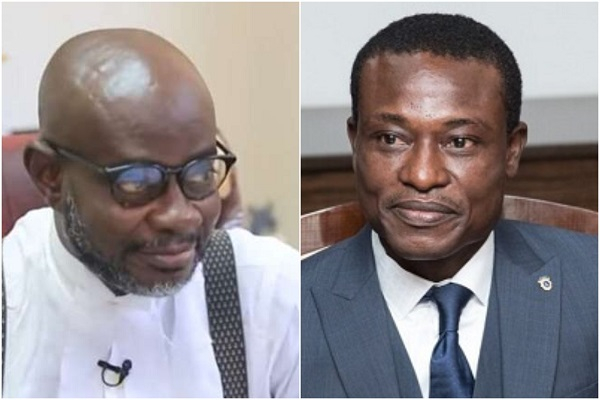
Frank Davies (L) is a lawyer to Ken Ofori-Atta and Special Prosecutor Kissi Agyebeng (R)
Lawyer of former Minister of Finance Ken Ofori-Atta, Frank Davies, has criticised the Office of the Special Prosecutor (OSP) for what he describes as unnecessary media theatrics following its announcement that his client will soon face prosecution for alleged corruption-related offences.
Speaking in an interview cited by adomonline.com on October 31, 2025, Davies dismissed the OSP’s recent press conference as ‘needless,’ accusing Special Prosecutor Kissi Agyebeng of turning serious legal matters into public drama.
“Coming to narrate and talk long and needless English is a conviction in itself. He (the Special Prosecutor) says he’s going to charge him (Ofori-Atta); he should go ahead and stop this gimmicking. Come on, is this the first time the OSP has come out to say something about Ken Ofori-Atta?” he quizzed.
OSP provides update on Ofori-Atta’s extradition
Davies further described the OSP’s handling of the matter as “amateurish and childish,” recalling previous public statements made about his client.
“Once upon a time, what did he tell us? That Ofori-Atta should either come to this country, or he would force his entry. I mean, come on,” he said.
Frank Davies further emphasised that Ofori-Atta is not afraid of prosecution and that he is ready to meet the OSP in court.
“Let me tell you, Kenneth Nana Yaw Kuntunkununku Ofori-Atta is not afraid of prosecution. Let the car roll for the OSP; the accused person will have his vehicle. So, let’s stop these theatrics,” he stated.
Davies also urged the Special Prosecutor to focus on rebuilding the credibility of his office rather than engaging in ‘media performances’.
‘There is no tension or rift between OSP and Attorney General’ – Kissi Agyebeng
“A lawyer’s place is in the courtroom, not behind microphones,” he indicated.
The comments come after the OSP disclosed that Ken Ofori-Atta and several former government officials will be charged by the end of November 2025 for alleged financial irregularities uncovered at the Ministry of Finance, the Ghana Revenue Authority (GRA), and Strategic Mobilisation Ghana Limited (SML).
OSP to charge Ken Ofori-Atta, five others over SML-GRA contract
MRA/AE
NPP’s KOKA speaks on NDC government’s performance in 10 months
The Financial Intelligence Centre (FIC) has reportedly unfrozen the bank accounts of Ghanaian business mogul Daniel McKorley, popularly known as McDan.
According to a report by Kasapafmonline.com, the Chief Executive Officer (CEO) of the FIC, Ing. Kwadwo Twum-Boafo, disclosed during an interview on GHOne TV that the accounts of the businessman were unfrozen after he was cleared of any wrongdoing.
He added that, in addition to McDan, the accounts of another businessman, Richard Nii Armah-Quaye, had also been unfrozen after investigations found no basis for further action.
“McDan’s issue has been resolved. That is why I keep saying we don’t do personal vendettas. You can speak with him… His accounts are unfrozen.
“The accounts of Richard Nii Armah-Quaye were frozen, but they have been unfrozen now because there was a determination that there was no need for it to go forward,” Ing. Twum-Boafo was quoted as saying.
He further revealed that the investigations into the accounts of both businessmen proceeded smoothly because they cooperated fully with the FIC.
“He came here, sat down with us, and gave us a thorough explanation of what he does, and there was no problem. Like I said, we deal with people fairly, and I don’t have a personal vendetta against anyone,” he added.
Mr Twum-Boafo also dismissed suggestions that the actions of the FIC are politically motivated.
BAI
Watch as Ghanaians share bold ideas to end galamsey
The wait is over! The GhanaWeb Excellence Awards 2025 is officially launched. Let’s Celebrate impact, innovation and excellence across Ghana.
Who deserves to be honoured this year?
Nominate now 👉 https://ghanaweb.com/ghanaexcellenceawards/nominate
Patrick Yaw Boamah has raised questions about the Gold Board’s funding sources
A recent investigation has raised concerns about the Ghana Gold Board’s (GoldBod) funding arrangements and licensing procedures.
According to a letter from the Ministry of Finance dated October 29, 2025, “the Ministry has not made any financial releases as budgetary support to the Gold Board.”
Patrick Yaw Boamah, the New Patriotic Party (NPP) Member of Parliament (MP) for Okaikwei Central, disclosed this at a news conference organised by the Parliamentary Press Corps in Parliament House on Friday.
He said, “This revelation raises questions about the Gold Board’s funding sources.”
Furthermore, Boamah told the media that an examination of the GoldBod’s licensing practices had revealed that the Board had licensed one sole aggregator, 21 self-financing aggregators, and over 600 buyers in just two years.
He explained that the situation had raised concerns about the due diligence process and whether those companies met the necessary standards for responsible mining.
“It’s essential to ensure that licensed companies adhere to regulations and standards to prevent illicit activities and promote sustainable mining practices,” he said.
He highlighted the need for transparency and accountability in the gold sector.
Boamah noted that the investigation had also found that the GoldBod “is not complying with Section 42 of the Gold Board Act, which requires the Board to publish quarterly reports on operations, revenue, contracts, expenditure, and responsible sourcing.”
He has, therefore, called for greater transparency and accountability in the gold sector.
“We need to ensure that the Gold Board is transparent in its operations and funding and that it adheres to the laws and regulations that govern the sector,” he said.
Meanwhile, the Ghana GoldBod is yet to respond to these concerns, but the investigation is ongoing.
Patrick Yaw Boamah has raised questions about the Gold Board’s funding sources
A recent investigation has raised concerns about the Ghana Gold Board’s (GoldBod) funding arrangements and licensing procedures.
According to a letter from the Ministry of Finance dated October 29, 2025, “the Ministry has not made any financial releases as budgetary support to the Gold Board.”
Patrick Yaw Boamah, the New Patriotic Party (NPP) Member of Parliament (MP) for Okaikwei Central, disclosed this at a news conference organised by the Parliamentary Press Corps in Parliament House on Friday.
He said, “This revelation raises questions about the Gold Board’s funding sources.”
Furthermore, Boamah told the media that an examination of the GoldBod’s licensing practices had revealed that the Board had licensed one sole aggregator, 21 self-financing aggregators, and over 600 buyers in just two years.
He explained that the situation had raised concerns about the due diligence process and whether those companies met the necessary standards for responsible mining.
“It’s essential to ensure that licensed companies adhere to regulations and standards to prevent illicit activities and promote sustainable mining practices,” he said.
He highlighted the need for transparency and accountability in the gold sector.
Boamah noted that the investigation had also found that the GoldBod “is not complying with Section 42 of the Gold Board Act, which requires the Board to publish quarterly reports on operations, revenue, contracts, expenditure, and responsible sourcing.”
He has, therefore, called for greater transparency and accountability in the gold sector.
“We need to ensure that the Gold Board is transparent in its operations and funding and that it adheres to the laws and regulations that govern the sector,” he said.
Meanwhile, the Ghana GoldBod is yet to respond to these concerns, but the investigation is ongoing.
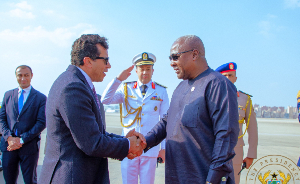
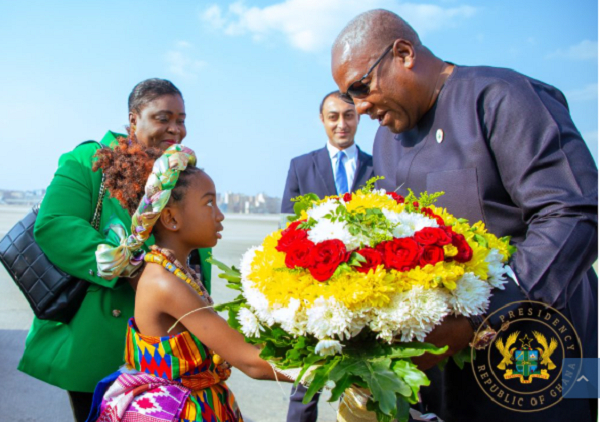
President John Dramani Mahama (R) during his arrival in Egypt
President John Dramani Mahama arrived in Cairo on Friday at the invitation of Egyptian President Abdel Fattah al-Sisi to attend the opening of the Grand Egyptian Museum (GEM), scheduled for Saturday, November 1.
Overlooking the Giza Pyramids, the GEM is the world’s largest archaeological museum, celebrating over 5,000 years of Egyptian civilisation.
The $1 billion project — two decades in the making — houses thousands of artefacts, including 4,500 treasures from the tomb of King Tutankhamun.
President al-Sisi has described the museum as a “symbol of Egypt’s leadership in global culture.”
Originally slated to open in July, the ceremony was postponed due to regional tensions. It is now expected to be one of the most significant cultural events of the year.
The project was made possible through cooperation between Egypt and Japan, with Japan providing ¥84.2 billion ($800 million) in soft loans via JICA and JBIC, alongside contributions from Egypt and other international partners. Japanese experts also trained hundreds of Egyptians in conservation and museum management.
The opening comes amid a revival in Egypt’s tourism sector, with revenues reaching $14.4 billion in the 2023–2024 fiscal year and 15 million visitors recorded in the first nine months of 2025.
For Ghana, President Mahama’s participation underscores Africa’s growing role in global cultural diplomacy.
Members of the President’s delegation include Dr Callistus Mahama, Executive Secretary to the President; Mr Stanislav Dogbe, Deputy Chief of Staff in charge of Operations; Mr Samuel Okudzeto Ablakwa, Minister for Foreign Affairs; Madam Ablah Dzifa Gomashie, Minister for Tourism, Culture and Creative Arts; and Commissioner of Police (Rtd) Nathan Kofi Boakye.
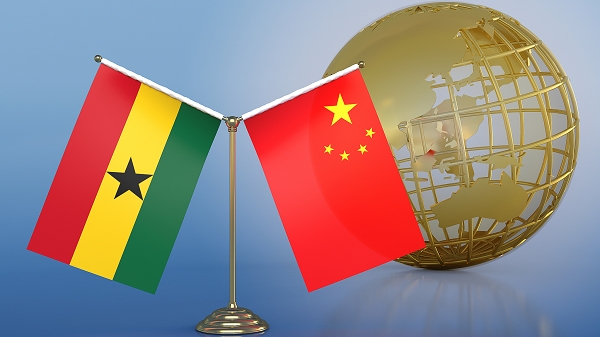
The Chinese Embassy in Ghana has rejected comments by Mr. David McAllister, Chair of the Committee on Foreign Affairs of the European Parliament, that China’s zero-tariff agreements may appear generous but could deepen trade imbalances.
The Embassy described the remarks as “false” and misleading, adding that such assertions undermined the efforts by China and Ghana to strengthen economic cooperation and expand opportunities for Ghanaian exports in the Chinese market.
Mr. McAllister, during an interaction with students of the Ghana Institute of Management and Public Administration (GIMPA), had urged Ghana to carefully assess its trade relations with China.
The Embassy, in a statement issued in Accra on Friday, said the claims were based on a lack of understanding of China’s economic cooperation with Ghana and the broader African continent.
Mr. McAllister asserted that, unlike the European Union’s (EU) Economic Partnership Agreement (EPA) with Ghana, which he described as “balanced and sustainable,” China’s trade model was driven by “different motives and values.”
Reacting to the claims, the Chinese Embassy dismissed those assertions and insisted that China’s zero-tariff treatment to Ghana was a voluntary and unilateral initiative aimed at deepening economic cooperation and supporting Ghana’s export growth.
“Mr. McAllister’s statements are as absurd as they are ridiculous,” the Embassy’s spokesperson said.
The Embassy stated: “Apparently, he hasn’t done his homework to learn that the zero-tariff treatment is China’s initiative to voluntarily and unilaterally open its market wider. Nor has he straightened out his mind to the fact that the treatment will boost Ghana’s export expansion and trade balance.”
It noted that China’s decision to offer zero-tariff treatment reflected Beijing’s longstanding commitment to fair trade and mutual development with Ghana and Africa as a whole.
The Embassy added that the growing presence of Chinese goods in Ghana’s markets was driven by consumer preference, affordability, and quality—not coercion or manipulation.
“The popularity of Chinese products in Ghana is simply because you can get a prime with just a dime, which is the free and independent choice of Ghanaian importers. Just ask the buzzing crowd of locals at China Malls,” the statement said.
Rejecting Mr. McAllister’s suggestion that Ghana risked overdependence on China, the Embassy said China had proven to be one of Ghana’s most consistent and reliable partners in industrialisation, infrastructure development, and agricultural modernization.
It cited data from the Ghana Investment Promotion Centre (GIPC) indicating that China had become Ghana’s largest investment partner, with 22 registered projects in the first half of 2025 alone.
The statement indicated that China had been a consistent partner in Ghana’s industrial and agricultural transformation, contributing to major infrastructure projects such as roads, bridges, factories, and hospitals.
It added that China had become Ghana’s leading source of investment, driving growth across several key sectors.
“Which other partner dares to claim comparable contributions?” the Embassy questioned.
The Embassy also emphasised that the zero-tariff arrangement was a mutually beneficial initiative endorsed at the highest political level between the two countries.
It recalled that President John Dramani Mahama, during his recent visit to Beijing and meeting with President Xi Jinping, had publicly announced Ghana’s intention to finalise the early-harvest phase of the zero-tariff agreement.
“It was President Mahama himself who announced that Ghana would finalise the early-harvest agreement of the zero-tariff treatment during his visit to China and meeting with President Xi Jinping just two weeks ago,” the spokesperson said.
The statement also took issue with what it described as Europe’s tendency to lecture rather than listen, urging Western leaders to focus more on supporting African-led growth rather than criticising the engagement of other partners.
“Mr. McAllister may wish to listen more and lecture less, promoting more European trade policies in favour of African development. Baseless defamation against other nations does not elevate one’s own stature,” the spokesperson said.
Mr. McAllister had acknowledged Ghana’s sovereign right to choose its partners but urged African nations to scrutinise the long-term benefits of trade offers from global powers, including China.
However, the Chinese Embassy reiterated that its cooperation model was founded on equality and respect for sovereignty—principles it said had underpinned the decades-long China-Ghana friendship since the establishment of diplomatic relations in 1960.
Beijing’s zero-tariff initiative, announced earlier this year, aims to extend duty-free access to 98 percent of taxable items imported from Ghana and other least-developed countries with diplomatic relations with China.
Ghana is among the first African nations expected to benefit from the policy, which Chinese officials say will help boost exports of cocoa, cashew nuts, textiles, and manufactured goods to the Chinese market.
The Embassy reaffirmed China’s commitment to deepening its partnership with Ghana in trade, investment, technology, and cultural exchange.
Communications Minister Felix Kwakye Ofosu has pushed back against accusations that the Mahama administration is weaponizing Ghana’s justice system to settle political scores, insisting that ongoing prosecutions against former government officials are grounded in evidence and legal procedure rather than partisan vendetta.
Speaking on Metro TV on Friday, October 31, Kwakye Ofosu emphasized that the Attorney General’s Office continues to operate independently and strictly within legal boundaries, with no individual being unfairly targeted for their political affiliations.
“The Attorney-General’s Office is acting strictly within the bounds of the law,” he stated, stressing that all cases currently before the courts are backed by credible evidence and proper legal procedure.
The minister’s defense comes amid mounting criticism from opposition New Patriotic Party figures who’ve characterized the government’s anti-corruption drive as selective prosecution disguised as accountability. The NPP’s Legal Counsel John Darko recently accused Attorney General Dr. Dominic Ayine of undermining constitutional rights by publicly branding accused persons as criminals before court proceedings conclude, arguing that such statements compromise judicial integrity.
Yet Kwakye Ofosu maintained that the administration remains committed to strengthening democratic institutions through both accountability and fairness. “Our democracy is anchored on justice and accountability,” he explained. “That means ensuring that people who have questions to answer before the law do so, but also guaranteeing that no one’s rights are trampled upon in the process.”
The debate over prosecutorial impartiality has intensified throughout 2025 as President John Dramani Mahama’s Operation Recover All Loot initiative identified 33 corruption cases involving alleged financial misconduct during the previous NPP administration. Special investigative teams have been established to probe each case, with some reportedly uncovering significant evidence of illicit wealth acquisition.
However, the government’s decision in February to discontinue several high-profile cases involving NDC officials sparked controversy over whether justice is being applied equally. Cases withdrawn included charges against former COCOBOD CEO Dr. Stephen Opuni, former Minority Leader Dr. Cassiel Ato Forson, and former NDC Chairman Samuel Ofosu Ampofo, all of whom had faced prosecution under the previous administration.
Critics argue the contrast between pursuing NPP officials while releasing NDC figures creates an appearance of selective justice that resembles political retaliation. NPP MP Nana Agyei Baffour Awuah questioned the government’s anti-corruption credentials, asking pointedly: “If you can’t prosecute members of your own party, who else will you prosecute?”
Kwakye Ofosu has previously defended the discontinuations by arguing that many cases lacked merit and were politically motivated attempts to silence opposition voices during the NPP’s time in power. He’s drawn contrasts between prosecuting NDC figures while those responsible for violence during the Ayawaso West Wuogon by-election faced no legal consequences, suggesting the previous administration selectively applied justice.
The minister called on citizens to trust in the integrity of Ghana’s judicial system to deliver impartial outcomes. “We should all trust our justice system to deliver impartial outcomes,” he said, reiterating that the government’s only interest is ensuring the law takes its course fairly, transparently, and without fear or favor.
His assurances haven’t quieted concerns about due process. The Minority in Parliament has specifically criticized Attorney General Ayine’s public characterization of former officials as “lawless looters” before court verdicts, warning that such statements violate the constitutional principle of presumption of innocence and potentially influence judges who live in society and consume the same media.
For his part, Kwakye Ofosu emphasized that every prosecution currently before the courts has been initiated based on credible evidence and due legal procedure. “There is absolutely no attempt to target or persecute anyone for political reasons,” he insisted.
The tension reflects broader questions about how democracies balance accountability for alleged corruption against protecting judicial independence from political influence. Ghana’s experience isn’t unique, incoming administrations worldwide often face accusations of either pursuing vendetta prosecutions or protecting their own allies from scrutiny.
What makes Ghana’s current situation particularly sensitive is the government’s dual track of discontinuing cases against NDC officials while simultaneously pursuing investigations against NPP figures. Whether this represents correction of previous injustices or creation of new ones depends largely on perspective and party affiliation.
NPP-aligned commentators have described the ORAL initiative as “a tool for political retribution rather than justice,” warning of potential divisions without strict due process adherence. Mahama’s administration counters that all investigations are evidence-based and essential for restoring governance accountability.
The coming months will test whether Kwakye Ofosu’s assurances about independent, evidence-based prosecutions translate into courtroom outcomes that satisfy both legal standards and public perception. For now, the political controversy surrounding Ghana’s justice system shows no signs of abating.
As investigations progress and prosecutions move forward, the government’s credibility on rule of law increasingly depends on demonstrating that decisions are driven by evidence and legal merit rather than political calculation. Whether the public ultimately views the administration’s approach as principled accountability or partisan prosecution will shape Ghana’s democratic discourse well beyond this current political cycle.
Ghanaian socialite and influencer Hajia Bintu is showing off her baby bump
Ghanaian socialite and influencer Hajia Bintu has stunned her fans with photos of her baby bump to announce that she has given birth.
The curvy social media star took to her Instagram page on Friday, October 31, 2025, to reveal that she became a mother earlier this month.
This revelation has taken many by surprise, especially after months of unconfirmed rumours about her pregnancy and alleged struggles to identify the father of her child.
In the caption accompanying the photos, Hajia Bintu disclosed that her baby arrived on October 3, 2025, describing motherhood as the most beautiful, humbling, and joy-filled journey of her life.
She added that, “The sleepless nights, the little giggles, the quiet moments of wonder, and every part of it has filled my heart beyond measure. I’ve never felt this kind of peace, this kind of purpose, or this much happiness. Motherhood has changed me in the most beautiful way — it’s softened my soul, opened my heart, and filled my days with pure joy. Here’s to new beginnings, endless love, and a future brighter than I ever imagined because my greatest blessing is finally here.”
Her post confirms what social media users had been whispering for months. As far back as June 2025, Ghanaian blogs and entertainment platforms had been speculating that Hajia Bintu was pregnant.
Some even claimed she was struggling to identify the father of her unborn child, with names like Nigerian producer Don Jazzy, Ghanaian musician Ova Wise, and entrepreneur Rob Definition all being dragged into the discussion.
Ghanaian international Terry Yegbe plays for French Ligue 1 outfit FC Metz
Ghanaian international Terry Yegbe has revealed that a move to the English Premier League collapsed during the January transfer window.
The 24-year-old centre-back was on the radar of several Premier League clubs following an impressive spell with Swedish side IF Elfsborg, but the deal failed to materialise.
“At Elfsborg, everything went well,” Yegbe told Flashscore in an interview. “The first year was great. I almost got a move to the Premier League in January, but it didn’t happen. Still, I told myself I’d keep working. It’s all part of the process.”
Following the failed move, Yegbe secured a summer transfer to French Ligue 1 outfit FC Metz, signing a four-year deal that runs until 2029.
Since joining Metz, the Ghanaian defender has become a mainstay in the team, making eight league appearances so far this season.
Having settled quickly into French football, Yegbe will be hoping to maintain his fine form and continue his rise in European football.
Ghanaian forward Antoine Semenyo plays for Bournemouth
Manchester City manager Pep Guardiola has lavished praise on Ghanaian forward Antoine Semenyo, describing him as an “extraordinary player” ahead of Sunday’s Premier League clash against Bournemouth at the Etihad Stadium.
Speaking at his pre-match press conference, Guardiola acknowledged the impressive form of the Black Stars attacker, who has been a standout performer for Bournemouth this season.
“It’s not just this season. The way Bournemouth play suits him perfectly. He is an extraordinary player,” Guardiola said, referencing Semenyo’s explosive start to the 2025–2026 campaign.
The 25-year-old has been in superb form, scoring nine goals and providing three assists in nine league appearances so far.
His performances have also earned him a nomination for the Premier League Goal of the Month for October, underscoring his growing influence under Bournemouth manager Andoni Iraola.
Semenyo’s Bournemouth have been one of the surprise packages of the season, losing just one of their opening nine matches.
Their impressive run has lifted them into the top two, ahead of several traditional powerhouses, and they will head to Manchester brimming with confidence.
Africa’s oil and gas downstream market, currently valued at USD 80.5 billion, is projected to reach USD 120.8 billion by 2032, positioning the continent as the world’s next frontier for downstream growth.
Demand across Africa is expected to rise by 2.2 million barrels per day (MMB/D) between 2019 and 2035, representing a 2.3 percent annual growth rate.
Speaking at the OTL 2025 Expo, Africa’s Downstream Energy Week in Lagos, on “Emerging Business Models within the Downstream Landscape,” the Chief Executive Officer of the Chamber of Oil Marketing Companies (COaMC), Dr Riverson Oppong, said the downstream sector is entering a transformative era driven by digitisation, diversification, and customer-centric innovation.
“Digitisation is no longer optional,” he stressed. “It is the foundation for capturing value and improving efficiency in modern downstream operations.”
Dr Oppong revealed that digitising downstream processes can reduce operating costs by 12 to 20 percent, enhance throughput by up to 12 percent, and cut unplanned shutdowns by as much as 25 percent.
Ghana’s downstream operators are already adopting automatic tank gauging, bulk road vehicle tracking, and mobile payment platforms to enhance transparency and customer convenience.
He explained that service stations are evolving into lifestyle destinations, offering convenience stores, digital wallets, and real-time fuel pricing. Globally, demand for convenience services is projected to nearly double by 2030, growing at more than 5 percent annually.
New business concepts such as Energy-as-a-Service (EaaS) are reshaping how energy is consumed and delivered. Under this model, customers pay for energy outcomes instead of owning infrastructure, with third-party providers installing and operating solar systems, storage batteries, and other equipment.
Dr Oppong also highlighted emerging trends like mini-refineries, LPG micro-distribution centres, pay-as-you-go delivery, and strategic joint ventures that enable smaller oil marketing companies to pool resources and compete effectively.
He urged policymakers and industry players to strengthen regulatory frameworks, invest in digital infrastructure, and foster partnerships that promote innovation and sustainability. “The future belongs to companies that embrace technology, collaboration, and customer-driven energy solutions,” he said.
Ghana has ranked highest among Kenya and Malawi in a research study assessing how African governments are mainstreaming gender in the agricultural sector.
The study, conducted by the Alliance for a Green Revolution in Africa (AGRA) as part of its Gender Mainstreaming in Agriculture Scorecard (GMAS), placed Ghana at the top for its gender-responsive strategies, with Kenya and Malawi following closely.
At AGRA Ghana’s national convening on using the Gender Mainstreaming in Agriculture Scorecard, held in Accra, participants concluded that while Ghana has made commendable progress, there is a need for a stronger commitment to gender-intentional agriculture and sustained capacity building within the sector.
AGRA’s research examined how governments are progressing in creating an enabling environment for gender-intentional agricultural policies, investing in inclusive decision-making to improve women’s livelihoods in agriculture, and establishing accountability mechanisms to ensure that women’s and youths’ development agendas are effectively planned and executed.
The Lead for Gender Integration at AGRA, Winnie Osulah, who presented the findings, noted that although Ghana topped the rankings, it did not attain the highest possible score of 72 across all thematic areas, indicating room for improvement.
“Ghana’s performance shows commendable progress, but more must be done to reach full gender integration. Governments, including Ghana, must demonstrate stronger commitment beyond policy formulation to investing rigorously in policy evaluation and implementation,” Ms Osulah emphasised.
According to Osulah, the study revealed that the continent has made progress on paper but still struggles to turn commitments into action. “We must move from policy formulation to policy implementation. It’s not enough to have documents sitting on shelves — they must translate into tangible benefits for women farmers,” she emphasised.
The Country Programme Lead for AGRA Ghana, Dr John Jagwe, reaffirmed AGRA’s commitment to supporting women in agriculture, highlighting their indispensable role in driving growth and sustainability.
“AGRA recognises the immense contributions of women to national development, and that is why we remain committed to promoting women’s empowerment and improving their livelihoods,” he stated.
Dr Jagwe outlined AGRA Ghana’s three main focus areas: improving the competitiveness of two key value chains — rice and soybean; creating employment opportunities for young people; and ensuring inclusive participation across all levels of agricultural transformation.
He revealed that AGRA has set an ambitious goal for 70 percent of all new agricultural jobs to go to women, with 2 percent reserved for persons with disabilities.
“These targets are bold but achievable,” he said, highlighting the importance of collaboration with key partners such as the Ministry of Gender, Children and Social Protection, the Ministry of Food and Agriculture, and the Ministry of Youth Development and Empowerment.
In a speech read on her behalf, the Director of Gender at the Ministry of Gender, Children and Social Protection, Faustina Acheampong, commended AGRA for the initiative. She called for collective action to dismantle the barriers limiting women’s participation in agriculture, especially by women in leadership.
“The barriers that hinder women can only be removed through a unified front. Every woman, especially those in leadership positions, must play an active role in championing change,” she said, pledging the Ministry’s continued support for AGRA’s efforts.
She disclosed that plans are underway to establish a Women’s Development Bank under the President’s “Resetting Agenda” to enhance financial inclusion and provide affordable credit facilities for women, especially those in small-scale enterprises and underserved communities.
She called on all stakeholders to remain united in advancing gender equality in agriculture, particularly in supporting rural women affected by climate change and limited access to modern farming tools.
“Let us continue to create spaces where women’s leadership in agriculture is nurtured, where their voices influence policy, and where their innovations thrive,” she urged.
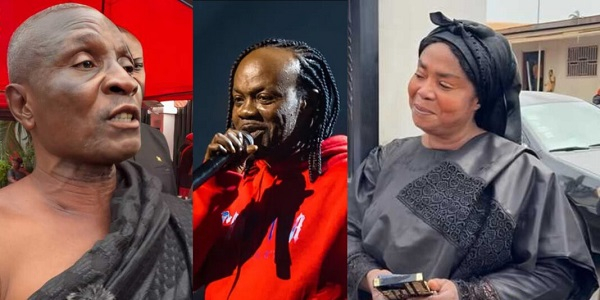
L-R: The Abusuapanyin, Daddy Lumba and Ernestina Fosu
Tension within the family of the late Ghanaian highlife legend Daddy Lumba continues to escalate following the ongoing dispute surrounding his funeral arrangements.
After the filing of a report on an application for directions and a subsequent case management conference held today, Friday, October 31, 2025, the musician’s sister, Ernestina Fosu, has furiously dared their family head, Kofi Owusu, to try and bury her brother without the siblings’ consent or knowledge of what truly caused his death.
In a viral video seen online, an emotionally charged Ernestina Fosu is seen venting her frustration and anger over what she described as the unfair and disrespectful treatment meted out to her and her siblings by their Abusuapanyin, who also happens to be their uncle.
She claimed that despite several private confrontations, her uncle has remained adamant and continues to make secret plans to bury their late brother in December, ignoring the family’s calls for clarity.
“I have already told him in private, he should dare and bury him without us knowing the cause of his death and see what will happen,” Ernestina fumed.
She was also heard saying: “He is trying to bury my brother like a dog for reasons best known to him. We deserve to know what killed our brother before any burial is done.”
In her outburst, she went further to evoke Otumfuo’s great vow, challenging her uncle to go ahead with the burial if he truly considers himself a man.
“If he says he is a man, he should go ahead and bury him on December 6, 2025. I’m invoking Otumfuo’s vow on this matter,” she declared.
Kwame Ntow Amoah is the Acting Chief Executive of GNPC
The Ghana National Petroleum Corporation (GNPC) has employed a 4D seismic facility and is almost starting Ocean Bottom Node Seismic technology acquisition for the Voltaian Basin.
In GNPC’s 2024 Annual Report, the Acting Chief Executive of GNPC, Kwame Ntow Amoah, announced that the long-term vision is to transform the Basin into a new frontier of petroleum activity that supports national energy security and economic diversification.
Ntow Amoah said the transition of the Basin’s management from the corporate level to GNPC’s upstream subsidiary, Explorco, reflects a deliberate strategy to infuse the project with greater technical agility and operational focus.
The corporation has already processed one thousand and forty line-kilometres of 2D seismic data and secured a two-year reconnaissance licence for the Voltaian Basin Project from the Ministry of Energy to advance exploration activities.
The Voltaian Basin, which spans nearly 40 percent of Ghana’s landmass, holds enormous geological potential comparable to prolific hydrocarbon provinces across Africa.
Board Chairman of GNPC, Professor Joseph Oteng-Adjei, said Explorco’s central role in the Voltaian Basin Project demonstrates GNPC’s determination to lead Ghana’s upstream petroleum operations and to ensure that the benefits of petroleum resources directly serve national development objectives.
The Independent Auditors’ Report by Deloitte contained in GNPC’s 2024 Annual Report covered GNPC’s standalone and group financials, including subsidiaries such as Explorco, Prestea Sankofa Gold, Mole Motel, and the GNPC Foundation.
The report showed that the group recorded total revenue of 1.33 billion dollars, a 15 percent rise from 1.16 billion dollars recorded in 2023, mainly driven by higher gas sales, which contributed 67 percent of the total income.
Despite a 3 percent decline in crude oil revenue due to fewer liftings, GNPC’s overall performance remained robust, with gas revenues increasing by 25 percent to 884.51 million dollars. Profit after tax for the group stood at 60.30 million dollars, underscoring what Deloitte described as a sound commercial and financial management framework.
The report is expected to boost investor confidence in Ghana’s upstream petroleum sector and reinforce GNPC’s image as one of Africa’s leading national oil companies committed to accountability and operational excellence.
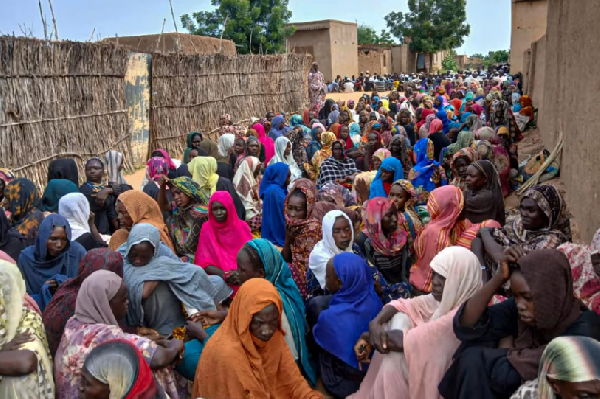
More than 60,000 people have fled the Sudanese city of El-Fasher, which was captured by the paramilitary Rapid Support Forces (RSF) over the weekend, according to the UN refugee agency.
Reports have emerged of mass executions and crimes against humanity as RSF fighters stormed the city following an 18-month siege marked by starvation and heavy bombardment.
The flow of those fleeing the violence towards the town of Tawila, about 80km (50 miles) west of El-Fasher, has intensified in recent days, UNHCR spokesperson Eujin Byun told the BBC.
“They are narrating horrendous stories of atrocities, including rape,” Ms Byun said, adding that the agency was struggling to provide enough shelter and food.
“Every child is suffering from malnutrition,” she added.
It is estimated that more than 150,000 people remain trapped in El-Fasher, which had been the army’s last stronghold in the western region of Darfur.
The RSF has denied widespread allegations that the killings in El-Fasher are ethnically motivated or part of a broader pattern of attacks on non-Arab populations.
However, the group confirmed it had detained one of its militiamen, Abu Lulu, accused of carrying out summary executions.
The RSF released footage of his arrest after BBC Verify identified him as being responsible for the killing of multiple unarmed men near El-Fasher.
TikTok told the BBC it has banned an account associated with Abu Lulu, though it remains unclear if he directly controlled it.
Sudan was plunged into civil war in April 2023 after a violent power struggle erupted between the army and the RSF.
The conflict has triggered famine conditions and allegations of genocide in the Darfur region.
More than 150,000 people have been killed nationwide, and about 12 million displaced — creating what the UN calls the world’s largest humanitarian crisis.
The capture of El-Fasher further entrenches the country’s geographic split, with the RSF now controlling western Sudan and much of neighbouring Kordofan to the south, while the army retains control of Khartoum, central, and eastern regions along the Red Sea.
The two warring sides were once allies, seizing power together in a 2021 coup before falling out over an internationally backed plan to transition to civilian rule.
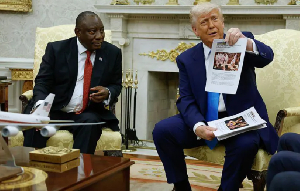
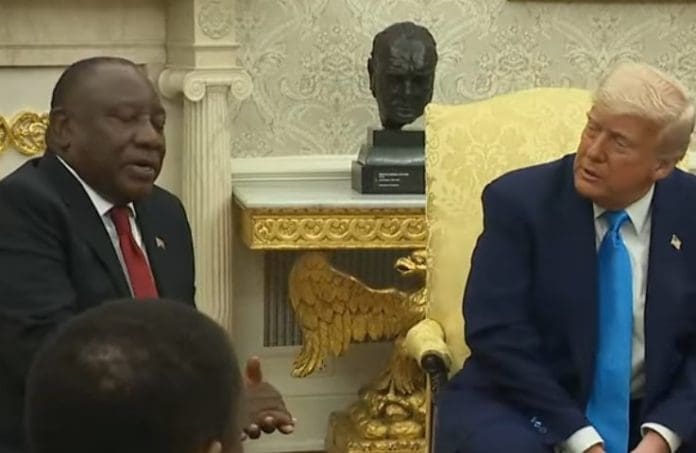
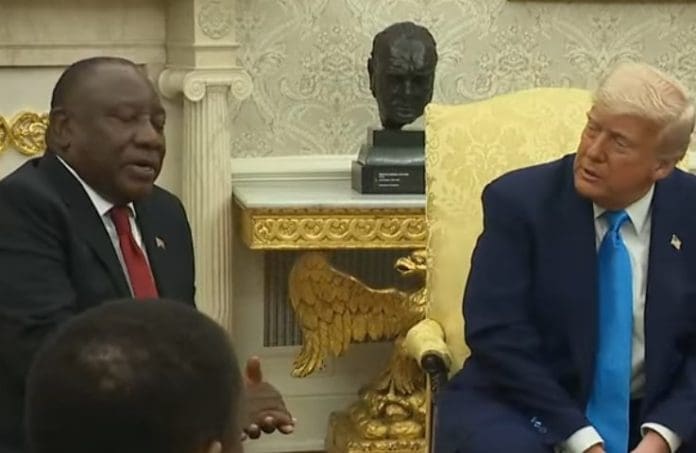
US President Donald Trump (R) with South African President Cyril Ramaphos (L)
The South African government has criticised the US’s decision to prioritise refugee applications from white Afrikaners, saying claims of a white genocide have been widely discredited and lack reliable evidence.
It highlighted an open letter published by prominent members of the Afrikaner community earlier this week rejecting the narrative, with some signatories calling the relocation scheme racist.
The limited number of white South African Afrikaners signing up to relocate to the US was an indication that they were not being persecuted, it added.
On Thursday, the administration of US President Donald Trump announced its lowest annual refugee cap on record — just 7,500.
The exact figures for the number of white South Africans who have been admitted through the US scheme are not available.
South Africa’s latest crime statistics do not indicate that more white people have fallen victim to violent crime than other racial groups.
Earlier this year, President Trump offered refugee status to Afrikaners — who are mostly descendants of Dutch and French settlers — after South African President Cyril Ramaphosa signed a law allowing the government to seize land without compensation in rare instances.
Most private farmland is owned by white South Africans, who make up just over 7% of the population.
Several months ago, South Africa’s ambassador to Washington, Ebrahim Rasool, was expelled after accusing Trump of “mobilising a supremacism” and trying to “project white victimhood as a dog whistle.”
In the Oval Office in May, Trump confronted South Africa’s President Cyril Ramaphosa and claimed white farmers in his nation were being killed and “persecuted.”
President Trump held up a photo purporting to show body bags containing the remains of white people in South Africa, but the Reuters news agency later identified the photo as one of their own — taken thousands of miles away in the war-struck Democratic Republic of Congo.
Washington did not comment on the claim that it had misidentified the image.
The White House also played a video which it said showed burial sites for murdered white farmers. It later emerged that the videos were scenes from a 2020 protest in which the crosses represented farmers killed over multiple years.
The Ecobank-JoyBusiness SME Fair 2025 burst into life on Friday, October 31, with an exciting display of innovation and enterprise, setting a pace for Ghana’s biggest business showcase.
From the early morning hours, eager entrepreneurs, industry leaders, and a massive, enthusiastic crowd thronged the Ghud Park, Accra Mall, cementing Day 1 as an unparalleled success.
Organisers estimate that over 1,000 people passed through the gates on the opening day alone, a colossal turnout that has guaranteed a successful weekend for the over 160 vendors from Ghana’s thriving Small and Medium Enterprise (SME) sector.
The fair, a three-day economic empowerment bazaar organised by the Multimedia Group Limited in partnership with Ecobank, with JoyPrime leading the charge, runs until Sunday, November 2, from 8 am to 8 pm daily.
Day 1 was a feast for consumers and a massive financial victory for exhibitors.
The schedule was jam-packed as visitors capitalised on exclusive deals, with staggering discounts ranging from 10% to an incredible 50% across most stands.
One vendor, showcasing a wide array of cosmetic products, beamed: “The energy here is phenomenal! We’ve received more enquiries in a single day than we usually get in a week. This fair is a golden platform for SMEs like ours.”
The venue remains fully stocked with essentials and luxuries alike, including:
Beauty & Wellness: Specialized hair products, cosmetics, and personal care items.
Agribusiness & Food: A wide range of food products and processed goods.
Service Sector: Financial institutions, service providers, and sector stakeholders offering consultations and packages.
Ecobank, the headline sponsor, anchored the financial services sector, setting up a dedicated hub to offer quick account openings, loan assessments, and free business advisory sessions, directly linking entrepreneurs to crucial capital.
If you missed the excitement today, Day 2 promises even more:
Meet celebrity guests and performances from Keche, Tulenkey and Perez Muzik
Business Clinics offering consultations with financial advisors, legal and regulatory advice from agencies such as the Ghana Revenue Authority (GRA), and marketing gurus.
Free makeup, hair washing, perming, and retouching sessions, among others.
Expanded vendor offers are rolling out “Day 2 Only” deals, with discounts up to 70% on select products and services.
Supported by major partners including MTN, Sintex Tank, Wintiz Special Gari Mix from JW Foods, Ghana Export Promotion Authority (GEPA), Greenbox Sewage, and DPS Pipes, the fair is a celebration of innovation and growth.
With overwhelming foot traffic, robust sales, and high-profile media coverage, vendors are reaping the rewards of unprecedented exposure.
For the public, Day 2 offers a unique, high-value opportunity to discover the best of Ghanaian entrepreneurship and snag unbeatable deals.
Head to the Ghud Park, Accra Mall, tomorrow (Saturday, November 1) from 8 am to 8 pm, and be part of the excitement!
DISCLAIMER: The Views, Comments, Opinions, Contributions and Statements made by Readers and Contributors on this platform do not necessarily represent the views or policy of Multimedia Group Limited.
DISCLAIMER: The Views, Comments, Opinions, Contributions and Statements made by Readers and Contributors on this platform do not necessarily represent the views or policy of Multimedia Group Limited.
Four personnel of the Ghana Armed Forces have reportedly been arrested over an attempt to install a new chief in Awutu Senya West District of the Central Region.
According to the report, the soldiers were arrested together with two national security operatives by the Bawjiase District Police Command.
The report indicated that the six security officials were arrested after the police got intelligence that some individuals were trying to enstool a rival chief despite the presence of the already recognised traditional ruler, Nai Kwashie Abbey VII.
It further indicated that the arrest of the security officers sparked a reaction by the supporters of the new chief, who surrounded the police station, demanded their release, and threatened violence.
It added that a military vehicle bearing registration number 52 GA 62 arrived with additional personnel at the police station in the midst of the chaotic scene to secure the release of the suspects.
Watch CCTV footage of alleged soldier assaulting two civilians inside a pharmacy
Members of the community loyal to Nai Kwashie Abbey VII have condemned the attempted installation.
The members of the Asafo group of the community, in particular, have accused state security agencies of interfering in local chieftaincy affairs.
Asafo Supi Nipa-Nka, the leader of the group, called on the military and national security personnel to refrain from interfering in traditional disputes.
He warned that such interference could provoke unnecessary conflict within the community.
The Ghana Police Service is yet to comment on the incident.
BAI
Watch as Ghanaians share bold ideas to end galamsey
The wait is over! The GhanaWeb Excellence Awards 2025 is officially launched. Let’s Celebrate impact, innovation and excellence across Ghana.
Who deserves to be honoured this year?
Nominate now 👉 https://ghanaweb.com/ghanaexcellenceawards/nominate
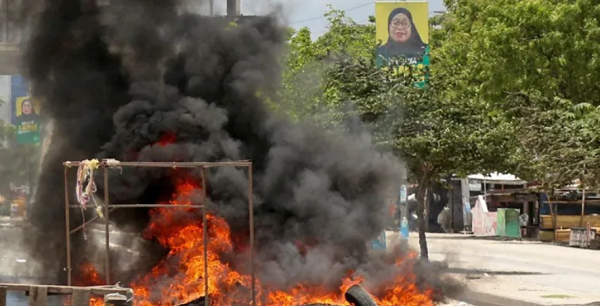
Hundreds of people have been killed in Tanzania during three days of protests following Wednesday’s general election, the country’s main opposition party has said.
A Chadema party spokesperson told the AFP news agency that “around 700” people had died in clashes with security forces. A nationwide internet shutdown has made it difficult to verify reports of deaths.
The BBC has spoken to a diplomatic source in Tanzania who said there was credible evidence that at least 500 people had died.
However, a government minister has defended the authorities’ handling of the unrest, saying that “nobody can state how many were injured”.
Demonstrations have taken place in major cities, with young protesters denouncing the vote as unfair after key opposition figures were barred from running against President Samia Suluhu Hassan.
Foreign Minister Mahmoud Kombo Thabit described the situation as “a few isolated pockets of incidents here and there… our security forces acted very swiftly and decisively to address this situation,” he told BBC Focus on Africa TV.
“We are also continuing to receive reports of vandalised properties,” the minister added, saying the internet blackout was necessary to stop such vandalism and save lives.
Protests continued on Friday in the main city, Dar es Salaam — particularly in the neighbourhoods of Salasala, Yombo and Tegeta — as demonstrators defied warnings from the army chief to end the unrest.
“Some people went to the streets on 29 October and committed criminal acts. These are criminals and the criminal acts should be stopped immediately,” Gen Jacob John Mkunda said on state TV on Thursday, adding that the army had “controlled the situation”.
The government has sought to play down the scale of the violence and has extended a curfew in an attempt to quell the unrest.
It has been difficult for journalists and human rights groups to verify reports of deaths because of the internet shutdown.
Hospitals across the country have reportedly refused to release information about casualties.
A source at one referral hospital in Dar es Salaam told the BBC it had been overwhelmed with patients since Thursday.
The source added that other public hospitals in the city were reportedly in a similar situation, with morgues said to be full.
One Chadema politician told the BBC he feared for his life, claiming “massacres are carried out during night hours when no one is there to witness them”.
“They are tracking down all our leaders and some have had to leave the country. These people kill with impunity,” John Kitoka, Chadema’s director of foreign and diaspora affairs, told the BBC’s Newshour programme.
The UN has called on Tanzania’s security forces to refrain from using unnecessary or disproportionate force.
“We are alarmed by the deaths and injuries that have occurred in the ongoing election-related protests in Tanzania. Reports we have received indicate that at least 10 people were killed,” Reuters quoted UN human rights spokesperson Seif Magango as saying earlier on Friday.
The BBC understands that ambassadors from several foreign embassies have also engaged the Tanzanian government to urge restraint by the security forces.
By late afternoon on Friday, the electoral commission had announced results from about 80 of the country’s 272 regions, according to state broadcaster TBC.
The BBC also understands that international observers reported an exceptionally low turnout during polling on Wednesday.
President Samia is expected to win the vote under the ruling Chama Cha Mapinduzi (CCM) party, which has governed the country since independence in 1961.
Official results are expected on Saturday.
On Tanzania’s semi-autonomous archipelago of Zanzibar — which elects its own government and leader — the CCM’s Hussein Mwinyi, the incumbent president, won with nearly 80% of the vote.
The opposition in Zanzibar said there had been “massive fraud”, the AP news agency reported.
Tourists on the island were also reported stranded at the airport, with flight delays linked to the protests on the mainland and the internet shutdown.
A Kenyan music publicist said she was stranded for three days in Tanzania because of the communication blackout.
“Internet, shops, petrol stations, email, social media, everything was down. Total disconnect. No international or regional calls in or out. No text messages in or out. There were no Ubers or Bolts available because there was no network,” Anyiko Owoko posted on Instagram after making it home on Friday on a Kenya Airways flight.
“Many flights were cancelled; Tanzania’s national airline was grounded. There were so many people stranded at the airport who couldn’t book tickets or reschedule flights because of the connectivity blackout,” she said.
Protesters accuse the government of undermining democracy, as the main opposition leader, Tundu Lissu, remains in jail and another opposition figure was disqualified from the election — bolstering Samia’s chances of winning.
Lissu is being held on treason charges, which he denies, and his party boycotted the vote.
The only other serious contender, Luhaga Mpina of the ACT-Wazalendo party, was excluded on legal technicalities.
Sixteen fringe parties — none of which have historically had significant public support — were cleared to contest the election.
President Samia came to power in 2021 as Tanzania’s first female leader following the death in office of President John Magufuli.
She was initially praised for easing political repression, but the political space has since narrowed, with her government accused of targeting critics through arrests and a wave of abductions.
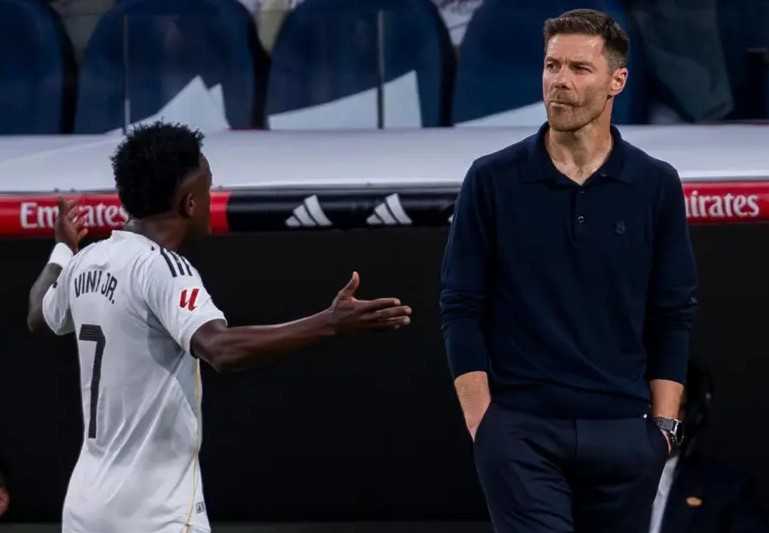
There has been tension and, at times, the atmosphere has been cold between Vinicius and Xabi Alonso, and he did not reference his manager in his apology on Wednesday afternoon.
The incident that defined the current mood came in the final training session before the Club World Cup semi-final against PSG. Vini, who had started every match until then, was told he would be a substitute. He did not take it well and Xabi Alonso stood firm, determined to show that no player, however talented, is beyond instruction.
That dynamic has continued.
The manager has insisted Vinicius will not finish every game, that he needs to rest more, and Rodrygo will challenge him for a place on the left side of the attack. Xabi Alonso’s stance is rooted in authority and planning. Vini Jr, used to being indulged, has found it hard to adapt.
The coach’s approach is consistent with the way he was as a player: methodical, controlled and, on top of that, he has the personality to be unafraid of confrontation. He wants every member of the squad to understand who sets the tone. For him, managing Real Madrid means creating order, not deferring to star power.
Vinicius, meanwhile, feels treated like any other player when he expected a closer, more personal relationship. The warmth he shared with Ancelotti is missing, replaced by professional distance.
The Volta Region occupies a central position in President John Dramani Mahama’s economic transformation blueprint, Chief of Staff Julius Debrah declared Friday at the Volta Economic Forum, outlining ambitious plans to leverage the area’s natural resources and strategic location for national growth.
Deputy Chief of Staff Nana Oye Bampoe Addo delivered Debrah’s address at the maiden forum held at Reddington Beach Resort in Keta, describing the Volta Economic Corridor as a land of natural wealth and power that will serve as a logistics and production backbone to accelerate north-south integration and establish Ghana as a regional trade hub.
The corridor, spanning more than two million hectares, is expected to anchor the government’s 24-Hour Economy policy, with development plans already completed in July 2025 for the Volta River Basin to guide establishment of industrial parks, economic enclaves, and inland water transport systems.
Bampoe Addo outlined government vision for transforming Lake Volta and surrounding areas into a multimodal corridor linking production zones to ports and regional markets. The infrastructure development represents more than regional policy rhetoric, according to officials who point to concrete partnership agreements and international backing as evidence of genuine commitment.
The African Development Bank signed a landmark Letter of Intent with Ghana in July 2025 to support development of the Volta Economic Corridor, with the agreement setting the stage for repositioning Lake Volta as a multimodal transport spine for agricultural and industrial expansion. Under this arrangement, the Ghana Infrastructure Investment Fund will establish three Special Purpose Vehicles to drive investment across critical sectors.
The 24-Hour Economy Plus concept has drawn international attention, featuring prominently at the Africa-Singapore Business Forum in August 2025, where President Mahama outlined how extended-hour operations can boost exports and job creation. The United Kingdom’s Jobs and Economic Transformation Programme has aligned its support to Ghana’s 24-hour policy pillar, suggesting international partners view the initiative as credible rather than merely political messaging.
The forum forms part of broader government strategy to transform the Volta Basin into a strategic economic growth corridor. President Mahama has made the 24-hour economy a centerpiece of his administration’s economic policy, arguing that Ghana must maximize utilization of existing infrastructure and resources by extending operating hours across key sectors.
Critics have questioned whether the concept represents genuine structural transformation or merely rebrands existing shift work. Supporters counter that it signals a comprehensive approach to boosting productivity, improving export competitiveness, and attracting private investment through strategic public-private partnerships.
The Volta Region’s strategic coastal location, skilled workforce, and expanding infrastructure base position it as a prime destination for investment and industrial growth, according to government officials and business stakeholders. The area’s natural resources include Lake Volta, West Africa’s largest man-made lake, which covers approximately 8,500 square kilometers and offers significant potential for inland water transport and fisheries development.
The Chief of Staff stated that the Volta Economic Forum represented a significant advancement in collective efforts to bring investment closer to the populace, demonstrating the government’s commitment to transforming the region’s abundant potential into successful enterprises supporting the President’s economic reset agenda.
Debrah described the Volta Region as an emerging engine of growth within a balanced, inclusive, and prosperous country, adding that the initiative was a declaration that Ghana’s economic transformation would no longer be limited to a few select areas.
The forum follows closely on heels of the Ghana Investment Promotion Centre’s regional investment roadshows conducted in the Volta and Oti Regions from October 27 to 30. Those events, held at the University of Health and Allied Sciences in Ho and the Bosatsu Hotel in Dambai, focused on connecting local entrepreneurs with domestic and foreign investors through business-to-business engagements, company visits, and project presentations.
The GIPC roadshows highlighted opportunities in manufacturing, agribusiness, tourism, and renewable energy, sectors that government officials believe can drive economic transformation across both regions. The initiatives serve as precursors to the Ghana International Investment Summit scheduled for 2026, amplifying Ghana’s position as a premier destination for global investment.
President Mahama’s economic reset agenda extends beyond the Volta Region to encompass digital transformation, youth empowerment, and private sector engagement as interconnected pillars of national development. The Chief of Staff has repeatedly emphasized that the administration’s vision places technology and innovation at the heart of inclusive growth.
Digital infrastructure development features prominently in government plans, with ambitious targets including completion of the Eastern Corridor Fibre Optic Project by 2027, launching a National Digital Development Council by 2026, and training 500,000 youth and women in emerging technologies by 2028. These efforts are expected to create over 200,000 digital jobs and generate more than $2 billion in annual digital exports.
The Volta Region development strategy connects to this broader digital agenda through plans for enhanced connectivity and technology-enabled services that will support the 24-hour economy framework. Government officials argue that regional economic transformation requires both physical infrastructure and digital capabilities that allow businesses to operate efficiently and access regional and international markets.
Private sector engagement represents another critical component of the reset agenda. Julius Debrah has disclosed that creating a conducive environment for businesses to thrive is a priority, with government believing that solving Ghana’s employment challenges hinges largely on a thriving private sector empowered to play frontal roles in implementing flagship economic programs.
Youth unemployment constitutes one of the country’s most pressing challenges that the administration seeks to address through its economic initiatives. Officials emphasize that youth empowerment serves not only as a moral imperative but also as a critical economic necessity, with the aim being that everyone, especially young people, benefits from the development agenda.
The Volta Economic Forum attracted stakeholders from across government, business, and civil society, creating a platform for dialogue about investment opportunities, infrastructure development, and policy frameworks needed to unlock the region’s economic potential. Similar forums have been held in other regions, including the Kwahu Business Forum conceptualized by Julius Debrah as venues for the President to explain economic policies and their implications for business growth.
Implementation timelines for Volta Region development plans extend across the current administration’s tenure, with different projects scheduled for completion at various stages. Government officials acknowledge that transforming economic potential into tangible results requires sustained effort, adequate financing, effective coordination across multiple agencies, and consistent political will to see initiatives through completion.
The African Development Bank partnership for the Volta Economic Corridor represents significant international validation of government plans. Multilateral development institutions typically conduct extensive due diligence before committing to major initiatives, and their involvement suggests technical and financial assessments support the feasibility of proposed interventions.
Lake Volta’s transformation into a multimodal transport corridor would require substantial investments in port facilities, cargo handling equipment, vessel acquisition or rehabilitation, and supporting infrastructure connecting waterways to road and rail networks. The Ghana Infrastructure Investment Fund’s role in establishing Special Purpose Vehicles aims to mobilize private capital alongside public resources for these capital-intensive projects.
Agricultural and industrial expansion plans for the Volta Basin build on the region’s existing strengths in crop production, fishing, and emerging manufacturing activities. The area produces significant quantities of rice, vegetables, and fish that currently serve local markets, with development plans envisioning expanded production for domestic consumption and export to regional markets.
Tourism potential remains largely untapped despite the region’s natural attractions, cultural heritage sites, and coastal beauty. Government officials believe enhanced infrastructure, improved marketing, and integration with the 24-hour economy framework can position the Volta Region as a competitive tourism destination attracting both domestic and international visitors.
The forum’s timing in late October 2025 allows government to showcase progress made since the administration began implementing its economic reset agenda in January while outlining plans for remaining years of the current term. Officials use such gatherings to build stakeholder buy-in, address concerns, and demonstrate tangible achievements beyond policy announcements.
Whether the ambitious vision for the Volta Region materializes into sustained economic transformation depends on multiple factors including financing availability, effective project implementation, private sector response to investment incentives, and ability to navigate political and bureaucratic obstacles that have historically slowed infrastructure development in Ghana.
LI 2462 is set to be revoked as the government takes decisive steps to strengthen its fight against illegal mining, also known as galamsey, and protect Ghana’s forest reserves.
The government has presented before Parliament the Environmental Protection (Mining in Forest Reserves) Revocation Instrument, 2025.
The legislative instrument, expected to mature into law within the next 21 sitting days, aims to revoke LI 2501 — which had limited the President’s authority to approve mining in forest reserves — and completely abolish LI 2462.
Acting Minister for Environment, Science and Technology, Emmanuel Armah-Kofi Buah, addressing journalists after laying the instrument, explained the rationale behind the move.
He said, “Mining Forest Reserves Revocation Instrument 2025. If you recall, LI 2462, which was enacted in 2022 to ensure that environmental management principles are legally enforced in mining operations in forest reserves, there was obviously a public outcry. That led to an amendment of that LI by deleting Regulation 32 to effectively limit the powers of the President to allow mining in forest reserves.”
He added, “Obviously, that led to the new LI 2501, which entered into force on June 2, 2025. However, in light of continued public outcry, as a listening government, and after a complete consultation and review with experts, it was very clear that we could completely revoke that LI and use the guidelines that were enacted in 2020. And so that’s effectively what I’ve done today.”
The Acting Minister stressed the government’s commitment to environmental protection.
This move, according to Armah-Kofi Buah, reflects Mahama’s administration’s ongoing efforts to respond to public concerns while reinforcing environmental stewardship and sustainable resource management in Ghana.
The South African government has strongly criticized a United States decision to prioritize refugee applications from white Afrikaners.
Officials labelled the policy misguided and based on discredited claims of systematic persecution.
In an official statement, Pretoria asserted there is no credible evidence supporting a so called white genocide. The government cited an open letter from prominent Afrikaners who themselves rejected the narrative, with some calling the US scheme racist and politically motivated.
The criticism targets a move by the Trump administration to create a special admissions category within its historically low annual refugee cap of 7,500 people. South African officials accused Washington of weaponising misinformation for political purposes.
The government stressed that national crime statistics show violent crime affects all racial groups. Using this issue to justify racialized asylum policies is deeply irresponsible, the statement read.
Analysts link the controversy to President Trump’s longstanding opposition to South Africa’s land reform policy. The dispute escalated further after Washington expelled South African Ambassador Ebrahim Rasool for accusing Trump of mobilising supremacism.
The diplomatic rift deepened following a reported Oval Office meeting where President Trump allegedly presented misleading evidence, including a photo from the Democratic Republic of Congo falsely described as murdered white South Africans.
Pretoria said these factual distortions prove the persecution narrative is a manufactured myth. It reaffirmed its commitment to protecting all citizens equally and called on the US to base its foreign policy on reality, not falsehoods.
Germany’s President Frank-Walter Steinmeier will touch down in Ghana this Sunday for a three-day state visit that officials say aims to reshape bilateral cooperation around technology, trade and development, marking his second trip to the West African nation since December 2017.
The official program kicks off Monday with the ceremonial inspection of a full military Guard of Honour at the Forecourt of the Presidency, followed by closed-door discussions between Steinmeier and his host, President John Dramani Mahama. Both leaders will subsequently convene their delegations for broader bilateral talks in the Credentials Room, where conversations are expected to center on strengthening economic and technological partnerships.
Ghana’s Presidency Communications Directorate released details of the visit Friday, outlining an itinerary that emphasizes digital innovation alongside traditional diplomatic protocols. The agenda suggests German interest in Ghana’s emerging technology sector, particularly through scheduled interactions with young IT specialists who represent the country’s growing digital economy.
A State Luncheon honoring Steinmeier and his delegation will take place at the Presidential Banquet Hall on Monday afternoon, maintaining diplomatic traditions that accompany high-level state visits. The German president travels with a business delegation, indicating commercial interests accompany the diplomatic engagements.
Later Monday, Steinmeier will participate in what’s become a standard gesture for visiting heads of state by laying a wreath at the tomb of Dr. Kwame Nkrumah, Ghana’s first president, at the Kwame Nkrumah Memorial Park. The ceremonial visit to Ghana’s founding father symbolizes respect for the nation’s independence history and its pan-African legacy.
The technology focus becomes more apparent with Steinmeier’s scheduled meeting with young Ghanaian IT specialists, though officials haven’t disclosed specific details about which companies or sectors these professionals represent. Ghana’s digital economy has experienced significant growth in recent years, with tech hubs in Accra attracting both regional and international attention. Monday concludes with a reception at the German Ambassador’s Residence.
Tuesday’s program shifts to Kumasi, the Ashanti regional capital, where Steinmeier will perform a sod-cutting ceremony at the Kumasi Technical Institute. Technical and vocational education represents a longstanding area of German development cooperation across Africa, with numerous training institutes receiving support through German development agencies.
The German president’s engagement with Kwame Nkrumah University of Science and Technology includes meetings with the Vice Chancellor, staff, and alumni, underscoring educational and research collaboration between the two nations. KNUST ranks among Ghana’s premier institutions for science and technology education, making it a natural focal point for discussions about technical cooperation.
Steinmeier will also visit the Kumasi Centre for Collaborative Research, though the Presidency statement didn’t specify which research areas or projects would be highlighted during the tour. Such centers often serve as platforms for international academic partnerships, particularly in fields like tropical medicine, agriculture, and materials science.
The visit culminates with a courtesy call on Otumfuo Osei Tutu II, the Asantehene, at Manhyia Palace. Meetings with traditional rulers have become standard protocol for visiting dignitaries in Ghana, acknowledging the continued cultural and social influence that chiefs wield alongside the formal government structure. The Asantehene leads one of West Africa’s most historically significant kingdoms.
Steinmeier’s Ghana visit forms part of a broader African tour that includes stops in Egypt and Angola, with the German leader departing Ghana Tuesday evening to continue his continental engagements. The multi-country trip reflects Germany’s efforts to strengthen ties across diverse African regions.
Germany has emerged as one of Ghana’s significant European development partners in recent years, with cooperation spanning renewable energy, technical education, good governance, and sustainable economic development. German companies maintain a presence in Ghana’s mining, manufacturing, and service sectors, while development cooperation projects focus on areas including climate change adaptation and youth employment.
The emphasis on technology and innovation during this visit suggests evolving priorities in the bilateral relationship. Ghana’s government has positioned digital transformation as central to its development agenda, seeking to leverage technology for economic diversification beyond traditional sectors like cocoa, gold, and oil.
Presidential spokesperson Felix Kwakye Ofosu characterized the visit as underscoring the strong partnership between the two nations, expressing expectations that it will open enhanced cooperation opportunities. Such diplomatic language typically signals ongoing negotiations around specific projects or agreements that may be announced during or following high-level visits.
The timing of Steinmeier’s visit comes as Ghana navigates economic challenges that have prompted closer engagement with international partners. The country recently completed negotiations with the International Monetary Fund and continues implementing reforms aimed at fiscal stability and economic growth.
Germany’s interest in Ghana’s technology sector aligns with broader European strategies to engage with Africa’s digital economy, which analysts project will experience significant expansion over coming decades. Young African tech entrepreneurs have attracted increasing attention from international investors and development agencies seeking to support innovation ecosystems.
The state visit protocol reflects the formal diplomatic relationship between Ghana and Germany, with both nations maintaining embassies and consular services. Germany’s development cooperation agency operates programs across multiple Ghanaian regions, focusing on areas where German expertise can support local development priorities.
While officials haven’t announced specific agreements or memoranda expected from the visit, such high-level engagements typically precede or accompany concrete cooperation initiatives. The presence of a business delegation traveling with Steinmeier suggests commercial relationships may feature in discussions alongside government-to-government cooperation.
Ghana’s diplomatic engagement with European partners has intensified as the country seeks to attract foreign investment, enhance trade relationships, and secure development cooperation funding. President Mahama, who recently attended the Paris Peace Forum, has emphasized strengthening international partnerships as part of his administration’s approach to economic development.
The three-day visit represents a relatively substantial time commitment for a head of state’s foreign trip, indicating German prioritization of the bilateral relationship. Most state visits compress official business into shorter timeframes, making Steinmeier’s extended stay noteworthy.
As preparations finalize for Sunday’s arrival, Ghana’s security and protocol officials have been coordinating arrangements for the various ceremonial and substantive elements of the visit. Such state visits typically involve coordination across multiple government ministries and agencies to ensure smooth execution of complex itineraries.
Asamoah Gyan is a former captain of the Black Stars
The Supreme Court has unanimously quashed garnishee proceedings at the High Court in Accra, which had ordered seven banks of former Black Stars Captain Asamoah Gyan to show cause why a judgment debt of over GH₵1 million against him should not be paid.
A five-member panel, presided over by Justice Amadu Omoro Tanko, which also includes Justices Yoni Kulendi, Senyo Dzamefe, Prof. Henrietta Mensa-Bonsu and Yaw Asare Darko, said that the ex parte proceedings be quashed.
This decision came after lawyers for the Black Stars’ all-time leading scorer, Asamoah Gyan, filed an application at the Supreme Court to quash the garnishee proceedings and subsequent orders made by Justice Owusu Dapaa, who was sitting as an additional High Court judge on November 19, 2024.
While an appeal against the execution of the order and a substantive appeal are pending, the High Court (differently constituted), presided over by Justice Nana Brew, had granted an ex parte motion against Asamoah Gyan and his manager.
“Upon reading the affidavit of Anthony Osarfo, of House Number GA-540-5173, Ken Kan Street, Dansoman, Accra, the Plaintiff/Judgment-Creditor/Applicant herein, filed on July 9, 2024, in support of a Motion Ex parte for a Garnishee Order Nisi to issue for an amount of GH₵1,061,000.00, representing damages and costs, in the accounts of the Defendants/Judgment Debtors/Respondents,” the Court ruled.
Consequently, the court directed the managers of the following banks to appear before it: CBG Bank, Accra; Ecobank Ghana; Zenith Bank Ghana; GT Bank; Access Bank Ghana; GCB Bank Ghana; and Stanbic Bank Ghana.
The court ordered them to show cause why the amounts standing to the credit of the Defendants/Judgment Debtors/Respondents, amounting to GH₵1,061,000.00, should not be applied to satisfy the judgment debt in favour of the Judgment Creditor.
Dissatisfied with the ruling, Asamoah Gyan’s lawyers, led by Bobby Banson, filed an application at the Supreme Court to quash the garnishee orders.
The execution of the judgment is stayed until the hearing of the application for a stay of execution at the Court of Appeal.
The applicants have fulfilled all the conditions of appeal and are awaiting the hearing of the substantive appeal.
Background:
Following their acquittal and discharge in an action involving an alleged rape incident, Osarfo Anthony and his lawyers sued for malicious prosecution.
Osarfo Anthony demanded compensation in the sum of GH₵1 million over what he described as malicious prosecution.
On December 8, 2023, Justice Ernest Owusu Dapaa, a Justice of the Court of Appeal sitting as an additional High Court judge, held that the plaintiff had proven his case for malicious prosecution.
Consequently, the court awarded GH₵900,000 in damages to the plaintiff, GH₵111,000 for 111 months of lost income, and GH₵60,000 in costs, totalling over GH₵1 million against Asamoah Gyan and his manager.
Coordinator of Eco-Conscious Citizens, Awula Serwaah, has called for a broader and more coordinated approach to tackling illegal and irresponsible mining in Ghana, warning that the current environmental crisis goes beyond the scope of existing legal instruments.
Speaking on Joy FM’s Top Story on Thursday, Awula Serwaah said. At the same time, the repeal of L.I. 2462, which previously granted mining leases in forest reserves, was a positive step; it alone would not address the widespread destruction of water bodies and farmlands across the country.
“The fight against irresponsible mining — the existential threat we currently face — must be fought on different fronts,” she said. “L.I. 2462 had to do with granting leases to mine in forest reserves. But a lot of what is going on now is pure irresponsible mining without any licence whatsoever.”
READ ALSO : Lands Minister lays LI 2462 in Parliament to revoke law allowing mining in forest reserves
She noted that many miners either operate illegally or exceed the boundaries of their licences, resulting in massive environmental damage. According to her, this has led to the poisoning of more than 60 per cent of Ghana’s water bodies and the rapid destruction of forest reserves.
Citing a recent example, Serwaah said activists in the Adjonsu community have reported illegal mining activities threatening farmlands and the community’s only source of drinking water.
“Two excavators have found their way onto the landscape. They’ve tried unsuccessfully to reach NAIMOS to get them removed. The Adjonsu stream is their only source of drinking water — and poisoning water, even in wartime, is a war crime,” she said.
She added that the affected residents have struggled to get help from both the National Anti-Illegal Mining Operations Secretariat (NAIMOS) and the police, leaving them vulnerable to environmental harm.
Awula Serwaah stressed that while the repeal of L.I. 2462 was necessary, communities like Adjonsu — which are not forest reserves — remain exposed.
“They will not be helped by L.I. 2462, so we need to support activists who are trying to protect their landscape,” she said.
Her comments follow the revocation instrument laid before Parliament on Friday, October 31, seeking to repeal L.I. 2501 and completely revoke L.I. 2462, both of which have been criticised for enabling environmentally destructive mining in forest reserves.
The Ministry of Environment, Science, Technology and Innovation says the repeal forms part of a broader strategy to combat illegal mining under the Responsible Cooperative Mining and Skills Development Programme (rCOMSDEP) and enforcement operations led by NAIMOS.
Environmental groups, however, insist that without strong enforcement and community-level protection, Ghana’s water bodies and ecosystems remain at serious risk.
DISCLAIMER: The Views, Comments, Opinions, Contributions and Statements made by Readers and Contributors on this platform do not necessarily represent the views or policy of Multimedia Group Limited.
DISCLAIMER: The Views, Comments, Opinions, Contributions and Statements made by Readers and Contributors on this platform do not necessarily represent the views or policy of Multimedia Group Limited.
Richard Adjei Mensah Ofori Atta (L) and President John Mahama (R)
The Manhyia South Constituency Chairman of the New Patriotic Party (NPP), Richard Adjei Mensah Ofori Atta, has reaffirmed the exceptional leadership and peacebuilding legacy of Otumfuo Osei Tutu II, Asantehene, as the Asante Kingdom prepares to mark the 27th anniversary of his coronation in 2026.
According to Ofori Atta, the year 2026 has been specially dedicated to celebrating Otumfuo’s enduring contributions to peace and national development under the theme “Otumfuo, the Pillar of Peace.”
As part of the celebrations, a #PeaceConcert will be organized in honour of the Asantehene to highlight his unmatched role in promoting harmony and unity across Ghana.
Reflecting on a memorable moment in history, Ofori Atta recounted his honour of presenting the Otumfuo Commemorative Gold Coin to President John Dramani Mahama.
The gold coin, he said, symbolizes peace and the Asantehene’s tireless efforts in conflict resolution and national reconciliation.
During that encounter, President John Dramani Mahama lauded Otumfuo Osei Tutu II as a true “Pillar of Peace”, commending his pivotal mediation in resolving the protracted Dagbon chieftaincy conflict in northern Ghana a landmark intervention that restored stability and unity to the Dagbon Traditional Area after years of tension.
The President also acknowledged Otumfuo’s instrumental role in supporting Ghana’s economic stability, particularly in 2016 when the Asantehene facilitated discussions between the government and the International Monetary Fund (IMF) that led to the successful negotiation of an Extended Credit Facility (ECF).
Mahama credited that intervention as a turning point for Ghana’s economy, stating, “That was the programme which turned the economy around, because in 2016, almost for the first time in our history, we did zero central bank financing of the budget.”
Ofori Atta emphasised that these tributes and milestones underscore the Asantehene’s unique influence beyond the boundaries of Asanteman, noting that Otumfuo Osei Tutu II’s reign has been marked by peace, progress and unity.
He concluded by urging Ghanaians to join in celebrating Otumfuo’s legacy through the upcoming #PeaceConcert and other commemorative events, reaffirming that the Asantehene’s leadership continues to serve as a beacon of peace and stability for the nation and beyond.
AM
Tragedy as farmer drowns while seeking loan to send child to SHS
The wait is over! The GhanaWeb Excellence Awards 2025 is officially launched. Let’s Celebrate impact, innovation and excellence across Ghana.
Who deserves to be honoured this year?
Nominate now 👉 https://ghanaweb.com/ghanaexcellenceawards/nominate
Ghana’s vast Voltaian Basin will mark a new dawn for the country’s oil and gas industry, serving as a game changer for energy security, job creation, and economic transformation, the Chief Executive Officer of the Petroleum Commission has declared.
Emefa Hardcastle told the Volta Economic Forum in Ho that government is accelerating efforts to attract investment into the basin, Ghana’s largest and only fully onshore petroleum reserve covering about 103,000 square kilometers, representing 40 percent of the country’s land mass.
“The Voltaian Basin holds the key to Ghana’s oil and gas future. It is therefore imperative to accelerate exploration activities to establish its petroleum potential, and the government is committed to ensuring same,” she stated.
The basin spans eight regions, including Volta, Eastern, Oti, Ashanti, Bono East, Savannah, Northern, and North East, but its petroleum potential has remained largely untapped since early Soviet geological work in the 1960s and 1970s.
Under a renewed policy directive, the Petroleum Commission, the Ghana National Petroleum Corporation, and the Ministry of Energy have been tasked with attracting the needed investments to expand exploration, generate data, and accelerate drilling operations.
The Ghana National Petroleum Corporation has already completed Phase 3 of its 2D seismic data acquisition, adding 1,655 line kilometers in 2021, and plans to drill two exploratory wells by the third quarter of 2026.
Three new exploration and production licenses have also been issued to private operators to undertake drilling activities in the basin, signaling growing confidence in the area’s commercial viability.
“Without exploration, without data, we cannot find oil and become commercial. The key thing for us then is to acquire data, to explore, and to drill, drill, drill,” Hardcastle emphasized at the forum themed “Harnessing the Volta Corridor Economic Potential for the 24 Hour Economy Take off.”
She noted that successful exploration in the Voltaian Basin would significantly boost Ghana’s energy independence by reducing reliance on imported fuel while providing new revenue streams for the state through taxes and royalties.
Beyond oil and gas, the basin’s development could stimulate growth in local infrastructure, small business participation, and industrial supply chains across the eight regions it covers.
“There are substantial opportunities in the Volta Region which will offer benefits such as increased government revenues, job creation, SME development, and enhanced energy security by reducing reliance on imports,” she explained.
However, Hardcastle cautioned that petroleum development also brings social and environmental challenges requiring careful management and proactive engagement with affected communities.
She cited potential migration pressures, land use conflicts, and livelihood disruptions as areas demanding early engagement and coordinated policy responses from multiple government agencies.
The Commission is already working with the Attorney General’s Department, the Ghana Revenue Authority, and the National Oil Company to review Ghana’s onshore petroleum policy and adopt best practices from other African countries with similar onshore operations.
“We are reviewing the Ghana Government’s onshore policy to promote greater participation in governance and production, and to ensure wider access to the benefits derived from activities in the Voltaian Basin,” she added.
The Petroleum Commission chief emphasized the importance of community engagement and securing social license to operate, ensuring inclusive development while avoiding the resource management pitfalls experienced in some other extractive regions across Africa.
“We really do not want to learn the bad lessons that some of our neighbours have learnt with onshore exploration and production. We have to learn from best practice,” she said.
Ghana’s offshore oil and gas industry, dominated by the Jubilee, TEN, and Sankofa fields, has generated billions of dollars in revenue since commercial production began in 2010, but operations remain expensive and technically complex.
Developing onshore reserves in the Voltaian Basin could offer a more cost effective alternative while spreading the economic benefits of petroleum development to regions that have historically remained on the periphery of Ghana’s oil boom.
The basin’s geological characteristics suggest it may contain significant hydrocarbon deposits, though the full extent won’t be known until extensive exploration and drilling campaigns are completed over the coming years.
Industry analysts suggest successful development could position Ghana as a more significant regional energy player, potentially reducing West Africa’s dependence on imported refined petroleum products.
The government’s renewed focus on the Voltaian Basin comes as global energy markets experience volatility and many African nations seek to maximize domestic resource development to reduce vulnerability to external supply shocks.
Hardcastle called on Ghanaians, especially residents of the Volta Region, to support government’s drive to unlock the basin’s economic potential for national prosperity.
“Following the drilling of the exploratory wells by GNPC next year, our investors will be invited to acquire rights to conduct exploration and production activities in several acreages within the basin. We need to support the government in executing its objective of attracting needed investment in the Voltaian Basin for our collective benefit,” she said.
The Volta Economic Forum brought together policymakers, regional leaders, diplomats, and industry executives to explore opportunities within the Volta Economic Corridor, which forms a key pillar of Ghana’s 24 hour economy strategy.
Regional leaders expressed optimism that petroleum development, combined with agricultural modernization and infrastructure improvements, could transform the Volta region from a largely rural area into an industrial and commercial hub.
However, civil society groups have urged caution, emphasizing the need for robust environmental safeguards and transparent revenue management to ensure local communities benefit meaningfully from any oil and gas discoveries.
The coming months will prove crucial as GNPC prepares to drill its first exploratory wells, a milestone that could either validate decades of geological speculation or require a fundamental reassessment of the basin’s commercial potential.
For now, government officials remain bullish, framing the Voltaian Basin as the next frontier in Ghana’s energy story and a potential catalyst for broader economic transformation across the country’s northern and eastern regions.
Whether the basin lives up to its billing as a game changer will depend on exploration results, policy implementation, and the government’s ability to balance development ambitions with environmental and social responsibilities.
Attorney General and Minister of Justice, Dr. Dominic Ayine
The Attorney General and Minister for Justice, Dr. Dominic Ayine, has clarified that he personally funded the purchase of six heavy-duty printers for the Economic and Organised Crime Office (EOCO).
His clarification follows concerns raised by members of the Public Accounts Committee (PAC), who questioned whether EOCO had received grants or donations from unapproved sources.
Appearing before the committee, Dr. Ayine explained that EOCO does not accept financial support or donations from private individuals or institutions, stating that his contribution was a personal gesture intended to enhance the agency’s efficiency and does not constitute a conflict of interest.
“EOCO does not receive such donations from private persons because of issues of conflict of interest. When I assumed office in February, one of the things they briefed me on was that they did not have printers,” he said.
He further explained that after exploring various funding options without success, he decided to purchase the printers using his own resources.
“We looked everywhere and couldn’t find money to buy the printers, so I bought six heavy-duty printers for them out of my own funds. There is no conflict in this because I wanted the entity to work efficiently,” Dr. Ayine added.
The clarification came in response to a question from the Member of Parliament for Kpando, Sebastian Deh, who had sought to determine whether it was ethically appropriate for EOCO to receive in-kind grants, given the sensitive nature of its work.
Dr. Ayine reaffirmed that EOCO remains a public institution funded solely through approved government channels, and his donation was purely to support the operational needs of the office.
DISCLAIMER: The Views, Comments, Opinions, Contributions and Statements made by Readers and Contributors on this platform do not necessarily represent the views or policy of Multimedia Group Limited.
DISCLAIMER: The Views, Comments, Opinions, Contributions and Statements made by Readers and Contributors on this platform do not necessarily represent the views or policy of Multimedia Group Limited.
The Accra Metropolitan Assembly (AMA) has announced plans to intensify enforcement and monitoring activities for the second edition of National Sanitation Day scheduled for Saturday, November 1, warning that failure to comply with the sanitation directive could result in fines or imprisonment.
According to a statement signed by Head of Public Affairs Gilbert Nii Ankrah, residents who refuse to participate in the communal labour exercise face fines of up to 100 penalty units or imprisonment for between 30 days and six months, or both. Continuing offenders will incur additional daily penalties under the Accra Metropolitan Assembly Communal Labour Bye Laws 2017.
The exercise forms part of government efforts to promote environmental cleanliness and ensure full public participation in the nationwide campaign to make Accra cleaner, safer, and healthier. All shops, markets, and business premises are required to remain closed from 6:00 a.m. until the exercise is completed to allow traders, residents, and market associations to participate fully.
The operation will involve deploying 21 Public Health Officers, 200 members of the AMA Sanitation Taskforce, and 81 labourers, including sweepers and janitors, across all sub-metropolitan areas. Heavy duty equipment including compactor trucks, backhoe loaders, excavators, tipper trucks, and a pay loader will support the exercise to facilitate desilting of drains, clearing of refuse, and transportation of waste.
Cleansing activities will focus on desilting drains, brushing road kerbs, sweeping, and removing unauthorized banners from public spaces. The comprehensive approach reflects the Assembly’s determination to tackle sanitation challenges that have historically plagued the capital city.
The November 1 exercise marks the second monthly observance since President John Dramani Mahama officially relaunched National Sanitation Day on September 6 at the Institute of Local Government Studies in Madina. The maiden exercise took place on October 4, with enforcement teams touring major commercial areas including Tudu Market, Kantamanto, Agbogbloshie, and Abbossey Okai to monitor compliance.
Mayor Michael Kpakpo Allotey has been at the forefront of the renewed sanitation drive, describing the initiative as timely and crucial for the city’s ongoing Reset Accra agenda. The AMA has deployed Rapid Response Teams that operate continuously to ensure public spaces, ceremonial streets, and transport terminals remain clean throughout the day, not just during monthly exercises.
“We are determined to stop the cycle where people dump waste indiscriminately right after major clean up exercises,” Mayor Allotey explained during the October launch. The Rapid Response Teams enforce compliance immediately rather than simply cleaning up after violations occur.
The reintroduction of National Sanitation Day aligns with Minister for Local Government, Chieftaincy and Religious Affairs Ahmed Ibrahim’s directive requiring all Metropolitan, Municipal, and District Assemblies nationwide to clear visible filth by 8:00 a.m. daily. Sanitation has become a Key Performance Indicator for all Metropolitan, Municipal, and District Chief Executives, signaling government’s seriousness about addressing Ghana’s environmental challenges.
Greater Accra Regional Minister Linda Ocloo has announced that the last Friday of every month will also be observed as Sanitation Day in the region, complementing the first Saturday national exercise. Her administration is implementing a comprehensive sanitation policy that encourages waste segregation and provision of garbage bags and bins in public places and homes.
The October exercise saw rigorous enforcement of business closure directives, with inspection teams led by Mayor Allotey, Minister Ibrahim, and Ga Mantse King Tackie Teiko Tsuru II touring commercial areas to encourage traders to take ownership of their environment. October was declared Clean Up Month for Accra, emphasizing that sanitation is a continuous campaign rather than a one day event.
The Greater Accra Regional Coordinating Council, led by Regional Minister Ocloo, has supported the AMA with additional sanitation logistics including gloves, rakes, and brooms to complement existing resources. This collaborative approach demonstrates government’s commitment to providing assemblies with tools needed for effective sanitation management.
The legal framework backing the exercise derives from the Accra Metropolitan Assembly Communal Labour Bye Laws 2017, enacted pursuant to Section 181 of the Local Governance Act 2016. The law mandates observation of the first Saturday of every month as National Sanitation Day, giving the Assembly legal authority to enforce compliance through fines and other penalties.
Critics have historically questioned whether monthly sanitation exercises produce lasting results or simply create temporary cleanliness that disappears within days. The AMA’s response through Rapid Response Teams and continuous enforcement represents an attempt to address these concerns by maintaining pressure between monthly exercises rather than allowing standards to lapse.
The exercise seeks to rid Accra of filth, reduce flooding caused by clogged drains, tackle environmental health risks, and improve overall sanitation across the metropolis. Assembly members will lead clean up activities across their respective electoral areas to ensure coordinated operations and visible leadership at the community level.
Social and behavioural change campaigns are being intensified to educate and reorient citizens on proper sanitation practices. The government recognizes that enforcement alone won’t solve sanitation challenges without corresponding shifts in public attitudes and behaviors around waste disposal and environmental responsibility.
The AMA’s strengthened enforcement approach reflects lessons learned from previous attempts to institutionalize regular sanitation exercises. Past initiatives often lost momentum due to weak enforcement, inadequate resources, and public apathy. By deploying substantial personnel, providing necessary equipment, and threatening meaningful penalties, the Assembly signals determination to make this relaunch more sustainable.
Traditional authorities, religious organizations, and other stakeholders are being engaged to deepen decentralization and ensure community buy in for sanitation initiatives. The involvement of the Ga Mantse and other traditional leaders in October’s exercise demonstrates the cultural and social dimensions of the sanitation campaign beyond mere government directive.
For residents and business owners across the Accra metropolis, the message is clear: participation in Saturday’s sanitation exercise isn’t optional. The Assembly urges all residents, traders, transport operators, and businesses to actively take part, emphasizing that maintaining a clean city represents a shared responsibility that requires collective action.
As November 1 approaches, the test will be whether the AMA can sustain enforcement momentum and whether residents embrace the initiative as genuine civic duty rather than burdensome obligation. The success of National Sanitation Day ultimately depends not just on Assembly actions but on citizens’ willingness to maintain cleanliness standards beyond monthly exercises.
The goal, as the AMA emphasizes, is making Accra a cleaner, safer, and more sustainable city for everyone. Whether the combination of enforcement, resources, and public engagement proves sufficient to achieve that vision will become apparent as the monthly exercises continue throughout 2025 and beyond.
The Ghana Institute of Management and Public Administration (GIMPA) has unveiled its first edition of the African Journal of International Criminal Justice, marking what officials describe as a transformative moment for legal scholarship across the continent.
Thursday’s launch at the Dr Daniel McKorley Moot Courtroom brought together leading jurists, academics, and legal practitioners who gathered to witness what many see as a long overdue platform for African voices in international criminal law discourse.
The journal, a flagship publication of GIMPA’s African Centre of International Criminal Justice (ACICJ), aims to deepen research and scholarly debate on criminal justice issues affecting Africa, from genocide and war crimes to crimes against humanity.
Dr Kwaku Agyeman-Budu, Dean of GIMPA’s Faculty of Law, told guests the publication embodies the institution’s commitment to advancing scholarship in international criminal law while promoting accountability across Africa.
“This occasion marks a significant milestone in our journey to promote International Criminal Law and justice in Africa,” he said, noting the journal provides scholars and practitioners with a credible platform to share insights on critical justice issues.
The African Centre of International Criminal Justice, established in 2017, serves as both a research hub and advocacy platform dedicated to disseminating knowledge about the International Criminal Court’s work and promoting international criminal law principles on the continent.
Since its inception, the Centre has spearheaded several initiatives aimed at enhancing understanding of international criminal law, building capacity among legal professionals, and fostering collaboration between academic institutions and practicing lawyers.
Dr Agyeman-Budu praised students in GIMPA’s Master of Laws program in International Criminal Law and Justice, who played an instrumental role in producing the publication. “With this journal forming part of their LLM project, I must congratulate them for their dedication and hard work,” he said, adding with characteristic humor that the event’s success was tied to their graduation prospects.
Acting Chief Justice Paul Baffoe-Bonnie, through Justice Hafisata Amaleboba of the Supreme Court, commended GIMPA for advancing legal scholarship and fostering dialogue on international criminal law across Africa.
Justice Amaleboba highlighted Ghana’s longstanding commitment to the rule of law, human rights, and justice, noting these principles continue to guide the country’s legal and judicial philosophy. She described the journal as a “contextually relevant academic platform” that will foster rigorous scholarship and thoughtful dialogue.
“The foundation of any robust criminal justice system rests not merely on adjudication and enforcement alone, but also on critical and reflective scholarship,” she emphasized, underscoring the symbiotic relationship between academia and legal practice.
She noted that in international criminal law, where complex crimes such as genocide, war crimes, and crimes against humanity demand principled interpretation, scholarship becomes indispensable.
Justice Amaleboba acknowledged that Africa’s engagement with international criminal justice has been marked by both promise and controversy, stressing that African scholars have a critical role in bridging the gap between aspirational legal ideals and the realities of justice on the continent.
“Through research, discourse, and publication, platforms such as this journal amplify African perspectives and experiences that are often underrepresented,” she said.
The launch’s theme, “recognizing the relationship between legal scholarship and criminal justice,” reflects the publication’s mission to demonstrate how academic inquiry shapes effective and credible criminal justice systems responsive to Africa’s unique complexities.
Legal scholars at the event expressed optimism that the journal will provide a much needed African perspective in global discussions about international criminal law, potentially influencing policy and judicial practice across the continent.
The publication represents GIMPA Law School’s expanding role in shaping continental discourse on justice, accountability, and the rule of law, positioning the institution as a key player in African legal education and research.
Ghana’s pending investment legislation aims to dramatically simplify how foreign companies transfer technology and technical knowledge to local businesses, addressing longstanding complaints about bureaucratic complexity that has discouraged international partnerships.
Emmanuel Osei, Head of the Technology Transfer Agreement Department at the Ghana Investment Promotion Centre, described the Ghana Investment Promotion Authority Bill 2025 as a major step toward creating a more responsive regulatory framework during a UK Ghana Chamber of Commerce webinar on Friday.
The GIPA Bill 2025 is designed to create a more responsive and efficient framework to regulate Technology Transfer Agreements and to promote, facilitate, and regulate technology transfers in Ghana, Osei explained during the virtual session moderated by Theophilus Tawiah, Managing Partner of WTS Nobisfields.
The bill seeks to replace the GIPC Act 2013, establishing GIPA as the primary agency responsible for encouraging, promoting, and regulating investments in Ghana. It represents a comprehensive overhaul rather than simple amendments, following advice from the Attorney General after previous revision attempts lapsed with Parliament’s dissolution in January 2025.
Technology Transfer Agreements involve transactions where foreign entities provide industrial property rights, technical support services, technical know how, or management expertise to Ghanaian companies for fees. These arrangements serve as critical bridges through which knowledge, innovation, and capital flow into Ghana’s economy, yet many businesses struggle to navigate the complex registration process currently administered by GIPC.
Osei acknowledged these challenges during the webinar titled “Technology Transfer Agreements: Updates and Changes,” reaffirming GIPC’s commitment to simplifying procedures and modernizing legal frameworks to attract greater foreign investment. GIPC management has set up a new department for technology transfer administration with the aim of expediting the application process, he revealed.
The importance of proper registration extends beyond bureaucratic compliance. When agreements are registered, GIPC can monitor transactions, evaluate whether fees fall within permissible ranges, and ensure local companies genuinely benefit from knowledge transfer rather than simply paying royalties without building internal capacity.
However, current regulations create friction points that frustrate both foreign technology providers and Ghanaian recipients. Technology Transfer Agreements must have durations between 18 months and 10 years, with renewals not exceeding five years, requiring companies to repeatedly navigate approval processes even for successful ongoing partnerships.
The GIPA Bill 2025 aims to address such inefficiencies while strengthening oversight mechanisms. Among key reforms are efforts to collaborate with banks to ensure that only valid, registered TTAs are used for foreign exchange remittances, closing loopholes that allow unregistered agreements to operate outside regulatory scrutiny.
Osei emphasized that compliant agreements must be governed by Ghanaian law and include clear provisions for training local staff. “That is what ensures true knowledge transfer, not just payment of fees,” he stated, distinguishing between arrangements that genuinely build local capacity versus those that merely extract payments while keeping expertise offshore.
He cautioned against restrictive clauses such as grant back provisions or exclusivity terms, which aren’t acceptable under Ghanaian law. These restrictions typically prevent local companies from improving upon transferred technology or sourcing alternatives, effectively locking them into dependence on foreign suppliers beyond what’s necessary for legitimate intellectual property protection.
Tawiah, the webinar moderator, added that clarity and consistency in compliance shouldn’t be viewed as investment hurdles but rather as enablers of confidence. “The more transparent our systems are, the easier it is for investors to trust the process and for local businesses to benefit,” he remarked.
The legislative update ties into government’s broader 24 hour economy agenda. Finance Minister Dr. Cassiel Ato Forson underscored in his 2025 budget presentation the need to revise both the Labour Act and GIPC Act to enable the private sector to adapt to round the clock business operations, targeting investments in logistics, manufacturing, digital services, and business process outsourcing sectors that benefit from extended operating hours.
GIPC CEO Simon Madjie has called for active stakeholder participation in shaping the proposed legislation during consultations with public sector representatives, stressing that effective regulation requires listening, building consensus, and ensuring rules actually work for investors and Ghanaians alike.
The bill addresses persistent challenges beyond just technology transfer, including fronting, where foreign investors use Ghanaian partners as fronts to circumvent local ownership requirements, and regulatory inconsistencies across government agencies that create conflicting demands on businesses.
Current technology transfer regulations date back to 1992, predating the internet economy, mobile technology revolution, and contemporary digital business models that now dominate international commerce. Updating this framework represents an acknowledgment that Ghana’s investment promotion infrastructure must evolve to remain competitive in attracting modern capital flows.
The webinar forms part of UKGCC’s Mandatory Regulatory Compliance Series, supporting the chamber’s mission to foster dialogue between private sector actors and regulatory bodies. Such engagement helps ensure that regulations reflect practical realities businesses face rather than theoretical frameworks disconnected from operational challenges.
For foreign companies considering technology partnerships with Ghanaian firms, the promise of streamlined processes could prove decisive. Bureaucratic complexity adds costs and delays that make Ghana less attractive compared to regional competitors with simpler approval mechanisms, potentially costing the country valuable investment opportunities and knowledge transfers.
Yet simplification alone won’t suffice if enforcement remains inconsistent or corruption undermines formal procedures. The bill’s success ultimately depends on implementation quality, adequate staffing of the new technology transfer department, and whether digital systems can genuinely accelerate approvals rather than simply digitizing existing inefficiencies.
Ghana’s experience illustrates broader tensions developing economies face in regulating technology transfer. Governments want to ensure genuine knowledge transfer occurs, protect local companies from exploitative terms, and maintain oversight of foreign exchange outflows through royalty payments. However, excessive regulation discourages partnerships by making compliance too burdensome relative to benefits.
The GIPA Bill 2025 attempts to strike this balance through modernized procedures backed by clearer legal authority. Whether it succeeds will become apparent as the legislation moves through Parliament and subsequently gets implemented through regulations, departmental procedures, and actual processing of applications under the new framework.
For now, Osei’s remarks signal government recognition that current systems need improvement. The establishment of a dedicated technology transfer administration department and pending comprehensive legislation represent concrete steps toward addressing longstanding frustrations, though businesses will judge outcomes by whether approval timelines actually shrink and regulatory clarity genuinely improves.
As Ghana positions itself as West Africa’s investment destination of choice, the efficiency of technology transfer registration could significantly influence whether international companies choose Ghana over regional alternatives for partnerships that drive industrial development, job creation, and knowledge building in strategic sectors.
The Republic of Paraguay materialized, on Wednesday, its recognition of Morocco’s sovereignty over the Sahara through the announcement of the opening of a Consulate General.
During his meeting in Rabat with the Minister of Foreign Affairs, African Cooperation and Moroccan Expatriates, Nasser Bourita, the Minister of Foreign Affairs of the Republic of Paraguay, Rubén Ramírez Lezcano, reaffirmed his country’s full support for Morocco’s sovereignty over its Sahara and for the autonomy initiative presented by the Kingdom in 2007, considered as the only serious, credible and realistic basis for settling the regional dispute.
On this occasion, the Paraguayan Foreign Minister announced his country’s decision to soon open a Consulate General in the southern provinces, as a clear sign of support for the Kingdom’s territorial integrity.
This stance follows the withdrawal, in 2014, of Asunción’s recognition of the puppet entity, as well as the series of joint statements and political consultations that have since consolidated Paraguay’s support for Morocco’s national cause.
Paraguay’s decision to open a Consulate General in the Kingdom’s southern provinces constitutes a strong political act, illustrating the growing recognition, in Latin America, of Morocco’s sovereignty over its southern provinces and the strength of the ties of friendship and cooperation between the Kingdom of Morocco and the Republic of Paraguay.
Cape Coast, Oct 31, GNA – Mfantsipim School, the reigning champions of the National Science and Maths Quiz (NSMQ), has beaten city rivals, Adisadel College and visitors Prempeh College emphatically to book their ticket to the semi-finals of the 2025 edition of the competition in Cape Coast.
‘The School’ thrashed the two colleges severely in what was supposed to be a ‘clash of the titans, taking a comfortable lead right from the onset of the contest and cruising to victory by a landslide to cement their reign.
As expected, the contest was characterised by excitements, tensions, cheers and a series of protests.
When the last bell went off, the Botwe boys emerged victors with 64 points, leaving Adisadel and Prempeh with 40 points each.
Mfantsipim demonstrated their resolve from round one when they took the lead with 25 points as Prempeh and Adisadel followed with 20 and 15 respectively.
‘The School’ doubled their pace in the “speed race” in round two, ending the round with 41 points while Prempeh and Adisadel trailed behind with 22 points and 15 points respectively.
Adisadel showed potential as title contenders when they bagged the highest point (six) for the “problem of the day” in round three to bring their points to 21. Mfantsipim, however, maintained their lead with 45 points while Prempeh remained second with 24 points.
Heated prayers and worship by the Adisadel boys at the end of the third round were not enough to save them from trailing as they ended the “True/False” session in the fourth round with 31 points while Botwe stretched their lead with a whopping 61 points.
Prempeh on the other hand were 21 points shy of the reigning champions.
Indeed, the die had already been cast by the last round as the sterling performance of Adisadel in the “riddle” session was not enough to qualify them for the next round.
Mfantsipim School joins Ghana Secondary Technical School, and Mankranso SHS for the semi-finals awaiting comfortably for six more schools.
Richard Ahiagbah, the New Patriotic Party’s Director of Communications, has mounted a robust defense of the NPP’s economic stewardship, arguing that the current National Democratic Congress administration inherited a stable and recovering economy rather than the crisis they’ve claimed.
Speaking on Good Morning Ghana, Ahiagbah pushed back against NDC assertions that the economy was in poor shape when they took office. He pointed to Ghana’s 2024 growth rate of 5.7%, a figure he said was confirmed by international financial institutions, as evidence of the NPP’s successful economic management before leaving power.
“If they are slow in building the economy, that is their responsibility,” Ahiagbah said during the monitored interview. “They cannot blame the opposition.”
The communications director contrasted what he described as the current government’s sluggish performance with the NPP’s track record during their time in office. He emphasized sectoral growth achievements and job creation initiatives that his party implemented, suggesting these accomplishments laid a foundation the NDC should be building upon rather than criticizing.
International bodies including the International Monetary Fund and World Bank have documented Ghana’s economic recovery, supporting Ahiagbah’s claims about the state of the economy at the time of the transition. The growth figures represent a significant rebound from the macroeconomic challenges that plagued the country in 2022 and 2023.
However, Ahiagbah didn’t shy away from pointing out what he sees as failures by the current administration. He specifically highlighted two major campaign promises that remain largely unimplemented: the 24 hour economy initiative and the Feed Ghana program. Both initiatives were centerpiece proposals during the NDC’s campaign, yet months into their tenure, little progress has been made on either front.
“They cannot blame the opposition,” he reiterated, placing responsibility squarely on the ruling party’s shoulders.
The NPP official argued that the real challenge facing Ghana isn’t the economic foundation that was left behind but rather what he characterized as a lack of political will and prompt execution from the current government. In his view, the Mahama administration should be using the inherited economic growth as a launching pad for further development rather than as an excuse for inaction.
Ahiagbah stressed that the current government needs to act decisively if it wants to maintain and accelerate the economic momentum. He suggested that blaming previous administrations, while politically convenient, won’t translate into tangible improvements for Ghanaians who are waiting to see the promised economic transformation materialize.
Ghana’s economic stabilization has been supported by policy tightening, improved reserves, and currency appreciation, creating what Ahiagbah considers favorable conditions for the NDC to implement their development agenda.
The debate over economic inheritance has become a recurring theme in Ghanaian politics, with incoming administrations often criticizing their predecessors’ economic management. But with concrete growth figures now available, the NPP is using those numbers to challenge the NDC’s narrative and defend their own legacy.
As Ghana moves forward, the question remains whether the current administration can capitalize on what international observers have called a genuine economic recovery. For Ahiagbah and the NPP, the answer will determine whether the NDC’s criticisms were justified or simply political positioning.
eputy Minister for Defence, Ernest Brogya Genfi (R) among some top officials of the military
Ghana’s Deputy Minister for Defence, Ernest Brogya Genfi, has reaffirmed the government’s commitment to a historic retooling and modernization of the Ghana Armed Forces (GAF), promising an unprecedented investment in military equipment, infrastructure and personnel welfare beginning next year.
Speaking at the 2025 Land Combat Power Demonstration Exercise at the Bundase Training Camp on October 31, 2025, the Deputy Minister said the initiative forms a core part of President John Dramani Mahama’s ‘Resetting’ Ghana Agenda, aimed at boosting national security readiness and ensuring the Armed Forces are equipped for modern challenges.
“This commitment shall take full effect next year, with steady and sustained supplies in all subsequent years of President Mahama’s government,” he announced to a gathering that included top Defence officials, members of the Parliamentary Select Committee on Defence and Interior and the National Security Coordinator.
The event, which showcased the Ghana Armed Forces’ combined Land, Air and Maritime capabilities, brought together Senior Officers, Commandants and Students from the Ghana Armed Forces Command and Staff College (GAFCSC), as well as visiting officers from other African nations.
Brogya Genfi lauded the Ghana Armed Forces for their professionalism and precision, describing the exercise as “a vivid expression of discipline, strategy, and coordination; the very marker of military excellence.”
He emphasised that the demonstration served not merely as a show of firepower but as a living lesson in doctrine, leadership, technology and tactical synergy.
The Deputy Minister further highlighted ongoing efforts to retool the Armed Forces through the acquisition of new armoured vehicles, modern communication systems, and drone technology.
He also underscored the government’s focus on improving the welfare of service personnel.
“We recognize that the strength of our military lies not only in its arsenal, but in the well-being of those who serve,” he said.
“We are upgrading accommodation and training facilities, expanding access to healthcare and improving family support systems.”
He added that professional development remains central to the military’s evolution, as Ghana continues to build a force capable of handling the complex, asymmetric and transnational threats confronting the West African sub-region.
Brogya Genfi reaffirmed Ghana’s longstanding leadership role in promoting peace and security across Africa.
He praised the presence of officers from allied African nations, noting that their participation reflects a shared vision for regional military cooperation and the African Union’s goal of establishing fully operational standby forces.
“The friendships and shared experiences cultivated here form the bedrock of regional military cooperation and collective security,” he remarked.
While commending the Armed Forces for their sterling record at home and abroad, the Deputy Minister cautioned personnel to maintain the highest standards of conduct both in and out of uniform.
“Any actions that bring the image of our revered Ghana Armed Forces into disrepute will be dealt with decisively,” he warned, emphasising that discipline remains the cornerstone of military honour.
He expressed appreciation to the Chief of the Defence Staff, the Military High Command, the Commandant and staff of GAFCSC and the 1st Infantry Battalion for their roles in organizing the exercise.
He also acknowledged the presence and support of the Parliamentary Committee on Defence and Interior and defence attachés from partner nations.
Concluding his remarks, Brogya Genfi declared the 2025 Land Combat Power Demonstration officially closed, reaffirming the government’s unwavering commitment to a strong, modern and professional Armed Forces.
Energy Minister (L) in a high -level meeting with Ashish Khanna (R)
Minister of Energy and Green Transition, John Abdulai Jinapor, has held a high-level bilateral meeting with Ashish Khanna, Director-General of the International Solar Alliance (ISA), on the sidelines of the 8th Session of the ISA Assembly in New Delhi, India.
The discussions centred on strengthening collaboration between Ghana and the ISA to accelerate renewable energy deployment and enhance efficiency across the country’s energy value chain with a particular focus on improving performance within the electricity distribution sector.
Minister Jinapor highlighted Ghana’s ongoing commitment to expanding access to clean, reliable, and affordable energy, stressing that effective partnerships and innovative financing mechanisms are essential to achieving the country’s green transition agenda.
“Our engagement with the International Solar Alliance reaffirms Ghana’s determination to pursue sustainable energy pathways that leverage solar power to improve livelihoods, enhance energy security and promote inclusive growth,” he stated.
The two parties explored opportunities for technical cooperation, capacity building and sustainable financing arrangements to fast-track solar infrastructure investments and promote decentralised renewable solutions across Ghana’s urban and rural communities.
Khanna, on his part, reaffirmed the ISA’s unwavering commitment to supporting Ghana’s renewable energy ambitions through technical expertise, project development support and access to funding instruments that can scale up solar initiatives nationwide.
“Ghana remains a key partner in Africa’s renewable transformation story, and the ISA stands ready to provide the tools, knowledge, and resources needed to help deliver on that promise,” the ISA Director-General assured.
The meeting concluded with both sides expressing optimism about the future of their cooperation, emphasising that Ghana and the ISA share a common vision of building a resilient, efficient and inclusive solar-driven energy ecosystem that contributes to global climate goals and sustainable development.
THE BLACK QUEENS have finally received their outstanding bonuses from their third-place finish at the 2024 Women’s Africa Cup of Nations (WAFCON) in Morocco, following their emphatic win over Egypt on Tuesday.
The Ministry of Sports and Recreation settled the arrears shortly after Ghana’s 4–0 victory over Egypt in the second leg of the 2026 WAFCON qualifiers at the Accra Sports Stadium.
Each player received a cheque of $9,000, representing payment for their performance at last year’s continental tournament.
Reports indicate that $500 was withheld as tax, with players receiving the balance on Tuesday night.
The payment brings relief to the team after a tense standoff with the Ministry earlier in the week.
The Queens had threatened to boycott the qualifier against Egypt, missing two consecutive training sessions to press home their demand for the delayed bonuses.
Coach Kim Lars Björkegren’s side eventually resumed training on the eve of the match after several meetings with key officials.
Despite the off-field tension, the Black Queens delivered a dominant performance to thrash Egypt 7–0 on aggregate, having already claimed a 3–0 win in the first leg in Ismailia.
The cheques were presented to the players at their base at Erata Hotel following Tuesday night’s victory.
The Black Queens broke camp on Wednesday, October 29, to rejoin their clubs and will regroup in late November ahead of their high-profile friendly against England on December 2.
Chief Executive Officer of the Driver and Vehicle Licensing Authority (DVLA), Julius Neequaye Kotey, has confirmed that he honoured an invitation from the Office of the Special Prosecutor (OSP) in relation to his recent claim of a GHC 4 million bribery attempt.
The invitation followed Mr Kotey’s disclosure that unidentified individuals allegedly offered him GH¢4 million to halt the implementation of the digitalised vehicle registration plate policy.
The Coordinator of Eco-Conscious Citizens, Awula Serwah, has welcomed the government’s decision to revoke the Environmental Protection (Mining in Forest Reserves) Legislative Instrument, 2025, describing it as a step in the right direction. However, she cautioned that the fight against illegal mining, or galamsey, remains far from over.
The revocation instrument, laid before Parliament on Friday, October 31, seeks to repeal L.I. 2501 — which limited the President’s authority to approve mining in forest reserves — and completely revoke L.I. 2462, which has long been criticised for enabling environmentally destructive mining activities.
According to the Ministry of Environment, Science and Technology, the repeal forms part of a broader strategy to combat illegal mining through measures such as the Responsible Cooperative Mining and Skills Development Programme (rCOMSDEP) and operations led by the National Anti-Illegal Mining Operations Secretariat (NAIMOS).
Speaking on Citi Eyewitness News on Friday, October 31, Serwah commended the move but warned that illegal mining continues to ravage Ghana’s forests despite the legislative changes.
“It is a step in the right direction but we know that the house is on fire and right now it looks like we are using buckets of water instead of calling the fire service. What I am saying is that even with the revocation of L.I 2462, there is still illegal mining going on in forest reserves.
“…I am saying that so much is a step in the right direction and we applaud it, but we can’t celebrate as our waterbodies are still being poisoned, as the rise in kidney diseases has gone up four times, as we are being told that we can’t consume ‘kontomire’ because most of it is poisoned and a lot of our foodstuff are poisoned,” she said.
Read also
Government tables L.I. to revoke mining in forest reserves
Blakk Rasta (M) questions Shatta Wale (L) and Sarkodie’s (R) links to alleged fraudsters
Reggae musician and media personality, Blakk Rasta, has said it is no coincidence that Shatta Wale and Sarkodie’s names mostly come up whenever talk of alleged fraudsters or criminals surfaces in Ghana.
In a video shared on his Blakk Empire Media YouTube channel, Blakk Rasta questioned why some of Ghana’s top artistes are associated with people who later become subjects of criminal investigations.
According to him, some alleged fraudsters use musicians as a means to clean or “launder” their money.
He explained that over the years, whenever certain high-profile individuals have been accused of fraud or corruption, Shatta Wale’s name, in particular, has surfaced in discussions.
Behind Bars: Unravelling the events leading to Shatta Wale’s EOCO detention
“Any time a certain criminal is mentioned in Ghana, some names come up from the music world. Shatta Wale and Sarkodie. What’s wrong with us? Especially Shatta Wale,” he said.
Blakk Rasta listed a number of cases, including that of the former Director-General of the National Signals Bureau, Kwabena Adu-Boahene, businessman Kofi Boat, who was reportedly picked up by the FBI, and socialite Hajia4Reall, who was also arrested by the FBI in connection with a romance scam.
He said in each of these instances, conversations about the alleged offenders somehow included Shatta Wale’s name.
“Shatta Wale’s name is mentioned any time a certain fraudulent criminal is pinpointed, Kwabena Adu-Boahene, Shatta Wale is in there. Kofi Boat, Shatta Wale is in there. Hajia4Reall, Shatta Wale is in there. This guy called Dr Sledge, Shatta Wale is in there,” he stated.
Blakk Rasta suggested that some of the lavish displays of wealth by certain musicians might be connected to the money they allegedly receive from these individuals.
He argued that even the funds some artistes throw to fans during public events could have questionable sources.
“What kind of nose do you have that smells money from every corner? And these are the guys who go around also throwing money to so-called fans.
As for Sarkodie, I hear he is more stingy than the devil. ‘Money no be problem,’ huh! Yet, the money that they are smelling around could be coming from some of these Dr Sledge, Kwabena Adu-Boahene, yellow Lamborghini guy, and all these people,” he added.
Watch the video below:
Anytime a certain criminal is mentioned in Ghana, some names comes out from the music world especially especially Shattawale and Sarkodie -Blakk Rasta #PrimeRakonpic.twitter.com/joatzbhzKm
Frank-Walter Steinmeier is President of the Federal Republic of Germany
President of the Federal Republic of Germany, Frank-Walter Steinmeier, will embark on a three-day visit to Ghana from Sunday, November 2, to Tuesday, November 4, 2025.
The news of his visit was announced in a statement issued by the Minister of State in charge of Government Communication, Felix Kwakye Ofosu, on Friday, October 31, 2025.
“The President of Germany, Frank-Walter Steinmeier, will pay a three-day state visit to Ghana from November 2 to November 4, 2025,” the statement noted.
According to the statement, the visit forms part of ongoing efforts to deepen bilateral relations between Ghana and Germany, focusing on trade, investment, technology, and development cooperation.
President Mahama attends Paris Peace Forum
“The discussions between President Mahama and President Steinmeier are expected to reinforce Ghana-Germany relations and explore new avenues of cooperation that align with both nations’ development priorities,” the statement said.
It further indicated that President Steinmeier and Ghana’s President, John Dramani Mahama, will hold a closed-door meeting before engaging their respective delegations in bilateral talks in the Credentials Room.
A state luncheon will later be held in honour of President Steinmeier and his delegation at the Presidential Banquet Hall.
On the third day of his visit, President Steinmeier will travel to Kumasi, where he will perform a sod-cutting ceremony for the new Kumasi Technical Institute. He will also interact with the Vice-Chancellor, staff, and alumni of the Kwame Nkrumah University of Science and Technology (KNUST).
President Mahama meets Macron to strengthen Ghana-France ties at Paris Peace Forum
“The visit continues in Kumasi with a sod-cutting ceremony at the Kumasi Technical Institute, an interaction at the Kwame Nkrumah University of Science and Technology (KNUST), a visit to the Kumasi Centre for Collaborative Research, and a courtesy call on the Asantehene, Otumfuo Osei Tutu II, at Manhyia Palace,” it stated.
President Steinmeier is expected to depart Ghana on Tuesday evening.
The initiative was designed to give pupils hands-on experience in applying science to solve problem
Young pupils at Divine Mission Academy School are turning heads with groundbreaking science experiments that merge creativity, sustainability and local resources.
Through innovative projects using hibiscus leaves, scent leaf (nunum) and wastewater, the students are showing that scientific discovery can begin at any level even in the basic classroom.
The initiative, guided by the school’s supervision teachers, was designed to give pupils hands-on experience in applying science to solve real-world challenges.
Combining chemistry, biology and environmental studies, the projects inspired students to explore how everyday materials can be used to improve lives and promote environmental responsibility.
In their first experiment, the pupils worked with hibiscus leaves, widely known for producing Ghana’s beloved sobolo drink.
By extracting the plant’s natural pigments, they demonstrated its ability to function as a natural acid-base indicator, changing colour when exposed to acidic or basic solutions.
The experiment offered a practical and visual understanding of chemistry, using a familiar local resource.
Next, the students explored the potential of “nunum”, Ghana’s well-known aromatic scent leaf (Ocimum gratissimum).
Under the guidance of their teachers, they processed the herb into a natural hand sanitizer, harnessing its essential oils and antimicrobial properties.
This project showcased how traditional herbal knowledge can be adapted for modern hygiene needs, especially in promoting community health through science.
Perhaps, the most striking of their achievements was the generation of electricity from wastewater.
Using a simple microbial fuel setup, the students demonstrated how organic matter in wastewater can produce small amounts of electric current. The experiment successfully lit up LED, teaching pupils about renewable energy, resource recovery and the importance of protecting the environment.
The supervision teachers overseeing the projects explained that their goal was to inspire innovation through practical learning.
“We want our pupils to understand that science is not limited to laboratories. With creativity and curiosity, even local materials can lead to meaningful discoveries,” one of the teachers shared.
These projects have demonstrated creativity, teamwork, and sustainability. The school continues to nurture curiosity and hands-on learning, encouraging pupils to see science as a pathway to solving everyday problems.
From sobolo leaves to nunum herbs and wastewater, the young innovators at Divine Mission Academy at Ejisu- Donaso in the Ashanti Region are redefining classroom science proving that great ideas can grow from simple beginnings.
1.Pupils prepare hand sanitizer from scent leaf locally known in Ghana as “nunum”
2.The pupils generate electricity from kitchen wastewater
The Minister for Lands and Natural Resources, Emmanuel Armah-Kofi Buah, has issued a strong warning to chiefs and individuals involved in illegal mining activities, vowing that anyone found complicit will face severe criminal sanctions.
He urged the courts and security agencies to take firm action against offenders, emphasizing that the government remains committed to eradicating galamsey and safeguarding Ghana’s natural resources.