A heartbreaking scene has emerged online showing popular social media personality Youngdon in a state of visible distress and hardship, sparking deep concern among his fans and followers. The once vibrant and outspoken figure, known for his energetic videos and humorous content, now appears to be struggling both emotionally and physically, leaving many wondering what went wrong.
The emotional footage was shared by Amazing TV on Saturday, November 8, 2025, and has since gone viral across various social media platforms. In the video, Youngdon can be seen looking weak and disoriented, prompting a wave of sympathy and shock from viewers. The scenes have reignited conversations about the hidden struggles faced by public figures and the mental, financial, and emotional toll that fame can sometimes bring.
According to some close associates interviewed by Amazing TV, Youngdon has been going through a difficult phase in recent months. Reports suggest that he may be battling personal challenges, including health complications and financial strain. Others claim that he has been isolated from friends and family, making it harder for him to receive the support he needs.
Social media users have flooded comment sections with words of encouragement, prayers, and advice, urging Youngdon to seek help and remain strong. Many have also called on fellow influencers, celebrities, and charitable organizations to step in and provide assistance. “It’s sad to see him like this. He made us laugh when we needed it most — now it’s our turn to support him,” one viewer commented.
Health experts and mental wellness advocates have also weighed in, using Youngdon’s situation as a reminder of the importance of compassion and awareness around mental health. They emphasize that fame does not shield anyone from depression, stress, or financial hardship, and that society must learn to treat public figures with empathy rather than judgment.
As the video continues to circulate, fans remain hopeful that Youngdon will recover and regain his strength. For now, the Amazing TV report stands as both a wake-up call and a plea for compassion — a reminder that behind the laughter and fame, every human being can face moments of deep struggle.
Bubu styles have become a fashion favorite for mature women who appreciate elegance, comfort, and culture. Originating from West Africa, the Bubu (also known as kaftan or boubou) is a loose-fitting gown that symbolizes grace and sophistication. Over time, it has evolved into a modern fashion statement, blending traditional African beauty with contemporary designs.
One of the main reasons mature women love Bubu styles is the comfort and modesty they offer. The free-flowing design allows easy movement while maintaining a dignified and stylish look. It’s a perfect outfit choice for women who prefer outfits that don’t cling to the body yet still exude confidence and charm. Whether attending a wedding, church service, or family gathering, a well-tailored Bubu always makes a classy impression.
Ankara, lace, silk, and chiffon fabrics are some of the popular materials used for Bubu designs. Ankara Bubu styles often come in vibrant prints that highlight African heritage, while lace and chiffon versions give a more luxurious and soft appearance. Mature women can enhance their Bubu with embroidery, beadwork, or sequins for an added touch of elegance.
Styling also plays a key role. Pairing the Bubu with matching gele (head tie), subtle jewelry, and stylish footwear can elevate the entire look. Neutral makeup and a confident smile complete the outfit beautifully.
Bubu styles are more than just fashion; they represent timeless beauty, culture, and maturity. For women who want to look graceful without sacrificing comfort, the Bubu remains the perfect choice — elegant, versatile, and effortlessly chic.
The Oti Regional Chairman of the New Patriotic Party (NPP), Evans Yaw Dapaah, has urged party members in the region to rally behind former Vice President Dr. Mahamudu Bawumia and retain him as the party’s presidential candidate for the 2028 election.
Welcoming Dr. Bawumia to Dambai on Friday at the start of the former Vice President’s campaign tour of the Oti Region, the Regional Chairman encouraged party members to be guided by the political history of the Fourth Republic, where candidates consistently retained by their parties after initial defeats eventually went on to become presidents.
Citing examples of past presidents who benefited from their party’s consistency, Mr. Dapaah said there is “wisdom in consistency” and urged delegates to back Dr. Bawumia once again.
“Kufuor did not win in 1996, and some people said he was not marketable and should be replaced. Others even said an Asante could never be president of Ghana because he would be bigger than Otumfuo, so Kufuor should not be retained as our flagbearer. But the party believed in him, supported him, and Kufuor went on to win the 2000 elections,” he said.
“When Nana Addo also came, people said all sorts of things against him — that he could never be president and that he was too short. But after we backed him three times, Nana Addo eventually won.”
“If we look at our opponents, the NDC, they also supported the late Atta Mills on three occasions before he eventually won and became president,” he continued.
“Mahama, a sitting president, lost the 2016 election — that was unprecedented. But the NDC backed him twice after his defeat, and he has now emerged as president again.”
“That was a former president who lost as an incumbent. How much more Bawumia, who was a vice president with limited powers and has never been president before?”
“This shows that there is wisdom in consistency. So let us retain Bawumia. If we fail to do so, it will have a huge negative effect on our party and affect our progress.”
DISCLAIMER: The Views, Comments, Opinions, Contributions and Statements made by Readers and Contributors on this platform do not necessarily represent the views or policy of Multimedia Group Limited.
DISCLAIMER: The Views, Comments, Opinions, Contributions and Statements made by Readers and Contributors on this platform do not necessarily represent the views or policy of Multimedia Group Limited.
A member of the National Democratic Congress (NDC) Communication Team, Hamza Suhuyini, has urged Ghanaians to exercise patience with President John Dramani Mahama, highlighting his careful and transparent approach to addressing key national issues.
Speaking on The Big Issue on Channel One TV on Saturday, November 8, 2025, Mr. Suhuyini emphasised that the President’s governance style reflects a meticulous commitment to due process and accountability, particularly in sensitive areas such as investigations and national security.
He pointed to the swift release of investigative reports into deaths recorded during the last two elections as evidence of Mahama’s diligence and transparency.
“Even in relating to the deaths that occurred in the last two elections, it didn’t take three months for the investigative reports to be out. Many of us forgot about that directive, but the reports are out,” he noted.
Mr. Suhuyini cautioned against rushing to conclusions or politicising ongoing government efforts to address pressing national problems.
“We’re dealing with a very meticulous president, and the only caution I will throw out there is that we must be patient and not root this fight in a way that will make it clearly impossible for us to commit to the fight,” he said.
He further assured that President Mahama has shown no tendency to suppress official inquiry outcomes, underscoring his belief in transparency and accountability.
“This is not the president who will sweep the investigations under the carpet,” Mr. Suhuyini stressed.
Meanwhile, the Member of Parliament for Asutifi North, Ebenezer Kwaku Addo, has been arraigned over allegations of interfering with an anti-galamsey operation by the National Anti-Illegal Mining Operations Secretariat (NAIMOS) near Bronikrom–Hwidiem in the Ahafo Region.
The charges relate to an alleged obstruction during a raid on illegal mining sites on Saturday, November 1, 2025, which reportedly involved a confrontation between youth and the NAIMOS task force. Mr. Addo is accused of instigating the attack, an allegation he has strongly denied, explaining that his presence was intended to defuse tensions and maintain public order.
Ebenezer Kwaku Addo was arraigned on Tuesday, November 4, 2025, and granted bail of GH¢150,000, with a requirement to report to investigators once every two weeks until the trial begins or the order is reversed.
Mahama wants to end galamsey, but approach isn’t working – Ahiagbah
The Public Accounts Committee (PAC) of Parliament has praised the leadership of former Managing Director of the Ghana Publishing Company (GPC), David Asante, for steering the company toward a strong financial recovery in 2023.
Appearing before the Committee on Friday, November 9, the current Managing Director, Nana Kwasi Boatey, presented the financial report covering the period during which Mr. Asante was in charge.
During the session, Akwasi Konadu, the Member of Parliament for Manhyia North and a member of the Committee, commended the notable progress made under Mr. Asante’s leadership.
He pointed out that printing operations had grown by nearly 50 percent, gazetting services increased by 44 percent, publications and forms rose by 34 percent, and net assets saw an extraordinary jump of about 3,000 percent.
“These are very significant figures, showing a massive turnaround under the leadership of Mr. David Asante,” Mr. Konadu remarked, while asking the new Managing Director how the current management plans to sustain this growth trajectory.
The Committee showed great interest in the factors contributing to the company’s sharp turnaround and the strategies being implemented to maintain and build upon the progress achieved.
Members of the PAC lauded the Ghana Publishing Company for its outstanding performance and encouraged the new leadership to continue strengthening the systems and practices that led to this improvement.
They also advised the management team to uphold financial discipline, improve efficiency, and embrace innovation to ensure continued growth and public trust in the company’s operations.
Nigerians And – Ghanaians Arrested In Eastern Region Illegal Mining Raid
In a major operation against illegal mining activities, the National Inter-Ministerial Committee on Illegal Mining (NAIMOS) has arrested 32 Nigerians and 4 Ghanaians during a dawn raid in Osino, Fanteakwa South District.
The operation, described by authorities as a massive and coordinated strike, targeted galamseyers who were engaging in illegal small-scale mining activities, posing significant environmental and social risks to the region. NAIMOS officials said the arrests are part of the government’s ongoing efforts to curb illegal mining and restore order in the affected communities.
Authorities confirmed that the suspects will face legal action, as investigations continue into their operations. NAIMOS has also warned that such illegal activities will not be tolerated, and similar enforcement actions will be conducted across the country to protect natural resources and ensure compliance with mining laws.
Residents in the area have welcomed the operation, citing concerns over environmental degradation and the disruption of local livelihoods caused by unregulated mining activities.
Bono Regional Chairman of the NPP, Kwame Baffoe, popularly known as Abronye, has reminded his critics that he is a duly elected regional chairman of the party, not a personal assistant or a member of former Vice-President Dr. Mahamudu Bawumia’s campaign team.
Abronye hit the headlines earlier in the week after he responded angrily to a claim by former Health Minister Dr. Richard Anane that he had insulted former President John Agyekum Kufuor at an NPP meeting.
His scathing response to Dr. Anane was criticised by some as excessive, with calls for Dr. Bawumia to rein him in. Speaking on Onua TV to address the controversy, Abronye rejected suggestions that Dr. Bawumia should be dragged into the matter, stressing that as regional chairman he cannot be controlled by a presidential candidate.
“You don’t know the difference between a regional chairman and a campaign team member because you’re uninformed,” Abronye shot back, addressing a jab at Nhyira FM journalist Nana Jantua, who had attacked Dr. Bawumia over Abronye’s statements.
“I am a duly elected regional chairman, and you must know the difference between a regional chairman and a campaign chairman or campaign team member. I don’t work for Bawumia. I’m not his personal assistant. A regional chairman is above that, and no presidential candidate will ask a regional chairman to be his personal assistant or a campaign team member. Regional chairmen are above that, and no one can stop me.”
On Dr. Anane, Abronye warned that he will continue to respond if the former minister keeps spreading what he described as lies.
“Nobody in the NPP can ask me to keep quiet if Richard Anane lies against me. If he mentions my name ten times and lies ten times, I will respond ten times that he’s a liar. He came out and lied against me. If he attacks me ten times, I will attack him ten times,” he said.
Feud with Ken
Regarding his feud with NPP flagbearer hopeful Kennedy Agyapong, Abronye said he is only responding to what he called Agyapong’s “lies and propaganda” and will not stop using his platform to expose them.
“Members of the Kennedy campaign who don’t have any message circulated propaganda against me thinking that would discourage me from responding to Kennedy Agyapong’s lies and propaganda. If that is their thinking, then it is a joke. People say all sorts of dirty things on Oman FM and Net2 against Bawumia, but I will not go that way. I have vowed to keep exposing the lies and propaganda of Kennedy Agyapong against Bawumia. This is why they are not happy with me; I keep exposing their lies and they call it insults. I will continue to expose Kennedy Agyapong’s propaganda.”
DISCLAIMER: The Views, Comments, Opinions, Contributions and Statements made by Readers and Contributors on this platform do not necessarily represent the views or policy of Multimedia Group Limited.
DISCLAIMER: The Views, Comments, Opinions, Contributions and Statements made by Readers and Contributors on this platform do not necessarily represent the views or policy of Multimedia Group Limited.
Director of Economic Statistics at the Ghana Statistical Service (GSS), Francis Bright Mensah, has revealed that if Ghana’s inflation rate falls to 6% or below, it would mark a major economic milestone — the lowest level in 25 years.
Speaking on the Angel Morning Show (AMS), the Chief Statistician explained that, achieving such a reduction would represent a significant return to economic stability and enhance consumer confidence.
The Majority Leader, Mahama Ayariga, has informed Parliament that the Minister of Finance, Dr Cassiel Ato Forso,n has been scheduled to present the 2026 Budget Statement and Economic Policy to Parliament on Thursday, November 13, 2025.
According to the Majority Leader, the budget statement and economic policy of the government of Ghana for the year ending 31st December 2026 is expected to be presented in accordance with Article 179 of the Constitution.
He noted that the Budget statement outlines the government’s plans for next year’s finances.
Mr Ayariga said this on the floor of the House when he was presenting the explanatory memorandum on the business statement for the fourth week ending Friday, November 14, 2025.
According to him, the Business Committee has taken notice of numerous referrals pending at the Committees.
He pointed out that currently, 300 referrals have been made to 23 Committees for consideration and report to the House.
In addition, the Majority Leader noted that the five Ministers are expected to attend upon the House to respond to 28 during the week.
DISCLAIMER: The Views, Comments, Opinions, Contributions and Statements made by Readers and Contributors on this platform do not necessarily represent the views or policy of Multimedia Group Limited.
DISCLAIMER: The Views, Comments, Opinions, Contributions and Statements made by Readers and Contributors on this platform do not necessarily represent the views or policy of Multimedia Group Limited.
Edith Adjei taught herself to sell fugu cloths and northern smocks while working as a Human Resource Manager for the government. Today her brand, Unyqbiz Fabrics, sells across northern Ghana and reaches customers in Cape Coast, Kumasi and Accra. She posts carefully staged photos on Facebook and WhatsApp, replies to messages at odd hours and sends parcels by trusted bus lines and local riders. Her phone serves as both ledger and storefront.
Edith’s story reflects a broader economic transformation unfolding across Ghana. Small manufacturers, seamstresses and market traders increasingly use social media platforms to reach buyers beyond their towns. This digital shift represents more than individual success stories; it illustrates how micro enterprises are harnessing social media and mobile finance to reshape commerce while navigating thin margins, logistics challenges and formalization hurdles.
Small and Medium Enterprises (SMEs), commonly known as businesses operating on smaller scale than large corporations with limited employees and capital, form the backbone of Ghana’s economy. They contribute approximately 70 percent of gross domestic product (GDP) and represent roughly 92 percent of registered businesses. These enterprises drive employment, innovation and local production.
Former Finance Minister Dr Mohammed Amin Adam emphasized the sector’s importance, stating that supporting SMEs is crucial to achieving growth and development ambitions. He urged stakeholders to be intentional about providing access to financial resources, expertise and capacity building programmes that empower them to drive innovation, create jobs and stimulate economic growth.
Internet penetration has surged in Ghana, and social media platforms including Facebook, WhatsApp and TikTok have become virtual marketplaces. Small makers in towns such as Tamale and Wa can now showcase products nationally. Edith reflects this shift, explaining that TikTok and Facebook work best for her business. When she runs ads on Facebook, her messages flood with people asking prices and wanting to buy. Even if only a few actually purchase, she feels happy because it means people are seeing her work. Her decision to shift into online selling allowed her to transcend geography and tap new customer bases.
Success extends beyond visibility. Mobile money has become essential for remote commerce. Ghana’s mobile money transaction values reached a record GH¢3.02 trillion in 2024, marking approximately 58 percent growth year on year. For Edith, almost all customers pay with mobile money, saving her the stress of daily bank visits. Once they confirm payment, she prepares the order and sends it. Sometimes she even receives international orders, with payments processed through people in Ghana using mobile money. The system has made things considerably easier.
Social media and mobile payments provide front end and transaction support, helping SMEs find new pathways into the formal economy and expanded markets. However, the road remains riddled with obstacles. Logistics constitutes the top operational cost and risk factor for small online led businesses. Parcel transport, last mile delivery, return handling and infrastructure deficits combine to erode margins.
Edith explains the financial reality. STC charges about 35 to 40 cedis per parcel, while riders also take around 40 cedis for delivery. If she passes all costs to customers, they might stop buying. Sometimes she absorbs part of the expense, reducing profit but keeping customers. Delivery represents one of the biggest challenges. When a parcel gets delayed or wrongly ordered, she must replace it herself. It’s painful, but that’s part of doing business, she says.
This combination of growing opportunity alongside persistent cost and risk defines the SME terrain in 2025. Policy analysts note that while digital channels have lowered some barriers, many micro enterprises remain trapped in informal operations without full access to formal finance, credit or regulatory benefits. A recent policy brief found that inadequate working capital practices, slow customer payments and inventory mismanagement reduce SME profitability by approximately 26 percent, underscoring the fragility of many operations.
Female entrepreneurship adds another critical dimension. Ghana ranks among the highest globally for female business ownership rate at 46.4 percent according to the Mastercard Index of Women Entrepreneurs. However, women led firms tend to remain micro level and informal, face greater credit constraints and struggle to scale into manufacturing or exportable operations. Social commerce opportunities, where craft, design and online engagement converge, offer a powerful entry point for women to convert traditional skills into revenue.
Edith expresses the lived reality candidly. Sometimes the home is calling, sometimes the business. Being a mother, a worker and still running a business isn’t easy. There are nights she packages orders while her children sleep. But when a customer sends a photo wearing her smock and says they love it, she feels proud. That’s what keeps her going.
For Ghanaian SME policy, the message carries urgency. With SMEs expected to drive non oil GDP growth in coming years, focus must shift from rhetoric to infrastructure. This includes lowering delivery costs, improving logistics networks, integrating mobile platforms with trade facilitation and streamlining formalization for micro operators. Training in financial literacy, inventory management and digital commerce represents frontline action. The government’s new SME Growth and Opportunity Programme seeks to address these gaps by mobilizing financing and capacity building for small firms.
Edith Adjei began with just a few weavers and some fabric. She advises women not to wait until they have plenty before starting. Start with what you have, she says. Her business may still grapple with shipping costs and occasional delivery mishaps, but from northern Ghana, she participates in a dynamic fabric of commerce now woven into the national economy. In her own words, Made in Ghana means her pride, her identity, what she is made of. She feels proud to be Ghanaian and believes we must tell the world we can do it on our own.
Social media led commerce in Ghana sits at the intersection of craft, digital platforms, mobile finance and logistics. It leverages the deep economic bedrock of SMEs that contribute seven in every ten cedis of Ghana’s GDP. If Ghana is to accelerate inclusive growth, export creativity and reduce unemployment, micro businesses turning phones into storefronts will need fuller backing. With stronger logistics, smarter payments, clearer formalization and targeted support for women operators, the Made in Ghana, sold online model holds potential to become a national engine of economic opportunity rather than merely a side hustle.
Dr Mahamudu Bawumia is the former Vice President of Ghana
The Oti Regional Chairman of the New Patriotic Party (NPP) Evans Yaw Dapaah, has urged members of the party in the region to rally behind former Vice President Dr Mahamudu Bawumia, and retain him as the party’s presidential candidate for the 2028 election.
Welcoming Dr Bawumia to Dambai, on Friday, at the start of the former Veep’s campaign tour of the Oti Region, the regional chairman urged party members to be guided by history of the fourth Republic where candidates who are consistently retained by the two major political parties after initial defeats, go on to emerge as President’s.
NPP Primaries: Western Region wants to win with Dr Bawumia – Regional Chairman declares
Citing examples of Presidents of the Fourth Republic and the benefits they derived from their party’s consistent support, the regional chairman said there is “wisdom” in consistency hence the need to back Bawumia again.
“Kufuor did not win in 1996 and some people said Kufuor was not marketable so he should be replaced. Some even said an Asante would never be President in Ghana because he would be bigger than Otumfuo so Kufuor should not be retained as our flagbearer. But the party believed in him and supported him, and Kufuor won the next elections for Ghana in 2000,” said the Chairman.
“When Nana Addo also came, people said all manner of things against him. They said Nana Addo could never be President in Ghana. They even said he was too short. But after we backed him on three occasions, Nana Addo eventually won.”
“If we look at our opponents in the NDC, they backed the late Atta Mills on three occasions before he eventually won to become President.”
“Mahama, a sitting President lost an election in 2016. That was unprecedented – for a sitting President to lose election. But the NDC backed him twice after he lost and he emerged President again.”
“That was even a former President, who lost the election as President. How much more Bawumia, who was a Vice President with limited powers and has never been President before.”
NPP Primaries: Bawumia’s ‘journey to victory’ hits the Oti Region
“This shows that there is wisdom in consistency so let us retain Bawumia. If we don’t retain him, it will have a huge negative effect on our party. It will affect the progress of our party.”
SML lawyer accuses Ken Ofori-Atta of being responsible for company’s early financial challenges
The legal representative for Strategic Mobilisation Ghana Limited (SML), Cephas Boyuo, has accused former Finance Minister Ken Ofori‑Atta of doing a disservice to the performance-based contract between SML and the government.
Boyuo says that for the first ten months after the contract’s inception, SML received no payments, despite delivering under the terms.
“If there is one person who has been a disservice to SML, it is Ofori-Atta. This contract is performance-based. For 10 months from the inception of SML, they were never paid.”
According to Boyuo, the payment delays were caused by audit requirements before the release of funds, which he claims crippled SML’s finances in the early phase.
I edited Ken Ofori-Atta’s speech at the launch of GRA-SML deal – Senyo Hosi reveals
He further alleged that Ofori-Atta refused to grant SML the necessary equipment exemptions, leaving the company to shoulder high costs.
“Every piece of equipment that SML brought in, Ken Ofori-Atta refused to give SML an exemption. SML paid for it,” he said.
Boyuo stressed this disproves claims that Ofori-Atta had an interest in the firm, emphasising that SML is “independent … wholly for Evans Adusei.”
The accusations add to the growing controversy around the SML contract, which is currently subject to investigations by the Office of the Special Prosecutor (OSP) for alleged irregularities in the deal between SML and the Ghana Revenue Authority (GRA).
ID/BAI
Watch the promo to GhanaWeb’s latest documentary, which uncovers the evolution of ‘kayamata,’ an exploitative practice fueled by love charms and manipulation, titled “The Dark Side of Kayamata,” below:
Ghana has dispatched a consignment of relief items to support populations affected by Hurricane Melissa in Jamaica and Cuba, and those suffering from the ongoing conflict in The Sudan.
The donation, made on behalf of the nation by President John Dramani Mahama at a brief ceremony at the Jubilee House yesterday, is worth GH¢10 million.
It includes 2,400 bags of made-in-Ghana rice from Adidome in the Volta Region, 540 bags of sugar, assorted clothes, mattresses, made-in-Ghana cocoa products and water tanks.
Present at the ceremony were the Minister of Foreign Affairs, Samuel Okudzeto Ablakwa, some members of the diplomatic corps and senior government officials.
Solidarity
President Mahama indicated that the decision stemmed from Ghana’s solidarity with the affected people in their time of need.
The consignment highlights the use of locally produced goods, notably the Adidome rice, which is a product of Ghana’s domestic agricultural sector.
The items are being sent to the respective countries through a coordinated effort by the Ministry of Foreign Affairs and Regional Integration and the National Disaster Management Organisation (NADMO).
Hurricane, impact
Hurricane Melissa happened as an extremely powerful, erratic and catastrophic tropical cyclone.
It became the third-most intense Atlantic hurricane on record, tied with the 1935 Labour Day hurricane, but as the most intense landfall in the Atlantic basin.
As a catastrophic Category 5 storm, it made landfall over New Hope in Jamaica, with wind speeds of 185 miles per hour.
The storm caused widespread damage, hospital evacuations, and flooding across the Dominican Republic, Haiti, Jamaica, Cuba and the Turks and Caicos Islands, where fatalities were reported, according to the US State Department.
The storm’s path also included The Bahamas and Bermuda, the US agency added.
President Trump consequently authorised an immediate US response, directing the Department of State to mobilise support for affected communities, the State Department further stated.
The US State Department said it had since been collaborating with United Nations agencies, non-governmental organisations and host of governments to deliver food, water, medical supplies, hygiene kits, temporary shelter and search and rescue support.
Looking beautiful does not always require spending a lot of money. With creativity, confidence, and the right styling, you can look stunning even in free gowns. Whether you received your gown as a gift, borrowed it, or found it through a free giveaway, you can still turn it into a glamorous outfit that highlights your natural beauty.
The first step is choosing the right gown for your body type. A gown that complements your figure will always look elegant, no matter its price. For instance, an A-line gown flatters most body shapes, while a mermaid gown enhances curves. Ensure the gown fits well; if it’s slightly loose or long, a few adjustments or accessories can make it perfect.
Next, focus on styling and accessories. Simple touches like statement earrings, a matching clutch, or elegant heels can elevate your entire look. You don’t need expensive jewelry — sometimes, minimal pieces or handmade accessories work best. For a softer, natural charm, consider light makeup that enhances your features rather than hiding them.
Your hair and posture also play vital roles in looking beautiful. A neat hairstyle, whether a bun, curls, or waves, can add a touch of sophistication. Walk tall, smile often, and carry yourself with confidence — that’s the secret behind every graceful appearance.
Finally, remember that beauty starts from within. When you feel confident, happy, and comfortable in your gown, it will show. Free gowns may not come with a price tag, but your confidence and creativity can make them look priceless.
Looking beautiful with free gowns is all about style, confidence, and self-expression. With the right attitude, even the simplest gown can make you shine like a star.
Ariana Grande and Michelle Yeoh joined their Wicked co-stars for a swanky night out at the Paris Opera on Friday evening ahead of the musical sequel’s release.
The actress, 32, who plays Glinda The Good in the fantasy films, looked sensational in a chic black gown with pink floral embellishments.
Ariana’s stunning look carried the pop of colour into the lining of her coat, which she let fall down her shoulders.
SCROLL DOWN FOR VIDEO
Night at the opera: Ariana Grande joined her Wicked co-stars for a swanky night out in Paris
Michelle, 63, who plays Madame Morrible, was also dressed to impress in a purple caped evening gown, which she teamed with white opera gloves.
While Elphaba actress Cynthia Erivo was not in attendance, the ladies took their seats alongside Jeff Goldblum, Jonathan Bailey, and the film’s director Jon M Chu.
Dressed to impress: Michelle Yeoh wore a purple caped evening gown teamed with white opera gloves
Pink accents: Ariana’s stunning look carried the pop of colour into the lining of her coat
Looking thin: Ariana’s hair was swept up into a bun
Classy: Ariana added extra height to her frame with a pair of black pointed heels
Back with the cast: She was with her Wicked colleagues as they prepare to launch the second movie
Dressed for the occasion: Michelle wore white opera gloves and towering black heels
Keeping it casual: Jonathan Bailey didn’t get the glam memo, going for a white T-shirt and leather jacket
Dapper gent: Jeff Goldblum, who plays the Wizard of Oz, was suited and booted
Hamming it up: The actor put on a very animated display ahead of the performance
The man in charge: The movie’s director Jon M Chu joined his cast
Later in the evening, Ariana was spotted in another outfit as she arrived for a private premiere of Wicked: For Good in the French capital.
The star wrapped up in a long black coat as she stepped out of a private cab.
Later in the evening: Ariana was spotted in another outfit as she arrived for a private premiere of Wicked: For Good in the French capital
Busy promo tour: The star wrapped up in a long black coat as she stepped out of a private cab
Wrapping up warm: She has a flowing cream outfit on underneath her large coat
Wave for the fans: She teamed it with another pair of black pointed heels
Special mment: She even posed for some selfies with fans
Different vibe: Cynthia and Ariana were inseparable during the run-up to the film’s release last year, however this time around there seems to be a real lack of Wicked mania
Democratic activities like voting are not always a competition between two opposing political parties.
It is sometimes between contestants from the same political party.
That is because, for certain party positions, a contest is needed to decide who is best positioned to hold that elected office.
Let me reiterate my position on internal party contests. I don’t like them.
My dislike for them is not jurisdiction-specific. Whether in the land of my birth (Ghana) or in the land where I live and work (United States), my feelings about primaries are the same.
I was quite upset when former President Barack Obama beat former First Lady Hillary Clinton to win the Democratic nomination for the 2008 election.
And I was even more upset with Senator Sanders for his primary challenge to her in 2016 because, in my opinion, some of the rhetoric of the campaign weakened her during the general election.
If there were another way to select people to hold elected office in political parties, that would be my first preference.
However, I am yet to come up with an alternative to party primaries that I can articulate convincingly.
I am, therefore, left with embracing, begrudgingly, the status quo.
I have had occasion to reflect on the upcoming January 2026 presidential primaries of the New Patriotic Party (NPP).
I acknowledge that when it comes to the NPP, the competitive spirit is always alive and well during their party primaries and other internal contests.
In fact, sometimes, the internal contests become so competitive that I ask myself if the contestants and their faithful supporters are forgetting who the real political rivals are.
As a keen political observer, I can’t help but remain worried about the upcoming contest, its potential pitfalls and how the party can navigate them, especially as the date of the primary draws close.
Potential pitfalls
First is the potential of a weakened candidate for the national election.
I understand that party primaries are designed to take candidates through the ringer and select who is best positioned to lead the party.
As part of the process, one expects candidates to demonstrate their toughness, as well as their ability to withstand whatever is thrown at them, because the heat of a primary contest will pale in comparison to that of a general election. Fair point.
But depending on the narratives constructed about a candidate, and the rhetoric with which it is shared can leave whoever emerges victorious limping into the general election.
Second, and related to the above, is that when primaries degenerate, the narratives constructed end up arming one’s political rivals.
The NPP’s main political rival is the National Democratic Congress (NDC). It is not far from the truth to say that they are watching this contest with glee and saving all the material for the 2028 election. It simplifies the work needed to undertake political rival research by the NDC.
But for the NPP, how will party supporters, especially the side that does not emerge victorious, push back against narratives they themselves constructed during primaries, when it is used against the party’s candidate during the general election?
Third, what happens on the actual day of the primary?
If the competitive nature of the contest and the temperature of the rhetoric being used keep rising, will supporters be able to hold in check their political temperaments and allow for a smooth, incident-free presidential primary on January 31, 2026?
Or should the party hierarchy think pre-emptively and put measures in place ahead of the day?
Navigating pitfalls
In my opinion, the burden of steering the party through this challenging period, primarily, must fall on the national executives of the party.
I have two small suggestions.
First, it is easy to say that candidates and their supporters must recognise that while the contest is designed to select a candidate to lead the party, the real contest is between the NPP and its main political rival, the NDC.
But that is a fact that cannot be overlooked and hopefully will serve as the guiding principle as the contests continue over the next two months.
Perhaps it is a principle worth repeating to party supporters.
And this must regularly come from national party executives.
Second, all the administrative processes between now and the actual voting day must be seen as transparent and fair.
Again, in such an environment, the last impression national party executives want to create is one of favouritism.
From the compilation of the delegates’ album all the way through the counting of votes on election and dealing with any infractions along the way, they must pass the fairness and transparency test with distinction.
May the remaining period be competitive but not excessively destructive to the party.
The writer is the Project Director, Democracy Project.
A legal battle over the rightful widow of late highlife musician Daddy Lumba has been transferred from court to the Manhyia Palace following the invocation of the Great Oath, known in Asante custom as Ntam Kɛseɛ. The sister of the deceased artist invoked the sacred oath during court proceedings on Tuesday, October 28, 2025, immediately shifting jurisdiction to traditional authorities.
The dispute centers on competing claims to recognition as Daddy Lumba’s lawful spouse. Akosua Serwaa, identified as the musician’s first wife, filed the original case challenging another woman’s status as the late artist’s legal widow. The matter was progressing through the judicial system when the oath invocation altered its trajectory.
Under Asante traditional law, invoking the Great Oath transforms any dispute into a sacred matter that must be resolved through customary adjudication at the Asantehene’s Palace. The invocation automatically transfers jurisdiction from civil courts to traditional authority, requiring resolution through established cultural protocols before legal proceedings can resume.
The Manhyia Palace convened a sitting on Friday, November 7, 2025, presided over by the Saamanhene and other chiefs to address the matter. During the proceedings, family head Abusuapanin Kofi Owusu received a fine of two sheep for failing to contest or neutralize the oath invocation when it occurred.
According to Asante custom, the sheep penalty serves a spiritual rather than punitive purpose. Chiefs will use the animals to perform purification rites designed to revoke the oath and prevent potential spiritual consequences for those involved. The rituals form part of established procedures for managing sacred oath invocations within the Asante cultural framework.
The traditional proceedings represent a parallel track to the legal case rather than a permanent replacement. Court documents indicate the civil litigation is scheduled to resume on November 12, 2025, suggesting both customary and statutory processes will proceed simultaneously or sequentially.
The intersection of traditional authority and modern legal systems occasionally creates jurisdictional complexity in Ghana, particularly in regions with strong chieftaincy institutions. The Asante kingdom maintains robust traditional governance structures that command significant cultural authority alongside state institutions.
Daddy Lumba, born Charles Kwadwo Fosu, remains one of Ghana’s most celebrated highlife musicians, with a career spanning several decades. His music achieved widespread popularity across West Africa and among diaspora communities. Details surrounding his death and the timeline of events leading to the current dispute have not been publicly disclosed.
The case highlights ongoing tensions between customary law and statutory legal frameworks in Ghana, where both systems hold legitimacy but operate under different principles. Traditional authorities retain jurisdiction over certain matters deemed culturally significant, while civil courts handle disputes under constitutional and statutory provisions.
Neither woman claiming widow status has made public statements about the dispute or the traditional proceedings. Legal representatives for the parties involved have not commented on how the oath invocation affects their litigation strategy or whether they will participate in the Manhyia Palace deliberations.
The November 12 court date will reveal whether the traditional resolution influences the civil case or whether both processes will continue independently until reaching separate conclusions.
Security consultant, Richard Kumadoe has called on agencies engaged in the fight against illegal mining, popularly known as galamsey, to reassess and strengthen their operational strategies before the end of the year.
While initiatives such as the National Anti-Illegal Mining Operations Secretariat (NAIMOS) offer some hope, Kumadoe stressed that sustaining momentum is crucial to achieving meaningful results.
Speaking on The Big Issue on Channel One TV on Saturday, November 8, 2025, he noted that the structure and operations of NAIMOS bear striking similarities to the earlier Operation Vanguard initiative, which was also aimed at combating illegal mining.
“If you look at the motivation of the NAIMOS people and the assignment given to them, their operations are just as those of Operation Vanguard. So, my only hope and prayer is that they will keep the momentum and make sure that their side of the assignment is completed,” he said.
Kumadoe further emphasised the need for all security and enforcement agencies involved in the anti-galamsey campaign to conduct a thorough review of their methodologies by December.
“I strongly recommend that all the other agencies involved in the fight against galamsey by the close of December need to reassess the methodology and review some of the operational strategies. Once they do that, it will give them an opportunity to know the difficulties involved and what resources they will need to complete the fight,” he advised.
He also underscored the importance of collaboration among agencies and the effective use of local intelligence to curb challenges such as corruption and inducement.
“I also want to say that all the agencies involved must work together. Once they do that, it will make it more convenient for them that their working with the local intelligence on the ground will do away with the issues of inducement and the others,” Kumadoe added.
SML-GRA contract: Retrieve more from SML – Manasseh Azure urges govt
Investigative journalist Manasseh Azure Awuni has accused Strategic Mobilisation Limited (SML) of employing intimidation tactics amid ongoing controversies surrounding the company’s government contracts. Awuni suggested that recent statements and legal threats from the firm represent attempts to pressure state authorities rather than legitimate legal recourse.
Speaking on JoyNews, Awuni alleged that behind the scenes interference occurred during investigations into SML, though he declined to identify specific individuals involved. He characterized the company’s recent public posture and lawsuit threats as part of a broader strategy to influence outcomes through intimidation rather than evidence.
“If you dig deep, don’t take my word, you would realise that when SML was being investigated, there were calls made,” Awuni stated. “This looks like blackmail, we are going to sue, we are going to do this. They should go to court.”
The journalist referenced political connections he believes are relevant to the case, mentioning relationships between SML’s legal representatives and government officials. He specifically cited the company’s lawyer and Attorney General Godfred Yeboah Dame, whom he referred to as Dominic, suggesting these connections could influence how the state handles the dispute.
“I hear the lawyer patronizing Dominic, who is the Attorney General. And if the Attorney General, Dominic, knows what I know, he would defend the nation’s interest,” Awuni said. His comments implied concern that political relationships might compromise the government’s negotiating position.
Awuni challenged assumptions that contract cancellations automatically entitle companies to compensation from the state. He cited the Power Distribution Services (PDS) case as precedent, noting that the company received no payment despite seeking substantial sums following contract termination.
“Just yesterday, we heard that PDS wanted huge sums of money from the state after the cancellation of the contract, they got none. It isn’t every time that someone’s contract is cancelled and the state would pay,” Awuni asserted. His comparison suggested the government possesses legal grounds to resist SML’s potential compensation claims.
The investigative journalist described a recent SML press conference as an act of blackmail designed to extract payment through public pressure rather than legal merit. He urged the company to pursue any legitimate claims through judicial channels where evidence would determine outcomes.
“If there’s money to be taken, we have to take it from SML,” Awuni stated. “This press conference looks like blackmail, and if they have good evidence to push for any payment, they should proceed to court.”
SML has faced sustained scrutiny over its contracts with government agencies, particularly arrangements involving revenue assurance services. Questions have emerged about contract terms, pricing structures, and the value delivered relative to payments received. The Office of the Special Prosecutor previously investigated aspects of the company’s operations.
Neither SML nor its legal representatives have responded to Awuni’s latest allegations. The company has previously defended its contracts as legitimate and properly procured, rejecting suggestions of impropriety in its dealings with state institutions.
The Attorney General’s office has not issued a statement addressing Awuni’s comments about political connections or his call for vigorous defense of national interests in any potential litigation with SML.
Awuni’s intervention adds to mounting public pressure on authorities to thoroughly examine SML’s contracts and resist what critics characterize as unwarranted compensation demands. The journalist has previously investigated government procurement practices and exposed irregularities in state contracting processes.
The former robber said they receive intel from informants for their operations
A former armed robber who appears to have turned over a new leaf and abandoned his past life has shared insights into how their robbery operations were carried out.
In a video sighted by GhanaWeb and shared on X on November 7, 2025, the young man, whose identity is yet to be known, recounted one of their operations, stating that they went to rob a woman of her money in her home.
GH¢20K bounty announced as CCTV footage of Abelemkpe robbery emerges
According to him, they successfully secured the money, however, things took a different turn when one of his team members shot the victim’s child.
He explained that his team member’s actions went against their orders, as they had agreed not to harm anyone unless something compelled them to do so.
“We went into a house to steal. We saw the money just like the intel we got and it was packed in a medium jute bag. I was the captain leading the robbery team. After we successfully got hold of the money, one of my people shot the leg of the victim’s child, breaching our orders. Before we proceed into the houses, we give orders to our team members not to fire their gun or shoot unless something happens,” he recounted.
The reformed robber revealed that the cries of their victim, a woman whose child had been shot, mysteriously moved him to leave behind the money they had intended to steal.
He said that this action sparked an argument within his team and led to his suspension by their boss.
“The woman began crying and calling out the name of God. Due to that, I felt pity on her and informed my team for us to leave behind the money. That even became an argument among us. I still can’t explain why it happened that way even though I am a spiritual person. My boss ended up suspending me for six months,” he added.
He further revealed the tactics behind his criminal past, explaining that they would monitor houses for valuables before proceeding to rob them.
“When we monitor the house to see there’s a vehicle or we get intel that there’s money in the house, we storm there at night to operate. We carry along a big cutter used by steam burners to cut through the burglar proofs mostly in the estates. Once we cut through the burglar proofs, we get easy access into the apartments because most people don’t lock their rooms at night.
Suspected thief lynched, two tricycles burnt in botched robbery operation
“So, we study the rooms to identify which ones there are noises or which ones people are asleep. We go straight to the master bedroom with a gun and we round up the people in the room and tie them up. People that prove stubborn are given a knife cut because sometimes we mostly don’t intend to kill them. We also shoot them in the knee or thigh since we know it won’t kill them. We do that so they can lead us to where the money is kept in the house. We also threaten them with the lives of their wives and children just to get them to bring out their valuables,” he explained.
Ex-Notorious Armed Robber Opens Up About Past Operations
A former armed robber has shared chilling details about one of his robbery operations, revealing the tactics and motivations behind his criminal past.
Alexander Afenyo-Markin, the Minority Leader in parliament, has boldly stated, the vetting of Chief Justice nominee, Baffoe-Bonnie, on Monday, November 10, 2025, will not happen.
The Minority Leader cited specific parliamentary orders, including Orders 217(2), 103(F), 123(1), and 216(4), adding that “none of these allow for the consideration of a nomination when the legality of a vacancy is still sub judice”.
The New Patriotic Party (NPP) has expressed concern over the escalating menace of illegal mining, insisting that President John Dramani Mahama’s current approach to tackling galamsey is falling short.
Speaking on The Big Issue on Channel One TV on Saturday, November 8, the party’s Director of Communications, Richard Ahiagbah, said the scale of illegal mining in the country has reached alarming levels, with perpetrators increasingly emboldened.
“Galamsey today, if you take away politics from it, is worse than it was when President Mahama came to office. There can be no denying of that. I believe in my heart that President Mahama genuinely wants to stop galamsey, but the approach so far is not working. Even NAIMOS, I don’t see it as the lasting solution we need. We need a more expansive, all-hands-on-deck approach ,one that is completely devoid of politics,” he said.
Ahiagbah argued that a lasting solution requires a united national front involving local communities, traditional authorities, and civil society, alongside government institutions. He added that treating galamsey as a political talking point rather than a collective threat has allowed it to persist.
His comments follow a violent confrontation involving the National Anti-Illegal Mining Operations Secretariat (NAIMOS) at Bronikrom, near Hwidiem in the Ahafo Region, on Saturday, November 1. Police reports indicate the NAIMOS team was attacked after intercepting illegal miners, following arrests and the seizure of key items, including a Smith & Wesson pistol, ammunition, two pistol magazines, an unregistered Range Rover, an unregistered Toyota RAV4, and several mobile phones.
The attack is part of a growing trend of violent resistance against anti-galamsey teams nationwide. In response, the Minerals Commission condemned the assaults, describing them as attempts to intimidate law enforcement and derail the national campaign to protect Ghana’s natural resources.
Meanwhile, the Ministry of Lands has reaffirmed the government’s commitment to ending illegal mining, warning that anyone obstructing or attacking state security officers in the line of duty will face strict consequences.
The Minority Caucus in Parliament has formally written to President John Dramani Mahama requesting information on the status of a petition seeking the removal of Justice Paul Baffoe-Bonnie from office over alleged “stated misbehaviour.”
In a letter signed by Mr. Jerry Ahmed Shaib (Esq. ), Second Deputy Minority Whip, the caucus invoked Article 21(1)(f) of the 1992 Constitution and Section 18 of the Right to Information Act, 2019 (Act 989) to demand transparency regarding the handling of the petition.
Ghanaian musician Wanlov the Kubolor has described his secondary boarding school experience as traumatic, drawing stark comparisons between the institution and an American prison where he was briefly detained. The artist’s candid revelations have sparked renewed debate about corporal punishment and living conditions in Ghana’s boarding school system.
Speaking in an interview with Asieduwaa Akumi on Joy Prime, Wanlov recounted harsh discipline and poor conditions that he said shaped him into “an angry person” during his formative years. He contrasted his upbringing at home with the treatment he received at school, noting a significant shift in his environment.
“I was never beaten by my father growing up,” Wanlov stated. “But when I got to school, I saw wickedness. The punishments, the bullying, it made me develop a wicked mind for a while. I even punished juniors at one point, but I realized it wasn’t my happiness.”
The “Kokonsa” hitmaker detailed disturbing aspects of his boarding school experience, including substandard food quality. He recalled finding foreign objects in meals, describing instances where students discovered items that should never appear in food served to young people. Wanlov said these conditions contributed to an environment he found more oppressive than his later experience in detention.
He revealed that following a speed chase incident, he spent approximately two months in a United States jail facility. Surprisingly, he found those conditions more tolerable than his boarding school years. “When I went to prison in America after a speed chase, I was there for about two months. But compared to boarding school, prison felt easier, we were served cornflakes, milk, and sandwiches,” he said.
The artist’s comments have triggered online discussions about traditional boarding school systems in Ghana and their psychological impact on students. While Wanlov acknowledged forming friendships and gaining some valuable lessons during his school years, he criticized the overall approach as fear based rather than growth oriented.
He argued that Ghana’s educational institutions perpetuate colonial era practices through their hierarchical structures, punishment methods, and living standards. Wanlov called for fundamental reforms that prioritize student wellbeing over rigid discipline. “Education should enlighten, not traumatize,” he remarked. “The way our schools operate, the punishments, the food, the hierarchy, it’s all colonial. We need a system that teaches love, not survival.”
The musician’s critique adds to ongoing conversations about educational reform in Ghana, where corporal punishment remains legal in schools despite international pressure for change. Child rights advocates have long campaigned for alternative disciplinary approaches that protect students’ mental health and dignity.
Ghana’s Ministry of Education and the Ghana Education Service have not responded to Wanlov’s specific allegations. The debate over boarding school conditions and disciplinary practices continues as parents, educators, and policymakers weigh tradition against modern child welfare standards.
Former Finance Minister Seth Terkper is pushing the Ghana Revenue Authority (GRA) to establish a comprehensive Tax Practitioner Scheme designed to strengthen compliance while creating employment opportunities for graduates. The Presidential Advisor on the Economy believes licensed private practitioners could transform how Ghanaians interact with the tax system.
Speaking at the launch of the Sustained Tax Education and Modified Taxation Scheme, Terkper drew parallels with the United States model, where taxpayers routinely engage certified professionals to manage their filings. He attributed much of the American system’s effectiveness to this practitioner network, which handles tax preparation for businesses and individuals at reasonable fees.
Under the proposed framework, taxpayers could hire registered practitioners to maintain records, calculate returns, and submit filings on their behalf. Terkper explained this approach simplifies compliance, ensures accuracy, and reduces pressure on both taxpayers and the revenue authority. “I would also appeal to GRA to implement the practitioner scheme everywhere. The reason the US filing system is very popular is that you can go to a tax practitioner who complements the work of the tax officials, and they can keep the records for you,” he said.
The former minister emphasized employment benefits alongside efficiency gains. He envisions graduates with degrees in commerce, business administration, and related disciplines registering as certified practitioners to serve individuals and small enterprises. “We can also bring in the practitioner scheme so that it’s a source of employment for our graduates, especially those who do Bachelor of Commerce, who do BSc administration, any form of Master’s in administration,” Terkper stated.
He noted these qualified professionals could work alongside GRA officials, easing the implementation burden while making compliance more accessible. The scheme would allow practitioners to collect client invoices and receipts, calculate tax obligations, and file returns for modest fees.
Terkper’s proposal aligns with Ghana’s broader tax modernization efforts. By integrating private sector expertise into tax administration, the initiative aims to create a fairer, more efficient system that serves taxpayers better while generating meaningful employment for business graduates. The Presidential Advisor believes this collaborative approach could make tax compliance seamless and less intimidating for ordinary citizens and small business owners.
The GRA has not yet issued an official response to the proposal, though tax reform remains a priority in government economic planning.
The Speaker of Parliament promised that no MP complicit in Galamsey or Corruption will be shielded from arrest and prosecution…
Sammy Awuku used almost 20% of NLA money in his Constituency to win election as Parliamentary Candidate of the NPP reminiscent of how Sophia Akuffo’s COVID-19 Cash was squandered by NPP on NPP’s election 2020 candidates and party executives…
“Imagine a family without a home. Imagine a song without a voice. Imagine a church without prayers. Imagine a government without citizens.”
It is a pleasant refrain, almost poetic. Yet one day it struck a deeper chord: imagine a country without journalists.
What would such a country look like? No one to ask hard questions. No one to bear witness. No one to hold power accountable. No one to preserve our collective memory. The silence would be deafening, louder than any broadcast. Because journalism is not just another profession; it is the oxygen of public life.
At its heart, journalism springs from one of humanity’s oldest instincts: the desire to know. From griots in Northern Ghana telling stories under the moonlight to town criers beating the gong-gong in village squares, people have always asked: What happened? Who caused it? Why should I care?
Today, the microphone has replaced the gong-gong, but the duty remains unchanged: to turn confusion into clarity and whispers into truth. When Peter Senoo reports on the struggles of Ghanaians navigating hospitals and medicines, he is answering that ancient question: What is happening to us?
Journalism has never sat comfortably beside power. In ancient courts, scribes praised kings; today, state media often echo governments’ glory. Yet the same tools, pen, lens, and voice can confront corruption and expose injustice. When Nana Boakye Yiadom led the investigative film Deadly Doses, he was not merely producing a documentary; he was safeguarding lives. When Erastus Asare Donkor risks intimidation to reveal the scars of illegal mining, we are reminded that journalism is both a sword and a shield. It can protect the public or serve the powerful. The difference lies in the courage of those who wield it.
Journalists are the scribes of society. What they remember and what they forget shape what a nation remembers. A headline immortalises an event; silence buries it. When Portia Gabor documents maternal health challenges, she turns hidden pain into public memory. Without her lens, the struggles of rural mothers might remain unseen. Journalism, then, is not just about daily news; it is about ensuring that stories worth remembering are never erased.
Behind every polished broadcast lies unseen sacrifice. The audience watches the final report, but not the sleepless nights, the death threats, or the long, perilous journeys behind it. When Erastus faces danger in the forests of galamsey, when Albert Sore reports from conflict-ridden Bawku amid gunfire, when Peter Senoo spends months digging into neglected health systems, they are not chasing fame; they are answering a calling. Truth-telling comes at a cost, but it remains a sacred duty, one that lights democracy’s fragile flame.
Today, journalism faces its fiercest test – not only from political power but from a deluge of misinformation. Social media often rewards sensation over substance; lies travel faster than facts. Audiences, drowning in noise, begin to doubt everything. Yet the persistence of journalists like Evans Mensah, Bernard Avle and Samson Lardy Ayenini, whose probing questions slice through political spin, reminds us that credibility is priceless. Without trust, journalism dies; without journalism, democracy gasps for air.
Yet, this responsibility also rests on the shoulders of younger journalists who are redefining modern reporting. Kwaku Asante’s Contextual reporting strengthens public understanding. His ability to simplify complex legislative issues ensures citizens remain informed about decisions made in their name.
Strip away the noise, and journalism is about bearing witness by being present where others cannot go. It is about amplifying truth by giving voice to the voiceless, challenging power by asking questions no one dares to ask, preserving memory so that facts are not erased, and serving humanity, because without truth, there is no justice; without justice, there is no peace.
The deeper essence of journalism is lived out every day by people like Rafiq Salam, the “Waaaa man,” and many others. At great personal cost, they tell the nation not just what it wants to hear – but what it needs to hear.
In the rush of breaking news and endless headlines, it is easy to forget why journalism matters. This reflection is an invitation to pause, to remember, and to honour the courage, sacrifice, and service that make every story possible.
In the end, it is just a reminder, but one worth holding close:
For without journalists, there is no witness. Without a witness, no truth. Without truth, no nation.
DISCLAIMER: The Views, Comments, Opinions, Contributions and Statements made by Readers and Contributors on this platform do not necessarily represent the views or policy of Multimedia Group Limited.
DISCLAIMER: The Views, Comments, Opinions, Contributions and Statements made by Readers and Contributors on this platform do not necessarily represent the views or policy of Multimedia Group Limited.
The Bank of Ghana (BoG) is developing a carefully controlled framework to introduce non-interest banking into Ghana’s financial system by the end of 2025, with implementation planned in measured phases to ensure regulatory stability and market confidence.
Professor John Gatsi, Advisor to the Governor on Non-Interest Banking and Finance, announced during a recent webinar organized by the Chartered Institute of Bankers (CIB) Ghana that the central bank will launch the new banking model on a limited scale initially. The phased approach excludes microfinance institutions, rural banks, and community banks from the first stage.
“We are deploying this within a secular economy, and therefore there are rules to ensure that the market remains neutral,” Professor Gatsi stated. He emphasized that starting small allows regulators to identify challenges early, strengthen compliance systems, and build institutional capacity before expanding to other financial sector segments.
The framework requires institutions to avoid names or branding that suggest religious association, whether Islamic or Christian, to preserve market neutrality. Non-interest banking in Ghana will be driven by ethical financial practice and inclusivity rather than religious identity.
The regulatory design includes two types of licenses for market participants. Conventional banks wishing to offer non-interest products will apply for a window license, while institutions planning to operate entirely under non-interest principles will require a full non-interest banking license.
Capital requirements for establishing non-interest banks will strictly follow existing prudential and regulatory standards under the Banks and Specialized Deposit-Taking Institutions Act, 2016 (Act 930). Institutions must be fully incorporated in Ghana and have their capital sources thoroughly verified under BoG oversight.
Liquidity management for non-interest institutions will be guided by asset-backed structures and risk-sharing models rather than conventional interest-based instruments, but will still meet the same prudential benchmarks.
The draft non-interest banking guideline is currently undergoing internal validation at BoG and will soon be presented to the Governor for review and approval, with publication expected by year end. The guideline will define licensing requirements, governance structures, operational standards, and product approval processes.
Each institution will have its own internal governance committee responsible for vetting non-interest products, while a central oversight body at BoG will validate compliance with ethical and prudential standards.
BoG is collaborating with the Securities and Exchange Commission (SEC) and National Insurance Commission (NIC) to harmonize regulations on Sukuk (non-interest bonds) and Takaful (non-interest insurance). Professor Gatsi explained that a joint committee has been formed to ensure synchronized guidelines across banking, capital markets, and insurance sectors.
To support the rollout, BoG will host a capacity-building program on December 1, 2025, targeting banks, insurers, and capital market players. The training will focus on Sukuk structuring, non-interest product development, licensing procedures, and governance models.
According to Standard Chartered, Islamic finance assets surpassed US$5 trillion in 2024 and are projected to reach US$7.5 trillion by 2028. The global Sukuk market alone is expected to grow from US$1.08 trillion in 2024 to US$1.295 trillion in 2025, driven by rising investor appetite for ethical, asset-backed financial instruments.
Professor Gatsi emphasized that Ghana’s transition is anchored on proven international models from Nigeria, Malaysia, Kenya, and South Africa. He described the initiative as a significant evolution in Ghana’s financial sector architecture, balancing innovation with regulatory prudence.
The framework represents an effort to deepen financial inclusion and create space for alternative forms of finance that align with Ghana’s secular and regulatory principles while expanding access to ethical banking services.
A disturbing video of Coach Ibrahim Anyass, the man at the center of the #JusticeForRansford campaign, has surfaced online, sparking widespread outrage across Ghana.
In the footage, which has gone viral on social media, Ibrahim is seen in an uncompromising position with one of his academy players.
The coach appears relaxed and visibly pleased, smiling and nodding along to music playing in the background. His hand is seen resting around the neck and chest area of the visibly uncomfortable young player, who avoids eye contact and shifts uneasily throughout the clip.
The video has further deepened public anger following the death of 16-year-old footballer Ransford Owusu Ansah, who was allegedly sodomized by the same coach at Siano Football Academy at Amasaman.
Watch as grieving mother of late teen footballer cries for justice
Ransford’s story, which surfaced earlier in 2025, triggered nationwide calls for justice after reports revealed that, despite the allegations, Coach Ibrahim continued to work freely with young boys.
Many Ghanaians have described the new video as “proof of a predator’s comfort,” demanding swift action from the police.
Some social media users have also called for the immediate arrest of the coach.
Nollywood actress, Sunshine Rosman, has shared her views on relationships and marriage, emphasising that intentionality and commitment should be paramount.
Naija News reports that the thespian in a recent episode of the Open Up podcast, asserted that some people are not made for marriage.
According to Sunshine, people who are not willing to be committed should not get married.
Minority Leader Alexander Kwamena Afenyo-Markin’s attempt to halt the parliamentary Appointment Committee from vetting President John Dramani Mahama’s nominee for Chief Justice, Paul Baffoe-Bonnie, has been rejected, according to a report by GhanaWeb.
Afenyo-Markin had referenced a pending lawsuit challenging the removal of Justice Baffoe-Bonnie, as well as a petition seeking his removal as Acting Chief Justice, arguing that the vetting process should be paused until these matters are resolved.
During proceedings on Friday, November 7, 2025, he urged Parliament to suspend the committee’s work on the nomination.
Speaker of Parliament Alban Bagbin, however, dismissed the motion, emphasizing that legal proceedings cannot impede the legislative functions of Parliament.
Drawing from the Standing Orders and the 1992 Constitution, Bagbin highlighted that external judicial actions cannot obstruct the operations of the House, describing such attempts as interference.
He stated that allowing pending lawsuits to stall parliamentary business would set a precedent where any litigant could paralyze the work of Parliament and its committees.
“Should I accept that argument, it would mean that any litigant could hold Parliament hostage – that is, file a case and freeze the work of Parliament and its committees,” he said.
Bagbin ruled the motion inadmissible and returned it to Afenyo-Markin, citing clear guidance from the Standing Orders.
The National Anti-Illegal Mining Operations Secretariat (NAIMOS) has intensified its clampdown on illegal mining activities, returning to the Eastern Region with a major operation that led to multiple arrests and the seizure of mining equipment and cash. During the exercise in the Birim North District, the task force apprehended five individuals, including a foreign national, believed to be engaged in illegal mining.
The team also impounded heavy-duty machinery and recovered substantial amounts of cash and other mining-related materials from the site.
Building on the momentum, the NAIMOS team extended its operations to Osino in the Fanteakwa South District, where a coordinated dawn raid led to the arrest of 36 individuals comprising 32 Nigeriens and four Ghanaians suspected of engaging in illegal mining.
Ghana has donated assorted relief items worth GHC10 million to Jamaica and Cuba, countries devastated by a recent hurricane, with part of the support also allocated to war-torn Sudan.
The relief package includes bags of rice, mattresses, gari mix, cocoa products, storage tanks, and other essential supplies aimed at helping alleviate the hardship faced by thousands of victims as recovery and rebuilding efforts continue across the affected regions.
President John Dramani Mahama, who announced the gesture, said the donation reflects Ghana’s commitment to international solidarity and humanitarian assistance for nations affected by disasters.
“Ghana has a tradition of solidarity and compassion, so in addition to what he referred to with Guinea and Congo, we also extended assistance to Japan by shipping cocoa products to Japan when they had the tsunami. So this is another gesture. Three countries are going to benefit,” President Mahama stated. He noted that while Ghana’s contribution alone may not completely address the humanitarian crisis, collective support from all nations could make a significant impact in easing the suffering of affected populations.
President Mahama further called on fellow African countries to mobilise support for those affected by the hurricane, emphasising the importance of cooperation and shared responsibility in times of crisis.
Investigative journalist Manasseh Azure Awuni has raised fresh concerns about Strategic Mobilisation Limited (SML), suggesting that the company’s recent posture amid its ongoing controversies appears to be an attempt to pressure the state.
Awuni claimed that there were “calls made” during investigations into SML, hinting at possible behind-the-scenes interference.
Ghana’s fixed income market recorded yields as low as 16.04 percent on new government bonds November 7, marking a dramatic reversal from the 35 percent crisis rates of 2022 and delivering fiscal relief that could save taxpayers billions in annual interest payments.
The Ghana Fixed Income Market (GFIM) trading report showed total transactions worth GH¢177.78 million across 97 deals, with treasury bills dominating at GH¢108.04 million through 80 separate trades. New Government of Ghana (GoG) notes and bonds attracted GH¢8.80 million in four transactions, while sell and buy back trades involving government securities reached GH¢60.54 million across 11 deals.
The largest single trade involved a February 2027 maturity bond worth GH¢7.77 million yielding 16.04 percent at a closing price of 91.36. Old government bonds saw minimal activity at GH¢402,982 through two trades, with a September 2027 bond recording the highest old paper yield at 22.01 percent, reflecting market differentiation between restructured and legacy securities.
Treasury bills captured the heaviest volume, with a July 2026 maturity instrument drawing GH¢35.87 million across 11 transactions at 91.92 closing price. The concentration in short term government securities demonstrates investor preference for liquid, low risk instruments during Ghana’s ongoing economic stabilization.
The yield environment represents extraordinary compression from December 2022, when 91 day and 364 day treasury bill yields peaked at 36.18 percent and 36.10 percent respectively following announcement of the Domestic Debt Exchange Programme (DDEP). Those crisis rates reflected investor panic as Ghana lost international market access and turned aggressively to domestic financing amid soaring inflation and currency collapse.
Government implementation of interest savings measures during March 2023 treasury bill auctions triggered sharp rate declines. The 91 day bill rate dropped by 1,667 basis points to 18.88 percent, while the 364 day rate fell by 855 basis points to 25.66 percent. Despite temporary rebounds, rates continued trending downward through 2024 and into 2025 as economic conditions stabilized.
Within the first 50 days of President John Mahama’s administration, the 91 day treasury bill rate dropped from approximately 28.34 percent to 20.79 percent, while 182 day and 364 day rates fell from 28.96 percent to 22.98 percent and from 30.17 percent to 22.69 percent respectively. This represented between 600 to 760 basis points of compression across different maturities.
The Ministry of Finance described this as a historic event, compressing a level of rate moderation that would typically unfold over several quarters into mere weeks. The rapid adjustment underscores both the magnitude of preceding financial stress and the credibility boost delivered by the new administration’s fiscal messaging.
For Ghana’s treasury, the implications are profound. Lower borrowing costs directly reduce debt servicing obligations that had consumed increasingly large portions of government revenue. Ghana will borrow approximately GH¢200 billion from the treasury bill market in 2025, down from an estimated GH¢220 billion in 2024, with substantially lower interest charges on each cedi borrowed.
The fiscal mathematics tell a compelling story. At 35 percent yields, every GH¢1 billion borrowed costs GH¢350 million annually in interest. At 16 percent yields, that same borrowing costs just GH¢160 million, generating GH¢190 million in annual savings per billion borrowed. Across Ghana’s domestic debt stock, such compression could free billions for development spending rather than debt service.
However, the yield collapse creates severe challenges for savers and institutional investors. Inflation remains at 23.1 percent as of February 2025, meaning investors experience negative real returns. Based on recent auction results, the 91 day treasury bill delivers negative real returns of 7.36 percent, while the 364 day bill shows negative real returns of 4.25 percent.
This erosion of purchasing power hits pension funds, insurance companies, and individual savers particularly hard. Retirees who structured portfolios around 30 percent treasury bill yields now face dramatically reduced income streams precisely when inflation remains elevated. The sharp reduction in returns may reduce overall portfolio performance for investors who historically relied on high yielding treasury bills for relatively safe returns.
Market auctions have been characterized by substantial oversubscriptions, with a recent sale attracting bids amounting to GH¢20.5 billion, 140 percent above the targeted issuance, while government accepted only GH¢9.6 billion. The rejection of GH¢30 billion in bids signals that massive liquidity remains within the banking sector seeking deployment opportunities.
This robust appetite despite declining yields suggests investors view improved fiscal outlook and political stability as worth accepting lower returns. The shift marks a notable change from 2022 turbulence, when the 91 day treasury bill rate surged beyond 35 percent amid extreme inflationary pressures and debt distress.
The ability of government to refinance existing obligations smoothly and at significantly lower rates without triggering market volatility demonstrates marked improvement in Ghana’s financial conditions. Liquidity in the financial sector has remained stable, reinforcing arguments that the rate decline has not disrupted market equilibrium.
Old government bonds trading at 22.01 percent yields, compared to 16.04 percent for new paper, reflects market segmentation created by the DDEP. Investors who held pre restructuring securities and exchanged them for new instruments under more favorable government terms now see those older bonds trading at significant yield premiums, indicating perceived credit differentiation between various vintages.
Corporate bond trading remained essentially nonexistent in the November 7 session, consistent with historical patterns in Ghana’s developing capital markets. When government bonds offer 15 to 16 percent returns, corporate issuers must price significantly higher to compensate for perceived additional risk, making debt financing economically questionable for private sector borrowers.
Zero activity in collateralized repo and Global Master Repurchase Agreement (GMRA) trades indicates these sophisticated financing tools have not yet integrated into Ghana’s fixed income infrastructure despite their prevalence in more developed markets. The repo market demonstrated only selective activity in sell and buy back trades concentrated in longer dated government bonds.
Ghana’s bond market has earned international recognition for its innovation and transparency, marking one of the most significant milestones in the country’s capital markets development, according to Abena Amoah, Managing Director of the Ghana Stock Exchange. She noted that investor confidence has surged thanks to regulatory enhancements including introduction of clear GFIM rules and robust oversight frameworks.
The market has become one of the most liquid in Sub Saharan Africa outside of South Africa and Nigeria, Amoah stated at the media launch of the 10th anniversary of the Ghana Fixed Income Market. She emphasized that the next decade would be shaped by deeper corporate market development, sustainable finance instruments, regional integration, and technology innovation.
The yield structure reveals significant differentiation between security vintages, with older government securities trading at yields approaching 24.80 percent. This spread underscores impact of Ghana’s debt restructuring program, where older securities were exchanged for new instruments under more favorable terms to government.
Bank of Ghana bills showed moderate activity, serving as important monetary policy tools and providing additional short term investment options for institutional investors seeking government backed securities. These central bank instruments complement treasury bills in offering liquid parking options for institutional cash management.
The trading activity occurs against a backdrop of Ghana’s economic recovery efforts following its debt restructuring program. The country completed the first phase of DDEP in March 2023, exchanging domestic bonds held by local institutions for new securities with extended maturities and modified terms designed to reduce immediate debt servicing pressures.
As of January 20, 2025, the 91 day and 182 day treasury bill yields rose by eight basis points and one basis point, reaching 28.42 percent and 28.97 percent respectively, while the 364 day bill recorded an 11 basis point increase to settle at 30.29 percent. The subsequent dramatic decline to current levels around 16 to 20 percent demonstrates extraordinary volatility in Ghana’s short term rates.
Analysts project that improved access to international funding and recovering macroeconomic indicators could enable government to pivot toward longer term financing options. However, refinancing needs from high uptake in the second half of 2024 may keep demand for short term funding elevated throughout the first quarter of 2025.
The Monetary Policy Committee’s decisions continue influencing market dynamics through interest rate policy. Persistent inflationary pressures, evidenced by rising consumer inflation from 21.5 percent in September 2024 to 23.8 percent in December 2024, created expectations of further policy rate adjustments to stabilize prices and restore macroeconomic stability.
Lower treasury bill yields may reduce foreign investor interest, particularly as they seek higher returns elsewhere. This could result in capital outflows, increased demand for foreign currencies, and potentially contribute to depreciation of the Ghana cedi. Currency stability remains critical for maintaining inflation control and preserving the real value of cedi denominated investments.
The shift in investor interest away from low risk government securities could potentially fuel growth in the stock market, with the Ghana Stock Exchange already delivering a 26.42 percent year to date return. Redirected capital toward the private sector could stimulate growth and job creation, while lower rates may reduce lending rates across the banking sector, potentially boosting borrowing by businesses and consumers.
The yield compression story represents both fiscal triumph and investor challenge. Government celebrates dramatically reduced borrowing costs that ease budget pressures and free resources for development priorities. Savers and institutional investors face portfolio income reductions and negative real returns that erode wealth preservation strategies built during the high yield environment.
For Ghana’s economic managers, maintaining this delicate balance between fiscal sustainability and investor returns will define success in the post DDEP recovery phase. The market’s willingness to accept lower yields signals confidence in improved governance and economic management, but that confidence depends on sustained policy discipline and inflation moderation.
The November 7 trading session captures this transformation in microcosm. Modest volumes, compressed yields, government paper dominance, and corporate market dormancy paint a picture of markets adjusting to new realities where crisis premium yields have given way to more normalized, though still elevated, borrowing costs reflecting Ghana’s ongoing recovery trajectory.
Mustapha Ussif is a former Minister of Youth and Sports
Before President John Dramani Mahama’s administration launched a forensic audit into the 13th African Games expenditure, one of the most controversial moments had already unfolded before Parliament’s Public Accounts Committee.
With conversations about mismanagement circulating in the aftermath of the games, then Minister of Sports, Mustapha Ussif, appeared to defend the ministry’s spending.
During the probe, Ussif, insisted his ministry had paid $3 million to the Ghana Broadcasting Corporation (GBC) for broadcast coverage.
The statement, made under oath, was meant to clarify how portions of the $195 million infrastructure budget and additional funds allocated for operations were utilized. But rather than calm suspicions, it deepened them.
At the time, GBC vehemently denied ever receiving that amount, maintaining that the state broadcaster only got $105,000, not the $3 million the ministry claimed.
How a 16-year-old footballer died after alleged sexual abuse by his coach
The contradiction sparked widespread public debates, with Parliament’s Accounts Committee demanding supporting documentation from the Ministry of Sports to verify the payment.
The controversy formed part of a larger cloud over Ghana’s hosting of the 13th All-African Games, a project Parliament had approved at $195 million for infrastructure, but which ballooned to over $250 million in reported expenditure.
According to reports, an additional $150 million was said to have gone to the Local Organizing Committee (LOC) for operational costs, further fueling concerns of mismanagement and inflated spending.
It was against this backdrop that President Mahama, on Tuesday, November 4, 2025, ordered a forensic audit into the Games’ finances, seeking answers to how and where the funds were spent, and whether public resources meant to boost Ghana’s sporting legacy were instead lost to poor accountability.
Watch the video below:
FKA/AE
Meanwhile, watch the latest edition of Sports Check with Godwin Sackey in the post below
Cristiano Ronaldo has finally revealed when he will tie the knot with his long-time partner, Georgina Rodríguez
Earlier this year, the 40-year-old football icon proposed with a stunning ring, setting the stage for what many believe will be one of the most anticipated weddings in recent memory
The announcement has stirred mixed reactions online, with fans sharing their excitement and curiosity after years of waiting for the couple to officially say “I do”
Cristiano Ronaldo has finally revealed when he will marry his long-time partner, Georgina Rodríguez, ending years of speculation surrounding their relationship.
The couple’s love story began in 2016 when Georgina was working at a Gucci store in Madrid.
Cristiano Ronaldo announces the wedding date with Georgina Rodriguez. Photos by Soccrates Images/Getty, @georginagio/X and Gisela Schober/Getty. Source: Getty Images
Their connection grew quickly, and over the years, they have built a beautiful family together.
The pair share two daughters, Alana Martina and Bella Esmeralda, while Georgina has lovingly embraced Ronaldo’s three older children, creating a close and happy home.
Ronaldo reveals when he will marry Georgina
Cristiano proposed to Georgina in August 2025, marking one of the most talked-about moments in celebrity circles.
The model announced the engagement with a photo of her sparkling ring and a simple caption: “Yes, I do.” It was the fairytale moment fans had long anticipated.
For months, supporters wondered when the wedding would finally happen.
The wait ended when Ronaldo, in an interview with British broadcaster Piers Morgan, confirmed that the ceremony would be held in September 2026.
According to Hola, the five-time Ballon d’Or winner smiled as he shared,
“We’ll get married after the World Cup. And I hope to arrive at my wedding with the champion’s trophy.”
While details of the venue remain secret, reports suggest the event will take place in Portugal, surrounded by family, close friends, and a few football greats.
Ronaldo hinted that Georgina prefers a more close-knit celebration.
“She doesn’t like big parties. I will respect her decisions,” he said, as cited by the
Daily Voice.
Cristiano Ronaldo with Georgina Rodriguez at the MTV EMAs 2019 at FIBES Conference and Exhibition Centre on November 3, 2019. Photo by Kate Green. Source: Getty Images
Fans have flooded social media with messages of joy, celebrating a love story that has endured fame, family life, and the challenges of the spotlight.
@erencode wrote:
“Even Ronaldo have some couple goals.”
@rehmanofficial6 added:
“And imagine if his team actually do it for him and they win it too that will be great.”
@Animashaun0910 chimed in:
“Cristiano doing it in true GOAT style Trophy in one hand, wedding plans in the other priorities sorted!”
@dcxx_7 prayed:
“God, please make this happen.”
Ronaldo seeks success with Al-Nassr
Away from wedding plans, Ronaldo continues to shine for Al Nassr in the Saudi Pro League.
The Portuguese icon is leading his team’s charge for their first title since the 2018/19 season.
With seven wins from seven matches, Al-Nassr sit at the summit of the table, and their captain remains as influential as ever.
The Knights of Najd are next in action against Neom on Saturday, November 8, at the King Khalid Sports City Stadium, where Ronaldo will look to extend their perfect run.
How Ronaldo celebrated Georgina on Val’s Day
Earlier, YEN.com.gh reported that Cristiano Ronaldo melted hearts on Valentine’s Day with a touching tribute to his long-time partner, Georgina Rodríguez.
While many anticipated a grand celebration from the football superstar, he chose a simple yet heartfelt gesture to express his love.
In a dramatic turn of events, the scheduled vetting of Chief Justice nominee Paul Baffoe‑Bonnie on Monday has been thrown into doubt, as Minority Leader Alexander Afenyo‑Markin brought fresh legal concerns to the fore and urged a pause until constitutional issues are resolved. The process, which has already stirred major contention in parliamentary circles, is now in limbo.
Afenyo‑Markin pointed to unresolved court cases lodged by former Chief Justice Gertrude Torkornoo, including matters before the Supreme Court and the ECOWAS Court, that challenge the legality of her removal the very events underpinning Baffoe‑Bonnie’s nomination. He argued that Parliament must not proceed with Baffoe‑Bonnie’s vetting while those matters remain active, warning that doing so would undermine the independence of the judiciary and erode public confidence.
While some parliamentary briefings had listed Monday as the vetting date, the conflicting motions and legal questions raised have thrown the timeline into question. [3] Afenyo‑Markin reiterated that the Minority is not boycotting the process altogether but insists on the primacy of due process and institutional integrity. [4]
Supporters of the vetting, however, maintain that continuing is both lawful and pragmatic. Advocates argue that Baffoe‑Bonnie, an experienced Supreme Court judge who has served as Acting Chief Justice since earlier this year, is ready to assume the role. [5] They contend that delaying further would leave the judiciary in an uncertain leadership void.
As the standoff intensifies, all eyes are on Parliament, where the vetting committee must decide whether to proceed amid the competing pulls of constitutional duty and political risk. The outcome will not only decide Baffoe‑Bonnie’s fate but may set precedent for how Ghana navigates highly charged judicial transitions. With the legal clouds hovering, the Monday adjudication looks far from certain and the nation awaits what comes next.
In a world where fashion meets freedom, colourful flowy outfits are taking the spotlight, and rightfully so. These stunning pieces offer more than just visual appeal they bring comfort, versatility, and effortless elegance to the wardrobe of every woman who embraces bold, joyful fashion. Whether you’re heading out for brunch with friends, a beachside stroll, a casual event, or even a laid-back date night, flowy outfits in vibrant hues can instantly elevate your look.
Flowy outfits are beloved for their ability to flatter all body types. The loose-fitting silhouettes are not only stylish but also functional, allowing for ease of movement and a breathable fit, especially in warmer weather. When paired with bold colours from sunshine yellows to electric blues, fiery reds to lush greens the result is an outfit that radiates confidence, fun, and grace. These pieces dance with the wind and create a sense of movement and softness that structured clothing often lacks.
What makes colourful flowy outfits even more appealing is their versatility. A brightly patterned maxi dress, for instance, can be dressed up with heels and statement accessories for a more formal event or kept casual with flats and a denim jacket for a day out. Palazzo pants with a wide, flowing leg in vibrant prints also provide an effortlessly chic alternative to jeans or trousers, offering comfort without compromising on fashion.
For those who love layering, flowy kimonos in bold prints can instantly transform a simple outfit into a style statement. Pair them with tank tops, jumpsuits, or fitted dresses to create dimension and interest.
Ultimately, embracing colourful flowy outfits is a celebration of self-expression and joy. It’s about dressing for how you feel light, carefree, and powerful. So go ahead, step out in flowing fabric and brilliant shades. Let your outfit speak your mood and watch heads turn.
Minister for Government Communications, Felix Kwakye Ofosu, has reaffirmed the government’s commitment to revitalising state-owned media organisations to ensure their viability and competitiveness.
Appearing before the Public Accounts Committee (PAC) on Friday, November 7, Mr. Ofosu Kwakye said the Ministry, in partnership with the State Interests and Governance Authority (SIGA), was developing a comprehensive roadmap to transform state media entities such as the Ghana Broadcasting Corporation (GBC).
He acknowledged the persistent challenges faced by state media — including revenue shortfalls, inadequate logistics, and stiff competition from private and digital outlets — which have affected their operational sustainability.
“In the coming weeks, we should present a report to Cabinet for consideration, and once it is approved, we will engage the organisations regarding the transformation,” he said. “We will report to Parliament so that together we can fashion out a model to save these organisations.”
Touching on the operations of GBC, Mr. Ofosu urged the public to fulfil their legal obligation to pay TV licence fees, which he said remain an important source of revenue for the state broadcaster.
“You would be surprised that there are people who do not know that payment of TV licence is compulsory and backed by legislation,” he said. “I think the first point of call is to put in place an enforcement mechanism that compels people to pay, and people must be enticed through content development to pay.”
He added that while the TV licence fees alone cannot fully address GBC’s financial difficulties, they are an essential contribution to sustaining the broadcaster.
“The challenges of GBC go beyond the TV licence,” he noted. “There is a whole comprehensive programme that we are developing, but I will encourage everybody to pay the TV licence,” he stated.
…..
Explore the world of impactful news with CitiNewsroom on WhatsApp!
Click on the link to join the Citi Newsroom channel for curated, meaningful stories tailored just for YOU: https://whatsapp.com/channel/0029VaCYzPRAYlUPudDDe53x
No spam, just the stories that truly matter! #StayInformed #CitiNewsroom #CNRDigital
Former Attorney-General and anti-corruption crusader Martin Amidu has accused former President John Dramani Mahama of manipulating the Economic and Organised Crime Office (EOCO) for political purposes. According to Amidu, the institution was allegedly used as a weapon to intimidate and silence individuals considered political threats during Mahama’s tenure.
In a striking Instagram Reel posted this week, Ghana’s rising sensation Lasmid offers a glimpse into what appears to be the next phase of his artistry. Lasmid is creating, evolving and preparing to shine.
For fans familiar with Lasmid’s previous hits, the teaser signals more than just a release; it hints at growth. The visuals are stripped back, the mood contemplative, and the caption adds intrigue without reveal. It’s a masterclass in anticipation. His two‐year track record of relevancy in Ghana’s musical landscape sets the stage for something fresh, and this teaser firmly positions him in a moment of transition and elevation.
One thing is certain: Lasmid has his audience leaning in. Whether the forthcoming track is a love anthem, a street hymn, or a club banger, this teaser suggests it will carry the weight of intention. Stay tuned. The red light is on, and Lasmid is about to deliver.
Former Education Minister Dr. Yaw Adutwum has reflected on the NPP’s election loss, admitting that despite major achievements in STEM and education reforms, the progress “wasn’t enough” to win over voters.
Former Education Minister Dr. Yaw Osei Adutwum has reflected candidly on the NPP’s election loss, admitting that despite major strides in education, the outcome was a sobering reminder that development achievements alone do not always guarantee political victory.
Southey Contracting Limited, a maintenance company providing support services to Ghana’s Petroleum and mining industries, as part of its Corporate Social Responsibility Educational Support, has donated hundreds of Personal Protective Equipment, PPEs, to Takoradi Technical Institute to promote the culture of safety adherence among the students.
Speaking to Channel One TV during the donation, General Manager of Southey Contracting Company, Ishmael Amegah, said the PPEs included 120 fire-retardant Coveralls and 120 Safety Glasses.
He explained that the initiative forms part of their contribution to developing the technical manpower required in the industry and expressed hope that such support would be sustained.
General Manager of Southey Contracting Company, Ishmael Amegah
“It is to reach out to TTI with PPE support. PPEs because they are in technical training, and the students will need to be properly attired to do their technical work. We found it important to support them in this area. These PPEs are very important for technical work. It is the beginning of a very long-lasting sustainability relationship, and we will be reaching out to them from time to time, not only on PPEs but also in other technical and infrastructure support as much as our budget can accommodate,” he explained.
The Principal of the Takoradi Technical Institute, Engineer Bernard Forson, expressed appreciation to Southey for the donation of PPEs, noting that such support was timely as protective equipment is always in high demand for their practical training sessions.
Principal of Takoradi Technical Institute, Engineer Bernard Forson
“We are very grateful to Southey because most of the students when they come, they don’t have these PPEs, but were are dealing with machines. We are also teaching them safety, which eventually, when they leave here, they go to the industry and practice the same. So as they are supporting us in that direction, we are very grateful, and we know it will help the students a lot.
“We know the Petroleum and mining industries are very particular about safety issues, and if you are training students who don’t have safety equipment to use in the school. Then at the end of the day, they can’t be in the industry, so we are very grateful that they are supporting us with this,” he said.
In addition to donating the PPEs, the Southey team, led by its General Manager, organised a seminar on corrosion for the students and educated them on safety practices and career opportunities in the oil and gas industry.
Mr. Ishmael Amegah assured the students that there would be employment opportunities in the industry if they remained focused and committed to their studies.
…..
Explore the world of impactful news with CitiNewsroom on WhatsApp!
Click on the link to join the Citi Newsroom channel for curated, meaningful stories tailored just for YOU: https://whatsapp.com/channel/0029VaCYzPRAYlUPudDDe53x
No spam, just the stories that truly matter! #StayInformed #CitiNewsroom #CNRDigital
A heartbreaking incident has been reported at the Agogo Presbyterian Hospital in the Ashanti Region, where an 11-day-old baby girl was allegedly stolen from her mother.
According to the distraught mother, Felicia Obenewaa Antwi, the incident happened when she returned to the hospital for a postnatal injection. After being attended to by the doctor, she said she met a young woman at the facility who struck up a conversation with her.
“I met a woman who said she loved seeing newborn babies because hers had died shortly after birth,” Felicia recounted tearfully.
“I even told her that God would comfort her. Later, I felt like urinating, so I asked her to hold my baby for me for a short while. But when I came back, she was gone. I looked around, and she was nowhere to be found.”
Witnesses at the scene reportedly confirmed seeing the unidentified woman calmly leaving the hospital premises with the baby in her arms.
Watch 31-year-old John Kufuor addressing the UN General Assembly in 1970
In a video circulating online, Felicia, visibly devastated, appealed to the general public to help her find her missing child.
The suspect is described as a young woman in her early twenties, and the mother is urging anyone with information about her whereabouts to come forward.
The case has also sparked outrage online, with some citizens calling for tighter security measures at hospitals.
There has, also, not been any official statement seen from the Agogo Presbyterian Hospital regarding the matter.
Watch the video below:
An 11-day-old baby has reportedly been stolen at the Agogo Presbyterian Hospital in the Ashanti Region.
According to the mother, identified as Felicia Obenewaa Antwi, she handed her baby girl to a young woman she met at the hospital so she could use the washroom.
The wait is over! The GhanaWeb Excellence Awards 2025 is officially launched. Let’s Celebrate impact, innovation and excellence across Ghana. Who deserves to be honoured this year?
Mimi Boateng carried the trophy during the 2008 AFCON
The opening ceremony of every major sporting tournament, especially in football, matters because it can either leave a lasting mark in the hearts of fans or fade without impact.
When Ghana hosted its fourth Africa Cup of Nations (AFCON), the biggest football event on the continent, in 2008, it truly exemplified the art of leaving a lasting impression with its opening ceremony.
Among the many memorable moments of the event, one in particular captured the hearts of many and continues to resonate, even 17 years later. It was the sight of a beautiful young girl draped in Ghana’s traditional kente cloth, seated in a mini palanquin and proudly holding the iconic AFCON trophy.
The young girl, then just eight years old, proudly embodied the true spirit of being Ghanaian amid the massive, jubilant crowd that had gathered at the Accra Sports Stadium – the very venue where Ghana, as hosts, played and won its opening match.
Mimi Boateng, who seized the opportunity to etch her name in the history books of Ghanaian football, has since grown into a remarkable young woman.
At age 25 years, she now is an electrical and electronics engineer.
In a 2022 interview with Happy FM, Mimi Boateng revealed that now, as an adult, few people recognise her, attributing it to the many years that have passed since that memorable moment.
According to her, that moment gives her fond memories when she sees the pictures captured of her at the time.
“I mean, it’s something that’s very dear to my heart and something that I always feel blessed to have been able to do. So, whenever people remind me, whenever I see the picture again, selfies on social media or something, it brings back very fond memories and always reminds me that I’m very blessed to have had this opportunity in my life,” she said.
Further recounting her experience, she said, “In the beginning, even before the closing ceremony and everything, the whole energy of the AFCON was very exciting. I was very excited about football and Black Stars at the time. So, I was very excited to be a part of all of it. At the moment of, like the closing ceremony, when I looked up and I saw so many people, I just got so nervous.
“For an eight-year-old to see a stadium full of people and to also know that I was on TV and everything. It was definitely a mixture of excitement and nervousness, but in all, I just knew that I was doing something very special and I’m glad to have been able to have the confidence to see the whole thing through.”
Watch her 2022 interview below:
MAG/AE
RTI filed over Bryan Acheampong’s controversial US army service claim
Berla Mundi Claps Back with Confidence and Elegance After Body-Shaming Incident
News Hub Creator2h
Media personality Berla Mundi has become a symbol of grace under fire after expertly handling a recent incident of body-shaming. The celebrated TV host was forced to address an unsolicited and derogatory comment from a man who referred to her as “obolo tui,” a term often used to describe a slim physique, sometimes with negative connotations. Rather than ignoring the remark, Mundi chose to publicly “blast” the individual, defending her body and her right to exist without unsolicited criticism, a move that has drawn widespread support from her fans and followers.
Following the online exchange, Mundi has demonstrated that she is unshaken and thriving. In a powerful display of self-assurance, she recently took to social media to share a stunning new photograph. In the image, she looks radiant, confident, and impeccably styled, letting her elegance and poise do the talking. The photo, credited to her official Facebook page, serves as a visual testament to her confidence, proving that her self-worth is not defined by the negative opinions of others.
The incident has sparked a broader conversation about the persistent issue of body-shaming, particularly against women in the public eye. Mundi’s decision to confront the critic directly resonates with many who have faced similar unwarranted comments about their appearance. By standing up for herself, she has become a voice for countless others, championing the message that everyone deserves to feel comfortable and proud in their own skin, regardless of their body type.
Berla Mundi’s response is a masterclass in turning negativity into a platform for empowerment. By combining a firm clap-back with a subsequent display of unbothered elegance, she has reclaimed her narrative entirely. Her actions remind the public that while criticism may be inevitable, it is the individual’s response that holds the true power. In doing so, Berla Mundi has not only solidified her status as a respected media figure but also as an inspiration for self-love and resilience.
When it comes to making a bold yet culturally rooted fashion statement, nothing does it quite like a colourful Ankara long gown especially when styled for a relaxing beach picnic. The fusion of vibrant African prints with flowing silhouettes brings out a perfect balance of elegance, comfort, and playfulness. Whether you’re lounging under a palm tree or strolling barefoot on the sand, an Ankara long gown offers a stunning visual and a practical, breezy experience.
Designed with nature and freedom in mind, Ankara beachwear has evolved beyond casual shorts and tank tops. A colourful long gown made from breathable cotton Ankara fabric provides not only coverage from the sun but also a pop of energy that blends beautifully with the coastal backdrop. The brightness of the prints reflects the joy and vibrancy of African culture, and when paired with minimal beach accessories like a wide-brimmed hat, beaded sandals, and woven bags the look becomes effortlessly picture-perfect.
Flowy Ankara gowns often come with flattering details like bell sleeves, plunging necklines, backless cuts, or tiered hemlines that move gracefully with the ocean breeze. Their versatility allows for both comfort and style giving you the freedom to sit on picnic mats, take a walk by the waves, or even snap a few memorable photos without feeling overdressed or restricted.
For ladies who want to express individuality and tradition while still being trendy, this is your go-to outfit. Whether it’s styled with natural hair, protective braids, or a colourful scarf, the Ankara long gown allows room for personality and expression. It’s also ideal for all body types, with custom tailoring enhancing your curves while keeping the look modest yet fashion-forward.
So next time you’re headed to a beach picnic, ditch the usual and go bold with a colourful Ankara long gown. It’s more than just a dress it’s a celebration of heritage, joy, and style in the sun.
The family head of the late highlife legend, Charles Kojo Fosu, popularly known as Daddy Lumba, has been fined two sheep by the Manhyia Palace following the invocation of the Great Oath of the Asantehene by the musician’s sister, Ernestina Akosua Bimpomaa.
The incident occurred on Tuesday, October 28, 2025, after a court session involving Akosua Serwaa, the late musician’s first wife, who is contesting the legal recognition of Daddy Lumba’s marriage.
After the proceedings, Bimpomaa invoked the Great Oath (Ntam Kɛseɛ) — a sacred Asante traditional declaration that immediately suspends any ongoing civil case and transfers it to the Manhyia Palace for customary adjudication.
At a traditional sitting held on Friday, November 7, 2025, the Saamanhene and other chiefs ruled that Abusuapanin Kofi Owusu, the family head, had erred by failing to challenge or neutralize the invocation. As a result, he was fined two sheep as atonement for the breach.
According to Asante customary law, the Great Oath carries profound spiritual significance. Once invoked, only the Asantehene’s court has jurisdiction to hear the matter, as civil courts lose authority over cases tied to the oath.
The sheep will be used for purification rites at the Palace to revoke the oath and cleanse any potential spiritual consequences.
Despite the traditional intervention, the civil case is expected to resume in court on November 12, 2025, for further proceedings.
The Public Accounts Committee (PAC) of Parliament has commended the leadership of former Managing Director of the Ghana Publishing Company (GPC), Mr David Asante, following a remarkable turnaround in the Company’s financial performance in 2023.
Appearing before the Committee on Friday, November 9, the current Managing Director of the Company presented details of the financial year under review, which covered the period of Mr Asante’s tenure.
During the session, the Member of Parliament for Manhyia North, who is also a member of the Committee, highlighted the impressive growth recorded under Mr Asante’s leadership.
According to him, the Company’s printing operations increased by almost 50 per cent, gazetting rose by 44 per cent, publications and forms went up by 34 per cent, while net assets surged by an extraordinary 3,000 per cent.
“These are very significant figures, showing a massive turnaround under the leadership of Mr David Asante,” the Manhyia North MP stated, as he posed a question to the current Managing Director on how the new management intended to sustain the momentum.
The Committee expressed keen interest in understanding the factors behind the sharp improvement and the measures being taken to consolidate the progress achieved.
The PAC members praised the Ghana Publishing Company for its commendable performance and urged the current management to build upon the solid foundation laid by Mr Asante.
They further encouraged the Company to maintain fiscal discipline, strengthen operational efficiency, and continue embracing innovation in order to sustain growth and public confidence in its operations.
DISCLAIMER: The Views, Comments, Opinions, Contributions and Statements made by Readers and Contributors on this platform do not necessarily represent the views or policy of Multimedia Group Limited.
DISCLAIMER: The Views, Comments, Opinions, Contributions and Statements made by Readers and Contributors on this platform do not necessarily represent the views or policy of Multimedia Group Limited.


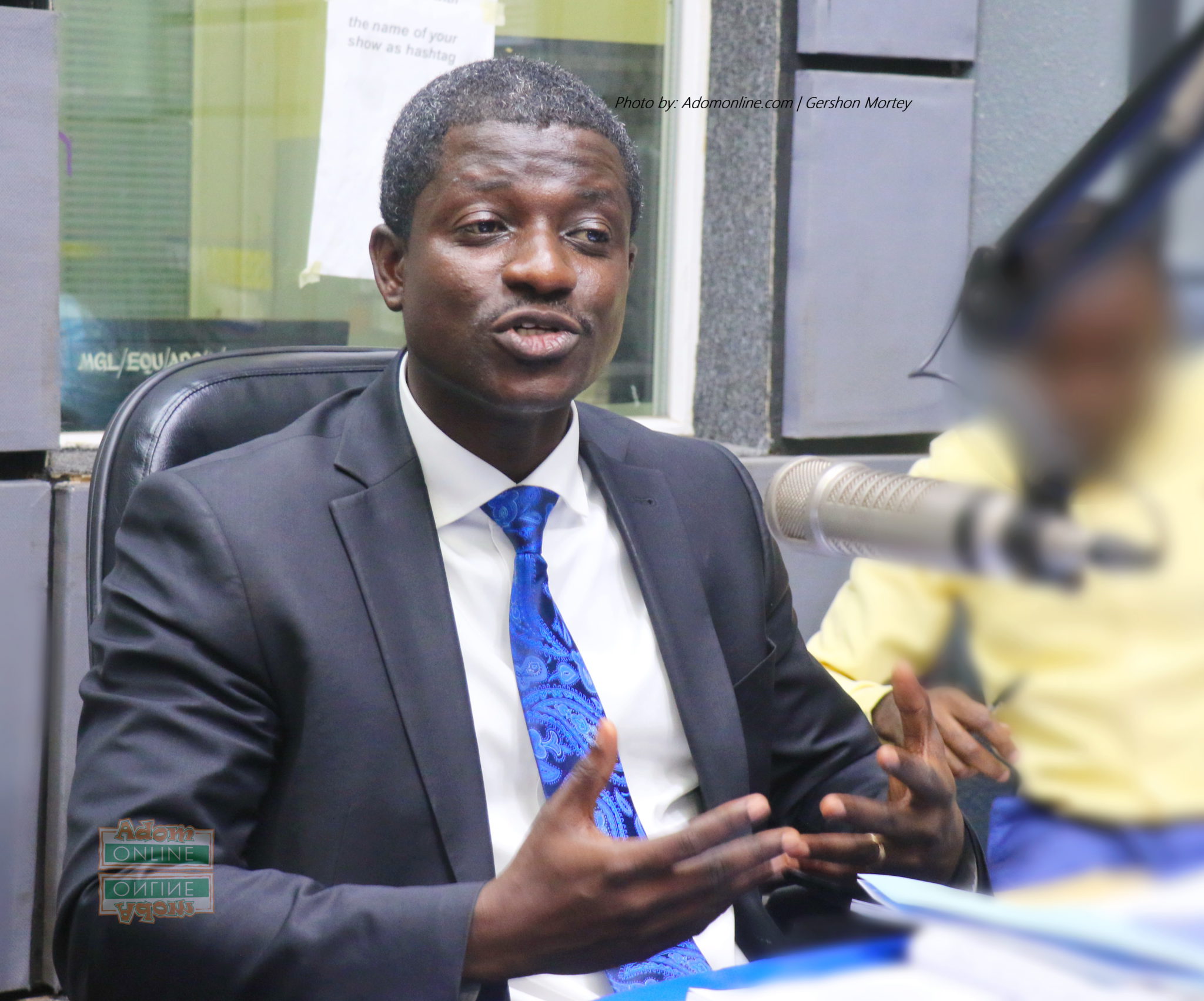

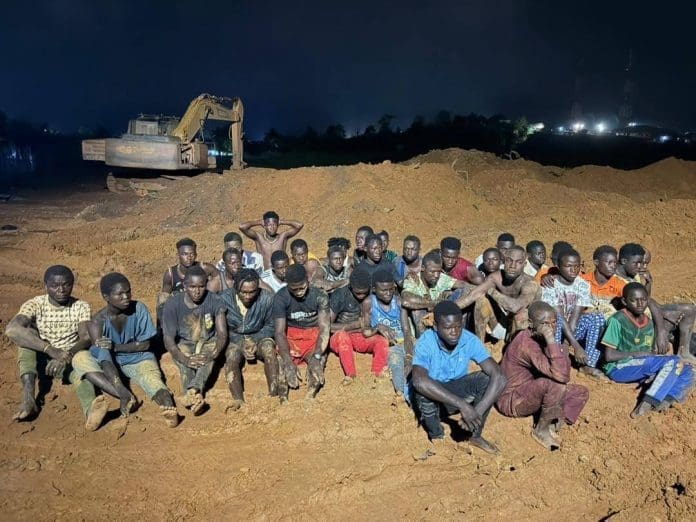
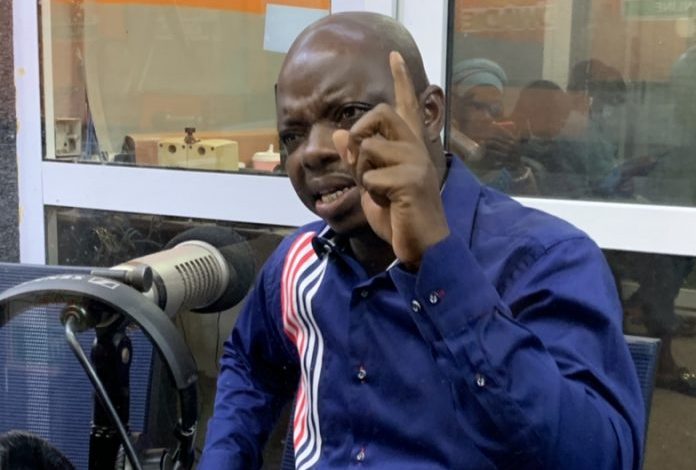


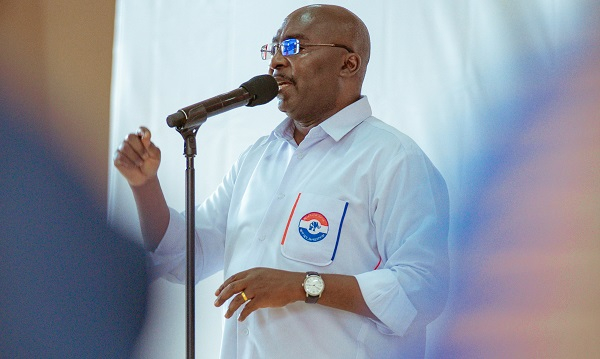
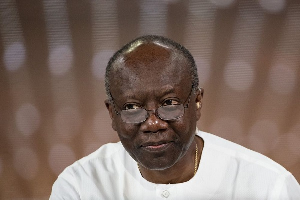


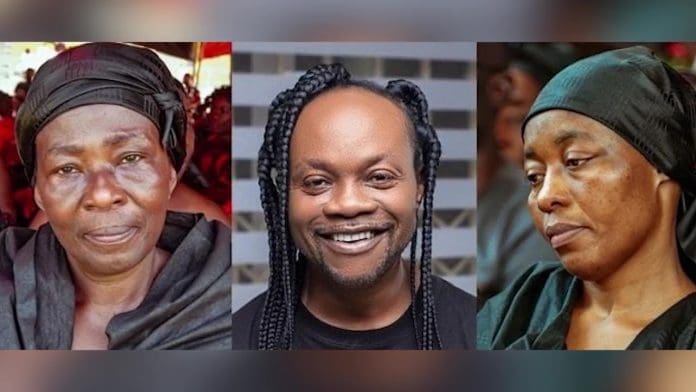







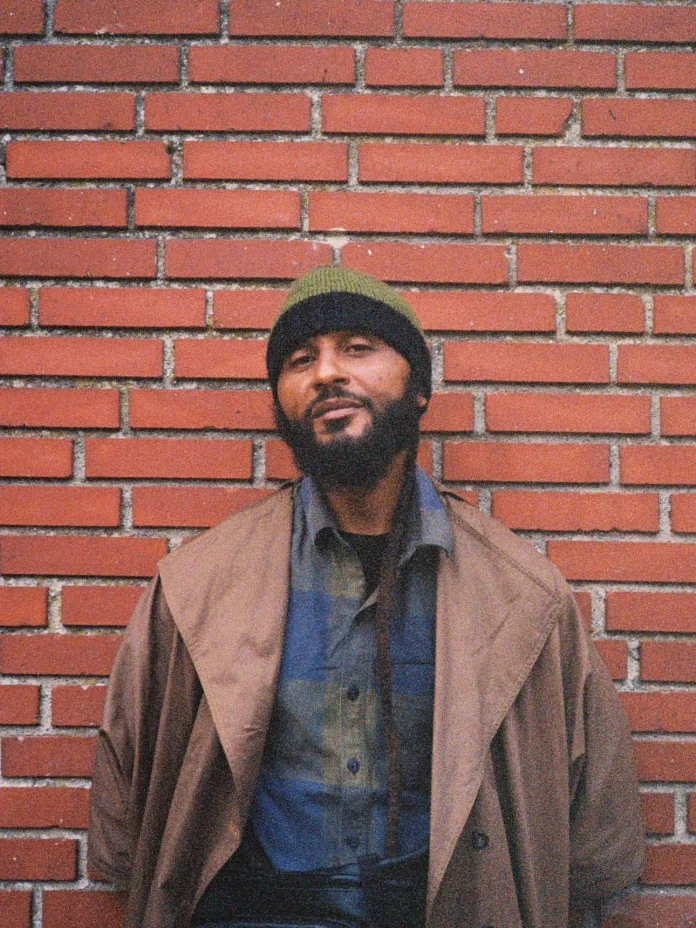





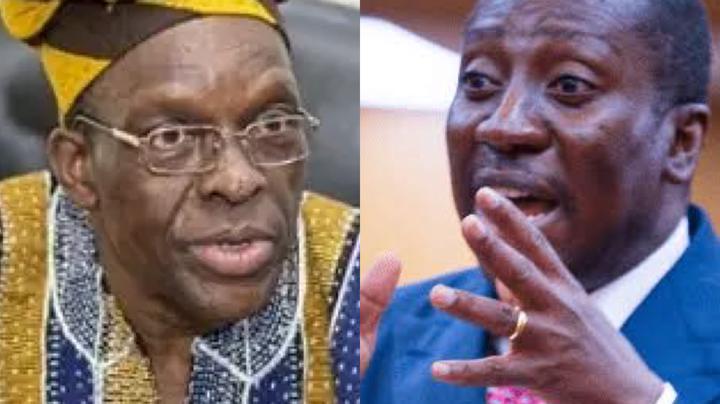

 Building on the momentum, the NAIMOS team extended its operations to Osino in the Fanteakwa South District, where a coordinated dawn raid led to the arrest of 36 individuals comprising 32 Nigeriens and four Ghanaians suspected of engaging in illegal mining.




 He noted that while Ghana’s contribution alone may not completely address the humanitarian crisis, collective support from all nations could make a significant impact in easing the suffering of affected populations.
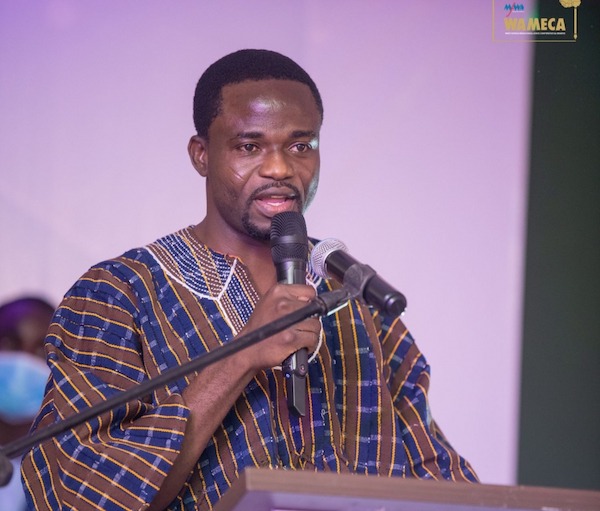





 While some parliamentary briefings had listed Monday as the vetting date, the conflicting motions and legal questions raised have thrown the timeline into question. [3] Afenyo‑Markin reiterated that the Minority is not boycotting the process altogether but insists on the primacy of due process and institutional integrity. [4]
 Flowy outfits are beloved for their ability to flatter all body types. The loose-fitting silhouettes are not only stylish but also functional, allowing for ease of movement and a breathable fit, especially in warmer weather. When paired with bold colours from sunshine yellows to electric blues, fiery reds to lush greens the result is an outfit that radiates confidence, fun, and grace. These pieces dance with the wind and create a sense of movement and softness that structured clothing often lacks.