6.4 C
London
Friday, December 26, 2025
Home Blog Page 21

Constitution Review Committee report to be implemented in bipartisan manner – President Mahama

0

John Dramani Mahama is Ghana's President play videoJohn Dramani Mahama is Ghana’s President

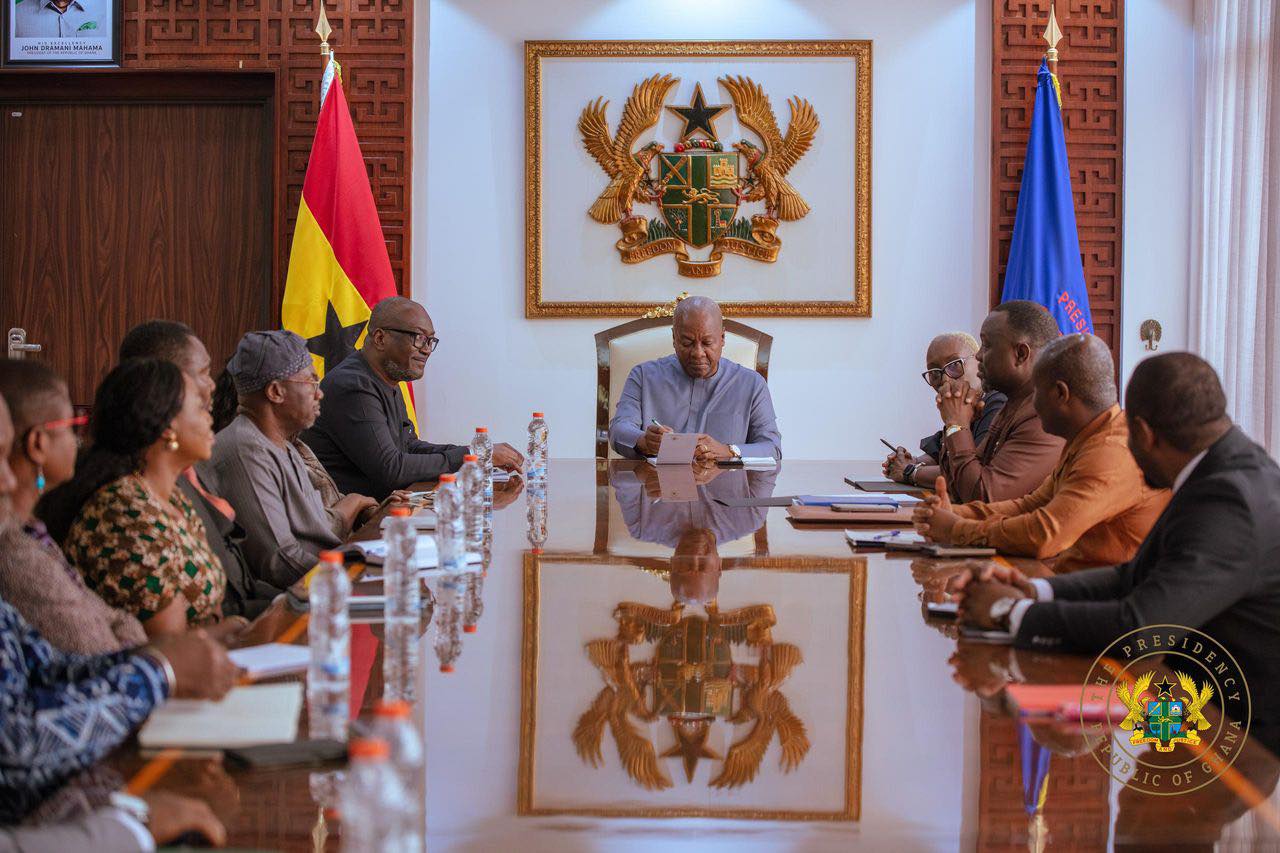
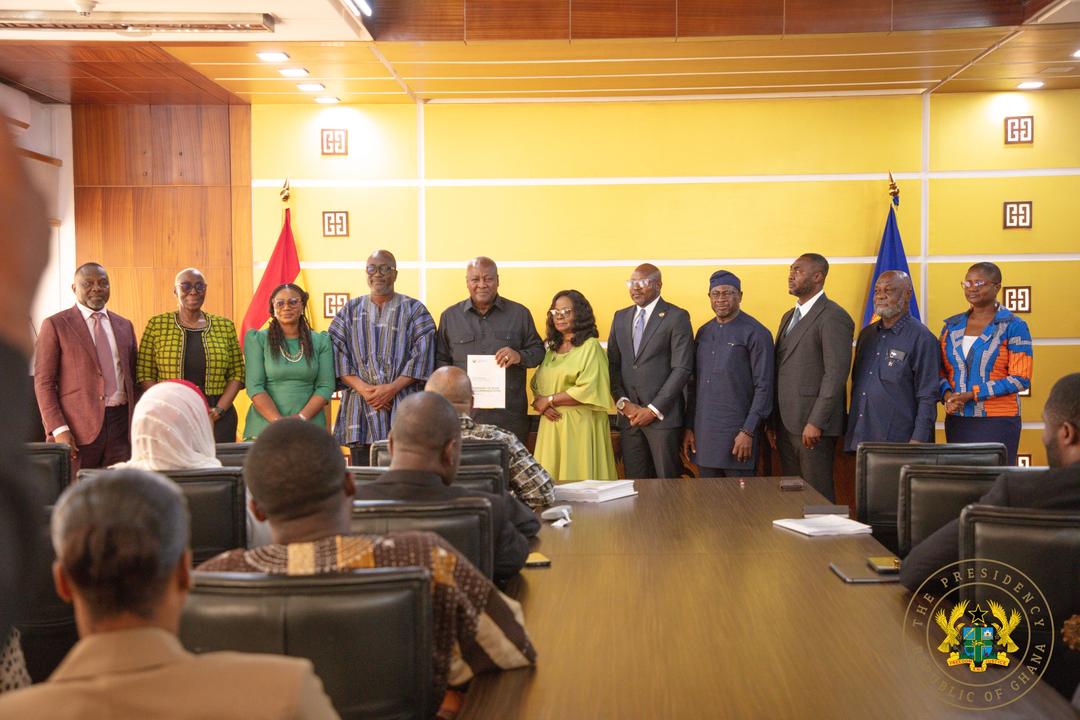
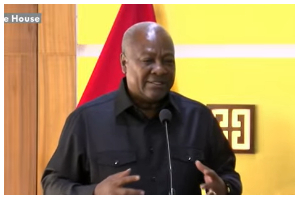
President John Dramani Mahama has assured that the report of the Constitution Review Committee will be implemented in a bipartisan manner.

According to him, the implementation will be carried out in a way that brings all Ghanaians together.

He made the assurance when the committee presented its final report to him on Monday, December 22, 2025.

Constitutional Review Committee set to present report to President Mahama

“You were carefully chosen for your integrity, your credibility and we haven’t had the experience of constitutional review committees before and the fact that at the end of it we had been unable to agree how to move the process forward.

“This time we said let’s choose the committee very carefully, so that it’s a committee that Ghanaians have trust in, so that when the report comes it would be nonpartisan, it would not have been influenced by any political interest, so that it would make it easier for all of us to come together and move the process forward,” he noted.

President Mahama said that early next year, a committee will be set up to oversee the implementation of the recommendations.

BREAKING: Constitutional Review Committee proposes five-year Presidential term

“As soon as we resume early next year, we’re moving from the constitutional review process into the implementation process, and so early next year we’ll announce an implementation committee”, he added.

The committee proposed several changes, including a review of the powers of the Attorney-General and a proposal to increase the presidential tenure by five years.

It also recommended transferring some of the Attorney General’s responsibilities to an Ethics and Anti-Corruption Commission, allowing the office to focus on “international arbitration and big constitutional cases.”

The committee was formed by President Mahama to promote the Constitutional Review Process’s implementation.

Watch the video below:

JKB/AM

AG to prosecute Kofi Akpaloo, wife over alleged COCOBOD contract fraud

Mohamed Salah hits late Afcon winner for Egypt to break brave Zimbabwe at the last | Africa Cup of Nations 2025

0

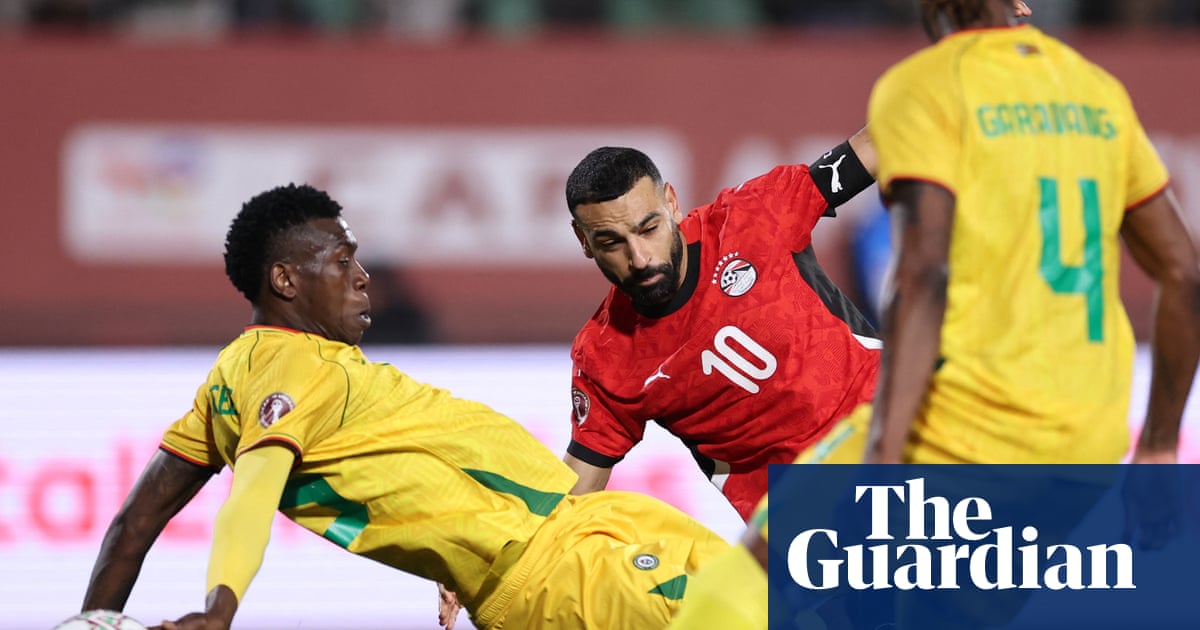
There were no apologies from Mohamed Salah to his teammates in red on Monday night, with Egypt’s players grateful to Liverpool’s troubled superstar for conjuring a stoppage-time winner.

After failing to capitalise on a dominant start, the seven-times Afcon winners required a stunning equaliser from Manchester City’s Omar Marmoush and Salah’s late winner to spare their blushes against the aptly named Warriors from Zimbabwe, who have never progressed beyond the group stages.

Salah had sparkled initially before fading as his lack of recent playing time at Liverpool took its toll, but ended up making the decisive contribution as he swivelled in the penalty area to score with a scuffed left-foot half volley.

The sparsely populated bowl of the Grand Stade d’Agadir, which began the game with around 10% of its 45,000 seats occupied before the lowest of its three tiers eventually came close to filling up, is not the grandest of stages on which the so-called Egyptian King usually thrives, but neither is this tournament. For all the adoration he inspires in Egypt and throughout Africa the lack of an Afcon winner’s medal is the one major absence on Salah’s CV.

After losing in two finals in 2017 and 2022, Salah is desperate to fill that gap, all the more so given the possibility that his club career in Europe may be winding down, with several Saudi Pro League clubs ready to pounce on his unhappiness at Anfield.

Salah’s situation in this tournament could not be more different from the previous Afcon in Côte d’Ivoire two years ago when, ironic as it may now seem, he was accused of prioritising club over country. Egypt’s greatest player left that tournament early to return to Liverpool for treatment after a hamstring injury during a group stage game against Ghana, with the country’s most-capped player Ahmed Hassan accusing him of letting the nation down.

Omar Marmoush celebrates after equalising with a piercing run and shot from the left. Photograph: Mosa’ab Elshamy/AP

Salah appears to have found salvation in being reunited with his countrymen on this occasion, however, with Egypt’s coach Hossam Hassam saying “he regains his strength with the national team”, as he demonstrated by guiding them to a hard-fought win.

It was clear that the start that Salah has the freedom to roam as he wishes in this team, drifting into central areas and dropping deep to pick up possession in his own half as he saw fit. He remains most threatening from the right however, and twice in the space of one first-half minute he came close to conjuring the opening goal. A lofted cross to Trézéguet produced a header that was saved by Washington Arubi before Salah cut in from the right and had a shot from the edge of the penalty area blocked. Salah created another chance in the 12th minute for Eman Ashour, which he slashed wide, his last notable contribution of a truncated evening, which ended in the 34th minute when Hassam replaced him with big striker Mostafa Mohamed in a tactical switch after falling behind. Zimbabwe’s goal stunned Egypt, who should have been cruising at that stage. Instead they were caught on the counterattack, with Emmanuel Jalai crossing from the right to Prince Dube, who produced a wonderful turn and finish from the edge of the area.

Egypt continued to dominate in terms of possession, with Marmoush spurning several chances before delivering a sumptuous equaliser in the 64th minute. He collected the ball with immaculate control on the left flank before racing away from Godknows Murwira and beating Arubi with a powerful finish from a tight angle.

As Egypt pushed for a winner, their substitute Ahmed “Zizo” Sayed spurned two further chances, the latter created by Salah, who inevitably had the final word.

NUGS International Relations Secretary concludes transformative one-year tenure

0

NUGS International Relations Secretary concludes transformative one-year tenure

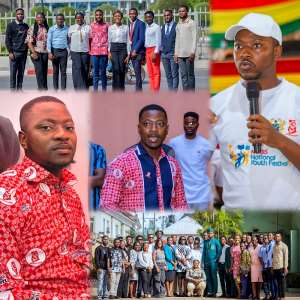
Enock Kwabena Frimpong, popularly known as FEK, has officially handed over as the Secretary for International Relations of the National Union of Ghana Students (NUGS).

The handing-over ceremony took place on Friday, 19th December 2025, marking the end of his one-year tenure.

In his remarks after the transition, FEK reflected on his time in office, outlined key achievements, highlighted challenges confronting the Union, and offered advice to the current national executives.

Advice to Current Executives
In an interview with newsmen after the handing over, FEK reminded the new leadership that responsibility and opportunity go hand in hand in student leadership.

He emphasized that their core mandate is to amplify the voices of students, drive meaningful change, and uphold the trust placed in them.

Enock Kwabena Frimpong urged the executives to lead with humility and courage, listen attentively to the needs of students across Ghana, and act decisively in their interest.

According to him, unity remains the Union’s greatest strength, and leaders must transcend differences to work for the collective good.

The former Secretary for International Relations further stressed the importance of accountability, calling on the executives to keep their promises, take responsibility for mistakes, and communicate transparently. He noted that students are closely observing their leaders and that actions must inspire confidence.

Challenges Facing NUGS and Call for Support

FEK highlighted several challenges facing the National Union of Ghana Students, including financial constraints that limit outreach and student support programs, student apathy resulting in low participation in Union activities, and government bureaucracy that often delays responses to pressing student issues.

He also pointed to the difficulty of balancing the diverse needs of students across Ghana’s universities and tertiary institutions, as well as inadequate tools and infrastructure for effective advocacy.

In addressing these challenges, Enock Kwabena Frimpong called on government, educational institutions, and relevant stakeholders to offer greater support and assistance to NUGS.

He noted that strengthening the Union through adequate funding, collaboration, and institutional support would enhance its capacity to effectively advocate for students and contribute to national development.

Achievements During His Tenure
Despite the challenges, FEK stated that his administration recorded several landmark achievements.

He highlighted the successful organization of the first West African Educational Tour in the history of NUGS, which enabled students and student leaders to travel to Togo, Benin, and Nigeria to engage with ambassadors, consular officials, and student unions while learning about regional cultures.

He also mentioned the NUGS UAE Tour, led by him, which took participants to Dubai, Abu Dhabi, and Ras Al Khaimah to promote cultural exchange and strengthen global student engagement.

Another key achievement was the establishment of two diaspora blocs: NUGS France and NUGS Turkey as part of efforts to expand the Union’s international reach and provide support for Ghanaian students studying abroad.

Additionally, FEK noted that his administration collaborated with universities across the world to secure scholarship opportunities for students in Ghana, widening access to higher education.

As he exits office, Enock Kwabena Frimpong expressed optimism that the current executives would build on the progress made and continue to advance the welfare and interests of Ghanaian students nationwide.

John Kumah’s widow shares how she met her new husband

0

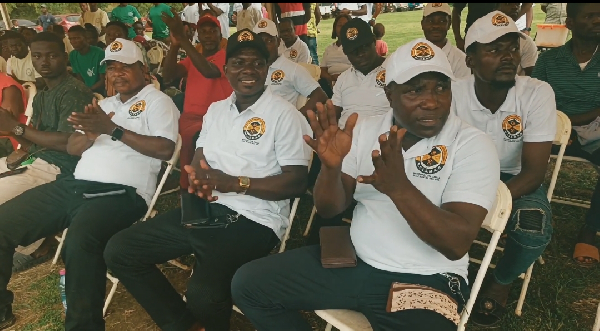
A photo of the couple speaking at a thanksgiving service at church A photo of the couple speaking at a thanksgiving service at church

Apostle Lilian Aryeequaye, widow of the late Ejisu Member of Parliament John Kumah, has shared how she met her new husband, describing the encounter as love at first sight and an answer to her prayer.

Speaking at a thanksgiving service at her church, Disciples of Christ Ministries on Sunday, December 22, 2025, Lilian revealed that she met her husband, Samuel Aryeequaye, unexpectedly while attending church for business purposes.

She said she had never met him before and did not anticipate that the encounter would mark a new chapter in her life.

“By God’s grace, He gives something to wipe your tears when you are crying. I will not allow pain to cage me. No matter what, we move forward.

“I believe in forward ever, backwards never. I didn’t know him, and I had never met him anywhere. I was only here for business purposes, and it was love at first sight as soon as he saw me,” she noted.

Confusion erupts as late John Kumah’s wife remarries a year after his demise

Reflecting on her journey after the passing of her late husband, Lilian explained that she made a conscious decision not to let grief define her life.

Through prayer, she resolved to move forward, trusting God to restore her joy.

“When you are crying, God gives you something to wipe your tears. I prayed and made up my mind to move forward. I won’t allow pain to cage me. I have a lot to do,” she shared.

Her late husband, John Kumah, passed away at the age of 45 on Thursday, March 7, 2024.

‘I will not allow pain to cage me’- Widow of John Kumah speaks on her new husband

News of her remarriage has since ignited conversations across social and traditional media.

Watch the video below:

JKB/EB

Extradition of Ken Ofori-Atta, Ernest Akore now in the hands of US authorities – Dr Ayine

Obuasi East: MCE cuts sod for CHPS compound at Ayease 

0

By Yussif Ibrahim, GNA 

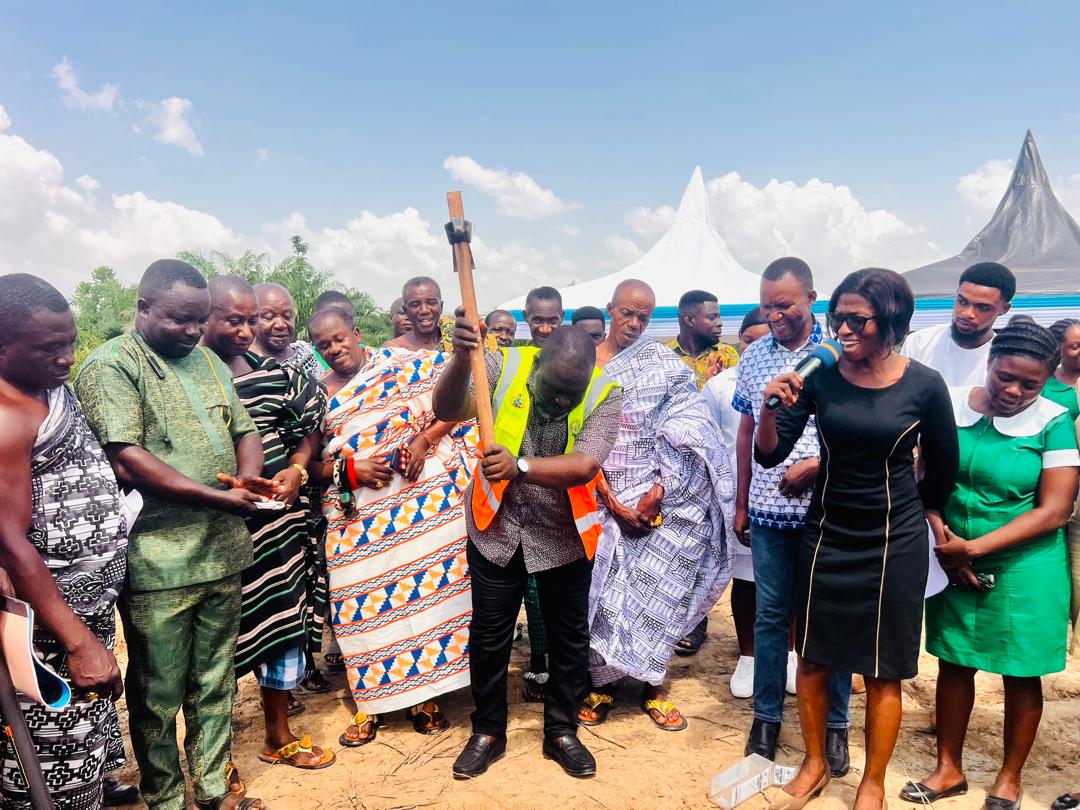
Ayease (Ash), Dec. 22, GNA – Mr. William Kofi Adzowu, the Municipal Chief Executive for Obuasi East, has cut the sod for the commencement of the construction of a Community-Based Health Planning and Services (CHPS) compound with nurses’ quarters at Ayease. 

The project, which seeks to improve access to quality healthcare delivery in the area, is being funded through the District Assemblies’ Common Fund. 

It comprises a fully furnished CHPS compound, a two-bedroom semi-detached nurses’ quarters, and a mechanised borehole fitted with two 500-litre polytanks mounted on concrete stands, among other essential facilities.  

Addressing the chiefs and people of Ayease, Mr. Adzowu noted that the lack of a nearby health facility had, in the past, contributed to the loss of lives, as residents were often forced to travel long distances to access medical care.  

He stressed that the government places high priority on the wellbeing of citizens and remained committed to ensuring equitable access to quality healthcare across the country. 

The MCE assured residents of his firm commitment to ensure that the project was completed on schedule, commissioned, and officially handed over by June 2026. 

Mr. Adzowu further disclosed that the project site had been strategically selected to allow for future expansion into a full clinic and, eventually, a hospital, should the need arise.  

He, therefore appealed to the community to fully cooperate with the contractor to ensure smooth and timely execution of the project. 

Nana Oduro Gyekye, the Odikro of Ayease, commended the MCE for what he described as an impressive performance since assuming office. 

He also urged the contractor to engage local artisans, particularly masons, carpenters, and labourers to create employment opportunities for the youth in the community. 

Additionally, Nana Oduro Gyekye appealed to the MCE to give urgent attention to improving the road network within the municipality, especially the Abusco Junction–Ayease stretch. 

GNA 

Edited by Kwabia Owusu-Mensah/Kenneth Odeng Adade 

Mahama Ayariga vows not to be provoked to comment on Bawku chieftaincy matters

0

Mahama Ayariga, the Majority Leader and Leader of Government Business in Parliament Mahama Ayariga, the Majority Leader and Leader of Government Business in Parliament

Mahama Ayariga, the Majority Leader and Leader of Government Business in Parliament, has stated that he will not allow himself to be provoked into making comments on the Bawku chieftaincy dispute.

Ayariga, also the Member of Parliament for Bawku Central, said he had deliberately refrained from commenting on the matter, to avoid escalating tensions while the Mediation Team led by Otumfuo Osei Tutu II was working with key stakeholders to resolve the matter.

At the closing ceremony of the Third Meeting of the First Session of the Ninth Parliament on Friday, Ayariga stressed that his silence was a conscious effort to protect peace in the area.

He explained that he had stayed away from his constituency for good reasons, noting that any remarks made in haste could inflame passions or worsen the situation.

Ayariga reiterated his commitment to ensuring that parliamentary business remained focused on national development, while sensitive local issues were handled through appropriate mediation channels.

The Otumfuo Nana Osei Tutu II mediation Team’s verdict on the Bawku chieftaincy conflict reaffirmed Asigri Abugurago Azoka II as the legitimate Bawku Naba.

The mediation team recommended that rival chief Seidu Abagre be recalled to Nalerigu for another traditional role and urged the government support to enforce peace.

However, the Mamprugu Overlord (Nayiri) rejected the report, while the Ghanaian government officially accepted it as a roadmap for reconciliation.

Minority accuses government of selective justice, payment delays

0

Minority Chief Whip, Frank Annoh-Dompreh Minority Chief Whip, Frank Annoh-Dompreh

The Minority Caucus has raised serious concerns over what it described as partisan governance practices, including mass dismissals of public servants, selective prosecution and discrimination in contractor payments.

The concerns were outlined in a press statement signed by the Minority Chief Whip, Frank Annoh-Dompreh, after a meeting with President John Dramani Mahama on Monday, December 22, 2025.

According to the statement, the Caucus expressed “profound concern” over the dismissal of approximately 2,802 public servants through directives from the Office of the Chief of Staff, describing the action as “a direct assault on the constitutional principle of an independent and professional civil service.”

The Minority referenced Ghana Statistical Service data indicating that about 1.3 million young people are unemployed, urging the President to immediately halt the dismissals and institute a fair and transparent review process.

“Ghana’s civil service must serve the state, not any governing party,” the statement stressed.

On justice delivery, the statement accused the government of selective investigations and the imposition of punitive bail conditions on New Patriotic Party (NPP) officials, while cases involving National Democratic Congress (NDC) officials are discontinued through the filing of nolle prosequi.

The Caucus also alleged partisan discrimination in contractor payments, warning that denying payments to contractors perceived to be NPP-leaning is “weaponising the economy, destroying jobs and pushing viable businesses towards collapse.”

Also, watch below Amnesty International’s ‘Protect the Protest’ documentary as the world marks International Human Rights Day 2025

The wait is over! The GhanaWeb Excellence Awards 2025 is officially launched. Let’s Celebrate impact, innovation and excellence across Ghana.

Who deserves to be honoured this year?


Nominate now 👉 https://ghanaweb.com/ghanaexcellenceawards/nominate

Ghana’s Constitution Review Explained

0

Big Picture: Why This Review Matters

The CRC argues that Ghana’s 1992 Constitution has delivered peaceful elections and political stability, but not enough developmental outcomes. The reforms aim to move Ghana from “electoral democracy” to “developmental democracy”—where governance improves lives, not just manages elections.

CHAPTER ONE

Towards an Effective Presidency

The Problem The Presidency has become overly powerful, patronage-driven, and expensive, with weak accountability.

What the CRC Proposes

Extend the presidential term from 4 to 5 years (retain 2-term limit).

Tax presidential salaries and benefits—no elite exemption.

Limit post-presidency immunity:

Civil suits allowed anytime

Criminal prosecution allowed within 4 years after leaving office.

Remove MPs from ministerial appointments to strengthen Parliament’s oversight role.

Cap ministers at 57 total.

Make ministerial censure binding—a censured minister must be dismissed.

Classify public offices (executive, independent, hybrid) and tailor appointment rules accordingly.

Restrict presidential powers during election transition periods.

Why It Matters This chapter directly tackles Ghana’s “imperial presidency” problem—without weakening executive leadership.

CHAPTER TWO

Towards a People-Centered Democracy

A. Parliament

The Problem Parliament is often sidelined, partisan, and disconnected from citizens.

Key Reforms

Cap MPs at 276.

Extend parliamentary term to 5 years, aligned with the presidency.

Make constitutional amendment votes open and recorded.

Guarantee public participation in lawmaking.

Require MPs to hold regular constituency town halls.

Expand Private Members’ Bills.

Tighten conflict-of-interest rules for MPs.

Replace lump-sum gratuities with a structured pension system.

B. Political Parties

The Problem Money politics, weak internal democracy, and violent campaigning.

Key Reforms

Create an Independent Registrar and Regulator of Political Parties and Campaigns (IRRPC).

Regulate campaign spending and duration.

Enforce disclosure and auditing of party finances.

Establish a Democracy Fund to support policy development and inclusion.

Enforce internal party democracy in candidate selection.

Why It Matters This chapter addresses the high cost and toxicity of politics, a major driver of corruption.

CHAPTER THREE

Harnessing Resources for Sustainable Development

The Problem Development planning exists but is weak, non-binding, and easily abandoned by new governments.

Key Reforms

Make the National Development Plan constitutionally binding.

Align budgets and legislation with the Plan.

Strengthen the National Development Planning Commission.

Introduce an Independent Fiscal Council.

Set clearer rules on public debt and borrowing.

Reform natural resource governance, including:

Community benefit-sharing

Stronger environmental protections

Recognition of ecocide as a constitutional concern.

Why It Matters This chapter is the backbone of the shift to developmental democracy.

CHAPTER FOUR

Restoring Trust in Accountability Institutions

The Problem Independent institutions exist, but presidential influence undermines their credibility.

Key Reforms

Reform the Council of State—smaller, more transparent, merit-based.

Change how top officials are appointed:

Competitive, merit-based processes

Fixed, non-renewable terms

Cooling-off periods after service

Clarify that “acting on the advice of” means the President must follow the advice.

Establish a constitutional Anti-Corruption and Ethics Commission.

Why It Matters It moves accountability bodies from formal independence to real independence.

CHAPTER FIVE

A Capable and Professional Public Service

The Problem Political interference, fragmented services, weak asset declaration enforcement.

Key Reforms

Protect public servants from partisan pressure.

Clarify appointment and tenure rules for heads of service.

Strengthen asset declaration and disclosure.

Introduce sanctions for unexplained wealth.

Enforce a binding Code of Conduct for Public Officers.

Why It Matters Professionalism—not political loyalty—becomes the basis for public service.

CHAPTER SIX

Leaving No One Behind: Rights, Equality, and Inclusion

The Problem The Constitution reflects 1990s rights thinking and misses modern realities.

Key Reforms

Abolish the death penalty.

Guarantee rights to:

Food

Housing

Health

Education

Strengthen protections for:

Women

Children

Persons with disabilities

Zongo and historically mobile communities

Expand digital privacy rights.

Address gender discrimination in citizenship laws.

Why It Matters This chapter modernises Ghana’s human rights framework for the 21st century.

CHAPTER SEVEN

All Development Is Local

The Problem Local government is overly controlled from the centre.

Key Reforms

Establish an Independent Devolution Commission.

Elect Metropolitan, Municipal and District Chief Executives (MMDCES).

Rationalise district creation.

Strengthen fiscal decentralisation.

Clarify the role of chiefs in local governance (without party politics).

Why It Matters Development is pushed closer to communities—where needs are best understood.

CHAPTER EIGHT

Securing Democratic Peace and Stability

The Problem Security institutions lack strong civilian oversight.

Key Reforms

Consolidate security provisions into one constitutional chapter.

Establish an Independent Security Oversight Authority.

Clarify rules for military deployment in civilian law enforcement.

Reform Police and Prisons Councils.

Why It Matters Protects democracy while safeguarding civil liberties.

CHAPTER NINE

Towards a Living Constitution

The Problem The Constitution is too rigid and difficult to amend.

Key Reforms

Reduce over-entrenchment of provisions.

Allow popular initiative in constitutional amendments.

Remove obsolete or private bodies from the Constitution.

Create pathways to address constitutional obsolescence.

Why It Matters Ensures the Constitution evolves with society, not against it

Obuasi East: MCE cuts sod for CHPS compound at Ayease 

0

By Yussif Ibrahim, GNA 

Ayease (Ash), Dec. 22, GNA – Mr. William Kofi Adzowu, the Municipal Chief Executive for Obuasi East, has cut the sod for the commencement of the construction of a Community-Based Health Planning and Services (CHPS) compound with nurses’ quarters at Ayease. 

The project, which seeks to improve access to quality healthcare delivery in the area, is being funded through the District Assemblies’ Common Fund. 

It comprises a fully furnished CHPS compound, a two-bedroom semi-detached nurses’ quarters, and a mechanised borehole fitted with two 500-litre polytanks mounted on concrete stands, among other essential facilities.  

Addressing the chiefs and people of Ayease, Mr. Adzowu noted that the lack of a nearby health facility had, in the past, contributed to the loss of lives, as residents were often forced to travel long distances to access medical care.  

He stressed that the government places high priority on the wellbeing of citizens and remained committed to ensuring equitable access to quality healthcare across the country. 

The MCE assured residents of his firm commitment to ensure that the project was completed on schedule, commissioned, and officially handed over by June 2026. 

Mr. Adzowu further disclosed that the project site had been strategically selected to allow for future expansion into a full clinic and, eventually, a hospital, should the need arise.  

He, therefore appealed to the community to fully cooperate with the contractor to ensure smooth and timely execution of the project. 

Nana Oduro Gyekye, the Odikro of Ayease, commended the MCE for what he described as an impressive performance since assuming office. 

He also urged the contractor to engage local artisans, particularly masons, carpenters, and labourers to create employment opportunities for the youth in the community. 

Additionally, Nana Oduro Gyekye appealed to the MCE to give urgent attention to improving the road network within the municipality, especially the Abusco Junction–Ayease stretch. 

GNA 

Edited by Kwabia Owusu-Mensah/Kenneth Odeng Adade 

Joseph Nikpe: Lack of regulation fueled motorcycle accidents

0

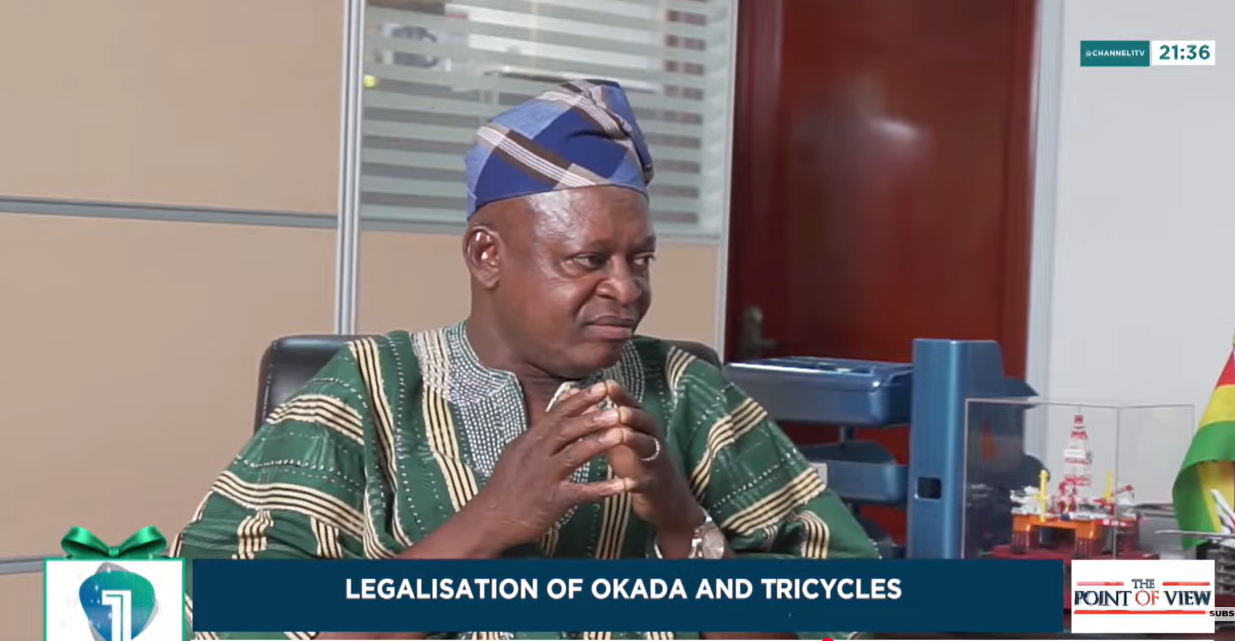
Transport Minister Joseph Bukari Nikpe has explained that the frequent motorcycle accidents recorded were largely due to the absence of a legal framework regulating their commercial use.

According to the Minister, because commercial motorcycle operations were illegal, riders often operated under pressure, moving at high speeds to evade law enforcement. This situation, he said, made accidents more likely.

“The issue of accidents involving motorcycles was because there was no legal framework to regulate the activity, so they were operating illegally and had to move in a fast manner,” he explained on Channel One TV’s The Point of View on Monday, December 22.

His comments come in the wake of Parliament’s passage of the Road Traffic Amendment Bill 2025, which legalises the use of motorcycles, tricycles, and quadricycles for commercial purposes. The new law is expected to bring structure and order to the sector by introducing clear rules and standards for operators.

The amendment also includes measures aimed at improving road safety, such as revising alcohol concentration limits for drivers to reduce incidents of drunk driving.

Government officials say the legislation will not only enhance safety but also create employment opportunities for the youth and improve efficiency in the transport industry.

Read also…

Parliament passes bill to legalise Okada

Mahama Ayariga vows not to be provoked to comment on Bawku chieftaincy matters

0

Mahama Ayariga, the Majority Leader and Leader of Government Business in Parliament Mahama Ayariga, the Majority Leader and Leader of Government Business in Parliament

Mahama Ayariga, the Majority Leader and Leader of Government Business in Parliament, has stated that he will not allow himself to be provoked into making comments on the Bawku chieftaincy dispute.

Ayariga, also the Member of Parliament for Bawku Central, said he had deliberately refrained from commenting on the matter, to avoid escalating tensions while the Mediation Team led by Otumfuo Osei Tutu II was working with key stakeholders to resolve the matter.

At the closing ceremony of the Third Meeting of the First Session of the Ninth Parliament on Friday, Ayariga stressed that his silence was a conscious effort to protect peace in the area.

He explained that he had stayed away from his constituency for good reasons, noting that any remarks made in haste could inflame passions or worsen the situation.

Ayariga reiterated his commitment to ensuring that parliamentary business remained focused on national development, while sensitive local issues were handled through appropriate mediation channels.

The Otumfuo Nana Osei Tutu II mediation Team’s verdict on the Bawku chieftaincy conflict reaffirmed Asigri Abugurago Azoka II as the legitimate Bawku Naba.

The mediation team recommended that rival chief Seidu Abagre be recalled to Nalerigu for another traditional role and urged the government support to enforce peace.

However, the Mamprugu Overlord (Nayiri) rejected the report, while the Ghanaian government officially accepted it as a roadmap for reconciliation.

From Electoral to Developmental Democracy: An Analytical Review

0

1. Framing the Reform Agenda: What the CRC Is Responding To

The CRC’s final recommendations are not merely technical amendments; they represent a diagnosis of the limits of Ghana’s Fourth Republican constitutional order. While the 1992 Constitution has delivered political stability, peaceful alternation of power, and civil liberties, the Committee argues that it has not sufficiently translated democratic competition into developmental outcomes.

Where the 1992 Constitution prioritised:

Regime stability after military rule

Strong presidential authority

Electoral legitimacy as the core democratic value

The CRC proposes a recalibration towards:

Developmental governance

Institutional accountability over personal discretion

Participation, inclusion, and long-term national planning

This philosophical shift underpins virtually every recommendation.

2. The Executive: From Imperial Presidency to Disciplined Leadership

Under the 1992 Constitution, the President enjoys extensive appointment powers (Articles 70, 78).

Over 90 ministers can be appointed, many from Parliament. Presidential emoluments are tax-exempt. Post-presidency immunity is broad and open-ended. Weak enforceability of ministerial censure by Parliament.

This architecture has produced what critics describe as an “imperial presidency”, concentrating power and blurring accountability.

CRC’s Key Interventions

Five-year presidential term (instead of four), aligned with development planning cycles.

Taxation of presidential emoluments, symbolically ending elite exceptionalism.

Limits on post-office immunity, allowing civil suits and time-bound criminal prosecution.

Strict caps on ministerial appointments and removal of MPs from ministerial roles.

Mandatory dismissal of censured ministers.

Clear categorisation of public offices (executive, independent, hybrid) with differentiated appointment procedures.

Analytical Significance

The CRC seeks to discipline executive power without weakening executive effectiveness. Unlike the 1992 Constitution, which assumes good faith in presidential discretion, the CRC builds procedural safeguards and institutional counterweights directly into the text.

3. Parliament and Representative Democracy: From Rubber Stamp to People-Centred Legislature

Under the 1992 Constitution, Parliament is numerically expandable without a hard cap.

MPs double as ministers, weakening oversight. Limited space for Private Members’ Bills. Public participation in lawmaking is implied, not guaranteed.

Parliamentary leadership often influenced by party executives.

CRC’s Recommendations

Cap Parliament at 276 MPs, preventing unchecked expansion. Extend parliamentary tenure to five years, aligned with the presidency. Open, recorded voting on constitutional amendments.

Guaranteed public participation in legislative processes. Constituency town halls as a constitutional obligation. Expanded scope for Private Members’ Bills.

Stricter conflict-of-interest rules for MPs.

Analytical Comparison

The 1992 Constitution emphasises representation through elections; the CRC advances representation through continuous engagement, transparency, and deliberation. Parliament is reconceived not as a partisan battleground but as a problem-solving institution.

4. Political Parties and Elections: Reducing the Cost and Toxicity of Politics

Under the 1992 Constitution Political parties are lightly regulated. Campaign finance controls are weak.

The Electoral Commission combines election management with party regulation. No public funding framework for party development.

CRC’s Innovations

Creation of an Independent Registrar and Regulator of Political Parties and Campaigns (IRRPC).

Monetisation controls: caps on campaign spending, shorter campaign periods.

Mandatory disclosure and auditing of party finances.

Democracy Fund to support policy development and inclusion (women, youth).

Enforced internal party democracy.

Analytical Significance

The CRC confronts a major blind spot of the 1992 Constitution: the political economy of elections. The reforms recognise that unchecked money politics undermines equality, accountability, and governance quality.

5. Developmental State Architecture: What the 1992 Constitution Lacked

Under the 1992 Constitution National Development Planning Commission exists but lacks binding authority.

Annual budgets are weakly linked to long-term plans. Natural resource governance is fragmented.

No debt ceilings or independent fiscal oversight bodies.

CRC Proposals

National Development Plan with constitutional force, binding successive governments.

Legislative and budgetary alignment with the Plan.

Independent Fiscal Council.

Stronger constitutional principles for natural resource exploitation.

Recognition of ecocide as a constitutional concern.

Community-level benefit-sharing for extractive industries.

Analytical Shift

The CRC attempts to constitutionalise developmental discipline, addressing the “policy discontinuity” problem that the 1992 Constitution left unresolved.

6. Accountability Institutions: From Formal Independence to Functional Independence

Under the 1992 Constitution Bodies like the EC, NCCE, NMC, CHRAJ exist but:

Appointments are heavily presidential.

Tenure rules vary.

Enforcement powers are often weak.

CRC’s Approach

Merit-based, competitive appointment processes.

Fixed, non-renewable terms for key office holders.

Cooling-off periods after service.

Binding “acting on the advice of” provisions (overturning restrictive Supreme Court interpretations).

Analytical Impact

The CRC shifts independence from symbolic autonomy to institutional insulation, directly correcting interpretive weaknesses exposed over the years.

7. Rights, Inclusion, and Social Justice: Updating the Rights Framework

Under the 1992 Constitution Strong civil and political rights. Limited recognition of socio-economic rights.

Retains the death penalty, Weak digital privacy protections.

CRC Enhancements

Abolition of the death penalty.

Explicit rights to food, housing, health, and education.

Digital privacy protections.

Expanded protections for women, children, persons with disabilities.

Addressing discrimination against Zongo and mobile communities.

Analytical Observation

The CRC aligns Ghana’s rights regime with contemporary human rights norms, moving beyond the minimalist liberal framework of 1992.

8. Decentralisation: Making “All Development Local”

Under the 1992 Constitution MMDCES appointed by the President. Fiscal decentralisation is limited.

Central government dominance persists.

CRC Reforms

Election of MMDCES (with defined scope). Independent Devolution Commission. Rationalisation of district creation. Enhanced fiscal autonomy for local governments.

Analytical Shift

Decentralisation is reframed from administrative convenience to democratic empowerment and local development.

9. A Living Constitution: Reforming the Amendment Process Itself

Perhaps the most far-reaching idea is the CRC’s insistence on ending constitutional stagnation:

Addressing over-entrenchment. Allowing popular initiative in constitutional amendments.

Removing obsolete or private bodies from the Constitution.

This is a direct response to the rigidity of the 1992 Constitution, which has made reform politically expensive and procedurally daunting.

Conclusion: Continuity with Transformation

The CRC does not reject the 1992 Constitution; it builds upon its democratic foundations while correcting its structural blind spots. Where the 1992 Constitution prioritised stability after authoritarian rule, the CRC prioritises performance, inclusion, accountability, and development.

In essence, the proposed reforms seek to ensure that Ghana’s democracy does not merely count votes, but delivers value—turning constitutional democracy into a genuine engine of national development.
Liverpool striker Isak suffers broken leg

0

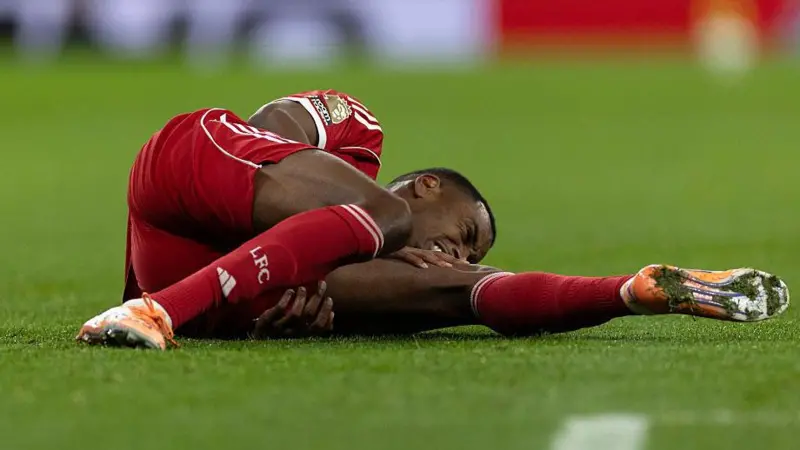
Liverpool striker Alexander Isak has undergone surgery after breaking his leg, the Premier League club said on Monday.

Isak suffered the injury in scoring Liverpool’s opening goal in Saturday’s 2-1 win over Tottenham Hotspur when his foot got caught between Micky van de Ven’s legs as the defender dived to block his shot.

“Alexander Isak today successfully underwent surgery on the injury he sustained on Saturday,” Liverpool said. “After diagnosis, an operation was completed today on an ankle injury that included a fibula fracture. No time frame (is) yet placed on his return.”

Liverpool smashed the British transfer record to sign the 26-year-old Sweden international for 125 million pounds ($168 million) in September after Isak made it clear he wanted to leave Newcastle United and was frozen out of the squad.

Isak, who scored 54 Premier League goals in 86 games for Newcastle, made his debut against Atletico Madrid in the Champions League after a lack of fitness kept him out of the first league game after his arrival.

He has struggled in a Liverpool side who have failed to replicate last season’s title-winning form and has scored two league goals in 10 appearances.

Isak netted his first goal for the club in a League Cup win over Southampton in September and has failed to find the net in his five Champions League appearances.

Liverpool, fifth in the standings and 10 points behind leaders Arsenal, were already without Mohamed Salah who is on Africa Cup of Nations duty with Egypt.

They will now have to rely heavily on striker Hugo Ekitike, another new signing who has scored eight league goals including five in the last three games, and may need to invest in the January transfer window with Salah’s future at the club in doubt.

DISCLAIMER: The Views, Comments, Opinions, Contributions and Statements made by Readers and Contributors on this platform do not necessarily represent the views or policy of Multimedia Group Limited.

DISCLAIMER: The Views, Comments, Opinions, Contributions and Statements made by Readers and Contributors on this platform do not necessarily represent the views or policy of Multimedia Group Limited.

Residents of Teleku-Bokazo and Anwia pledge to stop illegal mining

0

The Chiefs and people of Teleku-Bokazo and Anwia communities in Ellembelle district of the Western region, have pledged to end all forms illegal mining (galamsey) activities in their areas.

“We know that galamsey is not good but we don’t have any work to do but now that the government has supported us to get permit to do responsible mining on Adamus Mining company concession, we will not do galamsey again, we are very happy today, initially we thought the government was deceiving us”, they emphasised.

It would be recalled in September 2025, the Ministry of Lands and Natural Resources launched responsible and cooperative mining and skills training in these two communities in order to prevent the residents from involving themselves in galamsey activities.

Galamsey has been going on at Teleku Bokazo and Anwia over seven years and has affected their main source of drinking water and farmlands. It seems like the only work in these two communities are mining.

Government needs millions of cedis to reclaim their affected lands.

On Sunday, December 21, 2025, the Minister for Lands and Natural Resources and MP for Ellembelle Constituency, Emmanuel Armah-Kofi Buah handed over mining operating permit to the Chiefs and people of Teleku-Bokazo and Anwia in his Constituency to do responsible mining.

The Chiefs of these two communities thanked the government for helping them to get permit to mine responsibly.

They, therefore took the opportunity to pledge to deal ruthlessly with whoever attempts to return to old galamsey sites to mine illegally.

They also promised to use the proceeds of the mining to develop their communities.

“Galamsey is now a thing of the past in our communities, we will not allow anybody to do galamsey in our communities again and whoever will try it, will be dealt with ruthlessly”, they emphasised.

Speaking at the official handing-over ceremony, Emmanuel Armah-Kofi Buah, stated that the initiative was a key intervention designed to eliminate harmful mining practices, particularly the use of mercury, which poses serious environmental and health risks.

He explained that miners operating under the initiative would undergo comprehensive training in responsible and sustainable mining methods.

In addition, the cooperatives would be supported with modern processing technologies and water treatment systems to significantly reduce pollution and environmental degradation.

“The cooperatives will be guided by strict rules and regulations”, he said.

He emphasised that, “One of the major challenges miners face is access to water for processing. Under this initiative, we are introducing modern technologies that allow miners to extract minerals efficiently and in high volumes without the use of mercury”.

Armah-Kofi Buah stated that the initiative would not only improve mining practices but also ensure environmental protection, safeguard water bodies, and enhance livelihoods in mining communities.

On his part, Frank Asare Pedro, the Chief Executive Officer (CEO) of Responsible Cooperative Mining and Skills Development Program appealed to members of the cooperatives to be law-abiding and adhere strictly to responsible mining methods.

“Government is not against mining; it is against irresponsible mining”, he stated.

He emphasised that, “One of the most effective ways to curb illegal mining is to regularise the sector by issuing licences. This allows regulatory bodies such as the Minerals Commission, the Environmental Protection Agency (EPA), and the Water Resources Commission to properly supervise operations and ensure compliance with the Minerals and Mining Act, 2006 (Act 703)”.

He added that rCOMSDEP would work closely with regulatory agencies to ensure that the cooperatives fully implement the mining practices they have been trained to adopt.

Joseph Nelson, the Western Regional Minister, expressed concern about the wanton destruction of water bodies and forest reserves caused by illegal mining activities.

He cautioned illegal miners (galamseyers) to desist from destructive practices and enrol under the Responsible Cooperative Mining initiative, warning that the law would soon catch up with those who refuse to comply.

The District Chief Executive (DCE) for Ellembelle, Joseph Agyekum commended the government for helping the residents of Teleku-Bokazo and Anwia to get mining operating permit to mine responsibly.

He promised to monitor the activities of the responsible mining at Teleku-Bokazo and Anwia in order to ensure that they don’t violate the best practices of mining in Ghana.

The Responsible Cooperative Mining and Skills Development Program, a flagship initiative spearheaded by the Minister, forms part of government’s broader efforts to combat illegal mining while promoting responsible and sustainable mining practices.

This marks the official rollout of the Responsible Co operative Mining and Skills Development Programme in the mining communities in Ghana.

The two communities, whose residents are largely engaged in farming and small-scale mining, are the first beneficiaries of the programme.

With the permits, the cooperative has been granted access to mine at an abandoned concession relinquished by Adamus Mining Limited to the Government of Ghana believed to contain significant mineral deposits.

The development follows series of negotiations led by the Minister with Adamus Mining Limited to release the site for community-based mining.

With Anwia and Teleku Bokazo breaking the ice, the Ministry plans to roll out the program to other mining communities across the region and beyond, banking on the success of the Anwia–Teleku Bokazo Responsible Cooperative Mining Society as a model for responsible and sustainable mining in Ghana.

NDC Women’s Wing lauds party leadership for empowering women in Berekum 

0

By Benjamin Akoto,GNA 

Berekum (Bono), Dec 22, GNA – The Women’s Wing of the National Democratic Congress (NDC) in the Bono Region has praised the party’s leadership for their unwavering support and commitment to promoting women within the party. 

 At an end-of-year meeting held in Berekum, the women expressed gratitude to President John Dramani Mahama, National Chairman Johnson Asiedu Nketia, and other stakeholders for appointing Hajia Fatimatu Abubakar as the Municipal Chief Executive (MCE) of Berekum East and other women to key positions. 

 In an interview with the media after the meeting, and Madam Asatu Issaka, Dormaa West NDC Women’s Organiser, commended the President and party leadership for recognizing Hajia Abubakar’s competence, evident in the positive changes she’s brought to the municipality.  

“I can only commend the President and party leadership, because Hajia Abubakar’s competence is evident in the positive changes we are seeing across the Municipality,” she said. 

Madam Felicia Oppong Adomah, Berekum East Deputy Women’s Organizer, described Hajia Abubakar as a valuable asset to the community, saying, “What I want the people of Berekum to know is that we have something truly valuable in Hajia Fati Abubakar; she understands the struggles of women, her doors are always open, and she listens to everyone.” 

The women urged the government to support Hajia Abubakar in addressing the poor state of roads in the area, citing it as a major challenge for residents. 

 They expressed hope that she would continue her impactful work throughout her tenure to ease the burdens of the people and called on the government to support her in addressing the poor state of roads in the area which has been a major challenge for the residence. 

 GNA. 

Edited by Regina Benneh /Kenneth Odeng Adade 

Constitution Review Committee report to be implemented in bipartisan manner – President Mahama

0

John Dramani Mahama is Ghana's President play videoJohn Dramani Mahama is Ghana’s President
President John Dramani Mahama has assured that the report of the Constitution Review Committee will be implemented in a bipartisan manner.

According to him, the implementation will be carried out in a way that brings all Ghanaians together.

He made the assurance when the committee presented its final report to him on Monday, December 22, 2025.

Constitutional Review Committee set to present report to President Mahama

“You were carefully chosen for your integrity, your credibility and we haven’t had the experience of constitutional review committees before and the fact that at the end of it we had been unable to agree how to move the process forward.

“This time we said let’s choose the committee very carefully, so that it’s a committee that Ghanaians have trust in, so that when the report comes it would be nonpartisan, it would not have been influenced by any political interest, so that it would make it easier for all of us to come together and move the process forward,” he noted.

President Mahama said that early next year, a committee will be set up to oversee the implementation of the recommendations.

BREAKING: Constitutional Review Committee proposes five-year Presidential term

“As soon as we resume early next year, we’re moving from the constitutional review process into the implementation process, and so early next year we’ll announce an implementation committee”, he added.

The committee proposed several changes, including a review of the powers of the Attorney-General and a proposal to increase the presidential tenure by five years.

It also recommended transferring some of the Attorney General’s responsibilities to an Ethics and Anti-Corruption Commission, allowing the office to focus on “international arbitration and big constitutional cases.”

The committee was formed by President Mahama to promote the Constitutional Review Process’s implementation.

Watch the video below:

JKB/AM

AG to prosecute Kofi Akpaloo, wife over alleged COCOBOD contract fraud

More grassroots declarations for Bawumia on day one of Greater Accra Tour

0

In Ada, 17 out of the 27 electoral area coordinators has declared their support for Dr Bawumia In Ada, 17 out of the 27 electoral area coordinators has declared their support for Dr Bawumia

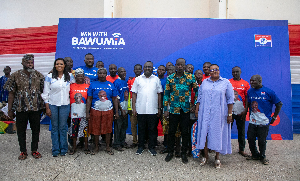
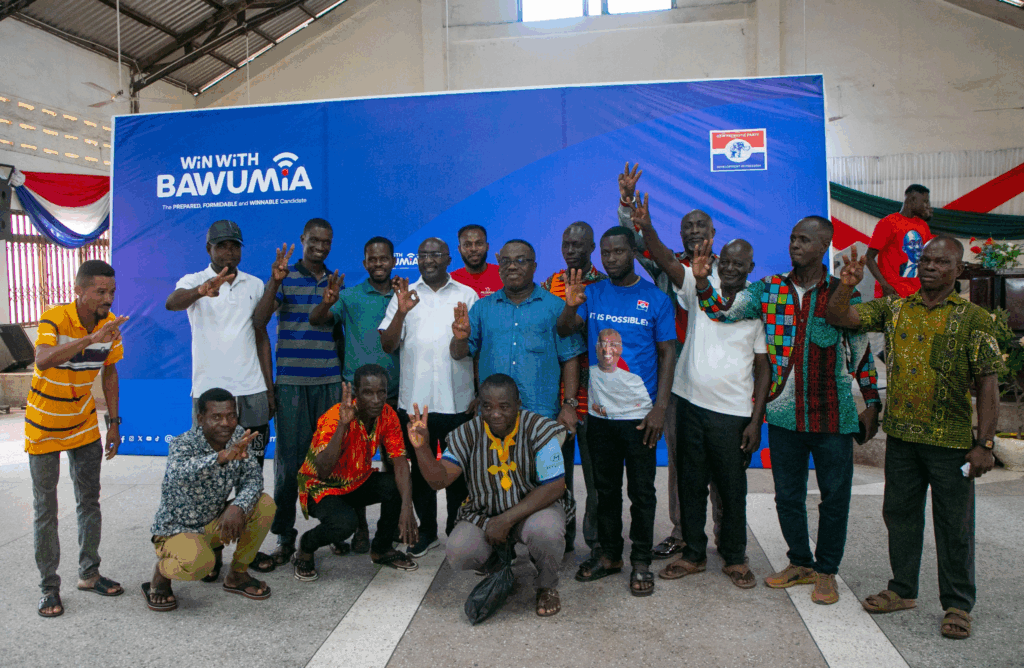
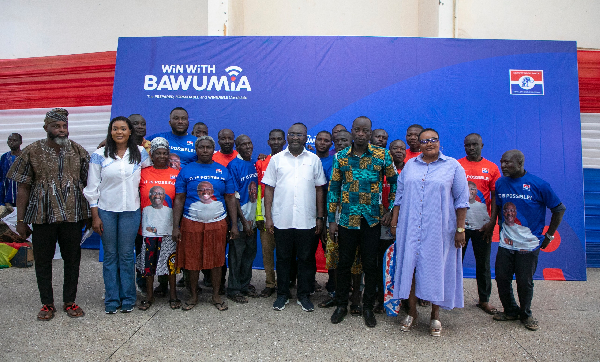
The wave of grassroots declarations for former Vice President, Dr Mahamudu Bawumia, continued on December 22, 2025, as he turned his campaign focus to the Greater Accra Region.

After touring the northern part of the country in the last few weeks, Dr Bawumia began his Greater Accra tour on a high note, receiving a rapturous welcome in the early constituencies he visited, including Ada and Sege.

As has been the case in other constituencies across the country, NPP delegates turned out in large numbers to boldly declare their unflinching support for the former Vice President.

In Ada, 17 out of the 27 electoral area coordinators in the constituency declared their support for Dr Bawumia and assured him of their commitment.

In Sege, where Dr Bawumia visited next, all 15 electoral area coordinators also declared their support for the former Vice President, describing him as the best among the aspirants seeking to lead the NPP.

“In the Sege constituency, we have 15 electoral areas. By the grace of God, we have sat down and carefully assessed all five aspirants. The best among them is the former Vice President, Alhaji Mahamudu Bawumia. We are here to declare our support for him,” a representative of the group said, flanked by all the coordinators.

Both the coordinators in Sege and Ada pledged to work tirelessly to ensure a resounding victory for Dr Bawumia in the January primaries.

Also, watch below Amnesty International’s ‘Protect the Protest’ documentary as the world marks International Human Rights Day 2025

The wait is over! The GhanaWeb Excellence Awards 2025 is officially launched. Let’s Celebrate impact, innovation and excellence across Ghana.

Who deserves to be honoured this year?


Nominate now 👉 https://ghanaweb.com/ghanaexcellenceawards/nominate

Sea transport service to link Ghana, Togo, Benin and Nigeria

0

The Minister of Transport and Member of Parliament for Saboba, Joseph Bukari Nikpe, has announced that an investor has secured two large vessels to begin marine transport operations along the West African coast, a move expected to ease pressure on major road corridors.

Speaking in an interview with Bernard Avle on The Point of View on Channel One TV on Monday, December 22, Mr. Nikpe said the vessels will transport both passengers and cargo from Ghana through Togo and Benin to Nigeria.

“Currently, I am happy as a Minister to say that we have had an investor who has brought in two ships, bigger vessels that will soon start operations from the coast through to Nigeria,” he said. “He will now be taking passengers and cargo from Ghana through Togo, Benin to Nigeria.”

According to the Minister, the new sea transport service is expected to reduce congestion on the Volta corridor and other busy road routes linking Ghana to neighbouring countries.

“We believe that will ease the congestion on the Volta route to Benin. It is going to take from Accra through Lomé, through Cotonou, and then finally by sea—goods and human beings,” he stated.

Mr. Nikpe noted that the initiative would offer an alternative for travellers and transporters seeking to avoid long journeys on the road.

“If you have your vehicle, you wouldn’t want to spend any time on the roads,” he added.

He disclosed that preparations for the operation are at an advanced stage, with commercial services expected to begin by February 2026.

“By February 2026, it should start operations because it is far gone,” the Minister said.

Gov’t to install new traffic lights after Okada legalisation


Constitution Review Committee report to be implemented in bipartisan manner – President Mahama

0

John Dramani Mahama is Ghana's President play videoJohn Dramani Mahama is Ghana’s President

President John Dramani Mahama has assured that the report of the Constitution Review Committee will be implemented in a bipartisan manner.
According to him, the implementation will be carried out in a way that brings all Ghanaians together.

He made the assurance when the committee presented its final report to him on Monday, December 22, 2025.

Constitutional Review Committee set to present report to President Mahama
“You were carefully chosen for your integrity, your credibility and we haven’t had the experience of constitutional review committees before and the fact that at the end of it we had been unable to agree how to move the process forward.

“This time we said let’s choose the committee very carefully, so that it’s a committee that Ghanaians have trust in, so that when the report comes it would be nonpartisan, it would not have been influenced by any political interest, so that it would make it easier for all of us to come together and move the process forward,” he noted.

President Mahama said that early next year, a committee will be set up to oversee the implementation of the recommendations.

BREAKING: Constitutional Review Committee proposes five-year Presidential term

“As soon as we resume early next year, we’re moving from the constitutional review process into the implementation process, and so early next year we’ll announce an implementation committee”, he added.

The committee proposed several changes, including a review of the powers of the Attorney-General and a proposal to increase the presidential tenure by five years.

It also recommended transferring some of the Attorney General’s responsibilities to an Ethics and Anti-Corruption Commission, allowing the office to focus on “international arbitration and big constitutional cases.”

The committee was formed by President Mahama to promote the Constitutional Review Process’s implementation.

Watch the video below:

JKB/AM

AG to prosecute Kofi Akpaloo, wife over alleged COCOBOD contract fraud

Attorney-General to prosecute Wontumi Farms, directors 

0

By Iddi Yire, GNA – The Office of the Attorney-General will next year prosecute Wontumi Farms and its directors with defrauding by false pretences, forgery and causing financial loss to the state in the sum of GHS24 million. 

This figure, the Attorney-General, said represented the principal sum plus the interest that had accrued so far from a loan facility taken by Wontumi Farms Ltd from Exim Bank. 

Wontumi Farms Limited is a corporate entity established by Bernard Antwi Bosiako, the New Patriotic Party (NPP) Ashanti Regional Chairman, also known as Chairman Wontumi.  

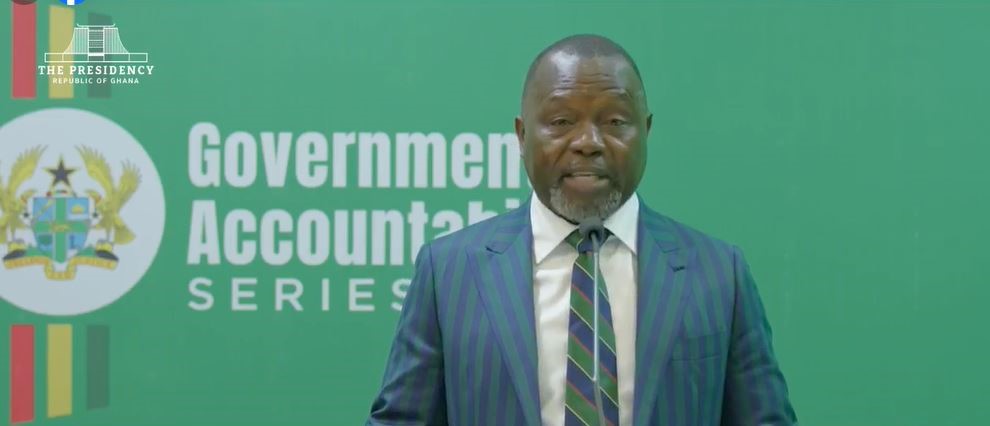
Dr Ayine made the disclosure when he presented the final investigations reports into some cases by the Economic and Organised Crime Office (EOCO) at the Government Accountability Series Press briefing at the Presidency in Accra. 

He noted that by the time the charges were filed after the Christmas break, the amount could increase because of the compound interest on the principal.  

He said in March this year, the Economic and Organized Crime Office arrested Chairman Wontumi on reasonable suspicion of the commission of a crime. He said Chairman Wontumi was the sole shareholder, director and chief executive officer of Wontumi Farms Limited.  

He said the arrest was pursuant to credible intelligence gathered by the EOCO that the company and its director and CEO were involved in a fraudulent transaction in connection with a purported loan facility granted by the Ghana Exim Bank under the Mining Alternative Livelihoods Initiative of the Bank. 

He noted that the Alternative Livelihoods Initiative was designed by Exim Bank to provide alternative sources of livelihoods for the youth in areas of the country affected by illegal mining.  

Dr Ayine said in doing so, the Bank intended that the loans under the programme would go to companies committed to ensuring the realization of the objectives of the initiative, especially in relation to job creation for young persons in mining communities. 

He said in December 2017, Wontumi Farms Limited submitted its application for a loan of Ghs18 Million purportedly to cultivate maize on 100,000 acres of farmland and to employ the youth on the farm.  

He said at the time that the application was submitted by Wontumi Farms Limited together with a purported board resolution, the company was not registered; declaring that “in short, the company did not exist at the time of the loan application by its sole shareholder and director”. 

Dr Ayine said investigations established that Wontumi Farms Limited was incorporated on December 14, 2017, and issued a certificate to commence business on the same day.  

He said the principal business activities of the company, as stated in its corporate registration documents, were general farming, agribusiness and agro-processing. Dr Ayine said the directors of the Company were Bernard Antwi Boasiako and Thomas Antwi Boasiako with Bernard Antwi Boasiako being 100 per cent shareholder of the Company and also listed as company secretary.  

He noted that Thomas Antwi Boasiako was believed to be the brother of Bernard Antwi Boasiako domiciled in the United States. 

He said prior to the registration of Wontumi Farms Limited, Chairman Wontumi wrote to Exim Bank that the board of directors of Wontumi Farms had met on December 9, 2017, and had resolved to seek a loan facility of GHS19 Million from the Bank to support its farm project at Asare Nkwanta in the Ashanti Region under the Mining Alternative Livelihood Initiative.  

He said the application letter stated among other things that the credit facility was meant for a farming venture and that the company had secured 100,000 acres of land for that purpose. 

Dr Ayine said on January 16, 2018, based on the application submitted by Bernard Antwi Boasiako, chief promoter of Wontumi Farms, Exim Bank approved a medium term-loan facility of Ghs18,734,260.00 which included a grant component of Ghs6,768,260.00.  

He said this offer was accepted via a letter dated January 23, 2018, and Chairman Wontumi, acting as the Chief Executive Officer of Wontumi Farms Limited and Thomas Antwi Boasiako, as director of Wontumi Farms Limited. 

He said the offer letter indicated that the approval of the medium-term loan facility was subject to the Bank’s terms and conditions.  

The Attorney-General said the loan offer letter further stated that the loan was secured with 10,000 acres of the farmland of Wontumi Farms Limited at Asare Nkwanta. 

He said the breakdown of the approved Ghs18,734,260.00 loan as per the offer letter were: Purchase of agricultural plant and machinery – GH₵3,865,000.00 

Working capital – GH₵8,101,000.00 and 

Grant -staff cost and consultancy fees – GH₵6,768,260.00. 

Dr Ayine said that it was clear from investigations that Chairman Wontumi and his company, Wontumi Farms Limited, made fraudulent misrepresentations to Exim Bank with a view to obtaining the loan facility and in fact did obtain the loan facility.  

He said the equipment they represented were to be purchased, were never procured.  

He said the farming enterprise never materialized, and so no young persons were employed in Asare Nkwatia.  

He said, however, more importantly, the company and its director and CEO forged a receipt in order to deceive Exim Bank that they were in compliance with the loan conditions.  

He said these were not mere breaches of a loan contract but acts of criminality by no means a person than the regional chairman of the then ruling Party. 

“In the circumstances, and in the face of the evidence  gathered in this investigation thoroughly conducted by the Economic and Organized Crimes Office,  the decision has been made  to prosecute Wontumi Farms and its directors with defrauding by false pretences, forgery and causing financial loss to the state in sum of GHS24,255,735,” Dr Ayine said. 

“This figure represents the principal sum plus the interest that has accrued.” 

GNA 

Christian Akorlie  

Gov’t to install new traffic lights after Okada legalisation

0

Transport Minister Joseph Nikpe has said Ghana’s transport sector requires continuous improvement, particularly in road safety infrastructure and enforcement, following the legalisation of commercial motorcycle operations.

Speaking on Channel One TV’s The Point of View on Monday December 22, the Minister said the absence of dedicated traffic signs and signals for motor riders has long been a challenge.

He noted that with motorcycle operations now legalised, government plans to introduce new road safety measures, including traffic signs and upgraded traffic lights designed to improve safety for all road users.

“The transport sector needs improvement on a daily basis. We do not have dedicated traffic signs for motor riders, but now that we have legalised their operations, going forward we are going to see some changes, including the kind of traffic lights we will be installing at various points,” he said.

Mr Nikpe stressed that improving road safety is not only about infrastructure but also about discipline and enforcement. Drawing comparisons with neighbouring Togo, he said the difference in road safety outcomes lies largely in law enforcement and personal discipline.

He called for a coordinated approach among key ministries, including Transport, Local Government, Interior, and Roads and Highways, to ensure stricter enforcement of traffic regulations. As part of the effort to instill discipline, the Minister indicated that sanctions such as seizing vehicles and withdrawing drivers’ licences would be applied to offenders.

Mr Nikpe said the combined measures are aimed at improving discipline on the roads, reducing accidents, and creating a safer transport environment as the sector undergoes reforms.


Virtual assets regulation takes shape in Ghana as BoG, Web3 Africa and Binance weigh in

0

The Bank of Ghana has outlined a phased and collaborative approach to regulating virtual assets in Ghana, as Parliament’s approval of the Virtual Asset Service Providers Bill, 2025, awaits presidential assent, a move expected to formally usher the country into a regulated digital asset era.

Speaking at the WEB 3 Accra VASPs Ecosystem Mixer in Accra, the Lead for Virtual Assets Regulation at the Bank of Ghana, Dr Seyram Pearl Kumah, said the Bill, once assented to, would become the primary legal framework guiding the sector, but stressed that regulation would not begin immediately.

“So until the President signs it, it cannot be a public document. So we hope that before the end of this year, the President will sign so that we can all have access to the Act,” she said.
Dr Kumah explained that the Act would be supported by additional instruments, including guidelines and directives, to operationalise its provisions. According to her, regulators and market operators would need time to study and align with the new legal framework before licensing and supervision could begin.

“The Act is the primary document with high rules to guide the sector, to guide the VASP sector. It is not the only document we are going to use,” she said, adding that Bank of Ghana, the Securities and Exchange Commission, the Ghana Revenue Authority, the Data Protection Commission and law enforcement agencies would all play roles in implementation.

She noted that anti money laundering and counter terrorism financing considerations were central to the law, describing them as key regulatory concerns in the virtual asset space.

“The virtual asset service providers Act is built on Act 1044 which is the Anti Money Laundering Act,” Dr Kumah said, explaining that VASPs would be required to comply with existing AML laws and guidelines, while taxation of virtual assets would be handled by the Ghana Revenue Authority under provisions in the Act.

Drawing on international experience, she said it typically takes about two years for a new virtual assets law to be fully operationalised, but expressed optimism that Ghana could move faster due to preparatory work already done by regulators.

“So I can say that three months into the Act, so by this first quarter of 2026 all these instruments will be out, so that the VASPs will have some time to know the requirements if you want to be licensed or registered in Ghana,” she said.

Dr Kumah also clarified that Ghana’s regulatory framework would be activity based rather than entity based, meaning firms would be licensed for specific virtual asset services rather than granted a single blanket licence.

“You do not license an entity. You license the various activities,” she said, adding that details of licensed services and providers would be published on the websites of the Bank of Ghana and the Securities and Exchange Commission.

The ecosystem mixer was held against the backdrop of the pending law and brought together regulators, innovators and global industry players to discuss the future of digital assets in Ghana. The event was organised by Web 3 Accra and sponsored by Binance.

The Founder and Chief Executive Officer of the Web 3 Africa Group, Del Titus Bawuah, described the engagement as part of efforts to build a collaborative and responsible digital asset ecosystem in Ghana.

“The whole purpose of this is to basically ensure that we are collaborative, right, to build a responsible ecosystem, because by building a responsible ecosystem, we are going to have a much more robust, progressive industry,” he said.

Mr Bawuah welcomed the progress made so far, describing the passage of the Bill as significant after years of advocacy.

“I’m just happy that Ghana is even taking the step. Let’s be clear, the Bill is not fully at where it should be. It is passed subject to presidential assent. That is very important,” he said.

He expressed confidence that the virtual assets industry could contribute significantly to economic growth across Africa, particularly through youth employment and skills development.

“I don’t see why Africa cannot add an additional trillion dollars in GDP based on this industry alone, not just in Ghana, the whole entire continent,” he said.

Mr Bawuah also disclosed plans to support upcoming initiatives with the central bank focused on education and literacy, stressing that awareness should precede commercialisation of the sector.

Legal Counsel for Binance across Africa, Larry Cooke, said Ghana was well positioned to lead crypto adoption in West Africa, citing existing financial infrastructure and regulatory engagement.

“I think Ghana is well poised and well positioned in the sense of leading that adoption in West Africa,” he said, adding that regulation would further legitimise the industry and increase public confidence.

Mr Cooke challenged common misconceptions about cryptocurrency, particularly the perception that it is primarily about fast money or criminal activity.

“Crypto is not about fast money,” he said, noting that fraud exists across all industries and that education and compliance were key to addressing risks in the digital asset space.

He praised Ghana’s decision to enact a dedicated virtual assets law rather than relying on existing financial regulations, describing it as a more sustainable approach.

“I think that Ghana has positioned itself quite well in advance, in the top three, in my opinion, in terms of crypto regulation that we see on the continent,” he said.

Highlighting opportunities for the Ghanaian economy, Mr Cooke pointed to job creation, innovation and the potential role of stablecoins in bridging traditional finance and digital assets.

“Stable coins is probably the most easiest opportunity for us to capitalize as Africans and Ghana specifically,” he said, urging local innovators to explore the creation of a Ghana cedi stablecoin.

The WEB 3 Accra VASPs Ecosystem Mixer, held on December 22 at the Pelican Hotel in Cantonments, underscored growing momentum around digital assets in Ghana, as regulators and industry players prepare for the next phase of implementation once the VASP law receives presidential assent.

Attorney-General to file charges against Akpaloo, wife  

0

By Iddi Yire, GNA  

Accra, Dec 22, GNA – The Office of the Attorney-General (AG) will file charges against Mr Percival Kofi Akpaloo, the Founder and Leader of the Liberal Party of Ghana (LPG) and his wife, Delvine Akpaloo for engaging in various criminal offences. 

Dr Dominic Akurutinga Ayine, the Attorney-General and Minister of Justice said that the evidence showed that the couple engaged in various criminal offences, including stealing, forgery, and money laundering. 

The AG made the disclosure on Monday when he presented to Ghanaians final conclusions of investigations by the Economic and Organised Crime Office (EOCO) during the Government Accountability Series Press Conference at the Presidency in Accra. 

He said the Financial Intelligence Centre (FIC) flagged and filed a suspicious transaction report with First Bank Ghana regarding transactions on an account belonging to Pomaah Universal (Gh.) Ltd.  

He noted that following the STR by the FIC, the EOCO began an investigation into the matter.  

Dr Ayine said the investigations revealed that Pomaa Universal (Gh.) Ltd, a business entity owned entirely by Akua Pomaa, was the legitimate contractor that was awarded a COCOBOD feeder road contract.  

He said the contract, valued at over Ghs29.5 million, was awarded in December 2020.  

He noted that although the project commenced and an initial payment was properly deposited into Pomaa Universal Limited account, subsequent payments raised serious concerns regarding misrepresentation, forgery, and unauthorized handling of cheques.  

“Our investigations revealed that Akpaloo secretly incorporated a separate company, Pomaah Universal (Gh.) Ltd, deliberately designed to closely resemble Pomaa Universal (Gh.) Ltd, differing only by the addition of an “h”. ” Dr Ayine said. 

“Between December 2022 and June 2024, Akpaloo collected eight cheques issued by COCOBOD in the name of Pomaa Universal (Gh.) Ltd, totaling Ghs3,169,432.22, and deposited them into the account of his own company at First Bank Ghana.” 

He said investigations also confirmed that Akua Pomaa was unaware of both of the existence of Pomaah Universal (Gh.) Ltd and the diversion of funds until COCOBOD contacted her in June 2024 regarding outstanding balances on the contract. 

The AG said she subsequently discovered that Akpaloo had collected and misdirected the payments without her consent.  

He said Akua Pomaa also alleged that Akpaloo forged her signature on the COCOBOD contract using her former name, Mercy Owusu, to secure the agreement without her authorization. 

Dr Ayine said First Bank Ghana’s internal investigations corroborated the fraud allegations, concluding that Akpaloo knowingly misrepresented ownership of the cheques and deposited them into the wrong account.  

He said the Bank acknowledged operational failures in detecting discrepancies between the cheque payee names and the account numbers.  

Dr Ayine said the suspects who had been investigated were Percival Kofi Akpaloo, Pomaah Universal (Gh.) Ltd, and Delvine Akpaloo, the spouse of Percival Kofi Akpaloo.  

He said the evidence showed that they engaged in various criminal offences, including stealing, forgery and money laundering and would be charged by his Office in January.  

GNA  

Christian Akorlie  

Constitutional Review Committee proposes extension of Presidential tenure from four to five years 

0


Constitutional Review Committee proposes extension of Presidential tenure from four to five years  – Ghana Business News


Constitutional Review Committee recommends separation of Executive from Legislature 

0

By Iddi Yire, GNA 

Accra, Dec 22, GNA – The Constitutional Review Committee Report has recommended an amendment to Article 78(1) to provide that no Member of Parliament (MP) may be appointed a Minister of State or a Deputy Minister or Regional Minister. 

This was disclosed by Professor Henry Kwasi Prempeh, the Chairman of the Constitutional Review Committee when he presented their report to President John Dramani Mahama at the Presidency in Accra. 
The Committee, which was inaugurated by President Mahama on 19th January, took 11 months to complete its work. 

Prof Prempeh reiterated that one of the areas that was important was the way the relationship between the Executive and the Legislature was organised.  
“There has been a lot of talk around the separation of the two. We have looked at the evidence. Clearly, it works for some countries. We know that in Britain and other places, the entire executive comes from the legislature. That’s fine for them, it’s worked,” he said. 
“We have looked at our evidence, and it does appear that it’s not working quite well here. And since we’re supposed to be doing actionable recommendations, we thought, well, it also has to respond to our specific context.” 

He said the Committee was proposing that what Ghanaians had called a hybrid, which they had run for over 30 years now, which they dispensed with it and separated the Executive from the Legislature; so that they could have a Parliament focused on its task and the executive also on its job. 

President Mahama in receiving the report commended the Committee for the good work done; adding that a Constitutional Review Implementation Committee would be commissioned early next year to start work. 

GNA 

Christian Akorlie  

Constitutional Review Committee proposes extension of Presidential tenure from four to five years 

0


Constitutional Review Committee proposes extension of Presidential tenure from four to five years  – Ghana Business News


NPP Primaries: Electoral area coordinators in Ada, Sege declare support for Bawumia

0

The wave of grassroots declarations for former Vice President Dr Mahamudu Bawumia to lead the New Patriotic Part as it’s flag bearer continued Monday as the former vice president turned his campaign focus on the Greater Accra Region.

Having toured the northern parts of the country in the last few weeks, Dr Bawumia began a tour of the Greater Accra Region Monday, December 22, and it started on a great note of rapturous reception for him in the constituencies he visited at the beginning ,Ada and Sege.

As has been the case in other constituencies, he has visited across the country, NPP delegates were out boldly to declare their unflinching support for the former vice president.

In Ada, 17 out of 27 electoral area coordinators of the constituency declared their support for Dr Bawumia and assured him of their support.

In Sege, where Dr Bawumia visited next, all 15 electoral area coordinators also declared their support for the ex-Veep, stating that he is the best among those aspiring to lead the NPP.

“In the Sege constituency, we have 15 electoral areas. By the grace of God, we have sat down and investigated all 5 aspirants. The best among the 5 is the former vice president. We are here to give our support to him,” a representative of the group, flanked by all the coordinators, said.

Both the coordinators for Sege and Ada pledged to work very hard to ensure a resounding victory for Dr Bawumia in January’s primaries.

DISCLAIMER: The Views, Comments, Opinions, Contributions and Statements made by Readers and Contributors on this platform do not necessarily represent the views or policy of Multimedia Group Limited.

DISCLAIMER: The Views, Comments, Opinions, Contributions and Statements made by Readers and Contributors on this platform do not necessarily represent the views or policy of Multimedia Group Limited.

Ghana introduces Sankofa initiative to deepen diaspora engagement

0

Deputy Minister of Foreign Affairs, James Gyakye Quayson Deputy Minister of Foreign Affairs, James Gyakye Quayson

The 2025 Diaspora Summit in Accra officially introduced the Sankofa Initiative, a global programme aimed at deepening historical, cultural, and development ties between Ghana and its diaspora, while reaffirming the diaspora’s status as the country’s 17th region.

Speaking at the summit, Deputy Minister of Foreign Affairs James Gyakye Quayson, described the initiative as both a national policy and a deeply personal journey shaped by his own decades-long life in the diaspora.

Quayson, who lived and worked in Canada for 42 years before returning to Ghana to serve in public office, said the recognition of the diaspora as a formal region of Ghana reflects the enduring bond between the country and its citizens abroad.

“Like many in the diaspora, I carried Ghana in my heart even while living abroad. Setbacks do not cancel purpose, and restoration, when guided by intention, can uplift not only individuals but an entire nation,” he said.

He noted that his personal experience of legal and public scrutiny strengthened his belief in justice, resilience, and inclusive governance, adding that people must always remain at the centre of public institutions.

The Sankofa Initiative draws inspiration from recent international efforts to confront historical injustices, including the renaming of Dundas Square in Toronto to Sankofa Square in August 2025, a move acknowledging the role of Henry Dundas in delaying the abolition of slavery in the British Empire.

Quayson described the renaming as “living proof that Sankofa is not merely a proverb, but a path,” explaining that it symbolizes returning to history to retrieve wisdom and restore dignity.

Under the initiative, Sankofa Monuments will be established across major diaspora hubs, including the United States, the United Kingdom, Brazil, and the Caribbean, with the first monument scheduled for unveiling in Toronto in August 2026.

The project aims to create a global network of remembrance, reconciliation, and reconnection with Ghana.

Also addressing the summit on behalf of the Chief of Staff, Julius Debrah, Deputy Chief of Staff (Administration), Nana Oye Bampoe Addo, described the diaspora as a strategic national asset rather than a symbolic extension of the state.

She revealed that nearly three million Ghanaians currently live abroad and contributed an estimated US$6.65 billion in remittances in 2024, surpassing revenue from several traditional exports.

“The diaspora is more than remittances. It is skills, technology, innovation, influence, and belonging,” she stated.

She announced a series of policy reforms under the government’s Reset Agenda, including the institutionalisation of diaspora engagement, the introduction of key performance indicators for heads of diplomatic missions, and plans to link diplomatic performance to measurable diaspora engagement outcomes.

Other proposed measures include improved passport and consular services, diaspora investment vehicles, heritage tourism programmes, youth exchange initiatives, and structured skills transfer schemes to support sectors such as health, education, and technology.

Presidential Adviser on Diaspora Affairs, Kofi Okyere Darko, expressed appreciation to participants and partners, commending President Mahama and Foreign Affairs Minister Samuel Okudzeto Ablakwa for their leadership and commitment to reparative justice.

He said the summit marked a decisive shift from rhetoric to action, aimed at building a more inclusive, connected, and development-driven relationship between Ghana and its global family.

More grassroots declarations for Bawumia on day one of Greater Accra Tour

0

In Ada, 17 out of the 27 electoral area coordinators has declared their support for Dr Bawumia In Ada, 17 out of the 27 electoral area coordinators has declared their support for Dr Bawumia

The wave of grassroots declarations for former Vice President, Dr Mahamudu Bawumia, continued on December 22, 2025, as he turned his campaign focus to the Greater Accra Region.

After touring the northern part of the country in the last few weeks, Dr Bawumia began his Greater Accra tour on a high note, receiving a rapturous welcome in the early constituencies he visited, including Ada and Sege.

As has been the case in other constituencies across the country, NPP delegates turned out in large numbers to boldly declare their unflinching support for the former Vice President.

In Ada, 17 out of the 27 electoral area coordinators in the constituency declared their support for Dr Bawumia and assured him of their commitment.

In Sege, where Dr Bawumia visited next, all 15 electoral area coordinators also declared their support for the former Vice President, describing him as the best among the aspirants seeking to lead the NPP.

“In the Sege constituency, we have 15 electoral areas. By the grace of God, we have sat down and carefully assessed all five aspirants. The best among them is the former Vice President, Alhaji Mahamudu Bawumia. We are here to declare our support for him,” a representative of the group said, flanked by all the coordinators.

Both the coordinators in Sege and Ada pledged to work tirelessly to ensure a resounding victory for Dr Bawumia in the January primaries.

Also, watch below Amnesty International’s ‘Protect the Protest’ documentary as the world marks International Human Rights Day 2025

The wait is over! The GhanaWeb Excellence Awards 2025 is officially launched. Let’s Celebrate impact, innovation and excellence across Ghana.

Who deserves to be honoured this year?


Nominate now 👉 https://ghanaweb.com/ghanaexcellenceawards/nominate

France rushes emergency budget law to avert shutdown after talks collapse

0

France’s government will push lawmakers to approve emergency legislation to keep the state running into January after they failed to agree on a 2026 budget, a stopgap measure to avert a shutdown amid mounting pressure from investors and ratings agencies.

Government spokesperson Maud Bregeon said on Monday that the special law aimed to give final negotiations a chance.

A joint committee of lawmakers from both chambers failed on Friday to hammer out a full 2026 budget bill, forcing French Prime Minister Sebastien Lecornu to seek this stopgap measure to extend spending, tax collection and borrowing into January.

“This special law is not a budget … we must, as quickly as possible, in January, come up with a budget for the country,” Bregeon added, quoting French President Emmanuel Macron.

Parliament was likely to approve the measure on Tuesday.

Investors and ratings agencies are scrutinising France’s finances, with the country running the eurozone’s highest budget deficit.

LECORNU WANTS TO AVOID CONFIDENCE VOTE

Conservative lawmaker Philippe Juvin, who has been steering the 2026 budget through the lower house, said he expected a full text to be passed in early January.

Juvin told BFM TV he hoped Lecornu would use special constitutional powers to force through a compromise text that could be amenable to Socialist lawmakers.

Lecornu had pledged not to use such powers, and doing so would likely trigger a vote of no confidence from the far right or hard left, though such a motion would fail without Socialist support.

Lecornu’s minority government has little room for manoeuvre in France’s fractious parliament, where budget battles have already toppled three governments since Macron lost his majority in a 2024 snap election.

France used emergency rollover legislation last year until a proper 2025 budget could be passed in February, which the government says cost 12 billion euros ($14 billion).

DISCLAIMER: The Views, Comments, Opinions, Contributions and Statements made by Readers and Contributors on this platform do not necessarily represent the views or policy of Multimedia Group Limited.

DISCLAIMER: The Views, Comments, Opinions, Contributions and Statements made by Readers and Contributors on this platform do not necessarily represent the views or policy of Multimedia Group Limited.

Ghanaian court ruling sparks concerns over press freedom

0


Ghanaian court ruling sparks concerns over press freedom – Ghana Business News


Mahama receives Constitutional Review Committee’s Report, Implementation Committee starts work next year 

0

By Iddi Yire, GNA  

Accra, Dec 22, GNA – President John Dramani Mahama has received the Constitutional Review Committee’s Report, which among others recommended the extension of Ghana’s four-year Presidential term to five years. 

Professor Henry Kwasi Prempeh, Chairman of the Constitutional Review Committee presented the report to the President at the Presidency in Accra. 

The Committee, which was inaugurated by the President on 19th January, took 11 months to complete its works. 

President Mahama, receiving the report, announced that early next year, they would announce an Implementation Committee. 

He noted that some of the Members of the Constitutional Review Committee would be invited to serve on the Implementation Committee because of institutional memory. 

“Our 1992 constitution has served us very well. I mean, it’s been the most durable constitution, but a time comes when you need to look at it and make some adjustments so that it can serve us for an even longer period going into the future,” the President said. 

The President who thanked members of the Constitutional Review Committee for the good job done, also urged them to take a rest after working so hard for so many months.  

“You can enjoy your Christmas, and as soon as we resume early next year, we’re moving from the constitutional review process into the implementation process,” he said. 

“And so take a rest now, but next year, we might call some of you again to form the Constitutional Review Implementation Committee.” 

The President said for now, the government would study the report; saying “I’ve handed it over to the Legal Counsel and the Attorney-General to look at it, and we’ll see how to synchronize our views”. 

The President said many of the recommendations the Committee had made were quite revolutionary, adding that some were quite radical, but he believed it was in the interest of democracy.  

President Mahama said currently, in the West Africa sub-region, they could see many countries backsliding with regard to their democratic and constitutional governance, and so this couldn’t have come at a better time.  

“We, all the Afrobarrometer reports and all the other reports have shown that a lot of our citizens were beginning to lose faith in our democracy, and that is why it is important for us to let them know that democratic governance is still better than any other form of governance,” he said. 

“You might be excited about the romanticism of military governments and all that, but in the end, it is democratic governments that unleash the creative potential of people. 

“If you leave them free, able to express themselves and go about their businesses, it unleashes their creative potential, unlike where decisions have to be taken for everybody.” 

President Mahama said the report had come at the right time; saying “We will implement it in a bipartisan manner. All of us would come together and implement as many of the provisions as possible.” 

Touching on the issue of the Council of State and the enormous powers of the President to make appointments, President Mahama said, he believed that the Council of State should be given a bigger role in those appointments to create more credibility in terms of people who were appointed to those positions.  

He noted that of course, the president would still sign the appointment letters, but the Council of State would go through the process of identifying the persons to be appointed.  

“On behalf of the people of Ghana, you have done a great service to our nation, and you can be proud of yourselves,” he said. 

The President said he did not want to keep the report as a nuclear secret and would have to decide on a date to publish it for Ghanaians to know its content. 

Professor Henry Kwasi Prempeh, the Chairman of the Constitutional Review Committee said the report was proposing the extension of Ghana’s four-year Presidential term limits by one year to a five-year tenure. 

Other members of the Committee are Justice Sophia Adinyira, a former Supreme Court Judge; Professor Kwame Karikari; Mrs Charlotte Osei; Dr Godwin Djokoto; Ibrahim Tanko Amidu; Dr Esi Ansah; and Dr Rainer Akumperigeya. 

GNA 

Christian Akorlie  

Justice on a leash – Minority claims law enforcement is being used to punish political opponents

0


The Minority Caucus says Ghana’s justice and law enforcement system is being deliberately turned into a tool to punish political opponents, warning that the trend poses a serious threat to the country’s democracy.

At a high-level meeting with President John Mahama at the Jubilee House, the Minority Leader formally presented what the caucus described as “grave concerns” over governance, security and constitutional order.

The statement signed by the Minority Chief Whip said the pattern unfolding amounts to a “clear and present danger” to the stability of the Republic.

The Minority Leader outlined the caucus’s concerns during the December 8 engagement, which brought together leadership from both sides of Parliament and senior officials from the Presidency.

Central to the Minority’s submission was what it described as the weaponisation of justice through selective investigations, prosecutions, and punitive bail conditions targeting members of the opposition. The caucus warned that this approach risks destroying confidence in the rule of law.

According to the Minority, opposition figures are facing investigations and prosecutions marked by prohibitively high bail terms that function as economic punishment.

At the same time, cases linked to the previous administration, the caucus noted, are being discontinued by filing nolle prosequi.

The Minority described this trend as “justice by party colour” and warned that it undermines the principle that justice must be impartial. They stressed that Ghanaians can only trust the system if “justice is truly blind.”

The caucus also raised alarm over what it called systematic harassment of the Minority in Parliament.

This includes attempts to remove the Minority Leader from the ECOWAS Parliament and efforts to refer him to the Privileges Committee for failing to attend to his parliamentary duties there.

The Minority said this amounts to an attack on the institution of opposition itself.

They cautioned the President that a weakened opposition endangers democracy, insisting that pluralism and dissent are essential for accountable governance.

Beyond the justice system, the Minority linked the issue to a broader pattern of partisan governance. They cited concerns about the use of election petitions to overturn parliamentary results, warning that litigation is being used to engineer by-elections for political gain rather than to seek justice.

The caucus said this practice turns election petitions from instruments of accountability into weapons for seat acquisition, eroding respect for the electorate’s verdict.

The Minority further expressed concern over rising insecurity across the country, noting that violent crime, kidnappings and impunity have created a climate of fear.

They said citizens increasingly feel unsafe in their homes and communities, describing this as a failure of the state’s duty to protect life and property.

Youth unemployment was also flagged as a national security risk, with the Minority pointing to figures showing 1.3 million young people are not in education, employment or training.

They warned that such conditions fuel crime, radicalisation and instability.

The caucus urged the President to intervene decisively, stressing that the power to reverse what they described as dangerous trends rests largely with him.

They concluded by reminding the President that history will judge this moment, asking whether leaders will act to pull Ghana back from the brink or allow partisan interests to erode democratic institutions.

The Minority said it remains open to constructive dialogue but will continue to use all constitutional and parliamentary means to defend democracy, protect institutions and safeguard the welfare of the Ghanaian people.

DISCLAIMER: The Views, Comments, Opinions, Contributions and Statements made by Readers and Contributors on this platform do not necessarily represent the views or policy of Multimedia Group Limited.

DISCLAIMER: The Views, Comments, Opinions, Contributions and Statements made by Readers and Contributors on this platform do not necessarily represent the views or policy of Multimedia Group Limited.

Galamsey threatens Ghana’s environment – Minority warns Mahama

0

The Minority Caucus in Parliament has cautioned President John Dramani Mahama that illegal mining, commonly referred to as galamsey, poses a serious threat to Ghana’s environment and governance.

The warning was conveyed in a press statement signed by the Minority Chief Whip, Frank Annoh-Dompreh, following a meeting between the President and Parliamentary leadership at Jubilee House on Monday, December 22, 2025.

Describing the situation as a “clear and present danger” to national stability, the Minority noted that environmental degradation from galamsey has accelerated sharply since January 2025.

The statement cited reports from Pure Earth and the Environmental Protection Authority (EPA), which revealed high levels of toxic metals contaminating soils and water in small-scale mining areas.

Data from A Rocha Ghana and Global Forest Watch were also referenced, showing significant increases in river turbidity and deforestation.

The Minority further criticised the Ghana Gold Board (GoldBod) for indirectly legitimising illegal mining due to weak traceability systems.

“The lack of rigorous chain-of-custody risks making the state a formal purchaser of illegally mined gold, thereby sanctioning environmental destruction,” the statement said.

The Caucus also questioned the effectiveness of the Blue Water Guards in combating illegal mining and urged President Mahama to implement fundamental reforms at the GoldBod.

“Ghana cannot become a state-sponsored conduit for illegal gold,” the statement stressed, calling for urgent action to protect the country’s natural resources.

Cut Presidential age limit from 40 to 30yrs – CRC proposes

Electoral area coordinators in Ada, Sege declare support for Bawumia

0

The wave of grassroots declarations for former Vice President Dr Mahamudu Bawumia to lead the New Patriotic Part as it’s flag bearer continued Monday as the former vice president turned his campaign focus on the Greater Accra Region.

Having toured the northern parts of the country in the last few weeks, Dr Bawumia began a tour of the Greater Accra Region Monday, December 22, and it started on a great note of rapturous reception for him in the constituencies he visited at the beginning ,Ada and Sege.

BoG confirms cryptocurrency trading now legal in Ghana

0

Dr Johnson Asiam is the Governor of the Bank of Ghana Dr Johnson Asiam is the Governor of the Bank of Ghana

The Governor of the Bank of Ghana, Dr Johnson Asiama, has confirmed the legality of virtual asset trading, including cryptocurrency, in the country.

According to Dr Asiama, this development follows the establishment of a regulatory framework that enables authorities to oversee the sector while managing the risks associated with virtual asset trading.

Speaking at the annual Nine Lessons, Carols, and Thanksgiving Service held at the Bank Square on December 19, 2025, Dr Asiama explained that the move goes beyond legal recognition, describing it as a critical step toward strengthening regulation and supervision within the financial sector.

BoG Governor stresses safeguarding and modernisation of Ghana’s currency

“These are not just legal milestones; they are enablers of better policies, stronger supervision, and more effective regulation. Effectively, virtual asset trading is now legal, and no one is going to be arrested for engaging in crypto. But we now have the framework to manage the risks involved,” he noted.

He emphasized that while the new framework provides flexibility for innovation and growth, it also demands caution from both regulators and participants in the crypto space.

“The progress gives us room to move, but it also calls for responsibility and vigilance,” he added.

The Governor further stressed that the regulatory framework is designed to ensure that risks linked to virtual asset activities are properly managed, safeguarding the stability of the financial system while allowing digital finance to evolve within clear rules.

SP/EB

All you need to know about Ghana’s new vehicle number plates |BizTech:

Bawumia team rejects claims he’s unfit to lead NPP

0

The Northern Regional Operations Team of the Dr. Mahamudu Bawumia (DMB) campaign has dismissed comments by Dr. Bryan Acheampong urging New Patriotic Party (NPP) delegates to abandon Dr. Bawumia as a future presidential candidate.

At a press conference in the Northern Region, the team described Dr. Acheampong’s remarks—made on Metro TV’s Good Evening Ghana—as misleading and historically inaccurate. Dr. Acheampong had argued that Dr. Bawumia’s inability to win constituencies in seven regions during the 2024 general elections disqualifies him from leading the party.

The DMB team countered that similar electoral outcomes in the past did not prevent other NPP leaders from eventually winning national elections. They cited former President John Agyekum Kufuor, who in 1996 won constituencies in only one region, and former President Nana Addo Dankwa Akufo-Addo, who failed to win constituencies in six regions during the 2012 elections. Both, they noted, later became presidents.

According to the team, Dr. Bawumia’s 2024 performance—winning three out of sixteen regions—compares favourably with the early records of both former presidents. They argued that the NPP’s success has been built on consistency and long-term strategy, not abrupt change.

They also rejected attempts to blame the party’s 2024 defeat solely on Dr. Bawumia, describing such claims as simplistic. Election outcomes, they said, reflect multiple factors, including incumbency fatigue and broader economic challenges.

The team emphasised Dr. Bawumia’s credentials, describing him as the NPP’s most recognisable figure, highlighting his contributions to Ghana’s digital transformation, financial inclusion, and public sector reforms. They referenced initiatives such as the Ghana Card system, mobile money interoperability, and the digital address system as policies with lasting national impact.

“Dr. Mahamudu Bawumia is not the past of the New Patriotic Party,” the group said. “He is the future,”  he stated.

They further questioned suggestions that Dr. Bawumia should step aside for Dr. Acheampong, arguing that his national policy contributions remain limited.

The operations team urged party members, including Dr. Acheampong, to avoid public statements that could threaten party unity.

“We urge Hon. Dr. Bryan Acheampong and others who share similar views to
exercise restraint, deepen their understanding of the party’s history, and refrain from making public
pronouncements that undermine party unity based on inaccurate narratives. Constructive criticism
must be grounded in facts, not conjecture,” he said.


Former Interior Minister Nii Okaija Adamafio passes on

0

Nii Okaija Adamafio, a former Minister for the Interior under the National Democratic Congress (NDC) government of President Jerry John Rawlings, has died after a protracted illness.

Mr Adamafio served as Interior Minister during the first NDC administration between 1993 and 2001, playing a key role in Ghana’s internal security architecture in the early years of the Fourth Republic.

Tribalism and Conflicts in Ghana: History, Resolution, and Peacebuilding

0

Tribalism and Conflicts in Ghana: History, Resolution, and Peacebuilding

Ghana, located in West Africa, is known for its rich cultural diversity. It is home to more than 100 ethnic groups, with major tribes including the Akan, Ewe, Mole-Dagbani, Ga-Adangbe, and others. While this diversity contributes to the country’s vibrant culture, it has historically been a source of tension and conflict when competition over resources, political power, and social influence arises.

Historical Roots of Tribal Conflicts
Pre-Colonial Period
Before colonial rule, many of Ghana’s ethnic groups had their own kingdoms and political structures. Conflicts often arose over territorial expansion, control of trade routes, and access to resources. For example, wars between the Ashanti Empire (Akan) and neighboring tribes like the Fante were frequent during the 17th and 18th centuries, primarily over gold-rich areas and trade dominance.

Colonial Era
During British colonization (19th–20th centuries), ethnic divisions were often exacerbated. The colonial administration used “indirect rule,” governing through traditional leaders, which favored some tribes over others and institutionalized ethnic hierarchies. This created resentment and competition, particularly in Northern Ghana, where the British favored certain chiefs for administrative convenience.

Post-Independence Period
After Ghana gained independence in 1957, tribalism persisted in subtle forms, often influencing politics and local governance. Political parties sometimes aligned with ethnic groups, leading to tensions. For example, disputes over land in the Volta Region and chieftaincy conflicts in the Northern Region occasionally escalated into violent clashes.

Causes of Tribal Conflicts in Ghana
Chieftaincy Disputes: Many conflicts arise from disagreements over succession to traditional leadership positions. These disputes often involve multiple families within a tribe claiming the right to a stool (throne).

Land and Resource Competition: Tribal communities often clash over land ownership, especially in fertile or resource-rich areas.

Political Manipulation: Politicians sometimes exploit ethnic identities to gain votes, which heightens tribal tensions.

Historical Grievances: Past wars, colonization, and favoritism can leave lingering resentment between tribes.

Conflict Resolution Approaches
Ghana has developed several methods to address tribal conflicts, often blending traditional mechanisms with formal legal systems:

Traditional Mediation:
Chiefs and elders play a central role in mediating disputes. In many communities, elders from different families or tribes convene a council to negotiate settlements. These resolutions often include restitution, land-sharing agreements, or rotational leadership arrangements.

Government Intervention:
The Ghanaian government sometimes steps in through security forces, legal arbitration, or establishing commissions of inquiry to investigate and resolve conflicts.

Peacebuilding and Reconciliation Programs:

NGOs and civil society organizations work to promote dialogue, inter-ethnic cooperation, and community development projects. Programs often focus on youth engagement, education, and cultural exchange to reduce prejudice and prevent violence.

Legal Frameworks:
The 1992 Constitution of Ghana guarantees the right to traditional leadership while also protecting human rights. Courts sometimes adjudicate disputes that cannot be resolved through traditional mediation, providing a formal legal pathway for conflict resolution.

Successful Examples of Conflict Resolution

Northern Ghana Chieftaincy Conflicts: Some regions in Northern Ghana have successfully implemented rotational chieftaincy systems, where leadership rotates between different clans or sub-tribes, reducing rivalry.

Volta Land Disputes: Community dialogue facilitated by NGOs and local leaders has helped resolve inter-tribal land disputes peacefully.

National Peace Initiatives: Ghana’s National Peace Council works at the national and local levels to mediate conflicts, particularly those with ethnic dimensions, promoting reconciliation and preventive diplomacy.

Conclusion
Tribalism in Ghana has historically been both a source of identity and a trigger for conflict. While clashes over leadership, land, and resources have occurred, the country has shown resilience in resolving disputes through a combination of traditional mediation, legal mechanisms, and peacebuilding initiatives. The Ghanaian experience demonstrates that sustainable peace requires not only negotiation and compromise but also long-term strategies for inter-ethnic understanding and collaboration. By fostering dialogue, respecting cultural heritage, and promoting inclusive governance, Ghana continues to strengthen its unity amid diversity.

Mustapha Bature Sallama
Medical Science communicator.
Private Investigator and Criminal
Investigation and Intelligence Analysis,
International Conflict Management and Peace Building. Alumni Gandhi Global Academy United States Institute of Peace.

[email protected]
+233-555-275-880

Minority flags growing democratic risks ahead of elections

0

Minority Chief Whip, Frank Annoh-Dompreh Minority Chief Whip, Frank Annoh-Dompreh

The Minority Caucus has cautioned that Ghana’s democracy faces serious threats arising from the weaponisation of election petitions, rising youth unemployment and persistent concerns over a third-term agenda.

These issues were highlighted in a press statement signed by the Minority Chief Whip, Frank Annoh-Dompreh, following a leadership meeting with President John Dramani Mahama on Monday, December 22, 2025.

According to the statement, the Caucus condemned what it described as open boasting by officials of the governing party about using court processes to overturn parliamentary victories in targeted constituencies.

“These transforms election petitions from instruments of justice into tools for seat acquisition,” the Minority said.

The statement also raised concerns about what it termed the systematic harassment of the Minority Caucus, including attempts to remove the Minority Leader from the ECOWAS Parliament and his referral to the Privileges Committee for attending to official duties.

On youth unemployment, the Minority warned that the presence of about 1.3 million young people outside education, employment, or training constitutes a national security threat.

Minority Leader vows to resist democratic decline

“This level of idleness and disillusionment drives crime, radicalisation and political instability,” the statement noted.

The Caucus further urged President Mahama to publicly and unequivocally denounce any attempt to amend the Constitution to allow a third presidential term, stressing that “his legacy hinges on upholding, not weakening, Ghana’s democratic norms.”

Also, watch below Amnesty International’s ‘Protect the Protest’ documentary as the world marks International Human Rights Day 2025

The wait is over! The GhanaWeb Excellence Awards 2025 is officially launched. Let’s Celebrate impact, innovation and excellence across Ghana.

Who deserves to be honoured this year?


Nominate now 👉 https://ghanaweb.com/ghanaexcellenceawards/nominate

Hold Presidential Election in Nov., Determine Election Petition within 30-Days – CRC

0

Ghana’s Constitutional Review Committee (CRC) has proposed significant changes to the country’s presidential election calendar and the legal framework governing election petitions, recommending November elections and tighter timelines for resolving disputes.

The proposals are contained in the committee’s final report, which was formally submitted to President John Dramani Mahama on December 22, 2025, following nearly eleven months of nationwide consultations and technical review.

Non-Interest Banking aligns with BoG’s economic development objective – NIB guidelines

0

The Bank of Ghana (BoG) has outlined the strategic goals that a Non-Interest Banking (NIB) ecosystem will contribute to the apex bank’s larger economic development objectives.

These goals and objectives of the central bank was contained in the exposure draft of its guidelines for the regulation and supervision of Non-Interest Banking as released on December 9, 2025.

According to the BoG, “The regulation and supervision of Non-Interest Banking will contribute strategically to the growth of the real sector of the economy, deepen financial inclusion, promote the realisation of the Sustainable Development Goals, and create new banking and finance jobs.

“These align with the Bank’s objective of price stability, financial stability and economic development,” the 25-page draft document added in its introductory part.

The document, expected to regulate banks, specialized deposit-taking institutions and development finance institutions, is broken into seven parts with a total of 142 provisions straddling the preliminary provisions, licensing requirements and definitions for NIB institutions and products.

Ghana moves to regulate crypto and virtual assets with new law

Other parts provide guidelines on windows and branches establishment; corporate governance architecture; naming and identification of NIB institutions and prudential requirements to regulate the incoming industry.

The exposure draft according to the BoG is to solicit comments and inputs from the banking industry and public, in line with BoG’s procedures for Issuance of Directives, 2020.

The apex bank is receiving inputs via a dedicated email on or before close of day of December 24, 2025.

Industry players and advocacy groups alike have commended the BoG’s release of the draft document highlighting its comprehensiveness, which shows the bank’s readiness to nurture NIB when licenses are finally issued.

A NIB advocacy outfit, the Islamic Finance Research Institute of Ghana (IFRIG), commended the bank for its commitment to the eventual rollout of Non-Interest Banking, emphasizing the lengths the current management of the Bank have gone to ensure a smooth takeoff of NIB.

IFRIG, a leading NIB advocacy institution, has since 2020 held multiple webinars, trainings for government and private-sector players, organized the Islamic Finance Forum and the annual Islamic Finance International Conference (IFIC) as part of its efforts to ensure Ghanaians benefit from NIB.

IFRIG is expected to submit inputs on the exposure draft before the BoG’s deadline for doing so elapses.

The issue of NIB has been topical this year given that it was contained in the government’s 2024 manifesto. Since coming into office, President John Mahama reassured that that promise was going to be vigorously pursued.

The new leadership of the central bank, subsequently named an advisor on NIB in the person of Prof. John Gatsi. The leadership have since met with members of the Christian and Muslim clergy separately and as a unit to solicit support for NIB.

The Bank also held a one-day capacity building workshop in early December for major stakeholders before the release of the guidelines.

Also, watch below Amnesty International’s ‘Protect the Protest’ documentary as the world marks International Human Rights Day 2025

The wait is over! The GhanaWeb Excellence Awards 2025 is officially launched. Let’s Celebrate impact, innovation and excellence across Ghana.

Who deserves to be honoured this year?


Nominate now 👉 https://ghanaweb.com/ghanaexcellenceawards/nominate

Cape Coast traders anticipate huge sales ahead of Christmas festivities  

0

By Victoria Agyemang  

Cape Coast, Dec. 22, GNA — With Christmas just around the corner, the markets and streets of Cape Coast are buzzing with activities as traders prepare for what many hope to be a bumper festive season.   

Merchants across the Metropolis, especially around the busy Kotokuraba Market, traders said they were optimistic of increased sales as families, visitors and holiday shoppers begin their yuletide buying.  

In stalls draped with vibrant fabrics, colourful clothing, festive decorations, toys and household items, traders are anticipating a surge in patronage in the days leading up to December 25.   

Many sellers said they had stocked up goods in expectation of heightened demand, especially for gifts, apparel, and festive essentials.  

“We are stocking more items than usual because we believe more people will be out shopping this year,” said one cloth vendor at Kotokuraba.   

“People usually come late closer to Christmas, so we expect the next few days to be very busy.”  

This optimism is supported by recent economic trends suggesting easing inflation, which has made it somewhat cheaper for traders to procure and price goods at more attractive rates for consumers.   

Analysts noted that lower inflation often boosts purchasing power and could lead to stronger festive spending compared with previous years when prices rose sharply.   

Despite the upbeat mood among many sellers, others acknowledged that sales were slow so far because some shoppers would wait until the final days before Christmas to make their purchases.   

This pattern is not new to traders in various parts of the country who often report slow sales followed by a rush in the final week of December.    

Local fruits and vegetable sellers, clothing retailers, and hawkers selling toys and household goods said they were confident that the festive spirit and last-minute shopping will drive traffic in the coming days.   

“People may be waiting now, but by Tuesday, Wednesday everyone will be out buying,” remarked a toy seller.  

For many traders in Cape Coast, the Christmas season remains one of the most important sales periods of the year, and with improved market conditions and growing festive anticipation, sellers are hopeful that Christmas 2025 will be a profitable season.  

Edited by Alice Tettey/Linda Asante Agyei   

CJ, Supreme Court Justices shouldn’t exceed 15

0

The Constitution Review Committee has proposed a cap on the number of justices of the Supreme Court, recommending that the Chief Justice and not more than 14 other justices should constitute the apex court.

According to the Committee, the proposal forms part of broader reforms aimed at streamlining the appellate jurisdiction of the Supreme Court in order to reduce its workload and improve efficiency in the administration of justice.

The Committee has recommended an amendment to Article 128(1) of the 1992 Constitution to formally set an upper limit on the size of the Supreme Court.

It explained that fixing the maximum number of justices would preserve flexibility in appointments while preventing excessive expansion of the Court.

In contrast, the Committee advised against placing numerical limits on the Court of Appeal and the High Court. It argued that allowing flexibility in the composition of these courts would enable periodic adjustments to meet population growth, rising caseloads and the evolving demands of justice delivery.

The recommendations are part of the Committee’s wider constitutional reform proposals, which are expected to be considered by government as part of efforts to strengthen Ghana’s judicial system and overall democratic governance.

Read also…

Mahama: Bigger Council of State role will boost appointment credibility

CRC proposes Council of State vet key appointments before president’s approval

0

The Constitutional Review Committee recommends that the Council of State vet major government appointments before the President’s approval to ensure transparency and reduce political bias.

The Constitutional Review Committee (CRC) has recommended that key public appointments, previously at the sole discretion of the President, be vetted and processed through the Council of State to enhance transparency and reduce political bias.

Police Release Nollywood Actress Doris Ogala

0

The Nigeria Police Force (NPF) has released Nollywood actress Doris Ogala in Lagos after she was rearrested in Abuja shortly after meeting her bail conditions.

According to Sahara Reporters, Ogala was reportedly brought to Lagos by a police team from the Zone 2 Command.

The incident reportedly escalated when Ogala’s lawyer, Marshal Abubakar, attempted to document the police action.

UNU-INRA, implementing partners drive new resource management by-laws in Atewa West

0

Project FOREST OKYEMAN (Fostering Reforestation, Environmental Sustainability and Tourism in the Okyeman Area), was started to safeguard natural resources, assist communities to revive existing resource management groups and establish landscape-level governance structures through the Community Resource Management Areas (CREMA) model.

This CREMA model, made up of farmers, local chiefs, government representatives, opinion leaders, private sector, and landowners, was created to co-manage natural resources and create awareness, address violations, strengthen accountability, and build capacity on best agroforestry practices, climate smart agriculture while empowering the local communities to manage their natural resources.

Over the past 3 years, UNU-INRA and UNEP together with other development partners including UNDP, UNICEF, WHO, CSOs, OEF, A Rocha-Ghana, Forestry Commission-Wildlife Division (WD), Atiwa West District Assembly, Government ministries, Agencies and traditional authorities, collaborated to provide capacity building training workshops on sustainable ways of addressing key interconnected challenges, on environmental degradation in the Okyeman area. The capacity building programmes were geared towards addressing economic, environmental, political, educational, nutrition, and health insecurities through a human security approach.

UNU-INRA (United Nations University-Institute of Natural Resources in Africa)’s major role, together with Forestry Commission-Wildlife Division, Okyeman Environmental Foundation and A-Rocha Ghana was to organise a series of capacity building workshops, (held in 8 communities), on legal frameworks for natural resource (water, wildlife, minerals, forest, land) management, sustainable agriculture, ecology and monitoring protocols for forests as well as identifying natural resource enterprises and value chains to improve livelihoods of the community. UNU-INRA supported by the Atewa West district assembly and community leaders then developed a CREMA by-law, which went through the necessary processes for gazetting.

In 2025, this key achievement of influencing laws for the Atewa West District, is notable because, it encompasses the work of UNU-INRA, whose objective is to bridge the gap between science and policy, by promoting sustainable development through natural resource governance that is sensitive to climate change.

This extensive, inclusive and collaborative work between development partners, the Okyeman foundation, local community members and leaders of the Atewa West District, has been remarkable in that, this partnership has resulted in a local governance structure backed by by-law, to complement the efforts in protecting water bodies, forests and reclaiming degraded lands.

Over the years, Ghana’s government has made several attempts to address the issues around natural resource depletion. One of such current initiatives is the employment of Blue Water Guards, to protect natural resources (water bodies). Though applaudable, empowering local communities to steward their natural resources is key.

There have also been institutional efforts around to coordinate multi-agency efforts in stopping illegal mining like the work of NAIMOS: The National Anti-Illegal Mining Operations Secretariat. Though admirable, the work of such institutions must involve local community members and leaders because, these groups are more knowledgeable about their resources and may be best in assisting the government in properly planning and implementing Natural resource management initiatives.

Till date, the issue of national resource management has remained a “government fight”. This inter-developmental human security approach and collaboration with the CREMA, provides a new and more efficient way of fighting this natural resource depletion battle.

Prior to Project FOREST Okyeman, some locals and community leaders were not aware of the importance of biodiversity, rules around mining and water bodies and the importance of stewarding surrounding natural resources. This project has been an eye opener to community members and leaders who were for a long time ignorant about their stewarding power and the importance of preserving their natural resources for economic empowerment.

Learning, knowing and understanding the contents of these newly gazetted natural resource management by-laws and the importance of preserving these natural resources, as well as the effects of depleting the environment on future generations, has empowered the Atewa West District community members, to fight natural resource degradation such as illegal mining, pollution of water bodies and deforestation.

About UNU-INRA

The UNU-INRA was established in 1985 in accordance with a draught resolution adopted at the 21st ordinary session of the Organisation of African Unity (OAU) to demonstrate to African Governments and institutions the central role of science, infrastructure, and innovation in promoting natural resources governance and development in Africa while serving as a preeminent institute delivering science for practice.

The United Nations University Institute for Natural Resources in Africa (UNU-INRA) is one of the 14 research and training institutes of the United Nations University (UNU). With the head office in Ghana a network of five operating units in Senegal, Cote d’Ivoire, Cameroon, Namibia and Zambia, UNU-INRA bridges the gap between science and natural resources management policies in Africa. UNU-INRA’s mandate is to contribute to the sustainable development of Africa’s natural resources in a way that maintains the quality of the natural environment and transforms lives. INRA harnesses African talent and empower African researchers, entrepreneurs and policymakers with knowledge to sustainably manage the continent’s natural resources.


Explore the world of impactful news with CitiNewsroom on WhatsApp!

Click on the link to join the Citi Newsroom channel for curated, meaningful stories tailored just for YOU:
https://whatsapp.com/channel/0029VaCYzPRAYlUPudDDe53x

No spam, just the stories that truly matter! #StayInformed #CitiNewsroom #CNRDigital

Galamsey, GoldBod could trigger environmental collapse – Minority

0

Minority Chief Whip, Frank Annoh-Dompreh Minority Chief Whip, Frank Annoh-Dompreh

The Minority Caucus in Parliament has warned President John Dramani Mahama that illegal mining, popularly known as galamsey, poses a grave threat to Ghana’s environment and democratic governance.

The concerns were contained in a press statement signed by the Minority Chief Whip, Frank Annoh-Dompreh, following a meeting between the President and parliamentary leadership at Jubilee House on Monday, December 22, 2025.

According to the statement, the Minority Caucus described the situation as a “clear and present danger” to national stability, noting that environmental destruction linked to galamsey has intensified at an alarming rate since January 2025.

The statement cited reports by Pure Earth and the Environmental Protection Authority, which revealed “high levels of poisonous metals contaminating water and soils in small-scale mining areas.”

It further referenced verified data from A Rocha Ghana and Global Forest Watch showing significant increases in river turbidity and forest cover loss.

The Minority also accused the GoldBod of indirectly legitimising illegal mining through weak traceability systems.

Minority flags election petitions, youth unemployment, third-term agenda as democratic threats

“The lack of rigorous chain-of-custody risks making the state a formal purchaser of illegally mined gold, thereby sanctioning environmental destruction,” the statement said.

Questioning the effectiveness of the Blue Water Guards, the Caucus urged President Mahama to order fundamental reforms at the GoldBod, stressing that “Ghana cannot become a state-sponsored conduit for illegal gold.”

Also, watch below Amnesty International’s ‘Protect the Protest’ documentary as the world marks International Human Rights Day 2025

The wait is over! The GhanaWeb Excellence Awards 2025 is officially launched. Let’s Celebrate impact, innovation and excellence across Ghana.

Who deserves to be honoured this year?


Nominate now 👉 https://ghanaweb.com/ghanaexcellenceawards/nominate

NACOC to intensify drug checks at public events this festive season

0

The Narcotics Control Commission has announced plans to intensify surveillance and enforcement activities at public events and entertainment venues across the country during the festive season.

In a statement issued on December 22, 2025, the Commission said the operations will target nightclubs, pubs, entertainment centres and other public gatherings nationwide.

The move forms part of ongoing efforts to combat drug abuse, trafficking and the distribution of illicit substances, particularly during periods of heightened social activity.

According to the Commission, the festive season often presents increased risks of drug use due to large crowds and extended social engagements. The intensified operations are therefore aimed at protecting public health, safety and security.

The Commission said the exercise will be carried out in collaboration with other law enforcement and regulatory agencies where necessary. Key areas of focus include preventing the sale and use of illegal drugs, enforcing compliance with national narcotics laws and regulations, and educating both patrons and operators on the dangers of drug abuse.

NACOC has called on event organisers, venue owners and managers to cooperate fully with authorised officers and to take proactive steps to keep their premises free of illicit substances. Members of the public have also been encouraged to remain vigilant and report any suspicious drug-related activities.

The Commission assured the public that all operations will be conducted professionally and with full respect for human rights, while maintaining a firm stance against narcotics-related offences. It expressed confidence that collective efforts will help ensure a safe, healthy and enjoyable festive season for all.


Dave Chappelle reflects on an ‘interesting’ past visit to Diddy’s home

0

(L) Dave Chappelle and Sean Diddy Combs (R) (L) Dave Chappelle and Sean Diddy Combs (R)

Dave Chappelle is once again using real-life controversy as comedy fuel, this time recounting an awkward, in-hindsight moment involving Diddy during his new Netflix special.

In Dave Chappelle: The Unstoppable…, the comedian reflected on a past visit to Diddy’s Los Angeles home, telling the audience he had no idea what was allegedly happening behind the scenes at the time.

“I’ve been to Puffy’s house,” Chappelle said onstage. “No, I didn’t see none of the stuff they said in that trial. I walked to that n****’s living room. House is clean, traction on the floor, nothing slippery. You walk right through. Perfectly normal evening.”

The story took a turn when Chappelle described a conversation that, years later, he realized carried a very different meaning. According to Chappelle, he was hanging out with Diddy on his back patio when the mogul asked a specific question.

“Puff started swirling his drink like this and he goes, ‘So Dave, what are you into?’” Chappelle recalled. “You know me, I was like, ‘I don’t know, n***a. Books, video games.’ I didn’t know that was my big chance to fuck Cassie.”

The joke landed with uncomfortable hindsight, referencing the recent allegations and legal scrutiny surrounding Diddy and his former partner Cassie Ventura. Chappelle later shifted his tone, making clear he wasn’t mocking Ventura or her experiences.

Chappelle also addressed the viral hotel surveillance video showing Diddy assaulting Ventura, which resurfaced after federal charges against Diddy became public. He reminded the audience that Diddy was not criminally tried for that incident and noted that Ventura’s civil lawsuit, filed in November 2023, was settled quickly.

While the settlement amount was never made public, Chappelle joked about industry rumors, before pivoting back to empathy. “Cassie is a gangster,” he said. “She did something I wouldn’t wish on my worst enemy. She had to testify about her sex life. That’s tough.”