Agriculture remains the backbone of Ghana’s economy, employing a significant portion of the population and contributing meaningfully to GDP, exports, and food security. Yet, Ghana’s agribusiness landscape is undergoing a profound transformation—one driven by climate pressures, rising food demand, youth participation, technology adoption, and global market access.
The High Street Business have examined Ghana’s agribusiness ecosystem through multiple lenses: production, processing, value addition, exports, sustainability, and disease management. This consolidated editorial brings together twelve critical agribusiness themes into one comprehensive narrative—offering farmers, investors, policymakers, and entrepreneurs a panoramic view of where Ghana’s agribusiness sector stands today and where it is heading.
Agribusiness as Ghana’s Most Strategic Economic Opportunity
Ghana’s agribusiness potential goes far beyond subsistence farming. Today, agriculture is increasingly viewed as a commercial value chain, linking production to processing, logistics, exports, and retail markets.
Key drivers of agribusiness growth include:
- Rising urban food demand
- Import substitution policies
- Youth entrepreneurship
- Climate-smart agriculture
- Export market opportunities
These forces cut across every subsector discussed in this editorial.
Poultry, Fish, and Livestock: Protein Demand Driving Agribusiness Growth
Protein consumption in Ghana continues to rise, making poultry farming, aquaculture, and livestock trading central to food security and income generation.
While feed costs and disease remain challenges, efficient management and local feed alternatives continue to improve profitability.
Vegetable Farming and Greenhouse Agriculture: Feeding Urban Ghana
Vegetable production has emerged as one of Ghana’s most resilient agribusiness segments.
- Open-field vegetable farming supports local markets
- Greenhouse farming enables year-round production of tomatoes, peppers, cucumbers, and lettuce
- Urban and peri-urban farming reduces transport losses
Greenhouse agriculture, in particular, represents the future of commercial vegetable farming—allowing farmers to manage climate risks while targeting premium buyers such as supermarkets, hotels, and export markets.
Rice Production and Milling: Reducing Import Dependence
Rice has become a staple food across Ghana, yet rice and milling local production continues to lag behind consumption.
Opportunities exist across the value chain:
- Irrigated and rain-fed rice production
- Aggregation of paddy rice
- Modern rice milling and branding
Challenges such as inconsistent quality, high production costs, and limited irrigation persist. However, value-added milling and packaging have significantly improved the competitiveness of Ghanaian rice in recent years.
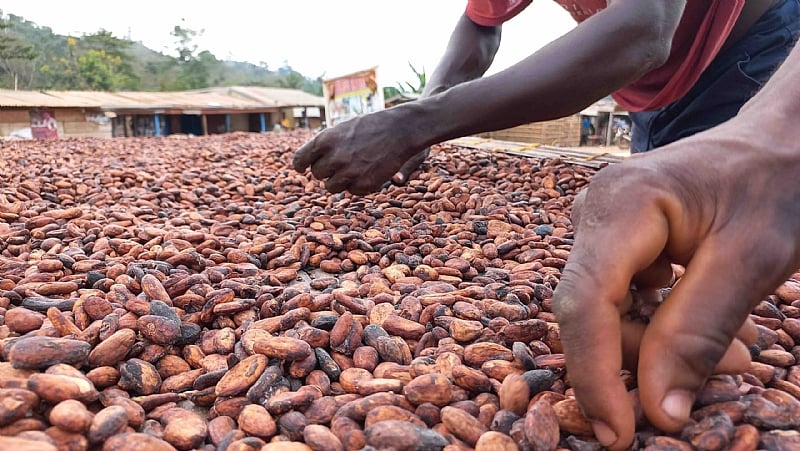
Cocoa Farming: Disease Challenges and Sustainability
Cocoa remains Ghana’s most important export crop, but productivity is under constant threat from disease.
Key cocoa disease challenges include:
- Black pod disease
- Cocoa swollen shoot virus
- Vascular-streak dieback
Solutions lie in:
- Farm sanitation
- Improved disease-tolerant varieties
- Pruning and shade management
- Early detection and removal of infected trees
Long-term sustainability depends on rejuvenating old farms and strengthening farmer education.
Organic Fertiliser Production: Profitable and Climate-Smart
Soil degradation and rising fertiliser costs have accelerated demand for organic fertilisers.
Organic fertiliser production offers:
- Low startup costs
- Abundant raw materials
- Strong demand from vegetable and greenhouse farmers
Compost, poultry manure processing, and vermicomposting are becoming profitable agribusiness niches while supporting environmental sustainability.
Beekeeping and Honey Production: High Value, Low Land Use
Beekeeping stands out as one of Ghana’s most underutilised agribusiness opportunities.
Advantages include:
- Minimal land requirements
- Low operational costs
- Multiple income streams (honey, beeswax, pollination)
With rising demand for natural honey and cosmetic-grade beeswax, apiculture offers strong opportunities for youth and small-scale entrepreneurs.
Youth Agribusiness and Low-Cost Entry Models
Youth participation is reshaping Ghana’s agribusiness future.
Low-capital agribusiness opportunities include:
- Vegetable farming
- Snail farming
- Egg distribution
- Agro-input retail
- Farm service provision
These models emphasise skills, discipline, and market access rather than large landholdings.
Agro-Processing: Value Addition as the Profit Engine
Processing is where agribusiness margins expand.
Key processing opportunities include:
- Gari and cassava products
- Rice milling
- Fish smoking
- Fruit drying and juice production
Value addition reduces post-harvest losses and improves income stability.
Agro-Exports: Ghana’s Gateway to Global Markets
Ghana’s agro-export sector extends beyond cocoa.
High-potential export products include:
- Pineapple, mango, banana
- Cashew and shea
- Spices and vegetables
- Processed foods
Export success depends on quality control, certification, packaging, and logistics. Agro-exports represent Ghana’s strongest pathway to foreign exchange earnings outside minerals.
Challenges Across Ghana’s Agribusiness Value Chain
Despite the opportunities, systemic challenges remain:
- Limited access to affordable finance
- Climate variability
- High input costs
- Weak infrastructure
- Market volatility
Addressing these challenges requires private investment, policy consistency, and farmer–market linkages.
Technology and the Future of Agribusiness in Ghana
Technology is reshaping agriculture through:
Adoption remains uneven, but technology-driven agribusinesses will dominate the next decade.
The High Street Business Perspective
At The High Street Business, agribusiness is viewed not merely as farming, but as a multi-billion-cedi economic system linking food, trade, technology, employment, and sustainability.
Ghana’s agribusiness future belongs to:
The opportunity is real—and the time is now.
Source Used: The High Street Business






























































 "Pulse List: Top 10 Controversial Political Moments in Ghana in 2025")
&format=webp)
&format=webp)
&format=webp)
&format=webp)
&format=webp)
&format=webp)
&format=webp)
&format=webp)
&format=webp)
&format=webp)