Nii Ofolikwei III installed as new head of family of the Nii Kwei Aku family
The Nii Kwei Aku Family of Bortianor in the Greater Accra Region, on the 5th day of November, 2025, installed Nii Ofolikwei III as its new Head of Family, following the passing of the previous head a few months ago.
The installation ceremony, which was marked by traditional rites and customs, was performed by Numo Wulomo Lakote Aduawushi Shitse in accordance with Ga traditions.
Speaking to the media after the ceremony, Nii Okai, head of the Gbese clan in Bortianor, affirmed that the only recognised and legitimate Head of the Nii Kwei Aku Family is Nii Ofolikwei III, urging all family members and residents to accord him the necessary respect and cooperation to enable him to discharge his duties effectively.
Samuel Nii Lankai Quarcoo, grandson of Nii Kwei Arku I, who nominated Nii Ofolikwei III, known in private life as Joseph Anum Akuetteh Quarcoo, urged the family members to rally behind the new Head of family and also advised him to ensure that unity prevails in the family.
He also used the opportunity to warn all those who claim to be members of the Nii Kwei Arku family and are using the family’s name in all sorts of ways, when in fact they are not members of the family, to put a stop to that behaviour.
In his acceptance remarks, Nii Ofoli Kwei III expressed gratitude to the elders, chiefs and members of the Nii Kwei Aku Family for the confidence reposed in him.
“I am deeply humbled by the trust and honour bestowed upon me. I pledge to work with all family members to promote peace, unity, and progress within the family and the wider Bortianor community,” he said.
The colourful ceremony attracted traditional leaders, elders and residents of Bortianor, who gathered to witness the formal installation of the new family head.
President Mahama visits 37 Military Hospital to console El-Wak stampede victims
Chaos at El-Wak: Watch citizens recount harrowing experiences during GAF recruitment
Ghana Armed Forces gives details of stampede which led to the death of six people
Watch the promo to GhanaWeb’s latest documentary, which uncovers the evolution of ‘kayamata,’ an exploitative practice fueled by love charms and manipulation, titled, “The Dark Side of Kayamata,’ below:
The wait is over! The GhanaWeb Excellence Awards 2025 is officially launched. Let’s Celebrate impact, innovation and excellence across Ghana.
Who deserves to be honoured this year?
Nominate now 👉 https://ghanaweb.com/ghanaexcellenceawards/nominate
Parliament has approved an agreement between the Ghana Revenue Authority (GRA) and Truedare Investment Limited to modernise customs administration through the tracking of container contents for imported goods.
The agreement aims to introduce a digital inspection solution to complement the Integrated Customs Management System (ICUMS), enhancing revenue mobilisation.
Presenting the Finance Committee’s report on the agreement, Chairman Isaac Adongo noted that the deal does not impose any additional cost on the state.
“It has become necessary for the government of Ghana to introduce a republican digital arrangement to improve customs management and revenue generation.
“We are informed that even though we have an existing ICUMS, there were weaknesses that were found in the system that made it very difficult to manage the movement of Cargo, particularly with respect to pre-arrival arrangements that ensure that we can track items that come into this country.
“As a result, the government has decided to sign this agreement to ensure effective tracking of customs classifications and pricing so that the revenue due to the state is collected efficiently, at no extra cost,” he stated.
Mahama: I’ll sign anti-LGBTQ+ bill if passed by Parliament
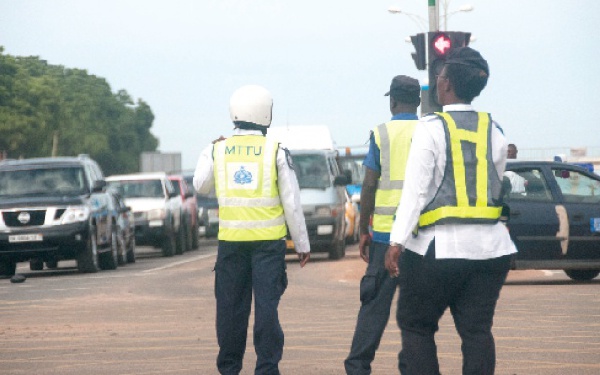
File photo showing MTTD personnel of the Ghana Police Service
The Ghana Statistical Service (GSS) has published new data revealing the institutions whose officials are most frequently reported to have taken bribes.
According to the report, the Motor Traffic and Transport Division (MTTD) of the Ghana Police Service tops the list, with 51.9% of respondents indicating experiences of bribery.
In the loud, chaotic world of modern boxing – where promoters, pundits, and pay-per-view giants fight for attention, one journalist has carved out a rare space for truth and perspective.
Bernard Neequaye, a Ghanaian sports journalist and media scholar, is quietly redefining how the world sees boxing – not as a business of bruises, but as a story of people, culture, and purpose.
For over a decade, Neequaye has been the voice behind some of the most human, thought-provoking boxing stories to emerge from West Africa. His work, rooted in empathy and relentless curiosity, has elevated athletes once confined to local gyms and made them visible on a global stage.
From Accra’s Pressrooms to Global Platforms
Born and raised in Ghana, Bernard Djanie Neequaye’s journey began at the Graphic Communications Group Limited, where he worked as a sports reporter and columnist. His column, “From the Ringside,” quickly became one of the country’s most influential sports features – celebrated for its authenticity, insight, and fearless critique of the systems governing the sport.
Whether he was interviewing a world champion or a struggling amateur, Neequaye’s storytelling always centered on one thing: dignity. “Every boxer has a story,” he often says. “My job is to make sure the world listens.”
That philosophy has carried him from local reporting desks to international recognition. Today, Neequaye contributes to respected media outlets such as BoxingScene.com and Premier Boxing Champions (PBC) – platforms where his work reaches millions of readers across continents.
Black Stars coach Otto Addo enters exclusive FIFA World Cup club
Boxing Journalism with a Human Heart
Unlike many who chase sensational headlines, Neequaye approaches sports journalism as a public service. His writing often blurs the line between reporting and advocacy, spotlighting issues like boxer welfare, transparency in athletic governance, and post-retirement neglect in African sports.
His 2021 investigative feature, “Forgotten Champions: The Harsh Reality of Ghanaian Boxers After Retirement,” became a turning point, not just for readers, but for the sport itself. The article helped spark conversation that ultimately led the Ghana Boxing Authority to establish a Boxer Welfare Fund – a first-of-its-kind initiative in the nation’s boxing history.
For this and other achievements, Neequaye was named “Best Boxing Journalist of the Year” by the Ghana Boxing Authority (GBA), a distinction that acknowledged both his impact and integrity.
Telling Africa’s Stories on the Global Stage
Now based in the United States, Bernard Djanie Neequaye continues to elevate African narratives through global media channels. His coverage of major events including the 2022 Commonwealth Games in Birmingham, the Africa Cup of Nations in Cameroon, and world title fights under Top Rank and PBC has expanded the conversation around African sports journalism and representation.
Former IBF world champion Joshua Clottey, one of Ghana’s most decorated fighters, describes him as “a journalist who fights for fairness as hard as the boxers fight in the ring.”
Similarly, Jason Langendorf, senior writer at BoxingScene and member of the Boxing Writers Association of America (BWAA), notes that “Bernard brings a global perspective to boxing storytelling — one that connects history, humanity, and hope.”
Scholarship Meets Sports
Beyond journalism, Neequaye is also an academic. He earned his Master of Arts in Communication from Idaho State University, where his research explored sportswashing in China and Saudi Arabia – a timely subject examining how nations use sports to shape global image and influence.
His academic insights have deepened his journalism, allowing him to write about boxing not just as a sport, but as a mirror reflecting broader social and political realities. “Sports are never just games,” he says. “They are platforms of power, identity, and storytelling.”
Shaping the Future of Boxing Media
Today, Neequaye is channeling his experience toward building something even bigger, a media initiative focused on African boxing journalism, mentorship, and athlete advocacy. His goal is to create pathways for young reporters to tell authentic African sports stories, equipped with global journalistic standards and ethical grounding.
“Representation matters,” he says. “African journalists shouldn’t only be reporting from the sidelines – we should be shaping the global sports narrative itself.”
A Bridge Between Continents
In many ways, Bernard Djanie Neequaye has become a bridge linking Accra to Las Vegas, Kumasi to New York, and African boxing’s humble gyms to the world’s largest media platforms.
His career stands as proof that storytelling can be both powerful and principled, and that sports journalism, done right, can move beyond scores and statistics to illuminate the soul of a sport.
As boxing continues to evolve, voices like Neequaye’s remind us why it matters – because behind every fighter’s gloves lies a story that deserves to be told.
Meanwhile, watch the feature about Swedru All Blacks’ journey from the Division One to the GPL below
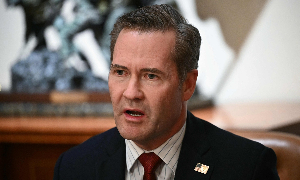
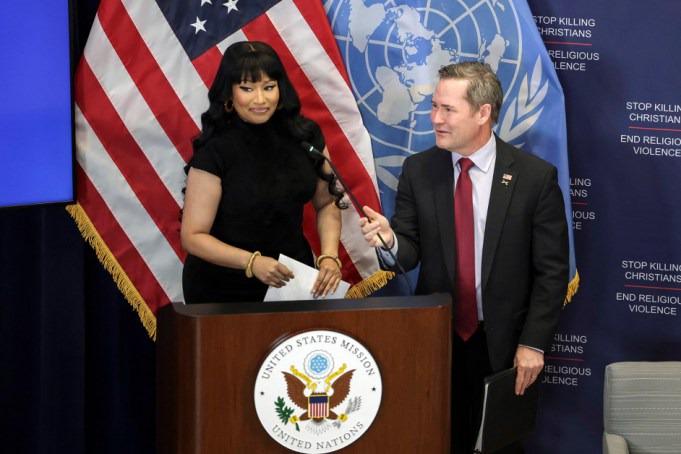
United States Ambassador to the United Nations, Mike Waltz
United States Ambassador to the United Nations, Mike Waltz, has described the recent killings of Christians in Nigeria as a “genocide wearing the mask of chaos.”
Fox News reports that Waltz made the comment on Tuesday at an event hosted by the United States Mission to the United Nations.
DAILY POST reports that the event highlighted religious violence and the killings of Christians in the most populous African nation.
Earlier, DAILY POST reported that American rap icon Nicki Minaj and Waltz were expected to headline a UN event this week, focusing on allegations of widespread persecution and targeted killings of Christians in Nigeria.
The engagement was facilitated by political strategist Alex Bruesewitz, marking one of the most high-profile global interventions on Nigeria’s religious-violence crisis.
The allegation has also recently drawn international scrutiny to the issue.
The artist said Kuami Eugene once rejected a collaboration request because he believed there was tension between him and Richie Mensah
He said he warned Kuami Eugene years ago that the music industry can humble anyone and advised him against projecting hostility and pride
Despite describing Kuami Eugene as an example of how quickly fame can fade, he expressed genuine hope that the singer recovers and makes a strong comeback
A Ghanaian musician has ignited discussions by posting a reflective note about the difficulties Kuami Eugene is facing in the music industry.
Guru on Kuami Eugene: His decline shows why grudges has no place in music. Image credit: Highly Spiritual Music (Youtube), Gurunkz (Instagram) Source: Youtube
Guru stated that the Lynx Entertainment signee has now been faced with the realities of an industry that often brings all its biggest stars back down to earth.
He said that he had previously warned Kuami Eugene about remaining grounded and not making decisions negatively affected by fame.
The artist has requested not to be named at this time. recalled that years ago, when Kuami Eugene was enjoying the pinnacle of his career, he had reached out to him to work on a collaboration.
By this time, Kuami Eugene had all of the biggest songs, was winning the top awards and enjoying national notoriety.
At this moment, the artist asked him to collaborate with him, and Kuami Eugene turned him down for an irrelevant reason.
Reason for Kuami Eugene’s snub
He would go on to explain that Kuami Eugene told him he had to decline the request because he thought there was bad blood between him and the CEO of Lynx Entertainment, Richie Mensah.
The artist went on to say that Kuami Eugene had assumed there was some bad blood between them, but he knew there was no issue at all between him and Richie, and he was disappointed in Kuami Eugene for allowing gossip to affect his decision.
“Back when he was on top, I asked him to collaborate, but he didn’t because he believed I had a beef with his former boss, Richie.
He said he couldn’t work with someone who had a dispute with his boss, but the honesty is, I had no beef with Richie,” he indicated. He further explained that when Kuami Eugene was on top, he thought he had a false sense of hostility, and he went on Twitter publicly and told him to reconsider the way he relates with people in the business.
He said he tweeted about it in the hopes that it would have a lasting impact, saying For a young artist to start projecting that hate towards him, “I was like, nah, that is a wrong thread, I encouraged him and posted on Twitter about it.”
He further stated the industry is sure to humble anybody in the catchment, stating fame is only temporary and someone’s career could go differently enough, especially after someone has made a little name for themselves. “Right now, I am sure Kuami Eugene is currently experiencing what I said because he is a living example of your momentum dropping quickly.”
“I told him to watch out; this game has a way of bringing people back down. Today, he’s the perfect example. He used to carry himself like he was untouchable. I genuinely pray he recovers and bounces back.”
Watch the video of Guru NKZ below:
Despite the critique, he stated clearly that he holds no grudges and genuinely hopes Kuami Eugene finds his feet again and returns stronger.
Ghanaian man of God, Royal Reverend Augustine Owusu Ansah, prophesies doom for Nana Ama McBrown. Photo source: @iamamamcbrown, The Prayer Sanctuary/Facebook Source: Instagram
Pastor warns McBrown of looming spiritual danger
Previously, YEN.com.gh reported that Royal Reverend Augustine Owusu Ansah had made a dire prophetic declaration about Nana Ama McBrown
In a video, the pastor detailed an alleged conspiracy that would lead to the downfall of the celebrated actress
Reverend Owusu Ansah also urged Nana Ama McBrown to seek spiritual help to avert possible danger
Private legal practitioner Martin Kpebu has raised concerns over the charges filed by the Office of the Special Prosecutor (OSP) against former Finance Minister Ken Ofori-Atta, former Ghana Revenue Authority (GRA) bosses, and Strategic Mobilisation Ghana Limited (SML).
His comments follow the OSP’s decision to file 78 charges against eight individuals in connection with the controversial revenue assurance contracts between the GRA and SML.
Those charged include former GRA Commissioners-General Dr. Ammishaddai Owusu-Amoah and Emmanuel Kofi Nti, senior officials Isaac Crentsil and Kwadwo Damoa, former Finance Ministry Technical Advisor Ernest Akore, SML owner Evans Adusei, and SML itself.
The charges come after months of investigations during which the OSP said it uncovered alleged corruption, abuse of office, and procurement breaches in the award and execution of the contracts. Special Prosecutor Kissi Agyebeng has stated that evidence gathered “points to criminal conduct” during the negotiation, approval, and implementation stages.
However, speaking on Eyewitness News with Umaru Sanda Amadu on Tuesday, November 18, Kpebu said he does not trust the Special Prosecutor’s ability to fully prosecute the former finance minister.
He claimed that Agyebeng’s past professional association with Ofori-Atta raises concerns about conflict of interest and questioned the relevance of some of the charges.
“Kissi Agyebeng allowed Ofori-Atta to escape, so I cannot trust him. If you look at some of the charges he has filed, he’s deliberately gambling with financial loss. Financial loss is not part of the OSP’s mandate.
“Now you’re going to use this case to gamble. If you get to the court and it says no, as for financial loss, it’s too huge. What are you going to do? Is it part of the ploy to gamble?
He added, “I don’t trust the charges at all. I cannot trust Kissi Agyebeng; he once worked for Ofori-Atta. Ofori-Atta is his formal client. Kissi worked for Gabby Asare Otchere-Darko. Same circle. Ask if Kissi Agyebeng ever attended a meeting with Ofori-Atta, and that man is going to prosecute Ofori-Atta, aaahbaai, what a joke.”
Read more…
SML scandal: OSP slaps 78 charges on Ofori-Atta, former GRA Bosses
…..
Explore the world of impactful news with CitiNewsroom on WhatsApp!
Click on the link to join the Citi Newsroom channel for curated, meaningful stories tailored just for YOU: https://whatsapp.com/channel/0029VaCYzPRAYlUPudDDe53x
No spam, just the stories that truly matter! #StayInformed #CitiNewsroom #CNRDigital
Former deputy dinance minister Abena Osei Asare has criticised the 2026 national budget for what she describes as a weak commitment to the fight against illegal mining.
During the debate in Parliament today, she argued that government cannot claim illegal mining threatens national survival while allocating what she believes is an insignificant amount to address the problem.
She noted that only 0.003 percent of the total budget has been set aside for efforts to curb illegal mining.
According to her, this shows that the fight is not being taken seriously.
Osei Asare compared the situation to going to a battlefield with plastic chairs instead of ammunition, stressing that the resources provided are far too small to deal with a problem that continues to destroy water bodies, farmlands, and food sources.
She warned that illegal mining is harming communities, poisoning food, and endangering lives.
She urged Parliament to push for an increase in funding before passing the budget.
Osei Asare called for better support for alternative livelihoods for people who depend on illegal mining, noting that such measures would show genuine commitment to protecting the country’s future.
President John Mahama has made a bold declaration, stating his commitment to steering Ghana’s development to an advanced, irreversible stage—a level that no future administration, regardless of political persuasion, can dismantle.
Speaking at the Jubilee House during a courtesy call from the Christian Council of Ghana on Tuesday, November 18, 2025, the President framed his current mandate not just as a term of office, but as a critical window to structurally embed progress.
Democratic Republic of Congo kept their 2026 FIFA World Cup dream alive after beating Nigeria 4-3 on penalties in Rabat on Sunday night, following a 1-1 draw after extra time in the African play-off final.
Frank Onyeka gave the Super Eagles a third-minute lead, but Meschack Elia levelled on 32 minutes and, after 120 tense minutes, captain Chancel Mbemba converted the decisive spot-kick to send the Leopards into March’s inter-confederation play-off in Mexico.
Played at the Crown Prince Moulay El Hassan Stadium, the contest carried a single, stark prize: a place at the six-team play-off tournament in Guadalajara and Monterrey, where two World Cup berths will be decided.
Nigeria arrived buoyed by a 4-1 extra-time win over Gabon; DR Congo had eliminated Cameroon with a stoppage-time strike from Mbemba. That cagey, hard-edged form framed much of what followed.
Nigeria’s start was electric. Victor Osimhen pinned the DR Congo back line and, after early pressure, Onyeka struck from the edge of the box, his effort glancing off Axel Tuanzebe and wrong-footing Lionel Mpasi.
The Leopards steadied and grew into the game, with Theo Bongonda and Cédric Bakambu stretching the pitch on the break.
Parity arrived just after the half-hour when Wilfred Ndidi was dispossessed in midfield and Elia pounced, racing clear to slot beyond Stanley Nwabali.
The shootout brought its own drama. The sides traded early conversions before Nigeria blinked; DR Congo held their nerve and, with the chance to finish it, Mbemba stepped up to drill home the winning penalty, sparking jubilant celebrations from Sébastien Desabre’s team.
For DR Congo, who last appeared at a World Cup in 1974 as Zaire, this marks another step in a resolute qualifying campaign built on defensive organisation and big moments in tight games.
They now advance to the inter-confederation play-off from 23–31 March 2026.
NPP flagbearer hopeful, Dr. Bryan Acheampong is intensifying his political outreach as he positions himself for the party’s 2028 flagbearer race, with the Central Region emerging as a strategic focus of his early mobilization efforts.
In a heartfelt message posted on his official Facebook page, the Abetifi MP recounted a successful tour across key Central Region enclaves, including Cape Coast, Agona, Gomoa and Effutu.
Rapid expansion in Ghana’s real estate sector is intensifying pressure on agricultural lands, posing a serious threat to the country’s livestock self sufficiency, a cattle farmer has warned. The conversion of grazing lands into residential estates has become a critical problem for farmers practicing extensive livestock production, especially in the Greater Accra Region.
Mr Yussif Adamu, Chief Executive Officer (CEO) of FAIDIJA Farms, said in an interview that the situation has reached alarming levels. Research from the CGIAR (Consultative Group on International Agricultural Research) Water, Land and Ecosystems programme indicates Ghana’s urban footprint has grown by more than 150 percent in recent decades, absorbing large areas traditionally reserved for farming.
“Almost all the lands are being sold out now to estate developers,” Mr Adamu stated. He explained that the continuous loss of communal grazing corridors is forcing farmers to move long distances with their herds, often sparking tensions with local communities.
The situation is compounded by rising feed costs, according to the livestock farmer. A truckload of brewery chaff or fruit residue, feed supplements commonly used by livestock farmers, now costs up to GH¢2,000 yet sustains only 10 cattle for about two weeks. This represents a significant financial burden for smallholder farmers trying to maintain viable operations.
Mr Adamu called for a national shift toward semi intensive livestock production, supported by government supplied high yield fodder seeds. He noted this practice is widely used in countries with strong livestock industries and could help address both land scarcity and feed cost challenges.
“The combined pressures of land scarcity and escalating feed costs are driving people out of livestock farming, leading to a massive supply deficit,” he said. Ghana’s domestic livestock production remains unable to meet national demand, with most cattle being supplied to markets from Nigeria, Togo, and Burkina Faso.
Data from the Ministry of Food and Agriculture shows that Ghana’s self sufficiency in beef stands at approximately 30 percent, leaving roughly 70 percent of demand to be filled through imports. This heavy reliance on imported livestock products represents a significant drain on foreign exchange and exposes the economy to regional supply disruptions.
Analysts warn that this dependency also leaves Ghana vulnerable to unpredictable price surges whenever supply chains are disrupted by political instability, climate events, or trade restrictions in neighboring countries. The livestock sector’s contribution to agricultural GDP has witnessed a gradual decline over the years, from 12.60 percent in 2014 to 8.31 percent in 2020.
The real estate sector’s growth has been particularly pronounced in urban and peri urban areas where livestock farming was previously common. Property developers are attracted to these areas due to their proximity to cities and improving infrastructure, which drives up land values and makes farming increasingly uneconomical.
According to real estate market reports, Ghana’s urban expansion is being driven by rapid urbanization, a growing middle class, and increased foreign investment. Residential building permits increased by 15 percent year over year in 2024, with commercial property values in major urban centers like Accra and Kumasi jumping by an average of 12 percent.
Mr Adamu urged government to establish protected grazing zones and invest in livestock friendly infrastructure to safeguard the sector. He emphasized that without designated grazing reserves, traditional extensive livestock farming systems will continue to decline, pushing more farmers out of business.
He also called on stakeholders to support the transition to more sustainable, land efficient farming systems that can operate effectively within Ghana’s changing land use landscape. Semi intensive systems, which combine controlled grazing with supplementary feeding, could allow farmers to maintain productivity on smaller land parcels.
The livestock farmer cautioned that without swift intervention, Ghana’s reliance on imported livestock will continue to rise, undermining national food security and weakening the country’s economic resilience. This situation contradicts government efforts to achieve greater food self sufficiency under initiatives like the Feed Ghana Programme.
The Feed Ghana Programme, launched in April 2025, aims to boost agricultural production and reduce Ghana’s heavy dependence on food imports. The country currently spends approximately $2.5 billion annually on food imports, with meat products accounting for a substantial portion of this expenditure.
Ghana currently imports over 240,000 metric tons of meat annually, including chicken, beef and other products, costing the country over $375 million each year. The government has announced ambitious targets to raise poultry self sufficiency from 12 percent to more than 75 percent by 2028, but similar concrete targets for beef and other livestock remain unclear.
Experts note that addressing the land competition issue requires coordinated action between multiple government agencies, including the Ministry of Food and Agriculture, the Ministry of Lands and Natural Resources, and local planning authorities. Some have called for stricter enforcement of land zoning regulations to protect prime agricultural lands from conversion.
The Land Use and Spatial Planning Authority (LUSPA) has indicated that its three tier planning system is designed to help stakeholders plan for land zoning and segregation, preventing all productive lands from being lost to real estate development. However, implementation and enforcement remain ongoing challenges.
Alban Sumana Kingsford Bagbin is the Speaker of Parliament
Speaker of Parliament Alban Bagbin has taken aim at Ghana’s two major political parties, cautioning that both the National Democratic Congress (NDC) and the New Patriotic Party (NPP) must confront deep-seated weaknesses that undermine the country’s democratic progress.
In a report by adomonline.com on November 18, 2025, Bagbin described aspects of Ghana’s political climate as ‘toxic’ warning that such tendencies continue to fuel governance challenges.
He said the NDC struggles to uphold key democratic principles, while the NPP faces difficulty demonstrating genuine patriotism issues he believes weaken the nation’s political foundations.
‘What the Minority Leader is doing now is not what I did; I never raised my voice’ – Bagbin
Bagbin, Ghana’s longest-serving Member of Parliament and a two-time Speaker, said his experience compels him to speak truth to power, particularly when it concerns strengthening the country’s institutions.
He urged both parties to reflect on their shortcomings and take concrete steps to reinforce their values.
The Speaker also contrasted his leadership style with that of Minority Leader Alexander Afenyo-Markin, noting that Afenyo-Markin draws inspiration from his example.
Bagbin calls for full autonomy for Ghana’s audit service
Bagbin reiterated his commitment to building the capacity of Parliament, stressing that a more skilled and effective legislature is essential for better national service.
The investment price of the Bank of Ghana’s (BoG) gold coins continues to surge, a development attributed to the Ghana cedi’s depreciation against the US dollar.
The Central Bank introduced these gold coins as a strategic measure to discourage the hoarding of US dollars and absorb excess liquidity in the market, ultimately aiming to strengthen the cedi against major foreign currencies.
As of Tuesday, November 18, 2025, the BoG reported the following updated prices for its gold coins:
BoG gold coin prices fall as cedi weakens against the dollar
• The 0.25 oz coin is now selling at GH¢12,124.363.
• The 0.50 oz coin is priced at GH¢23,512.10.
• The 1.00 oz coin is selling for GH¢46,332.45
The Ghana gold coin is available in three denominations: one-ounce, half-ounce, and quarter-ounce, and can be purchased through commercial banks.
The 2025 Africa Basketball Festival will take place at the University of Ghana
The Africa Basketball Festival (ABF) is set to officially launch its 2025 edition on Wednesday, November 19, 2025, at the University of Ghana Basketball Court, Legon at exactly 3PM.
This year’s launch marks a special moment as the ABF celebrates its fifth anniversary, and organisers are rolling out a vibrant new direction built around a “Five (5) Theme.”
The Five (5) Theme symbolises ABF’s growth over the past five (5) years and shapes the entire experience heading into December. This year’s edition will bring together five countries battling for the ABF Trophy, five fashion brands showcasing at the 2025 ABF Fashion Show and Cultural Night, and five electrifying musical performances from the top five (5) contestants from the ABF Music Rising Star that will light up the main stage.
Watch Black Stars’ first training session in Japan
For the first time ever, the festival will also run for five consecutive days from December 10th to 14th offering fans a rich blend of basketball, music, fashion, entertainment, and cultural celebration.
Tomorrow’s launch will not just reveal the full lineup and festival direction; it will also give fans a live preview of the energy to expect this December. Right after the official announcement ceremony, a spirited 3×3 basketball tournament will take place on the court, featuring five competitive teams going head-to-head in a showdown to win the GH¢2000 cash prize and goodies from our sponsors.
This post-launch competition is designed to showcase the festival’s basketball culture and build excitement for the main event.
The Africa Basketball Festival has spent five years merging sport and entertainment into one powerful cultural experience, shaping December in Ghana and uniting fans across the world. With this new anniversary edition, the festival is stepping into an elevated chapter that celebrates its journey, honors its roots, and sets the tone for even bigger years ahead.
The launch promises energy, creativity, and a true taste of the ABF spirit as the countdown to December officially begins.
The event is brought to you by RITE Sports Services and hosted by the University of Ghana Sports & Wellness Directorate
SB/MA
Meanwhile, watch the feature about Swedru All Blacks’ journey from the Division One to the GPL below
If the King of the land and Maamaga herself can dance to the sound of a young Aflao artiste, then the doors of opportunity in music, art, and dance are wide open for every talented youth.
The Loud in Aflao concert lit up Victoria Park on Saturday night with an unforgettable cultural moment when Torgbuiga Adzongaga Amenya Fiti V, Paramount Chief of the Aflao Traditional Area, and Maamaga Hon.
President John Dramani Mahama has pledged to advance Ghana’s development to a level that no subsequent government can reverse.
He referenced other countries facing ongoing conflicts due to poor governance, stressing his commitment to protecting the achievements of his administration so that future governments cannot undo them.
Speaking during a courtesy call by the Christian Council of Ghana at Jubilee House on Tuesday, November 18, President Mahama said, “My mission is to use the mandate Ghanaians have given me to move Ghana to a level where anybody who comes after cannot reverse the gains that we have made.”
The government is simultaneously pursuing several corruption-related cases involving officials of the previous administration, while implementing measures aimed at stabilising the economy.
Mahama: Forensic Audit will determine future of National Cathedral
President John Mahama has reaffirmed his administration’s commitment to promoting transparent and accountable governance, insisting that the fight against corruption remains a key national priority.
Speaking during a meeting with the Christian Council at the Presidency on Tuesday, the President emphasized that his government would handle all corruption-related cases with fairness and without fear or favour.
He noted that integrity must guide the work of public institutions, stressing, “The fight against corruption, we are committed to it. We will be impartial and fair.”
President Mahama also assured that anti-corruption agencies would receive stronger institutional and logistical support. He said the government is working to equip these bodies with the resources they need, including more trained investigators to enhance evidence gathering and effective prosecution.
“We are working to strengthen the institutions and make sure we give them the logistics they deserve. Many of them have asked for more trained investigators, and we are committed to training more in evidence gathering and docket building,” he stated.
To support the upcoming National Farmers Day celebration,the Ministry of Food and Agriculture (MoFA) has received assorted items from Rainbow AgroSciences Company Limited and the International Water Management Institute (IWMI).
The assorted item which included, 100 bags of organic fertilizer from IWMI, herbicide and a cheque from Rainbow Agroscience to support and enhance preparations and promote sustainable farming practices across the country.
Rainbow AgroSciences, represented by its Technical Manager, Mr George Selasie Ocloo, donated agrochemical products and cash support valued at GH¢300,000.
The contribution comprised assorted insecticides, fungicides, and herbicides aimed at supporting farmers through the Ministry’s extension services.
According to Mr Ocloo, the donation forms part of the company’s corporate social responsibility and ongoing partnership with MoFA under the flagship “Crop Clinic” programme, which assists farmers to access quality agricultural inputs and advisory services.
He explained that the gesture was intended to help address challenges relating to the accessibility and quality of agrochemical products in the market.
“We believe that if we have the best products in the country, we should not allow the influx of adulterated pesticides. It’s time we work hand in hand with the Ministry to ensure farmers get access to genuine, high-quality products,” he said.
Similarly, IWMI, in partnership with Jekora Ventures, donated 100 bags of organic compost fertilizer to promote environmentally friendly farming practices.
The Institute’s Country Representative, Professor Kehinde Ogunjobi, who made the presentation, said the compost was developed through extensive research to serve as a sustainable supplement suitable for all crop types.
“We want to encourage farmers to adopt compost fertilizer as a safer and more sustainable alternative to inorganic inputs,” he noted.
The gesture, he added, also seeks to strengthen collaboration with MoFA to scale up organic fertiliser use and enhance soil health for increased productivity.
Receiving the donations, the Minister for Food and Agriculture, Mr Eric Opoku, commended the two institutions for their contributions towards a successful Farmers’ Day celebration, scheduled for December 5.
He said the Ministry continues to welcome support from stakeholders whose efforts align with government’s vision of ensuring food security, affordability and accessibility nationwide.
Mr Opoku emphasised that the annual celebration remains a platform to honour Ghanaian farmers for their hard work and dedication to national food sufficiency.
He also noted the growing enthusiasm for recent agricultural initiatives, particularly those aimed at boosting local production and reducing the country’s dependence on food imports.
Interior Minister Mohammed-Mubarak Muntaka has announced a six-week temporary ban on the use of firearms during traditional celebrations.
According to the Interior Minister, the six-week temporary ban is in place regardless of whether the weapons are licensed or not.
Mubarak Muntaka asserted that the nationwide exercise forms part of a broader crackdown on gun violence, will run from December 1, 2025, to January 15, 2026.
President John Dramani Mahama has reaffirmed his commitment to what he described as Ghana’s long-standing family and moral values, insisting that gender is determined at birth and that the family remains the foundation of the nation.
Addressing leaders of the Christian Council of Ghana when they paid a courtesy call on him in Accra on Tuesday November 18, President Mahama stated clearly that his position aligns with that of the Christian Council of Ghana on matters relating to family and social values.
“A person’s gender is determined at birth, and the family is the foundation of our nation. That is our position. So there are no questions or equivocations about what we believe,” he said.
He added that his views are consistent with the stance taken by the Christian Council. “I believe that we are completely aligned with the Christian Council in terms of your belief,” he noted.
President Mahama also backed the Speaker of Parliament’s call for the bill currently before the House to be relaid and debated to allow any necessary amendments or clarifications.
“We agree with the Speaker to relay the bill and let Parliament debate it, and then if there are any amendments or whatever that have to be done,” he said.
He emphasised that the will of Parliament and the people of Ghana will guide the final outcome.
“If the Parliament of the people of Ghana endorses the bill, votes on it and passes it, and it comes to me as President, I will sign it,” he declared.
Read also…
SML scandal: OSP slaps 78 charges on Ofori-Atta, former GRA Bosses
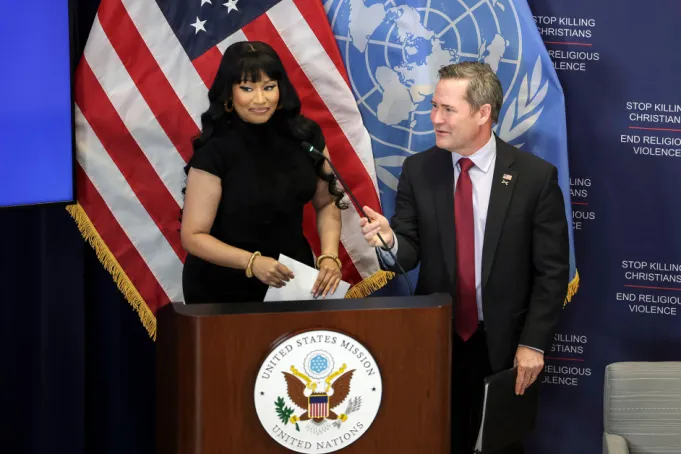
Trinidadian-US rapper Nicki Minaj has delivered a powerful speech about the allegations of Christians being persecuted and killed in Nigeria.
The mother of one teamed up with United Nations Ambassador Mike Waltz to speak at the United Nations conference in New York on Tuesday, November 18.
Nicki, who rocked a form-fitting black dress to the event, began her speech by confessing that she was “very nervous” before she thanked Mike Waltz and President Donald Trump for prioritizing the issue in Nigeria.
“Thank you, Ambassador Waltz for this invitation. It is an honor to stand on this stage with you and the other speakers here today to shine a spotlight on the deadly threat faced by thousands of Christians in Nigeria, she said
“I would like to thank President Trump for prioritizing this issue and for his leadership on the global stage and calling for urgent action to defend Christians in Nigeria to combat extremism and to bring a stop to violence for those who simply want to exercise their natural right to freedom of religion or belief,” she continued.
“Music has taken me around the globe. I have seen how people no matter their language, culture or religion, come alive when they hear a song that touches their soul. Religious freedom means we all can sing our faith regardless of who we are, where we live and what we believe. But today, faith is under attack in way too many places.”
The Queens native explained that the religious persecution “demands urgent action” from the U.S. government, but she also made sure to clarify this isn’t about “taking sides or dividing people,” it’s about “uniting humanity.”
“In Nigeria, Christians are being targeted, driven from their homes, and killed. Churches have been burned, families have been torn apart, and entire communities live in fear constantly simply because of how they pray,” she explained. “Sadly, this problem is not only a growing problem in Nigeria, but so many countries across the world and it demands urgent action. I want to be clear, protecting Christians in Nigeria is not about taking sides or dividing people. It is about uniting humanity.”
In between her statement, Nicki praised her fanbase, “The Barbz,” for support, first acknowledging, “Nigeria is a beautiful nation with lots of beautiful Barbz that I can’t wait to see.”
“Barbz, I know you’re somewhere listening. I love you so very much. You’ve been the ultimate light in my life and career for so long,” she continued, before sending a strong message to anyone that has been opposed to her recent support of the Trump administration.
Minaj concluded: “I want to make it clear once again, this isn’t about taking sides. This is about standing up in the face of injustice. It’s about what I’ve always stood for my entire career and I will continue to stand for that for the rest of my life.”
The speech comes weeks after she made an X post lauding a Trump Truth Social post that claimed that Christianity was under an “existential threat” in Nigeria, as he designated the country as a future addition to the list of Countries of Particular Concern.
“If the Nigerian Government continues to allow the killing of Christians, the U.S.A. will immediately stop all aid and assistance to Nigeria, and may very well go into that now disgraced country, ‘guns-a-blazing,’ to completely wipe out the Islamic Terrorists who are committing these horrible atrocities,” Trump said in a video on Truth Social shared Nov. 5.
Manasseh Azure Awuni, an Investigative journalist, has announced that the Office of the Special Prosecutor (OSP) has invited Martin Kpebu, a private legal practitioner and Media General’s TV3 for investigation.
According to Manasseh Azure, the invitation comes after comments made by Martin Kpebu alleging that there is corruption brewing at the OSP.
Eleven illegal miners, popularly referred to as galamseyers, are feared dead after being trapped in an abandoned underground mine in the Bogoso-Prestea enclave in the Western Region.
Information from the area remains unclear. Some residents say a section of the mine caved in, burying the miners. Others report that the group may have suffocated after thick smoke, suspected to have come from a blast, filled the underground tunnel.
The abandoned mine is linked to Heath Goldfields, but the company has not yet commented on the incident.
Citi News‘ Akwasi Agyei Annim confirmed that four bodies have so far been retrieved and sent to the Prestea Government Hospital. He noted that the affected mine is one of the concessions currently not in operation.
According to him, the site was previously operated by FGR until its licence was revoked in February last year. A new operator was assigned in the last quarter of 2024. Sources close to the new operator say illegal miners had entered the abandoned underground tunnels and were mining when the blast occurred.
The reporter added that although initial reports suggested 11 deaths, only four bodies have been recovered so far. The total number of casualties remains unknown.
The incident is reported to have taken place over the weekend.
Ghanaian musician Wendy Shay has recounted an embarrassing incident that transpired between her team and popular hypeman, OgeeTheMC, during the early stages of her career.
In a discussion on Showtyn shared on Instagram on November 17, 2025, Wendy Shay claimed that OgeeTheMC, a former member of her team, allegedly absconded with funds meant to organise her first-ever concert.
“I told Bullet to hire OgeeTheMC as my road manager, and because of that, we asked him to take care of the stage and lighting… We gave Ogee the money to pay for the stage. Can you imagine that when we got to the place, there was no one there?
“When we got there, the lights and everything were off. He (OgeeTheMC) was the one who flopped the show. Even when I got to the scene, I couldn’t stand because my legs were shaking. My team had to hold my hands to prevent me from falling. It even ruined the relationship we had with Kasapreko,” she said.
‘I have recently received $10,000 from YouTube’ – Wendy Shay claims
Wendy Shay also explained how the incident negatively affected a major deal she was working on.
According to her, she was on the verge of signing a makeup contract worth about $50,000; however, due to what OgeeTheMC did, the brand refused to sign her as a brand ambassador.
“Before we even began the show, an Indian makeup brand wanted to sign me as their brand ambassador, and they agreed to pay $50,000. But because we wanted more, Bullet told them they should come to the event. He told them their presence at the event might even compel them to pay me $100,000, and they agreed,” she added.
The Office of the Special Prosecutor (OSP) has officially filed charges against eight individuals, including former Minister of Finance Ken Ofori-Atta.
The former minister and seven others are facing 78 counts of corruption and corruption-related offences, including conspiracy to commit the criminal offence of directly or indirectly influencing the procurement process to obtain an unfair advantage in the award of a contract.
According to the OSP, the charges, filed on Tuesday, November 18, 2025, constitute violations of section 23(1) of the Criminal Offences Act, 1960 (Act 29), and section 92(2)(b) of the Public Procurement Act, 2003 (Act 663).
SML insists payments were verified, dismisses OSP claims of political ties
Portions of the suit, filed at the Criminal Division of the High Court in Accra under case number CR/0106/2026 and shared by the OSP, read; “Conspiracy to commit the criminal offence of directly or indirectly influencing the procurement process to obtain an unfair advantage in the award of a procurement contract, contrary to section 23(1) of the Criminal Offences Act, 1960 (Act 29), and section 92(2)(b) of the Public Procurement Act, 2003 (Act 663).”
The other seven individuals charged include:
• Ernest Darko Akore, former Chef de Cabinet to the Minister of Finance;
• Emmanuel Kofi Nti, former Commissioner-General of the GRA;
• Rev Dr Ammishaddai Owusu-Amoah, former Commissioner-General of the GRA;
• Isaac Crentsil, former Commissioner of the Customs Division of the GRA and General Manager of SML;
• Kwadwo Damoah, former Commissioner of the Customs Division of the GRA and current Member of Parliament for Jaman South;
• Evans Adusei; and
• Strategic Mobilisation Ghana Limited (SML).
The charges stem from the conclusion of investigations into alleged corruption and financial irregularities linked to contracts between the Ghana Revenue Authority (GRA) and Strategic Mobilisation Ghana Limited (SML).
Addressing a press briefing in Accra on Thursday, October 30, 2025, Special Prosecutor Kissi Agyebeng announced that investigators had uncovered evidence of corruption, abuse of office, and breaches of procurement laws by senior officials of the Ministry of Finance, the GRA, and individuals connected to SML.
SML petitions CHRAJ to investigate Office of the Special Prosecutor
“The outcome of the investigation is that the OSP will charge the following persons with various corruption and corruption-related offences before the end of November 2025,” the Special Prosecutor stated.
Agyebeng added that his office would also pursue recovery of funds allegedly lost to the state through the irregular contracts.
He disclosed that the OSP would seek to recover GH¢125 million from SML, describing the amount as unjust enrichment obtained through unlawful means.
He explained that the sum represented overpayments made to SML and would be retrieved as part of the restitution process.
“There was no genuine need for contracting SML for the work it purported to perform,” the Special Prosecutor added.
Kojo Bonsu, Ghana’s Ambassador to China, held a meeting with Xiao Jinquan
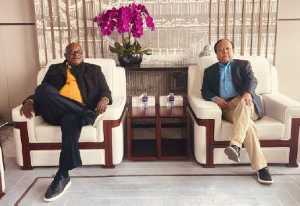
In a significant move to bolster Ghana-China relations, Kojo Bonsu, Ghana’s Ambassador to China, held a high-level meeting with Xiao Jinquan, Founder and Leader of Denton, one of China’s premier law firms in Beijing over the weekend.
The meeting aimed to explore avenues for Denton’s expertise to support the Ghana Embassy with legal advise in China and unlock new investment opportunities in key sectors, including real estate, logistics and energy.
The discussions underscored the immense potential for Ghana to attract foreign investment and drive economic growth.
Xiao Jinquan reaffirmed Denton’s commitment to strengthening Ghana-China ties, offering the firm’s legal services pro bono to the Ghana Embassy.
“We are eager to be a trusted partner as Ghana builds relationships and attracts foreign capital, fostering a conducive environment for business and investment,” he said.
Both parties have agreed to establish a cordial relationship to explore concrete opportunities and maintain an open dialogue, paving the way for future collaborations.
This partnership is expected to play a pivotal role in shaping Ghana’s legal landscape and driving economic development.
The meeting highlights Ghana’s commitment to strengthening its relationship with China and leveraging international expertise to drive national development.
President Mahama visits 37 Military Hospital to console El-Wak stampede victims
Chaos at El-Wak: Watch citizens recount harrowing experiences during GAF recruitment
Ghana Armed Forces gives details of stampede which led to the death of six people
Watch the promo to GhanaWeb’s latest documentary, which uncovers the evolution of ‘kayamata,’ an exploitative practice fueled by love charms and manipulation, titled, “The Dark Side of Kayamata,’ below:
The wait is over! The GhanaWeb Excellence Awards 2025 is officially launched. Let’s Celebrate impact, innovation and excellence across Ghana.
Who deserves to be honoured this year?
Nominate now 👉 https://ghanaweb.com/ghanaexcellenceawards/nominate
play videoBenjamin Asare saved a penalty against South Korea
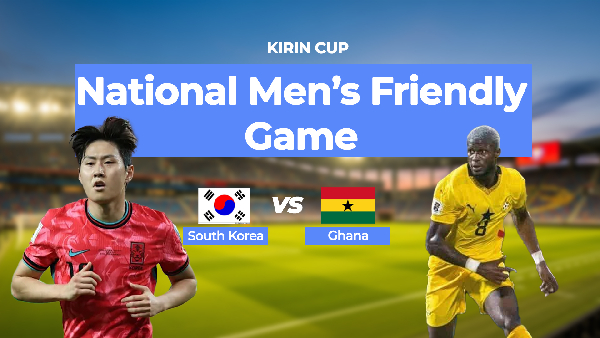
Accra Hearts of Oak goalkeeper, Benjamin Asare has received massive applause from Ghanaians on social media following his outstanding performance against South Korea in the international friendly.
The Black Stars lost 1-0 to South Korea on Tuesday, November 18, 2025, after a closely contested game that saw few chances for both sides.
Asare’s goalkeeping prowess was on full display as he made crucial saves to prevent the Koreans from inflicting a heavier defeat on Ghana.
On one occasion, a tricky ball that looked destined for goal was flicked over the crossbar by the goalkeeper. There were several moments where the Phobia shot-stopper denied Korean attempts, and the scoreline could have been worse without his efforts.
Benjamin Asare also presented the Koreans from going 2-0 up in the game after saving Hwang Hee-Chan’s penalty in the 74th minute.
His performance in the game sparked widespread applause from Ghanaian fans on social media, who were hugely impressed with Asare’s display.
Some admitted that they had doubts about the goalkeeper’s competency, but his display against South Korea has reshaped their perception and encouraged him to keep it up.
Others noted that, given Asare’s performance, he is the right goalkeeper to lead Ghana to the 2026 World Cup, despite criticisms from sections of the public questioning his ability at the highest level.
Watch Asare’s penalty save and see some of the reactions below:
Im really happy for him… this are the little wins that increase confidence and make great athletes, he need more exposure and more games and if he focus and work hard he will make history for himself, the local legue and Ghana a the the world cup
Ghanaians can talk thrash. The keeper did well to save the penalty and some of you were saving it is easy to catch and so forth. You should go and stand in the poles.
The Ghana Food Festival (GFF) 2025 has been opened, with a call on the public to extend support to underprivileged individuals and communities.
The Founder of the GFF, Emmanuel T. Forson, who made the call, noted that beyond celebrating Ghana’s rich culinary heritage, this year’s edition aims to create meaningful social impact through acts of kindness and community support.
Statistics from the Komfo Anokye Teaching Hospital (KATH) indicate that road crashes account for about 33% of cases reported to the facility’s Accident and Emergency Unit.
This is according to Dr. Yaw Opare Larbi, Deputy Medical Director of KATH, who noted that while some accident cases are domestic incidents, the majority result from road crashes, often leading to fatalities.
He said that travelling on some Ghanaian roads has become increasingly dangerous due to rising road crash deaths.
“A little over 30 per cent of the cases that come to this facility, this Accident and Emergency Unit, are due to accidents, and most of the accidents, a few are domestic, but the majority of them are road traffic accidents,” he stated.
“Now in Ghana, we know that our statistics, a lot of our road accidents are from errors, driver errors, pedestrian errors. And then we know that we have some percentage that is attributable to maybe things like faulty vehicles or maybe road conditions, but a lot of the accidents are preventable.”
Dr. Larbi appealed to the government, through the Kumasi Mayor, to intensify public sensitisation on road safety and enforce traffic laws to reduce fatalities.
“It’s very important that we prevent these accidents, we minimise the occurrence of accidents so that the citizens of Ghana can go about their lives, doing their studies, engaging in their economic activities, contributing to national development. So we need to have a holistic approach to it. Every individual has a responsibility, and the state has a responsibility to reduce accidents.”
He further urged citizens to take personal responsibility for their safety:
“So I encourage everyone who sees me and hears my voice today that we should all take responsibility for our safety at home, outside the home, and wherever we are so that we can minimise the incidence of accidents.”
Dr. Larbi made the remarks during a donation event where the Kumasi Metropolitan Assembly, supported by Bloomberg Philanthropies, provided personal items and an undisclosed amount of cash to eight road crash victims at KATH, in commemoration of the World Day of Remembrance for Road Traffic Victims.
While urging the public to prioritise road safety, Kumasi Mayor Richard Ofori-Agyeman Boadi, popularly known as “King Zuba,” highlighted measures the assembly is implementing to ensure an incident-free festive season, including strict enforcement of transport regulations in the city.
He also confirmed that the ban on tricycle operations within the Central Business District will be strictly enforced and warned tricycle riders against overloading, noting that offenders risk arrest.
President John Mahama has reaffirmed that he will sign the anti-LGBTQ bill into law once Parliament debates, approves, and transmits it to his desk.
He made the declaration on Tuesday, November 18, during a meeting with the Christian Council of Ghana at Jubilee House.
“I believe that we have no questions or equivocations about what we believe. I believe that we are completely aligned with the Christian Council in terms of your belief. We agree with the Speaker to relay the bill and let Parliament debate it,” he said.
He added, “And if there are any amendments or adjustments that need to be made, if the people’s representatives in Parliament endorse the bill, vote on it, and pass it, and it comes to me as president, I will sign it.”
His remarks follow a ruling by Speaker of Parliament Alban Bagbin on October 28, which clarified that the anti-LGBTQ bill expired with the dissolution of the 8th Parliament and therefore needs to be introduced afresh.
Following the Speaker’s declaration, ten lawmakers, including Ningo-Prampram MP Sam George and Assin South MP Rev. John Ntim Fordjour, have reintroduced it to the House as a private members’ bill.
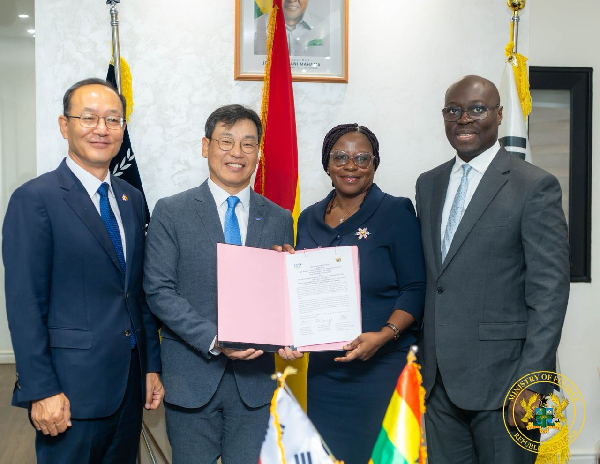
Ghana, through the Ministry of Finance, has welcomed the signing of the Record of Discussion between the Government of Ghana, the Korea Development Assistance and the Korea International Cooperation Agency (KOICA) on the Strengthening of Agribusiness Value Chains for Local Economic Development in Ghana as a significant milestone.
Delivering a statement at the signing ceremony held on Tuesday, November 18, 2025, the Minister of Finance, Dr Cassiel Forson, expressed his appreciation to the Government of Korea, KOICA and the National Development Planning Commission (NDPC) for the strong collaboration that enabled the agreement.
Dr Forson highlighted that the US$9.5 million grant project will reduce post-harvest losses, enhance productivity, create jobs, and strengthen institutional capacity. This will be supported by the construction of processing centres and extensive training for farmers, extension officers and MSMEs.
He further reaffirmed the Ministry of Finance’s commitment to facilitating all required tax exemptions under the Exemptions Act, providing budgetary support, ensuring effective oversight and working closely with KOICA and NDPC to guarantee smooth implementation.
The Director-General of NDPC, Dr Audrey Smock Amoah, emphasised that strengthening agribusiness value chains is essential for boosting productivity, reducing post-harvest losses and improving food and nutrition security.
She described the revival of the project as timely and aligned with government priorities in agricultural modernization, job creation, and local economic development.
Dr Amoah added that the partnership stands as a model for integrated, agribusiness-led development that will benefit farmers, local enterprises and communities across the country.
She further expressed deep appreciation to KOICA for its longstanding support to Ghana, noting that NDPC has benefited from capacity building, knowledge exchange and project support over the years.
Korean Ambassador Park Kyonsig reaffirmed Korea’s strong commitment to Ghana’s economic transformation, describing the US$9.5 million project as an important step in deepening development cooperation between the two countries.
He stated that the initiative will strengthen agribusiness value chains by improving processing, market systems, and linkages between farmers and enterprises, thereby supporting innovation and rural development.
Drawing on Korea’s own development experience, he expressed confidence that combining Ghana’s agricultural potential with Korea’s technical expertise will yield long-term benefits.
He commended the Ministry of Finance, NDPC and KOICA Ghana for their close collaboration, calling their efforts a true demonstration of partnership.
The project will be implemented in the Volta and Central Regions, with the Ministry of Food and Agriculture (MoFA) and the Ministry of Trade, Agribusiness and Industry (MoTAI) playing key roles.
NDPC will coordinate implementation, while KOICA provides oversight to ensure the project delivers lasting and meaningful impact.
President Mahama visits 37 Military Hospital to console El-Wak stampede victims
Chaos at El-Wak: Watch citizens recount harrowing experiences during GAF recruitment
Ghana Armed Forces gives details of stampede which led to the death of six people
Watch the promo to GhanaWeb’s latest documentary, which uncovers the evolution of ‘kayamata,’ an exploitative practice fueled by love charms and manipulation, titled, “The Dark Side of Kayamata,’ below:
The wait is over! The GhanaWeb Excellence Awards 2025 is officially launched. Let’s Celebrate impact, innovation and excellence across Ghana.
Who deserves to be honoured this year?
Nominate now 👉 https://ghanaweb.com/ghanaexcellenceawards/nominate
Africa Legal Associates (ALA) celebrated its 10th anniversary Tuesday at a business breakfast that gathered senior executives, policymakers, and legal professionals at the Mövenpick Ambassador Hotel in Accra. The event examined how Ghanaian companies can leverage the African Continental Free Trade Area (AfCFTA) for commercial expansion.
The Accra-based corporate and commercial law firm has evolved into a respected legal powerhouse since its 2015 founding by Gabby Asare Otchere-Darko and Nana Adjoa Hackman. ALA now maintains a strong presence in finance, energy, infrastructure, technology, and international business transactions across the continent.
Senior Partner Gabby Asare Otchere-Darko delivered keynote remarks urging African law firms to unite and build robust Pan African legal infrastructure capable of supporting the continent’s fast growing single market. He traced the firm’s journey and paid tribute to mentors, supporters, clients, and partners who shaped ALA’s development.
“Today marks 10 years of ALA, and in many ways, the journey began long before the firm itself,” Otchere-Darko told attendees. He recounted his return to Ghana nearly 25 years ago, shaped by advice from family, friends, and mentors, and shared anecdotes about his early days in law school and journalism.
The ALA co-founder revealed the firm was conceived during casual conversations among close friends who jokingly called themselves the “Coffee Shop Mafia.” Planning began in a room at the Family Ventures building, with guidance from several senior legal practitioners who helped transform the concept into reality.
Otchere-Darko explained that ALA was built on a conscious decision to minimize involvement in protracted litigation, which he believes often denies clients timely justice. He described traditional litigation in Ghana as a process that frequently frustrates justice through regular adjournments and systemic delays.
“Corporate clients deserve to focus on their core business, not to spend years locked in court battles. Where possible, solving the client’s problem without litigation is also a form of justice,” the Senior Partner said. This approach has proven instrumental in the firm’s growth trajectory.
He highlighted key expansion milestones, including global advisory appointments and partnerships with leading African legal minds such as Olasupo Shasore, SAN of Nigeria, a partner at Africa Law Practice and Senior Counsel who serves as Chair of the Commonwealth Enterprise and Investment Council’s (CWEIC) Nigeria Advisory Board. These partnerships deepened ALA’s commitment to building a Pan African network.
Otchere-Darko criticized the longstanding practice of outsourcing major African commercial transactions, some exceeding US$100 million, to European or American law firms that often rely on local African lawyers while retaining the bulk of fees. He argued that as Africa moves toward economic integration under the AfCFTA, the continent’s legal professionals must integrate and strengthen collaboration.
Over the past decade, ALA has consolidated its Pan African vision through Africa Law Practice International (ALPi), a commercial law network spanning 10 African countries with growing Caribbean presence in Georgetown, Guyana. The firm announced that ALPi is finalizing preparations to open a new office in Luanda, Angola, expanding into Southern Africa’s second largest economy.
Olasupo Shasore, Senior Partner at ALP Nigeria and Co, gave a keynote address commending ALA on the milestone and hailing the partnership between ALP Nigeria and ALA. He expressed enthusiasm about future collaboration between the firms.
Lord Marland of Odstock, Chairman of CWEIC, offered a goodwill message commending the ALA team for building such a formidable law firm within a decade. He encouraged them to take full advantage of the AfCFTA and the Commonwealth’s growing network. ALA is a strategic partner of CWEIC and a member of the Commonwealth Legal Network, which Otchere-Darko co-chairs.
Nana Adjoa Hackman, co-founder and Managing Partner of ALA, highlighted the firm’s journey and acknowledged clients, colleagues, and partners who have provided enduring support since inception. She addressed a gathering that included senior Ghana Bar Association members, business leaders, and key stakeholders from finance and legal sectors.
Hackman reflected on ALA’s growth from its early days in Labone to its current status as a globally recognized law firm. “Somehow, we probably did something right. So, we are here today, and we think we’ll continue to be here in the coming years,” she said.
The Managing Partner described a realization two years into ALA’s life that legal practice is fundamentally a business. She recalled trying to assemble an end-of-year report when it struck her that lawyers often get absorbed in client work and forget strategic growth considerations for their firms.
The firm has focused on thought leadership and community engagement over the past year. Hackman highlighted initiatives including webinars on dispute resolution under the AfCFTA, innovative financing, and joint ventures in land transactions.
ALA’s associates have engaged the public through radio appearances, educating citizens on road traffic regulations and vehicle owner rights. The firm has explored emerging issues such as trust and risk in the artificial intelligence era and plans to host an environmental, social, and governance (ESG) session before year end.
Ebow Brew-Hammond, Partner for Corporate Commercial at ALA, reaffirmed the firm’s commitment to delivering commercially focused legal solutions as the firm marks a decade and looks toward expanded continental influence. He noted that ALA, now part of the ALPi network, has earned recognition in the Legal 500 Global Rankings for strength in Corporate and Commercial, Mergers and Acquisitions, and Dispute Resolution practice areas.
He attributed this recognition to the firm’s core philosophy of prioritizing practical, business friendly outcomes for clients. “At the heart of our practice is a simple ethos: we get it done. Solutions drive us. We focus on results so our clients can pursue their ambitions with confidence,” Brew-Hammond said.
Africa Legal Associates specializes in investment law, energy, financial services, technology, infrastructure, mergers and acquisitions, dispute resolution, and international business. The firm is a key member of the ALPi Group, with presence in 10 African countries and Guyana in the Caribbean.
The Member of Parliament for Atiwa East, Hon Abena Osei Asare, has expressed disappointment with the government’s efforts to combat illegal mining, popularly known as galamsey, in the country.
Speaking during a debate on the 2026 Budget Statement in Parliament, the Former Deputy Finance Minister emphasized that the devastation caused by galamsey has gone beyond economics and threatens the country’s survival.
Minister of Youth Development and Empowerment, Mr. George Opare Addo, has reaffirmed the government’s commitment to strengthen support systems to help reduce youth unemployment as well as create sustainable opportunities for young people.
Addressing a durbar of chiefs and people of Aburi and Akuapem Adonten during the Odwira festival last Saturday on the theme “Our Culture, Our Environment, Our Future”, he said despite remarkable energy and talent exhibited by the youth, they are often overlooked.
That, he explained, has propelled government to introduce several interventions to create jobs for the youth in both formal and informal sectors.
He cited the ‘Adwumawura’ initiative introduced by the government as a key example of interventions that will provide thousands of young people with employment opportunities in construction, agriculture, sanitation, and community services among others.
According to him, the government is also expanding opportunities in agro-processing and value addition, to support communities such as Aburi to transition from primary production to processing, and packaging to export their products.
“This approach is intended to create more jobs for young people, ensure food security, and transform farming into a profitable and dignified venture for both farmers and new entrants.
“Together, these interventions represent a comprehensive and deliberate strategy by the government to address youth unemployment at its core. This strategy focuses on widening access to opportunities, modernising skills development, empowering entrepreneurs, and connecting young people to meaningful and productive work,” he added.
The Chief of Aburi, who is also the Adontenhene of the Akuapem Traditional Area, Otoobour Djan Kwasi II, called on the government to support the redevelopment of the Aburi Botanical Gardens, which he said has been neglected despite years of appeal.
He indicated that the gardens, which once created employable skills for many residents, is now in a deplorable state and, therefore, requires urgent state intervention.
The chief also urged government to improve road infrastructure in Aburi by asphalting the deteriorated roads that connect several communities and link adjoining towns to Koforidua, while appealing to authorities to address some chieftaincy disputes in the Akuapem area rather than relying on security forces who are deployed only during festive periods.
He further advised the youth to refrain from social vices, particularly drug abuse and alcoholism, warning that traditional leadership in the area will intensify discipline and enforce punitive measures against such behaviour.
Municipal Chief Executive for the Akuapem South Municipality, Paul Osae Offei, for his part, appealed to chiefs and stakeholders to help address the numerous land litigation cases in the area.
He also expressed worry over the poor performance of recent Basic Education Certificate Examination (BECE) candidates, and called for collective efforts involving chiefs, parents, and the Assembly to address the situation.
Member of Parliament (MP) for the Akuapem South Constituency, Lawrencia Adwoa Dziwornu, who urged the youth to take their education seriously in order to achieve their aspirations, further assured the youth in the area of her readiness to provide the needed support to the people of Akuapem South Constituency.
Present at the celebration, which also coincided with the 37th anniversary of the Chief of Aburi and the Adontenhene of the Akuapem Traditional Area, Otoobour Djan Kwasi II, include Minister of Agric, Eric Opoku; Deputy Chief Executive Officer of the Ghana Tourism Authority (GTA), Gilbert Abeiku Santana; former MP for Akuapem South, O B Amoah and several other chiefs from the Eastern Region.
Nana Kwame Bediako
The leader of the New Force, Nana Kwame Bediako (Cheddar), has replied to the Democracy Hub and its partners following a defamation suit filed against him.
Nana Kwame Bediako, in a post on X, stated, “A cat that dreams to be a lion must lose appetite for rats”.
He further tagged #fixthecountry #occupyjulorbihouse in his post.
Cheddar is an African proverb that suggests that for one to achieve a great and ambitious goal, one must let go of old habits, distractions that are no longer beneficial.
At least six illegal miners, commonly referred to as ‘galamseyers’, are feared dead after being trapped and suffocated deep within the underground shafts of the Bogoso-Prestea Mine in the Western Region, MyJoyOnline sources have revealed.
The disaster, which occurred on Tuesday afternoon (November 18, 2025), is suspected to have been caused by an unidentified noxious smoke, resulting from an unauthorised underground blast in the abandoned pit of Heath Goldfields.
The incident highlights the critical and dangerous penetration of illegal mining operations despite ongoing security efforts.
The tragedy struck at Level 8 and Level 9 of the mine’s underground area, some of the deepest and most challenging sections of the operation.
Authorities are facing difficulties in confirming the exact number of fatalities due to the clandestine nature of the victims’ entry.
The final death toll is feared to exceed the initial estimates, given the remote and expansive nature of the underground workings illegally accessed by the miners.
Initial reports pegged the death toll at 11, while others claimed 30 lives may have been lost.
While an official statement from management or the police is pending, mine sources suggest the deaths could be attributed to asphyxiation due to carbon gas (likely Carbon Monoxide or Carbon Dioxide), which rapidly filled the mine tunnels following the unsanctioned explosion carried out by the illegal miners themselves.
DISCLAIMER: The Views, Comments, Opinions, Contributions and Statements made by Readers and Contributors on this platform do not necessarily represent the views or policy of Multimedia Group Limited.
DISCLAIMER: The Views, Comments, Opinions, Contributions and Statements made by Readers and Contributors on this platform do not necessarily represent the views or policy of Multimedia Group Limited.
Ghana faces losing substantial transit traffic to neighboring Togo unless urgent improvements address infrastructure deficiencies and operational challenges at transit terminals, customs brokers warned during a stakeholder forum on Tuesday. The Customs Brokers Association of Ghana (CUGAB) highlighted persistent problems undermining the country’s competitiveness as freight forwarders struggle with inadequate facilities threatening to drive business toward the Port of Lomé, which has emerged as West Africa’s most efficient container hub.
Nana Fredua Ofori Atta, CUGAB President, told participants at the Ghana Ports and Harbours Authority (GPHA) hosted media forum that transit terminals lack basic amenities including reception areas and proper facilities for night operations. Workers have nowhere to shelter during rainfall and no rest areas when exhausted during extended shifts, creating conditions that hamper effective performance despite the rollout of 24 hour operations.
The warning carries significant weight as Togo’s Port of Lomé has overtaken Ghana’s Tema Port in regional container traffic rankings. Lomé Container Terminal (LCT) completed dredging work in September 2025 enabling the facility to accommodate fully loaded container ships of up to 24,000 twenty foot equivalent units (TEUs), positioning it as the only natural deep sea port in West Africa with depths reaching 18.6 meters capable of handling ultra large container vessels.
Comparative analysis shows Lomé consistently offers lower costs across multiple categories. Marine charges at Lomé provide nearly 15 percent cost advantages over Tema, while container handling charges run 44 to 58 percent lower depending on container size and type. Transport costs along the Lomé to Ouagadougou corridor cover 990 kilometers compared to Tema’s longer routes to Burkina Faso, giving Togo additional geographic and pricing advantages for transit traffic serving landlocked Sahel nations.
Ofori Atta emphasized that delays addressing infrastructure deficiencies could cause irreversible damage to Ghana’s transit business. Once importers shift operations to alternative ports offering better facilities and lower costs, regaining that business becomes extraordinarily difficult as new relationships and operational patterns become established. The competitive threat intensifies as Togo’s recent alignment with the Alliance of Sahel States, comprising Burkina Faso, Mali, and Niger, threatens to formalize exclusive transit arrangements diverting cargo away from Ghanaian ports.
The CUGAB President welcomed recent government budget allocations for port activities, acknowledging that while funds remain insufficient for comprehensive improvements, strategic application could significantly enhance operations. He noted that the 24 hour service policy reduces dwell time and demurrage costs by allowing continuous work instead of deferring activities to subsequent days, though some shipping lines and government agencies have yet to fully adopt the system.
Transit trade represents critical revenue for Ghana’s economy. The country recorded transit volumes increasing from 308,000 metric tons during January through March 2023 to 444,000 metric tons during the same period in 2024, representing 136,000 metric tons growth according to Customs Division data. Ghana handles over 85 percent of national trade through its ports, with Tema Port alone processing more than 1,500 vessel calls annually and total cargo throughput consistently exceeding 25 million metric tons per year.
Historical challenges have plagued Ghana’s port efficiency metrics. Container dwell time at Tema and Takoradi averaged six to twelve days, substantially exceeding global benchmarks of three to four days. Every additional delay day generates higher storage costs, increased demurrage charges, and reduced capital efficiency particularly damaging for businesses handling perishable goods. The African Continental Free Trade Area (AfCFTA) implementation positions Ghana as a potential major transit hub, making operational efficiency improvements crucial for capturing expanding regional commerce.
Burkina Faso historically represented over half of transit cargo volume through Tema Port as recently as 2010, while mining industries in Burkina Faso and Niger have relied on both Ghanaian and Togolese corridors for export logistics. The competition for this traffic has intensified as Lomé Port handled approximately 890,000 TEUs annually through its container terminal, representing roughly 75 percent of containers transiting through the Port Autonome de Lomé.
Tema Port’s Phase 2 expansion, developed by Meridian Port Services (MPS), reached 98 percent completion with targeted commissioning in September 2025. The 1.3 billion dollar project adds 270,000 square meters of paved yard space, expanding the terminal footprint from 100 to 127 hectares and boosting container capacity to approximately 3.7 million TEUs. The expansion introduces modern infrastructure including gantry cranes, drainage systems, and cable conduits designed to increase operational efficiency and position Tema as West Africa’s largest port by capacity.
Despite infrastructure investments, operational challenges persist. Data Envelopment Analysis studying West African port performance from 2010 to 2022 showed Tema Port maintained optimal efficiency scores of 1.000 during 2011 and 2013 but experienced declining efficiency between 2016 and 2019, fluctuating between 0.661 and 0.658 before recovering to reach optimal scores again in 2021. By 2022, efficiency slightly declined to 0.921, reflecting ongoing operational inconsistencies affecting competitiveness.
Security infrastructure improvements accompanied operational expansions. Maintaining round the clock surveillance requires substantial investments in closed circuit television systems, biometric access controls for port workers, and artificial intelligence driven monitoring tools deployed across terminal facilities. Energy reliability remains essential for sustained 24 hour operations, with the Ghana Grid Company (GRIDCo) requiring nearly 90 million dollars in January 2025 to procure liquid fuel for operating thermal plants in Tema to meet growing electricity demand critical for uninterrupted port operations.
Port access road conditions present additional bottlenecks. Infrastructure investments totaling approximately 3 billion dollars across roads, housing, and transit systems commenced implementation running from mid 2025 through 2026, including port access roads, logistics parks, and flood prevention infrastructure targeting traffic decongestion. These improvements aim to address connectivity challenges that increase transport costs and reduce competitiveness against regional rivals.
The Integrated Customs Management System (ICUMS), introduced in June 2020 as a single window electronic customs platform, replaced cumbersome manual processes reducing red tape and costs for stakeholders while improving government revenue through greater transparency and cargo tracking capabilities. Initial results show consignments clearing within hours when all documentation meets requirements, though systematic implementation across all agencies remains ongoing.
Ghana’s competitive position faces threats from multiple regional rivals investing heavily in maritime infrastructure. Côte d’Ivoire’s massive Port of Abidjan expansion includes new container terminals, automation, and modern logistics corridors making it a preferred maritime gateway for Francophone West Africa. Nigeria’s Lekki Port and rehabilitated Apapa facilities compete for regional traffic, while Senegal develops the Ndayane Deepwater Port expected to reach completion in 2027 with deepwater channels, container terminals, and comprehensive logistics infrastructure.
Ofori Atta called for urgent collaborative action ensuring transit terminals become efficient, safe, and supportive of Ghana’s growing trade ambitions. He urged authorities to prioritize improvements in infrastructure, security, and port roads while emphasizing that Ghana must accelerate modernization efforts to prevent losing market share to competitors aggressively capturing transit traffic from landlocked Sahel nations representing substantial long term revenue opportunities.
The government views port modernization as integral to macroeconomic stability and industrial competitiveness. Efficient trade facilitation attracts foreign investment, reduces production costs for manufacturers dependent on imported inputs, and enhances export capabilities for Ghanaian producers accessing international markets. Revenue improvements provide fiscal resources for infrastructure development and social programs, making port efficiency central to national development objectives.
Policy analysts emphasize that maintaining regional transit traffic dominance requires comprehensive reforms addressing both hard infrastructure like terminal facilities and soft infrastructure including customs procedures, regulatory frameworks, and stakeholder coordination. Ghana’s Logistics Performance Index ranking of 95th globally in 2023 showed the country ahead of several regional competitors, but sustaining that advantage demands continuous improvement matching or exceeding the pace of infrastructure development occurring across West African ports.
The Trans Volta Logistics Project, launched in 2020 with estimated costs of 200 million dollars and expected full operation by 2025, aims to expedite cargo movement from Tema Port to Ouagadougou via Lake Volta. Similar inland port developments including the Boankra Inland Port project seek to improve logistics operations between Ghana’s maritime ports and neighboring countries while boosting industrialization of northern Ghana and improving regional economic integration essential for capturing AfCFTA trade expansion.
Strategic bilateral agreements with landlocked nations including Burkina Faso, Mali, and Niger could secure commitments to using Tema and Takoradi as primary import and export gateways rather than shifting trade to Lomé or Abidjan. Greater integration under AfCFTA frameworks positions Ghana as a potential leading maritime logistics hub for intra African trade, though realizing this potential requires addressing infrastructure gaps and operational inefficiencies that currently advantage regional competitors.
Endowed with breathtaking landscapes and lush forests, the Eastern Region is one of Ghana’s 16 administrative regions. It is home to a portion of the Akan ethnic group, one of the largest in the country.
As part of GhanaWeb’s ongoing series exploring tourist destinations across the nation, today we journey through the Eastern Region to uncover its magnificent sites and hidden gems.
1. Boti Falls
Located in Boti, Yilo Krobo District, Boti Falls is a twin waterfall formed by two rivers, mythically referred to as male and female. According to local legend, a rainbow appears when the two merge.
The falls are seasonal and best experienced during high flow, where visitors descend 250 concrete steps into a canyon of cascading water nestled in the forest of Huhunya.
2. Cocoa Research Institute of Ghana
Established in June 1938, the institute is located in New Tafo, East Akim District, just 24 km from Koforidua. It serves as a hub for innovation and research in cocoa cultivation, advancing agricultural practices and sustainability.
Ghana reaffirms tourism’s economic power at 2025 National Tourism Awards
Bunso Eco Park
Formerly known as the Bunso Arboretum, this nature park offers a blend of adventure, relaxation, and education. Visitors can explore diverse plant species, birdlife, and enjoy thrilling activities in a serene environment.
4. Kwahu Mountains and Nkofieho Caves
Discover the majestic landscapes of Kwahu and the mysterious Nkofieho caves. The area is renowned for panoramic views and paragliding adventures that attract thrill-seekers and nature lovers alike.
5. Volta Lake and Cruise to Dodi Island
Enjoy a tranquil boat cruise on Volta Lake to Dodi Island, where visitors can engage in animal sightings, jet skiing, and other water-based activities for a memorable experience.
6. Akonedi Shrine
Located at Larteh Kubeasi on the Akwapim Ridge, about 56 km north of Accra, the Akonedi Shrine is revered as one of the most powerful spiritual sites among the Akuapims.
7. Abonse Slave Market
Situated in Abonse, a historic town in the Akuapim North Municipality, this site was a key slave market in the 17th and 18th centuries. Remnants of the original market still exist, offering a sobering glimpse into Ghana’s past.
8. Okomfo Anokye Shrine
Visit the shrine dedicated to Okomfo Anokye, one of the most influential traditional priests in Akuapim history. It is located in Awukugua in the Akuapim North Municipality.
Rita Awatey shares vision for tourism growth in Eastern Region
9. Begoro Waterfall
This enchanting waterfall offers a serene escape into nature, with stunning views and a peaceful atmosphere perfect for relaxation and reflection.
10. The Big Tree at Akim Oda
Found in the Esen Apam Forest Reserve, about 22 km from Akim Oda, this giant tree stands at 66.5 meters tall and 396 cm in diameter. Believed to be the largest tree in Ghana and West Africa, it belongs to the species Tieghemella heckelii.
11. Umbrella Rock
Located approximately seven kilometers from Boti Falls, Umbrella Rock features a massive overhang that can shelter 12 to 15 people at once—an awe-inspiring natural.
Felix Gatiba and Eric Boamah have been interdicted
Despite raising a record GH¢623,000 for the Forestry Commission within a single month, two officers in the Ahafo Region have been interdicted, an action believed to be linked to concerns that their work may expose previously under-declared revenues.
Our sources reveal that upon the appointment of Elikem Kotoko as Deputy CEO of the Forestry Commission in charge of Operations, he uncovered significant irregularities and expressed strong dissatisfaction over how the state was losing revenue through illegal lumber trade.
This position, we gathered, did not sit well with certain “invisible hands.” Following an intelligence-led operation across the Ahafo and Bono enclaves, the Deputy CEO confiscated several consignments of illegal lumber.
These merchants operated without the requisite permits, depriving the state of revenue, an act allegedly enabled by individuals who benefit from this illicit trade.
After the vehicles were impounded, the Deputy CEO reportedly instructed the Ahafo Timber Industry Development Division TIDD office to initiate the necessary court processes to obtain authorisation to auction the seized lumber and deposit the proceeds into the Forestry Commission’s bank account.
The TIDD team in Ahafo obtained the required court approval, auctioned the confiscated lumber, and deposited an impressive GH¢623,000 into the Commission’s account.
This amount is more than 150 percent of the previous month’s deposits by operations of the National Monitoring Team.
This raised serious questions about whether the National Monitoring Team was failing to impound illegal lumber or underdeclaring the revenue generated.
Unexpectedly, individuals said to be benefiting from the underdeclared auctions mounted strong resistance, as the Deputy CEO’s directives threatened their illicit operations.
Although reports show that the interdicted officers, Felix Gatiba and Eric Boamah, acted strictly on the instructions of the Deputy CEO, reports indicate that the HR Director issued interdiction letters to the officers, claiming he was acting on directives from the Chief Executive, Dr Hugh Brown and the Executive Director of TIDD, Dr Richard Gyimah.
A six-member committee was immediately constituted to investigate the matter.
While these officers successfully discharged their duties and generated significant revenue for the Commission and the state, their interdiction raises serious questions.
As part of the sanctions, they will forfeit 50 percent of their salaries during the investigation.
Some insiders within the Commission doubt whether the committee will thoroughly review all aspects of the operation, including the seizure of the lumber, the auction procedures, and the payment of the GH¢623,000.
This development underscores the critical need for a forensic audit within the Forestry Commission to unravel these invisible hands. It also raises concerns about how staff who diligently perform their duties are treated.
The outcome of the investigation will be crucial in determining whether due process was followed and why officers who generated substantial revenue for the state are facing disciplinary action.
The Rawlings family has finally released the full details for the state funeral of the late former First Lady, Her Excellency Nana Konadu Agyeman-Rawlings.
The family head, Oheneba Akwesi Abayie, in a press conference on Tuesday, November 18, 2025, confirmed that the final funeral rites, which is being organised by the state will take place on Friday, November 28, 2025, at the Independence Square in Accra.
The family of the late former First Lady, Nana Konadu Agyeman-Rawlings, has announced key arrangements for her final funeral rites, scheduled for Friday, November 28, 2025, at Independence Square, Accra.
Addressing the media on behalf of the family on Tuesday, November 18, Oheneba Akwasi Abayie, Otumfuo Akomforehene, revealed that the funeral activities will begin at 6 a.m. with the arrival of the cortege at the venue.
In terms of attire, the family confirmed that all mourners are expected to wear black, emphasising that there will be no official funeral clothes. “The funeral is open to the general public, and everyone is invited to participate fully. Security personnel will guide all attendees to their designated seats,” they stated.| The family also stressed that the 28th of November will mark the final funeral rite, clarifying that no additional funeral service will be held elsewhere. This is to ensure that the event is inclusive and can be attended by all sympathisers who wish to pay their respects.
“The funeral, which will happen at Independence Square, is open to the general public, and the public is hereby invited to participate fully. Security will direct all mourners to their seats. The 28th of November will be the final funeral rite, and there will be no funeral service held elsewhere.”
Nana Konadu, founder of the 31st December Women’s Movement and former First Lady, passed away on October 23, 2025.
In addition, the government has confirmed that a state funeral will be held in her honour, underscoring her enduring legacy in Ghana’s political and social life.
President John Dramani Mahama has reaffirmed his administration’s determination to deal firmly with corruption, warning ministers that any official who brings a scandal to his government will face uncompromising consequences.
Addressing the Christian Council of Ghana when they paid a courtesy call on him on Tuesday [November 18, 2025], President Mahama said past administrations often failed to confront corruption while in office, leaving issues to surface under a new government.
He noted that this practice frequently led to accusations of political persecution.
“When a government is in office, when scandals are taking place, they don’t deal with them. They leave it until a new government comes. And when that government begins investigating, the previous administration claims it is being witch-hunted. This is political persecution,” he said.
President Mahama said he has consistently warned his ministers and appointees about the personal responsibility they bear in keeping the administration free of scandal.
“I have given notice to my ministers. I ask them every day in Cabinet, I remind them. The prosecutions that we are currently taking against the previous government [officials] will apply to the first person who brings a scandal to this government. We shall hang them on a cross. And you follow our Lord Jesus Christ, that you cannot resurrect again,” he said.
The President stressed that all corruption cases, whether involving members of his administration or the previous one, would follow due process, with no shortcuts or politically motivated rush to court.
“A person, even if accused, must have his day in court. A judge must examine the evidence and decide whether he is guilty or not guilty. You do not take someone to court simply because you believe a crime has been committed. Evidence must be gathered,” President Mahama said.
He added that public pressure would not dictate the pace of investigations without proper dockets and documentation.
“We are not going to rush those cases if we do not have evidence because the public is baying for blood. We will gather the evidence, prepare the dockets properly, so that when we take these people to court, we are certain of the charges,” he said.
President Mahama assured the Christian Council that the government was strengthening relevant institutions and providing necessary logistics to support an effective and impartial anti-corruption system.
“The fight against corruption will be impartial and fair. We are strengthening the institutions and providing the resources they need,” he said.
The Nigeria Football Federation has apologised to President Bola Ahmed Tinubu, the government, and millions of Nigerians following the Super Eagles’ failure to qualify for the 2026 FIFA World Cup.
The federation described Sunday’s defeat to DR Congo in the Africa play off final in Rabat as a painful moment for the country, stressing that missing the World Cup for the second time in a row has deeply affected supporters.
According to the NFF, the Super Eagles represent unity and hope for Nigerians, making the disappointment even heavier for the nation.
The federation noted that it fully understands the expectations Nigerians hold and the strong support fans have shown over the years.
It admitted that the combined efforts of the NFF, the technical team, and the players did not produce the result the country deserved.
The NFF assured Nigerians that it recognises the seriousness of the situation and the emotional weight of the team’s absence from the upcoming World Cup.
Conflicting projections and currency pressures create uncertainty for operators and commuters
Ghana is experiencing turbulence in its fuel sector, with recent price fluctuations sparking concerns about further transport fare hikes and broader economic impact as global crude oil prices rise and the Ghanaian cedi faces pressure.
On November 16, 2025, the Chamber of Petroleum Consumers (COPEC) warned that petrol prices could rise by approximately 3.38 percent, moving from an average of GH¢12.18 to GH¢12.59 per litre. Diesel prices could surge by as much as 9.81 percent, rising from GH¢12.49 to GH¢13.71 per litre, while Liquefied Petroleum Gas (LPG) was expected to increase by 1.97 percent to GH¢11.87 per kilogram. COPEC attributed the expected increases to a combination of rising global crude oil prices and pressure from a weakening Ghanaian cedi.
This warning came despite a more optimistic outlook earlier in the month. The Chamber of Oil Marketing Companies (COMAC) had projected a significant drop in fuel prices from November 1, with petrol potentially falling by up to 5.21 percent to GH¢12.92, diesel dropping to around GH¢13.10, and LPG expected to fall by 6.66 percent to roughly GH¢13.60 per kilogram. The conflicting projections reflect the complexity of fuel pricing, involving global market trends, currency fluctuations, and local levy structures.
Industry data suggested petrol was expected to rise between 1.18 percent and 3.54 percent, potentially retailing at around GH¢13.15 per litre by mid November. Some Oil Marketing Companies (OMCs) told Joy Business that without the cedi’s improved performance during the pricing window, fuel prices could have risen far more sharply than current projections.
COPEC’s report showed that during the pricing window starting November 16, 2025, the cedi appreciated from GH¢11.12 to GH¢10.94, representing a 1.57 percent gain. However, Databank Research forecasts modest near term pressure on the cedi due to tightening foreign exchange supply, despite an expected $300 million International Monetary Fund (IMF) inflow in December 2025 and improved investor sentiment from better credit ratings.
Transport operators are feeling the strain from fuel price volatility. In March 2025, the Alliance of Drivers Ghana announced a 20 percent increase in transport fares effective March 17, citing rising fuel prices, escalating engine oil costs, and increasing prices of vehicle spare parts. The group’s National Public Relations Officer, Kwaku Boateng, noted that drivers had absorbed rising operational costs for months, but the continuous surge in expenses made a fare adjustment unavoidable.
Later in August 2025, transport fares rose again by 20 percent following a directive from the Ghana Road Transport Coordinating Council (GRTCC), issued in collaboration with Transport Unions. The fare adjustment followed the introduction of a GH¢1.00 per litre fuel levy that resulted in an approximate 8 percent increase in fuel prices, significantly driving up operating costs for transport providers.
A brief respite came in May 2025 when Road Transport Operators reduced public transport fares by 15 percent to accommodate reductions in petroleum product prices observed over the period. However, many drivers were reluctant to comply, citing high costs of spare parts and vehicle maintenance that remained elevated despite lower fuel prices.
From the operators’ perspective, these are not arbitrary increases. In addition to paying more for fuel, drivers report that maintenance costs, engine oil, spare parts, and vehicle insurance have risen sharply. Even when fuel prices drop, recovering losses from earlier high cost periods is not easy for commercial drivers who operate without salaries or government subsidies.
Fuel price volatility has implications that extend beyond transport. According to reports, fuel costs account for a substantial portion of transport expenses, but they also feed into the wider cost structure of goods and services. When transport fares rise, the cost of basic commodities, food, and essential services tends to increase, putting upward pressure on inflation.
The government’s mid year fiscal review highlighted the importance of stabilizing the cost base, especially for businesses that depend on predictable energy and transport inputs. Rising transport costs affect every sector of the economy, from agriculture and manufacturing to retail and services.
The Institute for Energy Security (IES) has warned that geopolitical tensions, particularly in the Middle East, could trigger a new wave of global oil price increases. While recent pricing windows have not immediately reflected such risks, the lag between global shocks and local pump adjustments remains a concern for policymakers and consumers.
Ghana’s fuel sector bears additional fiscal burdens beyond international crude oil prices. Levies such as the Energy Sector Shortfall and Debt Repayment Levy contribute significantly to the cost of importing fuel. These levies, while necessary for debt servicing and energy infrastructure funding, also amplify the impact of global price shocks on local consumers.
The cumulative effect of these levies means that even modest increases in international crude oil prices translate into larger percentage increases at Ghanaian pumps. This multiplier effect makes fuel price management particularly challenging for authorities seeking to balance revenue needs with consumer affordability.
COPEC has called on the government to establish a Special Petroleum Reserve Fund to help stabilize fuel prices and cushion consumers during periods of unfavorable global market conditions. According to the Head of Research and Training at COPEC, Paul Ofori, the proposed fund would allow the government to import and store fuel when international prices are low and release it onto the market when prices surge, helping to ease the burden on motorists and businesses.
Ofori stated that COPEC had advised the government to explore measures that can provide security and help tame pump prices, but those proposals have not been taken up. He expressed hope that a petroleum reserve fund would give the government flexibility to act decisively during price volatility.
To address volatility, experts argue for a more predictable pricing mechanism, one that better accounts for currency risk and external shocks. Some have called for increased hedging strategies or fuel reserve buffers to cushion against sudden price swings that disrupt household budgets and business planning.
Others emphasize the need for a long term energy transition. Accelerating Ghana’s adoption of renewable energy could reduce the economy’s dependence on fossil fuel imports, stabilize energy costs, and lower exposure to global price volatility. Investment in solar, wind, and hydroelectric power would provide more predictable energy pricing over time.
The government has announced plans to build a 1,200 megawatt state owned thermal power plant beginning in 2026, which could help diversify energy sources. However, thermal plants still rely on fuel inputs, meaning they address capacity challenges rather than dependency on imported petroleum products.
In the short term, the government and industry players face a delicate balancing act. They must protect transport consumers from steep fare jumps while ensuring that fuel importers and distributors remain viable amid rising costs. This tension between affordability and business sustainability has characterized fuel sector debates for years.
Consumer advocacy groups have called for stronger enforcement when fare reductions are warranted. CUTS International urged the government to deregister drivers who refuse to implement fare reductions when fuel prices drop, arguing that compliance should be mandatory just as increases are implemented.
The organization proposed empowering Metropolitan, Municipal, and District Assemblies (MMDAs) to revoke operating licenses of non compliant drivers and suggested issuing visible stickers to compliant drivers to help law enforcement identify violators. Such measures could improve fare discipline and ensure consumers benefit from price reductions.
Looking ahead, the fuel price situation remains uncertain. Global crude oil markets continue to be influenced by production decisions from the Organization of the Petroleum Exporting Countries (OPEC), geopolitical conflicts, and economic growth rates in major consuming nations. Ghana’s ability to manage these external shocks depends partly on currency stability and partly on policy interventions.
The Bank of Ghana has indicated it may scale back foreign exchange market support as reserves stabilize and IMF program disbursements continue. This policy shift could affect the cedi’s performance against major currencies, with direct implications for fuel import costs and pump prices.
For ordinary Ghanaians, fuel price swings represent more than economic statistics. They directly affect household budgets through transport costs and indirectly through higher prices for goods and services. Many families spend significant portions of their income on transport, making fare volatility a major cost of living concern.
The tension between rising input costs and affordability is real and growing. Commercial drivers argue they cannot sustain operations without fair compensation for increased expenses, while commuters struggling with inflation cannot afford frequent fare hikes.
As Ghana navigates this volatility, the decisions made by policymakers, transport unions, and oil marketers will shape not only the cost of getting around but also the broader health of the economy in a critical recovery phase. Finding sustainable solutions that balance competing interests remains one of the government’s most pressing economic challenges.
Policy Analyst Senyo Hosi has described the 2026 Budget as “great but not transformational,” cautioning that Ghana’s true challenge lies in sustaining the gains outlined in the document.
Speaking at Deloitte’s 2026 post-budget discussion, Hosi — who also serves as Convener of the One Ghana Movement — commended the Ministry of Finance for what he called deliberate and commendable strides.
However, he warned that such progress could easily be reversed without consistent and vigilant follow-through.
“The people at the Ministry of Finance today have done a great job, and they deserve a round of applause. But having said that, we have seen people do it before, and tomorrow morning, we wake up, and then we are in total chaos.
“So the real question is in whether we can actually sustain this or not. And that’s why we must all remain vigilant,” Hosi said.
He stressed the need to acknowledge Ghana’s progress while remaining mindful of the work ahead.
“I think we should admit to where we are coming from and we should appreciate the progress that has been deliberately made now to the budget that we see for 2026.
“First we discussed it at the top level and discuss it, and I do agree that it’s a great budget, but it’s not a transformational budget,” he noted, adding that although the framework is strong, deeper structural reforms are still required.
Hosi also highlighted the capital expenditure component as a key engine for growth, describing it as “fantastic” and demonstrating “brilliance.”
“Especially when you look at the plan on the capital expenditure which is supposedly driving growth. I think it’s fantastic,” he said, emphasizing that the real test will be in careful and disciplined implementation.
He concluded by urging both government and private-sector actors to recognize the progress made while remaining vigilant as the nation moves from planning to execution.
Ghana recorded 628 robbery incidents and 340 murders nationwide as of July 2025, prompting the government to take decisive action to curb rising crime.
Interior Minister Muntaka Mohammed-Mubarak, at a press conference in Accra on Tuesday, November 18, expressed concern over the figures, noting a troubling trend compared to last year.
“The statistics are not looking good at all. In 2024, there were 1,219 reported robbery cases and 552 murder cases. As of July this year, there have been 628 robbery and 340 murder cases respectively,” he said.
In response, the government, following extensive consultations with the Ghana Police Service, the National Commission on Small Arms and Light Weapons, security agencies, traditional leaders, religious organisations, and civil society groups, has announced a Gun Amnesty.
Described by the Minister as a “bold and compassionate initiative,” the amnesty aims to reduce the number of illicit firearms in the country and enhance public safety. Authorities say the initiative will provide an opportunity for individuals to surrender illegal guns without fear of prosecution, in a bid to prevent further violent crimes.
Minister Mubarak stressed the importance of community cooperation in making the initiative a success, urging citizens to participate actively and help create a safer Ghana for all.
Read also…
Police arrest suspect in viral domestic violence video
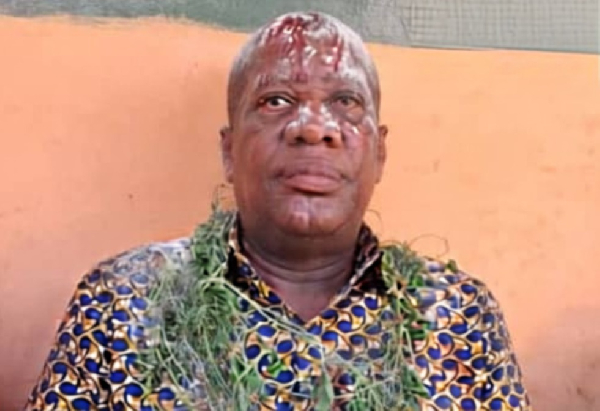
 Nii Ofolikwei III installed as new head of family of the Nii Kwei Aku family