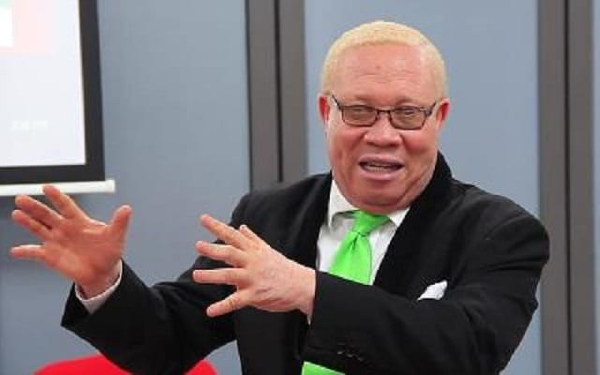
The ongoing dispute over the properties of the late King Aboagye Brenya has taken a new twist as his son, Acheampong Atansa has publicly stated that the current FIPAG president Mr. James Aboagye, is not his father’s biological child.
In an exclusive interview with Rashad of GhPage, Mr. Acheampong Atansa, the son of the late King Aboagye Brenya set the records straight regarding the relationship his late father had with Mr. James Aboagye.
According to a report by Kumasi mail on Friday 20, November 2025, Prince Cobbah Houston Nyarku, communications team member of the ruling National Democratic Congress (NDC), has expressed confidence that the Electoral Commission (EC) Chairperson, Jean Mensah, will soon be removed from office following the swearing-in of the new Chief Justice.
In an interview with Ebenezer Yaw Jonah on Abusua FM, Houston Nyarku revealed that several petitions calling for Jean Mensah’s removal have been filed but the absence of a substantive Chief Justice had delayed the process
He said that with the new Chief Justice in place, the legal procedure for her removal can now advance.
Describing Jean Mensah as “not fit for purpose,” Houston Nyarku stated, “The EC boss will go soon. She doesn’t deserve to be there.
He further noted that even the NDC National Chairman Johnson Asiedu Nketia shares this view
Houston Nyarku emphasized that the removal process is constitutionally provided for and must be properly followed.
“There is a procedure for removing the Electoral Commission Chairperson. If the law finds her culpable, then we will remove her,” he said.
When asked about the justification for her removal, he responded, “What’s the point of allowing someone who is not fit to stay? The constitution gives us this option. The impeachment of the President, the removal of the Chief Justice, and the removal of the EC Chairperson are all constitutional provisions.
He dismissed concerns that acting against Jean Mensah might set an undesirable precedent.
“Are we to ignore wrongdoing because of fear of setting a precedent? If she is committing wrongs, we must act,” he argued.
Singer, Celestine Donkor, has alleged that some gospel musicians are resorting to charms, spells, and spiritual manipulation in their quest for fame.
Speaking in an interview with Taller Dee on Accra-based Number One FM, Celestine Donkor, claimed that the fierce competition for relevance in the gospel industry has driven some artistes into practices completely at odds with their ministry.
“Recently, we heard that some gospel musicians are using charms and placing spells on someone just to block their progress or get ahead,” she revealed. “These things are driven by desperation—the desire to be the one on top.”
Celestine said the issue is far more real than many are willing to admit.
“It happens. It is among them. Even I have been a victim—both physically and spiritually,” she stated, confirming that she has personally experienced such attacks.
Her comments challenge the belief that gospel musicians should operate solely under spiritual purity and goodwill.
Chairman of the New Patriotic Party’s (NPP) Presidential Elections Committee (PEC), Joseph Osei-Owusu, has rejected petitions from external branches challenging the ban on proxy voting in the upcoming 2026 presidential primaries of the party.
In a petition dated November 10, 2025 and signed by chairpersons of 30 external branches, the group described the directive as “unconstitutional, discriminatory”, and a direct attempt to disenfranchise legitimate delegates who live and work outside Ghana.
The group also argued that the Presidential Elections Committee overstepped its mandate by unilaterally announcing that “there shall be no proxy voting” for the presidential primaries in January.
But addressing the media following a meeting with flagbearer aspirants at the party’s headquarters yesterday in Accra, Chairman of the Presidential Elections Committee, Mr. Joseph Osei-Owusu, said the restriction will remain in force to safeguard the credibility and smooth conduct of the polls.
According to him, the committee had carefully reviewed various appeals but concluded that lifting the ban on proxy vote could complicate the electoral process and may result in disputes.
He stated, “We have listened to all kinds of petition, we have read the petitions presented by sections of the party, and after listening to all that, we came to a conclusion that for the sake of conducting an election that is incident-free, respected, a very credible election, that provision or ban should be maintained. We will still not have proxy voting in this 2026 presidential primaries, that position should be maintained.”
The party first announced the ban earlier this year, raising concern among members of the party as well as some students abroad who believe the decision disenfranchises them contrary to the provisions of Article 8 of the party’s constitution, which recognises the branches and grants them full participatory rights in internal elections.
The petitioners argued that proxy voting is the only feasible mechanism that would provide them opportunity to participate in the election, as they cannot be physically present.
The group further mentioned that the party has successfully implemented proxy voting in previous presidential primaries and national executive elections, and are therefore surprised why it cannot consider proxy voting.
Mr. Osei-Owusu still insisted that preserving this rule would help prevent challenges that may arise due to logistical challenges as well as enhance the credibility of the polls.
As part of the Elections Committee’s mandate to conduct a credible and transparent election, the committee presented a soft copy of the party’s provisional voters register containing delegates eligible to vote in the January 31 presidential primaries to all the flagbearer aspirants.
Flagbearer aspirants present at the meeting to receive the provisional register include former Member of Parliament (MP) for Assin Central, Kennedy Ohene Agyapong, former Minister for Education and MP for Bosomtwe, Dr. Yaw Osei Adutwum, and a former secretary of the party, Kwabena Agyei Agyepong.
Fred Oware, one of the stalwarts of the party, received the provisional register on behalf of Dr. Mahamudu Bawumia, while lawyer and former MP for Asante Akyem North, Andy Appiah-Kubi also received the register on behalf of former Minister for Agriculture, Dr. Bryan Acheampong.
Mr. Osei-Owusu, who encouraged the aspirants to go through the register extensively, also appealed to them to submit their concerns, if there are any, for corrections to be made before it is submitted to the various constituencies for exhibition ahead of the election in January.
Accra, Nov. 21, GNA – The Ghana Tourism Authority (GTA) has held a stakeholder meeting to advance preparations for the 2025 edition of “December in GH,” a flagship pillar of the broader Black Star Experience.
The meeting brought together event organisers, security agencies, industry partners and other players within the tourism and creative sectors.
Addressing participants, Mrs Maame Efua Houadjeto, Chief Executive Officer, GTA, underscored the need for stronger coordination and disciplined execution as the country readies itself for another highly anticipated festive season.
She said the “Black Star Experience”, powered significantly by “December in GH”, had evolved into a national driver of tourism growth, investment, and creative industry expansion, adding that the 2025 calendar reflected growing international confidence in Ghana as a premium destination.
Mrs Houadjeto, however, noted that the sector’s growth must be matched with responsibility, stressing the need to reinforce safety, compliance and operational excellence across all events.
She said visitors continued to choose Ghana for its authenticity and quality of experience, and stakeholders must work collectively to safeguard that reputation.
The engagement provided a platform for institutions to strengthen inter-agency collaboration, identify operational gaps, anticipate risks and align on the standards required to ensure smooth implementation of activities for the season.
The CEO outlined three critical priorities for the 2025 festivities: strengthening compliance and safety across event venues, ensuring timely communication to avoid last-minute disruptions, and improving data collection to support evidence-based planning and impact assessment.
She also assured participants of the Authority’s support through enhanced facilitation, responsive coordination and the swift resolution of bottlenecks to ensure an efficient and successful festive period.
The GTA CEO reaffirmed the GTA’s commitment to sustaining the credibility of the “Black Star Experience” and delivering a December season that continues to capture global attention.
Ghanaian comedian DKB has jumped to the defence of Prof Ransford Gyampo, a lecturer at the University of Ghana (UG), after an association identifying itself as ‘Girl Power’, a female alumni group of the school, petitioned the World Bank Group and other agencies to suspend him.
In their petition dated November 18, 2025, the group demanded that the World Bank, USAID, and eleven other agencies halt their financial support to the University.
According to them, Professor Ransford Gyampo was indicted in BBC Africa Eye’s ‘Sex for Grades’ exposé; therefore, the donor agencies should ensure their funds do not facilitate an environment where “sexual harassment, abuse of power, and the victimisation of women are normalised.”
Ghanaians blast DKB over comment on Charles Taylor’s stadium snub
Following the petition, DKB, in a post shared on X, noted that the petition from the female group is unnecessary and an attempt to tarnish Gyampo’s reputation.
DKB emphasised that the main focus of most feminists is to destroy men who have built a name for themselves.
“Feminists always want to destroy men,” he said.
DKB clashes with Cadman Atta Mills over President Mahama’s handling of galamsey
He also added that Prof Gyampo deserves a second chance, even if the allegations against him are true.
“…so, no man deserves a second chance or reformation? He who is without sin, cast your stone! Sia,” he added.
Read the post below:
Feminists always to destroy men, so no man deserves a second chance or reformation.
He who is without sin, cast your stone! Sia. https://t.co/EaD7TjwKzQ
The couple who allegedly murdered their 13-year-old daughter
Police at Kokrobite in the Ga South Municipality of the Greater Accra Region have arrested a couple for allegedly beating their 13-year-old daughter to death after accusing her of eating her younger brother’s food.
The victim, identified as Baby, was reportedly assaulted by her father, Issah Mohammed, and her stepmother, Yaa Grace, after the latter claimed the girl had taken the food while Issah was away at work.
Sources indicate that Issah had previously divorced Baby’s biological mother following repeated incidents of abuse and is now living with his new partner, who has also been implicated in the case.
30-year-old man jailed 12 months for indecent assault on 4-year-old
In a viral video circulating on X on November 20, 2025, neighbours alleged that Issah beat the child severely, resulting in critical internal injuries.
The couple has also been accused of confining Baby in a separate room without food or water, where she died the next day.
Suspicious neighbours alerted the police, leading to the arrest of both suspects.
Man in viral assault video remanded; two others charged
A relative of Baby’s biological mother, Justina Acquah, expressed outrage over the incident, alleging that Issah had a long history of abusive behaviour and calling for justice for the deceased.
Meanwhile, the Kokrobite District Police Command has commenced investigations, and the body has been deposited at the Police Hospital morgue for autopsy.
Watch the video below
A 13-year-old girl only identified as ‘Baby’ has reportedly been brutally beaten to death by her father and stepmother at Kokrobite, after she allegedly ate leftover food that her older sibling had kept in their room.
FORMER VICE President, Dr. Mahamadu Bawumia, has been described as a unifier, who has what it takes to lead the New Patriotic Party (NPP) to win power again in 2028.
Coordinator for Dr. Bawumia’s Campaign, Dr. Nana Ayew Afriye, making the remarks said the NPP urgently needs a candidate who can unify the party to lead them to victory in 2028.
He said naturally, people will be disappointed after a party had lost political power, stressing that it takes a person who can unify the party to lead in these moments.
“With the issues we’ve identified as the cause of our defeat, I believe strongly that Dr. Bawumia is the best person to unify and lead the party.
“These include the apathy we suffered nationwide, which is one of the main reasons that we lost political power in 2024”, Dr. Ayew Afriyie, who is the MP for Effiduase Asokore, said.
He vehemently debunked assertions that the party lost the 2024 polls solely because of Dr. Bawumia, stating that every truthful person knows that the blame on Dr. Bawumia is not fair.
Aside apathy, he said, some policies of the government such as the introduction of the E-levy (Electronic Transfer Levy) and imposition of taxes on betting and others, did not help.
Dr. Ayew Afriyie stated that “Every NPP delegate knows why we lost the 2024 elections,” reiterating that it is totally wrong for any person to blame Dr. Bawumia for the election defeat.
Addressing party delegates in Asokwa when former Second Lady, Samira Bawumia visited the area to campaign, he said Dr. Bawumia will surely return NPP back to power in 2028.
Dr. Ayew Afriyie called for hard work and unity among NPP members, noting that the NPP, with Dr. Bawumia, who is popular as flagbearer, can win political power in 2028.
England head coach Sarina Wiegman has announced her squad for the Lionesses’ upcoming international friendlies against China and Ghana later this month.
The European champions will face China first November 29 at Wembley Stadium, before hosting Ghana’s Black Queens at St Mary’s Park on December 2.
One of the standout selections is London City Lionesses forward Freya Godfrey, who earns her first senior call-up after scoring twice against Tottenham earlier this month. The 19-year-old, a regular for England’s Under-23s, joins the senior squad for the first time.
Manchester City duo Lauren Hemp and Grace Clinton return to the squad after recovering from injury. However, Chelsea’s Lauren James and Jess Carter have not been included. James, who has recently returned from injury, will remain with her club to continue her recovery, while Carter has been granted time off following the conclusion of the NWSL season.
England will also be without several key players through injury, including Michelle Agyemang, Alex Greenwood, Hannah Hampton and Leah Williamson.
In the goalkeeping department, Wiegman has named Sophie Baggaley alongside Khiara Keating and Anna Moorhouse. Between them, the trio have just one senior England cap, highlighting the opening for competition in the position.
Defenders Anouk Denton, Grace Fisk, Taylor Hinds and midfielder Lucia Kendall retain their places after being called up in the October international window.
The Senior Rent Officer and Head of Public Relations at the Rent Control Department, Emmanuel Xove Kporsu, has attributed the rising cost of rent in Ghana to unregulated agent activities.
Speaking on Channel One TV’s Breakfast Daily on Friday, November 21, Mr Kporsu said the conduct of some agents and brokers continues to distort the rental market, pushing tenants to pay far more than they should.
He explained that the Real Estate Agency Act, passed in 2020, and a subsequent stakeholder engagement held in October, are intended to sanitise the sector by regulating fees and operations of agents. According to him, a council has already been established to oversee the implementation of the law.
Mr Kporsu noted that under the new framework, the council will prescribe approved fees for anyone operating as an agent or broker, issue licences and certificates, and ensure only qualified persons operate within the space.
“You cannot sit under a tree and call yourself an agent. It is an offence to call yourself an agent if you do not have your licence. The space will be regulated,” he stressed.
He further linked high rental charges to collusion between landlords and unregistered agents, explaining that although the law prohibits landlords from demanding more than six months’ rent advance, some agents influence landlords to request as much as two years.
“The agent is a contributor to the high rent in Ghana. The law says the landlord does not have the right to demand more than six months’ rent advance, but the tenant has the right to pay more than six months.
“The issue is that the agent colludes with the landlord to demand two years because they feel their fees are small if they take only six months,” he said.
Prof Eric Yirenkyi Danquah, Founding Director of West Africa Centre for Crop Improvement, has emphasised that the Feed Ghana Programme (FGP) must aim for transformative change rather than mere improvement.
He stressed that the FGP, government’s flagship initiative designed to accelerate the transformation and modernisation of the agricultural sector should be a catalyst for revolutionary change in the sector.
The professor of Plant Molecular Genetics at the University of Ghana said this while delivering his keynote address at the Food, Agriculture, Technology and Sustainability Conference at Ho Technical University (HTU) themed: “Rethinking the Future of Food and its Allied Systems in an Era of Sustainability and Circularity.”
“FGP is a good start but Ghana needs transformation, not another improvement plan. Our greatest opportunity is to build a science-led, innovative-driven, market-ready agricultural economy,” he said.
He said the FGP must succeed and not fail “because if this fails, we’re doomed for life,” outlining that its success would mean Ghana feeding itself, farmers producing for markets, not survival, youth entering agribusiness profitably, climate-resilient, data-driven farming and, Ghana becoming a net exporter, not an importer.
The globally recognised plant geneticist and science leader suggested that things be done differently for the desired change, including more science, innovation and modern breeding, strengthened seed systems and breeder seed pipelines, fixed agricultural financing, strong irrigation and water management, and data and digital tools for decision-making.
Cedi closes week at GH¢11.08 to $1 on interbank market
“Agriculture, you know is central but growth slowed down terribly over a very long time, imports rise in over $2.5 billion. And when you look deeper, you see that yields are too low, post-harvest losses. There is weak irrigation, limited finance. And we need to reset Ghana and I’m happy that we have a government which is talking about resetting Ghana. What do we mean by resetting Ghana? Past plans failed. Why did they fail? Weak execution. With weak execution, what do you expect?”
He called for visionary investment, turning knowledge into national power through sustained investment in science, technology and innovation saying, “The prosperity of nations is written in their budgets for research.”
Prof Danquah wondered why Ghana would wait for planes to arrive from Paris and Tel Aviv to give vegetable seeds to farmers to plant and said the time had come to start pressing charges of crime against humanity “for politicians who do not invest in science and technology to face the law because of course, many die of their inaction.”
Prof Ibok N. Oduro, an astute researcher and professor of Post-harvest Technology at the Department of Food Science and Technology at Kwame Nkrumah University of Science and Technology in her presentation described Ghana’s food system as a story of both “progress and paradox,” saying where there were notable strides, there were still challenges of food security, poverty and sustainability issues.
She noted the country had potential for agricultural growth but needed to address factors like climate change, limited access to modern farming techniques and market infrastructure, warning that “We cannot continue as usual. We must innovate not only in laboratories, but in policies, practices and mindsets.”
Mr Eric Opoku, Minister of Food and Agriculture was grateful for the conference and said the insights, experiences and the dialogue from the conference aligned with the FGP initiative, designed to ensure that Ghana was able to produce food sufficiently to feed her citizens and to ensure the agriculture sector was repositioned to guarantee incessant supply of raw materials for agro-industrial operations.
He assured of government’s readiness to mobilise all the resources available, material and human, to make an impact, saying, “We have the brainpower, except that we are not making maximum use of the brainpower that we have.”
Emmanuel Armah-Kofi Buah, Minister of Lands and Natural Resources and Caretaker Minister of Environment, Science and Technology, through his representative, said the transformation of the agriculture sector could not occur in silos but required a coordinated ecosystem that linked research, industry, students, entrepreneurs and policy makers.
“It requires that knowledge generated in universities and research institutions is translated into usable technologies and commercially viable solutions that benefit farmers, agribusinesses and households.”
Dr Marindame Kombate, a representative from Ghana Circular Economy Centre, said circular economy was not a side conversation but central to the future of Ghana’s food and agriculture systems, urging, “Let us design a future where waste becomes value, innovation becomes opportunities and a future where Ghana leads Africa in the secular transition.”
Prof Ben Q. Honyenuga, Vice-Chancellor, HTU said the conference was in line with the university’s vision to become a hub of practical education, advancing sustainable global development and alluded to its breakthrough research which reduced the gestation period of baobab plant from between 20 to 30 years to only two and a half.
“Additionally, our niche area in hospitality and tourism management positions us to explore the intersection between food systems and its value chain. We cannot talk about hospitality without talking about food and agriculture technology and allied fields.”
James Gunu, Volta Regional Minister, assured the Vice-Chancellor that the Regional Coordinating Council was ready to collaborate with the university.
All you need to know about Ghana’s new vehicle number plates |BizTech:
Economic policy analyst and entrepreneur, Senyo Hosi, has praised the Mahama government for demonstrating fiscal prudence and restoring macroeconomic stability since assuming office in January.
He however cautioned that much more must be done to make the recovery sustainable and inclusive.
Speaking at the 2025 Deloitte Economic Dialogue on the 2026 Budget, Hosi described the budget as “great” and reflective of discipline and progress, but stressed that Ghana has yet to achieve meaningful transformation.
He noted that while revenue outturns in 2025 exceeded projections — GH¢226 billion against a forecast of GH¢211 billion — and expenditure was contained, the 2026 budget “is not transformational.”
“There’s brilliance in this budget, especially in capital expenditure plans meant to drive growth. But the question is whether that infrastructure will stimulate sustainable growth,” he said.
Hosi commended government’s restructuring of mineral royalties and avoidance of the controversial Agyapa deal, arguing that Ghana would have lost billions annually had the deal gone through.
He also endorsed the Gold Board’s traceability policy, describing it as one of the most significant economic reforms in the past decade.
Government to generate US$10billion in annual forex through worker exports
He warned that inequality, food insecurity, and unemployment remain deep-rooted challenges.
Senyo Hosi cited IMF and census data showing youth underemployment at 50 percent, with poverty levels largely unchanged and food insecurity affecting 15 million people, up from 11 million in 2016.
On agriculture, he lamented that the sector employs over 38 percent of the workforce but contributes only 21 percent to GDP, calling it “structurally weak and underproductive.”
Hosi also downplayed the government’s “24-hour economy” initiative, saying it should be the outcome of sound policy rather than a slogan.
“You don’t declare a 24-hour economy. You create conditions for it,” he argued.
He urged government and the private sector to prioritize research, industrialization, and transparency as pillars of long-term growth.
“Beyond applause and slogans, we must make Ghana productive again — research-driven, transparent, and fair,” he said.
The Deloitte Economic Dialogue brought together policymakers, academics, and industry leaders to analyze Ghana’s annual budget and its implications for growth and fiscal management.
The 2025 edition focused on the theme “Resetting Growth, Jobs, and Economic Transformation” under Ghana’s IMF-supported stabilization program.
All you need to know about Ghana’s new vehicle number plates |BizTech:
Black Stars captain, Jordan Ayew has been featured in the official poster for the 2026 FIFA World Cup, which will be hosted in the United States of America, Mexico and Canada.
Jordan Ayew appeared in the white Black Stars jersey with the captain’s armband, standing full-length alongside other stars.
Notable global stars who featured on the poster include Lionel Messi, Erling Haaland, Harry Kane, Kylian Mbappé, James Rodríguez, Son Heung-Min, Vinícius Jr. and others.
CAF 2025 Awards: Complete winners list revealed
Other African players on the poster include Achraf Hakimi of Morocco, Sadio Mané from Senegal, and Mohamed Salah from Egypt, among others.
It is worth noting that the Federation of International Football Association (FIFA) selected one player from each of the qualified countries to be featured on the poster, which will be used for publicity during the tournament.
The 2026 World Cup will kick off in June 2026, with 48 countries competing for the most prestigious trophy in football.
Ayew captained the Black Stars to secure qualification for the Mundial despite the team failing to qualify for the AFCON.
He played a pivotal role in the campaign, ranking among the top scorers globally and providing crucial assists that propelled the team to victory.
There has been a renewed wave of attacks on Nigerian schools (file photo)
An unknown number of pupils have been abducted by armed men from a Catholic school in central Nigeria, marking the second school kidnapping in less than a week.
The latest attack targeted St Mary’s School in Papiri, Niger state, where authorities had already ordered the temporary closure of all boarding schools due to rising security threats.
“The exact number of abducted pupils is yet to be confirmed as security agencies continue to assess the situation,” Niger state authorities said in a statement.
Nigeria has faced a renewed wave of attacks by armed groups in recent days, including the kidnapping on Monday of 25 schoolgirls from a boarding school in nearby Kebbi state.
The surge in attacks has underscored the deepening insecurity in the West African nation and prompted President Bola Tinubu to postpone planned foreign trips.
Gospel musician Ohemaa Mercy’s call for life imprisonment of John Odartey Lamptey following allegations of domestic violence has sparked widespread debate across social media platforms, revealing deeply divided opinions among Ghanaians.
The musician’s strong stance, urging that perpetrators of domestic abuse face the full weight of the law and encouraging victims to speak up, has generated varied reactions that reflect the complexity of domestic violence discourse in Ghana.
Public response has been notably split on the appropriate severity of punishment for domestic violence offenses. While many support holding perpetrators accountable and ensuring justice is served, others have questioned whether life imprisonment represents a proportionate response. This division highlights ongoing national debates about balancing punishment with rehabilitation and the appropriate legal consequences for such offenses.
A recurring theme in public discourse emphasizes the importance of comprehensive fact-finding before rendering judgment. Many voices have advocated for understanding complete contexts and hearing all perspectives before determining appropriate courses of action, reflecting concerns about rushed conclusions in sensitive matters.
Significantly, discussions have revealed troubling patterns regarding institutional responses to domestic violence complaints. References to victims seeking help from authorities multiple times without receiving adequate support have drawn attention to potential systemic failures in Ghana’s protective mechanisms. This has sparked conversations about the critical role community intervention plays when formal systems fall short.
The conversation has expanded beyond the specific incident to address broader societal questions about gender dynamics in domestic violence situations, the balance between traditional family values and individual safety, and whether current legal frameworks adequately protect all victims regardless of gender.
This public discourse demonstrates Ghana’s evolving conversation around domestic violence, as society navigates between cultural perspectives on relationships and growing recognition of the need for robust victim protection and perpetrator accountability. The mixed reactions indicate that while awareness continues to increase, finding consensus on appropriate responses remains challenging.
George Bernard Shaw, lawyer for William Baah, the former Assembly Member for Denkyira Obuasi, says the Court of Appeal’s decision has affirmed that there was no evidence his client assisted or encouraged anyone in the lynching of the late Major Maxwell Mahama.
His remarks follow the court’s ruling on Thursday, November 20, which overturned Baah’s conviction. Baah had been serving a life sentence after being found guilty of abetting Major Mahama’s murder in 2017.
A three-member panel of the Court of Appeal unanimously held that the trial judge, Justice Mariama Owusu—then sitting as a High Court judge—misdirected the jury, leading to a wrongful guilty verdict.
According to the ruling, the misdirection was so critical that “the jury would not have returned a verdict of guilt if they had been properly directed.”
The court also found that the High Court erred by relying on cautioned statements from two accused persons that implicated Baah, noting that the trial judge should have excluded those statements when instructing the jury. These errors, the panel said, were substantial enough to invalidate the conviction.
Speaking on Eyewitness News with Sammie Wiafe, Shaw insisted that the evidence presented during the trial did not support the charge of abetment.
“There was no evidence to show that he either assisted, helped, encouraged or commanded anybody to do the unfortunate thing that they did,” he said. “The charges couldn’t stand. There was a misdirection from the judge… It has been rectified. He’s very free.”
Shaw extended condolences to the family of Major Mahama, stressing that no one deserved to die through mob action. He added that the other accused persons, who faced direct murder charges, were the individuals who inflicted the fatal blows on the late soldier.
The ruling represents a major development in a case that shocked the nation and intensified calls for stronger action against mob violence.
Background
In January 2024, a seven-member jury at the High Court in Accra found Baah and 11 others guilty over the 2017 mob killing of Major Mahama. Baah was convicted of abetment of murder.
Eleven others, including Bernard Asamoah, Kofi Nyame, Akwasi Baah and Kwame Tuffuor, were convicted of conspiracy to commit murder. Eight of them were additionally found guilty of murder. Two accused persons, Bismark Donkor and Bismarck Abanga, were acquitted and discharged.
…..
Explore the world of impactful news with CitiNewsroom on WhatsApp!
Click on the link to join the Citi Newsroom channel for curated, meaningful stories tailored just for YOU: https://whatsapp.com/channel/0029VaCYzPRAYlUPudDDe53x
No spam, just the stories that truly matter! #StayInformed #CitiNewsroom #CNRDigital
As we mark UBA Fraud Awareness Week 2025, we renew our commitment to protecting our customers, our bank, and the trust that holds our financial system together. This annual campaign, one of the strongest anti-fraud efforts in the industry, reminds us that security is not a one-time action. It is a responsibility we all share every day.
This year’s theme, “Combating Fraud Risk and Cyber Theft in Digital Banking,” reflects the world we live in today. Digital technology has changed how we work, bank, and communicate.
On the other hand, it has also created new opportunities for fraudsters. From phishing and identity theft to advanced cyberattacks powered by artificial intelligence, the risks are growing quickly.
Fraud now appears in many forms- wire fraud, cash suppression, credit fraud, forged documents, embezzlement, email scams, card fraud, account takeovers, stolen tax refunds, and internet fraud. In today’s world, fraud can happen in any process, which is why staying alert is more important than ever.
Common Digital Fraud Methods to Watch For
Phishing: Fake emails, links, or messages designed to steal passwords, PINs, or personal information.
Account Takeover: Fraudsters gain access to someone’s account using stolen login details and then carry out illegal transactions.
Skimming: Hidden devices on ATMs or POS machines that secretly copy card information.
Ransomware: Malicious software that locks computer systems and demands payment to unlock them.
Social Engineering: Tricking people into giving away confidential information by pretending to be someone trustworthy.
Our Collective Responsibility
Every UBA employee has an important role in keeping the bank safe. Strong fraud prevention requires simple, daily actions:
Stay Alert: Always be watchful.
Follow Controls: Stick to approved procedures.
Trust No One: Always verify—never assume.
Speak Up: Report anything suspicious.
Act Immediately: Quick action reduces risks and losses.
Why Fraud Prevention Matters
Fraud harms more than just finances. Its effects can be deep and long-lasting:
Harm to our reputation and brand
Loss of loyal customers
Serious financial and operational impact
Lower staff morale
Higher staff turnover
Loss or compromise of sensitive data
Our Response: Stronger, Smarter, More Prepared
At UBA, we continue to build stronger systems and empower our people to fight fraud:
Anti-Fraud Ambassadors across the Group are raising awareness and promoting the right behaviours.
Anti-fraud clinics and Group-wide campaigns are tackling new threats as they emerge.
Ongoing training and expert sessions are giving staff and customers the knowledge they need to stay safe.
Fraud prevention is not the job of one department– it is part of our culture. As guardians of trust, we must stay watchful, protect our customers, and maintain UBA’s strong reputation for safety and transparency.
Our Whistle-Blowing Policy also plays a key role. It encourages everyone to speak up about unprofessional behaviour, suspected fraud, or any action that goes against our Code of Conduct. Reporting concerns is not only allowed—it is our shared duty.
As we celebrate UBA Fraud Awareness Week 2025, let us recommit to a culture of honesty, accountability, and constant vigilance. Together, we can continue to build a safe and secure digital future for our customers and communities across Africa and beyond.
Stay alert. Stay safe. Let’s stop the fraud—together.
******
The writer, Adebola Ajimotokan, Country Chief Inspector, UBA Ghana
DISCLAIMER: The Views, Comments, Opinions, Contributions and Statements made by Readers and Contributors on this platform do not necessarily represent the views or policy of Multimedia Group Limited.
DISCLAIMER: The Views, Comments, Opinions, Contributions and Statements made by Readers and Contributors on this platform do not necessarily represent the views or policy of Multimedia Group Limited.
I’m a 35-year-old woman who has been married for 10 years. People around me think I’m lucky because my husband earns well.
We live in a nice apartment, and I wear gold at weddings. No one knows the pain I carry inside me every single day.
I cannot become a mother. Doctors have tried, I’ve taken different types of medicines, prayers whispered into temples and mosques, but nothing has worked. Because of this, my husband has slowly started hating me.
When I look into his eyes, I don’t see love anymore. I can only see disappointment. Every festival, my in-laws try to make me uncomfortable in my own home.
They always ask what my use in my home was if I cannot give birth. To them, what I’m worth is only in my womb.
At night, I cry silently into the pillow while he turns his back. Sometimes I wonder, what is more painful, not having a child, or being treated as less a human by the man you love?
If motherhood is destiny, then why was I chosen for this curse? I’m tired. I’ve cried enough.
I thought I had a man who would stand by me, but he has turned his back on me. It’s like I’m alone now. He actually joins his family members to mock me.
Last time, I told him I felt so lonely in this world, his response was, “if you do yourself the favour of having kids, they’d be here with you”.
Those words pierced my heart so deeply. They said in their home, they don’t adopt because their bloodline is very important to them. I can’t give them kids, and he also doesn’t want a divorce or to marry another woman. Why can’t I just be happy?
Now I have given up. I know I’ll never have kids and I can’t have genuine love either. I don’t know what to do with my life anymore. Maybe I should just leave this world and have peace.
Why am I living if I can’t be happy? At this point, I don’t know what to do. I need help, please.
FG/EB
Watch the promo to GhanaWeb’s latest documentary, which uncovers the evolution of ‘kayamata,’ an exploitative practice fueled by love charms and manipulation, titled, “The Dark Side of Kayamata,’ below:
Nana Ayew Afriyie is a Member of Parliament for Effiduase/Asokore constituency
A viral social media post by New Patriotic Party (NPP) stalwart Nana Ayew Afriye is stirring political conversation after he drew bold historical parallels between Ghana’s 1996 and 2024 general elections, suggesting that the party’s path to recovery in 2028 may mirror its triumph in 2000.
In his post, Ayew Afriye pointed to what he described as a “coincidence” between electoral timelines nearly three decades apart. He noted that the presidential elections of December 7 1996, and December 7, 2024, were both held on a Saturday — a similarity he believes offers symbolic insight into the party’s future.
He further observed that December 7 2000, and December 7, 2028 also share a connection, both falling on a Thursday.
Ayew Afriye used these parallels to make a case for political optimism. He drew a direct comparison between former President John Agyekum Kufuor’s electoral journey and that of former Vice President and 2024 NPP flagbearer Dr Mahamudu Bawumia.
According to his analogy:
Kufuor lost the 1996 election, but the NPP kept faith in him, maintaining him through the 1997 delegates’ processes before he famously won the 2000 polls.
Bawumia similarly lost the 2024 election, yet he secured strong support among party delegates this year.
The MP concluded his post with a rhetorical teaser about the NPP’s prospects in 2028, sparking widespread debate among political observers and party supporters. His closing remark — “Chat no ato! NPP Sankofa yɛnche!!!” — was interpreted as a rallying call for the party to regroup, learn from its past, and push towards a comeback.
As the party navigates internal restructuring and prepares for a new political cycle, Ayew Afriye’s post has added fresh fuel to discussions about leadership, strategy and the NPP’s viability going into 2028.
The Bono Region has recorded 19,979 people living with HIV and AIDS, according to the Bono, Bono East and Ahafo Regional Technical Coordinator of the Ghana AIDS Commission (GAC), Ahmed Ibrahim Bambila.
He disclosed that the region also recorded 875 new HIV infections, describing the figures as “alarming” and urging stronger, coordinated interventions to tackle the underlying causes and prevent further spread.
Mr. Bambila made the remarks during the inauguration of the Bono Regional Committee of the Ghana AIDS Commission (RECCOM) in Sunyani on Thursday, November 20, 2025.
The newly inaugurated nine-member committee, chaired by Bono Regional Minister Joseph Addae Akwaboa, is expected to lead and coordinate HIV-related programmes in the region to curb infections and enhance care.
Mr. Bambila noted that several factors continue to drive HIV transmission in the region, including low condom use, multiple sexual partners, stigma and discrimination, inadequate sexual health education, migration, transactional sex, and limited access to HIV services.
According to the 2024 Regional HIV Estimates, the Bono Region’s HIV prevalence stands at 2.22 percent among persons aged 15 to 49—higher than the national average.
District/Municipality
Number of People Living With HIV
Prevalence Rate (%)
Dormaa East District
2,715
5.36
Berekum Municipality
2,701
3.33
Sunyani Municipality
3,335
2.22
Wenchi Municipality
2,153
2.46
Jaman South Municipality
1,644
2.09
Dormaa Central Municipality
1,693
2.03
Banda District
406
2.03
Tain District
1,631
1.97
Dormaa West District
584
1.68
Berekum West District
548
1.51
Sunyani West Municipality
1,482
1.43
Jaman North District
1,087
1.29
Mr. Bambila urged community actors, health institutions, civil society groups, and traditional authorities to intensify education and advocacy to reduce stigma, promote safe sexual practices, and improve access to testing and treatment.
Ghana’s economy strong enough for new jets – Ernest Norgbey
play videoVeronica Adzo-Arhin spoke exclusively with GhanaWeb’s Victoria Kyei Baffour
The Public Relations Officer of the Ghana Armed Forces, Veronica Adzo-Arhin, has disclosed that four of the recruits injured during the recent stampede at the El-Wak Sports Stadium and admitted to the 37 Military Hospital are recovering well and have since been discharged.
Speaking exclusively to GhanaWeb during the resumed recruitment exercise on Thursday, November 20, 2025, she noted that the number of injured persons had drastically reduced to about nine, emphasising that those previously in the Intensive Care Unit (ICU) are now in stable condition compared to earlier reports.
“They are all doing very well. As of yesterday, the numbers had reduced drastically to nine. Those at the ICU, four of them, are doing very well. We have one who is still not too good, but we are giving them the best of care. We are praying that we do not lose another soul in addition to those we have lost already. So everything is going on well,” she told GhanaWeb’s Victoria Kyei Baffour.
Dr Zanetor Agyeman-Rawlings, CDS tour El-Wak as GAF recruitment resumes
She also extended condolences to the bereaved families and expressed gratitude to Ghanaians for their support during the difficult period.
“Thank you so much. But let me say that we would like to thank the general public for their support. We would like to once again commiserate with the bereaved families and also with those who are injured,” she said.
Meanwhile, Thursday’s recruitment exercise at El-Wak and other designated centres proceeded peacefully and calmly, in sharp contrast to the chaotic scenes witnessed earlier.
Dr Zanetor Agyeman-Rawlings and members of Parliament’s Select Committee on Defence were present at the centres to observe the processes and assess the measures put in place.
The monthly indicator is designed to give early signals on economic performance
The economy expanded 5.1 percent in August on the back of strong activity in the services and agriculture sectors while industry continued to struggle, according to the latest monthly indicator of economic growth released by the Ghana Statistical Service.
Government Statistician, Dr Alhassan Iddrisu, said the August outcome points to continued economic momentum, with the overall MIEG index rising to 108 from 102.7 a year earlier.
“The upward trend we have seen since 2023 is continuing,” he said during the briefing in Accra.
The monthly indicator is designed to give early signals on economic performance ahead of the quarterly GDP figures.
Agriculture expanded 7.4 percent in August, a significant improvement from the 2.3 percent recorded a year earlier.
Dr Iddrisu attributed the growth mainly to consistent gains in crop production, which has strengthened steadily since 2023.
The sector accounted for more than a quarter of the month’s total economic expansion.
Industry contracted by 1.8 percent during the month, extending a pattern of weakness driven by lower petroleum output and slower manufacturing.
Although the decline was smaller than July’s 3.1 percent drop, it contrasted sharply with the 9.1 percent expansion recorded in August 2024.
Dr Iddrisu noted that the slowdown of petroleum production and more recent softening in manufacturing remain the main drags on industrial activity.
Services remained the largest and strongest-performing sector, recording 9.6 percent growth compared with 2.6 percent last year. ICT, education and trade continued to anchor the gains.
The services sector contributed the majority of overall monthly expansion, reinforcing its position as primary driver of the economy.
“Services continue to be the largest contributor in overall economic activity,” Dr Iddrisu said.
He identified three key factors supporting the August performance: steady growth in agriculture, continued expansion in ICT and education within services, and what he described as a “moderate improvement” in industrial activity compared with July… despite the sector still being in contraction.
The statistical service also revised its estimate for July, cutting headline growth to 3.7 percent from 4.5 percent due to updated data across several sectors.
Agriculture remained unchanged at 8 percent, but industry shifted from a marginal 0.1 percent increase to a 3.1 percent contraction after new information from mining, quarrying, and manufacturing.
Services saw a small upward revision from 6.4 percent to 6.9 percent.
Dr Iddrisu said these updates reflect the standard practice of refining provisional estimates as more comprehensive administrative data becomes available.
The revisions, he explained, were informed by new reports from mining and quarrying, manufacturing, trade, accommodation and food services and transport service providers. He stressed that the approach aligns with the process used for quarterly and annual national accounts.
Dr Iddrisu urged policymakers to maintain support for agriculture and technology-driven services to sustain momentum. He added that the data point to rising demand in services and agriculture-linked value chains, offering opportunities for businesses.
Households, he said, should pay attention to sector trends in guiding job, skills and consumption decisions.
“We will continue to provide timely, transparent and data-driven updates so that every stakeholder can make informed decisions,” he said.
All you need to know about Ghana’s new vehicle number plates |BizTech:
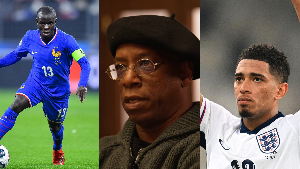
Arsenal legend, Ian Wright, believes outspoken Black players face harsh treatment from the media simply because they don’t match the image the media wants them to portray.
According to Ian Wright, the British media love Black players like N’Golo Kanté, who are quiet, humble, and keep a low profile despite their success in the game.
He argued that the same media is quick to crucify Black footballers who are outspoken, enjoy a flashy lifestyle, or openly display their wealth living the luxurious life.
Wright, who has strongly defended Jude Bellingham amid heavy criticism from the British media, said the Real Madrid star is facing the same treatment that was previously directed at Marcus Rashford, Raheem Sterling, Paul Pogba, and Jadon Sancho for just being outspoken and flashy.
‘England is not ready for a black superstar’ – Ian Wright launches defence of Jude Bellingham
“I’ll put it in football terms. They love N’Golo Kanté — he’s a humble black man, he gets on with what he’s doing. I’m not saying he’s an Uncle Tom or anything, that’s how his personality is. But if you get a (Paul) Pogba or a Bellingham, and you get that kind of energy, that does not sit well with those people. For someone like Jude, for some reason, it frightens people because of his capability and the inspiration he can give,” he said on the Overlap Show.
Wright added that he is not against the media criticizing players but those criticisms must be based purely on their performance on the pitch and not because they are flashy or outspoken.
“I’m worried for Jude simply because he’s somebody that they can’t control. You can’t control him. Coming off the ‘Who else?’ and what he’s done at the World Cup (European Championship), he’s showing people that ‘I’m here, I’m black and proud and ready to go’. I’m an Englishman, even though when I was younger, people used to say to me, ‘Yeah but you’re not really English, are you?’ — ‘Yeah, I’m English.’ I don’t think they’re ready for a black superstar who can move like Jude’s moving. They can’t touch him, like I just said. He goes out there, performs, does what he does, says, ‘Who else?’ It’s too uppity for these people.
“It’s something that you’re taught as a black man when you’re going out there — you just want to do the best you can and keep your head down and be, for want of a better word, a humble f*****g slave. This is dragging up from that kind of energy. Because if you are outspoken, black, playing to that level and not caring, that frightens certain people — and that’s what’s going to happen with Jude.”
Wendy Shay recently had an awkward moment when she refused a drink offered by a traditional oracle at the Weija Palace. The incident happened on November 20, 2025, as she visited the palace to seek permission and protection for her upcoming Shay Concert.
The oracle offered her a small cup of palm wine, but Wendy Shay looked uncomfortable and declined the offering, shaking her head in disapproval.
Despite encouragement from those around her to take a sip, she refused, and the oracle eventually poured the wine as libation. He then held her hand and performed a traditional rite three times before she and her team could proceed to meet the palace leaders.
This incident has sparked mixed reactions from fans on social media, with some supporting her decision and others criticizing her for being too cautious.
Wendy Shay’s actions have been met with both praise and criticism, but she’s not new to making headlines. She’s known for being outspoken and authentic, and her fans appreciate her for it. She’s also been using her platform to promote positivity and self-love, especially among young women.
The Shay Concert is happening tomorrow, November 22, 2025, at West Hills Mall in Weija, and it’s going to be a star-studded event. Some of the top Ghanaian artistes performing include Showboy, KiDi, Mr Drew, Eno Barony, and Lasmid. The concert is sponsored by Hisense Ghana and The Luckiest Africa.
Interestingly, before the incident at the Weija Palace, Wendy Shay had been sharing phones and other goodies with her fans in the Kasoa area as part of her street campaign for the concert.
A market woman even prayed for her to become Ghana’s president, saying, “God should bless her and make her the president of Ghana. She should become Ghana’s first female president because of her kindness”.
You can use the source link below to watch the video:
NPP’s Nadowli Kaleo constituency Youth Organiser, Salam Mwinibalonno has passed away, leaving party officials mourning
The news of his death was confirmed by Hamid Mohammed Saana in a Facebook post on Thursday, November 20, 2025
Many officials of the NPP including former Deputy NYA CEO Akosua Manu have eulogised the late Salam Mwinibalonno
The Youth Organiser for the New Patriotic Party (NPP) in the Nadowli Kaleo constituency, Amadu Salam Mwinibalonno, popularly known as Commander Salam, has passed away.
Reports of the passing of Salam, one of the party’s leading youth activists, surfaced on social media on Thursday, November 20, 2025.
The exact circumstances surrounding his death are unknown. However, some reports indicated that he had been battling an illness for a while.
Youth political activist and former NPP Upper West Regional Youth Organiser aspirant Hamid Mohammed Saana was one of the first people to confirm the passing of Salam by sharing the deceased’s photo.
The photo showed the late NPP youth organiser with Hamid at a meeting with constituents and party executives in a constituency.
Sharing the photo, Hamid noted that he had been saddened by the news of Salam’s death.
He also eulogised his late colleague, whom he credited with creating the first-ever NPP Upper West Regional youth wing program in the Nadowli Kaleo constituency and being a devoted servant of the main opposition party.
He wrote:
“Inna lillahi wa inna ilayhi raji’un. The rough hands of death have struck the entire youth wing of Upper west down in tears by grabbing one of our dedicated humble servants, Commander Salam.”
“Commander Salam, your death is not only making us feel too cold but also making us more scared of life in its entirety. You were a gentle and humble servant of the NPP and a brother I could rely on any day for support in execution.”
“You were a brother I could seek advice from, and your death is leaving a gap that may never be filled.”
“Commander Salam served as youth organiser of the Nadowli Kaleo constituency and it was only under his regime that we had the first ever NPP Upper west regional youth wing program in the constituency.”
“Commander, you were a friend and a brother that owes a credit to the success of the youth wing, and we forever will miss you.”
“We all know a day is coming when we will leave, but we have wishes we could live longer with you. Senior, this is not what we discussed. Yaa Allah will Grant you Jannah.”
Salam’s death also came two months after he celebrated his birthday in September 2025.
Hamid Mohammed Saana’s Facebook post announcing the death of Salam Mwinibalonno is below:
Tributes shared for late Salam Nwinibalonno
Following Salam’s death, some prominent members of the NPP have paid tributes to him on social media.
Former Deputy CEO of the National Youth Authority (NYA) and the 2024 NPP parliamentary candidate for the Adentan constituency, Akosua Asaa Manu (Kozie), shared a photo of herself with the deceased to mourn his death.
She noted that she had been having a difficult time believing the news of Salam’s death. She also thanked him for his contributions to her life and political career.
She wrote:
“It took a few hours to sink in. Hopes dashed. Dreams shattered. Thank you for your genuineness and encouragement. Rest in perfect peace, Bro. Due.”
Salam Mwinibalonno poses with Akosua Asaa Manu at an NPP event. Photo source: Akosua Manu Source: Facebook
Anamaale Umar Karbo, an NPP youth organiser for the Lawra constituency in the Upper Region, also shared a photo of himself and Salam to mourn his death.
The Facebook post of Akosua Manu mourning Salam’s death is below:
Ghanaians react to Salam Mwinibalonno’s death
YEN.com.gh has gathered some comments from social media users below:
Mahamood Bawumia Admuda Adams commented:
“May Allah pardon all his shortcomings and grant soul Jannatul firdaus.”
Naaeke Gregg said:
“Human being resembles nothing. May his soul rest in peace.”
Debpuur James Saakum wrote:
“Rest in peace, Patriot.”
NPP activist Krobea Asante Kotoko dies
Earlier, YEN.com.gh reported that NPP activist Krobea Asante Kotoko died at the age of 41.
Popular NPP activists announced the news of his death to Ghanaians on Thursday, October 30, 2025.
Krobea Asante Kotoko died over a year after his wife, Mrs Portia Osei Brenya’s painful death at 31 during childbirth.
The Northern Regional correspondent of the DAILY GUIDE, Eric Kombat, has won the Northern Region Ghana Journalists Association (GJA) 2024 Best Reporter for Disability.
His story: “The Inspiring Tale; A Disabled Prosthetist Empowering PWDs Up North,” promotes the interests of People with Disabilities (PWDs) and encourages them to pursue critical sectors in Ghana’s economy.
The 5th Northern Region GJA Awards 2025 was on the theme: “Bridging the Rural-Urban Education Gap: The Role of the Media.”
Noah Nash Hoenyefia – GHOne TV, was adjudged as the Northern Region Journalist of the Year 2024.
Other winners are Shawana Yussif – CITI TV, Best Water and Sanitation Award; Mohammed Alabira – Citi FM/TV, Road Safety; Noah Nash Hoenyefia – GHOne TV, Best Health Reporter; Christopher Amoako – TV3/Media General, Best Education Reporter; Inusah Arimiyaw – Sagani TV, Best Tourism Reporter; Hamza Salifu Lansah – Sagani TV, Best Energy Reporter; Solomon Gumah – Ghana News Agency, Best Agriculture Reporter; Abukari Alhassan Baba – Daily Graphic, Best Sports Reporter; Daniel A. Laryea – GBC, Best Camera Reporter; Nadra Mohammed – TV3, Promising Young Female Regional Journalist of the Year.
The Minister for Education, Haruna Iddrisu, who was the Special Guest of Honour, gifted the Northern Regional Journalist of the Year, a brand new Samsung 52 inches television with a one year DStv subscription.
Eric Kombat receiving a citation
He called for the passage of a broadcasting law in Ghana.
“It’s about time Ghana passes a broadcasting law to regulate the parameters of media practice in Ghana,” he noted.
He urged journalists to continue to put government on its toes to ensure that they execute their mandate.
The Director-General, GBC, Prof. Amin Alhassan, who was the Guest Speaker, encouraged journalists to tell human-related stories which can bring about solutions in society and inform policy change.
“Let’s cut down on the reporting and tell stories, journalism is not about reporting but rather storytelling and humanising stories which can attract policy attention and bring about solutions,” he stated.
The Ghana Journalists Association General Secretary, Dominic Hlordzi, congratulated all award winners.
“The awards committee says you are the best and you represent perseverance and overcame all challenges to produce your stories, so do not let this moment be the conclusion of your ambition but rather the beginning of greatness. The GJA celebrates your sacrifices and powerful impact you have made, congratulations our champions,” he said.
The Northern Regional Chairman, GJA, Yakubu Abdul-Majeed, said the leadership of GJA in the region has vowed to explore all available means to build the capacity of journalists, adding that quality journalism strengthens democracy and promotes quality life, benefiting society as a whole.
“To safeguard the country’s future and democracy, the government must be bold and resource the media properly and adequately,” he added.
The Member of Parliament for Madina and renowned human rights advocate, Francis-Xavier Sosu, has been unanimously elected Chairman of the ECOWAS Caucus of the Africa Parliamentary Union (APU).
His election was confirmed on Thursday, November 20, 2025, during a caucus meeting held as part of the 84th Session of the APU Executive Committee ahead of the 47th Conference of African Parliamentarians in Kinshasa, Democratic Republic of Congo.
The opposition has accused government of breaching constitutional procedures by prescribing how local assemblies should spend their statutory funds before Parliament approves the distribution formula required by law.
Francis Asenso-Boakye, Ranking Member on the Local Government and Decentralisation Committee of Parliament, claims the 2026 Budget Statement and Economic Policy illegally dictates District Assemblies Common Fund (DACF) utilization guidelines, including earmarking 25 percent for the flagship 24-hour economy initiative, before lawmakers have scrutinized and approved the formula that determines how these resources will be shared among Ghana’s 261 Metropolitan, Municipal and District Assemblies.
The accusation represents the latest flashpoint in contentious debates over Ghana’s 2026 budget, presented to Parliament on November 13 by Finance Minister Dr. Cassiel Ato Forson. The budget projects total expenditure of GH₵302.5 billion, with GH₵63.6 billion allocated for grants including transfers to the Ghana Education Trust Fund, National Health Insurance Fund, and DACF.
Ghana’s 1992 Constitution mandates under Article 252 that Parliament allocate at least five percent of total national revenue to DACF for Metropolitan, Municipal and District Assemblies to implement local development programmes. The Constitution further requires the DACF Administrator to propose annually a formula for distributing these funds among assemblies, which Parliament must consider and approve.
According to established procedure, Parliament first approves the distribution formula before funds can be disbursed based on that approved framework. The formula typically weighs factors including population, developmental needs, revenue generation capacity, and geographical considerations to ensure equitable resource allocation between urban and rural districts.
The opposition contends that prescribing specific utilization percentages before Parliament approves the formula undermines this constitutional sequence. Such pre-emptive directives could restrict local government autonomy and violate principles of decentralization that empower districts to determine spending priorities reflecting their unique circumstances and development needs.
Ghana’s decentralization framework assigns district assemblies responsibility for overall district development, requiring diverse financing sources. Beyond DACF, assemblies generate revenue through property rates, market tolls, business permits, and licensing fees. However, many Metropolitan, Municipal and District Assemblies depend heavily on DACF transfers because internally generated funds remain modest due to weak revenue collection systems and limited economic activity.
The government’s 24-hour economy initiative aims to extend business operating hours through tax incentives and infrastructure support, targeting creation of over 1.7 million jobs over four years. Companies signing up receive exemptions from import duties on manufacturing equipment and raw materials, while firms running two shifts qualify for 25 percent corporate income tax rebates. Strategic agriculture sector participants can access complete corporate tax exemptions.
The programme carries an estimated initial cost of four billion dollars, with government committing 300 million dollars as seed capital. Public-private partnerships led by the Ghana Infrastructure Investment Fund would mobilize remaining funding. A 2.5 percent import levy on locally producible goods including processed foods, cosmetics, pharmaceuticals, and sanitary products will support the initiative financially.
Critics have questioned whether the 24-hour economy policy includes sufficient implementation detail, noting the absence of concrete projections for employment generation, export growth, or revenue impacts. The Institute of Public Policy and Accountability recently concluded the initiative lacks a credible implementation plan despite its ambitious scope.
The Minority in Parliament has characterized the 2026 budget as fiscal deception featuring cosmetic rhetoric rather than substantive economic transformation. Former Finance Minister Dr. Mohammed Amin Adam, now Ranking Member on the Finance Committee, argues capital expenditure at just 3.6 percent of gross domestic product remains too low for infrastructure-led development, while rigid commitments constrain transformative investment.
Minority Leader Alexander Afenyo-Markin has questioned the viability of the one job, three shifts model central to the 24-hour economy, asking whether the policy will genuinely absorb Ghana’s growing labor force without new investments, infrastructure expansion, and private sector incentives. He criticized government for failing to provide Parliament comprehensive policy documents enabling proper oversight assessment.
Historical tensions surround DACF disbursements. The Ministry of Finance accumulated arrears exceeding GH₵6.4 billion between 2019 and 2022, prompting Parliament to declare non-release a breach of Article 252 of the Constitution. The 2017 Earmarked Funds Capping and Realignment Act created further complications, with the Supreme Court later ruling sections affecting DACF unconstitutional after prolonged implementation stalled infrastructure projects and service delivery.
President John Dramani Mahama has pledged his administration will remit at least 80 percent of DACF allocations directly to district assemblies, reversing past practices where nearly half the fund was disbursed from the center. The commitment aims to eliminate delays and empower local governments to plan and execute projects with greater certainty.
Michael Harry Yamsom, sworn in as DACF Administrator in March 2025, expressed determination to ensure the fund fulfills its constitutional mandate by bridging developmental gaps through equitable resource distribution. He outlined plans for robust monitoring and evaluation mechanisms to track fund utilization, ensuring accountability and efficiency in project implementation.
Whether the 2026 budget indeed violates constitutional procedures depends on specific provisions within the budget document regarding DACF utilization before Parliament approves the distribution formula. The opposition’s allegations highlight continuing struggles to balance executive authority with legislative oversight in Ghana’s decentralized governance system.
The controversy underscores tensions between national policy priorities and local autonomy. While central government pursues flagship programmes requiring coordinated resource deployment, district assemblies seek discretion to address immediate community needs. Resolving this tension requires respecting constitutional procedures that protect both national coherence and local self-governance.
Parliament has begun debate on the 2026 budget, scheduled to continue through November 26. Lawmakers from both sides will examine spending priorities, revenue projections, and policy initiatives before voting on budget approval. The DACF distribution formula for 2026 requires separate parliamentary consideration and approval following established constitutional procedures.
Winning the 2025 Telecel Ghana Music Awards (TGMA) ‘Artiste of the Year’ award hasn’t slowed King Promise down, not even for a moment.
This is according to Tilly Akua Nipaa, PR lead for the King Promise TGMA campaign, who delivered a passionate defence of the singer’s activities after the event.
In an exclusive interview with GhanaWeb, Tilly pushed back against what she described as social media “trolls” claiming King Promise has “lost his touch” since taking home the top award in May 2025.
Critics have argued that King Promise is yet to release a major hit since his win.
King Promise drops explosive collaboration with Davido in ‘Bad Habits’
However, Tilly debunked the claims, adding that the “Paris” hitmaker has been on the move nonstop, working across continents and collaborating with major stars worldwide.
“King Promise had an excellent year in 2024, and his hard work earned him the Artiste of the Year crown. Post TGMA, King Promise still remains the hardest-working artist in the industry,” she said.
She noted that King Promise has been on his “True to Self USA Tour” in the first quarter of 2025, performing in key cities like Washington, New York, Boston, Chicago, Dallas, Houston, and Los Angeles.
She also noted his hit song with Afrobeats artiste Mr Eazi, “See What We’ve Done”, released after the latter’s wedding in August 2025.
“That song is about resilience, joy, and triumph. It’s not just celebrating Mr Eazi, it is also celebrating King Promise himself,” she added.
Aside from music, Tilly further pointed out King Promise’s special collaboration with Chelsea Football Club.
Specifically, his shooting campaign visuals at Stamford Bridge and his splash at the Paris Fashion Week in September 2025.
King Promise responds to backlash after Ghana-Lagos blunder
“Despite all that, he has neither slowed nor slumbered; he has been working on stuff that is yet to come out. But while he prepares for that, he has continually pushed the sound of Ghana into new territories,” she said.
On the music front, Tilly highlighted King Promise’s upcoming video for “Bad Habits” featuring Davido, in both Paris and London. She also hinted at a ‘return to Asia’ tour.
Tilly pointed out King Promise’s commitment to growing his presence across the globe, while keeping his feet firmly planted in Ghana’s music scene.
Watch the video below:
JHM/EB
Meanwhile, watch as family of one of the victims shares heartbreaking story after El-Wak Stadium tragedy>/b>
Rashid Tanko Computer is the Deputy National Communications Officer of the NDC
Deputy National Communications Officer of the National Democratic Congress (NDC), Rashid Tanko Computer, has criticised the New Patriotic Party (NPP) over its commentary on the removal of former Chief Justice Gertrude Torkonoo, insisting that the process was fully constitutional and followed the same pathway used under the previous NPP administration.
Speaking on Metro TV’s Good Morning Ghana on Wednesday, November 20, 2025, Tanko Computer said the NPP’s attempt to politicise the matter is surprising, especially given that a similar petition against Justice Torkonoo was submitted during the tenure of former President Nana Akufo-Addo.
According to him, the earlier petition filed by Professor Kwaku Azar was also processed under Article 146 of the Constitution and referred to the Council of State.
Sacked Chief Justice Torkornoo wins key ruling against government at ECOWAS Court
He noted that after reviewing the petition, the Council of State advised the Presidency that no prima facie case had been established, leading President Akufo-Addo to dismiss it.
“At that time, was it a political decision by the then Council of State and the Presidency to connive and stop the investigation of her conduct?” he asked. “If you say political, sometimes they talk as if Torkonoo was a woman organiser of the NPP.”
Tanko Computer argued that the NDC did not attack the presidency over the dismissal of the earlier petition because it respected the constitutional process. He emphasised that the same Article 146 procedure has been followed in the current case.
“This time around, another group brought a petition. The same process triggered Article 146. The Council of State sat every single member present and agreed that the woman has a case to answer,” he stated.
‘No news at all’ – Ayikoi Otoo says ECOWAS court’s rejection of Torkornoo’s request expected
He maintained that no constitutional provision or step in the removal process had been breached, adding that the NPP’s reaction amounts to selective outrage.
“The NPP sometimes talk as if we initiated this. We didn’t. These things started under their regime. She was then the Chief Justice,” he said.
Tanko Computer insisted that the removal was constitutional, objective, and procedurally sound.
The Controller and Accountant-General, Kwasi Agyei, has reaffirmed that all government institutions will be fully migrated onto secure electronic payment systems by the first quarter of 2026 as part of efforts to enhance transparency and efficiency in public financial management.
Mr. Agyei announced at a consultative meeting in Accra with Managing Directors of commercial banks on the rollout of the Ghana Integrated Financial Management Information System (GIFMIS) and the Ghana Interbank Payment and Settlement Systems (GhIPSS) Electronic Funds Transfer (EFT) initiative on Thursday, November 20, 2025.
The engagement focused on improving collaboration with banks, addressing outstanding concerns, and ensuring all stakeholders are adequately prepared for the integration.
Mr. Agyei highlighted persistent challenges associated with the continued use of manual cheques in Ministries, Departments, Agencies (MDAs), and local government authorities, despite the Public Financial Management Act (Act 921) establishing GIFMIS as the approved system for managing public funds.
He noted that manual cheque transactions expose government funds to fraud risks, complicate reconciliation, and create operational inefficiencies.
“Failure to use the GIFMIS platform undermines integrity and transparency in financial management and affects the timely generation of financial reports for decision-making and preparation of the national accounts,” he stressed.
Mr. Agyei said eliminating manual cheques and fully adopting electronic payments was crucial.
“This initiative is not merely a technological upgrade; it is a transformative step toward strengthening accountability and efficiency in the management of public funds,” he stated.
“Transitioning to electronic payments through secure platforms such as GIFMIS and GhIPSS is therefore both timely and essential.”
He emphasised that achieving the 2026 deadline would significantly enhance accountability, promote efficiency, and increase public confidence in government financial operations.
The Controller and Accountant-General’s Department (CAGD) announced that sensitisation and training programmes for government agencies would continue ahead of the system’s full rollout.
Second Deputy Governor of the Bank of Ghana, Matilda Asante-Asiedu, reiterated the Central Bank’s commitment to digitising payment systems.
She said the integration of GIFMIS and GhIPSS would improve monitoring, strengthen accountability, and urged commercial banks to support MDAs and MMDAs to meet the transition timeline.
Police arrest Blogger for spreading false claims about former NCA Chair
Member of Parliament for Madina and prominent human rights lawyer, Mr. Francis-Xavier Sosu, has been unanimously elected Chairman of the ECOWAS Caucus of the Africa Parliamentary Union (APU).
The election took place on Thursday, November 20, 2025, during a caucus meeting held alongside the 84th Session of the APU Executive Committee and ahead of the 47th Conference of African Parliamentarians in Kinshasa, Democratic Republic of Congo.
The Centre for Policy Scrutiny (CPS) has urged the government to adequately resource the Ghana Revenue Authority (GRA) to enable it to perform effectively, stressing that this is critical for achieving the revenue goals outlined in the 2026 budget.
Speaking at CPS’s 2026 Budget Review in Accra, Executive Director Dr. Adu Owusu Sarkodie emphasized that while the 2026 budget holds promise, it risks remaining a document of lofty ideas unless stringent measures are implemented to meet revenue targets.
“With the government’s strategy of reducing borrowing from the capital market, there is a pressing need to strengthen internally generated revenues, an effort that relies heavily on the efficiency of the GRA,” Dr. Sarkodie stated.
He noted that while the removal of certain taxes is positive, it could undermine the government’s revenue performance if not counterbalanced by enhanced mobilisation. Properly resourcing the GRA would enable it to deploy modern technology, seal loopholes, and improve tax collection efficiency.
Dr. Sarkodie added that the planned increase in government spending for 2026 must be matched with rigorous programme and project planning, transparent and cost-effective procurement processes, and continuous evaluation of government interventions.
Dr. Prince Adjei, Senior Lecturer at the University of Ghana, highlighted the need for regular assessment of government programmes to ensure effective management, timely adjustments, and outcomes that justify public resource allocation. He noted that while scrapping several taxes may reduce revenue, capital expenditure is projected to rise by about 141 per cent, depending on revenue performance.
CPS also stressed the dominant role of the services sector in Ghana’s economy, underscoring the need for a workforce with specialised skills. The centre recommended stronger investment in human capital development, particularly in education and skills training, to support sustainable economic growth.
Ghana’s banking sector maintains lending rates around 24 percent despite significant improvements in inflation and overall macroeconomic stability, creating persistent challenges for businesses across the country. The professional services firm Deloitte raised this concern in its comprehensive analysis of the government’s 2026 budget statement.
The elevated borrowing costs stand in stark contrast to rates offered in neighboring West African countries, placing Ghanaian enterprises at a competitive disadvantage. This disparity affects businesses’ ability to access affordable capital for expansion, equipment purchases, and day to day operations.
According to Deloitte, the high lending rates are negatively impacting the overall cost of doing business in Ghana. The firm emphasized that structural issues, when properly addressed, could sustainably improve macroeconomic fundamentals and lead to lower risk premiums for lenders.
Ghana has made remarkable progress in stabilizing its economy following years of fiscal volatility. Inflation has declined steadily over the past 12 months, with current trends suggesting the rate could fall below the Bank of Ghana’s (BoG) medium term benchmark target of 8 percent. The Ghana cedi has strengthened considerably, and external reserves have recovered after a period of depletion.
However, these improvements have not translated into proportional reductions in commercial lending rates. Banks continue to price loans based on perceived risks that may no longer reflect current economic realities. The lag between macroeconomic stabilization and lending rate adjustments represents a significant obstacle to Ghana’s economic transformation agenda.
Deloitte recommended close coordination between monetary and fiscal policy design and implementation to address structural bottlenecks that will eventually reduce the cost of borrowing. The firm stressed that solving these systemic challenges would significantly lower lending risk and create conditions for sustainably reduced rates.
The monetary policy rate set by the BoG currently stands at 21.50 percent, down from higher levels maintained during periods of acute inflationary pressure. While the central bank has begun easing its stance in response to improving conditions, commercial banks have been slower to pass these reductions on to borrowers.
Several factors contribute to persistently high lending rates. Banks cite elevated non performing loan ratios, operational costs, and required regulatory capital buffers as justifications for their pricing. The legacy of Ghana’s 2022 debt restructuring, which saw domestic bondholders take significant haircuts, has also made financial institutions more cautious in their lending decisions.
Small and medium enterprises bear the brunt of expensive credit, with many finding it impossible to secure loans at rates that allow for profitable operations. Manufacturing firms face particular difficulties, as high borrowing costs compound challenges posed by elevated utility tariffs and imported input prices.
The government’s 2026 budget aims to accelerate economic transformation through initiatives like the 24 Hour Economy program and expanded infrastructure investment. However, Deloitte’s analysis suggests these ambitions may be constrained if businesses cannot access reasonably priced financing.
Finance Minister Dr. Cassiel Ato Forson presented the budget under the theme “Resetting for Growth, Jobs, and Economic Transformation.” The statement outlined measures to deepen fiscal consolidation, improve revenue mobilization, and create an enabling environment for private sector growth. Yet without addressing lending rate challenges, the private sector’s capacity to respond to these opportunities remains limited.
International financial institutions have praised Ghana’s macroeconomic management under its International Monetary Fund (IMF) supported program. The country achieved a primary surplus in 2025 and successfully narrowed its fiscal deficit to sustainable levels. These accomplishments have restored investor confidence and stabilized financial markets.
The disconnect between policy rates and lending rates is not unique to Ghana, but the magnitude of the gap raises questions about transmission mechanisms within the banking sector. Some analysts argue that concentrated market power among a few large banks enables pricing discipline that keeps rates elevated despite improving fundamentals.
Consumer loans command even higher interest rates than business lending, often exceeding 30 percent annually. These costs limit household consumption and reduce domestic demand for goods and services, constraining economic growth potential.
Deloitte’s analysis comes as the government prepares to implement several tax reforms designed to ease pressure on businesses. The budget scraps the COVID 19 Health Levy and reduces Value Added Tax (VAT) from 21 to 20 percent. While these measures provide relief, their impact could be magnified if accompanied by more favorable lending conditions.
The Bank of Ghana’s Monetary Policy Committee meets periodically to assess economic conditions and adjust interest rates accordingly. Market observers anticipate further rate cuts in coming months as inflation continues its downward trajectory. Whether commercial banks will respond by lowering lending rates remains uncertain.
Regional comparisons highlight Ghana’s disadvantage. Countries like Senegal and Côte d’Ivoire offer business lending at substantially lower rates, attracting investment that might otherwise flow to Ghana. This competitive gap undermines efforts to position the country as West Africa’s preferred investment destination.
Deloitte emphasized that resolving structural issues would create a virtuous cycle of lower risk perceptions, reduced lending rates, increased business investment, and stronger economic growth. The firm’s recommendations focus on improving policy coordination, strengthening fiscal institutions, and accelerating reforms that enhance the business environment.
The 2026 budget projects real Gross Domestic Product (GDP) growth of approximately 4.9 percent over the medium term, with non oil GDP expected to expand around 5 percent. Achieving these targets depends partly on mobilizing private sector resources through improved access to affordable credit.
Ghana’s banking sector remains profitable and well capitalized by regulatory standards. The BoG has strengthened supervision and introduced measures to promote financial stability. However, questions persist about whether banks could operate sustainably with lower margins that would allow reduced lending rates.
Some financial institutions have launched specialized lending programs targeting specific sectors like agriculture and manufacturing with more favorable terms. These initiatives, while welcome, remain limited in scope and have not significantly altered the overall lending landscape.
The government continues engagement with banking sector leaders to explore mechanisms for accelerating the pass through of policy rate reductions to commercial lending. These discussions occur against the backdrop of Ghana’s broader economic transformation agenda, which requires active private sector participation to succeed.
Commercial tricycle operators, popularly known as Pragya riders, have protested what they describe as continuous harassment, extortion, and unfair restrictions imposed by the Kumasi Metropolitan Assembly (KMA) in Kumasi.
Hundreds of these riders poured onto the streets of the Ashanti Regional capital today, Thursday, November 20, 2025.
The riders, who abandoned their tricycles and blocked colleagues from working—compelling many to join the march—moved through major streets of the metropolis holding placards and chanting for government intervention.
The protest, dubbed ‘Enough is Enough’, saw a massive show of anger over initiatives by the KMA that the riders claimed were crippling their operations and livelihood.
The KMA, about two years ago, enforced a directive banning Pragya operations within key parts of the Central Business District (CBD).
According to the assembly, the measure was aimed at reducing congestion and restoring order.
The tricycle operators initially complied after demonstrations and negotiations with city authorities.
However, the riders have argued that congestion in the CBD persists despite their withdrawal, insisting they were not responsible for the traffic situation.
They accused the KMA of failing to implement its own commitments and questioned why they continued to be targeted.
Beyond the restrictions, the tricycle operators alleged persistent harassment and extortion by some KMA city guards and police personnel.
They claimed that the officers often demanded money from them or seized their tricycles without justification.
Regional Chairman of the National Union of Tricycle Operators, Seidu Mubarak, said repeated appeals to authorities had yielded no results.
According to him, their grievances had long been ignored despite several engagements.
The riders later presented a petition to the Kumasi Metropolitan Assembly and the Ashanti Regional Minister, outlining their concerns and calling for urgent intervention.
They gave authorities a two-week ultimatum to address the issues or face further demonstrations.
Haiti fans could be banned attending matches in the US
Haitian football fans risk losing the chance to travel with their team to the United States of America for the 2026 FIFA World Cup because of an existing travel ban.
The nation booked its place at the World Cup for the second time in history after securing the top spot in a group that included Honduras, Costa Rica, and Nicaragua.
However, the US has prohibited Haitians, both immigrants and non-immigrants, from entering the country under an order titled “Restricting the Entry of Foreign Nationals to Protect the United States from Foreign Terrorists and Other National Security and Public Safety Threats.”
Explaining the move, US President Donald Trump stated that statistics from government agencies indicate Haitians have been entering the country in large numbers, contributing to increased overstay rates and criminal activities.
“Hundreds of thousands of illegal Haitian aliens flooded into the United States during the Biden Administration. This influx harms American communities by creating acute risks of increased overstay rates, establishment of criminal networks, and other national security threats.
“As is widely known, Haiti lacks a central authority with sufficient availability and dissemination of law enforcement information necessary to ensure its nationals do not undermine the national security of the United States,” he said, as reported by Daily Mail.
Despite the ban, an exception has been made for “any athlete or member of an athletic team, including coaches, persons performing a necessary support role, and immediate relatives, traveling for the World Cup, Olympics, or other major sporting event as determined by the Secretary of State.”
This implies that the entire squad and technical team are eligible to obtain visas to compete in the US during the World Cup.
However, the current ban means fans will not be granted visas unless a special arrangement is made by the Federation of International Football Association (FIFA) in collaboration with the US government to allow certain supporters entry.
According to the Center for Immigration Studies, there are an estimated 852,000 Haitian immigrants currently in the US, meaning those already staying there could to support the team if the ban stands.
Haiti has been embroiled in political crisis since the assassination of President Jovenel Moïse.
SB/JE
Meanwhile, watch the feature about Swedru All Blacks’ journey from the Division One to the GPL below
A DNA test allegedly confirms late Samuel Aboagye is father of Abigail’s infant daughter
News Hub Creator1h
Ghana woke up to a wave of shock and emotion after a DNA test confirmed that the late Samuel Aboagye is the biological father of Abigail’s infant daughter. The revelation, first reported by Ghana Chronicles, has sparked nationwide debate and reopened discussions many thought were settled after Aboagye’s passing.
The confirmation comes months after his sudden death, which had already left the public with questions. Now, this unexpected twist has added a deeply personal layer to an already sensitive story. According to those close to the situation, Abigail had stayed silent for some time, reportedly out of fear of backlash and respect for Aboagye’s memory. But as rumors grew and public pressure increased, she agreed to a DNA test to settle the matter once and for all.
The result has left the country buzzing. Social media platforms are filled with reactions —some expressing sympathy for the mother and child, others questioning why the truth took so long to emerge. Many are now looking toward the late Aboagye’s family, who are yet to issue any public statement. Sources suggest they are currently holding private discussions on the next steps.
For Abigail, the confirmation brings both relief and uncertainty. She appeared calm in the image circulating online, holding her daughter close as the news broke. But the road ahead remains unclear as the story continues to unfold.
What was meant to be a private matter has now become a national conversation, placing both families under intense public scrutiny and turning this paternity revelation into one of Ghana’s most talked-about stories of the year.
Zanetor Agyeman Rawlings emerges as a prominent name being considered to replace the late Defence Minister Edward Omane Boamah
Her background in security-related studies and disciplined public profile strengthen calls for her appointment
Supporters view her as a blend of symbolic legacy and modern leadership, though no official confirmation has been announced
Ghana’s top stories, now easier to find. Discover our new search feature!
Zanetor Agyeman Rawlings is garnering significant interest as a potential successor for the empty Defence Minister role in Ghana, in the aftermath of a helicopter crash that happened, which unfortunately led to the death of Edward Omane Boamah.
Rising support for Zanetor Rawlings to take over the Defence Ministry. Image credit: Dr Zanetor Agyeman Rawlings Source: Facebook
There has been no formal announcement by government sources; however, discussion of her potential candidacy has increased, and observers are referring to her as a viable and exciting leader for the position, which is under topic discussion.
Zanetor Agyeman Rawlings has established a reputation as a disciplined and principled leader whose public life is a reflection of a commitment to serving the country.
Presently, she is the Member of Parliament for Klottey Korle, and has participated in parliamentary work that has had implications for national security and the greater public good.
Her educational background and work experience contain training directly related to conflict, peace and security, which further adds to the idea that she is ready to make decisions in a ministry as complicated and sensitive as Defence.
Also, she has participated in studies concerning crisis response and security strategy in addition to her medical training, which increases her qualifications for decision-making environments that require calmness and clarity.
Her upbringing and heritage add another layer to her public story as a candidate.
Zanetor is the daughter of the late former president Jerry John Rawlings, a military leader known for courage and a strict sense of duty.
Some Ghanaians have seen symbolic similarities between her character and the fearless public spirit associated with her father.
The recent circulation of an outdated school photo of Zanetor belonging to a cadet group sparked renewed admiration and was widely interpreted as an early signal of discipline and leadership qualities.
Calls for her appointment suggest she represents both continuity and a new mechanism of leadership.
Until the presidency makes an official announcement, conversations about Zanetor Agyeman Rawlings remain speculative, albeit very lively.
In the current national climate, the possibility of her appointment represents not only a political decision but also a moment of reflection on leadership, responsibility and the evolving image of women in security and governance.
A trending picture of Zanetor Rawlings leading the Wesley Girls’ High School cadet corps in her high school, showing early signs of being a leader in security service.
MP Zanetor Rawlings addresses the press while inspecting the El-Wak Stadium during a GAF recruitment exercise. Photo credit: zanetor rawlings. Image source: Facebook, TikTok Source: Facebook
Zanetor applauds improvements at GAF recruitment exercise
Previously, YEN.com.gh reportedly that Zanetor Rawlings joined the Parliamentary Select Committee to inspect the resumed GAF recruitment exercise at the El-Wak Sports Stadium.
She expressed satisfaction with the improved security measures and disciplined atmosphere following the tragic stampede.
Zanetor Rawlings said the committee was pleased with the efficient screening process and would present a favourable report to Parliament.
White lace is a timeless fashion choice that exudes elegance and sophistication. It has remained a favorite for many because of its delicate design and versatile appeal. White lace can be used in many types of clothing, including dresses, tops, skirts, and even accessories. Its light and intricate patterns make any outfit look graceful and refined.
For casual occasions, a white lace blouse paired with jeans or tailored trousers creates a stylish yet comfortable look. Lace dresses are perfect for formal events or romantic evenings, adding a soft and feminine touch. Skirts with lace details can be combined with simple tops to balance elegance and simplicity. Even small lace accents, such as collars, sleeves, or scarves, can make an outfit stand out.
White lace can also be layered with modern fabrics to create a contemporary style. For example, pairing a lace top with leather pants or a blazer can give a fresh and bold twist to a classic design. It blends well with different colors, including pastels, bold tones, and neutral shades. This makes it easy to create a variety of looks without losing sophistication.
Accessories with lace details, such as gloves, belts, or shawls, can enhance the overall appearance of an outfit. The texture and movement of lace give a unique charm that few other fabrics can match. It brings softness and elegance, making the wearer feel special and confident.
White lace is not just a fabric; it is a fashion statement. It combines tradition with modernity and can be styled for any season or occasion. For lovers of refined and delicate fashion, white lace offers endless inspiration. Incorporating it into your wardrobe allows you to express elegance, creativity, and individuality in every outfit.
Partner for Strategy and Partnerships at Deloitte Ghana, Yaw Appiah Lartey, is urging the government to further reduce the effective VAT rate to 17.5% in next year’s mid-year budget review.
He argues that the 2026 Budget’s proposed cut—from 21.9% to 20%—remains too high for businesses and could weaken competitiveness.
Speaking to the media on the sidelines of the Ghana National Chamber of Commerce and Industry’s 2026 Budget Review Seminar, Lartey said a deeper reduction would be more beneficial to the private sector.
“The government was ambitious and boldly removed some tax handles in their first budget. Subsequently, they removed the Covid levy and also brought in some reforms in the VAT side, which was something that was outstanding.
“For us as business advisors, it is a positive thing. We would have loved a more aggressive merger around the VAT. The VAT at 20% is still too high, and I think it is something the government should still consider. In the course of the year [maybe] the mid-year budget review, they should consider revising the overall VAT rate to about 17.5% which was what used to be the case for a long time because we are not competitive compared to our peers in Sub Saharan Africa,” he said.
Finance Minister Dr. Cassiel Ato Forson, during the 2026 Budget presentation, announced the abolition of the Covid-19 levy alongside major VAT reforms.
He indicated that the effective VAT rate would be reduced from 21.9% to 20%, the VAT registration threshold raised from GH₵200,000 to GH₵750,000, and the VAT zero-rating on locally manufactured textiles extended to 2028.
Dr. Ato Forson added that scrapping the COVID-19 levy alone will return GH₵3.7 billion to individuals and businesses, while the full set of VAT reforms is expected to provide nearly GH₵6 billion in relief to households and enterprises.
He expressed confidence that these measures will stimulate economic activity, strengthen private sector growth, and ease the burden on Ghanaians facing high living costs.
Fitch Solutions projects strong economic growth for Ghana in 2026
A 53-year-old farmer, Addo Wayo, was on Wednesday found dead under a bridge at Awuteykope in the North Tongu District of the Volta Region.
The incident has sparked concern among residents and family members over the circumstances surrounding his death.
Wayo, who is believed to have been on his way to the farm at the time, was discovered by passers-by and some relatives.
According to Geoffrey Madugu, a cousin of the deceased, the body was later retrieved and transported to a private hospital morgue at Asikuma by family members and residents after police allegedly failed to respond promptly to the scene.
He expressed disappointment at what he described as a lack of urgency on the part of the police.
“The family expected the police to work judiciously, but they told us they did not have a working vehicle to attend to the scene,” he said.
Residents also raised concerns about the delays, calling for improved police logistics to enhance emergency response in rural communities.
Reign House Chapel International in North Legon is set to welcome thousands of believers this November as Prophet-Eric Boahen Uche hosts the much-anticipated Imperium Gathering 2025, a seven-day spiritual event themed “The Works of Grace.”
The annual gathering, scheduled for 24th to 30th November 2025, will feature evenings of intense worship, prophetic ministration, healing and what organisers describe as “divine transformation.”
The services will begin at 6:00 p.m. each night at the Reign House Chapel auditorium.
This year’s edition brings together a powerful lineup of guest ministers, including Apostle Isaac Owusu Bempah, Prophetess Vida Osei Mensah and Rev Dr Kwadwo Bempah.
According to the host, Prophet Uche, the event is expected to usher attendees into a deeper experience of God’s grace.
“The wait is over,” organisers announced. “This is the moment believers gather under one roof for a divine encounter. Come expectant, come ready, come witness The Works of Grace.”
Preparations are already underway at Reign House Chapel, with the ministry encouraging Christians and the general public to attend the week-long programme.
Worshippers are being urged to come with faith, anticipating miracles, restoration and spiritual empowerment.
A lecturer at the University of Professional Studies, Accra (UPSA), has argued that President John Dramani Mahama’s 24 hour economy and BIG Push policies represent a critical opportunity to redesign Ghana’s growth model by placing small firms at the center rather than treating them as afterthoughts. However, Dr Winston Asiedu Inkumsah emphasized that transforming policy ambition into resilient impact requires substantially more than announcement ceremonies.
Dr Inkumsah’s commentary comes as Ghana’s small businesses watch closely to see whether the administration’s flagship economic programmes will deliver tangible benefits beyond campaign promises. The lecturer stressed that small and medium enterprises, which form the backbone of Ghana’s economy, need dependable change that translates into improved operating conditions and genuine opportunities for growth.
The 24 hour economy policy, officially launched in July 2025, aims to boost productivity, expand employment opportunities, and accelerate export growth through well structured interventions across key sectors. President Mahama has clarified that the initiative extends beyond simply lengthening working hours to encompass creating enabling conditions for businesses to operate around the clock, including reliable electricity, efficient logistics networks, and enhanced public safety.
Under the programme, the government announced plans to deploy 20,000 young graduates to corporate firms and industries operating on extended schedules through the Graduates in Corporate Support initiative. The Youth Employment Agency (YEA) is partnering with security agencies to ensure protection for enterprises operating 24 hours, with plans to train and deploy 23,000 security recruits supporting this effort.
The BIG Push programme, announced as a 10 billion dollar infrastructure investment plan, focuses on five core pillars including housing, road infrastructure, railway development, energy expansion, and improvements to education and healthcare facilities. The 2025 national budget allocated 13.9 billion cedis for infrastructure development, with projections increasing to 30 billion cedis by 2026 as the programme scales up.
President Mahama broke ground for the first BIG Push project in September 2025, commencing work on the 117 kilometer Atimpoku to Aflao road dualisation. The administration has prioritized involving Ghanaian contractors in these massive infrastructure projects, with the President emphasizing that local companies possess the skills and capacity to deliver results comparable to foreign firms while keeping jobs and wealth within the country.
However, Dr Inkumsah’s analysis highlights persistent concerns about implementation capacity and whether these ambitious policies will genuinely transform conditions for small businesses. Ghana’s small enterprise sector has historically struggled with inadequate access to affordable financing, unreliable power supply, poor road infrastructure that increases transportation costs, and bureaucratic obstacles that raise the cost of doing business.
The lecturer’s emphasis on centering small firms in growth strategy reflects broader debates about Ghana’s economic development approach. While large scale infrastructure projects under the BIG Push can create enabling environments, critics argue that without targeted support mechanisms specifically designed for small enterprises, these businesses may remain unable to capitalize on improved infrastructure.
Implementation challenges loom large. The BIG Push programme requires coordinating multiple funding sources including petroleum revenues through the Annual Budget Funding Amount (ABFA), mineral royalties, government budget allocations, and public private partnerships managed through the Ghana Infrastructure Investment Fund (GIIF). Past infrastructure initiatives in Ghana have frequently encountered delays, cost overruns, and sustainability concerns related to financing models.
For the 24 hour economy policy, success depends on addressing fundamental constraints that currently prevent extended operations. Many businesses cite electricity reliability as their primary concern, given Ghana’s history of power supply interruptions that have periodically crippled industrial production. The policy’s effectiveness also hinges on whether promised support systems including security, logistics coordination, and tax incentives materialize as intended.
President Mahama has sought to address implementation concerns by establishing a BIG Push Secretariat at the Presidency to monitor projects regularly and ensure contractors receive timely payments. At the April 2025 Kwahu Business Forum, he unveiled a five point action plan aimed at strengthening private sector participation, including expanding access to affordable financing through institutions like the Ghana Development Bank and Women’s Development Bank, providing targeted support for SMEs through tailored financing packages and tax incentives, modernizing infrastructure, reducing borrowing costs through credit system reforms, and refocusing the financial sector to serve the real economy rather than concentrating on government lending.
The administration has also announced reforms to the Ghana Investment Promotion Centre Act to remove minimum capital investment barriers, enabling smaller investors with capital as low as 50,000 dollars or 100,000 dollars to establish businesses in Ghana. This reform directly addresses concerns about policies inadvertently favoring large enterprises while creating obstacles for small scale entrepreneurs.
International observers have noted that Ghana’s success in implementing these programmes will be closely watched across Africa. The country’s strategic position as host of the African Continental Free Trade Area (AfCFTA) Secretariat and its relatively stable democratic institutions make it an important testing ground for ambitious economic transformation initiatives.
However, skepticism persists regarding whether political will and administrative capacity align sufficiently to translate policy documents into measurable outcomes. Ghana’s experience with previous ambitious programmes suggests that sustaining momentum beyond initial launches requires disciplined financial management, transparent project selection processes, and robust monitoring mechanisms that prevent corruption and ensure accountability.
The Ghana Fixed Income Market data shows continued investor preference for short term treasury bills over longer dated government securities, reflecting lingering concerns about Ghana’s fiscal sustainability following the 2022 debt default and subsequent Domestic Debt Exchange Programme (DDEP). Successfully implementing large scale programmes while maintaining macroeconomic stability under the International Monetary Fund’s (IMF) three billion dollar bailout programme presents significant challenges.
Dr Inkumsah’s call for policies that genuinely center small firms resonates with business associations and chambers of commerce that have repeatedly emphasized the need for practical support beyond infrastructure improvements. Small businesses require streamlined business registration processes, simplified tax compliance procedures, affordable credit with reasonable repayment terms, technical assistance for business development, and protection from unfair competition including dumping of imported goods.
The lecturer’s analysis suggests that policy makers must move beyond treating small enterprises as passive beneficiaries of general economic improvements to actively designing interventions that address their specific constraints. This includes ensuring that infrastructure projects incorporate provisions benefiting small businesses, such as ensuring road improvements facilitate market access for small traders and agricultural producers.
As Ghana navigates economic recovery while implementing ambitious transformation programmes, the effectiveness with which these policies deliver tangible benefits to small businesses will significantly influence both political legitimacy and economic outcomes. President Mahama’s administration faces the challenge of proving that its flagship initiatives represent substantive change rather than merely repackaged promises.
The test for both the 24 hour economy and BIG Push programmes lies not in their conceptual ambition but in whether implementation systems can consistently deliver results that small business owners can see, measure, and build upon in their daily operations.
Nina Ricchie signals her re-entry into the music scene
Nina Ricchie signals her confident re-entry into the music scene with the release of her sharp, contemporary Afro-fusion single, “Touch It.”
“Touch It” showcases polished, top-tier production defined by an infectious, mid-tempo pop groove. The song is immediately recognizable as club-friendly and highly adaptable for playlists, positioning it perfectly for viral dance trends and heavy rotation among DJs across Ghana, Nigeria, and the wider Afro-fusion community worldwide.
This single represents a powerful new chapter for the Toronto-based artist.
Rooted in Ghana, Nina Ricchie is a recording artist whose sound is a rich tapestry of Afrobeats, R&B, hip-hop, and world-music influences. She draws heavily on her African heritage to produce music that is both deeply soulful and cutting-edge.
Already popular in Ghana due to her striking image and collaborations with major names like D-Black, Fameye, and Medikal, Nina Ricchie is now back: sleek, unapologetic, and undeniably ready to conquer.
Moses Foh Amoaning is Exec Sec of Nat’l Coalition for Proper Human Sexual Rights and Family Values
Private legal practitioner Moses Foh Amoaning has alleged that the University of Ghana has changed its laws to allow it to accept homosexual activities.
According to him, the council of the University of Ghana, led by its vice-chancellor, changed the statutes of the university to allow this to happen.
Speaking in a recent interview on Onua FM, Foh Amoaning, who is the Executive Secretary of the National Coalition for Proper Human Sexual Rights and Family Values, indicated that his outfit has written to the authorities of the university on the matter, but they have not even bothered to give them a response.
“The University of Ghana, which is a public university, accepted that they were going to add transgenderism as part of their statutes… The Vice-Chancellor, who is a woman who goes to church, and her council, have changed the university’s status to admit transgender and LGBT+ activities.
“We are not going to accept this. We wrote a letter to her, and she has not responded to the letter since last year. After we did the press conference, she is now saying that they will give us a response soon,” he said.
What President Mahama said about signing anti-LGBTQ bill
The veteran lawyer pointed out that all these issues would be quelled should Ghana pass the Human Sexual Rights and Family Values Bill, commonly called the anti-gay bill, into law.
“If the bill is passed, and the President assents to it, it will abolish the advocacy, the sponsorship as well as the recruitment and grooming of our children.”
Listen to Amoaning’s remarks below:
University of Ghana has changed its admission policy to accommodate transgender and LGBTQ+ students
Watch the promo to GhanaWeb’s latest documentary, which uncovers the evolution of ‘kayamata,’ an exploitative practice fueled by love charms and manipulation, titled, “The Dark Side of Kayamata,’ below:
Patrick Boamah rejects Minority Leader position
The wait is over! The GhanaWeb Excellence Awards 2025 is officially launched. Let’s celebrate impact, innovation and excellence across Ghana.
Who deserves to be honoured this year?
Nominate now 👉 https://ghanaweb.com/ghanaexcellenceawards/nominate
The Founder of HEPA Plus, Dr. Ebenezer Agyemang, has warned against the cultivation of edible crops on reclaimed illegal mining lands, cautioning that such soils remain unsafe due to long-lasting heavy metal contamination.
Dr. Agyemang explained that even after reclamation and soil treatment, harmful elements such as lead, cadmium, arsenic compounds and mercury may still be present, posing severe health risks to the public.
“With all due respect, if we want to plant anything on reclaimed lands, it should not be edible crops,” he said. “The soil may appear fertile, but it is often contaminated with heavy metals that can migrate into our food chain.”
Citing research conducted by Kwame Nkrumah University of Science and Technology (KNUST) and the Council for Scientific and Industrial Research (CSIR) at a legal mining site in Damang in the Western Region, Dr. Agyemang noted that traces of toxic metals were found in plants grown on treated reclaimed land even after 15 years of recovery efforts.
He said the situation is even more worrying for illegal mining sites, where lands are often reclaimed hurriedly and treated for only two or three years before being used for crop production.
“If food crops like maize, coconut or oil palm are planted on such land, the consequences could be dangerous. For the sake of our health and the future of Ghanaians, I strongly urge authorities to promote non-edible cash crops such as rubber,” he stressed.
According to him, consuming crops grown from contaminated soil could lead to chronic kidney, liver, and heart diseases, as well as cancers.
HEPA Plus is a flagship herbal product from Ebenage Herbal Production and Consult, producers of Plasmox and Pavi, founded and led by Dr. Agyemang. The company is widely recognised for producing high-quality herbal remedies and offering expert consultancy in herbal formulation, research, and development.
Ebenage Herbal Production and Consult continues to win both local and international recognition for blending traditional herbal knowledge with modern scientific standards to deliver safe, effective, and innovative natural health products.
Fitch Solutions is forecasting robust economic growth for Ghana in 2026, projecting that the country will outperform many of its emerging-market peers. The UK-based research firm attributes this outlook to Ghana’s solid macroeconomic performance in 2025 and expects the momentum to extend into next year.
Speaking at the 2026 PricewaterhouseCoopers (PwC) post-budget forum held on Wednesday, November 19, 2025, in Accra, Assistant Director at Fitch Solutions, Mike Kruiniger, described Ghana’s growth trajectory as particularly impressive.
“We see the 2026 budget as broadly supportive of growth, and this aligns with our forecast that Ghana’s real GDP growth will rise from an already strong 5.8% in 2025 to 5.9% in 2026. Continued strong economic performance will be driven by private consumption and an ongoing recovery in fixed investment, which is rebounding from the sharp contraction recorded in 2023.
“In the medium term—looking beyond 2026—growth is expected to remain healthy at around 5%, supported by expanding domestic demand. Importantly, Ghana’s growth projections are strong not only by its historical standards but also compared to global peers. Ghana is set to outpace several other emerging markets next year, including mainland China, Indonesia, and Kenya.
“Overall, Ghana’s growth story in 2026 will be one of outperformance”, he noted.
However, Kruiniger cautioned that the escalating Islamist insurgency in the Sahel poses a significant risk to Ghana’s economic outlook heading into 2026. He explained that persistent instability in the region could lead to security spillovers with implications for Ghana’s investment climate, fiscal health, and broader macroeconomic stability.
He further noted that Ghana may be compelled to increase military spending to safeguard the economy from potential shocks.
“So far, Ghana has been relatively shielded from violent spillovers compared to other coastal West African states—Benin, for example. This resilience is partly due to the northern terrain, which is far less forested than in Benin or Côte d’Ivoire, making it harder for Sahel-based militants to operate undetected.
“Additionally, state control in northern Ghana remains stronger than in many neighbouring countries. But Islamist groups are gaining ground in the Sahel, particularly in Mali, and the risks to Ghana are rising.
“Our base case is that Ghana will remain largely insulated from major attacks. But if militants were to cross into northern Ghana, the government would likely need to ramp up military spending, which is currently among the lowest in sub-Saharan Africa.”
Dr Audrey Smock Amoah is the Director-General of the National Development Planning Commission
The Director-General of the National Development Planning Commission (NDPC), Dr Audrey Smock Amoah, has called for a stronger, more coordinated national approach to tackling Ghana’s human capital challenges.
Speaking at the Inter-Ministerial Coordinating Committee meeting on Ghana’s National Human Capital Development Strategy (HCDS) in Accra on Thursday, November 20, 2025, Dr Amoah emphasised that the country’s long-term socio-economic transformation hinges on its ability to develop, empower, and retain a productive workforce.
“Ghana’s quest for socio-economic transformation cannot be divorced from its commitment to human capital development,” she said. “With the emergence of artificial intelligence (AI) and rapid technological change, Ghana has no option but to strategically invest in its people to build the skills, competencies, and capabilities needed to drive innovation and sustainable national development.”
Dr Amoah highlighted several pressing challenges, including demographic pressures, persistent labour-market mismatches, the continuous outflow of skilled professionals, and fragmentation across sectors. She noted that addressing these issues requires strong, coordinated leadership across ministries and agencies.
“The urgency of this strategy cannot be overstated. We are confronted with demographic pressures, labour-market mismatches, an ongoing outflow of skilled Ghanaians, and increasing fragmentation across sectors. These challenges make coordinated ministerial support not just desirable but absolutely necessary,” she stressed.
She reiterated NDPC’s call for robust multi-sectoral collaboration involving government institutions, industry, academia, and research organisations to drive the HCDS forward.
Co-Principal Investigator and Country Research Manager at Thrive, Dr Kwabena Tandoh, described the HCDS as a transformative blueprint for national progress from 2026 to 2057. He underscored priority areas such as early childhood development, quality education reforms, strengthened parental engagement, improved teacher motivation, and integrated health and social programmes.
He noted that while Ghana is gaining recognition as a regional leader in early childhood development, significant bottlenecks remain. Dr Tandoh emphasised that the strategy aims not only to advance economic growth but also to promote equity, empowerment, and locally driven solutions.
Principal Planning Analyst at NDPC, Peter Porekuu, outlined the core components of Ghana’s Human Capital Development Strategy. He stressed the importance of building a modern workforce equipped with critical thinking, STEM competencies, and the skills required for the Fourth Industrial Revolution.
According to him, the strategy involves reviewing existing policies, addressing misalignments, and ensuring that training and education systems respond effectively to industry needs. He also identified key national challenges such as weakening family systems, rural–urban inequalities, skills mismatches, infrastructure deficits in emerging regions, gender and pay disparities, cultural barriers, and the persistent brain drain.
The HCDS places strong emphasis on improving learning outcomes, health, skills development, and productivity. It aligns with the President’s Resetting Ghana Agenda, which prioritises rebuilding the foundations of the economy, strengthening institutions, restoring productivity, and ensuring that people remain at the centre of national development.
Thursday’s meeting marks an important step in strengthening coordination across key sectors, including education, health, jobs, and social protection, and advancing a unified strategy to accelerate Ghana’s human capital development.
Arsenal have announced they will end the club’s eight-year sponsorship deal with Visit Rwanda at the conclusion of the 2025/26 season.
The sleeve partnership began in 2018, and the current deal is reportedly worth more than £10m ($13.3m) per year.
But it has come under the spotlight after increased violence in the eastern part of the Democratic Republic of Congo, which borders Rwanda, though the framework of a peace deal between Rwandan-backed M23 rebels and the Congolese government was signed earlier this week.
In April, Paris St-Germain extended its sponsorship with Visit Rwanda until 2028, while Atletico Madrid signed a three-year deal to carry the logo on their men’s and women’s shirts this season.
In a statement, Arsenal said the club and the Rwanda development board had “mutually agreed” to end the deal.
The Gunners added it had “exceeded the original goals of the partnership”, which were to promote conservation and sustainable tourism while also supporting Rwanda’s ambition “to become an international sporting hub in Africa”.
Richard Garlick, Arsenal’s chief executive officer, said the partnership had played an important role in helping the Gunners “invest in our long-term vision to win major trophies, in a financially sustainable way”.
In February, DR Congo appealed to Arsenal, PSG and Bayern Munich, who are also sponsored by Visit Rwanda, to end their “blood-stained” deals amid a worsening humanitarian crisis in the country.
A campaign group named Gunners for Peace protested outside Emirates Stadium during the first leg of the Champions League semi-final tie with PSG last season, with a banner that read ‘Drop Visit Rwanda’, and distributed armbands to cover up the Visit Rwanda logo on kits.
The group also made a spoof video urging fans to ‘Visit Tottenham’, Arsenal’s north London rivals, instead, to highlight the need for a sponsor “that better fits the values of the club”.
Gunners for Peace posted on Instagram, external the news of the deal ending showed Arsenal “still has the class and the values to do the right thing”, adding: “We all know that money talks, but if fans get together and speak louder then they have to listen.”
The news that Arsenal’s Visit Rwanda partnership will finish by mutual agreement at the end of this season has been celebrated by campaigners as a victory for fan power.
Repeated protests by Gunners for Peace may have had an impact on the Premier League club’s decision, but whether the sums involved still added up for Rwanda is another matter.
A Rwanda Development Board spokesperson said it was “proud” of a partnership that “broke new ground for tourism boards”.
Visit Rwanda will retain a strong presence at the top of the European game over the next few years via its sponsorships of PSG and Atletico Madrid.
The brand is also making its way into markets in the United States after announcing long-term deals with the NFL’s Los Angeles Rams and NBA side LA Clippers back in September.
DR Congo’s government has criticised the Rwanda Development Board’s partnerships, but has followed its neighbour by agreeing its own four-year deal with FC Barcelona to promote the country.
While those high-profile deals have garnered attention, hopes are that the recently agreed framework for peace between the DRC and the M23 will end decades of conflict in the resource-rich region.
Black Sherif Pays Courtesy Visit to Dr. Osei Kwame Despite and East Legon Executive Club
News Hub Creator1h
Ghanaian music sensation Black Sherif has paid a warm courtesy visit to business moguls Dr. Osei Kwame Despite, Dr. Ernest Ofori Sarpong, and members of the prestigious East Legon Executive Club at the renowned Despite Automobile Museum. The visit brought together influential figures from the entertainment and business communities, highlighting a growing culture of collaboration and mutual respect between Ghana’s creative arts sector and its corporate leaders.
During the visit, Black Sherif toured the state-of-the-art automobile museum, which showcases a rare and impressive collection of luxury vehicles, classic models, and historic automotive pieces curated by Dr. Despite. The facility has become a symbol of innovation and excellence, reflecting the entrepreneurial vision of one of Ghana’s most celebrated businessmen.
Members of the East Legon Executive Club welcomed the award-winning musician with enthusiasm, commending him for his global impact, authentic storytelling, and commitment to using his platform to inspire young people. Conversations during the visit focused on youth empowerment, the growth of Ghana’s music industry, and opportunities for future partnerships that could bridge the gap between corporate leadership and creative talent.
Black Sherif expressed appreciation for the warm reception and the encouragement offered by the distinguished businessmen. His interaction with the group underscored the importance of mentorship and support systems in nurturing the next generation of creative leaders.
The visit not only celebrated Black Sherif’s accomplishments but also highlighted the value of fostering meaningful relationships across different sectors. It demonstrated how unity between the arts and business can strengthen national development and promote a culture of inspiration and excellence.