4.7 C
London
Monday, December 29, 2025
Home Blog Page 156

Ankara Luxury Styles

0

Ankara fashion has grown beyond traditional wear to become a symbol of elegance and luxury. In 2025, Ankara luxury styles are trending for both casual and special occasions. Designers are blending vibrant African prints with modern tailoring to create outfits that are stylish, unique, and eye-catching.

Luxury Ankara is known for its bold patterns, bright colors, and fine craftsmanship. Designers often add embroidery, beads, and other embellishments to enhance the beauty of the fabric. Popular luxury pieces include flowing gowns, tailored suits, structured skirts, and chic jumpsuits. These outfits are perfect for weddings, parties, and other high-profile events.

Accessories play an important role in completing a luxury Ankara look. Elegant shoes, statement jewelry, and stylish handbags enhance the outfit and make it more sophisticated. Some designers mix Ankara with fabrics like silk, satin, or lace to create unique textures and a high-fashion appeal.

Celebrities and influencers continue to promote Ankara fashion on social media and red carpets. Their stylish appearances inspire fashion lovers to explore luxury Ankara and incorporate it into their wardrobe. This trend has helped Ankara gain international recognition as both traditional and modern luxury wear.

The beauty of luxury Ankara lies in its combination of heritage and contemporary style. It allows wearers to express personality, confidence, and elegance. Every piece tells a story while highlighting the creativity of African designers.

Luxury Ankara is more than just clothing; it is a celebration of culture, craftsmanship, and individuality. Whether you choose a bold maxi dress, a tailored blazer, or a stylish jumpsuit, luxury Ankara ensures you make a statement wherever you go. Embrace these designs to elevate your style and support the growing world of African fashion.

Mahama’s Government Defends Transparency on Sensitive Petitions

0

Government Spokesperson Hon. Felix Kwakye Ofosu has defended the Mahama administration’s decision to provide public updates on sensitive petitions involving public office holders, insisting that the shift toward openness is a deliberate effort to strengthen public trust.

His comments followed growing national interest in whether the Presidency has received a petition from Electoral Commission (EC) staff member Joseph Blankson Adumadzie, who is seeking the removal of the EC Chairperson, Madam Jean Mensa, and her two deputies.

Marketing Maven Rukayatu Issaka Leads Adam Ro Music Ltd’s Global Expansion

0

Marketing Maven Rukayatu Issaka

Rukayatu Issaka, Marketing Director at Adam Ro Music Ltd, is making waves in the music industry with her exceptional leadership and vision.

As the head of marketing and communication at the globally oriented creative and entertainment company, Issaka is responsible for driving the company’s strategic growth and expansion across Africa, Europe, the Middle East, and North America.

With a strong background in corporate administration, strategic planning, and business development, Issaka has consistently demonstrated her commitment to excellence and ethical leadership. Her expertise in marketing and communication has enabled Adam Ro Music Ltd to establish itself as a major player in the music industry, with a strong presence in music production, artist management, event coordination, media projects, and international business partnerships.

“Rukayatu Issaka is a distinguished marketing professional and the current Marketing Director at Adam Ro Music Ltd, a globally oriented creative and entertainment company specializing in music production, artist management, event coordination, media projects, and international business partnerships,” says the company profile.

Under Issaka’s leadership, Adam Ro Music Ltd. aims to promote African creative talent on the global stage, creating opportunities for partnerships, investment, and collaboration. Her vision focuses on elevating the presence of African artists and creatives, showcasing the rich cultural heritage of the continent to the world.

As Marketing Director, Issaka oversees brand development, digital outreach, public relations, and international engagement initiatives, ensuring that Adam Ro Music Ltd. remains at the forefront of the music industry.

Her strong organizational abilities and talent for building trustworthy relationships with clients, partners, and global stakeholders have earned her a respected reputation within the creative industry and among international partners.

Issaka’s leadership is expected to strengthen the global footprint of Adam Ro Music Ltd., solidifying its position as a leading player in the music industry. With her expertise and vision, the company is well-positioned to make a significant impact on the global music scene.

Ghana’s Top Entrepreneurs Remain Best Bet for Economic Transformation – CDD Fellow

0

Ghanaian Media Businesspersons

Centre for Democratic Development (CDD) Ghana Fellow Dr. Hene Aku Kwapong has made an unapologetic case that Ghana’s top entrepreneurs, whether loved or disliked, represent the country’s strongest shot at achieving real economic transformation.

The former Senior Vice President of New York City Economic Development Corporation drew a striking comparison between South Korea’s and Ghana’s development journeys, arguing that no nation begins its industrialization with a perfect set of entrepreneurs.

Dr. Kwapong emphasized that South Korea, now admired globally, did not start with polished technocrats or flawless business icons. The country began with small time traders, scrap metal dealers, shop owners and struggling family businesses that leaders deliberately pushed to scale up, expand and diversify into multinational corporations. This approach gave birth to South Korean giants such as Samsung, Hyundai and LG.

Turning his attention to Ghana’s situation, Dr. Kwapong argued the country faces no different circumstances from South Korea, with local businesses and entrepreneurs trying to build enterprises despite harsh realities. However, he observed that Ghana often treats its own business giants with suspicion rather than strategic support.

The CDD Fellow pointed to names like Ibrahim Mahama, Daniel McKorley, Ernest Ofori Sarpong, Akuamua Boateng, Osei Kwame Despite, Joseph Siaw Agyepong, Edmund Poku and Mike Thakwani. These individuals, he believes, have built some of the country’s most visible and impactful companies, often in extremely difficult conditions.

Dr. Kwapong admitted they are not universally loved. Some are controversial, while others face constant public scrutiny. But to him, that is entirely beside the point.

He emphasized that these individuals represent Ghana’s surviving capitalist class prototypes in economic terms. They are the few who have navigated a hostile business environment and still emerged with operational capacity, managerial depth and strategic ambition. While people may dislike them, they are the pieces on the chessboard Ghana actually possesses.

The policy analyst stressed that these entrepreneurs have proven they can grow businesses in a system where scaling is notoriously difficult. In today’s global economy, he noted, it is scale that creates jobs, drives exports, builds competitiveness and anchors industries.

Dr. Kwapong warned that Ghana cannot industrialize by wishing for a cleaner or more acceptable class of big businesses. No country gets that luxury. Nations build with the entrepreneurs they have, even those considered controversial, and shape them into national assets through policy, oversight and deliberate partnership.

South Korea’s industrialization demonstrated that government and business cooperation was essential to economic growth, with political leaders and government planners relying on entrepreneurial ideas despite initial controversies surrounding many business leaders.

For Dr. Kwapong, Ghana faces a clear choice. The country can either empower its indigenous business giants by pushing them to diversify, expand and dominate the export market, or continue recycling the same old frustrations about the economy not growing fast enough.

Dr. Kwapong has previously called on the citizenry to institute a culture of discipline in governance as a measure toward socio economic growth and development, noting that Asian Tigers built robust economies through national development agendas that cut across every governance structure.

Burna Boy’s Houston show trends as fan dozes off in near-empty arena

0

Another woman was spotted fast asleep during Burna Boy's concert in Houston, Texas Another woman was spotted fast asleep during Burna Boy’s concert in Houston, Texas

Afrobeats superstar Ebunoluwa Damini Ogulu, popularly known as Burna Boy, is back in the spotlight after a new video from his U.S. tour stirred mixed reactions online.

The Grammy-winning artiste performed at the Toyota Center in Houston, Texas, on November 22, but footage from the event has raised eyebrows across social media.

Despite the venue’s 18,000-seat capacity, reports claim that only about 2,000 tickets were sold, and the video appears to reflect that.

In the circulating clip, a woman was seen fast asleep during the concert, surrounded by rows of empty seats.

While a small number of fans sat scattered around the arena, the dozing attendee seemed completely unbothered by the booming speakers or Burna Boy’s typically energetic performance.

The scene quickly sparked jokes online, with many referencing Burna Boy’s recent controversy in which he asked a grieving fan to leave one of his shows.

Commenters quipped that if the sleeping woman had been seated in the front row, she might have received similar treatment.

The viral moment has also reignited conversations about Burna Boy’s strict interactions with fans, especially after older videos resurfaced showing him refunding and ejecting attendees for “discouraging” him during performances.

‘Chop bar arithmetics’ – Haruna Iddrisu blasts Assafuah over sanitary overpricing claim

0

Haruna Iddrisu (L) slammed Vincent Ekow Assafuah (R) over his claims on Free Sanitary Pad programme Haruna Iddrisu (L) slammed Vincent Ekow Assafuah (R) over his claims on Free Sanitary Pad programme

The Minister of Education, Haruna Iddrisu, took the Member of Parliament for Old Tafo, Vincent Ekow Assafuah, to the cleaners over the latter’s claim that the price of sanitary pads under the government’s Free Sanitary Pad Distribution Programme was bloated.

The Old Tafo legislator had accused the government of profligate spending under the Free Sanitary Pad policy for schoolgirls in basic and senior high schools, citing figures from the 2025 and 2026 budget statements.

He claimed that in the 2025 budget, the government announced plans to purchase 3.1 million packs of sanitary pads at a cost of GH¢292 million. However, in the 2026 budget estimates, the government reported that the same amount of GH¢292 million was spent to procure 6.6 million packs.

This, he said, implies that the government procured each pack at about GH¢45, far above the prevailing market price, ranging between GH¢15 and GH¢25.

Reacting to this during proceedings in the House on November 25, 2025, Haruna Iddrisu, the MP for Tamale South, said that Assafuah had got the figures totally wrong.

He asserted that the total number of sanitary pads the government was procuring for the programme was over 12 million, and not the 6.6 million the Old Tafo legislator was claiming.

TeNPP Minority raises concerns over sanitary pads expenditure in budgetxt

“Mr Speaker, a colleague of mine arguing on sanitary pads chose to do chop bar arithmetics. He just took the number of 6.6 million in a batch of sanitary pad supply and came to the conclusion that government was procuring sanitary pads for GH¢45.

“Mr Speaker, that is a palpable falsehood. The total number of sanitary pads being procured by the government is 12,000,208 at GH¢292 million, not for him to just take 6.6 million and divide it by GH¢292 million and come to the conclusion that one of it is costing GH¢45,” he said.

Watch a video of his remarks below:M/b>

BAI

Watch the promo to GhanaWeb’s latest documentary, which uncovers the evolution of ‘kayamata,’ an exploitative practice fueled by love charms and manipulation, titled, “The Dark Side of Kayamata,’ below:

Patrick Boamah rejects Minority Leader position

The wait is over! The GhanaWeb Excellence Awards 2025 is officially launched. Let’s celebrate impact, innovation and excellence across Ghana.

Who deserves to be honoured this year?


Nominate now 👉 https://ghanaweb.com/ghanaexcellenceawards/nominate

Chelsea demand €80m as Barcelona target electric forward – shock report

0

Barcelona have landed on Pedro Neto as a new transfer target ahead of their trip to Chelsea on Tuesday night, a report has claimed.

Chelsea will host Barcelona at Stamford Bridge in the Champions League, as Enzo Maresca’s side look to build on their recent wins over Wolverhampton Wanderers and Burnley. It is a huge week for Chelsea as they will also host Premier League leaders Arsenal in a huge clash on Sunday afternoon.

According to Spanish outlet Fichajes, Barcelona hold surprise interest in Neto and see him as a ‘perfect’ addition to improve their attack.

Pedro Neto: The story so far

  • Spent time at Braga and Lazio before joining Wolves in August 2019
  • Became one of Wolves’ most exciting players, earning a move to Chelsea in summer 2024
  • Has notched four goals and two assists in 12 league matches this season

Barca supposedly feel Neto would thrive in LaLiga, given how well he has performed in England this campaign.

The pursuit is being led by Deco, Barca’s sporting director.

Neto has been identified as a signing who could fill in for Lamine Yamal on the right flank when the Spaniard is injured. Barca officials are worried about Yamal’s long-term fitness, despite him stepping up his return from a groin issue.

Barca raid on Chelsea would be huge surprise

Due to Neto’s versatility, he could also star on the left flank in Hansi Flick’s 4-3-3 formation.

It is unclear what such a deal would mean for Marcus Rashford, who is on loan at the Catalan giants from Manchester United.

Fichajes add that Barca would need to pay €80million (£70m / $92m) to convince Chelsea to sell Neto. The Blues originally paid Wolves £54m for his services and would want to make a profit before sanctioning any departure.

Given Barca’s tricky financial situation, an €80m swoop for Neto makes little sense. Instead, they should prioritise a €30m (£26m / $35m) deal to make Rashford’s loan move permanent.

Neto is a fantastic winger, but Rashford is far cheaper and is already settled in Catalonia. The Englishman has silenced his critics and got off to a brilliant start under Flick.

Fichajes is one of Spain’s more unreliable transfer news outlets, so Neto moving to Barca appears unlikely. It could be an attempt by sources in Spain to try to unsettle the Chelsea harmony before the two sides face off in the Champions League.

Interestingly, Rashford has been linked with a move to Chelsea, though he appears happy at Barca and will likely push to join them on a permanent basis in the summer.

Chelsea, Barca transfer battles

Murillo, Rayan and Felipe Morais are three players Chelsea and Barca could actually compete for.

Arsenal have joined Chelsea and Barca in pursuing Nottingham Forest defender Murillo after his superb display against Liverpool.

It emerged last week that Barca have overtaken Chelsea and Tottenham Hotspur in the race for Brazilian winger Rayan by taking concrete steps towards his signing.

Basake Holy Stars Pose Challenge to Kotoko’s Unbeaten Run

0

Relegation-battling Basake Holy Stars FC will look to revive their campaign when they host in-form Asante Kotoko today in the Ghana Premier League (GPL) Week Three fixture at the AAK II Arena.

Basake sit 17th after 10 matches, earning only six points from one win, three draws, and six defeats, the joint second-most losses in the league. Their struggles stem from issues at both ends of the pitch, having scored just seven goals—the joint-fewest in the Premier League—and conceding 16, the league’s second-highest total.

However, their home form provides a glimmer of hope. In four matches at Aiyinase, Basake have secured one win, two draws, and only one defeat, keeping two clean sheets. A victory against Kotoko would significantly boost their fight to escape the drop zone.

Asante Kotoko, on the other hand, travel to the AAK II Arena in excellent shape, extending their unbeaten run to 10 games following a hard-fought draw with FC Samartex. The Porcupine Warriors remain the league’s only unbeaten side, with five wins, five draws, 11 goals scored, and just four conceded, the joint-lowest tally.

Their away record has been impressive: two wins, three draws, two goals scored, and no goals conceded on the road. Abdul Karim Zito’s men will aim to preserve that flawless defensive record as they visit a Holy Stars side they drew with on their only previous league trip.

🔗 Follow Ghanaian Times WhatsApp Channel today. https://whatsapp.com/channel/0029VbAjG7g3gvWajUAEX12Q
🌍 Trusted News. Real Stories. Anytime, Anywhere.
✅ Join our WhatsApp Channel now! https://whatsapp.com/channel/0029VbAjG7g3gvWajUAEX12Q

Ghana’s Capital Markets Lag Global Peers Despite Regional Growth Surge

0

capital markets

Ghana’s capital markets have expanded only modestly over the past two decades even as developing economies worldwide experience dramatic deepening of equity and bond financing, according to new analysis by the International Finance Corporation (IFC).

The findings, contained in the report titled “Financing Firm Growth: The Role of Capital Markets in Low and Middle Income Countries,” highlight Ghana’s relatively sluggish performance compared to global peers and demonstrate structural barriers limiting the country’s ability to mobilize long term capital for private sector growth.

The IFC dataset, covering more than 80,000 firms worldwide including 20,000 across 106 low and middle income countries (LMICs), showed that since 1990, LMIC firms have generated over four trillion United States dollars (USD) in cumulative net capital issuance. This massive capital formation has powered investment and employment across developing economies during the period.

The report showed that financing through capital markets increased fourfold in middle income countries and eightfold in low income countries between 2000 and 2022. Stock and bond issuances by companies in low and middle income countries doubled as a share of Gross Domestic Product (GDP) during the same period, reflecting a fundamental transformation in how businesses access growth capital.

A major driver of this expansion is the sharp rise in number of firms accessing markets. More than 14,000 firms became new issuers between 2000 and 2022, broadening the investor base and accelerating capital formation across emerging economies. This democratization of capital markets has enabled thousands of companies to bypass traditional bank lending and tap equity and bond investors directly.

The report, principally authored by Césaire Assah Meh, the IFC’s Manager responsible for Macro and Market Risk, noted that financing expanded at different rates, with some countries adopting structural reforms which enabled faster and deeper market development. Policy choices proved decisive in determining which countries successfully built robust capital market ecosystems.

Against this backdrop, Ghana’s progress remains subdued. A comparative chart in the report places Ghana’s cumulative net capital issuance to GDP ratio significantly below high performing markets such as Vietnam, where issuance has climbed steadily and now far surpasses most sub Saharan African benchmarks.

By contrast, Ghana’s upward trend is gradual and relatively shallow, suggesting the country has not capitalized on global momentum that lifted capital markets in peer economies. Meanwhile, several West African neighbors including Benin, Guinea Bissau, Mali, Niger, and Burkina Faso recorded no issuances at all, showing both the region’s fragmentation and Ghana’s intermediate position.

Across Africa, the data show that equity issuance dominates bond issuance, a pattern consistent with Ghana’s market structure. Sub Saharan Africa relies heavily on domestic investors, with 72 percent of issuance during the 1990s and more than half between 2010 and 2022 raised locally rather than internationally.

This aligns with Ghana’s dependence on domestic pension funds, insurance firms, and banks to support corporate activity, even as foreign participation remains volatile. The heavy reliance on domestic capital pools means Ghana’s market depth is constrained by local savings rates and institutional investor capacity.

Despite this structural alignment, Ghana has not matched the scale of growth recorded elsewhere. The Ghana Stock Exchange (GSE) lists just 36 companies, with low turnover ratios and limited new listings. Trading activity remains thin, with many listed firms experiencing minimal daily transactions.

The corporate bond market, though more active in recent years, remains narrow, with issuance still dominated by a small number of financial institutions. As at the end of October 2025, there were eight corporate issuances with total outstanding value of 8.38 billion cedis compared to 265.8 billion cedis in Treasury outstandings, illustrating the overwhelming dominance of government securities.

The report’s emphasis on cumulative net issuance, which subtracts maturing bonds and excludes refinancing, offers a clearer picture of Ghana’s limited progress in generating fresh, growth oriented capital. This methodology reveals that much of Ghana’s apparent bond market activity represents rollover of existing debt rather than new capital formation.

In contrast, the report highlighted policy shifts that have accelerated capital market development in other regions. Countries that reformed pension systems to create mandatory or quasi mandatory individually funded schemes saw sharp increases in domestic issuance within four years, with some economies experiencing nearly fivefold growth in capital market activity.

Similarly, economies that strengthened investor protection, modernized disclosure regulations, or expanded sovereign bond markets demonstrated higher levels of corporate financing and deeper liquidity. These reforms created virtuous cycles where improved infrastructure attracted more issuers and investors, further deepening markets.

Economic growth itself accounts for nearly half of the variation in capital market depth across LMICs, according to IFC analysis. Faster growing economies naturally see more corporate expansion and investment demand, which translates into higher capital raising activity if supporting infrastructure exists.

Ghana’s own experience has been shaped by macroeconomic instability, exchange rate fluctuations, and legacy effects of the 2023 domestic debt restructuring, all factors that have suppressed investor appetite and tightened balance sheets. The Domestic Debt Exchange Programme (DDEP) particularly damaged confidence among domestic institutional investors who suffered significant losses.

Meanwhile, businesses continue to rely heavily on bank lending despite interest rates that have frequently exceeded 30 percent in recent years. High borrowing costs make capital intensive investments prohibitively expensive for many firms, limiting growth and job creation potential.

IFC’s findings underscore the scale of work needed to reposition Ghana’s capital markets as a credible engine of long term financing. Deeper equity and bond markets could support productivity, job creation, and private sector expansion, but only if supported by sustained reforms, improved macroeconomic fundamentals, and more predictable investment conditions.

Meh emphasized these points during a presentation at the World Bank’s Head Office in Accra, where he outlined policy recommendations for strengthening Ghana’s capital market infrastructure. He stressed that piecemeal reforms would prove insufficient, calling instead for comprehensive strategies addressing multiple constraints simultaneously.

This report comes as the GSE has not witnessed an Initial Public Offering (IPO) since MTN Ghana’s 2018 entry, the most recent major listing that briefly energized the exchange. However, the market is anticipating two listings in the financial and manufacturing segments, even though listing of State Owned Enterprises (SOEs) continues to remain elusive.

The government has repeatedly pledged to list SOEs including Ghana Commercial Bank, Tema Oil Refinery, and other major state enterprises, but these commitments have not materialized. Political resistance, valuation challenges, and concerns about losing control have stalled the privatization agenda.

The debt market’s heavy skew toward government securities reflects Ghana’s large fiscal deficits and public sector borrowing requirements that crowd out private issuers. With government offering risk free returns exceeding 20 percent on Treasury bills and bonds in many periods, corporate borrowers struggle to attract investor interest at competitive rates.

The IFC report noted that access to capital is vital for business growth, with IFC Managing Director Makhtar Diop emphasizing that equity and bond markets foster growth in developing economies by contributing trillions in capital and generating substantial employment over three decades. Firms that successfully access capital markets invest more, expand faster, and create more jobs than comparable bank dependent competitors.

Analysis of employment data showed that firms raising capital through markets generated approximately five percent more jobs over time compared to similar firms relying solely on bank financing. This job creation premium reflects both direct hiring by capital market issuers and indirect employment through their expanded supplier networks and customer bases.

The report underscores the importance of sound economic policies and financial reforms in deepening domestic capital markets. The transition to prefunded pension systems has been associated with nearly fivefold increases in domestic issuance activity in the years following reform, as pension fund managers seek higher yielding investments beyond government securities.

These insights provide a roadmap for policymakers and investors looking to harness the potential of capital markets to drive growth and job creation. Ghana’s authorities face choices about whether to prioritize capital market reforms amid competing demands for scarce policy attention and implementation capacity.

Part of the IFC Research Series, the publication was made possible through financial support from the Government of Luxembourg through the World Bank Group’s Joint Capital Markets Program (J CAP). The research represents one of the most comprehensive global analyses of capital market development in emerging economies.

Industry stakeholders in Ghana have called for regulatory reforms to revive the capital markets, including streamlining listing requirements, strengthening corporate governance standards, and providing tax incentives for equity investors. Some proposals suggest establishing a growth board for small and medium enterprises seeking to raise capital without meeting full exchange requirements.

The Securities and Exchange Commission (SEC) has indicated willingness to modernize regulations but faces resource constraints and capacity limitations. Recent leadership changes at both SEC and the Ghana Stock Exchange have raised hopes for fresh approaches to longstanding challenges.

International comparisons highlight opportunities for Ghana to learn from successful peers. Vietnam’s rapid capital market expansion stemmed from comprehensive reforms including pension system restructuring, foreign investor access improvements, and aggressive SOE listing programs. Kenya similarly transformed its capital markets through regulatory modernization and regional integration initiatives.

Whether Ghana can reverse its lackluster capital market performance depends on political will to implement comprehensive reforms, macroeconomic stability to restore investor confidence, and institutional capacity to enforce modern regulatory standards. The IFC report suggests the potential rewards justify the effort, but only if authorities commit to sustained implementation beyond electoral cycles.

The findings also carry implications for Ghana’s broader development agenda. Without functioning capital markets channeling long term financing to productive enterprises, the country risks continued dependence on expensive bank credit and volatile foreign capital flows. This financial architecture constrains industrialization ambitions and limits job creation potential.

President John Dramani Mahama’s administration has prioritized economic transformation and private sector development in its policy framework. Reviving capital markets could prove instrumental to these objectives by mobilizing domestic savings for infrastructure, manufacturing, and service sector expansion.

Checkout Kotoko’s probable XI for Holy Stars clash

0

Asante Kotoko head coach Karim Zito is set to name an unchanged starting lineup for their outstanding fixture against Basake Holy Stars in November 25, 2025. 

Captain Samba O’Niel will leads the side as the Porcupine Warriors aim to continue their push up the Ghana Premier League table. 

The lineup will features a mix of experience, defensive solidity, and attacking flair with the same personnel who drew against Samartex the last time. 

Kotoko’s would want to control midfield through Adabo and Hubert Gyau while Peter Amidu and Inusah Adams offer width and dynamism on the flanks.

With Mohammed Camara between the sticks and Samba O’Niel marshalling the defence, Kotoko will hope to maintain defensive compactness at a difficult venue away from home.

The game is slated for 3PM kickoff.

Starting XI

Mo Camara – GK 

Samba O’Niel (C) 

Loro H. Adabo 

Morifing Donzo 

Hubert Gyau 

Patrick Asiedu 

Baba Yahaya 

Joseph Ablork 

Inusah Adams 

Lord Amoah 

Peter Amidu 

Nollywood Actor Odira Nwobu Dies in South Africa After Sudden Health Crisis

0

The Nigerian entertainment industry has been thrown into mourning following the reported death of popular actor and content creator Odira Nwobu, who passed away in South Africa after a sudden decline in health while on a business trip.

Nwobu, known for his vibrant humor and energetic skits, had travelled to South Africa with fellow entertainer Daddy Billy for a series of work engagements.

President John Mahama Shares How He Met First Lady Lordina At GHANASCO Event

0

President John Mahama Shares How He Met First Lady Lordina At GHANASCO Event

News Hub Creator2d

President John Dramani Mahama recently opened up about his love life during an inspiring event at GHANASCO, sharing the story of how he met his wife, First Lady Lordina Mahama.

Addressing students and staff, President Mahama described their first encounter as a simple yet fateful moment that eventually grew into a strong and lasting partnership. He emphasized that their relationship is built on mutual respect, love, and shared values, which have been the foundation of both their personal and public lives.

“The story of how I met my wife reminds us that love often comes when we least expect it,” President Mahama said, captivating the audience with his candid reflections. He also highlighted how Lady Mahama has been a steadfast partner, providing support and strength throughout his journey in public service.

Students at GHANASCO expressed excitement at hearing the President speak so openly about his personal life. His message underlined the importance of nurturing meaningful relationships while balancing the demands of leadership and service.

The event concluded with President Mahama encouraging the students to value love, commitment, and partnership, leaving a lasting impression of inspiration and life lessons from the highest office in the country.

Source: https://www.facebook.com/reel/746427971805594/

Glamorous African Print Outfits to Recreate

0

African print fashion continues to dominate global style conversations, celebrated for its vibrant colors, bold patterns, and rich cultural heritage. Whether you’re dressing for a special occasion or looking to elevate your everyday wardrobe, African prints—often known as Ankara, Kente, and Kitenge—offer endless inspiration. Here are some glamorous African print outfits you can recreate to make a stunning fashion statement.

One of the most popular looks is the Ankara mermaid gown, perfect for weddings, galas, or red-carpet-inspired events. This silhouette hugs the body beautifully and flares at the hem, creating an elegant and dramatic effect. Pairing the gown with beaded accessories or a stylish gele headwrap instantly enhances its regal appeal.

For a chic yet effortless style, consider the African print two-piece set. This outfit often features a crop top with a matching high-waist skirt or wide-leg pants. The coordinated pattern makes the ensemble eye-catching, while the modern cuts add a contemporary twist. This look is ideal for brunch dates, casual outings, or cultural celebrations.

Another outfit worth recreating is the Kente off-shoulder dress. The off-shoulder neckline adds a touch of sophistication while showcasing the traditional geometric motifs of Kente cloth. This design works well for graduations, engagement ceremonies, or any event where you want to stand out with grace.

Men can also embrace glamorous African prints through well-tailored Ankara blazers, dashiki shirts, or printed agbada suits. These outfits blend cultural authenticity with modern style, making them perfect for festivals, weddings, or stylish gatherings.

African print fashion offers limitless creativity, allowing anyone to blend tradition with personal expression. Recreating these glamorous outfits not only elevates your wardrobe but also celebrates the beauty and diversity of African culture.

Ghana’s public debt rises to GH¢684.6bn in 2025 third quarter

0

Ghana’s public debt rose by GH¢71.6 billion in the third quarter of 2025, pushing the total debt stock to GH¢684.6 billion ($55.1 billion) as of September.

Per the Bank of Ghana’s latest Summary of Economic and Financial Data for the period ending November 2025, despite the quarterly increase, the report shows Ghana is still making substantial progress in reducing its overall debt burden compared to last year.

The current debt level equivalent to 48.9% of GDP is up from GH¢613 billion (43.8% of GDP) in June, but broader trends remain favourable.

Between January and September 2025, Ghana cut its total debt by GH¢67.5 billion, while year-on-year figures show an even deeper reduction of GH¢125.4 billion compared to September 2024.

External debt was the major driver of the quarter three spike, climbing to GH¢367 billion from GH¢300.3 billion in June.

Yet, on longer timelines, external debt has posted dramatic declines – falling GH¢432 billion year-to-date and GH¢508.6 billion year-on-year. It now accounts for 26.2% of GDP.

Domestic debt remained relatively stable, inching up to GH¢317.6 billion from GH¢312.7 billion in June, with only modest movements year-to-date and year-on-year.

The Bank of Ghana estimates Ghana’s nominal GDP at GH¢1.4 trillion, the base for the revised debt-to-GDP ratios.

State Funeral for Former First Lady Nana Konadu Agyeman-Rawlings Set for Friday

0

State Funeral for Former First Lady Nana Konadu Agyeman-Rawlings Set for Friday

News Hub Creator12min

The Government of Ghana has announced that a state funeral will be held for former First Lady Nana Konadu Agyeman-Rawlings on Friday, 28th November 2025. The solemn ceremony will take place at Independence Square in Accra.

Nana Konadu Agyeman-Rawlings, wife of the late former President Jerry John Rawlings, was a prominent figure in Ghana’s political and social landscape. She was widely recognized for her advocacy on women’s rights and her role in shaping national discourse during her time as First Lady.

The state funeral is expected to draw dignitaries, political leaders, and citizens from across the country, as well as international guests. It will serve as a moment for the nation to honor her contributions and celebrate her legacy.

According to the announcement, preparations have been made to ensure that the ceremony reflects the respect and admiration she commanded. Independence Square, a historic venue for national events, has been chosen to accommodate the large number of mourners anticipated.

Tributes have continued to pour in from across Ghana and beyond, with many highlighting her dedication to public service and her commitment to empowering women. Her passing has been described as a significant loss to the nation.

The funeral will also provide an opportunity for Ghanaians to reflect on her life and the impact she made through her initiatives, including her leadership in the 31st December Women’s Movement. Her work remains a cornerstone in the fight for gender equality in Ghana.

As the country prepares to bid farewell, the state funeral at Independence Square will stand as a testament to Nana Konadu Agyeman-Rawlings’ enduring influence and the indelible mark she left on Ghana’s history.

Source

Ghana ranked 14th in U.S. global student enrollment

0

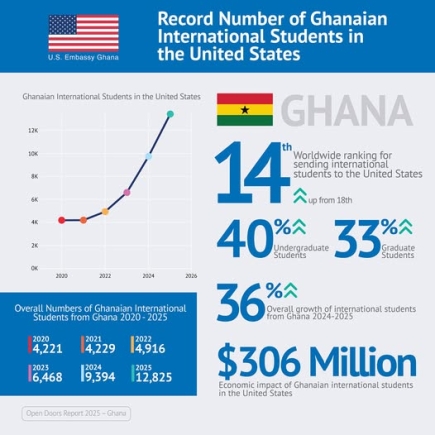
The number of Ghanaian students pursuing higher education in the United States has reached a historic peak, marking the highest figure ever recorded, according to the United States Embassy in Ghana.

New data from the Open Doors Report 2025 shows that Ghana now ranks 14th worldwide for sending international students to the U.S., a significant rise from its previous position of 18th.

The report highlights remarkable growth across all levels:

  • 40% increase in undergraduate students
  • 33% increase in graduate students
  • 36% overall rise in Ghanaian international students from 2024 to 2025

Student numbers have been climbing steadily over the years, from 4,221 in 2020 to 12,825 in 2025, reflecting Ghana’s expanding footprint in global education.

Beyond academics, the presence of Ghanaian students is also contributing substantially to the U.S. economy. In 2025 alone, Ghanaian students generated an estimated $306 million in economic impact.

DISCLAIMER: The Views, Comments, Opinions, Contributions and Statements made by Readers and Contributors on this platform do not necessarily represent the views or policy of Multimedia Group Limited.

DISCLAIMER: The Views, Comments, Opinions, Contributions and Statements made by Readers and Contributors on this platform do not necessarily represent the views or policy of Multimedia Group Limited.

Ghana Shows Fiscal Improvement Despite Rising 2026 Budget Deficit

0

Budget
Budget

Ghana’s fiscal situation for 2026 shows encouraging signs of improvement when compared to mid year revised figures for 2025, despite apparent widening of the budget deficit, according to economic analysis by Stanbic Bank.

Jibran Qureishi, Head of Africa Research Economics at Stanbic Bank, explained that while the country’s budget deficit for 2026 appears to widen slightly on first glance, closer examination reveals genuine fiscal progress. The analysis suggests government is threading the needle between fiscal discipline and necessary development spending.

At surface level, the country’s budget deficit for 2026 appears to widen, rising to 2.2 percent of Gross Domestic Product (GDP) on a commitment basis compared to 1.8 percent expected in 2025. However, when compared to figures adjusted mid year in 2025, the deficit actually improves substantially, dropping from 2.8 percent to 2.2 percent.

Qureishi emphasized that the fiscal position looks more positive when comparing the Financial Year (FY) 2026 budget to the revised FY 2025 budget numbers. This comparison provides a more accurate assessment of government’s fiscal management trajectory than comparing current projections to initial 2025 estimates that proved overly optimistic.

The trend holds even in government’s cash flow projections, where measurement focuses on actual money movements rather than commitments. While the cash deficit is expected to widen from 2.8 percent in 2025 to 4.0 percent in 2026, the revised 2025 budget had projected a deficit of 3.8 percent, meaning the change proves less dramatic than initial figures suggest.

The difference between commitment and cash basis accounting reflects timing differences between when government commits to spending and when it actually disburses funds. The cash deficit remains higher because it captures the full cost of servicing existing debt obligations that fall due during the year.

A major driver of this fiscal improvement is expected revenue growth. Total revenue and grants are projected to climb to 268 billion cedis in 2026, up from an estimated 226 billion cedis this year. Tax revenues alone could reach 224 billion cedis, representing robust collection performance.

The revenue projections are supported by significant tax reforms announced in the 2026 budget. Government plans to reduce the effective Value Added Tax (VAT) rate from 21.9 percent to 20 percent while raising the threshold for VAT registration from 200,000 cedis to 750,000 cedis. These changes aim to provide relief to small businesses while maintaining overall revenue mobilization.

Qureishi explained that these changes strike a delicate balance between increasing tax collection and easing the burden on businesses. He noted that tax mobilization remains strong as the primary driver of revenue growth, but reforms like reducing the VAT rate and increasing the registration threshold are aimed at supporting Small and Medium Enterprises (SMEs) while broadening the tax base.

The VAT reforms work by decoupling the Ghana Education Trust Fund (GETFund) and National Health Insurance Levy (NHIL) from the VAT tax base, allowing both levies to become subject to input tax deductions. This technical change reduces the effective VAT burden on businesses by approximately 5 percent while simplifying compliance.

Government also abolished the COVID 19 Health Recovery Levy, which alone will return 3.7 billion cedis to individuals and businesses in 2026. Combined with other VAT reforms, the package is expected to inject nearly 6 billion cedis into the economy, providing liquidity for households and enterprises.

The reforms extend beyond VAT adjustments to include abolishing VAT on mineral reconnaissance and prospecting activities, extending zero rating for locally manufactured textiles until 2028, and introducing digital VAT monitoring systems with fiscal electronic devices to improve compliance and transparency.

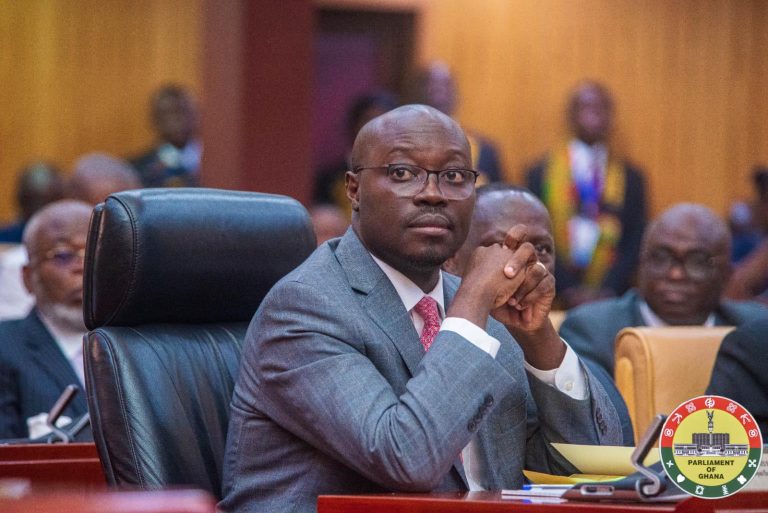
Finance Minister Dr. Cassiel Ato Forson described the reforms as creating a fairer, simpler, and more business friendly fiscal system. He emphasized that government aims to lighten the load on honest taxpayers while building a stronger foundation for national development and ensuring the tax system rewards compliance.

However, significant fiscal challenges remain. With spending expected to rise to 302.5 billion cedis in 2026, and interest payments ballooning to nearly 58 billion cedis, Ghana must manage its finances carefully to avoid fiscal strain. The interest burden reflects the accumulated cost of previous borrowing and debt restructuring.

The primary surplus target of 1.5 percent of GDP, as required by the amended Public Financial Management Act, means government plans to cover all non interest expenditures with domestic revenue. However, the overall deficit widens considerably when interest payments on existing debt are factored in, creating a balancing gap of roughly 3.7 percent of GDP.

This balancing gap underscores the heavy weight of interest obligations on public finances. Even with improved revenue performance, government must rely on additional borrowing to finance interest costs and priority programs including the Big Push Infrastructure Programme valued at 10 billion United States dollars over multiple years.

Qureishi remains cautiously optimistic despite these challenges. He suggested the data indicates Ghana is improving its fiscal position in a responsible way, even if some risks such as delays in tax reform or revenue shortfalls still exist. The economist emphasized that maintaining discipline will prove crucial to sustaining the recovery.

Economic analysts note that Ghana risks a severe crowding out effect if domestic borrowing surges in 2026. Because the balancing gap remains large and interest payments continue absorbing substantial resources, government will need to access more domestic credit to close its financing shortfall.

This could result in banks allocating more of their lending portfolio to safe government securities, pushing interest rates higher as demand for credit increases. Private businesses would then struggle to access affordable loans for expansion, investment, and production, potentially slowing job creation and weakening industrial growth.

The 2026 budget targets economic growth of 5.4 percent, inflation below 9 percent, and positions the fiscal year as a consolidation phase aimed at securing long term economic resilience. Major policy initiatives include infrastructure development, expanded agricultural support, and enhanced spending on education and health.

Government plans to conduct bond buybacks, reprofile domestic debt, and restore benchmark bond issuance to extend maturities and manage refinancing risks. These debt management operations aim to rebuild investor confidence and gradually return Ghana to moderate risk of debt distress from its current elevated levels.

Public debt has declined sharply from 61.8 percent of GDP in December 2024 to 45.0 percent by October 2025, a movement likely to influence investor sentiment positively. The reduction reflects both fiscal discipline and the impact of debt restructuring under the International Monetary Fund (IMF) supported program.

Ghana’s mid year budget review for 2025 had presented a mixed picture, with the fiscal deficit revised down to 4.2 percent of GDP from 4.8 percent, driven by optimistic revenue collection expectations. However, the first half of the year saw lower than expected revenue collections, raising questions about projection feasibility.

The current account surplus is expected to decrease as imports rise with falling inflation, potentially moving Ghana toward a current account deficit by late 2025 or early 2026. This shift would reflect increased consumption and investment activity as economic conditions normalize following years of tight fiscal policy.

Business associations have cautiously welcomed the tax reforms, particularly the COVID 19 levy abolition and VAT rate reduction. Industry groups had long criticized these measures for inflating costs during challenging economic conditions, though concerns remain about implementation and whether projected revenues will materialize.

The 2026 budget represents the first major fiscal policy statement by the John Dramani Mahama administration, which took office in January 2025. The fiscal framework attempts to balance consolidation requirements under the IMF program with political pressure to deliver on campaign promises for economic transformation and job creation.

Whether Ghana can sustain growth in 2026 will depend on how effectively government manages domestic borrowing, mobilizes revenue, and delivers investments without constraining private sector activity. The success of tax reforms in generating projected revenues without dampening economic activity will prove particularly crucial.

Stanbic Bank’s analysis suggests that while challenges persist, Ghana has established a foundation for continued fiscal improvement if government maintains discipline and reforms proceed as planned. The trajectory represents significant progress from the debt crisis that forced Ghana to seek IMF support in 2022.

King Promise unveils stunning ‘Bad Habits’ visuals feat Davido

0

King Promise is back with his second single of 2025 play videoKing Promise is back with his second single of 2025

King Promise is back with his second single of 2025, “Bad Habits”, a sultry collaboration with Nigerian superstar Davido.

As the reigning Artiste of the Year, King Promise is celebrating his growth, self-worth, and successes with this anthemic track.

“Bad Habits” is a testament to the power of confidence, discipline, and consistency, and the music star has finally released the much-anticipated visuals for the song.

The stunning video, directed by Mateoda Silva, was shot in the City of Light, Paris, and is a treat for fans.

Get ready to indulge in the lavish visuals and vibes of “Bad Habits”, now available on all streaming platforms!

Here is what it costs the state anytime President Mahama and his vice use his brother’s jet

0

President John Mahama and his vice have been using Ibrahim Mahama's private jet for official trips President John Mahama and his vice have been using Ibrahim Mahama’s private jet for official trips

The John Dramani Mahama government has been heavily criticised by a faction of the public over its continuous use of his brother, Ibrahim Mahama’s private jet, the Dzata, for official state functions, including international travels by the president and his vice, Prof Naana Jane Opoku Agyemang.

Despite the criticism, the Dzata has been continually used for official travels of the president and his vice president, with the former using the plane for a trip to Luanda, Angola, for the 7th AU-EU Summit just this Monday, November 26, 2025.

One of the issues raised by critics is the amount it costs the state anytime Ibrahim Mahama’s private jet is used for a government function.

The Minister of State in charge of Government Communication, Felix Ofosu-Kwakye, in an interview on JoyNews aired on Tuesday, November 25, 2025, cleared the air on the government’s expenses anytime the private jet is used.

He indicated that the state does not bear all the costs associated with hiring a private jet. Fixed costs, including aircraft maintenance, insurance, and crew salaries, are spread across flights, while variable costs include airport fees, landing charges, and handling fees.

Watch Mahama’s arrival in Cote d’Ivoire onboard Ibrahim Mahama’s private jet for ADB Meeting

He said that the only thing the government caters for anytime the jet is used is the fuel for the official travel.

“The only cost we incur in using Ibrahim Mahama’s jet is fuel,” Felix Ofosu-Kwakye is quoted as saying during the interview in a news card shared by JoyNews.

BAI

Watch the promo to GhanaWeb’s latest documentary, which uncovers the evolution of ‘kayamata,’ an exploitative practice fueled by love charms and manipulation, titled, “The Dark Side of Kayamata,’ below:

Patrick Boamah rejects Minority Leader position

The wait is over! The GhanaWeb Excellence Awards 2025 is officially launched. Let’s celebrate impact, innovation and excellence across Ghana.

Who deserves to be honoured this year?


Nominate now 👉 https://ghanaweb.com/ghanaexcellenceawards/nominate

Ghanaian AfCFTA executive assistant charged with over GH¢221,000 fraud

0

Anthonette Ama Boakye, an Executive Assistant at the African Continental Free Trade Area (AfCFTA), has appeared before Circuit Court 3 in Accra, charged with defrauding by false pretences.

Prosecutors allege she diverted over GH¢221,000, intended for a ticket-procurement investment, into a sports betting account.

According to a report by citinewsroom.com on November 25, 2025, Boakye was granted GH¢200,000 bail with three sureties after pleading not guilty. Two of the sureties must be close relatives, while one is required to justify their involvement.

The report noted that facts presented in court indicate the accused had previously been arrested in 2023 over a different fraud allegation and detained at the Legon Police Station. During that period, she reportedly met Police Officer Vincent Ariston Attipoe, a close friend of the complainant, Alfred Adu, a US-based businessman.

Prosecutors told the court that Boakye allegedly presented Officer Attipoe with an investment opportunity in a flight-ticket procurement scheme, claiming it was associated with her former employer, USAID.

Officer Attipoe is said to have passed the investment proposal to Adu, who subsequently joined a three-way call with Boakye and agreed to make the investment.

The report further noted that between April and July 2024, Adu allegedly sent GH¢74,837 to Officer Attipoe on Boakye’s behalf, and another GH¢146,913 directly into her mobile money and bank accounts, totaling GH¢221,750.

Prosecutors said Adu received no returns and, although he requested a refund, only GH¢20,000 was reportedly returned.

Investigators also informed the court that an examination of Boakye’s mobile money statements revealed that a large portion of the funds had been moved into a Betway account and were reportedly used for sports betting.

The case has been adjourned to January 6, 2026.

Meanwhile, watch as Global Data Protection expert Patricia Poku outlines key projects she is leading:

AK/BAI

New Market Era Begins At GHC75

0

Ghana’s construction sector was thrown into confusion and cautious excitement after a viral post from Ghana Chronicles announced that cement prices had dropped sharply from GHC120 to GHC85, with some places reportedly selling for as low as GHC75. The news immediately sparked nationwide debate, especially with the image of former President John Dramani Mahama attached to the post.

For months, rising cement prices had frustrated contractors, landlords, and ordinary citizens trying to build homes. The steady increases—blamed on production costs, exchange rate pressures, and transportation challenges—made construction almost impossible for many. The sudden decline has therefore raised relief, suspicion, and political speculation all at once.

Some dealers in Accra confirmed unusual spikes in demand within hours of the announcement. “People rushed in because they thought the price drop was temporary,” one seller said. “Everyone wanted to know if it was a mistake or a government action.”

Industry observers, however, offer different explanations. Some believe manufacturers may have quietly adjusted prices in response to competition or public pressure. Others argue that political actors might be attempting to shape public sentiment ahead of the next election cycle.

The inclusion of Mahama’s photo in the viral post added another layer of controversy, fueling questions about whether the drop is connected to political messaging or merely coincidental timing.

What remains clear is that the cement price reduction has become a major topic in homes, markets, and public discussions across the country. While many Ghanaians welcome the relief, others are waiting to see whether the new prices will hold or are simply a temporary shock in an unpredictable market.

Source

The mind Ghana needs for true development

0

Ghana’s struggle for sustainable development is not due to a lack of resources, policies, or plans—it is fundamentally a matter of mindset. After more than six decades of independence, our institutions remain burdened by inefficiency, corruption, and civic complacency.

The challenge is not merely institutional but psychological and cultural. We must therefore reexamine the way we think, act, and relate to one another as citizens of a common nation.

1. From the “I” Mentality to the “We” Mindset

In my recent paper, The Transformative Power of Mindset in Africa’s Development: A Collaborative Governance Model for Ghana (Asiedu, 2025a), I argue that Ghana’s progress depends on shifting from an individualistic “I” mentality to a collective “We” mindset.

The “I” mentality prioritizes self-interest, political patronage, and tribal loyalty. It is the root of corruption, selective justice, and weak civic responsibility. By contrast, a “We” mindset sees national development as a shared moral duty.

It compels citizens to view public service as a calling, not an opportunity for personal enrichment. It inspires citizens to see sanitation, law enforcement, and education not as “government problems” but as shared societal responsibilities.

As Francis Fukuyama (2018) and Robert Putnam (1993)

remind us, nations thrive when social trust and collective engagement become part of civic life.

2. Why Mindset Matters More Than Institutions Good governance is not built by laws alone—it depends on the behavioral culture of the people living under those laws.

The Collaborative Governance and Accountability Model (CGAM) and

Governance Quality (GQ) Metric I developed demonstrate how governance outcomes depend on three elements: Engagement, Accountability, and Transparency (Asiedu, 2025).

Survey results show that Ghanaians exhibit high levels of civic responsibility (Accountability = 0.93) and engagement (0.80), but relatively lower levels of trust in leadership (Transparency = 0.71).

The findings indicate that while citizens feel responsible for national progress, they often distrust their leaders—undermining collaboration between citizens and the state.

Without rebuilding this trust and fostering a shared moral compass anchored in honesty, empathy, and integrity, institutions—no matter how well designed—will remain hollow structures.

3. The Mindset Behind Ghana’s Urban Disorder My recent study, Broken Cities:

Who’s Behind Ghana’s Urban Chaos? (Asiedu, 2025b) https://doi.org/10.11114/aef.v12i4.8209, examined how urban disorder in Accra, Kumasi, and Tamale arises not only from weak institutions but from conflicting mindsets among key actors—government agencies, traditional authorities, and citizens.

Using the Multi-Actor Urban

Disorder (MAUD) model and its supporting tools—the Urban Governance Accountability

Matrix (UGAM) and the Governance Load Index (GLI)—I found that Ghana’s urban chaos is a co-produced phenomenon, not a random failure.

When chiefs sell land outside formal planning systems, when municipal assemblies fail to enforce building codes, and when citizens ignore sanitation rules, each actor contributes to systemic breakdown. This behavioral permissiveness becomes normalized until disorder feels inevitable.

As my research showed, cities like Accra and Tamale operate under “institutional

overload” (GLI > 1.0), where mandates exceed capacity, and civic compliance is minimal (Asiedu, 2025b).

In short, urban chaos reflects a collective mindset crisis—a society comfortable with disorder because it no longer believes in shared accountability.

4. Building the Mind Ghana Needs

To rebuild Ghana’s moral and developmental foundation, we must cultivate a mindset grounded in discipline, shared responsibility, and purposeful action.

1. Education for Character and Creativity: Schools must go beyond rote learning to teach civic ethics, innovation, and national responsibility. Education should produce ethical problem-solvers, not mere certificate-holders.

2. Leadership by Example: Political and institutional leaders must embody accountability and humility. Leadership should inspire discipline and hope—not fear and favoritism.

3. Community Accountability: Civil society, faith groups, and local associations must mobilize around the principle that development begins with the behavior of citizens, not just government directives.

4. Cultural Reorientation: National campaigns should promote cooperation and integrity over greed and tribalism. Public honor must return to those who serve selflessly, not to those who accumulate wealth without merit.

As emphasized in The Transformative Power of Mindset in Africa’s Development, governance transformation is behavioral before it becomes institutional (Asiedu, 2025a).

A nation that changes how its citizens think and act will automatically strengthen its institutions.

5. A Call to Action

Ghana’s future will not be defined by external aid, manifestos, or IMF bailouts—it will be defined by the mindset of its people. The country needs citizens who think like builders, not beneficiaries; who see national challenges as opportunities for service, not avenues for self-gain.

If we continue to think with the “I” mentality, Ghana will remain trapped in cycles of dependency and disillusionment. But if we embrace the “We” mindset—anchored in collective responsibility and ethical leadership—we can finally build a Ghana where systems work, cities are orderly, and progress is shared.

The mind Ghana needs for development is not one that waits for change, but one that becomes the change.

References

 Asiedu, I. Y. (2025a). The Transformative Power of Mindset in Africa’s Development: A Collaborative Governance Model for Ghana. Applied Economics and Finance, 12(1), 45–55. https://doi.org/10.11114/aef.v12i1.7529

 Asiedu, I. Y. (2025b). Broken Cities: Who’s Behind Ghana’s Urban Chaos?

https://doi.org/10.11114/aef.v12i4.8209.

 Fukuyama, F. (2018). Identity: The Demand for Dignity and the Politics of Resentment. Farrar, Straus and Giroux.

 Putnam, R. D. (1993). Making Democracy Work: Civic Traditions in Modern Italy.

Princeton University Press.

 Gyimah-Boadi, E. (2019). Corruption and Institutional Weakness in Ghana. Accra: CDD-Ghana.

 World Bank. (2017). Governance and the Law: World Development Report 2017.

Washington, D.C.: World Bank.

Vice President Pushes Local Cocoa Processing Agenda in Strategic CPC Meeting

0

Cocoa
Cocoa

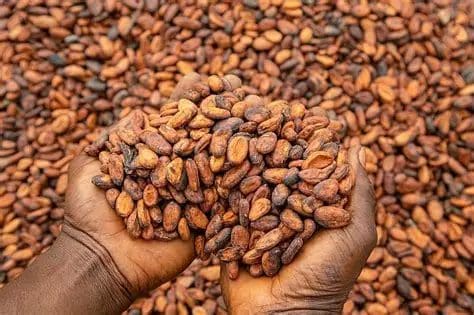
Vice President Professor Naana Jane Opoku-Agyemang has reaffirmed government commitment to transforming Ghana’s cocoa sector from raw bean exports to processed product manufacturing, emphasizing the economic and strategic importance of local value addition.

The Vice President made the declaration during a strategic meeting with the Board and Management of Cocoa Processing Company Public Limited Company (CPC) at Jubilee House in Accra. The company’s leadership, led by Managing Director Professor William Coffie, paid a courtesy call to acknowledge her sustained advocacy for promoting Ghanaian cocoa products both domestically and internationally.

Professor Opoku-Agyemang underscored that processing more cocoa locally would boost national revenue, enhance competitiveness, and position Ghana advantageously within emerging regional and global markets. She described local processing as central to Ghana’s industrial growth and economic sovereignty, noting that value addition ensures Ghanaian cocoa products can compete strongly in both African and international markets.

The Vice President expressed satisfaction with CPC’s recent business performance, noting the company recorded a 100 percent increase in share price over the past three months. She characterized this development as reflecting renewed investor confidence and a positive operational trajectory for the state-linked enterprise.

Professor Opoku-Agyemang observed that rising numbers of international visitors and prospective partners engaging with CPC demonstrate global recognition of Ghana’s expanding cocoa processing capacity. She said this growing international interest validates the country’s strategic shift toward manufacturing finished cocoa products rather than exporting raw materials.

The Vice President encouraged CPC to intensify marketing and distribution efforts, highlighting senior high schools as a significant yet untapped market. She explained that targeting educational institutions could promote local consumption, support youth nutrition, and cultivate a new generation that values Ghanaian products.

Professor Opoku-Agyemang emphasized the African Continental Free Trade Area (AfCFTA) provides a strong platform for CPC to expand its footprint across the continent. She described AfCFTA as offering avenues to grow markets, enhance competitiveness, and showcase high-value Ghanaian products to the world as part of the country’s broader push for value addition and industrialization.

The Vice President articulated government’s mission as transforming Ghana’s cocoa sector from exporting raw beans to exporting proudly Ghanaian, high-value products. She assured the CPC leadership that government would continue backing the company fully in its efforts to lead this transformation.

Professor Coffie outlined progress made under the company’s new leadership and identified key needs requiring government support to restore CPC’s competitive position. He highlighted increasing international interest in the company’s operations and growing market opportunities as significant indicators of positive momentum.

The Managing Director stressed the need for enhanced financial and infrastructural support to strengthen CPC’s competitiveness within the West African sub-region. He explained such support would help the company scale up production to meet rising demand for Ghanaian processed cocoa products.

Professor Coffie asked for government assistance to help bring back the company’s lost fortunes, acknowledging that CPC faced historical challenges that had diminished its market position. He expressed optimism that renewed government commitment combined with improved management could restore the company to profitability and market leadership.

The meeting reaffirmed collective commitment to deepening collaboration between government and the cocoa processing sector to advance Ghana’s value addition agenda. Both parties agreed on the strategic imperative of transitioning from raw cocoa bean exports to manufacturing and exporting more Ghanaian-branded processed products.

The Board and Management presented a citation of honor to the Vice President in recognition of her advocacy for value addition and promotion of Ghanaian-processed cocoa products. The award acknowledged her consistent efforts to champion local manufacturing and boost consumption of domestically produced cocoa goods.

The strategic meeting comes as Ghana seeks to maximize benefits from the AfCFTA, which creates a market of 1.2 billion people with combined gross domestic product (GDP) of three trillion United States dollars (USD). Industry experts have identified enormous opportunities for Ghanaian cocoa processors to access new markets across the continent through the trade agreement.

Ghana produces premium quality cocoa and ranks as the world’s second-largest producer by volume. However, the country has historically exported most of its cocoa as raw beans rather than processed products, limiting potential revenue and job creation from the valuable commodity.

Local cocoa processors have indicated they face challenges including expensive raw materials, as Ghana’s cocoa industry remains focused primarily on export markets. Small-scale manufacturers and artisans have called for easier and more affordable access to cocoa beans and related raw materials to feed domestic processing operations.

The government has set ambitious targets for increasing the proportion of cocoa processed locally, aiming to boost installed processing capacity utilization and create more jobs in the manufacturing sector. Officials believe value addition in cocoa processing can significantly enhance national earnings compared to raw bean exports.

CPC operates processing facilities that manufacture cocoa liquor, butter, natural and alkalized cake or powder, and various chocolate products. The company serves both domestic markets and international export destinations, positioning itself as a key player in Ghana’s cocoa value addition drive.

The Vice President’s renewed commitment to supporting cocoa processors aligns with broader government industrialization objectives under the Ghana Beyond Aid agenda. Policymakers view local processing of agricultural commodities as essential to economic transformation and job creation for the country’s youthful population.

Industry stakeholders expressed optimism that government backing combined with improved market access through AfCFTA would enable Ghanaian cocoa processors to expand operations and capture greater value from the country’s most important agricultural export commodity.

Team Boomers win 2025 African Basketball Festival 3×3 tournament

0

Team Boomers sealed their victory with a convincing 19 – 7 win over Team Icons Team Boomers sealed their victory with a convincing 19 – 7 win over Team Icons

The launch of the Africa Basketball Festival 2025 on Wednesday, November 19, 2025, at the University of Ghana Basketball Court set the perfect stage for the maiden ABF 3X3 Tournament, an energetic competition that featured five spirited teams: Team Boomers, Team OTE, Team Icons, Team Olenge, and Team Iso 308.

Amid the intense matchups and electrifying plays that charged the court throughout the evening, Team Boomers stood out as the dominant side, securing three wins and finishing ahead of all other teams with a wide margin.

They sealed their victory in the final matchup with a convincing 19–7 win over Team Icons, ultimately securing the inaugural tournament crown.

Their squad, made up of Kelvin Jones, David Jackson, Samuel Atiapah, and Bamba Salia, worked seamlessly together, relying on collective effort rather than individual moments—a strategy that proved to be the winning formula against a strong field of competitors.

Africa Basketball Festival 2025 set to be launched

For their well-earned triumph, Team Boomers walked away with a GH₵2,000 cash prize along with products from Verna Mineral Water, Tonino Lamborghini Energy Drink, and Minimie Atsomo, while all other participating teams received exciting gift packages and branded items from sponsors.

The success of the first-ever ABF 3X3 Tournament has set a solid foundation for future editions, reinforcing the festival’s commitment to promoting basketball culture, youth talent, and continental sports entertainment.

The 2025 Africa Basketball Festival is sponsored by the Ghana Tourism Authority.

The event is brought to you by RITE Sports Services and hosted by the University of Ghana Sports & Wellness Directorate.

Meanwhile, watch as Global Data Protection expert Patricia Poku outlines key projects she is leading:

SB/BAI

Ntungamo villages get power hope as gov’t reinstalls long-idle transformers

0

Ministry of Energy Commissioner for Rural Electricity Abdon Atwiine, launch new power lines Ministry of Energy Commissioner for Rural Electricity Abdon Atwiine, launch new power lines

The Ministry of Energy, through Uganda’s power distributor, has restored long-idle electricity lines in Ntungamo District after installing 12 new transformers, bringing hope to communities that have spent nearly a decade waiting for power despite having lines running over their homes.

Commissioning the restored lines at Mujwa Primary School on Monday, Eng. Abdon Atwine, the ministry’s commissioner for rural electrification, said the intervention marks a major step in unlocking stalled distribution infrastructure.

“These are areas where lines were vandalized. We have now provided 12 transformers to start operating. We hope the residents will effectively use the electricity,” Eng. Atwine said.

“We currently have only 24% of Ugandans accessing the main grid and at least 30% getting electricity through other means. We intend to have this main grid coverage reach 80% by 2040. This we can’t achieve when we have lines that are not operational over small issues,” the engineer added.

He also said that at least one million Ugandans will access free household connections within two years under a $630 million grant aimed at expanding access.

“In the next two years, we are going to connect at least one million households to electricity for free, following the order of applications. We have secured a $630M grant for this project, and we hope it will boost connectivity. We also intend to extend more lines,” he said.

Berinda Murungi, UEDCL’s Ntungamo District manager, said the district has 153 transformers spread across 800km of lines, yet more than 70% of the area still lacks electricity.

Edward Natamba, a resident of Mpaama Village, said communities have endured years of frustration while waiting for connections.

“We have, for the past nine years, seen wires passing through our village with no power. People installed technical wiring in their houses in 2017 with hopes of power. Some were given certificates, but no one was connected,” he said.

He added, “How can government spend a full nine years without repairing such lines? We are now happy that this project has been launched, but we still have doubts about whether we shall receive power.”

Former Ntungamo Woman MP Beatrice Rwakimari called the launch a “big relief” for residents who had lost hope in the stalled project, while Resident District Commissioner Mirriam Kagaiga urged communities to protect the lines from vandals so that the revived network can function as intended.

Ernestina Fosuh Accuses Odo Broni of Emptying the Funeral Account — details

0

Lumba’s Sister Explodes: Ernestina Fosuh Accuses Odo Broni of Emptying the Funeral Account — details

News Hub Creator13h

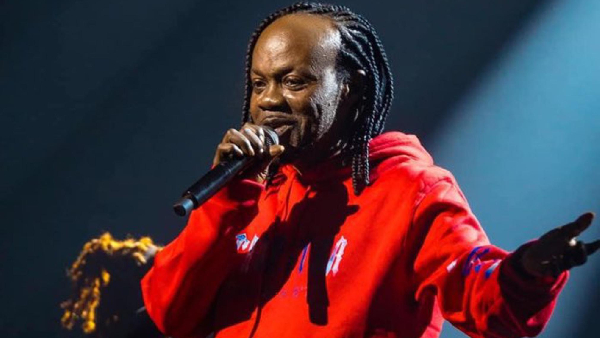
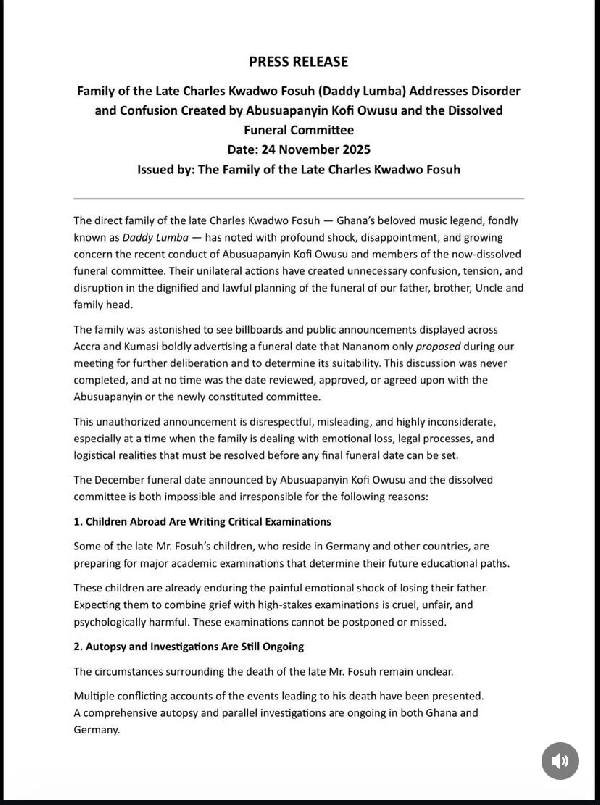
Drama has erupted around the funeral preparations of the late legendary musician Daddy Lumba, and this time, it involves his own elder sister, Ernestina Fosuh. Emotions are running high as Ernestina has come forward in a viral video to express her anger and frustration toward Odo Broni and Abusuapanin, accusing them of creating unnecessary confusion during a time when the family should be united.

According to Ernestina, certain individuals have overstepped their boundaries by making decisions without proper consultation. She claims that Odo Broni and Abusuapanin have been pushing their own plans forward, ignoring the wishes of close family members and disrespecting the cultural protocols that guide traditional funerals. Her tone in the video shows just how deeply hurt she is, not only by what she calls “disrespect,” but by what she believes is an attempt to take over the funeral arrangements for their own benefit.

Ernestina insists that the family is already grieving the loss of a beloved icon, and disputes over who should be in charge are making things worse. She questioned why some people are “acting like they know Daddy Lumba more than his own blood,” and expressed disappointment that matters that should have been handled privately are now playing out in public.

The situation has sparked major conversation online, with many fans worried that the ongoing tension could overshadow the honour and respect due to the late legend. Others have urged all sides to come together for the sake of Daddy Lumba’s memory, reminding the family that the musician inspired millions and deserves a peaceful, dignified farewell.

As the back-and-forth continues, Ghanaians are hoping the family can resolve their differences quickly and respectfully so the focus can return to celebrating Daddy Lumba’s remarkable life and legacy.

Source

They Came To Court Thinking They Can Use State Power To Over Turn Certain Things

0

They Came To Court Thinking They Can Use State Power To Over Turn Certain Things – Nyindam

News Hub Creator1h

Matthew Nyindam, former Member of Parliament and parliamentary candidate for Kpandai, has expressed strong objections to the recent court ruling ordering a rerun of the constituency’s parliamentary election. Speaking to journalists, Nyindam described the legal challenge brought by his opponent from the National Democratic Congress (NDC) as politically motivated, alleging it was aimed at overturning a legitimate victory through undue influence.

Nyindam asserted that he secured the election with a clear margin of 3,734 votes, describing the win as “a clear victory.” He noted that the results recorded on the 152 pink sheets from all polling stations were acknowledged by all political parties, with each party having copies of the documents confirming his success. Despite this, he argued that his opponent took the matter to court in an attempt to manipulate the outcome using political connections.

While affirming respect for the judiciary, Nyindam said his team “vehemently disagrees” with the ruling mandating a rerun. He pointed out that the 41 polling stations cited in the case were areas where he achieved overwhelming victories, suggesting that the petition was strategically focused on his strongholds. He described the decision as unprecedented in Ghanaian electoral history and said it raises concerns about the integrity and safety of the electoral process.

Nyindam also questioned the presence of the regional minister in the courtroom, hinting at possible political interference. However, he confirmed that his legal team has already filed an appeal and remains confident that the higher court will overturn the ruling. While stating he is prepared to contest a rerun if it proceeds, Nyindam cautioned against attempts to use state power to influence voters, warning that such actions could escalate tensions in the constituency.

The former legislator’s comments underscore the heightened political stakes in Kpandai, highlighting ongoing debates over electoral transparency and the legitimacy of court-ordered reruns.

https://www.instagram.com/reels/audio/25310168702010298/

Chic,Cute And Elegant Ankara Outfit Inspirations For You

0

Short Ankara dresses have become a staple in the wardrobes of fashionable women who appreciate African print but also desire a touch of modern chic. Whether you’re heading out for a casual event, a weekend brunch, or just want to make a bold fashion statement, a short Ankara dress is the ultimate go-to. These dresses are not only stylish and vibrant, but they also celebrate the richness of African culture in a way that feels fresh, youthful, and effortlessly elegant.

One of the most attractive features of short Ankara dresses is their versatility. They can be tailored into various silhouettes fitted bodycon styles that hug every curve, flared skater styles that bring out a playful side, or asymmetrical cuts for that edgy fashion-forward look. When paired with the right accessories chunky earrings, a sleek clutch, or strappy heels these dresses transition seamlessly from day to night.

For women who want to express individuality, Ankara fabric offers endless options. The prints range from bold geometric patterns to soft florals, each telling its own story through color and design. What’s more, the variety of necklines from off-shoulder to halter, square to sweetheart allows each woman to find a style that flatters her shape and complements her personality.

The modern woman is always on the move, and Ankara short dresses provide the comfort and confidence she needs. They are breathable, easy to style, and perfect for warm weather. Plus, their length makes them perfect for showcasing beautiful legs or pairing with tights in cooler seasons.

So whether you’re inspired by bold reds, calming blues, or earthy tones, there’s a short Ankara dress out there that perfectly fits your mood and taste. Step out with pride, make heads turn, and let your dress do the talking. Let this be your sign to add that statement Ankara piece to your wardrobe today.

Govt delays payment of two allowances for education sector workers

0

The Controller and Accountant-General’s Department (CAGD) has announced a delay in the payment of two categories of allowances for workers in the education sector.

The allowances, originally scheduled for November 2025, could not be processed due to a technical issue encountered during the final payroll run.

This comes as part of ongoing efforts by the government to ensure timely payment of salaries and allowances to public sector workers, despite occasional technical setbacks in payroll processing.

In a statement released on Tuesday, November 25, 2025, the CAGD said the processing of these allowances was temporarily paused to prevent any disruption to the payment of November 2025 salaries for all Government of Ghana workers.

The department assured affected workers that the issue is being resolved and that the outstanding allowances will be paid together with December 2025 salaries on 18 December 2025.

“We regret the inconvenience caused and sincerely appreciate your patience,” the statement read.


NPP needs power-winning candidate, not just a flagbearer – UFP’s Agyenim Boateng 

Rising Wig Culture and Silent Exploitation Among Young Women

0

A growing social trend is sweeping across Ghana and parts of Africa, as increasing numbers of young women invest heavily in luxury wigs and glamorous lifestyles, often without financial stability or long-term planning. While many professional women are embracing natural hair and self-care, others—especially impressionable youth—are turning to expensive beauty expectations driven by social media pressure.

GFA unveils insurance scheme to strengthen protection for Ghanaian referees

0

The Ghana Football Association has announced the introduction of an insurance programme for referees across the country.

The initiative was launched on Tuesday, November 25, 2025, at the FA’s headquarters in Accra.

The new policy covers all 280 referees working in the Premier League, Division One League and Women’s Premier League.

Benefits under the package include life insurance, critical illness cover, disability compensation, medical support and workmen’s compensation.

The programme also extends to families, offering support for spouses, children and parents, as well as funeral assistance.

“Today’s launch signals the beginning of a new era, a future where Ghanaian referees can step onto the pitch with peace of mind, knowing that their health, safety, welfare and dignity are protected,” GFA President Kurt Okraku said.

“This is not just an insurance policy; it is a social protection package. It is a statement that the GFA cares deeply about its referees, their families and their future.”

The event drew key figures including Senior Business of Enterprise Life Assurance Company, Jerry Kwame Hodasi, Chairperson of the Referees Committee, Christine Enyonam Zigah, Referees Manager, Alexander Kotey along with several male and female FIFA-accredited referees.

DISCLAIMER: The Views, Comments, Opinions, Contributions and Statements made by Readers and Contributors on this platform do not necessarily represent the views or policy of Multimedia Group Limited.

DISCLAIMER: The Views, Comments, Opinions, Contributions and Statements made by Readers and Contributors on this platform do not necessarily represent the views or policy of Multimedia Group Limited.

Ghana Carbon Market Office build expertise to boost carbon trading

0


Ghana Carbon Market Office build expertise to boost carbon trading – Ghana Business News


Reasons Lumba’s December 13 funeral cannot be held

0

Highlife legend Daddy Lumba passed away on July 26, 2025 Highlife legend Daddy Lumba passed away on July 26, 2025

A 14-member direct family committee of the late Highlife legend Daddy Lumba has rejected the publicised December 13, 2025 funeral date, citing several reasons why it is impossible and inappropriate to hold the final rites at that time.

In a statement dated November 24, 2025, issued by the family press secretary and signed by the ‘direct family’, the family expressed astonishment at billboards and public announcements in Accra and Kumasi advertising the December 13 date.

According to the statement, the date was only proposed during a preliminary discussion with Nananom at Manhyia Palace and was never finalised.

Why Daddy Lumba’s burial cannot be held on December 13 – Papa Shee explains

The family outlined four reasons why the final funeral rite of Daddy Lumba cannot be held on December 13, 2925.

1. Children abroad are writing critical examinations

According to the statement, several of Daddy Lumba’s children, residing in Germany and other countries, are preparing for important academic examinations that determine their future.

The family stressed that expecting them to cope with grief while sitting for these exams would be psychologically harmful.

2. Autopsy and investigations are still ongoing

The ‘direct family’ has indicated that the circumstances surrounding the late singer’s death are still unclear, with conflicting accounts emerging. Comprehensive investigations and autopsies are ongoing in both Ghana and Germany, making a December funeral premature and potentially irresponsible.

3. Immediate family abroad must apply for leave

According to the document, many direct family members of the late singer live abroad and hold essential jobs therefore securing emergency leave on short notice is impractical, making it impossible for them to participate in a December funeral.

4. International friends and community must have time to attend

The family also noted that the late Daddy Lumba spent much of his life in Europe and cultivated personal and professional ties internationally.

The family emphasized that his funeral, as a national and global event, must allow sufficient time for friends, colleagues, and fans abroad to travel and pay their respects.

The statement further disclosed that Evangelist Papa Shee, a close associate of the family, has briefed Dadesoabahene about the need to revise the funeral date.

The 14 direct family members who signed the statement include Wofa Robert Yaw Opoku Gyamfi (Direct Uncle), Ernestina Brempomaa Fosu (Elder Sister), Miller Attakorah (First Nephew), Yaw Akosa (Family Confidant), and Mama Esther Konadu, among others.

Read the statement below:

Meanwhile, watch as Global Data Protection expert Patricia Poku outlines key projects she is leading:

AK/SSM

Mission schools shouldn’t dilute their identity

0

Michael Donyina Mensah is the Executive Director of CenPOA Michael Donyina Mensah is the Executive Director of CenPOA

The Center for Public Opinion and Awareness (CenPOA) has criticised Education Minister Haruna Iddrisu’s recent comments on alleged religious discrimination in mission schools in Ghana, stressing that these institutions should not be forced to compromise their founding Christian identity.

The organisation said the Minister’s remarks oversimplify a complex issue and risk stirring unnecessary tension between the government and faith-based educational institutions.

In a statement dated November 26, 2025, signed by Michael Donyina Mensah, Executive Director of CenPOA, the organisation noted that the Minister’s concerns, particularly those referencing Wesley Girls’ Senior High School, fail to acknowledge the historical foundations and contributions of mission schools in Ghana.

‘We also have rights’ – Catholic Bishops, Christian Council wade into Wesley Girls hijab debate

The group stated that these schools were built by Christian missions long before independence, during a period when access to formal education was scarce.

According to the organization, the Methodist, Catholic, Presbyterian, Anglican and other denominations established these schools with their own resources, guided by a dual mission, to provide academic instruction and to promote moral and spiritual development rooted in Christian values.

“While we appreciate the Minister’s concern for the rights of students, CenPOA believes that his comments overlook the historical foundations, purpose, and contributions of Ghana’s missionary schools, and risk creating unnecessary tension between the State and faith-based educational institutions,” part of the statement read.

CenPOA argued that this faith-based framework has always been central to the identity and daily life of mission schools.

CenPOA pointed out that it was the churches themselves that opened the doors to students from all religious backgrounds, an example, they said, of inclusion rather than discrimination.

The organisation believes that current expectations for mission schools to adjust or dilute their religious identity in order to accommodate every religious practice on campus are historically inaccurate and unfair.

“Mission schools were never intended to be multi-faith arenas. Their ethos, routines, and daily life revolve around their Christian foundation. Expecting them to abandon or alter this identity because non-Christian students now attend undermines both their purpose and their heritage,” the statement continued.

CenPOA stressed that mission schools, were never designed to operate as multi-faith spaces but rather as institutions grounded in Christian principles.

They argued that requiring these schools to alter their beliefs because they now admit students of different faiths undermines their purpose and heritage.

For students or parents seeking schools that fully align with their personal religious practices, CenPOA said there are many public, non-mission institutions where diverse religious expressions are already accepted.

The group also rejected the notion that mission schools are violating human rights by maintaining their religious character, calling the claim misleading and dismissive of the extensive contributions churches have made to Ghana’s education system.

CenPOA urged the Ministry of Education to prioritise consultation and collaboration rather than issuing pronouncements that could inflame the debate.

The statement called on government, mission school authorities, parents and other stakeholders to work together to develop practical solutions that respect both the constitutional rights of students and the religious identity of mission-founded schools.

“We urge the Ministry of Education to engage in consultation rather than unilateral declarations, and to recognize that educational choice, including the choice of a faith-based environment, is central to the holistic development of Ghana’s children,” the statement added.

Read the full statement below:

Meanwhile, watch as Global Data Protection expert Patricia Poku outlines key projects she is leading:

AK/SSM

Controller’s Department holds back two key allowances for November 2025

0

The department linked the setback to a technical hitch The department linked the setback to a technical hitch

The Controller and Accountant-General’s Department (CAGD) has stated that two key categories of allowances expected to be paid in November 2025 were not processed as planned.

The department attributed the setback to a “technical hitch” that occurred during the final stage of payroll processing, prompting an immediate halt to the allowance payments.

In a statement dated November 25, 2025, and signed by Cephas Dosco, Head of Public Relations, CAGD explained that suspending the allowances was necessary to avoid holding up November 2025 salaries for government employees.

CAGD to collaborate with OSP to prosecute payroll irregularities

The department emphasised that its priority was to ensure that the main salaries, especially for staff paid under the Government of Ghana payroll, were released without disruption.

The Controller and Accountant-General’s Department assured workers, particularly those in the education sector who make up a large share of the affected group, that the challenge is being resolved.

The statement further indicated that the delayed allowances will now be rolled into the December 2025 salaries and disbursed on December 18, 2025.

“The Controller and Accountant-General’s Department wishes to inform all stakeholders, especially our colleagues in the education sector, that two categories of allowances scheduled for November 2025 could not be processed due to a technical hitch during the final payroll run.

“To prevent any further delay in November salary payments, processing of these allowances was paused. The issue is being resolved, and the outstanding allowances will be paid alongside the December 2025 salaries on 18th December 2025,” the statement said.

Meanwhile, watch as Global Data Protection expert Patricia Poku outlines key projects she is leading:

AK/BAI

Nearly half of women face domestic violence at district level

0

The Central Region has emerged as Ghana’s domestic-violence hotspot, recording the highest prevalence of physical violence at 44.6%, followed by the Savannah Region at 42.9% and the Volta Region at 40.2%.

This is according to a new District-Level Small Area Estimation findings released by the Ghana Statistical Service (GSS), which combine the 2022 Ghana Demographic and Health Survey with the 2021 Population and Housing Census.

Per the data, the Volta Region posted the highest levels of sexual violence, recording 22.3%, well above the national pattern. It is followed by the Central Region and Savannah at 19.6% each, while the North East recorded the lowest instances at 5.2 %.

The analysis also identifies extreme district-level vulnerabilities that national averages fail to show. Sawla-Tuna-Kalba in the Savannah Region recorded the most alarming figure in the country, with 61.9% of women aged 15–49 estimated to have experienced at least one form of domestic violence — physical, emotional or sexual.

In contrast, districts in Bono, Bono East, Upper West and North East regions posted far lower levels of physical violence, some below 25%, highlighting major protection inequalities across the country.

The GSS report maintains that protecting women in high-risk areas will require a deliberate shift toward district-specific interventions, particularly in Central, Volta and Savannah, where prevalence levels are most severe.

It stresses that institutions such as the Domestic Violence and Victims Support Unit (DOVVSU), the family courts and district gender desks must be adequately staffed and resourced to respond effectively to rising cases.

The Service also urges the government to integrate the new district estimates into local planning and budgeting processes so that funding and programmes are directed to the communities with the highest risk.

It further recommends deeper engagement with traditional and religious leaders to help challenge social norms that reinforce domestic violence and hinder reporting.

I’ll appoint Defence, Environment Ministers next year – Mahama

Pretty Ghanaian Lady Reportedly Dies a Day After Attending Wedding Ceremony

0

  • Friends and loved ones are mourning the death of Joyce Obenewaa Ankrah, a Ghanaian lady who reportedly died on November 23, 2025, a day after attending a wedding
  • Videos showing the deceased happily dancing and having fun at the wedding ceremony, held on November 22, have stirred sorrow online
  • Ghanaians reacted to the death of the mother-of-one with emotional messages of condolences and confusion over the abrupt manner of her passing

Ghana’s top stories, now easier to find. Discover our new search feature!

Social media users are mourning the death of Joyce Obenewaa Ankrah, a Ghanaian lady who reportedly died at the age of 40, a day after attending a wedding ceremony.

Joyce Obenewaa Ankrah, Kusi Mary, hairdresser, Dansoman, Konongo, wedding
Friends and loved ones mourn the death of pretty Ghanaian lady Joyce Obenewaa Ankrah on November 23, 2025. Image credit: @kusimary50 Source: TikTok

News of her sad and unexpected death went viral on TikTok on Sunday, November 23, 2025, with many friends sharing tribute videos.

TikToker Kusi Mary, a close friend of the deceased, shared a video showing her in a happy mood at a wedding, which reportedly occurred on November 22, a day before her death.

Joyce was seen heartily dancing in the video and taking part in numerous activities at the ceremony, showing little sign of any health condition.

Mary expressed her astonishment at her friend’s death after seeing her at the wedding just a day before.

“Eii Joyce, just yesterday, see how you were happy at the wedding. Adwoa, RIP sis,” she wrote, accompanied by a video of the deceased dancing.

Another friend, Docia Antwi, shared photos from the wedding ceremony, indicating her surprise at her friend’s demise.

“RIP menua, my heart is broken,” she said.

Joyce’s cause of death has not been officially determined, but friends shared comments suggesting that she may have suffered of a heart attack.

According to reports, the deceased, who hailed from Konongo in the Ashanti Region, worked as a hairdresser at Dansoman in Accra. She is reportedly survived by one child.

Below are the TikTok videos mourning the death of Joyce Obenewaa Ankrah.

After her death, it was announced that her one-week observance had been scheduled for December 4, 2025, at the family residence in Konongo Freetown.

Below is the TikTok post with details of Joyce Ankrah’s one-week observance.

Reactions to Joyce Obenewaa Ankrah’s death

YEN.com.gh compiled some comments reacting to the death of Joyce Obenewaa Ankrah a day after attending a wedding ceremony.

sarahquarshie812 said:

“OB cute, my hairdresser at Dansoman, hmmmmm. Aww what happened to her?”

Ama GH wrote:

“Hmmm, I saw this lady just last week oo 😭😭😭😭.”

Obaa Selina commented:

“Aaaaaa owuo adeen. I don’t know what to do myself 😭😭😭😭😭😭😭😭😭. My sister Rip.”

Nanayere72 said:

“Death has dealt wickedly with us. Konogo Broni, sleep well.”

NDC activist Hajia Zee passes away

Previously, YEN.com.gh reported that popular National Democratic Congress (NDC) activist, Hajia Zee Baby, had passed away.

Fellow NDC activist Bro Thomas announced her passing in a viral TikTok video shared on November 24, 2025.

Bro Thomas said the deceased was instrumental in helping the ruling party regain power in the 2024 elections and petitioned party leaders to intervene and help her family deal financially in order to deal with the tragedy.

Read also

8-year-old girl dies in Dansoman Market fire

0

An 8-year-old girl has died after being trapped in a devastating fire that swept through Dansoman Market in the early hours of Wednesday, November 26, 2025.

The Ghana National Fire Service (GNFS) reported that the blaze was first reported at 00:02 hrs, with the initial crew from Dansoman Fire Station arriving just two minutes later.

They found the fire at an advanced stage, rapidly spreading in all directions.

To contain the inferno, eight fire engines from Industrial Area, Ministries, National Headquarters, Madina, Weija, Anyaa, and Accra City were mobilised, supported by two private water tankers from the Accra Metropolitan Assembly.

The fire was confined by 01:51 hrs, brought under control at 03:03 hrs, and fully extinguished by 05:21 hrs after overhauling operations to eliminate hidden pockets of fire.

Tragically, the young girl was caught in one of the affected sections and could not be rescued. Her badly charred body has been handed over to the Police for preservation and further investigation.


The fire destroyed several wooden structures and shops, along with their contents. However, thanks to the timely intervention of firefighters, adjacent structures were saved, preventing further devastation.

The cause of the fire remains unknown, and investigations are ongoing. The GNFS has called on the public to remain vigilant and exercise caution in market areas to prevent future tragedies.

President approves two-year re-engagement of IGP Yohuno

0


Christian Tetteh Yohuno – IGP

President John Dramani Mahama has approved the re-engagement of Mr Christian Tetteh Yohuno as Inspector-General of Police for an additional two years.

“I write to inform you that, following the recommendation of the Police Council and in accordance with the relevant provisions governing the administration of the Ghana Police Service, His Excellency John Dramani Mahama, President of the Republic, has approved your re-engagement for an additional two (2) years upon the attainment of the statutory retirement age in December 2025.

“Your re-engagement takes effect from 28th December 2025. During this period, you shall continue to serve as the Inspector-General of Police and discharge the duties and responsibilities attached to the office,” A letter signed by Callistus Mahama, Secretary to the President, stated.

It explained that the President’s decision reflected the Council’s conviction that Mr Yohuno’s continued leadership was essential to sustaining reforms, strengthening operational effectiveness, and ensuring stability within the Ghana Police Service at a critical period.

“You are kindly requested to indicate your acceptance of this re-engagement in writing within three days upon receipt of this letter,” the letter said.

Source: GNA

Abossey Okai spare parts dealers begin cutting prices as cedi strengthens

0

Dealers at Abossey Okai, Ghana’s largest hub for automobile spare parts, have begun reducing prices of key products as the cedi continues to appreciate against the US dollar.

The price adjustments come after internal consultations and a meeting with the Minister for Trade, Agribusiness, and Industry, Elizabeth Ofosu-Adjare, over concerns about inconsistencies in market pricing.

Within Abossey Okai, many traders say the strengthening cedi has eased the financial pressures associated with importing spare parts.

This has allowed several shops to lower their prices in an effort to provide relief to customers and maintain trust within the market.

According to the Abossey Okai Spare Parts Dealers Association, although the reductions vary across product categories, the community-wide trend is expected to continue if the local currency maintains its current stability.

At the market, some dealers are already demonstrating the impact.

Stephen Boakye, who sells thermostats and brake pads, told Citi Business News that the difference is clear:
“If you’ve heard that the cedi has gained against the dollar and that it has affected prices, it’s true. I used to sell this brake pad for GHS 200, but now I can sell it for around GHS 100. This thermostat was GHS 600 and now goes for GHS 400 because import duty has dropped too.”

Other traders within Abossey Okai have also made reductions, though not all have adjusted their prices at the same pace.

Albert Kwamena, a dealer in leather seat covers, explained:

“Yes, prices have gone down, but some of my colleagues still haven’t reduced theirs. I have. My seat covers were GHS 500 but now they’re GHS 450. Others that were GHS 700 now sell for GHS 650.”

Despite the downward adjustment in prices, some Abossey Okai dealers say trading remains unpredictable.
“Business is up and down,” Stephen Asante noted. “Sometimes sales pick up, other times it’s very slow”, he added

The Spare Parts Dealers Association says the goal is to ensure consistent and meaningful reductions across the entire market.

Takyi Addo, Head of Communications for the Association, said Abossey Okai is committed to pushing for further cuts as long as economic conditions improve:

“Sixty to seventy per cent is not enough. We need more; at least another twenty to twenty-five per cent. If not for the budget that was read last week, we would have seen reductions as high as ninety-nine per cent. In 2026, we expect even more reductions.”

The Association says it will continue to engage its members to ensure that prices at Abossey Okai fairly reflect the improving cedi and offer relief to vehicle owners and mechanics across the country.

Catholic Bishops criticise Education Minister over religious rights comments

0

The Ghana Catholic Bishops’ Conference has expressed strong disappointment over recent remarks by Education Minister Haruna Iddrisu, warning schools not to infringe on students’ rights to practise their religion.

The Conference described the minister’s comments as unnecessary, saying they risk reopening tensions that religious bodies had recently resolved.

Addressing Parliament on Tuesday, November 25, 2025, the Minister of Education emphasised that no child should be prevented from practising their chosen faith, stating that the Ministry would not tolerate any infringement on students’ religious rights.

His remarks followed a Supreme Court directive asking Wesley Girls’ Senior High School to respond to claims that it restricts Muslim students from observing aspects of their faith—a suit filed by private legal practitioner Shafic Osman.

Speaking to Citi News, President of the Ghana Catholic Bishops’ Conference, Most Rev. Matthew Kwasi Gyamfi, said all major religious groups—including Muslims, Catholics, Protestants, SDAs, and even the Police Service—signed a Memorandum of Understanding (MoU) three months ago to manage religious tolerance in schools.

“It is very unfortunate. We don’t know why the Minister has resurrected issues that have already been settled. Barely three months ago, all religious bodies signed an MoU on religious tolerance.

“The Director-General of the Ghana Education Service also signed, and this document was to guide the reopening of schools,” he said.

Most Rev. Gyamfi explained that under the MoU, schools established by religious bodies must operate according to their founding ethos, values, and philosophy, while ensuring minority faiths are not discriminated against and are granted reasonable space to practise their religion.

“If parents choose a Catholic school, they must understand the ethos that governs that school. Catholics will not abandon their principles so that every religion is practised anyhow.

“Similarly, if a Catholic child goes to a Muslim or Presbyterian school, they must respect that school’s rules. Otherwise, schools become ungovernable.”

The Bishop said he was surprised that the Minister would reignite a debate already resolved through dialogue and consensus.

“I am a little surprised he would go back to Parliament to make those statements. I don’t know what he was trying to achieve other than to awaken misunderstandings or religious conflict.

“Our politicians must be very careful not to use religion in ways that create problems for the country. We already have enough challenges,” he cautioned.

He stressed that religious bodies remain committed to the MoU and see no need to revisit matters already settled.

“For us, nothing is going to change. What we agreed upon is what will govern our schools. So why resurrect this issue?” he questioned.

The Bishops insist that the agreed framework already addresses all concerns and should guide stakeholders moving forward.

DISCLAIMER: The Views, Comments, Opinions, Contributions and Statements made by Readers and Contributors on this platform do not necessarily represent the views or policy of Multimedia Group Limited.

DISCLAIMER: The Views, Comments, Opinions, Contributions and Statements made by Readers and Contributors on this platform do not necessarily represent the views or policy of Multimedia Group Limited.

Ghana government to establish 50 Farmer Service Centres

0


Eric Opoku – Minister of Food and Agriculture.

The Ghana government says fulfilment of its manifesto promise to establish 50 Farmer Service Centres (FSCs) across the nation will be actualised.

Mr Eric Opoku, the Minister of Food and Agriculture underscored that mechanisation was a fundamental requirement for modern agriculture.

He said under the Feed Ghana Programme, the Ministry was establishing Farmer Service Centres (FSCs) across the country.

Mr Opoku announced this in his remarks when he took his turn at the Presidency Communications Bureau’s Government Accountability Series Press Conference in Accra.

The Minister announced that procurement processes would soon begin for the acquisition of over 660 tractors, 400 combine harvesters and related equipment.

“In total, over 4,000 pieces of agricultural machinery and implements are being mobilised to equip the first 50 FSCs,” he stated.

Mr Opoku noted the Centres would provide services such as land preparation, input supply, harvesting support, storage facilities, extension advisory services, market linkage and equipment leasing at affordable rates especially to smallholder farmers.

Source: GNA

Decomposing bodies of unidentified man and woman found in back seat of private car

0

File photo of a deceased person File photo of a deceased person

Two people have been discovered dead in a private car parked on the premises of the Atonsu Agogo Shoe Factory in the Asokwa Municipality of the Ashanti Region.

The vehicle had been parked at the location since last Friday, November 21, 2025.

However, it was not until Monday, November 24, that an unusual stench, suspected to be from decomposing bodies, drew the attention of residents, who also observed flies hovering around the vehicle.

Environmental Health Officers and police personnel were called to the scene.

Upon breaking into the locked vehicle, they found the decomposing bodies of a man and a woman in the back seat.

Both deceased persons were fully clothed.

The woman was found lying on the chest of the man, while the man’s body was slumped against one of the doors.

Environmental Health Officer Stella Gabriel told Kumasi FM’s Elisha Adarkwah that all the car doors were locked, prompting her team and the police to force entry through the driver’s side.

She noted that the advanced state of decomposition made immediate identification difficult.

The officers disinfected the bodies and the surrounding area before the remains were conveyed to the Komfo Anokye Teaching Hospital (KATH) morgue for preservation and further investigation, including a post-mortem examination to determine the cause of death.

Police have since commenced investigations into the incident.

Cedi holds strong with 32% surge against dollar in first 11 months of 2025

0

Ghana’s cedi continued its impressive run in 2025, chalking up a 32.2% appreciation against the US dollar on the interbank market over the first eleven months of the year.

According to the Bank of Ghana’s November 2025 Summary of Economic and Financial Data, the local currency closed November at GH¢11.12 to the dollar on the interbank market, with retail rates averaging GH¢12.10.

Its performance remains one of the strongest in the region — though the pace of gains has begun to ease.

The 32.2% appreciation marks a slight dip from 34.4% in October and 18.4% in September.

Earlier in the year, the cedi posted a historic rally, surging 43% by May, with similar gains of 42.6% in June and 40.5% in July. But pressures between July and September forced the currency to surrender part of its earlier strength before stabilising again in October.

The cedi’s resilience extended beyond the dollar. It strengthened 18.8% against the euro, trading at GH¢12.80, and gained 26.4% against the British pound, closing at GH¢14.55 on the interbank market.

However, the currency’s powerful run has tapered in recent weeks. The cedi slipped 1.80% on the interbank market, moving from GH¢10.92 to GH¢11.12, while depreciating 1.24% on the retail market, where it now sells at GH¢12.10, up from GH¢11.95.

Market watchers link the softening to rising corporate FX demand and typical year-end seasonal pressures. Despite this, the cedi’s year-to-date performance remains far stronger than the same period in 2024, keeping investor confidence intact.

Foh Amoaning bites back at UG over LGBT statutes claims

0

Foh Amoaning insists University of Ghana changed its statutes to allow LGBT activities Foh Amoaning insists University of Ghana changed its statutes to allow LGBT activities

Private legal practitioner and lecturer Moses Foh Amoaning has insisted that the University of Ghana changed its statutes to make homosexual activities acceptable in the university.

The university, in a statement issued on November 24, 2025, challenged a claim made by Foh Amoaning that it had changed the statutes, saying that “The university’s statutes do not mention gender identity, gender expression or sexual orientation. The university does not promote or support LGBTQ+ activities.”

Reacting to the statement in an interview on Radio Univers, the veteran lawyer, citing one Prof Windari, said the statutes had been changed to promote LGBT activities.

“There are a lot of people who are close to the Vice-Chancellor. So we prompted them, I’m not going to mention names… we said, ‘Please, can you talk to madam? We don’t understand what is happening. Can you approach her so she can explain?’

“Her answer was, ‘Oh well, this is an academic thing. It’s nothing.’ Then we said, really, this is a public university, you’re changing its statutes to reflect a culture which is LGBTQ+ driven. I will demonstrate that DEI and inclusivity, and these pronouns, are LGBTQ+ driven. The issue can boil down to what did Professor Windari say? And I’ve quoted what he said. He said, ‘We’re changing the pronouns to get gender-neutral pronouns,’” he said.

He explained that the acceptance of gender-neutral pronouns only means that LGBT activities are now acceptable in the university.

“What is the meaning of that? Then you’re moving away from the normal biological sex to ideology. That is what it is. If the Vice-Chancellor doesn’t know, that is exactly what it is, because gender-neutral pronouns are transgender pronouns. They use ‘they, them and their’,” he said.

University of Ghana has changed its statutes to admit LGBT+ activities – Foh Amoaning alleges

He took issue with the biblical references made in the statement, saying, “I saw in their response, they were quoting the Bible. That is even perfidious. If you go to England right now, they are now ordaining homosexuals into the clergy,” he said.

The university, in its statement, said that the controversy emerged after the National Coalition for Proper Human Sexual Rights and Family Values wrote to them seeking clarification over perceived gender-neutral language in the revised statutes.

The Registrar of the University of Ghana, in a response dated November 10, 2025, explained that the changes adopted by the University Council were part of a broader move toward a gender-agnostic model, removing gendered pronouns such as “he” or “she” to ensure consistency with constitutional values.

The university noted that the Vice-Chancellor “has consistently demonstrated leadership in promoting inclusivity and remains committed to upholding the institution’s values.”

Reaffirming its core mandate, the university said it remains focused on “conducting impactful research that advances national development, training the next generation of critical, ethical and Ghanaian scholars, and sustaining the highest standards in academic and professional conduct.”

https://www.ghanaweb.com/GhanaHomePage/NewsArchive/University-of-Ghana-has-changed-its-status-to-admit-LGBT-activities-Foh-Amoaning-alleges-2010393

Watch videos of his remarks below:

BAI

Watch the promo to GhanaWeb’s latest documentary, which uncovers the evolution of ‘kayamata,’ an exploitative practice fueled by love charms and manipulation, titled, “The Dark Side of Kayamata,’ below:

Patrick Boamah rejects Minority Leader position

The wait is over! The GhanaWeb Excellence Awards 2025 is officially launched. Let’s celebrate impact, innovation and excellence across Ghana.

Who deserves to be honoured this year?


Nominate now 👉 https://ghanaweb.com/ghanaexcellenceawards/nominate

Stylish Outfit Ideas for Every Woman

0

Crepe fabric is known for its soft texture, elegant drape, and lightweight feel making it a perfect choice for stylish and comfortable women’s outfits. Whether you’re dressing for work, a casual outing, or a special event, crepe outfits offer versatility and sophistication.

1. Crepe Dresses

Crepe dresses are a go-to for their flowy structure and flattering fit. A-line or wrap crepe dresses in soft pastels or bold jewel tones are perfect for weddings, brunches, or dinner dates. Their gentle drape adds a touch of romance and elegance to any occasion.

2. Crepe Jumpsuits

A tailored crepe jumpsuit is a modern wardrobe essential. Whether sleeveless or with flutter sleeves, this one-piece wonder offers a sleek, put-together look. Pair with heels and a clutch for a formal event, or dress it down with sandals and a tote for daytime chic.

3. Crepe Tops and Blouses

Crepe blouses are lightweight and breathable, perfect for hot weather or layering. Pair a crepe wrap top with high-waisted pants or tuck a flowy crepe blouse into a midi skirt for a polished office outfit. Ruffle or pleated details add charm without feeling heavy.

4. Crepe Trousers and Skirts

Wide-leg crepe trousers offer a refined, comfortable option for work or travel. Team them with a fitted top or blazer for balance. For a softer look, go for crepe midi skirts with a tucked-in blouse or a belted waist for added shape.

5. Easy Styling Tips

Crepe doesn’t need much its natural texture makes it stand out. Keep accessories simple and let the fabric do the talking. Neutral heels, delicate jewelry, and structured bags complement crepe perfectly.

From formal to casual, crepe outfits are effortlessly chic—giving you style, comfort, and confidence in one elegant package.

Banks strengthen capital as IMF exit nears but debt servicing pressures loom

0

Ghana’s banking industry is moving early to reinforce capital buffers as lenders prepare for a tighter liquidity environment from 2027, when the country faces a renewed cycle of heavy external debt repayments.

This means banks are repositioning portfolios and tightening risk management in anticipation of reduced fiscal space.

Ghana’s banks are bracing for a fresh round of macro-fiscal strain as the IMF-supported programme winds down in 2026 and sizeable external obligations come due soon after.

With payments of roughly USD 2.5 billion in 2027 and USD 2.4 billion in 2028, lenders expect liquidity conditions to tighten and government financing flows to come under renewed pressure.

Data available to Citi Business News indicate that banks have begun rebalancing their asset mix, trimming exposure to government securities while diversifying revenue through fee-based activities and trade-related services. The shift comes as the industry continues to rebuild balance sheets.

Total assets rose 33.8% to GH¢367.8 billion in 2024, while deposits, the sector’s primary funding source, expanded 28.8% to GH¢276.2 billion.

Profitability indicators show a mixed picture. Return on Assets in 2024 held above 5% for most of the year, dipping to 4.81% in November before recovering to 5.04% in December.

Return on Equity eased to 30.8% from 34.2% a year earlier, reflecting more cautious balance-sheet management but also signaling improving risk controls across the sector.

Responding to shifting market conditions, banks are also accelerating growth in trade finance, diaspora-focused banking and regional payment and settlement services under the AfCFTA – part of a broader effort to position Ghana as a competitive West African trade hub.

GRIDCo recognises AngloGold Ashanti for outstanding safety collaboration at 2025 Safety Durbar

0

Recognition for Anglogold (Obuasi and Tarkwa Mine) and Ing. Kisman Eghan (Energy and Engineering Specialist)

GRIDCo has recognised AngloGold Ashanti (Obuasi and Tarkwa Mines) and one of its engineers, Kisman Eghan, for their outstanding collaboration with the company over the years in delivering a reliable power supply for the mining sector.

The recognition was part of the annual Corporate Safety Durbar and Awards Ceremony, which climaxed a month-long safety awareness celebration by the company and its staff to emphasise safe operational practices in its work.

In his welcome address, Director of the Technical Services Department, Vincent Boachie, expressed appreciation to management and staff for their participation in the Safety Awareness activities.

He noted that the durbar was not only a celebration but also a reminder of GRIDCo’s collective responsibility to keep safety at the heart of its operations.

“Safety is really about our habits, our well-being, and looking out for one another. Recording no major incidents this year is proof that vigilance and discipline are paying off.”

He further highlighted GRIDCo’s progress towards ISO 45001 compliance, improvements in fire safety systems, and expanded training programmes, positioning the company firmly within best international practice.

The awards segment, which was the highlight of the Safety Durbar, honoured AngloGold Ashanti (Obuasi Mine) with the Collaboration Award for their longtime work with GRIDCo and for their rapid mobilisation and technical assistance when GRIDCo’s Obuasi Sub-Station suffered a fire in May 2025.

Their support helped contain the situation and safeguard the transmission network and power supply requirements in Obuasi.

Meanwhile, AngloGold Ashanti (Obuasi Mine) Energy & Specialist for Engineering, Kisman Eghan, received the Chief Executive (CE) Special Award for facilitating engineering support for GRIDCo in the aftermath of the Obuasi substation fire incident.

Responding to the recognition, Ing. Eghan stated, “Our two businesses are high-risk, so if you joke with safety, it’s not good. That is why we take a keen interest in safety.”

Engineer Kisman Eghan receiving his award

He reaffirmed AngloGold’s commitment to working hand in hand with GRIDCo to uphold protocols and deliver safe, reliable power for Ghana’s mining sector.

He also underscored the longstanding partnership with GRIDCo as vital to powering the mining industry, noting that mining operations depend on electricity that is available, reliable, and cost-effective throughout the life of the mine.

He highlighted AngloGold’s core values of safety, respect, integrity, sustainability, excellence, and collaboration, stressing that safety and collaboration are paramount in both mining and energy operations.

In an address on behalf of the Chief Executive, the Deputy Chief Executive (Engineering and Operations), Frank Otchere, admonished staff, saying, “Electricity is the very commodity that drives development, yet it remains a dangerous force that can kill us if we take it for granted.

“That is why strict adherence to safety protocols, even when they seem bureaucratic or laborious, is critical.”

He urged employees to maintain vigilance, discipline, and consistent use of PPEs to safeguard lives and GRIDCo’s reputation in the energy sector.

The event marked the culmination of planned activities, including a health walk, blood donation drive, workplace ergonomics assessment and presentations, aerobics sessions, and the Interdepartmental Safety Quiz, which was won by Isaac Adade of GRIDCo’s Kumasi Operational Area.

Winner of Safety Quiz – Isaac Adade and his Kumasi Area Colleagues.jpg

These activities were designed to promote health, well-being, and operational discipline across the company.

The programme, held in Kumasi on Friday, 21 November 2025, took place under the theme “Revolutionising Occupational Safety and Health: The Role of Technology and Innovation.”

It coincided with the International Labour Organisation’s ongoing global conversation on workplace safety.

The 2025 Safety Durbar brought together management, staff, industry experts, and partners in a collective reaffirmation of GRIDCo’s commitment to workplace safety.

It also reiterated the need for GRIDCo’s safety culture to align with international standards.

GRIDCo continues to be at the forefront of nurturing a culture of vigilance and empowering its workforce.

The observance of the Safety Awareness Celebration serves as a moment of reflection, appreciation of progress, and recommitment to the collective vision of making GRIDCo a safer and more secure working environment.

DISCLAIMER: The Views, Comments, Opinions, Contributions and Statements made by Readers and Contributors on this platform do not necessarily represent the views or policy of Multimedia Group Limited.

DISCLAIMER: The Views, Comments, Opinions, Contributions and Statements made by Readers and Contributors on this platform do not necessarily represent the views or policy of Multimedia Group Limited.

Ghanaian AfCFTA worker charged with fraud for allegedly diverting GH¢221,000 to betting account

0

Executive Assistant at AfCFTA charged with defrauding by false pretences. Executive Assistant at AfCFTA charged with defrauding by false pretences.

Anthonette Ama Boakye, an Executive Assistant at the African Continental Free Trade Area (AfCFTA), has appeared before Circuit Court 3 in Accra, charged with defrauding by false pretences.

Prosecutors allege she diverted over GH¢221,000, intended for a ticket-procurement investment, into a sports betting account.

According to a report by citinewsroom.com on November 25, 2025, Boakye was granted GH¢200,000 bail with three sureties after pleading not guilty. Two of the sureties must be close relatives, while one is required to justify their involvement.

The report noted that facts presented in court indicate the accused had previously been arrested in 2023 over a different fraud allegation and detained at the Legon Police Station. During that period, she reportedly met Police Officer Vincent Ariston Attipoe, a close friend of the complainant, Alfred Adu, a US-based businessman.

Prosecutors told the court that Boakye allegedly presented Officer Attipoe with an investment opportunity in a flight-ticket procurement scheme, claiming it was associated with her former employer, USAID.

Officer Attipoe is said to have passed the investment proposal to Adu, who subsequently joined a three-way call with Boakye and agreed to make the investment.

The report further noted that between April and July 2024, Adu allegedly sent GH¢74,837 to Officer Attipoe on Boakye’s behalf, and another GH¢146,913 directly into her mobile money and bank accounts, totaling GH¢221,750.

Prosecutors said Adu received no returns and, although he requested a refund, only GH¢20,000 was reportedly returned.

Investigators also informed the court that an examination of Boakye’s mobile money statements revealed that a large portion of the funds had been moved into a Betway account and were reportedly used for sports betting.

The case has been adjourned to January 6, 2026.

Meanwhile, watch as Global Data Protection expert Patricia Poku outlines key projects she is leading:

AK/BAI

Catholic Bishops slam Haruna Iddrisu over ‘needless’ comments on religious rights

0

The Ghana Catholic Bishops’ Conference has expressed strong disappointment with recent comments by the Minister of Education, Haruna Iddrisu, cautioning schools against infringing on students’ rights to practice their religion.

The Conference said the minister’s remarks were unnecessary and risked reopening tensions that religious bodies have recently resolved.

Addressing Parliament on Tuesday, November 25, 2025, the education minister warned that no child should be prevented from practising their chosen religion, emphasising that the rights of every Ghanaian student must be protected regardless of faith.

He stressed that the Ministry would not tolerate any infringement on students’ religious rights.

His comments followed a Supreme Court directive asking Wesley Girls’ Senior High School to respond to allegations that it restricts Muslim students from observing aspects of their faith—claims contained in a suit filed by private legal practitioner, Shafic Osman.

Speaking to Citi News in an interview, President of the Ghana Catholic Bishops’ Conference, Most Rev. Matthew Kwasi Gyamfi, said all major religious groups—including Muslims, Catholics, Protestants, SDAs, and even the Police Service—signed a Memorandum of Understanding (MoU) three months ago outlining how religious tolerance should be managed in schools.

“It is very unfortunate. We don’t know why the Minister has resurrected issues that have already been settled. Barely three months ago, all religious bodies signed an MoU on religious tolerance. The Director-General of the Ghana Education Service also signed, and this document was to guide the reopening of schools,” he said.

He explained that under the MoU, schools established by religious bodies must be allowed to operate based on their founding ethos, values, and philosophy, while ensuring that minority faiths are not discriminated against and are granted reasonable space to practise their religion.

“If parents choose a Catholic school, they must understand the ethos that governs that school. Catholics will not abandon their principles so that every religion is practised anyhow. Similarly, if a Catholic child goes to a Muslim or Presbyterian school, they must respect that school’s rules. Otherwise, schools become ungovernable.”

Most Rev. Gyamfi said he was surprised that the Minister would reignite a debate that religious leaders have already resolved through dialogue and consensus.

“I am a little surprised he would go back to Parliament to make those statements. I don’t know what he was trying to achieve other than to awaken misunderstandings or religious conflict. Our politicians must be very careful not to use religion in ways that create problems for the country. We already have enough challenges,” he cautioned.

He stressed that religious bodies remain committed to the MoU and see no need to revisit matters that have already been settled.

“For us, nothing is going to change. What we agreed upon is what will govern our schools. So why resurrect this issue?” he questioned.

The Bishops insist that the agreed framework already addresses all concerns and should guide stakeholders moving forward.

Mission schools must keep their christian values – Catholic Bishops, Christian Council