4.3 C
London
Tuesday, December 30, 2025
Home Blog Page 127

Kpandai MP files SC motion to quash High Court’s election annulment

0


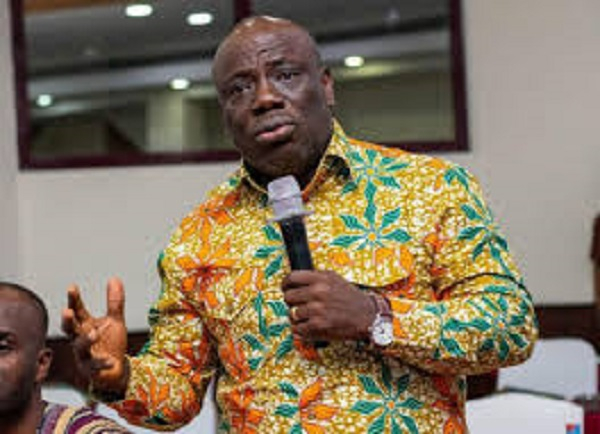
The battle for the Kpandai Constituency parliamentary seat has escalated to the highest court in the land, as NPP’s incumbent Member of Parliament (MP), Mathew Nyindam, has filed an application at the Supreme Court seeking to annul a High Court judgement that invalidated his 2024 election victory.

Mr. Nyindam, who was ordered to face a rerun, argues that the High Court, Commercial Division in Tamale, fundamentally erred in assuming jurisdiction over the case because the original election petition was filed outside the statutory time limit.

The Core Argument: Petition Filed 11 Days Late

The central pillar of Nyindam’s appeal revolves around a procedural error concerning the mandatory deadline for filing parliamentary election petitions as prescribed by Ghanaian law.

According to the MP’s legal counsel, Gary Nimako Marfo, the results for the Kpandai Constituency election, held on December 7, 2024, were officially published in the Government Gazette on December 24, 2024.

Ghana’s electoral law, specifically Section 18 of the Representation of the People Law, 1992 (P.N.D.C.L. 284), mandates that all petitions challenging parliamentary election results must be filed within 21 days of the gazette publication.

However, the petition challenging Nyindam’s victory was filed by the National Democratic Congress (NDC) candidate, Daniel Nsala Wakpal, on January 25, 2025—a significant 32 days after the Gazette publication.

This means the petition was filed 11 days after the legal deadline had expired.

Nyindam’s affidavit submitted to the Supreme Court emphatically states the jurisdictional error:

“The Parliamentary Election Petition filed by the 1st Interested Party on 25th January 2025, in respect of the Parliamentary Election held at the Kpandai Constituency on 7th December 2024, was invalid and could not have properly invoked the jurisdiction of the High Court, Commercial Division, Tamale,” Nyindam’s affidavit submitted to the Supreme Court states.

High Court Ruling and Supreme Court Challenge

The controversial High Court ruling, delivered on November 24, 2025, had annulled the entire Kpandai election results and ordered the Electoral Commission to conduct a rerun within 30 days.

Mr. Nyindam is now seeking a judicial review in the nature of certiorari to quash the entire judgment, along with all processes and proceedings that resulted from the allegedly invalid petition.

His legal team argues that allowing the High Court’s decision to stand would severely undermine the administration of justice and violate the statutory limits governing election petitions.

The Supreme Court is scheduled to hear the critical jurisdictional matter on Tuesday, December 16, 2025.

Election Data Breakdown

The official results from the December 7, 2024, Kpandai parliamentary election show a clear victory margin for the incumbent before the annulment:

CandidatePartyVotes PolledPercentage (%)
Mathew Nyindam (Winner)NPP27,94753.47%
Daniel Nsala WakpalNDC24,21346.33%
Total Valid Votes52,160100%

DISCLAIMER: The Views, Comments, Opinions, Contributions and Statements made by Readers and Contributors on this platform do not necessarily represent the views or policy of Multimedia Group Limited.

DISCLAIMER: The Views, Comments, Opinions, Contributions and Statements made by Readers and Contributors on this platform do not necessarily represent the views or policy of Multimedia Group Limited.

Security officers struggle to maintain order, Military deployed

0

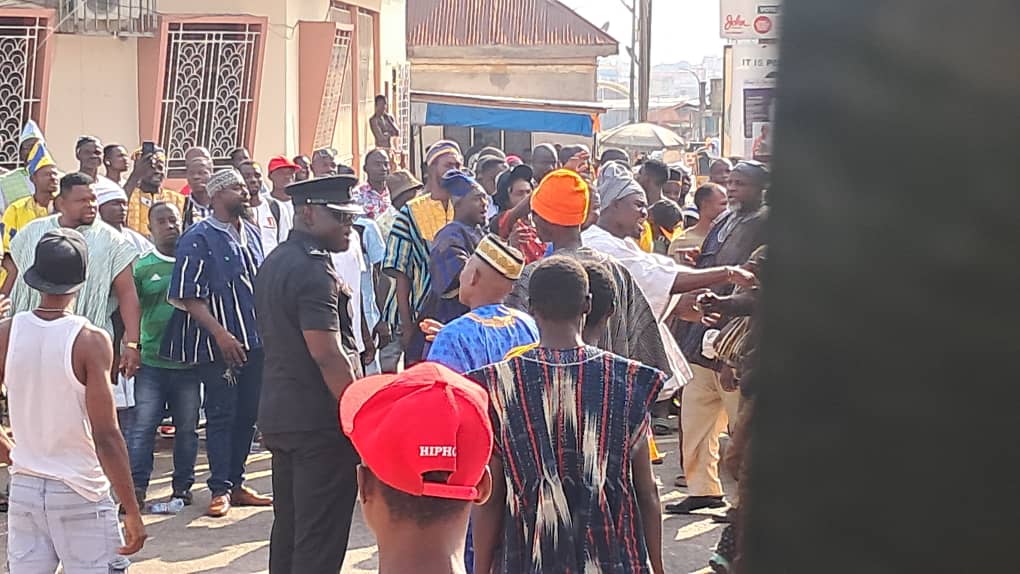
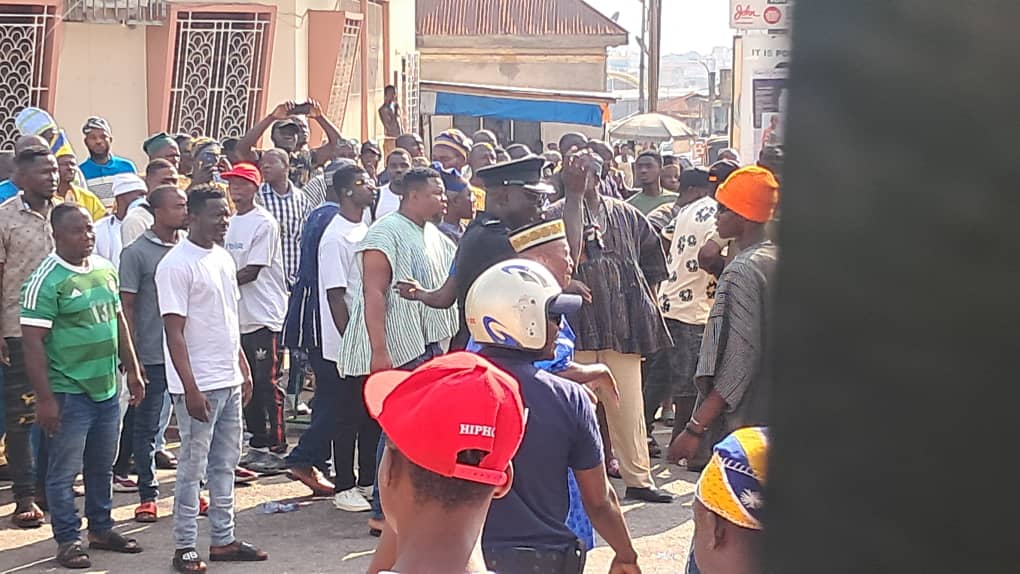
Security personnel struggled to maintain order on Monday, December 1, outside the Manhyia Palace in Kumasi as factions involved in the long-standing Bawku chieftaincy conflict jostled during the mediation processes.

Heavy security measures were enforced at all major entrances of the palace, with both police and military deployed to prevent any escalation after a clash broke out when one faction reportedly began to celebrate during the proceedings.

The exact cause of the skirmish remains unclear.
The heightened security comes ahead of Asantehene Otumfuo Osei Tutu II’s final ruling in the decades-old dispute, which is expected later on Monday, December 1, 2025. The Asantehene was tasked by President John Dramani Mahama to lead efforts toward a lasting resolution.

His involvement in the mediation began in April 2025, when he met representatives from both factions between April 28 and 30, opening a new chapter of dialogue aimed at ending hostilities.
Several dignitaries accompanied the Kusaasi delegation, including Garu MP Thomas Winsum Anabah, Binduri MP, MP for Zebilla Ebenezer Alumire Ndebilla, former NPP MP for Binduri Issifu Mahamoud, and former parliamentary candidates for Zebilla. Local executives, including the DCEs for Zebilla and Garu as well as the MCE for Bawku Central, were also present.

‘Avengers: Doomsday’ Breaks Marvel Tradition With This Behind-the-Scenes Twist

0

Erielle Sudario is a Collider News and Feature Author from Australia and has worked in the journalism industry since 2018. She has a passion for entertainment and pop culture news and has interviewed YouTubers, voice actors, film directors, and musicians throughout her career. When she’s not writing, you can see Erielle building keyboards, reading a good book, playing video games, and creating content on social media.

NDC used and dumped me after winning the 2024 elections – Mzbel cries out

0

Ghanaian singer Belinda Nana Ekua Amoah, popularly known as Mzbel, has cried out, accusing the National Democratic Congress (NDC) leadership of using and dumping her after winning the 2024 elections.

Mzbel revealed that NDC party officials were easily accessible during the campaign season, but are now refusing to answer her calls or return messages and those who do rudely speak to her.

Manhyia to update public after landmark joint mediation

0

The Manhyia Palace is expected to release an official statement following the final round of mediation talks led by the Asantehene, Otumfuo Osei Tutu II, aimed at resolving the decades-long Bawku conflict.

Unlike previous sessions, Monday’s meeting saw both the Kusaasi and Mamprusi factions sit together before the Asantehene for the first time.

The groups arrived under heavy security, undergoing strict checks before being ushered into the palace auditorium.

Sources indicate that the Asantehene listened to the grievances of both sides and urged restraint, working in collaboration with the Presidency to bring lasting resolution to the impasse.

Outside the Palace, supporters of the factions erupted in celebration after the meeting, sparking a brief misunderstanding that required intervention from police and military personnel.

Additional security was deployed to restore order. Both factions are now awaiting the Palace’s official communication on the next steps in the mediation process.

Many young people go to church only to search for ‘good’ partners

0

Manuel Bless is a Ghanaian gospel musician Manuel Bless is a Ghanaian gospel musician

Ghanaian gospel artiste Manuel Bless has criticised what he describes as a growing trend among youths who attend church primarily to find romantic partners, rather than for worship or spiritual growth.

Speaking in an interview on Hitz FM on November 30, 2025, Manuel Bless argued that many young people attend churches in the hopes of meeting a “good boy” or “good girl” instead of for faith.

He said this mindset often leads to unhealthy relationships and fornication.

“One of the problems with youth Christian ministry is that a lot of people have started gravitating towards churches because they are looking for spouses. They are looking for a good boy or a good girl.

“Most of the time, they meet this one, they sleep with them for a little bit, and they bounce. Then they move on, and they move on. Then they will say the boys or girls in the church are not good,” he said.

‘Hunger is stopping the youth from worshipping God’ – Perez Musik

Manuel Bless lamented that such behaviour blurs the lines between genuine Christian faith and worldly affairs.

He advised individuals to stay true to themselves instead of attempting to use the church as a cover for their activities.

“We are blurring the lines. We are mixing the waters, the clean water with the dirty water. I tell my team all the time that you should be bad in and out. Go out there, have your fun, Jam. Than to come to church and want to come and do that same thing in church,” he said.

ID/EB

Presidency forwards petitions for removal of EC Chair, Deputies & Special Prosecutor to Chief Justice

0

By Iddi Yire, GNA  

Accra, Dec. 01, GNA – President John Dramani Mahama has forwarded to the Chief Justice, seven petitions calling for the removal of Mrs Jean Mensa, the Chairperson of the Electoral Commission. 

The petitions are also calling for the removal of her two Deputies, Dr Bossman Eric Asare, the Deputy in-charge of Corporate Affairs, and Mr Samuel Tettey, the Deputy in-charge of Operations. 

In addition, the President has also forwarded three other petitions to the Chief Justice, calling for the removal of Mr Kissi Agyebeng, the Special Prosecutor from office. 

Mr Felix Kwakye Ofosu, the Presidential Spokesman and Minister in-charge of Government Communications, revealed these in an interview with the Ghana News Agency at the Presidency, explaining that the petitions were received at the Presidency, and that they had been forwarded to the Chief Justice in line with Constitutional Provisions. 

“The President has absolutely no role beyond forwarding the petitions as received to the Chief Justice,” Mr Ofosu said. 

“So, it is the Chief Justice who will determine the grounds on which the process has to be taken forward,” he stated. 

The Minister said inherent in the law was the satisfaction of the principles of natural justice; “That is, you cannot condemn a person unless you have heard from them, and that is precisely what is going to happen.” 

Constitutional requirements: 

Article 44(2) of the 1992 Constitution states that “The Chairman of the Electoral Commission shall have the same terms and conditions of service as a Justice of the Court of Appeal.” 

Article 44(3) also states that “The two Deputy Chairmen of the Commission shall have the same terms of and conditions of service as are applicable to a Justice of the High Court.” 

As a result of the above provisions the removal process of the Chairperson of the Electoral Commission must be in conformity with that of a Justice of the Court of Appeal, whereas that of the Two Deputies must be in line with that of a Justice of the High Court. 

Under Article 146 (1); A Justice of the Superior Court or a Chairman of a Regional Tribunal shall not be removed from office except for stated misbhaviour or incompetence or on ground of inability to perform the functions of his office arising from infirmity of Body or Mind. 

Article 146 (3) If the President receives a petition for the removal of a Justice of a Superior Court other than the Chief Justice or for the removal of the Chairman of a Regional Tribunal, he shall refer the petition to the Chief Justice, who shall determine whether there is a prima facie case. 

Under Article 146 (4) it states that; Where the Chief Justice decides that there is a prima facie case, he shall set up a committee consisting of three Justices of the Superior Courts or Chairmen of the Regional Tribunals or both, appointed by the Judicial Council and two other persons who are not members of the Council of State, nor members of Parliament, nor lawyers, and who shall be appointed by the Chief Justice on the advice of the Council of State. 

Article 146 (5) states that: The committee appointed under clause (4) of this article shall investigate the complaint and shall make its recommendations to the Chief Justice who shall forward them to the President. 

Again, under Article 146 (8): All proceedings under this article shall be held in camera, and the Justice or Chairman against whom the petition is made is entitled to be heard in his defence by himself or by a lawyer or other expert of his choice. 

Article 146 (9) states that: The President shall, in each case, act in accordance with the recommendations of the committee. 

GNA 

Edited by Christabel Addo 

When You Face Difficulties, Turn to God Almighty

0

In every generation and in every land, humanity has faced seasons of hardship. From personal struggles and economic distress to illness, loss, and uncertainty about the future, difficulties are an unavoidable part of life’s journey.

Yet, across centuries of faith and experience, one timeless truth continues to offer comfort and direction: when you face difficulties, turn to God Almighty. The pages of The Holy Bible are filled with testimonies of men and women who encountered overwhelming trials but found strength, deliverance, and restoration when they placed their trust in God.

Life’s challenges often arrive without warning. A sudden loss of employment, a painful diagnosis, family conflict, or national crises can shake even the strongest hearts. In such moments, human solutions may fall short, and courage may seem to fade.

Yet Scripture reminds believers that God is not distant in times of trouble. “God is our refuge and strength, a very present help in trouble” (Psalm 46:1). This declaration is not merely poetry; it is a living assurance that God remains actively involved in the lives of those who seek Him.

Turning to God in difficult times is more than a religious ritual; it is an act of profound faith. It requires humility to admit one’s limitations and to acknowledge that human wisdom alone cannot settle every problem.

King Solomon, one of the wisest men who ever lived, advised, “Trust in the Lord with all your heart, and lean not on your own understanding; in all your ways acknowledge Him, and He shall direct your paths” (Proverbs 3:5–6). This call to trust challenges believers to surrender control and allow God to guide their steps, even when the path ahead seems unclear.

The Scriptures also reveal that difficulties are not always signs of abandonment. Often, they are instruments through which God refines character and deepens faith. The Apostle Peter wrote, “Though now for a little while, if need be, you have been grieved by various trials, that the genuineness of your faith… may be found to praise, honour, and glory at the revelation of Jesus Christ” (1 Peter 1:6–7). Trials, painful as they may be, can become workshops where patience, endurance, and spiritual maturity are forged.

Many biblical figures walked through deep valleys before experiencing God’s deliverance. Job lost his children, wealth, and health in rapid succession. Stripped of every earthly comfort, he still declared, “Though He slay me, yet will I trust Him” (Job 13:15). In the end, God restored Job’s fortunes and blessed him with even greater abundance than before. His story remains a powerful reminder that faith in adversity is never wasted.

Likewise, the life of Joseph illustrates how God can turn suffering into purpose. Betrayed by his brothers, sold into slavery, and unjustly imprisoned, Joseph endured years of hardship. Yet he remained faithful to God. When his destiny finally unfolded, he rose to become a ruler in Egypt and later saved his family from famine. Looking back, he told his brothers, “You meant evil against me; but God meant it for good” (Genesis 50:20). This profound statement affirms that God is able to transform even the darkest experiences into instruments of blessing.

Turning to God in times of difficulty also involves prayer. Prayer is the sacred bridge between human weakness and divine strength. The Apostle Paul urged believers, “Be anxious for nothing, but in everything by prayer and supplication, with thanksgiving, let your requests be made known to God” (Philippians 4:6). Prayer does not always change circumstances instantly, but it certainly changes the heart of the one who prays. Through prayer, fears are quieted, faith is renewed, and hope is rekindled.

In today’s fast-paced world, many people lean heavily on technology, wealth, influence, or human connections when trouble arises. While these may offer temporary solutions, they cannot replace the enduring peace that comes from trusting in God. Jesus Himself warned, “For what will it profit a man if he gains the whole world, and loses his own soul?” (Matthew 16:26). Material success is fragile and fleeting, but faith in God anchors the soul beyond the storms of life.

Moreover, God does not merely provide solutions; He offers His presence. Sometimes the greatest gift in suffering is not immediate escape but divine companionship. God assured the prophet Isaiah, “When you pass through the waters, I will be with you; and through the rivers, they shall not overflow you. When you walk through the fire, you shall not be burned” (Isaiah 43:2). This promise does not deny the reality of waters or fire, but it guarantees that God walks with His people through them.

Turning to God also demands obedience and righteousness. Hardship can tempt people to abandon moral principles in search of quick relief. Yet the Bible consistently teaches that lasting deliverance is connected to upright living. “Many are the afflictions of the righteous, but the Lord delivers him out of them all” (Psalm 34:19). Righteousness does not exempt one from trouble, but it ensures divine help in the midst of it.

Faith in God is not blind optimism. It is a confident assurance rooted in God’s unchanging character. The writer of Hebrews reminds believers that God is faithful to His promises. Even when outcomes differ from human expectations, God’s purposes remain perfect.

The Apostle Paul, who endured imprisonment, beatings, and persecution, boldly testified, “And we know that all things work together for good to those who love God, to those who are called according to His purpose” (Romans 8:28).

In moments of despair, it is easy to feel alone. Yet God often uses the community of faith as channels of comfort. The encouragement of a fellow believer, the warmth of compassionate words, and shared prayers can become tangible reminders of God’s love. Turning to God does not isolate a person; rather, it often draws them into deeper fellowship with others who are walking the same path of faith.

Ultimately, turning to God in times of difficulty is an invitation to experience His power, mercy, and faithfulness in new ways. It is in the furnace of hardship that testimonies are born. It is in the night of weeping that songs of deliverance are prepared for the morning. As the psalmist declared with confidence, “Weeping may endure for a night, but joy comes in the morning” (Psalm 30:5).

In a world filled with uncertainty, one truth remains unshaken: God Almighty is the sure refuge of the troubled heart. When human strength fails, His power still stands. When doors close, His hand can open new pathways. When hope seems dim, His light shines brightest. Therefore, in every season of difficulty, whether public or private, great or small, let hearts be lifted heavenward. For those who turn to God will never turn in vain.

By Adelina Fosua Adutwumwaa

Self-proclaimed prophet sentenced to three life terms for r@pe, m8rder of woman and her daughter in South Africa

0

The Limpopo High Court sitting at Polokwane, South Africa has convicted and sentenced a self-styled prophet Mothupi Tjale Tau (36) to three life terms of imprisonment and additional 37 years’ imprisonment for multiple offences including two counts of m8rder, two counts of kidnapping, r@pe, robbery with aggravating circumstances and assault with intent to do grievous bodily harm.

Abuse of court processes – Dafeamekpor slams Nyindam over fresh SC motion

0

Majority Chief Whip, Rockson-Nelson Dafeamekpor, has accused Kpandai MP, Matthew Nyindam, of “abusing the court processes” after the latter filed yet another notice of appeal and application for stay of execution at the Supreme Court today.

Speaking on JoyNews’ Top Story on Monday, December 1, the South Dayi MP described as misleading suggestions that Mr. Nyindam was only now initiating an appeal process.

According to him, the embattled MP had already filed a notice of appeal on November 24, followed by an application for stay of execution.

“It is most inaccurate for anybody to suggest that Matthew Nyindam is now filing a notice of appeal. What they have done today, the first of December, amounts to an abuse of the court processes,”
he stated.

He stressed that filing a second set of the same processes misleads the public and burdens the judiciary.

“If you come to the media today and say you are now filing the notice of appeal and also filing an application for stay of execution, they should be candid with everyone. This is the second set of processes they are filing, and they are abusing the processes of the court. I want the general public to know this.”

When asked whether it is the court that determines what constitutes an abuse of court processes, the Majority Chief Whip clarified:

“No, it can be my calling. As the Majority Chief Whip, I am demanding that Matthew Nyindam no longer participate in the processes of Parliament.”

He added that the Speaker agreed, noting that the relevant provisions of the Court of Appeal rules already grant an automatic seven-day stay of execution, which expires today.

Dafeamekpor questioned why Mr. Nyindam was not relying on the initial filings if they were valid:

“If you have indeed filed a notice of appeal and followed it with an application for stay of execution, why are you filing another set? I suspect they may want to withdraw one, but to simply keep filing processes just so that Matthew can stay in Parliament can’t hold.”

This development comes after NPP’s incumbent MP for Kpandai filed an application at the Supreme Court seeking to overturn a High Court ruling that invalidated his 2024 parliamentary election victory.

The High Court, Commercial Division in Tamale, had ordered a rerun after ruling that the petition challenging his election was filed out of time. Mr. Nyindam, however, insists that the court wrongly assumed jurisdiction and is urging the Supreme Court to annul the decision.

DISCLAIMER: The Views, Comments, Opinions, Contributions and Statements made by Readers and Contributors on this platform do not necessarily represent the views or policy of Multimedia Group Limited.

DISCLAIMER: The Views, Comments, Opinions, Contributions and Statements made by Readers and Contributors on this platform do not necessarily represent the views or policy of Multimedia Group Limited.

‘Religious intolerance in schools could threaten Ghana’s social cohesion’

0

Samuel Okudzeto Ablakwa is the Minister of Foreign Affairs play videoSamuel Okudzeto Ablakwa is the Minister of Foreign Affairs

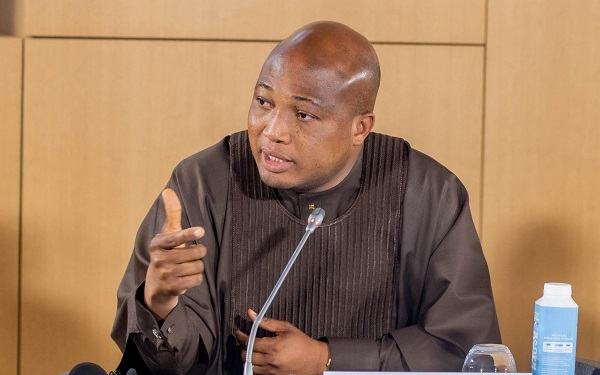
The Minister of Foreign Affairs, Samuel Okudzeto Ablakwa, has warned that ongoing debates on religious practices in schools could undermine social cohesion in he country.

Delivering a keynote address at the 87th Speech and Prize-Giving Day of the Presbyterian Boys’ Secondary School on Saturday, November 29, 2025, he stated that debates over religious practices in schools should not overshadow broader concerns about ethical leadership and national development.

President Mahama should intervene in the Wesley Girls School saga – Muslim cleric

“It has always been possible to accommodate the religious persuasions or idiosyncrasies in our secondary schools, as has always been epitomized.

“So, what exactly is this new national problem? To me, the essential point should not be about whether our schools are religious schools or public schools funded by taxpayers. The issue should be about the common humanity and love for one another,” he noted.

Wesley Girls-Muslim Students Case: Full details of the lawsuit shaking Ghana’s education system

Okudzeto Ablakwa continued to state that “Ghana has, hitherto, been celebrated globally for our religious tolerance; let’s not lose it”.

The foreign minister also called on policymakers and educators to prioritise practical skills and ethical values that prepare young Ghanaians for both national and global challenges.

“The quality of our education system will ultimately determine Ghana’s standing in the world,” he added, stressing the direct link between education, national development, and international diplomacy.

His comments follow a legal suit filed against Wesley Girls High School over allegations of religious discrimination.

Watch the video below:

JKB/AE

Doubts over IGP Yohuno’s post retirement contract

Cameroon sack Head Coach Marc Brys days before AFCON 2025

0

Eto'o (L) has sacked Marc Brys (L) from his position as coach of Cameroon Eto’o (L) has sacked Marc Brys (L) from his position as coach of Cameroon

Cameroon have sacked Head Coach Marc Brys just days before the start of AFCON 2025, sending shockwaves through the footballing world and the Indomitable Lions’ camp.

The decision comes as Samuel Eto’o begins his second term tenure as President of the Cameroonian Football Federation, signaling a bold shake-up ahead of the continent’s premier tournament.

Eto’o’s influence appears to have played a key role in the timing and decisiveness of the move, with the federation opting for a fresh approach at a crucial moment.

Brys, 61, had been appointed in April 2024 by Cameroon’s sports ministry, taking over from former Liverpool and West Ham defender Rigobert Song.

The Belgian coach, who most recently managed OH Leuven, was brought in with the hope of revitalising Cameroon’s squad and preparing the team for major competitions.

Otto Addo visits injured Abdul Mumin

Despite his efforts, Cameroon’s preparations have been turbulent, including mixed performances in qualifiers and missing out on the 2026 World Cup.

The late decision to dismiss Brys leaves the Indomitable Lions facing a highly uncertain lead-up to the tournament, with squad cohesion and strategy now in question.

The federation has yet to announce an interim or permanent replacement.

FKA/AE

Serwaa Amihere Faces Backlash Over Comment on Daddy Lumba’s Funeral

0

Don’t miss out! Get your daily dose of sports news straight to your phone. Join YEN’s Sports News channel on WhatsApp now!

Ghanaian media personality Serwaa Amihere has gone viral after she shared her candid opinion about the late Daddy Lumba’s funeral arrangements.

In a viral post, the lawyer shared her thoughts after a court ruling from Akosua Serwaa’s lawsuit was announced online.

Serwaa Amihere reacts after the court ruling announcing Odo Broni as a legal wife trends online after she graced Daddy Lumba’s one-week observance. Photo credit: @ghkwaku. Source: Instagram

Serwaa Amihere reacts after court ruling

GHOne TV morning show host Serwaa Amihere disclosed that the family of the late Charles Kwadwo Fosuh could go ahead and plan for his final funeral rites.

Serwaa Amihere expressed her appreciation to the Most High God after the court ruling was finally out.

The co-founder of Oh My Hair and Office & Co clothing brand made these comments on Ghanaian blogger NYDJ Live’s post on the X platform.

The Facebook post is below:

Ghanaians react to Serwaa Amihere’s post

Some social media users have commented on Serwaa Amihere’s post on the X platform. YEN.com.gh has compiled some reactions below:

Afia Pokuwa Boansi – Boateng stated:

“Ayeekoo Serwaa and Afia Akoto ….3da mu enimu.”

De Duchess stated:

“No madam, papa shee and Akosua brempomaa are on their way to convince Akosua serwaa to go and appeal in court over the ruling. So we’re waiting for part 2 wai.”

Akosua Addo commented:

“No, it has remained with the lumba sister vs abusuapanin issue nu they both are also dragging the date of funeral plus the one week.”

Ayisi Meshack stated:

“If he wants peace, nothing stops him from preparing for peace….we are made up of who we think we are.”

Afia Korankyewaa commented:

“Noo..Lumba need fresh braids oo cus they will start another court soon on the money and who killed Lumba..boi.”

Smiley Ama Cynthia stated:

“After getting what you want abi.”

Odo Broni bathes in champagne after ruling

The second wife of Daddy Lumba, Odo Broni, has caused a stir with her method of celebration following the court ruling.

In a video sighted by YEN.com.gh, a happy-looking Odo Broni sat on a chair at the East Legon residence of the late musician as her PA poured champagne on her head.

Some social media users claimed that the act is a form of cleansing after she was defamed online.

The TikTok video of Odo Broni’s personal assistant pouring champagne on her is below:

Akosua Serwaa’s judge speaks after ruling

The Kumasi High Court, on Friday, November 28, 2025, declined to name Akosua Serwaa the sole legal wife of the late highlife icon as she had demanded.

According to reports, Odo Broni was able to demonstrate that she was legally married to Daddy Lumba, but Akosua Serwaa was unable to do so. This decision was made by the judge, Justice Dorinda Smith.

According to a Citi FM report, Serwaa’s marriage certificate, which she used to prove that she married Lumba in Germany in accordance with the ordinance, was declared fake.

The judge further ordered that Priscilla Ofori, popularly called Odo Broni, be acknowledged as Daddy Lumba’s second wife and permitted to carry out the widowhood ceremonies.

Serwaa A allegedly took Lumba’s corpse to hospital

Earlier, YEN.com.gh wrote about the late Daddy Lumba’s cousin speaking out about an alleged discussion he had with Odo Broni following the musician’s death.

Everyone, including presidents and celebrities, believes that the late Charles Kwadwo Fosuh is the best Ghanaian artist of all time.

In response to a post outlining the decision made by several Fosu family members, some social media users have called for a probe into the legend’s passing.

Asantehene wraps up Kusaasi and Mamprusi mediation talks, set to brief President Mahama

0

The Asantehene, Otumfuo Osei Tutu II, is expected to present the outcome of the long-running mediation talks between the Kusaasi and Mamprusi factions to the President in the coming days, following the conclusion of a major dialogue session at the Manhyia Palace on Monday.

There were scenes of wild jubilation at the Palace as members of both sides expressed relief and optimism after the latest round of talks ended on a positive note.

Kwabena Agyepong’s campaign manager abandons ship, declares for Bawumia

0


In a significant move that signals shifting allegiances within the New Patriotic Party (NPP), Ofosu Asamoah, the former Member of Parliament (MP) for Kade, has officially defected from the camp of Kwabena Agyepong to throw his full weight behind former Vice President Dr. Mahamudu Bawumia.

The declaration, made at a campaign event in the Eastern Region, marks Mr. Asamoah’s first public appearance with the Bawumia team since the start of the internal contest.

His endorsement is expected to bolster Dr. Bawumia’s campaign efforts to consolidate support across key regions as the party gears up for the decisive presidential primaries scheduled for January 31, 2026.

Mr. Asamoah, who served as the campaign manager for Kwabena Agyepong’s bid, explained that his decision was not taken lightly but stemmed from a critical reassessment of the NPP’s trajectory and electability.

He asserted that Dr. Bawumia offers the party the “strongest chance” of retaining power in the crucial 2028 general elections.

Addressing the delegates and the assembled campaign team, the former Kade MP acknowledged his previous position but justified his strategic shift:

“I am still the same Ofosu Asamoah you know. My connection with Dr. Bawumia and his team isn’t new; I simply chose not to back him earlier this year. But sometimes in life, you recognize that a change is necessary.”

He further indicated that his privileged view as a rival campaign manager led him to conclude that the original strategy had faltered:

“Having observed the campaign closely as Kwabena Agyepong’s manager, I feel things haven’t gone as planned. That’s why I am now joining Dr. Bawumia’s team, whom I believe is destined to be the next president,” he stated.

Ofosu Asamoah is a highly experienced politician, having represented the Kade constituency in Parliament and commanding significant respect within the Eastern Region—one of the NPP’s electoral strongholds, delivering nearly 15% of the party’s total votes in the 2020 general elections.

His move is viewed by political analysts as a strategic validation for Dr. Bawumia’s campaign, demonstrating an ability to draw experienced political operatives from rival internal camps. It provides Dr. Bawumia with valuable organizational structure and local influence, especially among delegates in the NPP’s largest regions.

The defection underscores the high-stakes maneuvering happening within the NPP as candidates position themselves ahead of the crucial January 31, 2026, primaries, which will select the party’s flagbearer to contest the upcoming national election.

DISCLAIMER: The Views, Comments, Opinions, Contributions and Statements made by Readers and Contributors on this platform do not necessarily represent the views or policy of Multimedia Group Limited.

DISCLAIMER: The Views, Comments, Opinions, Contributions and Statements made by Readers and Contributors on this platform do not necessarily represent the views or policy of Multimedia Group Limited.

Akandoh announces 3 new Catheterisation centres for KATH, Korle Bu, TTH

0

Minister of Health, Kwabena Mintah Akandoh, has announced plans by the government to establish three catheterisation centres across the country as part of efforts to strengthen primary healthcare delivery.

Speaking at the Accountability Series in Accra on Monday, December 1, the Minister said the centres will be situated at the Korle Bu Teaching Hospital, Komfo Anokye Teaching Hospital, and the Tamale Teaching Hospital, forming a critical part of the government’s strategy to improve specialist cardiac care nationwide.

Transitioning to broader reforms, the Minister explained that the ministry is also retooling primary health facilities with essential equipment to ensure they deliver on the true mandate of primary healthcare.

According to him, without the right tools at the basic level, Ghana cannot achieve the quality of healthcare citizens deserve.

He further announced that the government is procuring new DNA testing machines, including one for the Noguchi Memorial Hospital, to enhance diagnostic capacity across the country.

“We are going to retool our primary health facilities with the basic equipment needed to deliver quality healthcare and give real meaning to primary healthcare. We are seeking to establish three catheterisation centres, namely the Korle Bu Teaching Hospital, Komfo Anokye Teaching Hospital, and the Tamale Teaching Hospital. We are also procuring a DNA testing machine for the Noguchi Memorial Hospital.”

The Minister added that under the Mahama Cares programme, both teaching and non-teaching hospitals will receive upgraded equipment to improve the management of non-communicable diseases such as hypertension, diabetes and cardiovascular conditions.

To ensure sustainability, Akandoh revealed that the government is deepening collaboration with the private sector, acknowledging that public funding alone cannot meet Ghana’s health infrastructure needs.

He explained that the model will allow private partners to provide medical equipment to public health facilities and be reimbursed through claims-processing mechanisms.

‘Queen May Don Win’, Actress Rita Edochie Declares, Reveals God Has Honored May Edochie With ‘Something That Will Shake The World’

0

Amid rumours circulating online that Yul and his colleague Judy Austin’s marriage is experiencing crisis, Rita took to Instagram to write that Yul’s first wife May Edochie has won and she proceeded to congratulate her.

Nigerian actress, Rita Edochie has offered her followers a glimpse into recent developments within the Edochie family, particularly concerning Yul Edochie’s household.

I am happy Daddy Lumba is dead, and I am happier he suffered before he died- Sally Mann

0

Media personality, Sally Mann has expressed happiness over the death of legendary Daddy Lumba, stating that “I am glad Lumba died”.

Sally Mann’s shocking expression comes during an interview with Ohemaa Woyeje on Angel FM which Gh Page monitored.

According to the entertainment pundit, even though the judgment did not go the way she anticipated, she feels extremely happy that at least Daddy Lumba is dead.

Nyindam runs to Supreme Court to overturn annulment of results

0

Matthew Nyinadam is the disputed Member of Parliament for Kpandai play videoMatthew Nyinadam is the disputed Member of Parliament for Kpandai

The Member of Parliament for Kpandai, Mathew Nyindam, has filed an application at the Supreme Court to overturn a High Court ruling in Tamale that annulled the 2024 parliamentary election results and ordered a rerun of the election results.

According to a report by channelonenewsonline.com, lawyer for the embattled lawmaker, Gary Nimako Marfo, argued that the High Court, Commercial Division in Tamale, wrongfully assumed jurisdiction over the petition filed by NDC candidate Daniel Nsala Wakpal.

Kpandai MP speaks on High Court’s election rerun decision

“The Parliamentary Election Petition filed by the 1st Interested Party on 25th January 2025… was invalid and could not have properly invoked the jurisdiction of the High Court, Commercial Division, Tamale,” the report noted.

The High Court ruling, delivered on November 24, 2025, nullified the entire Kpandai parliamentary election and directed that a rerun be conducted within 30 days.

Nyindam is now seeking judicial review in the nature of certiorari to quash that judgment, together with all related processes and proceedings.

The report further noted that the Supreme Court is expected to hear the application on Tuesday, December 16, 2025.

Court throws out NDC injunction, orders EC to re-collate Ablekuma North election results

In the December 2024 parliamentary election, Nyindam, representing the New Patriotic Party, secured 27,947 votes (53.47%), defeating Daniel Nsala Wakpal of the National Democratic Congress, who obtained 24,213 votes (46.33%).

JKB/AE

Meanwhile, watch as Global Data Protection expert Patricia Poku outlines key projects she is leading:

MTN Ghana shareholders approve merger of MobileMoney Limited and MobileMoney Fintech Limited  

0


MTN Ghana shareholders approve merger of MobileMoney Limited and MobileMoney Fintech Limited   – Ghana Business News


Don’t present Bible and ring during customary marriage — Lawyer warns men

0

The lawyer's comments come on the back of the issue of Daddy Lumba's two wives The lawyer’s comments come on the back of the issue of Daddy Lumba’s two wives

Private legal practitioner, Topra Nyansakuku, is cautioning men against presenting a Bible and a ring to their spouses during customary marriage ceremonies, describing the act as legally risky and potentially criminal.

According to him, the presentation of these items — commonly mistaken as part of an “engagement” — symbolises an intention to convert the customary marriage into an Ordinance Marriage, which legally permits only one wife.

As a result, he warned that men who unknowingly engage in this practice could expose themselves to charges of bigamy, a criminal offence punishable by up to three years’ imprisonment.

Speaking on the Ghana Yensom morning show hosted by Chief Jerry Justice on Accra 100.5 FM on Monday, December 1, 2025, Nyansakuku said a jealous spouse who feels threatened by the possibility of her husband taking another wife could trigger legal action, compelling the man to regularise the marriage under the Ordinance—thereby restricting him to a single spouse.

He explained that while Customary and Islamic marriages allow a man to marry multiple wives, an Ordinance Marriage does not.

Therefore, any act that signals an intention to shift from one system to the other, such as presenting a Bible and a ring during a customary ceremony, could have serious legal implications.

The lawyer also expressed concern over the growing trend of couples conducting what they call a “morning engagement,” followed by a ceremony at an event centre later in the day, which they describe as a wedding.

He stressed that Ghana’s marriage laws do not recognise any ceremony called an “engagement,” adding that many of these practices fall outside the legally accepted framework.

Nyansakuku shared these insights while discussing the widely publicised case involving the two wives of highlife legend Daddy Lumba, which has reignited public debate about marriage types and legal compliance in Ghana.

President hails food and Agric Minister

0

By Augustine Agyapong, GNA  

Kukuom (Ahafo) Dec.00, GNA – President John Dramani Mahama has hailed Mr Eric Opoku, Food and Agriculture Minister as one of the best Ministers of Agriculture in the history of Ghana. 

He made the commendation during the launch of a new vegetable development project under the national agricultural strategy atukuom in the Asunafo South District and the groundbreaking ceremony for a chicken and meat processing centre at Bechem in the Ahafo region. 

Speaking at the event, President Mahama underscored the fresh vegetable drive as a key step toward improving food security, reducing import dependence, and empowering small holder and subsistence farmers across the country.  

 Mr Eric Opoku, who is also the Member of Parliament for Asunafo South, has been steering major of intervention  by launching  the Feed Ghana Programme, in  April this year  designed to transform the agricultural sector, boost domestic food production, stabilise food prices, create jobs and supply raw materials for agro-industries. 

Under the programme, the Ministry rolled out the YƐREDUA Vegetable Development Project, promoting vegetable cultivation through greenhouse farming, irrigation supported open field cultivations, support for the urban, peri urban and rural farmers. Nationwide vegetable nurseries are being established to give families easy access to quality seedlings, encouraging home gardening a household level food production. 

In the poultry subsector, Mr. Opoku has spearheaded a broad revitalization effort including the Nkoko Nketenkete Programme , a backyard poultry initiative targeting women and youth and a “Farm toTable” framework supporting large and medium scale poultry farmers.  

The Ministry has distributed birds to thousands of households and is scaling up domestic poultry production to reduce Ghana’s reliance on imported poultry products.  

As part of the revitalisation, a state-of-the-art soya processing plant is being set up in the North to provide a reliable market for soybean farmers and feed into poultry feed value chains. 

The Feed Ghana programme has also seen expanded irrigation infrastructure, rehabilitation of dams and support for institutional farming covering schools, security agencies, religious institutions, and youth to boost production of staples, vegetables and livestock while curbing postharvest losses. 

At the Bechem groundbreaking, President Mahama broke ground for the construction of a chicken and meat processing centre, championed by Minister Opoku as a cornerstone of Ghana’s poultry valuechain development and local meat processing.  

The public noted that the new vegetable push and renewed investment in poultry and agro processing position Ghana for long term food self sufficiency and economic transformation, recasting agriculture from subsistence level production to a diversified, agro-industrial sector with emphasis on food security, import substitution, rural livelihoods, and value chain development.  

GNA 

Regina Benneh/Linda Asante Agyei 

Catholic Laity Council Supports Christian Council

0

Ghana Catholic Bishops’ Conference


The National Catholic Laity Council of Ghana has expressed concern about Education Minister Haruna Iddrisu’s recent statement on the floor of Parliament in which he said that current debates surrounding religious practice in Christian Mission schools hinge on issues of human rights and constitutional interpretation.

According to the Council, “while we acknowledge the obligation of government to uphold the rights of every Ghanaian child, we firmly reject any attempt–direct or implied–to diminish, distort or undermine the historical identity, proprietorship and mission of Christian-founded educational institutions in Ghana. The issue at stake is far broader than an abstract human rights conversation. It touches the heart of partnership that predates the nation itself.”

The Council has endorsed the joint statement issued by the Ghana Catholic Bishops’ Conference (GCBC) and the Christian Council of Ghana (CCG) on November 25, 2025.

“As affirmed in that statement, Christian Missions schools were established by the Churches–not the State–and their ethos, values and communal culture arise from a clearly defined Christian worldview. Governmental support over the decades has been a partnership, not a transfer of ownership, nor a mandate for the State to redefine the religious character of these institutions,” it added.

Continuing, the Council expressed its alignment with the GCBC-CCG position that attendance in mission schools is voluntary and parents freely choose these schools knowing their Christian identity; that the constitutional rights to freedom of religion and association protect not only individuals, but also faith-based institutions; that the integrity, discipline and excellence for which missions are known are inseparable from their Christian foundations.

Any attempt to impose parallel religious systems risks fracturing the unity, moral formation and communal discipline that define these institutions as stated by the GCBC and CCG, is also endorsed by the Laity Council.

Nyindam challenges Kpandai election annulment at Supreme Court

0

Kpandai MP Mathew Nyindam has approached the Supreme Court to overturn the High Court’s annulment of his December 2024 parliamentary win.

Nyindam argues that the High Court lacked jurisdiction to hear the petition filed by NDC candidate Daniel Nsala Wakpal, which was filed 32 days after the election results were gazetted, beyond the 21-day limit under Section 18 of the Representation of the People Law, 1992.

Ashanti Region struggling to meet HIV targets as stigma blocks testing — Ghana AIDS Commission

0

Olivia Graham, Ashanti Regional Technical Coordinator of the Ghana AIDS Commission (GAC)

The Ashanti Region is far from meeting national HIV testing targets as stigma and fear continue to keep thousands from knowing their status, according to the Ghana AIDS Commission (GAC).

Olivia Graham, the Ashanti Regional Technical Coordinator of the GAC, said the region’s biggest barrier is no longer access to testing but public attitudes towards the virus.

“Only 68% of people living with HIV in Ghana know their status. The rest do not test because they fear stigma, they fear isolation, and they fear what people will say,” she said.

Ghana is working toward the global 95-95-95 HIV targets, which require 95% of persons living with HIV to know their status, 95% of those diagnosed to be on treatment, and 95% of those on treatment to achieve viral suppression.

While the country has reached 69% treatment coverage and 90% viral suppression, testing remains the weakest link nationally—and in Ashanti, the gap is wider. Only 40.4% of people estimated to be living with HIV in the region are currently on treatment.

Ms Graham said access is not the challenge since HIV testing is available at all government health facilities, including CHPS compounds, alongside community outreach services.

“You can get tested at any government facility. Access is there. People just do not want to test,” she stressed.

She added that stigma is being driven by persistent myths, including false beliefs that HIV can be contracted through buying food from infected persons or that testing is an admission of immoral behaviour.

Data from the Ghana Demographic and Health Survey reinforces her concerns, showing that more than 70% of respondents hold discriminatory attitudes towards people living with HIV. Stigma index studies also show high levels of self-stigma.

“This is not only an external stigma. People living with HIV internalise the comments they hear. They judge themselves before anyone judges them,” she noted.

Stigma is also affecting treatment adherence. Ms Graham said some patients travel long distances to avoid being recognised at local facilities. When they lack transportation money, they miss appointments and interrupt their treatment.

The region has also recorded cases of people abandoning antiretroviral therapy for unverified herbal remedies. She recounted an encounter with a herbalist who claimed to have a cure and sold it at high cost.

“People stop their free treatment, go for these cures, and return to the hospital worse,” she said, warning that there is currently no cure for HIV.

Despite the challenges, Ms Graham said support systems exist for people who test positive. These include trained counsellors, peer models, and mentor mothers—women living with HIV who have delivered HIV-negative babies and support pregnant women through treatment.

Self-test kits, distributed by civil society organisations such as WAPCAS, Hope for Future Generations, West Africa AIDS Foundation and other advocacy groups, are also helping people test privately before seeking confirmatory testing.

She urged the media to play a stronger role in correcting misinformation and reducing stigma.

“If the media uses language that promotes fear or stigma, it affects how people behave. We need accurate information,” she said, explaining that people on effective treatment with suppressed viral load have a significantly lower chance of transmitting the virus.

Ms Graham warned that many new infections in Ghana occur in what people perceive to be safe relationships.

“Most new infections are in stable relationships. It’s not about promiscuity,” she said, adding that condom use is often more consistent among sex workers than among couples.

She said the GAC and its partners will continue scaling up education, expanding testing, and ensuring treatment access across the region.

“When everybody knows their status and those who are positive start treatment, we all benefit. People stay healthy, and the risk of transmission goes down,” she emphasised.

DISCLAIMER: The Views, Comments, Opinions, Contributions and Statements made by Readers and Contributors on this platform do not necessarily represent the views or policy of Multimedia Group Limited.

DISCLAIMER: The Views, Comments, Opinions, Contributions and Statements made by Readers and Contributors on this platform do not necessarily represent the views or policy of Multimedia Group Limited.

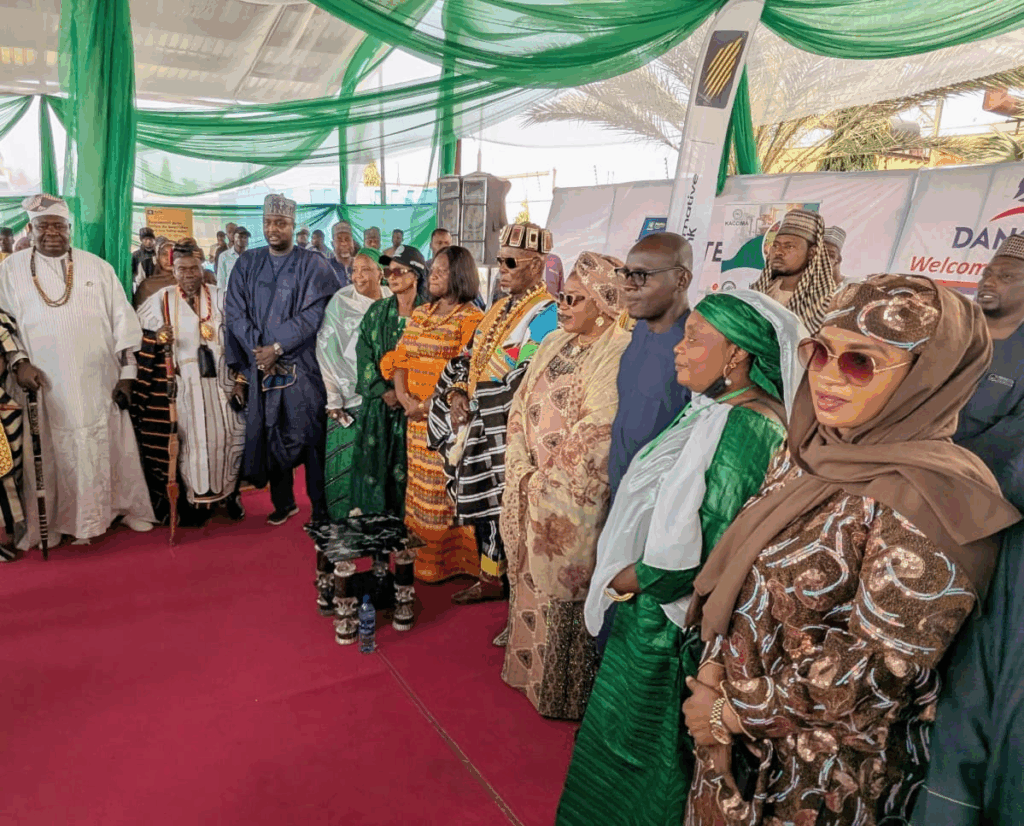
Buipe Paramount Chief calls on gov’t to support Northern Ghana-Kano trade

0

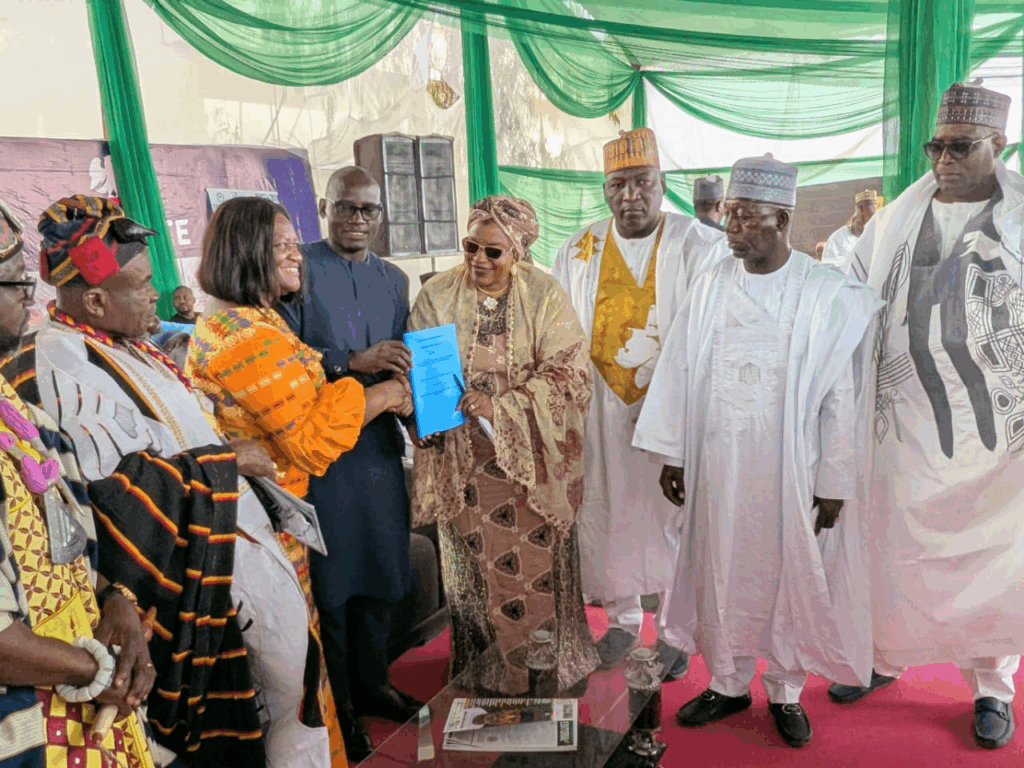
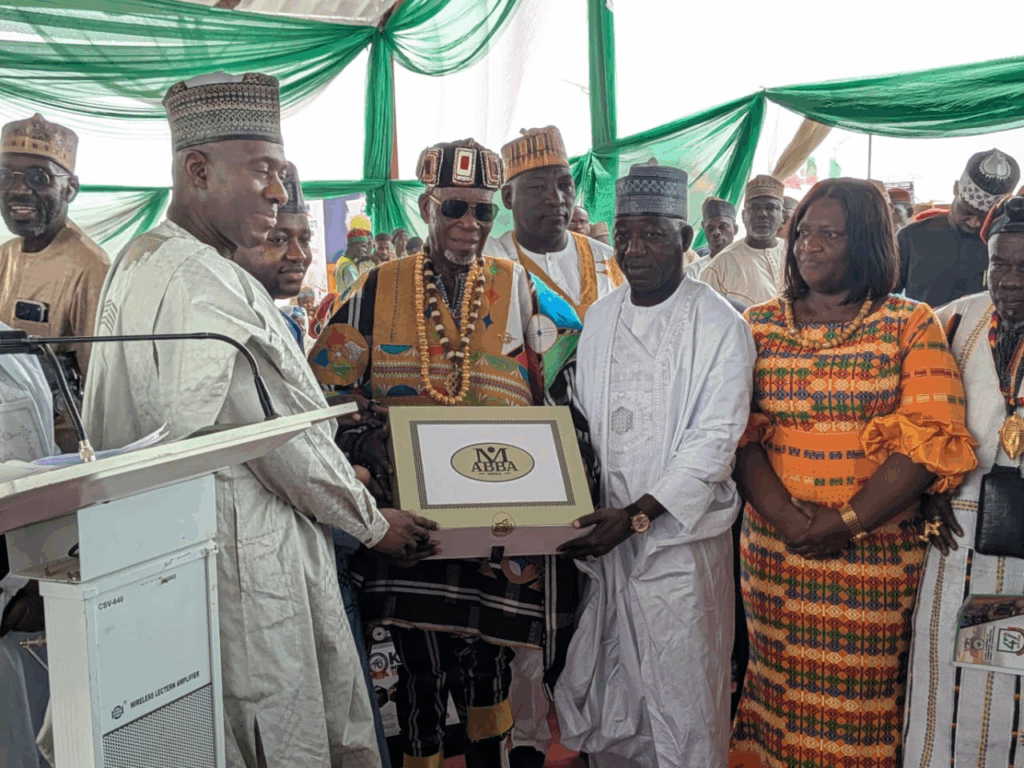
The Paramount Chief of the Buipe Traditional area, Buipe Wura Abdulai Jinapor II, has called on the governments of Ghana and Nigeria to support the Northern Ghana-Kano Trade and Partnership Development Centre.

This centre aims to promote business growth and trade between Northern Ghana and Kano, Nigeria.

The chief made this appeal at a trade partnership signing agreement between the Kano Chamber of Commerce, Industry, Mines, and Agriculture (KACCIMA) and the Northern Ghana-Kano Trade and Partnership Development Centre.

He emphasised the importance of traditional leaders in promoting economic ties to support job creation.

The event was part of the 46th KACCIMA International Trade Fair, which brings together businesses from around the world.

The Buipe Wura expressed gratitude to the people of Kano and highlighted the potential benefits of the trade partnership.

His Majesty Ousse Binkoete Albert, Paramount Chief of Gaoua from Burkina Faso, who was part of a Ghanaian delegation, invited entrepreneurs to invest in Burkina Faso, particularly in the mining sector.

He assured them that the security situation in the country has significantly improved and that their investments would be secure.

Mrs. Mensah Doris, representative of the Ghana High Commissioner to Nigeria, pledged the High Commission’s readiness to coordinate with government agencies in both countries to ensure the successful implementation of a new trade programme.

She explained that Ghana and Nigeria have a strong trade relationship in the sub-region and that this new partnership will further strengthen ties between the two countries.

The President and CEO of the Northern Ghana-Kano Trade and Partnership Development Center, Mr. Osman Mubarik Abu, thanked the leadership of KACCIMA and the office of the Emir of Kano for facilitating the trade partnership programme.

He assured that the partnership would support businesses and entrepreneurs in both countries to engage in cross-country trade.

The delegation paid a courtesy call to the Ghana High Commissioner to Nigeria, H.E. Baba Jamal, to brief him on the new trade partnership. The High Commissioner expressed his excitement about the relationship and thanked the delegation for making his work easier in Nigeria.

“I thank the delegation for supporting the increase in trade between Ghana and Nigeria, which is part of my KPIs,” he said. “I promise to give the fullest of support to this project and will have a personal interest in it.”

The High Commissioner called on other traditional leaders in Ghana to emulate the steps taken by the Buipe Wura to drive investment in Ghana.

He praised the initiative of Osman Mubarik and appealed to the state and relevant bodies in Ghana to support the initiative and partnership.

The President of KACCIMA, Ambassador Usman Hassan Darma, welcomed the Ghana delegation and expressed KACCIMA’s readiness to work closely with the Northern Ghana-Kano Trade and Partnership Development Center to promote intra-trade among African citizens and enhance economic activities that create sustainable jobs for African youth.

He called on Nigerian entrepreneurs to take advantage of the special trade vehicle between Ghana and Kano.

DISCLAIMER: The Views, Comments, Opinions, Contributions and Statements made by Readers and Contributors on this platform do not necessarily represent the views or policy of Multimedia Group Limited.

DISCLAIMER: The Views, Comments, Opinions, Contributions and Statements made by Readers and Contributors on this platform do not necessarily represent the views or policy of Multimedia Group Limited.

Jubilation in Manhyia as Asantehene wraps up Bawku peace talks

0

Some members of the factions in a jubilant mood following the conclusion of peace talks Some members of the factions in a jubilant mood following the conclusion of peace talks

There was jubilation on the streets of Manhyia on Monday, December 1, 2025, as the Asantehene, Otumfuo Osei Tutu II, concluded mediation efforts between the two factions involved in the long-standing Bawku chieftaincy conflict.

A video shared on the X page of Ghana Chronicles showed members of both factions dressed in traditional smocks, dancing and celebrating the progress made towards peace.

President John Dramani Mahama, in early 2025, mandated the Asantehene to lead a renewed effort to resolve the decades-old conflict.

Asantehene to rule on Bawku mediation on December 1

The mediation process began in April 2025, with the Asantehene meeting delegations from both opposing factions between April 28 and 30 to restore dialogue and lay the groundwork for constructive engagement.

Otumfuo schedules final mediation sessions for Bawku chieftaincy conflict

Although discussions were briefly suspended, they resumed on May 13, 2025, with the Asantehene noting that the talks had contributed to a period of relative calm in the Bawku municipality.

Watch the video below:

JKB/AE

Doubts over IGP Yohuno’s post retirement contract

You appoint Yaw Dabo who insulted Mahama?

0

Kofi Adams (L) and Yaw Dabo (R) Kofi Adams (L) and Yaw Dabo (R)

Actress and a member of the ruling National Democratic Congress (NDC), Xandy Kamel has criticized the Ministry of Sports and Recreation’s plan to appoint Kumawood actor and football administrator Samuel Yaw Dabo as Ghana’s Grassroots Football Ambassador.

In a post on her Facebook page, Kamel questioned the decision, highlighting Dabo’s political history:

“Yaw Dabo, who campaigned for Nana Addo and insulted JM, has been appointed as ‘Grassroots Football Ambassador’? I want to cry.”

Her comment underscores her objection to the Ministry’s choice of a figure who openly supported former President Nana Addo Dankwa Akufo-Addo of the New Patriotic Party (NPP), over the current NDC-led government under President John Dramani Mahama, which took office following the December 7, 2024, elections.

Sports Ministry to appoint Yaw Dabo as grassroot football ambassador

Xandy Kamel has now joined a number of NDC members who have criticized the Sports Ministry’s decision to appoint Dabo, whom they claimed campaigned against their party and insulted President John Dramani Mahama.

Sports Minister Kofi Iddie Adams had publicly announced Dabo’s upcoming appointment, praising his impact and drawing parallels with former football star Abedi Pele, who was appointed to the Inter-Ministerial Advisory Board on Sports.

FKA/JE

Zipline delivering condoms, mosquito nets, education materials

0

Minister of Health Kwabena Mintah Akandoh has revealed that the drone delivery service, Zipline Ghana, has been transporting non-emergency items, raising concerns over government spending.

Speaking at the Government Accountability Series on Monday, December 1, the Minister said items such as condoms and mosquito nets were among the products delivered by the service.

He also listed other items transported by Zipline, including blood-donor cards, food and nutrition supplies, adhesive tapes, syringes and needles, as well as educational materials such as textbooks and uniforms.

“The services were to concentrate on hard-to-reach areas and emergency services, but upon review of the activities, the hard-to-reach areas constitute only 12% of their activities, and emergency services constitute only 4% of their activities,” he said.

He added, “It will interest you to know some of the items they fly. Items like condoms, blood-donor cards, mosquito nets, food and nutrition items, adhesive tapes, syringes and needles, education materials like textbooks and uniforms, among other things.”

Mr. Akandoh explained that the government is engaging Zipline over the range of services provided and outstanding debts, emphasising the need to ensure value for money.

“We think that there must be value for money, therefore we are engaging them,” he said.

The comments come amid reports that Zipline has closed three of its operational centres over an outstanding GH¢174 million owed by the government.

Majority Leader Mahama Ayariga has also called for the full termination of the contract, describing the drone delivery scheme as a mismanagement of public funds that has failed to provide value for money.

…..

Explore the world of impactful news with CitiNewsroom on WhatsApp!

Click on the link to join the Citi Newsroom channel for curated, meaningful stories tailored just for YOU:
https://whatsapp.com/channel/0029VaCYzPRAYlUPudDDe53x

No spam, just the stories that truly matter! #StayInformed #CitiNewsroom #CNRDigital

“Anita Joseph suffered stilbirth , domestic violence “- Stella Dimokokorus alleges

0

‎Multi‑award‑winning Nollywood actress, Anita Joseph has reportedly ended her five‑year marriage to MC Fish.

‎According to a report from investigative journalist, Stella Dimokokorus, close associates to the couple claim that the union encountered personal and emotional challenges.

‎Stella Dimokokorus Report On Anita Joseph’s Marriage

Why the court ordered a complete Kpandai rerun – Full Details

0

The High Court Judge Manneul Bart-Plange Brew, who ordered a rerun of the Kpandai Parliamentary election, has explained that the scale and nature of the irregularities uncovered in the pink sheets made it impossible to isolate the problem to just the contested stations.

He said evidence presented by both sides showed numerical inconsistencies, conflicting tallies, illegible figures, unexplained cancellations, and discrepancies between the EC’s pink sheets and the petitioner’s copies—irregularities he said “went to the roots of the results.”

The judgment has been criticised by the NPP, with the minority in parliament questioning how a petition about 41 polling stations resulted in a rerun of 150 polling stations.

The Judge in his written address noted that, even within the 41 pink sheets tendered, several entries showed significant mismatches. One pink sheet recorded 1,422 votes in a column that did not correspond with any related figures, while in other instances, the EC’s version of results differed markedly from those held by the petitioner.

In Kpalung Primary School, for example, the EC’s pink sheet recorded 261 votes in a slot where the petitioner’s version listed 325.

He stressed that if such errors could arise in the 41 sheets scrutinised in court, the court had “no way of knowing” the extent of similar irregularities in the remaining 111 polling stations whose pink sheets were not part of the proceedings.

Judge Brew further pointed to the destruction, loss, or unavailability of certain electoral materials, including BVD machines and original collation documents, which made cross-verification impossible.

He criticised what he described as the Electoral Commission’s “tainted” copies, marred by “interpolations, deepened ink, cancellations” and handwriting irregularities that rendered the records unreliable.

The court also noted procedural concerns during collation, including the relocation of the collation centre to Tamale without notice to the petitioner, conflicting accounts of when violence disrupted the process, and the absence of key officials during parts of the tallying.

Judge Brew wrote that while even one vote can be decisive, dismissing discrepancies running into the hundreds as “trivial” would compromise electoral justice. He argued that scientific arithmetic leaves no room for such fundamental mistakes, especially from a constitutionally mandated body like the EC.

“The pink sheet recordings raise substantial questions as to what has happened,” he said, adding that the court could not “whitewash” the inconsistencies or assume the remaining unexamined stations were free of similar problems.

He concluded that because the errors were potentially widespread and the court could not rely on incomplete or inconsistent documentation, the only lawful remedy was a full rerun in every polling station in the Kpandai constituency.

Muslim Organisations Demand End to Discrimination in Mission Schools

0

Sulemana Alhassan Atakpo
Whatsapp Image At Am

— CIHOG Cites Historical Agreements and Constitutional Violations

The Coalition of Islamic Organisations, Ghana (CIHOG), has called on the government to immediately halt what it describes as ongoing discrimination against Muslim students in some mission schools operating under the public education system.

At a press briefing on Monday, CIHOG expressed concern over increasing reports that Muslim students in certain government-funded mission schools are being prevented from praying, fasting, wearing modest Islamic clothing, and engaging in other religious practices. The Coalition insists that these restrictions violate Ghana’s Constitution and contradict the historical agreements that guided the integration of mission schools into the public system.

Historical Agreements Cited

According to CIHOG, Christian missions voluntarily handed over their schools to the state during the colonial and early post-independence era because they could no longer finance, staff, or manage expanding educational responsibilities.

The organisation referenced archival correspondences in which missions requested government takeover of teacher recruitment, salaries, curriculum supervision, and overall administration. A key understanding at the time, CIHOG notes, was that mission influence would remain only to the extent that it did not infringe on the rights of any Ghanaian child.

“The missions themselves agreed that education was a national responsibility and that the Government was better placed to ensure universal access,” the statement read, adding that the arrangement has never been legally reversed.

“Mission Schools Are Public Schools”

CIHOG argued that since the state now funds, staffs, and regulates these institutions, mission schools must operate strictly as public educational facilities that serve all Ghanaians—Christian, Muslim, and others—without imposing any religious obligation.

“It is unacceptable and legally indefensible for any mission school funded by the Ghanaian taxpayer to deny Muslim children their constitutional right to pray, fast, or dress modestly,” CIHOG said.

Ghana Is Not a Christian State — CIHOG

The Coalition emphasized that Ghana’s secular status is clearly outlined in the Constitution, which guarantees freedom of religion, prohibits discrimination, and mandates equal access to education.

“No public institution may elevate one faith above another,” the group stated, citing Articles 21, 17, and 25 of the Constitution.

Demands to Government

CIHOG outlined four major demands directed at the Ministry of Education and the Ghana Education Service (GES):

Immediate directive to end all discriminatory practices against Muslim students in mission schools.

Publication of all agreements and memoranda governing mission-school management.

Comprehensive review of the mission-school partnership framework to ensure alignment with constitutional provisions.

Assurance of protection for all students practicing their faith in public schools.

Call for Unity and Constitutional Compliance

While acknowledging the historical contributions of mission schools to national development, CIHOG stressed that no institution has the authority to infringe on the rights of Ghanaian children.

“Respect for religious diversity is not optional. It is the law,” the statement concluded.

The press statement was signed by Sulemana Alhassan Atakpo, Administrator of CIHOG, on behalf of the Coalition

How a Grammys executive was ‘sacked’ over Moliy’s ‘Shake it to the Max’ snub

0

Shawn Thwaites (L) got sacked for excluding Moliy's hit song in the awards Shawn Thwaites (L) got sacked for excluding Moliy’s hit song in the awards

An ex-project manager of awards at The Recording Academy, the body behind the annual Grammy Awards, has shared how he was fired following his decision to exempt Moliy’s 2024 hit song, Shake It To The Max, for the 2026 edition of the awards.

In a video shared on his social media handle on December 1, 2025, Sean Thwaites, who said he oversaw five categories, including the global music performance, best African music performance, and global music album, shared how he was fired just 48 hours after Billboard published a story about an eligibility ruling involving the song “Shake It To The Max.”

According to the Billboard article, “‘Shake It to the Max’ isn’t eligible in the best African music performance and best global music performance categories this year… it was submitted as a remix, and as per our longstanding and published rules, remixes are just not eligible in these categories.”

69th Grammy Awards: Ghana misses out as nominations drop

He explained that “My committee followed Grammy rules exactly as written, and the vice president of awards confirmed in writing that my decision was correct.”

He added that his decision was initially accepted by the Recording Academy, and he had even received a positive performance review and was given additional tasks, such as interviewing Nigerian musician Davido.

“On August 8th, I received a positive performance review and a pay increase with no warnings, no concerns and no indication that my job was at risk. And on November 17th, just days before I was terminated, RCA Records requested me by name to interview Davido at the Grammy Museum,” he said.

Thwaites clarified that his decision to disqualify “Shake It To The Max” was not borne out of prejudice and recounted his efforts at promoting African music globally.

“I want to be clear, I would never snub African music. I am the person who wrote the proposal that created the best African music performance category. I spent years uplifting African artists and building the Academy’s bridge to the continent. African music is part of my purpose and identity,” he said.

He ended on a concerning note, showcasing a pattern of black employees being fired and said he was seeking legal support concerning the matter.

“When I started at the Recording Academy, there were six Black employees in the awards department. One Black colleague was terminated in August, just three months before me, making me the fourth Black employee terminated during my time there. That pattern is deeply concerning. I’m speaking today because transparency matters.

“Fairness matters, and no one should lose their job for following the rules. I’m seeking the proper legal support, and I’m standing firmly in my truth,” he concluded.

Watch his video below:

ID/AE

Gov’t still engaging Zipline for value-for-money review

0

The Minister for Health, Kwabena Mintah Akandoh, has refuted claims that the government has stopped engaging medical drone delivery company Zipline, insisting discussions are ongoing to reassess the contract for value for money.

Speaking at the government Accountability Series on Monday, December 1, Akandoh stressed that, contrary to reports suggesting a disengagement, the government has held multiple meetings with Zipline and continues to review the operational and financial components of the agreement.

According to him, the ministry is scrutinising the services delivered by the company to ensure prudence in public spending.

“…These are some of the items they have been flying, and when we came to office, we believed there must be value for money. So, we are engaging them. If you hear that we are not engaging Zipline, it is not true.

“We have met more than three times, and we are still engaging them to know how we can get value for money. That is what the President has directed that in all ministries, we ensure value for money,” he said.

His comments come at a time when Zipline is reported to be closing three of its operational centres over an outstanding GH¢174 million debt owed by the government.

Meanwhile, Majority Leader Mahama Ayariga has taken a firm stance, calling for a complete termination of the contract. He described the drone delivery agreement as a waste of state resources, arguing that the model has not justified its cost to the nation.

Earn Great Cash Bonuses on Opera NewsHub In December

0

FESTIVE BONUSES: Earn Great Cash Bonuses on Opera NewsHub In December

News Hub Creator1h

Happy New Month!

We are thrilled to announce a continuation of the exciting monthly challenges in December, 2025.

This is another opportunity to appreciate authors’ good work with each standing a chance to WIN GHS600 in ‘Most Publishing’ challenge; and GHS250 for ‘Consistency Challenge’ – you can win both!

Challenge 1: Most Published Authors

In the most published challenge, all one has to do is register an account in December and publish as many articles as they can in order to stand a chance of winning the GHS 600 top prize.

Conditions:

  • Register Account in December
  • Minimum Total Clicks: 6,000 
  • Publish articles >=40
  • Average words >=250 (at least 250)

Reward: 

  • Top 1-3: 600 GHS 
  • Top 4-10:400 GHS
  • Top 11-20: 300 GHS
  • Top21- 50: 200 GHS
  • Top 51-100 : 100 GHS

Challenge 2: Consistency Challenge – Stay Consistent, WIN Big!

In this challenge, all you have to do is stay consistent in publishing at least TWO articles per day for as many days as you can in the month. Ranking will be done according to active days; if there is a tie, clicks will be considered.

Conditions: 

  • Minimum Active Days >=20
  • Minimum Clicks: 50,000 
  • Avg. Word Count >=250

Rewards:

  • Top 1: GHS 250
  • Top 2–3: GHS 200
  • Top 4–10: GHS 150 
  • Top 11–60: GHS 50

Remember, the more you publish, the better your chances! 

Payouts: All rewards would be made monthly along with News Hub earnings. 

It’s essential for you to know that all content published on Opera News Hub should meet the following prerequisites: 

① Originality

② Professionalism

③ Clear logic

④ Good layout

⑤ High-definition and good-quality graphics

Good luck!

GHS urges public to stay safe during approaching harmattan season

0

The Ghana Health Service (GHS) is asking the public to take precautions as the country enters the dry harmattan season.

Although some parts of the country have experienced recent rains, the Service noted that the harmattan period is fast approaching and can pose serious health risks.

In a statement signed by the Acting Director-General, Dr Samuel Kaba Akoriyea, the GHS explained that the weather affects almost every part of the body, making it important for people to stay alert and protect themselves.

The Service warned that the harmattan season often leads to dry skin, cracked lips, dehydration, and an increased risk of respiratory infections because of rising dust levels. Eye irritation and infections also become common during this period.

The statement further noted that Ghana lies within Africa’s “meningitis belt,” which means the risk of meningitis is higher during the dry season.

To stay healthy, the GHS encouraged the public to moisturise their skin with oil-based products such as shea butter, drink plenty of water, and eat water-rich foods like fruits and soups.

It also urged people to wear face masks in dusty areas and advised individuals with asthma or other respiratory conditions to limit outdoor activities.

The Service recommended the use of sunglasses or protective glasses to shield the eyes from dust, regular hand washing, and avoiding touching the face. Anyone who feels unwell was asked to visit the nearest health facility immediately.

The Ministry of Health and the GHS assured the public of their commitment to protecting the wellbeing of all Ghanaians throughout the harmattan season.

By: Jacob AggreyGHS urges public to stay safe during approaching harmattan season

The Ghana Health Service (GHS) is asking the public to take precautions as the country enters the dry harmattan season.

Although some parts of the country have experienced recent rains, the Service noted that the harmattan period is fast approaching and can pose serious health risks.

In a statement signed by the Acting Director-General, Dr Samuel Kaba Akoriyea, the GHS explained that the weather affects almost every part of the body, making it important for people to stay alert and protect themselves.

The Service warned that the harmattan season often leads to dry skin, cracked lips, dehydration, and an increased risk of respiratory infections because of rising dust levels. Eye irritation and infections also become common during this period.

The statement further noted that Ghana lies within Africa’s “meningitis belt,” which means the risk of meningitis is higher during the dry season.

To stay healthy, the GHS encouraged the public to moisturise their skin with oil-based products such as shea butter, drink plenty of water, and eat water-rich foods like fruits and soups.

It also urged people to wear face masks in dusty areas and advised individuals with asthma or other respiratory conditions to limit outdoor activities.

The Service recommended the use of sunglasses or protective glasses to shield the eyes from dust, regular hand washing, and avoiding touching the face. Anyone who feels unwell was asked to visit the nearest health facility immediately.

The Ministry of Health and the GHS assured the public of their commitment to protecting the wellbeing of all Ghanaians throughout the harmattan season.

By: Jacob AggreyThe Ghana Health Service (GHS) is asking the public to take precautions as the country enters the dry harmattan season.

Although some parts of the country have experienced recent rains, the Service noted that the harmattan period is fast approaching and can pose serious health risks.

In a statement signed by the Acting Director-General, Dr Samuel Kaba Akoriyea, the GHS explained that the weather affects almost every part of the body, making it important for people to stay alert and protect themselves.

The Service warned that the harmattan season often leads to dry skin, cracked lips, dehydration, and an increased risk of respiratory infections because of rising dust levels. Eye irritation and infections also become common during this period.

The statement further noted that Ghana lies within Africa’s “meningitis belt,” which means the risk of meningitis is higher during the dry season.

To stay healthy, the GHS encouraged the public to moisturise their skin with oil-based products such as shea butter, drink plenty of water, and eat water-rich foods like fruits and soups.

It also urged people to wear face masks in dusty areas and advised individuals with asthma or other respiratory conditions to limit outdoor activities.

The Service recommended the use of sunglasses or protective glasses to shield the eyes from dust, regular hand washing, and avoiding touching the face. Anyone who feels unwell was asked to visit the nearest health facility immediately.

The Ministry of Health and the GHS assured the public of their commitment to protecting the wellbeing of all Ghanaians throughout the harmattan season.

By: Jacob Aggrey

Di Asa Stars Mourn Mama Gee with Emotional, Lively One-Week Observance

0

A one-week observance for the late Di Asa contestant Mama Gee was held on June 14, 2025, in Accra, drawing a large crowd of plus-size women from past seasons of the popular dance reality show. The gathering was both emotional and lively, as the mourners paid tribute to their late colleague through spirited dance performances — a reflection of the joyful energy Mama Gee brought to the Di Asa stage.

Mama Gee, who sadly passed away on April 28, 2025, left behind a community of fellow contestants and fans who turned out in numbers to honor her memory. Video clips from the event have since gone viral on social media, sparking widespread reactions from netizens.

Many praised the impressive contributions made towards the one-week observance, with reports indicating over GH₵5,000 was raised, alongside various donations. Social media users expressed both admiration for the effort and sorrow over the loss.

One commenter remarked, “Eeeii 5,000gh for one week? Awww they’ve done very well… then for the funeral, they’ll donate huge.” Another added a nostalgic political note, recalling Mama Gee’s spirited participation in a rally: “NPP will miss you dearly… I remember the rally at Red Top.”

Meanwhile, former Di Asa winner Precious Mensah, popularly known as PM, also made headlines recently after a viral video showed her lamenting her single status. In the video, she expressed frustration that men were not showing romantic interest in her, despite what she felt were desirable qualities.

Preparations for Mama Gee’s final funeral rites are underway, with the Di Asa community and fans expected to turn out in force to bid her a fitting farewell.

https://www.facebook.com/share/p/17pW4Vib4T/

Emmanuel Kotin criticizes Afenyo-Markin’s leadership style

0

Former Director of the African Centre for Security and Counter-Terrorism, Emmanuel Kotin, has criticized Minority Leader in Parliament, Alexander Afenyo-Markin, describing his leadership style as “student-like” and overly emotional.

Speaking on 3FM, Kotin said he is concerned about the approach of some opposition leaders, particularly in relation to youth engagement and national development.

Mahama Marks 67th Birthday With Morning Devotion

0


President John Mahama has observed his 67th birthday with a morning devotion prayer service at his residence in Accra.

Leading a team of pastors to pray with the President was the General Superintendent of Assemblies of God, Ghana, Rev. Stephen Wengam.

He administered the Holy Communion to President Mahama and his family, and anointed him for the next phase of his life.

In a brief sermon, Rev. Wengam urged President Mahama to remain faithful to Jesus, seek intimacy with the Holy Spirit, and trust in the Lord alone for divine success, guidance and protection. The General Superintendent further admonished the President to avail himself as an instrument in God’s hands to transform Ghana into a prosperous, peaceful and Christ-centered nation.

The rest of the clergy present were Archbishop Nicholas Duncan Williams, Rev. Michael Ayesu, Rev. Ben Tettey and Rev. (Rtd) Ernest Agyei. Others were Rev. Andrew N. Awintia, Rev. Aaron Fant and Pastor Boateng Sarpong.

In a brief response, President Mahama recounted his humble beginnings, saying he never could imagine that he was going to become President of Ghana any day in the future. He credited his elevation and achievements to the grace of God.

President Mahama narrated how he became a born-again Christian at Ringway Gospel Centre Assemblies of God at Osu in Accra, under the pastoral leadership of the former Senior Pastor, Rev. (Rtd) Ernest Agyei. With divine guidance and favour, President Mahama promised to do his utmost to leave a lasting legacy after his tenure.

We are stabilising the energy sector – Minister

0

By Kodjo Adams

Accra, Dec,01, GNA – The Government has introduced strategic policy interventions in recent months to stabilise the energy sector, Mr John Abdulai Jinapor, Minister of Energy and Green Transition, said on Friday.

He said the ongoing reforms were aimed at ensuring energy security, economic stability and sustainable industrial growth, contributing to the end of months of load shedding caused by a 700-megawatt shortfall in December 2024.

Mr Jinapor said this in a speech read on his behalf at the Ninth Ghana Energy Awards in Accra, on the theme: “Repositioning the Energy Sector as a Pillar for National Development.”

He said the theme underscored the transformative role of the energy sector, where all policy initiatives were geared towards building a resilience and efficiency.

The Minister said the awards reflected the resilience and collective commitment to building a stronger and more secure energy future for the nation.

The Government was determined to consolidate recent gains while pursuing long-term objectives of energy security, economic stability and industrial growth through sustainable electricity delivery.

“The energy sector is not just about infrastructure and investment; it is about people, professionals and investors who drive the needed growth,” he said.

Mr Jinapor said the Government inherited an energy sector in a difficult state but had since implemented measures to ensure gradual stability.

The reforms cut across the entire value chain, from power generation to distribution, exploration and financing.

The Ministry operated an open-door policy and welcomed ideas from stakeholders to advance development in the sector, he noted.

Mr Kwame Jantuah, the Chairman of the Awarding Panel, said the scheme had positioned itself as a platform for thought leadership, shaping dialogue and driving progress within the energy sector.

The Awards had, over the years, integrated technology to streamline its processes and ensure a modern and efficient experience, he added.

Strategic collaborations with respected partners and stakeholders, he noted, had expanded its impact across the energy value chain.

Mr Henry Teinor, Chief Executive Officer of the Ghana Energy Awards, said the awards scheme had served as a platform of distinction, prestige and innovation within the energy sector.

It had charted a steady path in celebrating the achievements of individuals and organisations while fostering a culture of excellence that extended beyond national borders, he noted.

“Our journey represents a transformative movement that has redefined the standards of recognition in Ghana’s energy industry,” he said.

Mr Edward Ekow Obeng-Kenzo, Chief Executive of the Volta River Authority, was adjudged the Energy Personality of the Year (Male), while Ms Judith Adjobah Blay, Chief Executive Officer of Ghana Gas Limited, won the Female Energy Personality of the Year.

GNA

Edited by Agnes Boye-Doe

Xandy Kamel slams Ministry of Sports over Yaw Dabo’s appointment

0

Ghanaian actress Xandy Kamel Ghanaian actress Xandy Kamel

Actress and a member of the ruling National Democratic Congress (NDC), Xandy Kamel has criticized the Ministry of Sports and Recreation’s plan to appoint Kumawood actor and football administrator Samuel Yaw Dabo as Ghana’s Grassroots Football Ambassador.

In a post on her Facebook page, Kamel questioned the decision, highlighting Dabo’s political history:

“Yaw Dabo, who campaigned for Nana Addo and insulted JM, has been appointed as ‘Grassroots Football Ambassador’? I want to cry.”

Her comment underscores her objection to the Ministry’s choice of a figure who openly supported former President Nana Addo Dankwa Akufo-Addo of the New Patriotic Party (NPP), over the current NDC-led government under President John Dramani Mahama, which took office following the December 7, 2024, elections.

Sports Ministry to appoint Yaw Dabo as grassroot football ambassador

Xandy Kamel has now joined a number of NDC members who have criticized the Sports Ministry’s decision to appoint Dabo, whom they claimed campaigned against their party and insulted President John Dramani Mahama.

Sports Minister Kofi Iddie Adams had publicly announced Dabo’s upcoming appointment, praising his impact and drawing parallels with former football star Abedi Pele, who was appointed to the Inter-Ministerial Advisory Board on Sports.

FKA/JE

Nyindam heads to Supreme Court to challenge Kpandai election ruling

0

The Member of Parliament (MP) for Kpandai Constituency, Mathew Nyindam, has filed an application at the Supreme Court seeking to quash the judgment of the High Court, Commercial Division in Tamale, which annulled his parliamentary election victory.

Nyindam, through his legal counsel, Gary Nimako Marfo, argues that the High Court erred in assuming jurisdiction over the petition filed by NDC candidate Daniel Nsala Wakpal, who challenged the December 7, 2024, parliamentary election results in Kpandai.

The petition, filed on January 25, 2025, was submitted 32 days after the results were published in the Government Gazette on December 24, 2024, exceeding the 21-day statutory period prescribed under Section 18 of the Representation of the People Law, 1992 (P.N.D.C.L. 284). Nyindam contends that the delay rendered Wakpal’s petition invalid and that the High Court had no legal authority to entertain it.

“The Parliamentary Election Petition filed by the 1st Interested Party on 25th January 2025, in respect of the Parliamentary Election held at the Kpandai Constituency on 7th December 2024, was invalid and could not have properly invoked the jurisdiction of the High Court, Commercial Division, Tamale,” Nyindam’s affidavit submitted to the Supreme Court states.

The High Court ruling, delivered on November 24, 2025, had annulled the entire Kpandai election and ordered a rerun within 30 days. Nyindam is now seeking a judicial review in the nature of certiorari to quash the judgment, as well as all processes and proceedings emanating from the allegedly invalid petition.

The Supreme Court is expected to hear the matter on Tuesday, December 16, 2025. Nyindam’s legal team argues that the case raises a fundamental issue of jurisdiction, asserting that the High Court’s decision, if allowed to stand, would undermine the administration of justice and the statutory limits governing election petitions.

The Kpandai parliamentary election saw Nyindam, representing the New Patriotic Party (NPP), declared winner with 27,947 votes (53.47%) against Wakpal of the National Democratic Congress (NDC), who garnered 24,213 votes (46.33%).

Future of Zipline contract hinges on ongoing talks

0

Minister of Health, Kwabena Mintah Akandoh, has stated that the results of ongoing government discussions with Zipline will determine the future of the drone delivery service contract.

His remarks follow calls from Majority Leader Mahama Ayariga and other Members of Parliament for the full termination of the contract, describing the scheme as a mismanagement of public funds that has failed to deliver value for money.

Reports indicate that Zipline has closed three of its operational centres due to an outstanding GH¢174 million owed by the government.

Speaking at the Government Accountability Series on Monday, December 1, 2025, the Health Minister said the discussions are still ongoing and that no decision has yet been made that would affect the continuity of the partnership.

“We have not gotten to that point yet. We are still engaging them. When we get there, you will hear what decision we will take. I mean, everybody has a right to also express his or her opinion, including Members of Parliament,” he said.

…..

Visa, BoG host Payment Industry Cyber Security Summit 2025 to advance secure digital payment

0

Visa, a global leader in digital payments, in partnership with the Bank of Ghana, convened the Payments Industry Cybersecurity Summit 2025 at the Kempinski Hotel, Accra, on November 26.

The event brought together senior regulators, industry leaders, bank executives and technology experts to address the evolving cybersecurity landscape and strengthen the resilience of Ghana’s payments ecosystem.

The summit featured keynote remarks from Dr. Johnson Asiama, Governor of the Bank of Ghana, who was represented by Mr. Daniel S. Klu Acting Head of Information Security of the Bank, and opening addresses by Aminata Kane, Senior Vice President/ Group Country Manager West and Central Africa, Visa and Fabrice Konan, Country Manager, Visa Ghana. Attendees participated in expert-led presentations and panel discussions focused on building robust cybersecurity strategies, fostering public-private partnerships, and advancing innovation in secure payments.

“Cybersecurity is fundamental to the trust and growth of digital payments in Ghana and across Africa,” said Fabrice Konan, Country Manager, Visa Ghana. “Visa is committed to working with regulators, financial institutions, and technology partners to ensure that consumers and businesses can transact securely and confidently.”

Strengthening cybersecurity is essential for Ghana’s digital future. At Visa, we are deeply committed to empowering the country’s payments ecosystem by raising cybersecurity awareness and sharing global best practices. We believe that strong collaboration with regulators, financial institutions, and technology partners is the key to building a resilient and secure environment for every Ghanaian. Together, we can ensure that consumers and businesses transact with confidence, driving innovation and inclusive growth for Ghana.

About Visa

Visa (NYSE: V) is a world leader in digital payments, facilitating transactions between consumers, merchants, financial institutions and government entities across more than 200 countries and territories. Our mission is to connect the world through the most innovative, convenient, reliable and secure payments network, enabling individuals, businesses and economies to thrive. We believe that economies that include everyone everywhere, uplift everyone everywhere and see access as foundational to the future of money movement. Learn more at Visa.com.


Explore the world of impactful news with CitiNewsroom on WhatsApp!

Click on the link to join the Citi Newsroom channel for curated, meaningful stories tailored just for YOU:
https://whatsapp.com/channel/0029VaCYzPRAYlUPudDDe53x

No spam, just the stories that truly matter! #StayInformed #CitiNewsroom #CNRDigital

The Entertainment Week Ghana Train Prepares For A Memorable Ride

0

As the Detty December season approaches, Ghana’s entertainment ecosystem shifts into its most electric mode of the year. Shows, concerts, parties, activations, seminars, conferences flood the calendar with activity, each one contributing to a culture that refuses to slow down.

But behind the scenes of that nonstop action are the men who build the experiences the rest of the country enjoys. And this morning, the “table of men” created space for three of them – Joseph Adjei, Kwamina Quansah and DeGraft Oppong to break down their travels, their impact and the upcoming Entertainment Week Ghana.

Before diving into their big project, the team mapped out their whirlwind year and revealed that 2025 has been one of their busiest years.

Joseph shared that he has taken 17 international flights, covering nine countries across the US, UK, Ethiopia, Barbados and more. Beyond travel, they have rolled out major projects including the Black Volta App, the Black Volta Visa Card and the expansion of their internal team.

DeGraft described 2025 as “back-to-back weekends of events,” managing nightlife bookings, festivals, conferences and their ongoing talent and endorsement deals under Legendary Ghana. Their recent festival project in Zimbabwe added to an already packed year.

For Kwamina, the focus has been impact. The team has expanded their marketing operations across Lagos, Nairobi, Ethiopia and even incorporated in Virginia, USA while also entering the tech space with new AI-driven campaigns.

Responding to claims that “there’s no money in the creative industry,” the team explained that passion drives their consistency.

According to Joseph, countries like Ethiopia show deep respect for creatives: “We hosted the Black Volta Creator Mix there and 300 people showed up just to hear us speak about culture. The way they value creatives is powerful.”

Their travels also revealed how much Ghana’s entertainment culture influences other countries. From nightlife structures to music taste, Ghanaian creativity remains highly admired.

The conversation touched on the culture shock they experienced in countries like Ethiopia, where they praised the appreciation for music and arts, unique fashion culture, respectful nightlife experiences and extreme hospitality.

They also acknowledged the admiration other regions have for Ghanaian music, nightlife and youth culture. However, they emphasized a critical gap: many Ghanaian creatives do not travel, which limits their exposure and perspective.

The trio admitted that most of their international trips are self-funded, with little institutional support despite representing Ghana on global platforms.

They also highlighted the need for Ghana to invest more intentionally in its creative ambassadors.

The trio is rolling out Entertainment Week Ghana, a large-scale cultural festival designed to highlight all sectors of the entertainment economy, including film, music, nightlife, fashion, food, tourism, culture, tech and conversations & workshops.

Over the last four years, the team has curated December calendars featuring more than 170 events annually. This new project aims to properly package Ghana’s entertainment ecosystem for both locals and international guests.

With over 60% of Africa’s population under 30, the team emphasized that the entertainment industry is one of Ghana’s strongest tools for youth engagement and national branding.

They believe Entertainment Week Ghana will help reshape how Ghana positions itself as a leading creative and cultural hotspot on the continent.

PRESEC-Legon celebrates 87th Speech and Prize-Giving Day with emphasis on leadership

0

Some PRESEC students at the Speech and Prize-Giving Day play videoSome PRESEC students at the Speech and Prize-Giving Day

The Presbyterian Boys’ Senior High School, Legon (PRESEC-Legon) has celebrated its 87th Speech and Prize-Giving Day, attracting numerous dignitaries, alumni, and parents.

The event, organised by the Ɔdadeɛ 2000 Year Group, featured Samuel Okudzeto Ablakwa, the Minister of Foreign Affairs, and a PRESEC alumnus, as the guest speaker.

In his address, themed “Celebrating Our Heritage: Shaping Future Leaders Through Discipline and Academic Excellence,” Ablakwa emphasised PRESEC’s core values of faith, discipline, scholarship, and integrity.

“When we celebrate PRESEC’s heritage, we celebrate a heritage of faith grounded in Presbyterian values, a heritage of discipline, a heritage of academic excellence recognized across Ghana and beyond, and a heritage of integrity, which holds every Odadeɛ to a higher standard,” he stated.

He urged the audience to acknowledge the school’s significant role in promoting unity and tolerance amid ongoing national discussions about mission schools and religious practices.

Reflecting on his own time at PRESEC, he recalled the diverse friendships formed and the importance of preserving Ghana’s celebrated religious tolerance.

“Ghana has historically been admired globally for its religious tolerance. Let’s not lose it,” he cautioned, referencing examples from the National Chief Imam and global religious leaders to highlight the necessity of mutual respect.

He added that; “Our secondary school architecture, particularly the boarding system, has been the most effective antidote to discrimination and prejudice.”

Ablakwa, however, criticised the current educational discourse for focusing on doctrinal enforcement, rather than addressing deeper issues such as ethical leadership and environmental stewardship.

He acknowledged PRESEC’s significant influence on his leadership journey, crediting the school with instilling the discipline and competitive spirit required in public service.

“PRESEC prepares leaders. Leadership began in PRESEC, in House 5,” he remarked.

He also presented 47 laptops to top-performing students from the 2024 WASSCE and announced that the top three students in 2025 would receive an opportunity to travel internationally with him.

Dr Abraham Nana Opare Kwakye, the Moderator of the General Assembly of the Presbyterian Church of Ghana, addressed ongoing debates about the rights of Muslim students in mission schools, emphasising Ghana’s historical interfaith harmony and urging all parties to respect one another’s rights.

PRESEC Headmaster David Odjidja highlighted the challenges the school faces, despite support from the government and alumni.

PRESEC-Legon’s 87th speech day highlights excellence in STEM, leadership, and service

NAD/AE

My constituency has benefited from Nana Konadu’s support – Kpando MP

Fidelity Bank’s Orange Inspire partners Akuna Pod to equip creatives with financial and business skills

0

creatives pictured during Fidelity Bank and Akuna Pod's training session creatives pictured during Fidelity Bank and Akuna Pod’s training session

Fidelity Bank Ghana, through its Orange Inspire initiative, has partnered with Akuna Pod to host a Creators’ Economy Masterclass under the theme ‘Turning Creativity into Currency’.

The session brought together emerging creatives and entrepreneurs at the Akuna Group headquarters in Labone for a practical learning experience focused on helping creators build sustainable, financially sound businesses.

The masterclass forms part of Fidelity’s growing commitment to support Ghana’s creative sector with the knowledge, tools, and advisory needed to unlock economic value from creative work. The event featured beneficiaries of Orange Inspire alongside members of the Akuna creative community.

Kwame Abrokwa, Senior Sustainable Finance Manager at Fidelity Bank, framed the event as part of a renewed, data-driven commitment by the bank to treat creativity as a catalyst for national development.

“At Fidelity Bank, we have long believed that creativity is a catalyst for development,” Abrokwa stated. “Yet, we also recognize that for many creatives, the path to sustainability and financial growth is not always straightforward. It became clear that supporting creatives requires more than appreciation; it requires strategy, partnership, and consistency.”

Abrokwa emphasized that the collaboration with Akuna Group is designed to provide the “foundational tools” needed to build bankable brands. “We are actively working toward a future where creatives have a clear seat at the table, where their businesses can access the same opportunities, respect, and financial structures afforded to more traditional sectors,” he added.

The session operated on the premise that creativity has intrinsic value that must be unlocked through structure. To demystify the business side of art, the masterclass featured expert sessions tailored to the unique needs of the creator economy.

Albert Francis Swanzy, Relationship Manager at Fidelity Bank, guided participants through the nuances of financial management. He shared critical insights on how creators can structure their brands to maximize profits, manage cash flow, and position themselves to be “investor-ready”; shifting the mindset from ‘gig economy’ workers to business owners.

Legal Practitioner Evelyn Bediakoh-Adu tackled the often-overlooked bedrock of the creative industry: Intellectual Property rights. Her presentation highlighted how protecting creative assets is essential for monetization and long-term value creation.

Mariam Kaleem A-Buahin, Chief Operating Officer of Akuna Group, reinforced the necessity of a supportive infrastructure. She outlined Akuna’s role in driving capacity building and providing physical and digital infrastructure across Africa.

“Everything we do here is to enable and to ensure that everyone who believes they are creative can find a place for themselves,” Ms A-Buahin remarked. She highlighted the Akuna Wallet as a tool for financial inclusion, allowing creators to receive payments globally, and detailed the group’s investment in physical studios across Ghana, Sierra Leone, and Tanzania.

“At the end of the day, creators are entrepreneurs,” she reminded the audience. “You just need an ecosystem around you to take you to the next level. And that next level is where we want to come in, to be that intersection of what your next level looks like.”

The event concluded with a charge to the participants to view themselves as essential contributors to the economy. By equipping these young entrepreneurs with legal and financial literacy, Fidelity Bank and Akuna Pod are laying the groundwork for a more formalized, resilient, and bankable creative economy in Ghana.

All you need to know about Ghana’s new vehicle number plates |BizTech:

Laryea Kingston guides Uganda U-17 to 2026 AFCON

0

Laryea Kingston is a renowned Ghanaian coach Laryea Kingston is a renowned Ghanaian coach

Ghanaian tactician, Laryea Kingston has made a remarkable start to his coaching career in Uganda after qualifying the U-17 team for the 2026 Africa Cup of Nations (AFCON).

The juvenile side sealed their qualification for the tournament after recording a 3-0 victory over Ethiopia in the Council for East and Central Africa Football Associations (CECAFA) U-17 qualifiers.

Before this result, the team defeated Burundi convincingly by 4-0 and went on to thump Sudan 9-0 before the semi-final game.

Uganda lost their final group game 2-1 against Tanzania.

Performance of Ghanaian Players Abroad wrap-up: Kudus stunner vs Fulham, Forson scores on first start

Under Kingston’s watch, the team has scored 17 goals in four matches and has conceded only twice.

The team displayed discipline and tactical prowess, outwitting their opponents in most aspects of the game and eventually thrashing them to secure qualification.

Kingston has overhauled the Young Cranes squad since taking charge, scouting for new talents to bolster the team.

The Federation of Uganda Football Associations (FUFA) appointed Laryea Kingston as the new Head Coach of all Uganda National Men’s Junior Teams on a two-year contract.

The announcement was made by FUFA CEO Edgar Watson in Kampala in October 2025.

He holds both a UEFA A and CAF B coaching license, bringing a blend of experience and technical expertise to Ugandan youth football.

SB/JE

Nana Konadu Agyeman-Rawlings given full military honour at final farewell

Africa’s new era of coups

0

Guinea-Bissau, on November 26, 2025, joined the list of African countries that have returned to military rule, abandoning democracy. GIFT HABIB examines the recent events and the rising wave of military interventions across Africa

The military takeover in Guinea-Bissau on November 26, 2025, has pushed Africa deeper into what is increasingly viewed as a renewed era of coups. The seizure of power comes amid a series of military interventions across the continent since 2020, especially in West and Central Africa.

The coup, however, remains a controversy as African leaders believe it was stage-managed. Nigeria’s former President, Goodluck Jonathan, alleged that President Umaro Embaló staged the military coup in Guinea-Bissau to avoid losing a presidential election. He said the military takeover was a “ceremonial coup” and demanded that the election results be announced.

Expectedly, the Economic Community of West African States suspended Guinea-Bissau from its decision-making bodies during an emergency meeting of the ECOWAS Mediation and Security Council, which expressed deep concern over the unfolding political crisis.

“The MSC decides, in accordance with the provisions of the ECOWAS Protocol on Democracy and Good Governance 2001 (A/SP/12/01), to suspend Guinea-Bissau from all ECOWAS decision-making bodies until the restoration of full and effective constitutional order in the country,” the statement announcing the decision of the bloc read.

For West Africa, a region once celebrated for democratic gains, the latest intervention underscores a troubling pattern that has unfolded with surprising speed. From the Sahel to Central Africa and now the Atlantic coast, military juntas have re-emerged as political actors, interrupting civilian rule and frequently extending transitional timelines.

While political and security contexts differ, the clustering of these coups has raised questions about the strength of democratic governance across the continent. The wave of coups has affected Guinea, Sudan, Mali, Burkina Faso, Niger, Gabon, Madagascar, and now Guinea-Bissau, with coup scares reported in several other countries.

Guinea-Bissau’s coup history

The West African country is not alien to coups and instability. The first coup was in November 1980, exactly 45 years ago, when Prime Minister Joao Bernardo Vieira ousted President Luis Cabral in a bloodless coup. In 1985, several senior military officers, along with the first vice president, were arrested for an alleged coup attempt against Vieira. Six were executed in 1986, while several others died in detention.

In June 1998, a failed coup attempt triggered a civil war after Vieira dismissed Brigadier General Ansumane Mane from his position as chief of staff. Eventually, in May 1999, Vieira was overthrown in a military revolt led by Gen. Ansumane Mane, forcing Vieira to resign after a year-long civil war.

In 2003, Kumba Yala was elected president following two interim leaderships after Vieira. He faced a turbulent relationship with Gen. Mane, resulting in clashes during one of which Mane was killed. Yala was later ousted in a bloodless coup in September 2003. In 2004, Gen. Verissimo Correia Seabra, the military leader behind the coup, was killed during an army revolt.

Henrique Rosa assumed interim leadership until 2005, when Vieira returned to power after a runoff in the presidential election. However, after surviving at least two coup attempts and army revolts, Vieira was shot dead on March 2, 2009, by a group of soldiers allegedly loyal to his main rival, army chief of staff, Gen. Batista Tagme Na Waie, who had been killed in a bomb blast the previous day.

Following Vieira’s assassination, Raimundo Pereira assumed interim leadership until Malam Bacai Sanha was elected in September. Sanha died from illness in January 2012 before completing his term.

By April 2012, soldiers seized power between rounds of a presidential election, detaining interim President Raimundo Pereira, election front-runner Carlos Gomes Junior, and his challenger Kumba Yala.

In 2022, gunmen attacked the presidential palace during a cabinet meeting. President Umaro Sissoco Embaló, however, survived. The government said it was a coup attempt linked to drug trafficking.

In December 2023, Embaló dissolved parliament after alleging a coup plot and gunfire near the National Assembly. In October 2025, the army announced the arrest of officers accused of planning to subvert constitutional order, and finally, on November 26, 2025, army officers, referring to themselves as “The High Military Command for the Restoration of Order,” announced they had ousted Embaló a day before presidential election results were to be announced.

Guinea-Bissau’s latest upheaval adds a new chapter to its long history of political instability. After a tense election period, the armed forces announced they had taken control of the country, suspended the electoral process, and closed its borders.

Gen. Horta N’Tam was appointed Transitional President by the military command in an episode that reflects Guinea-Bissau’s persistent institutional fragility and mirrors instability seen elsewhere in West Africa.

Mali’s dual power shifts

The resurgence of coups is often traced back to Mali in 2020, when soldiers overthrew President Ibrahim Boubacar Keïta after widespread frustration over insecurity and governance failures.

In May 2021, Mali experienced a second coup, this time overthrowing the transitional civilian leadership. Col. Assimi Goïta consolidated control and later postponed elections. In 2025, Mali adopted a law extending military rule by five years, reinforcing the junta’s dominance.

Guinea-Bissau, on November 26, 2025, joined the list of African countries that have returned to military rule, abandoning democracy. GIFT HABIB examines the recent events and the rising wave of military interventions across Africa

The military takeover in Guinea-Bissau on November 26, 2025, has pushed Africa deeper into what is increasingly viewed as a renewed era of coups. The seizure of power comes amid a series of military interventions across the continent since 2020, especially in West and Central Africa.

The coup, however, remains a controversy as African leaders believe it was stage-managed. Nigeria’s former President, Goodluck Jonathan, alleged that President Umaro Embaló staged the military coup in Guinea-Bissau to avoid losing a presidential election. He said the military takeover was a “ceremonial coup” and demanded that the election results be announced.

Expectedly, the Economic Community of West African States suspended Guinea-Bissau from its decision-making bodies during an emergency meeting of the ECOWAS Mediation and Security Council, which expressed deep concern over the unfolding political crisis.

“The MSC decides, in accordance with the provisions of the ECOWAS Protocol on Democracy and Good Governance 2001 (A/SP/12/01), to suspend Guinea-Bissau from all ECOWAS decision-making bodies until the restoration of full and effective constitutional order in the country,” the statement announcing the decision of the bloc read.

For West Africa, a region once celebrated for democratic gains, the latest intervention underscores a troubling pattern that has unfolded with surprising speed. From the Sahel to Central Africa and now the Atlantic coast, military juntas have re-emerged as political actors, interrupting civilian rule and frequently extending transitional timelines.

While political and security contexts differ, the clustering of these coups has raised questions about the strength of democratic governance across the continent. The wave of coups has affected Guinea, Sudan, Mali, Burkina Faso, Niger, Gabon, Madagascar, and now Guinea-Bissau, with coup scares reported in several other countries.

Guinea-Bissau’s coup history

The West African country is not alien to coups and instability. The first coup was in November 1980, exactly 45 years ago, when Prime Minister Joao Bernardo Vieira ousted President Luis Cabral in a bloodless coup. In 1985, several senior military officers, along with the first vice president, were arrested for an alleged coup attempt against Vieira. Six were executed in 1986, while several others died in detention.

In June 1998, a failed coup attempt triggered a civil war after Vieira dismissed Brigadier General Ansumane Mane from his position as chief of staff. Eventually, in May 1999, Vieira was overthrown in a military revolt led by Gen. Ansumane Mane, forcing Vieira to resign after a year-long civil war.

In 2003, Kumba Yala was elected president following two interim leaderships after Vieira. He faced a turbulent relationship with Gen. Mane, resulting in clashes during one of which Mane was killed. Yala was later ousted in a bloodless coup in September 2003. In 2004, Gen. Verissimo Correia Seabra, the military leader behind the coup, was killed during an army revolt.

Henrique Rosa assumed interim leadership until 2005, when Vieira returned to power after a runoff in the presidential election. However, after surviving at least two coup attempts and army revolts, Vieira was shot dead on March 2, 2009, by a group of soldiers allegedly loyal to his main rival, army chief of staff, Gen. Batista Tagme Na Waie, who had been killed in a bomb blast the previous day.

Following Vieira’s assassination, Raimundo Pereira assumed interim leadership until Malam Bacai Sanha was elected in September. Sanha died from illness in January 2012 before completing his term.

By April 2012, soldiers seized power between rounds of a presidential election, detaining interim President Raimundo Pereira, election front-runner Carlos Gomes Junior, and his challenger Kumba Yala.

In 2022, gunmen attacked the presidential palace during a cabinet meeting. President Umaro Sissoco Embaló, however, survived. The government said it was a coup attempt linked to drug trafficking. In December 2023, Embaló dissolved parliament after alleging a coup plot and gunfire near the National Assembly.

In October 2025, the army announced the arrest of officers accused of planning to subvert constitutional order, and finally, on November 26, 2025, army officers, referring to themselves as “The High Military Command for the Restoration of Order,” announced they had ousted Embaló a day before presidential election results were to be announced.

Guinea-Bissau’s latest upheaval adds a new chapter to its long history of political instability. After a tense election period, the armed forces announced they had taken control of the country, suspended the electoral process, and closed its borders.

Gen. Horta N’Tam was appointed Transitional President by the military command in an episode that reflects Guinea-Bissau’s persistent institutional fragility and mirrors instability seen elsewhere in West Africa.

Mali’s dual power shifts

The resurgence of coups is often traced back to Mali in 2020, when soldiers overthrew President Ibrahim Boubacar Keïta after widespread frustration over insecurity and governance failures.

In May 2021, Mali experienced a second coup, this time overthrowing the transitional civilian leadership. Col. Assimi Goïta consolidated control and later postponed elections. In 2025, Mali adopted a law extending military rule by five years, reinforcing the junta’s dominance.

On September 5, 2021, troops led by Lt. Col. Mamady Doumbouya arrested President Alpha Condé, ending his third term. Doumbouya has since led a transition that he says will return the country to civilian rule.

In November 2025, he submitted his candidacy ahead of elections scheduled for December, blurring the line between transitional leadership and political ambition.

Sudan’s interrupted transition

Sudan’s October 2021 coup overturned a fragile civilian–military power-sharing deal. The takeover by Gen. Abdel Fattah al-Burhan derailed the transition that followed the removal of Omar al-Bashir in 2019.

By April 2023, tensions within the security apparatus escalated into full-scale war between the armed forces and the Rapid Support Forces, plunging the country into one of the world’s worst humanitarian crises.

Burkina Faso’s back-to-back coups

Burkina Faso saw two coups in 2022. In January, soldiers ousted President Roch Marc Christian Kaboré. In September, Capt. Ibrahim Traoré deposed Lt. Col. Paul-Henri Sandaogo Damiba, citing persistent insecurity. Traoré has since extended the transition period, with elections now pushed to 2029.

Niger slides into military rule

Long seen as a relatively stable democracy in the Sahel, Niger experienced a military takeover on July 26, 2023, when the presidential guard ousted President Mohamed Bazoum. Gen. Abdourahamane Tiani assumed power, later extending the transition period for five more years. Because the Economic Community of West African States opposed his emergence, he led the country to exit the regional bloc.

Gabon ends Bongo dynasty

In Central Africa, Gabon’s military intervened on August 30, 2023, shortly after President Ali Bongo Ondimba was declared the winner of a disputed election. Gen. Brice Oligui Nguema became the transitional leader and, in 2025, was elected president under a new constitution that strengthened his authority.

Madagascar’s sudden military shift

In October 2025, Madagascar’s military removed President Andry Rajoelina following weeks of protests. Col. Michael Randrianirina was sworn in as leader, promising elections within 18 to 24 months.

Concerning pattern

The concentration of coups across Africa since 2020 has raised concerns about democratic resilience. West African countries such as Mali, Guinea, Burkina Faso, Niger, and now Guinea-Bissau have all experienced complete breakdowns in constitutional order.

Despite varied national contexts, shared challenges are evident: weak institutions, disputed elections, worsening insecurity, and deepening public dissatisfaction. Regional bodies have struggled to respond effectively, leaving the political landscape uncertain.

As Guinea-Bissau’s coup reverberates across the continent, the broader question remains: will the cycle of military interventions continue, or can renewed efforts in governance, security, and institution-building reverse the trend? For now, the region remains on edge.

Reasons for coup resurgence

A retired diplomat, Amb. Mohammed Mabdul, said the pattern of military interventions is not surprising. According to him, “We are all familiar with how this happens. When the political environment becomes unstable, and people feel they are treated unfairly while citizens are suffering, it’s natural that they will revolt.

“No country carries out a coup if the pulse of society isn’t with them,” Mohammed explained.

The ex-envoy criticised leaders who consolidate power at the expense of democracy. “Once you are in power, instead of governing well and earning the people’s acceptance, some leaders choose dictatorship. They place themselves above the people.

“Democracy cannot survive when serious opposition is excluded. How can a country move forward under such conditions?” he questioned.

He also pointed to a wider problem of leaders pursuing power for personal gain rather than public service. “Too many leaders are just interested in power. They don’t know what to do with it. Some seek to inherit power for their children, others just enjoy comfort and perpetuate themselves in office. Popular support doesn’t matter to them.”

Mohammed said systemic issues compound the problem. “In Africa, we borrow political structures from Europe and America, but we don’t follow due process,” he said.

On the broader trend of coups, Mohammed said leadership failures, rather than isolated incidents, are to blame. “Common sense tells us we are doing things wrong in Africa. The number of countries affected by military takeovers fluctuates, but the underlying pattern remains: weak institutions and concentrated power drive instability.

It’s unfortunate, and people are frustrated, but often helpless,” he said.

A retired ambassador, Rasheed Akinkuolie, cautioned that military takeovers remain a dangerous and illegitimate response to political or economic dissatisfaction in West Africa, urging both national leaders and ECOWAS to take firmer steps to prevent the resurgence of coups in the region.

Akinkuolie stressed that the military must never assume a political role under any circumstances. “The military is not an alternative government, even if an elected civilian government is not doing well. The military is a servant of the people, like all civil and public servants, and should never elevate itself above the constitution and the wishes of the people,” he said.

He argued that military institutions are fundamentally unsuited to governance, adding that “The military is not trained to rule, but to defend the territorial integrity of a nation. A military government is illegitimate, unstable, and ultimately will make a bad situation worse. Most failed states always had a history of military regimes.”

Akinkuolie called on ECOWAS to adopt stronger, more decisive measures to deter coups, warning that sanctions alone have proved insufficient.

“ECOWAS’s intolerance of military regimes should go beyond sanctions. It must be enforced, and junta leaders should be punished retroactively for treason, to deter future coup plotters,” he said.

He also criticised ECOWAS’ participation in what he described as manipulated electoral processes, adding, “ECOWAS should not participate in sham elections, which involve a change of constitution to elongate tenure in office, like the case of the Ivory Coast, Benin Republic, and Guinea-Bissau.”

According to him, the credibility of the bloc’s threat of intervention must be restored. “The threat of military intervention must be credible, like the ouster of the junta in The Gambia.”

While condemning coups, the former diplomat also urged civilian governments to govern responsibly to prevent the conditions that often fuel military adventurism.

Brig. Gen. Bashir Adewinbi (retd.), speaking on the recurring military takeovers in some African countries, aligned with Mohammed that military interventions often stem from personal ambitions and a desire to hold power, rather than broader national interest.

Adewinbi said, “I believe there are some factors responsible for this.” He, however, said the factors behind these takeovers do not exist in Nigeria.

“If you look at the countries experiencing military takeovers, some of them face far more challenges than any state in Nigeria. It is easier for the military to intervene there. Nigeria is a large country, and the mistakes of past military regimes have been consistent here.

He said, despite the coups, democracy remains the order of the day. “Regardless of circumstances, people will rise against oppression. Everyone in Africa ultimately wants democracy, so leaders must act in ways that strengthen and entrench democratic principles. Democracy should encourage plurality, not be a hollow promise. Military rule may sometimes be portrayed as a liberation, but it is not ideal for any country.

“All major world powers were once ruled by the military, but they eventually returned to democracy and stabilised. That is the path Nigeria is following. We are stabilising now, and we have experienced this before. Nigeria does not need military intervention again. There is simply no need for it.”

Another retired senior military officer, Brig Gen Peter Aro, identified weak institutions, economic hardship and poor governance as key factors driving the recent resurgence of military coups across parts of Africa.

Aro said democracy requires discipline, patience and strong institutions, noting that the absence of these elements makes military intervention more tempting to soldiers.

He said, “Democracy requires discipline, patience, and strong institutions. When any of these are missing, the gun becomes more tempting than the ballot. The rise in military coups in Africa isn’t accidental; it is a symptom of multiple failures, many of which have been ignored for far too long.

“First, governance failure remains a major culprit. When political leaders weaken institutions, manipulate constitutions, or cling to power without delivering meaningful development, the military, rightly or wrongly, begins to see itself as the only alternative.

“In countries like Mali, Burkina Faso, Niger, and now Guinea-Bissau, decades of corruption, disputed elections, and the collapse of credible public service created fertile ground for soldiers to claim public backing.

“We also cannot ignore the economic pressure cooker that grips the continent. Poverty, rising cost of living, youth unemployment, and deepening hopelessness push citizens into frustration. In such climates, people easily mistake coups as “resets,” even though history consistently shows that they solve very little.

“Added to this is the growing insecurity across many African states: terrorism, banditry, separatist crisis, all exposing the weakness of civilian governments. The military then feels emboldened to say, ‘Since you cannot secure the country, we will step in.’ That logic is dangerous, but it is becoming increasingly common.

“Sincerely, many African countries never fully reformed their military-civilian relationship after independence. The barracks still sees itself as a guardian, not a subordinate, an old colonial hangover that continues to shape political behaviour.

“So, Africa’s coup wave is not merely about soldiers being power-hungry. It reflects weak institutions, fragile economies, corrupt political elites, frustrated citizens, and unresolved historical tensions. Until these root causes are confronted and addressed, the cycle will continue.”
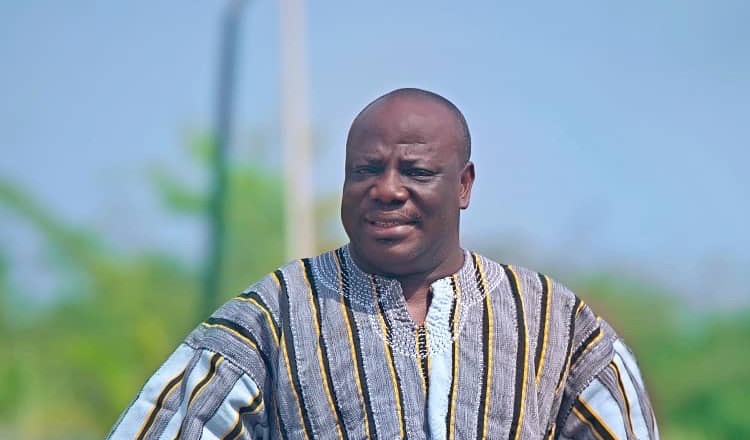
Zanetor Agyeman-Rawlings’ Teenage Daughters Steal Hearts Online With Beauty, Style And Grace

0

Zanetor Agyeman-Rawlings’ Teenage Daughters Steal Hearts Online With Beauty, Style And Grace

News Hub Creator10h

The late former president of Ghana and prominent politician Zanetor Agyeman-Rawlings is back in the news, this time due to her three teenage daughters. Thanks to their stunning good looks, sharp minds, and perfect taste in clothing, the young women have become internet sensations. Photographs of the three have gone viral, and admirers are gushing over the trio’s grace and elegance as much as their good looks.

Zanetor has inculcated in them the principles of a decent upbringing, as observers have noticed that they act more maturely than their years would indicate. Their impeccable taste in clothing is what draws the eye. A combination of current trends and an air of refined sophistication characterises the styles exhibited by Zanetor’s daughters.

They are well-liked on social media because they always look great for the camera, whether they’re wearing casual clothes or something more sophisticated. The daughters are respected not only for their style and intelligence, but also for their impeccable manners and intelligence. A lot of people on social media have said that it’s nice to see young people who aren’t only pretty; they have brains as well.

Many admirers have expressed interest in learning more about the young women’s hobbies and accomplishments after seeing the images posted by Channel1TV. Continuing to be an inspiration, Zanetor Agyeman-Rawlings’ parenting demonstrates the power of instilling self-assurance, intelligence, and grace in children from an early age.

Source: https://www.facebook.com/100072041538334/posts/pfbid057eGj5mCpByqq1vg2tstXfEawxwoLqHZFDzgtU48GSrtKGFLxJg1N4TsefZ1yzHbl/