1.5 C
London
Friday, January 2, 2026
Home Blog Page 127

Agric glut was political, not strategic – Chamber of Agribusiness Ghana boss warns of lost livelihoods

0

Chief Executive Officer of the Chamber for Agribusiness Ghana, Anthony Morrison, says the current glut in the agricultural sector is not a victory for policy but a failure driven by politics.

He says the situation has thrown many farmers and value chain actors into distress and must serve as a national warning.

Speaking on Joy News’ PM Express Business Edition, he said the sector is in no mood for celebration.

“This is not a moment of joy for us as a country, for us as industry players, because there are livelihoods out there who are losing their livelihoods as a result of the current glut issue.”

He dismissed claims that the excess produce on the market is the result of strategic planning or any well-designed intervention.

“Let me be clear here, this glut issue wasn’t created as a result of any prudent strategy or policy over the past years. It was purely a political move, and I think that as a country, this must be a lesson.”

Morrison said the human cost of the glut must not be ignored. Farmers are losing money. Some cannot recover their investments. Many are unsure how to continue production.

He said the country must reflect on how it arrived here and what must change to protect the sector. “We must never allow this situation to happen again, and we must find ways to resolve this issue.”

The Chamber CEO stressed that the fallout should push policymakers to rethink how agricultural interventions are designed and implemented.

He noted that, for many players in the sector, the glut is not only an economic problem but a painful setback that threatens livelihoods.

Morrison said the focus now should be on fixing the mess and preventing future disruption, because the people most affected have no political shield to fall back on.

DISCLAIMER: The Views, Comments, Opinions, Contributions and Statements made by Readers and Contributors on this platform do not necessarily represent the views or policy of Multimedia Group Limited.

DISCLAIMER: The Views, Comments, Opinions, Contributions and Statements made by Readers and Contributors on this platform do not necessarily represent the views or policy of Multimedia Group Limited.

Food glut situation is no victory – Chamber for Agricbusiness Ghana CEO warns

0

The CEO of Chamber for Agricbusiness Ghana, Anthony Morrison, says the ongoing glut in the agricultural sector should never be celebrated because it is destroying livelihoods across the country.

Speaking on Joy News’ PM Express Business Edition on December 4, he warned that the crisis demands urgency, honesty and a sober national reflection, not political excitement.

He said the current situation has left farmers distressed and communities vulnerable. According to him, there is nothing to cheer about when people are losing everything.

“This is not a moment of joy for us as a country, for us as industry players, because there are livelihoods out there who are losing their livelihoods as a result of the current glut issue.”

Morrison dismissed suggestions that the glut is the result of successful planning or strategic policy. He insisted that the country must confront the truth behind the problem.

“Let me be clear here, this glut issue wasn’t created as a result of any prudent strategy or policy over the past years.”

He said the crisis was politically engineered and pointed to the need for the country to learn hard lessons from it.

“It was purely a political move, and I think that as a country, this must be a lesson.”

He urged policymakers to ensure that such disruptions never recur. He added that the nation must find a better way to prevent the hardship farmers face today.

“We must never allow this situation to happen again, and we must find ways to resolve this issue.”

Morrison’s comments reflect growing concerns within the agriculture value chain as farmers struggle to sell their produce, with many recording significant losses.

His call adds to pressure on policymakers to respond with immediate and practical solutions before more livelihoods collapse.

DISCLAIMER: The Views, Comments, Opinions, Contributions and Statements made by Readers and Contributors on this platform do not necessarily represent the views or policy of Multimedia Group Limited.

DISCLAIMER: The Views, Comments, Opinions, Contributions and Statements made by Readers and Contributors on this platform do not necessarily represent the views or policy of Multimedia Group Limited.

Was Prince Harry referencing Trump in joke for Late Show sketch?

0

Stephen Colbert and Prince Harry also joked about auditioning for a Christmas film

The Duke of Sussex appeared to joke about US President Donald Trump in an appearance on The Late Show With Stephen Colbert.

Prince Harry appeared in a US TV sketch with Colbert, where he auditioned as himself for a “Christmas prince” role in a romantic TV film for the Hallmark Channel.

Appearing behind Colbert, the prince joked he was lost while searching for an audition for the “Gingerbread Christmas Prince saves Christmas in Nebraska”, and the TV host asked him why a real prince would want to star in such a film.

Prince Harry said Americans were “obsessed” with Christmas movies and royalty, but when Colbert queried this, the duke replied: “Really? I hear you elected a king,” possibly referencing October’s “No Kings” protests directed at the Trump administration.

The protests saw huge crowds taking part in protests against Trump’s policies in cities including New York, Washington DC, Chicago, Miami and Los Angeles.

Referencing US TV network CBS’ recent settlement with Trump, the duke joked he would “do anything” to get the part, adding: “I’ll record a self-tape, I’ll fly myself to an audition, settle a baseless lawsuit with the White House – all the things you people in TV do.”

Colbert replied: “Hey, I didn’t do any of those things,” to which Harry said: “Maybe that’s why you’re cancelled.”

He was referencing The Late Show with Stephen Colbert ending in May 2026 after 33 years on air, in a surprise announcement from CBS in July.

The sketch then featured festive trees and sleigh bells ringing, with the duke telling Colbert to “just believe”.

Colbert later told the prince he would give him the role as “official Late Show prince of Christmas”, to cheers from the crowd.

Colbert’s other guests were Michael Shannon, who is in the newly released film Nuremberg, and Irish actress and singer Jessie Buckley, who co-stars in the forthcoming film Hamnet with Paul Mescal.

This was the prince’s second Late Show appearance. In January 2023 he was there to promote his memoir Spare, and that show set a two-year viewership record, making global headlines.

The Duchess of Sussex shared the announcement of the prince’s latest appearance in a clip on her Instagram story.

The duke and duchess moved to California in 2020 after announcing they would step back as “senior” royals and work to become financially independent.

DISCLAIMER: The Views, Comments, Opinions, Contributions and Statements made by Readers and Contributors on this platform do not necessarily represent the views or policy of Multimedia Group Limited.

DISCLAIMER: The Views, Comments, Opinions, Contributions and Statements made by Readers and Contributors on this platform do not necessarily represent the views or policy of Multimedia Group Limited.

Ghana unveils US$3.4 billion plan to become continental leader in renewable energy

0

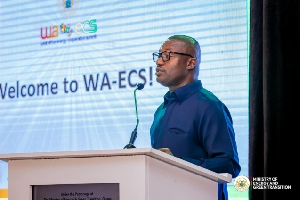
Minister for Energy and Green Transition, John Abdulai Jinapor Minister for Energy and Green Transition, John Abdulai Jinapor

Ghana is positioning itself as a continental powerhouse in clean energy, unveiling an ambitious US$3.4 billion renewable energy investment plan aimed at transforming the country’s energy landscape over the next five years.

Minister of Energy and Green Transition, John Abdulai Jinapor, announced the initiative on Wednesday December 3, 2025 at the 3rd Renewable Energy Forum Africa (REFA 2025) in Accra, highlighting the central role of private-sector participation in achieving the plan’s goals.

“We have taken bold and decisive actions to develop our renewable energy sector for economic prosperity,” the Minister said.

The five-year roadmap focuses on installing 1,400MW of renewable energy capacity, deploying 400 mini-grids, establishing over 100 fast-charging stations, and accelerating solar-powered water pumping to support agricultural productivity.

Jinapor also showcased Ghana’s progress in renewable energy development, noting that the country currently hosts Africa’s largest single rooftop solar installation of 16.8MW.

He added that President John Dramani Mahama recently inaugurated a 200MW solar plant, which is set to expand to 1,000MW by 2032.

The minister underscored Africa’s untapped potential in renewable energy, pointing out that the continent possesses 60% of the world’s solar resources yet continues to face widespread energy poverty.

“A continent blessed with abundant solar potential cannot afford to remain shackled by energy poverty.

“This is unacceptable,” he said.

He called on African governments, investors, and industry leaders to collaborate in harnessing renewable resources.

“If we work together to utilise just 20% of our renewable energy potential, we can eradicate energy poverty and drive sustainable development across the continent.”

The US$3.4 billion plan signals Ghana’s determination to lead Africa’s clean energy transition while leveraging its natural resources for economic growth and sustainable development.

Deputy Agric Minister urges politicians and state institutions to embrace model commercial farming

0

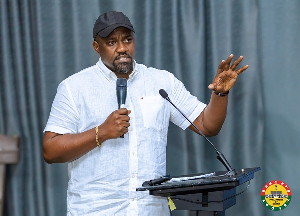
John Dumelo is the Deputy Minister of Food and Agriculture John Dumelo is the Deputy Minister of Food and Agriculture

As Ghana celebrates its 41st Farmers’ Day, themed ‘Feed Ghana, Eat Ghana, and Secure the Future,’ the Deputy Minister of Food and Agriculture has called on politicians and government institutions to actively participate in commercial farming to boost the nation’s food security and economic development.

In a speech honouring farmers across the country, John Setor Dumelo highlighted the progress made since the establishment of Farmers’ Day in 1985.

He noted that the celebration had fostered healthy competition among farmers and contributed positively to the agricultural sector.

Farmers are reportedly happier due to several government initiatives, including the establishment of the farmer service sector, improvements in irrigation infrastructure, and the provision of funds to buffer stocks to purchase excess produce.

He emphasised ongoing efforts to establish processing factories nationwide and make poultry farming more accessible and affordable for Ghanaians.

The popular farmer and businessman also addressed concerns about illegal mining activities, known commonly as galamsey, asserting that the current National Democratic Congress (NDC) administration was the most committed to combating the issue.

Over 1,000 water pumps seized from galamsey sites have been redistributed for irrigation use in non-galamsey areas, demonstrating the government’s dedication, he noted.

The Deputy Minister praised the research work presented by Ghanaian universities over the week, underscoring the importance of bridging the gap between academic research and the business community to foster agricultural growth.

He made a compelling call for politicians to lead by example in the sector.

He urged every elected or appointed official to own a farm or processing center, emphasising that such involvement would promote greater understanding and support for farmers.

Additionally, he proposed establishing a parliamentary farm as a model for others and creating district farms across the country, with district assemblies owning farms and processing facilities.

Concluding his speech, he expressed confidence that farmers were satisfied with the current government’s efforts under President John Mahama and he looked forward to the next three years of continued progress.

He reiterated the importance of making farming accessible, affordable, and ensuring food availability for all Ghanaians.

The deputy minister also encouraged households to engage in backyard farming and invited everyone to visit farms, promising to ensure a warm reception.

As Ghana marks Farmers Day, Ampem’s call underscores the need for increased political and institutional support for commercial agriculture to secure the nation’s food future.

‘Is this how Ghana’s liabilities should be discussed’

0

According to Kingsley Agyemang (L), he inherited a debt of GH¢230 million According to Kingsley Agyemang (L), he inherited a debt of GH¢230 million

Kingsley Agyemang, the former Registrar of the Scholarships Secretariat, has refuted allegations made by Ghana’s UK High Commissioner, Sabah Zita Benson, that he left Ghanaian students stranded abroad with a £32 million debt.

In a statement to journalists, the Abuakwa South MP characterised the accusations as misleading, politically motivated and ignorant of the Secretariat’s longstanding financial framework.

According to him, he inherited a debt of GH¢230 million (approximately $54 million), yet no student was sent home during his tenure.

He explained to the journalists that scholarship debts naturally roll over because academic years do not align with the government’s financial calendar.

“Scholarship debt is continual and moves according to the academic year… This is not new,” he claimed.

In his view, the commentary made by the High Commissioner was unbecoming of a diplomat and risked tarnishing Ghana’s international image.

“Her Excellency is above this pettiness… Is this how Ghana’s liabilities should be discussed in the United Kingdom?” he asked.

“I am waiting for them to do their work. And let me be clear, the money we are talking about is not in my pocket,” he added.

Mineral royalties surge in 2025 by making gains in gold, manganese despite production declines

0

Ghana’s mineral revenue outlook is showing strong momentum in 2025 Ghana’s mineral revenue outlook is showing strong momentum in 2025

Ghana’s mineral revenue outlook is showing strong momentum in 2025, with new data from the Minerals Income Investment Fund (MIIF) revealing significant growth in royalty payments across all major mining segments for the first three quarters of the year.

The figures highlight strengthened regulatory compliance, improved production in key minerals, and sustained investor confidence in the country’s mining sector.

A statement copied to the Ghana News Agency in Accra said large-scale gold mining remained the dominant driver, posting royalties of US$291.87 million as of the end of September 2025, a 40.18 per cent increase from the US$208.20 million collected within the same period in 2024.

It said the mid-tier gold mining segment also recorded impressive growth, with royalties rising from GH₵40.61 million between January and September last year to GH₵59.44 million in 2025, representing a 46.38% jump.

“A standout performer was the manganese sector, which achieved a remarkable 170 per cent surge in royalty inflows. Payments increased from US$4.72 million in 2024 to US$12.75 million in 2025, driven by improved production and stronger compliance by operators”.

The statement said the industry added to the positive trend, recording a 13.12 per cent rise in royalties from GH₵11.62 million to GH₵13.15 million, while the sand mining sub-sector saw a 21.48 per cent increase, climbing from GH₵364,998.58 to GH₵433,406.41 in the same periods under review.

Commenting on the performance, the Chief Executive Officer of MIIF, Justina Nelson, described the results as both encouraging and a strong motivation for the Fund to deepen its work with the mining industry.

“We will not rest on our oars even with this achievement because we know there is more work to be done to end the year and, in the years, ahead,” she stated.

Nelson gave the assurance that MIIF would continue to engage stakeholders across the mining value chain to ensure operators remain fully compliant and committed to their obligations whilst working with inter-agencies to sustain the growth.

Nelson was optimistic that the Fund would close the year on a stronger footing, having recorded remarkable performance in royalty receipts during the first three quarters.

She pledged the Fund’s unwavering commitment to stay focused on its mandate and ensure that Ghana’s mineral wealth continues to benefit both present and future generations.

Shaka Hislop being treated for aggressive prostate cancer

0

Shaka Hislop made 221 Premier League appearances for Newcastle, West Ham and Portsmouth between 1995 and 2006

Former Premier League goalkeeper Shaka Hislop has said he has an aggressive form of prostate cancer, and urged men of Caribbean heritage to get tested for the disease.

On Thursday, the 56-year-old ex-Newcastle and West Ham player shared a video on Instagram, external, explaining that he has just completed nearly two months of radiation therapy.

“Roughly 18 months ago, I went for my annual physical and insisted on a PSA test [blood test that checks for prostate conditions], as I always do. This time around though, my PSA was elevated,” Hislop said.

“An MRI and biopsy quickly determined that I had a fairly aggressive prostate cancer.

“A year ago, almost to the day, 6 December to be exact, I had a radical prostatectomy. And I thought that was it.

“But then, six months later, my PSA was again on the rise and another scan showed that my prostate cancer had spread to my pelvic bone.

“I started on medication pretty soon after, and just this morning completed seven and a half weeks of radiation therapy. The journey continues.”

Hislop shared footage of him ringing a bell at Massachusetts General Hospital in the United States, to signify the completion of the treatment.

The Institute of Cancer Research says one in four men with black African or Caribbean ancestry are affected by prostate cancer, compared to one in eight men with white European ancestry.

“Allow me to speak to my community, my people. Please, go get tested. Know your PSA, track its history,” said Hislop, who was born in London but played for Trinidad & Tobago at the 2006 World Cup.

“Prostate cancer is survivable if caught early enough. There are treatments for it. Testing saves lives. It saved mine.”

DISCLAIMER: The Views, Comments, Opinions, Contributions and Statements made by Readers and Contributors on this platform do not necessarily represent the views or policy of Multimedia Group Limited.

DISCLAIMER: The Views, Comments, Opinions, Contributions and Statements made by Readers and Contributors on this platform do not necessarily represent the views or policy of Multimedia Group Limited.

Otumfuo’s mediation is not like a Hearts of Oak and Kotoko match for anyone to claim victory – Analyst

0

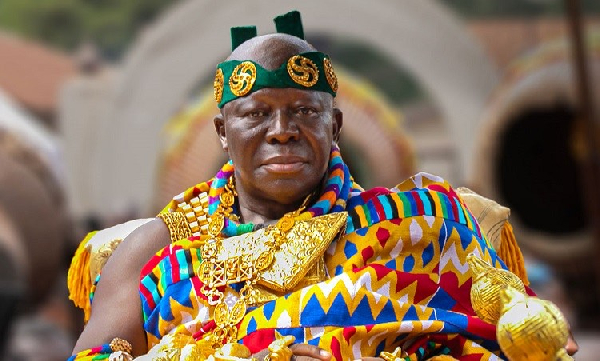
Security analyst Irbard Ibrahim has cautioned that the outcome of Asantehene Otumfuo Osei Tutu II’s mediation effort regarding the protracted Bawku crisis should not be viewed as a contest, such as a match between Accra Hearts of Oak and Kumasi Asante Kotoko, where one side can unequivocally claim victory.

​Ibrahim made this observation in light of recent jubilation by representatives of the two feuding factions in the long-standing Bawku chieftaincy dispute, emphasising that premature claims of success are unfounded.

Asantehene Otumfuo Osei Tutu II recently concluded his final sessions of the high-level mediation process aimed at resolving the Bawku conflict.

The culminating meeting was held at the Manhyia Palace in Kumasi on Monday, December 1, 2025, with representatives from both the Kusasi and Mamprusi factions in attendance.

​Following the meeting, followers from both sides were observed pouring powder on themselves and celebrating, with each faction seemingly claiming a definitive victory.

​However, Irbard Ibrahim firmly maintains that the nature of the process means no side can declare an outright win.

Speaking on Nyankonton Mu Nsem on Rainbow Radio 87.5FM, he explained that the “role assigned to the Asantehene was mediation, not arbitration.

“In arbitration, one listens to both sides and delivers a ruling determining the successful party. However, in mediation, there are no winners or losers.

“Thus, I was somewhat surprised that each side was celebrating and claiming to have secured victory. This is not a Hearts of Oak versus Kotoko game where one side secures victory.”

​He stressed that mediation necessitates compromises; each side must agree to relinquish certain demands for the greater collective good. Therefore, “nobody should expect that the outcome of the mediation will pronounce one side as the sole owner of the area.”

The analyst opined that the current mediation effort may not offer a complete resolution to the crisis.

He proposed that the mediation must be sustained, and concurrent efforts should be deployed to facilitate a face-to-face dialogue between the paramount chiefs leading the two factions.

​Ibrahim lamented the significant financial and resource drain the state is incurring in managing the Bawku crisis, noting that this protracted conflict is actively depriving the area of crucial investments and development.

​He concluded with an appeal to the populace to allow the conflict to cease, enabling the return of peace, especially considering the tragic loss of lives that the conflict has caused.

Africa’s World Cup hopefuls await 2026 draw as historic 48-team tournament takes shape

0

Africa’s nine qualified nations for the 2026 FIFA World Cup will discover their group-stage opponents on Friday, as the draw for the expanded 48-team tournament takes place in Washington D.C. 

The ceremony, hosted at the Kennedy Center, begins at 7pm CAT (5pm GMT) and marks the first major milestone in the final build-up to a World Cup that will span Canada, the United States and Mexico between 11 June and 18 July 2026.

For African teams, the draw represents more than just the unveiling of opponents.

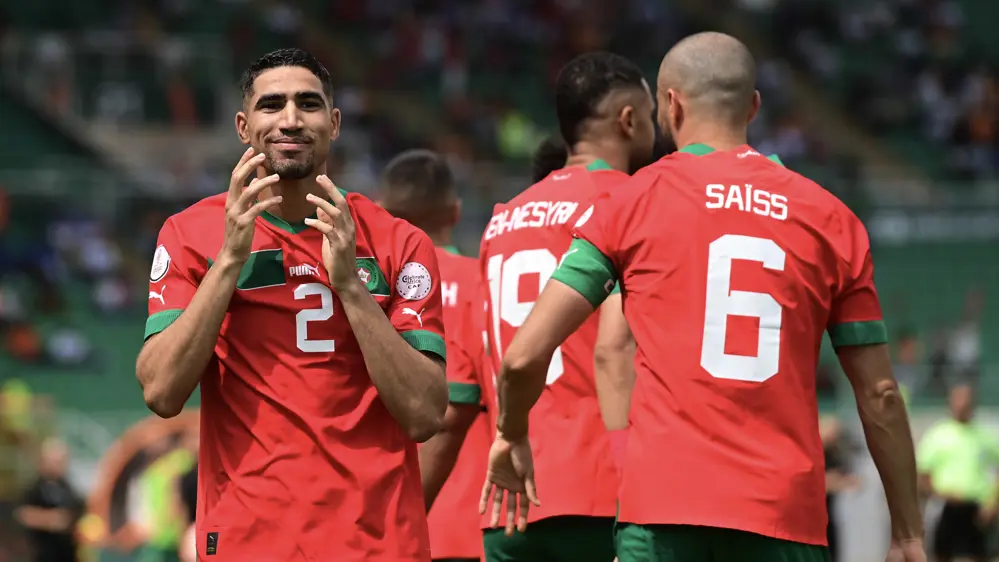
It signals the first step in a campaign that many believe could be the continent’s most promising in decades, coming after Morocco’s historic semi-final run at Qatar 2022 — the first by any African nation.

Nine African nations in the hat

Africa’s contingent is already confirmed: Morocco, Senegal, Algeria, Tunisia, Egypt, Côte d’Ivoire, Ghana, Cape Verde and South Africa all topped their qualifying groups and secured automatic places at the tournament.

Under the new 48-team format, the World Cup will feature 12 groups of four, with teams drawn from four seeded pots based on the latest FIFA rankings.

Crucially for African sides, FIFA’s geographic restrictions ensure no group may contain more than one CAF nation, removing the possibility of early all-African clashes and guaranteeing nine separate African representatives across the groups.

Morocco and Senegal, currently Africa’s highest-ranked teams, enter the draw in Pot 2, avoiding some of the continent’s toughest potential opponents and increasing their chances of a favourable path.

Five African nations — Algeria, Tunisia, Egypt, Côte d’Ivoire and South Africa — are placed in Pot 3, setting up the possibility of complex, highly competitive groups.

 Meanwhile, Ghana and Cape Verde, both positioned in Pot 4, face the toughest draw conditions and are expected to be matched with a Pot 1 global powerhouse.

Formidable opposition lies ahead

Pot 1 contains the strongest nations at the tournament, including Germany, Brazil, France, Spain, England, Argentina and the three co-hosts — the United States, Mexico and Canada.

The presence of Europe’s heavyweights in every group guarantees difficult assignments, though African sides have increasingly shown an ability to compete with, and even surpass, world football’s elite.

Morocco’s run to the last four at Qatar 2022 remains the clearest example, but Senegal, Tunisia and Ghana all made significant impressions at recent tournaments, and Côte d’Ivoire and Algeria carry squads brimming with top-level European experience.

Six places still open as play-offs loom

While 42 teams have already qualified, six World Cup spots remain undecided.
Four will come from the UEFA play-offs, featuring heavyweight nations such as Italy, Turkey, Sweden and Poland.

The remaining two places will be settled through the Intercontinental Play-Off Tournament in March, involving Jamaica, Bolivia, Suriname, New Caledonia, Iraq and DR Congo.

If Leopards qualify through the playoffs, they will be protected from facing any CAF nation in the group stage due to confederation separation rules.

What African teams can expect today

The procedure follows standard FIFA format:

  • Teams are placed into four pots.

  • One team from each pot is drawn into each of the 12 groups (A–L).

  • The three host nations automatically take positions A1, B1 and D1.

  • Geographic restrictions apply for all confederations except UEFA, which may have up to two European teams per group due to its large number of qualifiers.

FIFA has also confirmed that the top four ranked teams worldwide — Spain, Argentina, France and England — will be separated across the draw to avoid meeting before the semi-final stage, provided they top their groups.

For African sides, the draw will determine not only their opponents but also their match venues, travel routes, rest periods and potential knockout pathways across a tournament hosted over three vast countries.

A pivotal moment for African football

With unprecedented squad depth across the continent and a World Cup format offering more places and more knockout berths, African football enters the draw with a renewed sense of possibility.

Whether Morocco can build on their 2022 heroics, or whether another African nation emerges as a surprise contender, will begin to take shape tonight when the 2026 World Cup map is finally revealed.

Below are the pots for the 2026 World Cup draw 


Pot 1: France, Canada, Mexico, United States, Spain, Argentina, England, Brazil, Portugal, Netherlands, Belgium, Germany

Pot 2: Croatia, Morocco, Colombia, Uruguay, Switzerland, Japan, Senegal, Iran, Republic of Korea, Ecuador, Austria, Australia

Pot 3: Saudi Arabia, Norway, Panama, Egypt, Algeria, Scotland, Paraguay, Tunisia, Côte d’Ivoire, Uzbekistan, Qatar, South Africa

Pot 4: Jordan, Cape Verde, Ghana, Curaçao, Haiti, New Zealand, winners of European play-offs A, B, C and D, winners of intercontinental play-offs 1 and 2.

Driver, 45, granted bail over defilement

0

A 45-year-old driver has been granted a GH¢150,000 bail with three sureties by the Amasaman Circuit Court for allegedly defiling a 12-year-old girl. 

The bail sum of James Padi, alias “Kakum,” who was also charged with abduction of the girl, is to be justified with a title deed, the Court ordered. 

The court, presided over by Akosua Anokyewaa Adjepong, a relieving judge, asked Padi to report to the police every Tuesday. 

It urged the prosecution to file and serve Padi, the accused person, with the necessary documents (disclosure) before the next adjourned date. 

The accused is to return to the Court on January 8, 2026. 

Police told the court that Padi was a driver and carpenter, while the complainant was the victim’s uncle, living at Opah. 

The court heard that the girl was sent on November 10, 2025, but did not return home, and a search for her proved futile. 

The complainant reported to the police, and upon a tip-off that the accused person was keeping the girl in his house, he was arrested on November 13. He had kept the girl for two days. 

During the arrest, the girl was seen in Padi’s clothes, and she confessed that he had sex with her. 

After investigations, Padi was charged and put on trial. 

His counsel, in praying for bail, said his client had denied the charges, and that he was not a flight risk, had a fixed place of abode and people of substance to stand as sureties. 

He said the accused person would not interfere with the investigation and would be available to stand trial. 

On the other hand, the prosecution did not oppose the bail. 

DISCLAIMER: The Views, Comments, Opinions, Contributions and Statements made by Readers and Contributors on this platform do not necessarily represent the views or policy of Multimedia Group Limited.

DISCLAIMER: The Views, Comments, Opinions, Contributions and Statements made by Readers and Contributors on this platform do not necessarily represent the views or policy of Multimedia Group Limited.

Ghana coach Otto Addo arrives in USA ahead of World Cup draw – Ghana Latest Football News, Live Scores, Results

0

Head coach of the Black Stars, Otto Addo, has arrived in Washington, DC for the 2026 FIFA World Cup draw to be held on Friday, December 5, 2025. 

The former Ghana international received a rousing welcome from fans of the senior national team, who made their way to the American city.

Addo became the first coach to lead Ghana to two World Cups after a successful qualifying run, which ended with the Black Stars topping Group I of the African qualifiers with 25 points.

On Friday, Ghana will find out their opponents for the tournament to be held in North America.

The Black Stars have been placed in Pot 4 and could face some of the world’s heavyweights including Argentina, France and Germany, the country of Addo’s birth.

Ghana are making it to the World Cup for the fifth time and twice made it out of their group in 2006 and 2010.

Addo was a member of the Black Stars team that reached the round of 16 in their maiden appearance.


UK-born Chantelle Boye-Hlorkah cherishes historic moment after Ghana versus England friendly – Ghana Latest Football News, Live Scores, Results

0

Black Queens forward Chantelle Boye-Hlorkah has shared a surreal moment after featuring for Ghana against England in an international friendly on Tuesday evening at St Mary’s. 

The England-born, who featured for the youth teams of the European nation, switched nationality to play for the country of her father, Ghana.

The game was more than a football match for the Nottingham Forest player, as she was overwhelmed with emotions, describing the moment as an honour for her.

“An honour colliding my nations for the first time, Ghana vs England. Forever Grateful for this moment.  Proud of this team, the Black Queens. Thank you Ghana FA. Thank You England,” she posted after the match.

Unfortunately for the Black Queens, they suffered a 2-0 defeat to the Lionesses, courtesy goals from Lucia Kendall and Alessia Russo.

Meanwhile, Boye-Hlorkah will switch her attention to help Ghana win the Women’s Africa Cup of Nations next year and also qualify for the FIFA Women’s World Cup in 2027.

Black Queens Suffer 2-0 Loss To England In Int’l Friendly

0

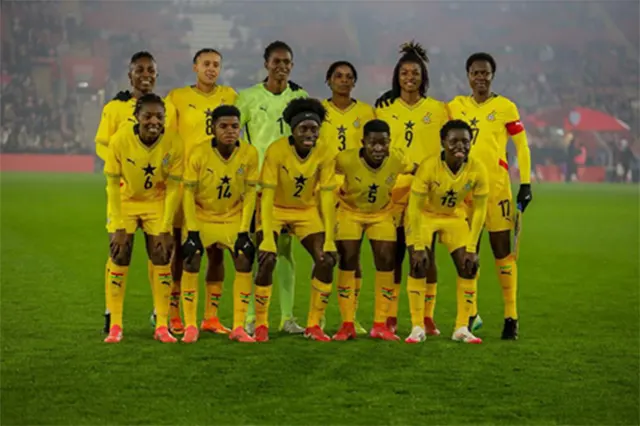
Black Queens lineup


GHANA’S BLACK Queens slumped to a 2-0 loss to the Lionesses of England in an international friendly match on Tuesday night at the St Mary’s Stadium in Southampton, England.

England took an early lead in the 6th minute through Lucia Kendall when the ball fell to her in the six-yard area.

Arsenal star Alesia Russo scored the decisive winner in the 95th via a penalty after a VAR decision.

The Black Queens could not really test Anna Moorhouse in the England goal as they failed to convert any of their three shots, with the English goalie having to make only one save.

The game was also a return to St Mary’s for Wiegman, who began her four-year tenure as England boss with an 8-0 win over North Macedonia there in 2021.

During her time in charge, England have reached three successive major tournament finals, winning two of them, and this week’s victories over China and Ghana brought a celebratory air to finish a memorable year.

Despite the loss, Head Coach of the Black Queens, Kim Lars Bjorkegren praised the team for the performance againt a team that are currently the UEFA tittle holders, and believes his side is moving in the right direction.

“As a coach, you always want to win… but we are 67th in the world and faced a team that may be the best in the world right now. We can be proud of our performance, and we feel we are moving in the right direction.


BY Gibril Abdul Razak

Tenashie, Adabraka/Asylum Down Oldies clash in RENFAG League

0

Action continues this weekend in the on-going Retired National Footballers Association of Ghana (RENFAG) Oldies League with Osu Tenashie Oldies welcoming Adabraka/Asylum Down Oldies to the Osu Ako-Adjei Park for their week 15 clash.

Osu Tenashie Oldies who suffered a 3-2 defeat at the hands of Dansoman Tony Oldies in their last game will be looking to return to winning ways as they seek to break into the top two of the zone by the end of this weekend.

The Osu lads would bang their hopes on former Aduana Stars and Power FC marksman Laryea Odai who leads the goal king chart to lead them pass the Dansoman lads on Saturday.

Head coach of Tenashie Oldies Jonathan Akrong believes their desire to go for the title heavily depends on this game and they would do everything possible to pick all three points to push their agenda.

The Adabraka/Asylum Down Oldies have remain tight-lipped ahead of the game with both players and officials only stating that the turf will decide.

Second placed Rangoon Oldies will stay put at the Cantonment Prisons Park in Osu to play host to resurgent Dansoman Tony Oldies in a game many are tight lipped on the outcome.

Other games in the zone will see fifth placed side Osu Salem Oldies traveling to the La Salem Park to face La Emmause while bottom side La Old Stars led by good old Alex Djannie will welcome Accra East Oldies to the McDan La Town Park with zonal leaders La Salem Oldies trekking to the A.T.T.C Park on Sunday to play as guest of Scarp Rangers.

In Zone A leaders Tema Ex-Footballers will visit the Nungua Town Park to play as guest of Nungua Oldies while East Legon Oldies welcome Nungua Veterans to the
Bawaleshie Park with Veterans K.F.C battling Teshie Oldies at the Tema Oninku Drive School Park.

BY RAYMOND ACKUMEY

Twyford Ghana supports 41st National Farmers’ Day celebration in Western Region 

0

By Seth Danquah 

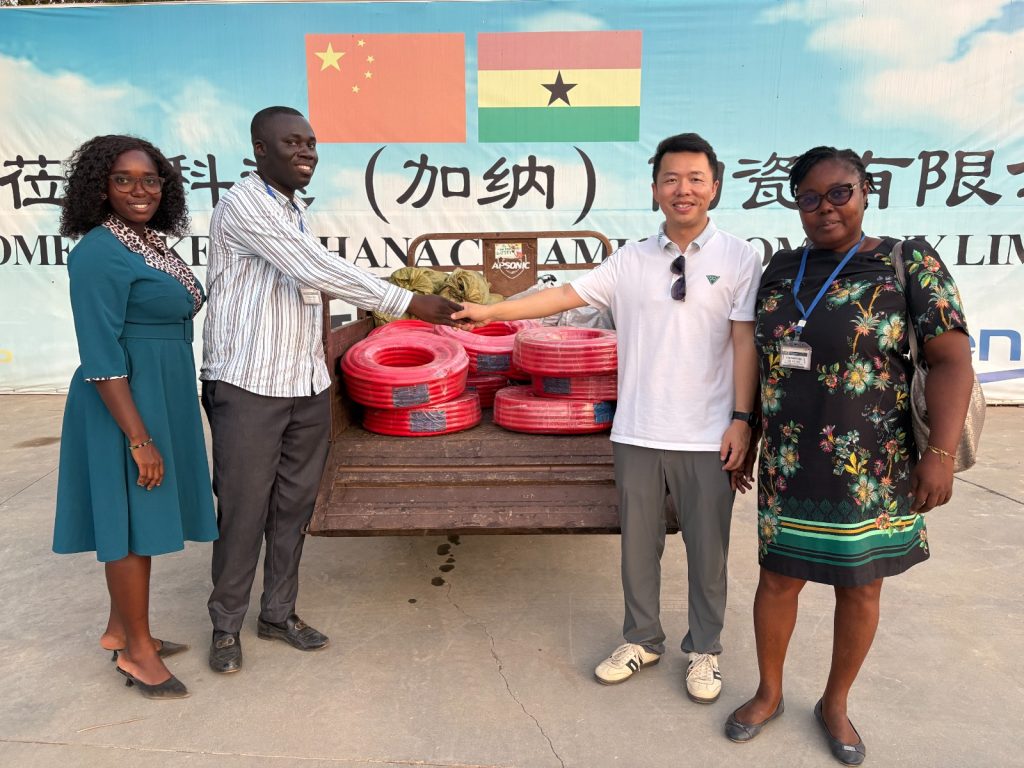
Aboadze (WR), Dec. 4, GNA – Twyford Ghana Company has donated essential agricultural tools to some government institutions, including the Western Regional Coordinating Council    to support the 41st National Farmer’s Day celebration in the region. 

The items include, pickaxes, hoses, wire mesh, shovel heads, and a variety of other farming tools. 

The beneficiaries include, the Western Regional Coordinating Council (WRCC), Shama District Assembly and the Wassa East District Assembly. 

Mr David Wei, Business Development Manager of Twyford,  said the donation was part of   the company’s commitment to corporate social responsibility and supporting Ghana’s agricultural development. 

Mr Wei said farmers were the backbone of the nation and   supporting them would strengthen agricultural productivity and contribute to rural community development.” We look forward to seeing continued progress in Ghana’s agricultural sector in the years ahead”. 

 He said  Twyford Ghana remained committed to working closely with government authorities and local communities to promote agricultural innovation and rural development. 

 The Business Development Manager said the company would continue to contribute to the long-term sustainability and advancement of Ghana’s agricultural sector. 

The 41st National Farmers Day would be celebrated on December 5,2025 on the theme, “Feed Ghana, Eat Ghana, Secure the Future,” highlighting the government’s commitment to enhancing agricultural productivity, food security, and promoting sustainable development. 

As one of Ghana’s most important annual national events, Farmers’ Day honours farmers and fishers who contribute significantly to the country’s food security and economic development. 

GNA 

Edited by Justina Paaga/Christian Akorlie  

Stop throwing money at ineffective OSP

0

The Speaker of Parliament, Alban Bagbin, has called on the Finance Ministry to reconsider the substantial budgetary allocation to the Office of the Special Prosecutor (OSP), citing concerns over the agency’s effectiveness in combating corruption.

Speaking in Parliament on Thursday December 4, Bagbin highlighted that the OSP is allocated nearly the same budget as the Attorney-General’s Department, despite failing to deliver tangible results.

“We wanted to signal to the world that we are going to fight corruption. At the end of the day, we have seen the results, and we cannot continue to allocate huge sums to the same office when we are not getting results,” he said.

Bagbin stressed the need for accountability and action, urging lawmakers and government officials to confront the issue directly.

“Please, let’s face the bull by the horns and make sure the right thing is done. I agree with the Majority Leader, and as we go through this, the Finance Minister [should take notice],” he added.

The Speaker’s comments follow similar concerns raised by Majority Leader Mahama Ayariga, who has called for the abolition of the OSP, arguing that corruption-related cases should be handled exclusively by the Attorney-General’s Office.

Ayariga pointed out that while the OSP receives significant funding, it has yet to deliver results, unlike the under-resourced AG’s Department.

Read also

Bawumia misdiagnosed Ghana’s health needs with Zipline – Nabdam MP

Daddy Lumba saga: Fresh feud erupts as immediate family sues to block funeral over autopsy and cash donations

0

The public mourning for Ghanaian highlife icon Charles Kwadwo Fosu, universally known as Daddy Lumba, has devolved into an acrimonious legal battle, with his core relatives demanding judicial intervention to halt the funeral process and compel an investigation into the circumstances of his death.

A lawsuit filed by members of the musician’s immediate family accuses the designated head of the wider family of secrecy, mismanagement, and attempting to hijack the memorial rites since Lumba’s passing on July 26, 2025.

The matter is scheduled to be heard in court on Thursday, December 11, 2025.

Criminal Probe Demanded Over Secret Autopsy

The most profound grievance underlying the civil suit is the lack of transparency surrounding Daddy Lumba’s death. The plaintiffs—Obaapanin Afia Adomah, Robert Gyamfi (Wofa Yaw Poku), Georgina Gyamfi, Ernestina Fosuh, and Nana Afia Kobi—claim they were deliberately excluded from critical decisions.

According to the writ filed, the immediate family was not officially informed of the musician’s passing before:

“…an autopsy had already been conducted without their knowledge or consent.”

Disturbed by the procedural irregularities and perceived deliberate concealment, the plaintiffs have escalated the matter beyond civil litigation.

They have lodged a formal complaint with the Homicide Division of the Ghana Police Service, demanding a full investigation to ascertain the true cause of death.

The Fight for the Coffin: Injunction Against Funeral Home

The plaintiffs have sought sweeping interlocutory injunctions against three specific parties: Kofi Owusu (identified as the head of the wider family), CalBank, and Transitions Funeral Home.

The immediate family’s control over the highlife legend’s remains is a key point of contention. To prevent what they perceive as an unauthorized release of the body, the family has asked the court to:

“…stop Transitions Funeral Home from releasing the corpse to Owusu or anyone acting on his behalf until the suit is determined.”

They argue that the wider family head’s unilateral actions concerning the body and funeral arrangements necessitate this drastic judicial restraint.

Financial Hijack: The DL Foundation Account

The dispute is further inflamed by allegations of the mismanagement of public donations collected during the one-week observation rites.

The core financial asset in dispute is the “DL Foundation” account held at CalBank, into which all cash contributions from the memorial were deposited.

The family alleges that Kofi Owusu unilaterally formed a committee to manage these funds and rites without the core family’s consent. They claim unauthorized monies were withdrawn, and all attempts to compel Owusu to account for the funds have been rebuffed.

Their fears over the financial health of the funeral arrangements are starkly outlined in their writ:

“The core fear driving the suit is that ‘Owusu will continue to squander all the monies in the account,’ leaving nothing for the organization of the final funeral rites.”

Consequently, the family is asking the court for explicit financial injunctions:

  • Restrain CalBank from releasing any money from the DL Foundation account to Owusu.
  • Block Owusu from accessing any other accounts belonging to the Daddy Lumba Memorial Foundation LBG.

Manhyia Intervention Deemed Ineffective

The depth of the family crisis is evidenced by the fact that the dispute had previously reached the Manhyia Palace, the traditional seat of the Asantehene.

The initial committee formed by Owusu was reportedly dissolved at Manhyia, and a new funeral committee was appointed.

However, the plaintiffs claim that despite the traditional authority’s intervention, Owusu has “continued to retain funds and authority previously under his control,” necessitating the current legal action.

The tragic situation transforms what should be a unified national period of mourning into a bitter, high-stakes legal contest over transparency, control, and legitimacy that threatens to cast a shadow over the enduring legacy of one of Ghana’s most celebrated musicians.

DISCLAIMER: The Views, Comments, Opinions, Contributions and Statements made by Readers and Contributors on this platform do not necessarily represent the views or policy of Multimedia Group Limited.

DISCLAIMER: The Views, Comments, Opinions, Contributions and Statements made by Readers and Contributors on this platform do not necessarily represent the views or policy of Multimedia Group Limited.

Government to operationalise fiscal council to enforce new fiscal rules

0

The Fiscal Council is expected to be fully constituted early next year The Fiscal Council is expected to be fully constituted early next year

Dr Theo Acheampong, Technical Advisor at the Ministry of Finance, has stated that Ghana is set to operationalise a newly established Fiscal Council to ensure strict compliance with the country’s revised fiscal rules as part of broader efforts to strengthen public financial management and safeguard economic stability.

Speaking at a High-Level Policy Dialogue on Economic Governance in Accra organised by the Ministry of Finance and the Economic Governance Platform (EGP) in partnership with the World Bank on December 3, 2025, Dr Acheampong said the Council created under the amended Public Financial Management Act (Act 1136) will serve as an independent oversight body to enhance the credibility of budget processes and prevent fiscal slippages.

He explained that while the Ministry is internally working to achieve key targets, including a debt-to-GDP ratio capped at 45% and a primary surplus of at least 1.5%, an external institution is essential to ensure discipline.

“Countries that have independent fiscal institutions tend to deliver more credible budgets. The Fiscal Council will help check compliance and improve budget discipline,” he noted.

MIIF rebuts ‘misleading’ use of CEO’s PAC comments

The Fiscal Council, expected to be fully constituted early next year, will be responsible for three major reports annually during the mid-year budget review, the presentation of the main budget, and other fiscal compliance assessments.

In addition to monitoring adherence to fiscal rules, it will conduct value-for-money reviews and evaluate the poverty and inequality impacts of government expenditure.

Government aims to have the Council fully operational as Ghana works toward exiting its IMF programme by mid-2026.

EGP Coordinator Abdul Karim Mohammed noted that several of the Platform’s recommendations on debt sustainability are already being implemented.

He highlighted new commitment-control measures introduced by the Ministry of Finance to curb unauthorized borrowing by state institutions.

He welcomed the creation of the Fiscal Council, describing it as “an independent oversight mechanism akin to PIAC’s role in the extractive sector,” which would help improve transparency, accountability and public confidence in fiscal governance.

Janine Walz, Deputy Ambassador of Switzerland and Head of Swiss Cooperation, reaffirmed Switzerland’s commitment to supporting Ghana’s decentralisation agenda and strengthening local governance systems.

She said Switzerland’s cooperation programme built around a four-year cycle places decentralisation at the core of its first pillar and includes several comprehensive initiatives.

“We believe fiscal, administrative and political decentralisation helps a country grow. Our support covers DACF collaboration, capacity building, fiscal decentralisation, and accountability,” she explained.

Walz added that the newly launched Swiss-supported project on Public Financial Management aims to improve service delivery, strengthen the use of data for informed decision-making, and enhance performance and accountability of State-Owned Enterprises (SOEs).

AM

#TrendingGH: Extension of IGP’s contract draws praise and criticism

Watch some videos from the NPP’s 2025 Constitution Amendment

The wait is over! The GhanaWeb Excellence Awards 2025 is officially launched. Let’s Celebrate impact, innovation and excellence across Ghana.

Who deserves to be honoured this year?


Nominate now 👉 https://ghanaweb.com/ghanaexcellenceawards/nominate

Resource AG office to fight corruption, abolish OSP – Majority Leader

0

The Majority Leader, Mahama Ayariga, has called for the abolition of the Office of the Special Prosecutor (OSP), arguing that the institution has failed to deliver on its core mandate eight years after its establishment.

Speaking on the floor of Parliament on Thursday, December 4, during discussions on the arrest and detention of private legal practitioner Martin Kpebu by the OSP, the Bawku Central MP said the recent incident reinforces long-standing concerns about the relevance and constitutionality of the office.

According to him, Mr Kpebu’s detention, after he honoured an invitation from the OSP and reportedly engaged in an altercation with security officers at the entrance, was unwarranted and only rectified after intense public pressure.

“It took the intervention of most Ghanaians on social media and people calling the Special Prosecutor, demanding that he should release the legal practitioner,” he told the House.

The Speaker of Parliament, Alban Bagbin, intervened briefly, stressing that concerns about wrongful arrests and misuse of invitations extend beyond the OSP.

“This matter is so endemic that it doesn’t deal with any regime,” he said.

“Let’s all be honest, it cuts across all the regimes… even in the Ghana Police Service, the military, the security agencies. They think that when somebody is invited, the person is arrested. The law is very clear on this matter.”

Returning to the issues, the Majority Leader questioned the constitutional basis and performance of the OSP, insisting that Parliament must reconsider its earlier decision to approve its creation.

“I recall vividly… I opposed it. The Hansard will bear me out because I took a position that it is unconstitutional to strip the Attorney General of the power to be responsible for the prosecution of criminal cases,” he said.

He argued that the attempt to design the OSP in a manner that appeared to align with the Constitution was flawed from the outset.

“The fact that we had to struggle and nuance the whole process clearly betrays the fact that we knew we were doing something that didn’t sit well with our constitutional architecture.”

Mr. Ayariga added that after almost eight years in existence, the OSP has not demonstrated any meaningful results in tackling corruption.

“Tell me what is really the achievement of that office? Major cases of clear corruption, up to date, the office has not been able to do anything,” he said.

“I think we should abolish it because we’ve experimented with it and we cannot see any achievement.”

He argued that the real solution lies in adequately resourcing the Attorney General’s office, which is the only constitutionally recognised prosecutorial authority.

“If the institution of the Attorney General… is adequately resourced and protected by Parliament, that office will equally deliver.”

He further questioned why the OSP receives substantial allocations while the Attorney General’s office, which constitutionally holds prosecutorial powers, remains comparatively under-resourced.

The Majority Leader noted that former Speaker Prof. Mike Oquaye has recommended that Parliament consider abolishing the OSP through a private member’s bill.

“Mr Speaker, I’m told that your predecessor, the right honourable Mike Oquaye, indeed recommended that this House should abolish it, that we should use a private member’s bill to abolish it.”

DISCLAIMER: The Views, Comments, Opinions, Contributions and Statements made by Readers and Contributors on this platform do not necessarily represent the views or policy of Multimedia Group Limited.

DISCLAIMER: The Views, Comments, Opinions, Contributions and Statements made by Readers and Contributors on this platform do not necessarily represent the views or policy of Multimedia Group Limited.

BoG Sets Stage For Non-Interest Banking

0

Mr. Ismael Adam


The Bank of Ghana (BoG) has called for stronger collaboration among stakeholders as it works towards the introduction of Non-Interest banking aimed at expanding financial inclusion across the country.

Director for Banking Supervision Department of the Central Bank, Ismail Adam, made the call on behalf of the Governor, Dr. Johnson Asiama, during a training workshop for banks on Non-Interest banking and Finance, in Accra.

He noted that the introduction of Non- Interest banking will help attract new sources of investment, and diversify the financial system.

He said, “Let us work together, the regulator and industry to build governance capacity required for a thriving, resilient, and inclusive Non-Interest banking sector in Ghana.”

“The capacity to implement it successfully must be built deliberately and collaboratively,” he added.

He also indicated that conventional banking and finance is largely debt-based and interest-rate-driven while non-interest banking is largely asset-backed, risk-bearing, risk-sharing, profit and loss sharing and in some cases, loss bearing.

He, therefore, called on the banks to put high premium on skills development of its staff including building compactible systems to drive the practice of non-interest banking in the country.

He also urged the operators of banks to support the development of human resource capacities of staff by investing in aggressive knowledge acquisition and partner with local and international, Non-Interest Banks, institutions and established training bodies to develop rigorous training programmes.

He encouraged the banks to patronise the programme rolled out by the Chartered Institute of Bankers on Non-Interest banking and Finance Certification for bankers.

That, he explained will go a long way to build the required capacity for the industry while initiating technology audits to review their systems to assess the level of upgrade or integration required to support Non- Interest banking.

“Develop a phased implementation plan, do not wait for the final guideline to start planning. Begin developing your business case, identifying target markets, and designing a phased roll-out plan for initial products,” he noted.

He also urged the banks to restructure their product, consider risk management, understanding and experience in the products that will be rolled out.


By Ebenezer K. Amponsah

A call to the Ghana Police Service on the handling of gender-based violence cases

0

Constance Baaba Boateng is the author of this article Constance Baaba Boateng is the author of this article

Gender-Based Violence (GBV) remains one of the most persistent threats to the safety, dignity, and human rights of women and girls in Ghana.

Every day, survivors gather the courage to step out of silence, hoping that our systems will protect them. Yet, far too often, the experiences they encounter weaken their trust and reinforce their fears.

As an advocate for women and community welfare, I find it necessary to speak openly about the troubling manner in which some GBV cases are handled within the Ghana Police Service.

There are increasing reports of survivors being turned away when they attempt to report abuse, told to “go and settle it at home” or treated as though their pain is an inconvenience.

In other cases, perpetrators are released within hours, long before proper investigations are conducted or any meaningful steps are taken to process them for court.

These practices do not merely delay justice; they actively endanger survivors, strengthen the confidence of abusers, and erode the public’s trust in a system that is meant to protect them.

It must be clearly understood: Respect is a right, not a privilege. Every survivor who walks into a police station deserves to be heard, protected, and treated with dignity.

The Ghana Police Service has both a legal and moral responsibility to enforce the Domestic Violence Act (Act 732), safeguard the vulnerable, and ensure that no report of abuse is trivialised or dismissed.

Gender-based violence is not a “domestic issue.” It is not a private matter to be negotiated behind closed doors. It is a crime that destroys lives, destabilises families, and weakens our communities.

When officers fail to act professionally or worse, discourage survivors from seeking justice, they contribute directly or indirectly to a culture of silence, fear, and continued violence. This cannot be allowed to continue.

I therefore call on the leadership of the Ghana Police Service to take decisive action by ensuring:

• Prompt and professional handling of all GBV reports

• Consistent processing of perpetrators for court

• Trauma-informed, survivor-centred engagement at all stations

• Adequate and continuous training for all personnel on GBV laws and response protocols

• Strong accountability mechanisms for officers who neglect or mishandle cases

The safety of our women and girls depends on institutions that function with integrity, empathy, and professionalism.

When a survivor finds the strength to report abuse, she must not be met with dismissal, doubt, or disrespect.

Instead, she should find a system ready to respond swiftly, protect her, and pursue justice without hesitation.

A safer Ghana begins with accountability, and with recognising that respecting human dignity is not optional. Respect is a right not a privilege. Let us uphold it in every police station, every community, and every corner of our nation.

Constance Baaba Boateng (Mrs.)

Assemblywoman, Essaman Electoral Area – Ajumako-Enyan-Essiam District

Central Regional Women Caucus Representative (NALAG)

Dr Matthew Opoku Prempeh’s camp refutes claims on double-track, STEM, TVET and data reforms

0

Dr Matthew Opoku Prempeh is former Minister of Education Dr Matthew Opoku Prempeh is former Minister of Education

The office of former Minister of Education, Dr Matthew Opoku Prempeh, has issued a strong rebuttal to claims suggesting that former Minister Dr Yaw Osei Adutwum introduced or implemented some of Ghana’s major education sector reforms, including the Double-Track system, the national STEM agenda, TVET restructuring and key data reforms.

In a detailed statement, Dr Prempeh’s team described the assertions as historically inaccurate, stressing that the reforms were conceived, approved and executed under his leadership between 2017 and 2020.

According to the statement, the Double-Track system, introduced to manage the surge in enrollment following the Free Senior High School policy was announced in 2018, approved by Cabinet the same year and developed under the supervision of Dr Prempeh with technical input from Dr Tandoh.

The camp insists that attributing the implementation of Double-Track to Dr Adutwum “has no factual basis.”

The statement further notes that Ghana’s current STEM push was already embedded in the Education Strategic Plan (ESP) 2018–2030, a blueprint prepared during Dr Prempeh’s tenure.

The team emphasised that the foundational direction, planning and strategic orientation for STEM education “were in place long before Dr Adutwum took office as Minister.”

The rebuttal also challenges claims regarding TVET restructuring.

According to the document, the national TVET reform framework now widely recognized as transformational was designed by TVET expert Dr George Afeti and his team.

The statement categorically asserts that Dr Adutwum made no contribution to the formulation of this framework.

The team also rejects claims that data system cleanups and accountability reforms were introduced after 2021.

They argue that major reforms, including EMIS cleaning, data audits and system restructuring were executed between 2017 and 2020.

The statement concludes with a caution to Dr Adutwum’s supporters, “Facts must remain facts.

The national reforms delivered between 2017 and 2021 cannot be reassigned for political expediency.”

It calls on “Team Adutwum” to withdraw what it describes as unfounded and misleading claims, insisting that the historical record of Ghana’s education reforms must be preserved.

Watch some videos from the NPP’s 2025 Constitution Amendment

Ghana unveils US$3.4 billion plan to become continental leader in renewable energy

0

Minister for Energy and Green Transition, John Abdulai Jinapor Minister for Energy and Green Transition, John Abdulai Jinapor

Ghana is positioning itself as a continental powerhouse in clean energy, unveiling an ambitious US$3.4 billion renewable energy investment plan aimed at transforming the country’s energy landscape over the next five years.

Minister of Energy and Green Transition, John Abdulai Jinapor, announced the initiative on Wednesday December 3, 2025 at the 3rd Renewable Energy Forum Africa (REFA 2025) in Accra, highlighting the central role of private-sector participation in achieving the plan’s goals.

“We have taken bold and decisive actions to develop our renewable energy sector for economic prosperity,” the Minister said.

The five-year roadmap focuses on installing 1,400MW of renewable energy capacity, deploying 400 mini-grids, establishing over 100 fast-charging stations, and accelerating solar-powered water pumping to support agricultural productivity.

Jinapor also showcased Ghana’s progress in renewable energy development, noting that the country currently hosts Africa’s largest single rooftop solar installation of 16.8MW.

He added that President John Dramani Mahama recently inaugurated a 200MW solar plant, which is set to expand to 1,000MW by 2032.

The minister underscored Africa’s untapped potential in renewable energy, pointing out that the continent possesses 60% of the world’s solar resources yet continues to face widespread energy poverty.

“A continent blessed with abundant solar potential cannot afford to remain shackled by energy poverty.

“This is unacceptable,” he said.

He called on African governments, investors, and industry leaders to collaborate in harnessing renewable resources.

“If we work together to utilise just 20% of our renewable energy potential, we can eradicate energy poverty and drive sustainable development across the continent.”

The US$3.4 billion plan signals Ghana’s determination to lead Africa’s clean energy transition while leveraging its natural resources for economic growth and sustainable development.

EXCLUSIVE: Coach Kwasi Appiah signs contract extension with Sudan national team

0

Former Ghana coach James Kwasi Appiah has penned down contract extension with the Sudan national men’s team as head coach. This follows, a successful negotiations with the football association on Thursday morning at their headquarters in Khartoum.

His signed a three year contract which runs till 2028 after getting appointed as head coach in September 2023.

Appiah was tasked with revitalizing the Sudanese team of which he successfully did it, seeing a reward of extension.

Under his leadership, Sudan has achieved notable results, including qualifying for the 2025 Africa Cup of Nations and he will be guiding them for the tournament, hence contract renewal.

NPP Outdoors Amended Constitution –

0

Some Constitutional and Legal Committee members and National Executives


Members of the New Patriotic Party (NPP), including national, constituency executives as well as supporters yesterday converged at the party’s headquarters to witness the launch of its amended constitution.

Speaking at the launch, the Chairman of NPP’s Constitutional and Legal Committee, Mr. Frank Davies, said the amended constitution is expected to strengthen internal governance as well as promote democratic principles within the party.

According to him,  though many proposals were presented, the committee considered the core values of the party, especially the limited expansion of the electoral college, which will enable most members of the NPP to participate in the decision making process of the party.

He said the amended constitution will also serve as a foundation for stronger organisational cohesion.

“But it is so with all other constitutions, it is not everything that will reflect, it is the really core values of our party which definitely matter.

“I can say for myself and in the generality here that a significant landmark in this amended constitution has to do with the progressive limited expansion of the Electoral College. This has been the bane of the party, where most of the party grassroots supporters have been sidelined,” he stated.

Amid the turbulence of the post-election period, a Review Committee, chaired by the former Speaker of Parliament, Prof. Aaron Mike Oquaye, was set up to travel across the country and gather feedback from party members on the reasons for the 2024 defeat.

After the committee submitted its report, an Amendment Committee, led by Lawyer Frank Davies, was tasked with examining the constitution and proposing reforms to ensure it addresses gaps and remains relevant to both current and future challenges.

General Secretary of the NPP, Justin Frimpong Kodua, for his part, stated that many of the issues which resulted in the party’s defeat in the December 7, 2024 election have been addressed as part of the issues that were considered during the amendment of the constitution.

“In our current constitution, we have expanded our electoral college to make room for former party executives at the constituency, regional, and national levels, and even former Members of Parliament now have voting rights. All these measures are intended to address apathy and encourage broader participation within the party,” he disclosed.

Mr. Kodua said that the government’s inability to communicate effectively its achievements  during the elections, which was cited as one of the factors that led to the party’s defeat, has also been addressed through the new reform the party has made in the amended constitution.

He noted, “One of our shortfalls, even from the forefathers of the UGCC, has always been in handling propaganda and misinformation from our opponents. In this new constitutional amendment, we have painstakingly reviewed how our communication has been managed from the time of the UGCC to the present, to ensure better coordination and to prevent opponents from exploiting misinformation against our party.”

Acting Chairman of the NPP, Dankwa Smith Buttey, stated that the evolution of the political landscape requires the structures of the party to reflect the times and equally become useful in the mission of the party.

He said the revised constitutional reform, which is the product of extensive consultation that reflects the voices of members, will not only strengthen the party’s foundation, promote fairness and inclusion, but also position the party for continued success.
Running mate to Dr.  Mahamudu Bawumia in the 2024 election, Dr. Matthew Opoku Prempeh, purchased the first copy of the amended constitution for GH¢50,000, while other party executives and members also purchased some copies.

Also present at the launch held at the party’s headquarters at Asylum Down were former Ghana’s Ambassador to the US, Hajia Alima Mahama; former Energy Minister, Mr. Boakye Agyarko; former Member of Parliament for Ablekuma North, Madam Akua Afriyie; former Chief of Staff, Akosua Frema Osei-Opare and former Minister for Interior, Henry Quartey.

Others are Prof. Aaron Mike Oquaye, former Road Minister, Mr. Amoako Atta, some Members of Parliament, including Minority Chief Whip, Jerry Ahmed Shaib, Deputy Minority Leader, Madam Patricia Appiagyei and several other bigwigs of the party.


By Ebenezer K. Amponsah

What Time, Where and How to Watch the 2026 World Cup Draw in Ghana – Ghana Latest Football News, Live Scores, Results

0

Ghana will learn their group-stage opponents for the 2026 FIFA World Cup on Friday, and fans at home will be able to follow the draw live from Washington.

When is the draw?

  • Date: Friday, 5 December 2025
  • Time in Ghana: 17:00 GMT (5:00 PM local time)

Where is it happening?

  • John F. Kennedy Center for the Performing Arts, Washington, D.C.

How can fans in Ghana watch it?

  • SuperSport will broadcast it live across Africa
  • FIFA.com and FIFA YouTube will stream the draw worldwide
  • GTV may also show the event, subject to broadcast confirmation

Why it matters

  • Confirms Ghana’s group and match schedule
  • Maps out the route to the newly expanded Round of 32
  • Highlights likely host cities for the Black Stars in North America

Fans are encouraged to tune in ahead of the 5:00 PM start as Ghana’s journey to football’s biggest stage begins to take shape.

GTA hails Delta’s new Accra–Atlanta Service as boost for Ghana Tourism

0

In a major boost to Ghana’s tourism drive, the Ghana Tourism Authority (GTA) has hailed Delta Air Lines’ new Accra–Atlanta seasonal service as a powerful affirmation of the country’s rising global appeal.

Addressing dignitaries, partners, and industry players at a ceremony, the CEO of the GTA, Maame Efua Houadjeto, described the launch as “more than an aviation milestone,” noting that the new route strengthens a historic bridge between Ghana and the African diaspora.
According to her, Delta’s renewed commitment underscores Ghana’s position as a growing hub on the world map, adding that the service does more than transport passengers; it reconnects families, deepens cultural ties and expands opportunities for global engagement.

The CEO noted that the GTA is fully prepared to welcome thousands of visitors during the upcoming festive season, announcing that “Ghana is ready, steady, and open to the world.”

She unveiled a packed December in the GH calendar designed to showcase the richness of Ghanaian culture. Key highlights include: Taste of Culture, a celebration of food, art, music and creative expression.

Highlife@100  honouring a century of the iconic genre that shaped Ghana’s musical identity.

The Diaspora Summit is a gathering of innovators, leaders and Africans from around the world committed to building a shared future.

These flagship events will run alongside concerts, street carnivals, cultural parades, culinary festivals and community experiences nationwide. Already, digital platforms, telescopic banners and billboards have been activated to build anticipation.
Mrs Houadjeto assured the public that the GTA is working closely with security services, airport authorities and immigration officials to guarantee a smooth and memorable experience for every traveller arriving this season.

“Hospitality is not an industry in Ghana, it is who we are,” she emphasised, calling on Ghanaians and the diaspora to embrace the season with unity and pride.

With Delta’s new route strengthening international access and the GTA’s ambitious December rollout, Ghana is firmly positioning itself as the heartbeat of African celebration this festive season.

Ofankor-Nsawam road project won’t be abandoned

0

President John Dramani Mahama has dismissed concerns that the ongoing Ofankor–Nsawam Road project will be abandoned following plans to construct a new Accra–Kumasi expressway.

Speaking during a tour of the project site on Wednesday, December 3, the President clarified that the existing highway remains a critical national route and will continue to receive full government investment.

He said fears that work would stop once the expressway begins are unfounded.

“This alignment of the road is the road that links Accra to Kumasi. This is the old alignment. Some people have expressed concern that with the announcement of the new Accra–Kumasi expressway, this road is going to be abandoned. This road is not going to be abandoned,” he stated.

According to him, construction is progressing on several sections of the current Accra–Kumasi corridor, including stretches from the Eastern Region through Apedwa towards Anyinam, with plans to extend work into the Ashanti Region.

“This road will still be very important, but it will also exist alongside the Accra–Kumasi expressway so that for those who want to go very fast, the trucks and others can use that stretch. Of course, they will pay a toll,” he explained.

President Mahama stressed that the government aims to maintain the existing highway while developing the new expressway to ease travel, reduce congestion, and improve long-distance transport efficiency.

“We have not abandoned this alignment. This alignment is still going to be available for users, but we are going to invest in a new expressway that will take people to Kumasi faster than this old one has done,” he assured.

Read also…

Ofankor-Nsawam Road: Over $70m paid to contractor – Mahama

Music Executive, Teebillz Reveals Conversation He Had With 2Baba As He Begs The Singer To Work On Himself

0

The Nigerian talent manager shared the conversation he had with 2Baba while urging the singer to get help.

Popular Nigerian music executive Teebillz has disclosed something music legend, Tuface aka 2Baba shared with him during a vulnerable moment.

The Nigerian talent manager shared the conversation he had with 2Baba while urging the singer to get help.

Former Ablekuma North MP, Nana Akua Afriyie

0

  • Nana Akua Afriyie has blamed the ruling NDC for her defeat in the 2025 Ablekuma North parliamentary election rerun
  • The former MP claims she originally won the election but was forced out after the Electoral Commission ordered a rerun in 19 polling stations
  • She has pronounced a curse on the NDC, saying the party used foul means to take the seat from her

Former Member of Parliament for Ablekuma North, Nana Akua Afriyie, has expressed strong disaffection for the ruling National Democratic Congress (NDC).

She blamed the party for her defeat at the recently held parliamentary election rerun, after the first result was disputed by her opponent.

Nana Akua Afriyie. former MP, Ablekuma North, parliamentary election, Ewurabena Aubynn, NDC, NPP
Nana Akua Afriyie, former MP, curses the NDC after losing the Ablekuma North seat. Photo credit: UGC. Source: Facebook

Controversy surrounding the Ablekuma North parliamentary election

The 2024 Ablekuma North parliamentary election was contested by the NPP’s Nana Akua Afriyie and Ewurabena Aubynn of the NDC.

The constituency was among 12 parliamentary results disputed over alleged irregularities and procedural concerns.

The Electoral Commission (EC) initially declared Aubyn the winner but later reversed the decision, naming Afriyie, a former MP, as the elected candidate.

After months of back and forth, the EC, together with representatives of the political parties at IPAC, decided to conduct a rerun of the Ablekuma North Constituency parliamentary election in 19 polling stations on 11 July 2025.

At the close of polls at 5 PM on Friday, July 11, 2025, Ewurabena Aubynn emerged victorious, winning the seat for the first time for the NDC since 1992.

Watch the video below:

Nana Akua Afriyie curses NDC

Speaking to the media on the sidelines of the New Patriotic Party (NPP)’s launch of its reviewed constitution, the female politician maintained she won the election by over 400 votes.

Nana Akua Afriyie, who also served as Ghana’s Deputy Ambassador to China, claimed the NDC used foul means to clinch the Ablekuma North seat from her.

“I won the Ablekuma North elections and I keep repeating I won with 414 votes, and the original pink sheet bears me out,” she said.

“I’m not in Parliament today only because my party is not in power, and someone thinks her party is in power and so she would take the seat from me by force. We went to court and the judge asked us to return to the EC, but because it wasn’t my party in power, they orchestrated for the EC to rerun the elections in 19 polling stations,” she added.

As a result of this, the former MP said she does not wish the NDC well.

“We must avoid things that would bring curses unto ourselves, but as for me, I have cursed the NDC for what they did to me, a widow. The worst is yet to come upon them, a huge curse is upon them,” she further stated.

Ewurabena Aubynn, MP-elecy, Ablekuma North, election rerun, violence, Hawa Koomson, NDC, NPP.
NDC’s Ewurabena Aubynn apologises for the Ablekuma North election violence after the rerun of the polls. Photo credit: Ewurabena Aubynn/Facebook. Source: Twitter

Ewurabena Aubynn apologises for Ablekuma North violence

Meanwhile, YEN.com.gh reported that Ewurabena Aubynn apologised after violence disrupted the rerun of the parliamentary elections in Ablekuma North.

Clashes reportedly involved assaults on key New Patriotic Party figures, including Hawa Koomson and Dakoa Newman.

The NDC MP-elect said she did not recognise the alleged attackers and described the incidents as possible retaliation.

GFA Trains U15 Teams Ahead Of WAFU Zone B Championship

0

Participants during the training


THE SAFEGUARDING Unit of the Ghana Football Association (GFA) has delivered an intensive training session for the National U15 Boys and Girls teams as part of their final preparations for the WAFU Zone B African Schools Football Championship in Burkina Faso.

The exercise, held at the Ghanaman Soccer Centre of Excellence before the teams’ departure for Ouagadougou, aimed to equip young players and officials with essential knowledge on safety, conduct, and player protection throughout the tournament.

Safeguarding officials Obed Tufuor and Bernice Bempah led the session, providing a detailed overview of the Safeguarding Code of Conduct for the competition.

They highlighted the standards of behaviour expected from all participants, stressing respect for teammates, opponents, match officials, and the importance of responsible conduct both on and off the pitch.

The players were also reminded that all forms of misconduct— including bullying, sexual abuse, physical abuse, and emotional abuse — are strictly prohibited and must be reported immediately.

Trainers offered clear guidance on available reporting channels, ensuring that every player understands how to seek help or raise concerns when necessary.

The session forms part of ongoing efforts by the GFA to promote a safe, supportive, and disciplined environment for young athletes representing the nation on the international stage.

BY Wletsu Ransford

Ablekuma North MP calls for inclusive policies as Ghana marks International Day of PWDs

0

Ewurabena Aubynn is the Member of Parliament for Ablekuma North Ewurabena Aubynn is the Member of Parliament for Ablekuma North

The Member of Parliament for Ablekuma North, Ewurabena Aubynn, has called for stronger enforcement of disability accessibility standards and increased investment in inclusive education as Ghana joins the world to mark the 2025 International Day of Persons with Disabilities.

Delivering a statement in Parliament on Wednesday December 3, 2025, the MP highlighted this year’s global theme, “Fostering disability-inclusive societies for advancing social progress,” stressing the need for Ghana to strengthen systems and policies that ensure full inclusion and equal participation of Persons with Disabilities (PWDs) in national development.

Aubynn noted that the 2025 commemoration is historic for Ghana, which has begun implementing the Free Tertiary Education for Persons with Disabilities policy.

Launched on 25th October 2025, the policy absorbs tuition fees for all PWDs admitted to public tertiary institutions and is being executed through the Students Loan Trust Fund with support from GETFund.

She emphasised that the initiative “is not an act of charity but a fulfilment of constitutional justice, grounded in Article 25 of the 1992 Constitution and the Persons with Disability Act, 2006 (Act 715), both of which guarantee equal access to education.”

NDC’s Ewurabena Aubynn to be sworn in as MP on July 22

The Ablekuma North MP cited the 2021 Population and Housing Census, which shows that 8% of Ghana’s population about 2.1 million people live with a disability.

Disability prevalence is higher among females and more common in rural communities, where access to assistive devices and services remains limited.

Visual impairment is the most prevalent disability type.

Among the elderly, 38% live with at least one disability, increasing their risk of poverty and social exclusion.

She described the statistics as evidence of “serious socioeconomic disparities”, noting that unemployment among PWDs is nearly double the national average, while only 25–30% progress beyond basic education and fewer than 5% reach the tertiary level.

She warned that despite the progress made through the free tertiary education initiative, PWDs continue to face barriers such as inaccessible public buildings, mobility challenges, high costs of assistive devices and persistent stigma.

To ensure meaningful progress, Aubynn proposed seven key interventions:

Sustainable Financing: Continuous support to SLTF and GETFund for tuition absorption.

Strict Enforcement of Building Code: Mandatory audits to ensure compliance in all public tertiary institutions.

Assistive Technology: Provision of sign-language interpreters, Braille and audio materials and screen-reading software.

Mobility Support: Transport stipends or dedicated shuttles for PWD students.

Data Systems: Better monitoring of PWD enrolment and completion rates.

Public Awareness: Nationwide campaigns to reduce stigma and promote inclusion.

Employment Opportunities: Encouraging institutions to create fair job pathways for graduates with disabilities.

She described the free tertiary education programme as “bold and progressive,” but warned that its impact hinges on sustained policy reform and national commitment.

“Our collective responsibility, is to build a society where every Ghanaian irrespective of physical, sensory, intellectual or psychosocial disability has the environment, support and opportunity to thrive.”

AM

#TrendingGH: Extension of IGP’s contract draws praise and criticism

The wait is over! The GhanaWeb Excellence Awards 2025 is officially launched. Let’s Celebrate impact, innovation and excellence across Ghana.

Who deserves to be honoured this year?


Nominate now 👉 https://ghanaweb.com/ghanaexcellenceawards/nominate

Controller and Accountant-General advocates for stronger fiscal systems in Africa

0

Controller and Accountant-General  logo Controller and Accountant-General logo

Kwesi Agyei, Ghana’s Controller and Accountant-General, has stated that Africa needs a coordinated reform in Public Financial Management (PFM) systems, to be able to compete globally.

He said the continent could only accelerate sustainable development if governments blocked revenue leakages, improved expenditure control and adopted technology-driven financial systems.

Agyei made the statement at the closing ceremony of the 3rd African Association of Accountants-General (AAAG) Conference in Accra.

The three-day gathering on the theme “Africa of Tomorrow: Positioning Public Financial Management for Economic Prosperity,” brought together more than 2,000 participants from across Africa, including Accountants-General, PFM experts, policymakers and development institutions.

Mr Agyei challenged the notion that Africa lacked resources, saying the continent’s challenge was rather ineffective financial governance.

He noted that many African countries faced fiscal risk because salaries alone consumed over 50 per cent of national revenue.

He stated that strengthening PFM systems, particularly revenue mobilisation and cash management, was essential for paying contractors on time, clearing arrears, and maintaining fiscal discipline.

Mr Agyei called on delegates to ensure that the resolutions adopted did not remain theoretical but were translated into impactful action.

Dr Evans Aggrey-Darko, the Head of the office of the Civil Service, said Africa must craft its own economic path rather than replicate models that do not reflect its realities.

He praised Ghana’s progress with the Ghana Integrated Financial Management Information System (GIFMIS) and said strengthening such systems remained key to accountability.

Some of the issues raised at the conference included illicit financial flows, public–private partnerships, domestic resource mobilisation, and financial sector innovation.

Eswatini was named as the host of the 4th African Association of Accountants-General Conference, to be held in 2026.

MTN FA Cup: Accra Hearts of Oak SC exit competition shockingly

0

The Continental Club Masters have been eliminated from the 2025/26 MTN FA Cup following defeat to lower-tier side True Life FC on Wednesday.

Coach Didi Dramani side suffered a shocking 1-0 lost to Division Two side True Life FC at Kpobiman training complex to bow out at the round of 64 stage.

The Phobia coach Didi Dramani opted to rotate his squad, handing opportunities to several fringe players. The decision backfired as True Life FC capitalised in the second department of game, scoring the only goal of the match to seal a famous victory.

It was a 78th minute strike ensuring Hearts of Oak SC get eliminated.

‘I’m not afraid of death, only poverty’ – Peter Okoye

0

Peter Okoye is a Nigerian singer Peter Okoye is a Nigerian singer

Famous Nigerian singer, Peter Okoye, also known as Mr P, has revealed that his greatest fear is poverty.

Speaking on a recent episode of the Nancy Isime Show, Mr P said he is not afraid of death, but of being poor.

Recounting a childhood experience when his family’s rented single-room apartment was demolished after the landlord sold the property, the singer said he does not wish to return to poverty.

He said: “I am not afraid of death. The only thing I am afraid of in this life is poverty, of being broke.

“I have tasted it [poverty] before. I have been in our house with my parents and siblings and a bulldozer came and demolished it.

“We were living in a boys’ quarter, me, my mum, my dad, all of us. The whole family, six boys and two girls living in a one-bedroom apartment. They had to divide the room with a curtain. So, the landlord had sold the compound, we were trying to plead to get some time to plan our relocation and then a bulldozer came and started demolishing the house while we were still in the building.”

Watch the video below:

Agradaa’s plea bargain talks with AG near completion – Defence counsel

0

Agradaa, is currently serving a 15-year jail term Agradaa, is currently serving a 15-year jail term

Defence counsel for Patricia Asiedua Asiamah, also known as Agradaa, has told an Accra High Court that discussions with the Attorney-General on a plea bargain have reached an advanced stage.

Counsel, therefore, prayed the court for a short adjournment when the case was called before a new judge.

He indicated that the defence would not begin the trial de novo but would adopt the previous proceedings.

The lawyer, however, expressed concern about media interviews being granted by the complainant, Emmanuel Appiah Fumum, saying such conduct was inappropriate.

He prayed the court to advice the complainant, adding that if his client responded to those interviews, it could generate further issues.

A Senior State Attorney representing the prosecution confirmed the ongoing plea bargaining discussions with the Attorney-General.

The prosecution also indicated that it was considering applying for a bench warrant for the second accused person.

The trial judge, after hearing the parties, directed the court registry to serve hearing notices on the second accused, Enock Owusu Kissi.

The judge further ordered parties to file their settlement terms before the next adjourned date, December 16, 2025.

Agradaa, founder of the Heaven Way Champion International Ministry, and her co-accused, Charles Omane, also known as One Gig, had earlier filed a notice for plea bargaining.

They were expected to open their defence before the court.

Kissi, an accomplice, is contesting a ruling on a submission of no case after the court ordered him to open his defence.

Agradaa, who is already serving a 15-year jail term in a separate matter, has been charged with non-consensual distribution and possession of intimate images.

Her co-accused are facing charges of abetment in the dissemination of intimate images of the complainant, allegedly aired on Thunder TV in 2021.

All three accused persons have pleaded not guilty.

Ofankor-Nsawam road could be completed by April 2026- President Mahama

0

President John Dramani Mahama has expressed satisfaction with the ongoing work on the Ofankor-Nsawam road, urging contractors to accelerate progress and complete the project ahead of schedule.

He made this known during a visit to the project site on Wednesday, December 3, 2025.

President Mahama reflected on the challenges he faced during his first assessment of the road.

He noted that progress had been slow due to unpaid contractors and difficulties in carrying out necessary demolitions.

“When we came, we met a road that was moving at a snail’s pace… one major issue was non-payments for work done for a very long time, so I ordered the Roads and Finance Minister to ensure payment was made. More than $70 million was paid to the contractor,” he said.

The President expressed optimism, noting that the contractor had initially promised to complete the road by July next year, but current progress suggests it could be ready by April 2026.

“I am quite impressed with the progress that has been made. I will urge the contractor to continue to push hard. If you push hard, you will be able to finish this road and hand it over so that we can use it,” he added.

The road is a key arterial route linking Accra to the Eastern Region.

The current rehabilitation project, which began in July 2022, seeks to widen the road, improve drainage, and replace damaged sections with durable asphalt to ensure a safer and more efficient travel experience.

The project has however faced repeated delays due to funding constraints, contractor payment issues, and challenges in demolishing structures along the route.

Completion of this road is expected to significantly improve traffic flow, reduce travel time, and boost economic activity in the areas it serves.

Watch the video below:

JKB/AM

Netizens descend on Kwakye Ofosu for defending Mahama’s ‘broken promise’:

TWI NEWS

Burna Boy to pay funeral costs for children killed in Stockton birthday party mass shooting

0

Burna Boy is a Nigerian afrobeats star Burna Boy is a Nigerian afrobeats star

Nigerian afrobeats star and Grammy winner Burna Boy has extended a helping hand to the families of the victims who were tragically killed during a mass shooting at a 2-year-old’s birthday party in Stockton, California.

Per the San Francisco Chronicle, Burna Boy, whose real name is Damini Ebunoluwa Ogulu, will cover the funeral expenses of the four victims, whose ages range from 8 to 21.

The fatal incident occurred during a children’s birthday party at a banquet hall on Saturday, November 29. Police also said that 11 other people sustained injuries from the shooting.

“When I heard about the children murdered in Stockton, my heart broke,” Burna Boy said in a statement, per the Stockton Record. The Bundle By Bundle singer also said that he got to know about the fatal incident on The Breakfast Club radio show.

Burna Boy, 34, ultimately got in touch with Wack 100, who is a popular talent manager. Wack 100 subsequently arranged for Burna Boy to communicate with Stockton Vice Mayor Jason Lee.

“No family should ever face this kind of pain alone,” Burna Boy stated. “I wanted to do whatever I could to support these parents as they begin the long process of healing.”

In a statement, Lee expressed his gratitude to Burna Boy. “I want to thank Burna Boy for his support of families and children he has never met but still felt moved to help,” Lee said.

“Let his generosity serve as an example: so many people want to help but may not know how — and our community needs that support now more than ever.”

The Last Last singer was said to be touched by the story of one of the deceased victims, identified as 14-year-old Amari Peterson, the San Francisco Chronicle reported. A GoFundMe set up to help raise funds for Peterson’s parents states that the deceased teen was a football and basketball player. The fundraiser also states that Peterson was “making plans and looking into colleges of choice.”

”He was NOT involved in any gang activity,” the fundraiser said. “The only mistake this sweet boy made was being in the wrong place at the wrong time. He was simply being a kid at a kids’ party.”

Authorities are yet to make an arrest in connection with the fatal mass shooting, but they said that the incident appeared to be targeted, NBC News reported. Stockton Mayor Christina Fugazi also said that it was suspected that the shooting was gang-related. On Sunday, the sheriff of San Joaquin County, Patrick Withrow, however, said that it was too early to conclude if the shooting stemmed from gang violence. But he said they are “confident that this was not a random act.”

Burna Boy also covering the funeral costs of the deceased victims, came after he received backlash for registering his displeasure with a couple who were seemingly sleeping while he was performing at one of his concerts on November 12.

In the aftermath of the incident, one of the individuals, in a social media post, explained that she was dealing with depression after her daughter’s father passed away.

“We’re coming to rescue you from your husband’s house” – Teni tells 2Baba

0

Nigerian singer Teniola Apata, popularly known as Teni, has stirred reactions online after jokingly calling on Nigerians to “rescue” music legend 2Baba from his marital drama with his wife, Natasha Osawaru.

Teni Makes Hilarious Call for Help

In a viral video shared on Tuesday, November 3, Teni playfully asked Nigerians to gear up for a rescue mission.

2025 WASSCE scores collapse — Minority warns of deepening crisis in education

0


The Minority in Parliament says the sharp fall in the 2025 WASSCE results points to a deepening crisis in Ghana’s education sector.

The caucus says it is shocked and disappointed by the performance released by WAEC and believes the decline must worry every stakeholder.

In a statement issued on Wednesday and signed by Ranking Member on the Education Committee, Dr Yaw Osei Adutwum, the Minority said the results show clear drops in all four core subjects compared to 2024.

It said English Language recorded 69 per cent, Mathematics 48.73 per cent, Integrated Science 57.74 per cent and Social Studies 55.82 per cent.

It said the results are far below the 2024 performance, which saw English at 69.52 per cent, Mathematics at 66.86 per cent, Integrated Science at 58.77 per cent and Social Studies at 71.53 per cent.

The Minority said that what is more troubling is the steep fall in Mathematics. It said the subject had seen consistent improvement from 2022 to 2024, moving from 61.39 per cent to 62.23 per cent and then 66.86 per cent.

It said the drop to 48.73 per cent is “an unfortunate and unacceptable outcome that needs to be examined and rectified.”

The caucus argued that the previous government improved learning outcomes through what it called pragmatic policies and interventions.

It cited the 2016 WASSCE results as evidence of what it describes as a weaker starting point. It said English Language scored 51.6 per cent, Integrated Science 48.35 per cent, Mathematics 33.12 per cent and Social Studies 54.55 per cent in 2016.

It said comparing that to 2024 shows clear improvement under the NPP government.

According to the Minority, the current administration should have built on what it inherited. It said if the government cannot enhance the improved performance, “the least they can do is to maintain it, and not to lower it.”

It said the new government is “retrogressively resetting education in the country.”

The caucus said the government has started on the wrong note but must remember its responsibility to Ghana’s children. It said the government must admit failure, find appropriate remedies and ensure better outcomes going forward.

The Minority also criticised the Ghana Education Service over its December 1 statement. It said the GES is wrong to attribute the decline to the natural abilities of candidates and enhanced invigilation.

It said, “This attempt to blame the candidates, and not to examine internal practices and interventions by the service and ministry, is unprofessional and unethical.”

The caucus questioned why GES mentioned fear arising from strict supervision. It asked whether that fear could be a reason for the poor performance.

It said invigilation protects the credibility of exams, but should not create anxiety that affects performance.

It said it is strange that the GES did not mention other factors that shape learning. It asked whether the service is suggesting that invigilation alone produces better outcomes.

The Minority concluded that the results, especially in Mathematics, are discouraging and troubling.

It said the Ministry of Education and the GES must act quickly to reverse the decline. It said they must strengthen oversight, provide effective leadership and stop engaging in blame.

DISCLAIMER: The Views, Comments, Opinions, Contributions and Statements made by Readers and Contributors on this platform do not necessarily represent the views or policy of Multimedia Group Limited.

DISCLAIMER: The Views, Comments, Opinions, Contributions and Statements made by Readers and Contributors on this platform do not necessarily represent the views or policy of Multimedia Group Limited.

Sierra Leone, Gambia First Ladies in Ghana for high-level meeting on HIV

0

First Lady of Sierra Leone & President of the Organisation of African First Ladies for Development, Dr Fatima Maada Bio and the First Lady of the Gambia, Fatoumatta Bah Barrow, have arrived in Accra for an African First Ladies high-level side event as part of the 23rd International Conference on AIDS and STIs in Africa (ICASA).

Thursday, December 4’s meeting, being hosted by Ghana’s First Lady, Lordina Dramani Mahama, is on Ending Mother-to-Child Transmission and the Triple Elimination of HIV, Syphilis, and Hepatitis B in Africa.

The engagement will focus on the role of women in leadership in complementing efforts to fight stigmatisation, abuse and neglect of victims, especially women and children, as well as concrete steps to protect their rights in society.
Lordina Mahama and her Foundation have earned international recognition for their advocacy to promote health and humanitarian assistance for the vulnerable over the past decade.

In 2013, she was appointed a Health Ambassador to support the Heart-to-Heart campaign and to champion the care of HIV/AIDS patients in Ghana.
In February 2016, Lordina Mahama, then President of the Organisation of African First Ladies against HIV/AIDS (OAFLA), called for the need for a proactive response to HIV and the sexual and reproductive rights of young people at the 7th Africa Conference on Sexual Health and Rights, held in Accra.

Also expected in Accra for the high-level meeting are the First Ladies of Kenya, Liberia, and a former First Lady of South Africa.

1,486 Illegal miners arrested, 443 excavators seized in 2025

0

A total of 1,486 persons have so far been arrested by security agencies in anti-galamsey operations in 2025.

The operations, which were carried out in illegal mining hotspots between January 7 and November 30, led to the seizure of 443 excavators and 11 bulldozers.

The Director of Communications of the Ministry of Lands and Natural Resources, Ama Mawusi Mawuenyefia, who made this known to the Daily Graphic yesterday said the operations also led to the seizure of 86 pump action guns, 31 motorbikes, 14 vehicles and 1,200 pumping machines.

She said 36 Liquified Petroleum Gas (LPG) cylinders, including some washing boards, were also seized.

“I must add that an amount of GH¢234,000 was received as attempted bribes to the security agencies,” Ms Mawuenyefia indicated, saying 2,000 direct jobs had been created within the last 11 months through various interventions such as blue water guards, mine repository, forest guards and the National Anti-Illegal Mining Operations Secretariat (NAIMOS) administrative office.

The government has since the beginning of this year instituted a number of measures to tackle the canker of illegal mining to help preserve the country’s land and water resources.

In March, this year, for instance, the government withdrew indefinitely small scale licences that were issued in the country after the December 7, 2024 elections as a measure to sanitise the small-scale mining sector.

This was followed by the setting up of a technical committee mandated to review all existing small-scale licences in the country.

There was also a process to register and track all excavators in the country, including those coming into the country.

Again, the government also set up the Responsible Cooperative Mining and Skills Development Programme (rCOMSDEP) to promote responsible mining.

Ms Mawuenyefia said it was the roll out of the interventions that had led to the arrest of hundreds of illegal miners and confiscation of mining equipment.

Gains

She said although the country was not out of the woods in the fight against the galamsey menace, modest gains had been made since President Mahama took over.

“We know that our rivers that had been heavily polluted at the time this government took office have not cleared up yet.

We know that our forest reserves are not yet free from galamsey, but more work has been done to stem the tide,” she said.

Ms Mawuenyefia, therefore, assured Ghanaians that the government would continue to go after all persons behind the galamsey menace until the country’s water bodies and forest reserves regained their sanctity.

Exhibit high levels of integrity, professionalism …CIAMC graduates urged

0

The Paramount Chief of the Assin Owirenkyi (Kushea) Traditional Area, Ahunabobrim Nana Prah Agyinsaim VI, has admonished administrators and management consultants to exhibit high levels of integrity and professionalism to help accelerate the development of the country.

He said the exigencies of the time called for administrators and consultants to uphold integrity and a high sense of professionalism.

Ahunabobrim Nana Prah Agyensaim VI, wa speaking at the 24th graduation and induction ceremony of the Chartered Institute of Administrators and Management Consultants (CIAMC)-Ghana, held last Saturday on the theme, “Developing Organisational and Employee Capacity for Peak Performance.”

Ahunabobrim Agyinsaim VI stressed that the nation’s progress depended heavily on the quality of its human resource, adding that knowledge, skills and competencies remained essential to national growth and sustainability.

He reminded practitioners that professionalism was not a one-off achievement but a daily commitment that demanded discipline, emotional balance and continuous learning.

The paramount chief cautioned that practitioners found guilty of misconduct could be sanctioned or debarred by the institute’s regulatory board.

He, therefore, urged the graduates to regard their induction as the beginning of active participation in CIAMC activities, particularly mandatory continuing professional development (CPD) programmes, which were critical for maintaining competence and offering value to the institutions they served.

Ahunabobrim Nana Prah Agyensaim VI encouraged the new professionals to embrace innovation and adapt swiftly to the rapid changes in the global business environment.

By doing so, he said, they could become positive role models and contribute effectively to the transformation of their workplaces and society.

The Chief Executive Officer (CEO) of CIAMC, Dr Samuel Mawusi Asafo, commended the graduates for their hard work and resilience throughout their training.

He noted that the institute was expanding its Fast-Track Professional Licensing Programme across all 16 regions into district centres to ensure that every major institution could have at least one professionally trained administrator at the top level.

Dr Asafo said CIAMC’s commitment went beyond issuing certificates, emphasising skill acquisition, integrity and excellence.

He said there was an ongoing efforts to improve teaching and learning, upgrade infrastructure, and engage stakeholders to ensure that practitioners were well-equipped to tackle complex administrative and managerial challenges.

Dr Asafo announced that the institute had increased its facilitators and programme centres nationwide, making its professional courses more accessible to workers across the country.

He congratulated the graduates and urged them to enter their various workplaces with confidence, guided by discipline, ethics and the values instilled in them by the institute.

Dr Asafo reminded the inductees that their professional journey had just begun and encouraged them to uphold the oath of practice and fully participate in CIAMC’s programmes.

BY KINGSLEY ASARE

NPP officially launches amended constitution

0


The New Patriotic Party (NPP) has officially launched its amended constitution in a ceremony that brought together national executives, party leaders, stakeholders, and supporters from across the country.

The event was described by the party as the beginning of a “new chapter” in its political journey, emphasising the NPP’s commitment to strengthening internal governance and promoting democratic principles within the party.

At the ceremony, the party reaffirmed its long-standing mantra, “NPP Development in Freedom,” and invited members of the party and the general public to actively participate in what it termed a historic occasion.

The running mate to Dr Mahamudu Bawumia in the 2024 election, Dr Matthew Opoku Prempeh, purchased the first copy of the amended constitution for GH¢50,000, a gesture that party officials described as a reflection of loyalty and dedication to the party’s ideals.

The launch is expected to serve as a foundation for stronger organisational cohesion and set the stage for the NPP’s future political and developmental endeavours.

DISCLAIMER: The Views, Comments, Opinions, Contributions and Statements made by Readers and Contributors on this platform do not necessarily represent the views or policy of Multimedia Group Limited.

DISCLAIMER: The Views, Comments, Opinions, Contributions and Statements made by Readers and Contributors on this platform do not necessarily represent the views or policy of Multimedia Group Limited.

A Critical, Evidence-Based Inquiry from Ghana to Africa and Beyond

0

Introduction

Recent events at Wesley Girls Senior High School, Cape Coast, have reopened a long-standing public debate in Ghana about the relationship between denominational identity and institutional practice, specifically the extent to which mission schools may restrict or regulate non-Christian/Muslim religious practice on their campuses.

In late 2024 and through 2025 a legal challenge brought against Wesley Girls alleging restrictions on Muslim students’ ability to observe religious duties generated national commentary and formal litigation, prompting intervention by the Methodist Church and responses from civil society (MyJoyOnline, 2025; GhanaWeb, 2025).

The case exposed not merely an isolated dispute; it revealed a recurring tension: how to balance the historic ethos of mission-founded schools with constitutional guarantees of religious freedom and the reality of plural student populations.

This tension is not unique to Ghana. Debates over religious accommodation in denominational schools have surfaced across Africa and in other regions. Academic discussion about rights, institutional autonomy, and state neutrality in religious education appears in comparative literature and jurisprudence (Owusu-Ansah, 2016; Hinds, 2024).

Countries with strong denominational schooling traditions, for example, parts of East Africa and the Republic of Ireland, frequently wrestle with questions of accommodation, admission, and the content of school life when student bodies become religiously diverse (Ipgrave, 2010; Lenta, 2008).

In the specific case of Ghana, and indeed in several other countries, each resurgence of this controversy is shaped by a recurring argument from the mission-assisted schools. They frequently assert that their consistent academic performance is rooted in what they describe as “mission values”, and that allowing students of other faiths to fully manifest their religious obligations will dilute these values. According to this view, such dilution will weaken the ethos of the school and, by implication, erode the academic standards for which these institutions are known.

The Wesley Girls episode is therefore an entry point: it invites us to reconsider a deeper, perennial claim advanced by many mission schools and their defenders, namely the claim that “mission values” – religious ritual, devotional life, moral instruction — are the principal cause of superior academic performance.

The purpose of this article is not to adjudicate the legality of whether mission-assisted schools should permit students of other faiths to manifest their religious practices. Rather, the article seeks to empirically and critically evaluate the central claim that mission values are the principal factors underpinning academic excellence in mission-assisted schools, and that any perceived dilution of these values would undermine both academic and holistic performance.

The paper begins in Ghana, where mission schools, commonly referred to as mission-assisted schools because of the governmental support they receive, constitute a significant share of schools from the basic through the secondary to the tertiary levels of education.

The analysis then expands its scope to Africa and beyond, drawing on empirical data and comparative international evidence to evaluate the central supposition. The argument moves from historical description to analytical critique and culminates in a set of recommendations for research and policy.

Purpose and Scope

In public debates, mission schools often defend particular school practices by invoking the argument of “mission values.” The implicit causal story runs as follows: the religious ethos nurtured by mission founders instils discipline, self-control, and moral purpose; these virtues translate into punctuality, study habits, and an orderly culture; such culture produces superior academic outcomes. A corollary is then advanced: permitting other faiths to openly observe their practices will dilute the mission ethos, and hence degrade academic performance.

This article contests that causal chain. It does so by (1) tracing the historical record of mission school performance in Ghana; (2) interrogating the mechanism proposed by defenders of the claim; (3) assembling cross-level evidence from basic, secondary, and tertiary education in Ghana and from African and international literatures; and (4) offering a logically tight conclusion grounded in empirical research.

The writer does not dispute that school culture, which can be nurtured without mission values, contributes to holistic school performance. The argument departs only from the claim that mission values are the primary factor explaining such performance, and that their perceived dilution spells doom for holistic school performance.

The history of academic performance in mission schools, Ghana
Christian missions played a foundational role in the development of formal schooling in the Gold Coast and later Ghana. From the nineteenth century, denominational actors established primary, middle and secondary institutions; notable examples include Mfantsipim (Methodist, 1876), Achimota (colonial-state but mission-era legacy), Adisadel College and others (Adu-Gyamfi et al., 2017; IOE, 2023).

Elite mission secondary schools acquired high public profiles not solely as a result of their consistent academic performance, but because of historical advantages and institutional factors.
As some of the earliest established secondary schools in Ghana, they attracted the top available students, benefiting from selective admissions, strong community endorsement, and access to superior resources.

This created a virtuous cycle in which high-calibre students enhanced school performance, which in turn reinforced the institution’s prestige (IOE, 2023; Awedoba, 2018). Only later did their academic excellence become a widely recognized measure of reputation.

The historical and empirical evidence above show that the academic excellence of mission-assisted schools in Ghana stemmed primarily from institutional and structural factors, including early establishment, selective student intake, quality teaching, governance, and resources, rather than mission values alone. While school culture contributes, it is not sufficient to explain performance.

Tackling the Main argument: why “mission values” alone cannot explain excellence
The article now establishes the central claim: mission values are neither necessary nor sufficient as a primary driver of academic excellence. I develop this claim across three tiers of education: basic, secondary, and tertiary.

1. Senior high/secondary schools: Ghana, then Africa, then comparative perspective
Ghana. At the secondary level, the empirical pattern is twofold. First, many mission-heritage secondary schools perform strongly in national examinations; second, other government-run schools, and an increasing number of non-mission private schools, also achieve top results. Close examination shows that institutional qualities, not doctrinal practice, explain performance.

Research on school effectiveness in sub-Saharan contexts identifies teacher quality, instructional time, school leadership, school resources, and pupil selection as the primary determinants of academic outcomes (Azigwe, 2016; EDQUAL, 2006).

In Ghana, the reputation of elite mission schools derives substantially from historical legacy, selective intake, and the mobilisation of alumni and state resources; many of these schools now operate effectively as public institutions with government funding and oversight (Adu-Gyamfi et al., 2017).
Selection is central: high-performing SHSs attract and admit the top cohort of BECE candidates, that prior achievement predicts later success. Thus the “school effect” often observed is confounded with student intake quality. The empirical literature on school quality and admissions confirms that selective intake explains a large share of variance in secondary outcomes (Ajayi et al., 2014; EDQUAL working papers).

Important examples of high-performing purely government-run schools, which challenge a simple religion-to-results explanation, include public SHSs that have matched or exceeded mission-heritage schools in specific years and districts. Comparative studies and national performance data show variations in outcomes that align more closely with resource availability and governance quality than with denominational status (Atuahene et al., 2019; SCIRP, 2023).

NSMQ records further complicate the mission-values thesis: notably, no all-girls mission-assisted school has ever won the National Science and Maths Quiz, and finalists and winners include both mission-heritage and non-denominational schools, which indicates that denominational origin is neither necessary nor sufficient for success (NSMQ archive, 1994–2025).

Three related facts sharpen the interpretation. First, many mission-heritage secondary schools benefited historically from first-mover advantages and selective intake, which concentrated top candidates and helped establish early reputations.

Second, the introduction of the Computerised School Selection and Placement System in 2005 substantially curtailed discretionary, school-level selection power and redistributed top candidates more widely; stakeholders and policy reviews attribute shifts in traditional performance hierarchies, in part, to this reform (CSSPS policy documents; stakeholder analyses, 2005–2020).

Third, even with selective intake, mission-heritage schools continue to produce students who fail national examinations, which demonstrates that mission values alone cannot account for uniformly high outcomes; variations in student preparation, teacher quality, and resourcing remain decisive (SACMEQ; UWEZO).

Africa. The pattern replicates across the continent. SACMEQ and UWEZO assessments point to teacher presence, instructional methods, learning materials, and socio-economic background as primary predictors of learning outcomes in primary and secondary cycles (SACMEQ IV, 2019; UWEZO, 2015).

In contexts such as Kenya and Uganda, elite mission secondary schools do top national rankings, yet rigorous analyses attribute these outcomes to admission selectivity, urban location, teacher quality, and alumni support rather than to liturgical practice.

Low-fee private and well-resourced secular schools produce comparable or superior outcomes in many districts (Mugo, 2015; SACMEQ, 2019).

Global/Comparative. Internationally, the best-performing universities and secondary systems are not religiously dominated. Where denominational schools perform strongly, they often do so because of sustained funding, competitive admissions, and strong governance rather than confessional instruction.

Comparative education literature affirms that governance, resourcing and human capital are dominant predictors of school outcomes in diverse national settings (World Bank, various country reports).

Collectively, these findings undermine the claim that mission devotional life is the proximate cause of academic excellence at the secondary level. Mission schools often embed management cultures conducive to order, but secular institutions with equivalent management, resource endowments, and student selection achieve the same ends.

2. Basic / primary schools: Ghana evidence and wider African comparisons

At the basic level, the evidence is unambiguous. In Ghana and many African countries, private basic schools — secular or otherwise — frequently outperform mission-assisted public basic schools on standardized assessments.

District-level comparisons find that private primary/basic schools post higher BECE/KCPE proxies and learning outcomes, even where private schools deploy less formally trained teachers; the driving factors are supervision, school time usage, closely monitored instruction, and parental involvement (Atuahene et al., 2019; SCIRP, 2023; UWEZO, 2015).

SACMEQ analyses across southern and eastern Africa show that after controlling for socio-economic status and resource inputs, religious ownership is not a statistically significant predictor of primary reading and numeracy outcomes (SACMEQ IV, 2019). In short, denominational affiliation at the primary level does not confer an academic advantage; instead, managerial practices, accountable teacher deployment, instructional materials, and parental investment explain differences.

This finding is especially damaging to the “mission values” thesis. If moral-religious instruction were the secret of scholastic success, mission primary schools — which historically emphasized moral instruction — should outperform secular private counterparts. They do not.

3. Tertiary level: teacher training colleges, universities, and the decisive test
If mission values were genuinely responsible for educational excellence, that effect should persist into higher education. Yet tertiary determinants are emphatically secular and institutional.

Empirical analyses of university quality in Ghana and across Africa identify faculty qualifications, research intensity, library and laboratory infrastructure, governance, funding, and staff-student ratios as the core drivers of program quality and graduate outcomes (Opare, 2021; Esseh et al., 2025).

The highest ranked African universities — public or private — gain their standing through sustained investment in human capital, research output, and industry linkages. Religious affiliation of an institution is neither necessary nor sufficient for superior tertiary outcomes.

Teacher training colleges likewise show that inputs in teacher education, curriculum rigor, practicum quality, mentorship are decisive; denominational administration does not provide a reliable performance premium once inputs are controlled (SACMEQ country analyses; Azigwe, 2016).

The tertiary evidence thus constitutes the decisive test: mission status does not explain academic excellence at this level.

What the evidence and logic together show:

The claim that mission values are the primary determinant of academic excellence and that their purported dilution will lead to poor performance of assisted-mission schools collapses under the weight of empirical evidence and basic causal logic. There are three complementary reasons.

First, the historical success of elite mission secondary schools is almost always accompanied by structural advantages: early foundation, admission selectivity, endowments, urban location, alumni networks and, often, state funding. These variables produce measurable benefits for teaching and learning.

Second, the correlation between mission identity and discipline is real, but correlation does not establish causation: discipline can be produced by managerial systems, rules, and accountability mechanisms that are entirely secular. Private basic secular schools replicate or exceed these mechanisms.

Third, cross-level and cross-national data show that at the primary level mission schools do not generally outperform, and at the tertiary level mission affiliation is not predictive of superior outcomes. That pattern is inconsistent with a general causal claim that religious ethos is the main explanatory factor.

Policy and Research Implications

If policymakers and education stakeholders wish to raise learning outcomes, the evidence points to concrete levers: strengthen teacher training and accountability, improve instructional time and supervision, ensure adequate learning materials, support meritocratic and transparent admission processes where selection is used, and modernize governance structures so that alumni networks translate into recurrent funding for instruction rather than mere prestige (SACMEQ IV, 2019; UWEZO, 2015; Azigwe, 2016).

For researchers, the urgent task is to disentangle selection and institutional effects through matched-cohort designs and quasi-experimental methods, and to develop EMIS datasets that record school founding origins and governance models so that “mission origin” can be treated as an analyzable covariate rather than a cultural label.

Conclusion

Mission schools have a strong academic reputation because of their long history, and this reputation still influences how parents, students, and society view them. This image, shaped mostly by their academic performance, is not the result of students participating in routine denominational rituals.
Across basic, secondary and tertiary levels, the dominant drivers of scholastic outcomes are structural: human capital in the form of teachers and faculty, institutional resources, governance and leadership, student selection and socio-economic context.

Mission values may shape school ethos and contribute to non-academic goods, but they do not substitute for the concrete inputs and management practices that produce measurable learning outcomes.
Public discussions on this matter should therefore move beyond symbolic appeals to mission identity and focus instead on the managerial, operational and material determinants that reliably raise quality.

References

Adu-Gyamfi, S., Donkoh, W. J., & Addo, A. (2017). Educational Reforms in Ghana: Past and Present. [Institute of Education, University of Cape Coast].

Azigwe, J. B. (2016). The impact of effective teaching characteristics on student achievement in mathematics in Ghana. International Journal of Educational Research.

Atuahene, S., Kong, Y., Bentum-Micah, G., & Owusu-Ansah, P. (2019). The Assessment of the Performance of Public Basic Schools and Private Basic Schools, Ghana. Journal of Education and Practice.

EDQUAL (2006). Research Evidence of School Effectiveness in Sub-Saharan Africa. EDQUAL Working Papers.

Esseh, S. S., Ry-Kottoh, L. A., & Deny o, M. M. (2025). Examining Service Quality in Ghanaian Higher Education: A Comparative Analysis of Private and Public Universities. Journal of Higher Education Studies.

GhanaWeb. (2025, November). Methodist Church responds to Supreme Court case involving Wesley Girls High School. Retrieved from GhanaWeb.

Hinds, H. (2024). Protecting Muslim Students in Public Schools: Case Lessons and Legal Remedies. Public Interest Law Review.

Ipgrave, J. (2010). Including the religious viewpoints and experiences of faith learners. Comparative Education Review.

IOE, UCC. (2023). The Missionary Era and Educational Development. Institute of Education curriculum materials.

Mugo, J. K. (2015). A Call to Learning Focus in East Africa: UWEZO’s Measurement of Learning. Africa Education Review.

MyJoyOnline. (2025, November). Methodist Church Ghana responds to Supreme Court suit over Wesley Girls’ High School. Retrieved from MyJoyOnline.

Opare, E. (2021). Class Size, Teaching Quality and Student Outcomes: The Case of Ashesi University. Master’s Thesis, Ashesi University.

Owusu-Ansah, D. (2016). Secular Education for Muslim Students at Government-Assisted Christian Schools: Joining the Debate on Students’ Rights in Ghana. Journal of Islamic Studies and Culture.

SACMEQ. (2019). SACMEQ IV Final Report: Conditions of Schooling and the Quality of Education. Southern and Eastern Africa Consortium for Monitoring Educational Quality.

SCIRP. (2023). Exploring the Difference in Academic Performance between Private and Public schools: Teacher professional practice and resource endowment. Scientific Research Publishing.

UWEZO/Twaweza. (2015). Are Our Children Learning? UWEZO East Africa Report.

World Bank. Various country education sector reports.


By: Paul Ayiku

Suspected criminal killed in gunfire exchange with police in Tamale

0

A suspected criminal has been killed in a said gun fire exchange with the police in Tamale in the Northern Region.

The police team reportedly encountered a violent confrontation during an intelligence-led operation at the Aboabo Forest enclave in the Tamale Metropolis.

While advancing through the area in search of criminal gangs, who were said to be involved in robbery and the trafficking of illicit drugs, the policemen reportedly came under a sudden gunfire attack from a group of armed suspects. 

Acting in line with police rules of engagement and legitimate self-defence protocols, the policemen reportedly returned fire to neutralise the said threat. 

One suspect was struck during the exchange, and he died. 

The remaining armed individuals fled the scene with their weapons as reinforcements closed in.

The team approached the injured suspect with the intention of providing assistance and transporting him to the Tamale Teaching Hospital.

Graphic Online understands that upon arrival, the attending medical officer pronounced the suspect dead. 

The body was subsequently deposited at the mortuary for preservation pending autopsy. 

According to a police source, the confrontation confirmed earlier intelligence indicating that the criminal elements within the area were heavily armed and prepared to violently resist arrest.

Let’s reignite efforts to combat HIV/AIDS – Christian Council 

0

By Eunice Hilda A. Mensah 

Accra, Dec.03, GNA – The Christian Council of Ghana has called on all citizens to joins hands to reignite efforts to combat HIV/AIDS.  

The Council emphasised that the disease remained a serious threat despite decades of progress. 

 The Council also called for compassion, unity, and the elimination of stigma in addressing the epidemic, adding: “We should not be naïve to think that AIDS was deadly in the past and not now.” 

The Council made the call in a statement to the Ghana News Agency, signed by its General Secretary Reverend Dr. Cyril G.K. Fayose.  

It joined the global community to commemorate World AIDS Day 2025 on the theme: “Overcoming Disruption, Transforming the AIDS Response.” 

The Council also called for intensified awareness campaigns, particularly among youth and health workers, to ensure adherence to preventive protocols. 

The Chistian Council reiterated its advocacy for chastity, moral uprightness, and faithfulness in sexual relationships as proven measures to curb the spread of HIV.  

It also encouraged prayer for individuals living with the disease and urged member churches, Local Councils of Churches and interfaith partners to leverage their networks to support affected persons, enabling them to live healthy and productive lives. 

World AIDS Day, observed annually on December 1, serves as a global reminder of the ongoing fight against HIV/AIDS and the importance of solidarity in achieving an AIDS-free generation. 

GNA 

03 Dec. 2025 

Edited by Samuel Osei-Frempong 

‘I have cursed the NDC for making me lose the election’

0

A former Member of Parliament for Ablekuma North, Nana Akua Owusu Afriyie, has cursed the National Democratic Congress over what she describes as the party’s role in denying her victory in the Ablekuma North parliamentary election rerun.

Speaking to the media on the sidelines of the launch of the New Patriotic Party (NPP) amended constitution on Tuesday, December 3, 2025, she stated, “I have cursed the NDC for what they did to me at Ablekuma. God is a just God, and I know they will pay for it.”

Nana Akua Afriyie insisted that she won the seat with a margin of 414 votes.

“I won the Ablekuma North elections, and I keep repeating I won with 414 votes, and the original pink sheet bears me out.

Ablekuma North: Akua Afriyie apologises to NPP for flouting boycott directive

“I’m not in Parliament today only because my party is not in power, and someone thinks her party is in power and so she would take the seat from me by force. We went to court, and the judge asked us to return to the EC, but because it wasn’t my party in power, they orchestrated for the EC to rerun the elections in 19 polling stations,” she alleged.

Ewurabena Aubynn of the National Democratic Congress (NDC) won the Ablekuma North parliamentary seat, defeating the New Patriotic Party (NPP) candidate, Nana Akua Owusu Afriyie, by a narrow margin of 209 votes.

NDC’s Ewurabena Aubynn wins Ablekuma North parliamentary seat

The rerun, conducted in 19 polling stations, overturned Afriyie’s initial lead and ended the NPP’s 28-year dominance in the constituency, which it had held consistently since 1996, except for the 1992 Election when the party boycotted.

The rerun was organised to resolve disputes over the 2024 general election results in the constituency.

Watch the video below:

JKB/AE

Netizens descend on Kwakye Ofosu for defending Mahama’s ‘broken promise’:

TWI NEWS

Stonebwoy set for BHIM Festival 2025 as calls intensify for a renewed grammy push

0

Ghana’s celebrated reggae and dancehall icon, Stonebwoy, is once again preparing to command the spotlight with the highly anticipated BHIM Festival, scheduled for 24th December 2025.

This edition is particularly special as it marks Stonebwoy’s 10-year milestone in the music industry, celebrating a decade of artistic excellence, resilience, and global influence.

Over the years, the BHIM Festival has grown into one of West Africa’s most influential year-end cultural gatherings, drawing thousands of music lovers from across the continent and the diaspora.

The 2025 edition is expected to raise the bar even higher, reflecting Stonebwoy’s evolution into a global music force.

The festival has become a signature celebration of Ghanaian identity, Caribbean influences, African rhythms, and Stonebwoy’s unmatched command of live performance.

International visitors continue to attend in their numbers, reinforcing the festival’s status as a must-attend December event in Accra.

This year’s edition promises a diverse lineup, refined production, and an elevated experience for BHIM Nation supporters worldwide.

A festival that reinforces a global vision

The BHIM Festival continues to attract crowds from Europe, the United States, the Caribbean, and across Africa.

With each edition, Stonebwoy strengthens his role as a cultural ambassador for Ghana and an influential contributor to the African music movement.

His ability to fuse reggae, dancehall, Afrobeats, and highlife with modern global elements makes him one of the continent’s most consistent performers.

For many observers, the 2025 festival symbolises more than entertainment.

It signals a new chapter for Stonebwoy and revives the conversation around his potential to secure a Grammy Award.

With his talent, strategic collaborations, and international footprint, many believe the time has come for a renewed and intentional Grammy-focused campaign.

A Strong Case for a Grammy Push

Stonebwoy has demonstrated over the last decade that he possesses the creativity, discipline, and originality needed to compete at the highest global level.

His performances, albums, and genre-blending abilities meet the artistic standards of the Recording Academy.

This is why music critics and fans insist that he must now channel his efforts into securing the next big global recognition.

Industry observers argue that Stonebwoy should not allow unnecessary distractions or attention seekers to derail his focus.

The music landscape is filled with noise and drama, but true artistry requires clarity and purpose.

Stonebwoy has already built a resilient brand and a far-reaching audience.

What remains is an intensified focus on global marketing, Grammy-relevant positioning, and calculated international collaborations.

Ayee and the Cross-Continental Spirit

A strong example of Stonebwoy’s global resonance is his collaboration with the Senegalese-rooted reggae band Meta and the Cornerstones on the emotionally powerful track “Ayee.”

The song blends Ghanaian and Senegalese cultural vibrations with Afro-Caribbean influences, producing a rich and spiritually uplifting sound that resonated far beyond West Africa.

“Ayee” reaffirmed Stonebwoy’s ability to merge different cultural identities into a universal musical language.

This kind of collaboration demonstrates his readiness for greater global acclaim and positions him as a strong contender for international recognition.

Major International Collaborations Strengthening His Global Brand

Stonebwoy’s journey has been shaped by multiple high-profile international collaborations that have expanded his musical identity and global reach.

His work with Grammy-winning Jamaican superstar Sean Paul elevated him into new Caribbean and American markets.

His collaboration with the Queen of Dancehall, Spice, showcased his ability to blend Ghanaian rhythmic patterns with hardcore dancehall flavors.

His linkup with reggae and dancehall legend Beenie Man highlighted his credibility and acceptance among icons of the genre.

Beyond these, Stonebwoy has collaborated with other major names including Keri Hilson, Davido, KiDi, Burna Boy, Morgan Heritage, Diamond Platnumz, and Jahmiel.

These collaborations have not only cemented his place in the African music powerhouse circle but have also opened doors across diverse territories such as Europe, the Caribbean, and Latin America.

Such partnerships reinforce why many believe Stonebwoy is fully prepared to pursue and potentially secure a Grammy win.

Staying Focused and Ignoring Distractions

As Stonebwoy’s influence grows, so does the number of individuals seeking to use his name for relevance. Fans and analysts continue to encourage him to remain focused, ignore attempts to provoke him, and channel all energy into strategic moves that elevate his global profile.

True legends rise above noise, and Stonebwoy’s journey proves that he thrives when he remains centered on his mission.

BHIM Festival 2025: A Decade of Musical Brilliance and a New Journey

The upcoming BHIM Festival is shaping up to be a milestone event in Stonebwoy’s career.

As fans gather on 24th December 2025, they will not only be experiencing a spectacular musical performance but also celebrating Stonebwoy’s 10th anniversary in the music industry.

The festival represents a powerful statement of intent.

It signals Stonebwoy’s readiness to elevate Ghana’s music industry once again and possibly make history by bringing home a Grammy.

With his unmatched talent, global fan base, and renewed determination, the dream feels closer than ever.