7.1 C
London
Sunday, December 28, 2025
Home Blog Page 125

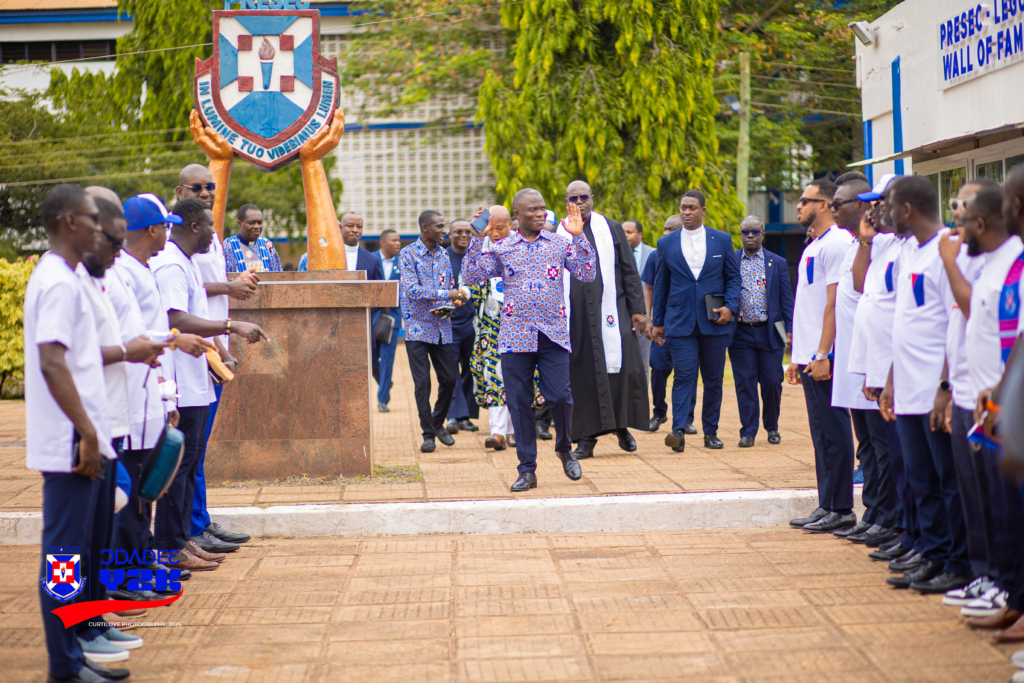
Photos: PRESEC’s 87th Speech & Prize-Giving Day spearheaded by 2000 year group

0

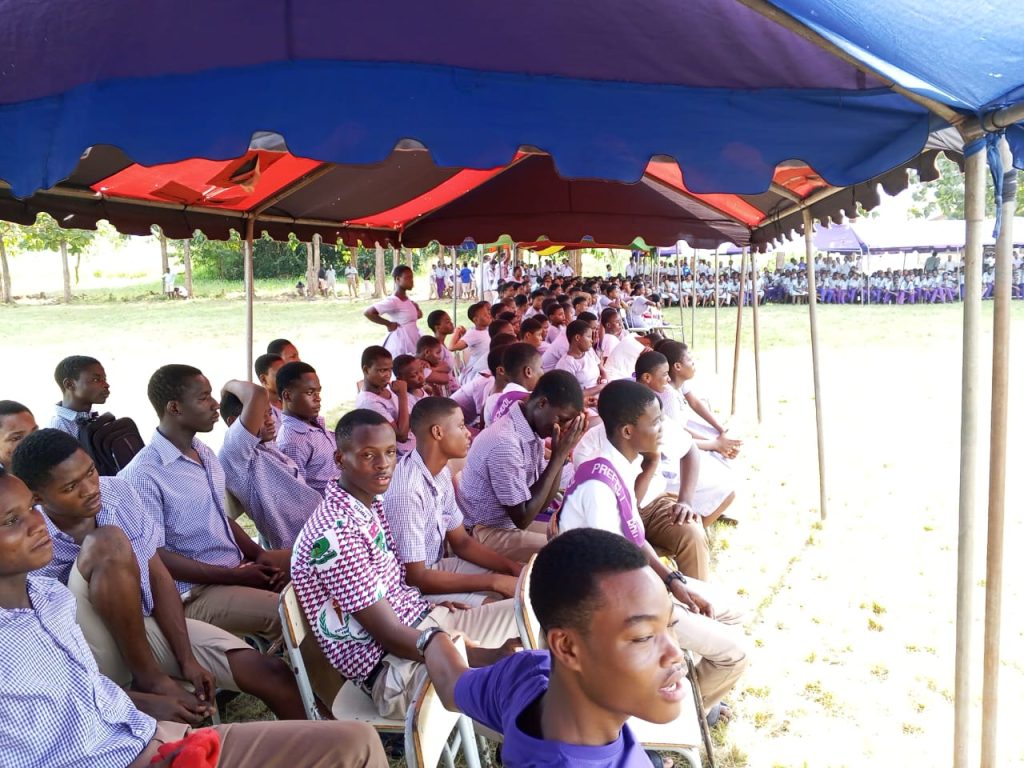
On Saturday, November 29, Presbyterian Boys’ Secondary School (PRESEC-Legon) celebrated its 87th Speech and Prize-Giving Day with a colourful ceremony that brought together current students, ministers of state, old students, government officials, and parents.

This year’s event was powered by the Ɔdadeɛ 2000 Year Group (Y2K), who were praised for delivering a well-organised celebration and a major project for the school.

The Minister for Foreign Affairs, Samuel Okudzeto Ablakwa, who is also a proud old student, served as the guest speaker.

Awards were presented to outstanding students, including first-year students who excelled in a test conducted in both core and elective subjects. Students in Form 2 were also recognised, and additional awards were given for excellence in sports.

A total of 47 students who scored 8As in the 2024 WASSCE were honoured with laptops and certificates.

After the ceremony, the Odadeɛ Y2K group, which powered this year’s Speech and Prize Giving Day, unveiled their legacy project, which is the refurbished dining hall.

DISCLAIMER: The Views, Comments, Opinions, Contributions and Statements made by Readers and Contributors on this platform do not necessarily represent the views or policy of Multimedia Group Limited.

DISCLAIMER: The Views, Comments, Opinions, Contributions and Statements made by Readers and Contributors on this platform do not necessarily represent the views or policy of Multimedia Group Limited.

How to Critique a Constituted Government, an advice to the opposition

0

PREAMBLE

In recent times, the opposition party, the NPP, has misguidedly intensified its adverse criticism of the government of President John Mahama. The purpose of this discourse is to examine the importance of objective and responsible criticism, and to outline how best to approach it so that it achieves its intended purpose.

The Philosophy Behind Government Critique

Critiquing—or even outrightly criticizing—a constituted government is not an act of rebellion; it is the highest expression of democratic maturity. No government, whether in South Africa, the United States, or the United Kingdom, is above scrutiny. Democracies weaken the moment citizens stop asking questions.

As a global affairs analyst of more than four decades, I have consistently maintained that meaningful criticism rests on three pillars: intent, method, and moral discipline. At its philosophical core, criticism must answer three fundamental questions:

Why am I doing this?

What truth do I seek?

Am I correcting or condemning?

A critique built on hatred collapses; one built on facts endures. True analysts do not weaponize falsehood—they refine public reasoning. Motives matter because motives shape methodology. A dishonest critic manipulates emotion; a responsible critic analyzes data to reach sound conclusions.

Intent: The Heartbeat of Responsible Criticism

Before speaking, the critic must interrogate his motives. If the goal is to embarrass leaders or destabilize the system, the critique loses its moral authority. But if the intention is to strengthen institutions, enhance transparency, and improve governance outcomes, then the critique becomes noble.

Intent determines tone, structure, and credibility. Reform-minded administrations—such as that of President Mahama—benefit from critics whose motives align with progress, not chaos.

Critical engagement must therefore spring from civic duty, not partisan conflict. History’s greatest critics—from Thomas Paine to Nelson Mandela—criticized not to destroy, but to rebuild.

Data, Statistics, and the Beauty of Evidence

Criticism becomes exciting when it is grounded in numbers. It becomes a sport for those who enjoy graphs, budgets, audited reports, and policy documents. The analyst becomes a detective—tracing trends, comparing revenues, decoding debt ratios, studying demographics.

When the government presented its budget a few months ago, an honest critic would begin by reviewing revenue baselines, analyzing the trajectory of internally generated funds, calculating the recurrent-to-capital ratio, studying inflationary impacts, and comparing Ghana’s metrics with regional peers. One cannot critique a budget without reading its numbers. Statistics bring sanity; they separate noise from truth.

Where there is no evidence, there must be no argument.

Probability Logic: The Mathematics of Government Performance

One of the most underappreciated tools of policy critique is probability analysis. Budgets are projections, not miracles; policies are intentions, not guaranteed outcomes.

Effective criticism asks:

What is the probability of achieving this target?

What are the structural constraints?

How realistic is the timeline?

If a government promises a 24-hour economy or major capital investment, probability analysis helps determine feasibility. This is not cynicism—it is logic. Evidence-based criticism earns respect from economists, policymakers, and even government officials because it is scientific rather than emotional.

Research: The Soul of Every Credible Critic

Criticism is not a one-man enterprise. Behind every rigorous public analyst is a team—researchers, statisticians, media monitors, investigative journalists, and policy experts. Governance is too complex for spontaneous anger; it requires a think tank mindset.

Meaningful criticism requires patience. You read budgets. Verify projects. Check satellite images. Consult archives. Compare newspaper reports. Track inflation, revenues, and population trends. Examine international benchmarks. Only then does your voice carry weight.

This is why noisy critics fail—they speak before researching. Real critics research before speaking.

Opposition: The Lifeblood of Democracy

Every responsible government silently desires a vibrant, intelligent opposition. Without opposition, even well-intentioned leaders grow complacent. Without analytical pressure, mistakes persist. Without scrutiny, corruption hides in the shadows.

Governments need critics the way trees need carbon dioxide.

In Ghana, criticism has already helped shape reforms—from revenue digitization to procurement oversight. Globally, the U.S. Congressional Budget Office exists solely to critique government spending. The U.K. Shadow Cabinet challenges government policy line by line. South Africa’s civil society organizations audit public spending meticulously.

Nations rise when their citizens hold leaders accountable. Criticism should never be anti-government; it must be pro-democracy.

Case Studies: Ghana and Global Democratic Practice

President Mahama’s governance style provides a living laboratory for democratic critique. From the national budget to asset declarations, infrastructure reforms, galamsey eradication, Gold Board reforms, creative economic strategies, currency stabilization, electricity upgrades, and foreign policy shifts—every action invites public interpretation.

Critics must not abandon analysis for emotion, nor silence themselves when the data is clear.

Similarly, global history shows how constructive criticism shapes governance. Barack Obama’s Affordable Care Act was revised following public critique. Kenya’s devolution reforms strengthened after critics exposed fiscal leakages. Germany’s energy transition succeeded because environmental critics confronted leaders with evidence, not insults.

Ghana should belong to that league—where criticism is data-driven, respectful, and nation-building.

Truth as the Cornerstone of Governance Analysis

Criticism becomes dangerous the moment falsehood enters the conversation. A critic who lies becomes a propagandist. A critic who manipulates statistics becomes partisan. A critic who relies on emotion becomes a social media influencer, not an analyst.

Truth is the critic’s only anchor. Without truth, credibility collapses.

This is where the NPP opposition has failed. Even Stevie Wonder could see the mischief in their approach.

President Mahama’s government does not fear criticism—but it detests lies. Evidence-based criticism commands respect, even from those in power.

Conclusion: Criticism as a Service, Not a Weapon

Critiquing the Mahama administration should not be structured as a battle. It is a national service. It is not noise—it is nation-building. It is not chaos—it is clarity.

A serious critic must blend philosophy, data, probability, research, history, and moral courage. When these elements unite, criticism becomes not only exciting but transformative.

Democracy rises when citizens speak with facts. Under the previous administration, protesters—including juveniles—were arrested and detained. Today, protesters, including those mobilized by the NPP, are protected by the police and granted their constitutional rights to free speech and assembly.

Governments perform better when monitored by knowledgeable voices. Societies grow when truth—not noise—guides debate.

A Good Time to Be Ghanaian

Wherever you go today—from regional capitals to the U.S., U.K., China, and Russia—Ghanaians command respect, in large part due to the responsible leadership exhibited by President Mahama. His calm demeanor, gentility, and humility are unmatched.

The late Jerry Rawlings once remarked that Mahama does not fit the mold of a typical African leader—he is more like a European leader. Paradoxically, while complimenting Mahama, this observation highlights the shortage of gentle leadership on the continent.

Finally, let it be said unequivocally: to critique a government is to love your nation enough to demand better.

Eke Agbai

Executive Vice President, Center for Policy and Foreign Engagement

USA

Presidential Staffer Calls for Simpler Business Licensing

0

Nana Yaa Jantuah
Nana Yaa Jantuah

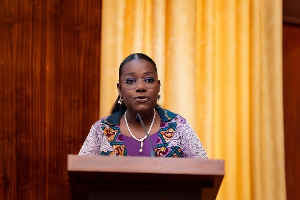
Nana Yaa Jantuah, Senior Presidential Staffer in charge of Energy, has urged regulatory agencies to simplify Ghana’s business licensing processes to reduce barriers facing entrepreneurs.

Speaking at the Institute for Liberty and Policy Innovation’s (ILAPI) High Level Business Regulatory Dialogue in Accra on Thursday, she described current procedures as long and cumbersome, identifying them as major obstacles to growth and investment. Her comments came during a session that brought together policymakers, regulatory bodies, private sector actors, and civil society to discuss practical steps toward regulatory improvement.

Jantuah was appointed Presidential Staffer on January 21, 2025, with responsibility for Energy, Green Transition, and the Public Utilities Regulatory Commission (PURC). She previously served as Director of Public Relations and External Affairs at PURC and as General Secretary of the Convention People’s Party (CPP) from August 2020 to December 2023.

Entrepreneurs often resort to middlemen because regulatory institutions remain difficult to reach or insufficiently visible to the public, according to Jantuah. She questioned whether businesses genuinely need all the licenses currently required and emphasized that the process of obtaining licenses creates more problems than the number of licenses themselves.

The government cannot effectively remove red tape and bottlenecks when it regulates itself, Jantuah stated. She highlighted the problem of accessibility, noting that when people consistently use middlemen, it signals that service providers are neither visible nor accessible. This forces businesses into arrangements that add complexity and cost to licensing processes.

Jantuah also challenged regulators to improve their engagement beyond digital platforms. Not all investors rely on social media for updates or information, she explained, noting that wealthy potential investors might not be social media users. She advocated for one on one engagements and frequent direct interaction with business communities, emphasizing that virtually everyone in Ghana operates some form of business.

The Presidential Staffer stressed that improving regulatory efficiency remains essential to supporting Ghana’s economic development. She reaffirmed the government’s commitment to removing bottlenecks that slow down business operations, though she acknowledged that effective reform requires action beyond government directives alone.

Peter Bismark Kwofie, Executive Director of ILAPI, outlined findings from a ten month business regulatory research project conducted between 2024 and 2025. The study uncovered several challenges affecting Micro, Small and Medium Enterprise (MSME) development and transition in Ghana.

The research found it takes an average of seven to ten years for businesses to transition from micro to small enterprises, especially within Information and Communication Technology (ICT) manufacturing and telecommunications sectors. Kwofie stated that Ghana’s business regulatory apparatus heavily slows the transition of typical Ghanaian businesses from micro to small, and from medium to large scale operations.

Young entrepreneurs would spend years borrowing or saving close to 10,000 US dollars but would prefer not to invest that sum in businesses in Ghana, choosing instead to travel overseas through connections and dangerous terrains, Kwofie explained. The reason stems from fear of losing close to 30 percent of their capital to regulatory requirements, according to the ILAPI research.

Kwofie said the findings demonstrate urgent need for reforms that will make Ghana’s regulatory system more efficient, predictable, and business friendly. The research provides concrete evidence of how regulatory burdens discourage domestic investment and push potential entrepreneurs to seek opportunities abroad rather than build businesses at home.

Thursday’s dialogue forms part of ILAPI’s ongoing Business Regulatory and Compliance Reform project, which aims to promote a fair, transparent, and supportive environment for business growth in Ghana. The initiative seeks to identify specific bottlenecks in Ghana’s regulatory landscape and propose actionable solutions that balance necessary oversight with entrepreneurial freedom.

The session addressed concerns that excessive regulatory requirements disproportionately affect small businesses lacking resources to navigate complex compliance systems. Larger corporations often maintain dedicated compliance departments or can afford to hire consultants, while smaller enterprises face the same regulatory burden without similar capacity.

ILAPI’s research methodology involved direct engagement with businesses across multiple sectors, tracking their experiences with licensing, permits, and regulatory compliance over an extended period. The findings revealed not just the number of required licenses but the cumulative time and financial costs associated with obtaining and maintaining regulatory compliance.

The dialogue represents growing recognition among policymakers that streamlined regulatory processes could unlock significant economic potential. Ghana’s entrepreneurial sector has demonstrated resilience despite regulatory challenges, suggesting that reforms could accelerate business formation and growth across multiple industries.

Participants at the dialogue discussed specific recommendations including creating unified licensing portals, reducing processing times, eliminating redundant requirements across different agencies, and improving transparency around regulatory standards and expectations. Several speakers emphasized that regulatory efficiency should not compromise necessary oversight for consumer protection, environmental standards, or financial integrity.

The government’s commitment to regulatory reform aligns with broader economic policy goals including job creation, private sector development, and positioning Ghana as an attractive destination for domestic and foreign investment. Implementation of meaningful reforms will require coordination across multiple government agencies and sustained political will to resist pressures that often lead to regulatory expansion rather than simplification.

Three men attack Dabala market, targeting Woyome brothers and agave Chief

0

Tension is heightening in the Agave Traditional Area after a viral video captured some men identified as Amehoho and Richard popularly known as fitter engineer described by residents as “hooligans—storming the Dabala main market and using a public address system to publicly brand the Woyome brothers and the Paramount Chief of Agave, Togbega Xedihor Hlitabo IV, as “thieves and criminals.”

The incident, which has sparked widespread public condemnation, is believed to be part of an escalating smear campaign allegedly orchestrated by some self-styled wing chiefs and queenmothers who are battling for legitimacy within the Agave chieftaincy structure.

Viral video sparks outrage

In the video intercepted by this news outlet, the three men are seen walking through the market while loudly announcing through a PA system:

“We are live in Dabala main market. Woyome brothers and Togbega Xedihor Hlitabo IV are thieves and criminals. They are not true Agave citizens and have no authority to enstool a Paramount Chief, one of the hoodlums stated.

Their actions provoked sharp criticism from traders and residents, most of whom condemned the public insults and accused the men of acting on behalf of individuals seeking to destabilize the traditional leadership.

Legal action looms

The attack appears to be the latest in a series of coordinated assaults—both verbal and written — against the Woyome brothers, Hon. Kwabena Mensah Woyome, a former MP for South Tongu, and his elder brother, Mr. Alfred Agbesi Woyome.

The brothers have now threatened to take legal action, including a defamation suit, against several individuals they accused of publishing fabricated stories, inciting confusion, and attempting to delegitimize the Paramount Chief.

They argued that many of the so-called wing chiefs and queenmothers leading the smear campaign were illegally gazetted by a former Volta Regional House of Chiefs (VRHC) registrar, Henry Attipoe, without approval from the Agave Traditional Council.

Attorney-General’s report adds another twist

Documents sighted by this outlet, including an Attorney-General’s report dated August 23, 2022, reference 75 individuals, including the same wing chiefs, in a criminal matter:The Republic vs. Solomon Amehoho.

Charges include,Abetment of robbery, Abetment of rioting with offensive weapons, Acting as a chief contrary to Section 63 of the Chieftaincy Act, 2008 (Act 759).

This has further deepened public suspicion about the credibility of those attacking the Woyome brothers and Togbega Xedihor Hlitabo IV.

Protests against the Woyome brothers

On Monday, November 24, 2025, a group of traditional leaders and their supporters staged a protest and petitioned President John Dramani Mahama, accusing the brothers of meddling in Agave chieftaincy affairs.

They alleged that the brothers were “outsiders” and had used their past political and diplomatic influence to interfere in the installation of chiefs. The Woyome brothers, however, insist these claims are baseless and motivated by personal interests.

Woyome brothers respond

In a press briefing in Accra on Thursday, November 27, 2025, the brothers rejected all allegations, describing them as “fabrications designed to destroy our integrity.”

They stated: “They never installed or supported the gazetting of the current Paramount Chief, Togbega Xedihor Hlitabo IV (Edward Allan Agbeti).

Their family has a long-standing reputation in legal practice, making it unlikely they would involve themselves in illegal traditional processes.

Several of their accusers lack legitimate royal lineage and are themselves facing credibility issues.

They further expressed disappointment that those who had once sought their support and financial assistance had now turned against them, even attacking the memory of their late mother and deceased sister.

Alleged police complicity

The Woyome brothers also raised concerns about the conduct of ACP Takpa, a senior officer at the Sogakope District Police Command.

They accused him and the South Tongu DISEC of:

Helping the protestors defy a court order and a directive from the Volta Regional Security Council banning the demonstration

Ignoring the Attorney-General’s indictment against some of the protest leaders

Escalating tensions within the traditional area

They claim their timely intervention prevented a counter-protest by youth and legitimately installed chiefs, which could have led to violent clashes.

Background to the chieftaincy dispute

The dispute dates back to 2011 and 2012, when factions within Agave submitted conflicting petitions concerning the installation of a new Paramount Chief. Documents show groups within the Tsiala Clan, Yelu House Gate and other royal families have consistently disagreed on the rightful heir.

The matter has long been before the Judicial Committee of the Volta Regional House of Chiefs, and the Minister for Local Government and Religious Affairs recently directed the committee to prioritise the hearings.

Court injunction against rival installation

The Sogakope High Court recently issued an injunction stopping the installation and outdooring of another “paramount chief,” after reports emerged that a rival faction was secretly planning to install its own candidate.

The injunction upholds the authority of Togbega Xedihor Hlitabo IV, who was lawfully sworn in on October 9, 2024, and inducted into the VRHC on October 15, 2024.

Call for calm

Woyome urged residents to disregard the “fake, inaccurate and self-serving propaganda” being circulated by what he described as a small group of divisive individuals.

He reaffirmed the commitment of his family to Peace, Rule of law, Respect for traditional processes and constructive engagement.

He warned those spreading defamatory content to stop before legal action is taken.

‘Deadly’ 6-part crime thriller from Peaky Blinders creator looks gripping

0

Calling all thriller fans! A new six-part crime drama is on the way, and if the first look is anything to go by, it’s set to be a gripping watch.

Directed by BAFTA-winner Otto Bathurst (Peaky Blinders) and written by Matt Charman, the mind behind Netflix’s hit show Hostage, Prisoner follows a “deadly manhunt” after a prisoner and his transport officer are ambushed in transit.

Sky has released a first-look image of the two leads, Tahar Rahim (The Serpent, Un Prophète) and Izuka Hoyle (Boiling Point, Big Boys), handcuffed together and running from a chaotic scene with blood-stained faces.

If there’s anyone who knows how to deliver edge-of-your-seat drama, it’s Otto Bathurst, who won a BAFTA in 2014 for his work on Peaky Blinders and has since directed episodes of Billy the Kid and His Dark Materials.

And with Matt Charman (Hostage, Bridge of Spies) at the helm, award-winning actors Tahar Rahim and Izuka Hoyle look set to bring this high-stakes plot to life. Intrigued? Read on for more details about Prisoner.

What to expect from Prisoner

The story follows Amber (Hoyle), a “principled” young prison transport officer tasked with escorting Tibor (Rahim), a “trained killer and high-value inmate”, to court to testify against his elite crime syndicate.

The synopsis continues: “When their convoy is brutally ambushed, she’s forced to put her life in his hands. As the sole survivors, handcuffed and on the run, they must race to reach their destination alive and on time.

“Along the way, their uneasy alliance is tested as the syndicate closes in. Trust becomes a weapon and their shackled survival a moral dilemma, forcing Amber to confront how far she’ll go to protect what matters most.”

© © Joseph Sinclair
Izuka Hoyle plays principled young prison transport officer Amber

Who stars in Prisoner?

The cast is led by BAFTA award nominee Tahar Rahim (The Serpent, Un Prophète) and Scottish BAFTA award-winner Izuka Hoyle (Boiling Point, Big Boys).

© Sky UK
Tahar Rahim stars in Prisoner
Tahar Rahim stars as Tibor in Prisoner

They’re joined by Eddie Marsan (Back to Black, The Thief, His Wife and the Canoe), Catherine McCormack (Lockerbie: A Search for Truth, 28 Weeks Later), Leonie Benesch (September 5, Babylon Berlin), Finn Bennett (Black Doves, True Detective) and Sam Troughton (Lockerbie: A Search for Truth, Black Doves).

Rounding out the cast are Laurie Davidson (The Girlfriend, Mary & George), Ken Nwosu (Black Doves, Sticks and Stones), Brían F. O’Byrne (Conclave, The Wonder) and Youssef Kerkour (Lockerbie: A Search For Truth).

GES cannot exclude us – Most Rev. Fianu calls for mission role in teacher appointments

0

The Chairman of the National Peace Council, Most Rev. Emmanuel Fianu, says restoring full management powers to mission owners in faith-based schools will strengthen discipline, character formation and overall educational quality.

Speaking on Hot Issues on Sunday, November 30, 2025, he argued that the current arrangement, in which the Ghana Education Service (GES) independently appoints teachers and heads, sidelines the groups that established these schools.

GJA Ashanti Regional Chair urges responsible journalism in era of new media

0

The Ashanti Regional Chairman of the Ghana Journalists Association (GJA), Mr Kofi Adu Domfeh, has called for stronger adherence to responsible journalism amid the rapidly evolving media landscape.

He said the contemporary media environment, shaped by digital platforms and rising misinformation, required heightened professionalism and vigilance.

Mr Domfeh made the call at the 6th Congregation and Matriculation of the OTEC School of Journalism and Communication Studies in Kumasi, where he delivered the keynote address on the theme: “Responsible Media: A Prerequisite to National Development.”

He said responsible media practice had become more urgent with the proliferation of social media, shrinking newsrooms, and increasing manipulation of online content.

He noted that while digitisation had expanded opportunities for expression, it had also intensified the risks of misinformation and sensationalism.

“In such an environment, responsibility becomes both a personal ethos and an institutional imperative,” he said.

“Your credibility is your most valuable asset. Lose it, and you lose your audience.”

Mr Domfeh urged journalists to prioritise verification, balance and public-interest reporting, stressing that national development depended on an informed citizenry and accountable leadership.

“Responsible media is the foundational infrastructure for progress, just as essential as roads, electricity or clean water,” he added.

He encouraged new graduates not to compromise professionalism for quick gains, cautioning that unethical conduct eroded public trust and weakened the role of the media in nation-building.

To the matriculating students, he advised discipline, curiosity and commitment to ethical practice, saying: “The habits you form here will define your future practice.”

He commended the OTEC School of Journalism and Communication Studies for its contribution to media training, noting that Ghana needed strong communication institutions to safeguard the integrity of the national narrative.

Mr Domfeh urged journalists to prioritise their safety and mental well-being, describing responsible media as inseparable from responsible practitioners.

He appealed to the public to adopt environmentally friendly practices, including planting trees and gifting natural plants to support environmental preservation.

He charged the graduates and students to “influence the narrative, shape the future and serve the public good with integrity and courage.”

Journalism remained a powerful tool for promoting unity, accountability and national development, he noted.

DISCLAIMER: The Views, Comments, Opinions, Contributions and Statements made by Readers and Contributors on this platform do not necessarily represent the views or policy of Multimedia Group Limited.

DISCLAIMER: The Views, Comments, Opinions, Contributions and Statements made by Readers and Contributors on this platform do not necessarily represent the views or policy of Multimedia Group Limited.

Ghana cycle tourist embarks on mission to promote domestic tourism and national unity

0

Abdul Sadat Habib, a passionate Ghanaian cyclist and tourism advocate, has successfully toured three regions of Ghana and is now preparing for his fourth journey.

Speaking in an interview with Dr. Kay on Accra 100.5 FM, Habib shared the motivation behind his bicycle tours and their purpose.

“I embarked on this bicycle tour to sell Ghana and improve domestic tourism,” he said.

“We often showcase Ghana in many ways, but certain places remain overlooked.

I took it upon myself to tour the country on my bike, highlight these beautiful locations, and encourage Ghanaians to explore their own country.

This not only allows outsiders to see our beauty but also strengthens our national unity.

When people from Ada visit Kumasi, they realise nothing will happen to them, and the same goes for the other way.

It builds trust and unity among Ghanaians.” When asked who finances and supports his tours, Habib revealed that he funds the trips himself.

“I worked in Libya and, upon returning, noticed that most Ghanaians are focused on football, business, or academia.

Tourism is a huge opportunity we are not fully utilising.

So, I decided to use my own resources to support the country in this unique way.

While a few people encourage me along the way, I am currently managing everything on my own,” he added.

Habib’s initiative is a testament to the power of individual effort in promoting Ghana’s tourism, culture, and unity.

His ongoing bicycle tour continues to inspire fellow Ghanaians to explore their country and discover its hidden treasures.

Bloodbath Looms At James Town As minister’s visit raises stakes in tense Ngleshie Alata leadership dispute

0

Screenshot
Screenshot

Tension is mounting in James Town as the Minister for Chieftaincy and Religious Affairs Mr. Ahmed Ibrahim prepares to meet factions of the disputed self-styled chief Prince Asharku Bruce-Quaye, an intervention many fear could spark violent clashes if not handled with utmost caution.
Deep fractures within the traditional leadership of Ngleshie Alata have resurfaced, fueled by an intensifying chieftaincy dispute involving Prince Asharku Bruce-Quaye, whom a significant bloc of elders, kingmakers, and Asafoatsemei strongly maintain is not the legitimate Paramount Chief of the area therefore they are not ready to sit in a meeting to be chaired by an imposter. Some elders warn that any move by the Minister perceived as favoring one faction over the other could inflame tensions and provoke confrontation among already agitated youth groups aligned with rival sides.
A senior elder, who requested anonymity, described the atmosphere in James Town as “volatile and unpredictable,” cautioning that one wrong signal from government could “lead to a situation no one can control.”
Elders Declare Bruce-Quaye’s Claim Illegitimate
The dispute escalated after videos surfaced showing Prince Asharku Bruce-Quaye participating in official events at the Jubilee House. Elders argue that such appearances dangerously signal political recognition for someone they insist lacks legitimate claim to the Ngleshie Alata paramountcy.
They assert that:
Bruce-Quaye does not hail from either of the two recognized ruling houses an it was true the instrumentality of the Chief of Nungua Nii Odaifio Welensti who enstooled Ashjarku Bruce Quaye.
He allegedly bypassed traditional processes and forcefully entered the stool room.
His adoption of the title “Wetse Kojo II” is historically inaccurate; elders maintain the rightful successor should be the third to bear the title.
Several ongoing court cases challenging his claim make political engagement with him “dangerous and premature.”
According to the elders, any attempt to recognize Bruce-Quaye without addressing these disputes undermines traditional authority and threatens community harmony.
Accusations Against the House of Chiefs
Both the Greater Accra Regional House of Chiefs and the National House of Chiefs have come under intense criticism, with elders accusing them of facilitating what they call a “fraudulent gazetting” of Bruce-Quaye despite active court disputes. Some officials have been accused of procedural breaches and bias, further eroding trust in Ghana’s chieftaincy governance structures.
Fear of Violence as Youth Mobilize
Youth groups supporting opposing factions are reportedly mobilizing ahead of the Minister’s visit. Community leaders fear that any engagement seen as one-sided could trigger clashes in a community where tensions have simmered for years.
One Asafoatse warned that “James Town is a tinderbox right now,” urging the Minister to act with balance, transparency, and sensitivity to avoid inflaming the situation.
Calls for Government and Security Intervention
Elders, opinion leaders, and civil society groups are calling on the Interior Ministry, the Inspector General of Police, National Security, and religious bodies to intervene before tensions escalate further.
They want the Minister to:
Engage all legitimate kingmakers.
Avoid actions that could be interpreted as endorsing any faction.
Prioritize peace-building and allow the courts both civil and traditional to determine rightful leadership.

More Than Two-Thirds of Ngleshie Alata Traditional Council File High Court Suit Challenging Prince Asharku Bruce-Quaye’s Legitimacy
A massive shake-up has hit the already tense Ngleshie Alata chieftaincy landscape as more than two-thirds of the members of the Ngleshie Alata Traditional Council have filed a suit at the High Court challenging the legitimacy of Prince Asharku Bruce-Quaye as Paramount Chief.
The latest legal action marks one of the strongest collective moves yet by the council’s elders, kingmakers, and Asafoatsemei, who insist that Bruce-Quaye is neither qualified nor legitimately installed to occupy the Ngleshie Alata paramount stool. The court filing, they say, is aimed at preventing what they describe as an attempt to force legitimacy through administrative processes rather than through proper customary procedures.
Council Members Reject Bruce-Quaye’s Documentation
According to the plaintiffs, the CD forms documents required for chieftaincy recognition and gazetting were filed without authorization, without the consent of the majority of kingmakers, and in violation of established customary rules.
The elders argue that Bruce-Quaye:
Is not from either of the two recognized ruling houses eligible to produce a paramount chief.
Has not undergone the requisite traditional rites.
Was previously destooled as a sub-chief by his own family.
Submitted documents that they believe misrepresent his status within the traditional hierarchy.
The suit seeks to invalidate the CD forms, block any attempt to gazette Bruce-Quaye, and halt any recognition processes at the Regional or National House of Chiefs pending a full trial.
A Unified Stand—Rare in the Dispute
Observers note that it is unusual for more than two-thirds of a traditional council to collectively challenge an installation in court, signaling the depth of opposition to Bruce-Quaye’s claim.
“This action shows clearly that the majority of legitimate custodians of the Ngleshie Alata stool reject the ongoing attempts to impose a chief on the people,” one elder involved in the case stated.
Accusations of Procedural Breaches
The suit also names certain officials within the Greater Accra Regional House of Chiefs, accusing them of disregarding due process in handling Bruce-Quaye’s documents. Elders claim that despite ongoing legal disputes, decisions were being taken behind closed doors to fast-track his recognition a move they say undermines transparency and threatens traditional governance.
Community Tension Escalates
The legal action comes at a time when tensions in James Town are already high, with youth groups loyal to various factions mobilizing and security agencies monitoring the situation closely. Some community leaders fear that any perception of favoritism by state institutions could inflame tempers and lead to confrontations.
With the majority of the council now aligned against him in court, the case is set to become a major turning point in the protracted Ngleshie Alata chieftaincy dispute one that could either bring clarity to the succession battle or further entrench the divisions that have unsettled James Town for years.

Prof. Elsie Effah Kaufmann officially inducted as the first Ghanaian Fellow of the UK Royal Academy of Engineering

0

In a historic achievement for Ghana and African engineering, Professor Elsie Effah Kaufmann, Dean of the School of Engineering Sciences at the University of Ghana, has been formally inducted as an International Fellow of the Royal Academy of Engineering (RAEng) at a distinguished ceremony held in London, becoming the first Ghanaian ever to receive this prestigious honour.

With this induction, Professor Effah Kaufmann, also Ghana’s beloved National Science and Maths Quiz Mistress, becomes the first Ghanaian since the Academy’s founding in 1976 to receive the coveted post-nominal FREng. Her selection places her among an elite cohort of only nine International Fellows elected worldwide in 2025, and distinguishes her as the sole Ghanaian among the 74 new Fellows announced in September.

Professor Effah Kaufmann’s journey to this historic moment reflects a deep commitment to her homeland and continent. After studying Bioengineering at the University of Pennsylvania, she made a deliberate choice to return home, driven by a clear vision: “I realised that the difference I could make was to bring the subject to Ghana.” That decision led her to become the founding head of the Department of Biomedical Engineering at the University of Ghana. She has since helped to establish other pioneering programmes in Biomedical Engineering, Physiotherapy, Radiography, Audiology, Medical Physics and Prosthetics and Orthotics. Beyond academia, as the beloved host of the Ghana National Science and Math Quiz and the Founder of the Elsie Effah Kaufmann Foundation, she has inspired thousands of young Ghanaians to pursue STEM fields, embodying her role as what she calls a “STEM advocate” working to ensure these subjects are accessible, especially to the underrepresented.

Professor Elsie Effah Kaufmann FREng: ‘I realised that the difference I could make was to bring the subject to Ghana.’

he induction ceremony, steeped in tradition and gravitas, saw Professor Effah Kaufmann sign the Academy’s historic roll book alongside some of the world’s most distinguished engineering luminaries, a symbolic moment that inscribes her name, and Ghana’s, in the annals of global engineering excellence.

Professor Effah Kaufmann’s election recognises decades of groundbreaking work in biomedical engineering, particularly her pioneering design of affordable medical technologies for low-resource settings, and her transformative leadership in advancing STEM education across Africa. Her research has directly improved healthcare delivery in underserved communities, while her mentorship has inspired a new generation of African Engineers and Scientists. As noted in her official citation from the Academy, “Professor Elsie Effah Kaufmann has founded pioneering biomedical engineering programmes and inspired thousands of children through education and outreach.”

The induction ceremony brought together leaders from industry, government and academia, including RAEng President Sir John Lazar CBE FREng, who welcomed the new Fellows with the following remarks: “These leaders exemplify excellence in engineering and will play a vital role in advancing the Academy’s mission to ‘engineer better lives.'”

The University of Ghana and the College of Basic and Applied Sciences celebrate this landmark achievement as further evidence of the institution’s unwavering commitment to producing globally competitive Engineers and Scientists who develop innovative solutions to real-world challenges. Professor Effah Kaufmann’s Fellowship stands as a testament to what African excellence can achieve on the world stage.

DISCLAIMER: The Views, Comments, Opinions, Contributions and Statements made by Readers and Contributors on this platform do not necessarily represent the views or policy of Multimedia Group Limited.

DISCLAIMER: The Views, Comments, Opinions, Contributions and Statements made by Readers and Contributors on this platform do not necessarily represent the views or policy of Multimedia Group Limited.

Matt Damon’s Forgotten Sci-Fi Bomb Seeks Redemption at New Streaming Home

0

Rahul Malhotra is a Weekend News Writer for Collider. From Francois Ozon to David Fincher, he’ll watch anything once.

He has been writing for Collider for over two years, and has covered everything from Marvel to the Oscars, and Marvel at the Oscars. He also writes obsessively about the box office, charting the many hits and misses that are released weekly, and how their commercial performance shapes public perception.

ADA SHS old students rally year groups to boost school development 

0

By Opesika Tetteh Puplampu  
Big-Ada, Nov. 30, GNA- The Old Students Association of Ada Senior High School, popularly known as NIMELI, has called for unity among the various year groups of the school as part of efforts to accelerate development in the school. 

The Association noted that unity among the groups would also elevate the school’s standing among top second-cycle institutions in Ghana and beyond.

 Madam Louisa Atta Akpoto, National Organiser of the Ada SHS Old Students Association, told the Ghana News Agency (GNA) that despite the progress made over the years, the school continued to face fundamental challenges, making the involvement of old students more critical than ever. 

Madam Akpoto stated that teachers and students frequently approach the Association with concerns, especially those related to teaching and learning materials, infrastructure, and basic amenities, with the school’s water crisis remaining the most urgent. 

She revealed that the lack of consistent water supply often forces students to fetch water from a nearby river, a practice that had resulted in occasional drowning incidents. 

“This is a major concern for us as old students. It is one of the reasons the 1985 and 2003 year groups recently launched the Water Accessibility Project to find a sustainable, long-term solution,” she said. 

She noted that female students were disproportionately affected by the situation, as reliable access to water was essential for maintaining personal hygiene, particularly during menstruation. 

Madam Akpoto commended the two-year groups for their visionary and timely intervention and encouraged other year groups to adopt similar initiatives tailored to the needs of the school. 

She also acknowledged the periodic support the school received from the Ada East District Assembly, the Ghana National Fire Service, and Electrochem Ghana Limited, who often supplied water to the school at no cost. 

Appealing to all old students and stakeholders, she stressed the need for collective action to uplift ADA SHS and position it among the country’s best-performing schools. 

“Most of the schools we consider big or popular today are where they are because their old students took a deliberate and active interest in developing their alma mater,” she added. 

Some students who spoke with the GNA expressed excitement about the support of the old students and appealed to other institutions and individuals to help the school’s development efforts. 
GNA 

Edited by Laudia Sawer/Lydia Kukua Asamoah  

CIHRM confers chartered status on 25 members, graduates 279 associate members

0

Dr. Francis Eduku, CEO of CIHRM, delivering his welcome address.

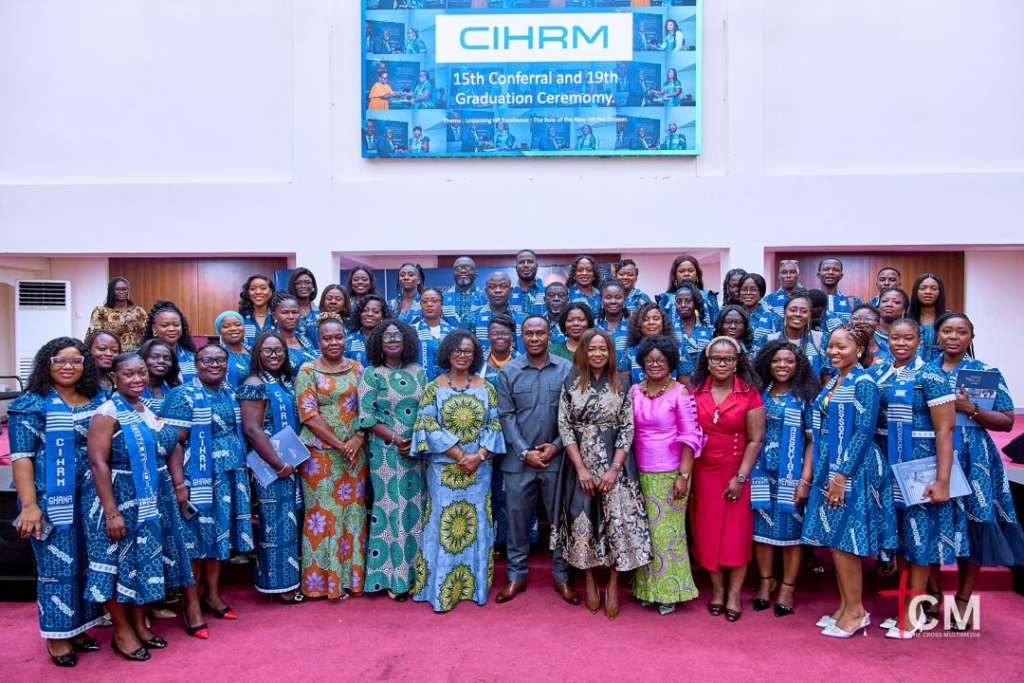
The Chartered Institute of Human Resource Management, Ghana (CIHRM) held its 15th Conferral and 19th Graduation ceremony in Accra, conferring Chartered status on 25 new members and graduating 279 Associate members.

In his welcome address, the Chief Executive Officer of CIHRM, Dr. Francis Eduku, said: “Today, we are conferring a Chartered Human Resource Management Practitioner status on 25 students who have completed the Level Four programme and 279 Level Three students who successfully passed their exams will also join our noble Institute as Associate Members. This second batch of new entrants in 2025 means that, at the end of today’s ceremony, our Chartered Human Resource Management Practitioners will increase from 399 in 2024 to 452 in 2025, and our Associate Members from 2,237 in 2024 to 2,686 in 2025.”

Dr. Eduku added that the HR Institute was committed to elevating HR competencies of its members and had entered into strategic partnerships with global HR professional bodies, enabling its members to gain access to contemporary knowledge and insights into emerging trends in the HR field.

“In line with our commitment to enhancing the competencies of our members, we have entered into regional and global partnerships with renowned HR professional bodies to provide you with access to professional materials and emerging perspectives in the field of HR. In October this year, we signed a strategic partnership with one of the largest HR professional bodies in the world, the Society for Human Resource Management (SHRM), based in the USA, to enable our members in good standing to access cutting-edge HR toolkits, templates, checklists, manuals, policies, procedures, and research at heavily discounted rates”, he explained.

“Whereas HR professionals who are not members of our cherished Institute pay US$118 annually for SHRM global membership, CIHRM members pay only US$10 for SHRM global membership, saving US$108. Again, we have secured a special deal with SHRM, where our members will pay a US$30 subscription covering three (3) years instead of US$354 for non-CIHRM members. This special deal for our members will end by January 31, 2026, and I urge all members to take advantage of this great opportunity before it expires”, he added.

The President of the CIHRM, Florence Hutchful, challenged HR Practitioners to model discipline and professionalism, particularly punctuality, describing it as a critical national challenge.

Florence Hutchful, delivering her speech at the ceremony

She urged the new graduates and the new chartered practitioners to value time, saying: “Lack of order, and in particular, the widespread disregard for time, has resulted in chronic lateness. It is the next major challenge we must confront as a nation, second only to the menace of galamsey, if we are to make appreciable progress in national development.”

She also appealed to the new Chartered Members and Associate Members to recommit to a transformative habit by showing up on time, as this was one of the simplest ways of building credibility and influence in organisations.

Speaking on the theme, “Unlocking HR Excellence: The Role of the New HR Practitioner”, the Guest Speaker for the ceremony, Dr. Irene Stella Agyenim-Boateng, the Vice-Chairperson of the Public Service Commission, emphasised that today’s organizations are undergoing dramatic shifts, requiring HR Practitioners to be more proactive, agile, and responsive to internal and external organizational demands.

“Unlocking HR excellence in today’s dynamic workplace begins with adaptability, agility, and swift response to both internal and external stimuli. The workplace is no longer static; globalization, technology, employee sophistication, community scrutiny, and shareholder anticipation are constantly re-shaping it”, she stated.

She advised the new HR Practitioners to create organizational value by empowering employees, shaping organizational strategies, anticipating disruptions, and pivoting with resilience.

Officials of CIHRM posed with some of the graduands

The ceremony was attended by the Vice-President of CIHRM, Dorothy Asare; the Immediate Past President of CIHRM, Dr. Edward Kwapong; Anita Nanfuri, Chairperson of the Professional Certification Board; Dora Siaw-Lartey and Louise Agyeman-Barning (Council Members); other members of the Professional Certification Board, Resource Persons, and Level 4 Supervisors.

DISCLAIMER: The Views, Comments, Opinions, Contributions and Statements made by Readers and Contributors on this platform do not necessarily represent the views or policy of Multimedia Group Limited.

DISCLAIMER: The Views, Comments, Opinions, Contributions and Statements made by Readers and Contributors on this platform do not necessarily represent the views or policy of Multimedia Group Limited.

AgriFair showcases Ghana’s growing agribusiness potential

0

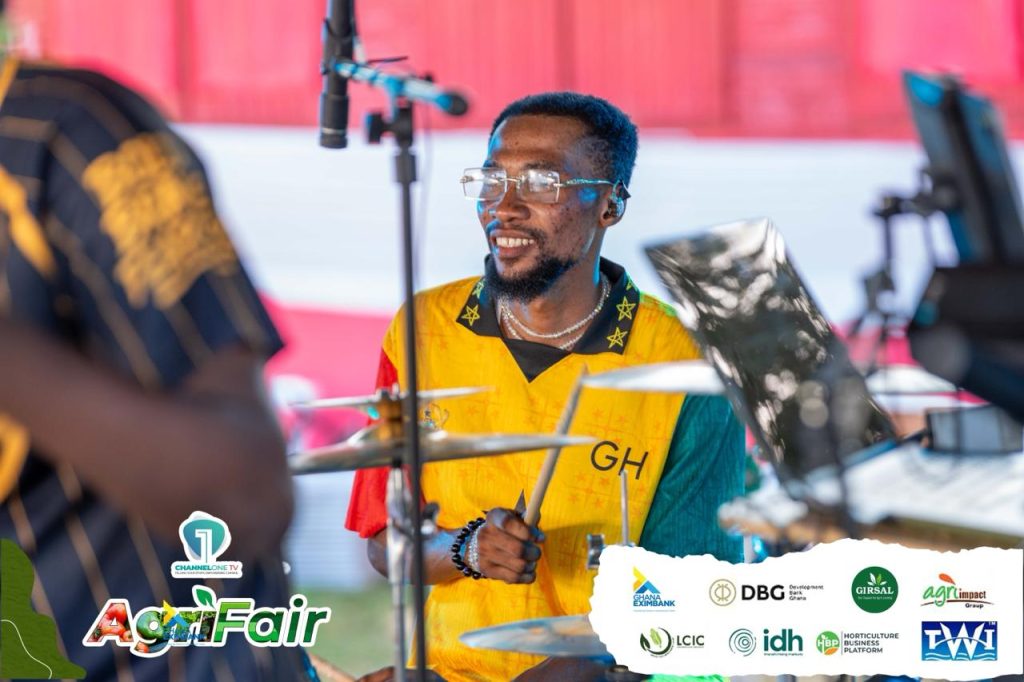
The Efua Sutherland Children’s Park in Accra came alive with activity, and innovation as the second edition of AgriFair brought together thousands of farmers, agripreneurs, investors, and consumers for a three-day exhibition that reaffirmed one message: agriculture is not just farming— it is big business, and it is the backbone of Ghana’s economic future.

From Friday, November 28, to Sunday, November 30, the park transformed into a vibrant marketplace where fresh produce, agritech tools, financial services, and agro-processed products converged under one large, bustling ecosystem.

For many industry watchers, AgriFair demonstrated how agriculture, when supported with the right investments and market access, can drive inclusive growth, create jobs, and position Ghana competitively on the global stage.

Agriculture as a Driver of Economic Growth

The momentum of the fair was evident as vendors sold out by midday, queues formed around popular stalls, and consumers sought out everything from vegetables and fruits to grains, spices, meat, and fish. This high demand underscored a growing consumer preference for fresh, locally sourced food—and the economic potential behind it.

Dr. Randolph Nsor-Ambala, Chief Executive Officer of Development Bank Ghana (DBG), said the strong turnout was proof that the agriculture sector is gaining strategic relevance in national development.

“It speaks to the relevance of the agric sector and the fact that agric is linked with almost everything we do in our daily lives,” he said during a tour of the stands.

He noted that agriculture offers unmatched advantages in job creation, climate-resilient operations, export diversification, and inclusive economic growth—making it a clear priority for national investment.

Farmers Meet Markets: A Business Model That Works

One of AgriFair’s biggest strengths is its ability to connect farmers directly to consumers. Many exhibitors expressed satisfaction with the increased sales, visibility, and direct customer feedback.

For smallholder farmers, removing intermediaries meant earning more for their produce. For consumers, it ensured better prices and fresher food.

“This fair has helped me understand what customers actually want,” a maize and vegetable farmer shared. “It’s not just about farming; it’s about doing business.”

Agri-Tech and Innovation Take Centre Stage

Beyond fresh produce, agritech firms showcased tools designed to modernise agriculture—from digital poultry management systems to soil testing solutions and crop-monitoring applications.

According to Agri-Impact Limited, one of the event’s headline sponsors, AgriFair is becoming the single most effective platform for showcasing agricultural innovations.

This kind of ecosystem-building, experts say, is crucial to scaling Ghana’s agricultural sector into a competitive business environment.

Agric Clinics: Training the Next Generation of Agripreneurs

AgriFair 2025 wasn’t just about selling or displaying products—it was also a learning hub.

Practical Agric Clinics offered training in fish farming, poultry production, piggery, and snail rearing. These sessions drew young people, retirees, and corporate professionals exploring agribusiness as a sustainable venture.

The clinics demonstrated how agriculture—when approached with business skills—can provide stable incomes and reduce youth unemployment nationwide.

A Strategic Tool for Cutting Ghana’s Food Import Bill

Presidential Advisor on the 24-Hour Economy Programme, Mr. Augustus Goosie Tanoh, emphasised that AgriFair proves Ghana can drastically reduce its nearly US$3 billion food import bill.

“If we continue to import at this scale, we export our jobs,” he warned. “The displays here show that Ghana can produce competitively and strengthen local value chains.”

He noted that Ghana’s agricultural potential is vast, and events like AgriFair help highlight gaps, opportunities, and strategic areas for collaboration.

A Platform That Builds Value Chains and Business Partnerships

For many exhibitors—seed companies, agro-processors, input suppliers, and agri-financiers—AgriFair provided unmatched visibility and networking opportunities.

The Legacy Crop Improvement Centre (LCIC) described the fair as one that “exceeded expectations,” revealing that several of its seed varieties sold out on day one.

Twellium Industrial Company Limited reported similar success, noting that the fair opened new markets for their Verna Water, Rush Energy Drink, and H&H Gari Mix.

AgriFair’s ability to link producers, investors, and consumers in a single space is widely regarded as one of its strongest contributions to Ghana’s agricultural business landscape.

The Future of Ghana’s Agricultural Economy

AgriFair 2025 highlighted a growing consensus: the transformation of Ghana’s economy must start with agriculture—but agriculture treated as business, backed by data, investment, technology, and strong partnerships.

If scaled and supported consistently, the fair’s outcomes could help Ghana:

Reduce dependence on imported foods

Strengthen local industries and agro-processing

Create jobs along every value chain

Improve rural incomes

Enhance food security

Expand export opportunities

As the three-day fair concluded, one thing was clear: AgriFair is no longer just an event—it is a catalyst for Ghana’s agricultural and business transformation.

AgriFair 2025 was powered by Channel One TV and Citi FM, and sponsored by the Horticulture Business Platform (HBP), Development Bank Ghana (DBG), Legacy Crop Improvement Centre (LCIC), GIRSAL, Ghana EXIM Bank, and Agri-Impact, with support from Twellium Industrial Company Limited.

AgriFair: Three days of innovation, fresh produce, and bold economic possibilities for Ghana

Peace Before Primaries: The NPP’s urgent task

0

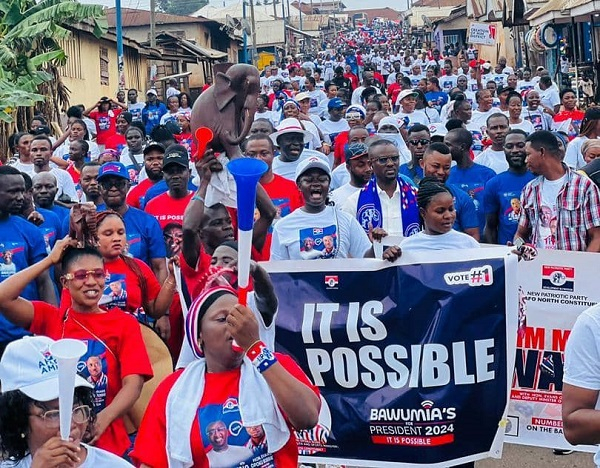
Some members of the New Patriotic Party (NPP) on the street Some members of the New Patriotic Party (NPP) on the street

With the 31 January 2026 NPP presidential primaries fast approaching, the party is in dire need of calm, cohesion, and discipline.

This is not merely about optics; it is about survival.

A party that enters a national election divided often exits defeated.

The recent escalation of internal insults is a dangerous sign that discipline is slipping.

Primaries are meant to be contests of ideas, policies, and leadership visions.

When they instead devolve into name-calling, public ridicule, and factional bitterness, the damage extends far beyond the internal arena.

And make no mistake: the opposition is watching.

The National Democratic Congress (NDC) will not hesitate to archive every jab, every insult, and every self-inflicted wound.

Come 2028, these words could be repackaged as evidence of disunity, poor judgment, or lack of leadership maturity within the NPP.

Parties rarely lose elections solely because of their opponents; they often lose because of their own internal fractures.

A Party at a Crossroads — Why the NPP must tame its internal fire

The New Patriotic Party (NPP) has weathered storms before, but the recent spike in internal verbal warfare suggests a party drifting dangerously close to self-sabotage. Reports of Atta Akyea allegedly describing Kennedy Agyapong as suffering from “mouth diarrhoea” and “not fit to be president” mark a new low in a competition where ideas should be clashing, not personalities.

Such remarks, if accurately reported, do not merely injure the reputation of a colleague; they wound the moral standing of the entire party.

A party cannot afford this kind of public spectacle, especially not on the eve of a crucial presidential primary scheduled for 31 January 2026.

The NPP is a party built on the ideals of tolerance, intellectual debate, and democratic maturity.

Allowing its leading figures to trade insults in the open court of public opinion risks eroding its credibility.

At a time when Ghanaians are scrutinising leadership quality more than ever, internal chaos only deepens doubts about the party’s capacity to govern itself, let alone the nation.

If the NPP fails to rein in this internal fire now, the blaze will not only scorch individuals but potentially consume the party’s chances in

the future.

Kennedy Agyapong’s Fiery Speech Style — Asset or Liability for a Presidential Ambition?

Kennedy Agyapong’s political persona has long been defined by bluntness, unfiltered commentary, and a reputation for “telling it as it is.”

While this approach has earned him loyal supporters who see him as bold, authentic, and incorruptible, it has also left behind a trail of controversial outbursts that opponents frequently capitalise on.

His record of fiery speeches, widely documented in Ghanaian political discourse, could cast a long shadow over his bid for higher office.

Presidential candidates are judged not only by the strength of their ideas but by their temperament under pressure, their diplomatic instincts, and their ability to unify.

A history of verbal confrontations, harsh accusations, or emotionally charged remarks risks being interpreted as signs of unpredictability or impulsiveness, traits that can unsettle undecided voters.

Should he secure the NPP’s nomination, every past statement will likely be revisited, replayed, and reframed by political opponents, especially the NDC, who are skilled at weaponising old rhetoric in election season.

The 2028 electoral battlefield will be unforgiving.

In modern politics, words never die; they merely go into storage, waiting for strategic resurrection.

Agyapong may need not only a political strategy but deliberate image recalibration if he hopes to reassure the broader Ghanaian electorate that he can transition from former outspoken legislator to steady national leader.

If the NPP wishes to remain competitive in 2028, it must prioritise peace now.

Not next month.

Not after the primaries.

Now.

mNotify Distances Itself from Controversial Political Messages

0


mNotify Company Limited has firmly rejected media reports linking its platform to the circulation of unauthorized political messages, describing the claims as “inaccurate” and the result of a fundamental misunderstanding of how its technology operates.

The company, which has for years positioned itself as a neutral and reputable bulk messaging service provider in the digital communications space, said it neither creates nor distributes political content on behalf of clients.

Providing background to the controversy, mNotify explained that its platform has always functioned as a self-service system, allowing users—including businesses, civil society organisations, event planners, and political actors—to independently upload, schedule, and disseminate their own messages.

This operational model, the company emphasized, means it does not edit, approve, endorse, or alter any content sent through its system.

According to management, this long-standing principle of strict neutrality has guided the company since its establishment.

The company clarified that the current public narrative arose from a misinterpretation of routine customer activity rather than any deliberate action by mNotify.

Once the misinformation began circulating, the company said it quickly moved to correct the record to prevent further escalation and to protect its reputation.

mNotify further noted that it welcomes any official inquiry into the matter, insisting that a transparent investigation will confirm the facts and dispel misconceptions about its role.

The company reiterated its commitment to lawful business practices, ethical use of technology, and upholding the highest standards of platform integrity as the election season intensifies and scrutiny of digital communication platforms grows.

Semper Fi go top after fifth straight league win over Inter Allies – Ghana Latest Football News, Live Scores, Results

0

Semper Fi moved to the top of the Access Bank Division One League Zone III table with a strong 2-0 victory over Inter Allies at the Teshie MacDan Astro Turf on Sunday.

The win, their fifth in a row, continues an impressive run of form that has quickly positioned them as serious contenders for promotion.

Kelvin Takyi Awuku opened the scoring, giving Semper Fi the perfect start. The team kept control of the game, showing confidence in possession and maintaining high pressure on Inter Allies throughout the contest. Their efforts were rewarded again when Ebenezer Kobia doubled the lead, sealing the points and sending the home supporters into celebration.

Defensively, Semper Fi remained disciplined, keeping Inter Allies at bay and securing another clean sheet to match their growing reputation for organisation and teamwork. Every department of the squad is performing with purpose, and the results continue to show their ambition.

The victory lifts Semper Fi into first place, a position that reflects their consistent performances and growing belief. They now turn their attention to their next test against Hakla SC.

If this form continues, Semper Fi will remain firmly in the conversation for promotion as the season progresses.

Why Ghana must fix campaign financing now

0

Ghana’s democracy has survived difficult moments, and we have every reason to be proud of how far we’ve come. But beneath the peaceful elections and colourful campaigns lies a growing problem we have avoided for far too long: the way our political system is financed.

Election after election, the cost of running for office skyrockets, and the desperation to raise funds pushes politics into the hands of people whose interest in the country may only be profit, not progress.

Campaign financing in Ghana has become a powerful hidden force that shapes decisions before, during, and after elections.

Those who provide money to political actors—contractors, business elites, politically connected individuals—are rarely doing it out of charity. They see campaigns as investments. And when their preferred candidates win, they expect returns. The repayment does not come from the personal pockets of politicians; it comes from state resources. Contracts get inflated, procurement rules bend, and national priorities quietly shift to reward those who sponsored the journey to power.

Ordinary citizens feel the consequences, even if they do not connect the dots. When hospitals lack basic equipment, when public schools fall apart, when potholes become death traps, and when taxes rise without visible progress, those outcomes are not accidents. They are symptoms of a political economy that quietly drains national resources into private political obligations.

We Ghanaians sometimes participate unknowingly. During campaign season, small gestures—transport money, a T-shirt, a meal—feel harmless. But they create expectations and obligations politicians must repay later using public funds. What looks like kindness today becomes the justification for misusing state resources tomorrow.

And it does not stop there. Even within political parties, internal contests have become expensive battles. Delegates expect “something small,” and aspirants spend heavily to secure party leadership or win primaries. These internal costs eventually get passed on to taxpayers. When a candidate finally gets into public office, they must repay these internal political debts.

When voters—whether delegates or ordinary citizens—accept money to support a candidate, they unintentionally plant the seed for corruption, contract inflation, and diversion of public resources. The money received today becomes the lost development of tomorrow.

One of the clearest national examples of opaque political decision-making is the controversy surrounding the National Cathedral. What started as a symbolic idea slowly turned into a major financial commitment involving public funds.

The public still does not know how contractors were selected, why costs changed repeatedly, or which political negotiations shaped the project’s direction. Whether one supports or opposes the cathedral is not the main issue.

The real concern is how easily political promises made within elite networks can convert into national financial obligations without sufficient transparency.

The cathedral debate exposes the deeper problem: decisions tied to campaign loyalties and private alliances can quietly override rational development priorities.

Election years also come with rushed spending. Projects appear suddenly, contracts get awarded quickly, and budgets swell for reasons the ordinary citizen cannot explain.

Civil servants quietly complain about being pushed aside by politically loyal appointees, even when they lack the competence needed to run institutions. Over time, professionalism suffers, and institutions weaken.

There is also a growing security concern. As campaigns become more expensive, political actors may be tempted to accept funds from sources that threaten national stability—illegal mining financiers, organized networks, foreign interests, or individuals involved in illicit activities.

Once such actors enter the political ecosystem, they become extremely difficult to remove because they now hold influence over elected leaders.

So what can Ghana do?

The first step is honesty. We must admit that campaign financing is draining our development efforts. The money politicians spend during elections is eventually paid for by the state—through inflated contracts, poor procurement, and weak budget discipline.

Second, Ghana needs strict transparency. Political parties and candidates should be required to disclose who funds them and how the money is spent.

Third, the country must introduce spending limits. It is simply unrealistic for someone to spend millions pursuing a job with a salary that cannot honestly repay such expenses.

Fourth, civic education must change. Citizens must understand that taking money during campaigns is not harmless. It has real economic consequences that affect their children, their communities, and the entire country.

Finally, Ghana should consider an independent institution to regulate campaign financing, investigate suspicious funding flows, and enforce transparency.

The price of political power in Ghana has become unsustainably high. If we fail to address this now, our elections will become even more expensive, corruption will deepen, institutions will weaken further, and development will continue to stall.

Ghana deserves better. And it starts with fixing how we finance politics.

I wouldn’t have removed COVID Levy if I were government

0

Dr Zaato is a scholar at the University of Ghana Dr Zaato is a scholar at the University of Ghana

Political science lecturer Dr Joshua Zaato has expressed his disappointment over the government’s decision to remove the controversial COVID Levy.

On November 26, 2025, Parliament passed the Value Added Tax (VAT) Bill, which formally repealed the levy introduced during the pandemic.

The bill, once assented to, will remove the 1 percent COVID-19 surcharge that had been applied to goods, services and imports.

However, speaking on TV3 on November 29, 2025, Dr Zaato argued that proceeds from the levy could have been directed toward major government efforts.

Dr Zaato raises alarm over government inconsistencies after IGP 2-year contract extension

He cited policies such as the government’s “Big Push” infrastructure plan and support for struggling farmers across the country, and sectors the levy could have been driven to instead of a full repeal.

“I wouldn’t have removed it; this money would have done something for the big Push. Again, you have a serious problem of farmers experiencing glut across the country, so I could have invested this money in the farmers,” he said

What the Repeal Means

Under the new tax regime, the COVID-19 Levy is replaced with a streamlined VAT structure. The changes are projected to return roughly GH₵3.7 billion to households and businesses in 2026, relieve cost burdens, and incentivise private-sector growth.

Advocates for the reform argue that with inflation still a concern and many households under strain, the timing could not have been better.

Critics, however, maintain that the government now needs to find alternative revenue streams to finance major development projects and support the agricultural sector, lest the fiscal gap widen.

ID/AE

Late Singer’s Daughter Denise Returns to Ghana After Court Judgment

0

  • Daddy Lumba’s eldest daughter Denise Ama Fosu has landed in Ghana ahead of her late father’s funeral on December 13
  • A video showing the late highlife musician’s daughter at the airport after her arrival has surfaced online
  • Footage of Denise Fosu’s return to Ghana comes days after the Kumasi High Court delivered a verdict in the case filed by Akosua Serwaa

Denise Nana Ama Fosu, the eldest daughter of the late highlife musician Daddy Lumba, has returned to Ghana for her father’s upcoming funeral service on Saturday, December 13, 2025.

Daddy Lumba’s daughter Denise Nana Ama Fosu spotted in Ghana after the court verdict on her late father’s wives’ dispute. Photo source: @DLFM1069, @everything_lumba/TikTok Source: Twitter

Daddy Lumba’s family has been involved in a publicised dispute since his demise at 60 on Saturday, July 26, and the one-week observance on August 30.

The late musician’s first wife, Akosua Serwaa, filed a lawsuit against her husband’s family head, Kofi Owusu, and his Ghana-based partner, Odo Broni.

The suit asked the court to declare Akosua Serwaa the only legal surviving spouse of Daddy Lumba and also bar Odo Broni, known in private life as Priscilla Ofori, from being declared the deceased’s wife.

After about a month of proceedings, the Kumasi High Court declined to name Akosua Serwaa the sole legal wife of the late highlife legend, as she had sought.

Why was Akosua Serwaa’s case dismissed?

The judge, Justice Dorinda Smith, is reported to have ruled that Akosua Serwaa could not prove that she was Daddy Lumba’s sole legal wife, while Odo Broni was able to prove that she was married traditionally.

According to reports, the judge was not convinced by the marriage certificate presented by Serwaa to support her claims of marrying under the ordinance with Lumba in Germany.

The judge further directed that the Germany-based Serwaa and Odo Broni, known in private life as Priscilla Ofori, be recognised as the spouses of Daddy Lumba and be allowed to perform the widowhood rites.

Daddy Lumba, Faustina Fosu, Daddy Lumba's Sisters, Odo Broni, Akosua Serwaa, Lumba's Funeral, Lumba Court Ruling
Daddy Lumba’s younger sister, Faustina Fosu, dances after court affirms Odo Broni as wife. Photo source: @sweet_maame_adwoa Source: Instagram

The judgement did not sit well with Akosua Serwaa’s family, as some of them wept as they left the court premises.

The Instagram video of Akosua Serwaa’s lawyer, William Kusi, explaining the court’s judgement is below:

Denise returns for Daddy Lumba’s funeral

In a video shared by TikToker and diehard fan of the late Daddy Lumba, Ohemaa Lumba, on Saturday, November 29, 2025, Denise Fosu was spotted at the airport following her arrival in Ghana.

In the video, the late singer’s first daughter wore an all-black outfit with dark sunglasses as a porter helped her with her luggage while she exited from the terminal to the parking lot.

It is not known when the video was recorded, but it surfaced on social media just a day after the suit about who Lumba’s surviving spouse was ended.

The TikTok video of Daddy Lumba’s daughter Denise returning to Ghana for her father’s funeral is below:

Denise Fosu’s return to Ghana stirs reactions

YEN.com.gh has gathered some comments from social media users below:

Madam Vero commented:

“You are warmly welcome, Lady Denise.”

Akorah Boateng said:

“Peace has reigned. Observers are worried. 🥰”

Adobsbaby wrote:

“God bless you. Your father will be proud of you, baby girl.”

Faustina Fosu celebrates after court case ends

Earlier, YEN.com.gh reported that Faustina Fosu celebrated after the court case Akosua Serwaa filed against Abusuapanin Kofi Owusu and Odo Broni ended.

In a video, Daddy Lumba’s younger sister was seen dancing with some individuals at a gathering.

The footage of Faustina Fosu celebrating after the court’s verdict triggered mixed reactions from Ghanaians on social media.

“I am the next Joshua to lead NPP to victory“, says Yaw Adutwum

0

New Patriotic Party (NPP) presidential aspirant Dr. Yaw Osei Adutwum has urged delegates in the Ashanti Region to back his bid, promising to champion grassroots empowerment and guide the party toward electoral victory.

Addressing Manhyia North delegates during his campaign tour in the Ashanti Region on Friday (28 November) Adutwum said he would prioritise strengthening party structures, supporting traders, and expanding opportunities for NPP members if elected flagbearer.

Our mandate drives us to support AgriFair

0

The Ghana Incentive-Based Risk-Sharing System for Agricultural Lending (GIRSAL) says its participation in the second edition of the Channel One TV and Citi FM’s AgriFair aligns directly with its core mandate of boosting agricultural financing and supporting initiatives that strengthen the sector.

Speaking at the fair, Kwabena Baffour, Research and Advocacy Manager at GIRSAL, said the organisation is committed to backing any effort that promotes growth and innovation within Ghana’s agricultural space.

“We have a mandate to direct agricultural financing so that we can increase lending into the sector, and so anything that seeks to advance or develop the sector, we are always committed to supporting it. That is exactly why we decided to support this,” he explained.

GIRSAL has been instrumental in working with financial institutions to improve lending to agribusinesses by providing technical assistance, de-risking support, and capacity building.

According to Baffour, platforms like the AgriFair help showcase opportunities in the value chain, highlight the needs of farmers and agribusinesses, and attract the attention of financiers and stakeholders.

He noted that such collaborations are essential in closing the financing gap within the agricultural sector and ensuring that farmers and agribusinesses can access the resources they need to scale up production.

GIRSAL’s role in this year’s fair further strengthens its partnership with organisations committed to modernising agriculture, enhancing food security, and creating sustainable livelihoods across the country.

AgriFair 2025 is powered by Channel One TV and Citi FM, sponsored by the Horticulture Business Platform (HBP), Development Bank Ghana (DBG), LCIC, GIRSAL, Ghana EXIM Bank and Agri-Impact, with support from Twellium Industrial Company Limited.

Read also

Agriculture key to job creation, inclusion and growth – DBG CEO hails AgriFair

Facebook, Instagram Suspend Eedris Abdulkareem’s Accounts, Rapper Says It’s Over New Song ‘Open Letter To Donald Trump’

0

Abdulkareem told SaharaReporters on Sunday that he has been blocked from accessing both accounts since the release of the song.

Nigerian rapper and activist Eedris Abdulkareem has announced the suspension of his Facebook and Instagram accounts, which he says occurred shortly after he released his new song, “Open Letter to Donald Trump.”

I will reduce the number of people who die if I become the president- Dr. Yaw Adutwum

0

Ghanaian politician and member of the ninth Parliament of the fourth Republic of Ghana, Dr. Yaw Osei Adutwum has made it known his intentions when given the nod to become the president of Ghana.

Speaking with Kwame Tanko on Lawson Afisem, the politician disclosed that at the moment, he and his entourage are on a campaign to canvass for votes and support so that, if possible, he could stand tallest among his competitors and become the NPP flagbearer in the next general election.

2025/26 Ghana Premier League: Week 12 Match Report – Bechem United 1-2 Hohoe United – Ghana Latest Football News, Live Scores, Results

0

Hohoe United claimed their first-ever away victory in the Ghana Premier League with a 2-1 win over Bechem United at Nana Gyeabour Park on Sunday, adding to the home side’s difficult start to the season.

Keke David delivered the decisive moments for the visitors, scoring twice with confident finishes that punished Bechem’s defensive lapses. Both goals came after Augustine Okrah had given Bechem the lead.

Bechem United created opportunities to change the momentum of the match, including a penalty that could have levelled the score, but the effort was saved, adding to a growing sense of frustration among the home support.

The defeat leaves Bechem firmly in the bottom three as their poor run continues. With mounting pressure, they next face Dreams FC in a match that already feels crucial to turning their fortunes around.

Hohoe United, meanwhile, continue to build belief in their debut top-flight campaign. The win extends their unbeaten run to two matches, and they will approach their next fixture against Asante Kotoko with the confidence of a side finding their feet.

Three days of innovation, fresh produce, and bold economic possibilities for Ghana

0

The 2025 AgriFair, held from Friday, November 28 to Sunday, November 30 at the Efua Sutherland Children’s Park in Accra, delivered a powerful demonstration of Ghana’s potential to transform its agricultural economy.

The three-day fair—powered by Channel One TV and Citi FM brought farmers, consumers, agripreneurs, and industry stakeholders together in one vibrant marketplace that showcased the depth and diversity of Ghana’s agricultural capacity.

More than an exhibition, AgriFair 2025 emerged as a national platform highlighting how agriculture can drive job creation, spur innovation, strengthen value chains, and slash the country’s nearly US$3 billion food import bill.

Direct Farmer-to-Consumer Trading Sparks Economic Growth

Across all three days, crowds thronged the park to purchase fresh fruits, vegetables, grains, poultry, fish and processed goods directly from farmers. The brisk sales—with several stalls selling out—offered a clear snapshot of what a well-structured local market can achieve.

By cutting out middlemen, AgriFair significantly boosted farmer incomes, encouraged competitive pricing, and ensured consumers received fresher, traceable produce. The growing presence of agritech firms and financiers added another layer of opportunity, creating an ecosystem where innovation meets investment.

This seamless integration of production, processing, and distribution is exactly what economists say Ghana needs to strengthen its domestic supply chains and reduce reliance on imported staples such as rice, vegetable oil, and poultry.

A Learning Hub for Agripreneurs and Aspiring Farmers

One of the fair’s most impactful components was the Agric Clinics—hands-on training sessions covering fish farming, snail rearing, poultry, and piggery. These clinics attracted young people, urban farmers, and rural producers eager to acquire practical skills needed to start or scale agricultural enterprises.

The sessions demystified modern farming techniques and introduced participants to new income-generating opportunities. As Ghana works to build a more diversified and self-reliant economy, such targeted training is essential for growing a new generation of agripreneurs who can feed the nation and expand agro-processing industries.

AgriFair Is Proof Ghana Can Cut Its US$3bn Import Bill

Delivering one of the event’s keynote messages, the Presidential Advisor on the 24-Hour Economy and Accelerated Export Development Programmes, Mr. Augustus Goosie Tanoh, underscored the national importance of AgriFair.

He argued that the fair is proof that Ghana has the competitive capacity to produce most of the food it imports.

“What we are doing at 24-Hour Economy integrates very carefully, very keenly into what this AgriFair represents,” he said.

“We must reduce our imports that are now close to $3 billion a year. If we continue to do this, the 2.7 million unemployed young Ghanaians will not see improvement, because all we are doing is exporting our jobs to the countries we import rice, soya oil, eggs and everything you can imagine from.”

Mr. Tanoh said the quality and variety of products displayed at the fair reinforce the message that Ghana can strengthen its local value chains and build a resilient, self-sufficient food system.

A Strategic Pathway for Policy Support and National Growth

AgriFair 2025 also illuminated strategic opportunities for government intervention.

With proper support—including targeted financing, infrastructure for storage and distribution, data-driven production planning, and incentives for local agribusinesses—events like the AgriFair can be scaled to transform food markets nationwide.

Government collaboration could also help expand initiatives such as the proposed “Made-in-Ghana Gifting” programme, which encourages corporate bodies, churches, and institutions to adopt gift hampers made entirely from Ghanaian products, generating reliable demand for farmers and processors.

By integrating AgriFair into broader national agricultural and industrial strategies, Ghana can accelerate job creation, encourage innovation, and build a more stable and diversified economy.

A National Movement, Not Just a Fair

With support from partners including the Horticulture Business Platform, Development Bank Ghana, Legacy Crop Improvement Centre, GIRSAL, Ghana EXIM Bank, Agri-Impact, and Twellium Industrial Company Limited, the AgriFair has firmly established itself as a cornerstone of Ghana’s agricultural calendar.

More importantly, it has become a national movement—one that connects consumers with producers, sparks innovation, builds skills, and strengthens Ghana’s push toward food self-sufficiency and export competitiveness.

As the 2025 edition concludes, the message is unmistakable: Ghana’s agricultural future is bright, and the country possesses the talent, products, and potential to feed itself—and thrive.

2025/26 Ghana Premier League: Week 12 Match Report – Heart of Lions 0-0 Karela United – Ghana Latest Football News, Live Scores, Results

0

Heart of Lions spurned the chance to go atop the league standings after they were denied their sixth home win on the spin on Sunday, November 30, 2025 by a resilient Karela United team. 

A keenly-contested first half ended goalless with chances few and far between. Both coaches made changes after recess with hopes of clinching the winner in an enthralling second half but had to settle for a point at full time.

Lions came close at the death but were agonizingly denied by the cross bar. Despite dropping points at the Kpando Sports Stadium for the first time this season, the hosts remain second in the league standings on 23 points, two behind league leaders, Medeama SC.

Karela also remain in 8th position after picking up a crucial point. ‘The Pride and Passion’ will look to return to winning ways when they host Hearts of Oak.

Heart of Lions will also travel to Nations FC for their next  match.


Nkyinkyim Band crowns AgriFair 2025 with electrifying closing performance

0

The three-day AgriFair 2025 ended on a lively note on Sunday as the Nkyinkyim Band delivered a spirited musical performance that drew hundreds to the main arena at the Efua Sutherland Children’s Park.

The band’s energetic blend of highlife, traditional rhythms, and contemporary sounds quickly turned the closing moments of the fair into a festive celebration. Their performance, which began with a vibrant highlife set, saw exhibitors, farmers, shoppers, and families gather around the stage, many dancing and singing along.

What began as a routine end-of-day performance soon became the highlight of the fair’s final hours. Nkyinkyim Band’s seamless transitions between genres — from Afro-fusion to reggae-inspired melodies — kept the crowd fully engaged. Children danced in front of the stage, farmers in boots joined the circle, and vendors left their stands briefly to enjoy the music.

The band’s popular tune “Nkyinkyim Vibes” drew some of the loudest cheers of the evening, prompting a wave of phones capturing the moment. Their closing number, a high-tempo blend of folk and contemporary rhythms, earned them prolonged applause from the audience.

AgriFair 2025, organised by Channel One TV and Citi FM, brought together thousands of visitors over its three-day run. Beyond showcasing fresh farm produce, agric technology, and practical Agric Clinics, the fair also offered a cultural experience, with Nkyinkyim Band’s performance providing a fitting end to the event.

Exhibitors, including Legacy Crop Improvement Centre, Development Bank Ghana, Agri-Impact, GIRSAL, Horticulture Business Platform, and Twellium Industrial Company Limited, praised the strong turnout and audience engagement throughout the fair.

As the band wrapped up and exhibitors began packing up, many attendees described the closing performance as the highlight of the day, adding a celebratory finish to an event focused on promoting Ghana’s agricultural potential.

The 2025 AgriFair officially closed with organisers expressing gratitude to partners and participants, marking another successful edition of the growing annual showcase.

Agri-Impact applauds AgriFair for boosting partnerships, public engagement

0

Agri-Impact Limited has praised AgriFair as a powerful connector for agribusiness players, saying the platform is helping companies broaden their visibility, build partnerships, and push innovative services across the value chain.

Speaking at the November edition of AgriFair in Accra, Yvette Nimako-Mensah of Agri-Impact’s HR Department said the event has given their Happy Programme a strong boost, attracting curious visitors and opening doors for new collaborations.

“We want to project our partners who have the products and also expand the Happy Programme,” she said, highlighting that the fair has helped the public understand what the programme does. “We’ve had interactions at our desk too… The engagement has been incredible.”

According to her, the fair is proving fertile ground for networking. “We’ve met people from other organisations doing similar things. We can see where we can liaise and come together to work. We’ve been able to create those connections here.”

She described AgriFair as an “innovative initiative” that unifies actors across the agricultural ecosystem. From service providers to producers and marketers, the fair brings all players into one shared space.

Nimako-Mensah pointed to a company which is introducing a digital tool to help poultry farmers improve efficiency. “Someone like that has been able to make connections with poultry farmers because it’s an agri-focused programme. The reach has been extraordinary.”

Crowd interest, she added, has been high since day one. “You can see that Ghanaians are interested in what’s happening at AgriFair. It’s a very good initiative.”

She also emphasised the strong collaboration between Agri-Impact and Channel One TV. “We have a very nice relationship now and we hope to maintain that. We’re looking forward to what the future holds.”

Her comments echo sentiments shared by other exhibitors, including Twellium Industrial Company Limited, which lauded the fair for opening new markets for products such as Verna Mineral Water, Rush Energy Drink and H&H Gari Mix.

AgriFair 2025 is powered by Channel One TV and Citi FM, sponsored by the Horticulture Business Platform (HBP), Development Bank Ghana (DBG), Legacy Crop Improvement Centre (LCIC), GIRSAL, Ghana EXIM Bank and Agri-Impact, with support from Twellium Industrial Company Limited.

Read also

AgriFair is here to stay – Samuel Attah-Mensah


‘Follow School Rules or Stay Away’

0

The UTAG KNUST President of the University of Science and Technology, Kumasi, Professor Eric KK Abavare, has weighed in on the ongoing debate surrounding Muslim students in Christian schools.

In a statement, Professor Abavare expressed his frustration with the discussion, questioning why Muslim students would choose to attend Christian schools if they were not prepared to abide by the institutions’ rules and traditions.

IGP Christian Tetteh Yohuno alive and well – Police dispels death rumours

0

The Ghana Police Service has dispelled rumours making rounds that the Inspector-General of Police, Christian Tetteh Yohuno has passed on.

Accordibg to the police in a statement their attention has been drawn to some speculation that the Inspector-General of Police (IGP), Mr. Christian Tetteh Yohuno is deceased.

” We wish to categorically state that these reports are false.
The IGP is alive and well and going about his duties as expected,” they stated.

They urged the officers, family members, loved ones, and the general public to disregard these reports.

“We would like to caution persons behind these malicious, insensitive, and reckless claims to note that disinformation constitutes an offense and perpetrators will be brought to justice when identified,” the statement concluded

By Edem Mensah-Tsotorme

Patrick Akoto appointed General Coordinator for CAF Schools Football Championship WAFU B qualifier

0

Akoto is a General Coordinator for the CAF Schools Football Championship WAFU B qualifier Akoto is a General Coordinator for the CAF Schools Football Championship WAFU B qualifier

Ghana’s Patrick Akoto has been appointed General Coordinator for the CAF African Schools Football Championship WAFU B Qualifier in Burkina Faso.

A widely respected figure in Ghanaian football circles, Akoto’s administrative journey has been marked by consistency and versatility. He transitioned from key roles, including Communications Director of Medeama SC, Communications Manager of the Ghana League Clubs Association (GHALCA), and Administrative Manager of the Ghana Olympics Committee (GOC).

He currently works with the Communications Department of the Ghana Football Association, contributing significantly to the Association’s media operations and strategic communication efforts.

His latest assignment in Burkina Faso places him at the heart of one of CAF’s flagship grassroots programmes, the African Schools Football Championship, a competition dedicated to nurturing young talent, expanding football participation and strengthening school sports across the continent.

Meanwhile, Ghana will participate in the WAFU-B qualifiers with both the U-15 boys’ and girls’ national teams. The two squads, each made up of 20 players, arrived in Ouagadougou on Saturday ahead of the tournament scheduled from December 1 to December 4, 2025.

The competition will feature powerhouse nations including Nigeria, Cote d’Ivoire, Benin, Niger and hosts Burkina Faso, all vying for qualification to the continental finals.

Ghana enters the tournament with renewed confidence following the girls’ team’s historic continental triumph and the boys’ impressive third-place finish in the previous edition.

Akoto’s appointment adds to Ghana’s strong presence at this year’s championship and reflects the nation’s continued leadership in football development within the sub-region and beyond.

High-end African knotless braids

0

High-end African knotless braids are redefining luxury hairstyling for women who want a flawless, lightweight, and long-lasting protective style that blends beauty with premium comfort. These exclusive braids are crafted using advanced tension-free techniques, top-quality braiding extensions, and meticulous parting patterns that give a sleek, celebrity-inspired finish suitable for corporate women, fashion influencers, brides, models, and anyone seeking a polished, high-value look.

MP Resigns Over Recruitment Scandal Allegations

0

MP Resigns Over Recruitment Scandal Allegations

News Hub Creator1d

In a dramatic escalation of political tensions, Duduzile Zuma-Sambudla, daughter of former President Jacob Zuma, has stepped down as a Member of Parliament following mounting allegations linking her to a contentious foreign recruitment operation. Her sudden resignation has ignited widespread debate and intensified scrutiny over the alleged exploitation of South African citizens for participation in the ongoing Russia-Ukraine conflict.

The allegations, which surfaced through multiple political and security sources, suggest that Zuma-Sambudla played an instrumental role in a scheme that purportedly targeted vulnerable South Africans with misleading promises of overseas deployment opportunities. Critics argue that individuals were enticed without full disclosure of the significant dangers associated with involvement in an active war zone. The claims have prompted outrage across civil society and raised urgent questions about the country’s legal safeguards against unauthorized foreign recruitment.

Zuma-Sambudla’s departure from Parliament is particularly notable given her high-profile political lineage and the influence historically associated with her family. Stepping down removes the parliamentary protections she once held, opening the door to possible legal consequences should investigators uncover sufficient evidence of wrongdoing. Her resignation also marks a striking reversal in a political career that had maintained steady visibility within the national discourse.

Opposition parties have seized the moment to call for sweeping investigations, insisting that accountability must extend beyond her resignation. Analysts warn that the scandal may inflict reputational damage on her political allies and expose weaknesses in oversight mechanisms designed to monitor the conduct of public officials. The controversy has also broadened concern about the presence of clandestine foreign recruitment networks operating within South Africa, particularly those that prey on individuals facing economic hardship.

As authorities proceed with formal inquiries, the full scope of the allegations remains uncertain. What is clear, however, is that the episode underscores the severe ramifications that can arise when public representatives are implicated in activities that threaten national integrity and citizen welfare.

Source:

https://www.facebook.com/share/1C7pH49ToU/

Mövenpick Ambassador Hotel Calls for Stronger Action to End Gender-Based Violence

0


The Mövenpick Ambassador Hotel Accra has renewed calls for a united, multi-sector effort to tackle gender-based violence (GBV), emphasizing justice, accountability, and stronger support systems for survivors. The call was made during the hotel’s Women Empowerment Summit, held under the theme “Breaking the Silence: Advancing Justice, Accountability and Support to End Gender-Based Violence.”

Delivering the welcome address, the General Manager of the hotel, Isaac Okpoti Adjei, stressed that GBV remains one of the most pervasive human rights violations and must be confronted through collective action.

“Silence protects the perpetrator, not the survivor. Silence delays justice, weakens accountability, and hinders healing,” he said, urging society to move away from victim-blaming and focus on protecting survivors and holding abusers accountable.

He noted that many survivors continue to face stigma, while perpetrators particularly those with influence or social standin goften evade justice. “It is time for a real paradigm shift where victims receive justice and support, and abusers face the consequences of their actions,” he added.


Key Figures and Stakeholders Present

The summit brought together an influential line-up of stakeholders from the justice, security, and advocacy sectors, including:

  • Madam Faustina Acheampong, Director at the Department of Gender, representing the Minister of Gender, Children and Social Protection
  • Her Ladyship Justice Asare Afia Serwah Botwe, Justice of the Court of Appeal
  • Mrs. Linda Aboah, Ghana Legal Aid Commission
  • ACP Owusua Kyeremeh, Director of the Domestic Violence and Victim Support Unit (DOVVSU), Ghana Police Service
  • Dr. Vanessa Aseye Atikpui, Gender and social development advocate
  • Representatives from civil society groups, legal institutions, and key organizations supporting women’s rights

Their presence reinforced the summit’s mission to strengthen Ghana’s response to GBV through collaboration across the justice system, law enforcement, and social support partners.

A Three-Pronged Approach

Mr. Adjei outlined the hotel’s strategy to contribute to the national fight against GBV through:

  1. Awareness creation
  2. Strengthening understanding of the justice system
  3. Expanding support avenues for survivors

He emphasized that the private sector stands ready to partner with government, but urged stronger policy reforms and early education—especially in schools—to reshape harmful gender attitudes from adolescence.


Commitment to Continuous Action

The Mövenpick Ambassador Hotel announced that the summit marks the beginning of a broader initiative, with additional workshops, training sessions, and stakeholder engagements planned throughout the year to keep GBV advocacy active across communities.

“As a global hospitality brand, we believe in using our platform to foster dignity, equality, and social progress,” Mr. Adjei said. “Together, we can build a society where everyone lives free from fear, violence, and discrimination.”

He encouraged participants to leave the summit with renewed determination to champion justice, advocate for survivors, and contribute to a society that protects rather than silences victims.


Tsito SHTS appeals for more dormitories, dining hall, assembly hall 

0

By Daniel Agbesi Latsu 

Tsito (V/R), Nov. 30, GNA – The Reverend Joy Kafui Akpebu, Headmaster of the Tsito Senior High Technical School (SHTS), has appealed to benevolent organisations, and all others to support the school in constructing additional dormitories, a dining hall, and an assembly hall. 

The Old Students Association of the school and the Parents-Teacher Association (PTA) are also urged to come on board. 

Rev Akpebu said the increasing enrolment in recent years had overstretched the school’s existing accommodation facilities, making it difficult to adequately house students.  

He noted that the construction of new dormitories and other essential structures would greatly improve the learning environment and enhance discipline, safety, and comfort on campus. 

Rev Akpebu made the appeal during the homecoming celebration of the Tsito Secondary Technical Old Students Association (TSISTOSA), held at Tsito in the Ho West District of the Volta Region.  

The event brought together past students, staff, and development partners to reconnect and deliberate on the progress of the school. 

The Headmaster further appealed for the provision of a staff common room, teachers’ bungalows, and a pickup vehicle for administrative duties, stating that these would help boost staff motivation and operational efficiency. 

Highlighting some recent achievements, Rev Akpebu said the school had, through internally generated funds, procured a truck, 20 dining tables and benches, renovated the ICT laboratory, among others. 

 He described those interventions as significant strides but stressed that more support was needed to meet the growing demands of the school. 

Mr Julius Kwami Tsatsu, outgoing President of TSISTOSA, said the homecoming event aimed at reconnecting past students, strengthening networks, and offering opportunities to share memories and experiences.  

He encouraged current students to show interest in participating in TSISTOSA activities, as the association sought to contribute to the school’s development. 
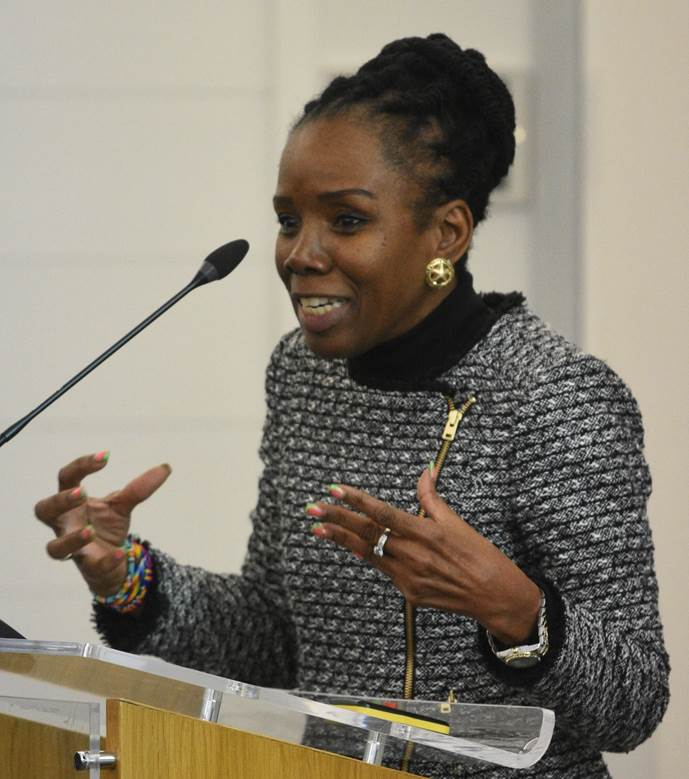
Mr Tsatsu urged teachers to demonstrate love and patience in handling learners, adding that discipline should be corrective rather than punitive to ensure holistic student development. 

He announced that TSISTOSA planned to construct a school gate, for which GH¢30,000.00 had already been mobilised. The association has also provided 100 mono desks, a projector, and white marker boards to support teaching and learning. 
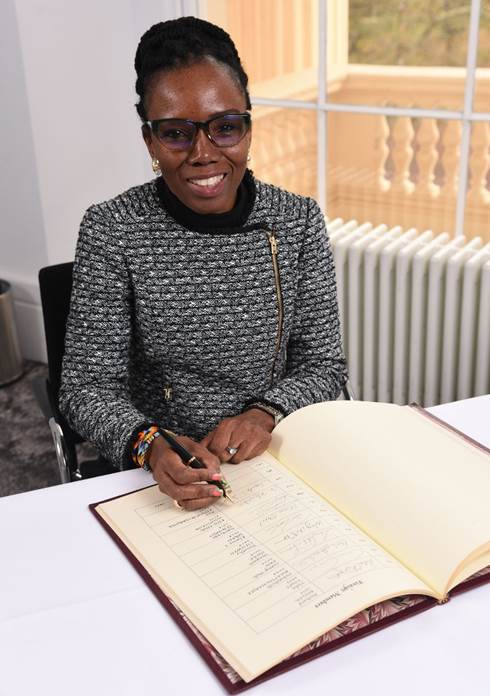
Mr Jerry Ameko, District Chief Executive (DCE) of Adaklu District and an alumnus of Tsito SHTS, encouraged students to believe in themselves and take responsibility for shaping their futures.  

He urged them to remain focused and committed, assuring them that perseverance would lead to success. 

Mr Ameko, who also serves as the Dean of MMDCEs in the Volta region, advised teachers to avoid hostility towards students, emphasising that they were the future leaders whose potential must be nurtured. 

During the event, an 11-member National Executive Committee of TSISTOSA was elected and sworn into office. 

The executives were Mr George Owusu, President, Mr Martin Gbetsivi, Vice-President, Miss Lawrencia Edinam Ntow, Secretary, and Mr Prince Sapari, Vice-Secretary. 

The rest were Mr Peter Asante, Organiser, Mr Eliot Norgbey, Deputy Organiser (Male), Ms Janet Abla Anani, Deputy Organiser (Female), Mr Eden Yao Feda, Treasurer, Mr Nii Ashiey Mensah, Financial Secretary, Mr David Debrah, Public Relations Officer and Ms Bridget Dziedzorm Afrieye, Women’s Commissioner. 

An appeal for funds during the programme yielded GH¢41,424.00 toward ongoing and future development projects in the school. 

The event ended with renewed commitment from alumni, staff, and stakeholders to strengthen the school’s infrastructure and support quality education delivery at Tsito SHTS. 

GNA 

Edited by Maxwell Awumah/Lydia Kukua Asamoah  

Agriculture key to job creation, inclusion and growth – DBG CEO hails AgriFair

0

The Chief Executive Officer of Development Bank Ghana (DBG), Dr. Randolph Nsor-Ambala, has lauded the impressive turnout at the November edition of AgriFair, describing it as clear evidence of the agricultural sector’s growing relevance to Ghana’s economy and daily life.

Speaking during a tour of the exhibition stands, Dr. Nsor-Ambala said he was impressed with the numbers, noting that reports from earlier in the day indicated even higher attendance.

“I am impressed with the turnout. In my mind, it speaks to the relevance of the agric sector and the fact that agric is linked with almost everything we do in our daily lives,” he said.

“I am hearing that the numbers were far higher than what I am seeing here in the early hours of the day, so congratulations to Channel One TV and Citi FM for this.”

He urged the organisers to consider a larger venue for future editions, emphasizing that the strong public participation underscores a growing demand for platforms that bring together key players in the agricultural value chain. “Perhaps you should consider a grander or larger platform for the programme going forward because clearly there is a need for the service that is going on,” he added.

Dr. Nsor-Ambala further highlighted agriculture’s unique role in national development, stressing that DBG’s support for the sector is anchored in data-backed diagnostics conducted across various value chains.

“Agriculture across all its value chains is a critical aspect of what we do,” he explained. “From our understanding and from the diagnostics we have done across the various sectors of the economy, agric offers a unique value proposition in terms of inclusion, economic empowerment, job creation, climate-resilient operations, export diversification, and economic growth. Essentially, agric is unique in many aspects.”

His remarks echo a wave of positive feedback from exhibitors at the fair, including the Legacy Crop Improvement Center (LCIC), which earlier described the event as one that “exceeded expectations.” LCIC reported unusually high patronage, selling out several seed varieties on the first day and attributing the surge partly to the rise in home gardening.

AgriFair continues to position itself as a vital platform that fosters market linkages, enhances brand visibility, and drives Ghana’s agricultural transformation agenda.

AgriFair 2025 is powered by Channel One TV and Citi FM, and sponsored by the Horticulture Business Platform (HBP), Development Bank Ghana (DBG), LCIC, GIRSAL, Ghana EXIM Bank, and Agri-Impact, with support from Twellium Industrial Company Limited.

Read also

Integrated agri exhibitions can drive Ghana to 9% growth — Goosie Tanoh

‘We’ll show up for AgriFair even if no one does’ – Legacy Crop

0

The Legacy Crop Improvement Center (LCIC) has reaffirmed its unwavering commitment to AgriFair, describing the agricultural exhibition as an essential platform for strengthening Ghana’s food systems and reducing the country’s heavy dependence on imports.

Speaking at the November edition of AgriFair in Accra, Dr. Amos Rutherford Azinu, a Crop Scientist at LCIC, said the organisation considers its participation non-negotiable due to its foundational role in the agricultural value chain.

“Our job as seed people is a foundation for the agriculture value chain. So any agriculture fair that Legacy is not part of is not complete,” he said. “I can assure you, anytime these programmes are organised, even if nobody comes, we will be here.”

Dr. Azinu explained that LCIC’s motivation goes beyond business interests. He emphasised the need for Ghana to reduce its over US$3 billion food import bill, noting that this can only happen if citizens support and patronise locally grown produce.

“You can only reduce that when people patronise what we grow locally,” he stressed. “When we heard of this platform, from the very first edition in June, we came on board as sponsors because we believed it would help everyone, not just one part of the country.”

AgriFair Exceeded Expectations for LCIC

Although LCIC attended primarily to build brand awareness, Dr. Azinu revealed that public demand quickly surpassed their preparations.

“We didn’t come here mainly to sell, but on the first day we ran short of the items we brought,” he recounted. “I had to return personally with more seeds. By then I couldn’t go back home because people were still requesting for them.”

LCIC showcased improved maize seeds and a range of vegetable seeds including pepper, okra and cabbage. Despite this being the dry season—typically a low-demand period—many visitors bought seeds for backyard and family gardens.

“Now everybody is interested in growing what they eat, and that has been good for us,” he noted.

A Platform That Unifies the Sector

Dr. Azinu praised Channel One TV and Citi FM for building a platform that connects all key players across the agricultural ecosystem. His observations mirror those of other exhibitors such as Agri-Impact Limited, which has described AgriFair as a powerful connector for agribusiness visibility, innovation, and partnership building.

He encouraged Ghanaians to participate in future editions of the fair, emphasising that the long-term benefits extend beyond exhibitors.

“Even if you are not able to make it within these three days, the next time, try to be part. And when coming, bring friends and family—let everyone be part of it,” he urged.

AgriFair 2025 is powered by Channel One TV and Citi FM, with key sponsorship from the Horticulture Business Platform (HBP), Development Bank Ghana (DBG), LCIC, GIRSAL, Ghana EXIM Bank and Agri-Impact, supported by Twellium Industrial Company Limited.

Read also

AgriFair Day Three in Pictures

‎Current and former Abuakwa North lawmakers endorse Bawumia for 2028 NPP race

0

Dr Mahamudu Bawumia was the 2024 Presidential Candidate of the NPP Dr Mahamudu Bawumia was the 2024 Presidential Candidate of the NPP

‎The New Patriotic Party (NPP) in the Abuakwa North Constituency in the Eastern Region has thrown its unequivocal support behind former Vice President Dr Mahamudu Bawumia, affirming him as the preferred flagbearer for the party ahead of the 2028 general elections.

This strong endorsement came from both the former and current Members of Parliament for the constituency during Dr Bawumia’s visit to Akyem Tafo. ‎

‎Gifty Twum-Ampofo, popularly known as Hajia Kande, former Deputy Minister of Education in charge of Technical and Vocational Education and Training (TVET), and Nana Kwame Ampaw Addo Frempong, the incumbent MP for Abuakwa North, publicly declared their commitment to Dr Bawumia’s candidature.

Their remarks were made during a gathering at the Mid-Tafo Presbyterian Church Auditorium on November 29, 2025. ‎ ‎

Hajia Kande, addressing the delegates, sharply criticised what she described as propaganda deployed by the National Democratic Congress (NDC) during the 2024 general elections. She stated that the NDC falsely blamed Dr Bawumia for Ghana’s economic challenges, deliberately overlooking the significant global impact of the Russia-Ukraine conflict.

She further noted that even President John Dramani Mahama later acknowledged at a United Nations meeting that the conflict had indeed affected Ghana’s economic stability. ‎ ‎

Dismissing other accusations as baseless, Gifty Twum-Ampofo vehemently rejected claims that Dr Bawumia supplied weapons to his Mamprusi tribe against the Kusasi in the Upper East Region.

“Killings during the NDC’s nine months in office have already surpassed the total during the NPP’s eight years,” she emphasised, asserting that Dr Bawumia’s record is “beyond reproach.”

She cautioned against introducing a new candidate, arguing it could expose the party to unnecessary criticisms. ‎

‎Urging delegates to support Dr Bawumia, Hajia Kande described him as a candidate who embodies both the welfare of the NPP and the broader development of Ghana.

She employed an analogy, advising, “Delegates shouldn’t crush the housefly eating their sour out of anger, lest they hurt their own sour while the fly escapes,” implying that rejection of Bawumia could harm the party itself. ‎

‎Current MP Nana Kwame Ampaw Addo Frempong echoed these sentiments, stressing that for the NPP to secure victory in 2028, the party must present a “strong and credible candidate.”

He harked back the energetic mobilisation of the youth wing during the 2016 Election, which contributed significantly to securing votes for former President Nana Akufo-Addo, and called for a similar enthusiasm to be rekindled for the 2028 general elections. ‎ ‎

Speaking from personal conviction, Nana Addo Frempong declared, “I want to win 2028, not 2032.”

He appealed for unity ahead of the flagbearer election and beyond, encouraging delegates to set aside past grievances for the collective good of the party. ‎ ‎

Nana Addo Frempong also claimed that NDC Members of Parliament are reportedly apprehensive about Dr Bawumia’s candidature due to his proven competence. He expressed concern over the opposition’s attempts to reclaim NPP seats through by-elections and court rulings, citing the recent Kpandai rerun as an example.

He reassured delegates that Dr Mahamudu Bawumia is already widely accepted within the party, possesses an “unblemished” record, and therefore “requires no replacement that could jeopardize the NPP’s future.” ‎

‎The event saw the presence of several notable party figures, including Nana Akomea, the former CEO of STC; Samuel Atta-Kyea, former MP for Abuakwa South; Umar Babs Bodinga, former MCE for Abuakwa North; Kofi Okyere Agyekum, former MP for Fanteakwa South; and Sammy Awuku, MP for Akuapem North. ‎

‎Nana Addo Frempong concluded by rallying delegates to vote for Dr Bawumia to ensure continued socio-economic development across Ghana.

Ghana raises VAT threshold to ease pressure on SMEs and boost sustainable growth

0

Ghana’s Parliament on recently passed the Value Added Tax Bill 2025, raising the revenue threshold at which businesses must begin charging VAT, a move designed to ease pressure on small enterprises, reshape tax administration and support the country’s ongoing economic recovery.

The bill, which now awaits President John Mahama’s approval before it becomes law, signals a shift in how Ghana intends to balance revenue mobilization with the realities facing SMEs across the country.

The measure emerged from months of debate within the Finance Committee, where Chairman Isaac Adongo argued that the previous VAT threshold pushed many micro-businesses into a system they struggled to comply with.

Read also: Benin’s largest urban region, Nokoué, to undergo transport transformation after AIIB loan approval

Market traders, mechanic workshops, small agro-processors and informal retail operations often operate on thin margins, and VAT registration adds layers of paperwork and additional accounting costs that many simply cannot manage.

The committee maintained that narrowing compliance to medium and larger firms would not only ease pressure on small operators but also improve the quality of VAT administration, allowing the Ghana Revenue Authority to focus on businesses with stronger record-keeping capacity.

The change lands at a moment when the government is recalibrating its broader tax regime. Earlier in the year, Parliament voted to scrap the electronic levy (E-Levy), the COVID-19 recovery levy and taxes on gambling and several digital transactions, arguing that the reforms were needed to lower household expenses and spur consumer spending.

In a country where inflation and recovery from the 2022–2023 economic turbulence have shaped voter anxieties, the removal of nuisance taxes and the recalibration of VAT are being interpreted as efforts to rebuild confidence among both citizens and investors.

For small businesses, the implications are practical and immediate. Ghana’s SME sector accounts for more than 80 percent of all businesses and contributes roughly 70 percent of employment, according to the International Council for Small Business. Many operate without formal financing, relying on daily earnings to manage cash flow, and often fall into the informal economy because the administrative cost of formalization outweighs perceived benefits.

A higher VAT threshold effectively removes a barrier that frequently pushed these firms into non-compliance. For a small tailoring shop in Kumasi or a maize-milling operator in Tamale, exemption from VAT obligations can mean keeping one or two extra workers or redirecting income into equipment upgrades, decisions that have cumulative effects on productivity.

Read also: Ethiopia secures $500M from China bank for $12.5B Bishoftu mega-airport

This policy shift also carries broader significance for the continent. Across Africa, governments are wrestling with how to fund development without suffocating small enterprises. Nigeria introduced a higher VAT exemption threshold in 2020, shielding micro-businesses and recovering close to ₦1 trillion in VAT revenue by focusing on larger firms with clearer financial trails.

Kenya has repeatedly revised its turnover tax and VAT thresholds in an attempt to streamline compliance and reduce administrative disputes. South Africa’s approach, where the VAT threshold sits near the equivalent of US$50,000 in annual turnover, has long demonstrated that a more targeted VAT base can still sustain long-term revenue growth. Ghana’s reform places it closer to these emerging continental norms, aligning domestic tax policy with models that prioritize economic dynamism over broad-based collection.

The sustainability dimension of the change is also notable. A lighter tax burden on micro-enterprises can influence how communities adapt economically in the face of climate-related pressures. In northern Ghana, where rainfall variability affects agriculture-dependent households, small processing businesses such as shea butter cooperatives or community-scale solar cold-storage enterprises often struggle with start-up costs and regulatory fees.

Lower VAT obligations free up capital for these local industries, many of which support climate-resilient livelihoods. The same logic extends to waste-recycling micro-firms in Accra, artisanal fisheries along the coast and renewable-energy service providers expanding pay-as-you-go systems in rural markets. Tax relief does not solve their structural challenges, but it offers breathing room in sectors critical to sustainable development.

Financing remains the lingering obstacle. Even with reduced tax pressures, Ghanaian SMEs continue to cite high lending rates, often above 25 percent, and a lack of collateral as major constraints. The VAT reform alone cannot solve this, but it may enhance creditworthiness for firms that re-enter formal registration systems once administrative burdens are lowered.

Read also: Uganda’s state oil company flags nine new potential wells, signaling significant crude deposits in Albertine Rift

Banks, micro-finance institutions and impact investors tend to favour enterprises with cleaner tax records, meaning Ghana could see modest improvements in SME finance over time if compliance rates rise.

The next step is presidential assent, which is largely procedural but politically symbolic. Once signed, the law will require the Ghana Revenue Authority to adjust its enforcement strategies, update systems and begin public education campaigns to ensure businesses understand which obligations remain and which no longer apply.

The transition will test Ghana’s administrative capacity, but the shift reflects a deliberate recalibration: a tax regime that recognises the realities of the country’s economic structure and the central role small businesses play in sustaining livelihoods and supporting long-term growth.

Engage with us on LinkedIn: Africa Sustainability Matters

Presidency hosts NCDS for strategic study visit and dialogue

0

Deputy Chief of Staff, Nana Oye Bampoe Addo delivering keynote address Deputy Chief of Staff, Nana Oye Bampoe Addo delivering keynote address

The Presidency on Thursday, November 27, 2025, hosted a 40-member delegation from the National College of Defence Studies (NCDS), Course 2–2025, at the Jubilee House as part of the College’s national study tour and experiential learning programme.

The visit began with a brief orientation and tour of the Jubilee House, after which the delegation engaged in a structured dialogue session with key officials from the Office of the President.

Welcoming the delegation, Dr Abubakari Wayo, Acting Chief Director at the Office of the President, emphasised the importance of whole-of-government cooperation in achieving policy coherence and national development.

He noted that partnerships between security institutions and civilian governance structures are essential for effective decision-making and strategic leadership.

The Leader of the NCDS delegation expressed appreciation for the opportunity, describing the Presidency as a crucial institution for understanding Ghana’s national power systems, policy mechanisms, and security architecture.

Presentations from the Cabinet Secretariat and PPMED Directorate provided insights into Cabinet coordination, administrative reforms, and the

institutional frameworks that support executive governance.

An Open Forum, held under the Chatham House Rule, allowed for candid discussions on national security, policy implementation, defence diplomacy, and governance reforms.

The session provided officers with practical exposure to the complexities of managing national priorities at the highest level.

Delivering the keynote address on behalf of the President, Nana Oye Bampoe Addo, Deputy Chief of Staff (Administration), praised the NCDS for its pivotal role in shaping Ghana’s next generation of strategic leaders.

She highlighted the rising complexity of global and national security challenges, ranging from cyber threats to transnational crime, and called for adaptive, ethical, and innovative leadership.

She reaffirmed government’s commitment to deeper institutional collaboration, strengthened capacity-building, and the advancement of women’s leadership across the security sector.

The visit ended with the presentation of souvenirs, a vote of thanks from a representative of NCDS and group photography before the delegation’s departure.

Asante Kotoko vs Medeama (GPL)

0

Asante Kotoko will aim to recover from their first league defeat of the season as they host Medeama SC at the Baba Yara Stadium on Sunday, November 30, 2025.

The Porcupine Warriors saw their unbeaten run snapped by Basake Holy Stars and will be eager to respond, with coach Abdul Karim Zito urging his players to stay focused.

Kotoko’s defense has looked shaky in recent home games, while their attack continues to struggle with converting chances.

Medeama, however, come into the clash full of confidence after a dominant 4-1 FA Cup win over Rospack FC.

Both sides see this as a crucial Week 12 fixture, with momentum and league positioning firmly at stake.

Follow and watch live updates of the game below:

FKA/AE

Founder of ‘The Intelligent Lady’ honored

0

Founder of The Intelligent Lady, Princess Sekyere Bih Founder of The Intelligent Lady, Princess Sekyere Bih

Founder of The Intelligent Lady, Princess Sekyere Bih, has been recognized as one of the 100 Most Influential Women in Africa at the 4th Edition of the African Women Awards held in Kigali, Rwanda.

The distinguished recognition celebrates her exceptional contributions to women’s empowerment, leadership development, and sustainable community transformation across the continent.

In her acceptance speech Princess dedicated the honor to the women and girls who inspire her work: “This recognition is not mine alone, it belongs to the remarkable women whose courage, creativity, and resilience continue to inspire the stories we tell through The Intelligent Lady Magazine, the accomplished and aspiring young women in our Network, and the adolescent girls we nurture and train through our Academy.”

Princess’s journey with The Intelligent Lady began in 2010 with a heartfelt mission to support young women, especially undergraduate students, to transition smoothly into the corporate world through mentorship, leadership development, and guidance from accomplished women.

What began as a personal commitment grew into a continental movement, taking shape with the launch of The Intelligent Lady Magazine in 2017, followed by The Intelligent Lady Network in 2018, and later The Intelligent Lady Academy in 2021 in Lesotho and Ghana. Today, The Intelligent Lady stands as a thriving ecosystem, a magazine, a network, and an academy, collectively nurturing confident, empowered, and impactful young African women.

Ms. Bih further emphasized the mission of The Intelligent Lady, highlighting the importance of supporting women and girls; “Our mission has always been simple yet powerful—to inspire and equip women and girls with the skills, confidence, and opportunities to lead, innovate, and transform their communities.

From the classrooms of Ghana to the mountains of Lesotho, I’ve seen firsthand that when women and girls are empowered, nations are strengthened.”

The African Women Awards is a premier platform, founded by The Business Executive Group, dedicated to celebrating women of African descent who have demonstrated outstanding achievement and progress across governance, entrepreneurship, social impact, public service, creative industries, finance, technology, and development.

The 2025 edition was held under the theme “Empowering Heritage, Elevating Futures, Uniting African Women for Sustainable Progress.” It convened female leaders, ambassadors, heads of state, and other dignitaries to highlight women whose vision, impact, and resilience are reshaping societies across Africa.

She expressed appreciation to her team, mentors, partners, and the young women who inspire her daily, reaffirming her commitment to empowering women and girls to claim their rightful place in leadership and societal progress.

About The Intelligent Lady

The Intelligent Lady is a women’s empowerment brand and platform that empowers women, girls, and the youth to embrace leadership, build confidence, innovate, and transform their communities through its Magazine, Network, and Academy.

Atta Kumi’s penalty lifts GoldStars to hard-fought win over Aduana

0

Bibiani GoldStars edged Aduana FC 1-0 in a tense Ghana Premier League match week 12 encounter at Dun’s Park on Sunday, with Samuel Atta Kumi’s early penalty proving decisive.

The victory carries significant weight for the defending champions, who were seeking a response after last weekend’s loss to Nations FC.

Aduana entered the fixture unbeaten in seven matches and leading the league table, but their momentum faltered against a GoldStars side that has been resolute at home throughout the campaign.

The hosts broke the deadlock in the 16th minute when Atta Kumi converted from the spot, capitalising on their bright start and energising the home crowd.

Aduana pushed for a response but were repeatedly frustrated by GoldStars’ compact defensive structure, which has now delivered four consecutive home clean sheets.

The win moves them to 22 points in fourth, closing in on the league’s frontrunners, while Aduana remain on 23 points in third after their third defeat of the season.

GoldStars now prepare for an away trip to Samartex. Aduana return home to face Basake Holy Stars as they aim to regroup quickly.

DISCLAIMER: The Views, Comments, Opinions, Contributions and Statements made by Readers and Contributors on this platform do not necessarily represent the views or policy of Multimedia Group Limited.

DISCLAIMER: The Views, Comments, Opinions, Contributions and Statements made by Readers and Contributors on this platform do not necessarily represent the views or policy of Multimedia Group Limited.

Ghana has a listening govt

0

Cadman Atta Mills is a veteran economist and former presidential advisor Cadman Atta Mills is a veteran economist and former presidential advisor

Veteran economist and former president advisor Cadman Atta Mills has praised the John Dramani Mahama administration after being engaged over Ghana’s renewed lithium mining agreement, describing it as proof that the country now has a “listening government.”

According to Atta Mills, in a post on X on November 29, 2025, this comes after a phone discussion with the Chairman of Parliament’s Lands & Natural Resources Committee, Collins Dauda, who confirmed he will refer his concerns to the Attorney General.

Atta Mills said Dauda reached out to clarify whether negotiating a royalty rate above the statutory minimum constitutes a legal violation.

“He promised to refer my position to the Attorney-General… He assured me that he was under no pressure to conclude a deal and will collect as many views as possible to ensure Ghana gets the best deal,” he posted.

Mills expressed his delight over the call, stating that a willingness to engage private citizens on national issues proves that the new administration is a listening government.

“I have had the occasion to heap praise on this government for being a “listening government” (see post below). Hon Collins Dauda’s telephone call to me… proves that it pays to speak up and express your disagreement ESPECIALLY when it is your government that is in power,” he concluded.

What sparked the reaction?

The renewed debate centers on the agreement between Ghana and Barari DV Ghana Limited over exploitation of the lithium deposit at Ewoyaa in the Central Region.

The 2023 contract proposed a royalty rate of 10%. But under the Minerals and Mining (Amendment) Act, 2010 (Act 794), the statutory royalty rate remains fixed at 5%.

Critics, including some members of the Minority in Parliament and civil society, have condemned the renegotiated deal as detrimental to national interest.

They argue that a 5% royalty undercuts Ghana’s leverage in what is rapidly becoming a high-value global mineral market.

On November 26, 2025, the Lands and Natural Resources Committee of Parliament announced it is reviewing the deal and urged that the law be amended if a higher rate is to be legally enforceable.

Collins Dauda clarified that while many members of the public and industry stakeholders support raising the rate to 10%, Parliament cannot impose such a figure without first updating the law.

See the post below:

ID/AE

COVID Levy was a ‘nuisance tax,’ I’m pleased it’s been removed

0

Joe Jackson is the CEO of Dalex Finance Joe Jackson is the CEO of Dalex Finance

The Chief Executive Officer of Dalex Finance, Joe Jackson, has welcomed the government’s decision to scrap the COVID-19 Health Recovery Levy, calling it a “nuisance tax.”

Appearing on Key Points on TV3 on Saturday, November 29, Jackson expressed his pleasure at the development, arguing that the levy was punitive and unfair.

“This was a nuisance tax. I am pleased they took it away,” he said.

If you remove betting tax and E-Levy, where will revenue come from? – Joe Jackson to Mahama

According to him, the levy had outlived its purpose and was rather a burden on all Ghanaians, especially the disadvantaged.

“COVID is now a memory for us. A levy called COVID-19 has no business being on the tax book. Throw it out! This tax didn’t discriminate. It hit the disadvantaged harder than the wealthy,” he declared.

His remarks came days after the Minister of Finance, Dr Cassiel Ato Forson, in presenting the 2026 Budget, officially announced the abolition of the levy.

The move forms part of broader reforms to Ghana’s Value-Added Tax (VAT) system aimed at easing the tax burden on households and businesses.

Parliament also ratified the repeal on November 26, 2025, a decision set to return approximately GH₵3.7 billion to consumers and enterprises in 2026.

The minister explained that the VAT reforms, including the removal of the COVID levy, would make the tax structure simpler, more efficient, and more business-friendly, helping to lower costs and stimulate growth.

ID/AE

Inside Selina Boateng’s gospel journey

0

The award winning singer has become a voice of hope for countless believers The award winning singer has become a voice of hope for countless believers

In an industry where fame often overshadows faith, Ghanaian gospel powerhouse Selina Boateng continues to stand tall as a beacon of purpose, purity, and divine conviction.

Her music, rich in spirit and sincerity, transcends entertainment it ministers to the heart and uplifts the soul.

Seated in quiet reflection at her Accra home, Selina exudes an aura of calm authority. Her radiant smile, tempered by deep humility, reflects the grace that defines her life and ministry.

Known for her spirit filled anthems that merge traditional rhythms with modern gospel melodies, the award winning singer has become a voice of hope for countless believers.

“I don’t just sing I minister. Every lyric I write and every note I release is a message from heaven, meant to heal hearts and restore faith,” she shared passionately, her tone filled with divine assurance.

From her early beginnings in church choirs to headlining major gospel stages, Selina Boateng’s journey has been one of faith, resilience, and divine calling.

Her hits such as “W’agye Me” and “Aseda Nwom” have become timeless expressions of gratitude and worship across Ghana and beyond.

Now, she is ushering in a new chapter with her latest single titled “TWALE,” meaning “Salute” a song she describes as a “musical offering of honor and reverence to God for His faithfulness.”

“TWALE is not just a song; it’s a celebration of God’s sovereignty. It’s a reminder that every victory deserves a salute to heaven,” she said, her face lighting up with joy.

But Selina’s message extends beyond melody. She is deeply concerned about the direction of today’s gospel industry, warning that the pursuit of popularity must never replace the power of purpose.

“The gospel industry isn’t just about talent it’s about assignment. Every true gospel artist must understand their calling. Music must serve God, not ego,” she declared with rare boldness.

Discussing the evolution of Ghana’s gospel scene, Selina acknowledged the impact of digital media, which she views as both a blessing and a burden.

“Social media has opened doors for ministry, but it also tempts many to chase trends instead of truth. We can’t let noise drown out the voice of the Spirit. Gospel music must remain a ministry, not a performance,” she emphasized.

Her words resonate strongly in an era where celebrity culture often competes with spirituality. Yet, despite her growing fame, Selina remains grounded anchored by her faith, family, and the divine mission that fuels her every step.

“My greatest reward won’t be in awards or streams,” she reflected softly. “It will be in the lives transformed through my songs.”

Away from the spotlight, Salina serves as a mentor to emerging gospel musicians, advocating integrity and authenticity in ministry. Her humility, generosity, and unshakable devotion have earned her admiration from fans and peers alike.

Looking ahead, Selina Boateng envisions expanding her reach across Africa and the diaspora, using her music as a divine bridge of healing and hope.

“Music is my covenant with heaven and I intend to keep it faithfully,” she concluded with reverent grace.

‎Current and former Abuakwa North lawmakers endorse Bawumia for 2028 NPP race

0

Dr Mahamudu Bawumia was the 2024 Presidential Candidate of the NPP Dr Mahamudu Bawumia was the 2024 Presidential Candidate of the NPP

‎The New Patriotic Party (NPP) in the Abuakwa North Constituency in the Eastern Region has thrown its unequivocal support behind former Vice President Dr Mahamudu Bawumia, affirming him as the preferred flagbearer for the party ahead of the 2028 general elections.

This strong endorsement came from both the former and current Members of Parliament for the constituency during Dr Bawumia’s visit to Akyem Tafo. ‎

‎Gifty Twum-Ampofo, popularly known as Hajia Kande, former Deputy Minister of Education in charge of Technical and Vocational Education and Training (TVET), and Nana Kwame Ampaw Addo Frempong, the incumbent MP for Abuakwa North, publicly declared their commitment to Dr Bawumia’s candidature.

Their remarks were made during a gathering at the Mid-Tafo Presbyterian Church Auditorium on November 29, 2025. ‎ ‎

Hajia Kande, addressing the delegates, sharply criticised what she described as propaganda deployed by the National Democratic Congress (NDC) during the 2024 general elections. She stated that the NDC falsely blamed Dr Bawumia for Ghana’s economic challenges, deliberately overlooking the significant global impact of the Russia-Ukraine conflict.

She further noted that even President John Dramani Mahama later acknowledged at a United Nations meeting that the conflict had indeed affected Ghana’s economic stability. ‎ ‎

Dismissing other accusations as baseless, Gifty Twum-Ampofo vehemently rejected claims that Dr Bawumia supplied weapons to his Mamprusi tribe against the Kusasi in the Upper East Region.

“Killings during the NDC’s nine months in office have already surpassed the total during the NPP’s eight years,” she emphasised, asserting that Dr Bawumia’s record is “beyond reproach.”

She cautioned against introducing a new candidate, arguing it could expose the party to unnecessary criticisms. ‎

‎Urging delegates to support Dr Bawumia, Hajia Kande described him as a candidate who embodies both the welfare of the NPP and the broader development of Ghana.

She employed an analogy, advising, “Delegates shouldn’t crush the housefly eating their sour out of anger, lest they hurt their own sour while the fly escapes,” implying that rejection of Bawumia could harm the party itself. ‎

‎Current MP Nana Kwame Ampaw Addo Frempong echoed these sentiments, stressing that for the NPP to secure victory in 2028, the party must present a “strong and credible candidate.”

He harked back the energetic mobilisation of the youth wing during the 2016 Election, which contributed significantly to securing votes for former President Nana Akufo-Addo, and called for a similar enthusiasm to be rekindled for the 2028 general elections. ‎ ‎

Speaking from personal conviction, Nana Addo Frempong declared, “I want to win 2028, not 2032.”

He appealed for unity ahead of the flagbearer election and beyond, encouraging delegates to set aside past grievances for the collective good of the party. ‎ ‎

Nana Addo Frempong also claimed that NDC Members of Parliament are reportedly apprehensive about Dr Bawumia’s candidature due to his proven competence. He expressed concern over the opposition’s attempts to reclaim NPP seats through by-elections and court rulings, citing the recent Kpandai rerun as an example.

He reassured delegates that Dr Mahamudu Bawumia is already widely accepted within the party, possesses an “unblemished” record, and therefore “requires no replacement that could jeopardize the NPP’s future.” ‎

‎The event saw the presence of several notable party figures, including Nana Akomea, the former CEO of STC; Samuel Atta-Kyea, former MP for Abuakwa South; Umar Babs Bodinga, former MCE for Abuakwa North; Kofi Okyere Agyekum, former MP for Fanteakwa South; and Sammy Awuku, MP for Akuapem North. ‎

‎Nana Addo Frempong concluded by rallying delegates to vote for Dr Bawumia to ensure continued socio-economic development across Ghana.

Freezy Macbones welcomes second child with French partner

0

Freezy with his family, including the newborn Freezy with his family, including the newborn

Ghanaian boxer Freezy Macbones, born Seth Gyimah, is celebrating another beautiful milestone after welcoming his second child, a baby girl named Clara, with his French partner Helen Defrance.

The UK-based fighter announced the heartwarming news on November 26, 2025, sharing a touching series of photos that instantly lit up social media.

The images, taken in what appeared to be a hospital ward, captured the boxer’s family in an atmosphere of pure joy. The opening shot showed Freezy, Helen, their first child, Quincy Paris Gyimah, and the newborn all smiling beside the hospital bed.

Additional photos in the carousel offered a more intimate look at the new arrival.

Baby Clara was seen resting peacefully in Helen’s arms, while another image showed her tiny fingers wrapped around Freezy’s hand.

Watch Mohammed Kudus’ golazo in Spurs’ loss against Fulham

The boxer also included a nostalgic throwback of Helen and Quincy, reminding fans of the moment they welcomed their first child almost exactly a year ago.

To caption the post, Freezy wrote:

“This is all about family. Welcome home Clara. My lil princess.”

Although Freezy did not reveal Clara’s exact date of birth, the timing suggests she arrived in late November, just like Quincy.

The announcement drew a flood of warm messages from fans, entertainers, and fellow athletes, many praising the boxer.

FKA/AE

Head Teacher of 31st December School speaks on Nana Konadu’s legacy

Tems explains why she won’t return to Uganda

0

Popular Nigerian Grammy Award winning musician, Tems Popular Nigerian Grammy Award winning musician, Tems

During a Tuesday Q&A session on X, Grammy-winning Nigerian singer Tems touched on why she won’t be returning to Uganda after a fan asked her to share the details behind that decision.

“What’s the lore behind you not coming to Uganda? #AskTems,” the fan asked the Love Me JeJe singer.

Tems responded by sharing a screenshot of her and others standing inside what looked like a court. The screenshot also included a headline that read: “Nigerian singer Tems appearing before court in Uganda.”

In December 2020, authorities in Uganda arrested and charged Tems, 30, and fellow Nigerian singer Omah Lay in connection with allegedly violating COVID-19 rules after they performed at a concert in the East African nation. Tems ended up spending two nights in prison, though the event organizer had initially claimed that permits for the concert to go ahead had been secured, Complex reported.

This also isn’t the first time Tems has touched on her unpleasant experience in Uganda. A year after the incident, Tems took to X to reflect on her ordeal.

“This very day Last Year, I was sitting in prison in Uganda bonding with women and kids,” the Essence singer wrote in the December 13, 2021, post. “I almost can’t believe the things I’ve seen so far. All I can say is God is too awesome and He will always have the last and final laugh.”

During a 2023 appearance on Angie Martinez’s show, the 30-year-old also described what she went through as “so scary.”

“We didn’t break the rules but it was basically like set up,” Tems told the host, per Complex. “After the show, the police came, they weren’t in uniforms. They just knocked on my hotel door—we were eating lunch or dinner, my manager and I. And they just came and said we should follow them … so [my manager] went with them, but they came back upstairs to pick me up.”

She added: “That was so scary. I spent two nights in jail. … I thought I wasn’t gonna come out. I thought … I was seeing this for a reason. Maybe this is for me to help these people in this prison. It was crazy, I’m not gonna lie.”